
Submitted:
12 March 2026
Posted:
16 March 2026
You are already at the latest version
Abstract
This paper offers estimates of the per-capita GDP growth trajectories consistent with zero CO₂ emissions. The focus is on six developed economies (Canada, Germany, Italy, Japan, Singapore, United States) and six emerging economies (China, India, Indonesia, Malaysia, Mexico, South Korea). To this end, we postulate model linking per-capita CO₂ emissions growth to per-capita GDP growth and technology. Parameter estimation relies on annual data from 1980 to 2022 using Ordinary Least Squares (OLS) and Instrumental Variables (IV). Given the parameter estimates, we use the model to estimate the growth rate of per-capita GDP that is consistent with zero growth in CO2 emissions.
Keywords:
CO2 emissions
; economic activity
1. Motivation and Summary
Over the past 45 years, global economic expansion has been accompanied by rising levels of pollution, and most notably CO₂ emissions. The accumulation of atmospheric CO₂ has accelerated global warming and generated substantial economic losses (Kahn et al., 2021) raising a question that has not received enough empirical attention: what rate of per-capita income growth is consistent with zero growth in per-capita CO₂ emissions?
Our analysis begins with the empirical association between per-capita CO₂ emissions growth and per-capita GDP growth where we use Trend to captures technological progress. Using this relationship, we define the sustainable per-capita GDP growth rate as the growth rate consistent with zero growth in per-capita CO₂ emissions. Given this estimate, we compare it with actual growth to derive the sustainable growth gap as the difference between sustainable and actual. A positive gap indicates that recorded economic growth exceeds the sustainable level and is therefore associated with additional emissions; a negative gap suggests that growth could accelerate without increasing emissions.
Because technological progress evolves over time, the sustainable growth rate is also time-varying. Thus, we report the distribution of sustainable growth gap from 1980 to 2023. Table 1 reports the average sustainable growth gap for twelve economies. The results show that China, India, Indonesia, Malaysia, and South Korea exhibit significantly positive growth gaps. In other words, their historical growth has outpaced the sustainable growth as estimated here. For the remaining countries, the sustainable growth gap is not statistically different from zero.
|
Sustainable Growth Gap: Selected Countries. Average and Standard Deviation 1980-2023 | ||
| Country | Mean | STD* |
| Canada | -0.55 | 0.36 |
| China | 1.75 | 0.42 |
| Germany | -1.00 | 0.35 |
| India | 1.55 | 0.40 |
| Indonesia | 1.57 | 0.51 |
| Italy | -0.08 | 0.47 |
| Japan | 0.14 | 0.32 |
| Malaysia | 2.95 | 0.62 |
| Mexico | 0.36 | 0.72 |
| Singapore | 0.03 | 0.64 |
| South Korea | 3.05 | 0.54 |
| United States | -0.35 | 0.29 |
| * Note: Standard deviation of the mean. Calculations rest on the method of instrumental variables. | ||
The remainder of the paper documents the data and estimation results supporting our findings. The exposition proceeds as follows. Section 2 reviews the relevant literature; Section 3 describes the data sources and variable construction; Section 4 outlines the empirical strategy; Section 5 presents the results, including distributions of sustainable growth gaps across advanced and emerging economies; and Section 6 discusses policy implications and concludes.
2. Literature Review
In recent years, the relationship between economic growth and CO₂ emissions has become a central topic in environmental economics, particularly in the context of global carbon reduction goals. Existing studies focused on macro-environmental indicators have identified significant endogeneity between output and emissions, suggesting a need for models that isolate exogenous variation in economic growth rather than relying on unconditional correlations (Acheampong, 2018). To address methodological challenges, recent work has used instrumental variable (IV) strategies to strengthen causal inference in the emissions–growth literature (Wang et al., 2022). Trade exposure, in particular, has been used as an instrumental variable for economic growth, on the grounds that trade shocks affect GDP independently of domestic carbon policy but still transmit to emissions through growth dynamics (Basu et Mcleod, 1991). Studies leveraging trade-based instruments have shown that export-driven growth can produce different emissions responses than domestic demand-led growth, particularly where production is carbon-intensive or embedded in energy-intensive upstream value chains (Antweiler, Copeland & Taylor, 2001). Most of this literature investigates how trade composition affects emissions; not how trade can be used to identify the causal elasticity of emissions with respect to GDP growth.
Liu et al. (2020, 2022) found that global CO₂ emissions sharply declined during lockdowns, largely due to reduced industrial activity and transport activities. However, these reductions were short-lived and not structurally driven, highlighting that emissions are likely to rebound with economic recovery. These findings reinforce our interest in understanding the emissions-growth relationship to inform effective decarbonization strategies that do not compromise long-term economic development.
Building on this literature, our study will control for country-specific heterogeneity while also incorporating trade as an instrumental variable for GDP growth using OLS and IV estimation methods.
3. Data
The dataset comprises annual observations from 1980 to 2022 and includes three key variables:
- GDP per capita, PPP (constant $): annual country level and world data on gross domestic product per capita. Source: International Monetary Fund.
- Per capita CO₂ emissions: historical estimates of CO₂ emissions per person, allowing for consistent cross-country comparisons of environmental impact. Source: Our world in data
- Trade as a share of GDP: measures the size of the trade in a country’s economy, used to explore trade composition effect in shaping emissions patterns. Source: Our world in data
Figure 1 and Figure 2 present the evolution of countries’ economic growth and carbon intensity from 1980 to 2022. Figure 1 shows that GDP per capita rose steadily across nearly all nations, with advanced economies such as the United States, Germany, and Japan maintaining the highest income levels throughout the period. Singapore shows rapid economic growth around 2000. China, Malaysia and South Korea as emerging economies have exhibited better growth pattern after 2000, signaling long-term convergence in global living standards. 1
Figure 2 shows a sustained decline in CO₂ emissions per GDP across most countries, reflecting substantial improvements in energy efficiency. China achieved remarkable reductions while the advanced economies sustained lower and more stable emission intensities over time.
Figure 3 and Figure 4 show the levels of GDP and CO₂ emissions over time. Developed economies show clear evidence of decoupling between economic growth CO2 emissions. In contrast, emerging economies including China, India, Indonesia, Malaysia, and South Korea display a coupled relationship between growth and emissions grow.
4. Empirical Strategy
4.1. Unconditional Correlations
Figure 5 shows scatter plots between per-capita GDP growth and per-capita CO₂ emissions growth using data across six developed countries from 1980 to 2022. Developed economies exhibit a generally weak, but positive relationship between GDP per-capita growth and CO₂ emissions per-capita growth. Germany, Japan, and Singapore exhibit relatively flat slopes, suggesting that increases in GDP per-capita growth are loosely associated with emissions changes. Italy and Canada show somewhat stronger positive slopes, but the dispersion of data points indicates that emissions growth becomes less responsive during periods of rapid GDP expansion. The United States demonstrates the clearest positive association among this group.
Figure 6 shows scatter plots between per-capita GDP growth and per-capita CO₂ emissions growth using data across six emerging economies. The scatter plots display a robust and consistent positive correlation between GDP and CO₂ emissions per capita growth. China, India, Indonesia, and Malaysia show the steep slopes, indicating that their economic growth has been tightly linked with their higher emissions. Overall, these patterns highlight the contrast between mature economies achieving relative decoupling and developing economies still experiencing carbon-intensive growth trajectories.
4.2. Econometric Analysis
Figure 5 and Figure 6 only show the existence of a statistical correlation; these figures are silent on the direction of causality: from GDP to CO2 or the other way around. Thus, we begin by regressing per-capita CO₂ emission growth (CO2_G) on per-capita GDP growth (GDP_G) and a linear time trend to account for structural changes over time; this baseline regression uses OLS for parameter estimation. Specifically, we use
where
emissions per capita growth for country i in period t
GDP per capita, PPP (constant, in USD) growth for country i period t
Table 2 shows the OLS and IV estimates for our 12 countries. The OLS estimates are positive and statistically significant; the IV estimates are positive, and, for most emerging economies, the coefficient is negative and insignificant except for China and Indonesia.
We also use Instrumental Variables to address the potential endogeneity between per-capita GDP growth and per-capita CO₂ emissions where emissions may also affect economic performance; we use growth in trade as a share of GDP (change in Trade%) as employed as an instrumental variable. Given the parameter estimates, we generate sustainable economic growth trends for each country. Since GDP_IV is instrumented by trade growth, the effect of GDP growth is emphasized by trading goods while OLS shows the effect of services.
The IV coefficient estimates for emerging economies (Table 3) are roughly double relative to their OLS estimates, indicating that when trade is the primary driver of per-capita GDP growth, the resulting environmental impact is much greater than one estimates using OLS. This reinforces the idea that trade-led growth in developing countries is more carbon intensive, as exports often rely on manufacturing, resource extraction, and energy-heavy production. Thus, while trade openness contributes to decoupling in advanced economies, it magnifies emissions in industrializing nations still dependent on carbon-based export structures.
4.3. Sustainable Per-Capita GDP Growth
We now use the parameter estimates to estimate the sustainable per-capita GDP growth paths as
Figure 9 shows that for all developed economies, the sustainable paths under OLS and IV estimates are consistently above zero. That is, positive per-capita GDP growth while keeping emissions neutral or declining is feasible.
The value of for Emerging Countries differs from the for the developed group (Figure 10). Across nearly all countries, the IV sustainable paths are positioned above the OLS lines except for South Korea. The estimation results, therefore, are sensitive to emerging economies. The IV lines’ higher placement highlights the continuing importance of globalization for emerging economies, while their movement above zero over time marks the gradual decoupling of GDP from carbon emissions. Further, the variation among countries shows different stages of progress: China and South Korea are approaching the developed-economy model; India, Malaysia, and Mexico are mid-transition; and Indonesia still experiences residual volatility around the zero line.
Figure 9 and Figure 10 shows that our estimates of sustainable growth are sometimes above and sometimes below the recorded per-capita growth. This pattern raises the question of what is, on average, the sustainable gap between recorded and sustainable growth. Again, if this difference is positive then actual performance exceeds what is sustainable – that is, what is consistent with no CO2 growth.
4.4. Sustainable Growth Gap
We now use the results from Figure 9 and Figure 10 to compute what we call the sustainable growth gap measured as
where is the sustainable growth rate of the ith country at time t. If gap is negative (< 0), sustainable growth exceeds actual growth, indicating the country is currently growing within a sustainable trajectory. Conversely, when gap is positive (>0), it suggests an unsustainable growth path in the country.
Table 4 reports the mean and standard deviation (of the mean) for the above distributions. Our calculations suggest that the pace of economic activity in China, India, Indonesia, Malaysia, and South Korea is (statistically) significant above the sustainable levels. For the remaining countries, the growth gap is not significantly different from zero.
Note that the results suggest that the method of parameter estimation plays an important role in characterizing the sustainable gap. Comparing OLS and IV estimates shows the importance of capturing endogeneity risks that characterize emerging economy growth trajectories.
Sole reliance on the mean and its standard deviation assumes that the distribution of sustainable gaps is symmetric. We find that, compared to the developed economies, the distributions for the growth gap of emerging countries are skewed to the right. This rightward skew likely reflects the faster structural change. In contrast, the growth gap for developed economies is more symmetrically centered around zero, consistent with more stable and predictable economic dynamics. Figure 11 and Figure 12 shows the distributions of the growth gap for both methods and all countries.
For the developed economies, the distributions of the growth gap from both the OLS and IV models are generally centered close to zero and the average sustainable growth gap is slightly less than 0, indicating that the developed economies are generally aligned with a sustainable growth pattern, with greater capacity to expand at a faster rate. The sustainable growth gap across these countries is largely symmetric, with limited evidence of extreme tails or structural breaks, supporting the argument that economic relationships in developed economies are more stable and predictable. Overall, the results indicate that both OLS and IV performs efficiently for advanced economies, while IV provides incremental robustness against subtle sources of endogeneity.
For emerging economies, their distributions of sustainable growth gap display a more pronounced dispersion relative to the developed-country group. e distribution of sustainable growth gap is highly skewed to the right for India, Indonesia, Malaysia, and South Korea. This skewness indicates that these emerging economies are growing at an unsustainable rate.
5. Conclusions
This paper offers an empirical characterization of the per-capita GDP growth that brings CO2 emissions to a halt for 12 countries that differ in their level of development. Further, we report the sensitivity of our results to the choice of estimation method.
The distribution of sustainable growth gaps shows that developed economies are largely aligned with carbon-neutral growth, with both OLS and IV estimates clustering around zero and showing limited sensitivity to the estimation method. By contrast, emerging economies display wider and more positive gaps, especially under IV estimation, indicating that trade-driven growth may push output beyond sustainable levels.
That these results are tentative is clear: the attainment of higher levels of development and technological change are likely to alter our estimates of the sustainable growth paths. At the same time, our work highlights the importance of statistical methodology and the treatment of the sustainable growth path as evolving over time as areas of promising research.
| 1 | These countries represent 62.29% of the World GDP according to the IMF data (2023). |
References
- Antweiler, W.; Copeland, B. R.; Taylor, M. S. Is free trade good for the environment? Journal of Economic Literature 2001, 15(3), 877–908. [Google Scholar] [CrossRef]
- Acheampong, A. O. Economic growth, CO₂ emissions and energy consumption: What causes what and where? Energy Economics 2018, 74, 677–692. [Google Scholar] [CrossRef]
- Basu, P.; McLeod, D. Terms of trade fluctuations and economic growth in developing economies. Journal of Development Economics 1991, 37(1–2), 89–110. [Google Scholar] [CrossRef]
- International Energy Agency. (2024). The relationship between growth in GDP and CO₂ has loosened – it needs to be cut completely. https://www.iea.org/commentaries/the-relationship-between-growth-in-gdp-and-co2-has-loosened-it-needs-to-be-cut-completely.
- International Monetary Fund (2025). GDP per capita, PPP (constant prices) from World Economic Outlook database by country. https://www.imf.org/en/Publications/WEO/weo-database/2025/april/download-entire-database.
- Liu, Z., Ciais, P., Deng, Z., Lei, R., Davis, S. J., Feng, S., … & Schellnhuber, H. J. (2020). Near-real-time monitoring of global CO₂ emissions reveals the effects of the COVID-19 pandemic. Nature Communications, 11, 5172. https://www.nature.com/articles/s41467-020-18922-7. [CrossRef]
- Kahn, M. E., Mohaddes, K., Ng, R. N. C., Pesaran, M. H., Raissi, M., & Yang, J. (2021). Ten facts about the economics of climate change and climate policy. Brookings Institution. https://www.brookings.edu/articles/ten-facts-about-the-economics-of-climate-change-and-climate-policy/.
- Our World in Data. (n.d.-a). CO₂ emissions per capita. https://ourworldindata.org/grapher/co-emissions-per-capita.
- Our World in Data. (n.d.-b). Trade as a share of GDP. https://ourworldindata.org/grapher/trade-as-share-of-gdp.
- Wang, K.; Zhao, B.; Fan, T.; Zhang, J. Economic Growth Targets and Carbon Emissions: Evidence from China. International Journal of Environmental Research and Public Health 2022, 19(13), 8053. [Google Scholar] [CrossRef]
Figure 1.
GDP per capita by Country (Constant $).
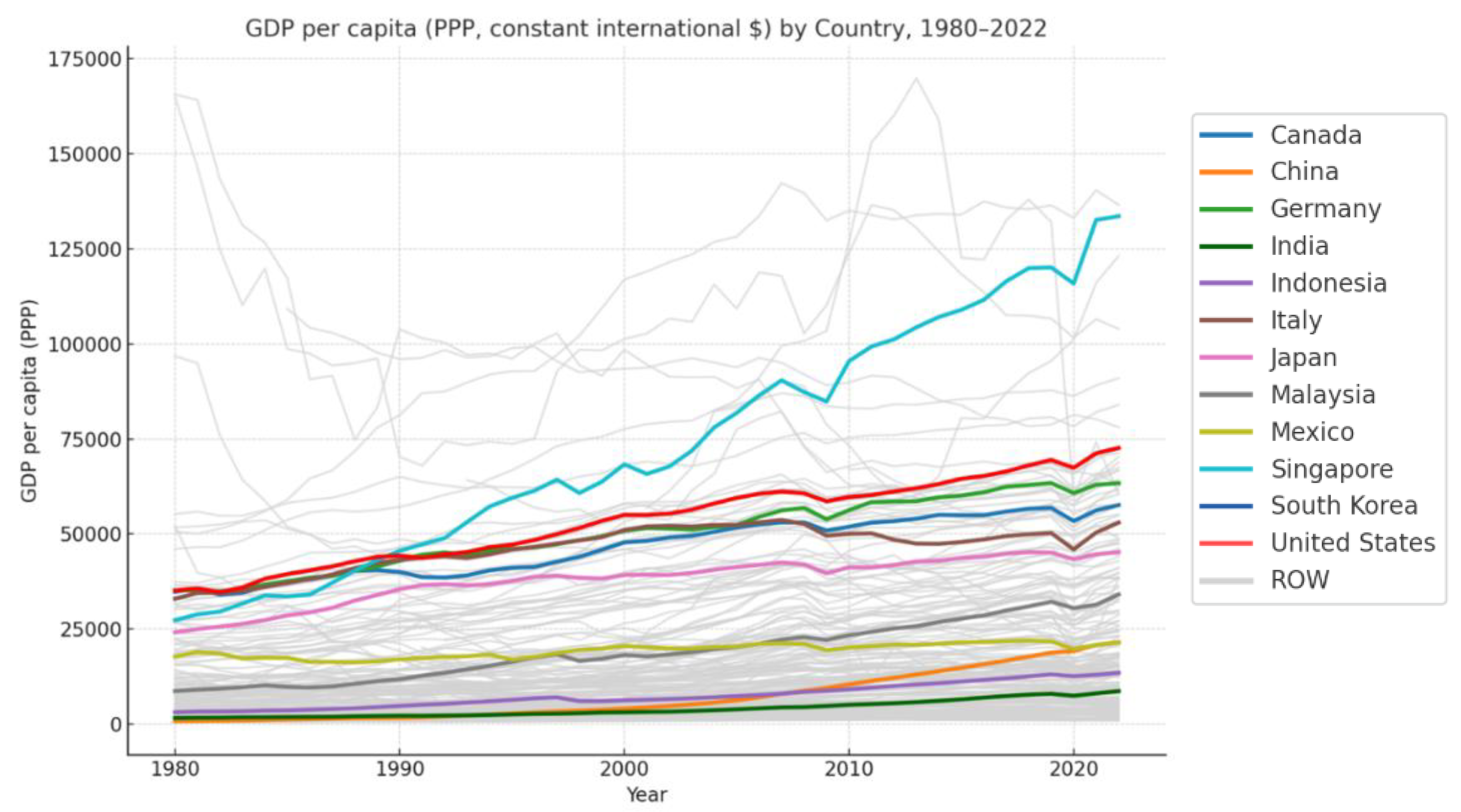
Figure 2.
CO₂ per GDP by Country.
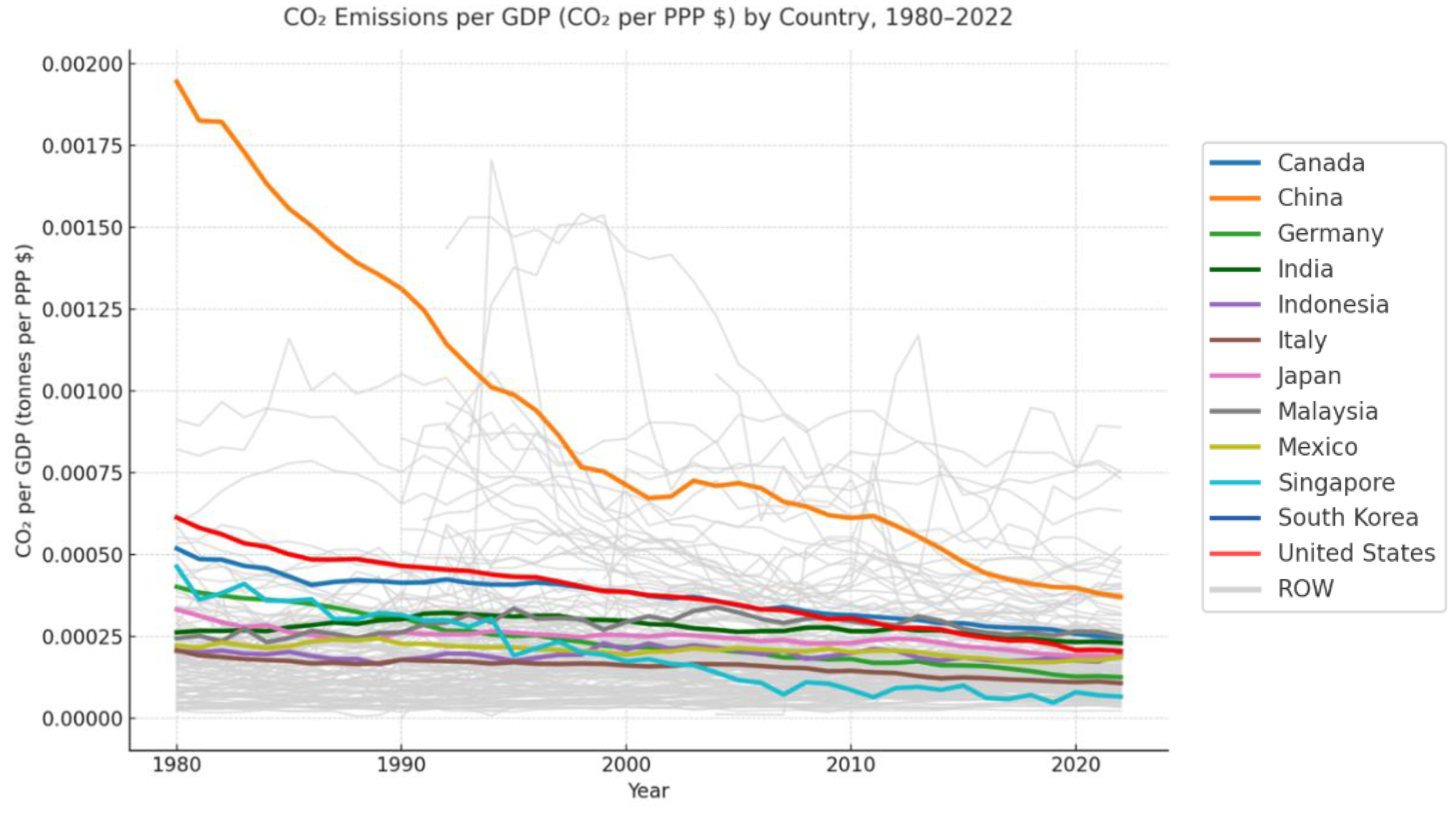
Figure 3.
GDP per capita vs CO₂ Emissions per capita Developed Economies Series.
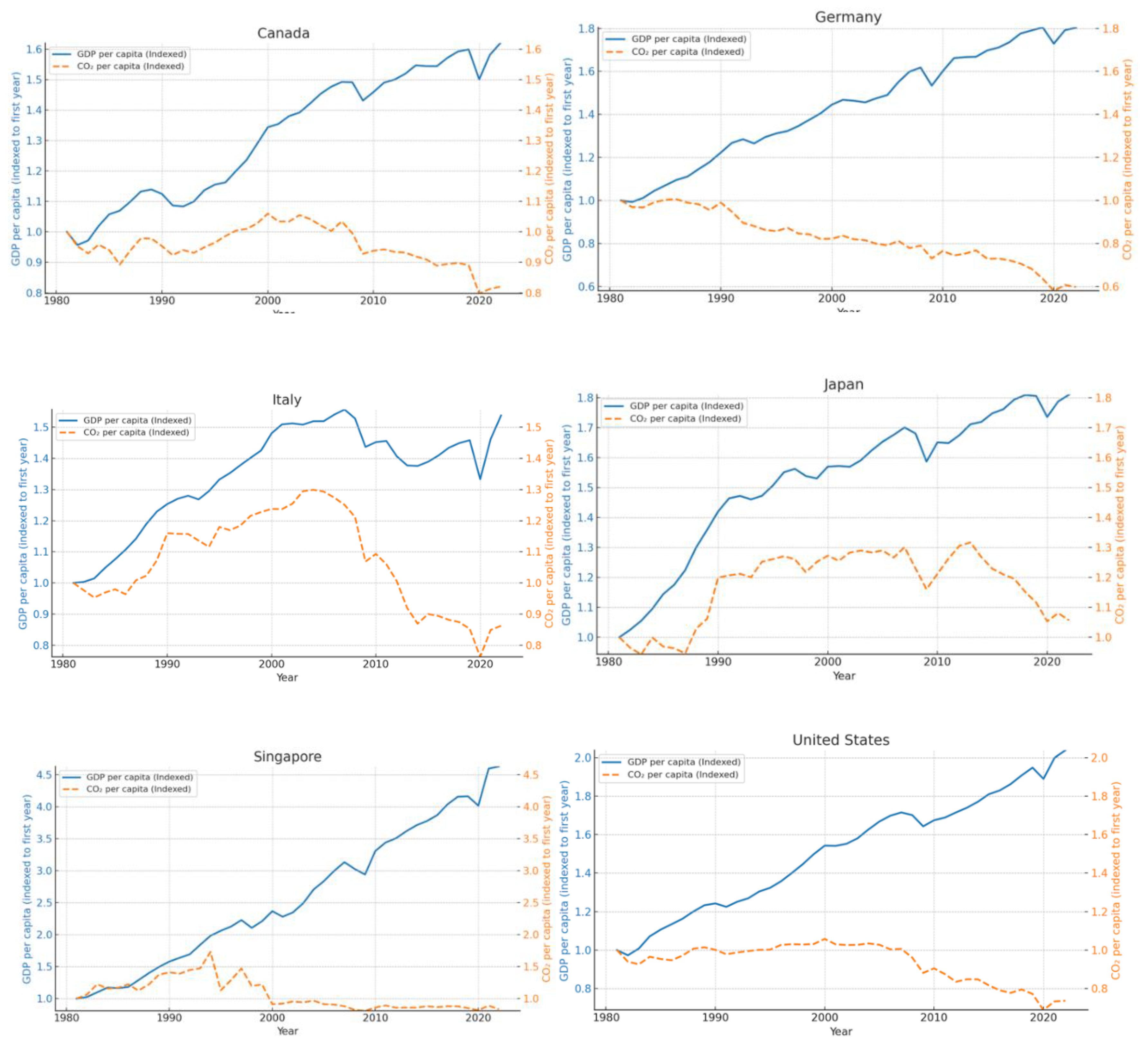
Figure 4.
GDP per capita vs CO₂ Emissions per capita Emerging Economies Series.
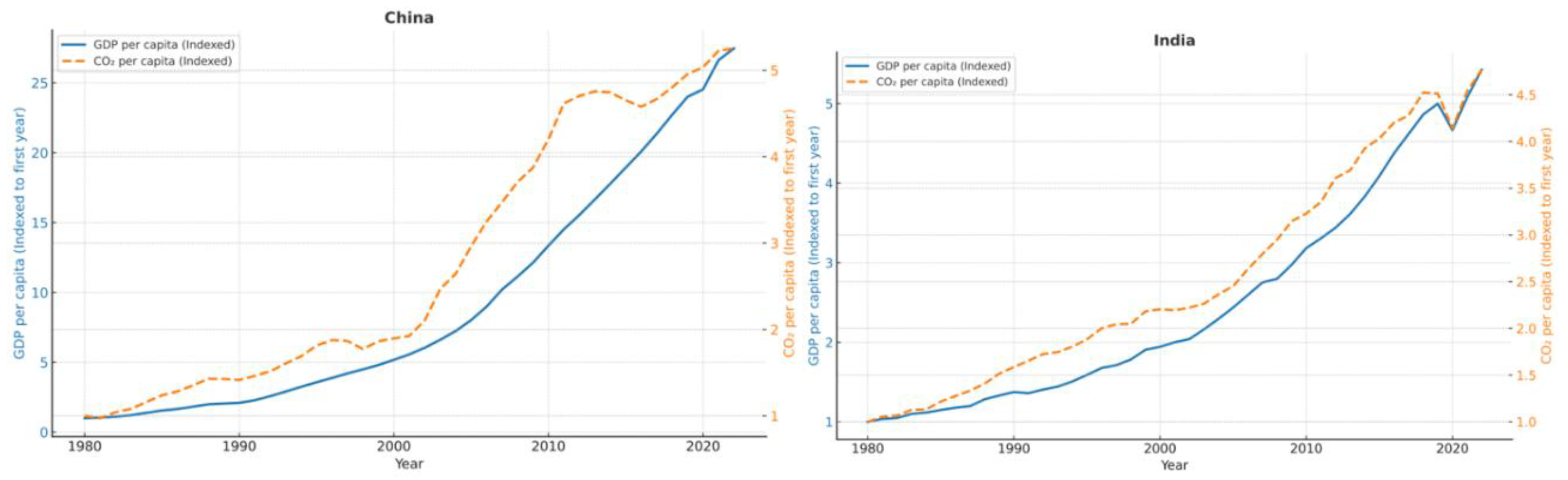
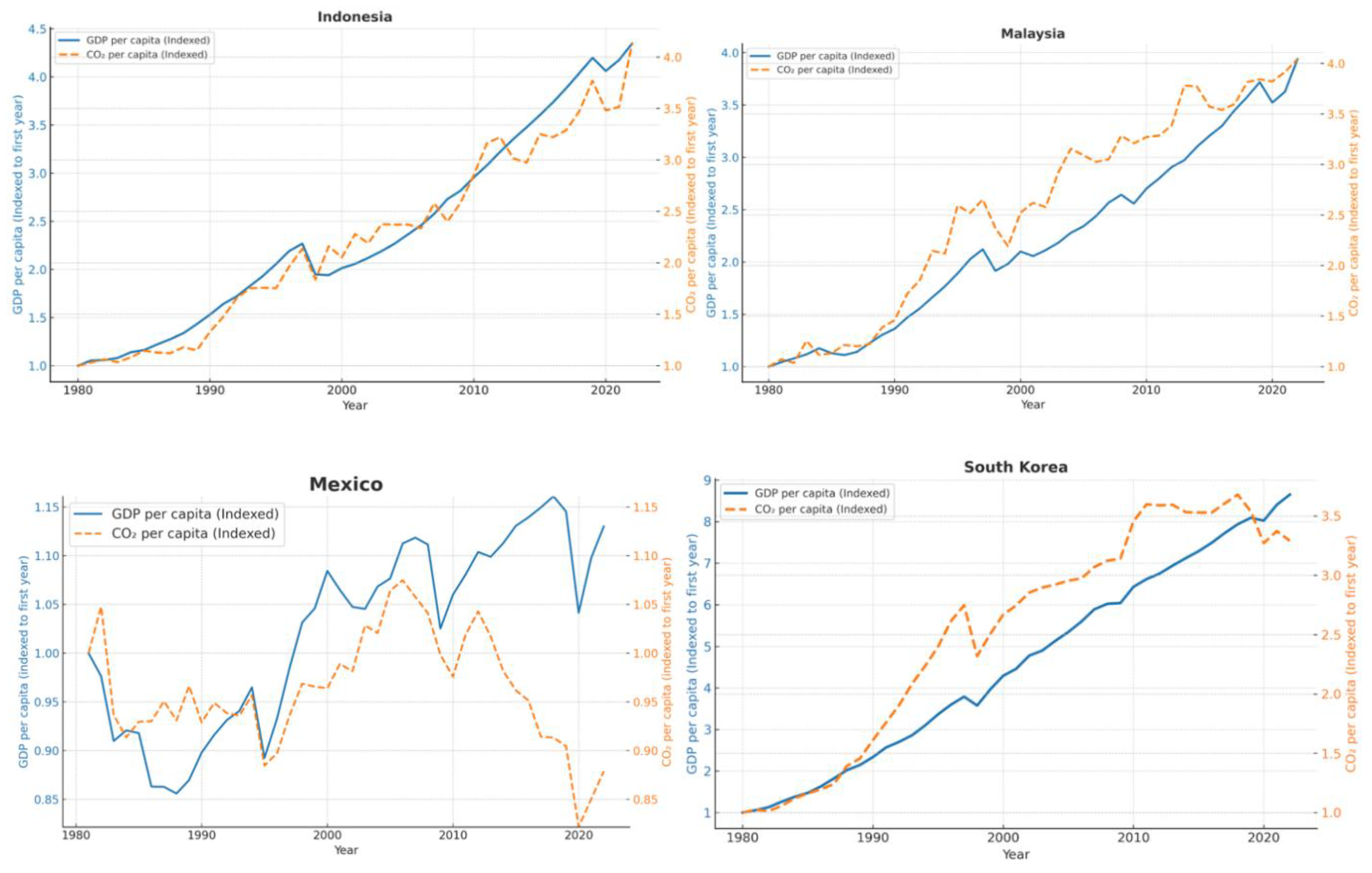
Figure 5.
Developed Economies Country-level per-capita GDP Growth vs. per-capita CO₂ Emissions Growth scatterplots (1980–2022).
Figure 5.
Developed Economies Country-level per-capita GDP Growth vs. per-capita CO₂ Emissions Growth scatterplots (1980–2022).
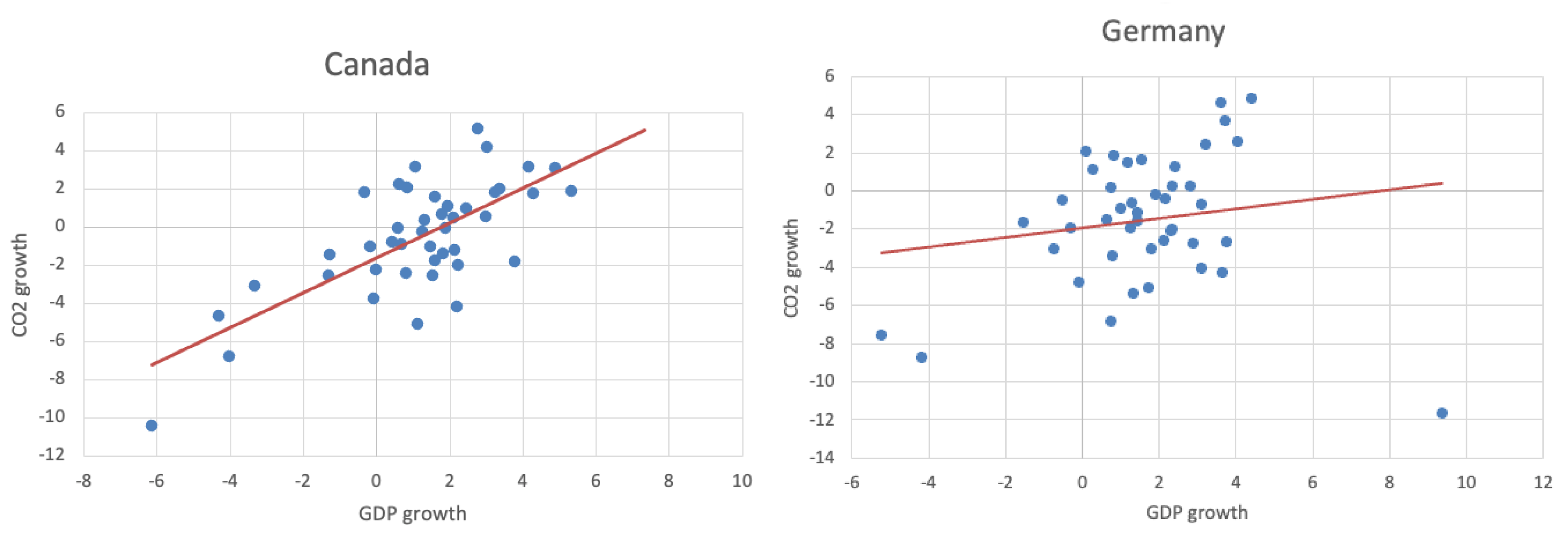
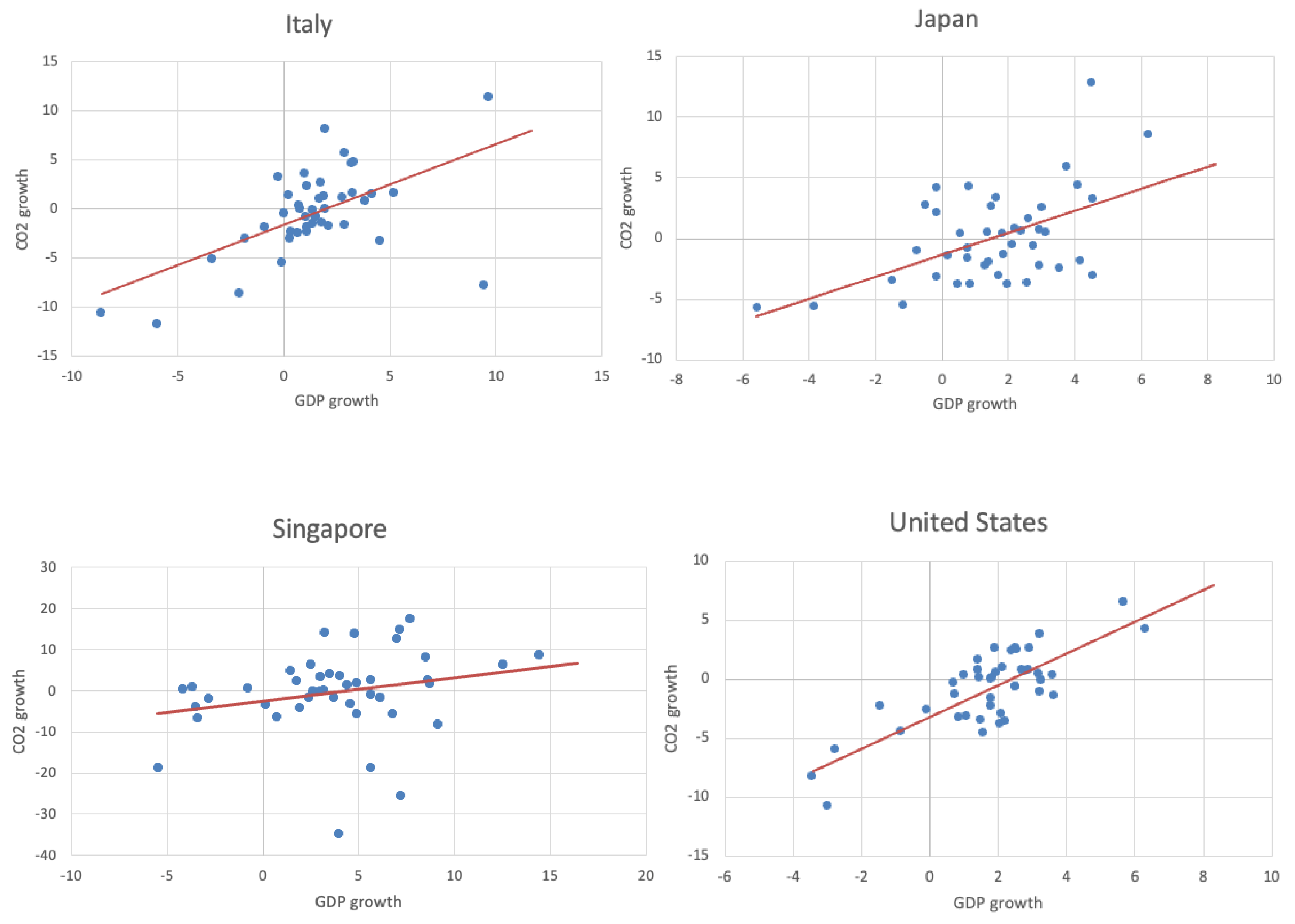
Figure 6.
Developing Economies Country-level per-capita GDP Growth vs. per-capita CO₂ Emissions Growth scatterplots (1980–2022).
Figure 6.
Developing Economies Country-level per-capita GDP Growth vs. per-capita CO₂ Emissions Growth scatterplots (1980–2022).
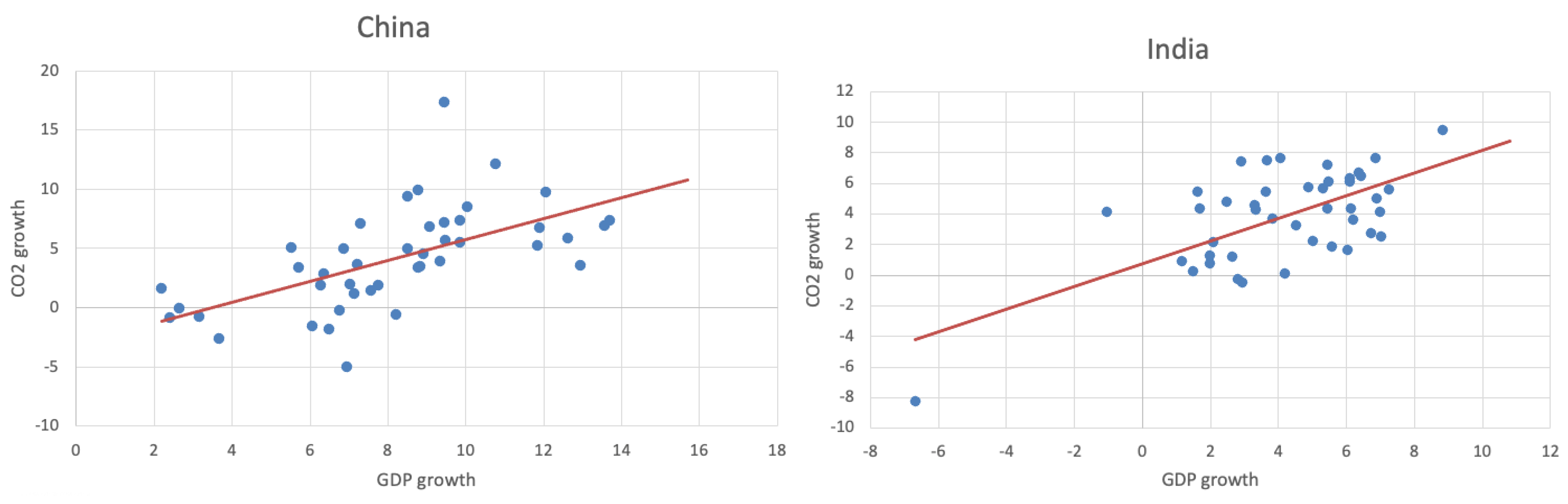
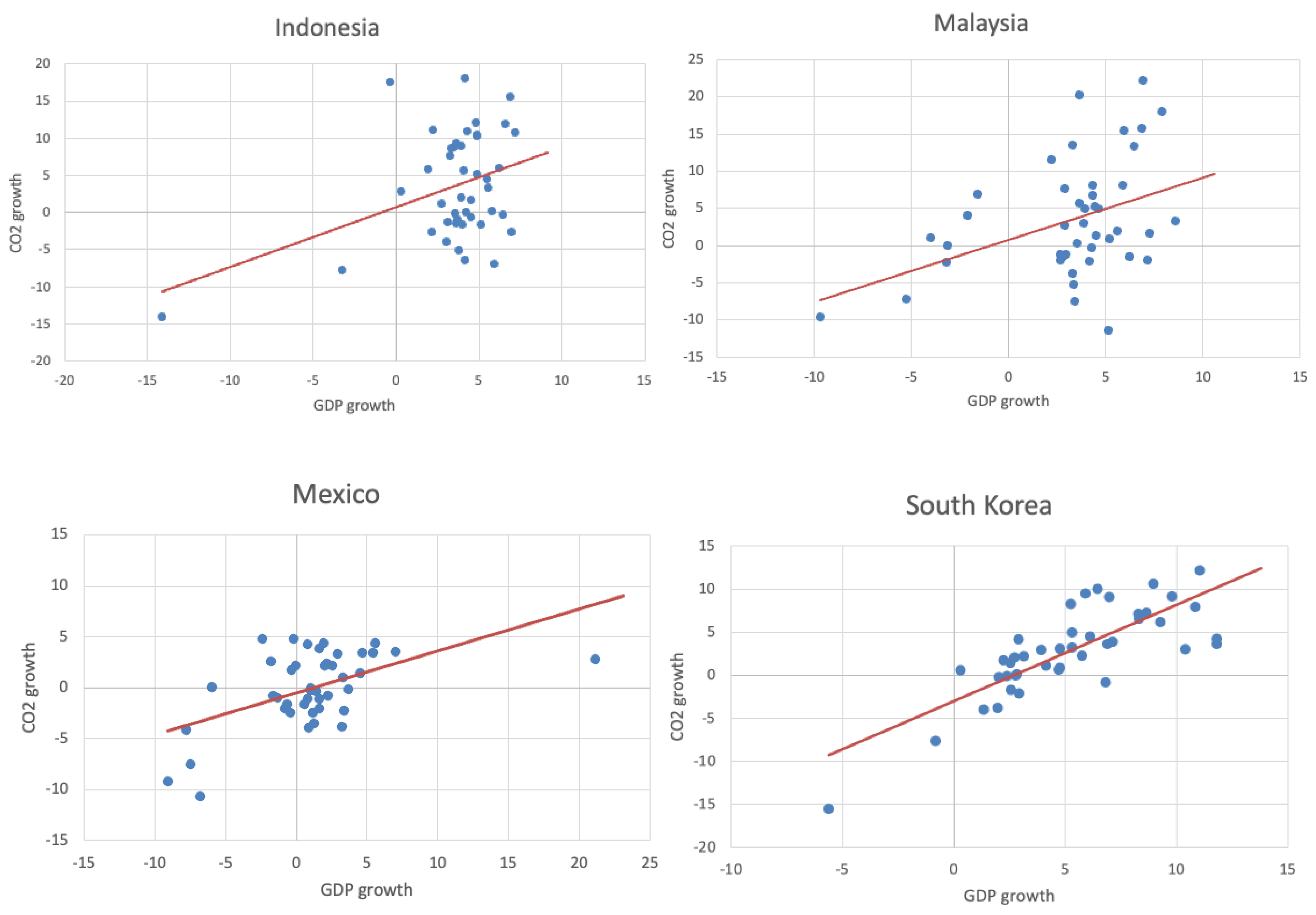
Figure 9.
Per-capita GDP Growth, GDP OLS, and GDP IV Results - Developed economies.
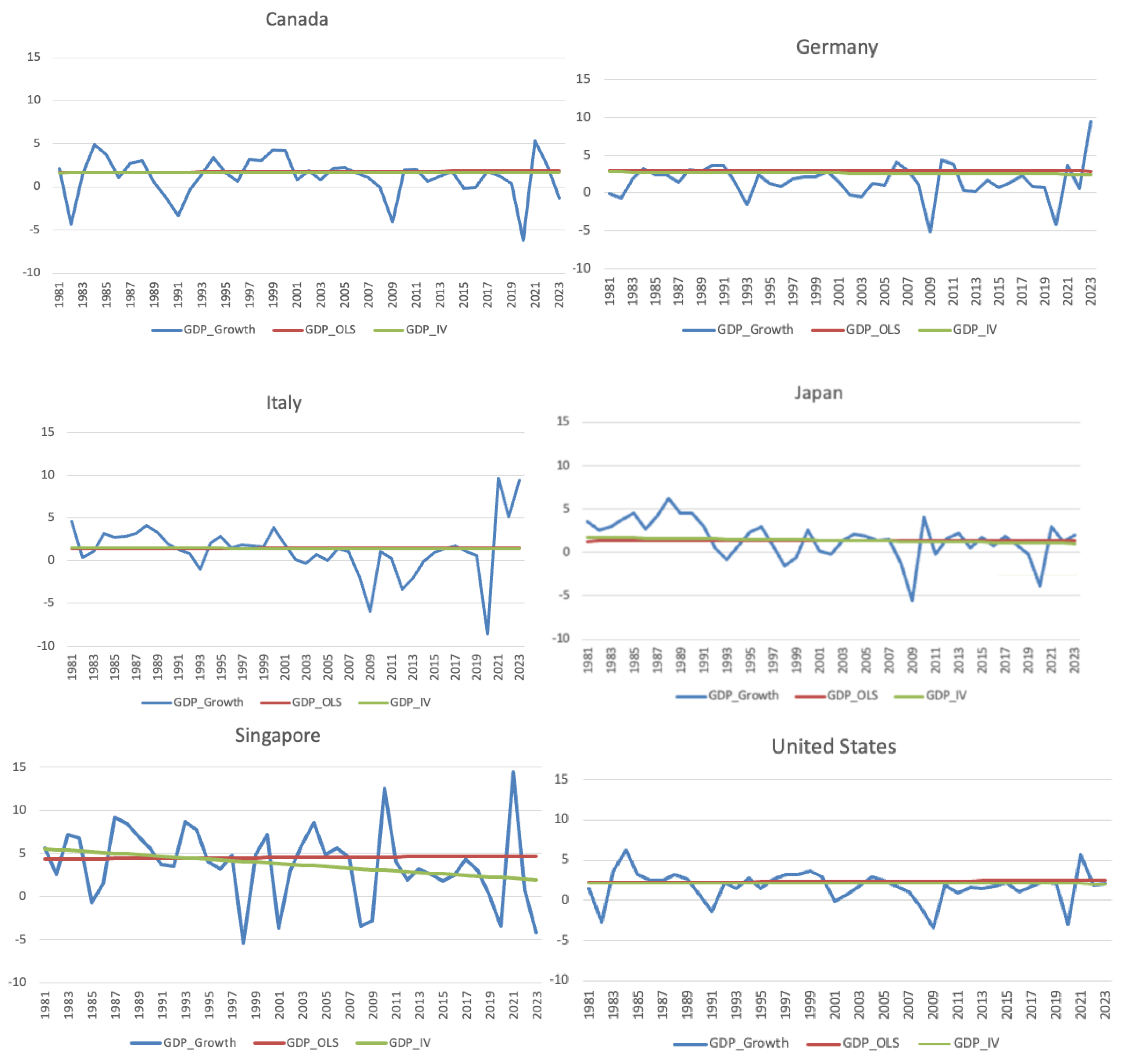
Figure 10.
Per-capita GDP Growth, GDP OLS, and GDP IV Results - Emerging economies.
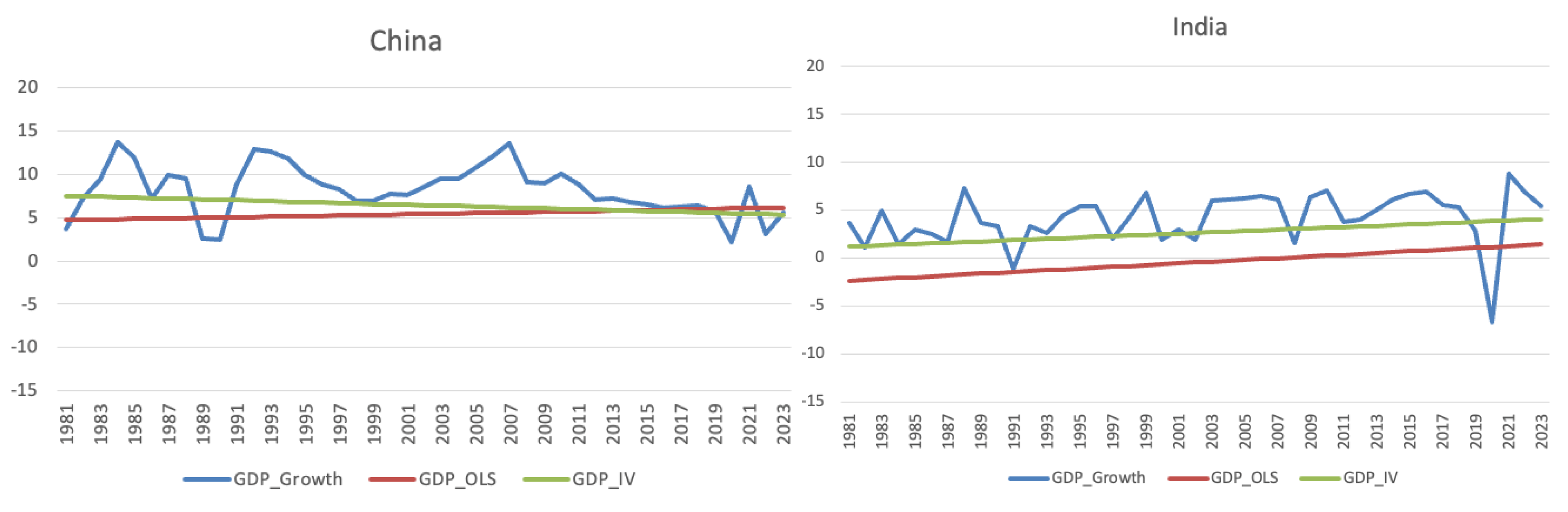
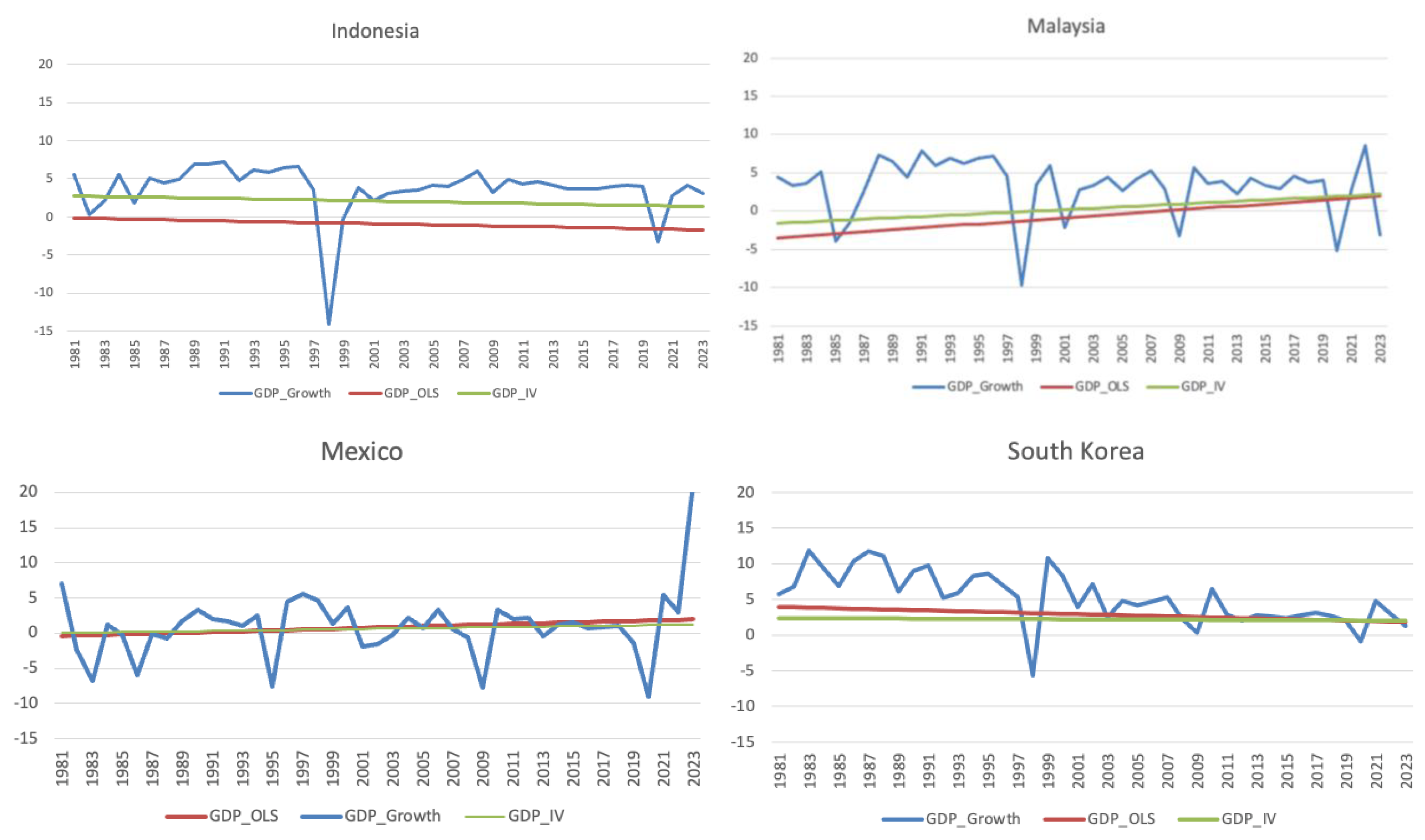
Figure 11.
Distributions of the Sustainable Growth Gap for Developed Economies: OLS vs. IV Estimates.
Figure 11.
Distributions of the Sustainable Growth Gap for Developed Economies: OLS vs. IV Estimates.
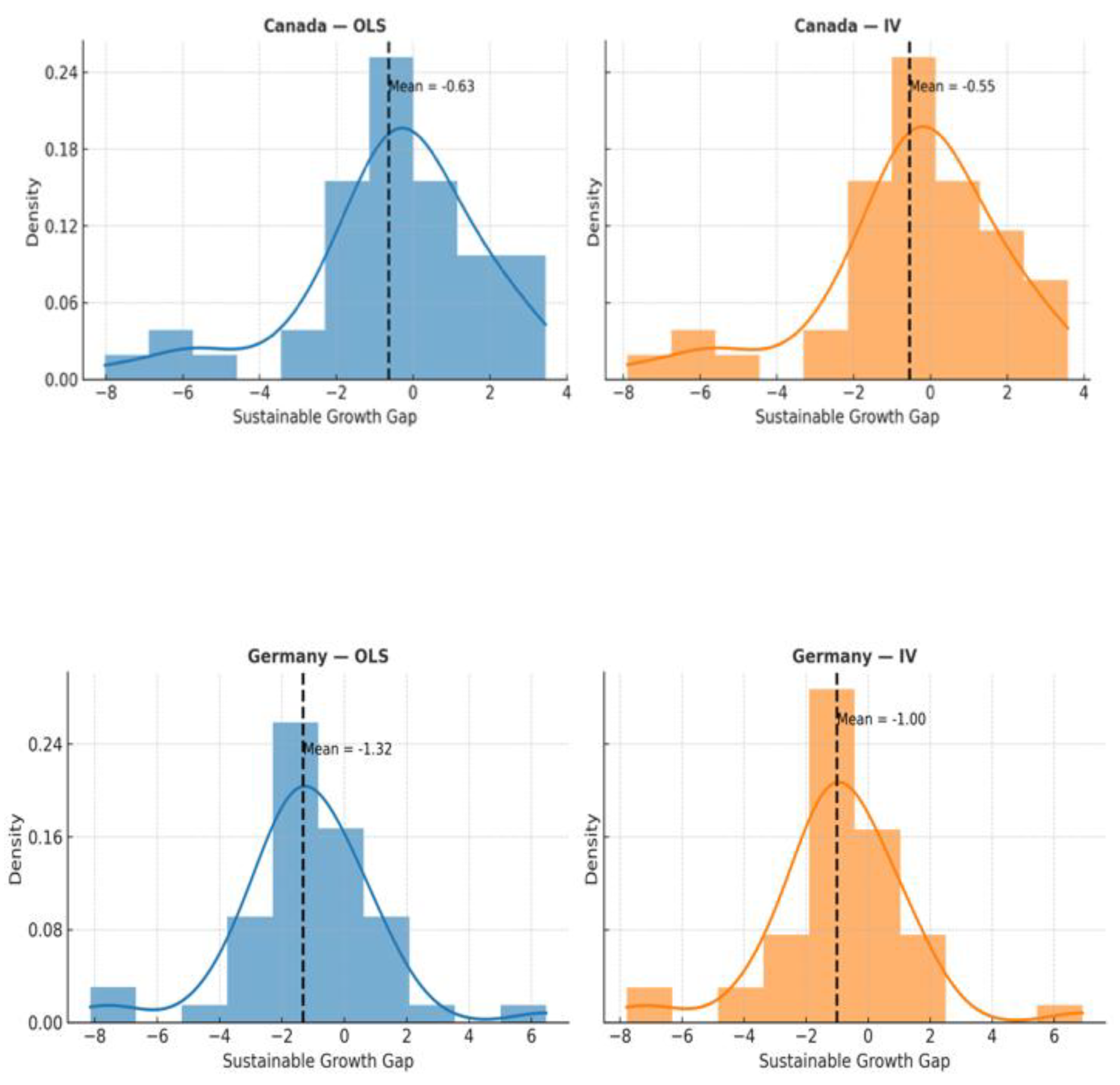
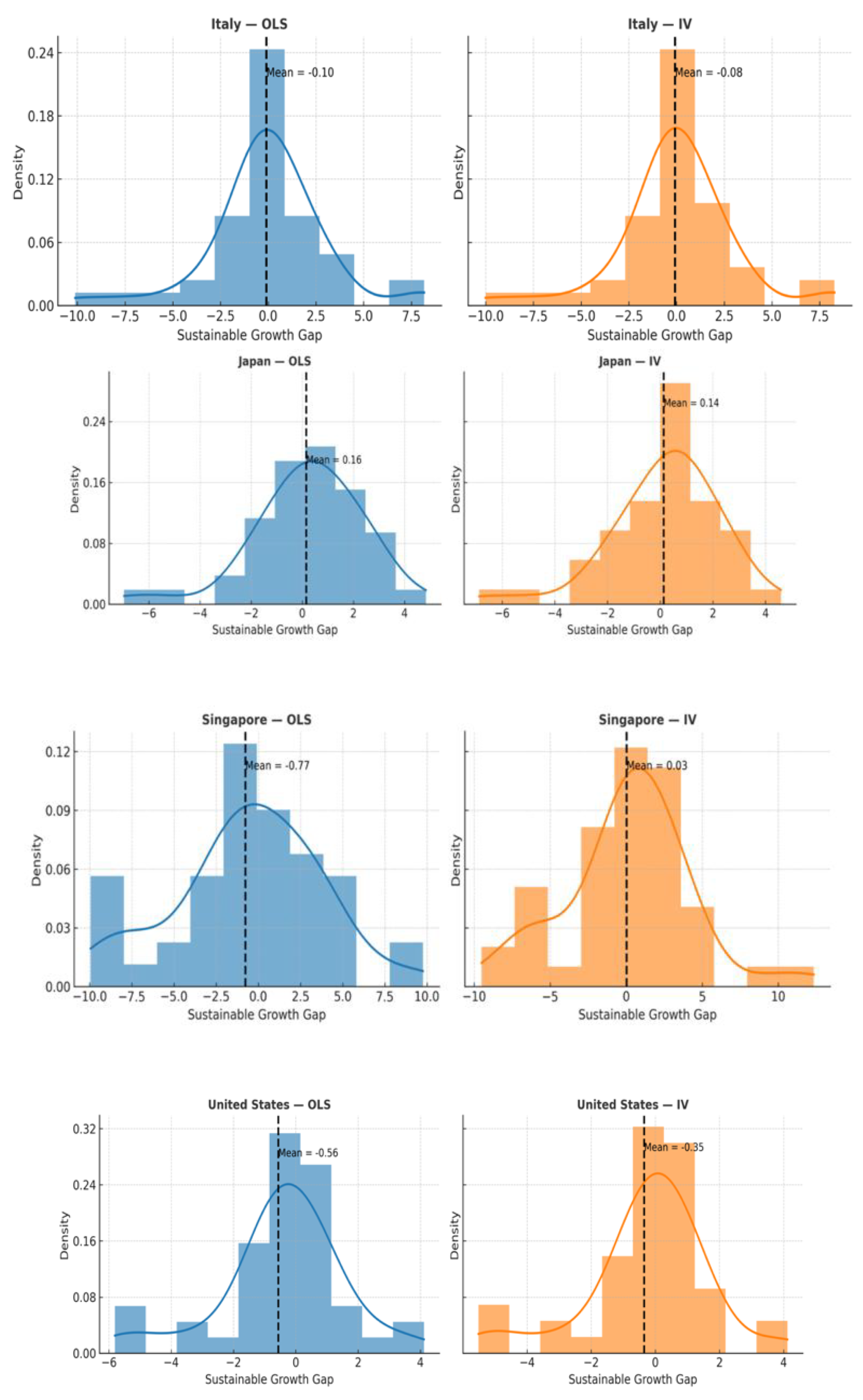
Figure 12.
Distributions of the Sustainable Growth Gap for Emerging Economies: OLS vs. IV Estimates.
Figure 12.
Distributions of the Sustainable Growth Gap for Emerging Economies: OLS vs. IV Estimates.
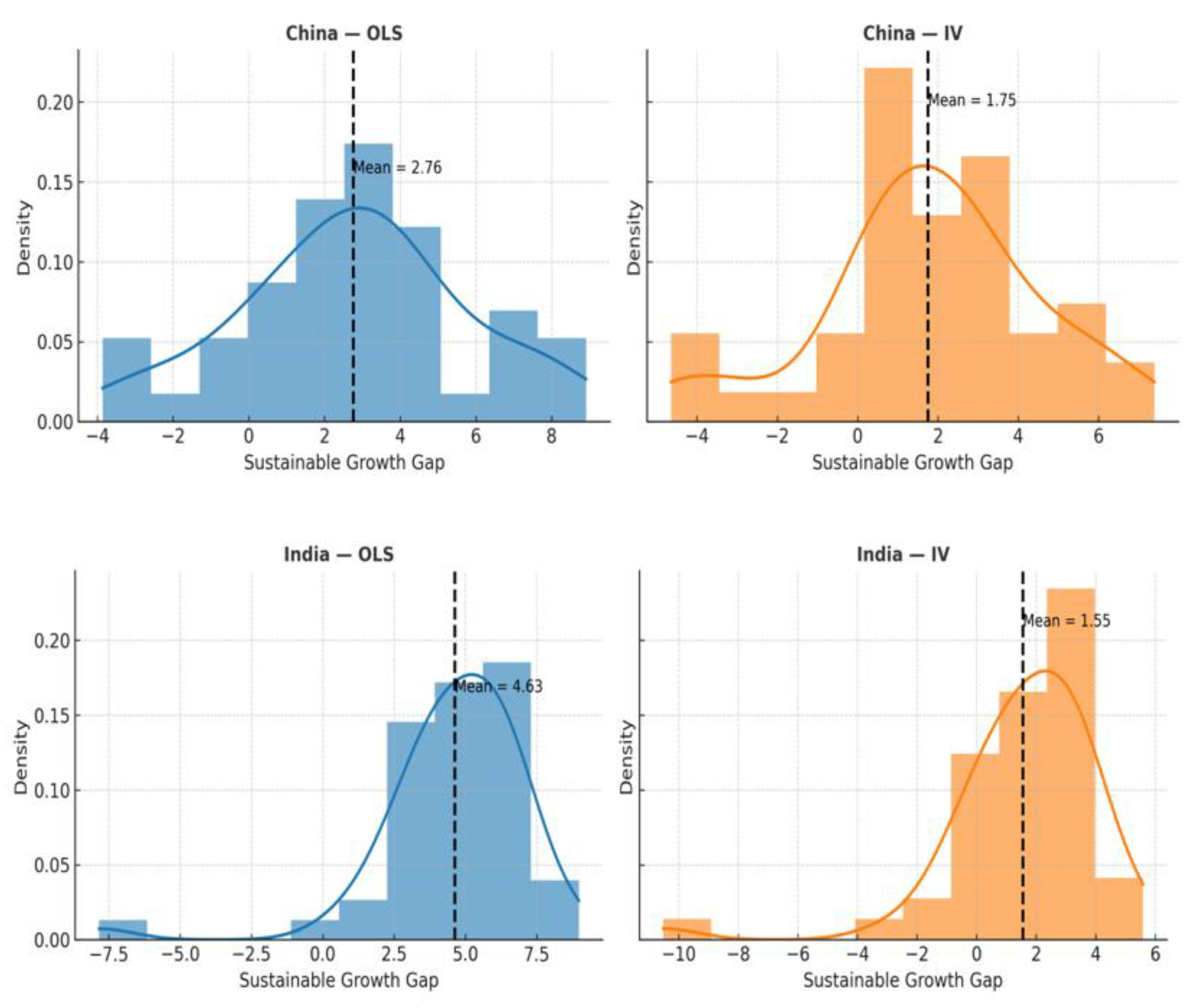
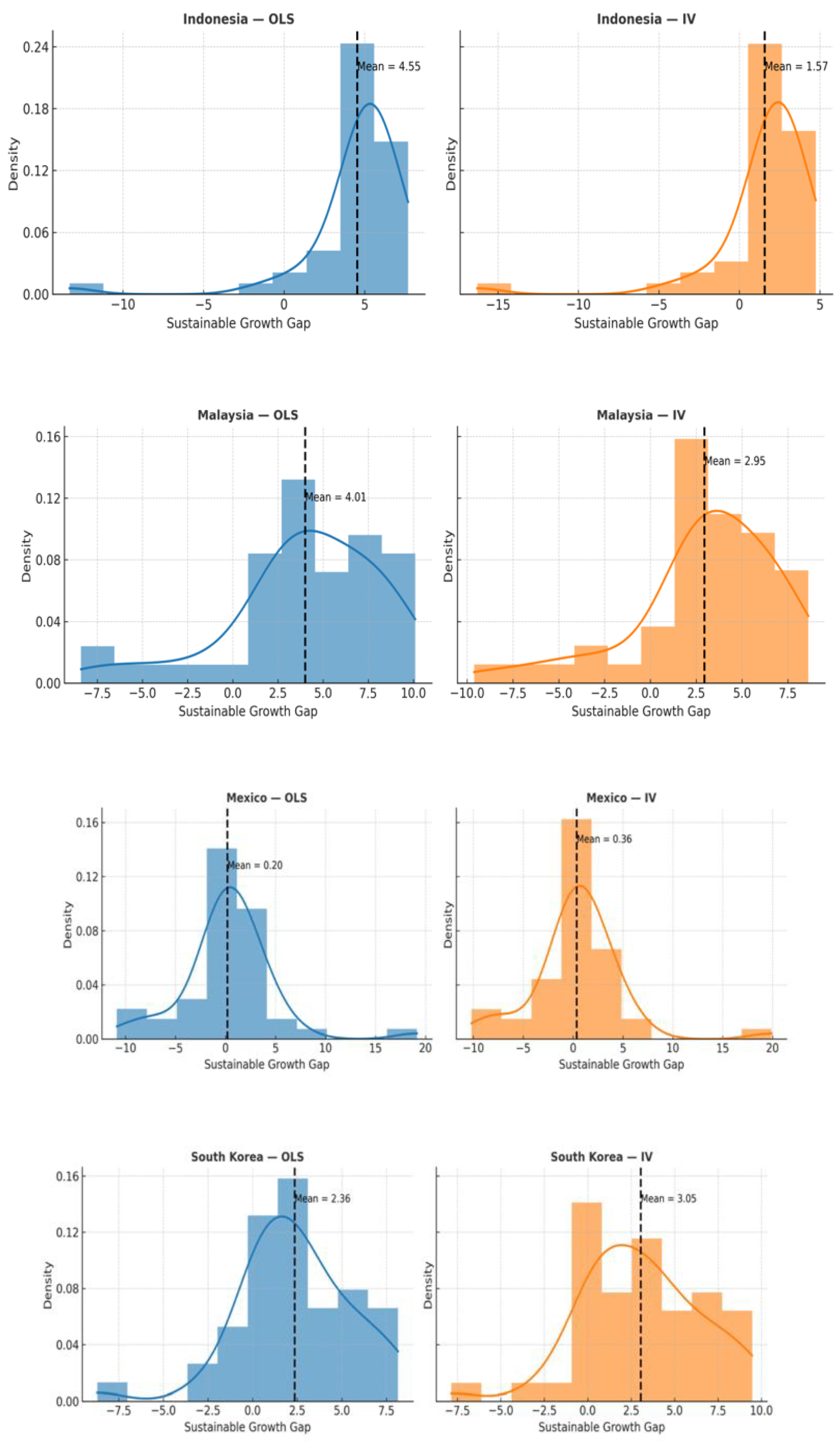

Table 2.
OLS Parameter Estimates of Relation Between per-capita GDP Growth on per-capita CO₂ Emissions Growth (1980–2022).
Table 2.
OLS Parameter Estimates of Relation Between per-capita GDP Growth on per-capita CO₂ Emissions Growth (1980–2022).
| OLS Parameter Estimates | ||||
|---|---|---|---|---|
| Country | GDP Growth | Std.err | Trend | Std.err |
| Canada | 0.9268 | 0.143 | -0.0039 | 0.028 |
| China | 0.9498 | 0.195 | 0.0329 | 0.046 |
| Germany | 0.8574 | 0.214 | 0.0014 | 0.034 |
| India | 0.8157 | 0.135 | -0.0732 | 0.030 |
| Indonesia | 0.8120 | 0.312 | 0.0292 | 0.088 |
| Italy | 1.1588 | 0.157 | -0.0025 | 0.037 |
| Japan | 0.9176 | 0.259 | -0.0001 | 0.047 |
| Malaysia | 0.8324 | 0.308 | -0.1079 | 0.092 |
| Mexico | 0.6255 | 0.126 | -0.0348 | 0.037 |
| Singapore | 0.6203 | 0.383 | -0.0051 | 0.130 |
| South Korea | 1.2377 | 0.182 | 0.0628 | 0.054 |
| United States | 1.3362 | 0.162 | -0.0110 | 0.026 |
Table 3.
IV Parameter Estimates of Relation Between per-capita GDP Growth on per-capita CO₂ Emissions Growth (1980–2022).
Table 3.
IV Parameter Estimates of Relation Between per-capita GDP Growth on per-capita CO₂ Emissions Growth (1980–2022).
| IV Estimates | ||||
|---|---|---|---|---|
| Country | GDP Growth | Std.err | Trend | Std.err |
| Canada | 1.0726 | 0.230 | -0.0013 | 0.027 |
| China | 2.2961 | 1.010 | 0.1189 | 0.091 |
| Germany | 1.0849 | 0.293 | 0.0080 | 0.034 |
| India | 2.4376 | 3.032 | -0.1653 | 0.183 |
| Indonesia | 2.3609 | 1.001 | 0.0775 | 0.111 |
| Italy | 1.1263 | 0.226 | 0.0180 | 0.037 |
| Japan | 1.1263 | 0.427 | 0.0180 | 0.055 |
| Malaysia | 1.1184 | 2.219 | -0.1020 | 0.101 |
| Mexico | 1.5240 | 1.973 | -0.0419 | 0.056 |
| Singapore | -2.0690 | 1.854 | -0.1770 | 0.220 |
| South Korea | 0.9590 | 4.652 | 0.0084 | 0.909 |
| United States | 2.0957 | 0.363 | 0.0068 | 0.032 |
Table 4.
OLS and IV Estimates of Sustainable Growth Gap for Developed and Emerging Economies (1980–2022).
Table 4.
OLS and IV Estimates of Sustainable Growth Gap for Developed and Emerging Economies (1980–2022).
| Sustainable Growth Gap – Selected Countries: Average and Standard Deviation: 1980-2022 | ||||||
|---|---|---|---|---|---|---|
| OLS | IV | Null Hypothesis Mean = 0 OLS |
Null Hypothesis Mean = 0 IV |
|||
| Country | Mean | STD | Mean | STD | ||
| Canada | -0.63 | 0.36 | -0.55 | 0.36 | -1.73 | -1.52 |
| China | 2.76 | 0.47 | 1.75 | 0.42 | 5.92 | 4.14 |
| Germany | -1.32 | 0.35 | -1.00 | 0.35 | -3.78 | -2.86 |
| India | 4.63 | 0.40 | 1.55 | 0.40 | 11.52 | 3.90 |
| Indonesia | 4.55 | 0.51 | 1.57 | 0.51 | 8.85 | 3.05 |
| Italy | -0.10 | 0.48 | -0.08 | 0.47 | -0.21 | -0.17 |
| Japan | 0.16 | 0.34 | 0.14 | 0.32 | 0.48 | 0.44 |
| Malaysia | 4.01 | 0.66 | 2.95 | 0.62 | 6.12 | 4.74 |
| Mexico | 0.20 | 0.71 | 0.36 | 0.72 | 0.28 | 0.50 |
| Singapore | 2.76 | 0.66 | 1.75 | 0.64 | 4.17 | 2.75 |
| South Korea | 2.76 | 0.50 | 1.75 | 0.54 | 5.56 | 3.22 |
| United States | 2.76 | 0.29 | 1.75 | 0.29 | 9.36 | 6.02 |
Disclaimer/Publisher’s Note: The statements, opinions and data contained in all publications are solely those of the individual author(s) and contributor(s) and not of MDPI and/or the editor(s). MDPI and/or the editor(s) disclaim responsibility for any injury to people or property resulting from any ideas, methods, instructions or products referred to in the content. |
© 2026 by the authors. Licensee MDPI, Basel, Switzerland. This article is an open access article distributed under the terms and conditions of the Creative Commons Attribution (CC BY) license (http://creativecommons.org/licenses/by/4.0/).
Copyright: This open access article is published under a Creative Commons CC BY 4.0 license, which permit the free download, distribution, and reuse, provided that the author and preprint are cited in any reuse.


