

Submitted:
10 March 2026
Posted:
13 March 2026
You are already at the latest version
Abstract
This study presents a monitoring system designed as an integrated surveillance and decision support tool for the terrestrial and the ocean environments. The developed system integrates in situ ocean sensor for monitoring purposes as well as a real-time communication tool for data transfer combined with a power generating module to sustain power for all modules. The system is applied for a period of around six months in different seasons to detect, identify gradients of radioactivity in the atmosphere. The gross gamma-ray intensity as detected by the system was interpreted in qualitative manner according to the rainfall events. The background gamma-ray spectra during dry periods for different seasons are also discussed in terms of seasonality. The results of the analysis offer actionable insights through existing mechanisms to support authorities in rapid response and policy planning related to marine radioactivity issues.
Keywords:
radioactivity
; near real-time transmission
; continuous monitoring
; rainfall
1. Introduction
Marine pollution poses a significant threat to ocean ecosystems, human health, and coastal economies, necessitating effective monitoring and timely decision-making. As concerns environmental radioactivity monitoring, plays a critical role in assessing both natural and anthropogenic radiation levels to protect ecosystems and to ensure public health through rapid response in cases of radiological incidents. Traditional monitoring approaches often rely on periodic sample collection and laboratory analysis, which can be time-consuming, costly, and limited in temporal resolution, thereby delaying detection and decision-making processes. The In-situ method for continuous monitoring and surveillance of the marine environment in terms of radioactivity has been used the last years in a continuous basis and proved to be an efficient method in applications where the levels of radioactivity are above a certain threshold [1,2,3,4,5,6,7,8,9,10].
Real-time or near real-time monitoring systems provide continuous data acquisition and immediate reporting, enabling more effective surveillance and timely interventions in environmental radiation management [4,5,6]. Such systems have been increasingly developed and deployed in various contexts, including marine and terrestrial environments, to continuously track radionuclide concentrations and support emergency responses.
Recent advances in embedded computing and wireless communications have facilitated the creation of compact, low-cost monitoring platforms that integrate radiation sensors with intelligent data processing and communication modules. Single board computers such as Raspberry Pi and similar microprocessor platforms paired with cellular modems or other wireless interfaces (e.g., GPRS, LoRa, IoT frameworks) have been used successfully in environmental monitoring applications due to their flexibility, affordability, and ability to support real-time data transmission to remote servers or decision support systems [4]. These approaches have been demonstrated for various environmental parameters, including air and water quality, and form an expanding trend in real-time environmental sensing architectures leveraging IoT and edge processing concepts.
Building on this technological foundation, this research focuses on the development and application of a near real-time monitoring system based on a single board computer integrated with a cellular modem for continuous assessment of environmental radioactivity levels. The proposed system aims to combine on-site radiation detection, embedded data processing, and remote communication to enable timely data delivery and support surveillance and decision-making in contexts where rapid detection and immediate response to the operational center are essential. By leveraging modern embedded platforms and wireless connectivity, such a system can significantly enhance the capability for autonomous environmental monitoring, reduce operational costs, and improve the responsiveness of radiation surveillance infrastructures.
The purpose of this work is to develop, implement, and evaluate a near real-time environmental radioactivity monitoring system based on a single-board computer integrated with a cellular communication module. The system is designed to enable continuous on-site radiation measurements, embedded data processing, and reliable remote data transmission, addressing the limitations of conventional periodic monitoring approaches. The developed tool aims to enhance environmental radiation surveillance, support rapid decision-making, and offer a flexible, cost-effective solution suitable for long-term deployment in marine and other environmental monitoring contexts. In this work the tool is tested and validated for a period of six months in the area close to HCMR premises.
2. Materials and Methods
2.1. System Overview
The proposed system is a near real-time data acquisition and transmission platform designed to collect sensor data, save it locally, and transmit it over a cellular network to a remote server. The system is built around a Raspberry Pi 4 Model B single-board computer and a SIM7600X 4G HAT. The SIM7600X 4G HAT is a cellular modem, enabling operation in environments without fixed network infrastructure. The architecture follows a client–server model, where the embedded node operates as a client that initiates outbound connections to a backend server over the mobile network. The system is based on a Raspberry Pi 4 Model B single board computer, the SIM7600X 4G HAT and a KATERINA II radioactivity sensor.
2.2. Hardware Components
The architecture of the monitoring system consists of a communication box, a solar panel and the underwater radioactivity sensor. The communication unit contains the processing module (Raspberry Pi) together with its memory, the cellular modem for the data transfer as well a battery pack getting charge using its solar panel. The block diagram of the hardware components of the marine radioactivity monitoring system is given in Figure 1.
More specifically the processing unit consists of a Raspberry Pi 4 Model B and the cellular communication module (SIM7600X 4G HAT) which is connected to the Raspberry Pi via USB. The Raspberry Pi 4 Model B provides a quad-core ARM Cortex-A72 CPU, sufficient RAM for real-time data processing, and 4 native USB interfaces for peripheral integration. KATERINA-II sensor is connected to a USB port of the RPi. The device runs 32 bit Raspbian OS which is a Linux-based operating system and executes the data acquisition and the client communication software. The RPi unit has a Micro-SD card as non-volatile memory with capacitance of 128GB and 8 GB RAM.As concerns the module SIM7600X 4G HAT, it supports 4G LTE with automatic fallback to 3G (UMTS/HSPA) and 2G (GPRS/EDGE), ensuring robust connectivity in areas with variable network coverage. It enables wide-area wireless data transmission over public mobile networks. The SIM7600X 4G HAT is interfaced with the Raspberry Pi 4 via a USB connection, where it is recognized by the operating system as a network device. Data communication is performed over the Internet Protocol (IP), enabling the use of conventional networking protocols such as TCP/IP. From the application perspective, the cellular link behaves equivalently to a standard Ethernet or Wi-Fi connection, allowing transparent data transmission. An external LTE - Cellular Antenna is used. This antenna is used for Mobile Internet connectivity over LTE, UMTS, or GPRS networks. It operates over a wide frequency range corresponding to supported cellular bands. It is used for both transmission and reception. Its frequency range is: ~700 MHz – 2.6 GHz. The module operates with a Subscriber Identity Module (SIM) card issued by a mobile network operator, which authenticates the device and provides access to mobile Internet services.
The specific modem (SIM7600) was selected for its support of high data rates, low latency relative to earlier cellular technologies, and compatibility with embedded Linux systems. These characteristics make it suitable for real-time monitoring applications, including remote sensor networks and radiation measurement systems. As concerns the PC running Server communication software, it has a static public IP address, and the server communication software listens at a specific port for client connection requests. The solar panel is a 30 W monocrystalline solar panel while its charge controller is the device that regulates the power coming from the solar panel to the battery in order to charge it safely, efficiently, and without damage. The charge controller that was used is an MPPT 12 V, 10 A digital charge controller with 99.9% tracking efficiency and 97% conversion efficiency. As concerns the power of the system, only an AGM battery with a capacity of 42 Ah was connected to the controller of the photovoltaic module.
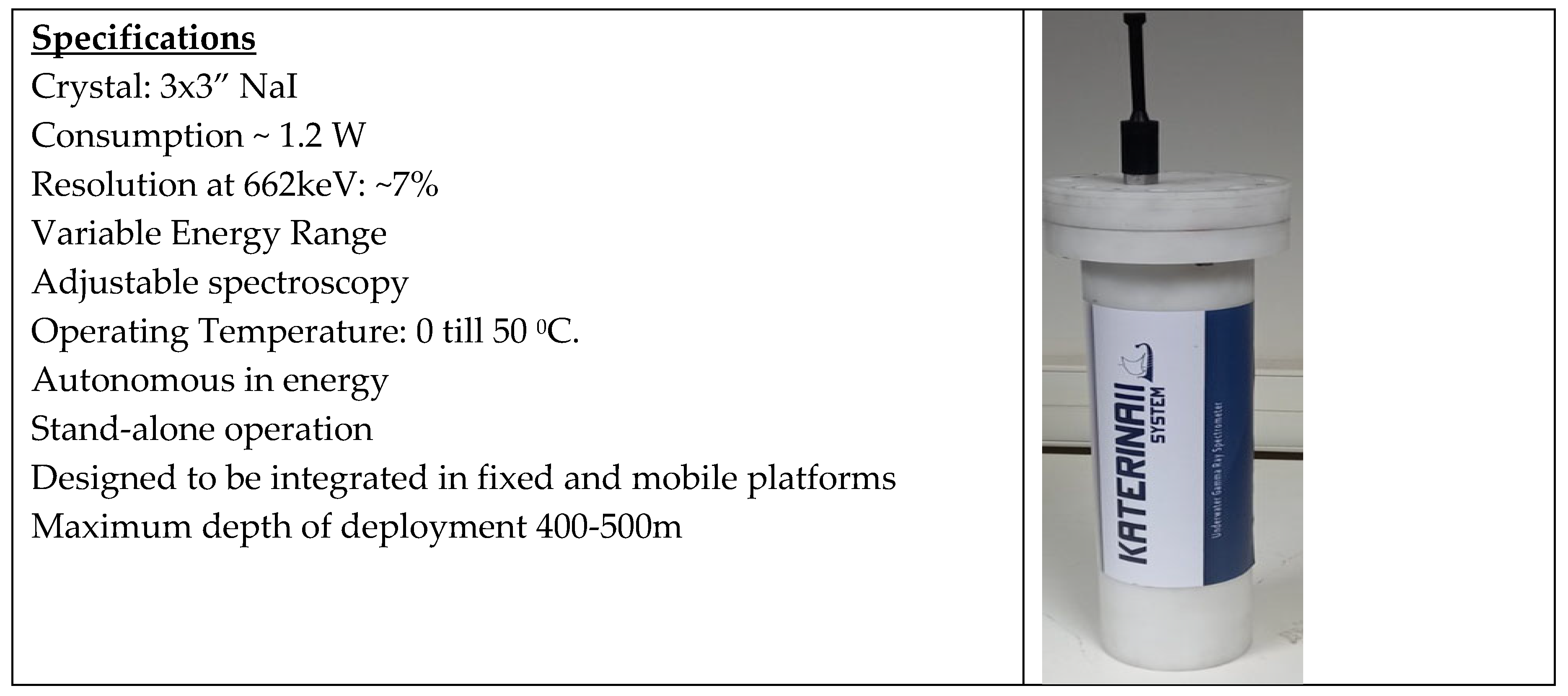
The detection system that was integrated into the monitoring tool is the KATERINA II sensor which has been deployedrecently in various applications in Mediterranean and Caspian seas [11,12,13]. The specifications of the KATERINA II sensor are the following:
Figure 2.
Key specifications of the underwater radioactivity sensor (KATERINA II) together with a photo.
Figure 2.
Key specifications of the underwater radioactivity sensor (KATERINA II) together with a photo.
2.3. Software Components
The operating system of the Raspberry Pi runs Raspberry Pi 32 bits OS (Linux), chosen for its stability, hardware support, and extensive ecosystem. System services are configured to enable automatic startup of the application at boot time. As concern the client communication software installed RPi, the main application is implemented in Java, selected for its robustness, networking libraries, and portability. The software performs a) Sensor data acquisition, b) Local saving of data, c) Time stamping using system time synchronized via NTP, d) Network communication with the remote server. The client communication software connects to the server software which runs on a computer at HCMR premises at Anavyssos-Attica Greece and has static public IP address. The communication is based on TCP/IP sockets. The system is smart and designed for open sea, since there is an algorithm inside the client software that checks the Mobile Internet connectivity. If there is no 4G connection active, it uses GPRS technology in order to transmit the data to the operational center. The RPi unit communicates with KATERINA II sensor via USB connection and controls (start/stop) the sensor as well as clears the memory and then restarts to gather spectra from the sensor. In the continuity saves the data on its non-volatile memory with a time stamp as filename and tries to send them to the server.
The client communication software algorithm flowchart is plotted in Figure 3.
As concerns the Server Communication Software, it listens for incoming connection requests, accepts and checks if the password sent by the Client Communication Software is the same as the password in the Server Communication Software. If the password sent is the same, it creates a data file with filename according to the data received. After that receives the data and saves it at this file. The loop continues infinitely. The flowchart of the server communication software algorithm flowchart is plotted in Figure 4.
Moreover it is installed a free remote desktop software in order for the administrator to be able to connect to RPi unit and control-update the system. This remote desktop software allows users to connect to and control computers over the internet. It enables users to access files, run applications, and manage systems from anywhere in the world as if they were sitting in front of the remote computer. The desktop software is known for its fast performance, low latency, and secure encrypted connections. It is commonly used for remote support, system administration, and remote work. The administrator can also use the another free software in order to retrieve the data files in case that the Internet Connectivity was problematic and the near real time transmission of the data was not possible since the data are stored on the RPi’s non-volatile memory.
3. Results and Discussion
As described, the KATERINA II detection system was connected to the communication box for testing the operation of the complete system as well as the communication between the sensor and operational center at HCMR. The system was positioned at the HCMR area on a building roof for monitoring the radioactivity levels enriched into the atmosphere as well as in the rainfall. The monitoring period was during 31/1/2025.(winter) till July 20025 (summer).. Several exercises were implemented to optimize the stability of the system as function of temperature using modules to auto compensate the output voltage. The data transfer together with the power consumption were also optimized all over the acquisition period. Two typical background spectra (without rainfall) during different seasons are depicted in Figure 5.
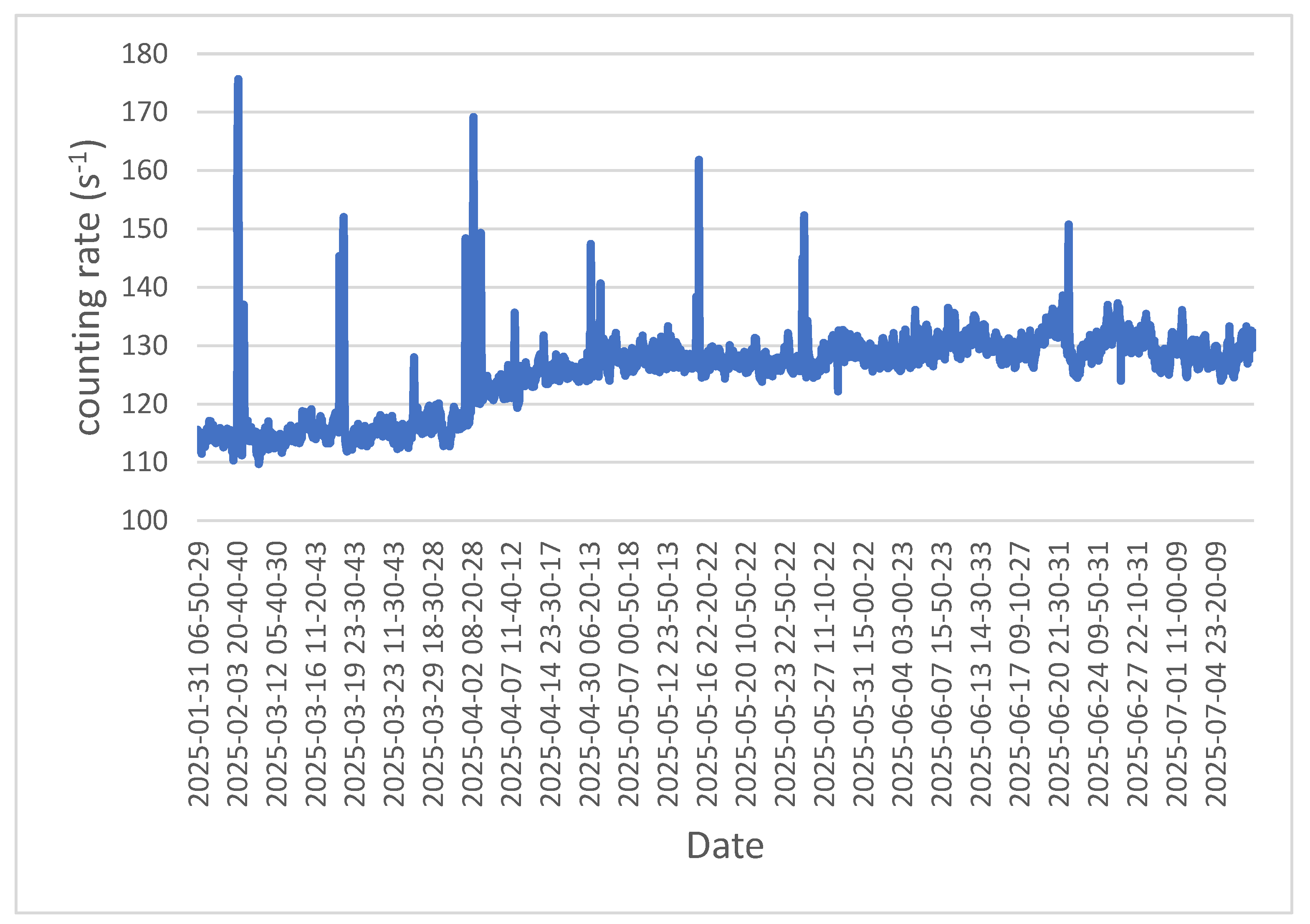
The quality control of the data was performed according to the lab-based spectra using reference sources. The time lag of the system was 10 min while the acquisition time was 9 min. A rapid result of the system is the gross gamma-ray intensity rate (by summing up all counts divided by the time lag). The gross gamma ray intensity rate is plotted as a function of time (date) in Figure 6 during the period of the experiment. The counting rate of the background varies from 115 counts per second till 130 counts per second exhibiting a relative difference of ~13 %.The difference of the increase of the background from January to May is mainly attributed to the season change since the hours of the day (sunny hours) is larger during spring time since the primary source of atmospheric gamma radiation is mainly produced by high-energy particles from space that interact with air molecules and produce secondary gamma rays.
The information which is given by the gross gamma-ray intensity of the detection system indicates and identifies the rainfalls that took place during the experimental period. The rainfall were identified by the increase of the counting rate of the gross gamma-ray intensity during the rainfall event. The maxima of the counting rate that indicate rainfall are 4/2/2025 (00:40:40) exhibiting a value of ~174 counts per second (cps). Other days with intense rainfall events are: 19/3/25 (148 cps), 28/3/25 (126 cps), 2/4/25 (169 cps), 7/4/25 (136 cps), 12/4/25 (131 cps), 30/4/25 (147 cps), 1/5/25 (141 cps), 16/5/25 (162 cps), 25/5/25 (161 cps), 21/6/25 (149 cps).
According to the analysis the main contribution is originated from the natural radionuclides of the 238U and 232Th progenies which are gamma-ray emitters. The most obvious energy peaks are the radon (214Pb, 214Bi) and thoron progenies (208Tl, 228Ac, 212Pb, 212Bi), which impinging to the detector active area. Rainfall contains natural radionuclides but it has also high absorption capability to attract particles in the atmosphere with considerable activity concentration of natural radionuclides. It is clearly seen in the spectrum the 214Pb and 214Bi energy peaks at 609 and 351 keV, respectively. Moreover, a slight peak at 2614 keV of 208Tl is also observed and the energy peaks at 911 and 968 keV of 228Ac (224Ra progeny).
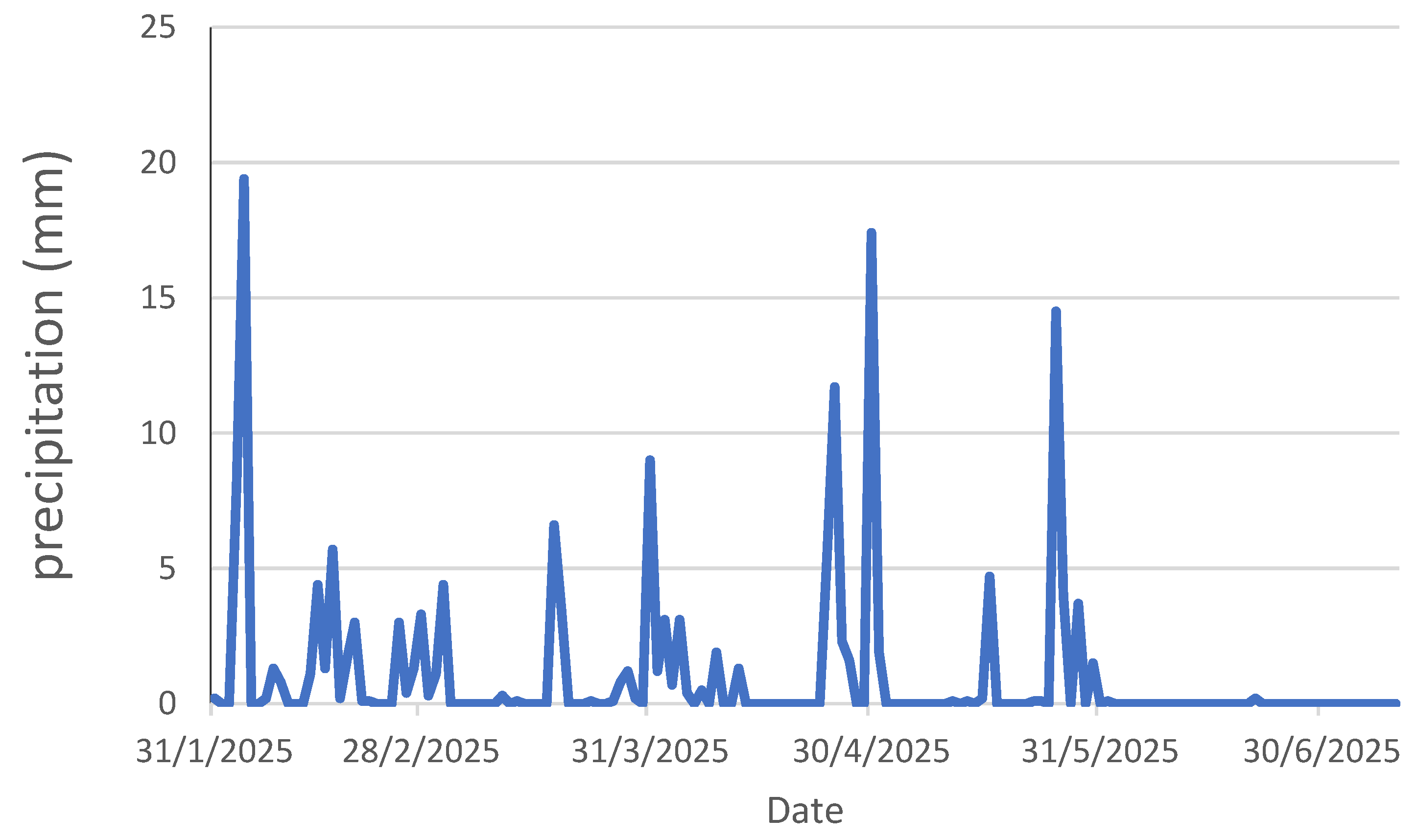
As concerns the precipitation in a daily basis the result is depicted during the acquisition period as shown in Figure 6.
The precipitation sum as downloaded from the Open-Meteo database during the dates indicate the rainfall events [15]. In qualitative manner the dates with rainfall impacts increase the gross gamma-ray intensity. This increase is not linear since many other parameters play crucial role for the process of detection (such as the rainfall speed, weather conditions etc).
Such spectra have been observed in literature in the sea [8] as well as in the atmosphere [16] by applying in-situ detection techniques indicating the main peaks of the radon progenies (as natural radionuclides enriched in rainwater). The analysis of the data was also performed using the software package SPECTRW [14]. However, the gross counting rate was an effective tracer to identify and correlate the precipitation process. It has to be highlighted that the velocity of the rainfall plays crucial role to the gross gamma-ray intensity as detected by the KATERINA II system since rapid rainfall create lower residence time on the detector and thus low counting rates of gamma-rays.
Figure 6.
The precipitation sum in a daily basis during the experimental period.
6. Summary
The KATERINA II detection system was installed at the HCMR premises to test the full operation of the system and its communication with the operational center. The monitoring period lasted from 31 January 2025 to July 2025, covering winter to summer conditions. During this period, the system continuously measured atmospheric gamma radiation and rainfall-related radioactivity. System performance was optimized through several technical adjustments, including improvements in temperature stability, automatic voltage compensation, data transmission, and power consumption. Background gamma-ray spectra recorded during dry periods showed seasonal variation corresponding to a relative increase of about 13% from winter to spring. This increase is mainly attributed to longer daylight hours and the interaction of cosmic radiation with atmospheric molecules, which produces secondary gamma rays. Rainfall events were clearly identified through temporary increases in gamma-ray counting rates, with several peaks (mainly radon progenies) recorded during the study period. The radioactivity levels of rainfall were discussed with precipitation data during the same period. Although rainfall generally increases the detected gamma radiation, the relationship is not strictly linear, as factors such as rainfall intensity, duration, and meteorological conditions influence the detection process. For example, faster rainfall can produce lower measured gamma rates due to shorter residence time of rainwater on the detector surface.
Overall, the results demonstrate that the gross gamma-ray counting rate is an effective indicator for identifying rainfall events and monitoring atmospheric radioactivity, confirming the reliability of the KATERINA II system for in-situ environmental radiation monitoring. The cost-effective solution combined with the big data capacity was very helpful to improve the observation of gradients according to the experimental requirements and specifications also for monitoring 137Cs after a nuclear incidence in the aquatic systems. For instance, in the Hellenic Seas (e.g. Aegean Sea) the activity concentration of 137Cs is still present (although in low concentrations) due to nuclear tests as well as due to Chernobyl accident [17] and such system can provide in a cost-effective manner continuously gamma-ray spectra.
The benefits of applying this communication system is the lack of maintenance (since the system starts/stop remotely and thus frequent visits are not necessary), the low cost, the capability of the system to be integrated in fixed and mobile stations as well as the smart technology for rapid analysis. The perspectives of the application of the proposed system (sensor and communication system) may integrate available in the market low cost ocean sensors to operate at the sea for assessing the state of the marine environment. The application of the developed tool is designed to support alarm and warning applications as well as decision support tools in energy plants as well as in the areas to provide services to national and international authorities for civil protection.
Author Contributions
“Conceptualization, C.T. and S.A.; methodology, C.T.; software, S.A.; validation, C.T., S.A.; formal analysis, C.T.; investigation, S.A.; resources, CT.; data curation, S.A.; writing—original draft preparation, S.A.; writing—review and editing, CT.; visualization, S.A.; supervision, C.T.; project administration, C.T.; funding acquisition, C.T. All authors have read and agreed to the published version of the manuscript.
Funding
This research received no external funding.
Data Availability Statement
Data is unavailable due to privacy issues at this level.
Acknowledgments
The authors would like to acknowledge the EU project BRIDGE-BS for supporting the development of the tool. The authors would also like to thank Dr. George Triantafyllou(as PI of BRIDGE-BS project) and Dr, Dionisis Patiris for the fruitful discussions about the data.
Conflicts of Interest
The authors declare no conflicts of interest.
Abbreviations
The following abbreviations are used in this manuscript:
| FEPE | Full Energy Photopeak Efficiency |
| CPS | Counts per second |
| RPi | Raspberry Pi |
References
- Lee, M.S.; Kim, S.M.; Jang, M.; Baek, S.; Lim, J.-M. Real-time wireless marine radioactivity monitoring system using a SiPM-based mobile gamma spectroscopy mounted on an unmanned marine vehicle. Nuclear Engineering and Technology 2023, 55(6), 2158–2165. [Google Scholar] [CrossRef]
- Joung, S.; Ji, Y.-Y.; Choi, Y. Development of a Floating Radiation Measurement System for Underwater Readings in the East Sea of Korea. Journal of Coastal Research 2023, 39(2), 384–393. [Google Scholar] [CrossRef]
- Sun, Z.; Zhou, F.; Cao, Z.; Cao, P.; An, Q. A compact NaI(Tl) with avalanche photodiode gamma spectrometer for in situ radioactivity measurements in marine environment. Review of Scientific Instruments 2021, 92(3), 033301. [Google Scholar] [CrossRef] [PubMed]
- Alexakis, S.; Tsabaris, C. Design of an interactive cellular system for the remote operation of ocean sensors: A pilot study integrating radioactivity sensors. Journal of Marine Science and Engineering 2021, 9, 910. [Google Scholar] [CrossRef]
- Lee, S.; Lee, J.S.; Kim, H.S.; Seo, J.-M.; Kim, S.M. In-situ remotely controllable ocean radiation monitoring system. Journal of Instrumentation 2020, 15, P06027. [Google Scholar] [CrossRef]
- Wu, B.; Zhang, Y.; Yuan, D.; Liu, D.; Hou, G. Design of embedded software for in-situ monitoring system of marine radioactivity based on a buoy. Chinese Control Conference, 2019; 6315–6319, p. 8866680. [Google Scholar]
- Naumenko, A.; Andrukhovich, S.; Kabanov, V.; Shoukavy, D.; Shpak, P. Autonomous NaI(Tl) gamma-ray spectrometer for in situ underwater measurements. In Nuclear Instruments and Methods in Physics Research Section A Accelerators Spectrometers Detectors and Associated Equipment; 2018; Volume 908, pp. 97–109. [Google Scholar]
- Pensieri, S.; Patiris, D.; Alexakis, S.; Tsabaris, C.; Bozzano, R. Integration of underwater radioactivity and acoustic sensors into an open sea near real-time multi-parametric observation system. Sensors 2018, 18, 2737. [Google Scholar] [CrossRef] [PubMed]
- Tsabaris, C.; Thanos, I. An underwater sensing system for monitoring radioactivity in the marine environment. In Mediterranean Marine Science; 2004; Volume 5, pp. 125–132. [Google Scholar]
- Keith, D.J.; Colton, D.; Lindsay, J.; Louft, H.; Stewart, L. New technology for conducting radiation hazard assessments: The application of the Underwater Radiation Spectral Identification System (URSIS) at the Massachusetts Bay Industrial Waste (U.S.A.). In Environmental Monitoring and Assessment; 1999; Volume 54, pp. 259–282. [Google Scholar]
- Witt, C.; Kopf, A. Submarine Groundwater Discharge in the Nice Airport Landslide Area. Journal of Marine Science and Engineering 2025, 13, 909. [Google Scholar] [CrossRef]
- Tsabaris, C.; Androulakaki, E.G.; Alexakis, S. An Optimized Quantification Method for Marine Radioactivity Measurements: Application in the Southern Caspian Sea Using the KATERINA Underwater γ-Spectrometer. Journal of Marine Science and Engineering 2023, 11, 725. [Google Scholar] [CrossRef]
- Tsabaris, C.; Zervakis, V.; Saitanis, S.; Alexakis, S.; Kioroglou, S. In Situ Radioactivity Measurements and Water Flow Characteristics of a Thermal Spring in Gera Gulf, Lesvos Island, Greece. Journal of Marine Science and Engineering 2023, 11, 801. [Google Scholar] [CrossRef]
- Kalfas, C.A.; Axiotis, M.; Tsabaris, C. SPECTRW: A software package for nuclear and atomic spectroscopy. Nuclear Instruments and Methods in Physics Research, Section A: Accelerators, Spectrometers, Detectors and Associated Equipment 2016, 830, 265–274. [Google Scholar] [CrossRef]
- Zippenfenig, P. Open-Meteo.com Weather API; Zenodo, 2023. [Google Scholar] [CrossRef]
- Patiris, D.; Tsabaris, C.; Livanou, K.; Roumelioti, S.K.; Alexakis, S. Atmospheric in situ gamma-ray spectrometry for precipitation investigation. Acta Geophysica 2023, 71, 2517–2533. [Google Scholar] [CrossRef]
- Tsabaris, C.; Zervakis, V.; Kaberi, H.; Delfanti, R.; Georgopoulos, D.; Lampropoulou, M.; Kalfas, C.A. 137Cs vertical distribution at the deep basins of the North and Central Aegean Sea, Greece. Journal of Environmental Radioactivity 2014, 132, 47–56. [Google Scholar] [CrossRef] [PubMed]
Figure 1.
Block diagram of the radioactivity monitoring system.
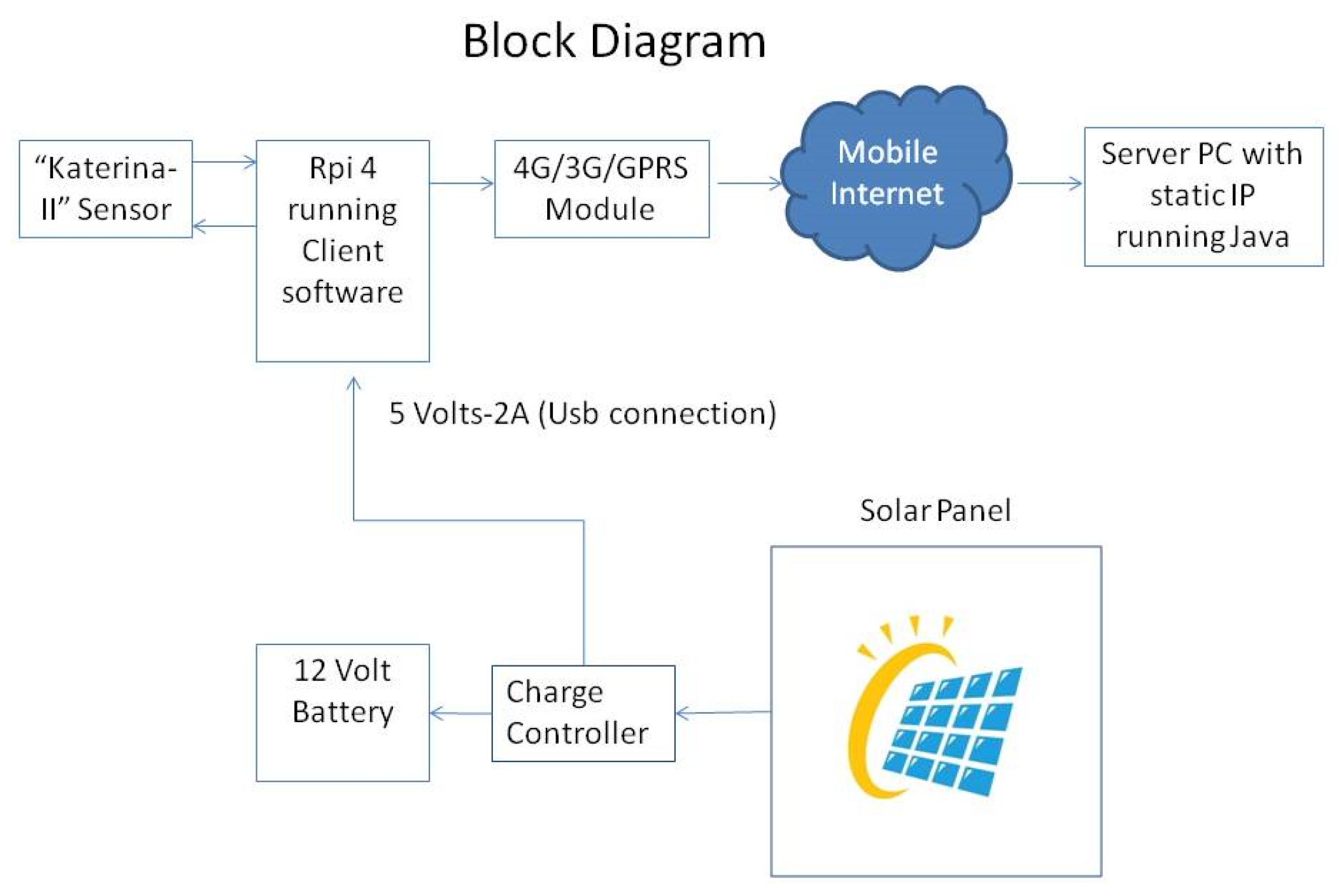
Figure 3.
The flowchart of the client communication software algorithm.
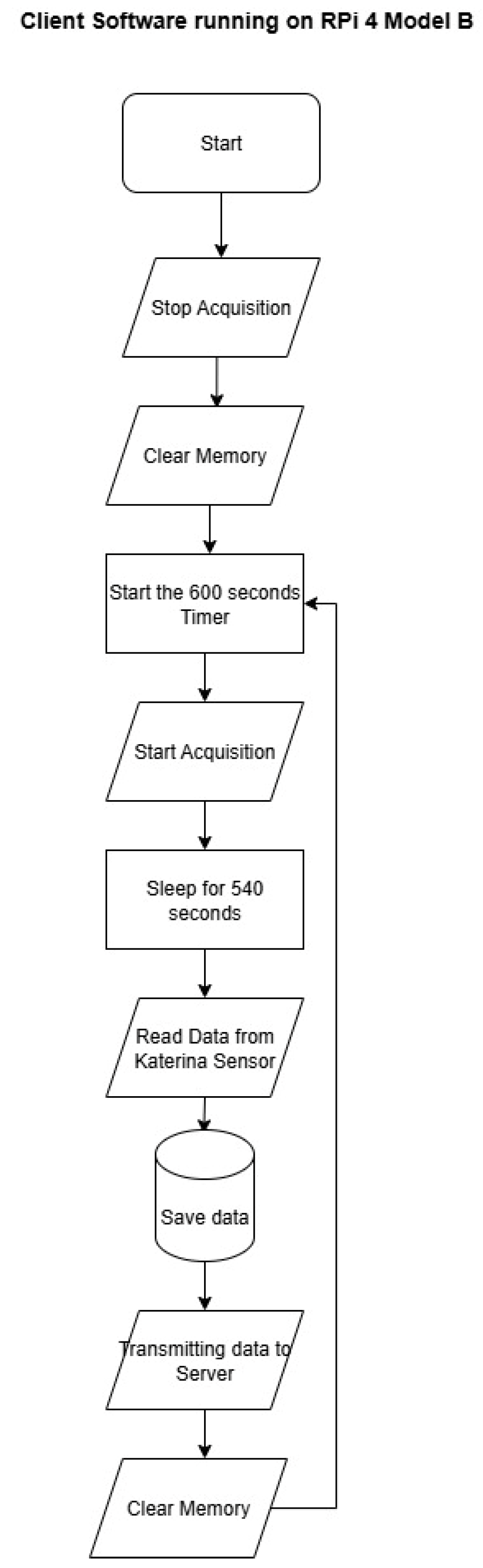
Figure 4.
The flowchart of the server communication software algorithm.
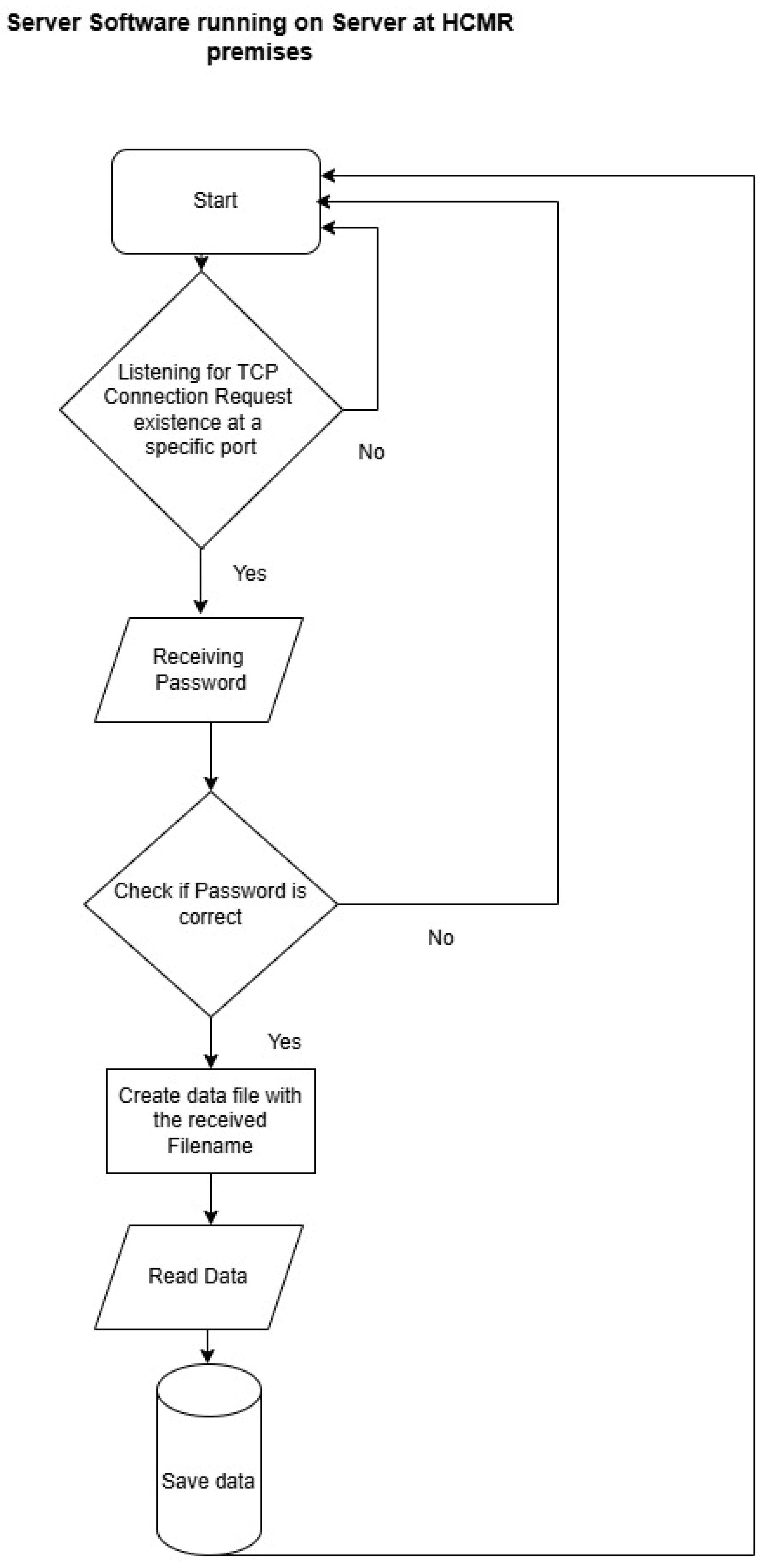
Figure 5.
Typical background spectra acquired by the KATERINA II detection system in two different months (January and May 2025) during dry periods (without rain fall). The background spectrum in Jan 25 is represented with the blue line, while the background spectrum in May 2025 is depicted with the grey line.
Figure 5.
Typical background spectra acquired by the KATERINA II detection system in two different months (January and May 2025) during dry periods (without rain fall). The background spectrum in Jan 25 is represented with the blue line, while the background spectrum in May 2025 is depicted with the grey line.
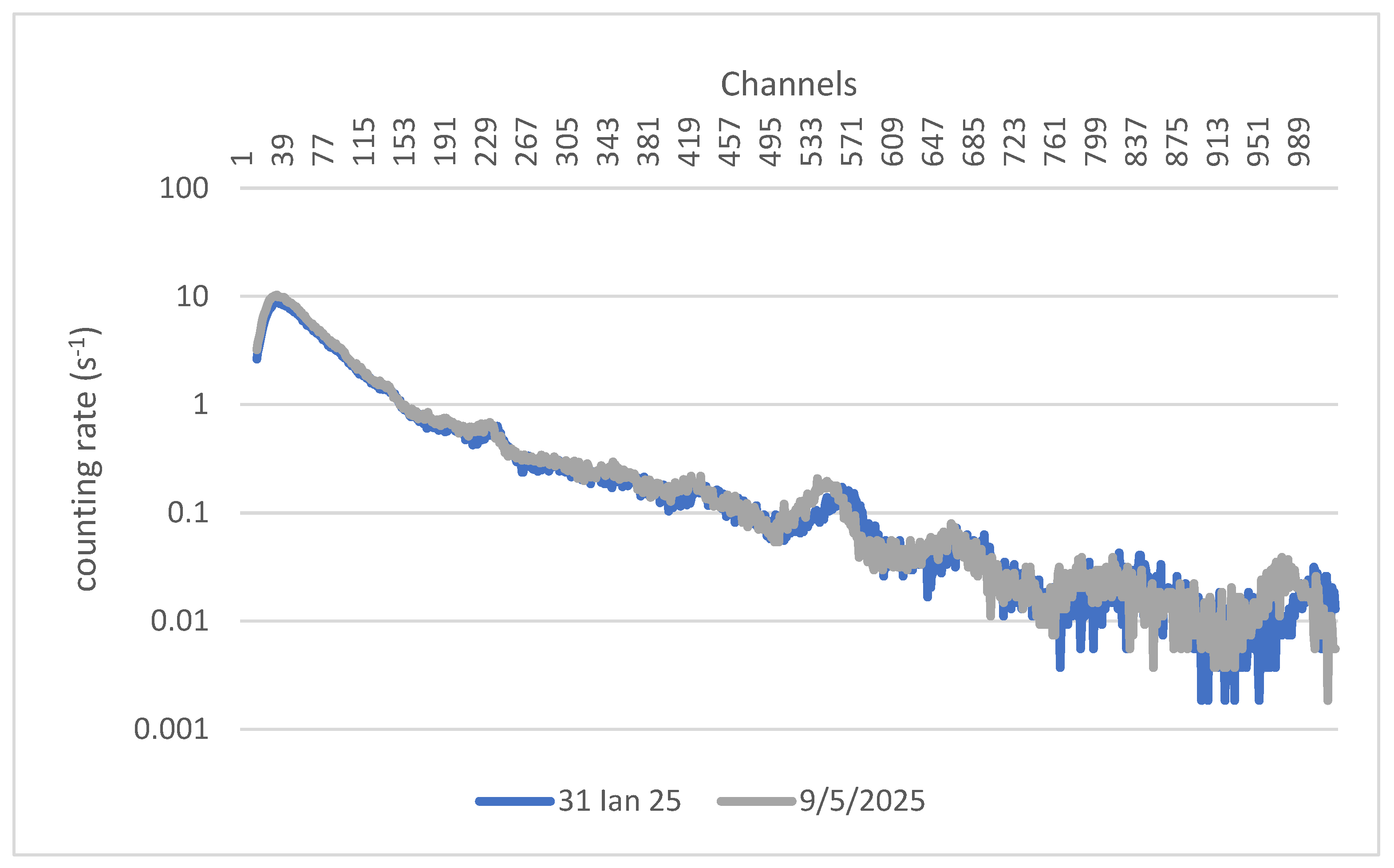
Figure 6.
The gross gamma-ray intensity during the period of the experiment.
Disclaimer/Publisher’s Note: The statements, opinions and data contained in all publications are solely those of the individual author(s) and contributor(s) and not of MDPI and/or the editor(s). MDPI and/or the editor(s) disclaim responsibility for any injury to people or property resulting from any ideas, methods, instructions or products referred to in the content. |
© 2026 by the authors. Licensee MDPI, Basel, Switzerland. This article is an open access article distributed under the terms and conditions of the Creative Commons Attribution (CC BY) license (http://creativecommons.org/licenses/by/4.0/).
Copyright: This open access article is published under a Creative Commons CC BY 4.0 license, which permit the free download, distribution, and reuse, provided that the author and preprint are cited in any reuse.


