

Submitted:
11 March 2026
Posted:
12 March 2026
You are already at the latest version
Abstract
Abandoned mine sites pose environmental and public health hazards due to the presence of metals in them. We extend our study beyond merely assessing total elemental contents to evaluate the contamination and potential spread of metals from contaminated mining sites into adjacent and surrounding ecosystems. Rather, we employ geo-chemical fractionation methods to measure the elemental fractions and binding forms of Pb, Cd, Mn, Cu, and Zn. We go on to estimate the mobility of these metals in soils collected from abandoned mine sites. The soil pH of the sites ranges from acidic to slightly acidic (4.88–6.48), exhibits moderate electrical conductivity and has varying cation exchangeable capacities (16.97–29.57 meq/100g). The overall concentrations of Pb, Cd, Mn, Cu, and Zn surpass FAO/WHO standards, suggesting a notable human impact stemming from past mining activities. The geochemical fractionation analyses indicate a higher proportion of Pb (88%) and Cd (75%) are present in the residual fraction, suggesting low mobility and indicating a possible source to be associated with geogenic or the parent material or geological sources. The dominance of Mn (83%), Cu (73%), and Zn (66%), on the other hand, in mobile fractions and non-residual forms, suggests that pollution is possibly traced to anthropogenic activities at the mining sites. The mobility and by extension the ecotoxicology of Pb, Cd, Zn, and Cu, may be tied to changes in pH, salinity (EC), as well as bulk density and porosity of the mining sites.
Keywords:
abandoned mine soils
; heavy metal contamination
; geochemical fractionation
; sequential extraction (BCR method)
; metal mobility and bioavailability
; environmental risk assessment
1. Introduction
Extraction of valuable minerals has been an essential foundation of human civilization but they may cause unfavorable changes in the ecosystem (Mensah et al., 2015). Changes include soil and water pollution, disruption of hydrological regimes, slope creation, landform modifications, soil fertility and productivity depletion, reduced soil microbial populations and activities, loss of vegetation, and degradation of arable lands. Mining operations are believed to provide essential resources for economic and technological advancement. In a bid to achieve these significant quantities of the land and earth materials are moved and excavated to pave the way for mineral extraction. Additionally, greater proportion of the vegetation is stripped and removed. Consequently, significant environmental degradation occurs and the situation becomes dire when mining sites are left abandoned without reclamation (Mensah et al., 2015).
Abandoned mine sites present point and non-point sources of pollution and they are repositories of high metal concentrations (Mensah et al. 2020). Thus, they may represent a persistent source of pollution with the repercussions of mobilizing and depositing heavy metals in the surrounding ecosystem, soils, water and the food chain. These ecotoxicological threats are exacerbated during changes in the environmental regimes such as dynamics of pH, contents of anions, presence of dissolved organic matter and redox changes of the sites. High pH and reduced redox changes happen when waterlogging conditions or flooding regimes are created (Mensah et al. 2025), such conditions produce fertile grounds for mobilization of Cd, Pb and As into the surrounding ecosystem and accumulation in the food chain (Mensah et al. 2025).
The determination of total heavy metal concentrations of these toxic elements is typically accomplished using techniques such as inductively coupled plasma mass spectrometry (ICP-MS), atomic absorption spectrometry (AAS), and X-ray fluorescence (XRF). Total element content (TEC) methods of estimating pollution of a contaminated site do not represent or reflect the true account of bioavailability the PTE (Wenzel et al., 2001). These techniques do not reveal information about the chemical strengths and binding forms in which the metals exist (Ambrosino et al., 2023). It is for this reason that the sequential extraction procedures (SEP) are employed. These methods provide quantitative data on the total concentration of each heavy metal present in the contaminated sites. The chemical form, or geochemical fractions of a heavy metal significantly influences its toxicity and bioavailability (Mensah et al., 2025; Yang et al., 2022). Therefore, determining the geochemical fractions of heavy metals is critical for accurate risk assessment and for designing effective remediation strategies (Yiika et al., 2023). They present a true picture of the toxicological effects associated with the element. The procedure has advantage over the use of TEC in that it segments the PTE into fractions. The fractions include the part that becomes water soluble, part exchangeable with plants, parts bound to the soil organic matter and Fe, Al, or Mn as well as the aspects locked in the iron crystal and eventually the pools that get retained (i.e., residual fractions).
Studies on geochemical forms of heavy metals in polluted soils and sediments using sequential extraction techniques provide knowledge on metal affinity to soil components and the strength with which they are bound to the matrix (Perlatti et al., 2023). The use of sequential extractions procedures provide detailed information about the origin, mode of occurrence (Yang et al., 2022), biological and physicochemical availability, mobilization, and transport of trace metals. In practice, sequential fractionation schemes have been suggested to identify element distribution with operationally defined soil pools (Shaheen, Kwon, et al., 2017). These chemical pools range from water-soluble to recalcitrant forms and they are immobilized in mineral lattices (Shaheen, Kwon, et al., 2017).
Studies involving the use of SEP to estimate the risk of metal mobilization from polluted sites to the surrounding ecosystems are not common due to its cumbersomeness, lengthy processes and expensive associated-cost. Usually, the procedure uses elaborative and lengthy steps in estimating the toxicity of a metal as well as quantifying the risk of mobilization into groundwater. Sometimes, it becomes costly and burdensome, as many reagents must be used in the extraction, involving several extraction tests that must be monitored and guarded. Some involve doing the extraction in five steps (e.g., Mensah et al., 2020), or seven to eight steps (e.g., Rinklebe & Shaheen., 2016); others use 4 steps, and in some cases, 3 or 2 (e.g., Mensah et al., 2022; Ure et al., 2008). Rao et al. (2008) indicate that the procedures developed for characterizing pollutant species in normal soil and sediments may not be suitable for industrial site materials containing larger pollutant particles, encapsulated pollutants, and/or human-origin materials like slags, metals, and plastics. Others argue that a major drawback is the lack of uniformity in the various extraction procedures utilized globally, which prevents the comparison and validation of results.
Regardless, SEP offers a well-defined and stepwise laboratory extraction procedure that operationally segments metals and metalloids into their geochemically separated binding forms. This allows focus on which aspects of the elements are mobile and aids in planning mitigation measures for remediation of the contaminated sites. The chemical form, or geochemical fractions, of a heavy metal significantly influences its toxicity and bioavailability (Mensah et al., 2025; Yang et al., 2022). Therefore, determining the geochemical fractions of heavy metals is critical for accurate risk assessment and for designing effective remediation strategies (Yiika et al., 2023). In this study, we employ the modified BCR four-stepped sequential extraction method to extract geochemical fractions of cadmium, copper, manganese, lead, and zinc from abandoned mine soils in Nigeria. This assessment informs the mobilization, ecotoxicological impact, and pollution risks of these potentially toxic elements. The study redefines soil pollution studies in Nigeria and provides quantitative data for planning effective soil remediation, targeting specific species and fractions of PTEs with high mobility concerns.
2. Materials and Methods
2.1. Sampling and Analyses
Soil samples were collected from an abandoned mine site in the Northeastern region of Nigeria using a grab sampler. They consisted of composite samples from five sampling points over a stretch of 100 m. They were preserved in clean polyethylene bags, stored at 4 ◦C and saved later for analyses. Soil properties were analyzed according to standard soil methods as described in details as per descriptions used earlier by Shaheen & Rinklebe (2018). Appendix A Figure S1 shows the map of the study location and the various sampling points.
A fraction of all samples was dried at 70 ◦C and sieved to the <150 µm. extraction and analyses of total contents of the 5 potentially toxic elements (Cd, Cu, Mn, Pb, Zn) were carried out on 1 g of dry soil after digestion in 2 mL HCl, 6 mL HNO3 and 2 mL HF. The solution was taken to a final volume of 300 mL with 5% HCl. The digestion solutions were then analyzed by atomic absorption spectroscopy (AAS).
Reagent blanks, standard reference soil samples and three duplicate samples were measured to ensure compliance with quality assurance and control requirements. The tolerated relative standard deviation across replicates was set to ±5% relative to the mean.
Sequential extraction procedures were applied on the remaining sample to determine the chemical fractions, and later used these to calculate the mobility of the PTEs. Chemical fractionation of PTEs in the soil sample was performed according to the European “Community Bureau of Reference” (BCR) sequential extraction procedure (Katana et al., 2013; Shaheen, Kwon, et al., 2017; Shaheen et al., 2018). The BCR methodology was carried in a four-step scheme following Delgado et al., (2011) and García-Ordiales et al., (2016). This allowed the identification of four geo-chemical fractions: The first fraction (F1) was extracted by a solution of 0.11 M of acetic acid and allowed the extraction of the exchangeable fraction, which included weakly adsorbed elements retained on the solid surface by relatively weak electrostatic interactions, elements released by ion-exchange processes and elements co-precipitated with carbonates. The second fraction (F2) was extracted by a solution of 0.1 M of hydroxylamine hydrochloride and comprised of reducible or bound to Fe/Mn oxides. The third fraction (F3) was extracted by a solution of 17.8 M of hydrogen peroxide (adding 8.8 M twice at 1 hour interval, after shaking at room temperature and heating at 85 ) and 1 M of ammonium acetate. This fraction consisted of easily oxidizable species (bonded to sulfides and organic matter). Finally, the fourth fraction (F4) was extracted by a mixture of acid (HNO3 + HF + HClO4) and included low-solubility fraction related to residual fraction (mainly silicates and sulphides). Before applying the BCR procedure, the soil samples were completely dried in an oven at 40 ◦C for 48 hours. The soil samples were agitated at room temperature for 16 h using an orbital shaker. The fractions extracted from residue at each step were centrifuged at 3000 rpm for 20 min in a polyethylene centrifuge tube. The residue was rinsed with 20 mL deionized water for 15 min in a mechanical shaker and then centrifuged at 3000 rpm for 20 min. Finally, AAS was used to determine the metal content in each fraction.
3. Results and Discussion
3.1. Effects of Physicochemical Parameters of Soil in Controlling Metal Mobilization
3.1.1. Effects of Soil pH
Soil pH values (shown in Figure 1) across the sampling sites ranged from 4.88 (S1) to 6.48 (S5), which show an overall acidic to slightly acidic environment. S1 (4.88) and S2 (5.62) fall within the strongly acidic category, which may enhance the mobility of heavy metals such as Cd, Pb, and Zn due to increased solubility under low pH conditions (Mensah et al., 2025; Mensah and Amaoakwah 2025). Acidic soils in mine-affected areas are commonly attributed to the oxidation of sulfide minerals, producing acid mine drainage and enhancing the solubility of heavy metals (Jiao et al., 2023). Metals are more accessible in soil solutions at low pH because soil organic matter retains metallic substances less. At low pH (below 5.5), numerous cationic PTEs, such as Cd, Cu, Hg, Ni, Pb, and Zn, become more soluble and mobile in soil (Mensah et al., 2025).
Thus, lower pH enhances cationic trace element mobility and availability, while higher pH increases anionic species mobility and availability (Antoniadis et al., 2017). S3 to S5, with pH values of 6.33–6.48, are moderately acidic to slightly acidic. Moderate and slight acidic conditions offer better chance for nutrient availability and plant growth (Antoniadis et al., 2017). Higher pH decreases silicate secondary mineral electronegativity, making anionic PTEs more available. The oxides' positive charge and capacity to bind and stick decrease with high pH (Yan et al., 2016). Comparatively, soils around abandoned mine sites in Nigeria, showed similar acidic conditions (pH 5.6–6.4) according to (Obasi & Akudinobi, 2020). Similar pH ranges have been reported in abandoned mining sites in Ghana (Mensah et al., 2020) and Germany (Rinklebe et al., 2019), reflecting long-term mineral weathering and residual ore oxidation. Motswaiso et al., (2019) also observed acidic soil conditions in areas near abandoned mine sites with pH ranging from 3 to 9, consistent with current findings. This implies that acidic soils in S1 and S2 increase the potential for metal release into water bodies, affecting aquatic ecosystems and groundwater quality.
3.1.2. Effects of Soil Electrical Conductivity (EC)/Soil Salinity
Soil electrical conductivity is related to the salinity of mining sites. It denotes the presence of metal salts in the soil solution and determines the soil's ability to conduct electricity. Essentially, it is considered that a high concentration of metal soluble salts such as Ca, K, Mg, and Na in soil solution improves its ability to conduct electricity, hence assisting in elevating soil pH (Mensah et al., 2022; Palansooriya et al., 2020). The EC values observed in our study ranged from 0.74 dS/m (S5) to 1.63 dS/m (S1), with a general trend of decreasing EC from S1 to S5 (Figure 1). As mentioned earlier, EC reflects the total soluble salts; values below 2 dS/m are considered safe and non-saline and those above 4ds/m are considered unsafe for plant growth (Elvis Duplex et al., 2018). The locations, S1 and S2, exhibited elevated EC. This may correlate with either enhanced or diminished mobility of PTEs, which depend upon additional factors such as soil pH and the presence of sesquioxides, including the oxides and hydroxides of Al, Fe, and Mn metals. Motswaiso et al., (2019) recorded EC mean value of 3.56dS/min abandoned mine areas in Bostwana, attributing elevated values to sulfide oxidation and tailings runoff. Elevated EC values suggest moderate salinity stress, which can inhibit seed germination and reduce crop yield if these soils are used for agriculture.
3.1.3. Effects of Cation Exchange Capacity (CEC)
The CEC varied between 16.97 and 29.57 meq/100g, with the peak observed in S3 (Figure 1), signifying a notable ability to hold onto nutrients and heavy metals. Soils characterized by elevated cation exchange capacity (S3–S5) exhibit a greater propensity to adsorb heavy metals, thereby diminishing their mobility and the risk of groundwater contamination. A diminished CEC (S2) may impair the efficiency of metal binding, consequently resulting in heightened mobility of toxic elements. Elevated CEC in mining soils often reflects the presence of fine clay fractions and organic matter capable of binding metals. However, under acidic conditions, the binding sites can become saturated with protons, leading to enhanced metal mobility (Antoniadis et al., 2017; Kumar et al., 2022). Similar observations were noted in the soils of Molo in Kenya (Maingi et al., 2020), where the CEC mean value recorded 18.48meq/100g. Sites exhibiting elevated CEC are deemed more appropriate for phytostabilization initiatives in remediation endeavors, as they contain K+, Mg2+, and Na+. Sites with higher CEC may be considered more suitable for phytostabilization efforts in remediation projects (Mensah, Sekyi-Annan and Amoakwah, 2025). This may contribute to raising the soil cation binding capacity and thus enhance sorption ability for As (Mensah et al. 2022; Palansooriya et al., 2020).
3.1.4. Effects of Soil Porosity, Bulk Density and Water Holding Capacity
Porosity ranged from 45.3% (S2) to 67.5% (S3) (Figure 1). Higher porosity values, like in S3 and S5, are indicative of loosely packed soils that allow easy water infiltration and root penetration. S2 shows reduced porosity, likely due to compaction or low organic content, limiting water movement and gas exchange. Maingi et al., (2020) reported average porosity value of 59% in soils of Molo, Kenya. Obasi & Akudinobi (2020) found that porosity values above 55% improved vegetation recovery on mine-reclaimed lands. High porosity may also facilitate metal leaching, which can be environmentally harmful in contaminated sites. A transport process known as advection which involves flow direction and mean fluid velocity, is associated with the bulk properties of the porous materials, including porosity, and is a way to explain the transport of pollutants like potentially toxic elements (PTEs). Bulk density values ranged from 1.03 to 1.62 g/cm³ (Figure 1). The mean values of porosity (57.63 ± 8.97%) and bulk density (1.22 ± 0.24 g/cm³) were within expected ranges for disturbed soils, consistent with observations from other post-mining soils in tropical regions (Mensah et al., 2020). S2 recorded the highest bulk density (1.62 g/cm³), suggesting soil compaction and low organic matter, while S1 and S4 had more favorable values (<1.2 g/cm³). According to USDA-NRCS standards, ideal bulk density for plant growth in loam soil is around 1.3 g/cm³.
Consequently, soils that exhibit high bulk density can hinder root elongation, restrict water retention, and diminish soil productivity. As a result, it poses challenges for the plants that have been established at the sites for the purpose of reclaiming the area, a process known as phytoremediation. The reason for this is that the plant roots cannot anchor deeper into the soil to access water and nutrients. Water Holding Capacity (WHC) ranged from 36.07% (S1) to 53.63% (S4) (Figure 1). The soil’s mean WHC (44.48 ± 7.28%) exceeded the FAO reference (20–35%), indicating that the soil retains moisture for extended periods, which can slow drainage but enhance microbial interactions and potential remobilization of heavy metals (Wuana & Okieimen, 2011). Higher WHC in S4 may suggest better water retention, which aids plant development in dry periods. Lower values in S1 may be attributed to coarse texture or reduced organic matter.
3.1.5. Effects of Soil Carbonates
Carbonate values ranged from 21.42 to 47.68 mg/g, highest in S1 (Figure 1). High carbonate levels promote metal immobilization through precipitation of carbonates. S1’s high carbonate may offset its low pH to some extent by buffering acidity. (Padoan et al., 2020) found carbonate concentrations between 7.4 to 32 mg/gin mine-affected soils under flooding. (Xie et al., 2024) highlighted the role of carbonates in promoting the formation and stability of soil macroaggregates in mining areas of China.
3.2. Total, Pseudo-Total Heavy Metal Contents and Contamination Based on Risk Indices
The PTE concentrations in soil samples collected from the study area were compared with international standards provided by FAO/WHO (for soil). The results clearly indicate that the levels of certain metals; cadmium (Cd), copper (Cu), lead (Pb), and manganese (Mn) far exceed the permissible limits, showing significant anthropogenic influence, most likely from abandoned mining activities.
The cadmium (Cd) levels in soil samples with a mean value of 1.04±0.15 mg/kg (Figure 2) slightly exceeded the FAO/WHO guideline of 0.8 mg/kg (Appendix A Figure S2) and aligns with concentrations observed in soils impacted by artisanal mining globally (Wuana & Okieimen, 2011). Even at low concentrations, Cd poses ecological and human health risks due to its high mobility under acidic conditions. Omeka & Igwe, (2023)recorded Cd values between 1.08 and 6.22 mg/kg in soils within the vicinity abandoned mining sites in Nigeria. Obasi & Akudinobi, (2019) also documented similar elevated Cd levels in soil samples around Ogun State mining sites. Mensah & Addai (2024) recorded Cd values of 2.86 mg/kg in abandoned mine areas of Ghana. This may suggest that cadmium pollution is a common issue in mining environments. Cadmium’s mobility in acidic soils suggests that nearby agricultural lands may be at risk of contamination.
The mean value for copper (Cu) concentrations is 130.16±39.07 mg/kg (Figure 2), with the highest measured value nearly doubling the FAO/WHO threshold of 100 mg/kg. The measured values are consistent with observations in mine tailings from different geographic regions, including Egypt and Germany (Rinklebe et al., 2019; Shaheen et al., 2015). Excess Cu can disrupt microbial communities and soil nutrient cycling. Motswaiso et al., (2019) found Cu in contaminated mine soils of Botswana to have an average of 109.8 mg/kg, supporting the observed trends. Elevated Cu levels are often associated with mining and industrial runoff. The lead (Pb) concentrations in the soil samples had a mean value of 542.5±92.39 mg/kg (Figure 2), significantly exceeding the FAO/WHO limit of 100 mg/kg (Appendix A Figure S2). These elevated levels are consistent with results reported by Omeka & Igwe, (2023), who found Pb levels ranging between 450 to 680 mg/kg in Ebonyi State mining zones. In Morocco, Nassiri et al., (2021) reported Pb average values of 1622.2 mg/kg in soil around abandoned mine site. Such elevated Pb levels indicate long-term leaching and dispersion from mine tailings into surrounding soil environments. Similar concentrations have been reported in Ghanaian abandoned gold mines (Mensah et al., 2020), where residual sulfide minerals and mine tailings contribute to long-term Pb enrichment. Such elevated Pb levels indicate long-term release and dispersion from mine tailings into surrounding soil environments.
The manganese (Mn) concentrations had a mean value of 591.26±102.61 mg/kg (Figure 2). Although Mn is an essential nutrient, excessive concentrations, such as those recorded, can be toxic to both plants and humans. The findings align with those by (Monjardin et al., 2022), who found Mn concentrations between 590 and 860 mg/kg in Philippines mining-impacted soil. Elevated Mn in mining soils has been reported in multiple studies worldwide and can affect soil enzymatic activity and plant development (Shaheen, Shams, et al., 2017; Živković et al., 2019). The zinc (Zn) concentrations were relatively moderate, with a mean value of 82.12±21.85 mg/kg (Figure 2), staying within the FAO/WHO limit of 300 mg/kg. While Zn is less toxic compared to Cd or Pb, its high concentration could still contribute to soil imbalance and metal synergism. These findings are consistent with studies on abandoned mining soils across Africa, Europe, and Asia, where metal contamination persists long after mining ceases(Mensah et al., 2020; Rinklebe et al., 2019; Wuana & Okieimen, 2011). The total heavy metal concentrations were related to the pseudo-total heavy metal concentrations (Figure 3) to determine the percentage recovery of each of the heavy metals.
The contamination indices calculated for the study area indicate significant heavy-metal pollution caused by anthropogenic activities (Table 1). Lead (Pb) exhibited the most concerning pollution levels (mean CF = 20.49; EF ≈ 15.98), which categorizes it as “very high contamination” and “significant enrichment” as shown in Table 2. The elevated CF and EF values distinctly indicate point-source contributions typically associated with mining, ore processing, tailings, and historical metallurgical waste deposition (Mensah & Addai, 2024; Surenbaatar et al., 2023). Cadmium (Cd) and Copper (Cu) concentrations were similarly elevated (Cd CF ≈ 5.22; EF ≈ 3.93; Cu CF ≈ 3.38; EF ≈ 2.50) (Table 1), indicating significant pollution and moderate enrichment in the area (Table 2). The Pb–Cd–Cu fingerprint is commonly found in both abandoned and active mining sites, as these metals usually occur together in ore bodies and are extracted concurrently during mining and ore processing (Mensah & Addai, 2024; Sahen et al., 2025). The evidence further supports the view that cadmium offers a greater ecological issue than its mere concentration. Cadmium predominantly appears as the major toxicant in ecological risk assessments due to its high toxicity and bioaccumulation in organisms (Sahen et al., 2025). The concentration factors (CFs) and enrichment factors (EFs) of Manganese (Mn) and Zinc (Zn) showed low to moderate values which approached unity (Mn EF = 1; Zn EF ≈ 0.9) (Table 1). The data may indicate that geogenic background levels have the most significant impact on the elements. The study found Pb/Cd levels higher than Zn and Mn concentrations in the soil which matches previous research from similar mining sites(Konanç et al., 2024; Naveed et al., 2023).
The Pollution Load Index (PLI) mean value of 2.54 (Table 1) indicates that the soil quality in the research area shows poor conditions because PLI values exceed 1 (Table 2). The PLI shows elevated levels which indicate that various metals have built up from multiple sources instead of having a single metal concentration peak. Research studies by Mensah & Addai, (2024)observed that abandoned mining sites in Ghana contain similar multi-metal contamination patterns and elevated PLI values. The authors state that PLIs which exceed a certain size require full site management systems because multiple hazardous substances create combined threats.
The relative concentration of Cd and Cu indicates either primary ore relationships or secondary contamination from beneficiation/processing procedures. Differences among elements (e.g., lower Zn EF) may relate to ore mineralogy, prior waste segregation procedures, differential mobility under site physicochemical circumstances, or local lithology (Konanç et al., 2024; Mensah & Addai, 2024). Accurate source attribution will benefit from spatial mapping and multi-element fingerprinting (isotopes, mineralogical tests) as applied in other recent projects. Reviews and field research of abandoned mining sites around the world come to the same conclusions: historical mining activities remain a continuous source of elevated Pb and Cd in soils and sediments, and such contamination often lingers for decades without treatment (Mensah & Addai, 2024; Surenbaatar et al., 2023).
3.3. Geochemical Fractionation of the Studied Elements in the Abandoned Mining Sites
Chemical fractionation of the PTEs in the soil samples was performed according to the European “Community Bureau of Reference” (BCR) sequential extraction procedure. The procedure classifies heavy metals into four operationally defined fractions: exchangeable, reducible, oxidizable, and residual, corresponding to decreasing mobility and bioavailability. These fractions show the varying degrees of mobility and environmental risk associated with each metal. The pseudo-total concentrations and mobility indices offer further insight into potential environmental impacts.
3.3.1. Cadmium (Cd)
The Cd was distributed as follows: 75% residual, 4% exchangeable, 5% reducible, and 16% oxidizable (Figure 4). Although a considerable amount of Cd is in the residual fraction, the significant presence (25%) in the non-residual fractions suggests a moderate risk of mobility comparable to observations by Fang et al., (2025) in mining soils, where Cd readily partitions into exchangeable and carbonate-bound fractions, posing ecological risk despite low total concentrations. The oxidizable fraction indicates its association with organic matter or sulfides, which can degrade under oxidizing conditions. In a study by Ankapong et al., (2025) on soils near mining areas in Ghana, Cd was found primarily in the exchangeable and reducible phases, unlike the current study, possibly due to soil pH and organic content differences. Numerous other studies reported that Cd mobility is influenced by pH and organic content (Fang et al., 2025; Kushwaha et al., 2018; Palansooriya et al., 2020; Shaheen et al., 2015; Surenbaatar et al., 2023). The lower mobility of Cd in the present site may be attributed to mineralogical differences and less acidic conditions.
3.3.2. Copper (Cu)
The Cu was distributed as 41% exchangeable, 15% reducible, 17% oxidizable, and 27% residual fractions. (Figure 4). The relatively high percentage in the exchangeable fraction indicates high mobility and potential bioavailability. The oxidizable fraction indicates Cu complexation with organic matter, which may be released under oxidizing conditions. Katana et al., (2013) found that Cu was associated with organic matter and exchangeable fractions in soils near industrial zones. Fang et al., (2025) demonstrated that Cu mobility increases in the presence of organic-rich soils, emphasizing the role of humic substances. These results are in agreement with global studies from abandoned mining sites in Ghana, China, and Germany, where Cu and Mn were primarily found in the labile fractions, increasing leachability and bioavailability (Mensah & Addai, 2024; Shaheen et al., 2015). The current results point to Cu as a potentially mobile and hazardous element, especially in environments with fluctuating redox and pH conditions.
3.3.3. Lead (Pb)
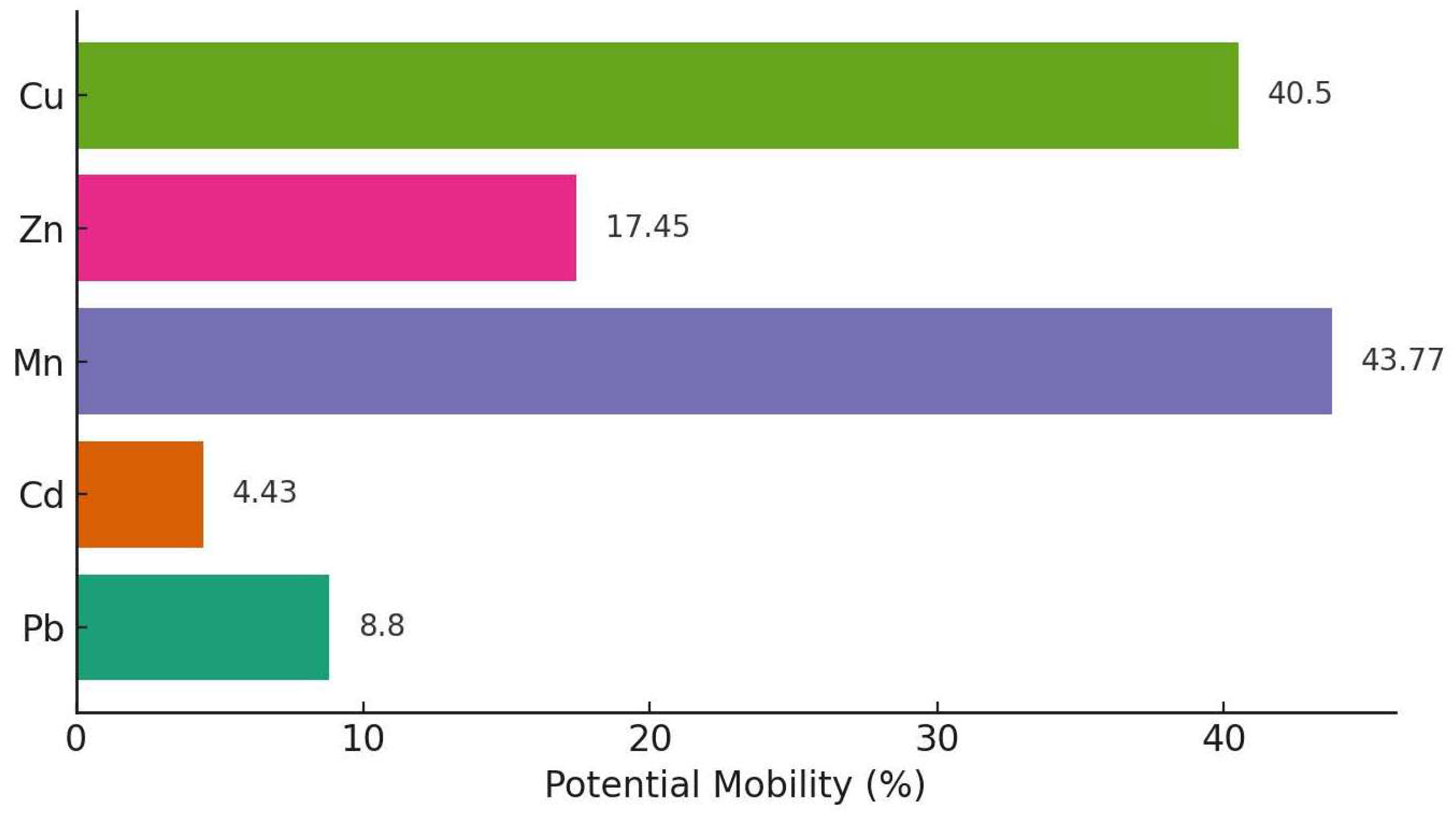
The Pb was predominantly found in the residual fraction (88%), with minor proportions in the exchangeable (9%), reducible (2%), and oxidizable (1%) fractions (Figure 4). The dominance of Pb in the residual fraction suggests that it is largely associated with silicate minerals and other stable phases indicating low mobility and bioavailability under natural conditions. This makes Pb a relatively less immediate threat to ecological and human health, although its total concentration should still be monitored due to its toxicity. The results (88% residual) obtained in this study are consistent with studies by Yiika et al., (2023) in artisanal gold mine in Cameroon, where Pb is largely immobilized in the crystalline matrix or bound to sulfides and silicates. Such immobilization reduces immediate risk but does not eliminate long-term environmental hazards, particularly under acidic or reducing conditions. The potential mobility of Pb is low (8.8%) (Figure 6), indicating minimal risk under natural conditions. These findings reinforce the general consensus that in many mining environments, Pb tends to be geochemically stable, although acid rain and mining activities could remobilize it.
3.3.4. Manganese (Mn)
Manganese (Mn) showed considerable mobility, with 44% found in the exchangeable fraction, 37% in the reducible fraction, 2% in the oxidizable fraction, and 17% in the residual fractions (Figure 4). The high percentage in exchangeable and reducible fractions indicates that Mn is highly mobile and bioavailable, posing an ecological risk, especially in water-saturated or reduced environments. These results are in agreement with studies from abandoned mining sites by (Antoniadis et al., 2017), where Mn and Cu were primarily found in labile fractions, increasing leachability and bioavailability. Also, Fang et al., (2025) found Mn to be dominantly mobile in sediment-water interface in Switzerland. The consistency of these results highlights the dynamic behavior of Mn, which is highly influenced by redox conditions.
3.3.5. Zinc (Zn)
Zn was considerably found in the reducible fraction (43%), followed by residual fraction (34%), exchangeable fraction (17%), and oxidizable fraction (6%) (Figure 4). High percentage of Zn in the reducible fraction may suggest that it is bound to Fe/Mn oxides and can be easily released under reducing conditions. The presence of Zn in exchangeable fraction may facilitate risk of release into groundwater. The observed non-residual fraction of Zn (66%) may indicate moderate mobility. Mensah et al., (2020) reported similar behavior in Ghanaian soil, where Zn was found to mostly associate with reducible fractions (Fe/Mn oxides).
3.4. Mobility Index, Recovery Percentage and Environmental Risk Assessment
The percentage of metals in mobile forms (non-residual fractions) follows the order Mn (83%) > Cu (73%) > Zn (66%) > Cd (25%) >Pb (12%) (Figure 5). The Potential Mobility Index (PMI) confirms Mn (43.77), Cu (40.5), and Zn (17.45) as the most mobile metals (Figure 6). These metals pose significant ecological risks and must be prioritized in monitoring and remediation efforts. The potential mobility of Pb is 8.8% and Cd is 4.43% which shows that they are mostly in the residual form. The result aligns with global patterns in mining-impacted soils. For example, Shaheen and Rinklebe (2015) observed that Pb and Cd are predominantly in residual fractions in floodplain soils, while Mn and Cu are largely associated with exchangeable and reducible fractions, facilitating their mobility. Similarly, Mensah et al. (2020) reported that arsenic and metals in abandoned Ghanaian gold mine spoils follow comparable fractionation patterns, with Mn and Cu showing high bioavailability in non-residual fractions.
Figure 5.
Concentrations of elements in their residual and non-residual fractions in mg kg-1.
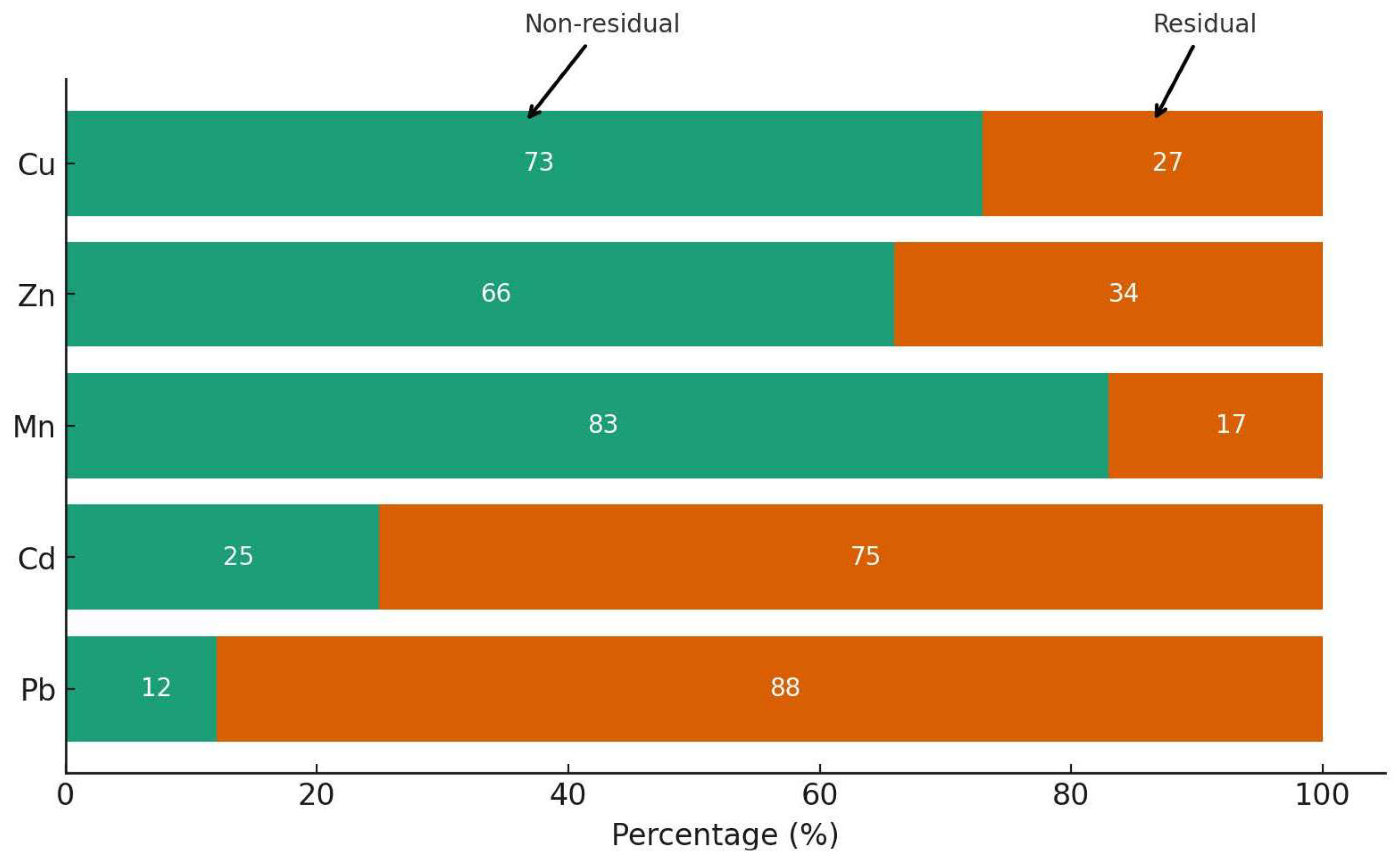
Figure 6.
Potential mobility of the elements in their binding fractions.
The percentage recoveries ranged from 88.51% for Cd to 103.03% for Cu (Appendix A Figure S5). This affirms the reliability and effectiveness of the sequential extraction method. Slight overestimation may arise from overlapping operationally defined fractions. The slight variations are within acceptable analytical limits and do not compromise the validity of the findings. Perlatti et al., (2023) reported recovery rates within this range in their study on sequential extraction methods, further validating the robustness of the method used.
3.5. Relationships Among Total Element Contents, Geochemical Fractions, Mobility and Soil Governing Variables
The correlation analysis provides useful insight into how the heavy metals interact with each other and with the soil properties across the study area. What stands out immediately is that the soils are not in a stable or “rested” state; rather, they appear to be undergoing active geochemical adjustment. The behaviour of the studied metals, particularly Pb, Cd, Zn, and Cu, seems closely tied to changes in pH, salinity (EC), and physical soil properties such as bulk density and porosity.
Lead (Pb) shows high positive relationship with bulk density (r = 0.95) (Figure 7). This shows that Pb tends to accumulate more in compacted or denser soil materials, which is common in abandoned mine environments where fine particles and mineral residues settle over time. Similar patterns were recorded in Ghanaian mine spoils (Mensah et al., 2020) and central European riverine soils (Rinklebe et al., 2019).
Copper (Cu) behaves in a way that aligns more closely with soil chemistry than with physical structure. The positive relationship with pH (r = 0.83) (Figure 7) implies that Cu forms more stable complexes under less acidic conditions, which is consistent with the observations of Shaheen and Rinklebe (2015) in similar environments. Cu also shows a strong positive correlation with Cd (Figure 7) which shows that both metals may be influenced by similar geochemical controls or originate from related sources. Shaheen and Rinklebe (2015) described a similar behavior in floodplain soils in their study, in which Cd and Cu were released together during the breakdown of iron and manganese oxides, especially under changing moisture or redox conditions.
EC and pH show a nearly one to one negative relationship (r = −0.99) (Figure 7), which shows a system where acidity is directly driving ion release. This is typical where some degree of acid mine drainage is occurring, even if not visibly expressed as flowing acidic water.
The correlation plots for the geochemical fractions help show the “active” parts of the soil system. The early fractions, FI and FII, carry most of the mobile load. FI, representing the most immediately available metals, responds strongly to shifts in pH and moisture (Figure 8). When soils become more acidic or remain waterlogged, the FI pool appears more likely to release metals to solution. This is particularly visible for Mn and Zn and aligns with behavior documented in abandoned African gold mines where low pH drove solubility (Mensah et al., 2020).
FII metals, held mostly by Fe/Mn oxides, tell a slightly different story. They are stable enough under ordinary conditions but sensitive to redox changes. The positive correlations between EC and the FII metals (Figure 8) imply that the soil could release metals if reducing conditions develop such as after flooding or extended saturation. Rinklebe et al., (2019) made a similar observation and reported that oxide-bound metals may look stable until redox conditions change, after which they can shift quite suddenly.
The FIII fraction (organic/sulfidic) correlates moderately with pH (Figure 8), more so for Pb and Cu. This phase is usually a “holding zone” in disturbed soils and may break down slowly with the decomposition of vegetation and organic matter. It is neither as reactive as FI nor as stable as FIV, putting it in an intermediate category where it could eventually contribute to mobility.
The FIV fraction shows the expected weak correlations. This is what would be anticipated if FIV is mainly mineral-bound and less influenced by surface processes. However, the fact that correlations are not zero (Figure 8) suggests that the system has not yet reached complete long-term equilibrium.
When the fractions are compared directly to total metal content, the early fractions (FI–FIII) account for most of the variation (Figure 9). For Pb, Cd, Zn, and Cu, values in the mobile and oxide-bound pools increase as total concentration increases (Figure 9). This implies that the contamination is fairly “fresh” in geochemical terms, not necessarily recent, but not fully aged into stable mineral matrices.
This sort of behavior has been described in other abandoned mining contexts: the total concentration alone is not a reliable measure of risk, but the proportion of that total sitting in FI or FII gives a clearer indication of how easily metals might migrate (Mensah et al., 2023). The FIV pool correlates only slightly with totals, which is consistent with a long-term stabilization trajectory that is still in progress.
Regression Analysis Between Total Metal Concentrations and Mobility Index
The regression plots give a mixed picture of how total metal concentrations connect to the mobility index. Some of them seem to respond to increasing total concentrations, while others barely shift at all. This uneven behavior suggests that the soils are still settling chemically and haven’t reached a point where everything is locked into stable forms.
Cd is more responsive than Pb, though not dramatically so (R² = 0.31; p = 0.03) (Figure 10). There’s a visible upward trend, and it suggests that once Cd reaches a certain threshold, it becomes more willing to move into soil solution. Cd has a reputation for shifting under acidic or redox-altered conditions, so this result feels realistic rather than surprising. Shaheen & Rinklebe (2015) noted something similar: Cd can sit still, and then, with the wrong conditions, suddenly stop behaving like a stable metal.
Cu sits between Mn and Cd in terms of clarity (R² = 0.52; p = 0.00242) (Figure 10). It’s responsive, but not as tightly linked to concentration as Zn. It might be partly tied up in organic matter or oxide fractions, which would explain why mobility rises with concentration but not as sharply. This kind of hybrid behavior lines up with what Shaheen & Rinklebe (2015) described in soils where Cu is neither fully stable nor fully mobile, it depends on what the soil is doing at the moment.
Pb barely responds to changes in total concentration (R² = 0.03; p = 0.555) (Figure 10). Even where Pb levels are higher, the mobility index barely shifts, which implies that most of the Pb is tied up in relatively stable forms. Similar observations were made in other abandoned mine soils where Pb was found to “park” in dense layers for long periods (Mensah et al., 2020; Rinklebe et al., 2019). So, while Pb is present, it doesn’t appear to be the most immediate concern from a mobility standpoint.
Mn is more decisive (R² = 0.52; p = 0.00244) (Figure 10). When Mn is present in higher amounts, the mobility index climbs more reliably. Given Mn’s redox sensitivity, this makes sense; it doesn’t take much in terms of waterlogging or shifting oxygen levels for Mn to start moving. This is one of the metals where a change in site conditions, like prolonged saturation, could noticeably change risk levels.
Zn shows the strongest link (R² = 0.69; p = 0.000125) (Fig.10). Here, the relationship is hard to ignore. As Zn increases, its mobility almost always increases too. This points to Zn being a more active contaminant on the site and suggests it might respond to even small environmental changes. Compared to Pb, which sits quietly, Zn behaves more like a metal still “in circulation” within the soil.
4. Conclusions
BCR sequential extraction procedure was carried out to assess the chemical forms of five potentially toxic elements (Cd, Cu, Mn, Pb and Zn) in soils from an abandoned mine site in Nigeria. This study evaluates the contamination of the metals and their potential mobility into the ecosystem. The observed soil pH values range from 4.88 to 6.48. The electrical conductivity values observed in this study were moderate. Additionally, the site exhibits varying cation exchange capacity (16.97–29.57 meq/100g), indicating a notable ability of the studied soil to hold onto nutrients and heavy metals. The results show that the levels of all the studied heavy metals except Zn far exceed the WHO/FAO permissible limits, suggesting significant human impact resulting from mine activities in past. The distribution of heavy metals in the various operationally defined fractions, especially in exchangeable, reducible and oxidizable fractions, showed that mobility and biological availability of the heavy metals follows the order: Mn>Cu>Zn>Cd>Pb. High mobility factor values may indicate comparatively high reactivity and bioavailability of the heavy metals and can be released easily into the ecosystem. Therefore, the studied heavy metals may pose environmental risks due to their relatively high mobility and the chemical species they are associated with. The contamination indices calculated for the study area indicate significant heavy metal pollution caused by anthropogenic activities. Total metal concentrations and the mobility index were related as shown by the regression plots. Some of them seem to respond to increasing total concentrations, while others barely shift at all. This uneven behaviour suggests that the soils are still settling chemically and haven’t reached a point where everything is locked into stable forms. Consequently, authorities can be encouraged to create awareness among the local communities.
Funding Declaration
The authors did not receive support from any organization for the submitted work.
Data Availability Declaration
Data sets generated during the current study are available from the corresponding author on reasonable request.
Competing Interest Declaration
The authors have no competing interests to declare that are relevant to the content of this article.
References
- Ambrosino, M.; El-Saadani, Z.; Khatita, A. A.; Mingqi, W.; Palarea-Albaladejo, J.; Cicchella, D. Geochemical Speciation, Ecological Risk and Assessment of Main Sources of Potentially Toxic Elements (PTEs) in Stream Sediments from Nile River in Egypt. Water (Switzerland) 2023, 15(13). [Google Scholar] [CrossRef]
- Ankapong, E.; Dodd, M.; Darko, G. Speciation, contamination, and risk assessment of potentially toxic elements in soils from mining and non-mining areas in Ghana. Environmental Geochemistry and Health 2025, 47(6). [Google Scholar] [CrossRef] [PubMed]
- Antoniadis, V.; Shaheen, S. M.; Boersch, J.; Frohne, T.; Du Laing, G.; Rinklebe, J. Bioavailability and risk assessment of potentially toxic elements in garden edible vegetables and soils around a highly contaminated former mining area in Germany. Journal of Environmental Management 2017, 186, 192–200. [Google Scholar] [CrossRef] [PubMed]
- Delgado, J.; Barba-Brioso, C.; Nieto, J. M.; Boski, T. Speciation and ecological risk of toxic elements in estuarine sediments affected by multiple anthropogenic contributions (Guadiana saltmarshes, SW Iberian Peninsula): I. Surficial sediments. Science of The Total Environment 2011, 409(19), 3666–3679. [Google Scholar] [CrossRef] [PubMed]
- Elvis Duplex, K. K.; Sylvain Ludovic, W. A.; Daniel, N.; Ivo, E. G. Physico-chemical Characterization of Clayey Materials Consumed by Geophagism in Locality of Sabga (North-western Cameroon): Health Implications. International Journal of Applied Science and Technology 2018, 8(3), 57–68. [Google Scholar] [CrossRef]
- Fang, X.; Han, X.; Tang, C.; Peng, B.; Peng, Q.; Hu, L.; Zhong, Y.; Shi, S. Distribution Characteristics, Mobility, and Influencing Factors of Heavy Metals at the Sediment–Water Interface in South Dongting Lake. Water (Switzerland) 2025, 17(15), 1–22. [Google Scholar] [CrossRef]
- García-Ordiales, E.; Covelli, S.; Esbrí, J. M.; Loredo, J.; Higueras, P. L. Sequential extraction procedure as a tool to investigate PTHE geochemistry and potential geoavailability of dam sediments (Almadén mining district, Spain). CATENA 2016, 147, 394–403. [Google Scholar] [CrossRef]
- Jiao, Y.; Liu, Y.; Wang, W.; Li, Y.; Chang, W.; Zhou, A.; Mu, R. Heavy Metal Distribution Characteristics, Water Quality Evaluation, and Health Risk Evaluation of Surface Water in Abandoned Multi-Year Pyrite Mine Area. Water (Switzerland) 2023, 15(17). [Google Scholar] [CrossRef]
- Katana, C.; Jane, M.; Harun, M. Speciation of Zinc and Copper in Open-Air Automobile Mechanic Workshop Soils in Ngara Area-Nairobi Kenya. Resources and Environment 2013, 3(5), 145–154. [Google Scholar] [CrossRef]
- Konanç, M. U.; Değermenci, G. D.; Kariper, İ. A.; Yavuz, E. After-effects of a closed copper mine: detailed analysis of environmental impacts in soil and plant samples. Environmental Earth Sciences 2024, 83(13). [Google Scholar] [CrossRef]
- Kumar, M.; Bolan, N.; Jasemizad, T.; Padhye, L. P.; Sridharan, S.; Singh, L.; Bolan, S.; O’Connor, J.; Zhao, H.; Shaheen, S. M.; Song, H.; Siddique, K. H. M.; Wang, H.; Kirkham, M. B.; Rinklebe, J. Mobilization of contaminants: Potential for soil remediation and unintended consequences. Science of The Total Environment 2022, 839, 156373. [Google Scholar] [CrossRef] [PubMed]
- Kushwaha, A.; Hans, N.; Kumar, S.; Rani, R. A critical review on speciation, mobilization and toxicity of lead in soil-microbe-plant system and bioremediation strategies. Ecotoxicology and Environmental Safety 2018, 147, 1035–1045. [Google Scholar] [CrossRef] [PubMed]
- Maingi, F. M.; Mbuvi, H. M.; Abdulhameed, A. Physical-Chemical Characterization of Soils in Selected Potato Growing Areas of Molo, Nakuru County Kenya. International Journal of Agriculture & Environmental Science 2020, 7(4), 1–6. [Google Scholar] [CrossRef]
- Mensah, A. K. Chapter 3 Identifying risks using sequential extraction analyses, size fractionation, and acid neutralization capacity experiments, n.d.
- Mensah, A. K.; Addai, P. Cadmium, Cu, Hg, Sb, Se and Ti contamination in abandoned and active mining sites in Ghana shows concerns for soil and human health risks. Environmental Advances 2024a, 15(February), 100500. [Google Scholar] [CrossRef]
- Mensah, A. K.; Mahiri, I. O.; Owusu, O.; Mireku, O. D.; Wireko, I.; Kissi, E. A. Environmental Impacts of Mining: A Study of Mining Communities in Ghana. Applied Ecology and Environmental Sciences 2015, 3(3), 81–94. [Google Scholar] [CrossRef]
- Mensah, A. K.; Marschner, B.; Shaheen, S. M. Ecotoxicology and Environmental Safety Biochar, compost, iron oxide, manure, and inorganic fertilizer affect bioavailability of arsenic and improve soil quality of an abandoned arsenic-contaminated gold mine spoil. Ecotoxicology and Environmental Safety 2022, 234(234). [Google Scholar] [CrossRef]
- Mensah, A. K.; Marschner, B.; Shaheen, S. M.; Wang, J.; Wang, S. L.; Rinklebe, J. Arsenic contamination in abandoned and active gold mine spoils in Ghana: Geochemical fractionation, speciation, and assessment of the potential human health risk. Environmental Pollution 2020, 261. [Google Scholar] [CrossRef]
- Mensah, A. K.; Sekyi-Annan, E.; Amoakwah, E. Availability and mobilisation of potentially harmful elements in contaminated mining sites: A systematic review of using soil amendments and plants for remediation. In Journal of Trace Elements and Minerals; Elsevier B.V, 2025; Vol. 12. [Google Scholar] [CrossRef]
- Mensah, M. K.; Drebenstedt, C.; Hoth, N.; Ola, I. M.; Okoroafor, P. U.; Wiafe, E. D. Artisanal gold mine spoil types and variations in contaminant loads and health risks. Environmental Monitoring and Assessment 2023, 195, 312. [Google Scholar] [CrossRef]
- Monjardin, C. E. F.; Senoro, D. B.; Magbanlac, J. J. M.; de Jesus, K. L. M.; Tabelin, C. B.; Natal, P. M. Geo-Accumulation Index of Manganese in Soils Due to Flooding in Boac and Mogpog Rivers, Marinduque, Philippines with Mining Disaster Exposure. Applied Sciences (Switzerland) 2022, 12(7). [Google Scholar] [CrossRef]
- Motswaiso, F. S.; Nakamura, K.; Watanabe, N.; Komai, T. Geochemical Investigation of Metals and Trace Elements around the Abandoned Cu-Ni Mine Site in Selibe Phikwe, Botswana. Journal of Geoscience and Environment Protection 2019, 07(05), 275–293. [Google Scholar] [CrossRef]
- Nassiri, O.; Rhoujjati, A.; EL Hachimi, M. L. Contamination, sources and environmental risk assessment of heavy metals in water, sediment and soil around an abandoned Pb mine site in North East Morocco. Environmental Earth Sciences 2021, 80(3), 1–20. [Google Scholar] [CrossRef]
- Naveed, S.; Oladoye, P. O.; Alli, Y. A. Toxic heavy metals: A bibliographic review of risk assessment, toxicity, and phytoremediation technology. Sustainable Chemistry for the Environment 2 2023, 100018. [Google Scholar] [CrossRef]
- Obasi, P. N.; Akudinobi, B. B. Potential health risk and levels of heavy metals in water resources of lead–zinc mining communities of Abakaliki, southeast Nigeria. Applied Water Science 2020, 10(7), 1–23. [Google Scholar] [CrossRef]
- Obasi, P. N.; Akudinobi, B. E. B. Heavy metals occurrence, assessment and distribution in water resources of the lead–zinc mining areas of Abakaliki, Southeastern Nigeria. International Journal of Environmental Science and Technology 2019, 16(12), 8617–8638. [Google Scholar] [CrossRef]
- Omeka, M. E.; Igwe, O. Heavy metals concentration in soils and crop plants within the vicinity of abandoned mine sites in Nigeria: an integrated indexical and chemometric approach. International Journal of Environmental Analytical Chemistry 2023, 103(16), 4111–4129. [Google Scholar] [CrossRef]
- Padoan, E.; Hernandez Kath, A.; Vahl, L. C.; Ajmone-Marsan, F. Potential Release of Zinc and Cadmium From Mine-Affected Soils Under Flooding, a Mesocosm Study. Archives of Environmental Contamination and Toxicology 2020, 79(4), 421–434. [Google Scholar] [CrossRef]
- Palansooriya, K. N.; Shaheen, S. M.; Chen, S. S.; Tsang, D. C. W.; Hashimoto, Y.; Hou, D.; Bolan, N. S.; Rinklebe, J.; Ok, Y. S. Soil amendments for immobilization of potentially toxic elements in contaminated soils: A critical review. Environment International 2020, 134, 105046. [Google Scholar] [CrossRef]
- Perlatti, F.; Ruiz, F.; Otero, X. L.; Ferreira, T. O. Adsorption and Sequential Extraction of Copper in Technosols Prepared from Unconsolidated Mining Wastes Rich in Limestone, Bentonite, and Organic Matter. Mining 2023, 3(1), 151–162. [Google Scholar] [CrossRef]
- Rao, C.R.M.; Sahuquillo, A.; Lopez Sanchez, J.F. A Review of the Different Methods Applied in Environmental Geochemistry For Single and Sequential Extraction of Trace Elements in Soils and Related Materials. Water Air Soil Pollut 2008, 189, 291–333. [Google Scholar] [CrossRef]
- Rinklebe, J.; Shaheen, S. M.; Frohne, T. Amendment of biochar reduces the release of toxic elements under dynamic redox conditions in a contaminated floodplain soil. Chemosphere 2016, 142, 41–47. [Google Scholar] [CrossRef]
- Rinklebe, J.; Antoniadis, V.; Shaheen, S. M.; Rosche, O.; Altermann, M. Health risk assessment of potentially toxic elements in soils along the Central Elbe River, Germany. Environment International 2019, 126, 76–88. [Google Scholar] [CrossRef]
- Sahen, M. S.; Naim, M. A. H. K.; Hosen, M. S.; Pranta, M. A.; Hasan, M.; Rahman, M. M.; Rahman, S.; Don, A. W. Multi-compartmental risk assessment of heavy metal contamination in soil, plants, and wastewater: A model from Industrial Gazipur, Bangladesh. Environmental Monitoring and Assessment 2025, 197(4). [Google Scholar] [CrossRef]
- Shaheen, S. M.; Ali, R. A.; Abowaly, M. E.; Rabie, A. E. M. A.; El Abbasy, N. E.; Rinklebe, J. Assessing the mobilization of As, Cr, Mo, and Se in Egyptian lacustrine and calcareous soils using sequential extraction and biogeochemical microcosm techniques. Journal of Geochemical Exploration 2018, 191, 28–42. [Google Scholar] [CrossRef]
- Shaheen, S. M.; Kwon, E. E.; Biswas, J. K.; Tack, F. M. G.; Ok, Y. S.; Rinklebe, J. Arsenic, chromium, molybdenum, and selenium: Geochemical fractions and potential mobilization in riverine soil profiles originating from Germany and Egypt. Chemosphere 2017, 180, 553–563. [Google Scholar] [CrossRef] [PubMed]
- Shaheen, S. M.; Rinklebe, J. Vanadium in thirteen different soil profiles originating from Germany and Egypt: Geochemical fractionation and potential mobilization. Applied Geochemistry 2018, 88, 288–301. [Google Scholar] [CrossRef]
- Shaheen, S. M.; Shams, M. S.; Khalifa, M. R.; El-Dali, M. A.; Rinklebe, J. Various soil amendments and environmental wastes affect the (im)mobilization and phytoavailability of potentially toxic elements in a sewage effluent irrigated sandy soil. Ecotoxicology and Environmental Safety 2017, 142, 375–387. [Google Scholar] [CrossRef]
- Shaheen, S. M.; Tsadilas, C. D.; Rupp, H.; Rinklebe, J.; Meissner, R. Distribution coefficients of cadmium and zinc in different soils in mono-metal and competitive sorption systems. Journal of Plant Nutrition and Soil Science 2015, 178(4), 671–681. [Google Scholar] [CrossRef]
- Surenbaatar, U.; Lee, S.; Kwon, J. Y.; Lim, H.; Kim, J. J.; Kim, Y. H.; Hong, Y. S. Bioaccumulation of Lead, Cadmium, and Arsenic in a Mining Area and Its Associated Health Effects. Toxics 2023, 11(6), 1–13. [Google Scholar] [CrossRef]
- Ure, A. M.; Davidson, C. M. (Eds.) Chemical speciation in the environment; John Wiley & Sons, 2008. [Google Scholar]
- Wenzel, W. W.; Kirchbaumer, N.; Prohaska, T.; Stingeder, G.; Lombi, E.; Adriano, D. C. Arsenic fractionation in soils using an improved sequential extraction procedure. Analytica chimica acta 2001, 436(2), 309–323. [Google Scholar] [CrossRef]
- Wuana, R. A.; Okieimen, F. E. Heavy Metals in Contaminated Soils: A Review of Sources, Chemistry, Risks and Best Available Strategies for Remediation. ISRN Ecology 2011, 2011, 1–20. [Google Scholar] [CrossRef]
- Xie, J.; Gao, J.; Cao, H.; Li, J.; Wang, X.; Zhang, J.; Meng, H.; Hong, J.; Li, T.; Xu, M. Calcium carbonate promotes the formation and stability of soil macroaggregates in mining areas of China. Journal of Integrative Agriculture 2024, 23(3), 1034–1047. [Google Scholar] [CrossRef]
- Yan, J.; Lazouskaya, V.; Jin, Y. Soil Colloid Release Affected by Dissolved Organic Matter and Redox Conditions. Vadose Zone Journal 2016, 15(3), vzj2015.02.0026. [Google Scholar] [CrossRef]
- Yang, J.; Guo, Z.; Jiang, L.; Sarkodie, E. K.; Li, K.; Shi, J.; Deng, Y.; Zhang, Z.; Liu, H.; Liang, Y.; Yin, H.; Liu, X. Cadmium, lead and arsenic contamination in an abandoned nonferrous metal smelting site in southern China: Chemical speciation and mobility. Ecotoxicology and Environmental Safety 2022, 239(May), 113617. [Google Scholar] [CrossRef]
- Yiika, L. P.; Tita, M. A.; Suh, C. E.; Mimba, M. E.; Jean-Lavenir, N. M. Heavy Metal Speciation by Tessier Sequential Extraction Applied to Artisanal Gold Mine Tailings in Eastern Cameroon. Chemistry Africa 2023, 6(5), 2705–2723. [Google Scholar] [CrossRef]
- Živković, N.; Takić, L.; Djordjević, L.; Djordjević, A.; Mladenović-Ranisavljević, I.; Golubović, T.; Božilov, A. Concentrations of heavy metal cations and a health risk assessment of sediments and river surface water: A case study from a serbian mine. Polish Journal of Environmental Studies 2019, 28(3), 2009–2020. [Google Scholar] [CrossRef]
Figure 1.
Soil physico-chemical properties or governing the mobilisation and availability of trace elements.
Figure 1.
Soil physico-chemical properties or governing the mobilisation and availability of trace elements.
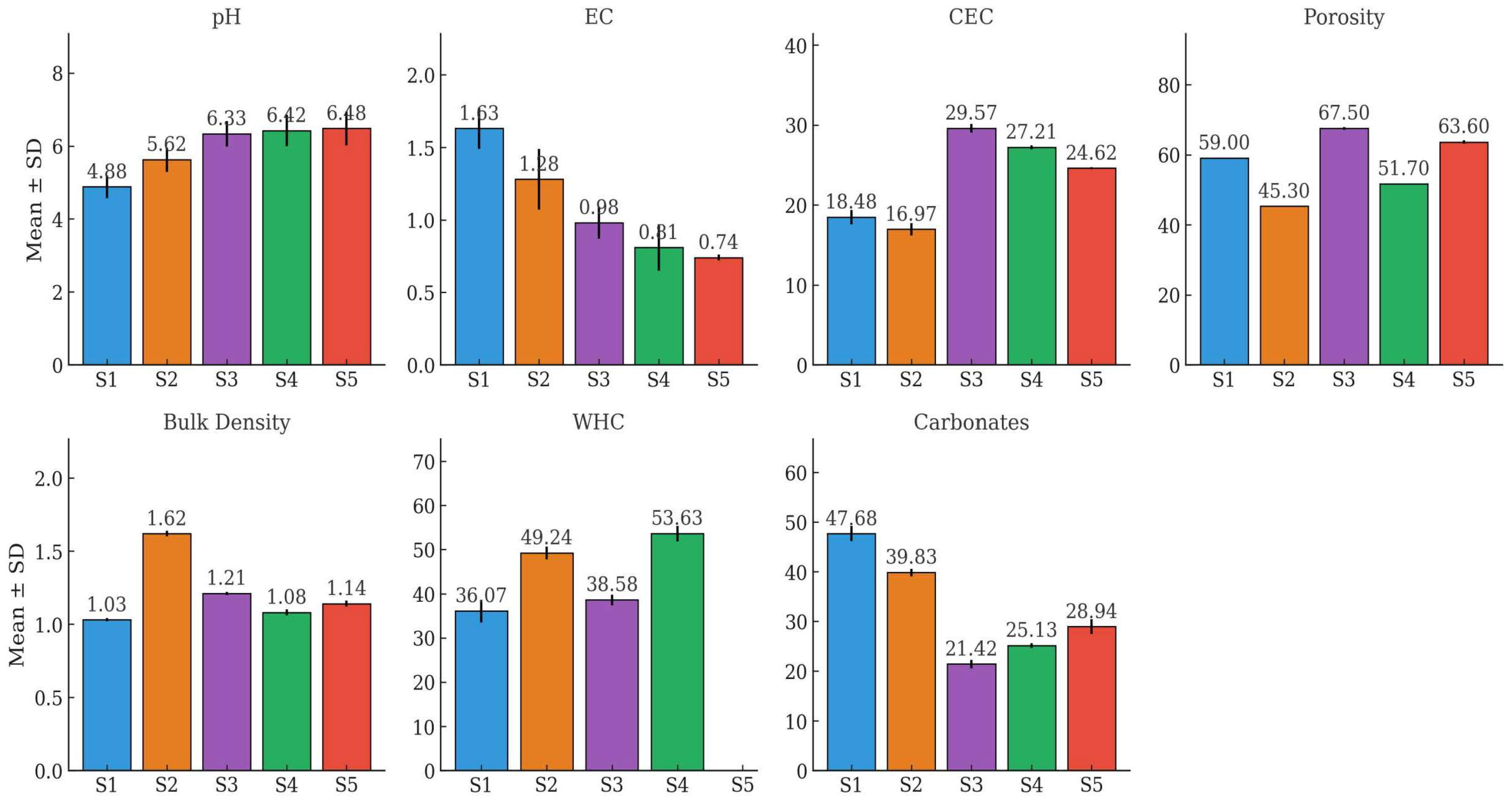
Figure 2.
Total concentration of heavy metals in soil in mg/kg.
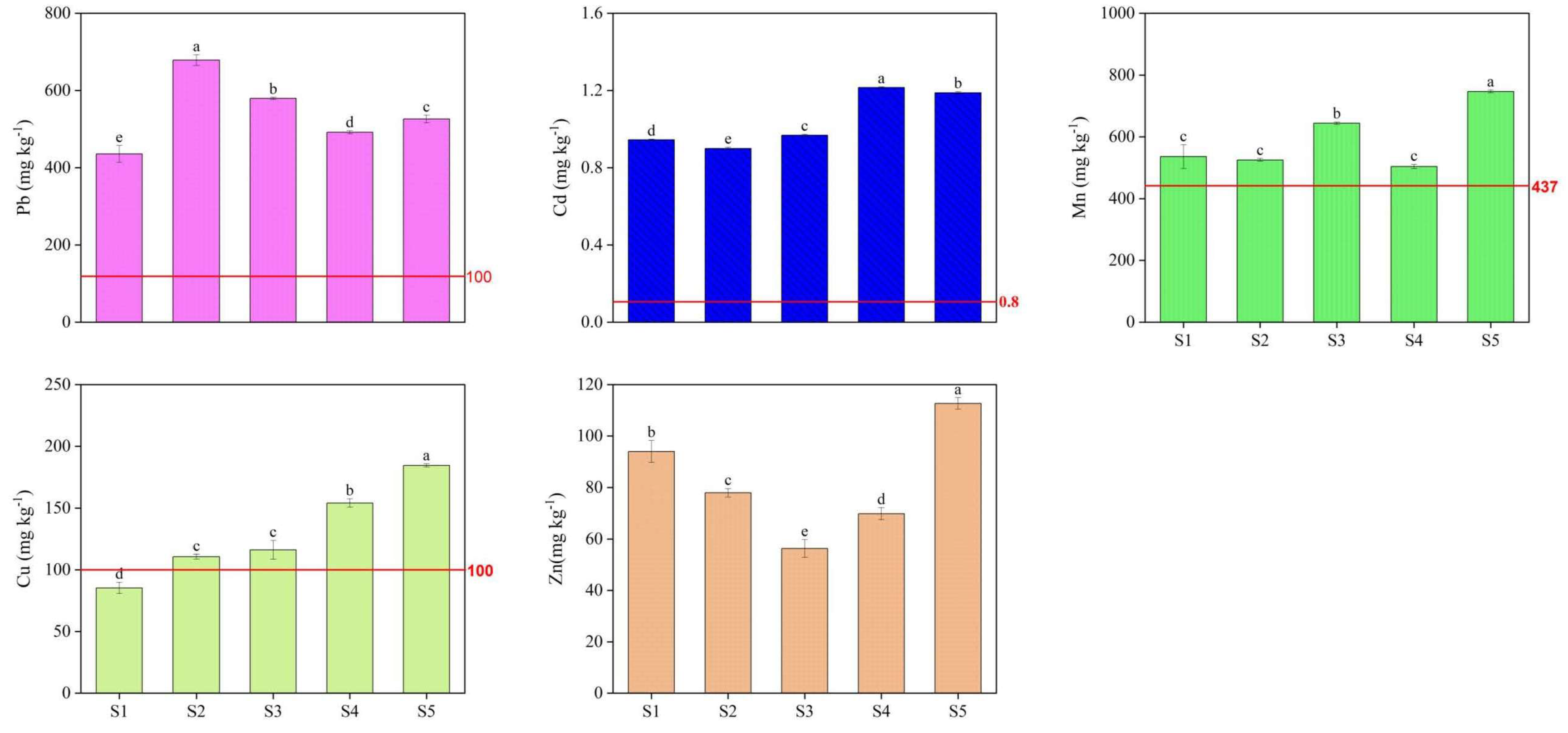
Figure 3.
Concentrations of elements in their pseudo-total and total contents in mg kg-1.
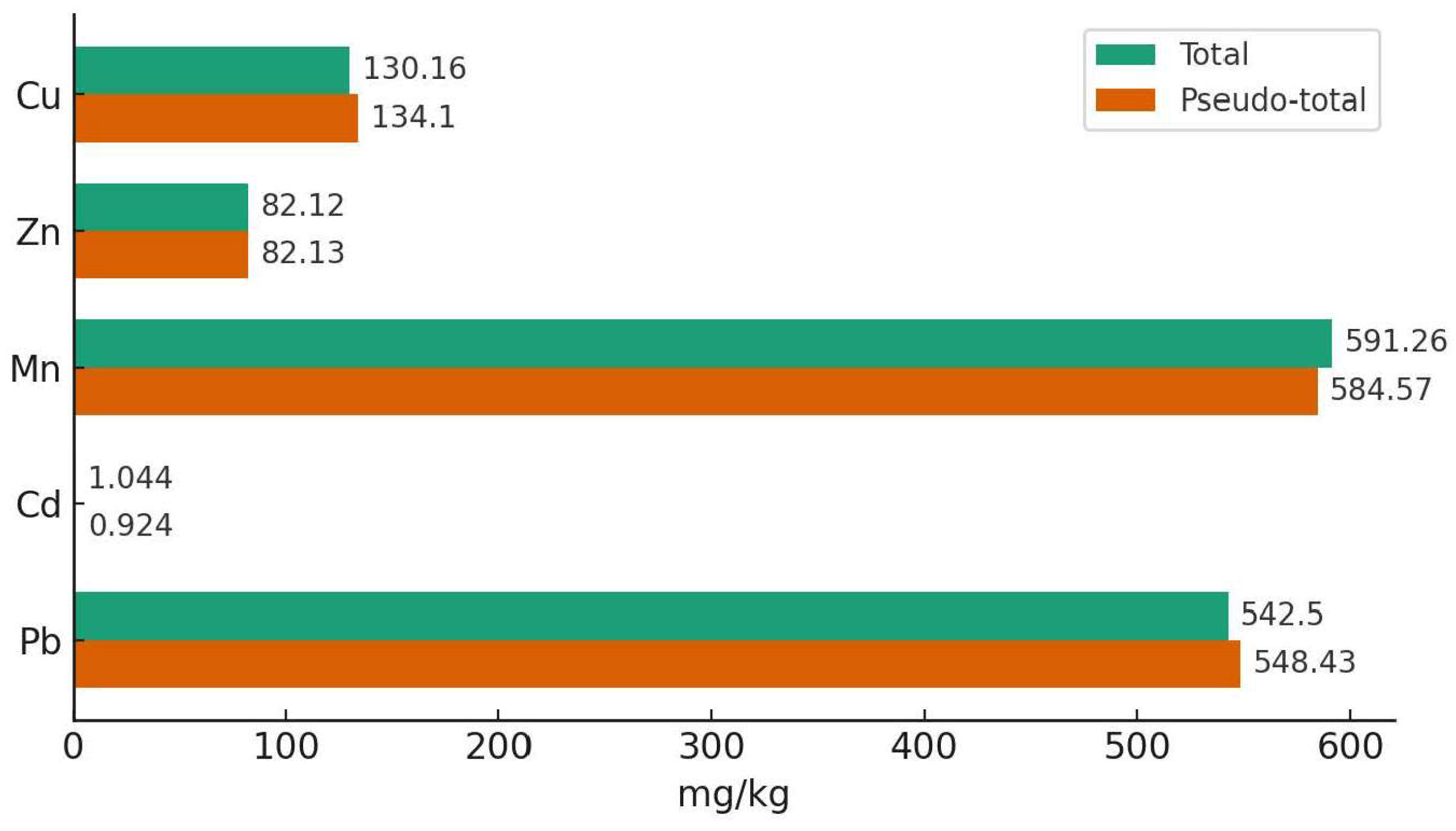
Figure 4.
Concentrations of elements in fractions expressed in percentages.
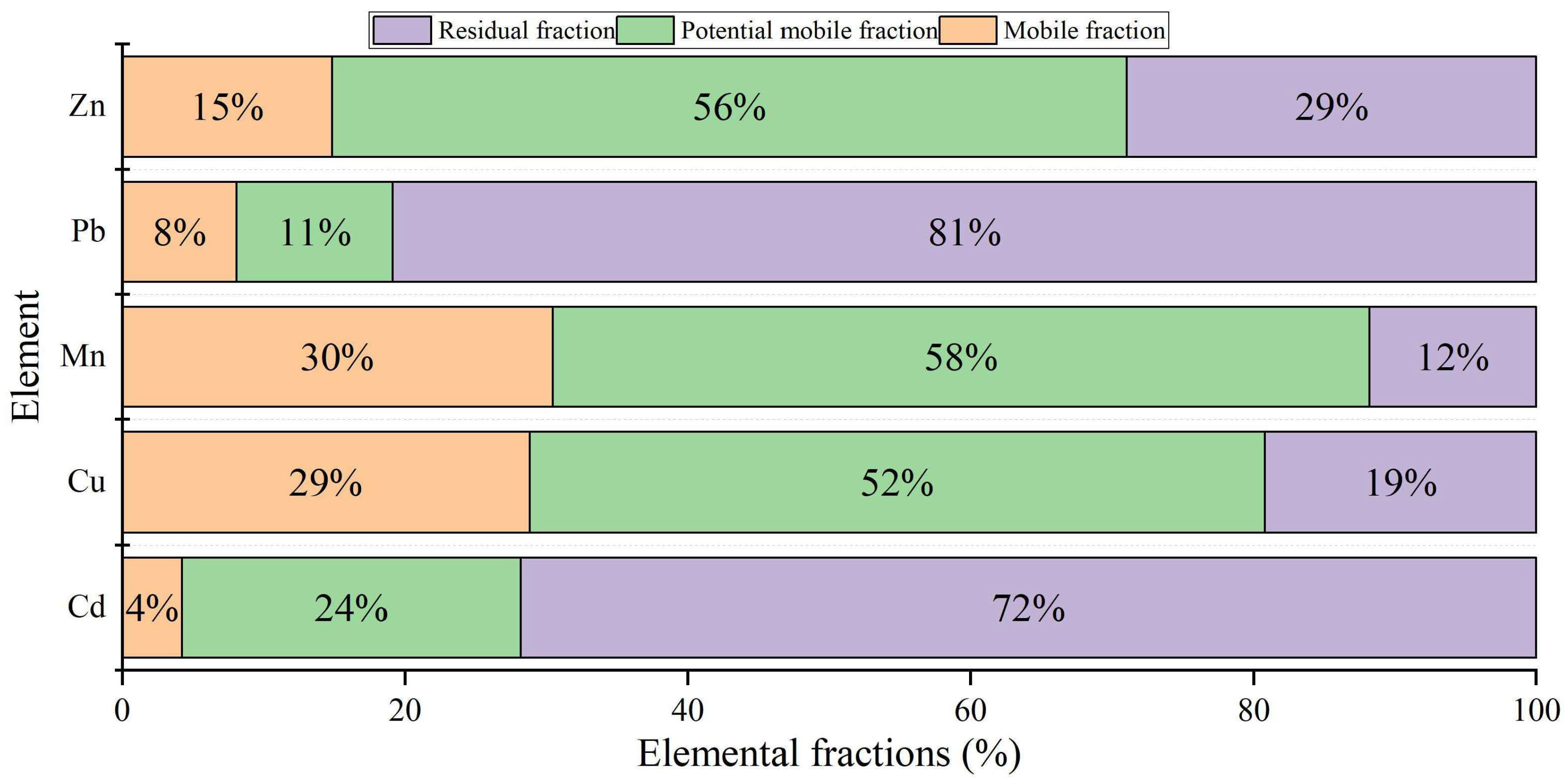
Figure 7.
Correlation matrices among the studied soil variables and the metals.
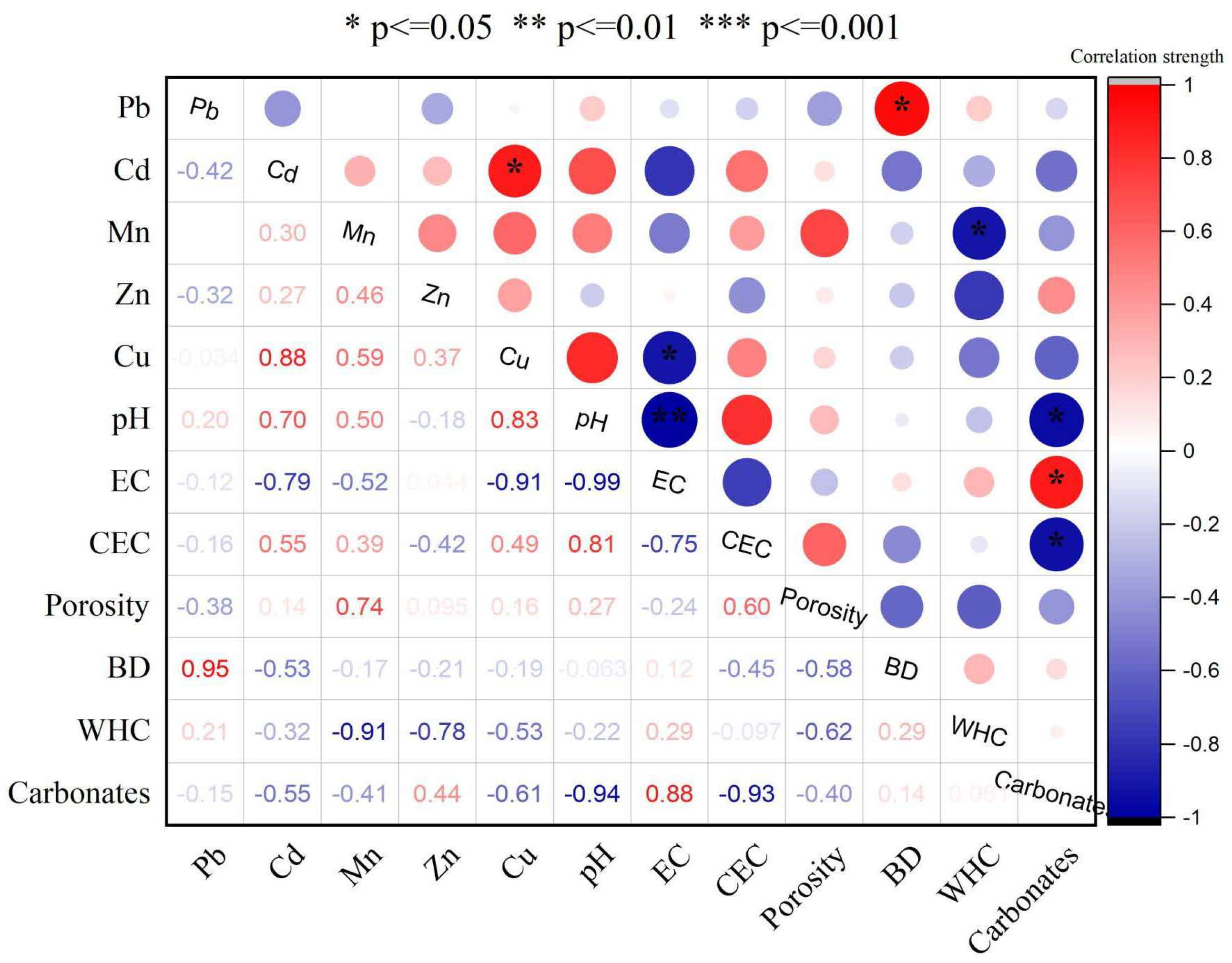
Figure 8.
Correlation matrices among the soil governing variables and the soil elemental fractions.
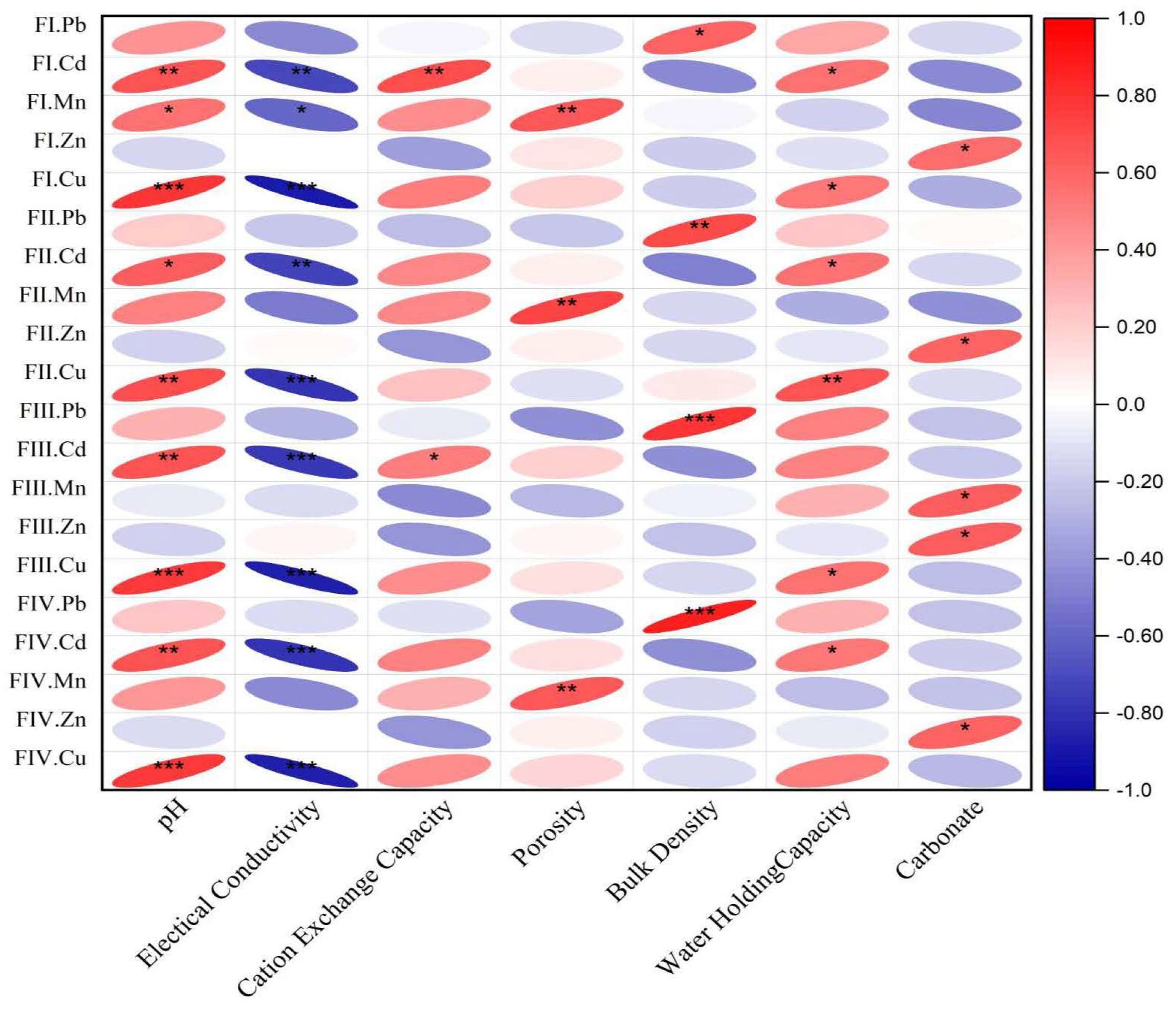
Figure 9.
Correlation matrices among the soil total contents of the elements and their respective elemental fractions.
Figure 9.
Correlation matrices among the soil total contents of the elements and their respective elemental fractions.
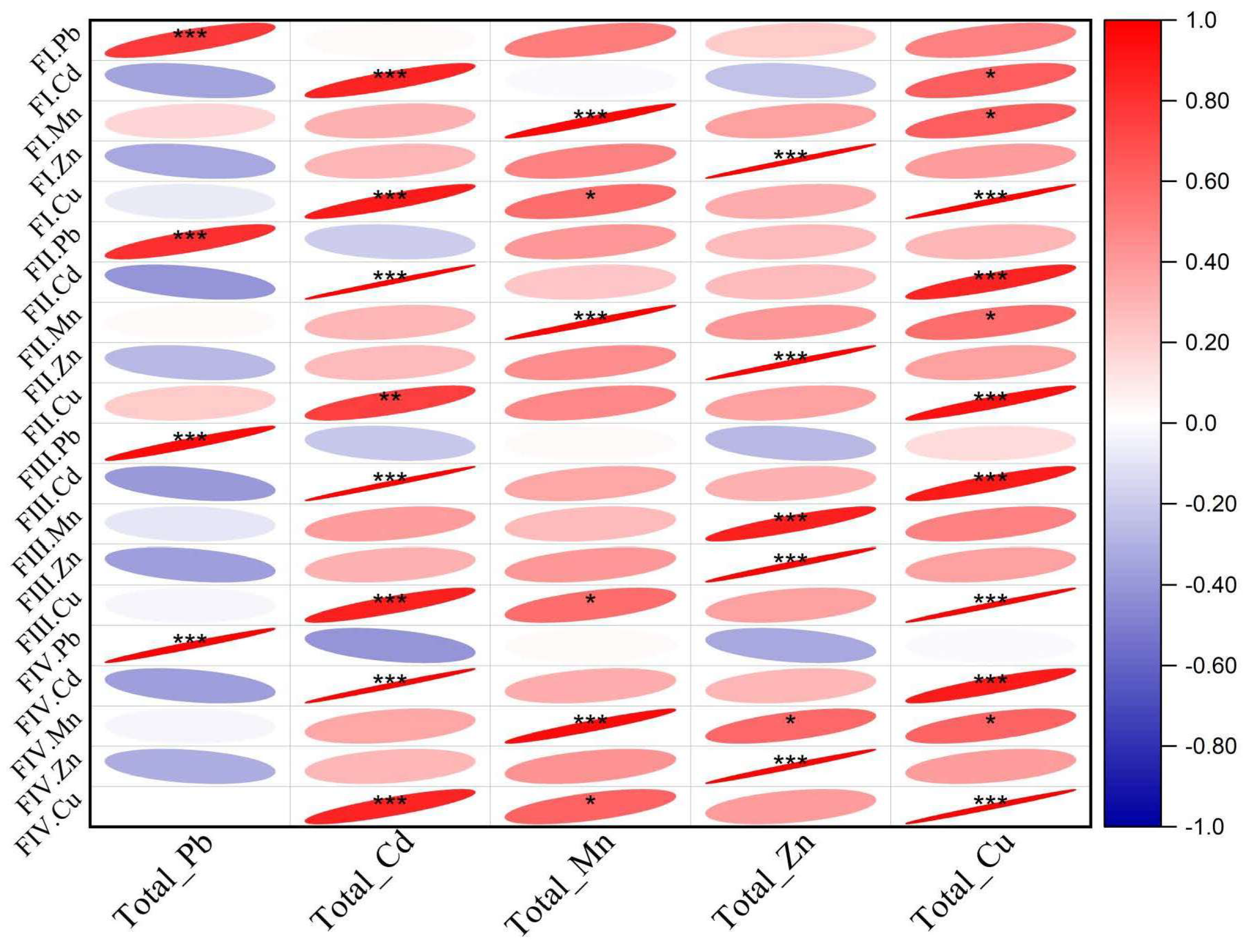
Figure 10.
Linear regression analyses among the soil TOTAL content of the heavy metals and their respective mobility.
Figure 10.
Linear regression analyses among the soil TOTAL content of the heavy metals and their respective mobility.
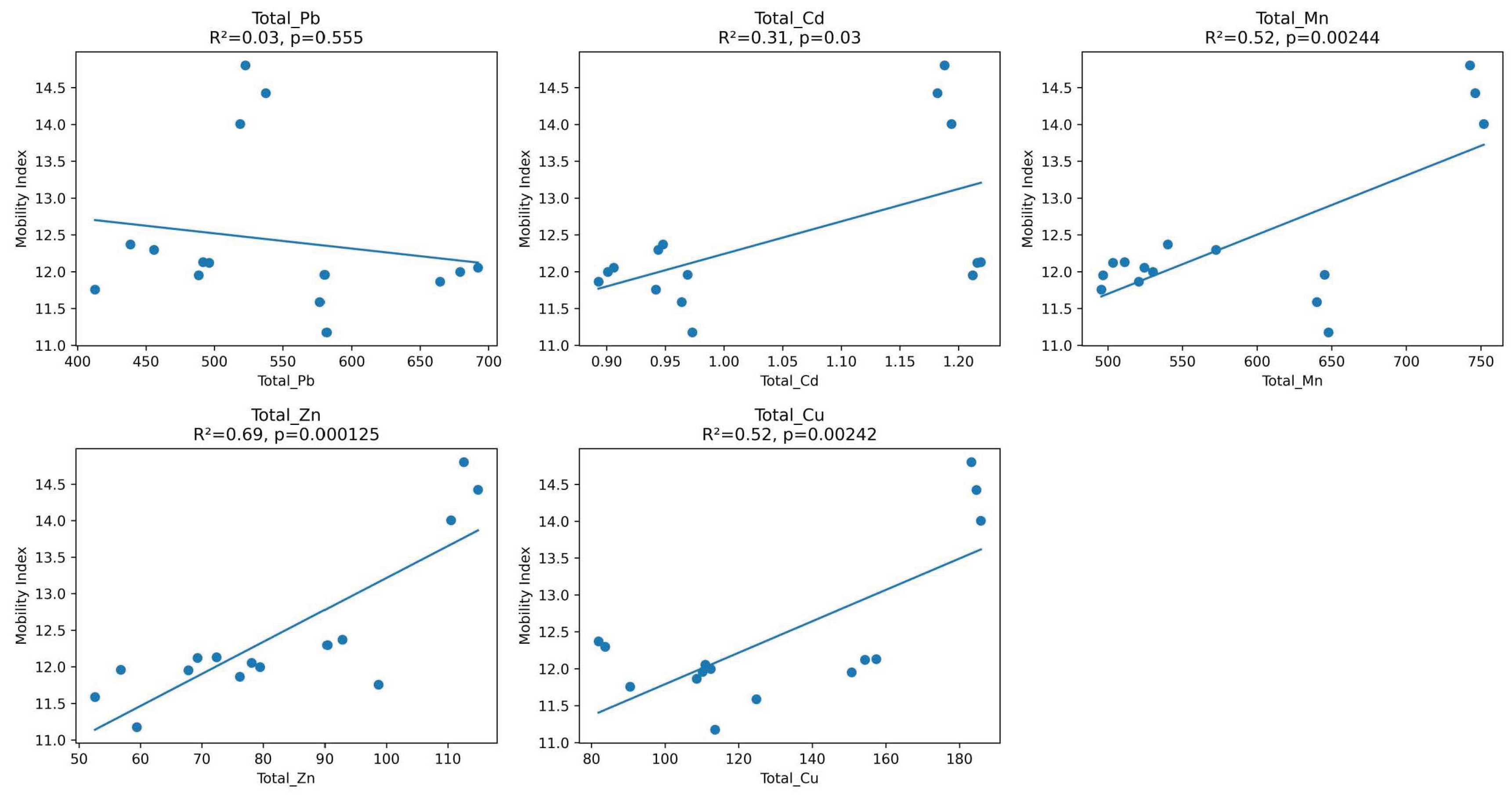

Table 1.
Soil contamination assessment as determined by contamination factor (CF), enrichment factor (EF), and pollution load index (PLI).
Table 1.
Soil contamination assessment as determined by contamination factor (CF), enrichment factor (EF), and pollution load index (PLI).
| Element | Contamination Index | Min | Max | Mean | SD | Median |
| Pb | CF | 16.14 | 25.14 | 20.49 | 3.36 | 19.49 |
| EF | 11.4 | 21.02 | 15.98 | 3.54 | 15.86 | |
| PLI | 2.22 | 2.96 | 2.54 | 0.26 | 2.51 | |
| Cd | CF | 4.51 | 6.08 | 5.22 | 0.67 | 5.94 |
| EF | 3.28 | 5.29 | 3.93 | 0.83 | 3.76 | |
| PLI | 2.22 | 2.96 | 2.54 | 0.26 | 2.51 | |
| Mn | CF | 1.15 | 1.71 | 1.35 | 0.2 | 1.23 |
| EF | 1.0 | 1.0 | 1.0 | 0.0 | 1.0 | |
| PLI | 2.22 | 2.96 | 2.54 | 0.26 | 2.51 | |
| Zn | CF | 0.8 | 1.61 | 1.17 | 0.3 | 1.11 |
| EF | 0.67 | 1.09 | 0.9 | 0.16 | 0.92 | |
| PLI | 2.22 | 2.96 | 2.54 | 0.26 | 2.51 | |
| Cu | CF | 2.22 | 4.79 | 3.38 | 0.96 | 3.02 |
| EF | 1.81 | 3.47 | 2.5 | 0.57 | 2.39 | |
| PLI | 2.22 | 2.96 | 2.54 | 0.26 | 2.51 |
Table 2.
Classification guidelines and ranges for CF, EF, Igeo, and PLI.
| Index | Range | Interpretation |
| CF | <1 | Low contamination |
| 1–3 | Moderate contamination | |
| 3–6 | Considerable contamination | |
| >6 | Very high contamination | |
| EF | <2 | Deficiency to minimal enrichment |
| 2–5 | Moderate enrichment | |
| 5–20 | Significant enrichment | |
| 20–40 | Very high enrichment | |
| >40 | Extremely high enrichment | |
| Igeo | <=0 | Unpolluted |
| 0–1 | Unpolluted to moderately polluted | |
| 1–2 | Moderately polluted | |
| 2–3 | Moderately to strongly polluted | |
| 3–4 | Strongly polluted | |
| >4 | Extremely polluted | |
| PLI | <1 | No pollution |
| =1 | Baseline level | |
| >1 | Polluted site |
Disclaimer/Publisher’s Note: The statements, opinions and data contained in all publications are solely those of the individual author(s) and contributor(s) and not of MDPI and/or the editor(s). MDPI and/or the editor(s) disclaim responsibility for any injury to people or property resulting from any ideas, methods, instructions or products referred to in the content. |
© 2026 by the authors. Licensee MDPI, Basel, Switzerland. This article is an open access article distributed under the terms and conditions of the Creative Commons Attribution (CC BY) license (http://creativecommons.org/licenses/by/4.0/).
Copyright: This open access article is published under a Creative Commons CC BY 4.0 license, which permit the free download, distribution, and reuse, provided that the author and preprint are cited in any reuse.


