

Submitted:
12 March 2026
Posted:
13 March 2026
Read the latest preprint version here
Abstract
Diabetic peripheral neuropathy (DPN) remains a leading cause of disability in diabetes, yet current care is largely symptomatic. Increasing evidence places early dysfunction of the blood-nerve barrier (BNB)—a core element of the peripheral nerve neurovascular unit (PNVU)—at the intersection of metabolic stress and neuroinflammation. This review synthesizes a redox-centered model of BNB failure in DPN: (i) chronic hyperglycemia and dyslipidemia overwhelm endogenous antioxidant defenses, driving reactive oxygen species (ROS) imbalance; (ii) ROS-associated endothelial activation promotes endothelial-immune crosstalk, leukocyte recruitment, and macrophage polarization; and (iii) progressive loss of tight-junction and barrier homeostasis increases paracellular permeability and exposure of nerves to pro-inflammatory and neurotoxic mediators. We then evaluate incretin-based therapies—GLP-1 receptor agonists, DPP-4 inhibitors, and emerging multi-agonists—as candidate PNVU/BNB stabilizers. Beyond glucose and weight effects, these agents may dampen oxidative and inflammatory signaling, enhance antioxidant pathways (e.g., Nrf2), and preserve molecular determinants of BNB integrity via indirect metabolic unloading and potentially GLP-1R-dependent vascular-immune actions. By reframing DPN as a neurovascular-immune disorder driven by redox imbalance, we highlight barrier-focused biomarkers and therapeutic opportunities for disease modification.
Keywords:
diabetic peripheral neuropathy
; blood-nerve barrier
; peripheral nerve neurovascular unit
; redox im-balance
; oxidative stress
; Nrf2
; neuroinflammation
; incretin-based therapy
1. Introduction
1.1. Clinical Burden and Unmet Needs
Diabetes mellitus is among the most pressing global health challenges of the 21st century. A 2023 systematic analysis published in The Lancet projected that the global prevalence of diabetes will increase from 6.1% to 9.8% by 2050, corresponding to approximately 1.31 billion affected individuals [1]. Diabetic peripheral neuropathy (DPN) is one of the most common and disabling chronic complications of diabetes, with a lifetime prevalence approaching 50% [2,3,4]. Painful DPN is also frequent; a recent systematic review and meta-analysis estimated a pooled prevalence of ~30.6% among individuals with type 2 diabetes, with substantial heterogeneity across populations and study settings [5]. Clinically, DPN is associated with major downstream morbidity—including sensory loss, gait impairment, foot ulceration, and amputation risk [3,6]—yet diagnosis and monitoring still rely largely on symptom-based questionnaires and functional testing such as quantitative sensory testing (QST) [7,8]. Importantly, current therapies remain largely symptomatic (e.g., analgesic strategies for neuropathic pain) and do not provide robust disease-modifying effects that halt or reverse underlying neurovascular–immune pathology [9,10,11].
1.2. Clinical Definition, Phenotypes, and Diagnostic Landscape of Dpn
Consistent diagnostic criteria are essential for synthesizing evidence and for comparing findings across cohorts and trials. In this review, we align our definitional framework with contemporary clinical guidance and consensus statements, and we place biomarkers within a pragmatic diagnostic pathway [12,13]. Specifically, we adopt the Toronto consensus approach to distal symmetric polyneuropathy (DSPN), which stages neuropathy as possible, probable, or confirmed based on symptoms/signs and objective tests [14]. To reduce ambiguity and avoid over-reliance on any single modality, we summarize the spectrum of diagnostic and phenotyping tools—from bedside screening and nerve conduction studies to small-fiber–focused assessments (e.g., intraepidermal nerve fiber density (IENFD) skin biopsy, corneal confocal microscopy (CCM)) and advanced imaging—into a practical “diagnostic and endpoint toolkit” describing what each modality captures and when it is most informative (Table 1) [7].
The Toronto DSPN definitions emphasize a staged approach. “Possible DSPN” is defined by neuropathic symptoms (e.g., numbness, pain, paresthesia) or signs on examination (e.g., reduced ankle reflexes, distal sensory loss) [14]. “Probable DSPN” requires a combination of symptoms and signs (typically ≥ 2), increasing diagnostic certainty when objective testing is not yet available [7,14]. “Confirmed DSPN” requires abnormal nerve conduction studies (NCS) consistent with polyneuropathy together with symptoms or signs; alternatively, in selected contexts, a validated small-fiber test may complement NCS-based confirmation when small-fiber involvement predominates [14,20].
In routine care, this framework maps onto a stepwise pathway: screening begins with focused history and neurologic examination plus simple bedside tests for loss of protective sensation (e.g., 10-g monofilament, vibration) [13]. In clinical research and therapeutic trials, the Toronto framework supports standardized eligibility and endpoint definitions by anchoring “confirmation” to objective measures—most commonly NCS/EMG—while recognizing that small-fiber dysfunction can be prominent, particularly early in disease and in painful phenotypes [7,12,14].
Importantly, different tools interrogate distinct fiber types and pathophysiological domains. Large-fiber dysfunction is typically captured by NCS/EMG and vibration-based bedside tests, whereas small-fiber dysfunction may be detected by IENFD on skin biopsy, CCM, QST (e.g., German Research Network on Neuropathic Pain (DFNS) protocol), and autonomic/sudomotor testing (e.g., electrochemical skin conductance) [20,21,22,23,24,25,26]. Advanced imaging modalities such as magnetic resonance neurography (MRN) provide complementary structural and proximal nerve information and may contribute to early detection and phenotyping in research settings [24].
Accordingly, we treat diagnosis as a layered process rather than a single test result: clinical evaluation establishes suspicion, confirmatory testing provides objectivity and staging, and emerging biomarkers are best interpreted in the context of the fiber types and domains they reflect [7]. Given the heterogeneity of DPN phenotypes and the limitations of existing modalities—especially for early small-fiber involvement—mechanistic frameworks are needed to connect clinical presentation with measurable, scalable biomarkers. Among proposed models, increasing attention has focused on neurovascular and neuroimmune interactions within the peripheral nerve neurovascular unit (PNVU), providing a coherent bridge from systemic metabolic derangements to endothelial activation, immune cell recruitment, and blood–nerve barrier (BNB) dysfunction that may precede overt axonal loss [7,12,13,14,20,21,22,23,24,25,26]. A conceptual summary of the PNVU/BNB-centered framework and hypothesized incretin-mediated restoration is shown in Figure 1.
1.3. From Metabolic Stress to Neurovascular-Immune Dysfunction: A Mechanistic Rationale
Mechanistically, diabetic peripheral neuropathy (DPN) reflects a multifactorial network of metabolic, vascular, and immune perturbations rather than a single neuron-intrinsic lesion. Chronic hyperglycemia–driven metabolic insults—including advanced glycation end product (AGE) formation, polyol pathway activation, and oxidative stress—have long been considered central contributors to nerve injury [27,28,29]. However, emerging transcriptomic and vascular-focused studies increasingly implicate system-level dysfunction of the PNVU as an organizing framework that links systemic metabolic derangements to endoneurial pathology [30]. Within this framework, loss of blood–nerve barrier (BNB) integrity is increasingly recognized as an early and potentially upstream event in DPN pathogenesis [31,32]. Compared with the blood–brain barrier (BBB), the BNB lacks complete astrocytic coverage and may therefore be more vulnerable to fluctuations in the endoneurial microenvironment [33,34].
A redox-centered view further helps unify these observations. Diabetes-associated oxidative stress can overwhelm endogenous antioxidant defenses, including heme oxygenase-1 (HO-1) and superoxide dismutase (SOD) [35,36], promoting endothelial activation and the induction of adhesion molecules such as vascular cell adhesion molecule-1 (VCAM-1) [37]. This dysregulated endothelial–immune crosstalk facilitates leukocyte recruitment and the accumulation of Iba1-positive macrophages within the endoneurial compartment, amplifying local cytokine signaling and driving barrier failure through tight-junction disruption (e.g., claudin-1/5) and increased permeability [30,38,39,40].
In response to this interconnected pathology, incretin-based therapies—particularly long-acting glucagon-like peptide-1 receptor agonists (GLP-1RAs) such as semaglutide—have attracted attention for potential benefits beyond glycemic control [41,42]. In addition to the SUSTAIN clinical program showing improvements in glycemic indices and cardiovascular outcomes [43,44,45], semaglutide and other GLP-1RAs have demonstrated anti-inflammatory and neuroprotective effects in central nervous system (CNS) models of neurodegeneration [46,47,48,49,50,51,52,53]. Preclinical evidence also suggests that GLP-1RAs may alleviate neuropathic pain behaviors, in part by attenuating maladaptive activation of neuroinflammatory cells [54]. However, systematic syntheses that specifically address whether incretin-based therapies modulate endoneurial microvascular stability and restore PNVU/BNB structural integrity remain limited.
Accordingly, this review integrates recent advances in PNVU biology, dissects molecular mechanisms underlying BNB dysfunction, and evaluates incretin-based therapies as multi-target candidates for stabilizing barrier integrity, suppressing neuroinflammation, and reinforcing antioxidant defenses in DPN. We first summarize contemporary clinical definitions and diagnostic approaches, then synthesize evidence supporting PNVU/BNB dysfunction as an upstream driver of neuroinflammation and axonal injury. Finally, we discuss incretin-based interventions—highlighting GLP-1RAs where evidence is most mature—and outline key translational gaps and testable hypotheses for future clinical trials.
2. The Pnvu: Concept and Overview
2.1. The Pnvu as A Functional Syncytium
The traditional view of the BNB as a static, passive wall has evolved into the more dynamic concept of the PNVU. Similar to the neurovascular unit in the CNS, the PNVU represents a “functional syncytium” in which endoneurial microvascular endothelial cells (EMECs), pericytes, the basement membrane, and resident immune cells—particularly Iba1-positive macrophages—operate as an integrated system to maintain endoneurial homeostasis [31,32,33]. Rather than acting as a simple diffusion barrier, the BNB within the PNVU actively regulates the entry of circulating metabolites, inflammatory cues, and oxidative mediators, thereby shaping an immune-quiescent microenvironment that supports axonal and Schwann cell function [55].
Communication within this unit is bidirectional and highly context dependent. Endothelial cells couple vascular supply to neural metabolic demands, while pericytes and resident macrophages serve as “sentinels” that sense microenvironmental perturbations and provide trophic support through factors such as glial cell line-derived neurotrophic factor (GDNF) and vascular endothelial growth factor (VEGF) [33,56]. Under physiological conditions, this coordinated crosstalk buffers the endoneurial compartment against systemic fluctuations (e.g., electrolytes and hormones) and limits exposure to potentially neurotoxic signals; conversely, when metabolic stress and redox imbalance persist, disruption of this coordination may predispose the BNB to endothelial activation and downstream neuroinflammatory amplification.
2.2. Anatomical and Molecular Architecture of the Bnb
The BNB is primarily composed of non-fenestrated EMECs, which are characterized by the presence of complex tight junction (TJ) proteins that seal the paracellular pathways [34,38]. These junctions are molecularly diverse, consisting of transmembrane proteins such as Claudin-1, Claudin-5, and occludin, which are anchored to the actin cytoskeleton via cytoplasmic scaffolding proteins like zonula occludens (ZO-1) [39,40].
Among these, Claudin-5 is considered the “molecular gatekeeper” restricting paracellular diffusion of small solutes, while Claudin-1 has been increasingly recognized for its role in maintaining high electrical resistance and barrier stability in the peripheral nervous system (PNS) [31]. Recent evidence highlights that the functional integrity of these molecular seals is not only dependent on total protein levels but also on their precise subcellular localization along the plasma membrane; chronic hyperglycemia often triggers the internalization and redistribution of these proteins, resulting in a characteristic “fragmented” staining pattern that is widely interpreted as barrier failure [57]. In the context of DPN, the delocalization or degradation of these specific proteins serves as a hallmark of barrier disintegration, and may precede overt clinical manifestations [32,58].
2.3. Comparative Barrier Biology: Bnb Versus Bbb
While both the BNB and the BBB share the common goal of neural protection, their cellular compositions differ significantly, which may explain the unique vulnerability of peripheral nerves in metabolic diseases. Unlike the BBB, which is enveloped by the foot processes of astrocytes (contributing to the glia limitans), the BNB lacks a comprehensive glial covering [33,37]. Instead, the BNB relies more heavily on a high density of pericytes and a layer of perivascular macrophages for structural and immunological reinforcement [59].
Furthermore, the permeability of the BNB is generally higher than that of the BBB, especially in areas such as the dorsal root ganglia (DRG), where the barrier is notably “leakier” and more permissive to circulating factors [37]. This lack of astrocytic support and higher baseline permeability renders the BNB particularly susceptible to chronic hyperglycemic insults and systemic inflammatory mediators circulating in the blood [60].
3. Redox Imbalance in the Pnvu: Oxidative Damage, Antioxidant Defense Failure, and Metabolic-to-Vascular Coupling
3.1. The Landscape of Oxidative Damage in the Pnvu
Chronic hyperglycemia does not merely increase the production of reactive oxygen species (ROS); it drives a broader state of redox imbalance within the PNVU through multiple converging mechanisms. In the diabetic milieu, excessive mitochondrial ROS generation, activation of NADPH oxidase-dependent pathways, and increased flux through the polyol, protein kinase C (PKC), and hexosamine pathways collectively intensify oxidative burden, while AGE-RAGE signaling further amplifies redox-sensitive inflammatory cascades [61,62,63]. Under physiological conditions, these insults are buffered by endogenous antioxidant defenses—including Nrf2-dependent transcriptional responses, superoxide dismutase (SOD), catalase, glutathione peroxidase (GPx), heme oxygenase-1 (HO-1), and the glutathione system—but in diabetes this protective network becomes progressively insufficient, allowing oxidative injury to accumulate across the molecular components of the PNVU [63,64]. A primary consequence of this metabolic insult is lipid peroxidation, marked by elevated levels of malondialdehyde (MDA) and 4-hydroxynonenal (4-HNE) [35,65]. These lipid-derived aldehydes cross-link with membrane proteins and disrupt the lipid bilayer of endoneurial endothelial cells. Beyond structural thinning, recent biophysical evidence indicates that oxidized bilayers are prone to the formation of transient hydrophilic pores, which directly contributes to the initial breach of the BNB and facilitates the paracellular leakage of neurotoxic macromolecules [65,66] (Figure 1B).
Furthermore, the diabetic environment promotes the formation of peroxynitrite, leading to the accumulation of nitrotyrosine—a hallmark of protein nitration that impairs vascular contractility and endothelial signaling [67,68]. This peroxynitrite-mediated damage is further exacerbated by the activation of signaling pathways such as Rho kinase (ROCK), which compromises the stability of the endothelial cytoskeleton and contributes to the disassembly of junctional complexes [67,69]. Simultaneously, DNA integrity within Schwann cells and axons is threatened by persistent oxidative stress, as evidenced by the accumulation of 8-hydroxy-2′-deoxyguanosine (8-OHdG) [70]. This oxidative DNA damage triggers mitochondrial-dependent apoptotic pathways, leading to a loss of Schwann cell support and exacerbating the pathological progression of DPN [70,71,72].
3.2. Metabolic Exhaustion of Endogenous Antioxidant Defenses: Sod, Ho-1, and Impaired Nrf2 Signaling
To counter this oxidative deluge, the PNVU relies on an intricate hierarchy of defense mechanisms. Core components of this antioxidant network include SOD, which serves as the primary scavenger of superoxide radicals, and HO-1, a stress-inducible enzyme regulated by the Nrf2-ARE pathway that provides potent cytoprotective and anti-inflammatory effects [35,73]. Acting upstream of these enzymatic defenses, Nrf2 functions as a master redox-sensitive transcription factor that coordinates antioxidant and cytoprotective gene expression, thereby linking metabolic stress sensing to the preservation of endothelial and Schwann cell homeostasis [64,74].
In the persistent state of diabetes, however, these defense systems undergo a process of “metabolic exhaustion.” While there may be an initial compensatory upregulation in the early stages of hyperglycemia, persistent metabolic stress eventually blunts Nrf2 nuclear translocation and downstream transcriptional responses, contributing to the downregulation of SOD-2 and HO-1 protein expression [73,75]. As this compensatory network falters, the replenishment of glutathione-related and other antioxidant reserves becomes increasingly inadequate, shifting the PNVU toward a sustained pro-oxidant state [64,74,76]. This failure of the “endogenous shield” creates a state of redox imbalance, leaving the BNB defenseless against ROS and facilitating the transition from metabolic stress to structural disintegration and neuroinflammation [35,75].
3.3. Metabolic-to-Vascular Coupling: Age-Rage Signaling and Dyslipidemia as Upstream Drivers of Pnvu Stress
Oxidative stress within the PNVU rarely arises in isolation; rather, it is primed by upstream metabolic cues that couple chronic hyperglycemia to vascular activation. These upstream metabolic-to-vascular coupling pathways are summarized in Figure 2.
A central driver is the cumulative burden of advanced glycation end products (AGEs), which can injure the microvasculature through (i) extracellular matrix cross-linking and basement membrane stiffening, (ii) intracellular glycation/carbonyl stress that perturbs cellular redox homeostasis, and (iii) receptor-mediated signaling through the receptor for AGEs (RAGE), which amplifies oxidative and inflammatory responses [77,78]. These AGE-dependent effects are not isolated lesions; rather, they converge on redox-sensitive endothelial activation and early barrier priming within the PNVU.
RAGE engagement triggers sustained NF-κB activation and establishes a feed-forward loop in which RAGE expression and downstream inflammatory genes remain upregulated even after glycemic fluctuations. In endothelial cells, this program includes the induction of adhesion molecules (e.g., VCAM-1, ICAM-1, E-selectin), increased leukocyte adhesivity, and a permissive proinflammatory phenotype—features that can “prime” the BNB for immune cell recruitment and permeability changes that later manifest as overt barrier breakdown [78,79,80]. By establishing a self-reinforcing circuit between NF-κB activation, further RAGE upregulation, and CAM induction, this axis helps maintain PNVU oxidative/inflammatory conditioning even when glycemic exposure fluctuates (Figure 2).
More importantly, dyslipidemia adds a vascular substrate that is frequently underemphasized in DPN mechanistic narratives. Clinical syntheses and meta-analytic data support associations between adverse lipid profiles and DPN, consistent with the idea that lipid-driven endothelial dysfunction and atherosclerotic remodeling can impair perfusion to the vasa nervorum and exacerbate endoneurial hypoxia [73,81,82]. Beyond epidemiologic association, dyslipidemia itself is increasingly recognized as a driver of diabetic microvascular dysfunction, and oxidized lipid stress may further intensify endothelial redox injury within this vascular niche [83,84]. Reduced nerve perfusion potentiates mitochondrial stress and lowers the threshold for endothelial activation, providing a mechanistic bridge from metabolic derangements to ROS amplification, NF-κB-CAM signaling, and neuroinflammatory priming within the PNVU (Figure 2).
4. Endothelial Activation and the Breach of Immune Privilege
4.1. Endothelial Dysfunction as A Gateway to Bnb Breakdown
Building on the redox framework outlined in Section 3, oxidative stress and antioxidant defense failure translate chronic metabolic injury into an endothelial inflammatory phenotype, thereby converting the BNB from a homeostatic interface into a permissive site of immune activation. The physiological stability of the BNB is fundamentally dependent on the homeostatic state of EMECs. In the diabetic environment, chronic metabolic stress triggers endothelial dysfunction, characterized by a loss of vascular tone regulation and an increase in paracellular permeability [27,85]. This dysfunction transforms the BNB from a restrictive “gatekeeper” into a pro-inflammatory interface, facilitating the entry of systemic toxins and immune cells into the endoneurial space [85].
4.2. The Nf-Κb Pathway: Translating Metabolic Stress into Inflammation
A central mediator of this transformation is the Nuclear Factor-kappa B (NF-κB) signaling pathway. In this context, NF-κB functions as a redox-sensitive transcriptional hub through which persistent hyperglycemia, oxidative stress, and related danger signals are translated into endothelial inflammatory activation. Within the peripheral neurovascular unit, persistent hyperglycemia activates the TLR4/NF-κB axis within both EMECs and Schwann cells, triggering a cascade of pro-inflammatory gene expression [28,86]. As established in foundational diabetic models, the activation of NF-κB serves as the master transcriptional “switch” for the endothelial distress signal, and its inhibition has been shown to improve nerve conduction velocity (NCV) and alleviate thermal hyperalgesia [28,85].
4.3. The Adhesion Molecule Cascade: Vcam-1, Icam-1, and Selectins
The hallmark of endothelial activation in DPN is the sequential upregulation of cell adhesion molecules (CAMs) and selectins. Clinical follow-up studies have confirmed a significant association between elevated circulating levels of VCAM-1, ICAM-1, and E-selectin and the presence of DPN in type 2 diabetic patients [37]. Mechanistically, leukocyte recruitment proceeds in an ordered cascade—initial tethering/rolling followed by firm adhesion—driven by selectins and integrin-CAM interactions. Specifically, E-selectin is expressed on the vascular endothelium of peripheral nerves during acute metabolic or inflammatory stress, mediating the initial rolling of leukocytes along the BNB [87]. Subsequent upregulation of VCAM-1 and ICAM-1 then ensures firm leukocyte attachment to the endoneurial vessels. Histological evidence further indicates that increased expression of these molecules in the diabetic peripheral nerve precedes overt axonal degeneration, supporting their role as early pathological markers of barrier distress [37,88].
4.4. Mcp-1/ccl2 and the Recruitment of Endoneurial Macrophages
The recruitment of immune cells across the compromised BNB is largely driven by Monocyte Chemoattractant Protein-1 (MCP-1/CCL2). As endothelial activation becomes sustained, chemokine signaling adds a second layer to CAM-dependent leukocyte trafficking by promoting directed monocyte recruitment across the increasingly permissive barrier. Recent research specific to the peripheral nervous system has identified that MCP-1 is significantly upregulated in the DRG and sciatic nerves following chronic metabolic insult [89]. This local production of MCP-1 creates a potent chemotactic gradient that guides CCR2-positive monocytes from the circulation into the endoneurial space, signifying the definitive loss of the BNB’s immune privilege [85,89].
5. Chronic Neuroinflammation and Macrophage Polarization
5.1. Resident Vs. Recruited Macrophages: The Sentinel Shift
Within the redox-conditioned microenvironment established in the diabetic PNVU, macrophage accumulation is not merely a consequence of barrier dysfunction but an active amplifier of oxidative and inflammatory injury. Under physiological conditions, the PNVU maintains a lean population of resident Iba1-positive macrophages that serve as immunological “sentinels” located primarily in the perivascular space [59]. These cells are essential for sensing microenvironmental changes and providing trophic support to the BNB [59]. However, in the diabetic state, the upregulation of VCAM-1 and the secretion of MCP-1/CCL2 (discussed in Section 4) facilitate a massive influx of blood-derived monocytes [6,90]. This transition from a stable, resident population to a high-density, recruited population of Iba1-positive cells is a hallmark of DPN and serves as a primary driver of chronic neuroinflammation [90,91].
5.2. Macrophage Polarization: the M1/m2 Paradigm in the Diabetic Nerve
The pathological impact of Iba1-positive cells is determined by their polarization state. Importantly, redox imbalance not only promotes macrophage recruitment but also shapes macrophage polarization toward pro-inflammatory programs. In the persistent hyperglycemic environment, macrophages predominantly adopt the M1 (pro-inflammatory) phenotype. M1-polarized macrophages are characterized by the production of high levels of ROS and the secretion of neurotoxic cytokines, including TNF-α, IL-1β, and IL-6 [28,92].
Conversely, the M2 (anti-inflammatory) phenotype is associated with tissue repair and the secretion of neurotrophic factors. In DPN, a significant “polarization imbalance” occurs, where the M1 population significantly outnumbers the M2 population [92,93]. This skewed ratio creates a self-sustaining cycle of inflammation and oxidative injury that prevents the restoration of the BNB and promotes continuous axonal damage [28,93]. Notably, macrophage activation is plastic and exists along a continuum; thus, promoting a functional shift from M1-like to M2-like programs is hypothesized to support inflammation resolution and barrier/nerve repair (Figure 3).
5.3. The Cytokine Storm and Its Impact on Barrier Integrity
The accumulation of M1 macrophages leads to a localized “cytokine storm” within the endoneurium. In this setting, macrophage-derived cytokines and redox-active mediators act in concert to propagate barrier injury. Elevated levels of TNF-α and IL-1β have been shown to directly downregulate the expression of tight junction proteins in the endoneurial endothelium [58]. These cytokines trigger the internalization and subsequent degradation of Claudin-5, effectively “dissolving” the molecular seal of the BNB [58,94]. Furthermore, activated macrophages release Matrix Metalloproteinases (MMPs), specifically MMP-2 and MMP-9, which enzymatically digest the vascular basement membrane [95]. This dual assault—the biochemical degradation of tight junctions and the physical destruction of the basement membrane—accelerates barrier destabilization and sets the stage for overt structural collapse [31,95].
6. Structural Collapse and Junctional Disassembly
6.1. The Molecular Gatekeepers: Claudin-1 and Claudin-5
Junctional disassembly represents the structural endpoint of persistent redox-inflammatory injury, in which oxidative stress, cytokine exposure, protease activation, and loss of perivascular support converge on the tight junction architecture of the BNB. The restrictive properties of the BNB are primarily governed by the TJ complex, a sophisticated protein network that seals the paracellular space between endoneurial endothelial cells. Among these, Claudin-5 is recognized as the most critical isoform for regulating the permeability of small molecules and ions within the endoneurial microvasculature [31,96]. Furthermore, Claudin-1, which is also expressed in the perineurium, contributes significantly to the overall paracellular resistance of the endoneurial barrier [96].
Recent research has emphasized that the maintenance of these gatekeepers is a multi-cellular effort within the PNVU. Specifically, pericyte-derived factors, such as GDNF, are essential for upregulating Claudin-5 expression, highlighting that the structural integrity of the BNB is inextricably linked to the health of its supporting perivascular cells [58].
6.2. Junctional Disassembly and Protein Downregulation
In the diabetic PNVU, the “persistent redox-inflammatory assault” of chronic oxidative stress, pro-inflammatory cytokines, and MMPs culminates in the progressive disassembly of these tight junctions. Chronic hyperglycemia and the resulting inflammatory signaling—key components established in foundational DPN models—trigger the internalization and ubiquitin-mediated degradation of Claudin-5 and Claudin-1 [31,58].
Unlike acute injuries, the diabetic state induces a chronic attenuation of barrier tightness, characterized by junctional protein internalization and a fragmented immunostaining pattern [57]. This loss of junctional continuity represents the definitive structural failure of the BNB, effectively “dissolving” the molecular seal that protects the endoneurial microenvironment [57,58].
6.3. Assessing Bnb Integrity: A Methodological Toolbox (Structural, Functional, and Cellular Readouts)
Because BNB breakdown is a multi-layered process—and reflects the cumulative consequence of redox stress, inflammatory trafficking, and structural remodeling—no single assay should be treated as a universal “gold standard.” A more rigorous approach is to triangulate (i) functional permeability, (ii) structural junction/ultrastructure and route-specific mechanisms, and (iii) endothelial-immune activation and trafficking readouts, ideally within the same model and time window [34,97].
Functional permeability: Evans blue-albumin leakage remains a convenient macromolecular tracer readout, but it is best presented as one option among complementary tracers and quantification strategies [98,99]. Fluorescent dextrans of defined molecular weights (e.g., 4–70 kDa) can probe size-selective leakage when circulation times and regional sampling are standardized [100]. Endogenous leakage markers (e.g., extravascular IgG/albumin or fibrinogen immunoreactivity) provide corroboration when paired with tracer assays [97,101]. For interpretability and reproducibility, permeability studies should report tracer identity/molecular weight, dose, circulation time, perfusion strategy, and tissue normalization (wet weight/protein).
Structural and route-specific mechanisms: Immunostaining or immunoblotting of tight-junction and scaffolding proteins (e.g., claudin-5/claudin-1, occludin, ZO-1) should be interpreted together with endothelial junctional patterns (continuous vs. fragmented) and, where feasible, TEM to visualize junctional clefts, basement-membrane changes, and vesicular density [34,97]. Where possible, route-specific mechanisms (paracellular vs. transcytotic pathways) should be distinguished to strengthen mechanistic attribution. Given evidence that baseline BNB “leakiness” relative to the BBB may be driven in part by higher transcytosis, quantifying caveolae/vesicle-associated pathways (e.g., caveolin-1) and fenestration-associated components such as PLVAP can strengthen mechanistic attribution when relevant [34,102]. Structural studies should specify regions of interest (endoneurium vs. perineurium; proximal vs. distal) and use blinded quantification whenever possible.
Cellular activation and trafficking: Barrier dysfunction often co-evolves with endothelial inflammatory activation; therefore, profiling adhesion molecules beyond VCAM-1 (e.g., ICAM-1 and selectins) and incorporating dynamic readouts such as leukocyte rolling/adhesion or perivascular cuffing can link adhesion signaling to barrier failure [37,97]. In parallel, macrophage accumulation (e.g., Iba1/CD68/F4/80) is most informative when combined with phenotype markers (e.g., CD86/iNOS-like vs. CD206/CD163/CD204-like programs) and quantitative morphology (e.g., skeletal or fractal metrics) to capture activation states more continuously [34,103,104].
Collectively, prioritizing multi-readout designs (functional + structural + cellular) improves causal narratives from redox imbalance to barrier collapse and mitigates endpoint bias in BNB-centric DPN mechanisms [97,98]. Complementing barrier-focused assays, representative oxidative-stress and antioxidant readouts relevant to DPN/PNVU studies are summarized in Table 2.
7. Incretin-Based Therapies in Dpn and the Pnvu: Class Rationale, Semaglutide, and Translational Opportunities
7.1. Beyond Semaglutide: The Incretin Landscape (Glp-1ras Vs. Dpp-4is; Emerging Multi-Agonists)
Although this review later focuses on semaglutide, the term “incretin-based therapies” is best supported when the broader incretin pharmacology is briefly mapped. Incretin-based agents include (i) GLP-1RAs that provide pharmacologic receptor activation, (ii) dipeptidyl peptidase-4 inhibitors (DPP-4i) that prolong endogenous GLP-1 (and other substrates), and (iii) emerging dual/triple agonists that combine incretin and related metabolic axes [105,106].
From a PNVU/BNB perspective, these classes differ not only in glycemic control potency but also in how they may interface with endothelial activation, immune trafficking, and barrier stress (Figure 1C). GLP-1RAs have reproducible anti-oxidative and anti-inflammatory effects in experimental neuropathy models, with improvements across behavioral, electrophysiologic, and structural readouts in peripheral nerves [107].
DPP-4i offer a complementary angle: beyond glucose lowering, DPP-4 inhibition has been reviewed as a potential modifier of diabetic microvascular complications, with experimental data spanning neuropathy and other microangiopathic endpoints [108]. In rodent neuropathy models, DPP-4i (e.g., sitagliptin, vildagliptin) improved nerve conduction and neuronal/DRG signaling, supporting the possibility that augmented incretin tone intersects with neurotrophic and inflammatory pathways relevant to barrier integrity [109,110]. In streptozotocin-induced diabetic neuropathic pain, teneligliptin also reduced neuroinflammatory signaling in the spinal dorsal horn and restored antioxidant defense programs (e.g., Nrf2/HO-1), providing disease-context support for incretin-linked anti-inflammatory/antioxidant actions [111]. Moreover, DPP-4 inhibition has been shown to reduce vascular leakage and inflammatory injury in other microvascular barriers (e.g., retina), providing mechanistic plausibility for barrier-stabilizing effects that merit direct testing at the BNB [112].
Emerging multi-agonists expand the landscape further. Dual GIP/GLP-1 agonism (tirzepatide) has demonstrated superior metabolic efficacy compared with semaglutide in type 2 diabetes, and mechanistic reviews highlight broader effects on appetite, insulin secretion, and weight reduction [113,114]. Triple agonists such as retatrutide have also shown substantial weight loss in early-phase trials, but their impact on neuropathy outcomes or barrier endpoints has not yet been studied [115].
Positioning semaglutide within this landscape helps keep the section review-like rather than endpoint-driven: it clarifies what is known (class-level anti-inflammatory and anti-oxidative biology, along with strong metabolic effects) and what remains a gap (direct human DPN outcomes and BNB-centric readouts across incretin classes). The evidence landscape and putative PNVU/BNB targets are summarized in Table 3.
Against this broader incretin landscape, the following subsections focus on semaglutide as a representative GLP-1RA with emerging preclinical evidence relevant to PNVU/BNB protection in DPN, while direct evidence for BNB restoration remains limited. The redox-centered pathogenic cascade and putative incretin-responsive checkpoints relevant to DPN and PNVU/BNB dysfunction are summarized in Figure 4.
7.2. Glp-1 Receptor Agonists, with Semaglutide as A Representative Agent: Pharmacological Properties and Antinociceptive Mechanisms
The therapeutic rationale for semaglutide in DPN is increasingly discussed as a multi-target process that extends beyond systemic glycemic control. GLP-1RAs may also exert direct antinociceptive effects by modulating GLP-1R-dependent signaling pathways within both the peripheral and central nervous systems. Recent pharmacological assessments emphasize the role of GLP-1R in pain disorders, highlighting its ability to regulate neuronal excitability and neuroinflammation [116]. In the context of DPN, these agents may address the complex clinical implications of neuropathic pain by targeting specific neurovascular pathways, thereby providing a plausible mechanistic framework for alleviating sensory symptoms while potentially influencing upstream disease-relevant processes [117].
7.3. Counteracting Metabolic Exhaustion: The Nrf2/antioxidant Axis
Preclinical findings suggest that semaglutide may counteract aspects of the “metabolic exhaustion” associated with chronic hyperglycemic stress, particularly the progressive weakening of endogenous antioxidant defenses. Treatment has been shown to engage a cytoprotective response by activating the Nrf2 signaling pathway [35]. This activation is associated with the upregulation of downstream antioxidant enzymes, specifically HO-1 and SOD-2. By reinforcing antioxidant defenses and mitigating redox imbalance, semaglutide may help reduce ROS-related injury, thereby supporting endoneurial endothelial homeostasis and mitochondrial resilience under diabetic stress [117,118].
7.4. Attenuation of P38 Mapk/nf-Κb Signaling and Neuroinflammation
A critical mechanism underlying the proposed anti-inflammatory actions of semaglutide is the inhibition of the p38 MAPK and NF-κB signaling pathways. Chronic hyperglycemia activates these pathways, leading to the upregulation of pro-inflammatory cytokines and adhesion molecules. GLP-1RA intervention has been shown to attenuate this response, downregulating the expression of VCAM-1 and reducing the production of TNF-α and IL-1β [28,119]. These effects support the plausibility that semaglutide may limit the recruitment of circulating monocytes and reduce their infiltration as Iba1-positive macrophages into the endoneurium. Furthermore, semaglutide has also been reported to attenuate neuroinflammation within the spinal cord dorsal horn, thereby potentially reducing the central sensitization associated with neuropathic pain [54,119].
7.5. Putative Structural Stabilization and Functional Preservation of the Bnb
A central translational question is whether attenuation of upstream oxidative and inflammatory stressors by semaglutide can translate into structural stabilization and functional preservation of the BNB. Rather than directly demonstrating BNB restoration, current evidence supports the plausibility that GLP-1RA therapy may help preserve tight-junction organization and barrier selectivity under diabetic stress. By mitigating biochemical insults through the aforementioned antioxidant and anti-inflammatory pathways, semaglutide may reduce the internalization and degradation of the tight junction complex. Having attenuated upstream oxidative and inflammatory stressors, GLP-1RA therapy may enable structural reassembly of tight-junction complexes and functional restoration of barrier selectivity. Preclinical findings suggest that semaglutide may preserve the membrane localization and total protein levels of Claudin-1 and Claudin-5, thereby supporting the molecular seal that defines the endoneurial microenvironment [58]. Consistent with this possibility, functional permeability may be assessed by reduced macromolecular tracer leakage (e.g., Evans blue-albumin extravasation or fluorescent dextrans), reflecting a shift from a pathological “leaky” barrier toward a more restrictive interface [98,100]. Clinical and preclinical observations further suggest that GLP-1RA therapy may be associated with reduced pathological nerve swelling and partial improvement of structural and functional abnormalities in chronic DPN [119,120].
8. Conclusions
The integrity of the BNB is a fundamental prerequisite for peripheral nerve homeostasis. As highlighted throughout this review, DPN progression is closely linked to PNVU dysfunction, where disruption of the neurovascular-immune axis drives the transition from metabolic stress to structural injury. The sequential cascade—redox imbalance and exhaustion of endogenous antioxidant defenses (including the Nrf2/HO-1 axis), followed by NF-κB-mediated endothelial activation (e.g., VCAM-1 upregulation), and subsequent disassembly of Claudin-5 and Claudin-1 tight junctions—provides a mechanistic roadmap for therapeutic intervention. Viewed through this redox-centered framework, DPN may be understood not only as a distal axonopathy but also as a neurovascular disorder shaped by oxidative stress, antioxidant defense failure, and inflammatory barrier injury within the PNVU.
Incretin-based therapies, particularly long-acting GLP-1 receptor agonists such as semaglutide, represent a promising shift in the treatment landscape of DPN. By simultaneously attenuating oxidative stress and neuroinflammation, these agents may help preserve or functionally stabilize the BNB—with experimental readouts consistent with reduced barrier permeability (e.g., reduced Evans Blue extravasation) and preservation of the structural continuity of the endoneurial seal, including tight-junction proteins such as Claudin-1 and Claudin-5 [58,90,92]. Emerging clinical and preclinical observations further suggest improvements in nerve swelling and dysfunction with GLP-1RA therapy [119,120], supporting the translational possibility of disease modification beyond glucose lowering alone.
9. Future Perspectives
9.1. Limitations and Unresolved Questions
Mechanistic attribution remains uncertain: it is unclear whether putative neurovascular benefits are driven primarily by direct actions on the peripheral nervous system/PNVU or indirectly via improvements in glycemia, weight, lipids, and systemic inflammation. Preclinical data support the plausibility of direct GLP-1R signaling in peripheral nerves and Schwann cells [121,122], and small human neurophysiology studies reported improved peripheral nerve excitability and axonal function over ~3 months, with changes not fully explained by concurrent HbA1c reductions [123,124]. However, available human datasets remain small, heterogeneous, and often underpowered for neuropathy endpoints; therefore, causality and mechanism attribution remain uncertain. Notably, an 18-month proof-of-concept open-label randomized study reported no statistically significant between-group differences in multiple neuropathy measures with exenatide despite similar glycemic control [125]. In addition, some vascular and immunomodulatory effects may arise via incretin-independent pathways (e.g., broader anti-inflammatory signaling and non-GLP-1 substrates for DPP-4), further complicating causal attribution to glucose lowering alone.
Translational gaps also persist: animal models (e.g., STZ-induced T1D vs. high-fat-diet-based T2D models), outcome measures (pain behaviors vs. sensory loss), and BNB/PNVU readouts (tracer leakage, junctional proteins) do not always map cleanly onto human DPN phenotypes. A major unmet need is the development and validation of clinically feasible BNB/PNVU biomarkers (imaging and/or fluid biomarkers) that correlate with disease stage and predict progression or therapeutic response [118,126]. Future translational efforts should also clarify how redox-focused biomarkers can be integrated with BNB/PNVU readouts across experimental and clinical settings.
9.2. Key Research Questions
Key priorities for the next phase of translational research include the following:
(i) Mechanism and primary target compartment
- Is any neuroprotection independent of metabolic improvement?
- Which PNVU compartment is the primary target (endothelium, Schwann cells, immune cells)?
(ii) Translational endpoints and biomarkers
- Which outcomes provide the most reliable animal-to-human bridges (NCV, QST, IENFD, MR neurography, circulating endothelial/immune biomarkers)?
- Which BNB/PNVU biomarker panels are feasible, repeatable, and responsive in clinical trials?
- How should redox-focused readouts (e.g., lipid peroxidation, oxidative DNA damage, antioxidant pathway engagement) be incorporated alongside barrier-focused biomarkers?
(iii) Therapeutic class effects and next-generation incretins
- Do DPP-4is and emerging multi-agonists (dual/triple agonists) provide additive or distinct benefits versus GLP-1RAs for neuropathy outcomes [127]?
(iv) Dose, duration, and phenotype enrichment
- What duration and dosing are required for structural recovery (e.g., barrier integrity, axonal regeneration)?
- Are there
- patient subgroups (phenotypes) most likely to benefit?
9.3. Translational Roadmap for Clinical Studies
To advance BNB/PNVU-targeted strategies toward human DPN, future trials and cohorts should prioritize:
1. Clinical validation: Adequately powered clinical studies are needed to confirm translation to human DPN. Because direct assessment of BNB permeability and endoneurial morphology is invasive, validation will likely rely on scalable surrogate endpoints (e.g., IENFD/skin biopsy, corneal confocal microscopy, nerve imaging such as MRN/DTI/HRUS, and functional testing including NCS/EMG and QST; Table 1).
2. Timing of intervention: Determine whether GLP-1RAs are most effective when initiated in early-stage DPN (prevention) or whether they can reverse established chronic barrier dysfunction (repair). Stage-stratified designs and longitudinal follow-up using structural/functional endpoints (e.g., CCM/IENFD and NCS/QST) will help distinguish prevention from recovery.
3. Biomarker development: Develop non-invasive, high-resolution imaging (e.g., dynamic contrast-enhanced MRI/MR neurography as a proxy of microvascular permeability) and blood-based panels for real-time monitoring of BNB integrity. Candidate readouts include endothelial activation/barrier stress markers (e.g., sVCAM-1/sICAM-1 and exploratory tight-junction-related proteins such as claudin-5/occludin/ZO-1), downstream nerve injury markers (e.g., serum neurofilament light chain), and complementary structural surrogates (e.g., corneal confocal microscopy). MOA-oriented panels should also consider indirect metabolic effects (e.g., HbA1c/CGM metrics, circulating AGE/sRAGE) when interpreting biomarker changes. Where feasible, biomarker frameworks should also incorporate redox-focused readouts—such as markers of lipid peroxidation, protein nitration/oxidation, oxidative DNA damage, and endogenous antioxidant pathway engagement—to better connect barrier dysfunction with oxidative-stress biology.
4. Multimodal approaches: Evaluate rational combinations that target non-overlapping nodes (including metabolic stress, oxidative injury, and neuroinflammation), such as GLP-1RAs paired with SGLT2 inhibitors or agents that modulate antioxidant defense pathways, including Nrf2-linked signaling, while monitoring safety and tolerability in DPN populations.
9.4. Closing Perspective
Ultimately, shifting the therapeutic focus toward restoration of the BNB and preservation of the PNVU offers a viable path toward preventing the debilitating sensory and motor deficits that define the lives of millions living with diabetic neuropathy. From a redox-centered perspective, future progress will depend on linking oxidative-stress biology, barrier dysfunction, and peripheral nerve injury within a coherent translational framework.
Author Contributions
Conceptualization, W.-H.H.; writing—original draft preparation, W.-H.H.; writing—review and editing, C.-S.W.; supervision, C.-S.W. All authors have read and agreed to the published version of the manuscript.
Funding
This research received no external funding.
Institutional Review Board Statement
Not applicable.
Informed Consent Statement
Not applicable.
Data Availability Statement
Not applicable.
Acknowledgments
During the preparation of this manuscript, the authors used Writefull (AI-assisted language tool) for English language polishing and readability improvement. The tool was not used to generate scientific content. The authors reviewed and edited the manuscript as necessary and take full responsibility for the content.
Conflicts of Interest
The authors declare no conflicts of interest.
References
- Ong, K.L.; Stafford, L.K.; McLaughlin, S.A.; Boyko, E.J.; Vollset, S.E.; Smith, A.E.; Dalton, B.E.; Duprey, J.; Cruz, J.A.; Hagins, H.; et al. Global, regional, and national burden of diabetes from 1990 to 2021, with projections of prevalence to 2050: A systematic analysis for the Global Burden of Disease Study 2021. Lancet 2023, 402, 203–234. [Google Scholar] [CrossRef]
- A Elafros, M.; Andersen, H.; Bennett, D.L.; Savelieff, M.G.; Viswanathan, V.; Callaghan, B.C.; Feldman, E.L. Towards prevention of diabetic peripheral neuropathy: Clinical presentation, pathogenesis, and new treatments. Lancet Neurol. 2022, 21, 922–936. [Google Scholar] [CrossRef]
- Feldman, E.L.; Callaghan, B.C.; Pop-Busui, R.; Zochodne, D.W.; Wright, D.E.; Bennett, D.L.; Bril, V.; Russell, J.W.; Viswanathan, V. Diabetic neuropathy. Nat. Rev. Dis. Prim. 2019, 5, 41. [Google Scholar] [CrossRef]
- Sun, J.; Wang, Y.; Zhang, X.; Zhu, S.; He, H. Prevalence of peripheral neuropathy in patients with diabetes: A systematic review and meta-analysis. Prim. Care Diabetes 2020, 14, 435–444. [Google Scholar] [CrossRef]
- Zhou, P.; Zhou, J.S.; Li, J.J.; Qin, L.; Hu, W.F.; Zhang, X.Y.; Wang, J.X.; Shi, Z. Prevalence and risk factors for painful diabetic peripheral neuropathy: A systematic review and meta-analysis. Front. Neurol. 2025, 16, 1564867. [Google Scholar] [CrossRef] [PubMed]
- Perveen, W.; Ahsan, H.; Fayyaz, S.; Zaif, A.; Paracha, M.A.; Nuhmani, S.; Khan, M.; Alghadir, A.H. Prevalence of peripheral neuropathy, amputation, and quality of life in patients with diabetes mellitus. Sci. Rep. 2024, 14, 14430. [Google Scholar] [CrossRef] [PubMed]
- Petropoulos, I.N.; Ponirakis, G.; Khan, A.; Almuhannadi, H.; Gad, H.; Malik, R.A. Diagnosing Diabetic Neuropathy: Something Old, Something New. Diabetes Metab. J. 2018, 42, 255–269. [Google Scholar] [CrossRef] [PubMed]
- Selvarajah, D.; Kar, D.; Khunti, K.; Davies, M.J.; Scott, A.R.; Walker, J.; Tesfaye, S. Diabetic peripheral neuropathy: Advances in diagnosis and strategies for screening and early intervention. Lancet Diabetes Endocrinol. 2019, 7, 938–948. [Google Scholar] [CrossRef]
- Tomic, D.; Shaw, J.E.; Magliano, D.J. The burden and risks of emerging complications of diabetes mellitus. Nat. Rev. Endocrinol. 2022, 18, 525–539. [Google Scholar] [CrossRef]
- Shy, M.; Frohman, E.; So, Y.; Arezzo, J.; Cornblath, D.; Giuliani, M.; Kincaid, J.; Ochoa, J.; Parry, G.; Weimer, L. Quantitative sensory testing. Neurology 2003, 60, 898–904. [Google Scholar] [CrossRef]
- Reitz, M.-C.; Hrncic, D.; Treede, R.-D.; Caspani, O. A comparative behavioural study of mechanical hypersensitivity in 2 pain models in rats and humans. Pain 2016, 157, 1248–1258. [Google Scholar] [CrossRef]
- Pop-Busui, R.; Boulton, A.J.; Feldman, E.L.; Bril, V.; Freeman, R.; Malik, R.A.; Sosenko, J.M.; Ziegler, D. Diabetic Neuropathy: A Position Statement by the American Diabetes Association. Diabetes Care 2016, 40, 136–154. [Google Scholar] [CrossRef]
- American Diabetes Association Professional Practice Committee; ElSayed, N.A.; McCoy, R.G.; Aleppo, G.; Balapattabi, K.; Beverly, E.A.; Early, K.B.; Bruemmer, D.; Callaghan, B.C.; Echouffo-Tcheugui, J.B.; et al. 12. Retinopathy, Neuropathy, and Foot Care: Standards of Care in Diabetes—2025. Diabetes Care 2024, 48, S252–S265. [Google Scholar] [CrossRef]
- Tesfaye, S.; Boulton, A.J.M.; Dyck, P.J.; Freeman, R.; Horowitz, M.; Kempler, P.; Lauria, G.; Malik, R.A.; Spallone, V.; Vinik, A.; et al. Diabetic Neuropathies: Update on Definitions, Diagnostic Criteria, Estimation of Severity, and Treatments. Diabetes Care 2010, 33, 2285–2293. [Google Scholar] [CrossRef] [PubMed]
- Bril, V.; Tomioka, S.; Buchanan, R.A.; Perkins, B.A. the mTCNS Study Group Reliability and validity of the modified Toronto Clinical Neuropathy Score in diabetic sensorimotor polyneuropathy. Diabet. Med. 2009, 26, 240–246. [Google Scholar] [CrossRef]
- Bril, V.; Perkins, B.A. Validation of the Toronto Clinical Scoring System for Diabetic Polyneuropathy. Diabetes Care 2002, 25, 2048–2052. [Google Scholar] [CrossRef]
- Bouhassira, D.; Attal, N.; Alchaar, H.; Boureau, F.; Brochet, B.; Bruxelle, J.; Cunin, G.; Fermanian, J.; Ginies, P.; Grun-Overdyking, A.; et al. Comparison of pain syndromes associated with nervous or somatic lesions and development of a new neuropathic pain diagnostic questionnaire (DN4). Pain 2005, 114, 29–36. [Google Scholar] [CrossRef]
- Wang, X.; Luo, L.; Xing, J.; Wang, J.; Shi, B.; Li, Y.-M.; Li, Y.-G. Assessment of peripheral neuropathy in type 2 diabetes by diffusion tensor imaging. Quant. Imaging Med. Surg. 2022, 12, 395–405. [Google Scholar] [CrossRef]
- Singh, K.; Gupta, K.; Kaur, S. High resolution ultrasonography of the tibial nerve in diabetic peripheral neuropathy. J. Ultrason. 2017, 17, 246–252. [Google Scholar] [CrossRef] [PubMed]
- England, J.; Gronseth, G.; Franklin, G.; Carter, G.; Kinsella, L.; Cohen, J.; Asbury, A.; Szigeti, K.; Lupski, J.; Latov, N.; et al. Practice Parameter: The Evaluation of Distal Symmetric Polyneuropathy: The Role of Autonomic Testing, Nerve Biopsy, and Skin Biopsy (An Evidence-Based Review). PM&R 2009, 1, 14–22. [Google Scholar] [CrossRef]
- Lauria, G.; Hsieh, S.T.; Johansson, O.; Kennedy, W.R.; Leger, J.M.; Mellgren, S.I.; Nolano, M.; Merkies, I.S.J.; Polydefkis, M.; Smith, A.G.; et al. European Federation of Neurological Societies/Peripheral Nerve Society Guideline on the use of skin biopsy in the diagnosis of small fiber neuropathy. Report of a joint task force of the European Fe-deration of Neurological Societies and the Peripheral Nerve Society. Eur. J. Neurol. 2010, 17, 903-e49. [Google Scholar] [CrossRef] [PubMed]
- Tavakoli, M.; Petropoulos, I.N.; Malik, R.A. Corneal Confocal Microscopy to Assess Diabetic Neuropathy: An Eye on the Foot. J. Diabetes Sci. Technol. 2013, 7, 1179–1189. [Google Scholar] [CrossRef]
- Selvarajah, D.; Cash, T.; Davies, J.; Sankar, A.; Rao, G.; Grieg, M.; Pallai, S.; Gandhi, R.; Wilkinson, I.D.; Tesfaye, S. SUDOSCAN: A Simple, Rapid, and Objective Method with Potential for Screening for Diabetic Peripheral Neuropathy. PLoS ONE 2015, 10, e0138224. [Google Scholar] [CrossRef]
- Pham, M.; Oikonomou, D.; Hornung, B.; Weiler, M.; Heiland, S.; Bäumer, P.; Kollmer, J.; Nawroth, P.P.; Bendszus, M. Magnetic resonance neurography detects diabetic neuropathy early and with Proximal Predominance. Ann. Neurol. 2015, 78, 939–948. [Google Scholar] [CrossRef]
- Rolke, R.; Baron, R.; Maier, C.; Tölle, T.R.; Treede, R.-D.; Beyer, A.; Binder, A.; Birbaumer, N.; Birklein, F.; Bötefür, I.C.; et al. Quantitative sensory testing in the German Research Network on Neuropathic Pain (DFNS): Standardized protocol and reference values. Pain 2006, 123, 231–243. [Google Scholar] [CrossRef]
- Vollert, J.; Attal, N.; Baron, R.; Freynhagen, R.; Haanpää, M.; Hansson, P.; Jensen, T.S.; Rice, A.S.; Segerdahl, M.; Serra, J.; et al. Quantitative sensory testing using DFNS protocol in Europe: An evaluation of heterogeneity across multiple centers in patients with peripheral neuropathic pain and healthy subjects. Pain 2016, 157, 750–758. [Google Scholar] [CrossRef] [PubMed]
- Zhu, J.; Hu, Z.; Luo, Y.; Liu, Y.; Luo, W.; Du, X.; Luo, Z.; Hu, J.; Peng, S. Diabetic peripheral neuropathy: Pathogenetic mechanisms and treatment. Front. Endocrinol. 2024, 14, 1265372. [Google Scholar] [CrossRef]
- Khalid, M.; Petroianu, G.; Adem, A. Advanced Glycation End Products and Diabetes Mellitus: Mechanisms and Perspectives. Biomolecules 2022, 12, 542. [Google Scholar] [CrossRef] [PubMed]
- Lin, Q.; Li, K.; Chen, Y.; Xie, J.; Wu, C.; Cui, C.; Deng, B. Oxidative Stress in Diabetic Peripheral Neuropathy: Pathway and Mechanism-Based Treatment. Mol. Neurobiol. 2023, 60, 4574–4594. [Google Scholar] [CrossRef]
- Tavares-Ferreira, D.; Shen, B.Q.; Mwirigi, J.M.; Shiers, S.; Sankaranarayanan, I.; Sreerangapuri, A.; Kotamarti, M.B.; Inturi, N.N.; Mazhar, K.; Ubogu, E.E.; et al. Cell and molecular profiles in peripheral nerves shift toward inflammatory phenotypes in diabetic peripheral neuropathy. J. Clin. Investig. 2025, 135, e184075. [Google Scholar] [CrossRef]
- Richner, M.; Ferreira, N.; Dudele, A.; Jensen, T.S.; Vaegter, C.B.; Gonçalves, N.P. Functional and Structural Changes of the Blood-Nerve-Barrier in Diabetic Neuropathy. Front. Neurosci. 2019, 12, 1038. [Google Scholar] [CrossRef]
- Wu, P.-Z.; Yao, J.; Meng, B.; Qin, Y.-B.; Cao, S. Blood-nerve barrier enhances chronic postsurgical pain via the HIF-1α/ aquaporin-1 signaling axis. BMC Anesthesiol. 2023, 23, 381. [Google Scholar] [CrossRef] [PubMed]
- Takeshita, Y.; Sato, R.; Kanda, T. Blood–Nerve Barrier (BNB) Pathology in Diabetic Peripheral Neuropathy and In Vitro Human BNB Model. Int. J. Mol. Sci. 2020, 22, 62. [Google Scholar] [CrossRef] [PubMed]
- Malong, L.; Napoli, I.; Casal, G.; White, I.J.; Stierli, S.; Vaughan, A.; Cattin, A.-L.; Burden, J.J.; Hng, K.I.; Bossio, A.; et al. Characterization of the structure and control of the blood-nerve barrier identifies avenues for therapeutic delivery. Dev. Cell 2023, 58, 174–191.e8. [Google Scholar] [CrossRef]
- Rusli, N.; Ng, C.F.; Makpol, S.; Wong, Y.P.; Isa, I.L.M.; Remli, R. Antioxidant Effect in Diabetic Peripheral Neuropathy in Rat Model: A Systematic Review. Antioxidants 2024, 13, 1041. [Google Scholar] [CrossRef]
- Negi, G.; Nakkina, V.; Kamble, P.; Sharma, S.S. Heme oxygenase-1, a novel target for the treatment of diabetic complications: Focus on diabetic peripheral neuropathy. Pharmacol. Res. 2015, 102, 158–167. [Google Scholar] [CrossRef]
- Siddiqui, K.; George, T.P.; Mujammami, M.; Isnani, A.; Alfadda, A.A. The association of cell adhesion molecules and selectins (VCAM-1, ICAM-1, E-selectin, L-selectin, and P-selectin) with microvascular complications in patients with type 2 diabetes: A follow-up study. Front. Endocrinol. 2023, 14, 1072288. [Google Scholar] [CrossRef]
- Robles-Osorio, M.L.; Sabath, E. Tight junction disruption and the pathogenesis of the chronic complications of diabetes mellitus: A narrative review. World J. Diabetes 2023, 14, 1013–1026. [Google Scholar] [CrossRef]
- Reinhold, A.K.; Schwabe, J.; Lux, T.J.; Salvador, E.; Rittner, H.L. Quantitative and Microstructural Changes of the Blood-Nerve Barrier in Peripheral Neuropathy. Front. Neurosci. 2018, 12, 936. [Google Scholar] [CrossRef] [PubMed]
- Shimizu, F.; Sano, Y.; Haruki, H.; Kanda, T. Advanced glycation end-products induce basement membrane hypertrophy in endoneurial microvessels and disrupt the blood–nerve barrier by stimulating the release of TGF-β and vascular endothelial growth factor (VEGF) by pericytes. Diabetologia 2011, 54, 1517–1526. [Google Scholar] [CrossRef]
- Trujillo, J.M.; Nuffer, W.; Smith, B.A. GLP-1 receptor agonists: An updated review of head-to-head clinical studies. Ther. Adv. Endocrinol. Metab. 2021, 12, 2042018821997320. [Google Scholar] [CrossRef]
- Davies, M.; Færch, L.; Jeppesen, O.K.; Pakseresht, A.; Pedersen, S.D.; Perreault, L.; Rosenstock, J.; Shimomura, I.; Viljoen, A.; A Wadden, T.; et al. Semaglutide 2·4 mg once a week in adults with overweight or obesity, and type 2 diabetes (STEP 2): A randomised, double-blind, double-dummy, placebo-controlled, phase 3 trial. Lancet 2021, 397, 971–984. [Google Scholar] [CrossRef]
- Cosmi, F.; Laini, R.; Nicolucci, A. Semaglutide and Cardiovascular Outcomes in Patients with Type 2 Diabetes. N. Engl. J. Med. 2017, 376, 890–892. [Google Scholar] [CrossRef]
- Patti, A.M.; Giglio, R.V.; Allotta, A.; Bruno, A.; Di Bella, T.; Stoian, A.P.; Ciaccio, M.; Rizzo, M. Effect of Semaglutide on Subclinical Atherosclerosis and Cardiometabolic Compensation: A Real-World Study in Patients with Type 2 Diabetes. Biomedicines 2023, 11, 1362. [Google Scholar] [CrossRef]
- Bergmann, N.C.; Davies, M.J.; Lingvay, I.; Knop, F.K. Semaglutide for the treatment of overweight and obesity: A review. Diabetes Obes. Metab. 2022, 25, 18–35. [Google Scholar] [CrossRef]
- Liu, D.-X.; Zhao, C.-S.; Wei, X.-N.; Ma, Y.-P.; Wu, J.-K. Semaglutide Protects against 6-OHDA Toxicity by Enhancing Autophagy and Inhibiting Oxidative Stress. Park. Dis. 2022, 2022, 6813017. [Google Scholar] [CrossRef]
- Kalinderi, K.; Papaliagkas, V.; Fidani, L. GLP-1 Receptor Agonists: A New Treatment in Parkinson’s Disease. Int. J. Mol. Sci. 2024, 25, 3812. [Google Scholar] [CrossRef] [PubMed]
- Maskery, M.P.; Holscher, C.; Jones, S.P.; I Price, C.; Strain, W.D.; Watkins, C.L.; Werring, D.J.; Emsley, H.C. Glucagon-like peptide-1 receptor agonists as neuroprotective agents for ischemic stroke: A systematic scoping review. J. Cereb. Blood Flow Metab. 2020, 41, 14–30. [Google Scholar] [CrossRef] [PubMed]
- Yang, X.; Feng, P.; Zhang, X.; Li, D.; Wang, R.; Ji, C.; Li, G.; Hölscher, C. The diabetes drug semaglutide reduces infarct size, inflammation, and apoptosis, and normalizes neurogenesis in a rat model of stroke. Neuropharmacology 2019, 158, 107748. [Google Scholar] [CrossRef] [PubMed]
- Poupon-Bejuit, L.; Hughes, M.P.; Liu, W.; Geard, A.; Faour-Slika, N.; Whaler, S.; Massaro, G.; Rahim, A.A. A GLP1 receptor agonist diabetes drug ameliorates neurodegeneration in a mouse model of infantile neurometabolic disease. Sci. Rep. 2022, 12, 13825. [Google Scholar] [CrossRef]
- Estato, V.; Obadia, N.; Chateaubriand, P.H.; Figueiredo, V.; Curty, M.; Silva, M.C.; Ferreira, R.G.L.; Santa-Ritta, J.; Baroni, M.C.; Aragão, A.; et al. Semaglutide restores astrocyte–vascular interactions and blood–brain barrier integrity in a model of diet-induced metabolic syndrome. Diabetol. Metab. Syndr. 2025, 17, 2. [Google Scholar] [CrossRef]
- Chen, L.; Xu, H.; Zhang, C.; He, J.; Wang, Y. Semaglutide alleviates early brain injury following subarachnoid hemorrhage by suppressing ferroptosis and neuroinflammation via SIRT1 pathway. Am. J. Transl. Res. 2024, 16, 1102–1117. [Google Scholar] [CrossRef] [PubMed]
- Chang, Y.-F.; Zhang, D.; Hu, W.-M.; Liu, D.-X.; Li, L. Semaglutide-mediated protection against Aβ correlated with enhancement of autophagy and inhibition of apotosis. J. Clin. Neurosci. 2020, 81, 234–239. [Google Scholar] [CrossRef]
- Lee, S.-O.; Kuthati, Y.; Huang, W.-H.; Wong, C.-S. Semaglutide Ameliorates Diabetic Neuropathic Pain by Inhibiting Neuroinflammation in the Spinal Cord. Cells 2024, 13, 1857. [Google Scholar] [CrossRef]
- Ubogu, E.E. Biology of the human blood-nerve barrier in health and disease. Exp. Neurol. 2020, 328, 113272. [Google Scholar] [CrossRef]
- Nishihara, H.; Maeda, T.; Sano, Y.; Ueno, M.; Okamoto, N.; Takeshita, Y.; Shimizu, F.; Koga, M.; Kanda, T. Fingolimod promotes blood–nerve barrier properties in vitro. Brain Behav. 2018, 8, e00924. [Google Scholar] [CrossRef]
- Lim, T.K.; Shi, X.Q.; Martin, H.C.; Huang, H.; Luheshi, G.; Rivest, S.; Zhang, J. Blood-nerve barrier dysfunction contributes to the generation of neuropathic pain and allows targeting of injured nerves for pain relief. Pain 2014, 155, 954–967. [Google Scholar] [CrossRef]
- Shimizu, F.; Sano, Y.; Saito, K.; Abe, M.-A.; Maeda, T.; Haruki, H.; Kanda, T. Pericyte-derived Glial Cell Line-derived Neurotrophic Factor Increase the Expression of Claudin-5 in the Blood–brain Barrier and the Blood-nerve Barrier. Neurochem. Res. 2011, 37, 401–409. [Google Scholar] [CrossRef] [PubMed]
- Ydens, E.; Amann, L.; Asselbergh, B.; Scott, C.L.; Martens, L.; Sichien, D.; Mossad, O.; Blank, T.; De Prijck, S.; Low, D.; et al. Profiling peripheral nerve macrophages reveals two macrophage subsets with distinct localization, transcriptome and response to injury. Nat. Neurosci. 2020, 23, 676–689. [Google Scholar] [CrossRef]
- Reinhold, A.; Rittner, H. Characteristics of the nerve barrier and the blood dorsal root ganglion barrier in health and disease. Exp. Neurol. 2020, 327, 113244. [Google Scholar] [CrossRef] [PubMed]
- Vincent, A.M.; Russell, J.W.; Low, P.; Feldman, E.L. Oxidative Stress in the Pathogenesis of Diabetic Neuropathy. Endocr. Rev. 2004, 25, 612–628. [Google Scholar] [CrossRef]
- Wada, R.; Yagihashi, S. Role of Advanced Glycation End Products and Their Receptors in Development of Diabetic Neuropathy. Ann. New York Acad. Sci. 2005, 1043, 598–604. [Google Scholar] [CrossRef]
- Eftekharpour, E.; Fernyhough, P. Oxidative Stress and Mitochondrial Dysfunction Associated with Peripheral Neuropathy in Type 1 Diabetes. Antioxid. Redox Signal. 2022, 37, 578–596. [Google Scholar] [CrossRef]
- Negi, G.; Kumar, A.; Joshi, R.P.; Sharma, S.S. Oxidative stress and Nrf2 in the pathophysiology of diabetic neuropathy: Old perspective with a new angle. Biochem. Biophys. Res. Commun. 2011, 408, 1–5. [Google Scholar] [CrossRef] [PubMed]
- Mursal, M.; Hasan, I.; Tiwari, B.; Srivastava, R.K.; Yadav, G.; Fatima, G. Disruptions in nitric oxide homeostasis, lipid peroxidation-derived oxidative stress, and antioxidant defense mechanisms in spinal cord injury: Elucidating biomolecular correlates of disease severity. Mol. Biol. Rep. 2025, 52, 969. [Google Scholar] [CrossRef] [PubMed]
- Boonnoy, P.; Karttunen, M.; Wong-Ekkabut, J. Alpha-tocopherol inhibits pore formation in oxidized bilayers. Phys. Chem. Chem. Phys. 2017, 19, 5699–5704. [Google Scholar] [CrossRef]
- Zou, M.-H.; Cohen, R.A.; Ullrich, V. Peroxynitrite and Vascular Endothelial Dysfunction in Diabetes Mellitus. Endothelium 2004, 11, 89–97. [Google Scholar] [CrossRef] [PubMed]
- Szabo, C. Role of nitrosative stress in the pathogenesis of diabetic vascular dysfunction. Br. J. Pharmacol. 2009, 156, 713–727. [Google Scholar] [CrossRef]
- El-Remessy, A.B.; Tawfik, H.E.; Matragoon, S.; Pillai, B.; Caldwell, R.W. Peroxynitrite Mediates Diabetes-Induced Endothelial Dysfunction: Possible Role of Rho Kinase Activation. Exp. Diabetes Res. 2010, 2010, 247861. [Google Scholar] [CrossRef]
- Al-Shabrawey, M.; Smith, S. Prediction of diabetic retinopathy: Role of oxidative stress and relevance of apoptotic biomarkers. EPMA J. 2010, 1, 56–72. [Google Scholar] [CrossRef]
- Sun, L.-Q.; Zhao, J.; Zhang, T.; Qu, L.; Wang, X.; Xue, B.; Li, X.-J.; Mu, Y.-M.; Lu, J.-M. Protective Effects of Salvianolic Acid B on Schwann Cells Apoptosis Induced by High Glucose. Neurochem. Res. 2012, 37, 996–1010. [Google Scholar] [CrossRef] [PubMed]
- Wu, Y.; Xue, B.; Li, X.; Liu, H. Puerarin prevents high glucose-induced apoptosis of Schwann cells by inhibiting oxidative stress. Neural Regen Res. 2012, 7, 2583–2591. [Google Scholar] [CrossRef] [PubMed]
- Buendia, I.; Michalska, P.; Navarro, E.; Gameiro, I.; Egea, J.; León, R. Nrf2–ARE pathway: An emerging target against oxidative stress and neuroinflammation in neurodegenerative diseases. Pharmacol. Ther. 2016, 157, 84–104. [Google Scholar] [CrossRef]
- Sandireddy, R.; Yerra, V.G.; Areti, A.; Komirishetty, P.; Kumar, A. Neuroinflammation and Oxidative Stress in Diabetic Neuropathy: Futuristic Strategies Based on These Targets. Int. J. Endocrinol. 2014, 2014, 674987. [Google Scholar] [CrossRef] [PubMed]
- Lv, R.; Zhao, Y.; Wang, X.; He, Y.; Dong, N.; Min, X.; Liu, X.; Yu, Q.; Yuan, K.; Yue, H.; et al. GLP-1 analogue liraglutide attenuates CIH-induced cognitive deficits by inhibiting oxidative stress, neuroinflammation, and apoptosis via the Nrf2/HO-1 and MAPK/NF-κB signaling pathways. Int. Immunopharmacol. 2024, 142, 113222. [Google Scholar] [CrossRef]
- Yang, X.; Yao, W.; Shi, H.; Liu, H.; Li, Y.; Gao, Y.; Liu, R.; Xu, L. Paeoniflorin protects Schwann cells against high glucose induced oxidative injury by activating Nrf2/ARE pathway and inhibiting apoptosis. J. Ethnopharmacol. 2016, 185, 361–369. [Google Scholar] [CrossRef]
- Brownlee, M. The Pathobiology of Diabetic Complicationss: A unifying mechanism. Diabetes 2005, 54, 1615–1625. [Google Scholar] [CrossRef]
- Giacco, F.; Brownlee, M. Oxidative Stress and Diabetic Complications. Circ. Res. 2010, 107, 1058–1070. [Google Scholar] [CrossRef]
- Basta, G.; Lazzerini, G.; Massaro, M.; Simoncini, T.; Tanganelli, P.; Fu, C.; Kislinger, T.; Stern, D.M.; Schmidt, A.M.; De Caterina, R. Advanced Glycation End Products Activate Endothelium Through Signal-Transduction Receptor RAGE: A mechanism for amplification of inflammatory responses. Circulation 2002, 105, 816–822. [Google Scholar] [CrossRef]
- Schmidt, A.M.; Hori, O.; Chen, J.X.; Li, J.F.; Crandall, J.; Zhang, J.; Cao, R.; Yan, S.D.; Brett, J.; Stern, D. Advanced glycation endproducts interacting with their endothelial receptor induce expression of vascular cell adhesion molecule-1 (VCAM-1) in cultured human endothelial cells and in mice. A potential mechanism for the accelerated vasculopathy of diabetes. J. Clin. Investig. 1995, 96, 1395–1403. [Google Scholar] [CrossRef]
- Callaghan, B.C.; Cheng, H.T.; Stables, C.L.; Smith, A.L.; Feldman, E.L. Diabetic neuropathy: Clinical manifestations and current treatments. Lancet Neurol. 2012, 11, 521–534. [Google Scholar] [CrossRef] [PubMed]
- Cai, Z.; Yang, Y.; Zhang, J. A systematic review and meta-analysis of the serum lipid profile in prediction of diabetic neuropathy. Sci. Rep. 2021, 11, 499. [Google Scholar] [CrossRef]
- Horton, W.B.; Barrett, E.J. Microvascular Dysfunction in Diabetes Mellitus and Cardiometabolic Disease. Endocr. Rev. 2021, 42, 29–55. [Google Scholar] [CrossRef]
- Zmijewski, J.W.; Moellering, D.R.; Le Goffe, C.; Landar, A.; Ramachandran, A.; Darley-Usmar, V.M. Oxidized LDL induces mitochondrially associated reactive oxygen/nitrogen species formation in endothelial cells. Am. J. Physiol. Circ. Physiol. 2005, 289, H852–H861. [Google Scholar] [CrossRef] [PubMed]
- Maiuolo, J.; Gliozzi, M.; Musolino, V.; Carresi, C.; Nucera, S.; Macrì, R.; Scicchitano, M.; Bosco, F.; Scarano, F.; Ruga, S.; et al. The Role of Endothelial Dysfunction in Peripheral Blood Nerve Barrier: Molecular Mechanisms and Pathophysiological Implications. Int. J. Mol. Sci. 2019, 20, 3022. [Google Scholar] [CrossRef]
- Panou, T.; Gouveri, E.; Popovic, D.S.; Papazoglou, D.; Papanas, N. The Role of Inflammation in the Pathogenesis of Diabetic Peripheral Neuropathy: New Lessons from Experimental Studies and Clinical Implications. Diabetes Ther. 2025, 16, 371–411. [Google Scholar] [CrossRef]
- Fenzi, F.; Latronico, N.; Refatti, N.; Rizzuto, N. Enhanced expression of E-selectin on the vascular endothelium of peripheral nerve in critically ill patients with neuromuscular disorders. Acta Neuropathol. 2003, 106, 75–82. [Google Scholar] [CrossRef]
- Jude, E.B.; Abbott, C.A.; Young, M.J.; Anderson, S.G.; Douglas, J.T.; Boulton, A.J.M. The potential role of cell adhesion molecules in the pathogenesis of diabetic neuropathy. Diabetologia 1998, 41, 330–336. [Google Scholar] [CrossRef]
- Chong, Z.Z.; Souayah, N. Crumbling Pathogenesis and Biomarkers for Diabetic Peripheral Neuropathy. Biomedicines 2025, 13, 413. [Google Scholar] [CrossRef]
- Zochodne, D.W. The challenges of diabetic polyneuropathy: A brief update. Curr. Opin. Neurol. 2019, 32, 666–675. [Google Scholar] [CrossRef] [PubMed]
- Myers, R.R.; Campana, W.M.; Shubayev, V.I. The role of neuroinflammation in neuropathic pain: Mechanisms and therapeutic targets. Drug Discov. Today 2006, 11, 8–20. [Google Scholar] [CrossRef]
- Cao, L.; Ding, L.; Xia, Q.; Zhang, Z.; Li, M.; Song, S.; Yin, K.; Li, Z.; Li, X.; Wang, Z.; et al. Macrophage polarization in diabetic vascular complications: Mechanistic insights and therapeutic targets. J. Transl. Med. 2025, 23, 1050. [Google Scholar] [CrossRef]
- Nichols, J.M.; Crelli, C.V.; Liu, L.; Pham, H.V.; Janjic, J.M.; Shepherd, A.J. Tracking macrophages in diabetic neuropathy with two-color nanoemulsions for near-infrared fluorescent imaging and microscopy. J. Neuroinflammation 2021, 18, 299. [Google Scholar] [CrossRef] [PubMed]
- Rochfort, K.D.; Cummins, P.M. The blood–brain barrier endothelium: A target for pro-inflammatory cytokines. Biochem. Soc. Trans. 2015, 43, 702–706. [Google Scholar] [CrossRef] [PubMed]
- Deng, X.; Ma, P.; Wu, M.; Liao, H.; Song, X.-J. Role of Matrix Metalloproteinases in Myelin Abnormalities and Mechanical Allodynia in Rodents with Diabetic Neuropathy. Aging Dis. 2021, 12, 1808–1820. [Google Scholar] [CrossRef]
- Weerasuriya, A.; Mizisin, A.P. The Blood-Nerve Barrier: Structure and Functional Significance. In The Blood-Brain and Other Neural Barriers: Reviews and Protocols; Nag, S., Ed.; Humana Press: Totowa, NJ, USA, 2011; pp. 149–173. [Google Scholar]
- Reinhold, A.K.; Rittner, H.L. Barrier function in the peripheral and central nervous system—A review. Pflügers Arch.-Eur. J. Physiol. 2017, 469, 123–134. [Google Scholar] [CrossRef] [PubMed]
- Radu, M.; Chernoff, J. An in vivo Assay to Test Blood Vessel Permeability. J. Vis. Exp. 2013, e50062. [Google Scholar] [CrossRef]
- Seneviratne, K.N. Permeability of blood nerve barriers in the diabetic rat. J. Neurol. Neurosurg. Psychiatry 1972, 35, 156–162. [Google Scholar] [CrossRef]
- Hulström, D.; Malmgren, L.; Gilstring, D.; Olsson, Y. FITC-Dextrans as tracers for macromolecular movements in the nervous system: A freeze-drying method for dextrans of various molecular sizes injected into normal animals. Acta Neuropathol. 1983, 59, 53–62. [Google Scholar] [CrossRef]
- Poduslo, J.F.; Curran, G.L.; Berg, C.T. Macromolecular permeability across the blood-nerve and blood-brain barriers. Proc. Natl. Acad. Sci. USA 1994, 91, 5705–5709. [Google Scholar] [CrossRef]
- Denzer, L.; Muranyi, W.; Schroten, H.; Schwerk, C. The role of PLVAP in endothelial cells. Cell Tissue Res. 2023, 392, 393–412. [Google Scholar] [CrossRef] [PubMed]
- Murray, P.J.; Allen, J.E.; Biswas, S.K.; Fisher, E.A.; Gilroy, D.W.; Goerdt, S.; Gordon, S.; Hamilton, J.A.; Ivashkiv, L.B.; Lawrence, T.; et al. Macrophage Activation and Polarization: Nomenclature and Experimental Guidelines. Immunity 2014, 41, 14–20. [Google Scholar] [CrossRef]
- Morrison, H.W.; A Filosa, J. A quantitative spatiotemporal analysis of microglia morphology during ischemic stroke and reperfusion. J. Neuroinflammation 2013, 10, 4. [Google Scholar] [CrossRef] [PubMed]
- Kang, Y.M.; Jung, C.H. Effects of Incretin-Based Therapies on Diabetic Microvascular Complications. Endocrinol. Metab. 2017, 32, 316–325. [Google Scholar] [CrossRef] [PubMed]
- Kawanami, D.; Matoba, K.; Sango, K.; Utsunomiya, K. Incretin-Based Therapies for Diabetic Complications: Basic Mechanisms and Clinical Evidence. Int. J. Mol. Sci. 2016, 17, 1223. [Google Scholar] [CrossRef] [PubMed]
- Moustafa, P.E.; Abdelkader, N.F.; El Awdan, S.A.; El-Shabrawy, O.A.; Zaki, H.F. Liraglutide ameliorated peripheral neuropathy in diabetic rats: Involvement of oxidative stress, inflammation and extracellular matrix remodeling. J. Neurochem. 2018, 146, 173–185. [Google Scholar] [CrossRef]
- Avogaro, A.; Fadini, G.P. The Effects of Dipeptidyl Peptidase-4 Inhibition on Microvascular Diabetes Complications. Diabetes Care 2014, 37, 2884–2894. [Google Scholar] [CrossRef]
- Ashish, K.; Akash, S.; Rita, K.; Kunal, K.; Divya, S.; Bharthu, P.; Ashok, S.; Santosh, K.; Samir, G.; Vijay, S.; et al. Sitagliptin, sitagliptin and metformin, or sitagliptin and amitriptyline attenuate streptozotocin-nicotinamide induced diabetic neuropathy in rats. J. Biomed. Res. 2012, 26, 200–210. [Google Scholar] [CrossRef]
- Tsuboi, K.; Mizukami, H.; Inaba, W.; Baba, M.; Yagihashi, S. The dipeptidyl peptidase IV inhibitor vildagliptin suppresses development of neuropathy in diabetic rodents: Effects on peripheral sensory nerve function, structure and molecular changes. J. Neurochem. 2016, 136, 859–870. [Google Scholar] [CrossRef]
- Kuthati, Y.; Rao, V.N.; Huang, W.-H.; Busa, P.; Wong, C.-S. Teneligliptin Co-Infusion Alleviates Morphine Tolerance by Inhibition of Spinal Microglial Cell Activation in Streptozotocin-Induced Diabetic Rats. Antioxidants 2023, 12, 1478. [Google Scholar] [CrossRef]
- Gonçalves, A.; Marques, C.; Leal, E.; Ribeiro, C.F.; Reis, F.; Ambrósio, A.F.; Fernandes, R. Dipeptidyl peptidase-IV inhibition prevents blood–retinal barrier breakdown, inflammation and neuronal cell death in the retina of type 1 diabetic rats. Biochim. Biophys. Acta (BBA)—Mol. Basis Dis. 2014, 1842, 1454–1463. [Google Scholar] [CrossRef] [PubMed]
- Frías, J.P.; Davies, M.J.; Rosenstock, J.; Pérez Manghi, F.C.; Fernández Landó, L.; Bergman, B.K.; Liu, B.; Cui, X.; Brown, K. Tirzepatide versus Semaglutide Once Weekly in Patients with Type 2 Diabetes. N. Engl. J. Med. 2021, 385, 503–515. [Google Scholar] [CrossRef]
- Nauck, M.A.; D‘aLessio, D.A. Tirzepatide, a dual GIP/GLP-1 receptor co-agonist for the treatment of type 2 diabetes with unmatched effectiveness regrading glycaemic control and body weight reduction. Cardiovasc. Diabetol. 2022, 21, 169. [Google Scholar] [CrossRef]
- Jastreboff, A.M.; Kaplan, L.M.; Frías, J.P.; Wu, Q.; Du, Y.; Gurbuz, S.; Coskun, T.; Haupt, A.; Milicevic, Z.; Hartman, M.L. Triple–Hormone-Receptor Agonist Retatrutide for Obesity—A Phase 2 Trial. N. Engl. J. Med. 2023, 389, 514–526. [Google Scholar] [CrossRef]
- Jing, F.; Zeng, Y.; Yu, Q.-L.; Fu, C.-J. The role of GLP-1 receptor in pain disorders and its pharmacological properties. Eur. J. Pharmacol. 2025, 1008, 178345. [Google Scholar] [CrossRef]
- Kuthati, Y.; Davuluri, V.N.G.; Wong, C.-S. Therapeutic Effects of GLP-1 Receptor Agonists and DPP-4 Inhibitors in Neuropathic Pain: Mechanisms and Clinical Implications. Biomolecules 2025, 15, 622. [Google Scholar] [CrossRef]
- Liu, C.; Wu, T.; Ren, N. Glucagon-like peptide-1 receptor agonists for the management of diabetic peripheral neuropathy. Front. Endocrinol. 2024, 14, 1268619. [Google Scholar] [CrossRef]
- Ma, J.; Shi, M.; Zhang, X.; Liu, X.; Chen, J.; Zhang, R.; Wang, X.; Zhang, H. GLP-1R agonists ameliorate peripheral nerve dysfunction and inflammation via p38 MAPK/NF-κB signaling pathways in streptozotocin-induced diabetic rats. Int. J. Mol. Med. 2018, 41, 2977–2985. [Google Scholar] [CrossRef]
- Dhanapalaratnam, R.; Issar, T.; Lee, A.T.K.; Poynten, A.M.; Milner, K.-L.; Kwai, N.C.G.; Krishnan, A.V. Glucagon-like peptide-1 receptor agonists reverse nerve morphological abnormalities in diabetic peripheral neuropathy. Diabetologia 2024, 67, 561–566. [Google Scholar] [CrossRef] [PubMed]
- Jolivalt, C.G.; Fineman, M.; Deacon, C.F.; Carr, R.D.; Calcutt, N.A. GLP-1 signals via ERK in peripheral nerve and prevents nerve dysfunction in diabetic mice. Diabetes Obes. Metab. 2011, 13, 990–1000. [Google Scholar] [CrossRef] [PubMed]
- de Sousa, E.; Sparks, L.; Townsend, K. Incretin Receptors in the Peripheral Nervous System: Implications for Obesity Treatment and Peripheral Neuropathy. Diabetes 2025, 74, 1313–1319. [Google Scholar] [CrossRef] [PubMed]
- Issar, T.; Kwai, N.C.; Poynten, A.M.; Arnold, R.; Milner, K.-L.; Krishnan, A.V. Effect of exenatide on peripheral nerve excitability in type 2 diabetes. Clin. Neurophysiol. 2021, 132, 2532–2539. [Google Scholar] [CrossRef] [PubMed]
- Dhanapalaratnam, R.; Issar, T.; Poynten, A.M.; Milner, K.-L.; Kwai, N.C.G.; Krishnan, A.V. Impact of glucagon-like peptide-1 receptor agonists on axonal function in diabetic peripheral neuropathy. J. Neurophysiol. 2025, 133, 14–21. [Google Scholar] [CrossRef]
- Jaiswal, M.; Martin, C.L.; Brown, M.B.; Callaghan, B.; Albers, J.W.; Feldman, E.L.; Pop-Busui, R. Effects of exenatide on measures of diabetic neuropathy in subjects with type 2 diabetes: Results from an 18-month proof-of-concept open-label randomized study. J. Diabetes Its Complicat. 2015, 29, 1287–1294. [Google Scholar] [CrossRef]
- Fan, S.; Qiu, Y.; Liu, J.; Zhu, T.; Wang, C.; Liu, D.; Yan, L.; Ren, M. Effect of the glucagon-like peptide-1 receptor agonists on diabetic peripheral neuropathy: A meta-analysis. J. Neurochem. 2024, 169, e16242. [Google Scholar] [CrossRef]
- Panou, T.; Gouveri, E.; Popovic, D.S.; Papazoglou, D.; Papanas, N. The Therapeutic Potential of Dipeptidyl Peptidase 4 Inhibitors and Glucagon-Like Peptide-1 Receptor Agonists in Diabetic Peripheral Neuropathy. Diabetes Ther. 2025, 16, 1077–1105. [Google Scholar] [CrossRef] [PubMed]
Figure 1.
PNVU-centered conceptual framework for diabetic peripheral neuropathy and hypothesized incretin-mediated restoration. (A) In health, endoneurial microvascular endothelial cells (EMECs), pericytes, and the basement membrane maintain tight-junction integrity and immune quiescence, supporting axonal and Schwann cell homeostasis. (B) In diabetes, chronic hyperglycemia promotes oxidative stress and endothelial activation (e.g., VCAM-1 upregulation), facilitating immune cell recruitment and pro-inflammatory cytokine release, accompanied by barrier impairment (tight-junction disruption and increased permeability) and PNVU destabilization. (C) Incretin-based therapies (illustrated by GLP-1 receptor agonists, GLP-1RAs) are proposed to attenuate oxidative and inflammatory signaling, induce antioxidant responses (e.g., Nrf2), and promote barrier repair and peripheral neuroprotection via improved metabolic milieu (glycemic control and weight/lipid effects) and potentially GLP-1R-dependent vascular-immune actions within the PNVU and blood-nerve barrier (BNB). This schematic summarizes putative pathways and does not imply definitive causality across all models. Abbreviations: BNB, blood-nerve barrier; DPN, diabetic peripheral neuropathy; EMEC, endoneurial microvascular endothelial cell; GLP-1RA, glucagon-like peptide-1 receptor agonist; Nrf2, nuclear factor erythroid 2-related factor 2; PNVU, peripheral nerve neurovascular unit; VCAM-1, vascular cell adhesion molecule 1.
Figure 1.
PNVU-centered conceptual framework for diabetic peripheral neuropathy and hypothesized incretin-mediated restoration. (A) In health, endoneurial microvascular endothelial cells (EMECs), pericytes, and the basement membrane maintain tight-junction integrity and immune quiescence, supporting axonal and Schwann cell homeostasis. (B) In diabetes, chronic hyperglycemia promotes oxidative stress and endothelial activation (e.g., VCAM-1 upregulation), facilitating immune cell recruitment and pro-inflammatory cytokine release, accompanied by barrier impairment (tight-junction disruption and increased permeability) and PNVU destabilization. (C) Incretin-based therapies (illustrated by GLP-1 receptor agonists, GLP-1RAs) are proposed to attenuate oxidative and inflammatory signaling, induce antioxidant responses (e.g., Nrf2), and promote barrier repair and peripheral neuroprotection via improved metabolic milieu (glycemic control and weight/lipid effects) and potentially GLP-1R-dependent vascular-immune actions within the PNVU and blood-nerve barrier (BNB). This schematic summarizes putative pathways and does not imply definitive causality across all models. Abbreviations: BNB, blood-nerve barrier; DPN, diabetic peripheral neuropathy; EMEC, endoneurial microvascular endothelial cell; GLP-1RA, glucagon-like peptide-1 receptor agonist; Nrf2, nuclear factor erythroid 2-related factor 2; PNVU, peripheral nerve neurovascular unit; VCAM-1, vascular cell adhesion molecule 1.
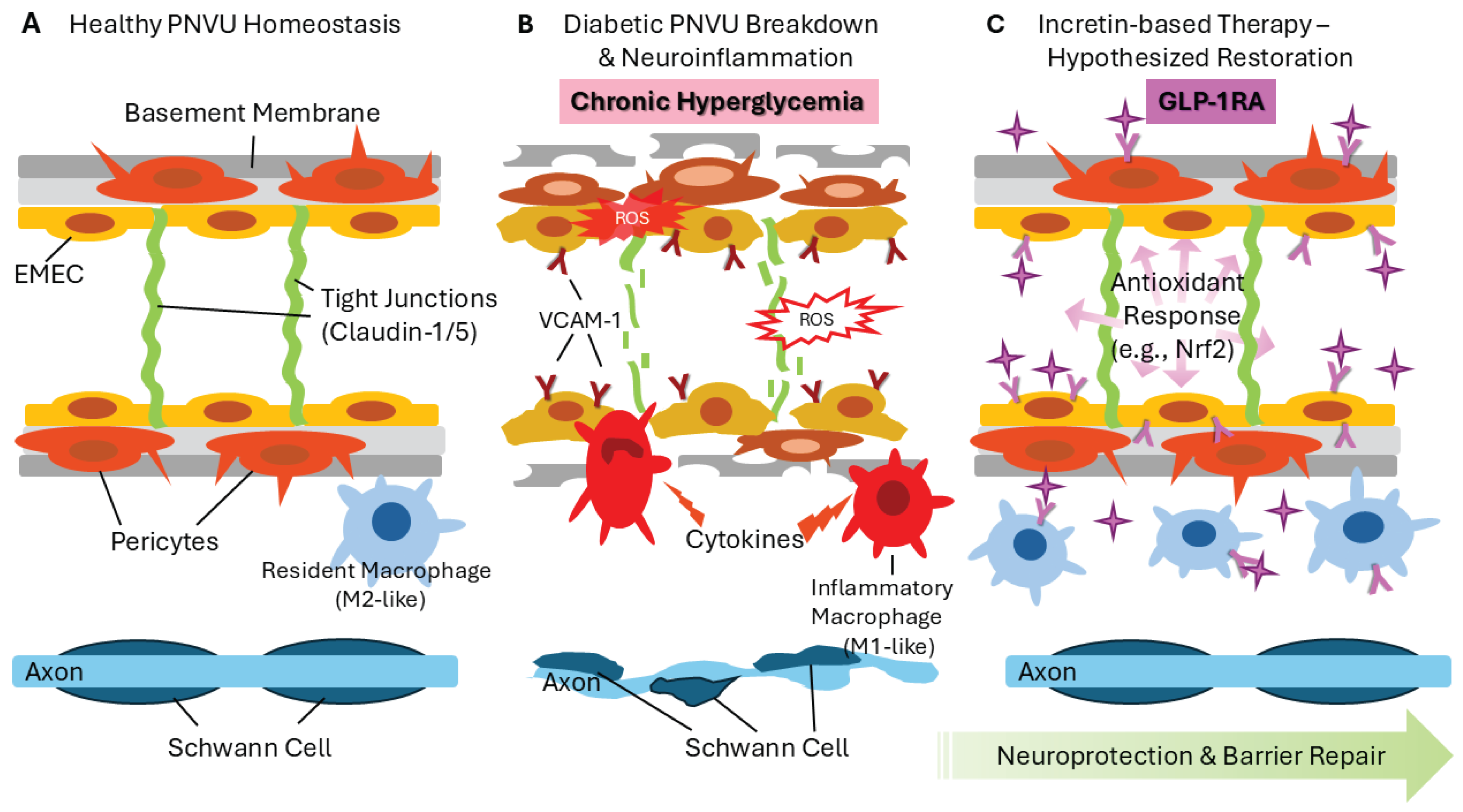
Figure 2.
Metabolic-to-vascular coupling upstream of PNVU stress. Chronic hyperglycemia increases advanced glycation end product (AGE) burden and AGE-RAGE signaling, sustaining NF-κB activation and endothelial adhesion molecule induction (e.g., VCAM-1, ICAM-1, E-selectin) that primes the blood-nerve barrier (BNB) for enhanced leukocyte adhesion and early permeability changes. In parallel, dyslipidemia promotes endothelial dysfunction and reduced vasa nervorum perfusion, leading to endoneurial hypoxia/mitochondrial stress and reactive oxygen species (ROS) generation, thereby converging on the NF-κB-adhesion molecule axis and conditioning the PNVU microenvironment. Abbreviations: PNVU, peripheral nerve neurovascular unit; AGE, advanced glycation end products; RAGE, receptor for advanced glycation end products; NF-κB, nuclear factor kappa B; VCAM-1, vascular cell adhesion molecule 1; ICAM-1, intercellular adhesion molecule 1; ROS, reactive oxygen species; BNB, blood-nerve barrier; TG, triglycerides; LDL, low-density lipoprotein; HDL, high-density lipoprotein; oxLDL, oxidized low-density lipoprotein.
Figure 2.
Metabolic-to-vascular coupling upstream of PNVU stress. Chronic hyperglycemia increases advanced glycation end product (AGE) burden and AGE-RAGE signaling, sustaining NF-κB activation and endothelial adhesion molecule induction (e.g., VCAM-1, ICAM-1, E-selectin) that primes the blood-nerve barrier (BNB) for enhanced leukocyte adhesion and early permeability changes. In parallel, dyslipidemia promotes endothelial dysfunction and reduced vasa nervorum perfusion, leading to endoneurial hypoxia/mitochondrial stress and reactive oxygen species (ROS) generation, thereby converging on the NF-κB-adhesion molecule axis and conditioning the PNVU microenvironment. Abbreviations: PNVU, peripheral nerve neurovascular unit; AGE, advanced glycation end products; RAGE, receptor for advanced glycation end products; NF-κB, nuclear factor kappa B; VCAM-1, vascular cell adhesion molecule 1; ICAM-1, intercellular adhesion molecule 1; ROS, reactive oxygen species; BNB, blood-nerve barrier; TG, triglycerides; LDL, low-density lipoprotein; HDL, high-density lipoprotein; oxLDL, oxidized low-density lipoprotein.
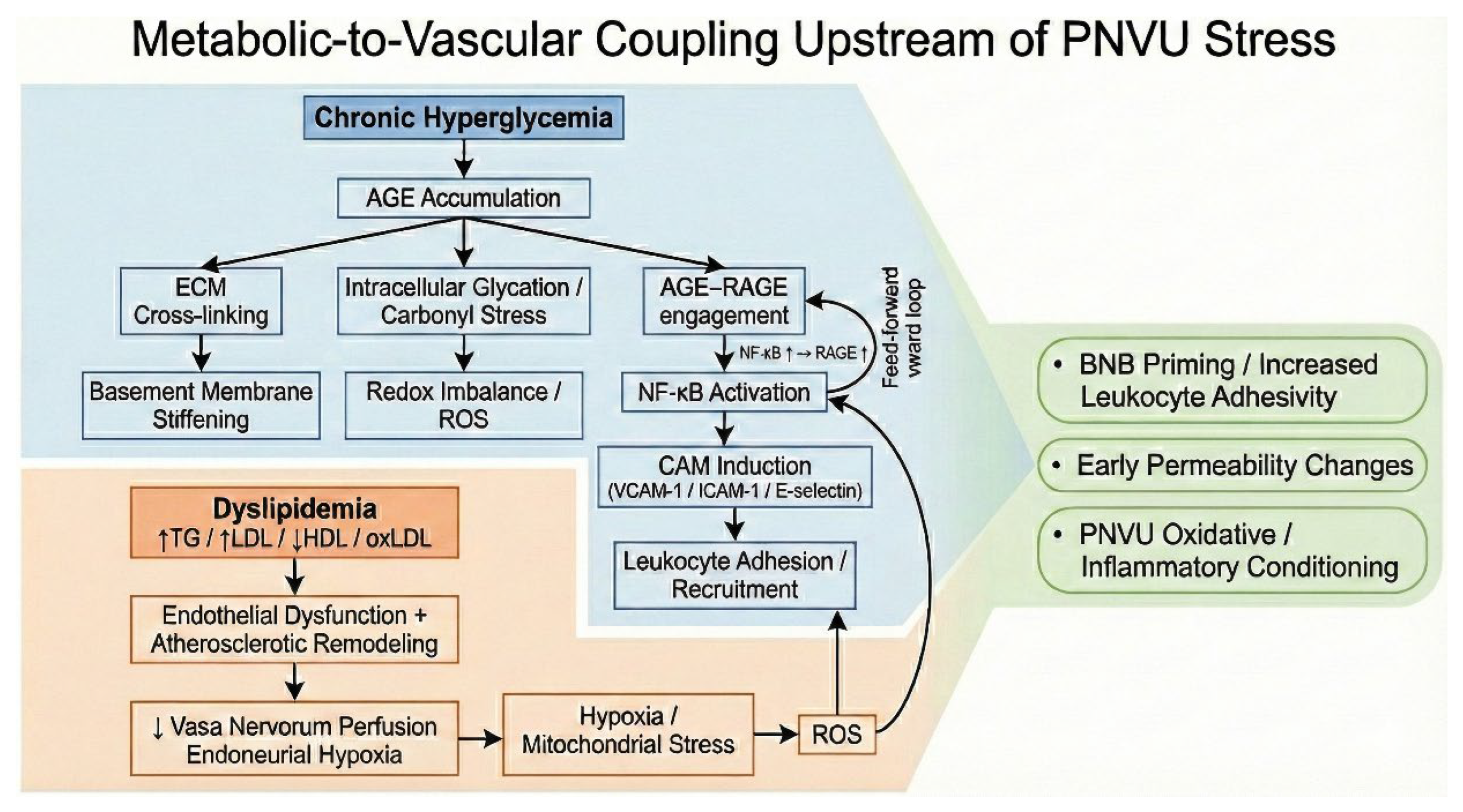
Figure 3.
Macrophage polarization and functional transition in the diabetic nerve. Pro-inflammatory M1-like macrophages produce reactive oxygen species (ROS) and cytokines (e.g., TNF-α, IL-1β, IL-6) that amplify neuroinflammation, whereas M2-like macrophages are associated with inflammation resolution and tissue repair. The schematic highlights macrophage phenotypic plasticity and the proposed M1↔M2 shift relevant to restoring a pro-repair microenvironment in diabetic peripheral neuropathy (DPN). Abbreviations: DPN, diabetic peripheral neuropathy; IL, interleukin; M1, classically activated pro-inflammatory macrophage; ROS, reactive oxygen species; TNF-α, tumor necrosis factor alpha.
Figure 3.
Macrophage polarization and functional transition in the diabetic nerve. Pro-inflammatory M1-like macrophages produce reactive oxygen species (ROS) and cytokines (e.g., TNF-α, IL-1β, IL-6) that amplify neuroinflammation, whereas M2-like macrophages are associated with inflammation resolution and tissue repair. The schematic highlights macrophage phenotypic plasticity and the proposed M1↔M2 shift relevant to restoring a pro-repair microenvironment in diabetic peripheral neuropathy (DPN). Abbreviations: DPN, diabetic peripheral neuropathy; IL, interleukin; M1, classically activated pro-inflammatory macrophage; ROS, reactive oxygen species; TNF-α, tumor necrosis factor alpha.
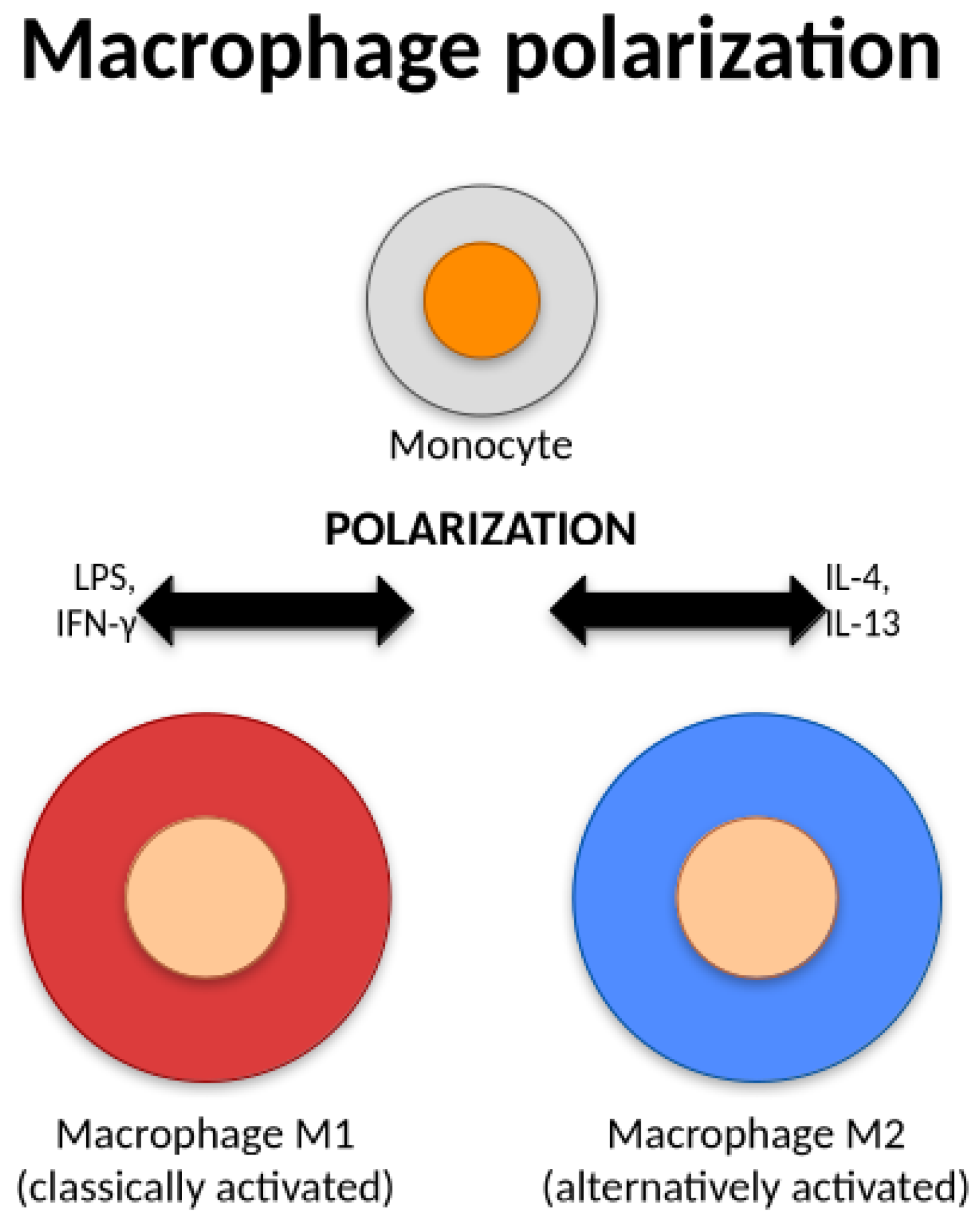
Figure 4.
Redox-centered cascade linking metabolic stress to blood-nerve barrier (BNB) failure and putative incretin-responsive checkpoints. Chronic hyperglycemia and dyslipidemia promote mitochondrial reactive oxygen species (ROS) generation, NADPH oxidase activation, and AGE-RAGE signaling, which together amplify oxidative stress and overwhelm endogenous antioxidant defenses (e.g., Nrf2-HO-1, SOD, GPx, and glutathione-related systems). The resulting oxidative injury to lipids, proteins, and DNA contributes to endothelial activation, including p38 MAPK/NF-κB signaling, adhesion molecule induction, and chemokine upregulation, thereby facilitating monocyte recruitment, macrophage polarization toward pro-inflammatory programs, tight-junction disassembly, basement membrane injury, and increased barrier permeability. These events ultimately converge on Schwann cell and axonal injury within the peripheral nerve neurovascular unit (PNVU), contributing to neuropathic dysfunction in diabetic peripheral neuropathy (DPN). Incretin-based therapies, illustrated here by GLP-1 receptor agonists such as semaglutide, are hypothesized to intervene at multiple checkpoints by improving the metabolic milieu, attenuating oxidative and inflammatory signaling, engaging antioxidant pathways, and potentially preserving BNB structure and function. This schematic summarizes proposed and partially supported mechanisms and does not imply that all checkpoints have been directly validated at the human BNB.
Figure 4.
Redox-centered cascade linking metabolic stress to blood-nerve barrier (BNB) failure and putative incretin-responsive checkpoints. Chronic hyperglycemia and dyslipidemia promote mitochondrial reactive oxygen species (ROS) generation, NADPH oxidase activation, and AGE-RAGE signaling, which together amplify oxidative stress and overwhelm endogenous antioxidant defenses (e.g., Nrf2-HO-1, SOD, GPx, and glutathione-related systems). The resulting oxidative injury to lipids, proteins, and DNA contributes to endothelial activation, including p38 MAPK/NF-κB signaling, adhesion molecule induction, and chemokine upregulation, thereby facilitating monocyte recruitment, macrophage polarization toward pro-inflammatory programs, tight-junction disassembly, basement membrane injury, and increased barrier permeability. These events ultimately converge on Schwann cell and axonal injury within the peripheral nerve neurovascular unit (PNVU), contributing to neuropathic dysfunction in diabetic peripheral neuropathy (DPN). Incretin-based therapies, illustrated here by GLP-1 receptor agonists such as semaglutide, are hypothesized to intervene at multiple checkpoints by improving the metabolic milieu, attenuating oxidative and inflammatory signaling, engaging antioxidant pathways, and potentially preserving BNB structure and function. This schematic summarizes proposed and partially supported mechanisms and does not imply that all checkpoints have been directly validated at the human BNB.
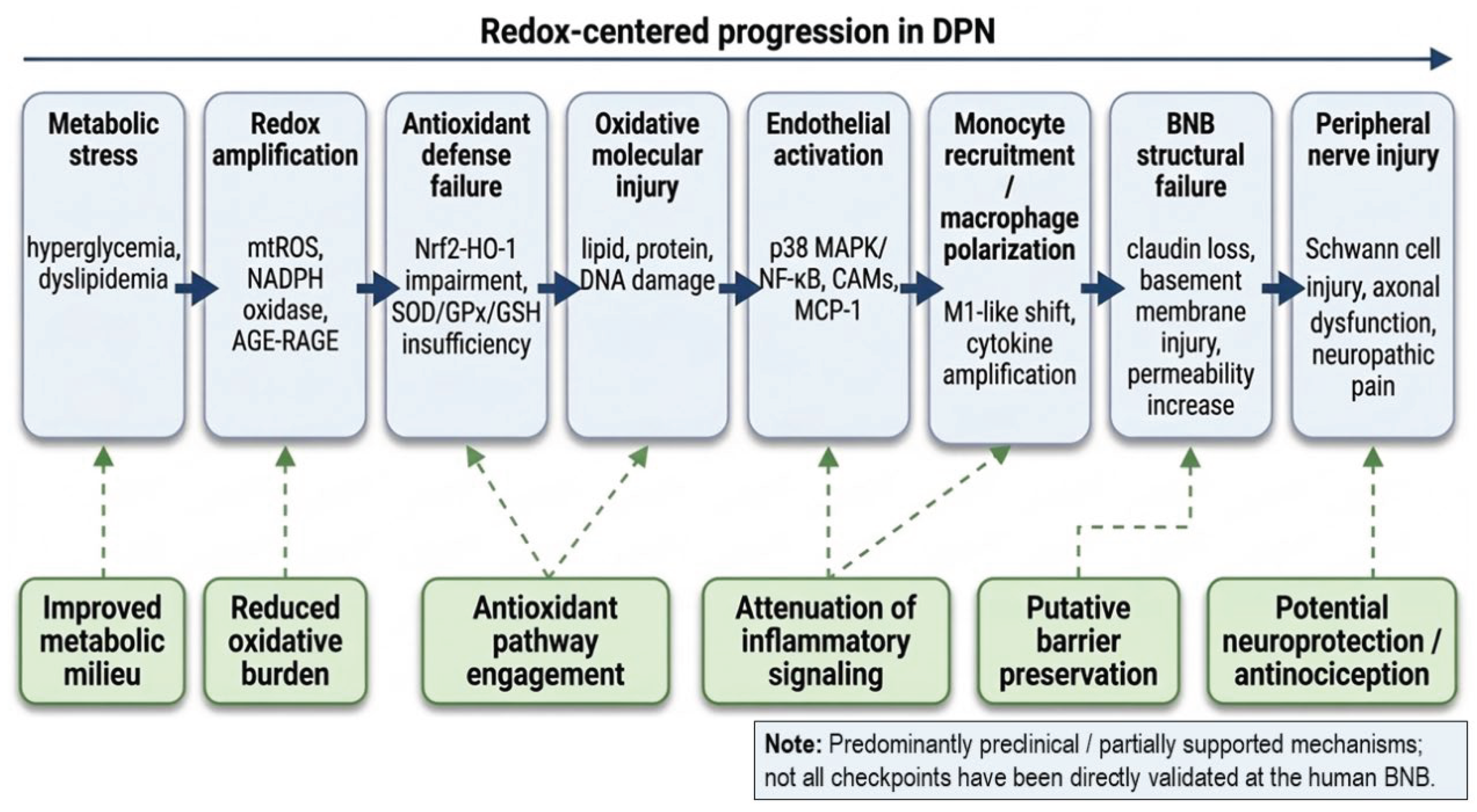

Table 1.
Practical diagnostic and endpoint toolbox for diabetic peripheral neuropathy (DPN).
| Tier | Modality (Examples) | Key Outputs |
|---|---|---|
| Best Use | ||
| Key Limitation | ||
| Screen (bedside) | 10-g monofilament; vibration (128-Hz tuning fork/VPT) | LOPS; VPT. |
| Rapid bedside screening; ulcer risk stratification | ||
| Low sensitivity for early isolated SFN; cutoffs method/device-dependent | ||
| Phenotype/stage | History + neuro exam; ± TCNS/mTCNS [15,16]; ± DN4 (pain) [17] | Symptoms/signs; composite severity; neuropathic pain features. |
| Phenotyping/staging; longitudinal monitoring | ||
| Subjective components; inter-rater variability | ||
| Confirm/stage (large fiber) | NCS/EMG | CV, amplitude, latency (pre-specified nerves) |
| Objective confirmation and staging | ||
| Limited sensitivity for pure SFN; access/discomfort constraints | ||
| Small-fiber function/autonomic | QST (DFNS); sudomotor (QSART, ESC/Sudoscan) | Thermal/mechanical thresholds; sweat/ESC |
| Functional phenotyping; potentially treatment-responsive signals | ||
| Time/cooperation; site/device variability; confounders (skin, meds, temperature) | ||
| Small-fiber structure | Skin biopsy (IENFD); corneal confocal microscopy (CCM) | IENFD (fibers/mm); CNFD/CNFL/CNBD |
| Structural SFN endpoints; early disease and longitudinal monitoring | ||
| Invasive/processing-dependent; CCM access + standardized analysis required | ||
| Imaging (exploratory) | MR neurography (MRN)/DTI [18]; high-resolution ultrasound (HRUS) [19] | Nerve morphology/microstructure (e.g., CSA; diffusion indices) |
| Localization; exploratory biomarkers/morphology | ||
| Cost; harmonization/standardization; clinical utility still evolving | ||
| Abbreviations: CCM, corneal confocal microscopy; CNBD, corneal nerve branch density; CNFD, corneal nerve fiber density; CNFL, corneal nerve fiber length; DFNS, German Research Network on Neuropathic Pain; DPN, diabetic peripheral neuropathy; DTI, diffusion tensor imaging; EMG, electromyography; ESC, electrochemical skin conductance; HRUS, high-resolution ultrasound; IENFD, intraepidermal nerve fiber density; LOPS, loss of protective sensation; MRN, magnetic resonance neurography; NCS, nerve conduction studies; QST, quantitative sensory testing; QSART, quantitative sudomotor axon reflex test; SFN, small-fiber neuropathy; TCNS, Toronto Clinical Neuropathy Score; VPT, vibration perception threshold; CSA, cross-sectional area. | ||
Table 2.
Representative oxidative-stress and antioxidant readouts relevant to mechanistic studies of DPN and PNVU dysfunction.
Table 2.
Representative oxidative-stress and antioxidant readouts relevant to mechanistic studies of DPN and PNVU dysfunction.
| Domain | Representative Readouts | Biological Significance | Typical Methods |
|---|---|---|---|
| Lipid peroxidation | MDA; 4-HNE | Membrane lipid oxidation; aldehyde-mediated injury | TBARS; HPLC; ELISA; IHC/IF; immunoblotting |
| Protein oxidation/nitration | Nitrotyrosine; protein carbonyls | Protein nitration and oxidative modification | IHC/IF; immunoblotting; DNPH-based assays |
| Oxidative DNA damage | 8-OHdG | Nuclear or mitochondrial DNA oxidation | ELISA; IHC/IF; HPLC; LC-MS |
| Antioxidant response/defense failure | Nrf2 nuclear translocation; HO-1; SOD1/2; catalase; GPx; GSH/GSSG ratio | Antioxidant activation or exhaustion; redox-buffering capacity | Fractionation assays; immunoblotting; RT-qPCR; enzyme activity assays; glutathione assays |
| Mitochondrial stress/dysfunction | mtROS; mitochondrial membrane potential; respiratory enzyme/OXPHOS changes; ATP content | ROS amplification; bioenergetic failure | MitoSOX; JC-1/TMRE/TMRM; respirometry; ATP assays; TEM |
| Abbreviations: 4-HNE, 4-hydroxynonenal; 8-OHdG, 8-hydroxy-2′-deoxyguanosine; DPN, diabetic peripheral neuropathy; GPx, glutathione peroxidase; GSH/GSSG, reduced/oxidized glutathione ratio; HO-1, heme oxygenase-1; IHC/IF, immunohistochemistry/immunofluorescence; LC-MS, liquid chromatography-mass spectrometry; MDA, malondialdehyde; mtROS, mitochondrial reactive oxygen species; Nrf2, nuclear factor erythroid 2-related factor 2; OXPHOS, oxidative phosphorylation; PNVU, peripheral nerve neurovascular unit; SOD, superoxide dismutase; TEM, transmission electron microscopy. | |||
Table 3.
Incretin-based therapies—evidence levels and putative actions on the PNVU and BNB.
| Class | Representative Agents | Evidence in DPN | Putative PNVU/BNB-Relevant Actions | Key Limitations/Notes |
|---|---|---|---|---|
| GLP-1 receptor agonists (GLP-1RAs) | Liraglutide; semaglutide; exenatide | Preclinical: improved nerve function and reduced oxidative/inflammatory injury in multiple models [107]. | Endothelial anti-oxidative and anti-inflammatory signaling; reduced neuroimmune activation; potential preservation of tight-junction integrity through reduced inflammatory stress. | Human evidence for DPN outcomes is still limited/heterogeneous; class effects vs. agent-specific effects require clarification. |
| DPP-4 inhibitors (DPP-4is) | Sitagliptin; vildagliptin; linagliptin | Preclinical: improved NCV/IENFD and DRG signaling in diabetic rodents [109,110]. Clinical: preliminary data for microvascular benefit [108]. | Augments endogenous GLP-1 and affects non-incretin substrates; may reduce endothelial inflammation and vascular leakage in other barriers (e.g., retina) [112]. | Direct BNB studies are sparse; effects may be partly mediated by improved glycemia; need DPN trials with barrier-relevant endpoints. |
| Dual incretin agonists (GIP/GLP-1) | Tirzepatide | Strong human metabolic efficacy vs. semaglutide; neuropathy-specific endpoints largely untested [113,114]. | Metabolic unloading (glucose, lipids, weight) may reduce upstream PNVU stressors (AGE-RAGE, dyslipidemia/perfusion impairment) and secondarily attenuate endothelial activation. | Translation to DPN/BNB remains hypothesis-driven; microvascular inflammation/perfusion effects need dedicated studies. |
| Multi-agonists (e.g., GLP-1/GIP/glucagon) | Retatrutide (investigational) | Early-phase human trials show substantial weight loss; DPN/BNB endpoints not yet available [115]. | Potential for stronger metabolic and hemodynamic remodeling could translate into reduced neurovascular stress, but mechanisms and safety require validation. | Not approved; long-term microvascular safety data limited; no DPN-focused trials to date. |
| Abbreviations: BNB, blood-nerve barrier; DPN, diabetic peripheral neuropathy; PNVU, peripheral nerve neurovascular unit; GLP-1RA(s), GLP-1 receptor agonist(s); DPP-4i(s), dipeptidyl peptidase-4 inhibitor(s); GIP, glucose-dependent insulinotropic polypeptide; DRG, dorsal root ganglion; NCV, nerve conduction velocity; IENFD, intraepidermal nerve fiber density. | ||||
Disclaimer/Publisher’s Note: The statements, opinions and data contained in all publications are solely those of the individual author(s) and contributor(s) and not of MDPI and/or the editor(s). MDPI and/or the editor(s) disclaim responsibility for any injury to people or property resulting from any ideas, methods, instructions or products referred to in the content. |
© 2026 by the authors. Licensee MDPI, Basel, Switzerland. This article is an open access article distributed under the terms and conditions of the Creative Commons Attribution (CC BY) license (http://creativecommons.org/licenses/by/4.0/).
Copyright: This open access article is published under a Creative Commons CC BY 4.0 license, which permit the free download, distribution, and reuse, provided that the author and preprint are cited in any reuse.


