
Submitted:
09 March 2026
Posted:
12 March 2026
You are already at the latest version
Abstract
Background/Objectives: Critical limits represent quantitative thresholds of life-threatening diagnostic test results that require immediate clinician notification and may necessitate life-saving intervention to prevent adverse outcomes. Our goals are to report point-of-care critical limits for adults and newborns from a comprehensive U.S. national database, to identify POC instruments associated with the critical limits, and to support the harmonization of POCT practice. Methods: We gathered critical limit notification lists from 417 hospitals across all 50 states and Washington D.C., comprising university hospitals, trauma and heart centers, centers of excellence, community hospitals, and network hospitals. We extracted point-of-care critical limits, central laboratory critical limits (at hospitals with POC), adult international normalized ratio (INR) data, and instrument usage. Results: Low and high glucose critical limits (median values of 50 and 450 mg/dL, respectively) were the most frequently listed, reported by 73 hospitals (17.5%). Troponin was listed by ten hospitals, specified as troponin (n = 4), troponin I (n = 5), or “troponin TnI” (n = 1). Rarely, we encountered notification lists that assigned different critical limits to different instruments measuring the same analyte. Fifty-five hospitals did not specify instrument usage for any measurand on their notification list. The median differences in matched pairs of laboratory versus POC critical limits differed significantly (Wilcoxon signed-rank, P< 0.05) for low and high ionized calcium (N=21), low hemoglobin (N=23) and high INR critical limits for adults (N=27) and newborns (N=10). In some cases, matched pair analytes demonstrated identical critical limits. Conclusions: Harmonizing critical limit notification thresholds across point-of-care testing and different devices may improve consistency in clinical decision-making and patient outcomes. Despite the potential of POCT to shorten time to urgent intervention, relatively few hospitals currently include POCT critical limits on notification lists. Broader inclusion and transparent sharing of POCT critical values could harmonize practices across institutions, facilitate inter-institutional collaboration, and promote more timely and reliable responses to life-threatening diagnostic results.
Keywords:
critical limits
; critical values
; decision thresholds
; demographics
; national database
; instruments
; point-of-care testing
; standards of care
; artificial intelligence (AI)
1. Introduction
The urgent communication of life-threatening test results is vital for patient safety, enabling rapid, potentially life-saving interventions. Unlike traditional laboratory testing, point-of-care testing (POCT) delivers rapid diagnostic results directly at or near the patient’s site. Healthcare institutions set thresholds for dangerously abnormal results to guide immediate treatment. The 2026 National Patient Safety Goals (NPSG) of The Joint Commission [1] call for timely notification of life-threatening test results; NPSG.02.03.01 requires documentation of compliance and evaluation of the timeliness of reporting critical test results to clinical providers.
POCT is widely used for its speed and accessibility [2]. Adoption depends on institutional needs and resources, with strict oversight ensuring quality when POCT is employed. The lack of national standards for point-of-care critical limits leads to variability in testing practices, policies, and documentation.
Focused research on the standardization and reporting of critical limits specifically for POCT remains limited. This study reports point-of-care critical limits from a 2025 U.S. national database. We characterize listing frequencies for POC analytes, assess instrument usage, and document inconsistencies in reporting and documentation of POC critical limits. Our work provides new insight into current practices, highlights risk of inconsistencies and identifies opportunities for clearer guidance to improve patient safety.
2. Materials and Methods
2.1. Definitions
A critical limit is defined as a low or high quantitative threshold of a life-threatening diagnostic test result [3]. A critical value is defined as a qualitative result (such as a positive COVID-19 rapid antigen test) warranting urgent notification. Both demand rapid response and potentially life-saving treatment, isolation of the patient, or other timely medical interventions [4]. Point-of-care testing is medical testing at or near the site of patient care.
2.2. National Database
We collected critical limit notification lists from 417 hospitals across all 50 states and Washington D.C., ensuring complete geographic representation. No survey forms were distributed. Raw data in the form of notification lists used by hospitals were gathered from 2023 through 2025.
The national database comprised university hospitals and affiliates, heart centers, trauma centers [total of 238 with 97 Level I (40.8%), 38 Level II (16.0%), 58 Level III (24.4%), and 45 Level IV (18.9%)], centers of excellence (80% of U.S. News and World Reports’ Top 40), and community hospitals. Notification lists reflect posted policies in use by individual and network hospitals. We extracted point-of-care critical limits, central laboratory critical limits (at hospitals with POC), adult INR, and instrument usage. Critical values were transferred to Excel spreadsheets and verified to exclude transcription errors.
2.3. U.S. Census Geographic Divisions
The national database of critical limit notification lists in use by hospitals in all 9 U.S. census divisions covered 50 states and Washington DC: Division 1) New England, N=17 hospitals (CT, MA, ME, NH, RI, VT); 2) Middle Atlantic, 33 (NJ, NY, PA); 3) East North Central, 69 (IL, IN, MI, OH, WI); 4) West North Central, 75 (IA, KS, MN, MO, ND, NE, SD); 5) South Atlantic, 71 (Wash. DC, DE, FL, GA, MD, NC, SC, VA, WV); 6) East South Central, 25 (AL, KY, MS, TN); 7) West South Central, 30 (AR, LA, OK, TX); 8) Mountain, 47 (AZ, CO, ID, MT, NV, NM, UT, WY); and 9) Pacific, 50 (AK, CA, HI, OR, WA).
2.4. Statistics
The order of measurands in the tables was based on the frequencies of the 2025 listings. Listing frequencies were calculated by dividing the number of hospitals reporting each measurand by 417 (the total number of 2025 listings).
Normality was determined using the Shapiro-Wilk test, Q-Q plots, and histograms. POCT critical limits were not normally distributed. Hence, we applied nonparametric statistical tests. We used the nonparametric Wilcoxon signed-rank test to determine significant differences between POC versus laboratory matched pairs of critical limits at the same hospitals. Please note that with the Wilcoxon signed-rank test, a significant difference may result from the distributions being dissimilar, even when the medians might be the same.
JASP and other open source (web-based) software were used for statistical computations. JASP is free statistical software developed with support from the University of Amsterdam, implemented in R, and designed for easy user accessibility [5].
2.5. Standard Inclusion/Exclusion Criteria
We excluded courtesy call results and alert values. We included critical limits and values that were identified as point of care, rapid lab, bedside, satellite labs, MICU, and Rapid Response Lab. We analyzed POC instruments identified with critical limits listings, including Nova, i-STAT, Piccolo, Clinitek, Hemocue, Lead Care II, RapidPoint, Accu-Chek, and others.
When several age ranges fall within the same category and list different values, we took the most conservative values (highest low value and lowest high value). The same applies for notification lists that specify different critical limits for different devices measuring the same analyte. Measurands with a listing frequency of 2% or lower are reported in the Supplement.
2.6. Artificial Intelligence and Web Searches
Open-source artificial intelligence, primarily Perplexity and ChatGPT, and Internet search engines (e.g., Google and PubMed) were employed to accelerate raw data acquisition and literature searches. When available, notification lists were obtained from the Web and verified directly with laboratory directors via email. Artificial intelligence was not used to write this report.
2.7. Units
Glucose in mg/dL was converted to mmol/L by using the formula: mmol/L = mg/dL x 0.05551. Ionized calcium in mg/dL was converted to mmol/L by using the formula: mmol/L = mg/dL x 0.25. Total bilirubin in mg/dL was converted to µmol/L by using the formula: µmol/L = mg/dL x 17.1. pO2 and pCO2 in mmHg were converted to kPa by using the formula: kPa = mmHg x 0.133322. We report results in both conventional and Systeme International (SI) units for accessibility by international readers.
2.8. Ethics
The UC Davis IRB deemed this research exempt (ID 2078118-1). Data were collated statistically and reported anonymously. No consents were required.
3. Results
3.1. Number of POC Tests on Notification Lists
Figure 1 presents a Pareto plot showing the range and average (excluding zero) number of point-of-care tests on notification lists. The total number of POC tests across all disciplines for adults were 16 low (“L”) and 15 high (“H”) critical limits, and for newborns (“NB”) 15 low and 13 high critical limits.
3.2. Instruments
Figure 2 presents a Pareto plot showing the number of hospitals using various devices. The figure is color-coded by instrument count — blue indicates hospitals using a single device, and green indicates hospitals using multiple devices. Fifty-five hospitals did not specify instrument usage for any measurand on their notifications lists and 9 hospitals specified instrument usage for only some measurands.
3.3. Chemistry Tests
Table 1 summarizes the POC Clinical Chemistry low and high critical limits for adults and newborns (in adult hospitals). Low and high glucose critical limits were the most frequently listed point-of-care tests, reported by 73 hospitals (17.5%) for adults and 62 hospitals (14.9%) for newborns. Only one hospital listed 70 mg/dL as the low glucose critical limit. The ADA defines Level 1 diabetes as glucose <70 mg/dL and Level 2 as < 54 mg/dL [6,7]. Ten hospitals (2.4%) listed cardiac biomarkers comprising troponin (4 hospitals), troponin I (5), or “troponin TnI” (1). Five identified the instrument used, i-STAT.
Figure 3 and Figure 4 display histograms for low and high glucose critical limits, respectively. Figure 3 displays a wide distribution of low critical limits with a range of 40-70 and a median of 50 mg/dL and is color-coded for risk zones (green, low risk; yellow, medium; red, high; and purple, extremely high). In Figure 4, color coding reflects timely notification of hyperglycemia (green), onset of diabetic ketoacidosis (yellow), and increasing risk of hyperosmolar coma (red). For the glucose high critical limits, the range is 200-600 mg/dL, and the median, 450 mg/dL.
Figure 5 displays histogram for low ionized calcium critical limits. Color coding reflects risk levels (green, low; yellow, medium; red, high; and purple, extremely high).
3.4. Blood Gas and pH Tests
Table 2 summarizes the POC Blood Gas and pH low and high critical limits for adults and newborns (in adult hospitals).
3.5. Hematology and Coagulation Tests
Table 3 summarizes the POC Hematology and Coagulation low and high critical limits for adults and newborns (in adult hospitals).
For high INR critical limits, Figure 6 and Figure 7 display histograms for adults (N=403) and POC versus laboratory adult matched pairs (N=27), respectively. Adult critical limits are widely distributed, with a range of 3-8 and a median of 5 INR (Figure 6). These figures are color-coded for risk zones (green, low; yellow, medium; red, high; and purple, extremely high). In Figure 7, laboratory and POC matched pairs range from 4-5 with a median of 5 INR for both.
3.6. POC versus Laboratory Matched Pairs
Table 4 compares matched pairs of POC versus laboratory critical limits. The 5 analytes listed in the lefthand column had statistically significant paired differences. Please note that with the Wilcoxon signed-rank test, a significant difference may result from the distributions being dissimilar, even when the medians might be the same.
Table 5 compares matched pairs of POC versus laboratory critical limits for adults and newborns at the same hospitals. For each measurand, the number of hospitals with matched POC and laboratory pairs is shown. This table also details relative differences in critical limits, that is, POC < Lab, POC = Lab, and POC > Lab.
A few measurands had identical critical limits for all POCT versus laboratory matched pairs, including: potassium (adult low and high, newborn low), sodium (adult and newborn low), CO2 content (adult high, newborn low), calcium (adult and newborn low), carboxyhemoglobin (adult and newborn high), methemoglobin (adult and newborn high), ionized calcium (newborn low), bilirubin (newborn high), pH (newborn low), arterial pCO2 (newborn high), and hematocrit (adult low). All laboratory values for newborns INR were greater than POC.
4. Discussion
4.1. Glucose
Low and high glucose critical limits were the most frequently listed for point-of-care tests, reported by 73 hospitals (17.5%) for adults and 62 hospitals (14.9%) for newborns (in adult hospitals). Other measurands were listed less frequently. The ADA defines glucose <54 mg/dL as Level 2 hypoglycemia [6,7]. The majority of hospitals [69.9% (51/73)] listed adult hypoglycemic critical limits below 54 mg/dL (red and purple), 23.3% (17/73) notify at 54-55 mg/dL (yellow, associated with neuroglycopenic impairment), and 6.8% (5/73) fall in the timely notification zone (green). Only one hospital listed 70 mg/dL (Figure 3). The ADA designates the range from 54 to <70 mg/dL as level 1 hypoglycemia. Eighteen hospitals listed hypoglycemic critical limits at or below 45 mg/dL (purple), the extreme risk zone. Figure 4 shows that hyperglycemic critical limits are generally well above the range of 140 to 180 mg/dL (green) advised by the ADA for the maintenance of critically ill patients [7]. Both histograms (Figure 3 and Figure 4) show that notification thresholds are neither consistent nor aligned with clinician recommendations.
Critical limits should reflect evidence-based cutoffs and professional guidelines. Level 1 hypoglycemia (<70 mg/dL) is the threshold for adrenergic responses to decreasing glucose levels in people without diabetes. Current 2026 ADA guidelines state that, “…a measured glucose level <70 mg/dL (<3.9 mmol/L) is considered clinically important, regardless of symptoms.” Neuroglycopenic symptoms appear at or below glucose concentration of 54-55 mg/dL, requiring immediate treatment. Level 3 hypoglycemia is defined by the ADA as “a severe event characterized by altered mental and/or physical functioning that requires assistance from another person for recovery, irrespective of glucose level”. It can progress to loss of consciousness, seizure, coma, or death [6,7].
4.2. Troponin
Troponin, a highly specific and sensitive biomarker for cardiac injury, is essential for diagnosing acute coronary syndrome (ACS) and myocardial infarction [8,9]. In our national database of 417 hospitals, only 10 reported using POC troponin, with notable variability in critical limits and the selection of cardiac biomarkers. Adopting high sensitivity tests and standardizing reporting practices could enhance the early diagnosis of acute myocardial infarction, streamline patient management, and improve outcomes [10,11].
4.3. Ionized Calcium
Severe ionized hypocalcemia is associated with high cardiac risk (hypotension, electromechanical dissociation, and cardiac output failure) [12,13]. Nearly half of the hospitals [47.6% (10/21)] list adult ionized hypocalcemia critical limits at 0.50 mmol/L (purple), a level which may produce tetany or life-threatening complications [14], and 52.4% of hospitals (11/21) notify at 0.5-0.75 mmol/L (red and purple), a concentration that may require calcium administration [14], while 42.9% (9/21) notify at 0.79-0.80 mmol/L (yellow), falling within the therapeutic range [15]. Only 1 hospital listed 1.00 mmol/L (green), following a more, perhaps overly conservative notification threshold. The histogram (Figure 5) highlights the need for harmonizations of critical notifications to enhance consistency and improve patient care.
4.4. INR
Thirty-seven percent of hospitals (10/27) notify at an INR of 4.0 (yellow), and 3.7% (1/27) at an INR of 4.5 (red). At INR ≥4.0, the odds ratio for intracranial hemorrhage (ICH) increases to approximately 8.8 compared with the therapeutic range of 2.0–3.0 [16,17]. Despite this, more than half of the hospitals [59.3% (16/27)] do not notify until an INR of 5.0 (purple), exposing patients to markedly elevated risk (Figure 7), as each 1-unit increase above an INR of 4.0 is associated with an approximate doubling of ICH risk [18,19].
Comparison of matched POC versus laboratory adult INR critical limits suggest that POC critical limits are more conservative (Figure 7 and Table 5). A similar pattern is observed for newborns INR, in which laboratory critical limits exceed POC values in all cases (Table 5). Across all hospitals, adult INR critical limits show substantial variability, ranging from 3 to 8 (Figure 6). Notably, only one hospital [0.25% (1/403)] triggers notification at an INR of 3–within the therapeutic range–while most hospitals [78.4% (316/403)] list critical limits at INR ≥5.0, placing them in the extreme-risk category (purple) [18,19].
4.5. Hemoglobin
Nearly 70% of hospitals (16/23) list adult low hemoglobin critical limits below 7 g/dL, falling beneath the <7g/dL threshold commonly used in transfusion practices [20,21]. Additionally, 21.7% (5/23) set notification thresholds below 6.5 g/dL, a level generally considered life-threatening because of the risk of severe tissue hypoxia and death [22,23]. This variability suggests a lack of consensus regarding hemoglobin thresholds that warrant urgent clinician notification or may reflect differing institutional risk tolerance, transfusion practices, or concerns about alert fatigue. Such heterogeneity has potential implications for patient safety and underscores the need for clearer guidance and consistency.
4.6. POC versus Laboratory Matched Pairs
Table 4 compares POC and laboratory matched pairs. Three measurands demonstrated statistically significant differences — INR, ionized calcium and hemoglobin. In contrast, other analytes showed no statistically significant differences in matched pairs, and some demonstrated identical critical limits, including potassium, sodium, CO2 content, calcium, carboxyhemoglobin, methemoglobin, ionized calcium, newborn bilirubin, pH, arterial pCO2, and hematocrit (Table 5). This likely reflects efforts to align POC testing with laboratory notification thresholds, consistent with quality management principles outlined in professional guidance [24], which emphasizes acceptable agreement and harmonization between POC and laboratory testing to support reliable clinical decision making. In some cases, such as INR (Figure 7) the results suggest that POC critical limits are more conservative.
4.7. pH
While the adult median low pH critical limit was higher than the 7.0 pH threshold associated with significantly increased risk of mortality [25], a subset of hospitals continued to designate pH 7.0 as their critical limit (Table 2). This practice may delay provider notification until patients reach severe acidemia. Decreasing blood pH is associated with worsening neurologic impairment, including drowsiness, stupor, coma, and ultimately death [26]. As shown in Table 2, all hospitals set low pH critical limits below the 7.35 pH threshold defining acidemia and high pH critical limits above the 7.45 pH threshold defining alkalemia [27].
4.8. POC Adoption
Prior studies demonstrate that performing testing closer to the patient shortens time to urgent clinical interventions and may improve operational performance in emergent settings where time is critical [28]. From our national database of 417 hospitals, only 94 (22.5%) listed point-of-care critical limits and values on their notification lists. Of the analytes, low and high glucose critical limits were the most frequently listed for point-of-care tests. These were reported by 73 hospitals for adults and 62 hospitals for newborns. Other measurands were listed less frequently.
4.9. Limitations
Quantitative troponin decision thresholds could not be analyzed because of the extreme inconsistency in values and units used by hospitals. Requests to confirm point-of-care results using a second POC device were rarely encountered, which contrasts with recommendations from CLSI EP09 guidelines and some authors, who emphasize verification using a central laboratory method rather than repeating the test on another POC platform when result accuracy is in question [29,30].
Another rare observation in notification lists was the specification of different critical limits for the same analyte across devices within the same hospital. Such discrepancies may lead to inconsistent clinical responses. Harmonization of critical decision thresholds is recommended to align alerts with evidence-based laboratory standards and clinical guidelines.
5. Conclusions
A major concern identified in this study is that several critical limits in use do not correspond to analyte concentrations linked to serious clinical outcomes. As illustrated in the histograms for glucose (Figure 3 and Figure 4), ionized calcium (Figure 5), and INR (Figure 6 and Figure 7), this discrepancy could delay detection of life-threatening conditions. These histograms demonstrate that few hospitals, if any (Figure 7), notify within the timely notification zone (green), whereas most notifications fall within higher risk zones (yellow, red, and purple).
Uniform critical limit notification thresholds across point-of-care testing, central laboratories, and different devices could support more reliable clinical decision making. Unlike central laboratories, which rely on communication loops that may introduce delays, POCT results are available immediately at the bedside, enabling prompt clinical action.
This dual immediacy of result availability and decision-making confers unique value to POCT for time-sensitive, life-saving interventions that central laboratory testing cannot match. Therefore, we recommend including POCT critical limits in notification lists to facilitate more rapid, potentially life-saving interventions.
Publicly posting notification lists may help hospitals identify newly implemented tests and associated critical decision thresholds, track and respond to changes in critical limits, and facilitate collaboration among medical centers toward greater harmonization of critical thresholds. This approach has the potential to promote more consistent and timely clinical responses and, ultimately, improve patient care and outcomes.
Supplementary Materials
The following supporting information can be downloaded at the website of this paper posted on Preprints.org.
Author Contributions
Conceptualization, K.O. and G.J.K.; data curation, K.O. and G.J.K.; writing—original draft preparation, K.O.; writing—review and editing, K.O. and G.J.K.; visualization, K.O.; supervision, G.J.K. All authors have read and agreed to the published version of the manuscript.
Funding
This research was funded in part by a Dickson Emeritus Award to Dr. Kost from the University of California.
Institutional Review Board Statement
The UC Davis IRB deemed this research exempt (ID 2078118-1). Data were collated statistically and reported anonymously.
Informed Consent Statement
Not applicable.
Data Availability Statement
The datasets presented in this article are not readily available due to confidentiality of sources and direct collection of many lists. Requests to access the datasets should be directed to geraldkost@gmail.com.
Acknowledgments
This work was supported by a Dickson Emeritus Award from the University of California Dr. Gerald Kost, by the Point-of-Care Testing Center for Teaching and Research (POCT•CTR), and by Dr. Gerald Kost, its Director. The authors thank the leadership of the University of California Honors Program, undergraduate research assistants, faculty colleagues, artistic and clinical consultants and importantly, the countrywide contributors to the U.S. national database of critical limits and critical values. The University of California Libraries provided valuable support for publication. Figures and tables are provided courtesy and permission of Knowledge Optimization, Davis, California.
Conflicts of Interest
The authors declare no conflicts of interest.
Abbreviations
The following abbreviations are used in this manuscript:
| ACS | Acute coronary syndrome |
| ADA | American Diabetes Association |
| AI | Artificial intelligence |
| CLSI | Clinical and Laboratory Standards Institute |
| COVID-19 | Coronavirus infectious disease-2019 |
| CTR | Center for Teaching and Research |
| ICH | Intracranial hemorrhage |
| INR | International normalized ratio |
| JASP | Jeffrey’s Amazing Statistics Program |
| MICU | Medical Intensive Care Unit |
| POC | Point-of-care |
| POCT | Point-of-care testing |
| TnI | Troponin I |
References
- The Joint Commission. National Patient Safety Goals Effective January 2026 for the Laboratory Program. Goal 2. NPSG.02.03.01 Report critical results of tests and diagnostic procedures on a timely basis. Available online: https://digitalassets.jointcommission.org/api/public/content/3c7a110c215943bc80d9ce87e9d9ee9d?v=aef80e14 (accessed on 17 December 2025).
- Augustine, S.; Venkadesh, A.; Kaushal, S.; Lee, E.; Ajaj, M.; Lee, N.E. Point-of-Care Testing: The Convergence of Innovation and Accessibility in Diagnostics. Anal. Chem. 2025, 97, 9569–9599. [Google Scholar] [CrossRef] [PubMed]
- Kost, G.J. Critical limits for urgent clinician notification at US medical centers. JAMA. 1990, 263, 704–707. [Google Scholar] [CrossRef] [PubMed]
- Parl, F.F.; O’Leary, M.F.; Kaiser, A.B.; Paulett, J.M.; Statnikova, K.; Shultz, E.K. Implementation of a closed-loop reporting system for critical values and clinical communication in compliance with goals of the joint commission. Clin Chem. 2010, 56, 417–423. [Google Scholar] [CrossRef] [PubMed]
- JASP Team. JASP (Version 0.19.3) Computer software. 2024. Available online: https://jasp-stats.org/ (accessed on 28 September 2025).
- American Diabetes Association Professional Practice Committee for Diabetes*. 6. Glycemic Goals, Hypoglycemia, and Hyperglycemic Crises: Standards of Care in Diabetes—2026. Diabetes Care 2026, 49 (Supplement_1), S132–S149. [Google Scholar] [CrossRef] [PubMed]
- American Diabetes Association Professional Practice Committee for Diabetes*; 16. Diabetes Care in the Hospital: Standards of Care in Diabetes—2026. Diabetes Care 2026, 49 (Supplement_1), S339–S355. [Google Scholar] [CrossRef] [PubMed]
- Chapman, A.R.; Shah, A.S.V.; Lee, K.K.; Anand, A.; Francis, O.; Adamson, P.; McAllister, D.A.; Strachan, F.E.; Newby, D.E.; Mills, N.L. Long-Term Outcomes in Patients With Type 2 Myocardial Infarction and Myocardial Injury. Circulation. 2018, 137, 1236–1245. [Google Scholar] [CrossRef] [PubMed]
- Collet, J.P.; Thiele, H.; Barbato, E.; Barthélémy, O.; Bauersachs, J.; Bhatt, D.L.; Dendale, P.; Dorobantu, M.; Edvardsen, T.; Folliguet, T.; et al. 2020 ESC Guidelines for the management of acute coronary syndromes in patients presenting without persistent ST-segment elevation. Eur Heart J. 2021, 42, 1289–1367. [Google Scholar] [CrossRef] [PubMed]
- Apple, F.S.; Smith, S.W.; Greenslade, J.H.; Sandoval, Y.; Parsonage, W.; Ranasinghe, I.; Gaikwad, N.; Schulz, K.; Stephensen, L.; Schmidt, C.W.; et al. Single High-Sensitivity Point-of-Care Whole-Blood Cardiac Troponin I Measurement to Rule Out Acute Myocardial Infarction at Low Risk. Circulation. 2022, 146, 1918–1929. [Google Scholar] [CrossRef] [PubMed]
- Pickering, J.W.; Young, J.M.; George, P.M.; Watson, A.S.; Aldous, S.J.; Troughton, R.W.; Pemberton, C.J.; Richards, A.M.; Cullen, L.A.; Than, M.P. Validity of a Novel Point-of-Care Troponin Assay for Single-Test Rule-Out of Acute Myocardial Infarction. JAMA Cardiol. 2018, 3, 1108–1112. [Google Scholar] [CrossRef] [PubMed]
- Kost, G.J.; Jammal, M.A.; Ward, R.E.; Safwat, A.M. Monitoring of ionized calcium during human hepatic transplantation. Critical values and their relevance to cardiac and hemodynamic management. Am J Clin Pathol. 1986, 86, 61–70. [Google Scholar] [CrossRef] [PubMed]
- Farkas, J. Hypocalcemia. EMCrit Project, Internet Book of Critical Care (IBCC). 5 November 2025. Available online: https://emcrit.org/ibcc/hypocalcemia/ (accessed on 24 December 2025).
- Anastasopoulou, C. Calcium, Ionized; Medscape. July 2025. Available online: https://emedicine.medscape.com/article/2087469.
- Füzéry, A.K.; Kost, G.J.; Tran, N.K. Advances in Point-Of-Care Testing for Emergency Response, Infectious Diseases, and Critical Care — Novel Technologies, Practice Standards, and Improved Outcomes. In Encyclopedia of Analytical Chemistry; Meyers, R.A., Ed.; 2022. [Google Scholar] [CrossRef]
- Terecoasa, E.; Tiu, V.; Huertas, N.; Alonso de Leciñana, M. Oral anticoagulation related intracerebral hemorrhage: more questions than answers. Romanian Journal of Neurology. 2012, 11, 13–23. [Google Scholar] [CrossRef]
- Morotti, A.; Goldstein, J.N. Anticoagulant-associated intracerebral hemorrhage. Brain Hemorrhages 2020, 1, 89–94. [Google Scholar] [CrossRef]
- Shikdar, S.; Vashisht, R.; Zubair, M.; Bhattacharya, P.T. International Normalized Ratio: Assessment, Monitoring, and Clinical Implications. In StatPearls [Internet]; StatPearls Publishing: Treasure Island, Florida, 2025; Available online: https://www.ncbi.nlm.nih.gov/books/NBK507707/.
- Cabral, K.P.; Fraser, G.L.; Duprey, J.; Gibbons, B.A.; Hayes, T.; Florman, J.E.; Seder, D.B. Prothrombin complex concentrates to reverse warfarin-induced coagulopathy in patients with intracranial bleeding. Clin Neurol Neurosurg. 2013, 115, 770–774. [Google Scholar] [CrossRef] [PubMed]
- Montoro, M.; Cucala, M.; Lanas, Á.; Villanueva, C.; Hervás, A.J.; Alcedo, J.; Gisbert, J.P.; Aisa, Á.P.; Bujanda, L.; Calvet, X.; et al. Indications and hemoglobin thresholds for red blood cell transfusion and iron replacement in adults with gastrointestinal bleeding: An algorithm proposed by gastroenterologists and patient blood management experts. Front Med (Lausanne). 2022, 9. [Google Scholar] [CrossRef] [PubMed]
- Birlie Chekol, W.; Teshome, M.; Nigatu, Y.A.; Melesse, D.Y. Hemoglobin threshold and clinical predictors for perioperative blood transfusion in elective surgery: Systemic review. Trends in Anaesthesia and Critical Care. 2020, 31, 8–15. [Google Scholar] [CrossRef]
- Badireddy, M.; Baradhi, K.M. Chronic Anemia. In StatPearls [Internet]; StatPearls Publishing: Treasure Island, Florida, 2023; Available online: https://www.ncbi.nlm.nih.gov/books/NBK534803/.
- Crowther, M.; Podolak-Dawidziak, M. Anemia: General Considerations. In McMaster Textbook of Internal Medicine; Medycyna Praktyczna: Kraków, Poland, 2021; Available online: https://empendium.com/mcmtextbook/chapter/B31.II.15.1 (accessed on 1 January 2026).
- Nichols, J.H.; Alter, D.; Chen, Y.; Isbell, T.S.; Jacobs, E.; Moore, N.; Shajani-Yi, Z. AACC Guidance Document on Management of Point-of-Care Testing. The Journal of Applied Laboratory Medicine. 2020, 5, 762–787. [Google Scholar] [CrossRef] [PubMed]
- Ross, S.W.; Thomas, B.W.; Christmas, A.B.; Cunningham, K.W.; Sing, R.F. Returning from the acidotic abyss: Mortality in trauma patients with a pH <7.0. Am J Surg. 2017, 214, 1067–1072. [Google Scholar] [CrossRef] [PubMed]
- Rosival, V. Dangers of very low blood pH. Indian J Crit Care Med. 2011, 15, 194. [Google Scholar] [CrossRef] [PubMed]
- Kaufman, D.A. Interpretation of Arterial Blood Gases (ABGs). American Thoracic Society. 2024. Available online: https://www.thoracic.org/professionals/clinical-resources/critical-care/clinical-education/abgs.php (accessed on 25 December 2025).
- Chaisirin, W.; Wongkrajang, P.; Thoesam, T.; Praphruetkit, N.; Nakornchai, T.; Riyapan, S.; Ruangsomboon, O.; Laiwejpithaya, S.; Rattanathummawat, K.; Pavichai, R.; et al. Role of Point-of-Care Testing in Reducing Time to Treatment Decision-Making in Urgency Patients: A Randomized Controlled Trial. West J Emerg Med. 2020, 21, 404–410. [Google Scholar] [CrossRef] [PubMed]
- Clinical Laboratory and Standards (CLSI). Measurement Procedure Comparison and Bias Estimation Using Patient Samples. In CLSI guideline EP09, 3rd ed.; Clinical and Laboratory Standards Institute: Wayne, PA, 2018; Available online: https://clsi.org/shop/standards/ep09/ (accessed on 22 December 2025).
- Khan, A.I.; Vasquez, Y.; Gray, J.; Wians, F.H., Jr.; Kroll, M.H. The variability of results between point-of-care testing glucose meters and the central laboratory analyzer. Arch Pathol Lab Med. 2006, 130, 1527–1532. [Google Scholar] [CrossRef] [PubMed]
Figure 1.
Number of POC Tests on Notification Lists. Bars represent the range in the number of point-of-care tests on notification lists, grouped by laboratory discipline. The x-axis shows pairs of low and high critical limits, with separate groups for newborns and adults for each discipline, where applicable. The horizontal black line within each bar denotes the mean value, excluding zeros. Abbreviations: BL.G, blood gas and pH; C, clinical chemistry; H.C, hematology and coagulation; T, toxicology; UN, urinalysis; NB, newborn; L, low critical limits; and H, high critical limits.
Figure 1.
Number of POC Tests on Notification Lists. Bars represent the range in the number of point-of-care tests on notification lists, grouped by laboratory discipline. The x-axis shows pairs of low and high critical limits, with separate groups for newborns and adults for each discipline, where applicable. The horizontal black line within each bar denotes the mean value, excluding zeros. Abbreviations: BL.G, blood gas and pH; C, clinical chemistry; H.C, hematology and coagulation; T, toxicology; UN, urinalysis; NB, newborn; L, low critical limits; and H, high critical limits.
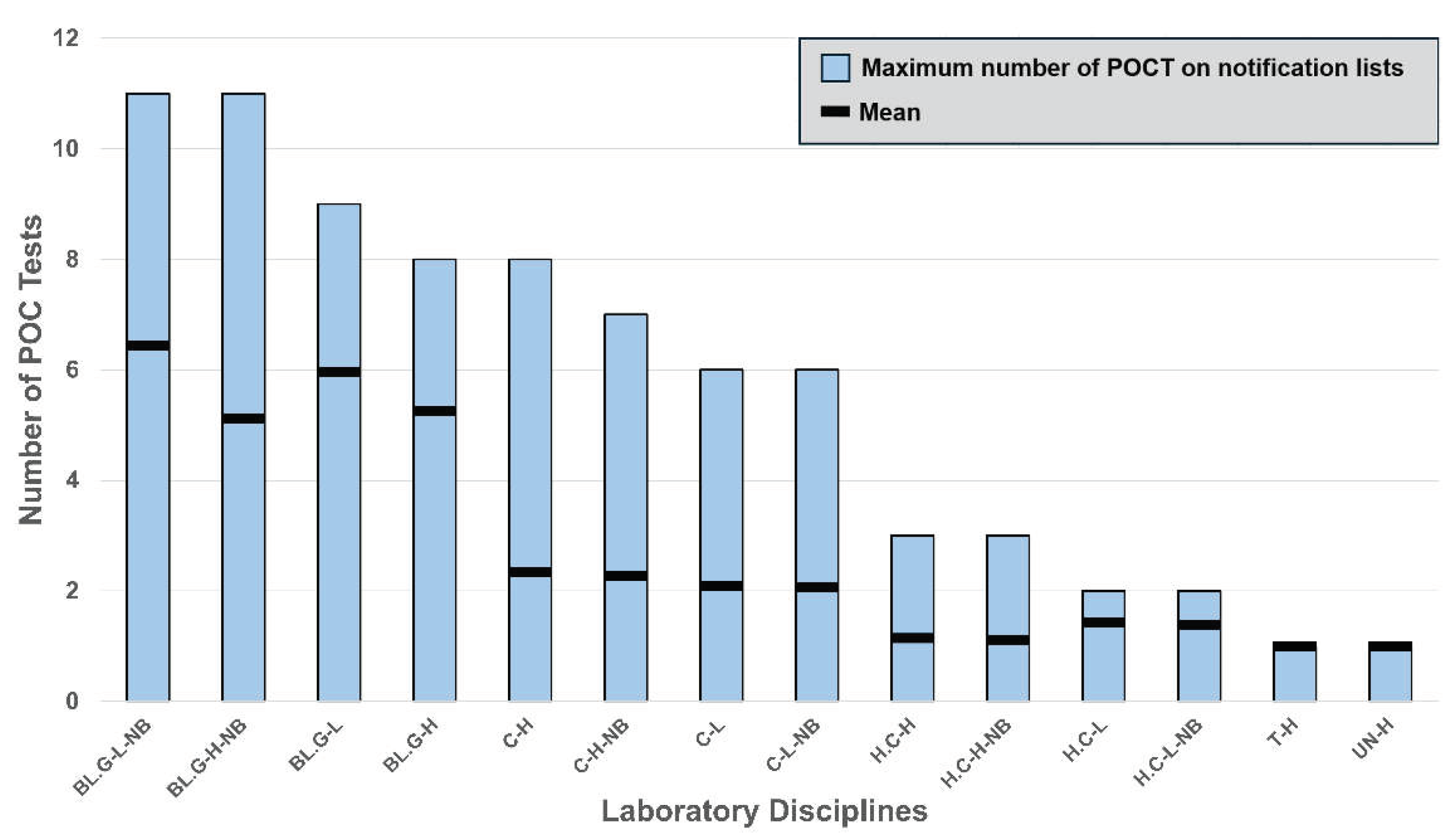
Figure 2.
Number of hospitals identifying different POC instruments with critical limit notifications. [“Glucometer” is a trade name.].
Figure 2.
Number of hospitals identifying different POC instruments with critical limit notifications. [“Glucometer” is a trade name.].
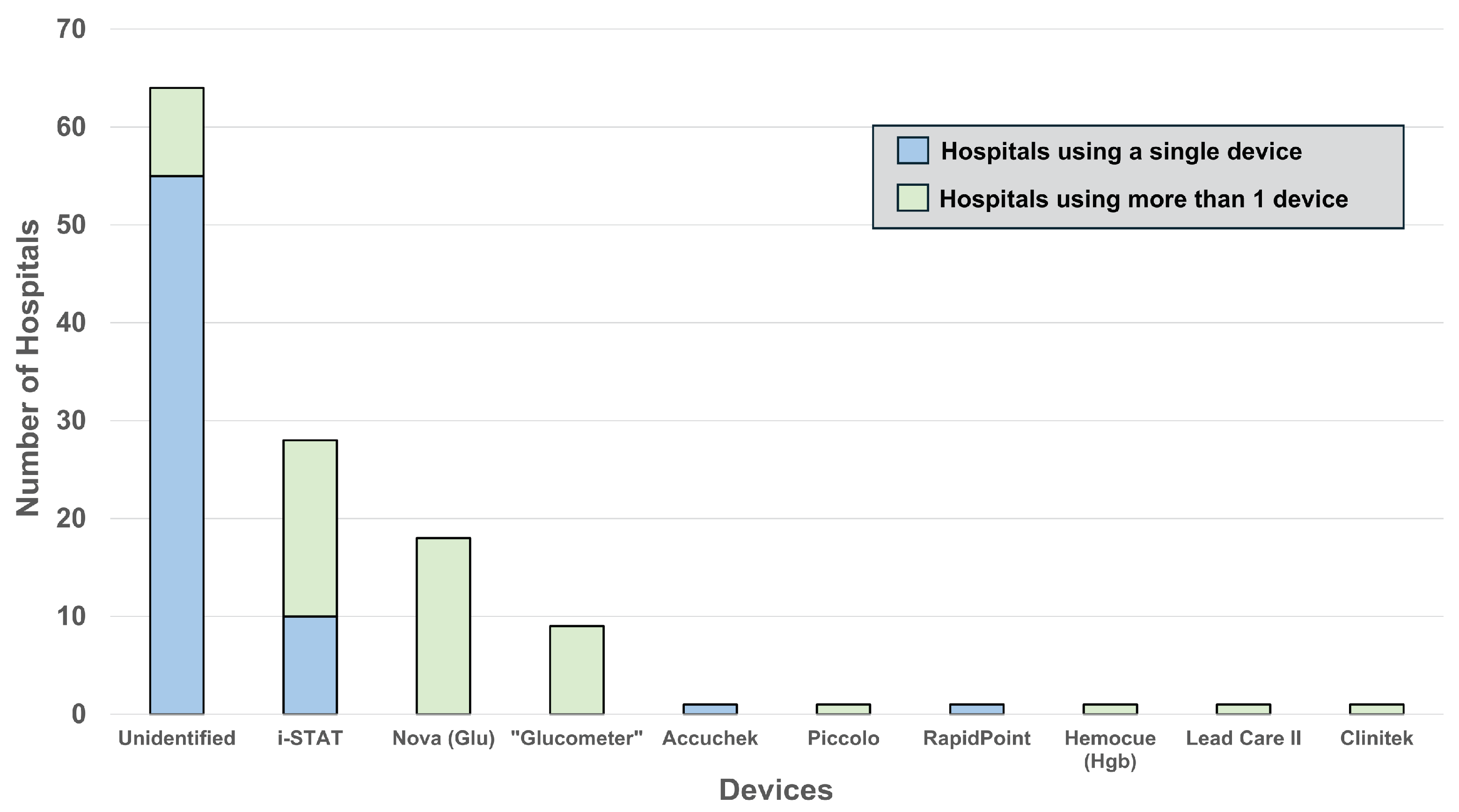
Figure 3.
Histogram for Low Glucose POC Critical Limits. Colors identify risk zones, with purple indicating extreme risk. Critical limits within the red zone require immediate treatment (<54 mg/dL) in accordance with the 2026 ADA guidelines. The green zone can be considered safer, but patients should still be evaluated for neuroglycopenic impaired awareness. For assignment of risk levels, please see the Discussion and the references cited therein.
Figure 3.
Histogram for Low Glucose POC Critical Limits. Colors identify risk zones, with purple indicating extreme risk. Critical limits within the red zone require immediate treatment (<54 mg/dL) in accordance with the 2026 ADA guidelines. The green zone can be considered safer, but patients should still be evaluated for neuroglycopenic impaired awareness. For assignment of risk levels, please see the Discussion and the references cited therein.
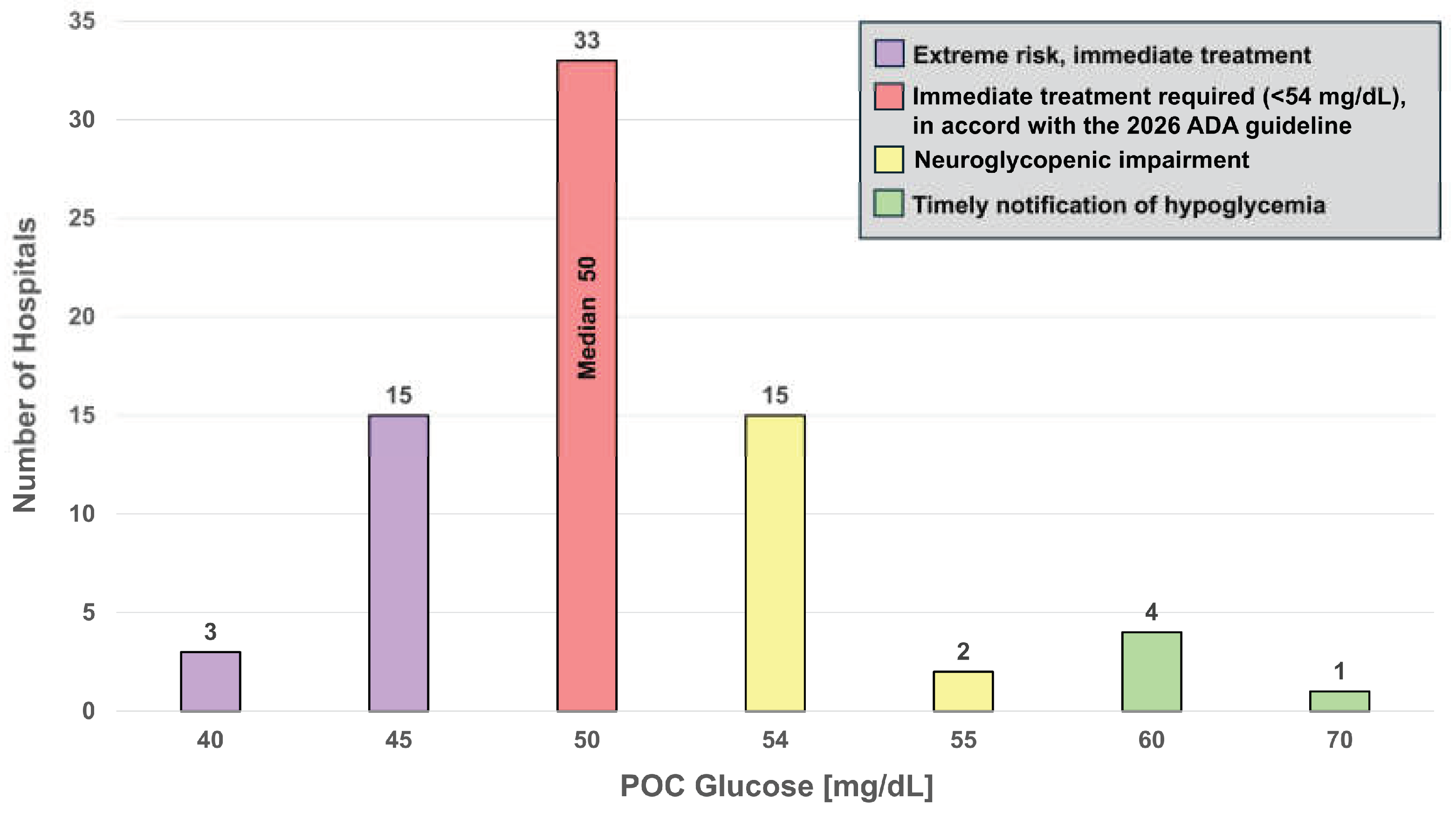
Figure 4.
Histogram for High Glucose POC Critical Limits. Colors identify risk zones, with red indicating extreme hyperglycemia. The distribution of high glucose critical limits demonstrates an irregular, non-normal pattern.
Figure 4.
Histogram for High Glucose POC Critical Limits. Colors identify risk zones, with red indicating extreme hyperglycemia. The distribution of high glucose critical limits demonstrates an irregular, non-normal pattern.
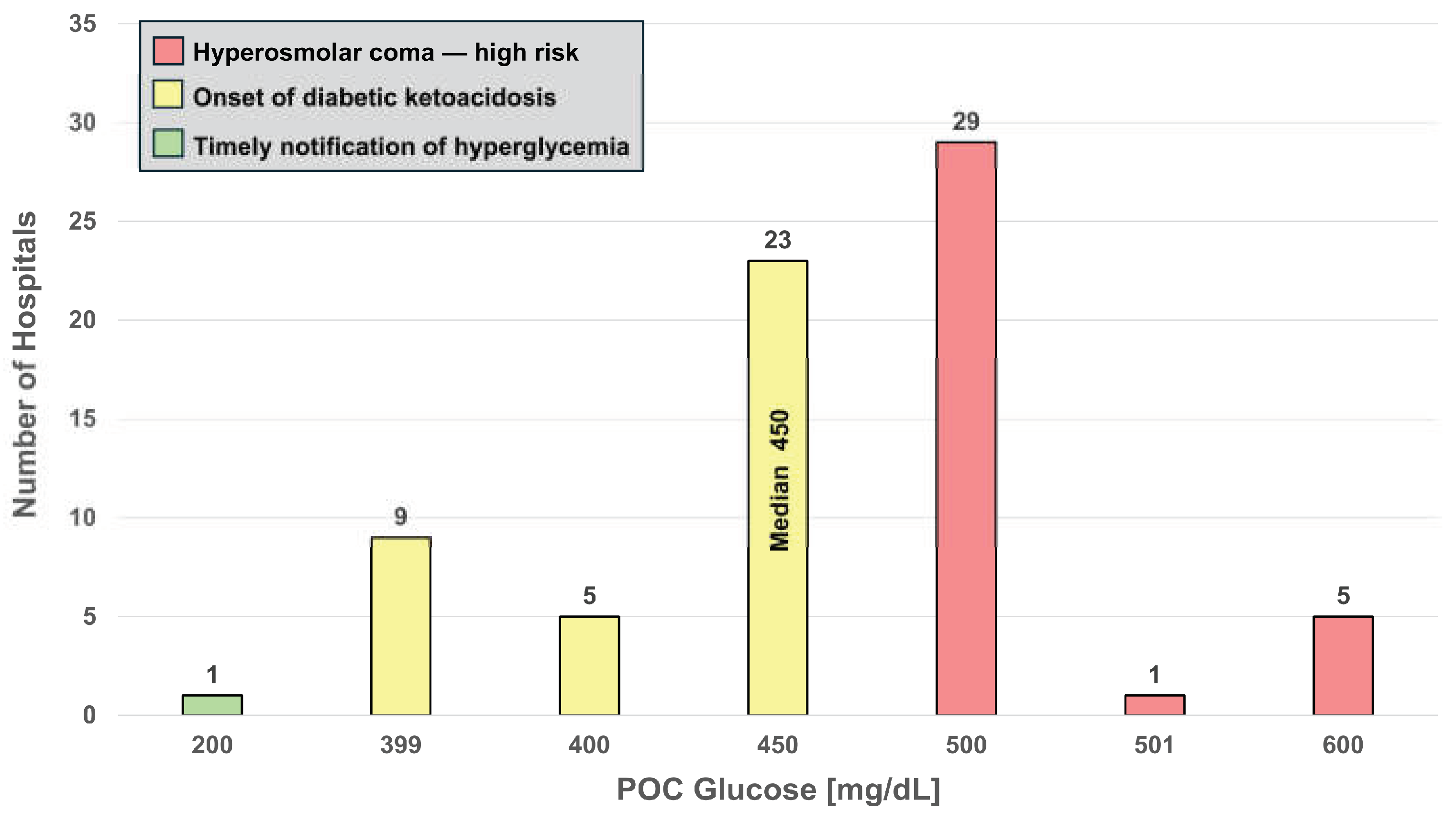
Figure 5.
Histogram for Low Ionized Calcium POC Critical Limits. Colors identify risk zones, with purple indicating extreme ionized hypocalcemia. The ionized calcium histogram demonstrates an irregular, non-normal distribution.
Figure 5.
Histogram for Low Ionized Calcium POC Critical Limits. Colors identify risk zones, with purple indicating extreme ionized hypocalcemia. The ionized calcium histogram demonstrates an irregular, non-normal distribution.
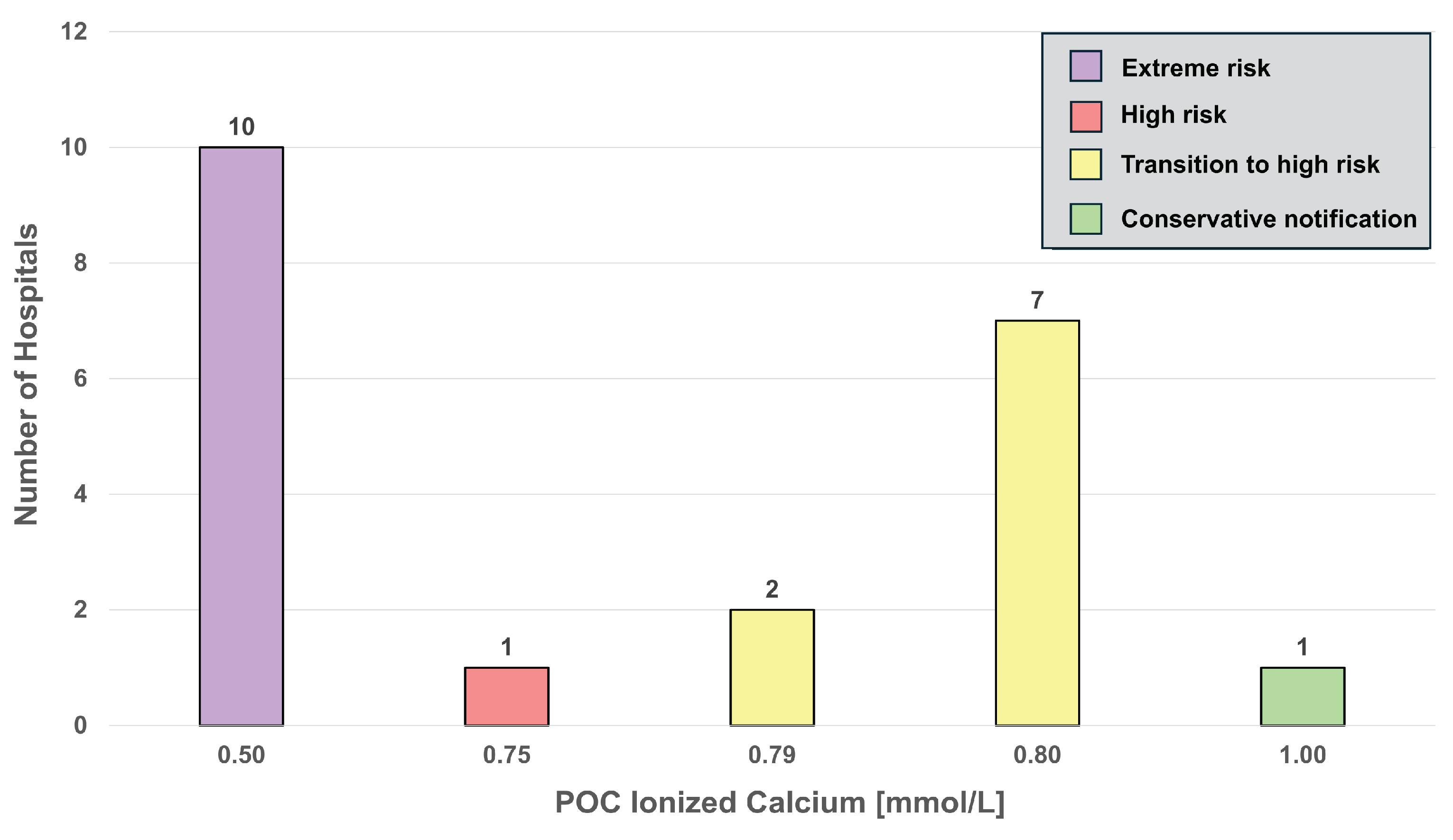
Figure 6.
Histogram for High INR Critical Limits. Colors identify risk zones, with purple indicating extreme risk. The green zone can be considered safer, placing patients within the therapeutic range. The adult INR histogram demonstrates an irregular, non-normal distribution.
Figure 6.
Histogram for High INR Critical Limits. Colors identify risk zones, with purple indicating extreme risk. The green zone can be considered safer, placing patients within the therapeutic range. The adult INR histogram demonstrates an irregular, non-normal distribution.
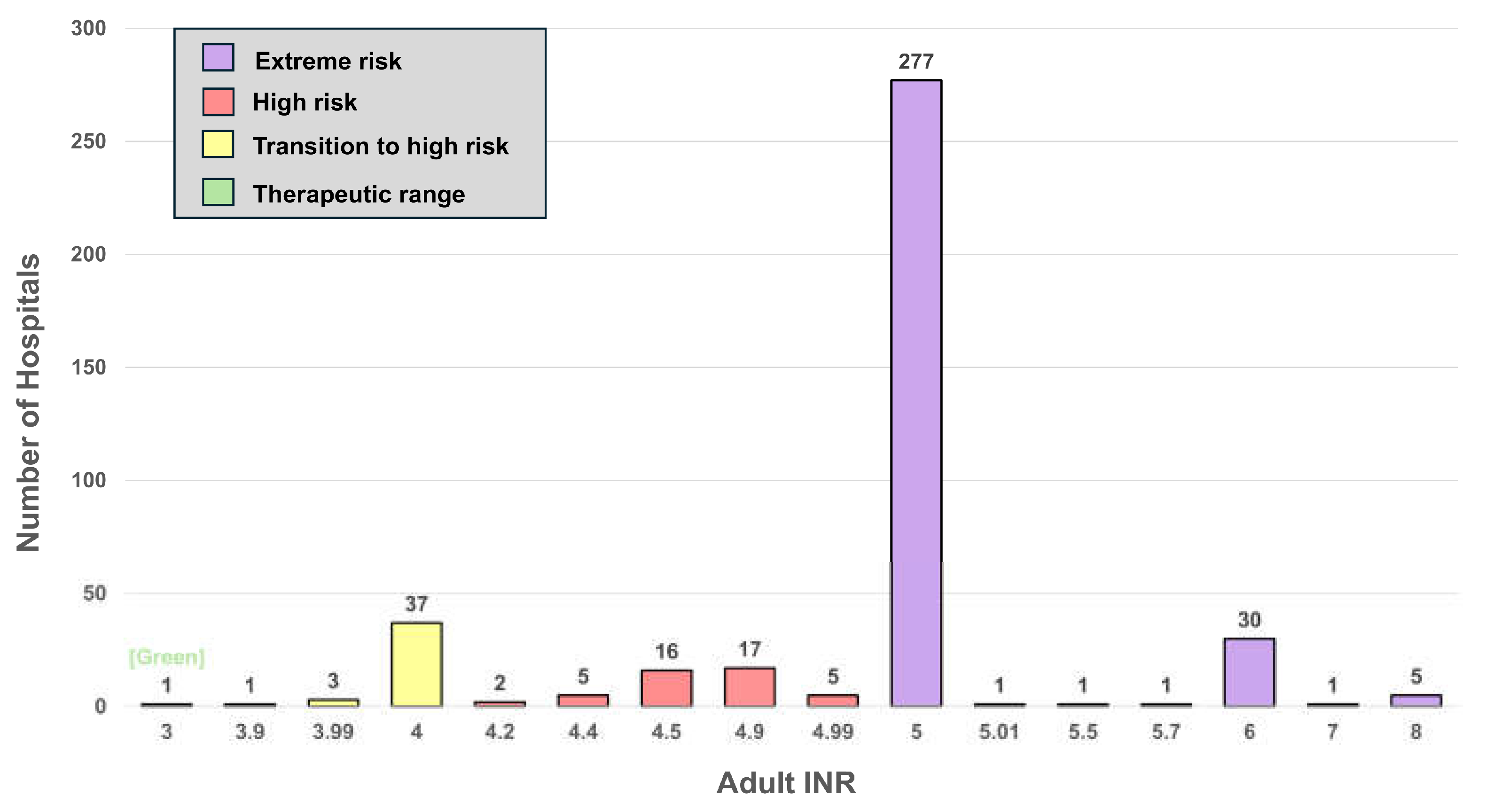
Figure 7.
Histogram for High INR Critical Limits POC versus Laboratory. POC versus laboratory adult INR matched pairs showed no critical limits within the green zone, the therapeutic range. The middle black line separates the adult histograms for POC and laboratory INR and includes critical limits only from hospitals that perform POC testing for INR. Both histograms demonstrate an irregular, non-normal distribution.
Figure 7.
Histogram for High INR Critical Limits POC versus Laboratory. POC versus laboratory adult INR matched pairs showed no critical limits within the green zone, the therapeutic range. The middle black line separates the adult histograms for POC and laboratory INR and includes critical limits only from hospitals that perform POC testing for INR. Both histograms demonstrate an irregular, non-normal distribution.
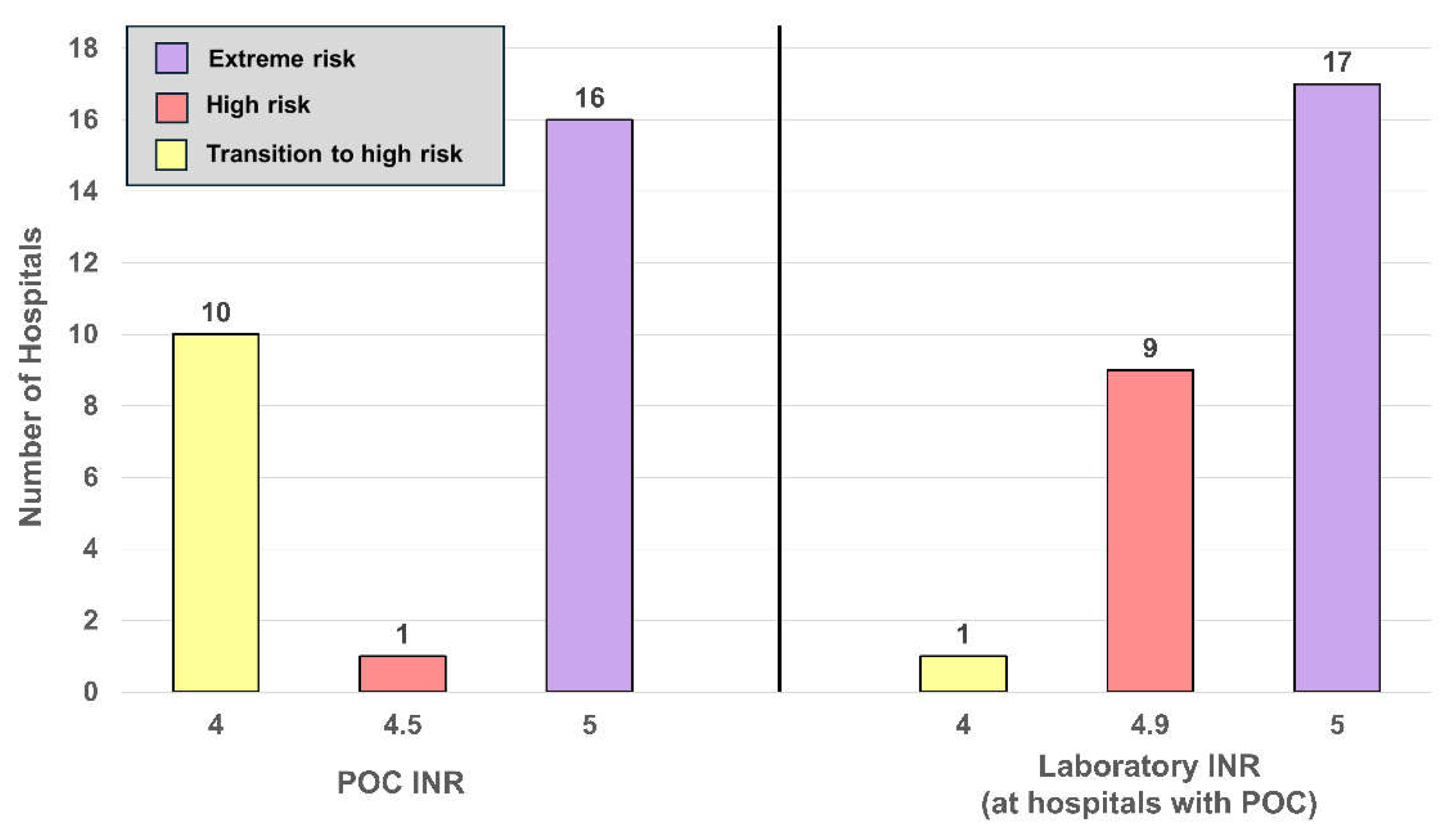

Table 1.
Critical Limits for Point-of-care Clinical Chemistry Tests.
| Measurand | Number of Hospitals (%) |
Units | Low Mean (SD) |
Low Median (Range) |
High Mean (SD) |
High Median (Range) |
|---|---|---|---|---|---|---|
| 1.A. Adults | ||||||
| Glucose |
73 (17.5) |
mg/dL | 50.3 (4.9) |
50 (40–70) |
467.7 (60.5) |
450 (200-600) |
| mmol/L | 2.8 (0.3) |
2.8 (2.2-3.9) |
26 (3.4) |
25 (11.1-33.3) |
||
| Ionized calcium | 21 (5) |
mmol/L | 0.66 (0.17) |
0.75 (0.50-1.00) |
1.65 (0.10) |
1.60 (1.40-1.75) |
| Potassium | 20 (4.8) |
mmol/L | 2.9 (0.2) |
3 (2.5-3) |
6.1 (0.2) |
6 (6-6.5) |
| Sodium | 18 (4.3) |
mmol/L | 123.6 (3) |
126 (120-126) |
156.7 (2.4) |
155 (155-160) |
| CO2 content | 17 (4.1) |
mmol/L | 10.7 (0.6) |
11 (10-12) |
40 (1.9) |
39 (39-45) |
| Lactic Acid | 14 (3.4) |
mmol/L | … | … | 3.6 (0.6) |
3.9 (2-4) |
|
Calcium |
11 (2.6) |
mg/dL | 6.5 (0.2) |
6.6 (6-6.6) |
13 (0.3) |
12.9 (12.9-14) |
| mmol/L | 1.64 (0.05) |
1.65 (1.5-1.65) |
3.25 (0.08) |
3.23 (3.23-3.5) |
||
| Venous Lactic Acid | 10 (2.4) |
mmol/L | … | … | 3.9 (0) |
3.9 (3.9-3.9) |
| 1.B. Newborns | ||||||
| Glucose |
62 (14.9) |
mg/dL | 44.7 (5) |
45 (40-54) |
227.7 (87) |
200 (125-500) |
| mmol/L | 2.5 (0.3) |
2.5 (2.2-3) |
12.6 (4.8) |
11.1 (6.9-27.8) |
||
| Ionized calcium | 18 (4.3) |
mmol/L | 0.86 (0.05) |
0.90 (0.80-0.90) |
1.41 (0.14) |
1.30 (1.30-1.60) |
| Potassium | 15 (3.6) |
mmol/L | 3 (0.1) |
3 (2.8-3) |
6.8 (0.5) |
7.1 (6-7.1) |
| Sodium | 14 (3.4) |
mmol/L | 127.5 (4.3) |
130 (120-130) |
151.1 (2.9) |
150 (150-160) |
| CO2 content | 12 (2.9) |
mmol/L | 11 (0.4) |
11 (10-12) |
39.2 (0.4) |
39 (39-40) |
|
Calcium |
11 (2.6) |
mg/dL | 6.9 (0.3) |
7 (6-7) |
13 (0.3) |
12.9 (12.9-14) |
| mmol/L | 1.73 (0.08) |
1.75 (1.5-1.75) |
3.25 (0.08) |
3.23 (3.23-3.5) |
||
| Bilirubin | 10 (2.4) |
mg/dL | … | … | 17.9 (0) |
17.9 (17.9-17.9) |
| µmol/L | … | … | 306.1 (0) |
306.1 (306.1-306.1) |
||
Abbreviation: SD, standard deviation. For units conversion, see 2.7.
Table 2.
Critical Limits for Point-of-care Blood Gas and pH Tests.
| Measurand | Number of Hospitals (%) | Units | Low Mean (SD) |
Low Median (Range) |
High Mean (SD) |
High Median (Range) |
|---|---|---|---|---|---|---|
| 2.A. Adults | ||||||
| pH | Low: 29 (7) High: 28 (6.7) |
pH Units | 7.20 (0.06) |
7.20 (7.00-7.30) |
7.59 (0.04) |
7.60 (7.50-7.65) |
| Arterial pO2 | Low: 27 (6.5) High: 1 (0.2) |
mm Hg | 45 (5.9) |
40 (40-55) |
200 (…) |
200 (200-200) |
| kPa | 6 (0.8) |
5.3 (5.3-7.3) |
26.7 (…) |
26.7 (26.7-26.7) |
||
| Arterial pCO2 | Low: 20 (4.8) High: 21 (5) |
mm Hg | 20.3 (1.1) |
20 (20-25) |
67.1 (5.1) |
70 (50-70) |
| kPa | 2.7 (0.1) |
2.7 (2.7-3.3) |
8.9 (0.7) |
9.3 (6.7-9.3) |
||
| Carboxyhe-moglobin | 21 (5) |
% | … | … | 12.6 (4.4) |
10 (10-20) |
| Methemo-globin | 20 (4.8) |
% | … | … | 4.5 (1.8) |
4 (3-10) |
| Venous pH | 20 (4.8) |
pH Units | 7.21 (0.02) |
7.20 (7.20-7.30) |
7.58 (0.05) |
7.60 (7.50-7.65) |
| Venous pCO2 | Low: 15 (3.6) High: 17 (4.1) |
mm Hg | 30 (7.3) |
35 (20-35) |
68.5 (4.1) |
71 (56-71) |
| kPa | 4 (1) |
4.7 (2.7-4.7) |
9.1 (0.5) |
9.5 (7.5-9.5) |
||
| Arterial O2 Saturation | 11 (2.6) |
% | 76.8 (10.6) |
80 (45-80) |
… | … |
| Venous O2 Saturation | 10 (2.4) |
% | 60 (0) |
60 (60-60) |
… | … |
| Arterial O2 Hemoglobin | 10 (2.4) |
% | 79.5 (4) |
82 (75-85) |
… | … |
| Venous pO2 | Low: 10 (2.4) High: 1 (0.2) |
mm Hg | 32 (0) |
32 (32-32) |
200 (…) |
200 (200-200) |
| kPa | 4.3 (0) |
4.3 (4.3-4.3) |
26.7 (…) |
26.7 (26.7-26.7) |
||
| 2.B. Newborns | ||||||
| pH | Low: 25 (6) High: 20 (4.8) |
pH Units | 7.19 (0.04) |
7.20 (7.00-7.27) |
7.59 (0.05) |
7.60 (7.45-7.65) |
| Arterial pO2 | Low: 23 (5.5) High: 1 (0.2) |
mm Hg | 45 (9.2) |
40 (30-60) |
200 (…) |
200 (200-200) |
| kPa | 6 (1.2) |
5.3 (4-8) |
26.7 (…) |
26.7 (26.7-26.7) |
||
| Arterial pCO2 | Low: 17 (4.1) High: 22 (5.3) |
mm Hg | 23.8 (3.8) |
25 (20-35) |
70.9 (7.2) |
70 (50.1-80) |
| kPa | 3.2 (0.5) |
3.3 (2.7-4.7) |
9.5 (1) |
9.3 (6.7-10.7) |
||
| Carboxyhe-moglobin | 20 (4.8) |
% | … | … | 11.5 (5.1) |
9 (8-20) |
| Venous pH | 19 (4.6) |
pH Units | 7.20 (0) |
7.20 (7.20-7.20) |
7.60 (0.04) |
7.60 (7.55-7.65) |
| Venous pO2 | Low: 10 (2.4) High: 1 (0.2) |
mmHg | 32 (0) |
32 (32-32) |
200 (…) |
200 (200-200) |
| kPa | 4.3 (0) |
4.3 (4.3-4.3) |
26.7 (…) |
26.7 (26.7-26.7) |
||
| Arterial O2 Saturation | 10 (2.4) |
% | 80 (0) |
80 (80-80) |
… | … |
| Venous O2 Saturation | 10 (2.4) |
% | 60 (0) |
60 (60-60) |
… | … |
| Methemo-globin | 10 (2.4) |
% | … | … | 6 (1.5) |
6 (5-10) |
| Venous pCO2 | 9 (2.2) |
mmHg | 22.8 (2.6) |
25 (20-25) |
62.2 (2.6) |
60 (60-65) |
| kPa | 3 (0.4) |
3.3 (2.7-3.3) |
8.3 (0.4) |
8 (8-8.7) |
||
| Capillary pH | Low: 9 (2.2) High: 4 (1) |
pH Units | 7.20 (0) |
7.2 (7.20-7.20) |
7.65 (0) |
7.65 (7.65-7.65) |
| Capillary pCO2 | Low: 4 (1) High: 9 (2.2) |
mmHg | 20 (0) |
20 (20-20) |
73.3 (7.9) |
80 (65-80) |
| kPa | 2.7 (0) |
2.7 (2.7-2.7) |
9.8 (1.1) |
10.7 (8.7-10.7) |
||
| Arterial O2 Hemoglobin | 9 (2.2) |
% | 78.9 (3.7) |
82 (75-82) |
… | … |
Abbreviation: SD, standard deviation.
Table 3.
Critical Limits for Point-of-care Hematology and Coagulation Tests.
| Measurand | Number of Hospitals (%) |
Units | Low Mean (SD) |
Low Median (Range) |
High Mean (SD) |
High Median (Range) |
|---|---|---|---|---|---|---|
| 3.A. Adults | ||||||
| INR | 27 (6.5) |
INR | … | … | 4.6 (0.5) |
5 (4-5) |
| Hematocrit | Low: 24 (5.8) High: 12 (2.9) |
% | 19.7 (1.5) |
20 (15-21) |
61.3 (3.1) |
60 (55-65) |
| Hemoglobin | Low: 23 (5.5) High: 6 (1.4) |
g/dL | 6.8 (0.7) |
6.6 (6-8) |
19.1 (0.4) |
18.9 (18.9-20) |
| 3.B. Newborns | ||||||
| Hematocrit | Low: 21 (5) High: 10 (2.4) |
% | 25.3 (5.1) |
25 (18-30) |
68 (6.3) |
65 (60-75) |
| Hemoglobin | Low: 18 (4.3) High: 7 (1.7) |
g/dL | 8.8 (1.5) |
10 (6-10) |
19.6 (1.5) |
18.9 (18.9-23) |
| INR | 12 (2.9) |
INR | … | … | 4.1 (0.3) |
4 (4-5) |
Abbreviation: SD, standard deviation.
Table 4.
Statistically Significant POC versus Laboratory Matched Pairs.
| Measurand, High or Low Critical Limit | Number of Hospitals |
Units | p-value | POC Median (Range) |
Laboratory Median (Range) |
|---|---|---|---|---|---|
| 4.A. Adults | |||||
| INR, High | 27 | INR | 0.003 | 5 (4-5) |
5 (4-5) |
| Hemoglobin, Low | 23 | g/dL | 0.048 | 6.6 (6-8) |
6.6 (6-7) |
| Ionized calcium, Low | 21 | mmol/L | 0.002 | 0.75 (0.50-1.00) |
0.76 (0.75-0.85) |
| Ionized calcium, High | 21 | mmol/L | 0.004 | 1.60 (1.40-1.75) |
1.59 (1.40-1.62) |
| 4.B. Newborns | |||||
| INR, High | 10 | INR | 0.003 | 4 (4-4.5) |
4.9 (4.9-5) |
Table 5.
POC versus Laboratory Matched Pairs Qualitative Difference.
| Measurand | Number of Hospitals |
POC < Laboratory | POC = Laboratory | POC > Laboratory | |||
|---|---|---|---|---|---|---|---|
| Low | High | Low | High | Low | High | ||
| 5.A. Clinical Chemistry | |||||||
| Adults | |||||||
| Glucose | 73 | 2 | 4 | 64 | 67 | 7 | 2 |
| Ionized calcium | 21 | 13 | 3 | 7 | 8 | 1 | 10 |
| Potassium | 20 | … | … | 20 | … | … | … |
| Sodium | 18 | … | 1 | 18 | 16 | … | 1 |
| CO2 content | Low: 16 High: 15 | … | … | 15 | 15 | 1 | … |
| Lactic Acid | 14 | … | … | … | 13 | … | 1 |
| Calcium | 11 | … | … | 11 | 10 | … | 1 |
| Newborns | |||||||
| Glucose | 62 | 3 | 3 | 52 | 56 | 7 | 3 |
| Ionized calcium | 17 | … | … | 17 | 16 | … | 1 |
| Potassium | 14 | … | 1 | 14 | 13 | … | … |
| Sodium | 12 | … | 1 | 12 | 11 | … | … |
| CO2 content | 12 | … | … | 12 | 11 | … | 1 |
| Calcium | 11 | … | … | 11 | 10 | … | 1 |
| Newborn Bilirubin | 10 | … | … | … | 10 | … | … |
| 5.B. Blood Gas and pH | |||||||
| Adults | |||||||
| pH | Low: 18 High:17 | 1 | 2 | 16 | 15 | 1 | … |
| Arterial pO2 | 16 | … | … | 15 | … | 1 | … |
| Carboxyhemo- globin |
11 | … | … | … | 11 | … | … |
| Arterial pCO2 | 10 | … | 1 | … | 9 | … | … |
| Methemoglobin | 10 | … | … | … | 10 | … | … |
| Venous pH | 10 | … | 1 | 9 | 9 | 1 | … |
| Newborns | |||||||
| pH | 11 | … | … | 11 | … | … | … |
| Arterial pO2 | 11 | … | … | 10 | … | 1 | … |
| Arterial pCO2 | 11 | … | … | 11 | … | … | … |
| Carboxyhemo- globin |
10 | … | … | … | 10 | … | … |
| Methemoglobin | 10 | … | … | … | 10 | … | … |
| 5.C. Hematology and Coagulation | |||||||
| Adults | |||||||
| INR | 27 | … | 10 | … | 17 | … | … |
| Hemoglobin | 23 | … | 18 | … | 5 | … | |
| Hematocrit | 15 | … | … | 15 | … | … | … |
| Newborns | |||||||
| Hemoglobin | 18 | 1 | … | 17 | … | … | … |
| Hematocrit | 13 | 1 | … | 12 | … | … | … |
| INR | 10 | … | 10 | … | … | … | … |
Disclaimer/Publisher’s Note: The statements, opinions and data contained in all publications are solely those of the individual author(s) and contributor(s) and not of MDPI and/or the editor(s). MDPI and/or the editor(s) disclaim responsibility for any injury to people or property resulting from any ideas, methods, instructions or products referred to in the content. |
© 2026 by the authors. Licensee MDPI, Basel, Switzerland. This article is an open access article distributed under the terms and conditions of the Creative Commons Attribution (CC BY) license (http://creativecommons.org/licenses/by/4.0/).
Copyright: This open access article is published under a Creative Commons CC BY 4.0 license, which permit the free download, distribution, and reuse, provided that the author and preprint are cited in any reuse.


