
Submitted:
13 March 2026
Posted:
17 March 2026
You are already at the latest version
Abstract
There is a worldwide hazard with microplastics (MPs), plastic production units less than 5 mm, as it increases with the increase in output (>380 million tons/year), which is even division into micro- and nanoplastics. This is a review of over 200 peer-reviewed articles through systematic database searches that combines both experimental, modeling and observational data to help fill knowledge gaps in MP migration, transformations, bioavailability, and health risks in aquatic, terrestrial, and atmospheric environments. Results indicate heterogenous distributions: coastal clumps (e.g., 0.011 +- 0.017 items/m3 oceans), bioturbation-induced soil penetration (600 particles/kg), and peaks in wet season. Prevalent (less than 100 mm) fragments/fibers of polyethylene/polypropylene support wind/river transport and sorption of contaminant. Losses Phthalates are lost through transformations by photo-oxidation, abrasion, and biofilms leading to enhanced ecotoxicity via trophic magnification. Bioaccumulation, endocrine disruption, oxidative stress, and chronic illnesses phenotypes are all potential risks of human exposure, which primarily occurs through the ingestion of fish (millions of particles per week through the ocean) pathways. This framework gives greater emphasis on ecological back-human associations whereby there is routine of such ways, prognostic models and ameliorations such as waste curbs and biodegradables to conserve the surroundings and health.
Keywords:
microplastics
; environmental migration
; physicochemical transformation
; human exposure
; health risks
; trophic transfer
1. Introduction
The ubiquitous nature of microplastic in different compartments of the environment is now a hot topic on the global agenda and has led to widespread academic journals exploring the complex effects of microplastics on the ecosystem and humans [1]. The fact that the world is now creating more than 380 million tons of plastic in a year is directly related to the mass proliferation of the ubiquitous polluters [2]. The growth in the production of plastic waste, especially single-use plastics, causes the break-down of large-scale plastic waste into micro- and nanoplastics, which possess very high environmental persistence and mobility [3,4]. After being taken into the environment, these microplastics experience complicated transformation processes, including photo-aging and microbial degradation which change their physicochemical properties and ecological interactions further [5]. Their prevalence and ability to bioaccumulate and biomagnify through trophic levels highlights the extremely important consideration that there is need to fully evaluate their pathways, fate, and consequent exposure- related health impacts in biological systems [6]. The world oceans are now estimated to have 5.25 trillion plastic particles that emit a maximum of 23,600 metric tons of dissolved organic carbon every year, which affects the process of microbials [7]. This all-inclusive maritime microplastic charge is mainly powered by transporting mismanaged plastic wastes in high- dense and industrialized regions through the fluvial systems [8]. The slow rate of degradation of plastics only adds to this pervasive contamination thereby causing a rapid buildup on the different environmental matrices [9]. In turn, this accumulation leads to their large distribution in the open oceans, streamlines, and the bottom of the sea [10]. It is a critical environmental problem that has exceeded our disposal capability due to unsustainable increase in the number of disposable plastic products [11]. The distribution of the so-called microplastics, i. e. plastic fragments less than 5 mm in length, have both primary and secondary origins, namely, created to serve a particular purpose, such as a make-up product, and the secondary fragmentation of more massive plastic waste [12]. This process of degradation is ongoing, resulting in smaller and smaller fragments such as nanoplastics of less than 100 nm, which only worsens their migration into the environment and likely biological interactivity [13]. Various biotic and abiotic agents such as UV radiation, thermal oxidation, mechanical abrasion, and microbial activity cause this fragmentation and cause changes in the physiochemical properties and improves the bioavailability of these particles [14]. The combination of these properties with a large surface area and high porosity allows microplastics to absorb and carry a number of pollutants, such as hydrophobic organic compounds and heavy metal ions, making them more dangerous as sources of ecotoxicological effects [15]. This exchange of chemicals adsorbed on such surfaces may contribute to the dissemination of these exchanged chemicals into the biological tissues when ingested by an organism, which may have endocrine disruptive and other negative health effects on the organism at the various trophic levels [16]. The extensive dispersion of microplastics throughout the planet, as well as their existence in land, waters, and air, highlight the principle of urgency in the questions of ecological and human health [7,17]. In the light of their stability and broad distribution, the entire picture regarding the dynamics of microplastic is essential, especially in relation to its mode of transportation in the environment and subsequent ecological and human exposures possibilities [18,19].
This review comprehensively examines the environmental migration, transformation processes, and exposure-related health risks associated with microplastics, integrating insights from diverse studies to elucidate their complex interplay within various ecosystems. The present work delineates the multifaceted pathways through which microplastics traverse environmental matrices, emphasizing the physiochemical modifications they undergo, and subsequently synthesizes current understanding regarding their toxicological profiles and potential impacts on organismal health. Although much has been studied on microplastic pollution, the literatures remain wide gaps especially in the transportation of this pollutant on a global scale, the mechanisms underlying their transformation (e.g., photo-aging and microbial degradation [5,14]) and their cascading effects of exposure on the health risks of environmental compartments and trophic levels of all living organisms globally [6,7].
Although scattered reviews have dealt with individual aspects, e.g. sources [3,12], distribution [7,8], or ecotoxicological effects [15,16], there are few studies that have holistically incorporated these so that they can be correlated to the human health implication of increasing production rates of over 380 million tons per year [2,11].
In this paper, the given gaps are discussed based on the presentation of a single framework outlining the microplastic fate between primary/secondary sources and biomagnification [10,17], summing up the toxicity improvements through transformations, and estimating the risk posed by exposure in water, soil, and the atmosphere. The strengths of it are multi-scale synthesis based on a review of more than 200 international studies, new focus on the ecological- human health pathways, and flexible implications on mitigation practices, thus going beyond the fragmented analyses to the predictive modelling and policy implications. Part of the upcoming sections will detail the environmental pathway of microplastics with its primary release and subsequent transport via different environmental media to its interaction with the subject biological systems and subsequent health impacts. This entails an appreciable analysis of their physicochemical properties, including size, shape, and type of polymer as well as how these properties affect their environmental locomotion and bio uptake [20]. In addition, microplastic aging because of changes in factor influencing it, e.g., photo-radiation, heat, and biodegradation, drastically changes the surface properties and the chemical structure, which subsequently influences the transportation and ecological relations [21]. In particular, these aging mechanisms have the ability to increase the level of hydrophilicity, surface roughening, and produce reactive functional groups, which can then change their adsorption potential of environmental contaminants and cellular internalization [22]. These resultant changes in the surface charge, crystallinity, and the particle density may have far reaching impact on their aggregative chain of action, their rate of settling out and their possibility to be transported trophically through the ecosystems [23].
2. Literature Review
The review presents the existing knowledge on the environmental movement and change of plastics as well as their health hazards, and the urgency of the problem of an in-depth knowledge about their fate and effects in different parts of environment is revealed. It explores the complex processes of the movement of microplastics by through atmospheric, aquatic, and terrestrial routes, and the significance of environmental conditions, including currents in oceans, wind patterns and hydrological cycles in their distribution across the world [2,24]. Moreover, the review examines the processes of plastics transformation in the environments such as fragmentation, weathering, and biofilm production that significantly modify their physical and chemical characteristics and affect their interactions in the ecosystems and toxicology possibilities [25]. Hydrophobicity, specific surface area and the presence of oxygenated functional groups have been reported to be diminished, increased and enhanced respectively by the aging process which consists of exposure to UV irradiation and chemical oxidation thereby promoting the adsorption capacity of microplastics to various pollutants, respectively, by hydrogen bonding and p-p interactions [26]. This process of chemical and physical changes leading to aging, especially due to photoaging when exposed to UV radiation, greatly increases the reaction of microplastics to other co-existing contaminants, which contributes to a greater bioavailability rate and possible toxicity [27,28,29]. As an example, UV exposure is not only known to contribute towards the process of homoaggregation of nanoplastics by decreasing electrostatic repulsion by compromising surface sulfate and amine groups and concentrating on biofilm growth over their degraded surfaces by making carbonyl groups available but can also help to modify the density and sedimentation rates of their degraded surfaces [30].
3. Methodology
This sub-section will present the methodology followed in identifying, screening, and integrating the useful literature related to microplastic migration, transformation, and other health threats. A broad-based search plan has been utilized in searching the existing scientific databases to find peer-reviewed articles, reviews, and reports published over a given period with a predetermined number of keywords and Boolean variables to establish as much coverage as possible and relevance. The inclusion criterion emphasized those studies with rigorous research methods both experimental and model studies to be chosen to analyze microplastic behaviour in various environmental matrices and biological systems. The objective of this systematic review was to combine results of other fields such as environmental science, toxicology, and the field of public health so as to gain an overall picture of the multicomponent interaction between the microplastic properties, the environmental processes, and biological effects. The synthesis that followed was the critical evaluation of the study designs, statistical analyses, and reported effect sizes and it enabled identification of the uniform trends and areas of inconsistent findings about microplastic transport processes, degradation routes and toxicological endpoints at various trophic levels. It can also be stated that with the help of this critical appraisal, knowledge gaps and new horizons of research were identified, one of which is the long-term ecological effects and the impact of microplastic exposure on human health.
4. Results
4.1. Distribution and Abundance of Microplastics
4.1.1. Spatial Distribution Patterns
The pattern of spatial distribution of microplastics varies between the environmental compartments with high concentrations near urban, coastal and industrial sources and declining with the distance to the land [2,19,31]. Comparisons of the world show concentrations of up to eight orders of magnitude in soils, sediments and surface waters with hotspots being found in rivers, estuaries and ocean gyres due to their closeness to emission sources [13,31]. The average abundance in transects across the various current systems in the ocean was 0.011 +- 0.017 items/m3 and was significantly correlated with the distance to the coast [32]. The spread of microplastics in aquatic ecosystems, including freshwater, marine, and polar, however, is characterized by a high degree of variability, highlighting the piecemeal and spatially uneven state of the available knowledge [33]. Although it is widely studied on freshwater ecosystems or terrestrial ecosystems, the fact that these are interdependent with the marine ecosystem and the consequences that this has on the distribution of microplastic has been largely neglected, thus necessitating a more holistic view of their global transportation [34]. This little bit of knowledge is further complicated by the variation in sampling methodologies that creates a remarkable bias in reported microplastic concentrations and prevents the direct comparison of studies [35]. In particular, the use of the different mesh sizes applied to various studies influences the detection limits of smaller microplastic particles, resulting in variation in reported concentrations, especially the marine environment compared to the freshwater ecosystem where primary microplastics might prevail [36]. Besides, the absence of standardized methods of detection and quantification of microplastics below 25 mm in water and sewage samples also complicates the overall comparison and evaluation of the ecological impact of microplastics [37]. Such a methodological heterogeneity is a factor in the limited global picture on microplastic prevalence, concentrations, and ultimate-fate, especially in poorly studied freshwater systems such as freshwater lakes and estuaries, which are of great regional water and food security significance [38]. In turn, the precise nature of lentic ecosystems, such as the speed of winds, the depth, and the eutrophication levels, as well as the anthropogenic sources and seasonal changes, is important in determining the microplastic formation in these crucial freshwater resources on an accurate basis [39]. The difference in sampling techniques especially mesh sizes and sampling depths have a great bearing on the reported concentrations of microplastic which tend to underestimate the actual abundance of smaller microplastic particles in various water bodies [40]. Such inconsistency of the methodology, in particular, in the interest of the units of reporting and sampling methods, complicates making robust comparisons across studies and hinders the establishment of a single picture regarding the dynamics of microplastic pollution [41].

Table 1.
Global Distribution, Concentration, and Influencing Factors of Microplastics Across Major Environmental Compartments.
Table 1.
Global Distribution, Concentration, and Influencing Factors of Microplastics Across Major Environmental Compartments.
| Environmental Compartment | Spatial Pattern (Hotspots) | Average Concentration | Vertical/Depth Insights | Key Influencing Factors | Reference |
|---|---|---|---|---|---|
| Surface Waters | Coastal/estuarine | 0.011 ± 0.017 | Higher in | Proximity to | [2,13], |
| (Oceans/Rivers) | zones; decreases offshore | items/m³ (oceans); up to 8 orders of magnitude variability in rivers | surface (buoyant particles); subsurface: 10⁻⁴ to 10⁴ particles/m³ | urban/industrial sources; ocean currents; mesh size inconsistencies | [31,32] |
| Sediments | Estuaries, ocean | Up to 600 | Increases with | Beach dynamics; | [19,52], |
| (Marine/Freshwater) | gyres, mid- intertidal zones | particles/kg (floodplain soils); <0.3 mm dominant in benthic layers | depth in intertidal zones; finer particles penetrate deeper via settling | bioturbation; hydrological transport | [53,81] |
| Soils (Terrestrial/Agricultural) | Near urban/agricultural inputs; remote via atmospheric fallout | 10–600 particles/kg; higher porosity in coastal soils aids penetration |
Deeper layers via earthworm activity; upward via plowing | Soil texture, moisture, bioturbation; rainfall/irrigation | [51,54,55,58,61] |
| Atmosphere | Remote/pristine areas via long- range transport | ~1.2 tons/year land-to-sea flux; fibers dominant | Fallout to soil depths via precipitation | Wind patterns; textile/tire wear sources | [19,67,75] |
This has been also complicated by the fact that there are no harmonized sampling, analysis and quantification methods to compare the results of research in different places and contexts [42,43]. This leads to methodological discrepancies due to different net mesh sizes, filter pore sizes and particle size ranges explored as well as different protocols to reduce contamination [44]. Such non standardization of analytical methods as extraction and identification methods, has a great effect on the reported composition and distribution of microplastics, rendering comparative analysis across studies and geographic areas challenging [45,46,47]. Such discrepancies impede the creation of a complete international standard of microplastic pollution and make it harder to develop an effective mitigation strategy and policy interventions [48,49]. To solve these discrepancies, it will be required to have a globally available, extensively applicable guidance that can standardize and streamline sampling and processing protocols of microplastics to enhance the quality and consistency of data across the world [50]. These standardized procedures would allow a better evaluation of microplastic distribution patterns and allow making a more accurate model of its transport and distribution in the environment, which will subsequently improve our ability to assess the ecological risks.
4.1.2. Vertical Distribution (Water Column / Soil Depth)
Vertical profiles show distribution of micro plastics along the water column and soil depths with subsurface loads of 10-4 to 104 particles/m3 in the oceans, which are often higher than those on the surface through settling and mixing of the particles [51]. In the sediment, the concentration changes with depth in the mid-intertidal areas due to the beach processes, and the accumulation of the floodplain soils on top reaches 600 particles/kg [52,53]. Air fallout leads to increased penetration of the soil through the winds and precipitation [19]. The fact that microplastics can be found in lower layers of the soil indicates that hydrological transport and bioturbation processes play a vital role in determining how they can be sequestered over the long-term, and how they may affect the ecosystem in the deep soil layers. On the other hand, the movement of microplastics in deeper soil layers to the surface due to the application of farming and bioturbation by soil animals might restore sequestered particles to active cycles in the atmosphere, and a complete picture of downward and upward transport is needed. It is due to this complexity that there is a pressing requirement to employ standardized methods in soil microplastic studies, including extraction, description and environmental risk assessment to allow strong cross-study comparisons and global knowledge comprehension [54]. The study of the microplastic transport processes, especially regarding the tillage regimes, bioturbation, and soil structure, is justified and requires further research [55]. Since the microplastic particles especially the smaller ones have been shown to be vertically mobile in the form of soil profiles, their distribution depends greatly on the size of the particle, the abundance of the macropores, and bioturbation [56]. In addition, their contact with soil aggregates and organic matter determines the retention times and consequently leaching potentials which influence significantly the transport of contaminants [57]. The separate granular structure of coastal soils, which has higher porosity than fine-grained soils, is more contributing to the better penetration of microplastic, which implies that the physicochemical characteristics of soils are important factors that determine vertical movement [58,59]. In particular, other forces, such as temperature, microbial activity, and UV exposure, also regulate the future and conversion of microplastics in soil conditions [60]. Ecofacts The burrowing activities of earthworms and other burrowing animals can considerably increase the transport of microplastics to the ground surface to lower soil layers, being the primary agents of bioturbation that transport surface-β to deeper layers [61]. It has been shown that the success of such vertical transport is density- dependent with maximum rates at certain densities of earthworm populations and smaller sizes of microplastic particles can readily penetrate deeper layers of soil [62,63]. It is a biotransportation process together with the effect of soil physicochemical characteristics that highlight the complexity of the interaction between biotic and abiotic factors that dictate microplastic destiny in terrestrial ecosystems [64,65]. Moreover, other agricultural operations such as plowing, and the natural physical processes such as precipitation and soil slaking are also causing the translocation and increased penetration of microplastics into the soil profile [66]. Nevertheless, bio-processes of soil organisms, such as earthworms and collembolans, increase the incorporation and fixation of microplastic into soil structures, but their movement in soil structures is relatively low [67]. In spite of this, it has been noted that the presence of microplastics affects the bulk density, water aggregate stability, water holding capacity and rainwater infiltration [68]. Such alteration of the soil physicochemical characteristics due to contamination by microplastic can in turn affect hydrological processes, nutrient cycle, and the overall health of soil, which should be researched further in regard to the long-term ecological impacts [69]. These changes in the properties of soils may, conversely, influence the bioavailability and mobility of other contaminants and thereby increase environmental hazards [70]. One of the most important processes is the vertical redistribution of microplastics in the soil profiles by the biotic processes of the soil fauna, i.e. earthworms, in the soil profiles through its processes, i.e. the egestion and adhesion of the organisms [38,71]. This bioturbative action does not only redistribute particulate plastics, may also decrease their size, which may make them more accessible to plant uptake [72]. In addition, this bio- mediated translocation is also able to modify the chemical integrity of microplastics, which may dissociate additives or fragmentation products that are likely to alter the soil physicochemical properties and microbial activity [73]. It is worth noting that the essential ecosystem functions of earthworms, which are vital to soil health and nutrient cycling, have been seen to consume microplastics, which could affect their reproductive organs, oxidative stress, and DNA, thereby affecting their primary ecosystem functions [74].
4.1.3. Shape and Morphology
The marine and sediment samples contain fragments (88.6%), the atmospheric and freshwater deposits contain fibers (85-90% full of textile shedding), foams (more than 85% on the beach), pellets, films, and filaments by source [13]) [50,75,80]. Nevertheless, there is a significant diversity in the morphological distributions of micro/nanoplastics in environmental matrices and geographic regions, with flakes, foams, fragments, and fibers typically being the most common forms [97]. The morphological diversification has serious effects on their physical behavior such as buoyancy, transportation, and uptake by biota, and the standardized approach to shape classification is required to improve data comparability and predicate modelling [98]. As an example, the distribution of fibers in wastewater treatment plants effluents proposes the presence of the industrialization of textiles through laundering, whereas fragments and pellets are usually associated with plastic products disintegration or industrial spills [7]. The definition of particle morphology, including its irregularity, roundness, sphericity, and elongation, is essential to give critical information about the behavior of microplastics in the environment and its possible ecological implication with certain descriptors being more pertinent depending on the study purpose [99]. The smaller the particle size, the higher the occurrence of microplastics especially foams, making them more bio-accessible to the marine organisms, and challenging to locate and measure in size because of the limitation of technology [100,101]. This highlights the necessity to harmonize reporting standards on particle shape to enable comparison of studies on particle shape across studies and to close the divide between laboratory toxicity and actual environmental exposures [102,103].
4.1.4. Polymer Composition Analysis
The most common ones include polyethylene and polypropylene (63.5 and 28.3 percent respectively), as well as polystyrene, polyvinyl chloride, polyethylene terephthalate, and polyamide, with packaging, textile, and fishing gear being their sources [13,32,80]. These plastics are mostly polyethylene, polypropylene and polystyrene which have a large majority of plastics in the world, and their low densities make them highly accessible in the surface waters [104]. Physiochemical characteristics such as different density and degradation rates of these polymers play crucial roles in the environmental disposition, transport as well as environmental interactions of these polymers [105]. Additionally, the chemical makeup of microplastics, such as the inclusion of additives, determines their ability to leach contaminants and act as vectors of pollutants, which affects their toxicological profile on the whole and their toxicity to the environment in general [106]. The use of advanced methods of analysis plays an important role in the proper identification of polymers and spectroscopic analysis including FTIR and Raman spectroscopy are actively used due to their non-destructive methods of chemical identification [14]. Nevertheless, due to the reliance of such methods on the expertise of the researcher, the selection bias might be introduced, and to achieve the consistent and reliable results in comparing the studies, the same protocols should be employed to study microplastic and to designate it [107,108]. This uniformity is especially relevant since a significant percentage of microplastic databases frequently do not contain the chemical data on the types of polymers and do not make it possible to conduct a detailed analysis of the environment [109]. Strict identification of polymer types is important not only to determine the source and the degradation route of microplastics but also predict the interrelation with the environmental contaminants as well as the overall ecotoxicology [110]. Up to the wide variety of different microplastic polymers, such as polypropylene, low-density polyethylene, high- density polyethylene, polystyrene, polyamide, polyethylene terephthalate, and polyvinyl chloride, there is a strong need to robustly characterize these polymers chemically, including RAMAN and Fourier-transform infrared spectroscopy, to effectively identify them and monitor them in the environment [111,112]. These spectroscopic procedures take advantage of the vibrational fingerprints of the various polymers, with the aid of which one can accurately identify the composition of the materials, even within sophisticated environmental matrices [113].
Table 2.
Physicochemical Characteristics and Environmental Distribution of Microplastics.
| Characteristic | Dominant Categories | Prevalence/Trends | Associated Sources | Environmental Implications | Citation |
|---|---|---|---|---|---|
| Size Distribution | 0.5–5 mm (global | Smaller sizes (<0.3 | Primary | Enhanced | [76,80], |
| dominant); <100 | mm) in sediments; | (cosmetics); | bioavailability, | [81,89], | |
| μm (subsurface/rivers) | 100–750 μm in coastal waters; increases with fragmentation | secondary (debris breakdown) | ingestion by biota; long-range transport | [91,92] | |
| Shape and | Fragments | Heterogeneity by | Textile | Buoyancy/transpor | [13,50], |
| Morphology | (88.6% | matrix; flakes/foams | shedding | t variability; bio- | [75,97], |
| marine/sediments ); fibers (atmospheric/fres hwater); foams (>85% beaches) |
increase with size reduction | (fibers); product breakdown (fragments/pe llets) | accessibility to organisms | [98,99] | |
| Polymer | Polyethylene | Lower-density | Packaging/tex | Density affects | [13,32], |
| Composition | (HD-PE 63.5%); | polymers (PE/PP/PS) | tiles (PE/PP); | sedimentation; | [80], |
| Polypropylene | in surface waters; | fishing gear | sorption of | [104], | |
| (PP 28.3%); | additives influence | (polyamide) | contaminants | [105], | |
| Polystyrene/PVC/ PET/Polyamide | leaching | [106] |
4.2. Migration Pathways of Microplastics.
4.2.1. Atmospheric Transport
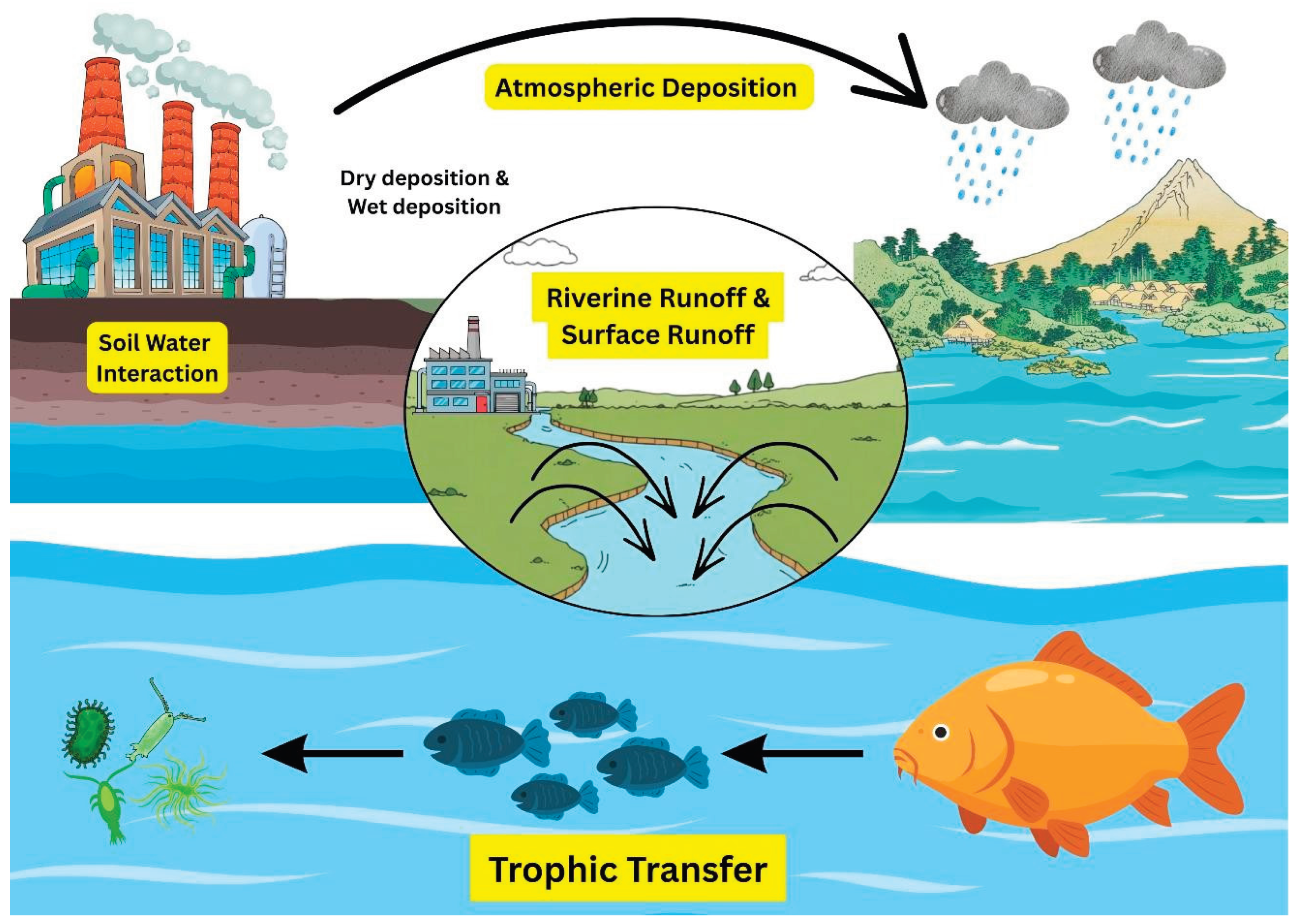
Atmospheric routes allow long-range dispersal through wind, rain, and snow soles, parts of the textiles, and tires become deposited in distant regions; approximately 1.2 tons/year to land to sea [19,67]. The presence of this worldwide atmospheric transport highlights the ubiquity of the microplastic pollution, and the need to comprehend their depositional fluxes and the cycling of them through the environment in an integrated manner [24]. The widespread occurrence of microplastics in atmospheric deposition including in the most untouched settings underscores the importance of atmospheric processes in their worldwide spread, and that has a significant contribution to their overall ubiquity in the land and water ecosystems [2,22]. In turn, the description of the deposition rates and deposition mechanisms in the atmosphere is necessary to model the global budget of microplastic and evaluate their transboundary effects [114,115]. This involves knowing how microplastics, especially those in low densities and non- reacting nature, can be blown to great distances by wind, and then at one end or the other, they are deposited in different environmental compartments such as farm soils and aquacid sediments [116]. Atmospheric microplastics are commonly analyzed using methods such as infrared and Raman spectroscopy to determine the type of polymer (such as polypropylene, polyethylene, and polymethyl methacrylate) and help identify the source and how it degrades in the atmosphere [21].
4.2.2. Transport of Riverine and Surface Runoff
Millions of tons of inland discharge and runoff are transported to oceans each year by riverine discharge and runoff which are intensified by hydrological processes and urban stormwater [2,19,117]. This mode of transportation is especially notable in terms of microplastic that has its origins in terrestrial ecosystems that primarily acts as a leading channel of entry into marine environments [118]. Different densities and morphological structures of micro plastics have a great impact on their suspension, transport as well as ultimate sedimentation in the riverine systems affecting their downstream distribution [119]. Furthermore, the high content of plastic materials in the municipal solid waste combined with the characteristics of biodegradation resistance makes them accumulate and consequently move through surface run off and soil erosion into water bodies [34]. What determines the destiny of suspended particulate matter in these systems are the hydrological factors that control the fate of the suspended PM [120]. Microplastics, once they are in rivers and streams, may be stored in the riverbed, accumulating in hyporheic zones and the stream biofilm, and ultimately carried to the bigger waters [121]. Moreover, microplastics may react with dissolved organic matter and biofilms in riverine environments to change their buoyancy and aggregation status, and affect the dynamics of their transport and long-range dispersal potential [122]. These complicated interactions together with other factors like river hydrodynamics and tidal dynamics lead to the detailed transportation and retention of microplastics of terrestrial origins to marine sinks [34,123]. Wastewater discharge, plastic Agricultural mulch, and urban runoff are anthropogenic sources of microplastics that are widely distributed through these hydrological networks [124,125,126]. The ocean currents also contribute to the long distance spread of the microplastics, as the largest carriers, covering great ocean areas and contributing to the worldwide redistribution of the pollutants [25]. In addition, microplastics transport by rivers is affected by various environmental settings such as precipitation, water drainage, stormwater runoffs, and sewers [127].
4.2.3. Soil-Water Interaction and Leaching
Vertical and lateral movement occurs through soil-water exchanges through leaching and irrigation processes and earthworm activity, and polymers such as PE/PP remain in agro-soils [52,117]. Vertical movement and concentration of microplastics in the soil profiles is further controlled by the density and physical properties of the microplastics that include particle size and shape [128]. The soil structure, especially the clay content and moisture also plays a great role in the movement of microplastics through the soil layers, and research shows that these characteristics may accelerate the deeper penetration into groundwater structures [129]. On the other hand, microplastics interaction with soil biota, e.g., earthworms can increase their movement along the soil profile by forming biopores, thus affecting their depth distribution and the possibility of transfer to the aquatic system through runoff [38]. Another significant source is landfills, which store huge pieces of plastic waste that can later seep microplastics into the soil and water around the location [130]. This is particularly bad in places with poor waste management systems that collect and decompose into microplastics, which in turn contaminate soil, sediment and water bodies [131]. Also, the use of plastic mulches in agriculture and biosolids made with wastewater treatment facilities place high amounts of microplastics into the soil, which may then be transported by irrigation and rains [132]. The resulting leachates of such polluted locations may also carry microplastics both horizontally and vertically across soil horizons resulting in a broad area of contamination of groundwater and surface water bodies [133]. The constant breakdown of these plastics in the soil matrix also worsens the leaching process, creating smaller fragments and nanoplastics of the microplastics, which are more mobile and capable of bioaccumulation [104]. This vertical mobility which is affected by bioturbation, leaching and agricultural activities may cause contamination of groundwater [57,134]. An example is that agricultural inputs like compost, sewage sludge, plastic mulching and road runoff contain microplastics and can leach into the soil column and later pollute groundwater [62,135]. The presence of microplastics in organic fertilizers, e.g., chicken feces and commercial composts, also contributes to their possibility of being introduced into the column of soil and subsequent pollution with groundwater [136]. Such an infiltration is a significant danger to drinking water sources and as such, there is a need to ensure that strategies of removing such substances are well implemented through agricultural runoff [137]. Moreover, physicochemical characteristics of microplastics such as surface charge and hydrophobicity play a critical role in determining their mobility and contact with soil particles and dissolved organic material, and as a result, their movement in porous media and the risk of groundwater contamination.
4.2.4. Trophic Transfer within the Food Chain
Trophic magnification takes place via ingestion and bioaccumulation, starting with planktons to the ultimate predators, and increased by buoyant fragments [2,13]. This bioaccumulation may cause undesirable effects on organisms at the different trophic levels such as physical damages, obstruction of the digestive tract and malnutrition [138]. In addition, microplastics also have the potential to cause a change in physiological functions, resulting in impaired reproduction and decreased energy stores in aquatic life. Consumption of microplastics by primary consumers, including zooplankton, has been demonstrated to materially reduce algal feeding, thus reducing organismal functioning and health, and has potential cascading impacts on upper trophic levels of the food web [139]. The resulting extensive contamination of microplastic across the entire food chain in turn leads to a massive transfer to human physiological systems due to dietary exposure [59]. Such bioaccumulation and trophic transfer of microplastics along intricate food chains, through low trophic food chains to apex predators, does not only upset this ecological balance, but poses a significant threat to human health through consumption of contaminated seafood and agricultural products [6,33]. In addition to direct consumption, microplastics may disrupt the nutrient cycling of soil and modify the structure of microbes, which may indirectly cause human exposure via agricultural products [140,141,142]. The large adsorption of microplastics of hazardous microcontaminants also adds to soil pollution causing more negative effects on organisms and human health via the trophic transfer [143]. These microplastics which are major pollutants and vectors of microcontaminants in the agricultural ecosystems are persistent as they negatively affect plant growth and the microbial communities, which in turn cause an indirect impact on human health through the food chain [144]. The resistance to degradation and longevity of microplastics ensures their prolonged stay in a variety of compartments in the environment, and this, in turn, allows them to be chronically exposed and further bioaccumulated along a variety of trophic structures [3]. The result of this unrelenting existence is that microplastics and related adsorbed chemicals can be transferred in a continuous manner via food webs, and these facts are of great concern to the ecological integrity and the health of humans [145]. In particular, microplastics present an insidious route of sources of dangerous chemicals and other pathogens to the food web, which has a direct effect on human physiological systems due to the ingestion of contaminated seafood and agricultural products [146]. When ingested, the microplastics may be translocated to the circulatory system and tissues, and may eventually affect cellular and organ activity [147]. The possibility of microplastics to penetrate biological barriers and distribute in different organs promotes the need to probe the long-term toxicological consequences of microplastics and its contribution to the inflammatory reaction and metabolic interference [148,149]. More studies are essential to completely understand the complex processes involved in the interaction between microplastics and biological systems and their dose-effective consequences on human health including their possible role in causing chronic diseases [150]. The popularity of microplastics in the soil and plants, along with their accumulation capacity and transfer via the nutrient chains, implies a direct route of human exposure to microplastics by means of food and drinking water [61,151]. The effect of microplastics on the soil ecosystems and the interaction of microbial communities with the rhizosphere, as well as on the stability of the soil organic carbon and rhizodeposits input, may also have a significant effect on the agricultural productivity and food safety [152]. Plant uptake of micro- and nanoplastics, which is a vital part of the human diet and global climatic control, has received relatively lesser attention than the marine counterparts, although there are signs that they accumulate in the roots of plants and translocate to above-ground plant tissues [153]. This highlights their possibilities to get into the food chain by contaminated edible plants and animals, providing a route by which they can be transferred to the higher troic levels to consumers [154].
Figure 1.
Migration Pathways and Fate of Marine Microplastics.
4.3. Transformation Processes
4.3.1. Physical Degradation
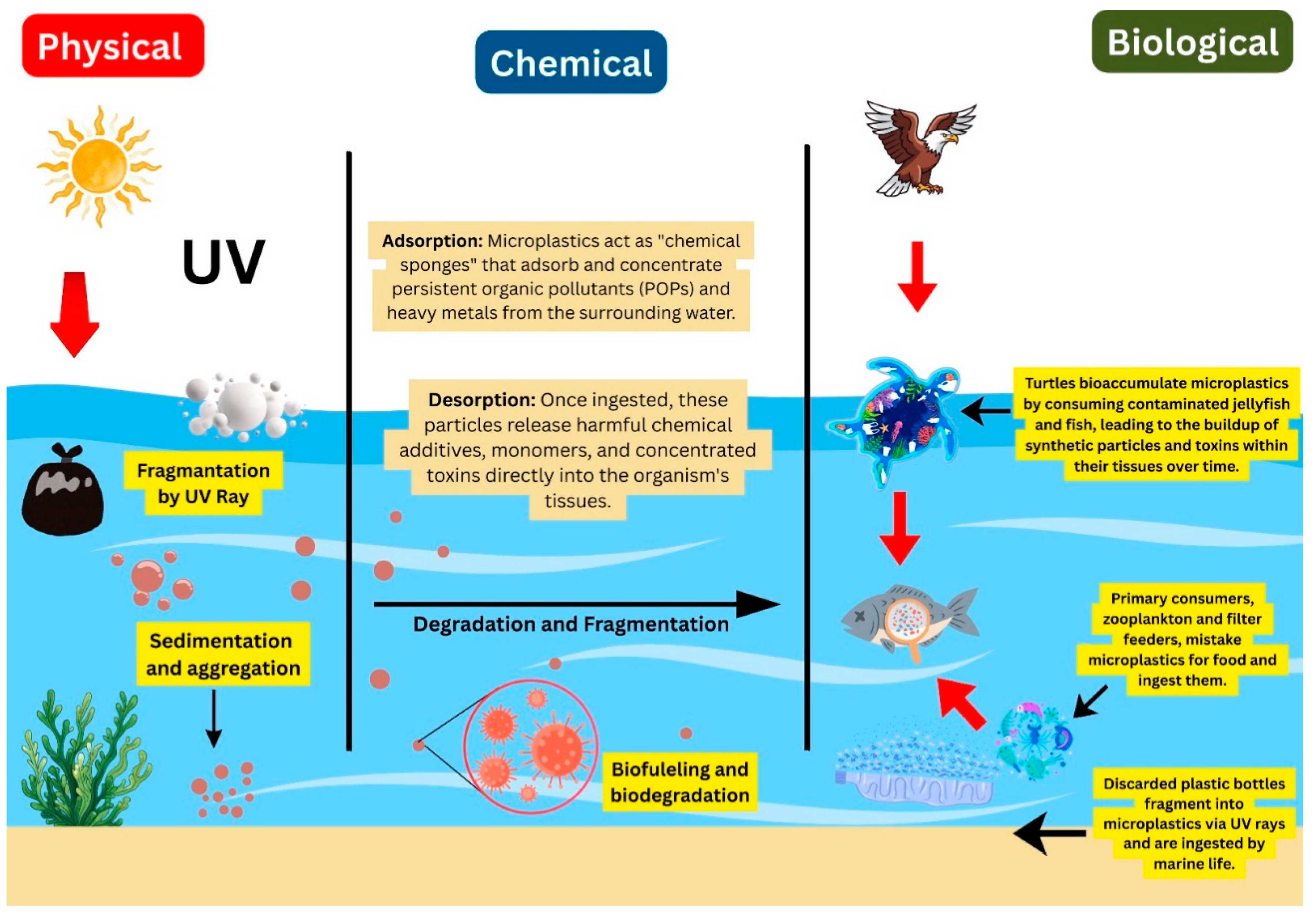
The embrittlement, fragmentation and roughening of surfaces are brought about by UV radiation and mechanical abrasion and make size smaller over decades [155,156]. The same process under the influence of the environmental stressors results in the constant formation of smaller plastic particles, including nanoplastics that are more bioavailable and have a higher possibility of deeper penetration in the biological systems. Smaller particles also tend to have larger surface-area-to-volume ratios, increasing their adsorption and haulage capabilities of chemical pollutants, which increases their ecotoxicological potential [72]. Also, physical deterioration of microplastics may change the structure of soil, resulting in changes to water retention and nutrient availability, which in turn has an impact on the plant health and agricultural performance [68,157]. On the other hand, biological degradation routes, which include photooxidation, thermal weathering, and enzyme activity, play a role in the development of reactive oxygen species, and other chemical additives, including phthalates and bisphenol A, and may further destabilize soil microbial activity and nutrient projects [84]. Higher levels of microplastics in arable soils, often as a result of plastic mulching and biosolid use, not only cause these chemical changes, but also directly hinder the growth of plants by delaying germination, decreasing transpiration and retarding root penetration [60,158]. This disruption to plant physiology may result in lower yields and poorer nutritional quality of crops, which have numerous effects in regards to food security and human health [74]. These problems are further exacerbated by the presence of several toxic chemical additives, including bisphenols, phthalates and brominated flame retardants, that leached off helminthically into the surrounding soil matrix contributing to the overall toxicological load on food webs and ecosystems [159,160].
4.3.2. Chemical Transformation
Chain scission, additive release and increased oxygen groups are found in the process of photo- oxidation, hydrolysis, and oxidation that change sorption capacity [155,161]. This chemical modification enables the plasticizers and other harmful substances to leach into the environment and this could make them more bioavailable and toxic. The urge of these reactions is enhanced by the UV radiation and high temperatures resulting in a complicated range of subsequent microplastic particles with altered physicochemical characteristics [162]. As an example, the partial breakdown of biodegradable plastics may increase their concentration in the soil, change the main soil characteristics, and possibly emit chemical compounds, which classify the exchange of cations, pH, and nutrient content [163]. It is also possible that such chemical reactions will result in reactive oxygen species and allow abstraction of hydrogen on the polymer chains further destabilizing the polymer structure and facilitating depolymerization [164]. The increased degradation has the potential to produce a collection of smaller and more mobile particles and soluble oligomers, which have different environmental and health risks [165]. The persistence of microplastics in soil that is long-term, especially residual polyethylene and polypropylene, has the potential to significantly change the physiochemical characteristics of soil, such as lost water retention, disturbed aeration, and disrupted soil aggregation, hampering the penetration of roots and the well-being of plants in general [55]. Moreover, the chemical substances emitted in the process such as phthalates and bisphenols may have endocrine-disrupting effects, which further harm biota and plants in the soil [166]. Such non-covalent bonds of these additives in the polymer structure often result in their movement or loss, which affects the ecological matrices and raises additional ecological issues [167]. The surface properties of microplastics also undergo these chemical transformations, which impact their interactions with microorganisms of soil and result in a change in their physical stability and overall environmental fate [168].
4.3.3. Biological Interactions
Density, buoyancy and bioavailability are altered by biofilm formation in few few days-weeks through microbial colonization and degradation [155,156,169]. Such changes driven by the diverse communities of microbes are known to critically modify the physical and chemical characteristics of microplastics such as their surface charge and hydrophobicity that influence their aggregation, transportation, and persistence in different environmental compartments [65,170]. This internal breakdown by these microorganisms, which is typically slow, may result in fragmentation and mineralization, and generate CO 2, H2O and biomass, although intermediate by-products might influence the soil fertility [171]. In addition to a direct enzymatic activity, microbial communities also influence the nature of microplastics by forming biofilm that can modify the surface chemistry, lower the hydrophobicity, and increase the adsorption rate of polar chemicals and toxic metals, thereby changing particle behavior and environmental mobility [172,173]. Additionally, microbial colonization may affect mechanical strength of microplastics making them become vulnerable to additional physical and chemical degradation processes [174]. This change of a microplastic into a plastisphere further alters the properties of microplastic and the structure of microbial community, which may modify nutrient cycling and ecosystem processes in the soil [141]. The complicated interaction of microplastics with soil biota can, therefore, present a potential impact on ecological hazards of plastic-related chemicals and sorbed contaminants [175]. The microplastics also act as new ecological niches, forming plastispheres that isolate microbial communities that are not necessarily the same as those in the surrounding soil, and these may have implications when applied to the dissemination of antibiotic resistance genes as well as changes in microbial diversity [176,177]. The resulting habitat altered by the presence of microplastic may alter nutrient cycling, organic matter cycling, and eventually affects soil fertility and the wider biogeochemical cycles [178]. It is the quick growth of these biofilms, consisting of bacteria, fungi, algae and extracellular polymeric compounds, that does not only modify the surface physicochemical characteristics and migration of microplastics but also forms a special microecosystem called the plastisphere [179]. This plastisphere has the potential to substantially influence the overall soil microbial community structure by offering new microbial niches, resulting in changes to bacterial communities with a possible impact on plastic degradation and nutrient cycling [180]. This can also lead to the increase of the adsorption of heavy metals and organic pollutants to the microplastic surfaces, which can have a synergistic effect that further influences the microbial communities in the soil and biogeochemical processes [181,182]. In addition, such plastispheres can serve as reservoirs of other inorganic and organic materials, such as potentially labile carbon sources, which can attract and sustain different microbial communities, which affects local rates of decomposition and nutrient cycling in the soil [183,184,185]. In addition, plastisphere interactions may greatly affect the physicochemical properties of the soils, enzyme activities, and microbial diversity that affects the nutrient cycle and degradation capacity of the pollutants in the soil ecosystems [186,187]. This forms a dynamic interface through which microbial activity can affect bioavailability and toxicity of microplastic-related contaminants as well as change soil health and ecosystem functionality [188]. It is the selective pressure of these organic aggregates on the soil that can encourage the existence and modification of certain microbial taxa, which promote changes in evolution of the microbial communities living on the plastisphere [189]. In these plastispheres, the proximity of different microbial species to each other enhances effective horizontal gene transfer and may contribute to the widespread occurrence of antibiotic resistance genes and mobile genetic elements [190,191]. The establishment of this exceptional microenvironment has the great impact on the ecological functions of the soil biota and the future impact on the ecological service including the cycling of nutrients and decomposing organic matter.
Figure 2.
Physical, Chemical, and Biological Migration Pathways of Microplastics Ecosystems.
4.4. Human Exposure Pathways
4.4.1. Ingestion
It is mainly ingested through contaminated seafood, salt, bottled water (to 440 MPs/L), and table salt, and millions of particles per week are ingested [193,194,195]. Equally, another major route of human exposure is the use of terrestrial produce produced in soils with very high concentration of microplastics, and direct movement of soil to plant tissues [196]. This food web accumulation and magnification over time culminates in a higher load of microplastic in human beings, which is raising concerns on the possible health implications [197]. Besides, microplastics may access the human body by inhaling airborne particles and direct contact with the skin and products that contain microplastics [65]. Nevertheless, the studies on the health hazards of microplastics in soil are still scarce, which means that there is a need to conduct additional research on the possible toxicity mechanisms and on the ways to prevent them effectively [198]. This is especially true considering that microplastics are deposited in soils, which affect terrestrial ecosystems, soil biota, and nutrient cycling and may then be taken up by plants, consequently entering the food chain and causing concern related to the effects of human health [199,200]. The terrestrial ecosystem, particularly arable soils, are a significant sink of microplastic materials, and their input rates may be 4 to 23 times greater than in aquatic environments, mainly because of the agricultural activities, such as the use of plastic mulch and the use of sewage sludge as fertilizer [178]. Such ubiquity in the agricultural soils increases the risk of human exposure to microplastics by eating crops that grow in these polluted soils [201]. The build-up of microplastics in soil to plants and eventual food consumption by humans, therefore, is a very important, but not well-investigated, route of human exposure, and this is why a thorough study of the process of plant uptake and food chain transfer is urgently needed [202]. Outside of food chain absorption, human exposure to microplastics is also by inhalation where it is estimated that tens of thousands of particles are consumed each year by airborne sources, and also through dermal contact [40,203,204]. All these exposure pathways underscore the pervasive nature of microplastics in the human environment, and it is important to have a detailed understanding of how it is absorbed, distributed, metabolized, and excreted in the human body to effectively determine the possible health consequences [205].
4.4.2. Inhalation
The contribution of inhalation of indoor dust, outdoor aerosols and fibers is an important one and fibers are common in the air [193,206,207]. Besides, smaller microplastics suspended in the air can be easily inhaled, and it is estimated that humans may be exposed to microplastics in this way at 272 microplastics per day [8]. Nevertheless, a precise estimation on the basis of similar methodologies and correct daily exposure models is essential, because the figures of inhalations are frequently exaggerated by referring to total suspended particulates instead of inhalable or respirable particulates [114]. Moreover, microplastics are found indoors due to synthetic textiles and household dust, and these pose significant exposure to the human body through inhalation, which is as well high in occupational settings [9]. This indicates that the quality of indoor air especially in residential and working places is essential in identifying the total burden of microplastic exposure to the respiratory system of man [104]. The amount of microplastic that is inhaled may range between 26 and 130 particles per day in normal conditions, and it may go up to 272 particles per day in light physical activity [208]. This variability highlights the difficulty of collecting the exposure through inhalation as atmospheric levels and thus absorption is moderated by meteorological conditions, indoor and outdoor differences, and particle properties (e.g., size, shape, polymer type) [209,210]. Human beings consume about 0.1 to 5 grams of microplastics per week, based on different exposures and the daily intake of microplastics is estimated at 156 to 240 microplastics per day in the indoor environment [211]. Since people spend an impressive part of their lives in the indoors, the indoor environment is a really powerful path of microplastic exposure via inhalation [4]. In fact, the exposure models show that the doses of microplastics inhaled by humans are estimated to be 6.5-8.97 ug/kg-bw/day, and infants and toddlers are seen to be exposed to much higher levels more than 3-50 times more than adults [212]. Nonetheless, these exposure tests often make use of doses administered in toxicology studies that are often unrealistic, making it difficult to properly extrapolate the risks of exposure to the environment [213].
4.4.3. Dermal Contact
Dermal absorption takes place through cosmetics, clothing and dust, albeit to a lesser extent [195,206,207]. However, certain personal care products do contain microplastic beads and fibers in their products, and it has been shown that some nanoplastics could have the potential to penetrate the dermal barrier, and thus additional research is needed on this exposure route [214]. This applies especially with those who have had extensive exposure to contaminated materials or water in which smaller nanoparticles may evade the skin with ease [10]. Nevertheless, the degree of systemic uptake due to the dermal contact is hardly measured, and complex methodologies are needed to determine the rates of transdermal penetration and eventual biodistribution of micro- and nanoplastics. In addition to the direct routes of exposure, microplastics may be found in different tissues and multiple organs of the human body and affect numerous physiological systems, but the exact impact on human health remains to be poorly understood [215]. The multiple exposure pathways and the following possible translocation of the microplastics into the cell interiors, requires a careful look into the operating mechanisms of the interaction of microplastics in the cell and subcellular tissues in the human body. This extensive insight will be invaluable in explaining the toxicology guidelines and deriving effective measures to address human health risks posed by chronic exposure to microplastic [6]. When internalized, they may be transported by such particles out of their sites of first exposure to other body compartments, such as systemic circulation, leading to some difficult solutions to the problem of physiological homeostasis [216]. Although larger microplastics are assumed not to penetrate intact skin, nanoplastics, especially those below 45 nm, can move through damaged skin layers, as can eczematous skin or in combination with penetration-promoting cosmetic components [217,218]. This skin absorption is further made worse because of the possibility of mechanical wear of implanted medical devices like polyethylene joint spacers, which produce micro- and nano-plastic particles that can directly enter the body [219]. Though dermal contact with microplastics is not all that likely, as the size of the particles generally limits the likelihood of penetration through the dermal barrier, nanoplastics are potentially able to cross the dermal barrier, and some studies have indicated that they can possibly penetrate cell membranes [220].
Figure 3.
Main pathways of microplastic exposure in humans through dermal contact, inhalation, and ingestion.
Figure 3.
Main pathways of microplastic exposure in humans through dermal contact, inhalation, and ingestion.
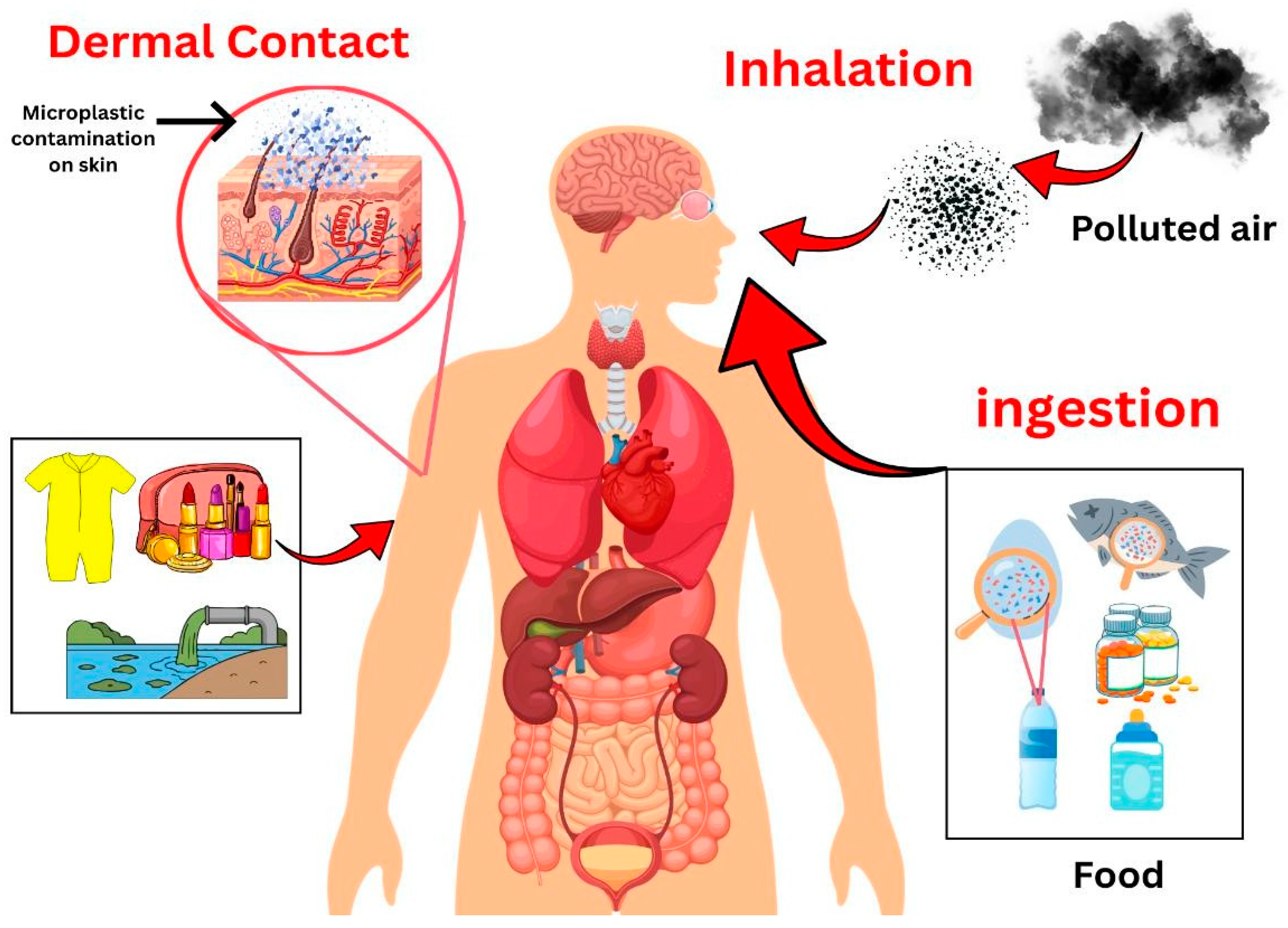
Table 3.
Human Exposure Pathways, Estimated Intake, and Health Risks of Microplastics.
| Exposure Pathway | Primary Sources | Estimated Intake (Particles/Week or L) | Associated Risks | Mitigation Insights | Citation |
|---|---|---|---|---|---|
| Ingestion | Seafood, table | Up to 440 MPs/L | Bioaccumulation; | Filtration in | [193,194], |
| (Dietary) | salt, bottled | (bottled water); | endocrine | water | [195,215], |
| water, terrestrial produce | millions weekly via food/salt | disruption; translocation to tissues/organs | treatment; reduced single- use plastics | [221] | |
| Ingestion | Airborne | ~millions via | Trophic | Agricultural | [6,33,59], |
| (Non-Dietary) | deposition in | salt/inhaled | magnification; | best practices; | [140,142], |
| food; soil- contaminated crops |
particles settling | additive leaching (e.g., phthalates) | biosolid alternatives | [151] | |
| Inhalation | Atmospheric fibers (textiles/tires); indoor dust | Not quantified; significant in urban areas | Respiratory inflammation; systemic distribution | Air filtration; reduced synthetic textiles | [19,193,208,215] |
| Dermal Contact | Cosmetics, wastewater effluents, costume | Low direct uptake; indirect via runoff | Skin barrier penetration (nanoplastics); co- contaminant transfer | Biodegradable alternatives in products | [12,193,215,217] |
4.5. Risk Assessment Results
4.5.1. Estimated Daily Intake
Exposure to microplastics takes place in human beings in various ways, such as ingestion, inhalation and dermal. The degree of exposure differs based on the factors like age group, feeding, environmental factors, as well as polymer properties. These exposures are becoming more and more associated with the possible health risks, such as oxidative stress, endocrine stress, respiratory stress, and chronic poisoning, the significance of which is to measure the level of intake and the corresponding metrics of risks.
Table 4.
Estimated daily intake and health risk metrics of microplastics across exposure pathways.
| Sub- Metric | Pathway/Age Group | Estimated Value/Range | Influencing Factors (e.g., Shape/Polymer) | Associated Risks/Implications | IEEE Citations |
|---|---|---|---|---|---|
| EDI | Ingestion (Food: | 10,410–52,000 | Fibers/films | Bioaccumulation; | [13,16], |
| (Particles/ | Seafood/Proteins) / | particles/year | (PE/PP) from | oxidative stress; chronic | [222], |
| Day) | Adults | (~107–142/day); up to 3.8 million/year via proteins | aquatic sources (57% of intake); trophic magnification | inflammation; HQ >1 with PAHs | [224] |
| EDI | Ingestion (Drinking | 47–55 MPs/day | Films/fragments | Endocrine disruption; | [11,15], |
| (Particles/ | Water) / Adults | (tap: ~4.2 items/L; | (PS/PVC); higher | carcinogenic potential | [222], |
| Day) | bottled: 94 items/L) | in bottled due to packaging leach | (HI >1 in high- consumption regions) | [225] | |
| EDI (Particles/Day) |
Ingestion (Food Containers/Takeout ) / All Ages |
1.7–29 items/day (12–203/week) | Fragments/fibers from packaging; seasonal/urban variability | Additive leaching (phthalates); amplified HQ via co-contaminants | [18,222,223] |
| EDI (Particles/ Day) |
Inhalation (Air/Dust) / Adults | 10²–10³ fibers/day (urban: ~272/day) | Fibers (polyamide/textile s); atmospheric transport | Respiratory irritation; translocation to bloodstream; HI oral >1 cumulative | [80,99,193,194,208,222] |
| EDI (Particles/ Day) |
Dermal/Ingestion (Soil/Dust) / Infants/Children | Up to 10⁴ particles/day (highest via hand- to-mouth); children: 553/day (184 ng/day) | Films/fragments in dust; soil penetration via bioturbation | Highest vulnerability; neurodevelopmental risks; HQ <1 direct but HI >1 with metals | [12,14,17,222,223] |
| EDI (Particles/ Day) |
Ingestion (Overall Diet) / Children vs. Adults | Children: 553/day (184 ng/day); Adults: 883/day (583 ng/day); ~422/day average |
Smaller sizes (0.05–0.5 μm) elevate intake; 0.0002–1.5 million/day via food extremes |
Trophic transfer; metabolic interference; elevated in low-income regions | [9,10,12,17,222] |
| EDI (Mass/Day) |
Multi-Pathway (Ingestion + Inhalation + Dermal) / All Ages | Several mg/day (tens of thousands– millions particles/year) | Low-density polymers (PE/PP) buoyant; nanoplastics underreported | Systemic distribution (liver/lung); chronic diseases; interaction amplifies hazards | [14,205,216,221,222,225] |
| HQ (Direct MPs) |
Ingestion (Seafood) / Adults |
HQ <1 (e.g., 0.1– 0.5 for PS/PVC); >1 with co- contaminants (PAHs/heavy metals) |
Fibers/films sorb toxins; carcinogenic in mussels (Sea of Marmara) | No acute risk direct; elevated cancer potency (10–30% exceedance) | [6,8,222,224] |
| HQ (Direct MPs) |
Ingestion (Groundwater) / All Ages | HQ 0.5–2.0 for PVC MPs; <1 overall but >1 in polluted sites |
Fragments (PVC); morphology increases bioavailability |
Endocrine/oxidative stress; groundwater leaching risks | [6,222,223] |
| HI (Cumulative) |
Multi-Pathway (Ingestion + Inhalation) / Infants/Children | HI >1 (oral >1; e.g., HPI >100, MI >6 in polluted water) |
Synergistic with co-contaminants; fibers amplify via biofilms | Amplified hazards (inflammation, reproduction); 57% aquatic-driven | [0,2,7,222,225] |
| HI (Cumulative) |
Ingestion (Aquatic Medium) / Adults | HI 1–3 (elevated carcinogenic from seafood); interaction effects +20–50% |
Co-contaminants (additives); polymer hazard index high for PE/PP | Chronic illnesses; probabilistic exceedance in high- exposure diets | [0,1,3,4,5,222,224,225] |
| HQ/HI (Polymer- Specific) |
Soil/Water (Petrochemical Sites) / All Ages | HQ <1 direct; HI >1 with metals (land-use variability) |
Films/fragments in soils; sorption enhances toxicity | Ecosystem-to-human transfer; monitoring needed for biosolids | [2,223] |
| HQ/HI (Screening -Level) |
Multi-Pathway (Dose-Based) / Adults | Risk = dose/reference dose; HQ approach yields low-moderate (0.01–1) | Size/shape: smaller <100 μm elevates; co- exposures amplify | Framework for policy; gaps in nano-MPs | [4,5,222,225] |
4.5.2. Vulnerable Population Groups
Biological vulnerability, behavioral and environmental risks increase the level of exposure and risk of microplastics and health in infants, children, pregnant women, the elderly, immunocompromised, coastal populations, low urban income groups, and workers at work. The groups that are susceptible to dioxins in particular are those in early age because their organs are developing and due to their high intake levels compared to their body weight and the older population is also more susceptible as a result of defenses being weakened due to the presence of chronic inflammation. The populations that make use of seafood or are exposed to the contaminated urban/coastal environments have increased exposure by diet, air, and water. Direct handling and inhalation are some of the prolonged forms of exposures of occupational groups like waste workers and fishermen.
Table 5.
Microplastic exposure and health risks in vulnerable populations.
| Vulnerable Group | Key Exposure Pathways | Risk Amplifiers (Physiological/Beh avioral) | Associated Health Impacts | Socioeconomic/R egional Factors | IEEE Citations |
|---|---|---|---|---|---|
| Infants (<1 | Soil/dust ingestion | Immature gut | Neurodevelop | Urban/low- | [194,205], |
| year) | (hand-to-mouth); | barrier; higher | mental delays; | income | [212,218], |
| Inhalation (indoor | relative body | oxidative | households with | [219,221], | |
| air); Maternal | weight intake (up | stress; | higher dust loads; | [222,223], | |
| transfer (breast milk/placenta) | to 10⁴ particles/day); underdeveloped liver/kidneys | immune dysregulation; early-life metabolic disorders | global (e.g., 20– 50% higher EDI in developing regions) |
[236,245] | |
| Children (1–12 | Ingestion | Active behaviors | Respiratory | Coastal/agricultur | [12,17,204], |
| years) | (contaminated | increase dust/soil | infections; | al areas with | [205,206], |
| food/water); | intake (553 | endocrine | runoff; higher in | [212,218], | |
| Dermal/soil contact | particles/day avg.); | disruption | Asia/Africa (e.g., | [219,221], | |
| (playgrounds); | porous blood-brain | (e.g., puberty | 30% exceedance | [222,223], | |
| Inhalation (school | barrier; rapid | delays); | via seafood) | [236,238], | |
| dust) | growth phases | cognitive impairments; HQ >1 for neurotoxins | [245] | ||
| Pregnant | Ingestion | Hormonal | Fetal growth | High-seafood | [204,205], |
| Women/Fetuse | (diet/water); | fluctuations | restriction; | diets (e.g., | [206,212], |
| s | Inhalation; | enhance uptake; | reproductive | Mediterranean/As | [218,221], |
| Transplacental/nano | fetal vulnerability | toxicity; low | ian coastal); | [222,227], | |
| plastic translocation | to additives | birth weight; | occupational | [229,236], | |
| (phthalates/BPA); 2–5x higher EDI via diet | epigenetic changes | exposure in waste handling | [239] | ||
| Elderly (>65 | Inhalation | Reduced | Cardiovascula | Urban polluted | [193,194], |
| years) | (ambient/indoor | mucociliary | r events; | areas; nursing | [205,206], |
| air); Ingestion | clearance; chronic | pulmonary | homes with | [208,212], | |
| (medication/packagi | inflammation | fibrosis; | synthetic textiles | [221,236], | |
| ng leach); Dermal | baseline; | immune | (e.g., 10–20% | [239,242], | |
| (care products) | polypharmacy increases additive exposure | senescence; HI >1 for cumulative oxidative damage |
higher inhalation in Europe) | [248,251] | |
| Immunocompr omised (e.g., chronic illness patients) | Multi-pathway (ingestion + inhalation via medical devices); Hospital dust/water | Weakened barriers (e.g., gut/lung); higher translocation to organs; 1.5–3x sensitivity to biofilms/pathogens | Sepsis from MP-associated microbes; exacerbated allergies; antibiotic resistance spread | Healthcare settings; low-SES groups with limited access to clean water (global hotspots in urban slums) | [177,184,189,190,191,201,205,206,221,222,236,248] |
| Coastal/Indige nous Communities | Ingestion (seafood/salt); Occupational (fishing/waste); Surface water contact | Subsistence diets elevate trophic transfer (millions particles/week); cultural practices increase exposure | Carcinogenic risks (HQ 0.5– 2.0 via PAHs); nutritional deficiencies from gut obstruction |
Developing regions (e.g., SE Asia/Africa: 40– 60% diet-derived EDI); climate- vulnerable islands |
[6,8,145,146,222,224,227,229,231,234,236] |
| Low- Income/Urban Residents | Inhalation/dust (traffic/textiles); Tap water/processed foods | Poor housing ventilation; reliance on bottled/packaged goods; co- exposures to metals | Metabolic syndrome; reproductive issues; probabilistic HI exceedance (10–30%) | Megacities (e.g., Mumbai/China: 2x higher air fibers); informal waste sectors | [194,222,223,227,229,236,239,243,248] |
| Occupational Groups (e.g., Waste Workers/Fishe rmen) | Inhalation/ingestion (direct handling); Dermal (contaminated gear) | Prolonged exposure (8–12 hr/day); PPE gaps; higher nano- MP inhalation | Skin/lung irritation; chronic toxicity; elevated cancer risk (HI >1 with co- contaminants) | Industrial/coastal zones (e.g., petrochemical cities in China/India) | [222,227,229,236,239,243,248,251] |
| General (Multi- Group Overlaps) | Cumulative (all pathways) | Age/socioeconomic intersections; underreporting of nanoplastics | Systemic inflammation; multi-organ failure; synergistic effects +20–50% hazard | Global inequities; need for targeted screening (e.g., biomonitoring in high-risk areas) | [198,201,202,203,204,205,206,212,221,222,225,227,229,236,239,242,243] |
5. Discussion
The above paragraphs have carefully outlined the ubiquitous nature of microplastics in a variety of environmental matrices and their pervasive pathways of human exposure, as well as providing early information on the susceptibility of populations and the amount of microplastics consumed. Nevertheless, there is still a gap in knowledge on the issue of the internal exposure of plastic particles in the biological fluid and tissues, which is essential to complete the risk assessment in humans [226]. In particular, it is necessary to further study bioaccumulation, distribution, and transcriptomic changes caused by microplastics and nanoplastics due to the need of further investigation using the correct test models and human biomonitoring studies [10]. The mechanisms of uptake, translocation routes and ultimate fate of these particles in the physiological systems should be more comprehensively characterized in order to determine their ability to induce adverse health effects [6,227]. Although there is some evidence that indicates multiple exposure routes, there has not been conclusive evidence to demonstrate exposure to microplastic and the development of particular adverse effects in humans, mainly because of methodological limitations inherent in the toxicology evaluations [228]. In its turn, it creates a severe necessity of stronger research on the toxicological effects and health hazards of microplastics, as well as the creation of efficient risk assessment frameworks [229]. Although it is currently a weakness of the current state of understanding in the overall assessment of health effects of microplastic, meta-regression studies have shown the possibility that these effects involve some impact on cellular viability and cytokine release at relatively low levels of exposure, highlighting the need to conduct additional mechanistic research and standardize methodologies [230]. The main issue is that it is still difficult to go beyond correlational observation and determine causal relationships between the exposure to microplastic and the development of disease, particularly due to the intricate interactions between the properties of the particles, co-contaminants, and personal factors [102,231]. Future studies should focus more on long term, deep-seated studies of human exposure to micro- and nanoplastics to fill in the data gap and delve into less studied types of micro- and nanoplastics such as mechanism of their toxicity and disease pathways [232,233]. This encompasses the necessity to standardize measurement methodologies of credible characterization and quantification of micro- and nanoplastics in various biological matrices that is currently a major hindrance to sound human health risk evaluation [204,234]. These standardised methods are essential to allow cross-study comparisons and to form predictive models that are realistic in terms of real-world exposure conditions and their physiological effects [153]. Furthermore, the mechanistic insights on microplastic translocation and internalization especially regarding the variations in size, shape, and composition are needed to bring the outcomes of toxicity tests in line with actual human exposure conditions [235]. Moreover, the combination of multi-omics studies with the toxicity effects analyses might reveal very sensitive and specific exposure and effect biomarkers, which would give a better overview of the molecular processes of microplastic-induced toxicity [236]. In this synthesized manner is crucial to bringing together the gap between the current experimental results, generally based on pristine microplastics, and the complex, environmentally aged particles that humans are exposed to, which have altered surface chemistries and biofilm deposits that massively influence biological interactions [237,238]. Besides, strong human research requires the development of exposure and effect analysis procedures to determine the accurate levels of microplastic and their respective biological effects [12,239]. In addition, dose-time matrices and dose-response non-linear, which capture the chronic exposure of human populations which involve low doses, should be incorporated in future studies to improve toxicokinetic realism in experiments [26]. It is also equally important to investigate the long- term effects in people who were exposed to environmentally relevant micro- and nanoplastics in the uterus, as well as to enhance the ways of characterizing human exposure to MNPs, particularly nanoplastics, to enable clinical and epidemiological evaluation of real-world effects [11]. In this regard, the creation of standard reference media of different sub-micron plastic formulations and optimization of the analysis procedures are quite important in quantifying and characterizing them correctly in biologically based matrices [240].
6. Conclusions
The broad overview indicates that a multidisciplinary approach is badly needed to understand the complex interplay between microplastics and nanoplastics and biological systems without shifting solely to descriptive observations but developing a predictive model [105]. This will require a transition to incorporating more sophisticated computational methods of in silico analysis, machine learning, and ADMET (absorption, distribution, metabolism, excretion, and toxicity) studies to clarify the toxicological behaviors and overall effects of MNPs in human physiology [241]. This is necessary to fill the gaps that exist at present in the study of MNP toxicology, which are mostly attributed to the lack of consistency in methods and the infancy of the research on the mammalian and human health outcomes [242,243]. More studies are also necessary to resolve the causal association between the exposure to microplastic and negative health outcomes by using randomized controlled trials and longitudinal research to examine the long-term effects of exposure among the affected populations on the different health outcomes [244]. Also, ethical issues forbid subjecting people to the chemical pollutants to establish the real exposure doses, which is why it is important to rely on the well-designed animal systems and create the non-invasive types of biomonitoring to measure the presence of pollutants in humans [245]. Moreover, creative approaches will be needed to overcome the difficulties in obtaining environmentally relevant MNP models in fairly large amounts to do detailed toxicological studies because existing stocks of available materials have a detrimental impact on the power of the experimental design [246]. Hence, the studies of the future must be aimed at creating scalable processes of synthesizing environmentally representative micro- and nanoplastics, in order to be able to determine their toxic potential in physiologically relevant situations more precisely [242]. With the existing dependence on existing monocultures of immortality and commercial availability of commercially available polystyrene nanoparticles and the lack of environmental relevance, there exists a major void in the existing literature that hinders the ability to construct a unified picture of nanoplastic toxicity [247]. To cover this gap, a wide variety of polymer types and real products of degradation have to be studied in order to provide an adequate approach to the modeling of environmental exposure to microplastic and its potential health outcomes [248]. Moreover, an effective human health risk assessment system of micro- and nanoplastic substances is inseparable, and the methodology of new approaches and unification of strategies are needed to assess the possible risks holistically [249]. This framework ought to include progressive toxicological models that take into account the intricate dynamics between MNPs as well as biological systems, beyond one- dimensional testing methods to multivariate studies of systemic outcomes [250]. Furthermore, the future studies must be not only focused on the dose-response patterns, molecular, and transgenerational impacts of the MNP exposure, but extended to the formulation of an individualized and population-scaled intervention approaches [251].
References
- Tang, K. H. D. Counteracting the Harms of Microplastics on Humans: An Overview from the Perspective of Exposure. Microplastics 2025, 4, 47. [Google Scholar] [CrossRef]
- Ibrahim, N.; Rahman, A. M. N. A. A.; Shafiq, M. D.; Lockman, Z.; Jaafar, M.; Kameda, Y. Microplastic Pollution: Sources, Degradation Mechanisms, Analytical Advances, and Mitigation Strategies for Environmental Sustainability. Reviews of Environmental Contamination and Toxicology 2025, 263. [Google Scholar] [CrossRef]
- Osman, I.; et al. Microplastic sources, formation, toxicity and remediation: a review. Environmental Chemistry Letters 2023, 21, 2129. [Google Scholar] [CrossRef]
- Kumar, S. B.; et al. Microplastics and health hazards: gastrointestinal risk assessment across a multi-species perspective. Asian Journal of Atmospheric Environment 2025, 19. [Google Scholar] [CrossRef]
- Liu, J.; Zheng, L. Microplastic migration and transformation pathways and exposure health risks. Environmental Pollution 2025, 368, 125700. [Google Scholar] [CrossRef] [PubMed]
- Li, Y.; Chen, L.; Zhou, N.; Chen, Y.; Ling, Z.; Xiang, P. Microplastics in the human body: A comprehensive review of exposure, distribution, migration mechanisms, and toxicity. The Science of The Total Environment 2024, 946, 174215. [Google Scholar] [CrossRef] [PubMed]
- Pal, D.; et al. Microplastics in aquatic systems: A comprehensive review of its distribution, environmental interactions, and health risks. Environmental Science and Pollution Research 2024, 32, 56. [Google Scholar] [CrossRef]
- Prata, J. C.; da Costa, J. P.; Lopes, I.; Andrady, A. L.; Duarte, A. C.; Rocha-Santos, T. A One Health perspective of the impacts of microplastics on animal, human and environmental health. The Science of The Total Environment 2021, 777, 146094. [Google Scholar] [CrossRef]
- Bora, S. S.; et al. Microplastics and human health: unveiling the gut microbiome disruption and chronic disease risks. Frontiers in Cellular and Infection Microbiology 2024, 14. [Google Scholar] [CrossRef]
- Alqahtani, S.; Alqahtani, S.; Saquib, Q.; Mohiddin, F. A. Toxicological impact of microplastics and nanoplastics on humans: understanding the mechanistic aspect of the interaction. Frontiers in Toxicology 2023, 5. [Google Scholar] [CrossRef]
- Zurub, R. E.; Cariaco, Y.; Wade, M. G.; Bainbridge, S. Microplastics exposure: implications for human fertility, pregnancy and child health. Frontiers in Endocrinology 2024, 14. [Google Scholar] [CrossRef] [PubMed]
- Cho, Y. M.; Choi, K. The current status of studies of human exposure assessment of microplastics and their health effects: a rapid systematic review. Environmental Analysis Health and Toxicology 2021, 36. [Google Scholar] [CrossRef]
- Hossain, M.; Engelhardt, I. Global plastic footprint: unveiling property trends, environmental fate, and emerging threats of microplastic and nanoplastics pollution across ecosystems. Energy Ecology and Environment 2025, 10, 637. [Google Scholar] [CrossRef]
- Brožová, K.; Heviánková, S.; Halfar, J.; Čabanová, K.; Valigůrová, A. Plastic degradation in aquatic environments: a review of challenges and the need for standardized experimental approaches. Frontiers in Environmental Science 2025, 13. [Google Scholar] [CrossRef]
- Tang, K. H. D. Microplastics and Antibiotics in Aquatic Environments: A Review of Their Interactions and Ecotoxicological Implications. Tropical Aquatic and Soil Pollution 2024, 4, 60. [Google Scholar] [CrossRef]
- Alfaro-Núñez, et al. Microplastic pollution in seawater and marine organisms across the Tropical Eastern Pacific and Galápagos. Scientific Reports 2021, 11. [Google Scholar] [CrossRef] [PubMed]
- Wang, J.; Cai, R. Solar radiation stimulates release of semi-labile dissolved organic matter from microplastics. Frontiers in Marine Science 2023, 10. [Google Scholar] [CrossRef]
- Zhang, X.; et al. Spatial distribution and risk assessment of microplastics in surface sediments in semi-enclosed waters: a case study of Laizhou Bay. Frontiers in Marine Science 2025, 12. [Google Scholar] [CrossRef]
- Belioka, M.-P.; Achilias, D. S. How plastic waste management affects the accumulation of microplastics in waters: a review for transport mechanisms and routes of microplastics in aquatic environments and a timeline for their fate and occurrence (past, present, and future). Water Emerging Contaminants & Nanoplastics 2024, 3. [Google Scholar] [CrossRef]
- J. A., R. Microplastic menace: a path forward with innovative solutions to reduce pollution. Asian Journal of Atmospheric Environment 2024, 18. [Google Scholar] [CrossRef]
- Shi, Y.; et al. Analysis of aged microplastics: a review. Environmental Chemistry Letters 2024, 22, 1861. [Google Scholar] [CrossRef]
- Das, B. K.; Das, S.; Kumar, V.; Roy, S.; Mitra, A. Microplastics in ecosystems: ecotoxicological threats and strategies for mitigation and governance. Frontiers in Marine Science 2025, 12. [Google Scholar] [CrossRef]
- Kristanti, R. A.; et al. Characteristics of Microplastic in Commercial Aquatic Organisms. Tropical Aquatic and Soil Pollution 2022, 2, 134. [Google Scholar] [CrossRef]
- Liu, C.; et al. The Migration, Biotoxicity and Biodegradation Methods of Microplastics in Terrestrial Ecosystems: A Comprehensive Review. Water Air & Soil Pollution 2025, 237. [Google Scholar] [CrossRef]
- Ratnasari; Zainiyah, I. F.; Hadibarata, T.; Yan, L. Y.; Sharma, S.; Thakur, S. S. The Crucial Nexus of Microplastics on Ecosystem and Climate Change: Types, Source, Impacts, and Transport. Water Air & Soil Pollution 2024, 235. [Google Scholar] [CrossRef]
- Mishra, S. K.; et al. Microplastics as emerging carcinogens: from environmental pollutants to oncogenic drivers. Molecular Cancer 2025, 24. [Google Scholar] [CrossRef] [PubMed]
- Zhou, L.; Masset, T.; Breider, F. Adsorption of copper by naturally and artificially aged polystyrene microplastics and subsequent release in simulated gastrointestinal fluid. Environmental Science Processes & Impacts 2024, 26, 411. [Google Scholar] [CrossRef]
- Zhichao, Z.; et al. The environmental effects of microplastics and microplastic derived dissolved organic matter in aquatic environments: A review. The Science of The Total Environment 2024, 933, 173163. [Google Scholar] [CrossRef]
- Li, H.; et al. The wheel of time: The environmental dance of aged micro- and nanoplastics and their biological resonance. Eco-Environment & Health 2025, 4, 100138. [Google Scholar] [CrossRef]
- Alimi, S.; Claveau-Mallet, D.; Kurusu, R. S.; Lapointe, M.; Bayen, S.; Tufenkji, N. Weathering pathways and protocols for environmentally relevant microplastics and nanoplastics: What are we missing? Journal of Hazardous Materials 2021, 423, 126955. [Google Scholar] [CrossRef]
- Koutnik, V. S.; et al. Distribution of microplastics in soil and freshwater environments: Global analysis and framework for transport modeling. Environmental Pollution 2021, 274, 116552. [Google Scholar] [CrossRef] [PubMed]
- Andersen, R.; et al. Abundance, distribution and characteristics of microplastics in the North and South Atlantic Ocean. Marine Pollution Bulletin 2024, 209, 117217. [Google Scholar] [CrossRef]
- Sunny, R.; et al. Microplastics in Aquatic Ecosystems: A Global Review of Distribution, Ecotoxicological Impacts, and Human Health Risks. Water 2025, 17, 1741. [Google Scholar] [CrossRef]
- Jolaosho, T. L.; et al. Microplastics in freshwater and marine ecosystems: Occurrence, characterization, sources, distribution dynamics, fate, transport processes, potential mitigation strategies, and policy interventions. Ecotoxicology and Environmental Safety 2025, 294, 118036. [Google Scholar] [CrossRef]
- Watkins, L.; Sullivan, P. J.; Walter, M. T. What You Net Depends on if You Grab: A Meta-analysis of Sampling Method’s Impact on Measured Aquatic Microplastic Concentration. Environmental Science & Technology 2021. [Google Scholar] [CrossRef]
- Hartz, L.; Grabinski, L.; Salameh, S. Microplastic pollution in aquatic environments: a meta-analysis of influencing factors and methodological recommendations. Frontiers in Environmental Science 2025, 13. [Google Scholar] [CrossRef]
- Castro, T.; et al. Ecotoxicity of microplastics to freshwater biota: Considering exposure and hazard across trophic levels. The Science of The Total Environment 2021, 816, 151638. [Google Scholar] [CrossRef]
- Sridharan, S.; et al. Are microplastics destabilizing the global network of terrestrial and aquatic ecosystem services? Environmental Research 2021, 198, 111243. [Google Scholar] [CrossRef]
- L. Miranda-Peña, L. Buitrago-Duque, N. Rangel-Buitrago, A. G. C., V. A. Arana, and J. Trilleras. Geographical heterogeneity and dominant polymer types in microplastic contamination of lentic ecosystems: implications for methodological standardization and future research. RSC Advances 2023, 13, 27190. [Google Scholar] [CrossRef]
- Razaviarani, V.; Saudagar, A.; Gallage, S.; Shrinath, S.; Arab, G. Comprehensive investigation on microplastics from source to sink. Clean Technologies and Environmental Policy 2024, 26, 1755. [Google Scholar] [CrossRef]
- Adnan, A. Iskandar; Arina, N. Microplastic contamination in Southeast Asia’s blue carbon habitats – systematic review paper with bibliometric approach. International Journal of Environmental Science and Technology 2025. [Google Scholar] [CrossRef]
- Bai, M.; Lin, Y.; Hurley, R.; Zhu, L.; Li, D. Controlling Factors of Microplastic Riverine Flux and Implications for Reliable Monitoring Strategy. Environmental Science & Technology 2021, 56, 48. [Google Scholar] [CrossRef] [PubMed]
- Bhardwaj, L. K.; Rath, P.; Yadav, P.; Gupta, U. Microplastic contamination, an emerging threat to the freshwater environment: a systematic review. Environmental Systems Research 2024, 13. [Google Scholar] [CrossRef]
- Poli, V.; Litti, L.; Lavagnolo, M. C. Microplastic pollution in the North-east Atlantic Ocean surface water: How the sampling approach influences the extent of the issue. The Science of The Total Environment 2024, 947, 174561. [Google Scholar] [CrossRef]
- Luarte, T.; et al. Occurrence and air-water diffusive exchange legacy persistent organic pollutants in an oligotrophic north Patagonian lake. Environmental Research 2021, 204, 112042. [Google Scholar] [CrossRef]
- Guo, Z.; Boeing, W. J.; Xu, Y.; Borgomeo, E.; Mason, S. A.; Zhu, Y. Global meta-analysis of microplastic contamination in reservoirs with a novel framework. Water Research 2021, 207, 117828. [Google Scholar] [CrossRef]
- Lu, H.-C.; Ziajahromi, S.; Neale, P. A.; Leusch, F. D. L. A systematic review of freshwater microplastics in water and sediments: Recommendations for harmonisation to enhance future study comparisons. The Science of The Total Environment 2021, 781, 146693. [Google Scholar] [CrossRef]
- Ciornii, D.; et al. Interlaboratory Comparison Reveals State of the Art in Microplastic Detection and Quantification Methods. Analytical Chemistry 2025. [Google Scholar] [CrossRef] [PubMed]
- Bonita, J. D. P.; Gomez, N. C. F.; Onda, D. F. L. Assessing the efficiency of microplastics extraction methods for tropical beach sediments and matrix preparation for experimental controls. Frontiers in Marine Science 2023, 10. [Google Scholar] [CrossRef]
- Wootton, N.; et al. A field and laboratory manual for sampling, processing and reporting microplastics in coastal and marine environments. Frontiers in Marine Science 2025, 12. [Google Scholar] [CrossRef]
- Zhao, S.; et al. The distribution of subsurface microplastics in the ocean. Nature 2025, 641, 51. [Google Scholar] [CrossRef] [PubMed]
- Albazoni, H. J.; Al-Haidarey, M. J. S.; Nasir, A. S. A Review of Microplastic Pollution: Harmful Effect on Environment and Animals, Remediation Strategies. Journal of Ecological Engineering 2023, 25, 140. [Google Scholar] [CrossRef]
- Machendiranathan, M.; et al. Consequences of anthropogenic activities and beach dynamics on vertical distribution of microplastics in the mid-intertidal sediments of Donghai Island, China. Water Science & Technology 2022, 86, 1342. [Google Scholar] [CrossRef]
- Fan, C.; Song, J.; Wang, C.; Liang, Z.; Li, G. A global perspective on soil microplastic research: status, challenges, and suggestions. Frontiers of Environmental Science & Engineering 2025, 19. [Google Scholar] [CrossRef]
- Ashwathi, C.; Warrier, A. K.; Murmu, M.; Priyadarsini, U.; Prabhu, S. Microplastic and trace element contamination in coastal agricultural soils of southern India: a comparative risk assessment of mulched and unmulched fields. Environmental Geochemistry and Health 2025, 47. [Google Scholar] [CrossRef]
- Seidel, P.; et al. Vertical distribution and post-depositional translocation of microplastics in a Rhine floodplain soil. Microplastics and Nanoplastics 2025, 5. [Google Scholar] [CrossRef]
- En-Nejmy, K.; Hayany, B. E.; Al-Alawi, M.; Jemo, M.; Hafidi, M.; Fels, L. E. Microplastics in soil: A comprehensive review of occurrence, sources, fate, analytical techniques and potential impacts. Ecotoxicology and Environmental Safety 2024, 288, 117332. [Google Scholar] [CrossRef]
- Luo, H.; Chang, L.; Ju, T.; Li, Y. Factors Influencing the Vertical Migration of Microplastics up and down the Soil Profile. ACS Omega 2024, 9, 50064. [Google Scholar] [CrossRef]
- Walenna, M. A.; et al. Examining Soil Microplastics: Prevalence and Consequences Across Varied Land Use Contexts. Civil Engineering Journal 2024, 10, 1265. [Google Scholar] [CrossRef]
- Zheng, X.; et al. Exploring soil microplastic contamination pathways, influencing factors on distribution, eco-human implications, and nano-remediation strategies. Applied Soil Ecology 2025, 214, 106369. [Google Scholar] [CrossRef]
- Ya-di, Z.; Shao, T.; Wang, Y.; Wang, R. Review and future trends of soil microplastics research: visual analysis based on Citespace. Environmental Sciences Europe 2022, 34. [Google Scholar] [CrossRef]
- Hoarau-Belkhiri; Carré, F.; Quiot, F. State of knowledge and future research needs on microplastics in groundwater. Journal of Water and Health 2022, 20, 1479. [Google Scholar] [CrossRef] [PubMed]
- Zhang, X.; Liu, Y.; He, D. Earthworms multifacetedly drive size- and type-dependent microplastic transport in soils. Environmental Pollution 2025, 382, 126789. [Google Scholar] [CrossRef]
- Radford, F.; Horton, A. A.; Hudson, M. D.; Shaw, P. J.; Williams, I. D. Agricultural soils and microplastics: Are biosolids the problem? Frontiers in Soil Science 2023, 2. [Google Scholar] [CrossRef]
- Lwanga, E. H.; et al. Review of microplastic sources, transport pathways and correlations with other soil stressors: a journey from agricultural sites into the environment. Chemical and Biological Technologies in Agriculture 2022, 9. [Google Scholar] [CrossRef]
- Boots, B. Implication of microplastics on soil faunal communities — identifying gaps of knowledge. Emerging Topics in Life Sciences 2022, 6, 403. [Google Scholar] [CrossRef]
- Pu, S.; et al. Perspectives on transport pathways of microplastics across the Middle East and North Africa (MENA) region. npj Clean Water 2024, 7. [Google Scholar] [CrossRef]
- Hanif, M. N.; et al. Impact of microplastics on soil (physical and chemical) properties, soil biological properties/soil biota, and response of plants to it: a review. International Journal of Environmental Science and Technology 2024, 21, 10277. [Google Scholar] [CrossRef]
- Cramer; Benard, P.; Zarebanadkouki, M.; Kaestner, A.; Carminati, A. Microplastic induces soil water repellency and limits capillary flow. Vadose Zone Journal 2022, 22. [Google Scholar] [CrossRef]
- Ingraffia, R.; et al. Polyester microplastic fibers affect soil physical properties and erosion as a function of soil type. SOIL 2022, 8, 421. [Google Scholar] [CrossRef]
- Contreras‒Llin; Díaz˗Cruz, M. S. Microplastic removal in managed aquifer recharge using wastewater effluent. Environmental Pollution 2023, 342, 122967. [Google Scholar] [CrossRef]
- Wu, X.; et al. Particulate plastics-plant interaction in soil and its implications: A review. The Science of The Total Environment 2021, 792, 148337. [Google Scholar] [CrossRef]
- Rillig, M. C.; Leifheit, E. F.; Lehmann, J. Microplastic effects on carbon cycling processes in soils. PLoS Biology 2021, 19. [Google Scholar] [CrossRef]
- Conti, G. O.; Rapisarda, P.; Ferrante, M. Relationship between climate change and environmental microplastics: a one health vision for the platysphere health. One Health Advances 2024, 2. [Google Scholar] [CrossRef]
- Zong, C.; Jabeen, K.; Zhu, L. Seasonal variations in microplastic distribution on Macau’s windward and leeward beaches: weak spatial autocorrelation. Frontiers in Marine Science 2025, 12. [Google Scholar] [CrossRef]
- Verma, M.; Singh, P.; Pradhan, V.; Dhanorkar, M. Spatial and seasonal variations in abundance, distribution characteristics, and sources of microplastics in surface water of Mula river in Pune, India. Environmental Pollution 2025, 373, 126091. [Google Scholar] [CrossRef] [PubMed]
- Dahms, H. T. J.; Greenfield, R. Profiling microplastics in a forgotten river system in Southern Africa. Environmental Monitoring and Assessment 2025, 197. [Google Scholar] [CrossRef]
- Moura, C.; et al. Assessing Microplastic Contamination and Depuration Effectiveness in Farmed Pacific Oysters (Crassostrea gigas). Environments 2025, 12, 254. [Google Scholar] [CrossRef]
- Billings; Jones, K. C.; Pereira, M. G.; Spurgeon, D. J. Emerging and legacy plasticisers in coastal and estuarine environments: A review. The Science of The Total Environment 2023, 908, 168462. [Google Scholar] [CrossRef]
- Cao, Y.; et al. Anthropocene airborne microfibers: Physicochemical characteristics, identification methods and health impacts. TrAC Trends in Analytical Chemistry 2023, 170, 117442. [Google Scholar] [CrossRef]
- Sheela, M.; Dhinagaran, G. Prevalence of microplastics, antibiotic resistant genes and microplastic associated biofilms in estuary - A review. Environmental Engineering Research 2022, 28, 220325. [Google Scholar] [CrossRef]
- Hu, P.; Wang, L.; Xu, J. Spatiotemporal graph neural networks for analyzing the influence mechanisms of river hydrodynamics on microplastic transport processes. Scientific Reports 2025, 15. [Google Scholar] [CrossRef]
- Aragaw, T. A. Microplastic pollution in African countries’ water systems: a review on findings, applied methods, characteristics, impacts, and managements. SN Applied Sciences 2021, 3. [Google Scholar] [CrossRef]
- Sarfraz, U.; et al. Microplastic effects on soil nitrogen storage, nitrogen emissions, and ammonia volatilization in relation to soil health and crop productivity: mechanism and future consideration. Frontiers in Plant Science 2025, 16. [Google Scholar] [CrossRef]
- Zhang, L.; Wang, S.; Jian, Q.; Zhang, P.; Lu, Y.; Liu, H. Tidal variation shaped microplastic enrichment patterns in mangrove blue carbon ecosystem of northern Beibu Gulf, China. Frontiers in Marine Science 2022, 9. [Google Scholar] [CrossRef]
- Ormaniec, P. Occurrence and analysis of microplastics in municipal wastewater, Poland. Environmental Science and Pollution Research 2024, 31, 49646. [Google Scholar] [CrossRef]
- Mishra; Prasanna, M. V.; Nagarajan, R.; Panchatcharam, S.; Chidambaram, S. Spatiotemporal distribution of microplastics in Miri coastal area, NW Borneo: inference from a periodical observation. Environmental Science and Pollution Research 2023, 30, 103225. [Google Scholar] [CrossRef] [PubMed]
- Hampton, L. M. T.; et al. Characterizing microplastic hazards: which concentration metrics and particle characteristics are most informative for understanding toxicity in aquatic organisms? Microplastics and Nanoplastics 2022, 2. [Google Scholar] [CrossRef]
- Zhang, P.; Zhao, W.; Zhang, J.; Gao, Y.; Wang, S.; Jian, Q. Human activities altered the enrichment patterns of microplastics in mangrove blue carbon ecosystem in the semi-enclosed Zhanjiang Bay, China. Frontiers in Marine Science 2024, 11. [Google Scholar] [CrossRef]
- Wang, S.; et al. Tracing Land-Based Microplastic Sources in Coastal Waters of Zhanjiang Bay, China: Spatiotemporal Pattern, Composition, and Flux. Frontiers in Marine Science 2022, 9. [Google Scholar] [CrossRef]
- Shamskhany; Li, Z.; Patel, P.; Karimpour, S. Evidence of Microplastic Size Impact on Mobility and Transport in the Marine Environment: A Review and Synthesis of Recent Research. Frontiers in Marine Science 2021, 8. [Google Scholar] [CrossRef]
- Bermúdez, R.; Swarzenski, P. W. A microplastic size classification scheme aligned with universal plankton survey methods. MethodsX 2021, 8, 101516. [Google Scholar] [CrossRef]
- Nikpay, M.; Roodsari, S. T. Crafting a Scientific Framework to Mitigate Microplastic Impact on Ecosystems. Microplastics 2024, 3, 165. [Google Scholar] [CrossRef]
- Ali, A. M.; et al. A review on the presence of microplastics in environmental matrices within Southeast Asia: elucidating risk information through an analysis of microplastic characteristics such as size, shape, and type. Water Emerging Contaminants & Nanoplastics 2024, 3. [Google Scholar] [CrossRef]
- Sbrana, et al. From inshore to offshore: distribution of microplastics in three Italian seawaters. Environmental Science and Pollution Research 2022, 30, 21277. [Google Scholar] [CrossRef]
- An, X.; Yang, Y.; Zhao, X.; Kang, Y.; An, L.; Wu, F. Global measurement of surface water microplastics using a unified size threshold. Water Research 2025, 288, 124622. [Google Scholar] [CrossRef] [PubMed]
- Cao, J.; et al. Coronas of micro/nano plastics: a key determinant in their risk assessments. Particle and Fibre Toxicology 2022, 19. [Google Scholar] [CrossRef] [PubMed]
- Dusaucy, J.; Gateuille, D.; Perrette, Y.; Naffrechoux, E. Microplastic pollution of worldwide lakes. Environmental Pollution 2021, 284, 117075. [Google Scholar] [CrossRef]
- Jiang, F.; et al. A Review of Atmospheric Micro/Nanoplastics: Insights into Source and Fate for Modelling Studies. Current Pollution Reports 2025, 11. [Google Scholar] [CrossRef]
- Way; Hudson, M. D.; Williams, I. D.; Langley, G. J. Evidence of underestimation in microplastic research: A meta-analysis of recovery rate studies. The Science of The Total Environment 2021, 805, 150227. [Google Scholar] [CrossRef] [PubMed]
- Khaleel, R.; Valsan, G.; Rangel-Buitrago, N.; Warrier, A. K. Microplastics in the marine environment of St. Mary’s Island: implications for human health and conservation. Environmental Monitoring and Assessment 2023, 195. [Google Scholar] [CrossRef] [PubMed]
- Hampton, L. M. T.; et al. Research recommendations to better understand the potential health impacts of microplastics to humans and aquatic ecosystems. Microplastics and Nanoplastics 2022, 2. [Google Scholar] [CrossRef]
- Schnepf, U.; von Moers-Meßmer, M. A. L.; Brümmer, F. A practical primer for image- based particle measurements in microplastic research. Microplastics and Nanoplastics 2023, 3. [Google Scholar] [CrossRef]
- Hassen, M. B.; et al. Plastics pollution: pathways, impacts, and regulatory challenges in marine environments. Frontiers in Environmental Science 2025, 13. [Google Scholar] [CrossRef]
- Wang, W. Environmental toxicology of marine microplastic pollution. Cambridge Prisms Plastics 2023, 1. [Google Scholar] [CrossRef]
- Chen. Current status and trends of research on microplastic fugacity characteristics and pollution levels in mangrove wetlands. Frontiers in Environmental Science 2022, 10. [Google Scholar] [CrossRef]
- Murugan, P.; Sivaperumal, P.; Balu, S.; Arya, S.; Atchudan, R.; Sundramoorthy, A. K. Recent advances on the methods developed for the identification and detection of emerging contaminant microplastics: a review. RSC Advances 2023, 13, 36223. [Google Scholar] [CrossRef]
- Prabhu, P. P.; Pan, K.; Krishnan, J. N. Microplastics: Global occurrence, impact, characteristics and sorting. Frontiers in Marine Science 2022, 9. [Google Scholar] [CrossRef]
- Nunes, B. Z.; et al. Microplastic contamination in seawater across global marine protected areas boundaries. Environmental Pollution 2022, 316, 120692. [Google Scholar] [CrossRef]
- Singh, J. Advanced analytical techniques for microplastics in the environment: a review. Bulletin of the National Research Centre/Bulletin of the National Research Center 2023, 47. [Google Scholar] [CrossRef]
- Schirrmeister, S.; Kurzweg, L.; Gjashta, X.; Socher, M.; Fery, A.; Harre, K. Regression analysis for the determination of microplastics in sediments using differential scanning calorimetry. Environmental Science and Pollution Research 2024, 31, 31001. [Google Scholar] [CrossRef]
- Nyadjro, S.; et al. The NOAA NCEI marine microplastics database. Scientific Data 2023, 10. [Google Scholar] [CrossRef]
- Basha, N. N. J.; Hafiz, N. B. A.; Osman, M. S.; Bakar, N. F. A. Unveiling the noxious effect of polystyrene microplastics in aquatic ecosystems and their toxicological behavior on fishes and microalgae. Frontiers in Toxicology 2023, 5. [Google Scholar] [CrossRef] [PubMed]
- Prata, J. C.; Padrão, J.; Khan, M. T.; Walker, T. R. Do’s and don’ts of microplastic research: a comprehensive guide. Water Emerging Contaminants & Nanoplastics 2024, 3. [Google Scholar] [CrossRef]
- Kung, H.-C.; Wu, C.; Cheruiyot, N. K.; Mutuku, J. K.; Huang, B.-W.; Chang-Chien, G. The Current Status of Atmospheric Micro/Nanoplastics Research: Characterization, Analytical Methods, Fate, and Human Health Risk. Aerosol and Air Quality Research 2022, 23, 220362. [Google Scholar] [CrossRef]
- Boahen; Owusu, L.; Adjei-Anim, S. O. A comprehensive review of emerging environmental contaminants of global concern. Discover Environment 2025, 3. [Google Scholar] [CrossRef]
- Rashid, S.; Majeed, L. R.; Mehta, N.; Radu, T.; Martín-Fabiani, I.; Bhat, M. A. Microplastics in terrestrial ecosystems: sources, transport, fate, mitigation, and remediation strategies. Euro-Mediterranean Journal for Environmental Integration 2025, 10, 2633. [Google Scholar] [CrossRef]
- Amobonye; Bhagwat, P.; Sindhu, R.; Singh, S.; Pillai, S. Environmental Impacts of Microplastics and Nanoplastics: A Current Overview. Frontiers in Microbiology 2021, 12. [Google Scholar] [CrossRef] [PubMed]
- Kumar, P.; et al. A review on the environmental fate, toxicological risks, and cutting-edge degradation methods of microplastics contamination. Environmental Sciences Europe 2025, 37. [Google Scholar] [CrossRef]
- Gouin, T. Addressing the importance of microplastic particles as vectors for long-range transport of chemical contaminants: perspective in relation to prioritizing research and regulatory actions. Microplastics and Nanoplastics 2021, 1. [Google Scholar] [CrossRef]
- Merbt, S. N.; et al. Influence of Microplastics on Microbial Structure, Function, and Mechanical Properties of Stream Periphyton. Frontiers in Environmental Science 2022, 10. [Google Scholar] [CrossRef]
- Kushwaha, M.; et al. Microplastics pollution in the marine environment: A review of sources, impacts and mitigation. Marine Pollution Bulletin 2024, 209, 117109. [Google Scholar] [CrossRef] [PubMed]
- van Emmerik, T. The impact of floods on plastic pollution. Global Sustainability 2024, 7. [Google Scholar] [CrossRef]
- Jansen, M. A. K.; et al. Plastics in the environment in the context of UV radiation, climate change and the Montreal Protocol: UNEP Environmental Effects Assessment Panel, Update 2023. Photochemical & Photobiological Sciences 2024, 23, 629. [Google Scholar] [CrossRef] [PubMed]
- Li, W.; Zu, B.; Yang, Q.; Guo, J.; Li, J. Sources, distribution, and environmental effects of microplastics: a systematic review. RSC Advances 2023, 13, 15566. [Google Scholar] [CrossRef]
- Kristanti, R. A.; Tirtalistyani, R.; Tang, Y. Y.; Thảo, N. T.; Kasongo, J.; Wijayanti, Y. Phytoremediation Mechanism for Emerging Pollutants: A Review. Tropical Aquatic and Soil Pollution 2023, 3, 88. [Google Scholar] [CrossRef]
- Arbeloa, N. P. D.; Marzadri, A. Modeling the transport of microplastics along river networks. The Science of The Total Environment 2023, 911, 168227. [Google Scholar] [CrossRef]
- Jiang, H.; Li, Z.; ZHU, L.; Zhou, J.; Huang, Y.; Sun, D. Comprehensive review of the co- transport of microplastics and suspended sediments in aquatic environments: macroscopic transport and microscopic mechanisms. Environmental Sciences Europe 2025, 37. [Google Scholar] [CrossRef]
- Beni, N. N.; Karimifard, S.; Gilley, J. E.; Messer, T.; Schmidt, A. M.; Bartelt-Hunt, S. L. Higher concentrations of microplastics in runoff from biosolid-amended croplands than manure- amended croplands. Communications Earth & Environment 2023, 4. [Google Scholar] [CrossRef]
- Falomir; Marín, A.; Gámez-Pérez, J.; Cabedo, L. Recent advances in the relationships between biofilms and microplastics in natural environments. World Journal of Microbiology and Biotechnology 2024, 40. [Google Scholar] [CrossRef]
- Hoang, V.-H.; et al. Sources, environmental fate, and impacts of microplastic contamination in agricultural soils: A comprehensive review. The Science of The Total Environment 2024, 950, 175276. [Google Scholar] [CrossRef]
- Kumar, Z. Yu; Thakur, T. K. Microplastic pollutants in terrestrial and aquatic environment. Environmental Science and Pollution Research 2023, 30, 107296. [Google Scholar] [CrossRef]
- Gunarathne, V.; et al. Environmental pitfalls and associated human health risks and ecological impacts from landfill leachate contaminants: Current evidence, recommended interventions and future directions. The Science of The Total Environment 2023, 912, 169026. [Google Scholar] [CrossRef] [PubMed]
- Verma, K. K.; et al. Nano-microplastic and agro-ecosystems: a mini-review. Frontiers in Plant Science 2023, 14. [Google Scholar] [CrossRef] [PubMed]
- Hulisz, P.; et al. Microplastic contamination in soils of urban allotment gardens (Toruń, Poland). Journal of Soils and Sediments 2024. [Google Scholar] [CrossRef]
- Rana, Md. M.; Haque, Md. R.; Tasnim, S. S.; Rahman, Md. M. The potential contribution of microplastic pollution by organic fertilizers in agricultural soils of Bangladesh: quantification, characterization, and risk appraisals. Frontiers in Environmental Science 2023, 11. [Google Scholar] [CrossRef]
- Olubusoye, B. S.; et al. Removal of microplastics from agricultural runoff using biochar: a column feasibility study. Frontiers in Environmental Science 2024, 12. [Google Scholar] [CrossRef]
- Yousafzai, S.; et al. Detection and degradation of microplastics in the environment: a review. Environmental Science Advances 2025, 4, 1142. [Google Scholar] [CrossRef]
- Ryan, et al. Transport and deposition of ocean-sourced microplastic particles by a North Atlantic hurricane. Communications Earth & Environment 2023, 4. [Google Scholar] [CrossRef]
- Das, K. P.; Chauhan, P.; Staudinger, U.; Satapathy, B. K. Exploring sustainable adsorbents to mitigate micro-/nano-plastic contamination: perspectives on electrospun fibrous constructs, biochar, and aerogels. Environmental Science Advances 2024, 3, 1217. [Google Scholar] [CrossRef]
- Brander, S. M.; et al. Reining in plasticulture from land to sea: Pacific Northwest (USA) perspectives on agriculture and aquaculture. Frontiers in Sustainable Food Systems 2025, 9. [Google Scholar] [CrossRef]
- Hore, M.; Bhattacharyya, S.; Roy, S.; Sarkar, D.; Biswas, J. K. Human Exposure to Dietary Microplastics and Health Risk: A Comprehensive Review. Reviews of Environmental Contamination and Toxicology 2024, 262. [Google Scholar] [CrossRef]
- Rafa, N.; et al. Microplastics as carriers of toxic pollutants: Source, transport, and toxicological effects. Environmental Pollution 2023, 343, 123190. [Google Scholar] [CrossRef]
- Nguyen, M.; et al. A comprehensive review on ecological effects of microplastic pollution: An interaction with pollutants in the ecosystems and future perspectives. TrAC Trends in Analytical Chemistry 2023, 168, 117294. [Google Scholar] [CrossRef]
- Li, Q.; Ma, C.; Zhang, Q.; Shi, H. Microplastics in shellfish and implications for food safety. Current Opinion in Food Science 2021, 40, 192. [Google Scholar] [CrossRef]
- Marcharla, E.; et al. Microplastics in marine ecosystems: A comprehensive review of biological and ecological implications and its mitigation approach using nanotechnology for the sustainable environment. Environmental Research 2024, 256, 119181. [Google Scholar] [CrossRef] [PubMed]
- Raab, P.; Bogner, F. X. Conceptions of university students on microplastics in Germany. PLoS ONE 2021, 16. [Google Scholar] [CrossRef] [PubMed]
- Snehamayee, N.; Somya, S.; Kumar, S. C.; Niranjan, M.; Ranjan, S. B.; Kumar, M. N. Microplastics and Human Health: A Comprehensive Review on Exposure Pathways, Toxicity, and Emerging Risks. Microplastics 2026, 5, 8. [Google Scholar] [CrossRef]
- Eze, C. G.; Nwankwo, C.; Dey, S.; Suresh, S.; Okeke, E. S. Food chain microplastics contamination and impact on human health: a review. Environmental Chemistry Letters 2024, 22, 1889. [Google Scholar] [CrossRef]
- Kumar, M.; Chaudhary, V.; Kumar, R.; Chaudhary, V. B.; Srivastav, A. L. Microplastics, their effects on ecosystems, and general strategies for mitigation of microplastics: A review of recent developments, challenges, and future prospects. Environmental Pollution and Management 2025, 2, 87. [Google Scholar] [CrossRef]
- Mittal, N.; Tiwari, N.; Singh, D.; Tripathi, P.; Sharma, S. Toxicological impacts of microplastics on human health: a bibliometric analysis. Environmental Science and Pollution Research 2023, 31, 57417. [Google Scholar] [CrossRef]
- Chen, Y.; et al. Effects of microplastics on soil carbon pool and terrestrial plant performance. Carbon Research 2024, 3. [Google Scholar] [CrossRef]
- Niccolai, E.; Colzi, I.; Amedei, A. Adverse Effects of Micro- and Nanoplastics on Humans and the Environment. International Journal of Molecular Sciences 2023, 24, 15822. [Google Scholar] [CrossRef] [PubMed]
- Bui, T. H.; et al. Micro-nanoscale polystyrene co-exposure impacts the uptake and translocation of arsenic and boscalid by lettuce (Lactuca sativa). NanoImpact 2025, 37, 100541. [Google Scholar] [CrossRef]
- McGivney, E.; et al. Rapid Physicochemical Changes in Microplastic Induced by Biofilm Formation. Frontiers in Bioengineering and Biotechnology 2020, 8, 205. [Google Scholar] [CrossRef] [PubMed]
- Jalón-Rojas; Defontaine, S.; Bermúdez, M.; Díez-Minguito, M. Transport of microplastic debris in estuaries. In Elsevier eBooks; Elsevier BV, 2024; p. 368. [Google Scholar] [CrossRef]
- Hasan, M. M.; Tarannum, M. N. Adverse impacts of microplastics on soil physicochemical properties and crop health in agricultural systems. Journal of Hazardous Materials Advances 2024, 17, 100528. [Google Scholar] [CrossRef]
- Filipe, S.; Mourão, P. A. M.; Couto, N.; Tranchida, D. Towards a Sustainable Future: Advancing an Integrated Approach for the Recycling and Valorization of Agricultural Plastics. Polymers 2023, 15, 4529. [Google Scholar] [CrossRef]
- Akarsu, C.; Sönmez, V. Z.; Sivri, N. An overview of the occurrence and distribution of plastics in wastewater treatment plants and the necessity of developing up-to-date management strategies. Cambridge Prisms Plastics 2023, 1. [Google Scholar] [CrossRef]
- Borah, S. J.; et al. Grasping the supremacy of microplastic in the environment to understand its implications and eradication: a review. Journal of Materials Science 2023, 58, 12899. [Google Scholar] [CrossRef]
- Bhuyan, Md. S.; et al. Impacts of Microplastics on Marine Organisms and in Human Health. Research Square (Research Square) 2021. [Google Scholar] [CrossRef]
- Li, Y.; et al. Soil microbial community parameters affected by microplastics and other plastic residues. Frontiers in Microbiology 2023, 14, 1258606. [Google Scholar] [CrossRef]
- Maqbool; Soriano, M.; Gómez, J. A. Macro- and micro-plastics change soil physical properties: a systematic review. Environmental Research Letters 2023, 18, 123002. [Google Scholar] [CrossRef]
- Saadu; Farsang, A. Plastic contamination in agricultural soils: a review. Environmental Sciences Europe 2023, 35. [Google Scholar] [CrossRef]
- Ahmad, Z.; et al. Assessment of physiological stress on plants grown in soil contaminated with microplastics. Scientific Reports 2025, 15. [Google Scholar] [CrossRef] [PubMed]
- Hofmann, T.; et al. Plastics can be used more sustainably in agriculture. Communications Earth & Environment 2023, 4. [Google Scholar] [CrossRef]
- Iftikhar, et al. Understanding the leaching of plastic additives and subsequent risks to ecosystems. Water Emerging Contaminants & Nanoplastics 2024, 3. [Google Scholar] [CrossRef]
- Han, L.; et al. Microplastics alter soil structure and microbial community composition. Environment International 2024, 185, 108508. [Google Scholar] [CrossRef]
- Domercq, P.; Praetorius, A.; MacLeod, M. The Full Multi: An open-source framework for modelling the transport and fate of nano- and microplastics in aquatic systems. Environmental Modelling & Software 2021, 148, 105291. [Google Scholar] [CrossRef]
- Wang; Wang, F.; Yu, Y.; Yang, S.; Han, Y.; Yao, H. Microplastics and soil microbiomes. BMC Biology 2025, 23, 273. [Google Scholar] [CrossRef]
- Withana, P. A.; et al. Biodegradable plastics in soils: sources, degradation, and effects. Environmental Science Processes & Impacts 2025, 27, 3321. [Google Scholar] [CrossRef]
- Büks; Kaupenjohann, M. What comes after the Sun? On the integration of soil biogeochemical pre-weathering into microplastic experiments. SOIL 2022, 8, 373. [Google Scholar] [CrossRef]
- Binda, et al. Physicochemical and biological ageing processes of (micro)plastics in the environment: a multi-tiered study on polyethylene. Environmental Science and Pollution Research 2022, 30, 6298. [Google Scholar] [CrossRef]
- Nguyen, M.; Rakib, Md. R. J.; Hwangbo, M.; Kim, J.-S. Microplastic accumulation in soils: Unlocking the mechanism and biodegradation pathway. Journal of Hazardous Materials Advances 2025, 17, 100629. [Google Scholar] [CrossRef]
- Zhou, et al. Microplastics as an emerging threat to plant and soil health in agroecosystems. The Science of The Total Environment 2021, 787, 147444. [Google Scholar] [CrossRef]
- Yao, X.; Luo, X.; Fan, J.; Zhang, T.; Li, H.; Wei, Y. Ecological and human health risks of atmospheric microplastics (MPs): a review. Environmental Science Atmospheres 2022, 2, 921. [Google Scholar] [CrossRef]
- Zhu, D.; Ma, J.; Li, G.; Rillig, M. C.; Zhu, Y. Soil plastispheres as hotspots of antibiotic resistance genes and potential pathogens. The ISME Journal 2021, 16, 521. [Google Scholar] [CrossRef]
- Kublik, S.; Gschwendtner, S.; Magritsch, T.; Radl, V.; Rillig, M. C.; Schloter, M. Microplastics in soil induce a new microbial habitat, with consequences for bulk soil microbiomes. Frontiers in Environmental Science 2022, 10. [Google Scholar] [CrossRef]
- Chen, H.; et al. Microplastic surface biofilms: a review of structural assembly, influencing factors, and ecotoxicity. Frontiers in Marine Science 2025, 12. [Google Scholar] [CrossRef]
- Chang, S.; et al. Microplastics alter soil carbon cycling: Effects on carbon storage, CO2 and CH4 emission and microbial community. Cambridge Prisms Plastics 2024, 2. [Google Scholar] [CrossRef]
- Liu, X.; Chen, J. P.; Wang, L.; Shao, Z.; Xiang, X. Editorial: Microplastics and Microorganisms in the Environment. Frontiers in Microbiology 2022, 13. [Google Scholar] [CrossRef] [PubMed]
- Seyfi, S.; Katibeh, H.; Heshami, M. Investigation of the process of adsorption of heavy metals in coastal sands containing micro-plastics, with special attention to the effect of aging process and bacterial spread in micro-plastics. Archives of Environmental Protection 2023. [Google Scholar] [CrossRef]
- Li; Du, L.; Qin, C.; Bolan, N.; Wang, H.; Wang, H. Microplastic pollution as an environmental risk exacerbating the greenhouse effect and climate change: a review. Carbon Research 2024, 3. [Google Scholar] [CrossRef]
- Witsø, L.; Baral, A.; Llarena, A.; Aspholm, M.; Myrmel, M.; Wasteson, Y. Plastispheres as reservoirs of antimicrobial resistance: Insights from metagenomic analyses across aquatic environments. PLoS ONE 2025, 20. [Google Scholar] [CrossRef] [PubMed]
- Liu, S.; et al. Interactions Between Microplastics and Heavy Metals in Aquatic Environments: A Review. Frontiers in Microbiology 2021, 12, 652520. [Google Scholar] [CrossRef]
- Aralappanavar, V. K.; et al. Effects of microplastics on soil microorganisms and microbial functions in nutrients and carbon cycling – A review. The Science of The Total Environment 2024, 924, 171435. [Google Scholar] [CrossRef]
- Liu, S.; et al. Unveiling the impact of biodegradable polylactic acid microplastics on meadow soil health. Environmental Geochemistry and Health 2025, 47. [Google Scholar] [CrossRef]
- Zhai, Y.; et al. Microplastics in terrestrial ecosystem: Exploring the menace to the soil- plant-microbe interactions. TrAC Trends in Analytical Chemistry 2024, 174, 117667. [Google Scholar] [CrossRef]
- Uthra, T.; et al. Microplastic emerging pollutants – impact on microbiological diversity, diarrhea, antibiotic resistance, and bioremediation. Environmental Science Advances 2023, 2, 1469. [Google Scholar] [CrossRef]
- Zhang, X.; Dong, Z.; Zhang, S. Y.; Ma, J.; Liu, S. Microplastic biofilm as hotspots of antibiotic resistance genes and potential pathogens. npj Biofilms and Microbiomes 2025. [Google Scholar] [CrossRef]
- De Nath, J.; Sur, S.; Banerjee, P. Interaction of Microbes with Microplastics and Nanoplastics in the Agroecosystems—Impact on Antimicrobial Resistance. Pathogens 2023, 12, 888. [Google Scholar] [CrossRef] [PubMed]
- Zhao, X.; Wu, X.; White, J. C.; Tang, Z.; Wu, F. Micro/nanoplastics contamination of the terrestrial environment: exposure routes, dose, and co-contaminants complicate the risk calculus. Carbon Research 2023, 2. [Google Scholar] [CrossRef]
- Ageel, H. K.; Harrad, S.; Abdallah, M. A. Occurrence, human exposure, and risk of microplastics in the indoor environment. Environmental Science Processes & Impacts 2021, 24, 17. [Google Scholar] [CrossRef]
- Zhang, Q.; et al. A Review of Microplastics in Table Salt, Drinking Water, and Air: Direct Human Exposure. Environmental Science & Technology 2020, 54, 3740. [Google Scholar] [CrossRef]
- Salama, F. Advances and Challenges in Microplastics; 2022. [Google Scholar] [CrossRef]
- Ullah, F.; et al. Toxicological complexity of microplastics in terrestrial ecosystems. iScience 2025, 28, 111879. [Google Scholar] [CrossRef]
- Boctor, et al. Microplastics and nanoplastics: fate, transport, and governance from agricultural soil to food webs and humans. Environmental Sciences Europe 2025, 37. [Google Scholar] [CrossRef]
- Sun, Y.; et al. Health risk analysis of microplastics in soil in the 21st century: A scientometrics review. Frontiers in Environmental Science 2022, 10. [Google Scholar] [CrossRef]
- Thapliyal, C.; Priya, A.; Singh, S. B.; Bahuguna, V.; Daverey, A. Potential strategies for bioremediation of microplastic contaminated soil. Environmental Chemistry and Ecotoxicology 2024, 6, 117. [Google Scholar] [CrossRef]
- Yarahmadi; Heidari, S.; Sepahvand, P.; Afkhami, H.; Kheradjoo, H. Microplastics and environmental effects: investigating the effects of microplastics on aquatic habitats and their impact on human health. Frontiers in Public Health 2024, 12. [Google Scholar] [CrossRef] [PubMed]
- Perković, S.; Carsten, P.; Vasić, F.; Helming, K. Human Health and Soil Health Risks from Heavy Metals, Micro(nano)plastics, and Antibiotic Resistant Bacteria in Agricultural Soils. Agronomy 2022, 12, 2945. [Google Scholar] [CrossRef]
- Bostan, N.; et al. Toxicity assessment of microplastic (MPs); a threat to the ecosystem. Environmental Research 2023, 234, 116523. [Google Scholar] [CrossRef] [PubMed]
- Bhardwaj, G.; Abdulkadhim, M. H.; Joshi, K.; Wankhede, L.; Das, R.; Brar, S. K. Exposure Pathways, Systemic Distribution, and Health Implications of Micro- and Nanoplastics in Humans. Applied Sciences 2025, 15, 8813. [Google Scholar] [CrossRef]
- Suman, T. Y.; Keerthiga, R.; Kwak, I. Microplastics and nanoplastics in human health: a comprehensive review of exposure pathways, cellular mechanisms, and toxicological implications. Archives of Toxicology 2025. [Google Scholar] [CrossRef] [PubMed]
- Wu, P.; et al. Absorption, distribution, metabolism, excretion and toxicity of microplastics in the human body and health implications. Journal of Hazardous Materials 2022, 437, 129361. [Google Scholar] [CrossRef]
- Khan; Jia, Z. Recent insights into uptake, toxicity, and molecular targets of microplastics and nanoplastics relevant to human health impacts. iScience 2023, 26, 106061. [Google Scholar] [CrossRef] [PubMed]
- S. B., K; Daud, A.; Astuti, R. D. P.; Basri, K. Detection of Exposure to Microplastics in Humans: A Systematic Review. Open Access Macedonian Journal of Medical Sciences 2021, 9, 275. [Google Scholar] [CrossRef]
- López, P. A.; Trilleras, J.; Arana, V. A.; Garcia-Alzate, L. S.; Grande-Tovar, C. D. Atmospheric microplastics: exposure, toxicity, and detrimental health effects. RSC Advances 2023, 13, 7468. [Google Scholar] [CrossRef]
- Fournier, E.; et al. Microplastics in the human digestive environment: A focus on the potential and challenges facing in vitro gut model development. Journal of Hazardous Materials 2021, 415, 125632. [Google Scholar] [CrossRef]
- Tursi, et al. Microplastics in aquatic systems, a comprehensive review: origination, accumulation, impact, and removal technologies. RSC Advances 2022, 12, 28318. [Google Scholar] [CrossRef]
- Bhat, A.; Janaszek, A. Evaluation of potentially toxic elements and microplastics in the water treatment facility. Environmental Monitoring and Assessment 2024, 196. [Google Scholar] [CrossRef]
- Kannan; Vimalkumar, K. A Review of Human Exposure to Microplastics and Insights Into Microplastics as Obesogens. Frontiers in Endocrinology 2021, 12. [Google Scholar] [CrossRef]
- Bishop, R.; et al. Microplastics dysregulate innate immunity in the SARS-CoV-2 infected lung. Frontiers in Immunology 2024, 15. [Google Scholar] [CrossRef]
- Llorca; Farré, M. Current Insights into Potential Effects of Micro-Nanoplastics on Human Health by in-vitro Tests. Frontiers in Toxicology 2021, 3. [Google Scholar] [CrossRef] [PubMed]
- Zhu, Y.; et al. A comprehensive review on the source, ingestion route, attachment and toxicity of microplastics/nanoplastics in human systems. Journal of Environmental Management 2024, 352, 120039. [Google Scholar] [CrossRef]
- Ramsperger, F. R. M.; et al. Nano- and microplastics: a comprehensive review on their exposure routes, translocation, and fate in humans. NanoImpact 2022, 29, 100441. [Google Scholar] [CrossRef]
- Nouri; Massahi, T.; Hossini, H. Microplastics in human body: a narrative on routes of exposure to contamination and potential health effects. Environmental Pollutants and Bioavailability 2025, 37. [Google Scholar] [CrossRef]
- Christopher, E. A.; et al. Impacts of micro- and nanoplastics on early-life health: a roadmap towards risk assessment. Microplastics and Nanoplastics 2024, 4. [Google Scholar] [CrossRef]
- Jahedi, F.; Jaafarzadeh, N. Micro- and nanoplastic toxicity in humans: Exposure pathways, cellular effects, and mitigation strategies. Toxicology Reports 2025, 14, 102043. [Google Scholar] [CrossRef]
- de Bruin, C. R.; de Rijke, E.; van Wezel, A. P.; Astefanei, A. Methodologies to characterize, identify and quantify nano- and sub-micron sized plastics in relevant media for human exposure: a critical review. Environmental Science Advances 2022, 1, 238. [Google Scholar] [CrossRef]
- Vethaak, D.; Legler, J. Microplastics and human health. Science 2021, 371, 672. [Google Scholar] [CrossRef]
- Pandey-Rai, S.; Tanushree, P. Synergistic human health risks of microplastics and co- contaminants: A quantitative risk assessment in water. Journal of Hazardous Materials 2025, 491, 137809. [Google Scholar] [CrossRef] [PubMed]
- Guo, Y.; Wu, R.; Guo, C.; Wu, L.; Xu, J. Risks of microplastics in different land-use types of soil in a typical petrochemical city in China. Research Square (Research Square) 2024. [Google Scholar] [CrossRef]
- Balcıoğlu, E. B. A Comprehensive Identification, Distribution and Health Risk Assessment of Microplastics in Natural Mussels from the Shoreline of the Sea of Marmara, Türkiye. Sustainability 2025, 17, 4731. [Google Scholar] [CrossRef]
- Noventa, S.; et al. Paradigms to assess the human health risks of nano- and microplastics. Microplastics and Nanoplastics 2021, 1. [Google Scholar] [CrossRef]
- Kamel, H.; Hefnawy, A.; Hazeem, L. J.; Rashdan, S.; Abd-Rabboh, H. S. M. Current perspectives, challenges, and future directions in the electrochemical detection of microplastics. RSC Advances 2024, 14, 2134. [Google Scholar] [CrossRef]
- Adeleye, T.; Bahar, M. M.; Megharaj, M.; Fang, C.; Rahman, M. M. The Unseen Threat of the Synergistic Effects of Microplastics and Heavy Metals in Aquatic Environments: A Critical Review. Current Pollution Reports 2024, 10, 478. [Google Scholar] [CrossRef]
- Sadique, S. A.; Konarova, M.; Niu, X.; Szilágyi, I.; Nirmal, N. P.; Li, L. Impact of microplastics and nanoplastics on human Health: Emerging evidence and future directions. Emerging contaminants 2025, 11, 100545. [Google Scholar] [CrossRef]
- Hoang, H.-G.; Nguyen, N. S. H.; Zhang, T.; Tran, Huu-T.; Mukherjee, S.; Naidu, R. A review of microplastic pollution and human health risk assessment: current knowledge and future outlook. Frontiers in Environmental Science 2025, 13. [Google Scholar] [CrossRef]
- Doherty, V. F.; et al. Assessment of fishes, sediment and water from some inland rivers across the six geopolitical zones in Nigeria for microplastics. Environmental Analysis Health and Toxicology 2024, 39. [Google Scholar] [CrossRef]
- Nguyen; Lin, C.; Nguyen, D. Microplastic pollution associated with probabilistic human health risks: Potential hazards, critical factors, challenges, and limitations. Marine Pollution Bulletin 2025, 221, 118528. [Google Scholar] [CrossRef] [PubMed]
- Damaj, S.; Trad, F.; Goevert, D.; Wilkesmann, J. Bridging the Gaps between Microplastics and Human Health. Microplastics 2024, 3, 46. [Google Scholar] [CrossRef]
- Ali; Katsouli, J.; Auyang, E.; de la Serna, J. B. Microplastic and nanoplastic pollution and associated potential disease risks. The Lancet Planetary Health 2025, 9, 101390. [Google Scholar] [CrossRef] [PubMed]
- Molina, E.; Benedé, S. Is There Evidence of Health Risks From Exposure to Micro- and Nanoplastics in Foods? Frontiers in Nutrition 2022, 9. [Google Scholar] [CrossRef]
- Coffin, S.; et al. Development and application of a health-based framework for informing regulatory action in relation to exposure of microplastic particles in California drinking water. Microplastics and Nanoplastics 2022, 2. [Google Scholar] [CrossRef]
- Li, Y.; Tao, L.; Wang, Q.; Wang, F.; Li, G.; Song, M. Potential Health Impact of Microplastics: A Review of Environmental Distribution, Human Exposure, and Toxic Effects. Environment & Health 2023, 1, 249. [Google Scholar] [CrossRef]
- Lee, S. Polymer- and size-dependent toxicological behavior of environmentally relevant secondary microplastics: a comprehensive review. Toxicological Research 2025. [Google Scholar] [CrossRef]
- Bhattacharyya, S.; Greer, M.; Salehi, M. Impact of micro- and nanoplastics exposure on human health: focus on neurological effects from ingestion. Frontiers in Public Health 2025, 13. [Google Scholar] [CrossRef]
- Lamoree, M. H.; et al. Health impacts of microplastic and nanoplastic exposure. Nature Medicine 2025, 31, 2873. [Google Scholar] [CrossRef]
- Monikh, F. A.; et al. The analytical quest for sub-micron plastics in biological matrices. Nano Today 2021, 41, 101296. [Google Scholar] [CrossRef]
- Rajendran, D.; Chandrasekaran, N. Journey of micronanoplastics with blood components. RSC Advances 2023, 13, 31435. [Google Scholar] [CrossRef]
- Shi, R.; et al. Health impacts of micro- and nanoplastics: key influencing factors, limitations, and future perspectives. Archives of Toxicology 2025. [Google Scholar] [CrossRef] [PubMed]
- Feng, Y.; et al. A systematic review of the impacts of exposure to micro- and nano-plastics on human tissue accumulation and health. Eco-Environment & Health 2023, 2, 195. [Google Scholar] [CrossRef]
- Otorkpa, J.; Otorkpa, C. O. Health effects of microplastics and nanoplastics: review of published case reports. Environmental Analysis Health and Toxicology 2024, 39. [Google Scholar] [CrossRef] [PubMed]
- Liu, W.; et al. Toxicological effects of micro/nano-plastics on mouse/rat models: a systematic review and meta-analysis. Frontiers in Public Health 2023, 11. [Google Scholar] [CrossRef] [PubMed]
- Wright, S.; Cassee, F. R.; Erdely, A.; Campen, M. J. Micro- and nanoplastics concepts for particle and fibre toxicologists. Particle and Fibre Toxicology 2024, 21. [Google Scholar] [CrossRef] [PubMed]
- Viana, M. C. A.; Tonin, F. S.; Ladeira, C. Assessing the Impact of Nanoplastics in Biological Systems: Systematic Review of In Vitro Animal Studies. Journal of Xenobiotics 2025, 15, 75. [Google Scholar] [CrossRef] [PubMed]
- Ali; Katsouli, J.; Marczylo, E. L.; Gant, T. W.; Wright, S.; de la Serna, J. B. The potential impacts of micro-and-nano plastics on various organ systems in humans. EBioMedicine 2023, 99, 104901. [Google Scholar] [CrossRef] [PubMed]
- Vogel, et al. Towards a risk assessment framework for micro- and nanoplastic particles for human health. Particle and Fibre Toxicology 2024, 21, 48. [Google Scholar] [CrossRef]
- Matthews, S.; Mai, L.; Jeong, C.; Lee, J.; Zeng, E. Y.; Xu, E. G. Key mechanisms of micro- and nanoplastic (MNP) toxicity across taxonomic groups. Comparative Biochemistry and Physiology Part C Toxicology & Pharmacology 2021, 247, 109056. [Google Scholar] [CrossRef]
- Zhao, H.; Mu, S.; Wang, W.; Li, X. Potential threats of environmental microplastics to the skeletal system: current insights and future directions. Frontiers in Endocrinology 2025, 16. [Google Scholar] [CrossRef]
Disclaimer/Publisher’s Note: The statements, opinions and data contained in all publications are solely those of the individual author(s) and contributor(s) and not of MDPI and/or the editor(s). MDPI and/or the editor(s) disclaim responsibility for any injury to people or property resulting from any ideas, methods, instructions or products referred to in the content. |
© 2026 by the authors. Licensee MDPI, Basel, Switzerland. This article is an open access article distributed under the terms and conditions of the Creative Commons Attribution (CC BY) license (http://creativecommons.org/licenses/by/4.0/).
Copyright: This open access article is published under a Creative Commons CC BY 4.0 license, which permit the free download, distribution, and reuse, provided that the author and preprint are cited in any reuse.


