

Submitted:
09 March 2026
Posted:
10 March 2026
You are already at the latest version
Abstract
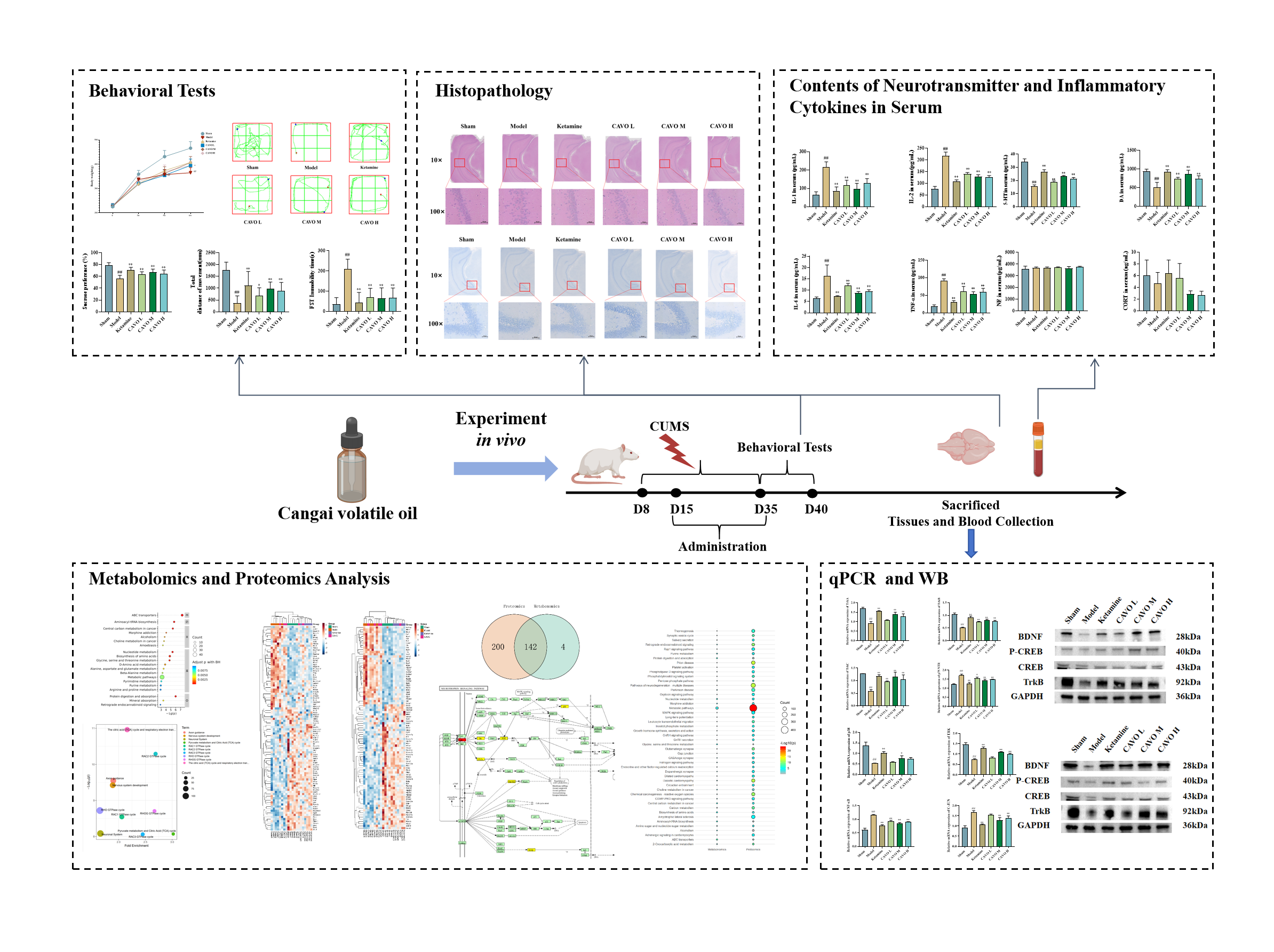
Background: Cang-ai volatile oil (CAVO) is a traditional Chinese medicine with properties that soothe the liver and alleviate depression. CAVO is widely utilized in the field of antidepressant research and has surfaced as a possible treatment for depression. Depression is a common affective disorder and effective treatment methods are still limited. CAVO is effective in treating depression; however, the exact mechanism is still unclear. This study aimed to explore the likely mechanism by which CAVO reduces symptoms of depression in rats exposed to chronic unpredictable mild stress (CUMS). Methods: We established a CUMS model in Sprague–Dawley rats and administered CAVO via nebulization to evaluate its therapeutic effect. Behavioral and histology tests were conducted to evaluate brain tissue damage. We utilized metabolomics combined with proteomics to analyze the effects of CAVO. We then assessed molecular validation to further clarify the molecular mechanism of its activity. Results: In CUMS model rats, inhaling aerosolized CAVO significantly reduced brain pathology and depression-like behaviors. CAVO significantly changed serum levels of inflammatory cytokines and neurotrophic factors. Biomarkers linked to CAVO's antidepressant effects were found via metabolomics. Functional analyses highlighted key molecular players such as TrkB, and CREB, and a close association with the antidepressant action of CAVO was confirmed. Conclusion: This study reveals that CAVO reduces depression-like behaviors in CUMS rats by regulating the NT/Trk signaling pathway. These results demonstrate CAVO's therapeutic potential and lay the groundwork for future studies and the creation of depressive treatments.
Keywords:
Cang-ai volatile oil
; depression
; chronic unpredictable mild stress
; NT/Trk signaling pathway
; potential mechanism
Copyright: This open access article is published under a Creative Commons CC BY 4.0 license, which permit the free download, distribution, and reuse, provided that the author and preprint are cited in any reuse.


