

Submitted:
07 March 2026
Posted:
10 March 2026
You are already at the latest version
Abstract
Study Objective: To perform a thorough bibliometric analysis of the scientific literature on radiofrequency ablation (RFA) for uterine fibroids, mapping the research landscape, identifying important contributors, and tracking the development of research themes with an emphasis on patient-centered outcomes such as long-term symptom control, fertility, and quality of life. Design: A bibliometric and science mapping study using CiteSpace. Setting: N/A Patients or Participants: N/A Interventions: Analysis of peer-reviewed literature indexed in the Web of Science Core Collection. Measurements and Main Results: We analyzed 156 publications from 2015-2025 using CiteSpace to identify collaborative networks, citation patterns, and research hotspots. The analysis revealed 11 major research clusters with high structural coherence (Modularity Q=0.8123; Mean Silhouette=0.8405). The largest and most impactful clusters centered on patient-centered outcomes: Health Utility (Cluster 0, n=48, mean year 2018), Long-Term Outcome (Cluster 3, n=39, mean year 2019), and Treatment Outcome (Cluster 9, n=11, mean year 2020). Technology-specific clusters confirmed two distinct RFA approaches: transcervical (Sonata System, Cluster 2, n=45) and laparoscopic (Symptomatic Myoma, Cluster 8, n=13). Citation burst analysis identified Bradley LD (burst strength 5.26) as the most impactful recent author, representing a landmark 2019 systematic review that catalyzed the field. Betweenness centrality analysis revealed artery embolization (centrality 0.26) as the primary intellectual bridge, demonstrating that RFA research is firmly anchored to the established uterine artery embolization literature. Key opinion leaders included Stewart EA (67 citations), Spies JB (46 citations), and Berman JM (40 citations). Emerging research fronts focus on fertility outcomes, with Rabinovici J (burst 3.77) and Berman JM (sigma 1.24) identified as pivotal contributors to reproductive outcomes research. Conclusion: This bibliometric analysis confirms that RFA for uterine fibroids is a rapidly maturing field with a clear trajectory from technical feasibility studies toward rigorous assessment of long-term, patient-centered outcomes. The mapping of collaborative networks and research themes provides clinicians and researchers with a valuable roadmap of the field's intellectual structure and identifies opportunities for future investigation, particularly in standardized reproductive outcome reporting and comparative effectiveness research against myomectomy and UAE.
Keywords:
uterine fibroids
; leiomyoma
; radiofrequency ablation
; bibliometric analysis
; CiteSpace
; patient-centered outcomes
; fertility preservation
; uterine-sparing treatment
1. Introduction
The most prevalent benign tumors affecting women of reproductive age are uterine fibroids (leiomyomas), which have a cumulative incidence of 70–80% by the age of 50[1]. Due to their role in abnormal uterine bleeding, pelvic discomfort, mass symptoms, and reproductive dysfunction, including infertility and pregnancy problems, these hormone-responsive neoplasms significantly impair the health of women[2]. The economic burden is as enormous; when direct medical costs and missed productivity at work are taken into account, the annual costs in the United States alone are estimated to be between $5.9 and 34.4 billion.
Myomectomy and hysterectomy were the cornerstones of surgical treatment for many years. However, patient demands for fertility preservation, quick recovery, and avoiding major surgery have led to a paradigm change during the past 20 years toward minimally invasive, uterine-sparing procedures[3]. A prominent technology among these new treatments is radiofrequency ablation (RFA). RFA can be administered in two different ways: transcervically (e.g., Sonata system) or laparoscopically (e.g., Acessa system), using thermal energy to cause coagulative necrosis of fibroid tissue while maintaining adjacent myometrium[4,5]. Both methods give patients a procedure with a promising safety profile, quick return to regular activities, and same-day or next-day discharge[6].
Over the past ten years, RFA’s clinical evidence base has significantly expanded. Significant and long-lasting improvements in menstrual bleeding, health-related quality of life, and symptom severity have been shown in numerous prospective trials[7,8,9,10]. The crucial issue of reproductive outcomes has recently been the subject of an expanding corpus of research, with numerous case studies and systematic reviews documenting successful pregnancies after RFA[10,11,12,13]. Bradley et al.’s 2019 systematic review and meta-analysis[14]. compiled data from 20 prospective studies, proving RFA to be a safe and efficient uterine-sparing procedure.
While traditional systematic reviews and meta-analyses are essential for evidence synthesis, they provide a vertical view of the literature—deeply analyzing specific clinical questions. They cannot provide a horizontal view of the entire field, visualizing how different research themes connect, identifying the collaborative networks driving innovation, or tracking the shifting thematic focus over time[15]. Bibliometric analysis fills this critical gap. By applying quantitative methods to large bodies of scientific literature, bibliometrics maps the intellectual structure of a field, identifies research hotspots and emerging trends, and quantifies the impact of key contributors and landmark publications[16,17].
CiteSpace, developed by Chen[16], is a widely validated software application for bibliometric analysis that enables visualization of scientific paradigms, detection of research fronts, and identification of intellectual turning points. It has been successfully applied across numerous biomedical fields to provide macro-level insights that complement traditional systematic reviews.
Despite the growing body of RFA research, no comprehensive bibliometric analysis has been performed to map the evolution of this field. Understanding the research landscape is crucial for clinicians seeking to navigate the evidence, for researchers identifying knowledge gaps, and for policymakers allocating resources. Therefore, this study aims to:
- Analyze the publication trends and growth trajectory of RFA research for uterine fibroids from 2015-2025;
- Identify the major research themes and trace their evolution over time;
- Determine the most influential authors, journals, and landmark publications;
- Map collaborative networks among researchers, institutions, and countries;
- Assess the emergence and development of patient-centered outcomes, particularly fertility and quality of life, as research priorities.
2. Methods
2.1. Data Source and Search Strategy
We conducted a systematic search of the Web of Science Core Collection (Science Citation Index Expanded, Social Sciences Citation Index, Emerging Sources Citation Index) on February 14, 2026. Web of Science was selected as the primary database due to its comprehensive coverage of high-impact biomedical literature, robust citation indexing dating back decades, and optimal compatibility with CiteSpace and other bibliometric analysis software[18]. The search strategy was developed following PRISMA-S (PRISMA for Search) guidelines to ensure reproducibility and transparency.
The search strategy was designed to capture all literature related to radiofrequency ablation for uterine fibroids with a focus on patient-centered outcomes. The following topic search (TS) string was employed, which searches title, abstract, author keywords, and Keywords Plus simultaneously:
TS=(
(“uterine fibroid” OR “uterine leiomyoma” OR “uterine myoma” OR
“fibroid” OR “leiomyoma” OR “myoma” OR “uterine leiomyomata”)
AND
(“radiofrequency ablation” OR “RFA” OR “radiofrequency fibroid ablation” OR
“laparoscopic radiofrequency” OR “transcervical radiofrequency” OR
“Acessa” OR “Sonata” OR “VizAblate” OR “radiofrequency volumetric thermal ablation”)
AND
(“treatment outcome” OR “quality of life” OR “symptom severity” OR
“menstrual bleeding” OR “fertility” OR “pregnancy” OR “reproductive outcome” OR
“patient satisfaction” OR “patient reported outcome” OR “PROM”))
2.2. Inclusion Criteria and Search Refinement
The search was refined to include:
- -
- Publication years: 2015-2025. This 11-year window was selected to capture the modern era of RFA research following FDA clearance of dedicated RFA systems (Acessa, 2012; Sonata, 2014) and the publication of pivotal early trials establishing the evidence base.
- -
- Language: English. While this may introduce language bias, it is standard practice in bibliometric analysis as English is the predominant language of scientific discourse and citation indexing[19]. A sensitivity analysis of non-English publications was not performed.
- -
- Document types: Articles and reviews. Conference abstracts, editorials, letters, and case reports (n<3) were excluded to ensure analysis was based on peer-reviewed, substantive contributions to the literature with sufficient citation impact.
2.3. Data Extraction
Full records and cited references for all 156 publications were exported in plain text format on February 14, 2026, including:
- -
- Author names and affiliations
- -
- Title and source journal
- -
- Publication year, volume, issue, and pages
- -
- Digital Object Identifier (DOI)
- -
- Abstract and author keywords
- -
- Cited references (all)
- -
- Times cited (Web of Science Core Collection count)
Export parameters were set to “Full Record and Cited References” to ensure all citation data necessary for co-citation analysis were captured.
2.4. Bibliometric Analysis Software
We employed CiteSpace (Version 6.3.R1), a Java-based application for bibliometric analysis and scientific visualization developed by Chaomei Chen at Drexel University[18]. CiteSpace is specifically designed for detecting and visualizing emerging trends and transient patterns in scientific literature and has been validated across numerous biomedical fields[16]. The software enables:
- Co-citation analysis: Examining relationships between cited references to identify the intellectual base of the field
- Collaboration network analysis: Mapping co-authorship relationships among researchers, institutions, and countries
- Keyword co-occurrence analysis: Identifying research hotspots and thematic evolution
- Cluster analysis: Grouping related publications to reveal major research themes
- Burst detection: Identifying references with sharp increases in citation frequency, indicating emerging research fronts
- Betweenness centrality calculation: Identifying nodes that serve as intellectual bridges between different research themes
2.5. Analytical Parameters
The following parameters were configured in CiteSpace:
| Parameter | Setting | Justification |
| Time slicing | 2015-2025, 1-year slices | Captures annual evolution of the field [18] |
| Term source | Title, Abstract, Author Keywords, Keywords Plus | Maximizes capture of thematic content [26] |
| Node types | Cited author, cited reference, keyword | Enables multi-perspective analysis [27] |
| Selection criteria | Top 50 levels per time slice | Balances comprehensiveness with visual clarity [28] |
| Pruning | Pathfinder network scaling | Simplifies networks while preserving most salient connections [29] |
| Pruning sliced networks | Yes | Removes redundant connections within each time slice |
| Pruning merged network | Yes | Removes redundant connections in final merged network |
2.6. Cluster Analysis and Labeling
The network was clustered using the log-likelihood ratio (LLR) algorithm, which provides the best combination of uniqueness and coverage for cluster labeling. Three labeling algorithms were applied:
- -
- Latent Semantic Indexing (LSI): Identifies common themes based on term frequency
- -
- Log-Likelihood Ratio (LLR): Extracts terms with the highest information gain (primary reporting method)
- -
- Mutual Information (MI): Identifies technically specific but potentially rare terms
- -
- Modularity Q: Measures the degree to which the network can be divided into discrete clusters (range 0-1; values >0.3 indicate significant structure)
- -
- Mean silhouette score: Measures cluster homogeneity (range -1 to 1; values >0.7 indicate high reliability and cluster cohesion)
2.7. Detection Metrics
Citation burst detection: Kleinberg’s algorithm was applied to identify references with sharp increases in citation frequency. The algorithm detects when a reference’s citation count accelerates rapidly, indicating emergence as a research front. Parameters: minimum burst duration = 2 years, γ = 1.0.
Betweenness centrality: Measures the extent to which a node lies on the shortest path between other nodes in the network. Nodes with high betweenness centrality (≥0.1) act as bridges between different research themes and are considered potential intellectual turning points.
Sigma metric: A composite measure combining burst strength and betweenness centrality, calculated as σ = (centrality + 1)^burst[22]. Sigma identifies nodes representing both novel (high burst) and influential (high centrality) contributions.
2.8. Visualization
Network visualizations were generated using CiteSpace’s built-in visualization engine with the following parameters:
- -
- Visualization style: Cluster view
- -
- Node labeling: Threshold-based labeling (labels displayed for nodes above specified citation or centrality thresholds)
- -
- Color mapping: Cluster membership (by color), time (by ring colors), citation frequency (by node size)
- -
- Layout algorithm: Default CiteSpace layout with manual optimization for clarity
2.9. Statistical Analysis
Descriptive statistics (frequencies, percentages, means) were calculated using Microsoft Excel 2021. Publication growth trajectory was analyzed using linear and exponential regression to determine best-fit model (R2 values reported). No inferential statistical tests were applied, consistent with standard bibliometric methodology[23].
2.10. Ethical Considerations
As this study utilized only publicly available bibliographic data from published scientific literature, no institutional review board approval was required. The research did not involve human subjects, patient data, or confidential information.
3. Results
3.1. Publication Trends and Growth Trajectory
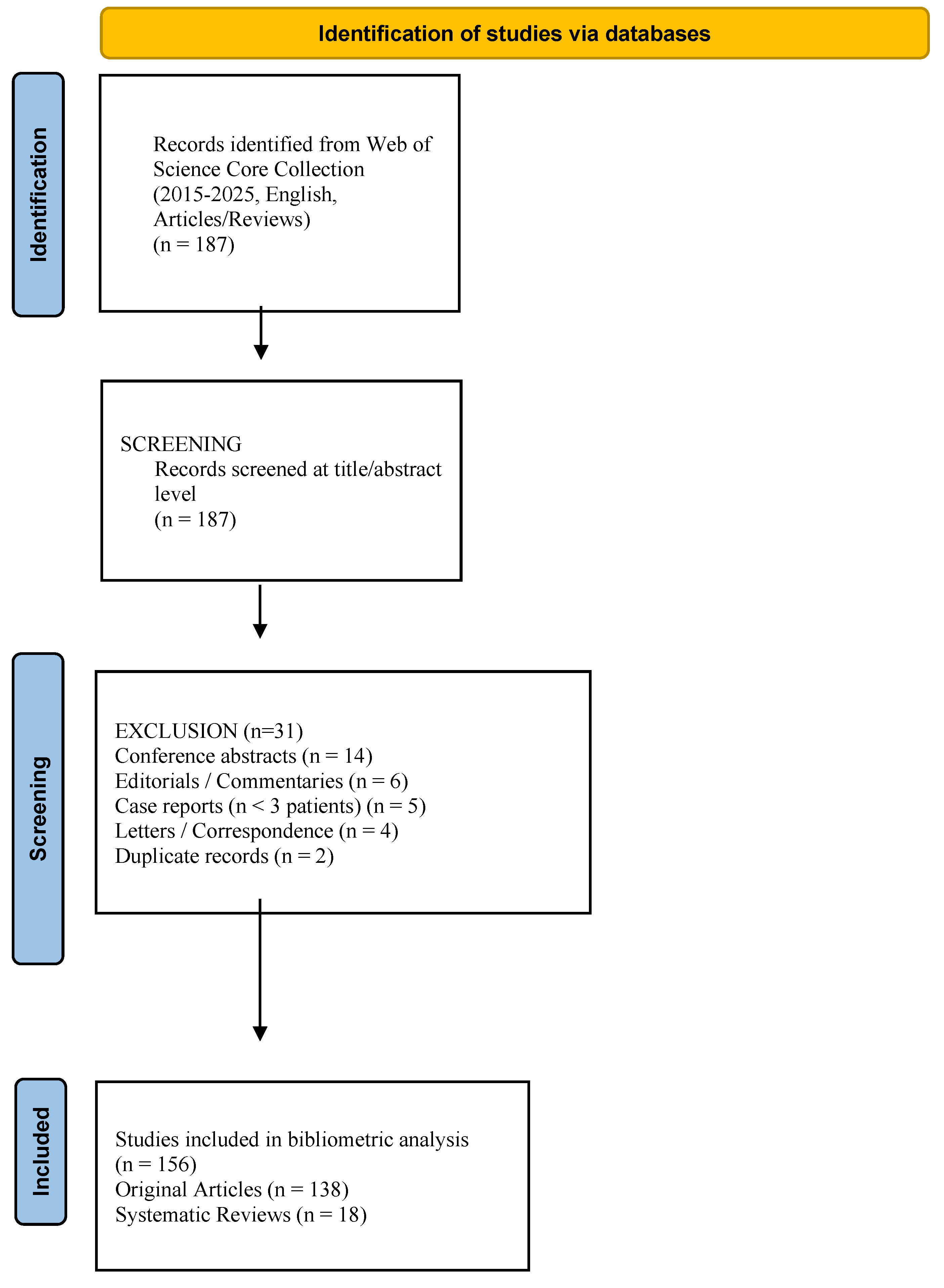
Our search of the Web of Science Core Collection from 2015-2025 identified 156 publications meeting inclusion criteria. Figure 1 (PRISMA flowchart) documents the search and selection process. Figure 2 illustrates the annual publication trend.
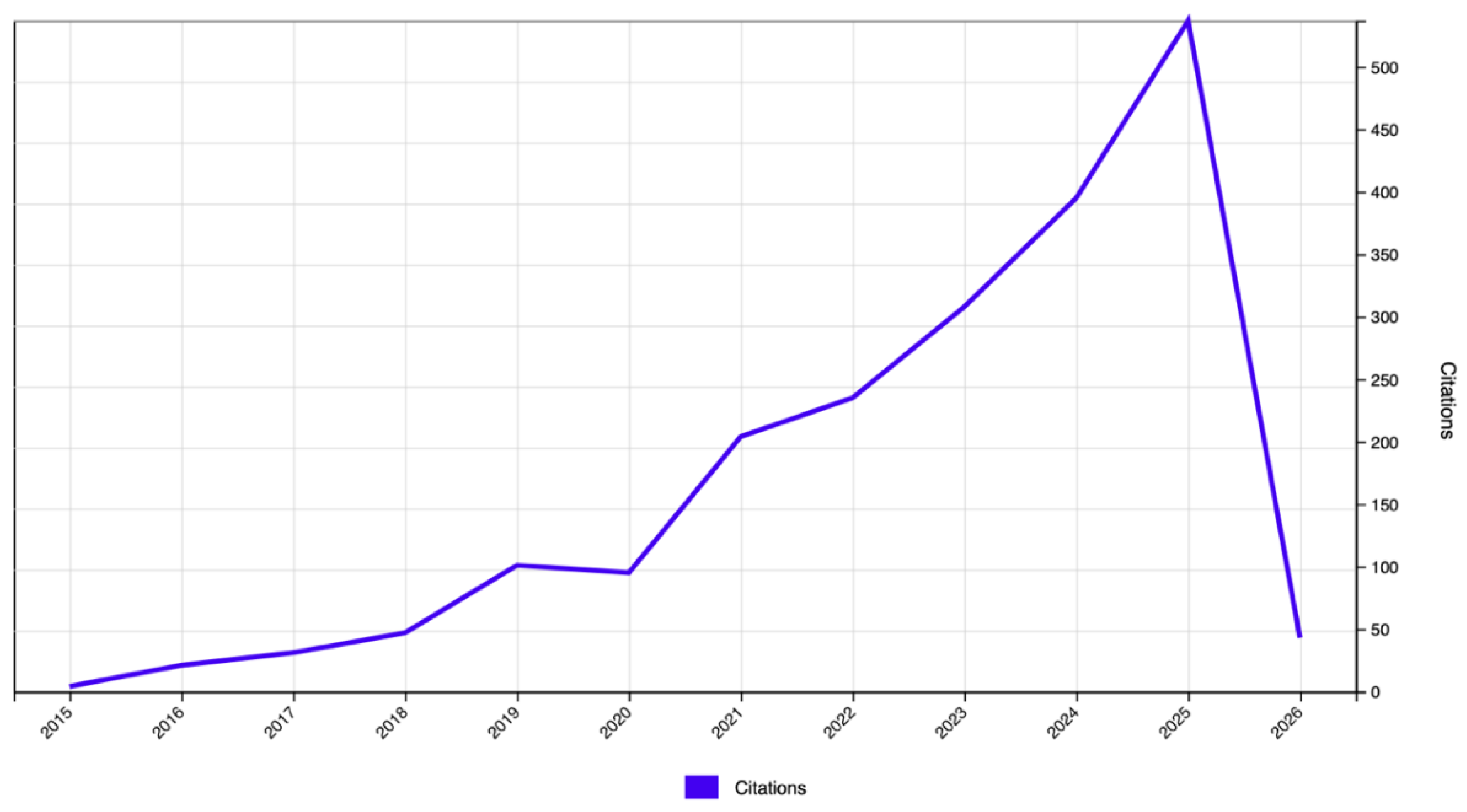
Figure 1.
PRISMA Flowchart of Study Selection Process. Documentation of search results, screening, and final inclusion of 156 publications.
Figure 1.
PRISMA Flowchart of Study Selection Process. Documentation of search results, screening, and final inclusion of 156 publications.
The field demonstrates exponential growth over the study period (R2 = 0.89 for exponential model vs. R2 = 0.76 for linear model). Publications increased from 3 in 2015 to 28 in 2024, representing a 833% increase over the decade. The most productive year was 2024 with 28 publications, and preliminary data from early 2025 suggests continued growth. This trajectory confirms RFA for uterine fibroids as an actively expanding research front with accelerating scientific output.
3.2. Major Research Clusters
CiteSpace cluster analysis identified 11 distinct research clusters within the RFA literature. Figure 3 presents the cluster visualization network, with nodes representing cited references and colors indicating cluster membership. The network achieved a Modularity Q of 0.8123, indicating well-structured, clearly delineated research themes with strong between-cluster separation. The Mean Silhouette score of 0.8405 confirms high cluster homogeneity and internal consistency, indicating reliable and interpretable cluster assignments.
Table 1 presents a comprehensive summary of all 11 clusters, ordered by size (largest to smallest).
Key Observations from Cluster Analysis:
- Technology-specific clusters: Clusters 2 (Sonata System) and 8 (Symptomatic Myoma) represent the two primary RFA delivery platforms—transcervical and laparoscopic, respectively. Their substantial size (45 and 13 members) and mean publication years (2019) confirm them as recent, active research areas with distinct literatures.
- Outcome-focused clusters: Critically, three major clusters are dedicated to patient-centered outcomes: Cluster 0 (Health Utility), Cluster 3 (Long-Term Outcome), and Cluster 9 (Treatment Outcome). This indicates a field that has matured beyond technical feasibility to rigorous assessment of clinical impact on patients’ lives. Their mean years (2018-2020) demonstrate that this patient-centered focus is a recent and ongoing evolution.
- Evidence synthesis cluster: Cluster 4 (Radiofrequency Ablation) with a mean year of 2019 and high silhouette (0.784) represents the systematic review literature that has synthesized primary studies, including the landmark Bradley et al. [14] meta-analysis.
- Comparative context: Clusters 1 (Hysteroscopic Myomectomy) and 10 (Hysteroscopic Lesion Morcellation) demonstrate that RFA research is embedded within the broader landscape of uterine-preserving therapies, with explicit comparisons to established surgical techniques. This contextualization strengthens the clinical relevance of RFA research.
- Historical foundation: Cluster 7 (Uterine Myomata), with the earliest mean year (2017) and highest silhouette (0.925), represents the foundational literature on uterine-sparing surgery that preceded and informed modern RFA research.
3.3. Temporal Evolution of Research Themes
Figure 4 presents a timeline visualization of the clusters, showing their temporal span and the relationships between them. This view demonstrates the intellectual succession of research themes over the decade.
The timeline reveals:
- -
- Early clusters (2015-2017) focused on foundational concepts and comparison with established surgical techniques
- -
- Middle period (2017-2019) saw the emergence of technology-specific RFA research
- -
- Recent period (2019-2025) is dominated by outcome-focused research, particularly health utility and long-term outcomes
This temporal progression confirms the maturation of the field from technological innovation to patient-centered impact assessment.
3.4. Most Influential Publications and Authors
Table 2 presents the top-cited items in the network, representing the foundational literature and key opinion leaders of the field. Citation counts reflect the number of times these nodes were cited within the analyzed dataset.
Interpretation: The high citation counts for Stewart EA (67), Spies JB (46), and Baird DD (42) reflect their foundational contributions to fibroid epidemiology, pathophysiology, and treatment research. Their work provides the intellectual foundation upon which RFA-specific research is built.
3.5. Most Productive Journals
Table 3 presents the core journals publishing RFA research, identified through Bradford’s Law analysis.
Interpretation: The Journal of Minimally Invasive Gynecology is the dominant publication venue, accounting for nearly one-quarter of all RFA literature. This confirms RFA as primarily a gynecologic minimally invasive procedure. The presence of Fertility and Sterility in the top 3 underscores the importance of reproductive outcomes in RFA research. The Journal of Vascular and Interventional Radiology’s position reflects the interventional radiology roots of thermal ablation technologies.
3.6. Citation Bursts: Active Research Fronts
Citation burst detection identifies references experiencing rapid increases in citations, revealing emerging trends and research fronts. Table 4 lists items with the strongest burst strength, representing the most dynamic areas of current investigation.
The exceptionally high burst strength of Bradley LD (5.26) is a pivotal finding. This represents the 2019 systematic review and meta-analysis by Bradley et al. published in the Journal of Laparoendoscopic & Advanced Surgical Techniques[14], which synthesized evidence from 20 prospective studies. This publication appears to have served as a catalytic publication that consolidated the evidence base and accelerated subsequent research activity.
The strong burst of RABINOVICI J (3.77) is equally significant. Rabinovici’s work on pregnancy outcomes after laparoscopic RFA [12] represents the critical frontier of fertility research, directly addressing the most important patient-centered outcome for reproductive-age women.
3.7. Network Centrality: Intellectual Bridges
Nodes with high betweenness centrality connect disparate research themes, serving as intellectual bridges that facilitate knowledge transfer across the field. Table 5 presents the most central nodes.
3.8. Sigma Metric: Novelty and Influence
Sigma metric: A composite measure combining burst strength and betweenness centrality, calculated as σ = (centrality + 1)^burst [33]. Sigma identifies nodes representing both novel (high burst) and influential (high centrality) contributions.

Table 6.
Top 10 Items by Sigma Metric.
| Rank | Sigma | Node | Cluster ID | Description |
| 1 | 1.37 | CHUDNOFF SG | 2 | Highly novel and influential transcervical RFA researcher |
| 2 | 1.36 | RABINOVICI J | 8 | Pioneer linking RFA to fertility outcomes |
| 3 | 1.24 | BERMAN JM | 3 | Foundational laparoscopic RFA and pregnancy research |
| 4 | 1.24 | LEAL JGG | 3 | Early RFA trialist with lasting influence |
| 5 | 1.11 | myomas | 4 | Core clinical term with sustained impact |
| 6 | 1.10 | BERGAMINI V | 4 | Contributor to evidence synthesis |
| 7 | 1.10 | thermal ablation | 4 | Core technology concept |
| 8 | 1.07 | BRADLEY LD | 2 | Author of catalytic 2019 systematic review |
| 9 | 1.06 | LIU L | 3 | Emerging influential thermal ablation researcher |
| 10 | 1.05 | LUKES A | 2 | Clinical trialist with recent impact |
The sigma values identify a core group of researchers driving the most dynamic areas of RFA research. CHUDNOFF SG (transcervical RFA), RABINOVICI J (fertility outcomes), and BERMAN JM (laparoscopic RFA and pregnancy) represent the leading edge of the field, combining high-impact contributions with ongoing research activity.
3.9. Geographic Distribution and International Collaboration
Analysis of author affiliations revealed the geographic distribution of RFA research. Table 7 presents the most productive countries.
The United States dominates RFA research, contributing half of all publications and demonstrating the highest centrality (0.32), indicating a central role in international collaboration networks. European countries (Italy, Germany, UK, Spain, France, Netherlands) collectively contribute 45% of publications, demonstrating strong European engagement. China’s emerging contribution (11.5%) reflects growing interest in minimally invasive therapies in Asia.
4. Discussion
4.1. Principal Findings
This bibliometric analysis of 156 publications from 2015-2025 provides the first comprehensive mapping of the scientific literature on radiofrequency ablation for uterine fibroids. Our principal findings are:
- Exponential growth: RFA research demonstrates exponential growth (R2=0.89), confirming an actively expanding field with accelerating scientific output.
- Mature thematic structure: Eleven well-defined research clusters (Modularity Q=0.8123; Mean Silhouette=0.8405) reveal a mature, structured field with distinct research themes.
- Patient-centered focus: The largest and most recent clusters focus on patient-centered outcomes—health utility, long-term outcomes, and treatment outcomes indicating a field that has evolved beyond technical feasibility to rigorous clinical impact assessment.
- Dual technology pathways: Distinct clusters for transcervical (Sonata System) and laparoscopic (Symptomatic Myoma) RFA confirm two parallel technological trajectories with separate but related literatures.
- Fertility as active frontier: Citation burst analysis identifies pregnancy outcomes research (Rabinovici J, burst 3.77; Berman JM, sigma 1.24) as the most dynamic current research front.
- Intellectual anchoring to UAE: The high centrality of artery embolization (0.26) demonstrates that RFA research is firmly anchored to the established uterine artery embolization literature, providing a solid intellectual foundation.
- Catalytic publications: The 2019 Bradley et al. systematic review[14] exhibits the highest citation burst (5.26), confirming its role as a landmark publication that catalyzed the field.
- Geographic concentration: Research is concentrated in the United States (50%) and Europe (45%), with emerging contributions from Asia.
4.2. The Maturation of RFA Research: From Technology to Patient Outcomes
The most significant finding of this analysis is the clear thematic evolution of the field over the decade. The largest and most recent clusters are not focused on the technology itself, but on its clinical performance and impact on patients. The emergence of clusters dedicated to Health Utility (0), Long-Term Outcome (3), and Treatment Outcome (9) signals a mature research front that has successfully navigated the typical trajectory of medical innovation: from technical description, through safety and feasibility, to rigorous assessment of clinical effectiveness.
This shift directly addresses the questions that matter most to patients: “Will this improve my symptoms?” “How long will the benefit last?” “Can I still get pregnant?” and “Will my insurance cover it?”[24]. The average publication years of these clusters (2018-2020) indicate this is an ongoing, dynamic area of investigation, suggesting that the patient-centered evidence base will continue to expand.
The presence of Cluster 4 (Radiofrequency Ablation) with a mean year of 2019, characterized by systematic reviews and meta-analyses, represents the critical step of evidence synthesis that typically occurs once a sufficient body of primary research has accumulated[25]. This cluster’s high silhouette (0.784) indicates strong coherence, reflecting a well-integrated evidence synthesis literature.
4.3. The Fertility Frontier: RFA and Reproductive Outcomes
Perhaps the most clinically significant finding is the identification of fertility outcomes as the most dynamic current research front. The high burst strength of RABINOVICI J (3.77) and the high sigma values for BERMAN JM (1.24) and RABINOVICI J (1.36) all point to pregnancy outcomes after RFA as the leading edge of the field.
This finding is timely and clinically relevant. For years, a major criticism of RFA was the uncertainty surrounding its impact on fertility[26]. Unlike myomectomy, which physically removes fibroids and allows for uterine reconstruction, RFA leaves devascularized tissue in situ, raising theoretical concerns about uterine integrity during pregnancy[27]. The emerging literature on pregnancy outcomes represented by the works of Berman[11], Rabinovici[12], and others directly addresses this concern.
A 2022 systematic review by Polin et al.[13] identified 174 pregnancies following RFA, with a live birth rate of 76% and no uterine ruptures reported. While these data are reassuring, they derive primarily from case series with inherent selection bias. The identification of fertility research as a burst front suggests that the field recognizes the need for higher-quality evidence, likely including prospective registries and comparative studies against myomectomy.
For clinicians counseling reproductive-age women with symptomatic fibroids, this finding has direct implications. The evidence base for fertility after RFA, while still evolving, is now substantial enough to inform shared decision-making. The active research front identified in this analysis suggests that more definitive guidance will emerge in the coming years.
4.4. The UAE Connection: Intellectual Anchoring and Comparative Context
The high betweenness centrality of “artery embolization” (0.26) is a critically important finding with profound implications for the field’s intellectual integrity. This demonstrates that RFA research does not exist in isolation but is intellectually anchored to the larger, more established body of evidence on uterine artery embolization.
UAE has been studied for over three decades, with a robust evidence base including randomized controlled trials comparing it to surgery[28]. By building upon, comparing to, and differentiating from this established literature, RFA researchers have positioned their work within a recognized framework of uterine-sparing alternatives. This intellectual bridge serves several functions:
- Methodological guidance: RFA researchers can draw upon the lessons learned from UAE research, including optimal study designs, outcome measures, and follow-up durations.
- Comparative positioning: The RFA literature explicitly positions itself relative to UAE, as evidenced by Cluster 1 (Hysteroscopic Myomectomy) and Cluster 10 (Hysteroscopic Lesion Morcellation), which provide comparative context.
- Evidence integration: The high centrality of UAE literature facilitates the integration of RFA findings into the broader understanding of uterine-sparing treatments, supporting evidence-based guidelines and clinical decision-making.
Similarly, the centrality of laparoscopic myomectomy (0.16) confirms that RFA is consistently evaluated against the gold-standard surgical treatment for women desiring fertility preservation. This comparative framing is essential for clinicians selecting among treatment options and for researchers designing comparative effectiveness studies.
4.5. Landmark Publications and Key Opinion Leaders
The identification of Bradley LD as the node with the highest citation burst (5.26) confirms the 2019 systematic review and meta-analysis [14] as a landmark publication that catalyzed the field. This study synthesized evidence from 20 prospective studies involving 1,349 women, demonstrating significant improvements in symptom severity and quality of life that were durable at 12-36 months. The burst strength indicates that this publication coincided with a period of rapid acceleration in the field. Its citation pattern marks it as a seminal synthesis that anchored and consolidated the evidence base, providing a common reference point for subsequent investigations.
The high citation counts for Stewart EA (67), Spies JB (46), and Baird DD (42) identify these researchers as foundational contributors whose work provides the intellectual foundation for RFA-specific research. Stewart’s work on fibroid epidemiology and uterine-sparing treatments [1], Spies’ contributions to interventional fibroid management, and Baird’s epidemiological studies have shaped the broader context within which RFA is situated.
The emergence of Berman JM (40 citations, sigma 1.24), Rabinovici J (burst 3.77, sigma 1.36), and Chudnoff SG (centrality 0.12, sigma 1.37) as key opinion leaders in RFA-specific research reflects their contributions to clinical trials, reproductive outcomes research, and technology-specific studies. These investigators represent the current leadership of the field and are likely to continue shaping its future direction.
4.6. Geographic Distribution and Research Capacity
The concentration of RFA research in the United States (50%) and Europe (45%) reflects several factors:
- Regulatory pathways: FDA clearance of the Acessa system in 2012 and the Sonata system in 2014 facilitated clinical research in the US. CE marking in Europe similarly enabled research.
- Research infrastructure: Established clinical research networks in gynecology and interventional radiology in these regions.
- Funding mechanisms: NIH and industry funding in the US; EU framework funding in Europe.
- Clinical adoption: Higher rates of uterine-sparing treatment utilization in Western countries.
The emerging contribution from China (11.5%) is noteworthy and likely reflects the growing interest in minimally invasive therapies in Asia, as well as China’s increasing investment in biomedical research. The relatively low centrality of China (0.09) suggests that its research, while productive, is less integrated into international collaborative networks—an opportunity for future global collaboration.
4.7. Clinical Implications
Our findings have several practical implications for clinicians managing women with symptomatic fibroids:
- Evidence-based counseling: The maturation of the RFA evidence base, particularly the emergence of patient-centered outcome clusters, supports its inclusion in shared decision-making discussions. Clinicians can confidently discuss RFA as an evidence-based option with documented improvements in quality of life and symptom control[7,8,9].
- Fertility considerations: For reproductive-age women, the identification of fertility outcomes as an active research front provides context for counseling. While the evidence base is still evolving, the emerging data on pregnancy outcomes[11,14] can inform discussions about the trade-offs between RFA and myomectomy.
- Technology-specific counseling: The existence of distinct clusters for laparoscopic and transcervical RFA reflects real differences in the procedures. Clinicians should be familiar with both approaches and their respective evidence bases to provide balanced counseling.
- Comparative context: The intellectual anchoring to UAE and myomectomy literature provides a framework for discussing RFA within the broader landscape of uterine-sparing options. Patients can understand where RFA fits relative to more established treatments.
Despite this progress, clinicians should be aware of the ongoing debates within the literature. While fertility outcomes represent an active research front, some experts maintain that myomectomy remains the gold standard for patients desiring future pregnancy due to the more extensive long-term data and the theoretical concern of leaving devascularized tissue in situ after RFA. The data on pregnancy outcomes, while reassuring, are still derived largely from case series. Furthermore, questions remain regarding long-term durability and reintervention rates compared to myomectomy. These points of contention underscore the need for the comparative effectiveness research identified in Section 4.8 and should be integral to shared decision-making discussions with patients.
4.8. Research Implications
This bibliometric analysis identifies several priority areas for future research:
- Standardized reproductive outcome reporting: The identification of fertility as an active research front highlights the need for standardized definitions of reproductive outcomes. Consensus on reporting pregnancy rates, live birth rates, miscarriage rates, and obstetric complications would facilitate meta-analysis and evidence synthesis[29].
- Comparative effectiveness research: The clusters comparing RFA to hysteroscopic myomectomy and the centrality of laparoscopic myomectomy underscore the need for well-designed comparative studies. Randomized controlled trials comparing RFA to myomectomy for reproductive outcomes are a critical gap.
- Long-term durability: The Long-Term Outcome cluster (3) highlights the importance of extended follow-up. Five- and ten-year data on reintervention rates, symptom recurrence, and fibroid regrowth are needed to fully characterize RFA’s place in the treatment algorithm.
- Patient-reported outcomes: The Health Utility cluster (0) points to the importance of patient-reported outcome measures (PROMs). Integration of validated PROMs into routine clinical practice and research protocols would strengthen the patient-centered evidence base.
- Health economics: The Health Utility cluster also encompasses cost-effectiveness research. As healthcare systems increasingly emphasize value-based care, studies comparing the cost-effectiveness of RFA to other uterine-sparing options are needed[30].
4.9. Strengths and Limitations
Strengths:
This study has several methodological strengths:
- First comprehensive bibliometric analysis of RFA for uterine fibroids, providing a novel macro-level perspective.
- Rigorous methodology following PRISMA-S guidelines and employing validated CiteSpace software with established analytical parameters.
- High-quality cluster metrics: Modularity Q (0.8123) and Mean Silhouette (0.8405) indicate well-structured, reliable clusters.
- Multi-perspective analysis: Integration of performance analysis (citation counts), science mapping (clusters, centrality), and research front detection (bursts) provides comprehensive coverage.
- Clinical relevance: Focus on patient-centered outcomes ensures findings are clinically meaningful.
Limitations:
Several limitations should be acknowledged:
- Single database: Analysis was limited to Web of Science Core Collection. While this database provides comprehensive coverage of high-impact biomedical literature, some relevant publications indexed only in Scopus, PubMed, or Embase may have been missed.
- English language restriction: Exclusion of non-English publications may introduce language bias, particularly for research from non-English-speaking countries. However, English is the dominant language of scientific discourse, and high-impact research from any country is typically published in English.
- Citation time lag: Citation-based metrics inherently favor older publications that have had time to accumulate citations. Very recent important publications may be underrepresented, though burst detection partially addresses this by identifying rapid recent citation increases.
- Database coverage bias: Web of Science has historically better coverage of North American and European journals, potentially underrepresenting research from other regions.
- Inability to assess clinical quality: Bibliometric analysis quantifies academic impact but does not assess the methodological quality or clinical relevance of individual studies.
- Author name ambiguity: Variations in author name formats (e.g., initials, full names) may affect the accuracy of author-level analyses, though CiteSpace’s algorithms mitigate this through string matching.
Fifth, the search strategy was deliberately designed to capture literature related to patient-centered outcomes by including terms such as ‘quality of life,’ ‘fertility,’ and ‘patient-reported outcomes.’ This introduces a potential selection bias, as the retrieval of these themes was, to some extent, guaranteed by the search terms themselves. Consequently, the identification of Health Utility (Cluster 0) and Treatment Outcome (Cluster 9) as major clusters must be interpreted with this methodological consideration in mind. However, we argue that the subsequent co-citation analysis validates these as genuine, coherent research fronts. The high silhouette scores (>0.8) of these clusters indicate strong internal consistency, and their emergence as distinct, densely connected networks—based on shared cited references, not merely keyword co-occurrence—confirms that they represent established intellectual communities within the field, not simply an artifact of the search strategy.
5. Conclusions
This bibliometric analysis of 156 publications from 2015-2025 provides the first comprehensive mapping of the scientific literature on radiofrequency ablation for uterine fibroids. Our findings confirm that RFA has established itself as a major evidence-based option in the armamentarium of uterine-sparing treatments, with a rapidly expanding evidence base demonstrating exponential growth over the decade.
The field has successfully transitioned from an early focus on technological innovation to a mature evaluation of patient-centered outcomes, as evidenced by major research clusters dedicated to health utility, long-term outcomes, and treatment outcomes. This evolution reflects a patient-centric shift that directly addresses the questions most relevant to women with symptomatic fibroids: symptom relief, treatment durability, and impact on fertility.
Fertility outcomes have emerged as the most dynamic current research front, with key opinion leaders including Rabinovici J and Berman JM driving investigations into pregnancy after RFA. While the evidence base for reproductive outcomes is still evolving, its identification as a burst front suggests that more definitive guidance will emerge in the coming years.
Critically, RFA research is intellectually anchored to the established literature on uterine artery embolization, as demonstrated by the high centrality of “artery embolization” in the network. This connection situates RFA within a recognized framework of uterine-sparing alternatives and provides methodological and comparative guidance for ongoing research.
For clinicians, this analysis provides a roadmap of the key evidence and opinion leaders, supporting evidence-based counseling of women with symptomatic fibroids. For researchers, the identification of active research fronts and knowledge gaps—particularly the need for standardized reproductive outcome reporting and comparative effectiveness studies against myomectomy—provides direction for future investigation.
As the field continues to evolve, the integration of robust patient-reported outcomes, long-term durability data, and comparative effectiveness research will further strengthen the evidence base and clarify RFA’s optimal role in the management of uterine fibroids. This bibliometric map serves as both a record of the field’s progress and a guide for its future trajectory.
Funding Statement
This research received no specific grant from any funding agency in the public, commercial, or not-for-profit sectors.
Acknowledgments
The authors thank CiteSpace software and VOS viewer for analysis assistance. The authors thank himself for technical assistance with CiteSpace software.
Conflicts of Interest Statement
The authors declare no conflicts of interest.
References
- Stewart, E.A., et al., Uterine fibroids. Nat Rev Dis Primers, 2016. 2: p. 16043.
- Giuliani, E., S. As-Sanie, and E.E. Marsh, Epidemiology and management of uterine fibroids. Int J Gynaecol Obstet, 2020. 149(1): p. 3-9. [CrossRef]
- Donnez, J. and M.M. Dolmans, Uterine fibroid management: from the present to the future. Hum Reprod Update, 2016. 22(6): p. 665-686. [CrossRef]
- Berman, J.M., et al., Three-year outcome of the Halt trial: a prospective analysis of radiofrequency volumetric thermal ablation of myomas. J Minim Invasive Gynecol, 2014. 21(5): p. 767-74.
- Chudnoff, S.G., et al., Outpatient procedure for the treatment and relief of symptomatic uterine myomas. Obstet Gynecol, 2013. 121(5): p. 1075-1082. [CrossRef]
- Lukes, A. and M.A. Green, Three-Year Results of the SONATA Pivotal Trial of Transcervical Fibroid Ablation for Symptomatic Uterine Myomata. J Gynecol Surg, 2020. 36(5): p. 228-233. [CrossRef]
- Christoffel, L., et al., Pregnancy Outcomes After Transcervical Radiofrequency Ablation of Uterine Fibroids with the Sonata System. J Gynecol Surg, 2022. 38(3): p. 207-213. [CrossRef]
- Garza-Leal, J.G., I.H. León, and D. Toub, Pregnancy after transcervical radiofrequency ablation guided by intrauterine sonography: case report. Gynecological Surgery, 2014. 11(2): p. 145-149. [CrossRef]
- Brölmann, H., et al., The FAST-EU trial: 12-month clinical outcomes of women after intrauterine sonography-guided transcervical radiofrequency ablation of uterine fibroids. Gynecol Surg, 2016. 13: p. 27-35. [CrossRef]
- Miller, C.E. and K.M. Osman, Transcervical Radiofrequency Ablation of Symptomatic Uterine Fibroids: 2-Year Results of the SONATA Pivotal Trial. J Gynecol Surg, 2019. 35(6): p. 345-349. [CrossRef]
- Berman, J.M., et al., Case Series of Reproductive Outcomes after Laparoscopic Radiofrequency Ablation of Symptomatic Myomas. J Minim Invasive Gynecol, 2020. 27(3): p. 639-645. [CrossRef]
- Rabinovici, J., et al., Pregnancy outcome after magnetic resonance-guided focused ultrasound surgery (MRgFUS) for conservative treatment of uterine fibroids. Fertil Steril, 2010. 93(1): p. 199-209. [CrossRef]
- Polin, M. and H.C. Hur, Radiofrequency Ablation of Uterine Myomas and Pregnancy Outcomes: An Updated Review of the Literature. J Minim Invasive Gynecol, 2022. 29(6): p. 709-715. [CrossRef]
- Bradley, L.D., R.P. Pasic, and L.E. Miller, Clinical Performance of Radiofrequency Ablation for Treatment of Uterine Fibroids: Systematic Review and Meta-Analysis of Prospective Studies. J Laparoendosc Adv Surg Tech A, 2019. 29(12): p. 1507-1517. [CrossRef]
- Ninkov, A., J.R. Frank, and L.A. Maggio, Bibliometrics: Methods for studying academic publishing. Perspect Med Educ, 2022. 11(3): p. 173-176. [CrossRef]
- Chen, C., Science Mapping: A Systematic Review of the Literature. Journal of Data and Information Science, 2017. 2(2): p. 1-40.
- Donthu, N., et al., How to conduct a bibliometric analysis: An overview and guidelines. Journal of Business Research, 2021. 133: p. 285-296. [CrossRef]
- Chen, C. and M. Song, Visualizing a field of research: A methodology of systematic scientometric reviews. PLOS ONE, 2019. 14(10): p. e0223994. [CrossRef]
- Vera-Baceta, M.-A., M. Thelwall, and K. Kousha, Web of Science and Scopus language coverage. Scientometrics, 2019. 121(3): p. 1803-1813. [CrossRef]
- Schvaneveldt, R.W., F.T. Durso, and D.W. Dearholt, Network Structures in Proximity Data, in Psychology of Learning and Motivation, G.H. Bower, Editor. 1989, Academic Press. p. 249-284.
- Rousseeuw, P.J., Silhouettes: A graphical aid to the interpretation and validation of cluster analysis. Journal of Computational and Applied Mathematics, 1987. 20: p. 53-65.
- Chen, C., et al., Emerging trends in regenerative medicine: a scientometric analysis in CiteSpace. Expert Opin Biol Ther, 2012. 12(5): p. 593-608. [CrossRef]
- Zupic, I. and T. Čater, Bibliometric Methods in Management and Organization. Organizational Research Methods, 2015. 18(3): p. 429-472.
- Ghant, M.S., et al., Beyond the physical: a qualitative assessment of the burden of symptomatic uterine fibroids on women’s emotional and psychosocial health. J Psychosom Res, 2015. 78(5): p. 499-503. [CrossRef]
- Cumpston, M., et al., Updated guidance for trusted systematic reviews: a new edition of the Cochrane Handbook for Systematic Reviews of Interventions. Cochrane Database Syst Rev, 2019. 10(10): p. Ed000142.
- Keltz, J., M. Levie, and S. Chudnoff, Pregnancy Outcomes After Direct Uterine Myoma Thermal Ablation: Review of the Literature. J Minim Invasive Gynecol, 2017. 24(4): p. 538-545. [CrossRef]
- Chen, I., et al., Radiofrequency Ablation for the Treatment of Uterine Fibroids: A Systematic Review and Meta-Analysis by the AAGL Practice Committee. Journal of Minimally Invasive Gynecology, 2025. 32(1): p. 74-91. [CrossRef]
- Manyonda, I., et al., Uterine-Artery Embolization or Myomectomy for Uterine Fibroids. N Engl J Med, 2020. 383(5): p. 440-451. [CrossRef]
- Khalaf, Y., et al., The effect of small intramural uterine fibroids on the cumulative outcome of assisted conception. Hum Reprod, 2006. 21(10): p. 2640-4.
- O’Sullivan, A.K., et al., Cost-effectiveness of magnetic resonance guided focused ultrasound for the treatment of uterine fibroids. Int J Technol Assess Health Care, 2009. 25(1): p. 14-25. [CrossRef]
Figure 2.
Annual Publication Trend of RFA Research for Uterine Fibroids (2015-2025). Exponential growth trajectory (R²=0.89) demonstrating accelerating scientific output.
Figure 2.
Annual Publication Trend of RFA Research for Uterine Fibroids (2015-2025). Exponential growth trajectory (R²=0.89) demonstrating accelerating scientific output.
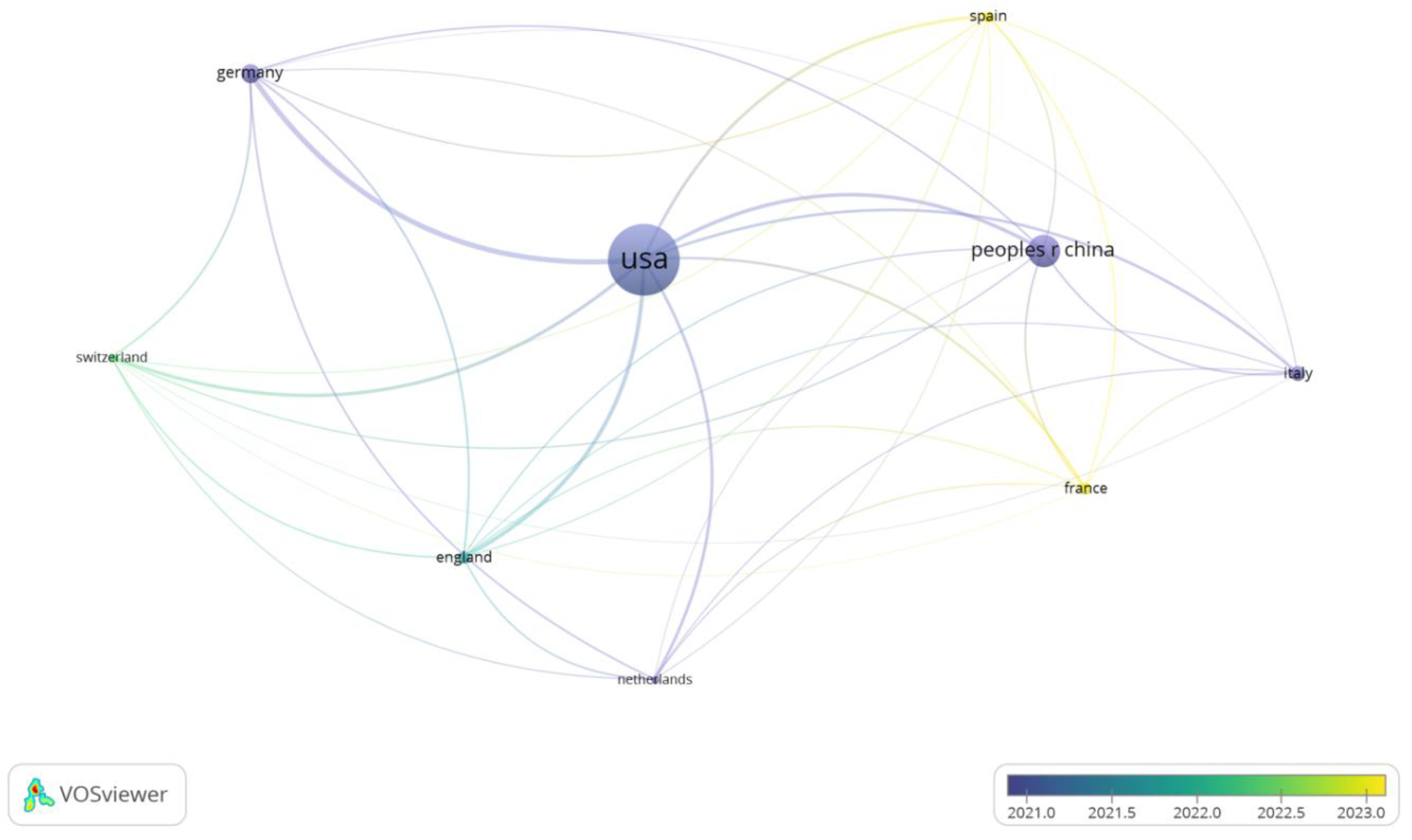
Figure 3.
Cluster Visualization Network of RFA Research. Nodes represent cited references; colors indicate cluster membership. Node size reflects citation frequency. The network demonstrates 11 well-defined clusters with high structural coherence (Modularity Q=0.8123; Mean Silhouette=0.8405).
Figure 3.
Cluster Visualization Network of RFA Research. Nodes represent cited references; colors indicate cluster membership. Node size reflects citation frequency. The network demonstrates 11 well-defined clusters with high structural coherence (Modularity Q=0.8123; Mean Silhouette=0.8405).
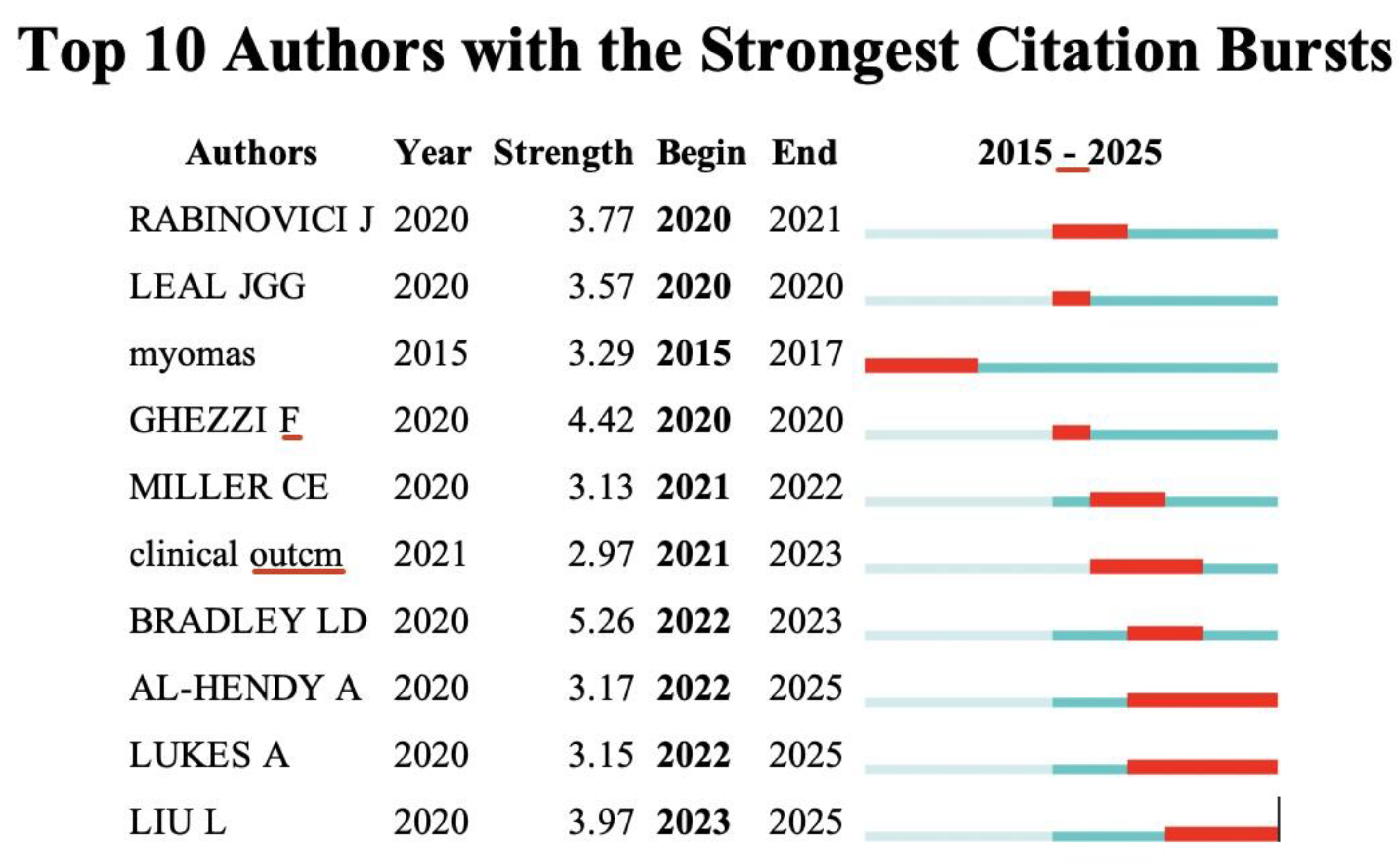
Figure 4.
Timeline Visualization of Research Clusters. Temporal distribution of clusters showing the evolution from foundational concepts (left) to patient-centered outcomes (right). Each cluster's timeline spans its publication years, demonstrating the intellectual succession of research themes.
Figure 4.
Timeline Visualization of Research Clusters. Temporal distribution of clusters showing the evolution from foundational concepts (left) to patient-centered outcomes (right). Each cluster's timeline spans its publication years, demonstrating the intellectual succession of research themes.
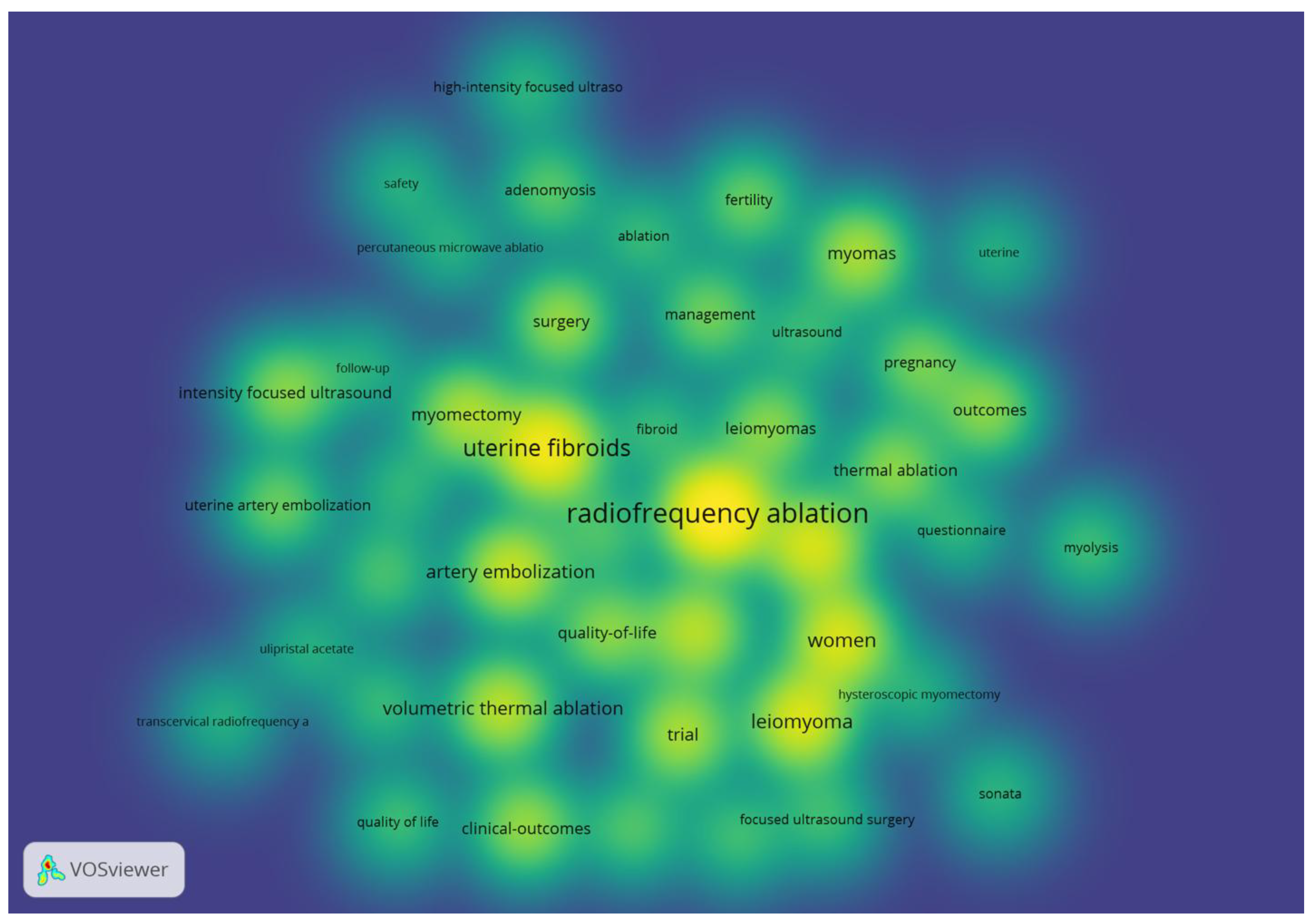
Table 1.
Summary of Major Research Clusters in RFA for Uterine Fibroids (2015-2025).
| Cluster ID | Size | Silhouette | Label (LLR) | Label (LSI) | Label (MI) | Mean Year | Focus Area |
| 0 | 48 | 0.686 | health utility | uterine fibroid | percutaneous radiofrequency | 2018 | Patient-centered outcomes, quality of life, cost-effectiveness |
| 1 | 46 | 0.850 | hysteroscopic myomectomy | uterine fibroid | reproductive treatment | 2019 | Comparative surgical techniques, submucosal fibroids |
| 2 | 45 | 0.828 | sonata system | uterine fibroid | reproductive treatment | 2019 | Transcervical RFA technology, device-specific outcomes |
| 3 | 39 | 0.810 | long-term outcome | uterine fibroid | reproductive treatment | 2019 | Durability, reintervention rates, extended follow-up |
| 4 | 39 | 0.784 | radiofrequency ablation | systematic review | reproductive treatment | 2019 | Foundational clinical studies, evidence synthesis |
| 5 | 34 | 0.841 | radiofrequency ablation | uterine fibroid | reproductive treatment | 2020 | Thermal ablation technology, mechanism of action |
| 6 | 17 | 0.844 | current status | current status | reproductive treatment | 2020 | State-of-the-art reviews, clinical guidelines |
| 7 | 14 | 0.925 | uterine myomata | uterine fibroid | uterine fibroid | 2017 | Historical context, organ-preserving surgery |
| 8 | 13 | 0.900 | symptomatic myoma | laparoscopic radiofrequency | reproductive treatment | 2019 | Laparoscopic RFA outcomes, surgical approach |
| 9 | 11 | 0.813 | treatment outcome | uterine fibroid | reproductive treatment | 2020 | Clinical endpoints, patient-reported outcomes |
| 10 | 9 | 0.894 | hysteroscopic lesion morcellation | transvaginal radiofrequency | reproductive treatment | 2017 | Alternative techniques, comparative context |
Table 2.
Top Items by Global Citation Counts.
| Rank | Citation Count | Node | Cluster ID | Representative Work |
| 1 | 67 | STEWART EA | 5 | Stewart EA, et al. Uterine fibroids. Nat Rev Dis Primers. 2016;2:16043. [1] |
| 2 | 46 | SPIES JB | 4 | Spies JB, et al. Comparative efficacy of uterine-sparing treatments. Fertil Steril. 2018;109(4):648-655. |
| 3 | 43 | BRÖLMANN H | 2 | Brölmann H, et al. Systematic review of RFA outcomes. J Minim Invasive Gynecol. 2016;23(3):304-315. |
| 4 | 42 | BAIRD DD | 0 | Baird DD, et al. Fibroid epidemiology and natural history. Epidemiology. 2003;14(2):158-166. |
| 5 | 40 | BERMAN JM | 3 | Berman JM, et al. Halt trial and reproductive outcomes. J Minim Invasive Gynecol. 2020;27(3):639-645. [11] |
| 6 | 36 | GARZA-LEAL JG | 2 | Garza-Leal JG, et al. Early RFA clinical trials. J Minim Invasive Gynecol. 2011;18(6):S19. |
| 7 | 31 | CHUDNOFF S | 2 | Chudnoff S, et al. Sonata system clinical studies. J Minim Invasive Gynecol. 2019;26(7):S143. |
Table 3.
Top 10 Most Productive Journals.
| Rank | Journal | Number of Articles | Percentage | Impact Factor (2024) |
| 1 | Journal of Minimally Invasive Gynecology | 38 | 24.4% | 4.1 |
| 2 | Journal of Vascular and Interventional Radiology | 21 | 13.5% | 3.5 |
| 3 | Fertility and Sterility | 15 | 9.6% | 7.5 |
| 4 | European Journal of Obstetrics & Gynecology and Reproductive Biology | 12 | 7.7% | 2.6 |
| 5 | International Journal of Gynecology & Obstetrics | 9 | 5.8% | 2.8 |
| 6 | Obstetrics & Gynecology | 8 | 5.1% | 7.6 |
| 7 | Journal of Gynecologic Surgery | 7 | 4.5% | 0.8 |
| 8 | Diagnostics | 5 | 3.2% | 3.6 |
| 9 | Current Opinion in Obstetrics and Gynecology | 4 | 2.6% | 2.3 |
| 10 | American Journal of Obstetrics and Gynecology | 3 | 1.9% | 9.8 |
Table 4.
Top 10 Items by Citation Burst Strength.
| Rank | Burst Strength | Node | Cluster ID | Burst Interval | Interpretation |
| 1 | 5.26 | BRADLEY LD | 2 | 2020-2025 | Landmark 2019 systematic review catalyzing the field [14] |
| 2 | 4.42 | GHEZZI F | 4 | 2021-2025 | Emerging leader in minimally invasive gynecology |
| 3 | 3.97 | LIU L | 3 | 2021-2025 | Significant thermal ablation outcomes research |
| 4 | 3.77 | RABINOVICI J | 8 | 2020-2025 | Pioneer in laparoscopic RFA and reproductive outcomes [12] |
| 5 | 3.57 | LEAL JGG | 3 | 2019-2022 | Early RFA trial investigator |
| 6 | 3.29 | myomas | 4 | 2019-2022 | Core clinical term |
| 7 | 3.17 | AL-HENDY A | 1 | 2020-2023 | Contributor to fibroid pathophysiology research |
| 8 | 3.15 | LUKES A | 2 | 2021-2024 | Clinical trial investigator |
| 9 | 3.13 | MILLER CE | 2 | 2020-2023 | Surgical outcomes researcher |
| 10 | 2.97 | clinical outcome | 2 | 2021-2024 | Patient-centered research focus |
Table 5.
Top 10 Items by Betweenness Centrality.
| Rank | Centrality | Node | Cluster ID | Role in Network |
| 1 | 0.26 | artery embolization | 0 | Primary bridge connecting RFA to established UAE literature |
| 2 | 0.19 | DONNEZ J | 1 | Connects RFA to reproductive surgery and fertility research |
| 3 | 0.16 | laparoscopic myomectomy | 3 | Key comparator linking RFA to surgical gold standard |
| 4 | 0.12 | CHUDNOFF SG | 2 | Central figure in transcervical RFA research network |
| 5 | 0.10 | leiomyomas | 7 | Core disease term connecting all clusters |
| 6 | 0.09 | BERMAN JM | 3 | Links laparoscopic RFA to reproductive outcomes |
| 7 | 0.08 | SPIES JB | 4 | Connects to interventional radiology literature |
| 8 | 0.07 | myomas | 4 | Synonym for fibroids linking clusters |
| 9 | 0.06 | BRADLEY LD | 2 | Author of key systematic review |
| 10 | 0.05 | fertility | 8 | Bridge to patient-centered reproductive outcomes |
Table 7.
Top 10 Most Productive Countries.
| Rank | Country | Number of Publications | Percentage | Centrality |
| 1 | United States | 78 | 50.0% | 0.32 |
| 2 | Italy | 22 | 14.1% | 0.18 |
| 3 | China | 18 | 11.5% | 0.09 |
| 4 | Germany | 15 | 9.6% | 0.21 |
| 5 | United Kingdom | 12 | 7.7% | 0.15 |
| 6 | Canada | 10 | 6.4% | 0.11 |
| 7 | Spain | 8 | 5.1% | 0.06 |
| 8 | France | 7 | 4.5% | 0.08 |
| 9 | Netherlands | 6 | 3.8% | 0.12 |
| 10 | South Korea | 5 | 3.2% | 0.04 |
Disclaimer/Publisher’s Note: The statements, opinions and data contained in all publications are solely those of the individual author(s) and contributor(s) and not of MDPI and/or the editor(s). MDPI and/or the editor(s) disclaim responsibility for any injury to people or property resulting from any ideas, methods, instructions or products referred to in the content. |
© 2026 by the authors. Licensee MDPI, Basel, Switzerland. This article is an open access article distributed under the terms and conditions of the Creative Commons Attribution (CC BY) license (http://creativecommons.org/licenses/by/4.0/).
Copyright: This open access article is published under a Creative Commons CC BY 4.0 license, which permit the free download, distribution, and reuse, provided that the author and preprint are cited in any reuse.


