

Submitted:
05 March 2026
Posted:
10 March 2026
You are already at the latest version
Abstract
Background: Aging is shaped by interdependent molecular processes captured by the hallmarks framework, in which epigenetic alterations stand out as a potentially modifiable regulatory layer. DNA methylation (DNAm) patterns change with age and can be summarized by epigenetic clocks that estimate biological age, pace of aging, and risk-related phenotypes. Yet, the extent to which interventions reproducibly modulate DNAm-based biomarkers across tissues and species remains uncertain. Methods: A systematized review of longitudinal intervention studies (2010–2025; English/Spanish) was conducted in PubMed, Scopus, and Cochrane CENTRAL, with selection documented using PRISMA. Human eligibility included randomized controlled trials (RCTs), non-randomized controlled studies, and pre–post designs (n≥10; adults ≥18 years). Preclinical eligibility included longitudinal mammalian studies (n≥5 per group). Outcomes were changes in DNAm-based epigenetic age (years) and/or pace of aging (e.g., DunedinPACE). Data were extracted into a standardized matrix (clock, tissue, effect direction/magnitude, safety, RoB_overall) and synthesized narratively; meta-analysis was not performed due to heterogeneity. Results: Thirty-five longitudinal studies were included (29 human, 6 preclinical). Lifestyle interventions in humans generally showed modest effects, with more consistent signals when exposure was sustained and accompanied by plausible physiological changes (e.g., prolonged calorie restriction affecting DunedinPACE, with effect sizes up to d=−0.43 at 12 months and d=−0.40 at 24 months in higher-adherence participants). Exogenous compounds showed higher heterogeneity and mixed evidence, including robust null epigenetic findings in some trials (e.g., metformin adjusted ITT differences ranging from −0.91 to +0.82 years across clocks, all p≥0.18) alongside favorable signals in smaller analytic subsets or open-label settings (e.g., bezisterim sub-study with reductions of −3.68 years in SkinBloodAge, −5.00 in Hannum, and −4.77 in InflammAge). Blood/circulation-derived interventions produced some of the largest reported effect sizes but also raised interpretation challenges: therapeutic plasma exchange with a sham arm reported epigenetic age decreases of ~1.3–2.6 years depending on the clock and regimen, with pronounced shifts in immune/inflammation-sensitive clocks; the apparent benefits waned after treatment cessation. Unexpectedly, repeated plasmapheresis in donors was associated with increases in several clocks and DunedinPACE per procedure (~+0.16–0.26 years per session across GrimAge-family clocks and ~0.003±0.001 DunedinPACE units per session). In rodents, plasma fractions/exosome-rich preparations and heterochronic parabiosis reported large percentage reductions across tissues, with strong dependence on exposure duration and concerns about translational uncertainty (up to ~77.6% in liver and ~68.2% in blood in one plasma-fraction study). Evidence for partial reprogramming (OSKM) was limited to a single rat study with small, near-significant trends in hippocampus-based clocks (two-sided p=0.064–0.088 across three clocks). Conclusions: DNAm-based epigenetic biomarkers are modifiable by interventions in mammals, but effects are heterogeneous and depend on the intervention, clock construct (age vs pace/risk signatures), biological matrix, tissue, follow-up duration, and study design. A single notion of “epigenetic rejuvenation” is not supported; instead, intervention effects appear domain-specific and must be interpreted in relation to what each clock measures.
Keywords:
epigenetic clocks
; DNA methylation
; aging
; interventions
; systematized review
; longitudinal studies
; mammals
Introduction
Aging can be conceptualized as a network of interdependent cellular and molecular processes that collectively drive progressive functional decline and increased disease risk.1 Since the first hallmarks of aging framework was first introduced in 2013, proposing nine interconnected hallmarks organized into primary, antagonistic, and integrative categories2, this model has been expanded to encompass twelve interrelated hallmarks.1 Within this network, epigenetic alterations stand out for their regulatory reach and relative reversibility.1,3,4
There is increasing consensus that epigenetic changes—DNA methylation, histone modifications, and dysregulation of non-coding RNAs—are integral to aging.3-6 These changes can directly alter gene expression, compromise genomic stability, and promote retroelement reactivation, thereby shaping cellular phenotypes that propagate to organism-level function.3-6 At the same time, the question of causality versus correlation remains unresolved for many age-associated epigenetic changes, compounded by tissue-specificity and crosstalk with other hallmarks.3,6-8
To address this challenge, DNA methylation–based epigenetic clocks have emerged as practical tools for quantifying biological aging, capturing biological age, pace of aging, and related outcomes such as mortality risk.7.10 Over time, these measures have diversified to include multi-tissue and blood-based first-generation clocks (e.g., Horvath, Hannum)8,11, second-generation clocks trained on clinical risk phenotypes (e.g., PhenoAge, GrimAge/GrimAge2),12,13 and pace-of-aging measures such as DunedinPACE.9 These tools have catalyzed a rapidly expanding intervention literature seeking to test whether biological aging signatures are modifiable.3,4
Beyond measurement lies translation. Although numerous geroprotective strategies have been proposed, the extent to which interventions reproducibly and meaningfully modulate epigenetic clocks remains limited and heterogeneous across designs, tissues, and clocks.6,8 This systematized review therefore focuses on longitudinal intervention evidence in mammals, aiming to map which intervention families show the most consistent and interpretable effects on DNAm-based biomarkers, under what conditions, and with what safety considerations.
Methods
Review Design and Question
This work synthesizes longitudinal evidence on interventions that modulate epigenetic mechanisms and their effects on DNAm-based epigenetic age and/or pace of aging in mammals. The intervention-focused component was conducted as a systematized review with study selection reported using a PRISMA flow diagram.
PICO question: In adult mammals (humans and animal models), do interventions that modulate epigenetic mechanisms reduce epigenetic age and/or pace of aging compared with placebo/standard care or relative to baseline (pre–post)?
Eligibility Criteria
Criteria applied to the intervention review.
Population: Adult mammals. Humans (primary stratum): adults ≥18 years, healthy or with age-related conditions. Preclinical stratum: mouse or other mammals, n≥5 per group (one preclinical study with n=4 per group was retained as an exception due to its relevance).
Interventions: Interventions reporting longitudinal DNAm-based outcomes (epigenetic age and/or pace of aging). Exclusively in vitro interventions were excluded.
Comparators: Placebo/standard care (parallel comparison) or within-subject pre–post comparison.
Outcomes: Primary: (1) change in DNAm-based epigenetic age (years) using methylation clocks (e.g., Horvath, Hannum, PhenoAge, GrimAge); (2) change in pace of aging (e.g., DunedinPACE or equivalent measures when applicable).
Secondary: safety and adverse events when reported.
Exclusions: In vitro studies, non-mammals, purely cross-sectional designs, sample size below thresholds, duplicates, editorials/reviews, lack of full text, or absence of epigenetic outcomes.
Information sources and search strategy
Databases: PubMed, Scopus, and Cochrane CENTRAL.
Time frame: 2010–2025. Languages: English/Spanish.
Last search date for the intervention review: 22/11/2025.
Search strings combined epigenetic clock terms (e.g., “epigenetic clock”, “DNAm age”, Horvath, Hannum, PhenoAge, GrimAge, DunedinPACE) with intervention terms. Full Boolean strategies and filters are provided in Appendix A.

Table 1.
Full search strategies by database.
| ID | Database | Date | Query | Filters | Results | Exported | Selected |
| I1 | PubMed (humans) | 21/11/2025 | ( “epigenetic clock”[tiab] OR “epigenetic clocks”[tiab] OR “DNA methylation age”[tiab] OR “DNAm age”[tiab] OR “epigenetic age”[tiab] OR “methylation clock”[tiab] OR “methylation clocks”[tiab] ) AND ( trial[tiab] OR randomized[tiab] OR randomised[tiab] OR intervention[tiab] OR interventional[tiab] OR “pre-post”[tiab] OR “before and after”[tiab] ) AND (“2010/01/01”[PDAT] : “2025/12/31”[PDAT]) AND (english[la] OR spanish[la]) AND humans[mh] | 2010–2025; EN/ES; Humans; Article | 145 | 145 | See PRISMA |
| I2 | PubMed (animals) | 22/11/2025 | (“epigenetic clock”[tiab] OR “epigenetic clocks”[tiab] OR”DNA methylation age”[tiab] OR “DNAm age”[tiab] OR”epigenetic age”[tiab] OR “methylation clock”[tiab] OR”methylation clocks”[tiab])AND(trial[tiab] OR randomized[tiab] OR randomised[tiab] ORintervention[tiab] OR treatment[tiab] OR”pre-post”[tiab] OR “before and after”[tiab])AND(Mice[MeSH Terms] OR mouse[tiab] OR murine[tiab] ORrat[tiab] OR rats[tiab] OR mammal*[tiab])AND(“2010/01/01”[PDAT] : “2025/12/31”[PDAT])AND(english[la] OR spanish[la])NOT humans[mh] | 2010–2025; EN/ES; Article; NOT humans | 5 | 5 | See PRISMA |
| I3 | Scopus | 21/11/2025 | TITLE-ABS-KEY( (“epigenetic clock” OR “epigenetic clocks” OR “DNA methylation age” OR “DNAm age” OR “epigenetic age” OR “methylation clock” OR “methylation clocks”) AND (trial OR randomized OR randomised OR intervention OR interventional OR “pre-post” OR “before and after”) ) | 2010–2025; EN/ES; Article | 507 | 507 | See PRISMA |
| I4 | Cochrane CENTRAL | 21/11/2025 | ( “epigenetic clock”:ti,ab,kw OR “epigenetic clocks”:ti,ab,kw OR “DNA methylation age”:ti,ab,kw OR “DNAm age”:ti,ab,kw OR “epigenetic age”:ti,ab,kw OR “methylation clock”:ti,ab,kw OR “methylation clocks”:ti,ab,kw ) AND ( trial:ti,ab,kw OR randomized:ti,ab,kw OR randomised:ti,ab,kw OR intervention:ti,ab,kw OR “pre-post”:ti,ab,kw OR “before and after”:ti,ab,kw ) | 2010–2025; EN/ES | 5 | 5 | See PRISMA |
Study Selection
Records were imported into Mendeley for de-duplication and management. Screening was performed in two phases (title/abstract, then full text). Final inclusion was determined by eligibility regarding population, design, and epigenetic outcomes. Selection is documented using a PRISMA flow diagram.
Figure 1.
PRISMA flow diagram.
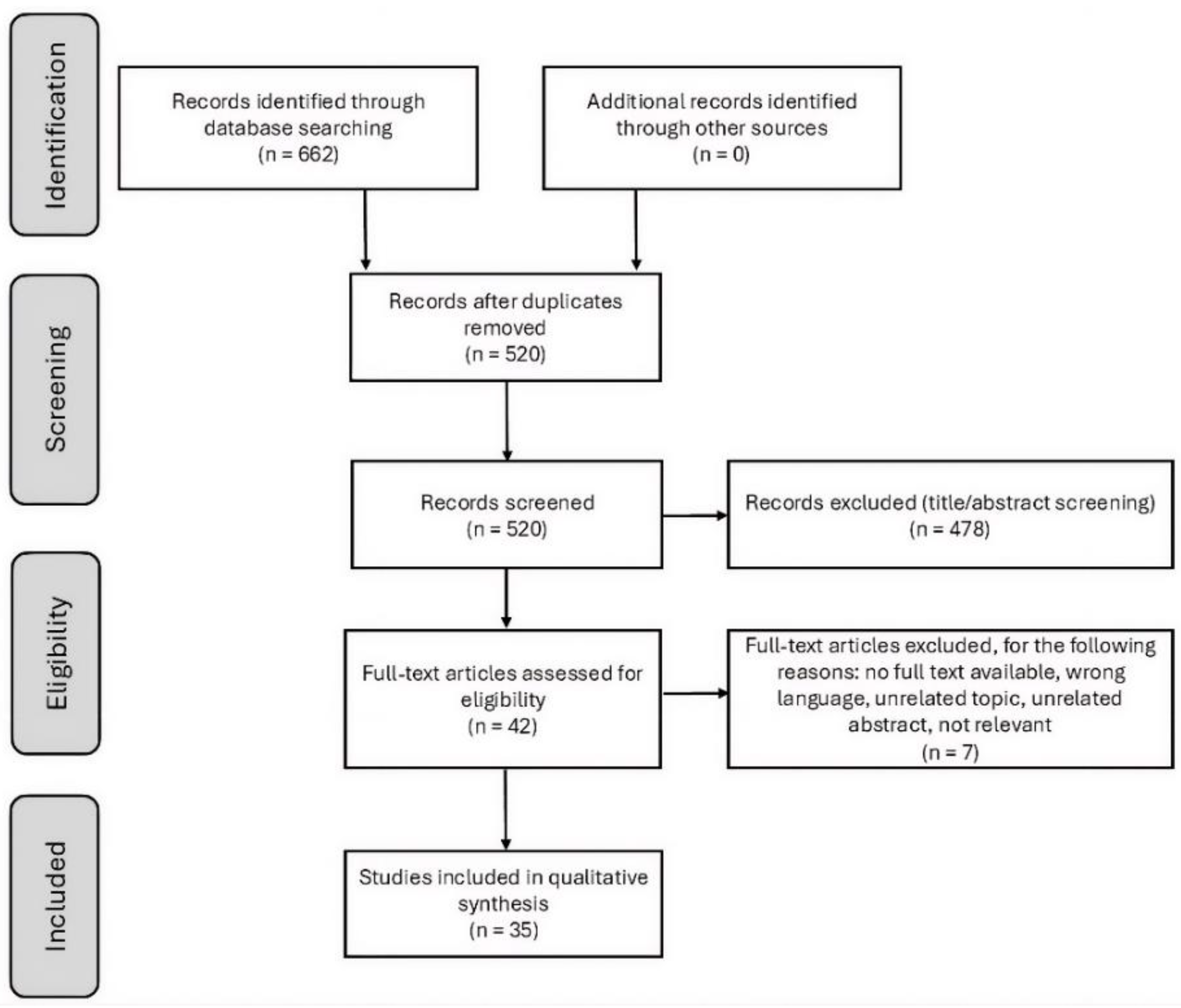
Screening, data extraction, and consistency checks were performed by the author.
Data Extraction
For included studies, data were extracted into a standardized spreadsheet capturing: ID, first author, year, title, country, species, design, sample size (total and per group), population description, intervention family and description, dose/schedule, comparator type and description, clock(s), tissue/matrix, timepoints, effects on DNAm age, effects on pace of aging, safety/adverse events, and overall risk of bias (RoB).
Due to space constraints, the full study-level extraction table (including study characteristics and overall RoB) is provided in Appendix B.
Risk of bias (RoB) Assessment
Study-level robustness was contextualized using a study-level risk-of-bias (RoB) field recorded in the extraction matrix, with a concise justification. In randomized trials, the overall RoB judgment was informed by an abbreviated RoB 2 approach, used for pragmatic study-level contextualization rather than formal domain-level adjudication. In non-randomized and/or preclinical studies, the RoB field captured major qualitative biases (e.g., confounding, selection, measurement), with supporting rationale recorded in the extraction matrix and reported in Appendix B.
Synthesis
Evidence was synthesized narratively and structured by intervention family: lifestyle, exogenous compounds, blood/circulation-derived interventions, and cellular reprogramming. Due to heterogeneity in interventions, populations, tissues, clocks, durations, and comparator structures (parallel vs pre–post), no meta-analysis and no formal publication-bias assessment were performed. Where studies reported multiple clocks and/or tissues, results were summarized per clock/tissue as reported, interpreting multiplicity cautiously and prioritizing pattern consistency (direction) over isolated point estimates.
Results
Overview of Included Studies
Thirty-five longitudinal intervention studies in mammals were included, spanning diverse epigenetic clocks and biological matrices. Studies comprised predominantly human adult trials (including RCTs and single-arm pre–post designs), complemented by preclinical longitudinal studies in mammals (mouse, rat, and non-human primate). A wide range of clocks was used, including Horvath, Hannum, PhenoAge, GrimAge/GrimAge2, DunedinPACE, and species- or tissue-specific clocks in animal studies.14-48
Lifestyle Interventions
Thirteen studies modified lifestyle through diet, physical activity, weight management, and/or stress-related programs; all were human studies meeting inclusion criteria.14-26 Across this category, follow-up ranged from ~8 weeks to 24 months (including structured 12–18-month programs), with sample sizes spanning from small pilot cohorts to >250 participants; for example, MACRO randomized n=148 (DNAm baseline n=144) and CALERIE randomized n=220 (DNAm n=197). Overall, lifestyle interventions tended to yield modest DNAm-clock changes, with more coherent signals under sustained exposures and plausible physiological shifts.
Dietary Interventions
Diet-focused interventions included sulfur amino-acid restriction, nut-based supplementation, dietary pattern comparisons, Mediterranean-style diets, very-low-calorie ketogenic diets, and chronic calorie restriction, with follow-up spanning weeks to two years.14-20 In the STAY double-blind SAAR trial (NCT04701346; 8 weeks; n=59 randomized, SAAR n=31 vs control n=28), Hernández-Arciga et al. reported no significant changes in epigenetic clocks in blood (subset analyzed for methylation). Consistent with a null effect, estimated changes in epigenetic age measures were not distinguishable from zero and there were no significant between-group differences across the clocks evaluated after the 8-week intervention.14 A 14-week mixed nut supplementation trial using a sperm-specific epigenetic clock reported no change in “germline age” despite differential methylation signals.15 Trials comparing dietary patterns (e.g., low-carbohydrate vs low-fat) showed small changes with limited between-group differentiation across clocks, including only slight shifts in DunedinPACE (overall ~1.00 to 0.99 at 12 months; ~0.01 units) and modest/discordant patterns in other clocks (including slight increases in PCPhenoAge and PCGrimAge in the low-carbohydrate arm vs low-fat in MACRO).16 In a small longitudinal obesity cohort undergoing a very-low-calorie ketogenic diet (VLCKD) (n=10), epigenetic age deceleration was observed both during nutritional ketosis (~30 days; Horvath −3.3, Hannum −6.3, Levine −8.8 years) and at 180 days (Horvath −1.1, Hannum −7.4, Levine −8.2 years), with a mean slowing of approximately −6.1 years during ketosis and −6.2 years at study end (p<0.0001). Greater slowing was associated with BMI reduction, higher β-hydroxybutyrate levels (r≈−0.67 to −0.75; p≤0.001), and broader metabolic improvements.17 An individualized Mediterranean diet program did not show significant changes in Horvath age acceleration across the full cohort, with only a small subgroup signal that did not generalize across strata, with the epigenetic analysis conducted in n=120 intervention participants and significance (after BH correction) restricted to a subgroup of Polish women for AgeAccel/IEAA.18 A 4-week dietary intervention in 32 adults with metabolic syndrome using daily tree nuts + extra-virgin olive oil showed no significant change in epigenetic aging measures despite elevated baseline aging rates, with ΔDunedinPACE = −0.002 ± 0.070 (p=0.86) and ΔAgeAccelGrim = −0.04 ± 1.34 (p=0.89).19
By contrast, sustained calorie restriction produced clearer effects on pace-of-aging outcomes. In CALERIE (25% target restriction; achieved ~12% on average over two years), DNAm age clocks did not differ between groups, but DunedinPACE decreased moderately in the calorie restriction arm, with larger effects among participants achieving higher restriction levels, with effect sizes of approximately d=−0.29 at 12 months (p=0.0004) and d=−0.25 at 24 months (p=0.008) overall, and up to d=−0.43 at 12 months (p=1.4×10⁻⁵) and d=−0.40 at 24 months (p=0.0002) among participants achieving ~20% calorie restriction.20 These data suggest that clocks capturing pace/functional decline may respond more robustly to sustained metabolic shifts than clocks optimized for chronological age.
Physical Activity Interventions
Pure exercise-only evidence was more limited. A pilot home-based exercise program (GO-EXCAP) in older adults with myeloid neoplasms reported moderate but non-significant decreases in GrimAge and PhenoAge, with median [IQR] changes of approximately −1.4 years for both clocks (p=0.55 and p=0.10, respectively), with no consistent change in DunedinPACE or first-generation clocks (DunedinPACE median [IQR] −0.1 [0.2]; p=0.47).21 In the Florence DAMA trial physical activity did not significantly affect GrimAge (β = 0.09; p = 0.73) but did significantly reduce epigenetic mutation load (EML) (β = −2.06; 95% CI −2.84 to −1.28; p < 0.001). 22
Multicomponent Programs
Four multicomponent interventions combined diet, exercise, structured weight management, and/or stress reduction; none reported adverse events.23-26 An 8-week multicomponent program (plant-centered diet designed to support methylation, targeted supplementation, probiotics, and structured exercise) reported a significant saliva Horvath age reduction compared with controls, with a between-group difference of approximately −3.23 years (p=0.018; treatment n=18 vs control n=20).23 DIRECT-PLUS (18 months; dietary counseling including a polyphenol-rich variant with workplace physical activity support) evaluated multiple blood clocks and reported modest differences associated with adherence, including modest Li DNAmAge increases of ~0.8–1.1 years across groups over follow-up, with no clear between-diet pattern for DunedinPACE (which decreased similarly across groups without significant between-pattern differences).24 Other structured weight-management programs showed small, often non-significant changes across clocks, including ~0.5–1.1-unit reductions in Horvath and Hannum clocks over 12 weeks that did not reach statistical significance.25 A stress-response relaxation intervention reported an average epigenetic age decrease of ~1.5 years, with stronger signal in healthy participants than in post-myocardial-infarction patients, but effects were borderline and heterogeneous, with −4.67 ± 4.40 years in healthy participants (p=0.053) versus −0.14 ± 1.55 years in post-MI patients (p=0.428).26
Exogenous Compounds (Humans and Preclinical)
Fifteen studies evaluated exogenous compounds: pharmacological agents, vitamins, nucleotide supplementation, polyphenols/extracts, NAD⁺ modulators, and multinutrient formulations.27-41 Thirteen were human studies and two were in mammalian models (marmosets and mice). Overall, heterogeneity was high and coherence across clocks and matrices was limited.
Pharmacological Interventions
In a factorial trial of postmenopausal women with overweight and prior breast cancer, metformin (up to ~850 mg twice daily), a telephone-based weight-loss program, and their combination were compared with placebo/standard care over six months with multiple blood clocks assessed. Epigenetic findings were globally null for metformin versus placebo across clocks, with adjusted ITT differences in age acceleration ranging from −0.91 to +0.82 years across clocks (all p ≥ 0.18), including EAA PhenoAge +0.82 years (95% CI −1.16 to 2.80; p=0.41) and EAA GrimAge −0.91 years (95% CI −2.24 to 0.41; p=0.18), and the weight-loss arm showed small, inconsistent signals interpreted as statistical noise, including a nominal increase in EAA PhenoAge of +2.02 years (95% CI 0.02 to 4.03; p=0.05, adjusted ITT).27
In an RCT in mild-to-moderate Alzheimer’s disease, bezisterim (NE3107/HE3286; 20 mg twice daily for 30 weeks) was associated with multi-year epigenetic age reductions versus placebo in a small per-protocol methylation subset across several blood clocks (including SkinBloodAge, Hannum, and InflammAge), with trends in GrimAge and PhenoAge, with point estimates of approximately −3.68 years (SkinBloodAge; p=0.017), −5.00 years (Hannum; p=0.006), −4.77 years (InflammAge; p=0.022), and trend-level reductions of −3.71 years (PhenoAge) and −1.92 years (GrimAge; p≈0.06–0.08).28 Safety reporting indicated common treatment-emergent adverse events with no excess discontinuations in the active arm versus placebo, with any TEAE in 72.7% vs 62.5%, treatment-related AEs in 12.5% vs 18.2%, discontinuations due to AEs in 0% vs 9.1%, and SAEs in 4.2% vs 9.1% (bezisterim vs placebo, per-protocol population).28
In preclinical evidence, rapamycin showed discordant results across species and tissues: in common marmosets, chronic rapamycin did not change blood epigenetic age, with a small non-significant treatment coefficient of −0.18 years (p=0.686);29 in mice, dietary rapamycin, calorie restriction, and Ames dwarfism markedly slowed hepatic epigenetic aging (based on WGBS, n=4 per group), with stronger effects for calorie restriction and Ames dwarfism than rapamycin, with reductions of ~6.0 months for rapamycin (p<0.05), ~9.4 months for calorie restriction (p<10⁻⁴), and ~10.1 months for Ames dwarfism (p<0.01).30
Vitamins and Omega-3
In DO-HEALTH (2×2×2 factorial; older European adults), daily vitamin D₃ and omega-3 supplementation, with or without a simple home strength program, was associated with small favorable shifts in blood PC-PhenoAge over three years, with global effect sizes of ~0.16–0.32 units (≈2.9–3.8 months equivalent), with the most consistent omega-3 effects observed in PhenoAge, GrimAge2, and DunedinPACE.31 A longitudinal cohort of vitamin-D–deficient older adults reported lower epigenetic age in those self-reporting supplementation versus matched quasi-controls using a 7-CpG clock and Horvath, by approximately 2.6 years (7-CpG clock; p=0.011) and 1.3 years (Horvath; p=0.042), respectively, with no differences in Hannum, PhenoAge, or GrimAge.32 Two studies explored B vitamins: folic acid plus B12 over two years did not significantly change blood Horvath age overall, with a mean change of approximately −0.765 ± 1.435 years (p=0.60; n=44), though a genotype-specific signal was reported;33 another trial adding folate/B6/B12 to vitamin D₃ and calcium produced divergent CpG-level changes in a reduced CpG clock, with inconclusive net effects on global epigenetic age, including ΔASPA 1.40 ± 4.02 vs −0.96 ± 5.12 (p=0.046), ΔPDE4C 1.95 ± 3.57 vs 0.22 ± 3.57 (adjusted p=0.062), and an adjusted OR of 5.26 (95% CI 1.51–18.28) for “accelerated aging” in the B-vitamin group.34
Multinutrient Formulations
A 12-week open trial of a combined supplement including vitamins, polyphenols, and omega-3 in middle-aged and older adults showed no significant overall changes across major clocks, with subgroup signals restricted to participants with higher baseline acceleration and to saliva InflammAge in a defined subgroup, including an approximately 2-year reduction in a Horvath-accelerated subgroup (p≈0.069), and in the saliva InflammAge-accelerated subgroup (n=29), reductions of ≈3.31 years in epigenetic age (−4.055%; p=0.015) and ≈3.47 years in age acceleration (−46.77%; p=0.0058).35 An open-label 12-month “Cel System” program combining multicomponent capsules with minimal walking and meditation reported a reduction in PC Horvath age acceleration at 12 months from 0.60 to −0.15 years (Δ≈−0.75; p=0.048), with a larger effect at 6 months (−0.36; p≈6.1×10⁻⁴) and reductions in a damage-centered clock (DamAge) at earlier timepoints, from 2.46 to approximately −0.7 years at 3–6 months (p≈0.003–0.0014), with partial rebound to about −0.12 years at 12 months (p=0.12), while DunedinPACE increased over 12 months, from 0.94 to 0.99 (~5% acceleration; p≈7.4×10⁻⁵).36 A separate open study of Ca-AKG plus vitamin A or D using a proprietary 9-CpG saliva clock reported a large mean epigenetic age reduction over ~7 months, with a mean reduction of 7.96 years (n=42; p=6.538×10⁻¹²), and −7.69 years in a “stable lifestyle” subgroup (n=13; p=7.263×10⁻⁵), without adverse events reported.37
Polyphenols/Extracts and Nucleotide Supplementation
A 90-day open pilot using HBT Rejuvenate (Himalayan tartary buckwheat–based formulation) reported no significant changes in blood OMICmAge, PCPhenoAge, PCGrimAge, or DunedinPACE overall, though subgroup analyses by baseline level showed changes in age-acceleration metrics without global effects, including decreases in PCPhenoAge EAA in the +1 SD baseline subgroup (p=0.031) and increases in PCGrimAge EAA and OMICmAge EAA in −1 SD baseline subgroups (both p=0.031).38 A 12-week randomized trial of Monarda didyma L. extract (100 mg/day) reported stability of epigenetic age in the intervention group while placebo increased significantly, resulting in a significant between-group difference at week 12 using a 5-CpG clock, with within-group p=0.4522 for intervention (stable) versus p<0.0001 for placebo (increase), and a post-intervention between-group difference of p=0.0162; no adverse events were reported.39 In TALENTs, 5′ nucleotide supplementation (AMP, CMP, GMP, UMP; 1.2 g/day for 19 weeks) in older adults reduced a composite epigenetic age metric (median across PC Horvath, Hannum, GrimAge, and PhenoAge) by ~3.1 years versus placebo at end-of-follow-up, with β≈−3.08 years (95% CI −5.07 to −1.10; p≈0.0023), with no serious adverse events or clinically relevant safety changes.40
NAD⁺ Modulators
In a 10-week double-blind RCT in older adults with mild cognitive impairment, nicotinamide riboside (up to 1 g/day) did not produce significant within-group changes or differences versus placebo across IEAA, EEAA, PhenoAge, or GrimAge measured in PBMCs; exploratory trends were small and inconsistent.41 Adverse events were recorded in both arms, with no serious adverse events reported; 18 adverse events occurred in the NR arm and 21 in placebo (7/10 participants in each arm), including one stroke in placebo and one case of severe nausea in the active arm that improved after dose reduction.41
Blood/Circulation-Derived Interventions (Humans and Rodents)
Six studies evaluated blood- or circulation-derived interventions: three in humans (blood products and plasma exchange-related procedures) and three in rodent models (young plasma, plasma fractions/exosome-rich preparations, and heterochronic parabiosis).42-47
Human Studies
A single-site sham-controlled trial assessed therapeutic plasma exchange (TPE) with albumin, with one arm including intravenous immunoglobulin (IVIG), under different schedules over 3–6 months in a 42-participant trial, quantifying 36 blood methylation clocks, with biweekly (TPE±IVIG) and monthly TPE regimens. Two discontinuations occurred due to adverse events, one linked to IVIG, and a mild albumin allergic reaction occurred in 0.42% of procedures (1/240 procedures).42 At the end of the intervention period (second timepoint, before session 4), the maximum epigenetic age decrease versus sham was ~2.6 years in the TPE+IVIG arm and ~1.3 years in a monthly TPE arm, specifically 2.61 years (FDR=6.22×10⁻⁵) and 1.32 years (FDR=2.42×10⁻²), respectively, with consistent direction across multiple clocks (FDR<0.05), including 10 clocks differing vs sham in TPE+IVIG and 5 clocks in monthly TPE, and particularly large decreases (~7–10 years) in immune- and inflammation-centered clocks (≈9.7 years for “Immune” and ≈7.1 years for “Inflammation”).42 Notably, at a later follow-up after sessions stopped, the differences disappeared versus sham, consistent with signal loss after discontinuation (no significant differences vs sham at the later post-intervention assessment).42
In contrast, another study examined repeated plasmapheresis in human donors under two different frequencies without a true no-treatment arm (a delayed-start crossover-like control), in which one group did not undergo the first 4 plasmapheresis procedures and functioned as a crossover-like control. Over 18 weeks (up to 8 procedures), with 570–830 mL removed per session, mixed models indicated significant increases in multiple GrimAge family clocks (~+0.16–0.26 years per session) and Hannum-type clocks (~+0.13–0.17 years per session), including GrimAge +0.26±0.05 (p=5×10⁻⁷), GrimAge2 +0.22±0.05 (p=0.0002), GrimAge2_Tuned +0.16±0.03 (p=1.26×10⁻⁵), GrimAge2_Calibrated +0.22±0.05 (p=0.0002), Hannum +0.17±0.04 (p=0.0002), and RobustHannum +0.13±0.03 (p=2.42×10⁻⁵), alongside an increase in DunedinPACE of ~0.003±0.001 units per session (p=0.0058), corresponding to ≈2.4% cumulative acceleration after 8 sessions. No adverse events were reported.43
Finally, an open study administered a human umbilical cord plasma concentrate (secretome enriched in extracellular vesicles and proteins) via weekly intramuscular injections for 10 weeks (1 mL weekly; n=18 adults). The primary signal was a reduction in GrimAge acceleration (~0.82 years), from approximately +0.04 years to −0.78 years (paired p≈0.009), with decreases in methylation-based protein surrogates (Cystatin C and GDF-15) (age-adjusted p=2.4×10⁻² and p=2.4×10⁻³, respectively), while classic clocks (Horvath, Hannum, SkinBloodAge, PhenoAge, DNAmTL, DNAmGrimAge) did not change significantly. Local mild reactions occurred in two participants after the first injection, with no other adverse events reported.44
Preclinical Studies
Across three rodent studies, reported epigenetic age reductions were large—up to ~ 77.6%—across multiple organs in some designs. One study administered an exosome-rich plasma fraction (E5) from young pigs to old Sprague-Dawley rats and measured rat-specific epigenetic clocks in multiple organs, using 109-week-old (~25-month) male rats (n=6/group) and E5 derived from 6–7-month-old pigs, delivered as two series of four intravenous injections separated by 95 days (total study duration 155 days), reporting large reductions (e.g., liver 77.6%, blood 68.2%, heart 56.5%, hypothalamus 29.6%), with a mean ~67% rejuvenation across four primary tissues. A replication experiment (E5 vs saline) confirmed significant blood rejuvenation on the final blood clock, with a weaker signal on the pan-tissue clock (p=0.054); after excluding one outlier control, p=0.014 in females and p=0.053 in males, with no evident abnormal physical/behavioural signs or histological alterations.45 Another study administered young rat plasma to very old female rats until death, via 1 mL intraperitoneal injections every 2 weeks (plasma n=9 vs control n=8) starting at ~25.6 months, reporting improved appearance parameters, increased median lifespan by 2.2 months, and lower blood epigenetic age; the clearest signal emerged in an age-band analysis late in life (27–31.5 months) showing ~3–4 months lower epigenetic age versus controls (p<0.05).46
A heterochronic parabiosis study in old mice exposed to young circulation for three months (followed by surgical separation) assessed blood and liver using murine epigenetic clocks and multi-omic platforms in C57BL/6J mice (old ~20 months), compared with old–old isochronic controls. After separation, old mice previously exposed to young circulation showed ~16–32% lower blood epigenetic age than old–old controls, with liver reductions of ~17–27% (array-based) and sustained rejuvenation (~11–26%) after separation; during the parabiosis phase, liver RRBS-based reductions ranged ~5–26%; short-term parabiosis (5 weeks) produced much smaller and often non-significant changes (~0–11%), indicating strong dependence on exposure duration.47
Cellular Reprogramming (Preclinical)
No human interventions met criteria for cellular reprogramming. Evidence was limited to a single study in aged female Sprague-Dawley rats assessing OSKM factor expression in hippocampus.48 Old rats received a stereotaxic bilateral injection of a high-capacity adenovector (Tet-Off cassette) expressing OSKM plus GFP, with 39 days of expression before sacrifice, compared with old GFP-only controls and young intact rats (young intact: 3.5 months, N=12; old GFP controls: 25.3 months, N=16; old OSKM-GFP: 25.3 months, N=17). No pathological alterations were observed in hippocampus or other brain regions within the expression window.48 Three hippocampus-based clocks were evaluated (rat brain clock, human–rat relative age clock, and a mouse brain clock adapted to MammalMethylChip40), all measured in hippocampal tissue at the end of the 39-day expression window, with the main old-vs-old comparison based on n=6 controls vs n=8 OSKM-treated rats. Compared with old controls, OSKM-treated old rats showed slightly lower epigenetic age across clocks, with near-significant two-sided p-values (0.064, 0.076, 0.088) and p<0.05 in one-sided contrasts; no pace-of-aging metrics analogous to DunedinPACE were assessed.48
Discussion
Across intervention families, the evidence supports measurable plasticity of DNAm-based biomarkers in response to interventions, but with strong dependence on intervention type, clock construct, tissue/matrix, duration, and methodological robustness. In many settings, the same intervention can be associated with improvements in certain clocks and no change—or discordant change—in others, underscoring the need to interpret effects relative to what each clock measures.8,9,11-13
Lifestyle Interventions: Modest Effects, More Coherent Under Sustained Exposure
Across 13 human studies, lifestyle interventions varied widely in design and clocks, yet the overall pattern was relatively stable: effects tended to be small-to-moderate, and the most consistent signals emerged when exposures were sustained (months to years) and accompanied by plausible physiological shifts, such as prolonged calorie restriction.20 By contrast, short interventions and dietary “composition” comparisons often produced small changes with limited between-group differentiation, consistent with the interpretation that clock signals respond more robustly to chronic systemic state changes (energy balance, adiposity, inflammation, metabolic signalling) than to isolated dietary modifications without sustained systemic impact.
Exogenous Compounds: High Heterogeneity and Vulnerability to Non-Reproducible Signals
For exogenous compounds (pharmacological agents and nutraceuticals), heterogeneity was greater and global coherence weaker. The contrast between a robust trial with globally null epigenetic findings (metformin)27 and favorable signals in a small per-protocol sub-study (bezisterim)28 illustrates that mechanistic plausibility does not guarantee detectable effects on epigenetic clocks—particularly when analytic sample sizes are small or when multiple clocks are assessed without a clearly pre-specified primary endpoint. For nutraceuticals and complex formulations, a substantial portion of evidence derives from open-label and/or uncontrolled studies, increasing vulnerability to selection bias, regression to the mean, concurrent lifestyle changes, and expectation effects, and complicating causal attribution.37 The use of proprietary clocks or reduced CpG panels adds another interpretive layer: large decreases in a specific clock may reflect real shifts in a particular signature, but may also be contingent on clock training, matrix (saliva vs blood), and technical stability.
In animals, the contrast between null blood findings in primates (rapamycin)29 and clearer effects in solid tissues in mice (liver)30 reinforces tissue dependence. These observations support the notion that intervention studies should justify tissue and clock selection explicitly; measuring blood for all interventions is not methodologically equivalent, especially when expected mechanisms are tissue-specific or when signals may be diluted by mixed-cell composition.
Blood/Circulation-Derived Interventions: Striking Effects, Yet Transient and Interpretively Ambiguous
Blood/circulation interventions produced some of the largest reported effect sizes, but also carry substantial potential for alternative interpretations. In humans, sham-controlled therapeutic plasma exchange provides methodologically informative evidence that altering the plasma environment can be reflected in epigenetic clocks, particularly those sensitive to immune/inflammation signatures, with a maximum decrease of ~2.6 years in the TPE+IVIG arm (and ~1.3 years in a monthly TPE arm) at the end of the intervention period.42 However, loss of signal after sessions stop suggests that at least part of the observed change may be transient or maintenance-dependent, shifting interpretation toward “systemic state modulation” rather than stable reversal of underlying biology.42
In rodents, large percentage reductions across organs after plasma fractions/exosome-rich preparations or heterochronic parabiosis broaden the plausibility of a modifiable systemic component, with reported reductions up to ~77.6% in some tissues/designs.45 Nevertheless, due to magnitude, these results warrant special caution for translation: small sample sizes, dependence on exposure duration, potential influence of tissue composition, and the need for independent replication. Even if effects are real in rodents, translation to humans requires clarifying how much observed change reflects “biological age” versus “tissue state” and cellular composition.
Partial Reprogramming: Early, Conceptual Evidence with Small Effects
Partial reprogramming evidence remains incipient and limited to a single rat study with focal hippocampal assessment.48 Consistent trends toward younger epigenetic age with near-significant p-values (two-sided p=0.064–0.088 across three clocks) are compatible with a small-to-moderate effect under conservative expression conditions (expected given safety constraints) and/or insufficient power to robustly detect epigenetic changes in brain tissue. At this stage, the principal value of these data is conceptual: they support in vivo feasibility of directly intervening on epigenetic states, but do not yet support firm inferences about durability, therapeutic window, or generalizability.
Limitations
Three limitations cut across categories and should be incorporated explicitly in interpretation.
1) Multiplicity of clocks and endpoints: Many studies report multiple clocks and sub-analyses, increasing the risk of isolated, non-reproducible signals when correction or pre-specification is absent.
2) Matrix and cellular composition: Whole blood, PBMCs, and saliva are not equivalent. Some clocks are highly sensitive to immune/inflammatory and cell-composition shifts, which may yield apparent “rejuvenation” that partially reflects transient state changes.
3) Design and causal attribution: The most striking findings in several nutraceutical and systemic interventions frequently come from open-label or uncontrolled designs, limiting causal attribution and tending to inflate effect estimates.
Additionally, evidence heterogeneity (populations, interventions, tissues, clocks, and parallel vs pre–post schemes) precluded meta-analysis and requires cautious interpretation of effect magnitude. Search scope was restricted by time period, language, and databases consulted, and screening/extraction were conducted by a single author, despite documented traceability.
Conclusions
DNAm-based epigenetic biomarkers are modifiable by interventions in mammals, but observed effects are heterogeneous and depend on the intervention, the clock construct (age versus pace/risk signatures), the biological matrix and tissue, and study design. A single notion of “epigenetic rejuvenation” is not supported; rather, intervention effects appear domain-specific and should be interpreted in relation to what each clock measures.
In humans, lifestyle interventions generally show modest effects, with more consistent signals when stimuli are sustained and accompanied by physiologically meaningful changes. For exogenous compounds, evidence is mixed: robust null findings coexist with favorable signals in other contexts, often conditioned by clock heterogeneity, small analytic samples, or open-label designs. For blood/circulation-derived interventions, human studies suggest that manipulating the circulatory milieu can be reflected in immune/inflammation-sensitive clocks, but direction and persistence are not uniform; in animal models, larger-magnitude effects are reported with substantial translational uncertainty. Partial reprogramming evidence remains preclinical and preliminary and is best considered conceptual rather than confirmatory. Overall, results support the premise that intervening on biological determinants of aging can modify epigenetic readouts, while underscoring the need for stronger standardization to distinguish transient “state modulation” from sustained changes compatible with slowing biological aging.
Author Contributions
Author contributions (CRediT): A.F.A.C.: Conceptualization, Methodology, Investigation (screening and data extraction), Data curation, Writing – original draft, Writing – review & editing.
Funding
No external funding was received.
Data Availability Statement
Search strategies, bibliographic exports (.nbib/.ris), screening logs, and the data extraction dataset (CSV/Excel) have been deposited on OSF as supplementary material (public project).
Conflicts of Interest
The author declares no competing interests.
Use of generative AI tools
Generative AI tools were used exclusively for auxiliary support (preliminary spelling/grammar checks, suggestions for reference organization/formatting, synonym exploration and sentence rephrasing for clarity, and initial drafts of some schematics based on author-defined concepts). No AI tools were used for study selection, data extraction, critical analysis, or conclusions. All AI-assisted outputs were manually validated.
Appendix A. Full Search Strategy (Search Terms and Strings by Database)
Appendix A1. Mechanistic Evidence Search Strategy (PubMed)Appendix A2. Intervention Search Strategy (PubMed, Scopus, and CENTRAL)
| ID | Database | Date | Query | Filters | Results | Exported | Selected |
| M0 | PubMed | 17/11/2025 | (“hallmarks of aging”[tiab] OR “hallmarks of ageing”[tiab]) AND (update[tiab] OR review[pt] OR framework[tiab]) AND (2010:2025[dp]) | 2010–2025[dp]; review[pt] | 475 | 2 | 36599349; 23746838 |
| M1 | PubMed | 17/11/2025 | (epigenetic*[tiab] AND (aging[tiab] OR ageing[tiab])) AND (review[pt] OR mechanisms[tiab] OR framework[tiab]) AND (2010:2025[dp]) | 2010–2025[dp]; review[pt] | 3831 | 3 | 36522308; 29643443; 36336680 |
| M2 | PubMed | 17/11/2025 | (“DNA methylation”[tiab] OR “DNA Methylation”[Mesh]) AND (dynamics[tiab] OR remodeling[tiab] OR turnover[tiab] OR demethylation[tiab] OR “epigenetic drift”[tiab]) AND (aging[tiab] OR ageing[tiab] OR “Aging”[Mesh]) AND (review[pt] OR “Review”[Publication Type] OR mechanisms[tiab]) AND (2010:2025[dp]) NOT (atherosclero*[tiab] OR cardiomyocyte*[tiab] OR cancer*[tiab] OR tumor*[tiab] OR Huntington*[tiab] OR plaque[tiab]) | 2010–2025[dp]; review/Review; NOT (cardio/cáncer/etc.) | 180 | 3 | 25913071; 32356238; 29268958 |
| M3 | PubMed | 17/11/2025 | (chromatin[tiab] OR heterochromatin[tiab] OR “H3K9me3”[tiab] OR “H3K27me3”[tiab] OR sirtuin*[tiab] OR polycomb[tiab] OR histone*[tiab]) AND (aging[tiab] OR ageing[tiab]) AND (review[pt] OR mechanisms[tiab]) AND (2010:2025[dp]) | 2010–2025[dp]; review[pt] | 2976 | 2 | 27518561; 27482540 |
| M4 | PubMed | 17/11/2025 | (“DNA methylation age”[tiab] OR “epigenetic clock”[tiab] OR “epigenetic age”[tiab] OR PhenoAge[tiab] OR GrimAge[tiab] OR DunedinPACE[tiab]) AND (human*[tiab] OR tissue*[tiab]) AND (2010:2025[dp]) | 2010–2025[dp]; human*/tissue* | 718 | 4 | 24138928; 29676998; 36516495; 35029144 |
| ID | Database | Date | Query | Filters | Results | Exported | Selected |
| I1 | PubMed (humans) | 21/11/2025 | ( “epigenetic clock”[tiab] OR “epigenetic clocks”[tiab] OR “DNA methylation age”[tiab] OR “DNAm age”[tiab] OR “epigenetic age”[tiab] OR “methylation clock”[tiab] OR “methylation clocks”[tiab] ) AND ( trial[tiab] OR randomized[tiab] OR randomised[tiab] OR intervention[tiab] OR interventional[tiab] OR “pre-post”[tiab] OR “before and after”[tiab] ) AND (“2010/01/01”[PDAT] : “2025/12/31”[PDAT]) AND (english[la] OR spanish[la]) AND humans[mh] | 2010–2025; EN/ES; Humans; Article | 145 | 145 | See PRISMA |
| I2 | PubMed (animals) | 22/11/2025 | (“epigenetic clock”[tiab] OR “epigenetic clocks”[tiab] OR”DNA methylation age”[tiab] OR “DNAm age”[tiab] OR”epigenetic age”[tiab] OR “methylation clock”[tiab] OR”methylation clocks”[tiab])AND(trial[tiab] OR randomized[tiab] OR randomised[tiab] ORintervention[tiab] OR treatment[tiab] OR”pre-post”[tiab] OR “before and after”[tiab])AND(Mice[MeSH Terms] OR mouse[tiab] OR murine[tiab] ORrat[tiab] OR rats[tiab] OR mammal*[tiab])AND(“2010/01/01”[PDAT] : “2025/12/31”[PDAT])AND(english[la] OR spanish[la])NOT humans[mh] | 2010–2025; EN/ES; Article; NOT humans | 5 | 5 | See PRISMA |
| I3 | Scopus | 21/11/2025 | TITLE-ABS-KEY( (“epigenetic clock” OR “epigenetic clocks” OR “DNA methylation age” OR “DNAm age” OR “epigenetic age” OR “methylation clock” OR “methylation clocks”) AND (trial OR randomized OR randomised OR intervention OR interventional OR “pre-post” OR “before and after”) ) | 2010–2025; EN/ES; Article | 507 | 507 | See PRISMA |
| I4 | Cochrane CENTRAL | 21/11/2025 | ( “epigenetic clock”:ti,ab,kw OR “epigenetic clocks”:ti,ab,kw OR “DNA methylation age”:ti,ab,kw OR “DNAm age”:ti,ab,kw OR “epigenetic age”:ti,ab,kw OR “methylation clock”:ti,ab,kw OR “methylation clocks”:ti,ab,kw ) AND ( trial:ti,ab,kw OR randomized:ti,ab,kw OR randomised:ti,ab,kw OR intervention:ti,ab,kw OR “pre-post”:ti,ab,kw OR “before and after”:ti,ab,kw ) | 2010–2025; EN/ES | 5 | 5 | See PRISMA |
Appendix B. Extraction Table
Table B1.
Extraction matrix for studies included in the qualitative synthesis (human and preclinical), including study characteristics, intervention/comparator details, epigenetic clock outcomes, safety/adverse events, and study-level risk-of-bias (RoB) judgments.
Table B1.
Extraction matrix for studies included in the qualitative synthesis (human and preclinical), including study characteristics, intervention/comparator details, epigenetic clock outcomes, safety/adverse events, and study-level risk-of-bias (RoB) judgments.
| Paper | Intervention | Comparator | Epigenetic_outcome | Secondary_outcome | Risk_of_bias | ||||||||||||||||
| ID | First_author | Year | Title | Country | Specie | Design | N_total | N_per_group | Population_description | Intervention_family | Intervention_description | Dose_schedule | Comparator_type | Comparator_description | Clock_name | Tissue | Timepoints | Effect_on_DNAmAge | Effect_on_pace_of_aging | Safety_AEs | RoB_overall |
| 7 | Fitzgerald, Kara N | 2021 | Potential reversal of epigenetic age using a diet and lifestyle intervention: a pilot randomized clinical trial. | USA | Human | Randomized controlled parallel-group pilot trial; 8-week multimodal lifestyle intervention vs no-intervention control | 43 randomized (38 analysed for primary outcome) | Intervention 21 randomized (18 analysed); Control 22 randomized (20 analysed) | Community-dwelling men aged 50–72 years without recent or chronic disease (cardiovascular, diabetes, autoimmune, cancer, neurodegenerative, etc.), non-smokers, limited alcohol, recruited around Portland, Oregon. | Lifestyle | 8-week plant-centered, methylation-supportive diet plus PhytoGanix® and UltraFlora® with structured exercise. | 8-week intervention; diet emphasizing high intake of dark leafy greens, overnight 12-hour fast (~7pm–7am), reduced refined carbohydrates, avoidance of added sugar and most processed foods; supplements: PhytoGanix® 2 servings/day and UltraFlora® Intensive Care 2 capsules/day (L. plantarum 299v); lifestyle: ≥30 minutes moderate-intensity exercise 5 days/week target ≥7 hours sleep per night. | No-intervention / usual lifestyle control | Control group received no specific dietary, supplemental, exercise, sleep or stress-management intervention; continued usual habits and any pre-existing low-dose supplements allowed by protoco | Horvath DNAmAge | Saliva | Baseline and end of 8-week intervention (study visit at ~week 9) | Compared with controls, intervention participants were on average 3.23 years younger at end of study (between-group difference, p=0.018). Within the intervention arm, DNAmAge decreased by mean 1.96 years vs baseline (p=0.066), while controls increased by 1.27 years (p=0.153). No net change in overall methylation level of the 353 Horvath clock CpGs; change reflected repositioning of methylation patterns toward a younger profile | NR | NR (no explicit adverse event or safety data reported) | (RoB 2) Overall some concerns: randomization and concealment were adequate with similar baselines, and DNAmAge (Illumina EPIC) was analysed blinded despite unblinded participants/coaches, but attrition was moderate and slightly unbalanced (18/21 vs 20/22 analysed) with limited reasons reported, and the small pilot sample plus no detailed pre-published analysis plan keep the rating at some concerns. |
| 9 | Bischoff-Ferrari, Heike A | 2025 | Individual and additive effects of vitamin D, omega-3 and exercise on DNA methylation clocks of biological aging in older adults from the DO-HEALTH trial. | Switzerland | Human | Post hoc analysis of randomized, double-blind, placebo-controlled 2×2×2 factorial RCT (DO-HEALTH) with 3-year vitamin D, omega-3 and home exercise interventions | 777 | Placebo 95; Vitamin D only 101; Omega-3 only 98; SHEP only 92; Vitamin D + Omega-3 95; Vitamin D + SHEP 104; Omega-3 + SHEP 95; Vitamin D + Omega-3 + SHEP 97 | Community-dwelling adults ≥70 years (mean age ~75.5, ~60% women), generally healthy and active (no major cardiovascular events or cancer in prior 5 years, MMSE ≥24, independent mobility) | Exogenous compound–based | Daily vitamin D3 and omega-3 supplementation with or without a simple home strength exercise program (SHEP) | Vitamin D3 2,000 IU/day; omega-3 1 g/day (330 mg EPA + 660 mg DHA from marine algae) given as two identical gel capsules per day; SHEP strength-training 30 min three times per week for 3 years versus attention-control joint-flexibility exercises 30 min three times per week | Placebo | Vitamin D and omega-3 placebos identical in appearance, taste and weight; attention-control flexibility exercise program 30 min three times weekly; factorial design comparing vitamin D vs placebo, omega-3 vs placebo and SHEP vs control exercise plus their combinations over 3 years | PC-PhenoAge | Whole blood | Baseline and 3-year follow-up | Omega-3 vs no omega-3 reduced PhenoAge age-acceleration change (standardized d ≈ −0.16; 95% CI −0.30 to −0.02), corresponding to ~3 months slower biological aging over 3 years; vitamin D alone and SHEP alone showed no significant effects; combinations including omega-3 plus vitamin D and/or SHEP showed additive benefits on PhenoAge (d ~ −0.24 to −0.32) | NR | NR (no explicit adverse event or safety data reported) | RoB2 – overall low to some concerns. Parent DO-HEALTH trial was a large, multicenter, randomized, double-blind, placebo-controlled 2×2×2 factorial RCT with centralized randomization and matching placebos; exercise arms used an attention-control flexibility program, with blinding less feasible. DNAm assays were performed on stored blood with laboratory staff blinded to treatment allocation. |
| 11 | Fiorito, Giovanni | 2021 | DNA methylation-based biomarkers of aging were slowed down in a two-year diet and physical activity intervention trial: the DAMA study. | Italy | Human | 24-month randomized 2×2 factorial lifestyle RCT (diet, PA, diet+PA, control); DNAm outcomes = secondary analysis | 219 paired samples (post-QC) | Diet 57 → 56; PA 56 → 56; Diet+PA 53 → 53; Control 58 → 54 (final pairs aggregated to N=219) | Healthy postmenopausal women (50–69 y) with high mammographic density (>50%), nonsmokers, attending Florence breast cancer screening program | Lifestyle | Plant-based, low-glycemic-load diet; structured physical activity program (~1 h/day moderate + 6–10 MET-h/week vigorous); combined arm = both; control = minimal lifestyle advice | 24 ± 3 months; diet: counseling + 6 group sessions + 8 cooking classes; PA: supervised weekly 1-h session + home exercises + walks | Active minimal-intervention lifestyle advice | – Diet effect = diet-containing arms (diet + diet+PA) vs no-diet arms (PA + control) – PA effect = PA-containing arms (PA + diet+PA) vs no-PA arms (diet + control) |
DNAmGrimAge, DNAmGrimAge Acceleration (DNAmGrimAA), Epigenetic Mutation Load (EML; stochastic epigenetic mutations), GrimAge components (PAI-1, Leptin, GDF-15, etc.) | Whole blood (buffy coat) | Baseline and 24 months | Diet slowed aging: – Within-group: diet −0.41 y (95% CI −0.79, −0.03) vs controls +0.25 y – DiD (diet vs control): β = −0.66 y (95% CI −1.15, −0.17; p=0.01) – WBC-adjusted: β = −0.42 y (p=0.05) PA: no DNAmGrimAA effect (β = +0.09 y; p=0.73) |
No formal pace clock; EML used PA slowed epigenetic mutation accumulation: – DiD (PA vs control): β = −2.06 “years” (p < 0.001), robust to WBC adjustment Diet: no EML effect (β = −0.37; p=0.39) |
NR (no explicit adverse event or safety data reported) | (RoB 2) Low risk for randomization and minimal missing DNAm data, but some concerns due to the open-label lifestyle intervention, unclear blinding, and secondary outcomes with modelling flexibility.– Low risk: randomization, minimal missing DNAm data – Some concerns: open-label lifestyle, unclear blinding, secondary outcomes with modelling flexibility |
| 12 | Orr, Miranda E | 2024 | A randomized placebo-controlled trial of nicotinamide riboside in older adults with mild cognitive impairment. | USA | Human | 10-week double-blind RCT, NR vs placebo, n=20 analyzed | 20 | NR 10, placebo 10 | Adults ≥65 y with mild cognitive impairment (MoCA<26); mostly Hispanic; mean age ~75–77 | Exogenous compound–based | Nicotinamide riboside (NIAGEN®) 1 g/day | Escalation 250→1000 mg/day; total 10 weeks | Placebo | matched capsules, identical escalation | IEAA, EEAA, PhenoAge, GrimAge | PBMCs | Baseline, 10 weeks | No significant within-group or between-group changes in any epigenetic-age metric Exploratory bootstrap: AgeAccelPheno & Grim: subtle decrease with NR; placebo ≈0 (Pheno) or slight ↑ (Grim) EEAA (Hannum): slight increase (accelerated aging) with NR IEAA: no change Overall: very small, inconsistent, non-significant effects |
NR | Mild–moderate AEs similar in NR vs placebo (7/10 each); one placebo stroke; one NR severe nausea resolved with dose reduction | (RoB 2) Some concerns due to the small sample size (n=10 per group), short study duration, and exploratory testing across multiple epigenetic clocks. |
| 25 | Fuentealba, Matias | 2025 | Multi-Omics Analysis Reveals Biomarkers That Contribute to Biological Age Rejuvenation in Response to Single-Blinded Randomized Placebo-Controlled Therapeutic Plasma Exchange. | USA | Human | Single-site single-blinded randomized placebo-controlled 4-arm trial; exploratory biological aging endpoints; primary aim = safety & feasibility; 3-month intervention, 3 timepoints | 42 completed (DNA methylation analyzed for all) | TPE+IVIG 10; Bi-weekly TPE 11; Monthly TPE 11; Sham 10 | Healthy adults ≥50 y (one in 40s allowed), no major clinical disease; exclusions for cardiovascular/pulmonary disease, active cancer/infection, GH/stem cells, psychiatric illness, anti-aging supplements (1 exception taking rapamycin) | Blood-derived | Therapeutic plasma exchange (1× plasma volume, 5% albumin replacement) ± 2 g IVIG; devices: Spectra Optia; sham procedure with water-filled lines + 250 mL saline | – Bi-weekly TPE+IVIG: 2 sessions first week of each month × 3 months (6 TPE sessions total) – Bi-weekly TPE (no IVIG): same schedule – Monthly TPE: 1 session/month × 6 – Sham: identical appearance, no plasma removal |
Placebo / sham-controlled | Sham apheresis with realistic noise/flow simulation; participants, caregivers, and raters blinded | ~35 TruAge clocks: Horvath, Hannum, PhenoAge, GrimAge, SystemsAge family, fitness clocks (FitAge, Gait, Grip, VO2max), PC clocks (PCGrimAge, PCHorvath/Hannum/PhenoAge), organ/system clocks (immune, inflammatory, metabolic, kidney, liver, heart, musculoskeletal), stochastic/drift clocks | Peripheral whole blood (EPIC 850k) | Baseline (tp1), before 4th session (tp2), before 6th session (tp3) | At timepoint 2 (peak effect): – TPE+IVIG: −2.61 y (FDR 6.2e-5) vs sham – Monthly TPE: −1.32 y (FDR 2.4e-2) vs sham – Bi-weekly TPE: negative direction; significant vs sham (mean not specified) Timepoint 3: No significant differences vs sham (attenuation/compensation) Clock families: SystemsAge immune/inflammatory clocks show largest effects (≈7–10 y decreases in TPE+IVIG; ≈2.5–5 y in monthly TPE) Overall: 15 clocks show significant rejuvenation at tp2 across active arms |
NR | 1 mild allergic reaction to albumin (0.42%); two total AEs requiring discontinuation (one IVIG-related). No major events; well tolerated | (RoB 2) Some concerns: allocation was first-come-first-served, raising high concern for sequence generation and possible baseline imbalance; however, blinding of patients, caregivers, and raters was reported, missing data were low (42/44 completed), and outcomes were measured with objective arrays likely analysed blinded, while testing multiple clocks (35+) raises concerns about multiplicity and selective reporting. |
| 27 | Hernández-Arciga, Ulalume | 2025 | Dietary methionine restriction started late in life promotes healthy aging in a sex-specific manner. | Norway | Human and mouse (Only human part was taken) | Double-blind randomized 8-week dietary RCT (SAAR vs high-SAA control), but this paper analyzes only a subset of the SAAR arm (n=20) with pre/post DNAm; no control-arm DNAm presented → effectively a single-arm pre–post epigenetic study. | 20 SAAR participants (paired baseline + 8-week samples) | Single analyzed group: SAAR/MetR n=20 (17F / 3M); no control methylation data | Overweight/obese but otherwise healthy adults; mean age 32.9 ± 6.1 y, BMI 31.5 ± 2.3 kg/m²; non-smoking, diet-controlled living conditions per parent trial | Lifestyle | Dietary sulfur amino acid restriction (human analogue of methionine restriction) | 8 weeks; SAAR vs high-SAA control in parent RCT, but only SAAR analyzed here | None for epigenetic outcomes (control arm not analyzed) | N/A — only SAAR arm methylation measured; therefore effects are within-group pre–post | Universal mammalian clocks (Horvath multi-species panel); mammalian blood clock; other mammalian composite clocks (exact names not fully itemized but derived from Epigenetic Clock Development Foundation)* | Whole blood (EDTA) | Baseline and 8 weeks | No effect – Authors explicitly state: “8 weeks of the sulfur amino acids diet did not affect the epigenetic age.” – No mean Δ reported; visual inspection shows no significant shift across mammalian clocks. – Direction = null, magnitude = not detectably different from 0. |
NR | NR (no explicit adverse event or safety data reported) | (RoB 2) Some concerns because only the SAAR arm was analysed, undermining the randomized comparison, and the reasons for missing methylation data (available for 20/31 SAAR participants) were not described. Measurement risk is low given objective lab-based clocks, and transparent reporting of a null result reduces concerns about selective reporting. |
| 43 | McGee, Kirsty C | 2024 | A combination nutritional supplement reduces DNA methylation age only in older adults with a raised epigenetic age. | UK | Human | Uncontrolled open-label pre–post 12-week intervention; no comparator arm; DNAm age (blood + saliva) + inflammation + function | Blood: 79; Saliva: 75 (paired baseline + 12-week) | Single arm only (supplement group; 80 completers) | Healthy older adults ≥60 y; mean age 71.9 ± 6.2 y; BMI 25.8 ± 3.9; 49F / 31M; mostly White | Exogenous compound–based | Daily combination supplement (vitamins + polyphenols + omega-3) | 12 weeks daily; ingredients/day: Vit D3 20 µg; Niacinamide 50 mg; Vit C 85 mg; Omega-3 (EPA+DHA) 250 mg; Olive extract (10 mg hydroxytyrosol); Resveratrol 30 mg; Astaxanthin 3.2 mg | None (no placebo or control) | N/A – single-arm pre/post only | Blood: Horvath, Hannum, PhenoAge, GrimAge, Mean EpiAge (composite) Saliva: InflammAge (age & acceleration) |
Whole blood (EPIC 850K) | Baseline and 12 weeks | Effect_on_DNAmAge — whole cohort: Blood clocks: No significant changes in Horvath, Hannum, PhenoAge, GrimAge, or Mean EpiAge; no significant change in epigenetic age acceleration. Effect_on_DNAmAge — subgroups: Raised Horvath acceleration (≥2 y, n=23): Horvath EAA ↓ ~1.98 y (−21.5%), p=0.069 (trend) |
NR | NR (no explicit adverse event or safety data reported) | (RoB 2) High risk because there was no randomization or control group, creating high susceptibility to regression to the mean and time effects; the study used an open-label design, included subgroup analyses with multiplicity concerns, and although missingness was small, the reasons were not detailed. |
| 54 | Sae-Lee, Chanachai | 2018 | Dietary Intervention Modifies DNA Methylation Age Assessed by the Epigenetic Clock. | Netherlands | Human | Double-blind, randomized, placebo-controlled 2-year RCT in older adults, but this epigenetic analysis includes only the supplemented arm (n=44) → effectively single-arm pre–post DNAm with sex × MTHFR genotype stratification; secondary analysis | 44 (all in folic acid + B12 group; paired baseline + 2-year samples) | By sex: 19 males, 25 females | Community-dwelling older adults aged 65–75 y, generally healthy, non-smokers, not heavy drinkers | Exogenous compound–based | Folic acid + vitamin B12 supplementation | Folic acid 400 µg/day + vitamin B12 500 µg/day, orally, daily for 2 years | None for DNAm analysis (placebo arm not used) | Within-group comparison: baseline vs 2-year follow-up in supplemented individuals; analyses stratified by MTHFR C677T genotype (CC vs TT) and sex | Horvath 2013 pan-tissue DNAmAge (age acceleration residual) | Whole blood | Baseline and 2 years | Whole supplemented group (n=44): – Age acceleration residual: no significant change – Mean Δ ≈ −0.77 ± 1.44 years; p = 0.60 |
NR | NR (no explicit adverse event or safety data reported) | (RoB 2) Some concerns: although the parent trial was a well-conducted double-blind RCT, the epigenetic analysis included only the active/supplemented arm, losing the randomized comparison. Multiple small-n subgroup analyses (sex × genotype) with one positive finding (female 677CC) raise multiplicity/chance-finding concerns, while objective DNAm measures and minimal missing data suggest low risk for measurement and attrition. |
| 65 | Salas-Huetos, Albert | 2021 | Sperm DNA methylation changes after short-term nut supplementation in healthy men consuming a Western-style diet. | Spain | Human | 14-week randomized controlled parallel-group diet trial; this paper is a pre-planned methylation substudy of ejaculated sperm; ~72 men with paired DNAm data; germline epigenetic aging assessed | 72 (paired baseline + 14-week sperm methylation) | ≈35–37 per arm (nuts vs control; exact split not essential for clock outcomes) | Healthy men ~18–35 y, consuming Western-style diets; BMI normal/overweight; no fertility problems; no nut allergies | Lifestyle | Mixed tree-nut supplementation | 60 g/day nuts (30 g walnuts + 15 g almonds + 15 g hazelnuts) for 14 weeks, consumed atop habitual diet | Active dietary control (Western diet without nuts) | Control group maintained habitual Western diet and were instructed not to consume nuts | Sperm-specific germ line epigenetic age predictor (Jenkins sperm clock); includes epigenetic age and age acceleration | Ejaculated sperm (purified sperm fraction) | Baseline and 14 weeks | No effect – No significant within-group change in sperm germ line age for either nuts or control – No significant between-group difference in Δ germ line age – Authors explicitly state: no detectable effect on sperm epigenetic aging, despite many nut-related DMRs |
NR | NR (no explicit adverse event or safety data reported) | (RoB 2) Some concerns: the parent randomization was sound, but the methylation subset (~72/119) may not be fully representative, and participants were unblinded in the diet trial. Measurement bias is likely low due to objective sperm DNAm arrays, and the methylation outcomes were prespecified with a transparently reported null result. |
| 67 | Kou, Minghao | 2025 | Epigenetic Age Acceleration and Cardiometabolic Biomarkers in Response to Weight-Loss Dietary Interventions Among Obese Individuals: The MACRO Trial. | USA | Human | 12-month parallel-arm RCT (low-carb vs low-fat). This Aging Cell paper is a secondary analysis of DNAm-based biological aging + cardiometabolic biomarkers at 0, 3, 12 months. |
Baseline 144; 3 months 129; 12 months 112 | Baseline: 71 LF / 73 LC 3 mo: 62 LF / 67 LC 12 mo: 54 LF / 58 LC |
Adults 22–75 y with obesity (BMI 30–45); mean age ~47 y; ~89% women; predominantly White and African-American; no diabetes or CVD | Lifestyle | Low-carbohydrate diet vs low-fat diet | • Low-carb: <40 g/day digestible carbohydrate • Low-fat: <30% energy from fat; <7% saturated fat Duration 12 months |
Active comparator (two diet arms) | Low-carb vs low-fat; no calorie targets for either arm | PCPhenoAge (AA), PCGrimAge (AA), DunedinPACE | Whole blood (EPIC 850K) | Baseline, 3 months, 12 months | No substantial diet-specific effect on epigenetic aging • DunedinPACE: ~1.00 → 0.99 (very small decrease; similar in both diets) • PCPhenoAge AA: little change; moves with chronological aging • PCGrimAge AA: similar minimal change; no diet group separation • No significant group×time interactions for any clock |
DunedinPACE decreased slightly (~0.01), but not different by diet; considered negligible effect size | NR (no explicit adverse event or safety data reported) | (RoB 2) Some concerns: the randomized RCT design supports low risk for randomization, but the open-label diet raises concerns about deviations, and 12-month attrition (144→112) was not fully explored for prognostic imbalance. Objective DNAm arrays reduce measurement bias, yet as a secondary analysis using multiple clocks, multiplicity remains a concern. |
| 72 | Carreras-Gallo, Natalia | 2025 | Effects of a natural ingredients-based intervention targeting the hallmarks of aging on epigenetic clocks, physical function, and body composition: a single-arm clinical trial. | USA | Human | 12-month single-arm, pre–post clinical trial (no randomization, no placebo); 1–4 DNAm measurements per participant | 51 participants (baseline + 3m + 6m + 12m variable availability) | Single cohort (no comparator arms) | Adults ≥55 y; 49% female; age 54–84; relatively healthy with low baseline EAA compared to external aging-biobank reference; self-selected supplement users | Exogenous compound–based | “Cel System” (Cel1, Cel2, Cel3) + 10-min walking + 5-min mindfulness daily | Daily supplementation × 12 months – Cel1: 2-HOBA (hobamine), astragalus extract, rutin, vitamin C, levomefolate, B12, zinc, selenium – Cel2: NMN, pterostilbene, astaxanthin, L-carnosine, vitamin D, riboflavin – Cel3: Apigenin, fisetin, oleuropein, EGCG, berberine, ALA, withaferin A Exact pill counts/frequency not reported |
None (pre–post only) | Each participant compared to own baseline | – First-generation / PC clocks: PCHorvath pan-tissue, PCHorvath skin&blood, PCHannum, IntrinClock, stochastic clocks – Second-generation: PCPhenoAge, PCGrimAge, OMICmAge, Marioni cAge, DNAmTL – Causal-framework clocks: DamAge, CausAge, AdaptAge – Third-generation pace: DunedinPACE – SystemsAge (overall + organ-specific: lung, immune, metabolic, etc.) – Fitness clocks: DNAmFitAge, DNAmGrip, DNAmGait, DNAmVO2max, DNAmFEV1 |
Whole blood (EPIC 850K) | Baseline, 3 months, 6 months, 12 months | PC Horvath pan-tissue EAA 0.60 → −0.15 at 12m (Δ ≈ −0.75 y; p=0.048) Strongest reduction at 6m: −0.36 (p=6.1×10⁻⁴) PC Horvath skin & blood EAA −1.23 → −0.31 (Δ ≈ +0.92 y “older”; p=0.045) PCHannum EAA Worsening at 6m (−0.45 → +0.29; p=0.027), resolves by 12m (−0.15; p=0.80) DamAge (damage-related “causal” clock) 2.46 → −0.66 (3m) and −0.74 (6m) (p≈0.003–0.0014) Partial rebound by 12m: −0.12 (p=0.12) SystemsAge overall −0.72 → −0.49 (ns; p=0.73) SystemsAge-lung 0.56 → −0.45 (Δ ≈ −1.01 y; p=0.0061) Fitness clocks Example: DNAmGrip EAA −0.24 → −0.87 (Δ ≈ −0.63 y; p=0.0042) |
DunedinPACE 0.94 → 0.99 at 12m (Δ ≈ +0.05, ~5% faster pace; p = 7.4×10⁻⁵) Short-term slowing at 3m (0.96) but rebound and overshoot by 12m |
NR (no explicit adverse event or safety data reported) | (ROBINS-I) High risk because the study had no randomization, control group, or blinding, and the multi-component supplement plus lifestyle intervention makes attribution to any single component impossible. Additional concerns include possible selection bias from self-selected supplement users, missing timepoints (1–4 per participant), industry involvement (authors employed by TruDiagnostic/SRW), and the inability to rule out regression to the mean and time effects. |
| 73 | Borsky, Pavel | 2025 | Human clinical trial of plasmapheresis effects on biomarkers of aging (efficacy and safety trial). | Czech Republic | Human | Prospective stratified randomized cross-over (G1 = 8 sessions; G2 = delayed-start 4 sessions) Analyzed primarily as dose–response per plasmapheresis session Duration 18 weeks |
41 enrolled → 38 at 9w: 34 completers | G1: 28 allocated G2: 13 allocated |
Healthy adult first-time plasma donors 40–60 y; screened per standard blood-donor rules; no major chronic disease; median age ~49.6 | Blood-derived | Standard donor plasmapheresis (Haemonetics PCS2) | Plasma volume 570–830 mL/session; anticoagulant citrate (CITRASOL 4%); q≥14 days • G1: 8 sessions (0–18 wks) • G2: 0–9 wks control, then 4 sessions (9–18 wks) |
Dose–response (per-session) within a partially cross-over design; no untreated control | Effect modeled as change in clock value per additional session adjusting for age, sex, monocyte %, naive CD4 T-cells | Horvath1, Horvath2, PhenoAge, GrimAge, GrimAge2, GrimAge2_tuned, GrimAge2_calibrated, Hannum, RobustHannum, PC clocks (PC Horvath1/2/Hannum/PhenoAge/GrimAge/DNAmTL), DunedinPACE, GrimAge component surrogates (ADM, B2M, Cystatin C, GDF-15, Leptin, PACKYRS, PAI-1, TIMP-1, COX) | Whole blood (buffy coat DNA) | Baseline, 9 weeks, 18 weeks | Significant positive per-session increases: (Estimate = increase in epigenetic age per plasmapheresis session) DNAmGrimAgeBasedOnRealAge: +0.26 ± 0.05 y/session, p=5×10⁻⁷ DNAmGrimAge2BasedOnRealAge: +0.22 ± 0.05, p=2×10⁻⁴ DNAmGrimAge2_Tuned: +0.16 ± 0.03, p=1.26×10⁻⁵ DNAmGrimAge2_Calibrated: +0.22 ± 0.05, p=2×10⁻⁴ Hannum DNAmAge: +0.17 ± 0.04, p=2×10⁻⁴ RobustHannum: +0.13 ± 0.03, p=2.42×10⁻⁵ DunedinPACE: +0.003 ± 0.001, p=0.0058 (≈ 0.3% faster pace/session) |
DunedinPACE increases with each session (+0.003/session). Cumulative effect over 8 sessions ≈ +0.024 (≈2.4% faster pace), directionally adverse. |
One participant discontinued early due to hypotension | (RoB 2) High risk: although stratified randomization was used, there was no non-treatment control and the cross-over design only partly mitigates confounding. The study was not blinded, had a small sample with attrition, tested many clocks with multiple comparisons, and although the mixed-model dose–response analysis was appropriate, time effects, procedure stress, and lifestyle confounding cannot be ruled out. |
| 75 | Yaskolka Meir, Anat | 2021 | Lifestyle weight-loss intervention may attenuate methylation aging: the CENTRAL MRI randomized controlled trial. | Israel | Human | 18-month randomized controlled lifestyle trial (LF vs MED/LC diets; at 6 months split to ±PA). This Aging Cell paper is a secondary DNAm substudy with n=120 (baseline + 18 months). |
120 (complete paired methylation) | Originally 4 groups (LF, LF+PA, MED/LC, MED/LC+PA ≈30 each), but DNAm analyses pool main diet contrasts (LF vs MED/LC). Subgroup effects (weight-loss success, liver fat status) emphasized. | Sedentary adults with abdominal obesity or dyslipidemia; mean age 48.6±9.3 y, BMI 30.2±3.3; workplace cohort; 58.8% with fatty liver at baseline. | Lifestyle | Low-fat (LF) diet vs Mediterranean/low-carb (MED/LC) diet; after 6 months each split into diet alone vs diet+PA. | Daily hypocaloric diet for 18 months; PA program moderate-intensity aerobic (after 6 months in the PA arms). | Active comparator (LF vs MED/LC; ±PA). Epigenetic results mainly within-subject and by subgroup, not between diets. | LF vs MED/LC; PA vs no PA; but no significant diet-group effects on DNAm aging. | Primary: Li 2018 240-CpG blood DNAmAge Secondary: Horvath 353-CpG (baseline only) |
Whole blood (EPIC 850K) | Baseline and 18 months | Cohort (240-CpG clock) mAge increased +1.1 ± 1.9 years over 18 months (≈ chronological aging). No difference between LF (+1.3 y) and MED/LC (+0.9 y), p=0.2. No effect of ±PA. |
NR | NR (no explicit adverse event or safety data reported) | (RoB 2) Some concerns because the DNAm substudy included only 120/278 participants, making selection bias possible, and the open-label lifestyle intervention with variable PA adherence raises concerns about deviations; subgroup findings also increase multiplicity concerns. Objective methylation assays reduce measurement bias, and there was no selective reporting of diet-group null results. |
| 78 | Vetter, Valentin Max | 2022 | Vitamin D supplementation is associated with slower epigenetic aging. | Germany | Human | Prospective two-wave longitudinal cohort (BASE-II → GendAge). Quasi-interventional, non-randomized, with optimal pair matching of treated vs untreated vitamin-D–deficient participants. |
~1,070 with epigenetic clocks at follow-up (exact n varies slightly by clock). | • Treated deficient → sufficient: 63 • Untreated deficient: 63 (matched) • Healthy controls (sufficient→sufficient): 63 (matched) |
Community-dwelling older adults (60–85 y baseline; 68.3±3.5 → 75.6±3.8 at follow-up), ~52% female. Vitamin D deficiency common at baseline (46%). | Exogenous compound–based | Vitamin D supplementation | Dose, preparation, and adherence not recorded; defined only via self-report + medication lists. | Matched quasi-control groups | Untreated deficient: remained deficient, no supplementation Healthy controls: always sufficient, no supplementation. Follow-up ~7.4 years. |
7-CpG (Vetter) Horvath 2013 Hannum 2013 PhenoAge GrimAge |
Whole blood | DNAm clocks evaluated at follow-up (T1). 7-CpG also available longitudinally but intervention effect analyzed cross-sectionally at T1. |
Among initially vitamin-D–deficient older adults, those who started supplementation and became sufficient had about 2.6 years lower 7-CpG DNAm age acceleration and 1.3 years lower Horvath DNAm age acceleration at follow-up than matched deficient non-supplementers, while Hannum, PhenoAge, and GrimAge showed no significant differences. | NR | NR (no explicit adverse event or safety data reported) | (ROBINS-I) High risk of bias because the study was non-randomized with self-selected supplementation, and dose and adherence were not known. Matching only partly reduces confounding, possible lifestyle co-interventions were not measured, and the use of multiple clocks with subgroup analyses raises concerns about multiplicity. |
| 81 | Nwanaji-Enwerem, Jamaji C | 2021 | An epigenetic aging analysis of randomized metformin and weight loss interventions in overweight postmenopausal breast cancer survivors. | USA | Human | 6-month, 2×2 factorial, randomized, double-blind, placebo-controlled RCT Arms (each n=48 in EA subset): Metformin only Weight-loss only Weight-loss + metformin Placebo only Epigenetic clocks are a post-hoc secondary analysis. |
192 | 48 per arm | Overweight/obese postmenopausal breast cancer survivors, mean age ~63 y, clinically stable, no active chemo/radiotherapy. | Exogenous compound–based | Metformin (parent trial: titrated up to ~850 mg BID) Phone-based weight-loss program (calorie restriction + PA target ~300 min/week) |
Metformin daily for 6 months Weight-loss coaching throughout 6 months |
Placebo (for metformin) and active lifestyle comparators (factorial design) | Placebo tablets + no weight-loss program (true control arm) | Hannum EAA, Horvath EAA, SkinBlood EAA, IEAA, EEAA, PhenoAge EAA, GrimAge EAA, DNAmTL, EpiTOC, EpiTOC2, MiAge | Peripheral blood (buffy coat) | Baseline and 6 months | Weight loss only vs placebo: • Hannum EAA: +0.98 y (p=0.19) • Horvath EAA: +0.74 y (p=0.42) • SkinBlood EAA: +0.86 y (p=0.21) • PhenoAge EAA: +2.02 y (p=0.05) — nominal, opposite direction, not interpreted as real • GrimAge EAA: +0.76 y (p=0.27) Metformin only vs placebo: All EAA differences −0.91 to +0.82 y (all p ≥ 0.18). Weight loss + metformin vs placebo: All EAA differences −0.63 to +0.45 y (all p ≥ 0.50). |
NR | NR (no explicit adverse event or safety data reported) | (RoB 2) Some concerns because the epigenetic analysis included only 192/333 randomized participants, so the subset may be subject to selection bias despite the rigorous factorial RCT design. Testing many clocks across many contrasts raises multiplicity concerns, though objective EPIC measures reduce measurement bias and consistently reported null results lower selective reporting concerns. |
| 82 | Clement, James | 2022 | Umbilical cord plasma concentrate has beneficial effects on DNA methylation GrimAge and human clinical biomarkers. | USA | Human | Phase I single-arm, open-label pre–post trial 10 weekly intramuscular injections of umbilical cord plasma concentrate; outcome measures before vs after |
18 (paired baseline & post-treatment) | Adults 60–95 y (mean ~74), generally in age-typical health; some with hypertension, hyperlipidemia, diabetes; 1 with early dementia & RA. No active cancer. 10 women, 8 men. | Blood-derived | Human umbilical cord blood plasma concentrate (hUCBP secretome) | • 1 mL IM injection weekly × 10 weeks • Each vial derived from 100 mL cord plasma (≈5 mg pellet of concentrated extracellular vesicles/proteins resuspended in 1 mL saline) Total exposure ≈ 1 L cord plasma equivalent |
None | Pre–post within-subject (baseline vs 10 wks) | Horvath 2013, Hannum 2013, Skin&Blood 2018, PhenoAge, DNAmTL, DNAmGrimAge | Whole blood | Baseline and post-treatment (10 weeks) | Primary signal GrimAge acceleration: 0.04 → −0.78 years → Δ = −0.82 years, p = 0.0093 (paired t-test) GrimAge protein surrogates: • DNAm Cystatin C ↓ (p = 0.024) • DNAm GDF-15 ↓ (p = 0.0024) Other clocks Horvath, Hannum, Skin&Blood, PhenoAge, DNAmTL: No significant changes |
NR | 2 participants had mild injection-site redness/heat, resolved with diphenhydramine; tolerated further injections | (ROBINS-I) High risk because there was no control group, leaving high confounding and regression-to-the-mean concerns, and the sample was very small (N=18) and convenience-based rather than population-based. The study was open-label with industry involvement, tested multiple clocks and biomarkers, and the GrimAge effect was only nominal (uncorrected). | |
| 88 | Campisi, Manuela | 2025 | Unveiling the geroprotective potential of Monarda didyma L.: insights from in vitro studies and a randomized clinical trial on slowing biological aging and improving quality of life. | Italy | Human | Double-blind placebo-controlled randomized parallel-group trial | 81 | Monarda 40; Placebo 41 | Adults aged 45–65, university employees undergoing occupational health checks, generally healthy, non-smokers, free of major chronic disease. | Exogenous compound–based | Monarda didyma L. extract | 100 mg/day oral capsule for 12 weeks | Placebo | Identical 100 mg maltodextrin capsule daily for 12 weeks. | 5-CpG DNAmAge (ELOVL2, C1orf132, KLF14, TRIM59, FHL2) | Whole blood | Baseline and week 12 | DNAmAge remained stable in intervention (p=0.45) and increased in placebo (p<0.0001); DNAmAge significantly lower in intervention vs placebo at week 12 (p=0.016). | NR | NR (no explicit adverse event or safety data reported) | (RoB 2) Some concerns: although the study used a randomized, double-blind, placebo-controlled RCT design with objective biomarkers, concerns remain due to industry funding, multiple endpoints, modest sample size, and short duration. |
| 92 | Loh, Kah Poh | 2023 | Exercise and epigenetic ages in older adults with myeloid malignancies. | USA | Human | Single-arm, pre–post pilot trial; ~8–12 weeks of exercise during chemotherapy. DNAm measured at baseline and post-intervention (after 2 chemo cycles). Exploratory; no control group. |
20 (complete paired DNAm data) | Adults ≥60 with myeloid malignancies receiving outpatient chemotherapy (AML 55%, MDS 40%, MDS/MPN 5%); mean age 71.2 y, 65% male, 90% White; mixed chemo stages (HMA±venetoclax, others). |
Lifestyle | GO-EXCAP (mobile-health–supported home exercise) | Low–moderate intensity progressive walking + resistance bands; daily step tracking via Garmin; ~26 min/day of resistance work; ~3 days/week; duration 8–12 weeks (two chemo cycles). | None (pre–post only) | Baseline vs post-intervention within-subject comparison | Horvath, Hannum, IEAA, EEAA, GrimAge, PhenoAge, DunedinPACE | Whole blood | Baseline and 8–12 weeks | • GrimAge: mean Δ −0.7 y (median −1.4), p = 0.17 • PhenoAge: mean Δ −0.8 y (median −1.4), p = 0.35 • DunedinPACE: mean Δ +0.02 (median −0.1), p = 0.47 • Horvath/Hannum/IEAA/EEAA: all non-significant (p ≥ 0.43) |
DunedinPACE: Mean Δ +0.02 (ns); median −0.1 (ns). No statistically significant effect. |
NR (no explicit adverse event or safety data reported) | (ROBINS-I) High risk because the study was single-arm and uncontrolled, with strong confounding from chemotherapy, disease course, and regression to the mean, and it had a very small sample (n=20 paired). Multiple exploratory correlations were tested without multiple-testing correction, although objective DNAm measurement suggests low measurement bias. | |
| 96 | Petersen, Curtis L | 2021 | Weight management intervention identifies association of decreased DNA methylation age with improved functional age measures in older adults with obesity. | USA | Human | Single-arm, pre–post 12-week multi-component weight-loss program (diet + aerobic/resistance exercise); pilot substudy with paired DNAm data. | 16 (paired baseline + 12-week samples) | Community-dwelling adults ≥65 y with obesity (BMI >30); mean age 73.5 y, 87.5% women, all White, non-Hispanic. | Lifestyle | 12-week structured weight-management program | 12 weeks; group sessions; exercise dose not fully quantified (reported adherence data only) | None (pre–post only) | Baseline vs post-intervention within-subject comparison | Horvath, Hannum, PhenoAge (via ENmix) | Whole blood | Baseline and 12 weeks | Mean within-group change (post – pre) • Hannum: −0.8 ± 4.8 y (p = 0.51) • Horvath: −1.1 ± 2.8 y (p = 0.14) • PhenoAge: −0.5 ± 4.1 y (p = 0.64) |
NR | NR (no explicit adverse event or safety data reported) | (ROBINS-I) High risk because there was no control group, leaving confounding and regression-to-the-mean concerns, and only 16/28 had paired DNAm data, suggesting possible selection bias (those with blood samples had lower baseline grip). The sample was very small with no correction for multiple testing, although objective DNAm measurement reduces measurement bias. | |
| 103 | Pavanello, Sofia | 2019 | Exploring Epigenetic Age in Response to Intensive Relaxing Training: A Pilot Study to Slow Down Biological Age. | Italy | Human | Prospective before–after pilot (no control). Two groups (both receive intervention): post-MI patients and healthy subjects. Duration: 60 days of twice-daily relaxation practices (after 4 supervised training days). |
20 | 14 MI; 6 healthy | Recent MI patients with carotid atherosclerosis (on standard cardiac rehab + meds) and age/sex-matched healthy adults; Caucasian; smokers more common among MI at baseline but stopped after MI. | Lifestyle | Relaxation Response (RR) training | • 4 days supervised RR sessions • Then 20 min twice daily (morning + evening) at home for 60 days • Both MI and healthy subjects received identical protocol |
None (pre–post only) | Baseline vs post-intervention within-subject comparison | 5-CpG DNAmAge (Zbiec-Piekarska model; ELOVL2, C1orf132, KLF14, TRIM59, FHL2) | Whole blood | Baseline (T0) and 60 days (T1) | Mean change (T1–T0) • All subjects: −1.50 ± 4.36 y (p = 0.143) • MI patients: −0.14 ± 2.88 y (p = 0.428) • Healthy subjects: −4.67 ± 5.78 y (p = 0.053) |
NR | NR (no explicit adverse event or safety data reported) | (ROBINS-I) High risk because there was no control group and MI patients were also undergoing cardiac rehabilitation and medication changes, so time effects and confounding cannot be separated. The sample was extremely small (especially the healthy group, n=6), results relied on borderline p-values without multiplicity correction, and although objective DNAm and qPCR assays reduce measurement bias, these design limitations remain substantial. |
| 107 | Wang, Shuyue | 2025 | Nucleotides as an Anti-Aging Supplementation in Older Adults: A Randomized Controlled Trial (TALENTs study). | China | Human | 19-week, double-blind, randomized, placebo-controlled parallel RCT | 121 | 59 NTs, 62 placebo | Community adults 60–70 y, generally healthy; ~66% female. Balanced comorbidities (HTN 30%, diabetes 14%, CVD 54%, renal disease 40%). Extensive COVID-19 infections during trial (~75–80% both arms by midpoint). | Exogenous compound–based | Mixed 5′-NTs supplementation | • 1.2 g/day total NTs (4 × capsules/day) • Each capsule: 0.3 g NTs + 0.1 g starch • Composition (modeled on breast milk): AMP:CMP:GMP:UMP = 16:41:19:24 • Duration 19 weeks |
Placebo control | Placebo capsules (0.4 g starch) | PC-corrected Horvath, Hannum, GrimAge, PhenoAge, plus Median DNAmAge = clock-median of the four PC ages (primary) |
Whole blood | Baseline (T0), week 11 (T1), week 19 (T2) | NTs vs placebo Δ at 19 weeks: β = −3.08 years (95% CI −5.07, −1.10), p = 0.0023 → ~3-year epigenetic age reduction vs placebo over ~4.5 months. Midpoint (week 11): β = −1.94 y (p = 0.11) — trend only. |
NR | Transient rise in uric acid at week 11 (+31.6 µmol/L, p<0.001), attenuated at week 19 | (RoB 2) Overall low risk: randomization, allocation concealment, and blinding were appropriate, attrition was very low with ITT GEE analyses, and objective molecular outcomes were assessed by blinded lab staff, limiting measurement bias. Some concerns remain due to sponsor involvement (supplement provided), while COVID infections may add noise but were balanced across arms. |
| 118 | Gensous, Noemie | 2020 | One-year Mediterranean diet promotes epigenetic rejuvenation with country- and sex-specific effects: a pilot study from the NU-AGE project. | Italy and Poland | Human | 1-year randomized controlled dietary intervention (NU-AGE RCT), but epigenetic substudy includes only intervention arm → uncontrolled pre–post design for DNAm outcomes | 120 | Single group | Older adults 65–79 y, community-dwelling, generally healthy (no cancer, severe organ disease, dementia, frailty); Italy 27M/33F; Poland 24M/36F | Lifestyle | NU-AGE individualized Mediterranean-style diet: high vegetables, fruits, legumes, whole grains, olive oil; low red meat; age-tailored micronutrients | 12-month continuous dietary counseling + adherence monitoring (NU-AGE score ↑ from ~52 to 65–67) | None for epigenetic outcomes (control arm not included in methylation analysis) | N/A — pre–post only | Horvath DNAmAge (pan-tissue) and its acceleration measures: AgeAccel, IEAA (intrinsic), EEAA (extrinsic) | Whole blood | Baseline (T0) and 12 months (T1) | AgeAccel Italy (all): NS (p=0.182) Italy males: NS trend (p=0.063) Italy females: NS Poland (all): −AgeAccel (p=0.031; adj p=0.094) Poland females: significant rejuvenation → p=0.0013; BH adj p=0.008 Poland males: NS IEAA Italy (all): small decrease (p=0.035; adj p=0.104) Poland females: significant decrease (adj p=0.042) Others: NS EEAA No significant effects in any subgroup |
NR | NR (no explicit adverse event or safety data reported) | (RoB 2) High risk for causal interpretation because the methylation analysis lacked a control arm, appears limited to the intervention arm (possible selection bias), used small subgroups, and involved multiple tests with modest effect sizes. Measurement bias is likely low given objective array-based assays. |
| 123 | Obeid, R | 2018 | Effect of adding B-vitamins to vitamin D and calcium supplementation on CpG methylation of epigenetic aging markers. | Germany | Human | 12-month double-blind randomized controlled trial; two arms (D+Ca vs D+Ca+B); this is a secondary epigenetic analysis (n=63) using targeted CpG methylation and the Weidner 3-CpG clock | 63 | D+Ca: 31 D+Ca+B: 32 |
Older adults, mean age 68.4 ± 10.1 y; majority female (imbalance toward B-vitamin group); community-dwelling; screened to exclude major illness or medication changes | Exogenous compound–based | Vitamin D3 + Calcium + B-vitamins (folate, B6, B12) | Daily × 12 months – Both arms: Vitamin D3 1200 IU/day, Calcium carbonate 800 mg/day – B-vitamin arm only: Folic acid 0.5 mg, Pyridoxine 50 mg, Cyanocobalamin 0.5 mg (3 capsules/day) |
Active control | Vitamin D3 + Calcium only (B-vitamin capsules replaced with inert filler) | Weidner 3-CpG clock (ASPA, ITGA2B, PDE4C) via pyrosequencing | Whole blood | Baseline and 12 months | CpG-specific methylation changes ASPA (normally decreases with age): – D+Ca: −0.96% – D+Ca+B: +1.40% → significant between-group effect (p=0.046) → younger PDE4C (normally increases with age): – D+Ca: +0.22% – D+Ca+B: +1.95%, trend (p=0.062) → older |
NR | NR (no explicit adverse event or safety data reported) | (RoB 2) High risk for epigenetic aging inference due to the small sample, sex/age imbalance between arms, and reliance on a semi-validated 3-CpG clock with internal calibration (risk of circularity). Additional concerns include lower pyrosequencing precision for PDE4C, small effect sizes, and borderline p-values. |
| 148 | Horvath, Steve | 2025 | Cognitive rejuvenation in old rats by hippocampal OSKM gene therapy. | USA and Argentina | Rat (female Sprague–Dawley) | In vivo gene-therapy intervention; 3 groups: young intact, old control (GFP vector), old OSKM vector; ~39-day expression; behavioral + DNAm outcomes; non-randomized, parallel-group | 20 hippocampal samples (6 young, 6 old control, 8 old OSKM) | Young 6; Old control 6; Old OSKM 8 | Female SD rats; young 3.5 mo; old 25.3 mo; standard housing; ad libitum food/water | Celular reprogrammation | Bilateral stereotaxic delivery of OSKM-GFP high-capacity adenovector (Tet-Off) into dorsal dentate gyrus | Single bilateral 3 µL injection per hemisphere; OSKM expression for 39 days; GFP-only vector for controls | Active (GFP-only) + age comparison to young intact | Old controls received identical surgery and GFP-only vector; young rats left intact | Rat brain DNAmAge clock; human–rat relative age clock; mouse brain clock (MammalMethylChip40) | Hippocampus | Single terminal measure after 39 days | All comparisons: old OSKM vs old controls Rat brain clock – DNAmAge slightly younger in OSKM vs control – p = 0.064 (two-sided), p < 0.05 one-sided Human–rat relative age clock – OSKM slightly younger – p = 0.076 (two-sided) Mouse brain clock – OSKM slightly younger – p = 0.088 (two-sided) Estimated magnitude: <1 “rat-year”. |
NR | – No seizures, teratoma-like lesions, or behavioral toxicity observed – Long-term safety unknown |
(RoB 2) High risk (exploratory) because allocation was not clearly randomized, blinding of behavioral scoring was not reported, sample sizes were small, and the study involved multiple hypothesis testing (clocks, chromatin states, EWAS) over a short duration. |
| 149 | Horvath, Steve | 2023 | Reversal of Biological Age in Multiple Rat Organs by Young Porcine Plasma Fraction. | India (treatment), with collaborators in USA, Argentina, Croatia | Rat (male Sprague–Dawley; replication includes both sexes) | Main experiment: non-randomized 3-arm parallel-group (young vs old control vs old + E5); 155-day intervention with terminal multi-organ DNAm profiling Replication experiment: randomized E5 vs saline in 26-month-old rats (blood DNAm only) |
Main experiment: 6 young, 6 old control, 6 old + E5 (multi-organ) Replication: 9 E5 vs 8 saline (blood) |
Young 6; Old control 6; Old + E5 6 (main) E5 9; Saline 8 (replication) |
Old male SD rats (109 weeks ≈ 2+ years old); young reference 30 weeks; replication cohort 26-month mixed-sex SD rats | Blood-derived | E5 — exosome-rich plasma fraction from 6-month-old pigs (Yorkshire breed) | Two IV series, each consisting of 4 injections on alternate days (8 total), separated by 95 days; tail-vein administration. | Active (old untreated control) + age reference (young) | Old control rats received saline; young rats untreated | Rat pan-tissue clock; rat blood clock; rat liver clock; rat brain clock; human–rat pan-tissue clocks (absolute & relative age) | Whole blood | Single terminal timepoint at day 155 (main); baseline + day 15 (replication) | Liver: −77.6% epigenetic age Blood: −68.2% Heart: −56.5% Hypothalamus: −29.6% Mean across 4 organs: −67.4% (≈ halving of biological age) Clock ranges (original models): liver 68.6–78.6%; blood 52.5–74.5%; heart 46.5%; hypothalamus 24.4%. Replication experiment (baseline → day 15) 26-month-old rats: Rat blood clock: significant rejuvenation (p = 0.0094) Rat pan-tissue clock: trend (p = 0.054), significant after removing 1 outlier (p = 0.00086); significant in females (p = 0.014) |
NR | No overt toxicity observed over 155 days | (RoB 2) High risk (exploratory) because the main study was not explicitly randomized or blinded, group sizes were very small (n=6), there were many endpoints with multiple comparisons, and generalizability is limited by species specificity. Despite this, the reported effects were large, consistent, and replicated across tissues, clocks, and a second cohort. |
| 150 | Chiavellini, Priscila | 2024 | Young Plasma Rejuvenates Blood DNA Methylation Profile, Extends Mean Lifespan, and Improves Physical Appearance in Old Rats. | Argentina | Rat (female Sprague–Dawley) | Non-randomized 2-arm longitudinal intervention in very old rats, with q2-week blood DNAm until natural death; additional younger reference cohorts for clock trajectory | 17 old rats: Control 8, Treated 9 (187 total repeated blood samples) |
25.6-month-old female SD rats (late-life), housed standard conditions; age-reference cohorts at 3.7, 8, 15.7 months used for DNAm-age curve only | Blood-derived | Biweekly young-plasma injections (from 2-month-old donors) | 1 mL plasma intraperitoneal every 2 weeks, from 25.6 months until death | Untreated old control group | Control rats handled but did not receive plasma | Horvath rat blood DNAm-age clock | Whole blood | Repeated q2-week blood draws from 25.6 months → death; aggregated into age bands 27–31.5 mo and 32.5–35.5 mo for primary comparison | Treated vs control: Immediate post-intervention: DNAm age lower in treated rats at nearly all timepoints (NS per-timepoint). Primary positive finding (age-banded): 27–31.5 mo: NS 32.5–35.5 mo: Significantly lower DNAm age in treated rats (~3–4 months younger, p<0.05) |
NR | NR (no explicit adverse event or safety data reported) | (RoB 2) High risk because the study was non-randomized with a small sample, unblinded design, and subjective survival and appearance outcomes, with exploratory DMC analysis; allocation and detection biases are therefore high, although DNAm measurement itself presents low risk. | |
| 219 | Izquierdo, A G | 2025 | Epigenetic Aging Acceleration in Obesity Is Slowed Down by Nutritional Ketosis Following Very Low-Calorie Ketogenic Diet (VLCKD): A New Perspective to Reverse Biological Age | Spain | Human | Mixed design: Cross-sectional (obesity vs normal-weight) Single-arm longitudinal VLCKD (n=10 obese adults), no control, pre–post at 0 / 30 / 180 days |
Cross-sectional: 48 (28 obese, 20 normal-weight) VLCKD: 10 obese adults |
Adults with obesity (BMI>30), mean age ~49 y; European Caucasian; excluded recent major weight change, meds except antidiabetics; both sexes | Lifestyle | PNK® Very Low-Calorie Ketogenic Diet (VLCKD), structured 5-stage commercial program | 6-month diet: strict ketogenic phase → stepwise food reintroduction Assessments: baseline (BL), nutritional ketosis (NK ~day 30), endpoint (EP ~day 180) |
Pre–post within-subject (no external control) | Baseline vs NK vs EP within same individuals | Horvath, Hannum, Levine PhenoAge Outcome = AgeAccel (DNAmAge − chronological age) |
Whole blood | Day 0 (BL), Day 30 (NK), Day 180 (EP) | Cross-sectional (obesity vs normal weight) Obesity: AgeAccel ≈ +4.4 y Normal weight: AgeAccel ≈ −3.1 y All clocks significantly higher AgeAccel in obesity (p<0.0001) Strong BMI correlation (r=0.76–0.81) |
NR | NR (no explicit adverse event or safety data reported) | (ROBINS-I) High risk because there was no control group for epigenetic outcomes and the sample was very small (n=10), so regression to the mean and time effects cannot be ruled out. Multiple exploratory metabolic and ketone correlations with limited multiplicity correction and industry involvement (PNK® advisory relationships) add further bias concerns, although standardized DNAm methods suggest low measurement bias. | |
| 244 | Reading, C L | 2025 | An exploratory analysis of bezisterim treatment associated with decreased biological age acceleration, and improved clinical measure and biomarker changes in mild-to-moderate probable Alzheimer’s disease. | USA and Argentina | Human | Phase 3 randomized, double-blind, placebo-controlled parallel-group trial (30 weeks); epigenetic analysis = exploratory subset with post-treatment single timepoint only (between-group comparison, no baseline DNAm) | 33 (17 bezisterim, 16 placebo) | Bezisterim 17; Placebo 16 (per-protocol completers with QC-passing DNAm) | Age 60–85 y; probable AD by NIA-AA 2011; CDR global 1–2; MMSE 14–24; MRI/CT excluding other pathology; balanced baseline demographics and metabolic/cognitive profiles between arms | Exogenous compound–based | Bezisterim (NE3107/HE3286) – 17α-ethynyl-androst-5-ene-3β,7β,17β-triol | 20 mg oral BID for 30 weeks (≈210 days) | Placebo | Matching placebo, BID, same schedule and procedures | SBCAge (Horvath Skin&Blood), PhenoAge, GrimAge, Hannum, InflammAge | Whole blood | Single post-treatment sample at completion (day 150–210); no baseline DNAm | Outcome metric: dAge = Biological Age − Chronological Age (years); negative = biologically younger. Values below are bezisterim − placebo: SBCAge: −3.68 y, p = 0.017 PhenoAge: −3.71 y, p = 0.081 (trend) GrimAge: −1.92 y, p = 0.068 (trend) Hannum: −5.00 y, p = 0.006 InflammAge: −4.77 y, p = 0.022 |
NR | Any TEAE: Placebo 72.7% (24/33) vs Bezisterim 62.5% (15/24) Headache: more common with bezisterim (12.5% vs 0%) Treatment-related TEAEs: Bezisterim 12.5% (3/24) vs Placebo 18.2% (6/33) SAEs: 1 in bezisterim (pneumonia, not related); 7 events in 3 placebo participants (none related) Discontinuations due to AE: 3 in placebo, 0 in bezisterim |
(RoB 2) Some concerns because the epigenetic subset was small and restricted to selected completers (33/439), potentially healthier or late-enrolled participants, raising possible selection bias. Measurement bias is likely low given standard EPIC v2.0 assays with explicit batch processing, while BioVie’s design and sponsorship may introduce interpretive bias despite transparent, explicitly exploratory analyses. |
| 314 | Perlmutter, A | 2024 | The impact of a polyphenol-rich supplement on epigenetic and cellular markers of immune age: a pilot clinical study | USA | Human | Single-arm, open-label pre–post pilot; no control group; 90-day supplementation; paired DNAm baseline → day 90 | 47 with paired DNAm; per-protocol n=40 for primary analysis | Single-arm (n=40 PP) | Generally healthy adults, age 18–85 (mean 54 ± 11 y), BMI 24.2 ± 3.3, 40% male; excluded BMI ≥40, major recent lifestyle changes; recruited remotely across US | Exogenous compound–based | HTB Rejuvenate (Himalayan Tartary buckwheat–based polyphenol formulation) | 4 capsules/day (2 AM, 2 PM with food) × 90 days; | None (pre–post only) | Baseline DNAm → day-90 DNAm within same participants | OMICmAge, PCPhenoAge, PCGrimAge v1, DunedinPACE | Whole blood | Baseline (day 0) and day 90 | OMICmAge EAA: NS (p=0.740) PCPhenoAge EAA: NS (p=0.690) PCGrimAge EAA: NS (p=0.320) |
DunedinPACE: No significant change reported | NR (no explicit adverse event or safety data reported) | (RoB 2) High risk of bias due to the open-label design with no comparator, small sample size, subgroup analyses without multiplicity correction, sponsor involvement, and uncontrolled lifestyle confounding. |
| 350 | Zhang, B | 2023 | Multi-omic rejuvenation and life span extension on exposure to youthful circulation | USA | Mouse (female C57BL/6J) | Long-term heterochronic parabiosis (old 20 mo + young 3 mo) vs old isochronic controls; 3 months parabiosis, with attached and 2-month detached cohorts; also 5-week short-term HPB; includes multi-omic profiling + longevity | Typically 5–7 per group per tissue per platform (RRBS & array) | Old female C57BL/6J (20 mo) paired with young 3 mo | Blood-derived | 3-month heterochronic parabiosis (vs old–old isochronic) | Old isochronic (O:O) | – RRBS clocks: 2 multi-tissue (Meer, Thompson), 1 blood clock (Petkovich), 1 scAge – Array clocks: Universal relative-age, Universal log-linear, Mouse liver, Mouse liver developmental | Blood and Liver | End of 3 mo attachment; 2 mo post-detachment; short-term 5-week HPB | Blood (post-detachment): ~16–32% younger epigenetic age Liver: • Attached: ~17–27% younger (arrays), ~5–26% (RRBS) • Detached: ~11–26% younger (sustained rejuvenation) Short-term 5-week HPB: 0–11% reduction, often non-significant Interpretation: Robust, multi-platform evidence of systemic epigenetic rejuvenation, durable after detachment. |
Surgical risk; no long-term toxicity reported | NR (no explicit adverse event or safety data reported) | (RoB 2) High risk (exploratory) due to the preclinical surgical model with small sample size, but the reported rejuvenation effects were highly consistent across eight clocks, multiple tissues, and omics layers. | |||
| 364 | Waziry, R | 2023 | Effect of long-term caloric restriction on DNA methylation measures of biological aging in healthy adults from the CALERIE trial | USA | Human | 24-month randomized controlled trial (2:1 CR vs ad-libitum), post-hoc DNAm aging analysis; n=197 with DNAm | 128 CR, 69 AL | Healthy non-obese adults, age 21–50 (men) / 21–47 (women), BMI 22–27.9 | Lifestyle | 25% caloric restriction (achieved ≈12%) for 2 years | Ad-libitum diet (no CR) | PC PhenoAge, PC GrimAge, DunedinPACE (primary) | Whole blood | Baseline, 12 mo, 24 mo | PC PhenoAge: No CR vs AL difference (d = −0.03 @12 mo; +0.05 @24 mo; NS) PC GrimAge: No difference (d = −0.04 @12 mo; +0.05 @24 mo; NS) DunedinPACE: Significant slowing 12 mo: d = −0.29, P < 0.003 24 mo: d = −0.25, P < 0.003 ≈ 2–3% reduction in pace of aging TOT (20% CR): DunedinPACE d ≈ −0.40 to −0.43 (stronger effect) |
Not reported in this paper; parent CALERIE RCT showed acceptable 2-year safety | NR (no explicit adverse event or safety data reported) | (RoB 2) Low to moderate risk: the study used a proper RCT design with a high-quality DNAm assay, but the epigenetic analysis was post hoc, adherence was low (<25%), and the population was a healthy, selective sample. | |||
| 436 | Horvath, S | 2021 | DNA methylation age analysis of rapamycin in common marmosets | USA | Non-human primate (common marmoset) | Chronic rapamycin vs vehicle cross-sectional comparison after ~2–3.5 y exposure; not randomized | 37 | 20 control, 17 rapamycin | Middle-aged captive marmosets (~9–10 y), relatively healthy | Exogenous compound–based | Rapamycin ~1 mg/kg/day, oral in yogurt, 5 days/week | ~2–3.5 years exposure | Vehicle (Eudragit) | Marmoset blood epigenetic clock (trained in separate 58-sample set) | Whole blood | Single post-treatment sample (no baseline DNAm) | Multivariate regression (DNAmAge ~ age + sex + treatment): Rapamycin coefficient: −0.18 y, p = 0.686 → NS; no effect EWAS: No genome-wide significant CpGs; only 48 CpGs at p<0.005 (exploratory) Rapamycin does not alter blood DNAmAge in these middle-aged marmosets |
NR | NR (no explicit adverse event or safety data reported) | (ROBINS-I) High risk because the study was non-randomized and cross-sectional with no baseline DNAm measurement, limiting causal interpretation, although measurement quality was high. | |
| 457 | Demidenko, O | 2021 | Rejuvant®, a potential life-extending compound formulation with alpha-ketoglutarate and vitamins, conferred an average 8 year reduction in biological aging, after an average of 7 months of use, in the TruAge DNA methylation test | USA | Human | Uncontrolled before–after in supplement customers; no placebo/no randomization | 42 | Healthy adults, mean age ~63 y; low BMI; heavy supplement users | Exogenous compound–based | (Ca-AKG 1 g/day + Vitamin A (men) or D (women)) | 2 tablets/day for 4–10 months (mean ~7 months) | None | 9-CpG targeted Sanger (TruMe “TruAge” proprietary clock) | Saliva | Baseline → ~7 months | Full cohort: Mean TruAge −7.96 y (biological age decrease ≈8 y) Lifestyle-stable subset (n=13): Mean −7.69 y Stats: One-sided paired t-tests (p≈10⁻⁵–10⁻¹²); no control group Very large apparent rejuvenation by proprietary clock; cannot infer causality |
NR | NR (no explicit adverse event or safety data reported) | (ROBINS-I) Very high risk because there was no control group, the study relied on a proprietary 9-CpG saliva clock, and there were concerns about selection bias and sponsor involvement. | ||
| 509 | Wang, T | 2017 | Epigenetic aging signatures in mice livers are slowed by dwarfism, calorie restriction and rapamycin treatment | USA and UK | Mouse | Preclinical comparison of long-lived models vs age-matched WT; n=4 per group | 32 | ~4/group × 8 groups across ages & interventions | Ames dwarfs (male), UM-HET3 females; 2 mo & 22 mo | Exogenous compound–based | Prop1df/df dwarfism, 40% calorie restriction, rapamycin 42 mg/kg diet (4–22 mo) | Genetic; CR at 60% of ad-lib; rapamycin lifelong (4→22 mo) | Age-matched WT (same strain) | Mouse liver DNAm age (ElasticNet, 148 CpGs) | Liver | 2 mo and 22 mo | Ames dwarf: −10.1 months epigenetic age Calorie restriction: −9.4 months Rapamycin: −6.0 months Young dwarfs (2 mo): −1.5 mo (developmentally younger) All significant (p < 0.05–10⁻⁴) |
NR | NR (no explicit adverse event or safety data reported) | (ROBINS-I) Moderate to high risk due to the very small sample size (n=4) and lack of randomization for DNAm outcomes, although the direction of effects was consistent across all interventions. | |
| 515 | Reynolds, Lindsay | 2025 | A tree nut and extra virgin olive oil intervention to improve cardiometabolic health – a feasibility study incorporating epigenetic aging | USA | Human | Single-arm 4-week dietary feasibility study with randomized education vs no-education sub-comparison; no diet control group | 29 | Adults 48–81 y (mean 68) with metabolic syndrome (≥3 MetS criteria) | Lifestyle | Daily 1 oz tree nuts + 2 Tbsp EVOO | Nuts 1 oz/day; EVOO 2 Tbsp/day; 4 weeks | Within-subject pre–post (no dietary control) | DunedinPACE, AgeAccelGrim | Whole blood | Baseline, 4 weeks | DunedinPACE: Δ = −0.002 ± 0.070, p = 0.86 (NS) AgeAccelGrim: Δ = −0.04 ± 1.34, p = 0.89 (NS) Between-arm (education vs no education): not analyzed for DNAm outcomes Baseline: DunedinPACE mean 1.179 (all >1.0 → accelerated aging in MetS) |
NR | NR (no explicit adverse event or safety data reported) | (ROBINS-I) High risk because there was no control group, the sample was very small, the duration was only 4 weeks, and the feasibility design relied on pre–post comparisons only. | ||
References
- López-Otín C, Blasco MA, Partridge L, Serrano M, Kroemer G. Hallmarks of aging: An expanding universe. Cell. 2023;186(2):243-278. [CrossRef]
- López-Otín C, Blasco MA, Partridge L, Serrano M, Kroemer G. The Hallmarks of Aging. Cell. 2013 Jun;153(6):1194–217.
- Sen P, Shah PP, Nativio R, Berger SL. Epigenetic Mechanisms of Longevity and Aging. Cell. 2016 Aug;166(4):822–39.
- Braga DL, Mousovich-Neto F, Tonon-da-Silva G, Salgueiro WG, Mori MA. Epigenetic changes during ageing and their underlying mechanisms. Biogerontology. 2020;21:423-443. [CrossRef]
- Pal S, Tyler JK. Epigenetics and aging. Sci Adv. 2016;2(7):e1600584. [CrossRef]
- Wang K, Liu H, Hu Q, et al. Epigenetic regulation of aging: implications for interventions of aging and diseases. Signal Transduct Target Ther. 2022;7(1):374. [CrossRef]
- Ciccarone F, Tagliatesta S, Caiafa P, Zampieri M. DNA methylation dynamics in aging: how far are we from understanding the mechanisms? Mech Ageing Dev. 2018;174:3-17. [CrossRef]
- Horvath S, Raj K. DNA methylation-based biomarkers and the epigenetic clock theory of ageing. Nat Rev Genet. 2018;19(6):371-384. [CrossRef]
- Belsky DW, Caspi A, Corcoran DL, et al. DunedinPACE, a DNA methylation biomarker of the pace of aging. eLife. 2022;11:e73420. [CrossRef]
- Jones MJ, Goodman SJ, Kobor MS. DNA methylation and healthy human aging. Aging Cell. 2015;14:924-932. [CrossRef]
- Horvath S. DNA methylation age of human tissues and cell types. Genome Biol. 2013;14(10):R115. [CrossRef]
- Levine ME, Lu AT, Quach A, et al. An epigenetic biomarker of aging for lifespan and healthspan. Aging (Albany NY). 2018;10(4):573-591. [CrossRef]
- Lu AT, Binder AM, Zhang J, et al. DNA methylation GrimAge version 2. Aging (Albany NY). 2022;14(23):9484-9549.
- Ulalume Hernández-Arciga, Ceda Stamenkovic, Yadav S, Nicoletti C, Albalawy WN, Farazdaq Al Hammood, et al. Dietary methionine restriction started late in life promotes healthy aging in a sex-specific manner. Science advances. 2025 Apr;11(16).
- Salas-Huetos A, James ER, Jordi Salas-Salvadó, Mònica Bulló, Aston KI, Carrell DT, et al. Sperm DNA methylation changes after short-term nut supplementation in healthy men consuming a Western-style diet. Andrology. 2021 Jan;9(1):260–8.
- Kou M, Li X, Yoriko Heianza, Dorans K, Bazzano L, Qi L. Epigenetic age acceleration and cardiometabolic biomarkers in response to weight-loss dietary interventions among obese individuals: The MACRO trial. Aging cell. 2025 Nov;24(11).
- Izquierdo AG, Lorenzo PM, N Costa-Fraga, Primo D, G Rodríguez-Carnero, Nicoletti CF, et al. Epigenetic aging acceleration in obesity is slowed down by nutritional ketosis following very low-calorie ketogenic diet (VLCKD): A new perspective to reverse biological age. Nutrients [Internet]. 2025;17(6). Available from: [https://www.scopus.com/inward/record.uri?eid=2-s2.0-105001235593&doi=10.3390%2Fnu17061060&partnerID=40&md5=092fee851bef241ad29428ecbd8ef480].
- Noémie Gensous, Paolo Garagnani, Santoro A, Giuliani C, Ostan R, Fabbri C, et al. One-year Mediterranean diet promotes epigenetic rejuvenation with country- and sex-specific effects: a pilot study from the NU-AGE project. GeroScience. 2020 Apr;42(2):687–701.
- Reynolds LM, Howard TD, Langefeld CD, Vitolins MZ. A tree nut and extra virgin olive oil intervention to improve cardiometabolic health – a feasibility study incorporating epigenetic aging. Preprints.org [Preprint]. 2025 Feb 7. [CrossRef]
- R Waziry, Ryan CP, Corcoran DL, Huffman KM, Kobor MS, Kothari M, et al. Effect of long-term caloric restriction on DNA methylation measures of biological aging in healthy adults from the CALERIE trial. Nature Aging [Internet]. 2023;3(3):248–57. Available from: [https://www.scopus.com/inward/record.uri?eid=2-s2.0-85147758471&doi=10.1038%2Fs43587-022-00357-y&partnerID=40&md5=32f05ca439f47daaa689609f53602555].
- Loh KP, Chandrika Sanapala, Jensen-Battaglia M, Rana A, Sohn MB, Watson E, et al. Exercise and epigenetic ages in older adults with myeloid malignancies. European journal of medical research. 2023 May;28(1):180.
- Fiorito G, Saverio Caini, Palli D, Bendinelli B, Saieva C, Ilaria Ermini, et al. DNA methylation-based biomarkers of aging were slowed down in a two-year diet and physical activity intervention trial: the DAMA study. Aging cell. 2021 Oct;20(10).
- Fitzgerald KN, Hodges R, Hanes D, Stack E, Cheishvili D, Szyf M, et al. Potential reversal of epigenetic age using a diet and lifestyle intervention: a pilot randomized clinical trial. Aging. 2021 Apr;13(7):9419–32.
- Meir AY, Keller M, Bernhart SH, Ehud Rinott, Gal Tsaban, Hila Zelicha, et al. Lifestyle weight-loss intervention may attenuate methylation aging: the CENTRAL MRI randomized controlled trial. Clinical epigenetics. 2021;13(1):48.
- Petersen CL, Christensen BC, Batsis JA. Weight management intervention identifies association of decreased DNA methylation age with improved functional age measures in older adults with obesity. Clinical epigenetics. 2021 Mar;13(1):46.
- Pavanello S, Campisi M, Tona F, Lin CD, Sabino Iliceto. Exploring epigenetic age in response to intensive relaxing training: A pilot study to slow down biological age. International journal of environmental research and public health. 2019 Aug;16(17).
- Nwanaji-Enwerem JC, Chung FFL, Van der Laan L, Novoloaca A, Cuenin C, Johansson H, et al. An epigenetic aging analysis of randomized metformin and weight loss interventions: two clinical trials. Clinical Epigenetics. 2021;13(1):180. [CrossRef]
- Reading CL, Yan J, Testa MA, Simonson DC, Javaid H, Schmunk LJ, et al. An exploratory analysis of bezisterim treatment effects on epigenetic age biomarkers in older adults with mild-to-moderate probable Alzheimer’s disease. Aging (Albany NY). 2025;17(4):825-848. [CrossRef]
- Horvath S, Zoller JA, Haghani A, Lu AT, Raj K, Jasińska AJ, et al. DNA methylation age analysis of rapamycin in common marmosets. GeroScience. 2021;43(5):2411-2423. [CrossRef]
- Wang T, Tsui B, Kreisberg JF, Robertson NA, Gross AM, Yu MK, et al. Epigenetic aging signatures in mice livers are slowed by dwarfism, calorie restriction and rapamycin treatment. Genome Biol. 2017;18(1):57. [CrossRef]
- Bischoff-Ferrari HA, Gängler S, Wieczorek M, Belsky DW, Ryan J, Kressig RW, et al. Individual and additive effects of vitamin D, omega-3, and exercise on biological aging in DO-HEALTH. Nature Aging. 2025;5(3):313-326. [CrossRef]
- Vetter VM, Sommerer Y, Kalies CH, Spira D, Bertram L, Demuth I. Vitamin D supplementation is associated with slower epigenetic aging. GeroScience. 2022;44(4):1843-1859. [CrossRef]
- Chanachai Sae-Lee, Corsi S, Barrow TM, Kuhnle GGC, Bollati V, Mathers JC, et al. Dietary intervention modifies DNA methylation age assessed by the epigenetic clock. Molecular nutrition & food research. 2018 Dec;62(23).
- Obeid R, U Hübner, Bodis M, Graeber S, Geisel J. Effect of adding B-vitamins to vitamin D and calcium supplementation on CpG methylation of epigenetic aging markers. Nutrition, metabolism, and cardiovascular diseases : NMCD. 2018 Apr;28(4):411–7.
- McGee KC, Sullivan J, Hazeldine J, Schmunk LJ, Martin-Herranz DE, Jackson T, et al. A combination nutritional supplement reduces DNA methylation age only in older adults with a raised epigenetic age. GeroScience. 2024 Oct;46(5):4333–47.
- Carreras-Gallo N, Dargham R, Thorpe SP, Warren S, Mendez TL, Smith R, et al. Effects of a natural ingredients-based intervention targeting the hallmarks of aging on epigenetic clocks, physical function, and body composition: a single-arm clinical trial. Aging. 2025 Mar;17(3):699–725.
- Demidenko O, Barardo D, Budovskii V, Finnemore R, Palmer FR, Kennedy BK, et al. Rejuvant®, a potential life-extending compound, reduces the epigenetic age in several cell types. Aging. 2021;13(20):24008-24030. [CrossRef]
- Perlmutter A, Bland JS, Chandra A, Malani SS, Smith R, Mendez TL, et al. The impact of a polyphenol-rich supplement on epigenetic and cellular markers of immune age: a pilot clinical study. Frontiers in Nutrition [Internet]. 2024;11. Available from: [https://www.scopus.com/inward/record.uri?eid=2-s2.0-85211133065&doi=10.3389%2Ffnut.2024.1474597&partnerID=40&md5=2faf468d3005a2487e6e5acd5bcd4335].
- Campisi M, Cannella L, Paccagnella O, Brazzale AR, Agnolin A, Grothe T, et al. Unveiling the geroprotective potential of a novel combination of senolytics with natural compounds: A clinical and in vitro study. Biogerontology. 2025;26(2):129-147. [CrossRef]
- Wang S, Song L, Fan R, Chen Q, Fu R, You M, et al. Nucleotides as an anti-aging supplementation in older adults: A randomized controlled trial (TALENTs study). Advanced science (Weinheim, Baden-Wurttemberg, Germany). 2025 Sep;12(33).
- Orr ME, Kotkowski E, Ramirez P, Bair-Kelps D, Liu Q, Brenner C, et al. A randomized placebo-controlled trial of nicotinamide riboside in older adults with mild cognitive impairment. GeroScience. 2024 Feb;46(1):665–82.
- Fuentealba M, Kiprov D, Schneider K, Mu WC, Kumaar PA, Kasler H, et al. Multi-Omics Analysis Reveals Biomarkers That Contribute to Biological Age Rejuvenation in Response to Single-Blinded Randomized Placebo-Controlled Therapeutic Plasma Exchange. Aging Cell. 2025 Aug;24(8):e70103. [CrossRef]
- Borsky P, Holmannova D, Parova H, Horvath S, Sramek P, Brooke RT, et al. Human clinical trial of plasmapheresis effects on biomarkers of aging (efficacy and safety trial). Sci Rep. 2025 Jul 1;15(1):21059. [CrossRef]
- Clement J, Yan Q, Agrawal M, Coronado RE, Sturges JA, Horvath M, et al. Umbilical cord plasma concentrate has beneficial effects on DNA methylation GrimAge and human clinical biomarkers. Aging Cell. 2022 Oct;21(10):e13696. [CrossRef]
- Horvath S, Singh K, Raj K, Khairnar S, Sanghavi A, Shrivastava A, et al. Reversal of Biological Age in Multiple Rat Organs by Young Porcine Plasma Fraction. bioRxiv [Preprint]. 2023 Aug 7:2023.08.06.552148. [CrossRef]
- Chiavellini P, Lehmann M, Gallardo MD, Canatelli Mallat M, Pasquini DC, Zoller JA, et al. Young plasma rejuvenates blood DNA methylation profile, extends mean lifespan, and improves physical appearance in old rats. J Gerontol A Biol Sci Med Sci. 2024 May 1;79(5):glae071. [CrossRef]
- Zhang B, Lee DE, Trapp A, Tyshkovskiy A, Lu AT, Bareja A, et al. Multi-omic rejuvenation and life span extension on exposure to youthful circulation. Nat Aging. 2023 Aug;3(8):948-964. [CrossRef]
- Horvath S, Lacunza E, Canatelli Mallat M, Portiansky EL, Gallardo MD, Brooke RT, et al. Cognitive rejuvenation in old rats by hippocampal OSKM gene therapy. GeroScience. 2025;47(1):809-823. [CrossRef]
Disclaimer/Publisher’s Note: The statements, opinions and data contained in all publications are solely those of the individual author(s) and contributor(s) and not of MDPI and/or the editor(s). MDPI and/or the editor(s) disclaim responsibility for any injury to people or property resulting from any ideas, methods, instructions or products referred to in the content. |
© 2026 by the author. Licensee MDPI, Basel, Switzerland. This article is an open access article distributed under the terms and conditions of the Creative Commons Attribution (CC BY) license.
Copyright: This open access article is published under a Creative Commons CC BY 4.0 license, which permit the free download, distribution, and reuse, provided that the author and preprint are cited in any reuse.