

Submitted:
07 March 2026
Posted:
10 March 2026
You are already at the latest version
Abstract
The retail fuel sector in urban areas presents significant environmental risks, requiring systematic sustainability assessments. This study aims to highlight the socio-environmental performance of fuel stations in Mossoró/RN using the Corporate Sustainability Index (ISE). It is a descriptive and exploratory study with a quantitative approach, based on questionnaires administered to managers of 12 licensed fuel stations. The ISE was calculated using 17 equally weighted environmental, legal, social, and operational indicators. The results indicated a predominance of high sustainable performance, with 91.7% of enterprises presenting an ISE above 75%, associated with operational organization, preventive practices, and compliance with legal requirements. However, some actions remain primarily tied to regulatory compliance, revealing a predominantly reactive environmental management profile. The study provides insights for enhancing strategic environmental management in the urban context of the Brazilian Semi-Arid region.
Keywords:
corporate environmental management
; sustainability performance
; environmental indicators
; fuel retail sector
1. Introduction
The intensification of the environmental crisis in recent decades has been associated with accelerated urban growth, increased consumption of natural resources, and rising pollution levels, particularly in urban areas [7]. This scenario stems from historical processes linked to the Industrial Revolution, during which economic advancement occurred largely disconnected from environmental limitations, creating the need for new development models based on sustainability principles [11,13].
In this context, corporate environmental management emerges as a strategic tool to mitigate the impacts of productive activities. Studies indicate that its evolution ranges from reactive practices focused on legal compliance to more structured and preventive approaches, capable of reducing environmental risks and enhancing organizational performance [14,2]. Nevertheless, the effective integration of sustainability into business strategy remains a challenge in sectors with high pollution potential.
Among these activities, the retail fuel sector stands out. Fuel stations represent potential sources of pollution due to the storage and handling of flammable liquids, the generation of hazardous waste, and the risk of hydrocarbon leaks, which can compromise soil, groundwater resources, and air quality [16,9]. The presence of BTEX compounds (benzene, toluene, ethylbenzene, and xylene) intensifies these risks due to their toxicity and environmental mobility [4,18].
In the municipality of Mossoró/RN, an important urban hub in the western region of Rio Grande do Norte, the fuel station sector assumes a strategic role in regional supply, while simultaneously increasing local environmental pressures [19]. Municipal-level studies indicate that, although there have been advances in legal compliance, weaknesses persist in environmental management, operational monitoring, and employee training, highlighting the predominance of reactive practices [21,22].
In this context, the use of sustainability indicators constitutes a relevant methodological strategy to objectively and comparably demonstrate the socio-environmental performance of potentially polluting enterprises. As highlighted in the literature, the application of composite indices allows for the integration of environmental, legal, and operational variables, reducing the fragmentation of analyses and supporting managerial decision-making [16,25]. Thus, the use of the Corporate Sustainability Index (ISE) enables not only the measurement of environmental compliance at fuel stations but also the identification of management patterns, recurring weaknesses, and opportunities for improvement in the urban context of the Brazilian Semi-Arid region.
Given this scenario, the present article aims to highlight the socio-environmental performance of fuel stations in Mossoró/RN, based on an analysis of the general characteristics of the enterprises and the application of the Corporate Sustainability Index (ISE), contributing to the understanding of environmental management patterns in the sector and the enhancement of sustainable practices within the urban Semi-Arid context of Brazil.
2. Theoretical Framework
The intensification of environmental problems associated with productive activities has heightened the debate on the need to incorporate the environmental dimension into organizational management. From a critique of traditional development models, scholars advocate for approaches that integrate economic efficiency, social equity, and ecological prudence, forming the conceptual foundation of sustainability [11,13]. In this context, environmental management emerges as a fundamental tool for internalizing these principles within organizational settings.
Corporate Environmental Management (CEM) can be understood as the set of policies, practices, and instruments aimed at identifying, controlling, and mitigating the environmental impacts arising from productive activities. The literature indicates that the evolution of environmental management within companies occurs in stages, ranging from reactive actions focused exclusively on legal compliance to proactive approaches integrated into organizational strategy and aimed at continuous improvement of environmental performance [14,2]. Studies show that organizations with higher maturity in CEM tend to exhibit reduced environmental risks, operational efficiency gains, and institutional strengthening [26].
In the fuel retail sector, environmental management is particularly relevant due to the high pollution potential of the activity. The storage and commercialization of fuels involve risks associated with leaks, hazardous waste generation, and atmospheric emissions, which can compromise soil, water resources, and public health [16,9]. The presence of aromatic hydrocarbons, such as BTEX compounds, amplifies these risks due to their toxicity and environmental mobility [4,18].
The literature indicates that the adoption of environmental practices in fuel stations occurs predominantly in a mandatory manner, linked to compliance with legal and regulatory requirements [21]. While legal compliance represents a minimum condition for operational authorization, studies highlight that corporate sustainability requires the integration of management tools that allow systematic assessment and monitoring of environmental performance [25,28].
In this regard, sustainability indicators constitute relevant tools for measuring, comparing, and evidencing the socio-environmental performance of organizations. Indices constructed from environmental, legal, and operational variables enable the synthesis of complex information and support managerial decision-making [16]. The Corporate Sustainability Index (ISE), when applied in sectoral studies, allows the identification of management patterns, recurring weaknesses, and varying levels of environmental compliance across enterprises, contributing to a critical analysis of sustainability within the corporate context.
3. Methodology
This study is characterized as descriptive and exploratory, employing a quantitative approach with the objective of highlighting the level of corporate sustainability in fuel stations in the municipality of Mossoró/RN. The analysis is based on an examination of the general characteristics of the enterprises and the application of the Corporate Sustainability Index (ISE). The methodological design adopted is grounded in established procedures from the literature on corporate environmental management and sustainability in the fuel retail sector.
3.1. Study Area
The municipality of Mossoró is located in the Northeast region of Brazil, in the interior of the state of Rio Grande do Norte, within the Oeste Potiguar mesoregion. Covering approximately 2,100 km², Mossoró is the largest municipality in the state by area and occupies a strategic position between the capitals of Natal (RN) and Fortaleza (CE), functioning as an important logistical, economic, and service hub for the region [19].
From an economic perspective, the municipality presents a diversified productive structure, with emphasis on sea salt production, in which it ranks as the largest national producer; oil and natural gas extraction; irrigated fruit cultivation for export, particularly melon production; and the recent growth of the renewable energy sector, with the installation of wind farms. The tertiary sector, comprising commerce and services, plays a central role in the local economic dynamics, driven by the intense flow of people and vehicles traversing the municipality [32,33].
Within this context, the fuel station sector assumes significant importance in the municipality, both in serving the urban population and supporting regional road transport, especially along BR-304, the main logistical corridor of the region (Figure 1). According to institutional data from the Institute for Sustainable Development and Environment of Rio Grande do Norte (IDEMA), Mossoró currently hosts 39 licensed fuel stations distributed across different urban areas. The strategic location of the municipality, combined with its role as a regional hub, contributes to the intensification of refueling activities and to the increase in environmental pressures associated with this type of enterprise [34].
Thus, Mossoró exhibits territorial, economic, and socio-environmental characteristics that qualify it as a strategic spatial unit for conducting studies aimed at evaluating the socioeconomic and environmental impacts of fuel stations. The combination of urban growth, high vehicular traffic, economic diversity, and sensitive physical-environmental conditions reinforces the relevance of this study area, allowing for an integrated analysis of the interactions between economic activity, environmental management, and urban sustainability in a medium-sized municipality of the Northeastern Brazilian semi-arid region.
3.2. Methodological Procedures
The research was conducted in the city of Mossoró, in the state of Rio Grande do Norte, with the purpose of evaluating the environmental management practices implemented at the municipality's fuel stations. To test the formulated hypotheses and achieve the proposed objectives, the study was structured into eight methodological stages.
- Stage I – Theoretical Review of the Topic
The study began with the definition of two thematic axes that guided the theoretical review and the organization of the research: (i) characterization of the fuel station sector; and (ii) the Corporate Sustainability Index.
- Step II – Definition of the Enterprises Investigated
The selection of the 12 fuel stations analyzed followed strategic criteria designed to ensure the relevance, representativeness, and feasibility of the research. The study population comprises 39 licensed fuel retail stations in the municipality, according to the institutional database of the Instituto de Desenvolvimento Sustentável e Meio Ambiente do Rio Grande do Norte (IDEMA), which lists 39 Operating Licenses (LO) issued between 2016 and 2026.
The selection criteria were:
- Institutional database: information from the Instituto de Desenvolvimento Sustentável e Meio Ambiente do Rio Grande do Norte (IDEMA) and the Municipal Department of Urbanism, Environment, and Urban Services;
- Infrastructure and establishment size: selection of fuel stations of varying sizes (micro, small, and medium), encompassing establishments ranging from those with minimal infrastructure to larger units;
- Location and demand for road transport: prioritization of fuel stations located in areas with high demand for road transportation;
- Manager receptiveness: prioritization of fuel stations whose managers demonstrated greater openness to the research and interest in environmental management.
- Stage III – Definition of Research Instruments
Data collection was carried out through pre-designed questionnaires, administered during on-site interviews with the managers of the fuel stations. The questionnaires were structured around two thematic axes, encompassing the following analytical variables:
- General aspects of fuel stations: number of employees; economic size (annual revenue); property area; business age; operating hours; provision of complementary services; implementation of environmental and safety training; adopted sustainability measures; employees’ environmental awareness; and total fuel storage capacity.
- General aspects of fuel stations: number of employees; economic size (annual revenue); property area; business age; operating hours; provision of complementary services; implementation of environmental and safety training; adopted sustainability measures; employees’ environmental awareness; and total fuel storage capacity.
For each fuel station, the indicators were grouped into three analytical axes: environmental compliance, environmental practices, and operational management. Performance in each axis was calculated as the ratio between the number of indicators met (“compliant”) and the total number of valid indicators for the respective axis, expressed as a percentage, according to Equation (1):
Where:
- Ei corresponds to the performance of the station in axis iii
- Ncompliant represents the number of indicators classified as compliant;
- Nválid represents the total number of valid indicators for the respective dimension.
Where the total of Nvalid for each dimension corresponds to:
- Environmental Legality: Compliance with laws and licensing; Existence of fines or environmental legal issues; Environmental administrative sanctions in the last three years.
Nválid = 3
- Environmental Practices: Environmental responsibility; Waste collection and management system; Environmental monitoring and maintenance; Water reuse program. N_valid = 4
- Operational Management: Environmental management system; Management program; Environmental and safety training; Stakeholder engagement; Employee training; Occupational safety professional; Proper use of PPE; Emergency control plan; Health and public safety risks. Nvalid = 9
Subsequently, the results of the three axes were consolidated to calculate the Corporate Sustainability Index, allowing for the comparison of socio-environmental performance among the evaluated enterprises.
Where,
- Environmental Legality (%): Percentage of legal indicators fulfilled by each station (licensing, legal compliance, absence of sanctions)
- Environmental Practices (%): Degree of adoption of environmental and preventive practices (waste management, monitoring, water reuse, maintenance)
-
Operational Management (%): Organizational and operational structure of environmental management (EMS, training, PPE, emergency plans).For the calculation of the ISE, formula (2) was adopted along with the classification shown in Table 1.
To facilitate the recording, systematization, and organization of responses, the Google Forms platform was used, enabling immediate digitization of data and minimizing transcription errors. The use of this tool enhanced the efficiency of the data collection process by eliminating the need for manual transcription and reducing the risk of mistakes. Furthermore, its intuitive interface allowed for easy navigation and logical organization of questions, ensuring greater clarity during completion.
For statistical analysis, the SPSS software (Statistical Package for the Social Sciences) was employed, recognized for its robustness in tabulations, hypothesis testing, correlation analyses, and pattern identification.
- Stage IV – Registration with the Research Ethics Committee (REC)
The study was submitted to the Research Ethics Committee (REC) under approval number 7,649,735, ensuring compliance with the ethical standards of UFERSA and with applicable national and international guidelines. This procedure safeguarded the rights, dignity, and safety of the participants throughout all phases of the investigation.
- Step V – Direct Data Collection in the Field
The data collection process followed these steps:
- Informed Consent Form (ICF): participants signed the form prior to responding to the interviews or questionnaires;
- Interviews and Questionnaire Administration: the instruments were administered to the managers of the fuel stations with the aim of characterizing the enterprises and systematically assessing the management practices implemented.
- Stage VI – Indirect Data Collection in the Field
Between September 1º and 15, 2025, technical visits were conducted to the selected gas stations, including inspections, with the aim of identifying issues, observing infrastructure, and collecting qualitative data.
- Stage VII – Data Organization, Processing, and Analysis
After data collection, the information was systematically organized to ensure accuracy and reliability. Initially, the data were classified according to predefined variables, such as types of environmental impacts, legal compliance, and management practices adopted.
Subsequently, the material was coded and tabulated using SPSS software, enabling both descriptive and inferential analyses. Qualitative data obtained from interviews and observations were processed through Content Analysis, allowing the identification of patterns, recurring themes, and significant relationships.
- Step VIII – Project Closure
The data collected through semi-structured interviews were analyzed and organized into a database, which remained under the full responsibility of the researcher and was stored for five years in a Google Drive folder, with access restricted exclusively to the researcher and the advisor.
4. Results and Discussion
4.1. General Aspects
The analysis of the general aspects of the fuel stations investigated in the municipality of Mossoró/RN allowed for the identification of structural, operational, and managerial characteristics that directly influence the local socioeconomic dynamics and the adoption of environmental management practices. This assessment encompasses variables related to the size of the enterprises, economic capacity, physical infrastructure, operating time, working hours, service diversification, employee training, implemented sustainability actions, employees’ environmental awareness, and fuel storage capacity. These elements are essential for understanding the organizational level of the sector, as well as its potential and limitations in relation to environmental requirements and the challenges of urban sustainability.
From the general characterization of the analyzed fuel stations, it was observed that most establishments employ between 10 and 30 staff members (66.7%), classifying them as medium-sized in terms of workforce. Regarding annual gross revenue, medium-sized stations predominate (58.3%). In terms of spatial occupation, most establishments occupy areas up to 750 m² (41.6%). The most frequent total fuel storage volume is 60 m³ (33.4%). Moreover, the majority of the stations have been operating for more than 10 years (83.7%), operate primarily full-time (58.4%), and offer complementary services, with convenience stores being the most common (46.84%) (Table 02).
Concerning management practices, it was found that most stations conduct environmental and safety training (91.6%). However, there is lower incidence of technical and instrumental actions, such as leak measurement (21.82%), preparation of the Environmental Safety Report (RSA) (21.82%), and systematic organization of solid waste management (21.82%). Regarding the understanding of the environmental management concept, environmental preservation was identified as the primary interpretation by managers and employees (31.6%) (Table 02).
The results related to general aspects indicate that the fuel station sector in Mossoró/RN demonstrates high economic and organizational capacity, characterized mainly by medium-sized enterprises, continuous operation, and significant formal employment generation. This profile highlights the sector’s importance for the urban tertiary economy and aligns with findings in the literature, showing structured operations with a notable local socioeconomic impact [33].
Regarding economic size, physical infrastructure, and operating time, establishments with intermediate annual gross revenue, areas compatible with the consolidated urban grid, and over a decade of operation predominate. Although this scenario suggests potential for investments in environmental technologies, studies indicate that spatial and structural limitations may restrict the adoption of more robust preventive measures, favoring predominantly corrective practices [39,26]. Furthermore, older enterprises tend to have a higher probability of environmental liabilities associated with underground systems, even though the renewal of environmental licenses indicates regulatory compliance [10].
At the operational level, environmental and safety training is being conducted, along with actions focused on leak control, solid waste management, and spill prevention—key measures for mitigating impacts on soil and groundwater [27]. However, service diversification, particularly the presence of convenience stores, increases resource consumption and waste generation, requiring greater integration between environmental management and operational management. Thus, despite meeting legal requirements, the results suggest a predominantly reactive approach to environmental management, emphasizing the need for the consolidation of systematic and preventive practices, as highlighted by specialized literature [9,28].
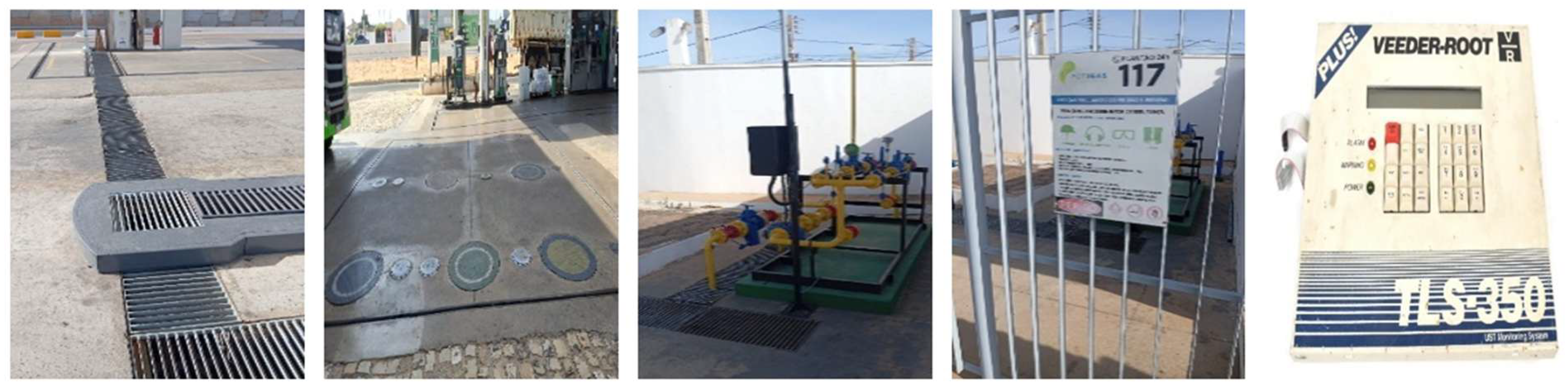
Figure 2.
Monitoring Equipment, Systems, and Sensors. Source: Authors, 2026.
The adoption of good operational and environmental management practices was observed, including proper disposal of waste and used oils, recycling, spill response training, and the use of personal protective equipment (PPE) (Figure 03). Studies indicate that integrating these practices into organizational strategy contributes to improved performance, value creation, and the reduction of business risks [29,30], highlighting the efforts of enterprises to align their operations with environmental requirements and sustainability best practices.
Employees environmental awareness highlights the preservation of the environment as an important value, which supports the effectiveness of environmental management, since awareness directly influences compliance with regulations and the adoption of responsible practices [9]. Regarding fuel storage, intermediate capacity predominates—an aspect that requires attention, as higher volumes increase the risk of leaks and contamination, necessitating effective monitoring systems and preventive maintenance [31].
Overall, the analyzed fuel stations show a stronger orientation toward legal compliance than toward the strategic integration of environmental management, characterizing a predominantly reactive sustainability pattern, as discussed by Hart and Dowell [18]. This behavior is observed in an economically consolidated sector, composed mainly of older, medium-sized enterprises with continuous operation and significant employment and income generation, whose environmental practices still focus on meeting minimum requirements.
In this context, the results emphasize the need to strengthen integrated environmental management through the expansion of preventive actions, systematic adoption of monitoring technologies, and the consolidation of a more proactive organizational culture aligned with urban sustainability principles and the reduction of environmental risks associated with the activity.
4.2. Corporate Sustainability Indices
The results were analyzed separately by thematic axis—environmental legality, environmental practices, and operational management—allowing for the identification of the individual performance of each service station and the main weaknesses and strengths associated with each dimension of corporate sustainability (Table 3). The operational management axis demonstrates consistently high performance across most enterprises, with relatively limited variation among the stations. In contrast, the environmental practices axis exhibited greater variability, indicating differing levels of adoption of preventive measures. The environmental legality axis, although numerically homogeneous, revealed predominantly low performance in most stations, demonstrating that full compliance with the set of legal requirements considered in the study does not occur uniformly among the evaluated enterprises.
Based on the consolidation of the results obtained in the environmental legality, environmental practices, and operational management axes, the Corporate Sustainability Index (CSI) was applied as an instrument for the integrated assessment of the socio-environmental performance of fuel stations in Mossoró/RN (Table 4). The index was structured on the basis of environmental, social, legal, and operational indicators, all assigned equal weight, in accordance with a methodological approach consolidated in the sector’s literature [14,16,18].
The results indicate a predominance of high sustainability performance, as 11 of the 12 evaluated enterprises (91.7%) achieved CSI values above 75%. Stations D, E, F, I, J, and L stand out, each with a CSI of 88.2%, corresponding to compliance with 15 of the 17 indicators, thereby demonstrating a more systematic environmental management structure, consistent adoption of preventive practices, and more structured operational control. Stations C and K (82.4%), as well as A, G, and H (76.5%), also remained within the high-performance range, indicating significant progress in the incorporation of environmental practices.
In contrast, only Station B (8.3%) was classified within the intermediate performance category, with a CSI of 70.6%, suggesting weaknesses in the institutionalization of environmental management, the regularity of training activities, and the continuity of preventive actions—factors that limit progression to higher levels of corporate sustainability.
The results obtained are consistent with both national and international literature, indicating that higher levels of environmental compliance are strongly associated with the existence of preventive routines, operational organization, procedure standardization, and internal control, particularly in maintenance, monitoring, and environmental risk management activities [37,20,3]. Recent national studies reinforce that enterprises that structure formal management processes and maintain systematic records of their actions tend to perform better in evaluations based on composite sustainability indicators [32,27,5,1].
Similarly, international research demonstrates that high performance in corporate sustainability indices is related to the institutionalization of environmental practices, continuous monitoring, and the integration of operational management with socio-environmental objectives [38,17,6,12]. In this regard, Pereira et al. highlight that the standardization of procedures, combined with frequent operational control, constitutes a key element for consolidating more mature environmental practices, which is directly reflected in higher values of synthetic indices such as the CSI [32].
However, the results also corroborate widely discussed evidence in the literature that high performance in sustainability indices does not necessarily imply proactive and strategically integrated environmental management. National studies indicate that, in regulated and environmentally sensitive sectors such as fuel stations, a significant portion of environmental practices arises from mandatory legal compliance, which boosts indicators without necessarily internalizing sustainability as an organizational guideline [40,31,15,23]. This scenario generates a pattern of basic regulatory compliance, marked by weaknesses in the regularity of training, institutionalization of routines, and continuity of preventive actions.
At the international level, recent studies reinforce this distinction between regulatory compliance and environmental management maturity, emphasizing that effective corporate sustainability requires more than meeting minimum legal requirements [24,41,29]. According to these authors, organizations that remain confined to a reactive approach tend to exhibit limitations in organizational learning, environmental innovation, and risk anticipation, even when they achieve good results in quantitative evaluations based on indicators.
In summary, the Corporate Sustainability Index (CSI) proved to be appropriate and methodologically consistent for comparing the socio-environmental performance of the analyzed enterprises, highlighting significant yet asymmetric advances among the evaluated fuel stations. The results indicate that the sector presents favorable conditions for consolidating a more stable pattern of corporate sustainability, provided that structural actions are strengthened, such as continuous training, procedure standardization, permanent operational monitoring, and strategic integration of sustainability into organizational management, thereby reducing reliance on predominantly reactive practices in the urban context of the Brazilian Semi-Arid region [3,38,20].
5. Conclusion
The present study aimed to analyze the environmental disclosure of fuel stations in the municipality of Mossoró/RN through the application of the Corporate Sustainability Index (CSI), considering legal, environmental, and operational aspects. The results showed that the majority of enterprises exhibit high sustainability performance, indicating satisfactory compliance with the evaluated indicators and conformity with current environmental regulations, particularly regarding operational control and environmental legality.
Despite this favorable scenario, the analysis revealed that the observed sustainable performance is strongly associated with mandatory legal compliance, and does not, in all cases, reflect fully proactive environmental management. Weaknesses related to the institutionalization of environmental practices, the regularity of employee training, and the continuous adoption of preventive actions indicate that sustainability is not yet fully integrated into the organizational strategies of some of the analyzed enterprises.
In this context, the Corporate Sustainability Index proved to be an effective tool for synthesizing and comparing the socio-environmental performance of fuel stations, contributing to more objective diagnostics and guiding improvement actions. The study underscores the need to strengthen environmental management as a business strategy, with a focus on procedure standardization, continuous training, and the expansion of preventive practices, thereby supporting the consolidation of sustainability in the fuel sector within urban contexts of the Brazilian Semi-Arid region.
Finally, it should be noted that the results reflect a specific segment of the urban context of Mossoró/RN and should not be indiscriminately generalized to other territorial realities. Nevertheless, the study makes a significant contribution by highlighting patterns of environmental management in the fuel station sector in mid-sized municipalities of the Brazilian Semi-Arid region. For future research, it is recommended to expand the sample, incorporate longitudinal analyses, and apply the Corporate Sustainability Index in different regional contexts, in order to deepen the understanding of the factors that drive the transition from reactive environmental management to more proactive and strategic models. In this way, the findings presented here are expected to inform both public policy formulation and business decision-making aimed at consolidating sustainable practices in the fuel sector.
Author Contributions
Conceptualization, Thiago José Lima Rosa and Jorge Luís de Oliveira Pinto Filho; Methodology, Thiago José Lima Rosa; Validation, Jorge Luís de Oliveira Pinto Filho; Formal analysis, Thiago José Lima Rosa and Jorge Luís de Oliveira Pinto Filho; Investigation, Thiago José Lima Rosa and Jorge Luís de Oliveira Pinto Filho; Resources, Jorge Luís de Oliveira Pinto Filho; Writing – original draft, Thiago José Lima Rosa; Writing – review & editing, Thiago José Lima Rosa and Jorge Luís de Oliveira Pinto Filho; Visualization, Thiago José Lima Rosa and Jorge Luís de Oliveira Pinto Filho; Supervision, Jorge Luís de Oliveira Pinto Filho; Project administration, Jorge Luís de Oliveira Pinto Filho; Funding acquisition, Jorge Luís de Oliveira Pinto Filho. All authors have read and agreed to the published version of the manuscript.
Funding
This study was funded by the Brazilian Federal Agency for Support and Evaluation of Graduate Education (CAPES).
Institutional Review Board Statement
The study was submitted to the Research Ethics Committee (REC) under approval number 7,649,735, ensuring compliance with the ethical standards of UFERSA and with applicable national and international guidelines. This procedure safeguarded the rights, dignity, and safety of the participants throughout all phases of the investigation.
Informed Consent Statement
Informed consent was obtained from all subjects involved in the study.
Data Availability Statement
Data are contained within the article.
Conflicts of Interest
The authors declare no conflict of interest.
References
- Araújo, F. S.; Lima, R. C. Eficiência energética e gestão ambiental em empreendimentos urbanos: desafios e perspectivas. Rev. Gestão Ambiental 2024, 18(1), 45–62. [Google Scholar]
- Barbieri, J. C. Gestão ambiental empresarial: conceitos, modelos e instrumentos, 5th ed.; Saraiva: São Paulo, Brazil, 2023. [Google Scholar]
- Barbieri, J. C.; Vasconcelos, I. F. G.; Andreassi, T.; Vasconcelos, F. C. Inovação sustentável e desempenho organizacional. Rev. Adm. Empresas 2021, 61(2), e2020-0123. [Google Scholar]
- Barceló, D. Water Pollution: Emerging Contaminants and Human Health; Springer: Berlin, Germany, 2007. [Google Scholar]
- Batista, M. E.; Rocha, A. L.; Santos, T. P. Gestão de resíduos sólidos em postos de combustíveis. Rev. Gestão & Sustentabilidade Ambiental 2023, 12(3), 89–105. [Google Scholar]
- Bocken, N. M. P.; Schuit, C. S. C.; Kraaijenhagen, C. Experimenting with circular business models: Lessons from eight cases. Environ. Innov. Soc. Trans. 2021, 28, 79–95. [Google Scholar] [CrossRef]
- Braga, B. Introdução à Engenharia Ambiental; Pearson: São Paulo, Brazil, 2020. [Google Scholar]
- CETESB—Companhia Ambiental do Estado de São Paulo. Relatório de Áreas Contaminadas e Reabilitadas no Estado de São Paulo; CETESB: São Paulo, Brazil, 2020. [Google Scholar]
- Cruz, R. C.; Neris, J. S.; Menezes, A. P. Gestão ambiental em postos de combustíveis: riscos e práticas preventivas. Rev. Gestão Sustent. Ambient. 2018, 7, 412–430. [Google Scholar]
- Dantas, R. M.; Nascimento, F. A. Comércio varejista de combustíveis e geração de emprego no setor terciário urbano. Rev. Bras. Estud. Reg. Urbanos 2019, 13, 145–162. [Google Scholar]
- Dias, R. Gestão Ambiental: Responsabilidade Social e Sustentabilidade; Atlas: São Paulo, Brazil, 2014. [Google Scholar]
- Elkington, J. Green Swans: The Coming Boom in Regenerative Capitalism; Fast Company Press: New York, USA, 2020. [Google Scholar]
- Fetter, C. W. Applied Hydrogeology, 5th ed.; Waveland Press: Long Grove, IL, USA, 2018. [Google Scholar]
- Franceschi, J. C.; Pereira, A. S.; Ribeiro, L. M. Gestão ambiental e desempenho econômico em empreendimentos de médio porte. Rev. Adm. Contemp. 2012, 16, 583–601. [Google Scholar]
- Franceschi, J. C.; Pereira, A. S.; Ribeiro, L. M. Sustentabilidade e desempenho ambiental em empreendimentos urbanos: avanços e limitações. Rev. Adm. Contemp. 2022, 26(4), e210078. [Google Scholar]
- Friede, G.; Busch, T.; Bassen, A. ESG and financial performance: Aggregated evidence from more than 2000 empirical studies. J. Sustain. Finance Invest. 2023, 13, 1–20. [Google Scholar] [CrossRef]
- Geissdoerfer, M.; Savaget, P.; Bocken, N. M. P.; Hultink, E. J. The circular economy – A new sustainability paradigm? J. Clean. Prod. 2020, 143, 757–768. [Google Scholar] [CrossRef]
- Hart, S. L.; Dowell, G. A natural-resource-based view of the firm—Fifteen years after. J. Manag. 2021, 47, 1739–1754. [Google Scholar]
- IBGE—Instituto Brasileiro de Geografia e Estatística. Cidades e Estados: Mossoró (RN); IBGE: Rio de Janeiro, Brazil, 2023. [Google Scholar]
- Krajnc, D.; Glavič, P. Indicators of sustainable production. Clean Technol. Environ. Policy 2022, 24, 145–162. [Google Scholar]
- Leff, E. Epistemologia Ambiental; Cortez: São Paulo, Brazil, 2001. [Google Scholar]
- Lima, T. J.; Santos, M. A. Licenciamento ambiental e gestão de riscos em postos de combustíveis no semiárido nordestino. Rev. Geogr. Meio Ambiente 2021, 12, 88–104. [Google Scholar]
- Lima, R. S.; Costa, P. A.; Andrade, M. Sustentabilidade e gestão ambiental em postos de combustíveis do semiárido brasileiro. Rev. Bras. Gestão Ambient. 2025, 19(1), 1–18. [Google Scholar]
- Lozano, R.; Barreiro-Gen, M.; Lozano, F. J.; Sammalisto, K. Teaching sustainability in higher education. Int. J. Sustain. High. Educ. 2020, 21(6), 1039–1055. [Google Scholar]
- López-Arceiz, F. J.; Bellostas, A. J.; Rivera-Torres, P.; Muñoz-Torres, M. J. Sustainability reporting and firm performance. Bus. Strategy Environ. 2021, 30, 1–18. [Google Scholar]
- Lorenzett, D. B.; Rossato, M. V.; Neuhaus, C. E. Avaliação da gestão ambiental em postos revendedores de combustíveis. Rev. Gestão Ambient. Sustentabilidade 2011, 1, 23–40. [Google Scholar]
- Martins, L. A.; Ribeiro, F. M.; Teixeira, H. S. Monitoramento ambiental urbano e gestão sustentável. Rev. Geogr. Meio Ambiente 2024, 11(1), 77–94. [Google Scholar]
- Martins, R. A.; Escrivão Filho, E.; Nagano, M. S. Gestão ambiental e desempenho organizacional. Produção 2015, 25, 635–650. [Google Scholar]
- Nielsen, K.; Lund-Thomsen, P.; Lindgreen, A. Corporate sustainability and institutional pressures. J. Bus. Ethics 2022, 178, 789–805. [Google Scholar]
- Nogueira, J. M.; Farias, L. R.; Alves, R. P. Indicadores ambientais como instrumento de gestão. Rev. Bras. Gestão Ambient. 2022, 16, 55–72. [Google Scholar]
- Oliveira, J. P.; Silva, R. M.; Costa, A. L. Gestão ambiental empresarial e conformidade legal. Rev. Bras. Ciênc. Ambient. 2022, 57(4), 620–638. [Google Scholar]
- Pereira, A. S.; Souza, R. L.; Silva, M. C. Indicadores de sustentabilidade aplicados ao setor de combustíveis. Rev. Adm. Pública 2021, 55(3), 589–610. [Google Scholar]
- Philippi Jr., A. Gestão Ambiental Municipal; Manole: São Paulo, Brazil, 2005. [Google Scholar]
- Philippi Jr., A.; Roméro, M. A. Gestão Ambiental nas Cidades; Manole: São Paulo, Brazil, 2010. [Google Scholar]
- Rivett, M. O.; Dearden, R. A.; Wealthall, G. P.; McAlary, T. A. Review of unsaturated-zone transport and attenuation of petroleum hydrocarbons in soil. J. Contam. Hydrol. 2016, 191, 1–37. [Google Scholar]
- Sachs, I. Rumo à Ecossocioeconomia: Teoria e Prática do Desenvolvimento; Cortez: São Paulo, Brazil, 2007. [Google Scholar]
- Searcy, C. Corporate sustainability performance measurement systems. J. Bus. Ethics 2020, 107(3), 1–17. [Google Scholar] [CrossRef]
- Schaltegger, S.; Hörisch, J.; Freeman, R. E. Business cases for sustainability. Organ. Environ. 2021, 34(3), 364–389. [Google Scholar]
- Souza, R. L. Gestão ambiental em postos de combustíveis: avaliação por indicadores de sustentabilidade. Master’s Dissertation, UFRN, Natal, Brazil, 2019. [Google Scholar]
- Souza, R. L.; Costa, P. A.; Andrade, M. Avaliação da sustentabilidade ambiental em atividades potencialmente poluidoras. Rev. Gestão Ambiental 2021, 15(2), 33–49. [Google Scholar]
- Sroufe, R.; Melnyk, S. A.; Buehlmann, U.; Gonzalez, J. Sustainability-driven innovation. Bus. Strategy Environ. 2021, 30(1), 1–14. [Google Scholar]
Figure 1.
Location of Mossoró and the fuel stations. Source: Authors, 2025, based on data obtained from IBGE (2022) and using the Projected Coordinate System: SIRGAS 2000.
Figure 1.
Location of Mossoró and the fuel stations. Source: Authors, 2025, based on data obtained from IBGE (2022) and using the Projected Coordinate System: SIRGAS 2000.
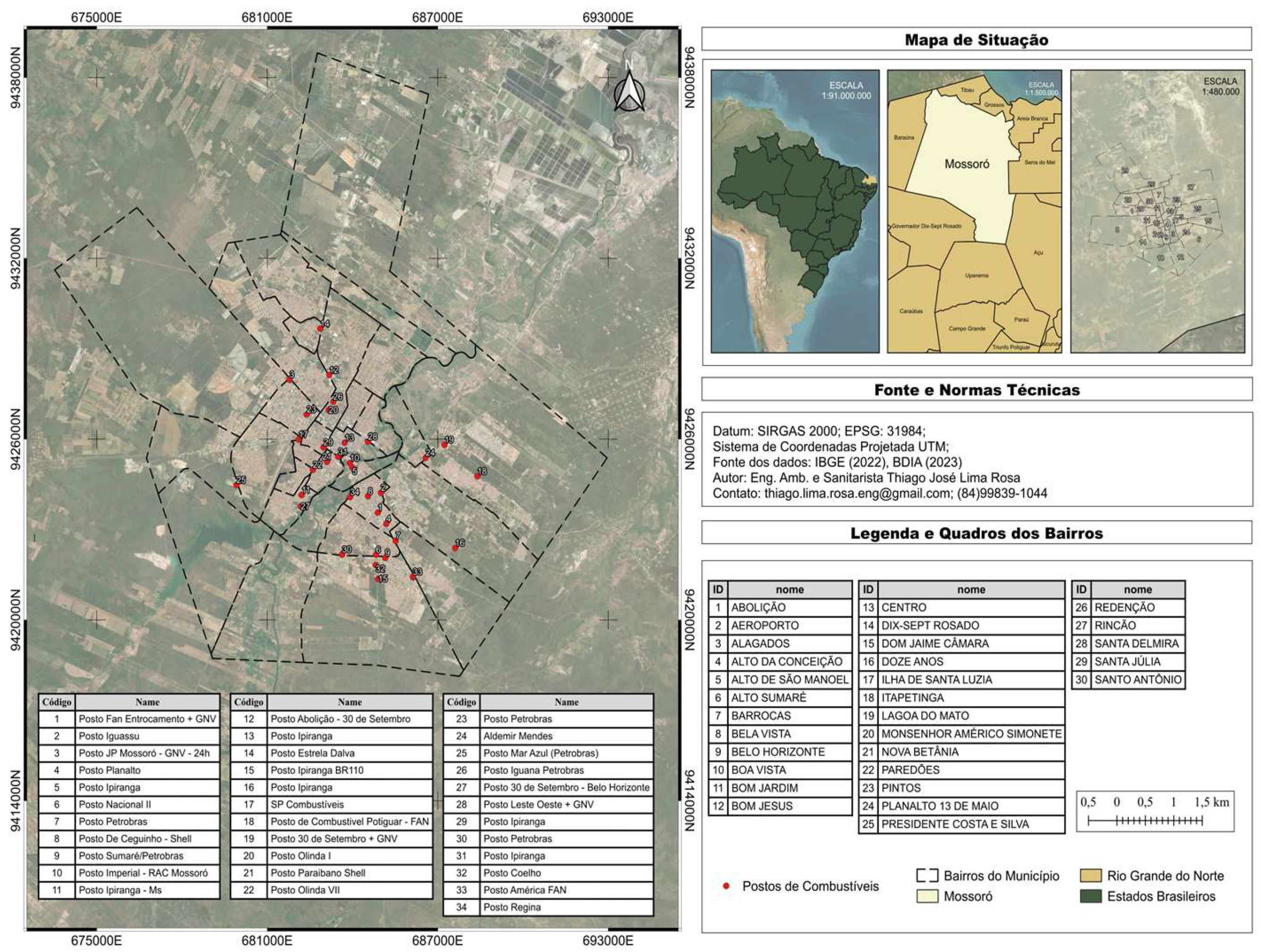
Figure 3.
Selective Collection Equipment. Source: Authors, 2026.
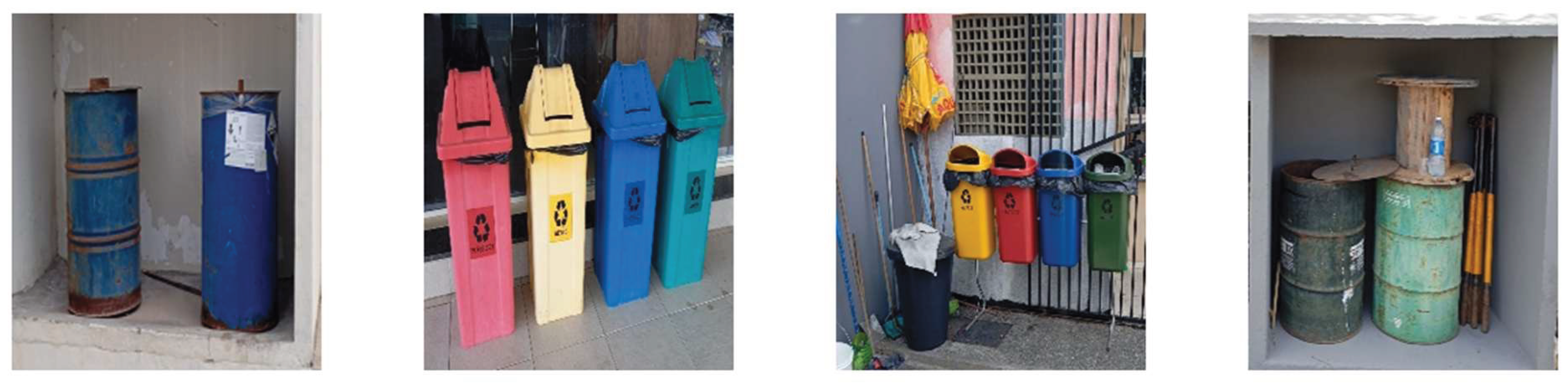

Table 1.
Classification of the Corporate Sustainability Index. Source: Adapted from Souza, 2019. Note: * No responses.
Table 1.
Classification of the Corporate Sustainability Index. Source: Adapted from Souza, 2019. Note: * No responses.
| ISE | CLASSIFICATION |
|---|---|
| < 50% | Low performance |
| 50% < ISE < 75% | Intermediate performance |
| ISE > 75% | High performance |
Table 2.
General Characterization of Fuel Stations in Mossoró/RN. Source: Survey Data, 2026. Note: * No responses.
Table 2.
General Characterization of Fuel Stations in Mossoró/RN. Source: Survey Data, 2026. Note: * No responses.
| VARIABLE | QUANTITATIVE (%) | ||||||||||
|---|---|---|---|---|---|---|---|---|---|---|---|
| Employees | Below 10 | 10 a 30 | 30 a 50 | ||||||||
| 25% | 66,7% | 8,3% | |||||||||
| Annual revenue | Microenterprise | Small-sized enterprise | Medium-sized enterprise | ||||||||
| 41,7% | 0% | 58,3% | |||||||||
| Property Area | Up to 750 m² | From 750 m² to 2250 m² | 2250 m² to 6750 m² | ||||||||
| 41,6% | 25% | 33,4% | |||||||||
| Time of Operation | Up 5 anos | From 06 to 09 anos | Over 10 years | ||||||||
| 0% | 16,6% | 83,7% | |||||||||
| Operating Hours | Single Shift | Morning and Afternoon Shifts | Full-time Operation | ||||||||
| 0% | 41,6% | 58,4% | |||||||||
| Additional Services | Convenience Store | Car Wash | Workshop | Oil Change | LPG Sales | Oil Sales | Others | ||||
| 46,84% | 5,86% | 5,86% | 23,93% | 5,86% | 11,65% | 0% | |||||
| Environmental and Safety Training | Yes | No | |||||||||
| 91,6% | 8,4% | ||||||||||
| Sustainability Actions | Leak Measurement | RSA | Solid Waste Management | Spill Prevention and Control | Soil Containment and Protection | Training | Occupational Health and Safety | ||||
| 21,82% | 21,82% | 21,82% | 13,07% | 13,07% | 6,39% | 2,01% | |||||
| Employees Environmental Awareness |
Environmental Preservation |
Impact Prevention and Minimization | Environmental Culture | Occupational Health and Safety | Solid Waste Management | Training | Compliance with Environmental Laws | ||||
| 31,6% | 15,8% | 15,8% | 15,8% | 10,4% | 5,3% | 5,3% | |||||
|
Total Fuel Storage Capacity |
45 m³ | 60 m³ | 70 m³ | 75 m³ | 90 m³ | 105 m³ | 120 m³ | ||||
| 8,3% | 33,4% | 8,3% | 8,3% | 16,7% | 16,7% | 8,3% | |||||
Table 3.
Performance of Fuel Stations by Corporate Sustainability Index (CSI) Axis. Source: Survey data, 2026. Note:.* No responses.
Table 3.
Performance of Fuel Stations by Corporate Sustainability Index (CSI) Axis. Source: Survey data, 2026. Note:.* No responses.
| SERVICE STATIONS | Environmental Legality (%) | Environmental Practices (%) | Operational Management (%) |
|---|---|---|---|
| A | 33,3% | 75% | 100% |
| B | 33,3% | 75% | 100% |
| C | 33,3% | 75% | 100% |
| D | 33,3% | 75% | 100% |
| E | 33,3% | 75% | 100% |
| F | 33,3% | 75% | 100% |
| G | 33,3% | 50% | 77,8% |
| H | 33,3% | 75% | 77,8% |
| I | 33,3% | 75% | 88,9% |
| J | 33,3% | 75% | 100% |
| K | 33,3% | 75% | 88,9% |
| L | 100% | 100% | 100% |
Table 4.
Corporate Sustainability Index of Fuel Stations in Mossoró/RN. Source: Survey data, 2026. Note: * No responses.
Table 4.
Corporate Sustainability Index of Fuel Stations in Mossoró/RN. Source: Survey data, 2026. Note: * No responses.
| POSTOS | INDICADORES | ISE (%) | CLASSIFICAÇÃO |
|---|---|---|---|
| A | 13 | 76,5% | High Performance |
| B | 12 | 70,6% | Intermediate Performance |
| C | 14 | 82,4% | High Performance |
| D | 15 | 88,2% | High Performance |
| E | 15 | 88,2% | High Performance |
| F | 15 | 88,2% | High Performance |
| G | 13 | 76,5% | High Performance |
| H | 13 | 76,5% | High Performance |
| I | 15 | 88,2% | High Performance |
| J | 15 | 88,2% | High Performance |
| K | 14 | 82,4% | High Performance |
| L | 15 | 88,2% | High Performance |
Disclaimer/Publisher’s Note: The statements, opinions and data contained in all publications are solely those of the individual author(s) and contributor(s) and not of MDPI and/or the editor(s). MDPI and/or the editor(s) disclaim responsibility for any injury to people or property resulting from any ideas, methods, instructions or products referred to in the content. |
© 2026 by the authors. Licensee MDPI, Basel, Switzerland. This article is an open access article distributed under the terms and conditions of the Creative Commons Attribution (CC BY) license (http://creativecommons.org/licenses/by/4.0/).
Copyright: This open access article is published under a Creative Commons CC BY 4.0 license, which permit the free download, distribution, and reuse, provided that the author and preprint are cited in any reuse.


