

Submitted:
07 March 2026
Posted:
10 March 2026
You are already at the latest version
Abstract
According to its published mission, the European Collaborative Cloud for Cultural Heritage (ECCCH), a most recent flagship initiative of the European Commission, cur-rently being developed by the EU-funded project ECHOES, is “…a digital ecosystem designed to serve as a platform for cultural heritage professionals, researchers, and in-stitutions across Europe… to unify Europe’s fragmented cultural heritage sector through advanced digital collaboration…”. While recognizing that “…one of the most persistent challenges in the European cultural heritage sector is the dispersion of data in incom-patible formats and isolated institutional practices…”, the ECCCH advances “…a unified approach (that) will radically transform and greatly facilitate … collaborative research…”, promoting the engagement with small, peripheric Cultural Heritage (CH) institutions and providing (tangible and intangible) CH data under their custody. The article describes an experiment in assessing the readiness of available digital data on a specific type of CH objects, namely Cypriot Late Bronze Age figurines. Most of the ca. 170 figurines un-earthed were found in Cyprus, where they were also produced. Out of these, ca. a third are hosted in museums in Cyprus, and the others are dispersed in some 36 museums, primarily in the UK, museums across ten EU countries, the USA and the Russian Fed-eration. Less than half of them provide, through their digital, open-access collections catalogue, information on these figurines. The study reported here investigated the usefulness of this information for conducting synthetic research on their nature and the socio-cultural role they may have fulfilled while in use in the past. Consequently, the study explored the potential of the information provided by these museums to be inte-grated and expressed through the Heritage Digital Twin concept, at the core of the ECCCH.
Keywords:
museum online catalogues
; heritage digital twin ontology
; Cypriot Late Bronze Age figurines
; data-models
; cultural heritage semantic modelling
1. Introduction
Following the publication of the Report on a European collaborative cloud for cultural heritage [1], the European Commission granted ECHOES, a consortium of more than 50 institutions around Europe, the mission to set the foundations for the establishment of the European Collaborative Cloud for Cultural Heritage (ECCCH), “…a shared platform designed to facilitate collaboration among heritage professionals and researchers, enabling them to modernize their workflows and processes … (it) will offer access to data, cutting-edge scientific and training resources, and advanced digital tools…” [2]. The project started in early 2024 and will have a duration of 60 months. One of its challenges is to provide a platform for museums in remote areas and those of small to medium size to share their data as well. Thus, a major effort is directed towards a much-needed digital environment dedicated to researchers and professionals from the broad spectrum of CH, where they will be able to access and process digital data, making use of advanced tools to create new knowledge on the research, preservation and valorization of CH. This step requires that a substantial number of artefacts, monuments and sites hosted, curated and managed by the numerous CH museums and institutions in Europe (ca. six thousand, according to the European Group of Museum Statistics) is digitized, and that the available digital content has a clear scientific value for interested communities or researchers and professionals.
Despite numerous efforts coordinated by the European Union for providing policies, norms and digital platforms for the digitization and provision of open access to its CH [3,4] and plentiful of scientific papers detailing the implementation of such processes [5,6,7,8,9,10,11] the amount of digital data available, and its content as provided by CH institutions and museums, is still lacking the necessary depth and breadth needed for its re-use in scientific and professional contexts. As shown below in the analysis of a specific case-study, digital catalogues of museums’ collections usually provide a general description of artefacts, with information primarily related to curatorial and management aspects.
The main obstacles in conducting exhaustive research based on openly available digital content are therefore the scarcity of high-quality documentation material (e.g. 3D models, images, etc.) of the investigated artefacts, a poor description of artefacts (usually de-contextualized from their original socio-cultural / archaeological contexts) and the overall limited number of artefacts digitized. Moreover, such descriptions often lack the consistency of using agreed upon terminologies, shared thesauri and data models, thus complicating attempts at unifying access to their digital collections.
Europeana, the largest coordinated effort in providing open access to digital data on the CH of Europe, and one of the flagship initiatives of the European Commission for CH, alongside its further development as a Data Space for CH, has been gathering metadata information on heritage assets since more than a decade. It promotes the discovery of “…Europe’s digital cultural heritage…” [12] harvested from some two thousand cultural institutions and mounting to 60+ million records. Various assessments highlighted Europeana’s major challenges, among others, in terms of inconsistencies of metadata or copyright aspects, limiting the re-use of its content [13,14,15,16,17,18], primarily for an in-depth analysis and research.
The case-study analyzed here regards an iconic Cypriot heritage asset, known in the professional literature under primarily two (converging) terms: Base Ring II Ware female figurines and Type B flat-head figurines [19,20,21] (or, in short, BRFB for this article). They were produced for primarily an insular use during the Late Bronze Age, the local chronology term being Late Cypriot II–IIIA periods (ca. 15th – 12th centuries B.C.E). While they were described in several catalogues [20,22,23,24], analyzed in detail in a PhD thesis [21] and amply discussed in numerous publications [25,26,27,28,29,30,31,32,33,34,35], most rely on the same early documentations and descriptions, often involving pictures lacking clarity or focus and based on qualitative, visual investigations. Moreover, up to today, there are no 3D models of any of these figurines available for a detailed shape analysis, and the catalogues describing them are available only in hard copies.
Since the second half of the 19th century and onwards, some 170 BRFB were uncovered during the long history of archaeological excavations (both systematic and un-systematic) in Cyprus. Ca. a third are currently hosted in Cyprus, primarily curated by the Cyprus Department of Antiquities at its Cyprus Museum, a few are in two private museums, while the remaining five belonged to a private collection, lost during the early days of the 1974 military events in Cyprus, which led to the looting and pillage of many heritage monuments and collections from the conflict zones in the northern part of the island. As of today, there is no open-access information available on any of the BRFB hosted in Cyprus.
The remaining BRFB are nowadays hosted in some 34 museums in 16 EU countries, in Switzerland, UK, USA, Canada, Israel and Russian Federation (see below); the richest collection outside the island is kept in UK museums, primarily the British Museum. Ca. a third of these museums offer access to their digital collections featuring BRFB, providing information on less than a quarter of the total un-earthed BRFB. As described below, the most detailed descriptions are provided by the British Museum in London, the Medelhavsmuseet in Stockholm and the Louvre in Paris. Thus, anyone wishing to conduct synthetic research on BRFB, based on openly available documentation material, is limited to the images of figurines as published on the digital catalogues of the few museums mentioned above, often focusing on providing general information on the objects, including curatorship, archiving and management details.
While a search in Europeana using the two main terms under which these figurines are mentioned in the archaeological literature, namely Base Ring II ware figurines or Type B flat-head type figurines did not return any results, a more generic term “figurine late Cypriot” yielded 23 results, out of which two were relevant, provided by the Medelhavsmuseet in Stockholm. A further, more generic search “figurine Cypriot” returned 1811 results, which, when filtered by providing countries yielded an additional relevant result. Thus, Europeana is a reasonable starting point for identifying sources of additional data on the BRFB.
The main research aim is to assess the quality of CH information reachable online, available in open-access and re-usable for research purposes, as provided by CH museums. Aspects related to data provenance and data integrity, fundamental when defining, qualitatively and quantitatively, the quality of information, need to be clearly traceable and explicitly published, in order to be integrated in any synthetic research. This is also a fundamental requirement upon which the ECCCH is built.
The chosen case-study, the BRFB collection, is emblematic for the current grand challenges of investigating heritage assets, related to cultures of countries with a long history of archaeological explorations, such as Cyprus. Their research requires a multi-disciplinary approach, involving archaeology, history of religion, heritage science, computer-assisted shape analysis, anthropology or history. Aspects related to their materiality, provenance, technologies of production and techniques of manufacture, alongside archaeological context investigation, may reveal aspects about their socio-cultural and economic role(s), and, in a broader context, insights into Late Bronze Age systems of beliefs (cultic or symbolic). Nowadays, 2/3 of the BRFB are stored outside their country of origin (Cyprus), in large as well as small-scale and peripheric museums. Ideally, data on BRFB accessible online should provide enough information, in order to reveal aspects related to the figurines’ tangible and intangible characteristics.
2. Materials and Methods
Framing the research question: Understanding the socio-cultural, spiritual and economic role female figurines played in past societies [36] requires framing a methodology that covers, among others, aspects related to the description of their archaeological context, information on their materiality, use and function [70], as well as gathering theoretical knowledge on cultural anthropological aspects related to cultic and symbolic systems [37] in prehistoric societies of the Late Bronze Age [38] as well as potentially related written sources [39]. Thus, a basic question would be “which is the nature (essence), in terms of function, social role and spiritual relevance, of these objects?” (Figure 1), followed by the question “how do we study these objects?” (Figure 2). This helps formulating a hypothesis about the socio-cultural and spiritual roles these figurines played in the past, a hypothesis which will have to be tested against the data available (archaeological remains, ancient written sources and ethnographic studies). Once the research aims are clearly stated, the hypothesis formulated and the methodology framework defined, the next step is to search for the data needed to test the hypothesis.
Interrogating online Cultural Heritage data providers: There are two main platforms offering online access to heritage digital content: Europeana [12], according to its main page “…providing access to Europe’s digital cultural heritage…”, in order to “search, save and share art, books, films and music from thousands of cultural institutions [12] and Google Arts & Culture [40] (hereafter GA&C), a Google platform launched in 2011 (initially as Google Art Project) providing access to information about artworks, heritage sites, artefacts, virtual exhibitions or storytelling narratives from a broad range of heritage institutions worldwide. While Europeana relies primarily on EU funding to maintain itself and to gather content from a broad range of aggregators (heritage institutions providing metadata about heritage assets), GA&C establishes partnerships with cultural institutions for creating and publishing content as well as develops technologies to improve documentation and access to this content [41,42].
The first step in searching for open access to data on the figurines is to find the most efficient terms for search. Table 1 shows the results of a search in both platforms using specific terms that describes them in the various hard-copy catalogues and scientific articles discussing them and mentioned above.
The significant differences in the results denote an interesting trend. GA&C returned 7 results for the first term, out of which 3 were relevant, the other 4 being objects that are not figurines or not from the Late Bronze Age. The three relevant items were published in collaboration with the Metropolitan Museum of Art, the Brooklyn Museum and the Glencairn museum. A single item was found in Europeana, correctly identified, and provided by the Medelhavsmuseet in Stockholm.
Excluding the words “terracotta” (referring to a technique of manufacture and material” and “late bronze age”, denoting an archaeological period/culture and replacing them with a term used for describing a specific type of Cypriot ceramic ware (base ring) [43], returned very different results. GA&C found no items, while Europeana identified 9 items, 6 of them being relevant and representing the entire collection of such figurines indexed by it (4 provided by Medelhavsmuseet and two by the Kunsthistorisches Museum in Vienna.
Gathering data from cultural institutions: The search for relevant scientific literature with Google Scholar and using the two mentioned-above terms harvests some 18,000 results for each, none including the catalogues mentioned above [19,20,21,22,23,24] as first choices. Consequently, one looking to gather information on the current location of figurines in various cultural institutions hosting them, and consequently obtain access to documentation material as published by these institutions, must browse the various scientific articles discussing aspects related to them (e.g. [25,26,27,28,29,30,31,32,33,34,35,36]) and extract from there the desired information. The result of this effort is presented in Table 2 below.
In addition, according to the mentioned-above catalogues and online search, ten figurines were sold to private collectors by various auction houses, as described in Table 3.
Finally, the Google images search [45] correctly identified a few BRFB, among them four from the online museum catalogues (of the Israel Museum, the MET, the Brooklyn Museum and the Medelhavsmuseet), two from auction houses (Christoph Bacher and Bonhams), one entry from Wikidata, indexing a Louvre hosted item and one item published on Flickr and hosted at the Ashmolean Museum.
Looking at the structure of the descriptions accompanying the BRFB, as published by the various museums presented in Table 2, several strategies of presenting the information and the level of details provided can be identified, according to each museum’s own interest and approach. Outstanding is the Medelhavsmuseet and its Carlotta system [46], providing a broad range of structured information on its exhibits, followed by The Louvre and the British Museum (see below).
Overviewing the information provided by all museums with digital catalogues online, as per Table 2, five main categories of data emerge: (a) administrative, including object’s inventory number, its broad classification (type of object) and the collection it belongs to; (b) object provenance, including information on its place and date of discovery; (c) archaeological description on the object, which details its material and technique of manufacture, size, general depiction, cultural context, conservation state and publication; (d) its history of ownership (past and current owners and acquisition mode and date); and (e), curatorial aspects, which include where the object is exhibited and past exhibitions it was part of. Complementarily, the information published by auction houses that sold BRFB consist primarily of a short text description of the object, its size and materiality, its history of ownership and information on where it was published.
3. Results
Considering the primary aim of the experiment described here, i.e. formulating a hypothesis on the socio-cultural role BRFB played and testing it against data available online as provided by large-scale data aggregators such as Europeana or GA&C and cultural institutions, categories (b) and (c) are the primary targets for investigation.
Europeana and GA&C data: Taking a closer look at the information provided by Europeana, it is interesting to note the discrepancy in the search results using slightly different terms. While the generic search term “Cypriot female figurine” returned (rightfully) a high number of results (230), which include the relevant BRFB ones, narrowing the search by adding additional keywords related to the material and period of the BRFB (bronze age & terracotta), yielded a single (relevant) result. However, when replacing these keywords with a more specific term (base ring), which denotes a specific ceramic fabric, technology of manufacture and technique of production [43], nine results were obtained [48], out of which six were correct, two were a different type of object (a ceramic vessel, from a different period) and one was a sculpture from a different period.
The positive results regard two items provided by the KMV and four from the MMS (Table 2), which respectively represent their entire collection of BRFB. The information available relates to a single type of media (high-resolution image) and descriptions that are primarily administrative (see above), categories (b) and (c) being under-represented and limited to a brief textual description of the items, their generic provenance (Cyprus) and some bibliographic references. Thus, Europeana emerges as a starting point catalogue for directing at museums hosting BRFB and as a platform providing access and download options to high-resolution images (but not 3D models).
A further aspect that limits the helpfulness of Europeana in finding online information on BRFB is the fact that out of the 12 European museums providing online access to their collections, which include BRFB, only two are aggregated into Europeana (KMV and MMS). Thus, 16% of the total number of BRFB available for online consultation are findable in Europeana, which represents a statistically insignificant 4% of the total number of BRFB discovered so far.
Examining the results of GA&C, a different picture emerges, denoting a different strategy in aggregating and indexing information. While the very specific term “ring base” did not yield any results, the keywords “bronze age terracotta”, which basically are embedded in the keyword “ring base”, returned 7 results, three of them relevant, provided by USA-based cultural institutions (the MET, the Brooklyn Museum and the Glencairn museum respectively). None of them has provided any content to Europeana and clearly prefers conducting collaborations with global entities such as Google.
Cultural institutions data: Two aspects related to data provided by cultural heritage institutions through their online collections were investigated in depth: (a) provision of technical information regarding the organization / structure of the data, in terms of vocabularies, thesauri and data models, and (b) the content and the quality of information provided. Regarding the provision of technical information, use of commonly agreed thesauri, vocabularies or data models (including metadata schemas or ontologies), only the Medelhavet (Mediterranean) museum in Sweden provides explicit description on how its online catalogue is structured, being a component of a broader, nation-wide initiative connecting several cultural heritage institutions in a single database system [46] and based on CIDOC CRM. Generally, none of the other investigated online catalogues (Table 2) provides explicit technical information on how its database is structured.
Content wise, the information provided by cultural heritage institutions (Table 2) can be roughly clustered in 5 groups, two of them being relevant to the main research question, namely the provenance of objects (archaeological context) and their (archaeological) description. Ten out of the 14 museums with online catalogues provide information on the provenance of BRFB. However, at a closer look, most mention “Cyprus” as their provenance, while only 4 offer a more detailed information, mentioning the locality of provenance (the toponym of the archaeological site).
Two museums (the BM and the NMS), provide information on the archaeologist who excavated the BRFB; two museums (the Medelhavet and NMS) offer a more focused description of the object’s provenance (the floor of Tomb 3 in Enkomi and Tomb II, Asproyi, Kouklia Tombs, respectively). Except one, all museums deliver information on BRFB sizes, primarily maximum height, probably useful for their packaging and transport. There is a plethora of terms describing the materiality of BRFB and often this description is provided together with information on the manufacture technique, the most used terms being “terracotta” and “pottery”, a few mentioning that they were “handmade” and “painted”, while a single museum (the Louvre) provides more extensive manufacturing details. Albeit of limited value for cultural-historical research, a strong motivation for museums to give priority to such kind of information is probably related to their identification, following ICOM’s recommendations, as set by Getty Research Institute’s Object ID, when dealing with the illicit trafficking of cultural goods [80].
Many of the BRFB descriptions provided by cultural institutions mention their relation to base-ring ware (as their title explicitly mention, see Table 2). However, none of these descriptions provide any link or factual data on related scientific analyses proving this statement. Moreover, an extensive online publication of scientific research on archaeological Levantine pottery [49] provides information on Base Ring Ware, deriving from various heritage science methods applied on 64 items of various ceramic vessel types [50], but not on any BRFB, or more generally, any Cypriot Late Bronze Age terracotta figurine. Despite the clear statement in one of the most extensive studies on BRFB [22], mentioning that “…Though there are resemblances with the ‘Base-ring’ ware, however, this fabric stands by itself, as in the case of other figurines of the LC period…” [22. P.4], a more recent PhD thesis discussing in detail the BRFB [21] affirms that “…the anthropomorphic and zoomorphic figurines produced on the island during this period are mainly of the BR ware …” [21, p. 72], without however providing any petrographic, chemical or factual evidence based on direct scientific investigations on the BRFB, to support this statement.
All museums have entries describing the culture / period of the BRFB, as Late Bronze Age or Late Cypriot II and the period as between 1450 – 1200 B.C.E., the information being provided in various formats, some using acronyms (e.g. L.C. II, 13th century B.C.E), others using numbers, positive or negative. The problematics related to a formal description of the relation to archaeological cultures, time and space was discussed elsewhere [51,52,53,79]. Suffice is to say here that, as noted on the metadata published by the museums investigated, there is an often intercalation of terms, such as “The Late Bronze Age”, between chronological time periodization and archaeological cultures.
The museums’ category “description” provides the most detailed portrayals of the BRFB (cf. Table 2). These include information on what is the object, how it was made, from which materials and what was their presumed use in the past. Texts are often a mixture of descriptive information and symbolic interpretation, along with information on their materiality and production techniques (see also [77]).
Overall, a main pattern observed, which indirectly influences the type and content of information provided by museums, is that the BRFB, some exhibited and some not, are described in a de-contextualized way, from their original archaeological context, and re-contextualized as museum (often as art object) exhibits, emphasizing their appearance rather than their meaning and use in the past.
AI-based description of BRFB: Three AI models (Chat GPT, Gemini and Grok), were asked to provide a synthetic summary of BRFB, based on the museums’ texts provided in their category “description”. Consequently, each of the three AI models were asked separately to provide a summary of these three syntheses. Among the results, the summary provided by Grok was the most accurate, Chat GPT returning an inflated text with many irrelevant additions and Gemini omitted information, providing a short text.
A summary of the Grok text is provided below: “… handmade, hollow … nude women … exaggerated sexual features and schematic designs … prominent breasts, incised and often painted pubis triangles, flat-topped heads with large ears, pellet eyes, and elongated noses. Arms are typically crossed under the chest or clenched at the sides, with incised and painted details (black, red, or reddish-brown) for hair, lips, necklaces, and anatomical zones. Crafted in parts, smoothed or shaved … reflect skilled terracotta artistry. Associated with a Cypriot fertility cult, possibly linked to a goddess like Astarte … sacred figures symbolizing fertility and protection … Found in tombs and households … devotional objects for worship or prayer, offering protective roles for the deceased or living … toys … ritualistic design emphasizes their symbolic and religious significance, blending local Cypriot traditions with Near Eastern influences … “.
The above text can be roughly divided in three main parts: (a) a descriptive one, narrating the appearance of the BRFB by their anatomical components and attires, (b) description of manufacturing techniques, and (c) an interpretative one, describing the possible socio-cultural role BRFB played in the past. Table 4 provides an accuracy analysis of each AI statement, based on a comparison with the current state-of-research.
Table 4 clearly demonstrates that relying on syntheses produced by any AI model which is based on museums entries describing the BRFB can be hazardous, particularly in what regards information on the interpretation of their possible original socio-cultural role. Since as mentioned above, museums’ objects description is highly influenced by the ICOM’s Object ID data model, designed primarily for combatting the illicit trafficking of cultural goods, the AI results described here, which summarize the research components of these descriptions, cannot guarantee scientific rigor. Moreover, as a complementary note, AI models interrogated on describing BRFB, usually do not have access to online museum catalogues, nor to peer-reviewed research publications and currently rely on a variety of website where BRFB have an un-supervised scientific presence.
The scope of the article is not to assess the accuracy of an AI generated text; nevertheless, there are a few aspects worth noting: [1] the word “Astarte” appears in a single description out of the 12 provided by museums, the same with the word “toys”. None of the descriptions mention “skilled terracotta artistry”, which seems an addition of the AI models, as well as the information on “blending local Cypriot traditions with Near Eastern influences”, which seems to be generated by the fact that a single CH institution (the Brooklyn Museum) exhibits the BRFB in a single broad collection of Egyptian, Classical and Ancient Near Eastern Art. The relatively accurate description of anatomical features, associated decorations and production techniques details (relevant for some, but not all) the BRFB, seem to be largely taken from the entries of the Pitt-Rivers Museum, which quote a published catalogue of its collection [54].
To sum up, the apparent credible text generated by the AI models tested here lack the required scientific rigor that is requested in any synthetic research. To improve AI-based research on BRFB and in broader terms, in CH, supervised methods should be used to convert textual descriptions into structured data, which in turn can be queried reliably, a typical Natural Language Processing problem, unrelated to automated scholarly analysis. This could pave the way to use in the future AI models with RAG (Retrieval-Augmented Generation [81]) support, or train AI agents to undertake the task as they can achieve superior performance if trained on structured, curated data and metadata. Consequently, related literature references should be made accessible, with verified records; moreover, archival records, including archaeological excavations reports, lack a much-needed standardization format. Finally, professional terminologies should be matched across institutions, with supervised machine learning methods. The ECCCH will hopefully generate the necessary attention to this challenge and will trigger the creation of training data, from the publication of reference collections and structured research data along with its provenance.
4. Discussion
Conducting synthetic research on the BRFB, based on data accessible online and through information provided by dedicated CH platforms, such as Europeana or GA&C, and descriptions of BRFB hosted by CH institutions (in this case museums scattered throughout Europe and the USA) proves to be a challenging endeavor [77,78]. Following a comprehensive hypothesis on the socio-cultural and economic role(s) BRFB played in the past, several intersecting pluri-disciplinary paths should be followed. As presented in Figure 2 (above), these include cultural anthropology, primarily exploring their archaeological context and bibliographic resources providing related explanations, iconology, exploring the social meaning, cultural significance and visual messages embedded into the BRFB and heritage science-based investigations, looking into the materiality and modes of production and use of these objects.
As stated in the beginning of this article, the European Commission launched a very ambitious initiative, to create a (digital) Cloud, dedicated to Cultural Heritage Data, the project ECHOES being the main body to create its infrastructure, provide its conceptual data model and access to advanced digital tools transforming the data available into new knowledge for a variety of communities related to Cultural Heritage. Ultimately, its success depends on the quality of data available.
The success of the ECCCH to achieve its mission (and consequently the quality of information generated by AI-models) highly depends on the need to advance and adopt a paradigm shift on how research outcomes are made available, primarily related to data provenance (and in broader terms the implementation of the FAIR data principles [14]). Within this context, ECHOES is developing concepts and the tools (Figure 3) aiming at bridging between the knowledge pyramid [55,56,57] and the data lifecycle, considering the intricacies of CH data [58,59,60,61].
These relate to two fundamental concepts: the data-cycle, addressed as digital commons and defined as “holistic social institutions for governing the (re)production of (digital) resources, created and/or maintained online and articulated through interrelated legal, socio-cultural, economic and institutional dimensions”, highlighting their nature as a joint, cross-disciplinary effort, while the progressive development of the knowledge pyramid is achieved by addressing it as a digital continuum effort, defined as “the ability to maintain digital information…in such a way that it will continue to be available, as needed, despite changes in digital technologies … making sure that it is complete, available and usable”. Consequently, ECHOES adopted the definition of the Heritage Digital Twin (HDT), presented in [62,63] and applied here [64], as “the complex of digital information about a real-world heritage asset, with its tangible and intangible components, capturing the entirety of its space-time-culture identity and formally organized in a semantic framework, and described by the CRM - based ontology (HDTO)”.
The HDTO aims at providing the semantic structure helping the integration of data on a heritage asset that originates from multiple sources and generated by different disciplines. It explicitly models the dynamic, socially conferred nature of heritage value, the provenance of digital knowledge production, and the evolving relationship between real-world assets and their digital counterparts. This enables the systematic aggregation of multimodal data (3D models, scientific analyses, restoration records, narratives) into versioned, semantically coherent Digital Commons that capture the full space-time-culture identity of heritage assets. Going up the ladder of the data cycle and the knowledge pyramid (Figure 3), data provenance [65] is formally contextualized by (1) providing technical information on how it was created, the workflows that generated it and related paradata; (2) by formal description of the protocols of processing data, thus validating the recent generation of information and (3) by formal description of passing on of historical information (or oral tradition) from one hand and valid source to another, to the degree possible.
The HDTO, based on the more generic CIDOC-CRM for describing cultural-historical knowledge, specializes the following epistemological areas and connects them into a functionally complete whole. Three main functionalities are important to highlight here:
[a] How some specific items or traditions are defined to constitute a unit of cultural heritage, i.e., which current social groupings claim historically justified social or spiritual ties of whatever kind to one or more related heritage items, and which (typically wider) identifiable current social groupings explicitly value these items as cultural heritage and respect their specific local ties. This provides the definition of one identity - one HDT.
The above is implemented by the classes HC1 Heritage Entity and subclasses, HC10 Heritage Valuation, HC12 Heritage Declaration Event and their respective properties, as well as by related CRM concepts (Figure 4).
[b] The second function relates to how a HDT is defined and maintained by some organized collaborative framework, i.e., how the knowledge in the HDT is maintained, updated and kept up to date by the responsible consortium, caring for the authenticity, relevance and scientific quality of is content. The model draws, besides others, on the distinction between “volatile” and “persistent” digital content from [71,72] for connecting the, at any time well-defined but changing, content of the HDT with the citable scholarly publications and their provenance, that make or had made it up [73,74]. It further foresees properties for explicating part-whole relations to HDTs of other heritage entity units and to potentially competing projects. However, the main purpose of this function is to systematically organize and monitor the completion of a HDT into a cumulative and comprehensive set of documentations of relevant disciplinary aspects. For that sake, it may be also combined with a more detailed workflow model, adequate for scholarly collaboration. It can be considered as the administrational framework for eliciting or selecting the studies or documents with specific disciplinary focus on the respective heritage entity.
This functionality is implemented by the classes HC13 Project, HC11 Digital Twin Maintenance (the up-date event), HC2 Heritage Digital Twin (subclass of HC14 Volatile Digital Object), HC16 Heritage Proposition Set (the persistent content parts, subclass of HC15 Persistent Digital Object) and their respective properties, in particular those to HC9 Study and crm:E31 Document, as well as to other related CRM-based concepts (Figure 5).
[c] The last function concerns the processes of creating studies and the representation of their findings about specific disciplinary aspects of a heritage entity or its parts, by ethnographic, archaeological or natural science methods, detailing the empirical-observational level, or by the analysis of historical sources and their authenticity. It further comprises cross-disciplinary studies and annotated literature. The studies may have been carried out or not on behalf of the specific consortium maintaining the HDT. A factual representation of the findings together with metadata and the data provenance should be provided in digital knowledge representation encoding, to be embedded in the knowledge graph of a corresponding HC16 Heritage Proposition Set, and thus becoming globally accessible to digital processing in all detail. They should include primary digital visual or audio-visual representations with all their metadata. Beyond that, they should always be accompanied by a comprehensive, citable and open access scholarly publication for complete description of the context and interpretations, keeping in mind the dangers of format obsoletion.
This functionality is implemented by the classes HC9 Study, in particular explicating the disciplinary focus and part of the heritage entity investigated for understanding and managing the cross-disciplinary coverage of the HDT. The study, being legacy or current, always results in a crm:E31 Document, regardless format. By inheritance, the latter includes the classes HC5 Digital Representation and subclasses, using and specializing the CRM extension CRMdig [75]. Via inclusion in the knowledge graph, the data analysis process in a study is captured by a description of the reasoning, through the CRM argumentation model [66] and CRMsci [76], pairing between observations and their derivative statements, in order to formally express the knowledge acquired through the analyses performed. The argumentation model also applies to the passing on of information (Figure 6).
By the above functions, the HDTO is designed to enable the interested communities to overcome major shortcomings identified in this paper: (1) The lack of reliable provenance information of scientific findings and referred and passed-on information; (2) the lack of formally expressed contextual knowledge, rather than administrational data, about heritage entities; (3) the lack of complementary multi-disciplinary documentation and (4) the lack of effective indexing of literature by its relation to a heritage entity rather than to its general library subject. It does so by providing a conceptual model for an IT environment to manage and monitor open collaborations between respective experts and communities, across institutions, for continuously complementing and improving cross-disciplinary documentation and access to it for the needs of communities of use. The results of the research will be considered by these communities, in order to assess their usefulness and relevance to create the sought wisdom. This is achievable by a qualitative assessment of the relation between the research question, the methodology applied and by the accountability of results, all aspects formally expressed in the HDTO and its related data-model.
5. Conclusions
Several sources of information were explored to gather data for synthetic research on BRFB, with an emphasis on data provided by cultural institutions and Cultural Heritage large-scale digital data-gathering initiatives. Exploring several keywords search, Europeana can serve as a reliable entry point in a catalogue of millions of objects, among them BRFB were represented as well. This leads to digital collections of a few museums, some of which provide information on scientific publications of BRFB, either as museum catalogues (in most cases), or as archaeological syntheses. Concomitantly, Google Scholar search for articles and books, cross-checked with publications lists provided by cultural heritage institutions, may lead to more information on the BRFB, if these publications are available as open access. The search conducted within the framework of this research has shown that in most cases these articles and books are available for consultation only as hard copies in university libraries and through academic subscriptions.
The information provided by museum entries, easily mappable into the ECHOES data model, as recently presented [55], is not sufficient to gather sufficient information and high-quality data to perform synthetic research on BRFB. Moreover, museum entries providing information on relevant publications often refer to catalogues of their own collections, only in limited cases available for an online interrogation. The vast majority of articles and books addressing the role(s) BRFB may have played in the past is locked behind registration fees or it is available in printed formats in academic libraries or for purchase in bookstores.
As shown here regarding the BRFB, Europeana is a good starting point to search for information on such object. Consequently, its Data Space can develop into a useful catalogue for initiating further inquiries of various subjects, primarily considering information provided by cultural institutions (museums in the case of BRFB). The next step of investigations may lead therefore to information and material provided by museums, which, as shown above for the BRFB, is often scarce, documentation data is limited to digital images (often rather artistic one and not rectified or calibrated to reflect real colors and sizes), and no 3D models are available for more advanced geometry-based studies.
The descriptive texts on the BRFB generated by AI models are only partially correct and often mixed evidence with un-verified hypotheses and assumptions, based on a limited number of available online sources, which in most cases were not scientifically reviewed. Being fundamentally a statistical method and relying on a huge corpus of data for consolidating, strengthening and weakening correlations, “AI” (deep learning neural networks) is naturally unreliable for deriving scientific conclusions from the data discussed here. The resulting text emphasized the danger of relying on scarce information and the need for open access to high-quality research data. Interestingly, Wikidata, the open knowledge base upon which Wikipedia and similar projects are built on, provides information on a single BRFB, extracted from the Louvre online catalogue, but vaguely described as “Naked woman holding her breasts” [67]. Consequently, an example of a pseudo-scientific information available online related to BRFB links the shape of figurines with ancient astronomic writing [68], further exemplifying the potential negative contribution of such information to AI-generated texts.
The study demonstrated that in the case of BRFB, information provided by CH institutions cannot serve as a base for their scientific, synthetic study. This case further exemplifies the complex situation in which heritage assets, originating from a single country / culture, are administrated by many museums, spread over a wide geographic area and across different socio-cultural contexts. This leads to a plethora of descriptive terms, often applying conceptually different approaches in presenting information on the same type of assets. The success of the ECCCH is directly related therefore to the quality of data available for further processing in a variety of applications. Access to raw, processed and post-processed data, along with an explicit description of their provenance, the workflows applied and the reasoning processes involved, are therefore fundamental for achieving the goals of creating a virtual, collaborative environment for Cultural Heritage. While the ECHOES’ data model and related ontology [69] are reaching the required complexity to properly address the requirements for enabling the gathering and management of Cultural Heritage digital commons and ensuring their digital continuum, as required by the ex-ante Report on a European Collaborative Cloud for Cultural Heritage [1], opening access to high-quality data remains a task to be fulfilled by the research communities, which, in turn, requires the transformation of heritage research from a competitive to a collaborative one.
Funding
This work was supported by the EU-funded project ECHOES [Grant Agreement n.101157364 – ECHOES].
Acknowledgments
The authors would like to thank all ECHOES’ project partners contributing to the discussions in WP7 for their valuable contributions in shaping the HDTO.
Conflicts of Interest
The authors declare no conflicts of interest. The funders had no role in the design of the study; in the collection, analyses, or interpretation of data; in the writing of the manuscript; or in the decision to publish the results”.
References
- Brunet: P., De Luca, L., Hyvönen, E., Joffres, A. et al.. Report on a European collaborative cloud for cultural heritage – Ex – ante impact assessment, European Commission: Directorate-General for Research and Innovation, Publications Office of the European Union, 2022. https://data.europa.eu/doi/10.2777/64014.
- https://www.echoes-eccch.eu/objectives/ (accessed august, 2025).
- Panezi, A.. Europe's New Renaissance: New Policies and Rules for Digital Preservation and Access to European Cultural Heritage. Columbia J. Eur. Law 24, 2018, (3), p. 596. https://ssrn.com/abstract=3338179.
- https://digital-strategy.ec.europa.eu/en/news/commission-proposes-common-european-data-space-cultural-heritage (accessed 08/2025).
- Siliutina, I., Tytar, O., Barbash, M., Petrenko, N., Yepyk, L. Cultural preservation and digital heritage: challenges and opportunities. Amazonia Investiga, 2024, 13(75), pp. 262-273.
- Capurro, C., Plets, G., Verheul, J. Digital heritage infrastructures as cultural policy instruments: Europeana and the enactment of European citizenship. Int. J. Cult. Policy, 2024, 30(3), pp. 304-324.
- Hylland, O. M., Primorac, J. Digital transformation and cultural policies in Europe. Taylor & Francis, 2024.
- Gervasi, O., Perri, D., Simonetti, M., Tasso, S. Strategies for the digitalization of cultural heritage. In International Conference on Computational Science and Its Applications Cham: Springer International Publishing, 2022, pp. 486-502.
- Poulopoulos, V., Wallace, M. Digital technologies and the role of data in cultural heritage: The past, the present, and the future. Big Data Cogn. Comput., 2022, 6(3), p. 73.
- Corona, L. Digitalization: An Overview of the Advantages and Disadvantages. Aspects of digital libraries-digitization, standards, open access, repositories and user’s skills. In L. K. Gabbay (Ed.) Aspects of Digital Libraries - Digitization, Standards, Open Access, Repositories and User’s Skills, IntechOpen, 2023. [CrossRef]
- Hermon, S., Niccolucci, F. Fair data and cultural heritage special issue editorial note. Int. J. Digit. Libr., 2021, 22(3), pp. 251-255.
- https://www.europeana.eu/en (accessed 09/2025).
- Papaioannou, C. Historical Research in the Digital Age: Opportunities, Challenges, and Critical Reflections through the Case of Europeana. J. Integr. Inf. Manag., 2025, 10(1), pp. 19-24.
- Barbuti, N. Thinking digital libraries for preservation as digital cultural heritage: by R to R 4 facet of FAIR principles. Int. J. Digit. Libr., 2021, 22(3), pp. 309-318. [CrossRef]
- Bettivia, R. S., Stainforth, E. All and Each: A Socio-Technical Review of the Europeana Project. Digit. Humanit. Q., 2017, pp. 11(3).
- Głowacka, E. Assessment of the quality of digital libraries based on the principles of information architecture. Research plan. Digit. Libr. Perspect., 2021, 37(4), pp. 416-428. [CrossRef]
- de Burger, K. Unlocking cultural heritage: a case study of metadata management at Europeana. Unpublished MA thesis, Lund University, 2024. http://lup.lub.lu.se/student-papers/record/9154811.
- Uzelac, A., Higgins, B. L. From Data to Impact: Assessing the Value of Cultural Heritage in the Digital Age, 2025. [CrossRef]
- Åström, L. Åström, P. The Swedish Cyprus Expedition Volume IV:1D. The Late Cypriote Bronze Age. Other Arts and Crafts, Relative and Absolute Chronology, the Swedish Cyprus Expedition, Stockholm, 1972.
- Karageorghis, J. La Grande Déesse de Chypre et son Culte a travers l’iconographie de l’époque néolithique au VI eme s. a. C. Lyon, Maison de l’Orient Méditerranéen Ancien, 1977.
- Alexandrou, C. Following the Life-Cycle of Base-Ring Female Figurines in Late Bronze Age Cyprus. Unpublished doctoral thesis, University of Dublin, Trinity College, 2016.
- Karageorghis, V. The Coroplastic Art of Ancient Cyprus V. The Cypro-Archaic Period Small Female Figurines A. Handmade/Wheelmade Figurines. A.G. Leventis Foundation, Nicosia, 1998.
- Karageorghis, V., Merker, G. S., Mertens, J. R. The Cesnola Collection of Cypriot Art: Terracottas. Metropolitan Museum of Art, 2016.
- Orphanides, A. G. Bronze age anthropomorphic figurines in the Cesnola Collection at the Metropolitan Museum of Art. Studies in Mediterranean archaeology, Göteborg, 1983.
- Orphanides, A.G.. The Interpretation of the Bronze Age terracotta anthropomorphic figurines from Cyprus”, in F. Vandenabeele, R. Laffineur (eds), Cypriote Terracottas. Proceedings of the First International Conference of Cypriote Studies, Brussels-Liège-Amsterdam, 1990, p. 39-45.
- Webb, J. M., Frankel, D. Characterizing the Philia facies: material culture, chronology, and the origin of the Bronze Age in Cyprus. Am. J. Archaeol., 1999, 103(1), pp. 3-43.
- Budin, S. A reconsideration of the Aphrodite-Ashtart syncretism. Numen, 2004, 51(2), 95-145.
- Keswani, P. Mortuary ritual and society in Bronze Age Cyprus (Vol. 9). Equinox Publishing Ltd., 2004.
- Budin, S. L. Girl, woman, mother, goddess: Bronze Age Cypriot terracotta figurines. in Focus on the Mediterranean, no. 5. Proceedings from the International Conference ‘Finds and Results from the Swedish Cyprus Expedition 1927-1931: A Gender Perspective’, Medelhavsmuseet, Stockholm, 2009, pp. 76-88.
- Knapp, A. B. Representations: Female figurines and social identity on Protohistoric Cyprus. in Focus on the Mediterranean, no. 5. Proceedings from the International Conference ‘Finds and Results from the Swedish Cyprus Expedition 1927-1931: A Gender Perspective’, Medelhavsmuseet, Stockholm, 2009, pp. 137-144.
- Lubsen-Admiraal, S. Dromolaxia-Trypes revisited. Some new thoughts on an old fertility goddess. Cah. Cent. Étud. Chypriotes, 2015, 45(1), pp. 255-263. [CrossRef]
- Serwint, N. Women and the art of Ancient Cyprus. In S. L., Budin & J. M., Turfa (Eds.). Women in Antiquity: Real Women across the Ancient World, Taylor and Francis, 2016, pp. 399-415.
- Mantzourani, E., & Vavouranakis, G. The anthropomorphic figurines of Cyprus in the Bronze Age, in G. Bourogiannis, (Ed.). Beyond Cyprus: Investigating Cypriot Connectivity in the Mediterranean from the Late Bronze Age to the End of the Classical Period, National and Kapodistrian University of Athens, 2022, pp. 35-44.
- Averett, E. W. The Iron Age Terracotta Figurines from Cyprus, In E. D., Darby, & I. J. de Hulster (Eds.) Iron Age Terracotta Figurines from the Southern Levant in Context, Brill, 2021, pp. 292-332.
- Knox, D. Figurines and Complex Identities in Late Bronze Age Cyprus. In M. Mina, Y., Papadatos & S., Triantaphyllou (Eds.) An Archaeology of Prehistoric Bodies and Embodied Identities in the Eastern Mediterranean, Oxbow Books, 2016.
- In An Archaeology of Prehistoric Bodies and Embodied Identities in the Eastern Mediterranean; Mina, M., Papadatos, Y., & Triantaphyllou, S. (Eds.). An Archaeology of Prehistoric Bodies and Embodied Identities in the Eastern Mediterranean. Oxbow Books, 2016.
- In Born in heaven, made on earth: the making of the cult image in the ancient Near East; Dick, M. B. (Ed.). Born in heaven, made on earth: the making of the cult image in the ancient Near East. Penn State Press, 1999.
- In The Oxford handbook of prehistoric figurines; Insoll, T. (Ed.). The Oxford handbook of prehistoric figurines. Oxford University Press, 2017.
- Shlain, L. The alphabet versus the goddess: The conflict between word and image. Penguin, 1999.
- (accessed on August 2025).
- Wani, S. A., Ali, A., Ganaie, S. A. The digitally preserved old-aged art, culture and artists: An exploration of Google Arts and Culture. PSU Research Review, 2019, 3(2), pp. 111-122. [CrossRef]
- Polacci, F. The Google Art Project: Democratisation of art or ideology of transparency? THEMA, 2015, 2, pp. 73-84.
- Vaughan, S. J. Material and Technical classification of Base Ring Ware: A New Fabric Typology. In J. A. Barlow, D. L. Bolger & B. Kling (Eds) Cypriot Ceramics: Reading the Prehistoric Record, University of Pennsylvania Museum of Archaeology and Anthropology 1992, 74, pp. 119-130.
- https://www.christies.com/en/lot/lot-3807266?ldp_breadcrumb=back (accessed February 2026).
- https://images.google.com (accessed February 2026).
- Golub, K., Ziolkowski, P. M., Zlodi, G. Organizing subject access to cultural heritage in Swedish online museums. J. Documentation, 2022, 78(7), pp. 211-247.
- Dahlgren, A., Hansson, K., Reichert, R. Wasielewski, A. (Eds.), The Politics of Metadata, Digit. Cult. Soc., 2020, 6, (2).
- https://www.europeana.eu/en/search?query=Cypriot%20base%20ring%20female%20figurine&page=1&view=grid (accessed September 2025).
- https://www.levantineceramics.org (accessed September 2025).
- https://www.levantineceramics.org/wares/804-late-cypriot-base-ring-wares (accessed September 2025).
- Hermon, S., Niccolucci, F. Formally defining the time-space-archaeological culture relation: Problems and prospects. Archeol. Calc., 2017, 28(1), pp. 93-108.
- Niccolucci, F., Hermon, S. (2015). Time, chronology and classification. Mathematics and archaeology, in J.A. Barceló and I. Bogdanovic (eds) Mathematics and archaeology, CRC Press, 2015, pp. 257-70.
- Niccolucci, F., Hermon, S. Representing gazetteers and period thesauri in four-dimensional space–time. Int. J. Digit. Libr., 2016, 17(1), pp. 63-69.
- Karageorghis, V. Cypriot Art in the Pitt Rivers Museum, University of Oxford. A.G. Leventis Foundation, 2009.
- Frické, M. The knowledge pyramid: the DIKW hierarchy. Knowl. Organ., 2019, 46(1), p. 33. [CrossRef]
- Van Meter, H. J. Revising the DIKW pyramid and the real relationship between data, information, knowledge, and wisdom. Law Technol. Hum, 2020, 2(2), pp. 69-80. [CrossRef]
- Haas, A. Re-Visiting the Revised Knowledge Pyramid. Libr. Trends, 2024, 73(1), pp. 95-111. [CrossRef]
- Luthra, M., Eskevich, M. Data-envelopes for cultural heritage: Going beyond datasheets. In Proceedings of the Workshop on Legal and Ethical Issues in Human Language Technologies@ LREC-COLING 2024, 2024, pp. 52-65.
- Barzaghi, S., Heibi, I., Moretti, A., Peroni, S. Developing Application Profiles for Enhancing Data and Workflows in Cultural Heritage Digitisation Processes. In: Demartini, G., et al. The Semantic Web. Lecture Notes in Computer Science, vol 15233. Springer, Cham, 2025. [CrossRef]
- Ranjgar, B., Sadeghi-Niaraki, A., Shakeri, M., Rahimi, F., Choi, S. M. Cultural Heritage Information Retrieval: Past, Present, and Future Trends. IEEE Access, 2024, 12, pp. 42992-43026. [CrossRef]
- He, R., Wang, X. A cultural heritage data curation framework for knowledge discovery. Inf. Res., 2025, 30.. [CrossRef]
- Niccolucci, F., Felicetti, A., Hermon, S. Populating the data space for cultural heritage with heritage digital twins. Data, 2022, 7(8), p. 105. [CrossRef]
- Niccolucci, F., Markhoff, B., Theodoridou, M., Felicetti, A., Hermon, S. (2023). The Heritage Digital Twin: a bicycle made for two. The integration of digital methodologies into cultural heritage research. Open Res. Eur., 2023. [CrossRef]
- Hermon, S., Niccolucci, F., Bakirtzis, N., Gasanova, S. A Heritage Digital Twin ontology-based description of Giovanni Baronzio's “Crucifixion of Christ” analytical investigation. J. Cult. Herit., 2024, 66, pp. 48-58. [CrossRef]
- Strubulis, C., Flouris, G., Tzitzikas, Y. Doerr, M. A case study on propagating and updating provenance information using the CIDOC CRM. Int. J. Digit. Libr., 2014, 15(1), pp. 27-51. [CrossRef]
- https://cidoc-crm.org/crminf/fm_releases. (accessed October, 2025).
- https://www.wikidata.org/wiki/Q55625674. (accessed October, 2025).
- https://www.ancient-origins.net/news-history-archaeology/religious-statues-cyprus-show-evidence-astronomical-writing-001229. (accessed October, 2025).
- Theodoridou, M., Hivert, F., Kritsotaki, A., Markhoff, B., Doerr, M., Hermon, S.. Towards the Definition of the Heritage Digital Twin Ontology for the European Collaborative Cloud for Cultural Heritage, in S., Campana, D., Ferdani, H., Graf, G., Guidi, Z., Hegarty, S., Pescarin, F., Remondino (eds.) Digital Heritage Congress 2025, The Eurographics Association. [CrossRef]
- Graeber, D. and Wengrow, D., 2021. The dawn of everything: A new history of humanity. Penguin UK.
- Bruseker, B., Doerr, M. Theodoridou, M., (2017). Report on the common semantic framework. PARTHENOS Project. https://www.parthenos-project.eu/resources/projects-deliverables#1523355661123-a9ef9010-7215. (accessed January 2026).
- Frosini, L., Bardi, A., Manghi, P. Pagano, P. An aggregation framework for digital humanities infrastructures: The PARTHENOS experience. SCIRES-IT-SCIentific RESearch and Information Technology, 8(1), 2018, pp.33-50. [CrossRef]
- Van de Sompel, H., Nelson, M.L., Sanderson, R., Balakireva, L.L., Ainsworth, S. Shankar, H. Memento: Time travel for the web. arXiv preprint, 2009. https://arxiv.org/abs/0911.1112.
- Van de Sompel, H.V., Nelson, M.L. Reminiscing about 15 years of interoperability efforts. D-Lib Magazine, 21(11-12), 1-12. 2015. https://digitalcommons.odu.edu/computerscience_fac_pubs/5. [CrossRef]
- Doerr, M. and Theodoridou, M.. {CRMdig}: A generic digital provenance model for scientific observation. In 3rd USENIX Workshop on the Theory and Practice of Provenance (TaPP 11), 2011.
- Doerr, M., Kritsotaki, A., Rousakis, Y., Hiebel, G. Theodoridou, M.. Definition of the CRMsci. An Extension of CIDOCCRM to support scientific observation, version, 1(5), 2018. https://cidoc-crm.org/sites/default/files/CRMsci-v3.0i.pdf.
- Low, J. T., Doerr, M. A Postcard is Not a Building. Why we Need Museum Information Curators. CIDOC 2010. ICOM general conference, Shanghai, China, 2010. https://cidoc.mini.icom.museum/wp-content/uploads/sites/6/2018/12/low.pdf.
- Russell, R. and Winkworth, K.. Significance 2.0. Collections Council of Australia. 2009. https://heritagensw.intersearch.com.au/heritagenswjspui/handle/1/1924.
- Doerr, M., Kritsotaki, A. Boutsika, K.. Factual argumentation—a core model for assertions making. J. Comput. Cult. Herit. 3(3), 2011, pp.1-34.
- Thornes, R., Dorrell, P.G. Lie, H.. Introduction to Object ID: guidelines for making records that describe art, antiques, and antiquities. Getty Publications, 2000. https://www.getty.edu/publications/virtuallibrary/0892365722.html.
- Zhao, P., Zhang, H., Yu, Q., Wang, Z., Geng, Y., Fu, F., Yang, L., Zhang, W., Jiang, J. Cui, B.. Retrieval-augmented generation for ai-generated content: A survey. Data Sci. Eng., 2026, pp.1-29.
Figure 1.
What is the object under investigation.
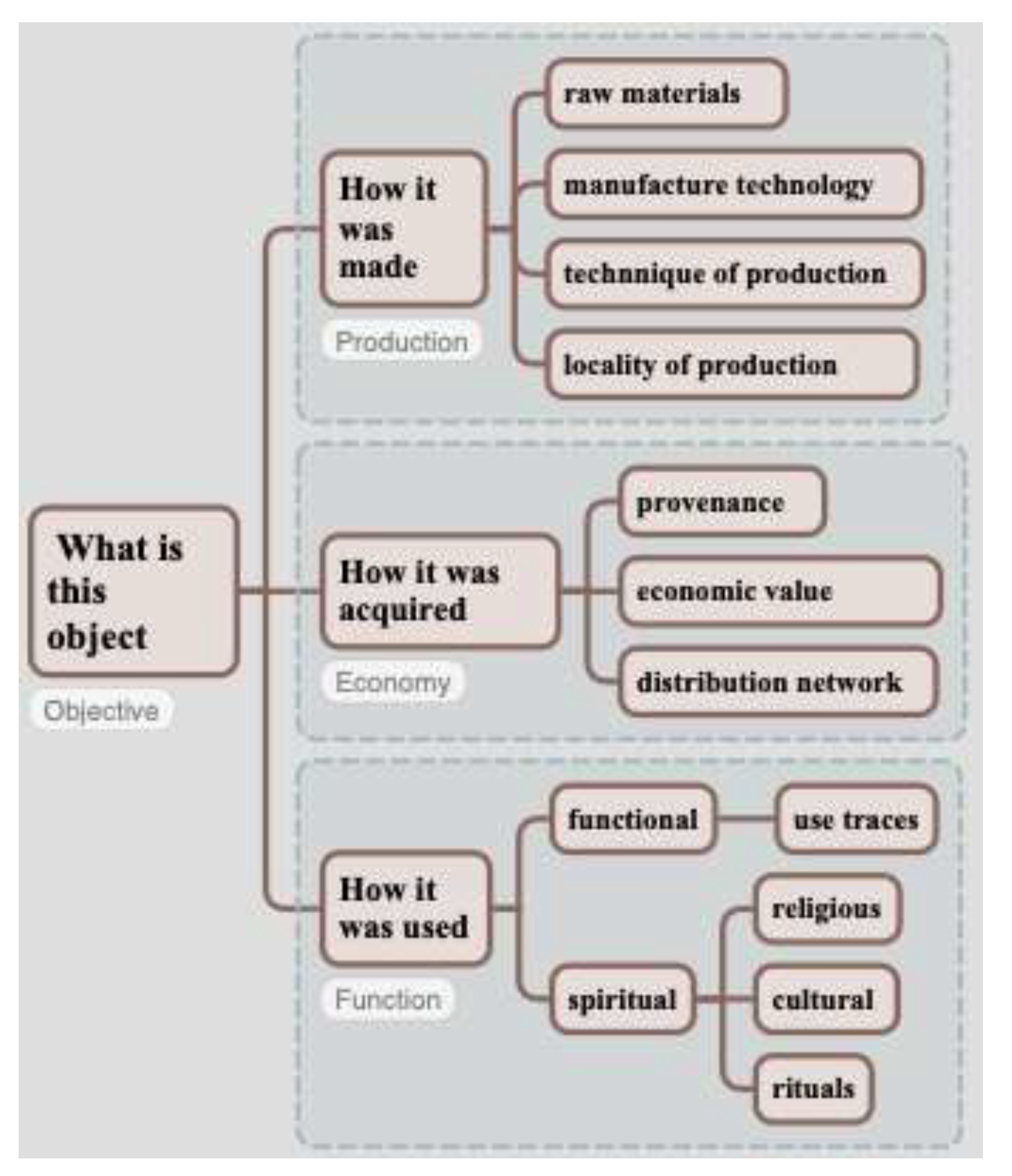
Figure 2.
BRFB research components.
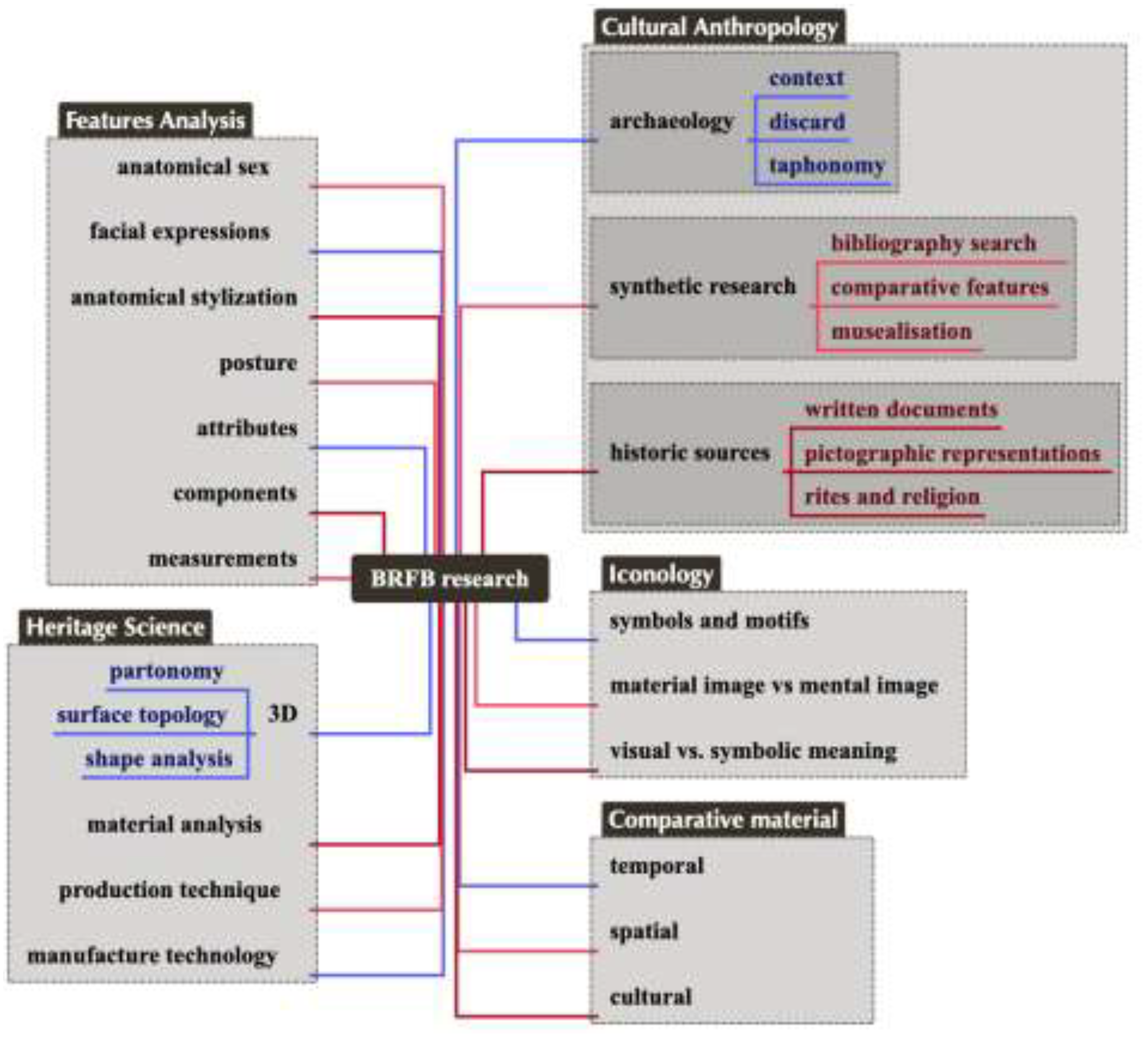
Figure 3.
ECHOES' tools and methods bridging between the data cycle and the knowledge pyramid.
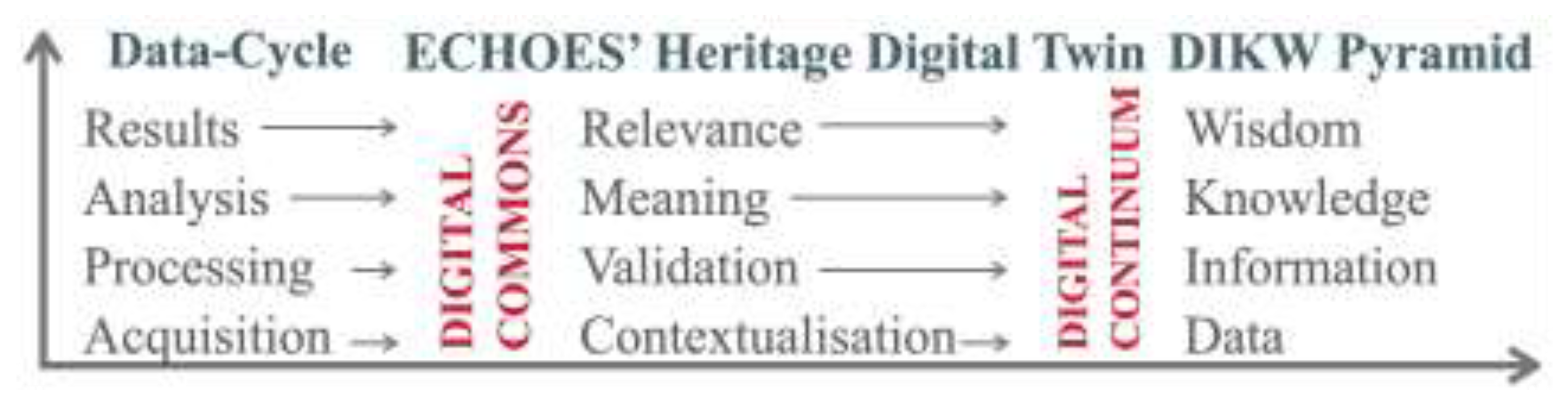
Figure 4.
The declaration of an entity as a unit of cultural heritage.
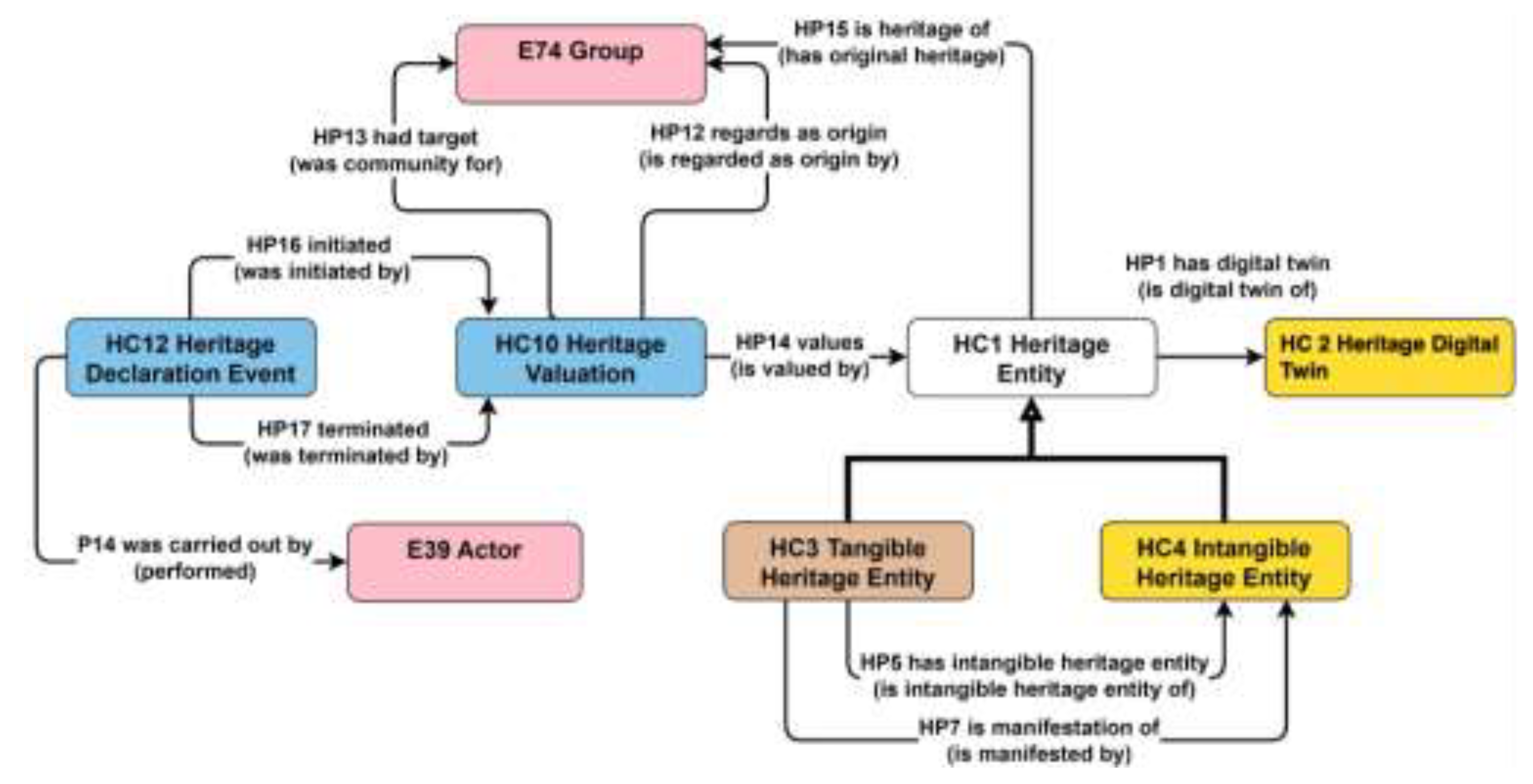
Figure 5.
The maintenance of a HDT by an organized collaborative framework.
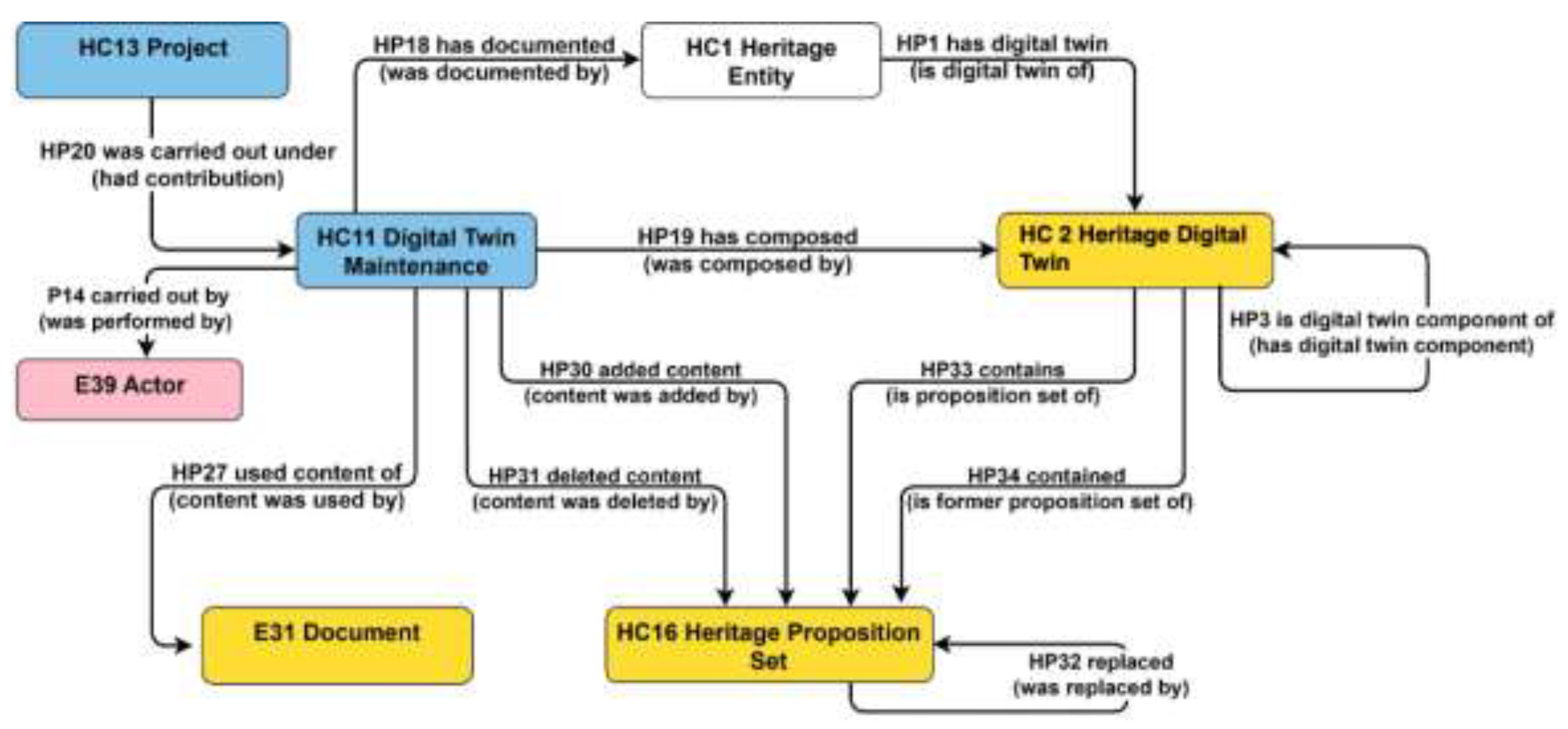
Figure 6.
Studies and the representation of their findings about specific disciplinary aspects of a heritage entity or its parts.
Figure 6.
Studies and the representation of their findings about specific disciplinary aspects of a heritage entity or its parts.
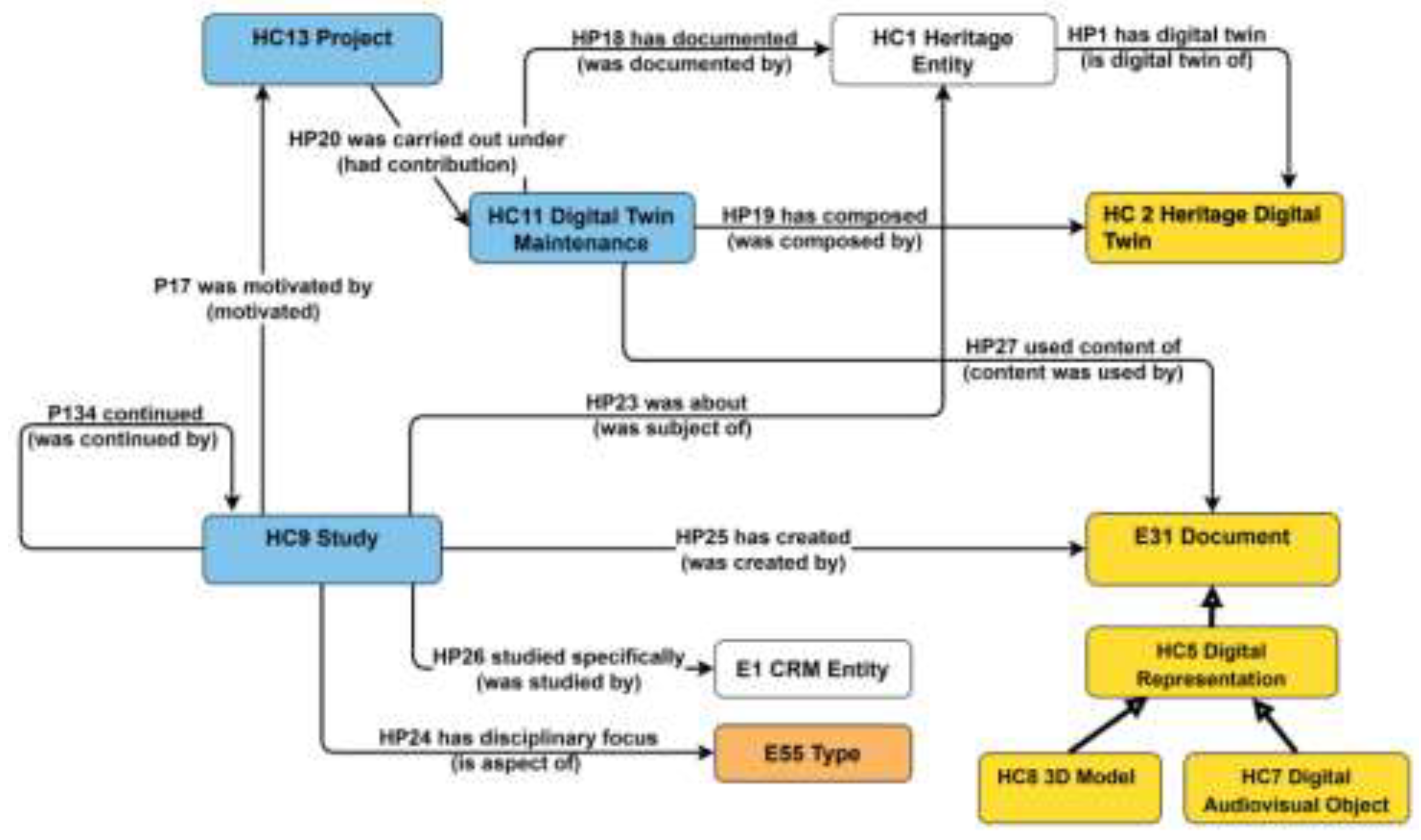

Table 1.
Comparison between Europeana and GA&C search results.
| Term searched | Europeana | GA&C | ||
| Results | Relevant | Results | Relevant | |
| Cypriot late bronze age terracotta female figurine | 1 | 1 | 7 | 3 |
| Cypriot base ring female figurine | 9 | 6 | 0 | 0 |
Table 2.
Cultural institutions hosting BRFB.
| Country | Museum | Nr. of items | ||
| all | online | |||
| Austria | Kunsthistorisches Museum, Vienna (KMV) | 2 | 2 | |
| Danemark | Nationalmuseet | 2 | ||
| France (Ntot=4) |
Louvre | 2 | 1 | |
| Château Borély | 1 | |||
| Musée de la Céramique, Paris | 1 | |||
| Germany | Antikensammlung Museum, Berlin | 1 | ||
| Berlin University Museum (?) | 1 | |||
| Greece | National Archaeological Museum | 1 | ||
| Ireland | National Archaeological Museum | 1 | ||
| The Classical Museum, UCD | 1 | |||
| Italy | Museo Civico di Storia ed Arte | 1 | 1 | |
| Museo Archaeologico di Firenze | 1 | |||
| Netherlands | Allard Pierson Museum | 1 | ||
| Sweden (Ntot=5) |
Medelhavsmuseet (MMS) | 4 | 4 | |
| Antikmuseet, Lund | 1 | |||
| Switzerland | Musée d’art et d’histoire, Geneva | 1 | 1 | |
| Israel | Israel Museum | 1 | 1 | |
| Russia | Pushkin State Museum | 1 | ||
| United Kingdom (Ntot=33) |
Birmingham Museum and Art Gallery | 1 | ||
| Wolverhampton Museum (WM) | 1 | 1 | ||
| Leeds Museum | 1 | |||
| Royal Albert Memorial Museum, Exeter | 1 | 1 | ||
| Ashmolean Museum | 2 | 2 | ||
| British Museum (BM) | 13 | 13 | ||
| National Museums of Scotland (NSM) | 1 | 1 | ||
| Pitt-Rivers Museum (PRM) | 3 | 3 | ||
| United States | Metropolitan Museum of Art (MET) | 3 | 3 | |
| Princeton University Art Museum | 1 | |||
| Museum of Fine Arts, Boston | 1 | |||
| Brooklyn Museum | 1 | 1 | ||
| Canada | Ontario Museum | 1 | 1 | |
| Cyprus (Ntot=68) |
Cyprus Museum | 62 | ||
| Pierides Museum | 4 | |||
| Leventis Museum | 2 | |||
| Total | 16 | 34 (14 with online catalogues) | 162 | 36 |
Table 3.
BRFB sold at auction houses.
| Auction house | Lot | Previous owners | |
| Bonhams | 115 | The Matantos Collection of Classical Antiquities, formed during the late 1950s and 1960s. | Sotheby's New York, 29/01/1968, lot 110 |
| 29* | American private collection, Tennessee, acquired in the 1970s-80s. | ||
| 53 | D. R. collection, England, acquired prior to 1969. | ||
| 568 | Un-specified | ||
| Christoph Bacher | Ref: 2063 | Private collection Surgeon-General Dr. Josef Mayer-Riefenthaler, Vienna, Austria. Acquired in Cyprus in the 1960s, during his deployment as UN soldier. | |
| Christie’s | 78 | The Desmond Morris collection | |
| 79 | |||
| 50 | Alfred E. Mirsky (1900-1974). | ||
| 8 | C. Gillet (1879-1972), Lausanne…by descent to his son, R. Gillet (1913-2001), Paris. | ||
| Sotheby’s | Reported in [21] as published in the Sotheby’s London Sales Catalogue 11th, December 1989. | ||
Table 4.
Assessment of AI-based descriptive summary of BRFB (statements placed in the center of the rows are aligned with current state-of-research).
Table 4.
Assessment of AI-based descriptive summary of BRFB (statements placed in the center of the rows are aligned with current state-of-research).
| AI – based statement | Current state-of-research |
| (a) descriptive statements | |
| Hollow | Not all figurines are hollow |
| Prominent breasts | Some pointed, overall, rather small sizes |
| Flat-topped heads with large ears, pellet eyes, and elongated noses | |
| Exaggerated sexual features, incised and often painted pubis triangles | |
| Arms … crossed under the chest or clenched at the sides | |
| (b) manufacturing techniques | |
| Schematic designs | |
| Crafted in parts, smoothed or shaved | |
| Incised…painted details (black, red, or reddish-brown) for hair, lips, necklaces…anatomical zones. | |
| Skilled terracotta artistry | Subjective statement, un-supported by facts |
| (c) interpretative statements | |
| Associated with a Cypriot fertility cult | Unsupported by archaeological context / iconology study |
| Possibly linked to a goddess like Astarte | None of the typical Astarte attributes appear on BRFB |
| Toys | Mentioned in one museum entry, unsupported by research |
| Ritualistic design | Vague statement |
| Symbolic and religious significance | There are no direct historical sources describing the religion in Cyprus during the Late Bronze Age |
| Blending local Cypriot traditions with Near Eastern influences | Statement primarily related to other types of figurines |
Disclaimer/Publisher’s Note: The statements, opinions and data contained in all publications are solely those of the individual author(s) and contributor(s) and not of MDPI and/or the editor(s). MDPI and/or the editor(s) disclaim responsibility for any injury to people or property resulting from any ideas, methods, instructions or products referred to in the content. |
© 2026 by the authors. Licensee MDPI, Basel, Switzerland. This article is an open access article distributed under the terms and conditions of the Creative Commons Attribution (CC BY) license (http://creativecommons.org/licenses/by/4.0/).
Copyright: This open access article is published under a Creative Commons CC BY 4.0 license, which permit the free download, distribution, and reuse, provided that the author and preprint are cited in any reuse.