

Submitted:
06 March 2026
Posted:
10 March 2026
You are already at the latest version
Abstract
An extensive survey of early blight of tomato was conducted in Peshawar and Hazara divisions of Khyber Pakhtunkhwa province, during the fruit bearing period of 2014 of the crop. Comparatively more disease incidence and severity was observed in Peshawar than Hazara Division. Data also revealed that more disease was prevalent in district Haripur than Abbottabad and Mansehra. The isolates of Alternaria solani collected during the survey were different in terms of their cultural characteristics and aggressiveness. Isolates from Peshawar division showed rapid growth on Potato Dextrose Agar medium and produced higher number of spores ml−1 as compared to isolates collected from Hazara Division. Moreover these also produced the largest size lesion (20.6mm) when compared with those collected from Hazara Division. A positive linear trend was observed when lesion size was regressed over colony diameter and spores concentration indicating that isolates showing aggressiveness also showed more radial growth and produced more spores mlˉ1. The studies also confirmed the existence of cultivar specific aggressiveness amongst the isolates of A. solani in screen house experiment. Isolates adapted on respective cultivars caused high disease severity, number of lesions per plant and lesion size with concurrent reduction in yield. Isolate AsRJ previously adapted on variety Red Jambo when inoculated on the same variety produced high disease severity (64.02%) and lesion size (8.2mm), with the lowest yield (436.71g). A similar trend was observed for other isolate and cultivar combinations which could have serious implications for cultivation of a particular variety on vast acreages over time.
Keywords:
population structure
; Alternaria solani
; adaptation
; aggressiveness
; survey
Introduction
Tomato (Lycopersicon esculentum Mill), a member of family solanaceae, is a popular vegetable because of its remunerative and nutritive value, and thus cultivated throughout the world. It is grown for its edible fruit, which can be consumed as fresh or cooked as well as processed and can be stored for later use. It is a rich source of minerals and vitamins, contain vitamin B1, B2 and A (El-Boushy and Vander-Poel, 1994). It can easily be grown in most parts, under both open field and/or protected cultivation. Moreover, growing tomato in home gardens is a popular hobby for millions of people around the world. It was cultivated in Pakistan on approximately 63.2 thousand hectares producing 599.7 thousand tons during 2013-14 growing season (Anonymous, 2015).
Tomato crop is affected by a number of biotic (fungi, bacteria, viruses and nematodes) and abiotic factors (Balanchard, 1992). Numerous fungal diseases affect tomato plant at various growing stages from seedling to maturity, and cause considerable reduction in yield both qualitatively and quantitatively. Tomato yield losses sometimes can be as high as 78 per cent of fruit loss (Gwary and Nahunnaro, 1998).
Early blight is a common disease of tomato and other solanaceous species (pepper, eggplant, and potato) as well as weeds (Datura) (Ellis and Gibson, 1975). It causes collar rot, damping off of seedling, fruit rot, leaf spots and stem lesions on tomato (Chaerani et al., 2006). The disease can be extremely damaging if not controlled because it can occur in a variety of climatic conditions and can result in complete crop loss. It usually appears on mature foliage but sometimes can also be noticed early on susceptible varieties.
Early blight is a polycyclic disease, with many infections occurring throughout the growing season. The pathogen over winters as mycelium and spores in diseased plant debris and in or on seeds of infected fruits. Seeds carrying the fungus may attack the seedling, mostly soon after emergence, and causes collar rot and damping-off or stem lesions (Agrios, 2005). It spreads through conidia transported by wind and insects, which germinate quickly and infect plants. Conidia are short, smooth, septate, dark colored (dark olive or olive-brown), single with a long filiform beak ending with a small pore and muriform. The optimal temperature for conidial germination ranges from 28 to 30 °C although the required temperature for A. solani has been found to be in the range of 5–35 °C (Chaerani et al., 2006). The conidial germ tubes penetrate leaves directly through the cuticle, whereas potato tubers and tomato fruits are infected through cracks and wounds. The sporulation of A. solani is favored by heavy dews and frequent rains (Singh, 1987).
Keeping in view the importance of the crop and disease, a comprehensive survey of Peshawar and Hazara Divisions was conducted to gain first-hand information on severity, incidence and prevalence of the disease. The data thus obtained would allow comparison of isolates of the two divisions of Khyber Pakhtunkhwa using phenotypic markers.
Similarly differences in aggressiveness of potato and tomato isolates are well documented (Weir and Huff, 1998). However, adaptation within tomato cultivars itself has not been studied intensively. How strong is the effect of cultivar adaptation and the possibility of penalty to aggressiveness where increased aggressiveness on one cultivar decreases aggressiveness on another has not been studied. Apparently growing of same cultivar year after year makes it more likely for the pathogen isolates to adapt to particular cultivar.
The present experiment was therefore designed to test the nature and extent of cultivar adaptation by continuous multiplication of isolates of Alternaria solani followed by an assessment on host and non-host cultivars in a screen house experiment afterwards.
Therefore, the present study was conducted with the following objectives:
- To survey tomato at different localities of Hazara and Peshawar divisions in order to determine early blight disease incidence and severity.
- To determine population structure of Alternaria solani in the areas surveyed by employing phenotypic markers.
- To investigate the adaptation of Alternaria solani on commercial tomato cultivars.
Materials and Methods
Disease Survey
A comprehensive survey was conducted during the studies to investigate incidence and severity of early blight of tomato in different regions of Peshawar and Hazara divisions (Figure 1). Three districts of Hazara division and one district of Peshawar division were surveyed and sampled for comparison. Survey was conducted during the fruit bearing period of the crop. The disease was assessed in the field in a zigzag pattern where 30 plants were selected randomly. Leaves of diseased tomato plants showing typical early blight symptoms were collected (Figure 2a). Samples were placed in plastic bags, appropriately labeled and immediately shipped to the Department of Plant Pathology, the University of Agriculture Peshawar, where these were maintained at 4 ˚C until further use.
Disease Incidence and Severity
Percent disease incidence was calculated by using the following formula:
Number of plants infected
% Incidence = ------------------------------------- ×100
No. of plants examined
Early blight disease severity on each leaf of the sampled plants was calculated on a scale of 0 to 5, where 0 = no visible lesions on leaf; 1 = up to 10% leaf area affected; 2 = 11– 25%; 3 = 26–50%; 4 = 51–75%; and 5 = more than 75% leaf area affected or leaf abscised (Vakalounakis, 1983). By using the following formula, the disease severity scales were then converted into percentages of EB index for each sampled plant (Pandey et al., 2003).
Sum of all ratings
PEBI = ------------------------------------------------------- × 100
No. of leaves sampled × maximum disease scale
Percentage of infected fruits per field was calculated using the plants selected previously for disease severity (Figure 2b).
Isolation, Identification and Purification of Alternaria solani
Leaf and fruit samples collected during the survey, were showing characteristic symptoms of early blight (Figure 2). Leaf samples were washed using tap-water, surface sterilized with 0.5% sodium hypochlorite solution for two minutes, and then washed three times in sterilized distilled water to remove excess of disinfectant. Samples were then dried between two layers of sterilized filter papers to remove the excess of water. The sterilized infected tissues were excised with adjacent healthy tissues using a sterile scalpel and placed on Potato Dextrose Agar (PDA) in Petri-dishes. Inoculated dishes were incubated at 28 C for one week or until colonies developed. Hyphal tips from the periphery of the growing colonies were transferred to fresh plates of PDA and incubated at 28˚C. Pure cultures were obtained for each of the isolate using the single spore isolation technique. The purified fungi were identified according to their morphological characters using the description of Perez and Martinez (1997). Stock cultures were maintained on PDA slants stored at 4˚C and sub cultured periodically at an interval of 30 days during the course of the study.
Study of Phenotypic Diversity Among the Isolates of A. solani Collected During the Survey
Nine isolates were cultured, and the aggressiveness of the isolates was compared on the basis of phenotypic markers. When cultured on PDA, the colony characteristics of the isolates were observed and data were recorded on radial growth and number of spores ml−1.
Radial Growth of A. solani
Isolates of A.solani (AsP1, AsRJ, AsR, AsH2, AsH3, AsH4, AsH5, AsH6 and AsRG) were grown on PDA and following seven days of incubation at 25˚C, these were assessed for radial growth. The colony diameter of A. solani isolates was measured after seven days along two perpendicular lines using a scale and then taking the mean of the two measurements. Three replicates of each isolate were used during the study. Data were recorded and analyzed using analysis of variance (ANOVA) test.
Number of Spores ml−1
Alternaria solani isolates AsP1, AsRJ, AsR, AsH2, AsH3, AsH4, AsH5, AsH6 and AsRG, collected during the survey, were grown on PDA for seven days. Fungal cultures were then flooded with sterilized distilled water. Colony surface was scraped with a rubber spatula and the resulting spores and mycelial suspension was filtered through a cheese cloth to remove the mycelial fragments and media debris. The spore suspension was then assessed with the help of haemocytometer. Mean data were recorded and analyzed using ANOVA test to determine the significance of differences among the isolates. Percent disease severity observed during the survey was co-related with radial growth and spore concentration of the pathogen as measured in vitro.
Screen House Experiment
Isolates and Cultivars
Three of the isolates of Alternaria solani, (AsRG, AsR and AsRJ, selected on the basis of aggressiveness) collected from Peshawar and Hazara Divisions, were used during the studies. These isolates were maintained on PDA. Tomato cultivars Rio Grande, Roma and Red Jambo, selected for their different levels of resistance against the disease, were used.
Isolates Adaptation and Experimental Set up
Isolates of Alternaria solani were adapted to three cultivars of tomato i.e., isolate AsRJ (collected from Taru Jaba, Peshawar) was inoculated on Red Jambo, AsR (collected from Shah Muhammad, Hazara) was inoculated on Roma and AsRG (collected from Battal, Hazara) on Rio Grande. The experiment consisted of seven successive generations of leaf infection on a single tomato cultivar carried out as detailed below:
Four detached leaves of approximately the same age (of each of the three test cultivars) were inoculated separately (abaxial surface up) with 5 µL droplets of conidial suspension of the test isolates. The inoculated leaves were then incubated on moist paper towels in plastic trays at 25 °C for one week, using a separate tray for each isolate × cultivar combination. Conidia from each isolate were harvested on a weekly basis and used to re-infect a new set of detached leaves of the same cultivar in the same way as above. After seven successive generations, the isolates were used immediately in the screen house experiment.
Tomato nursery was raised from disinfected seeds of cultivar Rio Grande, Roma and Red Jambo, sown initially in plastic trays filled with a mixture of sand, clay and FYM (1:1:1). Trays were maintained on screenhouse benches for two months to allow germination of plants. Two month old individual seedlings were then transplanted in 5L earthen pots containing sterilized soil at a depth of 5cm. Plants of each cultivar were inoculated with the previously adapted fungal isolates (AsRG, AsR and AsRJ). All the three varieties of tomato were inoculated with the three isolates of Alternaria solani in completely randomized design. Conidia, harvested from the adapted cultivars, were suspended in sterilized distilled water and their concentration was adjusted to 1×10⁴ conidia ml−1 with a haemocytometer. Plants were inoculated with spore suspension using an atomizer. Inoculation was carried out during morning hours to enhance chances of infection. Leaves were covered with polyethylene bags to provide humid conditions. After 48 h of incubation, polythene bags were removed and plants were kept in greenhouse. Controls were maintained by spraying the plants with sterile distilled water. Observations were made for symptoms development periodically. Aggressiveness of the fungal isolates was observed by recording the number and diameter of lesions, disease severity and yield per plant.
Statistical Analysis
Completely randomized design with arrangement of split plot of the treatments was used for the experiment. Varieties were assigned to main plots while isolates were assigned as sub-plots and replicated four times. Data were recorded on lesion size, disease severity, number of infected fruits per plant and fruit size and weight. Analysis of variance test was calculated using MSTAT C statistical package. Means showing significant variations were separated by least significant difference (LSD) test (Steel and Torrie, 1980).
Results
Incidence and Severity of Early Blight in Peshawar and Hazara Divisions
The results revealed that, in Haripur the highest disease incidence (40%) was recorded in Shah Muhammad area followed by Lora Chowk (38.37%) and sakandarpur (35.43%) respectively (Table 1). Conversely, the least disease incidence was observed in Monnan (15.11%). Disease severity, on the other hand, was highest in Shah Muhammad (16.14) while the lowest disease severity was recorded in Monnan (4.3). In Lora Chowk and Meluim the disease severity was high (13.12% and and 12.7%) respectively. The highest percent fruit infection was recorded in Lora Chawk (10.66%) followed by Saria Saleh (7.9%) while the least was recorded in Jarrikas (4.8%).
In Abbottabad district, the highest disease incidence was recorded in Sultanpur which was 26.32% followed by Baldheri and Mangal which was recorded as 25.7 and 21.68%, respectively. Conversely, Havelian and Mian de seri had the minimum disease incidence of 14.8 and 14.6, respectively (Table 2). In terms of disease severity, the highest severity among the areas surveyed was recorded in Baldheri 11.32% followed by Sultanpur with 11% severity. The minimum values of disease severity (6.3%) were recorded in Qalandaranad, closely followed by Sajikot (13.9%). Highest percent fruits infection was recorded in Sajikot followed by Sultanpur and Chamba where 9.8 and 9.7 percent fruits were infected. The least percent of fruit infection on the other hand was recorded in Nawanshehr (3.3%).
In Mansehra district the highest disease incidence was recorded in Battal (39.72%) closely followed by Shinkiari (39.52%) while the lowest disease incidence was recorded in Berkund (11.65%). Severity on the other hand ranged from 4.9-15.5%. The highest disease severity was observed (Table 3) in Battal (15.5%) followed by Khaki (12.7%) while the lowest was noted in Bela (4.9%). In terms of fruit infection, maximum values were recorded in Battal and Bafa where 10.2% fruits were infected. Shinkiari and Khaki exhibited 9.2 and 9.1 percent fruit infection respectively. The lowest fruit infection on the other hand was recorded in Bajna (7.5%).
Perusal of Table 4 shows that the highest disease incidence in Peshawar Division was recorded in Taru Jaba (45.8%) followed by Faqir Kali with 41.7% disease incidence while the lowest disease incidence was recorded in Shah Alam (29.02%). Percent disease severity showed a similar trend. The highest disease severity was observed in Taru Jaba (20.6%) followed by Qazi Kali (19.20%) while the lowest severity was recorded in Surizi (10.1%). The highest fruit infection was recorded in Shah Alam and Chamkani which was 7.8 and 7.2% respectively and the lowest fruit infection on the other hand was recorded in Faqir Kali (4.9%).
Across districts, the highest disease incidence of 35.78% was recorded in district Peshawar followed by Haripur (29.79%) (Table 5). District Abbottabad exhibited the least incidence of disease (19.0%). A similar trend was witnessed when disease severity data were analysed. Disease severity ranged from 8.72 to 15.52% when four districts were compared. The highest disease severity (15.52%) was observed in Peshawar while the lowest disease severity of 8.72% was recorded in district Abbottabad. The highest percent fruits infection was recorded in Mansehra (8.81) followed by 8.16 in Abbottabad while the lowest fruit infection was observed in district Peshawar (6.07%).
Comparison of Isolates of Alternaria solani Collected from Different Localities
The aggressiveness and cultural characteristics of nine isolates of A. solani (AsP1, AsRJ, AsR, AsH2, AsH3, AsH4, AsH5, AsH6 and AsRG) isolated from infected samples of tomato collected from different areas of Peshawar and Hazara divisions were studied. Moreover, data on radial growth and spore concentration were also compared with disease severity ratings obtained during the survey using regression equations.
Disease Severity
Disease severity recorded during the survey showed significant differences among the isolates of Alternaria solani. In general isolates collected from Peshawar Division were more aggressive than those collected from Hazara division. Generally, severity of the isolates ranged from 10.8-20.6% in terms of disease development. Isolate collected from Taru Jaba, Peshawar was the most aggressive (20.6% disease severity) closely followed by the one collected from Qazi Kale (19.20%) Peshawar Division. The two isolates however were statistically at par. The lowest value was obtained from the isolate collected from Bafa (10.8%) Hazara Division (Table 6).
Radial Growth
It is clear from Table 6 that there was variability among the isolates collected from different localities of Peshawar and Hazara division in terms of their colony diameter when grown on PDA. In general, isolates collected from Peshawar Division showed greater colony diameter than those collected from Hazara Division thus complementing disease severity data. The highest colony diameter was recorded for the isolate AsRJ collected from Taru Jaba (Peshawar) which was 35.1 mm. This was followed by AsP2 collected from Qazi Kali (Peshawar) measuring a colony diameter of 34.2 mm and 33.4 mm by AsR collected from Shah Muhammad (Hazara). Conversely, the smallest colony diameter (29.7 mm) was observed for AsH4 collected from Baffa (Hazara). Isolate AsH3 and AsH5 collected from Sultanpur and Khaki showed a similar growth pattern by producing colonies measuring 31.5 and 31.4 mm, respectively in diameter, and were therefore statistically similar.
A perfect correlation existed between radial growth of the isolates and disease severity. Regression analysis of radial growth and disease severity of the isolates revealed that there was a simple linear relationship between the two variables (Figure 3). Moreover, the regression line showed a good fit to the data (R2 = 0.91) implying that severity increased with increase in the colony diameter of the pathogen. The regression equation was Y= 0.4879x +25.028 which indicates that with a unit (1%) increase in severity, the radial growth of the pathogen increased by 0.48%.
Number of Spores ml−1
There were statistically significant (P=0.00) differences among the isolates on the basis of number of spores ml−1 collected from different localities of Hazara and Peshawar division (Table 6). Isolates collected from Peshawar produced significantly higher number of spores than those collected from Hazara. However, the two isolates from Peshawar division were statistically at par in terms of number of spores ml−1. The number of spores produced by isolates collected from Peshawar division were recorded higher than that of isolates collected from Hazara division and ranged from 28.6-30.6 spores ml−1. The least number of spores were recorded for isolate AsH6, collected from Dhodial (Hazara).
Regression analysis of spore concentration and disease severity of the isolates indicated that there was a simple linear relationship between the two variables (Figure 4). However the line showed a poor fit to the data (R2= 0.26). The regression equation Y= 0.6535x +16.23 indicates that a unit (1%) increase in severity increases the number of spores ml−1 of the pathogen by 0.65.
Effect of Isolates Adaptation on Disease Severity
Significant interactive effect (P=0.00) of isolates adaptation on respective varieties was evident in terms of disease severity (Table 7). Variety Rio Grande exhibited the highest disease severity (64.9%) when inoculated with the isolate AsRG, previously adapted on the same variety. Likewise isolate AsRJ previously adapted on variety Red Jambo, resulted in more disease severity (64.02%) when inoculated on cultivar Red Jambo. A similar trend was observed for isolate AsR when inoculated on variety Roma (63.6%) on which it was previously adapted. The least disease severity (56.8%) among the varieties was recorded when isolate AsRG (previously adapted on variety Red Jambo) was inoculated on cultivar Roma.
Effect of Isolates Adaptation on Number of Lesions Per Plant
Table 8 shows a non-significant interactive effect of isolates adaptation on respective tomato varieties. Similarly varieties also did not show any significant differences in terms of number of lesions per plant. Isolates however differed significantly (p>0.00) with respect to number of lesions produced. The number of lesions produced by the isolate AsRG (20.6) was the highest closely followed by the isolate AsR (19.0). The least number of lesions, on the other hand, were produced by the isolate AsRJ (18.5). Isolate AsR and AsRJ were however statistically similar.
Effect of Isolates Adaptation on Lesion Size
The interactive effect of isolates adaptation on lesion size was significant (P=0.00) when inoculated on respective tomato variety. The largest diameter of lesions was observed for isolate AsRJ (8.2 mm) when inoculated on variety Red Jambo followed by isolate AsRG (7.5 mm) on variety Rio Grande. Similarly lesion size recorded on variety Roma was 6.4 mm when inoculated with isolate AsR (Table 9).
Effect of Isolates Adaptation on Yield (g) Plant−1
Table 10 shows that a significant (p=0.00) cultivar x isolate combination was present in terms of yield plant−1. It is clear that inoculation of previously adapted isolates had an interactive effect on respective tomato variety. Variety Red Jambo, when inoculated by isolate AsRJ, could produce only 436.7 g of tomato fruits per plant as compared to other isolates. Likewise, variety Roma inoculated with previously adapted isolate could produce yield of 535.2 g plant−1. A similar trend was recorded in variety Rio Grande which, when inoculated with isolate AsRG, could produce a yield of 322.9 g plant−1.
Discussion
An extensive survey of Peshawar and Hazara Divisions was conducted during the fruit bearing stage of the crop in 2014, to study disease incidence, severity and population structure of Alternaria solani. Comparatively more disease was observed in fields of Peshawar than those in Hazara Division. Hazara being situated in the north typically receives more rainfall than Peshawar Division. However rainfall is not the single most factor influencing disease epidemics. Varieties planted in an area, farmer’s education and management strategies adopted by the growers also affect disease distribution pattern. Probably the growers of Hazara Division were already wary of disease occurrence because of their previous experience based on rainfall distribution and temperature fluctuations and had opted for resistant varieties or use of additional fungicide spray regime to control the disease. Although farmers were not interviewed but the low distribution of disease in that area substantiates this hypothesis.
Different levels of disease may also be due to the fact that farmers use various farming practices independently. These include various times of sowing, uses of resistant varieties, sanitation, and application of appropriate fungicides and their dose, frequency and time. Areas showing greater disease incidence and severity might be due to the fact that the fields were planted with susceptible tomato variety. Another plausible reason may possibly be the fact that the fields in Peshawar were previously sown with solanaceous crops and standard crop rotation practices might not have been observed. Same could be true when three districts of Hazara division were surveyed for recording early blight disease incidence and severity. According to Shtienberg and Fry (1990) if solanaceous crops are preceded by cereal crops, it will help reduce early blight infection. Also, early blight infection could be reduced to threshold level if rotation is done with crops other than solanaceous crops (Rotem, 2004).
Paradoxically, greater fruit infection in Hazara than in Peshawar Division was observed. It could be due to the fact that the fruits in former region were infected with other pathogenic diseases that might have predisposed the fruit to early blight thereby resulting in higher fruit infection. However this could not be confirmed since no such data were recorded on the fruits.
Also, the time and stage of collection of the diseased leaves could be a factor contributing to the more severity of disease in Peshawar since the disease depends on stage of the plant, wetness of the leaves and humidity. Vloutoglou and Kalogerakis (2000) reported that there is an increase in infection process and germination of conidia when there is moderate temperature preceded by heavy rainfall.
There were clear differences in aggressiveness among the isolates of A. solani, This pattern of results was also found by Babu et al. (2000), their experiments suggested that A. solani varied in sporulation and type of growth as well as colony topology. Based on the studies both in vitro and in vivo it was concluded that isolates collected from Peshawar Division showed more aggressiveness than those collected from Hazara Division. The isolate AsRJ, collected from Taru Jaba, Peshawar was more aggressive in screen house studies with greater colony diameter when grown on PDA. The isolates showing good growth on PDA were also more aggressive in field producing lesions larger in number and size. Similarly, isolates of A. solani varied in their sporulation under in vitro conditions where high number of spores ml−1 were observed in isolate collected from Taru Jaba, Peshawar whereas the lowest from Dhodial, Hazara Division.
Moreover, there appeared to be a correlation between radial growth and/or sporulation and disease severity. Apparently isolates showing greater colony diameter sporulated more profusely and resultantly caused heavier infection. Based on the data obtained during the study, the phenotypic markers such as radial growth and sporulation proficiency can safely be taken as indicators of infection efficiency. In vitro conditions, the differences in growth among the isolates selected in this study confirmed this assumption. Isolates showed more vigorous growth on PDA medium caused higher disease incidence in the field. This is also previously reported by Castro et al. (2000). Likewise, the prevalence of early blight varied from location to location in Hazara division which was indicative of pathogenic variation among isolates of A. solani.
A similar trend was evident when radial growth and sporulation data were regressed over disease severity. The occurrence of a general linear trend between these parameters suggested that growth and reproduction of the pathogen are directly related with the aggressiveness of the pathogen. Studies revealed that the severity of early blight disease on tomato plants in controlled environment is directly related to concentration of the inoculum. Some other studies suggested that the situation is the same for other species of Alternaria (Vloutoglou, 1994). Results of the present study corroborate previous findings.
The results of screenhouse experiment confirmed the interactive effect of isolates adaptation on respective tomato variety. The isolates which were previously adapted on a variety caused more disease in terms of number and size of lesions as compared to other isolates. Evolution of pathogens in agricultural pathosystems, is influenced by the selection of quantitative traits and it has been repeatedly confirmed that selection on the basis of quantitative traits can have effect in differential adaptation to host cultivars. Differential adaptation has been tested to the host cultivar in selection experiments with different pathosystems. Caten (1974) repeatedly inoculate and reproduced isolates of Phytophthora infestans on potato tubers of three different cultivars and then observed their growth capacity on tubers of the same cultivars. After six successive generations, the aggressiveness of isolates increased by 10% in homologous combination of isolate and cultivars as compared to heterologous, excluding a resistant cultivar.
Conclusions and Recommendations
Conclusions
- Disease incidence and severity of the disease (early blight) was higher in Peshawar than Hazara division.
- In Hazara Division comparatively more disease was observed in Haripur than Abbottabad and Mansehra Districts.
- The isolates of Alternaria solani collected from Peshawar division were more aggressive than other isolates tested.
- Isolates collected across localities showed variability when checked with phenotypic markers.
- Cultivar specific aggressiveness among A. solani isolates exists.
Recommendations
- Successive cultivation of the same variety over long period of time should be avoided to restrict build-up of cultivar specific aggressiveness.
References
- Agrios, G. N. Plant pathology, 5th ed.; Elsevier Academic Press: Amsterdam, 2005. [Google Scholar]
- Antonia, F.; Yiannis, M.; Christose, C. H. Effects of UV-B radiation on growth, pigmentation and spore production in the phytopathologenic fungus Alternaria solani. Canadian Journal of Botany 1998, 76, 2093–2099. [Google Scholar]
- Anonymous. Government of Pakistan, Meeting of the federal committee on agriculture (FCA) kharif season 2015-16; Ministry of National Food Security and Research (NFS&R), 2015. [Google Scholar]
- Arunakumara, K. T. Studies on Alternaria solani (Ellis and Martin) Jones and Grout Causing Early Blilght of Tomato. M.sc. thesis, Uni Agri Sci Dharwad, India, 2006. [Google Scholar]
- Babu, S.; Seetharaman, K.; Nandakumar, R.; Jhonson, I. Variability in cultural characteristics of tomato early blight pathogen. Plant Disease Research 2000, 15, 121. [Google Scholar]
- Balanchard, D. A Colour Atlas of Tomato Diseases; Wolfe Pub. Ltd.: Brook House, London, 1992. [Google Scholar]
- Castro, M. E. A.; Zambolim, L.; Chavez, G. M.; Cruz, C. D.; Matsuoka, K. Pathogenic variabilityof Alternaria solani, the causal agent of tomato early blight. Summa Phyto pathologica 2000, 26, 24–28. [Google Scholar]
- Caten, C. E. Intra-racial variation in Phytophthora infestans and adaptation to field resistance for potato blight. Annals of Applied Biology 1974, 8 77, 259–270. [Google Scholar] [CrossRef]
- Chaerani, R.; Voorrips, R. E.; Roeland, E. Tomato early blight (Alternaria solani): the pathogen, genetics and breeding for resistance. Journal of General Plant Pathology 2006, 13, 335–347. [Google Scholar] [CrossRef]
- Chinoko, Y. D.; Nagvi, S. H. Z. Studies on fungi associated with post harvest rot. 1989. [Google Scholar]
- of tomato in South West Nigeria. Nigerian Journal of Botany 2, 9–17.
- Coffey, M. D.; Whitbread, R.; Marshall, C. The effect of early blight disease caused by Alternaria solani on shoot growth of young tomato plants. Journal compilation Association of Applied Biologists 2008, 80, 17–26. [Google Scholar] [CrossRef]
- Cowger, C.; Hoffer, M. E.; Mundt, C. C. Specific adaptation by Mycosphaerella graminicola to a resistant wheat cultivar. Plant Pathology 2000, 49, 445–51. [Google Scholar] [CrossRef]
- Cumagun, C. J. R.; Miedaner, T. Aggressiveness of 42 isolates of Gibberella zeae (Fusarium graminearum) in wheat under field and greenhouse conditions. Zeitschrift fürPflanzenkrankheiten und Pflanzenschutz 2003, 110, 554–559. [Google Scholar]
- Day, T. Virulence evolution via host exploitation and toxin production in spore-producing pathogens. Ecology Letters 2002, 5, 471–6. [Google Scholar] [CrossRef]
- El-Boushy, A. R. Y; Vander-Poel, A. F. B. Poultry Feed from Waste Processing and Use, 1st ed; Chapman and Hall Publication: Boca Raton, 1994. [Google Scholar]
- Ellis, M. B.; Gibson, I. A. S. Alternaria solani No 45 Set 48; Commonwealth Mycological Institute: Kew, Surrey, England, 1975. [Google Scholar]
- Eversmeyer, M. G.; Kramer, C. L.; Browder, L. E. Effect of temperature and host:parasite combination on the latent period of Puccinia recondita in seedling wheat plants. Phytopathology 1980, 70, 938–41. [Google Scholar] [CrossRef]
- Fontern, D. A. Survey of tomato diseases in Cameroon. Tropicultura 1993, 11, 87–90. [Google Scholar]
- Gwary, D. M.; Nahunnaro, H. Epiphytotics of early blight of tomatoes in Northeastern Nigeria. Crop Protection 1998, 17, 619–624. [Google Scholar] [CrossRef]
- Holliday, P. A dictionary of plant pathology; Cambridge University Press: Cambridge, New York, New Rochelle, Melbourne, Sydney, 1989. [Google Scholar]
- Johnson, D. A. Effect of low temperature on the latent period of slow and fast rusting winter wheat genotypes. Plant Disease 1980, 64, 1006–8. [Google Scholar] [CrossRef]
- Kanjilal, S.; Samaddar, K. R.; Samajpati, N. Field diseases and potential of. 2000. [Google Scholar]
- tomato cultivation in West Bengal. Journal of Mycopathol Research 38, 121–123.
- Kardin, M. K.; Groth, J. V. Density-dependent fitness interactions in the bean rust fungus. Phytopathology 1989, 79, 409–12. [Google Scholar] [CrossRef]
- Karla, J. S.; Sohi, H. S. Studies on post harvest rots of tomato fruits rot. Indian 1985. [Google Scholar]
- Journal of Mycology and Plant Pathology 15, 176–178.
- Kaul, A. K.; Saxsena, H. K. Physiological specialization in Alternaria solani causing early blight of tomato. Indian Journal of Mycology and Plant Pathology 1988, 18, 128–132. [Google Scholar]
- Martinez, S. P.; Snowdon, R.; Pons-Kuhnemann. Variability of Cuban and international populations of Alternaria solani from different hosts and localities: AFLP genetic analysis. European Journal ofPlant Pathology 2004, 110, 399–409. [Google Scholar] [CrossRef]
- Milus, E. A.; Seyran, E.; McNew, R. Aggressiveness of Puccinia striiformis f. sp. tritici isolates in the south-central states. Plant Disease 2006, 90, 847–852. [Google Scholar] [CrossRef] [PubMed]
- Milus, E. A.; Line, R. F. Characterization of resistance to leaf rust in Pacific Northwest wheat lines. Phytopathology 1980, 70, 167–172. [Google Scholar] [CrossRef]
- Momel, T.M.; Pemezny, K. L. Florida plant disease management guide: Tomato. In Florida Cooperation Extensive Service; Institute of Food and Agriculture Sciences: Gaineville, 2006. [Google Scholar]
- Mundt, C. C.; Nieva, L. P.; Vera Cruz, C. M. Variation for aggressiveness within and between lineages of Xanthomonas oryzae pv. oryzae. Plant Pathology 2002, 51, 163–168. [Google Scholar] [CrossRef]
- Nash, A.F.; Gardner, R. G. Heritability of tomato early blight resistance derived from Lycopersicon hirsutum PI 126445. J. Am. Society of Horticulture Sciences 1988, 113, 264–268. [Google Scholar]
- Neergaard, P. Danish species of Alternaria and Stemphylium: taxonomy, parasitism, economic significance; Oxford University Press: London, 1945; pp. pp: 260–287. [Google Scholar]
- Pandey, K. K.; Pandey, P. K.; Kallo, G.; Banerjee, M. K. Resistance to early blight of tomato with respect to various parameters of disease epidemics. Journal of General Plant Pathology 2003, 69, 364–371. [Google Scholar] [CrossRef]
- Pariaud, B.; Ravigne, V.; Halkett, F.; Goyeau, H.; Carlier, J.; Lannou, C. Aggressiveness and its role in the adaptation of plant pathogens. Plant Pathology 2009, 58, 409–42. [Google Scholar] [CrossRef]
- Peralta, I. E.; Knapp, S.; Spooner, D. M. New species of wild tomatoes (Solanum section Lycopersicon: Solanaceae) from Northern Peru. Sys Bot 2005, 30, 424–434. [Google Scholar] [CrossRef]
- Petrunak, D. M.; Christ, B. J. Isozyme variability in Alternaria solani and A. alternata. Phytopathology 1992, 82, 1343–1347. [Google Scholar] [CrossRef]
- Perez, S.; Martinez, B. Selection and Characterization of Alternaria solani Sor. Isolates of tomato. Revista de protccion vegetal 1997, 10, 163–167. [Google Scholar]
- Robert, C.; Bancal, O. M.; Lannou, C. Wheat leaf rust uredospore production on adult plants: influence of leaf nitrogen content and Septoria tritici blotch. Phytopathology 2004, 94, 712–21. [Google Scholar] [CrossRef]
- Rotem, J. The genus Alternaria: Biology, Epidemiology and Pathogenicity; American Phytopathological Society Press: St. Paul, MN, USA, 2004. [Google Scholar]
- Rotem, J.; Reichert, I. Dew—a principal moisture factor enabling early blight epidemics in a semiAarid region of Israel. Plant Diseases Report 1964, 48, 211–215. [Google Scholar]
- Rouse, D. I.; Nelson, R. R.; MacKenzie, D. R.; Armitag, C. R. Components of rate-reducing resistance in seedlings of four wheat cultivars and parasitic fitness in six isolates of Erysiphe graminisf.sp.tritici. Phytopathology 1980, 70, 1097–1100. [Google Scholar] [CrossRef]
- Sache, I. Effect of density and age of lesions on sporulation capacity and infection efficiency in wheat leaf rust (Puccinia recondita f.sp. tritici). Plant Pathology 1997, 46, 581–589. [Google Scholar] [CrossRef]
- Sackett, K. E.; Mundt, C. C. The effects of dispersal gradient and pathogen life cycle components on epidemic velocity in computer simulations. Phytopathology 2005, 95, 992–1000. [Google Scholar] [CrossRef] [PubMed]
- Schultz, D.; French, R. D. Early blight of potatoes and tomatoes; Texas AgriLife Extension Service; The Texas A&M System, 2009; p. PLPA-Pot009-01. [Google Scholar]
- Shtienberg, D.; Fry, W. E. Influence of host resistance and crop rotation in initial appearance of potato early blight. Plant Disease 1990, 74, 849–852. [Google Scholar] [CrossRef]
- Singh, R. S. Diseases of Vegetable Crops; Oxford and IBH Pub. Co. Pvt. Ltd.: New Delhi, Bombay; Culcutta, 1987; p. 419 pp. [Google Scholar]
- Stall, R. E. An investigation of nuclear number in Alternaria solani. American Journal of Botany 1958, 45, 657–659. [Google Scholar] [CrossRef]
- Steel, R. G. D.; Torrie, J. H. Principles and Procedures of Statistics, 2nd ed.; MCGraw Hill Co.: New York, 1980. [Google Scholar]
- Storz, J. F. Using genome scans of DNA polymorphism to infer adaptive population divergence. Molecular Ecology 2005, 14, 671–688. [Google Scholar] [CrossRef] [PubMed]
- Tong, Y. H.; Liang, J. N.; Xu, J. Y. Study on the biology and pathogenicity of Alternaria solani on tomato. Journal of Jiangsu Agricultural College 1994, 15(3), 29 31. [Google Scholar]
- Vakalounakis, D. J. Evaluation of tomato cultivars for resistance to Alternaria blight. Annals of Applied Biology 1983, 102, 138–139. [Google Scholar]
- Van der Waals, J. E.; Korsten, L.; Slippers, B. Genetic diversity among Alternaria solani isolates from potatoes in South Africa. Plant Disease 2004, 88, 959–964. [Google Scholar] [CrossRef]
- Virendra, K.; Sanchita, H.; Koshlendra, K.; Pandey, R.; Achuit, P.S.; Singh, K.; Prabhash, N.; Singh, C. Cultural, morphological, pathogenic and molecular variability amongst tomato isolates of Alternaria solani in India. World Journal of Microbiology and Biotechnology 2007, 0959–3993. [Google Scholar]
- Vloutoglou, I.; Kalogerakis, S. N. Effects of inoculum concentration, wetness duration and plant age on development of early blight (Alternaria solani) and shedding of leaves in tomato plants. Plant Pathology 2000, 49, 339–345. [Google Scholar] [CrossRef]
- Vloutoglou, I. Epidemiology of Alternaria linicola on linseed (Linum usitatissimum L.). PhD Thesis, University of Nottingham, UK, 1994. [Google Scholar]
- Weir, T. L.; Huff, D. R. RAPD-PCR analysis of genetic variation among isolates of Alternaria solani and Alternaria alternata from potato and tomato. Mycologia 1998, 90, 813–821. [Google Scholar] [CrossRef]
Figure 1.
Areas of Peshawar and Hazara Division surveyed for early blight of tomato during 2014. Dotted areas represent the localities which were surveyed for the assessment of disease incidence and severity.
Figure 1.
Areas of Peshawar and Hazara Division surveyed for early blight of tomato during 2014. Dotted areas represent the localities which were surveyed for the assessment of disease incidence and severity.
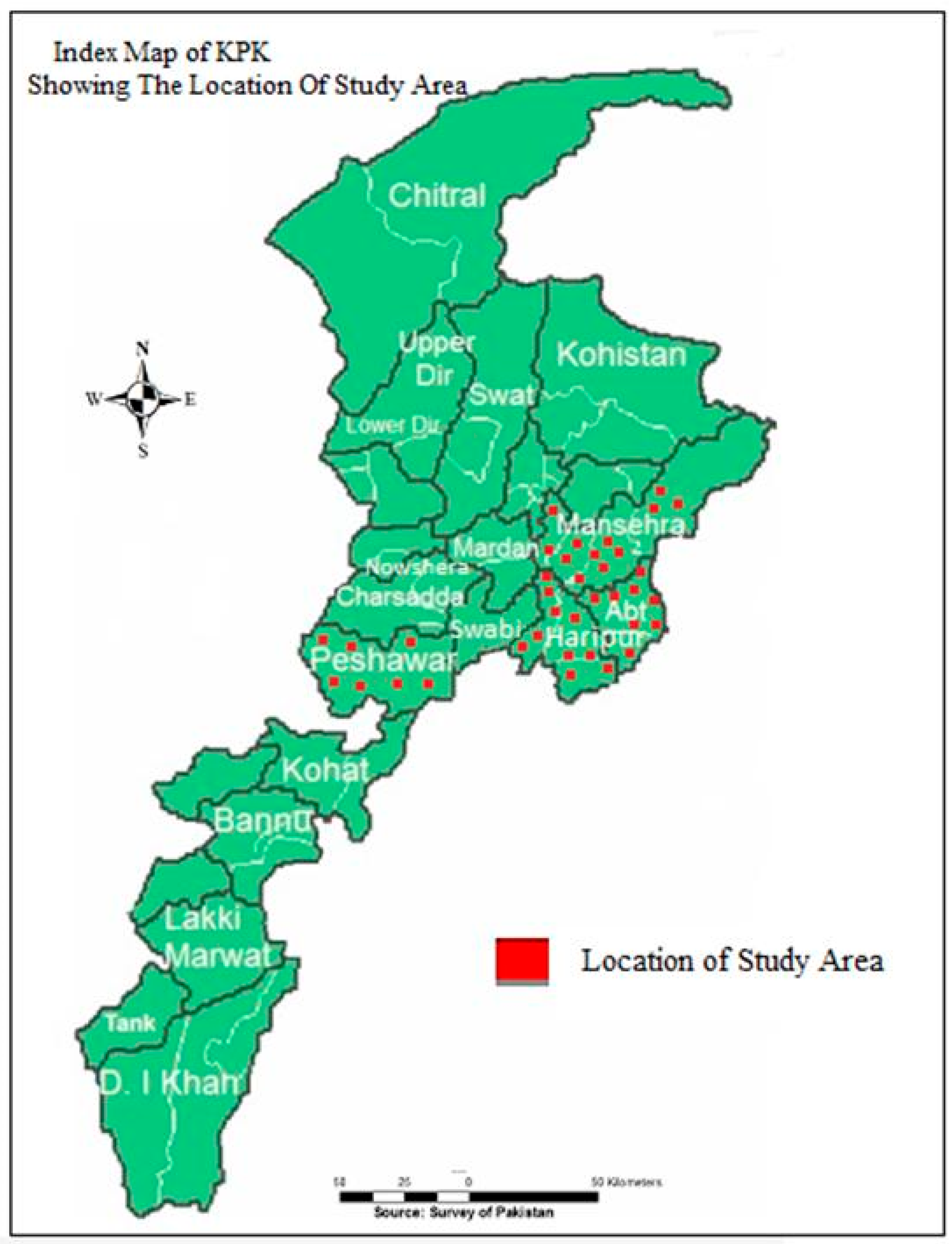
Figure 2.
Typical lesions of early blight of tomato, necrotic spots with concentric rings on leaf (A) and fruit (B) showing target spot appearance.
Figure 2.
Typical lesions of early blight of tomato, necrotic spots with concentric rings on leaf (A) and fruit (B) showing target spot appearance.
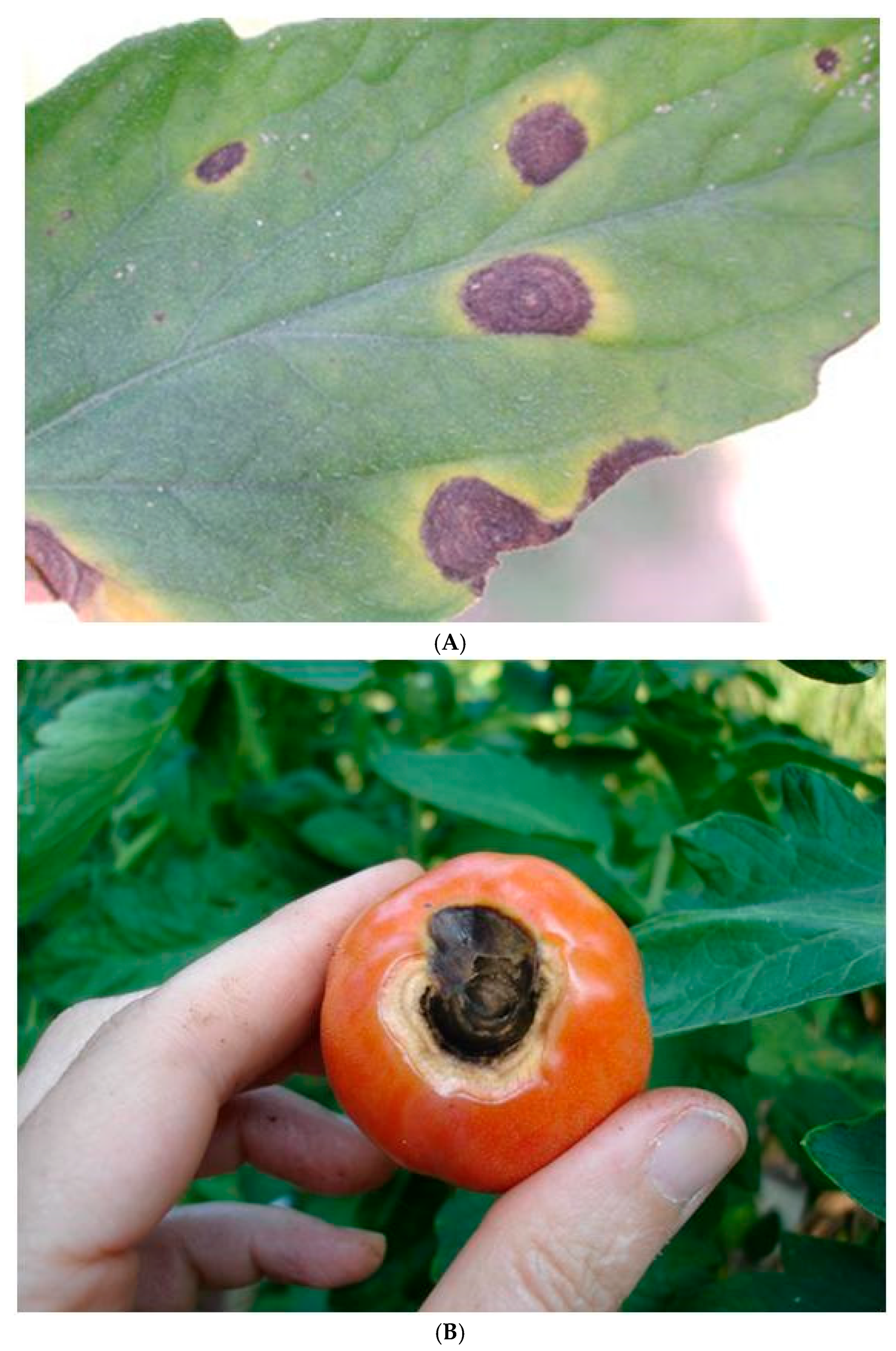
Figure 3.
Relationship between radial growth and disease severity of different isolates of A. solani collected from Peshawar and Hazara Division.
Figure 3.
Relationship between radial growth and disease severity of different isolates of A. solani collected from Peshawar and Hazara Division.
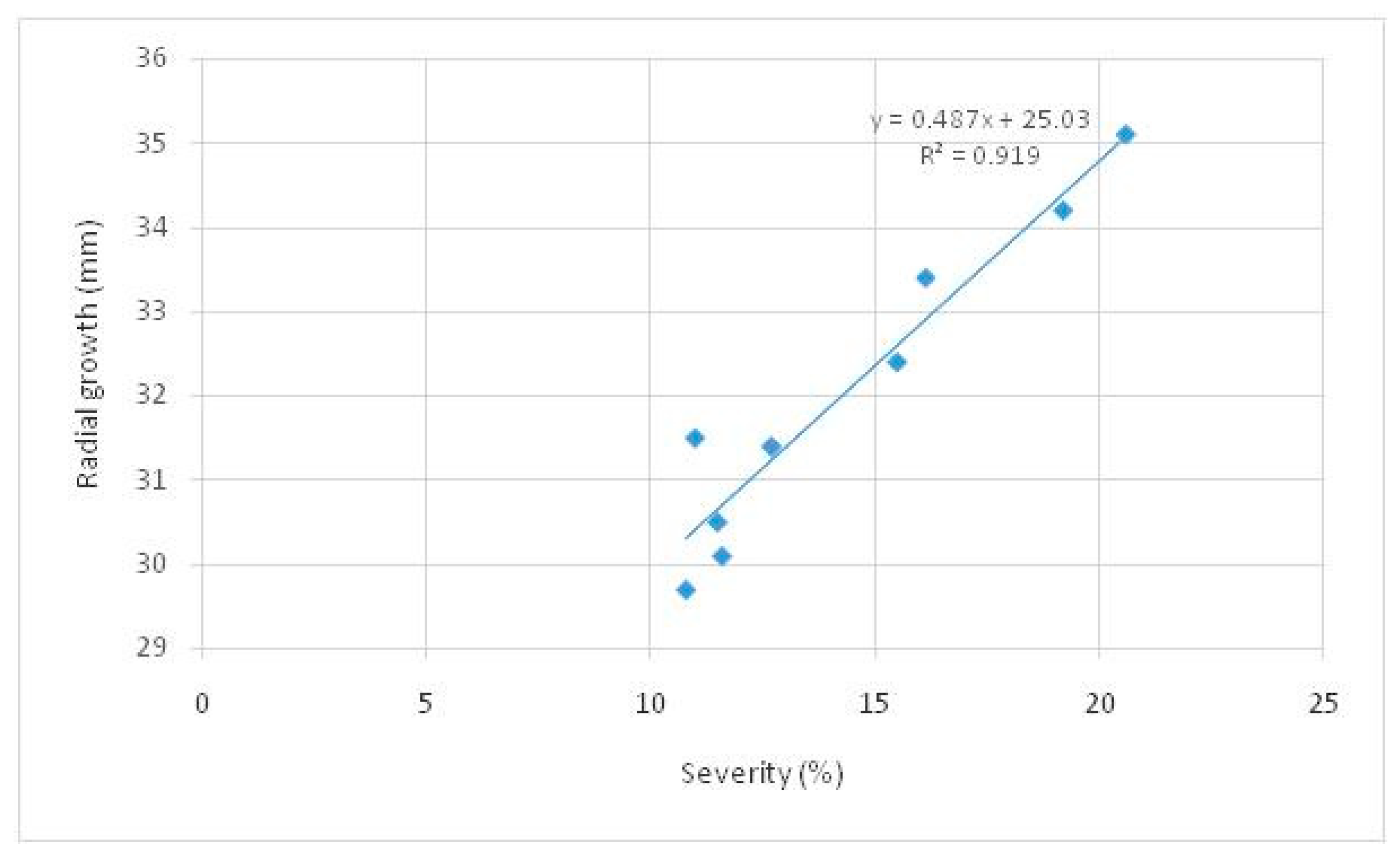
Figure 4.
Relationship between spore concentration and disease severity of different isolates of A. solani collected from Peshawar and Hazara Division.
Figure 4.
Relationship between spore concentration and disease severity of different isolates of A. solani collected from Peshawar and Hazara Division.
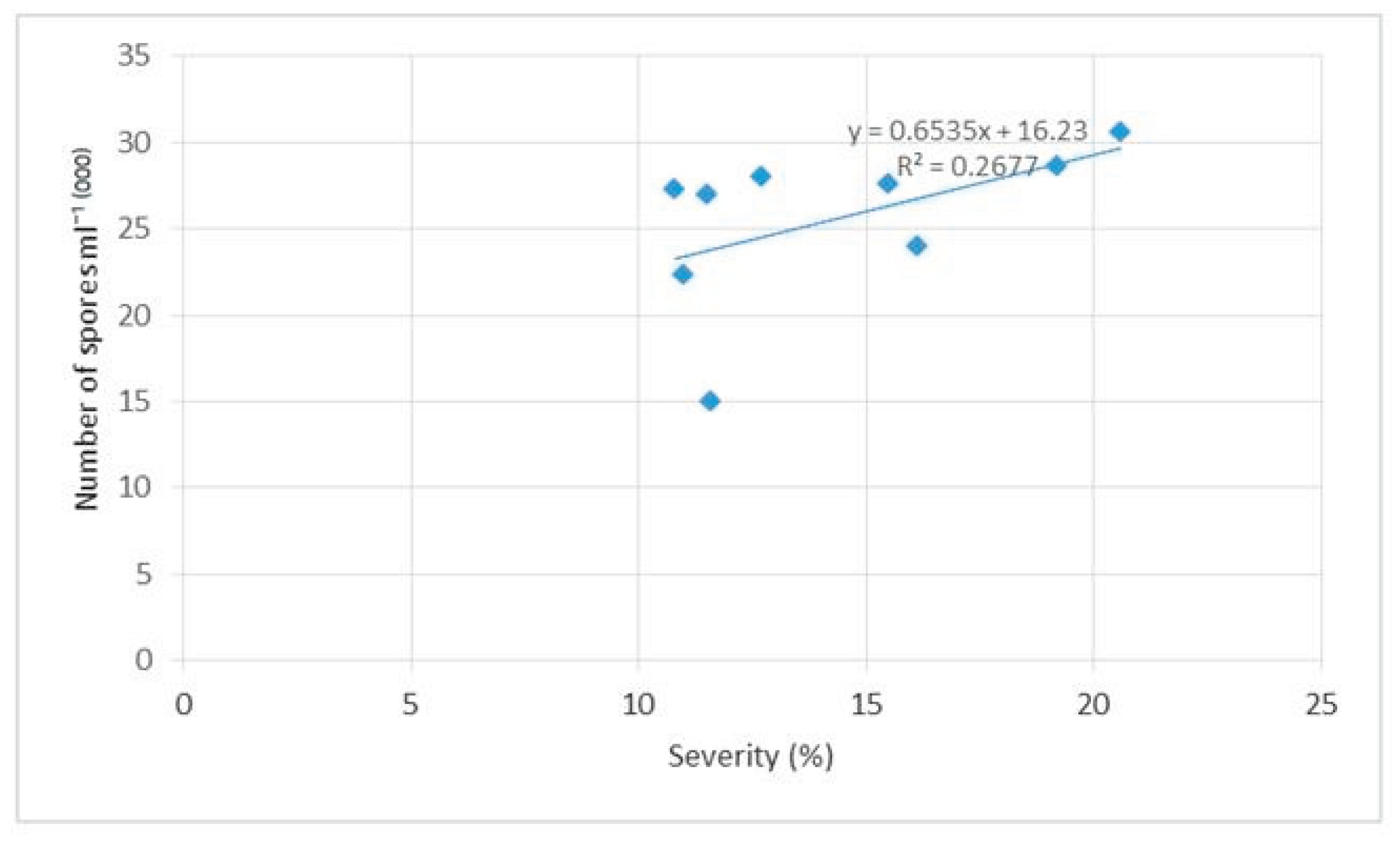

Table 1.
Disease incidence, fruit infection and percent disease severity of tomato early blight in Haripur district.
Table 1.
Disease incidence, fruit infection and percent disease severity of tomato early blight in Haripur district.
| Locations | Disease incidence (%) | Fruit infection (%) | Disease severity (%) | |||
|---|---|---|---|---|---|---|
| 1 | Dangitubewel | 21.45 | 5.1 | 8.6 | ||
| 2 | Jarrikas | 32.75 | 4.8 | 10.7 | ||
| 3 | Meluim | 31.78 | 5.2 | 12.7 | ||
| 4 | Sakandarpur | 35.43 | 5.8 | 14 | ||
| 5 | Shah Muhammad | 40 | 7.7 | 16.14 | ||
| 6 | Mankarya | 28.85 | 6.1 | 9.2 | ||
| 7 | Monnan | 15.11 | 7.8 | 4.3 | ||
| 8 | Saria Saleh | 19.53 | 7.9 | 5.7 | ||
| 9 | Changi Bandi | 34.67 | 6.8 | 11.5 | ||
| 10 | Lora Chowk | 38.37 | 10.66 | 13.12 | ||
Table 2.
Disease incidence, fruit infection and percent disease severity of tomato early blight in Abbottabad district.
Table 2.
Disease incidence, fruit infection and percent disease severity of tomato early blight in Abbottabad district.
| Locations | Disease incidence (%) | Fruit infection (%) |
Disease severity (%) | |
|---|---|---|---|---|
| 1 | Sultanpur | 26.32 | 9.8 | 11.0 |
| 2 | Havelian | 14.8 | 8.2 | 8.5 |
| 3 | Mangal | 21.68 | 8.2 | 10.4 |
| 4 | Qalandarabad | 15.46 | 7.9 | 6.3 |
| 5 | Nawanshehr | 19.34 | 3.3 | 7 |
| 6 | Mian de seri | 14.6 | 9.4 | 8.5 |
| 7 | Sajikot | 19.5 | 10 | 6.8 |
| 8 | Baldheri | 25.7 | 8.5 | 11.32 |
| 9 | Chamba | 14.5 | 9.7 | 9.4 |
Table 3.
Disease incidence, fruit infection and percent disease severity of tomato early blight in Mansehra district.
Table 3.
Disease incidence, fruit infection and percent disease severity of tomato early blight in Mansehra district.
| Locations | Disease incidence (%) | Fruit infection (%) |
Disease severity (%) | |
|---|---|---|---|---|
| 1 | Ghandian | 14.3 | 8.3 | 5.3 |
| 2 | Bajna | 14.7 | 7.5 | 6.1 |
| 3 | Baffa | 27.2 | 10.2 | 10.8 |
| 4 | Khawajgan | 13.64 | 8.3 | 5.7 |
| 5 | Khaki | 23.45 | 9.1 | 12.7 |
| 6 | Berkund | 11.65 | 8.4 | 5.9 |
| 7 | Labarkot | 19.83 | 8.9 | 8.7 |
| 8 | Dhodial | 25.3 | 9 | 11.6 |
| 9 | Ichriyan | 18.46 | 8.8 | 9.8 |
| 10 | Bela | 16.18 | 7.9 | 4.9 |
| 11 | Battal | 39.72 | 10.2 | 15.5 |
| 12 | Shinkiari | 39.52 | 9.2 | 12.6 |
Table 4.
Disease incidence, fruit infection and percent disease severity of tomato early blight in Peshawar district.
Table 4.
Disease incidence, fruit infection and percent disease severity of tomato early blight in Peshawar district.
| Locations | Disease incidence (%) | Fruit infection (%) |
Disease severity (%) | |
|---|---|---|---|---|
| 1 | Qazi kali | 35.5 | 5.3 | 19.20 |
| 2 | Taru Jaba | 45.8 | 6.0 | 20.6 |
| 3 | Faqir Kali | 41.7 | 4.9 | 14.6 |
| 4 | Chamkani | 30.5 | 7.2 | 11.8 |
| 5 | Shah Alam | 29.02 | 7.8 | 16.5 |
| 6 | Surizi | 33.4 | 5.8 | 10.1 |
| 7 | Budh Bir | 34.6 | 5.5 | 15.9 |
Table 5.
Comparison of disease incidence, fruit infection and percent disease severity of tomato early blight in Haripur, Abbottabad, Mansehra and Peshawar districts.
Table 5.
Comparison of disease incidence, fruit infection and percent disease severity of tomato early blight in Haripur, Abbottabad, Mansehra and Peshawar districts.
| Districts | Disease incidence (%) | Fruit infection (%) | Disease severity (%) |
|---|---|---|---|
| Haripur | 29.79 | 6.78 | 10.59 |
| Abbottabad | 19.1 | 8.16 | 8.72 |
| Mansehra | 21.99 | 8.81 | 9.13 |
| Peshawar | 35.78 | 6.07 | 15.52 |
Table 6.
Radial growth, number of spores ml−1 (on PDA media) and severityof different isolates of Alternaria solani collected during survey.
Table 6.
Radial growth, number of spores ml−1 (on PDA media) and severityof different isolates of Alternaria solani collected during survey.
| Divisions | Location | Isolates | Radial growth (mm) |
Number of spores ml−1 (000) |
Disease severity % |
|---|---|---|---|---|---|
| Peshawar | Qazi kale | AsP1 | 34.2 b | 28.6 a | 19.20 a |
| Taru Jaba | AsRj | 35.1 a | 30.6 a | 20.6 a | |
| Hazara | Shah Muhammad | AsR | 33.4 c | 24.0 bc | 16.14 b |
| Changi Bandi | AsH2 | 30.5 f | 27.0 ab | 11.5 cd | |
| Sultanpur | AsH3 | 31.5 e | 22.3 c | 11.0 cd | |
| Baffa | AsH4 | 29.7 h | 27.3 ab | 10.8 d | |
| Khaki | AsH5 | 31.4 e | 28 ab | 12.7 c | |
| Dhodial | AsH6 | 30.1 g | 15.0 d | 11.6 cd | |
| Battal | AsRG | 32.4 d | 27.6 ab | 15.5 b |
LSD(0.05)(Radial growth) = 2.093 LSD(0.05)(Number of spores ml−1 ) = 2.101 LSD(0.05)(Disease severity) = 2.101.
Table 7.
Effect of isolates adaptation on %severity of early blight of tomato.
| Varieties | Isolates | Means | |||
| Un inoculated | AsRJ | AsR | AsRG | ||
| Red Jumbo | 0.00 g | 64.0 ab | 61.9 d | 62.8 cd | 47.1 a |
| Roma | 0.00 g | 58.7 e | 63.6 abc | 56.8 e | 45.2 b |
| Rio Grande | 0.00 g | 58.4 f | 62.9 bcd | 64.9 a | 46.1 ab |
| Means | 0.00 d | 60.40 c | 62.81 a | 61.52 b | ----------- |
LSD(0.05)(varieties x isolates) = 0.9910 LSD(0.05)(isolates ) = 0.5721 LSD(0.05)(varieties) = 0.495.
Table 8.
Effect of isolates adaptation on number of lesions per plant in tomato.
| Varieties | Isolates | Means | |||
|---|---|---|---|---|---|
| Un inoculated | AsRJ | AsR | AsRG | ||
| Red Jumbo | 0.00 | 20.2 | 19.5 | 21.7 | 15.3 |
| Roma | 0.00 | 17.0 | 19.2 | 18.7 | 14.0 |
| Rio Grande | 0.00 | 18.5 | 18.50 | 21.5 | 14.5 |
| Means | 0.00 | 18.583 | 19.083 | 20.667 | ----------- |
LSD(0.05)(varieties x isolates) = 0.9561 LSD(0.05)(isolates ) = 0.5520 LSD(0.05)(varieties) = 0.4780.
Table 9.
Effect of isolates adaptation on lesion size (mm) of early blight of tomato.
| Varieties | Isolates | Means | |||
|---|---|---|---|---|---|
| Un inoculated | AsRJ | AsR | AsRG | ||
| Red Jumbo | 0.00 i | 8.2 a | 6.02 e | 5.9 f | 5.03 b |
| Roma | 0.00 i | 5.8 g | 6.4 d | 5.3 h | 4.37 c |
| Rio Grande | 0.00 i | 6.9 c | 5.9 f | 7.5 b | 5.07 a |
| Means | 0.00 d | 6.96 a | 6.10 c | 6.23 b | --------- |
LSD(0.05)(varieties x isolates) = 0.9216 LSD(0.05)(isolates ) = 0.5321 LSD(0.05)(varieties) = 0.4608.
Table 10.
Effect of isolates adaptation on yield (g) plant−1 of tomato.
| Varieties | Isolates | Means | |||
|---|---|---|---|---|---|
| Un inoculated | AsRJ | AsR | AsRG | ||
| Red Jumbo | 760.5 b | 436.7 j | 644.1 e | 650.5 d | 622.8 b |
| Roma | 980.4 a | 638.0 f | 535.2 h | 629.7 g | 695.8 a |
| Rio Grande | 692.0 c | 522.0 i | 450.7 j | 322.9 l | 496.9 c |
| Means | 811.0 a | 532.0 d | 543.3 b | 534.4 c | ----------- |
LSD(0.05)(varieties x isolates) = 0.539 LSD(0.05)(isolates ) = 0.213 LSD(0.05)(varieties) = 0.733.
Disclaimer/Publisher’s Note: The statements, opinions and data contained in all publications are solely those of the individual author(s) and contributor(s) and not of MDPI and/or the editor(s). MDPI and/or the editor(s) disclaim responsibility for any injury to people or property resulting from any ideas, methods, instructions or products referred to in the content. |
© 2026 by the authors. Licensee MDPI, Basel, Switzerland. This article is an open access article distributed under the terms and conditions of the Creative Commons Attribution (CC BY) license (http://creativecommons.org/licenses/by/4.0/).
Copyright: This open access article is published under a Creative Commons CC BY 4.0 license, which permit the free download, distribution, and reuse, provided that the author and preprint are cited in any reuse.