

Submitted:
06 March 2026
Posted:
07 March 2026
You are already at the latest version
Abstract
The development of efficient, stable, and sustainably-synthesized photocatalysts for solar-driven hydrogen production remains a critical challenge. Here, we report a novel, green coprecipitation route for the synthesis of calcium-doped zinc oxide (Ca-ZnO) nanosheets, utilizing cactus juice as a natural, multifunctional precipitation medium. This method enables the in-situ incorporation of 3-7% Ca2+ ions into the wurtzite ZnO lattice without the need for harsh chemical agents. Comprehensive analysis confirms that Ca2+ substitutionally replaces Zn2+, preserving the crystal structure while inducing a uniform nanosheet morphology. This doping strategy effectively modulates the electronic band structure, progressively narrowing the bandgap from 3.19 eV to 2.90 eV and significantly enhancing visible-light absorption. Crucially, the incorporation of Ca2+ also generates oxygen vacancies, which act as efficient electron traps to suppress charge recombination. The optimized 5%Ca-ZnO photocatalyst demonstrates an exceptional hydrogen evolution rate of 889 μmol·g-1·h-1 under visible light, with outstanding stability, retaining 94.8% of its activity after four cycles. This work not only presents a high-performance material but also establishes a paradigm for the sustainable design of advanced semiconductor photocatalysts.
Keywords:
zinc oxide
; calcium doping
; cactus juice
; coprecipitation
; photocatalytic hydrogen production
1. Introduction
Hydrogen is widely recognized as a promising energy carrier due to its clean combustion and high energy density, offering a viable approach to addressing both the global energy crisis and environmental degradation. Photocatalytic water splitting provides an effective means of transforming solar energy into chemical fuels, with the engineering of semiconductor photocatalysts lying at the heart of this technology [1,2,3]. Among various semiconductor materials, zinc oxide (ZnO) has attracted considerable research interest owing to its outstanding chemical durability, excellent charge carrier mobility, environmental compatibility, and low fabrication cost. However, its practical application is hindered by a relatively large bandgap (~3.37 eV), which leads to limited visible-light harvesting, as well as rapid recombination of photogenerated electron-hole pairs, severely compromising its photocatalytic efficiency [4,5,6].
Elemental doping is an effective strategy to modulate the semiconductor band structure and extend the light response range [7,8,9]. Calcium (Ca), an alkaline earth metal, has an ionic radius (Ca2+: 100 pm) relatively close to that of Zn2+ (74 pm). Doping with Ca can induce lattice distortion and introduce impurity energy levels without disrupting the parent crystal structure. Furthermore, traditional coprecipitation methods for synthesizing nano-ZnO often require large amounts of alkali and are prone to particle agglomeration. Therefore, developing green, low-consumption synthetic routes is of significant research value. Cactus juice, rich in polysaccharides, organic acids, and mineral elements, can act as a natural complexing agent and precipitation medium, potentially enabling the controlled synthesis and surface modification of nanomaterials [10,11].
In this study, we present, for the first time, a green and efficient method for the in-situ synthesis of Ca-doped ZnO nanosheets using cactus juice as an auxiliary precipitant. We systematically investigate the impact of Ca doping concentration on the structural, morphological, optical, and photocatalytic properties of the resulting materials. Through detailed spectroscopic and photoelectrochemical analysis, we elucidate the underlying mechanism by which Ca doping, and the concomitant formation of oxygen vacancies, dramatically enhances the visible-light-driven hydrogen evolution performance.
2. Experimental
2.1. Materials Preparation
20 g of zinc acetate dihydrate (Zn(CH3COO)2·2H2O) was dissolved in distilled water. Separately; 5 M NaOH solution was prepared. According to the stoichiometric ratio; 43 mL of the NaOH solution was added dropwise to the zinc acetate solution; forming a Zn(OH)2 precipitate. The product was washed multiple times with distilled water; dried at 80 °C for 24 h; ground; and then calcined in a muffle furnace at 420 °C for 3 h. The resulting powder was washed; filtered, and dried again to obtain 7.10 g of white ZnO powder
An eco-friendly coprecipitation method was employed (as illustrated in Figure 1). 20 g of zinc acetate was dissolved in 200 mL of distilled water. Separately, 40 g of NaOH was dissolved in 200 mL of distilled water (5 M). Then, 19 mL of the NaOH solution (half the traditional amount) was added dropwise to the zinc acetate solution, simultaneously with 200 mL of cactus juice, which served as the precipitation medium. The mixture was stirred for 24 h. The resulting precipitate was washed, filtered, dried at 80 °C for 24 h, ground, and calcined at 420 °C for 3 h. After further washing, filtration, and drying, 9.30 g of XZnO powder was obtained. By adjusting the amount of cactus juice added, the in-situ Ca doping ratio was controlled to be 3%, 5%, and 7% (denoted as 3%XZnO, 5%XZnO, and 7%XZnO, respectively).
2.2. Sample Characterization
The characterization of materials are detailed in the Supporting Information.
2.3. Photocatalytic Hydrogen Production Performance Test
The photocatalytic performance test of the catalyst are detailed in the Supporting Information.
2.4. Photoelectrochemical Measurements
Photoelectrochemical measurements, including photocurrent response, electrochemical impedance spectroscopy (EIS), and Mott-Schottky (M-S) plots, were performed using an electrochemical workstation with a standard three-electrode configuration. The working electrode was prepared by coating the catalyst onto FTO conductive glass. The electrolyte was 0.5 M Na2SO4 solution. The light source was a 300 W Xe lamp with a 420 nm cutoff filter. EIS was measured over a frequency range of 0.1 Hz to 100 kHz. M-S plots were collected at frequencies of 500 Hz, 1000 Hz, and 1500 Hz.
3. Results and Discussion
3.1. Material Structure and Morphology
The crystalline structure of the synthesized samples was first investigated by X-ray diffraction (as shown in Figure 2). All diffraction peaks for the pure and doped ZnO samples are perfectly indexed to the hexagonal wurtzite phase (PDF#36-1451), with no detectable peaks corresponding to CaO or other calcium-based compounds. This indicates that in-situ Ca doping, facilitated by the cactus juice medium, does not alter the fundamental ZnO crystal lattice. A magnified view of the (002) and (101) diffraction peaks (Figure 2b) reveals a slight shift towards lower angles for the XZnO samples compared to pure ZnO. Consistent with Bragg's law, the decrease in diffraction angles points to an increased lattice spacing. This expansion arises from the partial displacement of native Zn2+ (ionic radius: 74 pm) by the larger Ca2+ dopant (100 pm), thereby verifying the effective doping of Ca into the ZnO lattice.
X-ray photoelectron spectroscopy (XPS) was employed to analyze the surface chemical composition and elemental states. The survey spectra in Figure 3a-b confirm the presence of Zn, O, and Ca in the doped samples, with no other impurities detected. The high-resolution Zn 2p spectrum (Figure 3c) shows two symmetric peaks at 1021.4 eV and 1044.3 eV, corresponding to Zn 2p3/2 and Zn 2p1/2, respectively, with a spin-orbit splitting of 22.9 eV, which is characteristic of the Zn2+ oxidation state. The O 1s spectrum (Figure 3d) is deconvoluted into two components: a peak at 529.2 eV attributed to lattice oxygen (OL) and a peak at 531.3 eV associated with surface hydroxyl groups (OOH) or oxygen-deficient regions. The presence of Ca is unambiguously confirmed by the doublet peaks in the Ca 2p spectrum (Figure 3e) at approximately 347 eV and 351 eV, corresponding to Ca 2p3/2 and Ca 2p1/2, and confirming calcium's presence as Ca2+.
Fourier-transform infrared (FT-IR) spectroscopy, shown in Figure 3f, further supports these findings. All samples exhibit a strong absorption band around 500 cm-1, characteristic of the Zn-O stretching vibration. Notably, this peak becomes sharper and more intense with increasing Ca content, suggesting an enhancement of the local Zn-O bond strength and overall structural rigidity. The broad bands around 3500 cm-1 and the peak at 1650 cm-1 correspond to O-H stretching and bending vibrations of adsorbed water molecules and surface hydroxyl groups. The increase in intensity of the 1650 cm-1 peak with Ca doping is particularly significant, as a more hydrophilic surface with abundant -OH groups is known to facilitate water adsorption, a crucial first step in the photocatalytic water-splitting reaction.
The morphology and microstructure of the optimal 5%XZnO sample were examined using transmission electron microscopy (TEM). The TEM image in Figure 4a-c reveal a well-defined, uniformly dispersed nanosheet morphology with minimal agglomeration, highlighting the effectiveness of the cactus-juice-mediated synthesis in controlling particle growth. High-resolution TEM (HRTEM) in Figure 4d-e displays clear and continuous lattice fringes with an interplanar spacing of 0.25 nm, which corresponds perfectly to the (101) plane of wurtzite ZnO. Energy-dispersive X-ray spectroscopy (EDS) elemental mapping (Figure 4g-i) displays a homogeneous distribution of Zn, O, and Ca across the entire nanosheet. The absence of any Ca-rich clusters or secondary phases provides compelling evidence for the uniform incorporation of Ca2+ ions into the ZnO lattice, rather than simple surface adsorption or formation of separate CaO domains.
3.2. Optical Properties and Band Structure Evolution
To evaluate the influence of Ca incorporation on the optical characteristics of the prepared samples, UV-vis diffuse reflectance spectroscopy (DRS) was employed. As presented in Figure 5a, the spectrum of undoped ZnO exhibits a distinct absorption threshold located at around 390 nm within the ultraviolet region, while its response to visible light remains minimal. Upon Ca doping, a progressive red-shift of the absorption edge is observed, accompanied by a significant increase in visible light absorption. The corresponding bandgap energies, determined from Tauc plots (Figure 5b), decrease monotonically from 3.19 eV for pure ZnO to 2.90 eV for the 7% XZnO sample. This bandgap narrowing is attributed to the formation of impurity energy levels within the ZnO bandgap due to the substitutional Ca2+ ions, effectively lowering the energy required for electronic transitions and extending the light absorption range into the visible spectrum.
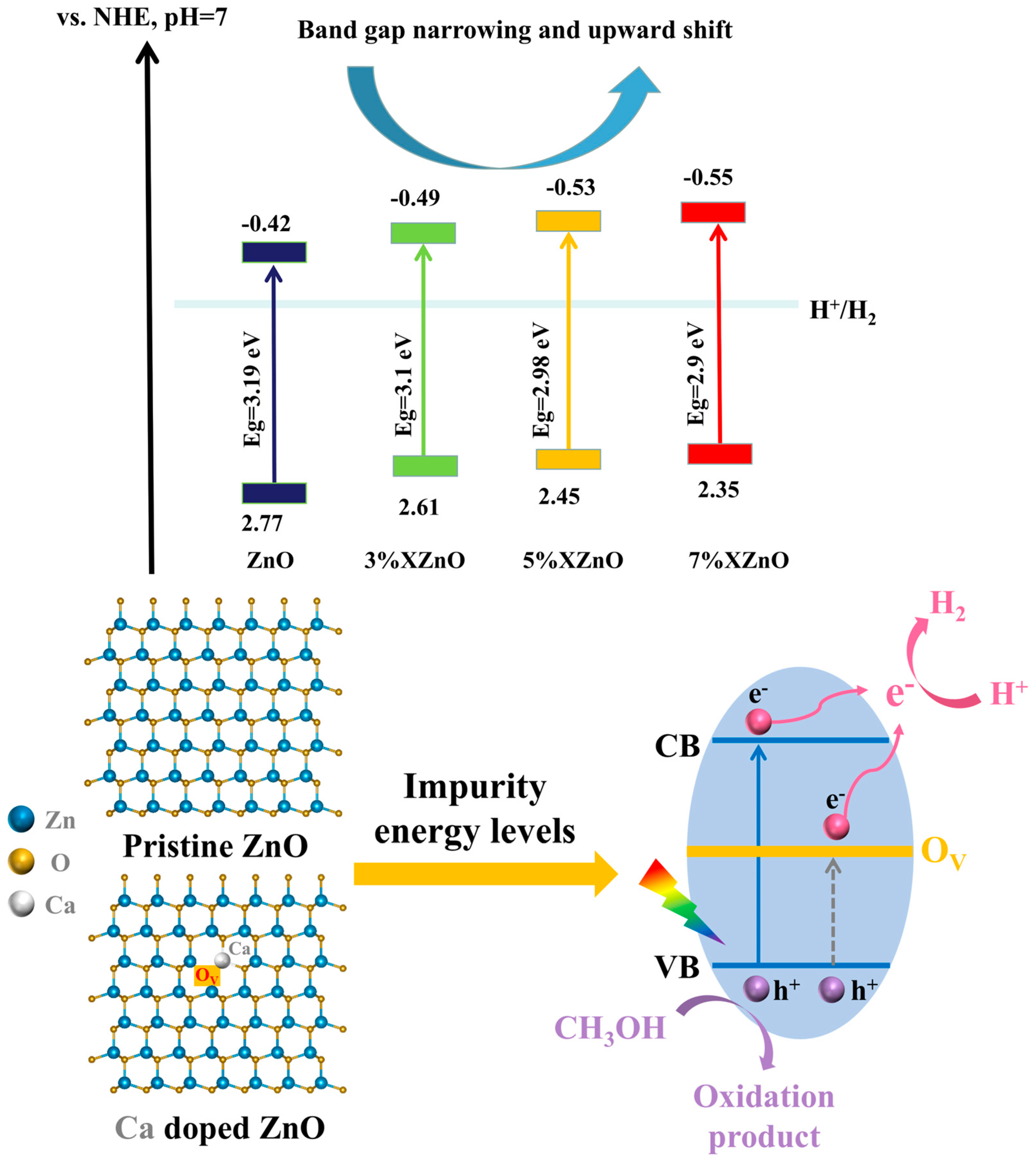
To elucidate the absolute band edge positions, Mott-Schottky (M-S) measurements were performed (Figure 6). The positive slopes of the linear plots confirm the n-type semiconductor nature. The flat band potentials (EFB), which for n-type semiconductors are approximately equal to the conduction band minimum (ECB), were determined from the x-intercepts. After conversion to the standard hydrogen electrode (SHE) scale, the ECB values are -0.42 V for pure ZnO, -0.49 V for 3%XZnO, -0.53 V for 5%XZnO, and -0.55 V for 7% XZnO. Using the bandgap energies (Eg) obtained from DRS, the valence band maxima (EVB = ECB + Eg) were calculated. The progressive negative shift of ECB with increasing Ca content is particularly noteworthy, as it implies that the photogenerated electrons possess a stronger thermodynamic driving force for the proton reduction reaction (H+/H2), a key factor in enhancing photocatalytic hydrogen production.
3.3. Photocatalytic Hydrogen Production Performance
The photocatalytic activity of the synthesized samples for hydrogen evolution was evaluated under visible light irradiation (λ > 420 nm). As shown in Figure 7a and Figure 7b, pure ZnO exhibits negligible H2 production, consistent with its wide bandgap and inability to absorb visible light. In stark contrast, all Ca-doped XZnO samples demonstrate significant and sustained H2 evolution. The hydrogen evolution rate follows a volcano-type trend with doping concentration, initially increasing, reaching a maximum, and then decreasing. The 5%XZnO sample achieves the highest performance, with an impressive H2 evolution rate of 889 μmol·g-1·h-1, which is about 4 times of the pristine ZnO. The hydrogen production performance of this work is compared with that of other similar published studies in Table S1. This optimal doping level represents a balance between enhanced light absorption and charge separation and the introduction of excessive defects that can act as recombination centers, as observed for the 7%XZnO sample.
The stability of a photocatalyst is paramount for practical applications. The 5%XZnO sample was subjected to four consecutive cycling runs, totaling 14 hours of illumination (Figure 7c). The catalyst exhibited remarkable stability, retaining 94.8% of its initial H2 evolution rate in the fourth cycle (Figure 7d). Post-reaction characterization (XRD and FT-IR, as shown in Figure S1) confirmed that the crystal structure and chemical functional groups of the catalyst remained unchanged, underscoring its excellent resistance to photocorrosion and structural degradation, a key advantage conferred by the robust, Ca-doped lattice.
3.4. Photoelectrochemical Properties and Mechanism for Enhanced Activity
To gain deeper insight into the charge carrier dynamics, transient photocurrent responses and electrochemical impedance spectroscopy (EIS) were performed. Figure 8a exhibits the photocurrent responses under intermittent visible light irradiation. The 5%XZnO sample generates the highest photocurrent density, which is more than five times that of pure ZnO. This directly demonstrates that optimal Ca doping dramatically enhances the efficiency of photogenerated electron-hole pair separation and collection. The EIS Nyquist plots in Figure 8b further corroborate this finding.With the smallest arc radius in the EIS measurement, the 5%XZnO composition demonstrates superior conductivity, as it offers the least resistance to electron transfer across the electrode/electrolyte boundary. This implies faster interfacial charge migration kinetics, allowing more photogenerated electrons to participate in the surface reduction reaction for H2 evolution [12,13,14].
To directly identify and semi-quantify oxygen vacancies, electron paramagnetic resonance (EPR) spectroscopy was employed at 77 K, with the results shown in Figure 9. A distinct signal at g ≈ 2.0, characteristic of singly ionized oxygen vacancies (Ov), is observed for all samples. Crucially, the intensity of this signal increases with Ca doping, being weakest for pure ZnO and strongest for the 5%XZnO sample, before slightly decreasing for the 7%XZnO sample. This trend indicates that the substitution of Zn2+ by Ca2+ introduces a degree of charge imbalance and lattice strain, which facilitates the formation of oxygen vacancies. The higher concentration of oxygen vacancies in the optimally doped sample can act as shallow electron donors and efficient trap sites, temporarily immobilizing photogenerated electrons and thereby prolonging their lifetime by suppressing rapid recombination with holes. The subsequent slight decrease in the 7% sample may be due to an overabundance of defects that begin to aggregate or form different types of recombination centers. These findings provide direct evidence that the enhanced performance of the Ca-doped samples is linked not only to bandgap narrowing but also to the strategic introduction of beneficial oxygen vacancies.
Based on the comprehensive experimental evidence, a plausible mechanism for the enhanced photocatalytic activity of Ca-doped ZnO nanosheets is proposed, as illustrated in Figure 10. The enhanced performance is a result of several synergistic effects: (i) Extended light absorption: Substitutional Ca2+ doping narrows the bandgap, enabling the absorption of visible light and generating more electron-hole pairs. (ii) Enhanced charge separation: The incorporation of Ca2+ induces lattice distortion and promotes the formation of oxygen vacancies. These vacancies can serve as efficient electron traps, temporarily immobilizing electrons and significantly prolonging their lifetime by impeding rapid recombination with holes in the valence band. (iii) Favorable band edge positions: Ca doping shifts the conduction band minimum to more negative potentials, increasing the reducing power of the photogenerated electrons. (iv) Improved surface reactivity: The increased surface hydroxyl groups, as evidenced by FT-IR, enhance the catalyst's hydrophilicity and its ability to adsorb water molecules, the primary reactant. These combined factors funnel a greater number of long-lived, highly energetic electrons to the surface-active sites to efficiently reduce adsorbed protons to molecular hydrogen. Furthermore, optimal Ca doping suppresses the formation of lattice defects that can act as recombination centers, improving the lifetime and migration efficiency of photogenerated charge carriers. These synergistic effects collectively contribute to the efficient and stable photocatalytic water splitting for hydrogen production by in-situ Ca-doped ZnO under visible light.
4. Conclusions
In summary, a series of Ca-doped ZnO nanosheet photocatalysts were successfully synthesized using an eco-friendly coprecipitation method with cactus juice as a green precipitation medium. This method offers advantages such as reduced alkali consumption, mild conditions, and environmental friendliness. Ca2+ ions were successfully substituted into the ZnO lattice. The doped samples retained the wurtzite structure, exhibited a uniformly dispersed nanosheet morphology with clear lattice fringes, and showed homogeneous distribution of Ca without any separate impurity phases. Ca doping effectively narrowed the bandgap of ZnO (from 3.19 eV to 2.90 eV), extended its visible light absorption range, and negatively shifted the conduction band minimum, thereby enhancing the reduction ability of photogenerated electrons. It also induces the formation of oxygen vacancies, which act as electron traps to dramatically improve charge carrier separation and suppress recombination. The 5%XZnO sample demonstrated the optimal visible-light-driven photocatalytic hydrogen production performance, with a rate of 889 μmol·g-1·h-1 and excellent cyclic stability (maintaining 94.8% activity after four cycles). Photoelectrochemical measurements confirmed that an appropriate amount of Ca doping significantly promoted charge carrier separation and interfacial migration. This study provides a new approach for the green synthesis of efficient and stable ZnO-based visible-light photocatalysts, and the proposed eco-friendly coprecipitation method holds good universality and potential for further application.
Supplementary Materials
The following supporting information can be downloaded at the website of this paper posted on Preprints.org.
Acknowledgments
This work was financially supported by the National Natural Science Foundation of China (No. 22262024), the Key Projects of Jiangxi Provincial Natural Science Foundation (No. 20232ACB204007).
Declarations: The authors declare no competing financial interest.
References
- Li, X.; Wan, Y.; Xie, Y.; Fu, Y.; Deng, F.; Zhou, Y.; Luo, Y.; Han, L.; Ma, J.; Dong, F.; et al. Synergistic Atomic-Vacancy Engineering in Bi 2 S 3-δ /Co-N-C: Boosting Photoelectrocatalytic Hydrogen Production via Formaldehyde Oxidation. Adv. Funct. Mater. 2025. [CrossRef]
- Wang, H.; Niu, R.; Liu, J.; Guo, S.; Yang, Y.; Liu, Z.; Li, J. Electrostatic self-assembly of 2D/2D CoWO4/g-C3N4 p—n heterojunction for improved photocatalytic hydrogen evolution: Built-in electric field modulated charge separation and mechanism unveiling. Nano Res. 2022, 15, 6987–6998. [CrossRef]
- Shao, Y.; Shen, R.; Wang, S.; Li, S.; Zhang, P.; Li, X. Composition engineering in covalent organic frameworks for tailored photocatalysis. Acta Phys. Chim. Sin. 2025, 41. [CrossRef]
- Wang L, Zhang Y, Chen J, Li H, Liu X, Yang F, Zhao M. Recent advances in ZnO-based nanostructures for photocatalytic water splitting. Chemical Engineering Journal, 2022, 430, 132876.
- Zhang X, Liu Y, Wang H, Sun J, Li Q, Zhou W. Band gap engineering of ZnO for enhanced visible-light photocatalysis. Journal of Materials Chemistry A, 2021, 9, 9456-9475.
- Kumar S, Sharma V, Bhattacharya S, Singh R. Metal-doped ZnO nanostructures: A review on synthesis, characterization and photocatalytic applications. Materials Today Chemistry, 2020, 17, 100329.
- Chen H, Li Y, Wang J, Zhang L, Xu F. Calcium doping in ZnO: A strategy for bandgap modulation and enhanced photocatalytic activity. Applied Surface Science, 2019, 493, 123-132.
- Ye, J.; Cheng, B.; Li, X.; Li, S.; Chen, S.; Qian, J.; Chen, Q. Enhanced Decarboxylative Sulfonylation of Cinnamic Acids to (E)-Vinyl Sulfones via Manganese-doped Mesoporous Beta Zeolite Catalyst. Chem. Res. Chin. Univ. 2025, 42, 263–275. [CrossRef]
- Wan, Y.; Liu, H.; Li, X.; Wang, H.; Deng, F.; Zhou, Y.; Luo, Y.; Xie, Y.; Jiang, H.; Zhang, Y.; et al. From type-I heterojunction to high-low junction: Novel charge transfer mechanisms and recent advances. Sci. China Technol. Sci. 2025, 68, 2210501. [CrossRef]
- Patil A, More P, Jadhav S. Plant extract-mediated green synthesis of metal oxide nanoparticles: A review on recent progress and applications. Journal of Environmental Chemical Engineering, 2021, 9, 105678.
- Agostinho, B.; de Paula, V.; Silvestre, A.J.D.; Sousa, A.F. The Evaluation of Eutectic Solvents as Catalysts for Mediating the Greener Synthesis of Poly(alkylene 2,5-furandicarboxylate)s. Molecules 2025, 31, 77. [CrossRef]
- Liu Y, Wang Z, Zhang H, Li J, Chen G. Defect-engineered ZnO nanosheets for enhanced photocatalytic hydrogen evolution. ACS Sustainable Chemistry & Engineering, 2023, 11, 567-578.
- Gupta V, Saleh T, Agarwal S. Green synthesis of nanomaterials for sustainable energy and environmental applications. Green Chemistry, 2022, 24, 2010-2035.
- Yin, Z.; Zhen, W.; Ning, X.; Han, Z.; Lu, G. Enhanced Stability and Charge Separation of InP by Assembling Al2O3 and Metallic Al for Photocatalytic Overall Water Splitting. Molecules 2025, 30, 3822. [CrossRef]
Figure 1.
Schematic illustration of the preparation process for Ca-doped ZnO (XZnO).
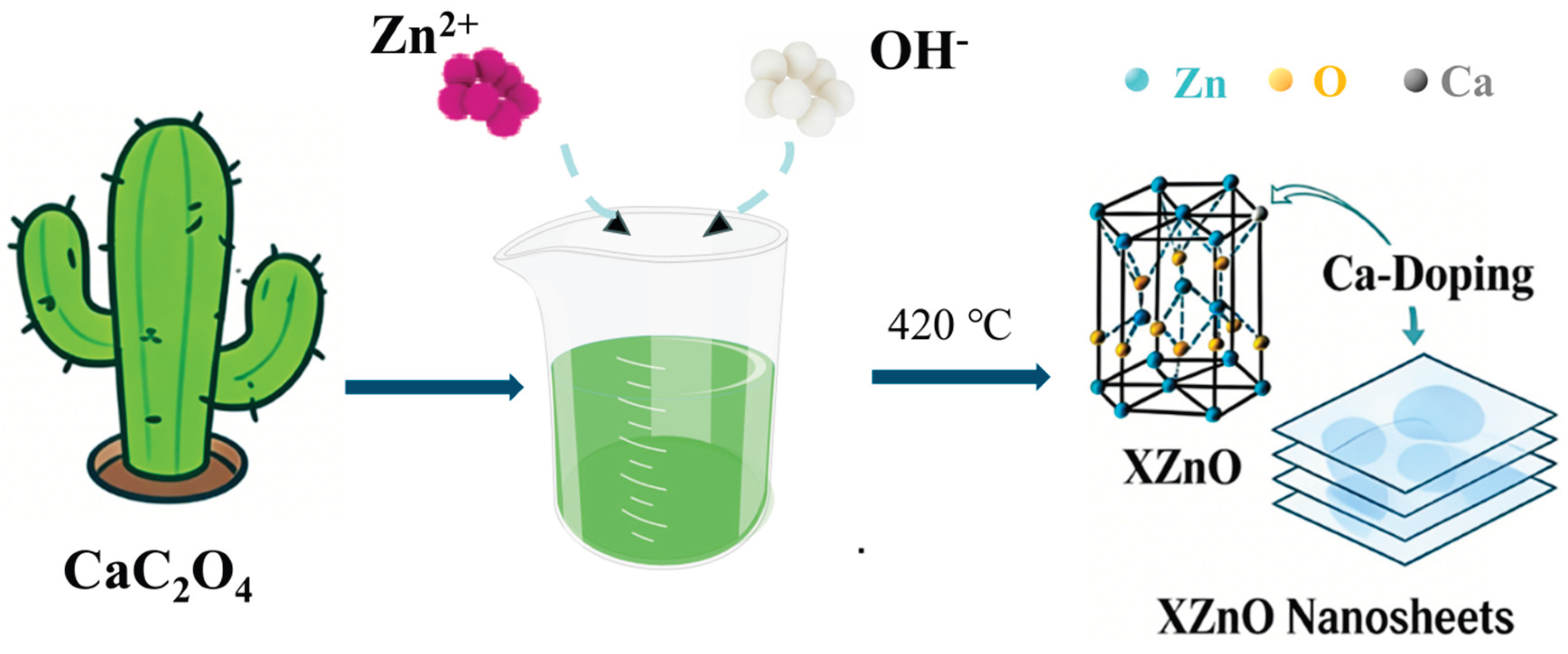
Figure 2.
(a) XRD patterns of the prepared XZnO samples and (b) magnified view of the (002) and (101) peaks.
Figure 2.
(a) XRD patterns of the prepared XZnO samples and (b) magnified view of the (002) and (101) peaks.
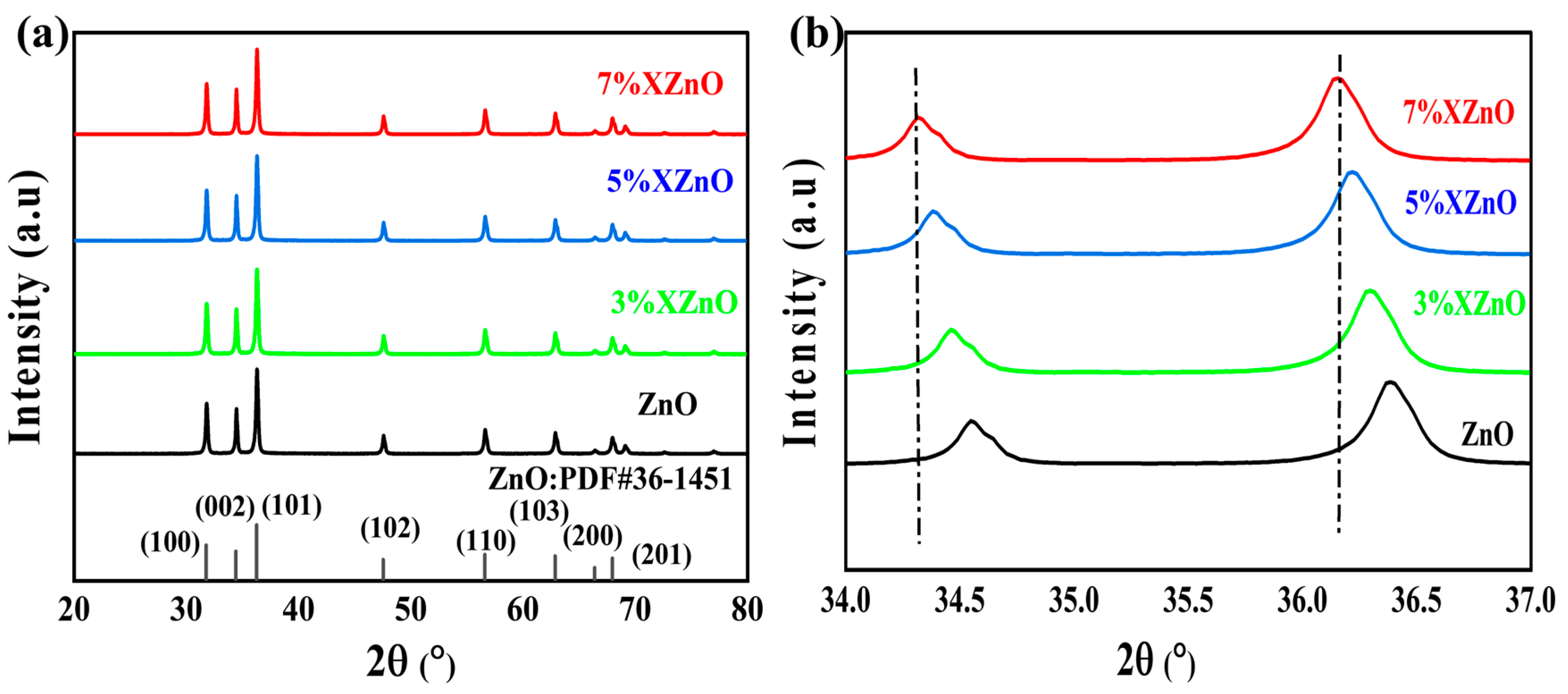
Figure 3.
(a) XPS survey spectrum, (b) C 1s, (c) Zn 2p, (d) O 1s, (e) Ca 2p high-resolution XPS spectra of XZnO samples, and (f) FT-IR spectra of the prepared XZnO samples.
Figure 3.
(a) XPS survey spectrum, (b) C 1s, (c) Zn 2p, (d) O 1s, (e) Ca 2p high-resolution XPS spectra of XZnO samples, and (f) FT-IR spectra of the prepared XZnO samples.
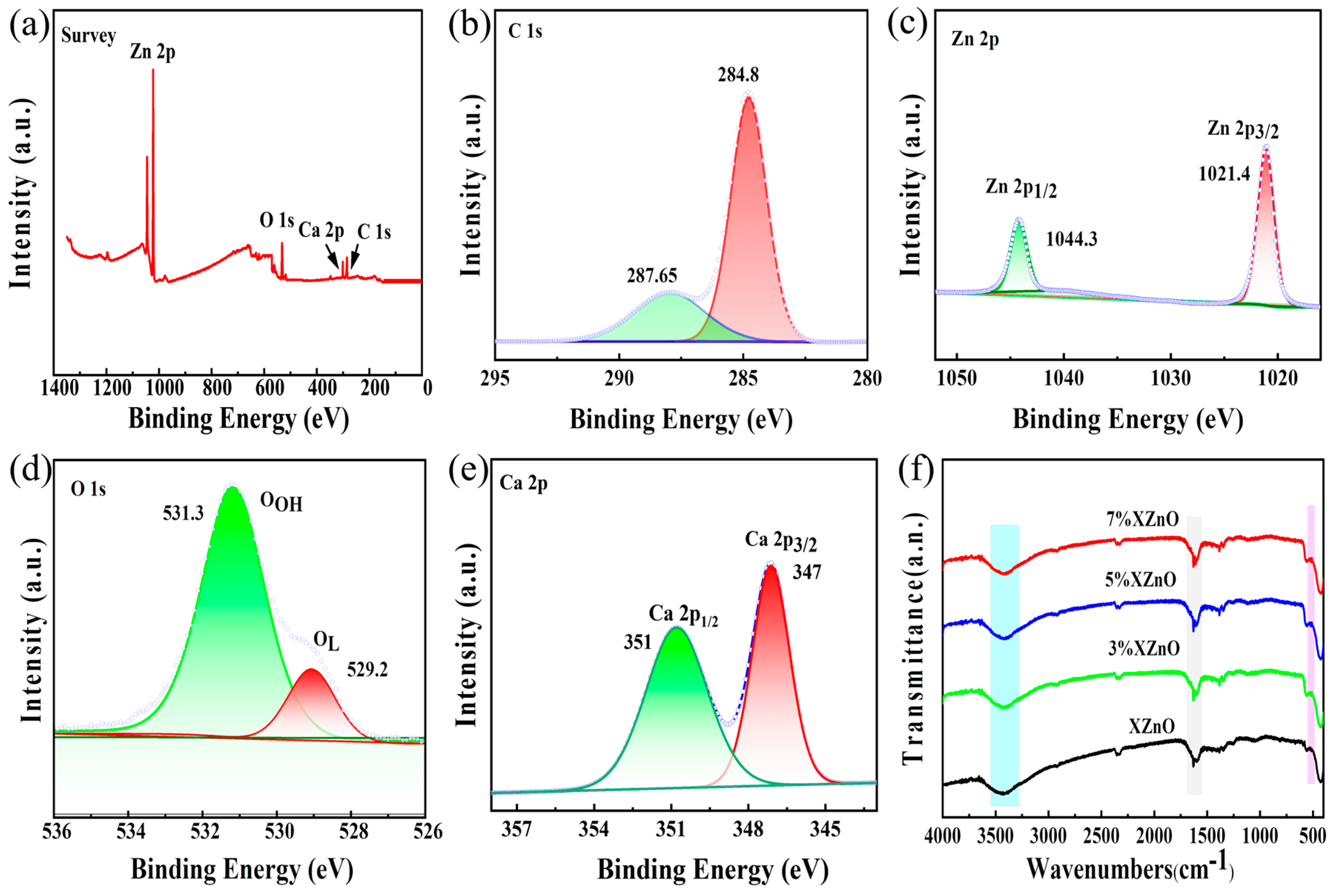
Figure 4.
(a-c) TEM images, (d-f) HRTEM images, and (g-i) EDS elemental mapping of the 5%XZnO sample.
Figure 4.
(a-c) TEM images, (d-f) HRTEM images, and (g-i) EDS elemental mapping of the 5%XZnO sample.
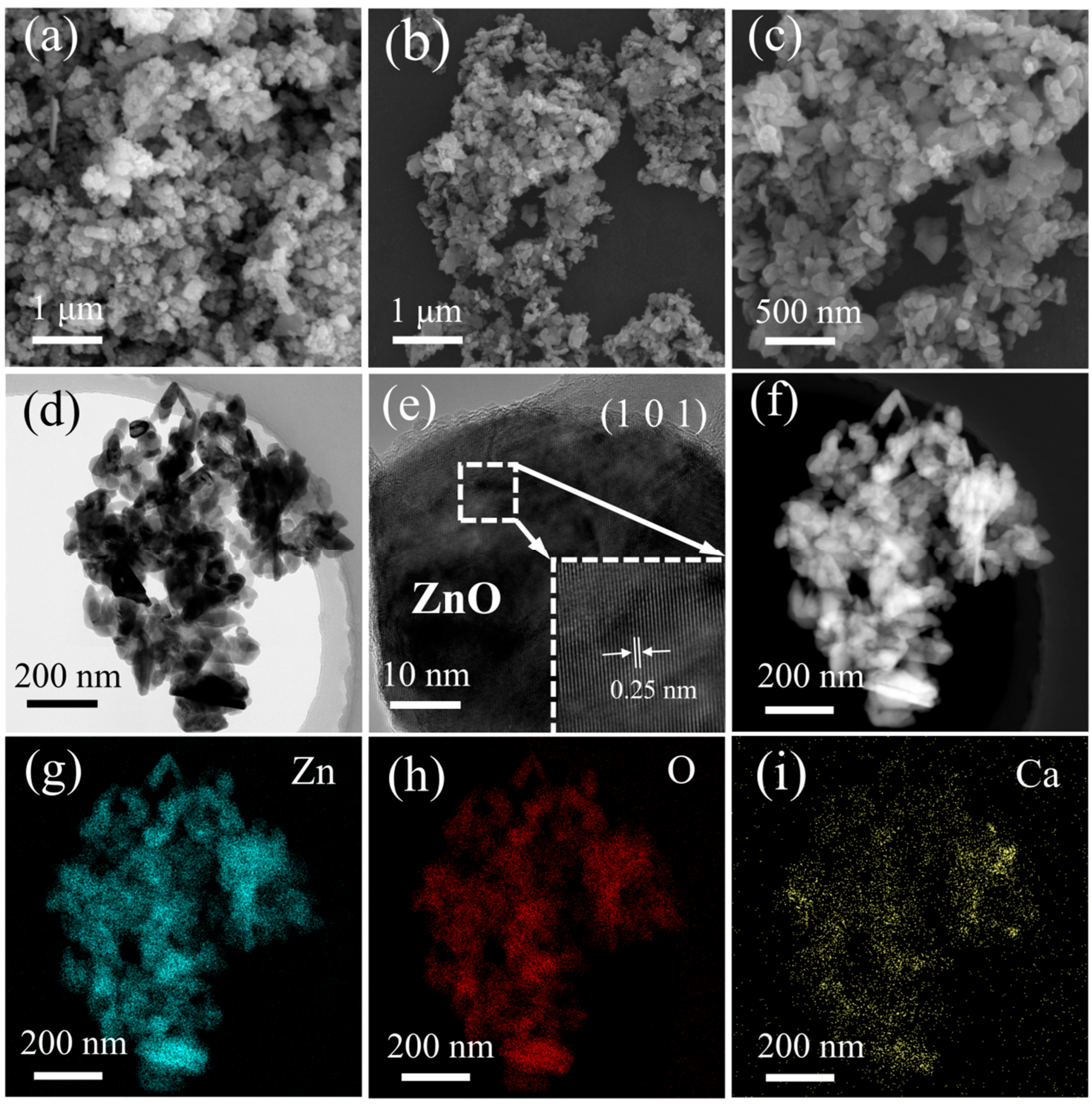
Figure 5.
(a) UV-vis diffuse reflectance spectra and (b) corresponding Tauc plots for bandgap energy determination of the XZnO samples.
Figure 5.
(a) UV-vis diffuse reflectance spectra and (b) corresponding Tauc plots for bandgap energy determination of the XZnO samples.
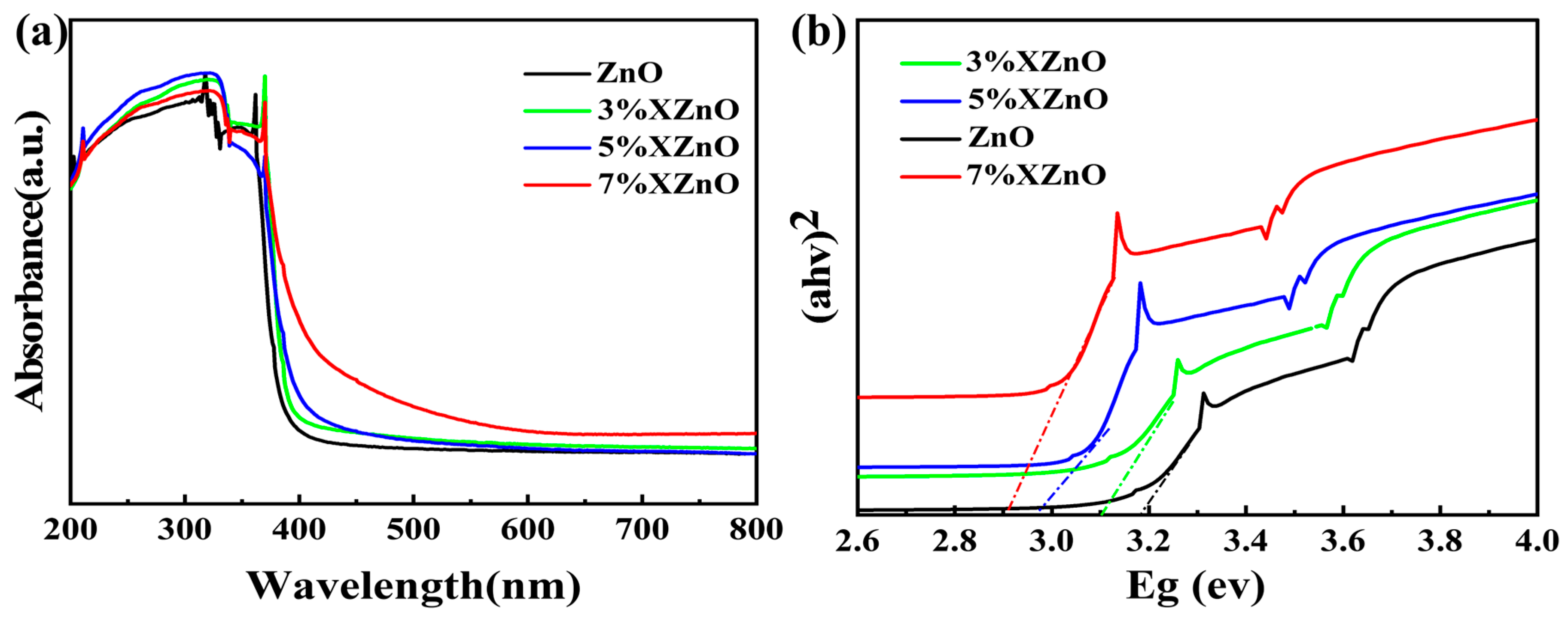
Figure 6.
Mott-Schottky plots of (a) ZnO, (b) 3%XZnO, (c) 5%XZnO and (d) 7%XZnO.
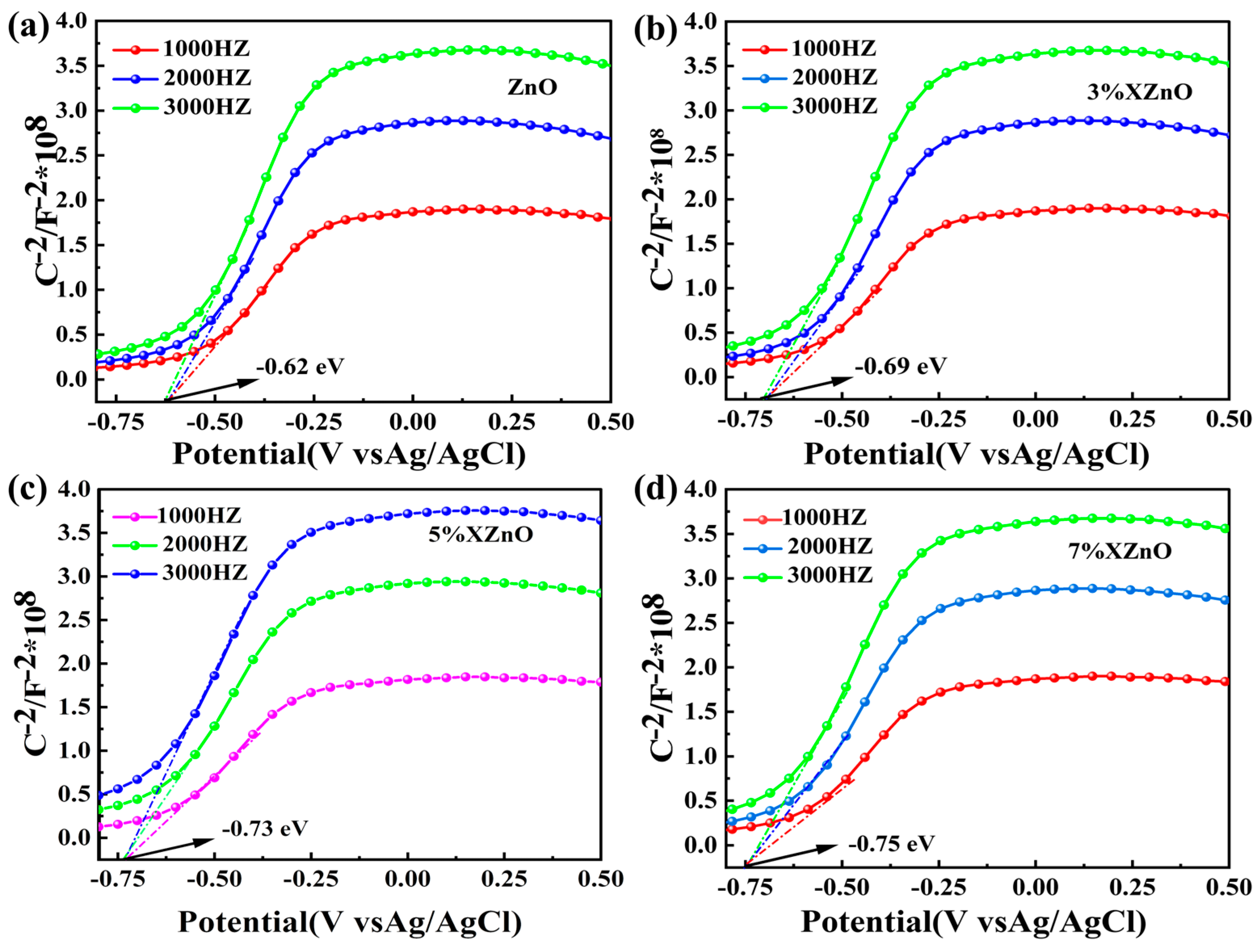
Figure 7.
(a) Time-dependent photocatalytic hydrogen production and (b) corresponding hydrogen evolution rates of the XZnO samples. (c) Cycling stability test and (d) relative activity retention of the 5%XZnO sample.
Figure 7.
(a) Time-dependent photocatalytic hydrogen production and (b) corresponding hydrogen evolution rates of the XZnO samples. (c) Cycling stability test and (d) relative activity retention of the 5%XZnO sample.
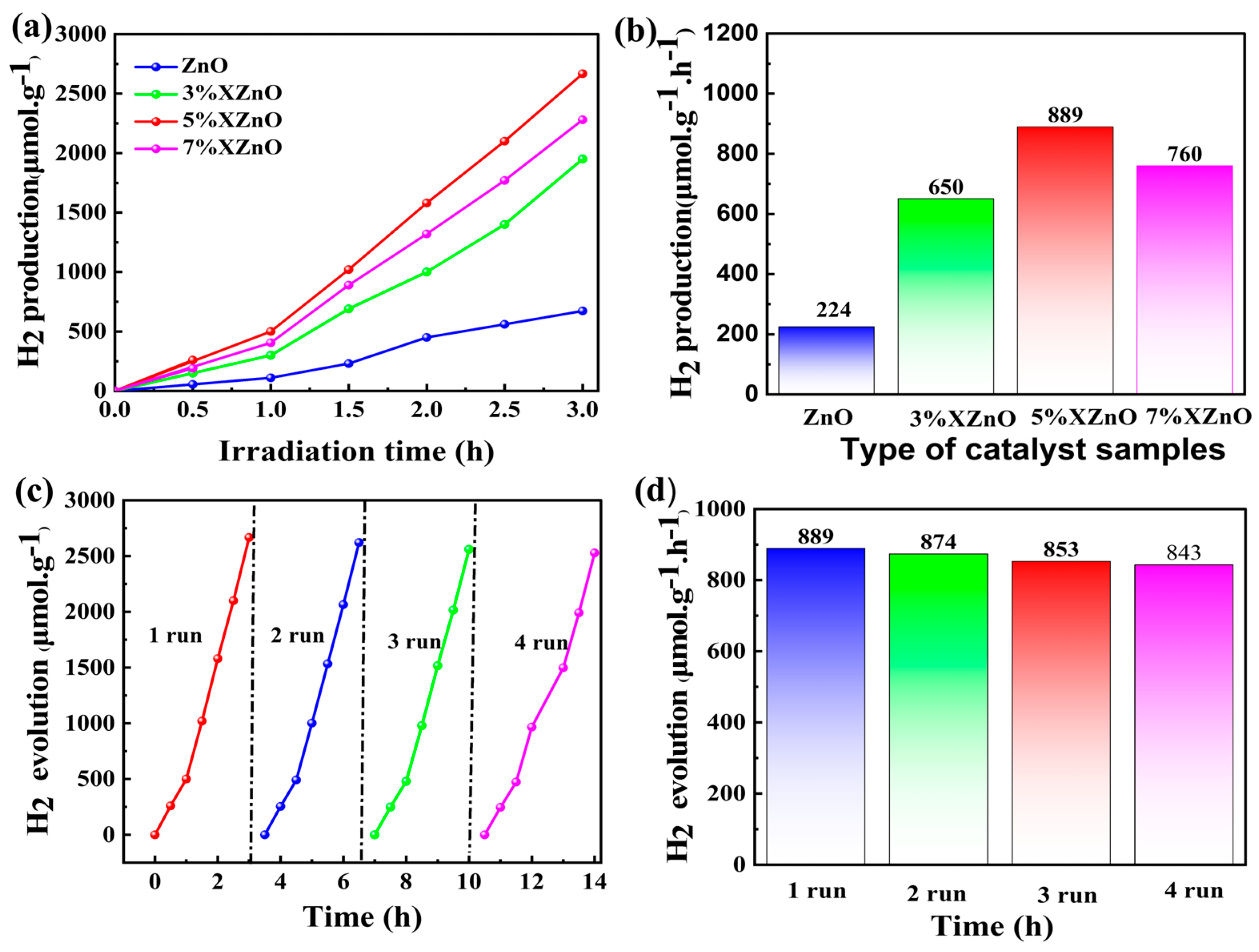
Figure 8.
(a) Transient photocurrent responses and (b) electrochemical impedance spectroscopy (EIS) Nyquist plots of the XZnO samples.
Figure 8.
(a) Transient photocurrent responses and (b) electrochemical impedance spectroscopy (EIS) Nyquist plots of the XZnO samples.
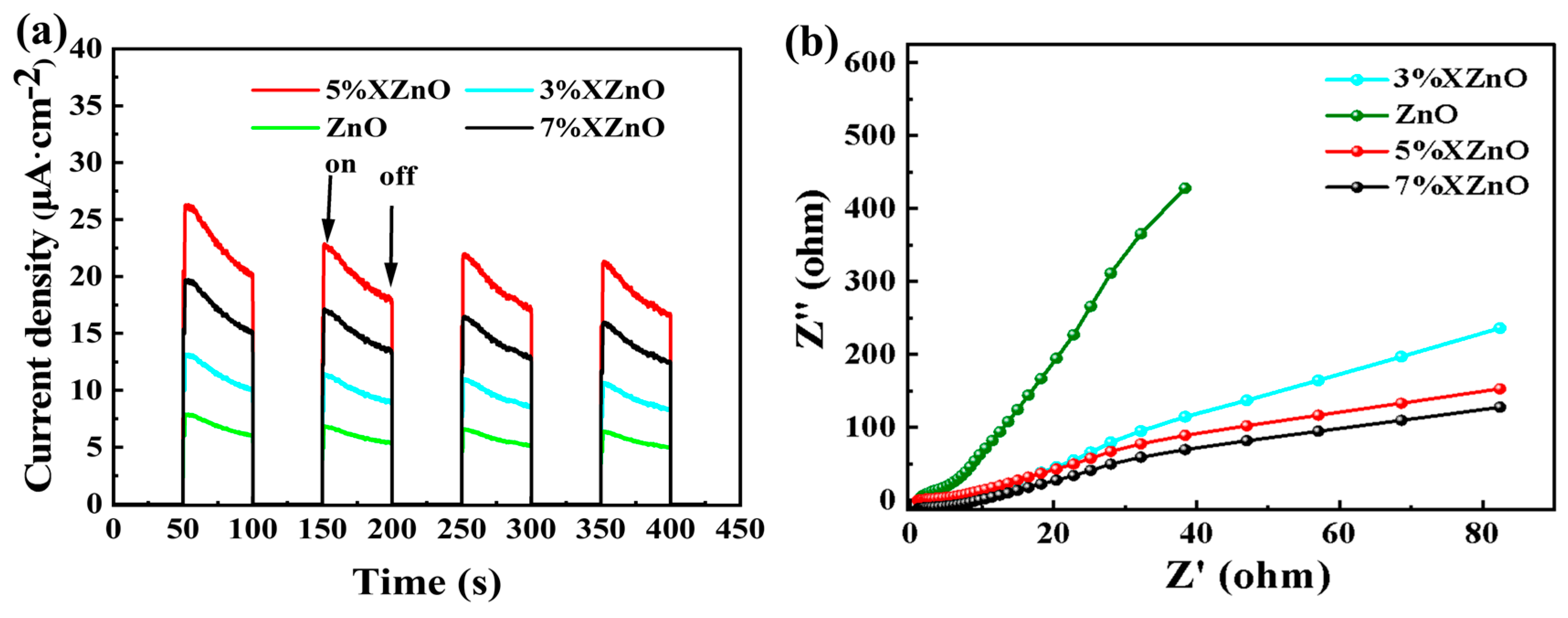
Figure 9.
EPR spectra of pure ZnO and Ca-doped XZnO samples, revealing the variation in oxygen vacancy concentration.
Figure 9.
EPR spectra of pure ZnO and Ca-doped XZnO samples, revealing the variation in oxygen vacancy concentration.
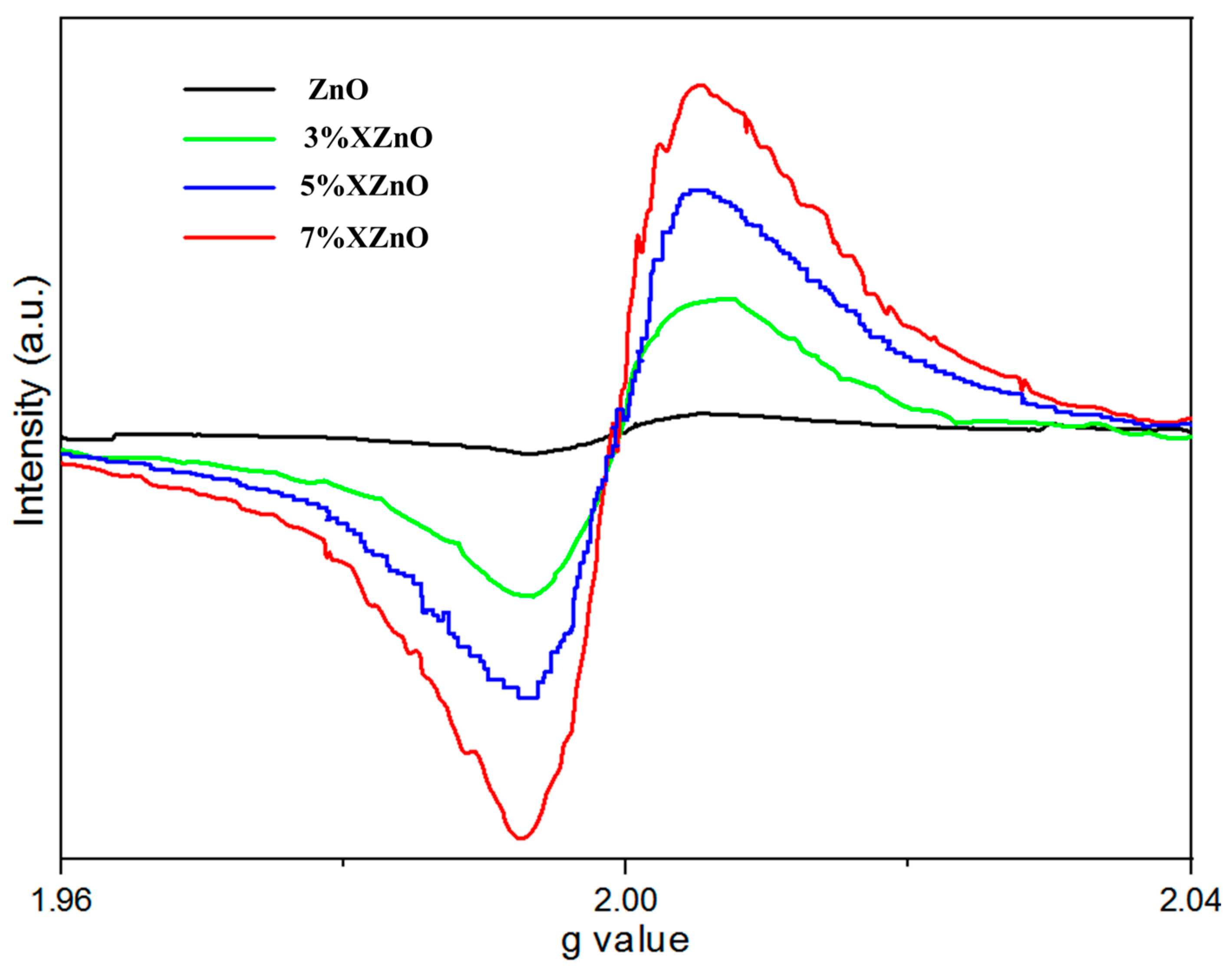
Figure 10.
Proposed mechanism for the enhanced photocatalytic hydrogen production over in-situ Ca-doped ZnO nanosheets.
Figure 10.
Proposed mechanism for the enhanced photocatalytic hydrogen production over in-situ Ca-doped ZnO nanosheets.
Disclaimer/Publisher’s Note: The statements, opinions and data contained in all publications are solely those of the individual author(s) and contributor(s) and not of MDPI and/or the editor(s). MDPI and/or the editor(s) disclaim responsibility for any injury to people or property resulting from any ideas, methods, instructions or products referred to in the content. |
© 2026 by the authors. Licensee MDPI, Basel, Switzerland. This article is an open access article distributed under the terms and conditions of the Creative Commons Attribution (CC BY) license.
Copyright: This open access article is published under a Creative Commons CC BY 4.0 license, which permit the free download, distribution, and reuse, provided that the author and preprint are cited in any reuse.


