

Submitted:
04 March 2026
Posted:
05 March 2026
You are already at the latest version
Abstract
Polycystic ovary syndrome (PCOS) is a prevalent endocrine–metabolic disorder affecting 5.5–11.5% of women of reproductive age. While reduced adiponectin levels have been con-sistently demonstrated in adult women with PCOS, findings in adolescents remain less clearly defined. A systematic review and meta-analysis was conducted in accordance with PRISMA guidelines. PubMed, Embase, Scopus, and Google Scholar were searched from inception to October 31, 2025. Observational studies comparing adiponectin levels in post-pubertal adolescents with PCOS and controls were included. A random-effects model with REML estimator was applied. Study heterogeneity and publication bias were as-sessed. Eighteen studies comprising 1,590 participants (679 PCOS; 911 controls) were in-cluded. Adolescents with PCOS demonstrated significantly lower adiponectin levels com-pared to controls (mean difference [MD] −3.17 µg/mL; 95% CI −4.27 to −2.07; p = 0.001), I² = 94.6%. Egger’s (p = 0.81) and Begg’s (p = 0.16) tests indicated no evidence of publication bias. Adolescents with PCOS exhibit significantly reduced circulating adiponectin levels, suggesting that adipose tissue dysfunction and metabolic dysregulation are present early in the disease course. These findings support the role of adiponectin as a potential early biomarker of cardiometabolic risk in adolescent PCOS and underscore the importance of early metabolic screening and intervention.
Keywords:
adiponectin
; adipokines
; polycystic ovary syndrome
; PCOS
; adolescent girls
1. Introduction
Polycystic ovary syndrome (PCOS) is a common and complex endocrine–metabolic disorder affecting women of reproductive age, characterized by chronic anovulation, hyperandrogenism, and polycystic ovarian morphology[1]. It is estimated to affect approximately 5.5–11.5% of women worldwide, making it one of the most prevalent endocrine conditions in this population[2]. Beyond its reproductive manifestations, PCOS is strongly associated with insulin resistance, obesity, dyslipidemia, and an increased risk of type 2 diabetes mellitus and cardiovascular disease, highlighting its importance as a major public health concern[3,4,5].
Adiponectin, an adipocyte-derived hormone with insulin-sensitizing, anti-inflammatory, and anti-atherogenic properties, has emerged as a key regulator of metabolic homeostasis[6]. Lower circulating adiponectin levels have been consistently linked to obesity, insulin resistance, and cardiometabolic dysfunction—features that are highly prevalent in women with PCOS[7]. Consequently, adiponectin has been proposed as a potential mechanistic link between adipose tissue dysfunction and the metabolic abnormalities observed in PCOS[8].
Several large-scale meta-analyses in adult women have demonstrated a robust association between PCOS and reduced circulating adiponectin concentrations[9,10]. However, adolescents represent a biologically distinct population undergoing pubertal hormonal transitions, evolving insulin sensitivity, and dynamic changes in adipose tissue biology[11,12].
Clarifying whether adiponectin is consistently reduced in adolescents with PCOS could therefore improve understanding of early metabolic risk and inform preventive strategies. To address whether adolescent girls share similar findings to adult women, we conducted a systematic review and meta-analysis of observational studies comparing adiponectin levels in post-pubertal female adolescents with PCOS and controls.
2. Materials and Methods
2.1. Study Protocol and Registration
This systematic review and meta-analysis was conducted following the Preferred Reporting Items for Systematic Review and Meta-Analyses (PRISMA) guidelines and protocols (PRISMA-P) statement[13]. The study protocol was registered in the PROSPERO database (University of York, United Kingdom) [CRD420250654706]. The research question was based on the PECO (Population, Exposure, Control, Outcome) framework: “In post-pubertal female adolescents (population), is serum adiponectin levels (exposure) different in adolescents with PCOS (outcome) than in adolescents without PCOS (control)?”
2.2. Eligibility Criteria, Information Sources, Search Strategy
A systematic search of the literature was performed from inception to October 31, 2025, using Embase, Scopus, PubMed, and Google Scholar databases. The search strategy employed the following keywords: (“adiponectin” OR “adipokines”) AND (“adolescent” OR “girls”) AND (“polycystic ovary syndrome” OR “PCOS”).Citations retrieved from each database were compiled and imported into Zotero reference management software. After duplicate removal, the titles and abstracts of remaining records were screened for eligibility. Full texts of potentially relevant studies were then assessed against predefined criteria. All screening was done by two reviewers (S.F. and P.R.). Details of the screening process is shown in the PRISMA flow chart in Figure 1.
Inclusion criteria comprised original case-control, cross-sectional, and cohort studies involving female adolescents diagnosed with PCOS. Diagnosis of PCOS was required to be based on the Rotterdam criteria[14], the National Institute of Health (NIH) criteria[15], or other clearly stated diagnostic criteria. Studies were excluded if they were case reports, reviews, animal studies, abstracts, drug trials, or conference presentations, as well as studies not published in English or Spanish. Articles published in Spanish were translated into English by a translator. No restrictions were applied regarding the year of publication.
2.3. Data Extraction and Assessment of Bias
Data were extracted and transferred into a Microsoft Excel file using a standardized template with the following column headings: study, country, study design, sample size, PCOS diagnostic criteria, and adiponectin levels (including mean and standard deviation [SD]). For studies that reported adiponectin values as median and interquartile range, the mean and SD were estimated using the method described by Wan et al[16].
To ensure analytical precision, the extracted data were further stratified into subcategories based on the type of adiponectin measurement: fasting adiponectin or serum adiponectin.
The methodological quality of all included studies was independently assessed by two reviewers (S.F. and P.R.) using the Newcastle-Ottawa Scale (NOS)[17]. The NOS is a validated tool for evaluating the quality of nonrandomized studies in meta-analyses and systematic reviews, with assessments based on three key domains: selection of study groups, comparability of groups, and ascertainment of exposure or outcome. Overall scores were recorded for each study.
2.4. Data Synthesis and Analysis
Data analysis was performed using RStudio software, version 4.4.1., to conduct pooled analyses and generate forest plots for assessing heterogeneity. A random-effects model was applied to account for the high heterogeneity among patient populations, attributed to differences in factors such as age, PCOS subtypes, and diagnostic criteria. This approach provides a more conservative estimate of the overall mean difference.
Heterogeneity was assessed using Cochran’s Q test and the I² statistic. A random-effects model with REML estimator and Hartung–Knapp adjustment was applied. An I² value of 50% or higher was interpreted as indicating substantial variability, suggesting that the studies may not be estimating a common effect. In cases of high heterogeneity, further analysis was conducted using a leave-one-out sensitivity analysis to assess the influence of individual studies.
3. Results
3.1. Study Selection
Our search of PubMed, Embase, Scopus, and Google Scholar yielded a total of 321 records. After removing 123 duplicates, 198 titles and abstracts were screened for eligibility. Of these, 168 records were excluded based on title and abstract review, leaving 30 full-text articles to be assessed for inclusion. Following full-text review, 12 articles were excluded for the following reasons: age >21 years (n = 2), study not in English or Spanish (n = 2), drug trials (n = 2), and failure to meet diagnostic or study criteria (n = 6). Ultimately, 18 studies met all inclusion criteria and were included in both the systematic review and meta-analysis.
3.2. Study Characteristics
A total of 18 studies[20,21,22,23,24,25,26,27,28,29,30,31,32,33,34,35,36,37] published between 2008 and 2025 were included in our analysis. The studies were conducted across nine countries, with the highest number from the USA (n = 7) and Türkiye (n = 5). Fifteen studies employed a case-control design, with the exception of two prospective cohort studies and one cross-sectional study. Sample sizes ranged from 30 to 363 participants, with a total of 1,590 participants across all studies.
Regarding diagnostic criteria for PCOS, the Rotterdam criteria[14] were most frequently applied (n = 8), followed by the NIH criteria (n = 5)[15]. Two studies used the Endocrine Society Clinical Practice Guideline (ESCPG)[38], two studies applied the International Evidence-based Guideline (IEG)[39], and one did not specify which criteria were used.
3.3. Meta-Analysis
Based on the forest plot presented in Figure 2, the meta-analysis included 18 studies examining adiponectin levels in adolescents with PCOS compared to controls, with a total of 679 participants in the PCOS group and 911 in the control group. The pooled analysis using a random-effects model demonstrated that adolescents with PCOS had significantly lower adiponectin levels compared to controls, with a mean difference of -3.17 (95% confidence interval: -4.27 to -2.07, p = 0.001). This indicates that, on average, adiponectin levels were approximately 3.17 units lower in the PCOS group than in controls.
Fifteen studies (83.3%) reported lower adiponectin levels in the PCOS group, with 11 demonstrating statistically significant differences. The most pronounced reductions were observed in Yasar et al.(MD: -13.22, 95% CI: -18.71 to -7.73)[25] and Cekmez et al.[23] (MD: -10.49, 95% CI: -12.51 to -8.47). Only one study (Vital-Reyes et al.)[32] reported non-significantly higher adiponectin in the PCOS group. Substantial heterogeneity was present across studies (I² = 94.6%, τ² = 9.2413, p < 0.0001), supporting the use of the random-effects model and suggesting that variability in diagnostic criteria, patient characteristics, or measurement methods may influence effect sizes.
3.4. Sensitivity Analysis
Leave-one-out sensitivity analysis in Figure 3 demonstrated that the pooled MD in adiponectin levels between women with PCOS and controls remained consistently negative and statistically significant after sequential exclusion of each individual study. Across all iterations, the pooled MD ranged from approximately −2.68 to −3.47 µg/mL, with all corresponding 95% confidence intervals excluding the null value.
The overall estimate with all studies included was MD = −3.19 µg/mL (95% CI: −4.90 to −1.49). No single study significantly altered the magnitude, direction, or statistical significance of the pooled effect, indicating that the observed association is robust and not driven by any individual study.
3.5. Publication Bias
Visual inspection of the funnel plot in Figure 4 appears symmetrical even though some studies are dispersed. This is corroborated with formal statistical tests for publication bias. Egger’s regression test[18] was non-significant (t = −0.24, p = 0.81), and Begg’s rank correlation test[19] was also non-significant (z = −1.40, p = 0.16), thus indicating no publication bias. Consistent with these findings, the trim-and-fill procedure did not impute any missing studies and produced a pooled mean difference (MD = −3.19 µg/mL; 95% CI: −4.90 to −1.49) that was comparable to the primary random-effects estimate.
4. Discussion
In this systematic review and meta-analysis comprising 1,590 adolescents, we found that post-pubertal girls with PCOS have significantly lower circulating adiponectin levels compared with their non-PCOS peers. The pooled estimate demonstrated a mean difference of −3.17 µg/mL, indicating a consistent and clinically meaningful reduction in adiponectin among adolescents with PCOS. Notably, 83% of the studies included reported lower adiponectin concentrations in the PCOS group. Collectively, these findings suggest that hypoadiponectinemia is already present in adolescence among girls with PCOS, supporting the hypothesis that adipose tissue dysfunction and early metabolic dysregulation are integral components of the syndrome from its earliest clinical manifestations[12,40].
Adiponectin plays a central role in metabolic regulation by enhancing insulin sensitivity through activation of key signaling pathways, including adenosine monophosphate–activated protein kinase (AMPK) and peroxisome proliferator–activated receptor alpha (PPAR-α)[41]. Activation of these pathways promotes glucose uptake in skeletal muscle and increases fatty acid oxidation in liver and peripheral tissues, thereby improving overall metabolic efficiency[42]. During normal puberty, adolescents experience a transient, physiologic reduction in insulin sensitivity, likely driven by hormonal changes associated with growth and sexual maturation[43]. In most individuals, this pubertal insulin resistance is temporary and resolves with completion of puberty. However, in girls with PCOS, reduced adiponectin levels may amplify this physiologic shift, tipping it toward a more sustained and pathologic state of insulin resistance due to underlying adipose tissue dysfunction[44]. Consequently, hypoadiponectinemia in adolescence may not merely reflect existing metabolic abnormalities but could serve as an early biomarker of future cardiometabolic risk, preceding the development of overt dysglycemia or type 2 diabetes.
A growing body of evidence supports a bidirectional relationship between hyperandrogenism and adipose tissue dysfunction in PCOS[45]. Elevated androgen levels may directly contribute to adverse changes in body fat distribution, promoting visceral adiposity and impairing normal adipocyte differentiation and function[46]. Visceral fat, in turn, is metabolically active and associated with reduced secretion of protective adipokines such as adiponectin[46]. Lower adiponectin levels can exacerbate insulin resistance, leading to compensatory hyperinsulinemia[47]. Hyperinsulinemia then acts synergistically with luteinizing hormone to stimulate ovarian theca cells, further increasing androgen production[48]. This creates a self-perpetuating pathogenic cycle: insulin resistance leads to hyperinsulinemia, which drives androgen excess; androgen excess worsens adipose tissue dysfunction; dysfunctional adipose tissue further reduces adiponectin levels, thereby reinforcing insulin resistance[48]. In adolescents with PCOS, this cycle may become established early, contributing to the persistence and progression of both reproductive and metabolic abnormalities.
Adolescence is characterized by activation and maturation of the hypothalamic–pituitary–ovarian (HPO) axis, resulting in dynamic fluctuations in gonadotropins, estrogen, and androgens[49]. These hormonal shifts not only regulate reproductive function but also influence adipose tissue biology and adipokine secretion. Estrogen is generally associated with a more favorable metabolic profile, promoting subcutaneous fat deposition and supporting beneficial adipokine patterns, including relatively higher adiponectin levels[50]. In contrast, androgen excess—an established hallmark of PCOS—may adversely affect adipocyte function and suppress adiponectin secretion[45]. During puberty, when endocrine systems are still maturing, sustained exposure to elevated androgen levels may disrupt normal metabolic adaptation and adipose tissue development. Early hyperandrogenism during these critical developmental windows could therefore contribute to long-term metabolic programming, predisposing adolescents with PCOS to persistent insulin resistance and increased cardiometabolic risk in adulthood[51].
Adolescents with PCOS frequently demonstrate altered body composition characterized by increased central or visceral adiposity, even in the presence of a normal body mass index[52]. This suggests that BMI alone may underestimate underlying metabolic risk in this population. Visceral fat is metabolically active and more strongly associated with insulin resistance, inflammation, and adverse cardiometabolic outcomes than subcutaneous fat[53,54]. Importantly, visceral adipose tissue is linked to reduced adiponectin secretion, contributing to impaired insulin sensitivity[55]. Therefore, circulating adiponectin levels may reflect qualitative alterations in adipose tissue function and distribution rather than simply total fat mass. Early accumulation of visceral fat during adolescence may represent a key mechanistic pathway through which PCOS confers increased long-term risk of type 2 diabetes and cardiovascular disease, reinforcing the importance of early metabolic assessment beyond traditional anthropometric measures.
Adiponectin exerts important anti-inflammatory and vasculoprotective effects, including suppression of pro-inflammatory cytokine production and inhibition of endothelial dysfunction[56]. By enhancing nitric oxide bioavailability and reducing oxidative stress, adiponectin contributes to maintenance of vascular integrity and metabolic homeostasis. Reduced adiponectin levels, as observed in adolescents with PCOS, may therefore facilitate the development of low-grade chronic inflammation—a well-recognized feature of the syndrome[57]. This inflammatory milieu, combined with insulin resistance and central adiposity, may initiate early endothelial and metabolic disturbances. Adolescence may represent a critical developmental window during which these early inflammatory and metabolic alterations become biologically embedded, potentially programming long-term susceptibility to type 2 diabetes mellitus and cardiovascular disease. Identifying hypoadiponectinemia during this period may thus provide insight into early cardiometabolic risk trajectories in girls with PCOS.
From a developmental origins and life-course perspective, our findings suggest that the metabolic disturbances associated with PCOS may emerge much earlier than traditionally recognized. The presence of hypoadiponectinemia during adolescence indicates that adipose tissue dysfunction and insulin resistance are not merely late complications of longstanding disease but may represent early pathophysiologic features of the syndrome[58]. This aligns with the concept that cardiometabolic risk trajectories are established during critical developmental windows, including puberty, when hormonal, metabolic, and adipose tissue changes are highly dynamic. Early alterations in adipokine regulation may therefore contribute to long-term metabolic programming, increasing susceptibility to type 2 diabetes and cardiovascular disease in adulthood. These findings underscore the importance of early metabolic screening in adolescents with PCOS and support timely lifestyle and therapeutic interventions aimed at modifying risk before irreversible cardiometabolic sequelae develop.
The observed reduction in adiponectin levels among adolescents with PCOS has important clinical implications. Hypoadiponectinemia may serve as an early biomarker of metabolic risk, helping to identify girls who are at heightened risk for insulin resistance and future cardiometabolic complications even before overt dysglycemia develops[59]. In addition, adiponectin represents a potential therapeutic target, as interventions that improve insulin sensitivity may also restore more favorable adipokine profiles[60,61]. Lifestyle strategies such as structured physical activity, dietary modification, and weight management have been shown to increase adiponectin levels and improve metabolic parameters. Similarly, insulin-sensitizing agents, including metformin, may enhance adiponectin concentrations while addressing underlying insulin resistance[62]. Emphasizing early prevention and targeted metabolic intervention during adolescence may therefore help modify long-term cardiometabolic trajectories and reduce the burden of type 2 diabetes and cardiovascular disease in women with PCOS.
Taken together, these findings suggest that adiponectin dysregulation is not merely a consequence of long-standing metabolic disease but may represent an early pathophysiologic feature of PCOS emerging during pubertal maturation.
Our systematic review and meta-analysis has several limitations. First, many included studies had relatively small sample sizes, which may reduce statistical power and limit the precision of individual effect estimates. Second, variability in PCOS diagnostic criteria and phenotypic presentation across studies may have contributed to inconsistencies in case definition. Third, substantial heterogeneity was observed in the pooled adiponectin data, likely reflecting differences in study design, population characteristics, assay methods, and metabolic profiles.
Despite these limitations, our findings reinforce and extend evidence previously demonstrated in adult women with PCOS, suggesting that reduced adiponectin is an early and persistent feature of the disorder. Importantly, this analysis provides a foundation for future mechanistic and longitudinal studies aimed at clarifying the role of adiponectin in the pathophysiology and early metabolic risk associated with PCOS in adolescents.
5. Conclusions
This systematic review and meta-analysis demonstrates that post-pubertal adolescent girls with PCOS have significantly lower circulating adiponectin levels compared with controls. These findings support the role of adiponectin as a potential early biomarker for metabolic risk stratification in adolescents with PCOS. Early identification of hypoadiponectinemia could help guide targeted lifestyle and therapeutic interventions aimed at mitigating long-term risks of type 2 diabetes and cardiovascular disease. Future longitudinal and mechanistic studies are warranted to clarify the causal role of adiponectin in adolescent PCOS and to determine whether early metabolic interventions can favorably modify adipokine profiles and long-term outcomes.
Author Contributions
Conceptualization, S.F.; methodology, S.F. and P.R.; software, P.R.; validation, S.F. and P.R.; formal analysis, P.R.; investigation, S.F. and P.R.; data curation, S.F. and P.R.; visualization, S.F. and P.R. writing—original draft preparation, S.F. and P.R.; writing—review and editing, S.F. and P.R. All authors have read and agreed to the published version of the manuscript.
Funding
This research received no external funding. The APC was funded by St. George’s University School of Medicine, St. George, Grenada.
Institutional Review Board Statement
Not applicable.
Informed Consent Statement
Not applicable.
Data Availability Statement
Data can be obtained upon request. All data used can be found in the following databases: PubMed, Embase, Scopus, and Google Scholar.
Acknowledgments
None.
Conflicts of Interest
The authors declare no conflicts of interest.
Abbreviations
The following abbreviations are used in this manuscript:
| PCOS | Polycystic Ovary Syndrome |
| NOS | Newcastle-Ottawa Scale |
| MD | Mean Difference |
| CI | Confidence Interval |
| N | Sample Size |
| PRISMA | Preferred Reporting Items for Systematic Review and Meta-Analyses |
| NIH | National Institute of Health |
| ESCPG | Endocrine Society Clinical Practice Guideline |
| IEG | International Evidence-based Guideline |
References
- Escobar-Morreale, H.F. Polycystic Ovary Syndrome: Definition, Aetiology, Diagnosis and Treatment. Nat Rev Endocrinol 2018, 14, 270–284. [CrossRef]
- Salari, N.; Nankali, A.; Ghanbari, A.; Jafarpour, S.; Ghasemi, H.; Dokaneheifard, S.; Mohammadi, M. Global Prevalence of Polycystic Ovary Syndrome in Women Worldwide: A Comprehensive Systematic Review and Meta-Analysis. Arch Gynecol Obstet 2024, 310, 1303–1314. [CrossRef]
- Livadas, S.; Anagnostis, P.; Bosdou, J.K.; Bantouna, D.; Paparodis, R. Polycystic Ovary Syndrome and Type 2 Diabetes Mellitus: A State-of-the-Art Review. WJD 2022, 13, 5–26. [CrossRef]
- Gao, L.; Zhao, Y.; Wu, H.; Lin, X.; Guo, F.; Li, J.; Long, Y.; Zhou, B.; She, J.; Zhang, C.; et al. Polycystic Ovary Syndrome Fuels Cardiovascular Inflammation and Aggravates Ischemic Cardiac Injury. Circulation 2023, 148, 1958–1973. [CrossRef]
- Guo, F.; Gong, Z.; Fernando, T.; Zhang, L.; Zhu, X.; Shi, Y. The Lipid Profiles in Different Characteristics of Women with PCOS and the Interaction Between Dyslipidemia and Metabolic Disorder States: A Retrospective Study in Chinese Population. Front. Endocrinol. 2022, 13, 892125. [CrossRef]
- van Andel, M.; Heijboer, A.C.; Drent, M.L. Chapter Five - Adiponectin and Its Isoforms in Pathophysiology. In Advances in Clinical Chemistry; Makowski, G.S., Ed.; Elsevier, 2018; Vol. 85, pp. 115–147 ISBN 0065-2423.
- Da Silva Rosa, S.C.; Liu, M.; Sweeney, G. Adiponectin Synthesis, Secretion and Extravasation from Circulation to Interstitial Space. Physiology 2021, 36, 134–149. [CrossRef]
- Atanasova Boshku, A. Adiponectin as a Serum Marker of Adipose Tissue Dysfunction in Women with Polycystic Ovary Syndrome: Correlation with Indicators of Metabolic Disturbances. Acta Endo (Buc) 2018, 14, 346–352. [CrossRef]
- Li, S.; Huang, X.; Zhong, H.; Peng, Q.; Chen, S.; Xie, Y.; Qin, X.; Qin, A. Low Circulating Adiponectin Levels in Women with Polycystic Ovary Syndrome: An Updated Meta-Analysis. Tumor Biol. 2014, 35, 3961–3973. [CrossRef]
- Lin, K.; Sun, X.; Wang, X.; Wang, H.; Chen, X. Circulating Adipokine Levels in Nonobese Women With Polycystic Ovary Syndrome and in Nonobese Control Women: A Systematic Review and Meta-Analysis. Front. Endocrinol. 2021, 11, 537809. [CrossRef]
- Guan, Y.; Zuo, F.; Zhao, J.; Nian, X.; Shi, L.; Xu, Y.; Huang, J.; Kazumi, T.; Wu, B. Relationships of Adiponectin to Regional Adiposity, Insulin Sensitivity, Serum Lipids, and Inflammatory Markers in Sedentary and Endurance-Trained Japanese Young Women. Front Endocrinol (Lausanne) 2023, 14, 1097034. [CrossRef]
- Orszulak, D.; Niziński, K.; Matonóg, A.; Zięba-Domalik, M.; Stojko, R.; Drosdzol-Cop, A. Adipokines as Biochemical Marker of Polycystic Ovary Syndrome in Adolescents – Review. Front. Endocrinol. 2025, 16, 1475465. [CrossRef]
- Page, M.J.; McKenzie, J.E.; Bossuyt, P.M.; Boutron, I.; Hoffmann, T.C.; Mulrow, C.D.; Shamseer, L.; Tetzlaff, J.M.; Akl, E.A.; Brennan, S.E.; et al. The PRISMA 2020 Statement: An Updated Guideline for Reporting Systematic Reviews. BMJ 2021, 372, n71. [CrossRef]
- Revised 2003 Consensus on Diagnostic Criteria and Long-Term Health Risks Related to Polycystic Ovary Syndrome. Fertil Steril 2004, 81, 19–25. [CrossRef]
- Zawadzki, J.; Dunaif, A.; Givens, J.; Haseltine, F.; Merriam, G. Current Issues in Endocrinology and Metabolism: Polycystic Ovary Syndrome. MA: Blackwell Scientific Publications Cambridge 1992, 10.
- Wan, X.; Wang, W.; Liu, J.; Tong, T. Estimating the Sample Mean and Standard Deviation from the Sample Size, Median, Range and/or Interquartile Range. BMC Medical Research Methodology 2014, 14, 135. [CrossRef]
- Wells, G.; Shea, B.; O’Connell, D.; Peterson, je; Welch, V. The Newcastle-Ottawa Scale (NOS) for Assessing the Quality of Case-Control Studies in Meta-Analyses. Eur J Epidemiol 2011, 25, 603–605.
- Egger, M.; Davey Smith, G.; Schneider, M.; Minder, C. Bias in Meta-Analysis Detected by a Simple, Graphical Test. BMJ 1997, 315, 629–634. [CrossRef]
- Begg, C.B.; Mazumdar, M. Operating Characteristics of a Rank Correlation Test for Publication Bias. Biometrics 1994, 50, 1088–1101.
- Rossi, B.; Sukalich, S.; Droz, J.; Griffin, A.; Cook, S.; Blumkin, A.; Guzick, D.S.; Hoeger, K.M. Prevalence of Metabolic Syndrome and Related Characteristics in Obese Adolescents with and without Polycystic Ovary Syndrome. The Journal of Clinical Endocrinology & Metabolism 2008, 93, 4780–4786. [CrossRef]
- Güven, A.; Özgen, T.; AliyazicioĞlu, Y. Adiponectin and Resistin Concentrations after Glucose Load in Adolescents with Polycystic Ovary Syndrome. Gynecological Endocrinology 2010, 26, 30–38. [CrossRef]
- Pinhas-Hamiel, O.; Singer, S.; Pilpel, N.; Koren, I.; Boyko, V.; Hemi, R.; Pariente, C.; Kanety, H. Adiponectin Levels in Adolescent Girls with Polycystic Ovary Syndrome (PCOS). Clinical Endocrinology 2009, 71, 823–827. [CrossRef]
- Cekmez, F.; Cekmez, Y.; Pirgon, Ö.; Emre Canpolat, F.; Aydinöz, S.; Metin Ipcioglu, O.; Karademir, F. Evaluation of New Adipocytokines and Insulin Resistance in Adolescents with Polycystic Ovary Syndrome. European Cytokine Network 2011, 22, 32–37. [CrossRef]
- Fulghesu, A.M.; Sanna, F.; Uda, S.; Magnini, R.; Portoghese, E.; Batetta, B. Il-6 Serum Levels and Production Is Related to an Altered Immune Response in Polycystic Ovary Syndrome Girls with Insulin Resistance. Mediators of Inflammation 2011, 2011, 1–8. [CrossRef]
- Yasar, L.; Ekin, M.; Gedikbasi, A.; Erturk, A.D.; Savan, K.; Ozdemir, A.; Temur, M. Serum Adiponectin Levels in High School Girls with Polycystic Ovary Syndrome and Hyperandrogenism. Journal of Pediatric and Adolescent Gynecology 2011, 24, 90–93. [CrossRef]
- Kale-Gurbuz, T.; Akhan, S.E.; Bastu, E.; Telci, A.; Iyibozkurt, A.C.; Topuz, S. Adiponectin, Leptin and Ghrelin Levels in Obese Adolescent Girls with Polycystic Ovary Syndrome. Journal of Pediatric and Adolescent Gynecology 2013, 26, 27–30. [CrossRef]
- Cankaya, S.; Demir, B.; Aksakal, S.E.; Dilbaz, B.; Demirtas, C.; Goktolga, U. Insulin Resistance and Its Relationship with High Molecular Weight Adiponectin in Adolescents with Polycystic Ovary Syndrome and a Maternal History of Polycystic Ovary Syndrome. Fertility and Sterility 2014, 102, 826–830. [CrossRef]
- Ayonrinde, O.T.; Adams, L.A.; Doherty, D.A.; Mori, T.A.; Beilin, L.J.; Oddy, W.H.; Hickey, M.; Sloboda, D.M.; Olynyk, J.K.; Hart, R. Adverse Metabolic Phenotype of Adolescent Girls with Non-alcoholic Fatty Liver Disease plus Polycystic Ovary Syndrome Compared with Other Girls and Boys. J of Gastro and Hepatol 2016, 31, 980–987. [CrossRef]
- Cree-Green, M.; Bergman, B.C.; Coe, G.V.; Newnes, L.; Baumgartner, A.D.; Bacon, S.; Sherzinger, A.; Pyle, L.; Nadeau, K.J. Hepatic Steatosis Is Common in Adolescents with Obesity and PCOS and Relates to De Novo Lipogenesis but Not Insulin Resistance. Obesity 2016, 24, 2399–2406. [CrossRef]
- Hughan, K.S.; Tfayli, H.; Warren-Ulanch, J.G.; Barinas-Mitchell, E.; Arslanian, S.A. Early Biomarkers of Subclinical Atherosclerosis in Obese Adolescent Girls with Polycystic Ovary Syndrome. The Journal of Pediatrics 2016, 168, 104-111.e1. [CrossRef]
- Patel, S.S.; Truong, U.; King, M.; Ferland, A.; Moreau, K.L.; Dorosz, J.; Hokanson, J.E.; Wang, H.; Kinney, G.L.; Maahs, D.M.; et al. Obese Adolescents with Polycystic Ovarian Syndrome Have Elevated Cardiovascular Disease Risk Markers. Vasc Med 2017, 22, 85–95. [CrossRef]
- Vital-Reyes, V.S.; Lopez-Alarcón, M.G.; Inda-Icaza, P.; Márquez-Maldonado, C. Alteraciones metabólicas sutiles en adolescentes con obesidad y síndrome de ovario poliquístico. GMM 2019, 153, 150. [CrossRef]
- Cree-Green, M.; Cai, N.; Thurston, J.E.; Coe, G.V.; Newnes, L.; Garcia-Reyes, Y.; Baumgartner, A.D.; Pyle, L.; Nadeau, K.J. Using Simple Clinical Measures to Predict Insulin Resistance or Hyperglycemia in Girls with Polycystic Ovarian Syndrome. Pediatr Diabetes 2018, 19, 1370–1378. [CrossRef]
- Kim, J.Y.; Tfayli, H.; Michaliszyn, S.F.; Arslanian, S. Impaired Lipolysis, Diminished Fat Oxidation, and Metabolic Inflexibility in Obese Girls With Polycystic Ovary Syndrome. The Journal of Clinical Endocrinology & Metabolism 2018, 103, 546–554. [CrossRef]
- Ibáñez, L.; Díaz, M.; García-Beltrán, C.; Malpique, R.; Garde, E.; López-Bermejo, A.; De Zegher, F. Toward a Treatment Normalizing Ovulation Rate in Adolescent Girls With Polycystic Ovary Syndrome. Journal of the Endocrine Society 2020, 4, bvaa032. [CrossRef]
- Whooten, R.C.; Rifas-Shiman, S.L.; Perng, W.; Chavarro, J.E.; Taveras, E.; Oken, E.; Hivert, M.-F. Associations of Childhood Adiposity and Cardiometabolic Biomarkers With Adolescent PCOS. Pediatrics 2024, 153, e2023064894. [CrossRef]
- Foryś, E.; Drosdzol-Cop, A.; Małecka-Tendera, E.; Gawlik-Starzyk, A.M.; Skrzyńska, K.; Olszanecka-Glinianowicz, M.; Zachurzok, A. Adipokine Profile Signature in Adolescent Girls with Menstrual Disorders and Hyperandrogenism Differs from That of Regularly Menstruating Girls. JCM 2025, 14, 7987. [CrossRef]
- Legro, R.S.; Arslanian, S.A.; Ehrmann, D.A.; Hoeger, K.M.; Murad, M.H.; Pasquali, R.; Welt, C.K. Diagnosis and Treatment of Polycystic Ovary Syndrome: An Endocrine Society Clinical Practice Guideline. J Clin Endocrinol Metab 2013, 98, 4565–4592. [CrossRef]
- Teede, H.J.; Tay, C.T.; Laven, J.J.E.; Dokras, A.; Moran, L.J.; Piltonen, T.T.; Costello, M.F.; Boivin, J.; Redman, L.M.; Boyle, J.A.; et al. Recommendations from the 2023 International Evidence-Based Guideline for the Assessment and Management of Polycystic Ovary Syndrome. Eur J Endocrinol 2023, 189, G43–G64. [CrossRef]
- Maliqueo, M.; Galgani, J.E.; Pérez-Bravo, F.; Echiburú, B.; De Guevara, A.L.; Crisosto, N.; Sir-Petermann, T. Relationship of Serum Adipocyte-Derived Proteins with Insulin Sensitivity and Reproductive Features in Pre-Pubertal and Pubertal Daughters of Polycystic Ovary Syndrome Women. European Journal of Obstetrics & Gynecology and Reproductive Biology 2012, 161, 56–61. [CrossRef]
- Kadowaki, T. Adiponectin and Adiponectin Receptors in Insulin Resistance, Diabetes, and the Metabolic Syndrome. Journal of Clinical Investigation 2006, 116, 1784–1792. [CrossRef]
- Wang, Y.; Ma, X.L.; Lau, W.B. Cardiovascular Adiponectin Resistance: The Critical Role of Adiponectin Receptor Modification. Trends in Endocrinology & Metabolism 2017, 28, 519–530. [CrossRef]
- Marwitz, S.E.; Gaines, M.V.; Brady, S.M.; Mi, S.J.; Broadney, M.M.; Yanovski, S.Z.; Hubbard, V.S.; Yanovski, J.A. Cross-Sectional and Longitudinal Examination of Insulin Sensitivity and Secretion across Puberty among Non-Hispanic Black and White Children. Endocrinol Metab 2020, 35, 847–857. [CrossRef]
- Sir-Petermann, T.; Codner, E.; Pérez, V.; Echiburú, B.; Maliqueo, M.; Ladrón De Guevara, A.; Preisler, J.; Crisosto, N.; Sánchez, F.; Cassorla, F.; et al. Metabolic and Reproductive Features before and during Puberty in Daughters of Women with Polycystic Ovary Syndrome. The Journal of Clinical Endocrinology & Metabolism 2009, 94, 1923–1930. [CrossRef]
- Ni, M.; Lei, H.; Ye, T.; Wang, Y. Adipose-Androgen Crosstalk in Polycystic Ovary Syndrome: Mechanisms and Therapeutic Implications. Front. Endocrinol. 2025, 16, 1731179. [CrossRef]
- Lin, K.; Sun, X.; Wang, X.; Wang, H.; Chen, X. Circulating Adipokine Levels in Nonobese Women With Polycystic Ovary Syndrome and in Nonobese Control Women: A Systematic Review and Meta-Analysis. Front. Endocrinol. 2021, 11, 537809. [CrossRef]
- Cook, J.R.; Semple, R.K. Hypoadiponectinemia—Cause or Consequence of Human “Insulin Resistance”? The Journal of Clinical Endocrinology & Metabolism 2010, 95, 1544–1554. [CrossRef]
- Houston, E.J.; Templeman, N.M. Reappraising the Relationship between Hyperinsulinemia and Insulin Resistance in PCOS. Journal of Endocrinology 2025, 265, e240269. [CrossRef]
- Naulé, L.; Maione, L.; Kaiser, U.B. Puberty, A Sensitive Window of Hypothalamic Development and Plasticity. Endocrinology 2021, 162, bqaa209. [CrossRef]
- Kuryłowicz, A. Estrogens in Adipose Tissue Physiology and Obesity-Related Dysfunction. Biomedicines 2023, 11, 690. [CrossRef]
- Rosenfield, R.L.; Ehrmann, D.A.; Littlejohn, E.E. Adolescent Polycystic Ovary Syndrome Due to Functional Ovarian Hyperandrogenism Persists into Adulthood. J Clin Endocrinol Metab 2015, 100, 1537–1543. [CrossRef]
- Kara, L.; Cicek, D.; Sarikaya, E.; Gok, E.; Berber, U.; Siraz, U.G.; Kendirci, M.; Hatipoglu, N. Adolescent PCOS and Metabolic Health: An Analysis of Fat, Muscle, and Hormones. European Journal of Obstetrics & Gynecology and Reproductive Biology 2025, 314, 114648. [CrossRef]
- Dhokte, S.; Czaja, K. Visceral Adipose Tissue: The Hidden Culprit for Type 2 Diabetes. Nutrients 2024, 16, 1015. [CrossRef]
- Castro-Barquero, S.; Casas, R.; Rimm, E.B.; Tresserra-Rimbau, A.; Romaguera, D.; Martínez, J.A.; Salas-Salvadó, J.; Martínez-González, M.A.; Vidal, J.; Ruiz-Canela, M.; et al. Loss of Visceral Fat Is Associated with a Reduction in Inflammatory Status in Patients with Metabolic Syndrome. Molecular Nutrition & Food Research 2023, 67, 2200264. [CrossRef]
- Reneau, J.; Goldblatt, M.; Gould, J.; Kindel, T.; Kastenmeier, A.; Higgins, R.; Rengel, L.R.; Schoyer, K.; James, R.; Obi, B.; et al. Effect of Adiposity on Tissue-Specific Adiponectin Secretion. PLoS ONE 2018, 13, e0198889. [CrossRef]
- Luo, Y.; Liu, M. Adiponectin: A Versatile Player of Innate Immunity. J Mol Cell Biol 2016, 8, 120–128. [CrossRef]
- Rudnicka, E.; Suchta, K.; Grymowicz, M.; Calik-Ksepka, A.; Smolarczyk, K.; Duszewska, A.M.; Smolarczyk, R.; Meczekalski, B. Chronic Low Grade Inflammation in Pathogenesis of PCOS. Int J Mol Sci 2021, 22. [CrossRef]
- Wu, Y.; Zhong, L.; Li, G.; Han, L.; Fu, J.; Li, Y.; Li, L.; Zhang, Q.; Guo, Y.; Xiao, X.; et al. Puberty Status Modifies the Effects of Genetic Variants, Lifestyle Factors and Their Interactions on Adiponectin: The BCAMS Study. Front Endocrinol (Lausanne) 2021, 12, 737459. [CrossRef]
- Liu, Z.; Liang, S.; Que, S.; Zhou, L.; Zheng, S.; Mardinoglu, A. Meta-Analysis of Adiponectin as a Biomarker for the Detection of Metabolic Syndrome. Front. Physiol. 2018, 9, 1238. [CrossRef]
- Kim, J.Y.; Barua, S.; Jeong, Y.J.; Lee, J.E. Adiponectin: The Potential Regulator and Therapeutic Target of Obesity and Alzheimer’s Disease. Int J Mol Sci 2020, 21. [CrossRef]
- Ghadge, A.A.; Khaire, A.A.; Kuvalekar, A.A. Adiponectin: A Potential Therapeutic Target for Metabolic Syndrome. Cytokine & Growth Factor Reviews 2018, 39, 151–158. [CrossRef]
- Zhao, D.; Sohouli, M.H.; Rohani, P.; Fotros, D.; Velu, P.; Ziamanesh, F.; Fatahi, S.; Shojaie, S.; Li, Y. The Effect of Metformin on Adipokines Levels: A Systematic Review and Meta-Analysis of Randomized-Controlled Trials. Diabetes Research and Clinical Practice 2024, 207, 111076. [CrossRef]
Figure 1.
PRISMA Flow Chart.
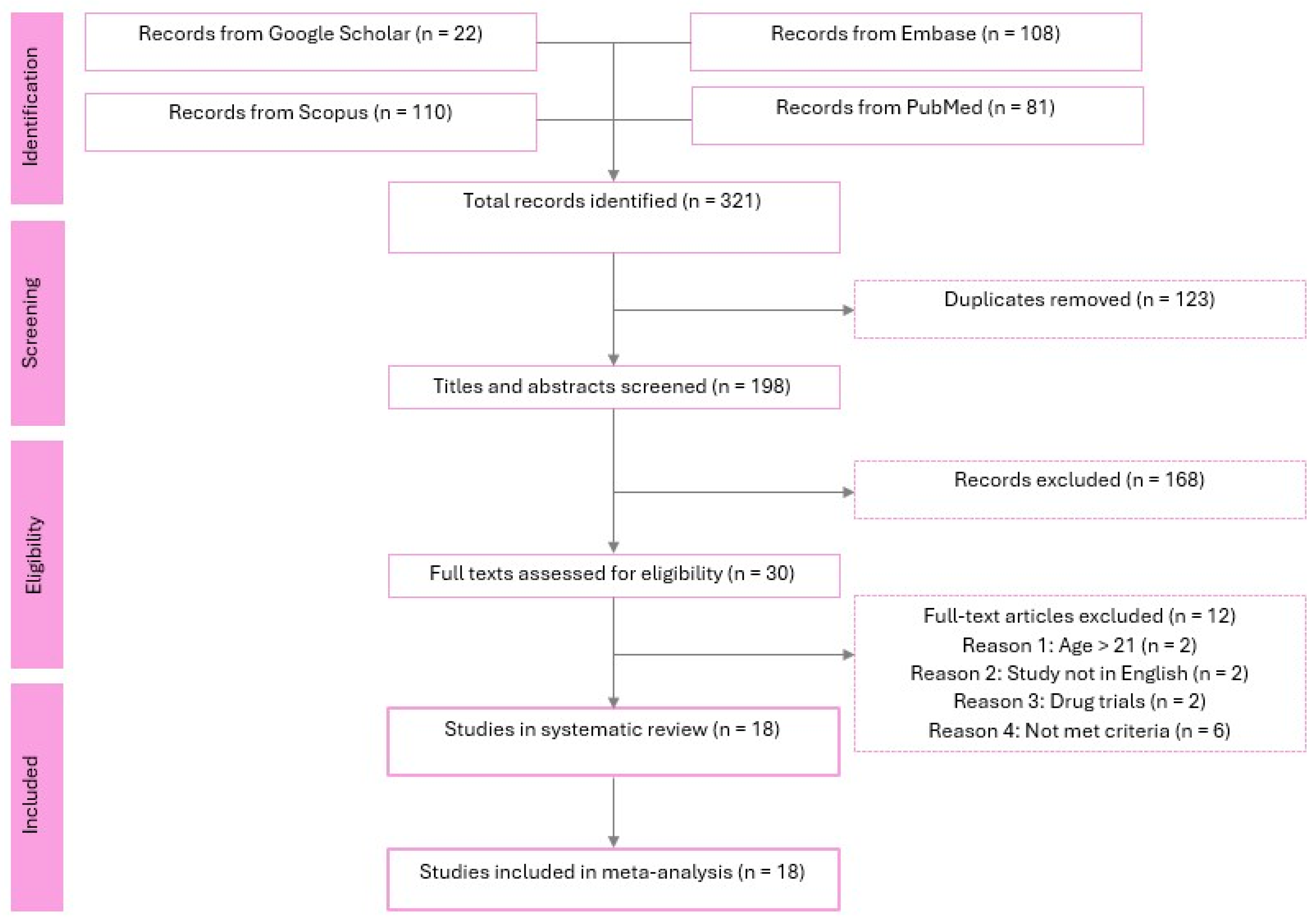
Figure 2.
Forest plot of mean difference in adiponectin level between PCOS and controls. PCOS – Polycystic Ovary Syndrome; N – Sample Size; SD – Standard Deviation; CI – Confidence Interval.
Figure 2.
Forest plot of mean difference in adiponectin level between PCOS and controls. PCOS – Polycystic Ovary Syndrome; N – Sample Size; SD – Standard Deviation; CI – Confidence Interval.
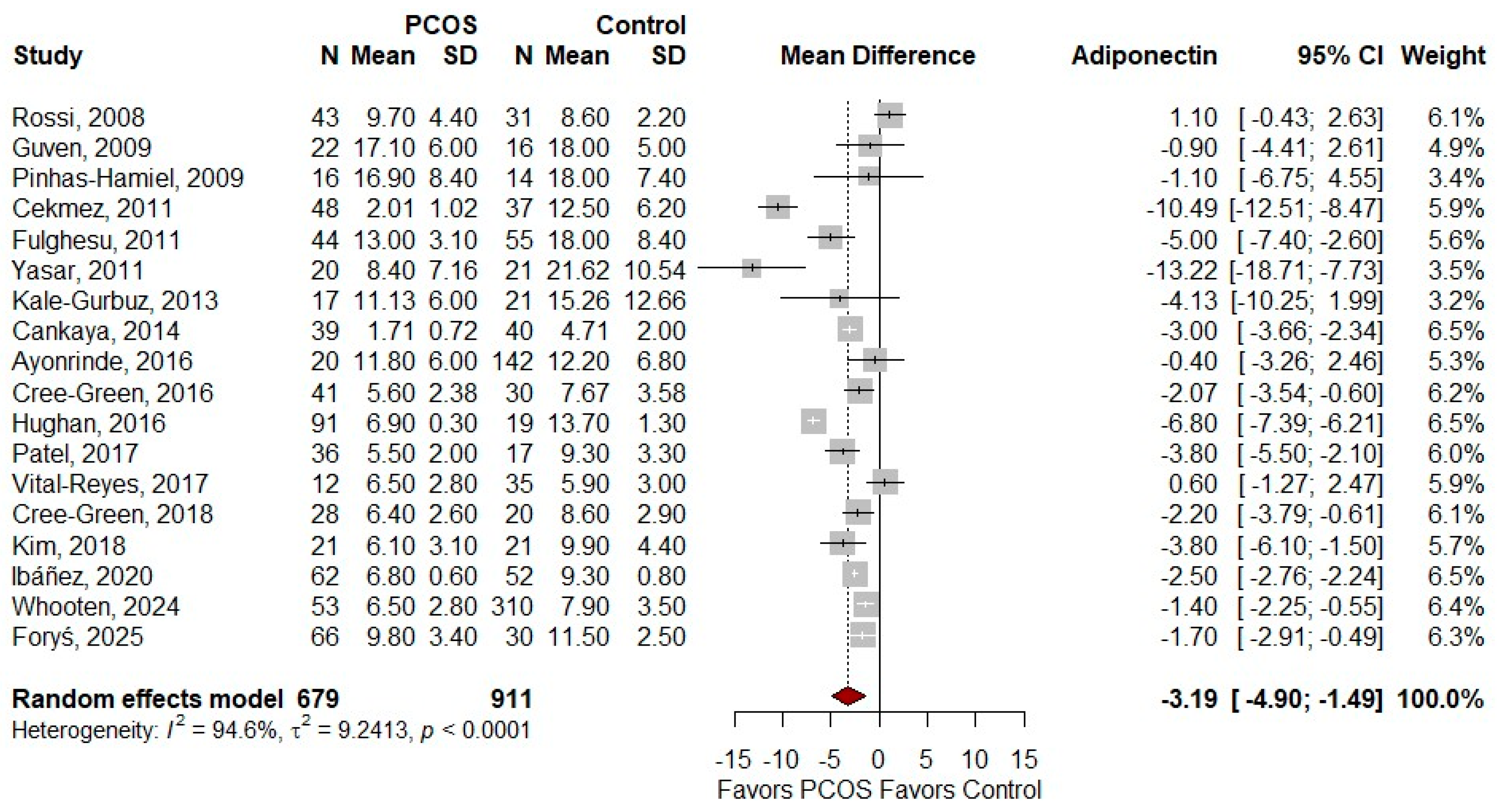
Figure 3.
Leave-one-out sensitivity analysis. MD – mean difference; CI – Confidence Interval.
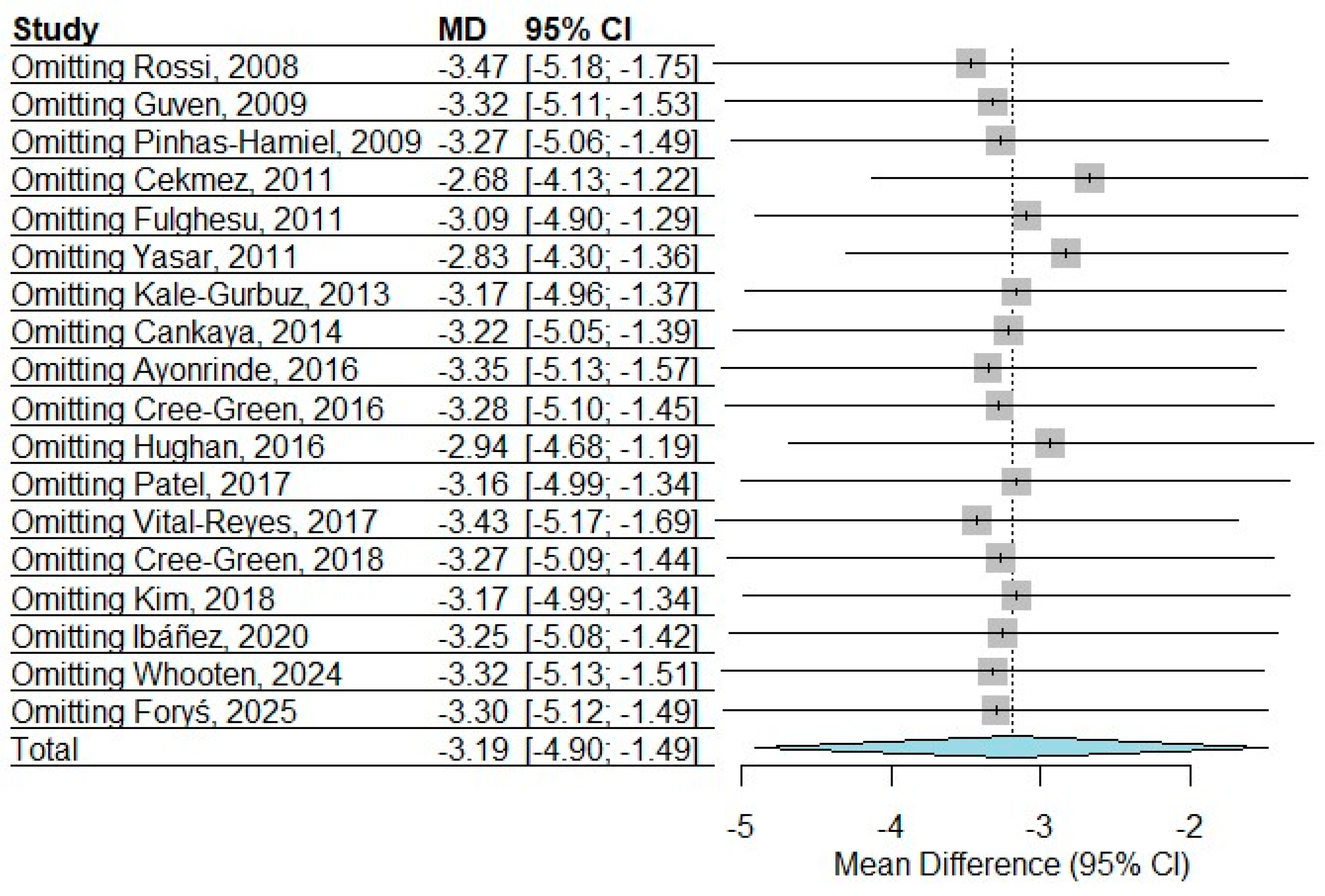
Figure 4.
Funnel plot to assess publication bias.
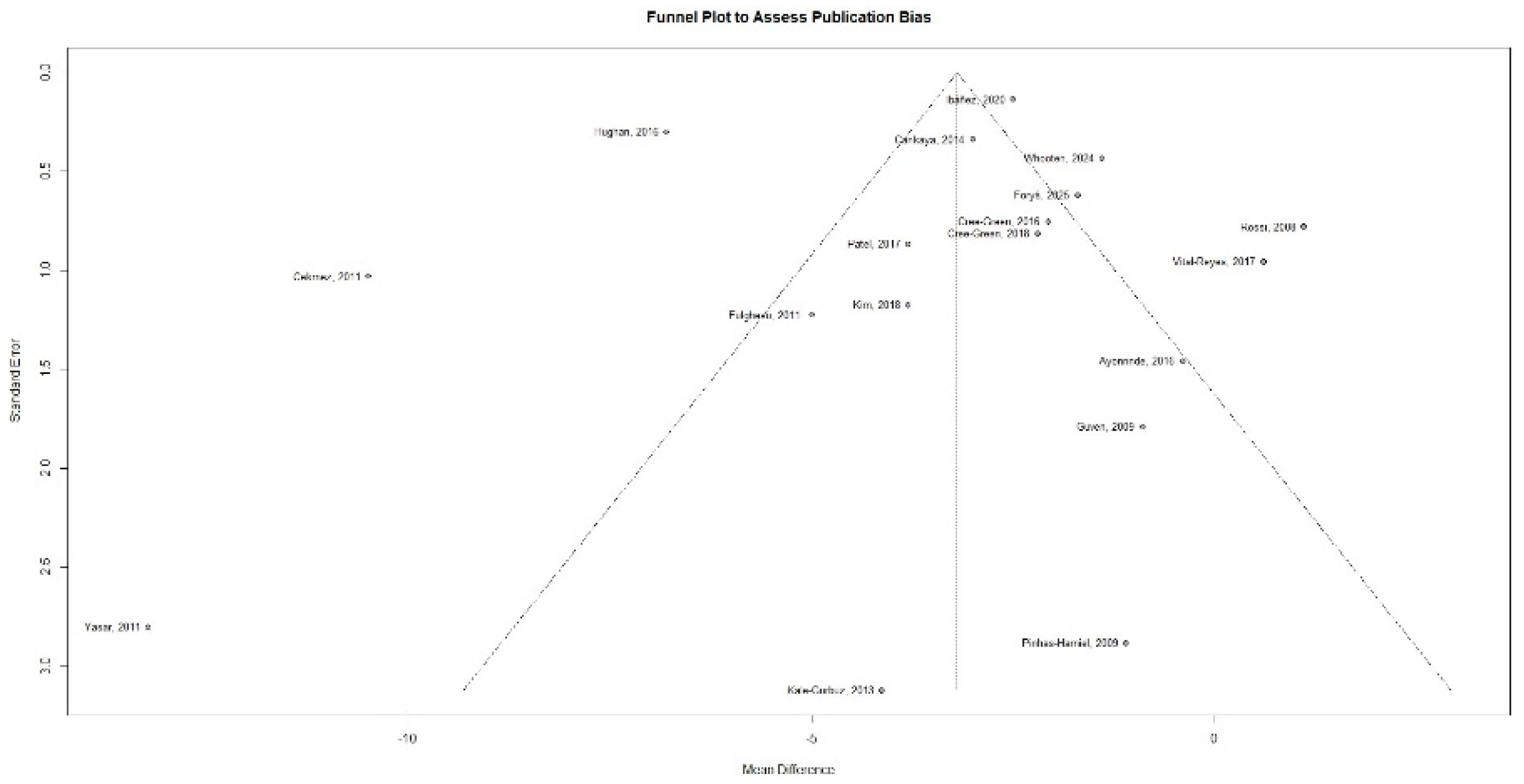

Table 1.
Study characteristics.
| Study | Country | Study Design | Criteria for PCOS1 | Sample Size | NOS2 Score |
| Rossi, 2008[20] | USA | Case-Control | NIH3 | 74 | 8 |
| Guven, 2009[21] | Türkiye | Case-Control | Rotterdam | 38 | 8 |
| Pinhas-Hamiel, 2009[22] | Israel | Case-Control | Rotterdam | 30 | 4.5 |
| Cekmez, 2011[23] | Türkiye | Case-Control | Rotterdam | 85 | 5 |
| Fulghesu, 2011[24] | Italy | Case-Control | Rotterdam | 99 | 8.5 |
| Yasar, 2011[25] | Türkiye | Case-Control | Rotterdam | 41 | 7 |
| Kale-Gurbuz, 2013[26] | Türkiye | Case-Control | Rotterdam | 38 | 4.5 |
| Cankaya, 2014[27] | Türkiye | Case-Control | Rotterdam | 79 | 7 |
| Ayonrinde, 2016[28] | Australia | Case-Control | NIH | 162 | 7 |
| Cree-Green, 2016[29] | USA | Case-Control | NIH | 71 | 6 |
| Hughan, 2016[30] | USA | Case-Control | ESCPG4 | 110 | 8 |
| Patel, 2017[31] | USA | Case-Control | NIH | 53 | 5 |
| Vital-Reyes, 2017[32] | Mexico | Case-Control | Rotterdam | 47 | 7 |
| Cree-Green, 2018[33] | USA | Case-Control | NIH | 48 | 6.5 |
| Kim, 2018[34] | USA | Case-Control | ESCPG | 42 | 4.5 |
| Ibáñez, 2020[35] | Spain | Prospective Cohort | Not Stated | 114 | 7 |
| Whooten, 2024[36] | USA | Prospective Cohort | IEG5 | 363 | 5.5 |
| Foryś, 2025[37] | Poland | Cross-sectional | IEG | 96 | 8.5 |
1PCOS – Polycystic Ovary Syndrome; 2NOS – Newcastle-Ottawa Scale; 3NIH – National Institute of Health; 4ESCPG – Endocrine Society Clinical Practice Guideline; 5IEG - International Evidence-based Guideline.
Disclaimer/Publisher’s Note: The statements, opinions and data contained in all publications are solely those of the individual author(s) and contributor(s) and not of MDPI and/or the editor(s). MDPI and/or the editor(s) disclaim responsibility for any injury to people or property resulting from any ideas, methods, instructions or products referred to in the content. |
© 2026 by the authors. Licensee MDPI, Basel, Switzerland. This article is an open access article distributed under the terms and conditions of the Creative Commons Attribution (CC BY) license (http://creativecommons.org/licenses/by/4.0/).
Copyright: This open access article is published under a Creative Commons CC BY 4.0 license, which permit the free download, distribution, and reuse, provided that the author and preprint are cited in any reuse.


