

Submitted:
04 March 2026
Posted:
04 March 2026
You are already at the latest version
Abstract
Potato-Chips Processing (PCP) industry generates huge amount of wastewater heavily polluted with organic matter and nutrients. Current treatment technology of PCP wastewater uses dissolved air flotation (DAF) and activated sludge sequential batch reactor (SBR); both consumes large amount of chemicals and represents energy-intensive system. This study explores algal photobioreactor (APBR) as a sustainable system for PCP wastewater treatment, nutrients recovery and algal biomass production. Raw wastewater, anaerobically pre-treated effluent and DAF-SBR effluent were used in 1st, 2nd and 3rd APBR. Three feed volumes from each source (150, 200 and 500 ml for 1st and 2nd APBR and 200, 400 and 600 ml for 3rd APBR) to a fixed volume of algal seed (200 ml) were tested to select optimal feed volume and harvest time using 1-L APBR . System performance and impact of water characteristics on quantity and quality of algal biomass were explored at preselected feed volume and harvest time in 6-L APBRs. All experiments were carried out in growth chamber with continuous light (148.75 μmol.m-2.S-1). Results showed that 150 ml is the optimal feed volume for 1st and 2nd APBR at 10 days and 9 days growth cycle. 400 ml and 8 days were the optimal feed volume and growth cycle for 3rd APBR. Average dry biomass yields at preselected optimal conditions were 65.3±11.4, 69.9±12.0 and 100.6±11.7 mg/l.d in the 1st, 2nd and 3rd APBR. The 1st APBR achieved % removal of 99.2±0.4, 98.7±0.8, 89.1±4.3 and 97.5±1.4 for turbidity, COD, TKN and TP on average. Corresponding % removal in the 2nd APBR are 97.6±2.6, 91.6±7.5, 93.6±4.5 and 96.1±1.4 while the 3rd APBR achieved 98.5, 76.2 and 97.0. Additionally, the results of protein content and amino acids profile indicate significant impacts of feed water quality on the two parameters. The protein content was 30.64, 32.53 and 35.65% in the 1st, 2nd and 3rd APBR respectively. Similarly, the amino acids profile indicated significant higher % of the amino acids in the 3rd reactor compared with the 1st and 2nd one.
Keywords:
potato-chips processing wastewater
; alga photo-bioreactor
; algal biomass
; anaerobic effluent
; feed volume
; growth cycle
1. Introduction
Agro-food processing industries generate huge amounts of highly polluted wastewater with negative adverse on the ecological systems. Agro-industrial wastewaters are defined as high strength with substantial amounts of organic matter and nutrients. Thus agro-industrial wastewaters have a potential eutrophication and negative environmental impacts[1] . Recently valorization of agro-industrial waste and wastewater has been considered to generate substantial amounts of products and byproducts with great value [2,3]. The agro-industrial wastewaters have been defined as growth media for cultivation of microalgae species[4,6,7]. Algae growth using high strength industrial wastewater is currently adhere to the issue of waste-to-bioenergy economy that is differing from the conventional treatment for the purpose of nutrients removal. Cultivation of algae in wastewater is complex and difficult than growth of algae in fresh water[8] .
Research articles have considered micro-algal or shortly algal biomass as a potential substrate for many applications. Recognition of microalgae as feedstuff for bio-fuel production, a sustainable and feasible option over fossil fuels [9,11,12] was widely reported. The algae represent a sustainable feedstock option for biodiesel production [13]. The algae can be used to produce high value-added products and protein-rich biomass [14,15,16] .Algae has been reported as alternative to produce high-value added metabolites[17] . The algal biomass is considered as potential feedstock for production of carotenoids [16] . Requirements of huge amounts of fresh water and nutrients for commercial cultivation of microalgae make it an incompetent economic process [16]. The estimated production cost of micro-algae was ranged between $20 to $200/kg biomass [18]. On the other hands, many authors reported production costs of dewatered algae between 4.15 and 5.96 Euro/kg in the different algae production systems [14,19]. This production costs make it difficult to produce competitive algae biomass using fresh water and chemical fertilizers [16]. Integration between wastewater treatment and algal production is a sustainable way to remediate wastewater and reduce algal production cost [11] . The algae have the capacity to treat wastewater along with production of carotenoids [16]. since algae have been considered as potential source of carotenoids [16] . Algal-based technology has been recognized as a green sustainable technology alternative to energy-intensive conventional aerobic biological treatment systems [20,21,22,23]. Algae-based wastewater treatment technology is a promising cost-effective treatment, carbon fixation process and renewable source of biomass[23,24]. In addition to wastewater treatment, algae have been reported to effectively capture and remove CO2[25]. Recently, cultivation of microalgae using industrial wastewater has been considered in the pollution control and energy producing strategy. Industrial wastewater rich in nutrients could be used directly or after pretreatment or dilution for growing microalgae for bio-fuel production[26]. The algal-based wastewater treatment systems depends on growth and proliferation of mixotrophic algae which has the ability to utilize organic and inorganic carbon in addition to nutrients (nitrogen and phosphorous) to produce more algal biomass and reduce concentration of various contaminants [17], [23,27,28,29]. Incorporating micro-algae into wastewater treatment generates oxygen through photosynthesis process and this oxygen is subsequently utilized by heterotrophic bacteria to biodegrade organic matters [30]. Thus co-culture of algae and bacteria has gained great attention and defined as potential to capture carbon and nutrients from agro-industrial wastewaters and produce a valuable biomass[31,32]. This co-culture enhances biomass production and lipid yield [33,34,35,36,37].
Algal culture systems could be open or closed [38,39,40]. The open culture systems of algae like raceway pond and high rate algal pond have been widely used for commercial production of algae using wastewater. These systems are considered simple and low-cost in construction and operation[8,41]. However, the open culture systems have several disadvantages like vulnerable of the system for contamination, low production rate, huge area requirements and water losses via evaporation. On the other hand closed Algal Photo-Bioreactors (APBRs) are cost in construction and operation but easy to control and can be used for growth and production of pure culture that could be used for production value-added products for pharmaceutical application[1]. Also the closed APBRs have higher growth and biomass yield and provide better treatment performance[11,42]. Integrated wastewater treatment and algae production represents a sustainable and cost effective way for both wastewater treatment and algae production [11] however, algal harvesting represents bottleneck of algal wastewater treatment systems and cost 20% of the total production costs [11]. Immobilization technology has been used to decline cost of algae harvesting which represent 20% of the production cost[43,44]. Comparison between immobilized algal cell and free suspension cells indicated promising separation in case of immobilized cells but there are no any advantages of immobilized cell over free suspension in terms of nutritional value and protein content even the biomass of immobilized cells is fairly poor [45] and more over utilization of immobilized algal cells for animal and fish feed production and human food is not easy due to the presence of immobilizing agent with the algal cells.
Cultivation of algae on wastewater faces big challenges of organic surplus, more nutrients concentration, initial pH, coloration and turbidity of wastewater that hinter the light penetration, total dissolved solids and salinity of wastewater, microbial contamination, scale up of the bioreactors, algae harvesting, etc. Solutions for the previous bottlenecks of the wastewater-based algae production may include pre-treatment or dilution for wastewater conditioning to get maximal growth and biomass production [30,31]. A confectionary wastewater was post-treated using three different cyanobacteria after pre-treatment in attached aerobic biofim filter inoculated with indigenous microorganisms[46].
Potato-Chips Processing Industry (PCPI) as one of the Agro-food processing industries generates huge amounts of heavily polluted wastewater contaminated with organic matter and nutrients. In Egypt, current treatment technology of PCP wastewater utilizes dissolved air flotation (DAF) followed by conventional activated sludge using sequential batch reactor (SBR). DAF is considered chemicals added treatment method which represents like other chemical-based treatment processes, a non-sustainable method. Both DAF and aerobic SBR consume large amount of chemicals and represent energy expensive processes. Alternative technology based on algae photobioreactor (APBR) is proposed to bio remediates PCP wastewater and produce protein-rich biomass for possible application in fish and animal feed industry. Anaerobic digestion is a mineralization process and provides effluent rich in ammonia and phosphorus; both are available forms for uptake by algae and aquatic macrophyte plants [47,48]. In this study, three sources of PCP wastewaters with different qualities were explored for algae growth in Algal Photo-Bioreactor (APBR). These sources include PCP wastewater after screening (S effluent), effluent of Up-Flow Anaerobic Sludge Blanket (UASB) feed with PCP wastewater after screening (UASB effluent) and effluent of Sequential Batch Reactor (SBR) feed with PCP wastewater after complex treatment processes start with screening, lamella settler and then DAF (SBR effluent).
2. Materials and Methods
Experimental setups
Two experiments were designed and carried out. The first experiment explores optimal feed ratio and growth period (growth cycle) for the three different wastewater sources. Data from the first experiment was used to design and run the second experiment during which evaluation of the treatment performance; algal biomass yield and the quality of the biomass were assessed.
Sources and sampling of wastewaters
Three different sources of PCP wastewaters with different qualities have been used in this experiment to explore potential of algal photobioreactor (APBR) for remediation of PCP wastewater with production of protein-rich biomass. These wastewaters include raw wastewater after screening (S effluent), effluent from a 2-stage Up-flow Anaerobic Sludge Blanket (UASB) reactor treating S effluent (UASB effluent) and finally aerobic secondary treated effluent from an aerobic Sequential Batch Reactor (SBR effluent). The S effluent and SBR effluent were collected from one of the biggest PCP factories in Egypt. The factory located at October-6 city. The S effluent was collected after an arc screen while SBR effluent was collected from the final effluent of a comprehensive wastewater treatment plant includes arc screen, lamella settler, DAF unit and final aerobic SBR. The comprehensive treatment plant includes pre-screening followed by lamella settler. The S effluent was collected in a hug amount to feed a 2-satge pilot-scale UASB reactor working at 72 h total hydraulic retention time.
Growth conditions
All experimental works of algae growth were carried out in a lab-scale algae growth chamber provided with artificial light using white LED lamps. The algae growth chamber has 0.72 m2 surface area and its cover is provided with 9-watt seven LED lamps which provide light intensity of 148.75 µmol.m-2.S-1 that is comparable to selected values in the literature review[49,50,45,51,52].
Source of algal culture and pre-enrichment
Varieties of growth media have been used for isolation, growth and commercial production of microalgae; however blue green 11 (BG 11) medium is widely used as a growth media for freshwater micro-algae[13]. 200 ml of mixed culture from High Rate Algal Pond receiving anaerobic effluent from the two-stage UASB reactor treating PCP wastewater (S effluent) was taken, mixed with 1000 ml of BG11 and inoculated in 2-L APBR. The APBR was continuously supplied with air (1.75 ml/m) to keep algae in suspension. After 12 days growth period in the algae growth chamber, the total volume (1200 m) was equally divided into three APBRs (400 ml each). 800 ml of BG11 media was added to each APBR and continuously supplied with air (1.75 ml/m) and propagated for additional 6 days. At the end of 18 days total enrichment or propagation period, the total volume of the pre-enriched algae (3600 ml) was ready to be used for the treatment of wastewaters.
Experiment 1
The first experiment was carried out in duplicate to select the optimal feed volume and growth cycle using the wastewater sources. There are 18 APBRs with 1-L effective volume for each. 200 ml from the pri-enriched algal culture was added to each reactor. Three different feed volumes for each source were added to the reactors as indicated in Table 1.
To prevent settlement of algal biomass and ensure complete mix of the reactor content, the APBRs were continuously supplied with air bubbles at 1.17 L/m (3.5/3) using six 5-watt air pumps with 3.5 L/m average flow rate for each one. During the course of the experiment, 25 ml of the reactor content was collected and subjected for laboratory analysis of TSS, Chlorophyll content, and optical density measurement and algal count. The experiment extended till starting decline in chlorophyll content, optical density and TSS concentration, which indicates maximum growth point of the algae in the bioreactor.
Experiment 2
The data from the first experiment was used to establish the second experiment during which optimal feed volume of each source of wastewater was used to propagate algae in larger APBRs and evaluate systems performance and daily yield of algal biomass. During this experiment three 6-L reactor were used for each source of wastewater. The APBRs were operated in batch mode with continuous mixing using air bubbles at flow rate of 1.75 L/m for each one. At the end of the growth cycle (harvest time) 4.8 L was collected from the APBR and 1.2 L was left in the reactor as new algal seed. The 1.2 L algal seed in the large reactor (6-L) is matched with 200 ml used in the small reactor (1-L) of the 1st experiment. The effluent of each PBR was subjected for 24-h gravity sedimentation followed by decanting treated supernatant and collecting settled algal biomass. The clear supernatant was laboratory analyzed to estimate removal efficiency of the water quality parameters. Representative sample from the settled algae was used for each trail to estimate yield and dry matter content. The clear supernatants were analyzed for turbidity, TSS, COD, ammonia, nitrite, nitrate, TKN and phosphorous. Preselected wastewater volume was added to each APBR (containing 1.2 L algal seed) and completed to the mark (6-L) with distilled water.
Analytical methods
All physicochemical; analyses of wastewater samples and effluent from the APBRs were carried out according to the standard methods for examination of water and wastewater (APHA, 2023) [53]. Optical density was measured using NANOCOLOR Advance spectrophotometer. MACHEREY-NAGEL, Germany. COD was measured according to dichromate method using two ranges one for the influent (0-1500 mg/L) and one for the treated effluents (0-40 mg/L) 5220 D method [53]. Total ammonia nitrogen was measured using distillation, (4500-NH3 B) adsorption in boric acid solution followed by titration according to method 4500-NH3 E in the standard method[53]. TKN was measured titremetrically after acid digestion using mercuric sulfate; method (4500-Norg B) in the standard method. Nitrite was measured colorimetrically according to method 4500-NO2 B the standard method [53]. Total phosphorus was measured after potassium persulphate digestion using vanadomolybdophosphoric acid colorimetric method; 4500-P C. Total alkalinity was measured using titrimetric method and pH was measured by HACH pH meter. Turbidity was measured using HANA turbidity meter model H198703. Optical density of algae suspension was measured at 660 nm using Nano-color spectrophotometer (MACHEREY-NAGEL, Valencienner Str. 11, 52355 Düren, Germany). Chlorophyll was measured using method 10200 H in the standard method [53].
Amino acids profiles were determined by HPLC after protein extraction. Total protein content was estimated as the sum of the amino acids %.
3. Results
3.1. Characteristics of Raw Wastewaters
Characterization of raw wastewaters after screening, UASB effluent and DAF-SBR effluents is presented in Table 2. The data shows great variations between the 3 sources with high concentrations of organic matter represented by COD, BOD and TSS. BOD/COD ratio is around 69.5% which reflects organic nature of the pollutants with considerable amounts of starch with high biodegradation rate. Estimated soluble COD exceeds 50% of the total COD as shown from the data of the TSS. There was a great variation in the COD of the three sources due to the performance of treatment processes in the UASB and DAF-SBR; both decline the average COD concentration in the effluents. Characteristics of the UASB effluent shows significant reduction in the pollution load. The SBR significantly reduced the pollution loads and COD; however sludge settling problems causes considerable amount of TSS in the final treated effluent which significantly contributes in the COD concentration with an average value of 292 mg/L. Similarly TKN and TP are present in substantial amounts, especially in organic form due to the presence of suspended solids. Average values of TKN and TP were 302 mg N/l and 36.2 mg P/l, 313 mg N/l and 27.1 mg P/l and finally 72.5 mg N/l and 13.5 mg P/l for TKN and TP, respectively in the wastewater feed of the 1st, 2nd and 3rd APBR. Ammonia nitrogen represent considerable amount of the TKN concentration in the feed of the 2nd APBR (UASB effluent) due to the anaerobic digestion of the organic nitrogen. This ammonia is mostly preferred as nitrogen source for algae and other photosynthetic organisms like plants [54,55] . Generally microalgae and other plants prefer ammonia nitrogen over nitrate due to the higher energy requirement for 2-steps nitrate reduction process to release ammonia (nitrate and nitrite reductase enzyme), which subsequently incorporated into the amino acids. However, ammonia has a toxic effect at high concentration. [56] reported threshold level of ammonia toxicity to algae at 260 mgN/L. Other researchers reported ammonia toxicity and reduction of algae growth and nitrogen assimilation at concentration between 120-200 mgN/L [57,58]. 128.5 mgN/L was reported as the optimal ammonia concentration for chlorella growth [55]. On the other hand, [59] recorded highest growth of algae at 300 mg NH4-N/L while [60] reported maximum growth rate of Chlorella at 400 mg N/L ammonia concentration. These great variations in the threshold levels of ammonia toxicity are mostly attributed to other controlling factors like pH and temperature[61].
The pH concentration in the raw wastewater after screening indicates acidic nature of the wastewater due to the process of hydrolysis and acidogenisis of readily biodegradable wastewater during storage and transportation in the sewer pipe lines from production lines to the inlet of the wastewater treatment plant. These two processes generate volatile fatty acids (VFA) which decline the pH to acidic side. On the other hand during the anaerobic digestion in the UASB reactor, these VFA plus other newly produced acids are converted into methane gas by methanogens and so rise in the pH due to VFA depletion. Additionally, ammonification of the organic fraction of the TKN releases considerable amounts of ammonia which drag the pH to the alkaline side. Both depletion of VFA and production of ammonia in the UASB enhance pH rise in the effluent. % of ammonia was 33.8, 73.8 and 18.6% in the raw after screening, UASB effluent and DAF-SBR effluent and this is mostly due to the partial mineralization of organic nitrogen in the sewer pipelines and manholes and higher mineralization in the UASB reactor while the lower % in the DAF-SBR is due to the presence of SS in the effluent which recorded 180 mg/l on average in addition to the effective removal of ammonia in the DAF-SBR effluent.
Comparing TSS concentration and turbidity in the three sources of wastewaters indicates weak correlation between the TSS and turbidity since the TSS of the raw wastewater after screening is around 10 fold and 13.5 fold the concentration in the UASB and SBR effluents respectively while turbidity after screening represents only 3.7 and 4.3 fold the turbidity after UASB and SBR respectively. This could be attributed to the nature of the TSS not only the concentration as reported by[62]. He has reported that the cloudy and colloidal particles contribute more in the turbidity than the coarse suspended solids. This also indicates that the TSS in the raw wastewater after screening is more particulate and coarser in nature comparing to the colloidal nature in case of UASB and SBR effluents.
Similarly the nitrogen and phosphorous contents of the three sources are greatly variables. The COD:N:P ratios are 171:8.3:1.0, 20:11.5:1.0 and 21.6:5.4:1.0, in the effluents after screening, UASB and DAF-SBR, respectively. The ratios between these three parameters are reported to significantly control the algae growth rate[63,64]. On the other hand some researcher reported the significant role of N:P ratio without including COD or organic carbon[65,60].
1st experiments (Best feed volume and harvesting time)
Results of the optical densities of the algae suspension in the different photo-bioreactors is shown in the Figure 1 (A, B and C) which indicates best feed volume of wastewater and harvest time of algae in the 3 APBRs. The data indicate that the optimum feed volume is 150 ml in the 1st and 2nd APBR with growth periods of 10-11 days in the 1st and 8-9 days in the 2nd reactor. In case of 3rd APBR the optimum feed volume was between 400 ml and 600 ml with 6-7 days growth period or harvest time. 500 ml was selected as the feed volume in the 3rd reactor. Based on the characteristics of wastewaters (Table 2), estimated N and P daily loading rates are 4.53, 5.87 and 4.83 mg N/l.d and 0.54, 0.51 and 0.90 mg P/l.d in the 1st, 2nd and 3rd reactor respectively. The applied daily N loading rate is higher in the 2nd reactor; however most of N is present as ammonia which could be exposed to volatilization in the reactor due to alkaline pH. Similarly, P loading rate was comparable in the 1st and 2nd reactor but significantly higher in the 3rd reactor.
2nd Experiment
Treatment performance of the APBRs in removing organic matter
Data of the treatment performance of the 1st, 2nd and 3rd APBR in removing COD is presented as residual concentration and as % removal (Figure 2). The % removal of COD is influenced by the initial concentration of the influent wastewater and the average values are 98.7±0.8, 91.6±7.5 and 88.9±8.2% in the 1st, 2nd and 3rd APBR respectively which indicate highest % removal rate in the 1st APBR feed with screened wastewater. However, the corresponding residual concentrations are 80.8±60.4, 40.7±24.6 and 33.4±28.1 mg O2/L, which indicate lowest concentration in the 3rd APBR. The 1st APBR provides the maximum COD removal load (g COD/l.d). Indeed treatment performance of the APBR in COD removal not only depends on the characteristics of the influent wastewater, it is also depends on the characteristics of the algal biomass and its tendency to settle in the sedimentation unit.
The great variation in the residual concentrations of the COD and its % removal between the treatment reactors and within the same reactor is attributed to the variation in the initial COD of the influents and the utilization of mixed culture without sterilization which give chance to the bacteria and other microorganisms to grow with the algae. The presence of heterotrophic bacteria propagate in the reactors and their contribution increased significantly by time to reach maximum at the end of the trails and this is reflected by low COD concentration in the last cycle (end of the experiment). In the last cycle, the residual concentration of COD reached 28, 22 and 15 mg O2/L in the 1st, 2nd and 3rd APBR comparing to 211, 98 and 98 mg O2/L in the first cycle.
Similar to the COD removal, the reactors were potential in removing turbidity (Figure 3) and TSS (Figure 4) after overnight algae sedimentation. The average residual turbidity was 6.1±3.8, 4.5±3.7 and 2.6±2.5 in the 1st, 2nd and 3rd APBR. The corresponding % removals were 99.2±0.4, 97.6±2.6 and 98.4±1.6, respectively. In case of TSS, the average residual concentrations were 33.2±16.7, 19.4±7.0 and 15.1±4.3 mg/L in the 1st, 2nd and 3rd APBR. The corresponding % removals are 98.7±0.6, 90.8±4.0 and 91.4±3.1.
Treatment performance of the APBRs in nutrients removal
Nitrogen (represented by ammonia and TKN) and phosphorous are the main nutrients in wastewater. N and P requirements for algae growth is the bottle neck for widespread application of the algae culture and significantly raise the production cost. The PCP wastewaters contain significant concentrations of N and P. as presented in Figure 5 (A), residual concentrations of TKN are 34.1±18.3, 20.2±14.8 and 17.3±11.9 mg N/L in the 1st, 2nd and 3rd APBR after algae separation (Figure 5A). The corresponding % removals are 89.1±4.3, 93.6±1.4 and 76.2±15.8, respectively (Figure 5 B) based on the nitrogen concentration in the feed and the residual concentration after algae separation. However the actual total nitrogen removal and mass balance is summarized in Table 4 which shows average nitrogen removal of 94.6%, 97.0% and 98.0% in the 3 reactors, respectively. The residual ammonia concentrations were 14.5±10.9, 16.4±12.7 and 13.4±8.9 mg N/L, respectively (Figure 5 C). As we can observe from the results of residual ammonia concentration in the 3rd APBR and the initial ammonia concentration of 13.5±3.1 mg N/l (Table 2) we detect ammonia increase in the final treated effluent in some batches which is mostly attributed to the presence of high organic nitrogen in the influent (sludge flocs from the SBR). The organic nitrogen undergoes ammonification due to the presence of heterotrophic bacteria in the reactor and raises the residual ammonia concentration. This finding is matched with reported ammonia increase in an APBR treating agro-industrial wastewater that is low in ammonia and high in organic nitrogen (Posadas et al., 2014). As indicated in Table 4, the non-algae mediated process for nitrogen removal was 16.9, 35.6 and 13.1% in the 1st, 2nd and 3rd reactor, respectively which is mostly influenced by initial nitrogen, ammonia and COD of the feed. The higher % of the non-algae mediated process of nitrogen removal could be attributed to ammonia volatilization especially in the 2nd and 1st reactor where the feed wastewater contains significant amount of ammonia. During the treatment of swine wastewater with different dilutions, [55] reported maximum ammonia nitrogen removal of 86.7, 98.3 and 99.5% from initial concentrations of 1678, 786 and 356 mg N/L, respectively which means maximum ammonia removal loads of 137.0, 94.4 and 61.7 mg N/L. Comparing the previous values with the reported maximum growth yield of 1.29, 1.95 and 2.01 g/l at the three different initial ammonia concentrations [55] indicate a remarkable significant part of ammonia removal may not be attributed to the algal uptake. Similarly a significant portion of ammonia removal (40%) was observed in control bioreactor without algae [45] during the treatment of urban wastewater using algae species (Chlorella and Scenedesmus) which means non-algae mediated processes could be contributes in ammonia removal in the APBR. Estimated daily nitrogen removal loads from Table 4, indicate nitrogen removal at 3.9, 5.7 and 6.6 mg N/l.d which is better than the reported values during the treatment of raw and diluted wastewater from animal feed production industry in algal-bacterial system. The reported data revealed a decline in the TN by 62% and 80% from initial concentrations of 98.5 and 49.25 mg N/L, respectively after 374 h [31] with corresponding daily removal rates are 3.92 and 2.53 mg N/L.d with significant decline by decreasing the initial concentration which match with the data of the current experiment except the results of the current experiment is significantly better than the reported data.
As shown in Figure 6, some part of ammonia or TKN after ammonification has been partially oxidized into nitrite and other part has been completely oxidized into nitrate. The average nitrite concentrations in the 1st, 2nd and 3rd APBR are 5.41±2.48, 6.06±1.623 and 7.58±2.3, respectively. The corresponding average concentrations of nitrate are 1.36±1.08, 1.46±0.49 and 1.54±0.80. The higher nitrite concentration could be attributed to the fast growing rate of ammonia oxidizers comparing to nitrite oxidizers [66,67]. It is also could be attributed to the competition between heterotrophic bacteria and autotrophic bacteria (nitrifiers) since we have significant amount of COD load. Neither NO2 nor NO3 were detected in the treated effluent of batch APBR treating agro-industrial wastewaters[31] which is totally not matched with the current results.
For TP (Figure 7), the residual concentrations are 1.36±1.08, 1.46±0.49 and 1.54±0.8 mg P/L while the corresponding % removals are 97.5±1.4, 96.1±1.4 and 97.0±1.1, in the 1st, 2nd and 3rd APBR, respectively. Since this is a sequential; batch operated system, the actual P load was 5.43 (36.2 mg P/l × 0.15 l), 4.07 (27.1 × 0.15 l) and 6.75 (13.5 × 0.5 l) mg p/l in each batch which means actual P removal of 75%, 64.1% and 77.2% from the initial loads. Cheng et al. (2020) reported P removal efficiency of 71.1, 84.7 and 95.9% from initial concentrations of 158, 96 and 62 mg P/L, respectively during the treatment of anaerobic digested swine wastewater in APBR; however the author did not mention the hydraulic retention time in his reactor. During the treatment of agro-food processing wastewater in APBRs, phosphorous removal achieved 83% and 57% from initial concentrations of 13.5 and 6.75 mg P/L with corresponding daily removal rates of 0.719 and 0.247 mg P/L (Posadas et al., 2014). In the current experiment the daily P removal loads were 0.37, 0.33 and 0.87 mg P/l.d in the 1st, 2nd and 3rd APBR respectively which are comparable to the previous data reported by[31].
Biomass yield in the APBRs
The data in Figure 8 shows daily algal biomass yield in dry form (A) and average yield (B) during the 2nd experiment. The data of biomass yield shows excellent growth rates of the algae especially in the 2nd and 3rd APBR feed with the UASB effluent and SBR effluent, respectively. The results show minimum yield of 41.5, 52.4 and 78.7 mg/l.d in the 1st, 2nd and 3rd APBR while the maximum yield recorded 81.8, 89.8 and 118.1 mg/l.d respectively. Average dry biomass yields of the APBRs were 65.3, 69.9 and 100.6 mg/L.d in the 1st, 2nd and 3rd APBR, respectively. Generally different algae species behave different growth rates under culture in the same wastewater sources and the same algae species behave different growth rates using different wastewater sources [63]. The higher biomass yield in the 2nd and 3rd APBR is mostly attributed to the lower turbidity in the UASB and DAF-SBR effluent comparing to the raw wastewater after screening which has more particulate matter. The higher turbidity in the 1st APBR feed with the raw wastewater after screening limits the light penetration into the reactor and negatively influence the growth rate and biomass yield.
Also, the presence of more soluble nutrients in the UASB and SBR effluents enhance the algae growth and biomass yield comparing to the screened wastewater with more complex particulate matter. The growth yield in case of DAF-SBR effluent (3rd APBR) is better than UASB effluent (2nd APBR); however, utilization of the UASB effluent could be environmentally more sustainable than the utilization of the SBR effluent since application of the UASB is more sustainable and cost-effective for the treatment of PCP wastewater comparing to the integrated DAF-SBR system.
The variation in the growth and biomass yield in the 3 APBRs could also be attributed to the variation wastewater characteristics and C:N:P ratio in the feed wastewater. There is a great debate about the optimum C:N:P and N:P to get the maximum growth rate of algae. AlMomani and Örmeci,( 2016) reported maximum growth rate of mixed algal culture at C:N:P ratio of 4.4:1:1.5 while[64] reported that C:N:P of 50:8:1 is the optimum ratio. Other researchers focused on N:P ratio as the most important macronutrients. [65] reported N:P ratio of 16:1 as the optimum ratio for maximum algae growth but Wang et al. (2010) observed a significant growth rate of C. vulgaris in wastewater at N:P ratio of 0.36:1 and a moderate growth rate at N:P of 53:1. In the current experiment the COD:N:P ratio was 171:8.3:1.0, 20:11.5:1.0 and 21.6:5.4:1.0 in the 3 APBRs respectively with maximum yield at 3rd APBR with COD:N:P of 21.6:5.4:1.0 followed by 2nd APBR with COD:N:P of 20:11.5:1.0. The previous data indicate not only the C:N:P ratio influence the biomass yield but also turbidity and nutrients form as well as the feed volume and growth period have their roles.
Protein content and amino acids profile
Quality of the algal biomass with respect to the protein content as % of dry biomass and amino acids either as % of dry biomass or as % of total protein is depicted in Table 3. The results indicated highest protein content in the 3rd APBR (35.65%) comparing to the 2nd (32.53%) and 1st APBR (30.64%). This could be attributed to the contribution of the TSS in the harvested biomass in case of 1st and 2nd APBR where the feed wastewater contains considerably higher concentration of TSS comparing to the wastewater feed of the 3rd APBR. The protein content of algal biomass in the current study is lower than 55% that is reported by[68].
Variation of the amino acids between the three APBR was not constant since the variation was more or less comparable to the variation in the protein content in all amino acids except tyrosine, alanine and glutamate. The variation in glutamate, alanine and tyrosine in the algal biomass of the 3 reactors is clearer and exceed the variation of the protein content. Protein has been increased in the 2nd and 3rd reactor by 6.17% and 16.35% comparing to the 1st reactor while alanine was increased by 28.94 and 45.53% comparing to the 1st APBR. Similarly glutamate increased in the 2nd and 3rd reactor by 18.65 and 34.97%, respectively. As an exception tyrosine has been declined in the 2nd and 3rd APBR comparing to the result of the 1st reactor.
Dietary protein requirements of Nile Tilapia is 33.84% with amino acid contents of 5.12, 4.20, 1.72, 2.80, 3.39, 3.11, 3.75, 1.00, 3.21, and 5.54% for lysine, arginine, histidine, valine, leucine, isoleucine, threonine, tryptophan, methionine with cystine and phenylalanine with tyrosine, respectively[69]. However, recently[69,70] recommended requirements of arginine, histidine, isoleucine, leucine, lysine, methionine, methionine with cystine, phenylalanine, phenylalanine with tyrosine, threonine, tryptophan and valine at 1.48, 0.67, 1.05, 1.18, 1.6, 0.79, 0.97, 1.05, 1.82, 1.22, 0.31 and 1.01% of the diet of Nile Tilapia. The data of the recent publications is comparable to the amino acid compositions of algae biomass of the current experiment especially for isoleucine, leucine, phenylalanine, threonine and valine which are higher in the algae biomass. However algae biomass is poor in tryptophan and cystine; both need to be supplemented from another source. The data indicated that the algal biomass is rich in Glutamic and Aspartic acids which mimic with their content in potato tubers that are rich also in both [71,72].
4. Conclusions
The APBR has potential to treat PCP wastewater after screening and after anaerobic pretreatment in the UASB reactor; however pre-treatment in the UASB reactor has potential to recover energy as methane instead of un-control release in the APBR. Quantity and quality of the algal biomass is better in the 2nd APBR feed with anaerobically pretreated PCP wastewater comparing to the 1st APBR treating raw PCP wastewater after screening which is mostly attributed to the low concentration of TSS and turbidity in the anaerobically pre-treated feed. The APBR feed with secondary treated PCP wastewater after DAF-SBR system provides the best final effluent quality and biomass yield qualitatively and qualitatively; however treatment of PCP wastewater in an integrated UASB-APBR is more environmentally friendly and cost effective comparing to DAF-SBR system coupled with APBR. The final treated effluent from the APBR treating PCP wastewater with different quality is reusable.
Highlights
- The APBR has the potential to treat PCP wastewater with different qualities
- Characteristics of PCP wastewater influences quantity and quality of algal biomass.
- Nutrients recovery by algal biomass is the main route of nutrients removal in the APBR
- Non-mediate algal nitrogen removal depends ammonia/TKN ratio of the feed
- Algal biomass from APBR treating PCP wastewater has substantial amount of protein
- Acknowledgement: The author would like to present their sincere thanks to the STDF for funding this study. Also, the authors extend their sincere thanks to chemist Ahmed A. Nasr for supporting sampling program during this study.
Author Contributions
Saber A. El-Shafai: Funding Acquisition, Validation, Conceptualization, Writing original draft, Review & Editing, Data Quration and Submission. Omar Ashraf Abdulazim: Experimental Setup, Formal Analysis, Methodology and Writing original draft. Dong-Fang Deng: Validation, Review & Editing. Eman Y. Tohamy: Conceptualization, Validation, Review & Editing
Funding
This study was funded by Science and Technology Development Fund (STDF) grant number 21000171 within the framework of the U.S.-Egypt Science and Technology Joint Fund Cycle 21. The project title is valorization of agro-industrial waste and wastewater for biofuel and fish production (project C21-171).
Data Availability Statement
Data will be made available on request.
Acknowledgments
The authors would like to present their sincere thanks to the Science and Technology Development Fund (STDF) and National Academies, Sciences, Engineering and Medicine (NASEM).
Conflicts of Interest
The authors declare that they have no known financial, personal, or professional conflicts that could have appeared to influence the work reported in this paper. All authors have approved the manuscript and agree with its submission. The research was conducted without any involvement of entities that could be perceived to have a vested interest in the outcomes of this study.
References
- Nagarajan, D.; Kusmayadi, A.; Yen, H.-W.; Dong, C.-D.; Lee, D.-J.; Chang, J.-S. Current advances in biological swine wastewater treatment using microalgae-based processes. Bioresour. Technol. 2019, vol. 289, 121718. [Google Scholar] [CrossRef]
- Meneses-Jácome; Diaz-Chavez, R.; Velásquez-Arredondo, H. I.; Cárdenas-Chávez, D. L.; Parra, R.; Ruiz-Colorado, A. A. Sustainable Energy from agro-industrial wastewaters in Latin-America. Renew. Sustain. Energy Rev. 2016, vol. 56, 1249–1262. [Google Scholar] [CrossRef]
- Yaashikaa, P. R.; Kumar, P. S.; Varjani, S. Valorization of agro-industrial wastes for biorefinery process and circular bioeconomy: A critical review. Bioresour. Technol. 2022, vol. 343, 126126. [Google Scholar] [CrossRef] [PubMed]
- Qin, S.; Wang, K.; Gao, F.; Ge, B.; Cui, H.; Li, W. Biotechnologies for bulk production of microalgal biomass: from mass cultivation to dried biomass acquisition. Biotechnol. biofuels Bioprod. 2023, vol. 16(no. 1), 131. [Google Scholar] [CrossRef] [PubMed]
- Gupta, S.; Pawar, S. B. An integrated approach for microalgae cultivation using raw and anaerobic digested wastewaters from food processing industry. Bioresour. Technol. 2018, vol. 269, 571–576. [Google Scholar] [CrossRef]
- Qin, L. , Cultivation of Chlorella vulgaris in Dairy Wastewater Pretreated by UV Irradiation and Sodium Hypochlorite. Appl. Biochem. Biotechnol. 2014, vol. 172(no. 2), 1121–1130. [Google Scholar] [CrossRef]
- Lu, W.; Wang, Z.; Wang, X.; Yuan, Z. Cultivation of Chlorella sp. using raw dairy wastewater for nutrient removal and biodiesel production: Characteristics comparison of indoor bench-scale and outdoor pilot-scale cultures. Bioresour. Technol. 2015, vol. 192, 382–388. [Google Scholar] [CrossRef]
- Gupta, S.; Pawar, S. B.; Pandey, R. A. Current practices and challenges in using microalgae for treatment of nutrient rich wastewater from agro-based industries. Sci. Total Environ. 2019, vol. 687, 1107–1126. [Google Scholar] [CrossRef]
- Roostaei, J.; Zhang, Y.; Gopalakrishnan, K.; Ochocki, A. J. Mixotrophic Microalgae Biofilm: A Novel Algae Cultivation Strategy for Improved Productivity and Cost-efficiency of Biofuel Feedstock Production. Sci. Rep. 2018, vol. 8(no. 1), 12528. [Google Scholar] [CrossRef]
- Passos, F.; Uggetti, E.; Carrère, H.; Ferrer, I. Pretreatment of microalgae to improve biogas production: A review. Bioresour. Technol. 2014, vol. 172, 403–412. [Google Scholar] [CrossRef]
- Xu, Z. Development of integrated culture systems and harvesting methods for improved algal biomass productivity and wastewater resource recovery–a review. Sci. Total Environ. 2020, vol. 746, 141039. [Google Scholar]
- Ray; Nayak, M.; Ghosh, A. A review on co-culturing of microalgae: A greener strategy towards sustainable biofuels production. Sci. Total Environ. 2022, vol. 802, 149765. [Google Scholar] [CrossRef]
- Pandey, S.; Narayanan, I.; Vinayagam, R.; Selvaraj, R.; Varadavenkatesan, T.; Pugazhendhi, A. A review on the effect of blue green 11 medium and its constituents on microalgal growth and lipid production. J. Environ. Chem. Eng. 2023, vol. 11(no. 3), 109984. [Google Scholar] [CrossRef]
- Pleissner, D.; Smetana, S. Estimation of the economy of heterotrophic microalgae- and insect-based food waste utilization processes. Waste Manag. 2020, vol. 102, 198–203. [Google Scholar] [CrossRef] [PubMed]
- Spiller, M.; Muys, M.; Papini, G.; Sakarika, M.; Buyle, M.; Vlaeminck, S. E. Environmental impact of microbial protein from potato wastewater as feed ingredient: Comparative consequential life cycle assessment of three production systems and soybean meal. Water Res. 2020, vol. 171, 115406. [Google Scholar] [CrossRef] [PubMed]
- Kalra, R.; Gaur, S.; Goel, M. Microalgae bioremediation: A perspective towards wastewater treatment along with industrial carotenoids production. J. Water Process Eng. 2021, vol. 40, 101794. [Google Scholar] [CrossRef]
- Castillo, T.; Ramos, D.; García-Beltrán, T.; Brito-Bazan, M.; Galindo, E. Mixotrophic cultivation of microalgae: An alternative to produce high-value metabolites. Biochem. Eng. J. 2021, vol. 176, 108183. [Google Scholar]
- Wang, Y. Perspectives on the feasibility of using microalgae for industrial wastewater treatment. 2016. [Google Scholar] [CrossRef]
- Norsker, N.-H.; Barbosa, M. J.; Vermuë, M. H.; Wijffels, R. H. Microalgal production — A close look at the economics. Biotechnol. Adv. 2011, vol. 29(no. 1), 24–27. [Google Scholar] [CrossRef]
- Acién, F. G.; Gómez-Serrano, C.; Morales-Amaral, M. del M.; Fernández-Sevilla, J. M.; Molina-Grima, E. Wastewater treatment using microalgae: how realistic a contribution might it be to significant urban wastewater treatment? Appl. Microbiol. Biotechnol. 2016, vol. 100(no. 21), 9013–9022. [Google Scholar] [CrossRef]
- Oswald, W. J. My sixty years in applied algology. J. Appl. Phycol. 2003, vol. 15(no. 2), 99–106. [Google Scholar] [CrossRef]
- Singh, S. P.; Singh, P. Effect of temperature and light on the growth of algae species: A review. Renew. Sustain. energy Rev. 2015, vol. 50, 431–444. [Google Scholar] [CrossRef]
- Mohsenpour, S. F.; Hennige, S.; Willoughby, N.; Adeloye, A.; Gutierrez, T. Integrating micro-algae into wastewater treatment: A review. Sci. Total Environ. 2021, vol. 752, 142168. [Google Scholar] [CrossRef] [PubMed]
- Almomani, F.; Judd, S.; Bhosale, R. R.; Shurair, M.; Aljaml, K.; Khraisheh, M. Intergraded wastewater treatment and carbon bio-fixation from flue gases using Spirulina platensis and mixed algal culture. Process Saf. Environ. Prot. 2019, vol. 124, 240–250. [Google Scholar] [CrossRef]
- Molazadeh, M.; Ahmadzadeh, H.; Pourianfar, H. R.; Lyon, S.; Rampelotto, P. H. The use of microalgae for coupling wastewater treatment with CO2 biofixation. Front. Bioeng. Biotechnol. 2019, vol. 7, 42. [Google Scholar] [CrossRef]
- Maurya, R. , Advances in microalgal research for valorization of industrial wastewater. Bioresour. Technol. 2022, vol. 343, 126128. [Google Scholar] [CrossRef]
- Proietti Tocca, G.; Agostino, V.; Menin, B.; Tommasi, T.; Fino, D.; Di Caprio, F. Mixotrophic and heterotrophic growth of microalgae using acetate from different production processes. Rev. Environ. Sci. Bio/Technology 2024, vol. 23(no. 1), 93–132. [Google Scholar] [CrossRef]
- Calderini, M. L.; Salmi, P.; Rigaud, C.; Peltomaa, E.; Taipale, S. J. Metabolic plasticity of mixotrophic algae is key for their persistence in browning environments. Mol. Ecol. 2022, vol. 31(no. 18), 4726–4738. [Google Scholar] [CrossRef]
- El Semary, N.; Abd El-Sattar, A. M.; Ahmed, E. Z.; Aldayel, M. Mixotrophy of algae: more algal biomass and more biofertilization for plants. Sustainability 2023, vol. 15(no. 7), 5815. [Google Scholar]
- Hernández, D.; Riaño, B.; Coca, M.; García-González, M. C. Treatment of agro-industrial wastewater using microalgae–bacteria consortium combined with anaerobic digestion of the produced biomass. Bioresour. Technol. 2013, vol. 135, 598–603. [Google Scholar] [CrossRef]
- Posadas, E.; Bochon, S.; Coca, M.; García-González, M. C.; García-Encina, P. A.; Muñoz, R. Microalgae-based agro-industrial wastewater treatment: a preliminary screening of biodegradability. J. Appl. Phycol. 2014, vol. 26(no. 6), 2335–2345. [Google Scholar] [CrossRef]
- Khoo, K. S.; Chia, W. Y.; Chew, K. W.; Show, P. L. Microalgal-bacterial consortia as future prospect in wastewater bioremediation, environmental management and bioenergy production. Indian J. Microbiol. 2021, vol. 61(no. 3), 262–269. [Google Scholar] [CrossRef] [PubMed]
- Wu, S.; Li, X.; Yu, J.; Wang, Q. Increased hydrogen production in co-culture of Chlamydomonas reinhardtii and Bradyrhizobium japonicum. Bioresour. Technol. 2012, vol. 123, 184–188. [Google Scholar] [CrossRef] [PubMed]
- Do Nascimento, M.; Dublan, M. de los A.; Ortiz-Marquez, J. C. F.; Curatti, L. High lipid productivity of an Ankistrodesmus – Rhizobium artificial consortium. Bioresour. Technol. 2013, vol. 146, 400–407. [Google Scholar] [CrossRef]
- Feng, S. , Performance of a microalgal-bacterial consortium system for the treatment of dairy-derived liquid digestate and biomass production. Bioresour. Technol. 2020, vol. 306, 123101. [Google Scholar] [CrossRef]
- Zhou, X. Enhancement of productivity of Chlorella pyrenoidosa lipids for biodiesel using co-culture with ammonia-oxidizing bacteria in municipal wastewater. Renew. Energy 2020, vol. 151, 598–603. [Google Scholar] [CrossRef]
- Wang, L. Interaction of Chlorella vulgaris and bacteria when co-cultivated in anaerobically digested swine manure. Bioresour. Technol. 2021, vol. 320, 124250. [Google Scholar] [CrossRef]
- Stephenson, L.; Kazamia, E.; Dennis, J. S.; Howe, C. J.; Scott, S. A.; Smith, A. G. Life-cycle assessment of potential algal biodiesel production in the United Kingdom: a comparison of raceways and air-lift tubular bioreactors. Energy & Fuels 2010, vol. 24(no. 7), 4062–4077. [Google Scholar]
- Jorquera; Kiperstok, A.; Sales, E. A.; Embiruçu, M.; Ghirardi, M. L. Comparative energy life-cycle analyses of microalgal biomass production in open ponds and photobioreactors. Bioresour. Technol. 2010, vol. 101(no. 4), 1406–1413. [Google Scholar] [CrossRef]
- Kohlheb, N. Assessing the life-cycle sustainability of algae and bacteria-based wastewater treatment systems: High-rate algae pond and sequencing batch reactor. J. Environ. Manage. 2020, vol. 264, 110459. [Google Scholar]
- Scott, S. A. Biodiesel from algae: challenges and prospects. Curr. Opin. Biotechnol. 2010, vol. 21(no. 3), 277–286. [Google Scholar] [CrossRef]
- Carvalho, P.; Meireles, L. A.; Malcata, F. X. Microalgal reactors: a review of enclosed system designs and performances. Biotechnol. Prog. 2006, vol. 22(no. 6), 1490–1506. [Google Scholar] [CrossRef]
- Kadir, W. N. A.; Lam, M. K.; Uemura, Y.; Lim, J. W.; Lee, K. T. Harvesting and pre-treatment of microalgae cultivated in wastewater for biodiesel production: a review. Energy Convers. Manag. 2018, vol. 171, 1416–1429. [Google Scholar] [CrossRef]
- Barros; Gonçalves, A. L.; Simões, M.; Pires, J. C. M. Harvesting techniques applied to microalgae: a review. Renew. Sustain. energy Rev. 2015, vol. 41, 1489–1500. [Google Scholar] [CrossRef]
- Ruiz-Marin; Mendoza-Espinosa, L. G.; Stephenson, T. Growth and nutrient removal in free and immobilized green algae in batch and semi-continuous cultures treating real wastewater. Bioresour. Technol. 2010, vol. 101(no. 1), 58–64. [Google Scholar] [CrossRef]
- Patsialou, S.; Politou, E.; Nousis, S.; Liakopoulou, P.; Vayenas, D. V; Tekerlekopoulou, A. G. Hybrid treatment of confectionery wastewater using a biofilter and a cyanobacteria-based system with simultaneous valuable metabolic compounds production. Algal Res. 2024, vol. 79, 103483. [Google Scholar] [CrossRef]
- El-Shafai, S. A.; El-Gohary, F. A.; Naser, F. A.; Van der Steen, P.; Gijzen, H. J. Nitrogen recovery in an integrated system for wastewater treatment and tilapia production. Environmentalist 2007, vol. 27(no. 2), 287–302. [Google Scholar] [CrossRef]
- Al-Mallahi, J.; Ishii, K. Attempts to alleviate inhibitory factors of anaerobic digestate for enhanced microalgae cultivation and nutrients removal: A review. J. Environ. Manage. 2022, vol. 304, 114266. [Google Scholar] [CrossRef]
- Mujtaba, G.; Lee, K. Treatment of real wastewater using co-culture of immobilized Chlorella vulgaris and suspended activated sludge. Water Res. 2017, vol. 120, 174–184. [Google Scholar] [CrossRef]
- Michael; del Ninno, M.; Gross, M.; Wen, Z. Use of wavelength-selective optical light filters for enhanced microalgal growth in different algal cultivation systems. Bioresour. Technol. 2015, vol. 179, 473–482. [Google Scholar] [CrossRef]
- Jiang, L.-X.; Cui, Y.-W.; Mi, Y.-N.; Zhou, D.-X.; Li, M.-T.; Yang, R.-C. Recovery of volatile ethanol gas via microalgal-bacterial consortium: Ethanol-to-acetate conversion pathway boosts lipid production. J. Environ. Manage. 2025, vol. 381, 125210. [Google Scholar] [CrossRef]
- Fischer, R.; Andersen, T.; Hillebrand, H.; Ptacnik, R. The exponentially fed batch culture as a reliable alternative to conventional chemostats. Limnol. Oceanogr. Methods 2014, vol. 12(no. 7), 432–440. [Google Scholar] [CrossRef]
- APHA, Standard Methods for the Examination of Water and Wastewater, 24th ed.; American Public Health Association, American Water Works Association, Water Environment Federation, 2023.
- Xia; Murphy, J. D. Microalgal Cultivation in Treating Liquid Digestate from Biogas Systems. Trends Biotechnol. 2016, vol. 34(no. 4), 264–275. [Google Scholar] [CrossRef]
- Cheng, P. Tribonema sp. and Chlorella zofingiensis co-culture to treat swine wastewater diluted with fishery wastewater to facilitate harvest. Bioresour. Technol. 2020, vol. 297, 122516. [Google Scholar] [CrossRef]
- Uggetti, E.; Sialve, B.; Latrille, E.; Steyer, J.-P. Anaerobic digestate as substrate for microalgae culture: The role of ammonium concentration on the microalgae productivity. Bioresour. Technol. 2014, vol. 152, 437–443. [Google Scholar] [CrossRef]
- Park, J.; Jin, H.-F.; Lim, B.-R.; Park, K.-Y.; Lee, K. Ammonia removal from anaerobic digestion effluent of livestock waste using green alga Scenedesmus sp. Bioresour. Technol. 2010, vol. 101(no. 22), 8649–8657. [Google Scholar] [CrossRef]
- Praveen, P.; Guo, Y.; Kang, H.; Lefebvre, C.; Loh, K.-C. Enhancing microalgae cultivation in anaerobic digestate through nitrification. Chem. Eng. J. 2018, vol. 354, 905–912. [Google Scholar] [CrossRef]
- Li, J.; Wang, L.; Lu, Q.; Zhou, W. Toxicity alleviation for microalgae cultivation by cationic starch addition and ammonia stripping and study on the cost assessment. RSC Adv. 2019, vol. 9(no. 65), 38235–38245. [Google Scholar] [CrossRef]
- Wang, Q.; Hyman, M.; Higgins, B. T. Factors impacting the effectiveness of biological pretreatment for the alleviation of algal growth inhibition on anaerobic digestate. Algal Res. 2021, vol. 53, 102129. [Google Scholar] [CrossRef]
- Wang, Q.; Prasad, R.; Higgins, B. T. Aerobic bacterial pretreatment to overcome algal growth inhibition on high-strength anaerobic digestates. Water Res. 2019, vol. 162, 420–426. [Google Scholar] [CrossRef]
- Zahid, W. M.; El-Shafai, S. A. Impacts of alum addition on the treatment efficiency of cloth-media MBR. Desalination 2012, vol. 301, 53–58. [Google Scholar] [CrossRef]
- AlMomani, F. A.; Örmeci, B. Performance of Chlorella vulgaris, Neochloris oleoabundans, and mixed indigenous microalgae for treatment of primary effluent, secondary effluent and centrate. Ecol. Eng. 2016, vol. 95, 280–289. [Google Scholar] [CrossRef]
- Woertz; Feffer, A.; Lundquist, T.; Nelson, Y. Algae grown on dairy and municipal wastewater for simultaneous nutrient removal and lipid production for biofuel feedstock. J. Environ. Eng. 2009, vol. 135(no. 11), 1115–1122. [Google Scholar] [CrossRef]
- Li, Y.; Horsman, M.; Wang, B.; Wu, N.; Lan, C. Q. Effects of nitrogen sources on cell growth and lipid accumulation of green alga Neochloris oleoabundans. Appl. Microbiol. Biotechnol. 2008, vol. 81(no. 4), 629–636. [Google Scholar] [CrossRef]
- El-Shafai, S. A.; Zahid, W. M. Performance of aerated submerged biofilm reactor packed with local scoria for carbon and nitrogen removal from municipal wastewater. Bioresour. Technol. 2013, vol. 143, 476–482. [Google Scholar] [CrossRef]
- Zahid, W. M.; El-Qelish, M.; El-Shafai, S. A. Effect of operating regime on the performance of biofilm reactor treating municipal wastewater. Int. J. Environ. Sci. Technol. 2023, vol. 20(no. 8), 8799–8812. [Google Scholar] [CrossRef]
- Mayers, J.; Ekman Nilsson, A.; Svensson, E.; Albers, E. Integrating Microalgal Production with Industrial Outputs—Reducing Process Inputs and Quantifying the Benefits. Ind. Biotechnol. 2016, vol. 12(no. 4), 219–234. [Google Scholar] [CrossRef]
- Santiago, B.; Lovell, R. T. Amino Acid Requirements for Growth of Nile Tilapia. J. Nutr. 1988, vol. 118(no. 12), 1540–1546. [Google Scholar] [CrossRef]
- Furuya, W. M.; da Cruz, T. P.; Gatlin, D. M., III. Amino acid requirements for nile tilapia: An update. Animals 2023, vol. 13(no. 5), 900. [Google Scholar] [CrossRef]
- Choi, S.-H.; Kozukue, N.; Kim, H.-J.; Friedman, M. Analysis of protein amino acids, non-protein amino acids and metabolites, dietary protein, glucose, fructose, sucrose, phenolic, and flavonoid content and antioxidative properties of potato tubers, peels, and cortexes (pulps). J. Food Compos. Anal. 2016, vol. 50, 77–87. [Google Scholar] [CrossRef]
- Pęksa; Miedzianka, J.; Nemś, A. Amino acid composition of flesh-coloured potatoes as affected by storage conditions. Food Chem. 2018, vol. 266, 335–342. [Google Scholar] [CrossRef]
Figure 1.
Optical density (660 nm) of the algae suspension in the APBRs feed potato processing wastewater during the 1st experiment (A after screening, B after USB and C after SBR).
Figure 1.
Optical density (660 nm) of the algae suspension in the APBRs feed potato processing wastewater during the 1st experiment (A after screening, B after USB and C after SBR).
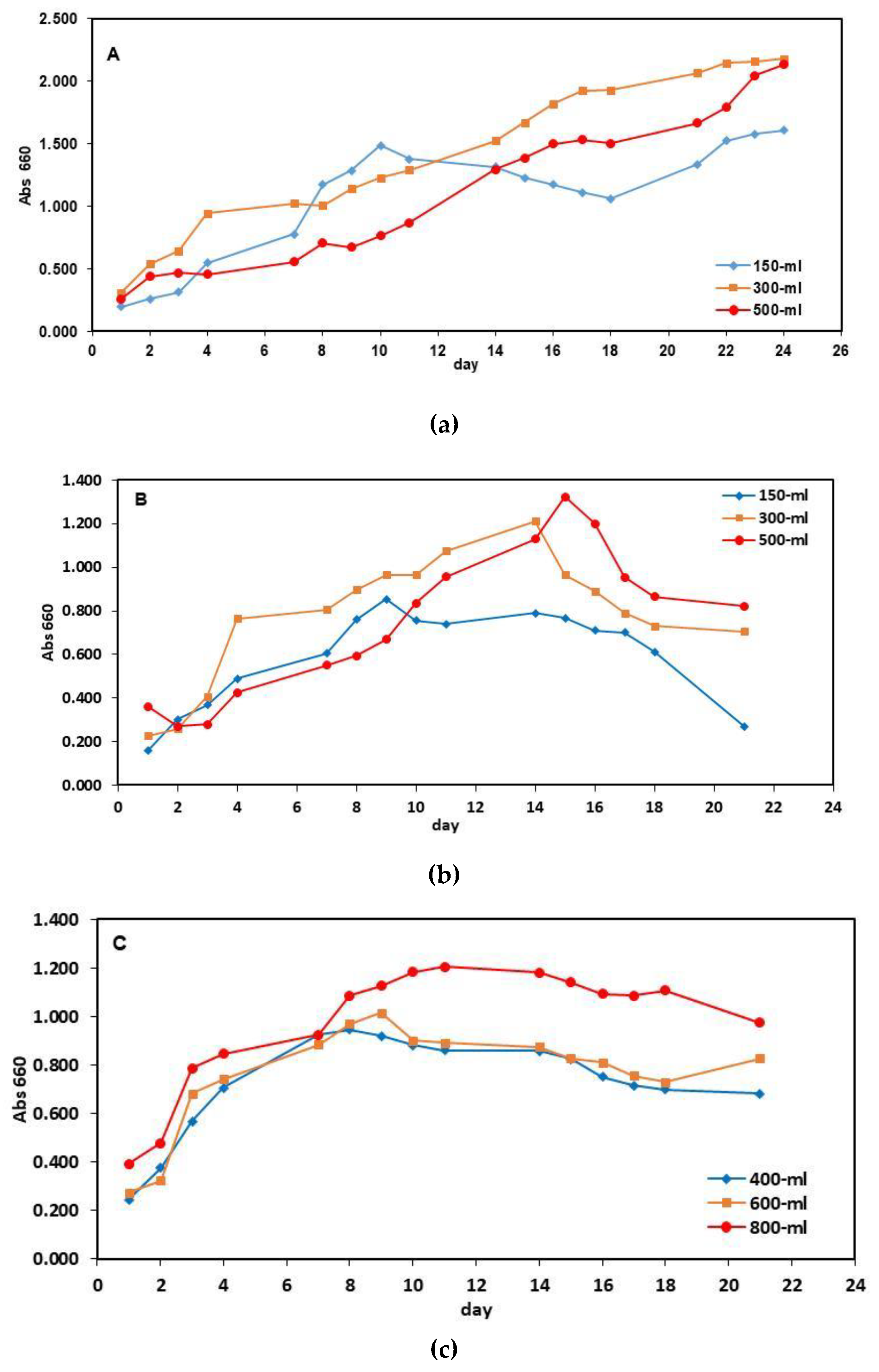
Figure 2.
performance of APBRs in COD removal.
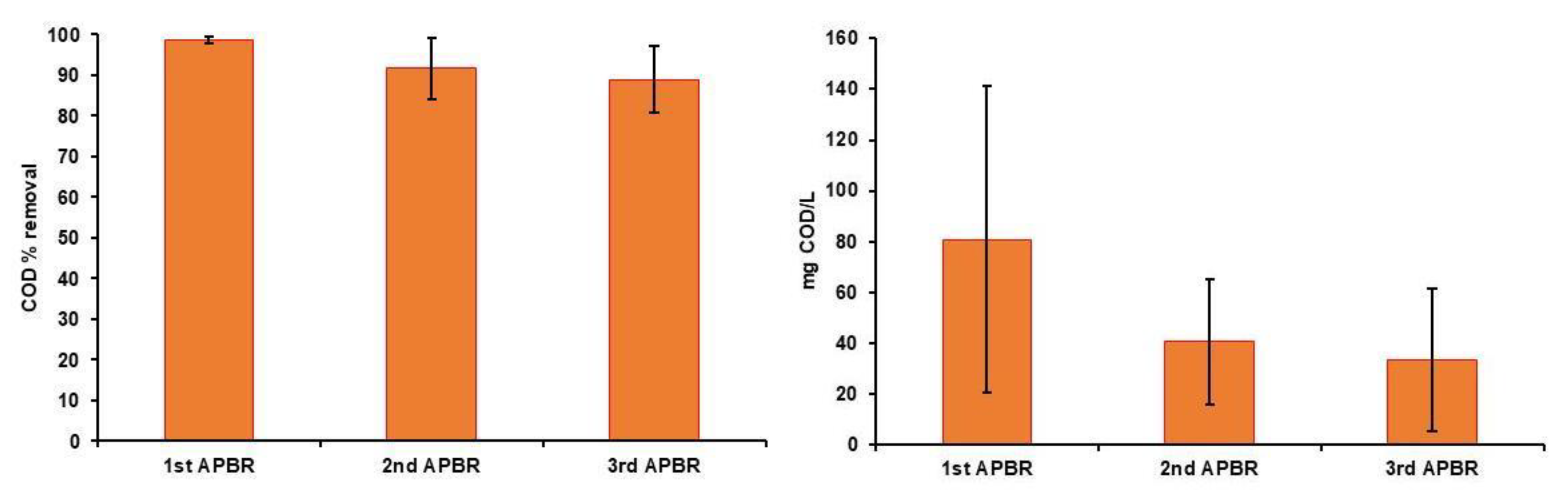
Figure 3.
Residual turbidity and its % removal in the APBRs.
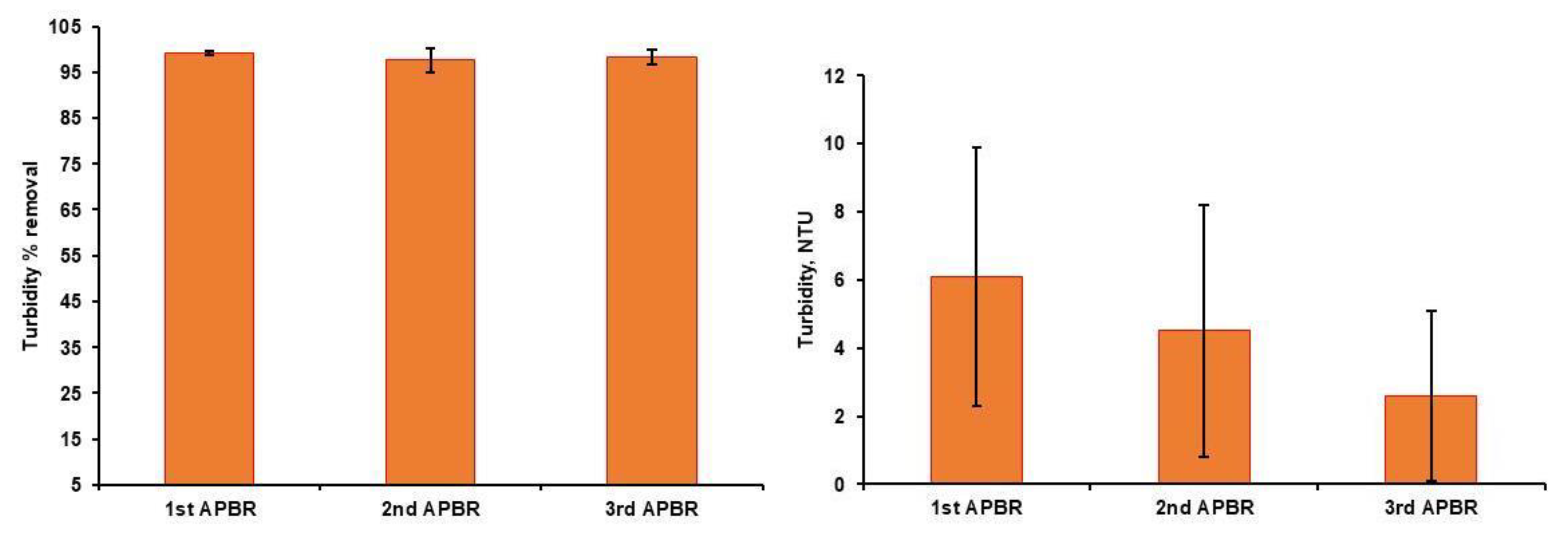
Figure 4.
Residual concentration of TSS and its % removal in APBRs.
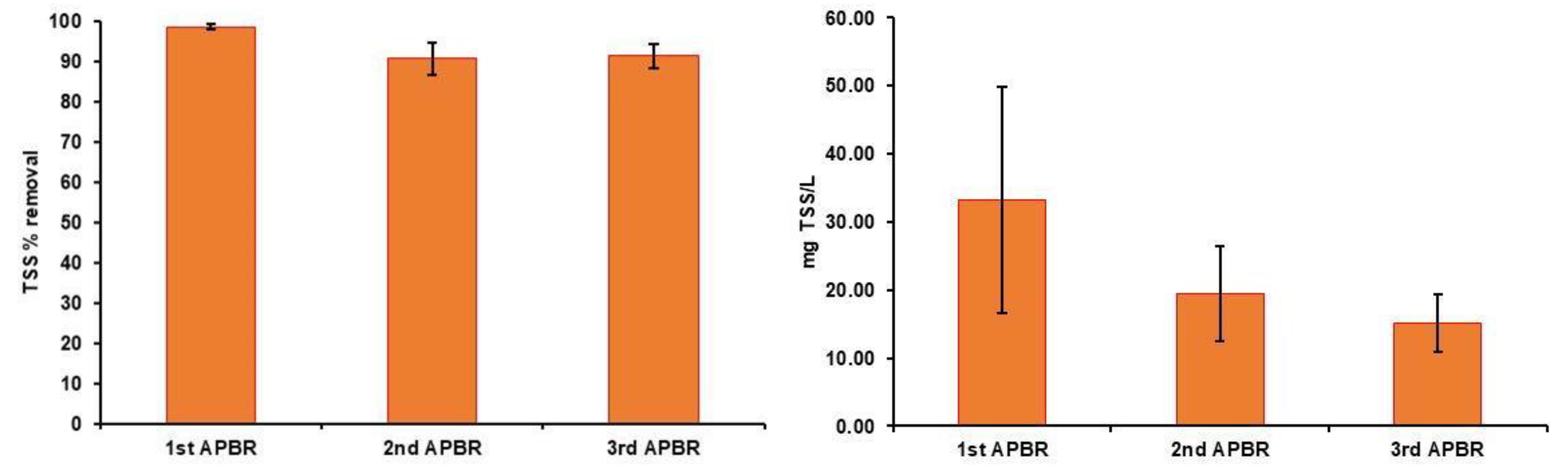
Figure 5.
Residual concentration of TKN (A), TKN % removal (B) and residual ammonia concentration (C).
Figure 5.
Residual concentration of TKN (A), TKN % removal (B) and residual ammonia concentration (C).
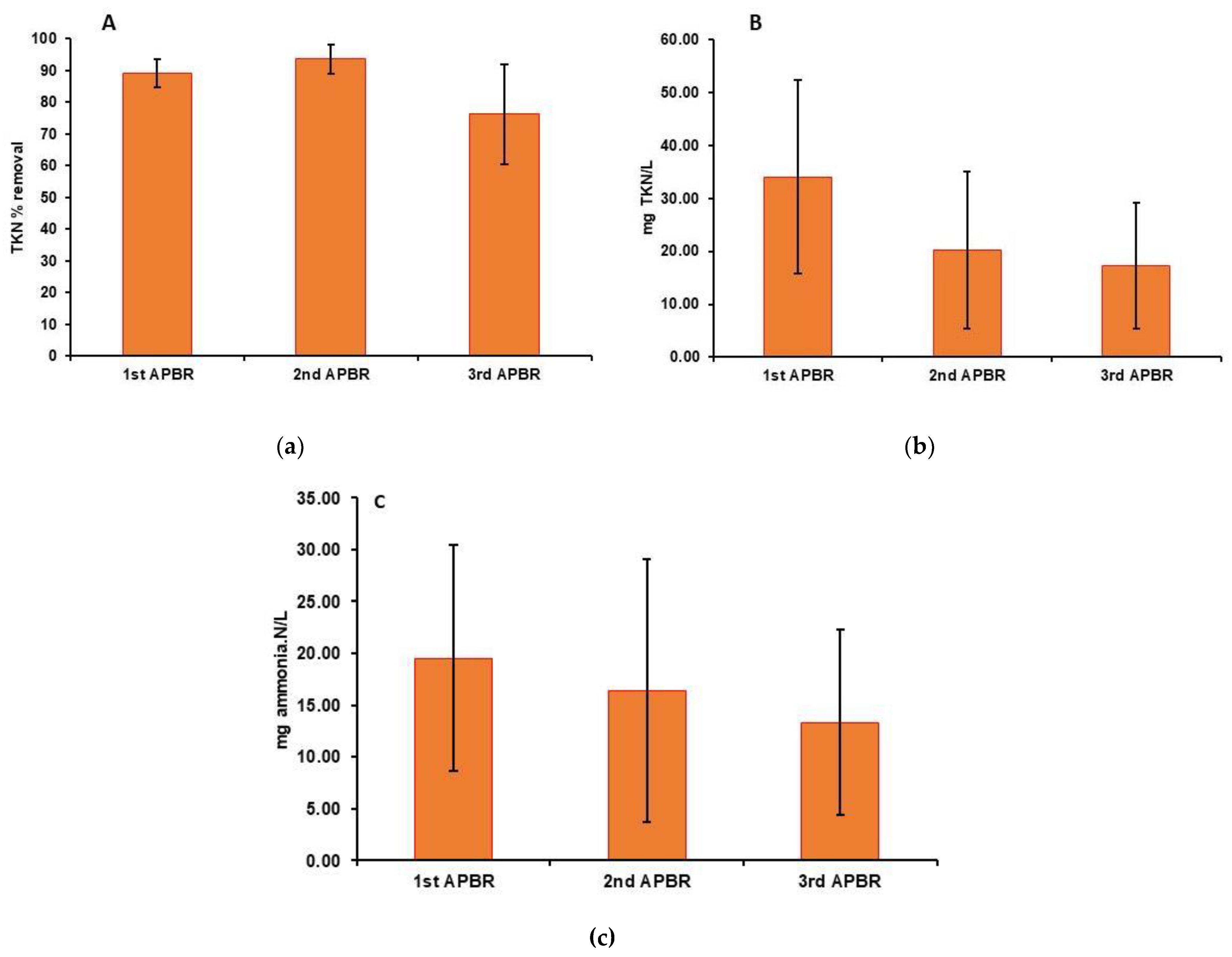
Figure 6.
Nitrite and nitrate concentration in the APBRs.
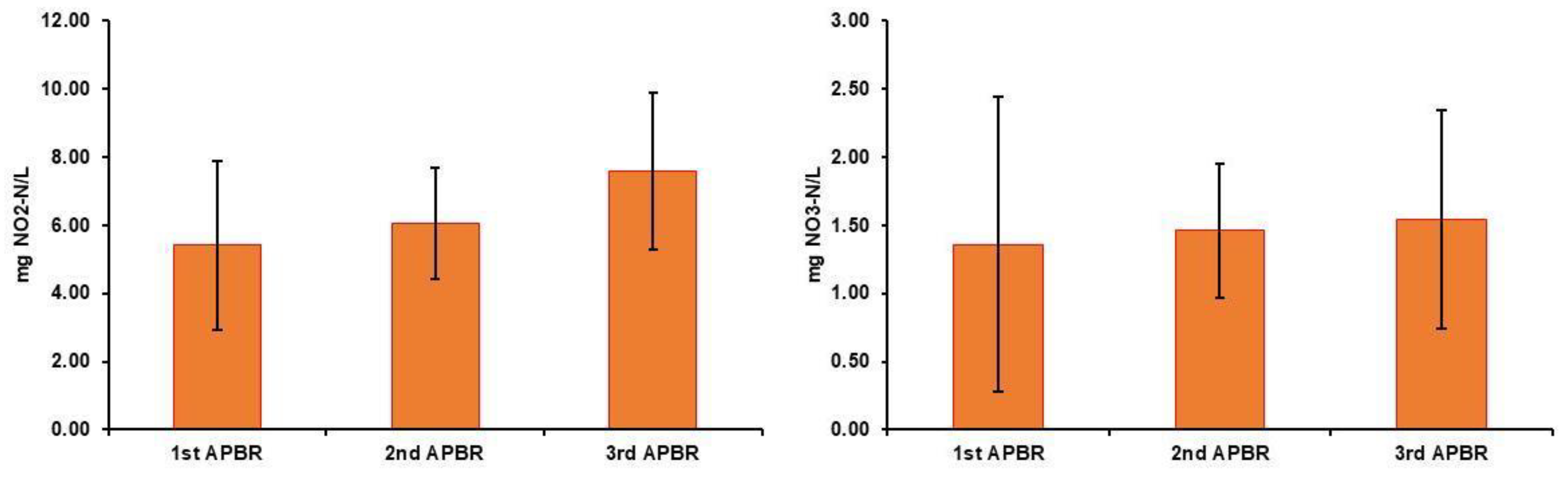
Figure 7.
Residual P and its % removal in the APBRs.
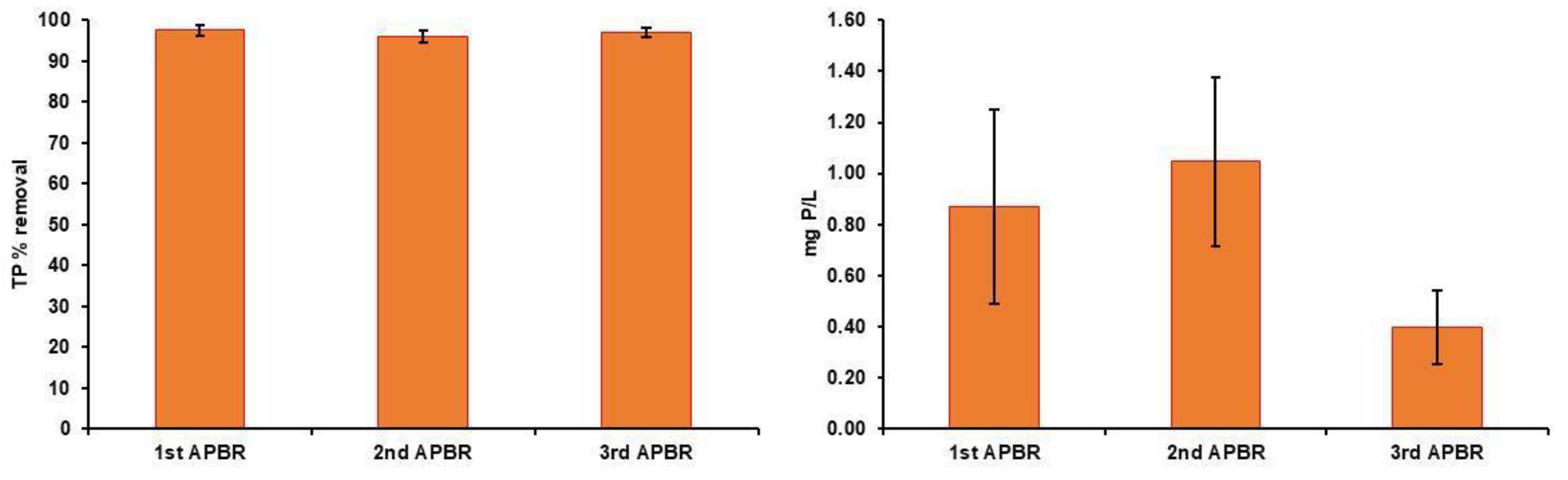
Figure 8.
Daily dry biomass yield (A) and average dry biomass yield (B) during the 2nd experiment.
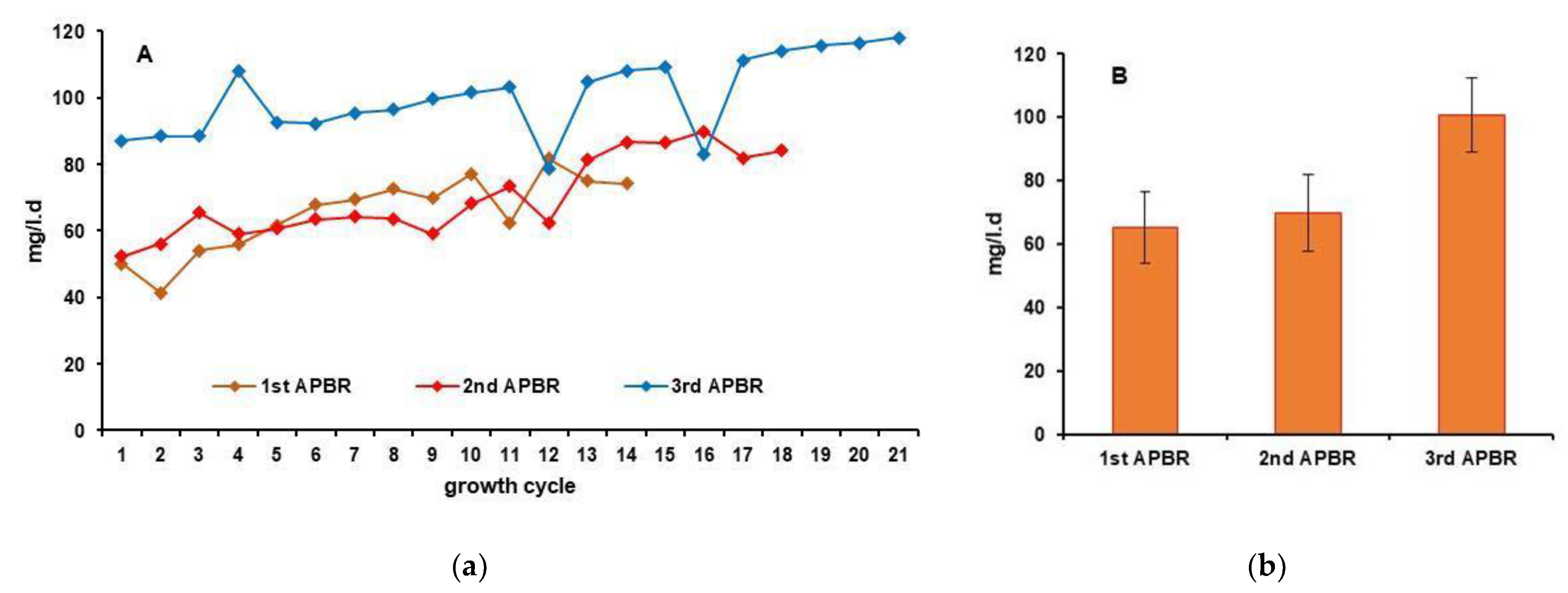

Table 1.
Feed volumes of different PCP wastewater in 1-L lab-scale APBRs.
| Source of PCP wastewater | S effluent | UASB effluent | SBR effluent | ||||||
|---|---|---|---|---|---|---|---|---|---|
| Feed volume, ml | 150 | 300 | 500 | 150 | 300 | 500 | 400 | 600 | 800 |
| Pre-enriched algal culture, ml | 200 | 200 | 200 | 200 | 200 | 200 | 200 | 200 | 200 |
| Demi-water, ml | 650 | 500 | 300 | 650 | 500 | 300 | 400 | 200 | 0 |
| Effective reactor volume, ml | 1000 | 1000 | 1000 | 1000 | 1000 | 1000 | 1000 | 1000 | 1000 |
Table 2.
characteristics of raw wastewaters; after screening, after UASB reactor and after DAF-SBR.
| Parameter | Unit | After screening | After UASB | After SBR |
|---|---|---|---|---|
| pH | - | 5.3-6.3 | 8.0-8.4 | 7.6-8.3 |
| Turbidity | NTU | 743±96 | 201±23 | 172±18 |
| TSS | mg/L | 2424±215 | 225±36 | 180±18 |
| COD | mg O2/L | 6189±1113 | 544±178 | 292±31 |
| BOD | mg O2/L | 4300±841 | 272±77 | 158±16 |
| Ammonia. N | mg N/L | 102±21 | 231±18 | 13.5±3.1 |
| TKN | mg N/L | 302±53 | 313±12 | 72.5±5.0 |
| NO3 | mg N/l | Not detected | Not detected | 2.5±1.2 |
| Total P | mg P/L | 36.2±5.5 | 27.1±4.4 | 13.5±1.2 |
Table 3.
Amino acids profile as % of the dry matter (DM) and as % of total protein in the algal biomass.
Table 3.
Amino acids profile as % of the dry matter (DM) and as % of total protein in the algal biomass.
| Amino acid | 1st APBR | 2nd APBR | 3rd APBR | |||
|---|---|---|---|---|---|---|
| % of DM | % of Protein | % of DM | % of Protein | % of DM | % of Protein | |
| Aspartate | 3.27 | 10.66 | 3.50 | 10.76 | 3.69 | 10.36 |
| Glutamate | 3.86 | 12.59 | 4.58 | 14.08 | 5.21 | 14.61 |
| Serine | 1.49 | 4.87 | 1.66 | 5.10 | 1.74 | 4.88 |
| Histidine | 0.59 | 1.91 | 0.55 | 1.69 | 0.61 | 1.72 |
| Glycine | 2.08 | 6.79 | 2.22 | 6.84 | 2.34 | 6.56 |
| Threonine | 1.85 | 6.03 | 1.73 | 5.30 | 1.86 | 5.21 |
| Arginine | 1.64 | 5.35 | 2.33 | 7.15 | 2.67 | 7.50 |
| Alanine | 2.35 | 7.67 | 3.03 | 9.31 | 3.42 | 9.60 |
| Tyrosine | 2.17 | 7.10 | 1.26 | 3.86 | 1.53 | 4.28 |
| Valine | 1.78 | 5.82 | 1.87 | 5.74 | 2.15 | 6.02 |
| Methionine | 0.66 | 2.15 | 0.54 | 1.66 | 0.49 | 1.37 |
| Phenylalanine | 1.77 | 5.78 | 1.67 | 5.14 | 1.79 | 5.02 |
| Isoleucine | 1.53 | 5.01 | 1.58 | 4.86 | 1.70 | 4.77 |
| Leucine | 2.73 | 8.90 | 2.92 | 8.99 | 3.14 | 8.82 |
| Lysine | 1.57 | 5.14 | 1.57 | 4.83 | 1.83 | 5.12 |
| Proline | 1.30 | 4.24 | 1.54 | 4.72 | 1.49 | 4.17 |
| Total Protein | 30.64 | 100.00 | 32.53 | 100.00 | 35.65 | 100.00 |
Table 4.
Summary of the nitrogen mass balance at the end of the experiment.
| Item | 1st APBR | 2nd APBR | 3rd APBR |
|---|---|---|---|
| Number of batches | 14 | 18 | 21 |
| Feed volume | 150 | 150 | 500 |
| Number of days | 154 | 144 | 126 |
| TN loading rate, mg/L 1* | 634 | 845 | 852 |
| Average yield, mg/l.d | 65.25 | 69.91 | 100.62 |
| Total yield, mg/l | 10049 | 10067 | 12678 |
| Protein content, % | 30.64 | 32.53 | 35.65 |
| N recovery, mg/l | 492.6 | 524.0 | 723.2 |
| N recovery, % | 77.7 | 62.0 | 84.9 |
| Residual nitrogen, mg/l 2* | 34.1 | 20.2 | 17.3 |
| Residual nitrogen, % | 5.4 | 2.4 | 2.0 |
| N removal, % | 16.9 | 35.6 | 13.1 |
| Actual %N removal 3* | 94.6 | 97.6 | 98.0 |
* Actual %N removal (3*) = [1*-2*]/1* × 100.
Disclaimer/Publisher’s Note: The statements, opinions and data contained in all publications are solely those of the individual author(s) and contributor(s) and not of MDPI and/or the editor(s). MDPI and/or the editor(s) disclaim responsibility for any injury to people or property resulting from any ideas, methods, instructions or products referred to in the content. |
© 2026 by the authors. Licensee MDPI, Basel, Switzerland. This article is an open access article distributed under the terms and conditions of the Creative Commons Attribution (CC BY) license (http://creativecommons.org/licenses/by/4.0/).
Copyright: This open access article is published under a Creative Commons CC BY 4.0 license, which permit the free download, distribution, and reuse, provided that the author and preprint are cited in any reuse.


