

Submitted:
02 March 2026
Posted:
03 March 2026
You are already at the latest version
Abstract
Background/Objectives: Delirium is an acute state of confusion associated with impaired consciousness and a decline in cognitive function. Delirium has significant clinical importance due to its substantial impact on morbidity and mortality. The primary objective of this systematic review is to assess Dexmedetomidine’s potential efficacy for delirium in critically ill and elderly patients, addressing a significant need in this high-risk population, and to evaluate its safety as a secondary objective. Methods: A systematic review (2018–2024) searched PubMed, Embase, and Cochrane for English-language studies on dexmedetomidine and delirium in older intensive care unit (ICU) patients. Dual reviewers independently screened, extracted data, and resolved disagreements. Eligible randamized control trials (RCTs) and observational studies were assessed using Risk of Bias 2 ( RoB-2) and Risk Of Bias In Non-randomized Studies - of Interventions (ROBINS-I) tools. Results: Dexmedetomidine emerges as a promising drug because of its unique pharmacological profile, which provides sedation without modulating gamma-aminobutyric acid (GABA) receptors, potentially lowering the risk of delirium. Its additional analgesic, anti-inflammatory, and organ-protective characteristics could provide broader clinical benefits in the ICU. However, the aged population’s heightened susceptibility to Dexmedetomidine’s hemodynamic effects may limit some of its potential benefits. Conclusions: Although existing research suggests short-term neuroprotective effects, these effects do not always translate into better long-term survival. As a result, further large-scale, well-designed randomized controlled trials are needed to determine the optimal use of Dexmedetomidine in this population and to understand its overall impact on morbidity and mortality in the ICU.
Keywords:
dexmedetomidine
; delirium
; intensive care unit
; post‐operative
; sedatives
1. Introduction
Delirium is a neuropsychiatric syndrome characterized by the acute onset of deficits in attention, awareness, and cognition that fluctuate in severity over time [1]. It stems from an underlying medical abnormality such as organ failure, infection, or drug effects [2]. Delirium is considered significantly underdiagnosed in practice, with a recent UK study revealing that only 34% of adults with delirium are diagnosed in clinical care [3].
Delirium is a common side effect of various sedatives such as benzodiazepines [4], which carry the highest risk, as well as propofol and ketamine to a lesser extent [5,6]. However, some have demonstrated the ability to reduce the incidence of delirium.
Among these, Dexmedetomidine is a highly selective alpha-2 adrenergic agonist. By binding to the receptor, it suppresses norepinephrine release, diminishing pain perception and contributing to its analgesic properties. Activation of alpha-2 adrenoceptors reduces sympathetic outflow, facilitating effective sedation without the respiratory depression commonly associated with other sedatives. In addition to its sedative effects, it has anxiolytic, analgesic, sympatholytic, and neuroprotective actions. Its short half-life allows for precise control of sedation. These qualities enhance its efficacy in a variety of clinical settings [7,8]. Accordingly, Dexmedetomidine acts as an effective, useful non-opioid sedative and analgesic agent in both procedural and intensive care settings [9].
While Dexmedetomidine has excellent potential for sedation management, it has been studied for its promising effects on delirium, especially compared with other sedatives (e.g., benzodiazepines, propofol, fentanyl, etomidate, ketamine) [10]. A body of literature exists on the use of Dexmedetomidine to reduce delirium, particularly in critically ill patients admitted to the intensive care unit (ICU) [11,12,13,14]. It has also been investigated in various other hospital settings, such as the emergency department. Although it has been explored in different settings, such as the emergency department, evidence supporting its efficacy outside the ICU remains limited [15].
Advanced age is a known predisposing factor of delirium [2]. A meta-analysis of 33 studies of medical inpatients found the prevalence of delirium to be 23% in hospitalized older adults in general medical settings [16]. Therefore, in this systematic review, we aim to examine the efficacy and safety of Dexmedetomidine for the prevention of delirium, particularly in elderly ICU patients.
This systematic review was undertaken comparing the incidence and severity of delirium when using Dexmedetomidine as a primary sedative in ICU and post-operative settings for patients above 60 versus standard treatment. The primary objective was to evaluate the role of Dexmedetomidine on the incidence and severity of delirium as well as its impact on the length of ICU or hospital stay, mortality, safety or adverse events as a secondary objective.
2. Methods
2.1. Data Sources and Search Strategy
A comprehensive search strategy was developed and peer-reviewed by a medical information specialist. We systematically searched three databases: PubMed (Medline), Embase, and Cochrane Library for relevant studies from January 2018 to 2024. The search strategy was designed to include keywords related to ‘delirium,’ ‘Dexmedetomidine,’ ‘ICU,’ and ‘elderly patients’. Only studies with full-text available in English were included. The search results were deduplicated, and the reference lists of relevant reviews were manually screened for additional studies. We also contacted content experts to ensure completeness.
2.2. Study Selection
Two independent reviewers screened the titles and abstracts of all retrieved studies to assess eligibility. Full-text articles were obtained for studies that met the inclusion criteria or where eligibility could not be determined from the abstract alone. Disagreements were resolved by consensus or through consultation with a third reviewer. Studies that met the eligibility criteria were included in the review. Detailed information about the study selection process is provided in the PRISMA flow diagram (Figure 1).
2.3. Eligibility Criteria
We included studies with the following inclusion criteria: Patients above 60, both male and female, admitted to the ICU or post-operative setting, who required sedation and were at risk of developing delirium. The intervention group received Dexmedetomidine as a single pharmacologic intervention for the prevention of delirium; the control group received standard treatment for delirium, which included other sedative agents (e.g., propofol, midazolam), antipsychotics (e.g., haloperidol, olanzapine), and non-pharmacological interventions (e.g., environmental adjustments, supportive care). The study designs used are randomized controlled trials (RCTs), controlled clinical trials, and observational studies (cohort and case-control studies).
Exclusion criteria were as follows: studies conducted on patients under 60 years old or focusing on patients with psychiatric or neuropsychiatric disorders other than delirium; studies published before 2018; studies not reporting clinical outcomes related to delirium, sedation levels, or safety; case reports, case series, narrative reviews, and editorials; studies without a control or comparator group; non-peer-reviewed studies, such as conference abstracts or preprints; and studies without an available English full text or translation.
2.4. Data Extraction
Two authors independently extracted data in a standardized manner using a data extraction form. In cases of duplicate publications and supplementary papers from a primary RCT, information yield was maximized by evaluating all available data simultaneously. If doubts arose, priority was given to the publication that reported more data, had a longer follow-up, or was more recent, and, in the case of equality, to the one of better quality. Discrepancies that arose between the 2 primary readers were resolved through review and discussion with a third author until consensus was reached.
2.5. Quality Assessment
To evaluate the risk of bias in the twenty included RCTs, the Cochrane Collaboration’s “RoB-2” tool was used, while Risk Of Bias In Non-randomized Studies - of Interventions (ROBINS-I) was used for the three non-randomized studies. In ROB-2 tool, five key domains were considered: selection bias (related to the randomization process and allocation concealment), performance bias (concerning blinding and deviations from planned interventions), detection bias (blinding of outcome assessment), attrition bias (incomplete outcome data or measurement issues), and reporting bias (industry influence or selective result reporting) [17].
The overall quality of the RCTs was categorized as high, low, or showing some concerns based on their risk of bias. Good-quality trials had a low risk of bias across all domains or only one domain with an unclear risk. Fair-quality trials exhibited limitations across multiple domains but did not pose a high risk of bias in any domain. Low-quality trials had a high risk of bias in at least one domain or multiple limitations across several domains. Independent reviewers conducted the quality assessment for two rounds, resolving disagreements through consensus or consulting other reviewers when necessary.
In the ROBINS-I tool, seven key domains were considered: bias due to confounding, bias in participant selection, bias in classification of interventions, bias due to deviation from intended interventions, bias due to missing data, bias in measurement of outcomes, and bias in selection of the reported results. Each domain was rated on a 5-point scale (low, moderate, serious, critical risk, or no information), and the overall risk of bias for the study was determined by the highest level of risk across any domain [18].
3. Results
3.1. Study Characteristics
The systematic review included 23 studies published between 2018 and 2024 that evaluated the efficacy and safety of Dexmedetomidine for preventing delirium in critically ill elderly patients in the intensive care unit. The studies varied in design, including 20 RCTs, 2 observational studies, and 1 prospective/registry study. The sample sizes ranged from 60 to 3918 participants, with a total of 8,104 patients represented across all studies (Table 1).
The participants were older adults aged 60 and above, hospitalized in intensive care or post-operative settings. Most studies focused on critically ill patients at risk of or diagnosed with delirium. The inclusion criteria for most studies required participants to be at risk of delirium due to their ICU or post-operative conditions, while excluding individuals with pre-existing psychiatric disorders unrelated to delirium, as well as those under the age of 60.
The interventions examined included Dexmedetomidine, often compared to other sedative agents (e.g., propofol, midazolam, ketamine), antipsychotics (e.g., haloperidol, olanzapine), and placebo. The duration of the intervention varied, with treatment periods ranging from single-dose administration to continuous infusion during the ICU or post-operative stay.
The primary outcomes measured across studies were the incidence and severity of delirium, as assessed using validated tools such as the Confusion Assessment Method for ICU (CAM-ICU) and the Intensive Care Delirium Screening Checklist (ICDSC). Secondary outcomes included the length of ICU and hospital stays, mortality rates, and safety/adverse events, including severe cardiovascular and respiratory complications.
Data collection methods included clinician assessments and specific delirium assessment scales, such as CAM-ICU, ICDSC, Richmond Agitation-Sedation Scale (RASS), and 3D-CAM. Data were typically analyzed using SPSS, Stata, or SAS. Standard statistical methods included ANOVA, logistic regression, and chi-square tests for categorical data. Multivariate regression and Cox proportional hazard models were used for time-to-event analysis. Missing data were addressed using intention-to-treat and multiple imputation methods. A p-value of <0.05 was considered statistically significant.
3.2. Risk of Bias in Individual Studies
The quality assessment of the 20 RCTs using the Cochrane Risk of Bias 2 (RoB) tool showed varying results. Fourteen studies consistently received “Low” ratings across all domains, reflecting strong reliability and robust methodology. Two studies raised concerns in specific domains, suggesting potential bias. In contrast, four studies exhibited a high risk of bias (Figure 2A). While the quality assessment of the three non-randomized studies using the ROBINS-I tool revealed moderate risk in two studies and serious risk in a single study, as shown in Figure 2B.
3.3. Primary Outcomes
3.3.1. Incidence of Delirium (IOD)
Based on the present data, 20 of 23 studies assessed the effect of Dexmedetomidine on IOD (Table 2). The remaining three studies [13,26,35] didn’t report the IOD but were included in the systematic review because they provided valuable information on other study outcomes.
Dexmedetomidine was associated with a significant decrease in IOD in eight studies in comparison to saline [19,25,27,28,29,32,34], a single study in comparison to ketamine [19], a single study in contrast to propofol [37], and a single study in comparison to Ketofol [29]. Also, three studies [21,31,38] favored the use of Dexmedetomidine for the prevention of delirium, but p-values weren’t reported.
3.3.2. Timing of Dexmedetomidine Administration
Dexmedetomidine was administered preoperatively in three studies [19,25,27], intraoperatively in five studies [22,23,24,34,37], and postoperatively in five studies [12,14,28,30,32]. There was a significant decrease in IOD in all studies with preoperative administration. However, a significant decline in IOD was observed in 2 [34,37] of the 5 studies with intraoperative administration, whereas no significant difference was observed in the other 3 studies [22,23,24]. Concurrently, there was a significant decrease in IOD in 3 of 5 studies [28,30,32] with post-operative administration and no significant difference in IOD in 2 of these studies [12,14].
Peri-operative administration of Dexmedetomidine (including preoperative, intraoperative, and post-operative use) was associated with a significant decrease in IOD in two studies [33,36], whereas a single study [29] that administered Dexmedetomidine intraoperatively and postoperatively, but not preoperatively, found no significant difference in IOD.
3.4. Secondary Outcomes
3.4.1. Length of stay in ICU
3.4.2. Adverse effects of Dexmedetomidine
The most frequently reported adverse effects (Table 3) were bradycardia and hypotension. Bradycardia and hypotension were reported together in thirteen studies [13,14,21,22,23,25,26,28,29,30,32,33,38].
Bradycardia was reported without hypotension in three studies [20,25,36], and hypotension was reported without bradycardia in two studies [24,27].
Of the 17 studies reporting bradycardia, only 10 [14,20,21,22,23,25,29,33,34,36] reported P-values. Dexmedetomidine was associated with a significant increase in incidence of bradycardia in five studies [14,21,22,29,34], and with no significant difference in the other five studies [20,23,25,33,36].
Of the fifteen studies reporting hypotension, only eleven studies [14,20,21,23,24,25,27,28,29,32,33] reported P-values. Dexmedetomidine was associated with a significant increase in incidence of hypotension in two studies [24,33], and with no significant difference in hypotension in the other nine studies [14,20,21,23,25,27,28,29,32].
3.4.3. Mortality
Mortality outcomes associated with Dexmedetomidine administration varied across studies. In-hospital mortality was assessed in a single study by Qu et al. (2022) [30], which reported three deaths in the Dexmedetomidine group compared to one in the control group, but the difference was not statistically significant.
Two studies evaluated 30-day mortality, but neither showed a statistically significant result. Qu et al., 2022 [30] reported three deaths in the Dexmedetomidine group and one death in the control group, while Li et al., 2020 [34] found no deaths in the Dexmedetomidine group compared to one death in the control group.
Three studies investigated the 90-day mortality. Two of them were statistically insignificant [30,33]. The single study that showed a statistically significant difference in mortality was conducted by van Norden et al. (2021) [36]. It observed zero deaths in the Dexmedetomidine group compared with 16% in the control group.
Qu et al. (2022) [30], in addition to in-hospital, 30-day, and 90-day mortality, examined 180-day mortality, with no significant difference observed.
Multiple studies compared Dexmedetomidine to other sedatives such as propofol [12,14,21]. These studies found no significant differences in mortality outcomes between the two groups.
Fourteen studies did not report mortality data, limiting the ability to assess the impact of Dexmedetomidine on mortality.
4. Discussion
This systematic review of 23 studies evaluated the efficacy and safety of Dexmedetomidine in preventing delirium among critically ill and elderly patients.
Delirium is an acute confusion characterized by impaired consciousness, decline in cognitive function and attention, sudden onset, and fluctuations. Delirium has significant clinical importance due to its substantial impact on morbidity and mortality. It contributes to longer hospital stays and increases the likelihood of permanent cognitive impairment. The incidence of delirium occurrence ranges widely from 2% to 80% depending on the population, including the general public, the elderly, individuals with existing cognitive issues, and patients in ICUs [39]. This can be explained by the vulnerability of old patients to metabolic disturbances and hypoxemia in addition to psychological stress in an intensive care environment. Other studies have suggested that the likelihood of delirium increases with the number of disrupted neurotransmitter pathways [40]. Therefore, recognizing delirium risk factors, implementing prevention strategies, and providing early treatment are important in patient care. This highlights the importance of our findings that Dexmedetomidine reduced the incidence of delirium, as observed in 18 out of the 20 studies that examined this outcome. These findings agree with Wang et al. (2021) [41] and Heybati et al. (2022) [42].
Its pharmacological properties may explain the preventative effects of Dexmedetomidine on delirium. Dexmedetomidine asserts its sedative effects by blocking a single neurotransmitter, norepinephrine, via α2-adrenoceptor binding. Moreover, other α2 agonists have been shown to have beneficial effects on delirium prevention, with favorable hemodynamic outcomes. Moreover, according to Fondeur et al. (2022), Pain represents a significant risk factor for the onset of delirium in ICU patients. The administration of Dexmedetomidine has been shown to attenuate this risk by reducing systemic inflammation, as evidenced by decreased C-reactive protein (CRP) levels, and by lowering pain intensity, as reflected in reduced Numeric Rating Scale (NRS) scores. This analgesic effect concurrently decreases the requirement for opioid analgesics. Moreover, Dexmedetomidine has been shown to improve sleep efficiency, specifically by enhancing stage 2 sleep, which may further contribute to its delirium-preventive effects [43].
Unlike other hypnotic agents, Dexmedetomidine exerts its sedative effects through mechanisms independent of gamma-aminobutyric acid (GABA) receptor modulation. Alterations in GABAergic neurotransmission are a well-established contributor to delirium, primarily by disrupting normal sleep-wake cycles [44]. Agents that act as potent GABA receptor agonists are associated with a higher incidence of delirium [45]. For example, benzodiazepines, which strongly enhance GABAergic activity, have been linked to a greater risk of delirium compared to agents like propofol, which has relatively lower GABA receptor activity [46]. This differential receptor activity may underlie the superior efficacy of Dexmedetomidine in preventing delirium when compared to both propofol and midazolam.
There seems to be no clear relationship between the timing of Dexmedetomidine administration and its impact on the IOD. Studies that demonstrated a significant reduction in IOD [19,23,29,30,34,36] involved various administration timings, including preoperative, intraoperative, and post-operative periods. Studies reporting no significant difference [14,20,24,25,28,33,38] also used similar administration timings. These inconsistencies suggest that timing alone may not be the key factor determining the drug’s effectiveness. Other variables, such as dosage, titration, delivery method, and combination with other medications, may also play a crucial role and warrant further investigation.
Although more studies are needed to confirm their effectiveness and safety for the prevention of delirium, α2 agonists, including Dexmedetomidine, have the potential to be effective anti-delirium agents due to their ability to influence pathologic mechanisms associated with delirium.
However, Dexmedetomidine did not significantly affect ICU length of stay in any included study; the impact remains inconclusive given that only 7 studies reported this outcome. Findings from other systematic reviews have been mixed: some reported a significant reduction in ICU length of stay [41,47], while others observed no significant differences [42,48].
Since delirium is a risk factor for prolonged ICU admission [49], the use of Dexmedetomidine as a preventive intervention may theoretically contribute to a reduction in ICU length of stay. However, in elderly patients, the hemodynamic adverse effects associated with Dexmedetomidine, such as bradycardia and hypotension, may be more pronounced compared to younger populations. These effects have the potential to offset the benefits gained from delirium prevention, potentially leading to extended ICU stays. Furthermore, ICU length of stay alone does not encompass the full spectrum of clinically relevant outcomes. Metrics such as ventilator-free days are also critical indicators of patient recovery and ICU resource utilization [50]. These considerations highlight the need for a more comprehensive evaluation of Dexmedetomidine’s impact across multiple outcome domains to fully elucidate its clinical utility in the ICU setting.
Similar to other systematic reviews [41,51] on Dexmedetomidine for delirium prevention, bradycardia and hypotension are the most common adverse effects reported. Stimulation of α2 receptors in the brainstem by α2 agonists, such as Dexmedetomidine, reduces sympathetic activity, leading to vasodilation and a decrease in heart rate. Age-related changes in α2 receptor functioning, as well as age-related declines in renal clearance, may make elderly patients more susceptible to adverse effects from α2 agonists [52]. Nonetheless, there is a lack of RCTs comparing the incidence of delirium between elderly and non-elderly patients receiving Dexmedetomidine for delirium prevention. This scarcity of research limits the ability to determine whether additional elderly patients are more susceptible to Dexmedetomidine-related adverse effects and whether precautions are necessary when using Dexmedetomidine in elderly patients compared to the general adult population.
Nausea and vomiting were reported in 4 studies, none of which found significant differences between Dexmedetomidine and comparator groups. The mechanisms for the effect of Dexmedetomidine on nausea and vomiting are still obscure. Previous articles reported that DEX could decrease their occurrence by modulating 5-hydroxytryptamine (5-HT) and dopamine release, suppressing histamine-induced interleukin-6 expression, and reducing sympathetic outflow and total catecholamine release. So, one key mechanism underlying DEX’s effect on PONV might be the regulation of neurotransmitters [53]. Additionally, Dexmedetomidine has been reported to prevent nausea and vomiting in both children and adults [54]. Although it remains uncertain whether similar preventive effects on emesis exist in the elderly, these findings suggest that nausea and vomiting may not be significant concerns when used in elderly patients to prevent delirium.
The effect of Dexmedetomidine on mortality remains unclear. The single study that showed a statistically significant decrease in mortality rate in the Dexmedetomidine group was conducted by J. van Norden et al. (2021) [36], which also reported lower rates of post-operative delirium and anxiety, as well as more stable heart rates. These findings suggest that Dexmedetomidine’s effects on mortality may depend on specific patient populations, particularly those undergoing major surgery. A recent study found that Dexmedetomidine administration was significantly associated with reduced short-term mortality among ICU patients with sepsis-associated encephalopathy, likely due to its anti-inflammatory properties and organ-protective effects [55]. Beyond its neuroprotective role, Dexmedetomidine also provides protective benefits to the heart, lungs, liver, kidneys, and intestines, contributing to a lower overall mortality rate. Additionally, it has shown potential to reduce pulmonary cell apoptosis and inflammation induced by aortic ischemia-reperfusion injury [56]. Dexmedetomidine further modulates immune responses by correcting the peripheral shift in Th1/Th2/Th17, reducing proinflammatory cytokine production in the hippocampus, and upregulating netrin-1 to downregulate proinflammatory mediators such as leukotriene B4 in the central nervous system [57].
On the other hand, all the studies reporting on mortality in our review showed no significant difference despite Dexmedetomidine’s benefits in reducing post-operative delirium and surgical complications. These results may be attributed to the relatively low baseline mortality risk and the short follow-up periods across the included studies. However, Longer follow-up studies, such as Qu et al., 2023 [30], found no significant differences in 30-, 90-, or 180-day mortality, supporting the idea that Dexmedetomidine may not have a meaningful impact on long-term survival. Since no significant differences were found in other critical endpoints, such as ICU length of stay and organ dysfunction, while Dexmedetomidine offers peri-operative benefits, these may not be sufficient to influence long-term survival. Moreover, some studies reported that Dexmedetomidine increased mortality compared to other sedatives [58]. Wang et al. (2025) found that Dexmedetomidine exacerbated cardiac dysfunction and posed a significantly higher risk of all-cause mortality. Dexmedetomidine’s selectivity for α2-adrenergic receptors (α2-AR), with an α2:α1 ratio of 1620:1, induces a sympatholytic effect in the brain, leading to anxiolytic and sedative properties. It also causes hemodynamic changes, including transient hypertension, bradycardia, and hypotension, due to sympatholysis, baroreflex-mediated parasympathetic activation, and direct peripheral vasoconstriction via activation of vascular smooth muscle α2-ARs.
In conclusion, this systematic review focuses on the potential efficacy and safety of Dexmedetomidine for preventing delirium in critically ill and elderly patients, addressing a significant need in this high-risk population. The rigorous methodology, together with the inclusion of a diverse set of high-quality research, improves the validity and generalizability of the findings. Dexmedetomidine emerges as a promising drug because of its unique pharmacological profile, which provides sedation without modulating GABA receptors, potentially lowering the risk of delirium. Its additional analgesic, anti-inflammatory, and organ-protective characteristics could provide broader clinical benefits in the ICU.
While numerous trials found reductions in delirium incidence and post-operative complications, the evidence for critical clinical objectives such as ICU duration of stay, death, and long-term outcomes is contradictory. Variability in delivery time, dose regimes, patient characteristics, and concurrent medications may all contribute to these disparities. Furthermore, the aged population’s heightened susceptibility to Dexmedetomidine’s hemodynamic effects may limit some of its potential benefits.
Although existing research suggests short-term neuroprotective effects, these effects do not always translate into better long-term survival. As a result, further large-scale, well-designed randomized controlled trials are needed to determine the optimal use of Dexmedetomidine in this population and to understand its overall impact on morbidity and mortality in the ICU.
5. Strengths and Limitations
This systematic review offers a comprehensive and up-to-date synthesis of the available evidence on the efficacy and safety of Dexmedetomidine for the prevention of delirium in ICU and critically ill older adult patients. A significant strength of this review is the rigorous methodology used in study selection, data extraction, and quality assessment, following PRISMA guidelines. By including randomized controlled trials and high-quality observational studies, we provide a balanced overview of both efficacy and safety outcomes. Additionally, the focus on an older adult population addresses a critical clinical need, given the high prevalence and impact of delirium in this age group. The inclusion of studies across various clinical settings (e.g., the ICU and post-operative care) enhances the generalizability of the findings.
Although we strove to gather and scrutinize all the available evidence as rigorously as possible to meet the study objectives, we acknowledge that this review has several limitations. First, the heterogeneity in study designs, Dexmedetomidine dosing regimens, comparator agents, and delirium assessment tools limited the ability to perform a robust systematic review. Second, the lack of standardized reporting for certain outcomes, like mortality, complicates the ability to draw definitive conclusions. Third, the unclear role of timing in Dexmedetomidine administration and the inconsistent relationship with its effectiveness in preventing delirium may suggest that timing is not the key determinant of efficacy, necessitating further research into other contributing factors. Moreover, most studies did not specifically stratify outcomes by frailty status or comorbidities, which are key factors in the geriatric population.
Additionally, the absence of mortality data in most of the included studies limits our ability to draw reliable conclusions. The short follow-up periods in many trials restrict conclusions regarding long-term outcomes and the safety of Dexmedetomidine use in this population. Finally, there is a risk of bias in some studies, including unclear allocation concealment, lack of blinding, or incomplete outcome data, which could affect the reliability of their findings.
6. Conclusions
Although existing research suggests short-term neuroprotective effects, these effects do not always translate into better long-term survival. As a result, further large-scale, well-designed randomized controlled trials are needed to determine the optimal use of Dexmedetomidine in this population and to understand its overall impact on morbidity and mortality in the ICU.
Author Contributions
Conceptualization, A.N.S and G.S.A.; methodology, F.A.I, H.A.E., A.S.E., N.L., and A.M.S.; validation, A.N.S, V.F.F., H.S. and H.S.S; formal analysis, G.S.A., F.A.I, H.A.E., A.S.E., N.L., and A.M.S.; writing—original draft preparation, F.A.I, H.A.E., A.S.E., N.L., and A.M.S.; writing—review and editing, A.N.S, V.F.F., G.S.A., H.S. and H.S.S.; supervision, A.N.S, and V.F.F.; project administration, A.N.S, V.F.F., and G.S.A. All authors have read and agreed to the published version of the manuscript.
Funding
Please add: This research received no external funding.
Institutional Review Board Statement
Not applicable.
Informed Consent Statement
Not applicable.
Conflicts of Interest
The authors declare no conflicts of interest.
Abbreviations
The following abbreviations are used in this manuscript:
| α2-AR | α2-adrenergic receptors |
| 5-HT | 5-Hydroxytryptamine |
| CAM-ICU | Confusion Assessment Method for ICU |
| CRP | C-Reactive Protein |
| GABA | Gamma-Aminobutyric Acid |
| IOD | Incidence of delirium |
| ICDSC | Intensive Care Delirium Screening Checklist |
| ICU | Intensive Care Unit |
| RCTs | Randomized Controlled Trials |
| RASS | Richmond Agitation-Sedation Scale |
| RoB | Risk of Bias |
| ROBINS-I | Risk Of Bias In Non-randomized Studies - of Interventions |
References
- Thom, RP; Levy-Carrick, NC; Bui, M; Silbersweig, D. Delirium. American Journal of Psychiatry 2019, 176(10), 785–93. [Google Scholar] [CrossRef]
- Lawlor, PG; Bush, SH. Delirium diagnosis, screening and management. Current opinion in supportive and palliative care 2014, 8(3), 286–95. [Google Scholar] [PubMed]
- Delirium is prevalent in older hospital inpatients and associated with adverse outcomes: results of a prospective multi-centre study on World Delirium Awareness Day. BMC medicine 2019, 17, 1–11.
- Senderovich, H; Gardner, S; Berall, A; Ganion, M; Zhang, D; Vinoraj, D; et al. Benzodiazepine Use and Morbidity-Mortality outcomes in a geriatric Palliative Care Unit: a retrospective review. Dementia and Geriatric Cognitive Disorders 2021, 50(6), 559–67. [Google Scholar] [CrossRef]
- Wu, TT; Ko, S; Kooken, R; van den Boogaard, M; Devlin, JW. Exploring ketamine analgosedation use and its effect on incident delirium in critically ill adults. Critical Care Explorations 2021, 3(10), e0544. [Google Scholar] [CrossRef]
- Brown, KE; Mirrakhimov, AE; Yeddula, K; Kwatra, MM. Propofol and the risk of delirium: exploring the anticholinergic properties of propofol. Medical Hypotheses 2013, 81(4), 536–9. [Google Scholar] [CrossRef] [PubMed]
- Gertler R, Brown HC, Mitchell DH, Silvius EN, editors. Dexmedetomidine: a novel sedative-analgesic agent. Baylor University Medical Center Proceedings 2001; 14(1): 13-21.
- Kaur, M; Singh, P. Current role of dexmedetomidine in clinical anesthesia and intensive care. Anesthesia Essays and Researches 2011, 5(2), 128–33. [Google Scholar] [CrossRef] [PubMed]
- Carollo, DS; Nossaman, BD; Ramadhyani, U. Dexmedetomidine: a review of clinical applications. Current Opinion in Anesthesiology 2008, 21(4), 457–61. [Google Scholar] [CrossRef]
- Lewis, K; Alshamsi, F; Carayannopoulos, KL; Granholm, A; Piticaru, J; Al Duhailib, Z; et al. Dexmedetomidine vs other sedatives in critically ill mechanically ventilated adults: a systematic review and meta-analysis of randomized trials. Intensive care medicine 2022, 48(7), 811–40. [Google Scholar] [CrossRef]
- Ungarian, J; Rankin, JA; Then, KL. Delirium in the Intensive Care Unit: Is Dexmedetomidine Effective? Critical care nurse 2019, 39(4), e8–e21. [Google Scholar]
- Chitnis, S; Mullane, D; Brohan, J; Noronha, A; Paje, H; Grey, R; et al. Dexmedetomidine use in intensive care unit sedation and post-operative recovery in elderly patients post-cardiac surgery (DIRECT). Journal of Cardiothoracic and Vascular Anesthesia 2022, 36(3), 880–92. [Google Scholar] [CrossRef]
- Gaitan, RM; Vicent, L; Rodriguez-Queralto, O; Lopez-de-Sa, E; Elorriaga, A; Pastor, G; et al. Dexmedetomidine in medical cardiac intensive care units. Data from a multicenter prospective registry. International Journal of Cardiology 2020, 310, 162–6. [Google Scholar] [CrossRef]
- Ekkapat, G; Kampitak, W; Theerasuwipakorn, N; Kittipongpattana, J; Engsusophon, P; Phannajit, J; et al. A comparison of efficacy between low-dose dexmedetomidine and propofol for prophylaxis of post-operative delirium in elderly patients undergoing hip fracture surgery: A randomized controlled trial. Indian Journal of Critical Care Medicine: Peer-reviewed, Official Publication of Indian Society of Critical Care Medicine 2024, 28(5), 467. [Google Scholar] [CrossRef]
- Baumgartner, K; Joseph, M; Lothet, E; Fuller, BM. Dexmedetomidine in the emergency department: A prospective observational cohort study. Academic Emergency Medicine 2024, 31(3), 263–72. [Google Scholar] [CrossRef]
- Gibb, K; Seeley, A; Quinn, T; Siddiqi, N; Shenkin, S; Rockwood, K; et al. The consistent burden in published estimates of delirium occurrence in medical inpatients over four decades: a systematic review and meta-analysis study. Age and ageing 2020, 49(3), 352–60. [Google Scholar] [CrossRef]
- Sterne, JA; Savović, J; Page, MJ; Elbers, RG; Blencowe, NS; Boutron, I; et al. RoB 2: a revised tool for assessing risk of bias in randomised trials. BMJ 2019, 366. [Google Scholar]
- Sterne, JA; Hernán, MA; Reeves, BC; Savović, J; Berkman, ND; Viswanathan, M; et al. ROBINS-I: a tool for assessing risk of bias in non-randomised studies of interventions. BMJ 2016, 355. [Google Scholar] [CrossRef]
- Ghazaly, HF; Hemaida, TS; Zaher, ZZ; Elkhodary, OM; Hammad, SS. A pre-anesthetic bolus of ketamine versus Dexmedetomidine for prevention of post-operative delirium in elderly patients undergoing emergency surgery: a randomized, double-blinded, placebo-controlled study. BMC anesthesiology 2023, 23(1), 407. [Google Scholar]
- Shu, A; Fu, Y; Luo, Y; Cao, J; Jian, W; Sun, B. An investigation on delirium and hemodynamics influenced by Dexmedetomidine for sedating elderly patients in mechanical ventilation. Int J Clin Exp Med 2019, 12(2), 1942–6. [Google Scholar]
- Shehabi, Y; Howe, BD; Bellomo, R; Arabi, YM; Bailey, M; Bass, FE; et al. Early sedation with dexmedetomidine in critically ill patients. New England Journal of Medicine 2019, 380(26), 2506–17. [Google Scholar] [CrossRef] [PubMed]
- Liu, H; Gao, M; Zheng, Y; Sun, C; Lu, Q; Shao, D. Effects of Dexmedetomidine at different dosages on peri-operative haemodynamics and post-operative recovery quality in elderly patients undergoing hip replacement surgery under general anaesthesia: a randomized controlled trial. Trials 2023, 24(1), 386. [Google Scholar] [PubMed]
- Choovongkomol, C; Sinchai, S; Choovongkomol, K. Effect of a Single-dose Dexmedetomidine on Post-operative Delirium and Intraoperative Hemodynamic Outcomes in Elderly Hip Surgery; A Randomized Controlled Trial Dexmedetomidine for Post-operative Delirium: Dexmedetomidine for Post-operative Delirium. Siriraj Medical Journal 2024, 76(2), 80–9. [Google Scholar] [CrossRef]
- Liu, W; Wang, Y; Chen, K; Ye, M; Lu, W; Chen, K; et al. Effect of intraoperative dexmedetomidine use on postoperative delirium in the elderly after laryngectomy: a randomized controlled clinical trial. Drug Design, Development and Therapy 2023, 2933–41. [Google Scholar] [CrossRef]
- Liu, T; Tuo, J; Wei, Q; Sun, X; Zhao, H; Zhao, X; et al. Effect of perioperative dexmedetomidine infusion on postoperative delirium in elderly patients undergoing oral and maxillofacial surgery: a randomized controlled clinical trial. International Journal of General Medicine 2022, 6105–13. [Google Scholar] [CrossRef]
- Fang, J; Yang, J; Zhai, M; Zhang, Q; Zhang, M; Xie, Y. Effects of dexmedetomidine dosage on the short-term cognitive function of elderly patients undergoing cardiac surgery. BMC anesthesiology 2023, 23(1), 380. [Google Scholar] [CrossRef]
- Fang, J; Yang, J; Zhai, M; Zhang, Q; Zhang, M; Xie, Y. Effects of short-term preoperative intranasal dexmedetomidine plus conventional treatment on delirium following cardiac surgery in patients with sleep disorders. Perioperative Medicine 2024, 13(1), 17. [Google Scholar] [CrossRef]
- Hong, H; Zhang, D-Z; Li, M; Wang, G; Zhu, S-N; Zhang, Y; et al. Impact of dexmedetomidine supplemented analgesia on delirium in patients recovering from orthopedic surgery: a randomized controlled trial. BMC anesthesiology 2021, 21, 1–13. [Google Scholar] [CrossRef]
- Abd Ellatif, SE; Mowafy, SM; Shahin, MA. Ketofol versus Dexmedetomidine for preventing postoperative delirium in elderly patients undergoing intestinal obstruction surgeries: a randomized controlled study. BMC anesthesiology 2024, 24(1), 1. [Google Scholar] [CrossRef]
- Qu, JZ; Mueller, A; McKay, TB; Westover, MB; Shelton, KT; Shaefi, S; et al. Nighttime dexmedetomidine for delirium prevention in non-mechanically ventilated patients after cardiac surgery (MINDDS): a single-centre, parallel-arm, randomised, placebo-controlled superiority trial. EClinicalMedicine 2023, 56. [Google Scholar] [CrossRef] [PubMed]
- Huyan, T; Hu, X; Peng, H; Zhu, Z; Li, Q; Zhang, W. Perioperative dexmedetomidine reduces delirium in elderly patients after lung cancer surgery. Psychiatria Danubina 2019, 31(1), 95–101. [Google Scholar] [CrossRef] [PubMed]
- Xie, K; Chen, J; Tian, L; Gu, F; Pan, Y; Huang, Z; et al. Postoperative infusion of dexmedetomidine via intravenous patient-controlled analgesia for prevention of post-operative delirium in elderly patients undergoing surgery. Aging Clinical and Experimental Research 2023, 35(10), 2137–44. [Google Scholar] [CrossRef] [PubMed]
- Huet, O; Gargadennec, T; Oilleau, J-F; Rozec, B; Nesseler, N; Bouglé, A; et al. Prevention of post-operative delirium using an overnight infusion of dexmedetomidine in patients undergoing cardiac surgery: a pragmatic, randomized, double-blind, placebo-controlled trial. Critical Care 2024, 28(1), 64. [Google Scholar]
- Li, C-J; Wang, B-J; Mu, D-L; Hu, J; Guo, C; Li, X; et al. Randomized clinical trial of intraoperative dexmedetomidine to prevent delirium in the elderly undergoing major non-cardiac surgery. Journal of British Surgery 2020, 107(2), e123–e32. [Google Scholar]
- Oxlund, J; Knudsen, T; Sörberg, M; Strøm, T; Toft, P; Jennum, PJ. Sleep quality and quantity determined by polysomnography in mechanically ventilated critically ill patients randomized to dexmedetomidine or placebo. Acta Anaesthesiologica Scandinavica 2023, 67(1), 66–75. [Google Scholar]
- Van Norden, J; Spies, C; Borchers, F; Mertens, M; Kurth, J; Heidgen, J; et al. The effect of peri-operative dexmedetomidine on the incidence of postoperative delirium in cardiac and non-cardiac surgical patients: a randomised, double-blind placebo-controlled trial. Anaesthesia 2021, 76(10), 1342–1351. [Google Scholar] [PubMed]
- Park, J-W; Kim, E-K; Lee, H-T; Park, S; Do, S-H. The effects of propofol or dexmedetomidine sedation on postoperative recovery in elderly patients receiving lower limb surgery under spinal anesthesia: a retrospective propensity score-matched analysis. J Clin Med 2021, 10(1), 135. [Google Scholar]
- Zhang S, Yin Q, Wang Y, Yu K, Shen P, editors. The Preventive Effect of Dexmedetomidine Against Delirium in Patients with Aortic Dissection: A Retrospective Cohort Study. The Heart Surgery Forum 2022; 25(4): e489-e493.
- Rahimi-Bashar, F; Abolhasani, G; Manouchehrian, N; Jiryaee, N; Vahedian-Azimi, A; Sahebkar, A. Incidence and risk factors of delirium in the intensive care unit: a prospective cohort. BioMed research international 2021, 2021(1), 6219678. [Google Scholar]
- Maldonado, JR. Pathoetiological model of delirium: a comprehensive understanding of the neurobiology of delirium and an evidence-based approach to prevention and treatment. Critical care clinics 2008, 24(4), 789–856. [Google Scholar]
- Wang, S; Hong, Y; Li, S; Kuriyama, A; Zhao, Y; Hu, J; et al. Effect of dexmedetomidine on delirium during sedation in adult patients in intensive care units: A systematic review and meta-analysis. Journal of Clinical Anesthesia 2021, 69, 110157. [Google Scholar] [CrossRef]
- Heybati, K; Zhou, F; Ali, S; Deng, J; Mohananey, D; Villablanca, P; et al. Outcomes of dexmedetomidine versus propofol sedation in critically ill adults requiring mechanical ventilation: a systematic review and meta-analysis of randomised controlled trials. British journal of anaesthesia 2022, 129(4), 515–26. [Google Scholar] [CrossRef]
- Fondeur, J; Mendez, LE; Srinivasan, M; Hamouda, RK; Ambedkar, B; Arzoun, H; et al. Dexmedetomidine in prevention of post-operative delirium: a systematic review. Cureus 2022, 14(6). [Google Scholar]
- Sanders, RD; Maze, M. Contribution of sedative-hypnotic agents to delirium via modulation of the sleep pathway. Canadian journal of anaesthesia 2010, 58(2), 149. [Google Scholar] [CrossRef]
- Maddocks, I; Somogyi, A; Abbott, F; Hayball, P; Parker, D. Attenuation of morphine-induced delirium in palliative care by substitution with infusion of oxycodone. Journal of pain and symptom management 1996, 12(3), 182–9. [Google Scholar] [CrossRef]
- Azimaraghi, O; Wongtangman, K; Wachtendorf, LJ; Santer, P; Rumyantsev, S; Ahn, C; et al. Differential effects of gamma-aminobutyric acidergic sedatives on risk of post-extubation delirium in the ICU: A retrospective cohort study from a New England health care network. Critical care medicine 2022, 50(5), e434–e44. [Google Scholar] [CrossRef]
- Wang, C; Chen, Q; Wang, P; Jin, W; Zhong, C; Ge, Z; et al. The effect of dexmedetomidine as a sedative agent for mechanically ventilated patients with sepsis: a systematic review and meta-analysis. Frontiers in Medicine 2021, 8, 776882. [Google Scholar] [CrossRef]
- Zhang, T; Mei, Q; Dai, S; Liu, Y; Zhu, H. Use of dexmedetomidine in patients with sepsis: a systematic review and meta-analysis of randomized-controlled trials. Annals of Intensive Care 2022, 12(1), 81. [Google Scholar] [PubMed]
- Tilouche, N; Hassen, MF; Ali, HBS; Jaoued, O; Gharbi, R; El Atrous, SS. Delirium in the intensive care unit: incidence, risk factors, and impact on outcome. Indian journal of critical care medicine: peer-reviewed, official publication of Indian Society of Critical Care Medicine 2018, 22(3), 144. [Google Scholar] [CrossRef] [PubMed]
- Wozniak, H; Beckmann, TS; Dos Santos Rocha, A; Pugin, J; Heidegger, C-P; Cereghetti, S. Long-stay ICU patients with frailty: mortality and recovery outcomes at 6 months. Annals of Intensive Care 2024, 14(1), 31. [Google Scholar] [CrossRef]
- Huang, J-X; Zhang, S-S; Wang, S-X; Xi, D-S; Luo, F-R; Liu, C-J; et al. The role of peri-operative sedative anesthetics in preventing postoperative delirium: a systematic review and network-meta analysis including 6679 patients. BMC Cardiovascular Disorders 2024, 24(1), 147. [Google Scholar] [CrossRef] [PubMed]
- Sscarpace, PJ; Abrass, IB. Alpha-and beta-adrenergic receptor function in the brain during senescence. Neurobiology of Aging 1988, 9, 53–8. [Google Scholar]
- Zhao, W; Li, J; Wang, N; Wang, Z; Zhang, M; Zhang, H; et al. Effect of dexmedetomidine on postoperative nausea and vomiting in patients under general anaesthesia: an updated meta-analysis of randomised controlled trials. BMJ open 2023, 13(8), e067102. [Google Scholar] [CrossRef]
- Jin, S; Liang, DD; Chen, C; Zhang, M; Wang, J. Dexmedetomidine prevent post-operative nausea and vomiting on patients during general anesthesia: A PRISMA-compliant meta analysis of randomized controlled trials. Medicine 2017, 96(1), e5770. [Google Scholar] [CrossRef] [PubMed]
- Tang, J; Zhong, Z-G; Wu, C-D. Exploring the impact of dexmedetomidine on short-term outcomes in critically ill sepsis-associated encephalopathy patients. European Review for Medical & Pharmacological Sciences 2024, 28(7). [Google Scholar]
- Peng, K; Ji, F-h; Liu, H-y; Zhang, J; Chen, Q-c; Jiang, Y-h. Effects of peri-operative dexmedetomidine on post-operative mortality and morbidity: a systematic review and meta-analysis. Clinical Therapeutics 2019, 41(1), 138–54. [Google Scholar] [CrossRef] [PubMed]
- Li, R; Lai, IK; Pan, JZ; Zhang, P; Maze, M. Dexmedetomidine exerts an anti-inflammatory effect via α2 adrenoceptors to prevent lipopolysaccharide-induced cognitive decline in mice. Anesthesiology 2020, 133(2), 393–407. [Google Scholar] [CrossRef]
- Wang, L; Dai, X; Yu, L; Li, H; Zhang, X; Yu, Q; et al. Dexmedetomidine therapy promotes cardiac dysfunction and increases mortality in sepsis: A translational study. International Immunopharmacology 2025, 146, 113924. [Google Scholar] [CrossRef]
Figure 1.
PRISMA flow diagram detailing the database searches, records screened and excluded, full-text articles retrieved and reviewed, and full-text articles included.
Figure 1.
PRISMA flow diagram detailing the database searches, records screened and excluded, full-text articles retrieved and reviewed, and full-text articles included.
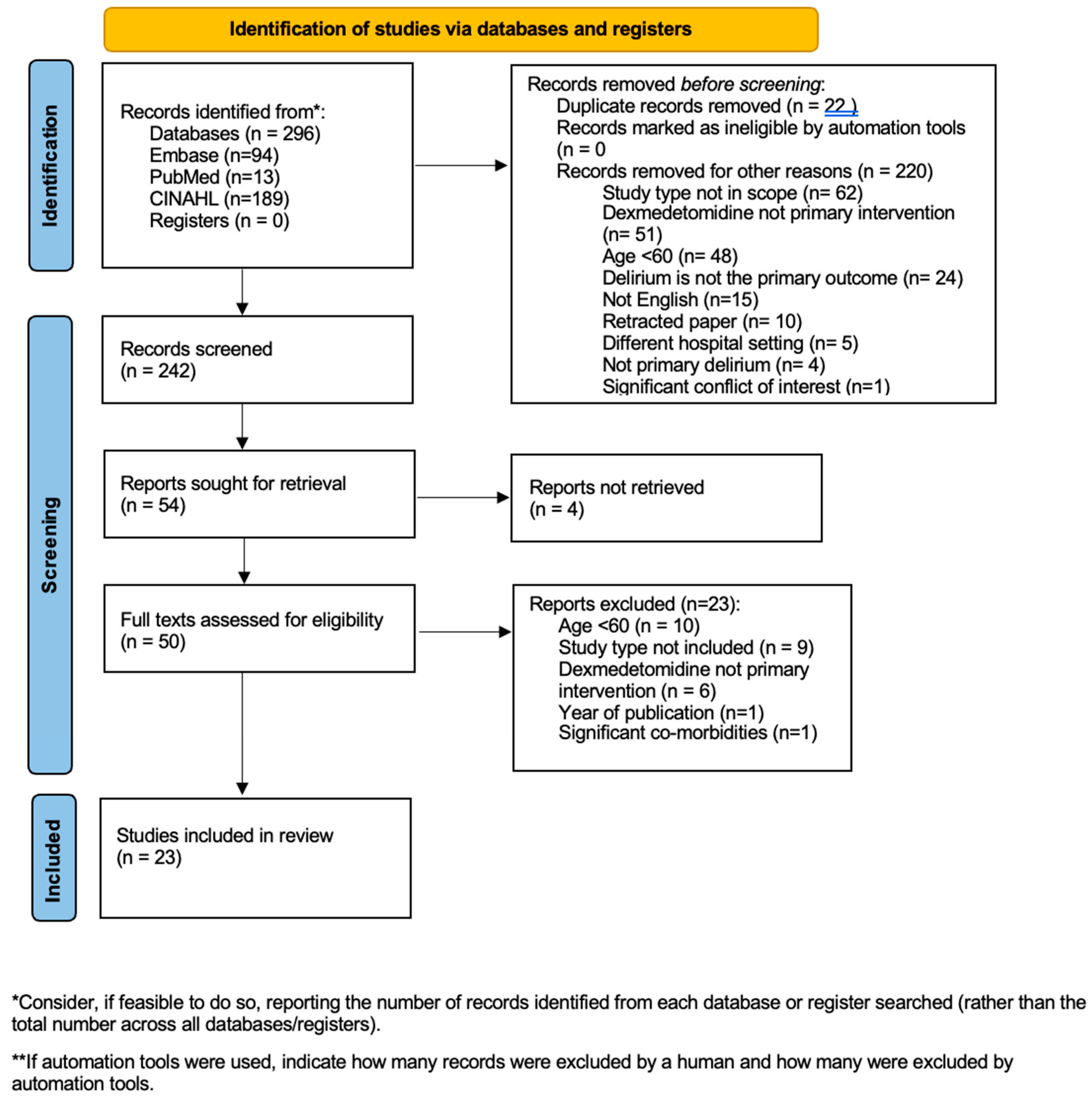
Figure 2.
(a): Risk of bias (ROB) of the included RCTs using ROB-2 tool; (b): Risk of bias (ROB) of the included non-randomized studies using ROBINS-I tool.
Figure 2.
(a): Risk of bias (ROB) of the included RCTs using ROB-2 tool; (b): Risk of bias (ROB) of the included non-randomized studies using ROBINS-I tool.
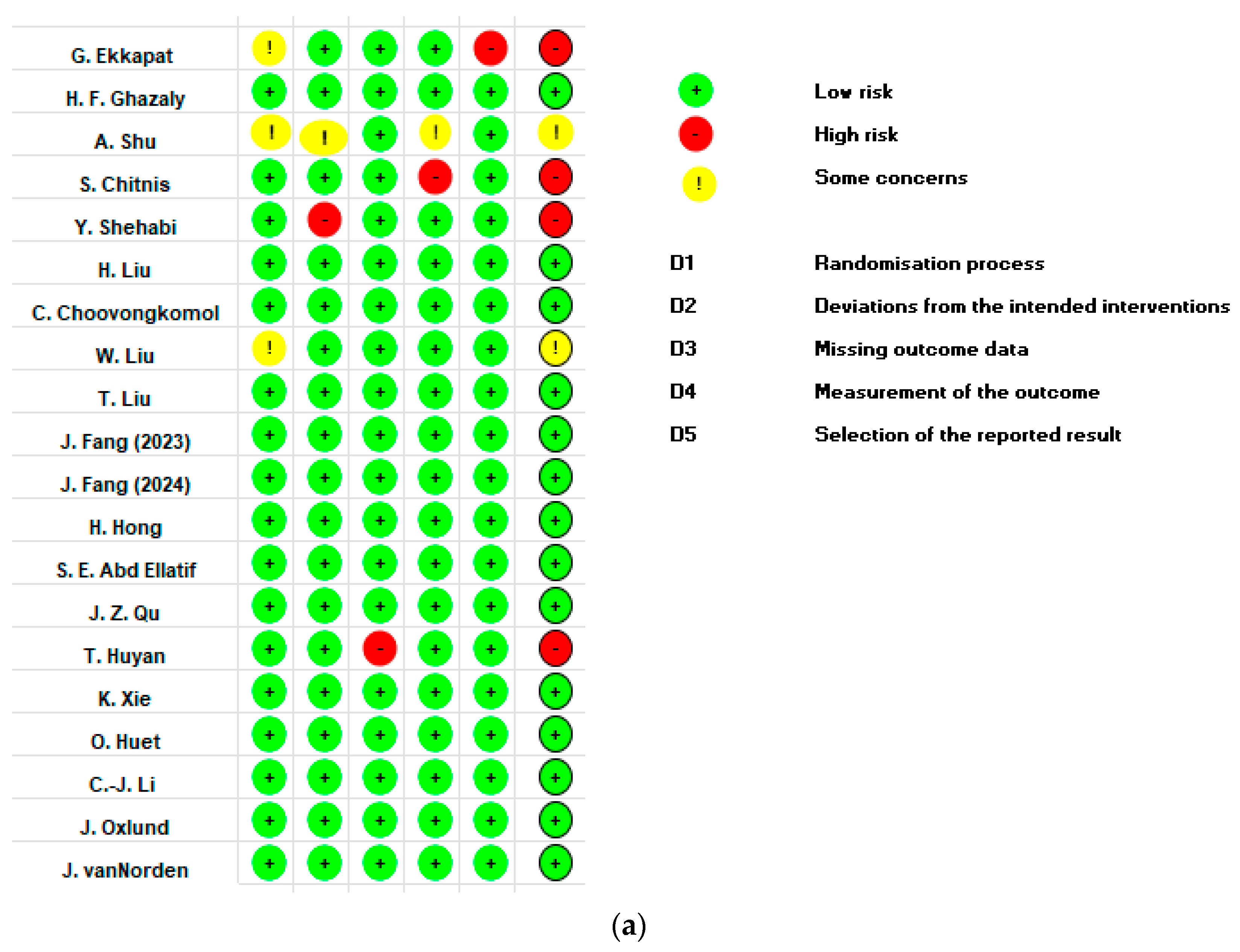
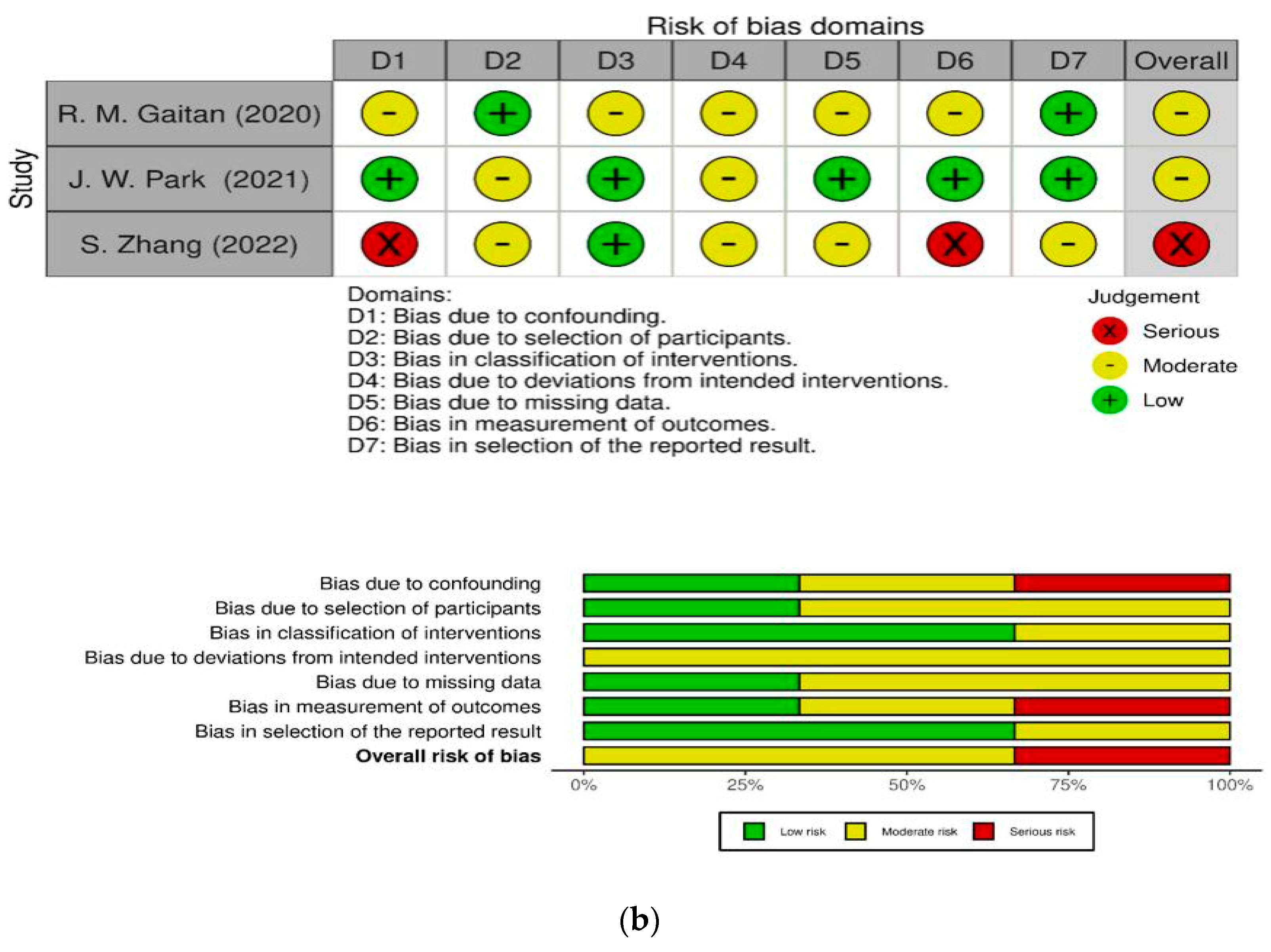

Table 1.
Baseline characteristics of the included studies.
| First author | Year | Study type | Country | Compara-tor(s) | Total | DEX | Comparator | Route | Timing | Assessment tool |
|---|---|---|---|---|---|---|---|---|---|---|
| G. Ekkapat (14) | 2024 | RCT | Thailand | Propofol Saline |
108 | 36 | 72 | IV | Post-op | CAM-ICU |
| H. F. Ghazaly (19) | 2023 | RCT | Egypt | Saline | 2023 | RCT | Egypt | |||
| A. Shu (20) | 2019 | RCT | China | Midazolam | 80 | 40 | 40 | IV | ICU | Not stated |
| R. M. Gaitan (13) | 2020 | Prospective / Registries | Spain | No comparator | 410 | 410 | 0 | IV | ICU | RASS |
| S. Chitnis (12) | 2022 | RCT | Canada | Propofol | 67 | 34 | 33 | IV | Post-op | ICDSC |
| Y. Shehabi (21) | 2019 | RCT | Ireland Australia Italy, Malaysia New Zealand Saudi Arabia Switzerland |
Usual care | 3918 | 1954 | 1964 | IV | ICU | CAM-ICU |
| H. Liu (22) | 2023 | RCT | China | Saline Midazolam |
150 | 76 | 74 | IV | Intra-op | RASS |
| C. Choovongkomol (23) | 2024 | RCT | Thailand | Saline | 200 | 100 | 100 | IV | Intra-op | CAM |
| W. Liu (24) | 2023 | RCT | China | Saline | 299 | 149 | 150 | IV | Intra-op | CAM |
| T. Liu(25) | 2022 | RCT | China | Saline | 120 | 60 | 60 | IV | Pre-op | 3D-CAM |
| J. Fang (26) | 2023 | RCT | China | No comparator | 88 | 88 | 0 | IV | Pre-op | CAM-ICU |
| J. Fang (27) | 2024 | RCT | China | Saline | 100 | 50 | 50 | Intra-nasal | Pre-op | CAM-ICU |
| H. Hong (28) | 2021 | RCT | China | Saline | 712 | 356 | 356 | IV | Post-op | CAM / CAM-ICU |
| S. E. Abd Ellatif (29) | 2024 | RCT | Egypt | Ketofol | 2024 | RCT | Egypt | Intra-op Post-op |
CAM-ICU | |
| J. Z. Qu (30) | 2022 | RCT | USA | Ketofol, Saline | 394 | 188 | 206 | IV | Post-op | CAM |
| T. Huyan (31) | 2018 | RCT | China | Saline | 346 | 173 | 173 | IV | Pre-op Intra-op |
ICDSC |
| K. Xie (32) | 2023 | RCT | China | Saline | 236 | 117 | 119 | PCIA / pump | Post-op | RASS |
| O. Huet (33) | 2024 | RCT | France | Saline | 331 | 165 | 166 | IV | Pre-op Intra-op Post-op |
CAM-ICU |
| C.-J. Li (34) | 2020 | RCT | China | Saline | 619 | 309 | 310 | IV | Intra-op | CAM / CAM-ICU |
| J. Oxlund (35) | 2023 | RCT | Denmark | Saline | 30 | 20 | 10 | IV | ICU | CAM-ICU |
| J. vanNorden (36) | 2021 | RCT | Germany | Saline | 63 | 30 | 33 | IV | Pre-op Intra-op Post-op |
CAM-ICU |
| J.-W. Park (37) | 2021 | Observational | Korea | Propofol | 714 | 357 | 357 | IV | Intra-op | CAM-ICU |
| S. Zhang (38) | 2022 | Observational | China | Saline | 60 | 28 | 32 | IV | N/A | CAM-ICU |
Table 2.
Incidence of delirium (IOD) frequency reported in the included studies.
| Number of studies reporting | |
|---|---|
| Incidence of delirium in DEX group | 20 |
| Significant decrease in the incidence of delirium in DEX group | 9 |
| Significant increase in the incidence of delirium in DEX group | 0 |
| No significant difference in the incidence of delirium in DEX group | 8 |
| No p-value reported | 3 |
Table 3.
Reported adverse effects of Dexmedetomidine in the 23 studies.
| Adverse effect | Number of studies reporting |
|---|---|
| Bradycardia | 17 |
| Hypotension | 15 |
| Nausea and vomiting | 4 |
| Tachycardia | 3 |
| Hypertension | 3 |
| Pneumonia | 1 |
| Prolonged sinus arrest | 1 |
| Sedation | 1 |
| Nightmares | 1 |
Disclaimer/Publisher’s Note: The statements, opinions and data contained in all publications are solely those of the individual author(s) and contributor(s) and not of MDPI and/or the editor(s). MDPI and/or the editor(s) disclaim responsibility for any injury to people or property resulting from any ideas, methods, instructions or products referred to in the content. |
© 2026 by the authors. Licensee MDPI, Basel, Switzerland. This article is an open access article distributed under the terms and conditions of the Creative Commons Attribution (CC BY) license (http://creativecommons.org/licenses/by/4.0/).
Copyright: This open access article is published under a Creative Commons CC BY 4.0 license, which permit the free download, distribution, and reuse, provided that the author and preprint are cited in any reuse.


