

Submitted:
27 February 2026
Posted:
03 March 2026
Read the latest preprint version here
Abstract
Amid U.S. housing and labor shortages, Appalachia needs solutions that strengthen communities. This study examines how establishing an industrialized off-site construction (IOC) ecosystem can address regional housing, workforce, and construction challenges. From March–June 2024, we conducted seven participatory design workshops across Appalachia (n=129). Using a standardized prompt sequence (status quo, opportunities, IOC solutions), affinity clustering, and PICK chart prioritization, participants identified needs, capacities, and gaps, then ranked actions to advance IOC. Validity was tested through independent re-clustering with a shared codebook; inter-rater agreement was substantial (weighted κ=0.80). Five cross-cutting levers emerged: Education & Training; Policy & Regulation; Marketing & Awareness; Financing & Funding; and Technology & Innovation. Marketing & Awareness were consistently viewed as high-impact and easier to implement near term; Education & Training were high-impact but resource-intensive; Policy and Financing were impactful yet harder to shift; Technology & Innovation should be introduced incrementally to fit tradition-bound industry and regional norms. The resulting roadmap emphasizes near-term pilots, targeted talent pipelines, permitting/code alignment, and fit-for-purpose capital. The main contribution is a globally reproducible participatory protocol with transparent prompts, a shared codebook, independent re-clustering, and reliability metrics that enable replication and benchmarking across regions.
Keywords:
affordable housing
; off‐site construction
; industrialized construction
; industrialized offsite construction
; participatory design
; construction management
1. Introduction
The construction industry is going through a historic labor shortage in the United States, a complex issue that has had significant repercussions on localized growth, economic development, and housing availability across the nation (Anthony, 2023; Howard et al., 2024; Kortekaas, 2024; White et al., 2025). The labor shortage issue is compounded by the anticipated population growth as well as a widening age gap among skilled workers. With the workforce at historically low levels, it is critical to explore opportunities that will allow the construction industry to reverse this trend, keep up with current demands, and support community development. The ongoing housing crisis is exacerbated by the lack of skilled labor in the workforce. The Associated Builders and Contractors (ABC) estimates that the U.S. requires approximately 8 million construction workers to meet the current demand, which is roughly half a million workers short of individuals currently employed (ABC, 2024).
The construction industry’s labor shortage directly fuels the housing deficit, as insufficient skilled personnel limit the industry’s ability to meet growing housing demand. This dynamic is especially pronounced in Appalachia, where both demographic trends and economic changes amplify the gap between available labor and housing supply. (Larussa Raegan, 2023). To address the current housing deficit in the United States, recent analyses indicate the US is underbuilt by about 3.8–3.85 million homes, while the affordability gap for extremely low-income renters is roughly 7.1 million units (Khater et al., 2021; National Low Income Housing Coalition, 2025; Kingsella & MacArthur, 2022). To achieve the production of additional housing units, it would require an additional 400,000 workers each year, apart from the existing workforce (National Association of Home Builders, 2024). Without immediate action, the trends of labor shortages and housing crises will continue to worsen, making a comprehensive solution more urgent than ever.
Given the region’s insufficient affordable housing and a strained construction workforce, industrialized off-site construction (IOC) could be a solution. IOC shifts value creation into controlled factory settings and stabilizes delivery performance (Blismas et al., 2006). IOC leverages efficiencies from advanced manufacturing and allows for the rapid deployment of building products. This approach reduces the overall time and cost required for construction projects. Integrating emerging technologies into construction manufacturing processes unlocks further possibilities, including improvements in productivity, quality, and sustainability. “Off-site” construction methods, where the majority of construction processes are conducted in a factory setting, enable optimized quality control due to the controlled environment. Furthermore, the controlled environment provided by off-site construction improves working conditions and creates a safer workplace for individuals (McKay et al., 2005). The IOC attracts more people to the construction industry for enhanced working conditions, along with increased technology integration (Ahn et al., 2020; Assaf et al., 2025; Wang et al., 2020). Incorporating IOC methods into the tradition-bound industry poses a viable solution that could revitalize the workforce and strengthen communities.
Accordingly, a region-wide, participatory study was undertaken to test whether locally co-designed IOC strategies can address Appalachian housing and workforce constraints, structuring the work around four research objectives. To develop IOC solutions for the Appalachian workforce, this research is guided by four research objectives (ROs):
RO1: Develop a comprehensive, literature-based definition for Industrialized off-site construction (IOC).
RO2: Employ design thinking methods to evaluate regional housing, workforce, and construction challenges in the Appalachia region of the United States.
RO3: Identify and prioritize opportunities for industrialized off-site construction to improve housing, workforce, and construction challenges within and across the Appalachian region.
RO4: Recommending data-driven solutions/Develop data-driven recommendations to improve housing, workforce, and construction outcomes in Appalachia.
Reports have documented the housing and labor challenges in Appalachia. This study uniquely combines a region-wide participatory approach with design thinking to co-develop, with local stakeholders, practical and context-tuned strategies for establishing an industrialized off-site construction (IOC) workforce. It provides new insights into the socially-embedded barriers and region-specific enablers of IOC adoption that have not been previously articulated in the literature. Previous work provides valuable insights into the advantages of industrialized off-site construction and supports its use as an effective and sustainable practice. There is limited empirical research that operationalizes industrialized off-site construction (IOC) for rural and small-metro regions like Appalachia, especially studies that translate high-level benefits into place-specific implementation frameworks. In particular, the literature lacks participatory, stakeholder-driven evidence that prioritizes workforce, policy, regulatory, financing, marketing, and technology actions for IOC adoption at the regional scale. This study asks how participatory workshops, grounded in local expertise, can be used to identify and focus on actionable strategies for building an IOC workforce that addresses the dual crises of housing and labor in Appalachia. This research aims to bridge these gaps in the literature by providing tangible insight into a localized area, evaluating the opportunities and challenges of introducing industrialized off-site construction within central Appalachia. By specifically focusing on Appalachia, researchers are provided with the opportunity to engage with local experts, evaluate individualized needs, and ultimately recommend solutions that are catered specifically to the area.
The research team, comprising economists and researchers from construction and engineering, conducted seven participatory workshops in Central Appalachia between March 7 and June 6, 2024. The participatory design workshops employed design thinking methods to support potential work system designs in user and local needs. The goal of the workshops was to identify the current capacity, gaps, needs, and opportunities for establishing an IOC workforce for housing in Appalachia. When problems are socio-technical and multi-stakeholder, participatory design and design-thinking methods are well-suited to elicit needs, generate options, and prioritize actions that communities will adopt. (Steen, 2013a)
Figure 1 characterizes the workshop locations. Workshops were held in Bluefield, West Virginia; Morganton, North Carolina; Pittsburgh, Pennsylvania; Knoxville, Tennessee; Huntington, West Virginia; Prestonsburg, Kentucky; and Marietta, Ohio. Each workshop had approximately 19 participants. A diverse group of participants were recruited from each region based on their leadership across various industries, including higher education, economic development, finance, workforce development, construction, and government officials. Local convening partners were employed to help the research team identify and recruit participants for each participatory workshop.
Due to the complexity of the problem around workforce and housing development needs, it was critical to have participants representing diverse perspectives to get closer to a systems view of the region. Figure 2 provides a distribution of industry background representation among the participants.
The following sections will provide a detailed background on the interconnected issues contributing to the housing crisis within Appalachia, examining three distinct segments: housing and workforce conditions, trends, and challenges specific to the participatory workshop locations, as well as a broad analysis of Industrialized Off-site Construction. The information obtained through the literature review informs the methodology of the following section, where the data collection, analysis, and validation processes of the research are presented. Subsequent sections focus on the results from the participatory design workshops, a discussion of the research findings, and concluding recommendations for implementation and further research.
Background
A region historically known for its rich, diverse history and effective manufacturing industries, Appalachian communities are confronted with complex issues that hinder economic growth, community development, and revitalization of the area. Specifically, a shortage of affordable housing coupled with the lack of a skilled workforce plagues the region and produces pervasive barriers to the sustainment or growth of local communities. This section of the paper provides insight into the current housing and workforce conditions in each of the seven workshop locations, along with an overall look into national industrial construction trends.
Housing in Appalachia
The Appalachian region features a diverse range of historic industries and opportunities, including tourist hotspots, industrial zones, urban cities, suburban areas, and vacant lots. Widespread housing and workforce challenges act as barriers to the growth and sustainment of local economies and the communities within (Jones et al., 2023; Jones & Spencer, 2018; Mather, 2004); City of Pittsburgh, 2020). In several Appalachian labor markets, employers now identify housing availability and affordability as a direct constraint on workforce recruitment and retention, with extremely low vacancy and largely older units struggling to meet current demand (Bowen National Research, 2023). High-growth Appalachian metros such as Knoxville, TN, are seeing similar pressure, reporting that demand for workforce housing is outpacing supply and that nearly half of renter households are cost-burdened, even after significant local public investment in affordable units (City of Knoxville, 2024). Within increasing populations and demand for affordable housing, solutions need to be identified and implemented to address the housing crisis. This subsection provides insight into the current housing conditions in each of the seven workshop locations; Table 1 provides a summary of these conditions.
As evident in analyzing these seven cities, increasing levels of poverty, inefficient and unaffordable housing, stagnant construction methods, and an unskilled workforce plague the Appalachian region. The housing crisis is exacerbated by the aging workforce and lack of skilled labor, which is explored further in the following section.
Workforce in Appalachia
Historically, Appalachia has played a critical role in fueling U.S. industry; however, in recent decades, it has seen significant economic decline in many parts of the region, which has driven higher-than-average poverty rates and a reduction in upward mobility opportunities. In the last 10 years alone, 50,000 mining jobs and 10,000 skilled manufacturing jobs have been lost from this region (Appalachian Regional Commission, 2022). Furthermore, manufacturing companies report that talent shortages and skill gaps have reached critical levels, with no visible correction in sight. (Manufacturing Workforce Development, 2024). Employment in construction and manufacturing is notably lower among diverse populations; both racial and gender diversity in these industries is drastically lower than the national average (Lightcast, 2022). Workforce sustainability remains an ongoing issue within construction due to the complexity of worksites and hazardous work environments (Gambatese et al., 2019). Labor shortages are expected to continue due to an aging workforce that is disproportionately larger than the number of individuals entering the industry. Today, almost 30% of Central Appalachia’s construction and IOC workforce is 55 years old or older, pointing to an aging population facing retirement in the coming years (Henderson, 2023). Despite diverse and interconnected challenges, the combination of anticipated growth in industry jobs, a vibrant entrepreneurial culture, and strong educational resources in the region creates an excellent foundation for fostering and expanding a cutting-edge IOC industry.
Workforce development is a core component of capturing the growth of an industrialized off-site construction market and establishing the region as the nation’s hub for IOC integration. Already, Central Appalachia’s existing workforce from the once-booming textile, coal, and steel industries has the foundational skill sets to build upon and slowly transition the region to IOC. This first step will help to unlock and leverage additional regional assets from across the region, such as underutilized infrastructure, rail, and factories. All these assets combined illustrate a significant opportunity, particularly when aligned and leveraged through a region-wide effort.

Table 2.
Workforce trends of the participatory workshop locations (Data USA, 2022).
| Location | Population | Housing | Economy | Workforce Driver |
|---|---|---|---|---|
| Bluefield | Declining | Median cost—$113,900. Old houses—median year built is 1950 | Declining | Healthcare; Education; Retail; Manufacturing |
| Huntington | Declining | Median cost—$129,600. Median year built—1950s |
Declining | Education; Trade, Transportation, and Utilities; Government; Hospitality |
| Knoxville | Increasing | Median cost—$314,700. Median year built—1980s | Growing | Manufacturing; Healthcare; Technology; Tourism |
| Morganton | Increasing | Influx of new housing stock to meet population demand | Growing | Manufacturing; Healthcare; Hospitality |
| Marietta | Declining | Median cost—$161,600. Median year built—1950s | Growing | Healthcare; Social Work; Retail; Education |
| Pittsburgh | Declining | Median cost—$158,900. Median year built—1950s. Homes are largely energy inefficient. | Recovering from the previous industry decline | Education; Healthcare; Hospitality |
| Prestonsburg | Stagnant | Median cost—$172,000. Median year built—1970s |
Declining | Healthcare; Social Work; Hospitality; Food Industry |
Industrialized off-Site Construction (IOC)
Within this broad paradigm, Industrialized Off-site Construction (IOC) specifically denotes the practice of shifting substantial construction activities to controlled factory environments, where building components or modules are planned, designed, fabricated, and pre-assembled using advanced manufacturing and digital techniques before being transported for on-site installation (Najafzadeh et al., 2025). Industrialized Construction (IC) refers to a broad approach in which construction adopts manufacturing principles like integrating automation, mechanization, and standardized processes to optimize the building process from design through on-site assembly (Qi et al., 2020). Although the terms are sometimes used interchangeably, IOC is essentially a subset of the wider IC concept, focusing exclusively on off-site production and prefabrication (e.g., modular construction), which is then followed by on-site assembly (Kamar et al., 2011). In other words, all IOC initiatives fall under the IC umbrella, but IC also encompasses other process improvements (including on-site industrialized methods) beyond just off-site work, making it a more comprehensive framework for injecting efficiency and quality gains into construction (Najafzadeh et al., 2025; Qi et al., 2020; Xu et al., 2024).
Industrialized off-site construction (IOC) refers to producing building elements or whole modules in controlled factory settings for installation on site, encompassing practices commonly labeled prefabrication, preassembly, modularization, and off-site fabrication, and sometimes grouped in U.S. project-planning studies as “PPMOF” or “prework” (Lu, 2009; Song et al., 2005; Kamar et al., 2011; Modular Building Institute, 2022). Across diverse markets, reported benefits include shorter schedules, improved productivity and quality, safer working conditions, and greater cost predictability; persistent constraints involve limited flexibility for late design changes, transport and logistics limits, and standardization trade-offs, often amplified by fragmented supply chains and regulatory complexity (Blismas et al., 2006; Pan and Sidwell, 2011; Rahman, 2013; Lu, 2009). Recent U.S. work further connects IOC with the integration of advanced technologies and energy-efficiency strategies characteristic of Industry 4.0, positioning factory-based processes as a lever for performance and decarbonization (Podder et al., 2020). In parallel, industry guidance highlights IOC’s potential to manage cost volatility and schedule risk by shifting labor to controlled environments and tightening procurement and planning windows (Helmsing, 2022). Taken together, these strands frame IOC as a process and management innovation with clear advantages and known constraints, motivating the present study’s focus on how localized, stakeholder-driven frameworks can translate those general benefits into region-specific implementation in Appalachia (Modular Building Institute, 2022; Kamar et al., 2011; Pan and Sidwell, 2011).
Inefficiencies have long plagued the construction industry. Over the previous two decades, the construction sector has experienced an annual growth rate of merely 1% globally, accounting for one-third of the overall global economic growth and one-fourth of the manufacturing sector’s growth (Barbosa et al., 2017). Construction projects are notorious for their persistent issues with cost overruns and scheduling delays, while simultaneously facing increasing market pressure to deliver products fast yet being cost-efficient, and with optimum quality (Razkenari et al., 2020). To address this disruptive pressure and failures from the past, the construction industry has gradually adopted innovative construction methods, such as off-site construction strategies, which have shown promise in minimizing common problems related to costs and schedules (Razkenari et al., 2020). However, despite the improvements that existing off-site construction practices have brought to various aspects of building construction, they continue to encounter numerous internal and external challenges that hinder their advancements towards reaching their full potential, as reported in the literature. Some repeatedly mentioned opportunities and concerns related to the adoption of IC have been explored, supported by both research reports from industry groups and literature review.
With the data generated from the initial research of industrialized off-site construction, the research team identified themes and established an in-depth definition of the term, synthesizing local, national, and global initiatives:
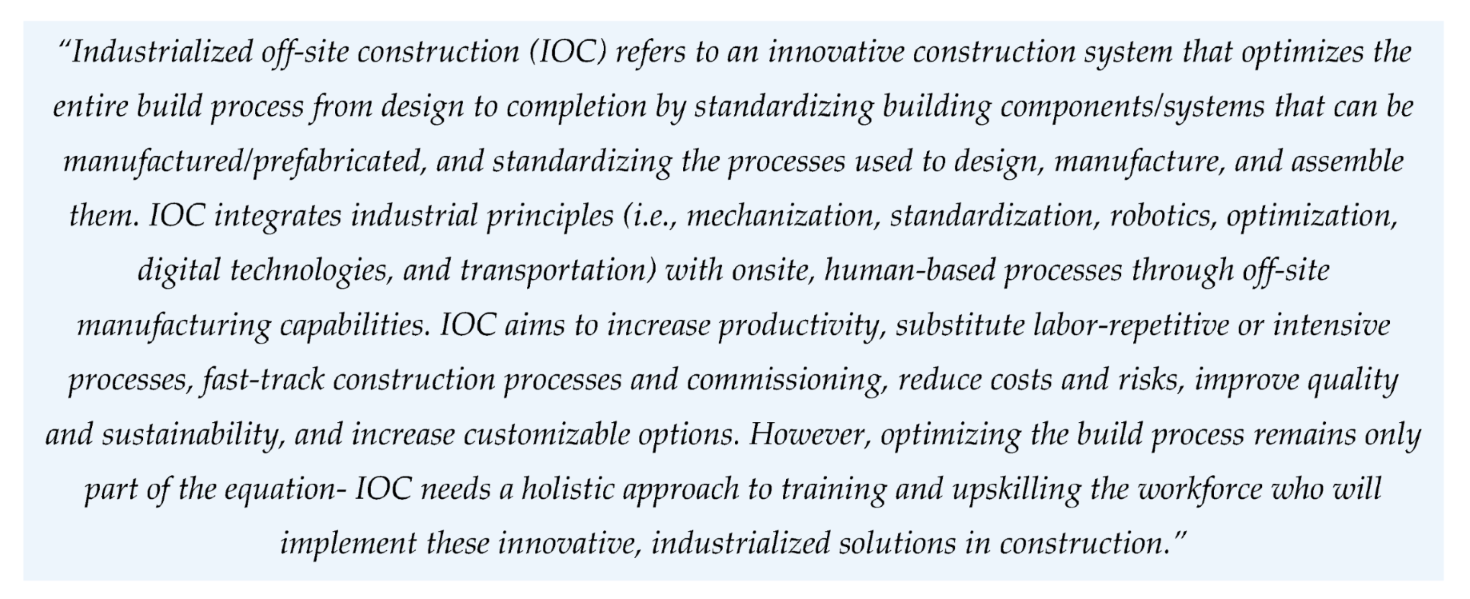
Having established the housing and workforce conditions of Appalachia, along with the basis of industrialized off-site construction initiatives, the remainder of this paper aims to employ the IOC definition to explore challenges and opportunities for IOC in the Appalachian region of the United States. In the sections following, the integration of ideas and perspectives from local experts with the baseline application of industrialized construction remains critical in forming localized and actionable solutions that aim to revitalize communities within Appalachia.
Design Thinking & Participatory Workshop
Because adoption barriers in Appalachia are largely institutional and local, codes and inspection pathways, financing and procurement norms, supply-chain maturity, and public perception, solutions that are co-designed with regional stakeholders are more likely to be implementable (Lessing, 2006; Pan & Sidwell, 2011; Rahman, 2013). Participatory design and design-thinking methods provide a structured route from needs to prioritized actions in socio-technical change, which is why they are appropriate for IOC adoption planning in this region (Brown, T. (2008); Mironcika et al., 2008; Sanoff, 2000; Steen, 2013b).
2. Methodology
This research employed a three-step methodology including literature review, data collection, and analysis and validation. Figure 3 characterizes the methodology process of this study, including the validation approach.
Step 1. Literature Review
The research team conducted a thorough and all-encompassing literature review to gain an understanding of the current data on industrialized off-site construction, analyzing global and national definitions and applications. The research team mapped prevalent terminology in the industrialized construction literature by querying Scopus for English-language articles published from 2014 to 2023. The search string combined relevant terms with Boolean operators and was documented for transparency and reproducibility. To determine the relevant terms, we began with seed terms from established IC definitions and international terminologies (e.g., industrialized construction/industrial construction, industrialized building, off-site/offsite construction, prefabrication/pre-assembly, and modular construction). We then added process terms and enabling technologies that recur in IC studies (e.g., Digital, Industry 4.0, robotics, automation, planning, optimization). Synonyms, truncations, and spelling variants were normalized (e.g., prefabricate, off-site/offsite), and minimal exclusion terms were introduced to remove obvious noise. The final query was refined through iterative Scopus pilots to balance recall and precision before exporting records for analysis. Figure 4 represents the search query used in the literature review.
The search query resulted in 168 articles. Article content (e.g., title, keywords, abstract) was placed into VOSviewer (a software tool that helps visualize bibliometric networks) to analyze data, identify the most used terms, and generate a mapping of research clusters (VOSviewer, 2024). The terms that appear most frequently, listed in descending order, include Productivity, Industrialized Building Systems (IBS), Prefabrication (Preassembly), Construction Technology (Industry 4.0, Digitalization, Building Information Modeling, Robotics), Off-site Construction, Sustainability, Life Cycle Assessment (LCA), Supply Chain Resilience (SCR), Modularization, and Manufacturing. The relationship between the 30 most frequently used terms within the articles is apparent in the bibliometric map below in Figure 5. In this figure, the size of the term’s circle is indicative of its occurrence frequency; larger circles represent terms that have been used more than terms with smaller circles.
During the literature review process, researchers also compared global and national definitions of Industrialized Construction and analyzed applications based on the frequency of terms found in the query referenced within recent literature. With this data, the research team identified themes and generated a new definition of Industrialized Construction that synthesizes local, national, and global research initiatives:

Step 2. Data Collection
With the Industrial Construction framework established through the literature review process, the research team began obtaining secondary data (e.g., employment trends, housing studies) throughout the Appalachian region, specific to housing and workforce development. Seven participatory design workshops were held to engage local leaders; a diverse group of stakeholders (n=129) who are thought leaders and influencers in construction, manufacturing, industrialized construction (e.g., manufactured/modular/prefabricated), economic development, local officials and zoning/planning/code enforcement, and education professionals and administrators, were recruited for each workshop. Workshop locations included Bluefield, West Virginia; Morganton, North Carolina; Pittsburgh, Pennsylvania; Knoxville, Tennessee; Huntington, West Virginia; Prestonsburg, Kentucky; and Marietta, Ohio (Appendix B). These locations were chosen by the research team as they met the requirements for metropolitan statistical areas (MSAs) and are central, convenient markets within the Appalachian region. The research team confirmed with community colleges and economic development groups that the seven chosen workshop locations are the centroids where personnel and resources are drawn, along with validating the participants’ profiles.
All data collection procedures were reviewed and approved by Virginia Tech’s Institutional Review Board (IRB) for compliance with human subjects’ research protocols (IRB #: 23-1369). Participants in attendance were briefed on the objectives and societal benefits of the research initiative. Furthermore, participants were informed that their presence at the workshop and compliance in answering any questions were voluntary. While attendance was taken at each workshop, individual responses to questions would not be collected in a manner that required any personal identifiers.
Workshop participants were engaged in person through a variety of prompts intended to provide insight into the region’s current status quo, vision for the future, and potential growth strategies. This design-thinking methodology proved to be an effective approach, as the prompts and instructions engaged local experts and shed light on specific areas of interest. Ideas, discussions, and responses were recorded by participants on sticky notes, which provided the research team with vast qualitative data from each participatory workshop.
The research team began each workshop by placing a blue triangle on a wall or board within the event space. Prompts one, two, and three required workshop attendees to record their answers on sticky notes and place them in designated areas above, below, or in the middle according to the prompt. The questions and instructions for prompts 1-3 are listed below. Figure 6 demonstrates the three-step input solicitation process for the initial phase of data collection related to prompts 1-3.
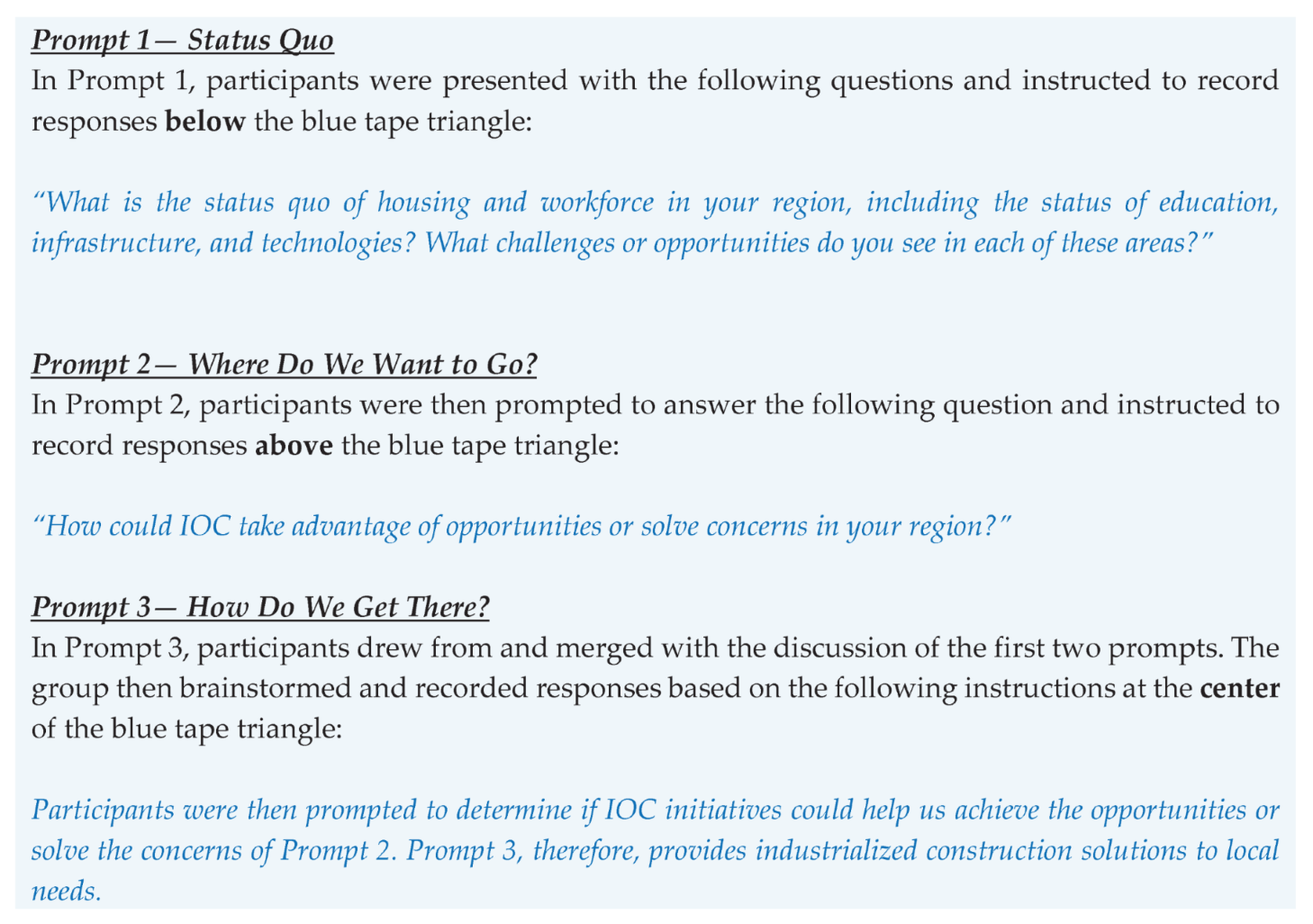
The output from prompts 1-3 in the Data Collection phase was subsequently utilized and built upon in the Analysis and Validation phase.
Step 3. Analysis and Validation
The final step in the methodology included analysis and validation processes. The analysis process engaged workshop participants during prompts 4-5 and utilized various design thinking methods to synthesize data collected in previous prompts. Following the conclusion of the workshops, the research team employed both internal and external validation approaches to verify the workshop findings.
Prompt 4
In the Prompt 4 activity, workshop participants were asked to cluster similar solutions from Prompt 3, establishing common themes of needs that require local solutions for industrialized construction to be successful in the future– see Figure 7 for an example output from Prompt 4.
The Prompt 4 activity employed affinity diagramming to disentangle varied viewpoints and surface locally actionable priorities. We selected this technique to synthesize input from regional practitioners and leaders. Originating with Jiro Kawakita’s KJ method (1975), affinity diagramming groups items into emergent themes and is widely used to structure qualitative data. As Hanington and Martin (2012) note, it is a generative, human-centered design method well suited to organizing complex inputs. In the workshop, an expansive mix of stakeholders participated. Spanning from higher education, economic development, finance, workforce development, construction, and government. Given the broad stakeholder mix participating in the workshops, affinity diagramming provided a disciplined way to cluster insights and map priorities for industrialized construction.
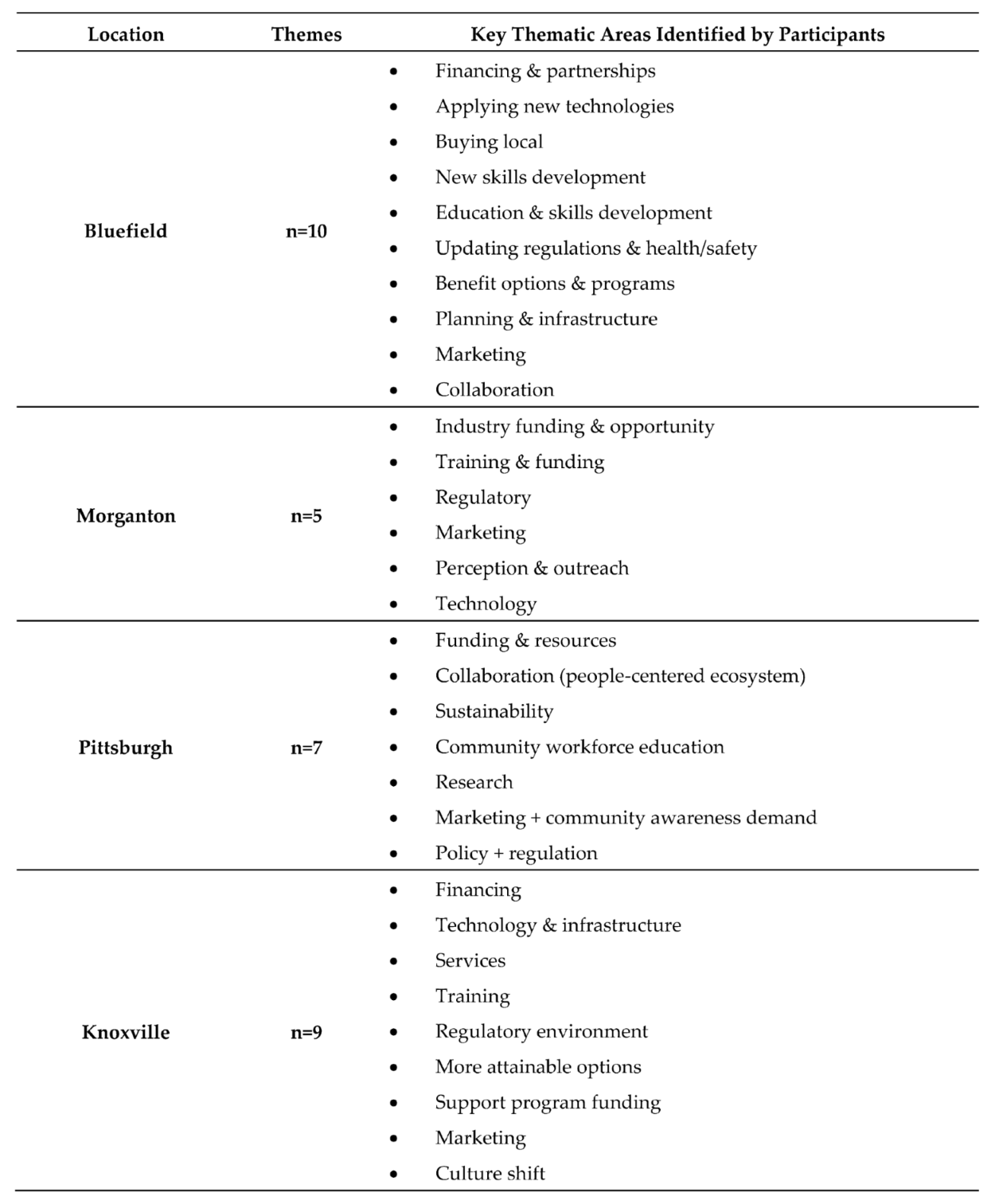
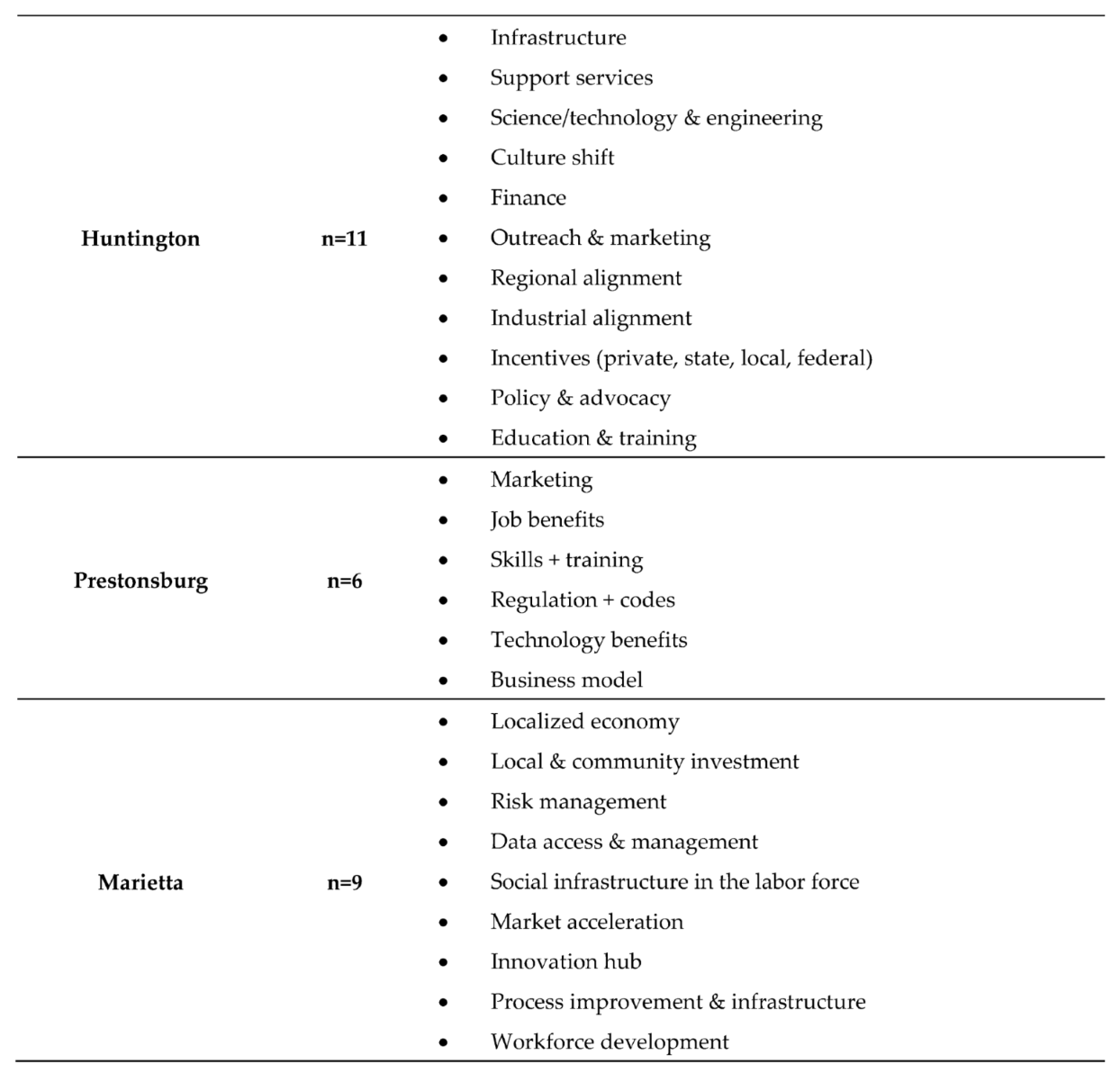
Across all workshops, participants clustered and agreed upon five general thematic areas across Appalachia that need localized solutions for industrialized construction to be successful. The agreed-upon thematic areas include: 1) Education & Training; 2) Policy & Regulation Frameworks; 3) Marketing & Awareness; 4) Financing & Funding; 5) Technology & Innovation.
Prompt 5 built off these themes and required workshop participants to organize and rank the feasibility of the solutions into four different quadrants using a PICK Chart. PICK charts are commonly employed in lean or continuous improvement approaches (Badiru & Thomas, 2013). Themes (solutions) deemed to be low impact and easy to implement were categorized as ‘Possible’ in the upper left quadrant, high impact and easy to implement as ‘Implement(able)’ in the upper right quadrant, high impact and hard to implement as ‘Challenges’ in the lower right quadrant, and lastly items of low impact that would be hard to implement were placed in the lower left ‘Kill’ quadrant. It is also possible for thematic areas to split along a line between quadrants, being “middle-of-the-road” in terms of easy-to-hard and low-to-moderate impact. Figure 8 displays an example of a PICK chart generated at the Bluefield workshop.
Prompt 5
During this final activity, participants were asked to prioritize Prompt 4 thematic areas (solutions) by sorting them both as a) low-to-high impact and b) easy-to-hard to implement.
Through the identification of key challenges and opportunities, participants established and prioritized initiatives that would improve regional housing. Education and training of the local workforce were a consistent, primary focus. Other important and common themes to Appalachia included policy and regulation frameworks that bolster industrialized solutions, marketing and awareness that promote industrialized technologies as a viable market solution and reduce resistance, improved financing and funding opportunities that counteract risk, and the integration of technology and innovation into the workforce and beyond.
Upon completion of the thematic analysis, the research team conducted internal and external approaches to validate findings. The internal validation approach included inter-rater reliability testing (MacPhail et al., 2016). In the internal validation step, the research team took the data collected from workshop prompts 1-3 and re-clustered the data independently from each workshop. The research team took sticky notes from prompt 3 and completed prompts 4 and 5 separately from the workshops to compare and internally validate that the research team’s results were consistent with those of each workshop. Figure 9 displays an example of the side-by-side comparison of the themes clustered (prompt 4) during the workshop and the research team’s independent re-clustering exercise. The research team prioritized themes from the re-clustering exercise, re-ranked them using a PICK chart (prompt 5), and compared these results with those from the initial workshop.
For Inter-rater reliability testing, we assessed agreement between workshop theme assignments and the independent re-clustering at the note level using Cohen’s kappa for nominal categories, computed from a k×k contingency table as κ = (Pₒ − Pₑ)/(1 − Pₑ) and reported with the double-coded sample size n (Cohen 1960; Viera and Garrett 2005; McHugh 2012). We interpret κ using the Landis and Koch (1977) benchmarks for strength of agreement. These ranges come from Landis & Koch’s original paper and are widely reproduced in methods guides. Here are the (Landis & Koch, 1977) benchmarks for interpreting Cohen’s κ in Table 3.
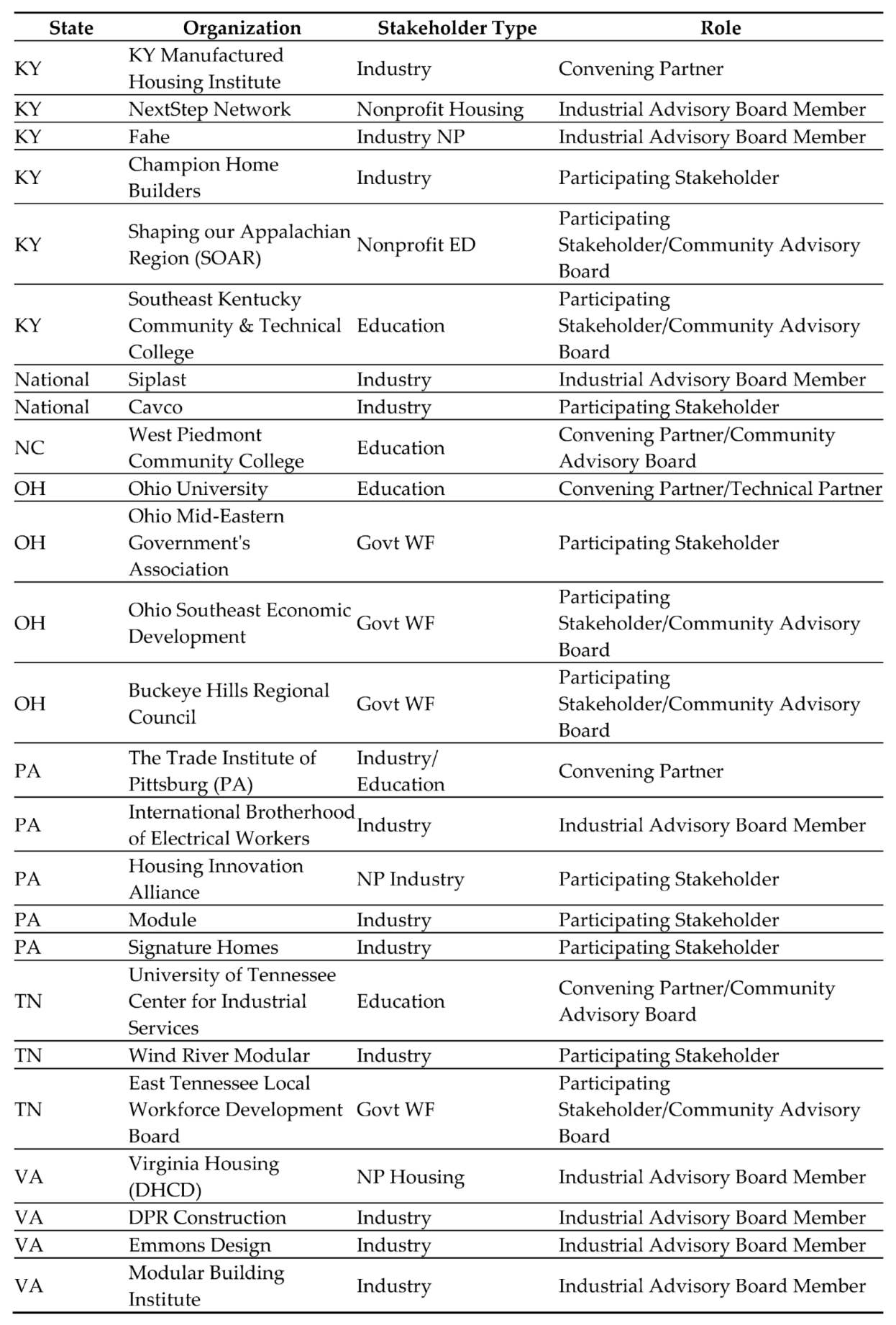
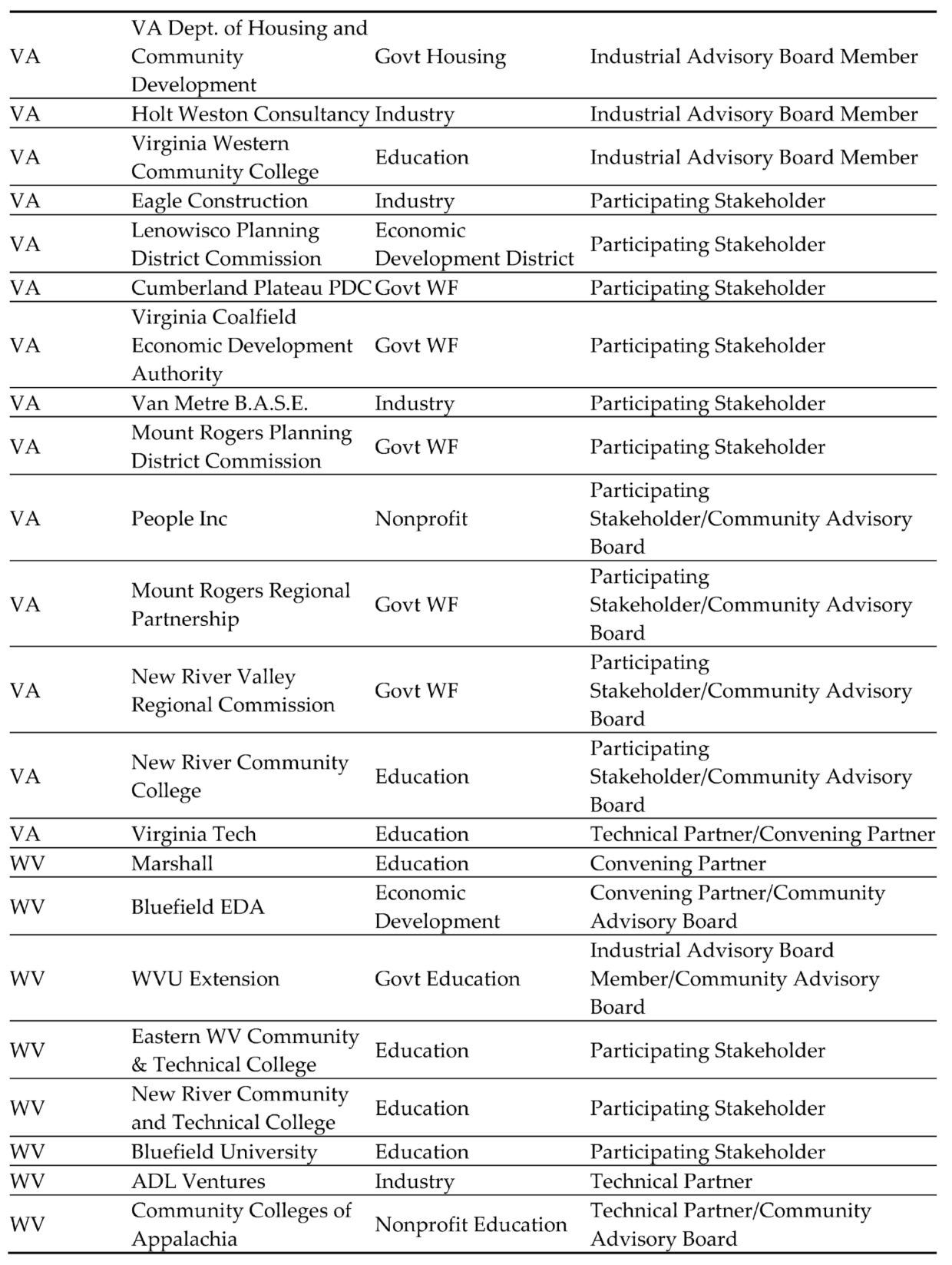
The external validation approach involved presenting all research results to the project’s Industry Advisory Board in a final workshop held at Virginia Tech. The profile of the stakeholder spans from Industry, Education, Non-profit to Govt. officials and Economic Development professionals from multiple states, research institutions & agencies, ensuring overall credibility and reliability (Appendix A). This final workshop aimed to vet the results from previous workshops and validate the research team’s analysis of the data. The research team first presented all preliminary findings (e.g., employment trends and data collected from the design thinking workshops) and asked the industry experts for feedback.
Upon presenting the data to stakeholders, the research team led discussions that aimed to establish necessary actions for themed priorities. The group focused on strategy and implementation of central themes that emerged across participatory workshops, including optimizing transportation, advancing housing solutions, and improving education and training. There was an emphasis on improving exposure to IOC opportunities through both education and marketing initiatives, advocating for IOC as not only a solution to the housing crisis but also as an opportunity to increase skilled labor. With the strong sense of pride instilled in each community, coupled with a reluctance to let in large, external resources to fix the issues, it was ultimately determined that the approach must be multifaceted. There is no one-size-fits-all solution that would feasibly allow for widespread adoption of IOC, even within the Appalachian region.
The following section highlights key findings, themes, and insights that emerged from the research process.
3. Results
Prompt 1 – Status Quo
Bluefield participants noted issues such as workforce shortages, insufficient infrastructure, and a lack of affordable middle-income housing, despite available land. Participants emphasized the need for improving education at all levels, while specifically focusing on younger generations. Participants in Morganton shared concerns about the lack of affordable housing for current residents, an issue compounded by the rapidly growing area due to an influx of students and working professionals. Despite the growing community, Morganton continues to see a construction workforce shortage and a decline in skilled labor. In Pittsburgh, participants acknowledged the community’s old and energy-inefficient structures. Furthermore, Pittsburgh’s systemic barriers and inadequate public transportation are barriers for individuals to obtain and maintain employment.
Similar to Pittsburgh, Knoxville also experiences systemic and interconnected challenges, including a generational divide in the construction workforce, regulations and zoning constraints, and socioeconomic issues compounded with the area’s opioid crisis. Although Knoxville is a rapidly growing city, inadequate education and training result in a shortage of skilled workers who fail to meet the local demand. Participants in Huntington expressed concern surrounding the shortage of skilled workers and the unaffordability of homes, despite the old, unrenovated, and energy-inefficient housing supply. Huntington has the opportunity to expand and sees potential within vacant lots; however, the remote nature of the lots raises concerns due to infrastructure limitations. Participants emphasized the need to form partnerships with colleges and beyond to promote training and awareness of opportunities within the IOC.
Prestonsburg, the most rural area of the workshops held, has experienced economic disruptions caused by workers leaving the area. The lack of middle-income housing, structural issues in the existing housing supply, and susceptibility to flooding are all contributing factors to the dwindling population and workforce. Marietta, on the other hand, is becoming increasingly urban but lacks vital components necessary to cultivate a thriving economy. Participants noted aging buildings, lack of infrastructure, zoning limitations, and a lack of skilled workers.
Prompt 2 – IOC Opportunities
In Bluefield, participants emphasized the desire for sustainable, affordable homes and an improved workforce. Participants saw an opportunity to integrate industrialized off-site construction practices to address local concerns through lowering construction costs and build times while improving working conditions. Additionally, Bluefield participants noted the expectation that incorporating IOC methods would lead to an increased use of automation and technology. Improvements in education, training, and marketing, specifically to younger generations, were noted to be essential in the effective implementation of IOC. Similar to Bluefield, Morganton participants envisioned incorporating industrialized off-site construction to shorten on-site build time and reduce the physical strain on workers by moving most tasks to a controlled environment. Enhancing practices through increased automation and improved technology was also discussed as a potential opportunity. Furthermore, participants saw the IOC as a means to enhance the quality and efficiency of homes while promoting durable and sustainable practices.
Pittsburgh participants envisioned inclusivity and sustainability and saw the IOC as an opportunity to create energy-efficient, healthy, safe homes. During Prompt 2, workshop participants reiterated the need for improved infrastructure, enhanced transportation, and paid training programs to effectively implement IOC methods. Similar to previous workshops, Knoxville saw the IOC as an opportunity to address housing concerns with reduced construction costs and build times. Participants also examined the long-term benefits of implementing IOC, such as career opportunities, improved training and apprenticeship programs, and expanded grant and funding opportunities. Upon discussing opportunities and benefits provided by the IOC, the need for employer-based childcare and flexible work-scheduling was emphasized. It was specified that providing these benefits to support diverse working-class populations, such as single parents or aging individuals, is essential to overcoming social and logistical barriers. Huntington participants saw opportunities within the IOC to improve the quality, efficiency, and health of homes, while also increasing the feasibility of producing off-grid homes that utilize renewable energy and local building materials. Participants envisioned a technologically advanced ecosystem with IOC but emphasized the importance of educating and training all individuals, especially those of younger generations and underrepresented groups, for the maximum impact.
Like other groups, Prestonsburg highlighted IOC to cut down on construction costs and build times and acknowledged the opportunities in automation and technology advancements. Participants shared a vision for improving housing while focusing on sustainability, affordability, and workforce development. Like previous workshop discussions, Prestonsburg participants reiterated the need for improvements in education, training, and outreach targeted towards younger generations to make the most out of IOC. Participants in Marietta stressed the potential IOC has in lowering construction costs and build times, and increasing productivity and innovation through enhanced technology applications. Participants recognized the potential IOC has in creating education and job opportunities to attract more individuals to the area, but emphasized the need for regulatory changes and affordable development opportunities that are within proximity to local amenities and resources.
Prompt 3 – Using IOC to Address Current Challenges
In Bluefield, participants touched on the need for a comprehensive approach to address the needs of the area, including improving home-buying options, having alternative funding sources, and designing structures that mitigate hazards. Local experts recognized the opportunity IOC has to bring more individuals into the construction industry, and therefore desire to improve education and training, emphasizing the need to start exposure to IOC opportunities as early as K-12. Participants from Morganton highlighted the role the IOC could have in enhancing public-private partnerships, generating specialized training programs, and lowering manufacturing costs. In Pittsburgh, participants were excited about the improvements in technology and collaboration provided by IOC. Knoxville experts similarly saw the opportunity IOC has in streamlining processes through the integration of technology, in addition to creating realistic training programs that expedite workforce development.
Huntington participants emphasized opportunities in the IOC for utilizing renewable and local materials, leveraging technology, and optimizing funding strategies. Participants discussed the feasibility of establishing a local IOC market due to nearby vacant industrial sites and lots. Similar to Bluefield, Prestonsburg participants saw potential in improving home-buying options, generating alternative funding sources, and integrating education and training opportunities for all levels, with exposure starting at K-12. Marietta participants discussed a comprehensive approach required to address the local needs and saw opportunities within the IOC to improve the localized economy, workforce development, and technology integration.
Prompt 4 – Generate ThemesPrompt 5 – Prioritize Themes
Prompt 5 – Prioritize Themes
Identifying key challenges and opportunities in regional housing is crucial because it enables targeted and effective solutions that address specific needs and gaps. Following the workshops, the data analysis revealed five common themes that were ubiquitous across all the workshops – see Figure 10 for the themes and location of the workshops. As previously mentioned in Prompts 4 and 5, workshop participants clustered and agreed upon these common thematic areas across Appalachia: 1) Education & Training; 2) Policy & Regulation Frameworks; 3) Marketing & Awareness; 4) Financing & Funding; 5) Technology & Innovation.
Focusing on the ability to act on these themes, PICK charts were used to organize the data into quadrants based on participants’ perception of their priority (see Figure 11). Participants consistently ranked marketing and awareness as easily implementable with high impact—these IC solutions should be considered as immediately accessible and effective. Participants considered education and training to be highly impactful, yet not as easy to implement as marketing. It is immediately accessible and effective, yet also requires resources, infrastructure, and investment to be successfully implemented. For IC, technology and innovation seem central and critical to any measure of success, while diffusing these technologies into the industry is a major challenge, and we cannot train without them. Financing and funding a challenging themes with high impact- our industry expects high returns quickly for any investments and is slow to change, making it difficult to attract funds and financing options. Participants considered the policy and regulation framework as the most challenging of the themes- the top-down nature of policies and regulation makes it difficult to influence and change quickly, while they have a high impact when successful. Across seven workshops, inter-rater reliability for thematic clustering ranged from moderate to almost perfect (κ=0.55–0.88). Five of seven sites achieved substantial to almost perfect agreement (κ≥0.78), while one site (Morganton) was moderate (κ=0.55). Pooled across all locations (n=360 notes), agreement was substantial (weighted κ=0.80; , ). Table 4 provides a summary of the Inter-rater Cohen’s kappa calculation across seven locations.
Table 5.
Summary of Inter-rater Cohen’s kappa calculation.
| Location | n | Compute Observed Agreement (Po): Sum the Diagonal/n |
Pe = SUM Over Themes of (row_prop × col_prop) |
Kappa: κ = (Po − Pe)/(1 − Pe) |
Strength of Agreement |
|---|---|---|---|---|---|
| Bluefield | 50 | 0.82 | 0.19 | 0.78 | Substantial |
| Morganton | 43 | 0.65 | 0.23 | 0.55 | Moderate |
| Pittsburgh | 55 | 0.84 | 0.17 | 0.80 | Substantial |
| Knoxville | 61 | 0.90 | 0.16 | 0.88 | Almost Perfect |
| Huntington | 47 | 0.85 | 0.24 | 0.80 | Substantial |
| Prestonsburg | 72 | 0.90 | 0.18 | 0.88 | Almost Perfect |
| Marietta | 32 | 0.84 | 0.29 | 0.78 | Substantial |
4. Discussion
The primary aim of this research was to examine regional housing, workforce, and construction challenges in the Appalachian region and identify opportunities for industrialized off-site construction to resolve these issues. Furthermore, the research team aimed to leverage the participatory nature of the research to collaborate with local experts and recommend data-driven solutions to improve the region. While results indicate that IOC offers a promising future, many barriers need to be overcome along the way. Identifying key challenges and opportunities within the region’s housing and workforce frameworks is crucial because it enables targeted and effective solutions that ultimately address the specific needs of the area.
The results of this study reveal that Appalachia is simultaneously grappling with workforce shortfalls and an affordability gap in housing. Participants in each workshop highlighted the widening age gap and declining employment levels among the workforce, corroborating previous data that talent shortages and skill gaps have “reached a critical level” (Manufacturing Workforce Development, 2024). Furthermore, local experts expressed concern regarding the aging of the construction industry’s skilled trade professionals, supporting previous claims regarding the sustainability of employment, where almost 30% of Central Appalachia’s construction and IC workforce is facing retirement at 55 years old or older (Lightcast, 2022). Workshop participants provided insight on the existing housing stock, and in most cases, it was discussed that the communities are faced with deteriorating infrastructure, which is insufficient, which is consistent with existing literature (Carter, 2016). Pittsburgh participants discussed the city’s outdated and energy-inefficient structures, supporting previous research where nearly 90% of the city’s houses are almost 50 years old (City of Pittsburgh, 2020). All workshops emphasized the lack of affordable housing options available, which is consistent with previous research of the Appalachian region, with nearly half of some communities living in poverty (Data USA, 2022). The findings from this research further substantiate previous research initiatives and confirm housing, workforce, and construction challenges present throughout Appalachia.
This research established five common themes that require attention and solutions across Appalachia: 1) Education & Training; 2) Policy & Regulation Frameworks; 3) Marketing & Awareness; 4) Financing & Funding; 5) Technology & Innovation. As a result, we need to optimize logistics, advance housing innovation, grow education and training options, and welcome opportunities for emerging industry trends. Education, training, marketing, and awareness are accessible opportunities that are reportedly easy to pursue immediately. We need to be careful not to see technology as the ultimate solution, though, using an incremental approach to a tradition-bound industry and region. This concept supports existing literature on the need for modernization within the construction industry (Podder et al., 2020).
Inter-rater reliability was generally strong, supporting the reproducibility of our thematic clustering: five of seven sites were “substantial” to “almost perfect”, and the pooled, n-weighted κ=0.80. The one moderate result (Morganton, κ=0.55) likely reflects overlapping themes and skewed category prevalence, conditions known to depress κ even when raw agreement is acceptable. We mitigated this via a shared codebook and brief calibration, and overall Po remained high (0.84), indicating the clusters are substantively stable. Thus, between-site differences in prioritized themes likely reflect real local variation rather than coder noise.
Our five themes align with evidence from mature and emerging IOC markets. In Finland, diffusion of industrialized timber and modular methods is propelled by sustainability/quality goals but slowed by fragmented product/operation models, uneven code interpretation, and contractor-side capacity/financing risks, driving calls for dedicated skills pipelines and clearer standards (Ilgın & Karjalainen, 2024; Jussila et al., 2022; Kinnunen et al., 2025; Toppinen et al., 2022). In Japan, a long-standing prefab housing sector shows how prefab-aware regulation, factory automation, and firm-led upskilling co-evolve to address labor shortages while delivering consistent quality and safer working conditions (Chau et al., 2024; Hiramatsu et al., 2024; Matsumura et al., 2013; Noguchi, 2003; Shimizu Corporation, 2021). In China, national policies position prefabrication to improve quality, safety, and carbon outcomes, yet wide adoption hinges on mitigating first-cost barriers and building talent through standards, incentives, and training (Jiang et al., 2018; Liu et al., 2024; Mao et al., 2019). Taken together, these cases converge on the same themes we identify for Appalachia, explicitly: (1) Education & Training (upskilling for industrialized/digital workflows), (2) Policy & Regulation Frameworks (offsite construction-aware codes and consistent approvals), (3) Marketing & Awareness (consumer and industry acceptance via demonstration and communication), (4) Financing & Funding (mechanisms to offset upfront plant/process investment and smooth cash flow), and (5) Technology & Innovation (automation, BIM/DFMA, and modular productization), suggesting our recommendations reflect internationally validated pathways for advancing IOC.
The U.S. construction sector has structural traits that create uncertainty and slow the uptake of innovation. R&D spending is relatively low; volume-produced modular solutions still require site-specific adaptation; organizations are anchored to legacy processes and supply-chain norms; liability is fragmented and asynchronous across stakeholders; markets are highly cyclical; the industry is atomized with many small firms and heavy subcontracting; building codes vary wide by jurisdiction; and financing and insurance constraints further discourage experimentation. Without innovative options to these barriers, and the capacity building productivity, the industry is failing to meet market needs. Incorporating IOC methods into the tradition-bound practices poses to be a promising solution to the historical barriers of the construction industry. Future research should explore the effectiveness of integrating IOC methods in improving workforce and housing frameworks while overcoming these systemic barriers.
5. Conclusions
This study used a multi-step, participatory design process across seven Appalachian communities to surface what it would actually take for industrialized off-site construction to help address the region’s dual pressures of workforce and housing. Despite local differences, participants converged on five cross-cutting needs: Education & Training, Policy & Regulation Frameworks, Marketing & Awareness, Financing & Funding, and Technology & Innovation. Marketing and awareness emerged as high-impact/ready to implement; education and training were judged high-impact but resource-intensive; technology and innovation were viewed as essential enablers; financing and funding remained a major hurdle; and policy and regulation were the most challenging to move, but consequential when they do. Across sites, stakeholders prioritized practical next steps such as credible pilot/demonstration projects, blended training pathways from K-12/CC into IOC occupations, streamlined permitting/code alignment, and packaging capital for
Inter-rater reliability for our independent re-clustering was generally strong (pooled κ=0.80), which supported the stability of these themes and suggests that between-site differences reflected real local priorities rather than coder noise. Taken together, the findings pointed to a systems approach that is locally led: align talent pipelines, modernize the rulebook, de-risk adoption through pilots, and communicate clearly to build demand. These actions are feasible for regional partners to begin now, while longer-horizon policy and financing reforms proceed in parallel.
Beyond these findings, the approach itself is reproducible. The study used a standardized protocol: common workshop prompts, a shared codebook, structured note capture, independent re-clustering, and PICK-chart prioritization, then verified stability with inter-rater reliability (pooled κ=0.80). This package can be lifted to other regions with light customization (stakeholder mix, local exemplars, and policy context) while keeping the core mechanics intact. Doing so would enable comparable theme maps, priority quadrants, and reliability scores across locales, creating a consistent evidence base for IOC decisions and letting future researchers track change over time and evaluate interventions with the same yardstick.
Limitations and Future Work
There are limitations with this research that are important to characterize. Findings reflect seven localities in Central Appalachia and are therefore context dependent. Participant composition skewed toward institutional and industry stakeholders; end-user voices (e.g., renters, first-time buyers) were limited. Outputs capture perceived priorities rather than post-implementation effects. Although the theme assignment was stabilized via a shared codebook and independent re-clustering, some coder subjectivity may remain despite substantial agreement (κ). We did not quantify implementation costs, capital requirements, or policy feasibility, and we did not track outcomes after the workshops. Several figures were synthesized at the regional level, which may mask finer site-specific nuances.
Future research should focus on replicating the protocol in additional U.S. regions and in mature IOC markets to test external validity and enable cross-region benchmarking. Pair future runs with cost, schedule, and workforce pipeline analytics, including capital stack and permitting feasibility assessments. Design and evaluate pilot interventions (e.g., permitting/code-alignment sprints, blended K-12/CC-to-IOC pipelines, targeted marketing) using pre-registered evaluation plans and longitudinal follow-up tied to delivery metrics (units produced, time-to-hire, retention, safety). Broaden stakeholder participation to include community-based organizations and end users to strengthen equity and adoption insights. Publish an open repository of instruments (prompts, codebook, κ templates) to support transparent reuse, and explore decision-support methods (e.g., MCDA) to prioritize actions under budget and capacity constraints. This agenda preserves the paper’s core contribution, a globally reproducible, comparable method, while building evidence on effectiveness, cost, and scalability.
Author Contributions
Nicole Pond: Conceptualization, Methodology, Validation, Writing original draft – review and editing, Visualization, Formal analysis, Investigation, Data curation; Vida Babajaniniashirvani: Writing – review and editing, Data curation, Validation, Philip Agee: Supervision, Investigation, Formal analysis, Project administration, Funding Acquisition, Writing – review and editing, Visualization, Validation; Andrew McCoy: Supervision, Investigation, Formal analysis, Project administration, Funding Acquisition, Writing – review and editing, Validation; Akhileswar Yanamala: Data curation, Validation; Shafkath Nur: Validation, Writing, review, and editing.
Funding
This research was funded by the Appalachian Regional Commission (Grant #545378) and represents a critical step toward addressing the U.S. housing crisis by improving affordability, delivery speed, and energy performance through industrialized methods.
Data Availability Statement
The data presented in this study are available on request from the corresponding author. The data are not publicly available due to Reason.
Acknowledgments
This research was generously supported by the Appalachia Regional Commission (ARC). The contents of this report are the views of the authors and do not necessarily reflect the views or policies of the Appalachian Regional Commission. The authors gratefully acknowledge the generosity and financial support of the Appalachian Regional Commission (ARC). The funding provided by the commission’s Appalachian Regional Initiatives for Stronger Economies (ARISE) grant contributed to the success of the work and enabled researchers to collaborate with leaders to drive local change. This work would not be possible without the continuous support of our partners. While many individuals played a key part in the success of this work, special acknowledgment is given to the following partnerships: ADL Ventures, Community Colleges of Appalachia, Ohio University Economic Development Institute, Virginia Tech Center for Economic and Community Engagement, and the Virginia Center for Housing and Research. These partners demonstrated unwavering commitment to advancing the construction industry and were instrumental in supporting initiatives that foster development, growth, and innovation across Appalachia.
Conflicts of Interest
The authors declare no conflict of interest.
Appendix A
Industry Advisory Board people profile:
Appendix B

References
- Ahn, S.; Crouch, L.; Kim, T.W.; Rameezdeen, R. “Comparison of worker safety risks between onsite and offsite construction methods: A site management perspective”. Journal of Construction Engineering and Management 2020, Vol. 146(No. 9), 04020102. [Google Scholar] [CrossRef]
- Anthony, J. “Housing affordability and economic growth”. Housing Policy Debate 2023, Vol. 33(No. 5), 1187–1205. [Google Scholar] [CrossRef]
- Appalachian Regional Commission. Appalachia Envisioned: ARC Strategic Plan FY 2022–2026, Appalachian Regional Commission. 2022. Available online: https://www.arc.gov/wp-content/uploads/2022/01/Appalachia-Envisioned-ARC-Strategic-Plan-FY-2022-2026.pdf.
- Assaf, S.; Assaf, M.; Bouferguene, A.; Al-Hussein, M. “Evaluating workers’ well-being in off-site construction facilities”. In Proceedings of the 23rd CIB World Building Congress, Purdue University, West Lafayette, USA, 19–23 May; 2025. Available online: https://docs.lib.purdue.edu/cgi/viewcontent.cgi?article=1928&context=cib-conferences.
- Associated Builders and Contractors. “ABC 2024 construction workforce shortage tops half a million”. 2024. Available online: https://www.abc.org/News-Media/News-Releases/abc-2024-construction-workforce-shortage-tops-half-a-million.
- Badiru, A.B.; Thomas, M.U. “Quantification of the PICK chart for process improvement decisions”. Journal of Enterprise Transformation 2013, Vol. 3(No. 1), 1–15. [Google Scholar] [CrossRef]
- Barbosa, F.; Woetzel, J.; Mischke, J.; Ribeirinho, M.J.; Sridhar, M.; Parsons, M.; Bertram, N.; Brown, S. Reinventing Construction through a Productivity Revolution; McKinsey Global Institute, 2017; Available online: https://www.mckinsey.com/capabilities/operations/our-insights/reinventing-construction-through-a-productivity-revolution.
- Blismas, N.; Pasquire, C.; Gibb, A. “Benefit evaluation for off-site production in construction”. Construction Management and Economics 2006, Vol. 24(No. 2), 121–130. [Google Scholar] [CrossRef]
- Bowen National Research. Advantage Valley Region, West Virginia Housing Needs Assessment, prepared for Advantage Valley, Inc. 2023. Available online: https://advantagevalley.com/wp-content/uploads/2024/01/AV-Housing-Study-Region-Pages-1-29.pdf.
- Brown, T. “Design thinking”. Harvard Business Review 2008, Vol. 86, 84–92. Available online: https://www.scirp.org/reference/referencespapers?referenceid=3028459.
- Chau, H.-W.; Jamei, E.; Muttil, N.; Noguchi, M. “Japanese prefabricated housing manufacturers”. Encyclopedia 2024, Vol. 4(No. 3), 1073–1090. [Google Scholar] [CrossRef]
- City of Huntington Draft FY 2024 Annual Action Plan. 2023. Available online: https://www.cityofhuntington.com/assets/pdf/Draft_FY_2024_Annual_Action_Plan_(1).pdf.
- City of Knoxville (2024), “City releases strategy to meet housing challenges”. Available online: https://www.knoxvilletn.gov/news/2024/city_releases_strategy_to_meet_housing_challenges.
- City of Pittsburgh (2020), 2020–2024 Consolidated Plan and 2020 Annual Action Plan, Office of Management and Budget. Available online: https://pittsburghpa.gov.
- Cohen, J. “A coefficient of agreement for nominal scales”. Educational and Psychological Measurement 1960, Vol. 20(No. 1), 37–46. [Google Scholar] [CrossRef]
- Data USA (2022), “Prestonsburg, KY”. Available online: https://datausa.io/profile/geo/prestonsburg-ky.
- Gambatese, J.A.; Karakhan, A.A.; Simmons, D.R. Development of a Workforce Sustainability Model for Construction, Center for Construction Research and Training (CPWR). 2019. Available online: https://www.cpwr.com/wp-content/uploads/publications_SS2019-workforce-sustainability-model-development.pdf.
- Helmsing, K. “Worried about construction cost inflation? These 7 strategies will put you back in control”. CRB. 2022. Available online: https://www.crbgroup.com/insights/construction-cost-inflation.
- Henderson, L. “Construction industry faces a wave of retirements, struggles to recruit new workers”. Construction Dive. 2023. Available online: https://www.constructiondive.com/news/construction-labor-retirement-recruiting-dei/651184/.
- Hiramatsu, T.; Saiki, M.; Hara, N.; Yamada, M.; Sugiura, H. “Study of force control for construction automation”. Journal of Robotics and Mechatronics 2024, Vol. 36(No. 2), 284–293. [Google Scholar] [CrossRef]
- Howard, T.; Wang, M.; Zhang, D. “How do labor shortages affect residential construction and housing affordability?”. SSRN available at. 2024. [Google Scholar] [CrossRef]
- Ilgın, H.E.; Karjalainen, M. “Insights from Finnish experts on the construction practices and future prospects of cross-laminated timber (CLT)”. Forests 2024, Vol. 15(No. 1), 31. [Google Scholar] [CrossRef]
- Jiang, L.; Li, Z.; Li, L.; Gao, Y. “Constraints on the promotion of prefabricated construction in China”. Sustainability 2018, Vol. 10(No. 7), 2516. [Google Scholar] [CrossRef]
- Jiang, W.; Luo, L.; Wu, Z.; Fei, J.; Antwi-Afari, M.F.; Yu, T. “An investigation of the effectiveness of prefabrication incentive policies in China”. Sustainability 2019, Vol. 11(No. 19), 5149. [Google Scholar] [CrossRef]
- Jones, M.; Spencer, S. Housing Needs and Trends in Central Appalachia and Appalachian Alabama, Virginia Center for Housing Research, Virginia Tech. 2018. Available online: https://hdl.handle.net/10919/96748.
- Jones, M.; Eades, D.; Choi, S. Housing Needs and Trends in Central Appalachia and Appalachian Alabama, Fahe and VCHR. 2023. Available online: https://hdl.handle.net/10919/118031.
- Jussila, J.; et al. “Wooden multi-storey construction market development”. Silva Fennica 2022, Vol. 56(No. 1), 10609. [Google Scholar] [CrossRef]
- Kamar, K.A.; Hamid, Z.A.; Azman, M.N.; Ahamad, M.S. “Industrialized building system: Revisiting issues of definition and classification”. International Journal of Emerging Sciences 2011, Vol. 1, 120–132. [Google Scholar]
- Khater, S.; Kiefer, L.; Yanamandra, V. “Housing supply: A growing deficit”. Economic & Housing Research Note; Freddie Mac, 7 May 2021. Available online: https://www.freddiemac.com/research/insight/20210507-housing-supply.
- Kinnunen, S.; Annunen, P.; Kujala, J. “Challenges hindering industrialized wooden multi-story construction”. In Smart and Sustainable Built Environment; advance online publication, 2025. [Google Scholar] [CrossRef]
- Kingsella, M.; MacArthur, L. Housing Underproduction in the U.S. 2022, Up for Growth, Washington, DC. 2022. Available online: https://upforgrowth.org/wp-content/uploads/2022/09/Up-for-Growth-2022-Housing-Underproduction-in-the-U.S.pdf.
- Kortekaas, K.A. Economic Sustainability: Housing Affordability and Workforce Availability at a Glance. 2024. Available online: https://www.cis.tennessee.edu/sites/default/files/Kortekaas.
- Landis, J.R.; Koch, G.G. “The measurement of observer agreement for categorical data”. Biometrics 1977, Vol. 33(No. 1), 159–174. [Google Scholar] [CrossRef]
- Larussa, R. Beyond Brick and Mortar: Exploring Innovative Housing Solutions in Rural Appalachia. 2023. Available online: https://www.dickensonva.org/DocumentCenter/View/3157.
- Lessing, J. Industrialised House-Building: Concept and Processes. Lund University, 2006. Available online: https://portal.research.lu.se/en/publications/industrialised-house-building-concept-and-processes.
- Lightcast (2022), Dataset 2023.1. Available online: http://www.lightcase.io.
- Lu, N. “The current use of offsite construction techniques in the United States construction industry”. Construction Research Congress 2009; 2009; ASCE, pp. 946–955. [Google Scholar]
- Mather, M. Housing and Commuting Patterns in Appalachia, Appalachian Regional Commission. 2004. Available online: https://www.arc.gov/report/housing-and-commuting-patterns-in-appalachia.
- Matsumura, S.; Gondo, T.; Sato, K.; Morita, Y. “Technological developments of Japanese prefabricated house in an early stage”. Journal of Architecture and Planning 2013, Vol. 78(No. 693), 2307–2313. [Google Scholar] [CrossRef]
- McHugh, M.L. “Interrater reliability: The kappa statistic”. Biochemia Medica 2012, Vol. 22(No. 3), 276–282. [Google Scholar] [CrossRef]
- McKay, L.J.; Gibb, A.; Haslam, R.; Pendlebury, M. “Health and safety management of offsite construction”; Loughborough University, 2005; Available online: https://hdl.handle.net/2134/9182.
- Mironcika, S.; Hupfeld, A.; Frens, J.; Asjes, J.; Wensveen, S. “Co-creation and the new landscapes of design”; Co-Design, 2008; pp. 799–809. [Google Scholar] [CrossRef]
- Modular Building Institute (2022), 2022 Permanent Modular Construction Report. Available online: https://www.triumphmodular.com/wp-content/uploads/2020/06/2015-PMC-RB-Annual-Reports.pdf.
- Najafzadeh, M.; Yeganeh, A. “AI-driven digital twins in industrialized offsite construction”. Buildings 2025, Vol. 15(No. 17), 2997. [Google Scholar] [CrossRef]
- National Association of Home Builders. “NAHB announces a 10-point plan to tame shelter inflation”. 2024. Available online: https://www.nahb.org/news-and-economics/press-releases/2024/05/.
- National Low Income Housing Coalition (2024). The Gap: A Shortage of Affordable Homes; NLIHC, Washington, DC. Available online: https://nlihc.org/gap.
- NIST Manufacturing workforce development. 2024. Available online: https://www.nist.gov/mep/workforce-development-manufacturers.
- Noguchi, M. “The effect of the quality-oriented production approach on the delivery of prefabricated homes in Japan”. Journal of Housing and the Built Environment 2003, Vol. 18(No. 4), 353–364. [Google Scholar] [CrossRef]
- Pan, W.; Sidwell, R. “Demystifying the cost barriers to offsite construction in the UK”. Construction Management and Economics 2011, Vol. 29(No. 11), 1081–1099. [Google Scholar] [CrossRef]
- Podder, A.; et al. “Integrating energy efficiency strategies with industrialized construction”. NREL. 2020. Available online: https://www.nrel.gov/docs/fy20osti/77259.pdf.
- Qi, B.; Qian, S.; Costin, A. “A predictive analysis on emerging technology utilization in industrialized construction in the US and China”. Algorithms 2020, Vol. 13(No. 8), 180. [Google Scholar] [CrossRef]
- Rahman, M.M. “Barriers of implementing modern methods of construction”. Journal of Management in Engineering 2013, Vol. 30(No. 1), 69–77. [Google Scholar] [CrossRef]
- Razkenari, M.; Fenner, A.; Shojaei, A.; Hakim, H.; Kibert, C. “Perceptions of offsite construction in the United States”. Journal of Building Engineering 2020, Vol. 29, 101138. [Google Scholar] [CrossRef]
- Sanoff, H. Community Participation Methods in Design and Planning; Wiley: New York, 2000. [Google Scholar]
- Shimizu Corporation. “Shimizu deploys robot for installing raised floor”. 2021. Available online: https://www.shimz.co.jp/en/company/about/news-release/2021/2021040.html.
- Song, J.; et al. “Considering prework on industrial projects”. Journal of Construction Engineering and Management 2005, Vol. 131(No. 6), 723–733. [Google Scholar] [CrossRef]
- Steen, M. “Co-design as a process of joint inquiry and imagination”. Design Issues 2013, Vol. 29(No. 2), 16–28. [Google Scholar] [CrossRef]
- Toppinen, A.; et al. “‘It all depends on the project’: A business ecosystem in residential wooden multistory construction in Finland”. Frontiers in Built Environment 2022, Vol. 8, 1046954. [Google Scholar] [CrossRef]
- University of Tennessee. Economic Report to the Governor 2023, Haslam College of Business. 2023. Available online: https://haslam.utk.edu/wp-content/uploads/2022/12/ERG23.pdf.
- Viera, A.J.; Garrett, J.M. “Understanding interobserver agreement: The kappa statistic”. Family Medicine 2005, Vol. 37(No. 5), 360–363. [Google Scholar]
- VOSviewer (2024). Available online: https://www.vosviewer.com/ (accessed on 2 December 2024).
- Wang, M.; Wang, C.C.; Sepasgozar, S.; Zlatanova, S. “Digital technology adoption in off-site construction”. Buildings 2020, Vol. 10(No. 11), 204. [Google Scholar] [CrossRef]
- Wang, X.; Xie, S.; Wei, Z.; Wang, J. “Impact of China’s prefabricated building policy on carbon reduction benefits”. Sustainability 2024, Vol. 16(No. 17), 7606. [Google Scholar] [CrossRef]
- White, O.; Madgavkar, A.; Luby, R. “How to address US labor shortages”, McKinsey. 2025. Available online: https://www.mckinsey.com/industries/public-sector/our-insights/empowering-the-us-workforce.
- Xu, L.; Zou, Y.; Lu, Y.; Chang-Richards, A. “Automation in manufacturing and assembly of industrialised construction”. Automation in Construction 2025, Vol. 170, 105945. [Google Scholar] [CrossRef]
Figure 1.
Workshop locations across Appalachia, USA.
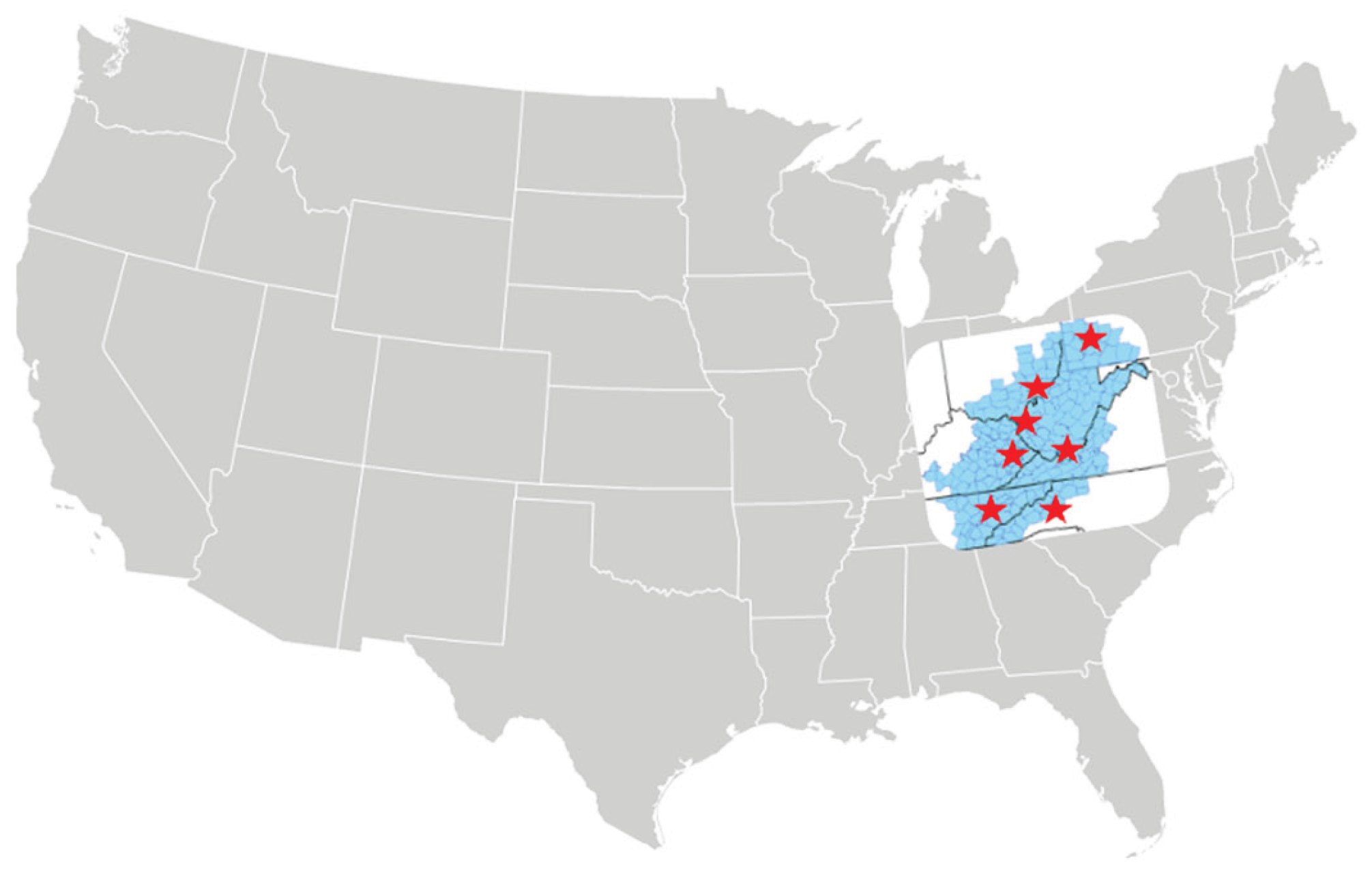
Figure 2.
Distribution of industry background of workshop participants (n=129).
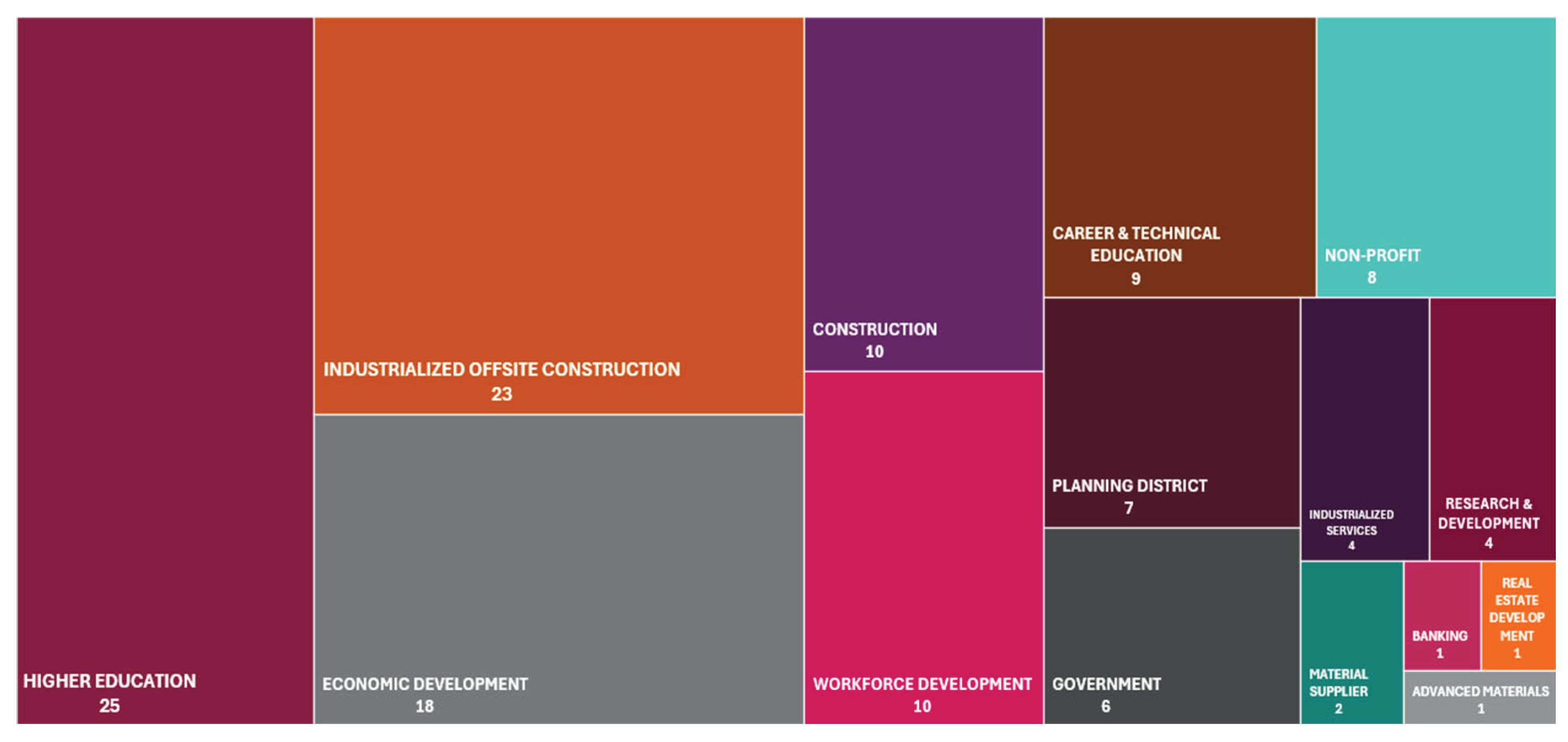
Figure 3.
Methodology workflow.
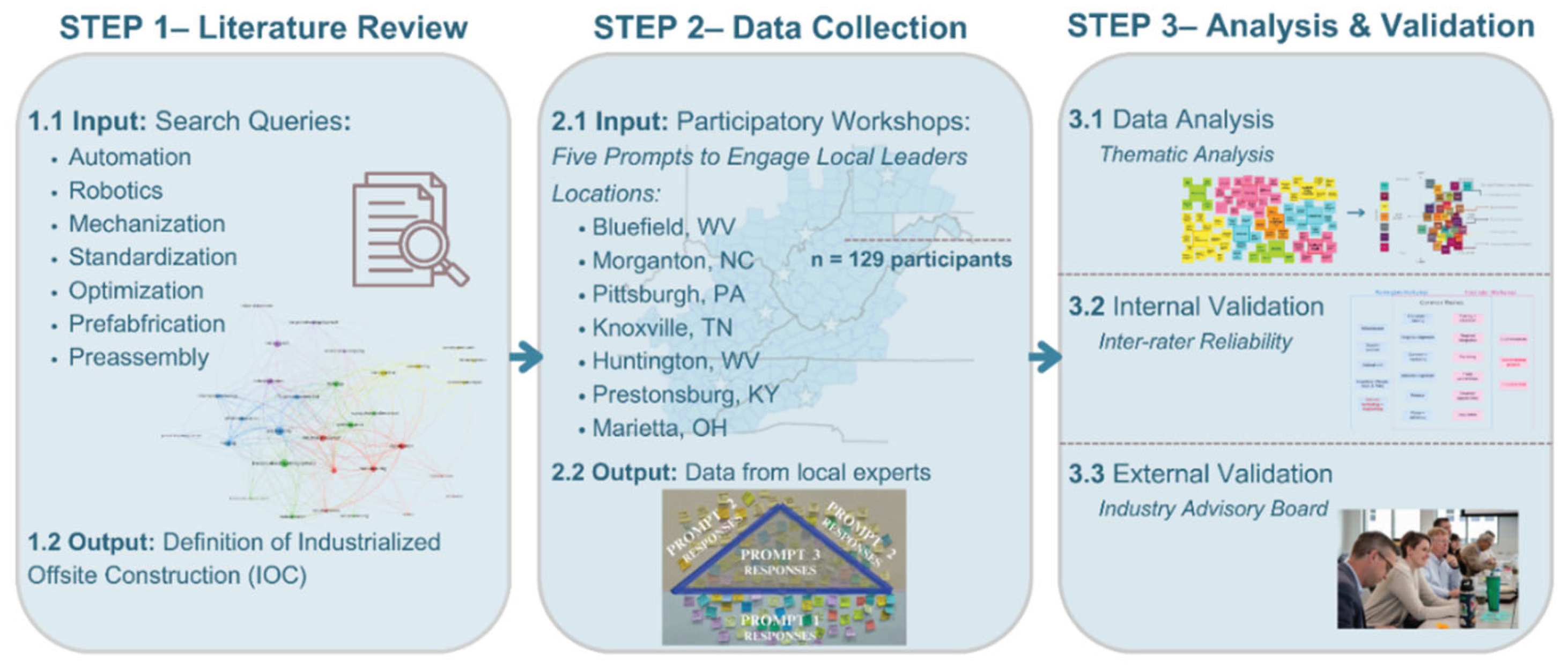
Figure 4.
Overview of the search query employed in the literature review.
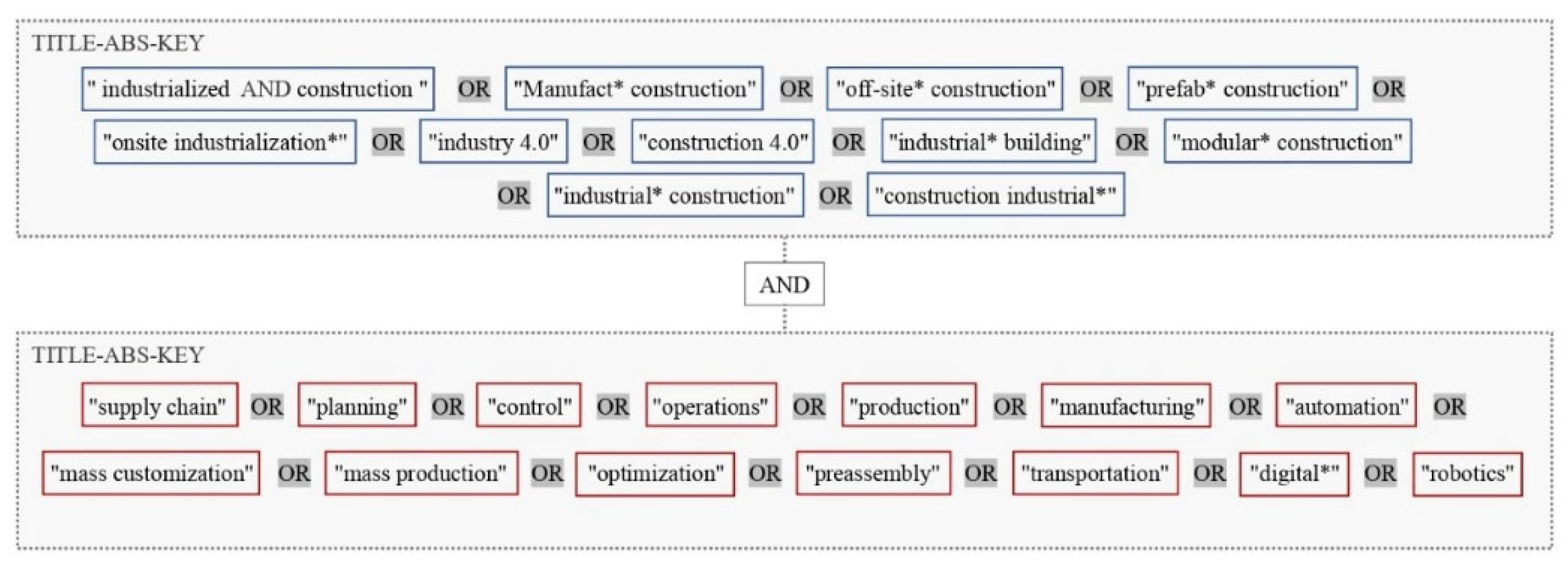
Figure 5.
Bibliometric Mapping of most frequently used terms – VOSviewer.
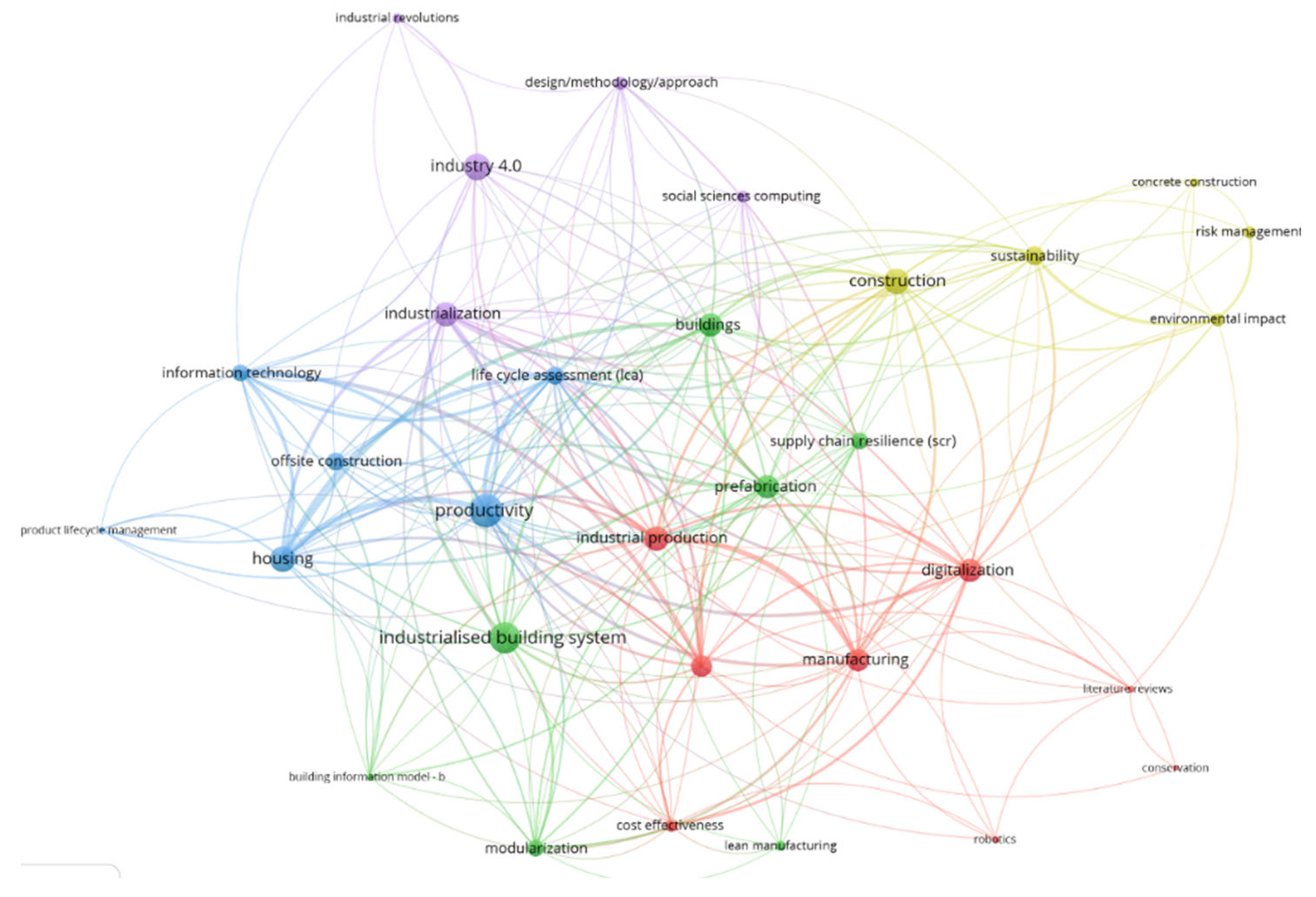
Figure 6.
Example of Participatory Design Process, Prompts 1-3.
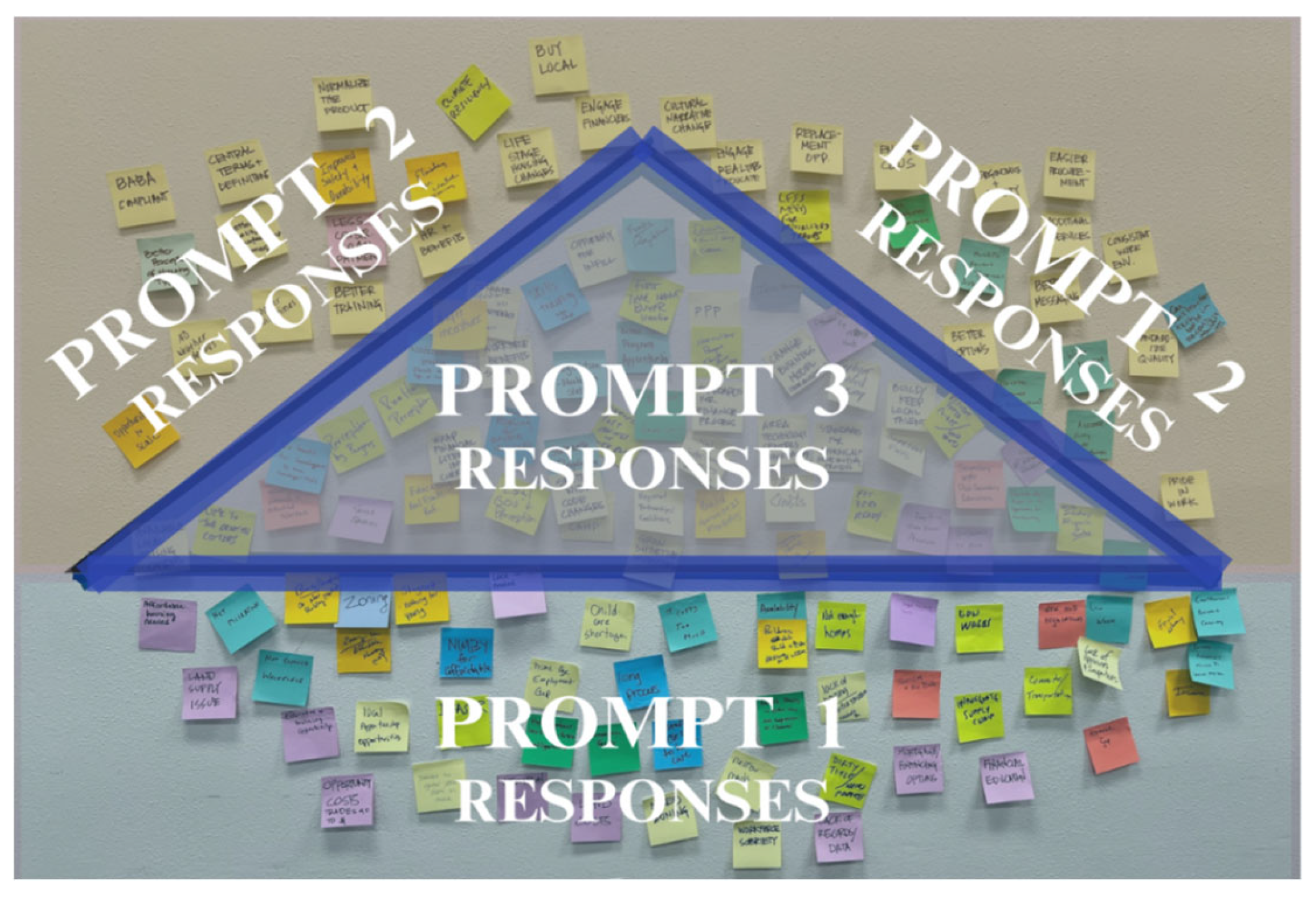
Figure 7.
Example of Affinity Diagram - Theme Clustering Output.
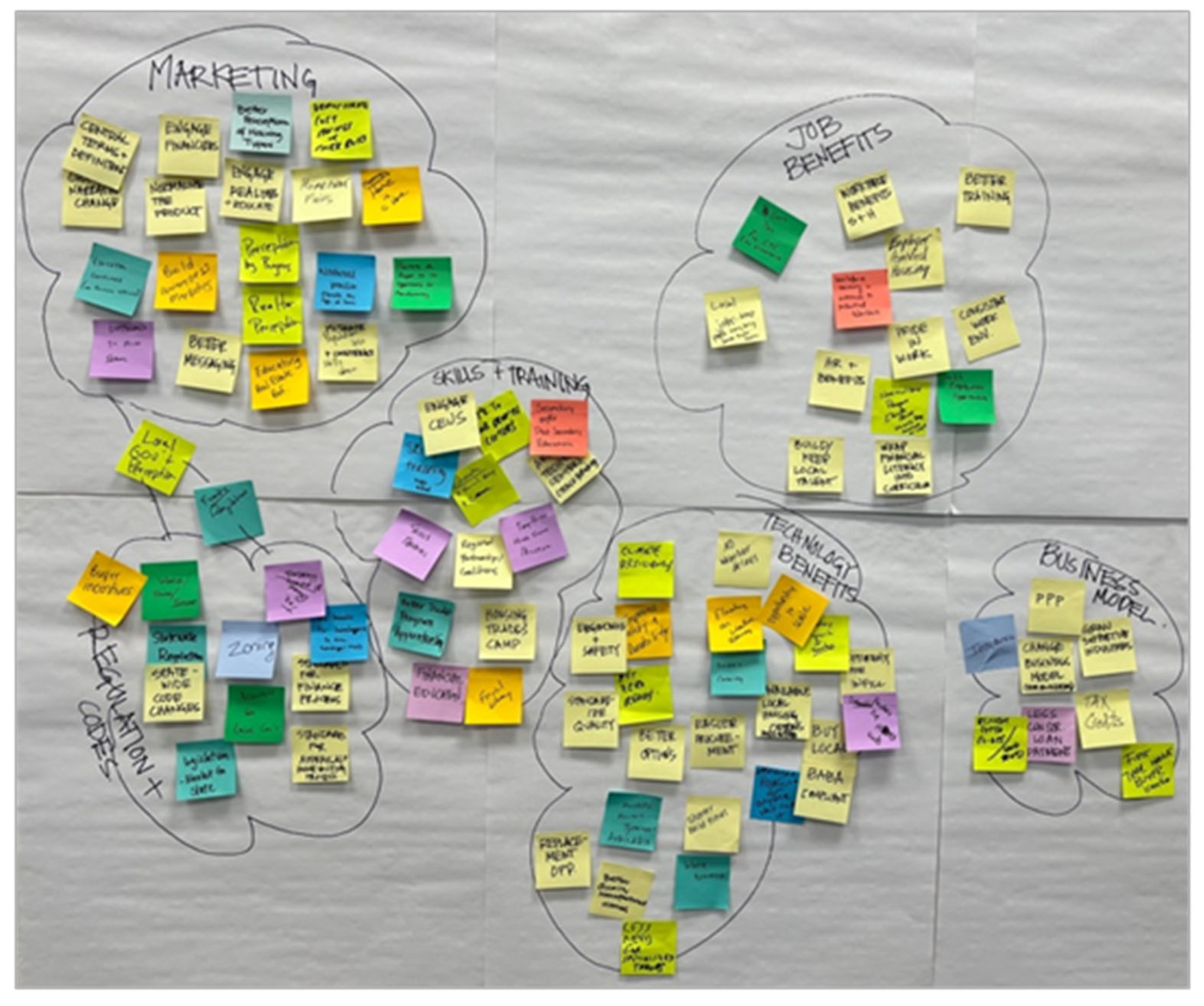
Figure 8.
Example of PICK Chart – Prioritizing Themes.
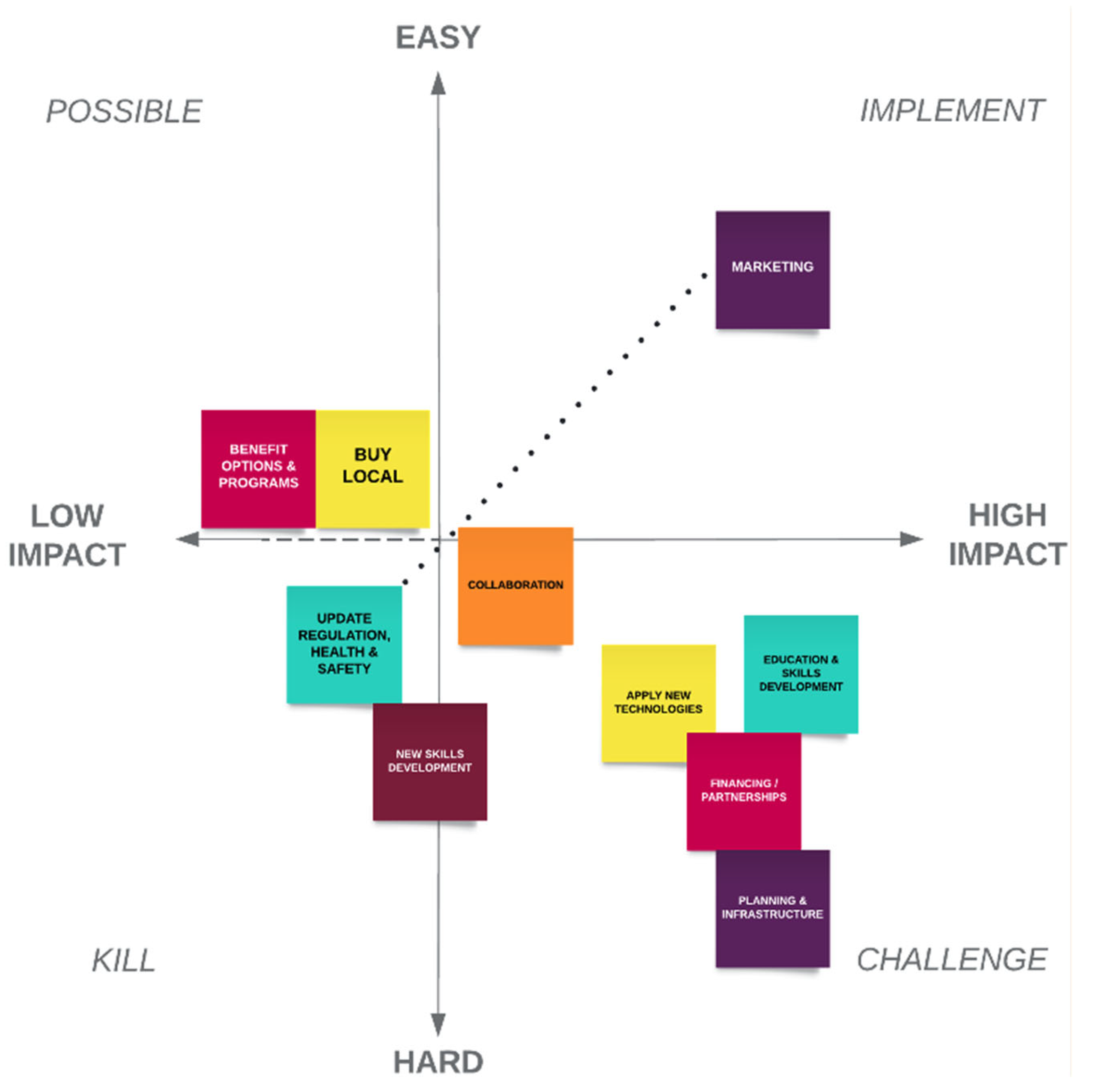
Figure 9.
Example of Internal Validation - Theme Re-clustering and Comparison.
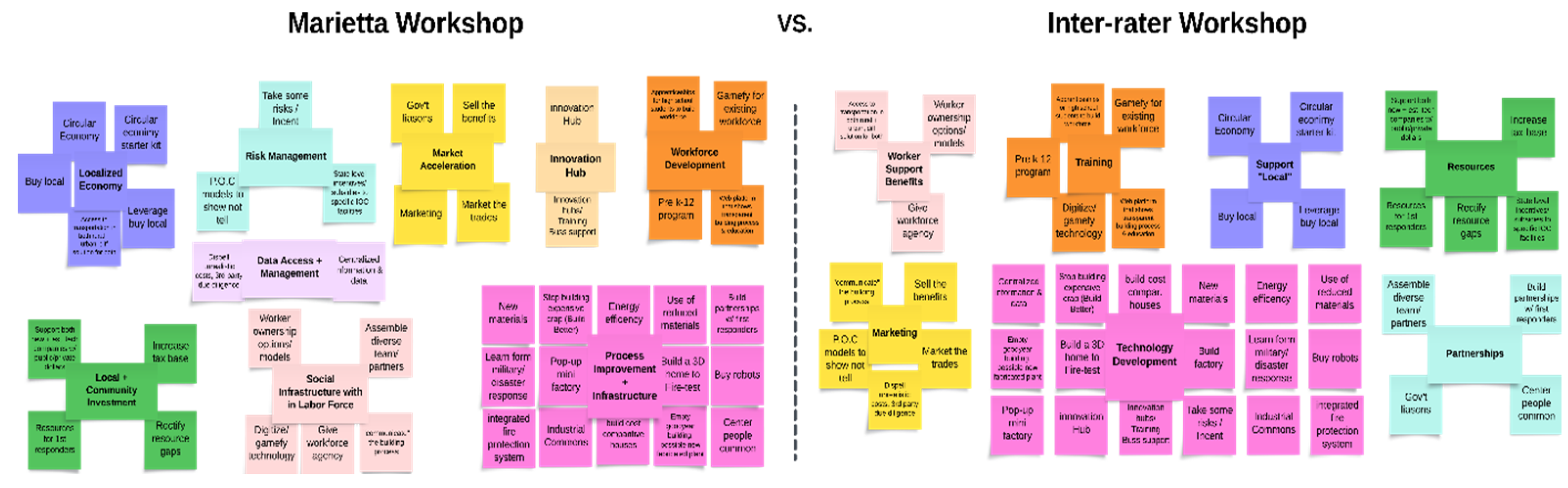
Figure 10.
Common themes from workshops.
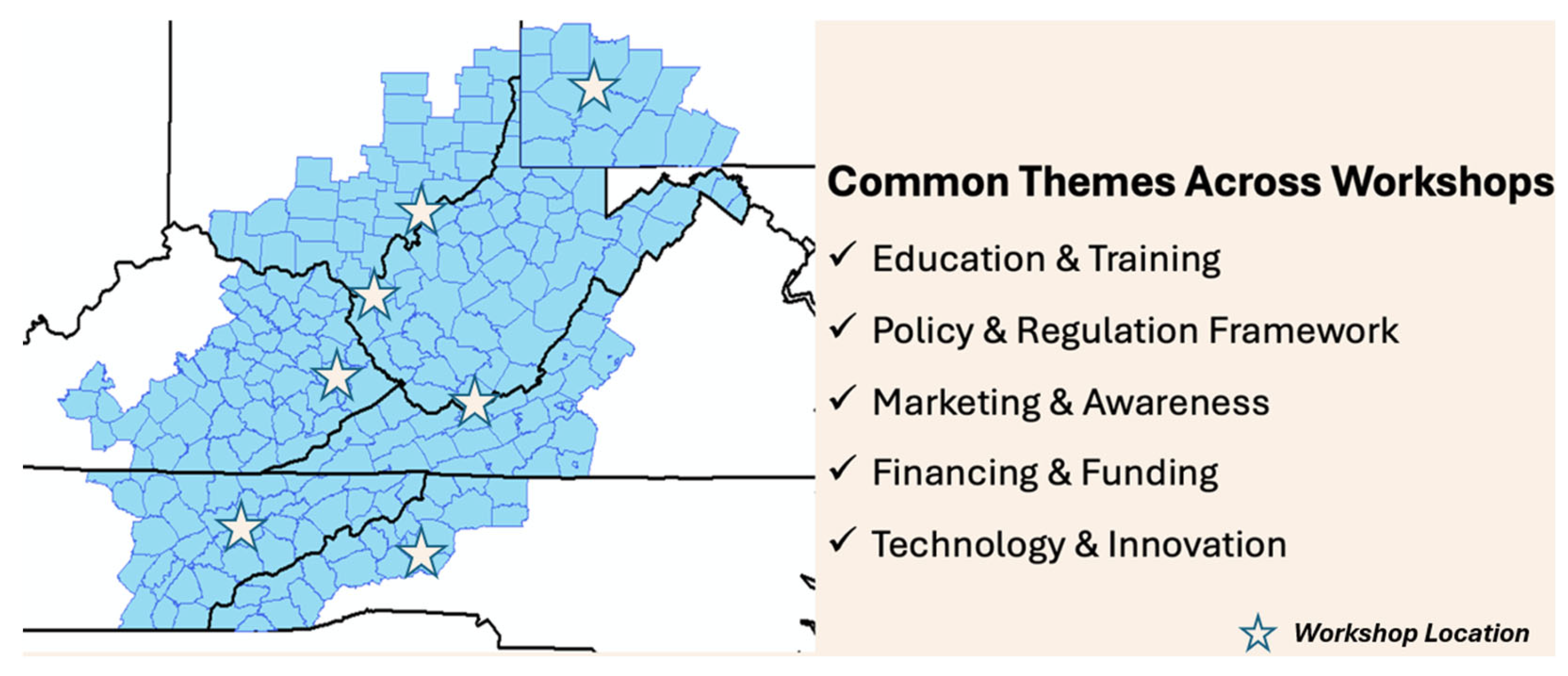
Figure 11.
Combined PICK chart reveals common themes.
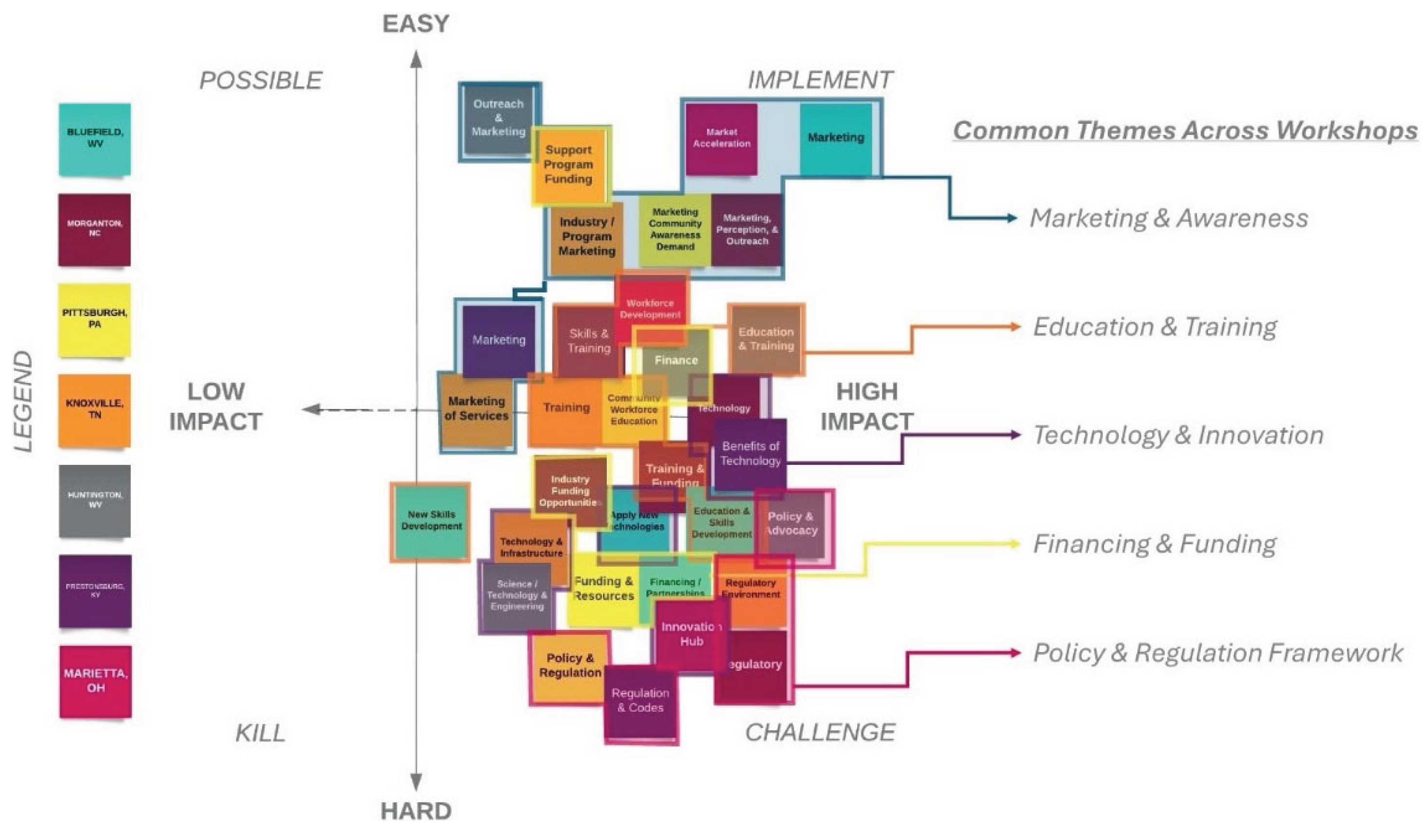
Table 1.
Housing trends of the participatory workshop locations (Data USA, 2022).
| Location | Key Challenges | Market Context/Trends | Affordability/ Condition |
Notable Details |
|---|---|---|---|---|
| Bluefield | Insufficient affordable housing, aging inventory | Recent tourism/economic growth, but housing/supply lags | Median home cost ~$113,900, mostly old stock | Investment threatened by slow workforce/housing development |
| Morganton | Affordable options not keeping pace | Population/economic growth as an urban-rural corridor | Growing demand from new residents | Recent influx needs tailored, affordable solutions |
| Pittsburgh | Aged, energy-inefficient stock | Post-industrial transition, strategic public-private effort, but high unemployment rates, population decline, and deteriorating infrastructure (Carter, 2016) | 87.6% of units pre-1980 (City of Pittsburgh, 2020) | Working to diversify/modernize stock |
| Knoxville | Affordability, low inventory, and market uncertainty | Previous rapid value increases, now stabilizing (University of Tennessee, 2023) | Median cost ~$314,700 | Value preserved, reliant on demographic/market shifts |
| Huntington | Aging homes, infrastructure deficit | Public health issues, leveraged federal grants (City of Huntington, 2023) | Median home costs ~$129,600, old homes | Struggling with disrepair, opioid impact |
| Prestonsburg | Old, less sustainable stock, poverty | Population stagnation, low residential development | Median home costs ~$172,000 | 45% in poverty, needs diverse new stock (Data USA, 2022) |
| Marietta | Investment pressure, older homes | Attracting outside investors, economic restructuring | Median home cost ~$161,600, 1950s stock | Emerging tourism, housing updates needed |
Table 3.
Cohen’s κ benchmarks.
| κ Range | Strength of Agreement |
|---|---|
| <0.00 | Poor |
| 0.00–0.20 | Slight |
| 0.21–0.40 | Fair |
| 0.41–0.60 | Moderate |
| 0.61–0.80 | Substantial |
| 0.81–1.00 | Almost perfect |
Disclaimer/Publisher’s Note: The statements, opinions and data contained in all publications are solely those of the individual author(s) and contributor(s) and not of MDPI and/or the editor(s). MDPI and/or the editor(s) disclaim responsibility for any injury to people or property resulting from any ideas, methods, instructions or products referred to in the content. |
© 2026 by the authors. Licensee MDPI, Basel, Switzerland. This article is an open access article distributed under the terms and conditions of the Creative Commons Attribution (CC BY) license.
Copyright: This open access article is published under a Creative Commons CC BY 4.0 license, which permit the free download, distribution, and reuse, provided that the author and preprint are cited in any reuse.