

Submitted:
27 February 2026
Posted:
02 March 2026
You are already at the latest version
Preprints on COVID-19 and SARS-CoV-2
Abstract
This narrative review conceptually integrates neurodevelopmental and infectious disease research to examine whether shared metabolic and immune dysregulation provides a biologically plausible framework for understanding COVID-19 risk and recovery in individuals with Autism Spectrum Disorder (ASD). Rather than inferring causality, the aim is to critically evaluate existing evidence, identify gaps in current knowledge, and propose testable hypotheses to guide future longitudinal, mechanistic, and biomarker-driven investigations. By situating ASD within a systems-level metabolic–immune framework, this work seeks to inform more precise strategies for risk stratification and clinical monitoring in vulnerable populations.A structured literature search was conducted using PubMed, PsycINFO, ScienceDirect, and Scopus, covering publications from 2007 to 2025. Search terms included ASD, COVID-19, cholesterol, glucose, ferritin, and white blood cells. Priority was given to peer-reviewed original research, reviews, and meta-analyses with mechanistic or biomarker relevance. Preclinical studies were included to support pathway-level discussion, while case reports and non-peer-reviewed sources were excluded.Evidence suggests overlapping biomarker patterns in ASD and COVID-19, including reduced HDL, elevated glucose, and increased neutrophil-to-lymphocyte ratios. Ferritin, often reduced in ASD, may rise during acute infection. These shared alterations underscore the importance of early biomarker monitoring and targeted intervention strategies.
Keywords:
autism spectrum disorder
; COVID-19
; cholesterol
; glucose
; neutrophil-to-lymphocyte ratio
; ferritin
1. Introduction
As the world continues to navigate the effects of the COVID-19 pandemic, increasing attention has turned to its intersection with Autism Spectrum Disorder (ASD). Emerging studies suggest that individuals with ASD are at higher risk for both contracting COVID-19 and experiencing severe illness, potentially due to underlying immune dysregulation and chronic inflammation. Approximately 25% of individuals with ASD exhibit immune dysfunction, which may amplify COVID-19 severity or contribute to long-term complications such as long COVID (Al-Beltagi et al., 2022; Eshraghi et al., 2020). A recent report also indicates a continued rise in ASD prevalence, with 6.1 more children per 1,000 aged 8 years diagnosed in 2022 compared to 2020, representing a 22.2% increase (Shaw et al., 2025).
In addition to well-documented behavioral challenges, ASD is increasingly recognized to involve physiological abnormalities, including immune and metabolic dysfunctions. Children with ASD have been reported to show elevated pro-inflammatory cytokines such as interleukin-6 (IL-6) and tumor necrosis factor-alpha (TNF-α), suggesting a systemic pro-inflammatory state (Ashwood et al.,, 2011; Goines & Ashwood, 2013). Despite this, commonly available biomarkers of inflammation and metabolism, such as cholesterol, glucose, white blood cell (WBC) differentials, and ferritin, have received comparatively little attention in ASD, despite their known relevance in immune response and systemic health. Similarly, COVID-19 is characterized by profound systemic inflammation and immune activation. SARS-CoV-2 enters host cells via ACE2 receptors and initiates cascades that include cytokine storms, endothelial dysfunction, and metabolic disruption (Zhou et al., 2020; Huang C. et al., 2020). Disruption of lipid rafts, cholesterol-rich membrane domains essential for viral entry and signaling, has been implicated in both SARS-CoV-2 infection and in neuroinflammation observed in ASD (Lingwood & Simons, 2010; Palacios-Rápalo et al., 2021).
Both ASD and COVID-19 have similar trends in reduced high-density lipoprotein (HDL), elevated blood glucose, increased neutrophil-to-lymphocyte ratio (NLR), and abnormal ferritin levels. For example, hypolipidemia has been noted in ASD and has similarly been associated with poor prognosis in COVID-19. Hyperglycemia and altered glucose metabolism are prevalent in ASD and significantly predict COVID-19 severity. Elevated NLR, a marker of systemic inflammation, is increased in both ASD and COVID-19. Finally, while ferritin is often low in ASD due to iron deficiency, it is markedly elevated in COVID-19 as an acute-phase reactant and may modulate immune responses during co-infection.
In this review, we focus on four accessible and clinically relevant biomarkers, cholesterol, glucose, WBC differentials, and ferritin, to explore their similar trends in ASD and COVID-19. We highlight how metabolic and immune dysregulation indicated by these biomarkers may underlie vulnerability in individuals with ASD during the pandemic. Given the routine nature of these blood tests, this review also considers their potential utility in risk stratification and clinical management for ASD individuals facing SARS-CoV-2 exposure.
2. Methods
Although this was not a systematic review, a structured approach was used to identify relevant literature for this narrative review. Articles were sourced from major medical and psychological databases, including PubMed, PsycINFO, ScienceDirect, and Scopus, using combinations of diagnostic, metabolic, and immunological search terms related to Autism Spectrum Disorder (ASD), COVID-19, and potential common biomarker pathways. Search terms included “autism,” “ASD,” “COVID-19,” “SARS-CoV-2,” “cholesterol,” “glucose,” “ferritin,” “white blood cells,” “biomarkers,” and “immune-metabolic dysregulation.” The search included English-language publications from 2007 to 2025. Earlier studies (2007–2010) were included to capture foundational research on ASD-related biomarkers and early intervention studies, whereas the majority of the literature, particularly those addressing emerging immuno-metabolic biomarker trends in ASD and COVID-19, was concentrated between 2019 and 2025. Additional studies were identified through manual screening of reference lists in key papers and recent reviews.
Priority was given to original research articles, reviews, and meta-analyses that examined at least one of the biomarkers of cholesterol, glucose, white blood cell differentials, or ferritin in relation to ASD, COVID-19, or both. Preclinical studies and translational research were also included to support mechanistic and pathophysiological discussion. Exclusion criteria included case reports, non-peer-reviewed material, conference abstracts, and studies without biomarker or mechanistic relevance to the focus of this review. Additionally, the selection of biomarkers was guided by evidence of their association with disease severity and underlying pathophysiology in ASD and COVID-19 research. Accordingly, all selected biomarkers have been reported to exert or reflect significant influences on immune and metabolic pathways, including mitochondrial function, oxidative stress, and inflammatory responses. Finally, biomarkers were chosen for their potential as common or prognostic indicators across ASD and COVID-19, which supports their relevance in exploring possibly convergent biological mechanisms.
3. Results
3.1. Emerging Evidence of Cholesterol Dysregulation in ASD and COVID-19
Cholesterol has been shown to play a critical role in maintaining cellular membrane integrity, immune signaling, and brain development (Orth et al., 2012; Aguilar-Ballester et al., 2021). Dysregulation of cholesterol metabolism is implicated in both ASD and COVID-19, with growing evidence pointing to similar mechanisms such as inflammation, membrane disruption, and lipid signaling abnormalities. Comparisons were made between cholesterol’s function in ASD and COVID [Table A1].
3.1.1. Lipid Rafts and Membrane Function
Cholesterol-rich lipid rafts are microdomains within cell membranes that regulate protein localization, signaling, and synaptic function. These are particularly vital in the central nervous system for neurotransmitter regulation and synaptic plasticity (Simons & Sampaio, 2011; Viljetić et al., 2024). In ASD, disrupted lipid rafts impair neuronal communication and may contribute to behavioral and synaptic abnormalities (Wang, 2014). Animal studies confirm that impairments in cholesterol synthesis alter lipid raft integrity, synaptic signaling, and can contribute to ASD-like behaviors, which are partially reversible with cholesterol normalization (Kalinowska et al., 2015; Sural-Fehr et al., 2019).
SARS-CoV-2 exploits cholesterol-rich rafts for cell entry via ACE2 clustering. Disruption of lipid rafts with methyl-β-cyclodextrin blocks viral entry (Sorice et al., 2021). In high-cholesterol conditions, ACE2 localizes to GM1-rich entry points, enhancing viral infectivity (Wang et al., 2023). Thus, cholesterol status influences both neurodevelopment and viral susceptibility.
3.1.2. Lipid Profile Abnormalities
In ASD, dyslipidemia commonly presents as low HDL levels and abnormal apolipoprotein profiles, which have been associated with reduced adaptive functioning (Tierney et al., 2021; Benachenhou et al., 2019). However, findings across studies remain inconsistent, with some reporting elevated LDL levels or no significant lipid differences compared to controls, likely reflecting the substantial heterogeneity of ASD (Gaspar et al., 2024; Kim et al., 2010).
These baseline lipid patterns are further influenced by multiple confounding factors within the ASD population, including phenotypic variation (Toma, 2020), dietary differences (Esposito et al., 2023), medication use, and comorbid conditions, all of which may modulate lipid profiles. Moreover, the predominantly pediatric focus of many studies may bias observed cholesterol patterns, as lipid metabolism varies across developmental stages (Tierney et al., 2021; Benachenhou et al., 2019; Gaspar et al., 2024; Kim et al., 2010). In addition, while Alyaseen (2024) did not identify a significant association between lower socioeconomic status (SES) and low cholesterol levels in ASD patients, SES-related factors—such as variations in nutrition, metabolic health, and other physiological characteristics—may still contribute to differences in cholesterol profiles across ASD populations (Durkin et al., 2010).
COVID-19 severity correlates with reduced HDL and LDL levels (Fan et al., 2020; Wei et al., 2020; Ding et al., 2020; Tanaka et al., 2020). These changes stem from inflammatory cytokines that alter lipid metabolism and promote LDL oxidation (Al-Kuraishy et al., 2023). Low HDL is linked to prolonged viral shedding, and altered HDL may facilitate viral entry through ACE2 modulation (Kluck et al., 2021). Cyclodextrin-mediated raft disruption reduces ACE2 and furin localization, lowering infectivity (Wang et al., 2023).
3.1.3. Inflammation and Oxidative Stress
Both ASD and COVID-19 are characterized by inflammation and oxidative stress. In ASD, altered cholesterol metabolism coexists with disrupted ceramide pathways and mitochondrial dysfunction, correlating with symptom severity (Lingampelly et al., 2024; Goicoechea et al., 2023). In COVID-19, pro-inflammatory cytokines suppress lipoprotein lipase and reduce HDL synthesis (Masana et al., 2021). Oxidized HDL loses anti-inflammatory capacity and becomes pro-inflammatory (Kluck et al., 2021). This research suggests that ASD and COVID are alike in the metabolic-immune dysregulation that can partly stem from varied cholesterol levels in the two conditions. The inflammatory milieu of COVID-19 requires attention due to the possibility of exacerbation of underlying immune abnormalities in ASD, making cholesterol metabolism both a valuable biomarker and potential intervention point.
3.2. Glucose Dysregulation: Possible Mechanistic Links Between ASD and COVID-19
Glucose metabolism is essential for both neurodevelopment and immune function. In ASD, insulin resistance and altered glucose levels have been associated with behavioral and cognitive impairments. In COVID-19, hyperglycemia is linked to worse outcomes due to its role in immune dysfunction and inflammation. SARS-CoV-2 may exploit high glucose conditions to enhance glycosylation of ACE2 receptors, facilitating viral entry and replication (Liu S. et al., 2020; Codo et al., 2020). Comparisons were made between glucose’s function in ASD and COVID [Table A2]
3.2.1. Systemic Inflammation and Insulin Resistance
Both conditions exhibit systemic inflammation and insulin resistance. In ASD, insulin resistance may impair neuronal glucose uptake, contributing to altered brain connectivity and ASD symptoms (Manco et al., 2021). Children with ASD have been shown to exhibit higher HOMA-IR and abnormal fasting glucose and insulin levels (Zhang et al., 2019), pointing to early β-cell dysfunction. In COVID-19, elevated glucose levels fuel pro-inflammatory cytokine production, further impairing insulin signaling (Logette et al., 2021). SARS-CoV-2 may infect pancreatic β-cells and suppress insulin secretion, compounding metabolic dysfunction (Michaels et al., 2024).
3.2.2. Oxidative Stress and Glucose Dysregulation
In both ASD and COVID-19, glucose dysregulation leads to elevated reactive oxygen species (ROS), damaging cellular structures and exacerbating inflammation. In ASD models, increased ROS impairs glucose uptake and disrupts brain function (Liu M. et al., 2023). In COVID-19, hyperglycemia intensifies oxidative stress and β-cell dysfunction (Soto et al., 2022), further destabilizing metabolic balance.
3.2.3. Developmental Impacts and Long-Term Risks
Individuals with ASD face elevated risk of diabetes, which may be linked to selective diets and medication effects (Sammels et al., 2022). Maternal hyperglycemia is also associated with increased ASD risk in offspring (Hoirisch-Clapauch & Nardi, 2019). In COVID-19, hyperglycemia during pregnancy or post-infection may induce lasting metabolic changes (Shestakova et al., 2022), suggesting long-term implications for children exposed to SARS-CoV-2 in utero.
3.2.4. Glucose Transport and Therapeutic Targets
Disrupted glucose transport is observed in ASD and COVID-19. In ASD, increased glycolysis in microglia contributes to neuroinflammation, which may be mitigated by 2-deoxy-D-glucose (2-DG) or mesenchymal stem cell-derived EVs (Qin et al., 2025; Cheng J. et al., 2021). Both clinical observations and animal studies have further proposed a “Warburg effect”–like metabolic shift in ASD pathology, in which elevated glycolysis may represent a risk factor for disease development (Qin et al., 2025). In COVID-19, SARS-CoV-2 similarly enhances host cell glycolysis to support viral replication, a mechanism that is also targetable by 2-DG (Codo et al., 2020; Huang Z. et al., 2022). These findings suggest glycolysis inhibition may offer dual therapeutic benefits.
Collectively, glucose dysregulation may represent a key point of biological convergence between ASD and COVID-19; however, direct causal relationships cannot be inferred given the limited number of studies examining both conditions concurrently. In interpreting baseline glucose levels in individuals with ASD and COVID-19, it is also important to account for the effects of antipsychotic and other metabolically active medications, as well as the presence of co-occurring obesity or eating disorders, which are prevalent within the ASD population (Scahill et al., 2016; Micai et al., 2023). Consequently, therapeutic strategies targeting metabolic regulation and the reduction of oxidative stress may hold promise for alleviating inflammatory burden in both populations.
3.3. White Blood Cell (WBC) Differentials: Immune Dysregulation in ASD and COVID-19
Immune dysregulation is a key feature of both ASD and COVID-19, and white blood cell (WBC) profiles, particularly the neutrophil-to-lymphocyte ratio (NLR), offer accessible biomarkers for monitoring inflammatory status in both conditions. Comparisons were made between WBC parameters in ASD and COVID [Table A3]
3.3.1. Elevated NLR in ASD and COVID-19
In COVID-19, an elevated NLR is a well-established marker of systemic inflammation and disease severity (La Torre et al., 2022 Ergenç et al., 2021). Numerous studies report that higher NLR correlates with increased risk of ICU admission, respiratory failure, and mortality (Rathod et al., 2022). Neutrophilia reflects the innate immune response, while lymphopenia indicates impaired adaptive immunity, particularly T-cell exhaustion and apoptosis (Malech et al., 2014; Guo et al., 2021).
In ASD, evidence for altered WBC profiles is also accumulating. Studies have observed elevated neutrophil counts, reduced lymphocytes, and increased NLR in ASD populations (Kulaksizoglu et al., 2019; Siniscalco et al.,, 2018). Elevated NLR in ASD may reflect chronic low-grade inflammation and immune imbalance. For example, a study by Kutlu et al. (2018) found that children with ASD showed significantly higher NLR levels than neurotypical controls, possibly correlating with increased severity of social and behavioral symptoms (Hesapcioglu et al., 2017).
Given that both ASD and COVID-19 exhibit elevated NLR, this shared feature may suggest a convergent immune phenotype involving heightened innate immunity and compromised adaptive response. This may partly explain why individuals with ASD experience more severe outcomes from COVID-19 and are potentially at higher risk for long-term immune complications. The influence of obesity, physical activity, and age should be taken into consideration though in evaluating NLR levels in ASD individuals (Rodríguez-Rodríguez et al., 2022; Howard et al., 2019).
3.3.2. Cytokine Profiles and Immune Activation
Elevated NLR in both conditions likely reflects underlying cytokine dysregulation. In ASD, elevated pro-inflammatory cytokines such as IL-1β, IL-6, and TNF-α have been consistently reported in both peripheral blood and cerebrospinal fluid (Goines & Ashwood, 2013). These cytokines recruit neutrophils and suppress lymphocyte proliferation, mirroring changes seen in severe COVID-19 cases.
COVID-19 triggers a cytokine storm, characterized by a surge in IL-6, IL-8, and TNF-α. This pro-inflammatory cascade drives neutrophilia, decreased lymphocytes, and elevated NLR (Toori et al., 2021; Paranga et al., 2024). The overlap in immune profiles raises concerns about additive or synergistic immune dysregulation in individuals with ASD who contract COVID-19.
3.3.3. Implications for Clinical Management
NLR is an inexpensive, widely available marker that could aid in stratifying risk in ASD populations during infectious disease outbreaks (Lou et al., 2024; Buonacera et al., 2022) . Elevated NLR may signal underlying immune imbalance and predict susceptibility to more severe COVID-19 outcomes. Routine WBC and differential counts could inform both preventive strategies and early interventions.
Future studies should explore how baseline immune profiles, particularly NLR, influence COVID-19 severity and recovery in ASD populations. Longitudinal tracking could determine whether elevated NLR persists post-infection and whether it is associated with long COVID-19 symptoms or exacerbation of ASD-related behaviors. This would advance precision medicine strategies tailored to immune-vulnerable subgroups within the ASD population.
3.4. Ferritin and Iron Homeostasis: Divergent Roles in ASD and COVID-19
Ferritin, a key iron storage protein and acute-phase reactant, plays a role in both immunity and inflammation (Kotla et al., 2022). While it is typically reduced in individuals with ASD due to iron deficiency, it is markedly elevated in COVID-19, particularly in severe cases, where it serves as a marker of hyperinflammation. Comparisons between ferritin’s function in ASD and COVID were summarized [Table A4]
3.4.1. Low Ferritin in ASD: Neurodevelopmental and Behavioral Implications
Iron deficiency is common in ASD, especially among children with restrictive diets (Reynolds et al., 2012). Multiple studies report lower ferritin levels in ASD compared to typically developing (TD) peers, with deficiency rates ranging from 30–50% (De Giacomo et al., 2022; Samy et al., 2024). Low ferritin correlates with sleep disturbances, attention deficits, and increased severity of repetitive behaviors (Youssef et al., 2013; DelRosso et al., 2022). Iron is essential for myelination, neurotransmitter synthesis (particularly dopamine and serotonin), and mitochondrial function—all pathways implicated in ASD pathophysiology (Cheng R. et al., 2021).
The link between iron status and neurodevelopment is especially critical in early childhood. Iron deficiency in the first 1000 days of life is associated with irreversible cognitive and behavioral consequences (McCarthy et al., 2022). Despite this, ferritin remains underutilized as a biomarker in ASD management, even though dietary interventions and iron supplementation have shown benefits in improving sleep and attention in some subgroups (Dosman et al., 2007; DelRosso et al., 2022). Because serum ferritin is distorted by inflammation, liver disease, and obesity, it may be useful to take these variables into consideration in understanding these ASD and ferritin patterns (Daru et al., 2017).
3.4.2. Hyperferritinemia in COVID-19: Inflammatory Marker and Prognostic Tool
In contrast, ferritin acts as an acute-phase reactant in COVID-19. Elevated ferritin levels are associated with severe disease, ICU admission, and mortality (Kaushal et al., 2022; Cheng L. et al., 2020; Kappert et al., 2020). Hyperferritinemia in COVID-19 reflects cytokine-induced macrophage activation, tissue damage, and dysregulated iron sequestration (Gomez-Pastora et al., 2020; Mahat et al., 2020). It is part of the “hyperferritinemic syndrome,” a feature shared with other inflammatory conditions such as macrophage activation syndrome (MAS) and adult-onset Still’s disease (Rosário et al., 2013).
Elevated ferritin contributes to immune dysregulation via pro-inflammatory effects, including promotion of oxidative stress, apoptosis, and T cell suppression (Kernan et al., 2017; Pandrangi et al., 2022; Voss et al., 2023). These effects may compound pre-existing immune dysfunction in ASD individuals infected with SARS-CoV-2, potentially worsening both acute and long-term outcomes.
3.4.3. Iron Dysregulation in ASD–COVID-19 Intersection
Although ferritin trends differ between ASD and COVID-19, the underlying iron dysregulation may complicate inflammation and oxidative stress for ASD individuals with COVID-19. SARS-CoV-2 can exploit host iron metabolism to enhance viral replication (Chaubey et al., 2023). In ASD, where mitochondrial dysfunction and oxidative stress are already present, infection-driven ferritin elevation could further exacerbate cellular injury (Davinelli et al., 2025).
Recent studies have proposed ferritin-to-ESR ratios or combined iron panels as more refined biomarkers for inflammation and immune status in diverse populations (Eloseily et al., 2019). Applying such composite markers in ASD populations affected by COVID-19 could help identify at-risk individuals and guide nutritional or anti-inflammatory interventions.
In summary, while ferritin presents differently in ASD and COVID-19, its role as a modulator of iron metabolism, inflammation, and immune response positions it as a relevant and accessible biomarker for monitoring vulnerability and disease progression in comorbid contexts.
4. Discussion: Summary, Future Treatments/Directions
This review presents a framework of potential similarities in pathophysiology between ASD and COVID-19, emphasizing metabolic and immune dysregulation in both conditions involving biomarkers including cholesterol, glucose, WBCs, and ferritin. These biomarkers have the potential to serve as accessible indicators of disease severity and therapeutic responsiveness.
4.1. Cholesterol Dysregulation
Cholesterol is essential for CNS development, immune regulation, and membrane function (Orth et al., 2012). Disruptions in the mevalonate pathway in ASD models impair cholesterol synthesis and trafficking, contributing to neuroinflammation and synaptic dysfunction (Segatto et al., 2019). ASD studies report reduced HDL and apolipoproteins, though results vary due to heterogeneity in ASD presentation, comorbidities, and lifestyle factors (Tierney et al., 2021; Benachenhou et al., 2019; Gaspar et al., 2024; da Silveria Cruz-Machado et al., 2021). In contrast, COVID-19 shows more consistent lipid derangements, with decreased HDL/LDL levels correlating with inflammation (CRP, IL-6) (Fan et al., 2020; Wei et al., 2020; Ding et al., 2020; Tanaka et al., 2020). Cholesterol-rich lipid rafts also mediate SARS-CoV-2 entry, making them potential therapeutic targets (Sorice et al., 2021). Stratifying ASD by metabolic subtypes and incorporating lipidomic profiling could enhance biomarker utility (Yap et al., 2023).
4.2. Glucose Dysregulation
Insulin resistance, oxidative stress, and inflammation converge in ASD and COVID-19, creating a feedback loop that worsens metabolic dysfunction (Manco et al., 2021; Logette et al., 2021; Liu X. et al., 2022). ASD-related insulin resistance impairs neuronal glucose uptake and connectivity (Xu et al., 2018; Hoirisch-Clapauch and Nardi 2019). COVID-19-induced hyperglycemia promotes cytokine release and may lead to new-onset diabetes (Codo et al., 2020; Logette et al., 2021). The glycolysis inhibitor 2-DG has demonstrated potential in preclinical studies of both ASD and COVID-19, indicating a possible shared therapeutic target (Qin et al., 2025). Maternal hyperglycemia, whether from pre-existing diabetes or COVID-19, may increase ASD risk, underscoring the need for glycemic monitoring in pregnancy (Xiang et al., 2015; Hoirisch-Clapauch & Nardi, 2019; Sammels et al., 2022).
4.3. White Blood Cell and Neutrophil Dysregulation
Both conditions exhibit elevated NLR, reflecting acute (COVID-19) or chronic (ASD) inflammation. NETs and GSDMD-mediated pyroptosis play roles in tissue damage during COVID-19 and are implicated in ASD rodent models (Silva et al., 2021; Wu et al., 2025). Disulfiram and salidroside may modulate these pathways. IL-6 blockades and herbal modulators also warrant further exploration (Jyonouchi, 2024; Joshi et al., 2022; Mamidala et al., 2016). NLR and pyroptosis-related markers may represent shared immunopathogenic mechanisms and therapeutic targets.
4.4. Ferritin
Ferritin behaves differently across the two conditions: typically, low in ASD due to dietary iron deficiency, and elevated in COVID-19 as an inflammation marker (Sidrak et al., 2013; Chen et al., 2013; Rio et al., 2020). IL-6-induced ferritin overproduction contributes to hypoferremia, oxidative stress, and ferroptosis (Hippchen et al., 2020, Girelli et al., 2021). While not a universal marker in ASD, elevated ferritin—particularly post-COVID—may indicate chronic immune activation. Stratification by iron status and tracking ferritin dynamics could clarify its utility (Daru et al., 2017).
4.5. Cytokines and IL-17A as a Bridge
Both ASD and COVID-19 exhibit elevated pro-inflammatory cytokines, with the IL-6/IL-17A axis emerging as a key mechanistic bridge linking chronic and acute inflammation (Figure 1). In ASD, particularly in maternal immune activation (MIA) models, elevated IL-6 promotes Th17 cell differentiation, leading to increased IL-17A production. IL-17A then acts as a downstream amplifier, disrupting cortical development during neurodevelopmental windows and sustaining chronic neuroinflammation postnatally, contributing to ASD-like behaviors (Choi et al., 2016; Thawley et al., 2022). Human studies have also reported elevated IL-17A levels in subsets of autistic individuals, correlating with symptom severity (Akintunde et al., 2015; Wong & Hoeffer, 2018).
In COVID-19, the IL-6/IL-17A axis similarly drives acute hyperinflammation and cytokine storms, with elevated IL-17A and altered IL-17/IL-22 ratios linked to disease progression and lung pathology (Aksakal et al., 2024). Notably, IL-17A inhibitors, already approved for autoimmune diseases like psoriasis, are under investigation as potential therapies to reduce hyperinflammatory responses in severe COVID-19 cases (Zou et al., 2021). Together, IL-6 and IL-17A represent common inflammatory drivers, linking neuroimmune dysregulation in ASD with systemic immune overactivation in COVID-19, and providing potential dual therapeutic targets.
4.6. IL-6/IL-17A Axis: Impact on Microglial and Mitochondrial Dysfunction
The IL-6/IL-17A axis also directly impacts microglial activation, linking immune signaling to mitochondrial dysfunction and oxidative stress. In ASD, intraventricular administration of IL-17A in fetal mouse brains induces cortical microglial activation and accumulation, leading to excessive phagocytosis of progenitor cells of excitatory neurons (Sasaki et al., 2020). This aberrant microglial pruning contributes to neuronal loss and cortical maldevelopment characteristic of ASD. Moreover, overexpression of IL-17A receptors on ASD monocytes heightens nitrosative stress, as receptor activation increases iNOS and nitrotyrosine expression, promoting ROS and RNS production (Nadeem et al., 2018a). These effects converge on mitochondrial dysfunction, amplifying oxidative stress and synaptic dysregulation.
Similarly, in COVID-19, neuropathological studies reveal microglial dislocation and loss of P2Y12R expression in severely affected brain regions, particularly the medulla (Fekete et al., 2025). Microglial distribution heterogeneity (MDH) scores strongly correlate with CSF IL-6 and IL-1β levels, suggesting cytokine-driven microglial remodeling. Transcriptomic analyses further indicate downregulation of multiple mitochondrial electron transport chain (ETC) genes, reflecting metabolic failure and impaired oxidative phosphorylation in microglia (Fekete et al., 2025). This mitochondrial dysfunction likely contributes to neuroinflammation and energy imbalance in COVID-19-related neuropathology.
4.7. Il-6/Il-17A Axis: Oxidative Stress Pathways
Oxidative stress is another key downstream pathway linking ASD and COVID-19 through the IL-6/IL-17A axis. In COVID-19, SARS-CoV-2 proteins disrupt mitochondrial homeostasis, driving excessive mitochondrial ROS generation and impairing oxidative phosphorylation. This shift favors glycolytic metabolism to support viral replication but causes mtDNA leakage, activation of IL-6, IL-1β, and type I interferons, and further mitochondrial injury (Lee et al., 2025). Elevated ROS also contributes to fatigue, cognitive dysfunction, and multisystem inflammation. In severe and MIS-C cases, increased IL-6 and IL-17A levels correlate with reduced glutathione (GSH) and increased nitric oxide (NO), confirming oxidative stress as a key determinant of disease severity and survival (de Farias et al., 2025).
In ASD, oxidative stress represents a chronic vulnerability. The autistic brain displays elevated mitochondrial ROS and nitric oxide, leading to impaired oxidative phosphorylation, dysregulated mitochondrial Ca²⁺ cycling, and activation of mitochondrial apoptotic pathways (Khaliulin et al., 2024). Compromised antioxidant systems, such as decreased GSH, exacerbate ROS accumulation and neurotoxicity, disrupting synaptic function and neuronal signaling. Collectively, these findings position oxidative stress as a central mediator between cytokine signaling, mitochondrial injury, and neuronal dysfunction in ASD and COVID-19.
4.9. Hypothetical Model of Overlapping Metabolic and Immune Pathways in ASD and COVID-19
Emerging evidence suggests that ASD and COVID-19 share overlapping biological mechanisms, particularly in metabolic and immune dysregulation. While their etiologies are distinct, they may converge on downstream pathways involving inflammation, oxidative stress, mitochondrial dysfunction, and cellular energy disruption, which may help explain their clinical intersection.
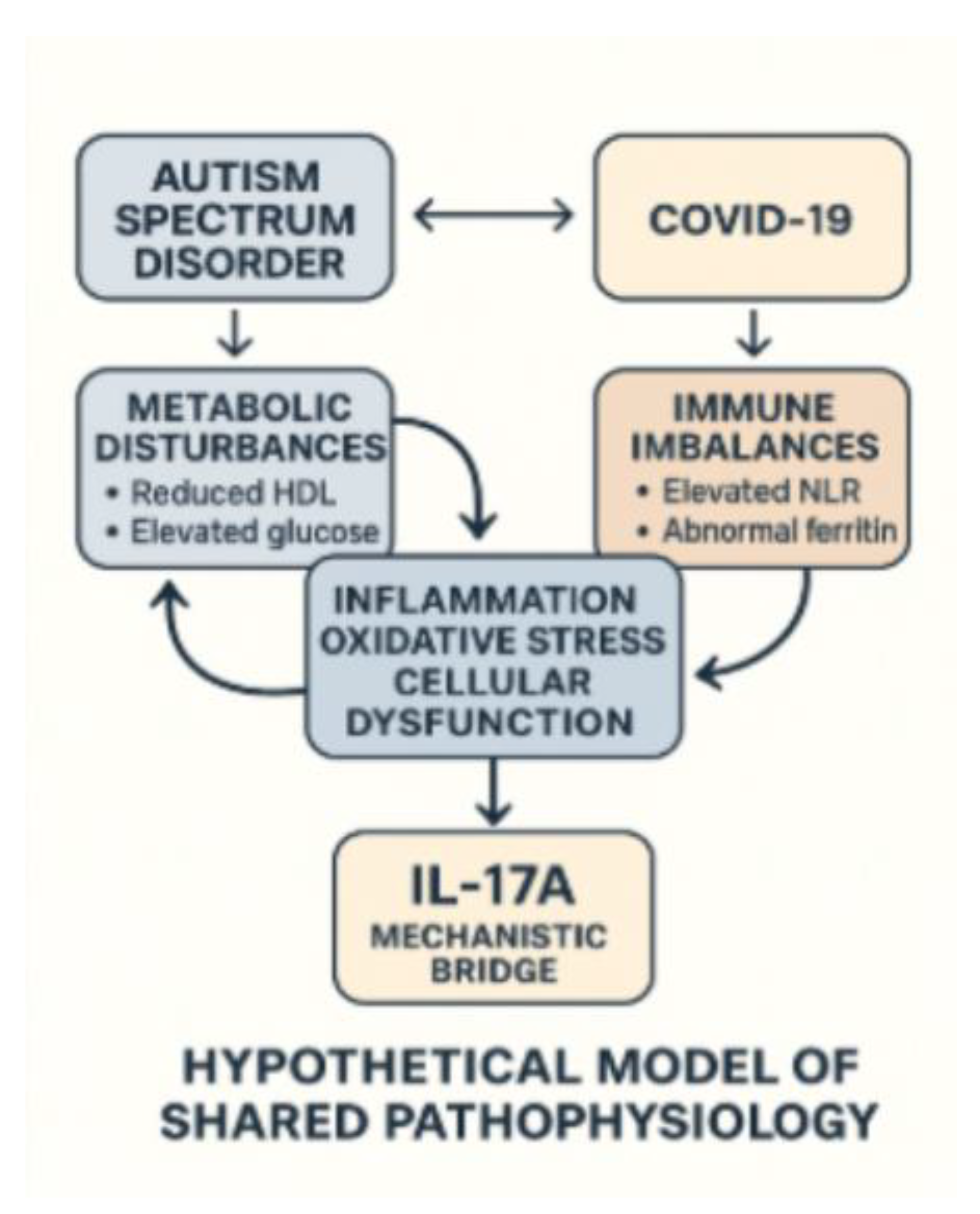
We propose a hypothetical systems-level model (Figure 2) illustrating the convergence of key metabolic and inflammatory factors, including cholesterol dysregulation, impaired glucose metabolism, oxidative stress, elevated NLR, ferritin, and the IL-6/IL-17A axis, in both ASD and COVID-19. In ASD, metabolic abnormalities (e.g. reduced HDL, altered lipid profiles, insulin signaling deficits) have been linked to neurodevelopmental disturbances and may amplify chronic neuroinflammation (Tierney et al., 2021; Benachenhou et al., 2019; Gaspar et al., 2024; Xu et al., 2018; Hoirisch-Clapauch and Nardi 2019). In COVID-19, profound metabolic disruption and oxidative stress escalate inflammatory cascades, with elevated NLR and ferritin reflecting potential mechanistic links between immune activation and tissue injury (La Torre et al., 2022 Ergenç et al., 2021; Kaushal et al., 2022; Cheng L. et al., 2020; Chaubey et al., 2023).
Importantly, the IL-6/IL-17A axis acts at the intersection of these pathways, with IL-6 driving Th17 activation and IL-17A amplifying both chronic neuroimmune dysregulation in ASD and acute hyperinflammation in COVID-19. This signaling cascade contributes to microglial activation, mitochondrial dysfunction, and oxidative stress, ultimately disrupting cellular metabolism (Choi et al., 2016; Thawley et al., 2022; Akintunde et al., 2015; Wong & Hoeffer, 2018; Aksakal et al., 2024). This integrative model underscores the need for biomarker-driven approaches to identify ASD individuals at highest risk for severe COVID-19 and to explore therapeutic strategies, such as IL-17A inhibition, antioxidant therapy, iron regulation, or HDL modulation, that address both chronic and acute immune dysfunction (Zou et al., 2021; Kartasheva-Ebertz et al., 2021; Nadeem et al., 2018b).
This integrative perspective is visualized in Figure 1, which highlights the IL-6/IL-17A axis as a central inflammatory bridge connecting ASD and COVID-19. In ASD, this axis disrupts prenatal neurodevelopment and sustains chronic neuroinflammation; in COVID-19, it drives acute hyperinflammatory responses and cytokine storms (Carter et al., 2022; Paranga et al., 2022; Shibabaw 2020). Notably, IL-17A inhibitors, already approved for autoimmune conditions, are under investigation as dual-purpose therapies to modulate both chronic and acute inflammation (Zheng et al., 2025).
Expanding beyond cytokine signaling, Figure 2 presents a systems-level model integrating metabolic and immune disturbances, including cholesterol dysregulation, glucose abnormalities, elevated NLR, and ferritin levels, that may converge on downstream pathways of inflammation, oxidative stress, and cellular dysfunction. This figure positions the IL-6/IL-17A axis at the intersection of these metabolic-immune networks, highlighting how chronic metabolic stress and acute immune activation interact to worsen clinical outcomes when ASD and COVID-19 co-occur.
Taken together, Figure 1 and Figure 2 underscore the need for biomarker-guided, precision medicine approaches in ASD populations, especially during infectious challenges like COVID-19. By identifying individuals at highest risk based on integrated metabolic and immune profiles, we can advance targeted therapeutic strategies to address both underlying vulnerabilities and acute inflammatory insults. Prioritizing longitudinal, multimodal research, particularly in pediatric populations, will be essential to refine risk stratification and guide interventions that improve resilience and long-term outcomes.
4.10. Clinical Implications
These findings support the integration of metabolic and immune biomarkers (cholesterol, glucose, NLR, ferritin) into ASD care, particularly during infectious outbreaks. Monitoring these markers could predict risk, inform early treatment, and mitigate complications, including long COVID-19. A conceptual table was created to summarize the discussed biomarkers, their relation to COVID and ASD, and their clinical applications and possible risk stratification [Table A6].
Incorporating cytokine profiling, especially IL-6 and IL-17A, may further refine stratification by highlighting neuroimmune status. A biomarker-informed approach offers promise not only for managing acute infections but also for long-term care, including nutritional, metabolic, and immunomodulatory strategies. Early identification of high-risk metabolic subtypes could help prevent neurobehavioral symptom exacerbation during immune stress and reduce the likelihood of chronic post-infectious sequelae.
These insights highlight the need for interdisciplinary collaboration across psychiatry, neurology, immunology, and infectious disease to develop precision medicine models for ASD. Future research should explore how metabolic subtype-based monitoring can be incorporated into clinical practice and how emerging therapies, such as IL-17A inhibitors, might be repurposed to benefit vulnerable ASD populations.
4.11. Limitations and Future Directions
Most existing studies are limited by small and heterogeneous sample sizes, variable diagnostic criteria, and inconsistent control for confounding factors such as age, sex, medication status, and comorbidities. confounding agents (age, obesity, asthma, epilepsy, intellectual disability, residential settings, socioeconomic factors, caregiver exposure, antipsychotic/metabolic medications, health care access). These methodological differences contribute to substantial heterogeneity and risk of bias across the ASD literature, which should be considered when interpreting overlapping biomarker findings between ASD and COVID-19.
To explore these patterns, we examined data from the Adolescent Brain Cognitive Development (ABCD) Study, which provides biomarker data from pediatric populations. However, there remains a scarcity of longitudinal data on ASD participants with matched pre-, during-, and post-COVID biomarker measurements, limiting statistical power and causal inference. This underscores the urgent need for targeted longitudinal research to clarify how inflammatory and metabolic biomarkers inform medical management and behavioral support for individuals with ASD during and after COVID-19.
Integrating routinely measured markers (e.g. HDL, glucose, NLR, ferritin) into ASD-COVID care protocols may enable early risk assessment and individualized management, particularly in pediatric populations. Incorporating cytokine profiling, especially IL-6 and IL-17A, could further refine risk prediction and therapeutic strategies.
Future research priorities include:
- Age- and sex-stratified biomarker analyses
- Longitudinal biomarker monitoring in ASD-COVID cohorts
- Nutritional and behavioral interventions to enhance metabolic resilience
- Immune-modulating therapies (e.g. IL-6, IL-17A inhibitors, 2-DG)
Longitudinal, multimodal studies integrating metabolomics, immunophenotyping, and microbiome analysis will be key to identifying ASD subtypes at elevated infectious risk. Mechanistic studies using animal models or in vitro systems could clarify how SARS-CoV-2 interacts with ASD-associated immune-metabolic abnormalities, advancing precision medicine approaches for this population.
5. Conclusions
ASD and COVID-19 appear to exhibit similar disruptions in lipid metabolism, glucose regulation, immune balance, and iron homeostasis. While seeing an overlap in biomarker trends is compelling, they must be interpreted within the context of important confounding factors, including medication use, dietary patterns, baseline metabolic health, age, sex, and socioeconomic determinants in ASD, as well as disease severity, treatment modalities, and preexisting comorbidities in COVID-19. Despite these limitations, these biomarker trends suggest shared immune–metabolic mechanisms with meaningful clinical relevance, warranting further targeted investigation. Critically, there remains a substantial lack of biomarker data for individuals with co-occurring ASD and COVID-19. Addressing this gap can determine whether this comorbidity confers heightened vulnerability to severe or prolonged disease outcomes. Future studies should prioritize systematic biomarker collection in this population to clarify mechanistic links and improve risk stratification. Integrating metabolic and immunological biomarkers into clinical care may facilitate earlier identification of at-risk individuals and support targeted preventive and therapeutic interventions.
Author Contributions
X-JK: conceptualization, organization and revision; LiW: investigation, initial draft writing and revision; BW and AlW: revision, tables and figures; RY: revision and investigation; KL: investigation and revision. All authors have read and agreed to the published version of the manuscript. Authorship has been limited to those who have contributed substantially to the work reported, in accordance with the CRediT taxonomy.
Funding
This research was funded by NAME OF FUNDER, grant number XXX. The APC was funded by XXX.
Institutional Review Board Statement
Not applicable.
Informed Consent Statement
Not applicable.
Data Availability Statement
No new data were created or analyzed in this study. Data sharing is not applicable to this article.
Acknowledgments
The authors would like to acknowledge any administrative or technical support, or donations in kind (e.g., materials used for experiments), that contributed to this work.
Conflicts of Interest
The authors declare no conflicts of interest. The funders had no role in the design of the study; in the collection, analyses, or interpretation of data; in the writing of the manuscript; or in the decision to publish the results.
Abbreviations
The following abbreviations were used in this manuscript:
ASD Autism spectrum disorder
NLR Neutrophil-to-lymphocyte ratio
mTOR Mammalian target of rapamycin
HDL High-density lipoprotein
LDL Low-density lipoprotein
GLUT1 Glucose transporter type 1
CRP C-reactive protein
HbA1c Hemoglobin A1c
WBCs White blood cells
IL-6 Interleukin-6
IL-17A Interleukin-17A
TNF-α Tumor necrosis factor-alpha
WBC White blood cells
ACE2 Angiotensin-Converting Enzyme 2
SES Socioeconomic status
Appendix A

Table A1.
Comparison of Cholesterol Dysregulation in ASD and COVID-19.
| Cholesterol Function | ASD | COVID-19 |
| Typical Trend | Low HDL (Tierney et al., 2021; Benachenhou et al., 2019), variable LDL/total cholesterol (Gaspar et al., 2024; Kim et al., 2010) | Low HDL, LDL, total cholesterol (especially in severe cases) (Fan et al., 2020; Wei et al., 2020; Ding et al., 2020) |
| Clinical Role | Neurodevelopment, synaptic plasticity, membrane signaling (Wang 2014; Kalinowska et al., 2015) | Viral entry, disease progression, immune modulation (Kluck et al., 2021; Masana et al., 2021) |
| Key Mechanism | Lipid raft disruption, oxidative stress (Lingampelly et al., 2024; Kalinowska et al., 2015) | Lipid raft-dependent ACE2 entry, inflammation-induced dyslipidemia (Sorice et al., 2021; Palacios-Rápalo et al., 2021; Wang et al., 2020; Kluck et al., 2021; Al-Kuraishy et al., 2023) |
| Prognostic Value | Emerging (adaptive function, oxidative stress markers) (Goicoechea et al., 2023) | Moderate to strong (severity, ICU admission, prolonged shedding) (Tanaka et al., 2020; Ding et al., 2020) |
Table A2.
Comparison of Glucose Dysregulation in ASD and COVID-19.
| Glucose Function | ASD | COVID-19 |
| Typical Trend | Insulin resistance, variable fasting glucose (Manco et al., 2021; Zhang et al., 2019) | Hyperglycemia, insulin resistance (Logette et al., 2021; Michaels et al., 2024; Shestakova et al., 2022; Soto et al., 2022) |
| Clinical Role | Neurodevelopment, energy metabolism, cognitive function (Manco et al., 2021; Liu M. et al., 2023) | Predictor of severity, β-cell infection, cytokine storm trigger (Michaels et al., 2024; Soto et al., 2022) |
| Key Mechanism | Impaired insulin signaling, oxidative stress, β-cell dysfunction (Qin et al., 2025; Cheng, J. et al., 2021; Liu X. et al., 2022, Zhang et al., 2019) | Glycosylation of ACE2, cytokine-induced insulin resistance (Liu S. et al., 2020; Codo et al., 2020; Huang Z. et al., 2022) |
| Prognostic Value | Moderate (diabetes risk, developmental impact) (Hoirisch-Clapauch & Nardi 2019; Liu M. et al., 2023) | Strong (severity, ICU, new-onset diabetes post-infection) (Shestakova et al., 2022; Logette et al., 2021; Soto et al., 2022) |
Table A3.
Comparison of WBC Differential Patterns in ASD and COVID-19.
| WBC Parameters | ASD | COVID-19 |
| Typical Trend | Elevated neutrophils, reduced lymphocytes, high NLR (Kutlu et al., 2018; Kulaksizoglu et al., 2019; Siniscalco et al., 2018) | Elevated neutrophils, lymphopenia, high NLR (Toori et al., 2021; La Torre et al., 2022; Ergenç et al., 2021) |
| Clinical Role | Marker of immune dysfunction and chronic inflammation (Kutlu et al., 2018; Hesapcioglu et al., 2017) | Severity indicator, inflammation monitor (Rathod et al., 2022; La Torre et al., 2022 ) |
| Key Mechanism | Chronic low-grade inflammation, innate-adaptive imbalance (Kutlu et al., 2018; Goines & Ashwood 2013) | Acute inflammation, cytokine storm, immune exhaustion (Paranga et al., 2024; Toori et al., 2021) |
| Prognostic Value | Limited to emerging (Kutlu et al., 2018; Kulaksizoglu et al., 2019; Siniscalco et al., 2018; Hesapcioglu et al., 2017) | Strong (severity, hospitalization, mortality risk) (Rathod et al., 2022) |
Table A4.
Comparison of Ferritin Dysregulation in ASD and COVID-19.
| Ferritin Function | ASD | COVID-19 |
| Typical Trend | Iron deficiency, low ferritin (Reynolds et al., 2012; Giacomo et al., 2022; Samy et al., 2024; Sidrak et al., 2013; Chen et al., 2013) | Elevated ferritin (Rio et al., 2020; Girelli et al., 2021; Kaushal et al., 2022; Cheng L. et al., 2020; Kappart et al., 2020) |
| Clinical Role | Iron deficiency, sleep disturbances, neuroinflammation (Youssef et al., (2013); Zhou et al., 2024; DelRosso et al., 2022) | Prognostic biomarker, cytokine storm indicator (Rio et al., 2020; Girelli et al., 2021; Cheng L. et al., 2020; Mahat et al., 2020) |
| Key Mechanism | Dysregulated ferritinophagy, chronic inflammation (Zhou et al., 2024; Cheng R. et al., 2021; McCarthy et al., 2022) | IL-6-mediated synthesis, acute hyperinflammation (Hippchen et al., 2020; Peng et al., 2022; Hirschhorn et al., 2019; Chaubey et al., 2023) |
| Prognostic Value | Limited | Strong (severity, mortality, brain fog) (Rio et al., 2020; Girelli et al., 2021; Kappert et al., 2020) |
Table A5.
Summary of Biomarker Trends in ASD and COVID-19.
| Biomarker | ASD Trend | COVID-19 Trend | Clinical Implication |
| Cholesterol | ↓HDL, mixed LDL (Tierney et al., 2021; Benachenhou et al., 2019; Gaspar et al., 2024; Kim et al., 2010) | ↓ HDL & LDL (acute phase) (Fan et al., 2020; Wei et al., 2020; Ding et al., 2020) | Neuroinflammation, synaptic dysfunction (Kluck et al., 2021; Lingampelly et al., 2024; Goicoechea et al., 2023; Masana et al., 2021) |
| Glucose | ↑ Insulin resistance, sometimes ↓ fasting BG (Manco et al., 2021; Zhang et al., 2019) | ↑ Hyperglycemia (Logette et al., 2021) |
Neuronal energy deficits, metabolic stress (Manco et al., 2021; Michaels et al., 2024) |
| Neutrophil-to-Lymphocyte Ratio (NLR) | ↑ (Chronic low-grade inflammation) (Kulaksizoglu et al., 2019; Siniscalco et al., 2018) |
↑ (acute inflammation) (Rathod et al., 2022; Paranga et al., 2024; Toori et al., 2021) | Immune dysregulation, possible risk stratification marker (Paranga et al., 2024; Rathod et al., 2022; Kutlu et al., 2018) |
| Ferritin | ↓ (due to iron deficiency) (Giacomo et al., 2022; Samy et al 2024) | ↑ (acute-phase reactant) (Kaushal et al., 2022; Cheng L. et al., 2020; Kappert et al., 2020) | Iron metabolism imbalance, oxidative stress (Youssef et al., 2013; DelRosso et al., 2022; Gomez-Pastor et al., 2020; Mahat et al., 2020; Kernan et al., 2017) |
Table A6.
Conceptual Table Possible Links between Biomarker and Clinical Application.
| Biomarker | Findings | Clinical Application |
| Cholesterol | Dysregulated levels seen in ASD and COVID-19 (Tierney et al., 2021; Gaspar et al. 2024; Fan et al. 2020; Wei et al. 2020) | May help identify metabolic subtypes of ASD and flag individuals at higher risk for infection-related inflammation. Could guide dietary or pharmacologic interventions. |
| Glucose | Altered regulation linked to both ASD and COVID-19 (Manco et al., 2021; Zhang et al., 2019; Michaels et al., 2024; Shestakova et al., 2022) | Supports monitoring for insulin resistance, metabolic stress, or risk of complications. May inform lifestyle or pharmacologic interventions targeting glucose homeostasis. |
| Neutrophil-to-Lymphocyte Ratio (NLR) | Increased in ASD and in severe COVID-19 (Kulaksizoglu et al., 2019; Siniscalo et al., 2018; Toori et al., 2021; La Torre et al., 2022; Ergenç et al., 2021) | Low-cost marker of systemic inflammation; could aid risk stratification for severe infection or neuroinflammatory complications. Useful for monitoring treatment response. |
| Ferritin | Dysregulated in ASD and COVID-19; elevated post-COVID may reflect chronic immune activation (Giacomo et al., 2022; Samy et al., 2024; Kaushal et al., 2022; Cheng et al., 2020; Daru et al., 2017) | Marker of hyperinflammation or immune activation, especially in COVID-19; may guide monitoring or interventions in select cases. In ASD, utility is less established and may require stratification by iron status. |
| IL-6 / IL-17A | Elevated in neuroinflammation and systemic immune dysregulation (Akintunde et al., 2015; Wong & Hoeffer, 2018; Aksakal et al., 2024; Zou et al., 2021) | Potential targets for immunomodulatory therapy. Biomarker-guided interventions could be tailored to ASD individuals with elevated cytokines, reducing immune-mediated morbidity. Linked to microglial activation, oxidative stress, and acute-phase responses. Existing FDA-approved inhibitors make these actionable for precision medicine. |
References
- Aguilar-Ballester, M. Herrero-Cervera, A. Vinué, Á. Martínez-Hervás, S. & González-Navarro, H. (2020). Impact of cholesterol metabolism in immune cell function and atherosclerosis. Nutrients, 12(7), 2021. [CrossRef]
- Akintunde, M. E. Rose, M. Krakowiak, P. Heuer, L. Ashwood, P. Hansen, R. Hertz-Picciotto, I. & Van De Water, J. (2015). Increased production of IL-17 in children with autism spectrum disorders and co-morbid asthma. Journal of Neuroimmunology, 286, 33–41. [CrossRef]
- Aksakal, S. & Gorgun, S. (2024). The protective role of IL-17 and IL-22 in COVID-19 infection. PubMed, 21(3). [CrossRef]
- Al-Beltagi, M. Saeed, N. K. Bediwy, A. S. Alhawamdeh, R. & Qaraghuli, S. (2022). Effects of COVID-19 on children with autism. World Journal of Virology, 11(6), 411–425. [CrossRef]
- Al-kuraishy, H. M. Hussien, N. R. Al-Niemi, M. S. Fahad, E. H. Al-Buhadily, A. K. Al-Gareeb, A. I. Al-Hamash, S. M. Tsagkaris, C. Papadakis, M. Alexiou, A. & Batiha, G. E. (2023). SARS-CoV-2 induced HDL dysfunction may affect the host’s response to and recovery from COVID-19. Immunity Inflammation and Disease, 11(5). [CrossRef]
- Alyaseen, F. F. (2024). Serum cholesterol in children with ASD. Romanian Journal of Pediatrics, 73(3), 133 – 139. [CrossRef]
- Ashwood, P. Krakowiak, P. Hertz-Picciotto, I. Hansen, R. Pessah, I. N. & Van De Water, J. (2010). Associations of impaired behaviors with elevated plasma chemokines in autism spectrum disorders. Journal of Neuroimmunology, 232(1–2), 196–199. [CrossRef]
- Benachenhou, S. Etcheverry, A. Galarneau, L. Dubé, J. & Çaku, A. (2019). Implication of hypocholesterolemia in autism spectrum disorder and its associated comorbidities: A retrospective case–control study. Autism Research, 12(12), 1860–1869. [CrossRef]
- Buonacera, A. Stancanelli, B. Colaci, M. & Malatino, L. (2022). Neutrophil to Lymphocyte Ratio: An Emerging Marker of the Relationships between the Immune System and Diseases. International Journal of Molecular Sciences, 23(7), 3636. [CrossRef]
- Carter, M., Casey, S., O'Keeffe, G. W., Gibson, L., Gallagher, L., & Murray, D. M. (2022). Maternal Immune Activation and Interleukin 17A in the Pathogenesis of Autistic Spectrum Disorder and Why It Matters in the COVID-19 Era. Frontiers in psychiatry, 13, 823096. [CrossRef]
- Chaubey, G. K. Dilawari, R. Modanwal, R. Talukdar, S. Dhiman, A. Raje, C. I. & Raje, M. (2023). Excess iron aggravates the severity of COVID-19 infection. Free radical biology & medicine, 208, 186–193. [CrossRef]
- Chen, M. H. Su, T. P. Chen, Y. S. Hsu, J. W. Huang, K. L. Chang, W. H. Chen, T. J. & Bai, Y. M. (2013). Association between psychiatric disorders and iron deficiency anemia among children and adolescents: a nationwide population-based study. BMC psychiatry, 13, 161. [CrossRef]
- Cheng, J. Zhang, R. Xu, Z. Ke, Y. Sun, R. Yang, H. Zhang, X. Zhen, X. & Zheng, L. (2021). Early glycolytic reprogramming controls microglial inflammatory activation. Journal of Neuroinflammation, 18(1). [CrossRef]
- Cheng, L. Li, H. Li, L. Liu, C. Yan, S. Chen, H. & Li, Y. (2020). Ferritin in the coronavirus disease 2019 (COVID-19): A systematic review and meta-analysis. Journal of Clinical Laboratory Analysis, 34(10). [CrossRef]
- Cheng, R. Dhorajia, V. V. Kim, J. & Kim, Y. (2021). Mitochondrial iron metabolism and neurodegenerative diseases. NeuroToxicology, 88, 88–101. [CrossRef]
- Choi, G. B. Yim, Y. S. Wong, H. Kim, S. Kim, H. Kim, S. V. Hoeffer, C. A. Littman, D. R. & Huh, J. R. (2016). The maternal interleukin-17a pathway in mice promotes autism-like phenotypes in offspring. Science, 351(6276), 933–939. [CrossRef]
- Codo, A. C. Davanzo, G. G. De Brito Monteiro, L. De Souza, G. F. Muraro, S. P. Virgilio-Da-Silva, J. V. Prodonoff, J. S. Carregari, V. C. De Biagi, C. a. O. Junior, Crunfli, F. Restrepo, J. L. J. Vendramini, P. H. Reis-De-Oliveira, G. Santos, K. B. D. Toledo-Teixeira, D. A. Parise, P. L. Martini, M. C. Marques, R. E. Carmo, H. R. . . . Moraes-Vieira, P. M. (2020). Elevated Glucose Levels Favor SARS-CoV-2 Infection and Monocyte Response through a HIF-1α/Glycolysis-Dependent Axis. Cell Metabolism, 32(3), 437-446.e5. [CrossRef]
- Daru, J. Colman, K. Stanworth, S. J. De La Salle, B. Wood, E. M. & Pasricha, S. (2017). Serum ferritin as an indicator of iron status: what do we need to know? American Journal of Clinical Nutrition, 106, 1634S-1639S. [CrossRef]
- Davinelli, S. Medoro, A. Siracusano, M. Savino, R. Saso, L. Scapagnini, G. & Mazzone, L. (2025). Oxidative stress response and NRF2 signaling pathway in autism spectrum disorder. Redox biology, 83, 103661. [CrossRef]
- de Farias, E. C. F., do Nascimento, L. M. P. P., Pavão Junior, M. J. C., Pavão, D. C. A., Pinheiro, A. P. S., Pinheiro, A. H. O., Alves, M. C. B., Ferraro, K. M. M. M., Aires, L. F. Q., Dias, L. G., Machado, M. M. M., Serrão, M. J. D., Gomes, R. R., de Moraes, S. M. P., Pontes, G. C. L., Carvalho, R. D. F. P., Silva, C. T. C., Neves, C. M. A. D., Dos Santos, J. C. L., de Sousa, A. M. B., … Terreri, M. T. (2025). Plasma IL-17A is increased in patients with critical MIS-C and associated to in-hospital mortality. Frontiers in immunology, 15, 1485009. [CrossRef]
- De Giacomo, A. Medicamento, S. Pedaci, C. Giambersio, D. Giannico, O. V. Petruzzelli, M. G. Simone, M. Corsalini, M. Marzulli, L. & Matera, E. (2022). Peripheral Iron Levels in Autism Spectrum Disorders vs. Other Neurodevelopmental Disorders: Preliminary Data. International Journal of Environmental Research and Public Health, 19(7), 4006. [CrossRef]
- DelRosso, L. M. Reuter-Yuill, L. M. Cho, Y. Ferri, R. Mogavero, M. P. & Picchietti, D. L. (2022). Clinical efficacy and safety of intravenous ferric carboxymaltose treatment for restless legs symptoms and low serum ferritin in children with autism spectrum disorder. Sleep Medicine, 100, 488–493. [CrossRef]
- Ding, X. Zhang, J. Liu, L. Yuan, X. Zang, X. Lu, F. He, P. Wang, Q. Zhang, X. Xu, Y. Li, X. Liu, Y. Li, Q. Tan, X. Zheng, Y. Lin, X. & Liu, Y. (2020). High-density lipoprotein cholesterol as a factor affecting virus clearance in covid-19 patients. Respiratory Medicine, 175, 106218. [CrossRef]
- Durkin, M. S., Maenner, M. J., Meaney, F. J., Levy, S. E., DiGuiseppi, C., Nicholas, J. S., Kirby, R. S., Pinto-Martin, J. A., & Schieve, L. A. (2010). Socioeconomic inequality in the prevalence of autism spectrum disorder: evidence from a U.S. cross-sectional study. PloS one, 5(7), e11551. [CrossRef]
- Eloseily, E. M. A. Minoia, F. Crayne, C. B. Beukelman, T. Ravelli, A. & Cron, R. Q. (2019). Ferritin to Erythrocyte Sedimentation Rate Ratio: Simple Measure to Identify Macrophage Activation Syndrome in Systemic Juvenile Idiopathic Arthritis. ACR open rheumatology, 1(6), 345–349. [CrossRef]
- Ergenç, H. Ergenç, Z. Dog˘an, M. Usanmaz, M. & Gozdas, H. T. (2021). C-reactive protein and neutrophil–lymphocyte ratio as predictors of mortality in coronavirus disease 2019. Revista da Associação Médica Brasileira, 67(10), 1498–1502. [CrossRef]
- Eshraghi, A. A. Li, C. Alessandri, M. Messinger, D. S. Eshraghi, R. S. Mittal, R. & Armstrong, F. D. (2020b). COVID-19: overcoming the challenges faced by individuals with autism and their families. The Lancet Psychiatry, 7(6), 481–483. [CrossRef]
- Esposito, M., Mirizzi, P., Fadda, R., Pirollo, C., Ricciardi, O., Mazza, M., & Valenti, M. (2023). Food Selectivity in Children with Autism: Guidelines for Assessment and Clinical Interventions. International journal of environmental research and public health, 20(6), 5092. [CrossRef]
- Fan, J. Wang, H. Ye, G. Cao, X. Xu, X. Tan, W. & Zhang, Y. (2020). Letter to the Editor: Low-density lipoprotein is a potential predictor of poor prognosis in patients with coronavirus disease 2019. Metabolism, 107, 154243. [CrossRef]
- Fekete, R., Simats, A., Bíró, E., Pósfai, B., Cserép, C., Schwarcz, A. D., Szabadits, E., Környei, Z., Tóth, K., Fichó, E., Szalma, J., Vida, S., Kellermayer, A., Dávid, C., Acsády, L., Kontra, L., Silvestre-Roig, C., Moldvay, J., Fillinger, J., Csikász-Nagy, A., … Dénes, Á. (2025). Microglia dysfunction, neurovascular inflammation and focal neuropathologies are linked to IL-1- and IL-6-related systemic inflammation in COVID-19. Nature neuroscience, 28(3), 558–576. [CrossRef]
- Gaspar, J. M. Ferreira, J. P. Carvalho, H. M. & Toscano, C. V. A. (2024). Metabolic and Inflammatory Profiles in Children and Adolescents with Autism Spectrum Disorder: A Cross-Sectional Study. Brain Sciences, 14(11), 1052. [CrossRef]
- Goicoechea, L. Conde, L. Torres, S. García-Ruiz, C. & Fernández-Checa, J. C. (2023). Mitochondrial cholesterol: Metabolism and impact on redox biology and disease. Redox Biology, 61, 102643–102643. [CrossRef]
- Goines, P. E. & Ashwood, P. (2012). Cytokine dysregulation in autism spectrum disorders (ASD): Possible role of the environment. Neurotoxicology and Teratology, 36, 67–81. [CrossRef]
- Guo, Z. Zhang, Z. Prajapati, M. & Li, Y. (2021). Lymphopenia caused by virus infections and the mechanisms beyond. Viruses, 13(9), 1876. [CrossRef]
- Hesapcioglu, S. T. Kasak, M. Kurt, A. N. C. & Ceylan, M. F. (2017). High monocyte level and low lymphocyte to monocyte ratio in autism spectrum disorders. International Journal of Developmental Disabilities, 65(2), 73–81. [CrossRef]
- Hoirisch-Clapauch, S. & Nardi, A. E. (2019). Autism spectrum disorders: let’s talk about glucose? Translational Psychiatry, 9(1). [CrossRef]
- Howard, R., Scheiner, A., Kanetsky, P. A., & Egan, K. M. (2019). Sociodemographic and lifestyle factors associated with the neutrophil-to-lymphocyte ratio. Annals of epidemiology, 38, 11–21.e6. [CrossRef]
- Hu, X. Chen, D. Wu, L. He, G. & Ye, W. (2020). Low Serum Cholesterol Level Among Patients with COVID-19 Infection in Wenzhou, China. SSRN Electronic Journal. [CrossRef]
- Huang, C. Wang, Y. Li, X. Ren, L. Zhao, J. Hu, Y. Zhang, L. Fan, G. Xu, J. Gu, X. Cheng, Z. Yu, T. Xia, J. Wei, Y. Wu, W. Xie, X. Yin, W. Li, H. Liu, M. . . . Cao, B. (2020). Clinical features of patients infected with 2019 novel coronavirus in Wuhan, China. The Lancet, 395(10223), 497–506. [CrossRef]
- Huang, Z. Chavda, V. P. Vora, L. K. Gajjar, N. Apostolopoulos, V. Shah, N. & Chen, Z.-S. (2022). 2-Deoxy-D-Glucose and its Derivatives for the COVID-19 Treatment: An Update. Frontiers in Pharmacology, 13. [CrossRef]
- Kalinowska, M. Castillo, C. & Francesconi, A. (2015). Quantitative Profiling of Brain Lipid Raft Proteome in a Mouse Model of Fragile X Syndrome. PLOS ONE, 10(4), e0121464. [CrossRef]
- Kappert, K. Jahić, A. & Tauber, R. (2020). Assessment of serum ferritin as a biomarker in COVID-19: bystander or participant? Insights by comparison with other infectious and non-infectious diseases. Biomarkers, 25(8), 616–625. [CrossRef]
- Kartasheva-Ebertz, D. M., Pol, S., & Lagaye, S. (2021). Retinoic Acid: A New Old Friend of IL-17A in the Immune Pathogeny of Liver Fibrosis. Frontiers in immunology, 12, 691073. [CrossRef]
- Kaushal, K. Kaur, H. Sarma, P. Bhattacharyya, A. Sharma, D. J. Prajapat, M. Pathak, M. Kothari, A. Kumar, S. Rana, S. Kaur, M. Prakash, A. Mirza, A. A. Panda, P. K. Vivekanandan, S. Omar, B. J. Medhi, B. & Naithani, M. (2021). Serum ferritin as a predictive biomarker in COVID-19. A systematic review, meta-analysis and meta-regression analysis. Journal of Critical Care, 67, 172–181. [CrossRef]
- Kernan, K. F. & Carcillo, J. A. (2017). Hyperferritinemia and inflammation. International immunology, 29(9), 401–409. [CrossRef]
- Khaliulin, I., Hamoudi, W., & Amal, H. (2025). The multifaceted role of mitochondria in autism spectrum disorder. Molecular psychiatry, 30(2), 629–650. [CrossRef]
- Kim, E. Neggers, Y. H. Shin, C. Kim, E. & Kim, E. M. (2010). Alterations in lipid profile of autistic boys: a case control study. Nutrition Research, 30(4), 255–260. [CrossRef]
- Kluck, G. E. G. Yoo, J.-A. Sakarya, E. H. & Trigatti, B. L. (2021). Good Cholesterol Gone Bad? HDL and COVID-19. International Journal of Molecular Sciences, 22(19), 10182. [CrossRef]
- Kotla, N. K. Dutta, P. Parimi, S. & Das, N. K. (2022). The role of Ferritin in Health and Disease: Recent advances and understandings. Metabolites, 12(7), 609. [CrossRef]
- Kutlu, Ayşe & Bınıcı, N.. (2018). Does increased neutrophil-lymphocyte ratio predict autism spectrum disorder?. Anatolian Journal of Psychiatry. 19. 607-614. [CrossRef]
- Kulaksizoglu S. Koparan C. (2019). High neutrophil to lymphocyte ratio and low mean platelet volume level in autism spectrum disorders. Annals of Medical Research. 26(10), 2382-5. https://annalsmedres.org/index.php/aomr/article/view/1774.
- La Torre, G. Marte, M. Massetti, A. P. Carli, S. M. Romano, F. Mastroianni, C. M. Minorenti, M. Alessandri, F. Ajassa, C. Fusconi, M. De Vincentiis, M. De Meo, D. Villani, C. Cardi, M. Pugliese, F. & Author_Id, N. (2022). The neutrophil/lymphocyte ratio as a prognostic factor in COVID-19 patients: a case-control study. DOAJ (DOAJ: Directory of Open Access Journals), 26(3), 1056–1064. [CrossRef]
- Lee, E., Ozigbo, A. A., Varon, J., Halma, M., Laezzo, M., Ang, S. P., & Iglesias, J. (2025). Mitochondrial Reactive Oxygen Species: A Unifying Mechanism in Long COVID and Spike Protein-Associated Injury: A Narrative Review. Biomolecules, 15(9), 1339. [CrossRef]
- Lingampelly, S. S. Naviaux, J. C. Heuer, L. S. Monk, J. M. Li, K. Wang, L. Haapanen, L. Kelland, C. A. Van De Water, J. & Naviaux, R. K. (2024). Metabolic network analysis of pre-ASD newborns and 5-year-old children with autism spectrum disorder. Communications Biology, 7(1). [CrossRef]
- Lingwood, D. & Simons, K. (2009). Lipid Rafts as a Membrane-Organizing Principle. Science, 327(5961), 46–50. [CrossRef]
- Liu, M. Chen, Y. Sun, M. Du, Y. Bai, Y. Lei, G. Zhang, C. Zhang, M. Zhang, Y. Xi, C. Ma, Y. & Wang, G. (2023). Auts2 regulated autism-like behavior, glucose metabolism and oxidative stress in mice. Experimental Neurology, 361, 114298. [CrossRef]
- Liu, S. Zhang, Q. Wang, W. Zhang, M. Liu, C. Xiao, X. Liu, Z. Hu, W. & Jin, P. (2020). Hyperglycemia is a strong predictor of poor prognosis in COVID-19. Diabetes Research and Clinical Practice, 167, 108338. [CrossRef]
- Liu, X. Lin, J. Zhang, H. Khan, N. U. Zhang, J. Tang, X. Cao, X. & Shen, L. (2022). Oxidative Stress in Autism Spectrum Disorder-Current Progress of Mechanisms and Biomarkers. Frontiers in psychiatry, 13, 813304. [CrossRef]
- Logette, E. Lorin, C. Favreau, C. Oshurko, E. Coggan, J. S. Casalegno, F. Sy, M. F. Monney, C. Bertschy, M. Delattre, E. Fonta, P. Krepl, J. Schmidt, S. Keller, D. Kerrien, S. Scantamburlo, E. Kaufmann, A. & Markram, H. (2021). A Machine-Generated View of the role of blood glucose levels in the severity of COVID-19. Frontiers in Public Health, 9. [CrossRef]
- Lou, Q. (2024). Neutrophil-to-Lymphocyte ratio: a promising predictor of mortality in patients with acute respiratory distress syndrome. A retrospective analysis of a single hospital center. Journal of Cardiothoracic and Vascular Anesthesia, 38(8), 1716–1726. [CrossRef]
- Malech, H. L. DeLeo, F. R. & Quinn, M. T. (2014). The role of neutrophils in the immune system: an overview. Methods in Molecular Biology, 3–10. [CrossRef]
- Manco, M. Guerrera, S. Ravà, L. Ciofi degli Atti, M. Di Vara, S. Valeri, G. & Vicari, S. (2021, April 20). Cross-sectional investigation of insulin resistance in youths with autism spectrum disorder. Any role for reduced brain glucose metabolism?. Nature News. https://www.nature.com/articles/s41398-021-01345-3.
- Masana, L. Correig, E. Ibarretxe, D. Anoro, E. Arroyo, J. A. Jericó, C. Guerrero, C. Miret, M. Näf, S. Pardo, A. Perea, V. Pérez-Bernalte, R. Plana, N. Ramírez-Montesinos, R. Royuela, M. Soler, C. Urquizu-Padilla, M. Zamora, A. & Pedro-Botet, J. (2021). Low HDL and high triglycerides predict COVID-19 severity. Scientific Reports, 11(1), 7217. [CrossRef]
- McCarthy, E. K. Murray, D. M. & Kiely, M. E. (2021). Iron deficiency during the first 1000 days of life: are we doing enough to protect the developing brain? Proceedings of the Nutrition Society, 81(1), 108–118. [CrossRef]
- Micai, M., Fatta, L. M., Gila, L., Caruso, A., Salvitti, T., Fulceri, F., Ciaramella, A., D'Amico, R., Del Giovane, C., Bertelli, M., Romano, G., Schünemann, H. J., & Scattoni, M. L. (2023). Prevalence of co-occurring conditions in children and adults with autism spectrum disorder: A systematic review and meta-analysis. Neuroscience and biobehavioral reviews, 155, 105436. [CrossRef]
- Michaels, T. M. M. Faadiel Essop, & Joseph, D. E. (2024). Potential Effects of Hyperglycemia on SARS-CoV-2 Entry Mechanisms in Pancreatic Beta Cells. Viruses, 16(8), 1243–1243. [CrossRef]
- Nadeem, A., Ahmad, S. F., Attia, S. M., Bakheet, S. A., Al-Harbi, N. O., & Al-Ayadhi, L. Y. (2018a). Activation of IL-17 receptor leads to increased oxidative inflammation in peripheral monocytes of autistic children. Brain, behavior, and immunity, 67, 335–344. [CrossRef]
- Nadeem, A., Al-Harbi, N. O., Alfardan, A. S., Ahmad, S. F., AlAsmari, A. F., & Al-Harbi, M. M. (2018b). IL-17A-induced neutrophilic airway inflammation is mediated by oxidant-antioxidant imbalance and inflammatory cytokines in mice. Biomedicine & pharmacotherapy = Biomedecine & pharmacotherapie, 107, 1196–1204. [CrossRef]
- Orth, M. & Bellosta, S. (2012). Cholesterol: Its regulation and role in central nervous system disorders. Cholesterol, 2012, 1–19. [CrossRef]
- Palacios-Rápalo, S. N. De Jesús-González, L. A. Cordero-Rivera, C. D. Farfan-Morales, C. N. Osuna-Ramos, J. F. Martínez-Mier, G. Quistián-Galván, J. Muñoz-Pérez, A. Bernal-Dolores, V. Del Ángel, R. M. & Reyes-Ruiz, J. M. (2021). Cholesterol-Rich lipid rafts as platforms for SARS-COV-2 entry. Frontiers in Immunology, 12. [CrossRef]
- Pandrangi, S. L. Chittineedi, P. Chalumuri, S. S. Meena, A. S. Mosquera, J. a. N. Llaguno, S. N. S. Pamuru, R. R. Mohiddin, G. J. & Mohammad, A. (2022). Role of intracellular iron in switching apoptosis to ferroptosis to target Therapy-Resistant cancer stem cells. Molecules, 27(9), 3011. [CrossRef]
- Paranga, T. G. Mitu, I. Pavel-Tanasa, M. Rosu, M. F. Miftode, I. Constantinescu, D. Obreja, M. Plesca, C. E. & Miftode, E. (2024). Cytokine Storm in COVID-19: Exploring IL-6 signaling and Cytokine-Microbiome interactions as Emerging therapeutic Approaches. International Journal of Molecular Sciences, 25(21), 11411. [CrossRef]
- Rosário, C. Zandman-Goddard, G. Meyron-Holtz, E. G. D’Cruz, D. P. & Shoenfeld, Y. (2013). The Hyperferritinemic Syndrome: macrophage activation syndrome, Still’s disease, septic shock and catastrophic antiphospholipid syndrome. BMC Medicine, 11(1). [CrossRef]
- Sasaki, T., Tome, S. & Takei, Y. Intraventricular IL-17A administration activates microglia and alters their localization in the mouse embryo cerebral cortex. Mol Brain 13, 93 (2020). [CrossRef]
- Scahill, L., Jeon, S., Boorin, S. J., McDougle, C. J., Aman, M. G., Dziura, J., McCracken, J. T., Caprio, S., Arnold, L. E., Nicol, G., Deng, Y., Challa, S. A., & Vitiello, B. (2016). Weight Gain and Metabolic Consequences of Risperidone in Young Children With Autism Spectrum Disorder. Journal of the American Academy of Child and Adolescent Psychiatry, 55(5), 415–423. [CrossRef]
- Shibabaw T. (2020). Inflammatory Cytokine: IL-17A Signaling Pathway in Patients Present with COVID-19 and Current Treatment Strategy. Journal of inflammation research, 13, 673–680. [CrossRef]
- Qin, Q. Fan, L. Zeng, X. Zheng, D. Wang, H. Li, M. Jiang, Y. Wang, H. Liu, H. Liang, S. Wu, L. & Liang, S. (2025). Mesenchymal stem cell-derived extracellular vesicles alleviate autism by regulating microglial glucose metabolism reprogramming and neuroinflammation through PD-1/PD-L1 interaction. Journal of Nanobiotechnology, 23(1). [CrossRef]
- Reynolds, A. Krebs, N. F. Stewart, P. A. Austin, H. Johnson, S. L. Withrow, N. et al., (2012). Iron Status in Children With Autism Spectrum Disorder. Pediatrics, 130(Supplement 2), S154–S159. [CrossRef]
- Rodríguez-Rodríguez, E., Salas-González, M. D., Ortega, R. M., & López-Sobaler, A. M. (2022). Leukocytes and Neutrophil-Lymphocyte Ratio as Indicators of Insulin Resistance in Overweight/Obese School-Children. Frontiers in nutrition, 8, 811081. [CrossRef]
- Rosário, C. Zandman-Goddard, G. Meyron-Holtz, E. G. D'Cruz, D. P. & Shoenfeld, Y. (2013). The hyperferritinemic syndrome: macrophage activation syndrome, Still's disease, septic shock and catastrophic antiphospholipid syndrome. BMC medicine, 11, 185. [CrossRef]
- Sammels, O. Karjalainen, L. Dahlgren, J. & Wentz, E. (2022). Autism spectrum disorder and obesity in children: A systematic review and meta-analysis. Obesity Facts, 15(3). [CrossRef]
- Samy, A. ElRouby, I. Eldin, E. S. & El-Ghaffar, E. S. A. (2024). Evaluation of iron, zinc and vitamin D deficiencies in children with autism spectrum disorder at the Hearing and Speech Institute, in Egypt. Journal of Medicine in Scientific Research. https://jmisr.researchcommons.org/home/vol8/iss2/11/.
- Segatto, M. Tonini, C. Pfrieger, F. W. Trezza, V. & Pallottini, V. (2019). Loss of Mevalonate/Cholesterol Homeostasis in the Brain: A Focus on Autism Spectrum Disorder and Rett Syndrome. International journal of molecular sciences, 20(13), 3317. [CrossRef]
- Shestakova, M. Kononenko, I. Zilya Kalmykovа, Markova, T. Kaplun, E. Lysenko, M. & Mokrysheva, N. (2022). Glycated hemoglobin level dynamics in COVID-19 survivors: 12 months follow-up study after discharge from hospital. PloS One, 17(11), e0275381–e0275381. [CrossRef]
- Sidrak, S. Yoong, T. & Woolfenden, S. (2013). Iron deficiency in children with global developmental delay and autism spectrum disorder. Journal of Paediatrics and Child Health, 50(5), 356–361. [CrossRef]
- Simons, K. & Sampaio, J. L. (2011). Membrane Organization and Lipid Rafts. Cold Spring Harbor Perspectives in Biology, 3(10), a004697–a004697. [CrossRef]
- Siniscalco, D. Schultz, S. Brigida, A. L. & Antonucci, N. (2018). Inflammation and Neuro-Immune dysregulations in autism spectrum disorders. Pharmaceuticals, 11(2), 56. [CrossRef]
- Sorice, M. Misasi, R. Riitano, G. Manganelli, V. Martellucci, S. Longo, A. Garofalo, T. & Mattei, V. (2021). Targeting lipid rafts as a strategy against coronavirus. Frontiers in Cell and Developmental Biology, 8. [CrossRef]
- Soto, M. E. Guarner-Lans, V. Díaz-Díaz, E. Manzano-Pech, L. Palacios-Chavarría, A. Valdez-Vázquez, R. R. Aisa-Álvarez, A. Saucedo-Orozco, H. & Pérez-Torres, I. (2022). Hyperglycemia and loss of redox homeostasis in COVID-19 patients. Cells, 11(6), 932. [CrossRef]
- Sural-Fehr, T. Singh, H. Cantuti-Catelvetri, L. Zhu, H. Marshall, M. S. Rebiai, R. Jastrzebski, M. J. Givogri, M. I. Rasenick, M. M. & Bongarzone, E. R. (2019). Inhibition of IGF-1-PI3K-Akt-mTORC2 in lipid rafts increases neuronal vulnerability in a genetic lysosomal glycosphingolipidosis. Disease Models & Mechanisms. [CrossRef]
- Tanaka, S. Christian de Tymowski, Assadi, M. Zappella, N. Sylvain Jean-Baptiste, Robert, T. Katell Peoc'h, Lortat-Jacob, B. Fontaine, L. Donia Bouzid, Alexy Tran-Dinh, Parvine Tashk, Olivier Meilhac, & Philippe Montravers. (2020). Lipoprotein concentrations over time in the intensive care unit COVID-19 patients: Results from the ApoCOVID study. 15(9), e0239573–e0239573. [CrossRef]
- Thawley, A. J. Veneziani, L. P. Rabelo-da-Ponte, F. D. Riederer, I. Mendes-da-Cruz, D. A. & Bambini-Junior, V. (2022). Aberrant IL-17 Levels in Rodent Models of Autism Spectrum Disorder: A Systematic Review. Frontiers in Immunology, 13. [CrossRef]
- Tierney, E. Remaley, A. T. Thurm, A. Jager, L. R. Wassif, C. A. Kratz, L. E. Bailey-Wilson, J. E. Bukelis, I. Geeta Sarphare, Jung, E. S. Brand, B. Noah, K. K. & Porter, F. D. (2021). Sterol and lipid analyses identifies hypolipidemia and apolipoprotein disorders in autism associated with adaptive functioning deficits. Translational Psychiatry, 11(1). [CrossRef]
- Toma C. (2020). Genetic Variation across Phenotypic Severity of Autism. Trends in genetics : TIG, 36(4), 228–231. [CrossRef]
- Toori, K. U. Qureshi, M. A. Chaudhry, A. & Safdar, M. F. (2021). Neutrophil to lymphocyte ratio (NLR) in COVID-19: A cheap prognostic marker in a resource constraint setting. Pakistan Journal of Medical Sciences, 37(5). [CrossRef]
- Tural Hesapcioglu, S. Kasak, M. Cıtak Kurt, A. N. & Ceylan, M. F. (2017). High monocyte level and low lymphocyte to monocyte ratio in autism spectrum disorders. International journal of developmental disabilities, 65(2), 73–81. [CrossRef]
- Viljetić, B. Blažetić, S. Labak, I. Ivić, V. Zjalić, M. Heffer, M. & Balog, M. (2024). Lipid rafts: the maestros of normal brain development. Biomolecules, 14(3), 362. [CrossRef]
- Voss, K. Sewell, A. E. Krystofiak, E. S. Gibson-Corley, K. N. Young, A. C. Basham, J. H. Sugiura, A. Arner, E. N. Beavers, W. N. Kunkle, D. E. Dickson, M. E. Needle, G. A. Skaar, E. P. Rathmell, W. K. Ormseth, M. J. Major, A. S. & Rathmell, J. C. (2023). Elevated transferrin receptor impairs T cell metabolism and function in systemic lupus erythematosus. Science immunology, 8(79), eabq0178. [CrossRef]
- Wang, H. (2014). Lipid rafts: a signaling platform linking cholesterol metabolism to synaptic deficits in autism spectrum disorders. Frontiers in Behavioral Neuroscience, 8. [CrossRef]
- Wang, H. Yuan, Z. Pavel, M. A. Jablonski, S. M. Jablonski, J. Hobson, R. Valente, S. Reddy, C. B. & Hansen, S. B. (2023). The role of high cholesterol in SARS-CoV-2 infectivity. Journal of Biological Chemistry, 104763. [CrossRef]
- Wei, X. Zeng, W. Su, J. Wan, H. Yu, X. Cao, X. Tan, W. & Wang, H. (2020). Hypolipidemia is associated with the severity of COVID-19. Journal of Clinical Lipidology, 14(3), 297–304. [CrossRef]
- Wong, H. & Hoeffer, C. (2018). Maternal IL-17A in autism. Experimental Neurology, 299, 228–240. [CrossRef]
- Yap, C. X. Henders, A. K. Alvares, G. A. Giles, C. Huynh, K. Nguyen, A. Wallace, L. McLaren, T. Yang, Y. Hernandez, L. M. Gandal, M. J. Hansell, N. K. Cleary, D. Grove, R. Hafekost, C. Harun, A. Holdsworth, H. Jellett, R. Khan, F. . . . Gratten, J. (2023). Interactions between the lipidome and genetic and environmental factors in autism. Nature Medicine, 29(4), 936–949. [CrossRef]
- Youssef, J. Singh, K. Huntington, N. Becker, R. & Kothare, S. V. (2013). Relationship of serum ferritin levels to sleep fragmentation and periodic limb movements of sleep on polysomnography in autism spectrum disorders. Pediatric Neurology, 49(4), 274–278. [CrossRef]
- Zhang, M. Ding, R. Wang, Z. Zhang, J. Liu, J. & Wang, J. (2019). Altered Peak C-peptide and Fasting Blood Glucose in Children with Autism Spectrum Disorder. Journal of Diabetes and Clinical Research, 1(2). [CrossRef]
- Zheng, M. Y., & Luo, L. Z. (2025). The Role of IL-17A in Mediating Inflammatory Responses and Progression of Neurodegenerative Diseases. International journal of molecular sciences, 26(6), 2505. [CrossRef]
- Zhou, P. Yang, X. Wang, X. Hu, B. Zhang, L. Zhang, W. Si, H. Zhu, Y. Li, B. Huang, C. Chen, H. Chen, J. Luo, Y. Guo, H. Jiang, R. Liu, M. Chen, Y. Shen, X. Wang, X. . . . Shi, Z. (2020). Addendum: A pneumonia outbreak associated with a new coronavirus of probable bat origin. Nature, 588(7836), E6. [CrossRef]
- Zou, Y. & Meng, Z. (2021). Literature Overview of the IL-17 Inhibition from Psoriasis to COVID-19. Journal of Inflammation Research, 14, 5611–5618. [CrossRef]
Figure 1.
The IL-6/IL-17A axis as a possible shared inflammatory bridge between ASD and COVID-19. .
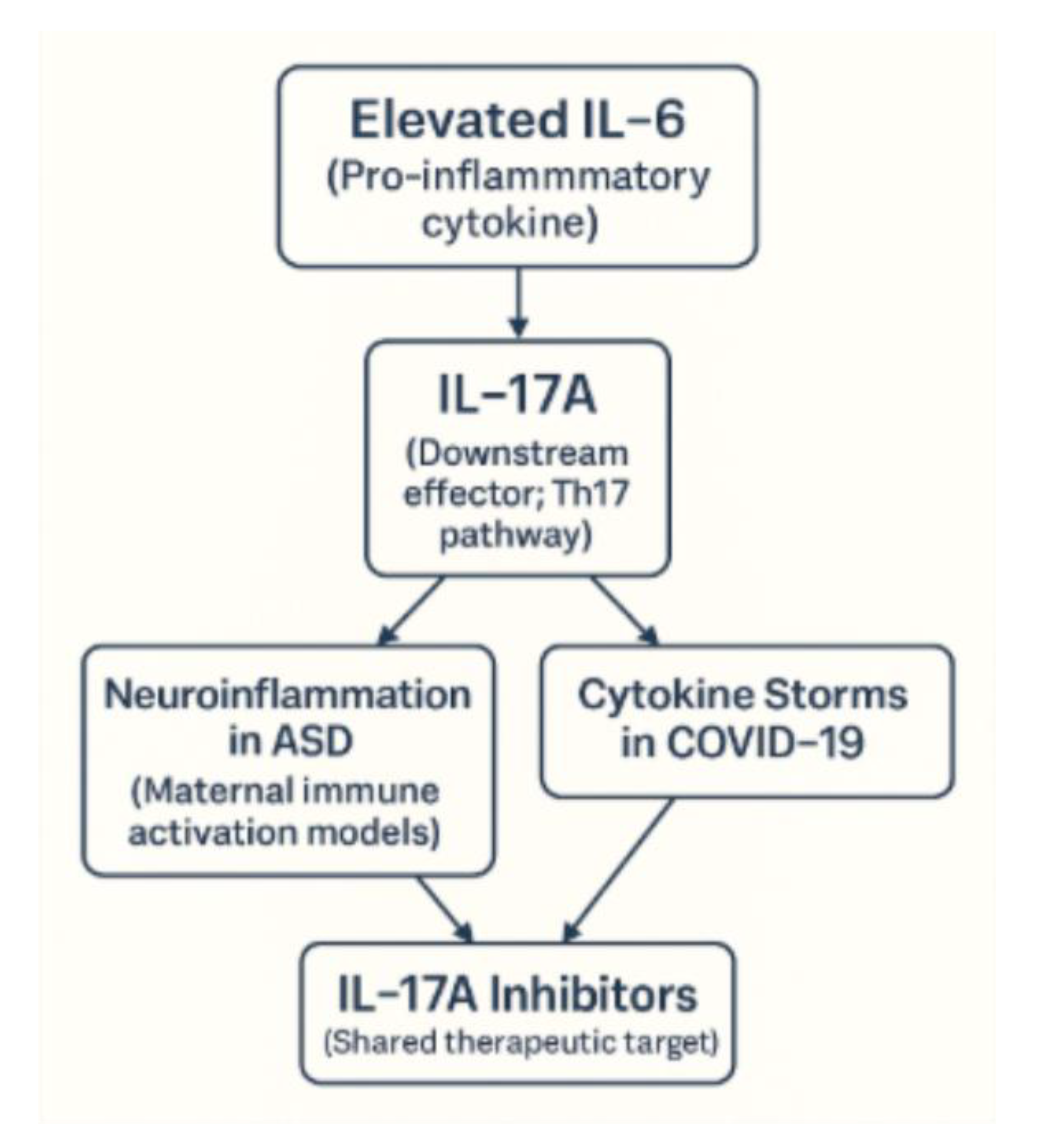
Figure 2.
Hypothetical model of possible shared metabolic and immune pathophysiology in ASD and COVID-19.
Figure 2.
Hypothetical model of possible shared metabolic and immune pathophysiology in ASD and COVID-19.
Disclaimer/Publisher’s Note: The statements, opinions and data contained in all publications are solely those of the individual author(s) and contributor(s) and not of MDPI and/or the editor(s). MDPI and/or the editor(s) disclaim responsibility for any injury to people or property resulting from any ideas, methods, instructions or products referred to in the content. |
© 2026 by the authors. Licensee MDPI, Basel, Switzerland. This article is an open access article distributed under the terms and conditions of the Creative Commons Attribution (CC BY) license.
Copyright: This open access article is published under a Creative Commons CC BY 4.0 license, which permit the free download, distribution, and reuse, provided that the author and preprint are cited in any reuse.


