1. Introduction
In recent years, lithium-ion batteries have been widely adopted in consumer electronics (e.g., mobile phones, laptops, Bluetooth headsets) and high-end manufacturing sectors (e.g., electric vehicles, aerospace) [
1,
2]. Their popularity stems from multiple advantages: high energy density (up to 100 Wh/kg), low self-discharge rate, high operating voltage (above 3.5 V), long cycle life (exceeding 1000 cycles), and environmental friendliness [
3].Lithium batteries are primarily categorized into three types based on packaging: cylindrical lithium batteries, prismatic aluminum-cased lithium-ion batteries, and pouch lithium-ion batteries. Soft-pack lithium batteries, encapsulated with aluminum-plastic film, offer great flexibility in shape and size. They also exhibit excellent safety performance, especially at higher capacities. By adjusting their form and dimensions flexibly, soft-pack lithium-ion batteries meet market demands for thinner and smaller products, thereby achieving higher energy density. However, this flexibility imposes higher requirements on the performance of lithium-ion battery packaging materials.
Al-Fe-Si alloy aluminum foil plays a key role in the aluminum-plastic film for lithium battery soft packaging due to its excellent barrier properties, strength, and processability [
4]. Research indicates that the microstructure and mechanical properties of aluminum foil are significantly affected by processing parameters. Currently, research on Al-Fe-Si alloys mainly focuses on alloy composition regulation, processing technology research, and intermediate annealing processes. For example, an increase in Fe content leads to a decrease in the grain size of cold-rolled sheets, and as the annealing temperature rises, recrystallized grains gradually grow, eventually forming irregular equiaxed grains [
5]. However, there is still a lack of systematic discussion on the correlation between final annealing temperature and microstructural evolution mechanisms.
After the Al-Fe-Si alloy aluminum foil undergoes high cold rolling deformation (98% reduction rate), a large amount of deformation energy is stored internally. Its recrystallization behavior during annealing differs significantly from that of conventional aluminum alloys. Existing literature points out [
6] that factors such as the second-phase particle distribution, the initial grain size, and the deformation amount may inhibit the traditional nucleation process. This promotes the dominance of the continuous recrystallization mechanism. However, the laws governing how continuous recrystallization affects the anisotropic mechanical properties of the aluminum foil remain unclear. Therefore, this study focuses on the Al-Fe-Si alloy aluminum foil. It systematically analyzes the grain structure evolution characteristics under different final annealing temperatures. Combined with tensile property tests, the influence mechanism of the annealing temperature on the mechanical property anisotropy is elucidated. The aim is to provide theoretical guidance for industrial production.
2. Materials and Methods
The experimental material is an Al-Fe-Si alloy sheet provided by a domestic enterprise, and its chemical composition is shown in
Table 1. The initial thickness of the sheet is 7 mm. After 65% cold rolling, the sheet is subjected to homogenization annealing at 540°C for 10 h. It is finally cold rolled to 40 μm aluminum foil for the laboratory annealing process research.
The final annealing performed after rolling the aluminum foil to its finished thickness is termed finish annealing. In actual production, a low-temperature degreasing annealing process is typically employed to remove rolling oils from the foil surface. It also enhances the mechanical properties of the foil simultaneously.According to Reference [
7], cold-rolled aluminum foil exhibits high strength and low ductility after severe plastic deformation. To further process the foil into final products, it must possess high elongation and cup test values. Therefore, cold-rolled aluminum foil typically undergoes low-temperature final annealing at 150–400°C.This study selected a heating rate of 40°C/h to raise temperatures to 240°C, 270°C, 300°C, 330°C, and 360°C, respectively. After holding at each temperature for 2 hours, the foil was air-cooled to room temperature.
The microstructure testing of the aluminum foil utilized an Apreo C field emission scanning electron microscope (SEM) from FEI Company. The samples were electropolished with an electrolyte ratio of HClO4:C2H5OH=1:9. Polishing parameters were: voltage 20V, current 0.4~0.6A, time 30~40s. Images were acquired under an accelerating voltage of 20 kV and a working distance of 10 mm, and TSL-OIM software was used to analyze grain size and orientation distribution.
The mechanical property testing of the aluminum foil was conducted using an INSTRON 5967 universal testing machine equipped with a 1 kN load sensor. Tensile samples were prepared with a double-blade cutter.The samples were strip-shaped, with a length of 200 mm and a width of 15 mm. The tensile rate was set to 25 mm/min. Tensile tests of the aluminum foil were performed in accordance with GB/T 16865 standard.At least three parallel samples were tested in each of the following directions: along the rolling direction (0°), at a 45° angle to the rolling direction (45°), and perpendicular to the rolling direction (90°). The average value of the three room-temperature tensile experiments was taken as the final result.
3. Results
3.1. Influence of Final Annealing Temperature on Microstructure
According to references [
8,
9], during the aluminum foil rolling process, when the cold rolling reduction exceeds 88%, the microstructure exhibits a fine equiaxed grain structure. Meanwhile, the proportion of high-angle grain boundaries increases rapidly.
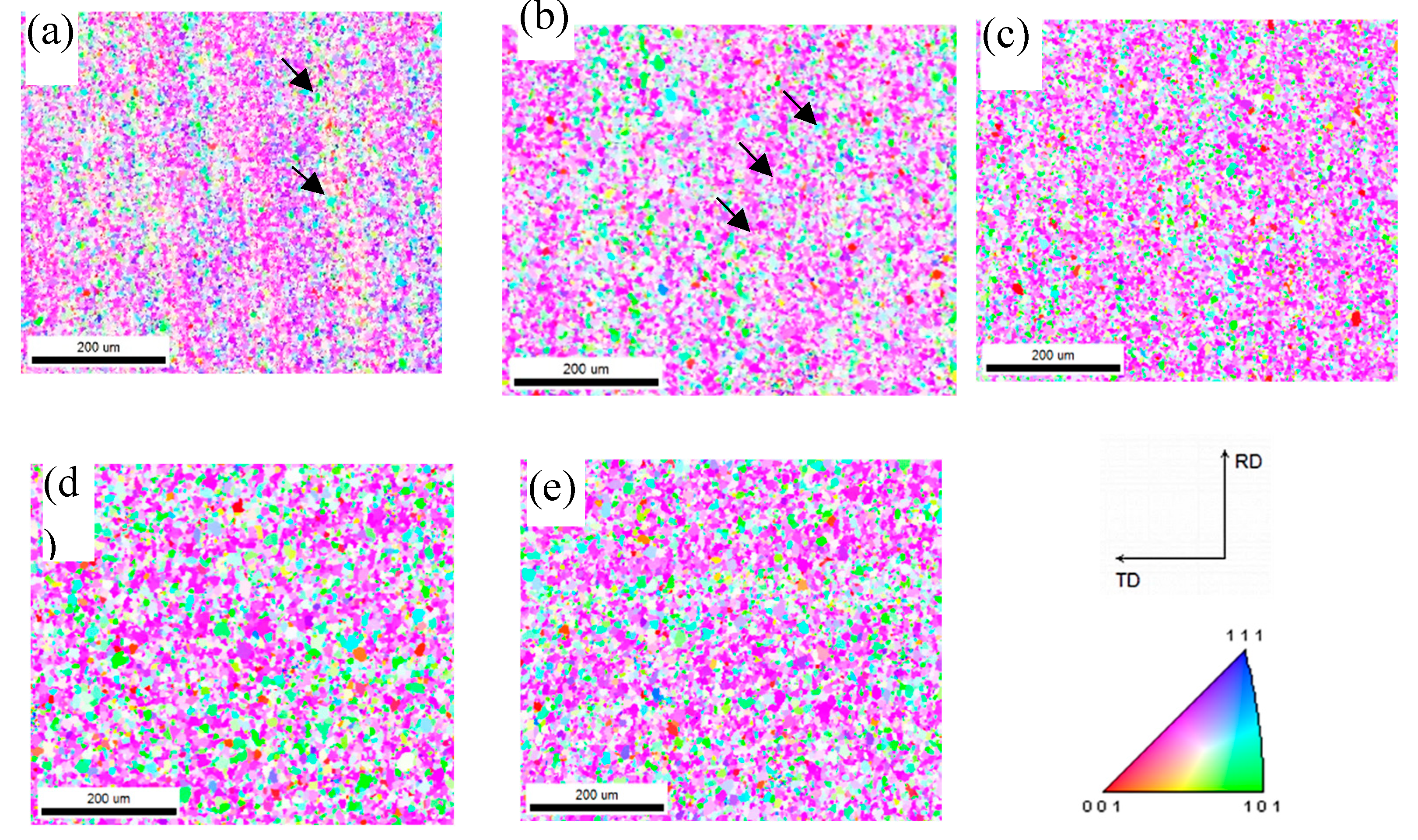
Figure 1 presents grain data collected via EBSD for the aluminum foil annealed at 240°C, 270°C, 300°C, 330°C, and 360°C. The data was processed using the TSL-OIM analysis software, where different colors represent distinct grain orientations. As shown in
Figure 1, the evolution of the microstructure is a gradual process.As indicated by the black arrows in
Figure 1, at 240°C, the matrix contains a small number of recrystallized grains. These grains exhibit irregular equiaxed shapes and retain some orientation clustering characteristics, distributed along the rolling direction. When the temperature increases from 270°C to 300°C, more recrystallized grains appear in the matrix (
Figure 1(b)-(c)). At 330°C, new grains completely replace the deformed structure, with significant grain growth evident (
Figure 1(d)). As the annealing temperature further increases to 360°C, recrystallized grains continue to grow and become uniformly distributed (
Figure 1(e)).Studies on the microstructural evolution of the aluminum foil at different annealing temperatures indicate that recrystallization begins after annealing at 240°C for 2 hours, with relatively small grain sizes. As the annealing temperature increases, grains begin to coalesce, leading to gradual grain growth. When the annealing temperature exceeds 300°C, the coalescence intensifies, resulting in significantly enlarged grains.
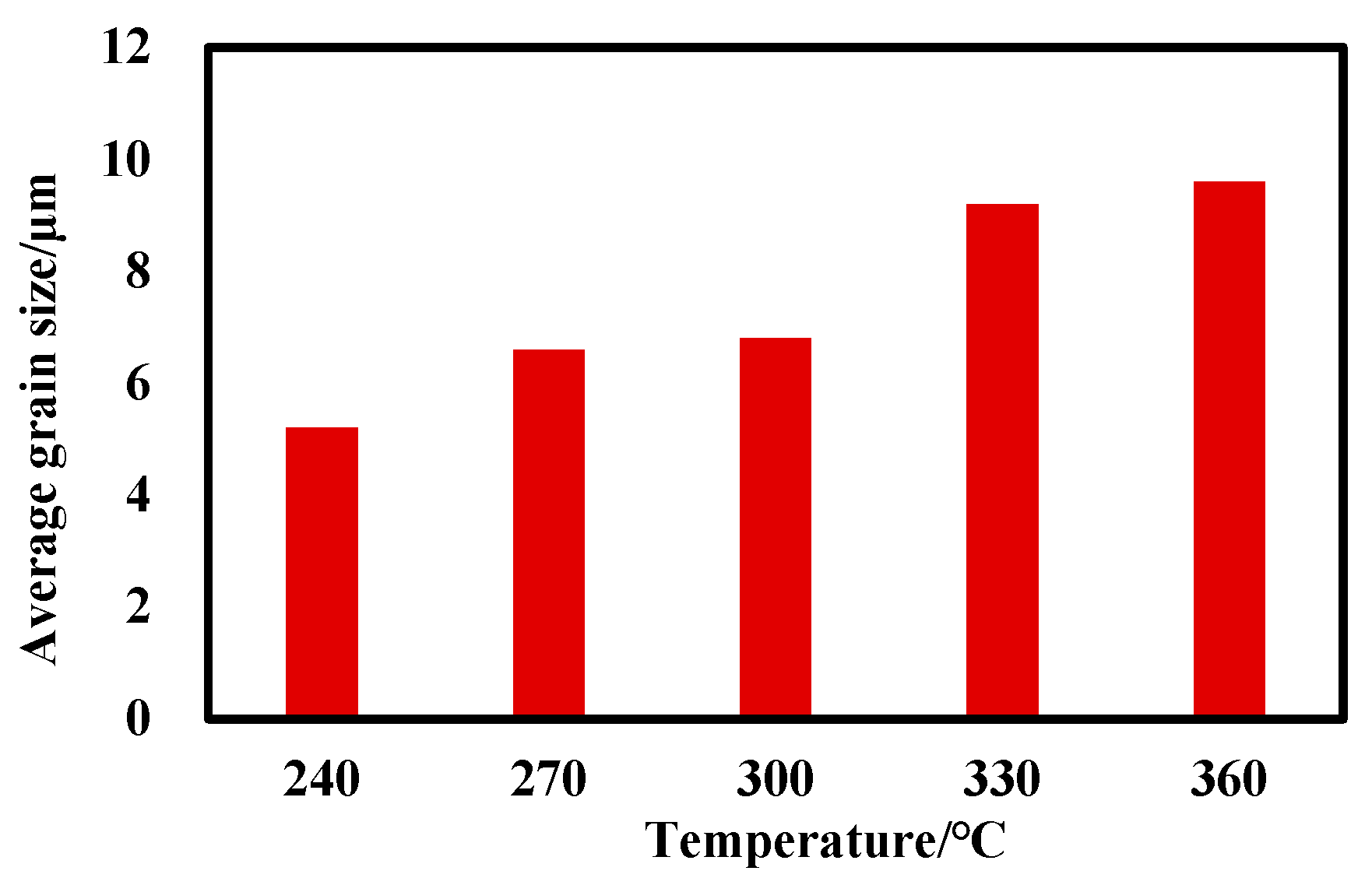
Figure 2 quantitatively characterizes the evolution of the average grain size in the aluminum foil under different final annealing temperatures. As shown in
Figure 1, the grain size changes can be divided into two stages:(1) 240°C ≤ T ≤ 300°C: Small recovery grains and large recrystallized grains coexist in the sample, with the recrystallized grain size increasing slowly with the rising annealing temperature;(2) T > 300°C: Recrystallization completes at 330°C, with an average grain size of ~9.2 μm. Grains continue to grow as the annealing temperature increases, reaching ~9.6 μm at 360°C.These experimental results demonstrate that the annealing temperature significantly influences the grain size of the aluminum foil after recrystallization. Considering the impact of microstructure on foil properties, controlling the microstructure—and consequently the properties—of the aluminum foil in industrial production can be achieved by regulating the final annealing temperature.
Grain size substantially affects the elongation and tensile strength of the aluminum foil. Effectively improving foil quality can be achieved by controlling grain size.
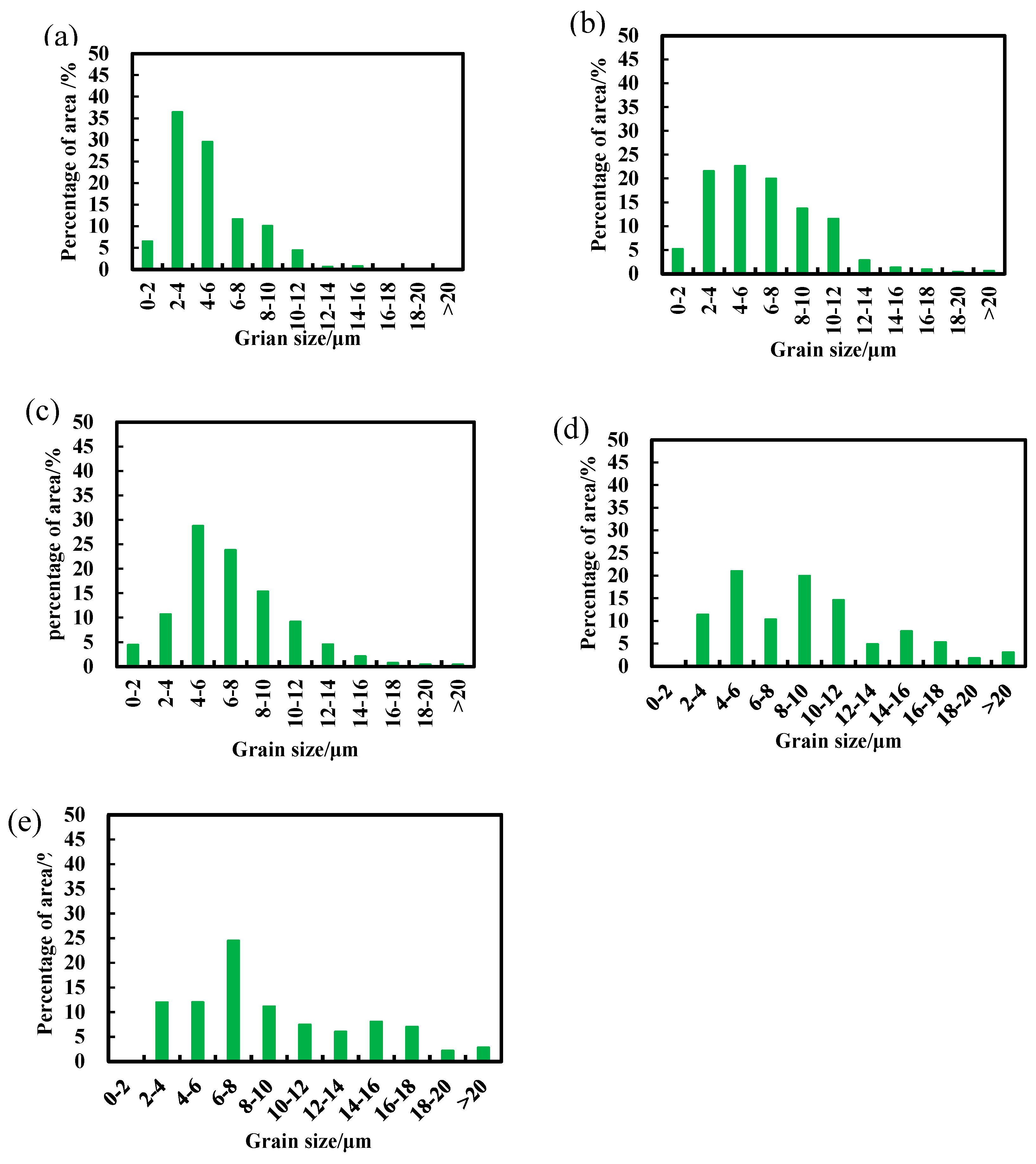
Figure 2 shows the recrystallized grain size distribution of the aluminum foil within the final annealing temperature range of 240–360°C. The horizontal axis represents grain size (units: μm), while the vertical axis indicates the area fraction occupied by grains. At 240°C, grain sizes are primarily concentrated in the 2–4 μm and 4–6 μm ranges. Grains smaller than 6 μm account for 72% of the area fraction, with the maximum size not exceeding 16 μm. As the annealing temperature increases to 270°C and 300°C, smaller grains grow continuously. The area fraction of grains below 6 μm decreases to 50% and 44%, respectively, while some grains exceed 20 μm in size. At higher annealing temperatures (330°C and 360°C), grains below 2 μm disappear entirely. Grain growth accelerates significantly, with grains exceeding 20 μm accounting for 0.03% and 0.02% of the total area fraction, respectively. Throughout the annealing process, some grains”reac’ sizes exceeding 27 μm. This phenomenon may be attributed to the pinning effect of dispersed phases in the matrix on grain boundaries or subgrain boundaries. This hinders recrystallization nucleation and leads to the formation of coarse grains, as illustrated in
Figure 3(d) and 3(e).
The study on the microstructural evolution of the aluminum foil under different annealing temperatures indicates that after annealing at 240°C for 2 h, the aluminum foil has already initiated recrystallization, with a relatively small grain size. As the annealing temperature increases, grains begin to exhibit mutual swallowing (coalescence) behavior, and grow slowly. When the annealing temperature exceeds 300°C, the swallowing phenomenon intensifies, leading to significant grain growth.
For aluminum alloy materials subjected to cold working plastic deformation, when the annealing temperature is in the stage dominated by recrystallization, the recrystallization nucleation rate during annealing is positively correlated with the annealing temperature. That is, as the annealing temperature gradually increases, the nucleation rate increases accordingly. This phenomenon usually leads to the refinement of the grain structure after recrystallization [
10]. However, in this study, the grain structure after complete recrystallization exhibits finer characteristics at relatively lower annealing temperatures. Literature reports [
11] that factors such as the initial grain size of the aluminum alloy matrix, the size of second-phase particles, and the amount of plastic deformation have a significant impact on the recrystallization process. When the initial grain size in the aluminum alloy matrix is small, while the second-phase particle size is large and the cold rolling deformation amount is high, no obvious “nucleation” stage occurs during subsequent recrystallization annealing. At this time, the evolution of the microstructure is more similar to conventional grain growth. This special recrystallization mode is called continuous recrystallization. As shown in
Figure 1, when the heating temperature reaches 240°C, the grains of the aluminum foil grow to ~5.2 μm. This indicates that small sub-grains already exist inside the aluminum foil before annealing. In addition, the aluminum foil matrix is rich in numerous coarse iron-containing second-phase particles. The total reduction rate of the aluminum foil during cold rolling is as high as 98%, which further affects the microstructure of the aluminum foil. Based on these specific processing conditions and the observed changes in grain size, it can be inferred that the continuous recrystallization mechanism may dominate the recrystallization annealing process of the aluminum foil. It is worth noting that similar phenomena have also been reported in some other 8xxx series alloys [
12].
In the process of continuous recrystallization, no obvious “nucleation” stage occurs during heating; instead, direct grain growth takes place. Its growth rate primarily depends on the following formula [
13]:
where G represents the grain growth rate, D denotes the grain boundary self-diffusion coefficient, λ is the boundary width, K is the Boltzmann constant, and E stands for the molar deformation storage energy. According to the theoretical derivation of Formula (1), as the deformation storage energy increases, the grain growth rate G also shows an upward trend, leading to an increase in grain size after recrystallization.
After the completion of the recrystallization process, the grain growth rate mainly depends on the grain boundary migration rate. This relationship is expressed as [
14]:This is example 2 of an equation:
where V represents the grain boundary migration speed, M denotes the grain boundary mobility, and P stands for the driving force acting on the grain boundary. According to literature reports [
15], the grain boundary mobility is positively correlated with temperature. Thus, as the annealing temperature continues to increase, the grain size exhibits a continuous growth trend. After completing recrystallization at 330°C, the grain size of the aluminum foil continues to increase, as illustrated in Figs. 3(d) and 3(e).
3.2. Study on Plastic Deformation Behavior of Aluminum Foil
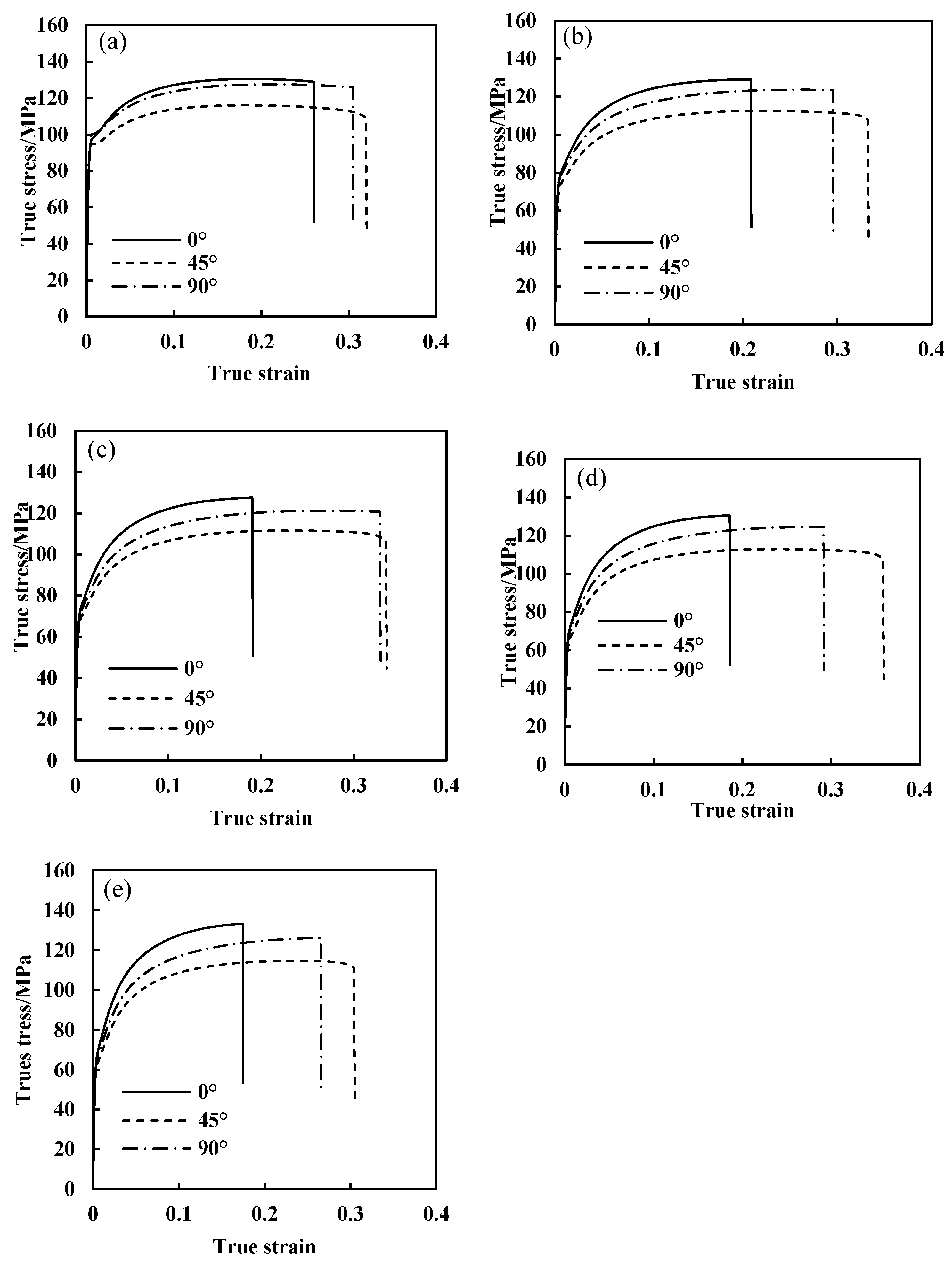
Figure 4 presents the true stress-strain curves of the aluminum foil tensile-tested along the 0°, 45°, and 90° directions under final annealing temperatures of 240°C, 270°C, 300°C, 330°C, and 360°C, respectively. As shown in
Figure 4, under different annealing temperature conditions, the tensile curves exhibit obvious elastic deformation and uniform plastic deformation characteristics. The yield stress in the 0° direction is generally higher than that in the 45° and 90° directions. The curves are dominated by uniform deformation, followed directly by concentrated instability and fracture. No obvious necking occurs before fracture, indicating the absence of the localized necking stage common in metal materials. After annealing at 240°C, the fracture strain in the 90° direction (0.30) is higher than that in the 0° direction (0.26), with a difference of 0.04. The fracture strain in the 45° direction is slightly higher than that in the 90° direction (difference: 0.01). Under different loading directions, the differences in the true stress-strain curves reflect obvious plastic deformation anisotropy. At other annealing temperatures (270~360°C), the same trend is observed: the fracture strain is smallest in the 0° direction, intermediate in the 90° direction, and largest in the 45° direction. The magnitude of fracture strain difference among the three directions varies with annealing temperature.
3.3. Influence of Final Annealing Temperature on Properties of Aluminum Foil
3.3.1. Influence of Final Annealing Temperature on Mechanical Properties of Aluminum Foil
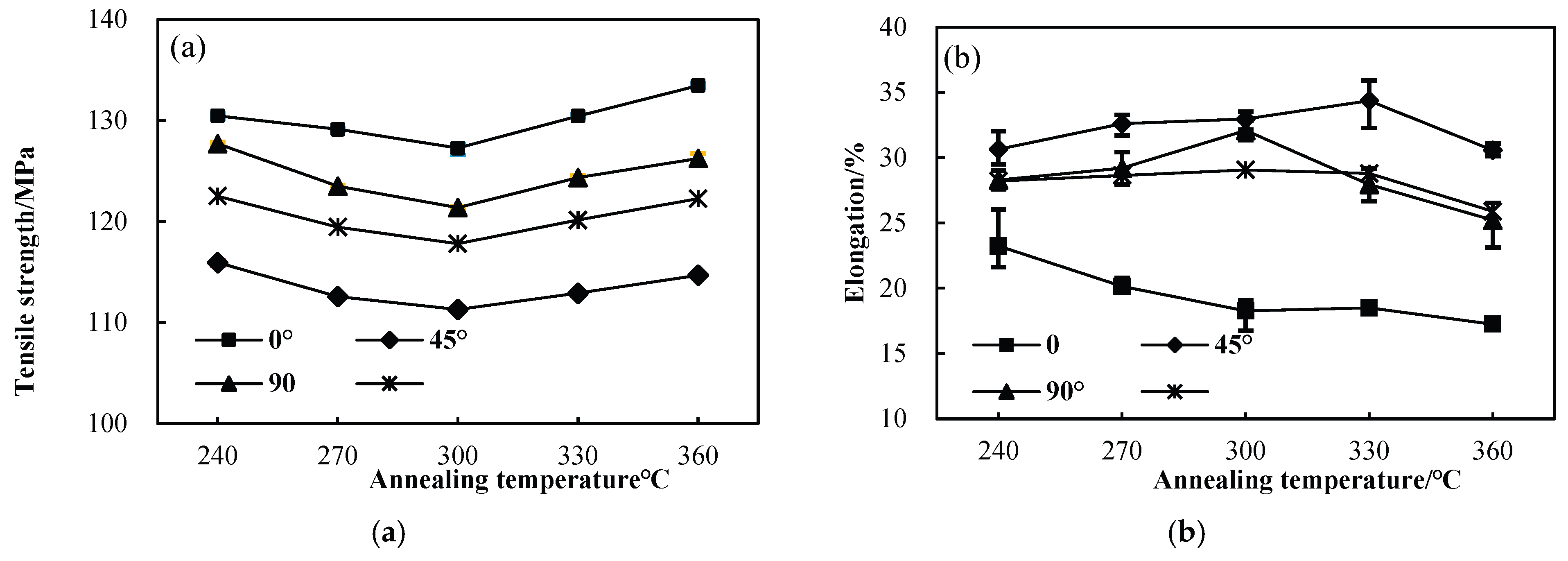
Figure 5 presents the variation curves of tensile strength and elongation of the aluminum foil with annealing temperature, with the average values of tensile strength and elongation calculated respectively. As shown in
Figure 5(a), after 98% cold rolling deformation and annealing at different temperatures, the tensile strength of the aluminum foil in the 0°, 45°, and 90° directions follows basically consistent variation trends. The tensile strength is highest in the 0° direction, intermediate in the 90° direction, and lowest in the 45° direction. With increasing annealing temperature, the tensile strength of the aluminum foil first decreases and then increases. In the range of 240~300°C, the tensile strength drops sharply. This is because during low-temperature annealing below 300°C, the aluminum foil matrix mainly undergoes continuous recrystallization. Dislocations and point defects introduced by plastic deformation undergo rearrangement or annihilation, leading to gradual property recovery toward the pre-deformation level.
When the annealing temperature further increases to 360°C, the tensile strength shows an upward trend, with the average tensile strength reaching a maximum of 122 Mpa.
Figure 5(b) presents the curve of aluminum foil elongation varying with annealing temperature. As shown in the figure, the elongation is lowest in the 0° direction (≈17%~23%) and decreases gradually with increasing annealing temperature. The elongation in the 90°direction is intermediate (≈25%~32%), showing a trend of first increasing and then decreasing with rising annealing temperature. The elongation is highest in the 45° direction (≈30%~34%), which also follows a first-increase-then-decrease trend and is almost 1.5 times that in the rolling direction (0°). Comprehensive analysis indicates that during annealing at 240~330°C, the average elongation remains within a relatively stable range, with an average value of (28±1)%. When the temperature exceeds 330°C, the average elongation shows a downward trend, reaching a minimum of 25.9%.
3.3.2. Influence of Final Annealing Temperature on Anisotropy of Aluminum Foil
To represent the degree of anisotropy of tensile properties in different orientations of the material, the anisotropy index is used for characterization, as shown in the following formulas [
16]:
In the formulas, ΔUTS denotes the tensile strength anisotropy index, and ΔEL represents the elongation anisotropy index. UTS0∘, UTS45∘, and UTS90∘ are the tensile strengths of the sample in the 0°, 45°, and 90°directions, respectively. EL0∘, EL45∘, and EL90∘are the fracture elongations of the sample in the corresponding directions. The tensile strength and elongation anisotropy indices of the aluminum foil under different annealing temperatures, calculated via Formulas (1-3) and (1-4), are presented in
Table 2. As shown in
Table 2:
At annealing temperatures of 240°C, 270°C, 300°C, 330°C, and 360°C, the tensile strength anisotropy indices are 13.0 MPa, 13.7 MPa, 13.2 MPa, 14.5 MPa, and 15.2 MPa, respectively;
The elongation anisotropy indices are -4.2%, -8.4%, -7.8%, -11.2%, and -9.3%, respectively.
The tensile strength anisotropy degree gradually increases with rising annealing temperature, with the smallest index at 240°C. In contrast, the elongation anisotropy index first increases and then decreases with annealing temperature, reaching the maximum at 330°C (three times that at 240°C). Based on the anisotropy degree and average elongation of the aluminum foil, the material exhibits optimal comprehensive performance when annealed at 240°C.
4. Dissuasion
4.1. Microstructural Evolution and Mechanical Property Regulation Mechanism
The Al-Fe-Si alloy foil with 98% cold rolling reduction stores substantial deformation energy, leading to dominant continuous recrystallization during annealing (no obvious nucleation stage, direct grain growth from subgrains). This is driven by coarse iron-containing second-phase particles, small initial grain size, and high deformation—consistent with observations in 8xxx series alloys. Grain growth exhibits two stages: slow growth (240~300°C, 5.2~6.8 μm, coexisting recovery/recrystallized grains) and rapid growth (>300°C, 6.8~9.6 μm, completed recrystallization). Second-phase particle pinning causes inhomogeneous grain distribution (max size >27 μm). Mechanical properties are microstructure-dependent: tensile strength decreases (240~300°C, dislocation annihilation) then slightly recovers (>300°C, uniform recrystallized structure). Elongation shows directional differences: 0° direction (17%~23%) decreases continuously, while 45° (30%~34%) and 90° (25%~32%) directions first increase then decrease. Anisotropy originates from cold rolling texture and grain orientation inhomogeneity—45° direction activates more slip systems, yielding ~1.5x higher elongation than 0°. Anisotropy indices increase with temperature (tensile strength: 13.0~15.2 MPa; elongation peaks at -11.2% at 330°C). Optimal comprehensive performance is achieved at 240°C (minimal anisotropy, average elongation 28.21%), making it the optimal annealing temperature for battery soft-packaging.
4.2. Engineering Significance and Application Prospects
This study provides industrial guidance for Al-Fe-Si alloy foil annealing optimization: controlling temperature at ~240°C enhances aluminum-plastic film processability, reduces battery packaging/cycling rupture risks, and improves soft-pack battery safety. The continuous recrystallization and anisotropy research offers a theoretical basis for high-deformation aluminum alloy regulation. Future industrial optimization can focus on heating rate/holding time adjustment and second-phase particle distribution research. Notably, raw material composition fluctuations, cold rolling uniformity, and annealing atmosphere require targeted process verification in actual production to ensure product stability.
5. Conclusions
(1) As the annealing temperature rises from 240°C to 360°C, the grain size of the Al-Fe-Si alloy aluminum foil increases from ~5.2 μm to ~9.6 μm. When the annealing temperature exceeds 300°C, the grain swallowing phenomenon intensifies, leading to obvious grain growth.
(2) The tensile deformation of the aluminum foil is dominated by uniform plastic deformation, with almost no localized necking before fracture. The fracture strain is smallest in the 0° direction, intermediate in the 90° direction, and largest in the 45° direction (30%~34%), showing significant plastic deformation anisotropy.
With increasing annealing temperature, the tensile strength of the aluminum foil first decreases and then increases, reaching the minimum at ~300°C. Regarding elongation:
Elongation along the rolling direction (0°) is the lowest (≈17%~23%), decreasing gradually with rising annealing temperature;
Elongation perpendicular to the rolling direction (90°) is intermediate (≈25%~32%), showing a trend of first increasing and then decreasing with temperature.
Elongation in the 45° direction is the highest (≈30%~34%), also following a first-increase-then-decrease trend and nearly 1.5 times that in the rolling direction.
(4) With the increase of annealing temperature, the tensile strength anisotropy degree of the aluminum foil gradually increases. The anisotropy index is smallest at 240°C, with ΔUTS=13.0MPa and ΔEL=−4.2%. Thus, the aluminum foil exhibits optimal comprehensive performance when annealed at 240°C
Author Contributions
Conceptualization: H.W.(Hongyan Wu) and W.C.(Wei Chen); methodology, X. Z. (Xiuda Zhu) and X. C.(Xiaohu Chen); software, X.Z. and C.X.; validation, C.X. and X.W. (Xiubin Wang) and X.C.(Xiaohu Chen); formal analysis, X.C.and X.W.; investigation, X.Z. and C.X. ; resources, H.W. and W.C. ; data curation, X.Z. and X.W. ; writing—original draft preparation, X.Z. ; writing—review and editing, H.W. and W.C. ; visualization, C.X.; supervision, H. W. and W.C.; project administration, W.C. and X.C.; funding acquisition, H.W. and W.C. All authors have read and agreed to the published version of the manuscript.
Funding
This work was funded by the Major Special Projects of the Plan “Science and Technology Innovation 2035” in Ningbo (Nos. 2024Z077).
Data Availability Statement
The original contributions presented in this study are included in the article. Further inquiries can be directed to the corresponding authors.
Acknowledgments
This work was supported by the Major Special Projects of the Plan "Science and Technology Innovation 2035" in Ningbo (No. 2024Z077), and the financial support is gratefully acknowledged. The authors would like to express sincere thanks to the domestic enterprise for providing the experimental Al-Fe-Si alloy sheet materials. We also appreciate the technical support from the testing platform for the assistance with scanning electron microscopy (SEM) characterization and tensile property testing during the experiment.
Conflicts of Interest
The authors declare no conflicts of interest.
References
- Chen, W; Chen, M; Jin, X; Zhang, P. Effect of annealing temperature on microstructure and mechanical properties of AA8021 aluminum foil for lithium-ion battery packaging[J]. Journal of Materials Processing Technology 2022, 306, 117789. [Google Scholar]
- Liu, Y; Wang, H; Li, Z; et al. Microstructural evolution and mechanical property optimization of AA8021 aluminum foil for pouch lithium-ion battery aluminum-plastic film[J]. Materials Science and Engineering A 2021, 821, 141568. [Google Scholar]
- Zhang, L; Yang, C; Zhao, J; et al. Heat treatment effects on texture and formability of AA8021 aluminum foil blanks for battery applications[J]. Transactions of Nonferrous Metals Society of China 2023, 33(5), 1423–1435. [Google Scholar]
- Qu, J; He, Z. Mechanical performance study and simulation of aluminum-plastic film in pouch Lithium-ion battery based on ductile fracture criterion[J]. Journal of Energy Storage 2024, 87, 11547. [Google Scholar] [CrossRef]
- Wang, X; Li, J; Zhang, H; et al. Influence of Fe content on microstructural evolution and mechanical properties of Al-Fe-Si cast-rolled aluminum foil blanks[J]. Journal of Alloys and Compounds 2020, 845, 156234. [Google Scholar]
- Zhang, S; Luo, X; Zheng, G; Hu, R; Wang, H; Li, M. Evolutions of Microstructure and Mechanical Properties of Cryorolled 7085 Al Alloy After Annealing Treatments[J] JOM. 2023, 75(7), 2462–2472. [Google Scholar]
- Li, Y; Huang, G; Chen, L; et al. Microstructural evolution and mechanical properties of cast-rolled 3003 aluminum foil during manufacturing process[J]. Materials Research Express 2019, 6(12), 126507. [Google Scholar]
- Hutchinson, WB. Analysis of cellular microstructures in Al–Fe–Si alloy[J]. Materials Science and Technology 2000, 16(11-12), 1364–1366. [Google Scholar] [CrossRef]
- Jazaeri, H; Humphreys, FJ. The transition from discontinuous to continuous recrystallization in some aluminium alloys: I–the deformed state[J]. Acta Materialia 2004, 52(11), 3239–3250. [Google Scholar] [CrossRef]
- Xia, S; Ma, M; Zhang, J; Wang, W; Liu, W. Effect of heating rate on the microstructure, texture and tensile properties of continuous cast AA 5083 aluminum alloy[J]. Materials Science & Engineering A 2014, 609, 168–176. [Google Scholar]
- Jazaeri, H; Humphreys, JF. The transition from discontinuous to continuous recrystallization in some aluminium alloys I - The deformed state[J]. Acta Materialia 2004, 52(11), 3239–3250. [Google Scholar] [CrossRef]
- Hirsch, EJ. Control of recrystallisation texture and texture-related properties in industrial production of aluminium sheet[J]. Zeitschrift Fur Metallkunde 2009, 100(4), 564–575. [Google Scholar]
- Wang, Y; Jia, Z; Gao, Z; Liu, D. Continuous dynamic recrystallization nucleation mechanism and annealing twin evolution with respect to grain growth in a nickel-based superalloy[J]. Journal of Central South University 2023, 30(1), 49–60. [Google Scholar] [CrossRef]
- Chen, W; Chen, M; Jin, X; Zhang, P. Effect of heating rate during annealing on microstructure and texture evolution of AA8021 aluminum foil[J]. Materials Research Express 2020, 7(9), 096514. [Google Scholar] [CrossRef]
- Li, K; Zou, T; Li, D; Peng, Y; Shu, D. On formation of abnormally large grains in annealing prestrained aluminum alloy multiport extrusion tubes[J]. Metallurgical and Materials Transactions A 2019, 50(12), 5734–5749. [Google Scholar] [CrossRef]
- Birbaar, O. Deep Drawability of Al-Mg Alloys Produced by Twin Roll Continuous Casting Method: Investigation of Microstructure and Mechanical Properties[J]. Metals 2024, 14, 1365. [Google Scholar]
|
Disclaimer/Publisher’s Note: The statements, opinions and data contained in all publications are solely those of the individual author(s) and contributor(s) and not of MDPI and/or the editor(s). MDPI and/or the editor(s) disclaim responsibility for any injury to people or property resulting from any ideas, methods, instructions or products referred to in the content. |
© 2026 by the authors. Licensee MDPI, Basel, Switzerland. This article is an open access article distributed under the terms and conditions of the Creative Commons Attribution (CC BY) license (http://creativecommons.org/licenses/by/4.0/).