Preprint
Article

This version is not peer-reviewed.

Estrogen-Responsive Gene Modulation by Mentha pulegium L. Extract in Uterine and Ovarian Tissues of Immature Rat

Submitted:

19 February 2026

Posted:

28 February 2026

You are already at the latest version

Abstract

Mentha pulegium L. contains phytochemicals known to bind to estrogen receptors and modulate estrogenic effects. The study investigated the effects of Mentha pulegium L. (MPE) on uterine and ovarian tissues in immature rats, focusing on the transcriptional endpoint-related estrogenic activity. Female Sprague Dawley rats were treated with varying doses of MPE alone or in combination with estradiol for seven days. Gene expression analysis was performed using reverse transcriptase-quantitative polymerase chain reaction (RT-qPCR) to evaluate the effect of MPE on estrogen-responsive biomarkers: Calbindin-D9k (CaBP-9k), Progesterone receptor (Pgr), Trefoil factor 1 (pS2), Intestinal calcium-binding protein integral (Icabp), Integral membrane-associated protein-1 (Itmap1) and Complement component 3 (CC3) genes. In ovarian tissues, MPE treatment down-regulated CaBP-9k and Icapb expression, with CC3 showing significant down-regulation in the 200 mg/kg group. Treatments with MPE and estradiol significantly reduced the expression of all estrogen-responsive genes compared to estradiol treatment. In uterine tissues, 1000 mg/kg MPE up-regulated CaBP-9k and pS2 expression significantly but down-regulated Icapb, CC3, pS2, and Itmap across all treatment groups significantly. Combined estradiol treatment with MPE (500 and 1000) mg/kg showed significantly low CaBP-9k and CC3 expressions. Increased expression of Icapb, Itmap, and pS2 was observed when combined estradiol treatments with MPE (500 and 1000) mg/kg were compared to estradiol treatment. MPE influenced the expression of specific genes in the uterus and ovaries and thus may act as an endocrine disruptor with multiple mechanisms of action, highlighting its potential complexity in modulating estrogenic responses.

Keywords: 
;  ;  ;  ;  

1. Introduction

Estrogen mediates physiological and pathological processes in the reproductive, cardiovascular, skeletal, endocrine, neurological, and immunological systems through the estrogen receptor (ER), which is an important mediator of estrogen’s biological effects and activities in cells. Estrogen receptors, ERα and ERβ, regulate cellular gene expression by activating and repressing gene transcription [1]. Some transcriptional events connected to cell cycle alterations are fully or partially controlled at the messenger ribonucleic acid (mRNA) level. Changes in gene expression may have temporary or sporadic effects on various biological processes, including protein synthesis and modification, DNA replication, RNA synthesis, cell cycle, and ATP transport [2]. Hence, it is essential to understand the complex regulatory processes influencing gene expression in the uterine endometrium and ovaries, and their structure and function, fertility, and reproductive pathologies.
Phytoestrogens are a diverse group of secondary metabolites found in plants with a weaker affinity for ERs and estrogenic activity. These natural, environmentally plant-derived compounds have selective estrogen receptor modulator properties and ER-subtype selectivity [3]. They are structurally and functionally similar to synthetic estrogens, mimicking estrogens with a variety of biochemical and biological properties. Even though much weaker than estradiol, they bind to the ER, induce a dual regulatory effect, and exert both tissue-dependent estrogen-like and anti-estrogen-like effects [4,5]. Phytoestrogens may act as estrogen antagonists, alter the pattern of synthesis and metabolism of endogenous hormones, modify hormone receptor properties, and inhibit endogenous estrogenic effects [3].
Mentha pulegium L., commonly known as Pennyroyal, is an aromatic perennial herb of the mint family with a wide distribution all over as one of the world’s oldest herbs. It is an ornamental and medicinal plant rich in phytochemicals [6]. Its rich reservoir includes identified diverse bioactive compounds that include alkaloids, flavonoids, phenolic acids, terpenes, sterols, saponins, caffeic acid conjugates, Rosmarinic acid, pulegone, piperitenone, menthone, and neo-menthol [7,8,9,10,11]. These bioactive compounds have a wide variety of pharmacological activities, including modulation of estrogen receptors, and can cause fluctuations in estrogen levels.
M. pulegium has traditionally been used for decades for various purposes [12], and from scientific investigations into its traditional uses, various authors have demonstrated its antioxidant effects [13,14], muscle relaxant effects [16], antimicrobial effects [16,17], antibacterial and antiradical effects [18], antifungal activity [14], and antiemetic and insecticidal properties [19,20]. antiseptic properties [21], anti-inflammatory [22], anticandidal and anticholinergic properties [20].
Based on its reported use as a menstrual regulator [8] and abortifacient [11,21], its component phytoestrogens may have the ability to modulate estrogen-sensitive gene expressions in the uterine and ovarian tissues, hence the need to characterize the activity of a hydroethanolic leaf extract of Mentha pulegium L (MPE). Therefore, this study investigates the effects of MPE in a uterotrophic model using transcriptional profiling as molecular endpoints that also indicate estrogenic activity. It aimed specifically to determine the effects on mRNA levels of CaBP-9k, Pgr, pS2, Icabp, Itmap1, and CC3 genes, establishing potential agonistic and antagonistic properties of MPE and elucidating the estrogenic and antiestrogenic potency of MPE using their expressional levels in the uterus and the ovaries of prepubertal rats. Measuring the expression levels of these genes' mRNA transcripts would provide insights into gene expression patterns and cellular responses to MPE treatments.

2. Materials and Methods

2.1. Study Setting

This study was conducted in the Departments of Clinical Microbiology and Pharmacology, Kwame Nkrumah University of Science and Technology (KNUST), Ghana.

2.2. Plant Material and Extraction

Coarse powdered dried leaves of Mentha pulegium L. with batch number (KNUST/HM1/2019/L011) weighing 1198g were obtained from Relish Health Shop (Accra, Ghana) and were extracted by soaking in 7.5 liters of 70% ethanol for 72 hours. The hydroethanolic extract was decanted and concentrated at reduced pressure below 40°C using a SolventVap rotary evaporator (Across International SE05.110) to obtain a dry semi-solid extract (130.6g) with a percentage yield of 10.9%. In glass specimen containers, MPE was stored in a refrigerator (4°C) until experimental testing. A solution of MPE was prepared by mixing it with distilled water to obtain the respective dosages used.

2.3. Animals and Experimental Design

Immature female Sprague Dawley (SD) rats were used as a developmental model to examine the potential biological effects of MPE. The institutional Animal Research Ethics Committee (AREC), KNUST approved the protocol under approval number KNUST 0045. Pregnant SD rats were procured from the Noguchi Memorial Institute for Medical Research, Accra, and housed at standard conditions at the Department of Pharmacology’s Animal House KNUST. They were observed for overt signs of ill health. Immature female rats (not exceeding postnatal day 25) obtained as offspring were weaned and weighed. By random sampling, rats were allocated to eight (8) groups of eight (8) rats each and allowed to acclimatize for three days. Experimental rats were treated daily with MPE (200, 500 or 1000) mg/kg by oral gavage, 4 μg/kg of estradiol (E2) subcutaneously, or with a combination of MPE (200, 500 or 1000) mg/kg, and E2 (4 μg/kg, Sigma, St Louis, MO, USA) for seven consecutive days. Control groups were administered either distilled water (naïve control: NC) or E2 (4 μg/kg) dissolved in corn oil (positive control). All the procedures and methods used in this study were in accordance with the National Institute of Health Guidelines for Care and Use of Laboratory Animals (NIH publication No. 85-23, revised 1985), Organization for Economic Cooperation and Development (OECD) guidelines for animal care (OECD, 2000), and the OECD Guideline for Testing of Chemicals 2009. The study also adhered to the ARRIVE (Animal Research: Reporting of In Vivo Experiments) guidelines in carrying out the research and reporting the findings.

2.4. RNA Isolation and Synthesis of Complementary DNA (cDNA)

All experimental rats were sacrificed 24 hours after the last administration (8th day) by cervical dislocation, and their uteri and ovaries were rapidly excised and placed in Eppendorf tubes for immediate storage. The excised tissues were immediately frozen in liquid nitrogen for RNA isolation. The isolated tissues were homogenized using nuclease-free water. RNA extraction and purification were done using the Quick-RNA Miniprep Plus Kit (Zymo Research Corp., USA) according to the manufacturer’s protocol. The quantity and purity of the total RNA were determined using the NanoDrop ND-1000 Spectrophotometer (Thermo Scientific, USA) version 3.8.1. All samples exhibited an absorbance ratio in the range of 1.98 - 2.15. First-strand cDNA was synthesized from template RNA samples of all groups by mixing the template RNA with Random Primer Mix, ProtoScript II Reaction, ProtoScript II Enzyme, and Nuclease-free Water (ProtoScript II First Strand cDNA Synthesis Kit) from New England Biolabs, USA. The cDNA synthesis was performed according to the manufacturer’s protocol.

2.5. Quantitative Polymerase Chain Reaction (qPCR)

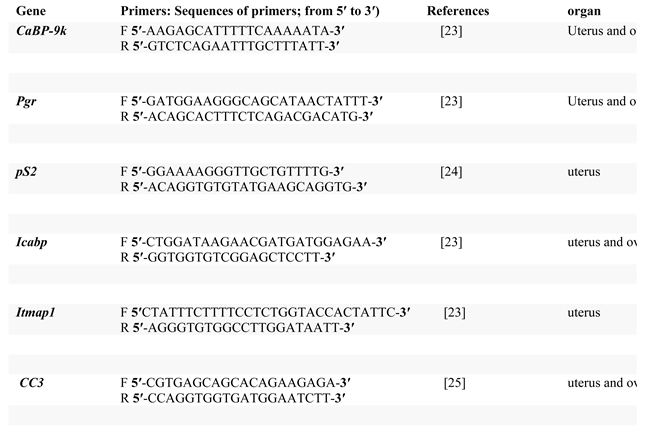
Primers for the quantification of mRNA of each gene were obtained from Biomers, Germany. The oligonucleotide primers for endogenous control (18s rRNA) and target genes (CaBP-9k, Pgr, pS2, Icabp, Itmap1, and CC3) are shown in Table 1. Quantitative real-time PCR with SYBR green detection was performed with a StepOnePlus Real-Time PCR System. Each sample contained a final PCR reaction mixture of 20 µl made up of 10 µl Luna Universal qPCR Master Mix (New England Biolabs, USA), 0.5 µl forward primer, 0.5 µl reverse primer, 7 µl nuclease-free water, and 2 µl cDNA template. The expression of all target genes was normalized using the 18s rRNA expression levels in each tissue sample. Samples were run in triplicate in 96-well multiwell plates for each treatment for each gene. The Applied Biosystems real-time instrument (StepOnePlus™ Real-Time PCR System, Thermo Fisher Scientific, USA) was programmed with its indicated thermocycling protocol, and the SYBER green mix (Thermo Scientific, USA) was used. The qPCR was performed at 95 °C initial denaturation (enzyme activation) for 60 seconds, denaturation at 95 °C for 15 secs, and extension (annealing temperature) at 60 °C for 30 seconds. Per the manufacturer’s protocol, the cycle was repeated 40-45 times to obtain the cycle threshold CT.

2.6. Relative Gene Expression and Statistical Analysis

Relative expressions were evaluated by calculating the change in cycle threshold (ΔΔCT) for each sample using MS Excel 2016 and analyzing the data by expressing them in mean ± standard deviation (SD) using GraphPad Prism software, version 8. Comparison between treatments was done using a one-way analysis of variance (ANOVA) followed by Dunnett’s post-hoc analysis. A p-value less than 0.05 was accepted as statistically significant in all comparisons.

3. Results

3.1. Effects of MPE and E2 Treatments on Expression Levels of mRNA Transcripts in Ovarian Tissues

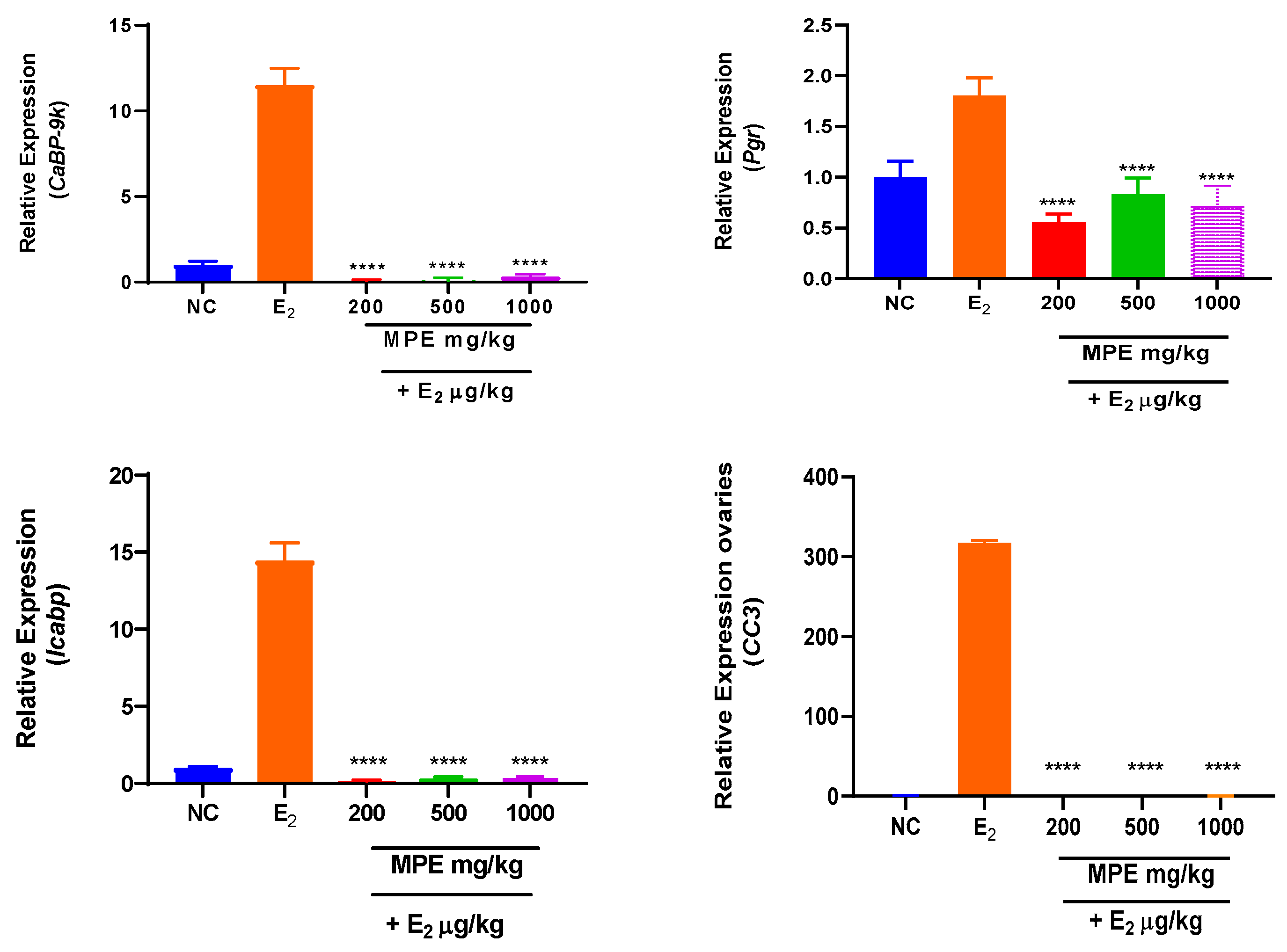
Oral administration of MPE significantly downregulated the relative expression of CaBP-9k in ovarian tissues (P =0.0003) at all treatment levels compared to the naïve control (Figure 1). The relative expression of Icabp in the ovaries was significantly lower in 200, 500, and 1000 mg/kg at P <0.0001, P <0.0001 and P =0.0005, respectively (Figure 1). The relative expression of Pgr was downregulated significantly only in the 200 mg/kg treatment group (P =0.0479) compared to the naïve control (Figure 1). The relative expression of CC3 was significantly lower at all treatment levels (200, 500, and 1000 mg/kg) at P <0.0001, P <0.0001, and P =0.0007, respectively (Figure 1). In rats treated with a combination of (200, 500, and 1000) mg/kg MPE and 4 µg/kg E2, the expression of all the estrogen-responsive genes studied reduced significantly (P <0.0001) compared to E2 treatments alone (Figure 2).

3.2. Effects of MPE and E2 Treatments on Expression Levels of mRNA Transcripts in Uterine Tissues

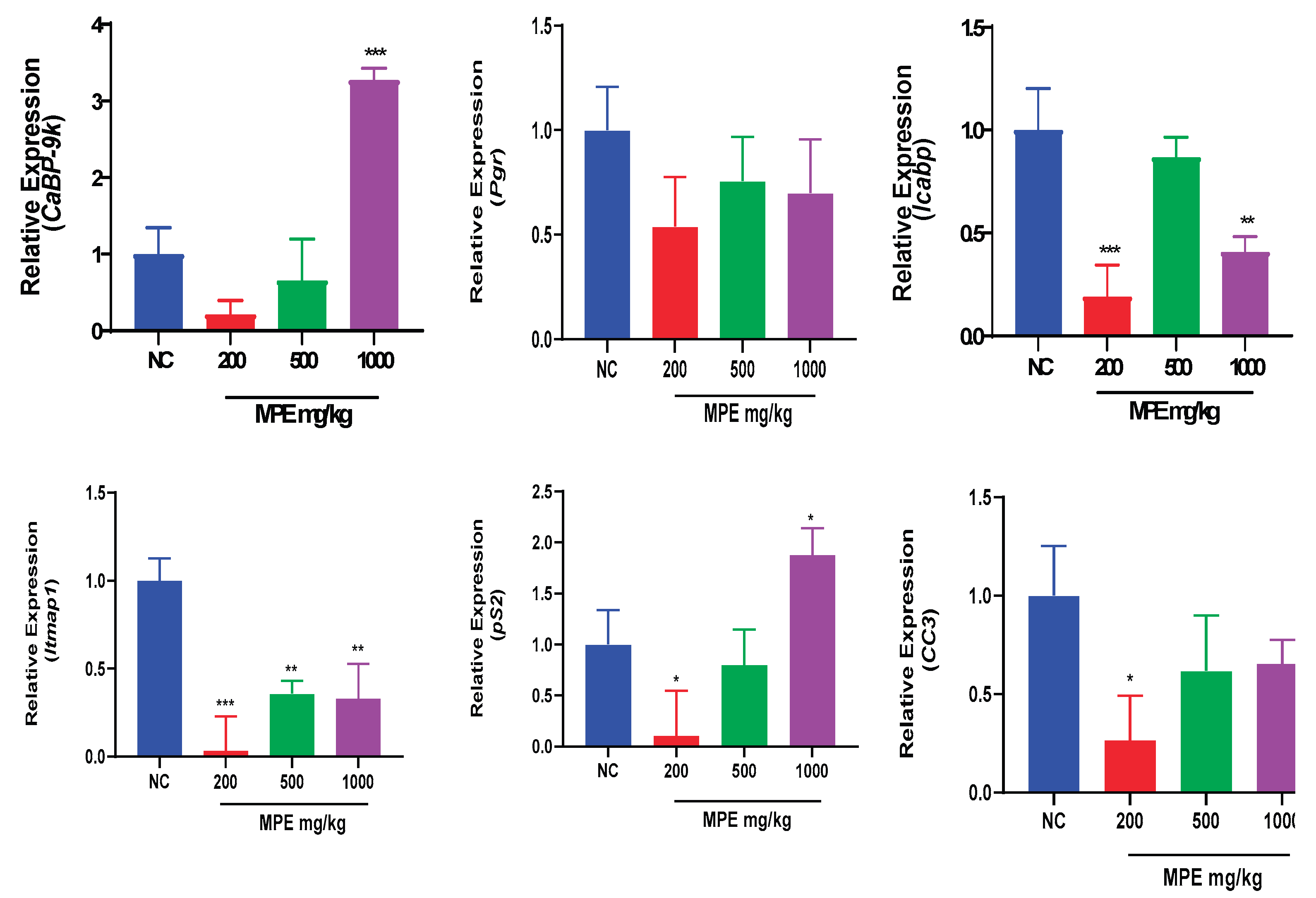
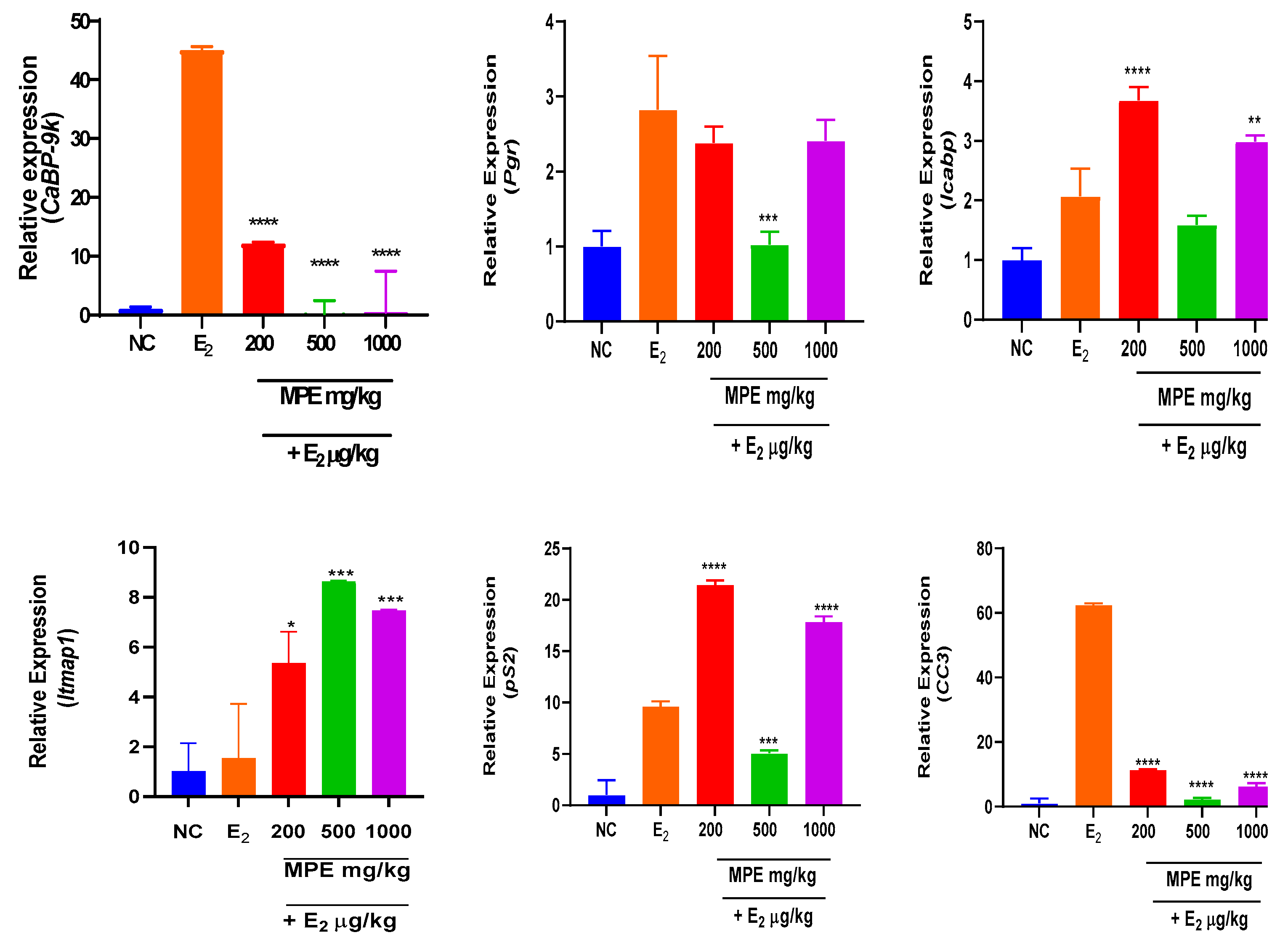
Administration of 1000 mg/kg MPE resulted in a significant increase (P =0.0001) in CaBP-9k expression in the uterine tissues (Figure 3). However, co-treatment of 1000 mg/kg MPE with E2 significantly reversed the E2-induced and 1000 mg/kg-induced increases in uterine CaBP-9k mRNA expression levels (P <0.0001) (Figure 4). A combined treatment of 500 mg/kg MPE with estradiol decreased the expression of Pgr compared to the estradiol-treated group at p=0.0006 (Figure 4). The relative expression of Icabp in the uterus was significantly lower than that of the naïve control in the 200 and 1000 mg/kg MPE treatment groups at P =0.0003 and P =0.0027, respectively (Figure 3). However, the combination of the MPE and estradiol increased expression for the 200 and 1000 mg/kg combined treatments at P <0.0001 and P =0.0051 (Figure 4). Treatments with 200, 500, and 1000 mg/kg MPE resulted in a relatively low expression of Itmap1 significantly at P =0.0002, P =0.003, and P =0.0023, respectively (Figure 3) but was markedly up-regulated in combined treatments at P =0.0124 for 200 mg/kg, P =0.0002 for 500 and P =0.0006 for1000 mg/kg (Figure 4). The pS2 gene in the uterus of the 200 mg/kg MPE treated group was downregulated, with relative expressions found to be significantly lower than that of the naïve untreated control group at P =0.0435. In contrast, 1000 mg/kg was significantly higher (P =0.0471) (Figure 3). The administration of 200 mg/kg MPE decreased relative expression significantly (P =0.0129) in CC3 expression compared to control (Figure 3). A significant decrease (P <0.0001) in the expression of CC3 was observed in all combined treatment groups when compared to estradiol-treated groups (Figure 4).

4. Discussion

Expressions of genes studied at the transcriptional profiling level were modified (increased or decreased) by exposure to MPE, demonstrating that exposure during prepubertal maturation can change or affect the expression profiles of the uterus and ovaries. Although gene expression in response to estrogens varies by tissue and stages of life and is sex-specific, it is possible to establish transcript profiles indicative of its mechanisms of action. Therefore, all genes understudied may not be directly associated with the uterotrophic and estrogenic responses found in the peripubertal uterus, but may have essential roles in other biological phenomena and are worth noting, a fact stated by several studies [26,27,28]. According to the transcriptional profiles of genes in the estradiol (E2) and MPE-treated, which demonstrate different levels of regulation, MPE may have substantially lower estrogenic efficacy than estradiol. As expected, administering E2 to the E2-treated group produced the most sensitive gene expression regulation, also observed in a study by [29]. Estradiol binds to the ER and causes a displacement of some chaperone proteins. The estrogen-ER complexes act as transcription factors by binding to specific ERE sequences in the target genes’ promotes, triggering numerous transcriptional reactions and activities related to female reproduction, a phenomenon stated by [30]. The 7-day intragastric administration of MPE showed modest estrogenic efficacy in vivo, with expression of the study genes comparable to E2. Explaining this activity, the phytoestrogens in MPE could be weakly estrogenic and have a lower affinity to bind to both ER types, inducing some estrogen-responsive genes and expressing various estrogenic and antiestrogenic effects, as was expressed in some studies [31,32] that indicated the estrogenic and antiestrogenic effects of phytoestrogens on the female reproductive system.
Gene regulation by MPE in ovaries: The importance of estrogen is efficiently documented in reproductive endocrinology and ovarian function in females [33]. Various reports by [34] has established its critical role in ovarian folliculogenesis. Their research indicates Estrogen Receptor Beta (Erβ) regulates gene expression before puberty and early postnatal life. A 2021 report stated that ERβ is crucial in controlling the ovary’s gonadotropin responses, and the fact that a subset of gonadotropin-induced genes necessary for follicular development, oocyte maturation, and ovulation are dependent on ERβ [35]. Dysregulation, therefore, can disrupt folliculogenesis and impair granulosa cell responsiveness to FSH [34]. Administration of E2 has been reported by [36] to jumpstart sexual maturation and the onset of puberty in immature rats despite the absence of gonadotropins, which are known to be essential in the formation and activation of primordial follicles and the early stages of follicle development to the preantral phases, also indicating that ER-dependent neurotropic processes govern gonadotrophin-releasing hormone release [35,37]. Intraovarian actions of estradiol ultimately enhance follicular responsiveness to gonadotropins, resulting in increased aromatase activity and estrogen synthesis, resulting in the modification of ER levels and DNA synthesis [38,39].
Based on this, in elucidating the estrogenic nature of MPE, this study identifies the possible roles that may be significant to the structural and functional development of the ovary in rats, as genes understudied may have direct biological estrogen targets. Identifying ER subtypes for these specific estrogen-dependent ovarian genes could also provide more precise mechanisms of ovarian function and novel targets for developing MPE as a fertility regulator.
Compared to the untreated rat ovaries, the notable reductions in the expression of mRNA for all genes in the immature ovaries were dose-related, in which higher doses were associated with increased expression levels. The significant drops in gene expression with the combined treatments show antagonism and indicate ERβ-mediated action in the ovaries, as evidence indicates that E2 controls primordial and primary follicle growth and folliculogenesis through ERβ in young rats [40]. The effects of E2 exposure on gene transcription were stronger than those of MPE exposure, suggesting that MPE would have a lesser impact on phenotypic, with ERβ-mediated activity in immature rat ovaries.
Progesterone Receptors (Pgr) are essential effectors of ER signaling and mediate progesterone’s physiological effects, which play a central role in reproductive events. Their expression is a prognostic marker of ER action used clinically in breast and reproductive tract malignancies [41]. In contrast to several studies in which immature rats treated with estrogen implants, estradiol, or hypophysectomized estrogen treatments showed no Pgr expression, [42,43,44], E2-treated rats in this study showed some expression. Some researchers proposed an indirect function for estrogen, which is required for follicle growth and maintenance, in their ability to express Pgr mRNA as the reason for the subsequent induction of Prgs [45]. Levels of Pgr were also significantly decreased in Letrozole-induced PCOS Aloe vera-treated ovaries [46], as Pgr was downregulated in all MPE doses, with 200 mg/kg showing significance. Downregulation observed with combined treatments could indicate binding to the same receptor sites and some antagonism.
Contrary to this study’s findings, CC3 was found to be among the most up-regulated among 450 E-dependent differentially expressed ovarian genes in a study by [47], whose biological functions are highly related to functional and structural development (organ morphogenesis, complement activation, organ development and regulation of multicellular processes) of the ovary. It was found to have direct biological targets of estrogenic action [47]. However, MPE showed some antagonistic activity, inhibiting E2 action at all doses, also indicating ER-targeted action. Calbindin-D9k, a reputable biomarker of potential estrogenic activity [48], is also a cytosolic calcium-binding protein expressed in uterine, placental, and other organ tissues [49]; however, its expression in the ovaries has not been reported. It could have the same role in calcium transport as reported by [50], although this study found some downregulated expressions in the ovaries.
Although this study did not gather the complete information to fully understand how these estrogenic biomarkers act in totality in the immature ovary, data presented shows that changes in their expressions could be integral to the signal transduction pathway of estrogens and potentially could be used to generate assays to evaluate reproductive toxicities. The base information gathered could be used to develop a testable hypothesis to better understand the molecular pathways associated with their exposure to chemicals with estrogenic properties. Examining ovarian gene expression after MPE exposure provides new insight into the effects of MPE on the immature rat ovary.
Gene regulation by MPE in uterus: Uterine expression of the various genes indicated some estrogenic activity; however, MPE showed differences in its action on the expression of these genes individually. This study may attribute the observed results to the complex regulatory processes influencing gene expression in the endometrium. Several other factors, including menstrual cycle events, hormonal regulation influences, and the dynamic and changing cellular composition of endometrial structure and function, could explain the differences observed in uterine gene expression, as stated by [2] and [51] in their respective studies. Therefore, in this study, using the whole excised tissue and the different patterns of ER expression and tissue gene expression signature of each cell have played an important role in the response of rat uterus to the phytoestrogen component of MPE and E2 also explained by [52] in another study. The selective affinity of some phytoestrogens has been reported [53] and this could also account for the differential gene expression patterns observed in this study. Besides, endogenous estrogens and phytoestrogens may not exert identical effects on uterine gene expression [54].
Eliciting an estrogenic response at the gene expression level also differs with the concentration of phytoestrogens present. For some phytoestrogens, the saturation of receptors by active compounds and higher concentrations may lead to the phenomenon of downregulation. This hormesis-type of function is common to many phytoestrogens, which is due to the saturation of receptors leading to the downregulation of receptors induced by the higher concentration [3]. However, experimental animals may need to be exposed to higher levels of phytoestrogens in developing female rats. Coumarin phytoestrogens, a component of MPE, have a weaker affinity to both ERα and ERβ than 17β-estradiol. However, it is stated that their selective affinity for ERβ is greater than ERα [53], and it could be assumed that the activity of coumarins in MPE in this study is similar to that found by [53]. In vivo studies show that some endocrine-disrupting chemicals (EDs) and estrogenic compounds, like E2, significantly increase the expression of uterine Calbindin-D9k and the underlying mechanisms in its expression in the myometrium and stromal cells of the rat uterus are is reported to be associated with the direct stimulatory effects of E2 and the indirect inhibitory effects of progesterone [55]. Estradiol, as shown in this study, initiates CaBP-9k expression [56]. Strong enough evidence exists that the induction of uterine CaBP-9k in immature rats by E2 and some EDs is via the ERα pathway, not Erβ [57].
In this study, mRNA levels varied and did not change significantly except for 1000 mg/kg MPE. Per the primary function of CaBP-9K in myometrial activity related to intracellular calcium level control [58], its significant expression at 1000 mg/kg MPE could therefore mean efficient regulation of homeostasis of solutes and water in the uterine epithelial cells [54]. Based on several research findings reported by [23] indicating the in vivo estrogenic potential of methylparaben and ethylparaben, the effect of MPE on gene expression can be likened to that of these parabens that mimic estrogen. Similarly, the expression of CaBP-9k was significantly up-regulated by the highest doses of the parabens [23], as observed with 1000 mg/kg MPE. However, the increase was weak compared with the increase induced by E2 treatment, as was reported for long alkyl chain parabens treatments by [55]. A similar significant expression was found in immature rats with Triclosan, an endocrine disruptor with estrogen-like properties. The notable downregulation of CaBP-9k evoked an antagonistic outcome similar to concurrent exposure to Triclosan and fluoride [59]. Significant CaBP-9K expression by 1000 mg/kg MPE, as seen with octamethylcyclotetrasiloxane (an endocrine disruptor due to its estrogenic properties), suggests that high doses of MPE possess estrogenic properties. However, a similar down-regulation of CaBP-9K expression in combined treatments with E2 also occurred in octamethylcyclotetrasiloxane and tetrabromodiphenyl Ether (an endocrine disruptor) treated following ICI 182,780 exposure [56,60] indicating weak estrogenicity of MPE that Erα may mediate. The ability of MPE (500 and 1000) mg/kg to reduce or reverse CaBP-9K expressional levels in the combined treatments may have resulted from its antagonistic and antiestrogenic effect through ER-dependent pathways in an immature uterus.
Even though Pgr plays a vital role in regulating cell differentiation and proliferation, which are essential for gland development, reproductive proficiency during the reproductive cycle, efficient implantation, and decidualization in pregnancy [41,61,62], MPE cannot be considered as efficacious as E2 in activating Pgr as an ER target gene in the rat uterine tissue. This was confirmed in the combined treatment with E2 and MPE (500 mg/kg), where at this dose level, MPE could either antagonize or block the activation of the Pgr gene by E2. Similarly, this was also found for lyophilized powder of dried Korean-grown Opuntia ficus indica (L.) Mill fruits [63], which contain high amounts of flavonoids and glycosides, are also found in M. pulegium extracts [6,11]. The induction of Pgr mRNA may be the result of a classical estrogenic response that could be downregulated due to potential antiestrogenic activity at 500 mg/kg MPE in combination with E2 [56,64] with the effect of 2-Methoxyestradiol, an endogenous metabolite of E2 and 17-ethylestradiol. This could result from decreased binding to and signaling through the ERα pathway, which is blocked by antiestrogenic activity.
The pS2 gene encodes a member of the trefoil factor family group, also reported to be a member of the estrogen-inducible gene family. Estrogenic stimulation increases pS2 expression at transcriptional levels [33]. In a similar study using Flemingia strobilia extract, which contains flavonoids and flavonoid glycosides as in M. pulegium, mRNA expression of pS2 significantly increased after treatment [24], as observed for 1000 mg/kg MPE . A similar increase in pS2 gene induction was also reported, however, in MCF-7 cells [63]. Increases seen in both combinations of 200 mg/kg and 1000 mg/kg MPE with E2 could mean that MPE at these doses could have either an additive or potentiating effect on pS2 expression levels in the uterine tissue. This further indicates that MPE has weak estrogenic activity and could possibly transactivate ER, as Lupeol, a triterpenoid in Millettia macophylla [3]. As was suggested for Lupeol, MPE might also act through alternate mechanisms, either by inhibiting or activating specific enzymes involved in estrogenic response [3]. The significantly reduced expression of pS2 at 200 mg/kg MPE, although its interaction with E2 suggests a synergistic effect on pS2 expression in the uterus. Similar findings have been reported regarding the effects of triterpenoids lupenone and lupeol on the growth-regulating estrogen receptor binding-1 gene expression, where an antiestrogenic effect was only seen at low concentrations, while being synergistic with E2 at higher concentrations [3].
The downregulated expression of Icabp in the uterus with MPE only and an upregulation with MPE combined with estradiol indicates its potentiating or additive effect, but having some antiestrogenic properties when administered alone. Contradicting these results, all doses of methylparaben and ethylparaben increased the expression of Icabp [23]. In using the uterine tissue to determine the ability of MPE to regulate the transcriptional activity of endogenous ERs through the expression of Itmap1, MPE treatment alone resulted in a downregulation of Itmap1 across all three experimental doses, contrasting a study using parabens [23]. However, in all combined treatments with E2, significant increases in the E2-dependent Itmap1 gene expression further indicate that MPE could be a weak estrogen with a potentiating or additive effect when administered with E2. The gene ontology for integral membranes includes Itmap1, which has been linked to reproduction and was initially identified as a novel zona pellucida protein highly expressed in a mid-to-late gestation mouse uterus only. It may have an important role in late-pregnancy uterine events [65,66]. However, in this study, Itmap1 was expressed in a non-gravid immature rat uterus but was significantly reduced compared to the untreated naïve controls. Nevertheless, its effect in a combined treatment shows that MPE could potentiate the effect of E2 in the immature uterus.
Expression of CC3 at all treatment levels was downregulated at the transcriptional and translational levels in the uterus either significantly (200 mg/kg MPE) or non-significantly (500 and 1000 mg/kg MPE). Based on similarities in phytoestrogen content, the effect of MPE on CC3 expression could be compared to the effect of Ficus deltoidea in the uterus. However, studies with Ficus deltoidea up-regulated CC3 expression [68], unlike MPE, where CC3 expression levels were dissimilar to those shown by estradiol and the naïve control. Per the role of CC3 in stimulating local inflammatory responses by activating complement pathways and promoting innate immunity, this observation suggests that, in contrast to natural estrogen, MPE may possibly induce some immune suppression in the uterus. Contrary to findings in this study, Triclosan, a phenolic compound reported to delay vaginal opening and has some reproductive toxicity in rats, increased CC3 mRNA expression in immature rats [69].
Estradiol significantly increased CC3 expression levels, but in co-treatments with MPE, these effects are minimized, therefore the partially inhibited E2-induced increase in CC3 mRNA levels for all doses indicates possible antagonism and activity via ER-dependent pathways. Similar to a study that sought to determine the effect of Genistein (a weak estrogen or an anti-estrogen) on CC3 expression in a combination treatment with E2 [70], the analysis of CC3 expression provides an additional piece of evidence of MPE exhibiting some antagonistic properties.

5. Conclusions

This research has demonstrated that MPE shows some estrogenic activity and can induce CaBP-9k, Pgr, pS2, Icabp, Itmap1, and CC3 in the uterus and ovaries; however, MPE showed differences in its action on the expression of these individual genes, with its in vivo action involving ER and ER-mediated pathways. This communicates distinct altered expressions and differential effects in the uterus and ovaries. Regarding the varying mRNA levels of estrogen-related genes in this study, MPE may be involved in disrupting reproductive function through both agonistic and antagonistic mechanisms, with potentially multiple modes of action. It may act as an endocrine disruptor with multiple mechanisms of action, highlighting its potential complexity in modulating estrogenic responses. These results also provide new insights into the estrogenic effects of MPE at a critical developmental stage of the female reproductive system.

6. Recommendation

Not all transcript levels may have been translated into translated into proteins, therefore further studies are recommended to include the evaluation of protein levels using MPE.

Author Contributions

Conceptualization, L.S.; methodology, L.S., P.W.N., S.A.D., B.M.D.; data curation, L.S., P.N.C., P.N.A, P.W.N., S.A.D.; statistical analysis, P.N.C., S.A.D. L.S.; writing—original draft preparation, L.S., P.N.C., P.N.A.; writing—review and editing, L.S., S.A.D., C.A.D., K.O.O.D., B.M.D.; supervision, C.A.D., K.O.O.D.; funding acquisition, L.S. All authors have read and agreed to the published version of the manuscript.

Funding

This research was partially funded by KNUST / Building Stronger Universities III (Grant number: KNUST-BSUIII)”

Institutional Review Board Statement

The study was approved by the Animal Research Ethics Committee (AREC) of KNUST (approval number: KNUST0045)

Informed Consent Statement

Not applicable

Data Availability Statement

Data will be made available upon request from the authors

Conflicts of Interest

The authors declare no conflicts of interest.

Acknowledgments

We acknowledge the contribution of Prof. George Asumeng-Koffour of blessed memory for his role in conceptualization and design as a supervisor, Mr. Fulgencios Somkang and the technical staff at the Pharmacology Department, as well as the technical staff of the Department of Clinical Microbiology, whose contribution greatly influenced the completion of this project. Also, we acknowledge the contribution of Mr. Wireko Bannor Manasseh and Roberta Y. Asiwu for their technical support.

Abbreviations

The following abbreviations are used in this manuscript:
CaBP-9k Calbindin-D9k
Pgr Progesterone
pS2 Trefoil factor 1
Icabp Intestinal Calcium Binding Protein
Itmap1 Integral membrane- associated protein -1
CC3 Complement Component 3

References

  1. Hilton, HN; Clarke, CL; Graham, JD. Estrogen and progesterone signalling in the normal breast and its implications for cancer development. Mol Cell Endocrinol. 2018, 466, 2–14. [Google Scholar] [CrossRef] [PubMed]
  2. Fertuck, KC; Eckel, JE; Gennings, C; Zacharewski, TR. Identification of temporal patterns of gene expression in the uteri of immature, ovariectomized mice following exposure to ethynylestradiol. Physiol Genomics 2004, 15(84), 127–41. [Google Scholar] [CrossRef]
  3. Zingue, S; Ntsa, DM; Magne Nde, CB; Michel, T; Ndinteh, DT; Clyne, C; et al. Lupeol, the major compound of the dichloromethane extract of Millettia macrophylla Benth (Fabaceae), displays estrogenic effects in ovariectomized rats. Phyther Res. 2019, 33(4), 949–57. [Google Scholar] [CrossRef]
  4. Kim, SH; Park, MJ. Effects of phytoestrogen on sexual development. Korean J Pediatr. 2012, 55(8), 265–71. [Google Scholar] [CrossRef]
  5. Jawaid, T; Awasthi, A; Kamal, M. Estrogenic activity of a hydro-alcoholic extract of Bambusa arundinaceae leaves on female wistar rats. Journal of Advanced Pharmaceutical Technology and Research 2015, 6, 19–24. [Google Scholar]
  6. El-Gazar, AA; Emad, AM; Ragab, GM; Rasheed, DM. Mentha pulegium L. (Pennyroyal, Lamiaceae) Extracts Impose Abortion or Fetal-Mediated Toxicity in Pregnant Rats; Evidenced by the Modulation of Pregnancy Hormones, MiR-520, MiR-146a, TIMP-1 and MMP-9 Protein Expressions, Inflammatory State, Certain Relate. Toxins (Basel) 2022, 14(5), 347. [Google Scholar] [CrossRef] [PubMed]
  7. Teixeira, B; Marques, A; Ramos, C; Batista, I; Serrano, C; Matos, O; et al. European pennyroyal (Mentha pulegium) from Portugal: Chemical composition of essential oil and antioxidant and antimicrobial properties of extracts and essential oil. Ind Crops Prod. 2012, 36(1), 81–7. [Google Scholar] [CrossRef]
  8. Casiglia, S; Bruno, M; Fontana, G; Senatore, F. Chemical composition of the essential oil of Mentha pulegium growing wild in Sicily and its activity on microorganisms affecting historical art crafts. Nat Prod Commun. 2017, 12(8), 1311–5. [Google Scholar] [CrossRef]
  9. Salem, N; Sriti, J; Bachrouch, O; Msaada, K; Khammassi, S; Hammami, M; et al. Phenological stage effect on phenolic composition and repellent potential of Mentha pulegium against Tribolium castaneum and Lasioderma serricorne. Asian Pac J Trop Biomed. 2018, 8(4), 207–16. [Google Scholar] [CrossRef]
  10. Mondher, B. Comparative study of the chemical properties and composition of the Mentha Pulegium L. of Algerian origin and that of Tunisian origin. Int J Agric Sci Food Technol. 2020, 6(1), 030–6. [Google Scholar] [CrossRef]
  11. Sallah, L; Coffie, PN; Babatunde, DM; Danquah, CA; Baah, FK; Mante, PK; et al. Anti-implantation and uterotonic properties of Mentha pulegium L. in female Sprague-Dawley rats. 2024, 10(10), 346–55. [Google Scholar] [CrossRef]
  12. Fatih, B; Madani, K; Chibane, M; Duez, P. Chemical Composition and Biological Activities of Mentha Species. In: Aromatic and Medicinal Plants - Back to Nature. InTech; 2017. p. 47–79.
  13. Ouakouak, H; Chohra, M; Denane, M. Chemical Composition, Antioxidant Activities of the Essential Oil of Mentha pulegium L, South East of Algeria. Int Lett Nat Sci. 2015, 39, 49–55. [Google Scholar] [CrossRef]
  14. Soukaina, K; Safa, Z; Soukaina, H; Hicham, C; Bouchra, C. Choline chloride-based deep eutectic solvents (NADES): Potential use as green extraction media for polyphenols from Mentha pulegium, antioxidant activity, and antifungal activity. Microchem J 2024, 199, 110174. [Google Scholar] [CrossRef]
  15. Soares, PMG; De Freitas Pires, A; De Souza, EP; Assreuy, AMS; Criddle, DN. Relaxant effects of the essential oil of Mentha pulegium L. in rat isolated trachea and urinary bladder. J Pharm Pharmacol. 2012, 64(12), 1777–84. [Google Scholar] [CrossRef]
  16. Aires, A; Marrinhas, E; Carvalho, R; Dias, C; Saavedra, MJ. Phytochemical composition and antibacterial activity of hydroalcoholic extracts of pterospartum tridentatum and mentha pulegium against staphylococcus aureus isolates. Biomed Res Int. 2016, 2016. [Google Scholar] [CrossRef]
  17. Yusuf, U; Muhammad, M. Antibacterial Properties of Mentha pulegium. South Asian Res J Appl Med Sci. 2019, 01(02), 43–5. [Google Scholar] [CrossRef]
  18. El-Naggar, HM; Osman, AR. Enhancing growth and bioactive metabolites characteristics in Mentha pulegium L. via silicon nanoparticles during in vitro drought stress. BMC Plant Biol. 2024, 24(1), 1–16. [Google Scholar] [CrossRef]
  19. Brahmi, F; Khodir, M; Chibane, M; Pierre, D. Chemical Composition and Biological Activities of Mentha Species. In: Aromatic and Medicinal Plants - Back to Nature. 2017. p. 47–79.
  20. Kelidari, HR; Alipanah, H; Roozitalab, G; Ebrahimi, M; Osanloo, M. Anticancer effect of solid-lipid nanoparticles containing mentha longifolia and mentha pulegium essential oils: In vitro study on human melanoma and breast cancer cell lines. Biointerface Res Appl Chem. 2022, 12(2), 2128–37. [Google Scholar]
  21. Gerenutti, M; Modesto, L; Carrara, VA; Magalhães, SA; Paulo, S. Maternal exposure to aqueous extract of Mentha pulegium L. inducing toxicity to embryo development in rats. African J Pharm Pharmacol. 2014, 8(22), 609–14. [Google Scholar]
  22. Assaggaf, H; El Hachlafi, N; Elbouzidi, A; Taibi, M; Benkhaira, N; El Kamari, F; et al. Unlocking the combined action of Mentha pulegium L. essential oil and Thym honey: In vitro pharmacological activities, molecular docking, and in vivo anti-inflammatory effect. Heliyon 2024, 10(11), e31922. [Google Scholar] [CrossRef] [PubMed]
  23. Sun, L; Yu, T; Guo, J; Zhang, Z; Hu, Y; Xiao, X; et al. The estrogenicity of methylparaben and ethylparaben at doses close to the acceptable daily intake in immature Sprague-Dawley rats. Sci Rep. 2016, 6(1), 1–9. [Google Scholar] [CrossRef]
  24. Jeong, SY; Chang, M; Choi S ho; Oh, SR; Wu, HH; Zhu, Y; et al. Estrogenic effects of phytoestrogens derived from Flemingia strobilifera in MCF-7 cells and immature rats. Vol. 41, Archives of Pharmacal Research. Pharmaceutical Society of Korea; 2018. 519–529 p.
  25. Naciff, JM; Overmann, GJ; Torontali, SM; Carr, GJ; Tiesman, JP; Daston, GP. Impact of the phytoestrogen content of laboratory animal feed on the gene expression profile of the reproductive system in the immature female rat. Environ Health Perspect. 2004, 112(15), 1519–26. [Google Scholar] [CrossRef]
  26. Daston, GP; Naciff, JM. Gene expression changes related to growth and differentiation in the fetal and juvenile reproductive system of the female rat: Evaluation of microarray results. Reprod Toxicol. 2005, 19(3 SPEC. ISS.), 381–94. [Google Scholar] [CrossRef] [PubMed]
  27. Daston, GP; Naciff, JM. Predicting developmental toxicity through toxicogenomics. Birth Defects Res Part C - Embryo Today Rev. 2010, 90(2), 110–7. [Google Scholar] [CrossRef] [PubMed]
  28. Wall, EH; Hewitt, SC; Case, LK; Lin, CY; Korach, KS; Teuscher, C. The role of genetics in estrogen responses: A critical piece of an intricate puzzle. FASEB J. 2014, 28(12), 5042–54. [Google Scholar] [CrossRef] [PubMed]
  29. Heikaus, S; Winterhager, E; Traub, O; Grümmer, R. Responsiveness of endometrial genes connexin26, connexin43, C3 and clusterin to primary estrogen, selective estrogen receptor modulators, phyto- and xenoestrogens. J Mol Endocrinol. 2002, 29(2), 239–49. [Google Scholar] [CrossRef]
  30. Tang, ZR; Zhang, R; Lian, ZX; Deng, SL; Yu, K. Estrogen-receptor expression and function in female reproductive disease. Cells 2019, 8(10), 1–15. [Google Scholar] [CrossRef]
  31. Hopert, AC; Bayer, A; Frank, K; Strunck, E; Wünsche, W; Vollmer, G. Characterization of estrogenicity of phytoestrogens in an endometrial-derived experimental model. Environ Health Perspect. 1998, 106(9), 581–6. [Google Scholar] [CrossRef]
  32. Basu, P; Maier, C. Phytoestrogens and breast cancer: In vitro anticancer activities of isoflavones, lignans, coumestans, stilbenes and their analogs and derivatives. Biomed Pharmacother. 2018, 107(August), 1648–66. [Google Scholar] [CrossRef]
  33. Kajita, S; Suzuki, E; Saegusa, M. Progesterone receptor expression correlates with estrogen receptor. 2012;(December 2011):22–32.
  34. Zalewski, A; Cecchini, EL; Deroo, BJ. Expression of extracellular matrix components is disrupted in the immature and adult estrogen receptor β-null mouse ovary. PLoS One 2012, 7(1). [Google Scholar] [CrossRef]
  35. Lee, EB; Praveen Chakravarthi, V; Wolfe, MW; Karim Rumi, MA. ERβ regulation of gonadotropin responses during folliculogenesis. Int J Mol Sci. 2021, 22(19). [Google Scholar] [CrossRef]
  36. Rasier, G; Parent, AS; Gérard, A; Lebrethon, MC; Bourguignon, JP. Early maturation of gonadotropin-releasing hormone secretion and sexual precocity after exposure of infant female rats to estradiol or dichlorodiphenyltrichloroethane. Biol Reprod. 2007, 77(4), 734–42. [Google Scholar] [CrossRef] [PubMed]
  37. Mayer, C; Acosta-Martinez, M; Dubois, SL; Wolfe, A; Radovick, S; Boehm, U; et al. Timing and completion of puberty in female mice depend on estrogen receptor α-signaling in kisspeptin neurons. Proc Natl Acad Sci U S A 2010, 107(52), 22693–8. [Google Scholar] [CrossRef]
  38. Hewitt, SC; Couse, JF; Korach, KS. Estrogen receptor knockout mice: What their phenotypes reveal about mechanisms of estrogen action. Breast Cancer Res. 2000, 2(5), 345–52. [Google Scholar] [CrossRef]
  39. Xu, XL; Huang, ZY; Yu, K; Li, J; Fu, XW; Deng, SL. Estrogen Biosynthesis and Signal Transduction in Ovarian Disease. Front Endocrinol (Lausanne) 2022, 13(March), 1–14. [Google Scholar] [CrossRef]
  40. Chauvin, S; Cohen-Tannoudji, J; Guigon, CJ. Estradiol Signaling at the Heart of Folliculogenesis: Its Potential Deregulation in Human Ovarian Pathologies. Int J Mol Sci. 2022, 23(1). [Google Scholar] [CrossRef]
  41. Diep, CH; Ahrendt, H; Lange, CA. HHS Public Access Author manuscript . Author manuscript; available in PMC 2017 October 01. Published in final edited form as: Steroids Steroids . 2016 October ; 114: 48–58. Progesterone induces progesterone receptor gen. 2016;48–58. [CrossRef]
  42. Ing, NH; Tornesi, MB. Estradiol up-regulates estrogen receptor and progesterone receptor gene expression in specific ovine uterine cells. Biol Reprod. 1997, 56(5), 1205–15. [Google Scholar] [CrossRef] [PubMed]
  43. Peluso, JJ; Pru, JK. Non-canonical progesterone signaling in granulosa cell function. Reproduction 2014, 147(5), 169–78. [Google Scholar] [CrossRef]
  44. Shin, YY; Kang, EJ; Jeong, JS; Kim, MJ; Jung, EM; Jeung, EB; et al. Pregnenolone as a potential candidate for hormone therapy for female reproductive disorders targeting ERβ. Mol Reprod Dev. 2019, 86(1), 109–17. [Google Scholar] [CrossRef]
  45. Park, OK; Mayo, KE. Transient expression of progesterone receptor messenger RNA in ovarian granuiosa cells after the preovulatory luteinizing hormone surge. Mol Endocrinol. 1991, 5(7), 967–78. [Google Scholar] [CrossRef]
  46. Dey, A; Dhadhal, S; Maharjan, R; Nagar, PS; Nampoothiri, L. Partially purified non-polar phytocomponents from Aloe barbadensis Mill. gel restores metabolic and reproductive comorbidities in letrozole-induced polycystic ovary syndrome rodent model- an “in-vivo” study. J Ethnopharmacol. 2022, 291, 115161. [Google Scholar] [CrossRef]
  47. Liew, SH; Sarraj, MA; Drummond, AE; Findlay, JK. Estrogen-Dependent Gene Expression in the Mouse Ovary. 2011;6(2).
  48. Moon, B; Kim, W; Park, CH; Oh, SM. Ginkgo biloba extract (EGb761) did not express estrogenic activity in an immature rat uterotrophic assay. Vol. 33, Environmental Health and Toxicology. 2018. e2018016 p.
  49. Christakos, S; Mady, LJ; Dhawan, P. Calbindin-D28K and Calbindin-D9K and the Epithelial Calcium Channels TRPV5 and TRPV6. Fourth Edi. Vol. 1, Vitamin D: Fourth Edition. Elsevier Inc.; 2018. 343–359 p.
  50. Sim, JY; Jung, EM; Yoo, YM; Choi, KC; Jeung, EB. Transcriptional and translational expression of calbindin-D9k in the duodenum, kidney and uterus of a female canine model. J Vet Sci. 2010, 11(1), 15–9. [Google Scholar] [CrossRef]
  51. Mortlock, S; Mckinnon, B; Montgomery, GW. Genetic Regulation of Transcription in the Endometrium in Health and Disease. 2022, 3, 1–13. [Google Scholar] [CrossRef]
  52. Nephew, KP; Long, X; Osborne, E; Burke, KA; Ahluwalia, A; Bigsby, RM. Effect of estradiol on estrogen receptor expression in rat uterine cell types. Biol Reprod. 2000, 62(1), 168–77. [Google Scholar] [CrossRef]
  53. Wang, T; Wang, Y; Zhuang, X; Luan, F; Zhao, C; Cordeiro, MNDS. Interaction of coumarin phytoestrogens with ERα and ERβ: A molecular dynamics simulation study. Molecules 2020, 25(5). [Google Scholar] [CrossRef]
  54. Heneweer, M; Houtman, R; Poortman, J; Groot, M; Maliepaard, C; Peijnenburg, A. Estrogenic effects in the immature rat uterus after dietary exposure to ethinylestradiol and zearalenone using a systems biology approach. Toxicol Sci. 2007, 99(1), 303–14. [Google Scholar] [CrossRef]
  55. Yang, H; Nguyen, TT; An, BS; Choi, KC; Jeung, EB. Synergistic effects of parabens on the induction of calbindin-D9k gene expression act via a progesterone receptor-mediated pathway in GH3 cells. Hum Exp Toxicol. 2012, 31(2), 134–44. [Google Scholar] [CrossRef]
  56. Lee, JS; Kim, YK; Yang, H; Kang, HY; Ahn, C; Jeung, EB. Two faces of the estrogen metabolite 2-methoxyestradiol in vitro and in vivo. Mol Med Rep. 2015, 12(4), 5375–82. [Google Scholar] [CrossRef]
  57. Choi, KC; Leung, PCK; Jeung, EB. Biology and physiology of Calbindin-D9k in female reproductive tissues: Involvement of steroids and endocrine disruptors. Reprod Biol Endocrinol. 2005, 3, 1–8. [Google Scholar] [CrossRef]
  58. Sadigh, AR; Mihanfar, A; Fattahi, A; Latifi, Z; Akbarzadeh, M; Hajipour, H; et al. S100 protein family and embryo implantation. J Cell Biochem. 2019, 120(12), 19229–44. [Google Scholar] [CrossRef]
  59. Abd-Elhakim, YM; Mohammed, AT; Ali, HA. Impact of subchronic exposure to triclosan and/or fluoride on estrogenic activity in immature female rats: The expression pattern of calbindin-D9k and estrogen receptor α genes. J Biochem Mol Toxicol. 2018, 32(2), 6–13. [Google Scholar] [CrossRef]
  60. Dang, VH; Choi, KC; Jeung, EB. Tetrabromodiphenyl ether (BDE 47) evokes estrogenicity and calbindin-D9k expression through an estrogen receptor-mediated pathway in the uterus of immature rats. Toxicol Sci. 2007, 97(2), 504–11. [Google Scholar] [CrossRef]
  61. Grimm, SL; Hartig, SM; Edwards, DP. Review: Progesterone Receptor Signaling Mechanisms AC NU. J Mol Biol. 2016. [Google Scholar] [CrossRef]
  62. Marquardt, RM; Kim, TH; Shin, JH; Jeong, JW. Progesterone and estrogen signaling in the endometrium: What goes wrong in endometriosis? Int J Mol Sci. 2019, 20(15). [Google Scholar] [CrossRef]
  63. An, BH; Jeong, H; Zhou, W; Liu, X; Kim, S; Jang, CY; et al. Evaluation of the Biological Activity of Opuntia ficus indica as a Tissue- and Estrogen Receptor Subtype-Selective Modulator. Phyther Res. 2016, 30(6), 971–80. [Google Scholar] [CrossRef]
  64. Pinto, MP; Medina, RA; Owen, GI. 2-Methoxyestradiol and Disorders of Female Reproductive Tissues. Horm Cancer 2014, 5(5), 274–83. [Google Scholar] [CrossRef]
  65. Kasik, JW. A cDNA cloned from pregnant mouse uterus exhibits temporo-spatial expression and predicts a novel protein. Biochem J. 1998, 950, 947–50. [Google Scholar] [CrossRef]
  66. Imamura, T; Asada, M; Vogt, SK; Rudnick, DA; Lowe, ME; Muglia, LJ. Protection from pancreatitis by the zymogen granule membrane protein integral membrane-associated protein-1. J Biol Chem. 2002, 277(52), 50725–33. [Google Scholar] [CrossRef]
  67. Zekri, N; Amalich, S; Boughdad, A; Alaoui El Belghiti, M; Zair, T. Phytochemical study and insecticidal activity of Mentha pulegium L. oils from Morocco against Sitophilus Oryzae. Mediterr J Chem. 2013, 2(4), 607–19. [Google Scholar] [CrossRef]
  68. Zaid, SSM; Othman, S; Kassim, NM. Protective role of Mas Cotek (Ficus deltoidea) against the toxic effects of bisphenol A on morphology and sex steroid receptor expression in the rat uterus. Biomed Pharmacother 2021, 140. [Google Scholar] [CrossRef]
  69. Jung, EM; An, BS; Yang, H; Choi, KC; Jeung, EB. Biomarker genes for detecting estrogenic activity of endocrine disruptors via estrogen receptors. Int J Environ Res Public Health 2012, 9(3), 698–711. [Google Scholar] [CrossRef] [PubMed]
  70. Diel, P; Hertrampf, T; Seibel, J; Laudenbach-Leschowsky, U; Kolba, S; Vollmer, G. Combinatorial effects of the phytoestrogen genistein and of estradiol in uterus and liver of female Wistar rats. J Steroid Biochem Mol Biol. 2006, 102, 60–70. [Google Scholar] [CrossRef] [PubMed]
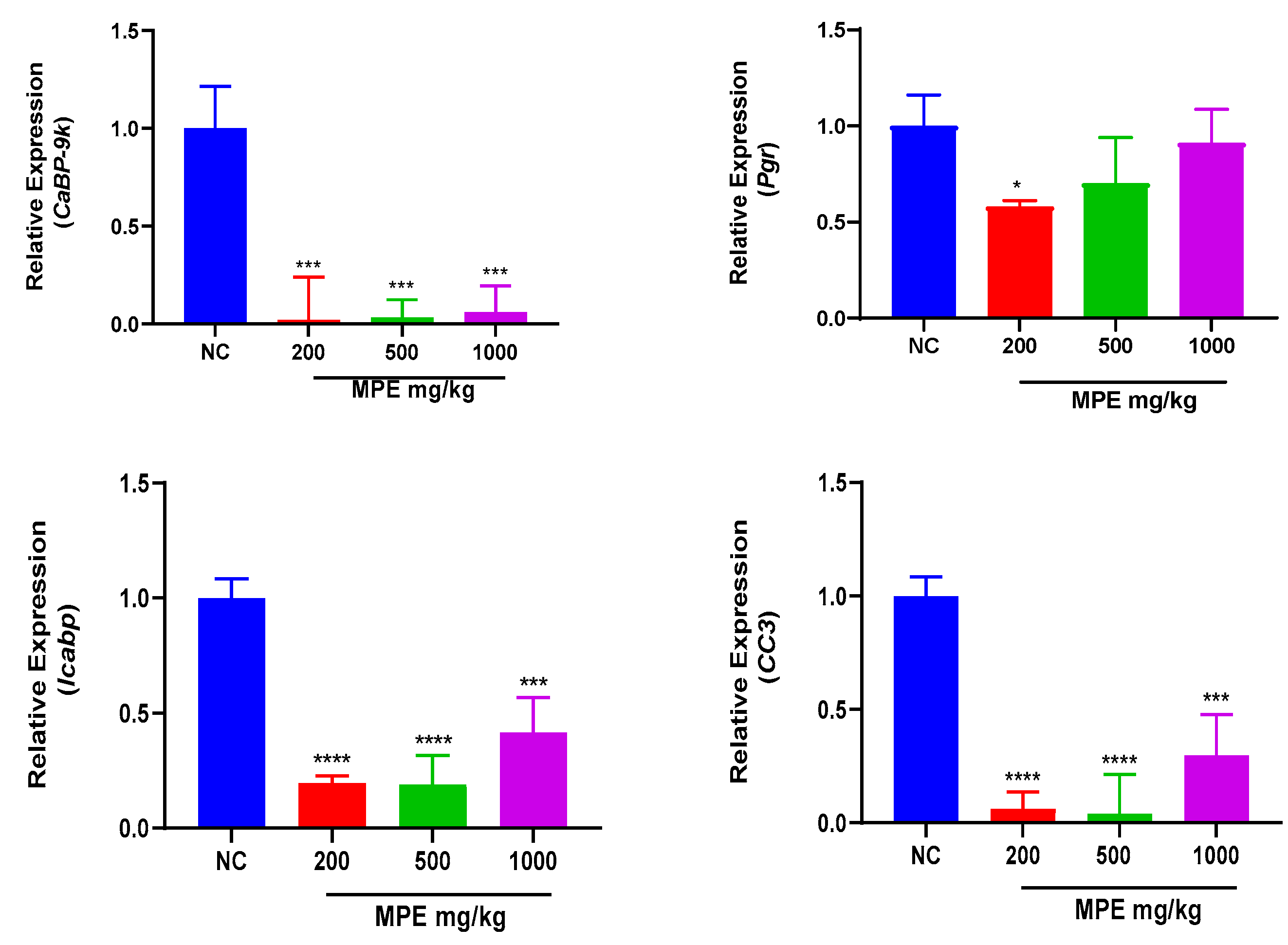
Figure 1. Relative expressions of CaBP-9k, Pgr, Icabp, and CC3 genes in the ovaries of rats treated with MPE for 7 days. Values are expressed as means ± SD, followed by Dunnett’s post-hoc test. Values are significantly different from naïve controls at (*p<.05), (***p<0.001) and (****p<0.0001).
Preprints 199664 g001
Figure 2. Relative expressions of CaBP-9k, Pgr, Icabp, and CC3 genes in the ovaries of rats treated with a combination of MPE and estradiol (E2) for 7 days. Values are expressed as means ± SD, followed by Dunnett’s post-hoc test. Values are significantly different from E2 at (****p<0.0001).
Preprints 199664 g002
Figure 3. Relative expressions of CaBP-9k, Pgr, Icabp, Itmap1, pS2, and CC3 genes in the uterus of rats treated with MPE for 7 days. Values are expressed as means ± SD, followed by Dunnett’s post-hoc test. Values are significantly different from naïve controls at (*p<.05), (***p<0.001) and (***p<0.001).
Preprints 199664 g003
Figure 4. Relative expressions of CaBP-9k, Pgr, Icabp, Itmap1, pS2, and CC3 genes in the uterus of rats treated with a combination of MPE and estradiol (E2) for 7 days. Values are expressed as means ± SD, followed by Dunnett’s post-hoc test. Values are significantly different from E2 at (*p<.05), (***p<0.01), (**p<0.001) (****p<0.0001).
Preprints 199664 g004
Table 1. List of reverse (R) and forward (F) primers used for amplifying estrogen-responsive genes in rat uteri and ovaries for qPCR analysis.
Preprints 199664 i001
Disclaimer/Publisher’s Note: The statements, opinions and data contained in all publications are solely those of the individual author(s) and contributor(s) and not of MDPI and/or the editor(s). MDPI and/or the editor(s) disclaim responsibility for any injury to people or property resulting from any ideas, methods, instructions or products referred to in the content.
Copyright: This open access article is published under a Creative Commons CC BY 4.0 license, which permit the free download, distribution, and reuse, provided that the author and preprint are cited in any reuse.
Prerpints.org logo

Preprints.org is a free preprint server supported by MDPI in Basel, Switzerland.

Subscribe

Disclaimer

Terms of Use

Privacy Policy

Privacy Settings

© 2026 MDPI (Basel, Switzerland) unless otherwise stated