
Submitted:
21 February 2026
Posted:
27 February 2026
You are already at the latest version
Abstract
Cancer immunotherapy holds immense potential for the future of medicine within the study of cancer therapeutics; however, most therapies are undermined by T-cell exhaustion and tumor immune evasion. T-cell exhaustion is caused by chronic antigen stimulation in the tumor microenvironment (TME), leading to dysfunctional epigenetically enforced states by transcription factors such as TOX and the NR4A family. Simultaneously, tumors evade the immune system by silencing MHC-1 molecules. Proposed is a synergistic approach that addresses these obstacles, involving the engineering of TCR-T cells for enhanced durability against the TME through CRISPR-Cas9-mediated knockout of exhaustion transcription factors, and the reprogramming of cancer cell transcriptomes using DNA methyltransferase (DNMTi) and histone deacetylase (HDACi) inhibitors. Furthermore, this review additionally incorporates: metabolic resistance, addressing the transfer of mitochondria from neurons to cancer cells, and enhancing oxidative phosphorylation (OXPHOS). These are proposed interventions for these obstacles with specific biomarkers (T-cell signatures, tumor epigenetic landscape, and tumor innervation density). By combining exhaustion-resistant T-cells with a reprogrammed tumor that is visible to the immune system, there is potential to overcome immune resistance and improve therapeutic outcomes for patients.
Keywords:
epigenetics
; TCR-T
; T-cells
; cancer immunotherapy
; metabolic resistance
; oncology
Introduction and Background
The most recent research and discoveries made in cancer immunotherapy proposes a variety of strategies for treating cancer, the most popular in field being: Engineered T-cell receptors (TCR-T), Chimeric Antigen Receptor T-cell therapy (CAR-T), and Immune Checkpoint Blockade (ICB). These immunotherapies use immune cells to eradicate tumors by antigen recognition on the cell surface, and granzyme release which enters performing pores of the tumor, encouraging cell death in malignant cells (Liu et al, 2013).
CAR-T vs TCR-T vs ICB
CAR-T limitations stem from design constraints; CARs only target surface antigens, leading to unfavorable results in vivo, such as antigen escape, causing therapies to be ineffective (Lemoine, Ruella, and Houot, 2021). Contrasting CAR-T with ICB, Immune checkpoint blockade has a broad impact on over 40% of US cancer patients eligible for immunotherapy (Makni-Maalej et al., 2023). However, only 12-20% of those receive durable clinical benefits, meaning only 5-8% of cancer patients benefit from ICB (Das and Johnson, 2019). This limited effectiveness demonstrated in most cases is associated with tumors that are immunologically “cold,” lacking sufficient pre-existing T-cell infiltration, or T-cells in a state of terminal exhaustion, which makes blocking inhibitory receptors like PD-1 insufficient to restore functionality (Topalian, Taube, & Pardoll, 2020). However, TCR-T’s have biological features that promise enhanced durability due to the ability to target intracellularly, unlike CAR-T, which only targets antigens on the surface of cells (Zhang and Wang, 2019). This allows TCR-T cells to recognize a wider range of tumor antigens, such as, cancer-testis antigens (MAGE, NY-ESO-1), tissue differentiation antigens (HER2), as well as patient-specific neoantigens derived from somatic mutations, where most tumor-specific targets are available (Shao et al., 2024). TCRs are designed for sensitive antigen detection, capable of being triggered by 1-3 peptide-MHC complexes on malignant cells. This allows elimination of tumors that are easily missed by the immune system (Baulu et al., 2023). However, due to TCRs recognizing small peptide fragments; there are risks that cause them to react with peptide fragments on healthy cells, leading to unwanted, off target, toxicities (Zhang, and Wang, 2019).
Furthermore, CAR-Ts response rates have shown a trend where patients tend to relapse after treatment; CD19 CAR-T therapy achieved remission in 90% of B-cell acute lymphoblastic leukemia (B-ALL) patients (DasGupta et al., 2017). Despite these results, 50% of B-ALL patients relapsed within the first year, regardless of remission because of CD19 antigen loss, lineage switching, and limited persistence. B-ALL cells can have genetic plasticity functions, which is also a critical factor, as this allows them to alter metabolic pathways to escape treatment and switch lineages (Aldoss et al., 2017). These limitations in immunotherapy address the need for enhancing the performance of engineered T-cells.
While cancer immunotherapies show mixed results, T-cell exhaustion and tumor immune evasion are important for understanding the current state of advancements. T-cell exhaustion is a state mostly induced by intense antigen stimulation in the tumor microenvironment (TME) (Yu et al., 2026). Tumors are sources of antigens that stimulate T-cells, preventing regeneration of T-cells, effectively causing them to lose their functionality (Su et al., 2025). This dysfunctional state is defined by the continuous loss of effector cytokine production (IL-2, TNF-α, and IFN-γ); furthermore, the upregulation of different inhibitory receptors, such as, PD-1, CTLA-4, TIM-3, LAG-3, and TIGIT (Tie et al, 2020).
Besides T-cell exhaustion, tumor evasion refers to cancer cells suppressing the immune system by downregulating MHC class molecules, stealing essential nutrients, starving T-cells, and cultivating many suppressive immune cells to shut down anti-tumor immunity (Li, Halladay, and Yang, 2024). Oncogenic pathways encourage evasion tactics; tumors create metabolically hostile micro-environments, typically characterized by hypoxia and low glucose (Tufail, Jiang, & Li, 2024)\. This directly impairs glycolytic metabolism required by effector T-cells, starving them in a dysfunctional state (Nejad et al, 2021). A compelling factor in combating converse cellular mechanisms is engineering transcriptional control, reprogramming transcription factors of both T-cells and the malignancy to achieve a permanent solution. Additionally, malignant cells use different oncogenic transcription factors (eg: STAT3, MYC, and FOXM1) to grow and gain control over tumor evasion mechanisms (Wang et al., 2023). The oncogeneic transcription factor STAT3 promotes the proliferation of cancerous cells while also cultivating an immunosuppressive microenvironment by inducing expansion of myeloid-derived suppressor cells (MDSCs) and M2-polarized macrophages, which then suppresses T-cell and NK-cell functions (Zou et al, 2020). Manipulating transcriptomes in cancer and T-cells in combination with cancer immunotherapies can be tremendously transformative. These problems are faced within cancer immunotherapy, causing treatment to fail and patients to relapse. Experimenting with the manipulation of transcriptomes and epigenetic silencing in vitro and eventually vivo, it induces the hypothesis: What is the therapeutic potential of engineering TCR-T cells through transcription factor modulation, while simultaneously using targeted epigenetic therapies to reprogram the cancer cell transcriptome? How can this approach be personalized based on patient-specific mutational and epigenetic landscapes?
Literature Review
Biology of T-Cell Exhaustion and Transcriptional Control (TOX, NR4A, TCF1, T-BET/EOMES)
Transcriptional networks dictate cellular behavior by controlling which proteins are made; these networks can be manipulated to engineer effective T-cell immunotherapies. T-cell receptor signaling activates transcription factor NFAT when chronic stimulation is present without co-stimulatory signals, and even lacking activating agents, AP-1 and NFAT induce dysfunction of primary T-cell exhaustion drivers: TOX and NR4A family. These transcription factors upregulate inhibitory receptors, enforcing exhausted states (Tillé, L., et al 2023).
TOX transcriptionally and epigenetically programs CD8+ T-cell exhaustion. This occurs by altering chromatin to upregulate inhibitory receptors such as PD-1, silencing genes for effector functions (Seo et al, 2019). The NR4A family mainly cooperates with TOX through positive feedback loops to enforce the repression of cytokine function (Sekiya T 2022). Seo et al carried out a study regarding the manipulation of T-cell exhaustion drivers, demonstrating the concept of altering T-cell transcription factors, using mouse models of solid tumors. B16-OVA melanoma cells were injected and engineered to express a human CD19 antigen (B16-OVA-hCD19) in mice. Mice were then treated with CAR-T cells, which were engineered to express TOX silently by using shRNA (short hairpin RNA) (Kim et al., 2024). Results showed that mice treated with TOX DKO CAR-T cells exhibited significant tumor regression, with some achieving complete tumor eradication compared to the control group. This study lays a scientific foundation for altering transcription factors in combination with cancer immunotherapy for sufficient results, as well as providing further information on what an anti-tumor response would look like with the manipulation of transcription factors.
TCR-T Engineering Strategies to Overcome Exhaustion
Conversely, favorable T-cell states are maintained through a different set of regulators. TCF1, a transcription factor encoded by the Tcf7 gene, Tcf7 maintains a pool of stem-like progenitor exhausted T-cells. These TCF1+ cells are critical due to their response in immunotherapy, due to their potential to self-renew and proliferate. Upon antigen encounter, TCF1+ progenitor cells can differentiate into multiple subsets; their fate is determined by the balance of eomesodermin (EOMES) and T-bet (Tbx21) transcription factors (Jadhav et al, 2019). T-cells receive immediate signalling inducing T-bet in the response to immunization or acute infections, recruiting a differentiated immune cell (Wu et al., 2016). EOMES helps establish long-lived memory T-cell populations, prioritizing survival signaling (Knudson et al., 2017). Unremitting antigen exposure corrupts the balance between these transcription factors, favoring dysfunctional states over a functional effector or memory response. Pathological research has used the imbalance of these transcription factors to predict T-cell failure in cancer immunotherapy. Having implications that doctors can predict if therapy is likely to fail also opens a window for scientists to design custom-engineered T-cells for durable cures.
Furthermore, a T-cell's transcriptional program is intrinsically linked to its metabolic state, and executing anti-tumor responses is a biologically demanding pathway for transcription factors. Metabolic rewiring arranged by metabolic controllers, such as transcription factor MYC, and the mTOR signaling pathway, drives T-cells out of a state that is reliant on oxidative phosphorylation (OXPHOS) and into rapid aerobic glycolysis (Warburg effect) (Li et al., 2022). This metabolic shift provides adenosine triphosphate (ATP) and biosynthetic precursors pivotal for clonal expansion and effector protein synthesis. However, high reliance on glycolysis starves T-cells in the tumor microenvironment, causing a loss in functionality (Xu et al., 2021). Metabolic controllers and stemness maintainers provide a basis for an integrated understanding of T-cell exhaustion, thereby enabling T-cell optimization through transcriptional engineering. The focus is shifting to personalized therapeutic programming of T-cells and rationalized designs, documented in the literature. This is so that therapeutics can be as accurate as possible for the cancer type, the person's genetic makeup, and their tumor microenvironment.
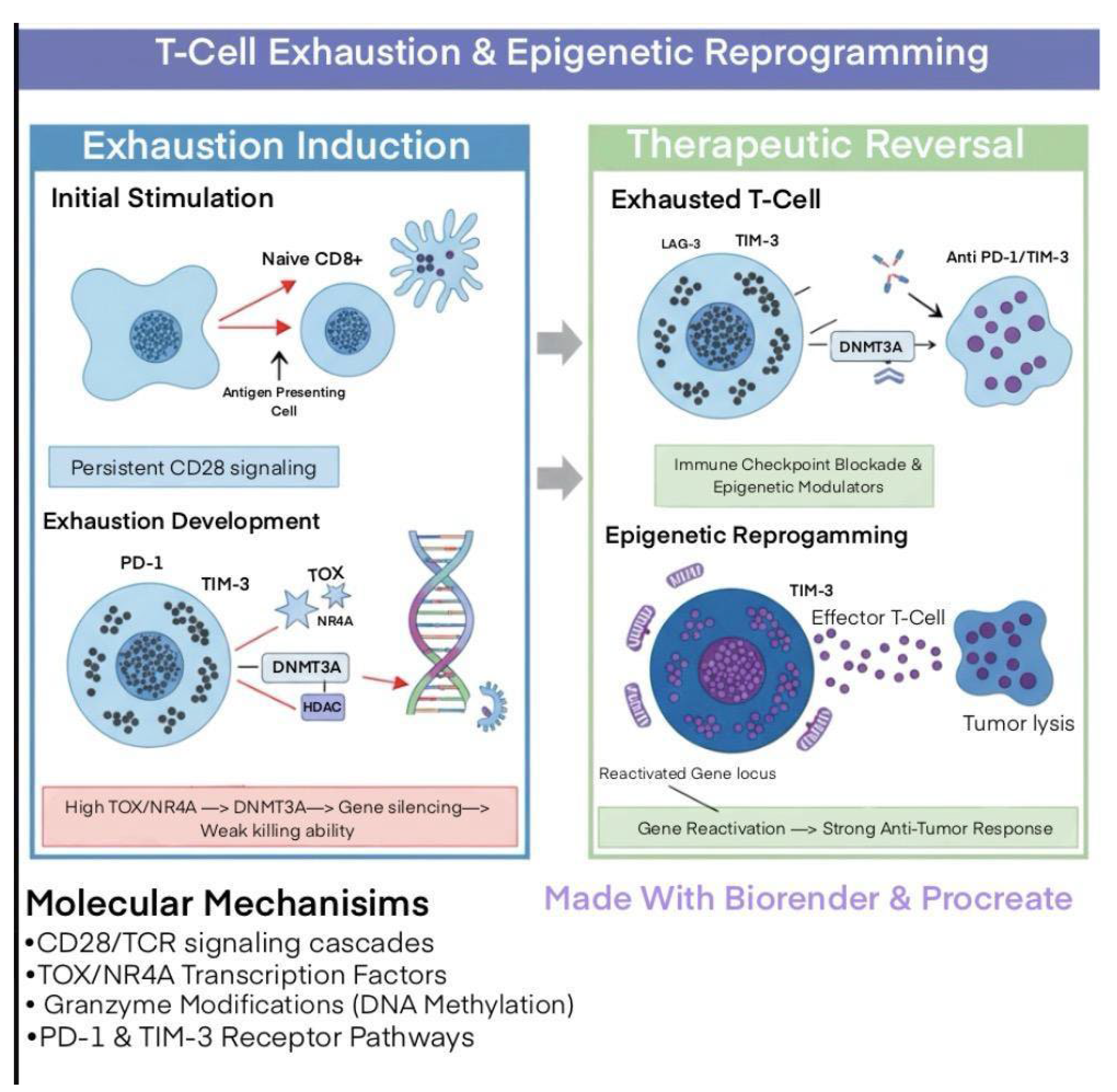
Transcriptional programming of TOX and the NR4A family. TOX binds to and activates the promoter of T-cell genes, encoding inhibitory receptors (PD-1, TIM-3, LAG-3) and silencing genes for effector function (granzyme B) (Seo et al., 2019). TOX remodels chromatin, creating an epigenetic scar by opening chromatin at the inhibitory gene locus, making it permanently accessible (Sekine et al., 2020). Epigenetic factors control the stability and irreversibility of T-cell exhaustion (Pauken et al., 2016). TOX deletion in T cells targeting infections and tumors resulted in a 50% decrease in PD-1 expression, and production of IFN-γ and TNF increased by 2 to 3-fold compared to a control group of T-cells. Similarly, in murine models of melanoma, CAR-T cells mediated the deletion of NR4A1 with CRISPR-Cas9, enhanced tumor regression, which led to a 60-80% long-term survival rate (Seo et al., 2019). Large portions of patients who have failed anti-PD-1 therapies have terminal T-cells in epigenetically stuck exhaustion, meaning blocking PD-1 signals will be insufficient (Wu., et al 2026). TOX deletion therapy represents a possible solution to this, as it's engineered to resist the process that caused the therapeutic failure. Indicating further, for patients whose tumor biopsies reveal a T-cell infiltrate by terminally exhausted phenotypes, designing TCR-T with TOX removal is a rational decision in future cancer therapies.
Figure 1.
1) Persistent stimulation by antigens to T-cells induce an exhausted state. 2) TOX and NR4A transcription factors induce methylation (DNMT3A) and histone deacetylation to silence effector genes, reducing cytotoxicity effects. 3) TOX/N4RA inhibition and epigenetic modulator use (HDACi & DNMTi) attempts to reverse gene loci silencing. 4) Epigenetic reprogramming methods restore strong anti-tumor outcomes, leading to the destruction of a cancer cell.
Figure 1.
1) Persistent stimulation by antigens to T-cells induce an exhausted state. 2) TOX and NR4A transcription factors induce methylation (DNMT3A) and histone deacetylation to silence effector genes, reducing cytotoxicity effects. 3) TOX/N4RA inhibition and epigenetic modulator use (HDACi & DNMTi) attempts to reverse gene loci silencing. 4) Epigenetic reprogramming methods restore strong anti-tumor outcomes, leading to the destruction of a cancer cell.
Epigenetic Reprogramming of Tumors to Restore Immunogenicity
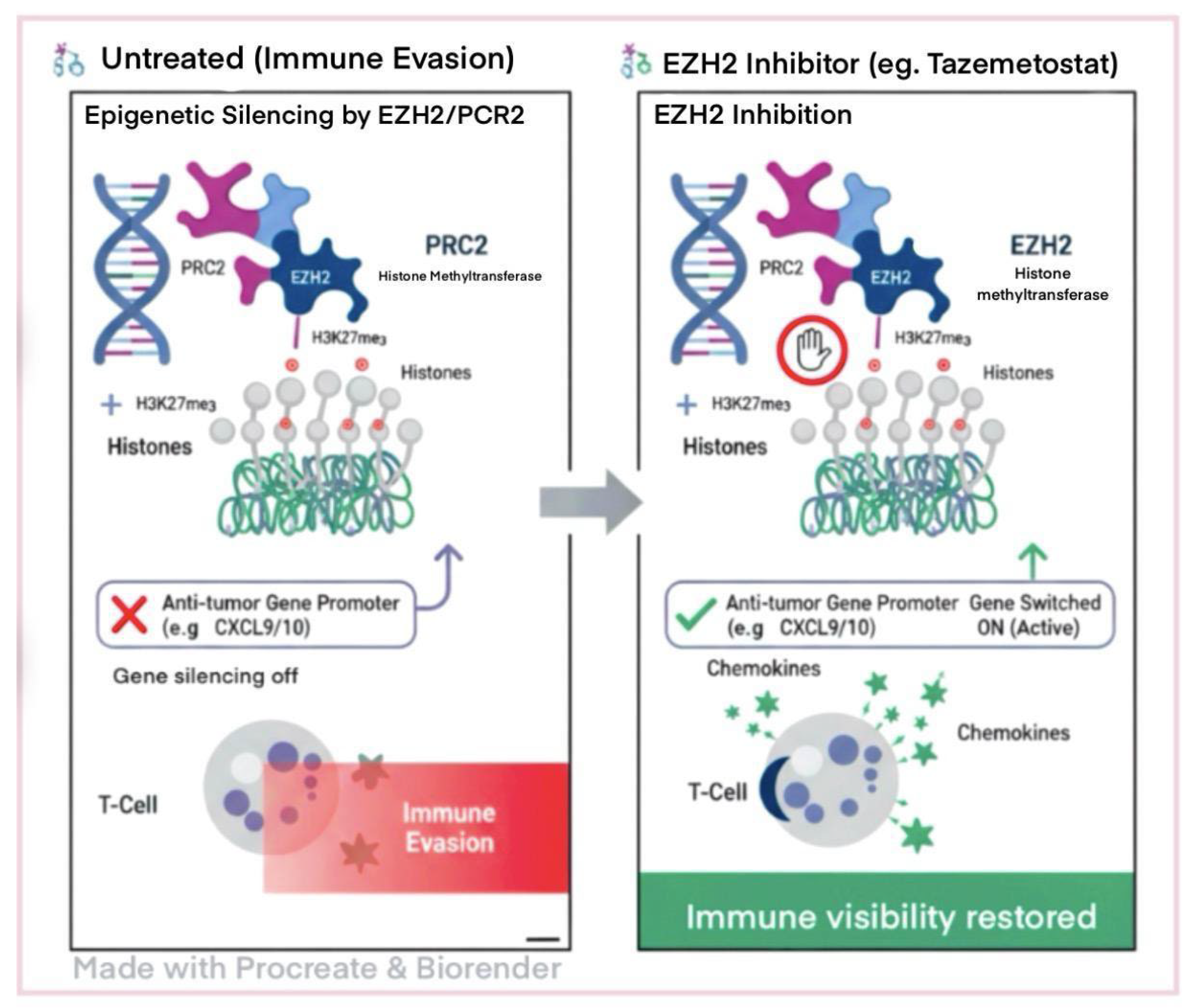
Shifting the medical approach from the T-cell to the tumor itself, scientific literature explores vulnerabilities in malignant cells that can be exploited. Cancer growth and transformation are driven by its transcriptional programs, one being MYC, which regulates growth, proliferation, and metabolism (Hu, Dong, and Liu, 2024). Research has shown that MYC contributes to immune evasion by binding to the PD-1 gene (Casey et al., 2016). This is crucial to the cancer's survival; however, these evasion tactics are being researched to make tumors visible to the immune system and vulnerable to apoptosis. Furthermore, the presentation of the major histocompatibility Complex (MHC) class 1 in the tumor microenvironment is crucial for CD8+ T-cells to recognize cancer; however, cancer manipulates its MHC pathways to become invisible to the immune system (Lodewijk et al., 2021). Studies in lung cancer have documented PRC2-mediated silencing as an evasion strategy; the PRC2 complex acts as an epigenetic silencer, leading the immune system to be unable to recognize the malignancy because of the switching off of genes (Bradley et al., 2019). However, it is potentially reversible with epigenetic drugs (Lodewijk et al., 2021). This is because it involves an epigenetic process, adding methylation marks to the DNA’s packaging proteins rather than permanently altering DNA’s underlying code. Epigenetic drugs such as EZH2 inhibitors work by blocking the PRC2 enzyme from applying these silencing marks (Duan, Du & Guo, 2020). By inhibiting the enzyme, silenced genes can be switched back on, restoring tumors' visibility to the immune system.
Figure 2.
PCR2 complex is catalyzed by the EXH2 enzyme, enforcing epigenetic silencing by applying repressive mark H3K27me3 to histone tails. This condenses chromatin thereby repressing genes with anti tumor qualities (eg, CXCL9 & CXCL10), promoting tumor immune evasion. EZH2 inhibitors (Tazemetostat) block EZH2 catalytic sites, preventing the deposition of H2K27me3.This inhibition causes chromatin relaxation and re-expression of genes which were previously silenced, consequently, restoring tumor immunogenicity and enhancing T-cell durability and infiltration in the TME.
Figure 2.
PCR2 complex is catalyzed by the EXH2 enzyme, enforcing epigenetic silencing by applying repressive mark H3K27me3 to histone tails. This condenses chromatin thereby repressing genes with anti tumor qualities (eg, CXCL9 & CXCL10), promoting tumor immune evasion. EZH2 inhibitors (Tazemetostat) block EZH2 catalytic sites, preventing the deposition of H2K27me3.This inhibition causes chromatin relaxation and re-expression of genes which were previously silenced, consequently, restoring tumor immunogenicity and enhancing T-cell durability and infiltration in the TME.
Evidence for Combination Strategies with T-Cell Therapies and ICB
Cancer's reliance on biological mechanisms like these could be therapeutically manipulated further. A powerful approach to exploiting the following transcriptional vulnerabilities relies on manipulating epigenetic silencing that supports them. Literature provides robust evidence that epigenetic modulators can reprogram cancer cells to be more immunogenic. Two classes of drugs, DNA methyltransferase inhibitors (DNMTis) like 5-azacytidine and histone deacetylase inhibitors (HDACis) like entinostat. Forms of these drugs have been approved due to positive objective responses from previous high-risk patients, potentially validating them as an anti-cancer strategy (Jin et al., 2021). A crucial mechanism of viral mimicry by which these drugs enhance immunogenicity. This occurs by demethylating and reactivating thousands of endogenous retroviruses (ERVs) embedded in the genome (Daskalakis et al., 2018). DNMTs force the cell to produce double-stranded RNA, which is then sensed by the innate immune system pathways such as RIG-1/MDA5 and cGAS-STING (Tu et al., 2016). Ultimately, this triggers a powerful type 1 interferon response, causing increased antigen presentation and the production of T-cell-attracting chemokines, successfully making the tumor “inflamed” and more susceptible to attacks by the immune system (Wang et al., 2016). Recent studies have demonstrated that these inhibitors induce anti-cancer responses in clinical models, for instance, triple-negative breast cancer (TNBC), where DNMT and HDAC induced a response activating the innate immune system, leading to greater tumor control (Sun et al., 2025). Additionally, a clinical model where patients with platinum-resistant ovarian cancer were treated with decitabine (a DNMTi) in low doses before receiving carboplatin chemotherapy. The treatment successfully re-sensitized the tumors to therapies by demethylating the key genes that are associated with apoptosis and DNA damage response (Matei et al., 2012). This combination showed a result of high response rates; patients had progression-free survival (PFS) of 10.2 months in 35% of cases, with over half of them maintaining a PFS for longer than half a year (R. Walker et al). Furthermore, Nivolumab usage (Anti-PD-1) and ipilimumab (anti-CTLA-4) has shown effective results as a ICB regimen. Additionally, patients diagnosed with advanced melanoma, acquired a 5-year overall survival rate of 52%. The objective response rate (ORR) was 61%, as well as demonstrating a complete 22% response rate compared to 11% ORR for ipilimumab monotherapy (S Vukadin et al., 2021). Similarly, chondrosarcoma models found that epigenetic inhibitors induced this signaling as well, further supporting the applicability of using this strategy to restore immune visibility, leading to greater response (Lodewijk et al., 2021).
Personalized Biomarker-Guided Selection and Monitoring
Analyzing cell types in isolation to comprehend their transcriptional phenotypes is crucial for the creation of great therapies. However, there is another factor that can overcome a transcriptionally manipulated TCR-T against an augmented cancer cell, making it weaker. A recent study has revealed that cancer's relentless power stems from receiving neuronal mitochondria in its mitoTRACER system, exhibiting enhanced oxidative phosphorylation (OXPHOS), higher adenosine triphosphate (ATP) intake, and improved ability to overcome oxidative stress (G Hoover et al., 2025). Cancer cells have robust mechanisms to defeat metabolic stress and oxidative stress (Ai et al, 2025). With the use of a genetic reporter system, G Hoover et al presented their findings, highlighting that neurons in the TME can transfer their mitochondria directly to adjacent cancer cells. This transfer signifies that it is a significant contributor to metastasis; cancer cells that have acquired neuronal mitochondria showed a 27.3% and 46.0% enrichment in lung and brain metastases. These cells, given a boost by neuronal mitochondria, gain intense metabolic plasticity and resilience against stresses that come into contact with during dissemination. When the cell detects this distress, FOXO transcription factors move to the nucleus to defend the cell, initiating DNA repair and cell cycle arrest (Chen and Xie, 2018). Both a mitochondrial boost and FOXO pathway activation explain how cancer is difficult to eradicate. Chemotherapy floods the cell with ROS, which are predominantly neutralised by the mitochondria. The FOXO pathway is activated, further cleaning up the remaining damage (Yang et al., 2018). This further reveals that there is a predictable factor behind a cancer's behavior; prostate cancer and breast cancer are in a neuron-rich environment, indicating they are more challenging to treat. Opening doors for a treatment that not only involves transcriptional manipulation and TCR-Ts, but also prevents the exchange of mitochondrial transfer to cancer cells.
Limitations, Safety, Translational, and Regulatory Considerations
Challenges, Safety, and Regulatory Considerations
Manufacturing gene-edited T-cells with epigenetic priming requires a strict GMP workflow, as well as the process to be coordinated strictly due to the complexity of the product, as well as the risks if the process isn't handled with care. Furthermore, possible genotoxicity risks by editing TOX/NR4A need nucleases to mitigate the risks of possible off-target genotoxicity, which demands long-term clonal surveillance with bioinformatic tools to improve patient outcome and a personalised risk assessment. Likewise, epigenetic drugs such as (DMNTi/HDACi) can cause unwanted toxicities such as myelosuppression, as well as transcriptional remodelling, which is unwanted and off target which is challenging for its clinical usage. For further regulatory considerations, pharmacodynamic markers need to be used to ensure efficacy and balance, and determine the optimal dosages to get the most favorable effects when used.
Future Directions and Open Questions
A very important aspect is to question the optimal degree of TOX/NR4A modulation, which would open doors to balancing T-cell function, further refining cancer therapeutics to be personalized to a patient's genetic makeup. Furthermore, relative to TCR-T infusion, what would be the best time to utilise epigenetic priming? This would probably require the early stages of T-cell engineering before it undergoes differentiation. When epigenetic inhibitors are applied in this stage, they could induce memory cells that have more proliferative potential in vivo.
"Translational roadmap “future directions”: in vitro, in vivo, and biomarker-guided personalization"
Translating exhaustion-resistant, epigenetically primed T-cell therapies requires a hypothesis-driven workflow that de-risks safety while maximizing clinical signal. Thus, I outline a plausible roadmap that (i) optimizes each component in vitro using standardised functional, exhaustion, and metabolic assays, (ii) validates combination efficacy and durability in stringent animal models, and (iii) application of biomarker-guided patient selection and pharmacodynamic monitoring to personalize dosing, sequencing, and re-treatment. This approach integrates genome editing, epigenetic reprogramming of the tumor–immune interface, and neurobiological context (tumor innervation) to enable clear go/no-go decisions at each step.
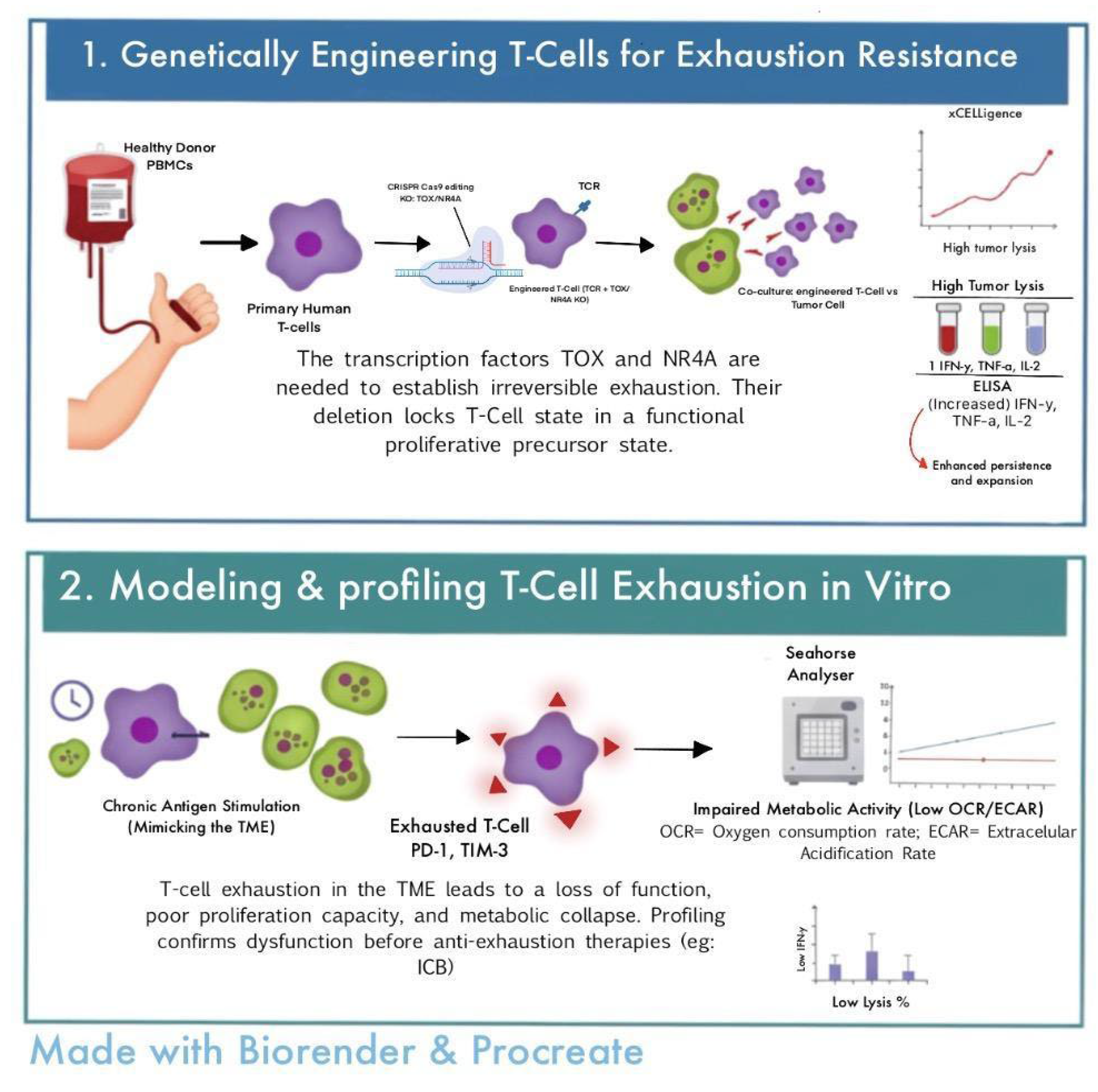
Before combination testing begins, every therapeutic arm should be optimised independently to maximise potency and ensure less risks and safer testing. Human primary T-cells deliberately isolated from healthy donor PBMCs are transduced with a lentiviral vector (disabled virus) encoding a TCR which is specific for a shared TAA (e.g., NY-ESO-1, MAGE-A4). CRISPR-Cas9 RNPs can be used to knock out TOX and NR4A1 (with non-targeting gRNA controls). Engineered T-cells are co-cultured with TAA-positive tumor cells to quantify cytotoxicity (e.g., real-time impedance assays) and cytokine secretion (IFN-γ, TNF-α by ELISA). Chronic stimulation assays (1–2 weeks) model exhaustion, with inhibitory receptors (PD-1, TIM-3, LAG-3) and TOX quantified by flow cytometry. Metabolic fitness is assessed using Seahorse XF analysis (OCR/ECAR) to profile mitochondrial function and glycolytic capacity.
Figure 3.
(concept): (Top Panel) T-cells from healthy donor PBMCs are engineered with TOX and NR4A1 knockout (KO) and are tested for cytotoxicity and cytokine production in co-culture with tumor cells. (Bottom Panel) To model T-cell exhaustion, T-cells from healthy donors were chronically stimulated with tumor cells for 1-2 weeks. Any exhausted T-cells that are present are phenotypically profiled for inhibitory receptors (PD-1, TIM-3, LAG-3) using flow cytometry and then assessed for cytotoxicity (xCELLigence) and metabolic activity (Seahorse OCR/ECAR analysis).
Figure 3.
(concept): (Top Panel) T-cells from healthy donor PBMCs are engineered with TOX and NR4A1 knockout (KO) and are tested for cytotoxicity and cytokine production in co-culture with tumor cells. (Bottom Panel) To model T-cell exhaustion, T-cells from healthy donors were chronically stimulated with tumor cells for 1-2 weeks. Any exhausted T-cells that are present are phenotypically profiled for inhibitory receptors (PD-1, TIM-3, LAG-3) using flow cytometry and then assessed for cytotoxicity (xCELLigence) and metabolic activity (Seahorse OCR/ECAR analysis).
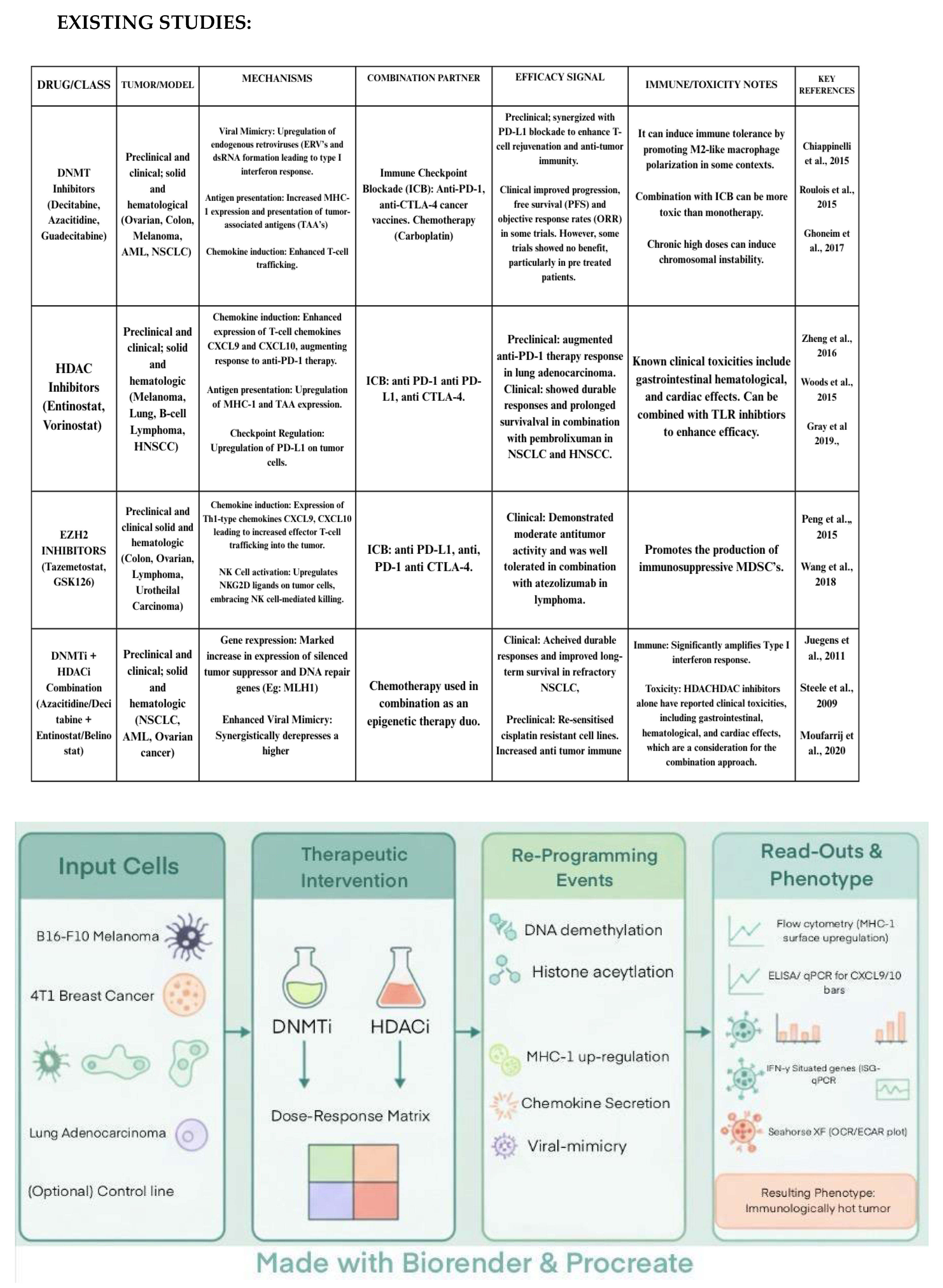
Phase 2, optimization of tumor cell & epigenetic reprogramming) Human cancer cell lines containing low MHC-I expression ( B16-F10 Melanoma, 4T1 Breast cancer, lung adenocarcinoma lines) are a good candidate. These cells will be treated with a dose-response matrix of a DNA methyltransferase inhibitor (DNMTi, eg, decitabine) and a class 1 histone deacetylase inhibitor (HDACi,, Entinostat). Upregulation of MHC class 1 (HLA-A, B, C) on the cell surface will be enhanced with flow cytometry. Western blotting will confirm increased protein levels. Expression and secretion of T-cell-attracting chemokines (CXCL9, CXCL10) will be measured by qPCR and ELISA in culture supernatant. Activation of the type 1 interferon response will be confirmed via expression of interferon-stimulated genes (ISGs) such as 0AS1.
Figure 4.
(concept): Malignant cells that present low levels of MHC-1 (B16-F10, 4T1, Lung Adenocarcinoma) are treated with DNA methyltransferase (DNMTi) and histone deacetylase (HDACi) inhibitors. This treatment upregulates surface MHC-1 expression and causes the secretion of T-cell-attracting chemokines (CXCL9/10, XCL1), causing the tumor to be visible to the immune system. The reprogrammed immunologically hot tumor carries out infiltration and elimination by cytotoxic T-cells. The dose-dependent increase in MHC-1 is quantified, with responding T-cells being analyzed for traces of exhaustion markers (PD-1, TIM-3, LAG-3) and metabolic fitness (OCR/ECAR) to assess the anti-tumor response.
Figure 4.
(concept): Malignant cells that present low levels of MHC-1 (B16-F10, 4T1, Lung Adenocarcinoma) are treated with DNA methyltransferase (DNMTi) and histone deacetylase (HDACi) inhibitors. This treatment upregulates surface MHC-1 expression and causes the secretion of T-cell-attracting chemokines (CXCL9/10, XCL1), causing the tumor to be visible to the immune system. The reprogrammed immunologically hot tumor carries out infiltration and elimination by cytotoxic T-cells. The dose-dependent increase in MHC-1 is quantified, with responding T-cells being analyzed for traces of exhaustion markers (PD-1, TIM-3, LAG-3) and metabolic fitness (OCR/ECAR) to assess the anti-tumor response.
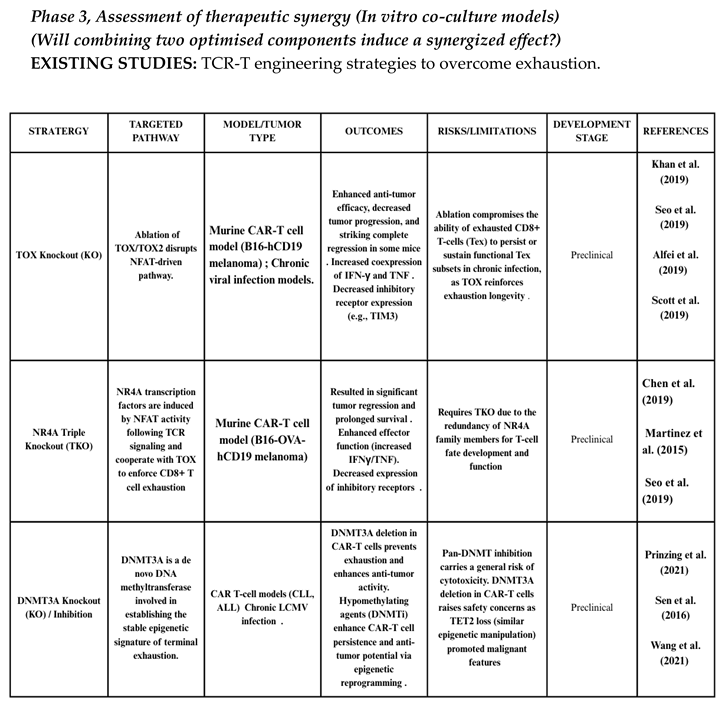
We combine the optimized T-cell product (with or without TOX/NR4A1 editing) with epigenetically reprogrammed tumor cells to quantify cytotoxicity and T-cell function, evaluate synergy using Bliss independence or Chou–Talalay analyses on tumor eradication metrics with the hypothesis that the combination will exceed additive effects under chronic stimulation; and, building on existing evidence that TCR-T engineering can overcome exhaustion, test whether epigenetic priming further augments efficacy.
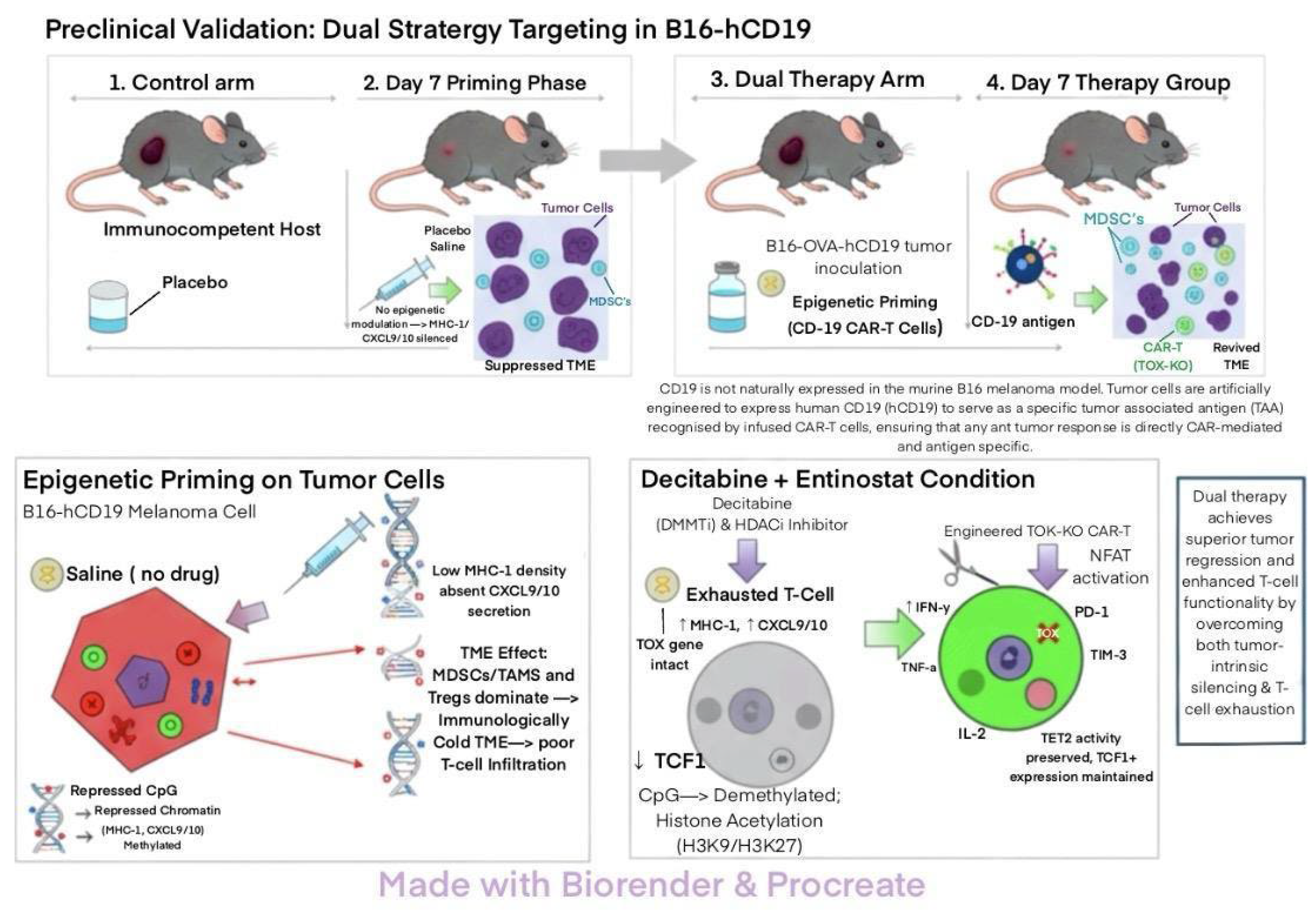
Phase 4, preclinical validation of targeting the dual strategy (in vivo), Syngenic mouse models (eg, C57BL/6 mice) will be used. The B16-hCD19 melanoma model is also a proficient choice due to its being immunologically cold and having difficulty responding to treatments, allowing a clear model of how strong and effective the treatment is. The murine T-cells will be engineered with CAR targeting human CD19 and knockout of the TOX gene. The protocol from here is to have the mice inoculated with the B16-hCD19 tumor cells. Once established, a group of mice will receive a priming regimen of decitabine/enitostat, and a control group will only receive a placebo. Additionally, the priming phase will have the mice infused with control CAR-T cells or the TOX-knockout variety. The volume of the tumor will be measured regularly, hoping that the dual-therapy group (epigenetic priming + engineered T-cells) will show the most significant tumor regression. (The Kaplan-Meier survival curve will be generated.) At the endpoint, tumors will be harvested and dissociated to analyze the tumor-infiltrating lymphocytes (TILs) by multi-parameter flow cytometry. Ultimately, this allows confirmation whether the dual-therapy group shows an increase in TILs and a lower expression of exhaustion markers on the engineered T-cells in vivo.
Figure 5.
(concept) Control: In a preclinical mouse model, tumors are treated with epigenetic drugs (Enitostat/Decitabine) combined with an infusion of non-engineered T-cells. This treatment unlocks silenced genes in the tumor, however T-cells stay ineffective, resulting in no significant tumor regression. Therapy: The second group of mice is treated with T-cells that have been genetically engineered to resist exhaustion by knocking out the TOX transcription factor (TOX-KO). These engineered T-cells are designed to overcome conditions in the TME. Outcome: engineered TOX-KO T-cells successfully infiltrate the tumor and a marked improvement in survival probability over time compared to the control group, validating their potential in vivo cancer treatment.
Figure 5.
(concept) Control: In a preclinical mouse model, tumors are treated with epigenetic drugs (Enitostat/Decitabine) combined with an infusion of non-engineered T-cells. This treatment unlocks silenced genes in the tumor, however T-cells stay ineffective, resulting in no significant tumor regression. Therapy: The second group of mice is treated with T-cells that have been genetically engineered to resist exhaustion by knocking out the TOX transcription factor (TOX-KO). These engineered T-cells are designed to overcome conditions in the TME. Outcome: engineered TOX-KO T-cells successfully infiltrate the tumor and a marked improvement in survival probability over time compared to the control group, validating their potential in vivo cancer treatment.
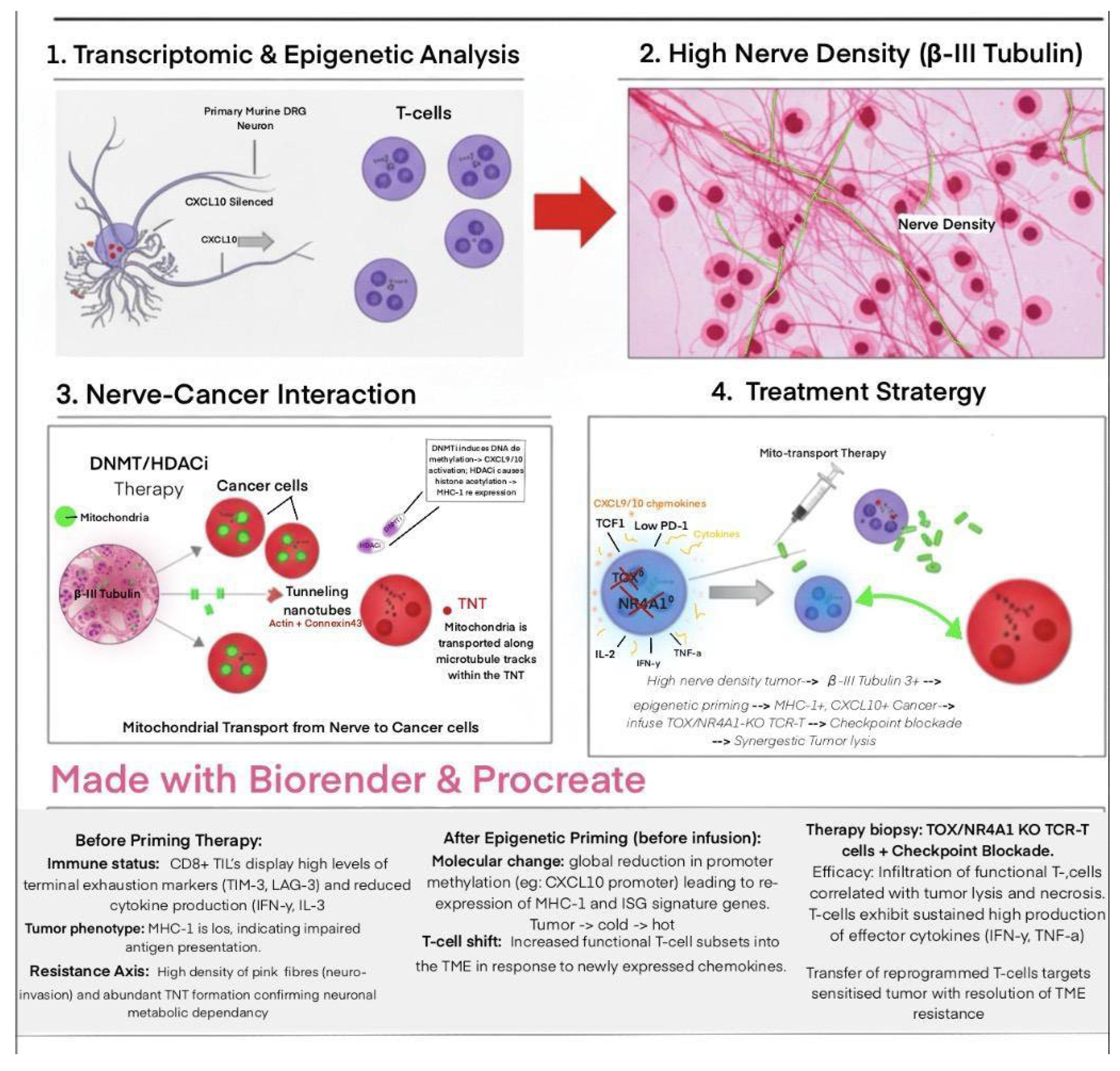
The following methodology is directly drawn from the research by Hoover, Gilbert, Curley et al, which demonstrated that Neuromuscular Therapy enhances a cancer cells metabolic capacity and increases their plasticity against metastatic stressors. The study proceeded by integrating this concept with epigenetic interventions, such as in vitro co-cultures using marked DRG neurons and cancer cells to assess if DNMTi/HDACi can disrupt NMT or re-sensitize cancer cells to TCR-T cells. Furthermore, ꞵ-III Tubulin IHC for nerve density in animal tumors, while relating it to T-cell infiltration and therapeutic response using spatial transcriptomics. This correlation aims to demonstrate that high innovation can dictate immune exclusion or limit therapeutic efficacy, highlighting the need for clinical validation of neurobiological parameters to guide immunotherapy targeting the TME.
Phase 5, investigating the role of neuronal mitochondria transferred to tumors.) Using primary murine Dorsal Root Ganglia (DRG) neurons and cancer cells (eg, B16 melanoma) a co-culture system will be made. Neural mitochondria will be marked biofluorescently (MitoTrackerGreen), and cancer cells will be labeled with a red fluorescent protein. The co-culture will be treated with DMNTi/HDACi. Mitochondrial transfer will be quantified by measuring the percentage of red cancer cells that acquire the fluorescent green mitochondria via flow cytometry and confocal microscopy. Cancer cells will then be pre-cultured with neurons to allow mitochondrial transfer. These cancer cells will then be co-cultured with TCR-T cells to see if they are harder to kill. Tumors harvested from the phase 3 animal experiment will be analyzed. Immunohistochemistry (IHC) for the neuronal marker β-III Tubulin will be used to enhance the tumor innervation density. This is then to be correlated with T-cell infiltration and therapeutic response to test the hypothesis that the dual-therapy is most effective in highly innervated tumors. This can be analyzed and enhanced with spatial transcriptomics or multiplex IHC so that the physical proximity of nerves, cancer cells, and infiltrating immune cells can be visualized, which will provide a spatial map of immune exclusion or engagement in innervated areas.
Phase 6, patient stratification biomarkers (Development of a personalized treatment framework). Analyze transcriptomic profile for high expression of TOX signatures and exhaustion markers in tumor-infiltrating lymphocytes (TILS), indicating a need for TOX-KO T-cells. Analyze the epigenetic profile for low MHC-1 expression and silencing of chemokine genes (CXCL9/10), indicating the need for an epigenetic priming therapy. Analysis for high nerve density (β-III Tubulin), indicating a tumor that is reliant on mitochondrial transport from nerve cells, and a prime candidate for a therapy to prevent it. Propose the use of sequential treatment biopsies to monitor the therapy's effectiveness. For example, after epigenetic priming, a biopsy should show increased MHC-1 expression and ISG signatures, confirming the drug has successfully reprogrammed the TME before the T-cells are infused.
Figure 6.
(concept): High nerve density is used as a biomarker to identify patients with tumors that are driven by nerve-induced immunosuppression. A personalized strategy combines 1) epigenetic priming therapy to un-silence the tumor microenvironment and 2) the infusion of engineered exhaustion-resistant TOX-KO T-cells. This dual approach is designed to overcome nerve and cancer interactions and to restore anti-tumor immunity, ultimately achieving therapeutic response monitored by biopsies.
Figure 6.
(concept): High nerve density is used as a biomarker to identify patients with tumors that are driven by nerve-induced immunosuppression. A personalized strategy combines 1) epigenetic priming therapy to un-silence the tumor microenvironment and 2) the infusion of engineered exhaustion-resistant TOX-KO T-cells. This dual approach is designed to overcome nerve and cancer interactions and to restore anti-tumor immunity, ultimately achieving therapeutic response monitored by biopsies.
Conclusions
This proposed dual approach is based on comprehensive evidence from the scientific literature regarding cancer immunotherapy. A synergetic attack on cancer's relentless biological mechanisms by engineering TCR-T cells to be resistant to exhaustion by using CRISPR-Cas9 knockout of TOX transcriptional factors. Simultaneously, using epigenetic therapies to induce tumor visibility can help overcome current failures in the field of cancer immunotherapy. Additionally, the recent mitochondrial discovery adds a significant layer of metabolic resistance and is crucial to consider when creating curative approaches that aim to neutralize this bioenergetic advantage, which would hypothetically make cancer immunotherapy more effective. Ultimately, the translation of this proposed strategy demonstrates a personalized framework where patient biospecific markers, from T-cell signatures and tumor innervation density, dictate the combination of engineered cells and targeting drugs, moving away from a singular approach to therapy, but a dual approach that aims to answer what biologically drives cancer and what makes it very difficult to eradicate.
Furthermore, how the application of this understanding and complex biological mechanisms could be manipulated to kill cancer. In Addition, the successful translation of this personalized strategy, correlating patient biospecific markers like tumor innervation density with therapeutic efficacy, which highly necessitates rigorous adherence to GMP manufacturing and informed consent protocols, given the inherent risks of genome editing (e.g., insertion, mutagenesis, and off-target editing) and the potential of lymphotoxicity, myelosuppression of coadministered epigenetic drugs. This approach must also overcome the non-epigenetic obstacle of irreversible HLA loss and balance the experimental manipulation of the TOX/NR4A axis with acceptable safety trade-offs. Ultimately, an even better alternative to engineered TCR-T cells, which avoids some of these issues, lies in advancing Endogenous T-cell therapy (engineered TILs or MAIT cells) to boost the native anti-tumor response.
References
- Ai, L.; et al. BPQDs@Lipo-YSA Nanoplatform Triggers Mitophagy via PRKN/AKT1 to Drive Immunogenic Cell Death in Lung Adenocarcinoma. Journal of Nanobiotechnology 2025, 23(1). Available online: https://link.springer.com/article/10.1186/s12951-025-03496-7. [CrossRef]
- Chen, M.; Xie, S. Therapeutic targeting of cellular stress responses in cancer. Thoracic Cancer 2018, 9(12), 1575–1582. Available online: https://pmc.ncbi.nlm.nih.gov/articles/PMC6275842/. [CrossRef] [PubMed]
- Yang, H.; et al. The role of cellular reactive oxygen species in cancer chemotherapy. Journal of Experimental & Clinical Cancer Research 2018, 37(1). Available online: https://pmc.ncbi.nlm.nih.gov/articles/PMC6211502/. [CrossRef] [PubMed]
- Schöckel, L.; et al. Targeting mitochondrial complex I using BAY 87-2243 reduces melanoma tumor growth. Cancer & Metabolism 2015, 3(1). Available online: https://pubmed.ncbi.nlm.nih.gov/26500770/.
- DasGupta, R. K.; et al. A review of CD19-targeted immunotherapies for relapsed or refractory acute lymphoblastic leukemia. Journal of Oncology Pharmacy Practice 2017, 24(6), 453–467. Available online: https://pubmed.ncbi.nlm.nih.gov/28583018/. [CrossRef]
- Aldoss, I.; et al. Correlates of resistance and relapse during blinatumomab therapy for relapsed/refractory acute lymphoblastic leukemia. American Journal of Hematology 2017, 92(9), 858–865. Available online: https://onlinelibrary.wiley.com/doi/10.1002/ajh.24783. [CrossRef]
- Lemoine, J.; Ruella, M.; Houot, R. Born to survive: how cancer cells resist CAR T cell therapy. Journal of Hematology & Oncology 2021, 14(1). Available online: https://link.springer.com/article/10.1186/s13045-021-01209-9. [CrossRef] [PubMed]
- Maalej, K. M.; et al. CAR-cell therapy in the era of solid tumor treatment: current challenges and emerging therapeutic advances. In Molecular Cancer; 2023; 22, 1. Available online: https://pmc.ncbi.nlm.nih.gov/articles/PMC9885707/.
- Das, S.; Johnson, D. B. Immune-related adverse events and anti‑tumor efficacy of immune checkpoint inhibitors. Journal for ImmunoTherapy of Cancer 2019, 7, 306. Available online: https://pubmed.ncbi.nlm.nih.gov/31730012/. [CrossRef]
- Zhang, J.; Wang, L. The Emerging World of TCR-T Cell Trials Against Cancer: A Systematic Review. Technology in Cancer Research & Treatment 2019, 18. Available online: https://pmc.ncbi.nlm.nih.gov/articles/PMC6391541/.
- Li, Y.; Halladay, T.; Yang, L. Immune evasion in cell-based immunotherapy: unraveling challenges and novel strategies. Journal of Biomedical Science 2024, 31(1). Available online: https://link.springer.com/article/10.1186/s12929-024-00998-8. [CrossRef]
- Sekine, et al. TOX is expressed by exhausted and polyfunctional human effector memory CD8+ T cells. Science Immunology 2020, 5(49), eaba7918, https://www.science.org/doi/10.1126/sciimmunol.aba7918. [Google Scholar] [CrossRef]
- Wang, B.; et al. Overcoming acquired resistance to cancer immune checkpoint therapy: potential strategies based on molecular mechanisms. Cell & Bioscience 2023, 13(1). Available online: https://link.springer.com/article/10.1186/s13578-023-01073-9. [CrossRef]
- Kim, J.; et al. Targeted deletion of CD244 on monocytes promotes differentiation into anti-tumorigenic macrophages and potentiates PD-L1 blockade in melanoma. Molecular Cancer 2024, 23(1). Available online: https://link.springer.com/article/10.1186/s12943-024-01936-w. [CrossRef]
- Moseman, E. A.; et al. The TCF1-Bcl6 axis counteracts type I interferon to repress exhaustion and maintain T cell stemness. Science Immunology 2016, 1(6), eaai8593. Available online: https://pmc.ncbi.nlm.nih.gov/articles/PMC5179228/. [CrossRef] [PubMed]
- Knudson, K. M.; et al. NFκB–Pim-1–Eomesodermin axis is critical for maintaining CD8 T-cell memory quality. Proceedings of the National Academy of Sciences 2017, 114(9). Available online: https://pmc.ncbi.nlm.nih.gov/articles/PMC5338529/. [CrossRef] [PubMed]
- Li, F.; et al. Metabolic plasticity and regulation of T cell exhaustion. Immunology 2022, 167(4), 482–494. Available online: https://onlinelibrary.wiley.com/doi/10.1111/imm.13575. [CrossRef] [PubMed]
- Seo, H.; et al. TOX and TOX2 transcription factors cooperate with NR4A transcription factors to impose CD8 + T cell exhaustion. Proceedings of the National Academy of Sciences 2019, 116(25), 12410–12415. Available online: https://pmc.ncbi.nlm.nih.gov/articles/PMC6589758/. [CrossRef]
- Hu, Y.; Dong, Z.; Liu, K. Unraveling the complexity of STAT3 in cancer: molecular understanding and drug discovery. Journal of Experimental & Clinical Cancer Research 2024, 43(1). Available online: https://pubmed.ncbi.nlm.nih.gov/38245798/. [CrossRef]
- Casey, S. C.; et al. MYC regulates the antitumor immune response through CD47 and PD-L1. Science 2016, 352(6282), 227–231. Available online: https://pubmed.ncbi.nlm.nih.gov/26966191/. [CrossRef]
- Lodewijk, I.; et al. Tackling tumor microenvironment through epigenetic tools to improve cancer immunotherapy. Clinical Epigenetics 2021, 13(1). Available online: https://pubmed.ncbi.nlm.nih.gov/33761971/. [CrossRef]
- Jin, N.; et al. Advances in epigenetic therapeutics with a focus on solid tumors. Clinical Epigenetics 2021, 13(1). Available online: https://pmc.ncbi.nlm.nih.gov/articles/PMC8056722/.
- Sun, X.; et al. Orchestrated Cu2+-coordinated tetracycline-porphyrin self-assembly remodels tumor microenvironment for photo-enhanced immuno-chemodynamic therapy. Journal of Nanobiotechnology 2025, 23(1). Available online: https://pmc.ncbi.nlm.nih.gov/articles/PMC12139202/. [CrossRef]
- Lodewijk, I.; et al. Tackling tumor microenvironment through epigenetic tools to improve cancer immunotherapy; 2021. [Google Scholar]
- Liu, Q.; et al. Adoptive cellular immunotherapy for solid neoplasms beyond car-t. Molecular Cancer 2023, 22(1). [Google Scholar] [CrossRef]
- Emami Nejad, A.; et al. The role of hypoxia in the tumor microenvironment and development of cancer stem cell: A novel approach to developing treatment. Cancer Cell International 2021, 21(1). [Google Scholar] [CrossRef]
- Tie, Y.; et al. Immunosuppressive cells in cancer: Mechanisms and potential therapeutic targets. Journal of Hematology & Oncology 2022, 27 15(1). [Google Scholar] [CrossRef]
- Topalian, S. L.; Taube, J. M.; Pardoll, D. M. Neoadjuvant checkpoint blockade for cancer immunotherapy Neoadjuvant checkpoint blockade for cancer immunotherapy | Science. Science 2020, 367(6477). [Google Scholar]
- Zou, S.; et al. Targeting Stat3 in cancer immunotherapy. Molecular Cancer 2020, 29 19(1). [Google Scholar] [CrossRef]
- BioRender BioRender [Graphic design software]. 2024. Available online: https://www.biorender.com.
- Tillé, L. Activation of the transcription factor NFAT5 in the tumor microenvironment enforces CD8+ T cell exhaustion. Nat Immunol 2023, 24, 1645–1653. [Google Scholar] [CrossRef] [PubMed]
- Sekiya, T. Comparison Between Nr4a Transcription Factor Regulation and Function in Lymphoid and Tumor Treg Cells. Front. Immunol. 2022, 13, 866339. [Google Scholar] [CrossRef]
- Wu, Y.; Wu, Y.; Gao, Z.; et al. Revitalizing T cells: breakthroughs and challenges in overcoming T cell exhaustion. Sig Transduct Target Ther 2026, 11, 2. [Google Scholar] [CrossRef]
- Bradley, C.A. PRC2-mediated MHC-I silencing drives immune evasion. Nat Rev Cancer 2019, 19, 664. [Google Scholar] [CrossRef]
- Tu, Y.; Zhu, Qy.; Huang, Wj.; et al. DNMT inhibition epigenetically restores the cGAS-STING pathway and activates RIG-I/MDA5-MAVS to enhance antitumor immunity. Acta Pharmacol Sin47 2026, 197–208. [Google Scholar] [CrossRef]
- Matei; et al. 2012 Epigenetic Resensitization to Platinum in Ovarian Cancer. Cancer Res 1 May 2012, 72(9), 2197–2205. [Google Scholar] [CrossRef] [PubMed]
- Vukadin, S; Khaznadar, F; Kizivat, T; Vcev, A; Smolic, M. Molecular Mechanisms of Resistance to Immune Checkpoint Inhibitors in Melanoma Treatment: An Update. Biomedicines 2021, 9(7), 835. [Google Scholar] [CrossRef] [PubMed] [PubMed Central]
- Hoover, G.; Gilbert, S.; Curley, O.; et al. Nerve-to-cancer transfer of mitochondria during cancer metastasis. Nature 2025, 644, 252–262. [Google Scholar] [CrossRef]
- Baulu, E.; Gardet, C.; Chuvin, N.; Depil, S. TCR-engineered T cell therapy in solid tumors: State of the art and perspectives. 2023. [Google Scholar] [CrossRef]
- Daskalakis, M.; Brocks, D.; Sheng, Y.; Islam, M.; Ressnerova, A.; Assenov, Y.; Milde, T.; Oehme, I.; Witt, O.; Goyal, A.; Kühn, A.; Hartmann, M.; Weichenhan, D.; Jung, M.; Plass, C. Reactivation of endogenous retroviral elements via treatment with DNMT- and HDAC-inhibitors. 2018. [Google Scholar] [CrossRef] [PubMed]
- Duan, R.; Du, W.; Guo, W. EZH2: a novel target for cancer treatment. 2020. [Google Scholar] [CrossRef] [PubMed]
- Pauken, K.; Sammons, M.; Odorizzi, P.; Manne, S.; Godec, J.; Khan, O.; Drake, A.; Chen, Z.; Sen, D.; Kurachi, M.; Barnitz, R.; Bartman, C.; Bengsch, B.; Huang, A.; Schenkel, J.; Vahedi, G.; Haining, W.; Berger, S.; Wherry, E. Epigenetic stability of exhausted T cells limits durability of reinvigoration by PD-1 blockade. 2016. [Google Scholar] [CrossRef]
- Shao, W.; Yao, Y.; Yang, L.; Li, X.; Ge, T.; Zheng, Y.; Zhu, Q.; Ge, S.; Gu, X.; Jia, R.; Song, X.; Zhuang, A. Novel insights into TCR-T cell therapy in solid neoplasms: optimizing adoptive immunotherapy. 2024. [Google Scholar] [CrossRef]
- Tufail, M.; Jiang, C.; Li, N. Altered metabolism in cancer: insights into energy pathways and therapeutic targets. 2024. [Google Scholar] [CrossRef]
- Wang, L.; Zhu, S.; Ding, Z.; Hong, J.; Zheng, L.; Sun, J.; Tang, Y.; Chen, X.; Yong, X.; Hu, M.; Zhimin, J.; Liu, Y.; Wang, D.; Tang, H. Cell-type specific activation of the cGAS-STING pathway in tumor immunotherapy: mechanisms and therapeutic implications. 2026. [Google Scholar] [CrossRef]
- Yu, Y.; Yao, X.; Wang, Q.; Yang, M.; Li, R.; Qin, J.; Zhuang, J.; Sun, C. T Cell Exhaustion in Cancer Immunotherapy: Heterogeneity, Mechanisms, and Therapeutic Opportunities. 2026. [Google Scholar] [CrossRef] [PubMed]
- Xu, K.; et al. Glycolysis fuels phosphoinositide 3-kinase signaling to bolster T cell immunity. Science 2021, 371(6527), 405–410. [Google Scholar] [CrossRef] [PubMed]
Disclaimer/Publisher’s Note: The statements, opinions and data contained in all publications are solely those of the individual author(s) and contributor(s) and not of MDPI and/or the editor(s). MDPI and/or the editor(s) disclaim responsibility for any injury to people or property resulting from any ideas, methods, instructions or products referred to in the content. |
© 2026 by the authors. Licensee MDPI, Basel, Switzerland. This article is an open access article distributed under the terms and conditions of the Creative Commons Attribution (CC BY) license.
Copyright: This open access article is published under a Creative Commons CC BY 4.0 license, which permit the free download, distribution, and reuse, provided that the author and preprint are cited in any reuse.