

Submitted:
13 February 2026
Posted:
27 February 2026
You are already at the latest version
Abstract
Since computers were invented, the technology of computers has advanced every year. Recently, quantum computing and artificial intelligence have played an important role in computer technology, which has provided an effective platform to address challenges such as climate change and carbon emissions. The main goal of this paper is to demonstrate how the integration of quantum computing and artificial intelligence can transform climate science, with an emphasis on predicting and managing carbon emissions. In this paper, we started with introduction about climate change and technology in combating environmental problems. Then, we moved on to an introduction to quantum computing and its basics. During our research, the benefits of quantum computing over classical systems have been identified with specific reference to climate modeling and handling large data sets. We explained the role of artificial intelligence in climate science with existing AI methods in climate modeling and the gaps that they have. We evaluated the combination of quantum computing and AI to reveal the possibility of future advancements in processing time, prediction, and efficiency. We brought up some AI concerns about its policy-making capacity and carbon altering the conventional approaches to decision-making to foster sustainability. Moreover, our work is supported by real-life examples and cases of how quantum AI is superior to traditional models in estimating carbon emissions. Finally, we specified some future directions for quantum AI, including technological developments, ethical issues, and sustainability, as well as suggestions for researchers and policymakers on how to use quantum AI for solving environmental problems.
Keywords:
quantum computing
; climate change
; carbon emission
1. Introduction
Climate change is the enhancement of greenhouse gas (GHG) concentrations in the atmosphere which is one of the biggest threats of the 21st century. The main reason of this threat is the carbon dioxide that is a byproduct of burning fossil fuels such as coal, oil and natural gas. According to the Intergovernmental Panel on Climate Change (IPCC 2022), temperatures have increased by 1.1 °C from the pre-industrial levels which GHG emissions can be seen in Figure 1.
This rise is associated with more frequent and severe weather events, rising sea levels, and disruptions to ecosystems (Figure 1) and human livelihoods (Figure 2) (Nkemelang et al., 2018; Allen et al., 2019; Kikstra et al., 2022).
As can be seen in Figure 3, Kikstra et al., (2022) studied the urgency of mitigating carbon emissions to avoid the worst impacts of climate change. As an example, the IPCC’s 2023 graph shows that global warming will increase 1.5 °C as seen in Figure 4. Because of this warning, carbon emissions must take an important case in 2025 and should focused to reduce by 43% by 2030 (Figure 5) (Kikstra et al., 2022).
Besides IPCC’s warning, as a parallel, the World Meteorological Organization (WMO) also warning about the rising of exceeding the 1.5 °C threshold within the next five years, underscoring the proximity of the challenge (Figure 6) (Sovacool, 2021) and biodiversity, food security, and global health that seen in Figure 7 (Kikstra et al., 2022; UN, 2024).
2. The Role of Technology in Environmental Science
The patterns of atmospheric carbon dioxide are essential while dealing with zero emissions. While burning fossil fuels, CO2 is producing as an outcome. This is leading cause of global warming (Kikstra et al., 2022; U.N., 2023; NCEI, 2024; Amiri et al., 2024). Moreover, it can also be applied in identifying efficient catalysts for CO2 conversion. This has been proven by the combined efforts of IBM and Google, who were able to implement quantum algorithms that were highly capable in simulations of chemical reactions, which is a big leap towards reducing carbon emissions (Ricciardi Celsi et al., 2024; Manikandan et al., 2024).
The increase in atmospheric carbon dioxide and its impact on climate change was described in NCEI’s Climate.gov (Figure 8). Moreover, it also describes how the burning of fossil fuels and deforestation have increased CO2 emissions, especially during the Industrial Revolution. According to the graph data that can be found in Figure 8, In 2023, the worldwide CO2 level increased to a record high of 419.3 parts per million. This cause makes CO2 is the main reason for raising world temperatures. The Keeling Curve, which depicts the rising trend of atmospheric CO2 since the late 1950s, is one of the graphs in the article that illustrates the historical trajectory of CO2 emissions (NCEI, 2023).
The U. S. Environmental Protection Agency (EPA) has released a report about the global warming which can be seen inf Figure 9 (EIA, 2023).
Another study by Dhakal et al., (2022) showed that global net anthropogenic greenhouse gas (GHG) emissions have increased 9.1 GtCO2-eq from 2010 to 2019. As seen in Figure 10, reducing emissions is getting harder or sometimes slower than previous decades. For example, in 2019, CO2 emissions alone were estimated at 45 ± 5.5 GtCO2 (Figure 10) (Dhakal et al., (2022) (IPCC_AR6_WGIII).
The aggregate net Carbon Dioxide emissions in the last decade is almost equivalent to the carbon budget that remains to keep global warming within the 1.5 °C threshold. Statistics depict that approximately 62% of total emissions since 1850 have taken place since 1970. This accurately portrays the rapid acceleration of emissions during the industrial era (Dhakal et al., 2022).
Figure 11 shows that the average annual greenhouse gas (GHG) emissions growth rates (%) versus different worldwide regions from 2010 to 2019 and has also for future scenarios from 2020 to 2040 (Dhakal et al., 2022).
Figure 12 shows the breakdown of global greenhouse gas (GHG) emissions by sector, direct and direct+indirect emissions, for 59 GtCO2-equivalent (GtCO2-eq).
Figure 13 shows an overview of the global trends in greenhouse gas emissions, the contributions made by various regions of the world, and discussions on key factors that have shaped these emissions.
Figure 14 presents the logistic growth rates of the electricity share for different energy technologies which are Solar, Wind, Nuclear, Biomass with and without Carbon Capture and Storage (CCS), Coal with CCS and Gas with CCS. The logistic growth rates are plotted on the vertical axis while each technology is depicted by a violin plot which shows the density of the growth rates observed (Dhakal et al., 2022).
The gray shaded regions show the best estimate and uncertainty range of each technology, and the dashed lines show the quantiles of the distribution. The figure also showed that different technologies have different growth rates with Solar and Wind which has higher median growth rates than Nuclear and Coal with CCS. CCS technologies for biomass present a very broad range of growth rates, that is an indication of the variability in the adoption rates and technological advancements of this sector (Dhakal et al., 2022).
The implementation of advanced technologies including artificial intelligence and quantum computing can be greatly beneficial in solving problems of climate change as well as carbon emissions. These technologies enhance the current quantitative system through the analysis of big data and provide solutions to tackle the effects of climate change. Therefore, in this paper, the authors discussed how this new age technologies can be used to improve the climate models, enhance carbon management and increase the global efforts towards the adoption of sustainable and low carbon future. Also, it would identify the issues and drawbacks of these technologies so that policy makers and researchers can understand the ways of utilizing them to attain the desired global climate objectives.
3. Fundamentals of Quantum Computing
3.1. Basic Principles of Quantum Mechanics
Quantum mechanics is the base of quantum physics, and it is extended to other branches like quantum chemistry, quantum technology, and quantum computing (Huhtanen, 2024). While there is enough accuracy in explaining processes at the macro level, classical physics falls short at the atomic and subatomic levels (Frigg et al., 2024). At these scales quantum mechanics is important, it provides a radically new vision about the behavior of matter and energy. Quantum mechanics is not merely an evolution of classical physics, but a revolutionary concept of the universe based on probability not determinism (Simpson, 2022; Chapline, 2023; De Ronde, 2024; Giliberti et al., 2024; Tzemos et al., 2024).
Entanglement on the other hand is defined as a process whereby two or more particles are in such a way. The state of one particle will in some way has an effect on the state of the other particle irrespective of the distance between the two. This interaction termed as ‘spooky action at a distance’ by Einstein raises serious concerns on locality and separability in physics. Both superposition and entanglement show how quantum mechanics is a connected and counter-intuitive science, which goes against classical ideas and creates numerous prospects for advancement in science and technology (Auburn et al., 2022).
3.2. Key Components of Quantum Computers
While the classical bits are binary in nature, they can have only two states. The control and coherence of these qubits are the key aspects of quantum computing as they can hold and manipulate quantum information (Seen in Figure 15).
Niobium and aluminum superconductive materials, known as low electrical resistance, are cooling down near absolute zero temperatures by using liquid helium for use to make Qubits (De Leon., et al 2021). In this case, it is eliminating to lose coherence, errors by reducing their thermal energy at higher temperatures to lower temperature (Figure 16) (Murray, 2021).
Another key component of a quantum computer is the control which is responsible for the precise manipulation of the qubits. The high-frequency microwave generators and amplifiers together with the attenuators are used in controlling the quantum states of the qubits (Gill et al., 2021; Murray, 2021; Gill, et al., 2022).
3.3. Advantages of Quantum Computing over Classical Computing
The quantum computing is particularly effective in emulation of quantum processes and therefore is crucial for the development of such areas as quantum chemistry, material science, and even drug design where classical algorithms require exponential resources. This is because of the capabilities it offers in optimization challenges and machine learning scenarios through the use of quantum algorithms that enable the searching of solution sets with speed (Figure 17).
4. Artificial Intelligence in Climate Science
4.1. Overview of AI Techniques Used in Climate Modelling
Another important benefit of AI in climate modelling is that it can improve the detail of current models. Conventional climate models have a problem of the so-called ‘resolution’ versus ‘computational power’: increasing the resolution of the model entails a significant on increase in how in computational model requirements. Resolution AI can, however, provide enhanced answers without having to increase the computational power to the highest levels (Schneider et al., 2024). AI, in its turn, can enhance model output with the help of machine learning, enhancing both the input and output of climate modelling. For instance, AI has been able to enhance the performance of model forecasts, deal with uncertainties in a better way and even avoid some of the most time-consuming aspects of conventional climate modelling. As a result, AI holds the ability to enhance the quality of climate prediction without requiring the massive capacity of computing power that is taken by current-day climate models as can be seen in Figure 18 (Huntingford et al., 2019; Irrgang et al., 2021; Sun et al., 2022; Slater et al., 2023).
As seen in Figure 19, the author of this paper discovers that machine learning is a vital component in the process of enhancing the accuracy provided by such climate models by not only processing larger sets of data but also dealing with certain inabilities of current models when it comes to smaller scale processes (Karpatne et al., 2024). Processes such as cloud dynamics or turbulent airflows are either too miniscule in spatial and temporal scales to be determined by current models or are just too complicated for them to understand. Through the implementation of this branch of Artificial Intelligence - Machine Learning, researchers are now able to model the behavior of such complex processes and, in return, are able to enhance the current version of complex and high-resolution models (Schneider et al., 2024).
These algorithms are trained on large data sets and they are able to identify the interconnection between various climate factors, thus enabling the models to incorporate these smaller-scale processes while not needing massive boost in computation power (Huntingford et al., 2019). Therefore, the improved models provide better simulations of the global and the regional climate changes with higher level of trust that the future climate changes predicted will be more reliable.
There is a huge potential of applying AI, especially machine learning in climate modeling for improving the understanding, increasing the processing speed of data, and cutting costs. Since the climate datasets are steadily increasing in volume and variety, it becomes crucial to employ AI to analyze vast amounts of data within a certain time frame (Huntingford et. al. 2019). Some aspects of climate modeling can be automated through the use of AI, thus greatly decreasing the time needed for the generation of climate predictions and scenarios. Furthermore, Artificial Intelligence diminishes the expenses that follow traditional climate modeling techniques thus permitting the development of climate models with higher resolution. In the future, AI can revolutionize climate science by elevating climate modeling capabilities at a faster, more precise, and cheaper rate which in return supports advanced climate change adaptation and mitigation strategies.
5. Integrating Quantum Computing with AI
Figure 20 presents the integration between quantum computing and AI, which offers a new and capable approach to climate change. Superposition and entanglement are the core principles of Quantum Computing. Through these mechanisms, it is capable of concurrently solving problems which are computationally difficult on traditional systems. (Sajjan et al., 2021; Ajagekar et al., 2022; Metawei et al., 2022 ; Vaz, 2024).
For instance, there are AI models that are used in forecasting future emissions patterns, and these models involve the use of large datasets such as industrial energy consumption, and environmental monitoring data. Classical be machine approximated learning due models to are the constrained large by size the of curse the of data dimensionality sets and (Olatunji et al., 2021; Thomsen, 2021; Ho et al., 2022; Whig et al., 2024).
Also, quantum computing as an application in AI can also improve optimization problems which are crucial to the energy transition. For instance, energy grid optimization in which AI has been adopted to manage the flow of renewable energy sources could be greatly benefited from quantum computing algorithms to solve combinatorial problems (Ullah et al., 2022). This is especially helpful in the case of stochastic resources such as solar and wind energy where exact forecasting and fast adaptation to changes are crucial in order to avoid losses and to achieve the highest output. These optimization challenges could be solved in real-time, using quantum algorithms for AI, which would contribute to a more effective and low-emission energy system (Ajagekar et al., 2022).
Moreover, in the area of carbon capture and storage (CCS), quantum computing can also be great use in enhancing the AI models for identifying and designing new materials as shown in Figure 17 for identifying and designing new materials of energy storage and conversions. AI plays an important role in the identification of potential materials that can be used for carbon capture, storage and utilization but the problem of accurately simulating molecular interactions is computationally intensive. Some of the quantum algorithms such as quantum variational eigen solvers (QVEs). Quantum phase estimation can provide a more precise simulation of the quantum mechanical properties of molecules which in turn helps in quick identification of the right materials for CCS (Tilly and Wöll, 2022). These advancements (See Figure 21) can change the future of the material science related to CCS, the development of new compounds for capturing CO2, thereby directly contributing to reduction of carbon emissions (Zhang et al., 2022; Karthikeyan et al., 2021).
Besides the computational power, the integration of quantum computing with Artificial Intelligence will also enable a more systemized approach to carbon management. With the global emissions targets now being monitored at the government as well as corporate level and across the entire supply chains, there is a rising need for enhanced and extensive models. When combined with quantum computing, AI models can take into account the whole life cycle of emissions, including production and sequestration, and offer real time analysis of the effectiveness of different emission control strategies. This would enable industries to easily alter their processes, deal with any unexpected increase in emissions, and find new ways of how to decrease their emissions and thus support the achievement of the goal of achieving net-zero emissions in the future.
The subject of Quantum Computing and Intelligence based AI is an evolving topic in today’s science which has the possibility of improving on the current strategies being used to fight climate change and even come up with new ideas. The concept of Quantum-AI can help in identifying new patterns in the climate data, handling hitherto inaccessible systems, and identifying new ways of reducing GHGs (Rahman et al., 2024). However, achieving the complete potential of quantum computing for this purpose is still a few years away but current research and development is showing that it will be a key ingredient in building the future that is sustainable, provider of capabilities and insights which were previously unattainable (Tychola et al., 2023; Chauhan et al., 2024; Ferdaus et al., 2024; Gentinetta et al., 2024; Schatzki et al., 2024; Konya and Nematzadeh, 2024).
One key illustration, as seen in Figure 22, in the article gives a general idea of what quantum computing is and its key elements such as post-quantum cryptography, high-speed processing and applications in telecoms and finance to show how it can be impactful. The article concludes with the challenges and prospects for quantum computing in the next-generation research and development; it is evident that quantum computing is set to transform science and technology (Gill et al., 2024).
5.2. Current Research and Development Efforts
Google Quantum AI initiative aims at realizing quantum supremacy, working on quantum error correction and enhancing the compatibility between quantum computing and artificial intelligence to create itself as dominant in this field. Some of the challenges that are being tackled by the research and development activities carried out in this program include processing power, stability, error correction and scalability in quantum computing as well as the potential of quantum computing in improving the capabilities of AI in various sectors (Bengtsson et.al., 2024).
5.2.1. Quantum Supremacy and Its Significance
Google’s Sycamore quantum processor reached that state, at which it was able to calculate a 10,000 year-long task on traditional computers in just 200 seconds. This achievement proved that in certain situations, quantum computing can beat classical computing systems, which was a significant development in the history of technology. However, it is noteworthy that quantum supremacy is but a milestone in having solved one problem in a highly controlled environment. The task now is how to take these capabilities to actual applications that can be useful in the real world, for instance, artificial intelligence and machine learning (Bengtsson et al., 2024).
5.2.2. Quantum Error Correction
A big challenge that can be seen in the area of quantum computing is quantum error correction. Quantum systems are very much affected by external factors which result to errors or ‘noise’ when computing. Due to the fact that qubits are highly prone to decoherence and other related problems, quantum error correction is a critical aspect for the practical utilization of qubits in large scale applications. Quantum AI team at Google has contributed immensely in the development of error correction techniques for these problems (Bravyi et al., 2022; Acharya et.al., 2024).
Filippov and team have also paid attention to surface codes which is a kind of error correction that does not interfere with the computation process to ensure quantification of errors (Filippov et al, 2024).
5.2.3. Integration Between Quantum Computing and AI
Google is working with NASA to determine whether quantum AI can solve large-scale transportation and timing problems that are typical of space exploration missions. Some of the areas that can benefit from quantum AI include in NASA, quantum AI can help in organizing and planning large scale logistics and scheduling of space exploration missions. Quantum AI enhanced AI has the potential of greatly improving how NASA coordinates and executes space missions, optimization of resources, enhancement of communication protocols and solving of complex routing and scheduling challenges in real time (Liang et al., 2022; Bermot et al., 2023; Rane et al., 2024; Khurana, 2024).
5.2.4. Collaborations with Universities and Research Institutions
Google, NASA, and these universities work together in order to test and validate the real time application of quantum computing in various scientific disciplines. One of NASA’s centers, the Jet Propulsion Laboratory (JPL) has leveraged quantum AI for space mission planning, control and data processing in order to enhance the efficiency of mission management, space craft control and data processing. These collaborations and assist integration in quantum technologies advancement in research as well as industrial processes (Bi et al., 2022; Altman et al., 2021).
There are however several issues that have to be solved in order to achieve the integration of quantum computing with artificial intelligence as the Google’s Quantum AI initiative has been. A major barrier is the issue of scalability of quantum processors, such as the ability to increase the number of qubits and at the same time ensure coherency and low errors. Also, the creation of new quantum algorithms suitable for AI is still an active research topic today. While quantum machine learning has displayed potential, there are still many challenges that have to be addressed in order to develop effective and efficient quantum algorithms that could handle challenging AI tasks (Dunjko et al., 2018).
In addition, it is important to note that quantum physicists, computer scientists and artificial intelligence experts must work together to develop the field further. Quantum computing as well as AI are very specific fields and advancements in either of the two cannot be made in isolation which means that there must be constant interaction between academic institutions, industrial organizations and governmental organizations.
The ethical issues and hardware limitations are the factors that make the way to the quantum computing future less clear. Some of the challenges and limitations of quantum computing integration, especially in AI are outlined below.
5.2.4.1. Maintaining a Stable Amount of Qubits
Qubits are, however, very delicate and can be easily influenced by factors such as temperature, electrical interferences, mechanical interferences and many others. Such instability results in decoherence where the qubits duplicate and hence affect the correctness of computations (Fraxanet et al., 2023). In order to sustain the qubits, quantum computers have to work under extremely precise environment and sometimes operate at the close vicinity of zero Kelvin. Even with these conditions, coherence times (the duration a qubit can maintain its state) are not very long which means that only a limited number of calculations can be done with a high level of accuracy (Saraiva et al., 2022).
5.2.4.2. Integrating Quantum Computing with Classical Systems
There is also the issue of integrating quantum computing with classical computing systems, which is important since quantum computing is expected to integrate with classical computing in the short run. Quantum computers work on different paradigms such as superposition, entanglement and interference for computation. Classical computing on the other hand uses binary logic and deterministic approach. This divergence poses a problem when developing algorithms that are capable of working in both the quantum and the classical domain (Khrennikov, A., 2021).
The current hybrid systems that incorporate both classical and quantum computing mainly involve classical processors in managing data, such as data input to the quantum system and output from it. This involves a lot of data conversion between the quantum and classical systems which becomes a bottleneck. In addition, the current algorithms that are suitable for classical systems have to be reformulated or totally redesigned to be used on quantum computers. For instance, classical machine learning algorithms are based on linear algebra, and the algorithms have to be converted into their quantum counterparts which may demand the development of new quantum algorithms (Heim et al., 2020).
A possible solution to this problem can be quantum inspired algorithms which try to implement some of the concepts of quantum mechanics on a classical system. Nevertheless, the proper quantum-classical integration will be possible only when there are advancements in the quantum software that can link both of these worlds effectively. Since special solutions must be developed for each application, where quantum and classical computing must be integrated, the current efforts in this area are rather resource and time-consuming, which is a barrier to adoption (Barreto et al., 2024).
With any powerful technology, the rise of quantum computing raises several ethical concerns. One issue that could arise from the rapid developments in quantum computing is unequal access to this technology. Due to quantum computers still being largely experimental, the cost to build and maintain them is still very high. This means that access to quantum computing is limited to larger corporations, governments, and elite research institutions. This unearths the potential for exacerbating inequalities between developed and developing nations around the world. With equal access, advancements in the quantum computing world could narrow the digital divide, in turn allowing less affluent nations to be able to benefit from the transformative capabilities of quantum enhanced AI and other various technologies (Boretti, 2024).
Additionally, quantum encryption brings in ethical challenges. It has the capability to break standard classical cryptographic systems, which are currently responsible for securing everything ranging from personal data to national security communications. While quantum-resistant cryptography is developing in the present, the transition takes time therefore leaving a window of vulnerability (Chamola et al., 2021).
5.2.4.3. Hardware Limitations
Another challenge that is present in the field is the evolution of quantum processors which is the other big barrier to the adoption of quantum computing. Despite these advancements in the qubit design and quantum error corrections, quantum processors are still not efficient or even effective for practical uses on a large scale. To achieve this, quantum computers need to be placed in specific conditions such as low temperatures and high vacuum to avoid interference and loss of qubit coherence. This, however, creates a problem as the more qubits that are used the shorter the coherence time, the higher the chances of errors and the closer the system is to being unstable (Wu, 2021).
The current rates of errors in the contemporary quantum systems are a major challenge to the reliability of quantum computation. Even the small quantum devices are prone to errors since the qubits are unstable, and this hinders their application in practical problems. Although there are on-going research in quantum error correction and error mitigation, they add to the problems by increasing complexity and resources as they entail the use of multiple physical qubits for one logical qubit (Roffe, 2019).
Also, the present quantum processors do not possess the necessary speed and the programmability for most real-life applications. Quantum gates, which are used to control qubits, are not yet efficient or accurate enough to perform multiple computations without errors accumulating. This lack of robustness remains a challenge to the growth of quantum applications in areas that demand high processing power such as artificial intelligence (De Leon et al., 2021; Miguel-Ramiro et al., 2023).
5.2.4.4. Development of Efficient Algorithms
One of the greatest obstacles in the field of quantum computing is the inability to find useful quantum algorithms that can be leveraged in practical applications of quantum computing and AI. Although there are some quantum algorithms, for instance, Shor’s algorithm for factoring large numbers and Grover’s algorithm for searching unsorted databases, which have been shown to provide quantum advantage, most of them are still theoretical and have not been used in real-life problems (Montanaro, 2016).
As for AI, the advancement of QML algorithms is still at the initial level. Although there is ongoing research on QNNs and QSVMs, these algorithms have not been extensively tested on large data sets as well as not been incorporated into current AI frameworks. The problem is how to design algorithms that can operate in the quantum setting and fine-tune them for the specific features and constraints of quantum systems, including the error rates and coherence times (Käppler and Schneider, 2022).
Also, the processors’ present hardware quantum constraints limit the kinds of algorithms that can be applied since quantum computations of reasonable complexity demand more qubits and better coherence than is currently achievable. These continued issues research are in expected quantum to algorithm be design solved and through enhancement of quantum hardware (Saxena et al., 2024).
In conclusion, it can be stated that quantum computing can greatly improve AI as well as other fields and provide solutions to previously undetectable issues. There are many issues that need to be solved. Some of the major problems include stability of qubits, integration with classical systems, limitations of the hardware, and lack of efficient quantum algorithms for practical application. Other issues such as ethical considerations on access, security as well as sustainability of quantum technologies also pose a challenge on the development of quantum technologies. All these challenges must be addressed with a view to realizing the potential of quantum computing in AI as well as other application areas.
6. Applications in Carbon Emission Predictions
There is a great potential in integrating quantum computing and artificial intelligence to help solve a critical issue the of modern world: carbon emissions (Bharany et al., 2022).
6.1. Quantum Algorithms for Climate Modeling
In the area of carbon emission predictions, quantum algorithms have the potential of transforming large scale climate models which are vital in determining the effects of emissions on warming of the earth’s atmosphere as well as determining future climate conditions. The conventional climate models are based on classical computing where the dynamic between the Earth’s atmosphere, oceans, land and ice is computed. The models have developed through time, but they continue to encounter problems with their ability to process complex systems which include the carbon cycle and multiple environmental factors simultaneously (Otgonbaatar et.al., 2023).
Due to its parallel processing quantum computing can manage these problems easier. For example, quantum algorithms like quantum annealing can work with variables in climate models including energy, forest’s carbon sequestration rates, or impacts of different GHGs on temperature. This capability enables better forecasting of the carbon emission induced changes in global temperatures, sea levels, and weather conditions (Zheng et al., 2023)
Also, QML can improve the capabilities of the existing AI systems used for the analysis and forecasting of carbon emissions through the efficient processing of large, high-dimensional data sets, including the global emissions data by sectors (energy, agricultural, industry) or the impacts of different policy measures on emissions targets. QML algorithms can also discover other correlations in the historical climate data that the classical models may fail to pick up, thus providing a higher level of accuracy as well as a climate change risk forecasting system (Rahman, et al., 2024).
Improved modelling of carbon capture and storage (CCS) is a major advantage of quantum-enhanced climate models. Carbon capture is one of the methods whereby carbon dioxide produced by industries can be trapped and stored in the deep parts of the earth and CCS is a vital element of many countries’ strategies for reaching the goal of total zero-gravity emissions. Facilitating the representation of carbon capture processes at the atomic level with much higher precision as in the classical approaches, Quantum Computing can assist the scientists and researchers to come up with better ideas on the design of CCS and assessment of the impact that stored carbon may have in the geological formations (Greene-Diniz et al., 2022).
Quantum computing operates as a system which helps reduce greenhouse gas emissions which stem from energy production and consumption operations. Quantum climate models enable the development of more efficient energy grid construction through their ability to analyze different energy distribution and consumption methods and their capacity to merge renewable energy sources. This capability of quantum computers allows them to be applied to real-time emission analysis, due to their easy adaptability to energy consumption variations and weather conditions (Eskandarpour et al., 2020).
As such, the introduction of quantum algorithms into large-scale climate models is a major enhancement in the capacity for prediction and management of computed carbon with emissions. With the help of concepts such as superposition and entanglement, Quantum computing takes into account various factors of climate change which would be otherwise impossible in classical computing. Therefore, the future advancement in quantum computing for prediction models of carbon emissions will help in improving the decision-making process and will help countries and industries to meet their greenhouse gas emission reduction targets and other mitigation actions against the impacts of climate change.
6.2. Quantum Computing for Battery Optimization
Another beneficial aspect of quantum computing can also help in determining the types and materials of battery components, ensuring that these materials minimize costs and increase efficiency. Lastly, finding the optimal size for the batteries can also be performed with quantum computing and simulations. With the high processing power of quantum computing, scientists can find the optimal size and shape of batteries, as well as determining ways to make them lightweight and energy-dense (Asl et al ., 2024).
In the upcoming years, using renewable sources, battery technology has the potential to completely transform energy storage and automobile battery systems. As such, quantum computers’ contribution towards creating effective, affordable, and high-energy dense batteries will be extremely helpful in energy security and the battle against climate change at large.
Quantum computers can benefit not just from solar panels, but solar energy as a whole. Quantum-powered panels will incite higher energy usage because of their high efficiency, long product life, and non-toxicity (Asl et al., 2024). More specifically, quantum computing will enhance perovskite structure, a promising material for solar cells due to their low manufacturing costs and high efficiency. Accordingly, new, more stable solar cells can be created by modeling bond interactions in perovskite materials using quantum simulations (Pein et.al., 2022). Additionally, quantum computers can also predict an optimal combination of base atom types and doping by testing a wide range of variants and determining which ones are the most promising for the future, ultimately decreasing energy waste (Cao et al., 2023).
6.3. Grid Optimization
Because of the challenges current grid systems provide, new technologies must be implemented to allow for effective and efficient power delivery as seen in Figure 23. Quantum computing offers the best computational capabilities, and artificial intelligence, which has the capability of analyzing large data sets and identifying trends, presents an opportunity to solve such problems. Quantum computing and AI are two concepts that can be integrated together and offer numerous advantages as far as grid integration is concerned. Such applications include enhanced quantum simulations that enable the creation of more realistic and complex models of the grid, which in turn facilitate the use of AI in decision making based on the predictions made. The optimization of grid operation can be achieved through the simulation of different conditions, such as the integration of renewable quantum energy. Simulations can also be used for demand response programs and energy storage. This process helps identify the weaknesses and bottlenecks of the grid, allowing preventive measures to be taken before issues occur (Zibaeirad et al., 2024).
6.3.1. Microgrid Optimization
The optimization can also benefit the processes of arranging proper micro-level power generation, grid connection, and storage facilities. As a result, this can reduce microgrids’ reliance on the main grid and increase their resilience (Zhou et al., 2022).
6.3.2. Grid Stability Analysis
There is a possibility that quantum simulations will offer better and refined information regarding the behavior of the grid thus enabling grid operators to determine potential stability problems and the right countermeasures to take. This can avoid cascading failures and thus guarantee the reliability of the grid (Zhou et al., 2022).
6.4. Improved Green Hydrogen and Ammonia
The shift to sustainable and new generation energy targets requiring decoupling from carbon requires the advancement of clean energy technologies. Green hydrogen and ammonia produced through electrolysis which is powered by renewable energy sources can be seen as possible replacements for traditional energy sources. Nevertheless, the creation of these fuels in an efficient and cost-effective manner is one of the major technological issues (Ajagekar et al., 2019; Vorontsov et al., 2023; Dinçer et al., 2024).
7. Impact Assesments
The process of carbon pricing does hold a major obstacle. It is to ensure that the cost of carbon accurately reflects the magnitude of harm that it would inflict on the environment. Quantum AI can help in coming up with better and just policies by factoring in the costs of various externalities like health impacts, loss of biodiversity, and the social and economic effects of climate change to carbon pricing (Dechezleprêtre et al., 2018; Bayerstadler et al., 2021; Ajagekar et al., 2022; Zhou et al., 2022; Singh et al., 2023; Cao et al., 2023; Nenno et al., 2024; Vuong et al., 2024 Luo et al., 2024).
7.1. Informing International Climate Negotiations and Agreements
For instance, Quantum AI can supply the information required to establish climate finance and technology transfer governance, which will protect the most vulnerable nations from the effects of climate change through the use of socio-economic impact assessment of carbon reduction strategies (Huang et al., 2021; Perrier, 2022; Wang et al., 2022; Sharma and Sharma, 2023).
7.2. Addressing Ethical Considerations and Equity in Climate Policy
Having its own ethical considerations that need to be taken into account by policy makers, the same applies to the role of Quantum AI in policy making. Although Quantum AI has the potential of improving climate policies in a big way, it also has the potential of aiding the developed countries and therefore exacerbating the inequality gap between the first world and the Third World countries. Therefore, the policymakers should make sure that access to Quantum AI technologies is not limited to wealthy nations or firms as this will create inequalities in the fight against climate change (Hoffmann et al., 2024).
In summary, Quantum AI can transform the way that the policymakers are viewing one of the biggest issues of the world today and that is climate change. Some of the ways through which Quantum AI can transform climate change include enhanced climate models, optimal carbon pricing and emissions regulations, real time tracking of emission targets and steering international negotiations to foster better and more efficient climate policies (Paudel et al., 2022). Since these technologies are still in the early stages of development, their impact on policy making will continue to grow, and offer a path to build a better future for the governments.
7.3. Quantum AI in Carbon Trading and Management
Quantum AI has the possibility to transform the current carbon trading and management systems and enhance the effectiveness of the carbon markets. Carbon trading is among the market approaches that have been used as a way of implementing the GHK emissions reductions through the use of the buying and selling of carbon credits which are equal to one megaton of CO2 emissions (Bolón-Canedo and Montes, 2024). Carbon markets have been an essential part of the solution in the battle against climate change, however, they are rather intricate and thus involve the use of big data, sophisticated pricing mechanisms, and strong set of regulations (Segnon et al., 2017; Egger et al., 2020; Feindt et al., 2021; Sandua, 2023; Mullangi et al., 2023; Nammouchi et al., 2023; Baklaga, 2024; Zhou et al., 2024; Kaal, 2024 ; Otundo, 2024; Tyagi et al., 2024; Whig et al., 2024).
7.4. Case Study: Quantum AI in European Union Emissions Trading System (EU ETS)
In this section, we will elaborate how Quantum AI can be applied in carbon trading in the European Union Emissions Trading System (EU ETS) which is currently the largest such system in EU and globally. The EU and ETS are one caps of the overall most emissions trading market for carbon GHGs from the factories, power plants and other installations which fall under the umbrella of the scheme. Firms in the above-named sector must hold a specific number of credits to cover their own emissions, and the said credits can be purchased or sold depending upon the emissions of the firm (Verde, 2020; Cadman et al., 2022; Anjos et al., 2022; Peng et al., 2023).
Quantum AI when integrated with the EU ETS can enhance the performance of the current system. For instance, Quantum AI can be used in enhancing the predictive models that are used in estimating the future demand of carbon credits which in turn will enable the overall cap of emissions to be flexible depending on the economic and environmental conditions (Luo, 2024). Through the optimization of the distribution of carbon credits to various sectors, Quantum AI can be used to ensure that EU ETS continues to achieve the desired target of reducing GHG emissions at the lowest possible cost and without negatively impacting the overall economic growth (Cao, et al., 2023).
In addition, Quantum AI can also enhance the capability of monitoring compliance with the EU ETS. Through the analysis of real time emissions data across the European Union, Quantum AI can identify non-compliance more effectively and efficiently than the current systems the thus risks minimizing fraud and other related vices in the market. This would enhance the integrity of the EU ETS and also boost the motivation of companies and investors to engage in the market thus increasing the rate of emission reduction (Van Deventer et al., 2022).
Quantum AI has a lot of potential in carbon trading and management. Quantum AI can help optimize trading strategies; set carbon prices, improve accuracy and transparency in the carbon market and boost cooperation. I think that as the carbon markets grow Quantum AI will become essential for the carbon markets to work well and to meet the target GHG emissions reductions. Quantum AI has abilities. Quantum AI can analyze the data in time. Quantum AI uses optimization methods. Quantum AI presents the solution that can change the way carbon is managed. Quantum AI can help build resilient carbon economies for the future. I believe that Quantum AI can make a difference, in how we handle carbon.
8. Future Directions
8.1. Emerging Technologies and Their Potential Impact
The upcoming years will bring new carbon emissions management and climate science research methods because of quantum computing and artificial intelligence technology advancements. There is a major improvement seen in one of the most important fields which is Quantum Machine Learning (QML), which can enhance the performance of data-oriented models used in the analysis of climate as well as energy demands. These quantum algorithms may even outperform the traditional machine learning models for the prediction of climate change trends, optimization of energy systems and improvement in the carbon capture methods. The field of quantum cloud has become increasingly popular because it enables users to access quantum computing resources through a system which does not require them to purchase expensive quantum computers. Some examples of quantum cloud platforms include IBM’s Qiskit and Google’s Cirq which provide flexible solutions that can enhance innovations in the area of climate change and carbon emission control.
Quantum cryptography also has potential applications in securing climate information as well as carbon markets and other systems that rely on such information to be accurate and secure. This is important as carbon trading and management keep on growing in complexity and quantum cryptography can be used to enhance security of such systems. Digital twins working with quantum computing enable real-time environmental system modeling which allows for immediate carbon tracking and policy modification. Quantum sensors help improve climate monitoring and environmental tracking which generates high-quality data for sustainable operations. The upcoming technologies will transform industrial carbon management systems which will help businesses reach their sustainable development targets through their carbon reduction initiatives.
8.2. Ethical Considerations and Sustainability
The quick advancement of quantum computing and artificial intelligence (AI) poses some ethical concerns in society, especially on sustainability and technology accessibility. This is because with the advancement of quantum computing, there is the likelihood of benefit being distributed unequally with wealthy nations and corporations having access to better quantum computing technologies in the near future. This may lead to the enhancement of the difference between the global north and the faster. This situation requires us to create frameworks and technological systems which will help the world decrease its greenhouse gas emissions while improving energy system performance through international collaborations. The current frameworks need new systems which will distribute quantum AI advantages for climate science research throughout all regions while providing its benefits to every community.
Quantum computing and artificial intelligence systems create an ethical problem because they require significant amounts of energy. Despite the fact that quantum computing can be more energy effective than traditional supercomputers in some applications, the equipment of quantum computers, for instance, cooling systems for qubits, can still be power consuming. To this end, researchers and policy makers need to work towards the advancement of green quantum technologies for instance, the integration of renewable energy sources to power quantum systems. Also, it is important to determine the environmental effect of increasing the capacity of quantum computing in the long run, to make sure that the search for solutions to climate change does not lead to even larger energy consumption.
Quantum AI systems require transparent decision-making processes which must remain accountable because quantum AI technology continues to develop for climate policy and carbon management applications. This is because quantum AI models should be made interpretable and without bias so as to win the public’s confidence especially when they are used in setting the global climate strategies. The development of particular ethical standards must happen because quantum AI technologies need ethical guidelines to achieve sustainable social benefits which benefit all people equally. It is against this background that the ethical considerations of quantum computing and AI can be effectively harnessed in order to support the shift to sustainable future while ensuring equity, ethical and social accountability and cooperation on the global level.
9. Conclusion
The research shows that quantum computing and artificial intelligence technology exists as a potential solution to monitor and manage carbon emissions which cause climate change. It states the problem of climate change as a global challenge whereby greenhouse gases emission led to global warming and carbon was dioxide made as on the major fact gas that some quantum of computing the offers basic capabilities concepts that of are quantum far computing superior were to revisited; the emphasis in classical dealing computing, with especially large climate models and simulations. Also, the use of AI in climate science was assessed, the shortcomings of the existing approaches and the stimulating potential of AI techniques in enhancing the accuracy of the models were discussed.
It also pointed out the potential of integrating quantum computing with AI can handle both large together data sets, enhance the prediction of carbon emissions, and optimize energy systems. It also showed that by incorporating quantum-enhanced machine learning models, one can achieve better results than the classical models in terms of time, accuracy and for instance in dealing with large scale climate models and carbon management. The effects of these technologies on the policy making, carbon trading and management were also considered where quantum AI offered a stronger and more empirical base for the decisions made in environmental regulation.
Recommendations for Researchers and Policymakers
Due to the possibilities that quantum computing and AI present in the field of climate science, researchers should emphasis on the development of quantum algorithms which may contribute to the enhancement of the current climate models and their predictive capabilities as well as the management of carbon emissions. In order to enhance the progress of these fields there must be close cooperation between quantum computing engineers, artificial intelligence specialists and climatology scientists. In addition, more research is required to solve the problems of quantum AI, including scaling, algorithm improvement, and energy issues.
For policymakers it is important to create an environment where quantum AI can be integrated with climate science and carbon management systems. This involves encouraging investments on quantum computing infrastructure, encouraging the emergence of quantum AI applications in the environmental sector as well as establishing legal frameworks for carbon trading markets based on the data produced by these technologies. In addition, policymakers should focus on the ethical and sustainability aspect so that the adoption of quantum AI is in consonance with the UN SDGs. With the help of science, technology and policy, quantum AI can be harnessed to support the efforts being made to challenge climate change.
Acknowledgments
This research did not receive any specific grant from funding agencies in the public, commercial, or not-for-profit sectors.
References
- AL-Jumaili, A. H. A.; Mashhadany, Y. I. A.; Sulaiman, R.; Alyasseri, Z. A. A. A conceptual and systematics for intelligent power management system-based cloud computing: Prospects, and challenges. Applied Sciences 2021, 11(21), 9820. [Google Scholar] [CrossRef]
- Ajagekar, A.; You, F. Quantum computing and quantum artificial intelligence for renewable and sustainable energy: A emerging prospect towards climate neutrality. Renewable and Sustainable Energy Reviews 2022, 165, 112493. [Google Scholar] [CrossRef]
- Allen, M.; Antwi-Agyei, P.; Aragon-Durand, F.; Babiker, M.; Bertoldi, P.; Bind, M.; Zickfeld, K. Technical Summary: Global warming of 1.5 C. An IPCC Special Report on the impacts of global warming of 1.5 C above pre-industrial levels and related global greenhouse gas emission pathways, in the context of strengthening the global response to the threat of climate change, sustainable development, and efforts to eradicate poverty. 2019. [Google Scholar]
- Altman, E.; Brown, K. R.; Carleo, G.; Carr, L. D.; Demler, E.; Chin, C.; Zwierlein, M. Quantum simulators: Architectures and opportunities. PRX quantum 2021, 2(1), 017003. [Google Scholar] [CrossRef]
- Amiri, Z.; Heidari, A.; Navimipour, N. J. Comprehensive survey of artificial intelligence techniques and strategies for climate change mitigation. Energy 2024, 132827. [Google Scholar] [CrossRef]
- Anjos, M. F.; Feijoo, F.; Sankaranarayanan, S. A multinational carbon-credit market integrating distinct national carbon allowance strategies. Applied Energy 2022, 319, 119181. [Google Scholar] [CrossRef]
- Aubrun, G.; Lami, L.; Palazuelos, C.; Plávala, M. Entanglement and superposition are equivalent concepts in any physical theory. Physical Review Letters 2022, 128(16), 160402. [Google Scholar] [CrossRef]
- Asl, M. G.; Jabeur, S. B.; Zaied, Y. B. Analyzing the interplay between eco-friendly and Islamic digital currencies and green investments. Technological Forecasting and Social Change 2024, 208, 123715. [Google Scholar] [CrossRef]
- Baklaga, L. Synergizing AI and Blockchain: Innovations in Decentralized Carbon Markets for Emission Reduction through Intelligent Carbon Credit Trading. Journal of Computer Science and Technology Studies 2024, 6(2), 111–120. [Google Scholar] [CrossRef]
- Barreto, A. G.; Fanchini, F. F.; Papa, J. P.; de Albuquerque, V. H. C. Why consider quantum instead classical pattern recognition techniques? Applied soft computing 2024, 165, 112096. [Google Scholar] [CrossRef]
- Bayerstadler, A.; Becquin, G.; Binder, J.; Botter, T.; Ehm, H.; Ehmer, T.; Winter, F. Industry quantum computing applications. EPJ Quantum Technology 2021, 8(1), 25. [Google Scholar] [CrossRef]
- Bengtsson, S.; Hansson, P.; Håkansson, M.; Östman, L. Positioning controversy in environmental and sustainability education. Environmental Education Research 2024, 30(9), 1405–1431. [Google Scholar] [CrossRef]
- Bermot, E.; Zoufal, C.; Grossi, M.; Schuhmacher, J.; Tacchino, F.; Vallecorsa, S.; Tavernelli, I. Quantum generative adversarial networks for anomaly detection in high energy physics. 2023 IEEE International conference on quantum computing and engineering (QCE) 2023, Vol. 1, 331–341. [Google Scholar]
- Bharany, S.; Sharma, S.; Khalaf, O. I.; Abdulsahib, G. M.; Al Humaimeedy, A. S.; Aldhyani, T. H.; Alkahtani, H. A systematic survey on energy-efficient techniques in sustainable cloud computing. Sustainability 2022, 14(10), 6256. [Google Scholar] [CrossRef]
- Bi, Z.; Yung, K. L.; Ip, A. W.; Tang, Y. M.; Zhang, C. W.; Da Xu, L. The state of the art of information integration in space applications. IEEE Access 2022, 10, 110110–110135. [Google Scholar] [CrossRef]
- Bolón-Canedo, V.; Montes, Y.; Ferreira, J. J. Carbon Footprint Prediction Using Machine Learning: A Survey. Applied Sciences 2024, 14(1), 265–286. [Google Scholar] [CrossRef]
- Boretti, A. Technical, economic, and societal risks in the progress of artificial intelligence driven quantum technologies. Discover Artificial Intelligence 2024, 4(1), 67. [Google Scholar] [CrossRef]
- Bravyi, S.; Dial, O.; Gambetta, J. M.; Gil, D.; Nazario, Z. The future of quantum computing with superconducting qubits. Journal of Applied Physics 2022, 132(16). [Google Scholar] [CrossRef]
- Bucher, D.; Nüßlein, J.; O’Meara, C.; Angelov, I.; Wimmer, B.; Ghosh, K.; Linnhoff-Popien, C. Incentivising Demand Side Response through Discount Scheduling using Hybrid Quantum Optimization. IEEE Transactions on Quantum Engineering; 2024. [Google Scholar]
- Cadman, T.; Sarker, T. Climate finance for sustainable development. In De Gruyter Handbook of Sustainable Development and Finance; 2022; p. 385. [Google Scholar]
- Cao, Y.; Qu, S.; Zheng, H.; Meng, J.; Mi, Z.; Chen, W.; Wei, Y. M. Allocating China’s CO2 emissions based on economic Welfare gains from environmental externalities. Environmental Science & Technology 2023, 57(20), 7709–7720. [Google Scholar] [CrossRef]
- Chamola, V.; Jolfaei, A.; Chanana, V.; Parashari, P.; Hassija, V. Information security in the post quantum era for 5G and beyond networks: Threats to existing cryptography, and post-quantum cryptography. Computer Communications 2021, 176, 99–118. [Google Scholar] [CrossRef]
- Chapline, G. Quantum mechanics and Bayesian machines; 2023. [Google Scholar]
- Chauhan, V.; Negi, S.; Jain, D.; Singh, P.; Sagar, A. K.; Sharma, A. K. Quantum computers: A review on how quantum computing can boom AI. 2022 2nd International Conference on Advance Computing and Innovative Technologies in Engineering (ICACITE), April; IEEE, 2022; pp. 559–563. [Google Scholar]
- De Leon, N. P.; Itoh, K. M.; Kim, D.; Mehta, K. K.; Northup, T. E.; Paik, H.; Steuerman, D. W. Materials challenges and opportunities for quantum computing hardware. Science 2021, 372(6539), eabb2823. [Google Scholar] [CrossRef]
- De Ronde, C. The (quantum) measurement problem in classical mechanics. Probing the meaning of quantum mechanics: probability, metaphysics, explanation and measurement 2024, 278–324. [Google Scholar]
- Dechezleprêtre, A.; Nachtigall, D.; Venmans, F. The joint impact of the European Union emissions trading system on carbon emissions and economic performance. 2018. [Google Scholar] [CrossRef]
- Dhakal, S.; Minx, J. C.; Toth, F. L.; Abdel-Aziz, A.; Figueroa Meza, M. J.; Hubacek, K.; Wiedmann, T. Emissions Trends and Drivers. In Climate Change 2022: Mitigation of Climate Change. Contribution of Working Group III to the Sixth Assessment Report of the Intergovernmental Panel on Climate Change; Shukla, P.R., Skea, J., Slade, R., Al Khourdajie, A., van Diemen, R., McCollum, D., Pathak, M., Some, S., Vyas, P., Fradera, R., Belkacemi, M., Hasija, A., Lisboa, G., Luz, S., Malley, J., Eds.; Cambridge University Press, 2022. [Google Scholar] [CrossRef]
- Dinçer, H.; Eti, S.; Acar, M.; Yüksel, S. Assessment of water electrolysis projects for green hydrogen production with a novel hybrid Q-learning algorithm and molecular fuzzy-based modelling. International Journal of Hydrogen Energy 2024, 95, 721–733. [Google Scholar] [CrossRef]
- Dunjko, V.; Briegel, H. J. Machine learning & artificial intelligence in the quantum domain: a review of recent progress. Reports on Progress in Physics 2018, 81(7), 074001. [Google Scholar] [CrossRef] [PubMed]
- Egger, D. J.; Gambella, C.; Marecek, J.; McFaddin, S.; Mevissen, M.; Raymond, R.; Yndurain, E. Quantum computing for finance: State-of-the-art and future prospects. IEEE Transactions on Quantum Engineering 2020, 1, 1–24. [Google Scholar] [CrossRef]
- EIA; U.S. Energy Information Administration. Annual energy outlook. EIA. 2023. Available online: www.eia.gov/aeo.
- Eskandarpour, R.; Ghosh, K. J. B.; Khodaei, A.; Paaso, A.; Zhang, L. Quantum-enhanced grid of the future: A primer. IEEE Access 2020, 8, 188993–189002. [Google Scholar] [CrossRef]
- Ferdaus, M. M.; Dam, T.; Anavatti, S.; Das, S. Digital technologies for a net-zero energy future: A comprehensive review. Renewable and Sustainable Energy Reviews 2024, 202, 114681. [Google Scholar] [CrossRef]
- Feindt, Simon; et al. Understanding regressivity: Challenges and opportunities of European carbon pricing. Energy Economics 2021, 103, 105550. [Google Scholar] [CrossRef]
- Filippov, S. N.; Maniscalco, S.; García-Pérez, G. Scalability of quantum error mitigation techniques: from utility to advantage. arXiv 2024, arXiv:2403.13542. [Google Scholar] [CrossRef]
- Fraxanet, J.; Salamon, T.; Lewenstein, M. The coming decades of quantum simulation. In Sketches of Physics: The Celebration Collection; Springer International Publishing: Cham, 2023; pp. 85–125. [Google Scholar]
- Frigg, R.; Hartmann, S. Models in Science. In The Stanford Encyclopedia of Philosophy (Fall 2024 Edition); Zalta, E. N., Nodelman, U., Eds.; 2024; Available online: https://plato.stanford.edu/archives/fall2024/entries/models-science.
- Gentinetta, G.; Thomsen, A.; Sutter, D.; Woerner, S. The complexity of quantum support vector machines. Quantum 2024, 8, 1225. [Google Scholar] [CrossRef]
- Gill, S. S.; Kumar, A.; Singh, H.; Singh, M.; Kaur, K.; Usman, M.; Buyya, R. Quantum computing: A taxonomy, systematic review and future directions. Software: Practice and Experience 2022, 52(1), 66–114. [Google Scholar] [CrossRef]
- Giliberti, M.; Lovisetti, L. Old quantum theory and early quantum mechanics. In Challenges in Physics Education; 2024. [Google Scholar]
- Greene-Diniz, G.; Manrique, D. Z.; Sennane, W.; Magnin, Y.; Shishenina, E.; Cordier, P.; Ramo, D. M. Modelling carbon capture on metal-organic frameworks with quantum computing. EPJ Quantum Technology 2022, 9(1), 37. [Google Scholar] [CrossRef]
- Heim, B.; Soeken, M.; Marshall, S.; Granade, C.; Roetteler, M.; Geller, A.; Svore, K. Quantum programming languages. Nature Reviews Physics 2020, 2(12), 709–722. [Google Scholar] [CrossRef]
- Ho, J. K.; Hoorn, J. F. Quantum Affective Processes: decision-making from a quantum computing perspective; 2022. [Google Scholar]
- Hoffmann, C. H.; Flöther, F. F. Why business adoption of quantum and AI technology must be ethical. Research Directions: Quantum Technologies 2024, 2, e4. [Google Scholar] [CrossRef]
- Huhtanen, S. Basic principles of quantum computing. In Quantum; Tempere University, 2024. [Google Scholar]
- Huang, M. T.; Zhai, P. M. Achieving Paris Agreement temperature goals requires carbon neutrality by middle century with far-reaching transitions in the whole society. Advances in Climate Change Research 2021, 12(2), 281–286. [Google Scholar] [CrossRef]
- Huntingford, C.; Jeffers, E. S.; Bonsall, M. B.; Christensen, H. M.; Lees, T.; Yang, H. Machine learning and artificial intelligence to aid climate change research and preparedness. Environmental Research Letters 2019, 14(12), 124007. [Google Scholar] [CrossRef]
- IPCC. Emissions Trends and Drivers. In Climate Change 2022: Mitigation of Climate Change. contribution of working group iii to the sixth assessment report of the intergovernmental panel on climate change; Cambridge University Press, 2022. [Google Scholar] [CrossRef]
- Irrgang, C.; Boers, N.; Sonnewald, M.; Barnes, E. A.; Kadow, C.; Staneva, J.; Saynisch-Wagner, J. Towards neural earth system modelling by integrating artificial intelligence in Earth system science. Nature Machine Intelligence 2021, 3(8), 667–674. [Google Scholar] [CrossRef]
- Kaal, W. A. Quantum Economy and the Future of Work. Available at SSRN 4900880, 2024. [Google Scholar]
- Karthikeyan, A.; Priyakumar, U. D. Artificial intelligence: machine learning for chemical sciences. Journal of Chemical Sciences 2021, 134(1). [Google Scholar] [CrossRef]
- Käppler, S. A.; Schneider, B. Post-quantum cryptography: An introductory overview and implementation challenges of quantum-resistant algorithms. Proceedings of the Society 2022, 84, 61–71. [Google Scholar]
- Karpatne, A.; Jia, X.; Kumar, V. Knowledge-guided machine learning: Current trends and future prospects. arXiv 2024, arXiv:2403.15989. [Google Scholar] [CrossRef]
- Khrennikov, A. Roots of quantum computing supremacy: superposition, entanglement, or complementarity? The European Physical Journal Special Topics 2021, 230(4), 1053–1057. [Google Scholar] [CrossRef]
- Khurana, S. Quantum Machine Learning: Unraveling a New Paradigm in Computational Intelligence. Quantum 2024, 74, 1. [Google Scholar]
- Kikstra, J. S.; Nicholls, Z. R.; Smith, C. J.; Lewis, J.; Lamboll, R. D.; Byers, E.; Riahi, K. The IPCC Sixth Assessment Report WGIII climate assessment of mitigation pathways: from emissions to global temperatures. Geoscientific Model Development 2022, 15(24), 9075–9109. [Google Scholar] [CrossRef]
- Konya, A.; Nematzadeh, P. Recent applications of AI to environmental disciplines: A review. Science of The Total Environment 2024, 906, 167705. [Google Scholar] [CrossRef]
- Liang, X.; Wang, H. Synthesis of realistic load data: Adversarial networks for learning and generating residential load patterns. NeurIPS 2022 Workshop on Tackling Climate Change with Machine Learning; 2022. Available online: https://www.climatechange.ai/papers/neurips2022/93.
- Luo, J.; Zhuo, W.; Liu, S.; Xu, B. The optimization of carbon emission prediction in low carbon energy economy under big data. In IEEE Access.; 2024. [Google Scholar]
- Manikandan, S.; Kaviya, R. S.; Shreeharan, D. H.; Subbaiya, R.; Vickram, S.; Karmegam, N.; Govarthanan, M. Artificial intelligence-driven sustainability: Enhancing carbon capture for sustainable development goals–A review. In Sustainable Development; n.d. [Google Scholar]
- Miguel-Ramiro, J.; Pirker, A.; Dür, W. Optimized quantum networks. Quantum 2023, 7, 919. [Google Scholar] [CrossRef]
- Metawei, M. A.; Eldeeb, H.; Nassar, S. M.; Taher, M. Quantum Computing Meets Artificial Intelligence: Innovations and Challenges. In Handbook on Artificial Intelligence-Empowered Applied Software Engineering: VOL. 1: Novel Methodologies to Engineering Smart Software Systems; Springer International Publishing: Cham, 2022; pp. 303–338. [Google Scholar]
- Montanaro, A. Quantum algorithms: an overview. npj Quantum Information 2016, 2(1), 1–8. [Google Scholar] [CrossRef]
- Mullangi, K.; Suresh, S.; Suresh, S. Quantum artificial intelligence: A new age of computing. Quantum Information Science 2023, 11(3), 166–180. [Google Scholar] [CrossRef]
- Murray, C. E. Material matters in superconducting qubits. Materials Science and Engineering: R: Reports 2021, 146, 100646. [Google Scholar] [CrossRef]
- NCEI; National Centers for Environmental Information. Global climate report january 2024 (Supplemental Material). NOAA. 2024. Available online: https://www.ncei.noaa.gov/access/monitoring/monthly-report/global/202401/supplemental/page-1.
- Nammouchi, A.; Kassler, A.; Theocharis, A. Quantum Machine Learning in Climate Change and Sustainability: A Short. Quantum 2023, 1, 1. [Google Scholar] [CrossRef]
- Nenno, D. M.; Caspari, A. Dynamic optimization on quantum hardware: Feasibility for a process industry use case. Computers & Chemical Engineering 2024, 186, 108704. [Google Scholar] [CrossRef]
- Nkemelang, T.; New, M.; Zaroug, M. Temperature and precipitation extremes under current, 1.5 C and 2.0 C global warming above pre-industrial levels over Botswana, and implications for climate change vulnerability. Environmental Research Letters 2018, 13(6), 065016. [Google Scholar] [CrossRef]
- Olatunji, O. O.; Adedeji, P. A.; Madushele, N. Quantum computing in renewable energy exploration: status, opportunities, and challenges. In Design, Analysis, and Applications of Renewable Energy Systems; 2021; pp. 549–572. [Google Scholar]
- Otundo Richard, M. Examining the Inefficiencies in Carbon Trading Markets: a Focus on Market Failures in Kenya’s Emerging Carbon Economy. In Examining the Inefficiencies in Carbon Trading Markets: a Focus on Market Failures in Kenya’s Emerging Carbon Economy; 2024. [Google Scholar]
- Otgonbaatar, S.; Nurmi, O.; Johansson, M.; Mäkelä, J.; Gawron, P.; Puchała, Z.; Dumitru, C. O. Quantum computing for climate change detection, climate modeling, and climate digital twin. In Authorea Preprints; 2023. [Google Scholar]
- Paudel, H. P.; Syamlal, M.; Crawford, S. E.; Lee, Y. L.; Shugayev, R. A.; Lu, P.; Duan, Y. Quantum computing and simulations for energy applications: Review and perspective. ACS Engineering Au 2022, 2(3), 151–196. [Google Scholar] [CrossRef]
- Pein, M.; Matzel, L.; de Oliveira, L.; Alkan, G.; Francke, A.; Mechnich, P.; Sattler, C. Reticulated porous perovskite structures for thermochemical solar energy storage. Advanced Energy Materials 2022, 12(10), 2102882. [Google Scholar] [CrossRef]
- Peng, H.; An, C.; Chen, Z.; Tian, X.; Sun, Y. Promoting cross-regional integration of maritime emission management: A Euro-American linkage of carbon markets. Environmental Science & Technology 2023, 57(33), 12180–12190. [Google Scholar]
- Perrier, E. The quantum governance stack: Models of governance for quantum information technologies. Digital Society 2022, 1(3), 22. [Google Scholar] [CrossRef]
- Rahman, S. M.; Alkhalaf, O. H.; Alam, M. S.; Tiwari, S. P.; Shafiullah, M.; Al-Judaibi, S. M.; Al-Ismail, F. S. Climate Change Through Quantum Lens: Computing and Machine Learning. In Earth Systems and Environment; 2024; pp. 1–18. [Google Scholar]
- Rane, J.; Mallick, S. K.; Kaya, O.; Rane, N. L. Artificial intelligence, machine learning, and deep learning in cloud, edge, and quantum computing: A review of trends, challenges, and future directions. Future Research Opportunities for Artificial Intelligence in Industry 4.0 and 2024, 5, 2–2. [Google Scholar]
- Ricciardi Celsi, M.; Ricciardi Celsi, L. Quantum computing as a game changer on the path towards a net-zero economy: A review of the main challenges in the energy domain. Energies 2024, 17(5), 1039. [Google Scholar] [CrossRef]
- Roffe, J. Quantum error correction: an introductory guide. Contemporary Physics 2019, 60(3), 226–245. [Google Scholar] [CrossRef]
- Sajjan, M.; Sureshbabu, S. H.; Kais, S. Quantum machine-learning for eigenstate filtration in two-dimensional materials. Journal of the American Chemical Society 2021, 143(44), 18426–18445. [Google Scholar] [CrossRef] [PubMed]
- SANDUA, D. ARTIFICIAL INTELLIGENCE, BLOCKCHAIN & QUANTUM COMPUTING; Independently Published, 2023. [Google Scholar]
- Saraiva, A.; Lim, W. H.; Yang, C. H.; Escott, C. C.; Laucht, A.; Dzurak, A. S. Materials for silicon quantum dots and their impact on electron spin qubits. Advanced Functional Materials 2022, 32(3), 2105488. [Google Scholar] [CrossRef]
- Schatzki, L.; Larocca, M.; Nguyen, Q. T.; Sauvage, F.; Cerezo, M. Theoretical guarantees for permutation-equivariant quantum neural networks. Npj Quantum Information 2024, 10(1), 12. [Google Scholar] [CrossRef]
- Schneider, T.; Leung, L. R.; Wills, R. C. J. Opinion: Optimizing climate models with process knowledge, resolution, and Artificial Intelligence. Atmospheric Chemistry and Physics. 19 June 2024. Available online: https://acp.copernicus.org/articles/24/7041/2024/.
- Sharma, S.; Raman, N. M.; Mishra, A. K. India’s Diplomatic Engagement in Global Climate Change Negotiations: A Feminist Analysis. South India Journal of Social Sciences 2024, 22(3), 216–226. [Google Scholar] [CrossRef]
- Segnon, M.; Lux, T.; Gupta, R. Modeling and forecasting the volatility of carbon dioxide emission allowance prices: A review and comparison of modern volatility models. Renewable and Sustainable Energy Reviews 2017, 69, 692–704. [Google Scholar] [CrossRef]
- Simpson, W. M. From quantum physics to classical metaphysics. In Neo-Aristotelian Metaphysics and the Theology of Nature; Taylor & Francis, 2022. [Google Scholar]
- Slater, L. J.; Arnal, L.; Boucher, M. A.; Chang, A. Y. Y.; Moulds, S.; Murphy, C.; Zappa, M. Hybrid forecasting: blending climate predictions with AI models. Hydrology and earth system sciences 2023, 27(9), 1865–1889. [Google Scholar] [CrossRef]
- Sovacool, B. K. Reckless or righteous? Reviewing the sociotechnical benefits and risks of climate change geoengineering. Energy Strategy Reviews 2021, 35, 100656. [Google Scholar] [CrossRef]
- Sun, Z.; Sandoval, L.; Crystal-Ornelas, R.; Mousavi, S. M.; Wang, J.; Lin, C.; John, A. A review of earth artificial intelligence. Computers & Geosciences 2022, 159, 105034. [Google Scholar] [CrossRef]
- Thomsen, A. Comparing quantum neural networks and quantum support vector machines. Master’s thesis, ETH Zurich, Institute for Theoretical Physics, 2021. [Google Scholar]
- Tilly, J.; Chen, H.; Cao, S.; Picozzi, D.; Setia, K.; Li, Y.; Tennyson, J. The variational quantum eigensolver: a review of methods and best practices. Physics Reports 2022, 986, 1–128. [Google Scholar] [CrossRef]
- Tyagi, A. K. Technologies in Building. In Creating AI Synergy Through Business Technology Transformation; 2024; p. 247. [Google Scholar]
- Tychola, K. A.; Kalampokas, T.; Papakostas, G. A. Quantum machine learning—an overview. Electronics 2023, 12(11), 2379. [Google Scholar] [CrossRef]
- Tzemos, A. C.; Contopoulos, G. Dynamics of quantum observables and Born’s rule in Bohmian quantum mechanics. Chaos, Solitons & Fractals 2024, 185, 115075. [Google Scholar] [CrossRef]
- UN. Net zero coalition. United Nations, 2023. Available online: https://www.un.org/en/climatechange/net-zero-coalition.
- UN. Causes and effects of climate change. United Nations, 2024. Available online: https://www.un.org/en/climatechange/science/causes-effects-climate-change.
- van Deventer, O.; Spethmann, N.; Loeffler, M.; Amoretti, M.; van den Brink, R.; Bruno, N.; Wilhelm-Mauch, F. K. Towards European standards for quantum technologies. EPJ Quantum Technology 2022, 9(1), 33. [Google Scholar] [CrossRef]
- Vaz, E. Quantum machine learning in spatial analysis: a paradigm shift in resource allocation and environmental modeling. Letters in Spatial and Resource Sciences 2024, 17(1), 11. [Google Scholar] [CrossRef]
- Verde, S. F. The impact of the EU emissions trading system on competitiveness and carbon leakage: the econometric evidence. Journal of Economic Surveys 2020, 34(2), 320–343. [Google Scholar] [CrossRef]
- Vorontsov, A. V.; Smirniotis, P. G. Advancements in hydrogen energy research with the assistance of computational chemistry. International Journal of Hydrogen Energy 2023, 48(40), 14978–14999. [Google Scholar] [CrossRef]
- Vuong, Q. H.; Nguyen, M. H. Better economics for the Earth: A lesson from quantum and information theories; AISDL, 2024. [Google Scholar]
- Wang, M.; Feng, C. Tracking the inequalities of global per capita carbon emissions from perspectives of technological and economic gaps. Journal of environmental management 2022, 315, 115144. [Google Scholar] [CrossRef]
- Whig, P.; Remala, R.; Mudunuru, K. R.; Quraishi, S. J. Integrating AI and Quantum Technologies for Sustainable Supply Chain Management. In Quantum computing and supply chain management: A New era of optimization; IGI Global, 2024; pp. 267–283. [Google Scholar]
- Whig, P.; Mudunuru, K. R.; Remala, R. Quantum-Inspired Data-Driven Decision Making for Supply Chain Logistics. In Quantum Computing and Supply Chain Management: A New Era of Optimization; IGI Global, 2024; pp. 85–98. [Google Scholar]
- Wu, T. Y. Improving the fidelity of operations for a neutral atom quantum computer. 2021. [Google Scholar]
- Zheng, K.; Shi, M.; Wu, H.; Gu, H.; Jiang, P.; He, P.; Wei, R. Estimation and simulation of carbon sequestration in typical dryland areas of China under future climate change scenarios. Frontiers in Ecology and Evolution 2023, 11, 1250586. [Google Scholar] [CrossRef]
- Zhou, Y.; Tang, Z.; Nikmehr, N.; Babahajiani, P.; Feng, F.; Wei, T. C.; Zhang, P. Quantum computing in power systems. IEnergy 2022, 1(2), 170–187. Available online: https://books.google.cl/books/about/Usability_Engineering.html?hl=es&id=95As2OF67f0C&redir_esc=y. [CrossRef]
Figure 1.
2024 year-to-date anomalies compared to the ten warmest years on record (NCEI, 2024).
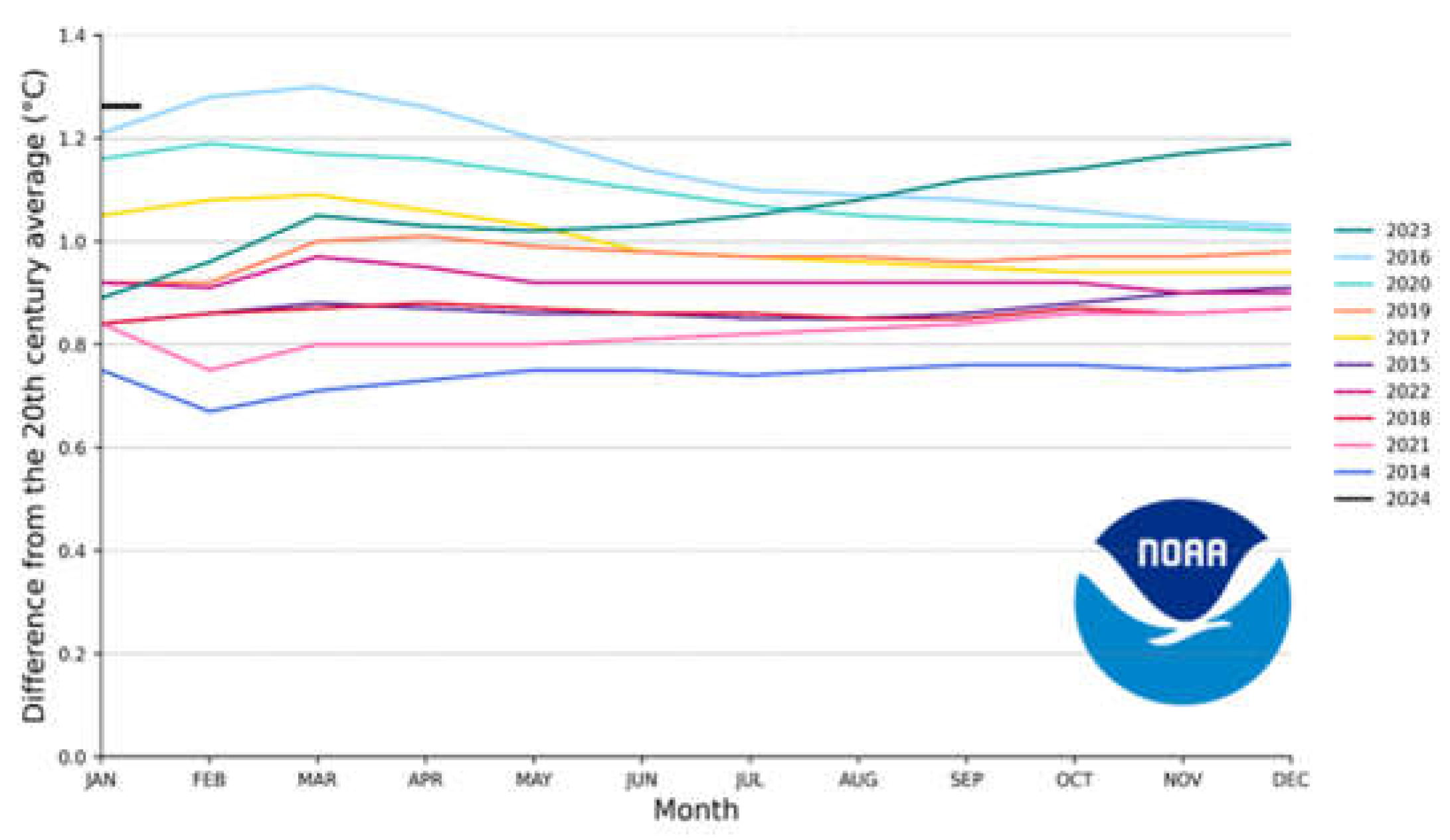
Figure 2.
Observed impacts are connected to physical climate changes including many that have been attributed to human influence such as the selected climatic impact-drivers shown. Impacts are driven by changes in multiple physical climate conditions, which are increasingly attributed to human influence (Kikstra et al., 2022).
Figure 2.
Observed impacts are connected to physical climate changes including many that have been attributed to human influence such as the selected climatic impact-drivers shown. Impacts are driven by changes in multiple physical climate conditions, which are increasingly attributed to human influence (Kikstra et al., 2022).
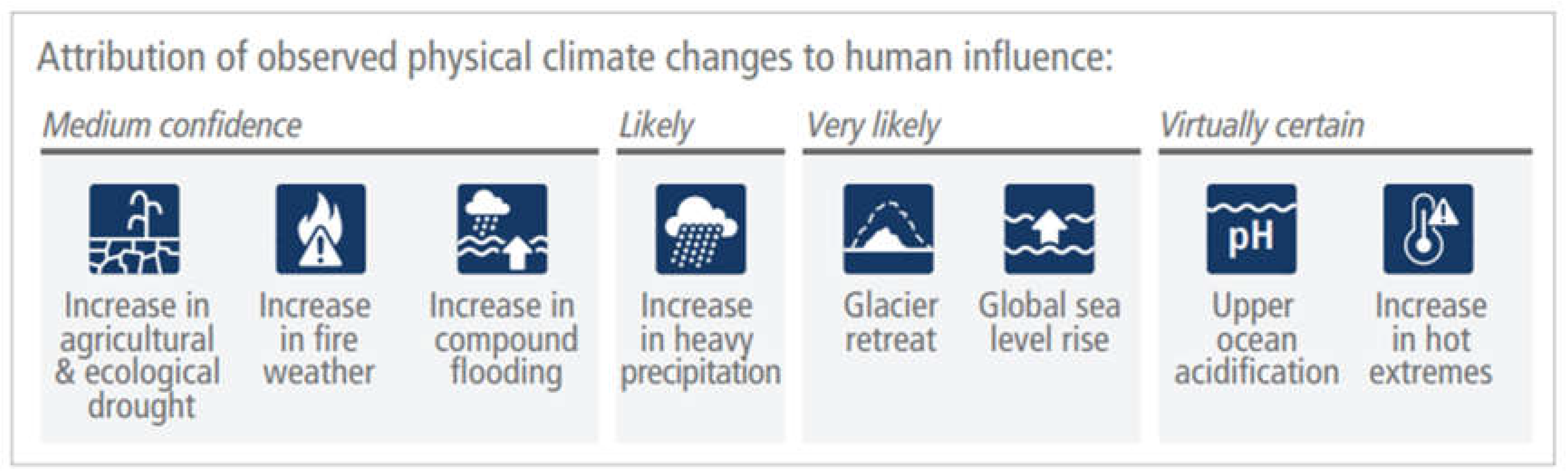
Figure 3.
Observed (1900–2020) and projected (2021–2100) changes in global surface temperature. The extent to which current and future generations will experience a hotter and different world depends on choices now and in the near term (Kikstra et al., 2022).
Figure 3.
Observed (1900–2020) and projected (2021–2100) changes in global surface temperature. The extent to which current and future generations will experience a hotter and different world depends on choices now and in the near term (Kikstra et al., 2022).
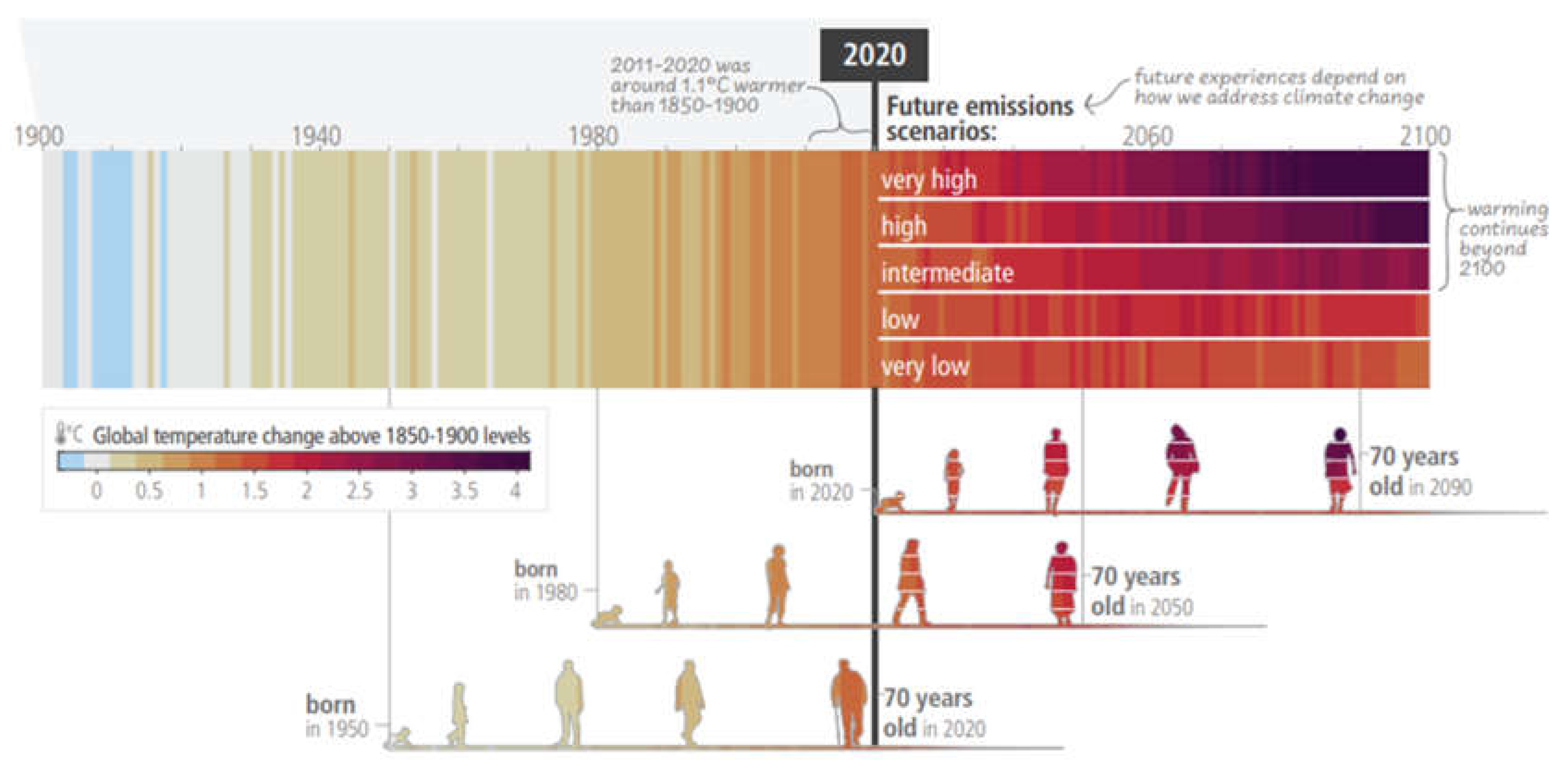
Figure 4.
Development of global GHG, CO2 and methane emissions in modelled pathways (Kikstra t al., 2022).
Figure 4.
Development of global GHG, CO2 and methane emissions in modelled pathways (Kikstra t al., 2022).
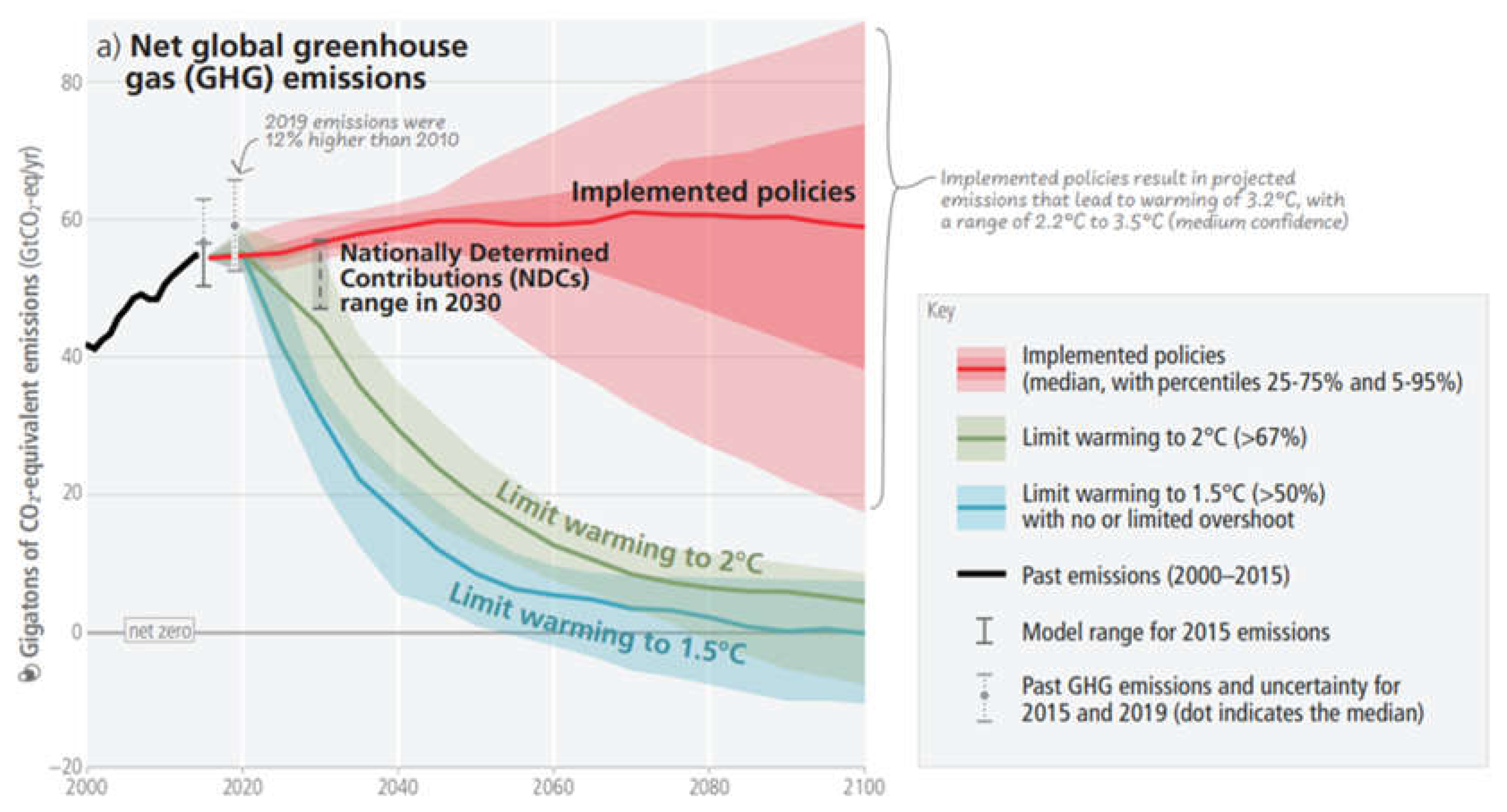
Figure 5.
Multiple interacting choices and actions can shift development pathways towards sustainability (Kikstra et al., 2022).
Figure 5.
Multiple interacting choices and actions can shift development pathways towards sustainability (Kikstra et al., 2022).
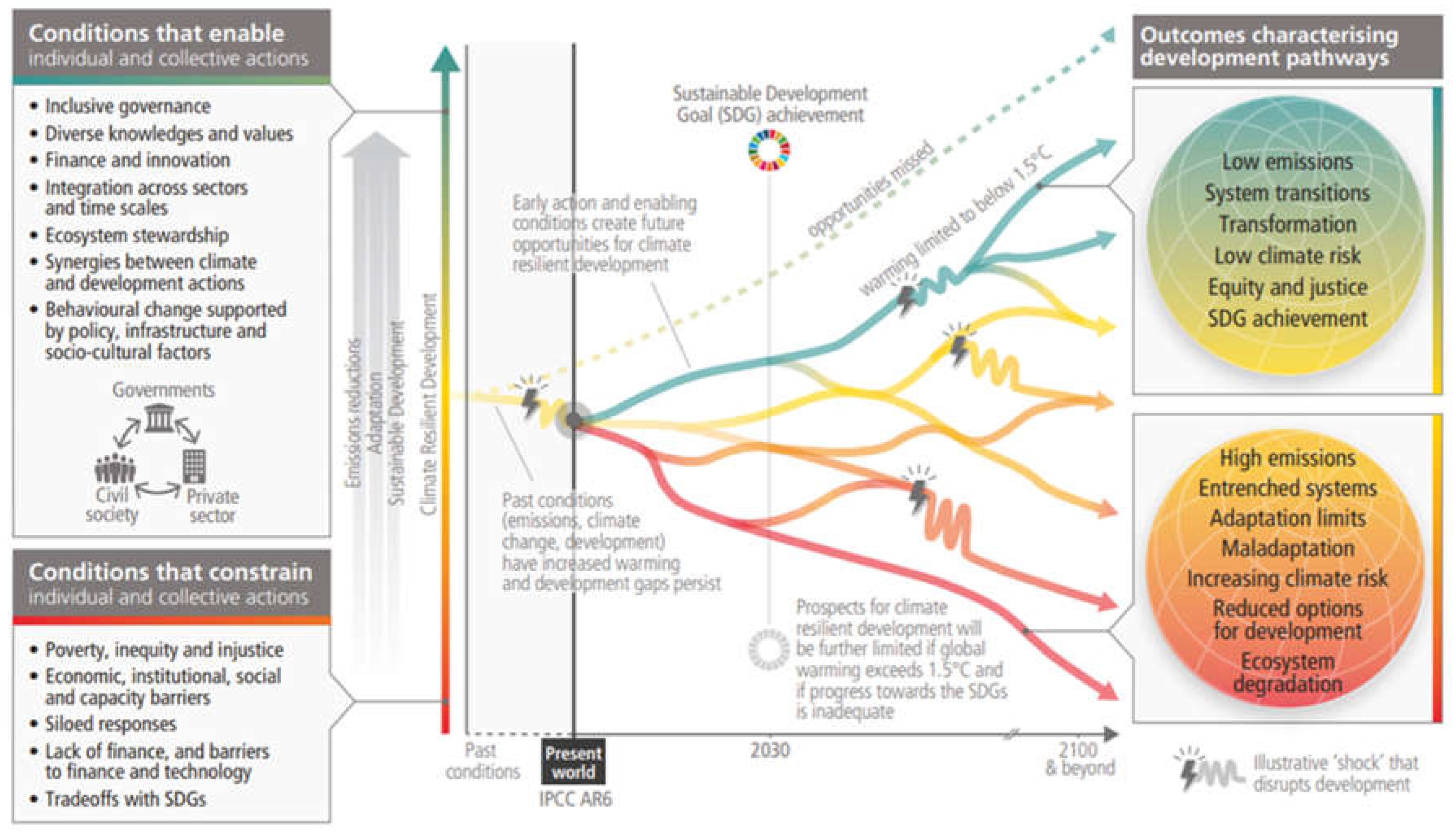
Figure 6.
Global carbon dioxide emissions pathways under the Paris agreement, 1980-2100 (Sovacool, 2021).
Figure 6.
Global carbon dioxide emissions pathways under the Paris agreement, 1980-2100 (Sovacool, 2021).
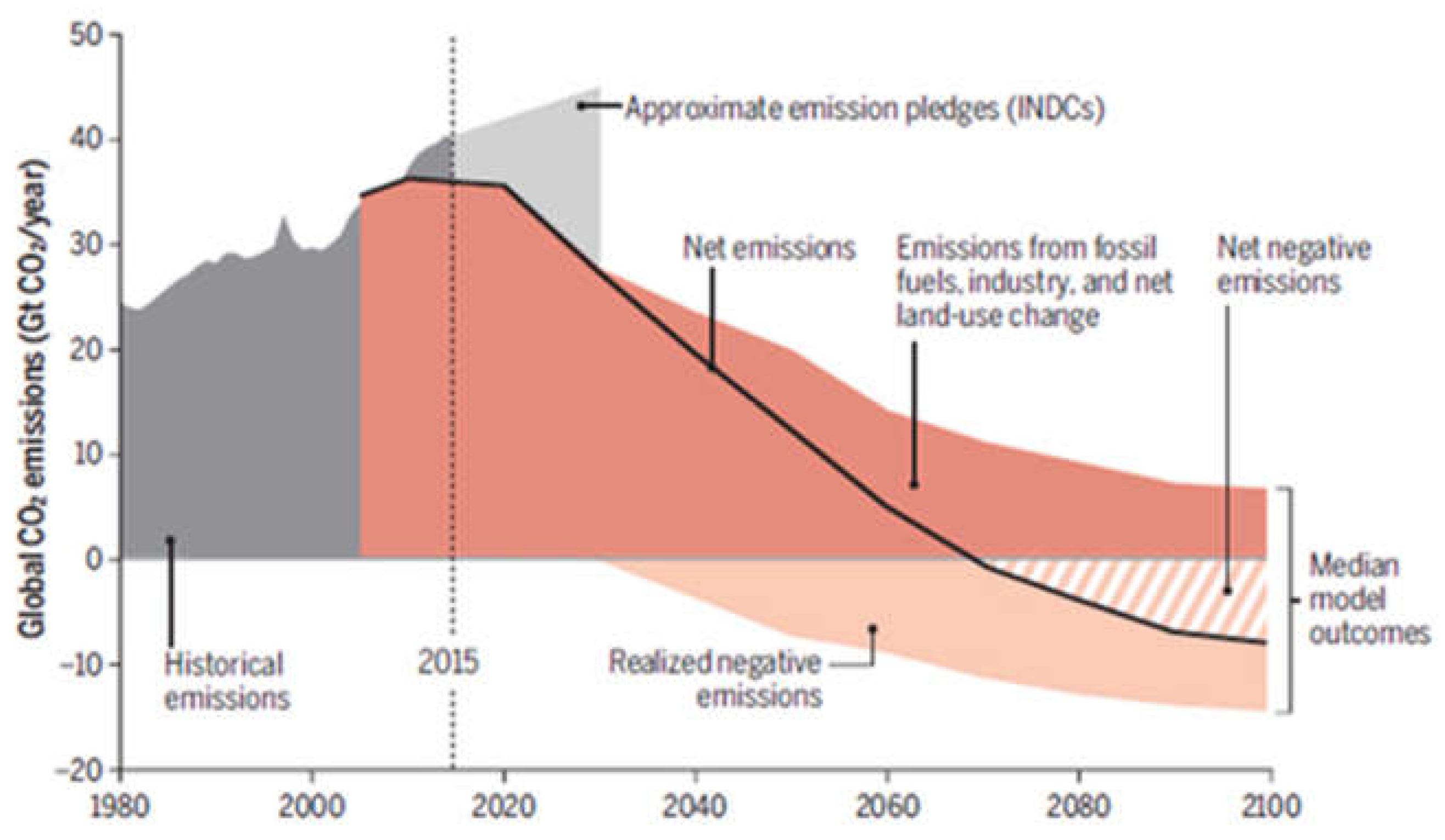
Figure 7.
Observed widespread and substantial impacts and related losses and damages attributed to climate change (Kikstra et al., 2022).
Figure 7.
Observed widespread and substantial impacts and related losses and damages attributed to climate change (Kikstra et al., 2022).
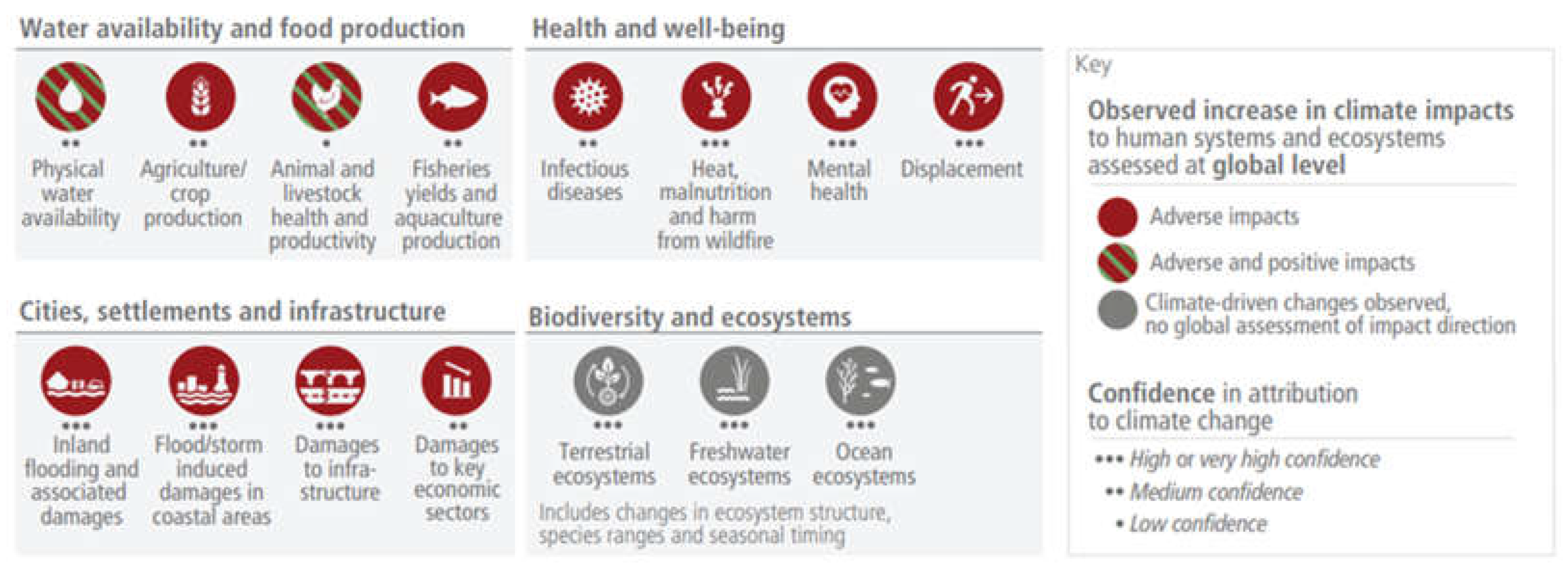
Figure 8.
Atmospheric Carbon Dioxide Concentration (ppm) Over Time (1960–2020) (NCEI, 2023). .
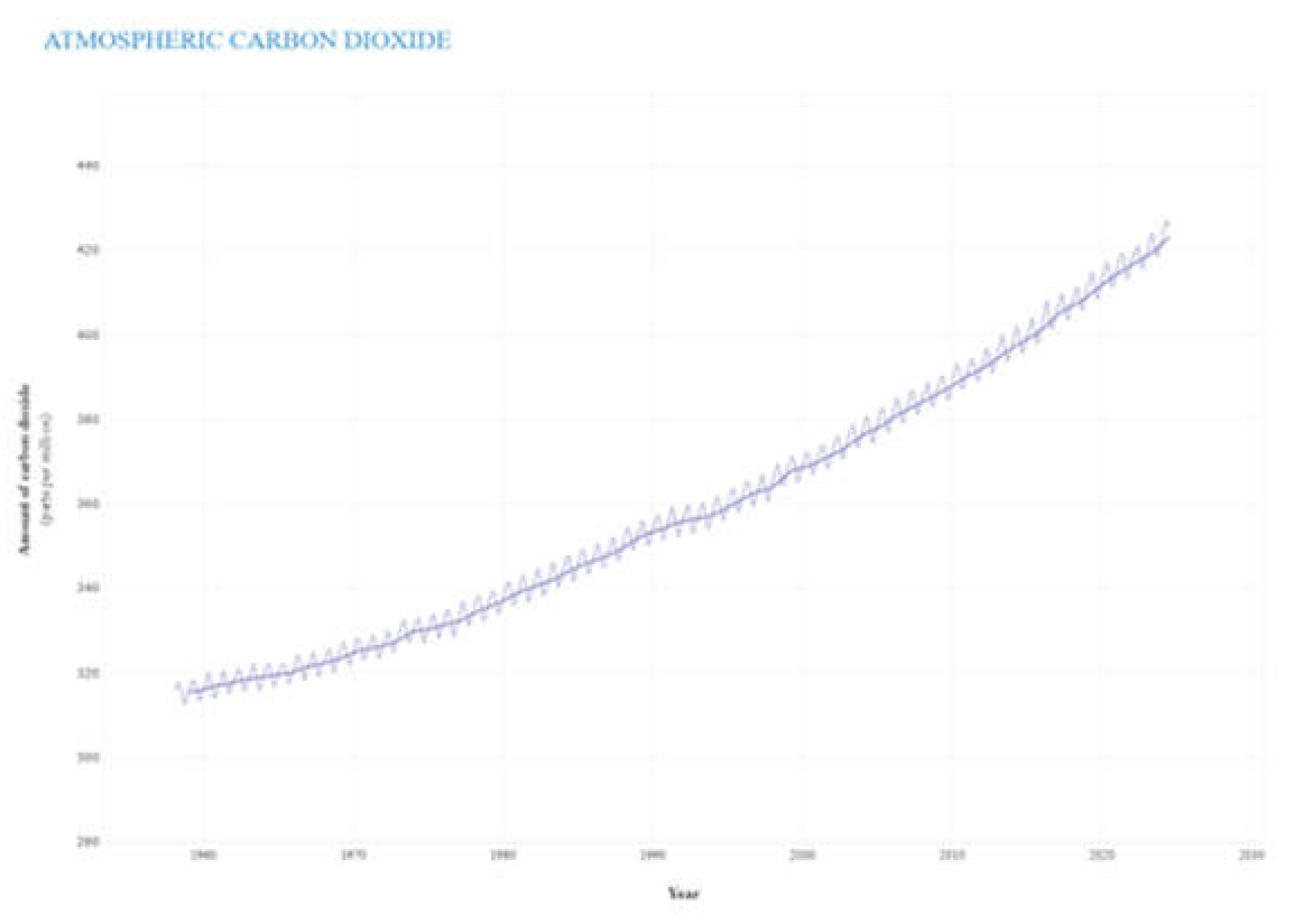
Figure 9.
Global Net Anthropogenic Greenhouse Gas Emissions by Gas Type (1990–2019) (EIA, 2023).
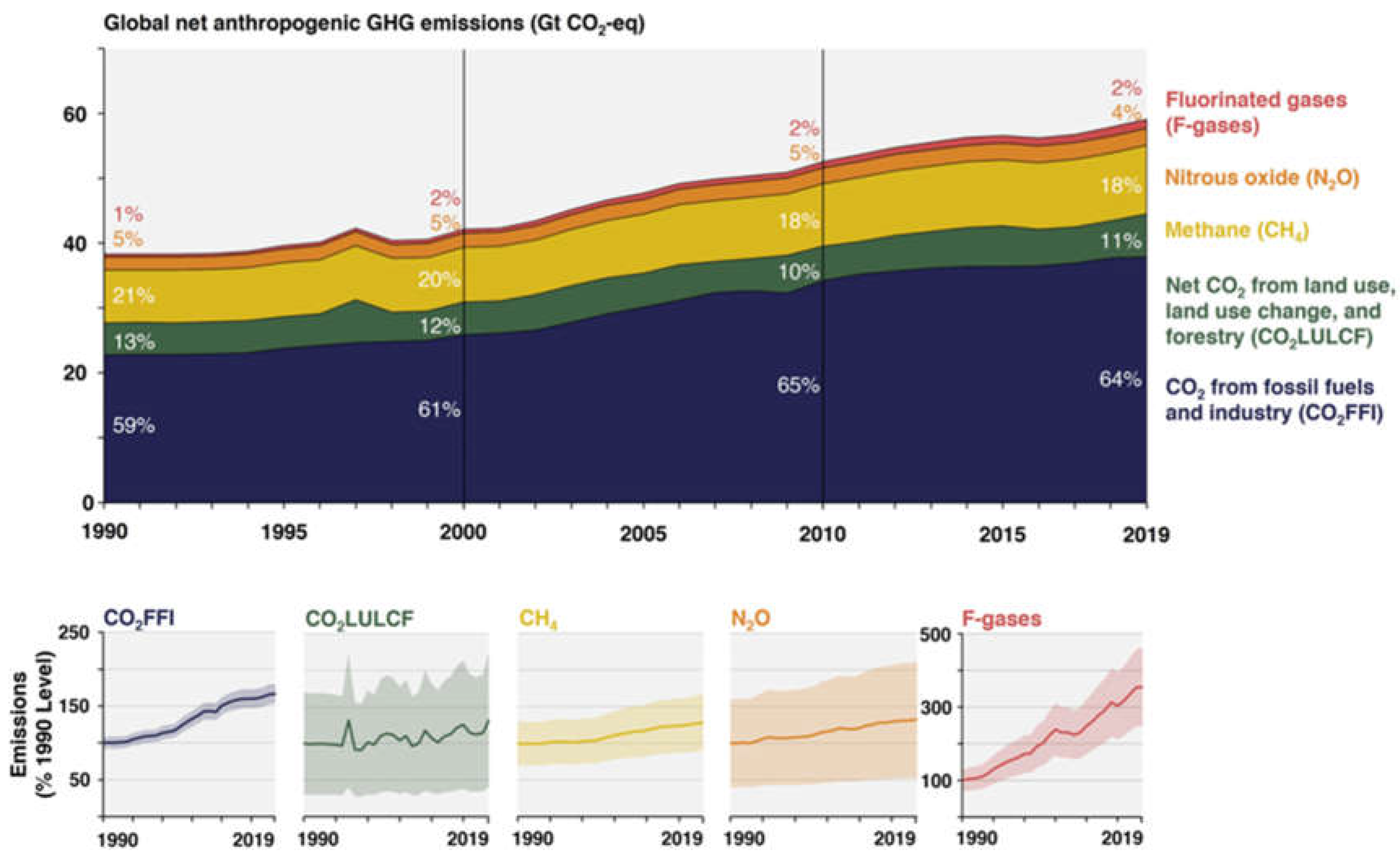
Figure 10.
Current and Historical Cumulative Emissions by Region (2019) (Dhakal et al., 2022).
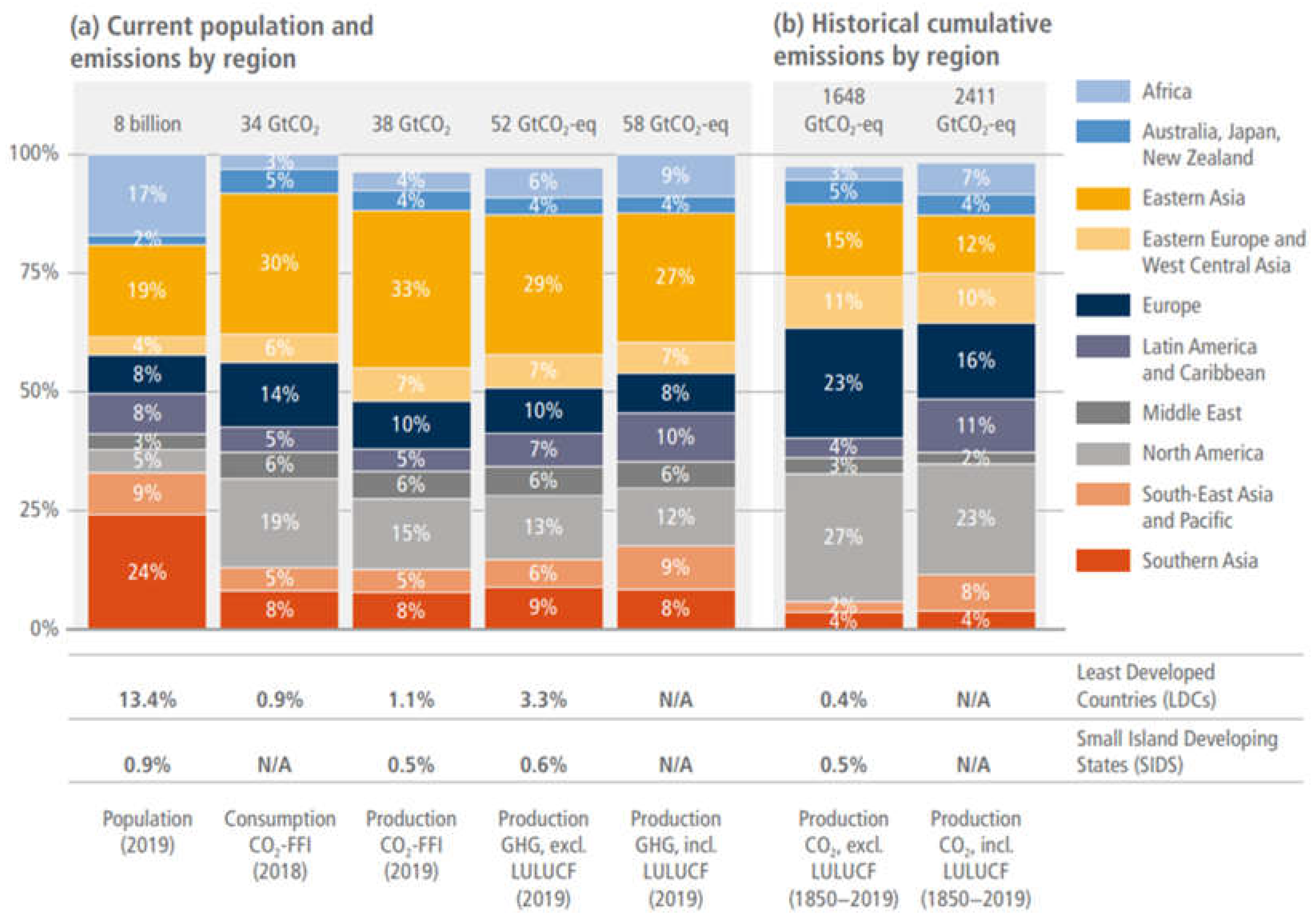
Figure 11.
Average Annual Emissions Change (2010–2019) and Projected Scenario Reduction Rates (2020–2040) (Dhakal et al., 2022).
Figure 11.
Average Annual Emissions Change (2010–2019) and Projected Scenario Reduction Rates (2020–2040) (Dhakal et al., 2022).
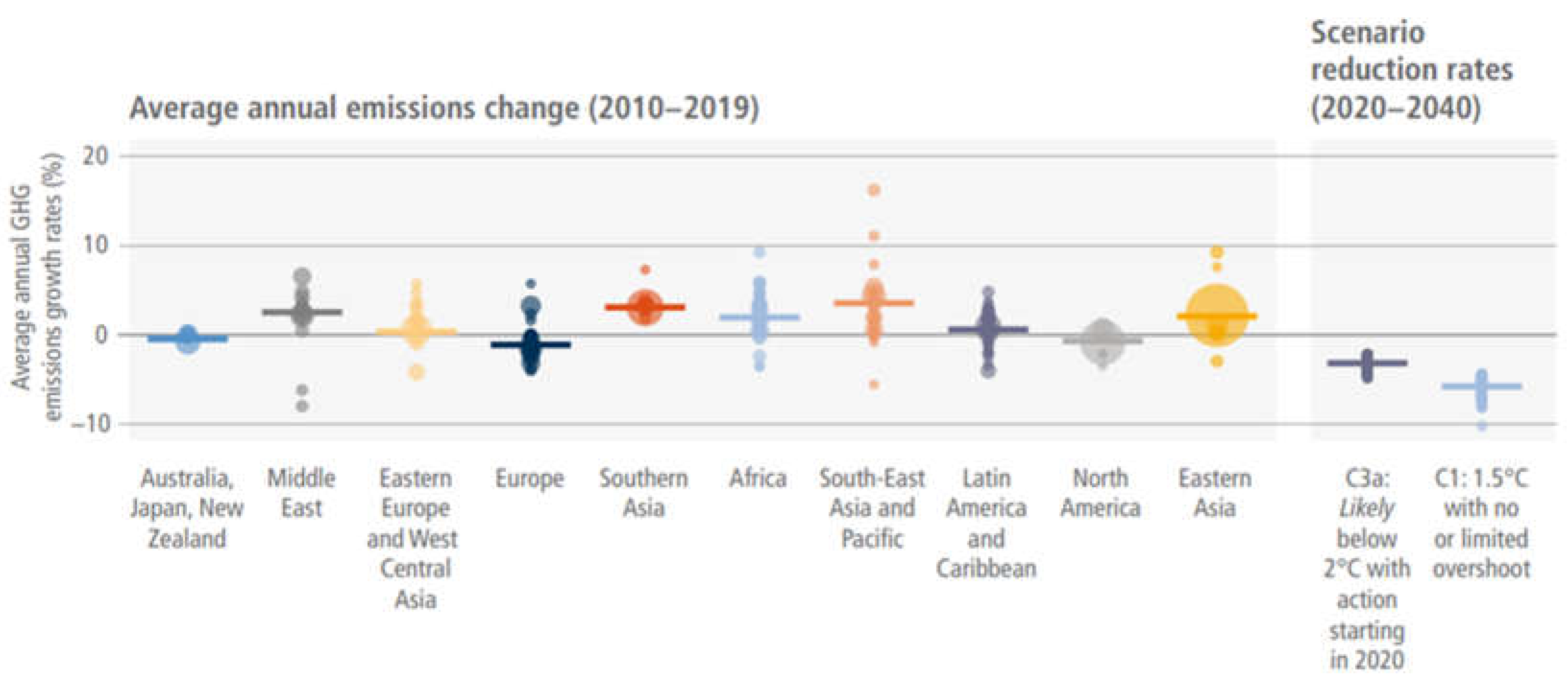
Figure 12.
Direct and Direct+Indirect Greenhouse Gas Emissions by Sector (59 GtCO2-eq) (Dhakal et al., 2022).
Figure 12.
Direct and Direct+Indirect Greenhouse Gas Emissions by Sector (59 GtCO2-eq) (Dhakal et al., 2022).
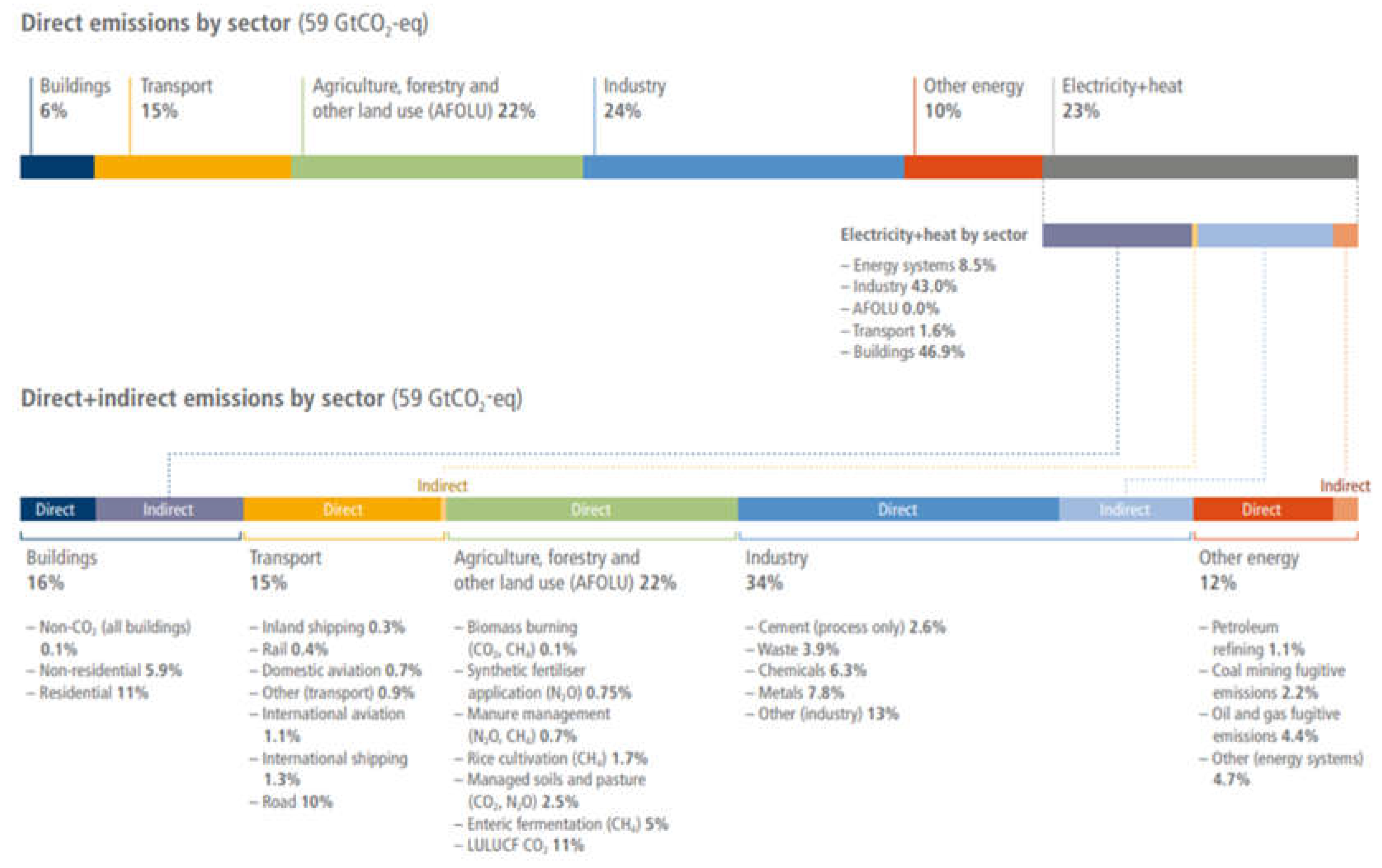
Figure 13.
Global Greenhouse Gas Emission Trends and Regional Contributions (1990-2019) (Dhakal et al., 2022).
Figure 13.
Global Greenhouse Gas Emission Trends and Regional Contributions (1990-2019) (Dhakal et al., 2022).
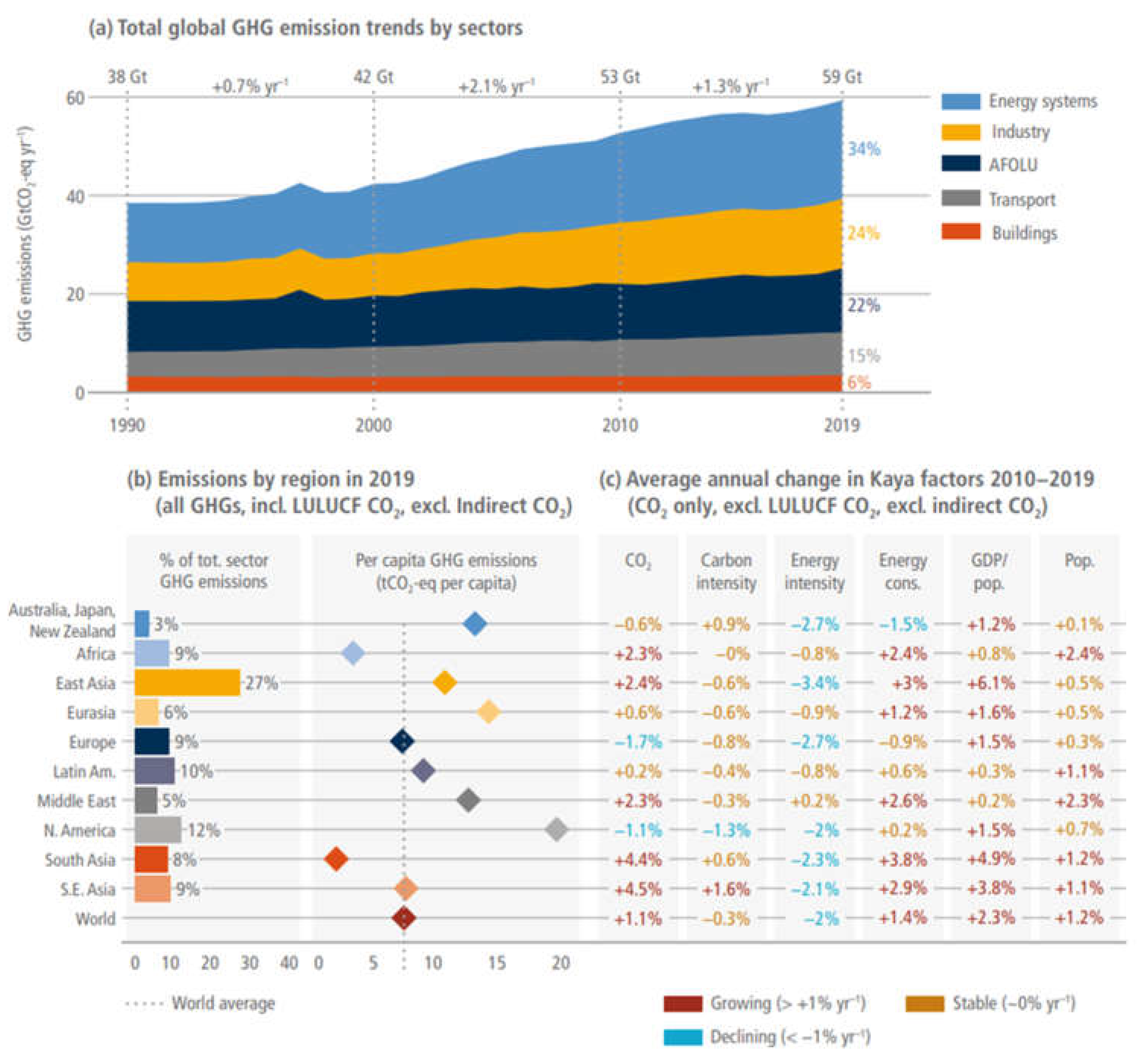
Figure 14.
Logistic Growth Rates for Electricity Share by Technology (Dhakal et al., 2022).
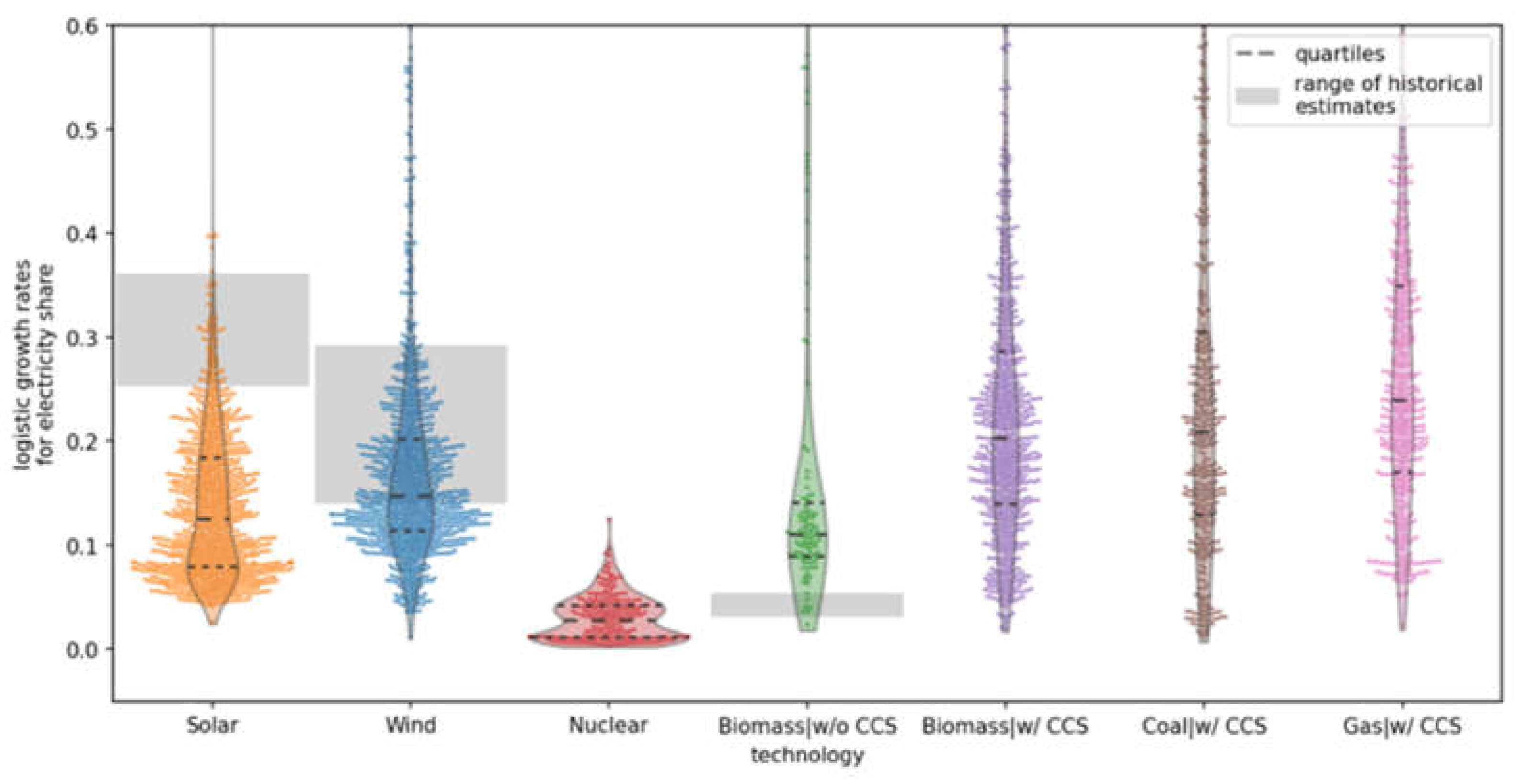
Figure 15.
Illustration of a bit a qubit (left), illustration of two qubits on an entangled state (De Leon et al., 2021).
Figure 15.
Illustration of a bit a qubit (left), illustration of two qubits on an entangled state (De Leon et al., 2021).
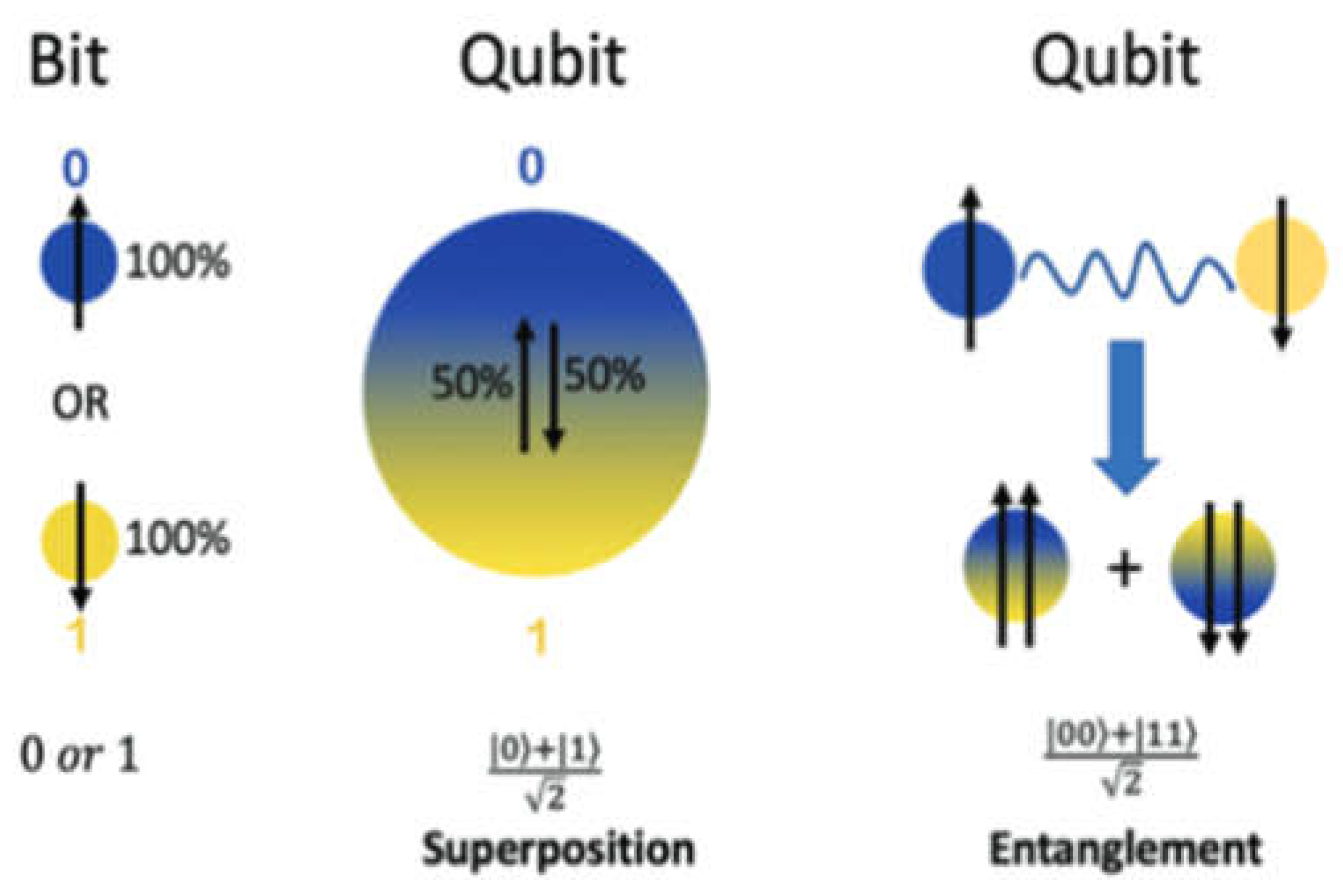
Figure 16.
(a) Comparison of CPW resonator internal quality factors, Qi, as a function of photon number, illustrating the improvement induced by an oxygen ash descum treatment prior to center trace deposition which reduces remnant organic residue caused by lift-off evaporation. (b) Cross-sectional transmission electron microscope (XTEM) imaging of the center trace metallization / substrate interface revealing contamination without and (c) with the descum process (Murray, 2021).
Figure 16.
(a) Comparison of CPW resonator internal quality factors, Qi, as a function of photon number, illustrating the improvement induced by an oxygen ash descum treatment prior to center trace deposition which reduces remnant organic residue caused by lift-off evaporation. (b) Cross-sectional transmission electron microscope (XTEM) imaging of the center trace metallization / substrate interface revealing contamination without and (c) with the descum process (Murray, 2021).
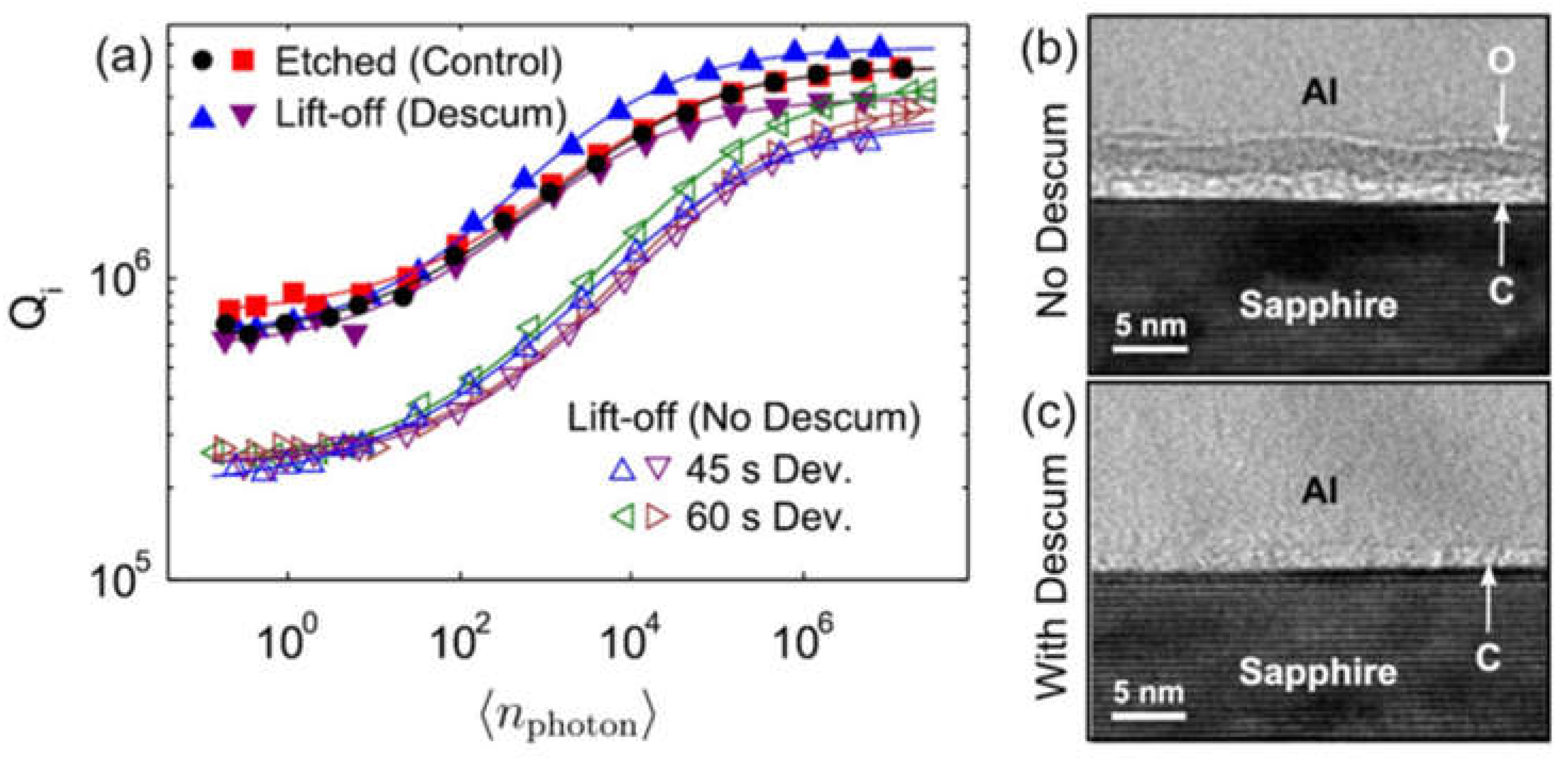
Figure 17.
Quantum brings various advantages for applications, application developers, and several industries by distributing the main functions.
Figure 17.
Quantum brings various advantages for applications, application developers, and several industries by distributing the main functions.
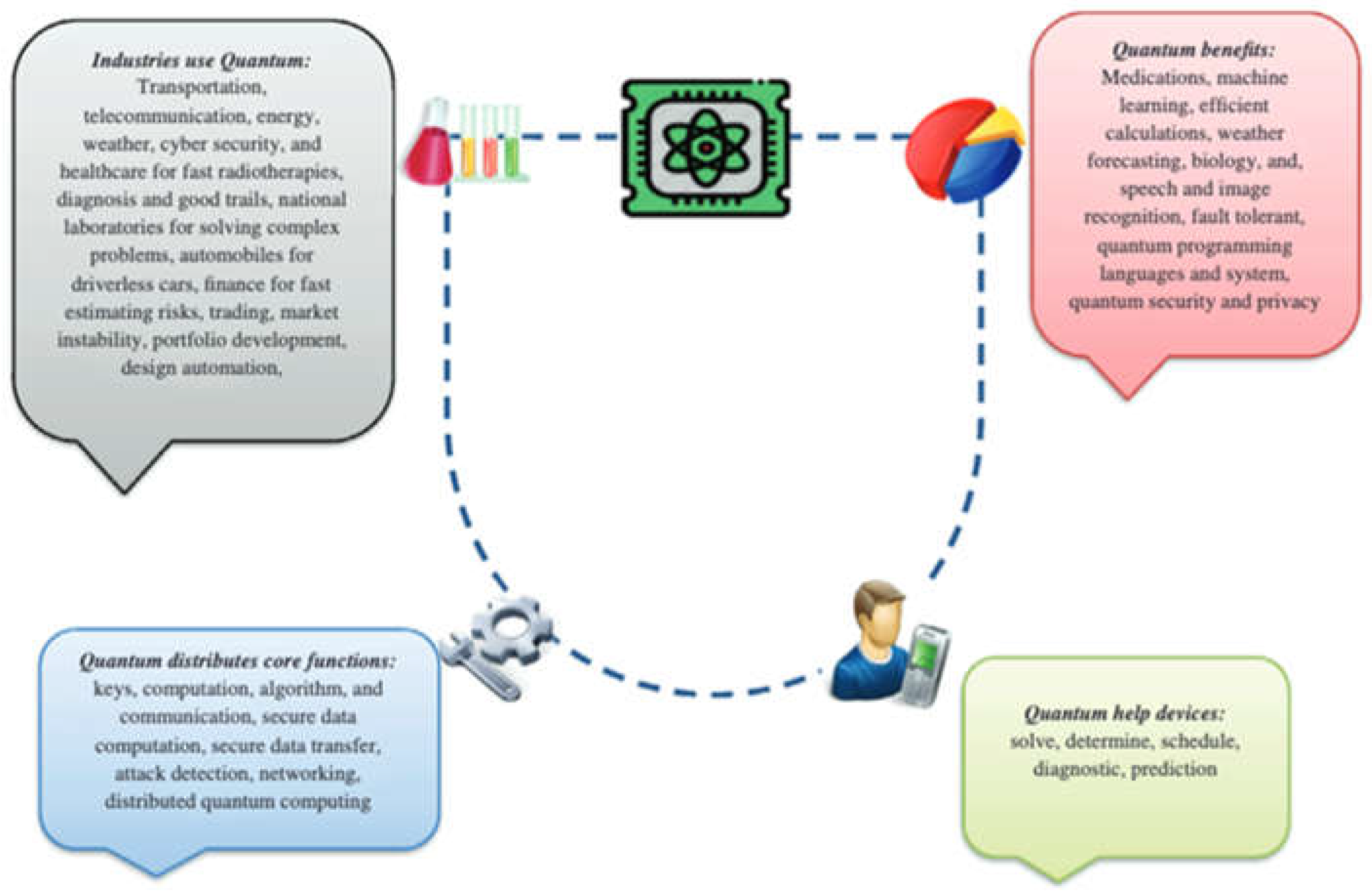
Figure 18.
Challenges and opportunities [Slater et al., 2023].
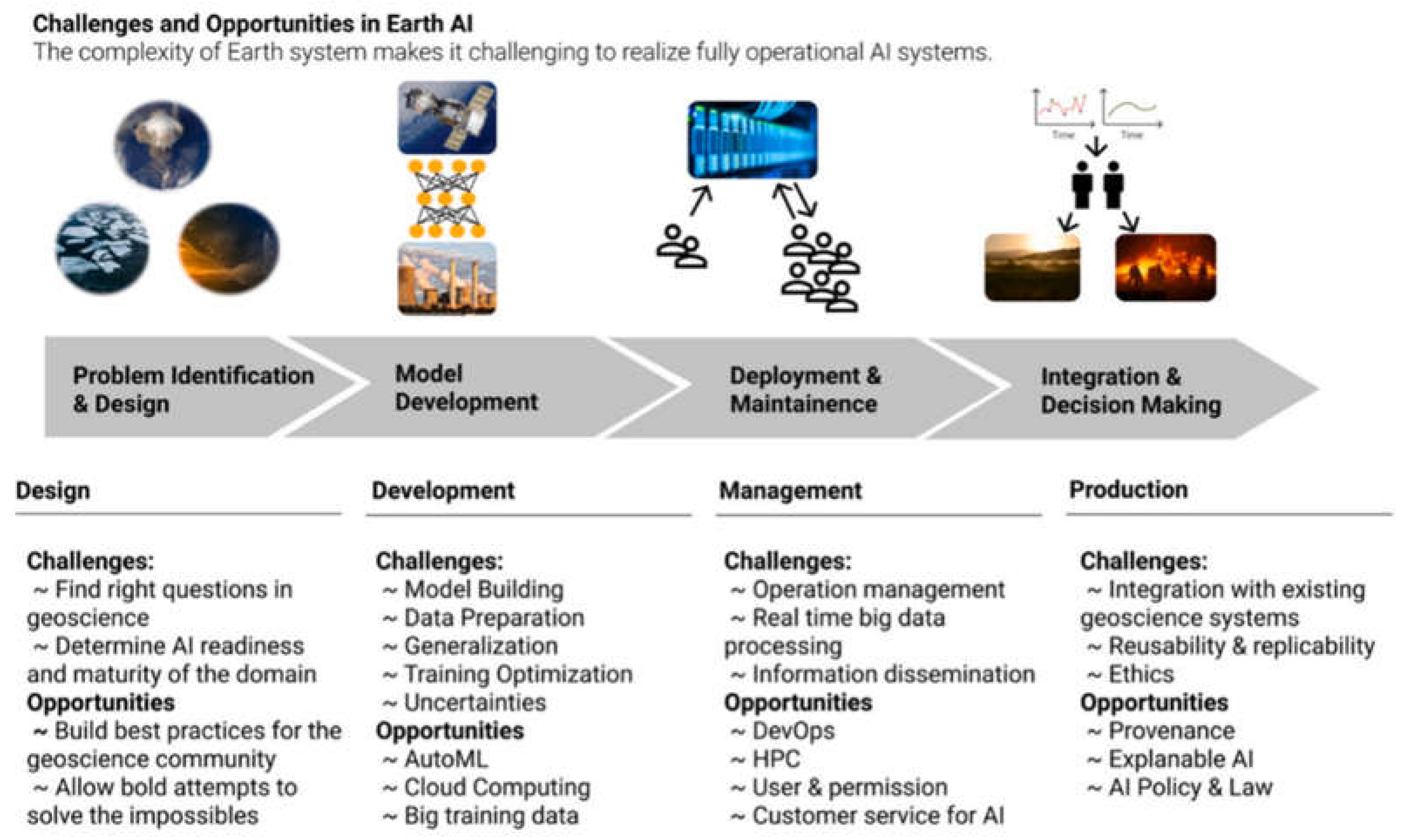
Figure 19.
Generic framework for scientific modeling using processed based models [Karpatne et al., 2024].
Figure 19.
Generic framework for scientific modeling using processed based models [Karpatne et al., 2024].
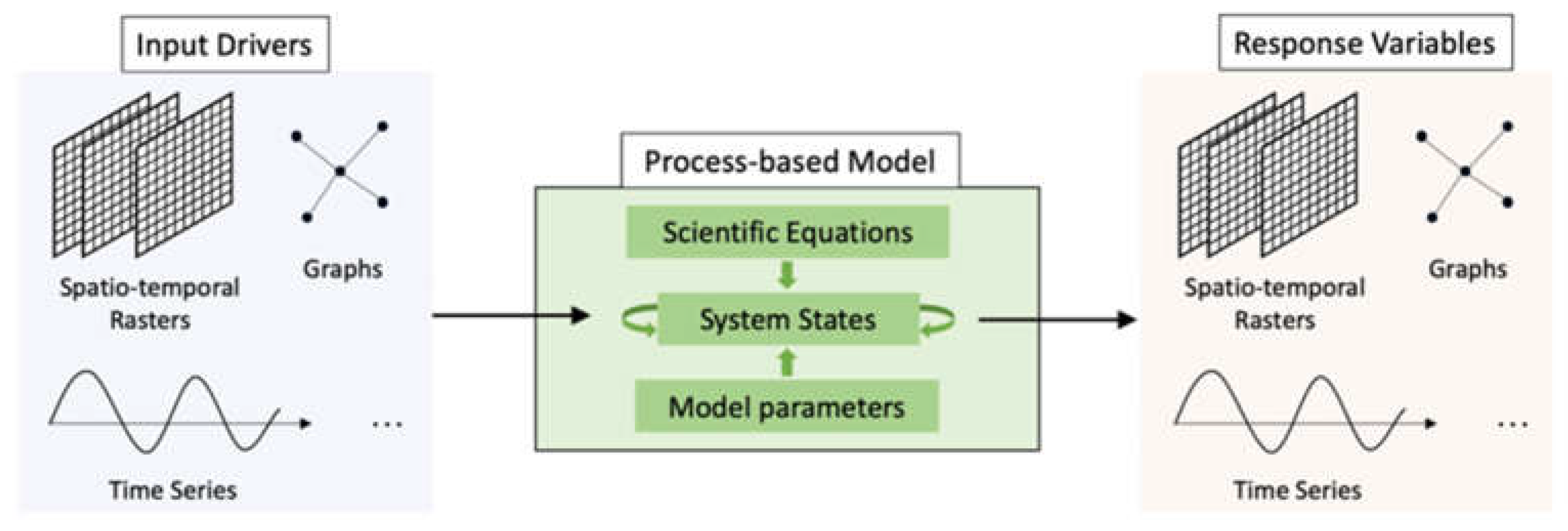
Figure 20.
Fundamentals of using computing (Ajagekar, 2022).
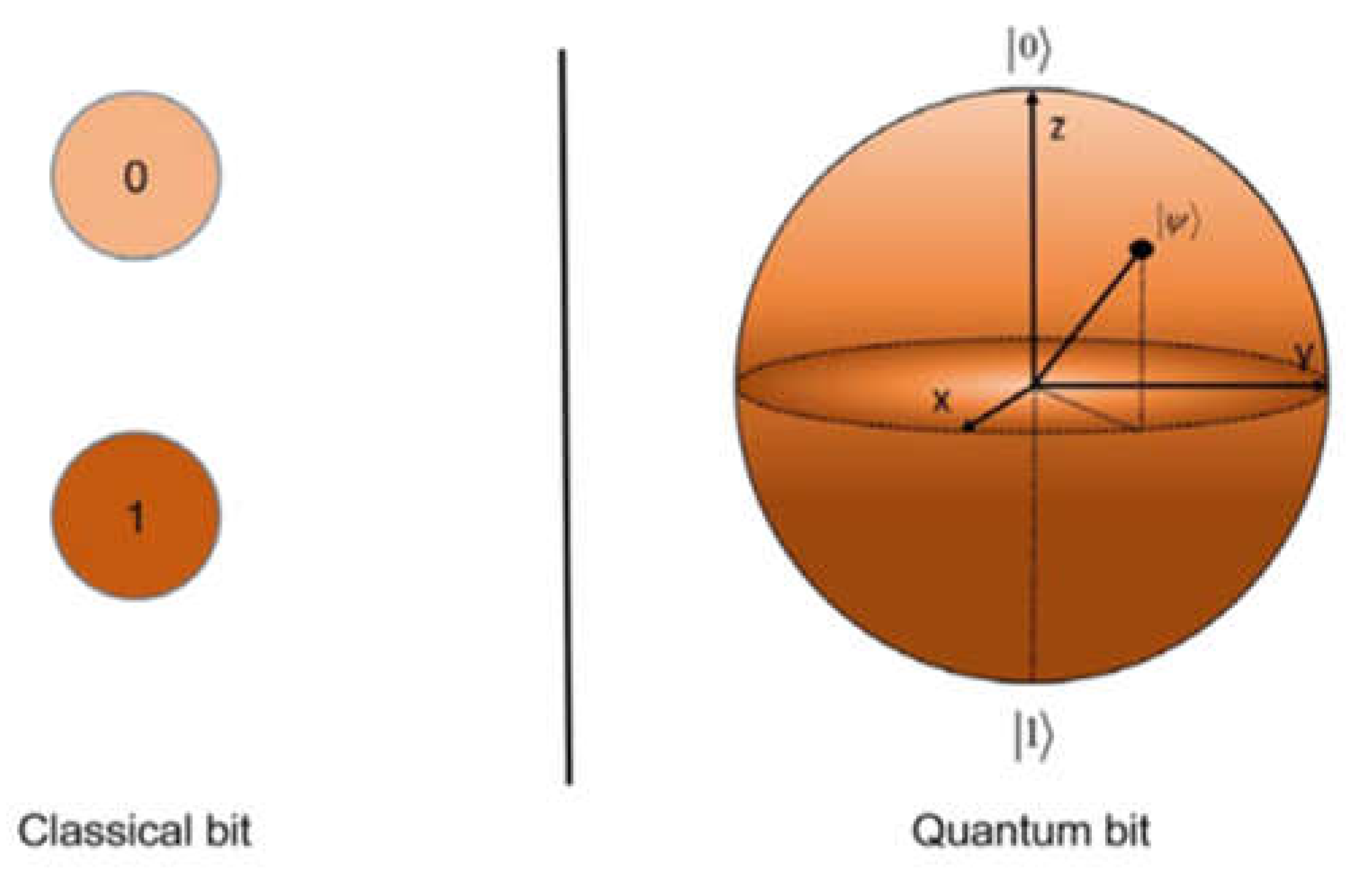
Figure 21.
Examples of machine learning approaches and algorithms (Karthikeyan et al., 2021).
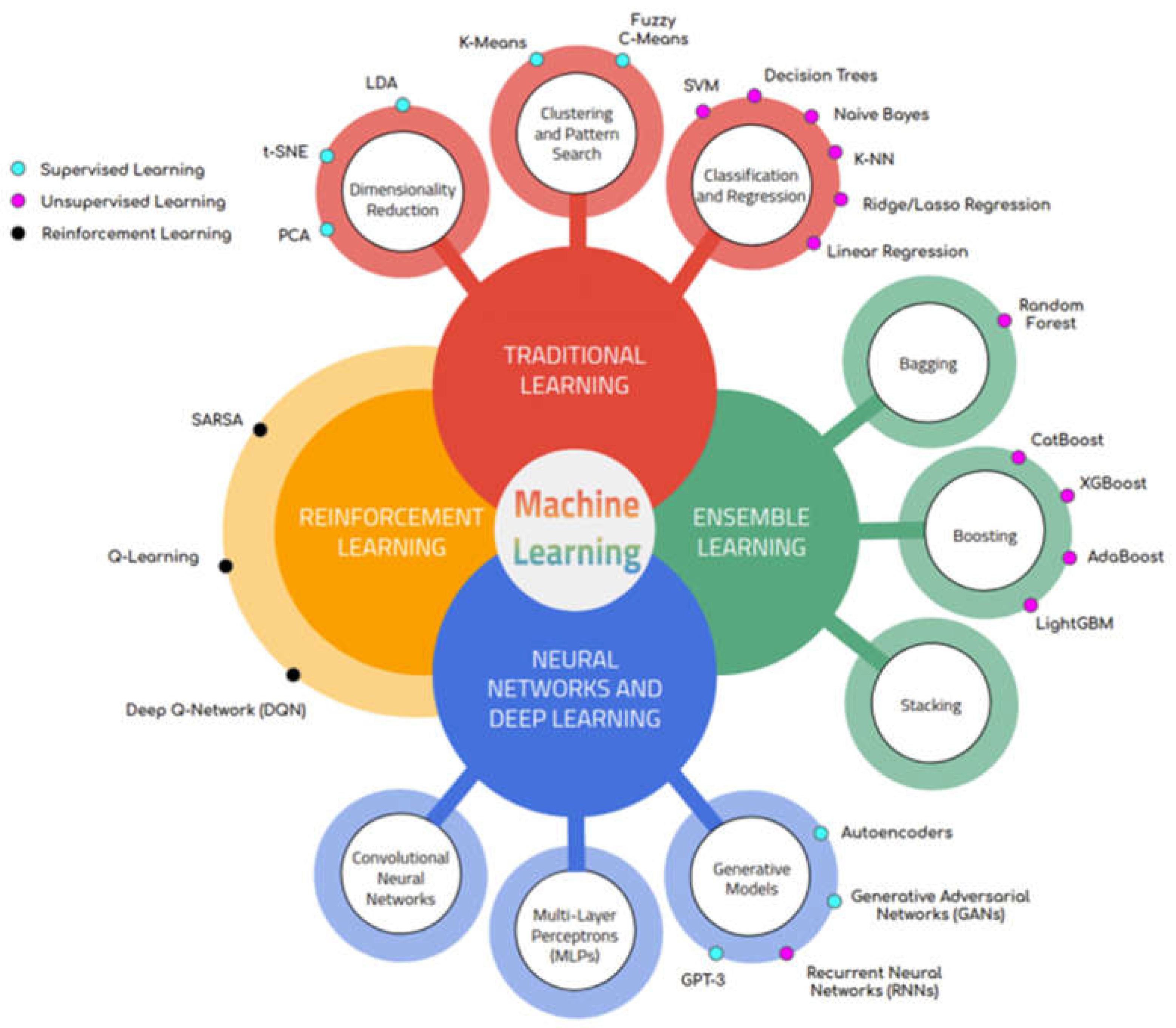
Figure 22.
An Overview of Quantum Computing (Gill et al., 2024).
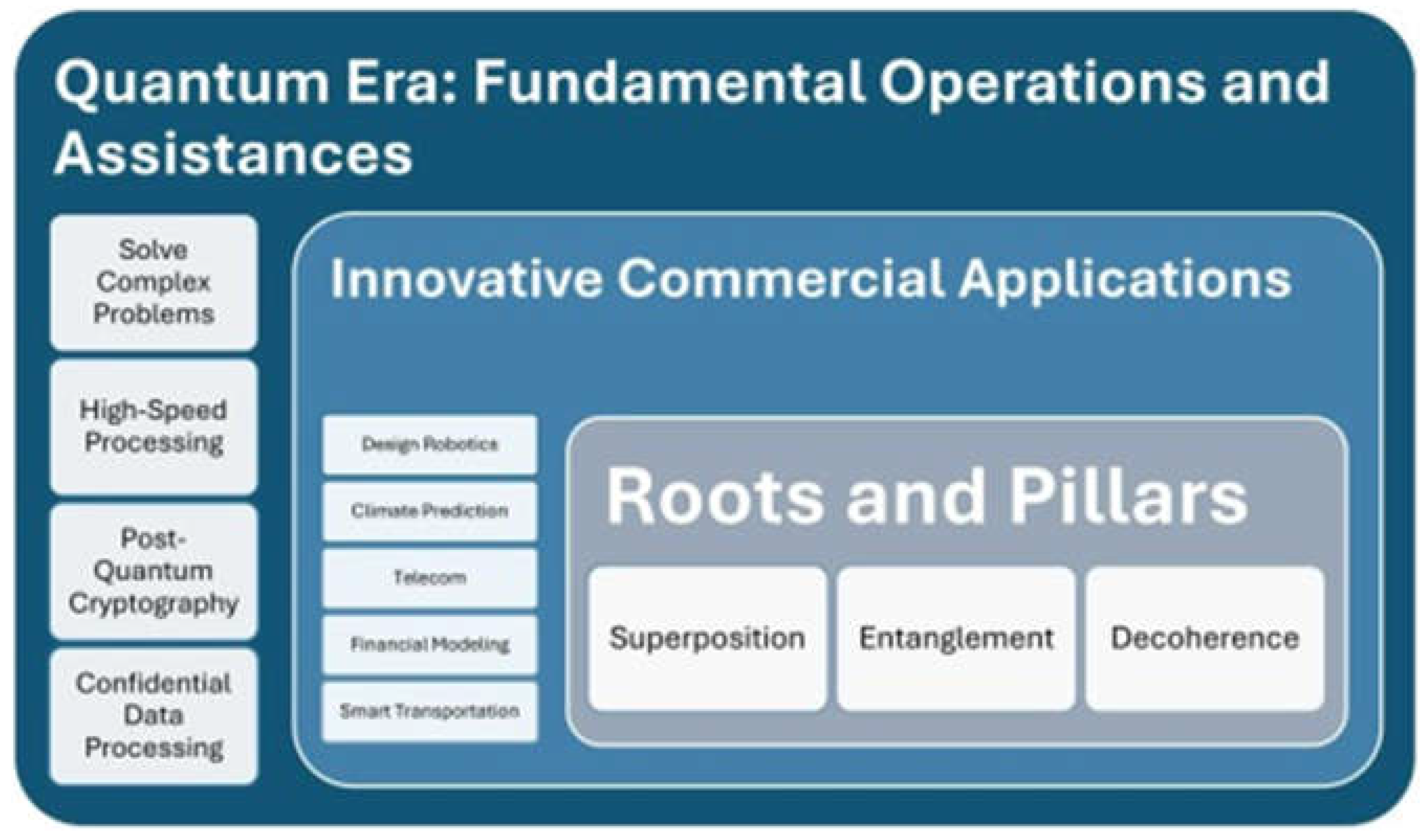
Figure 23.
Schematic illustrating a smart energy system (https://www.mdpi.com/2076-3417/11/21/9820) (AL-Jumaili et al., 2021).
Figure 23.
Schematic illustrating a smart energy system (https://www.mdpi.com/2076-3417/11/21/9820) (AL-Jumaili et al., 2021).
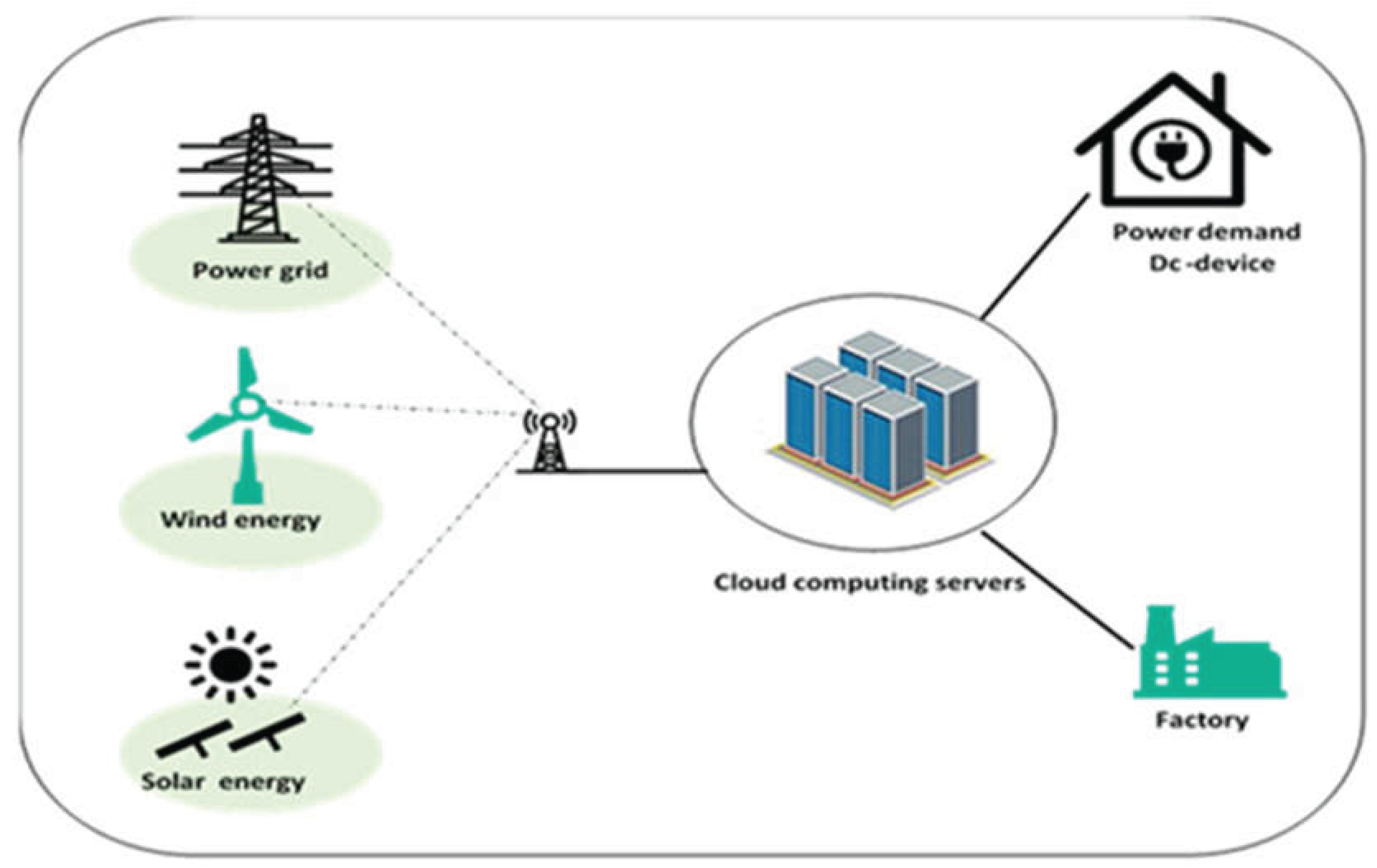
Disclaimer/Publisher’s Note: The statements, opinions and data contained in all publications are solely those of the individual author(s) and contributor(s) and not of MDPI and/or the editor(s). MDPI and/or the editor(s) disclaim responsibility for any injury to people or property resulting from any ideas, methods, instructions or products referred to in the content. |
© 2026 by the authors. Licensee MDPI, Basel, Switzerland. This article is an open access article distributed under the terms and conditions of the Creative Commons Attribution (CC BY) license (http://creativecommons.org/licenses/by/4.0/).
Copyright: This open access article is published under a Creative Commons CC BY 4.0 license, which permit the free download, distribution, and reuse, provided that the author and preprint are cited in any reuse.


