

Submitted:
16 February 2026
Posted:
26 February 2026
You are already at the latest version
Preprints on COVID-19 and SARS-CoV-2
Abstract
The COVID-19 pandemic was a significant wellbeing emergency that had changed the existence of millions, alongside the significant effect on psychological well-being. Government-drove general wellbeing drives, for example, social removing, can cause individuals to feel secluded and forlorn, just as increment stress and uneasiness. Individuals are additionally managing issues like changes in their day-to-day routines, some losing positions, bringing about monetary difficulty, dread of contracting crown or previously having it or being evaded by their families and neighbours for having COVID-19 when they didn't, all of which have affected many individuals' emotional wellness. We executed a review-based information assortment stage to portray what the COVID-19 pandemic has meant for the physical and emotional wellness status of people. We zeroed in on three wide regions, specifically, changes in friendly communication during home restriction, financial effect and their wellbeing status.
Keywords:
pandemic
; covid
; surbey
; mental wellness
; depression
; assessment
; wellbeing
Introduction
In March 2020, each country from the Western piece of world experienced the flare-up of the Covid infection 2019 (COVID-19. To lighten the pace of its spread, numerous nations stop their economies and implemented articulated limitations on open life. Coronavirus pandemic and lockdown have achieved a feeling of dread and joblessness rate brought uneasiness all over the planet. Everybody has been directed to some sort of present moment just as long haul psychosocial and psychological well-being suggestions. The quality and greatness of effect on minors are dictated by numerous weakness factors like formative age, instructive status, previous emotional well-being conditions, being monetarily oppressed, or being isolated because of disease or dread of contamination.
People rapidly travel and communicate with each other are rarely forced to the current scenario of social isolation and restrictions, leading to frustration and uncertainty. COVID-19 outbreak was showing effects of biological disasters which are showing how all may be frail and helpless.
Pervasive Anxiety
Continuously staying in social isolation connected with restrictions and lockdown measures are connected with feelings of unsure for the future, scares for new and unknown infective agents resulting in abnormally increases anxiety. Anxiety causes pervasive loneliness and sensorial deprivation, in such case mental stress occurs. Additionally, anxiety is associated with reduced performance and fatigue to people while loneliness and boredom cause frustration, sufferings and anger linked to quarantine restrictions. Furthermore, additional tragic effects include lower social support, uncertainty, boredom separation from loved ones and loss of freedom.
Disabling Loneliness
The effect of isolating ourself is boredom and pervasive loneliness, that have huge dramatic effects on both mental and physical health. Pervasive loneliness may be mostly connected with increased suicidal behaviour and depression.
Literature Survey
| S. No. | Author(s) | Title of the Study | Year | Summary of Findings |
| 1 | Chatterjee, Nazia Nagi, Anup Agarwal, Bhabatosh Das, Sayantan Banerjee, Swarup Sarkar, Nivedita Gupta, Raman R. Gangakhedkar. [1] | Coronavirus Disease (COVID-19) Pandemic | 2020 | This study discusses strategies to reduce the risk of COVID-19 transmission. It highlights ongoing clinical trials and efforts toward vaccine development and approval. |
| 2 | Hayat Ouassou, Lou Kharchouf, Mohamed Bouhrim, Nour Elhouda Daoudi, Hamad Imtara, Nouredine Bencheikh, Amine ELbouzidi, Mohamed Bnouham. [2] | The Pathogenesis of Coronavirus Disease 2019 (COVID-19) | 2020 | The paper explains the pathogenic nature of COVID-19 and emphasizes its global threat, particularly to healthcare workers due to high exposure. It also notes vaccine development as a major control measure. |
| 3 | Tatsuro Kawamoto, Takaaki Aoki, Michiko Ueda. [3] | Graph-based Open-ended Survey on Concerns Related to COVID-19 | 2020 | This research uses graph clustering to analyze survey responses. The findings reveal evolving public concerns, especially regarding infection risk, through pattern classification and annotation. |
| 4 | Nagesh Pai, Shae-Leigh Vella | COVID-19 and Loneliness: A Rapid Systematic Review | 2020 | The review identifies loneliness as strongly linked with mental health symptoms during the pandemic. It stresses the need for public policies and interventions to reduce loneliness and associated psychological impacts. |
| 5 | Tatsuro Kawamoto, Takaaki Aoki, Michiko Ueda | Graph-based Open-ended Survey on Concerns Related to COVID-19 | 2020 | Conducted among the adult population of Japan using the GPS framework, the study shows that different pandemic phases influenced changing public concerns and mental stress factors. |
| 6 | Jia Liu, Qing Zhu, Wenliang Fan, Joyman Makamur, Chuansheng Zheng, Jing Wang | Online Mental Health Survey in a Medical College in China During the COVID-19 Outbreak | 2020 | This paper examines mental health conditions of medical students during COVID-19. It suggests universities must take proactive steps to identify, prevent, and manage stress-related psychological issues. |
| 7 | Saeideh Valizadeh-Haghi, Yasser Khazaal, Shahabedin Rahmatizadeh | Health Websites on COVID-19: Are They Readable and Credible Enough to Help Public Self-care? | 2021 | The study evaluates the readability and credibility of COVID-19 health websites. It recommends improving online information accessibility to enhance health literacy and reduce public anxiety. |
| 8 | Deepak Jakhar, Chander Grover, Ishmeet Kaur, Anupam Das, Subuhi Kaul | COVID-19 and Healthcare Worker: What We Need to Know | 2021 | The paper highlights the challenges faced by healthcare workers during the pandemic. It emphasizes the need for institutions and society to recognize their struggles and support their requirements. |
| 9 | Wen-Jun Tu, Chinese Academy of Medical Sciences and Peking Union Medical College, China | Infection Prevention and Control Compliance Among Exposed Healthcare Workers in COVID-19 Treatment Centers in Ghana | 2021 | This study stresses the importance of IPC compliance among healthcare workers. Adequate logistics supply, focus on non-clinical staff, and behavior-change interventions can minimize transmission risks. |
| 10 | Mohammed Goda Elbqry, Fatma Mohmed Elmansy, Haydy Hassan Sayed | Effect of COVID-19 Stressors on Healthcare Workers’ Performance and Attitude at Suez Canal University Hospitals | 2021 | Findings show healthcare workers had good knowledge and positive attitudes toward infection control. However, moderate to severe psychological stress levels were observed among some employees. |
| 11 | Rahmet GÜNER, İmran HASANOĞLU, Firdevs AKTAŞ | COVID-19: Prevention and Control Measures in Community | 2020 | The study emphasizes prevention due to lack of approved treatments at the time. Measures such as hand hygiene, quarantine, social distancing, and increased testing are crucial to reduce spread. |
| 12 | Leticia González-Spinoglio, Anna Monistrol-Mula, Cecilia Vindrola-Padros, Salvatore Aguilar-Ortiz, Bernat Carreras, Josep Maria Haro, Mireia Felez-Nobrega | Long-Term Emotional Impact of the COVID-19 Pandemic and Barriers and Facilitators to Digital Mental Health Tools in Long-Term Care Workers: Qualitative Study | 2024 | Investigated long-term psychological distress in long-term care workers after COVID-19. Emotional distress persisted more than two years post-outbreak, and barriers/facilitators for digital mental health tools were identified for future intervention design. |
| 13 | M. Askari, A. Kadhim Kareem, M. Rahimkhani et al. | The Impact of COVID-19 on Mental Health in Eastern Iran: A Comparative Study During and After the Pandemic | 2025 | This comparative study analyzes mental health status during and after COVID-19 in Eastern Iran, highlighting continuing psychological effects and post-acute mental health challenges. |
| 14 | Evgenia Stepanova, Alex Thompson, Ge Yu, Yu Fu et al. | Changes in Mental Health Services in Response to the COVID-19 Pandemic in High-Income Countries: A Rapid Review | 2024 | Reviewed how high-income countries adapted mental health service provision during the pandemic, demonstrating significant shifts in service models to address increased mental health needs and systemic challenges. |
| 15 | Anna-Koralia Sakaretsanou, Maria Bakola, Taxiarchoula Chatzeli, Georgios Charalambous, Eleni Jelastopulu | Mental Health Impacts of the COVID-19 Pandemic on College Students: A Literature Review with Emphasis on Vulnerable and Minority Populations | 2025 | Systematic review showing that COVID-19 exacerbated mental health problems among college students, particularly in vulnerable and minority groups, with implications for healthcare and educational support systems. |
| 16 | J.H. Seo, M. Lee, S. Kang et al. | Impact of the COVID-19 Pandemic on Incidence of Psychiatric Disorders Using Nationwide Cohort Data and ARIMA Models. | 2025 | This nationwide cohort study using ARIMA models found increased incidence of various psychiatric disorders following the pandemic, highlighting broader mental health trends and the need for mental healthcare planning. |
Materials and Methods
Survey was conducted in the pandemic via online through google form and offline by interacting with the locals. The form was circulated through social media and data was collected worldwide.
Results and Discussion
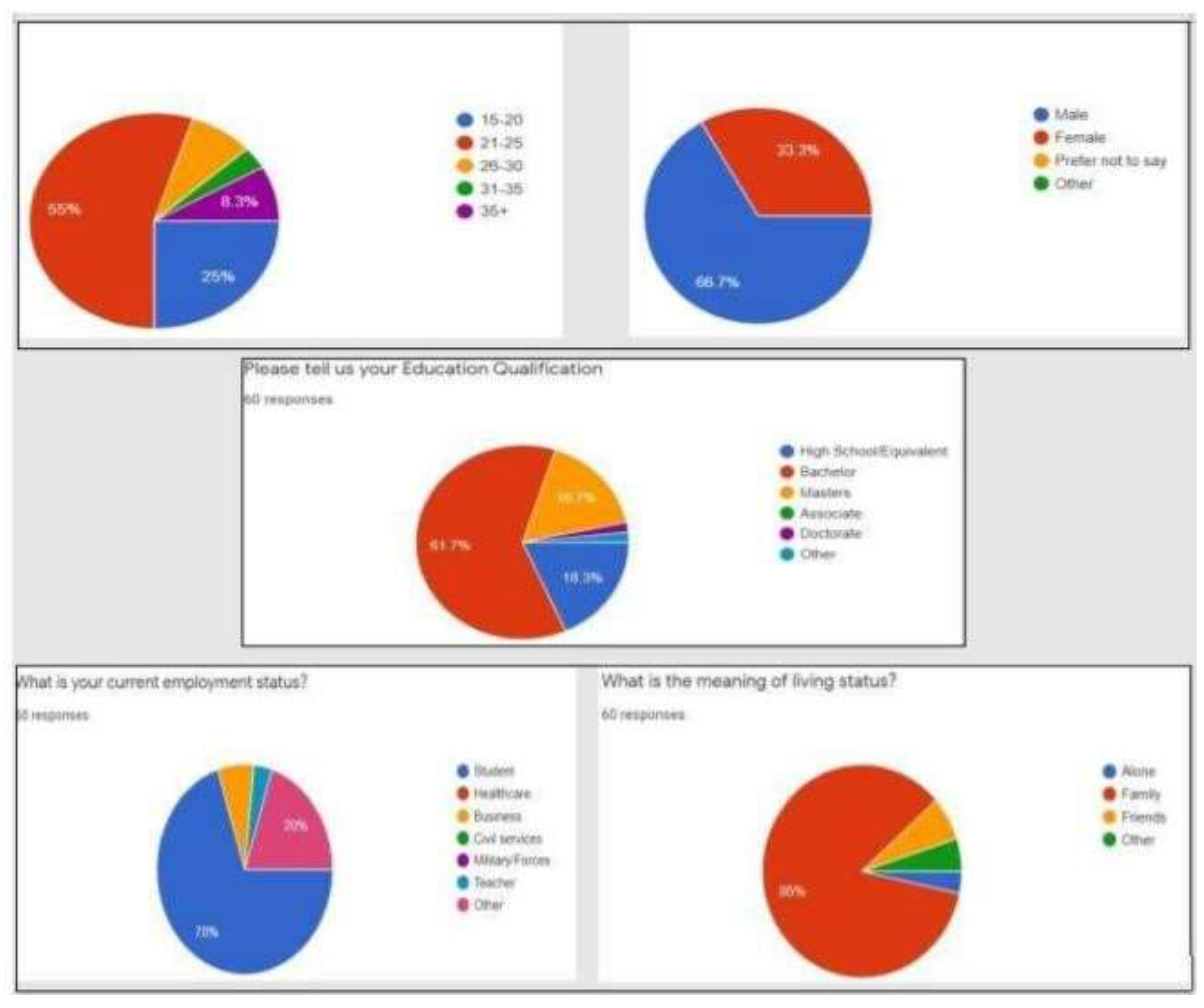
Required information was collected from the respondents including their age, gender, education level, employment status, marital status and work or study setting (Figure 1). Most of people age between 21-25 years have fill this survey. There were 55% belonged to 21-25 age group,
25% from 15-20, 8.3% from 35+, 6.8% from 26-30 and remaining 3.4% to 31-35 age group where 66.7% were male and 33.3% were female. Our next question is (Please tell us your Education Qualification) and the result is 61.7% were in Bachelor, 18.3% in High School/Equivalent, 16.7% in Masters remaining 3.3% from Associate and Doctorate degree. From our survey most of our responses were 70% from Students, 20.0% from other field and remaining 8.5% from Civil services and Teacher. Most of our respondent of about 85% were live with their family, 5.1% had different living style and remaining 8.5% living alone or with friends.
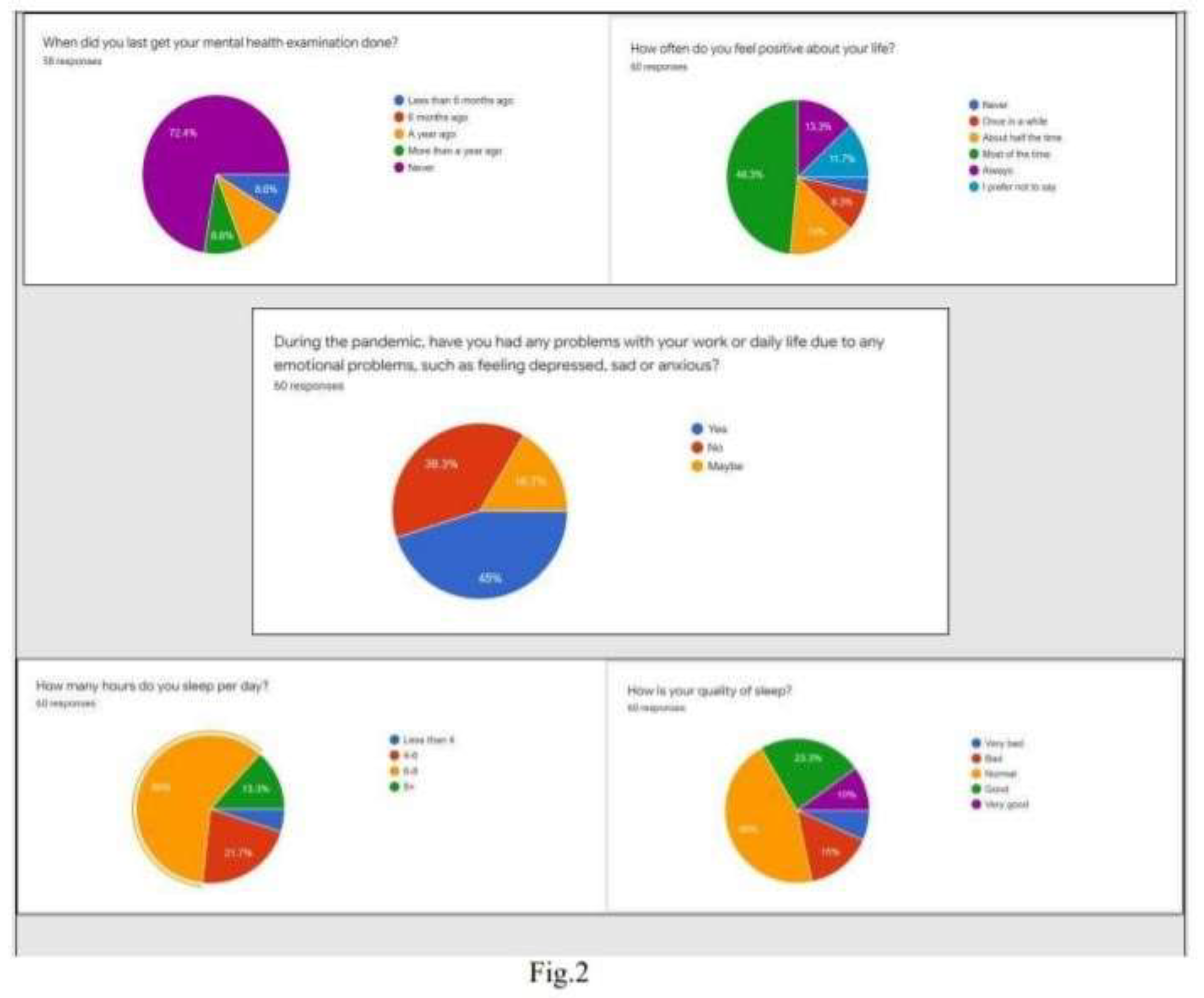
In pandemic, did you face any problems from your work or daily life by any psychological stress? Among all our respondent 45% were positive that they are having some stress and other emotional problems, while 38.3% where sure that they don’t have any issues but still 16.7% were unsure. How often do you feel positive about your life. Respondent who are among 47.5% stay positive most of the time, 13.6% are always positive, 15.3% half of the time, 11.9% preferred not to present their views, 8.5% rarely and remaining were not confident.
How often do you feel positive about your life. Respondent who are among 48.3% stay positive most of the time, 13.3% are always positive, 15% half of the time, 11.7% preferred not to present their views, 8.3% rarely and remaining were not confident. Our respondent from 45% have normal sleep, 23.3% have good sleep, 15% have bad sleep, 10% have very good sleep and 6.8% get very bad sleep. Respondent of 60% sleep 6-8 hrs, 21.7% sleep 4-6hrs 13.3% 8+ hrs and 5% sleep less than 4hrs. Most of our respondent of about 98.2% were not diagnosed with mental disorder. Most of our respondent have not get any mental health examination of about 72.4%, 10.3% did 1 year ago 8.6% did 6months ago and remaining 8.3% did more than a year ago (Figure 2).
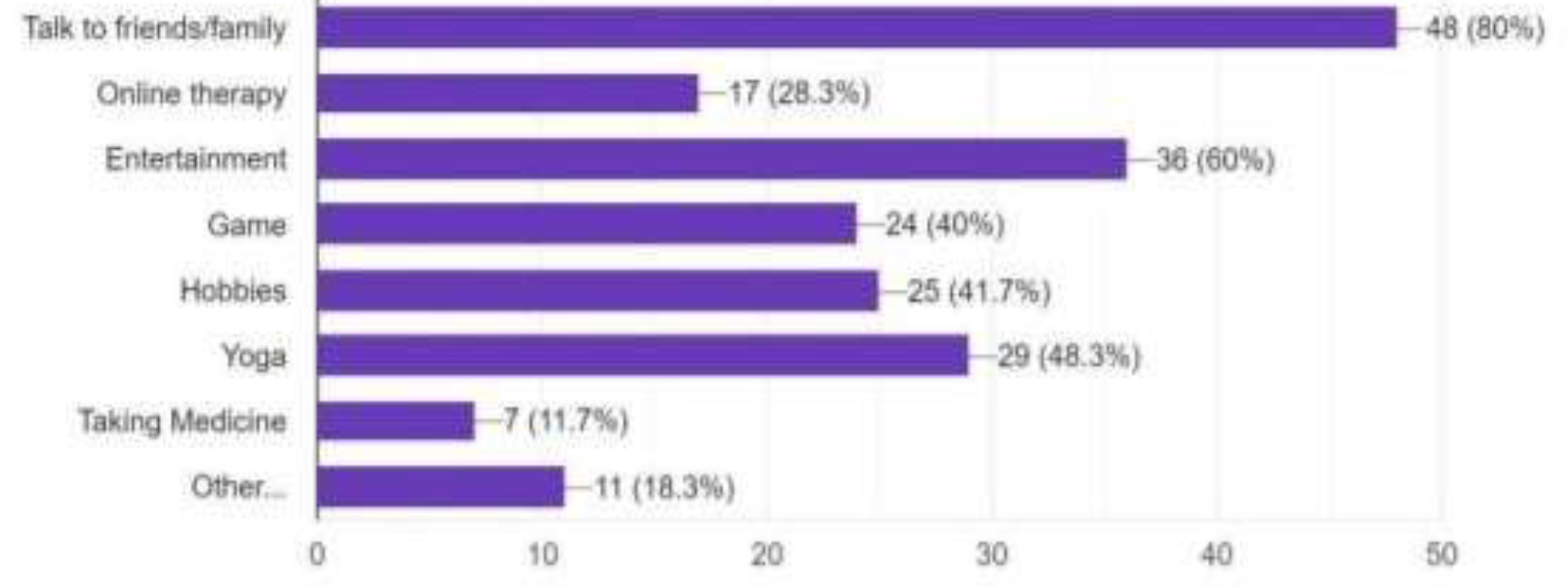
What steps can be taken to reduce the problems related to mental health during covid? According to our survey, 80% of people talk to friends and family to reduce the problem of mental health, 60% choose entertainment, 48% choose yoga, 41.7% choose hobbies, 40% are playing video games for reducing their mental health. 11.7% people taking medicine and 28.3% online therapy (Figure 3).
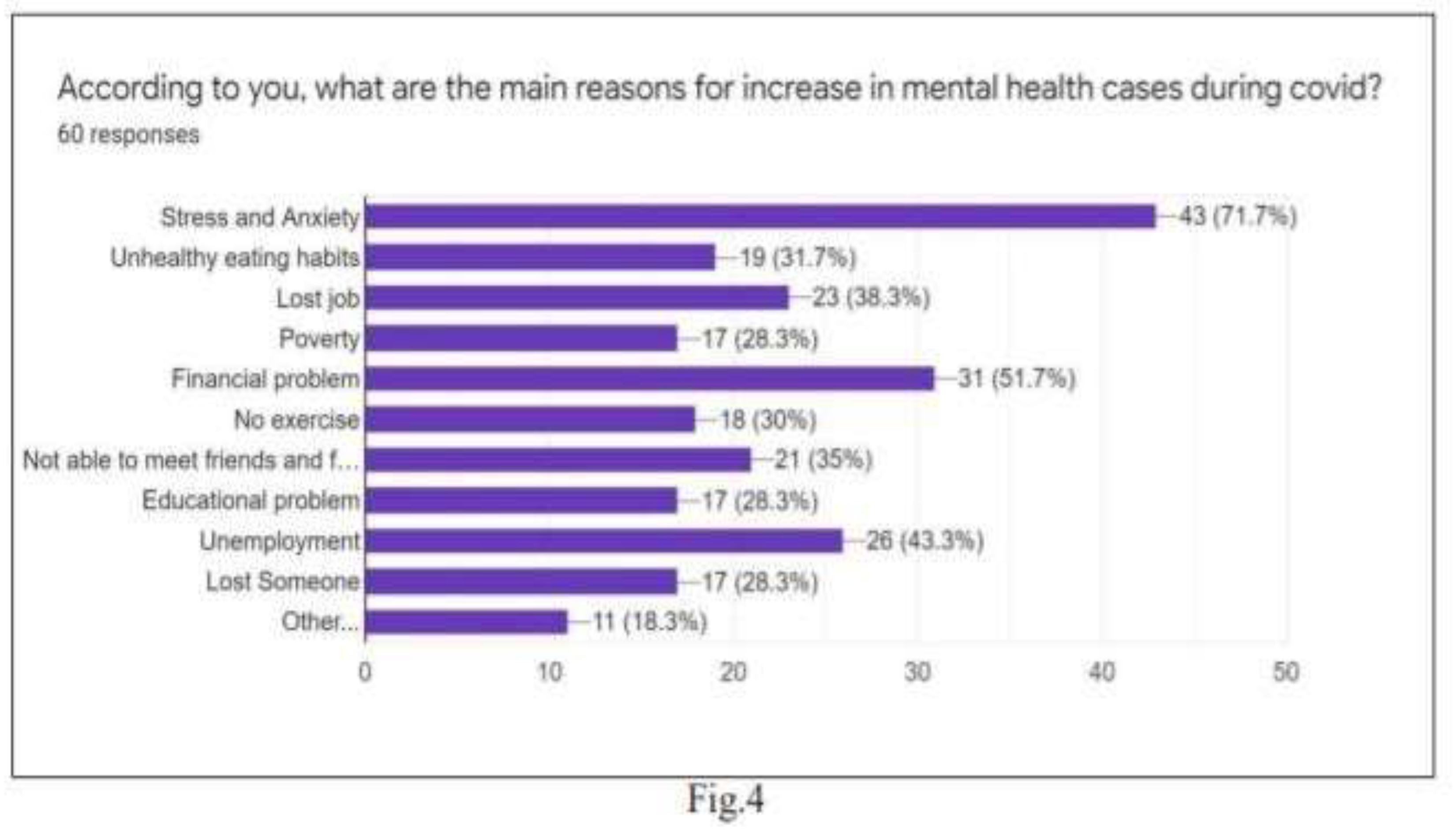
According to you, what are the main reasons for increase in mental health cases during covid? According to the survey, the main reason for mental health is Stress and Anxiety 71.7%, 51.7% choose a financial problem, 43.3% unemployed, 35% Not able to meet friends and family due to covid, 38.3% lost job, 31.7% Unhealthy eating habits, 28.3% Educational problem, 28.3% Lost Someone, 28.3% Poverty (Figure 4).
Conclusion
All in all, as this review uncovers more mindfulness ought to be raised and explicit system ought to be applied for these issues. There is a need to comprehend the psychological points of view of COVID-19 and conceivable measures to adapt to the pandemic for their viable administration. Our overview study demonstrates that there was a moderate to serious impact on a singular’s social, monetary and psychological well-being conditions during the COVID-19 illness episode. Our information doesn’t show that there is critical change in people groups’ viewpoint and practices across nations.
The study results showed that the most squeezing worries of the overall population changed through the different periods of the pandemic. A significant number of our respondents likewise had numerous issues and concerns. Such a fine advancement of individuals’ suppositions just as the multi-layered nature of these assessments may not be satisfactorily caught by the conventional different decision overview technique, which expected us to anticipate the conclusions to be remembered for a rundown of possible decisions. Introducing overview respondents with not really set in stone arrangement of reactions can be especially difficult when the circumstance changes consistently, as on account of the current pandemic.
References
- Gandhi, S.; Sahu, M.; Govindan, R.; Nattala, P.; Gandhi, S.; Sudhir, P. M.; Balachandran, R. Psychological preparedness for pandemic (COVID-19) management: Perceptions of nurses and nursing students in India. PLoS ONE 2021, 16(8), e0255772. [Google Scholar] [CrossRef] [PubMed]
- Agarwal, P.; Kaushik, A.; Sarkar, S.; Rao, D.; Mukherjee, N.; Bharat, V.; Das, S.; Saha, A. K. Global survey-based assessment of lifestyle changes during the COVID-19 pandemic. 2021. [Google Scholar] [CrossRef] [PubMed]
- Chatterjee, A.; Nagi, N.; Agarwal, A.; Das, B.; Banerjee, S.; Sarkar, S.; Gupta, N.; Gangakhedkar, R. R. Coronavirus disease (COVID-19) pandemic. 2020. [Google Scholar] [PubMed]
- Ouassou, H.; Kharchouf, L.; Bouhrim, M.; Daoudi, N. E.; Imtara, H.; Bencheikh, N.; ELbouzidi, A.; Bnouham, M. The pathogenesis of coronavirus disease 2019 (COVID-19). 2020. [Google Scholar]
- Kawamoto, T.; Aoki, T.; Ueda, M. Graph-based open-ended survey on concerns related to COVID-19. PLoS ONE 2021, 16(8), e0256212. [Google Scholar] [CrossRef]
- Pai, N.; Vella, S.-L. COVID-19 and loneliness: A rapid systematic review. Australian & New Zealand Journal of Psychiatry 2021, 55(12), 1144–1156. [Google Scholar] [CrossRef] [PubMed]
- Kawamoto, T.; Aoki, T.; Ueda, M. Graph-based open-ended survey on concerns related to COVID-19. 2021. [Google Scholar] [CrossRef] [PubMed]
- Liu, J.; Zhu, Q.; Fan, W.; Makamure, J.; Zheng, C.; Wang, J. Online mental health survey in a medical college in China during the COVID-19 outbreak. Frontiers in Psychiatry 11 2020, 459. [Google Scholar] [CrossRef]
- Valizadeh-Haghi, S.; Khazaal, Y.; Rahmatizadeh, S. Health websites on COVID-19: Are they readable and credible enough to help public self-care. 2021. [Google Scholar] [CrossRef] [PubMed]
- Jakhar, D., Grover, C., Kaur, I., Das, A., & Kaul, S. (2021). COVID-19 and healthcare workers: What we need to know.
- Tu, W.-J., et al. (2021). Infection prevention and control compliance among exposed healthcare workers in COVID-19 treatment centers in Ghana.
- Elbqry, M. G.; Elmansy, F. M.; Sayed, H. H. Effect of COVID-19 stressors on healthcare workers’ performance and attitude at Suez Canal University hospitals. 2021. [Google Scholar] [CrossRef]
- Güner, R.; Hasanoğlu, İ.; Aktaş, F. COVID-19: Prevention and control measures in community. 2020, Volume 5(Issue 9), 33. [Google Scholar] [CrossRef] [PubMed]
- González-Spinoglio, L.; Monistrol-Mula, A.; Vindrola-Padros, C.; Aguilar-Ortiz, S.; Carreras, B.; Haro, J. M.; Felez-Nobrega, M. Long-term emotional impact of the COVID-19 pandemic and barriers and facilitators to digital mental health tools in long-term care workers: Qualitative study. Journal of Medical Internet Research 26 2024, e47546. [Google Scholar] [CrossRef] [PubMed]
- Askari, M.; Kadhim Kareem, A.; Rahimkhani, M.; et al. The impact of COVID-19 on mental health in Eastern Iran: A comparative study during and after the pandemic. BMC Public Health 25 2025, 3076. [Google Scholar] [CrossRef] [PubMed]
- Stepanova, E.; Thompson, A.; Yu, G.; Fu, Y. Changes in mental health services in response to the COVID-19 pandemic in high-income countries: A rapid review. BMC Psychiatry 2024. [Google Scholar] [CrossRef] [PubMed]
- Sakaretsanou, A.-K.; Bakola, M.; Chatzeli, T.; Charalambous, G.; Jelastopulu, E. Mental health impacts of the COVID-19 pandemic on college students: A literature review with emphasis on vulnerable and minority populations. Healthcare 2025. [Google Scholar] [CrossRef] [PubMed]
- Seo, J. H.; Lee, M.; Kang, S.; et al. Impact of the COVID-19 pandemic on incidence of psychiatric disorders using nationwide cohort data and ARIMA models. Scientific Reports 2025. [Google Scholar] [CrossRef] [PubMed]
Disclaimer/Publisher’s Note: The statements, opinions and data contained in all publications are solely those of the individual author(s) and contributor(s) and not of MDPI and/or the editor(s). MDPI and/or the editor(s) disclaim responsibility for any injury to people or property resulting from any ideas, methods, instructions or products referred to in the content. |
© 2026 by the authors. Licensee MDPI, Basel, Switzerland. This article is an open access article distributed under the terms and conditions of the Creative Commons Attribution (CC BY) license (http://creativecommons.org/licenses/by/4.0/).
Copyright: This open access article is published under a Creative Commons CC BY 4.0 license, which permit the free download, distribution, and reuse, provided that the author and preprint are cited in any reuse.