

Submitted:
14 February 2026
Posted:
27 February 2026
You are already at the latest version
Abstract
This article critically analyses Lisbon's Green Participatory Budget (GPB), launched in 2020 in the symbolic context of the city's designation as European Green Capital. Rather than treating the GPB as a radical democratic innovation, the article situates it as a thematic and digital reconfiguration of Lisbon's long-standing participatory budgeting process, active since 2008 and already incorporating environmental dimensions. Drawing on critical urban studies, political ecology, and literature on participatory governance, the analysis explores the democratic and justice implications of digital participatory climate governance.
The article identifies several structural limitations in the design and implementation of GPB,
including technocratic control, digital exclusion, restricted deliberation, private sector involvement, and limited attention to issues of distributive and climate justice. Particular attention is given to how participation is framed in procedural rather than political terms, with limited mechanisms to assess inclusion, empower disadvantaged groups, or address the risks associated with green gentrification.
Beyond these internal limitations, the article argues that the most significant limitation of Lisbon's GPB lies in its lack of continuity. Despite the mobilisation of financial resources, institutional effort and public expectations, the GPB was not renewed after 2021, nor were its results systematically evaluated or incorporated into long-term governance strategies. This discontinuation compromises the potential of participatory climate governance as a learning process and raises broader questions about symbolic policy-making, institutional memory, and democratic accountability in urban climate action.
Keywords:
participatory budgeting
; digital democracy
; climate justice
; urban governance
; environmental justice
1. Introduction
The proliferation of digital participatory mechanisms in urban climate governance reflects a broader trend toward “smart” and “green” city initiatives that promise to democratize environmental decision-making while enhancing climate resilience. Participatory budgeting (PB), originally developed in Porto Alegre, Brazil, has been adapted globally as a tool for citizen engagement in municipal resource allocation. When combined with environmental objectives and digital platforms, as in Lisbon’s Green Participatory Budget (GPB), these mechanisms are often presented as innovative solutions that simultaneously address democratic deficits and climate challenges.
However, critical scholarship increasingly questions whether digital participatory processes genuinely empower citizens or merely provide a veneer of legitimacy for technocratic governance [1,3]. As Tseng et al. demonstrate in their analysis of Helsinki’s e-participatory budgeting, digital platforms can create “epistemic enclosures” that restrict what counts as legitimate urban knowledge, leading to “individualistic and aggregated democracy” based on simple majoritarianism rather than deliberative engagement [1]. Furthermore, Levenda et al. noted that citizen participation in smart cities has been “revered as a central process for democratic decision-making and, at the same time, criticized as symbolic or manipulable”, highlighting fundamental tensions in digital participatory governance [2].
This article critically examines Lisbon’s Green Participatory Budget (Orçamento Participativo Verde, GPB), formally launched in 2020, within the symbolic context of the city’s designation as European Green Capital, as a thematic and digital reconfiguration of the city’s long-standing participatory budgeting process, which has been in place since 2008 and had already incorporated environmental and sustainability-related dimensions.
Figure 1.
Lisbon European Green Capital 2020.
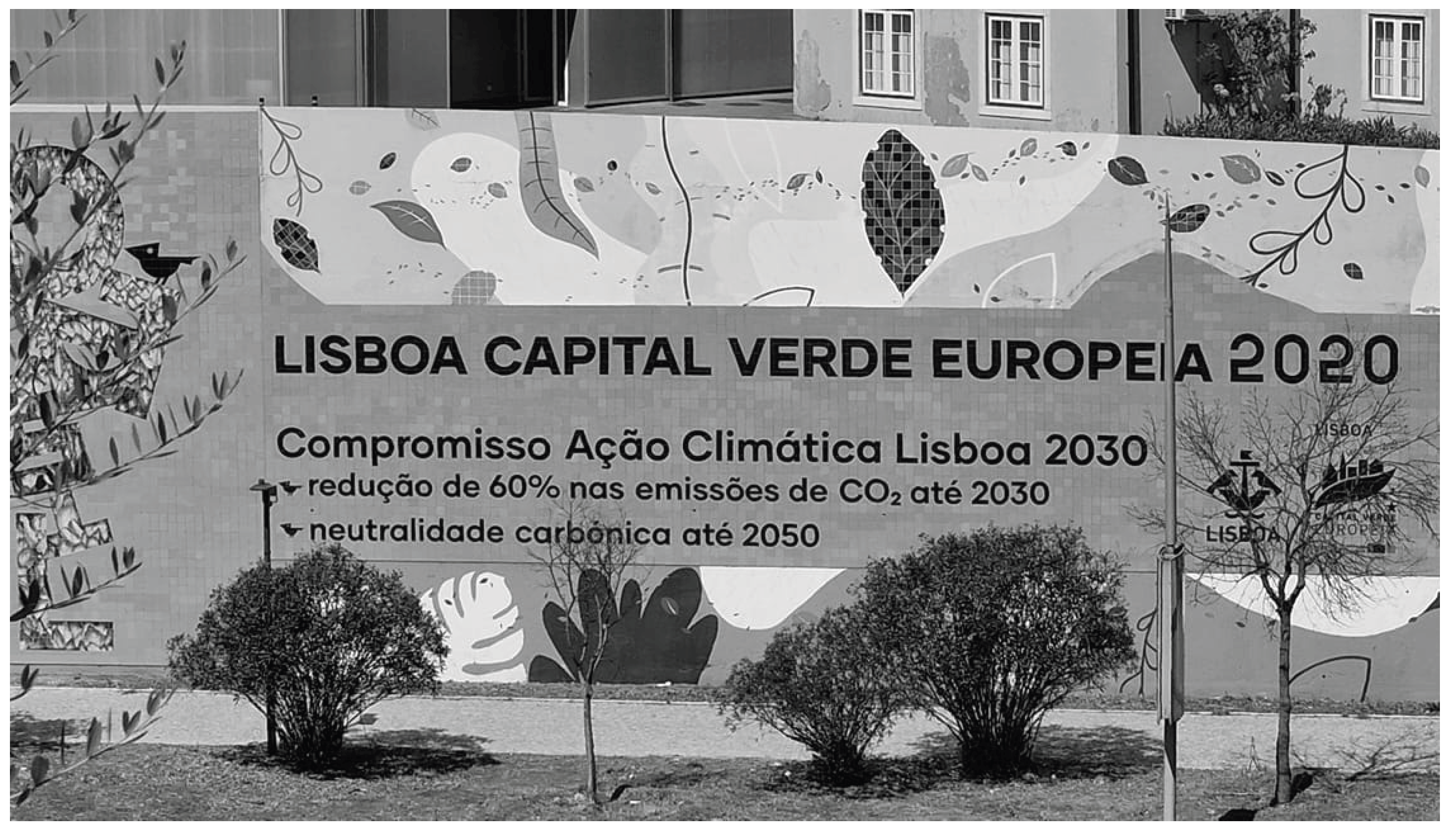
Lisbon allocated €5 million annually for citizen-selected sustainability projects, implemented through digital and hybrid participation mechanisms with support from private consultancies including South Pole and the EIT Climate-KIC City Finance Lab. While the GPB represents an ambitious attempt to link participatory democracy with climate action, our analysis reveals significant structural limitations that undermine its transformative potential.
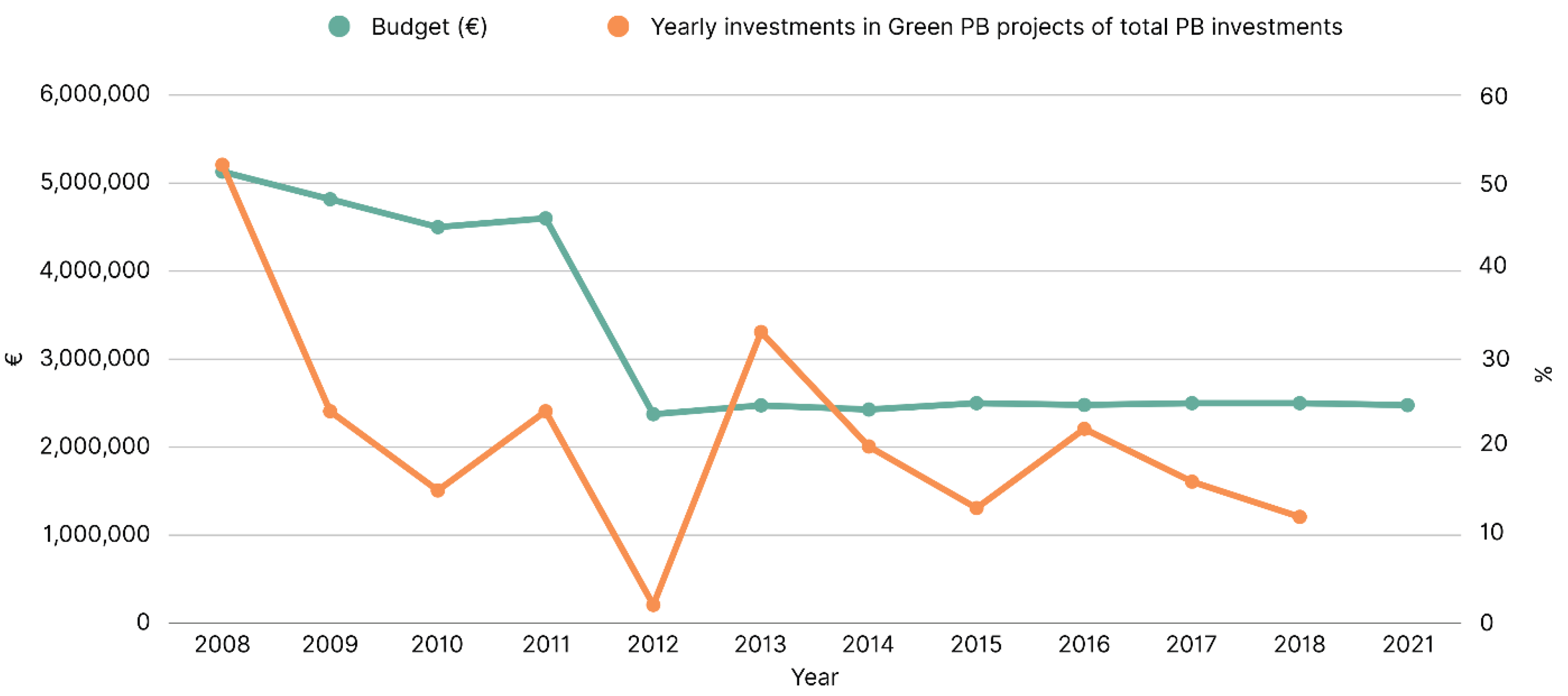
Figure 2.
Budget to OP and investments in Green PB projects of total PB investments.
Although the GPB was presented as a flagship initiative within Lisbon’s European Green Capital agenda, it did not evolve into a sustained participatory policy. Since 2021, neither the GPB nor the broader participatory budgeting process has been continued, raising critical questions about institutional learning, policy continuity, and democratic accountability.
Our critical examination is guided by three central questions: First, who is systematically excluded from digital participatory processes, and through what mechanisms? Second, to what extent does the GPB represent genuine democratic empowerment versus symbolic participation that legitimizes predetermined agendas? Third, how do green participatory budgets intersect with climate justice concerns, including the risks of green gentrification and unequal distribution of environmental benefits and burdens?
Based on critical urban studies, political ecology, and literature on participatory governance, we argue that Lisbon’s GPB exemplifies broader contradictions in digital climate governance. Although it appears to democratise environmental decision-making, the technocratic design of the GPB, digital barriers, limited scope, and private sector involvement restrict genuine participation and risk reproducing existing inequalities. Our analysis contributes to the growing body of studies that problematise celebratory narratives of digital democracy [4,6] and calls for a fundamental restructuring of participatory mechanisms to achieve climate justice.
The article identifies multiple structural limitations in the GPB’s design and implementation, including technocratic gatekeeping, digital exclusion, restricted deliberation, private sector entanglements, and limited attention to distributional and climate justice concerns. Particular attention is given to how participation is framed procedurally rather than politically, with limited mechanisms to assess inclusion, empower disadvantaged groups, or address risks associated with green gentrification.
Beyond these internal constraints, the article argues that the most significant limitation of Lisbon’s GPB lies in its lack of continuity. Despite the mobilization of financial resources, institutional effort, and public expectations, the GPB was not renewed after 2021, nor were its outcomes systematically evaluated or embedded in longer-term governance strategies. This discontinuation undermines the potential of participatory climate governance as a learning process and raises broader questions about symbolic policy-making, institutional memory, and democratic accountability in urban climate action.
The remainder of the article is structured as follows. Section 2 outlines the theoretical framework, drawing on critical scholarship on participatory governance, digital democracy, and climate justice, with particular attention to tokenism, digital exclusion, and epistemic enclosures. Section 3 presents the methodological approach and data sources, situating the Lisbon GPB as a temporally bounded case study within broader dynamics of digital climate governance. Section 4 provides an in-depth analysis of the institutional design of the GPB, examining participation mechanisms, the role of digital platforms, private sector involvement, and project selection processes. Section 5 offers a critical assessment of the GPB’s limitations and contradictions, focusing on patterns of exclusion, tokenistic participation, elite capture, and distributional justice concerns, including potential risks associated with green gentrification. Finally, Section 6 discusses the broader implications of the case for democratic climate governance, while Section 7 concludes by reflecting on the GPB’s lack of continuity and its implications for institutional learning, democratic accountability, and the sustainability of participatory climate initiatives.
2. Theoretical Framework on Power, Participation, and Climate Justice
2.1. The Tokenism Trap in Digital Participation
Arnstein’s “ladder of citizen participation” distinguished between genuine citizen power and symbolic forms of participation that give the appearance of involvement without substantive influence. Contemporary digital participatory mechanisms risk reproducing these symbolic patterns, while at the same time rendering power asymmetries invisible through technological mediation [7,8].
Critical scholarship reveals that digital participation often operates as “a smokescreen, a proxy for legitimacy” that paternalizes citizens through technology while limiting active citizenship to “tacit consent” [7]. In smart city contexts, participation frequently emphasizes technocratic approaches over democratic deliberation, leading to “limited citizen influence on policy-making” while embedding “values serving advantaged populations” [8]. This creates what Robertson identifies as “limited e-participation” that is “designed to restrict real democratic improvements by limiting participation to superficial decisions, failing to link it to specific actions, and creating rigorous protocols that excluded most of the population” [9].
The gap between participatory rhetoric and the reality of implementation is particularly acute on digital platforms. As Suter et al. argue, digital participation tools ‘cannot resolve entrenched inequalities such as the financialization of land, disadvantaged neighborhoods or the lack of voting rights for certain communities’, suggesting that digital tools alone can be ‘performative without broader political action’ [3]. Similarly, Beretta et al. criticize the assumption that ‘participatory green and smart projects are also fair and inclusive’, noting that empirical studies refute this claim and reveal how participation can be performative rather than genuinely inclusive [5].Tokenistic participation serves multiple functions for municipal authorities: it provides democratic legitimacy for predetermined plans, deflects criticism by demonstrating “citizen engagement,” and individualizes responsibility for climate action while obscuring structural inequalities and political-economic constraints [10,11]. As Dajer demonstrates in Medellín’s participatory budgeting, the design and implementation of digital tools can either enhance or undermine political inclusion, with “mixed results” depending on how power dynamics are addressed [6].
2.2. Digital Divides and Structural Exclusion
Digital participatory mechanisms are based on assumptions of universal access and digital literacy that do not reflect urban realities. Multiple layers of digital divides systematically exclude marginalized populations from seemingly ‘inclusive’ platforms [12,14].
First-level digital divides relate to physical access to Internet connectivity and digital devices. As Foley et al. document in New York City, ‘many private buildings with housing subsidies do not have internet’, while institutional control, such as mandatory online lease renewal, forces residents without internet or digital skills into precarious situations [15]. These access barriers disproportionately affect ‘older, less educated, lower-income, and minority (African American, Hispanic) groups’ [15].
Second-level digital divides relate to digital literacy and the skills needed to navigate complex platforms. Smart city services often ‘require high literacy and technological proficiency’, creating barriers for those who lack these skills [15]. Language barriers exacerbate these exclusions; Foley et al. note that digital communications ‘were only in English, excluding those who did not speak English’ [15]. Time constraints further limit participation, as digital engagement requires sustained attention that may not be available to those with multiple jobs or care responsibilities [16].
Beyond individual-level barriers, structural factors determine who can participate. Jang et al. identify ‘information-disadvantaged groups’ who face exclusion compounded by intersectional barriers of ‘internet access, digital literacy, and socioeconomic status’ [12]. Charlton et al. document ‘multi-layered digital divides’, along with ‘low public trust in government and web-based technologies’ and ‘the complexity of the planning system and its opaque technocratic terminology’ [13]. These factors create what Chen calls ‘digital stratification’, as new social hierarchies based on digital access and engagement systematically exclude marginalized and vulnerable populations [8].
Fundamentally, digital divides are not merely technical problems amenable to technological solutions. They reflect and reproduce broader patterns of urban inequality, racialization, and class stratification [15,17]. As Kuang demonstrates, even when marginalized communities develop alternative digital practices, “radical intervention by intermediaries can lead to the isolation of official partnerships,” leaving their efforts “improvised, provisional, and tactical” without institutional support [4]. This suggests that digital exclusion is not accidental but structurally embedded in smart city governance models that prioritize technocratic efficiency over democratic inclusion.
2.3. Climate Justice and Green Gentrification
Climate justice frameworks require attention to the distributive, procedural, and recognition dimensions of environmental governance [18,19]. Distributive justice concerns who benefit from and who bears the costs of climate interventions. Procedural justice addresses who participates in decision-making and under what conditions. Recognition justice examines whose knowledge, experiences, and needs are recognised and valued [20].
Green participatory budgets operate at the intersection of these different dimensions of justice, but often fail to address structural inequalities. As Beretta et al. argue, the European Commission’s initial documents ‘assumed that participation automatically led to equality,’ but later guidelines recognize the ‘multidimensional nature of environmental justice, considering issues of distribution, rights, responsibilities, and recognition beyond mere participation’ [5]. This recognition is crucial because ecological interventions can exacerbate inequalities through processes of climate or ecological gentrification [21,22].
Green gentrification occurs when environmental improvements (parks, green infrastructure, energy efficiency improvements) increase property values and the cost of living, displacing existing residents and transforming the neighborhood’s demographics in the medium to long term [23,24]. As Foley et al. demonstrate, ‘smart city projects distribute benefits and harms unevenly, perpetuating historical divisions along ethnic, racial, and socioeconomic lines’, with ‘smart city plans often serving high-income individuals while excluding low-income residents’ [15]. Green spaces and climate resilience measures become amenities that attract affluent residents, rather than serving existing communities, particularly low-income residents and racialized communities, who often face the greatest climate vulnerabilities [25].
The financialization of climate action through public-private partnerships further complicates issues of justice. Private sector involvement in climate governance can introduce profit motives that conflict with equity objectives, prioritize projects with clear returns on investment over those that serve marginalized communities, and shift decision-making power from democratic institutions to corporate actors [26,27]. As Suter et al. note, digital participation tools cannot solve the “financialization of land” and other structural inequalities that require political, not technological, solutions [3]. Recognition justice is particularly compromised in digital participatory mechanisms that privilege certain forms of knowledge and expression. The concept of ’epistemic walls” captures how platforms “restrict legitimate urban knowledge, leading to an individualistic and aggregated democracy and a simple majority” that “limits recognition justice” [1]. When participatory processes fail to recognize diverse knowledge systems, lived experiences of environmental injustice, and structural barriers to participation, they risk reproducing epistemic violence against marginalized communities [28,29].
3. Methodology
This article adopts a qualitative, critical case study approach to examine the democratic and justice implications of Lisbon’s Green Participatory Budget (GPB). The GPB is treated not as an isolated policy instrument but as an embedded governance arrangement situated within broader dynamics of digitalization, climate governance, and urban political economy. The analysis is informed by critical urban studies, political ecology, and scholarship on participatory and digital governance.
3.1. Case Study Selection
Lisbon’s GPB is a theoretically relevant and empirically rich case for examining the tensions between participatory rhetoric and democratic substance in digital climate governance. Created after Lisbon was designated European Green Capital, the GPB combines three central elements in contemporary debates on urban governance: participatory budgeting, digital participation platforms, and climate-oriented policy objectives. This makes it an exemplary case for analysing how participatory mechanisms function under conditions of technocratic governance, digital mediation, and growing private sector involvement.
Without claiming to be statistically relevant, the case study is used for analytical and theoretical generalisation. Lisbon’s GPB is analysed as an illustrative case that reveals broader structural dynamics and contradictions characteristic of digital participatory climate governance in European cities.
It is also important to note that the GPB represents a time-limited political experiment. Despite the mobilisation of financial resources, institutional capacity and public expectations, the initiative was not renewed in subsequent years, nor were its results systematically evaluated or integrated into future participatory or climate governance strategies.
3.2. Data Sources
The analysis draws on multiple qualitative data sources collected between 2020 and 2021. These include:
- Official municipal documents related to the GPB, including regulations, calls for proposals, platform guidelines, and implementation reports;
- Policy documents and communications produced by partner organizations involved in the GPB, including private consultancies and intermediary institutions;
- Publicly available materials from the GPB digital platform, including proposal descriptions, voting procedures, and platform design features;
- Secondary literature on participatory budgeting, digital democracy, smart cities, and climate justice, used both to situate the case theoretically and to inform the analytical framework.
These sources were triangulated to examine both the formal design of the GPB and its practical operation.
3.3. Analytical Approach
Data were analysed using a qualitative, interpretive approach combining document analysis and critical discourse analysis. The analysis focused on how participation, climate action, and democratic accountability are framed in official documents and platform design, as well as on the implicit assumptions embedded in institutional procedures and digital interfaces.
Particular attention was paid to:
- The scope and limits of citizen decision-making authority;
- Mechanisms of inclusion and exclusion produced through digital and hybrid participation;
- The role of technical feasibility assessments and expert gatekeeping;
- The distributional implications of selected projects;
- The involvement of private sector actors and associated power asymmetries.
3.4. Limitations
Its limitations stem from its reliance on publicly available document-based data, which restricts access to informal negotiations, internal decision-making processes, and participants’ lived experiences. The analysis therefore focuses on institutional design, discursive framing, and observable outcomes rather than participants’ perceptions or deliberative dynamics. Although this limits statements about subjective experiences of participation, it allows for a systematic critique of the structural conditions under which participation is organised.
Future research could complement this analysis through interviews with participants, municipal technicians and experts, and community organisations, as well as ethnographic observation of deliberative spaces, to further examine how these dynamics are experienced and contested in practice.
4. Case Study: Lisbon’s Green Participatory Budget
4.1. Institutional Design and Governance Structure
Although formally introduced in 2020, the GPB should not be understood as a radical institutional innovation. Rather, it represents a thematic specialization of Lisbon’s broader participatory budgeting framework, implemented continuously since 2008. Previous editions of the general participatory budget already included proposals related to environmental sustainability, urban green spaces, energy efficiency, and climate adaptation. In this sense, the GPB institutionalizes and recentres an existing ‘green line’ within participatory budgeting, rather than creating a new participatory arena (Figure 2).
Although formally introduced in 2020, the GPB should not be understood as a radical institutional innovation. Rather, it represents a thematic specialization of Lisbon’s broader participatory budgeting framework, implemented continuously since 2008. Previous editions of the general participatory budget already included proposals related to environmental sustainability, urban green spaces, energy efficiency, and climate adaptation. In this sense, the GPB institutionalizes and recentres an existing ‘green line’ within participatory budgeting, rather than creating a new participatory arena (Figure 2).
The institutional design divides funding into two categories: “Structural Projects” (€150,000-€500,000) for large-scale urban system interventions, and “Local Projects” (€50,000-€150,000) for neighborhood-level solutions. This bifurcation ostensibly balances citywide climate needs with local priorities, yet the predetermined categories constrain what citizens can propose and how they can conceptualize climate action. The framework privileges infrastructural and technological solutions (green spaces, energy efficiency, cooling systems) while potentially marginalizing social, economic, or political dimensions of climate justice.
Eligibility for participation is formally inclusive: residents, workers, and visitors aged 16 and above can vote. However, this formal inclusivity obscures structural barriers to meaningful participation. The process unfolds through three phases: proposal submission and deliberation (May), technical feasibility assessment by municipal teams (July), and voting on finalist proposals (October). Winning projects are then integrated into the municipal budget for mandatory implementation (Figure 3).
Critically, the technical feasibility phase represents a significant gatekeeping mechanism. Municipal experts assess proposals for “technical and financial viability,” effectively filtering citizen input through bureaucratic and technocratic criteria. This assessment occurs behind closed doors, with limited transparency about evaluation criteria or decision-making processes. As we will examine, this creates opportunities for what Tseng et al. term “epistemic enclosures” that restrict what counts as legitimate urban knowledge [1]. Figure 4 shows the evolution of participation over the years on OP and the number of proposals which demonstrated that citizen participation has shown several fluctuations.
4.2. Digital Platform and Participation Mechanisms
Rather than representing a democratic rupture, Lisbon’s Green Participatory Budget constitutes an institutional sedimentation of earlier participatory practices, reoriented through environmental theming, digital mediation, and technocratic governance That’s why GPB employs hybrid participation mechanisms combining digital platforms with in-person assemblies. Digital components include online proposal submission, virtual deliberation forums, and electronic voting. In-person assemblies provide spaces for face-to-face discussion, though their accessibility varies by location, timing, and format.
Although the GPB formally incorporates hybrid participation mechanisms, including in-person assemblies and offline support, there is limited evidence that these measures were designed as targeted strategies to counter digital exclusion. Rather than proactive mobilisation of digitally excluded groups, these mechanisms appear as complementary options within a predominantly digital-by-default framework.
The digital platform serves multiple functions as information dissemination, proposal collection, deliberation facilitation, and vote aggregation. However, platform design embeds particular assumptions about participation, knowledge, and democracy. The interface privileges individual proposal submission over collective deliberation, emphasizes voting over sustained engagement, and structures participation around predetermined categories and formats [30,31].
Proposal submission requires navigating complex online forms, articulating ideas within specified parameters, and demonstrating alignment with municipal sustainability frameworks. This process favors participants with digital literacy, familiarity with bureaucratic language, and capacity to translate lived experiences into technocratic proposals. As Charlton et al. note, “the complexity and opaque technocratic terminology of the planning system” creates barriers to inclusive engagement [13], barriers that digital platforms may amplify rather than reduce.
Deliberation mechanisms remain limited. While the platform includes comment functions and discussion forums, these rarely facilitate genuine dialogue or collective knowledge production. Instead, they tend toward “individualistic and aggregated democracy” based on “simple majoritarianism” [1], where participation means registering individual preferences rather than engaging in collective problem-solving or challenging dominant framings of climate action.
Voting occurs electronically, with results determined by simple majority. This aggregative approach obscures power dynamics, treats all votes as equal regardless of differential stakes or vulnerabilities, and provides no mechanism for addressing how proposals might differentially impact various communities. The emphasis on voting as the primary participatory act reduces citizenship to consumer choice, selecting from a menu of pre-approved options rather than shaping the terms of debate or challenging structural constraints [32,33].
Municipal documents acknowledge the existence of digital divides and refer to hybrid forms of participation. However, these measures are framed as optional supplements rather than structural interventions aimed at redistributing participatory capacity. No systematic assessment is provided on who used these non-digital channels, under what conditions, or with what impact on the participation of disadvantaged or vulnerable groups.
The question is therefore not whether Lisbon attempted to mitigate digital dependency, but whether such attempts were conceived as political strategies for inclusion or as technical complements to a participatory model that would otherwise be digitised.
4.3. Private Sector Involvement and Financialization
A distinctive feature of Lisbon’s GPB is its strategic partnership with private sector actors, particularly the consultancy South Pole and the EIT Climate-KIC City Finance Lab. These partnerships are framed as providing technical expertise and ensuring financial viability, yet they introduce corporate logics and profit motives into ostensibly democratic processes.
South Pole, a for-profit climate consultancy, advises on project design and implementation, effectively shaping what kinds of interventions are deemed viable. The City Finance Lab, while housed within a European Union initiative, promotes “innovative financing schemes” that often involve public-private partnerships, blended finance, and market-based mechanisms. These approaches prioritize projects with clear return on investment, measurable outcomes, and scalability, criteria that may exclude interventions serving marginalized communities or addressing structural inequalities [34,35].
The involvement of private consultancies raises critical questions about democratic accountability and elite capture. Who determines evaluation criteria? Whose expertise is valued? How do corporate interests shape which proposals advance and which are filtered out? The GPB documentation emphasizes that partnerships ensure projects are “financially viable and environmentally resilient,” yet this framing privileges economic rationality over social justice, technocratic expertise over lived experience, and market logic over democratic deliberation [36,37].
Private sector involvement extends beyond advisory roles to project implementation and financing. Municipal regulations permit winning projects to be “sponsored or executed, totally or partially, by private companies and organizations.” greenwashing, where companies gain reputational benefits and potential market advantages through association with citizen-led climate action. The “Compromisso de Lisboa” (Lisbon Commitment) engaged over 200 local businesses in adopting green targets, blurring boundaries between democratic participation and corporate social responsibility [38].
The financialization of climate action through these mechanisms’ risks subordinating environmental justice to economic imperatives. As Suter et al. argue, digital participation tools cannot address “financialization of land” and other structural inequalities [3]. When climate governance becomes entangled with profit-seeking and market logic, the transformative potential of participatory democracy is constrained by capitalist rationality [39,40].
4.4. Project Selection and Implementation
Analysis of GPB project selection reveals patterns that raise concerns about tokenism, capture by elites, and distributive justice. Although comprehensive data on all winning projects is limited, the available information suggests that the selected interventions tend to be visible and aesthetically appealing green infrastructure, tree planting, urban gardens, and square renovations, rather than addressing the structural factors of climate vulnerability or environmental injustice.
The Cooling the City programme, derived from citizen proposals, exemplifies this pattern. The initiative focuses on planting trees in urban squares to mitigate heat island effects, a visible and photogenic intervention that aligns with the municipal brand as a green capital. However, critical questions remain unanswered: Which neighborhoods receive cooling interventions? Are investments correlated with existing inequalities in access to green spaces? How are heat vulnerability and climate risk distributed across the city? Do cooling projects risk triggering green gentrification by increasing property values in improved areas?
Energy efficiency projects also raise questions of justice. Improvements in the thermal performance of buildings reduce energy consumption and increase comfort, but who benefits depends on housing tenure, building ownership, and neighborhood selection. If efficiency improvements are concentrated in owner-occupied housing or affluent neighborhoods, they may widen rather than reduce environmental inequalities. GPB documentation provides no evidence of systematic attention to distributive justice in project selection or implementation [41,42].
Implementation timelines and accountability mechanisms remain opaque. Although winning projects are ‘integrated into the municipal budget for mandatory implementation’, actual execution depends on bureaucratic processes, political priorities, and resource availability. Citizens who participated in developing proposals and voting have limited mechanisms to monitor implementation, hold authorities accountable for delays or modifications, or ensure that projects serve the intended communities. This implementation gap between participatory selection and actual delivery further undermines democratic legitimacy [43,44].
5. Critical Analysis: Limitations, Exclusions, and Contradictions
5.1. Epistemic Enclosures and Restricted Participation
Lisbon’s GPB exemplifies what Tseng et al. term “epistemic enclosures”, institutional mechanisms that restrict what counts as legitimate urban knowledge and constrain the scope of democratic participation [1]. These enclosures operate through multiple channels in the GPB’s design and implementation.
First, the thematic restriction to “green” or “sustainability” projects predetermines what citizens can propose, excluding social, economic, or political dimensions of climate justice. This framing assumes climate action can be separated from housing, employment, transportation, or other urban systems, obscuring how environmental vulnerabilities intersect with structural inequalities. Citizens cannot propose rent controls to prevent green gentrification, labor protections for outdoor workers facing heat stress, or democratic reforms to enhance climate governance, only discrete environmental projects within predetermined categories [45].
Secondly, the technical feasibility assessment acts as a filter, favoring bureaucratic and technocratic knowledge over the lived experience and expertise of the community. Municipal experts evaluate proposals using criteria that remain largely opaque, with limited transparency about why some proposals move forward while others are rejected. This control mechanism can exclude innovative or transformative ideas that challenge conventional approaches, favor proposals aligned with existing municipal plans, and filter out interventions that address structural inequalities or question power relations [46,47].
Thirdly, the platform’s design structures participation around the submission of individual proposals and voting, rather than collective deliberation or the co-production of knowledge. This ‘individualistic and aggregated democracy’ [1] prevents citizens from engaging in sustained dialogue, building a collective understanding of climate challenges, questioning dominant frameworks, or developing transformative alternatives. Participation becomes a matter of registering preferences within predetermined options, rather than shaping the terms of the debate [48].
These epistemic enclosures reflect broader patterns in digital participatory governance. As Lahat et al. document, ‘residents were not actively involved in the design and implementation processes of digital projects’, suggesting ‘a gap between participatory rhetoric and actual decision-making’ [20]. When citizens can only participate within structures designed by authorities, using platforms they did not shape, selecting from options they did not define, participation risks becoming what Robertson calls ‘limited e-participation’, which is ‘designed to constrain real democratic improvements’ [9].
5.2. Digital Exclusion and Unequal Access
Despite claims of inclusivity, the digital mechanisms of the GPB create multiple barriers that exclude marginalised populations. These exclusions operate through intersectional dimensions of digital exclusion, reproducing and potentially amplifying existing urban inequalities [49,50].
Internet access remains uneven across Lisbon, with lower-income neighbourhoods, informal settlements, and migrant communities facing connectivity gaps. While Portugal has relatively high internet penetration nationally, household access varies significantly by income, education, and housing type. Residents in precarious housing situations, those experiencing homelessness, and undocumented migrants may lack stable internet access, immediately excluding them from digital participation [51]. As Foley et al. demonstrate in other contexts, “many privately-owned buildings with housing subsidies lack internet” [15], a pattern likely replicated in Lisbon’s social housing.
Digital literacy represents a second-level barrier. Navigating the GPB platform requires competencies in using web interfaces, understanding bureaucratic language, articulating proposals in written form, and engaging with digital deliberation tools. These skills are unevenly distributed, with older adults, those with limited formal education, and recent migrants facing particular challenges [52]. The platform’s language options may not include all languages spoken in Lisbon’s diverse communities (although several were offered), creating linguistic barriers that compound digital exclusion [53].
Time constraints disproportionately affect working-class residents, particularly those in precarious employment, working multiple jobs, or managing care responsibilities. Meaningful participation in the GPB (attending assemblies, developing proposals, engaging in deliberation, monitoring implementation) requires sustained time investment that may be unavailable to those facing economic precarity. This temporal dimension of exclusion is rarely acknowledged in participatory design, yet it fundamentally shapes who can participate [54,55].
Institutional barriers further limit access. The requirement for formal identification to vote may exclude undocumented migrants and those without stable housing. The framing of eligibility around “residents, workers, or visitors” obscures how these categories are defined and verified, potentially creating gatekeeping mechanisms that exclude marginalized populations. As Kuang demonstrates, even when marginalized communities develop alternative participation practices, they may face “isolation from official partnerships” that undermines their influence [4].
Fundamentally, the GPB guidelines do not specify criteria for assessing whether the participation of disadvantaged or digitally excluded groups has been successful. The absence of disaggregated data on participation by income, age, migration status, housing conditions, or digital access makes claims of inclusion impossible to verify. In this sense, success is defined procedurally (the process took place) rather than democratically (vulnerable groups shaped the outcomes).
As Cabannes notes, a critical issue for participatory budgeting concerns how disadvantaged and vulnerable groups are mobilised, particularly those affected by digital exclusion, and whether this mobilisation can be considered successful [74]. Lisbon’s GPB does not provide a clear answer to this question, not because mobilisation has empirically failed, but because the institutional design does not make this success measurable or politically accountable.
These exclusions are not merely technical details, but reflect structural inequalities embedded in digital governance models. As Chen argues, smart city initiatives “often reproduce existing inequalities and create new forms of digital exclusion,” with technologies that “incorporate values that align with those of privileged populations” and create “digital stratification” [8]. Despite their inclusive rhetoric, the digital mechanisms of GPB risk reproducing these patterns of exclusion and stratification.
5.3. Tokenism and Symbolic Democracy
The gap between the GPB’s participatory rhetoric and its actual decision-making power raises fundamental questions about tokenism and democratic legitimacy. Multiple features of the OPV’s design and implementation suggest that participation may be more symbolic than substantive, providing a veneer of democratic legitimacy for predetermined municipal agendas [56,57].
First, the limited scope of citizen decision-making constrains transformative potential. With €5 million allocated annually, a small fraction of Lisbon’s total municipal budget, the GPB addresses climate action at the margins while leaving core urban systems and structural drivers of vulnerability untouched. Citizens can select discrete environmental projects but cannot challenge broader development patterns, question economic growth imperatives, or reshape governance structures. This limited scope ensures participation remains “safe,” addressing symptoms rather than causes of climate injustice [58,59].
Second, the technical feasibility filter provides authorities with discretion to exclude proposals that challenge existing plans or power relations. By framing exclusion as technical necessity rather than political choice, this mechanism obscures how power operates in participatory processes. As Bruni et al. document in other contexts, “digital participatory budgeting processes are often symbolic despite digital elements,” with “digital implementation neither achieving widespread participation nor improving its intensity” [11]. The technical assessment phase in Lisbon’s GPB creates similar risks of symbolic participation.
Third, the emphasis on voting over deliberation reduces participation to preference aggregation rather than collective problem-solving or transformative dialogue. This “individualistic and aggregated democracy” [1] treats citizens as consumers selecting from a menu rather than as political actors shaping agendas and challenging power. As Robertson demonstrates in Bogotá, e-participation can be “designed to restrict real democratic improvements by limiting participation to superficial decisions, failing to link it to specific actions, and creating rigorous protocols that excluded most of the population” [9].
Fourth, implementation gaps between participatory selection and actual project delivery undermine accountability and democratic control. Citizens who invest time and energy in proposal development and voting have limited mechanisms for ensuring projects are implemented as intended, monitoring quality and equity in execution, or holding authorities accountable for delays or modifications. This implementation gap suggests that participation may serve primarily to legitimize municipal plans rather than to genuinely empower citizens [60,61].
The risk of tokenism is particularly acute when participation is framed as an end in itself rather than to transformative change. As the critical literature on smart cities demonstrates, “active citizenry” can become “a smokescreen, a proxy for legitimacy” that “paternalizes citizens through technology” while limiting participation to “tacit consent” [7]. When participatory mechanisms fail to redistribute power, challenge structural inequalities, or enable transformative action, they risk becoming what Arnstein termed “empty ritual[s]” that “allow powerholders to claim that all sides were considered” while maintaining existing power relations [62].
5.4. Climate-Related Gentrification Risks and Distributional Injustice
The focus of Lisbon’s Green Participatory Budget (GPB) on environmental enhancements and climate-oriented urban interventions raises important questions about distributive justice and the potential socio-spatial consequences of green investments. Although interventions such as tree planting, public space renovation, and energy efficiency improvements are widely considered intrinsically beneficial, a substantial body of critical urban studies reminds us that these actions can generate unequal impacts when implemented without explicit equity safeguards [31,32,33].
This research does not claim that Lisbon’s GPB has led to green gentrification or displacement in Lisbon. Instead, it aims to highlight a significant institutional gap, namely the lack of explicit consideration of how green and climate-oriented interventions can intersect with existing housing inequalities, land markets and socio-spatial vulnerabilities. The literature on green gentrification documents how environmental improvements can contribute to increased property values, higher rents, and indirect displacement pressures, particularly in neighborhoods already marked by socioeconomic vulnerability [34,35,37]. These dynamics, observed in various urban contexts, therefore constitute a relevant analytical lens for critically evaluating participatory climate governance mechanisms, such as GPB.
Analysing the GPB, there is no systematic assessment of the location of funded projects in relation to existing patterns of socio-economic vulnerability, housing insecurity or environmental deprivation. Project selection criteria prioritize environmental performance, technical feasibility and visibility, but remain largely silent on questions of who benefits, who may be indirectly harmed, and how distributional impacts are monitored over time. As a result, the GPB lacks institutional mechanisms to anticipate, mitigate or counteract potential gentrification effects associated with environmental improvements, despite extensive evidence of these risks in the literature [31,36].
The Cooling the City programme illustrates these concerns. Urban cooling interventions are extremely important for climate resilience, especially in cities increasingly exposed to heatwaves. However, vulnerability to heat is socially and spatially unequal, disproportionately affecting elderly residents, low-income families, outdoor workers, and those living in poorly thermally prepared housing [15,44]. Without explicit prioritization of the most vulnerable areas and populations, cooling projects risk concentrating benefits in already privileged neighborhoods or producing comfort-oriented effects that are disconnected from social needs. In these contexts, climate adaptation measures may inadvertently reinforce existing inequalities rather than reduce them.
Similar issues arise in relation to energy efficiency and housing-related interventions. Although improvements in the thermal performance of buildings can reduce energy consumption and improve indoor comfort, their distributional effects depend heavily on the housing tenure regime, ownership structures, and neighborhood selection. As documented in the literature on environmental justice, energy efficiency programs that do not take into account tenure insecurity and energy poverty may disproportionately benefit homeowners, excluding tenants and residents of social or substandard housing [41,42]. The GPB framework provides limited evidence of how these distributional considerations are incorporated into project evaluation or implementation.
The lack of explicit attention to distributive justice reflects a broader limitation of project-based participatory climate governance. By focusing on discrete, visible interventions rather than the structural conditions that shape climate vulnerability, such as access to housing, tenure insecurity, and socio-spatial segregation, PCO risks treating climate action as spatially neutral and socially benign. As critics of environmental and climate justice argue, participatory mechanisms that ignore these structural dimensions can reproduce or intensify existing inequalities, even when participation is formally inclusive [5,43,44].
In this sense, the relevance of the green gentrification literature lies not in demonstrating direct causal effects within the GPB, but in illuminating what remains unaddressed within its institutional design. The GPB exemplifies how participatory climate initiatives may remain disconnected from housing justice, land governance, and broader socio-economic dynamics, thereby limiting their capacity to deliver equitable and just climate outcomes. Without explicit mechanisms to prioritize vulnerable communities, assess distributive impacts, and align environmental improvements with social protections, participatory climate governance risks reinforcing the very inequalities it seeks to ameliorate [15,31,33].
5.5. Elite Capture and Corporate Influence
The GPB’s governance structure and private sector partnerships create opportunities for elite capture, the appropriation of ostensibly democratic processes by privileged groups who possess resources, knowledge, and networks to shape outcomes in their favor [73,74].
Elite capture operates through multiple mechanisms in participatory budgeting. First, proposal development requires time, skills, and resources that are unevenly distributed. Residents with higher education, professional experience in project management or environmental fields, and social networks that facilitate collaboration are better positioned to develop compelling proposals that navigate technical requirements and bureaucratic expectations. This creates systematic advantages for middle-class and professional participants over working-class residents, migrants, and those with limited formal education [75,76].
Second, the technical feasibility assessment provides opportunities for elite influence through informal channels. Participants with connections to municipal officials, technical expertise that aligns with bureaucratic criteria, or ability to mobilize professional networks may be better positioned to ensure their proposals pass technical review. The opacity of this assessment process, with limited transparency about evaluation criteria or decision-making, creates space for discretionary judgments that may favor proposals from privileged groups [77].
Third, voting patterns may reflect existing inequalities in political participation and civic engagement. Research on participatory budgeting consistently shows that participants tend to be more educated, higher income, and more politically engaged than the general population [78,79]. If the GPB reproduces these patterns, voting outcomes may reflect the preferences of relatively privileged participants rather than the needs of the most vulnerable communities.
The involvement of private sector actors introduces additional dimensions of elite capture. Corporate consultancies like South Pole bring particular framings of climate action that privilege market-based solutions, technological interventions, and projects with clear return on investment. These framings may exclude or marginalize approaches that challenge corporate interests, question growth imperatives, or prioritize social justice over economic efficiency [80,81]. As Chen argues, smart city governance models that “emphasize technocratic approaches over democratic participation” lead to “limited citizen influence on policy-making” while embedding “values serving advantaged populations” [8].
The “Compromisso de Lisboa” engaging over 200 businesses in green targets further blurs boundaries between democratic participation and corporate influence. When companies become stakeholders in climate governance, they gain opportunities to shape agendas, influence project selection, and ensure outcomes align with business interests. This corporate involvement may be framed as partnership or resource mobilization, yet it fundamentally alters power dynamics in participatory processes, potentially subordinating environmental justice to economic imperatives [82,83].
Elite capture is particularly insidious because it operates through ostensibly democratic mechanisms, providing legitimacy to outcomes that reflect existing power relations. As Suter et al. argue, digital participation tools “cannot solve entrenched inequalities such as financialization of land, disadvantaged neighborhoods, or absence of voting rights,” requiring instead that “city administrations integrate hybrid participation strategies prioritizing collective power over distributive power and tackle urban inequalities through political means” [3]. Without explicit mechanisms to counter elite capture, ensure representation of marginalized communities, and redistribute power, participatory processes risk becoming what critical scholars’ term “participatory neoliberalism” - the appropriation of participatory rhetoric to legitimize market-oriented governance [84,85].
The sources provided extensively discuss barriers to digital democratic participation, using Lisbon’s Green Participatory Budget as a critical case study. The main barriers identified can be grouped into structural, technological, epistemic, and political categories (Table 1).
As indicated, these barriers demonstrate that digital innovation alone does not guarantee inclusion and may, in fact, generate new forms of “digital stratification” and structural exclusion. To overcome these obstacles, the sources suggest a restructuring that prioritizes epistemic justice, the redistribution of real power, and democratic accountability throughout the entire public policy cycle.
6. Discussion: Toward Genuine Democratic Climate Governance
The critical analysis of Lisbon’s GPB reveals fundamental tensions between participatory rhetoric and implementation reality, exposing structural limitations that constrain transformative potential. These limitations are not unique to Lisbon but reflect broader contradictions in digital participatory governance and smart city initiatives [86,88].
The concept of “epistemic enclosures” [1] provides a powerful lens for understanding how participatory mechanisms can simultaneously enable and constrain democratic engagement. While the GPB creates spaces for citizen input, it does so within predetermined frameworks that restrict what can be proposed, how problems can be framed, and what solutions can be imagined. This structured participation may foster engagement within narrow parameters while foreclosing more transformative possibilities that challenge existing power relations or structural inequalities.
Digital divides represent not merely technical barriers but fundamental questions of democratic inclusion and environmental justice. As Colding et al. argue, achieving “smart cities for all” requires “bridging digital divides” through “capability-enhancing institutions” that address “personal, social, and environmental conversion factors” [14]. This suggests that digital inclusion cannot be achieved through technological fixes alone but requires addressing broader patterns of inequality, marginalization, and structural exclusion. The GPB’s digital mechanisms, without explicit attention to these dimensions, risk reproducing existing inequalities through new technological forms.
The tokenism critique raises uncomfortable questions about the purposes and effects of participatory mechanisms. If participation serves primarily to legitimize predetermined agendas, provide democratic veneer for technocratic governance, or individualize responsibility for climate action while obscuring structural constraints, then it may undermine rather than advance democratic empowerment [89,90]. As Beretta et al. note, the assumption that “green and smart participated projects are also fair and inclusive” is empirically unfounded, requiring instead explicit attention to “environmental justice’s multidimensional nature, considering issues of distribution, rights, responsibilities, and recognition beyond just participation” [5].
Climate gentrification and distributional injustice concerns highlight how environmental improvements can exacerbate inequalities when implemented without explicit justice frameworks. The literature on green gentrification demonstrates that environmental enhancements often trigger displacement and neighborhood transformation, with benefits accruing to newcomers rather than existing residents [91,92]. This suggests that participatory climate governance must explicitly address distributional justice, implement anti-displacement measures, and prioritize the most vulnerable communities to avoid reproducing environmental injustices through ostensibly beneficial interventions.
Elite capture and corporate influence reveal how participatory mechanisms can be appropriated by privileged groups and private interests, undermining democratic legitimacy. As Kuang demonstrates, even alternative participation efforts by marginalized communities can face “isolation from official partnerships” that limits their influence [4], while corporate actors gain access to decision-making through consultancy roles and public-private partnerships. This asymmetry in access and influence fundamentally compromises the democratic character of participatory processes.
Moving toward genuine democratic climate governance requires fundamental restructuring of participatory mechanisms to address these limitations. Drawing on critical scholarship, we identify several principles for transformative participation (Table 2):
Taken together, these principles challenge not only the design of participatory mechanisms but the political-economic conditions under which climate governance is currently enacted.
They suggest that meaningful climate democracy requires not better digital platforms or more inclusive consultation but fundamental redistribution of power and resources, recognition of diverse knowledge and experiences, and transformation of the political-economic structures that produce climate vulnerability and environmental injustice.
The absence of explicit mobilisation strategies for disadvantaged groups reveals a broader limitation of digital participatory governance. Inclusion is treated as an assumption rather than as a political task. When participation is defined by access to platforms rather than by the redistribution of participatory capacity, digital divides become normalized rather than addressed.
7. Conclusions
This critical analysis of Lisbon’s Green Participatory Budget reveals significant limitations, exclusions, and contradictions that undermine its transformative potential for climate democracy and environmental justice. While the GPB is presented as an ambitious attempt to link participatory democracy with climate action, it is more accurately described as a thematic consolidation and digital intensification of participatory practices that were already present in Lisbon’s participatory budgeting framework.
The GPB exemplifies broader tensions in digital participatory governance between democratic rhetoric and implementation reality. “Epistemic enclosures” restrict what citizens can propose and how problems can be framed [1]. Digital divides systematically exclude marginalized populations [2,12,15]. Tokenistic participation provides democratic legitimacy without substantive power redistribution [9,11]. Climate gentrification risks emerge when environmental improvements occur without explicit justice frameworks [15,65]. Elite capture and corporate influence compromise democratic legitimacy [8,20].
In addition to all the internal limitations described above, the most critical flaw in Lisbon’s Green Participatory Budget lies in its lack of continuity. Despite the mobilization of financial resources, institutional efforts and public expectations, particularly in the symbolic context of Lisbon’s designation as European Green Capital, the GPB has not been repeated since 2021. Neither the GPB nor the broader participatory budgeting framework has been renewed, evaluated, or institutionally consolidated.
This discontinuation compromises the potential of participatory climate governance, not only as a decision-making mechanism but also as a learning process. Participatory instruments, even when imperfect, can generate institutional memory, civic capacity and iterative improvements. In the case of Lisbon, however, the lack of follow-up suggests a model of governance geared towards symbolic visibility rather than long-term democratic integration.
These limitations are not unique to Lisbon but reflect structural features of smart city governance models that prioritize technocratic efficiency, market logic, and incremental reform over democratic empowerment, social justice, and transformative change [105,106]. Addressing these limitations requires not merely improving existing mechanisms but fundamentally rethinking the purposes, structures, and power relations of participatory climate governance.
Based on this critical analysis, we offer the following recommendations for restructuring participatory climate governance toward genuine democracy and environmental justice (Table 3):
These recommendations challenge the technocratic, market-oriented, and incrementalist approaches that dominate current climate governance. They suggest that meaningful climate democracy requires fundamental redistribution of power and resources, recognition of diverse knowledge and experiences, and transformation of the political-economic structures that produce climate vulnerability and environmental injustice.
The case of Lisbon’s GPB demonstrates that digital innovation alone cannot deliver climate justice or democratic empowerment. Technology is not neutral but embeds particular values, power relations, and ways of knowing [107,108,109]. Digital platforms can enable new forms of participation, yet they can also create new exclusions, reproduce existing inequalities, and provide technological veneer for fundamentally undemocratic processes. Moving beyond the green façade of digital participatory governance requires confronting uncomfortable questions about power, justice, and transformation-questions that cannot be resolved through better platforms or more inclusive consultation but only through fundamental restructuring of urban governance toward genuine democracy and climate justice.
References
- Tseng, Y.-S., Rivas, M. H., Petersen, A. H., & Staffans, A. (2023). Dialectical approach to unpacking knowledge-making for digital urban democracy: A critical case of Helsinki-based e-participatory budgeting. Urban Studies, 60(12), 2341-2359. [CrossRef]
- Levenda, A. M., Mahmoudi, D., & Sussman, G. (2020). Rethinking public participation in the smart city. Canadian Geographer, 64(3), 344-358. [CrossRef]
- Suter, R., Menny, M., & Voorberg, W. (2023). Digital Rights to the City: Local Practices and Negotiations of Urban Space on Decidim. Urban Planning, 8(2), 298-310. [CrossRef]
- Kuang, D. (2023). Inclusion, Exclusion, and Participation in Digital Polis: Double-Edged Development of Poor Urban Communities in Alternative Smart City-Making. In Smart Cities and Digital Governance (pp. 189-215). Springer. [CrossRef]
- Beretta, I., Borghini, A., & Maccani, G. (2023). Climate-neutral and Smart Cities: a critical review through the lens of environmental justice. Frontiers in Sociology, 8, 1175592. [CrossRef]
- Dajer, D. (2023). Designing for inclusion and designing for exclusion: The influence of digital tools on political inclusion in Medellín’s participatory budgeting process. Local Development & Society, 4(2), 156-175. [CrossRef]
- Datta, A. (2023). The Making of Smart Citizenry: Decoding ‘Smart Citizen’. Teaching Anthropology, 12(1), 45-58. [CrossRef]
- Chen, L. (2025). Smart Cities and Social Equity: A Review of Digital Urban Governance in Southeast Asia. International Journal of Social Science and Technology, 1(1), 1-18. [CrossRef]
- Robertson, C. (2022). Implementing Limited E-participation on Mobility Policy in Bogotá. Latin American Perspectives, 49(6), 123-140. [CrossRef]
- Kolotouchkina, O., Barroso, C. L., & Sánchez, J. L. M. (2024). Smart Cities, Digital Inequalities, and the Challenge of Inclusion. Smart Cities, 7(6), 3255-3279. [CrossRef]
- Bruni, E., Nitzsche, P., & Serdült, U. (2022). Neue digitale Technologien in partizipativen Budgetprozessen. Jahrbuch der Schweizerischen Gesellschaft für Verwaltungswissenschaften, 13(1), 89-106. [CrossRef]
- Jang, M., Suh, J., & Suh, W. (2022). Considerations for encouraging citizen participation by information-disadvantaged groups in smart cities. Sustainable Cities and Society, 76, 103437. [CrossRef]
- Charlton, J., Grayson, N., & Hollands, R. (2023). Phygitally Smarter? A Critically Pragmatic Agenda for Smarter Engagement in British Planning and Beyond. Urban Planning, 8(2), 311-325. [CrossRef]
- Colding, J., Colding, M., & Barthel, S. (2024). Smart Cities for All? Bridging Digital Divides for Socially Sustainable and Inclusive Cities. Smart Cities, 7(3), 1044-1068. [CrossRef]
- Foley, R., Ferreira, R., & Griffith, C. (2022). Towards Digital Segregation? Problematizing the Haves and Have Nots in the Smart City. Frontiers in Sustainable Cities, 4, 706670. [CrossRef]
- Lange, M., de Waal, M., & Bouw, M. (2025). Doing Inclusion: Negotiation and Co-creation for People-centric Smart Cities. In Smart City Citizenship (pp. 245-268). Amsterdam University Press. [CrossRef]
- Kang, J. (2023). Smart Engagement and Smart Urbanism: Integrating “The Smart” Into Participatory Planning and Community Engagement. Urban Planning, 8(2), 326-339. [CrossRef]
- Mendonça, P., Freitas, C., & Silva, A. N. R. (2023). Toward digital democracy, e-planning and e-participation practices: The use and value of ICTs in the digital era. In Sustainable Development Goals Series (pp. 445-462). Springer. [CrossRef]
- Suter, R., Menny, M., & Voorberg, W. (2024). Digital Citizen Participation in a Comparative Context: Co-Creating Cities through Hybrid Practices. In Comparative Urban Governance (pp. 189-212). Brill. [CrossRef]
- Lahat, L., Golan, O., & Sher-Hadar, N. (2023). Challenges and opportunities for equity in public management: Digital applications in multicultural Smart cities. Public Management Review, 25(12), 2234-2256. [CrossRef]
- Hafferty, C., Escobar, O., & Elstub, S. (2024). Problematising digital democracy. In Digital Democracy and Deliberation (pp. 134-156). Routledge. [CrossRef]
- Tappert, S., Drilling, M., & Buser, M. (2024). Citizen Participation, Digital Agency, and Urban Development. Urban Planning, 9(1), 112-125. [CrossRef]
- Bacqué, M.-H., Rey, H., & Sintomer, Y. (2020). Participation, urban planning, and urban studies: Four decades of debates and experiments since SR Arnstein’s “A ladder of citizen participation”. Participatory Budgeting: Theory and Practice, 45-68.
- Kourtidou, P., Petrakos, G., & Psycharis, Y. (2025). Digital Inequality and Smart Inclusion: A Socio-Spatial Perspective from the Region of Xanthi, Greece. Smart Cities, 8(4), 123-145. [CrossRef]
- Kleinhans, R., Ham, M. V., & Evans-Cowley, J. (2020). Digital participation in urban planning: A promising tool or technocratic obstacle to citizen engagement? Planning Theory & Practice, 21(3), 412-429.
- Yavuz, N. (2023). Digital divide and citizen participation in public policy making. In Digital Governance and Public Policy (pp. 145-168). Springer. [CrossRef]
- Legard, S. (2022). The Impact of Digital Participation on Democratic Urban Governance. In Smart Cities and Democratic Governance (pp. 167-189). Springer. [CrossRef]
- Saini, D. (2022). Linkages Between Citizen Participation, Digital Technology, and Urban Development. In Smart Cities and Democratic Governance (pp. 1-23). Springer. [CrossRef]
- Graça, J. (2023). Lockdown Democracy: Participatory Budgeting in Pandemic Times and the Portuguese Experience. In The Urban Book Series (pp. 189-208). Springer. [CrossRef]
- Kopal, R. (2022). Devolution of Decision-Making: Tools and Technologies towards Equitable Place-Based Participation in Planning. In Urban Planning and Development (pp. 1-24). IntechOpen. [CrossRef]
- Anguelovski, I., Connolly, J. J., Garcia-Lamarca, M., Cole, H., & Pearsall, H. (2019). New scholarly pathways on green gentrification: What does the urban ‘green turn’ mean and where is it going? Progress in Human Geography, 43(6), 1064-1086.
- Checker, M. (2011). Wiped out by the “greenwave”: Environmental gentrification and the paradoxical politics of urban sustainability. City & Society, 23(2), 210-229.
- Gould, K. A., & Lewis, T. L. (2017). Green Gentrification: Urban Sustainability and the Struggle for Environmental Justice. Routledge.
- Rigolon, A., & Németh, J. (2020). Green gentrification or ‘just green enough’: Do park location, size and function affect whether a place gentrifies or not? Urban Studies, 57(2), 402-420.
- Wolch, J. R., Byrne, J., & Newell, J. P. (2014). Urban green space, public health, and environmental justice: The challenge of making cities ‘just green enough’. Landscape and Urban Planning, 125, 234-244.
- Pearsall, H., & Anguelovski, I. (2016). Contesting and resisting environmental gentrification: Responses to new paradoxes and challenges for urban environmental justice. Sociological Research Online, 21(3), 121-139.
- Dooling, S. (2009). Ecological gentrification: A research agenda exploring justice in the city. International Journal of Urban and Regional Research, 33(3), 621-639.
- Curran, W., & Hamilton, T. (2012). Just green enough: Contesting environmental gentrification in Greenpoint, Brooklyn. Local Environment, 17(9), 1027-1042.
- Immergluck, D., & Balan, T. (2018). Sustainable for whom? Green urban development, environmental gentrification, and the Atlanta Beltline. Urban Geography, 39(4), 546-562.
- Quastel, N. (2009). Political ecologies of gentrification. Urban Geography, 30(7), 694-725.
- Goodling, E., Green, J., & McClintock, N. (2015). Uneven development of the sustainable city: Shifting capital in Portland, Oregon. Urban Geography, 36(4), 504-527.
- Heynen, N., Perkins, H. A., & Roy, P. (2006). The political ecology of uneven urban green space: The impact of political economy on race and ethnicity in producing environmental inequality in Milwaukee. Urban Affairs Review, 42(1), 3-25.
- Schlosberg, D. (2007). Defining Environmental Justice: Theories, Movements, and Nature. Oxford University Press.
- Walker, G. (2012). Environmental Justice: Concepts, Evidence and Politics. Routledge.
- Agyeman, J., Bullard, R. D., & Evans, B. (2003). Just Sustainabilities: Development in an Unequal World. MIT Press.
- Bullard, R. D. (1990). Dumping in Dixie: Race, Class, and Environmental Quality. Westview Press.
- Pulido, L. (2000). Rethinking environmental racism: White privilege and urban development in Southern California. Annals of the Association of American Geographers, 90(1), 12-40.
- Pellow, D. N. (2018). What is Critical Environmental Justice? Polity Press.
- Mohai, P., Pellow, D., & Roberts, J. T. (2009). Environmental justice. Annual Review of Environment and Resources, 34, 405-430.
- Taylor, D. E. (2014). Toxic Communities: Environmental Racism, Industrial Pollution, and Residential Mobility. NYU Press.
- Sze, J., & London, J. K. (2008). Environmental justice at the crossroads. Sociology Compass, 2(4), 1331-1354.
- Holifield, R., Chakraborty, J., & Walker, G. (2018). The Routledge Handbook of Environmental Justice. Routledge.
- Carmin, J., & Agyeman, J. (2011). Environmental Inequalities Beyond Borders: Local Perspectives on Global Injustices. MIT Press.
- Fainstein, S. S. (2010). The Just City. Cornell University Press.
- Marcuse, P., Connolly, J., Novy, J., Olivo, I., Potter, C., & Steil, J. (2009). Searching for the Just City: Debates in Urban Theory and Practice. Routledge.
- Harvey, D. (2008). The right to the city. New Left Review, 53, 23-40.
- Purcell, M. (2002). Excavating Lefebvre: The right to the city and its urban politics of the inhabitant. GeoJournal, 58(2-3), 99-108.
- Soja, E. W. (2010). Seeking Spatial Justice. University of Minnesota Press.
- Young, I. M. (1990). Justice and the Politics of Difference. Princeton University Press.
- Fraser, N. (2009). Scales of justice: Reimagining political space in a globalizing world. Columbia University Press.
- Sen, A. (2009). The Idea of Justice. Harvard University Press.
- Arnstein, S. R. (1969). A ladder of citizen participation. Journal of the American Institute of Planners, 35(4), 216-224.
- Pateman, C. (1970). Participation and Democratic Theory. Cambridge University Press.
- Cornwall, A. (2008). Unpacking ‘participation’: Models, meanings and practices. Community Development Journal, 43(3), 269-283.
- Cooke, B., & Kothari, U. (2001). Participation: The New Tyranny? Zed Books.
- Hickey, S., & Mohan, G. (2004). Participation: From Tyranny to Transformation? Zed Books.
- Miraftab, F. (2009). Insurgent planning: Situating radical planning in the Global South. Planning Theory, 8(1), 32-50.
- Miraftab, F., & Wills, S. (2005). Insurgency and spaces of active citizenship: The story of Western Cape anti-eviction campaign in South Africa. Journal of Planning Education and Research, 25(2), 200-217.
- Fung, A., & Wright, E. O. (2003). Deepening Democracy: Institutional Innovations in Empowered Participatory Governance. Verso.
- Santos, B. D. S. (1998). Participatory budgeting in Porto Alegre: Toward a redistributive democracy. Politics & Society, 26(4), 461-510.
- Baiocchi, G. (2005). Militants and Citizens: The Politics of Participatory Democracy in Porto Alegre. Stanford University Press.
- Abers, R. N. (2000). Inventing Local Democracy: Grassroots Politics in Brazil. Lynne Rienner Publishers.
- Wampler, B. (2007). Participatory Budgeting in Brazil: Contestation, Cooperation, and Accountability. Penn State Press.
- Cabannes, Y. (2004). Participatory budgeting: A significant contribution to participatory democracy. Environment and Urbanization, 16(1), 27-46.
- Sintomer, Y., Herzberg, C., & Röcke, A. (2008). Participatory budgeting in Europe: Potentials and challenges. International Journal of Urban and Regional Research, 32(1), 164-178.
- Goldfrank, B. (2011). Deepening Local Democracy in Latin America: Participation, Decentralization, and the Left. Penn State Press.
- Baiocchi, G., & Ganuza, E. (2017). Popular Democracy: The Paradox of Participation. Stanford University Press.
- Lerner, J., & Schugurensky, D. (2007). Who learns what in participatory democracy? Participatory budgeting in Rosario, Argentina. In Participatory Governance (pp. 85-100). Emerald Group Publishing.
- Souza, C. (2001). Participatory budgeting in Brazilian cities: Limits and possibilities in building democratic institutions. Environment and Urbanization, 13(1), 159-184.
- Nylen, W. R. (2003). Participatory Democracy versus Elitist Democracy: Lessons from Brazil. Palgrave Macmillan.
- Heller, P. (2001). Moving the state: The politics of democratic decentralization in Kerala, South Africa, and Porto Alegre. Politics & Society, 29(1), 131-163.
- Peck, J., & Theodore, N. (2015). Fast Policy: Experimental Statecraft at the Thresholds of Neoliberalism. University of Minnesota Press.
- Brenner, N., Peck, J., & Theodore, N. (2010). Variegated neoliberalization: Geographies, modalities, pathways. Global Networks, 10(2), 182-222.
- Swyngedouw, E. (2005). Governance innovation and the citizen: The Janus face of governance-beyond-the-state. Urban Studies, 42(11), 1991-2006.
- Swyngedouw, E. (2009). The antinomies of the postpolitical city: In search of a democratic politics of environmental production. International Journal of Urban and Regional Research, 33(3), 601-620.
- Holston, J. (2008). Insurgent Citizenship: Disjunctions of Democracy and Modernity in Brazil. Princeton University Press.
- Isin, E. F. (2008). Theorizing acts of citizenship. In Acts of Citizenship (pp. 15-43). Zed Books.
- Rancière, J. (1999). Disagreement: Politics and Philosophy. University of Minnesota Press.
- Mouffe, C. (2005). On the Political. Routledge.
- Purcell, M. (2008). Recapturing Democracy: Neoliberalization and the Struggle for Alternative Urban Futures. Routledge.
- MacLeod, G. (2011). Urban politics reconsidered: Growth machine to post-democratic city? Urban Studies, 48(12), 2629-2660.
- Davidson, M., & Iveson, K. (2015). Recovering the politics of the city: From the ‘post-political city’ to a ‘method of equality’ for critical urban geography. Progress in Human Geography, 39(5), 543-559.
- Brenner, N., Marcuse, P., & Mayer, M. (2012). Cities for People, Not for Profit: Critical Urban Theory and the Right to the City. Routledge.
- Mayer, M. (2009). The ‘right to the city’ in the context of shifting mottos of urban social movements. City, 13(2-3), 362-374.
- Mayer, M. (2013). First world urban activism: Beyond austerity urbanism and creative city politics. City, 17(1), 5-19.
- Castells, M. (2012). Networks of Outrage and Hope: Social Movements in the Internet Age. Polity Press.
- Nicholls, W., Miller, B., & Beaumont, J. (2013). Spaces of Contention: Spatialities and Social Movements. Ashgate.
- Routledge, P. (2017). Space Invaders: Radical Geographies of Protest. Pluto Press.
- Chatterton, P. (2010). Seeking the urban common: Furthering the debate on spatial justice. City, 14(6), 625-628.
- Amin, A., & Thrift, N. (2017). Seeing Like a City. Polity Press.
- Roy, A. (2009). The 21st-century metropolis: New geographies of theory. Regional Studies, 43(6), 819-830.
- Robinson, J. (2006). Ordinary Cities: Between Modernity and Development. Routledge.
- McFarlane, C. (2011). Learning the City: Knowledge and Translocal Assemblage. Wiley-Blackwell.
- Simone, A. (2004). For the City Yet to Come: Changing African Life in Four Cities. Duke University Press.
- Kitchin, R. (2014). The real-time city? Big data and smart urbanism. GeoJournal, 79(1), 1-14.
- Vanolo, A. (2014). Smartmentality: The smart city as disciplinary strategy. Urban Studies, 51(5), 883-898.
- Söderström, O., Paasche, T., & Klauser, F. (2014). Smart cities as corporate storytelling. City, 18(3), 307-320.
- Hollands, R. G. (2008). Will the real smart city please stand up? City, 12(3), 303-320.
- Cabannes, Y (2021), Greening cities through Participatory Budgeting: Answers to climate change from Lisbon, Portugal and Molina de Segura, Spain, Lisbon: Camara Municipal de Lisboa; Zürich: City Finance Lab; Amsterdam: EIT Climate-KIC; Paris: FMDV; Barcelona: IOPD; Zürich: South Pole.
Figure 2.
Budget to OP and investments in Green PB projects of total PB investments.
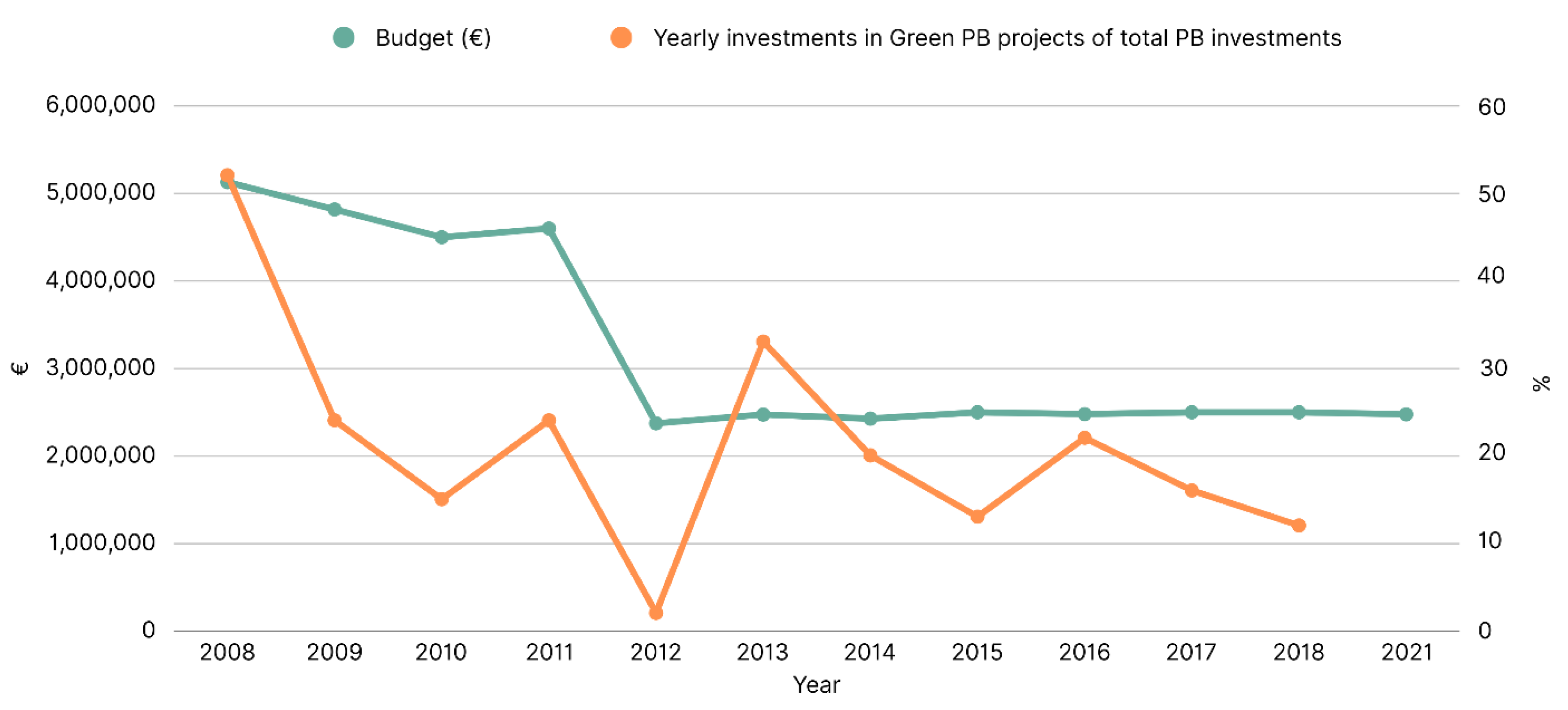
Figure 3.
Stages of Lisbon’s Participatory Budget.
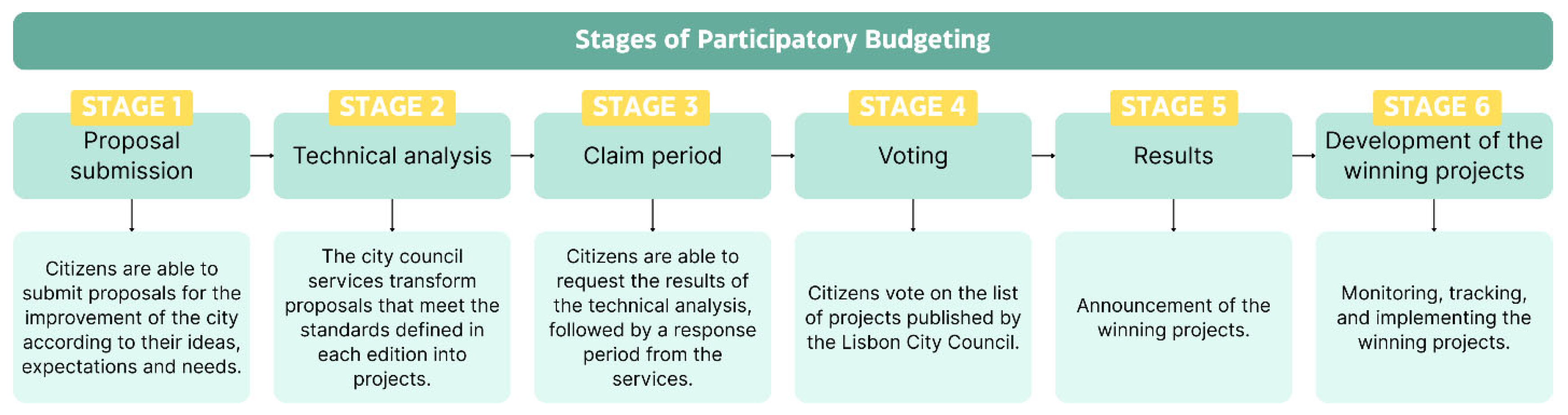
Figure 4.
Citizen participation and number of proposals over the years,.
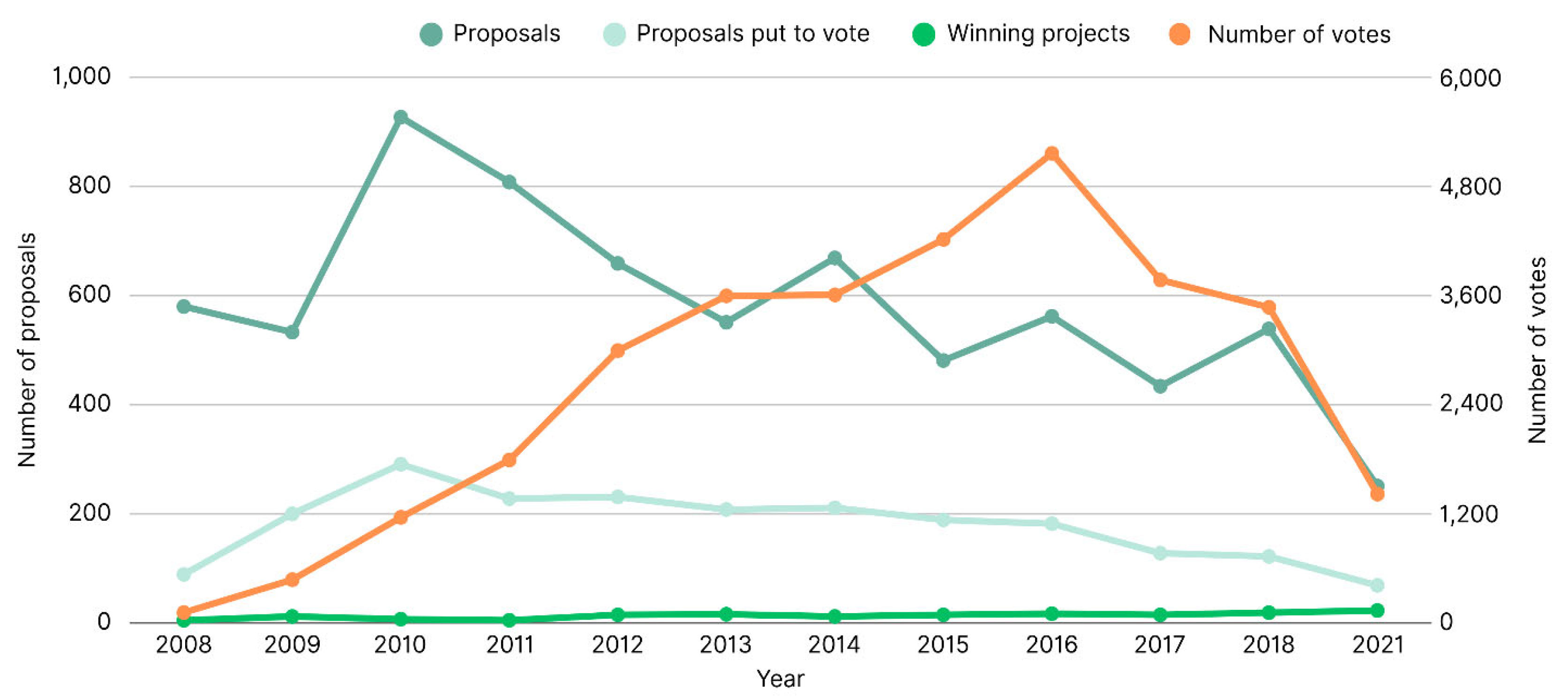

Table 1.
Main Barriers to Digital Democratic Participation.
| Category | Specific Barriers & Mechanisms | Impact on Democracy and Participation |
|---|---|---|
| Digital Divide | Lack of physical access to devices/internet, low digital literacy, and language barriers in platforms. | Systematically excludes the elderly, low-income residents, and migrant populations from the decision-making process. |
| Epistemic Enclosures | "Technical feasibility" assessments conducted behind closed doors by municipal experts and the use of opaque technocratic terminology. | Functions as a gatekeeping mechanism that privileges specialized knowledge over lived experience and filters out ideas that challenge the status quo. |
| Tokenism and Symbolic Participation | Limited decision-making scope (marginal budgets) and a focus on "individualistic and aggregated democracy" through simple voting. | Provides a "veneer of legitimacy" for predetermined municipal agendas without redistributing real power or fostering collective deliberation. |
| Elite Capture and Corporate Influence | Asymmetry in resources/time to develop proposals and the involvement of private consultancies that introduce market-based logic. | Favours affluent, educated residents and risks subordinating social justice to economic imperatives and "greenwashing". |
| Socioeconomic and Institutional Barriers | Time constraints for workers with multiple jobs and formal identification requirements that exclude undocumented individuals. | Prevents the working class and marginalized groups from sustained engagement, reducing participation to those with "temporal privilege". |
| Distributional and Environmental Injustice | Focus on aesthetically pleasing green infrastructure without anti-displacement measures. | Risks triggering "green gentrification," where environmental improvements increase property values and displace the vulnerable communities they were meant to serve. |
Table 2.
Principles for Transformative Democratic Climate Governance.
| Principle | Key limitation addressed | What this principle requires in practice | How it departs from dominant participatory models |
|---|---|---|---|
| Redistributive participation | Tokenistic consultation and limited citizen influence | Explicit redistribution of power, resources, and decision-making authority; co-governance arrangements rather than advisory roles | Moves beyond consultative and symbolic participation toward genuine citizen control |
| Epistemic justice | Technocratic monopolies over legitimate knowledge | Recognition of diverse knowledge systems and lived experience; collective knowledge production; community-based research shaping problem definition and solutions | Challenges the primacy of expert-driven, technocratic decision-making |
| Digital justice | Structural digital divides and exclusion | Universal access, digital literacy support, multiple participation channels, and community involvement in platform design and governance | Rejects “digital-by-default” participation and platform-centric democracy |
| Distributional justice | Unequal allocation of environmental benefits and green gentrification | Prioritization of vulnerable communities; anti-displacement measures; systematic assessment of distributional impacts | Links climate action to social and spatial equity rather than aggregate environmental gains |
| Democratic accountability | Weak oversight and implementation gaps | Transparent decision-making, clear implementation timelines, citizen monitoring, and enforcement mechanisms | Extends participation across the full policy cycle, not only project selection |
| Structural transformation | Fragmented, project-based interventions | Addressing structural drivers of vulnerability through links to housing justice, labor rights, democratic reform, and economic transformation | Rejects incrementalism and isolated projects in favor of systemic change |
Table 3.
Recommendations for restructuring participatory climate governance.
| Intervention area | Key recommendations | OPV implication |
|---|---|---|
| Scope and resources | Expand budget and decision-making scope beyond discrete projects | Move OPV from marginal funding tool to strategic climate governance |
| Digital inclusion | Ensure hybrid participation, multilingual access, and digital literacy support | Reduce structural exclusion from OPV processes |
| Knowledge and expertise | Support community-based knowledge and reform technical screening | Counter epistemic enclosures |
| Distributional justice | Prioritize vulnerable neighbourhoods and adopt anti-displacement measures | Prevent green gentrification effects |
| Accountability | Establish citizen monitoring and enforceable implementation timelines | Close gap between selection and delivery |
| Private sector role | Regulate and limit corporate influence in participatory processes | Reduce elite capture and greenwashing |
| Power and representation | Support organizing and targeted participation of marginalized groups | Counter elite capture |
| Structural linkages | Link OPV to housing, labour, and democratic reform agendas | Address root drivers of climate vulnerability |
Disclaimer/Publisher’s Note: The statements, opinions and data contained in all publications are solely those of the individual author(s) and contributor(s) and not of MDPI and/or the editor(s). MDPI and/or the editor(s) disclaim responsibility for any injury to people or property resulting from any ideas, methods, instructions or products referred to in the content. |
© 2026 by the authors. Licensee MDPI, Basel, Switzerland. This article is an open access article distributed under the terms and conditions of the Creative Commons Attribution (CC BY) license (http://creativecommons.org/licenses/by/4.0/).
Copyright: This open access article is published under a Creative Commons CC BY 4.0 license, which permit the free download, distribution, and reuse, provided that the author and preprint are cited in any reuse.


