

Submitted:
14 February 2026
Posted:
26 February 2026
You are already at the latest version
Abstract
Psoriatic disease is an autoinflammatory, autoimmune systemic disease characterized by the presence of psoriasis which may be accompanied by psoriatic arthritis (PsA). The disease is characterized by the presence of metabolic syndrome. Obesity, arterial hypertension, diabetes mellitus type 2, hyperlipidemia and fatty liver disease may be observed in patients with psoriatic disease. The pathophysiology of metabolic syndrome in patients with psoriatic disease has not been completely elucidated. However, hyperinsulinemia may be observed and may be implicated in the pathogenesis of systemic inflammation observed in psoriatic disease. All components of the metabolic syndrome in patients with psoriatic disease need treatment. Arterial hypertension should be managed, diabetes mellitus should be managed, and hyperlipidemia should be specifically therapeutically tar-geted. The presence of obesity may necessitate specific adaptation of the management of PsA such as ad-justment of the dose of biologic agents applied for the management of the disease. Weight loss induced either by diet or surgically or via an incretin-based approach improves psoriasis. Weight loss may prevent progression of psoriasis to PsA. Weight loss may improve disease activity in PsA. Modern treatment modalities in the man-agement of obesity hold a great promise in the treatment of psoriatic disease as they appear to have both metabolic as well as immune modulating effects. In this review the pathophysiology, management and thera-peutic implications of metabolic syndrome in patients with psoriatic disease will be discussed.
Keywords:
psoriatic disease
; psoriatic arthritis
; psoriasis
; metabolic syndrome
; obesity
; hyperinsulinemia
; GLP-1R agonists
1. Introduction
Psoriatic disease presents a disease characterized by the presence of psoriasis and psoriatic arthritis (PsA) [1]. Psoriasis and PsA may occur simultaneously, psoriasis may precede the development of PsA or PsA may present first [2,3,4]. However, psoriasis or PsA may occur independently. Psoriasis is characterized by the presence of an inflammatory skin eruption which takes various forms and affects various parts of the body [5,6]. PsA is an enthesopathy and belongs to the category of spondyloarthritis. It is characterized by the presence of enthesopathy and arthritis affecting the axial skeleton while in some cases it also affects peripheral joints and induces peripheral arthritis.
Psoriatic disease is frequently accompanied by metabolic syndrome [7,8]. Metabolic syndrome in the context of psoriatic disease is manifested by the presence of central obesity [9,10,11], diabetes mellitus type 2 (DM 2), arterial hypertension, hyperlipidemia and fatty liver disease. The pathophysiology of metabolic syndrome in the context of psoriatic disease has been extensively investigated. However, it has not been completely elucidated.
All conditions related to the phenotype of the metabolic syndrome in psoriatic disease need management and successful treatment [12,13,14]. Obesity needs multifaceted prevention and treatment [9], DM 2 needs management [15], arterial hypertension needs treatment [16], and fatty liver disease needs prevention and treatment [17]. Obesity, in particular abdominal obesity is a central feature in the context of psoriatic disease. It may be involved in disease pathogenesis; it is involved in disease pathophysiology and may induce severe disease by modulating the disease phenotype. In this review the inflammatory pathways induced by obesity will be discussed. The interrelationship between obesity and psoriatic disease, both psoriasis and PsA will be reviewed. Treatment modalities to induce weight loss, hygienic, surgical and medical will be dealt with.
2. Psoriatic Disease
Psoriatic disease is characterized by the presence of PsA and psoriasis [18]. The two entities may occur simultaneously, or the one may precede the other [19]. Psoriasis may occur first and PsA may present later [4]. Approximately one third of patients with psoriasis will proceed to develop PsA.
PsA is an autoinflammatory disease. It is characterized by the presence of enthesitis. The axial skeleton is usually affected but peripheral arthritis may also occur [20,21,22]. The disease is also characterized by extraarticular manifestations. Enthesitis occurs, the axial and peripheral skeleton is affected with arthritis. However, as inflammation is central in the pathogenesis of psoriatic disease and psoriatic arthritis bone resorption is also observed and may lead to osteopenia or osteoporosis [23,24].
PsA is a chronic inflammatory disease which affects the nails and skin, is characterized by peripheral arthritis, enthesitis, dactylitis and involvement of the axial skeleton. These clinical manifestations may occur isolated or combined with each other. The prevalence of PsA globally ranges from 0.05% to 0.25% [25]. It has been reported that a percentage of up to 30% of patients with psoriasis will proceed to develop PsA [20]. Furthermore, PsA is heterogenous in nature and can have an array of symptoms and clinical manifestations, which poses a challenge in diagnosis and treatment [20]. More than 50% of patients with PsA may have axial involvement, i.e., involvement of the spine and the sacroiliac joints [26]. Only a small involvement of PsA patients have only axial disease, as most exhibit additional peripheral arthritis. Peripheral joint involvement may appear as polyarticular, mono or oligoarticular, distal or arthritis mutilans and includes dactylitis and enthesitis [27]. Although earlier reports described axial involvement mostly in male patients, recent reports describe axial involvement in female patients as well. The occurrence of HLA-B27 gene may be associated with severe phenotypes of PsA [28].
Psoriasis is a skin disease which is accompanied by inflammation, scaling, erythema, plaque formation and itching. Psoriasis is an immune-mediated inflammatory disorder characterized by activation of T helper lymphocytes, Th17 and Th22 lymphocytes and augmented expression and levels of inflammatory cytokines either systemically or locally within the lesions [29,30]. It affects various body areas and may take several forms. The disease manifests as scaling papules and plaques. The lesions are circumscribed, circular, red papules or plaques and have a grey or white dry scale. The lesions may affect the scalp, elbows, knees and body folds. The lesions may develop at sites of injury. If the disease is progressive, it may take the form of generalized exfoliative erythrodermic psoriasis [31]. Nails may be affected especially if PsA is present [32].
3. Metabolic Syndrome
Metabolic syndrome is characterized by the presence of central obesity, impaired glucose metabolism which may take the form impaired glucose tolerance or frank diabetes mellitus type 2, arterial hypertension and hyperlipidemia. Fatty liver disease may accompany the metabolic syndrome [33,34,35]. Metabolic syndrome was initially described by Reaven and was called syndrome X [36]. It was recognized that it was related to insulin resistance, i.e., to resistance to insulin mediated glucose uptake [37]. Metabolic syndrome is accompanied by an increased risk for the development of DM 2 and an enhanced risk for the development of cardiovascular disease. Food affluence as well as the prevalence of a lifestyle compatible with ample food intake and lack of physical activity led to increased prevalence of the metabolic syndrome in the western world, as well as in the developing countries [38]. The Third Report of the National Cholesterol Education Program Expert Panel on Detection, Evaluation, and Treatment of High Blood Cholesterol in Adults (ATP III), the National Heart, Lung, and Blood Institute, and the American Heart Association have issued definitions of the metabolic syndrome [39,40,41,42]. Central or abdominal obesity is a dominant characteristic of the metabolic syndrome [43,44,45]. Metabolic syndrome is related to inflammation [46,47]. Central or abdominal obesity which is an inherent feature of metabolic syndrome is associated with systemic low-grade inflammation. C-reactive protein (CRP) levels and inflammatory cytokines increase [48,49,50]. In particular, the pro-inflammatory cytokines TNFα and interleukin-6 levels are known to be increased in obesity related to overnutrition. TNFα is a cytokine with multiple functions and is involved in the regulation of many biological processes such as immune function, proliferation and energy metabolism [51]. TNFα is produced by adipocytes as well as by various stromal cells found in adipose tissue, such as preadipocytes, endothelial cells and macrophages.
Psoriatic disease has been shown to be accompanied by metabolic syndrome [52] (Figure 1). Metabolic syndrome induces the development of an inflammatory milieu which render the organism susceptible to the development of may induce psoriatic disease [53,54,55]. Additionally, the presence of metabolic syndrome in the context of psoriatic disease may induce a severe phenotype [14] and may necessitate modifications in the treatment of the disease.
PsA may be accompanied by metabolic syndrome in a percentage of 29% to 46%, which is higher than the prevalence of the metabolic syndrome in the general population which is estimated to be between 12.5% to 31.4% [56,57,58]. Many of the comorbid situations in PsA are related to the metabolic syndrome. These include obesity, hypertension, DM 2 and hyperlipidemia. Gupta et al. [59] reviewed the comorbidities of PsA in a meta-analysis of 39 studies. They observed DM 2 in 12,9%, arterial hypertension in 34.2%, hyperlipidemia in 24.2%, metabolic syndrome in 28.8%, obesity in 27.4% and any cardiovascular disease in 19.4%. The review by Gupta et al. [59] combined data from more than a hundred thousand patients suffering from PsA and indicated that 1 in 3 patients had arterial hypertension, 3 in 10 had metabolic syndrome and 1 in 4 patients had obesity. According to this review all comorbidities were commoner in PsA patients than in controls. These comorbidities were found to be associated with poorer quality of life, impaired function and discontinuation of treatment with TNF inhibitors.
Psoriasis is also related to the presence of metabolic syndrome [60]. Psoriasis is associated with metabolic syndrome and its characteristics, such as abdominal obesity, arterial hypertension, hyperlipidemia, DM 2 as well as non - alcoholic fatty liver disease. Several studies have indicated that the prevalence of metabolic syndrome in psoriasis patients may be between 20% to 50%. The risk of developing metabolic syndrome is double in psoriasis as compared to control subjects. In a large systematic review Armstrong et al. [61] examined the relationship between psoriasis and metabolic syndrome which included 41,853 patients suffering from psoriasis and a large control population. They observed a strong relationship between psoriasis and the metabolic syndrome, the prevalence of metabolic syndrome in psoriasis in the range of 14% to 40%. They hypothesized that elevated free fatty acid levels may lead to adipocyte dysfunction, may inhibit insulin secretion and potentially lead to the development of DM 2 [62]. They hypothesized that elevated free fatty acid levels along with increased cytokines such as TNF-a and IL-6 lead to increased glucose production in the liver and reduced glucose uptake by the muscles leading to impaired glucose tolerance. The authors suggested that shared genetic risk loci, such as CDKAL1 may be associated with both psoriasis and type 2 diabetes [63,64]. The association of metabolic syndrome with psoriasis severity has been examined in the literature. It has been observed that psoriasis severity is related to the presence of the metabolic syndrome [65,66,67]. Additionally, the presence of the metabolic syndrome correlates with the risk of developing PsA in patients with psoriasis [68].
In a review it has been shown that there exists an increased risk for cardiovascular diseases at the level of 43% as compared to a control population, the risk referring to myocardial infarction, with an elevated risk at the level of 68%, cerebrovascular disease at the level of 22% and heart failure at the level or 31% [69]. Increased disease activity and severity in PsA, as shown by markers such as polyarthritis, dactylitis and systemic inflammation were linked to a higher risk for cardiovascular events. Psoriasis, in particular severe disease is accompanied by an increased risk for coronary artery disease, stroke and subsequent mortality [70]. It appears that systemic inflammation present in psoriatic disease may contribute to the development of atherosclerosis, endothelial and vascular damage [16].
4. Obesity and Psoriatic Disease
Obesity accompanies psoriatic disease [68]. Obesity may be a risk factor for the development of psoriatic disease and it may induce a state of increased disease activity in patients with the disease.
Obesity is a chronic, progressive and relapsing disease which increases the risk for various disease states, including DM 2 and cardiovascular disease [74]. It represents a state of low inflammatory activity [75]. Low grade inflammation in the context of obesity is brought about by visceral adipose tissue [76,77,78]. Visceral adipose tissue releases inflammatory adipokines, such as leptin, TNF α, IL-6 and IL-18. Leptin induces monocyte and granulocyte activation and increases the number of M1 macrophages. Leptin also affects T lymphocyte differentiation, favoring Th1 CD4 cells (Treg) cells. Leptin increases the secretion of inflammatory cytokines, such as IL-6, IL-12, IL-17 and TNFα [79]. TNFα is an inflammatory cytokine implicated in the pathophysiology of obesity and psoriatic disease [80,81]. TNFα increases the proportion of M1 macrophages, creating a pro-inflammatory state. Various studies have shown that adipose tissue is an endocrine organ which secretes various adipocytes and stromal cells such as vascular cells and adipocytes. Macrophages, neutrophils, T cells, B cells and mast cells are detected within the adipose tissue [14]. In addition to adipocytes, adipose tissue is composed of stromal-vascular cells and leukocytes. Cytokines secreted by adipose tissue, generally named adipokines, are regulated by a complex network of genetic and environmental factors, and obesity is associated with an abundance of macrophages, neutrophils, T cells, B cells, and mast cells in adipose tissue [15].
Various studies clinical and translational have led to the development of the concept of metaflammation, i.e., inflammation related to metabolism derangement, which may be involved in the pathogenesis and clinical expression of PsA [48,82]. Additionally, it has been proposed that a positive feedback loop may exist between obesity induced inflammation and psoriatic disease, which is known as the “psoriatic march” [83,84].
It is also possible that obesity in PsA induces inflammation due to mechanical reasons exerted at the level of the enthesis. Enthesitis is considered as the hallmark of PsA [85]. Biomechanical stress induced by obesity as a mechanical load may be a factor responsible for enthesitis [86].
The role of intra-articular fat pads, which may play a mechanical as well as an immune role should also be noted. In particular, the infrapatellar fat pad in the knee may act as a shock absorber but may also secrete adipokines and cytokines to induce local inflammation, as has been shown in osteoarthritis. Intra-articular fat pads, such as the infrapatellar fat pad in the knee, have dual mechanical and immunological roles. In addition to functioning as shock absorbers in joints, they secrete adipokines and cytokines that modulate local inflammation [87,88] and induce development of a systemic inflammatory disease, such as PsA.
The accumulation of adipose tissue also acts to induce and augment pain. Patients with PsA and obesity experience higher than expected levels of pain and physical disability compared to those without obesity [89,90].
It appears that adipose tissue accumulation in the context of abdominal obesity may lead to the development of an inflammatory environment and may induce the development of psoriatic disease, psoriasis and PsA. Obesity acts via various pathways, it induces an inflammatory phenotype by the augmented production of adipokines and inflammatory cytokines by the adipose tissue, it may induce metaflammation in the context of an autoinflammatory disease, it may act mechanically by inducing enthesitis by the sheer effect of weight on the entheses, it may act locally in the intra-articular fat pad and it may act to induce or augment pain. Thus, it appears that obesity and inflammation in the context of psoriatic disease create a vicious cycle, which may induce a severe phenotype of the psoriatic disease by augmenting both inflammation and pain.
5. Treatment
All aspects of metabolic syndrome need management in the context of psoriatic disease. Obesity needs prevention and treatment [11,91,92]. Diabetes mellitus type 2 needs management, arterial hypertension needs management and hyperlipidaemia needs treatment.
Obesity needs prevention and treatment in the context of psoriatic disease. Hygienic measures such as diet and physical exercise should be recommended to all patients with psoriatic disease. However, compliance with diet and physical exercise can be challenging, it may require time and effort, intensive interventions and only around half of the patients achieve their goals [93,94]. Upala et al. [95] in a meta-analysis of randomized controlled trials which assessed lifestyle interventions by diet and or exercise in obese patients with psoriasis on disease severity and included seven randomized control trials with a total of 878 patients, observed a greater reduction in the Psoriasis Area Severity Index (PASI) score in patients on weight loss intervention than in controls. They also observed that patients receiving lifestyle weight loss interventions were more likely to achieve a PASI75 score. Even only adherence to a diet and exercise plan, without achieving the goal of weight loss leads to a reduction in PASI score in patients with psoriasis [96,97]. Ramadan fasting also improved PASI score in patients suffering from moderate to severe psoriasis [98].
Diet which leads to weight loss may also have beneficial effects in the treatment of PsA. Hypocaloric diet in individuals with obesity and PsA had as an effect weight loss and improvement in disease activity as shown by improvement in active enthesitis and joint counts, reduced inflammatory markers, improved skin lesions, physical function, perception of health and fatigue [99]. These effects were sustained for a period of two years [100]. The effect of diet either hypocaloric or free in patients with PsA who were obese and on treatment with TNF inhibitors was assessed in a study and it was found to improve disease activity. The effect of various diet modalities on psoriasis and PsA was evaluated in a study [101]. A total of twenty-six individuals with PsA and psoriasis were assigned either to a Mediterranean diet or to a ketogenic diet. Both diet forms resulted in significant weight loss, decreased waist circumference, BMI, total fat mass and visceral fat. Ketogenic diet led to a significant improvement in PASI and disease activity index in PsA. A study evaluated diet interventions, a Mediterranean diet, a low calorie diet or a general diet in patients with PsA and obesity. Modest weight loss and improvement in disease activity was noted in all groups. A very low-calorie ketogenic diet also improved BMI and disease activity score in patients with PsA [102]. BMI reduction correlated with the improvement in disease activity score. The practice of intermittent fasting in the context of Ramadan also led to improvement in disease outcome in patients with PsA despite lack or limited weight loss [103]. All these studies show that weight loss, regardless of the diet modality itself, lead to improvement in disease activity. It also appears that weight loss in the context of psoriatic disease may improve cardiovascular outcomes [104].
Bariatric surgery is another method applied to induce weight loss in patients with psoriatic disease. Various methods of bariatric surgery exist. In various case studies complete remission of psoriasis has been reported after gastric bypass surgery with the Roux-en-Y method [105,106,107,108]. In a study on the effect of weight loss bariatric surgery on psoriasis severity in morbidly obese patients was investigated [109]. The study involved 33 morbidly obese patients with psoriasis. They found improvement in more than 40% of the cohort after bariatric surgery. Improvement was related to the degree of weight loss and the Roux-en-Y procedure. In a small study involving patients with psoriatic disease, outcomes regarding skin and joint disease improved after bariatric surgery. This effect was greater in patients with severe disease. Data from a Swedish study involving obese Swedish patients indicated that bariatric surgery reduced the incidence of psoriasis but did not have an effect on PsA incidence [110]. This study confirmed a role of bariatric surgery in the prevention of psoriasis in obese patients. In a study performed in Denmark the risk of psoriasis was reduced after gastric bypass, but not after gastric banding, whereas both gastric bypass and banding decreased the incidence of PsA [111].
Nowadays methods of drug treatment for obesity exist, including the use of glucagon-like peptide 1 receptor agonists (GLP-1RA) [112,113]. GLP-1RA are a novel and important treatment modality in the management of both obesity and DM 2 [114,115]. GLP-1 RA act both centrally by modulating brain areas which control appetite and hunger [116,117] and peripherally by increasing insulin secretion [118], reducing glucagon secretion and by modulating gastric emptying and the release of gut hormones [119]. GLP-1 RA reduce triglyceride levels and cholesterol, such as low-density lipoprotein. Additionally, they modulate inflammation of adipose tissue and reduce ectopic fat deposits. In recent years the application of GLP-1RA has increased considerably and it has emerged that they are effective in inducing weigh loss [120] and in preventing and managing obesity comorbities such as cardiovascular events and DM 2 [121,122]. GLP-1RA have been applied in the treatment of musculoskeletal diseases such as osteoarthritis [123] and have shown beneficial effects. In particular, the use of GLP-1RA exhibits anti-inflammatory properties. In a mouse model of a neurodenerative disorder, namely Alzheimer’s disease liraglutide was shown to have anti-inflammatory and neuroprotective properties [124]. In a prospective trial involving 24 patients exenatide was injected twice daily to the group. Fasting blood glucose, HbA1c, free fatty acid levels decreased [125]. Although weight loss was not observed, reactive oxygen species and the mRNA expression of inflammatory cytokines, such as TNFa, interleukin-1β in mononuclear cells decreased significantly. Exenatide was shown to have a potent anti-inflammatory effect irrespective of weight loss. In a mouse model of arterial hypertension liraglutide was found to reduce immune cellular infiltration of heart tissues by decreasing the secretion of inflammatory cytokines such as TNF and IL-1β [126].
The role of GLP-1 in the physiology of the joint as an organ is currently evaluated. It has been shown that GLP-1 is detected in various tissues within the joints. GLP-1R has been detected in both normal and osteoarthritic chondrocytes. The GLP-1R pathway may be involved in the prevention of chondrocyte apoptosis, may have protective properties against inflammation and may be involved in matrix protection against degeneration [127]. In a model of knee osteoarthritis in the rat liraglutide was found to attenuate cartilage degeneration [128]. Liraglutide was found to protect chondrocytes against cytokine induced apoptosis [128]. The protective effect of liraglutide on chondrocytes has also been observed in an experimental rat model [127]. In a rat model of inflammatory osteoarthritis the activation of GLP-1R reduced inflammation in cartilage [129]. GLP-1R seems to be expressed in human and murine macrophages leading to the hypothesis that it may have a modulating effect on macrophage function and differentiation [130] and that incretin or GLP-1 related treatment modalities may modulate macrophage function. Novel data indicate that GLP-1-based treatment modalities may have anti-inflammatory properties with anti-inflammatory effects in various tissues including the vascular system mediated by decreasing levels of inflammatory cytokines as well as by attenuating immune cell tissue infiltration [131,132]. Additionally, it has been proposed that GLP-1R agonists may have analgesic effects [131]. The therapeutic potential of GLP-1R agonists in rheumatoid arthritis has also been explored [133,134].
Weight loss induced by incretin-based treatments has been shown to improve psoriasis. In particular, Ahern et al. [135] examined the effect of the administration of liraglutide, a GLP-1 analogue to a group of 7 patients with psoriasis, diabetes and obesity and they found a beneficial effect on psoriasis, as they observed a significant decrease in PASI and a significant increase in the number of circulating natural killer T cells. Weight and glycemic control also improved. Hogan et al. [136] investigated the effect of GLP-1 on immune pathways and they proposed that metabolic incretin-based drugs may be repurposed and applied as immunomodulatory agents [137]. It has been proposed that GLP-1R agonists may be applied in the treatment of systemic autoimmune and autoinflammatory disorders such as PsA [138,139,140]. It should be noted that in patients with psoriatic disease the administration of GLP-1R agonists may improve cardiovascular outcomes, as these agents improve cardiovascular health [121,141,142]. Now the application of GLP-1R agonists on PsA is evaluated in combination with ixekizumab and is compared to dietary counseling [138]. This combination of ixekizumab with incretin-based treatment modalities is also evaluated in patients with psoriasis [138]. The application of sodium-glucose cotransporter-2 inhibitors in the context of diabetes as far as the effect on psoriasis incidence has been evaluated with negative results [143]. Other agents, such as orlistat and topiramate in the treatment of obesity have been evaluated [144]. Topiramate was found to induce weight loss in a small group of psoriasis patients with psychiatric morbidity [145]. In this context topiramate was found to improve psoriasis.
It appears, that obesity, in particular abdominal obesity, is a dominant characteristic in patients with psoriatic disease, psoriasis and PsA. In these patients abdominal obesity is related to a severe disease phenotype in psoriasis and augemented disease activity in PsA. Obesity is related to cardiovascular morbidity in psoriatic disease. The inflammatory environment related to obesity may induce the development of psoriasis or it may induce PsA in patients with psoriasis. Weight loss induced by any method, either modification of behavior, exercise, any kind of diet or surgery improves the disease phenotype in psoriasis and PsA (Figure 2). The application of incretin-based treatment modalities may hold plural roles in the treatment of psoriatic disease as it induces weight loss, improves glycemic control, improves cardiovascular risk and may have immune modulating properties.
6. Conclusions
It appears that psoriatic disease, psoriasis and PsA are strongly related to metabolic dysfunction, namely the metabolic syndrome. Patients present with obesity, DM 2, arterial hypertension, dyslipidemia and fatty liver disease. The presence of the metabolic syndrome induces an inflammatory milieu which may predispose to the development of psoriasis and PsA. Obesity is related to a severe disease phenotype in patients with psoriasis and to disease severity in patients with PsA. Additionally, drug treatment with biological agents may need to be modified in patients with PsA and obesity. Patients presenting with psoriatic disease and obesity should be offered advice and treatment for obesity and the other metabolic syndrome parameters on presentation. Weight loss should be advised. Patients should be offered advice on diet and exercise. If diet and other hygienic measures prove ineffective treatment with incretin-based agents should be initiated. Weight loss induced by any method induces improvement in psoriasis and PsA. The application of novel incretin-based treatment modalities in patients with psoriatic disease holds a great promise, as they appear to have both metabolic and immune modifying effects.
Author Contributions
For research articles with several authors, a short paragraph specifying their individual contributions must be provided. The following statements should be used “Conceptualization, L.A and P.A.; methodology, L.A, P.A., G.K., C.S. Y.S.; software, L.A, P.A., G.K., C.S. Y.S.; validation, L.A, P.A., G.K., C.S. Y.S. and I.K.A.; formal analysis, L.A, P.A., G.K., C.S. Y.S. and I.K.A. investigation, L.A, P.A., G.K., C.S. Y.S. and I.K.A.; resources, L.A, P.A., G.K., C.S. Y.S. and I.K.A.; data curation, L.A, P.A., G.K., C.S. Y.S. and I.K.A.; writing—original draft preparation, L.A, P.A., G.K., C.S. Y.S. and I.K.A.; writing—review and editing, L.A, P.A., G.K., C.S. Y.S. and I.K.A.; visualization, L.A., P.A.; supervision, P.A; project administration, L.A. and P.A; funding acquisition, L.A, P.A., G.K., C.S. Y.S. and I.K.A. All authors have read and agreed to the published version of the manuscript.
Funding
This research received no external funding.
Institutional Review Board Statement
Not applicable.
Informed Consent Statement
Not applicable.
Data Availability Statement
Not applicable.
Conflicts of Interest
The authors declare no conflicts of interest.
References
- Singh J. A.; Guyatt, G.; Ogdie, A.; Gladman, D. D.; Deal, C.; Deodhar, A.; Dubreuil, M.; Dunham, J.; Husni, M. E.; Kenny, S.; et al. Special Article: 2018 American College of Rheumatology/National Psoriasis Foundation Guideline for the Treatment of Psoriatic Arthritis. Arthritis Rheumatol 2019, 71 (1), 5-32. [CrossRef]
- Mease PJ. Measures of psoriatic arthritis: Tender and Swollen Joint Assessment, Psoriasis Area and Severity Index (PASI), Nail Psoriasis Severity Index (NAPSI), Modified Nail Psoriasis Severity Index (mNAPSI), Mander/Newcastle Enthesitis Index (MEI), Leeds Enthesitis Index (LEI), Spondyloarthritis Research Consortium of Canada (SPARCC), Maastricht Ankylosing Spondylitis Enthesis Score (MASES), Leeds Dactylitis Index (LDI), Patient Global for Psoriatic Arthritis, Dermatology Life Quality Index (DLQI), Psoriatic Arthritis Quality of Life (PsAQOL), Functional Assessment of Chronic Illness Therapy-Fatigue (FACIT-F), Psoriatic Arthritis Response Criteria (PsARC), Psoriatic Arthritis Joint Activity Index (PsAJAI), Disease Activity in Psoriatic Arthritis (DAPSA), and Composite Psoriatic Disease Activity Index (CPDAI). Arthritis Care & Research 2011, 63 (S11). [CrossRef]
- M N.; F, C.; R, S.; M, M.; A, P.; N, B.; L., C. Psoriatic arthritis and psoriasis: differential diagnosis. Clinical Rheumatology 2016, 35 (8). [CrossRef]
- Menter A. Psoriasis and psoriatic arthritis overview. Am J Manag Care 2016, 22 (8 Suppl), s216-224. From NLM. (.
- RG L.; GG, K.; CE., G. Psoriasis: epidemiology, clinical features, and quality of life. Annals of the Rheumatic Diseases 2005, 64 (suppl_2). [CrossRef]
- WH B.; MP., S. Psoriasis. The Lancet 2015, 386 (9997). [CrossRef]
- JC W.; RM, H.; K, R.; C, M.; U, A.; SS., Z. Metabolic syndrome and psoriatic arthritis: the role of weight loss as a disease-modifying therapy. Therapeutic Advances in Musculoskeletal Disease 2024, 16. [CrossRef]
- P G.; AC, F.; I, F.; G, G.; G., T. Psoriasis and the metabolic syndrome. Clinics in Dermatology 2018, 36 (1). [CrossRef]
- RH H.; A, O.; JF, M.; JU, S.; L., E. The obesity-inflammation axis in psoriatic disease: mechanisms and therapeutic strategies. Nature Reviews Rheumatology 2025. [CrossRef]
- V L.; P, K.; A, K.; E, K.; A, P.; E, M.; G, P.; L, P.; I, I.; S, M.; et al. The Effect of a Ketogenic Diet versus Mediterranean Diet on Clinical and Biochemical Markers of Inflammation in Patients with Obesity and Psoriatic Arthritis: A Randomized Crossover Trial. International Journal of Molecular Sciences 2024, 25 (5). [CrossRef]
- U M.; F, L.; W, S.; S, G.; P., S. Psoriasis as a Systemic Disease. Deutsches Ärzteblatt international 2024. [CrossRef]
- R. A. Metabolic Syndrome and Its Components in Psoriatic Arthritis. Open Access Rheumatology: Research and Reviews 2022, Volume 14. [CrossRef]
- MK. P. Metabolic syndrome, rheumatoid and psoriatic arthritis: Managing cardiovascular risk. International Journal of Rheumatic Diseases 2021, 24 (9). [CrossRef]
- JC W.; RM, H.; K, R.; C, M.; U, A.; SS, Z. Metabolic syndrome and psoriatic arthritis: the role of weight loss as a disease-modifying therapy - PubMed. Therapeutic advances in musculoskeletal disease 08/19/2024, 16. [CrossRef]
- G D. B.; P, G.; L, I.; G, G. Psoriatic Arthritis and Diabetes Mellitus: A Narrative Review - PubMed. Rheumatology and therapy 2020 Jun, 7 (2). [CrossRef]
- P K.; A, O.; L, E. Psoriatic arthritis and the association with cardiometabolic disease: a narrative review - PubMed. Therapeutic advances in musculoskeletal disease 03/02/2021, 13. [CrossRef]
- Torosian K.; Lal, E.; Kavanaugh, A.; Loomba, R.; Ajmera, V.; Guma, M. Psoriatic disease and non-alcoholic fatty liver disease shared pathogenesis review. Seminars in Arthritis and Rheumatism 2023, 59, 152165. [CrossRef]
- E L.; S, S.; FM, P. Psoriatic Arthritis, Psoriatic Disease, or Psoriatic Syndrome? - PubMed. The Journal of rheumatology 2019 Nov, 46 (11). [CrossRef]
- F P.; V, R.; E, C.; A, B.; V, H.; F., C. Epidemiology of Psoriasis and Psoriatic Arthritis in Italy-a Systematic Review. Current Rheumatology Reports 2018, 20 (7). [CrossRef]
- D P.; DR, J.; F, V. d. B.; PJ, M.; DD., G. Axial involvement in psoriatic arthritis: An update for rheumatologists. Seminars in Arthritis and Rheumatism 2021, 51 (4). [CrossRef]
- LC C.; PS., H. Psoriatic arthritis: state of the art review. Clinical Medicine 2017, 17 (1). [CrossRef]
- D M.; P, D.; T, M.; A., W. Predominant ligament-centric soft-tissue involvement differentiates axial psoriatic arthritis from ankylosing spondylitis. Nature Reviews Rheumatology 2023, 19 (12). [CrossRef]
- A D. P.; A, E.; A, P.; M, A.; S, M.; M, V.; C, E.; N, B.; F, F.; L, C.; et al. Osteoporosis and psoriatic arthritis. The Journal of Rheumatology Supplement 2012, 89 (0). [CrossRef]
- K T.; M, H.; S., T. Osteoporosis and osteopenia in patients with psoriatic arthritis: A single-centre retrospective study. Modern Rheumatology 2024, 34 (6). [CrossRef]
- Ogdie A.; Weiss, P. The Epidemiology of Psoriatic Arthritis. Rheumatic Disease Clinics of North America 2015/11/01, 41 (4). [CrossRef]
- PS H. Axial involvement in psoriatic arthritis: is it unique? - PubMed. Rheumatology (Oxford, England) 12/01/2024, 63 (Supplement_2). [CrossRef]
- M K.; GA, D.; K, F.; T, K.; N, I.; S, K.; Y, K.; S, K. Clinical features of psoriatic arthritis - PubMed. Best practice & research. Clinical rheumatology 2021 Jun, 35 (2). [CrossRef]
- M Z.; L, D.; S, H. Psoriasis and Psoriatic Arthritis-Associated Genes, Cytokines, and Human Leukocyte Antigens - PubMed. Medicina (Kaunas, Lithuania) 05/16/2024, 60 (5). [CrossRef]
- BB D.; N, S.; J, P.; L, P.; P, E.; JN, B.; P, v. d. K.; M, S.; FO, N.; G, G.; et al. Psoriasis and systemic inflammatory diseases: potential mechanistic links between skin disease and co-morbid conditions - PubMed. The Journal of investigative dermatology 2010 Jul, 130 (7). [CrossRef]
- RG L.; GG, K.; CE, G. Psoriasis: epidemiology, clinical features, and quality of life - PubMed. Annals of the rheumatic diseases 2005 Mar, 64 Suppl 2 (Suppl 2). [CrossRef]
- S M.; L, P. Pathophysiology of Generalized Pustular Psoriasis - PubMed. American journal of clinical dermatology 2022 Jan, 23 (Suppl 1). [CrossRef]
- C J.; H, W.; C, B.; L, Z.; S, R.; J, Z.; T, G.; B., C. Challenge of Nail Psoriasis: An Update Review. Clinical Reviews in Allergy & Immunology 2021, 61 (3). [CrossRef]
- P D.; C., H. Non-alcoholic fatty liver disease, obesity and the metabolic syndrome. Best Practice & Research Clinical Gastroenterology 2014, 28 (4). [CrossRef]
- E M.; DP, M.; C., M. Non-alcoholic fatty liver disease, insulin resistance, metabolic syndrome and their association with vascular risk. Metabolism 2021, 119. [CrossRef]
- D K.; A, T.; WR., K. Nonalcoholic Fatty Liver Disease and Metabolic Syndrome. Clinics in Liver Disease 2018, 22 (1). [CrossRef]
- G R. Syndrome X - PubMed. Current treatment options in cardiovascular medicine 2001 Aug, 3 (4). [CrossRef]
- GM R. Diet and Syndrome X - PubMed. Current atherosclerosis reports 2000 Nov, 2 (6). [CrossRef]
- K M.; S, P.; S, S.; S, K.; N, C.; M, M. Metabolic Syndrome: The Constellation of Co-morbidities, A Global Threat - PubMed. Endocrine, metabolic & immune disorders drug targets 2023, 23 (12). [CrossRef]
- SM G.; Jr, B. H.; JI, C.; Jr, S. S.; Heart, L. C. A. H. A. N.; Lung; Institute., a. B. Definition of metabolic syndrome: Report of the National Heart, Lung, and Blood Institute/American Heart Association conference on scientific issues related to definition. Circulation 2004, 109 (3). [CrossRef]
- PL. H. A comprehensive definition for metabolic syndrome. Disease Models & Mechanisms 2009, 2 (5-6). [CrossRef]
- P Z.; D, M.; Y, M.; G, A.; J., S. The metabolic syndrome: a global public health problem and a new definition. Journal of Atherosclerosis and Thrombosis 2005, 12 (6). [CrossRef]
- PZ Z.; KG, A.; JE., S. Mainstreaming the metabolic syndrome: a definitive definition. Medical Journal of Australia 2005, 183 (4). [CrossRef]
- RM S.; CR, J.; SBK, J.; JR, L.; C, J.; MB, B.; M, R.; AF, B.; L, G.; JB, J.; et al. Combination of exercise and GLP-1 receptor agonist treatment reduces severity of metabolic syndrome, abdominal obesity, and inflammation: a randomized controlled trial. Cardiovascular Diabetology 2023, 22 (1). [CrossRef]
- A B.; J, G.; MA, A.; JA., D. Metabolic Syndrome Pathophysiology and Predisposing Factors. International Journal of Sports Medicine 2021, 42 (03). [CrossRef]
- R R.; JP., D. Abdominal obesity, insulin resistance, and the metabolic syndrome: contribution of physical activity/exercise. Obesity 2009, 17 (S3). [CrossRef]
- KP K.; P, G.; E, K.; Y, K.; M, Z.; T., T. Mechanisms of obesity and related pathology: linking immune responses to metabolic stress. The FEBS Journal 2009, 276 (20). [CrossRef]
- T T.; P, G.; KP., K. TNF-alpha and obesity. Current Directions in Autoimmunity 2010. [CrossRef]
- HS P.; JY, P.; R., Y. Relationship of obesity and visceral adiposity with serum concentrations of CRP, TNF-alpha and IL-6. Diabetes Research and Clinical Practice 2005, 69 (1). [CrossRef]
- Z S.; FD, A.; BA, A.-T.; WA, S.; AH., R. Obesity indices and metabolic markers are related to hs-CRP and adiponectin levels in overweight and obese females. Obesity Research & Clinical Practice 2013, 7 (4). [CrossRef]
- I K.; NA, F.; R, S.; DL, T.; DS., H. Effect of calorie restriction diet on levels of C reactive protein (CRP) in obesity: A systematic review and meta-analysis of randomized controlled trials. Diabetes & Metabolic Syndrome: Clinical Research & Reviews 2022, 16 (3). [CrossRef]
- Cawthorn W. P.; Sethi, J. K. TNF-α and adipocyte biology. FEBS letters 2007 Nov 26, 582 (1). [CrossRef]
- A O.; M, L.; G, T.; FP, R.; F, O.; M, F.; R, D. I.; M, F.; S, P.; A, D.; et al. Metabolic syndrome, non-alcoholic fatty liver disease and liver stiffness in psoriatic arthritis and psoriasis patients. Clinical Rheumatology 2019, 38 (10). [CrossRef]
- G F.; L, A.; M, B. Z.; S, A.; M, B. Z.; Y, B.; HI., A. Metabolic Syndrome: Updates on Pathophysiology and Management in 2021. International Journal of Molecular Sciences 2022, 23 (2). [CrossRef]
- G G.; C., W. Hemostasis, endothelial stress, inflammation, and the metabolic syndrome. Seminars in Immunopathology 2018, 40 (2). 2. [CrossRef]
- AR S.; JM., O. Inflammatory mechanisms linking obesity and metabolic disease. Journal of Clinical Investigation 2017, 127 (1). [CrossRef]
- A L.; N, K.; C, E.-H.; K., P. Systematic review and meta-analysis on prevalence of metabolic syndrome in psoriatic arthritis, rheumatoid arthritis and psoriasis. International Journal of Rheumatic Diseases 2021, 24 (9). [CrossRef]
- S A.; A., S. Prevalence of metabolic syndrome and its components in psoriatic arthritis compared with general population, cutaneous psoriasis, and other inflammatory arthropathies: a meta-analysis. Clinical Rheumatology 2025, 44 (10). [CrossRef]
- JJ N.; JR, N.; E, L.-Y.; JR, N.; UF, N.; AT, N.; DN, T.; FL, T.; AJ, F.; AL, N.; et al. Geographic distribution of metabolic syndrome and its components in the general adult population: A meta-analysis of global data from 28 million individuals. Diabetes Research and Clinical Practice 2022, 188. [CrossRef]
- Gupta S.; Syrimi, Z.; Hughes, D. M.; Zhao, S. S. Comorbidities in psoriatic arthritis: a systematic review and meta-analysis. Rheumatology International 2021, 41 (2), 275-284. [CrossRef]
- P G.; AC, F.; I, F.; G, G.; G, T. Psoriasis and the metabolic syndrome - PubMed. Clinics in dermatology 2018 Jan-Feb, 36 (1). [CrossRef]
- AW A.; CT, H.; EJ, A. Psoriasis and metabolic syndrome: a systematic review and meta-analysis of observational studies - PubMed. Journal of the American Academy of Dermatology 2013 Apr, 68 (4). [CrossRef]
- YF Z.; DD, F.; C., C. Contribution of adipocyte-derived factors to beta-cell dysfunction in diabetes. The International Journal of Biochemistry & Cell Biology 2006, 38 (5-6). [CrossRef]
- M Q.; AD, B.; CE, G.; J, W.; JN, B.; RC, T.; F., C. Differential contribution of CDKAL1 variants to psoriasis, Crohn’s disease and type II diabetes. Genes & Immunity 2009, 10 (7). [CrossRef]
- N W.; M, Q.; NJ, P.; M, A.; R, S.; AD, B.; J, W.; CE, G.; CG, M.; JN, B.; et al. Psoriasis is associated with pleiotropic susceptibility loci identified in type II diabetes and Crohn disease - PubMed. Journal of medical genetics 2008 Feb, 45 (2). [CrossRef]
- N A.-M.; S, A.-F.; A, A.-M.; M, A.-S. Comorbidities associated with psoriasis: an experience from the Middle East - PubMed. The Journal of dermatology 2010 Feb, 37 (2). [CrossRef]
- SM L.; NM, S.; DB, S.; AB, T.; SE, K.; NN, M.; DJ, M.; JM., G. Prevalence of metabolic syndrome in patients with psoriasis: a population-based study in the United Kingdom. Journal of Investigative Dermatology 2012, 132 (3). [CrossRef]
- DM S.; S, J.; M, S.; E, C.; M, W. Increased prevalence of the metabolic syndrome in patients with moderate to severe psoriasis - PubMed. Archives of dermatological research 2006 Dec, 298 (7). Dec. [CrossRef]
- RH H.; A, O.; JF, M.; JU, S.; L, E. The obesity-inflammation axis in psoriatic disease: mechanisms and therapeutic strategies - PubMed. Nature reviews. Rheumatology 11/24/2025. [CrossRef]
- A P.; Z, T.; M, A.; L, E. Risk of Cardiovascular Morbidity in Patients With Psoriatic Arthritis: A Meta-Analysis of Observational Studies - PubMed. Arthritis care & research 2017 Jan, 69 (1). [CrossRef]
- L E.; Y, W.; V, C.; R, C.; DD, G. Incidence and predictors for cardiovascular events in patients with psoriatic arthritis - PubMed. Annals of the rheumatic diseases 2016 Sep, 75 (9). [CrossRef]
- J H.; Y, S.; C, G.; Y, X.; L, L.; Z., L. Prevalence and risk of nonalcoholic fatty liver disease among adult psoriatic patients: A systematic review, meta-analysis, and trial sequential analysis. Medicine 2024, 103 (18). [CrossRef]
- J T.; S, G.; SM, L.; NN, M.; A, O.; AS, V. V.; JM., G. Psoriasis and comorbid diseases: Epidemiology. Journal of the American Academy of Dermatology 2017, 76 (3). [CrossRef]
- Takeshita J.; Grewal, S.; Langan, S. M.; Mehta, N. N.; Ogdie, A.; Van Voorhees, A. S.; Gelfand, J. M. Psoriasis and comorbid diseases: Implications for management. J Am Acad Dermatol 2017, 76 (3), 393-403. [CrossRef]
- ME P.; A, T.; JP., D. Obesity Phenotypes, Diabetes, and Cardiovascular Diseases. Circulation Research 2020, 126 (11). [CrossRef]
- Y L.; H., L. Inflammation initiates a vicious cycle between obesity and nonalcoholic fatty liver disease. Immunity, Inflammation and Disease 2021, 9 (1). [CrossRef]
- N A.; D, K.; P., R. Visceral adipose tissue as a source of inflammation and promoter of atherosclerosis. Atherosclerosis 2014, 233 (1). [CrossRef]
- H. K. Obese visceral fat tissue inflammation: from protective to detrimental? BMC Medicine 2022, 20 (1). [CrossRef]
- P G.-M.; MA, M.-G.; FB, H.; JP, D.; Y, M.; RJF, L.; LA, M.; GA, B.; JA., M. Obesity. Nature Reviews Disease Primers 2017, 3 (1). [CrossRef]
- J H.; JA, Y.; H, Y.; T, H.; J, Y.; S, A.; JY, C.; J, L. The Role of Leptin in the Association between Obesity and Psoriasis - PubMed. Biomolecules & therapeutics 01/01/2021, 29 (1). [CrossRef]
- AB A.; J, R.; JD., C. Psoriatic Arthritis: Pathogenesis and Targeted Therapies. International Journal of Molecular Sciences 2023, 24 (5). [CrossRef]
- TV K.; YV, M.; AI, B.; TV, T.; YR, V.; AV., S. The Role of Adipokines in Inflammatory Mechanisms of Obesity. International Journal of Molecular Sciences 2022, 23 (23). [CrossRef]
- TJ L.; Y, Z.; Y, Z.; L, W.-B.; A, O.; JM, G.; HK., C. Obesity and the risk of psoriatic arthritis: a population-based study. Annals of the Rheumatic Diseases 2012, 71 (8). [CrossRef]
- WH B.; S, B.; AM, T.; B., K. The ‘psoriatic march’: a concept of how severe psoriasis may drive cardiovascular comorbidity. Experimental Dermatology 2011, 20 (4). [CrossRef]
- M F.; T, K. “Inflammatory skin march” in atopic dermatitis and psoriasis - PubMed. Inflammation research : official journal of the European Histamine Research Society ... [et al.] 2017 Oct, 66 (10). [CrossRef]
- P. M. Enthesitis in psoriatic arthritis (Part 3): clinical assessment and management. Rheumatology 2020, 59 (Supplement_1). [CrossRef]
- SM T.; N, L.; A, O.; JM, G.; HK, C.; TJ, L. Physical trauma recorded in primary care is associated with the onset of psoriatic arthritis among patients with psoriasis - PubMed. Annals of the rheumatic diseases 2017 Mar, 76 (3). [CrossRef]
- F E.; X., C. Inflammation of the infrapatellar fat pad. Joint Bone Spine 2016, 83 (4). [CrossRef]
- F E.; A, P.; D, C.; J, T.; L, F.; C, R.; CH, F. L.; C, R.; K, C.; F, B.; et al. Knee and hip intra-articular adipose tissues (IAATs) compared with autologous subcutaneous adipose tissue: a specific phenotype for a central player in osteoarthritis. Annals of the Rheumatic Diseases 2017, 76 (6). [CrossRef]
- MM G.; P, C.; MÁ, H.; MJ, C.; V, L.-M.; G, M.-G.; EJ, C.; C, G.; M., M.-Á. Adults with excess weight or obesity, but not with overweight, report greater pain intensities than individuals with normal weight: a systematic review and meta-analysis. Frontiers in Endocrinology 2024, 15. [CrossRef]
- D C.; O, B.; F, S.; F, T.; L, K.; A, M.; E, C.; L, L.; P, R.; V, L.; et al. The Relationship Between Metabolic Syndrome and Pain Catastrophizing in Psoriatic Arthritis. Rheumatology and Therapy 2025, 12 (3). [CrossRef]
- NJ. K. Management of psoriasis as a systemic disease: what is the evidence? British Journal of Dermatology 2020, 182 (4). [CrossRef]
- A Z.; G, D. M.; L, G.; X, B.; D, A.; A, I.; P, G.; PV, B.; H, B.; WH, B.; et al. EULAR points to consider for the definition of clinical and imaging features suspicious for progression from psoriasis to psoriatic arthritis. Annals of the Rheumatic Diseases 2023, 82 (9). [CrossRef]
- MD J.; DH, R.; CM, A.; JD, A.; AG, C.; KA, D.; FB, H.; VS, H.; JM, J.; RF, K.; et al. 2013 AHA/ACC/TOS guideline for the management of overweight and obesity in adults: a report of the American College of Cardiology/American Heart Association Task Force on Practice Guidelines and The Obesity Society. Circulation 2014, 129 (25_suppl_2). [CrossRef]
- EW L. A. R. G. G.; JM, J.; G, B.; P, B.; GA, B.; JM, C.; M, C.; JM, C.; C, E.; M, E.; et al. Association of the magnitude of weight loss and changes in physical fitness with long-term cardiovascular disease outcomes in overweight or obese people with type 2 diabetes: a post-hoc analysis of the Look AHEAD randomised clinical trial. The Lancet Diabetes & Endocrinology 2016, 4 (11). [CrossRef]
- S U.; A, S. Effect of lifestyle weight loss intervention on disease severity in patients with psoriasis: a systematic review and meta-analysis - PubMed. International journal of obesity (2005) 2015 39 (8). [CrossRef]
- L N.; A, C.; S, C.; A, P.; M, P.; A, L.; L, V.; Group., P. G. P. E. R. S. Diet and physical exercise in psoriasis: a randomized controlled trial. British Journal of Dermatology 2014, 170 (3). [CrossRef]
- SH K.; CC, C.; ML, Y.; SH, W.; YS, T.; MY, H. Lifestyle changes for treating psoriasis - PubMed. The Cochrane database of systematic reviews 07/16/2019, 7 (7). [CrossRef]
- G D.; A, W.; C, B.; PDM, P.; A, P.; P, M.; NL, B.; M., A. The Impact of Ramadan Fasting on the Reduction of PASI Score, in Moderate-To-Severe Psoriatic Patients: A Real-Life Multicenter Study. Nutrients 2019, 11 (2). [CrossRef]
- E K.; A, B.; S, B.; M, H.; L, J.; H, F.-d. E.; H, C.; B, E.; I., L. Weight loss improves disease activity in patients with psoriatic arthritis and obesity: an interventional study. Arthritis Research & Therapy 2019, 21 (1). [CrossRef]
- E K.; S, B.; B, E.; I, L.; A., B. Weight loss is associated with sustained improvement of disease activity and cardiovascular risk factors in patients with psoriatic arthritis and obesity: a prospective intervention study with two years of follow-up. Arthritis Research & Therapy 2020, 22 (1). [CrossRef]
- V L.; P, K.; A, K.; E, K.; A, P.; E, M.; G, P.; L, P.; I, I.; S, M.; et al. The Effect of a Ketogenic Diet versus Mediterranean Diet on Clinical and Biochemical Markers of Inflammation in Patients with Obesity and Psoriatic Arthritis: A Randomized Crossover Trial - PubMed. International journal of molecular sciences 02/20/2024, 25 (5). [CrossRef]
- R R.; F, O.; G, S.; G, C.; D, B.; F, E.; M, L.; L, S.; A, A.; M, F.; et al. Ketogenic diet improves disease activity and cardiovascular risk in psoriatic arthritis: A proof of concept study. PLOS One 2025, 20 (4). [CrossRef]
- M A.; G, D.; NL, B.; C, B.; A, P.; RRZ, C.; A, M.; P, M.; PDM, P.; H, A.; et al. The Impact of Intermittent Fasting (Ramadan Fasting) on Psoriatic Arthritis Disease Activity, Enthesitis, and Dactylitis: A Multicentre Study. Nutrients 2019, 11 (3). [CrossRef]
- P J.; C, Z.; R, C.; NR, G.; BK, S.; S, S.; A, A.; PR, H.; L., S. Effect of weight loss on the cardiovascular risk profile of obese patients with psoriasis. Acta Dermato Venereologica 2014, 94 (6). [CrossRef]
- G H.-S.; S, S.; F, S.; O, B.; C, C.; RJ, R. Psoriasis remission after laparoscopic Roux-en-Y gastric bypass for morbid obesity - PubMed. Obesity surgery 2004 Sep, 14 (8). [CrossRef]
- JE d. M. E.; E, A.; CA, d. S.; PV, d. S. F.; CA, M.; M, N.; PC, d. A.; E, F. Remission of psoriasis after open gastric bypass - PubMed. Obesity surgery 2006 Jan, 16 (1). [CrossRef]
- EW H.; MS, M.; CM., M. Gastric bypass surgery improves psoriasis. Journal of the American Academy of Dermatology 2011, 65 (1). [CrossRef]
- EW H.; GC, W.; CD, S.; CM, M.; MS., M. The effect of weight loss surgery on the severity of psoriasis. British Journal of Dermatology 2013, 168 (3). [CrossRef]
- H R.-T.; A, A.; R, C.; AP, F.; PR, S.; S, B. Psoriasis improvement after bariatric surgery - PubMed. Surgery for obesity and related diseases : official journal of the American Society for Bariatric Surgery 2014 Nov-Dec, 10 (6). [CrossRef]
- C M.; M, P.; A, R.; LMS, C. Bariatric Surgery and the Incidence of Psoriasis and Psoriatic Arthritis in the Swedish Obese Subjects Study - PubMed. Obesity (Silver Spring, Md.) 2017 Dec, 25 (12). [CrossRef]
- A E.; JA, S.; GH, G.; FK, K.; L., S. Incidence and Prognosis of Psoriasis and Psoriatic Arthritis in Patients Undergoing Bariatric Surgery. JAMA Surgery 2017, 152 (4). [CrossRef]
- Thomsen R. W.; Mailhac, A.; Løhde, J. B.; Pottegård, A. Real-world evidence on the utilization, clinical and comparative effectiveness, and adverse effects of newer GLP 1RA -based weight-loss therapies. Diabetes, Obesity and Metabolism 2025, 27 (S2), 66-88. [CrossRef]
- H M.; R, D.-S. GLP-1 receptor agonists for weight loss for perimenopausal and postmenopausal women: current evidence - PubMed. Current opinion in obstetrics & gynecology 04/01/2025, 37 (2). [CrossRef]
- A M.; KB, F.; H, T.; MA, T.; OHY, Y.; TM, P.; MJ, E. Efficacy and Safety of Glucagon-Like Peptide-1 Receptor Agonists for Weight Loss Among Adults Without Diabetes : A Systematic Review of Randomized Controlled Trials - PubMed. Annals of internal medicine 2025 Feb, 178 (2). [CrossRef]
- HJ W.; B, S.; YH, T.; YN, T.; MY, C.; LLL, Y.; PC, E.; BYQ, T.; N, S.; M, D.; et al. Efficacy of GLP-1 Receptor Agonists on Weight Loss, BMI, and Waist Circumference for Patients With Obesity or Overweight: A Systematic Review, Meta-analysis, and Meta-regression of 47 Randomized Controlled Trials. Diabetes Care 2025, 48 (2). [CrossRef]
- DJ. D. Mechanisms of Action and Therapeutic Application of Glucagon-like Peptide-1. Cell Metabolism 2018, 27 (4). [CrossRef]
- LL B.; DJ., D. Biology of incretins: GLP-1 and GIP. Gastroenterology 2007, 132 (6). [CrossRef]
- B J. The therapeutic potential of GLP-1 receptor biased agonism - PubMed. British journal of pharmacology 2022 Feb, 179 (4). [CrossRef]
- QK. L. Mechanisms of action and therapeutic applications of GLP-1 and dual GIP/GLP-1 receptor agonists. Frontiers in Endocrinology 2024, 15. [CrossRef]
- Moiz A.; Filion, K. B.; Tsoukas, M. A.; Yu, O. H.; Peters, T. M.; Eisenberg, M. J. Mechanisms of GLP-1 Receptor Agonist-Induced Weight Loss: A Review of Central and Peripheral Pathways in Appetite and Energy Regulation. The American Journal of Medicine 2025, 138 (6), 934-940. [CrossRef]
- X M.; Z, L.; I, I.; PJ, L.; D, K.; A, S.; Z, C.; S, L.; X, Z.; J, W.; et al. GLP-1 receptor agonists (GLP-1RAs): cardiovascular actions and therapeutic potential. International Journal of Biological Sciences 2021, 17 (8). [CrossRef]
- C L.-M.; F, I.; A, H.-A.; D, D.; JD, S.; VM, V.; S., R.-L. Cardiovascular benefits of SGLT2 inhibitors and GLP-1 receptor agonists through effects on mitochondrial function and oxidative stress. Free Radical Biology and Medicine 2024, 213. [CrossRef]
- M R.; S, M.; W, N.; JM, T. The potential role of GLP-1 receptor agonists in osteoarthritis - PubMed. Pharmacotherapy 2025 Mar, 45 (3). [CrossRef]
- V P.; C., H. The type 2 diabetes drug liraglutide reduces chronic inflammation induced by irradiation in the mouse brain. European Journal of Pharmacology 2013, 700 (1-3). [CrossRef]
- A C.; H, G.; M, V.; CL, S.; K, K.; S, D.; A, M.; P., D. Exenatide exerts a potent antiinflammatory effect. The Journal of Clinical Endocrinology & Metabolism 2012, 97 (1). [CrossRef]
- J H.; K, F.; K, F.; A, G.; M, D.; S, K.; F, P.; K, K.; S, K.-S.; M, O.; et al. Endothelial GLP-1 (Glucagon-Like Peptide-1) Receptor Mediates Cardiovascular Protection by Liraglutide In Mice With Experimental Arterial Hypertension - PubMed. Arteriosclerosis, thrombosis, and vascular biology 2020 Jan, 40 (1). [CrossRef]
- C M.; C, J.; C, M.; L, S.; J, B.; R, R.; K, B.; F, B. Targeting the GLP-1/GLP-1R axis to treat osteoarthritis: A new opportunity? - PubMed. Journal of orthopaedic translation 02/25/2022, 32. [CrossRef]
- J C.; JJ, X.; KS, S.; YT, G.; CC, W.; J, X.; Y, R.; L, C.; YS, W.; XL, Z.; et al. Glucagon-like peptide-1 receptor regulates endoplasmic reticulum stress-induced apoptosis and the associated inflammatory response in chondrocytes and the progression of osteoarthritis in rat - PubMed. Cell death & disease 02/12/2018, 9 (2). [CrossRef]
- Q Q.; X, G.; L, Z.; S, C.; Z, Z.; X, N.; B, Y.; S., W. The GLP-1 agonist, liraglutide, ameliorates inflammation through the activation of the PKA/CREB pathway in a rat model of knee osteoarthritis. Journal of Inflammation 2019, 16 (1). [CrossRef]
- C M.; C, M.; L, S.; J, B.; C, B.; R, R.; K, B.; C, J.; F, B. Liraglutide, a glucagon-like peptide 1 receptor agonist, exerts analgesic, anti-inflammatory and anti-degradative actions in osteoarthritis - PubMed. Scientific reports 01/28/2022, 12 (1). [CrossRef]
- H B.; H, B.; S, C.; J, U. H.; J, H.; T, H. M.; A, K.; J, S. N.; P, V. S.; S, W.; et al. Once-Weekly Semaglutide in Persons with Obesity and Knee Osteoarthritis - PubMed. The New England journal of medicine 10/31/2024, 391 (17). [CrossRef]
- G B.; L, M.; ME, L.; V, U.; I, P.; E, L.; E, A.; AJ, S.; B, E. E.; J, J.; et al. The anti-inflammatory and immunological properties of GLP-1 Receptor Agonists - PubMed. Pharmacological research 2022 Aug, 182. [CrossRef]
- Y Y.; W, L.; Z, Z.; Y, Z.; X, W.; J, W.; H, C.; Y, L.; R, M.; Y, F.; et al. Exploring glucagon-like peptide-1 receptor agonists as potential disease-modifying agents in autoimmune diseases. Journal of Autoimmunity 2025, 153. [CrossRef]
- S D.; Z, C.; Y., S. Roles of glucagon-like peptide 1 receptor agonists in immune cell biology and autoimmune/autoinflammatory diseases. Cell & Bioscience 2025, 15 (1). [CrossRef]
- T A.; AM, T.; M, C.; A, H.; C, S.; B, K.; D, O. S. Glucagon-like peptide-1 analogue therapy for psoriasis patients with obesity and type 2 diabetes: a prospective cohort study - PubMed. Journal of the European Academy of Dermatology and Venereology : JEADV 2013 Nov, 27 (11). [CrossRef]
- Hogan A. E.; Tobin, A. M.; Ahern, T.; Corrigan, M. A.; Gaoatswe, G.; Jackson, R.; O’Reilly, V.; Lynch, L.; Doherty, D. G.; Moynagh, P. N.; et al. Glucagon-like peptide-1 (GLP-1) and the regulation of human invariant natural killer T cells: lessons from obesity, diabetes and psoriasis. Diabetologia 2011, 54 (11), 2745-2754. [CrossRef]
- AE H.; C, D.; BJ, J.; N, J.; D., O. S. Repurposing metabolic drugs as anti-inflammatory agents. Trends in Endocrinology & Metabolism 2025. [CrossRef]
- S B.; C, G.; R, T.; L, C.; B, F.; S, G. The potential role of GLP-1 receptor agonists in the management of psoriatic disease: a scoping review - PubMed. Inflammation research : official journal of the European Histamine Research Society ... [et al.] 11/21/2025, 74 (1). [CrossRef]
- E B.; V, V.; DP, B. Glucagon-Like Peptide-1 (GLP-1) receptor agonists in rheumatology: A review of current evidence and future directions - PubMed. Autoimmunity reviews 08/29/2025, 24 (9). [CrossRef]
- D K.; D, L. Glucagon-like peptide-1 receptor agonists in arthritis: current insights and future directions - PubMed. Nature reviews. Rheumatology 2025 Nov, 21 (11). [CrossRef]
- N M.; A, M.; NM, M.; EE., M. GLP-1 receptor agonist-based therapies and cardiovascular risk: a review of mechanisms. Journal of Endocrinology 2024, 263 (1). [CrossRef]
- FA R.; R, A.; T, B.; F, A.; R, A.; S, T.; A, G.; A, M.; MF, M.; M, A.; et al. Effect of GLP-1 receptor agonists on weight and cardiovascular outcomes: A review. Medicine 2024, 103 (44). [CrossRef]
- SH M.; CY, W.; YS, L.; YJ, C.; YT, C.; CY, W. Association between sodium-glucose co-transporter 2 inhibitors and risk of psoriasis in patients with diabetes mellitus: a nationwide population-based cohort study - PubMed. Clinical and experimental dermatology 2022 Dec, 47 (12). [CrossRef]
- JP P.; D, H.; J, P.; F, S.; RJ, G.; TI, S.; H, P.; TH., A. Comparative Effectiveness of Semaglutide, Liraglutide, Orlistat, and Phentermine for Weight Loss in Obese Individuals: A Systematic Review. Cureus 2025. [CrossRef]
- R R. Topiramate in the treatment of psoriasis: a pilot study - PubMed. The British journal of dermatology 2002 Jul, 147 (1). [CrossRef]
Figure 1.
The intimate relationship between psoriasis, psoriatic arthritis and metabolic syndrome.
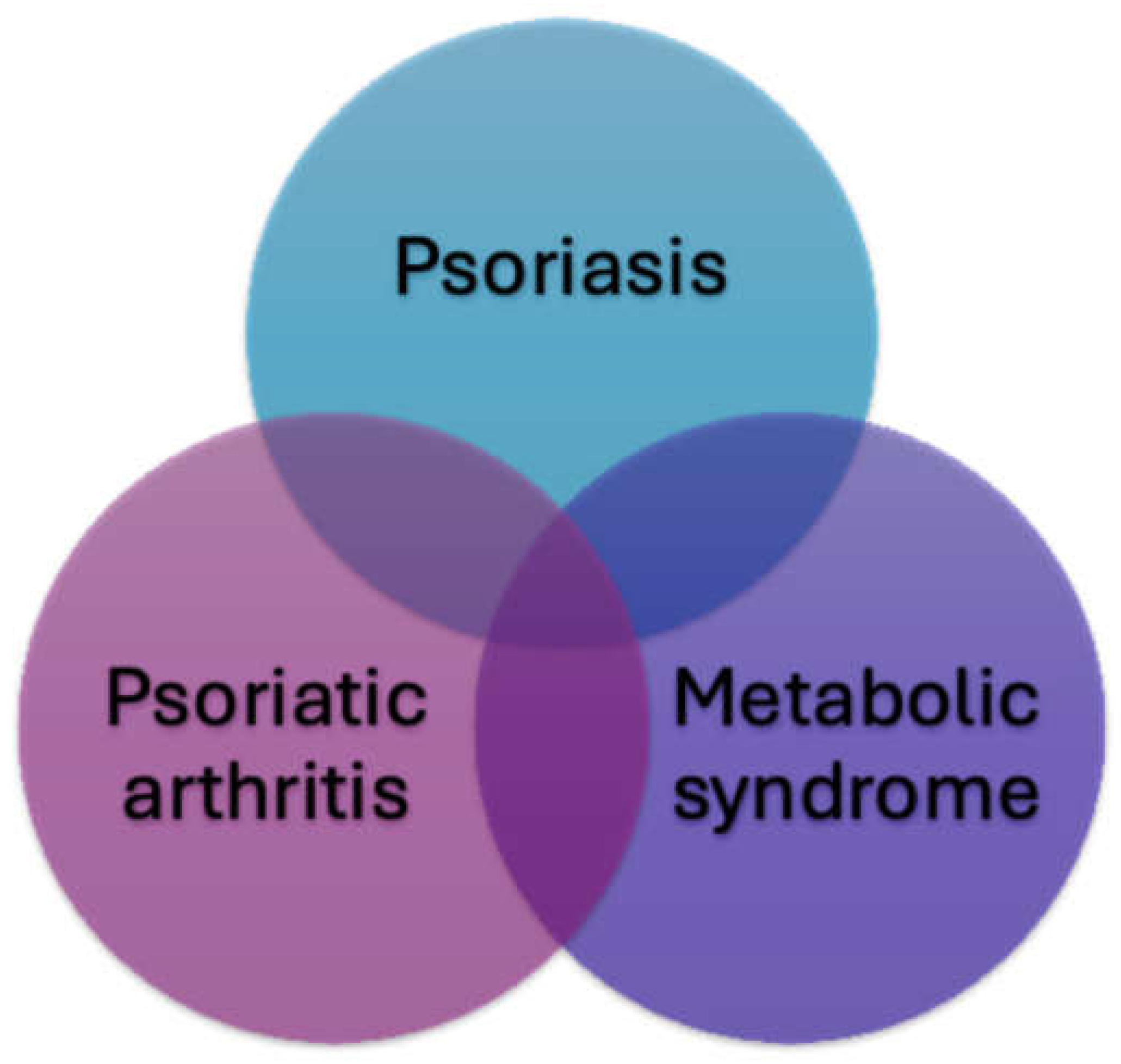
Figure 2.
Treatment methods for obesity in the context of psoriatic disease.

Disclaimer/Publisher’s Note: The statements, opinions and data contained in all publications are solely those of the individual author(s) and contributor(s) and not of MDPI and/or the editor(s). MDPI and/or the editor(s) disclaim responsibility for any injury to people or property resulting from any ideas, methods, instructions or products referred to in the content. |
© 2026 by the authors. Licensee MDPI, Basel, Switzerland. This article is an open access article distributed under the terms and conditions of the Creative Commons Attribution (CC BY) license (http://creativecommons.org/licenses/by/4.0/).
Copyright: This open access article is published under a Creative Commons CC BY 4.0 license, which permit the free download, distribution, and reuse, provided that the author and preprint are cited in any reuse.