

Submitted:
13 February 2026
Posted:
15 February 2026
You are already at the latest version
Abstract
The livestock sector underpins food security, employment, and rural livelihoods across the Southern African Development Community (SADC), contributing up to 50 % of agricultural GDP and supporting more than 60 % of rural households. Yet, climate change poses escalating threats through heat stress, declining pasture productivity, water scarcity, and vector-borne diseases that compromise productivity and economic resilience. This review identifies and locates effective climate change mitigation strategies along the livestock value chain, spanning production, processing, transport, and consumption, to promote sustainable, low-emission, and inclusive growth in the SADC region. A broad review of 46 peer-reviewed and institutional sources (2000 – 2024) was undertaken, focusing on livestock-related mitigation within SADC and comparable agro-ecological systems. Strategies were thematically categorized by value-chain stage and assessed for their emission-reduction and livelihood-enhancement potential. Located strategies include genetic improvement for low-methane and heat-tolerant breeds, adaptive rangeland and feed management, renewable-energy adoption in processing, climate-resilient transport infrastructure, and consumer awareness of low-emission products. Evidence suggests potential GHG-emission reductions of 18–30 %, coupled with productivity gains and improved smallholder incomes. Coordinated implementation through the SADC Regional Agricultural Investment Plan (2021–2030) and national policies can transform the livestock sector into a climate-resilient driver of inclusive growth. Further research should quantify the socio-economic feasibility and scaling potential of these strategies across production systems. Successful integration of climate change mitigation imperatives must be tailored to local biophysical conditions (e.g., rainfall, soil type) and socio-economic contexts (e.g., market access, cultural practices).
Keywords:
climate change
; livestock systems
; SADC
; value chain
; sustainable agriculture
; inclusive growth
1. Introduction
1.1. Background and Significance of the Livestock Sector
The livestock sector is a central pillar of global agriculture, contributing significantly to food security, employment, and economic growth. According to the Food and Agriculture Organization [1] livestock accounts for about 40 % of the global agricultural value added and supports the livelihoods of over 1.3 billion people worldwide. The global market value of the livestock industry is estimated at USD 1.4 trillion annually [2] reflecting its vital contribution to trade, nutrition, and poverty alleviation. Beyond economic importance, livestock production supports cultural identity, provides draught power and manure for crop farming, and acts as a buffer asset against shocks for smallholders [3]. In developing regions, livestock plays an especially inclusive role because of its low barriers to entry compared to crop-based or capital-intensive agricultural systems. Smallholder farmers can maintain small herds or flocks with limited land, offering a pathway to income diversification and resilience [4].
In the Southern African Development Community (SADC) region, livestock contributes between 30 % and 50 % of agricultural GDP, and more than 60 % of rural households depend directly on livestock for livelihoods [5]. The sector also supports foreign exchange earnings through exports of beef, hides, leather, and wool [6]. To strengthen its resilience and competitiveness, regional frameworks such as the SADC Regional Agricultural Policy (RAP) and the Regional Agricultural Investment Plan (RAIP) prioritise livestock productivity, animal health, and value-chain efficiency [7]. Similarly, national strategies such as South Africa’s National Development Plan 2030 emphasise the modernization of livestock systems to enhance inclusive rural development [8]. Thus, livestock production remains a cornerstone of SADC’s socioeconomic transformation agenda thus anchoring rural livelihoods, nutrition security, and industrial linkages in processing and trade.
2.1. The Threat of Climate Change and Variability
Despite its centrality, the livestock sector faces mounting threats from climate change and variability. Rising temperatures, erratic rainfall, and increased drought frequency are expected to exacerbate heat stress, degrade rangelands, reduce water availability, and intensify the spread of diseases [9,10]. In livestock, exposure to temperature–humidity indices (THI) above 72 leads to heat stress that lowers feed intake, milk yield, fertility, and immune competence [11]. Climate projections indicate that the SADC region may experience temperature increases between 1.5 °C and 3.0 °C by mid-century, with significant implications for pasture productivity and animal performance [12,13]. A 5–15 % reduction in forage yield is expected for each 1 °C rise in temperature [14]. Furthermore, changing rainfall patterns threaten water resources, while warmer conditions expand the ecological range of disease vectors such as ticks and mosquitoes, heightening the prevalence of Rift Valley Fever and tick-borne diseases [15]. These impacts extend beyond production: processing, storage, transport, and marketing systems are also exposed to heat-related losses, infrastructure damage, and higher energy demands [16]. Collectively, these stressors disrupt value-chain efficiency, compromise food security, and erode the livelihoods of millions dependent on livestock systems in the SADC region.
For sustainable future food security livestock production systems must be structured in a way that not only increase productivity but also enhance climate resilience and reduction of greenhouse gas (GHG) emissions [71]. This can only be achieved by to achieve net-zero goals. This requires an integrated approach that infuse innovative technologies and management practices and strategies. The livestock sector must learn from the rice sector which has successfully harnessed and integrated climate-smart agricultural practices anchored on adjusted planting calendars, improved crop diversification, and efficient nutrient management [71].
2.2. Problem Statement
Despite increasing recognition of livestock’s economic and social importance, unmitigated climate change impacts continue to undermine its sustainability in southern Africa. Drought-induced forage scarcity, declining feed quality, and heat stress reduce livestock productivity and reproductive efficiency [17]. During the 2015 - 2016 El Niño event, for example, severe drought led to the loss of hundreds of thousands of livestock across SADC, translating into billions of dollars in economic damage [18]. Concurrently, reduced water availability, elevated mortality, and disease outbreaks strain both household incomes and national GDP contributions. At the value-chain level, climate variability affects post-production processes through increased spoilage, reduced cold-chain reliability, and logistical bottlenecks. Smallholder farmers, who constitute the majority of producers, are disproportionately affected because they operate with limited access to insurance, improved genetics, or adaptive technologies [19]. Consequently, the sector’s contribution to inclusive growth, foreign exchange, and food security is at risk.
2.3. Research Gap and Review Objective
Although extensive studies exist on livestock adaptation and mitigation, most focus on isolated aspects such as feed efficiency, greenhouse gas (GHG) emissions, or specific climate hazards (e.g., drought or heat stress). Few have examined mitigation strategies across the entire livestock value chain in the SADC context, integrating both production and post-production stages. Additionally, regional analyses often aggregate Sub-Saharan Africa as a homogeneous unit, overlooking the heterogeneity of biophysical and socioeconomic conditions within SADC [9].
This review therefore seeks to identify and locate climate change mitigation strategies along the livestock value chain—from input and production to processing, transport, and consumption—aimed at supporting sustainable and inclusive socioeconomic growth in the SADC region. The conceptual framework guiding this analysis (Figure 1) recognises that climate risks vary across value-chain stages; hence, effective interventions must be stage-specific and regionally contextualised. By mapping mitigation measures to discrete chain segments, this review contributes to evidence-based policymaking, investment prioritisation, and regional integration in climate-smart livestock development.
3. Methodology: A Broad Review
3.1. Scope and Nature of the Review
This study employed a broad, integrative literature review approach that combines elements of systematic and narrative reviews to provide a comprehensive understanding of climate change mitigation strategies within the livestock sector of the Southern African Development Community (SADC). Unlike a purely systematic review that relies on rigid inclusion criteria, this approach allowed for the synthesis of diverse empirical, conceptual, and policy sources relevant to both the scientific and socioeconomic dimensions of livestock–climate interactions [20].
The review aimed not only to summarise existing mitigation strategies but also to locate them along specific stages of the livestock value chain (production, processing, transport, and consumption). This framing responds to calls for integrative analyses that capture the interconnections between technical mitigation measures and inclusive growth outcomes [14,21]. The following Table 1 maps the livestock production and production systems in the SADC. What can be inferred from the numbers and diversity of the livestock sector is that it has significant potential to drive the region’s inclusive development agenda which thereby justifies the need for models to mitigate the impacts of climate change.
3.2. Literature Sources and Search Strategy
The literature search covered the period 2000–2024, focusing on peer-reviewed and grey literature relevant to climate change mitigation in the livestock sector, with an emphasis on southern Africa. Searches were conducted using major databases including Scopus, Web of Science, ScienceDirect, and FAOSTAT, complemented by institutional repositories such as those of the Food and Agriculture Organization (FAO), International Livestock Research Institute (ILRI), World Bank, and the SADC Secretariat.
Key search terms and Boolean combinations included:
(“climate change mitigation” OR “climate-smart agriculture” OR “low-emission livestock”) AND (“livestock value chain” OR “dairy goats” OR “beef cattle” OR “small ruminants”) AND (“SADC” OR “Southern Africa” OR “Sub-Saharan Africa”) AND (“inclusive growth” OR “sustainable development”).
3.3. Inclusion and Exclusion Criteria
Publications were included if they met the following criteria:
- Addressed climate change mitigation or low-carbon development within livestock systems;
- Contained relevance to SADC member states or comparable agroecological zones within Sub-Saharan Africa;
- Discussed interventions or practices applicable to one or more stages of the livestock value chain;
- Were published in English and subjected to scientific or institutional peer review.
Studies were excluded if they:
Focused solely on crop agriculture, forestry, or fisheries;
- Addressed only adaptation or vulnerability without a mitigation component;
- Were editorial commentaries or lacked methodological clarity;
3. Represented duplicate reports or non-credible online sources.
In total, 178 publications were initially identified, of which 46 met the inclusion criteria after title, abstract, and full-text screening. Grey literature (policy reports, working papers) was included when it contributed novel empirical or policy insights relevant to the SADC region.
3.4. Analytical and Conceptual Framework
The selected literature was analysed using a thematic content analysis guided by an
analytical framework that mapped mitigation strategies to corresponding value-chain stages. The framework, adapted from [23] and Godde, Mason-D’Croz [9] conceptualises the livestock sector as a continuum of interlinked activities—input and production, processing and storage, transport and marketing, and consumption and waste management—each presenting distinct emission sources and mitigation entry points.
Data extraction focused on three analytical dimensions:
- Type of mitigation strategy (e.g., genetic improvement, feed and manure management, renewable energy adoption);
- Value-chain location (e.g., farm level, processing node, logistics and distribution, consumer interface);
- Expected outcomes for sustainability and inclusivity (e.g., emission reduction,
productivity gains, livelihood benefits).
This structure enabled systematic comparison of interventions while maintaining sensitivity to local contexts and institutional capacities within SADC member states. The resulting synthesis provides the empirical foundation for subsequent sections, which discuss identified strategies and policy implications.
4. Impacts of Climate Change and Variability on the Livestock Value Chain
The livestock value chain—comprising input supply, production, processing, transport, and marketing—is inherently climate-sensitive. Variations in temperature, rainfall, and the frequency of extreme events disrupt biophysical processes, input supply systems, and downstream economic linkages [9,24]. The following subsections synthesise evidence on the multi-dimensional impacts of climate change across key value-chain domains, focusing on production, economic, and labour-related outcomes in the SADC and comparable regions.
4.1. Impact on Production and Input Stage (Pasture, Water, Animal Health)
4.1.1. Heat Stress and Animal Performance
Livestock productivity is acutely affected by heat stress, which can be quantitatively assessed using the Temperature–Humidity Index (THI). A THI value above 72 is considered critical, beyond which animals experience physiological stress manifested by increased respiration rate, reduced feed intake, and lower milk yield [25,26]. Empirical studies estimate that, under projected climate scenarios, milk production in tropical regions could decline by 15–20 % by 2050, driven primarily by elevated temperature–humidity conditions [11,27]. In Africa, total livestock productivity is projected to decline by 0.5–1.5 % annually, compounding food insecurity and income losses [12]. Physiologically, heat stress alters endocrine functions, reduces estrus expression, and increases embryonic mortality, resulting in lower conception rates and extended calving intervals [28]. Metabolic disruptions further compromise carcass composition and milk solids, deteriorating product quality. These effects translate into tangible income losses for pastoral and smallholder systems that dominate the SADC region.
4.1.2. Pasture and Forage Productivity
Rising temperatures and reduced precipitation directly influence forage productivity and nutritional quality, crucial determinants of livestock performance. Simulation models show that for every 1 °C rise in mean temperature, pasture productivity declines by 5–15 % in semi-arid grasslands [9,29]. Reduced rainfall intensity and shorter growing seasons exacerbate overgrazing and land degradation, while invasive and unpalatable species outcompete native grasses [30]. The resulting feed deficits increase reliance on purchased concentrates, with commercial feed costs projected to rise by 10–20 % by 2030 [23]. Such input price inflation disproportionately affects smallholders, limiting profitability and reinforcing structural inequalities within the livestock economy.
4.1.3. Water Stress and Disease Dynamics
Water scarcity remains a major constraint in extensive livestock systems. Declining surface water availability and reduced aquifer recharge increase walking distances for watering points and exacerbate animal dehydration, particularly during droughts [17]. Climate-driven shifts in temperature and humidity also expand the ecological ranges of vectors and pathogens. For instance, modelling studies suggest that Rift Valley Fever–suitable areas could expand by approximately 17 % in eastern and southern Africa by 2050, while tick-borne disease transmission seasons are lengthening under warmer conditions [9,31]. Such trends elevate morbidity and mortality risks, raising production costs and reducing marketable yields. Collectively, these biophysical disruptions highlight the need for genetic improvement, rangeland rehabilitation, and integrated health surveillance systems as climate-resilient interventions within the input and production nodes of the livestock value chain.
4.2. Economic and Financial Impacts Across the Value Chain
The economic ramifications of climate change extend throughout the livestock value chain—from production costs to market stability and trade competitiveness. Globally, the livestock sector is projected to incur annual economic losses of USD 9.7–12.6 billion by 2050 due to climate-induced productivity decline and disease outbreaks [24]. At the regional scale, Sub-Saharan Africa may experience a 7–10 % reduction in livestock GDP by 2030, corresponding to USD 1–2 billion in annual losses [32,33]. Within SADC, where livestock contributes up to half of agricultural GDP, such contractions translate into large fiscal and employment shocks, particularly in countries dependent on beef exports (e.g., Botswana, Namibia).
At the household level, the repercussions are even more acute. Studies from comparable smallholder systems in South Asia report income losses of 15–25 % under moderate climate scenarios, primarily due to declining yields and feed costs [34]. Analogous trends are anticipated in southern Africa, where smallholders’ adaptive capacity remains limited. The cost of adaptation and mitigation in developing-country livestock sectors is estimated at USD 1.4–2.3 billion per year, underscoring the scale of investment required to maintain productivity and sustainability [35]. Without such investment, the cumulative losses across production, processing, and market linkages threaten both national economies and regional food systems.
4.3. Impact on Labour Outcomes and Inclusive Growth
The socio-economic effects of climate variability reverberate through employment and livelihood systems embedded in the livestock value chain. Droughts—such as the 2015–2016 El Niño event—led to widespread livestock mortality, pasture failure, and reduced water availability across SADC, resulting in massive asset erosion and underemployment in related sectors including feed supply, processing, and transport [18]. Labour displacement occurs as herders and farm workers migrate in search of alternative income sources, often into lower-paying or informal occupations [36].
Working conditions also deteriorate under climate stress. Increased exposure to heat and zoonotic pathogens heightens occupational health risks, particularly for women, who constitute a large share of smallholder livestock keepers and value-chain workers [37]. Gender-differentiated impacts are evident: women spend more time fetching water and feed, reducing time available for education and other income-generating activities [38].
The livelihood disruption caused by recurrent climatic shocks contributes to social instability, resource conflicts, and rural-to-urban migration [39]. These processes undermine inclusive growth objectives, amplifying poverty and inequality. Strengthening resilience through climate-smart employment programs, livestock insurance, and social protection therefore represents an essential complement to technical mitigation strategies.
5. Locating Climate Change Mitigation Strategies Along the SADC Livestock Value Chain
Developing resilient and low-emission livestock systems in the Southern African Development Community (SADC) requires mitigation strategies that are context-specific and value-chain-aligned. The livestock value chain from input and production to consumption, presents multiple intervention points where technological, management, and institutional innovations can jointly reduce greenhouse gas (GHG) emissions, improve productivity, and sustain livelihoods. Globally, livestock production contributes approximately 14.5 % of anthropogenic GHG emissions, equivalent to 7.1 Gt CO₂-eq yr⁻¹, with ruminants (cattle, sheep, goats) accounting for about 65 % of this total [35,40]. This section situates climate change mitigation interventions along the SADC livestock value chain, emphasizing scientifically validated options and their quantified impacts.
5.1. Production and Input Stage Mitigation Strategies
5.1.1. Genetic Control and Selective Breeding
Genetic improvement offers a long-term, cumulative pathway for reducing livestock emissions and enhancing climate resilience. Studies indicate that host genetic control of enteric methane emissions in cattle can lower emissions by up to 18–30 % through selection for animals with higher feed-conversion efficiency and lower residual methane yield [41]. For example, selecting for low-emitting dairy cows in New Zealand reduced emissions intensity by 11 % per unit of milk solids [42].
In the African context, crossbreeding and conservation of indigenous breeds, such as Nguni cattle, Kalahari Red goats, and Tswana goats, are vital for maintaining heat tolerance, disease resistance, and low maintenance requirements [43]. Within SADC, improved genomic selection and community-based breeding programs have been linked to productivity gains of 20–25 % in milk and growth rates while maintaining lower methane yield per kilogram of product [44]. Hence, integrating genomic selection with national performance recording systems (e.g., through SADC Livestock Information and Traceability initiatives) could deliver both mitigation and adaptation co-benefits across production systems.
5.1.2. Rangeland and Feed Management
Rangelands cover over 60 % of total land area in southern Africa and are critical for extensive beef and small-ruminant systems [45]. Climate-smart grazing practices—rotational or deferred grazing, reseeding of degraded pastures, and controlled stocking densities—can increase biomass productivity and soil carbon sequestration. Research in semi-arid South Africa showed that adaptive grazing management improved soil organic carbon stocks by 0.5–1.0 t C ha⁻¹ yr⁻¹, equivalent to mitigating 1.8–3.7 t CO₂-eq ha⁻¹ yr⁻¹ [46].
Feed innovations also offer mitigation potential. Inclusion of nitrate supplements, tannin-rich forages (e.g., Leucaena leucocephala, Acacia nilotica), and seaweed additives (Asparagopsis taxiformis) can reduce enteric methane emissions by 10–40 %, depending on diet composition [47,48]. Locally, integrating drought-tolerant forages such as Lablab purpureus and Napier grass increases feed security and productivity by up to 30 % under variable rainfall [49]
Water-harvesting structures and small-scale irrigation schemes, promoted under the SADC Regional Agricultural Investment Plan (2021–2030),further reduce drought risk and stabilise feed supply [7]. Table – gives an overview of the livestock feed sources within the SADC region. The overview of the feed sources gives pointers to potential climate change mitigation priorities. The table can be used to make various projections and scenarios of the livestock value chain and climate change impacts.

Table 2.
Livestock Feed Sources in the SADC Region.
| Feed Category | Primary Sources/Examples | Predominant Users/Livestock | Key Regions/Countries | Major Constraints & Trends |
| 1. Natural Pastures & Rangelands | Native grasses, forbs, browse (tree leaves & pods). | Extensive Beef & Dairy Cattle, Goats, Sheep, Wildlife (Pastoral & Agro-Pastoral systems). | All countries, but dominant in: • Botswana, Namibia (Kalahari savannah) • Tanzania, Kenya (Maasai steppe) • Southern Angola, Zambia, Zimbabwe (Miombo woodland) |
Highly seasonal (quality crashes in dry season). Overgrazing & degradation widespread. Recurrent droughts (2023-24 El Niño) reduce carrying capacity. Bush encroachment (e.g., Botswana) reduces grass yield. |
| 2. Crop Residues | Maize stover, sorghum straw, millet straw, groundnut tops, sugarcane tops, legume haulms. | Cattle, Goats, Sheep in mixed crop-livestock systems. Mainly dry-season maintenance feed. |
High rainfall & cropping zones: • South Africa (maize triangle) • Zambia, Malawi, Zimbabwe (high-potential areas) • Tanzania, Mozambique |
Low nutritive value (high fiber, low protein). Requires supplementation (e.g., legume hay, urea treatment). Competing uses (e.g., fuel, soil mulch). Inefficient harvesting & storage leads to waste. |
| 3. Cultivated Fodder |
Forage Grasses: Rhodes grass, Napier grass (Pennisetum). Legumes: Lucerne (alfalfa), Lablab, Cowpea, Velvet bean, Leucaena. |
Dairy Cattle, Commercial Beef Feedlots, Intensive Small Ruminants. | • Kenya, Tanzania, Uganda (dairy belts – Napier grass ubiquitous) • South Africa, Zimbabwe, Zambia (large-scale dairy & beef – Lucerne, Rhodes grass) • Malawi (dairy development projects) |
Limited land/water for smallholders. Seed/planting material access & cost. Knowledge gaps in conservation (silage/hay). Climate vulnerability of exotic forages (e.g., Lucerne needs irrigation). |
| 4. Agro-Industrial By-Products |
Oilseed Cakes: Cottonseed cake, sunflower cake, soybean meal. Brans: Wheat bran, maize bran. Molasses, Brewers' grains, Fruit & veg waste. |
Dairy Cattle, Feedlot Beef, Pigs, Poultry. Critical for concentrate supplements. | • South Africa (well-developed market) • Zambia, Zimbabwe, Malawi (cotton & sunflower regions) • Tanzania (sugar/molasses) • Urban/peri-urban areas (brewery & processing waste) |
Supply inconsistency & price volatility. Competition with human food (e.g., maize bran). Transport costs from processing plants to farms. Quality variation (e.g., aflatoxin in cakes). |
| 5. Manufactured/Compound Feeds | Formulated poultry feeds, dairy pellets, pig grower feeds, beef feedlot rations. | Commercial Poultry & Pig Production, Intensive Dairy, Beef Feedlots. | • South Africa (dominant producer & consumer) • Zambia, Zimbabwe, Kenya (growing commercial sectors) • Major cities & growth corridors |
High cost due to imported ingredients (e.g., maize, soybean meal). Limited access for smallholders. Quality control issues in informal markets. Fuel & currency fluctuations affect price. |
| 6. Grains & Legumes | Maize grain, sorghum, millets, soybeans (often processed). | Poultry, Pigs, Dairy Supplements, Drought Emergency Feed. | • South Africa, Zambia, Zimbabwe (maize surplus areas) • Tanzania, Malawi (local grain use in livestock) |
Severe competition with human food. Ethical & policy dilemmas (e.g., maize export bans during drought). High opportunity cost for smallholders. Price spikes make it unaffordable. |
| 7. Unconventional & Emergency Feeds | Cactus (Opuntia) pads, Cassava leaves & peels, Banana stems, Insect larvae (e.g., Black Soldier Fly), Feed blocks (urea-molasses). | Smallholder Ruminants & Pigs during severe droughts. Emerging use in poultry & aquaculture. | • Madagascar, Botswana (cactus adaptation) • Moist regions (cassava, banana) • Pilot projects across region (insect protein) |
Processing requirements (detoxification for cassava). Lack of scaling for novel feeds (insects). Acceptance & knowledge gaps. Primarily crisis mitigation, not mainstream. |
| 8. Mineral & Salt Licks | Commercial mineral blocks, natural salt deposits, homemade mixtures (salt, bone meal, ash). | All Livestock, especially in phosphorus-deficient rangelands. | • Extensive rangelands of Botswana, Namibia, Tanzania • Smallholder systems universally |
Access & affordability of balanced commercial licks. Geo-specific deficiencies (e.g., Copper in Zambia; Phosphorus in Southern Africa). Counterfeit or low-quality products in markets. |
Source: ILRI. (2022/2023). Sustainable Livestock Systems Program Research Outputs. https://www.ilri.org/research/publicationsThis table outlines the complex and diverse feed base supporting the SADC livestock sector, where improving feed availability and quality is the single most important leverage point for increasing productivity, resilience, and livelihoods especially in the face of climate change and variability.
5.1.3. Animal Health and Biosecurity
Effective animal-health management reduces emission intensity by improving survival, fertility, and feed conversion. The [35] estimates that disease control alone can lower livestock GHG emissions by up to 10 % globally. Climate-driven vector expansion necessitates improved surveillance and vaccination programs for Rift Valley Fever, foot-and-mouth disease, and tick-borne infections [50]. Investment in veterinary infrastructure, diagnostic laboratories, and real-time early-warning systems—supported by regional networks such as the SADC Livestock Technical Committee—is essential. Developing heat-tolerant breeds (e.g., Boran × Tuli crosses) and improving thermoregulatory housing design (shade structures, evaporative cooling) can maintain animal comfort and reduce productivity losses by 10–15 % during extreme heat [51].
5.2. Processing and Storage Stage Mitigation Strategies
5.2.1. Energy Efficiency and Renewable Integration
Post-harvest processes which including milk cooling, slaughtering, and packaging, account for significant energy use, primarily from fossil fuels. Transitioning to renewable energy systems such as solar photovoltaics (PV) and biogas can reduce carbon footprints and operating costs. Empirical evidence from Kenya and Namibia indicates that on-farm solar-powered milk chillers cut electricity costs by 35–45 % and avoided approximately 2.5 t CO₂-eq yr⁻¹ per unit [52]. In South Africa, integrated biogas digesters in abattoirs process effluents to generate up to 60 kWh day⁻¹, offsetting fossil-fuel energy by 70 % and reducing methane release from lagoons [53]. Adopting energy-efficient cooling technologies and insulating cold rooms can yield an additional 10–20 % energy saving, supporting both mitigation and cost efficiency [54].
5.2.3. Waste Management and Circular Bioeconomy Approaches
Livestock waste is a major source of methane (CH₄) and nitrous oxide (N₂O). Converting manure into energy or compost presents significant mitigation opportunities. Anaerobic digestion technologies can capture up to 70–90 % of methane otherwise emitted from open lagoons [55]. For instance, pilot digesters in Tanzania and Zimbabwe each produce 20–25 m³ biogas day⁻¹, reducing emissions by 15–25 t CO₂-eq yr⁻¹ while supplying household energy [7]. Recycling by-products into feed (e.g., blood meal, bone meal) and organic fertilizers promotes a circular livestock bioeconomy, minimizing waste and improving nutrient cycling [23].
5.3. Transport and Marketing Stage Mitigation Strategies
5.3.1. Climate-Resilient Logistics and Infrastructure
The efficiency of livestock transport and market infrastructure directly affects post-harvest losses and emissions. Poor roads and inadequate cold-chain systems contribute to 10–20 % meat and milk losses in Sub-Saharan Africa [56]. Investment in climate-resilient roads, covered livestock markets, and mobile slaughter units reduces such losses and safeguards market access during extreme weather [6]. Implementation of low-carbon logistics, such as the use of biofuels or electric refrigerated vehicles, can reduce transport-related emissions by 20–35 %, depending on distance and load [57]. Strengthening digital livestock traceability and online auction platforms also shortens supply chains and mitigates spoilage, particularly under high-temperature stress [7].
5.3.2. Market Diversification and Green Value Addition
Developing diversified and climate-aware markets strengthens resilience. Promoting value-added products such as dried meat (biltong), artisanal cheeses, and certified “climate-smart” livestock products opens access to premium eco-label markets in the EU and Middle East [35]. Certification schemes such as the Global Roundtable for Sustainable Beef (GRSB) or the Carbon Neutral Meat Initiative can increase producer margins by 5–15 % while rewarding sustainable practices [58].
5.3.3. Consumer Awareness and Sustainable Diets
At the consumption stage, mitigation relies on behaviour change and demand-side management. FAO projections suggest that shifting 10 % of global meat demand from ruminant to poultry or plant-based alternatives could lower livestock emissions by 0.8 Gt CO₂-eq yr⁻¹ [35]. In SADC urban centres, promoting sustainably sourced animal products and reducing food waste which is estimated at 20–25 % of total livestock output, represent key mitigation levers [9]. Public awareness campaigns and green procurement in institutional catering (schools, hospitals) can drive consumer transition toward lower-emission protein sources while maintaining nutritional adequacy [59].
6. Synergies, Coordination, and Inclusive Growth
Climate change mitigation in the SADC livestock sector cannot be effectively achieved through fragmented or country-specific actions. Given the transboundary nature of rangeland ecosystems, shared water basins, and livestock trade networks, regional coordination and policy coherence are critical for scaling sustainable, cost-effective interventions [35,60]. This section elaborates how regional integration, inclusivity, and targeted investment can create synergistic outcomes that reinforce resilience and equitable growth across SADC.
6.1. Coordinated Regional Approach
The livestock sector in the SADC region operates across shared ecological zones and cross-border value chains—for example, the Beef Value Chain Corridor linking Botswana, Namibia, and South Africa, and the Tsetse and Trypanosomiasis Control Belt spanning Zambia, Tanzania, and Mozambique. Despite these linkages, climate change responses have historically remained disjointed, with varying standards for breeding, disease surveillance, and emissions reporting [7,61].
A coordinated approach would harmonize regional climate-smart livestock policies, promote joint research, and establish shared data and early-warning systems for drought, feed deficits, and disease outbreaks. For instance, a harmonized Livestock Greenhouse Gas Inventory Framework could help quantify emission baselines and enable carbon credit certification across SADC markets, drawing on global models such as the Global Research Alliance on Agricultural Greenhouse Gases (GRA) [62]. Regional coordination would also reduce transaction costs through pooled investments in vaccine production facilities, genetic resource centres, and regional feed laboratories—investments often too costly for single nations to undertake independently. Econometric models suggest that joint regional livestock research and innovation platforms could generate efficiency gains of 25–30 %, compared to fragmented national programmes [33]. The sustainability of the livestock sector depends on moving from reactive, siloed risk management to a proactive, systemic, and analytically driven strategy that addresses the root causes and interconnected nature of supply chain vulnerabilities [73]. Furthermore, aligning mitigation efforts with the SADC Regional Agricultural Policy (RAP) and Regional Agricultural Investment Plan (RAIP 2021–2030) ensures consistency with the bloc’s goals of reducing vulnerability, increasing competitiveness, and enhancing intra-regional trade [7].
6.2. Deepening the Inclusive Development Agenda
Mitigation strategies along the livestock value chain can also serve as vehicles for inclusive development, particularly for groups most affected by climate shocks—women, youth, and pastoralists. Targeted interventions in breeding, rangeland management, and value addition can simultaneously reduce emissions and enhance livelihoods. To deepen the inclusive development agenda there is need for evidence based decision-support tool box available to supply chain managers and policymakers to allocate limited resources to the most critical risks, understand the ripple effects of disruptions and the designing of robust, resilient, and sustainable livestock supply chain systems [73].
6.2.1. Providing Assets and Building Resilience
Programs that expand access to drought-resistant livestock species—such as Kalahari Red goats, Nguni cattle, and indigenous Tswana sheep—offer dual benefits of climatic adaptability and lower methane yield per unit of output [17,63]. These breeds survive under harsh conditions, providing a buffer against drought-induced asset losses and promoting herd stability. In Namibia and Botswana, smallholder adoption of indigenous goats increased household income by 18–24 % while reducing feed costs by 30 % [64].
Community-based breeding programs and microcredit for women’s livestock cooperatives can strengthen adaptive capacity. Empirical evidence shows that female-managed livestock enterprises reinvest up to 70 % of profits in household welfare and education, amplifying intergenerational resilience [38].
6.2.2. Diversifying Income and Employment
Integration of climate-smart value addition—for example, solar-powered milk processing, biogas energy enterprises, and eco-labeled meat production—creates new green jobs and entrepreneurship opportunities for rural youth [65,66]. The adoption of decentralized renewable energy systems in small-scale dairy cooperatives in Malawi and Zimbabwe generated 15–25 % higher net margins and created 1.5–2 jobs per 10,000 L of milk processed [54].
Diversified income also stems from rangeland restoration projects, where payments for ecosystem services (PES) reward communities for carbon sequestration. For instance, community grazing schemes in South Africa’s Eastern Cape achieved 0.9 t C ha⁻¹ yr⁻¹ sequestration and delivered USD 25–30 ha⁻¹ yr⁻¹ through carbon credit sales [67]. Such initiatives link mitigation with livelihood diversification, providing a tangible pathway for inclusive, climate-resilient growth.
6.3. Policy and Investment Implications
Translating the identified strategies into practice requires policy coherence and sustainable financing mechanisms. The [68] explicitly calls for investments in “climate-smart agricultural value chains and livestock infrastructure to enhance regional resilience and competitiveness.” Aligning national agricultural investment plans with RAIP can leverage economies of scale and attract international financing from mechanisms such as the Green Climate Fund (GCF) and the Global Environment Facility (GEF) [7,35,70]. For sustainable integration of climate smart interventions in the livestock value chains, it is imperative to understand the legal framework within the SADC region [73]. The major legal framework and instruments are presented in Table ---. These instruments to a large extent strengthen the livestock sector in the SADC region.
Table 3.
Livestock Production Legislation in the SADC Region.
| Country | Core Legal Framework | Key Regulatory Bodies | Thematic Focus & Recent Reforms |
| Angola | Animal Health Law (General Livestock Legislation); Veterinary Regulations; Sanitary & Phytosanitary (SPS) decrees. | Ministry of Agriculture and Forestry (MINAGRIF), National Veterinary Directorate | Focus on post-war sector reconstruction, disease control (FMD, PPR), and formalizing informal trade. Weak enforcement in rural areas. |
| Botswana | Animal Diseases Act (Cap. 35:01); Animal Welfare Act; Meat Inspection Act; Veterinary Surgeons Act. | Department of Veterinary Services (DVS), Botswana Meat Commission (BMC) | Export-oriented. Strict FMD zoning & movement controls (veterinary fences). Strong emphasis on beef safety for EU market. Animal welfare regulations for transport/slaughter. |
| DR Congo | General Agriculture Law; various ordinances on animal health; outdated colonial-era codes. | Ministry of Agriculture, Fisheries and Livestock (Minagri) | Legislation is fragmented and poorly enforced. Priority is on urban meat supply and emerging disease control (ASF, CBPP). Major capacity gaps. |
| Eswatini | Animal Disease Act (1965 & amendments); Swaziland Meat Corporation Act; Veterinary and Para-Veterinary Professions Act. | Ministry of Agriculture (Livestock Services), Swaziland Meat Industries (SMI) | Dual focus: supporting smallholder sector and maintaining EU beef export certification. Legislation under review for modernization. |
| Lesotho | Animal Diseases Act (2004); Agricultural Marketing Act; Livestock Improvement Act. | Ministry of Agriculture and Food Security (Livestock Division) | Strong focus on small ruminants (wool & mohair). Regulations aim to control overgrazing and improve genetics & marketing. Enforcement is a challenge. |
| Madagascar | Rural Development Law; decrees on animal health, zoonoses, and livestock identification. | Ministry of Agriculture and Livestock | Zebu cattle cultural significance influences policy. Focus on rinderpest vigilance (historically) and anthrax/rabies control. Informal sector dominates. |
| Malawi | Animal Diseases Act (Cap. 65:01); Veterinary Surgeons and Para-Veterinary Professionals Act; Meat Hygiene Regulations. | Ministry of Agriculture (Animal Health and Livestock Development Department) | Pig and poultry sector growth driving hygiene regulations. Emphasis on community-based animal health workers (CAHWs) to extend services. |
| Mozambique | Animal Health Law (Law 7/2014); Regulations on Livestock Movement, Identification, and Registration (2020s). | National Directorate of Livestock (DINAP), Ministry of Agriculture and Rural Development | Post-war rebuilding. Recent push for traceability systems and movement permits to control FMD. Tsetse control programs in central region. |
| Namibia | Animal Health Act (Act 1 of 2011); Meat Industry Act; Livestock Improvement Act; Animal Protection Act. | Directorate of Veterinary Services (DVS), Meat Board of Namibia | Similar to Botswana: stringent disease control for export. Strong producer-led institutions (Meat Board). Advanced livestock identification and traceability (LITS). |
| South Africa | Animal Diseases Act (Act 35 of 1984); Meat Safety Act (Act 40 of 2000); Animal Protection Act; Veterinary and Para-Veterinary Professions Act. | Department of Agriculture, Land Reform and Rural Development (DALRRD); Provincial Veterinary Services; Red Meat Industry. | Most comprehensive and enforced. Focus on biosecurity, welfare, and market access. Foot-and-Mouth Disease regulations heavily impact trade and movement. |
| Tanzania | Animal Diseases Act (Cap. 345); Livestock Identification, Registration, and Traceability Act; Meat Industry Act. | Ministry of Livestock and Fisheries; Tanzania Veterinary Services Agency | Focus on pastoralist sector development and disease control (FMD, CBPP). Implementing national livestock identification (NALI) for trade and disease tracing. |
| Zambia | Animal Health Act (2010); Veterinary and Para-Veterinary Professions Act; Stock Diseases Regulations. | Department of Veterinary Services, Ministry of Fisheries and Livestock | Emphasis on transboundary disease control (FMD from neighboring countries) and dairy development. Legislation supportive of smallholder commercialization. |
| Zimbabwe | Animal Health Act (Chapter 19:01); Meat Safety Act; Veterinary and Para-Veterinary Professions Act; Livestock and Meat Industries Act. | Department of Veterinary Services, Ministry of Lands, Agriculture, Fisheries, Water and Rural Development | Strong legacy legislation now challenged by resource constraints. Focus on FMD management and dairy/beef value chain revival. |
| Regional | SADC Protocol on Fisheries (2001) (includes aquaculture); SADC Regional Agricultural Policy (RAP, 2014); SADC Sanitary and Phytosanitary (SPS) Framework; SADC Animal Health Strategy (aligned with WOAH standards). | SADC Secretariat (Food, Agriculture & Natural Resources - FANR Directorate) | Aims to harmonize legislation for safe intra-regional trade, coordinate disease surveillance (e.g., FMD, ASF), and promote sustainable livestock development. |
Source : FAOLEX Database: http://www.fao.org/faolex/
Imbedded in the legal and policy instruments are:
- Incentive frameworks for low-emission livestock practices (e.g., tax reliefs, carbon credit schemes).
- Public–private partnerships (PPPs) to expand renewable energy and waste-to-energy investments in livestock processing.
- Integrated livestock–crop systems to enhance nutrient cycling and land productivity.
- Social protection and insurance programs that shield smallholders from climate-related shocks and stabilize incomes.
Institutionalizing regional monitoring, reporting, and verification (MRV) systems will also be vital for evaluating emission reduction progress and ensuring transparency. With coordinated action, SADC could collectively reduce livestock-sector GHG emissions by 18–30 % by 2050, while improving productivity and inclusive economic outcomes [9,40].
7. Conclusion and Recommendations
7.1. Conclusion
The livestock sector remains a cornerstone of agricultural and rural economies within the Southern African Development Community (SADC), contributing substantially to employment, food security, and inclusive growth. Conclusively climate change is a major crisis for SADC agriculture, requiring an immediate, coordinated, and robust policy response focused on adaptation, resilience, and regional cooperation to safeguard food security and sustainable development [69,70]. However, this review demonstrates that the sector is increasingly vulnerable to multi-dimensional climate change impacts—including heat stress, declining forage productivity, water scarcity, and expanding vector-borne diseases—that collectively threaten its productivity, profitability, and sustainability.
Through a value-chain lens, the review successfully located key climate change mitigation strategies across all major stages: production and input, processing and storage, transport and marketing, and consumption. Evidence indicates that coordinated adoption of climate-smart practices—such as genetic improvement for low-emission and heat-tolerant breeds, adaptive rangeland and feed management, renewable energy integration, and market diversification—can collectively reduce livestock-sector greenhouse gas emissions by 18–30 %, while simultaneously improving food security, income, and resilience for smallholder farmers. Overall, the findings underscore the necessity of regional coordination, targeted investment, and inclusive participation to achieve sustainable livestock development within the SADC framework. By and large successful integration of climate resilient practices must be tailored to local biophysical conditions (e.g., rainfall, soil type) and socio-economic contexts (e.g., market access, cultural practices) [70].
7.2. Recommendations
For SADC Policy Makers: Establish and operationalize mechanisms within the SADC Agricultural Development Fund (ADF) to prioritize value-chain–specific climate mitigation interventions. This should include cross-border research collaboration, harmonized GHG monitoring frameworks, and joint investment in veterinary, breeding, and renewable energy infrastructure. The sector offers a practical blueprint for achieving the intertwined objectives of the Sustainable Development Goals (SDGs) related to poverty, hunger, climate action, and life on land as was also motivated by [70]. For National Governments: Integrate regional mitigation priorities into national agricultural and climate policies, emphasizing the promotion of resilient indigenous livestock breeds, rangeland rehabilitation, and incentives for private-sector investment in low-carbon livestock systems. National agricultural investment plans should align with the SADC Regional Agricultural Investment Plan (RAIP 2021–2030) to leverage funding and technical assistance. There is a clarion call for deliberately mainstreaming climate action into all national and sub-national development plans particularly in the livestock sector [72]. Evidence has shown that mainstreaming of climate change in agriculture and livestock sector requires improved multi-level governance, and international cooperation to secure financial and technological support. The other primer is meaningful stakeholder collaboration across government, the private sector, local communities, and international partners.
For Future Research: Further empirical studies are needed to evaluate the cost-effectiveness, social acceptability, and scalability of the identified mitigation strategies across diverse production systems. Community-level assessments and pilot projects will be crucial to refine context-specific models that balance productivity, adaptation, and emission-reduction objectives. By strategically locating mitigation options along the livestock value chain and embedding them within coordinated regional frameworks, the SADC region can transform its livestock sector into a climate-resilient, low-carbon engine for sustainable and inclusive growth.
References
- FAO. In Transforming the Livestock Sector through the Sustainable Development Goals; Rome: Food and Agriculture Organization; 2018.
- World Bank. Moving towards sustainability: The livestock sector and the World Bank; World Bank Washington DC, 2021. [Google Scholar]
- Herrero, M. The roles of livestock in developing countries. animal 2013, 7(s1), 3–18. [Google Scholar] [CrossRef]
- Descheemaeker, K. Climate change adaptation and mitigation in smallholder crop–livestock systems in sub-Saharan Africa: a call for integrated impact assessments. Regional Environmental Change 2016, 16(8), 2331–2343. [Google Scholar] [CrossRef]
- SADC, Livestock Production. 2022.
- AfDB, Multinational: SADC Strengthening of Institutions for Risk Management of Transboundary Animal Diseases (TADs) – Appraisal Report. In African Development Bank.; 2020.
- SADC, Regional Agricultural Investment Plan (RAIP). 2021.
- Presidency, T. National Development Plan 2030: Our future-make it work. Internet, 2012. Available online: http://www.gov.za/documents/detail.php.
- Godde, C.M. Impacts of climate change on the livestock food supply chain; a review of the evidence. Global food security 2021, 28, 100488. [Google Scholar] [CrossRef] [PubMed]
- Maluleke, P.; Moeletsi, M.E.; Tsubo, M. Analysis of climate variability and its implications on rangelands in the Limpopo Province. Climate 2023, 12(1), 2. [Google Scholar] [CrossRef]
- Rojas-Downing, M.M. Climate change and livestock: Impacts, adaptation, and mitigation. Climate risk management 2017, 16, 145–163. [Google Scholar] [CrossRef]
- Niang. Africa. In Climate Change 2014: Impacts, Adaptation, and Vulnerability. IPCC WGII AR5; Cambridge University Press., 2014. [Google Scholar]
- Stagner, F.W. Effects of Temperature and Precipitation Stress on Livestock Ownership in Sub-Saharan Africa. Journal of Agriculture and Environment for International Development (JAEID) 2025, 119(1), 303–326. [Google Scholar] [CrossRef]
- Durrant, A. How might technology rise to the challenge of data sharing in agri-food?. Global Food Security 2021, 28, 100493. [Google Scholar] [CrossRef]
- Wilcox, B.A. Vector-borne disease and climate change adaptation in African dryland social-ecological systems. Infectious diseases of poverty 2019, 8(1), p. 36. [Google Scholar] [CrossRef]
- Smith, A.P. Ammonia volatilisation from grazed, pasture based dairy farming systems. Agricultural Systems 2021, 190, 103119. [Google Scholar] [CrossRef]
- Rust, J.; Rust, T. Climate change and livestock production: A review with emphasis on Africa. South African Journal of Animal Science 2013, 43(3), 255–267. [Google Scholar] [CrossRef]
- SADC, Impact of the 2015–2016 El Niño on SADC Agriculture and Food Security. In Gaborone: SADC Secretariat; 2016.
- Lamichhane, P. Climate change adaptation in smallholder agriculture: adoption, barriers, determinants, and policy implications. Mitigation and Adaptation Strategies for Global Change 2022, 27(5), p. 32. [Google Scholar] [CrossRef]
- Snyder, H. Literature review as a research methodology: An overview and guidelines. Journal of business research 2019, 104, 333–339. [Google Scholar] [CrossRef]
- Zenda, M. Climate change adaptation and mitigation in different livestock production systems and agro-ecological zones in South Africa: A systematic review. Tropical Animal Health and Production 2025, 57(8), p. 440. [Google Scholar] [CrossRef] [PubMed]
- Herrero, M. Farming and the geography of nutrient production for human use: a transdisciplinary analysis. The Lancet Planetary Health 2017, 1(1), e33–e42. [Google Scholar] [CrossRef] [PubMed]
- FAO, Transforming the Livestock Sector through the Sustainable Development Goals. In Rome: Food and Agriculture Organization; 2019.
- Thornton, P.K.; Mensah, C.; Enahoro, D.K. Modelling the effects of climate change on livestock: Towards Identifying the priorities.; 2022. [Google Scholar]
- Polsky, L.; Von Keyserlingk, M.A. Invited review: Effects of heat stress on dairy cattle welfare. Journal of dairy science 2017, 100(11), 8645–8657. [Google Scholar] [CrossRef] [PubMed]
- Herbut, P.; Angrecka, S.; Walczak, J. Environmental parameters to assessing of heat stress in dairy cattle—a review. International journal of biometeorology 2018, 62(12), 2089–2097. [Google Scholar] [CrossRef]
- Henry, B. Livestock production in a changing climate: adaptation and mitigation research in Australia. Crop and Pasture Science 2012, 63(3), 191–202. [Google Scholar] [CrossRef]
- Das, R. Impact of heat stress on health and performance of dairy animals: A review. Veterinary world 2016, 9(3), p. 260. [Google Scholar] [CrossRef]
- Churchill, A.C. Pastures and climate extremes: impacts of cool season warming and drought on the productivity of key pasture species in a field experiment. Frontiers in plant science 2022, 13, 836968. [Google Scholar] [CrossRef]
- Bunning. Rangeland and Pasture Productivity under Climate Change in Sub-Saharan Africa; FAO Technical Paper: Rome., 2019. [Google Scholar]
- Auty. How can we realise the full potential of animal health systems for delivering development and health outcomes? 2021.
- Herrero, M. Greenhouse gas mitigation potentials in the livestock sector. Nature Climate Change 2016, 6(5), 452–461. [Google Scholar] [CrossRef]
- Bank, W.; World Bank. Moving Towards Sustainability: The Livestock Sector and the World Bank.; 2022. [Google Scholar]
- Aggarwal, P.K. The climate-smart village approach. Ecology and Society 2018, 23(1). [Google Scholar] [CrossRef]
- FAO, Livestock and Climate Change Adaptation: A Global Assessment of Investment Needs. In Rome: FAO; 2020.
- ILO, Working on a Warmer Planet: The Impact of Heat Stress on Labour Productivity and Decent Work. In Geneva: International Labour Organization; 2019.
- Talukder, B. Health impacts of climate change on smallholder farmers. One Health 2021, 13, 100258. [Google Scholar] [CrossRef]
- Kristjanson, P. Livestock and women’s livelihoods, in Gender in agriculture: Closing the knowledge gap. In Springer; 2014; pp. 209–233. [Google Scholar]
- Castells-Quintana, D.; Lopez-Uribe, M. del Pilar; McDermott, T.K. Population displacement and urban conflict: Global evidence from more than 3300 flood events. Journal of Development Economics 2022, 158, 102922. [Google Scholar] [CrossRef]
- Gerber, P.J. Tackling climate change through livestock: a global assessment of emissions and mitigation opportunities; 2013. [Google Scholar]
- Pickering, N.K. Animal board invited review: genetic possibilities to reduce enteric methane emissions from ruminants. animal 2015, 9(9), 1431–1440. [Google Scholar] [CrossRef] [PubMed]
- Zhang, X. Prediction of effects of dairy selection indexes on methane emissions. Journal of dairy science 2019, 102(12), 11153–11168. [Google Scholar] [CrossRef]
- Mapiye, C. Strategies for sustainable use of indigenous cattle genetic resources in Southern Africa. Diversity 2019, 11(11), 214. [Google Scholar] [CrossRef]
- Hunde, D. Community-based breeding programs can realize sustainable genetic gain and economic benefits in tropical dairy cattle systems. Frontiers in Genetics 2024, 15, 1106709. [Google Scholar] [CrossRef]
- Ibeagha-Awemu, E.M.; Osei-Amponsah, R.; Bemji, M.N. African Livestock Production Systems: The Past, Present and the Projected Future, in African Livestock Genetic Resources and Sustainable Breeding Strategies: Unlocking a Treasure Trove and Guide for Improved Productivity; Springer, 2025; pp. 13–64. [Google Scholar]
- Mehre, J. Adaptive multi-paddock grazing increases soil carbon stocks and decreases the carbon footprint of beef production in ontario, Canada. Journal of Environmental Management 2024, 371, 123255. [Google Scholar] [CrossRef]
- Roque, B.M. Red seaweed (Asparagopsis taxiformis) supplementation reduces enteric methane by over 80 percent in beef steers. Plos one 2021, 16(3), e0247820. [Google Scholar] [CrossRef] [PubMed]
- Ahmad, I. Graduate Student Literature Review: Limitations in feeding red seaweed Asparagopsis species for enteric methane mitigation in ruminants. Journal of Dairy Science 2025. [Google Scholar] [CrossRef] [PubMed]
- Habte, E. Productivity and feed quality performance of Napier grass (Cenchrus purpureus) genotypes growing under different soil moisture levels. Plants 2022, 11(19), 2549. [Google Scholar] [CrossRef]
- Gerken, K.N. Paving the way for human vaccination against Rift Valley fever virus: A systematic literature review of RVFV epidemiology from 1999 to 2021. PLoS neglected tropical diseases 2022, 16(1), e0009852. [Google Scholar] [CrossRef]
- Slayi, M.; Jaja, I.F. Strategies for mitigating heat stress and their effects on behavior, physiological indicators, and growth performance in communally managed feedlot cattle. Frontiers in Veterinary Science 2025, 12, 1513368. [Google Scholar] [CrossRef]
- Wu, J. Research on multi-objective optimization model for hybrid energy system considering combination of wind power and energy storage. Sustainability 2021, 13(6), 3098. [Google Scholar] [CrossRef]
- Varvagiannis, E. Energy assessment based on semi-dynamic modelling of a photovoltaic driven vapour compression chiller using phase change materials for cold energy storage. Renewable Energy 2021, 163, 198–212. [Google Scholar] [CrossRef]
- UNIDO, Renewable Energy and Energy Efficiency in Agro-Industries: Opportunities for Africa. In Vienna: United Nations Industrial Development Organization; 2020.
- Tauseef, S.M. Methane capture from livestock manure. Journal of environmental management 2013, 117, 187–207. [Google Scholar] [CrossRef]
- World Bank, Food Loss and Waste in Sub-Saharan Africa: A Critical Review. In Washington DC: World Bank.; 2020.
- Pradhan, P.; Costa, L.; Rybski, D.; Lucht, W.; Kropp, J.P. Cutting transport emissions in food systems. Nature Food 2022, 3, 197–206. [Google Scholar]
- Newton, P.; Agrawal, A.; Wollenberg, E. Enhancing the sustainability of beef value chains. Environmental Research Letters 2021, 16(4), 045004. [Google Scholar]
- Tilman, D.; Clark, M. Global diets link environmental sustainability and human health. Nature 2014, 515(7528), 518–522. [Google Scholar] [CrossRef] [PubMed]
- Thornton, P.K.; Herrero, M. The changing global context for livestock systems. Annual Review of Animal Biosciences 2022, 10, 5–25. [Google Scholar]
- UNEP. Integrated Climate Adaptation and Mitigation Strategies for the Livestock Sector in Southern Africa. In Nairobi: United Nations Environment Programme; 2022. [Google Scholar]
- Havlík, P.; Valin, H.; Herrero, M. Global livestock systems: Economic and climate synergies of coordinated policy. Environmental Research Letters 2021, 16(12), 125012. [Google Scholar]
- Chimonyo, M.; Mapiye, C.; Dzama, K. Utility of indigenous livestock in climate change mitigation and adaptation. Tropical Animal Health and Production 2020, 52, 4037–4047. [Google Scholar]
- Katjiuongua, H.; Menezes, A. Market access for smallholder goat producers in southern Africa. In ILRI Research Report No. 55; ILRI.: Nairobi, 2019. [Google Scholar]
- Wang, J.; Ndambi, A.; van der Lee, J. Solar milk cooling: Improving energy efficiency and emission reduction in African dairy chains. Sustainability 2021, 13(6), 3098. [Google Scholar]
- Van Zyl, C.; Pretorius, P.; Gouws, M. Energy recovery from abattoir waste through anaerobic digestion in South Africa. Renewable Energy 2020, 162, 1414–1425. [Google Scholar]
- Mngadi, M.; Moyo, S.; Kunene, N. Carbon sequestration potential of adaptive grazing systems in South Africa. Agriculture, Ecosystems & Environment 2020, 295, 106875. [Google Scholar]
- SADC RAIP, S., Regional Agricultural Investment Plan (RAIP) 2021–2030. In Gaborone: SADC Secretariat; 2021.
- Semosa, P.D. The Impact of Climate Change on the Agricultural Sector in SADC Countries. Sustainability 2025, 17, 5177. [Google Scholar] [CrossRef]
- Manono, B.O.; Gichana, Z. Agriculture-Livestock-Forestry Nexus: Pathways to Enhanced.
- Incomes, Soil Health, Food Security and Climate Change Mitigation in Sub-Saharan Africa. Earth 2025, 6, 74. [CrossRef]
- Sule, M.I.S.; Siswanto, S.Y.; Suriadikusumah, A.; Banerjee, S. Advancing Innovative Climate-Resilient and Net-Zero Technologies to Enhance Rice Productivity and Sustainability Amidst Climate Change. Sustainability 2025, 17, 9322. [Google Scholar] [CrossRef]
- Okafor, C.C.; Ajaero, C.C.; Madu, C.N.; Nzekwe, C.A.; Otunomo, F.A.; Nixon, N.N. Climate Change Mitigation and Adaptation in Nigeria: A Review. Sustainability 2024, 16, 7048. [Google Scholar] [CrossRef]
- Ali, Z.; Siddiqui, M.S.; Khan, S.; Ali, R. A Multi-Method Analysis of Risk Mitigation Strategies for the Livestock Supply Chain. Sustainability 2025, 17, 6741. [Google Scholar] [CrossRef]
Figure 1.
Conceptual Framework of Impact of Climate Change and Variability on Livestock sector. Adapted from Godde, Mason-D’Croz [9].
Figure 1.
Conceptual Framework of Impact of Climate Change and Variability on Livestock sector. Adapted from Godde, Mason-D’Croz [9].
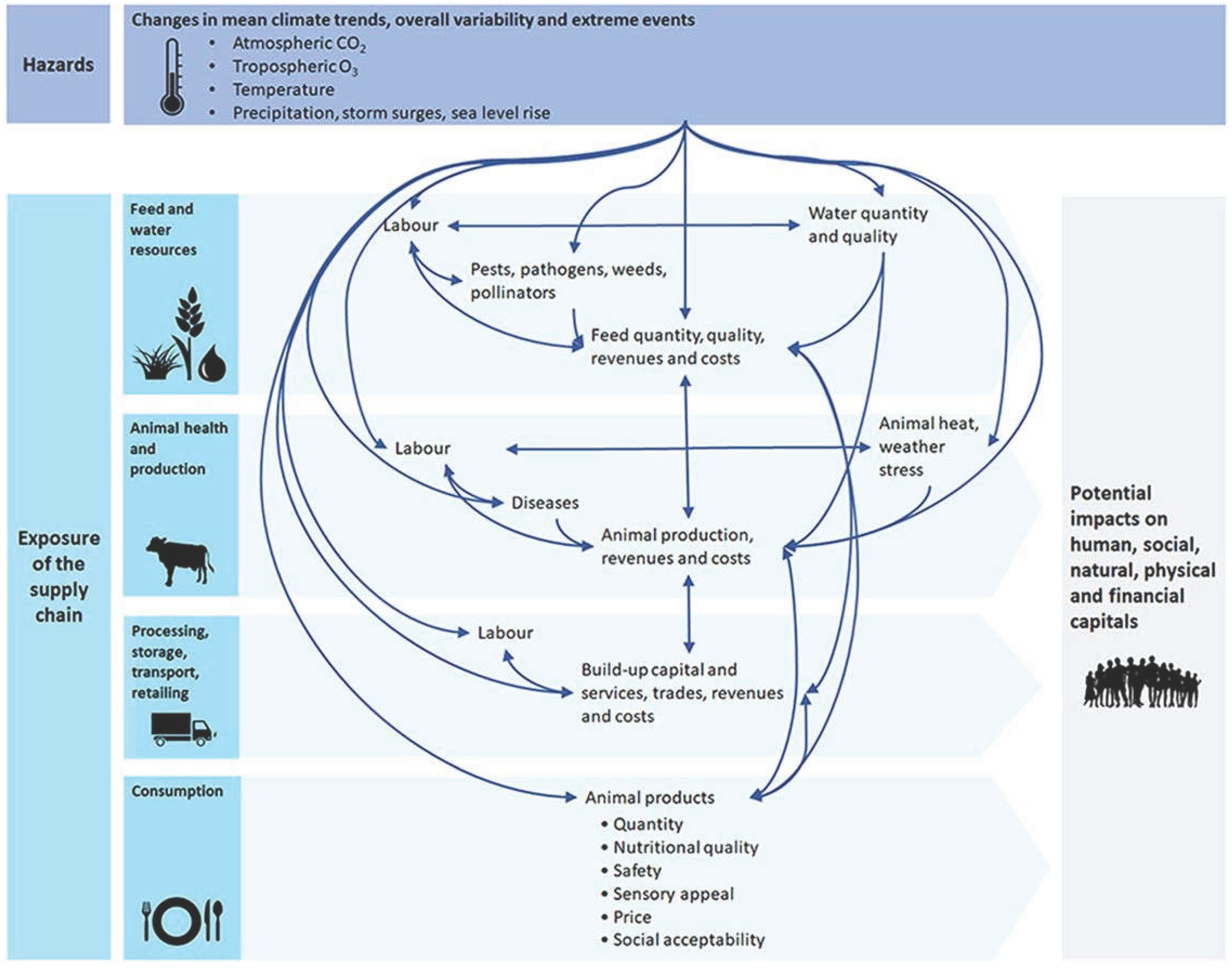
Table 1.
Livestock Production in the SADC Region (2023/24 Estimates).
Table 4.2: Livestock Production in the SADC Region (2023/24 Estimates).
Table 1.
Livestock Production in the SADC Region (2023/24 Estimates).
Table 4.2: Livestock Production in the SADC Region (2023/24 Estimates).
| Country | Cattle (millions) | Goats (millions) | Sheep (millions) | Poultry (millions) | Pigs (millions) | Key Production Systems & Notes |
| Angola | 4.8 | 4.1 | 0.35 | 28 | 1.2 | Mixed crop-livestock (north); pastoral (south). |
| Botswana | 2.1 | 1.8 | 0.3 | 6 | 0.02 | Beef export-focused (EU market). Communal (70%) vs. commercial. |
| DR Congo | 1.2 | 4.0 | 0.9 | 32 | 1.0 | Smallholder, low productivity. |
| Eswatini | 0.62 | 0.28 | 0.04 | 3.5 | 0.03 | Dual system: commercial dairy/beef and smallholder. |
| Lesotho | 0.75 | 0.85 | 1.5 | 2.2 | 0.06 | Sheep & mohair important. |
| Madagascar | 10.5 | 1.6 | 0.75 | 39 | 1.3 | Zebu cattle culturally significant; mainly smallholder mixed systems. |
| Malawi | 1.6 | 4.3 | 0.25 | 45 | 3.8 | Smallholder pig & poultry important for income. Cattle for draught power. |
| Mauritius | 0.008 | 0.03 | 0.002 | 8.5 | 0.01 | Very limited livestock; focus on dairy & poultry imports. |
| Mozambique | 1.9 | 5.2 | 0.2 | 31 | 1.5 | Small ruminants & poultry dominate. |
| Namibia | 2.5 | 2.1 | 1.7 | 3.0 | 0.15 | Commercial beef export (South Africa, EU). Communal pastoralism in north. |
| South Africa | 12.8 | 6.5 | 23.0 | 160 | 1.6 | Intensive commercial systems (beef, dairy, poultry, sheep). |
| Tanzania | 35.0 | 24.7 | 7.6 | 89 | 2.1 | Largest cattle herd in SADC. Pastoral (Maasai) & mixed systems. Growing dairy. |
| Zambia | 4.5 | 4.2 | 0.4 | 58 | 0.8 | Mixed crop-livestock in plateau; traditional cattle in Western Province. |
| Zimbabwe | 5.2 | 4.0 | 0.75 | 35 | 0.6 | Commercial beef heritage; now dominated by smallholder & dairy revival. |
| SADC Total | ~84 | ~67 | ~37 | ~548 | ~16 | Totals are approximate; includes all 16 member states. |
Source: FAOSTAT: http://www.fao.org/faostat/ This table provides a snapshot of livestock production based on national agricultural surveys and SADC quarterly bulletins where livestock numbers are highly dynamic in response to climate and market shocks.
Disclaimer/Publisher’s Note: The statements, opinions and data contained in all publications are solely those of the individual author(s) and contributor(s) and not of MDPI and/or the editor(s). MDPI and/or the editor(s) disclaim responsibility for any injury to people or property resulting from any ideas, methods, instructions or products referred to in the content. |
© 2026 by the authors. Licensee MDPI, Basel, Switzerland. This article is an open access article distributed under the terms and conditions of the Creative Commons Attribution (CC BY) license (http://creativecommons.org/licenses/by/4.0/).
Copyright: This open access article is published under a Creative Commons CC BY 4.0 license, which permit the free download, distribution, and reuse, provided that the author and preprint are cited in any reuse.


