

Submitted:
12 February 2026
Posted:
13 February 2026
You are already at the latest version
Abstract
Oral squamous cell carcinoma (OSCC) is major cause of human cancer. The enzyme, nicotinamide N-methyltransferase (NNMT) is overexpressed in a variety of human cancers including OSCC. Our laboratory identified two small molecule inhibitors of NNMT (AG-670 and AO-022) based on a pharmacophore of the in silico nicotinamide binding site. These inhibitors were demonstrated to inhibit the isolated NNMT enzyme with EC50 values in the micromolar range. Using an oral squamous cancer cell line as a model, it was demonstrated that NNMT is expressed in SCC-4 cells, but not MCF 7 cells, and that the inhibitors were cytotoxic to SCC-4 cells (IC50 values in the micromolar range). In an endeavour to investigate the mechanism behind their lethality, sub-lethal doses of the inhibitors were demonstrated to inhibit in situ mitochondrial oxygen consumption in SCC-4 cells but not in MCF 7 cells. It was further demonstrated that the NNMT inhibitors did not directly inhibit mitochondrial electron transport chain activity. Thus, we can deduce that the NNMT inhibitors effect mitochondrial activity indirectly via NNMT. We conclude that NNMT is a potential drug target for oral cancer.
Keywords:
oral squamous cell carcinoma
; nicotinamide N-methyltransferase
; mitochondria
; cellular oxygen consumption
; SCC-4
; MCF 7
; AG-670
; AO-022
1. Introduction
Oral squamous cell carcinoma (OSCC) accounts for up to 90% of all oral malignancies and is the sixth most common cancer worldwide [1]. Treatment involves surgical removal of the tumour, radiation, and chemotherapy although such treatments are not always satisfactory with 5-year survival of only 50% being recorded [1,2]. We were interested in a more targeted approach to compliment the established cancer therapeutics. The enzyme, N-nicotinamide methyltransferase (NNMT) is overexpressed in a variety of human cancers, including oral squamous cancer biopsies [3] and has recently been investigated by several laboratories as a potential anti-cancer target [4,5,6,7,8,9,10,11]. Nicotinamide N-methyltransferase (NNMT) catalyses the methylation of nicotinamide (NAM) by transferring the methyl group the methyl donor S-adenosyl-L-methionine to nicotinamide, subsequently generating S-adenosyl-L-homocysteine, and 1-methylnictotinamide [12,13] (Figure 1A). NNMT thus modulates intracellular NAD+ levels, which are crucial for energy metabolism, oxidative phosphorylation [14,15] and metabolic enzyme activity via NAD+-dependent sirtuin deacetylases [16].
Under normal physiologic conditions, NNMT is predominantly expressed by hepatocytes in the liver, white adipose tissue, skeletal muscle and lung, while multiple mesenchymal cell types have lower levels of NNMT expression [17,18]. However, numerous studies have suggested that NNMT expression is significantly increased in several kinds of cancer, including neuroblastoma [19], oral squamous cell carcinoma [3], papillary thyroid cancer [20], lung cancer [21], breast cancer [22], gastric cancer [23], pancreatic cancer [24], colorectal cancer [25], renal carcinoma [26], and ovarian clear cell carcinoma [27]. High NNMT expression in these cancers appears to be inversely associated with the tumour size and progression, suggesting that NNMT may have potential effects in an initial step of malignant conversion [28]. However, and interestingly, there are also cancer cell lines where NNMT is not expressed such as in the estrogen-receptor positive breast cancer cell line MCF 7 [29,30].
Several NNMT inhibitors have been identified to date, such as methylated quinolines [6] nicotinamide analogs [7,8], covalent inhibitors [4,9], and amino-adenosine and alkynyl derived bi-substrate inhibitors [5,10,11]. Our laboratory identified two small molecule inhibitors of NNMT (AG-670 and AO-022) [Figure 1B,C] based on a pharmacophore of the in silico nicotinamide binding site [Supplementary Section 1]. The effect of these modulators of NNMT on OSCC cell viability and energy metabolism was evaluated.
2. Results
The enzyme, nicotinamide N-methyltransferase (NNMT) is overexpressed in a variety of human cancers. Figure 2 demonstrates that NNMT is expressed in Hs578T cells (a triple negative breast cancer cell line), SCC-4 cells (an oral squamous cell carcinoma cell line), DOK cells (a pre-cancerous dysplastic oral keratinocytes cell line) and primary oral gingival keratinocytes (PGK cells). However, Figure 2 demonstrates that NNMT is not expressed in estrogen (ER), progesterone (PR), and glucocorticoid receptor-positive MCF7 cells, confirming data presented by others [29,30].
Figure 3 demonstrates the potency of the two small molecule inhibitors (AG-670 and AO-022) on isolated NNMT enzyme activity and SSC4 cell cytotoxicity. Figure 3A,B demonstrate that AG-670 and AO-022 directly inhibits enzyme activity with EC50 values of 2.7 µM (95% CI: 1.4–5.8) and 37.5µM (95% CI: 23.4–60.5), respectively. Figure 3C,D demonstrate that AG-670 and AO-022 are potent to SCC-4 cells with IC50 values of 41.8 µM (95% CI: 33.5–65.3) and 154.9 µM (95% CI: 108.5–268.4), respectively.
We next determined the effect of sub-lethal doses of NNMT inhibitors (AG-670 & AO-022) on oxygen consumption rates (OCR) in SCC-4 cells (Figure 4), cells demonstrated to express NNMT (Figure 2). Cellular oxygen consumption rates are regularly used as an index of general cellular metabolism in primary cells and in many, but not all, cancer cells. We could demonstrate that both AG-670 & AO-022, at a sublethal dose of 10µM, inhibit cellular oxygen consumption (Figure 4A) by inhibiting in situ mitochondrial oxygen consumption (~3-fold) in SCC-4 cells (Figure 4B). Similar results were observed for Hs578T cells (Figure S4) and human dysplastic oral keratinocyte (DOK) cells (not shown), both of which express NNMT (Figure 2)
As the NNMT inhibitors were designed for the nicotinamide site in NNMT, it was decided to investigate the efficacy of AG-670 & AO-022 on oxygen consumption by isolated mitochondrial (Figure 5). It was demonstrated that neither inhibitor effected oxygen consumption in isolated mitochondria respiring on glutamate and malate which are as a source of matrix NADH2 for complex 1 initiated electron transport chain activity.
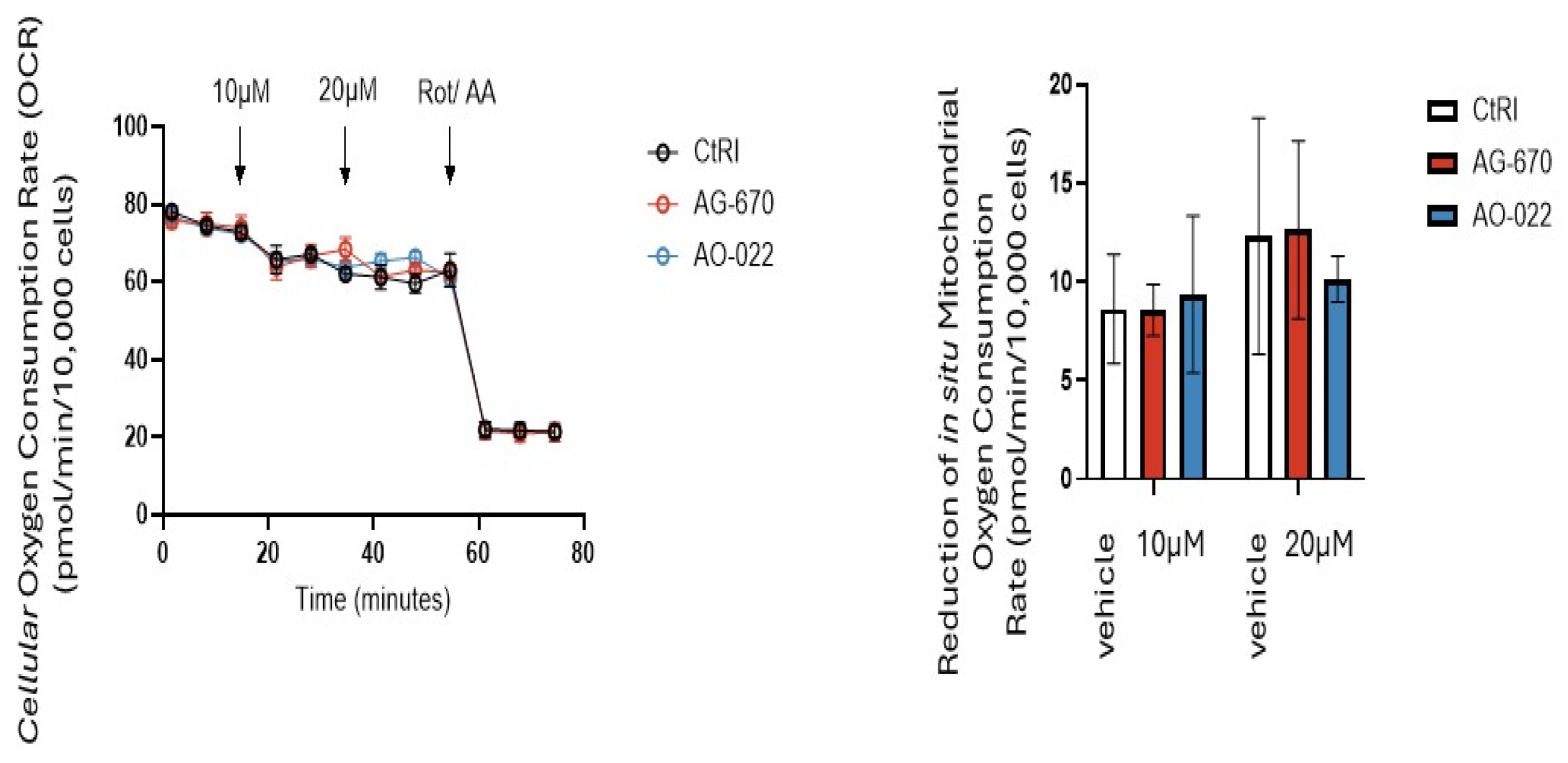
We then determined the effect of sub-lethal doses of NNMT inhibitors (AG-670 & AO-022) on oxygen consumption rates (OCR) in MCF 7 cells (Figure 6), cells demonstrated not to express NNMT (Figure 2). We demonstrated that neither AG-670 or AO-022, at a sublethal dose of 10 µM, inhibited cellular oxygen consumption (Figure 6A) or in situ mitochondrial oxygen consumption in MCF 7 cells (Figure 6B).
3. Methods
3.1. In Silico Modelling
The two small molecule inhibitors of NNMT (AG-670 and AO-022) [Figure 1B,C] were purchased from Specs Compound Handling B.V./eMolecules (Zoetermeer, The Netherlands) based on our work defining the pharmacophore of the in silico nicotinamide binding site [Supplementary Information 1].
3.2. Cell Culture
All cells were purchased from the American Type Culture Collection (ATCC) and cultured as per their recommendations. SCC-4 cells were originally derived from stage 3 tongue cancer in a 50 year old male [31]. MCF-7 cells are a human breast cancer cell line derived in from a 69-year-old female with metastatic adenocarcinoma. It is a key Luminal A subtype cell line, characterized by being estrogen (ER), progesterone (PR), and glucocorticoid receptor-positive [32]. Hs578T is a triple negative (no estrogen, progesterone and HER2 receptors) breast cancer cell line originally from epithelial cells isolated from breast tissue derived from a 74-year-old female breast cancer patient [33,34]. Dysplastic oral keratinocyte (DOK) cells (originally from the dorsal part of the tongue of a 57 year old man) and primary gingival keratinocyte (PGK) cells were also cultured. All cells were cultured as described in Karavyraki & Porter [35].
3.3. Immunoblotting
Detection of NNMT was assessed by immunoblot using Novus Biologicals antibody NBP2-00537 with cell lysates, using methodology described in Ge et al. [36].
3.4. Cytotoxicity (IC50)
Cell viability was determined by Alamar blue assay using a range of NNMT inhibitor concentrations over 72h using 1% FBS.
3.5. Enzyme Activity (EC50)
An NNMT inhibitor screening assay kit (Sigma-Aldrich) was used to determine potency of inhibitors on the isolated enzyme.
3.6. Oxygen Consumption Rates (OCR)
Cellular and in situ mitochondrial oxygen consumption (OCR) were determined by Seahorse XF analyser (Agilent) as described in Karavyraki & Porter [35]. Oxygen consumption by isolated mitochondria from rat liver using NADH-dependent substrates (glutamate and malate) in the presence and absence of NNMT inhibitors was determined using a Rank Oxygen Electrode as described in Martin et al. [37].
4. Conclusions
Oral squamous cell carcinoma (OSCC) accounts for up to 90% of all oral malignancies and is the sixth most common cancer worldwide. Our research was interested in finding molecular targets to treat this cancer. The enzyme, N-nicotinamide methyltransferase (NNMT) is one such candidate and has been shown to be overexpressed in a variety of human cancers [3,20,21,22,23,24,25,26,27]. Hence NNMT has been investigated by several laboratories as a potential anti-cancer target [4,5,6,7,8,9,10,11]. In this study, NNMT is shown to be expressed in oral squamous cell carcinoma (SCC-4) cells, dysplastic oral keratinocyte (DOK) cells, primary gingival keratinocyte (PGK) cells and the triple negative breast cancer cell line Hs578T. These data are consistent with NNMT expression in OSCC biopsies [3]. Furthermore, we confirm that NNMT is not expressed in MCF 7 breast cancer cells, as has been demonstrated by others [29,30]. In addition, the NNMT inhibitors selected from our pharmacophore design (Supplementary Section 1) have been demonstrated to be direct inhibitors of the enzyme NNMT and cytotoxic to SCC-4 cells. In an endeavour to examine the mechanism behind that potency, AG-670 and AO-022 were tested for efficacy on cellular oxygen consumption, an index of overall metabolism in cells. It was demonstrated that sublethal doses of AG-670 and AO-022 inhibit in situ mitochondrial oxygen consumption in intact SCC-4 (and DOK and Hs578T cells) from which we deduce that a restriction of ATP supply is a prelude to, and probable factor in, the potency of the drugs. Furthermore, although the drugs were designed to target NNMT, it was important to establish whether the inhibition of in situ mitochondrial oxygen consumption in SCC-4 cells might be due to a direct effect on mitochondrial function independent of NNMT. This was addressed firstly, by demonstrating that AG-670 and AO-022 do not directly inhibit mitochondrial electron transport chain function in isolated mitochondria and secondly, by demonstrating that AG-670 and AO-022 had no effect on in situ mitochondrial oxygen consumption in MCF 7 cells, i.e., cells that don’t express NNMT. We therefore conclude that NNMT activity directly effects mitochondrial activity in situ and that the inhibitors of NNMT inhibit in situ mitochondrial oxygen consumption in SCC-4 indirectly via inhibition of NNMT. Possible explanations as to the mechanism behind the indirect inhibition of mitochondrial function via NNMT stem from a couple of interesting observations in the literature. Parsons et al. [38] revealed that NNMT expression contributes to cell survival by enhancing complex I activity, a process that appears to be mediated via the protection of the mitochondrial complex 1 subunit, NDUFS3, from degradation. The same group also demonstrated that these effects arise due to increased production of MNA, as well as demonstrating that NNMT and 1-methylnicotinamide are cytoprotective against Complex I inhibitors MPP+ and rotenone, which is mediated via the maintenance of Complex I activity arising from the protection of NDUFS3 from inhibitor-mediated damage. In the SH-SY5Y cell line, expression of NNMT substantially reduced cell death, which correlated with an increase in the ATP/ADP ratio and Complex I activity. Interestingly, Liu et al. [39] demonstrated that NNMT increases mitochondrial complex I activity in situ in SH-SY5Y cells via sirtuin 3, a mitochondrial NAD+-dependent deacetylase [40,41]. In conclusion, our study has demonstrated that NNMT is a potential drug target for oral cancer.
Supplementary Materials
The following supporting information can be downloaded at the website of this paper posted on Preprints.org.
Funding
This research received no external funding or This research was funded by Dublin Dental University Hospital for the Dean’s Research Fund. grant number 000.
Data Availability Statement
The original contributions presented in this study are included in the article/Supplementary Material. Further inquiries can be directed to the corresponding author(s).
Acknowledgments
AKnox and RKP conceived the project, directed research on the project and processed data from the project M Kubisztal, performed the in silico research under supervision of AKnox. M Karavyraki, LS, BM, ZG, AB and YL contributed to data in the manuscript. M Karavyraki and MF supervised elements of the project and contributed data to the manuscript. All authors have contributed to the writing of this manuscript. Gratitude is also extended to Dr. Eilis Delap, Dr. Claire Healy, Dr. Michael O’Sullivan and Prof. Brian O’Connell of the Dublin Dental University Hospital for the Dean’s Research Fund. Provisional elements of this research have been presented in poster form at several Cancer Conferences namely, 1 The International Association of Dental, Oral and Craniofacial Research (IADR), the 2 The Royal Academy of Medicine Ireland (RAMI) and 3 The European Dental Students Association (EDSA). 1. Brian Maloney, Martyna Kubisztal, Marilena Karavyraki, Ziqian Ge, Yin Lu, Owen McSwiney, Adrianna Budziňska, Mary F. Rooney, Andrew Knox and Richard K. Porter. (2023) Nicotinamide N-Methyltransferase (NNMT) is an Anti-Cancer Target in Cultured Human Oral Squamous Cell Carcinoma (OSCC). 2 & 3. Maloney BT, Kubisztal M, Karavyraki M, Rooney MF, Knox A and Porter RK (2021) The Potential of Nicotinamide N-Methyltransferase (NNMT) as an Anti-Cancer Target in Cultured Human Oral Squamous Cancer Cells (OSCC).
Conflicts of Interest
The authors declare no conflict of interest.
References
- Moore, S.R.; Johnson, N.W.; Pierce, A.M.; Wilson, D.F. The epidemiology of tongue cancer: A review of global incidence. Oral Dis. 2000, 6, 75–84. [Google Scholar] [CrossRef]
- Dong, Y.; Zhao, Q.; Ma, X.; Ma, G.; Liu, C.; Chen, Z.; Yu, L.; Liu, X.; Zhang, Y.; Shao, S.; et al. Establishment of a new OSCC cell line derived from OLK and identification of malignant transformation-related proteins by differential proteomics approach. Sci. Rep. 2015, 5, 12668. [Google Scholar] [CrossRef]
- Sartini, D.; Santarelli, A.; Rossi, V.; Goteri, G.; Rubini, C.; Ciavarella, D.; Muzio, L.L.; Emanuelli, M. Nicotinamide N-methyltransferase upregulation inversely correlates with lymph node metastasis in oral squamous cell carcinoma. Mol. Med. 2007, 13, 415–421. [Google Scholar] [CrossRef] [PubMed]
- Horning, B.D.; Suciu, R.M.; Ghadiri, D.A.; Ulanovskaya, O.A.; Matthews, M.L.; Lum, K.M.; Backus, K.M.; Brown, S.J.; Rosen, H.; Cravatt, B.F. Chemical Proteomic Profiling of Human Methyltransferases. J. Am. Chem. Soc. 2016, 138, 13335–13343. [Google Scholar] [CrossRef] [PubMed]
- van Haren, M.J.; Zhang, Y.; Buijs, N.; Thijssen, V.; Sartini, D.; Emanuelli, M.; Jongkees, S.; Martin, N. Macrocyclic Peptides as Allosteric Inhibitors of Nicotinamide N-Methyltransferase (NNMT). ChemRxiv 2020. [Google Scholar] [CrossRef] [PubMed]
- Neelakantan, H.; Vance, V.; Wetzel, M.D.; Wang, H.-Y.L.; McHardy, S.F.; Finnerty, C.C.; Hommel, J.D.; Watowich, S.J. Selective and membrane-permeable small molecule inhibitors of nicotinamide N-methyltransferase reverse high fat diet-induced obesity in mice. Biochem. Pharmacol. 2018, 147, 141–152. [Google Scholar] [CrossRef]
- Kannt, A.; Rajagopal, S.; Kadnur, S.V.; Suresh, J.; Bhamidipati, R.K.; Swaminathan, S.; Hallur, M.S.; Kristam, R.; Elvert, R.; Czech, J.; et al. A small molecule inhibitor of Nicotinamide N-methyltransferase for the treatment of metabolic disorders. Sci. Rep. 2018, 8, 3660. [Google Scholar] [CrossRef]
- Ruf, S.; Hallur, M.S.; Anchan, N.K.; Swamy, I.N.; Murugesan, K.R.; Sarkar, S.; Narasimhulu, L.K.; Putta, V.P.R.K.; Shaik, S.; Chandrasekar, D.V.; et al. Novel nicotinamide analog as inhibitor of nicotinamide N-methyltransferase. Bioorg. Med. Chem. Letts. 2018, 28, 922–925. [Google Scholar] [CrossRef]
- Lee, H.-Y.; Suciu, R.M.; Horning, B.D.; Vinogradova, E.V.; Ulanovskaya, O.A.; Cravatt, B.F. Covalent inhibitors of nicotinamide N-methyltransferase (NNMT) provide evidence for target engagement challenges in situ. Bioorg. Med. Chem. Letts. 2018, 28, 2682–2687. [Google Scholar] [CrossRef]
- Babault, N.; Allali-Hassani, A.; Li, F.; Fan, J.; Yue, A.; Ju, K.; Liu, F.; Vedadi, M.; Liu, J.; Jin, J. Discovery of Bisubstrate Inhibitors of Nicotinamide N-Methyltransferase (NNMT). J. Med. Chem. 2018, 61, 1541–1551. [Google Scholar] [CrossRef]
- Policarpoa, R.L.; Decultota, L.; Mayb, E.; Kuzmičc, P.; Carlsonb, S.; Huanga, D.; Chua, V.; Wright, B.A.; Dhakshinamoorthy, S.; Kannte, A.; et al. High-Affinity Alkynyl Bisubstrate Inhibitors of Nicotinamide N-Methyltransferase (NNMT). J. Med. Chem. 2019, 62, 9837–9873. [Google Scholar] [CrossRef]
- Bromberg, A.; Levine, J.; Belmaker, R.H.; Agam, G. Hyperhomocysteinemia does not affect global DNA methylation and nicotinamide N-methyltransferase expression in mice. J. Psychopharmacol. 2010, 25, 976–981. [Google Scholar] [CrossRef] [PubMed]
- Kim, H.C.; Mofarrahi, M.; Vassilakopoulos, T.; Maltais, F.; Sigala, I.; Debigare, R.; Bellenis, I.; Hissain, S.N.A. Expression and functional significance of nicotinamide N-methyl transferase in skeletal muscles of patients with chronic obstructive pulmonary disease. Am. J. Resp. Crit. Care Med. 2010, 181, 797–805. [Google Scholar] [CrossRef]
- Makarov, M.V.; Trammell, S.A.J.; Migaud, M.E. The chemistry of the vitamin B3 metabolome. Biochem. Soc. Trans. 2019, 47, 131–147. [Google Scholar] [CrossRef]
- Xie, N.; Zhang, L.; Gao, W.; Huang, C.; Huber, P.E.; Zhou, X.; Li, C.; Shen, G.; Zou, B. NAD+ metabolism: Pathophysiologic mechanisms and therapeutic potential. Signal Transduc. Target. Ther. 2020, 5, 227. [Google Scholar] [CrossRef]
- Komatsu, M.; Kanda, T.; Urai, H.; Kurokochi, A.; Kitahama, R.; Shigaki, S.; Ono, T.; Yukioka, H.; Hasegawa, K.; Tokuyama, H.; et al. NNMT activation can contribute to the development of fatty liver disease by modulating the NAD+ metabolism. Sci. Rep. 2018, 8, 8637. [Google Scholar] [CrossRef] [PubMed]
- Aksoy, S.; Szumlanski, C.L.; Weinshilboum, R.M. Human liver nicotinamide N-methyltransferase. cDNA cloning, expression, and biochemical characterization. J. Biol. Chem. 1994, 269, 14835–14840. [Google Scholar] [CrossRef]
- Pissios, P. Nicotinamide N-Methyltransferase: More Than a Vitamin B3 Clearance Enzyme. Trends Endocrinol. Metab. 2017, 28, 340–353. [Google Scholar] [CrossRef]
- Thomas, M.G.; Saldanha, M.; Mistry, R.J.; Dexter, D.T.; Ramsden, D.B.; Parsons, R.B. Nicotinamide N-methyltransferase expression in SH-SY5Y neuroblastoma and N27 mesencephalic neurones induces changes in cell morphology via ephrin-B2 and Akt signalling. Cell Death Dis. 2013, 4, e669. [Google Scholar] [CrossRef] [PubMed]
- Xu, J.; Moatamed, F.; Caldwell, J.S.; Walker, J.R.; Kraiem, Z.; Taki, K.; Brent, G.A.; Hershman, J.M. Enhanced expression of nicotinamide N-methyltransferase in human papillary thyroid carcinoma cells. J. Clin. Endocrinol. Metab. 2003, 88, 4990–4996. [Google Scholar] [CrossRef]
- Tomida, M.; Mikami, I.; Takeuchi, S.; Nishimura, H.; Akiyama, H. Serum levels of nicotinamide N-methyltransferase in patients with lung cancer. J. Cancer Res. Clin. Oncol. 2009, 135, 1223–1229. [Google Scholar] [CrossRef]
- Peng, H.; Yang, H.-W.; Song, L.-W.; Zhou, Z. [Screening the differential expression of adriamycin-resistance related genes of breast cancer by cDNA microarray]. Zhonghua Yi Xue Za Zhi 2009, 15, 659–664. [Google Scholar] [PubMed]
- Lim, B.-H.; Cho, B.-I.; Kim, Y.N.; Kim, J.W.; Soon-Tae, P.; Chang-Won, L. Overexpression of nicotinamide N-methyltransferase in gastric cancer tissues and its potential post-translational modification. Exp. Mol. Med. 2006, 38, 455–465. [Google Scholar] [CrossRef]
- Rogers, C.; Fukushima, N.; Sato, N.; Shi, C.; Prasad, C.; Hustinx, S.R.; Matsubayashi, H.; Canto, M.; Eshleman, J.R.; Hruban, R.H.; et al. Differentiating pancreatic lesions by microarray and QPCR analysis of pancreatic juice RNAs. Cancer Biol. Ther. 2006, 5, 1383–1389. [Google Scholar] [CrossRef] [PubMed]
- Roessler, M.; Rollinger, W.; Palme, S.; Hagmann, M.-L.; Berndt, P.; Engel, A.M.; Schneidinger, B.; Pfeffer, M.; Andres, H.; Karl, J.; et al. Identification of nicotinamide N-methyltransferase as a novel serum tumor marker for colorectal cancer. Clin. Cancer Res. 2005, 11, 6550–6557. [Google Scholar] [CrossRef]
- Sartini, D.; Muzzonigro, G.; Milanese, G.; Pierella, F.; Rossi, V.; Emanuelli, M. Identification of nicotinamide N-methyltransferase as a novel tumor marker for renal clear cell carcinoma. J. Urol. 2006, 176, 2248–2254. [Google Scholar] [CrossRef]
- Tsuchiya, A.; Sakamoto, M.; Yasuda, J.; Chuma, M.; Ohta, T.; Ohki, M.; Yasugi, T.; Taketani, Y.; Hirohashi, S. Expression profiling in ovarian clear cell carcinoma: Identification of hepatocyte nuclear factor-1 beta as a molecular marker and a possible molecular target for therapy of ovarian clear cell carcinoma. Am. J. Pathol. 2003, 163, 2503–2512. [Google Scholar] [CrossRef] [PubMed]
- Lu, X.M.; Long, H. Nicotinamide N-methyltransferase as a potential marker for cancer. Neoplasma 2018, 65, 656–663. [Google Scholar] [CrossRef]
- Zhang, J.; Wang, Y.; Li, G.; Yu, H.; Xie, X. Down-Regulation of Nicotinamide N-methyltransferase Induces Apoptosis in Human Breast Cancer Cells via the Mitochondria-Mediated Pathway. PLoS ONE 2014, 9, e89202. [Google Scholar] [CrossRef] [PubMed]
- Yu, H.; Zhou, X.; Wang, Y.; Huang, X.; Yang, J.; Li, G.; Xie, X.; Zhang, J. Nicotinamide N-methyltransferase inhibits autophagy induced by oxidative stress through suppressing the AMPK pathway in breast cancer cells. Cancer Cell Int. 2020, 20, 191. [Google Scholar] [CrossRef]
- Rheinwald, J.G.; Beckett, M.A. Tumorigenic keratinocyte lines requiring anchorage and fibroblast support cultures from human squamous cell carcinomas. Cancer Res. 1981, 41, 1657–1663. [Google Scholar] [PubMed]
- Levenson, A.S.; Jordan, V.C. MCF-7: The First Hormone-responsive Breast Cancer Cell Line. Cancer Res. 1997, 57, 3071–3078. [Google Scholar]
- Hackett, A.J.; Smith, H.S.; Springer, E.L.; Owens, R.B.; Nelson-Rees, W.A.; Riggs, J.L.; Gardner, M.B. Two syngeneic cell lines from human breast tissue: The aneuploid mammary epithelial (Hs578T) and the diploid myoepithelial (Hs578Bst) cell lines. J. Natl. Cancer Inst. 1977, 58, 1795–1806. [Google Scholar] [CrossRef]
- Dawson, S.J.; Provenzano, E.; Caldas, C. Triple negative breast cancers: Clinical and prognostic implications. Eur. J. Cancer 2009, 45, 27–40. [Google Scholar] [CrossRef] [PubMed]
- Karavyraki, M.; Porter, R.K. Evidence of a role for interleukin-6 in anoikis resistance in oral squamous cell carcinoma. Med. Oncol. 2022, 39, 60. [Google Scholar] [CrossRef] [PubMed] [PubMed Central]
- Ge, Z.; Wallace, M.; Turner, R.; Yin, M.; Rooney, M.; Porter, R.K. Metabolic interplay between exogenous cystine and glutamine dependence in triple-negative breast cancer. Cell Death Discov. 2025, 11, 430. [Google Scholar] [CrossRef] [PubMed]
- Martin, D.S.; Leonard, S.; Devine, R.; Redondo, C.; Kinsella, G.K.; Breen, C.J.; McEneaney, V.; Rooney, M.F.; Munsey, T.S.; Porter, R.K.; et al. Novel mitochondrial complex I inhibitors restore glucose-handling abilities of high-fat fed mice. J. Mol. Endocrinol. 2016, 56, 261–271. [Google Scholar] [CrossRef] [PubMed]
- Parsons, R.B.; Aravinda, S.; Kadampeswaran, A.; Evans, E.A.; Sandhu, K.K.; Levy, E.R.; Thomas, M.G.; Austen, B.M.; Ramsden, D.B. The expression of nicotinamide N-methyltransferase increases ATP synthesis and protects SH-SY5Y neuroblastoma cells against the toxicity of complex I inhibitors. Biochem. J. 2011, 436, 145–155. [Google Scholar] [CrossRef]
- Liu, K.Y.; Mistry, R.J.; Aguirre, C.A.; Fasouli, E.S.; Thomas, M.G.; Klamt, F.; Ramsden, D.B.; Parsons, R.B. Nicotinamide N-methyltransferase increases complex I activity in SH-SY5Y cells via sirtuin 3. Biochem. Biophys. Res. Commun. 2015, 467, 491–496. [Google Scholar] [CrossRef]
- Nogueiras, R.; Habegger, K.M.; Chaudhary, N.; Finan, B.; Banks, A.S.; Dietrich, M.O.; Horvath, T.L.; Sinclair, D.A.; Pfluger, P.T.; Tschöp, M.H. Sirtuin 1 and sirtuin 3: Physiological modulators of metabolism. Physiol. Rev. 2012, 92, 1479–1514. [Google Scholar] [CrossRef]
- Zhang, J.; Xiang, H.; Liu, J.; Chen, Y.; He, R.-R.; Liu, B. Mitochondrial Sirtuin 3: New emerging biological function and therapeutic target. Theranostics 2020, 10, 8315–8342. [Google Scholar] [CrossRef] [PubMed]
Figure 1.
Depiction of the enzyme activity catalyzed by Nicotinamide N-Methyltransferase (NNMT) and representative structures of the NNMT inhibitors (AG-670 & AO-022) investigated. (A) Nicotinamide N-methyltransferase (NNMT) is a one-carbon group cytosolic enzyme that is involved in the catalysis of methylation, by S-adenosyl-L-methionine, of nicotinamide thus generating S-adenosyl-L-homocysteine and 1-methylnictotinamide [12,13]. The two small molecule inhibitors of NNMT (B) AG-670/11416031 (AG-670) and (C) AO-022/43513619 (AO-022) were selected based on in silico analysis defining the pharmacophore of the nicotinamide binding site of NNMT [Supplementary Section 1].
Figure 1.
Depiction of the enzyme activity catalyzed by Nicotinamide N-Methyltransferase (NNMT) and representative structures of the NNMT inhibitors (AG-670 & AO-022) investigated. (A) Nicotinamide N-methyltransferase (NNMT) is a one-carbon group cytosolic enzyme that is involved in the catalysis of methylation, by S-adenosyl-L-methionine, of nicotinamide thus generating S-adenosyl-L-homocysteine and 1-methylnictotinamide [12,13]. The two small molecule inhibitors of NNMT (B) AG-670/11416031 (AG-670) and (C) AO-022/43513619 (AO-022) were selected based on in silico analysis defining the pharmacophore of the nicotinamide binding site of NNMT [Supplementary Section 1].
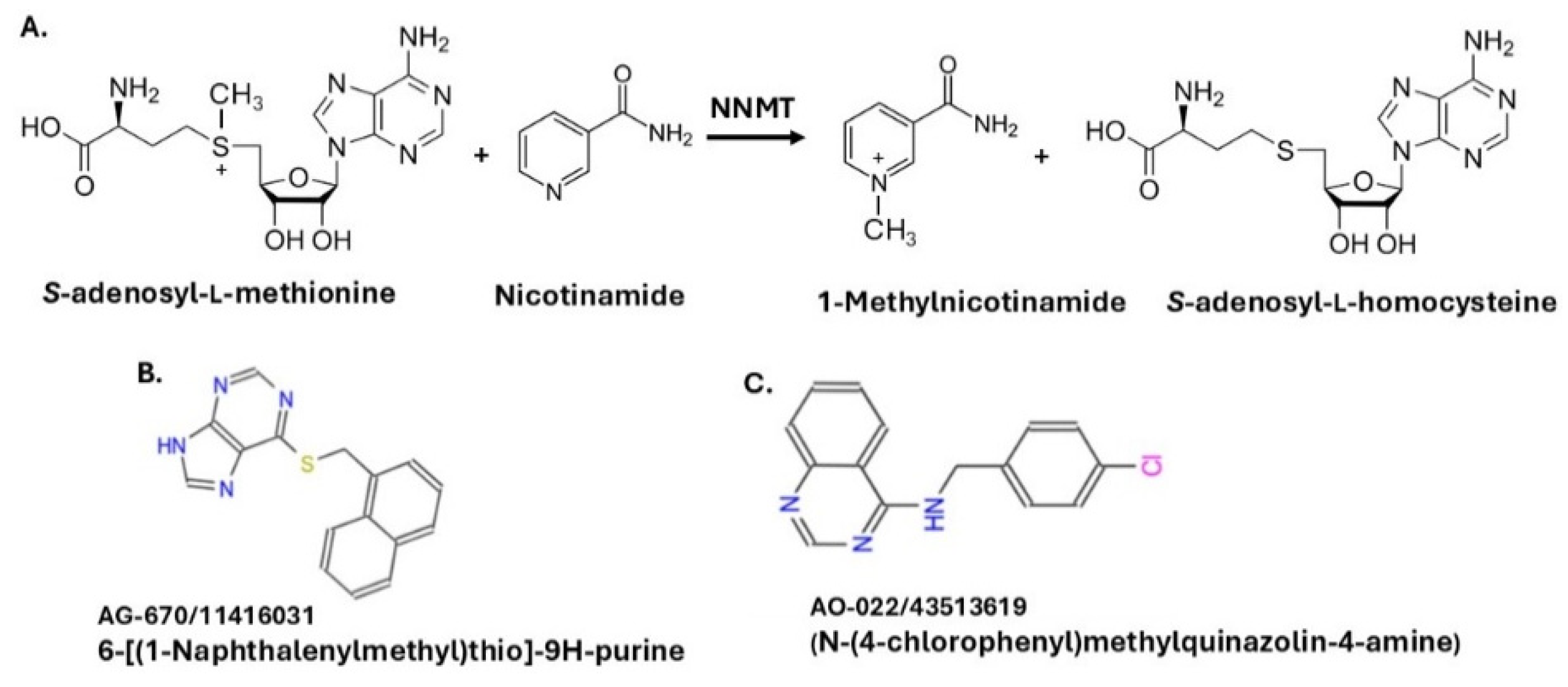
Figure 2.
Immunoblot of Nicotinamide N-Methyltransferase (NNMT) expression in various cultured cells. NNMT is expressed in Hs578T cells (a triple negative breast cancer cell line), SCC-4 cells (an oral squamous cell carcinoma cell line), DOK cells (a pre-cancerous dysplastic oral keratinocytes cell line) and primary oral gingival keratinocytes (PGK cells). NNMT is not expressed in the estrogen (ER), progesterone (PR), and glucocorticoid receptor-positive MCF7 cells.
Figure 2.
Immunoblot of Nicotinamide N-Methyltransferase (NNMT) expression in various cultured cells. NNMT is expressed in Hs578T cells (a triple negative breast cancer cell line), SCC-4 cells (an oral squamous cell carcinoma cell line), DOK cells (a pre-cancerous dysplastic oral keratinocytes cell line) and primary oral gingival keratinocytes (PGK cells). NNMT is not expressed in the estrogen (ER), progesterone (PR), and glucocorticoid receptor-positive MCF7 cells.
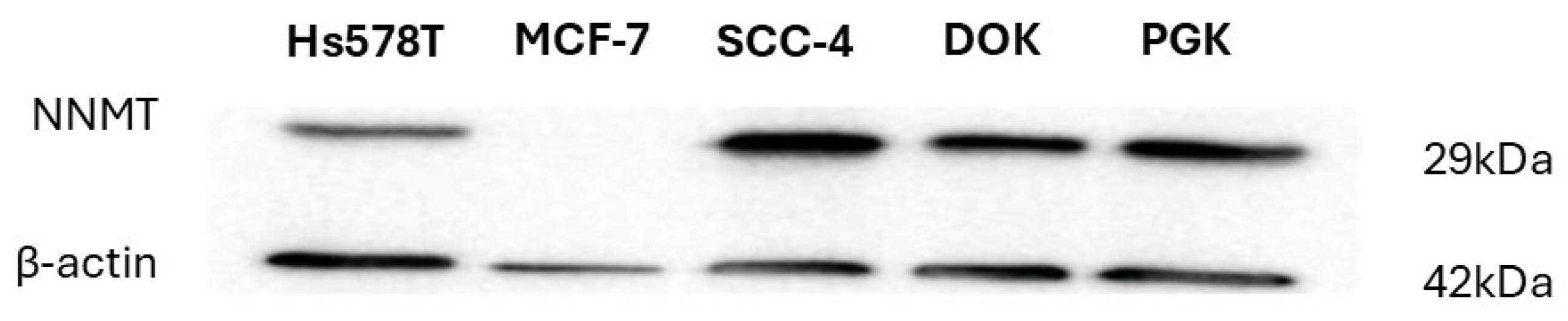
Figure 3.
The Effect of AG-670 and AO-022 on nicotinamide N-methyltransferase (NNMT) isolated enzyme activity (EC50) & SCC-4 cell cytotoxicity (IC50). (A,B) An NNMT Inhibitor Screening Assay kit (Sigma-Aldrich) was used to determine potency of potential NNMT inhibitors (AG-670 and AO-022) on the isolated enzyme (EC50). (C,D) SCC-4 cell viability was determined by Alamar blue assay using a range of NNMT inhibitor concentrations over 72h using 1% FBS (IC50).
Figure 3.
The Effect of AG-670 and AO-022 on nicotinamide N-methyltransferase (NNMT) isolated enzyme activity (EC50) & SCC-4 cell cytotoxicity (IC50). (A,B) An NNMT Inhibitor Screening Assay kit (Sigma-Aldrich) was used to determine potency of potential NNMT inhibitors (AG-670 and AO-022) on the isolated enzyme (EC50). (C,D) SCC-4 cell viability was determined by Alamar blue assay using a range of NNMT inhibitor concentrations over 72h using 1% FBS (IC50).
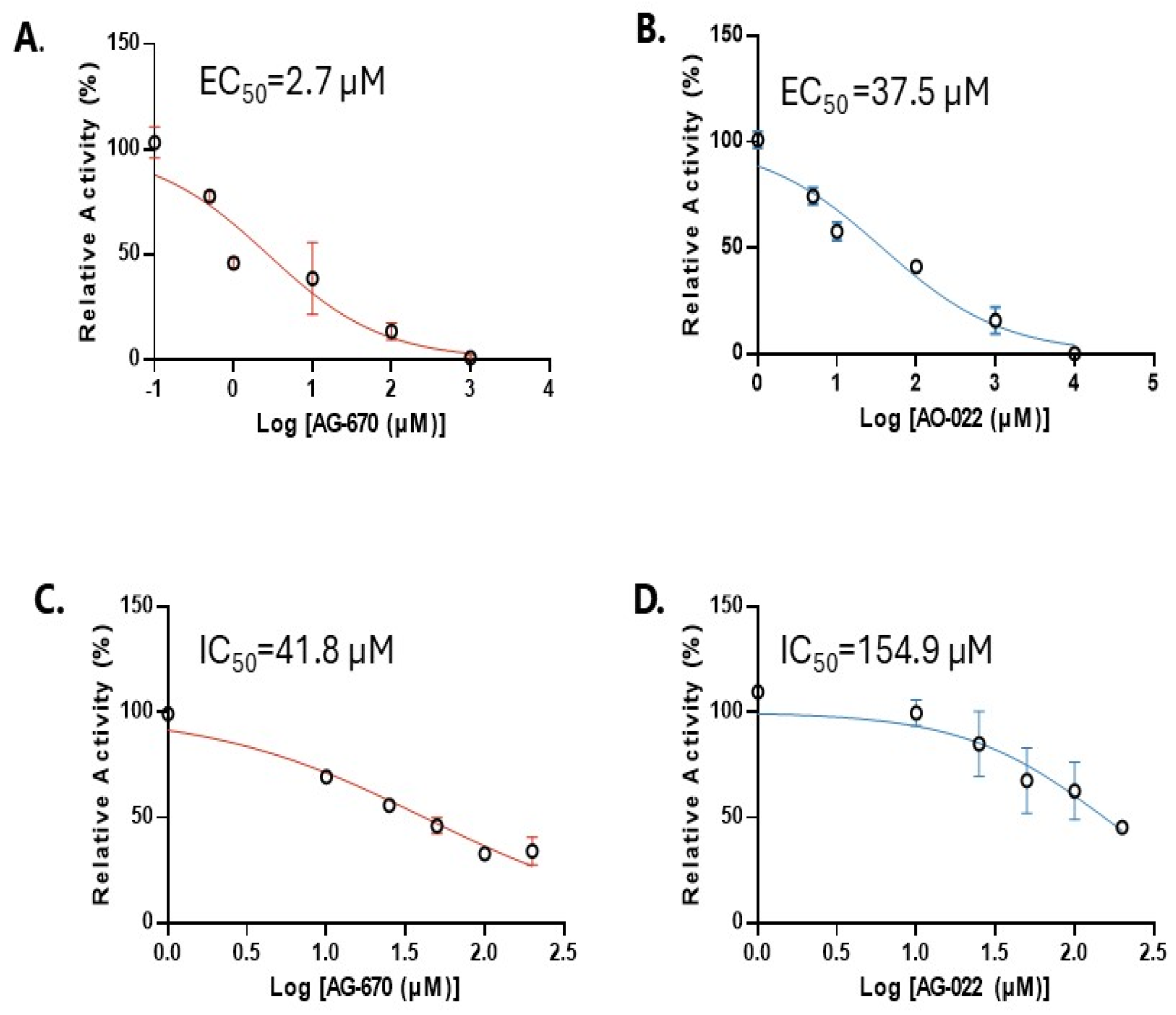
Figure 4.
Effect of sublethal doses of NNMT inhibitors (AG-670 & AO-022) on Oxygen Consumption Rates (OCR) in SCC-4 cells. (A) Cellular and (B) reduced in situ mitochondrial oxygen consumption (OCR) in SCC-4 cells was determined by Seahorse XF analyser (Agilent) in the absence and presence of 10µM AG-670 & AO-022. The control was addition of vehicle (DMSO) alone (CtRl). Antimycin A (AntiA) and rotenone (Rot) were ultimately added to inhibit in situ mitochondrial oxygen consumption in order to quantify the cellular oxygen due to mitochondrial activity.
Figure 4.
Effect of sublethal doses of NNMT inhibitors (AG-670 & AO-022) on Oxygen Consumption Rates (OCR) in SCC-4 cells. (A) Cellular and (B) reduced in situ mitochondrial oxygen consumption (OCR) in SCC-4 cells was determined by Seahorse XF analyser (Agilent) in the absence and presence of 10µM AG-670 & AO-022. The control was addition of vehicle (DMSO) alone (CtRl). Antimycin A (AntiA) and rotenone (Rot) were ultimately added to inhibit in situ mitochondrial oxygen consumption in order to quantify the cellular oxygen due to mitochondrial activity.
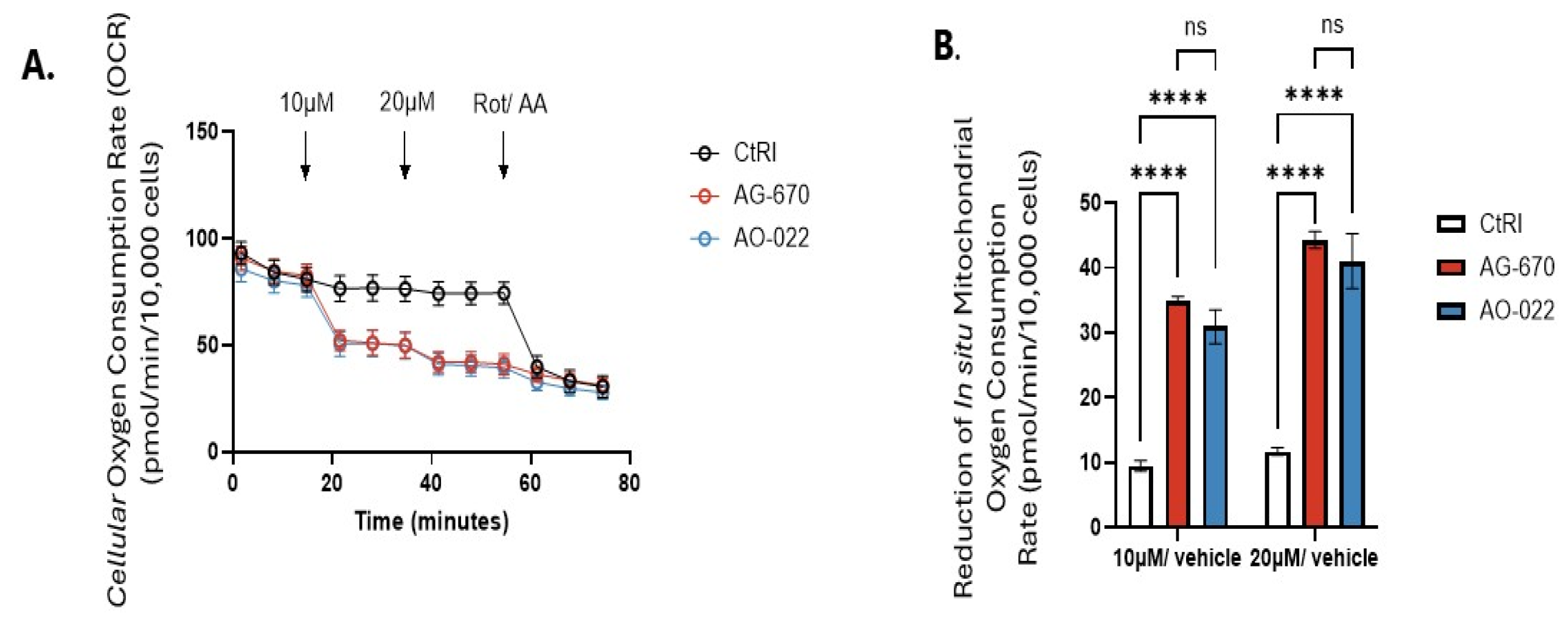
Figure 5.
No Effect of NNMT inhibitors (AG-670 & AO-022) on Isolated Mitochondrial activity. Oxygen consumption by isolated mitochondria from rat liver using NADH-dependent substrates (glutamate and malate) in state 4 and state 3 uncoupled rate (an index of maximal electron transport chain activity) conditions, were measured the presence and absence of 10µM NNMT inhibitors AG-670 & AO-022.
Figure 5.
No Effect of NNMT inhibitors (AG-670 & AO-022) on Isolated Mitochondrial activity. Oxygen consumption by isolated mitochondria from rat liver using NADH-dependent substrates (glutamate and malate) in state 4 and state 3 uncoupled rate (an index of maximal electron transport chain activity) conditions, were measured the presence and absence of 10µM NNMT inhibitors AG-670 & AO-022.
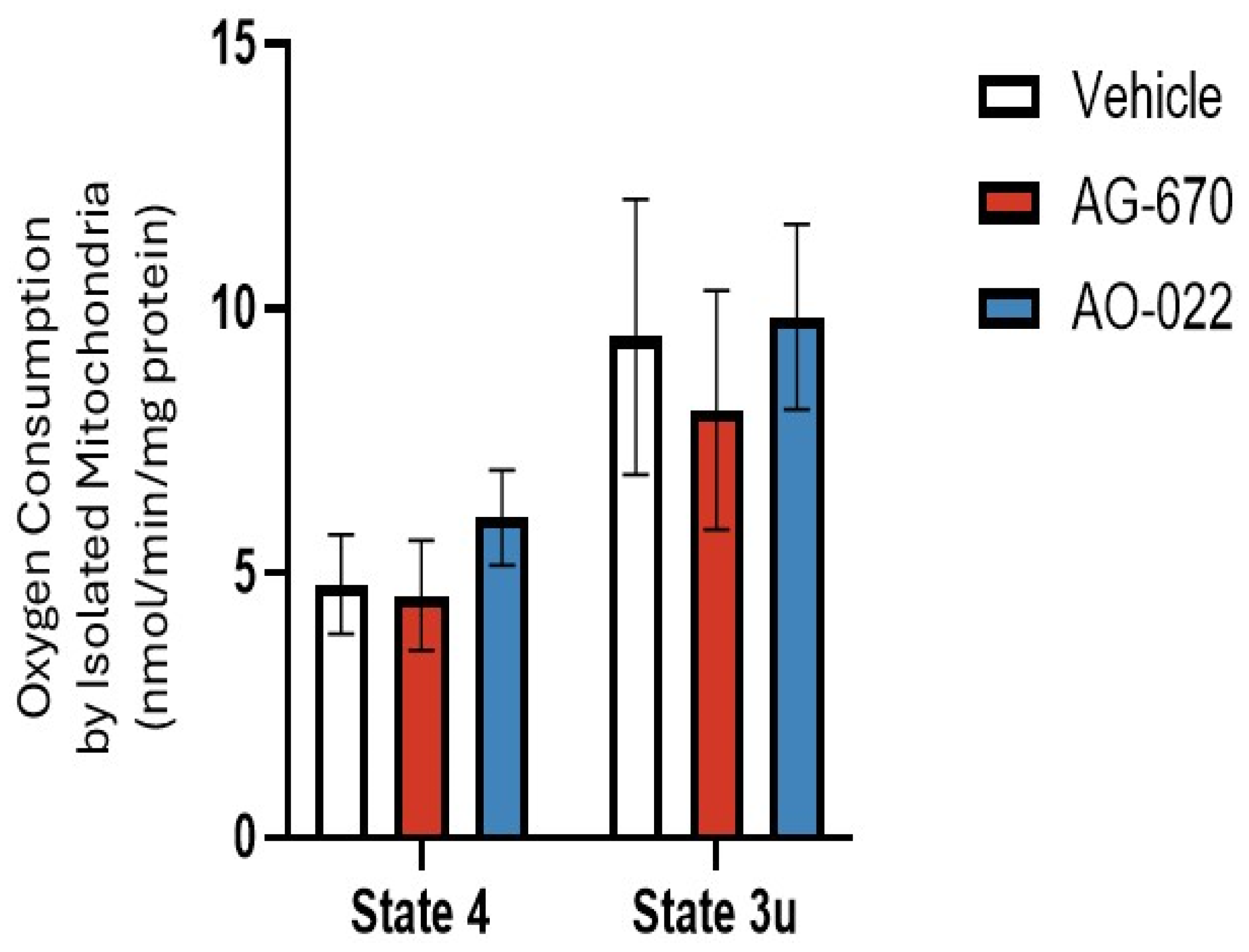
Figure 6.
Effect of sublethal doses of NNMT inhibitors (AG-670 & AO-022) on Oxygen Consumption Rates (OCR) in MCF 7 cells. (A) Cellular and (B) reduced in situ mitochondrial oxygen consumption (OCR) in MCF 7 cells was determined by Seahorse XF analyser (Agilent) in the absence and presence of 10µM AG-670 & AO-022. The control was addition of vehicle (DMSO) alone (CtRl). Antimycin A (AntiA) and rotenone (Rot) were ultimately added to inhibit in situ mitochondrial oxygen consumption in order to quantify the cellular oxygen due to mitochondria.
Figure 6.
Effect of sublethal doses of NNMT inhibitors (AG-670 & AO-022) on Oxygen Consumption Rates (OCR) in MCF 7 cells. (A) Cellular and (B) reduced in situ mitochondrial oxygen consumption (OCR) in MCF 7 cells was determined by Seahorse XF analyser (Agilent) in the absence and presence of 10µM AG-670 & AO-022. The control was addition of vehicle (DMSO) alone (CtRl). Antimycin A (AntiA) and rotenone (Rot) were ultimately added to inhibit in situ mitochondrial oxygen consumption in order to quantify the cellular oxygen due to mitochondria.
Disclaimer/Publisher’s Note: The statements, opinions and data contained in all publications are solely those of the individual author(s) and contributor(s) and not of MDPI and/or the editor(s). MDPI and/or the editor(s) disclaim responsibility for any injury to people or property resulting from any ideas, methods, instructions or products referred to in the content. |
© 2026 by the authors. Licensee MDPI, Basel, Switzerland. This article is an open access article distributed under the terms and conditions of the Creative Commons Attribution (CC BY) license (http://creativecommons.org/licenses/by/4.0/).
Copyright: This open access article is published under a Creative Commons CC BY 4.0 license, which permit the free download, distribution, and reuse, provided that the author and preprint are cited in any reuse.