

Submitted:
08 February 2026
Posted:
10 February 2026
You are already at the latest version
Abstract
Background Recent evidence suggests that early, prolonged, and unmediated exposure to screens is associated with delays in the development of language, attention, and social interaction in children, dimensions frequently altered in autism spectrum disorder. Objectives: To analyse recent scientific evidence on the association between digital screen exposure in childhood and the presence of manifestations compatible with autism spectrum disorder (ASD). Methods: A systematic review was conducted in accordance with the PRISMA 2020 guidelines. A search was conducted in Scopus, EBSCO, and JANE for full-text articles published between 2019 and 2025 in English, Spanish, or Chinese. Observational and longitudinal studies that evaluated time, age of onset, or intensity of screen exposure and variables related to ASD or neuropsychological development were included. Results: Thirty-one studies were included. The synthesis of evidence shows a consistent association between increased screen exposure, especially when it begins before the age of two and without parental mediation, and the presence of autistic symptoms, language delays, and difficulties in social interaction. Factors such as male gender, early age of onset, and low caregiver-child interaction acted as relevant modulators. Some studies reported heterogeneity in effects without establishing causality. Conclusions: Early and unregulated digital exposure is associated with neurodevelopmental risk indicators. The findings support preventive interventions focused on parental education, systematic assessment of screen time, and promotion of face-to-face interactions, with a strategic role for nursing professionals in early detection and family guidance.
Keywords:
autism spectrum disorder
; screen time
; paediatric nursing
1. Introduction
Over the last ten years, different international entities have expressed their concern about the negative impact of the excessive use of electronic devices in early childhood. In particular, prolonged exposure to screens in children under five years of age encourages a sedentary lifestyle that can affect their physical, emotional and cognitive well-being, even increasing the likelihood of developing chronic diseases. Consequently, specific recommendations have been established that indicate to totally avoid exposure in children under two years of age and limit it to less than one hour a day between two and five years of age, promoting instead dynamic, interactive and socially significant activities [1,2,3]
In the Peruvian case, the problem is intensified due to the wide access to digital technology. According to the Honorio Delgado-Hideyo Noguchi National Institute of Mental Health, 91.5% of the population aged six and over connects to the internet daily, and minors record a weekly average of 35 hours in front of screens, mostly through mobile phones. This pattern of intensive use has triggered a worrying increase in behaviors associated with childhood cyberaddiction, reflected in manifestations such as anxiety, sleep disorders, poor academic performance and difficulties in regulating emotions and integrating socially. The lack of regulation in the family environment and the scarcity of face-to-face interaction alternatives contribute to the aggravation of this situation [4]
In parallel, several scientific studies have begun to explore the possible association between overexposure to screens in early stages and the manifestation of behaviors similar to those observed in autism spectrum disorders (TEA). The TEA It is a neurodevelopmental disorder characterized by difficulties in social communication, repetitive behaviors and atypical patterns of interaction, with symptoms that vary widely between individuals. Although the weight of genetic factors in their origin is recognized, the influence of environmental variables has also been evidenced, particularly those linked to experiences in early childhood [5]
In this context, they argue that prolonged exposure to screens LED o virtual environments in children under six years of age can interfere with brain maturation, generating behaviors that simulate characteristics of the TEA [6]. They also identify that the intensification of the use of electronic devices during the pandemic of COVID-19 was associated with an increased risk to child development, although they point out that more evidence is still needed to establish whether this exposure precedes the clinical diagnosis of the disorder [7]. On the other hand, excessive use of screens, in combination with limited family interaction, is related to the presence of early indicators of TEA, which reinforces the importance of considering modifiable factors within the child's environment as key elements in the neurodevelopmental trajectory [8].
Faced with this scenario, it is imperative to carry out a systematic analysis of the available scientific literature that addresses the relationship between digital exposure in early stages and the emergence of symptoms compatible with TEA, with the purpose of identifying common patterns, possible risks and knowledge gaps. It also aims to examine the most relevant findings on this association, supporting evidence-based preventive proposals and contributing to the design of early interventions that promote healthy child development.
2. Materials and Methods
2.1. Design
A systematic review of the literature was carried out, developed in accordance with the guidelines of the Preferred Reporting Items for Systematic Reviews and Meta-Analyses (PRISMA 2020), with the aim of analyzing the scientific evidence on the relationship between exposure to digital screens in childhood and the manifestation of behaviors compatible with autism spectrum disorder (TEA) [9]
2.2. Search Strategy
The literature search was carried out in three international scientific databases: Scopus, EBSCO and Jane. Combinations of the main term autism were used, with Boolean operators, particularly AND screen exposure and AND screen time. Articles published between 2019-2025, available in full text in English, Spanish, or Chinese, without geographic restriction, were included.
2.3. Selection of the Studies
Inclusion and exclusion criteria
We included studies that (a) analyzed the child or adolescent population, (b) evaluated the time, age of onset, or intensity of exposure to screens, and (c) reported variables related to ASD, autistic symptoms, or neuropsychological development. Likewise, (a) opinion articles (b) studies without access to full text and (c) research not directly related to digital exposure or child development were excluded.
Selection process
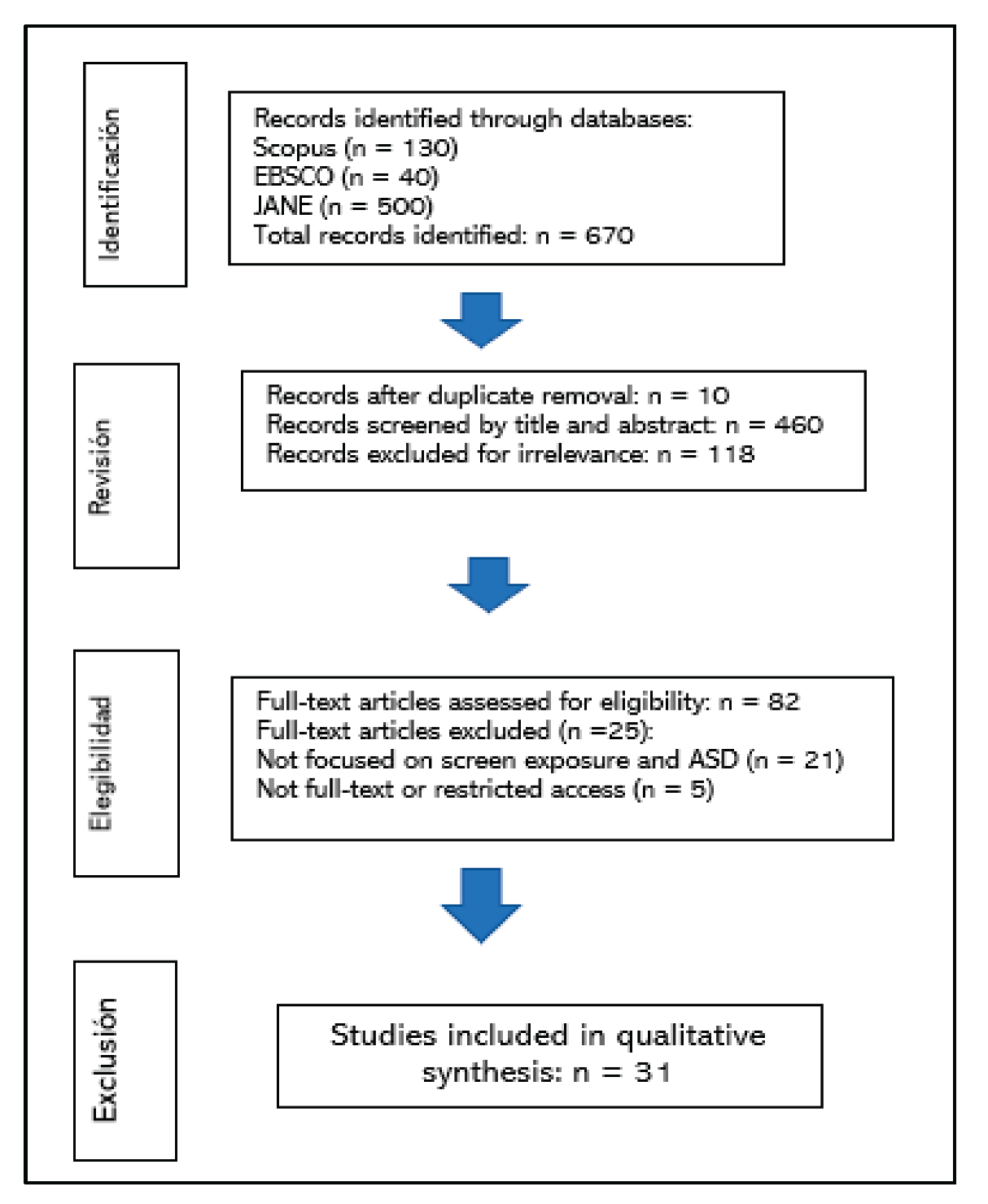
After the initial identification of 670 records of published articles, duplicates and irrelevant studies were eliminated through a screening process by titles and abstract. Subsequently, the full text of the eligible articles was evaluated. Finally, 31 studies met all the inclusion criteria and were incorporated into the final synthesis. The selection process is summarized by a PRISMA diagram.
Evaluation of methodological quality
The methodological quality of the included studies was analyzed in a descriptive manner, considering the study design, the clarity of the variables, the sample size, and the consistency of the instruments used. Although a meta-analysis was not performed, research with adequate methodological rigor and empirical support was prioritized.
3. Results
| SCOPUS | |||
| Author | Factors | Results | Conclusions |
| [10] | Excessive exposure to screens in early childhood is related to symptoms similar to ASD. | ASD-like symptoms from excessive screens affect 30 - 50%; less stigmatizing terms are proposed. | Excessive exposure to virtual environments causes delays, but more research is required to define "virtual autism." |
| [5] | Screen viewing at 12 months increased ASD symptoms; Parental play reduced them significantly. | Watching TV at 12 months increased ASD-like symptoms by 4.2%, without affecting the diagnosed risk. | Increased screen use and less play with caregivers are linked to later ASD-like symptoms. |
| [11] | Children with autism or ADHD symptoms used more screens before age 2, doubling the group without disorders, with negative associations in language, development, and neurobehavioral symptoms. | Children with autism (1.47 h) and ADHD (1.27 h) used more screens than comparatives (0.72 h). | Greater exposure to screens at 18 months is associated with more symptoms of autism and ADHD. |
| [12] | In boys, more screen time at one year was significantly associated with ASD diagnosis at age 3. | Children with >2 h/day of screen time had up to 3.48 times the risk of ASD; girls, without association. | Higher screen time at one year is associated with ASD at age 3 in boys. |
| [13] | Excess screens interfere with therapeutic improvements in ASD and TCS, according to ATEC scores. | Children with ASD and SCD had >1 h of screens a day, affecting therapeutic improvement. | Screen time affects therapies in ASD and SCD, with a greater negative impact on children with ASD. |
| [14] | More screen time is associated with more ASD symptoms and less social interaction in infants. | Each extra hour of screens increases 0.29 - 0.38 points in ASD symptoms; Interaction reduces 0.42 points. | Greater screen and less interaction are associated with more ASD symptoms in young children, with no defined causality. |
| [15] | Early exposure to screens reduces development; Less communication predicts more later use. | More screen time at age 1 - 2 reduced developmental scores at age 2 - 3. | More time in front of screens from one year of age affects development; Parental guidance is recommended. |
| [16] | Increased screen time in young children is associated with more symptoms and risk of autism (ASD). | 79.8% of children with ASD used screens before age 2; higher exposure (>2 h/d) was significantly associated with worse scores on CARS, ABC, and SCQ. | In preschoolers with ASD, more early screen time can aggravate core symptoms of the disorder. |
| EBSCO | |||
| Autor | Relación entre variables | Resultados | Conclusiones |
| [6] | Exposure >2 h/day to screens is related to behavioral, social, emotional and language alterations. | Children with >2 h/day of screens showed 70–90% more alterations in comprehensive child development. | Excessive screens increase the risk of developmental delays and symptoms similar to childhood autism. |
| [7] | More time in front of screens is associated with cognitive, emotional and communicative alterations in children. | Screen use increased the intermediate risk by 5 - 7 % and reduced the high risk of ASD by 25 - 40 %. | The study revealed a complex relationship between screen exposure and ASD risk in children. |
| JANE | |||
| Autor | Relación entre variables | Resultados | Conclusiones |
| [17] | In children 4 to 6 years old, greater and early exposure to screens is associated with an increased risk of ASD. | 46.7% had >2 h of screen time; Early exposure and parental factors were related to ASD. | Exposure to screens is associated with ASD; awareness and further research are recommended. |
| [18] | >3 h/day use of devices is associated with higher SCQ scores and autism-like symptoms. | 19.7% of children with >3 h screen had SCQ ≥ 15, compared to 10.2% and 7.84%. | Increased daily screen use was associated with SCQ ≥ 15 and autism-like symptoms. |
| [19] | Male adolescents, low SES, withdrawal, and poor daily skills were associated with excessive screen time. | More than 33% exceeded the recommended amount; 50% increased use after COVID; Risk: Adolescence, withdrawal, low socioeconomic status and male gender. | Specific guidelines are required for optimal screen use in youth with ASD and their families. |
| [20] | Exposure to screens between 0 and 3 years of age is associated with a higher risk of childhood autistic behaviors. | More daily and accumulated time in front of screens increases the risk of autistic behaviors in preschoolers. | Early interventions in screen use are required, but longitudinal studies are lacking to confirm causality. |
| [21] | From the age of 9, children with ASD show less physical activity and a greater sedentary lifestyle than their ND peers. | At 9 years, 44.3% of children with ASD had MVPA ≥9 days, compared to 62.5% ND; differences increased. | Differences in physical activity between children with and without ASD increase with age; More studies are needed. |
| [22] | Children with ASD have more screen time, associated with autistic symptoms and less development, especially linguistic. | Children with ASD used more screens (3.34 h vs. 0.91 h); higher use was associated with worse development and greater severity (CARS). | Children with ASD have more screen use, associated with greater symptoms and delays, especially linguistic. Children with ASD have more screen use, associated with greater symptoms and delays, especially linguistic. |
| [22] | Increased screen time in children with ASD is associated with more severe symptoms: less social interaction, language delay, poor self-regulation, and greater autistic severity. | Children with ASD use screens 2.64 h/day; 48% use multiple devices and 34% interact with parents. | Children with ASD in China exceed the recommended time; family factors negatively influence their use. |
| [23] | Young people with autism do little physical activity and high exposure to screens; environment has a significant influence. | Environment and home promote activity (B 0.15 - 1.07); media in bedroom elevate screen-time (B 0.10). | Factores ambientales vinculados a actividad física y pantallas deben guiar intervenciones en jóvenes con ASD. |
| [24] | Excessive screens could cause autism-like symptoms; Withdrawal and daily parental play are suggested. | Children with autism watched 4.6 h/day of screens from the age of 6 months (vs. 2.06 h/day in TD). | Intense early exposure to screens causes autism-like symptoms; removing them significantly improves children. |
| [25] | More screen time is associated with more ADHD symptoms and less childhood language development. | Children with ADHD used more screens; longer time was associated with lower linguistic development. | Increased screen time is associated with poorer language development, especially in children with TDAH. |
| [26] | Evidence suggests that more screen time before age 5 is associated with autism. | Increased screen time at age 2 was associated with increased risk of autism at age 12. | The association is not causal, but screen time can signal family support needs. |
| [7] | Daily screen use in 2-year-olds is associated with intermediate, not high, risk of TEA. | Weekly or daily screen use increased intermediate risk (OR: 1.07, 1.05) but reduced the high (OR: 0.60, 0.75) of TEA. | Study Reveals Complex Relationship Between Screen Exposure and Risk of TEA in 2-year-old children. |
| [27] | Increased screen time and early use are associated with more symptoms of TEA, although some studies did not find a significant relationship; Reducing use may improve symptoms. | 77.9% of cases were male; they used screens 3.61 h/day vs. 2.99 h in controls. | Screens affect children's neurodevelopment and may increase the risk of TEA; More studies are required. |
| [28] | Children with autism have greater use of screens than their peers; girls excel in social use. Higher exposure is associated with increased risk of obesity. | 1.7% had autism; they used more screens and video games than TD; obesity increased. | Children with autism use more screens; A flexible and collaborative approach to its use is recommended. |
| [29] | Higher ScreenQ scores are associated with more autistic symptoms and lower development in ASD children. | CARS increased with increased use of screens; social skills, language and coordination decreased to -100%. | ScreenQ shows that increased screen use worsens symptoms and development in children with autism. |
| [30] | Parental training reduced screen time and repetitive behaviors, improving patterns of brain activity (EEG) in children with symptoms of autism. | Intervention reduced screen by 97% and interaction by 98%, notably reducing repetitive behaviors. | Parental training reduced screens, repetitive behaviors and improved EEG in children with symptoms of autism. |
| [31] | Longer time and early exposure to screens are significantly associated with risk of symptoms of ASD. | Longer screen exposure is associated with a higher risk of developing childhood autism. | Early and prolonged exposure to screens increases the risk of developing symptoms similar to ASD. |
| [32] | Children with autism use more screens from an early age; context and content influence behaviorally. | Children with autism use more screens, from an early age and with less parental supervision. | Longitudinal research is needed to understand how screen use affects children with autism. |
| [33] | Children with autism use screens to relax, learn, communicate, and feel socially included. | Children ASD they use screens for well-being, learning, communication; more social teenagers, more "babysitter" type of children. | Screen use relaxes children with autism, but requires supervision and recreational alternatives. |
| [34] | Children aged 6 – 10 years with ≥2 hours of screen time have more addiction, sedentary lifestyle and distraction. | Children with ≥2 hours of screen time showed 100% more addiction, 99% distraction and 95% sedentary lifestyle. | Excessive screens in children aged 6 - 10 years increases sedentary lifestyle, addiction and distraction. |
| [35] | The effects of screen use on children with autism vary depending on their características individuales, el contexto en que se usan y el contenido consumido. | Excessive screen use is associated with more risks in children with autism than in typical children. | Screens help children with autism, but they require guidance and limits to avoid harm. |
4. Discussion
The findings found in this review show a clear correlation between early, sustained and unregulated digital exposure and the emergence of behavioural indicators compatible with autism spectrum disorder (TEA), as well as with other neurodevelopmental disorders. Key variables that explain this association include time of use, age at onset of exposure, and degree of parental interaction. These factors have a differentiated impact on the linguistic, emotional, cognitive and social development of the child population.
Research shows that, in children diagnosed with ASD, higher screen use is associated with greater symptom severity, including poor social interaction, delays in language acquisition, difficulties in self-regulation, and high clinical scores on instruments such as the CARS and ScreenQ. Particularly, Dong It points out that 48% of these children used multiple devices, while only 34% had active interactions with their parents, which shows the negative impact of a digital environment devoid of adult accompaniment [29,36].
These arguments agree that prolonged exposure to LED screens or virtual environments in children under six years of age can interfere with brain maturation, generating behaviors that simulate characteristics of the brain. TEA [6]. In a convergent line, prolonged screen use is not only associated with lower language development, but also with a higher incidence of symptoms related to TDAH [11]. Specifically, researchers such as Lin, Wu and Guo identify that high digital exposure at two years of age predicts an increased risk of autism a decade later, suggesting that this variable could act as an early marker of neuropsychological vulnerability [26].
For Kushima et al. reveal that boys who spend more time in front of screens during the first year of life have a higher probability of being diagnosed with ASD at three years of age, without this relationship being observed in girls, which raises the possibility that gender affects sensitivity to these environmental factors [12]. On the other hand Berard et al. They state that adolescents with TEA Those who exceed the recommended use of screens usually have a profile associated with social withdrawal, poor functional skills, low socioeconomic status and belonging to the male sex. More than 33% of participants overtimed, and half of them increased their consumption after the pandemic. These findings reinforce the idea that structural and family context influences the amount and function of digital device use in neurodivergent populations [19].
The use of screens, under certain conditions, may have a regulatory or pedagogical function for children with TEA. Para Stiller et al., He points out that these devices are frequently used for relaxation, learning and communication [33]. However, as he warns Westby, Uncontrolled use and the absence of limits can have adverse consequences on development, particularly if screens replace face-to-face human interactions, essential for social-emotional growth [35].
From a preventive approach, Harlé It argues that children with autism-like symptoms, exposed to digital devices from the age of six months for more than 4.6 hours a day, showed significant behavioral improvement after the progressive decrease in screen time and the increase in interactive play with their caregivers, which shows that family intervention can partially reverse the harmful effects of overexposure [24]. On the physical level, children with TEA they tend to perform less motor activity and have a higher risk of obesity, due to the decrease in active play and excessive time in front of screens. This complementary dimension reaffirms that the impact of technology is not limited to the cognitive sphere, but also compromises integral health [23,28].
Finally, although certain studies do not establish a statistically significant correlation, most of the research reviewed supports that digital overexposure during childhood is linked to alterations in neurological development. Thus, it is concluded that a reduction in the use of screens, especially at an early age, can favor a decrease in symptoms associated with TEA and contribute to a healthier development trajectory [27].
The review of these studies reveals a consistent pattern between prolonged screen use and the appearance or intensification of behaviors linked to the autism spectrum, in addition to other developmental difficulties. Although the impact varies according to factors such as supervision, gender, and age, the evidence strongly supports the need to apply preventive strategies focused on family guidance, regulation of the digital environment, and the promotion of quality face-to-face interactions. Promoting a conscious, moderate and supervised use of technology from childhood is a fundamental priority to protect the integral development of children and adolescents.
This review has some limitations. First, most of the included studies employ observational designs, which prevents causal relationships between screen exposure and autism spectrum disorder. Second, there is heterogeneity in the measures of screen time, ages evaluated, and instruments used to assess autistic symptoms, which made it difficult to perform a meta-analysis. Finally, the use of specific databases and the inclusion of certain languages may have limited the identification of some relevant studies.
5. Conclusions
The findings found in the present systematic review show a consistent association between intensive exposure and at an early age to devices with digital screens a greater probability of alterations in child development, particularly manifestations compatible with autism spectrum disorder (TEA). This association is modulated by various contextual factors, including the duration and time of onset of exposure, the degree of parenteral accompaniment and mediation, as well as the sociocultural conditions in which technological interaction occurs during sensitive periods of neurodevelopment.
The findings suggest early digital meditation cannot be considered a neutral process, especially when excessive screen use replaces face-to-face relational experiences that are highly relevant for interpersonal communication skills, social bond-building, emotional self-regulation, and the strengthening of cognitive skills. Although in specific and properly regulated contexts, digital technologies can fulfill instrumental or educational functions, their unsupervised use is associated with difficulties in key processes of child development.
It should be noted that, from the approach of mental health care and health promotion and prevention, the need for interdisciplinary interventions arises, so the role of the nursing professional in the protection of the child's integral development is relevant. Nursing, in its pediatric, community and public health fields, is positioned as a strategic agent for the education and guidance of families, the systematic evaluation of screen exposure time during growth and development checks, and the early detection of neurodevelopmental warning signs, favoring timely referral and interdisciplinary accompaniment when necessary.
It is important to strengthen the competencies of health personnel such as nursing, psychology, and medical professionals, among others, to address problems related to children's digital health, promoting evidence-based training interventions that encourage a critical, dosed, and conscious use of technology in childhood. These actions contribute not only to the prevention of risks associated with digital overexposure, but also to the construction of healthy care environments that prioritize caregiver-child interaction and comprehensive well-being during the early stages of development.
Author Contributions
Conceptualization, M.E.M.-L.-R., G.D.O.M. and J.A.S.-V.; methodology, M.E.M.-L.-R., V.H.F.-B. and J.A.S.-V.; software, M.E.M.-L.-R.; validation, M.E.M.-L.-R. and G.D.O.M.; formal analysis, M.E.M.-L.-R.; investigation, M.E.M.-L.-R.; resources, M.E.M.-L.-R.; data curation, M.E.M.-L.-R.; writing—original draft preparation, M.E.M.-L.-R., G.D.O.M. and J.A.S.-V. and G.d.D.O.-M.; writing—review and editing, M.E.M.-L.-R., J.A.S.., R.V.G.-S. and G.d.D.O.-M.; S.E.P.D visualization, M.E.M.-L.-R.; supervision, M.E.M.-L.-R. and G.d.D.O.-M.; project administration, M.E.M.-L.-R. and R.V.G.-S.; funding acquisition, M.E.M.-L.-R. All authors have read and agreed to the published version of the manuscript.
Funding
This research was funded by Universidad César Vallejo, in accordance with the resolution of the Office of the Vice Rector for Research No. P-2025-168-VI-UCV.
Data Availability Statement
Data will be provided by the authors if asked.
Public Involvement Statement
No public involvement in any aspect of this research.
Guidelines and Standards Statement
This systematic review was conducted and reported in accordance with the PRISMA (Preferred Reporting Items for Systematic Reviews and Meta-Analyses) guidelines, ensuring methodological transparency, reproducibility, and comprehensive reporting.
Use of Artificial Intelligence
This manuscript benefited from the use of AI-based tools for language translation, grammar correction, and language editing to enhance clarity and accuracy. These tools were employed to ensure that the text adheres to academic writing standards and effectively communicates the research findings to a global audience. Final revisions were carefully reviewed and approved by the authors to maintain the integrity and originality of the content.
Conflicts of Interest
The authors declare no conflicts of interest.
References
- Organización de las Naciones Unidas [ONU. Recomiendan que los niños no usen pantallas hasta los dos años 2019.
- Organización Mundial de la Salud [OMS. Para crecer sanos, los niños tienen que pasar menos tiempo sentados y jugar más 2019.
- Organización Mundial de la Salud [OMS]. Autismo 2025.
- Noguchi, Honorio Delgado-Hideyo; Instituto Nacional de Salud Mental. ¿Sabes cuánto tiempo pasa tu hijo frente a una pantalla? 2025. [Google Scholar]
- Heffler, K; Sienko, D; Subedi, K; McCann, K; Bennett, D. Association of Early-Life Social and Digital Media Experiences With Development of Autism Spectrum Disorder–Like Symptoms. JAMA Pediatr 2020, 174, 1–7. [Google Scholar] [CrossRef]
- Bibi, A; Khan, S; Rasheed, H; Kulsoom, U; Musharraf, M; Ali, S. Effects of Increased Electronic Screen Exposure and Its Relation with Autistic Spectrum Symptoms (ASD) - A Cross Sectional Study in Peshawar. Pak J Med Res 2022, 61, 30–4. [Google Scholar]
- Melchior, M; Barry, K; Cohen, D; Plancoulaine, S; Bernard, J; Milcent, K; et al. TV, computer, tablet and smartphone use and autism spectrum disorder risk in early childhood: a nationally-representative study. BMC Public Health 2022, 22, 1–7. [Google Scholar] [CrossRef]
- García-Jordá, M; Merín, L; Ricarte, J. Influencia del Tiempo de Pantallas en Conductas Externalizantes e Internalizantes en Niños de 6-12 Años. Revista de Psicología y Educación 2025, 20, 89–98. [Google Scholar] [CrossRef]
- Moreno, B; Muñoz, M; Cuellar, J; Domancic, S; Villanueva, J. Revisiones Sistemáticas: definición y nociones básicas. Revista Clínica de Periodoncia, Implantología y Rehabilitación Oral 2018, 11, 184–6. [Google Scholar] [CrossRef]
- Detroja, S.; Bhatia, G. Early Screen Exposure and Developmental Abnormalities: Understanding the Trepidations of “Virtual Autism. Indian J Psychol Med 2024, 20, 1–3. [Google Scholar] [CrossRef] [PubMed]
- Hill, M; Gangi, D; Miller, M. Toddler Screen Time : Longitudinal Associations with Autism and ADHD Symptoms and Developmental Outcomes. Child Psychiatry Hum Dev 2024, 56. [Google Scholar] [CrossRef] [PubMed]
- Kushima, M; Kojima, R; Shinohara, R; Horiuchi, S; Otawa, S; Ooka, T; et al. Association Between Screen Time Exposure in Children at 1 Year of Age and Autism Spectrum Disorder at 3 Years of Age The Japan Environment and Children’s Study. JAMA Pediatr 2022, 176, 384–91. [Google Scholar] [CrossRef]
- Alves, T; Holanda, R; Rocha, A; Barbosa, V; De Lavor Filho, T. Uso excessivo de telas em crianças com TEA: percepções de uma equipe multiprofissional em clínica privada no Ceará. Revista Psicologia, Diversidade e Saúde 2025, 14, e6404. [Google Scholar] [CrossRef]
- Sadeghi, S; Pouretemad, H; Khosrowabadi, R; Fathabadi, J; Nikbakht, S. Behavioral and electrophysiological evidence for parent training in young children with autism symptoms and excessive screen-time. Asian J Psychiatr 2019, 45, 7–12. [Google Scholar] [CrossRef]
- Yamamoto, M; Mezawa, H; Sakurai, K; Mori, C. Japan Environment and Children’s Study Group. Screen Time and Developmental Performance Among Children at 1-3 Years of Age in the Japan Environment and Children’s Study. JAMA Pediatr 2023, 177, 1168–75. [Google Scholar] [CrossRef]
- Yang, F; Li, Q; Li, Y; Yang, S; Li, W; Lyu, Z. Status of screen use and its association with core symptoms in children with autism spectrum disorder. Chinese Journal of Child Health Care 2024, 32, 1080–110. [Google Scholar] [CrossRef]
- Alenazi, S; Hasham, S; Hanif, I; Hussain, S; Abderahim, M; Alanazi, A; et al. Association of Screen Time Exposure With Autism Spectrum Disorder in Four to Six-Year-Old Children in Arar City, Saudi Arabia. Cureus 2024, 16, 1–14. [Google Scholar] [CrossRef]
- Alrahili, N; Almarshad, N; Alturki, R; Alothaim, J; Altameem, R; Alghufaili, M; et al. The Association Between Screen Time Exposure and Autism Spectrum Disorder-Like Symptoms in Children. Cureus 2021, 13, 1–10. [Google Scholar] [CrossRef]
- Berard, M; Peries, M; Loubersac, J; Picot, M; Bernard, J; Munir, K; et al. Screen time and associated risks in children and adolescents with autism spectrum disorders during a discrete COVID-19 lockdown period. Front Psychiatry 2022, 13, 1–10. [Google Scholar] [CrossRef]
- Chen, J; Strodl, E; Wu, C; Huang, L; Yin, X; Wen, G; et al. Screen time and autistic-like behaviors among preschool children in China. Psychol Health Med 2021, 26, 607–20. [Google Scholar] [CrossRef] [PubMed]
- Dahlgren, J; Healy, S; MacDonald, M; Geldhof, J; Palmiere, K; Haegele, J. Physical activity and screen time among youth with autism: A longitudinal analysis from 9 to 18 years. Autism 2021, 25, 1090–9. [Google Scholar] [CrossRef] [PubMed]
- Dong, H; Wang, B; Li, H; Yue, X; Jia, F. Correlation Between Screen Time and Autistic Symptoms as Well as Development Quotients in Children With Autism Spectrum Disorder. Front Psychiatry 2021, 12, 1–8. [Google Scholar] [CrossRef] [PubMed]
- Haegele, J; Sun, F; Li, C; Ng, K; Lee, J; Chee, S; et al. Environmental Correlates of Physical Activity and Screen-Time in Youth with Autism Spectrum Disorder : A Seven-Country Observational Study. J Autism Dev Disord 2024, 54. [Google Scholar] [CrossRef] [PubMed]
- Harlé, B. Intensive early screen exposure as a causal factor for symptoms of autistic spectrum disorder: The case for «Virtual autism». Trends Neurosci Educ 2019, 17, 1–4. [Google Scholar] [CrossRef]
- Hill, M; Gangi, D; Miller, M; Rafi, S; Ozonoff, S. Screen Time in 36-month-olds at Increased Likelihood for ASD and ADHD. Infant Behav Dev 2020, 61, 1–7. [Google Scholar] [CrossRef]
- Lin, P; Wu, W; Guo, Y. Screen Time Before 2 Years of Age and Risk of Autism at 12 Years of Age. JAMA Pediatr 2025, 179, 90–1. [Google Scholar] [CrossRef]
- Mosa, S; Armishty, F; Haji, M; Ali, M; Ahmed, P; Husain, S; et al. The Correlation Between Screen Time and the Probability of Developing Autism Spectrum Disorder. Cureus 2024, 16, 1–8. [Google Scholar] [CrossRef]
- Must, A; Eliasziw, M; Stanish, H; Curtin, C; Bandini, L; Bowling, A. Passive and social screen time in children with autism and in association with obesity. Front Pediatr 2023, 11, 1–9. [Google Scholar] [CrossRef]
- Peng, X; Xue, Y; Dong, H; Ma, C; Jia, F; Du, L. A study of the effects of screen exposure on the neuropsychological development in children with autism spectrum disorders based on ScreenQ. BMC Pediatr 2024, 24, 1–9. [Google Scholar] [CrossRef]
- Sadeghi, S; Pouretemad, H; Badv, R; Brand, S. Associations between Symptom Severity of Autism Spectrum Disorder and Screen Time among Toddlers Aged 16 to 36 Months. Behavioral Sciences 2023, 13, 1–15. [Google Scholar] [CrossRef] [PubMed]
- Sarfraz, S; Shlaghya, G; Narayana, S; Mushtaq, U; Shaman, B; Nie, C; et al. Early Screen-Time Exposure and Its Association With Risk of Developing Autism Spectrum Disorder : A Systematic Review. Cureus 2023, 15, 1–20. [Google Scholar] [CrossRef]
- Slobodin, O; Heffler, K; Davidovitch, M. Screen Media and Autism Spectrum Disorder : A Systematic Literature Review. J Dev Behav Pediatr 2019, 40, 303–11. [Google Scholar] [CrossRef]
- Stiller, A; Weber, J; Strube, F; Mößle, T. Caregiver Reports of Screen Time Use of Children with Autism Spectrum Disorder : A Qualitative Study. Behavioral Sciences 2019, 9, 1–20. [Google Scholar] [CrossRef]
- Tekeci, Y; Torpil, B; Altuntaş, O. The Impact of Screen Exposure on Screen Addiction and Sensory Processing in Typically Developing Children Aged 6-10 Years. Children 2024, 11, 1–9. [Google Scholar] [CrossRef] [PubMed]
- Westby, C. Screen Time and Children with Autism Spectrum Disorder. Folia Phoniatr Logop 2021, 73, 233–40. [Google Scholar] [CrossRef] [PubMed]
- Dong, H; Feng, J; Wang, B; Shan, L; Jia, F. Screen Time and Autism: Current Situation and Risk Factors for Screen Time Among Pre-school Children With ASD. Front Psychiatry 2021, 12, 1–12. [Google Scholar] [CrossRef]
Disclaimer/Publisher’s Note: The statements, opinions and data contained in all publications are solely those of the individual author(s) and contributor(s) and not of MDPI and/or the editor(s). MDPI and/or the editor(s) disclaim responsibility for any injury to people or property resulting from any ideas, methods, instructions or products referred to in the content. |
© 2026 by the authors. Licensee MDPI, Basel, Switzerland. This article is an open access article distributed under the terms and conditions of the Creative Commons Attribution (CC BY) license (http://creativecommons.org/licenses/by/4.0/).
Copyright: This open access article is published under a Creative Commons CC BY 4.0 license, which permit the free download, distribution, and reuse, provided that the author and preprint are cited in any reuse.


