

Submitted:
06 February 2026
Posted:
09 February 2026
You are already at the latest version
Abstract
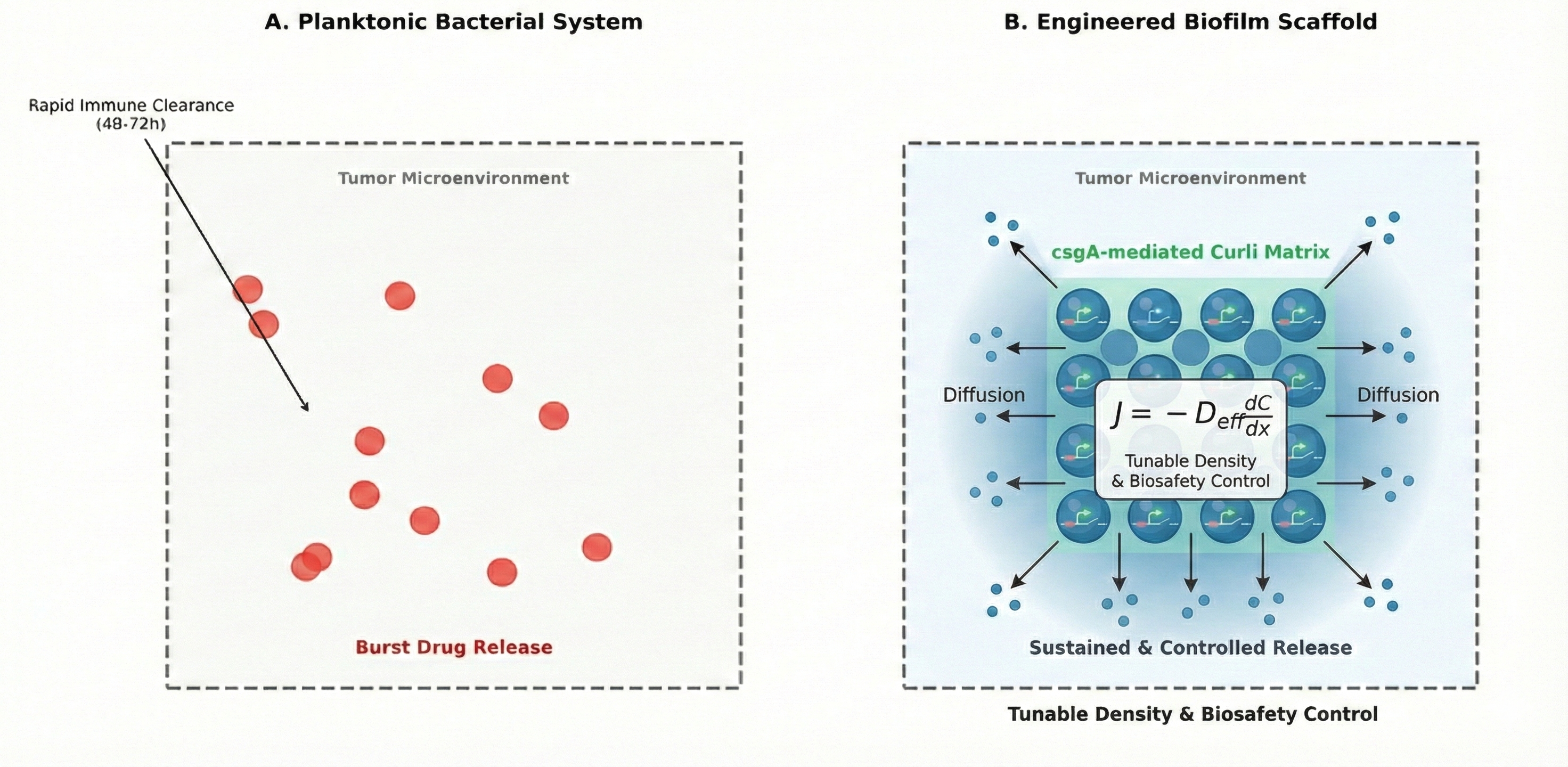
Bacteria-based cancer therapies have re-emerged as a promising modality due to the intrinsic capacity of certain bacterial species to preferentially colonize hypoxic and necrotic tumor regions [1, 2]. However, planktonic motile systems are frequently limited by rapid immune clearance, transient persistence, and uncontrolled payload release [2, 3]. This review introduces a synthetic biology framework that reframes bacterial biofilms from pathological barriers into programmable therapeutic scaffolds. By utilizing programmable microbial therapeutic chassis, researchers can enhance therapeutic duration within the tumor microenvironment (TME) while potentially minimizing systemic exposure [4, 5]. Central to this framework is the genetic modulation of matrix density, primarily via curli fiber-associated csgA expression. This approach may enable drug release kinetics governed by Fickian diffusion principles, allowing for sustained and controllable therapeutic delivery [6, 7].
Keywords:
synthetic biology
; biofilm engineering
; tumor-targeting bacteria
; synthetic microbial therapeutics
; biocontainment
; csgA
; diffusion-controlled drug delivery
Copyright: This open access article is published under a Creative Commons CC BY 4.0 license, which permit the free download, distribution, and reuse, provided that the author and preprint are cited in any reuse.


