Preprint
Case Report

This version is not peer-reviewed.

Trigeminal Neuropathy and Hard Palate Involvement After Herpes Zoster Virus Infection: A Case Report and Literature Review

Submitted:

04 February 2026

Posted:

05 February 2026

You are already at the latest version

Abstract

Aim. The objective of this study is to present a clinical case of herpes zoster–associated neuropathy of the hard palate, resulting from involvement of the right greater palatine nerve (n. palatinus major dextra) of the maxillary nerve (n. maxillaris) following herpes zoster virus (HZV) infection. In addition, the report aims to review the frequency, clinical characteristics, diagnostic approaches, and therapeutic strategies for both systemic and oral manifestations of this condition. Materials and Methods. We describe the case of a female patient presenting with a unilateral, intensely painful vesicular eruption on the right side of the hard palate, accompanied by malaise, fatigue, and pain affecting the right half of the face, but without extraoral clinical signs. Results. A review of the relevant literature indicates that herpes zoster involving the maxillary nerve—and specifically limited to the greater palatine nerv is relatively uncommon and often presents with non-specific features. Such manifestations may also occur in isolation, without concurrent involvement of other anatomical regions. Conclusion. Recognition of this rare clinical presentation of herpes zoster affecting the oral cavity, and particularly the hard palate, is essential for accurate diagnosis and timely referral. Early detection enables the prompt initiation of antiviral therapy, which can reduce viral replication and dissemination, mitigate sensory nerve damage and pain, and prevent complications associated with herpes zoster infection.

Keywords: 
;  ;  ;  

Introduction

Herpes zoster is a viral disease caused by Human Herpesvirus 3 (HHV-3), also known as the varicella-zoster virus (VZV). This DNA virus belongs to the Herpesviridae family [1]. The primary infection, which typically occurs in childhood via airborne droplets, manifests as varicella (chickenpox). It is characterized by a generalized pruritic maculopapular rash that rapidly evolves into vesicular lesions, which subsequently rupture, forming painful ulcerations and crusts. In addition to the rash, non-specific systemic symptoms such as fever, malaise, fatigue, and adynamia are common. Following resolution of the primary infection, VZV establishes latency in the dorsal root ganglia or the cranial nerve ganglia.
At a later stage in life, the virus may reactivate, producing the secondary infection known as herpes zoster (shingles). This condition presents with unilateral pain of varying intensity in a circumscribed area of the body, and is accompanied by a vesicular rash that rapidly progresses to painful ulcerations [2]. When localized to the skin, the affected region is referred to as a dermatome.
Although less common, reactivated VZV may spread from the trigeminal ganglion along sensory branches innervating the oral mucosa, resulting in trigeminal neuralgia or neuropathy accompanied by a unilateral vesicular eruption that evolves into ulcerations [3]. In such cases, the palatal mucosa may be involved when the virus reactivates in the pterygopalatine ganglion, which gives rise to the greater palatine nerve (n. palatinus major) and the lesser palatine nerves (nn. palatini minores). The pterygopalatine ganglion, a parasympathetic structure located in the pterygopalatine fossa near the sphenopalatine foramen, receives preganglionic fibers from the n. canalis pterygoidei, originating in the superior salivatory nucleus (nucleus salivatorius superior) of the facial nerve (n. facialis). It provides postganglionic fibers that travel with branches of the maxillary nerve (n. maxillaris) to supply the lacrimal, nasal, and palatine glands.
The greater palatine nerve arises from the pterygopalatine ganglion, passes through the greater palatine foramen, and innervates the mucosa of nearly the entire hard palate up to the level of the canine teeth, where it communicates with the nasopalatine nerve (n. nasopalatinus). Its parasympathetic fibers, derived from the facial nerve, regulate secretion of the palatal minor salivary glands. The lesser palatine nerves pass through their respective foramina to innervate the soft palate and palatine tonsils.
Reactivation of VZV leading to herpes zoster may be precipitated by multiple factors, including severe stress, immunodeficiency, malnutrition, comorbidities, and the use of immunosuppressive agents such as corticosteroids or chemotherapeutic drugs. Age and gender have also been implicated as risk factors. The incubation period of herpes zoster is approximately two weeks, with prodromal symptoms including fever, headache, fatigue, and loss of appetite [4]. The pain associated with trigeminal neuralgia, often preceding the rash, may persist long after the lesions resolve. This pain is typically described as severe, resistant to conventional analgesic therapy, and significantly impairs quality of life [5].
Given that involvement of the greater palatine nerve, a branch of the maxillary nerve, in herpes zoster is a relatively rare and underrecognized manifestation in dentistry, the present study reports a clinical case illustrating this presentation, with particular attention to the clinical features and possible approaches for local management of the infection within the oral cavity.

Case Report

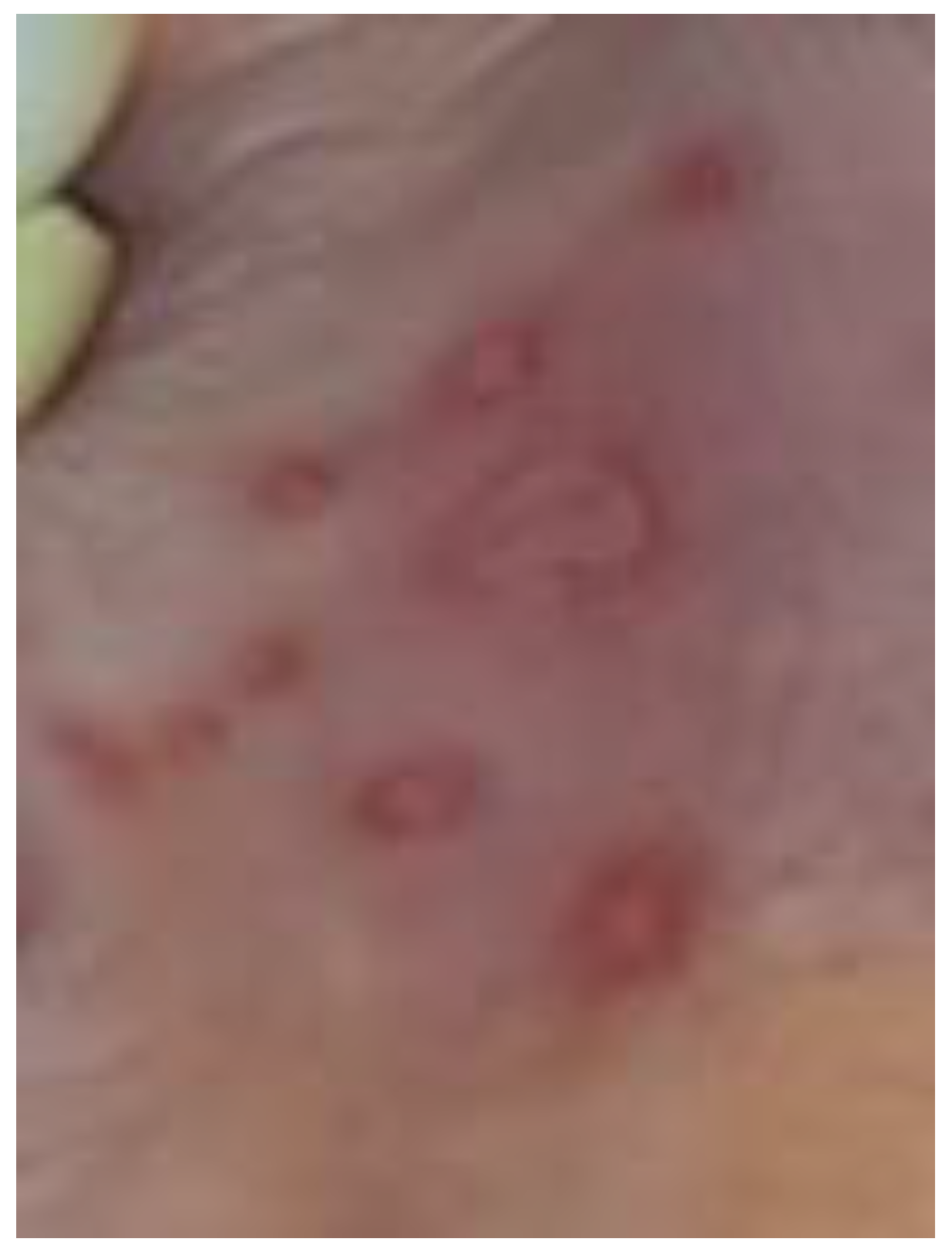
A 47-year-old female patient sought dental care due to the appearance of aphthae (canker sores) on the lower lip, which resolved spontaneously without specific treatment. Shortly thereafter, multiple new lesions—approximately 7–10 in number—developed on the right side of the hard palate. These lesions were extremely painful and interfered with both eating and speaking. The onset of the palatal rash was accompanied by general weakness and painful discomfort localized to the right half of the face. The patient described the pain as severe, persistent, cutting, and burning in character, exacerbated by contact with the palate and by thermal stimuli. She denied fever or other systemic symptoms. Her medical history was unremarkable, with no known comorbidities or regular medication use.
At home, the patient applied Eludril Extra® (0.2% chlorhexidine) to the affected area, but without improvement. On the third day after lesion onset, due to persisting severe pain, she consulted a dentist. The affected area was treated with Solcoseryl® Oromucosal Paste, which provided partial but transient relief of local symptoms, without improvement of the general condition. Extraoral examination revealed no pathological changes on the skin of the face or neck within the maxillofacial region.
A subsequent neurological examination established the diagnosis of trigeminal postherpetic neuropathy, with a vesicular rash on the right hard palate that had evolved into small ulcerations. The distribution suggested involvement of the greater palatine nerve (n. palatinus major dextra), without evidence of other cranial nerve involvement. The diagnosis was further confirmed serologically by elevated titers of IgM, IgG, and IgA antibodies against herpes zoster virus, determined by Enzyme-linked Immunosorbent Assay (ELISA).
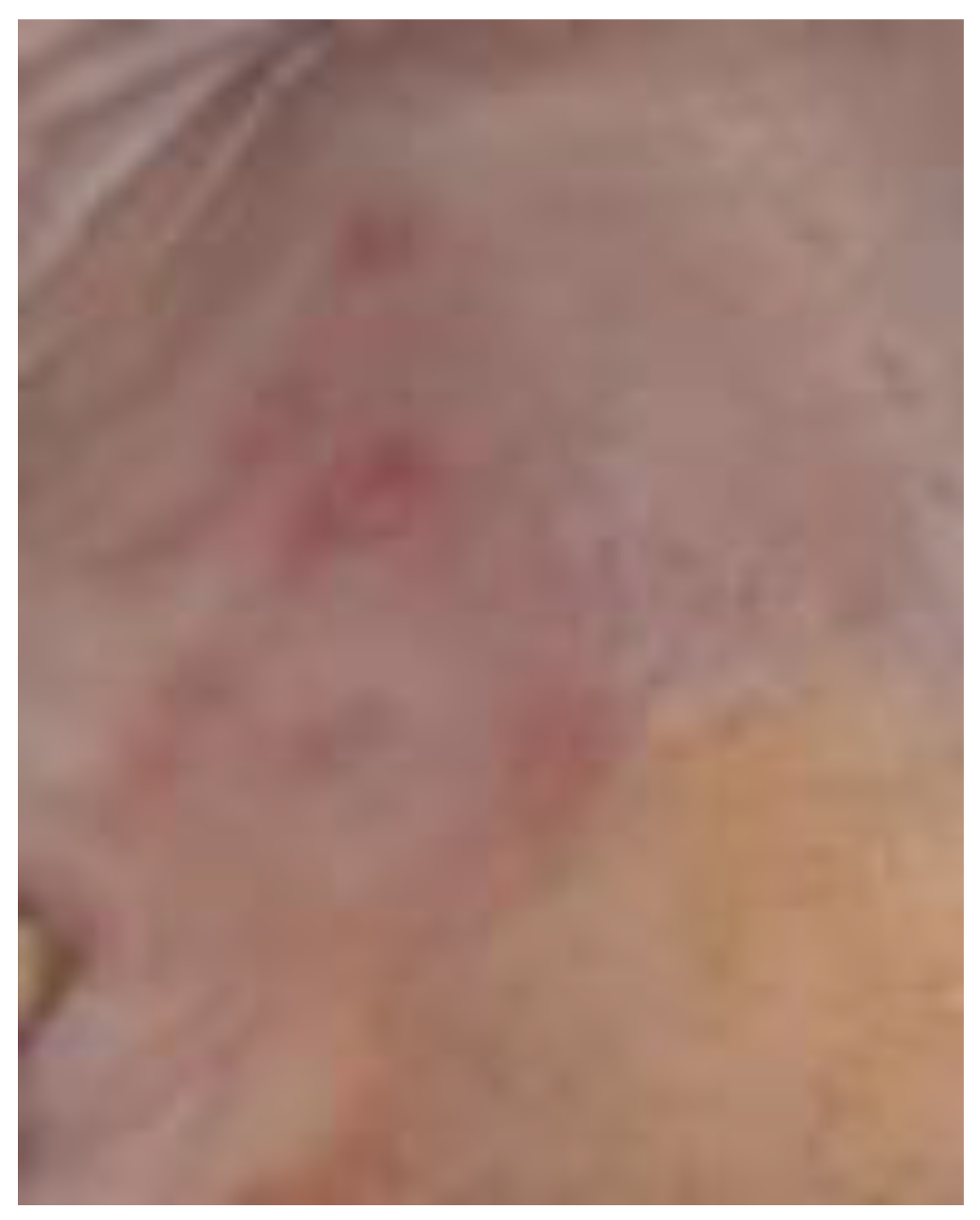
The patient was prescribed systemic therapy consisting of Oral Acyclovir 500 mg, Linefor® 50 mg, and Tramadol Combo®, administered for 10–14 days. Following treatment, her general condition improved, and the localized palatal rash resolved gradually within the same period, as confirmed at follow-up. Given the rarity of this clinical presentation, the patient provided written informed consent for her case to be documented and published.
Figure 1. Intraoral view exhibiting multiple ulcerations with erythematous halos immediatlely after rupture of the vesicles on the right half (mainly the posterior two- thirds) of the hard palate of the patient.
Preprints 197548 g001
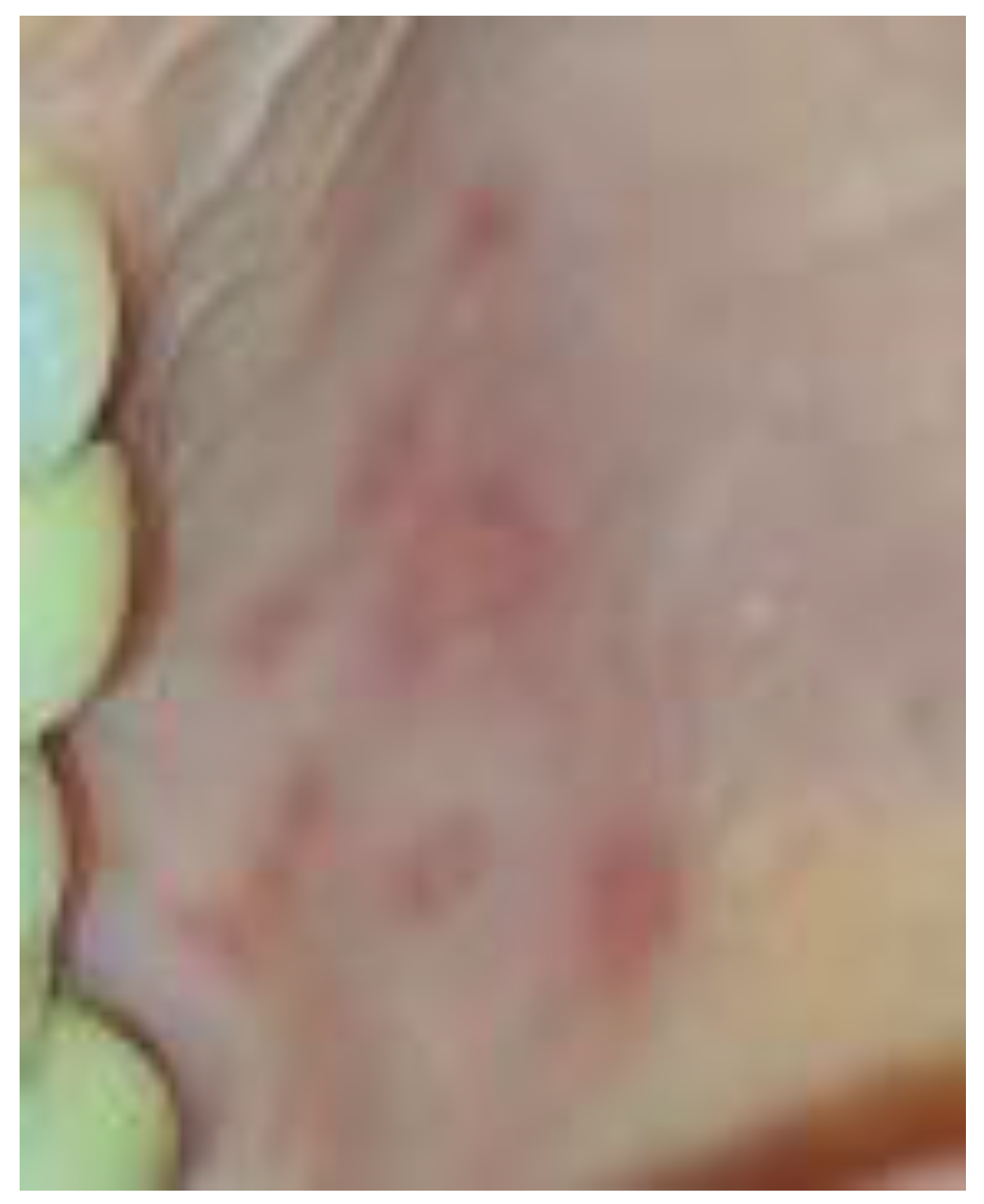
Figure 2. Intraoral view after one week showing partial healing of the lesions on the hard palate.
Preprints 197548 g002
Figure 3. Intraoral view 10 days after antiviral therapy.
Preprints 197548 g003

Discussion

Varicella (primary VZV infection) occurs predominantly in childhood and often affects groups of children living in close contact. After the primary infection, the virus remains latent in the dorsal root ganglia (DRG). Reactivation occurs when host immunity to the virus is reduced due to various factors impairing immune defenses. These include severe psychological stress, advanced age, immunosuppressive therapy (e.g., cyclophosphamide, azathioprine) for malignant or autoimmune diseases such as psoriasis [6] and rheumatoid arthritis [7], bone marrow or organ transplantation, chronic corticosteroid use [8], endocrine and metabolic disorders, and chronic pulmonary conditions such as asthma or COPD [9]. Neurological diseases and other systemic conditions may also predispose to reactivation [10].
In recent years, possible associations between herpes zoster and COVID-19 infection or vaccination have been investigated. Some studies report no significant relationship [11,12], whereas others suggest an increased risk of herpes zoster following COVID-19 recovery [13].
Once reactivated, the virus replicates within neurons, thereby evading host immune defense mechanisms and travels from the dorsal root ganglion via axons to the epidermis, oral mucosa, or ocular tissues, where it induces inflammation [4]. Clinically, this results in a unilateral maculopapular rash that progresses rapidly to vesicular lesions, which rupture and crust within 7–10 days. The rash is restricted to the distribution of the affected nerve and does not cross the midline. The involved region is referred to as a dermatome, most often in the thoracic or lumbar areas, and rarely spans more than two dermatomes.
When the virus reactivates in one of the trigeminal ganglia (cranial nerve V), the clinical picture of herpes zoster infection may appear in the corresponding territory. The ophthalmic branch (n. ophthalmicus) is most frequently affected, followed by the maxillary (n. maxillaris) and mandibular (n. mandibularis) divisions. Isolated involvement of the oral cavity is relatively rare [3,8,14].
Epidemiologically, approximately 25–30% of individuals with a history of varicella develop herpes zoster later in life, and the risk increases with advancing age, reaching more than 50% in individuals aged 85 years or older [15].
The onset of herpes zoster is typically non-specific, with prodromal symptoms such as weakness, fatigue, headache, and localized pain that is often resistant to non-steroidal anti-inflammatory drugs. Neuralgia usually precedes or coincides with the development of the vesicular rash and results from a virus-induced inflammatory reaction affecting the sensory nerves and their branches. In some cases, altered sensation—either increased or decreased—develops in the affected region, a manifestation of neuropathy caused by inflammatory mediators acting on peripheral nerves. These sensory disturbances, including prolonged pain and abnormal sensitivity (allodynia), may persist for months or even years after resolution of the acute infection and are reported in 45–75% of herpes zoster patients [5].
The pain associated with herpes zoster is variable and often difficult to characterize. It may be severe or moderate, spontaneous or stimulus-evoked, and is frequently described as burning, throbbing, stabbing, or cutting. In some cases, even minimal tactile or thermal stimuli provoke disproportionate pain responses, while hypersensitivity to temperature changes or light touch may trigger motor reactions due to its intensity.
In the clinical case presented, pain developed several hours before the vesicular eruption on the palate and subsided following lesion resolution. The diagnosis of herpes zoster with trigeminal neuropathy of the palate and oral mucosa was established based on patient history, clinical neurological findings, and laboratory investigations. Typically, patients report vague soreness or discomfort lasting several days before the appearance of intense erythema and papules, which evolve into a painful vesicular rash affecting keratinized or non-keratinized mucosa. The vesicles rupture rapidly, forming ulcerations surrounded by an erythematous halo. On the palate, the rash is characteristically unilateral and restricted to a limited area, without crossing the midline—features suggestive of involvement of a specific sensory branch of the trigeminal nerve. Because of this localization, functions such as eating, chewing, and speaking are significantly impaired. In some cases, shingles may even mimic odontogenic pain and initially present as a vague toothache [14].
Definitive diagnosis can be supported by paraclinical laboratory methods, including viral culture, immunofluorescence assays using monoclonal antibodies, and polymerase chain reaction (PCR) testing for IgG and IgM antibodies. Elevated levels of both IgG and IgM indicate active herpes zoster virus (HZV) infection, whereas increased IgG alone reflects past exposure or vaccination [16]. PCR is widely used for detecting viral DNA in serum or tissue samples, and it is particularly valuable for identifying infection even before the clinical picture becomes evident [17]. Early diagnosis enables prompt antiviral therapy, thereby reducing complications. Histological analysis of oral mucosal lesions typically reveals acantholysis with nuclear migration of chromatin and occasional multinucleation [18].
The differential diagnosis of oral manifestations of herpes zoster virus (HZV) infection primarily includes herpes simplex virus (HSV) infection and herpetiform recurrent aphthous stomatitis (RAS). In primary HSV infection, the entire oral mucosa is affected, typically presenting with marked erythema and severe pain. In contrast, secondary herpes zoster infection produces a vesicular rash or ulcerations confined to a well-demarcated region of the keratinized attached mucosa or the hard palate [19]. The clinical picture of RAS may also involve localized areas of attached or non-keratinized mucosa; however, unlike RAS, HZV lesions are distinctly unilateral and often more diffuse [16,19].
A more specific clinical entity is Ramsay Hunt syndrome, in which reactivation of VZV in the geniculate ganglion leads to a constellation of signs, including facial paralysis, otalgia, tinnitus, vertigo, vesicular eruptions of the oral cavity and oropharynx, and occasionally hoarseness and other systemic manifestations [20]. Reactivation in the glossopharyngeal ganglion may also occur, producing symptoms involving the posterior third of the tongue, uvula, and posterior oral cavity, with possible extension to the pharynx and larynx [18,20].
Upon detection of HZV infection, patients are advised to temporarily limit close contact to reduce potential transmission. Treatment is primarily based on systemic antiviral therapy, combined with analgesics and supportive measures for local and systemic symptom control. The administration of antiviral agents is most effective when initiated within 72 hours of symptom onset, as the primary objective is to inhibit viral replication and dissemination.
The most widely used antiviral drugs include acyclovir, valacyclovir, and famciclovir, with dosages ranging from 500 to 1000 mg three times daily, adjusted according to patient age and immune status [21]. Acyclovir, once phosphorylated to its triphosphate form, inhibits viral DNA polymerase, thereby suppressing viral replication. Valacyclovir, an acyclovir ester with improved bioavailability, has demonstrated superior efficacy in pain reduction and allows for lower dosing, thereby minimizing adverse effects [22]. Famciclovir, a prodrug of penciclovir with high bioavailability and solubility, is also effective in reducing pain and accelerating lesion healing, with therapeutic outcomes comparable to valacyclovir [23].
Brivudine (125 mg once daily) has additionally been employed in the management of herpes zoster and varicella. Overall, earlier initiation of antiviral therapy significantly reduces damage to peripheral sensory nerves and nerve endings, thereby decreasing the severity and duration of pain while accelerating healing processes [22,24].
Due to the severity and complex nature of herpes zoster pain, both non-opioid non-steroidal anti-inflammatory drugs (NSAIDs) such as ibuprofen, metamizole, or ketoprofen, and opioid analgesics such as tramadol, oxycodone, or codeine may be prescribed, particularly during the acute phase of infection. These agents may be administered orally or, in some cases, locally, but their use is typically managed by neurologists [5]. In rare cases, tricyclic antidepressants may be added to the therapeutic regimen to alleviate chronic pain associated with prolonged postherpetic neuropathy.
At present, no standardized algorithm exists for the management of oral manifestations of herpes zoster. Some authors recommend adapting protocols used for the treatment of oral mucositis in oncological patients [8,25]. In dentistry, the primary approach to local care includes oral sanitation and topical therapies aimed at reducing pain, such as lidocaine sprays or gels [26]. Maintaining oral hygiene is essential to prevent secondary infections, although it may be compromised by pain in the palate and oral mucosa. Antiseptic rinses after meals not only remove food debris but also reduce irritation of affected areas and lower the microbial load, including viral particles, in the oral cavity. Dietary adjustments, such as a soft-food diet, may also be necessary due to pain during mastication.
For home management of oral pain, patients may use gels containing low-concentration lidocaine (e.g., Dentinox®) or lozenges with lidocaine commonly indicated for tonsillitis and pharyngitis. Application of Solcoseryl® Oromucosal Paste, a deproteinized hemodialysate of bovine blood, may further reduce pain sensitivity. This preparation adheres well to the mucosa without prior drying and provides prolonged local effect.
Capsaicin- containing agents, available as gels or rinsing solutions, may also be considered. Capsaicin, a TRPV1 receptor agonist, reduces the availability of substance P, a neurotransmitter involved in pain signaling, thereby decreasing nociceptive sensitivity [27]. Applied at controlled concentrations over 10–14 days, capsaicin can desensitize nociceptors and deplete pro-nociceptive mediators, with reports suggesting benefit in chronic oral pain syndromes [28]. Although oral formulations are not yet widely available in some countries, topical capsaicin gel (0.025%) has been shown to modulate pain perception in conditions affecting the oral cavity and tongue [27,28].
In addition to antiviral and analgesic therapy, corticosteroids may be prescribed to reduce acute pain, promote lesion healing, and improve overall patient condition [18,24]. However, their role remains controversial, as some studies report no significant benefit in pain reduction or healing and caution against their use [22,29].
Despite treatment, recurrence of herpes zoster is possible, particularly under conditions of immunosuppression, prolonged stress, or chronic fatigue [16,30]. Recurrence is reported more frequently in women and in immunocompromised individuals. The most common complication is postherpetic neuralgia, which can persist for months to over a year and is most prevalent in patients with comorbidities [4]. Rare but more severe complications include stroke, encephalitis, myelitis, meningitis, hemiparesis, facial paralysis, and secondary bacterial infections, depending on the site of ganglionic involvement [18]. Due to the virus’s affinity for T-cells, other systemic complications such as vasculitis, enteritis, and retinitis may also occur [4].

Conclusion

Recognition of oral herpes zoster, particularly when localized to the hard palate, is critical for accurate diagnosis and appropriate referral. Awareness of this rare presentation among dental practitioners facilitates early initiation of antiviral therapy, which is most effective when administered within the first 72 hours of symptom onset. Timely treatment can reduce viral replication and dissemination, minimize sensory nerve damage, alleviate pain, and prevent both acute and long-term complications. Thus, accurate recognition and prompt management of oral herpes zoster can significantly improve the clinical course and prognosis of this viral infection.

Informed Consent Statement

sWritten informed consent has been obtained from the patient to publish this paper.

Data Availability Statement

Data is unavailable due to privacy reasons.

Acknowledgments

The authors have reviewed and edited the output and take full responsibility for the content of this publication.

Conflicts of Interest

The authors declare no conflicts of interest.

References

  1. Enright, AM; Prober, CG. Herpesviridae infections in Newborns: Varicella zoster virus, herpes simplex virus and cytomegalovirus. Pediatr Clin North Am. 2004, 51, 889–908.viii. Available online: https://pubmed.ncbi.nlm.nih.gov/15275980/. [CrossRef] [PubMed]
  2. Schmader, K. Herpes zoster and postherpetic neuralgia in older adults. Clin Geriatr Med 2007, 23(3), 615-32, vii-viii. Available online: https://pubmed.ncbi.nlm.nih.gov/17631237/. [CrossRef] [PubMed]
  3. Tsai, Yun-Chen; Lee, Yi-Pang; Ming-Jay, Hwang; Chiang, Chun-Pin. Oral herpes zoster- Case report. J Dent Sci 2021, 16(1), 563–564. Available online: https://pubmed.ncbi.nlm.nih.gov/33384852/. [CrossRef] [PubMed]
  4. Olezko, M; Zapolnik, P; Kmiecik, W; Czajka, N. Herpes Zoster: Rsk Factors for Occurrence, Complications, and Recurens with Focus in Immunocompromised Patients. Diseases 2025, 13(3), 71. Available online: https://pubmed.ncbi.nlm.nih.gov/40136611/. [CrossRef]
  5. Adriaansen, E; Jacobs, J; Vernooij, LM; van Wijck, AJM; Cohen, SP; Huygen, FJPM. Herpes zoster and post herpetic neuralgia. Pain Practice 2025, 25, el13423. Available online: https://pubmed.ncbi.nlm.nih.gov/39364882/. [CrossRef]
  6. Min, C; Yoo, DM; Kim, M; Choi, HG. Increased risk of herpes zoster in patient with psoriasis: A longitudinal follow-up study using a national sample cohort. Australas J Dermatol 2021, 62(2), 183–189. Available online: https://pubmed.ncbi.nlm.nih.gov/33527370/. [CrossRef]
  7. Singer, D; Thompson-Leduc, P; Poston, S; Gupta, D; Cheng, WY; Devine, F; et al. Incidence of Herpes Zoster in Patients With Rheumatoid Arthritis in the United States; A Retrospective Cohort Study. J Rhematol 2023, 50(7), 873–880. Available online: https://pubmed.ncbi.nlm.nih.gov/36725054/. [CrossRef]
  8. Matsuda, Y; Mizuno, R; Miyajima, S; Arakawa, S; Kabasawa, Y. A Case of Oral Health Management for a Patient with Extensive Ulceration of the Oral Mucosa Due to Herpes Zoster. Healthcare (Basel) 2022, 10(11), 2249. Available online: https://pubmed.ncbi.nlm.nih.gov/36360588/. [CrossRef]
  9. Safonova, E; Yawn, BP; Welte, T; Wang, C. Risk factors for herpes zoster. Should people with asthma or COPD be vaccinate? Respir Res 2023, 28;24(1), 35. Available online: https://pubmed.ncbi.nlm.nih.gov/36709298/. [CrossRef]
  10. Stainmann, M; Lampe, D; Grosser, J; Schmidt, J; Hohoff, ML; Fisher, A.; et al. Risk factors for herpes zoster infections: A systematic review and meta-analysis unveiling common trends and heterogeneity pattern. Infection 2024, 52(3), 1009–1026. Available online: https://pubmed.ncbi.nlm.nih.gov/38236326/. [CrossRef]
  11. Diez-Domingo, J; Parikh, R; Bhavsar, AB; Cisneros, E; McCormic, N; Lecrenier, N. Can COVID-19 Increase the Risk of Herpes Zoster? A Narrative Review. Dermatol Ther (Heidelb) 2021, 11(4), 1119–1126. Available online: https://pubmed.ncbi.nlm.nih.gov/33999370/. [CrossRef] [PubMed]
  12. Czech, T; Nishimura, Y. Characteristics of herpes zoster infection in patients with COVID-19: A systematic scoping review. Int J Dermatol 2022, 61(9), 1087–1092. Available online: https://pubmed.ncbi.nlm.nih.gov/35503921/. [CrossRef] [PubMed]
  13. Bhavsar, A; Lonnet, G; Wang, C; Chatzikonstantinidou, K; Parikh, R; Braband, Y; et al. Increased Risk of Herpes Zoster in Adults≥ 50 Years Old Diagnosed With COVID -19 in the United States. Open Forum Infect Dis 2022, 9(5), ofac118. [Google Scholar] [CrossRef] [PubMed]
  14. AlZahrani, AA; Azhar, AE; Asham, SY; Alhindi, AO. Unilateral Oral Herpes Zoster in an Elderly Female: A Case Report and Review of the Literature Clin Cosmet Investig Dermatol. 2025, 14 18, 1045–1050. Available online: https://pmc.ncbi.nlm.nih.gov/articles/PMC12049107/. [CrossRef]
  15. Rosamila, LL. Herpes Zoster Presentation, Management and Prevention:a Modern Case-Based Review. Am J Clin Dermatol 2020, 21(1), 97–107. Available online: https://pubmed.ncbi.nlm.nih.gov/31741185/. [CrossRef]
  16. Neville, BW; Damm, DD; Allen, CM; Chi, AC. Viral infection and allergies and imunologic disease. In and maxillofacial pathology, 4th ed; Neville, BW, Damm, DD, Chi, AC, Eds.; Elsevier: St Louis, 2016; p. vols. 218- 229 303-8. [Google Scholar]
  17. Giunard, V; Thévent, H; Boutolleau, D. Detection of varicella zoster virus DNA blood from immunocompromised patients during the week preceding the onset of herpes zoster rash. Clin Virol 2023, 169, 105609. [Google Scholar] [CrossRef]
  18. Dosi, TR; Chawla, AK; Barkalle, G; Phulambrikar, T. Herpes zoster in orofacial region. J Oral Maxillofac Pathol 2021, 25(3), 557. Available online: https://pubmed.ncbi.nlm.nih.gov/35281131/. [CrossRef]
  19. Chiang, YT; Hwang, MJ; Lee, YP; Chiang, CP. Differential diagnosis between herpetic gingivostomatitis and herpetiform aphthous ulcerations. J Dent Sci 2020, 15(3), 386–387. [Google Scholar] [CrossRef]
  20. Jeon, Y. Lee H Ramsey hunt syndrome. J Dent Anesth Pain Med. 2018, 18(6), 333–337. [Google Scholar] [CrossRef]
  21. Werner, RN; Nikkles, AF; Marinović, B; Schäler, M; Czarnecka- Operacz, M; Aguius, AM; et al. European consensus-based (S2k) quideline on the management of Herpes Zoster- qiuded by the European dermatology forum (EDF) in cooperation with the European academy of dermatology and venerology (EADV), part 2: Treatment. J Eur Acad Dermatol Venereol 2017, 31, 20–9. Available online: https://pubmed.ncbi.nlm.nih.gov/27579792/. [CrossRef]
  22. Nikkels, AF; Pierard, G. Oral antiviral revisited in the treatment of herpes zoster: what do they accomplish? Am J Clin Dermatol 2002, 3(9), 591–8. Available online: https://pubmed.ncbi.nlm.nih.gov/12444801/. [CrossRef]
  23. Perry, CM; Wagstaff, AJ. Famciclovir: a review of its pharmacological properties and therapeutic efficacy in herpes virus infections. Drugs 1995, 50, 396–415. Available online: https://pubmed.ncbi.nlm.nih.gov/8521764/. [CrossRef] [PubMed]
  24. Dworkin, RH; Johnson, RW; Breuer, J; Gnann, JW; Levin, MJ; Backonja, M; et al. Recommendation for the management of herpes zoster. Clin Infect Dis 2007, 44 (Suppl 1), S1–26. Available online: https://pubmed.ncbi.nlm.nih.gov/17143845/. [CrossRef] [PubMed]
  25. Elad, S; Cheng, KKF; Lalla, RV; Yarom, N; Hong, C; Logan, RM. MASCC/ISOO clinical practice guidelines for the management of mucositis secondary to cancer therapy Practice Guideline Cancer. 2020, 126(19), 4423–4431. Available online: https://pubmed.ncbi.nlm.nih.gov/32786044/. [CrossRef] [PubMed]
  26. Lui, X; Wei, L; Lin, K; Zhang, J. The treatment of topocal drugs for postherpetic neuralgia: a network meta-analysis. Pain Physician 2020, 23(6), 541–551. Available online: https://pubmed.ncbi.nlm.nih.gov/33185370/.
  27. Rupel, K; Stella, AB; Tamos, M; Adamo, D; Canfora, F; Biasotto, M. Effects of Oral Topical Capsaicin Gel On Teste Perception in Healthy Subbjects: A pilot Study. J Oral Pathol Med. 2025, 54(5), 392–396. Available online: https://pubmed.ncbi.nlm.nih.gov/40091645/. [CrossRef]
  28. Jørgensen, MR; Pedersen, AML. Analgesic effect of topical oral capsaicin gel in burning mouth syndrome. Acta Odontol Scand 2017, 75(2), 130–136. Available online: https://pubmed.ncbi.nlm.nih.gov/28007005/. [CrossRef]
  29. Esmann, V; Geil, JP; Kroon, S; Fogh, NA; Petersen, CS; Ronne-Rasmussen, JO; et al. Prednisolon does not prevent postherpetic neuralgia. Lancet 1987, 2(8551), 126–9. Available online: https://pubmed.ncbi.nlm.nih.gov/2885599/. [CrossRef]
  30. Schmader, K. Herpes zoster. Ann Intern Med 2018, 169, ITS19–31. Available online: https://pubmed.ncbi.nlm.nih.gov/30083718/. [CrossRef]
Disclaimer/Publisher’s Note: The statements, opinions and data contained in all publications are solely those of the individual author(s) and contributor(s) and not of MDPI and/or the editor(s). MDPI and/or the editor(s) disclaim responsibility for any injury to people or property resulting from any ideas, methods, instructions or products referred to in the content.
Copyright: This open access article is published under a Creative Commons CC BY 4.0 license, which permit the free download, distribution, and reuse, provided that the author and preprint are cited in any reuse.
Prerpints.org logo

Preprints.org is a free preprint server supported by MDPI in Basel, Switzerland.

Subscribe

Disclaimer

Terms of Use

Privacy Policy

Privacy Settings

© 2026 MDPI (Basel, Switzerland) unless otherwise stated