

Submitted:
02 February 2026
Posted:
05 February 2026
You are already at the latest version
Abstract
Coronary artery spasm (CAS) is the most prevalent endotype in patients with angina with non-obstructive coronary arteries. It also plays an important role in patients with acute and chronic coronary syndrome. Incomplete intracoronary provocation testing to exclude CAS as the etiology of chronic or acute coronary syndrome leads to an incorrect diagnosis and, subsequently, inappropriate treatment. Identification of the correct endotypes of chronic and acute coronary syndromes is critical for the selection of appropriate therapy, which then affects disease outcome. It is therefore essential to complete intracoronary provocation testing for right and left coronary arteries in order to reach a correct diagnosis with regard to CAS, including epicardial vasospasm and microvascular spasm. If CAS is found not to be the cause of myocardial ischemia, then a microvascular functional assessment is the next step to identify the etiology of the ischemic event. A comprehensive assessment of CAS is essential before appropriate treatments can be started.
Keywords:
acute coronary syndrome
; angina
; chronic coronary syndrome
; coronary artery spasm
; coronary microvascular dysfunction
1. Understanding Coronary Artery Spasm
Coronary artery spasm (CAS), a disease condition including vasoconstriction of epicardial coronary artery (epicardial vasospasm, EVS) and/or coronary microcirculation (microvascular spasm, MVS), result in decreased flow to myocardium with resultant endocardial and myocardial ischemia [1]. CAS occurs not only in atherosclerotic coronary artery disease [2] but also in the angiographically normal coronary arteries [3]. For a long time, CAS was underestimated in daily clinical practice due to misunderstanding of electrocardiographic changes associated with CAS, an underestimation of clinical importance of CAS, a greater focus on coronary intervention, and the wide use of calcium antagonists. Apart from a few catheterization laboratories, most interventional cardiologists worldwide have abstained from using provocation testing to identify the etiologies of angiographically normal coronary arteries in patients with chronic coronary syndrome (CCS) and acute coronary syndrome (ACS). In 1999, American College of Cardiology/American Heart Association published guidelines for coronary angiography [4], stating that intracoronary methylergonovine provocation of CAS is safe, sensitive and specific. However, cardiologists at the time were only interested in patients needing need angioplasty and stenting. Some may have misunderstood CAS as a rare disease, and viewed provocation testing as time-consuming. Some were still concerned about the safety of intracoronary provocation testing although it had been declared a safe procedure. Recently, many investigators reconfirmed CAS intracoronary provocation testing as a relatively safe procedure, and have also noted that CAS is not a rare endotype in patients with angina and non-obstructive coronary arteries (ANOCA) [5,6,7]. Additionally, many investigators have found that CAS plays an important role in the setting of ACS, out-of-hospital cardiac arrest, myocarditis, hypertrophic cardiomyopathy, and Takotsubo syndrome [8,9,10,11,12]. In 2023, a Japanese guideline on vasospastic angina and coronary microvascular dysfunction emphasized the role of CAS in myocardial infarction with non-obstructive coronary arteries and ischemia with non-obstructive coronary arteries (INOCA) [13]. In 2024, European Society Cardiology published a chronic coronary syndrome guideline which upgraded the indication of invasive coronary function testing to a class IB indication for patients with ANOCA to identify the underline etiologies of angina [14]. We should therefore continue to consider CAS as a possible etiology of CCS or ACS, and not abandon attempts to confirm the diagnosis of CAS, in order to manage ischemic symptoms more appropriately. There is a consensus that determining the etiology of patients suffering from CCS and ACS is the necessary initial step to establish personalized healthcare. Recent investigations have noted that CAS is the most common endotype in patients with ANOCA [5,6,7,15,16,17]. Also, different endotypes can coexist in a patient. Meanwhile, pure coronary microvascular dysfunction without EVS or MVS constitutes less than 10% in patients with ANOCA [5,6,7]. Given the above observations, we must be willing to familiarize ourselves with pathology, diagnosis, and treatment of CAS, instead of ignoring it.
Pathophysiologically, the CAS artery is not a normal artery. CAS without coronary artery disease has been documented in 70% of endomyocardial biopsy-proven PVB19 myocarditis [18]. In patients with CAS, intimal injury and neointimal hyperplasia with infiltrating inflammatory cells in coronary plaques or arteries have been documented through autopsy and histological examination [19]. Using intracoronary ultrasound, diffuse intimal thickening is found in coronary arteries of CAS [20]. A Japanese study found that inflammatory changes in coronary adventitia and perivascular adipose tissue are associated with CAS in vasospastic angina patients, as demonstrated by 18F-fluorodeoxyglucose positron emission tomography/computed tomography [21]. Therefore, local inflammation either inside or outside the coronary artery, could result in impaired vasodilatation and possibly enhanced vasoconstriction. In addition, 18F-fluorodeoxyglucose uptake decreased after treatment with calcium antagonists in the aforementioned CAS patients.
By contrast, systemic inflammation is present in CAS patients, as demonstrated by elevated circulatory inflammatory and adhesion markers [22] and peripheral leukocyte Rho-associated coiled-coil-containing protein kinase activity [23], disease-entity association such as incident diabetes [24], Kounis syndrome [25], bronchial asthma [26], and anxiety/depression [27], and clinical risk factor associated with cigarette smoking [28]. In our prior study [22], patients in the CAS group were more likely to be smokers and have higher peripheral white blood cell and monocyte counts, and higher high sensitivity C-reactive protein, interleukin-6, soluble intercellular adhesion molecule-1 and soluble vascular adhesion molecule -1 levels. Further analysis showed that interleukin-6 was independently associated with the diagnosis of CAS. Furthermore, we also noted that there is a different association with high sensitivity C-reactive protein and genders [29]. Diabetes mellitus contributes to CAS development in men with low high sensitivity C-reactive protein levels, which is not observed in women. In addition, we found that diabetes mellitus and hypertension are negatively associated with CAS development in patients with high sensitivity C-reactive protein levels, especially in women. The negative association of hypertension with CAS in that study further suggests that CAS is pathogenically different from coronary atherosclerosis. Our prior preclinical study found that peripheral leukocyte Rho-associated coiled-coil-containing protein kinase activity independently predicts the CAS development in patients with ANOCA [23]. Rho-associated coiled-coil-containing protein kinase is a serine/threonine protein kinase that mediates the Rho, a downstream signaling, on the actin cytoskeleton, which is activated in patients with CAS. Interestingly, the elevated circulatory inflammatory markers and peripheral leukocyte Rho-associated coiled-coil-containing protein kinase activity are reduced after treatment for CAS [23,30]. Based on the results of the above studies, it is concluded that local inflammation and systemic inflammation are present in coronary arteries with CAS suggesting that coronary arteries of CAS are not normal arteries despite appearing as angiographically normal coronary arteries.
From the perspective of molecular biomedicine, it is not exactly understood about cellular mechanisms of CAS development. It has been shown that endothelial nitric oxide synthase is one of the most important sources of nitric oxide production in vasorelaxation [31]. It was demonstrated in human endothelial cells that serine/threonine protein kinase B mediated the activation of endothelial nitric oxide synthase, leading to increased nitric oxide production [32]. Endothelial nitric oxide synthase is reversely associated with protein kinase that are implicated in opposing regulatory effects on the enzyme, leading to both endothelial nitric oxide synthase activation, namely serine/threonine protein kinase B and inhibition, namely extracellular signal-regulated kinase. Our study in human umbilical vein endothelial cells found that interleukin-6 decrease nitric oxide production and endothelial nitric oxide synthase phosphorylation at Ser1177 through downregulation of serine/threonine protein kinase B phosphorylation without affecting endothelial nitric oxide synthase protein expression [33]. In addition, interleukin-6 increased the protein-protein interaction between endothelial nitric oxide synthase and caveolin-1, a negative regulator of endothelial nitric oxide synthase, through upregulation of caveolin-1 protein and increase its half-life. We further demonstrated that the effects of interleukin-6 on the activation of endothelial nitric oxide synthase and expression of protein-protein interaction between endothelial nitric oxide synthase and caveolin-1are mediated by the signal pathway of extracellular signal-regulated kinas. Recently, some animal studies found that sustained adventitial inflammation by interleukin-a beta or drug-eluting stent implantation leads to medial vascular smooth muscle hypercontraction and resultant enhanced coronary contraction through activation of Rho-kinase [34,35,36]. The expression of Rho-kinase mRNA and RhoA mRNA were increased in the segment of spastic coronary artery as compared with segment of control coronary artery [34]. Furthermore, inhibition of serotonin-mediated vascular smooth muscle hypercontraction was noted using the Rho-kinase inhibitor, Y-27632 [37]. Therefore, cellular mechanisms either inside or outside the vessel wall, could lead to vascular smooth muscle hypercontraction, a clinical scenario of CAS. Over the years, many basic studies tried to illuminate the mechanisms of CAS. However, no ingle mechanism can tell the whole story of CAS. It is reasonable to speculate that multiple mechanisms involving endothelium, vascular smooth muscle cells, adventitia, autonomic nervous system, local inflammation, and systemic inflammation are part of CAS development (Figure 1).
Clinically, CAS is a dynamic process with a threshold effect on presentation [39]. CAS could present as silent ischemia, atypical chest pain, resting angina, CCS, ACS, variant angina and even sudden cardiac arrest [9,38,39,40,41]. Silent ischemia with transient ST-segment elevation could be observed on 24-hour Holter electrocardiographic recording [42]. The frequency of positive CAS provocation testing result for patients presenting as atypical chest pain is 1.5% [38]. By contrast, the frequency of provoked CAS in patients with resting angina was 50.4% [38]. CAS is also noted in CCS patients presenting with ANOCA and positive non-invasive stressing testing results, i.e. INOCA [28]. The incidence of positive CAS provocation in INOCA patients is 67% [28], indicating CAS is not uncommon in INOCA. Identification of CAS has become more important in the present primary coronary intervention era, given the range of treatment strategies available for atherosclerotic coronary artery disease and CAS. In 25% of patients with ACS, no significant coronary artery disease is found, and CAS could be provoked in about half of these patients [8,41]. According to our prior report, 12% of patients with acute myocardial infarction had a patent culprit coronary artery, and in 95% of these patients the patent infarct-related CAS could be provoked [43]. We also have identified CAS as a cause of out-of-hospital cardiac arrest [9], which is an important diagnostic issue in a recent guideline from the European Society of Cardiology for the management for survivors of sudden cardiac death [44].
Using the National Health Insurance Research Database, we found that bronchial asthma is independently associated with newly developed vasospastic angina with an odds ratio of 1.85 [26]. In addition, the prevalence, 4.4%, of asthma in vasospastic angina patients was higher than the prevalence of asthma (2.6%) in atherosclerotic coronary artery disease. This finding provides evidence of interplay between allergic reaction and CAS, which is like the observation of Kounis syndrome [25]. Kounis syndrome has three variants: type I, allergic CAS due to endothelial dysfunction in patients without coronary artery disease; type II, CAS or plaque erosion without coronary artery disease due to an allergic reaction; type III, an allergic CAS in the presence of coronary thrombosis. We previously reported a type I Kounis syndrome in a 45-year-old sigmoid cancer patient who had CAS-related vasospastic angina secondary to drug allergy of chemotherapy agent oxaliplatin [45]. Although an allergic reaction exists in both bronchial asthma and Kounis syndrome, treatment strategies of Kounis syndrome are quite different. Therefore, knowledge of individual hypersensitivity is essential to manage CAS patients appropriately.
Besides the above observation of clinical cardiac manifestation of CAS, electrocardiographic findings are additional clues to the occurrence of CAS. The most common electrocardiographic change associated with CAS is ST-segment depression and T-wave inversion instead of ST-segment elevation, indicating non-transmural myocardial ischemia occurs in the majority of CAS-induced vasospastic angina [46]. This further explains that variant angina, i.e. angina accompanied by transient ST-segment elevation, is one of manifestations of CAS-induced vasospastic angina [38]. This suggests that there is an unmet need to clinically verify CAS as the cause of a cardiac ischemic event (Figure 2).
2. Diagnosis and Treatment of CAS in ACS
Careful interpretation of the 12-lead electrocardiogram in the emergency room plays a key role in the initial management for patients with acute onset of chest pain. New ST-segment elevation on electrocardiogram does not definitely indicate acute transmural myocardial injury. Some diseases other than ACS may present with new ST-segment elevation in the emergency room. We have reported ACS mimickers include subarachnoid hemorrhage, acute pericarditis, and takotsubo syndrome [12]. Therefore, follow-up electrocardiograms in conjunction with clinical presentation form the key factors in reaching a correct diagnosis. If the electrocardiographic changes resolved after nitroglycerin is given, a diagnosis of CAS-induced ACS can be made. If the electrocardiographic changes persist, an emergency coronary intervention might be necessary. Meanwhile, it is very important to diagnosis subsequent, new electrocardiographic ST-segment changes, which could be associated with atherosclerotic coronary artery stenosis, CAS, coronary artery dissection, plaque rupture/erosion, or acute myocarditis, as this determines the subsequent management strategies. After careful interpretation of coronary angiography and/or intracoronary ultrasound imaging to exclude other etiologies of ACS, especially coronary artery dissection or plaque rupture/erosions, a subsequent EVS and MVS provocation testing is the next step to make the diagnosis of CAS-induced ACS.
CAS includes EVS and MVS. Final confirmation is achieved by intracoronary provocation testing using two agents, ergonovine and acetylcholine [13,14]. Methylergonovine, an analogue of ergonovine, is an alternative agent to provoke EVS with similar sensitivity, specificity, and safety [4]. Both agents induce endothelium-dependent vasodilation in the presence of nitric oxide released from normal endothelium [47]. By contrast, in the presence of abnormal endothelium, vasoconstriction occurs due to inadequate nitric oxide production [48]. We have used intracoronary methylergonovine provocation testing to identify CAS since 1999 [28], with the protocol as follows (Figure 3):
1) Withdraw calcium antagonists and nitrates except sublingual nitrates for at least 24 hours;
2) Prepare at least 1000 ug nitroglycerin before starting provocation;
3) Continuously monitor 12-lead electrocardiogram, patient chest symptom, and coronary angiography;
4) Administer methylergonovine at 3-minute intervals with step-wise dosing of at 1, 5, 10, and 30 µg, first into the ACS culprit artery and subsequently into the remaining arteries;
5) Administer intracoronary nitroglycerin 50-1000 µg at the end of provocation of right or left coronary artery, depending on the hemodynamic status irrespective of the test result.
Once the diagnosis is confirmed, the provocation procedure is stopped. A positive provocation test result for EVS includes reproduced chest pain, ischemic electrocardiographic ST-T changes, and epicardial coronary artery diameter reduction of more than 70% as compared with the vessel diameter after intracoronary nitroglycerin administration [28]. MVS is defined as reproduced chest pain, ischemic electrocardiographic ST-T changes, and no epicardial coronary artery vasoconstriction [13]. The spasm provocation protocol does not require a flow/pressure wire, which is required for the subsequent coronary microvascular function assessment. In theory, coronary arteries and microvasculature should be fully dilated to assess their resistance which is an important parameter in assessing coronary microvascular function. Therefore, we perform complete coronary function assessment include CAS provocation testing first then coronary microvascular function assessment later, after intracoronary nitroglycerin administration (Figure 4), which is consistent the CCS guideline developed in 2024 by European Society of Cardiology [14].
Treatments for CAS-related include non-pharmacological and pharmacological strategies. A non-pharmacological strategy is cessation of cigarette smoking because it is the risk factor for CAS development [28]. Pharmacological strategies include prescription of the first-line agent, calcium antagonists [13,14], and avoidance of non-selective beta-blockers. It is suggested that calcium antagonists should be long-acting and used before going to bed, with a larger dose than that used in treating hypertensive patients, e.g. diltiazem usually given at 240-360 mg/day. One important point that should not be overlooked is oral long-acting calcium antagonist should be given shortly after CAS provocation, because CAS may recur during that night. This key point is especially important when caring for ACS patients because their vasomotion disorder is of high disease activity. Nitrate can resolve CAS quickly; however, its efficacy is limited by intolerance and poor long-term clinical outcomes [49,50]. Coronary intervention for CAS-induced ACS is contraindicated, especially in patients with angiographically normal coronary arteries, because of diffuse and high spastic disease activity in the setting of CAS-induced ACS [13,14,51,52,53].
3. Diagnosis and Treatment of CAS in CCS
CAS is one of the manifestations of CCS. Impaired myocardial flow is the pathogenic mechanism for CCS. Patients with CAS may present with atypical chest pain, thus preventing its early diagnosis and appropriate treatment. CAS can cause reduced coronary blood flow during non-invasive stress testing with a resultant non-conclusive or positive stress testing result [28]. Our prior study showed that a positive, non-invasive stress testing result could be obtained in 67% of CAS patients with INOCA [28]. Regardless, definite diagnosis of CAS depends on invasive CAS provocation testing. CAS provocation protocol for CCS is the same as that in ACS (Figure 5). In patients with CCS, we usually perform CAS provocation testing for right coronary artery first then for left coronary arteries subsequently. Treatment strategies for CAS in patients with CCS are almost the same as in CCS. Recently, we developed a formula to predict CAS using clinical and echocardiographic parameters [54] in order not to miss the diagnosis of vasospastic angina during our daily practice.
Pharmacological treatment with calcium antagonists is suggested to be lifelong due to persistent spasticity of coronary arteries and the likelihood of silent myocardial ischemia [52]. Silent myocardial ischemia could be fatal because of myocardial ischemia-related lethal cardiac arrhythmias and sudden cardiac death. A combination of two different calcium antagonist mechanisms is suggested for recurrent CAS [55]. Some other pharmacological therapies are also beneficial in treating CAS. Rho-associated coiled-coil-containing protein kinase inhibitor [56]and statins [57] are found to be beneficial in treating CAS. Since EVS, MVS and coronary microvascular dysfunction are frequently coexisting in patients with ANOCA, ranolazine, a late inward sodium current inhibitor, can be used as an additive agent for patients with recurrent angina after optimal doses of calcium antagonist [58]. Coronary intervention is not an appropriate option to treat CAS in the absence of adequate doses of calcium antagonists and cessation of cigarette smoking [13,14]. Recently, we found that long-term CAS without appropriate treatments could cause heart failure, which raise an important issue that should not be overlook [59].
4. Safety and Feasibility of CAS Provocation Testing
There is a consensus that intracoronary CAS provocation testing has an acceptable low rate of complications [60]. Our prior study and Japanese multicenter study reported a complication rate of 0.66 – 0.8 % during intracoronary ergonovine provocation testing [60,61]. The rate of serious cardiac arrhythmias is higher on intracoronary acetylcholine than on ergonovine testing. Intracoronary CAS provocation testing has been supported by prior studies in the setting of ACS [8,41,44,62,63]. A misdiagnosis or delayed diagnosis of CAS-induced ACS may lead to subsequent inappropriate treatment. Therefore, intracoronary CAS provocation in ACS can be recommended after excluding atherosclerotic causes of ACS.
For CCS patients with ANOCA or INOCA, CAS provocation testing was recommended in 2024 by the European Society of Cardiology as a Class IB indication to identify the treatable endotypes [14]. In other words, the CAS provocation testing is beneficial, useful, and effective in patients with ANOCA or INOCA. Furthermore, the methylergonovine or acetylcholine provocation testing was recommended in 1999 by American College of Cardiology/American Heart Association/Society for Cardiac Angiography and Interventions to identify CAS on the basis pf its safety, sensitivity and specificity [4]. Nevertheless, we must also recognize the contraindications for intracoronary CAS provocations testing, namely pregnancy, severe hypertension (systolic blood pressure > 180 mm Hg), moderate to severe aortic stenosis, and uncontrolled ventricular arrhythmia [4].
5. Conclusions
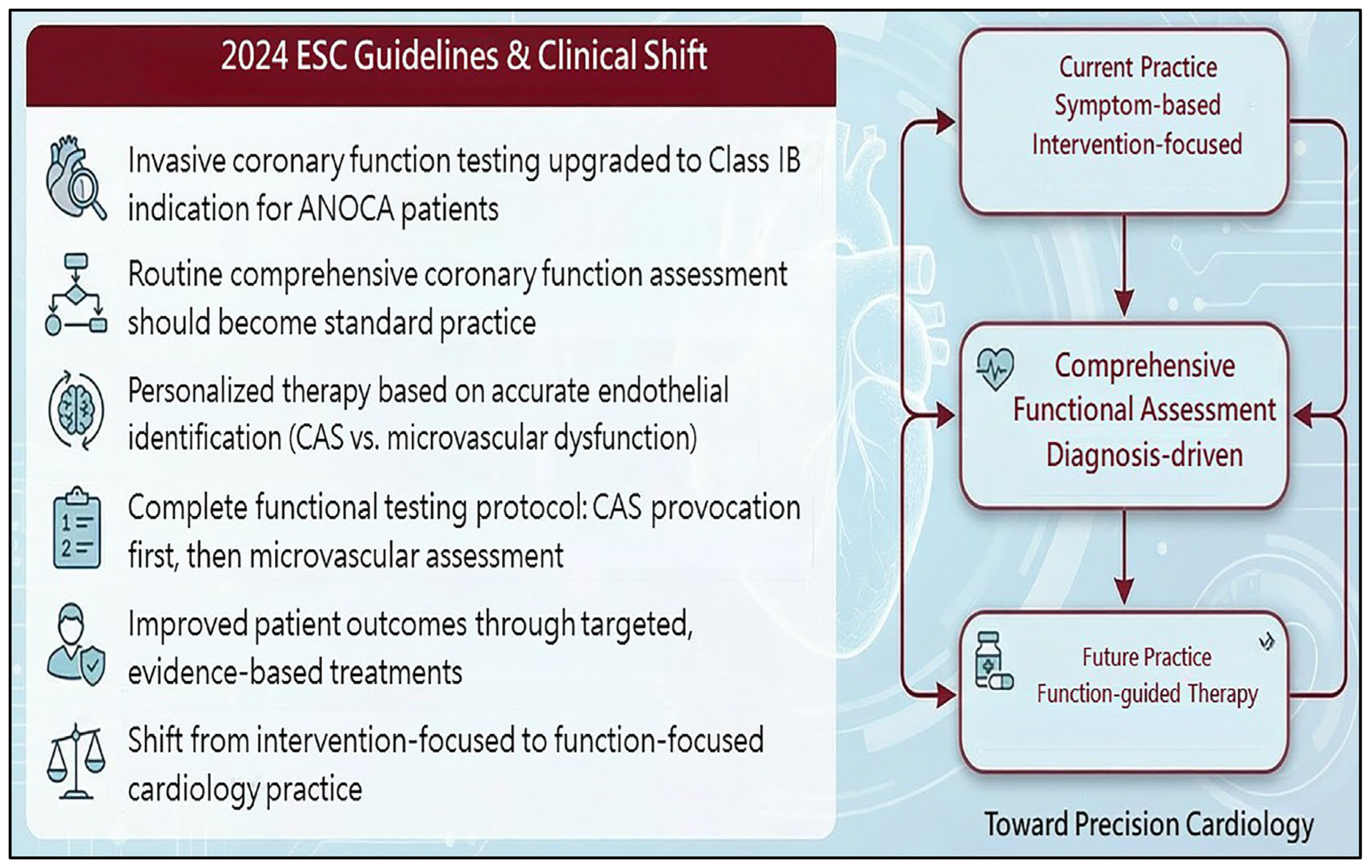
Correct diagnosis of ANOCA and INOCA through complete CAS provocation testing of 3 coronary arteries and coronary microvascular function assessment is fundamental to effective and life-saving treatment. Preventing the recurrence of vasospastic angina is the best strategy to treat CAS-induced CCS or ACS and it is our obligation and responsibility to help these patients because, with or without recurrence, CAS is not a benign condition and can be fatal. Addressing CAS on the basis of a correct diagnosis id urgent, because appropriate treatment can only be determined with a correct diagnosis (Figure 6). Non-pharmacological treatment, namely the smoking, and pharmacological treatments including calcium antagonists, nitrates, and ranolazine are the primary elements of CAS treatment. Coronary intervention is contraindicated in treating CAS-induced ischemic events.
6. Future Directions
There will always be CAS patients despite appearance to the contrary. Many randomization-controlled trials have demonstrated the importance of identifying the CAS-induced clinical ischemic event. Future cardiology guidelines will enhance the evidence-based medicine for the diagnosis and treatment of CAS. Therefore, the era of precision cardiology is coming.
The underline pathophysiological of CAS remains elusive in spite of many association and intravascular imaging studies. Furthermore, the interplay between endothelium, smooth muscle, adventitia, inflammation, and CAS-induced vasospastic angina is still unclear and needs further basic and clinical studies.
Author Contributions
“Conceptualization, M.-J.H.; writing—original draft preparation, M.-J.H.; writing—review and editing, M.-Y.H.; supervision, M.-J.H. Both authors have read and agreed to the published version of the manuscript.
Funding
Not applicable.
Institutional Review Board Statement
Not applicable.
Informed Consent Statement
Not applicable.
Data Availability Statement
Not applicable.
Conflicts of Interest
The authors declare no conflicts of interest.
Abbreviations
The following abbreviations are used in this manuscript:
| CAS | Coronary Artery Spasm |
| CCS | Chronic Coronary Syndrome |
| ACS | Acute Coronary Syndrome |
| ANOCA | Angina and Non-Obstructive Coronary Arteries |
| INOCA | Ischemia with Non-Obstructive Coronary Arteries |
| EVS | Epicardial VasoSpasm |
| MVS | MicroVascular Spasm |
References
- Camici, P.G.; Crea, F. Coronary microvascular dysfunction. N. Engl. J. Med. 2007, 356, 830–840. [Google Scholar] [CrossRef]
- MacAlpin, R.N.; Kattus, A.A.; Alvaro, A.B. Angina pectoris at rest with preservation of exercise capacity: Prinzmetal's variant angina. Circulation. 1973, 47, 946–958. [Google Scholar] [CrossRef]
- Cheng, T.O.; Bashour, T.; Kelser, G.A., Jr.; Weiss, L.; Bacos, J.; Bashour, T.; Kelser, G.A., Jr.; Weiss, L.; Bacos, J. Variant angina of Prinzmetal with normal coronary arteriograms. A Variant of the Variant. Circulation. 1973, 47, 476–485. [Google Scholar] [CrossRef]
- Scanlon, P.J.; Faxon, D.P.; Audet, A.M.; Carabello, B.; Dehmer, G.J.; Eagle, K.A.; Legako, R.D.; Leon, D.F.; Murray, J.A.; Nissen, S.E.; Pepine, C.J.; Watson, R.M.; Ritchie, J.L.; Gibbons, R.J.; Cheitlin, M.D.; Gardner, T.J.; Garson, A., Jr.; Russell, R.O., Jr.; Ryan, T.J.; Smith, S.C., Jr. ACC/AHA guidelines for coronary angiography. A report of the American College of Cardiology/American Heart Association Task Force on practice guidelines (Committee on Coronary Angiography). Developed in collaboration with the Society for Cardiac Angiography and Interventions. J. Am. Coll. Cardiol. 1999, 33, 1756–1824. [Google Scholar] [CrossRef] [PubMed]
- Crooijmans, C.; Jansen, T.P.J.; Meeder, J.G.; Woudstra, J.; Meuwissen, M.; De Vos, A.M.J.; Paradies, V.; Olde Bijvank, E.G.M.; Winkler, P.; Vos, N.S.; et al. Safety, Feasibility, and Diagnostic Yield of Invasive Coronary Function Testing: Netherlands Registry of Invasive Coronary Vasomotor Function Testing. JAMA. Cardiol. 2025, 10, 384–390. [Google Scholar] [CrossRef] [PubMed]
- Boerhout, C.K.M.; Namba, H.F.; Liu, T.; Beijk, M.A.M.; Damman, P.; Meuwissen, M.; Ong, P.; Sechtem, U.; Appelman, Y.; Berry, C.; Escaned, J.; Lerman, A.; Henry, T.D.; Van, de; Harst, P.; Deiewi, R.; Piek, J.J.; Van, de; Hoef, T.P. Coronary function testing vs angiography alone to guide treatment of angina with non-obstructive coronary arteries: The ILIAS ANOCA trial. Eur. Heart J. 2025, 46, 4396–4406. [Google Scholar] [CrossRef]
- de; Silva, R.; Cheng, K.; Henry, T.D.; Perera, D.; Taqueti, V.R.; Abreu, A.; Vervaat, F.; Gulati, M.; Shimokawa, H.; Andreotti, F.; Kaski, J.C. Refractory angina: mechanisms and stratified treatment in obstructive and non-obstructive chronic myocardial ischaemic syndromes. Eur. Heart J. 2025, 46, 3738–3757. [Google Scholar] [CrossRef]
- Ong, P.; Athanasiadis, A.; Hill, S.; Vogelsberg, H.; Voehringer, M.; Sechtem, U. Coronary artery spasm as a frequent cause of acute coronary syndrome: The CASPAR (coronary artery spasm in patients with acute coronary syndrome) study. J. Am. Coll. Cardiol. 2008, 52, 523–527. [Google Scholar] [CrossRef]
- Yang, H.H.; Kao, Y.C.; Mao, C.T.; Chen, W.S.; Hung, M.J. Survived out-of-hospital cardiac arrest due to coronary vasospasm. Int. J. Cardiol. 2016, 204, 51–53. [Google Scholar] [CrossRef]
- Seitz, A.; Martínez; Pereyra, V.; Hubert, A.; Klingel, K.; Bekeredjian, R.; Sechtem, U.; Ong, P. Epicardial and microvascular coronary artery spasm in biopsy-proven viral myocarditis. Int. J. Cardiol. 2022, 360, 1–4. [Google Scholar] [CrossRef]
- Kodama, K.; Shigematsu, Y.; Hamada, M.; Hiwada, K.; Kazatani, Y.; Matsuzaki, K.; Murakami, E. The effect of coronary vasospasm on the direction of ST-segment deviation in patients with both hypertrophic cardiomyopathy and vasospastic angina. Chest 2000, 117, 1300–1308. [Google Scholar] [CrossRef]
- Hung, M.J.; Chen, W.S.; Hung, M.Y.; Kao, Y.C.; Mao, C.T. New electrocardiographic ST-elevation mimicking acute myocardial infarction in patients with non-fixed coronary artery stenosis: An important issue in the primary coronary interventional era. Int. J. Cardiol. 2015, 182, 284–287. [Google Scholar] [CrossRef] [PubMed]
- Hokimoto, S.; Kaikita, K.; Yasuda, S.; Tsujita, K.; Ishihara, M.; Matoba, T. Japanese circulation society and Japanese association of cardiovascular intervention and therapeutics and Japanese college of cardiology joint working group. JCS/CVIT/JCC 2023 guideline focused update on diagnosis and treatment of vasospastic angina (coronary spastic angina) and coronary microvascular dysfunction. Circ. J. 2023, 87, 879–936. [Google Scholar] [CrossRef]
- Vrints, C.; Andreotti, F.; Koskinas, K.C.; Rossello, X.; Adamo, M.; Ainslie, J.; Banning, A.P.; Budaj, A.; Buechel, R.R.; Chiariello, G.A.; Chieffo, A.; Christodorescu, R.M.; Deaton, C.; Doenst, T.; Jones, H.W.; Kunadian, V.; Mehilli, J.; Milojevic, M.; Piek, J.J.; Pugliese, F.; Rubboli, A.; Semb, A.G.; Senior, R.; Ten; Berg, J.M.; Van; Belle, E.; Van; Craenenbroeck, E.M.; Vidal-Perez, R.; Winther, S.; ESC Scientific Document Group. ESC Guidelines for the management of chronic coronary syndromes. Eur. Heart J. 2024, 45, 3415–3537. [Google Scholar] [CrossRef]
- Feenstra, R.G.T.; Boerhout, C.K.M.; Woudstra; Vink, J.; Wittekoek, C.E.M.; de, M.E.; Waard, G.A.; Appelman, Y.; Eringa, E.C.; Marques, K.M.J.; de; Winter, R.J.; van, de; Hoef, T.P.; Piek, J.J. Presence of coronary endothelial dysfunction, coronary vasospasm, and adenosine-mediated vasodilatory disorders in patients with ischemia and nonobstructive coronary arteries. Circ. Cardiovasc. Interv. 2022, 15, e012017. [Google Scholar] [CrossRef]
- Mileva, N.; Nagumo, S.; Mizukami, T.; Sonck, J.; Berry, C.; Gallinoro, E.; Monizzi, G.; Candreva, A.; Munhoz, D.; Vassilev, D.; Penicka, M.; Barbato, E.; De Bruyne, B.; Collet, C. Prevalence of Coronary Microvascular Disease and Coronary Vasospasm in Patients with Nonobstructive Coronary Artery Disease: Systematic Review and Meta-Analysis. J. Am. Heart Assoc. 2022, 11, e023207. [Google Scholar] [CrossRef]
- Woudstra, J.; Vink, C.E.M.; Schipaanboord, D.J.M.; Eringa, E.C.; den; Ruijter, H.M.; Feenstra, R.G.T.; Boerhout, C.K.M.; Beijk, M.A.M.; de; Waard, G.A.; Ong, P.; Seitz, A.; Sechtem, U.; Piek, J.J.; van, de; Hoef, T.P.; Appelman, Y. Meta-analysis and systematic review of coronary vasospasm in ANOCA patients: prevalence, clinical features and prognosis. Front Cardiovasc Med 2023, 10, 1129159. [Google Scholar] [CrossRef]
- Yilmaz, A.; Mahrholdt, H.; Athanasiadis, A.; Vogelsberg, H.; Meinhardt, G.; Voehringer, M.; Kispert, E.M.; Deluigi, C.; Baccouche, H.; Spodarev, E.; Klingel, K.; Kandolf, R.; Sechtem, U. Coronary vasospasm as the underlying cause for chest pain in patients with PVB19 myocarditis. Heart 2008, 94, 1456–1463. [Google Scholar] [CrossRef] [PubMed]
- Suzuki, H.; Kawai, S.; Aizawa, T.; Kato, K.; Sunayama, S.; Okada, R.; Yamaguchi, H. Histological evaluation of coronary plaque in patients with variant angina: relationship between vasospasm and neointimal hyperplasia in primary coronary lesions. J. Am. Coll. Cardiol. 1999, 33, 198–205. [Google Scholar] [CrossRef]
- Miyao, Y.; Kugiyama, K.; Kawano, H.; Motoyama, T.; Ogawa, H.; Yoshimura, M.; Sakamoto, T.; Yasue, H. Diffuse intimal thickening of coronary arteries in patients with coronary spastic angina. J. Am. Coll. Cardiol. 2000, 36, 432–437. [Google Scholar] [CrossRef]
- Ohyama, K.; Matsumoto, Y.; Takanami, K.; Ota, H.; Nishimiya, K.; Sugisawa, J.; Tsuchiya, S.; Amamizu, H.; Uzuka, H.; Suda, A.; Shindo, T.; Kikuchi, Y.; Hao, K.; Tsuburaya, R.; Takahashi, J.; Miyata, S.; Sakata, Y.; Takase, K.; Shimokawa, H. Coronary adventitial and perivascular adipose tissue inflammation in patients with vasospastic angina. J. Am. Coll. Cardiol. 2018, 71, 414–425. [Google Scholar] [CrossRef]
- Hung, M.J.; Cherng, W.J.; Cheng, C.W.; Li, L.F. Comparison of serum levels of inflammatory markers in patients with coronary vasospasm without significant fixed coronary artery disease versus patients with stable angina pectoris and acute coronaGry syndromes with significant fixed coronary artery disease. Am. J. Cardiol. 2006, 97, 1429–1434. [Google Scholar] [CrossRef]
- Hung, M.J.; Cherng, W.J.; Hung, M.Y.; Kuo, L.T.; Cheng, C.W.; Wang, C.H.; Yang, N.I.; Liao, J.K. Increased leukocyte Rho-associated coiled-coil containing protein kinase activity predicts the presence and severity of coronary vasospastic angina. Atherosclerosis 2012, 221, 521–526. [Google Scholar] [CrossRef] [PubMed]
- Hung, M.J.; Chang, N.C.; Hu, P.; Chen, T.H.; Mao, C.T.; Yeh, C.T.; Hung, M.Y. Association between Coronary Artery Spasm and the risk of incident Diabetes: A Nationwide population-based Cohort Study. Int. J. Med. Sci. 2021, 18, 2630–2640. [Google Scholar] [CrossRef] [PubMed]
- Kounis, N.G.; Zavras, G.M. Histamine-induced coronary artery spasm: The concept of allergic angina. Br. J. Clin. Pract. 1991, 45, 121–128. [Google Scholar] [CrossRef] [PubMed]
- Hung, M.J.; Mao, C.T.; Hung, M.Y.; Chen, T.H. Impact of asthma on the development of coronary vasospastic angina: A population-based cohort study. Medicine (Baltimore) 2015, 94, e1880. [Google Scholar] [CrossRef]
- Hung, M.Y.; Mao, C.T.; Hung, M.J.; Wang, J.K.; Lee, H.C.; Yeh, C.T.; Hu, P.; Chen, T.H.; Chang, N.C. Coronary artery spasm as related to anxiety and depression: A nationwide population-based study. Psychosom. Med. 2019, 81, 237–245. [Google Scholar] [CrossRef]
- Hung, M.J.; Hung, M.Y.; Cheng, C.W.; Yang, N.I.; Cherng, W.J. Comparison of clinical characteristics and prognosis in Taiwanese patients with coronary vasospastic angina pectoris without significant fixed coronary artery disease versus patients with significant fixed coronary artery disease and either stable angina pectoris or acute coronary syndromes. Am. J. Med. Sci. 2007, 334, 160–167. [Google Scholar] [CrossRef]
- Hung, M.J.; Hsu, K.H.; Hu, W.S.; Chang, N.C.; Hung, M.Y. C-reactive protein for predicting prognosis and its gender-specific associations with diabetes mellitus and hypertension in the development of coronary artery spasm. PLoS. One 2013, 8, e77655. [Google Scholar] [CrossRef]
- Hung, M.J.; Cherng, W.J.; Cheng, C.W.; Yang, N.I. Effect of antispastic agents (calcium antagonists and/or isosorbide dinitrate) on high-sensitivity C-reactive protein in patients with coronary vasospastic angina pectoris and no hemodynamically significant coronary artery disease. Am. J. Cardiol. 2005, 95, 84–87. [Google Scholar] [CrossRef]
- Rajasekaran, M.; Mondal, D.; Agrawal, K.; Chen, I.L.; Hellstrom, W.; Sikka, S. Ex vivo expression of nitric oxide synthase isoforms (eNOS/iNOS) and calmodulin in human penile cavernosal cells. J Urol. 1998, 160, 2210–2215. [Google Scholar] [CrossRef] [PubMed]
- Downward, J. Lipid-regulated kinases: some common themes at last. Science 1998, 279, 673–674. [Google Scholar] [CrossRef]
- Hung, M.J.; Cherng, W.J.; Hung, M.Y.; Wu, H.T.; Pang, J.H. Interleukin-6 inhibits endothelial nitric oxide synthase activation and increases endothelial nitric oxide synthase binding to stabilized caveolin-1 in human vascular endothelial cells. J. Hypertens. 2010, 28, 940–851. [Google Scholar] [CrossRef]
- Kandabashi, T.; Shimokawa, H.; Miyata, K.; Kunihiro, I.; Kawano, Y.; Fukata, Y.; Higo, T.; Egashira, K.; Takahashi, S.; Kaibuchi, K.; Takeshita, A. Inhibition of myosin phosphatase by upregulated rho-kinase plays a key role for coronary artery spasm in a porcine model with interleukin-1beta. Circulation 2000, 101, 1319–1323. [Google Scholar] [CrossRef] [PubMed]
- Amamizu, H.; Matsumoto, Y.; Morosawa, S.; Ohyama, K.; Uzuka, H.; Hirano, M.; Nishimiya, K.; Gokon, Y.; Watanabe-Asaka, T.; Hayashi, M.; Miyata, S.; Kamei, T.; Kawai, Y.; Shimokawa, H. Cardiac lymphatic dysfunction causes drug-eluting stent-induced coronary hyperconstricting responses in pigs in vivo. Arterioscler. Thromb. Vasc. Biol. 2019, 39, 741–753. [Google Scholar] [CrossRef]
- Watanabe, T.; Matsumoto, Y.; Nishimiya, K.; Shindo, T.; Amamizu, H.; Sugisawa, J.; Tsuchiya, S.; Sato, K.; Morosawa, S.; Ohyama, K.; Watanabe-Asaka, T.; Hayashi, M.; Kawai, Y.; Takahashi, J.; Yasuda, S.; Shimokawa, H. Low-intensity pulsed ultrasound therapy suppresses coronary adventitial inflammatory changes and hyperconstricting responses after coronary stent implantation in pigs in vivo. PLoS. One 2021, 16, e0257175. [Google Scholar] [CrossRef]
- Shimokawa, H.; Seto, M.; Katsumata, N.; Amano, M.; Kozai, T.; Yamawaki, T.; Kuwata, K.; Kandabashi, T.; Egashira, K.; Ikegaki, I.; Asano, T.; Kaibuchi, K.; Takeshita, A. Rho-kinase-mediated pathway induces enhanced myosin light chain phosphorylations in a swine model of coronary artery spasm. Cardiovasc Res. 1999, 43, 1029–1039. [Google Scholar] [CrossRef]
- Sueda, S; Hayashi, Y. Clinical limitations of vasoreactivity testing as a diagnostic tool in patients with vasospastic angina. Intern. Med. 2025, 64, 171–175. [Google Scholar] [CrossRef]
- Myerburg, R.J.; Kessler, K.M.; Mallon, S.M.; Cox, M.M.; deMarchena, E.; Interian, A., Jr.; Castellanos, A. Life-threatening ventricular arrhythmias in patients with silent myocardial ischemia due to coronary-artery spasm. N. Engl. J. Med. 1992, 326, 1451–1455. [Google Scholar] [CrossRef]
- Sueda, S.; Ochi, N.; Kawada, H.; Matsuda, S.; Hayashi, Y.; Tsuruoka, T.; Uraoka, T. Frequency of provoked coronary vasospasm in patients undergoing coronary arteriography with spasm provocation test of acetylcholine. Am. J. Cardiol. 1999, 83, 1186–1190. [Google Scholar] [CrossRef] [PubMed]
- Hung, M.J.; Cheng, C.W.; Yang, N.I.; Hung, M.Y.; Cherng, W.J. Coronary vasospasm-induced acute coronary syndrome complicated by life-threatening cardiac arrhythmias in patients without hemodynamically significant coronary artery disease. Int. J. Cardiol. 2007, 117, 37–44. [Google Scholar] [CrossRef]
- Hung, M.J. Fluctuations in the amplitude of ST-segment elevation in vasospastic angina: Two case reports. Medicine (Baltimore) 2017, 96, e6334. [Google Scholar] [CrossRef]
- Hung, M.J.; Cherng, W.J. Comparison of white blood cell counts in acute myocardial infarction patients with significant versus insignificant coronary artery disease. Am. J. Cardiol. 2003, 91, 1339–1342. [Google Scholar] [CrossRef]
- Zeppenfeld, K.; Zeppenfeld, K.; Tfelt-Hansen, J.; de Riva, M.; Winkel, B.G.; Behr, E.R.; Blom, N.A.; Charron, P.; Corrado, D.; Dagres, N.; de; Chillou, C.; Eckardt, L.; Friede, T.; Haugaa, K.H.; Hocini, M.; Lambiase, P.D.; Marijon, E.; Merino, J.L.; Peichl, P.; Priori, S.G.; Reichlin, T.; Schulz-Menger, J.; Sticherling, C.; Tzeis, S.; Verstrael, A.; Volterrani, M.; ESC Scientific Document Group. 2022 ESC guidelines for the management of patients with ventricular arrhythmias and the prevention of sudden cardiac death. Eur. Heart J. 2022, 21, 3997–4126. [Google Scholar] [CrossRef]
- Chang, P.H.; Hung, M.J.; Yeh, K.Y.; Yang, S.Y.; Wang, C.H. Oxaliplatin-induced coronary vasospasm manifesting as Kounis syndrome: a case report. J. Clin. Oncol. 2011, 29, e776–e778. [Google Scholar] [CrossRef]
- Nakagawa, H.; Morikawa, Y.; Mizuno, Y.; Harada, E.; Ito, T.; Matsui, K.; Saito, Y.; Yasue, H. Coronary spasm preferentially occurs at branch points: An angiographic comparison with atherosclerotic plaque. Cir. Cardiovasc. Interv. 2009, 2, 97–104. [Google Scholar] [CrossRef] [PubMed]
- Auch-Schwelk, W.; Paetsch, I.; Krackhardt, F.; Gräfe, M.; Hetzer, R.; Fleck, E. Modulation of contractions to ergonovine and methylergonovine by nitric oxide and thromboxane A2 in the human coronary artery. J. Cardiovasc. Pharmacol. 2000, 36, 631–639. [Google Scholar] [CrossRef] [PubMed]
- Kugiyama, K.; Yasue, H.; Okumura, K.; Ogawa, H.; Fujimoto, K.; Nakao, K.; Yoshimura, M.; Motoyama, T.; Inobe, Y.; Kawano, H. Nitric oxide activity is deficient in spasm arteries of patients with coronary spastic angina. Circulation 1996, 94, 266–271. [Google Scholar] [CrossRef]
- Kim, C.H.; Park, T.K.; Cho, S.W.; Oh, M.S.; Lee, D.H.; Seong, C.S.; Gwag, H.B.; Lim, A.Y.; Yang, J.H.; Song, Y.B.; Hahn, J.Y.; Choi, J.H.; Lee, S.H.; Gwon, H.C.; Ahn, J.; Carriere, K.C.; Choi, S.H. Impact of different nitrate therapies on long-term clinical outcomes of patients with vasospastic angina: A propensity score-matched analysis. Int. J. Cardiol. 2018, 252, 1–5. [Google Scholar] [CrossRef] [PubMed]
- Lim, Y.; Kim, M.C.; Ahn, Y.; Cho, K.H.; Sim, D.S.; Hong, Y.J.; Kim, J.H.; Jeong, M.H.; Baek, S.H.; Her, S.H.; Lee, K.Y.; Han, S.H.; Rha, S.W.; Choi, D.J.; Gwon, H.C.; Kwon, H.M.; Yang, T.H.; Park, K.H.; Jo, S.H. Prognostic impact of chronic vasodilator therapy in patients with vasospastic angina. J. Am. Heart Assoc. 2022, 11, e023776. [Google Scholar] [CrossRef]
- Tanabe, Y.; Itoh, E.; Suzuki, K.; Ito, M.; Hosaka, Y.; Nakagawa, I.; Kumakura, M. Limited role of coronary angioplasty and stenting in coronary spastic angina with organic stenosis. J. Am. Coll. Cardiol. 2002, 39, 1120–1126. [Google Scholar] [CrossRef]
- Ueda, O.; Kohchi, K.; Kishi, Y.; Numano, F. Long lasting spasticity in controlled vasospastic angina. Heart 1999, 81, 528–532. [Google Scholar] [CrossRef] [PubMed]
- Hung, M.J.; Hsu, K.H.; Chang, N.C.; Tsimikas, S.; Hung, M.Y. Prevalence of coronary artery spasm after stent placement and its association with inflammation. Int. J. Cardiol. 2015, 179, 252–255. [Google Scholar] [CrossRef]
- Lee, Y.C.; Chen, I.Y.; Hung, M.J.; Yeh, C.T.; Kounis, N.G.; Hu, P.; Hung, M.Y. Prediction of coronary artery spasm in patients without obstructive coronary artery disease using a comprehensive clinical, laboratory and echocardiographic risk score. J. Clin. Med. 2025, 14, 8721. [Google Scholar] [CrossRef]
- Hung, M.J.; Hu, P.; Hung, M.Y. Coronary artery spasm: Review and update. Int. J. Med. Sci. 2014, 28, 1161–1171. [Google Scholar] [CrossRef] [PubMed]
- Masumoto, A.; Mohri, M.; Shimokawa, H.; Urakami, L.; Usui, M.; Takeshita, A. Suppression of coronary artery spasm by the Rho-kinase inhibitor fasudil in patients with vasospastic angina. Circulation 2002, 105, 1545–1547. [Google Scholar] [CrossRef]
- Lee, Y.C.; Hung, M.J.; Chen, T.H.; Mao, C.T.; Yeh, C.T.; Kounis, N.G.; Chen, I.Y.; Hu, P.; Hung, M.Y. Effects of statins in patients with coronary artery spasm: A nationwide population-based study. Clin. Transl. Sci. 2024, 17, e70087. [Google Scholar] [CrossRef]
- Cirakoglu, O.F.; Kul, S.; Sayın, M.R. Successful use of ranolazine in a patient with vasospastic angina. Can. J. Cardiol. 2019, 35, 104.e13–104.e14. [Google Scholar] [CrossRef]
- Hung, M.J.; Yeh, C.T.; Kounis, N.G.; Koniari, I.; Hu, P.; Hung, M.Y. Coronary artery spasm-related heart failure syndrome: literature review. Int. J. Mol. Sci. 2023, 24, 7530. [Google Scholar] [CrossRef]
- Takaqi, Y.; Yasuda, S.; Takahashi, J.; Tsunoda, R.; Ogata, Y.; Seki, A.; Sumiyoshi, T.; Matsui, M.; Goto, T.; Tanabe, Y.; Sueda, S.; Sato, T.; Ogawa, S.; Kubo, N.; Momomura, S.; Ogawa, H.; Shimokawa, H.; Japanese Coronary Spasm Association. Clinical implications of provocation tests for coronary artery spasm: Safety, arrhythmic complications, and prognostic impact: Multicenter registry study of the Japanese Coronary Spasm Association. Eur. Heart J. 2013, 34, 258–267. [Google Scholar] [CrossRef] [PubMed]
- Hung, M.Y.; Hung, M.J.; Cheng, C.W.; Yang, N.I.; Cherng, W.J. Safety and predictors of a positive result of intracoronary ergonovine testing in patients with ischemic heart disease without hemodynamically significant coronary artery stenosis in Taiwan. Acta. Cardiol. Sin. 2007, 23, 150–159. [Google Scholar] [CrossRef]
- Probst, S.; Seitz, A.; Martínez; Pereyra, V.; Hubert, A.; Becker, A.; Storm, K.; Bekeredjian, R.; Sechtem, U.; Ong, P. Safety assessment and results of coronary spasm provocation testing in patients with myocardial infarction with unobstructed coronary arteries compared to patients with stable angina and unobstructed coronary arteries. Eur. Heart J. Acute Cardiovasc. Care 2021, 10, 380–387. [Google Scholar] [CrossRef] [PubMed]
- Takahashi, T.; Samuels, B.A.; Wei, J.; Ha, E.T.; Chan, M.; Parikh, M.A.; Kobayashi, Y. Safety of coronary provocative testing with intracoronary ergonovine. Cardiovasc. Revasc. Med. 2024, 61, 113–115. [Google Scholar] [CrossRef] [PubMed]
Figure 1.
Multi-factorial integration mechanisms of coronary artery spasm.
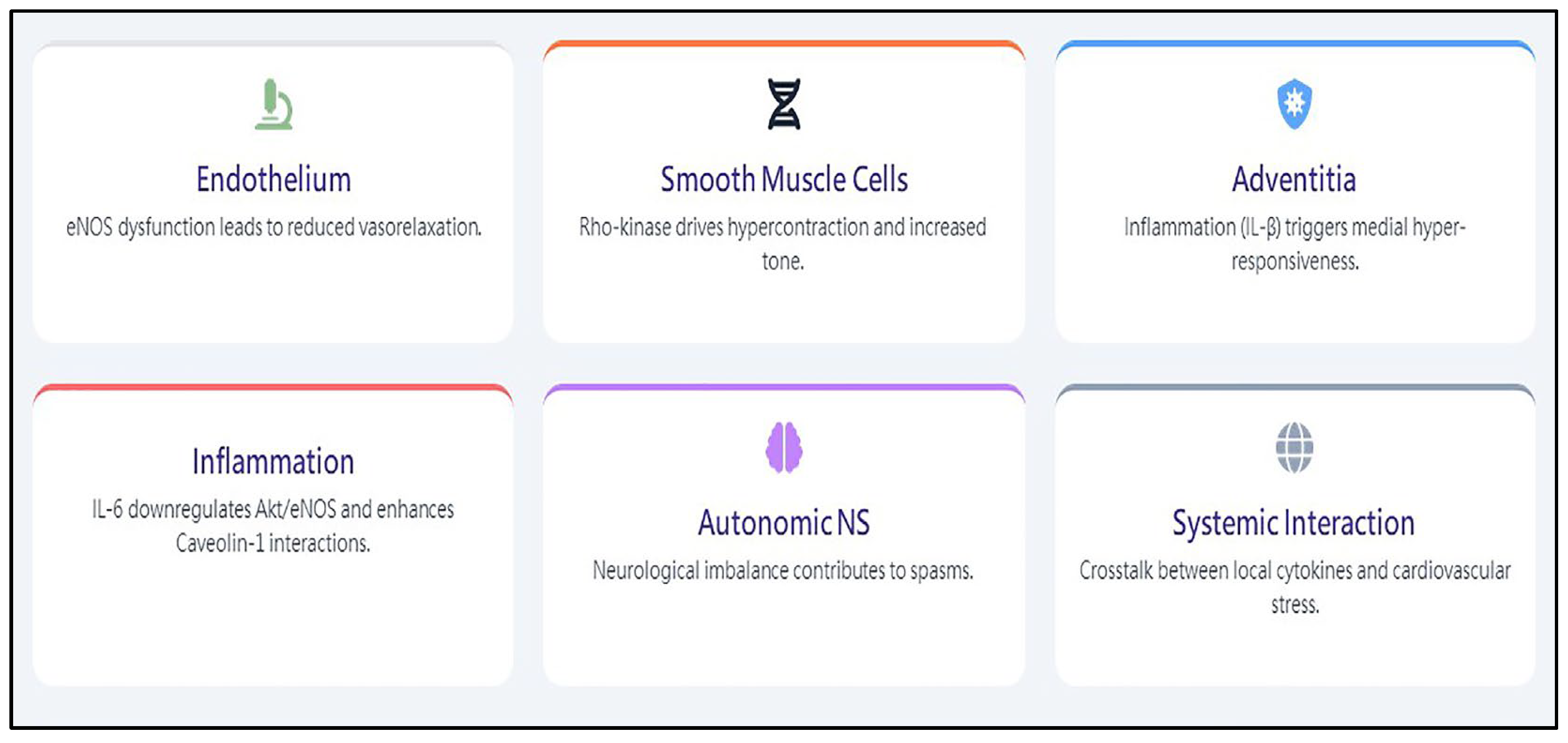
Figure 2.
Clinical manifestation of coronary artery spasm.
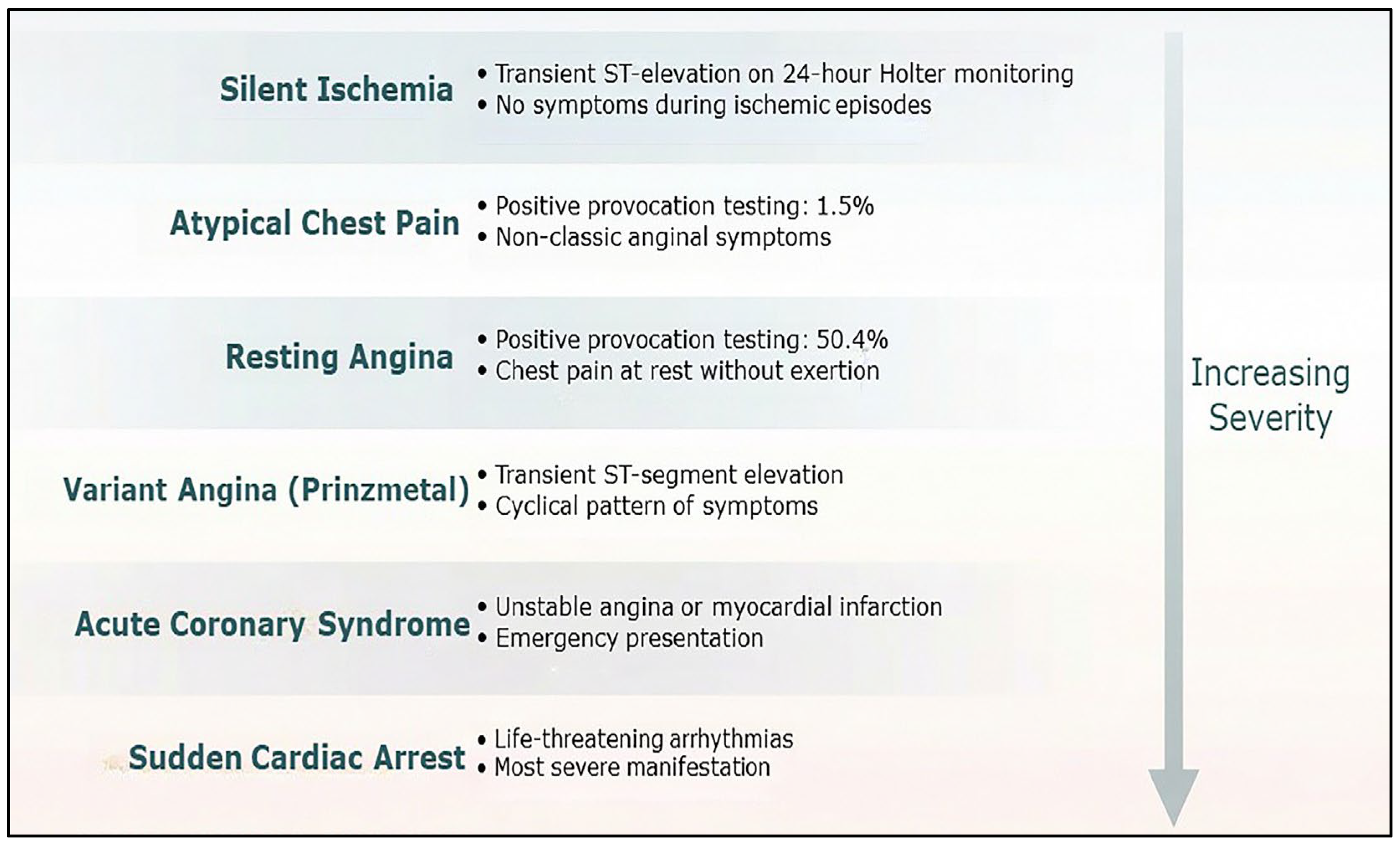
Figure 3.
Intracoronary provocation testing protocol and interpretation.
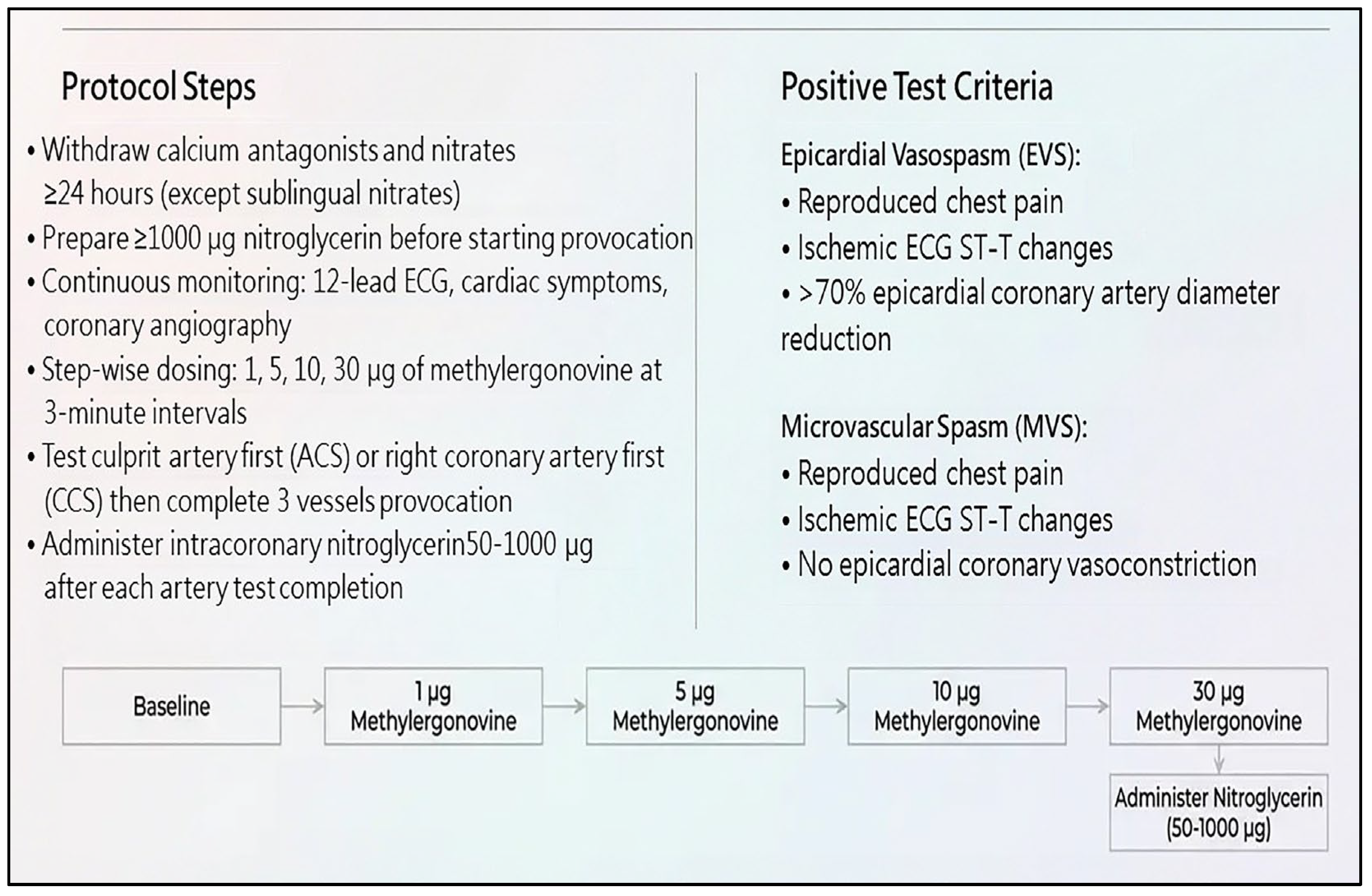
Figure 4.
Role of provocation testing in acute coronary syndrome.
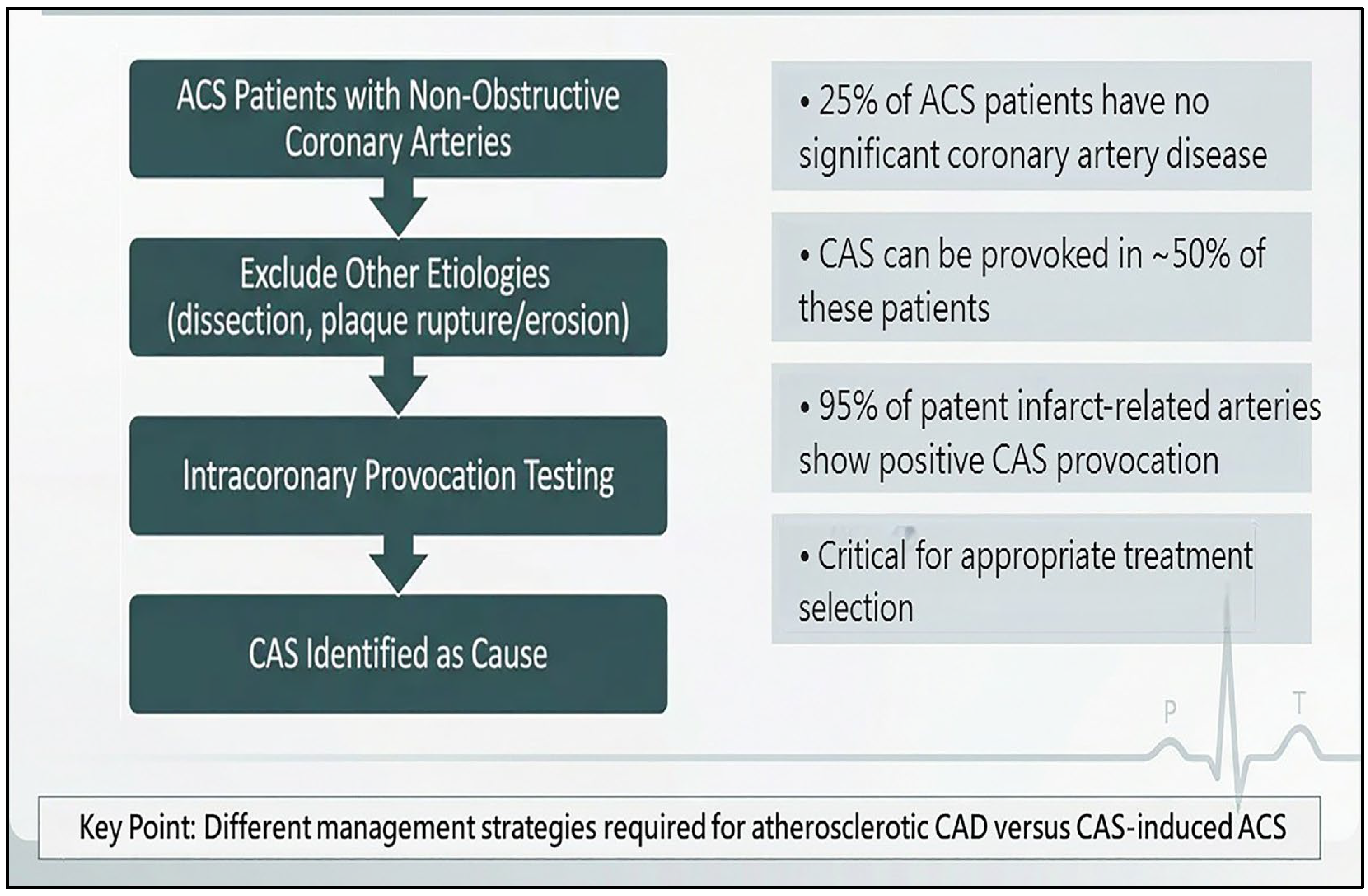
Figure 5.
Role of provocation testing in chronic coronary syndrome.
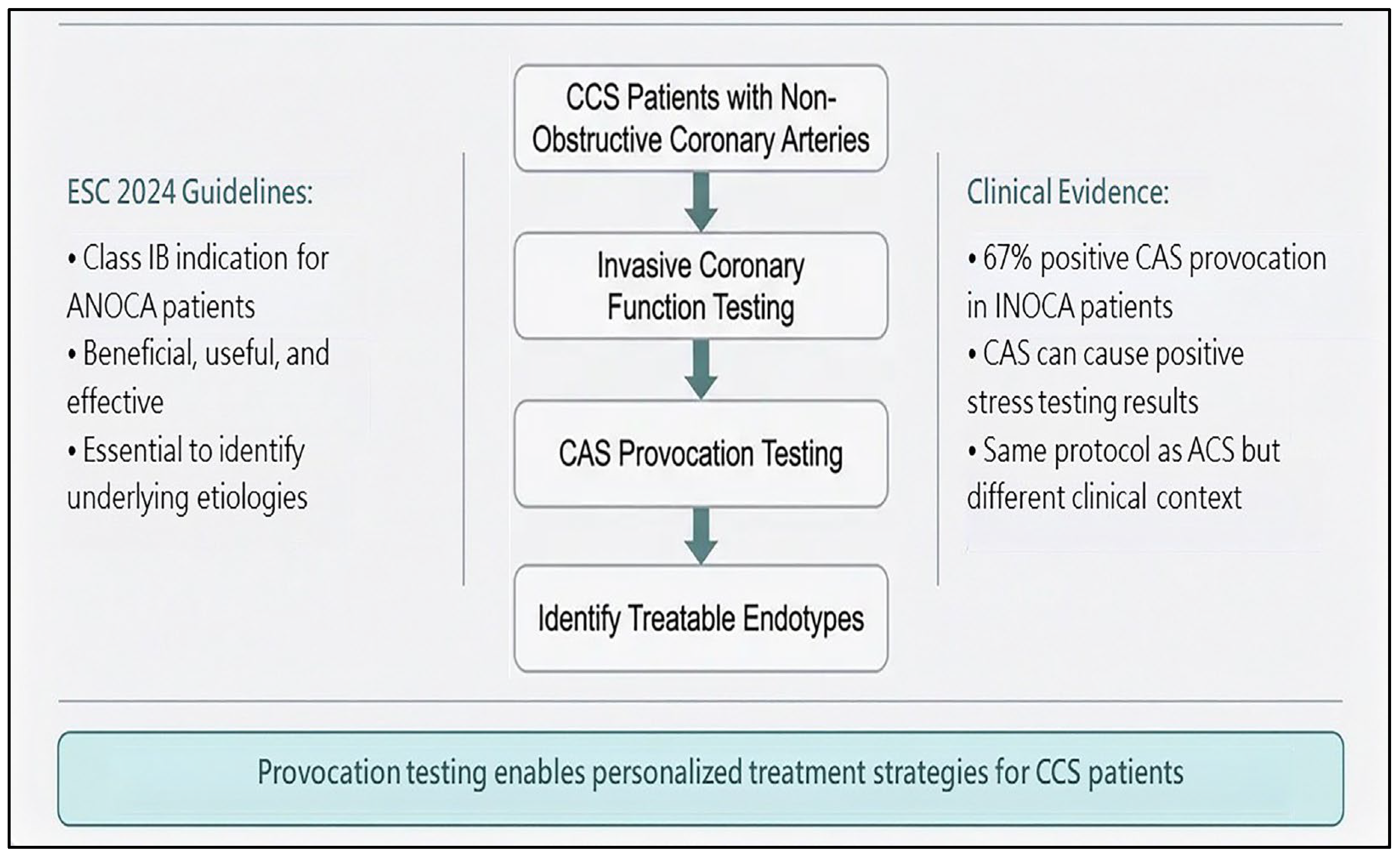
Figure 6.
Future directions and clinical implications of coronary artery spasm.
Disclaimer/Publisher’s Note: The statements, opinions and data contained in all publications are solely those of the individual author(s) and contributor(s) and not of MDPI and/or the editor(s). MDPI and/or the editor(s) disclaim responsibility for any injury to people or property resulting from any ideas, methods, instructions or products referred to in the content. |
© 2026 by the authors. Licensee MDPI, Basel, Switzerland. This article is an open access article distributed under the terms and conditions of the Creative Commons Attribution (CC BY) license (http://creativecommons.org/licenses/by/4.0/).
Copyright: This open access article is published under a Creative Commons CC BY 4.0 license, which permit the free download, distribution, and reuse, provided that the author and preprint are cited in any reuse.