

Submitted:
03 February 2026
Posted:
04 February 2026
You are already at the latest version
Abstract
Background: energy availability is recognized as an important factor for health and performance in athletes, yet data in male football players and its relation to post-exercise recovery remain limited. Objective: This study aimed to examine the associations between daily energy intake (EI), energy availability (EA) and recovery outcomes in football players. Methods: Nineteen outfield U21 players (n=19) from a national championship in Morocco were monitored over four in-season weeks. On one training day, one rest day and one official match day per week, players completed 24 h dietary recalls, from which EI and macronutrient intake were quantified using Nutrilog software. Exercise energy expenditure (EEE) was estimated from the Compendium of Physical Activities, and EA was calculated as (EI - EEE)/fat-free mass. Internal load was assessed using session rating of perceived exertion (RPE), subjective recovery with the Perceived Recovery Status (PRS) scale 24 h post-session, and neuro-muscular recovery via countermovement jump (CMJ) height. Results: Mean daily EI did not differ significantly between match, training and rest days (p = 0.066), whereas EA was significantly lower on training days compared with match and rest days (both p ≤ 0.003). Higher EA was strongly associated with lower RPE (ρ = −0.597, p < 0.001) and modestly with higher PRS (ρ = 0.273, p = 0.001), while its association with CMJ was small and non-significant (ρ = 0.124, p = 0.132). Higher EI showed a moderate inverse correlation with RPE (ρ = −0.404, p < 0.001) and a small positive correlation with PRS (ρ = 0.173, p = 0.035), but no significant association with CMJ. Across EA categories, RPE, PRS and CMJ all differed significantly (p ≤ 0.014). Conclusions: Inadequate fueling relative to training demands leads to reduced EA, particularly on training days, and is associated with a lower recovery profile. Monitoring EA alongside simple field-based markers such as RPE and PRS may help practitioners identify periods of suboptimal fueling and adjust nutritional strategies accordingly.
Keywords:
energy availability
; energy intake
; low energy availability
; recovery
; football
1. Introduction
Football is considered as a high-intensity, intermittent sport that requires significant physical performance, quick recovery, and sustained energy levels from players to maintain a competitive advantage. Players must execute repeated high-intensity actions, such as sprints, accelerations, decelerations, and directional changes, that are alternating with periods of lower-intensity activity, thereby stimulating both aerobic and anaerobic energy systems [1,2]. Being able to quickly recover between these intense sessions is important for keeping up your performance during a match and during a busy competitive schedule [3,4].
Many ways to recover are employed, but sleep, nutrition, cold water immersion, active recovery, and massage are the most common ones used in professional football [5]. There are other ways to recover after exercising, nevertheless it is well known that football players use these methods [6,7].
Furthermore, optimal nutritional strategies are crucial in the recovery process by restoring energy reserves, facilitating repair mechanisms, supporting the high energy needs of elite level football, and ensuring enough energy availability [8,9,10]. Dietary intake and energy availability are crucial factors impacting these parameters, as they directly influence muscle regeneration, glycogen restoration, and comprehensive recovery mechanisms [11].
Energy availability is the residual energy accessible for physiological activities after subtracting the energy consumed during training from the energy acquired through dietary intake [10]. When the body is deficient in energy for daily activities, the little energy is allocated to essential, life-sustaining functions [12].
Low energy availability (LEA) is a condition that occurs when caloric intake is inadequate relative to energy expenditure [13]. Athletes with LEA may experience disturbances in metabolism, hormonal balance, bone integrity, immune function, protein synthesis, hematologic function and cardiovascular efficiency, as well as growth and development. In female athletes, LEA can additionally disrupt menstrual function [13,14].
The existing literature on low energy availability (LEA) in male soccer players is significantly less comprehensive than that pertaining to females and endurance sports. The authors recognize the existence of only four studies that exclusively involved male football players [2,15,16,17]. Moreover, research on male soccer players has primarily focused on the prevalence and physiological correlations of low energy availability (e.g., metabolic suppression, endocrine alterations) without directly assessing its impact on post-exercise recovery outcomes. Therefore, this study aims to investigate the association between dietary intake, energy availability, and post-exercise recovery in male football players during an in-season competitive period.
2. Materials and Methods
2.1. Ethical Considerations
The Ethics Committee of the Mohammed VI University of Sciences and Health in Casablanca, Morocco, gave their approval for the study protocol [CE/UM6SS/22/25]. All procedures adhered to the Declaration of Helsinki. Each participant was provided with both verbal and written information about the study’s goals and methods, and they all signed a form indicating their agreement to participate.
2.2. Study Sesign and Participants
A prospective observational study was conducted over four weeks during the competitive season, with the under-21 squad competing in the national championship in Morocco. All players who consistently participated in team training and competitions were invited to take part. Twenty-three (n=23) male outfield players (U21) agreed to engage and finish the monitoring phase. The criteria for inclusion were: (i) being a player of the club’s U21 team, (ii) not being injured when data collection started, (iii) attending all team training sessions and official matches during the study period, and (iv) being able to give informed consent. Players were removed from the analysis if they were injured for more than three days in a row, missed more than two training sessions, or didn’t give food data for three days or more. Four athletes (n=4) were removed from the study: two due to injuries sustained during the procedure, one for failing to attend the weekly anthropometric exam, and one for not finishing the food journals. Therefore, the final sample comprised nineteen (n=19) players who completed the study and were included in the analyses.
2.3. Data Collection
During a four-week period, data collection included one training session, one rest day, and one official match each week. We got demographic and clinical data at the start of the study. During the protocol time, we kept track of height, weight, body composition, food intake, energy expenditure, training and match load, and recovery data (Figure 1).
2.3.1. Anthropometry and Body Composition
A wall-mounted stadiometer integrated with a medical scale (Seca 704s electronic scale with Seca 220 stadiometer, SECA GmbH, Hamburg, Germany). Height and body weight were measured with a precision of 0.1 cm and 0.1 kg, respectively. Participants were barefoot and wearing only a little clothing. We measured body composition in the morning after an overnight fast and after urination. Using the manufacturer’s formulas, body composition data collected with a multi-frequency bioelectrical impedance analyzer (Bodystat1500, Bodystat Ltd., Douglas, Isle of Man, UK) were used to figure out FFM (kg). The Harris–Benedict equation for men was used to figure out the resting metabolic rate (RMR), which is measured in kcal/day [18].
2.3.2. Dietary Intake
During the 4-week period, in-person 24-hour dietary recalls were used to check dietary intake on match, rest, and training days. Participants were given instructions to write down everything they ate and drank, including the amounts, how they were made, the brand names, and when they ate them. To improve accuracy, participants were given a booklet with information about portion sizes and standard home measurements. Certain athletes worked together to go over food diaries to clear up any confusion and fill in any gaps in the information. We used the 2020 Ciqual French food composition database (ANSES) to put the documented intakes into specialized nutrition analysis software (Nutrilog version 202509-23.1.7, Nutrilog SAS, Marans, France). Every day, we calculated each player’s total energy intake (EI, kcal/day), as well as their carbohydrate, protein, and fat intakes (g/kg/day and % of total energy). During the four-week period, the average daily consumption was calculated and broken down by type of day (training, match, or rest).
2.3.3. Exercise Energy Expenditure
Exercise energy expenditure was estimated using the 2024 Compendium of Physical Activities MET values [19]. Values were corrected for individual variation using measured RMR, whereby energy expended for RMR for the duration of exercise was subtracted from the estimated EEE. The official Compendium calculator with examples provided in an Excel spreadsheet by the Compendium of Physical Activities website [20]. The daily EEE was figured out by adding up the EEE from all the structured exercises, training sessions and matches that took place that day.
2.3.4. Match and Training Load
Session-Rating of Perceived Exertion (RPE) method was used to measure the internal training load. About 30 minutes after each training session and game, players used the [Borg 0–10] scale to rate how hard they thought they had worked, with 0 meaning “rest” and 10 meaning “maximal effort [21]. “To lessen peer influence, RPE was gathered separately. We figured out the Session-RPE training load (arbitrary units, AU) as follows: Training load (AU) = Session duration (min) × RPE
2.3.5. Energy Availability
EA was calculated for each observed day using the formula:
EA=Energy Intake (kcal)−Exercise Energy Expenditure (kcal) / Fat-Free Mass (kg) [22]. EA was reported as kcal/kg FFM/day. The distribution of EA is classified into three categories: Low EA (<30 kcal/kg FFM/day), Moderate EA (30–45 kcal/kg FFM/day), and optimal EA (>45 kcal/kg FFM/day).
2.3.6. Recovery Indicators
Subjective recovery (PRS)
The Perceived Recovery Status (PRS) scale was employed to assess subjective recovery [23]. Players rated their recovery on a scale from 0 to 10, with 0 meaning “not recovered at all/extremely fatigued” and 10 meaning “fully recovered/ready to perform,” 24 hours after training and match days, before any physical activity. The study team oversaw the collection of individual PRS scores, which were then recorded in a standard format.
Neuromuscular recovery (countermovement jump)
A countermovement jump (CMJ) test was used to assess how well the neuromuscular system was recovering. Testing was conducted in the morning on monitoring days, before the first training session and after a planned warm-up. Participants performed countermovement jumps with their hands on their hips to limit arm swing. They started from a standing position, quickly dropped to a depth of their choosing, and then jumped straight up “as quickly and as high as possible.”
We used a Chronojump BoscoSystem from Barcelona, Spain, to measure how high the jump was. After 1–2 familiarization trials, participants performed 2 maximal countermovement jumps, ensuring a minimum rest interval of 30 seconds between attempts. The maximum jump height was retained for analysis and employed as an objective measure of neuromuscular recovery.
2.3.7. Statistical Analysis
Descriptive statistics are presented as mean ± standard deviation and 95% confidence intervals. The normality assumption for all continuous variables was assessed using the Shapiro–Wilk test. The initial analysis plan considered parametric options for data that follows a normal distribution. Because of large deviations from normality and the presence of outliers in several key variables and residuals, non-parametric tests were considered appropriate and consequently employed for all inferential studies. Thus, correlations between EI, EA, and recovery outcomes (RPE, PRS, and CMJ) were analyzed using Spearman’s rank correlation coefficients (ρ), which furthermore functioned as impact size indices.
The Friedman test, a non-parametric alternative to repeated-measures ANOVA, was employed to analyze variations in emotional intelligence (EI) and emotional awareness (EA) over match, training, and rest days, with Kendall’s W serving as the effect size measure. Upon detecting a significant main effect, pairwise comparisons were performed using Wilcoxon signed-rank tests with Bonferroni-adjusted significance levels. To examine differences in recovery indices among categories of EA, individual days were classified as low, moderate, or optimal EA and analyzed using the Kruskal–Wallis test (the non-parametric equivalent of one-way ANOVA), followed by Mann–Whitney U tests with Bonferroni correction for subsequent pairwise comparisons. Effect size r for the Wilcoxon and Mann–Whitney tests was calculated using the formula r = Z/√N, where Z represents the standardized test statistic and N denotes the number of observations.
The threshold for statistical significance was set at p < 0.05. All statistical analyses were performed using IBM SPSS Statistics, version 26 (IBM Corp., Armonk, NY, USA).
3. Results
The players’ descriptive characteristics, daily mean nutritional intake, energy expenditure, and the normality of all variables are detailed in Table 1. The primary inferential studies examining the correlations among energy intake (EI), energy availability (EA), and recovery outcomes (RPE, PRS, and CMJ) are summarized in Table 2, Table 3 and Table 4.
Spearman studies of correlation indicated that increased daily EA was significantly correlated with reduced perceived exertion and somewhat correlated with improved subjective recovery, but not with neuromuscular performance. In addition, EA exhibited a significantly negative association with RPE (ρ = −0.597, p < 0.001) and a positive correlation with PRS at 24 hours (ρ = 0.273, p = 0.001), while the correlation with CMJ was minimal and not statistically significant (ρ = 0.124, p = 0.132) at 24 hours. In the same way, higher energy intake (EI) revealed a moderate inverse correlation with lower ratings of perceived exertion (RPE) (ρ = −0.404, p < 0.001) and a weak yet significant positive correlation with higher perceived recovery scale (PRS) (ρ = 0.173, p = 0.035), while no significant correlation was observed with counter-movement jump performance (CMJ) (ρ = 0.133, p = 0.104) (Table 2).
Energy intake revealed no significant difference among match, training, and rest days (Friedman χ²(2) = 5.44, p = 0.066, Kendall’s W = 0.14, small effect), suggesting that players generally maintained consistent energy consumption irrespective of the kind of day. Conversely, energy availability exhibited significant variation based on the type of day (Friedman χ²(2) = 11.79, p = 0.003, Kendall’s W = 0.31, indicating a considerable effect). Post-hoc Wilcoxon tests indicated that EA was significantly reduced on training days compared to match days (Z = −2.94, p = 0.003, r = 0.67, large effect) and rest days (Z = −3.30, p = 0.001, r = 0.76, large effect), while no significant difference was found between match and rest days (Z = −0.885, p = 0.376, r = 0.20, small effect) (Table 3).
Following dividing days into low, moderate, and optimal EA, the Kruskal–Wallis test revealed significant intergroup differences across all three recovery indices: RPE (H(2) = 59.45, p < 0.001) (Figure 2A) , PRS (H(2) = 14.67, p = 0.001) (Figure 2B), and CMJ (H(2) = 8.58, p = 0.014) (Figure 2C). Post-hoc Mann–Whitney tests revealed that, in comparison to moderate EA, low EA days exhibited elevated RPE (Z = −7.37, p < 0.001, very large effect), diminished PRS (Z = −3.76, p < 0.001, r = 0.70, significant effect), and reduced CMJ (Z = −2.45, p = 0.014, r = 0.46, moderate effect). In comparison to optimal EA, low EA days correlated with elevated RPE (Z = −2.79, p = 0.005, r = 0.62, large effect), whereas variations in PRS (Z = −0.60, p = 0.548, r = 0.13, small effect) and CMJ (Z = −1.72, p = 0.085, r = 0.39, moderate effect) did not achieve statistical significance. No substantial changes were seen between moderate and optimal energy availability for ratings of perceived exertion (Z = −0.39, p = 0.699, r = 0.09, negligible effect), PRS after 24 hours (Z = −1.44, p = 0.149, r = 0.32, moderate effect), or CMJ at 24 hours (Z = −1.08, p = 0.281, r = 0.24, small effect) (Table 4).
4. Discussion
This study aimed to investigate the associations between daily energy intake, energy availability, and recovery in U21 male football players during a 4-week in-season period using an observational prospective method. The main findings indicate that the average daily energy intake did not show significant differences between match, training, and rest days; nevertheless, energy availability significantly decreased on training days in comparison to both match and rest days. Upon further classification of daily observations into energy availability categories (low, moderate, and optimal), significant variations were observed in the recovery indices, with low energy availability days characterized by higher perceived exertion, poorer subjective recovery and moderately reduced CMJ height. Few studies have particularly investigated the effect of LEA on post-exercise recovery parameters. To the authors’ knowledge, only two studies have indicated that athletes with LEA report a significant feeling of under-recovery. The majority of existing research have focused on performance outcomes or health-related effects among athletes, especially among female individuals [24,25].
4.1. Energy Intake and Carbohydrates Distribution
Daily dietary intake did not show significant differences between match, training, and rest days (1946.41, 1928.80 and 1651.99 kcal/day, respectively). Typically, nutritional intake peaks on match days, be moderate on training days, and lowest on rest days [2,9,26,27], reflecting the different physical requirements of each type of day. These findings are partially consistent with this pattern, since rest days generally presented the lowest intake; however, we did not detect a statistically significant increase in energy intake on match days compared to training days. A similar absence of distinct daily variations has been observed in certain youth and female teams, where dietary practices are less controlled and athletes typically adhere to a rather stable diet throughout the week, irrespective of training intensity [28,29,30]. These patterns are observed across several levels of competition, including professional, youth, and female players, and are reflected in associated team sports. [31,32,33]. The data indicate several footballers, including those in the present study, may not adequately periodize their energy intake to correspond with variations in external load, potentially leading to periods of LEA and inadequate recovery. Furthermore, the relative contribution of macronutrients, particularly carbohydrates, to total EI appears to be insufficient in this group. On average, players ingested approximately 3 g/kg/day of carbohydrates during the monitored days, which is significantly below the current guidelines for team-sport athletes, typically ranging from 3 to 8 g/kg/day during in-season training with one match weekly [8], and from 6 to 10 g/kg/day during congested fixture periods [4,8]. This indicates that, even though daily EI was not dramatically low, the carbohydrate contribution to total energy was insufficient to support repeated high-intensity efforts and glycogen resynthesis between sessions [34]. Conversely, studies that incorporated nutrition education or individualized fueling strategies generally demonstrate increased carbohydrate availability and improved adherence to recommendations, especially during matches [35,36,37]. Consequently, the findings in this research, contribute to the emerging evidence that, the insufficient carbohydrate availability likely contributed to the lower EA reported on training days and may partially explain the less favorable recovery observed on days classified as having LEA [38].
4.2. Energy Availability Across Day Types
Energy availability itself showed a distinct pattern across day types. EA was markedly reduced on training days (9.32 kcal/kg FFM/day) compared with both match days (19.57 kcal/kg FFM/day) and rest days (22.99 kcal/kg FFM/day). Previous research has also shown that EA is often lowest on match and training days (days with the greatest exercise energy expenditure), and increases on rest days [39,40], a pattern that has been attributed to inadequate nutritional periodization, particularly suboptimal carbohydrate intake. Although, some studies in professional teams have shown the lowest EA on match days due to the partial compensation of training loads through tactical rotation and decreased training volume [26]. The results suggest that, in this U21 cohort, players did not sufficiently adjust their food intake to compensate for the higher exercise energy expenditure on training days, resulting in a recurrent decline in EA on these days. When EA drops below 30 kcal/kg FFM/day, athletes are considered to be in a condition of low energy availability (LEA). This condition may lead to a range of detrimental health and performance consequences for football players [41,42]. The proportion of days falling below this threshold in the present study suggests that LEA may frequently manifest in academy football, despite the lack of evident weight loss or clinical signs.
4.3. Recovery Indices Across Energy Availability Categories
The primary contribution of this work is the combination of EA with other recovery indicators. Increased daily energy availability correlated with reduced session RPE and elevated PRS, however no definitive relationship was observed with CMJ performance. On days with poor energy availability (EA), there was a notable increase in felt exertion, a decrease in perceived recovery, and a modest reduction in counter-movement jump (CMJ) height compared to days with moderate or optimal EA. These findings align with research indicating that athletes experiencing LEA more commonly express fatigue, sleep difficulties, and sensations of under-recovery [24,25]. Nonetheless, not all research has identified robust correlations between EA and short-term neuromuscular indicators such as countermovement jump (CMJ) or sprint performance; in many populations, performance declines manifest only after extended durations of low energy availability (LEA) or in reaction to intensive training phases [43,44]. The findings of the current research corroborate this distinction: subjective markers (RPE, PRS) shown greater sensitivity to daily variations in EA compared to CMJ, indicating that internal load and perceived recovery may serve as earlier indicators of inadequate fueling than basic field performance measurements.
4.4. Performance and Health Implications of LEA
The considerable effects on health of LEA are especially pertinent in young athletes. Ones with LEA have been shown to exhibit impaired running performance, reduced training adaptation, lower agility and decrements in aerobic and anaerobic performance markers (VO2max, peak power output, relative power output, and anaerobic threshold) compared with athletes with optimal EA [45,46,47]. They also report greater fatigue and sleep disturbances [25], more frequent absence from raining owing to illness [48], and overall lower performance and delayed recovery [25]. In youth soccer players, chronic LEA may further compromise growth and maturation, impair bone mineral accrual, delayed sexual maturation, and alter immune function [16] . The findings of this research indicate recurring LEA days and an adverse recovery profile in U21 athletes, supporting these concerns and suggesting that inadequate fueling may already manifest at an early stage when health and performance trajectories are still being defined.
Finally, several studies have suggested that athletes with LEA appear to be at increased risk of sports injuries [25,48,49,50], particularly, bone stress injuries [46,48,50,51,52]. However, not all investigations have found a consistent increase in overall injury risk [46,53]. The association between EA and injury risk is nuanced and may be influenced by the degree and length of LEA, the specific sport, and individual vulnerability [43,54]. This study did not evaluate injury outcomes and thus cannot directly answer this question; however, the significant prevalence of LEA days highlights the necessity for longitudinal research connecting objectively monitored energy availability, recovery responses, and patterns of injury and illness in youth football players.
4.4.1. Practical Implications
These findings underscore the necessity for systematic nutritional periodization in U21 football players, particularly on training days, which were identified as the most susceptible to low energy availability. Coaches and support personnel has to ensure that daily energy and, particularly, carbohydrate consumption is adjusted according to session requirements, aiming to meet the current guidelines for team-sport athletes during intensive training and competition days. Inexpensive, simple methods like session RPE and PRS can be incorporated into standard monitoring to identify days or weeks when athletes report significantly elevated perceived exertion or inadequate recovery, necessitating an evaluation of nutritional intake and training load. Educational initiatives for academy players and their families regarding fueling techniques, pre- and post-training snacks, and carbohydrate scheduling could reduce the occurrence of low energy availability days and enhance both performance and long-term health.
4.4.2. Limitations
To the author’s knowledge, this represents the first study to evaluate the relation between dietary intake, energy availability, and recovery in male football players. However, the sample was limited in size and derived from a single U21 male team of one club, thus restricting the generalization of the findings to other age groups, competitive levels, clubs, or female athletes. Second, the observational period covered only four in-season weeks, with one match per week; varying patterns of energy availability and recovery could appear during pre-season or congested fixture intervals. Third, energy intake was evaluated by several 24-hour dietary recalls and analyzed using nutritional software, while exercise energy expenditure was estimated from the Compendium of Physical Activities, both of which are susceptible to reporting and estimating inaccuracies. Energy availability was consequently estimated rather than directly quantified. Finaly, we excluded biochemical, hormonal, or bone markers and did not analyze long-term damage or illness outcomes; so, the health consequences of the recurrent low-energy availability days identified in this group remain inadequately assessed.
5. Conclusions
This present study indicates that young male competitive football players frequently face several days of low energy availability throughout the in-season period, mostly due to insufficient adjustments in energy intake, particularly carbohydrates, to meet training needs. While total daily energy intake showed no significant variation between match, training, and rest days, energy availability was considerably decreased on training days. Days categorized as low energy availability were consistently linked to elevated perceived exertion, suboptimal subjective recovery, and moderately compromised counter-movement jump performance. These data indicate that inadequate fueling is initially manifested in internal load and perceived recovery prior to evident declines in performance. They highlight the necessity of consistently assessing energy availability alongside basic field-based recovery indices and of implementing specific nutritional strategies, such as carbohydrate periodization, to enhance training load, recovery, and long-term health in U21 football players.
Author Contributions
Conceptualization: E M. A A H., E M. E O., B.Z. and M.B.; methodology E M. A A H., E M. E O., A.E. and M.B.; formal analysis E M. A A H. and M.B.; investigation: E M. A A H., H.R., F.Z., K.K., and A.A.; data curation: E M. A A H. and M.B.; resources: E M. A A H., A.A., A.C., B.Z., and K.K.; writing—original draft: E M. A A H.; manuscript—review and editing: E M. E O., A.E. and M.B; Visualization: E M. E O. and M.B.; supervision: A.E., E M. E O. and M.B. All authors have read and agreed to the published version of the manuscript.
Funding
This research received no external funding.
Institutional Review Board Statement
The study was conducted in accordance with the Declaration of Helsinki, and approved by The Ethics Committee of the Mohammed VI University of Sciences and Health in Casablanca, Morocco, (approval number CE/UM6SS/22/25, 25 April 2025).
Informed Consent Statement
Informed consent was acquired from all participants in the study.
Data Availability Statement
The original contributions discussed in this study are contained within the article, and any additional questions can be addressed to the corresponding author.
Acknowledgments
The authors wish to extend their heartfelt thanks to all the participants in this study. They are particularly grateful the Olympic Club of Khouribga, Morocco.
Conflicts of Interest
The authors declare that they don’t have any conflicts of interests related to the results of this study.
Abbreviations
This paper employs the following abbreviations:
| BMI | Body Mass Index |
| BMR | Basal Metabolic Rate |
| CMJ | Counter-Movement Jump |
| EA | Energy Availability |
| EEE | Exercise Energy Expenditure |
| EI | Energy Intake |
| FFM | Fat-Free Mass |
| MET | Metabolic Equivalent Task |
| PRS | Perceived Recovery Status |
| RPE | Rating of Perceived Exertion |
References
- Hostrup, M.; Bangsbo, J. Performance Adaptations to Intensified Training in Top-Level Football. Sports Med. 2022, 53, 577–594. [CrossRef]
- Hulton, A.T.; Malone, J.J.; Clarke, N.D.; MacLaren, D.P.M. Energy Requirements and Nutritional Strategies for Male Soccer Players: A Review and Suggestions for Practice. Nutrients 2022, 14, 657. [CrossRef]
- Nédélec, M.; McCall, A.; Carling, C.; Legall, F.; Berthoin, S.; Dupont, G. Recovery in Soccer. Sports Med. 2012, 43, 9–22. [CrossRef]
- Ranchordas, M.K.; Dawson, J.T.; Russell, M. Practical nutritional recovery strategies for elite soccer players when limited time separates repeated matches. J. Int. Soc. Sports Nutr. 2017, 14, 35. [CrossRef]
- Querido, S.M.; Radaelli, R.; Brito, J.; Vaz, J.R.; Freitas, S.R. Analysis of Recovery Methods’ Efficacy Applied up to 72 Hours Postmatch in Professional Football: A Systematic Review With Graded Recommendations. Int. J. Sports Physiol. Perform. 2022, 17, 1326–1342. [CrossRef]
- Altarriba-Bartes, A.; Peña, J.; Vicens-Bordas, J.; Casals, M.; Peirau, X.; Calleja-González, J. The use of recovery strategies by Spanish first division soccer teams: a cross-sectional survey. Physician Sportsmed. 2020, 49, 297–307. [CrossRef]
- Hadi, E.M.A.A.; Chokri, A.; Zahi, B.; Elgot, A.; Barkaoui, M. Post-Exercise Recovery Strategies Employed by Moroccan Football Teams. Int. J. Hum. Mov. Sports Sci. 2025, 13, 1140–1149. [CrossRef]
- Collins, J.; Maughan, R.J.; Gleeson, M.; Bilsborough, J.; Jeukendrup, A.; Morton, J.P.; Phillips, S.M.; Armstrong, L.; Burke, L.M.; Close, G.L.; et al. UEFA expert group statement on nutrition in elite football. Current evidence to inform practical recommendations and guide future research. Br. J. Sports Med. 2020, 55, 416–416. [CrossRef]
- Brinkmans, N.Y.J.; Iedema, N.; Plasqui, G.; Wouters, L.; Saris, W.H.M.; van Loon, L.J.C.; van Dijk, J.W. Energy expenditure and dietary intake in professional football players in the Dutch Premier League: Implications for nutritional counselling. J. Sports Sci. 2019, 37, 2759–2767. [CrossRef]
- Mountjoy, M.; E Ackerman, K.; Bailey, D.M.; Burke, L.M.; Constantini, N.; Hackney, A.C.; Heikura, I.A.; Melin, A.; Pensgaard, A.M.; Stellingwerff, T.; et al. 2023 International Olympic Committee’s (IOC) consensus statement on Relative Energy Deficiency in Sport (REDs). Br. J. Sports Med. 2023, 57, 1073–1098. [CrossRef]
- Naderi, A.; Rothschild, J.A.; Santos, H.O.; Hamidvand, A.; Koozehchian, M.S.; Ghazzagh, A.; Berjisian, E.; Podlogar, T. Nutritional Strategies to Improve Post-exercise Recovery and Subsequent Exercise Performance: A Narrative Review. Sports Med. 2025, 55, 1559–1577. [CrossRef]
- Areta, J.L.; Taylor, H.L.; Koehler, K. Low energy availability: history, definition and evidence of its endocrine, metabolic and physiological effects in prospective studies in females and males. Eur. J. Appl. Physiol. 2020, 121, 1–21. [CrossRef]
- Wasserfurth, P.; Palmowski, J.; Hahn, A.; Krüger, K. Reasons for and Consequences of Low Energy Availability in Female and Male Athletes: Social Environment, Adaptations, and Prevention. Sports Med. - Open 2020, 6, 1–14. [CrossRef]
- Coelho, A.R.; Cardoso, G.; Brito, M.E.; Gomes, I.N.; Cascais, M.J. The Female Athlete Triad/Relative Energy Deficiency in Sports (RED-S). Rev. Bras. de Hematol. e Hemoter. 2021, 43, 395–402. [CrossRef]
- Ashby, J.; Mullen, T.; Smith, P.; Rogers, J.P.; Dobbin, N. Prevalence of physiological and perceptual markers of low energy availability in male academy football players: a study protocol for a cross-sectional study. BMJ Open Sport Exerc. Med. 2024, 10, e002250. [CrossRef]
- Hannon, M.P.; Parker, L.J.F.; Carney, D.J.; Mckeown, J.; Speakman, J.R.; Hambly, C.; Drust, B.; Unnithan, V.B.; Close, G.L.; Morton, J.P. Energy Requirements of Male Academy Soccer Players from the English Premier League. Med. Sci. Sports Exerc. 2020, 53, 200–210. [CrossRef]
- Stables, R.G.; Hannon, M.P.; Jacob, A.D.; Topping, O.; Costello, N.B.; Boddy, L.M.; Hambly, C.; Speakman, J.R.; Sodhi, J.S.; Close, G.L.; et al. Daily energy requirements of male academy soccer players are greater than age-matched non-academy soccer players: A doubly labelled water investigation. J. Sports Sci. 2023, 41, 1218–1230. [CrossRef]
- Pavlidou, E.; Papadopoulou, S.K.; Seroglou, K.; Giaginis, C. Revised Harris–Benedict Equation: New Human Resting Metabolic Rate Equation. Metabolites 2023, 13, 189. [CrossRef]
- Herrmann, S.D.; Willis, E.A.; Ainsworth, B.E.; Barreira, T.V.; Hastert, M.; Kracht, C.L.; Schuna, J.M.; Cai, Z.; Quan, M.; Tudor-Locke, C.; et al. 2024 Adult Compendium of Physical Activities: A third update of the energy costs of human activities. J. Sport Heal. Sci. 2024, 13, 6–12. [CrossRef]
- Compendium Calculator with Examples – Compendium of Physical Activities,” 2024. Available: https://pacompendium.com/compendium-calculator/?utm_source=chatgpt.com. [Accessed: Dec. 16, 2025].
- G. Borg, Borg’s perceived exertion and pain scales. Human kinetics, 1998.
- Loucks, A.B. Energy balance and body composition in sports and exercise. J. Sports Sci. 2004, 22, 1–14. [CrossRef]
- C. M. Laurent, J. M. Green, P. A. Bishop, J. Sjökvist, R. E. Schumacker, M. T. Richardson, and M. Curtner-Smith, “Laurent, C.M. et al., 2011. A Practical Approach to Monitoring Recovery: Development of a Perceived Recovery Status Scale. The Journal of Strength & Conditioning Research, 25(3), p.620. Available at: http://journals.lww.com/nsca-jscr/Abstract/2011/03000/A,” The Journal of Strength & Conditioning Research, vol. 25, no. 3, p. 620, 2011, Available: http://journals.lww.com/nsca-jscr/Abstract/2011/03000/A_Practical_Approach_to_Monitoring_Recovery_.7.aspx.
- Brinkmans, N.; Plasqui, G.; van Loon, L.; van Dijk, J.-W. Energy expenditure and dietary intake in professional female football players in the Dutch Women’s League: Implications for nutritional counselling. J. Sports Sci. 2024, 42, 313–322. [CrossRef]
- Anderson, L.; Orme, P.; Naughton, R.J.; Close, G.L.; Milsom, J.; Rydings, D.; O’Boyle, A.; Di Michele, R.; Louis, J.; Hambley, C.; et al. Energy Intake and Expenditure of Professional Soccer Players of the English Premier League: Evidence of Carbohydrate Periodization. Int. J. Sport Nutr. Exerc. Metab. 2017, 27, 228–238. [CrossRef]
- Dasa, M.S.; Friborg, O.; Kristoffersen, M.; Pettersen, G.; Plasqui, G.; Sundgot-Borgen, J.K.; Rosenvinge, J.H. Energy expenditure, dietary intake and energy availability in female professional football players. BMJ Open Sport Exerc. Med. 2023, 9, e001553. [CrossRef]
- Pueyo, M.; Llodio, I.; Cámara, J.; Castillo, D.; Granados, C. Influence of Carbohydrate Intake on Different Parameters of Soccer Players’ Performance: Systematic Review. Nutrients 2024, 16, 3731. [CrossRef]
- Martinho, D.V.; Field, A.; Naughton, R.; Ribeiro, A.S.; Rebelo, A.; Gouveia, É.R.; Sarmento, H. Nutritional perspectives in female soccer: a scoping review. J. Int. Soc. Sports Nutr. 2024, 21, 2366427. [CrossRef]
- Woodbridge, P.; Campbell-Karn, K.; McCormack, F. Nutritional intake, sports nutrition knowledge and energy availability in recreational female football players. Res. Sports Med. 2025, 33, 695–710. [CrossRef]
- Martinho, D.V.; Naughton, R.J.; Leão, C.; Lemos, J.; Field, A.; Faria, A.; Rebelo, A.; Gouveia, É.R.; Sarmento, H. Dietary intakes and daily distribution patterns of macronutrients in youth soccer players. Front. Nutr. 2023, 10. [CrossRef]
- Leão, C.; Clemente, F.M.; Lemos, J.; Mota, D.; Roriz, P.; Camões, M.; Carral, J.M.C. Dietary intake and training load in youth male soccer players during a microcycle: Analysis of intra-week variation and examination of associations between measures. Int. J. Sports Sci. Coach. 2025. [CrossRef]
- Fernandes, H.S. Carbohydrate Consumption and Periodization Strategies Applied to Elite Soccer Players. Curr. Nutr. Rep. 2020, 9, 414–419. [CrossRef]
- Gejl, K.D.; Nybo, L. Performance effects of periodized carbohydrate restriction in endurance trained athletes – a systematic review and meta-analysis. J. Int. Soc. Sports Nutr. 2021, 18, 1–12. [CrossRef]
- Lee, S.; Moto, K.; Han, S.; Oh, T.; Taguchi, M. Within-Day Energy Balance and Metabolic Suppression in Male Collegiate Soccer Players. Nutrients 2021, 13, 2644. [CrossRef]
- Briggs, M.A.; Cockburn, E.; Rumbold, P.L.S.; Rae, G.; Stevenson, E.J.; Russell, M. Assessment of Energy Intake and Energy Expenditure of Male Adolescent Academy-Level Soccer Players during a Competitive Week. Nutrients 2015, 7, 8392–8401. [CrossRef]
- Holtzman, B.; Kelly, R.K.; Saville, G.H.; McCall, L.; A Adelzedah, K.; Sarafin, S.R.; Nikam, P.; Meneguzzi, I.; McIntyre, A.; Kraus, E.K.; et al. Low energy availability surrogates are associated with Relative Energy Deficiency in Sport outcomes in male athletes. Br. J. Sports Med. 2024, 59, 48–55. [CrossRef]
- Dasa, M.S.; Friborg, O.; Kristoffersen, M.; Pettersen, G.; Plasqui, G.; Sundgot-Borgen, J.K.; Rosenvinge, J.H. Energy expenditure, dietary intake and energy availability in female professional football players. BMJ Open Sport Exerc. Med. 2023, 9, e001553. [CrossRef]
- Schaal, K.; VanLoan, M.D.; Hausswirth, C.; Casazza, G.A. Decreased energy availability during training overload is associated with non-functional overreaching and suppressed ovarian function in female runners. Appl. Physiol. Nutr. Metab. 2021, 46, 1179–1188. [CrossRef]
- E Ackerman, K.; Holtzman, B.; Cooper, K.M.; Flynn, E.F.; Bruinvels, G.; Tenforde, A.S.; Popp, K.L.; Simpkin, A.J.; Parziale, A.L. Low energy availability surrogates correlate with health and performance consequences of Relative Energy Deficiency in Sport. Br. J. Sports Med. 2018, 53, 628–633. [CrossRef]
- Kalpana, K.; Cherian, K.S.; Khanna, G.L. Energy availability and RED-S risk assessment among Kho-Kho players in India. Sport Sci. Heal. 2022, 19, 1101–1108. [CrossRef]
- Gillbanks, L.; Mountjoy, M.; Filbay, S.R. Lightweight rowers’ perspectives of living with Relative Energy Deficiency in Sport (RED-S). PLOS ONE 2022, 17, e0265268. [CrossRef]
- Logue, D.M.; Madigan, S.M.; Heinen, M.; McDonnell, S.; Delahunt, E.; Corish, C.A. Screening for risk of low energy availability in athletic and recreationally active females in Ireland. Eur. J. Sport Sci. 2018, 19, 112–122. [CrossRef]
- Edama, M.; Inaba, H.; Hoshino, F.; Natsui, S.; Maruyama, S.; Omori, G. The relationship between the female athlete triad and injury rates in collegiate female athletes. PeerJ 2021, 9, e11092. [CrossRef]
- T. J. O’LEARY, C. V COOMBS, C. PERRETT, R. L. DOUBLE, N. KEAY, S. L. WARDLE, and J. P. GREEVES, “Menstrual Function, Eating Disorders, Low Energy Availability, and Musculoskeletal Injuries in British Servicewomen,” Med. Sci. Sports Exerc., vol. 55, no. 7, 2023, Available: https://journals.lww.com/acsm-msse/fulltext/2023/07000/menstrual_function,_eating_disorders,_low_energy.19.aspx.
- Heikura, I.A.; Uusitalo, A.L.T.; Stellingwerff, T.; Bergland, D.; Mero, A.A.; Burke, L.M. Low Energy Availability Is Difficult to Assess but Outcomes Have Large Impact on Bone Injury Rates in Elite Distance Athletes. Int. J. Sport Nutr. Exerc. Metab. 2018, 28, 403–411. [CrossRef]
- Jesus, F.; Castela, I.; Silva, A.M.; Branco, P.A.; Sousa, M. Risk of Low Energy Availability among Female and Male Elite Runners Competing at the 26th European Cross-Country Championships. Nutrients 2021, 13, 873. [CrossRef]
- Karlsson, E.; Alricsson, M.; Melin, A. Symptoms of eating disorders and low energy availability in recreational active female runners. BMJ Open Sport Exerc. Med. 2023, 9, e001623. [CrossRef]
Figure 1.
Flow diagram of sample size included.
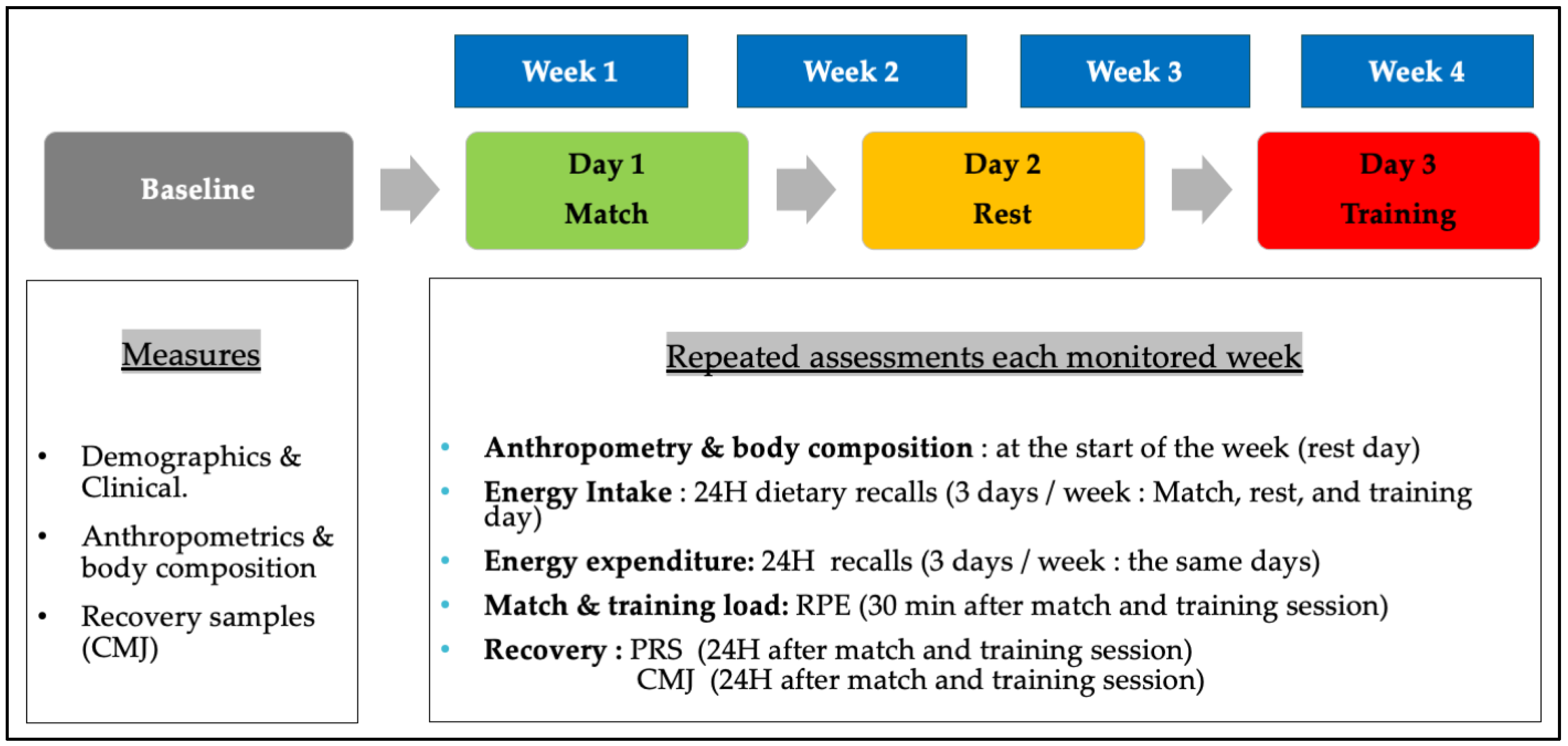
Figure 2.
(A). Session rating of perceived exertion across energy availability categories (low, moderate and optimal). (B). Perceived recovery scale across energy availability categories (low, moderate and optimal). (C). Countermovement jump across energy availability categories (low, moderate and optimal).
Figure 2.
(A). Session rating of perceived exertion across energy availability categories (low, moderate and optimal). (B). Perceived recovery scale across energy availability categories (low, moderate and optimal). (C). Countermovement jump across energy availability categories (low, moderate and optimal).
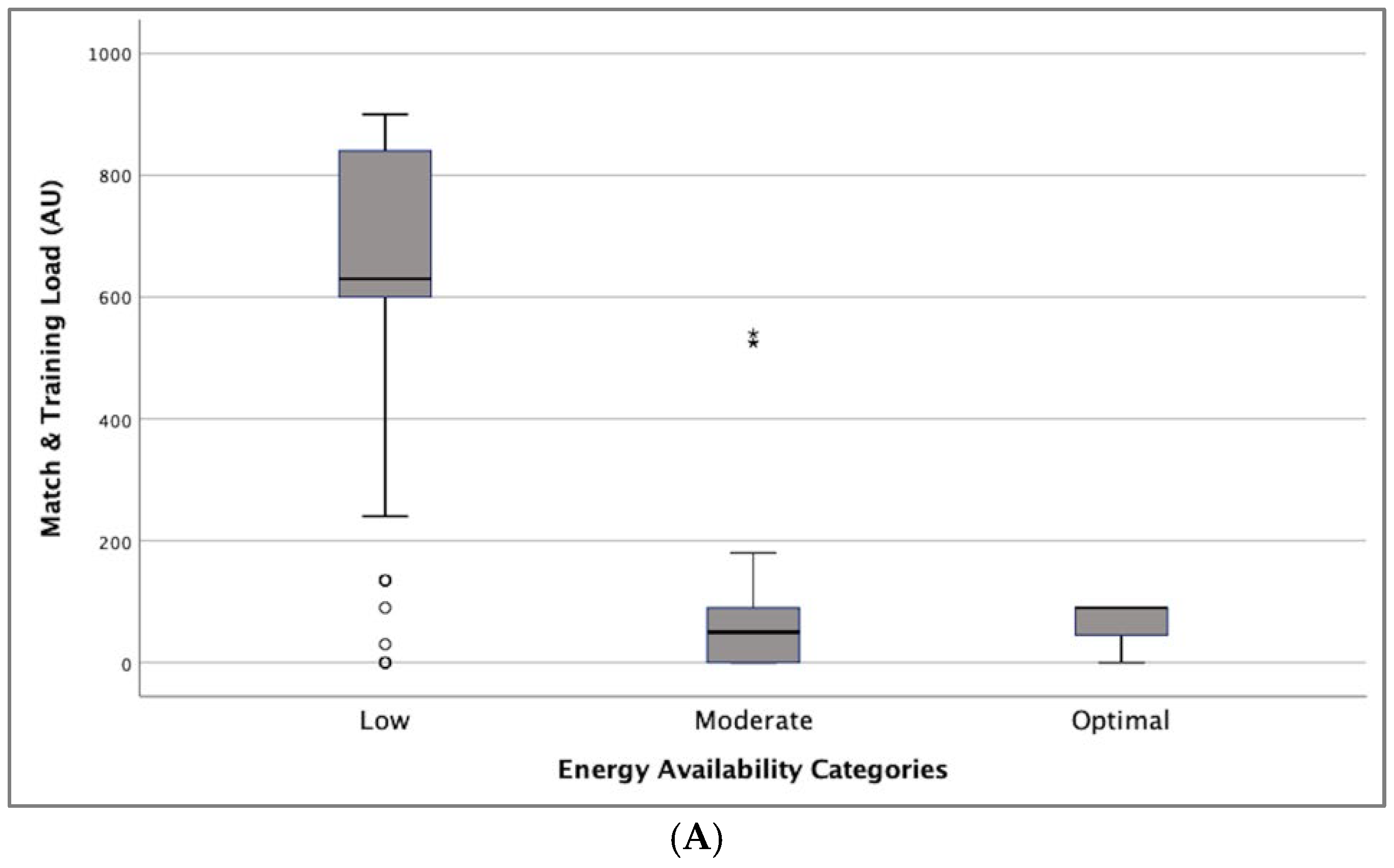
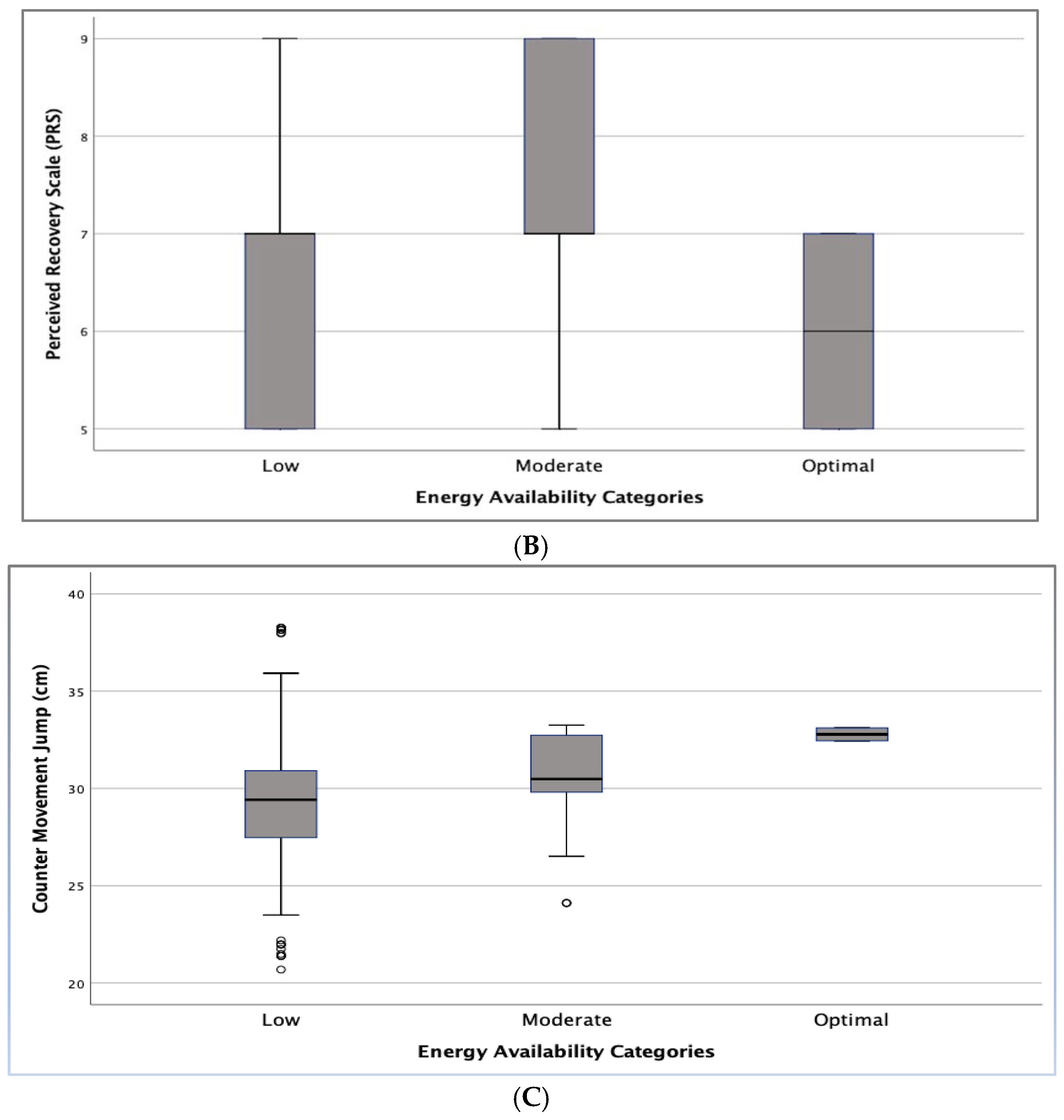

Table 1.
Descriptive characteristics, body composition, energy expenditure, dietary intake, energy availability, and recovery indices in U21 male football players (n = 19).
Table 1.
Descriptive characteristics, body composition, energy expenditure, dietary intake, energy availability, and recovery indices in U21 male football players (n = 19).
| Variables | Descriptive statistics | Normality | |||
|---|---|---|---|---|---|
| Range | Mean (95% CI) | SD | Shapiro–Wilk | p value | |
| Age (years) | (18 ; 21 ) | 18,9 | 0,9 | 0,831 | 0,003 |
| Height (cm) | (161 ; 190 ) | 177,2 | 6,5 | 0,965 | 0,669 * |
| Body mass (kg) | (57,9 ; 86,1) | 70,5 | 7,8 | 0,936 | 0,001 |
| BMI | (19,30 ; 27,48) | 22,45 | 2,29 | 0,933 | 0,001 |
| Body Fat (%) | (8,10 ; 17,90) | 12,72 | 2,42 | 0,943 | 0,002 |
| FFM (Kg) | (50,40 ; 71,60) | 60,84 | 5,89 | 0,952 | 0,006 |
| BMR (Kcal) | (1539,88 ; 2015,74) | 1794,64 | 123,16 | 0,980 | 0,937 * |
| EEE (Kcal/day) | (0,00 ; 2355,70) | 774,39 | 615,37 | 0,932 | 0,000 |
| Absolute EI (Kcal/day) | (218 ; 3205) | 1831,60 | 608,89 | 0,990 | 0,126 * |
| EA (Kcal/kg/day) | (-14,97 ; 55,37) | 17,18 | 14,51 | 0,979 | 0,002 |
| Relative EI (Kcal/kg) | (2,67 ; 44,67) | 26,18 | 8,58 | 0,982 | 0,005 |
| Total carbohydrates (g) | (28,30 ; 463,00) | 215,54 | 97,74 | 0,972 | 0,017 |
| Relative carbs(g/kg) | (0,30 ; 6,70) | 3,06 | 1,40 | 0,966 | 0,005 |
| Total protein (g) | (11,50 ; 193,10) | 91,49 | 44,99 | 0,963 | 0,003 |
| Relative protein (g/kg) | (0,10 ; 2,80) | 1,31 | 0,64 | 0,967 | 0,006 |
| Total fat (g) | (0,00 ; 147,90) | 58,82 | 33,58 | 0,964 | 0,003 |
| Relative fat (g/kg) | (0,00 ; 2,20) | 0,84 | 0,47 | 0,964 | 0,004 |
| RPE (AU) | (0 ; 900) | 552,56 | 310,91 | 0,845 | 0,000 |
| PRS | (5 ; 9) | 6,66 | 1,28 | 0,783 | 0,000 |
| CMJ (cm) | (20,69 ; 38,26) | 29,43 | 3,86 | 0,971 | 0,003 |
Values are presented as range, mean (95% confidence interval) and standard deviation (SD). *Normality was assessed using the Shapiro–Wilk test; variables with p ≥ 0.05 were considered normally distributed.
Table 2.
Correlations between energy availability, energy intake and recovery indices in U21 male football players (n = 19).
Table 2.
Correlations between energy availability, energy intake and recovery indices in U21 male football players (n = 19).
| Variables | Test (statistic, df) | p-value | Effect size + |
|---|---|---|---|
| EA ⇔ RPE | ρ = −0.597 | <0.001* | ρ = −0.597 (large) |
| EA ⇔ PRS | ρ = 0.273 | 0.001* | ρ = 0.273 (small–moderate) |
| EA ⇔ CMJ | ρ = 0.124 | 0.132 | ρ = 0.124 (small) |
| EI ⇔ RPE | ρ = −0.404 | <0.001* | ρ = −0.404 (moderate) |
| EI ⇔ PRS | ρ = 0.173 | 0.035* | ρ = 0.173 (small) |
| EI ⇔ CMJ | ρ = 0.133 | 0.104 | ρ = 0.133 (small) |
* Values are Spearman’s rank correlation coefficients (ρ) with corresponding p-values. statistically significant correlations (p < 0.05). + Effect sizes are interpreted as small (|ρ| ≈ 0.10), moderate (|ρ| ≈ 0.30) and large (|ρ| ≥ 0.50).
Table 3.
Comparisons of energy intake and energy availability across match, training and rest days in U21 male football players (n = 19).
Table 3.
Comparisons of energy intake and energy availability across match, training and rest days in U21 male football players (n = 19).
| Variables | Test (statistic, df) | p-value | Effect size + |
|---|---|---|---|
| EI across match, training, and rest days | Friedman χ²(2) = 5.44 |
0.066 | Kendall’s W = 0.14 (small) |
| EA across match, training, and rest days | Friedman χ²(2) = 11.79 |
0.003* | Kendall’s W = 0.31 (moderate) |
| EA match vs rest |
Wilcoxon Z = −0.885 |
0.376 | r = 0.20 (small) |
| EA training vs match |
Wilcoxon Z = −2.94 |
0.003∆ | r = 0.67 (large) |
| EA training vs rest |
Wilcoxon Z = −3.30 |
0.001∆ | r = 0.76 (large) |
* Significant for Friedman tests (overall comparison across day types) at p < 0.05. ∆ Wilcoxon signed-rank tests (pairwise post-hoc comparisons), with corresponding significant p-values < 0.017. + Kendall’s W is reported as an effect size for Friedman tests (≈0.10 small, ≈0.30 moderate, ≥0.50 large). Effect size r for Wilcoxon tests was derived from the Z statistic (r = Z/√N) and interpreted as small (≈0.10), moderate (≈0.30) or large (≥0.50).
Table 4.
Comparisons of recovery indices across energy availability categories in U21 male football players (n = 19).
Table 4.
Comparisons of recovery indices across energy availability categories in U21 male football players (n = 19).
| Variables | Test (statistic, df) | p-value | Effect size + |
|---|---|---|---|
| RPE vs EA categories | Kruskal–Wallis H(2) = 59.45 | <0.001* | η²_H = 0.38 (large) |
| PRS vs EA categories | Kruskal–Wallis H(2) = 14.67 | 0.001* | η²_H = 0.09 (small–moderate) |
| CMJ vs EA categories | Kruskal–Wallis H(2) = 8.58 | 0.014* | η²_H = 0.04 (small) |
| RPE low vs moderate EA |
Mann–Whitney Z = −7.37 | <0.001∆ | r ≈ 1.37 (very large) |
| PRS low vs moderate EA |
Mann–Whitney Z = −3.76 | <0.001∆ | r = 0.70 (large) |
| CMJ low vs moderate EA |
Mann–Whitney Z = −2.45 | 0.014∆ | r = 0.46 (moderate) |
| RPE low vs optimal EA |
Mann–Whitney Z = −2.79 | 0.005∆ | r = 0.62 (large) |
| PRS low vs optimal EA |
Mann–Whitney Z = −0.60 | 0.548 | r = 0.13 (small) |
| CMJ low vs optimal EA |
Mann–Whitney Z = −1.72 | 0.085 | r = 0.39 (moderate) |
| RPE moderate vs optimal EA |
Mann–Whitney Z = −0.39 | 0.699 | r = 0.09 (very small) |
| PRS moderate vs optimal EA |
Mann–Whitney Z = −1.44 | 0.149 | r = 0.32 (moderate) |
| CMJ moderate vs optimal EA |
Mann–Whitney Z = −1.08 | 0.281 | r = 0.24 (small) |
* Significant for Kruskal–Wallis tests (overall comparison across EA categories (low, moderate, and optimal)) at p < 0.05. ∆ Mann–Whitney U tests (post-hoc pairwise comparisons), with corresponding p-values < 0.017. + For Kruskal–Wallis tests, η²_H was calculated as (H − (k − 1))/(N − 1), where k is the number of groups and N the total number of observations, and interpreted as small (~0.01), moderate (~0.06) or large (≥0.14). For Mann–Whitney tests, effect size r was derived from the Z statistic (r = Z/√N) and interpreted as small (~0.10), moderate (~0.30) or large (≥0.50).
Disclaimer/Publisher’s Note: The statements, opinions and data contained in all publications are solely those of the individual author(s) and contributor(s) and not of MDPI and/or the editor(s). MDPI and/or the editor(s) disclaim responsibility for any injury to people or property resulting from any ideas, methods, instructions or products referred to in the content. |
© 2026 by the authors. Licensee MDPI, Basel, Switzerland. This article is an open access article distributed under the terms and conditions of the Creative Commons Attribution (CC BY) license (http://creativecommons.org/licenses/by/4.0/).
Copyright: This open access article is published under a Creative Commons CC BY 4.0 license, which permit the free download, distribution, and reuse, provided that the author and preprint are cited in any reuse.


