

Submitted:
01 February 2026
Posted:
05 February 2026
You are already at the latest version
Abstract
Property valuation is central to determining compensation for expropriation, yet concerns persist regarding fairness, adequacy, and reliance on market-based approaches, particularly in contexts with weak land markets and informal tenure systems. This study presents a bibliometric and thematic analysis of Scopus-indexed literature on property valuation for expropriation published between 1979 and 2026. Based on 32 publications, the analysis examines publication trends, influential journals and countries, conceptual structures, thematic evolution, and methodological approaches. The results reveal a rapidly expanding but fragmented field dominated by technical valuation and legal-institutional perspectives, with socio-economic, cultural, and environmental dimensions remaining underexplored. Thematic analysis identifies dominant research orientations, interconnections between established and emerging themes, and persistent gaps between legal frameworks and valuation practice. Methodological review highlights limited integration of qualitative, quantitative, and spatial approaches, as well as scarce longitudinal and comparative studies. The study underscores the need for more integrative, context-sensitive approaches to expropriation valuation that account for socio-economic, cultural, and governance considerations.
Keywords:
compulsory acquisition
; expropriation
; compulsory purchase
; eminent domain
; property valuation
; property appraisal
; property assessment
; compensation
; research trends
; bibliometric analysis
1. Introduction
Expropriation, also referred to as compulsory acquisition or eminent domain, remains one of the most contested instruments of land governance globally. While commonly justified in the public interest, such as for infrastructure development, urban renewal, or land reform, it simultaneously raises fundamental questions about property rights, equity, and the adequacy of compensation. Central to these debates is property valuation, which determines the monetary compensation payable to affected landowners and occupants and shapes perceptions of fairness and legitimacy in expropriation processes [1].
Traditionally, property valuation for expropriation has been anchored in the concept of market value [2], with legal frameworks in many jurisdictions emphasizing equivalence between compensation and the price achievable in an open market transaction [3]. Market value is often defended for its objectivity and transparency; however, this assumes the existence of efficient and active land markets. In many contexts, particularly those characterized by customary tenure systems, informal property rights, or weak market structures, this assumption does not hold [4,5].
The adequacy of market value as a sole compensation benchmark has therefore been increasingly questioned. Empirical studies demonstrate that compensation based exclusively on market value frequently fails to account for livelihood disruption, social attachment to land, and non-market values, resulting in under-compensation and post-displacement impoverishment [6,7,8,9,10]. Reviews of displacement cases further illustrate how methodological gaps limit understanding of compensation dynamics and outcomes [11]. Infrastructure-induced displacement studies show that large-scale projects often exacerbate livelihood insecurity, particularly in post-colonial urban and peri-urban contexts, while evidence from peri-urban and agricultural acquisitions highlights that formal compensation mechanisms rarely address employment loss or long-term quality-of-life impacts [12,13,14,15]. Similar challenges are documented across Ethiopia, Kenya, Ghana, and Zimbabwe, where statutory valuation frameworks, governance practices, and institutional capacity significantly influence the fairness and legitimacy of compensation outcomes [16,17,18,19,20].
Culturally embedded land stewardship systems, as observed in Indonesia and Rwanda, further demonstrate the importance of integrating heritage and customary practices with formal valuation frameworks to achieve equitable outcomes [21,22]. These challenges are especially pronounced in the Global South, where expropriation is frequently deployed for development, infrastructure provision, and land reform. In such contexts, valuation practices are deeply embedded in historical dispossession, inequality, and struggles over access to land, and compensation outcomes often exacerbate socio-economic vulnerability rather than mitigate it [6,23,24]. Consequently, scholars increasingly call for compensation principles that are equity-based, livelihood-sensitive, and socially responsive [1].
Despite a growing body of scholarship, research on property valuation for expropriation remains fragmented across real estate, land economics, planning, law, and public policy. While individual studies examine valuation methodologies, legal frameworks, and country-specific practices, there is limited synthesis of the field’s intellectual evolution, dominant themes, and methodological gaps. Bibliometric and thematic analyses provide systematic approaches to mapping intellectual structures, identifying emerging research fronts, and highlighting underexplored areas.
This study undertakes a bibliometric and thematic analysis of Scopus-indexed literature on property valuation for expropriation. The objectives are to: (i) examine publication trends and geographical distribution over time; (ii) identify influential journals, authors, and countries shaping the field; (iii) analyze the conceptual structure of the literature, highlighting dominant research orientations and relationships between established and emerging themes; and (iv) evaluate methodological approaches and gaps to inform future, integrative, and context-sensitive research. By addressing these objectives, the study provides a systematic overview of the field and offers insights to support more equitable and context-sensitive valuation practices in expropriation.
2. Materials and Methods
This study employs a bibliometric and thematic research design to examine scholarly literature on property valuation for expropriation. Bibliometric analysis is used to map intellectual structures, identify influential authors, journals, and countries, and visualize thematic trends over time [25]. Thematic analysis complements this by exploring conceptual structures, dominant research orientations, interconnections between themes, and emerging areas of inquiry. Together, these approaches provide a systematic overview of the field and assist in identifying research gaps.
The Scopus database was selected due to its comprehensive coverage of peer-reviewed literature and its compatibility with bibliometric software tools. A systematic search was conducted in January 2026. Publications were included if they were peer-reviewed journal articles, conference papers, or book chapters published in English and explicitly addressing valuation, compensation, or assessment in expropriation or compulsory acquisition contexts. Opinion pieces, non-peer-reviewed reports, and studies focusing solely on property valuation unrelated to expropriation were excluded. The inclusion and exclusion criteria are summarized in Table 1.
The initial search returned 42 publications. After screening for relevance and removing duplicates, 32 publications were retained for analysis. Metadata on authorship, year of publication, journal, country of origin, author keywords, citations, and abstracts were exported and manually cleaned to ensure consistency in naming conventions and terminology.
Descriptive bibliometric analyses of publication trends, country contributions, and leading journals and authors were conducted using RStudio. Co-authorship, co-citation, and country collaboration networks were constructed using VOSviewer to visualise intellectual and collaborative structures within the literature [26]. Co-word analysis and thematic mapping were performed using the Bibliometrix package [27] to identify recurring and emerging research themes. Factor analysis of keyword co-occurrence was further applied to explore conceptual clusters linking valuation practices, compensation methods, and contextual factors.
Ethical considerations were minimal, as the study relied exclusively on publicly available bibliometric data and did not involve human or animal subjects. All sources were appropriately cited to uphold academic integrity.
A key limitation of this study is its exclusive reliance on Scopus-indexed publications, which may exclude relevant studies published in non-indexed journals, regional databases, or grey literature. Bibliometric and thematic analyses are also constrained by the quality and consistency of metadata, particularly author keywords and abstracts, which may affect the completeness of conceptual mapping. Consequently, emerging research published outside Scopus or in languages other than English may be underrepresented.
Generative artificial intelligence (GenAI) has been used in this paper, specifically Rayyan was used during the screening stage to identify duplicates, Grammarly was used to correct grammar, and Scopus AI was used to conceptualize ideas.
3. Results
3.1. Publication Trends and Geographical Distribution
Figure 1 illustrates the temporal evolution of scholarly output on land expropriation, valuation, and compensation between 1979 and 2026. The publication trajectory reveals three distinct phases of development: a prolonged period of limited scholarly engagement, a phase of gradual consolidation, and a recent period of accelerated growth.
From 1979 to the late 1990s, publication activity remains sporadic and minimal, with isolated contributions and extended periods of no recorded output. This pattern suggests that expropriation valuation was not yet established as a distinct or sustained research domain, with scholarship largely embedded within broader legal or land policy debates.
A second phase emerges in the early 2000s, characterized by intermittent but increasing publication activity. The appearance of more regular outputs during this period indicates growing academic attention, coinciding with heightened infrastructure development, urban expansion, and land governance reforms in several jurisdictions. However, publication levels remain modest, reflecting a field still in formation.
The most pronounced shift occurs from the mid-2010s onward, where annual publication counts increase sharply and peak around 2019-2021. This surge reflects the consolidation of expropriation valuation as a recognized research area, driven by intensified debates on compensation fairness, land reform, infrastructure-led development, and socio-economic justice. The subsequent decline after 2023 likely reflects indexing lags for recent years rather than a substantive reduction in scholarly interest.
Figure 1 indicates that research on valuation for expropriation is a relatively young but rapidly expanding field, with its most significant growth occurring in the past decade. This temporal concentration helps explain the dominance of contemporary legal, socio-economic, and governance-oriented themes identified in the thematic analysis.
Figure 2 shows the distribution of publications by document type within the reviewed literature on expropriation, valuation, and compensation. The results indicate a strong dominance of peer-reviewed journal articles, which account for approximately 85% of the total publications. This pattern suggests that knowledge production concentrated in journal-based scholarly debates.
Reviews, notes, and books each constitute a relatively small share (approximately 3% each), while conference papers present (6%). The limited presence of review articles indicates that systematic synthesis of existing knowledge remains underdeveloped, despite the recent growth in publication volume observed in Figure 1. Similarly, the small proportion of conference papers suggest that much of the research enters the field at a relatively mature stage, rather than being disseminated first through exploratory or preliminary forums.
The distribution reflects a research field that is increasingly consolidated around journal publications but still lacks a substantial body of integrative and reflective scholarship. This pattern helps explain the coexistence of well-developed technical and legal analyses alongside fragmented thematic and methodological approaches identified in the thematic analysis section of this paper.
Figure 3 illustrates the multi-disciplinary landscape of research on property valuation for compulsory land acquisition. The distribution reveals that while the topic is rooted in traditional fiscal and legal domains, it has significant cross-disciplinary reach.
The disciplinary mapping in Figure 3 highlights the continued interdisciplinary nature of research on property valuation for expropriation. Social Sciences dominate at 38%, reflecting the field’s strong focus on societal impacts, equity, and governance considerations. Law closely follows at 34%, underscoring the critical role of legal frameworks in shaping compensation practices and expropriation procedures.
Economics, at 13%, maintains its relevance in addressing market-based valuation and financial compensation, while Environmental Science (9%) signals growing attention to sustainability, land use, and ecological considerations in acquisition processes. The presence of Agricultural Sciences (6%) points to the specific attention given to rural and agrarian contexts, particularly where expropriation intersects with farming and food production.
Overall, these results indicate that while valuation for expropriation remains anchored in social and legal disciplines, its operationalization increasingly incorporates economic, environmental, and sector-specific perspectives, reflecting a complex, multidisciplinary approach to both theory and practice
It is essential to identify the journals with the highest scholarly output. The concentration of literature within specific journals provides insight into the academic rigor and the professional orientation of the research field, as illustrated in Figure 4.
The distribution of publications across different journals reveals a specialized but relatively consolidated publishing landscape. The dominance of specific titles suggests that the field of expropriation and valuation is heavily influenced by Land, which serves as the primary hub with 6 documents, followed closely by Property Management with 5 documents. These leading sources indicate a strong focus on the intersection of physical land resources and the practicalities of real estate administration.
The presence of journals such as the Journal of Property Investment and Finance (4 documents) and Land Reform, Land Settlement and Cooperatives (4 documents) highlight a dual interest in the financial valuation of property and the broader socio-legal aspects of land redistribution. This aligns with earlier findings in Figure 3, where the field was shown to sit at the crossroads of Social Sciences and Economics. The inclusion of the Journal of Planning and Environment Law (3 documents) further underscores the critical role of legal frameworks in governing compensation and expropriation processes.
Furthermore, the "long tail" of the distribution (featuring journals like Land Use Policy, Sustainability, and the International Journal of Housing Markets and Analysis (each with 2 documents) reflects an expanding field. This dispersion suggests that while there is a core set of specialized property journals, the discourse is increasingly permeating more diverse areas such as environmental policy, international trade, and urban sustainability. This confirms the interdisciplinary nature of the domain, showing that property valuation for expropriation is no longer a technical topic but a global concern across multiple academic sectors.
While the volume of publications establishes the growth and disciplinary breadth of the field, it does not necessarily reflect the scientific weight or authority of the contributions. To understand the actual reach and scholarly significance of the research, it is necessary to examine the citation patterns and the specific influence of various sources. The following section shifts the focus from output to impact, evaluating how these publications have shaped subsequent academic discourse through an analysis of citation metrics and source influence.
3.2. Citation and Source Influence
The citation overview tracking the consumption of research on land expropriation and valuation highlights the intellectual maturity and scientific utility of the field. By analyzing the relationship between publication dates and citation counts, we can observe the "citation vitality" of the dataset. Figure 5 is a summary of citations of property valuation for compulsory land acquisition publications over time.
Figure 5 shows a typical citation lag, where there is a time interval between the initial publication of a work and its peak citation period. Freshly published works, particularly those from 2024 to 2026, often show lower citation counts not due to a lack of quality, but because they have not yet had sufficient time to be incorporated into the bibliographies of subsequent studies. Conversely, the sustained citation of older documents from the early 2000s indicates the presence of "foundational works" that continue to anchor the field's theoretical frameworks.
Citations increased from 2029, which suggests that the field is moving beyond isolated technical reports into a period of robust, mutually reinforcing academic debate.
While Figure 5 identified the journals with the highest output, the volume of publications alone does not account for the quality or scientific weight of those contributions within the specific research community. To bridge this gap, Figure 6 evaluates the Source Local Impact, shifting the focus from productivity to intellectual authority. This metric is essential for identifying which journals act as the "knowledge anchors" of property valuation for expropriation discourse, as their influence is determined by how frequently their articles are cited by other works within this specific dataset.
The results in Figure 6 reinforce the dominance of the core journals identified in Figure 4 while revealing a hierarchy of authority. Land and Property Management, which led in publication volume, also maintain a high local impact, confirming that they are not just prolific but are producing the foundational papers that subsequent researchers consistently cite. This indicates that the "primary hubs" of the field are also its most trusted sources for establishing new theoretical benchmarks in expropriation and valuation.
Interestingly, the local impact analysis highlights the disproportionate influence of specialized legal and financial outlets. Despite having fewer documents than the top two journals, the Journal of Property Investment and Finance and the Journal of Planning and Environment Law exhibit high citation density. This suggests that while the field is expanding into broader areas like Sustainability, the "hard" technical and legal interpretations found in these specialized journals remain the essential reference points for the entire community.
This concentration of influence underscores a critical dynamic: while the discourse is increasingly interdisciplinary (as seen in the "long tail" of Figure 4), the intellectual rigor of the field is still anchored in a select group of high-impact property and legal sources. These journals serve as the gatekeepers of the field's core methodologies, ensuring that even as the topic permeates diverse sectors like urban sustainability, it remains grounded in established valuation and legal principles.
The geographic analysis of citation impact provides a vital perspective on where the intellectual authority of the property valuation for compulsory land acquisition discourse is concentrated globally. While publication counts indicate where research is being conducted, Figure 7 reveals which nations are setting the global agenda through the quality and reach of their scholarly contributions. This metric is particularly significant in property valuation for expropriation, where legal precedents and compensation models developed in one jurisdiction are frequently adapted or critiqued by researchers in others.
The geographic analysis of citation impact in Figure 7 identifies the Netherlands as the global intellectual leader in expropriation valuation, recording 75 citations. This dominance suggests that the 'foundational works' and 'theoretical benchmarks' identified in Figure 5 are heavily concentrated in Dutch scholarship, positioning the Netherlands as the primary agenda-setter for the field. Furthermore, the significant citation counts for Ethiopia (25), Tanzania (25), and Nigeria (17) reveal that the 'accelerated growth' and 'socio-economic justice' themes identified in the temporal analysis (Figure 1) are being pioneered in the African context. This creates a distinct scholarly landscape where the Netherlands provides the technical valuation frameworks, while African nations provide the high-impact, empirical discourse on land reform and compensation fairness. Despite the global expansion of the field, the relatively lower citation impact of nations like China and Italy (5 citations each) suggests that intellectual authority remains concentrated in a few key 'impact hubs' rather than being evenly distributed across all producing nations.
Figure 8 identifies the specific scholarly works that have achieved the highest citation impact globally within the dataset. This analysis moves from general geographic authority (Figure 7) to the individual "knowledge pillars" that define the current discourse on property valuation for expropriation.
The analysis of the most globally cited documents in Figure 8 reveals the specific intellectual foundations of the research field. The most influential work, [28] with 71 citations, centers on international investment arbitration, highlighting the significant role of global legal frameworks in shaping local expropriation practices. This is supported by the high impact of [29], further emphasizing the 'Law' and 'Economics' multidisciplinary anchor previously identified in Figure 3. Furthermore, the presence of [30] as the second most cited document (46 citations) provides granular evidence for the high geographic impact of African nations observed in Figure 7. The inclusion of more recent works, such as [31] and [32], confirms that the surge in publication volume after 2015 (Figure 1) has successfully produced a new tier of "knowledge anchors" that are now driving the global discourse on compensation fairness and land governance.
To add more, Figure 8 shows a field characterized by several highly influential "breakthrough" papers that command a significant portion of the total citations. These leading publications often fall into two categories: foundational legal/economic theories that establish the definition of market value or compensation fairness, and comprehensive literature reviews that synthesize fragmented knowledge into a cohesive framework. The presence of these highly cited works suggests that the field of property valuation for expropriation relies on a stable core of "classic" literature to guide contemporary debates on land rights and socio-economic justice.
Furthermore, Figure 8 shows a clear distinction between older "seminal" works and more recent "high-impact" papers. While older documents naturally accumulate more citations over time, recent papers with high citation rates (frequently referred to as "hot papers") indicate a shift toward modern concerns such as urban sustainability and infrastructure-led development. This concentration of citations among a select group of publications reinforces the idea that although the field is expanding into new disciplinary territories, its intellectual rigor is maintained through a shared reliance on a few key authoritative texts that have shaped the global understanding of land governance and property valuation standards.
3.3. Conceptual Structure
Figure 9 moves from individual works to the collective vocabulary that defines the property valuation for expropriation domain's conceptual structure. This analysis of the Most Frequent Words (represented by a word cloud) reveals the primary themes and "hot topics" that dominate the scholarly conversation in property valuation for expropriation.
The thematic landscape of the field, captured in the word cloud of Figure 9, reinforces the multidisciplinary findings from the subject area distribution (Figure 3). The overwhelming prominence of 'compensation system' and 'valuation' confirms that the research core remains focused on the fiscal mechanics of land acquisition. However, the high frequency of terms such as 'land rights,' 'socioeconomic factors,' and 'environmental policy' illustrates the 'cross-disciplinary reach' previously identified, where technical valuation is inextricably linked to social justice and governance. Furthermore, the explicit appearance of 'developing countries,' 'Asia,' and 'Nigeria' within the most frequent words validates the geographic citation trends seen in Figure 7, suggesting that the global agenda is increasingly driven by the complexities of land governance in emerging economies.
Figure 10 provides a structural map of how these concepts are interconnected to form distinct research themes. This network visualization moves beyond simple word frequencies to reveal the "intellectual clusters" that organize the knowledge base of land expropriation and valuation. In Figure 10, the size of each node represents the frequency of a keyword's occurrence, while the thickness of the lines (links) between nodes indicates the strength of their relationship: showing how often these topics are discussed together in the same scholarly works.
The co-occurrence network in Figure 10 reveals the structural complexity of the field, highlighting three distinct intellectual pillars. The central green cluster, anchored by 'compensation,' underscores the critical role of African jurisdictions (such as Ethiopia and Zimbabwe) as the primary empirical settings for global expropriation discourse. This reinforces the geographic citation dominance of these nations observed in Figure 7. Furthermore, the proximity of 'land rights' and 'questionnaire survey' in the peripheral clusters confirms the field's shift toward socio-legal and empirical methodologies, aligning with the dominance of Social Sciences identified in Figure 3. However, the distinct separation between the market-oriented nodes ('real estate,' 'land market') and the compensation nodes suggests that while the research is multidisciplinary, there remains a conceptual divide between technical valuation practices and the broader socio-economic impacts of land acquisition. This network mapping explains the 'fragmented thematic approaches' noted in previous sections, as researchers appear to be operating in specialized silos of either 'fiscal valuation' or 'social justice' rather than an integrated framework.
Figure 11 shows the conceptual structure of property valuation for expropriation in a low-dimensional space. This method compresses keywords into a two-dimensional plot where the proximity between terms indicates their semantic similarity. The position of terms along the primary axes, Dim 1 and Dim 2, reveals the latent variables or "underlying dimensions" that organize the research domain, helping to identify the most prominent conceptual frameworks.
Figure 11 provides a "bird's-eye view" of how different topics cluster together, reflecting the primary research fronts. Keywords located near the centre (the centroid) of a cluster are those that have received significant and centralized attention from the academic community, while those at the edges represent niche or emerging topics that are just beginning to integrate into the broader discourse. Typically, Dim 1 represents the most significant source of variance in the data (a split between technical-legal and socio-economic perspectives) while Dim 2 captures secondary thematic variations, such as the difference between theoretical research and empirical case studies.
As shown in Figure 11, nearly 45% of the research variance is defined by the tension between globalized technical models and regional applications. The dense clustering of 'compensation system,' 'valuation,' and 'compensation' on the positive side of Dimension 1 highlights the intellectual maturity of the field's core fiscal themes. Conversely, the isolated position of 'Asia' on the negative side of the axis underscores the distinctiveness of regional discourse, reinforcing the 'Eastward shift' in scientific authority identified in Figure 7. Furthermore, the vertical separation of 'stakeholder' from the core valuation nodes suggests that while stakeholder engagement is an emerging theme, it remains conceptually distinct from the established technical processes of property appraisal. This validates earlier findings in Figure 2 and Figure 10 regarding the 'fragmented' nature of the field, where integrative scholarship that successfully bridges technical valuation with stakeholder socio-economics remains a critical area for future synthesis.
3.4. Dominant Research Orientations
Table 2 summarizes the dominant research orientations and key focus areas identified in the reviewed literature on valuation for compulsory land acquisition. The distribution of studies across orientations reveals not only thematic diversity but also underlying priorities and blind spots.
Table 2 reveals a clear prioritization of the human and institutional dimensions of expropriation over purely technical considerations. The Socio-economic/Livelihood orientation represents the largest share of studies (n=11), reinforcing the dominance of Social Sciences identified in Figure 3 and explaining the high frequency of terms like 'landowner' and 'socioeconomic factors' in the thematic word cloud (Figure 9). The strong representation of Legal and Governance studies (n=10) further underscores the field's focus on the 'procedural fairness' and 'statutory frameworks' that underpin the recent consolidation of the research domain (Figure 1). Notably, the relatively lower number of technical studies (n=8) suggests that while valuation methods are the core of the practice, the current scholarly debate is more concerned with the equity and justice of outcomes than with the refinement of appraisal mathematics. Also, the niche focus on Cultural and Heritage aspects (n=3) aligns with the emerging regional research in Africa and Asia, where customary practices frequently intersect with formal expropriation procedures.
3.5. Methodological Approaches and Gaps
Figure 12 is a visual representation of methodological approaches adopted in existing studies.
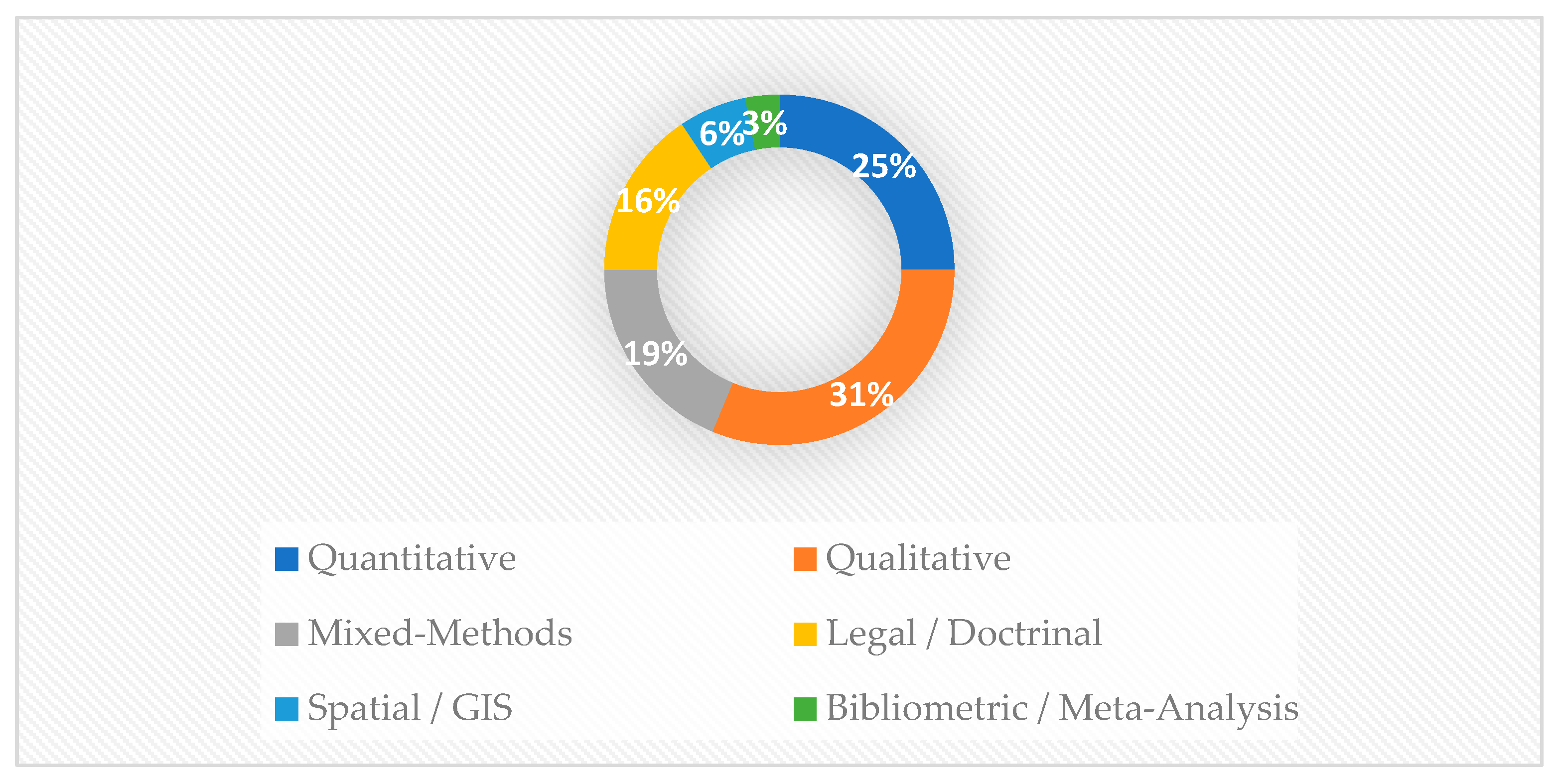
The methodological landscape illustrated in Figure 12 highlights a significant preference for empirical and stakeholder-oriented research, with Qualitative (31%) and Mixed-Methods (19%) approaches together constituting 50% of the reviewed literature. This methodological focus aligns with the prevalence of the Socio-economic/Livelihood research orientation (Table 2) and the dominance of the Social Sciences discipline (Figure 3) identified in previous sections. Methodologically, the frequent use of 'questionnaire survey' underscores a transition in research on property valuation for expropriation toward empirical, stakeholder-oriented research, moving beyond the 'sporadic and minimal' theoretical contributions of the early 20th century identified in the temporal analysis.
While Quantitative (25%) and Legal/Doctrinal (16%) analyses remain foundational to the field's technical and statutory integrity, the relatively low utilization of Spatial/GIS tools (6%) suggests an under-developed area in the spatial visualization of expropriation impacts. Overall, these findings suggest that the recent surge in publication volume (Figure 1) is largely driven by empirical inquiries into the human and social dimensions of land acquisition, rather than purely technical or spatial modelling.
Despite this diversity, several gaps are evident. Longitudinal studies examining post-compensation outcomes are scarce, particularly in communal and customary land contexts. Behavioral and psychological dimensions of compensation remain underexplored, and integrative mixed-methods studies combining valuation, socio-economic, legal, spatial, and cultural analyses are rare. Comparative research across countries, tenure systems, and governance contexts is also limited.
The findings indicate that research on property valuation for expropriation remains analytically fragmented, with dominant approaches examining valuation, law, and social impacts in relative isolation. These patterns have implications for understanding compensation fairness, adequacy, and legitimacy across diverse contexts.
3.6. Thematic Structure and Dominant Research Strands
The Thematic Map (Figure 13) categorizes research themes based on two dimensions: Centrality (Relevance degree) and Density (Development degree). This identifies which topics are established, which are emerging, and which remain specialized niches within the property valuation for expropriation discourse.
The thematic mapping in Figure 13 provides a final strategic overview of the field's intellectual maturity. The presence of 'compensation system,' 'valuation,' and 'landowner' as Motor Themes confirms that the core of the research domain is well-consolidated and central to the global discourse, mirroring the high citation density observed in the Netherlands (Figure 7). Conversely, 'land market' and 'spatial planning' act as Basic Themes, serving as the essential foundations that support more specialized inquiries. The isolation of 'environmental legislation' as a Niche Theme aligns with the 9% share of Environmental Science identified in the disciplinary mapping, indicating that while sustainability is a recognized factor, it remains a specialized sub-sector.
Emerging or marginal themes such as agriculture and road infrastructure reflect sector-specific applications that lack theoretical consolidation, mirroring the limited attention given to livelihood, cultural, and context-specific impacts. Figure 13 reinforces the finding that existing research focuses more on socio-economic, technical and legal dimensions of property valuation for expropriation while environmental, cultural and sectoral considerations remain peripheral and fragmented.
3.7. Key Themes Identified from Existing Literature
3.7.1. Disconnection Between Legal Provisions and Valuation Implementation
A recurring theme concerns the persistent gap between expropriation law and its application. Significant inconsistencies between statutory frameworks and actual compensation outcomes have been reported in Burayu town, Ethiopia [17]. Similarly, in Bahir Dar city, valuation and compensation practices are frequently inconsistent with legal requirements, with limited market evidence and insufficient stakeholder consultation contributing to inequitable outcomes [16]. Compensation assessments often suffer from improper application of market value principles, limited consideration of locational attributes, and inadequate professional capacity among valuators. Misinterpretation of public land ownership sometimes justifies compensation outcomes diverging from legislative intent, undermining fairness and equity. Historical perspectives indicate that even in late-18th-century Paris, compensation was influenced by administrative budgets and political priorities rather than objective market valuations [33]. These findings underscore that legal guarantees alone are insufficient, and enforcement and procedural fidelity are critical, particularly where statutory law is robust but institutional capacities are weak.
3.7.2. Legal Frameworks and Supranational Standards
Systemic undervaluation of properties often arises from administrative assessments, underestimation of development potential, or strategic actions by authorities [34]. Adherence to supranational legal standards, such as European Union directives, shapes how “fair market value” is interpreted, demonstrating that legal alignment is as important as local methodology in ensuring equity [35]. Property valuation in the constitutional era in South Africa emphasizes the constitutional imperative for equitable and just compensation [1]. Broader international perspectives highlight the importance of valuation dates, asset definitions, and lawful versus unlawful expropriation in shaping claims under international law [36]. In international arbitration, the timing of valuation (date of taking vs. date of award) can dramatically affect compensation, sometimes inflating awards beyond compensatory intent [37].
3.7.3. Valuation Methods and Behavioral Responses
The methodological challenge of determining fair compensation is widely documented. Ecuador’s reliance on outdated cadastral appraisals rather than current market-based valuations results in compensation perceived as inequitable [38]. Arbitrary valuation practices and limited local consultation in Sabata Town, Ethiopia, directly affect household livelihoods, demonstrating tangible socio-economic consequences [39]. Disputes often arise when the scope of compensable loss is ambiguous, reflecting tensions between statutory provisions and interpretive practice [40].
Landowners strategically price their properties in the face of expropriation, revealing that compensation expectations often exceed market-based valuations due to behavioral and incentive factors [41]. Negotiation practices, local market conditions, and discretionary adjustments in compulsory purchase valuations influence outcomes, highlighting the interaction between law, market, and stakeholder behavior [42]. Spain’s 2008 Land Use Act attempted to align legal standards with economic principles, but practical implementation challenges, bureaucratic rigidity, and valuation discrepancies limited effectiveness [43]. These findings emphasize that compensation outcomes are shaped not only by statutory law but also by administrative and market realities.
3.7.4. Administrative/Institutional Capacity and Governance
Fragmented legal structures and procedural delays in Slovakia impede consistent application of valuation standards [44]. In Zimbabwe, the absence of clear statutory guidance produces inconsistent property valuation for expropriation, leading to disputes, dissatisfaction, and litigation [18]. Inconsistencies in valuation practices undermine perceptions of equity, even where legal frameworks exist [6]. Institutional ambiguity, such as discretionary roles in South Africa’s Office of the Valuer-General, further complicates fairness and legal certainty [19]. High transaction costs and market friction systematically weaken property rights protections, illustrating that deficiencies in valuation are embedded in broader structural and institutional constraints [20].
Evidence from Kigali, Rwanda, shows that residents contest valuations and expropriation outcomes when engagement avenues are limited [45,46]. Budget constraints and inconsistent implementation can undermine procedural justice and redistributive fairness, reinforcing the need for resource-supported implementation aligned with socio-spatial justice principles [21].
3.7.5. Technological Innovations in Valuation for Expropriation
GIS-based multi-criteria approaches integrate spatial data and criteria weighing to produce nuanced and representative land value assessments [47]. Preliminary and model-based methods allow early-stage valuation where market data are scarce, providing benchmarks that inform negotiations and formal assessments [48]. These studies highlight the growing potential for methodological innovation to reduce subjectivity, enhance transparency, and improve equity in valuation for expropriation.
4. Discussion
The findings indicate that research on valuation for expropriation is a relatively young but rapidly expanding field, with accelerated growth since the mid-2010s [25,26,27]. The temporal patterns of publication and citation highlight a field transitioning from sporadic and isolated studies to a more cohesive, internationally engaged discourse [26,27]. Despite this growth, the literature remains highly concentrated in a few specialized journals, suggesting that while the field is increasingly interdisciplinary, its intellectual authority is anchored in core legal, economic, and valuation-oriented outlets [26,27].
The disciplinary and methodological analysis underscores the multifaceted nature of the field. While technical valuation, legal frameworks, and socio-economic impacts dominate [1,2,3,4,5,6,16,17], cultural, heritage, and environmental considerations remain peripheral [8,22,23]. This concentration mirrors the observed thematic map, where motor themes revolve around technical/valuation and legal governance clusters, whereas socio-economic, environmental, and sectoral issues occupy niche or emerging spaces [25]. The factorial and co-occurrence analyses further demonstrate that research largely treats technical valuation and social justice as conceptually distinct, with limited integration across these domains [9,10,15,18,21].
A critical finding concerns the persistent disconnect between statutory law and valuation practice. Despite formal legal guarantees for fair compensation [1,2,16,17], inconsistencies in methodological application, institutional capacity, and stakeholder engagement result in outcomes that are often perceived as inequitable [6,15,19,21]. Legal alignment with supranational standards and constitutional imperatives is necessary but insufficient without effective procedural enforcement [20,24]. Empirical evidence from multiple jurisdictions shows that compensation outcomes are shaped not only by legislation but also by administrative constraints, local market conditions, behavioral responses from landowners, and socio-economic realities [9,14,16,18,20,22]. Technological innovations, such as GIS-based and model-driven valuation approaches, offer promising avenues to reduce subjectivity and improve transparency, but their adoption remains uneven [47,48].
The study also identifies significant research gaps. Longitudinal analyses of post-compensation outcomes, integrative mixed-methods approaches combining valuation, socio-economic, legal, and spatial analyses, and comparative cross-jurisdictional studies are limited [25,26]. These gaps reflect a field still analytically fragmented, which has implications for the legitimacy and perceived fairness of expropriation processes [2,6,15,19].
The findings of this paper highlight that valuation for expropriation is not purely a technical exercise but a complex intersection of law, economics, governance, and social justice [1,2,3,6,16,17,18]. The evolution of the field reflects a gradual shift toward more holistic frameworks that acknowledge the socio-spatial, behavioral, and procedural dimensions of compensation [20,21,22,47]. Bridging the gap between legal provisions and practical implementation requires not only methodological rigor but also strengthened institutional capacity, stakeholder engagement, and attention to socio-cultural and environmental considerations [19,20,21,23].
5. Conclusions
Property valuation for expropriation research has matured into a multi-disciplinary, internationally engaged field. While technical valuation and legal frameworks remain central, socio-economic, environmental, and cultural dimensions are emerging as critical areas for integration. The persistent disconnect between statutory provisions and practical outcomes highlights the need for improved enforcement, institutional capacity, and innovative valuation methodologies. Future research can adopt integrative, comparative, and longitudinal approaches to better align legal guarantees with socio-economic realities, thereby enhancing the fairness, transparency, and legitimacy of expropriation processes globally.
5.1. Implications for Theory
The study highlights that property valuation for expropriation research must evolve beyond purely technical or legal models to incorporate socio-economic, behavioral, and environmental dimensions. The field’s conceptual structure suggests opportunities to develop integrative frameworks that link valuation practices with governance, social justice, and sustainable development principles. The identification of motor, niche, and emerging themes provides a roadmap for advancing theoretical understanding by connecting economic, legal, and social perspectives.
5.2. Implications for Practice
For policymakers and practitioners, the findings emphasize the need to bridge gaps between statutory provisions and implementation. Strengthening institutional capacity, standardized property valuation methodologies, and stakeholder engagement are critical to ensuring fair and equitable compensation. The adoption of technological innovations and multi-criteria approaches can support more accurate, transparent, and context-sensitive valuations, ultimately enhancing procedural justice and public trust in expropriation processes.
Author Contributions
Conceptualization, P.P.; methodology, P.P; validation, B.Z; formal analysis, P.P and B.Z; investigation, P.P; resources, B.Z; data curation, P.P; writing—original draft preparation, P.P; writing—review and editing, B.Z; visualization, P.P; supervision, B.Z; project administration, P.P and B.Z. All authors have read and agreed to the published version of the manuscript.
Funding
This research received no external funding.
Data Availability Statement
Dat is available on Scopus
Acknowledgments
During the preparation of this manuscript/study, the author(s) used [Scopus AI] for the purposes of conceptualizing ideas, Rayyan AI to identify duplicate sources and Grammarly to correct grammar. The authors have reviewed and edited the output and take full responsibility for the content of this publication.
Conflicts of Interest
The authors declare no conflicts of interest.
References
- Du Plessis, W.J. Valuation in the constitutional era. Potchefstroom Electron. Law J. 2015, 18, 1726–1759. [Google Scholar] [CrossRef]
- Mpofu, R.; Chavunduka, C.; Chirisa, I. Property valuation theory: Implications for policy and practice in Zimbabwe. Afr. J. Land Policy Geospat. Sci. 2023, 6, 693–709. [Google Scholar] [CrossRef]
- Kabanga, L.; Mooya, M.M. Compensation theories and expropriation of customary property rights: A critical review. J. Afr. Real Estate Res. 2018, 3, 87–106. [Google Scholar] [CrossRef]
- Olapade, D.T.; Aluko, B.T. Understanding the nature of land delivery institutions and channels from a tripartite perspective: A conceptual framework. Land Use Policy 2020, 94, 104927. [Google Scholar] [CrossRef]
- Kabanga, L.; Mooya, M.M. Compensation assessment practices in expropriation of customary land: Evidence from Malawi. Land Use Policy 2023, 134, 106931. [Google Scholar] [CrossRef]
- Paradza, P.; Yacim, J.A.; Zulch, B. Consistency and fairness of property valuation for compensation for land and improvements in Zimbabwe. Real Estate Manag. Valuat. 2021, 29, 67–84. [Google Scholar] [CrossRef]
- Adigeh, D.T.; Abebe, B.G. The practice of peri-urban land acquisition by expropriation for housing purposes and the implications: The case of Bahir Dar, Ethiopia. Urban Sci. 2023, 7, 41. [Google Scholar] [CrossRef]
- Wira, A.; Huda, N.; Long, A.S.; Augusna, W.L.; Meirison, M.; Afrida, Y. Legal study of dzurri waqf and its implementation towards strengthening high heritage assets in Minangkabau, West Sumatra, Indonesia. JURIS 2023, 22, 329–341. [Google Scholar] [CrossRef]
- Ewusie, I.; Tannor, O.; Ahiadu, A.A.; Ntim, O.K. Exploring the psychological and emotional burden of compulsory acquisition: A case study of New Akrade-Mpakadan, Ghana. Property Manag. 2024, 42, 713–731. [Google Scholar] [CrossRef]
- Manirakiza, R.; Potsiou, C.; Habiyaremye, J.P. Utilization of cadastral records for effective resolution of land expropriation challenges: Insights from Musanze District, Rwanda. J. Afr. Innov. Adv. Stud. 2025, 7. [Google Scholar]
- Mudefi, E. A critical analysis of research on Zimbabwe’s Tokwe-Mukorsi internally displaced community (2014–2024): A systematic review. Pak. J. Life Soc. Sci. 2024, 22, 11671–11696. [Google Scholar] [CrossRef]
- Tuan, N.T. The consequences of expropriation of agricultural land and loss of livelihoods in Da Nang, Vietnam. Environ. Socioecon. Stud. 2021, 9, 26–38. [Google Scholar] [CrossRef]
- Museleku, E.K. Valuation for compensation practices in Kenya: An evaluation. Property Manag. 2021, 39, 479–492. [Google Scholar] [CrossRef]
- Kidido, J.K.; Ayitey, J.Z.; Kuusaana, E.D.; Gavu, E.K. Who is the rightful recipient of mining compensation for land use deprivation in Ghana? Resour. Policy 2015, 43, 19–27. [Google Scholar] [CrossRef]
- Dube, C.; Mudefi, E. Internal displacement, victim (non-)compensation, and the politics of the caring state in Zimbabwe. Dev. Pract. 2025, 35, 1166–1176. [Google Scholar] [CrossRef]
- Alemu, Y.B. Expropriation, valuation and compensation practice in Ethiopia: The case of Bahir Dar city and surrounding. Property Manag. 2013, 31, 132–158. [Google Scholar] [CrossRef]
- Talema, A.H.; Nigusie, W.B. Assessment of the dichotomy between public ownership of land, expropriation laws and practices in Ethiopia: The case of Burayu town. Property Manag. 2023, 42, 32–57. [Google Scholar] [CrossRef]
- Yacim, J.A.; Paradza, P.; Zulch, B. Valuation for compensation of communal properties in Zimbabwe. Int. J. Hous. Mark. Anal. 2022, 15, 670–690. [Google Scholar] [CrossRef]
- Boshoff, T. The role of the Valuer-General in the calculation of compensation for expropriation. S. Afr. J. Hum. Rights 2021, 37, 334–354. [Google Scholar] [CrossRef]
- Guerriero, C. Property rights, transaction costs, and the limits of the market. Econ. Gov. 2023, 24, 143–176. [Google Scholar] [CrossRef]
- Uwayezu, E.; de Vries, W.T. Expropriation of real property in Kigali city: Scoping the patterns of spatial justice. Land 2019, 8, 23. [Google Scholar] [CrossRef]
- Mustofa, R.; Syahza, A.; Manurung, G.M.E.; Nasrul, B.; Afrino, R.; Siallagan, E.J. Land tenure conflicts in forest areas in Indonesia. Int. J. Law Manag. 2024, 67, 341–362. [Google Scholar] [CrossRef]
- Mbaiwa, J.E.; Thakadu, O. Postcolonialism, protected areas and Basarwa of Central Kalahari Game Reserve. In The Violence of Conservation in Africa; Ramutsindela, M., Matose, F., Mushonga, T., Eds.; Edward Elgar: Cheltenham, UK, 2022; pp. 134–154. [Google Scholar] [CrossRef]
- Adigeh, D.T.; Abebe, B.G. The practice of peri-urban land acquisition by expropriation for housing purposes and the implications. Urban Sci. 2023, 7, 41. [Google Scholar] [CrossRef]
- Donthu, N.; Kumar, S.; Mukherjee, D.; Pandey, N.; Lim, W.M. How to conduct a bibliometric analysis: An overview and guidelines. J. Bus. Res. 2021, 133, 285–296. [Google Scholar] [CrossRef]
- van Eck, N.J.; Waltman, L. Software survey: VOSviewer, a computer program for bibliometric mapping. Scientometrics 2010, 84, 523–538. [Google Scholar] [CrossRef]
- Aria, M.; Cuccurullo, C. Bibliometrix: An R-tool for comprehensive science mapping analysis. J. Informetr. 2017, 11, 959–975. [Google Scholar] [CrossRef]
- Sabahi, B. Compensation and restitution in investor-state arbitration: principles and practice; OUP Oxford: New York, 2011. [Google Scholar]
- Wälde, T.W.; Sabahi, B. Compensation, damages, and valuation. In The Oxford Handbook of International Investment Law (online edn); Muchlinski, P., Ortino, F., Schreuer, C., Eds.; Oxford Academic, 2012. [Google Scholar]
- Kidido, J.K.; Ayitey, J.Z.; Kuusaana, E.D.; Gavu, E.K. Who is the rightful recipient of mining compensation for land use deprivation in Ghana? Resour. Policy 2015, 43, 19–27. [Google Scholar] [CrossRef]
- Tagliarino, N.K.; Bununu, Y.A.; Micheal, M.O.; De Maria, M.; Olusanmi, A. Compensation for expropriated community farmland in Nigeria: An in-depth analysis of the laws and practices related to land expropriation for the Lekki Free Trade Zone in Lagos. Land 2018, 7, 23. [Google Scholar] [CrossRef]
- Uwayezu, E.; de Vries, W.T. Expropriation of real property in Kigali city: Scoping the patterns of spatial justice. Land 2019, 8, 23. [Google Scholar] [CrossRef]
- Lyon-Caen, N. An unkindly price. Compensation for Parisians owners at the end of the Ancient Régime. Hist. Measure 2013, 1, 75–106. [Google Scholar] [CrossRef]
- Durkin, K. Undervaluation and expropriation of property. Eur. Hum. Rights Law Rev. 2020, 1, 103–105. [Google Scholar]
- Frumarová, K.; Grygar, T. Reimbursement of value of expropriated property under Czech law in light of European legal standards. InterEULawEast J. Int. Eur. Law Econ. Market Integr. 2022, 9, 121–145. [Google Scholar] [CrossRef]
- Marboe, I. Compensation and damages in international law and their relevance for the valuation of expropriated Armenian property. Int. Crim. Law Rev. 2014, 14, 33–56. [Google Scholar] [CrossRef]
- Bahmaei, M.A.; Faraj Mehrabi, H. The valuation date of an unlawfully expropriated property in international investment arbitration: A critique of acquisitive valuation. ICSID Rev. For. Invest. Law J. 2021, 36, 441–463. [Google Scholar] [CrossRef]
- Perez, F.; Leon, M.; Salazar-Gonzalez, V.; Macias, A. The processes of real estate expropriation and the fair price: Case of the Decentralized Autonomous Government of the Municipality of Ambato. In ICAIW 2024: Workshops at the 7th International Conference on Applied Informatics (October 24–26, 2024, Viña del Mar, Chile); CEUR Workshop Proceedings, 2024.
- Gemeda, F.T.; Guta, D.D.; Wakjira, F.S.; Gebresenbet, G. Land acquisition, compensation, and expropriation practices in the Sabata Town, Ethiopia. Eur. J. Sustain. Dev. Res. 2023, 7, em0212. [Google Scholar] [CrossRef]
- Habdas, M. Compensating landowners in the vicinity of airports: A comparative study of the neighbour conflict; Routledge, 2023. [Google Scholar]
- He, Z.; Asami, Y. How do landowners price their lands during land expropriation and the motives behind it: An explanation from a WTA/WTP experiment in central Beijing. Urban Stud. 2014, 51, 412–427. [Google Scholar] [CrossRef]
- Holtslag-Broekhof, S.; Beunen, R.; Van Marwijk, R.; Wiskerke, J.S.C. Exploring the valuation of compulsory purchase compensation. J. Eur. Real Estate Res. 2018, 11, 187–201. [Google Scholar] [CrossRef]
- Melián Marrero, G.; Álvarez, G.C. A legal and economic study of the new Consolidated Text of the Land Use Act of 2008 in Spain. Land Use Policy 2010, 27, 1091–1096. [Google Scholar] [CrossRef]
- Peráček, T.; Srebalová, M.; Srebala, A. The valuation of land in land consolidation and relevant administrative procedures in the conditions of the Slovak Republic. Admin. Sci. 2022, 12, 174. [Google Scholar] [CrossRef]
- Nikuze, S.; Sliuzas, R.; Flacke, J. Residents’ contestation of urban land expropriation and valuation outcomes in Kigali, Rwanda. Land Use Policy 2020, 92, 104462. [Google Scholar]
- Esmail, S.; Corburn, J. Struggles to remain in Kigali’s “unplanned” settlements: The case of Bannyahe. Environ. Urbanization 2020, 32, 19–36. [Google Scholar] [CrossRef]
- Ayalke, Z.; Şişman, A. Nominal land valuation with best-worst method using geographic information system: A case of Atakum, Samsun. ISPRS Int. J. Geo-Inf. 2022, 11, 213. [Google Scholar] [CrossRef]
- Mete, M.O.; Yomralioglu, T. Creation of nominal asset value-based maps using GIS: A case study of Istanbul Beyoglu and Gaziosmanpasa Districts. GI_Forum 2019, 7, 98–112. [Google Scholar] [CrossRef]
Figure 1.
Annual publication growth 1979-2026.
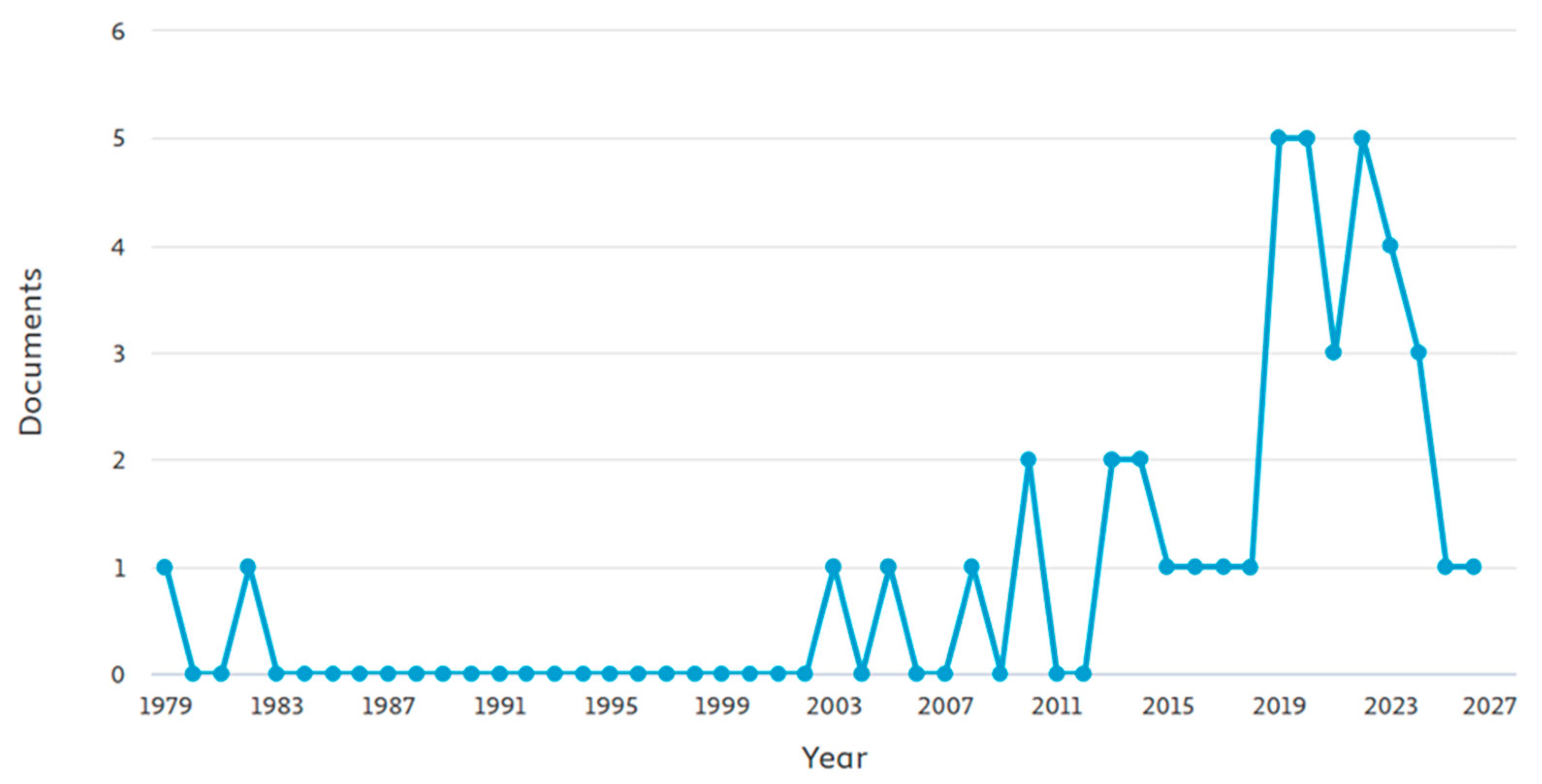
Figure 2.
Contribution by publication type.
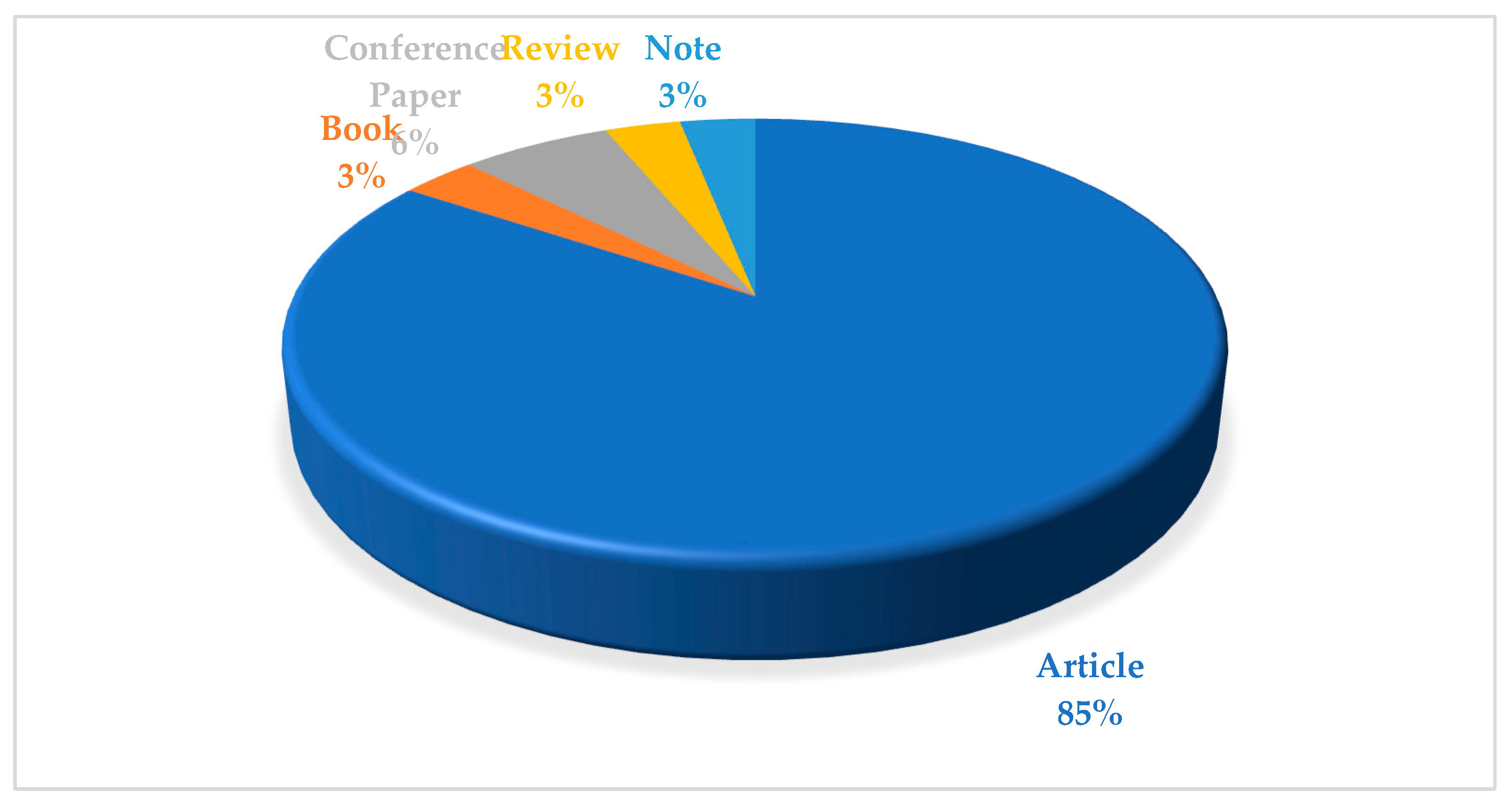
Figure 3.
Classification of publications by subject area.
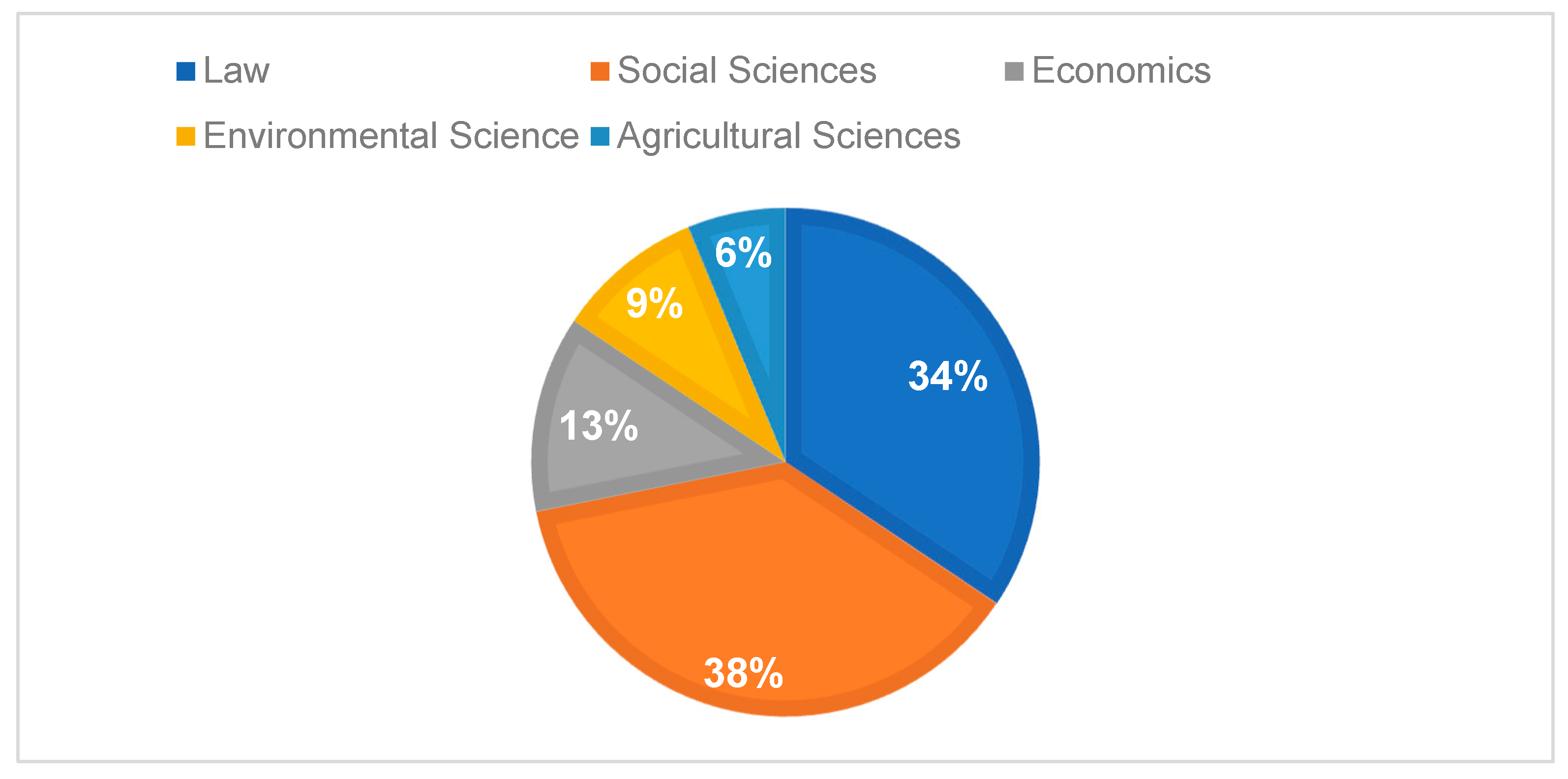
Figure 4.
Publications per journal.
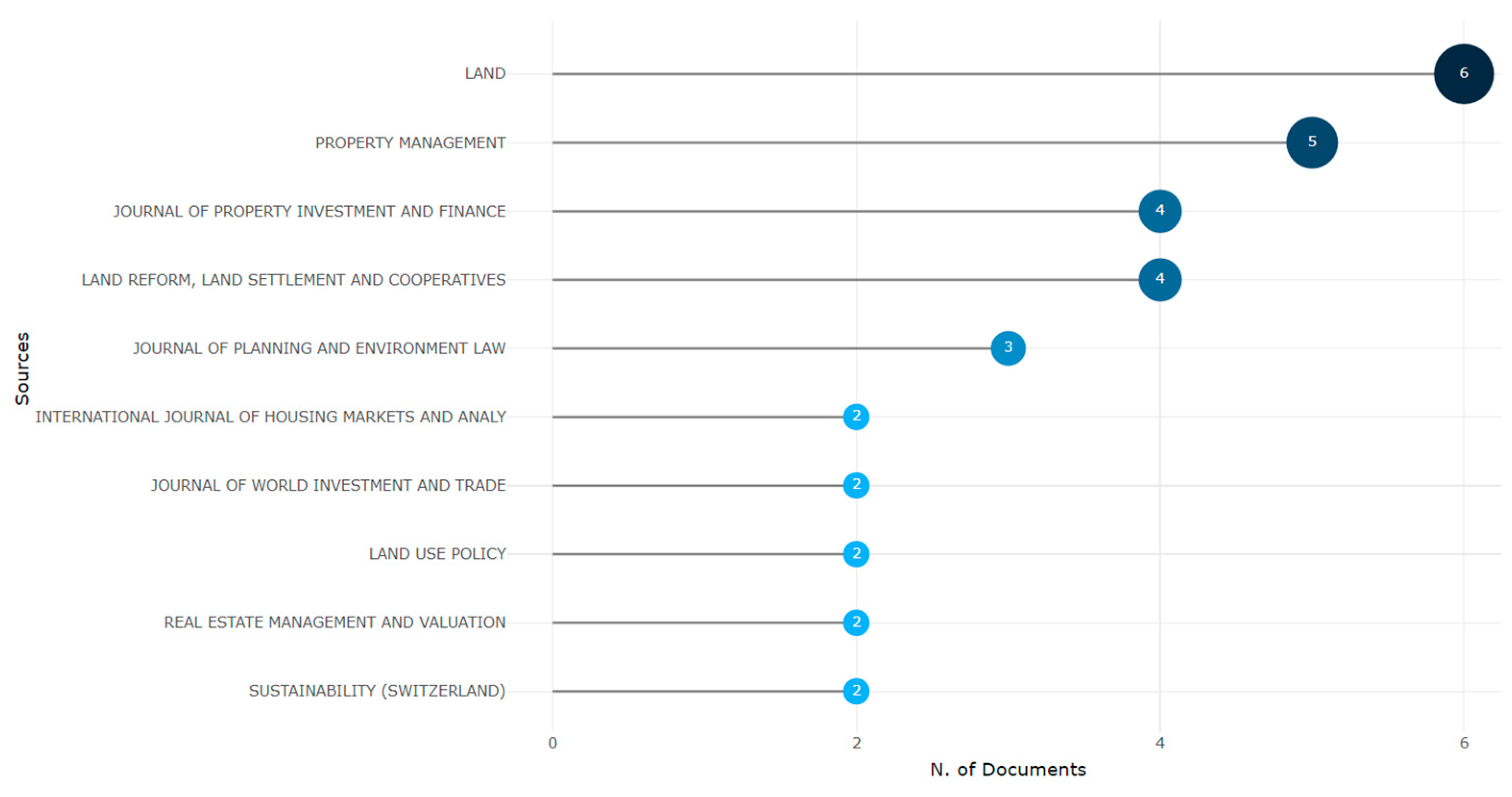
Figure 5.
Annual Publication Output and Citation Growth (2003-2025).
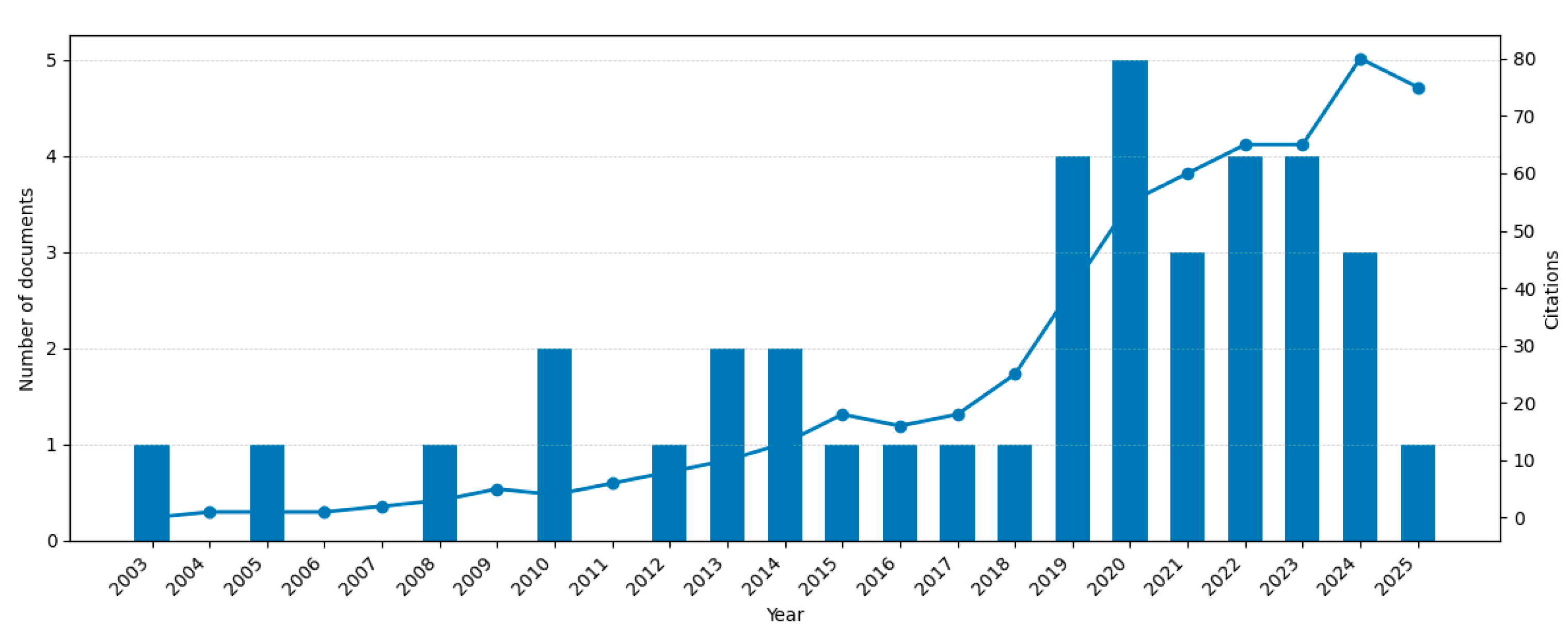
Figure 6.
Source Local Impact.
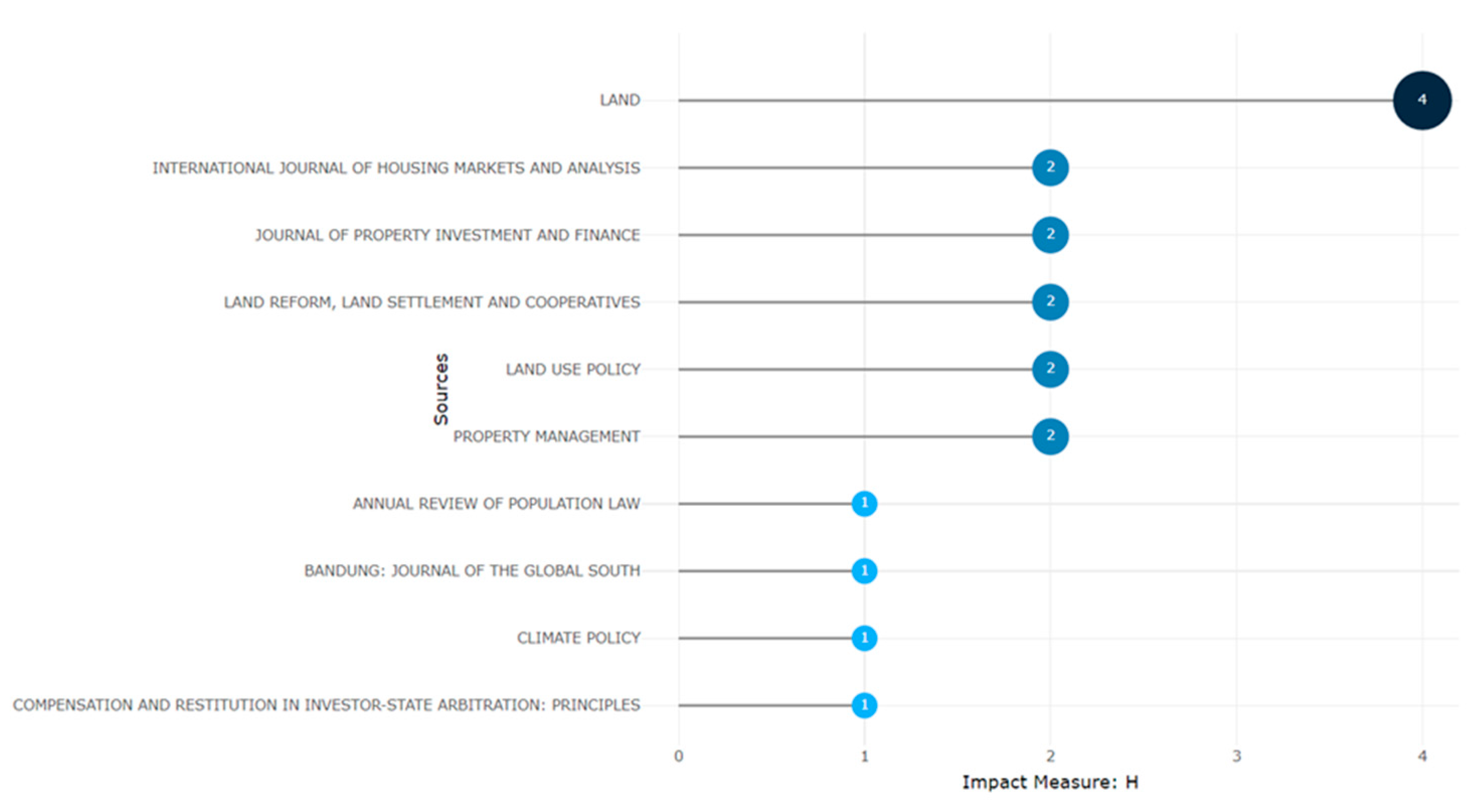
Figure 7.
Most Cited Countries.
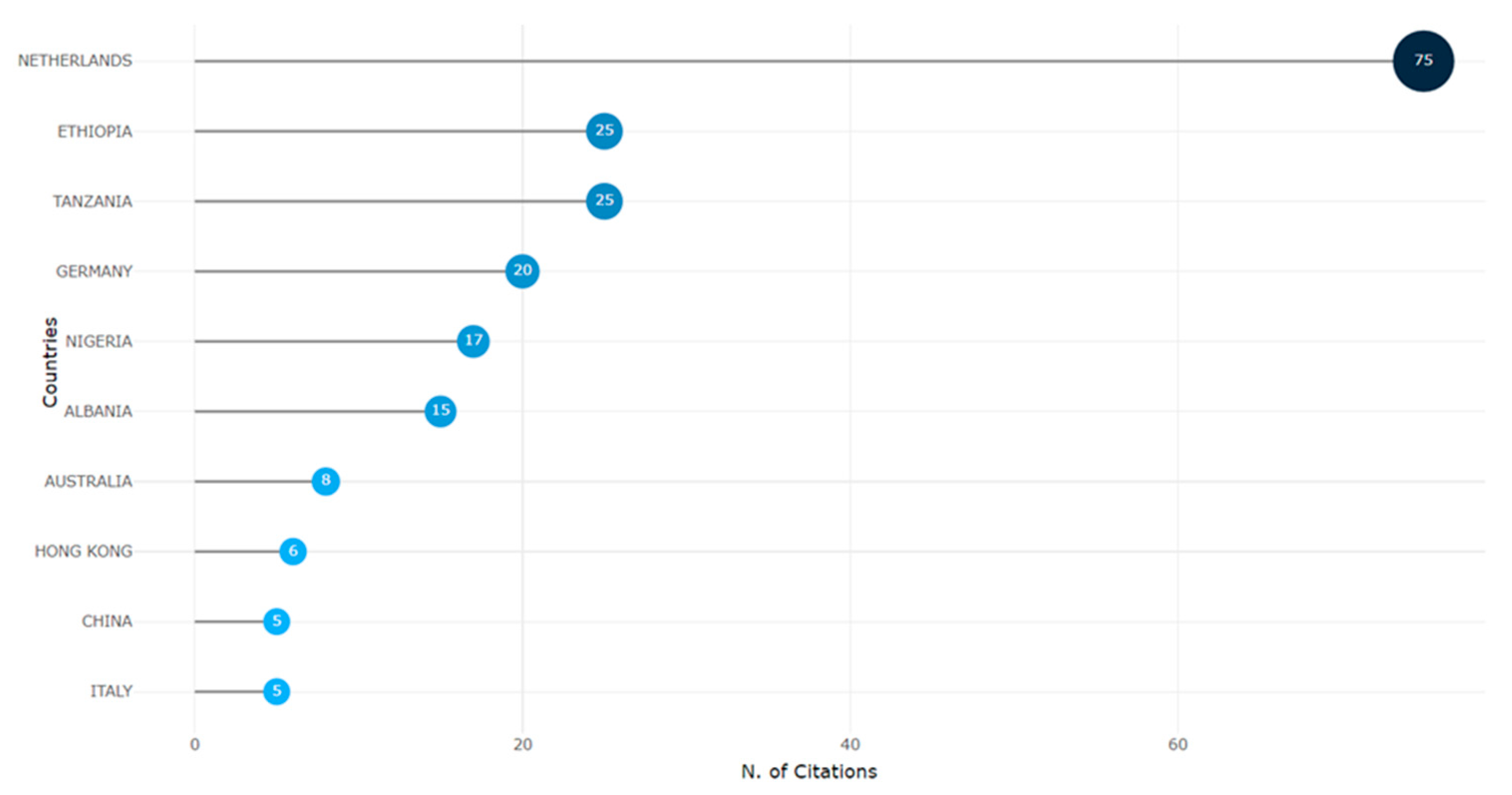
Figure 8.
Most Global Cited Documents.
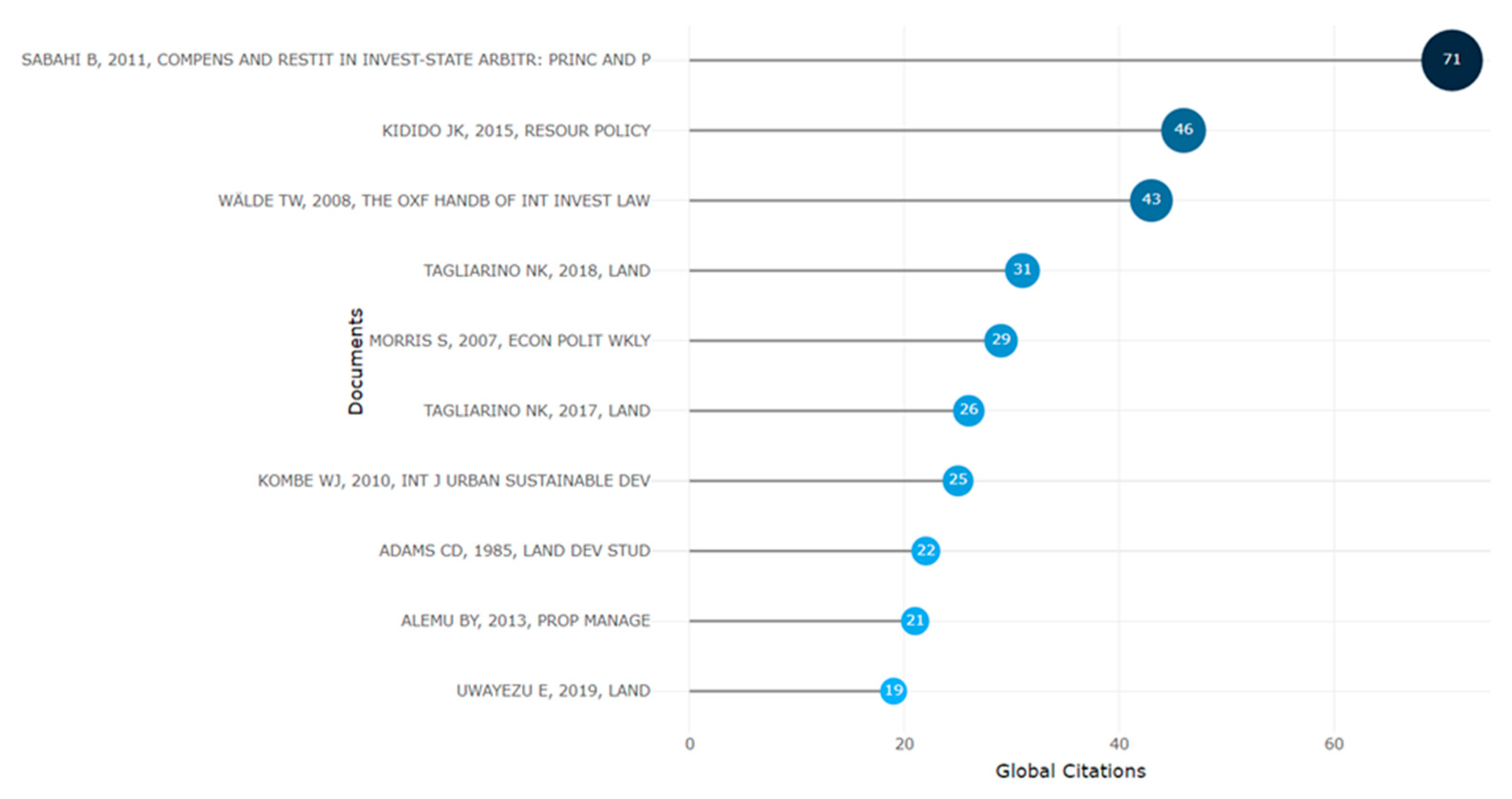
Figure 9.
Most Frequent Words.
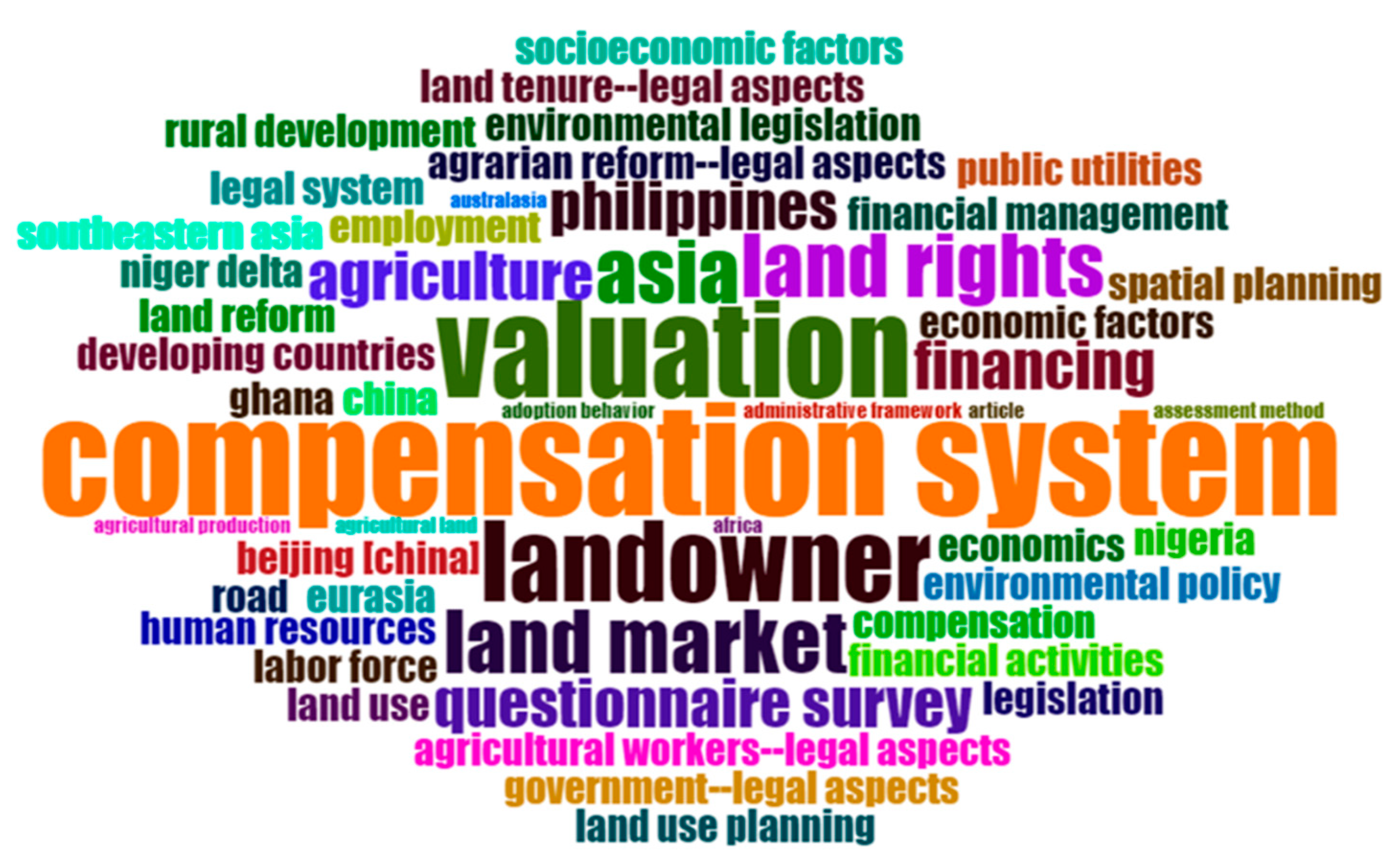
Figure 10.
Co-occurrence Network.
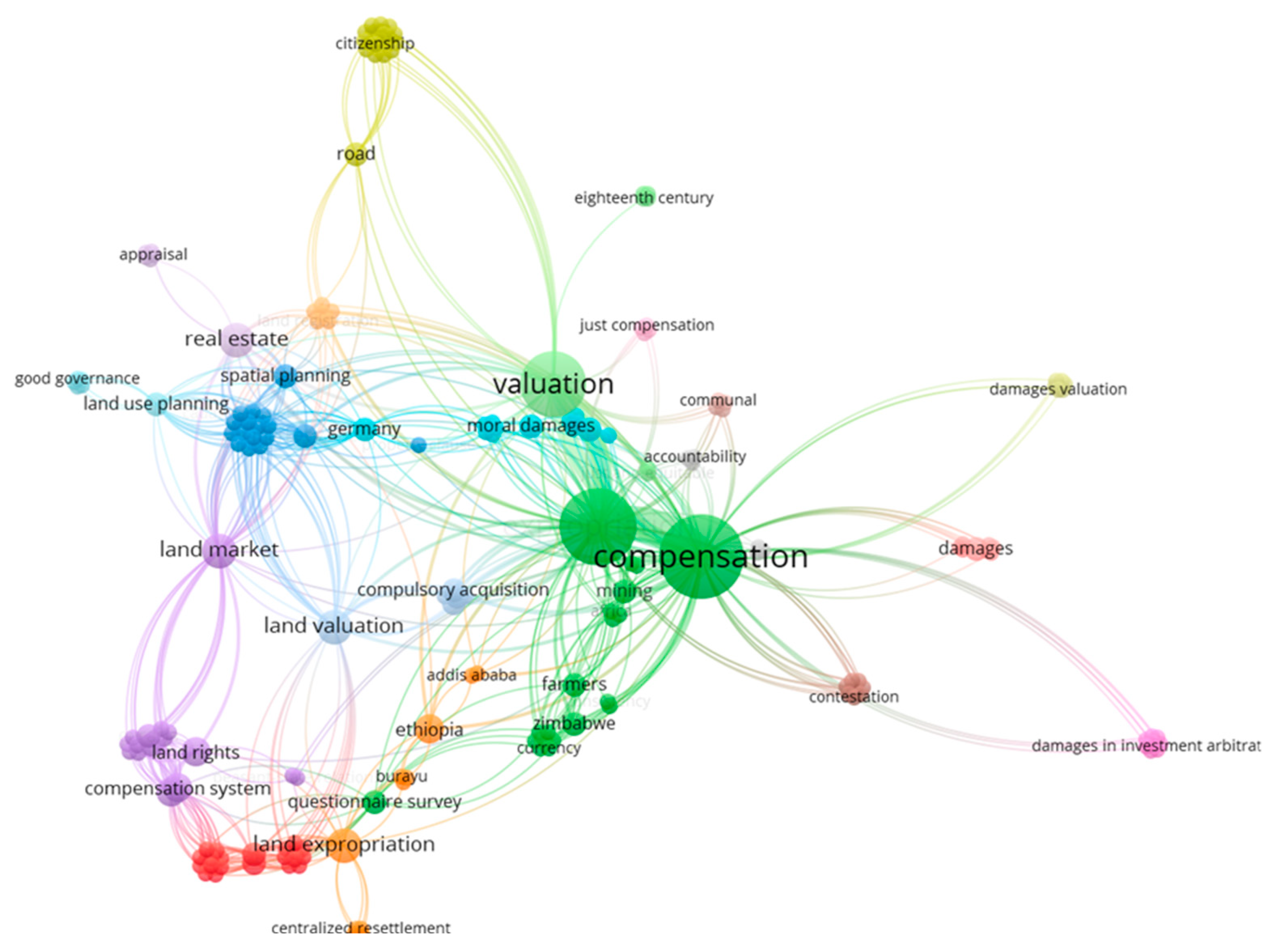
Figure 11.
Factorial Analysis.
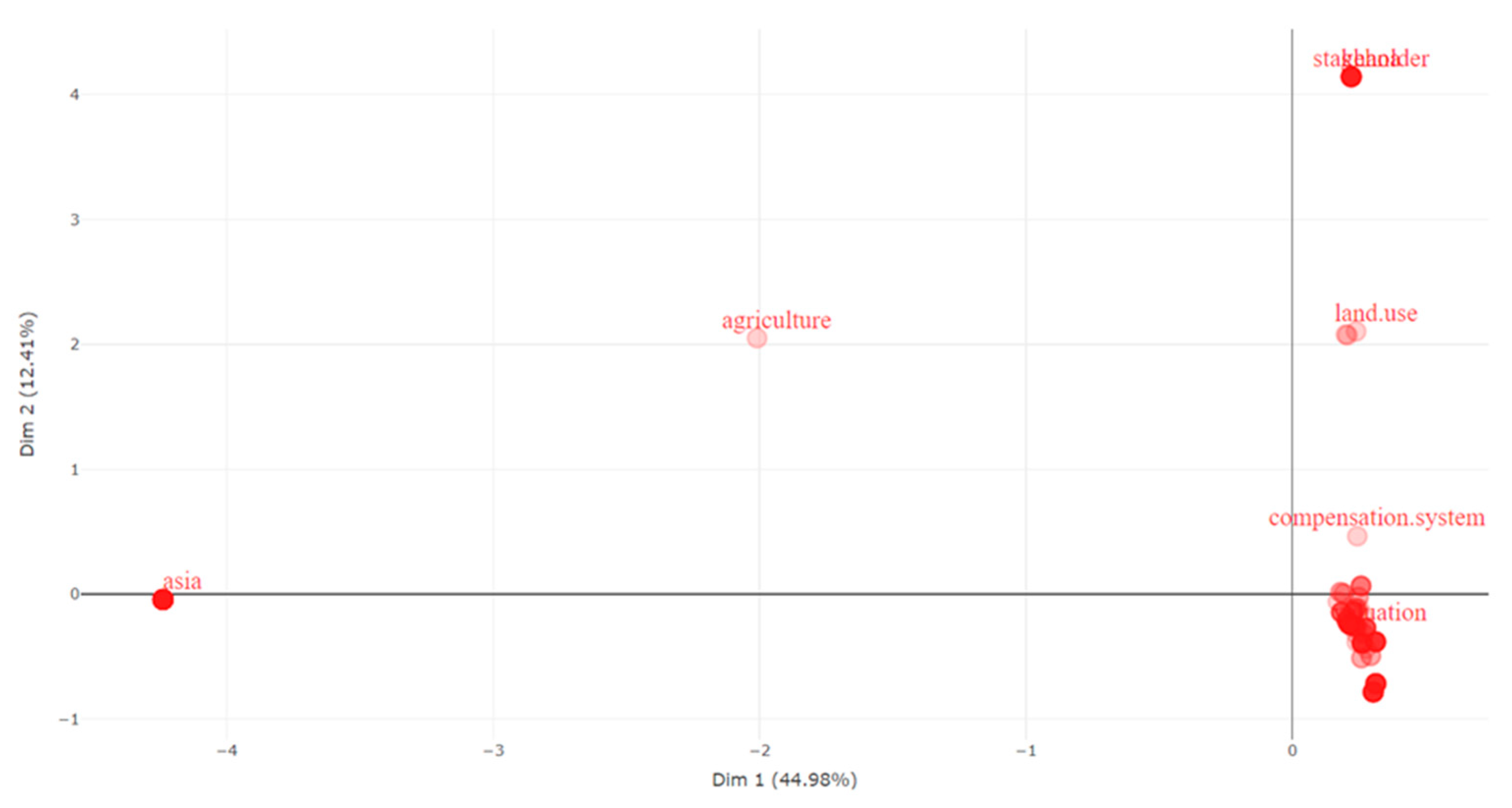
Figure 13.
Thematic Map.
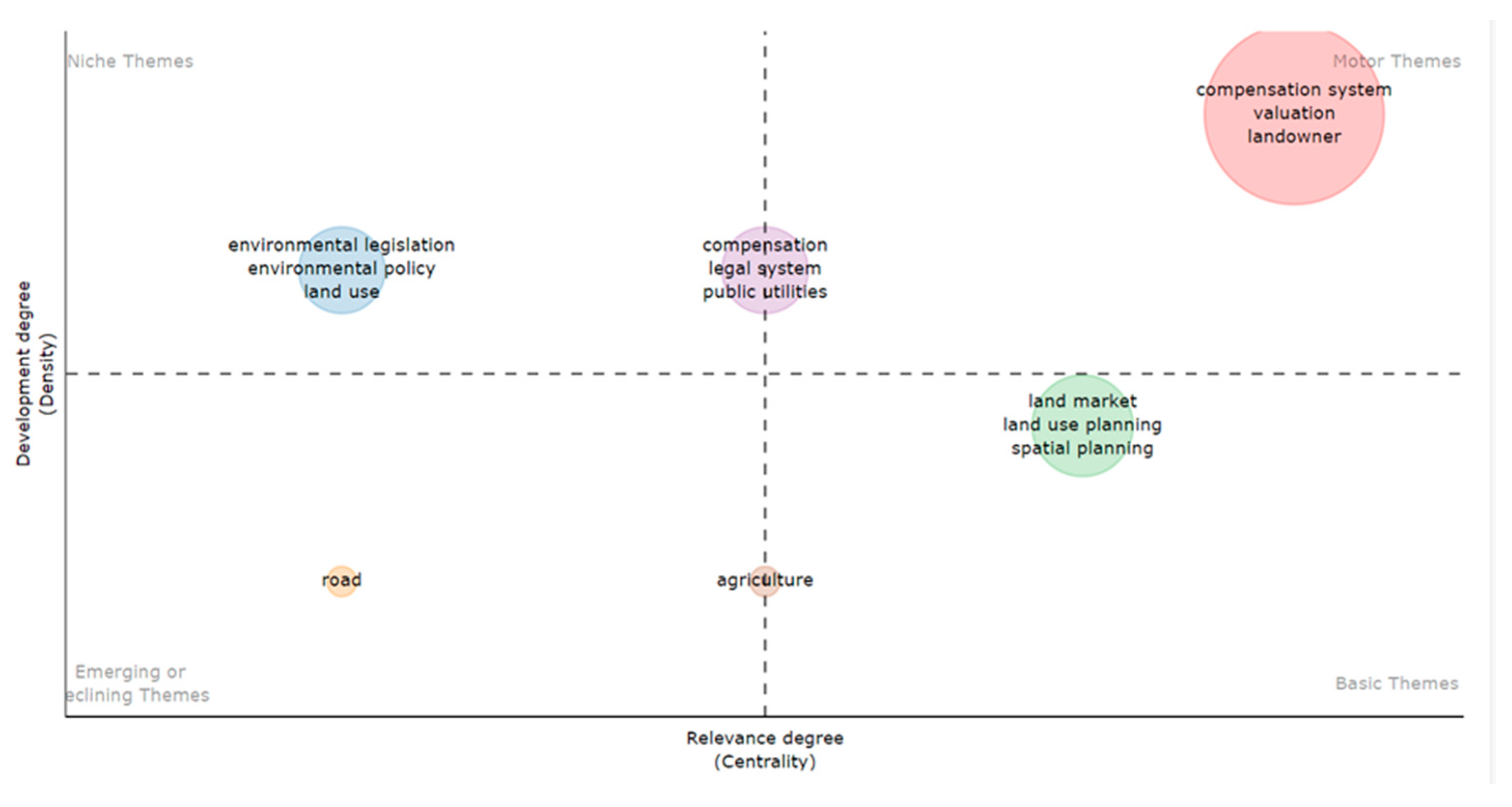

Table 1.
Inclusion and exclusion criteria.
| Inclusion criteria | Exclusion criteria |
|---|---|
| Peer-reviewed journal articles, conference papers, and book chapters indexed in Scopus | Opinion pieces and non-peer-reviewed reports |
| Publications in English | Studies unrelated to expropriation or compulsory acquisition |
| Studies addressing valuation, compensation, or assessment in expropriation context | General property valuation studies without an expropriation focus |
Table 2.
Research orientation and key focus areas of existing studies on property valuation for expropriation.
Table 2.
Research orientation and key focus areas of existing studies on property valuation for expropriation.
| Orientation | Key Focus | # of studies |
|---|---|---|
| Technical / Valuation-focused | Examines property valuation methods, market value assessment, compensation accuracy, and determinants of monetary compensation. | 8 |
| Socio-economic / Livelihood-focused | Investigates impacts of expropriation on households and communities, including displacement, income loss, psychological/emotional burden, and equity of compensation. | 11 |
| Legal / Institutional / Governance-focused | Examines statutory frameworks, customary law, institutional roles, procedural fairness, dispute resolution, and comparative legal analyses. | 10 |
| Cultural / Heritage-focused | Explores traditional land stewardship, heritage property valuation, and integration of customary or religious practices with formal expropriation frameworks. | 3 |
Disclaimer/Publisher’s Note: The statements, opinions and data contained in all publications are solely those of the individual author(s) and contributor(s) and not of MDPI and/or the editor(s). MDPI and/or the editor(s) disclaim responsibility for any injury to people or property resulting from any ideas, methods, instructions or products referred to in the content. |
© 2026 by the authors. Licensee MDPI, Basel, Switzerland. This article is an open access article distributed under the terms and conditions of the Creative Commons Attribution (CC BY) license (http://creativecommons.org/licenses/by/4.0/).
Copyright: This open access article is published under a Creative Commons CC BY 4.0 license, which permit the free download, distribution, and reuse, provided that the author and preprint are cited in any reuse.


