

Submitted:
03 February 2026
Posted:
05 February 2026
You are already at the latest version
Abstract
A substantial number of potential underground carbon storage reservoirs exist in regions that contain permafrost (continuously frozen layers of the subsurface) such as in the Alaskan North Slope. The extent and depth of these permafrost layers are changing globally at a rapid pace on the geologic timescale which warrants continued research and observation. In order to prepare for successful carbon sequestration projects in these regions, in this work we investigate the outcome from the potential scenario of carbon dioxide encountering the permafrost at depth. This article reviews currently available literature pertaining to the characteristics of permafrost for carbon storage in the case of injection of carbon dioxide into deep onshore underground reservoirs. This study compares research showing evidence of both flow of carbon dioxide gas through permafrost and storage of carbon dioxide gas by permafrost. The findings suggest more research is needed, and several future research areas are outlined in this work.
Keywords:
underground carbon storage
; permafrost
; cold regions
; carbon sequestration
; CO2 injection
; CO2 migration
1. Introduction
Alaska has significant potential for carbon sequestration. Recent projects have investigated shipping carbon dioxide (CO2) from Japan to Alaska for potential injection and geologic storage [1] and developing a commercial-scale carbon dioxide storage facility in the North Slope region of Alaska [2]. Potential carbon dioxide storage locations include depleted or low value oil and gas reservoirs as well as coal seams. These potential storage reservoirs are typically permeable volumes of rock contained by an overlaying impermeable “caprock.” The integrity of the caprock is important for ensuring the carbon dioxide is trapped in the intended location. Many of these potential carbon dioxide storage reservoirs in Alaska are in regions that contain permafrost, particularly on the North Slope [3,4]. It is intended that the caprock will securely store the carbon dioxide, however it is important to study and create contingency plans for a potential release of carbon dioxide through the caprock and possibility of migrating to the base of the permafrost. While typical carbon dioxide storage reservoirs are at depth of 1-4 km [3], the deepest that the base of the permafrost in Alaska has been observed is 500-600m [5,6,7].
The interaction of carbon dioxide and permafrost is not well characterized even though it is widely studied. The fate and effects of underground carbon dioxide flowing into the permafrost at depth is unknown. Recent literature is conflicting on whether carbon dioxide may flow through or be trapped. Permafrost is a heterogeneous and dynamic porous media, and there may not be a simple answer.
Understanding the transport of carbon dioxide through permafrost is important for the success of carbon capture and sequestration (CCS) projects. With reliable understanding of the mechanisms and models predicting carbon dioxide flow velocity and pathways, projects can be undertaken and ensure secure storage of the carbon in the subsurface or mitigated as required if carbon dioxide was able to exit the reservoir and migrate to the permafrost. Typical geomechanical or hydrogeologic reservoir models of carbon sequestration do not include modeling the flow of carbon dioxide through permafrost. Furthermore, the movement of carbon in permafrost is of high importance to global carbon emissions. The path of carbon dioxide flow through permafrost is typically not included in climate models but may have a notable impact on results. Ciais et al. suggests that the terrestrial biosphere held around 700 Pg more inert carbon during the Last Glacial Maximum (~20,000 years ago), much of it likely stored in permafrost and tundra soils. The release of this carbon during deglaciation may have contributed significantly to the ~100 ppm rise in atmospheric carbon dioxide observed during the end of the Last Glacial Maximum [8].
Considerable investigation of permafrost and carbon interactions is of the active layer, or most shallow section of soil interfacing with the ambient air. Furthermore, studies of carbon emissions from thawing permafrost regions focus on the exposure of previously frozen carbon material being converted to carbon dioxide [9]. This does not address the situation of carbon being released from deeper within the earth beneath the frozen layer of permafrost. In this review, recent publications on the effects of permafrost on geologic carbon sequestration are discussed. Studies of flow of carbon in gas or liquid form through permafrost and mechanisms of carbon storage in permafrost are reviewed. Finally, future areas of research and gaps in current understanding of the characteristics of permafrost in Alaska as they relate to CCS projects are described.
2. Flow of Carbon Dioxide Through Permafrost
Few studies have investigated the ability for carbon dioxide to flow through permafrost.
2.1. Gas Permeability of Permafrost
Industrial-scale CCS projects typically inject carbon dioxide in a supercritical state through wells to the deep reservoir rock. CCS in Alaska may potentially involve injecting carbon dioxide in a liquid state due to the lower ambient temperatures. Once injected underground, carbon dioxide will rise towards surface due to having a lower density than water (liquid or ice) and may transition to gas phase based on the temperature and pressure (Figure 1). A mass of carbon dioxide in gas phase has significantly larger volume than in the supercritical phase.
There is a lack of understanding on the pathways of gases migrating through permafrost [10]. In permafrost areas, gas has been observed naturally being emitted from lakes or land, sometimes creating craters [11] which demonstrates permafrost areas are not completely impermeable to gas. In the Prudhoe Bay area, methane gas found in the permafrost has been determined to be primarily (50-70%) thermogenic origin as opposed to microbial [12]. While this means the gas migrated to the permafrost from much deeper underground, it does not necessarily mean the gas moved through the frozen layers as the gas may have migrated to the location before the area froze.
Fluid flow through porous media such as rock or permafrost is governed by Darcy’s law. The main controlling component of the flow is the permeability of the porous media which is a measure of the connectivity of the pore space withing rocks. While empirically developed for water flow, Darcy’s law can be used to characterize gas flow through porous media assuming the flow is laminar and the media is homogeneous.
Chuvilin has analyzed and conducted several studies of gas permeability of frozen sands. Frozen sand comprised of 0.1-0.25 mm grain size with ice content of 75% was measured to have a gas permeability of 0.36 mD (Ananyan et al. 1972 as summarized in English in [13]), which while low, is still permeable and therefore would allow carbon dioxide to pass through.
Chuvilin showed when the ice content of marine permafrost sands from West Siberia rises above 50%, the gas permeability lowers by orders of magnitude [13] as the ice blocks the pore space and connections. This implies the gas permeability of permafrost depends on the ice content. Drier permafrost regions may allow carbon dioxide to flow through in gas phase whereas wetter permafrost zones may not.
Gas permeability of frozen sediment may be more complicated than moisture content alone, as frozen sediment can have significantly lower permeability than unfrozen. Frozen permafrost was found to have 10 times less permeability than unfrozen [13]. Many samples of frozen fine sand and silty sand had gas permeabilities lower than detection level (<0.01mD) but had permeabilities of 0.27 to 60 mD when unfrozen [14].
In Antarctica, concentrations of carbon dioxide (as well as methane and helium) have been measured at the base of the active layer, therefore at the top of the permafrost, being emitted at significant volumes, up to 3.44% by volume of carbon dioxide or 1.73 g m-2d-1 [15]. The study suggests the source is brine beneath the permafrost migrating inland [15]. This implies flow of carbon dioxide through the permafrost. Although interestingly in the study, locations of high carbon dioxide emission do not appear to align with locations of high methane emissions. Therefore, flow paths may not be confined to faults but rather diffuse through the permafrost matrix.
Besides the diffusion of carbon dioxide through porous mineral matrix, fractures or faults may exist in the permafrost which may allow for another type of flow path. Are [16] analyzed several studies published in Russian relating to gas observed in permafrost. Besides the typical dispersed microporosity, Are [16] describes the pore space distribution of permafrost can contain long lens-shaped horizontal macrocavities with widths of up to 5 cm in the top 10 m of Russian permafrost as seen from cores. These may provide for high permeability passageways for carbon dioxide migration through permafrost and a volume for carbon dioxide to be stored within. Studies by Ermakov et al. published in Russian attributed ascending gas migration paths to be mainly at joints between rocks, based on a detailed study of the relationship between tectonic jointing zones and gas fields in Siberia [16]. Geologic methane emitted along fault lines and in areas of permafrost thaw has been measured [17,18]. This suggests faults are possible pathways for carbon dioxide as pathways permeable to methane are likely permeable to carbon dioxide as well.
These studies of gas permeability of permafrost largely focused on methane gas. No studies of permeability of carbon dioxide gas through permafrost were found. However, pertaining to carbon dioxide in unfrozen sediment, in central Italian grasslands subsoil carbon dioxide has been measured at higher fluxes in areas over high permeability faults compared to areas without faults [19]. The source of this carbon dioxide may be geologic as carbon dioxide is naturally released from the upper mantle and carbonate portions of crust of the Earth with estimates of 102-103 Mt carbon dioxide/year globally. Besides volcanic emissions, these geologic carbon dioxide emissions also occur at locations of active tectonics, thin crust, or oil and gas fields [20].
Permafrost and faults of low ice content are still possibly permeable as well. A recent study in Russia attempted to trace the path of carbon dioxide through permafrost. The study measured gases in the top 1 m of frozen soil over permafrost in winter overlying oil and gas fields in West Siberia [10]. As this is in the active layer, this study will not have captured previously stored carbon dioxide that was emitted during previous summer thaw(s). They found frozen soils in this area contained a concentration of carbon dioxide of 11.5 g/m3 on average with samples ranging from 4 to over 40 g/m3 [10]. Higher concentrations of carbon dioxide were seen in areas of thinner permafrost [10].
While both geologic and biogenic sources likely contributed to the measured carbon dioxide in soil above permafrost, the amount which migrated from beneath the permafrost is unknown. Some concentrations of helium were observed, suggesting travel of gases from deeper geologic sources such as the mantle [10]. High concentrations of hydrocarbons were measured over 95% of the study area and are attributed to diffuse flow from underground geologic reservoirs.
The study by Kraev et al. [10] looked at the connection between carbon dioxide concentrations in soil above permafrost and detailed fault or lineament (surface features of faults) mapping (Figure 2). Electromagnetic geophysical methods were used to determine the subsurface structure 400 m below surface including permafrost depths and faults or fractures. No strong link was found between carbon dioxide concentrations measured in frozen soil and geologic fault features. However minor links were found between carbon dioxide concentration and lineaments, land cover, and terrain aspect, with an even lesser link to permafrost thickness [10]. This could be due to permafrost blocking carbon dioxide flow or permeable pathways such as faults have allowed carbon dioxide to be emitted prior to measurement. The researchers in the study note the carbon dioxide could still be of deeper geologic origin as they measured higher concentrations of methane aligning with tectonic boundaries (300% higher methane near lineaments). Micro-seeps, or channels for fluid migration through the permafrost, with higher concentrations of methane and helium were found and aligned with tectonic margins suggesting geologic pathways along deep faults [10]. Even if the measured carbon dioxide did not align with mapped lineaments, the carbon dioxide may have traveled through deeper faults vertically and migrated horizontally through the permafrost or other rock layers before reaching the active layer.
Drilling wells through permafrost can degrade the permafrost and form caverns and increased erosion around the well [21]. This could potentially create permeable pathways in the immediate vicinity of a well in a CCS project.
Frozen soil appears to often have higher permeability than frozen sediment, possibly because much of the soil is above the water table. In an experimental study of frozen soil, moisture content had the most significant impact on gas permeability of nitrogen [22]. Gas permeabilities measured ranged widely from 0.037 mD to 0.69 D in frozen soils with moisture contents of 5.8% to 25% [22]. High gas permeabilities have been observed in frozen saline loams in Yamal in Northern Russia [16]. Soil can also contain plants which offer pathways for carbon dioxide to be transported through the tissues of the plant [10]. Gases can also be transported through the soil in cracks made from ice growth and soil drying [10]. It is possible carbon dioxide from a CCS project could encounter permafrost soil.
2.2. Liquid Permeability of Permafrost
There is a small probability that any carbon dioxide rising from deep geologic storage from CSS projects will be in liquid phase when encountering permafrost as the locations that are cold enough and deep enough are limited. However, there is a possibility that carbon dioxide will be dissolved in water and encounter the permafrost as a liquid solution. Gas phase carbon dioxide may be able to flow through liquid water. Unfrozen water close to permafrost matrix grains may possibly provide a flow path for carbon dioxide even if the pore space is filled with frozen ice. Figure 3 illustrates the concept of permafrost mineral grains surrounded by ice. Different flow paths could be considered between coarse grain and fine grain permafrost as well as with different amounts of entrapped gases or liquid water. Liquid flow can be influenced by capillary, gravitational, and viscous forces but for rock is still often described with permeability and Darcy’s Law. Liquid permeabilities are typically much lower than gas permeabilities for porous media. Liquid permeabilities particularly of frozen sediment are low. Aguirre-Puente and Gruson reported a permeability of 10-18 m2 (0.001 mD) for silty sediment at a temperature of -0.3 °C [23].
Studies of the liquid permeability and hydrology of permafrost are often focused on surface water and impacts of changes with permafrost. Permafrost areas have unique features that drive hydrology in these regions. Taliks, unfrozen zones under bodies of water in permafrost areas, may provide flow paths for both groundwater and therefore carbon dioxide as a solution in water [25]. If taliks are present around a potential CCS project area, they should be considered when analyzing potential fluid or carbon dioxide flow paths. Several cryohydrogeology models exist for analyzing groundwater flow in permafrost regions [25,26]. Most studies of permafrost hydrology focus on the active layer, surface water, and other water movement above the permafrost [27], rather than through the various depths, as by definition permafrost is frozen and no substantial amount of liquid water exists. The warming and melting of permafrost may bring on new challenges and complicated flow paths. Water and solute travel times are not only affected by permeability as typical but the freeze/thaw cycle further delays travel regardless of geological parameters [28]. Other unique characteristics of permafrost and potential movement of carbon dioxide from CCS projects include cyrosuction, or the suction of water into frozen areas due to freezing and capillary forces [29].
3. Storage of Carbon Dioxide by Permafrost
3.1. Mechanical Storage
Permafrost could potentially form a barrier impermeable to carbon dioxide flow. If ice fully blocked the pores and remained frozen, carbon dioxide would not be able to flow through and therefore be trapped or stored within or below the permafrost. Gleeson et al. acknowledge that if the pores of rocks and soils are filled with frozen water, gases such as carbon dioxide can be inhibited from flowing through [30]. Snow has been shown to inhibit flow of carbon dioxide from the soil [31], however to what extent is debated.
Pockets of gases have been observed to be trapped within permafrost. Gases in the upper portions of the permafrost in West Siberia have been observed at quantities larger than possible by biological processes alone [16]. While the gas in these studies from West Siberia had a high methane content, helium and argon were also present which indicates the gas comes from deeper geologic sources which are likely to contain carbon dioxide as well. Yakushev (1989) and Ershov et al. (1990) (both in Russian but described in English in [16]) recorded drilling into pressurized methane gas pockets in the uppermost 100 m of the permafrost in the Yamburg gas field in the Russian Arctic. Are [16] indicated these are free gases as opposed to gas hydrates, as they are outside the hydrate stability zone.
More recent studies have also shown methane has been trapped lithologically in permafrost at shallow depths (<30 m), with one measuring methane being emitted at rates up to 0.8x10⁶ g day-1 m-2 [32]. When drilled into, the permafrost has released significant volumes of gas from depths below 150 m with flow rates from 50 to 14,000 m3/day and with durations of days to 6 months [33]. These gases are primarily methane or nitrogen but do contain 4-10% carbon dioxide [11]. This further shows carbon dioxide can accumulate within permafrost. While the study attributes much of the gas production to be due to microbes in the permafrost, it also notes gas can migrate from deep reservoirs to the permafrost. Thawing permafrost may potentially pose safety risks if carbon dioxide concentrations are high and volume is large.
A study of emissions of volatile organic compounds (VOC) from Arctic permafrost found emissions from thawing permafrost were mostly due to the direct release of old, trapped gases from the permafrost. The average VOC fluxes from thawing permafrost were four times higher than those from the active layer above the permafrost [34]. Potentially pockets of carbon dioxide could be similarly trapped in permafrost.
Some pingos, hills containing ice that form in permafrost environments, in the Yamal Peninsula of Russia have significant gas contents (up to 10% by volume) and have been documented emitting gases explosively, which can indicate the permafrost may store gases prior to release [35]. It is not well documented what gases are emitted during these events, but reports include methane, hydrogen, and helium [35]. Presence of hydrogen and helium imply the permafrost trapped gases migrating from deeper depths. Carbon dioxide is likely able to be contained as well, which demonstrates another possible situation of storage of carbon dioxide by permafrost. The example of explosive releases potentially shows the permafrost is able to contain gases at higher pressures with good sealing.
At a shallower depth, frozen soil may be impermeable to gas and therefore store carbon dioxide in unfrozen soil below, however the quantity of carbon dioxide stored in this way is unknown [10]. Gases were determined to be held over winter in the top 1m of frozen soil in West Siberia at a mass of 0.01 to 0.1% of the soil organic matter mass in the study mentioned previously linking carbon dioxide and methane frozen soil concentrations to geologic factors [10]. In a separate study in the Alaskan North Slope, an attempt to quantify the amount of carbon dioxide trapped in snow and frozen soil have been made by drilling <1m holes, however results were highly variable [36]. The study did show carbon dioxide emission from undisturbed permafrost during winter were up to two orders of magnitude greater during the first minute after being drilled into, showing carbon dioxide had been trapped until mechanically released. More recently in Alaska, measurements of carbon dioxide concentration in the top 1m of soil in continuous and discontinuous permafrost regions shows significantly higher (roughly double) carbon dioxide concentrations in the continuous permafrost than discontinuous [37]. This is attributed to physically limited gas transport in the continuous permafrost location, not chemical production [37] meaning the carbon dioxide has been trapped and stored by the permafrost.
A project assessing the feasibility and capacity of carbon dioxide storage in the Russian permafrost was carried out by the French Geologic Survey and the Russian Academy of Sciences in 2009 [21]. Although this study looked mainly at injecting carbon dioxide directly into permafrost, the study states that the permafrost would act as a secondary caprock trapping the carbon dioxide if the primary caprock should fail. Le Nidre assumes because the permafrost is continuous it “guarantees the sealing effect for CO2” however this is not shown as it has not been proven or cited that carbon dioxide cannot flow through permafrost. The project found the carbon dioxide hydrate stability zone overlapped with the permafrost in the study area in Western Siberia and that the carbon dioxide would be trapped as a carbon dioxide hydrate in the permafrost if injected into this depth. However, the study noted it assumed there would be difficulties in injecting into permafrost as the formation of solid carbon dioxide hydrate would plug available injection flow paths. They arrived at the conclusion that deep injection of carbon dioxide in a liquid or supercritical state into geologic reservoirs for storage is preferred and simultaneously potentially helpful for enhanced oil recovery (EOR). Permafrost in this region is similar to on the North Slope of Alaska with maximum permafrost depths of 500-600m. CCS in Alaska would likely inject carbon dioxide into deep reservoirs instead of directly into permafrost.
Walter Anthony et al. have indicated permafrost can form a “cyrosphere cap” of an icy impermeable layer that can trap gases such as methane or carbon dioxide preventing these gases from escaping to atmosphere [17]. Measurements of more than 150,000 seeps from around 6,700 lakes and fjords in Alaska show methane being emitted along boundaries of permafrost thaw and receding glaciers. The methane is of geologic origin, as opposed to shallow ecological origin, as shown with isotope analysis and radiocarbon dating. Relevant to areas of Alaska for potential CCS projects, in the northern continuous permafrost region of Alaska, this study showed gas emissions coincided with lakes and rivers and attributed this to locally high permeability due to deep thaw bulbs under water bodies allowing gas to migrate upward [17]. This demonstrates the surrounding frozen permafrost is capable of mechanically storing gas, such as carbon dioxide, as only the unfrozen area allowed for release of the gas. Later research further supported this claim with SAR data analysis and field sampling that showed thawed locations in lakes in permafrost areas (taliks) outgassing [38]. Therefore, carbon dioxide may still find a path to migrate to surface, even in an area of generally continuous permafrost, and permafrost might not be considered a perfect seal.
3.2. Chemical Storage
Carbon dioxide can be precipitated as a carbonate if the right geochemical situation exists, which can affect the porosity and permeability of the overall porous media. Carbonate deposition does occur at temperatures below freezing such as would be within permafrost [39]. Calcium in Alaskan Arctic soils has been shown to decrease the amount of carbon dioxide released by combining with carbon dioxide through formation of aragonite or calcite (CaCO3) [40], showing carbon dioxide can be trapped chemically in these cold locations rather than released to the atmosphere. While Stimmler et al. showed the mineral formation possible in thawed permafrost, the same reactions are likely possible in frozen permafrost. Compared to warmer temperatures, these chemical reactions involving carbon dioxide may be slower but will still occur [21]. Therefore, carbon dioxide entering the permafrost may mineralize and stay stored in the permafrost. This mineral deposition may also fill fractures and seal off other flow paths through the permafrost, mechanically impeding flow.
Additionally, the solubility of carbon dioxide in water increases at lower temperatures and is estimated to be up to 3 times higher in aquifers in permafrost regions than more temperate latitudes [21] with an estimate of 12-44 l CO2/l H2O. This means carbon dioxide may be absorbed into groundwater below permafrost if any escapes the geologic storage formation.
A notable amount of research has been published on hydrates or clathrates, which can form if carbon dioxide gas is present near water as it transitions from liquid to frozen (at appropriate pressure and temperature regimes). However, the conditions to form carbon dioxide clathrates would likely not occur within existing permafrost as the sediment or rock formation would by definition be already frozen.
3.3. Biological Storage
If the carbon dioxide makes it through the permafrost to the active layer, vegetation may accumulate more of the carbon, decreasing emissions to atmosphere [41]. Study of the North Slope of Alaska found warmer conditions led to increased mineralization, transfer of carbon from the soil to the vegetation, and accumulation of carbon in the vegetation [41]. The permafrost carbon feedback, though highly important in global climatic models, is still highly uncertain at scale [42]. The incorporation of “leaky” carbon dioxide from permafrost as a facet of the feedback could modify the current level of effects on both vegetative and microbial interactions due to the quality of the carbon being emitted [43]. The global vegetation model LPJmL4 simulates growth and productivity of both managed and natural vegetated landscapes in explicit detail, yet fails to account for any carbon percolation from depths below 13 meters from the surface [44,45].
4. Implications
Understanding carbon dioxide interactions with permafrost can potentially affect regulations of CCS projects within permafrost regions. In 2023, a review of legislation governing carbon capture, utilization, and storage (CCUS) was conducted of several U.S. states with intent of informing decisions by the State of Alaska [46]. However, this review lacks consideration of permafrost implications and effects on CCS and relevant legislation as other states do not significantly contain permafrost compared to Alaska.
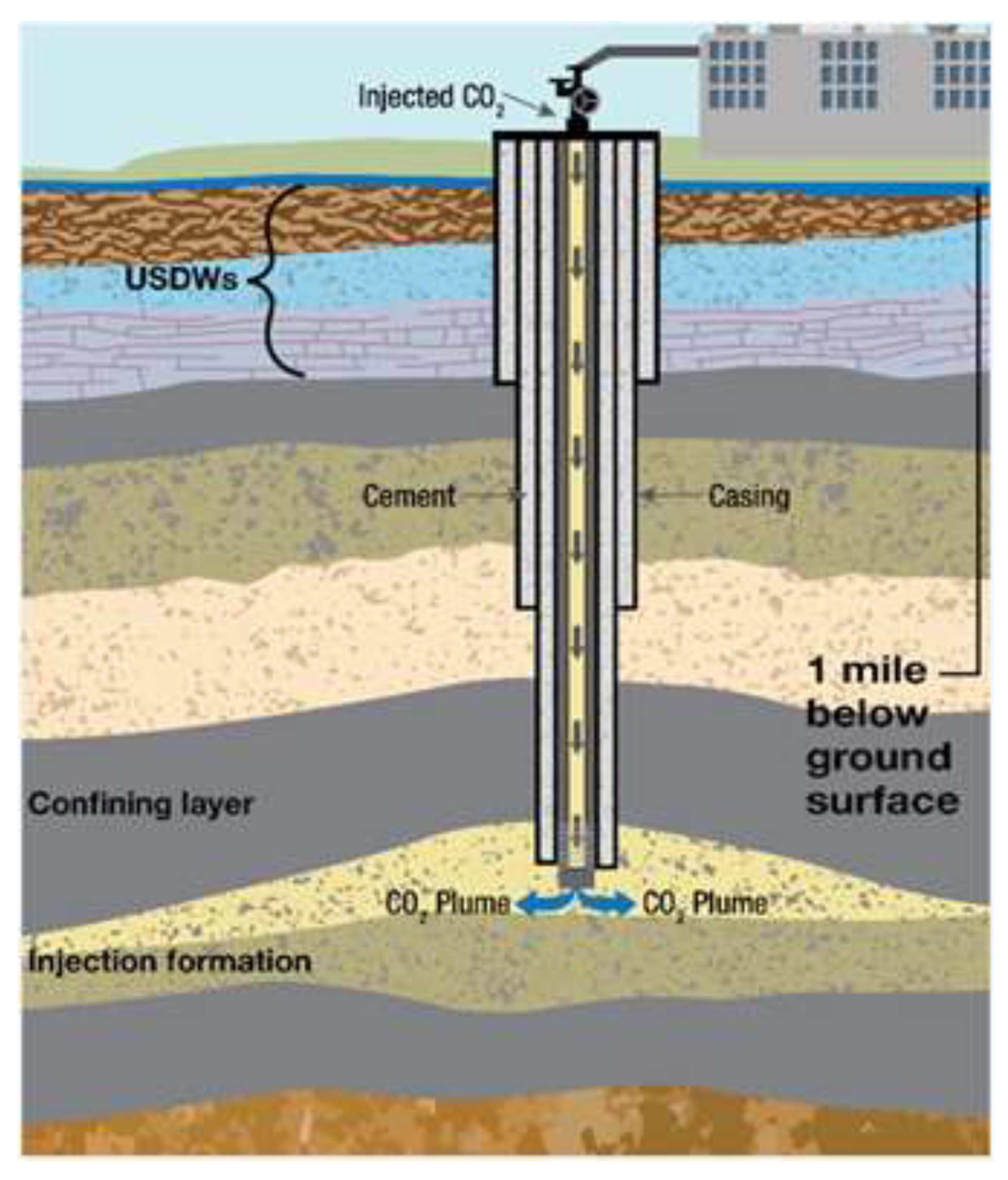
The Federal Safe Drinking Water Act (SDWA) Underground Injection Control (UIC) Program regulates CCS injection wells. Wells under the UIC program are classified into one of six classes. Class II wells are used to inject fluids related to oil and gas production, including injection of carbon dioxide for EOR. Class VI wells are used to inject carbon dioxide for storage (Figure 4). Rigorous requirements for the wells are in place to ensure safety. For example, some of the requirements include: the site must be characterized to ensure the area can receive and contain the carbon dioxide, model extent of the injected carbon dioxide plume, corrosive resistant well construction used, and monitoring during the injection of carbon dioxide. The permitting process itself requires thorough technical review and public comment [47].
Models show CCS has the potential to drastically reduce global carbon dioxide emissions in the coming years [48]. Understanding CCS in permafrost areas may impact to what extent the emissions or costs change. Alaska contains one of the largest oil and gas fields which imply large storage reservoirs that could be a prime candidate for large scale carbon dioxide storage. However much of this area is overlain by permafrost which presents a unique situation not encountered by most existing CCS projects.
CCS in northern Alaska may encounter differences to other CCS projects due to the considerably lower temperatures of the region. A study conducted geomechanical stress experiments of sandstone from the North Sea at 15, -5, and -10 °C to determine the influence of freezing temperatures on the mechanical properties (elastic moduli) of the rock. The mechanical properties of the rock affect the volume available for carbon dioxide storage and the ability of the confining rock to fracture. Lab experiments showed that rock at lower freezing temperatures was stronger, but possibly more brittle [49].
As with all CCS projects, injection of supercritical carbon dioxide can result in stress due to large temperature changes. A study in the Norwegian North Sea showed injection of carbon dioxide resulting in an 80 °C temperature change in the reservoir from 110 °C to 30 °C and the impact of this change on the geomechanics of the reservoir [50]. The permafrost in Alaska modifies the geothermal gradient at the shallow depths of the region. Depending on the reservoir temperatures in Alaska and chosen injection conditions of carbon dioxide, CCS projects in Alaska may experience thermally induced stresses and is an important aspect to consider.
5. Further Research Areas
Several potential future research questions are posed by this review. On a microscopic scale, what factors control the permeability of carbon dioxide in permafrost with the interplay of pore size and shape, pressure regime, and distribution of frozen water? Are microbes, plants, or fungi absorbing or utilizing the carbon dioxide within the permafrost? How do different temperatures and chemical compositions of permafrost affect carbon dioxide flow? What chemical reactions can occur with carbon dioxide in permafrost, and do any “capture” carbon? Are those reactions different than in unfrozen soil? Geochemical modeling such as TOUGHREACT [51] or Geochemist’s Workbench (GWB) [52] could be used to determine possible reactions and implications. What is the deposition rate and effect on fracture aperture or pore space closure? Is carbon dioxide dissolved into ice in the way it can be dissolved into water? To what extent do moisture content, depth of permafrost, or presence of ice wedges and other features inhibit gas flow through permafrost?
At the mesoscale, could geophysics be used to map potential major carbon dioxide pathways in permafrost such as faults? What is the origin of carbon dioxide emitted from thawing permafrost, more geologic or more shallow plant and microbe emission? Is thawing permafrost releasing additional stored gases from deeper geologic sources rather than just soil carbon? Are current studies overestimating or underestimating carbon dioxide emissions due to this? Are there potentially pockets of carbon dioxide held at the base of permafrost in some areas, such as trapped natural releases of carbon dioxide from mechanisms such as magma outgassing? Maps of potential carbon sequestration reservoirs and current overlapping overlying permafrost are needed. Are emissions of carbon dioxide measured from permafrost mistaken for originating from the permafrost when in reality they originated at geologic depths and are only released when the permafrost melts and allows the gases to pass through to the surface?
Experimental studies of carbon dioxide flowing through permafrost are needed, as well as field measurements of carbon dioxide at various depths and locations of permafrost. What are the best methods for measurement of carbon dioxide levels within soil and rock in situ? Modeling of mechanisms of carbon dioxide flow in permafrost is needed as well. Computational fluid dynamic models of carbon dioxide flow through permafrost could be created.
There is no mention of how permafrost affects CO₂ transport and storage in the studies of industrial carbon sequestration projects. What are the gaps in regulation and policy? Should monitoring of permafrost over sequestration projects should be required in Environmental Impact Statements (EIS) for CCS projects? What are the logistical difficulties of CCS in permafrost regions (such as road, pipeline, and wellbore stability, cement curing issues when built on the active layer). Distributed fiber optic sensing, such as strain sensing (DSS), temperature sensing (DTS), and acoustic sensing (DAS) could be useful methods to employ in monitoring CCS projects. Does the melting of permafrost impact CCS projects deep in underground reservoirs? Are the geomechanical unloading of caprock effects large enough to significantly change fracture apertures and flow paths? How long would it potentially take for carbon dioxide to get from the intended storage reservoir to the permafrost in the event of a leak? How long would it potentially take carbon dioxide to flow through the permafrost and to potentially reach the atmosphere?
6. Conclusions
Individually, both CCS projects and the dynamics of permafrost are important factors of the global impact of industrial fossil fuel use. Understanding both and the interplay between them will be essential for mitigating impact. Further research is needed to fully investigate the potential outcome of carbon dioxide entering the base of the frozen permafrost at depth. Permafrost with a low ice content may still be substantially permeable, potentially allowing flow of carbon dioxide through open pore spaces or faults. Or permafrost could form an impenetrable barrier that could trap a pocket of carbon dioxide.
Many studies investigate the soil-atmosphere interaction in permafrost regions, focusing only on the shallow most portion of the active layer above the permafrost, leaving the deeper frozen permafrost layers largely unexplored. Investigating these deeper areas within and below the permafrost is challenging as accessing these depths can be prohibitively expensive since permafrost can extend hundreds of meters below the ground surface.
Notably, no literature found directly investigates the ability of carbon dioxide to flow through permafrost. In general, there is a lack of understanding of gas permeability of permafrost. Research is conflicting with some studies have shown gas is able to transmit through permafrost and some showing evidence of impedance and gas storage. Of the limited relevant research that has been done, verification of findings should be conducted.
In conclusion, extending the knowledge base and further the understanding of carbon sequestration dynamics and biogeophysics in permafrost regions is worthwhile for future research studies. This review highlighted many studies of the gas permeability permafrost, as well as examples of when permafrost impeded flow, with pockets of gases. Studying hypothetical scenarios of carbon dioxide entering the permafrost can uncover other learnings about the carbon cycle interaction with permafrost as well as prepare for all CCS project situations and minimize risk.
Supplementary Materials
The following supporting information can be downloaded at the website of this paper posted on Preprints.org, Figure S1: Pressure-temperature phase diagram of carbon dioxide; Figure S2: Concentrations of carbon dioxide at depths of 0.6–0.7 m in frozen soil in winter and permafrost thickness, faults, and geology. Adapted from [10] under CC-BY 4.0 license; Figure S3: Diagram of permafrost matrix and pore space containing frozen water (ice), bound unfrozen water close to the grains, and pockets of air; Figure S4: Diagram of carbon dioxide injection well (not to scale) showing carbon dioxide is injected deep (>1 mile) underground. Source: [47], public domain.
Author Contributions
Conceptualization, J.P., F.L., and J.S.; methodology, J.P. and F.L.; formal analysis, J.P.; investigation, J.P.; writing – original draft, J.P. and F.L.; writing – review and editing, J.P., F.L., and J.S.; supervision, F.L.; project administration, F.L.; funding acquisition, F.L. and J.S.
Funding
This research was funded by DOE HQ - Fossil Energy GT&C: A2412-089-096-072333.0. The APC was funded by DOE HQ - Fossil Energy GT&C: A2412-089-096-072333.0.
Institutional Review Board Statement
Not applicable.
Informed Consent Statement
Not applicable.
Data Availability Statement
No new data were created or analyzed in this study. Data sharing is not applicable to this article.
Conflicts of Interest
The authors declare no conflicts of interest. The funders had no role in the design of the study; in the collection, analyses, or interpretation of data; in the writing of the manuscript; or in the decision to publish the results.
Abbreviations
The following abbreviations are used in this manuscript:
| APC | article processing charge |
| CCS | carbon capture and sequestration |
| CCUS | carbon capture, utilization, and storage |
| CO2 | carbon dioxide |
| CRREL | Cold Regions Research and Engineering Laboratory |
| DOAJ | Directory of open access journals |
| DOE | Department of Energy |
| EIS | Environmental Impact Statements |
| ERDC | Engineer Research and Development Center |
| mD | millidarcy |
| MDPI | Multidisciplinary Digital Publishing Institute |
| ppm | parts per million |
| SDWA | Safe Drinking Water Act (SDWA) |
| UIC | Underground Injection Control |
| USACE | United States Army Corps of Engineers |
| VOC | volatile organic compounds |
References
- Vikara, D.; Munson, C.; Zaremsky, C.; Sheriff, A.; Dooley, K.; Smith, R.; Conwell, C.; Okita, P.; Lee, J.; Mora, T.; et al. U.S. Japan CO2 Shipping Feasibility Study: Screening Assessment; U.S. Department of Energy, Office of Fossil Energy and Carbon Management, National Energy Technology Laboratory, 2025. [Google Scholar]
- U.S. Department of Energy Office of Fossil Energy and Carbon Management Project Selections for FOA 2711: Carbon Storage Validation and Testing (Round 3): North to the Future Carbon Capture and Sequestration Hub. Available online: https://www.energy.gov/fecm/project-selections-foa-2711-carbon-storage-validation-and-testing-round-3?utm_medium=email&utm_source=govdelivery (accessed on 19 August 2025).
- Craddock, W.; Buursink, M.; Covault, J.; Brennan, S.; Doolan, C.; Drake, R., II; Merrill, M.; Roberts-Ashby, T.; Slucher, E.; Warwick, P.; et al. Geologic Framework for the National Assessment of Carbon Dioxide Storage Resources: Alaska North Slope and Kandik Basin, Alaska 2014, 60.
- Jones, K.; Barnhart, L.; Warwick, P.; Corum, M. Preliminary GIS Representation of Deep Coal Areas for Carbon Dioxide Storage in the Contiguous United States and Alaska; 2019; p. 21. [Google Scholar]
- Osterkamp, T.E.; Payne, M.W. Estimates of Permafrost Thickness from Well Logs in Northern Alaska. Cold Regions Science and Technology 1981, 5, 13–27. [Google Scholar] [CrossRef]
- Lachenbruch, A.H.; Sass, J.H.; Marshall, B.V.; Moses, T.H. Permafrost, Heat Flow, and the Geothermal Regime at Prudhoe Bay, Alaska. J. Geophys. Res. 1982, 87, 9301–9316. [Google Scholar] [CrossRef]
- Jorgenson, T.; Yoshikawa, K.; Kanevskiy, M.; Shur, Y.; Romanovsky, V.; Marchenko, S.; Grosse, G.; Brown, J.; Jones, B. Permafrost Characteristics of Alaska 2008.
- Ciais, P.; Tagliabue, A.; Cuntz, M.; Bopp, L.; Scholze, M.; Hoffmann, G.; Lourantou, A.; Harrison, S.P.; Prentice, I.C.; Kelley, D.I.; et al. Large Inert Carbon Pool in the Terrestrial Biosphere during the Last Glacial Maximum. Nature Geosci 2012, 5, 74–79. [Google Scholar] [CrossRef]
- Schädel, C.; Bader, M.K.-F.; Schuur, E.A.G.; Biasi, C.; Bracho, R.; Čapek, P.; De Baets, S.; Diáková, K.; Ernakovich, J.; Estop-Aragones, C.; et al. Potential Carbon Emissions Dominated by Carbon Dioxide from Thawed Permafrost Soils. Nature Clim Change 2016, 6, 950–953. [Google Scholar] [CrossRef]
- Kraev, G.; Belonosov, A.; Veremeeva, A.; Grabovskii, V.; Sheshukov, S.; Shelokhov, I.; Smirnov, A. Fluid Migration through Permafrost and the Pool of Greenhouse Gases in Frozen Soils of an Oil and Gas Field. Remote Sensing 2022, 14, 3662. [Google Scholar] [CrossRef]
- Chuvilin, E.; Ekimova, V.; Davletshina, D.; Sokolova, N.; Bukhanov, B. Evidence of Gas Emissions from Permafrost in the Russian Arctic. Geosciences 2020, 10, 383. [Google Scholar] [CrossRef]
- Collett, T.S. Permafrost-Associated Gas Hydrate Accumulationsa. Annals of the New York Academy of Sciences 1994, 715, 247–269. [Google Scholar] [CrossRef]
- Chuvilin, E.M.; Grebenkin, S.I.; Sacleux, M. Influence of Moisture Content on Permeability of Frozen and Unfrozen Soils. Kriosfera Zemli 2016, 20, 66–72. [Google Scholar]
- Chuvilin, E.; Grebenkin, S.; Zhmaev, M. Gas Permeability of Sandy Sediments: Effects of Phase Changes in Pore Ice and Gas Hydrates. Energy Fuels 2021, 35, 7874–7882. [Google Scholar] [CrossRef]
- Ruggiero, L.; Sciarra, A.; Mazzini, A.; Florindo, F.; Wilson, G.; Tartarello, M.C.; Mazzoli, C.; Anderson, J.T.H.; Romano, V.; Worthington, R.; et al. Antarctic Permafrost Degassing in Taylor Valley by Extensive Soil Gas Investigation. Science of The Total Environment 2023, 866, 161345. [Google Scholar] [CrossRef]
- Are, F.E. The Problem of the Emission of Deep-Buried Gases to the Atmosphere. In Permafrost Response on Economic Development, Environmental Security and Natural Resources; Paepe, R., Melnikov, V.P., Overloop, E., Gorokhov, V.D., Eds.; Springer Netherlands: Dordrecht, 2001; pp. 497–509. ISBN 978-0-7923-6784-0. [Google Scholar]
- Walter Anthony, K.M.; Anthony, P.; Grosse, G.; Chanton, J. Geologic Methane Seeps along Boundaries of Arctic Permafrost Thaw and Melting Glaciers. Nature Geosci 2012, 5, 419–426. [Google Scholar] [CrossRef]
- Kohnert, K.; Serafimovich, A.; Metzger, S.; Hartmann, J.; Sachs, T. Strong Geologic Methane Emissions from Discontinuous Terrestrial Permafrost in the Mackenzie Delta, Canada. Sci Rep 2017, 7, 5828. [Google Scholar] [CrossRef]
- Etiope, G. Subsoil CO2 and CH4 and Their Advective Transfer from Faulted Grassland to the Atmosphere. J. Geophys. Res. 1999, 104, 16889–16894. [Google Scholar] [CrossRef]
- Mörner, N.-A.; Etiope, G. Carbon Degassing from the Lithosphere. Global and Planetary Change 2002, 33, 185–203. [Google Scholar] [CrossRef]
- Le Nindre, Y.-M.; Allier, D.; Duchkov, A.; Altunina, L.K.; Shvartsev, S.; Zhelezniak, M.; Klerkx, J. Storing CO2 underneath the Siberian Permafrost: A Win-Win Solution for Long-Term Trapping of CO2 and Heavy Oil Upgrading. Energy Procedia 2011, 4, 5414–5421. [Google Scholar] [CrossRef]
- Lin, Q. Laboratory Studies of Gas Permeability of Frozen Soil; University of Alaska Fairbanks: Fairbanks, AK, 2003. [Google Scholar]
- Aguirre-Puente, J.; Gruson, J. Measurement of Permeability of Frozen Soils. In Proceedings of the Proceedings of the Fourth Int. Conf, on Permafrost; National Academy Press: Washington, D.C., 1983. [Google Scholar]
- Vosoughi, E.; Giroux, B.; Duchesne, M.J.; Dupuis, J.C. Understanding the Effects of Permafrost Degradation through a Multiphysics Approach. GEOPHYSICS 2024, 89, MR107–MR124. [Google Scholar] [CrossRef]
- Walvoord, M.A.; Kurylyk, B.L. Hydrologic Impacts of Thawing Permafrost—A Review. Vadose Zone Journal 2016, 15, 1–20. [Google Scholar] [CrossRef]
- Bui, M.T.; Lu, J.; Nie, L. A Review of Hydrological Models Applied in the Permafrost-Dominated Arctic Region. Geosciences 2020, 10, 401. [Google Scholar] [CrossRef]
- Tananaev, N.; Teisserenc, R.; Debolskiy, M. Permafrost Hydrology Research Domain: Process-Based Adjustment. Hydrology 2020, 7, 6. [Google Scholar] [CrossRef]
- Frampton, A.; Destouni, G. Impact of Degrading Permafrost on Subsurface Solute Transport Pathways and Travel Times. Water Resour. Res. 2015, 51, 7680–7701. [Google Scholar] [CrossRef]
- Painter, S.L.; Moulton, J.D.; Wilson, C.J. Modeling Challenges for Predicting Hydrologic Response to Degrading Permafrost. Hydrogeol J 2013, 21, 221–224. [Google Scholar] [CrossRef]
- Gleeson, T.; Smith, L.; Moosdorf, N.; Hartmann, J.; Dürr, H.H.; Manning, A.H.; Van Beek, L.P.H.; Jellinek, A.M. Mapping Permeability over the Surface of the Earth: MAPPING GLOBAL PERMEABILITY. Geophys. Res. Lett. 2011, 38, n/a–n/a. [Google Scholar] [CrossRef]
- Björkman, M.P.; Morgner, E.; Cooper, E.J.; Elberling, B.; Klemedtsson, L.; Björk, R.G. Winter Carbon Dioxide Effluxes from Arctic Ecosystems: An Overview and Comparison of Methodologies. Global Biogeochemical Cycles 2010, 24, 2009GB003667. [Google Scholar] [CrossRef]
- Kraev, G.; Rivkina, E.; Vishnivetskaya, T.; Belonosov, A.; Van Huissteden, J.; Kholodov, A.; Smirnov, A.; Kudryavtsev, A.; Teshebaeva, K.; Zamolodchikov, D. Methane in Gas Shows from Boreholes in Epigenetic Permafrost of Siberian Arctic. Geosciences 2019, 9, 67. [Google Scholar] [CrossRef]
- Yakushev, V.S.; Chuvilin, E.M. Natural Gas and Gas Hydrate Accumulations within Permafrost in Russia. Cold Reg. Sci. Technol. 2000, 31, 189–197. [Google Scholar] [CrossRef]
- Li, H.; Väliranta, M.; Mäki, M.; Kohl, L.; Sannel, A.B.K.; Pumpanen, J.; Koskinen, M.; Bäck, J.; Bianchi, F. Overlooked Organic Vapor Emissions from Thawing Arctic Permafrost. Environ. Res. Lett. 2020, 15, 104097. [Google Scholar] [CrossRef]
- Buddo, I.; Misyurkeeva, N.; Shelokhov, I.; Shein, A.; Sankov, V.; Rybchenko, A.; Dobrynina, A.; Nezhdanov, A.; Parfeevets, A.; Lebedeva, M.; et al. Modeling of Explosive Pingo-like Structures and Fluid-Dynamic Processes in the Arctic Permafrost: Workflow Based on Integrated Geophysical, Geocryological, and Analytical Data. Remote Sensing 2024, 16, 2948. [Google Scholar] [CrossRef]
- Oechel, W.C.; Vourlitis, G.; Hastings, S.J. Cold Season CO2 Emission from Arctic Soils. Global Biogeochemical Cycles 1997, 11, 163–172. [Google Scholar] [CrossRef]
- Byun, E.; Yang, J.-W.; Kim, Y.; Ahn, J. Trapped Greenhouse Gases in the Permafrost Active Layer: Preliminary Results for Methane Peaks in Vertical Profiles of Frozen Alaskan Soil Cores. Permafrost and Periglacial Processes 2017, 28, 477–484. [Google Scholar] [CrossRef]
- Engram, M.; Anthony, K.W. Synthetic Aperture Radar (SAR) Detects Large Gas Seeps in Alaska Lakes. Environmental Research Letters 2024, 19, 044034. [Google Scholar] [CrossRef]
- Spötl, C.; Koltai, G. Cryogenic Cave Carbonates: New Insights from Alpine Ice Caves. Chemical Geology 2025, 685, 122808. [Google Scholar] [CrossRef]
- Stimmler, P.; Obst, M.; Lehmann, J.; Stein, M.; Hockmann, K.; Goeckede, M.; Schaller, J. Reduced CO2 Release from Arctic Soils Due to CO2 Binding to Calcium Forming Aragonite. Environ. Sci. Technol. 2024, 58, 17695–17702. [Google Scholar] [CrossRef] [PubMed]
- Jiang, Y.; Rocha, A.V.; Rastetter, E.B.; Shaver, G.R.; Mishra, U.; Zhuang, Q.; Kwiatkowski, B.L. C–N–P Interactions Control Climate Driven Changes in Regional Patterns of C Storage on the North Slope of Alaska. Landscape Ecol 2016, 31, 195–213. [Google Scholar] [CrossRef]
- Miner, K.R.; Turetsky, M.R.; Malina, E.; Bartsch, A.; Tamminen, J.; McGuire, A.D.; Fix, A.; Sweeney, C.; Elder, C.D.; Miller, C.E. Permafrost Carbon Emissions in a Changing Arctic. Nat Rev Earth Environ 2022, 3, 55–67. [Google Scholar] [CrossRef]
- Chen, L.; Liang, J.; Qin, S.; Liu, L.; Fang, K.; Xu, Y.; Ding, J.; Li, F.; Luo, Y.; Yang, Y. Determinants of Carbon Release from the Active Layer and Permafrost Deposits on the Tibetan Plateau. Nat Commun 2016, 7, 13046. [Google Scholar] [CrossRef]
- Schaphoff, S.; Heyder, U.; Ostberg, S.; Gerten, D.; Heinke, J.; Lucht, W. Contribution of Permafrost Soils to the Global Carbon Budget. Environ. Res. Lett. 2013, 8, 014026. [Google Scholar] [CrossRef]
- Schaphoff, S.; von Bloh, W.; Rammig, A.; Thonicke, K.; Biemans, H.; Forkel, M.; Gerten, D.; Heinke, J.; Jägermeyr, J.; Knauer, J.; et al. LPJmL4 – a Dynamic Global Vegetation Model with Managed Land – Part 1: Model Description. Geoscientific Model Development 2018, 11, 1343–1375. [Google Scholar] [CrossRef]
- Stantec Consulting Services Peer-State Carbon Capture, Utilization, And Sequestration Regulatory Regimes; Alaska Department of Natural Resources, 2023; p. 54.
- US EPA, O. Class VI - Wells Used for Geologic Sequestration of Carbon Dioxide. Available online: https://www.epa.gov/uic/class-vi-wells-used-geologic-sequestration-carbon-dioxide (accessed on 29 September 2025).
- Paltsev, S.; Morris, J.; Kheshgi, H.; Herzog, H. Hard-to-Abate Sectors: The Role of Industrial Carbon Capture and Storage (CCS) in Emission Mitigation. Applied Energy 2021, 300, 117322. [Google Scholar] [CrossRef]
- Reppas, N.; Davie, C.T.; Gui, Y.; Wetenhall, B.; Graham, S.P. The Effects of Cooling on Fine-Grained Sandstone in Relation to Wellbore Injection of Carbon Dioxide. Rock Mech Rock Eng 2023, 56, 7619–7637. [Google Scholar] [CrossRef]
- Grande, L.; Griffiths, L.; Park, J.; Skurtveit, E.; Thompson, N. Cooling-Induced Geomechanical Response of North Sea Reservoirs, and Relevance for CO2 Storage Monitoring. International Journal of Greenhouse Gas Control 2024, 138, 104228. [Google Scholar] [CrossRef]
- Xu, T.; Sonnenthal, E.; Spycher, N.; Pruess, K. TOUGHREACT—A Simulation Program for Non-Isothermal Multiphase Reactive Geochemical Transport in Variably Saturated Geologic Media: Applications to Geothermal Injectivity and CO2 Geological Sequestration. Computers & Geosciences 2006, 32, 145–165. [Google Scholar] [CrossRef]
- Aqueous Solutions LLC. The Geochemist’s Workbench. Available online: https://www.gwb.com.
Figure 1.
Pressure-temperature phase diagram of carbon dioxide.
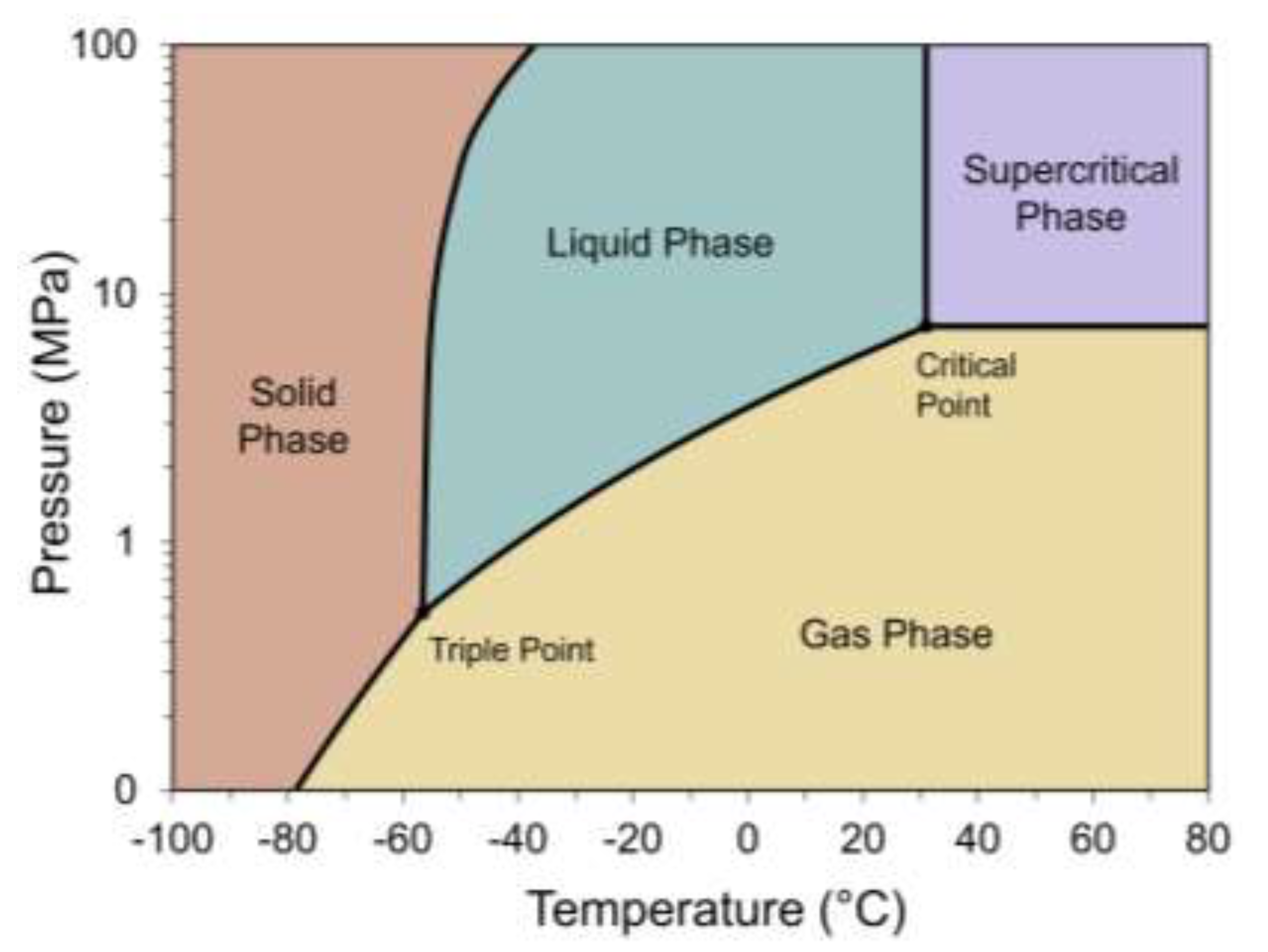
Figure 2.
Concentrations of carbon dioxide at depths of 0.6–0.7 m in frozen soil in winter and permafrost thickness, faults, and geology. Adapted from [10] under CC-BY 4.0 license.
Figure 2.
Concentrations of carbon dioxide at depths of 0.6–0.7 m in frozen soil in winter and permafrost thickness, faults, and geology. Adapted from [10] under CC-BY 4.0 license.
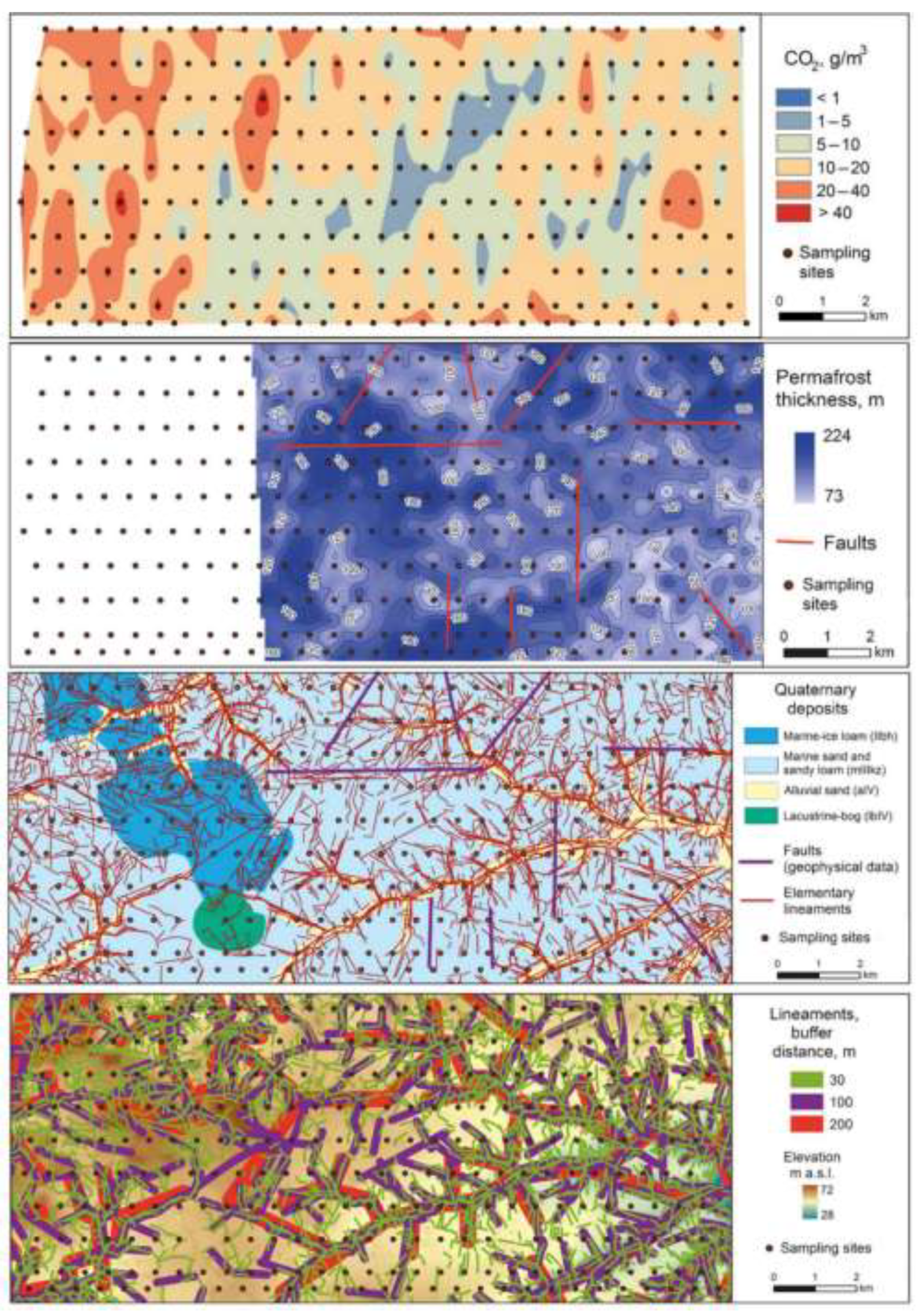
Figure 3.
Diagram of permafrost matrix and pore space containing frozen water (ice), bound unfrozen water close to the grains, and pockets of air.
Figure 3.
Diagram of permafrost matrix and pore space containing frozen water (ice), bound unfrozen water close to the grains, and pockets of air.
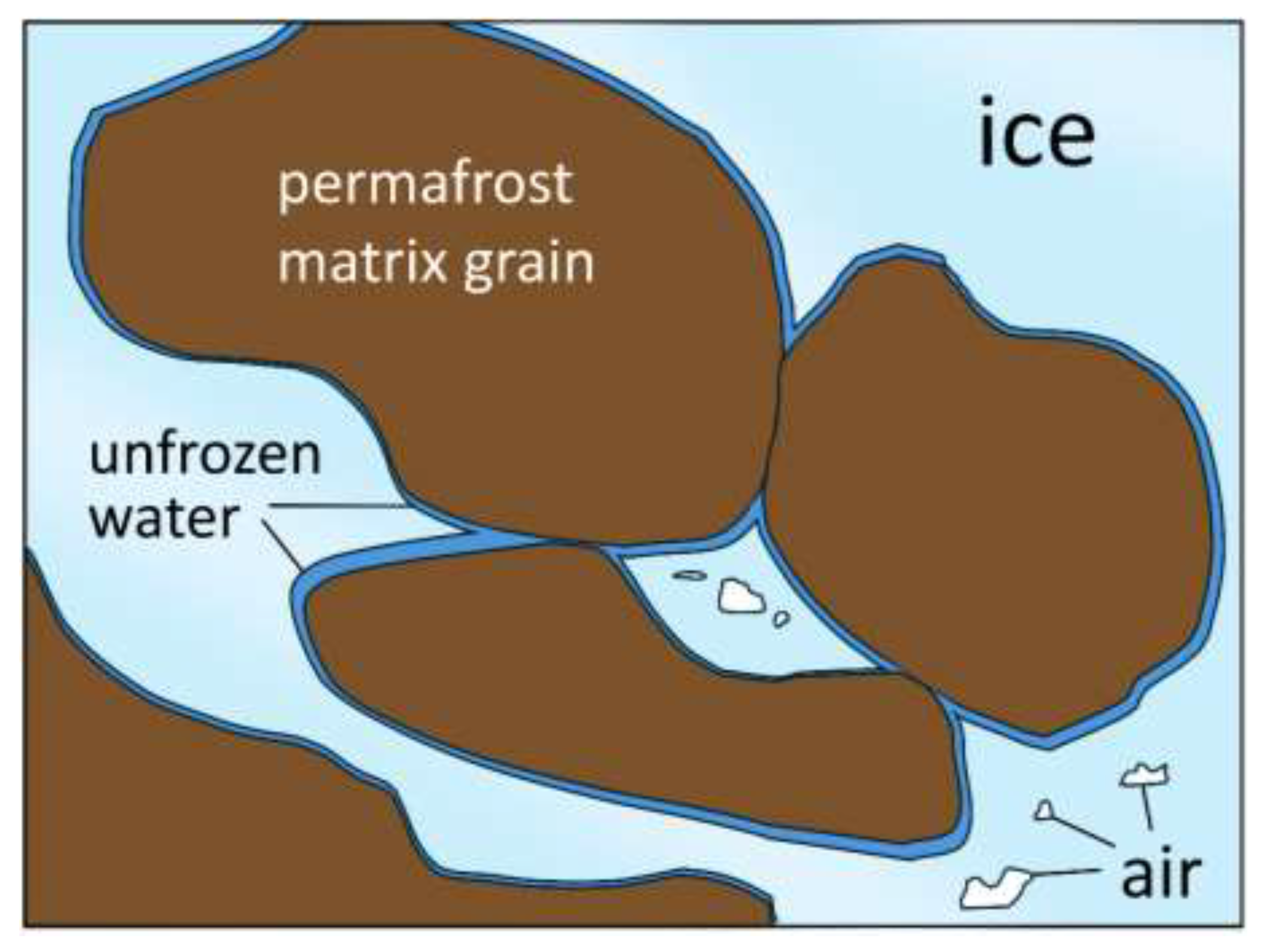
Figure 4.
Diagram of carbon dioxide injection well (not to scale) showing carbon dioxide is injected deep (>1 mile) underground. Source: [47], public domain.
Figure 4.
Diagram of carbon dioxide injection well (not to scale) showing carbon dioxide is injected deep (>1 mile) underground. Source: [47], public domain.
Disclaimer/Publisher’s Note: The statements, opinions and data contained in all publications are solely those of the individual author(s) and contributor(s) and not of MDPI and/or the editor(s). MDPI and/or the editor(s) disclaim responsibility for any injury to people or property resulting from any ideas, methods, instructions or products referred to in the content. |
© 2026 by the authors. Licensee MDPI, Basel, Switzerland. This article is an open access article distributed under the terms and conditions of the Creative Commons Attribution (CC BY) license (http://creativecommons.org/licenses/by/4.0/).
Copyright: This open access article is published under a Creative Commons CC BY 4.0 license, which permit the free download, distribution, and reuse, provided that the author and preprint are cited in any reuse.