
Submitted:
03 February 2026
Posted:
04 February 2026
You are already at the latest version
Abstract
Cross-border e-commerce has been extensively studied. However, the hotspots and cutting-edge trends in this field have not yet been fully explored. This study aims to summarize the research status and hotspots in the field of cross-border e-commerce from 2001 to 2025, providing a reference for subsequent research. The literature published in the Web of Science database from 2001 to 2025 was retrieved, and quantitative and visual analysis was conducted using R language, VOSviewer and CiteSpace.
Keywords:
cross-border e-commerce
; bibliometrics
; consumer
1. Introduction
Cross-border e-commerce refers to an international business activity where trading entities from different customs territories conduct transactions through e-commerce platforms, make electronic payment settlements, and deliver goods through cross-border logistics. In the era of digital economy, cross-border e-commerce has become a new driving force for traditional trade. Exploring the impact and mechanism of member countries' digital economic development on China's cross-border e-commerce exports has theoretical and practical significance [1]. Its core characteristics include digitalization of trade, flattening of transaction chains, and globalization of supply chains. The main current models include B2B, B2C, and C2C, among others. Among them, B2B cross-border e-commerce can significantly influence enterprise strategies [2]. According to the report of the World Trade Organization, the global cross-border e-commerce market has shown an accelerating growth trend after the pandemic[3]. With the continuous advancement of high technology, the deep integration of digital economy and the real economy is accelerating the transformation of the global economy [4].
The development of cross-border e-commerce has significantly lowered the barriers to international trade, enabling small and medium-sized enterprises to directly participate in global trade. Cross-border e-commerce platforms enable small and medium-sized enterprises to supplement key resources, promote innovation in value creation models and restructure the value chain [5]. However, it also faces multiple challenges such as long logistics delivery cycles, complex cross-border dispute resolution, cultural differences and compliance risks. Particularly, there are significant differences in value-added tax policies, cross-border data flow regulations and consumer rights protection systems among different countries [6].
The current main cross-border e-commerce platforms include Amazon Global Station, Alibaba International Station, and AliExpress, among others. They provide one-stop cross-border solutions for merchants by establishing a digital trade ecosystem. Emerging technologies such as blockchain traceability, artificial intelligence translation, and big data selection are continuously optimizing the cross-border transaction experience. Future development trends will focus on overseas warehouse construction, deepening local operations, and the establishment of green supply chains, especially in the context of climate change, where innovative sustainable cross-border e-commerce models have become the focus of industry attention [7].
The future development trend will place greater emphasis on the construction of a full-chain digitalization, including the layout of intelligent overseas warehouse networks, the deepening of local operations, and the establishment of a green supply chain [8]. Especially in the context of global carbon neutrality, the innovation of sustainable cross-border e-commerce models has become the focus of the industry, including the research and development of environmentally friendly packaging materials, and the optimization of carbon-neutral logistics routes [9]. At the same time, emerging markets such as Southeast Asia, the Middle East, and Latin America have seen a rapid increase in e-commerce penetration rates, providing new growth spaces for Chinese cross-border e-commerce enterprises[10]. The integration of local payment tools, the improvement of cross-border after-sales services, and the application of personalized recommendation systems based on artificial intelligence are all enhancing the shopping experience of global consumers [11]. Overall, cross-border e-commerce is continuously reshaping the global trade landscape through technological empowerment and model innovation, injecting new impetus into global economic growth.
2. Materials and Methods
2.1. Data Collection
The data we collected originated from the Web of Science Core Collection (WoSCC; purchased by Guilin University of Technology). We used the following search formula: TS = ("cross-border e-commerce" OR "cross-border electronic commerce" OR "cross-border online retail*" OR "international e-commerce" OR "cross-border trade" AND (online OR internet OR digital)), and DT = (Article or Review), and LA = (English). There were a total of 600 papers (excluding duplicates), and after manual screening by two individuals, 37 papers were withdrawn, and 3 papers published in 2026 were excluded. Therefore, a total of 560 papers were finally determined. The retrieved papers were saved in plain text format and exported as complete records, including reference citations.
2.2. Data Analysis
In this study, we adopted the previously established research method [12]. For the analysis of annual publications, we used Origin 2024 software. Additionally, R software (version 4.5.2) and its accompanying bibliometrix package (version 5.0, website: http://www.bibliometrix.org)[13], VOSviewer (version 1.6.20)[14], and CiteSpace (version 6.2.4) were used for analysis[15]. To ensure the accuracy and reliability of the data, two different authors independently conducted data extraction and analysis management.
The Bibliometrix software enables the visualization analysis and plotting of scientific knowledge. VOSviewer is used for visualizing the co-author networks of countries and institutions, the co-citation analysis of source documents, and the co-occurrence of keywords. In the co-author network analysis, the parameter settings are as follows: the minimum number of documents of a country or institution ≥ 4. For the co-citation analysis, the parameter setting is that the minimum number of citations of a source document ≥ 50. In the keyword co-occurrence analysis, the parameters include the minimum occurrence frequency of a keyword ≥ 10. In 2024, the relevant data (IF) was obtained from the Journal Citation Reports (JCR).
3. Results
3.1. Review of Research on Cross-Border E-Commerce
3.1.1. Subsubsection
In Figure 1A, the horizontal axis corresponds to the publication years from 2001 to 2025, and the vertical axis represents the number of papers published.. During the period from 2001 to 2016, the number of papers published in this field remained at a low level. After 2016, the number of publications rose rapidly, and the growth rate accelerated from 2019 onwards. Around 2022, it reached its peak, then slightly declined but remained at a high level. In 2025, it showed an upward trend. During the period from 2001 to 2025, the number of related publications has shown a continuous upward trend. This upward trend indicates that the academic community's interest in research in this field is constantly increasing.
The horizontal axis of Figure 1B corresponds to the number of papers, and the vertical axis corresponds to the countries where the corresponding author is located. The analysis of the corresponding countries of the authors shows that China (n = 410) is the leading publisher, followed by South Korea (n = 34), the United States (n = 20), Italy (n = 12), and the United Kingdom (n = 10). Additionally, 19.3% of the publications from China and 32.4% of those from South Korea involve multi-country partnerships (MCP).
It is noteworthy that China not only leads in the number of publications but also has a broader international partnership network, as shown in Figure 2. The red cluster includes South China University of Technology, University of International Business & Economics, Nanjing University, Renmin University of China, Tsinghua University, and Hong Kong Polytechnic University, etc. It is a close cooperation group composed of top comprehensive financial universities in the Chinese mainland and universities in Hong Kong. The purple cluster includes universities such as Chongqing University, Chongqing University of Posts and Telecommunications, Xidian University, Pusan National University, and University of Witwatersrand. It is a cross-regional cooperation group formed by universities in Southwest China and those in South Korea and South Africa. The green cluster is centered around Zhejiang University, and is combined with Shanghai Jiao Tong University, University of Shanghai for Science and Technology, and Zhejiang University of Science and Technology, etc. It is a top-tier university cooperation group in the Yangtze River Delta region around Zhejiang University, and is also one of the core clusters in the diagram. The light blue cluster includes universities such as Anhui University Finance & Economics, Shandong Normal University, Shandong University Finance & Economics, and China University of Geosciences. It is a cooperative group composed of comprehensive and finance/economics-oriented universities in eastern and northern China. The dark blue cluster includes Xi'an Jiaotong University, Xian University of Finance and Economics, Kyunghee University, Chungang University, etc. It is a cross-border cooperation group formed by Chinese universities in Xi'an and several universities in South Korea. The yellow cluster is centered around Zhejiang University of Technology and Zhejiang Gongshang University, and is jointly composed of Ningbo University, Tongji University, and other local key universities in the Zhejiang and Shanghai regions. It is a cooperative group formed by these local key universities in the Zhejiang and Shanghai areas.
These data indicate that Chinese researchers place greater emphasis on studying the impact of cross-border e-commerce. This might be related to China's unique background, such as its developed manufacturing industry and mature domestic e-commerce.

Table 1.
The most relevant countries listed by the corresponding author.
| Country | Articles | Articles % | SCP | MCP | MCP % |
|---|---|---|---|---|---|
| CHINA | 410 | 73.2 | 331 | 79 | 19.3 |
| KOREA | 34 | 6.1 | 23 | 11 | 32.4 |
| USA | 20 | 3.6 | 11 | 9 | 45 |
| ITALY | 12 | 2.1 | 6 | 6 | 50 |
| UNITED KINGDOM | 10 | 1.8 | 3 | 7 | 70 |
| NETHERLANDS | 8 | 1.4 | 5 | 3 | 37.5 |
| AUSTRALIA | 7 | 1.3 | 4 | 3 | 42.9 |
| GERMANY | 6 | 1.1 | 5 | 1 | 16.7 |
| MALAYSIA | 6 | 1.1 | 1 | 5 | 83.3 |
| SWEDEN | 5 | 0.9 | 5 | 0 | 0 |
3.2. Journal Analysis and Visualization
To identify the journals that have made the greatest contributions to the publication and citation in the field of cross-border e-commerce, we used the bibliometrix package in R for statistics and plotted with ggplot2; the co-cited journal network was achieved through VOSviewer. A total of 560 papers were distributed across 222 academic journals.
Figure 3 is a visual analysis chart presenting the characteristics of journals in the cross-border e-commerce field, consisting of two subgraphs: (A) "Most Relevant Journals" and (B) "Most Cited Journals": The horizontal axis of both subgraphs represents the journal impact factor (IF, used to reflect the academic influence level of the journal); the vertical axis of Figure (A) is the ranking of journal relevance (sorted by the degree of closeness to the research topic), and the vertical axis of Figure (B) is the ranking of journal citation frequency (sorted by the total citation frequency); the size of the points in the figure corresponds to the number of citations of the journal (the larger the point, the more citations the journal has), and the color of the points corresponds to the number of published papers of the journal (the redder the color, the more papers published; the more purple the color, the fewer papers published).
Table 2 and Figure 3A show that SUSTAINABILITY ranked first in terms of the number of publications with 40 papers (IF 3.3), followed by ELECTRONIC COMMERCE RESEARCH (24 papers, IF 4.7), JOURNAL OF GLOBAL INFORMATION MANAGEMENT (16 papers, IF 3.9), JOURNAL OF THEORETICAL AND APPLIED ELECTRONIC COMMERCE RESEARCH (15 papers, IF 4.6), and JOURNAL OF KOREA TRADE (13 papers, IF 1.2). Table 3 and Figure 3B list the most cited journals: JOURNAL OF BUSINESS RESEARCH (451 citations, IF 9.8), SUSTAINABILITY-BASEL (409 citations, IF 3.3), JOURNAL OF RETAILING AND CONSUMER SERVICES (365 citations, IF 13.1), ELECTRONIC COMMERCE RESEARCH (332 citations, IF 4.1), and EUROPEAN JOURNAL OF OPERATIONAL RESEARCH (299 citations, IF 6).
Figure 4 presents the co-occurrence network map of journals generated by VOSviewer (nodes represent journals, and the connections represent the co-occurrence relationships between journals; different colors correspond to clusters with closely related co-occurrences). The types of clusters corresponding to each color are as follows: Blue cluster: dominated by journals such as Manage Sci, Prod Oper Manag, etc., it is a group of journals related to operations management. Green cluster: includes journals like Electronic Commerce Research, Sustainability-Basel, etc., which are related to e-commerce and sustainable development. Red cluster: centered around journals like J Retail Consum Serv, Electron Comm Front, etc., it is a group of journals related to e-commerce retail. Yellow cluster: covers journals like J Int Bus Stud, J Bus Res, etc., which are related to international business and business research. Light green cluster: includes journals like Ann Econ Rev, World Econ, etc., which are related to economics.
3.3. Citation Bursts
To deeply explore the frontiers and key points in the research of cross-border e-commerce, we used CiteSpace to identify the 8 most representative emergent citations as shown in Figure 5. Among them, the three with the highest emergence intensity are: (1) "The drivers and impediments for cross-border e-commerce in the EU" (intensity 10.65); (2) "Cross-Border Electronic Commerce: Distance Effects and Express Delivery in European Union Markets" (intensity 6.92); (3) "Designing e-commerce cross-border distribution networks for small and medium-sized enterprises incorporating Canadian and U.S. trade incentive programs" (intensity 5.68). The three most recently emerged emergent citations are: (1) "Cross-border e-commerce: consumers' intention to shop on foreign websites"; (2) "Motivations for selecting cross-border e-commerce as a foreign market entry mode"; (3) "Exploring purchase intention in cross-border E-commerce: A three-stage model".
Based on these emerging literature, it can be observed that studies with higher emergence intensity mainly focus on the geographical location, logistics distance, and trade barriers of cross-border e-commerce in mature market regions. However, the latest emerging literature has shifted to the micro-level aspects of consumption and market behavior. This transformation not only reflects the extension of cross-border e-commerce research from the "supply-side market" to the "demand-side consumer dimension", but also indicates the expansion of the research scenario from the regional trade mechanisms of Europe and America to the universal logic of cross-border consumption decisions. It has constructed a more comprehensive analytical framework for the research in this field.
3.4. Keyword Clusters and Evolution of Themes
A total of 2,415 keywords were extracted through VOSviewer. Among the top 20 words with a frequency of ≥ 23, Table 4 shows that "cross-border e-commerce" (203 times), "model" (80 times), "impact" (70 times), "performance" (61 times), "e-commerce" (61 times), and "trust" (57 times) are at the forefront.
Through cluster analysis, we observed five distinct color clusters in Figure 6. The five-color clusters clearly delineate the research landscape: the red cluster (30 words) focuses on consumer behavior research in cross-border e-commerce; the green cluster (26 words) analyzes the industrial operation and technological empowerment of cross-border e-commerce in the context of the digital economy; the blue cluster (21 words) assesses the full-process elements and value impacts of small and medium-sized enterprises participating in cross-border e-commerce; the yellow cluster (15 words) pays attention to online trade and enterprise development driven by internet e-commerce platforms; the purple cluster (9 words) explores the business, external environment, and future direction of cross-border e-commerce in China.
Figure 6 dynamic keywords evolution further shows that "cross-border e-commerce" is the core theme throughout the entire cycle: from around 2010 to 2024, with the word frequency remaining at the highest level, indicating that "cross-border e-commerce" is the anchor point of basic research in this field. In the early stage (2010-2015): the themes were mainly about basic concepts and initial influencing factors, such as "culture" and "online shopping", with low word frequency and being scattered themes in the initial exploration stage of the field. In the mid-stage (2015-2020): focusing on consumer behavior and operational aspects, such as "perceived risk", "trust", "logistics", "cbec" (abbreviation for cross-border e-commerce), the word frequency gradually increased, marking a stage where research delved into more specific dimensions. In the later stage (2020-2024): extending to the macro and core industrial chain, themes such as "exports", "digital economy", "supply chain", "intention" (purchase intention) saw a rapid increase in word frequency and continued to be active, reflecting that in recent years, research has focused more on the industrial value, macroeconomic correlation, and consumption end decision logic of cross-border e-commerce. In recent years (after 2020), the hotspots present a multi-dimensional expansion: macro dimension, core operation chain, and consumption behavior have become the focus, and the emergence of method-related themes such as "text mining" also reflects the digital upgrade of research methods. In the future, it is expected to deeply explore the application and risks of cross-border e-commerce in the digital economy and supply chain, and accumulate more reliable methods to advance the research on cross-border e-commerce.
Furthermore, in order to predict the future trends in this field, we used the bibliometrix toolkit in the R programming environment to construct a dynamic theme progress chart Figure 7. From 2010 to 2018, the keywords were scattered and the word frequency was extremely low, covering only basic scenarios, cultural factors, and preliminary research methods. The research was at the stage of not yet forming focused core issues, only conducting preliminary exploration around the basic form of cross-border e-commerce and potential influencing factors. From 2019 to 2022, the number of keywords increased and the word frequency rose. The research focus shifted to the core operational aspects of cross-border e-commerce (logistics) and user decision factors (trust), and at the same time, began to explore its actual impact and analysis models, focusing on the key issues of cross-border e-commerce implementation and user behavior logic. From 2022 to 2025, the word frequency reached a peak of 150. "Cross-border e-commerce" itself became the core issue, and the research expanded to the macro industry dimension (digital economy, supply chain, exports) and user deep behaviors (purchase intention, acceptance), shifting from a "single field" to "industry collaboration and macro value", reflecting the positioning and extended influence of cross-border e-commerce in the economic system.
3.4. Comprehensive Analysis of Hotspots
Through citation highlighting, keyword frequency analysis, clustering and topic evolution analysis, we have identified the emerging research hotspots in cross-border e-commerce, which mainly focus on three directions: (1) Industry collaboration and cross-border ecosystem. (2) Industry digital operation and supply chain optimization. (3) Consumer behavior and decision-making logic.
4. Discussion
4.1. General Information
This study included a total of 560 documents from 2001 to 2025. From 2001 to 2016, the number remained at an extremely low level, fluctuating mainly within the range of 0-5 per year, with almost no growth. During this period, the 560 total documents accounted for less than 5% of the total, and only sporadic records of the initial exploration results of the field were made, reflecting that cross-border e-commerce had not yet become a core focus of the academic community. From 2016 to 2019, it gradually increased from single digits to approximately 30 per year, showing a slow but continuous growth trend. During this period, the documents accounted for 15%-20% of the total documents, and the academic attention gradually increased with the implementation of industry policies. The research results entered a preliminary accumulation stage, focusing on "policy effect verification" and "operation optimization", with the core being "how policies promote the scale expansion of cross-border e-commerce and how operations reduce costs and increase efficiency". From 2019 to 2025, there was a leapfrog growth, rapidly rising from around 30 to nearly 120 per year. Although there were minor fluctuations during this period, the overall growth momentum was strong. During this stage, the documents accounted for more than 70% of the total documents, and cross-border e-commerce became a research hotspot in the field of foreign trade. The main reasons can be summarized as follows:
(1) The continuous release of policy dividends and the pilot demonstration effect. Since 2016, the Chinese government has successively established cross-border e-commerce comprehensive pilot zones, using policy tools such as tax incentives and customs facilitation to reduce the operating costs of enterprises. These policies not only stimulated industrial practice but also gave rise to a large number of empirical studies with the theme of "policy effect evaluation".
(2) The deep penetration and paradigm innovation of digital technology revolution. The application of technologies such as artificial intelligence and blockchain has restructured the cross-border e-commerce industry chain, driving research to extend towards technology empowerment. Such research has gradually expanded from the early focus on platform operation efficiency to cutting-edge fields such as algorithm decision-making and data security, echoing the urgent need for industrial digitalization upgrade.
(3) Structural transformation catalyzed by global external shocks. The COVID-19 pandemic and other emergencies accelerated the online migration of global trade, emphasizing the importance of issues such as enterprise resilience and remote collaboration in the "post-pandemic era". The surge in consumers' demand for contactless transactions has driven the academic community to pay attention to emerging directions such as cross-border supply chain resilience and healthy product trade, making the research content more urgent and diverse.
(4) Diversification of market demand and changes in consumer behavior. Cross-border e-commerce has shifted from "scale expansion" to "quality improvement" stage. The number of documents on the consumer side has significantly increased. Such research, relying on big data and questionnaire surveys, has deepened the understanding of micro mechanisms such as cross-cultural consumption psychology and green sustainable demand, reflecting the academic community's response to the trend of market segmentation. Among the 560 documents, China has the highest number of publications, which is related to its policy support, well-developed industry foundation, large market demand, and mature research value and methods. The documents are distributed in 222 journals, with significant publications in SUSTAINABILITY, ELECTRONIC COMMERCE RESEARCH, and JOURNAL OF GLOBAL INFORMATION MANAGEMENT. Among them, SUSTAINABILITY has the most publications and high citation rates, and has become the core platform for disseminating results in this field.
4.2. Hotspots and Development Trends
As mentioned earlier, through a comprehensive analysis of literature clustering, keyword frequency, keyword clustering, and topic evolution, we identified the potential frontiers and hotspots in cross-border e-commerce research, mainly focusing on three aspects: first, the macro environment, market characteristics, and infrastructure; second, enterprise strategy, operation optimization, and model selection; third, consumer psychology, behavioral intentions, and decision-making processes.
4.2.1. Macro-Environment, Market Characteristics and Infrastructure
The literature review indicates that the macro environment, market characteristics, and infrastructure are the core research pillars in the field of cross-border e-commerce (CBEC). The interaction among these three elements jointly shapes the development pattern and practical path of cross-border e-commerce. Relevant research has reached the following key consensus:
The market characteristic research focuses on the changes in transaction costs and demand patterns in cross-border transactions. Core findings include: the impact of geographical distance on trade costs has significantly weakened, but communication and adaptation costs caused by language barriers are on the rise, and an efficient and flexible cross-border payment system can significantly drive industry growth [16]; rapid delivery has become the key to breaking through the time barrier in cross-border transactions. Its demand is characterized by high time sensitivity, low price sensitivity, and a significant positive correlation with consumer repurchase rate, effectively shortening users' perception of "distance" [17]. From the perspective of the overall development of the industry, cross-border e-commerce has shown a stable growth trend, a stable logistics network, a transformation towards efficient marketing channels, and continuous improvement in risk management capabilities. However, customs clearance convenience still fluctuates [18].
The macro environment research focuses on regional development and institutional policies: China's overall level of digital trade ranks among the top globally, but regional development imbalance is prominent [19], while the sustainable development of cross-border e-commerce pilot areas has a significant positive impact on regional economic growth through three channels: industrial structure upgrading, institutional innovation, and consumption upgrading [20]. From the policy perspective, existing research emphasizes that the support policies for cross-border e-commerce innovation should cover business model innovation rather than being limited to institutional or technological innovation, and it is necessary to reduce institutional costs through optimizing tax policies, customs clearance policies, and fiscal policies, among others. The regulatory environment is a key factor affecting B2B cross-border e-commerce exports [21,22]. In addition, the policy design to promote inclusive e-commerce participation should focus on two directions: one is to improve the national formal system and help underdeveloped countries integrate into the e-commerce ecosystem, and the other is to increase the adoption rate of e-commerce by small and medium-sized enterprises, which requires collaboration and synergy between the government and multiple stakeholders [23].
Infrastructure is the core guarantee for the implementation of cross-border e-commerce. Relevant research has clearly identified its importance and pointed out the current bottlenecks: The development of the digital trade ecosystem highly depends on the expansion of the scale and functional iteration of cross-border e-commerce platforms [24], but the industry still faces multiple infrastructure and supporting capacity shortcomings, including low clearance efficiency, complex regulatory processes, incomplete tax refund mechanisms, cross-border payment risks, shortages of professional talents, and insufficient scientific management guidance [25]. These factors collectively constitute the key obstacles restricting the large-scale development of cross-border e-commerce.
Overall, existing research has clearly identified the core roles of the macro environment, market characteristics, and infrastructure, but there is still a need to further deepen the dynamic adaptation mechanism among them, leaving room for further research.
4.2.2. Enterprise Strategy, Operational Optimization and Model Selection
The current research focuses on the strategic planning, operational efficiency improvement, and model adaptation of enterprises in the cross-border e-commerce scenario. The core focus is on "value realization paths under resource constraints", providing multi-dimensional theoretical support and practical references for enterprise decision-making. The key research conclusions can be summarized as follows:
The strategic research for small and medium-sized enterprises shows that although resources are limited, their willingness to transform in the cross-border e-commerce sector remains strong. Digital capabilities have become their core competitiveness [26]. Small and medium-sized enterprises need to advance digital transformation through four paths: updating management cognition, cultivating social capital, strengthening business team building, and enhancing organizational capabilities, so as to break through resource constraints and adapt to the global operation requirements of cross-border e-commerce [27]. In terms of international strategic choices, the cross-border e-commerce model has been proven to be an efficient path: this model can effectively reduce market uncertainty and opportunistic behavior, improve cooperation trust, and enterprises can rely on the support of third-party platforms and technology service providers to reduce fixed asset investment and operational costs in physical stores and logistics warehouses, significantly lowering the internationalization threshold [28].
The optimization research at the operational level focuses on "efficiency improvement and risk avoidance", and the core findings include: the system integration of suppliers and customers and the integration of business processes can significantly improve the operational efficiency and financial performance of enterprises [29]; the selection of logistics models needs to consider dual goals, that is, to match the marketing strategies of the enterprise and to consider the product return cycle. Existing research provides a decision-making framework for retailers on the optimal cross-border logistics model [30]. In terms of cost control, the selection of international transportation methods and the layout of local warehouses are the key variables affecting logistics costs [31]; at the same time, logistics service providers need to be vigilant of the potential risks of "service competition among retailers" - relevant research has found that serving two retailers that are in a competitive relationship may have a negative impact on their own profits [32].
In strategic and operational decision-making, enterprises need to focus on three core elements: system quality, service quality, and perceived benefits. Among them, the construction of trust and the perception of benefits have a particularly significant impact on the effectiveness of decision-making [33]. In addition, the application of digital marketing strategies has been proven to have a positive enabling effect on the performance of enterprises' international business, becoming an important means for cross-border e-commerce enterprises to expand the market and enhance competitiveness [34].
Overall, the current research has clearly identified the core strategic direction, operational optimization path, and key decision factors of enterprises in cross-border e-commerce, but there are differences in adaptation for enterprises of different scales and industries, as well as insufficient exploration of the strategy adjustment mechanism in dynamic market environments. This leaves room for further research on specific scenarios.
4.2.3. Consumer Psychology, Behavioral Intentions and Decision-Making Process
The current research focuses on the psychological mechanisms, behavioral intentions, and decision-making paths of consumers in the cross-border e-commerce scenario, providing solid theoretical and empirical support for enterprises to accurately grasp consumer demands and optimize marketing and service strategies. The key research conclusions can be summarized as follows:
The formation of consumers' cross-border purchase intentions is influenced by multiple factors in a synergistic manner. Platform context participation, continuous participation, and trust beliefs have a significant positive effect on purchase intentions, while the direct impact of product cognition participation is not obvious. Product emotional participation can effectively promote purchase willingness [35,36]; the four types of cross-border clues, namely online promotion, content marketing, personalized recommendation, and social comments, can significantly stimulate consumers' purchase intentions [37]; the live streaming function further promotes purchase behavior by enhancing perceived value and reducing perceived uncertainty, and the psychological demand of "saving costs" can regulate this effect [38]; trust building and risk mitigation are key to decision-making, and the institutional mechanism needs to enhance the trust of sellers and reduce the risk of non-payment fraud to improve transaction intentions [39], while consumers also pay attention to security elements such as device verification in the decision-making process [40].
Enterprises and platforms can intervene in the consumer decision-making process through diversified strategies. User-generated online content can complement traditional surveys, providing effective basis for the customer-oriented and emotional design of cross-border e-commerce [41]; the platform needs to optimize website experience and relationship services from the perspective of network structure, strengthening consumers' purchase motivation [42]; enterprises integrate information, logistics, and financial supply chain resources to build supply chain service capabilities, thereby improving supply chain relationship quality from four dimensions: trust, commitment, risk mitigation, and customer satisfaction, and indirectly promoting consumer decision-making [43]; at the same time, the interaction mode between enterprises and customers, business model design, and supporting service development are also important variables influencing consumer behavior [44]; lenient return policies can reduce consumers' perceived risks and enhance product quality expectations, thereby significantly increasing purchase intentions [45].
Individual characteristics have a significant moderating effect on cross-border consumption decision-making. Factors such as consumers' gender, education level, digital skills, customer evaluation habits, and nationality all have a positive impact on their cross-border participation behavior [46], indicating that the decision-making logic of different subgroups is heterogeneous and requires targeted differentiation strategies.
Overall, the existing research has systematically identified the core driving factors of cross-border consumers' decision-making and the enterprise empowerment paths, but there is insufficient exploration of the differences in psychological mechanisms in different consumption scenarios and the deep regulatory logic of individual characteristics. Further, future research can focus on conducting detailed studies in specific scenarios.
4.3. Strengths and Limitations
This study utilized the WoSCC database as the sole data source to systematically depict the overall landscape, hotspots, and trends in the field of cross-border e-commerce, providing a reference for in-depth understanding of this area and exploration of future research. However, the study still has the following limitations: Firstly, relying solely on WoSCC may result in the omission of relevant literature from other databases, although they are of high quality and widely recognized; Secondly, only including English papers may introduce language bias and limit the generalization of the conclusions; Thirdly, due to the large number of authors with the same names in China, no in-depth analysis at the author level was conducted to avoid misleading results; Additionally, the quantitative results of CiteSpace and VOSviewer cannot fully replace a systematic review, and bibliometrics cannot evaluate the quality of individual studies, as citation indicators are time-dependent. Newly published articles have lower citation counts due to their short publication years. Despite these limitations, the conclusions of this study remain highly reliable and can provide valuable insights and references for the academic community, laying the foundation for subsequent research. However, the long-term hotspots and potential research directions in cross-border e-commerce still require further exploration by more scholars.
5. Conclusions
This article systematically reviews the main research hotspots and cutting-edge trends in cross-border e-commerce. The core findings are as follows:
a. The research on cross-border e-commerce has attracted global attention. China, South Korea, the United States, and Italy are the most active countries, and international collaboration is close.
b. Within the field, SUSTAINABILITY and ELECTRONIC COMMERCE RESEARCH have the most active publications. The Journal of Business Research and SUSTAINABILITY-BASEL have high citation frequencies. Among them, SUSTAINABILITY has the advantages of both publication volume and citation volume, and has become a representative journal in this field.
c. Current research hotspots include industrial collaboration and cross-border ecology, industrial digitalization and supply chain optimization, and consumer behavior and decision-making logic.
d. Regarding the trend research on cross-border e-commerce, the focus is on "digital economy", "supply chain", and "purchase intention" trends. Additionally, "export" is also becoming an important area of concern.
e. Regarding future research trends, they will tend to be more specialized, dynamic, and precise. Focusing on the differentiated adaptation mechanisms and dynamic evolution paths of cross-border e-commerce in different enterprise types, consumer scenarios, and institutional environments may be an important trend at present.
In summary, this study provides valuable insights into the research trends and hotspots of cross-border e-commerce by outlining the current research prospects and potential key areas. These findings not only deepen the understanding of the current research status but also lay a solid foundation for future research directions. The impact of specialization, dynamics, and precision is expected to become the main focus of future research, as it may promote more significant improvements in cross-border e-commerce and bring significant benefits to the entire industry. However, the adverse effects brought about by the insistence on specialization, dynamics, and precision, such as the impact of policies, must also be paid attention to as a key research area. Moreover, given that cross-border e-commerce consumers may have different impacts on the cross-border e-commerce industry, personalized methods are expected to become an important research direction for cross-border e-commerce.
References
- Wang, D.; Xu, P.; An, B.; et al. How does the development of the digital economy in RCEP member countries affect China's cross-border e-commerce exports? PloS one 2024, 19, e0310975. [Google Scholar] [CrossRef] [PubMed]
- CHEN, W.; WANG, F. How Does Participation in Cross-border E-commerce Platforms Affect anEnterprise’s Export Strategy?— Based on B2B Platform Diversity Perspective. International Business Research 2025, 46, 16–33. [Google Scholar] [CrossRef]
- Cheng, B.Q.; Li, Y. Negotiation prospects of WTO e-commerce issues in the post-pandemic era. International Economic Cooperation 2021, 15–24. [Google Scholar]
- Yu, W. The path of high-quality cross-border e-commerce development between China and the Gulf Cooperation Council countries driven by new quality productive forces. West Asia and Africa 2025, 61-84+176-177. [Google Scholar]
- Quan, J.; Su, Q. Research on the Mechanism of How Cross-border E-commerce Platforms Facilitate the Internationalization of Small and Medium-sized Enterprises. Intertrade 2022, 68–76. [Google Scholar] [CrossRef]
- Chao, F.; Te, D. Tariff Shocks and the Reversal of US-China Trade Statistics: A New Explanation from Cross-border E-commerce. Statistical Research 2025, 42, 93–105. [Google Scholar] [CrossRef]
- PK, S.G.; Hester, H.V.; Tibert, V.; et al. Strategic orientations and digital marketing tactics in cross-border e-commerce: Comparing developed and emerging markets. International Small Business Journal: Researching Entrepreneurship 2021, 39, 350–371. [Google Scholar] [CrossRef]
- Xiaheng, Z.; Sukun, L.; Aijun, L. Action Mechanism and Model of Cross-Border E-Commerce Green Supply Chain Based on Customer Behavior. Mathematical Problems in Engineering 2021. [Google Scholar] [CrossRef]
- Li, Y.; Zheng, Z.; Zhao, M.; et al. How does digital trade impact urban carbon emissions efficiency? Evidence from China's cross-border e-commerce pilot zones. Journal of Cleaner Production 2024, 456142363. [Google Scholar] [CrossRef]
- Xu, B.C.; Xu, X.N.; Sun, Y.H. Opportunities and Challenges Brought by the Entry into Force of RCEP for the High-Quality Development of Cross-Border E-Commerce Between China and ASEAN. International Trade 2022, 53–59. [Google Scholar] [CrossRef]
- Wang, S.; Zhang, H. Generative artificial intelligence and internationalization green innovation: Roles of supply chain innovations and AI regulation for SMEs. Technology in Society 2025, 82102898–102898. [CrossRef]
- Jing’an, H.; Ling, Z.; Boren, L.; et al. Bibliometric and visual analysis in the field of two-dimensions nano black phosphorus in cancer from 2015 to 2023. Discover Oncology 2024, 15, 260. [Google Scholar] [CrossRef]
- Aria, M.; Cuccurullo, C. bibliometrix: An R-tool for comprehensive science mapping analysis. Journal of Informetrics 2017, 11, 959–975. [Google Scholar] [CrossRef]
- Jan, N.E.V.; Ludo, W. Software survey: VOSviewer, a computer program for bibliometric mapping. Scientometrics 2010, 84, 523–538. [Google Scholar]
- Chaomei, C. CiteSpace II: Detecting and visualizing emerging trends and transient patterns in scientific literature. Journal of the American Society for Information Science and Technology 2005, 57, 359–377. [Google Scholar] [CrossRef]
- Gomez-Herrera, E.; Martens, B.; Turlea, G. The drivers and impediments for cross-border e-commerce in the EU. Information Economics and Policy 2014, 2883–2896. [Google Scholar] [CrossRef]
- Kim; Dekker; Heij .Cross-Border Electronic Commerce: Distance Effects and Express Delivery in European Union Markets. International Journal of Electronic Commerce 2017, 21, 184–218. [CrossRef]
- Ma, S.; Chai, Y.; Zhang, H. Rise of Cross-border E-commerce Exports in China. China & World Economy 2018, 26, 63–87. [Google Scholar] [CrossRef]
- Ma, S.; Guo, J.; Zhang, H. Policy Analysis and Development Evaluation of Digital Trade: An International Comparison. China & World Economy 2019, 27, 49–75. [Google Scholar] [CrossRef]
- Yang, L.; Liu, J.; Yang, W. Impacts of the Sustainable Development of Cross-Border E-Commerce Pilot Zones on Regional Economic Growth. Sustainability 2023, 15, 13876. [Google Scholar] [CrossRef]
- Chen, N.; Yang, J. Mechanism of government policies in cross-border e-commerce on firm performance and implications on m-commerce. Int. J. of Mobile Communications 2017, 15, 69–84. [Google Scholar] [CrossRef]
- Tinggui, C.; Yiwen, Q.; Bing, W.; et al. Analysis of Effects on the Dual Circulation Promotion Policy for Cross-Border E-Commerce B2B Export Trade Based on System Dynamics during COVID-19. Systems 2022, 10, 13. [Google Scholar] [CrossRef]
- A A A; Noemi S; R R S .E-commerce Policy and the Global Economy: A Path to More Inclusive Development? Management international review: MIR: journal of international business 2022, 63, 31–30. [CrossRef]
- Yang, Y.; Chen, N.; Chen, N.; et al. The Digital Platform, Enterprise Digital Transformation, and Enterprise Performance of Cross-Border E-Commerce—From the Perspective of Digital Transformation and Data Elements. Journal of Theoretical and Applied Electronic Commerce Research 2023, 18, 777. [Google Scholar] [CrossRef]
- Aijun, L.; Maurice, O.; Yangyan, S.; et al. Cross-Border E-Commerce Development and Challenges in China: A Systematic Literature Review. Journal of Theoretical and Applied Electronic Commerce Research 2021, 17, 69–88. [Google Scholar] [CrossRef]
- Stefano, E.; Maria, G.; et al. Resources and digital export: An RBV perspective on the role of digital technologies and capabilities in cross-border e-commerce. Journal of Business Research 2021, 132158–169. [Google Scholar] [CrossRef]
- Li, L.; Su, F.; Zhang, W.; et al. Digital transformation by SME entrepreneurs: A capability perspective. Information Systems Journal 2018, 28, 1129–1157. [Google Scholar] [CrossRef]
- Qi, X.; Chan, H.J.; Hu, J.; et al. Motivations for selecting cross-border e-commerce as a foreign market entry mode. Industrial Marketing Management 2020, 8950–8960. [Google Scholar] [CrossRef]
- Yu, Y.; Huo, B.; Zhang, Z. Impact of information technology on supply chain integration and company performance: evidence from cross-border e-commerce companies in China. Journal of Enterprise Information Management 2020, ahead-of-print. [Google Scholar] [CrossRef]
- Wang, X.; Xie, J.; Fan, P.Z. B2C cross-border E-commerce logistics mode selection considering product returns. International Journal of Production Research 2020, 59, 1–20. [Google Scholar] [CrossRef]
- Maria, G.; Riccardo, M.; Alessandro, P.; et al. Cross-border B2C e-commerce to China:An evaluation of different logistics solutions under uncertainty. International Journal of Physical Distribution & Logistics Management 2019, ahead-of-print. [Google Scholar] [CrossRef]
- Niu, B.; Wang, J.; Lee, C.K.M.; et al. “Product + logistics” bundling sale and co-delivery in cross-border e-commerce. Electronic Commerce Research 2019, 19, 915–941. [Google Scholar] [CrossRef]
- Cui, Y.; Mou, J.; Cohen, J.; et al. Understanding information system success model and valence framework in sellers’ acceptance of cross-border e-commerce: a sequential multi-method approach. Electronic Commerce Research 2019, 19, 885–914. [Google Scholar] [CrossRef]
- Pk, S.G.; Hester, H.V.; Tibert, V.; et al. Strategic orientations and digital marketing tactics in cross-border e-commerce: Comparing developed and emerging markets. International Small Business Journal: Researching Entrepreneurship 2021, 39, 350–371. [Google Scholar] [CrossRef]
- Zhu, W.; Mou, J.; Benyoucef, M. Exploring purchase intention in cross-border E-commerce: A three stage model. Journal of Retailing and Consumer Services 2019, 51320–51330. [Google Scholar] [CrossRef]
- Mou, J.; Zhu, W.; Benyoucef, M. Impact of product description and involvement on purchase intention in cross-border e-commerce. Industrial Management & Data Systems 2019, 120, 567–586. [Google Scholar] [CrossRef]
- Xiao, L.; Guo, F.; Yu, F.; et al. The Effects of Online Shopping Context Cues on Consumers’ Purchase Intention for Cross-Border E-Commerce Sustainability. Sustainability 2019, 11, 2777–2777. [Google Scholar] [CrossRef]
- Jia, G.; Yu, L.; Yujing, X.; et al. How Live Streaming Features Impact Consumers’ Purchase Intention in the Context of Cross-Border E-Commerce? A Research Based on SOR Theory. Frontiers in Psychology 2021, 12767876–767876. [Google Scholar] [CrossRef]
- Information Technology - Information Systems; Findings from King's College London Provides New Data on Information Systems (To sell or not to sell: Exploring sellers' trust and risk of chargeback fraud in cross-border electronic commerce). Computers, Networks & Communications 2018.
- D P, S; R D, A; M S, G; et al. Nonvalidated Home Blood Pressure Devices Dominate the Online Marketplace in Australia: Major Implications for Cardiovascular Risk Management. Hypertension 2020, 75, 1593–1599. [Google Scholar] [CrossRef]
- Hsiao, Y.H.; Chen, M.C.; Liao, W.C. Logistics service design for cross-border E-commerce using Kansei engineering with text-mining-based online content analysis. Telematics and Informatics 2017, 34, 284–302. [Google Scholar] [CrossRef]
- Nan, C.; Yunpeng, Y. The impact of customer experience on consumer purchase intention in cross-border E-commerce——Taking network structural embeddedness as mediator variable. Journal of Retailing and Consumer Services 2020, prepublish. [Google Scholar] [CrossRef]
- Wang, Y.; Jia, F.; Schoenherr, T.; et al. Cross-border e-commerce firms as supply chain integrators: The management of three flows. Industrial Marketing Management 2020, 8972–8988. [Google Scholar] [CrossRef]
- Daniel, T.; Rovira, E.N.; Melén, S.H.; et al. The development of international e-commerce in retail SMEs: An effectuation perspective. Journal of World Business 2020, 56, 101165. [Google Scholar] [CrossRef]
- Bingjia, S.; Zhendong, C.; Lijuan, W.; et al. The impact of cross border E-tailer's return policy on consumer's purchase intention. Journal of Retailing and Consumer Services 2020, 59102367. [Google Scholar] [CrossRef]
- Valarezo, Á.; Pérez-Amaral, T.; Garín-Muñoz, T.; et al. Drivers and barriers to cross-border e-commerce: Evidence from Spanish individual behavior. Telecommunications Policy 2018, 42, 464–473. [Google Scholar] [CrossRef]
Figure 1.
The annual publication output trend of cross-border e-commerce from 2001 to 2025. (A) The trend of the number of annual publications. (B) The distribution of the countries where the corresponding authors are from and the cooperation situations.
Figure 1.
The annual publication output trend of cross-border e-commerce from 2001 to 2025. (A) The trend of the number of annual publications. (B) The distribution of the countries where the corresponding authors are from and the cooperation situations.
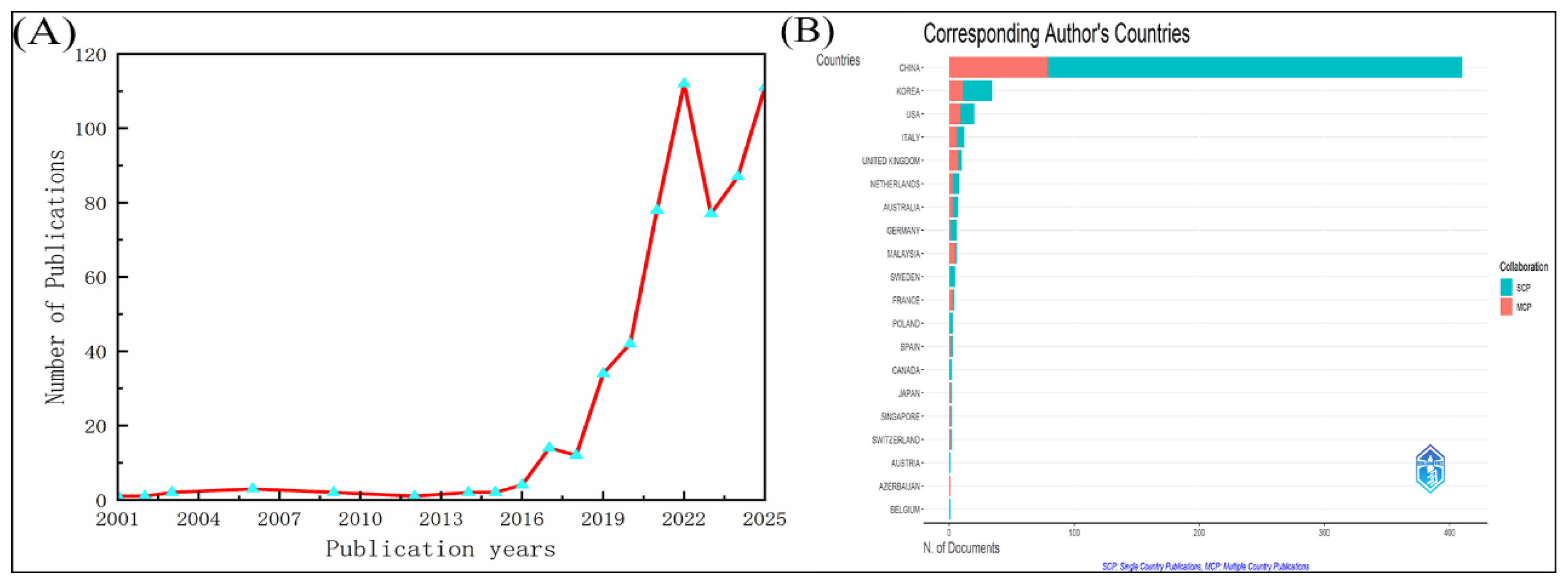
Figure 2.
Map of the distribution of countries/regions and institutions related to cross-border e-commerce research from 2001 to 2025. (A) Map of cooperation among different countries. (B) Map of cooperation among different institutions.
Figure 2.
Map of the distribution of countries/regions and institutions related to cross-border e-commerce research from 2001 to 2025. (A) Map of cooperation among different countries. (B) Map of cooperation among different institutions.
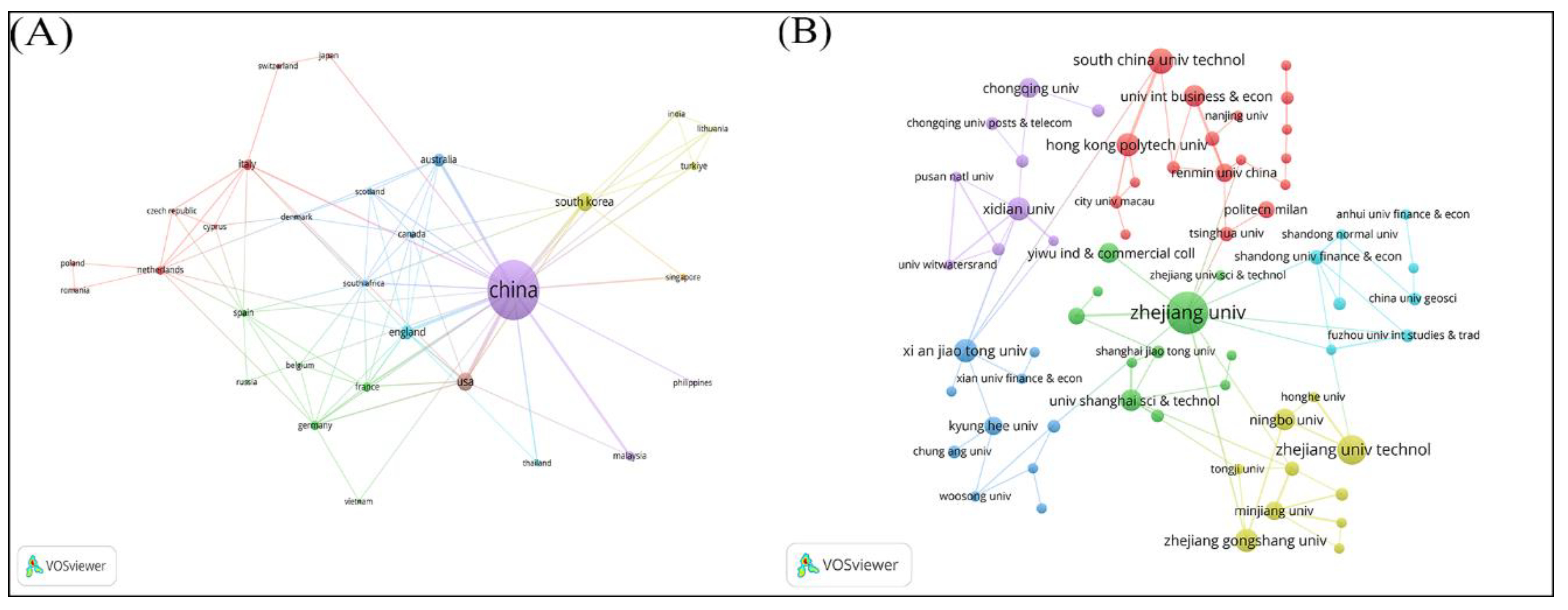
Figure 3.
Journal with the largest number of articles published and the journal with the largest number of citations. (A) Journal with the largest number of articles published. (B) Journals with the largest number of citations.
Figure 3.
Journal with the largest number of articles published and the journal with the largest number of citations. (A) Journal with the largest number of articles published. (B) Journals with the largest number of citations.
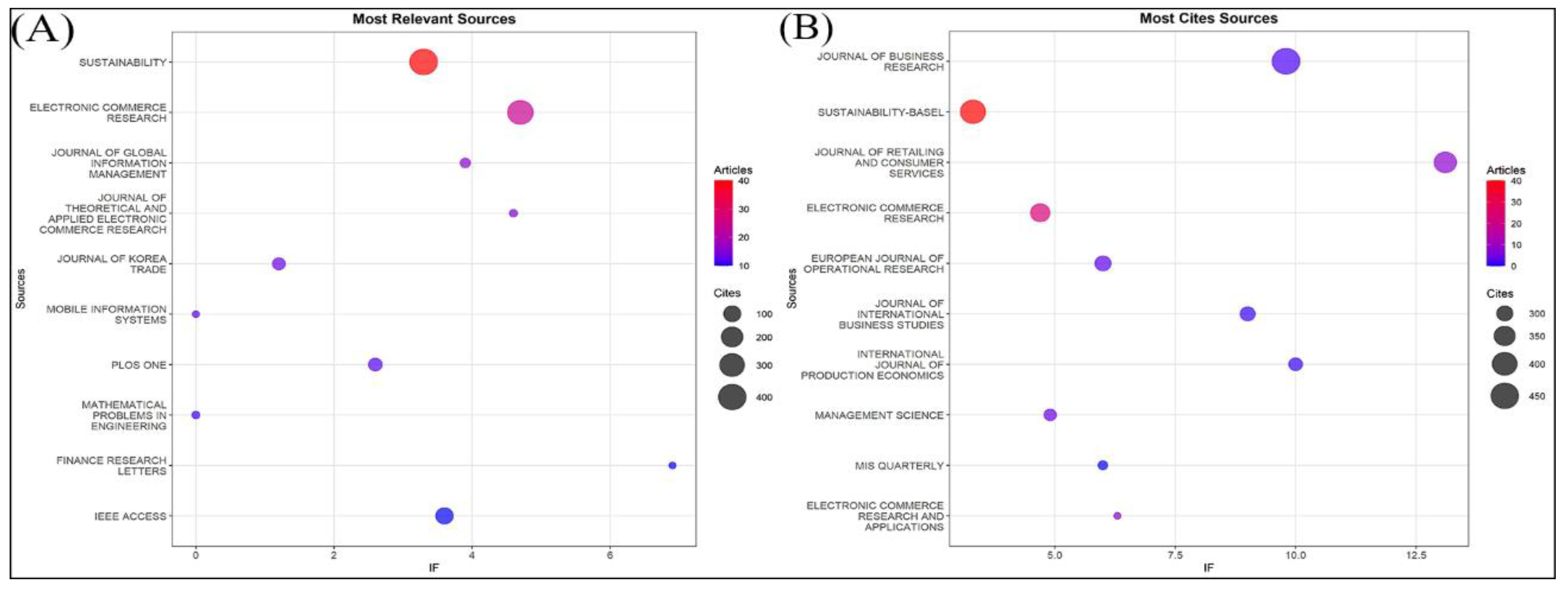
Figure 4.
Co-cited journals related to cross-border e-commerce.
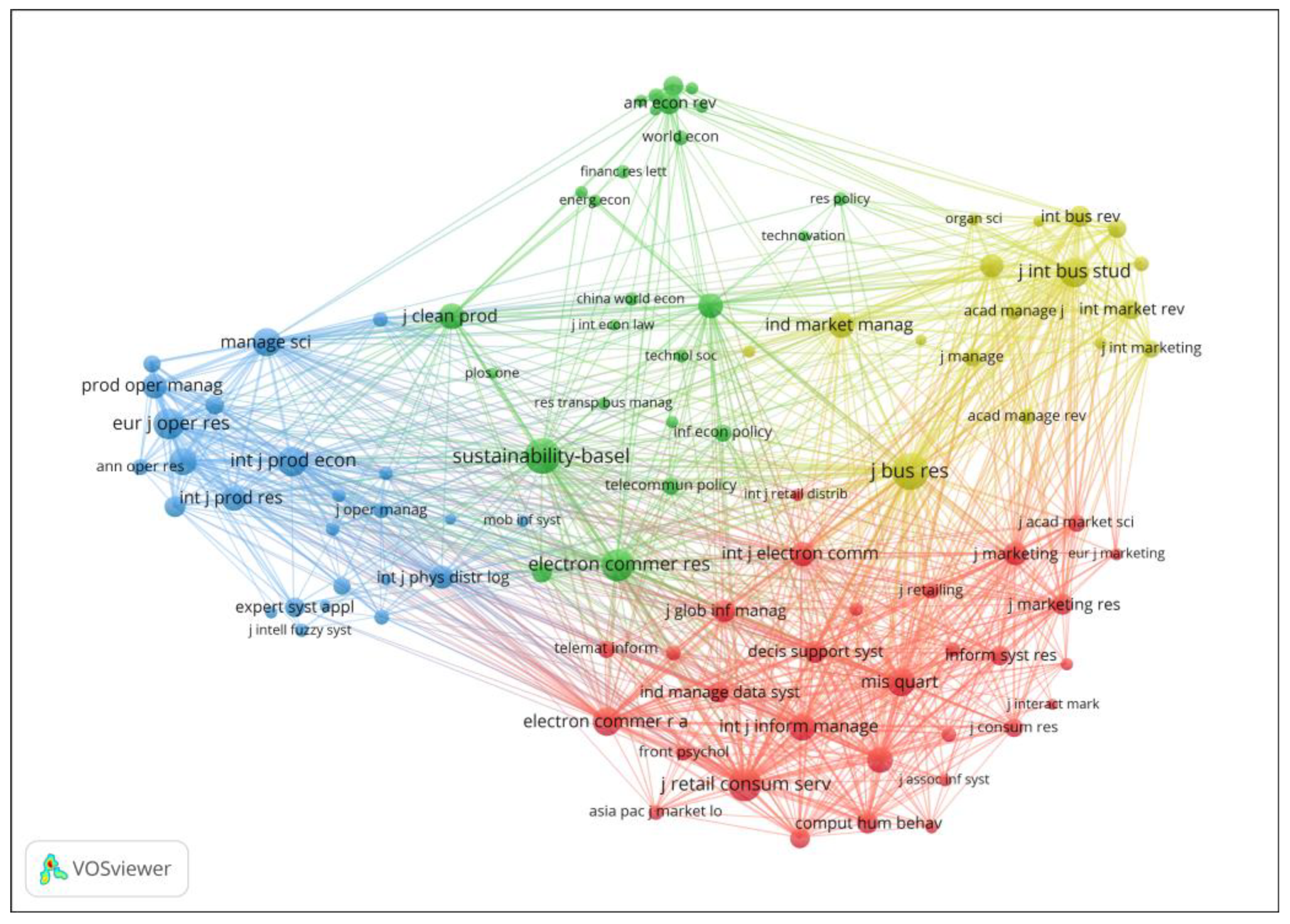
Figure 5.
The most significantly cited relevant references in the field of cross-border e-commerce.
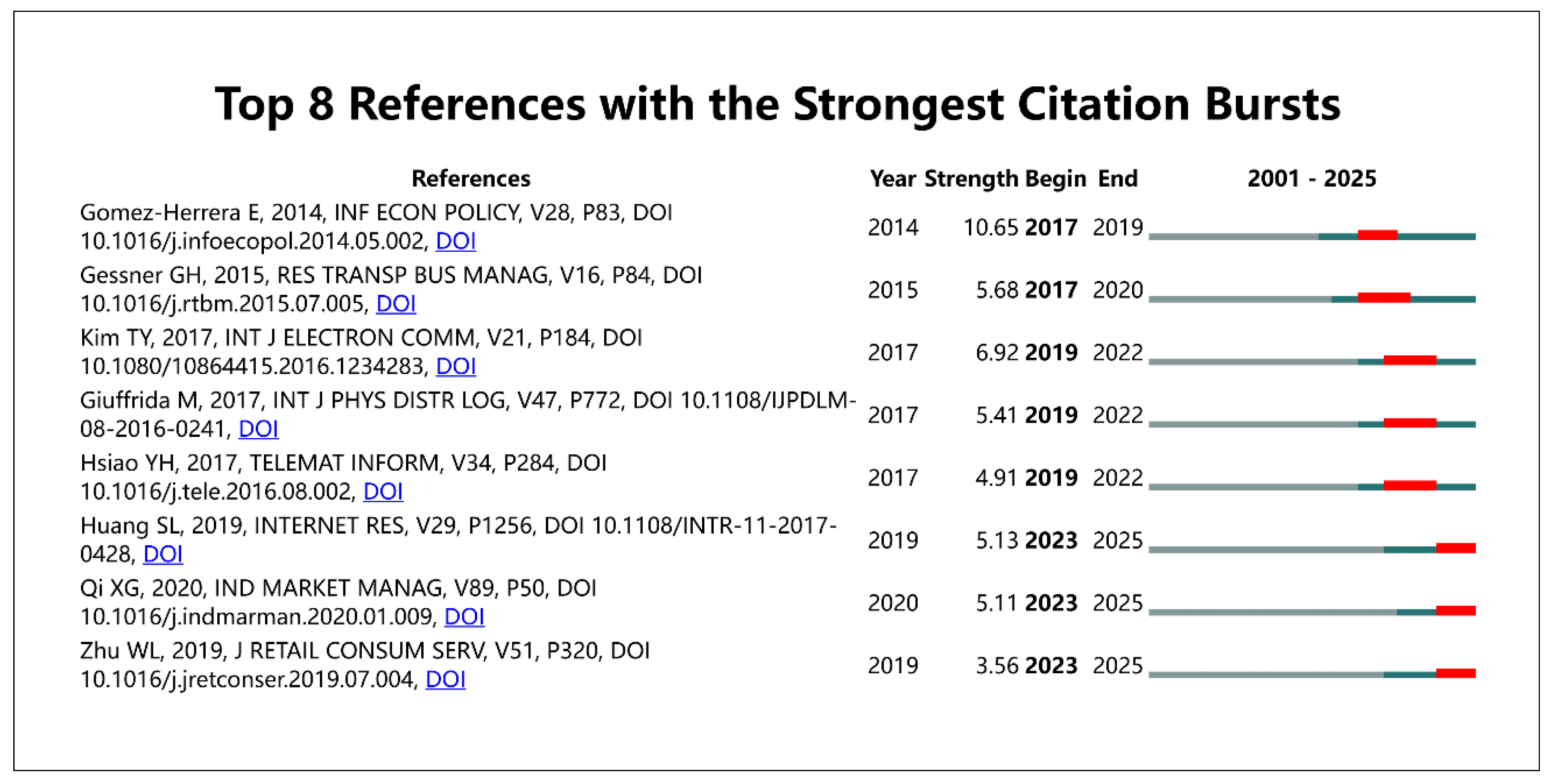
Figure 6.
The co-occurrence graph of keywords related to cross-border e-commerce research.
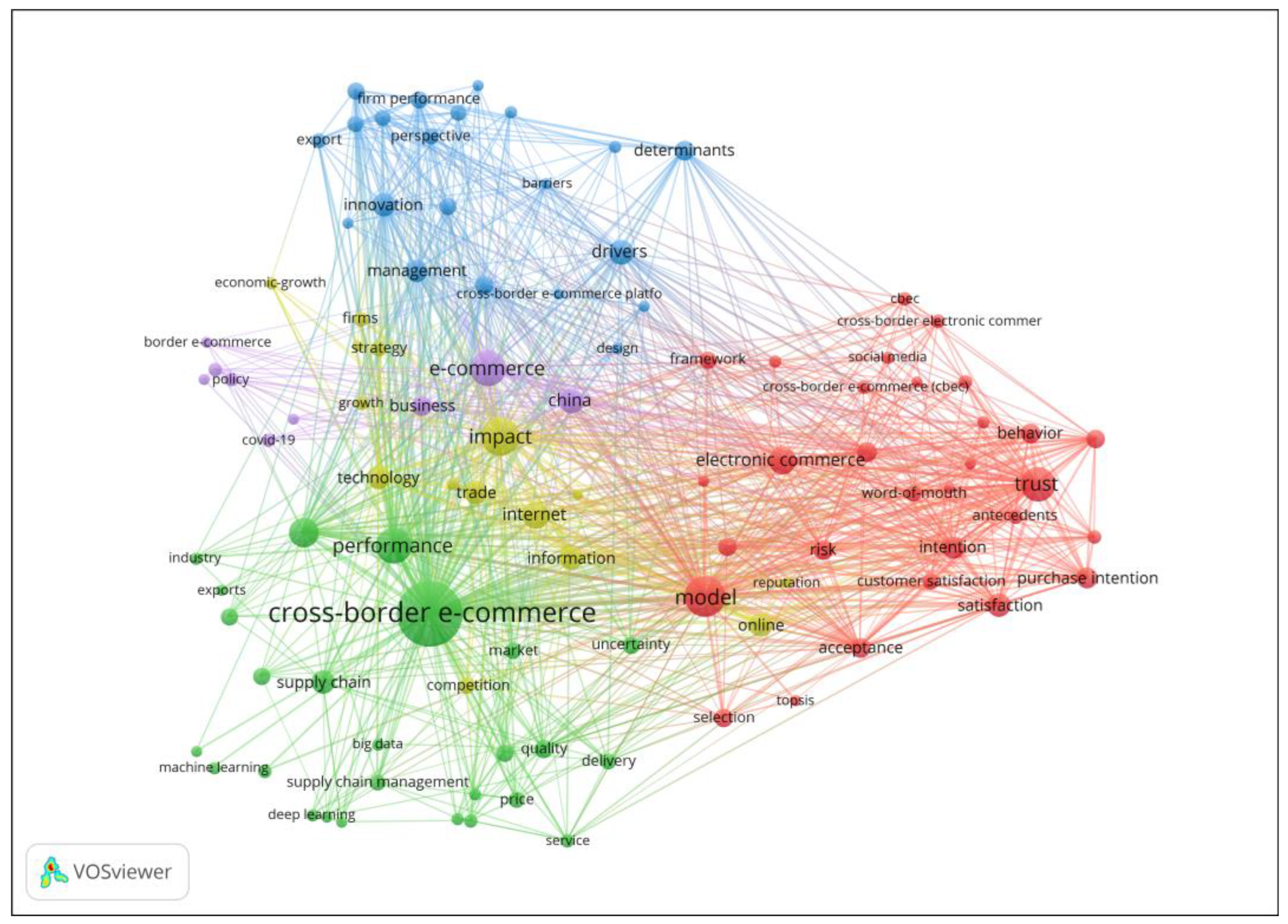
Figure 7.
The popular topics related to cross-border e-commerce are the corresponding contents in the knowledge base.
Figure 7.
The popular topics related to cross-border e-commerce are the corresponding contents in the knowledge base.
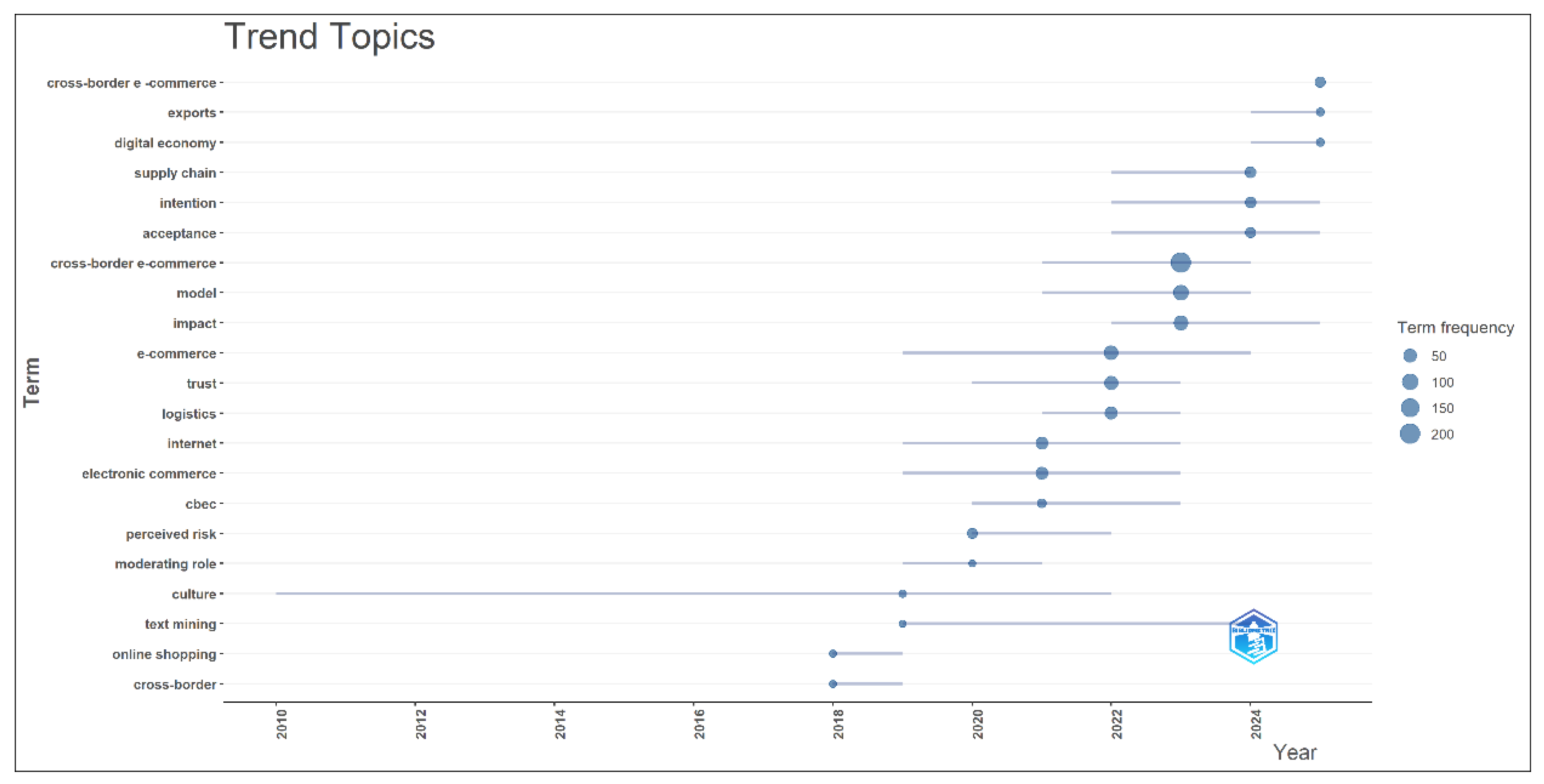
Table 2.
Top 10 journals with the most published.
| Sources | Documents | Cites | IF |
|---|---|---|---|
| SUSTAINABILITY | 40 | 409 | 3.3 |
| ELECTRONIC COMMERCE RESEARCH | 24 | 332 | 4.7 |
| JOURNAL OF GLOBAL INFORMATION MANAGEMENT | 16 | 12 | 3.9 |
| JOURNAL OF THEORETICAL AND APPLIED ELECTRONIC COMMERCE RESEARCH | 15 | 2 | 4.6 |
| JOURNAL OF KOREA TRADE | 13 | 36 | 1.2 |
| MOBILE INFORMATION SYSTEMS | 12 | 1 | 0 |
| PLOS ONE | 12 | 45 | 2.6 |
| MATHEMATICAL PROBLEMS IN ENGINEERING | 11 | 2 | 0 |
| FINANCE RESEARCH LETTERS | 10 | 1 | 6.9 |
| IEEE ACCESS | 10 | 104 | 3.6 |
Table 3.
Top 10 journals with the most cited.
| Sources | Cites | Documents | IF |
| JOURNAL OF BUSINESS RESEARCH | 451 | 2 | 9.8 |
| SUSTAINABILITY-BASEL | 409 | 40 | 3.3 |
| JOURNAL OF RETAILING AND CONSUMER SERVICES | 365 | 8 | 13.1 |
| ELECTRONIC COMMERCE RESEARCH | 332 | 24 | 4.7 |
| EUROPEAN JOURNAL OF OPERATIONAL RESEARCH | 299 | 3 | 6 |
| JOURNAL OF INTERNATIONAL BUSINESS STUDIES | 292 | 1 | 9 |
| INTERNATIONAL JOURNAL OF PRODUCTION ECONOMICS | 284 | 1 | 10 |
| MANAGEMENT SCIENCE | 276 | 4 | 4.9 |
| MIS QUARTERLY | 266 | 0 | 6 |
| ELECTRONIC COMMERCE RESEARCH AND APPLICATIONS | 263 | 8 | 6.3 |
Table 4.
The top 20 keywords.
| Rank | keyword | occurrences | total link strength |
| 1 | cross-border e-commerce | 203 | 611 |
| 2 | model | 80 | 331 |
| 3 | impact | 70 | 295 |
| 4 | e-commerce | 61 | 204 |
| 5 | performance | 61 | 273 |
| 6 | trust | 57 | 295 |
| 7 | logistics | 42 | 170 |
| 8 | internet | 36 | 119 |
| 9 | electronic commerce | 35 | 144 |
| 10 | drivers | 31 | 138 |
| 11 | china | 29 | 106 |
| 12 | information | 28 | 142 |
| 13 | technology | 28 | 130 |
| 14 | trade | 28 | 86 |
| 15 | innovation | 27 | 129 |
| 16 | online | 27 | 124 |
| 17 | satisfaction | 26 | 131 |
| 18 | supply chain | 26 | 84 |
| 19 | intention | 23 | 128 |
| 20 | management | 23 | 89 |
Disclaimer/Publisher’s Note: The statements, opinions and data contained in all publications are solely those of the individual author(s) and contributor(s) and not of MDPI and/or the editor(s). MDPI and/or the editor(s) disclaim responsibility for any injury to people or property resulting from any ideas, methods, instructions or products referred to in the content. |
© 2026 by the authors. Licensee MDPI, Basel, Switzerland. This article is an open access article distributed under the terms and conditions of the Creative Commons Attribution (CC BY) license (http://creativecommons.org/licenses/by/4.0/).
Copyright: This open access article is published under a Creative Commons CC BY 4.0 license, which permit the free download, distribution, and reuse, provided that the author and preprint are cited in any reuse.


