
Submitted:
27 January 2026
Posted:
02 February 2026
You are already at the latest version
Abstract
The complexity of the Water – Energy – Food (WEF) Nexus demands a comprehensive framework for its implementation, particularly concerning place-based governance and sustainable transitions. An integrated methodology encompassing literature review, qualitative analysis, conceptual mapping, and co-creation was outlined, and tested cross selected case study basins in Africa within the ONEPlanET Horizon Europe Project. This novel approach was conceptualized through the lens of Socio-Technical Systems Transition Theory and its interconnections with geo-ecological system components, enabling the recognition of the WEF Nexus as a place-based meta-system. The UN Sustainable Development Goals (SDGs) were introduced as landscape drivers of the WEF Nexus, as they acknowledge the crucial role of society, technology and ecological systems in its interconnected domains. The X-curve framework assisted in the discussion and visual presentation of the status quo and the identified possibilities for transition within the selected hydrological basins, as representative geographies of the whole continent. The methodology resulted suitable for supporting a concrete exploration of pathways for change towards a Sustainable WEF Nexus, facilitated through multi-stakeholder engagement and the development of multi-level action plans.
Keywords:
WEF Nexus
; socio-technical transition
; socio-ecological systems
; geography of transitions
; sustainable development goals
; X-curve
; African Union
1. Introduction
Demographic trends and the increased demand of goods and services are shaping the future through land use transformation, urbanization and resource exploitation. The African Union (AU) is currently at the core of this increasing pressure, with a current population of 1.4 billion, projected to reach 2.5 billion, (amounting to 25% of the global population) by 2050, making it the largest growth globally [1]. The AU is made up of 55 countries, spread through 5 different regions, distinguished by geographical similarities and geopolitical positions. Each country presents its own vulnerabilities caused not only from geography and geopolitics, but also from other socio-economic forces and constraints, as well as climate change that is emerging as a crucial driver in the African landscape [2]. In this context, the need for an integrated approach to water, energy and food is becoming widely acknowledged, and the establishment of Water, Energy and Food (WEF) Nexus models and governance frameworks is largely envisaged [3]. Moreover, a transnational approach is essential, as the variance in responses of each country shaped by its vulnerabilities impacts not only their own WEF Nexus dynamics but also those of its neighboring countries, especially in regions where hydrological basins are shared.
The ONEPlanET Project, funded under Horizon Europe, aims towards the sustainable management of the WEF Nexus in the AU through the introduction of a multidimensional approach, fostering capacity building, knowledge sharing, and increased awareness through the empowerment of relevant stakeholders (policymakers, researchers, investors, businesses and citizens). The project’s main goal is to promote sustainable use of resources while addressing inequality and socio-economic gaps within the WEF Nexus. Due to the vastness of the AU, three distinct African river basins with diverse WEF Nexus complexities and vulnerabilities were chosen as case studies for analysis: the Songwe River Basin (shared between Malawi and Tanzania), the Inkomati-Usuthu River Basin (South Africa), and the Bani River Basin (Mali) [4].
This article seeks to analyze the pathway towards a sustainable WEF Nexus, within the selected case studies of the ONEPlanET project, through the analytical lens of Socio-Technical Systems (STS) Transitions Theory (TT) [5]. This currently represents the primary theoretical framework providing a comprehensive understanding of the multi-dimensional system processes needed for the systemic change envisaged by the project. Thus, STS-TT could provide insights on how innovation, social practices, institutions and infrastructures could trigger transformation of an unsustainable status quo towards a sustainable regime, although an expansion of the theory is required to tackle the complexity of the WEF Nexus as a meta socio-technical system, along with the concepts of geographical specificity and ecological sustainability.
An integrated methodology was followed to identify the key drivers, barriers and emerging factors influencing the transition, which encompassed an extensive literature review to establish the theoretical lens and the background of the case studies, the discussion of already constructed conceptual maps of the WEF Nexus relationships within the case studies and the AU, and the development of co-creation activities between the relevant stakeholders of the three African river basins, along with qualitative analysis of all collected data. The X-curve framework [6], was introduced to play an important role in visualizing and analyzing the transition dynamics.
Following the above, the paper goes through a detailed literature review on the STS-TT, its gaps and need for adaptation in the WEF Nexus context. Further elaboration on the analysis of the selected ONEPlanET case studies will follow, along with a representation of the findings from the qualitative analysis of all the collected data. The subsequent section discusses the challenges and opportunities of these findings followed by a conclusion on key insights and potential future research directions.
2. Literature Review
The term ‘Socio – Technical’ serves the intrinsic interrelatedness of ‘social’ and ‘technical’ aspects within a system. The Social Aspect encompasses the more humanistic systems, including political, religious and organizational structures whereas the Technical Aspect encompasses the technologies utilized to fulfil the human needs (i.e. energy and food production) [7]. Hence, the STS-TT offers a broad framework for understanding how the social and technical aspects can be utilized to transform human-made systems over time. This transformation can be a result of external forces driving changes (i.e. climate change, desertification), and the complex interactions between social, economic and technological structures.
The concept of STS was initially developed under industrial working conditions, to optimise the relationship between social and technical aspects; in other words, to address the relationship between machines and human wellbeing [8]. Hence, to balance an STS and improve its performance when its dependent upon the dynamic interplay between people, processes and technologies, societal demands need to be aligned with technological development [9].
Geels states that there are diverse social groups which act as human actors within a system such as social groups, public authorities, media, educational institutions etc, which play crucial role in systems transition through their similar viewpoints, agendas, norms etc [5]. As each actor is governed by different rules, interconnected across three different dimensions - the regulative, the normative and the cognitive - it is not possible to comprehend an STS by observing its aspects separately. Rather, the systems’ complexity needs to be comprehended to be able to either maintain or change the system [5].
The Multi – Level Perspective (MLP) analyses an STS by structuring its elements into three different interconnected layers: the niche (micro), regime (meso) and the landscape (macro). The regime, operating at the meso level, is influenced by rules, cultures, infrastructures and regulatory systems, encompassing the guidance of the three different dimensions. These dimensions lead to specific choices, creating path dependencies. Actual interlinkages, considered as the outcome of bygone decisions, may set the road towards future lock-in effects, making it challenging to follow alternative paths, towards systemic change [5].
Meso- and micro- level can be both affected by exogenous forces (the wider landscape). Pressure on these levels creates space for transition and opportunities for niche developments, which can emerge and trigger leverage points, challenging the different regime stages. Leverage points can embed incubation rooms for experimentation and learning, finally unfolding alternative pathways within existing regimes [10].
Therefore, an effective socio-technical transition encompasses an integrated approach, balancing identification of achievable goals, system understanding, transformation knowledge, and implementation strategies, navigating through the three different MLP levels [11].
Conceptualizing the WEF Nexus as a Socio-Technical System and analysing it through a complex system lens that considers both social and technical factors, requires the extension of the MLP approach to a meta-STS, which brings together three apparently separated systems of Water, Energy and Food, highlighting how actions in one of them can impact the functionality of the other [12]. Also, due to the evolving demand for water, energy and food from various actors and the impacts of climate change, shape the balance of the WEF nexus on global, national, and local scales, underscoring the importance of introducing the concept of geography of transitions within the interpretative framework [13]. As a matter of fact, each region can differ from the other due to its location being affected by global trends, climate, geography and so on, necessitating for context-specific transition strategies towards a durable WEF Nexus. With water being the critical local resource, the appropriate scale for applying the geography of transition to the WEF Nexus seems the hydrological basin, in line with the ONEPlanET project design [4].
Conceptualizing sustainability within the WEF Nexus is also needed to orient its management towards the long-term well-being of both people and the planet, aligning the sustainable development dimensions - economic, social and environmental - with the interconnected components of the WEF Nexus [14]. Without a sustainable approach of the WEF systems, irreversible environmental changes will occur through the infringement of planetary boundaries which regulate the stability and resilience of Earth’s ecosystem [15]. To expand our view towards the sustainability dimension of the WEF Nexus, we approached the Socio – Ecological Systems Transition Theory (SES-TT) which considers the complex relationship between the human society and the ecological systems and recognises the vital role of the ecological components encompassing water, energy and food resources, in satisfying humans’ needs for survival [16,17]. The WEF Nexus is fundamentally embedded in the ecological environment as the functioning of the water, energy and food dimensions is directly impacted by the health and functioning of the associated systems. Unsustainable ecosystem management can lead to irreversible damage, causing instability within the WEF Nexus. Hence, SES-TT can act as a lens, to guide the shift towards the sustainable interactions between human societies, social structures and norms and the natural systems within the WEF Nexus [18].
While STS and SES Transition Theories appear to focus on different aspects, it is evident that they are crucial for designing transitional pathways towards sustainability; the STS-TT through social and technical pathways and SES-TT through the ecological pathway. Hence, this perspective suggests that the WEF Nexus can be influenced both by the socio - technical systems but also by the surrounding ecological environment. In conclusion, a comprehensive systemic approach to WEF Nexus sustainable transition should integrate STS-TT and SES-TT, considering the specific influence of geography, as mentioned above, because each geographic location has a different socio-technical-ecological characteristic which can impact in a unique way its WEF Nexus system. For instance, local water scarcity captured as an ecological factor, would be considered as a landscape pressure within the STS-TT. Therefore, for the purposes of this article, the WEF Nexus will be approached as an integrated Socio Technical Ecological System (STES), recognizing the interconnectedness between society, technological advancements and ecological dynamics [19].
The United Nations (UN) Agenda 2030 has identified important means of implementation, including Finance, Technology, Capacity Building, Trade, Policy and Institutional Coherence, Multi-Stakeholder Partnerships and Data Monitoring and Accountability, resonating with the STS-TT [20]. Specifically, seventeen Sustainable Development Goals (SDGs) have been set in 2015, which can guide the UN Member States in achieving Sustainable Development [20]. Encompassing the three dimensions of society, environment, and economy, the UN SDGs recognise the intrinsic linkages between the dimensions and the importance of sustainable management resource. Progress of the goals can be achieved through policy measures on local and international level, which can trigger transformational changes [21]. SDGs can be considered as drivers of transition, acting as landscape forces within the MLP level within the STS, as they exert pressure on the socio-technical regimes for transformation towards more sustainable practices through policies and setting goals, and by mobilising resources [22,23]. Moreover, SDGs have also been identified to serve as triggers of leverage points towards transformational changes within a system [24].
Specifically, SDGs can be considered as landscape drivers of the WEF Nexus as a STES [25], as they acknowledge the crucial role of society, technology and ecological systems in its interconnected domains. This integrated perspective would also consider the geographical contextualization of the Nexus at a basin level as essential for understanding the drivers, barriers and opportunities towards a sustainable and resilient WEF interlinkage.
Figure 1 presents a novel visualization of the MLP model, summarizing the conclusion of our literature review on the theoretical frameworks and applies them to the three case studies. It incorporates STS-TT encompassing the specificity of the WEF Nexus as a STES meta-system. On the top level, the Landscape Forces exerting pressure upon the WEF meta-system through macro-level pressures like climate change and population growth. The middle level is made of Regime Geographies that are dependent upon the specific context of each of the three basins. The Innovation Niches emerge from the bottom level to address the challenges within the basins. These can act as valuable and dynamic assets to address the gaps and trigger leverage points, offering a pathway towards sustainable transitions of the WEF Nexus within the basins. UN SDGs are represented as a geopolitical landscape force acting specifically on innovation niches to force their maturation and exploitation towards the transition.
3. Materials and Methods
This article approaches through the STS-TT the complex and interconnected nature of the WEF Nexus and recognizes the need for an expanded methodology to unfold a transitional roadmap for the WEF Nexus in specific geographies, such as the ONEPlanET project case studies. This section reports about the process followed to expand, adapt, and apply the STS-TT conceptual framework to this context.
3.1 Case Study Selection
Through the literature review, the AU seems to be affected by key landscape forces, which are shaping its current state. Historical factors are driving the African continent through infrastructure development, governance structures and resource distribution, all still influenced by colonial legacies. These are also interconnected to the ongoing conflicts and instabilities, determining the continents’ resource needs and priorities, hindering the need for transformative actions [26]. Climate change is also considered a major contributor to the continent’s trajectory, as its high vulnerability in climatic alteration impacts vastly by floods, desertification, biodiversity and resource loss, which are directly triggering human migrations. Moreover, as discussed before, population growth plays a key role in the shape of the AU as it places pressure on the resources and consequently on the WEF Nexus. This also leads to rapid urbanization and transformation of the land use, which is increasingly influencing the overall continental landscape [27].
When the geography of transitions approach is imposed upon the WEF Nexus in the AU, the landscape forces reveal their differences along the continent. Hence, the three case study basins were identified by the partners of the ONEPlanET project to provide specific insights into the social economic and energy contexts existing along different relevant geographies in the AU. Case studies review has been undertaken through desk research but also stakeholder interviews from the basins, concluding the following:
- the Songwe River Basin (SRB) (shared by Malawi and Tanzania) is facing rapid population growth and agriculture being the main economic activity is increasingly impacting upon the natural ecosystems [28],
- and the Inkomati-Usuthu Water Management Area (IURB) (north-eastern part of South Africa) which relies on mining and agriculture yet suffering from water scarcity and pollution due to extractive practices [31].
3.2. Conceptual Mapping
Following Basin selection, effort was put into the development of four conceptual maps: one for the AU and each of the three basins. These four maps created by the ONEPlanET project partners, aimed to visually represent specific interdependencies and relationships within the case studies WEF Nexus, providing insights on the location specificities within the social, economic and environmental contexts. For a realistic representation of the WEF Nexus of each basin, representatives from each case study were interviewed, and integrated within the conceptual maps that focusing on each one of the WEF dimensions, for each basin and the AU. The finalized conceptual maps outlined the interactions between climate, land use, water, energy, food productions, ecosystem health and socio-economic systems under the concept of each WEF dimension. This modelisation was utilized as a background of co-creation activities aimed to approach the WEF as a STES, find its leverage points for intervention, and gaps where transitions should be facilitated. This step has been proven crucial, as this methodology has allowed for nuance analysis for innovation assets and transition pathways.
3.3. Co-Creation Activities
As proposed by Naidoo et al. in 2021 [32], to achieve sustainable development through water, energy and food management within regional integration in the AU, there are different processes and strategies which can be used to lead the pathway. These incorporate not only the establishment of the status quo but also the utilization of analytical tools, the promotion of stakeholder engagement and the encouragement of innovation and adaptation. The next step in the methodology was the co-creation activities undertaken to gather qualitative data from the diverse pool of stakeholders within the river basins and the AU. Co-creation activities consisted of the organisation of two interactive workshops, which were specifically designed to explore the knowledge and the perceptions about the state and the dynamics of the WEF Nexus as a STES within the three basins and further assist in the identification of incubation rooms for transition, and opportunities for innovation niches to emerge. The workshops were undertaken online with the use of digital tools like Zoom and Miro platforms.
The first workshop focused on open innovation, exploring innovative technologies and solutions for a sustainable transition of the WEF Nexus. The participants were guided through different exercises, including the use of the silhouette of the African continent, as a canvas of WEF technologies, represented through three different colours of sticky notes for sustainable, non-sustainable and gaps/needed, to be placed on the specific area on the map. This led to the identification of strategic opportunities within the WEF Nexus STES, that could act as leverage points for the sustainable transition in the accounted geographies and the whole AU.
Then, a second workshop focused on ‘Collaborating for change: unpacking the WEF nexus through landscape and regime lenses’. Various stakeholders from different backgrounds within the AU have participated, exploring together the relationships between landscape forces, regimes, niche innovations and sustainable solutions in the context of the AU. For the facilitation of the workshop tools from the Climate-KIC Visual Toolbox system mapping were chosen, with the ‘Context Map’ tool being the main point of reference in the workshop [33]. This sense-making tool, facilitated the exploration of the relationships within the WEF nexus system in alignment with the MLP theory as it guided the participants to analyse trends and key factors which influence the WEF Nexus system, identify potential opportunities and threats, and foster a broader understanding of the interconnected factors at the macro (landscape), meso (regime), and micro (niche) levels. The participants were divided into groups, with the aim to collect diverse perspectives on the WEF dimensions.
3.4. Framing the Transition Through the X-Curve Tool
At this stage the X-Curve was introduced as a valuable tool to highlight and visualize the key elements collected from the different methods and activities. The aim was to assure more strategic understanding of the transition of the WEF Nexus STES in the considered geographies, with the identification of the key innovative elements to leverage and the relevant components of the actual regime to be phased out along the journey.
The X-Curve framework is effectively used as a participatory mapping tool to assist in the comprehension of transition dynamics through the intersection of two paths: the breakdown and the build-up as shown in Figure 2 [6].
The ‘build-up’ path, is a S-shaped curve, which represents the path towards emergence and growth of alternative and sustainable systems and practices. In agreement with the STS-TT, this path is driven by transformative innovation at the experimentation stages within the niche level, falling far from the current regime. Acceleration of these innovations needs time, and this time will give them the visibility to emerge into the system and start gaining visibility shifting towards a new norm The ‘breakdown’ path is visualised by the downward curve, representing the dynamics of the current system and its phase out. This journey is triggered from exogenous pressures (landscape forces) inducing system destabilization and eventually chaos. The X-Curve highlights this essential pattern of system’s transitions, which is not sufficiently underscore in classical STS-TT representations. The breakdown pattern finally leads to the phasing out of unsustainable activities, provided that suitable measures are actioned to minimize resistance and conflicts.
Eventually, the X-curve framework allows for the visualization of the transition process, by highlighting where a system regime is experiencing destabilisation leading to phase out, and where are innovations emerging and can be leveraged and eventually be stabilized forming the new norm. Hence, the X-curve provides a powerful and complementary view of the MLP modelization, as it describes the system transition through the cross-linked roadmaps that characterize the rise of niche innovation bundles and the decline of incumbent actors, subsystems and practices.
The X-Curve enabled the aggregation of suggestions and findings not only from the co-creation activities but also from the desk-research analysis and the cross-cutting screenings of the ONEPlanET project deliverables. The resulting visualization offers a comprehensive understanding of both the innovation build-up process and the crucial destabilization of existing unsustainable assets (resources to run out). It finally represents the WEF STES-TT in practice, where the different levels: niche (innovations), regimes (established systems), and landscapes (the overarching forces) are understood in action.
3.5. Limitations
Due to the vastness of the AU, generalizing the social, economic and environmental conditions of the selected basin geographies, might not provide a fully comprehensive set of insights for the WEF Nexus in the AU. Moreover, the development of the background conceptual maps by the research partners within the ONEPlanET project, might involve a degree of subjectivity. Indeed, researchers’ interpretations for the construction of the conceptual maps can influence the identification of interdependencies and therefore the discussion about possible leverage points. Moreover, stakeholder engagement can blur the quality of the available data due to individual biases introducing inaccuracies and distortions into the outcomes. Yet, this article acknowledges the limitations and aims to validate findings in further research by (1) expanding the work on conceptual mapping, (2) engage further panels of stakeholders (3) increase the number of enquired geographies.
4. Findings and Discussion
4.1 Case Study Specific Findings
The findings to be discussed in this section are emerging from the discussion for each of the river basins of the conceptual map drafted for each of the WEF dimensions. Specifically, the analysis has been encompassing both the socio-economic and socio-ecological dimensions, and focalizing the key elements of climate, land use, water, energy, food productions, ecosystem health, governance and partnerships, culture. A MLP approach is adopted accordingly to the conceptual framework outlined in the methodological section.
4.1.1. Songwe River Basin (SRB)
As already discussed, the SRB is characterized by its economy heavily reliance on agriculture and mining. The larger percentage of its 341,000 population still live below the poverty line, and the rapid population growth is leading to scarcity of basic services and exacerbate existing challenges [28]. Analysing its energy dimension, it was identified that the basin is heavily reliant on non-renewable energy sources like oil, gas, charcoal etc, with a significant potential for development of wind and hydropower. The main energy consumers are considered the mining and the agriculture industry [34,35], whereas the use of energy for cooking and heating, which appears relevant, has not been quantified yet since only 15% of the Malawi’s population and 51% of Tanzania’s population is electrified [36], with the main source of energy for local households being in the form of firewood and charcoal, which are self-produced [37]. When it comes to the water dimension, water is used for agriculture and food production but also for hydropower generation. Moreover, the water is used in mining, and it returns to the basin as wastewater [28]. Hence, the basin is challenged through the multipurpose use which affects not only the availability of water but also the quality of the water, due to the unsustainable resource extraction and ecological and environmental degradation. The heavy dependence of the basin’s WEF Nexus on water, makes the system vulnerable due to the basin being under environmental stress. At the same time, when it comes to the food dimension, it seems that sardines’ local production contributes vastly to the socio-economic system of the basin, along with different kind of crops supporting food security [38]. However, water pollution, inadequate irrigation, soil degradation and limited land access are challenging the food security of the basin along with its economic integrity [38].
It emerges that the SRB presents a WEF Nexus scenario where sectors are tightly interconnected and interdependent as shown in Figure 3. The heavy dependence of all three sectors on the Water and the connection between the Energy and the Food dimensions show the overall vulnerability of the system. On the meso-level the basin’s regime encompasses its heavy reliance on non-renewable energy, agriculture and mining. On the macro level the landscape forces, which incorporate the rapid population growth, poverty and environmental stresses, seem to have a great impact on the basin.
4.1.2. Bani River Basin (BRB)
The BRB, a tributary to the Niger River located in the Mali area, is characterized by its tropical climate, through distinct dry and wet seasons being intensified by climate change. The basin is a vital water resource, supporting various activities in Mali, like farming, fishing, power generation and household use. The main economic activity encompasses agricultural practices, contributing notably to the GDP of the basin, and currently using over 85% of the basin’s water [39]. The main electricity generation plants are hydropower and thermal power stations, with the electricity generation being heavily reliant on diesel and heavy fuel oil, with renewable energies (other than hydropower) being almost non-existent. Moreover, wood fuel and charcoal are the main sources used for household energy [40]. Yet, the rapid population growth in the area is exerting forces on water and energy demand, leading to only half of the Bani population having access to electricity and uncertainties for access to safe water and sanitation, which are also a result of the conflict between Bani River communities [41]. This limited access to electricity can be a result of lack of infrastructure and access to finance. Other than that, the analysis suggests that there is a lack of information for understanding further the interconnections between the Water and Food dimensions.
It is evident that BRB’s GDP is heavily reliant on agriculture, which is dependent and related to the use energy and the of river water from the basin. Energy and water insecurity are evident in the area giving rise to conflicts between communities and leaving existing gaps and uncertainties unaddressed. Hence, water security is fundamental for food and energy security within the basin. On the meso- level, basin’s regime seems to be depending on fossil fuels for power generation, and wood and charcoal for household energy sources, whereas energy and clean water access seems to be limited. The climate change is intensifying the effect of the tropical climate as a key landscape force, along with the rapid population growth and the conflict between the basin communities. Figure 4 gives a visual presentation of the interconnections of the WEF dimensions identified in the BRB.
4.1.3. Inkomati – Usuthu River Basin (IURB)
The IURB represents a critical ecological and economic resource for the areas surrounding it. It has a sub-tropical climate, encompassing hot and wet summers and dry winters, with the greater part of the basing being susceptible to minimal rainfall [42]. The basin’s economy is dependent on rain-fed and irrigation-based agriculture, mining, forestry and eco-tourism. More than half of the available water is used for agriculture [43]. Energy generation in the IURB is substantially made by coal due the availability of reserves in the area. Approximately 90% of South Africa’s electricity is produced by coal power plants, leading to the remaining water availability being used as primary source for water supply of the numerous coal-based power stations in South Africa. National reserves are most likely going to be depleted by the next century, yet the government is still promoting coal for economic development and energy security [44]. The area has great potential for renewable energy production yet due to its challenges of financial constraints and renewable energy infrastructure, it is not supported [45]. The basin water is mostly consumed for irrigation, forestry and the local coal power plants, and only the 5% end up being allocated for domestic uses [43].It is important to note that, fishing is not a sector in this basin. The food dimension within the basin, encompasses local production of crops, including sugar cane, cotton, fruits and vegetables but also livestock [46].
The multi agricultural production faces challenges as the conflict between land use for agriculture, and land use conservation creates a dilemma, demonstrating how cultural priorities are deeply affecting resource management. Sugar cane production has its complexities as it can be used both as food (for exporting) and converted into fuel. It also seems that culture and politics are impacting the IURB’s integrity. Due to the energy’s sector strong dependency on water (mostly from unsustainable sources), and the redirection of water and land use towards this sector the food system is not permitted to grow. The basin’s dependence on coal-based energy generation results into coal power plant water share dominance over other uses, which is incorporated under the regime meso-level, along with the cultural dilemmas for the land use priorities. Sub-tropical climate with minimal rainfall and its intensification by climate change is a key landscape force affecting the basin, along with the dependence of the basin on water for the basin’s GDP. Figure 5 demonstrates a visual presentation of the interconnections of the WEF dimensions identified in the IURB.
4.2 Co-Creation Findings
A total of 26 participants from the AU have attended the Open Innovation Workshop, encompassing five different target groups: eight participants from Research and Academia, seven participants from Non-Governmental Organizations, six participants from Industry & Startups, four Participants from the Civil Society and one participant from a nonprofit organisation. The workshop was supported by a digital Miro board, where a total of 28 existing technologies and tools across the WEF domains were identified through different categories, and classified as sustainable and unsustainable ones. 21 gaps and technologies needed to fill these gaps have also been identified by the participants.
The available non-sustainable technologies encompassed a variety of fossil fuel and non-renewable materials, employed for different purposes, power generation, water desalination, transportation, cooking and maintenance (e.g. cold chambers and fridges) and saving of food (e.g. plastic packaging). The 18 available sustainable technologies incorporate water dripping systems, solar microgrids, solar food friers and high efficiency wood cookers, wastewater management, rainwater collection and few more, focusing on water and cooking related activities. When it comes to the gap/needed technologies, counted at 21, these encompass the lack of infrastructure for sustainable water distribution, the capacity building among farmers, renewable energy for power generation and cooking, inadequate food storage and others. The total of the key findings is shown in Table 1:
For the second workshop, the Context Map tool was used to follow the structure of three different levels of MLP theory, the macro-level, the meso-level and the micro-level, working on the complex interplay between landscape forces, regimes, niche innovations and sustainable solutions for Africa’s future. One team focused on the energy transitions, the food sector changes and cold chain, and the second team emphasized on the energy transition, technological advancements and digitalization. Even if they were different in context, they showed a similar focus as described in Table 2:
4.3. Case Study Analysis
It is important to mention that by analysing the current situation in the case study basins, we were able to outline key elements of both the meso- and macro- level on each case study. This process demonstrated a strong coherence between the desk research findings and the outcomes of the two stakeholders’ workshops. Applying the theory in practice through the different basins and recognising the meso- and macro- level of each basin enables the identification of critical gaps and potential leverage points within the outcomes of the participatory activities with the local stakeholders.
Building upon these identified gaps, the analysis done follows a synthesis of participatory suggestions from the workshops and interviews done, and strategic innovation of how to move the project from theoretical framework towards practical implementation. More specifically, critical points for intervention were identified by refining the participatory assets and their analysis of how they are systemically correlated with the needs and gaps identified at the meso and macro levels. Therefore, a foundation for the basin’s transitional pathway is distilled from the dialogue, and, finally, the interventions encompassed by the pathway are evaluated in terms of alignment with the overarching framework of the UN SDGs in order to achieve consistency with such land.
4.3.1. Energy Dimension
In the energy dimension the gaps could be identified in the power plants capacity and the energy security when it comes to agriculture (main contributor to all basin’s and AU GDP) and domestic use. Due to the common regime of the basins related to agriculture and the similar landscape forces, related to climate change conditions and rapid population growth, introduction of innovations in the agri-food value chain seems to be key towards a transitional sustainable pathway. From the desk research and the co-creation activities, “cold chain” emerges as a leverage point, since it can act as a strategic node in the WEF Nexus system, where targeted use of innovation assets can lead to exponentially improve food and energy security within the basins. Indeed targeted innovations within the primary/secondary product cooling, would increase the food safety and quality while delivering appropriate renewable energy for storage both in the processing and industry but also at home [47] [48]. Moreover, innovation assets like solar water pumps for irrigation and solar microgrids for community energy, raised as sustainable technologies to be used within the basin. These innovations in the value chain would fill the unsustainable energy use gap, thus directly aligning with SDG 7 supporting optimizing energy use and cleaner energy as well as SDG 2. Moreover, it seems that due to difficulties in energy access, basin’s population mainly cook with wood fuel which causes serious health risks through the significant smoke pollution created in kitchens [49]. Yet, cooking practices can also be identified as vital technological and cultural leverage points within the system. Introduction of available efficient cooking technologies including efficient biomass and gas stoves, solar concentrating food cookers or solar PV cookers, can act as innovation assets within the system, provided that a cultural change is pursued to reshape cooking habits. [50]. The improvement of this gap supports SDG 3 by eventually improving health and SDG 5 by reducing the burden on women for fuel collection.
4.3.2. Water Dimension
From our case studies analysis we concluded that water is the most impactful dimension within the WEF Nexus, this fact was also recognised by the United Nations World Water Development Report [51]. In all the considered geographies, water is affected by climate change but also through its increased use in power generation and supply for food farming and security. Thus, it seems that innovation assets could be leveraged to benefit support the reduction of water demand through more efficient practices both in the energy and food domains, fostering the WEF Nexus approach for water management. As discussed through sub-sections 4.1 and 4.2, promotion of water-saving systems and improvement of irrigation systems, might immediately positively impact water security [50,51]. Here, SDG 6 acts as primary driver for change in water resource management, representing the need for water-saving technologies to contribute to water security.
Pollution control emerges as an evident need with different levels of criticality, which should be addressed as well through promotion of sustainable industrial practices and investment in wastewater treatment infrastructure. Hence, cross-sectoral collaboration through the different governance structures, or stakeholders between the different sectors, can be seen as a governance leverage point, since there is a gap of communication and coordination between the different actors within the Nexus’ domains. Trying to improve this gap with the use of different innovation assets including harmonised pricing strategies, coordinated subsidies and incentives, systemic supply chains and other tools, triggering the need for equitable access to resources and bring a halt to their overconsumption [55,60,61]. Creation of synergies across the dimensions seems crucial, mostly impacting SDG2, SDG 7 and SDG 15 and being well aligned with SDG 17 and thus benefitting from landscape push for the achievement of this SDG. However, due to the geopolitical situation around each basin, and especially in cross-border geographies, the achievement of high level of communication and coordination might result quite challenging.
4.3.3. Food Dimension
Here an evident gap was acknowledged in water efficiency in agriculture, representing a leverage point where an incumbent room for transition is emerging. Hence through the desk research analysis and the co-creation activities, it was evident that innovation assets encompassing appropriate water efficient crops and precision irrigation systems should be supported. These would act in alignment with the SDG 6 and SDG2. Also, the adoption of sustainable land use practices and on land restoration initiatives could be leveraged for the WEF Nexus transition within the food dimension of the basins and aligned with key targets of SDG15, towards sustainable land management and biodiversity conservation. Improvements in food distribution system through investments in cold storage and promotion of local food processing and storage are emerging as further key points for the sustainability of the Food dimension of the Nexus, as well as main targets within the SDG 12 and indirectly SDG 7, due to the need to optimize energy sources for storage, production and transportation of local food.
In summary, it seems that, applying the expanded STES framework to the WEF Nexus at the basin regime geographies, the identification of leverage points is possible by highlighting the linkages between social, technological, ecological, and cultural factors.
Across the energy, water and food dimensions leverage points directly related to SDG 2, SDG 3, SDG 5, SDG 6, SDG 7, SDG 12 and SDG 15 have been highlighted through the participatory process, showing how the adoption of UN SDGs can act as a systemic driver at the landscape level of a STES transition of the WEF Nexus. These preliminary findings informed a more comprehensive representation of innovation assets to be unfolded along the STES transition, providing opportunities for targeted and joint interventions between the dimensions of the WEF Nexus within the BRB, SRB and IURB [52].
4.4. Innovation Assets for Driving Transitions
Due to the complex interplay of the WEF Nexus dimensions, a sustainable transition demands a holistic approach to establish a portfolio of technological advancements to be driven from the state of niche developments towards their full deployment under a systemic transition. By reflecting on the desk research analysis, the co-creation activities and the data collection analysis, key leverage points such as the cold chain, cooking practices and cross-sectoral governance have been identified as strategic areas to act upon for systemic change. Consequently, the analysis moves from the theoretical basis of the systems to their possible correlation with identified practical implementation tools.
Thus, this section delves deeper into the availability of innovation assets required to address the gaps , categorizing them into WEF related Techno-Scientific Innovation Assets (Table 3) and Market Mechanisms and Instrumental Innovation Assets (Table 4). These following tables act as a general repository, combining suggestions from the local stakeholders with findings from the thorough desk research, which was conducted as an activity within the ONEPlanET project.
4.4.1. Living Labs as Key Instrumental Innovation Assets
Linking the asset repository with the areas to act (leverage points), would show possible pathways to trigger the transition towards a sustainable WEF Nexus system, specifically in AU geographies. Particularly, in the participatory process, Living Labs emerged as key instrumental innovation assets, due to their role of catalyzer of niche innovations in real world environments. Living Labs are already applied on societal challenges in the energy, sustainability and urban development sectors [68], as well as in hydrological basins [69]. They look suitable to support the establishment of a place-based portfolio of innovation and therefore drive the multi-stakeholder interaction that is needed for the establishment of transitional pathways at the meso-scale.
The complex interconnected challenges of the WEF Nexus in the AU basins might need a collective effort from diverse stakeholders to specialise the design of this framework and facilitate an experiment. Indeed, the implementation of place based WEF Nexus Living Labs might act as a base for the development and acceleration of context specific solutions for the WEF Nexus in the geography it will be applied, also channelling the instances coming from the SDGs as a global driving force.
One example is the project “Healthy Diets 4 Africa” with its main aim to address malnutrition and improve food security through several living labs within the AU, which create place-based ‘incubation room’ for co-creation activities and to prototype, test and scale -up innovations in collaboration with relevant stakeholders. Each living lab has been designed to satisfy the needs of each specific project site, to strengthen its food and nutrition security [70].
4.5. Cross Cutting Analysis: the X-Curve Synthesis
Following on Section 4.4, placement of the innovation assets onto a timeline, can assist in the visualisation of the sustainable transition of the WEF Nexus, through the X-Curve synthesis. Due to its nature of being used in focus analysis exercises, the X-Curve framework provides valuable insights for transition dynamics through the different stages of a project. Section 4.5 explores the sustainable transition with the use of the representation patterns of growth and decline through the X-Curve’s two intersecting paths, assisting in the aggregation of all the findings from desk research and co-creation activities, offering a holistic picture of the pathway towards a sustainable WEF Nexus in the AU basins. Mapping the innovation assets within the X-Curve framework, incumbent practices to be changed can be identified along with specific interventions that could bring maximum positive systemic impact. This cross-cutting analysis presents a dynamic transitional pathway where innovation assets can be systemically deployed to target leverage points, ensuring that the transition is holistically managed.
The Breakdown Dynamics focuses on how food, energy, and water systems were made functionally stable through the optimisation paths, which led them to the point they are. Consolidated path-dependencies of these systems favour lock ins, making it difficult for step up and changes to occur; nevertheless, destabilisation will eventually happen due to landscape forces exerting exogenous pressure. While pursuing systemic transitions, change drivers should be orchestrated to “resonate” with landscape-driven disruption towards current system breakdown to allow for regeneration.
The X-Curve framework guides the identification of key regime elements that will initially resist and react through adaptation but will eventually be pulled down and phased out. In the context of the Basin Case studies, the analysis reveals that the current regime, albeit resistant to change, is approaching a critical juncture where pressure from climate change, along with the rapid demographic changes and the lack of appropriate land use, accelerate resource scarcity and result into unsustainable depletion. These destabilisation pressures are often sustained by existing investment schemes supporting unsustainable practices, effectively halting sustainable development while generating additional systemic stresses. Hence, the creation and implementation of appropriate, tailored policies, support methods, and cultural reframing, concurrently acting on tipping points, can effectively facilitate the pulling down and phasing out of existing inefficient regimes, clearing the space for the transitional pathways.
The patterns of Build-Up highlight a momentum towards positive change. This is driven by transformative niche innovations, occurring through alternative approaches, which fall-far from the social norm. These novel practices emerge outside from the established regimes and act within the experimentation phase, like appropriate WEF technologies, representing opportunities for facilitating transition. Key priorities of the build-up of the novel WEF Nexus, include the integration of the use of renewable energy sources like wind and hydropower, adoption of nature-based solutions for water availability, and speed up of the adoption of sustainable cooking and cooling methods.
To successfully scale-up these transformative innovation assets, enabling factors such as cross-cutting policy initiatives, collaborative innovation platforms, educational and cultural programs, can act as accelerators of change within the build-up phase. This emergence and scale up leads to the introduction of favourable standards and incentives to guide the expansion of sustainable niches. The institutional phase of the transition would be a process of developing rules and procedures that will influence people and boost business in a virtuous circle. Hence it encompasses a combination of new institutional frameworks that embed multi-level governance structures along with suitable financial schemes, and public-private partnerships holistically addressing the WEF domains.
Ultimately, the concurrent processes of breaking-down and building-up, leads the transition towards a chaotic clash and, finally, the stabilization phase, where the WEF Nexus regime is established through the successful deployment of novel supply chains, populated of sustainable SMEs, creating a resilient and sustainable and resilient Nexus across the AU basins.
Figure 6 serves a visual representation of the key findings and represents the complex transition dynamics of the WEF system in the selected geographies of the AU as discussed up to now.
5. Conclusions
As discussed in this study, unsustainable resource management disturbs the ecosystems and communities’ affordability, in basins that are representative of the overall AU context, pushing it further than its boundaries, and paving towards critical resource scarcity in WEF interlinkages.
To achieve a sustainable and resilient WEF Nexus, a holistic approach needs to be utilised, thus the STS-TT solely does not satisfy this concept. The synthesis of the STS-TT and the SES-TT towards a STES framework, provided a useful lens to understand the dynamics between the society, technology and ecology dimensions within the WEF Nexus. The STES approach was adjusted to the Nexus as a meta-system and focalized along the geo-ecological dimension.
The UN SDGs have been introduced as landscape forces within the MLP, with their targets fostering the acceleration of niche innovation, and thus triggering leverage points that can drive sustainable transformational changes of the Nexus within the basins’ transnational geographies.
With the use of the STES lens and the application of the X-Curve framework for the analysis of the contextual case studies, both leverage points and available innovation assets have been identified, considering the importance of the geographical context of each basin. Leverage points primarily encompass improvements in food management and preservation, cross sectoral water allocation planning, as well as the adoption of sustainable cooking practices. Innovation assets in different forms, including the solar water pumps, sustainable cooking technologies, efficient irrigation, improved cold chains technologies, and institutional frameworks supporting the WEF Public Private partnerships, result crucial for acting through the leverage points. Throughout this article it is evident that the SDGs and their indicators are directly related to these identified leverage points, and a positively acting for their activation as global landscaping drivers.
Innovations should be nurtured to emerge from niches and foster sustainable transformations, hence Living Labs are emerging as key Instrumental Innovation Assets. By addressing the WEF Nexus in specific geographies, and embedding the compass of UN SDGs, they would represent a valuable framework in this acceleration of transformative changes within the Nexus through place-based innovation co-development.
Within the context of the ONEPlanET project, a Living Lab of this kind is going to be piloted, and its establishment will offer the opportunity for further research and validation about the outlined approach.
Acronyms / Abbreviations
The following acronyms/abbreviations are used in this manuscript:
| AU | African Union |
| BRB | Bani River Basin |
| IURB | Inkomati-Usuthu River Basin |
| SRB | Songwe River Basin |
| UN | United Nations |
| SDGs | Sustainable Development Goals |
| SES | Socio-Ecological Systems |
| MLP | Multi-Level Perspective |
| STES | Socio-Technical-Ecological Systems |
| STS | Socio-Technical Systems |
| TT | Transitions Theory |
| WEF | Water, Energy, Food |
References
- United Nations African Century: A Demographic Transformation in Africa Has the Potential to Alter the World Order. 2023.
- World Metereological Organization (WMO). State of the Climate in Africa 2019: WMO-No. 1253. 2020. https://library.wmo.int/records/item/57196-state-of-the-climate-in-africa-2019#.X5giydPsYiR (accessed on 2025-04-07).
- Yupanqui, C.; Dias, N.; Goodarzi, M.R.; Sharma, S.; Vagheei, H.; Mohtar, R. A Review of Water-Energy-Food Nexus Frameworks, Models, Challenges and Future Opportunities to Create an Integrated, National Security-Based Development Index. Energy Nexus 2025, 18, 100409. [Google Scholar] [CrossRef]
- About Us – ONEPlanET Project. https://oneplanetproject.eu/about-us/ (accessed on 2025-03-31).
- Geels, F.W. From Sectoral Systems of Innovation to Socio-Technical Systems. Research Policy 2004, 33, 897–920. [Google Scholar] [CrossRef]
- EIT Climate-KIC EIT Climate-KIC X-CURVE Booklet 2022. https://transitionshub.climate-kic.org/publications/x-curve-a-sensmaking-tool-to-foster-collective-narratives-on-system-change/ (accessed on 2024-10-08).
- Dessers, E.; Mohr, B.J. Integrated Care Ecosystems. In Designing Integrated Care Ecosystems; Mohr, B.J., Dessers, E., Eds.; Springer International Publishing: Cham, 2019; pp. 13–23. [Google Scholar] [CrossRef]
- Ropohl, G. Philosophy of Socio-Technical Systems. Society for Philosophy and Technology Quarterly Electronic Journal 1999, 4, 186–194. [Google Scholar] [CrossRef]
- Appelbaum, S.H. Socio-technical Systems Theory: An Intervention Strategy for Organizational Development. Management Decision 1997, 35, 452–463. [Google Scholar] [CrossRef]
- Lawhon, M.; Murphy, J.T. Socio-Technical Regimes and Sustainability Transitions: Insights from Political Ecology. Progress in Human Geography 2012, 36, 354–378. [Google Scholar] [CrossRef]
- Dynamic Governance of Energy Technology Change: Socio-Technical Transitions towards Sustainability; Ulli-Beer, S., Ed.; Sustainability and Innovation; Springer Berlin Heidelberg: Berlin, Heidelberg, 2013. [Google Scholar] [CrossRef]
- Nhamo, L.; Mabhaudhi, T.; Mpandeli, S.; Dickens, C.; Nhemachena, C.; Senzanje, A.; Naidoo, D.; Liphadzi, S.; Modi, A.T. An Integrative Analytical Model for the Water-Energy-Food Nexus: South Africa Case Study. Environmental Science & Policy 2020, 109, 15–24. [Google Scholar] [CrossRef]
- Department of Economic and Social Affairs. United Nations World Population to Reach 8 Billion on 15 November 2022. https://www.un.org/en/desa/world-population-reach-8-billion-15-november-2022 (accessed on 31 March 2025).
- What Is Sustainability? A Review of the Concept and Its Applications. In Integrated Reporting: Concepts and Cases that Redefine Corporate Accountability; Giovannoni, E., Fabietti, G., Eds.; Springer International Publishing: Cham, 2013; pp. 21–40. [Google Scholar] [CrossRef]
- Padilla, L.-A. Sustainable Development or Sustainable Systems? In Sustainable Development in the Anthropocene: Towards a New Holistic and Cosmopolitan Paradigm; The Anthropocene: Politik—Economics—Society—Science; Springer International Publishing: Cham, 2021; Vol. 29, pp. 169–212. [Google Scholar] [CrossRef]
- Katakojwala, R.; Advaitha, K.; Patil, J.K.; Mohan, S.V. Circular Economy Induced Resilience in Socio-Ecological Systems: An Ecolonomic Perspective. Mater Circ Econ 2023, 5, 4. [Google Scholar] [CrossRef]
- Petrosillo, I.; Aretano, R.; Zurlini, G. Socioecological Systems. In Encyclopedia of Ecology; Elsevier, 2015; pp. 419–425. [Google Scholar] [CrossRef]
- Ghodsvali, M.; Dane, G.; de Vries, B. The Nexus Social-Ecological System Framework (NexSESF): A Conceptual and Empirical Examination of Transdisciplinary Food-Water-Energy Nexus. Environmental Science & Policy 2022, 130, 16–24. [Google Scholar] [CrossRef]
- Ahlborg, H.; Ruiz-Mercado, I.; Molander, S.; Masera, O. Bringing Technology into Social-Ecological Systems Research—Motivations for a Socio-Technical-Ecological Systems Approach. Sustainability 2019, 11. [Google Scholar] [CrossRef]
- United Nations Transforming Our World: The 2030 Agenda for Sustainable Development 2015.
- Dvulit, Z.; Maznyk, L.; Horbal, N.; Brych, L.; Skrzypek-Ahmed, S.; Szymoniuk, B.; Dluhopolska, T. Modeling the Integrated Influence of Social, Ecological, and Economic Components on Achieving Sustainable Development Goals: A Cross-Country Analysis. Sustainability 2024, 16, 9946. [Google Scholar] [CrossRef]
- Horan, D. A New Approach to Partnerships for SDG Transformations. Sustainability 2019, 11, 4947. [Google Scholar] [CrossRef]
- Doliveira, S.L.D.; da Cunha, S.K.; Massuga, F. The 2030 Agenda in the Socio-Technical Transition Context in the City of Curitiba: Set of Public Policies Directed at the SDG-11—Sustainable Cities and Communities. In Sustainability in Practice: Addressing Challenges and Creating Opportunities in Latin America; Leal Filho, W., Frankenberger, F., Tortato, U., Eds.; Springer Nature Switzerland: Cham, 2023; pp. 247–263. [Google Scholar] [CrossRef]
- Allen, C.; Malekpour, S. Unlocking and Accelerating Transformations to the SDGs: A Review of Existing Knowledge. Sustain Sci 2023, 18, 1939–1960. [Google Scholar] [CrossRef] [PubMed]
- Isensee, C.; Teuteberg, F.; Griese, K.-M. Digital Platforms and the SDGs: A Socio-Eco-Technical Framework for SMEs Based on Cross-Case Analysis. Corporate Social Responsibility and Environmental Management 2025, 32, 1–17. [Google Scholar] [CrossRef]
- Bürgi, M.; Hersperger, A.M.; Schneeberger, N. Driving Forces of Landscape Change – Current and New Directions. 2004.
- Kumari, R.; Kumari de Sherbinin, K.; Jones, A.; Bergmann, B.; Clement, J.; Ober, V.; Schewe, K.; Adamo, J.; McCusker, S.; Heuser, B.; et al. Groundswell: Preparing for Internal Climate Migration 2018.
- AFDB TANZANIA/MALAWI: STRENGTHENING TRANSBOUNDARY COOPERATION AND INTEGRATED NATURAL RESOURCES MANAGEMENT IN THE SONGWE RIVER BASIN 2019. https://www.afdb.org/fr/documents/document/multinational-strengthening-transboundary-cooperation-and-integrated-natural-resources-management-in-the-songwe-river-basin-project-summary-109895.
- Liersch, S.; Fournet, S.; Koch, H.; Djibo, A.G.; Reinhardt, J.; Kortlandt, J.; Van Weert, F.; Seidou, O.; Klop, E.; Baker, C.; et al. Water Resources Planning in the Upper Niger River Basin: Are There Gaps between Water Demand and Supply? Journal of Hydrology: Regional Studies 2019, 21, 176–194. [Google Scholar] [CrossRef]
- Waïgalo, A.K.d.A. Economic Impacts of the Anthropic Effects of the Deforestation on the Rural Populations of Mali. In Forest Degradation Around the World; IntechOpen, 2020. [Google Scholar] [CrossRef]
- Walker, S.; Jacobs - Mata, I.; Fakudze, B.; Phahlane, M.O.; Masekwana, N. Chapter 7: Applying the WEF Nexus at a Local Level: A Focus on Catchment Level. In Water - Energy - Food Nexus Narratives and Resource Securities; Elsevier, 2022; pp. 111–144. [Google Scholar] [CrossRef]
- Naidoo, D.; Nhamo, L.; Mpandeli, S.; Sobratee, N.; Senzanje, A.; Liphadzi, S.; Slotow, R.; Jacobson, M.; Modi, A.T.; Mabhaudhi, T. Operationalising the Water-Energy-Food Nexus through the Theory of Change. Renewable and Sustainable Energy Reviews 2021, 149, 111416. [Google Scholar] [CrossRef] [PubMed]
- EIT Climate-KIC EIT Climate-KIC Visual Toolbox for System Innovation 2020. https://transitionshub.climate-kic.org/publications/visual-toolbox-for-system-innovation/ (accessed on 2024-10-08).
- United Nations Environmental Programme, U. Promoting Resilience and Adaptation to Climate Change in the Songwe River Basin. In Concept Note for Regional Project/Programme; 2024; pp. 1–34. [Google Scholar]
- ONEPlanET Songwe River Basin: Socio-Economic and Sustainability Challenges. 2024.
- World Bank Europe; Central Asia. Global Economic Prospects, June 2015: The Global Economy in Transition; Global Economic Prospects; The World Bank, 2015; pp. 119–130. ISBN 978-1-4648-0483-0. [Google Scholar]
- ONEPlanET Songwe River Basin East Africa (Malawi & Tanzania) – ONEPlanET Project. https://oneplanetproject.eu/songwe-river-basin-east-africa-malawi-tanzania/ (accessed on 2025-02-12).
- The United Republic of Tanzania; T.I.C. Investment Opportunities in the Fisheries and Aquaculture Sub-Sector, Tanzania 2020.
- ONEPlanET. Bani River as Part of Niger Basin (West Africa) – ONEPlanET Project. https://oneplanetproject.eu/bani-river-as-part-of-niger-basin-west-africa/ (accessed on 3 April 2025).
- IRENA. Renewables Readiness Assessment: Mali; International Renewable Energy Agency, 2019. [Google Scholar]
- WaterAid, M. WaterAid Mali Country Programme Strategy 2016-2021. 2016. [Google Scholar]
- Maúre, G.; Pinto, I.; Ndebele-Murisa, M.; Muthige, M.; Lennard, C.; Nikulin, G.; Dosio, A.; Meque, A. The Southern African Climate under 1.5 °C and 2 °C of Global Warming as Simulated by CORDEX Regional Climate Models. Environ. Res. Lett. 2018, 13, 065002. [Google Scholar] [CrossRef]
- Nanfuka, J.; Oosthuizen, R. SYSTEM DYNAMICS MODELLING OF THE WATER-ENERGY NEXUS IN SOUTH AFRICA: A CASE OF THE INKOMATI-USUTHU WATER MANAGEMENT AREA. The South African Journal of Industrial Engineering 2023, 34, 170–181. [Google Scholar] [CrossRef]
- Ratshomo, K.; Nembahe, R.; Energy Department, R. of S.A. SOUTH AFRICAN COAL SECTOR REPORT. 2017. [Google Scholar]
- Akinbami, O.M.; Oke, S.R.; Bodunrin, M.O. The State of Renewable Energy Development in South Africa: An Overview. Alexandria Engineering Journal 2021, 60, 5077–5093. [Google Scholar] [CrossRef]
- Nieuwoudt, W.L.; Backeberg, G R; Du Plessis, H.M. The Value of Water in the South African Economy: Some Implications. Agrekon 2004, 43, 162–183. [Google Scholar] [CrossRef]
- James, S.J.; James, C. The Food Cold-Chain and Climate Change. Food Research International 2010, 43, 1944–1956. [Google Scholar] [CrossRef]
- SEforALL Global Access to Cooling Gaps and 2030 Forecast. Available online: https://www.seforall.org/chilling-prospects-2022/global-access-to-cooling-gaps-and-2030-forecast (accessed on 2025-04-04).
- Barre, A.; Valderrama, C.G.; Demmelbauer, V.; Louver, M. Gender Just Climate Solutions 2020. https://africanway.world/bwc/wp-content/uploads/2022/03/WECF_2020_Gender-Just-Climate-Solutions.pdf.
- Ayub, H.; Ambusso, W.; Manene, F.; Nyaanga, D. A Review of Cooking Systems and Energy Efficiencies. American Journal of Energy Engineering 2021, 9, 1. [Google Scholar] [CrossRef]
- Connor, R. Facing the Challenges: Case Studies and Indicators: UNESCO’s Contribution to the United Nations World Water Development Report 2015; United Nations Educational, Scientific and Cultural Organization: Paris, 2015. [Google Scholar]
- Molefe, T.; Inglesi-Lotz, R. Examining the Water–Energy–Food (WEF) Nexus through an SDG Lens for the Big 5 African Countries. Environment, Development and Sustainability 2022, 25. [Google Scholar] [CrossRef]
- GMES and AFRICA. Welcome | GMES AND AFRICA. http://gmes.africa-union.org/#discover-the-consortia (accessed on 12 October 2024).
- West Africa, SERVIR. SERVIR | SERVIR | West Africa 2023. https://servir.icrisat.org/ (accessed on 2024-10-12).
- Musetsho, K.D.; Mwendera, E.; Madzivhandila, T.; Makungo, R.; Volenzo, T.E.; Mamphweli, N.S.; Nephawe, K.A. Assessing and Mapping Water-Energy-Food Nexus Smart Innovations and Practices in Vhembe District Municipality, Limpopo Province, South Africa. Front. Water 2024, 6. [Google Scholar] [CrossRef]
- Bista, S.; Tamang, D. 14. Hydroponic and Aquaponics in Agriculture. In Current Trends and Advances in Agricultural Sciences; Kripa - Drishti Publications, 2024; Vol. 1, p. 173. [Google Scholar]
- ESKOM. Eskom Partners with the Global Energy Alliance for People and Planet (GEAPP) and the South African Renewable Energy Technology Centre (SARETEC) - Eskom. https://www.eskom.co.za/eskom-partners-with-the-global-energy-alliance-for-people-and-planet-geapp-and-the-south-african-renewable-energy-technology-centre-saretec/ (accessed on 18 October 2024).
- Kivaisi, A.K. The Potential for Constructed Wetlands for Wastewater Treatment and Reuse in Developing Countries: A Review. Ecological Engineering 2001, 16, 545–560. [Google Scholar] [CrossRef]
- FAO Africa Solidarity Trust Fund (ASTF) Final Report 2014–2018. 2019.
- Ahmad, M. Role of Public Private Partnership in Infrastructure Development: Bangladesh Experience. 2019.
- ESMAP Quality-Efficient-Biomass-Stoves-Reach-Ugandan-Households-via-Strengthened-Supply-Chains. 2021; No.23.
- European Commission. Directorate General for Communication. EU-Africa, Global Gateway Investment Package.; Publications Office: LU, 2022. [Google Scholar]
- African Union Commission Agenda 2063: The Africa We Want; African Union Commission: Addis Ababa, 2015; ISBN 978-92-95104-23-5.
- Department of Water and Sanitation in the Republic of South Africa Draft National Pricing Strategy for Raw Water Use Charges 2022.
- International Energy Agency Special Report: Africa Energy Outlook 2022; World Energy Outlook Special Report. 2023.
- African Development Bank Group. THE TEN-YEAR STRATEGY 2024 - 2033: Seizing Africa’s Opportunities for a Prosperous, Inclusive, Resilient, and Integrated Continent. 2024.
- Westerlund, M.; Leminen, S. Managing the Challenges of Becoming an Open Innovation Company: Experiences from Living Labs. Technology Innovation Management Review 2011, 1, 19–25. [Google Scholar] [CrossRef]
- Schuurman, D.; DeLosRíos-White, M.I.; Desole, M. Living Lab Origins, Developments, and Future Perspectives. 2025.
- arsinoe-webadmin Case Study 3 - Main River. Available online: https://arsinoe-project.eu/case-study-3/ (accessed on 14 March 2025).
- HD4A - HealthyDiets4Africa. Available online: https://hd4a.eu/ (accessed on 31 March 2025).
Figure 1.
MLP visual presentation of the WEF Nexus as a STES. Note the basins regime geographic meso-level and the role of the UN SDGs as landscape driving force directly acting on innovation niches at the micro-level. .
Figure 1.
MLP visual presentation of the WEF Nexus as a STES. Note the basins regime geographic meso-level and the role of the UN SDGs as landscape driving force directly acting on innovation niches at the micro-level. .
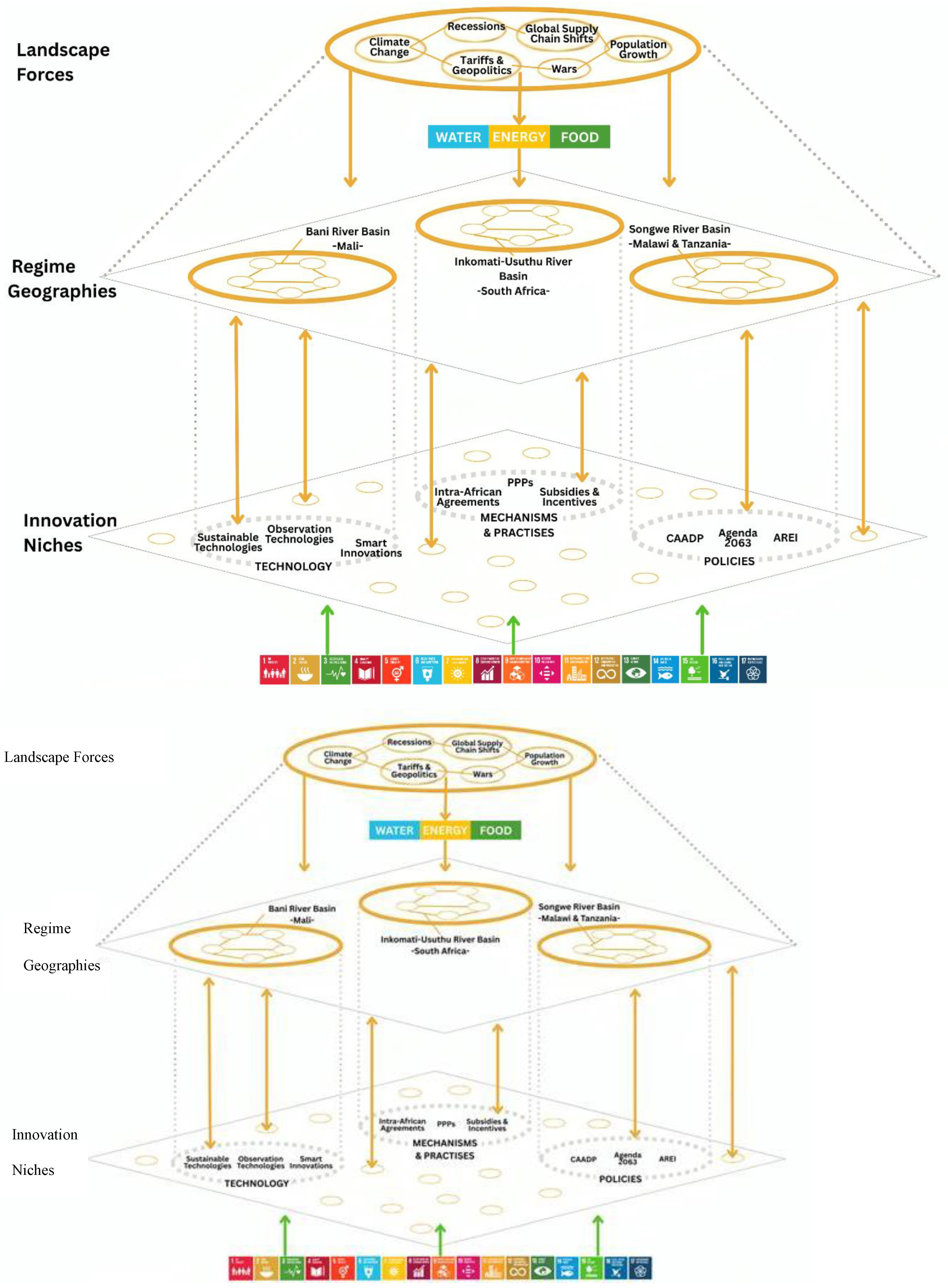
Figure 2.
X-Curve Framework Tool (reproduced under CC 4.0 license from the Climate-KIC X-CURVE [6]).
Figure 2.
X-Curve Framework Tool (reproduced under CC 4.0 license from the Climate-KIC X-CURVE [6]).
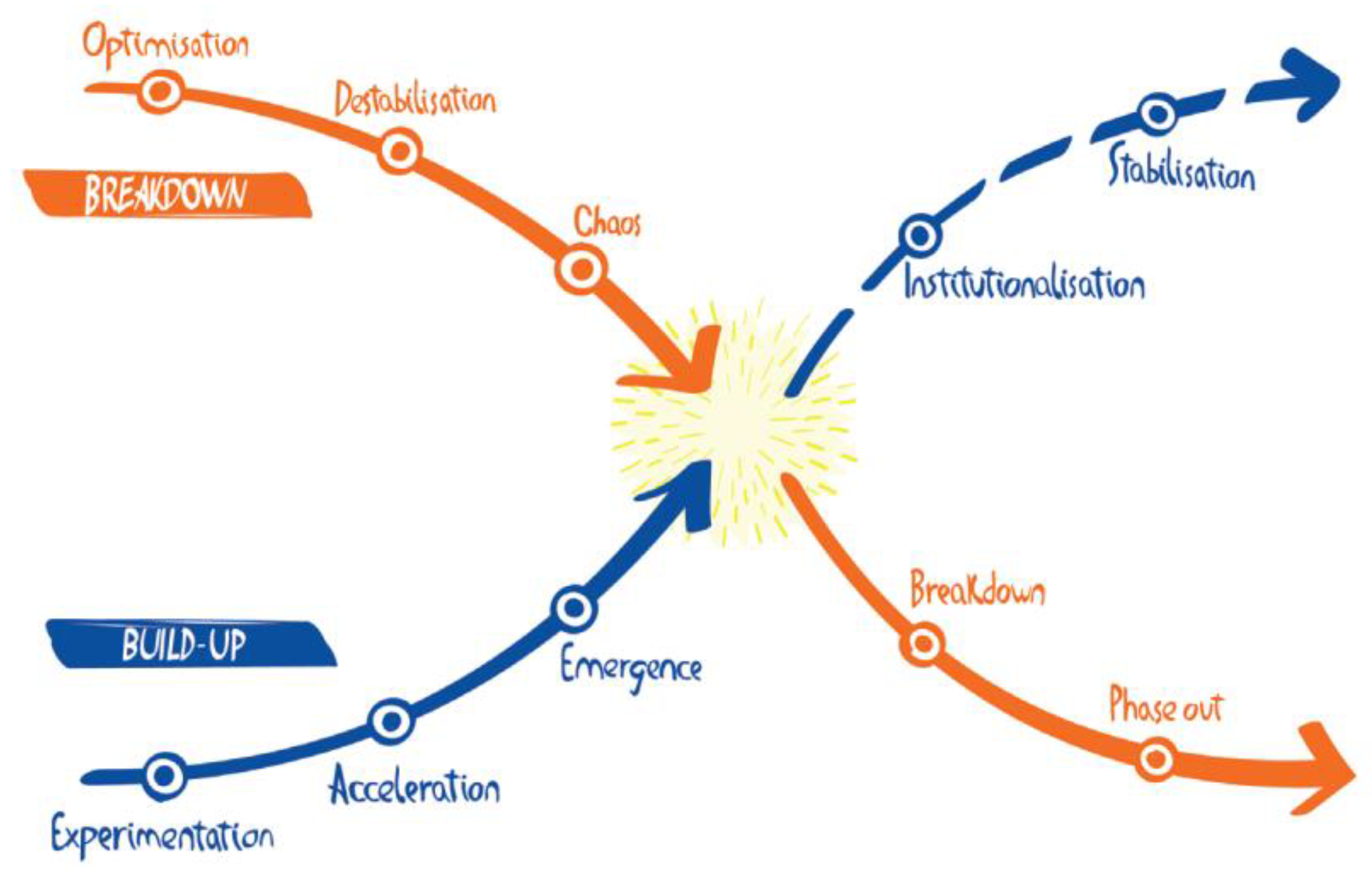
Figure 3.
Visual presentation of the WEF Nexus component variables for SRB.
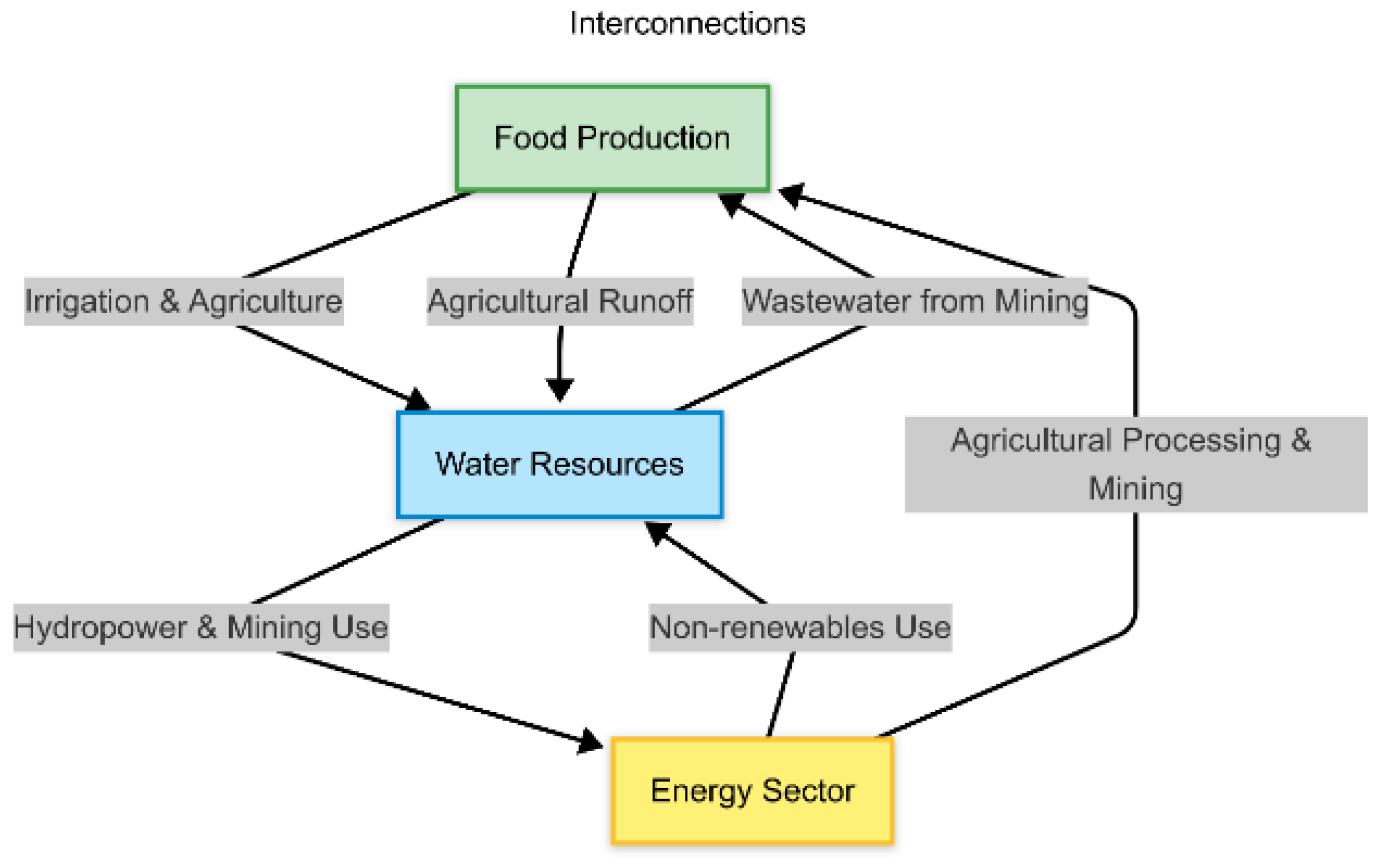
Figure 4.
Visual presentation of the WEF Nexus component variables for BRB.
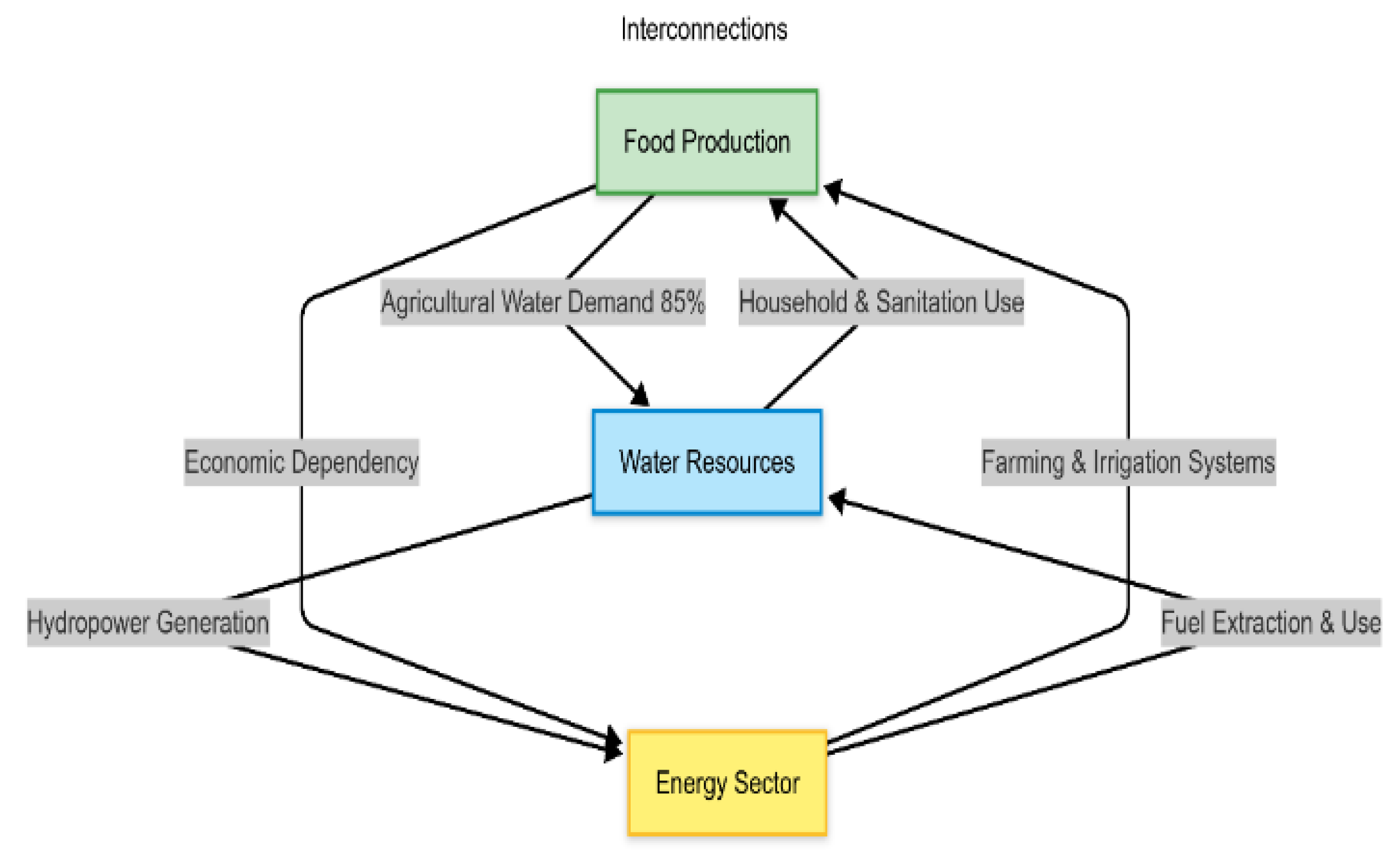
Figure 5.
Visual presentation of the WEF Nexus component variables for IURB.
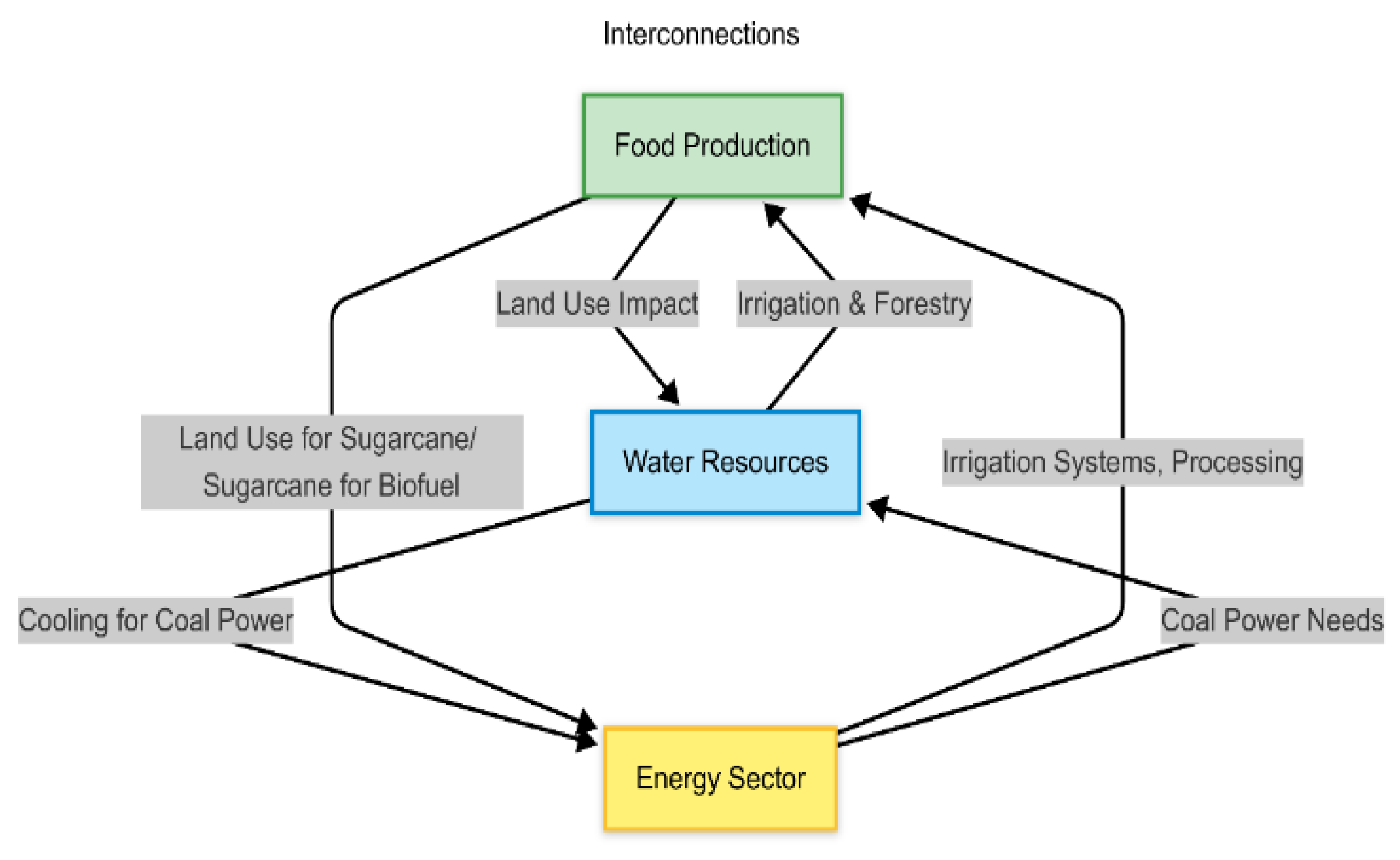
Figure 6.
X-Curve of transition dynamics for the WEF Nexus in the selected geographies of the African Union
Figure 6.
X-Curve of transition dynamics for the WEF Nexus in the selected geographies of the African Union
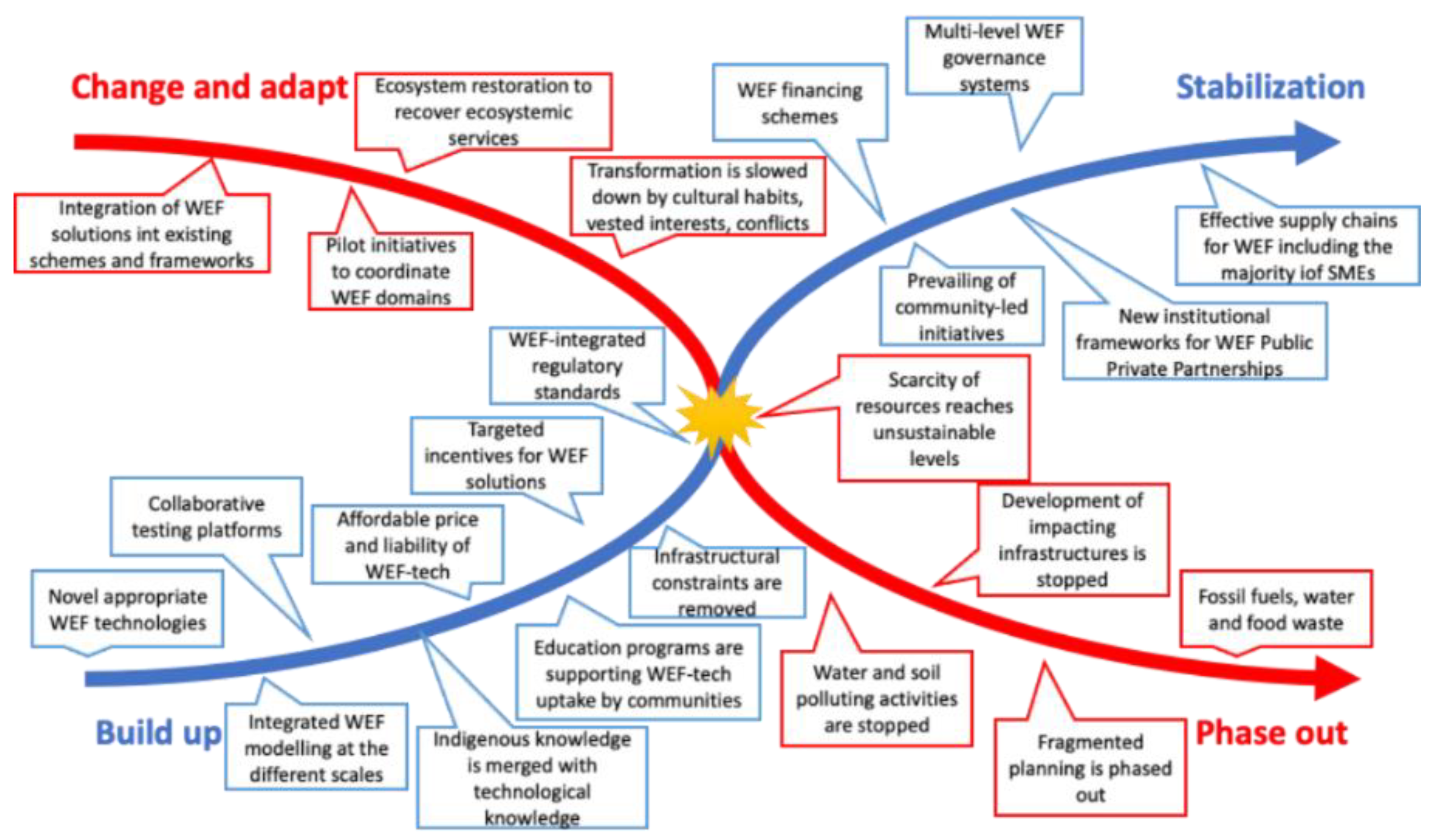

Table 1.
Key highlights in the Open Innovation workshop.
| Identified Technologies/Tools | Water | Water and Energy | Energy | Energy and Food | Food | Total solutions | |
| Existing | Sustainable | 7 | 2 | 3 | 2 | 4 | 18 |
| Non-Sustainable | 3 | 0 | 2 | 0 | 5 | 10 | |
| Gaps/ needs | 9 | 0 | 4 | 5 | 3 | 21 |
Table 2.
Shared focus between the two Teams as written on the ‘Context Map’.
| Macro - Level | Meso - Level | Micro - Level |
| Climate Change |
Increasing education | Microgrids |
| Increasing acknowledgment of indigenous knowledge |
Incentives to go green | |
| Irrigation systems | Tax incentives for use of solar panels |
Table 3.
WEF related Techno-Scientific Innovation Assets.
| Asset Category | Techno-Scientific Innovation Assets |
| Earth Observation Technologies Water-Efficient Technologies |
Satellite imagery and remote sensing for data collection on water resources, agriculture, and energy infrastructure. (including GIS) [53,54] Drip irrigation, wastewater recycling, rainwater harvesting, desalination and purification of water [55]. |
| Smart WEF Innovations | Integrated systems for efficient resource management, such as smart water metering and monitoring [55]. |
| Sustainable Agriculture Technologies | Hydroponics, aquaponics, and precision agriculture for efficient food production [56]. |
| Renewable Energy Technologies | Solar and wind power for sustainable energy generation [57]. |
| Nature-Based Solutions | Ecosystem-based approaches like constructed wetlands for wastewater treatment and pollution reduction [58]. |
| Sustainable Cooking Technologies and approach | Substitution of traditional fuelwood based cooking towards with more sustainable and clean types of cooking (efficient wood stoves, electric, or gas burners) [50]. |
| Cold Chain Technologies | Energy efficient technologies for food security [48] |
Table 4.
Market mechanisms and Innovation Assets.
| Market mechanisms and instruments | Innovation Assets |
| Subsidies and Incentives | Financial support for renewable energy projects and water-efficient technologies [59]. |
| Payment for Ecosystem Services (PES) | Rewarding farmers for sustainable practices. |
| Public-Private Partnerships (PPPs) | Collaborating with the private sector for infrastructure development [60]. |
| Supply Chain Integration | Coordinating and optimizing resource flows across the WEF sectors to improve efficiency and waste production [61]. |
| International and Intra- African Agreements and Different Initiatives Related to WEF Nexus | Formal agreements and collaborative efforts between African Union Nations as well as International Nations, towards WEF Nexus approaches [62,63]. |
| Pricing Strategies | Tiered water pricing and energy pricing to incentivize efficient use [64], [65]. |
| Subsidies and Incentives | Financial support for renewable energy projects and water-efficient technologies [66]. |
| Innovation Co-creation Mechanism | Living Labs provide a real-world framework for user-centred innovation, focusing on the active participation of diverse stakeholders in the co-creation of solutions through experimentation [67]. |
Disclaimer/Publisher’s Note: The statements, opinions and data contained in all publications are solely those of the individual author(s) and contributor(s) and not of MDPI and/or the editor(s). MDPI and/or the editor(s) disclaim responsibility for any injury to people or property resulting from any ideas, methods, instructions or products referred to in the content. |
© 2026 by the authors. Licensee MDPI, Basel, Switzerland. This article is an open access article distributed under the terms and conditions of the Creative Commons Attribution (CC BY) license (http://creativecommons.org/licenses/by/4.0/).
Copyright: This open access article is published under a Creative Commons CC BY 4.0 license, which permit the free download, distribution, and reuse, provided that the author and preprint are cited in any reuse.


