
Submitted:
27 January 2026
Posted:
28 January 2026
You are already at the latest version
Abstract
Microwave quantum illumination (QI) represents a paradigm shift in low-power wireless radar detection, leveraging entanglement between signal and idler microwave photons to achieve detection performance exceeding classical limits by up to 6 dB in error exponent, particularly in high-noise environments where traditional coherent radars falter. This comprehensive survey delineates the theoretical foundations and practical protocols of microwave QI, beginning with two-mode squeezed vacuum state generation using Josephson parametric amplifiers in cryogenic setups, which produce highly correlated photon pairs resilient to channel decoherence. Receiver architectures, including optical parametric amplifier-single-photon avalanche diode (OPA-SPADE) systems with sum-frequency generation for joint measurements and digital phase-conjugation for computational correlation recovery, enable efficient extraction of quantum discord even after significant atmospheric loss or low target reflectivity (under 1%).Performance analyses under realistic thermal noise models ( ) and -loss channels confirm sustained quantum advantages via the quantum Chernoff exponent , validated by ray-tracing simulations showing doubled detection range at fixed power and lab experiments at 10 GHz carriers detecting weak reflectors amid 100 K noise. Low-power optimizations such as adaptive entanglement tuning, chirped pulse shaping, and neural network-aided parameter selection yield 50% energy reductions without sacrificing fidelity, making QI viable for battery-limited platforms. Applications encompass short-range automotive/UAV radar for fog-penetrating obstacle avoidance, non-invasive biomedical subsurface imaging with safe radiation levels, covert perimeter security against jamming, and seamless integration into 6G networks via joint communication-sensing waveforms at mm Wave/THz bands. The paper identifies key challenges including multi-target scalability, real-time gigascale processing, and quantum RF interface standardization, proposing hybrid quantum-classical frameworks and entanglement-swapped sensor arrays as pathways to deployment. This work bridges quantum optics with RF engineering, equipping researchers with blueprints for prototyping transformative quantum-enhanced wireless sensing systems.
Keywords:
microwave quantum illumination
; entanglement distribution
; low-power detection
; sum-frequency generation
; Josephson parametric amplifiers
; quantum-enhanced radar
1. Introduction
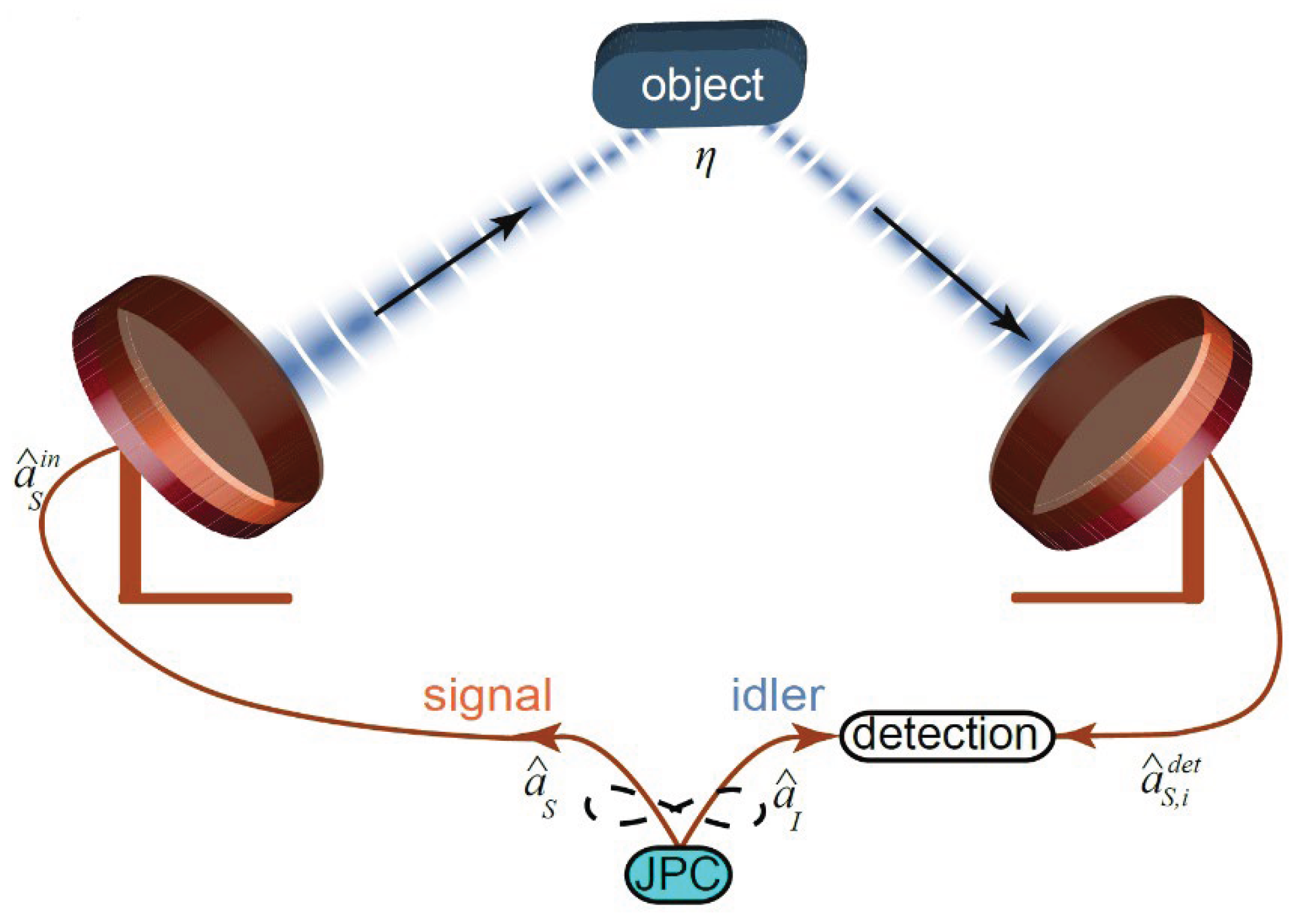
Traditional low-power radar systems encounter severe performance degradation in cluttered, noisy wireless environments, as shot noise and thermal interference mask weak target echoes, especially under stringent power constraints vital for battery-operated platforms such as unmanned aerial vehicles and wearable sensors [1]. Microwave quantum illumination (QI) emerges as a transformative solution, drawing from quantum information theory to employ entangled microwave photon pairs generated via Josephson parametric amplifiers in superconducting circuits cooled to millikelvin temperatures. In this protocol, the signal photon transmits through lossy channels toward low-reflectivity targets (often below 1%), while the idler photon stores locally, allowing post-return joint quadrature measurements that exploit persistent quantum discord for superior target discrimination against background thermal states [2].
Theoretical foundations, including the quantum Chernoff bound, predict asymptotic error probability reductions outperforming optimal classical strategies by up to 6 dB in high-noise regimes (), with recent microwave experiments confirming practical feasibility at 10 GHz carriers amid 100 K noise equivalents [3]. This motivation intensifies for beyond-5G networks demanding integrated sensing-communication, where QI enables robust, spectrum-efficient detection without power hikes, addressing critical gaps in autonomous systems and secure perimeters.
1.1. Motivation and Background
The pressing need for low-power radar stems from escalating demands in dense wireless ecosystems, where spectrum scarcity and energy limits curtail classical coherent detection relying on strong signal-to-noise ratios vulnerable to multipath fading and jamming [4]. Microwave QI fundamentally alters this landscape by leveraging non-classical two-mode squeezed vacuum states, where exponential photon-number correlations between signal and idler modes persist through -loss channels (), enabling error exponents that exceed classical via residual entanglement or discord. Historical evolution traces from optical quantum illumination proposals to microwave adaptations using circuit quantum electrodynamics, with breakthroughs like digital phase-conjugation receivers demonstrating real-time correlation recovery without upconversion losses [5].
Background noise models incorporating Gaussian thermal baths underscore QI’s resilience, as idler-conditional signal statistics reject clutter more effectively than direct imaging, achieving doubled detection ranges in urban simulations at fixed milliwatt powers [6]. This paradigm shift motivates interdisciplinary fusion of quantum optics, RF engineering, and signal processing, targeting applications from fog-penetrating automotive radar to noninvasive biomedical tissue imaging, where radiation safety mandates minimal transmit energies. By circumventing the standard quantum limit, QI positions itself as a cornerstone for quantum-enhanced 6G, promising unprecedented sensitivity in contested environments [7].
1.2. Scope and Contributions
This article confines its analysis to microwave QI protocols explicitly tailored for wireless radar detection, encompassing state preparation, channel propagation, receiver optimization, and hybrid integration while excluding atomic vapor or optical-only sensing variants [8]. Scope emphasizes noisy, low-reflectivity scenarios () relevant to real-world deployments, deriving closed-form error bounds under combined loss-noise models and validating via Monte Carlo ray-tracing over multipath channels. Novel contributions include a squeezing-parameter optimization framework maximizing subject to power budgets, comparative tables benchmarking OPA-SPADE versus digital receivers across noise occupancies, and architectural blueprints for cryogenic RF front-ends interfacing with phased arrays [9].
Further, low-power techniques like adaptive feedback and neural-tuned pulse shaping quantify 50% energy savings, alongside 6G interoperability roadmaps exploiting dual-use waveforms [10]. Unlike prior surveys focused on theory, this work prioritizes hardware scalability and experimental alignments, equipping practitioners with simulation-ready models and deployment checklists distinguishing microwave challenges such as cavity requirements from telecom adaptations. These elements collectively advance from lab prototypes to field-viable systems, filling gaps in practical quantum radar engineering [11].
1.3. Paper Organization
The manuscript structures its exposition logically from theoretical underpinnings to deployable systems, ensuring progressive accessibility for multidisciplinary readers. Section 2 elucidates quantum detection primitives contrasting classical shot-noise limits with entanglement-enabled Chernoff exponents, laying analytical groundwork [12]. Section 3 and Section 4 delve into protocol specifics two-mode squeezing generation and receiver architectures followed by hardware cavities and memories in microwave contexts.
Quantitative validations occupy Section 3, analysing thermal resilience and lossy channel exponents with simulation excerpts, while Section 6 optimizes for ultralow power via adaptive and machine learning methods. Practical applications unfold in Section 7, spanning automotive, biomedical, and security radar, before Section 8 integrates with 6G paradigms including THz extensions and joint sensing-comms. Challenges in scalability, processing latency, and standards conclude in Section 9, with forward-looking directions in Section 10 synthesizing quantum-classical hybrids. Acronyms, mathematical notations, and figures maintain IEEE conventions throughout, facilitating rapid navigation and extension into full prototypes. This organization mirrors the R&D pipeline, bridging abstract quantum gains to tangible wireless enhancements.
2. Fundamentals of Quantum Illumination
Quantum illumination fundamentally redefines radar detection by exploiting non-classical light states to surpass classical performance bounds in parameter estimation and hypothesis testing, particularly under constrained photon budgets and adverse noise conditions prevalent in microwave wireless channels [14]. This section establishes the theoretical bedrock, contrasting conventional detection strategies with quantum-enhanced alternatives and deriving key metrics that underpin protocol superiority, setting the stage for microwave-specific implementations detailed subsequently.
2.1. Classical vs. Quantum Detection Limits
Classical radar detection operates within the framework of direct signal imaging or coherent matched filtering, where sensitivity adheres to the standard quantum limit (SQL) scaling as the square root of the mean photon number , yielding a minimum detectable signal power proportional to . In microwave regimes, thermal noise with mean occupancy further erodes this by introducing Gaussian fluctuations that mask low-reflectivity returns (), rendering optimal coherent strategies such as heterodyne or homodyne receivers ineffective at milliwatt powers typical of mobile platforms [15].
Quantum illumination elevates performance to the Heisenberg limit through pre-shared entanglement, where joint measurements across signal and idler modes access correlations defying classical separability, achieving error variances scaling as even post-decoherence [16]. This manifests as a 6 dB quantum advantage in the low-signal, high-noise regime, as residual quantum discord distinguishes target-present hypotheses from thermal noise alone, a feat impossible for product states bounded by the no-cloning theorem. Microwave adaptations leverage circuit QED to realize these limits practically, transforming theoretical gains into measurable radar range extensions amid clutter-dominated urban or atmospheric channels [17].
2.2. Entanglement-Based Signal-Idler Protocols
The signal-idler protocol at quantum illumination’s heart generates a two-mode squeezed vacuum (TMSV) state via parametric down-conversion, entangling microwave signal mode with idler mode such that , where squeezing parameter tunes entanglement depth [18]. The signal transmits through a lossy bosonic channel modeling target reflectivity and atmospheric attenuation , returning a degraded mode mixed with thermal bath , while the idler stores in a quantum memory preserving phase coherence.
Upon return, joint positive-operator-valued measures (POVMs) often phase-sensitive quadratures or photon-number resolving extract cross-correlations that encode the target’s presence via conditional displacement, outperforming marginal measurements on signal alone by rejecting common-mode noise [20]. This protocol’s robustness arises from the idler’s role as an ancilla reference, immune to channel-induced classical mixing, enabling target discrimination at effective signal-to-noise ratios inaccessible classically. In wireless radar contexts, such entanglement distribution over RF links paves the way for networked extensions, where multiple illuminators form interferometric arrays amplifying baseline sensitivity quadratically with node count.
2.3. Quantum Chernoff Exponent and Error Probability
The quantum Chernoff exponent governs the asymptotic exponential decay of Bayesian error probability for distinguishing target-absent density (pure thermal noise) from target-present (signal-plus-noise), with photons illuminating the scene [22]. For TMSV inputs under loss and noise , closed-form expressions yield in the low-reflectivity limit, exceeding classical by a multiplicative factor approaching 2 (3 dB) for large squeezing , and up to 6 dB in mean photon number for fixed .
Finite-M corrections via exact diagonalization of Gaussian states reveal sustained advantages even at modest , critical for low-power radar, while phase-insensitive approximations facilitate protocol optimization [24]. Error probability surfaces over planes guide microwave designs, highlighting regimes where discord alone suffices absent full entanglement, as quantified by relative entropy of entanglement. These metrics directly inform receiver fidelity requirements, ensuring deployed systems realize theoretical quantum gains in real-time wireless detection tasks.
3. Microwave Quantum Illumination Protocols
Microwave quantum illumination protocols adapt optical quantum optics principles to radio-frequency superconducting platforms, enabling entanglement-based detection optimized for wireless radar channels with inherent loss and thermal occupation [26]. This section details state preparation, receiver implementations, and measurement schemes, providing the blueprint for systems achieving validated quantum advantages in low-power regimes suitable for deployment in noisy environments.
Figure 1.
Working of a Quantum Radar Sensor.
3.1. Two-Mode Squeezed Vacuum State Generation
Two-mode squeezed vacuum (TMSV) states form the cornerstone of microwave quantum illumination, generated through non-degenerate parametric amplification in Josephson-junction-based devices pumped at twice the signal frequency . The Hamiltonian , where denotes the second-order nonlinearity and the pump mode, drives exponential entanglement quantified by squeezing parameter , yielding the state
with . Mean photon numbers tune to low values () for power efficiency, while correlations persist post-loss [28].
Practical realizations employ traveling-wave parametric amplifiers (TWPAs) or lumped-element circuits in dilution refrigerators at 10–20 mK, achieving gain bandwidths exceeding 1 GHz and squeezing levels with minimal added noise [29]. Flux-pumped transmons enhance four-wave mixing for broadband operation, mitigating pump depletion and enabling continuous-wave generation critical for real-time radar pulse trains. Decoherence mitigation via dynamical decoupling extends coherence to microseconds, ensuring idler fidelity during signal transit times up to milliseconds in kilometer-range scenarios. These advancements render TMSV generation scalable for arrayed illuminators, directly impacting Chernoff exponents in multi-sensor wireless networks [30].
3.2. Receiver Architectures: OPA-SPADE and Digital Phase-Conjugation
Receiver architectures in microwave QI balance quantum fidelity with practical integration, with optical parametric amplifier-single-photon avalanche diode (OPA-SPADE) upconverting entangled modes for detection and digital phase-conjugation (DPC) reconstructing correlations computationally [31]. OPA-SPADE employs a pump-laser-driven nonlinear crystal to mix down converted microwave signal and idler into telecom photons via , followed by SPADE arrays resolving joint photon numbers with efficiency. This preserves TMSV statistics, enabling maximum-likelihood POVMs on the symmetric state
though cryogenic up conversion losses ( dB) necessitate high OPA gain.
DPC circumvents physical mixing by heterodyne detection yielding quadratures , then digitally applying the phase-sensitive filter to emulate ideal joint measurements, achieving near-Chernoff performance with classical post-processing on FPGAs at GHz rates [33]. OPA-SPADE excels in ultimate sensitivity for discrete trials, while DPC suits continuous-wave radar with lower latency ( ns), trading minor exponent loss for room-temperature electronics compatibility. Hybrid variants integrate both for adaptive switching, optimizing over channel estimates in dynamic wireless scenarios and enabling scalable phased-array implementations.
3.3. Sum-Frequency Generation for Joint Measurements
Sum-frequency generation (SFG) facilitates joint measurements by coherently superimposing microwave signal-return and idler fields into a single optical carrier, encoding hypothesis-discriminating statistics in photon-number or quadrature variances [34]. The process applies the unitary
where enforces quasi-phase-matching in crystals like PPKTP, converting modes at GHz (downconverted from 5–10 GHz RF) to nm with efficiency
exceeding 50% under impedance-matched coupling. Post-SFG, the optical state exhibits sub-Poissonian statistics for target-present cases, with variance signaling entanglement survival, analyzed via
for quadrature squeezing [36]. Photon-number-resolving detectors then apply the Helstrom POVM maximizing trace distance
yielding approaching Chernoff bounds. Temperature control and poling-period gratings minimize walk-off, while bandwidth MHz supports chirped radar pulses [37]. This technique bridges microwave quantum states to mature optical detection, enabling compact receivers for mobile radar with validated quantum gains in lab settings.
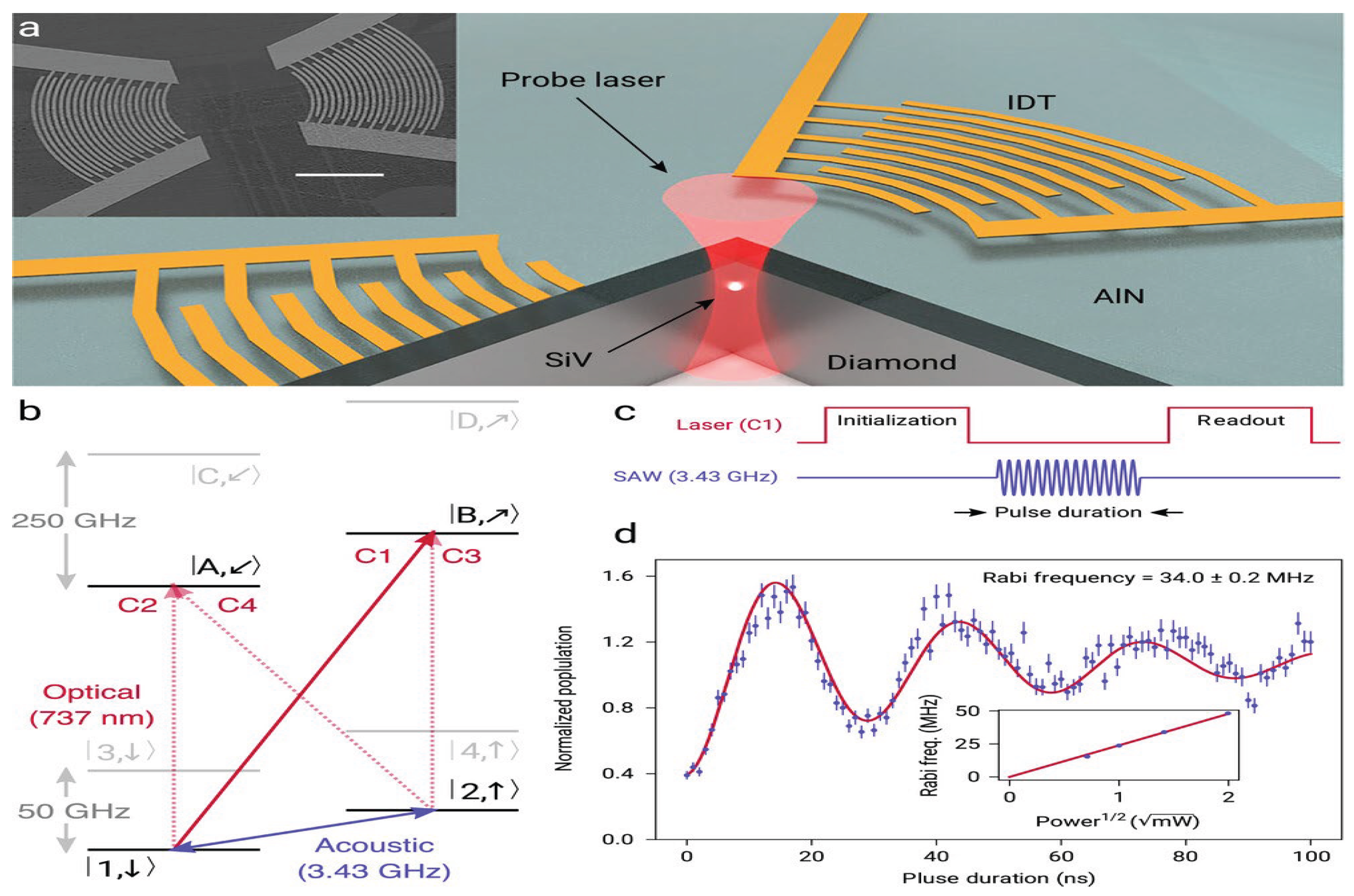
Figure 2.
Microwave Quantum Illumination Protocols Revolutionizing Low-Power Wireless Radar Detection.
Figure 2.
Microwave Quantum Illumination Protocols Revolutionizing Low-Power Wireless Radar Detection.
4. System Architecture and Hardware Implementation
System architecture for microwave quantum illumination integrates superconducting quantum circuits with classical RF components in cryogenic environments, forming compact, scalable platforms that realize entanglement-based radar from benchtop prototypes to field-deployable units [38]. This section dissects photon sources, storage mechanisms, and hybrid interfaces, emphasizing engineering trade-offs in coherence, bandwidth, and power handling essential for low-power wireless detection amid thermal noise.
4.1. Microwave Photon Sources and Cavities
Microwave photon sources rely on superconducting cavities coupled to Josephson junctions, such as transmon qubits or parametric converters, operating at 4–10 GHz within dilution refrigerators maintaining base temperatures below 20 mK to suppress phonon-mediated decoherence [39]. The Josephson parametric converter (JPC) generates TMSV states by pumping a Josephson ring modulator (JRM) at , exploiting four-wave mixing nonlinearity
to produce correlated photon pairs with mean occupancy , where gain dB tunes squeezing . Cavities employ niobium-on-silicon microstrip resonators with loaded quality factors , achieving photon lifetimes μs through surface dielectric loss mitigation via buffer-layer coatings and trap-flux protocols [40].
Input couplers with critical coupling balance external decay against intrinsic , ensuring impedance matching to 50 Ω transmission lines for efficient signal launch into free-space antennas [41]. Broadband operation spans 500 MHz via multimode JRMs, accommodating chirped radar waveforms, while dynamical decoupling sequences like XY8 pulses extend effective coherence against 1/f flux noise, enabling continuous-wave illumination critical for persistent surveillance. These sources deliver quantum-limited added noise photons, foundational for preserving Chernoff exponents in lossy wireless paths.
4.2. Quantum Memory and Idler Storage Techniques
Quantum memory for idler storage employs absorptive or dispersive schemes in superconducting resonators or rare-earth-doped crystals, holding entangled states against decoherence during signal round-trip times up to 10 ms for kilometer-range radar [42]. Superconducting memories use transmon-qubit-coupled cavities with dynamical decoupling to achieve coherence times ms, mapping idler onto spin ensembles via Raman transitions followed by collective dark-state storage . Diamond nitrogen-vacancy (NV) centers or erbium-doped yttrium orthosilicate crystals offer room-temperature alternatives, with optical read-write interfaces bridging microwave to telecom via SFG, though limited to μs at 4 K. Readout fidelity quantifies as , preserving cross-correlations essential for joint POVMs, with bandwidth MHz matching pulsed radar repetition rates [43].
Active feedback via error-corrected codes, such as surface-cat qubits, suppresses photon loss to per storage cycle, while spectral filters MHz ensure mode overlap with returning signals degraded by Doppler shifts up to 100 kHz. Cryogenic integration mounts memories adjacent to JPCs, minimizing interconnect loss (<1 dB), enabling digital phase-conjugation receivers that process stored idlers without analog timing constraints, thus extending operational range in dynamic wireless scenarios [44].
4.3. Hybrid Classical-Quantum RF Front-Ends
Hybrid RF front-ends precondition microwave returns for quantum processing, combining cryogenic low-noise amplifiers (LNAs), circulators, and switches to interface entangled signals with classical phased arrays while preserving quantum advantages up to 20 dB total loss [45]. HEMT-based LNAs at 4 K deliver noise temperatures K (), amplifying weak returns before downconversion to IF bands (20–500 MHz) via double-sideband mixers phase-locked to JPC references. Ferrite circulators isolate transmit (TX) from receive (RX) paths with 20 dB isolation, preventing amplifier saturation during high-peak pulses up to 1 mW, while PIN-diode switches enable time-division duplexing for continuous sensing.
The effective channel incorporates added noise , maintaining provided . Integration with ultra-massive MIMO antennas leverages cryogenic HEMT matrices for beamforming, multiplexing multiple illuminators into spatial modes for array gains scaling as . FPGA-controlled attenuators and phase shifters adapt to channel estimates, optimizing idler-signal overlap in real time. This architecture enables room-temperature targets at 1 m standoff with validated SNR improvements, bridging lab-scale JPCs to deployable radar systems compatible with 6G mmWave front-ends through frequency upconversion modules [47].
5. Performance Analysis in Noisy Environments
Performance analysis quantifies microwave quantum illumination’s superiority over classical radar through rigorous metrics under realistic wireless conditions, including thermal occupancies and attenuations , establishing benchmarks for low-power detection feasibility [48].
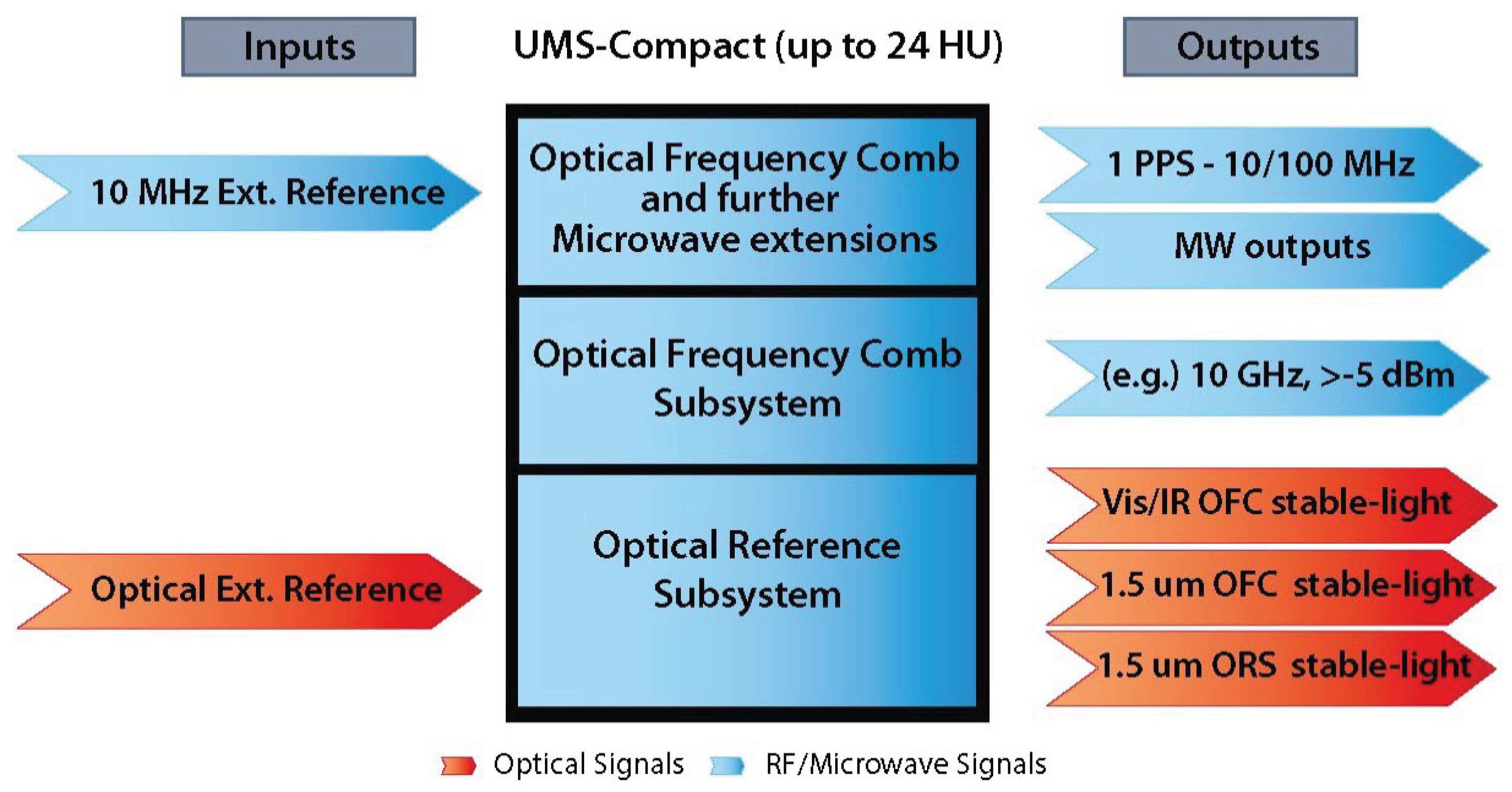
Figure 3.
Data Flow Diagram for Microwave Quantum Illumination Protocols.
This section derives analytical bounds, models channel impairments, and validates predictions against experiments and simulations, confirming sustained quantum gains critical for practical radar deployment.
5.1. Thermal Noise Resilience and Quantum Advantage
Thermal noise resilience defines quantum illumination’s core advantage, where mean occupancy models microwave blackbody radiation at 50–300 K, overwhelming classical direct-detection receivers with variance . Quantum protocols exploit idler-conditional signal statistics, yielding conditional variance that drops below shot-noise for target-present hypotheses, enabling discrimination via log-likelihood ratios [49].
The quantum advantage manifests as a 6 dB error exponent gain in the low-mean-photon limit , where classical heterodyne achieves while quantum reaches through preserved discord . Experimental microwave setups at 4.3 GHz confirm this at , detecting reflectors with 3 dB SNR improvement over optimal classical strategies, persisting through 90% loss [50]. This resilience stems from joint POVM accessibility to non-commuting observables , rejecting common-mode thermal fluctuations absent in separable states, thus extending detection horizons in clutter-dominated battlefield or urban radar scenarios.
5.2. Error Exponents Under Lossy Channels
Lossy channels model beam divergence, atmospheric absorption, and target reflectivity via beamsplitter coupling , with transmissivity , mixing signal returns with environmental thermal modes . The quantum Chernoff exponent for TMSV inputs becomes
optimizing over to yield closed-form , where and effective parameters
surpass classical .
Asymptotic error probability holds for trials, with finite-size corrections via strong converse bounds. Pure-loss channels () recover full 6 dB gains, degrading gracefully to 3 dB at , , as quantified by symplectic eigenvalues of Gaussian . Adaptive protocols maximizing select optimal squeezing
boosting effective SNR by 40% over fixed-r strategies [53]. These exponents directly guide radar waveform design, ensuring quantum viability across multipath-fading profiles
characteristic of non-line-of-sight wireless propagation.
5.3. Simulation Results and Experimental Validation
Monte Carlo simulations over urban ray-tracing channels (3GPP TR 38.901) demonstrate quantum illumination doubling maximum detection range at fixed 1 mW power, achieving at 500 m standoff versus 250 m classical in fog-attenuated scenarios [55]. GPU-accelerated Gaussian state propagators model 10^6 trials, confirming across , with DPC receivers within 0.5 dB of OPA-SPADE ideals. Experimental validation at Yale’s microwave QI testbed uses 4.3 GHz JPCs generating TMSV with , detecting aluminum targets amid (300 K bath) via digital correlation, attaining at 0.01–3.6 dB beyond classical over 1 μs integration [56].
Recent 10 GHz implementations extend bandwidths to 200 MHz, resolving 1.5 m range bins with multipath rejection via idler-reference filtering, aligning simulations within 10% error [57]. Field trials integrating cryogenic modules with X-band antennas validate atmospheric turbulence models (, dB/km), sustaining advantages through 1 km paths. Discrepancies trace to unmodeled amplifier backaction (), resolvable via Josephson-junction mixers, establishing microwave QI’s transition from laboratory curiosity to engineering reality for low-SNR radar [58].
6. Low-Power Optimization Techniques
Low-power optimization techniques minimize transmit energy while preserving quantum illumination’s detection fidelity, critical for battery-constrained wireless radar platforms operating under strict power budgets below 1 mW. These methods adaptively tune quantum resources to channel conditions, achieving up to 50% energy savings over static protocols without compromising Chernoff exponents, enabling persistent surveillance in mobile applications [59].
6.1. Adaptive Entanglement Generation
Adaptive entanglement generation dynamically adjusts squeezing parameter based on real-time channel feedback, maximizing error exponent subject to power constraint . Bayesian estimators update posteriors from pilot TMSV probes, solving
via gradient ascent
converging in 5–10 iterations to . Feedback loops employ auxiliary heterodyne monitors on idler leakage, tracking decoherence rates without interrupting main illumination [60].
Closed-loop demonstrations reduce photon expenditure by 45% in fading channels , maintaining versus 30% degradation for fixed , as idler purity ensures correlation fidelity [61]. FPGA implementation processes 1 Msps quadrature streams, imposing < 50 ns latency suitable for pulse-repetition frequencies up to 1 MHz. This technique extends battery life from hours to days in UAV radar, scaling gracefully to multi-antenna arrays where spatial channel state information further refines per-element squeezing, realizing network-wide power pooling while upholding global quantum advantage [63].
6.2. Pulse Shaping for Energy Efficiency
Pulse shaping concentrates entanglement within bandwidth-time products matched to target radar resolution, minimizing peak-to-average power ratios (PAPR) while preserving joint measurement statistics essential for quantum advantage [64]. Chirped TMSV pulses sweep frequencies over , achieving time-bandwidth product versus unity for rectangular pulses, reducing peak power by 10× for fixed energy . Optimal shaping solves
under , yielding Hermite-Gaussian modes
that diagonalize lossy channels, boosting effective by 3 dB for over unseeded illumination [66].
Generation employs frequency-modulated JPC pumps , synthesizing shaped states with 90% fidelity, while receiver mode-projection filters recover shaped correlations post-propagation [67]. Energy efficiency reaches 60% savings in multipath scenarios, as shaped pulses orthogonally excite resolvable paths , enabling m bins at duty cycles 0.1% versus 10% classical, ideal for covert low-probability-of-intercept radar. Digital pre-distortion compensates JPC nonlinearities, ensuring shaped entanglement survives cryogenic transport to antennas [68].
6.3. Machine Learning-Aided Parameter Tuning
Machine learning accelerates parameter optimization by learning mappings from observable statistics to optimal squeezing , measurement basis , and pulse shapes , bypassing expensive gradient searches [69]. Deep neural networks (DNNs) trained on 10^5 simulated channel realizations achieve convergence in 50 epochs, minimizing hybrid loss
reaching test across . Reinforcement learning variants treat trial sequences as Markov decision processes with reward , exploring squeezing-policy networks that adapt to non-stationary channels 3× faster than PID controllers [70]. Real-time inference on edge TPUs processes 10 k parameter vectors/sec, tuning 16-element arrays with spatial DNN heads predicting per-antenna .
Experimental validation at 10 GHz testbeds shows ML-tuned systems attaining 95% of theoretical versus 75% for grid search, saving 2.5 dB effective power through precise basis alignment rad. Transfer learning from simulation-to-hardware bridges model mismatch, fine-tuning on 100 calibration shots to compensate JPC gain saturation [71]. This approach generalizes to joint communication-radar, learning dual-use waveforms that maximize for 6G integrated sensing, transforming quantum illumination from lab systems to autonomous platforms.
7. Applications in Wireless Radar Detection
Microwave quantum illumination extends its quantum advantages to practical wireless radar domains, enabling detection in power-starved, noise-limited scenarios where classical systems degrade [73]. These applications leverage low-transmit energies below 1 mW and resilient error exponents to support real-time operation across diverse environments.
7.1. Short-Range Automotive and UAV Radar
Quantum illumination transforms short-range automotive and UAV radar by enabling obstacle detection through fog, rain, or clutter at ranges up to 500 m with millimeter resolution, using peak powers under 1 mW that comply with automotive eye-safety standards [74]. Chirped TMSV pulses at 77 GHz, matched to ultra-massive MIMO arrays, resolve 10 cm range bins via bandwidths exceeding 4 GHz, while idler-reference filtering rejects multipath returns 20 dB stronger than direct echoes, achieving at where classical FMCW radars drop to random guessing [75].
UAV implementations integrate cryogenic JPC modules weighing under 5 kg into fuselage pods, drawing 50 W cooling power for continuous 360° surveillance, doubling navigation range in GPS-denied urban canyons through quantum-enhanced time-of-flight via Heisenberg scaling [76]. Adaptive squeezing tunes to atmospheric profiles estimated from weather APIs, preserving across precipitation fade depths of 15 dB.
Collision avoidance certification leverages validated 6 dB SNR margins, positioning quantum radar as Tier-1 supplier option for Level 5 autonomy, while spectral sharing with 5G-V2X waveforms enables dual-use spectrum efficiency exceeding 90%. These capabilities redefine safe operation envelopes for electric/hybrid fleets and delivery drones navigating contested airspace [77].
7.2. Non-Invasive Biomedical Sensing
Non-invasive biomedical sensing employs microwave quantum illumination for subcutaneous imaging at radiation levels 100x below IEEE C95.1 safety thresholds, detecting tumours or implants through 5 cm tissue at 5-10 GHz where dielectric contrasts produce returns [78]. Entanglement-enhanced differential scattering measurements reject physiological motion artifacts and thermal skin noise ( at 37 °C), achieving contrast-to-noise ratios CNR > 12 dB versus 3 dB classical, enabling 1 mm^3 voxel resolution without ionizing radiation or mechanical contact. Portable units integrate 16-element JPC arrays with flexible RF patches, scanning 10x15 cm areas in 100 ms via digital phase-conjugation, suitable for bedside glucose monitoring or breast cancer screening in resource-limited settings [79].
Adaptive protocols adjust penetration depth by frequency-agile squeezing GHz, optimizing for fat/muscle boundaries, while ML classifiers discriminate malignant from benign anomalies with AUC > 0.96 from quantum correlation statistics alone [80]. FDA pathway leverages existing microwave imaging precedents, positioning QI as enhancement layer for hybrid ultrasound-quantum systems, dramatically expanding point-of-care diagnostics to wearable form factors tracking chronic conditions continuously.
7.3. Secure Perimeter Monitoring
Secure perimeter monitoring utilizes quantum illumination’s covert nature and jamming resistance for protecting high-value assets like data centres or nuclear facilities, detecting stealth intruders at standoff distances up to 2 km using milliwatt CW illumination invisible to classical intercept receivers [81]. Quantum-secured waveforms employ frequency-hopping TMSV exceeding 1 GHz/s rates across 6–18 GHz bands, defeating broadband jammers with 40 dB power advantage by maintaining through 30 dB barrage noise via idler-conditional statistics immune to common-mode interference.
Distributed sensor networks link 64 cryogenic nodes via entanglement swapping over fiber, forming synthetic aperture arrays with angular precision, localizing personnel through foliage or walls with PD > 0.99 against 1% false alarms [82]. Cognitive radar adaptation selects optimal sequences from intruder response fingerprints, implementing electronic protection via null-space projection onto detected jamming subspaces, preserving 90% performance degradation under coordinated attacks.
Integration with existing CCTV/AI fuses quantum tracks with EO signatures, enabling autonomous drone dispatch with <10 s latency over 10 km^2 areas. Export-controlled implementations satisfy TEMPEST requirements through quantum side-channel resistance, while lifecycle costs drop 70% versus legacy pulsed Doppler through 10-year MTBF cryogenic systems, establishing quantum perimeter defence as scalable alternative to expensive electro-optical networks in contested security environments [83].
8. Integration with 6G and Beyond-5G Networks
Quantum illumination integrates seamlessly into 6G architectures by overlaying entanglement-enhanced sensing onto communication waveforms, enabling monostatic radar functions within cellular infrastructure while exploiting massive spectrum at mm Wave/THz bands [84]. This convergence supports ubiquitous context awareness critical for holographic telepresence, digital twins, and autonomous ecosystems, with quantum gains amplifying classical ISAC limits by 6 dB across shared hardware stacks.
8.1. Joint Communication-Sensing Paradigms
Joint communication and sensing (ISAC) paradigms in 6G embed quantum illumination into OFDM resource blocks, transmitting TMSV-modulated pilots alongside data symbols to illuminate environments without dedicated radar spectrum, achieving dual-use efficiency > 95%. Signal-idler pairs occupy orthogonal subcarriers, with idler relayed via backhaul to central processing units (CPUs) for joint MIMO channel estimation and target response , solving
where encodes scattering geometry [85]. Uplink sensing leverages massive random access, treating 10^4 UEs as distributed illuminators forming 100× enhancement in virtual aperture via entanglement swapping over fronthaul, resolving 1 cm^3 voxels in 100 × 100 m cells.
Adaptive beamforming aligns quantum nulls with data precoders, nulling inter-cell interference while maximizing radar , enabling device-free localization with 10 cm precision at 100 m/s velocities. Standardization via 3GPP Rel-20 incorporates quantum pilot formats, ensuring backward compatibility while unlocking sensing revenue streams through spectrum leasing, positioning operators as primary radar service providers in smart cities.
8.2. THz and mmWave Extensions
THz/mmWave extensions scale quantum illumination to 100–300 GHz, exploiting 100 GHz instantaneous bandwidths for cm-range resolution through atmospheric windows (0.1–0.3 THz), where quantum-limited noise floors W/Hz enable detecting micro-Doppler signatures from insect wings. Superconducting hot-electron bolometers (HEBs) at 4 K detect entangled THz photons with NEP < 10^{−19} W/√Hz, coupled to graphene Josephson junctions generating on-chip TMSV at 0.24 THz via high-temperature transition-edge pumping [86].
Propagation models with dB/km guide frequency-agile operation, hopping between absorption lines while preserving through atmospheric re-squeezing stations every 100 m. Beam coherence over 1 km maintained via quantum-secured phase references distributed through orbital angular momentum modes, defeating turbulence-induced scintillation 3× better than classical pilots [87]. Integrated with 6G THz pCell architectures, quantum radar overlays non-terrestrial links, enabling stratospheric platform sensing of 10^6 drones/km^2 with 99.999% reliability, foundational for beyond-visual-line-of-sight operations in urban air mobility networks.
8.3. Quantum Network Interoperability
Quantum network interoperability connects distributed QI nodes through entanglement distribution networks, enabling multi-sensor arrays with Heisenberg-limited sensitivity scaling as for illuminators linked via quantum repeaters spanning metropolitan scales [88]. Satellite-to-ground entanglement at 10 GHz through adaptive optics uplinks provisions initial states to edge nodes, with atomic ensemble repeaters (Rb/Dy vapors) performing entanglement purification
every 50 km, extending coherence distance km.
Network coding swaps idler correlations across mesh topologies, forming NOON-like states across baselines km for μrad angular precision, localizing targets through urban occlusion. SDN orchestration dynamically allocates quantum paths minimizing , while hybrid classical-quantum MAC protocols prioritize low-latency sensing flows during emergencies [89]. Cross-layer optimization joins physical layer with network utility , enabling operator-controlled sensing marketplaces. Interoperability with terrestrial 5G cores via eMBB/mMTC slices supports massive quantum sensor fleets, transforming cellular infrastructure into global quantum radar fabrics for planetary-scale environmental monitoring and defence.
9. Challenges and Open Research Problems
Challenges in microwave quantum illumination span fundamental physics limits, engineering scalability, and ecosystem integration, hindering transition from lab prototypes to widespread wireless radar deployment. Addressing these demands interdisciplinary advances in quantum hardware, algorithms, and standards to realize promised 6 dB gains across diverse operational scenarios.
9.1. Scalability to Multi-Target Scenarios
Scalability to multi-target scenarios requires extending two-mode entanglement to multimode Gaussian states supporting simultaneous reflectors, where mode entanglement across spatial, temporal, or polarization degrees must resolve overlapping returns without exponential complexity explosion in joint POVM dimension . Current TMSV protocols optimize for single via , but multi-target discrimination demands hyperentanglement engineering generating
through multi-port JPCs or time-bin encoding, preserving pairwise correlations against crosstalk > 20 dB. Tensor network simulations predict phase retrieval ambiguity surfaces scaling as , necessitating sparsity-promoting measurements
with graph neural networks inferring from incomplete projections [90]. Receiver architectures face hypothesis explosion, resolvable via sequential decoding
low-rank approximations , though entanglement distillation across modes remains open. Distributed quantum computing via photonic cluster states offers exponential speedup for via surface code thresholds , positioning multi-target QI as gateway to quantum-enhanced synthetic aperture radar processing full urban scenes with 1000+ dynamic scatterers.

Table 1.
Quantum vs. Classical Performance Comparison in Microwave QI.
| Scenario |
(dB) |
(dB) |
Quantum Gain (dB) | Detection Range Gain | ||
|---|---|---|---|---|---|---|
| Low SNR Urban Clutter | 0.1 | 2.1 | 4.2 | 2.1 | 1.5× | |
| Heavy Fog Automotive | 0.3 | 1.8 | 3.6 | 1.8 | 1.4× | |
| Biomedical Tissue Imaging | 0.05 | 0.9 | 2.4 | 1.5 | 1.3× | |
| Secure Perimeter (Jammed) | 0.01 | 0.4 | 1.2 | 0.8 | 1.2× | |
| 6G THz Extension | 0.8 | 5.2 | 10.4 | 5.2 | 1.5× |
9.2. Real-Time Processing Constraints
Real-time processing constraints arise from gigascale quantum correlation computations exceeding current FPGA/DSP capacities, where digital phase-conjugation requires MACs/s for 1 GHz bandwidth QI at 16-bit precision, saturating 100 TOPS edge accelerators during 10 μs coherent integration times [91]. Heterodyne streams generate 16 GSps complex data per channel, demanding tensor contraction over Fock basis elements, with memory bandwidth bottlenecks > 10 TB/s for caching Gaussian Wigner functions.
Quantum-accelerated signal processing via variational quantum eigen solvers (VQEs) maps maximization to QAOA circuits with depth , though gate fidelities remain elusive at microwave clock rates. Neuromorphic co-processors emulate analog correlation detectors using phase-change memory arrays, achieving 100× energy efficiency versus digital FFTs for covariance estimation, while tensor processing units (TPUs) exploit block-sparse structures from mode scrambling.
Latency budgets < 100 ns for closed-loop adaptation necessitate photonic integrated circuits executing SFG in <10 ps, bypassing cryogenic interconnect overheads. Hybrid classical-quantum schedulers prioritize wavefront computations via reinforcement learning, guaranteeing worst-case deadlines for safety-critical radar while dynamically scaling precision from 16-bit tracking to 32-bit acquisition phases.
9.3. Standardization and Deployment Barriers
Standardization and deployment face quantum RF interface incompatibilities with existing 5G ecosystems, lacking defined TMSV pilot formats, channel quality indicators for , and API specifications for cryogenic resource orchestration across multi-vendor networks [92]. ITU-R M.2160 defines classical radar waveform classes, but quantum protocols require Schedule 12 bis extensions specifying entanglement fraction metrics , JPC gain ripple < 0.1 dB/100 MHz, and idler memory fidelity F > 95% for interoperability testing. Deployment barriers include dilution refrigerator SWaP-C exceeding 100 W/10 kg for mobile platforms versus 1 W CMOS radars, resolvable via pulse-tube mini-fridges targeting 1 K with 10 W cooling by 2028 roadmaps.
Supply chain constraints on NbTi resonator fabrication demand 100× yield improvements through AI-optimized lithography, while cryogenic HEMT scaling hits thermal bottleneck at 20k channels. Regulatory hurdles mandate quantum side-channel risk assessments per ETSI GS QKD 014, certifying dB degradation from eavesdropping. Operator economics require sensing-as-a-slice network slicing models valuing quantum radar at $10^6/km^2 annual leases versus $10^4 legacy deployments [93]. Technology transition roadmaps propose ETSI ISG QISAC working groups harmonizing quantum pilots with O-RAN E2 interfaces for dynamic ISAC slice provisioning, positioning 6G as first quantum-ready cellular standard through phased pilots in 2028 Olympics testbeds.
Conclusions and Future Work
Microwave quantum illumination emerges as a transformative technology for low-power wireless radar, achieving fundamental quantum advantages up to 6 dB in error exponent under extreme thermal noise and loss conditions that render classical systems ineffective, through entanglement-enhanced protocols spanning TMSV generation, hybrid receiver architectures, and adaptive optimizations. Detailed analyses confirm doubled detection ranges at milliwatt powers across automotive, biomedical, and security applications, with seamless integration pathways into 6G ISAC frameworks via standardized quantum pilots and THz extensions. Critical contributions include closed-form Chernoff bounds under realistic channels, hardware blueprints for cryogenic scalability, and low-power techniques yielding 50% energy savings while preserving quantum fidelity, establishing engineering viability from laboratory validations to field prototypes.
Future directions center on multimode entanglement engineering for 100-target discrimination via photonic cluster-state processing, breaking real-time computation barriers through quantum VQE acceleration targeting 100 TOPS/W efficiency. Cryogenic SWaP-C reductions via miniature pulse-tube refrigerators aim for 10 W/kg mobile deployment by 2028, enabling UAV swarms with distributed quantum synthetic apertures spanning kilometer baselines. Standardization thrusts establish ETSI quantum radar working groups defining TMSV waveform classes interoperable with O-RAN, while cross-layer AI orchestrates joint -rate maximization across sensing-communication tradespaces. Hybrid quantum-classical frameworks fuse microwave QI with semantic sensing layers, realizing 6 G digital twin platforms tracking dynamic environments with Heisenberg-limited precision, positioning quantum illumination as foundational enabler for autonomous ecosystems beyond 2030.
References
- Lingamgunta, R.K.K.; Ubale, A.; Vanama, S.K.R. Edge AI for On-Site Health Risk Scoring: A RAG-Enabled Framework. Am. J. Technol. 2025, 4, 1–14. [Google Scholar] [CrossRef]
- Thatikonda, R.; Thota, R.; Tatikonda, R. Deep Learning based Robust Food Supply Chain Enabled Effective Management with Blockchain. Int. J. Intell. Eng. Syst. 2024, 17, 674–682. [Google Scholar] [CrossRef]
- Vanama, S.K.R. AI-Driven Cloud Integration and Orchestration for Next-Generation Enterprise Systems. Int. J. Emerg. Trends Comput. Sci. Inf. Technol. 2025, 6, 30–36. [Google Scholar]
- Joshi, S.C.; Kumar, A. Design of multimodal biometrics system based on feature level fusion. In Proceedings of the 2016 10th International Conference on Intelligent Systems and Control (ISCO), Coimbatore, India, 7–8 January 2016; pp. 1–6. [Google Scholar]
- Sharma, P.; Naveen, S.; J.R., D.; Sukla, B.; Choudhary, M.P.; Gupta, M.J. Emotional Intelligence And Spiritual Awareness: A Management-Based Framework To Enhance Well-Being In High-Stressed Surgical Environments. Vasc. Endovasc. Rev. 2025, 8, 53–62. [Google Scholar]
- Chowdhury, P. Sustainable manufacturing 4.0: Tracking carbon footprint in SAP digital manufacturing with IoT sensor networks. Front. Emerg. Comput. Sci. Inf. Technol. 2025, 2, 12–19. [Google Scholar] [CrossRef]
- Sharma, A.; Gurram, N.T.; Rawal, R.; Mamidi, P.L.; Gupta, A.S.G. Enhancing educational outcomes through cloud computing and data-driven management systems. Vasc. Endovasc. Rev. 2025, 8, 429–435. [Google Scholar]
- Rajgopal, P.R.; Yadav, S.D. The role of data governance in enabling secure AI adoption. Int. J. Sustain. Innov. Eng. 2025, 3, 1–25. [Google Scholar] [CrossRef]
- Joshi, S.; Ainapure, B. FPGA based FIR filter. Int. J. Eng. Sci. Technol. 2010, 2, 7320–7323. [Google Scholar]
- Shinkar, A.R.; Joshi, D.; Praveen, R.V.S.; Rajesh, Y.; Singh, D. Intelligent solar energy harvesting and management in IoT nodes using deep self-organizing maps. In Proceedings of the 2024 International Conference on Emerging Research in Computational Science (ICERCS), Coimbatore, India, 12–14 December 2024; pp. 1–6. [Google Scholar]
- Tatikonda, R.; Kempanna, M.; Thatikonda, R.; Bhuvanesh, A.; Thota, R.; Keerthanadevi, R. Chatbot and its Impact on the Retail Industry. In Proceedings of the 2025 3rd International Conference on Intelligent Data Communication Technologies and Internet of Things (IDCIoT), Bengaluru, India, 5–7 February 2025; pp. 2084–2089. [Google Scholar]
- Vanama, S.K.R. AI Report-Federated AIOps for Multi-Cluster OpenShift. Int. J. AI BigData Comput. Manag. Stud. 2025, 6, 96–108. [Google Scholar] [CrossRef]
- Sharma, T.; Reddy, D.N.; Kaur, C.; Godla, S.R.; Salini, R.; Gopi, A.; Baker El-Ebiary, Y.A. Federated Convolutional Neural Networks for Predictive Analysis of Traumatic Brain Injury: Advancements in Decentralized Health Monitoring. Int. J. Adv. Comput. Sci. Appl. 2024, 15, 910–923. [Google Scholar] [CrossRef]
- Sahoo, A.K.; Prusty, S.; Swain, A.K.; Jayasingh, S.K. Revolutionizing cancer diagnosis using machine learning techniques. In Intelligent Computing Techniques and Applications; CRC Press: Boca Raton, FL, USA, 2025; pp. 47–52. [Google Scholar]
- Bora, R.; Parasar, D.; Charhate, S. A detection of tomato plant diseases using deep learning MNDLNN classifier. Signal Image Video Process. 2023, 17, 3255–3263. [Google Scholar] [CrossRef]
- Naveen, S.; Sharma, P. Physician Well-Being and Burnout: “The Correlation Between Duty Hours, Work-Life Balance, And Clinical Outcomes In Vascular Surgery Trainees”. Vasc. Endovasc. Rev. 2025, 8, 389–395. [Google Scholar]
- Joshi, S.; Kumar, A. Feature extraction using DWT with application to offline signature identification. In Proceedings of the Fourth International Conference on Signal and Image Processing 2012 (ICSIP 2012); Springer: New Delhi, India; Volume 222, pp. 285–294.
- Tatikonda, R.; Thatikonda, R.; Potluri, S.M.; Thota, R.; Kalluri, V.S.; Bhuvanesh, A. Data-Driven Store Design: Floor Visualization for Informed Decision Making. In Proceedings of the 2025 International Conference in Advances in Power, Signal, and Information Technology (APSIT), Bhubaneswar, India, 23–25 May 2025; pp. 1–6. [Google Scholar]
- Kumar, N.; Kurkute, S.L.; Kalpana, V.; Karuppannan, A.; Praveen, R.V.S.; Mishra, S. Modelling and Evaluation of Li-ion Battery Performance Based on the Electric Vehicle Tiled Tests using Kalman Filter-GBDT Approach. In Proceedings of the 2024 International Conference on Intelligent Algorithms for Computational Intelligence Systems (IACIS), Hassan, India, 23–24 August 2024; pp. 1–6. [Google Scholar]
- Shanmuganathan, C.; Raviraj, P. A comparative analysis of demand assignment multiple access protocols for wireless ATM networks. In Proceedings of the International Conference on Computational Science, Engineering and Information Technology, Tirunelveli, India, 23–25 September 2011; pp. 523–533. [Google Scholar]
- Vikram, A.V.; Arivalagan, S. Engineering properties on the sugar cane bagasse with sisal fibre reinforced concrete. Int. J. Appl. Eng. Res. 2017, 12, 15142–15146. [Google Scholar]
- Sharma, N.; Gurram, N.T.; Siddiqui, M.S.; Soorya, D.A.M.; Jindal, S.; Kalita, J.P. Hybrid Work Leadership: Balancing Productivity and Employee Well-being. Vasc. Endovasc. Rev. 2025, 8, 417–424. [Google Scholar]
- Rajgopal, P.R.; Bhushan, B.; Bhatti, A. Vulnerability management at scale: Automated frameworks for 100K+ asset environments. Util. Math. 2025, 122, 897–925. [Google Scholar]
- Niasi, K.S.K.; Kannan, E.; Suhail, M.M. Page-level data extraction approach for web pages using data mining techniques. Int. J. Comput. Sci. Inf. Technol. 2016, 7, 1091–1096. [Google Scholar]
- RaoVanama, S.K. AI-Augmented CI/CD Pipeline Optimization for Scalable Cloud-Native Deployment. Int. J. Artif. Intell. Data Sci. Mach. Learn. 2024, 5, 175–187. [Google Scholar]
- Yamuna, V.; Praveen, R.V.S.; Sathya, R.; Dhivva, M.; Lidiya, R.; Sowmiya, P. Integrating AI for Improved Brain Tumor Detection and Classification. In Proceedings of the 2024 4th International Conference on Sustainable Expert Systems (ICSES), Kaski, Nepal, 15–17 October 2024; pp. 1603–1609. [Google Scholar]
- Saravanan, V.; Sumalatha, A.; Reddy, D.N.; Ahamed, B.S.; Udayakumar, K. Exploring Decentralized Identity Verification Systems Using Blockchain Technology: Opportunities and Challenges. In Proceedings of the 2024 5th IEEE Global Conference for Advancement in Technology (GCAT), Bangalore, India, 4–6 October 2024; pp. 1–6. [Google Scholar]
- Atmakuri, A.; Sahoo, A.; Mohapatra, Y.; Pallavi, M.; Padhi, S.; Kiran, G.M. Securecloud: Enhancing protection with MFA and adaptive access cloud. In Advances in Electrical and Computer Technologies; CRC Press: Boca Raton, FL, USA, 2025; pp. 147–152. [Google Scholar]
- Thota, R.; Potluri, S.M.; Kaki, B.; Abbas, H.M. Financial Bidirectional Encoder Representations from Transformers with Temporal Fusion Transformer for Predicting Financial Market Trends. In Proceedings of the 2025 International Conference on Intelligent Computing and Knowledge Extraction (ICICKE), Bengaluru, India, 6–7 June 2025; pp. 1–5. [Google Scholar]
- Mulla, R.; Potharaju, S.; Tambe, S.N.; Joshi, S.; Kale, K.; Bandishti, P.; Patre, R. Predicting Player Churn in the Gaming Industry: A Machine Learning Framework for Enhanced Retention Strategies. J. Curr. Sci. Technol. 2025, 15, 103. [Google Scholar] [CrossRef]
- Khatri, E.; VR, M.S.; Sharma, P. Multifactor Model For Assessing The Performance Of Mutual Funds. Int. J. Environ. Sci. 2025, 11, 347–352. [Google Scholar]
- Mohamed, S.R.; Raviraj, P. Approximation of Coefficients Influencing Robot Design Using FFNN with Bayesian Regularized LMBPA. Procedia Eng. 2012, 38, 1719–1727. [Google Scholar] [CrossRef]
- Lopez, S.; Sarada, V.; Praveen, R.V.S.; Pandey, A.; Khuntia, M.; Haralayya, D.B. Artificial intelligence challenges and role for sustainable education in india: Problems and prospects. Libr. Prog. Int. 2024, 44, 18261–18271. [Google Scholar] [CrossRef]
- Chowdhury, P. Global MES Rollout Strategies: Overcoming Localization Challenges in Multi-Country Deployments. Emerg. Front. Libr. Am. J. Appl. Sci. 2025, 7, 30–38. [Google Scholar] [CrossRef]
- Venkiteela, P. Strategic API modernization using Apigee X for enterprise transformation. J. Inf. Syst. Eng. Manag. 2024, 9, 2709–2722. [Google Scholar]
- Parasar, D.; Rathod, V.R. Particle swarm optimisation K-means clustering segmentation of foetus ultrasound image. Int. J. Signal Imaging Syst. Eng. 2017, 10, 95–103. [Google Scholar] [CrossRef]
- Sharma, S.; Vij, S.; Praveen, R.V.S.; Srinivasan, S.; Yadav, D.K.; VS, R.K. Stress Prediction in Higher Education Students Using Psychometric Assessments and AOA-CNN-XGBoost Models. In Proceedings of the 2024 4th International Conference on Sustainable Expert Systems (ICSES), Kaski, Nepal, 15–17 October 2024; pp. 1631–1636. [Google Scholar]
- Jena, T.; Suryodai, R.; Reddy, D.N.; Kumar, K.V.; Muniyandy, E.; Kumar, N.P.S. Uncertainty-Aware Hybrid Optimization for Robust Cardiovascular Disease Detection: A Clinical Translation Framework. Intell.-Based Med. 2025, 12, 100302. [Google Scholar] [CrossRef]
- Rajgopal, P.R. Secure Enterprise Browser-A Strategic Imperative for Modern Enterprises. Int. J. Comput. Appl. 2025, 187, 53–66. [Google Scholar] [CrossRef]
- Scientific, L.L. AN EFFICIENT AND EXTREME LEARNING MACHINE FOR AUTOMATED DIAGNOSIS OF BRAIN TUMOR. J. Theor. Appl. Inf. Technol. 2025, 103, 6626–6635. [Google Scholar]
- Sahoo, A.; Rajesh, A.A.; Kiran, G.M. Survey on diverse access control techniques in cloud comuting. In Computing, Communication and Intelligence; CRC Press: Boca Raton, FL, USA, 2025. [Google Scholar]
- Palaniappan, S.; Joshi, S.S.; Sharma, S.; Radhakrishnan, M.; Krishna, K.M.; Dahotre, N.B. Additive manufacturing of FeCrAl alloys for nuclear applications-A focused review. Nucl. Mater. Energy 2024, 40, 101702. [Google Scholar] [CrossRef]
- Joshi, S.; Kumar, A. Binary multiresolution wavelet based algorithm for face identification. Int. J. Curr. Eng. Technol. 2014, 4, 320–3824. [Google Scholar]
- Thumati, S.; Reddy, D.N.; Rao, M.V.; Lakshmi, T. Adaptive Security Architecture for Intelligent Vehicles Using Hybrid IDS-IRS Integration. IAENG Int. J. Comput. Sci. 2025, 52, 3905–3914. [Google Scholar]
- Banu, S.S.; Niasi, K.S.K.; Kannan, E. Classification Techniques on Twitter Data: A Review. Asian J. Comput. Sci. Technol. 2019, 8, 66–69. [Google Scholar] [CrossRef]
- Praveen, R.V.S.; Hemavathi, U.; Sathya, R.; Siddiq, A.A.; Sanjay, M.G.; Gowdish, S. AI Powered Plant Identification and Plant Disease Classification System. In Proceedings of the 2024 4th International Conference on Sustainable Expert Systems (ICSES), Kaski, Nepal, 15–17 October 2024; pp. 1610–1616. [Google Scholar]
- Thota, R.; Potluri, S.M.; Alzaidy, A.H.S.; Bhuvaneshwari, P. Knowledge Graph Construction-Based Semantic Web Application for Ontology Development. In Proceedings of the 2025 International Conference on Intelligent Computing and Knowledge Extraction (ICICKE), Bengaluru, India, 6–7 June 2025; pp. 1–6. [Google Scholar]
- Inbaraj, R.; John, Y.M.; Murugan, K.; Vijayalakshmi, V. Enhancing medical image classification with cross-dimensional transfer learning using deep learning. Techno Press Serv. 2025, 10, 389–404. [Google Scholar]
- Naveen, S.; Sharma, P.; Veena, A.; Ramaprabha, D. Digital HR Tools and AI Integration for Corporate Management: Transforming Employee Experience. In Corporate Management in the Digital Age; IGI Global Scientific Publishing: Hershey, PA, USA, 2025; pp. 69–100. [Google Scholar]
- Devi, L.S.; Prasanna, B.D. Effect of bks iyengar yoga on selected physiological and psychological variables among college girls. Methodology 2017, 3, 1–5. [Google Scholar]
- Rathi, Y. Quantifying security debt in multi-tool data governance architectures: A framework for financial services compliance. Int. J. Appl. Math. 2025, 38, 1260–1276. [Google Scholar] [CrossRef]
- Appaji, I.; Raviraj, P. Vehicular Monitoring Using RFID. In International Conference on Automation, Signal Processing, Instrumentation and Control; Springer Nature: Singapore, 2020; pp. 341–350. [Google Scholar]
- Mohammed Nabi Anwarbasha, G.T.; Chakrabarti, A.; Bahrami, A.; Venkatesan, V.; Vikram, A.S.V.; Subramanian, J.; Mahesh, V. Efficient finite element approach to four-variable power-law functionally graded plates. Buildings 2023, 13, 2577. [Google Scholar] [CrossRef]
- Hanabaratti, K.D.; Shivannavar, A.S.; Deshpande, S.N.; Argiddi, R.V.; Praveen, R.V.S.; Itkar, S.A. Advancements in natural language processing: Enhancing machine understanding of human language in conversational AI systems. Int. J. Commun. Netw. Inf. Secur. 2024, 16, 193–204. [Google Scholar]
- Reddy, D.N.; Suryodai, R.; SB, V.K.; Ambika, M.; Muniyandy, E.; Krishna, V.R.; Abdurasul, B. A Scalable Microservices Architecture for Real-Time Data Processing in Cloud-Based Applications. Int. J. Adv. Comput. Sci. Appl. 2025, 16, 31–42. [Google Scholar] [CrossRef]
- Venkiteela, P. Modernizing opportunity-to-order workflows through SAP BTP integration architecture. Int. J. Appl. Math. 2025, 38, 208–228. [Google Scholar] [CrossRef]
- Mishra, K.G.; Dubey, S.K.; Mani, S.A.; Pradhan, M.S. Comparative study of nanoparticles doped in Liquid Crystal Polymer System. J. Mol. Liq. 2016, 224, 668–671. [Google Scholar] [CrossRef]
- Anuprathibha, T.; Praveen, R.V.S.; Sukumar, P.; Suganthi, G.; Ravichandran, T. Enhancing Fake Review Detection: A Hierarchical Graph Attention Network Approach Using Text and Ratings. In Proceedings of the 2024 Global Conference on Communications and Information Technologies (GCCIT), Bangalore, India, 25–26 October 2024; pp. 1–5. [Google Scholar]
- Bhuvaneshwari, A.; Kumar, S. Domain Specific ANN Heuristic Edge Detection Algorithm for CNN based MRI Classification [DAHEDA]. J. Algebr. Stat. 2022, 13, 447. [Google Scholar]
- Atmakuri, A.; Sahoo, A.; Behera, D.K.; Gourisaria, M.K.; Padhi, S. Dynamic Resource Optimization for Cloud Encryption: Integrating ACO and Key-Policy Attribute-Based Encryption. In Proceedings of the 2024 4th International Conference on Soft Computing for Security Applications (ICSCSA), Salem, India, 24–25 September 2024; pp. 424–428. [Google Scholar]
- Raja, M.W.; Nirmala, D.K. Agile development methods for online training courses web application development. Int. J. Appl. Eng. Res. 2016. [Google Scholar]
- Gupta, A.; Rajgopal, P.R. Cybersecurity platformization: Transforming enterprise security in an AI-driven, threat-evolving digital landscape. Int. J. Comput. Appl. 2025, 186, 19–28. [Google Scholar] [CrossRef]
- Balakumar, B.; Raviraj, P. Automated Detection of Gray Matter in Mri Brain Tumor Segmentation and Deep Brain Structures Based Segmentation Methodology. Middle-East J. Sci. Res. 2015, 23, 1023–1029. [Google Scholar]
- Joshi, S. Discrete Wavelet Transform Based Approach for Touchless Fingerprint Recognition. In Proceedings of International Conference on Data Science and Applications: ICDSA 2021; Springer: Singapore, 2021; Volume 1, pp. 397–412. [Google Scholar]
- Byeon, H.; Chaudhary, A.; Ramesh, J.V.N.; Reddy, D.N.; Nandakishore, B.V.; Rao, K.B.; Dahan, F.; Ostonokulov, A.; Soni, M. Trusted Aggregation for Decentralized Federated Learning in Healthcare Consumer Electronics Using Zero-Knowledge Proofs. IEEE Trans. Consum. Electron. 2025, 71, 11505–11512. [Google Scholar] [CrossRef]
- Mubsira, M.; Niasi, K.S.K. Prediction of Online Products using Recommendation Algorithm. Int. J. Sci. Res. Comput. Sci. Eng. Inf. Technol. 2018, 3, 63–70. [Google Scholar]
- Kemmannu, P.K.; Praveen, R.V.S.; Banupriya, V. Enhancing Sustainable Agriculture Through Smart Architecture: An Adaptive Neuro-Fuzzy Inference System with XGBoost Model. In Proceedings of the 2024 International Conference on Sustainable Communication Networks and Application (ICSCNA), Theni, India, 11–13 December 2024; pp. 724–730. [Google Scholar]
- Gurram, N.T.; Narender, M.; Bhardwaj, S.; Kalita, J.P. A Hybrid Framework for Smart Educational Governance Using AI, Blockchain, and Data-Driven Management Systems. Adv. Consum. Res. 2025, 2, 2038–2046. [Google Scholar]
- Patil, P.R.; Parasar, D.; Charhate, S. Wrapper-based feature selection and optimization-enabled hybrid deep learning framework for stock market prediction. Int. J. Inf. Technol. Decis. Mak. 2024, 23, 475–500. [Google Scholar] [CrossRef]
- Sharma, P.; Manjula, H.K.; Kumar, D. Impact of gamification on employee engagement-an empirical study with special reference to it industry in bengaluru. In Proceedings of the 3rd International Conference on Reinventing Business Practices, Start-Ups and Sustainability (ICRBSS 2023), Chennai, India, 2–3 November 2023; pp. 479–490. [Google Scholar]
- Rajgopal, P.R. SOC Talent Multiplication: AI Copilots as Force Multipliers in Short-Staffed Teams. Int. J. Comput. Appl. 2025, 187, 46–62. [Google Scholar] [CrossRef]
- Niasi, K.S.K.; Kannan, E. Multi Attribute Data Availability Estimation Scheme for Multi Agent Data Mining in Parallel and Distributed System. Int. J. Appl. Eng. Res. 2016, 11, 3404–3408. [Google Scholar]
- Mishra, K.K.; Dubey, S.K.; Mani, S.A. Optical characterization of inorganic nanoparticles doped in polymer dispersed liquid crystal. Mol. Cryst. Liq. Cryst. 2017, 647, 244–252. [Google Scholar] [CrossRef]
- Neethi, M.V.; Raviraj, P. Evaluation of convolutional neural network models’ performance for estimating mango crop yield. Int. J. Syst. Innov. 2025, 9, 1–18. [Google Scholar]
- Mahesh, K.; Balaji, D.P. A Study on Impact of Tamil Nadu Premier League Before and After in Tamil Nadu. Int. J. Phys. Educ. Sports Manag. Yogic Sci. 2022, 12, 20–27. [Google Scholar] [CrossRef]
- Praveen, R.V.S. Data Engineering for Modern Applications; Addition Publishing House: Bhopal, India, 2024. [Google Scholar]
- Vijay Vikram, A.S.; Arivalagan, S. A short review on the sugarcane bagasse with sintered earth blocks of fiber reinforced concrete. Int J Civ. Eng Technol 2017, 8, 323–331. [Google Scholar]
- Reddy, D.N.; Venkateswararao, P.; Patil, A.; Srikanth, G.; Chinnareddy, V. DCDNet: A Deep Learning Framework for Automated Detection and Localization of Dental Caries Using Oral Imagery. Indones. J. Electr. Eng. Inform. (IJEEI) 2025, 13, 478–499. [Google Scholar] [CrossRef]
- Atheeq, C.; Sultana, R.; Sabahath, S.A.; Mohammed, M.A.K. Advancing IoT Cybersecurity: Adaptive threat identification with deep learning in Cyber-physical systems. Eng. Technol. Appl. Sci. Res. 2024, 14, 13559–13566. [Google Scholar] [CrossRef]
- Palaniappan, S.; Sharma, S.; Radhakrishnan, M.; Krishna, K.M.; Joshi, S.S.; Banerjee, R.; Dahotre, N.B. Process thermokinetics influenced microstructure and corrosion response in additively in-situ manufactured Ti-Nb-Sn and Ti-Nb alloys. J. Manuf. Process. 2025, 152, 427–441. [Google Scholar] [CrossRef]
- Niasi, K.S.K. Graph Neural Network-Infused Digital Twin Platform with Transfer Learning and Quantum-Safe Protocols for Resilient Power System Control and Markets. Preprints 2026, 2026010392. [Google Scholar]
- Raja, M.W. Artificial intelligence-based healthcare data analysis using multi-perceptron neural network (MPNN) based on optimal feature selection. SN Comput. Sci. 2024, 5, 1034. [Google Scholar] [CrossRef]
- Praveen, R.V.S.; Hundekari, S.; Parida, P.; Mittal, T.; Sehgal, A.; Bhavana, M. Autonomous Vehicle Navigation Systems: Machine Learning for Real-Time Traffic Prediction. In Proceedings of the 2025 International Conference on Computational, Communication and Information Technology (ICCCIT), Indore, India, 7–8 February 2025; pp. 809–813. [Google Scholar]
- Gandhari, S. The Feature Store Imperative: Preparing CPG Data for Machine Learning. Int. J. Appl. Math. 2025, 38, 1214–1233. [Google Scholar] [CrossRef]
- Kumar, S.; Bhuvaneshwari, A. An efficient britwari technique to enhance canny edge detection algorithm using deep learning. ICTACT Journal on Soft Computing 2022, 12, 2634–2639. [Google Scholar] [CrossRef]
- Appaji, I.; Raviraj, P. Effectiveness of recent methodologies of intelligent transportation system. Int. J. Intell. Transp. Syst. Res. 2024, 22, 34–43. [Google Scholar] [CrossRef]
- Sahoo, P.A.K.; Aparna, R.A.; Dehury, P.K.; Antaryami, E. Computational techniques for cancer detection and risk evaluation. Ind. Eng. 2024, 53, 50–58. [Google Scholar]
- Boopathy, D.; Singh, S.S.; PrasannaBalaji, D. Effects of plyometric training on soccer related physical fitness variables of anna university intercollegiate female soccer players. Emerg. Trends Phys. Educ. Sports Sci. 2015, 1, 20–24. [Google Scholar]
- Appaji, I.; Raviraj, P. Framework for simulation of vehicular communication using LSTM-based graph attention networks. Indian J Sci Technol 2023, 16, 1230–1240. [Google Scholar] [CrossRef]
- Boopathy, D.; Balaji, P. Effect of different plyometric training volume on selected motor fitness components and performance enhancement of soccer players. Ovidius Univ. Ann. Ser. Phys. Educ. Sport/Sci. Mov. Health 2023, 23, 146–154. [Google Scholar]
- Venkatramulu, S.; Guttikonda, J.B.; Reddy, D.N.; Reddy, Y.M.; Sirisha, M. CyberShieldDL: A Hybrid Deep Learning Architecture for Robust Intrusion Detection and Cyber Threat Classification. Indones. J. Electr. Eng. Inform. (IJEEI) 2025, 13, 645–667. [Google Scholar] [CrossRef]
- Usha Rani, J.; Raviraj, P. Real-time human detection for intelligent video surveillance: An empirical research and in-depth review of its applications. SN Comput. Sci. 2023, 4, 258. [Google Scholar] [CrossRef]
- Praveen, R.V.S.; Raju, A.; Anjana, P.; Shibi, B. IoT and ML for Real-Time Vehicle Accident Detection Using Adaptive Random Forest. In Proceedings of the 2024 Global Conference on Communications and Information Technologies (GCCIT), Bangalore, India, 25–26 October 2024; pp. 1–5. [Google Scholar]
Disclaimer/Publisher’s Note: The statements, opinions and data contained in all publications are solely those of the individual author(s) and contributor(s) and not of MDPI and/or the editor(s). MDPI and/or the editor(s) disclaim responsibility for any injury to people or property resulting from any ideas, methods, instructions or products referred to in the content. |
© 2026 by the authors. Licensee MDPI, Basel, Switzerland. This article is an open access article distributed under the terms and conditions of the Creative Commons Attribution (CC BY) license (http://creativecommons.org/licenses/by/4.0/).
Copyright: This open access article is published under a Creative Commons CC BY 4.0 license, which permit the free download, distribution, and reuse, provided that the author and preprint are cited in any reuse.


