

Submitted:
24 January 2026
Posted:
27 January 2026
You are already at the latest version
Abstract
This research examines public perceptions of conflict resolution potentials related to Indonesia’s capital city relocation from Jakarta to Nusantara and applies these insights to develop mitigation and governance strategies. It uses online surveys covering social, economic, political, and environmental dimensions, along with key-informant interviews. Both quantitative and qualitative methods are used to assess how trust, transparency, fairness, and environmental concerns affect acceptance, legitimacy, conflict risk, and perceived conflict reduction. Results show conditional support, significant risks of inequality, politicization, deforestation, and a need for enforceable safeguards. The paper presents a model that links governance measures, including open budgeting, meaningful participation, FPIC (Free, Prior and Informed Consent), fair compensation, open contracting, and SEA (Strategic Environmental Assessment), with a no-gate, no-tender policy, to public perceptions and outcomes. Implementation is guided by a Conflict-Mitigation Matrix that matches risk categories with policy tools, indicators, evidence requirements, responsible parties, and timelines. Recommended measures include public dashboards, targets for local hiring and MSME access, and independent oversight to strengthen social license and accountability.
Keywords:
public perceptions
; capital city relocation
; Nusantara
1. Introduction
Indonesia’s decision to relocate its capital city from Jakarta to Nusantara has generated debate regarding the distribution of benefits, the allocation of risks, and the management of the transition [1]. The success of large state-led projects depends not only on technical and financial planning but also on securing public support and legitimacy [2]. The convergence of expectations for economic opportunity with concerns about social disruption, political tension, and environmental harm can increase the risk of conflict [3,4,5]. A comprehensive understanding of how citizens perceive these risks across social, economic, political, and environmental dimensions is essential for designing effective mitigation strategies and adaptive institutions [6].
Existing research on megaprojects and urban transformation highlights recurring challenges such as optimism bias, unequal benefit distribution, limited meaningful participation, and environmental impacts that are locally experienced but centrally approved [7]. However, studies on Indonesia’s capital city relocation frequently focus on specific sectors or methodologies, emphasizing technical, economic, or environmental aspects without systematically addressing public perceptions [8]. Few studies link these perceptions to practical governance mechanisms, including transparency, compensation, grievance procedures, or permit sequencing, which could reduce conflict risks during implementation [9,10].
This research uses a sequential explanatory mixed-methods approach. It begins with an online survey to assess public perceptions of the project’s ability to address conflicts in socioeconomic, environmental, and institutional areas. The research then examines how governance factors such as trust, transparency, fairness, risk awareness, information sources, proximity, and socio-demographic characteristics influence these perceptions. Key-informant interviews explore underlying mechanisms, local concerns, and the feasibility of mitigation measures like free, prior, and informed consent (FPIC), fair compensation and resettlement, effective grievance systems, and comprehensive Strategic Environmental Assessment (SEA) assessments. The analysis maps public perceptions, models the relationship between governance and acceptance, and proposes a policy-oriented framework to support conflict-sensitive governance for IKN.
2. Literature Review
Capital city relocation is often motivated by metropolitan challenges such as congestion, subsidence, and ecological risks, as well as goals of spatial rebalancing and state-building [11,12]. Comparative cases like Brasília, Putrajaya, Sejong, Astana/Nur-Sultan, Naypyidaw, and Egypt’s New Administrative Capital show that these projects can foster regional development and administrative reform [13,14,15]. However, they may also worsen inequality and environmental problems when governance is lacking. In Indonesia, the hydrological and infrastructure challenges in Jakarta justify relocating to IKN Nusantara [1]. The effectiveness of this policy depends on implementation decisions beyond physical construction. Recent research highlights the importance of early stakeholder participation and strong environmental safeguards, emphasizing trade-offs seen in both Indonesia and Brazil [16,17].
The literature on megaprojects shows that large, politically significant initiatives often face optimism bias, cost overruns, benefit shortfalls, and conflicts from distributional grievances and weak accountability. Flyvbjerg (2014) identifies recurring issues like underestimated costs, overestimated benefits, lock-in, and strategic misrepresentation, which can undermine legitimacy unless addressed through strong governance and transparency from the start. Studies on participatory governance show that megaprojects often become sites of competing sociotechnical visions, raising the likelihood of citizen contestation unless decision-making offers credible oversight and redress [19]. These findings suggest that relocation projects should include evidence-based decision points, ongoing public scrutiny, and adaptive risk management, rather than relying only on one-time consultations.
Evidence on benefits and risks is mixed. Relocations can redistribute administrative functions, spur corridor investments, and create new urban forms, but they may also increase land speculation, displacement, fiscal burdens, and ecological pressures like deforestation, fire, and water stress when permitting and enforcement lag [20,21]. Comparative reviews find that outcomes depend less on visionary plans than on governance capacity to manage cumulative impacts, negotiate trade-offs, and maintain a social license to operate (SLO) with affected communities [22]. The SLO concept, first developed in resource sectors, emphasizes the importance of ongoing community acceptance built through trust, transparency, and responsiveness, and is now often referenced for public infrastructure and urban megaprojects [23,24].
Globally and domestically, mitigation frameworks converge on several pillars [25]. First, Free, Prior and Informed Consent (FPIC) is recognized as a rights-based process for Indigenous Peoples and local communities, guiding decisions to consent/withhold, and shaping fair benefit-sharing and grievance pathways, Indonesia-relevant guidance is available via UN-REDD and sectoral standards [26]. Second, environmental gatekeeping via Strategic Environmental Assessment (SEA) and EIA/AMDAL is mandated in Indonesian law (Law 32/2009, Government Regulation 46/2016), requiring systematic, participatory appraisal at policy/plan/program and project levels. Third, Indonesia’s Law 3/2022 establishes the Nusantara Capital Authority (OIKN) with special powers, creating an institutional lever to embed transparency, sequencing of permits, and accountability mechanisms throughout implementation [27,28].
Despite these frameworks, research finds little empirical evidence linking public perceptions to practical governance measures. There is limited understanding of how trust, transparency, fairness, and awareness of environmental risks affect acceptance and reduce conflict over time. This research aims to address this gap by systematically mapping perceptions across social, economic, governance, and environmental dimensions, and by connecting these perceptions to actionable mitigation strategies. These strategies include transparent budgeting and permitting, participation aligned with FPIC principles, fair compensation and resettlement, effective grievance mechanisms, and strong SEA/EIA safeguards tailored to the IKN context.
3. Methods
This A combined sequential explanatory design was employed, incorporating both a population survey and in-depth interviews. The research received approval from the Institutional Review Board (IRB No. 24-04-7512).
The survey assessed public perceptions regarding the social, economic, political-governance, and environmental implications of the relocation. The minimum sample size was calculated as N = 384. Fieldwork yielded 1,166 responses, of which 609 valid cases remained after completeness screening. This sample size provides a 95% confidence level with a 5% margin of error.
The questionnaire addressed perceptions of social dynamics in both origin and destination areas, economic expectations such as employment and infrastructure, perspectives on decision making and transparency, and environmental concerns, including resource management and impact mitigation. Respondent characteristics, including gender, religion, education, and occupation, are presented in the Table 1 below.
Purposive sampling was used to identify key stakeholders, such as government officials, community representatives, academics, and NGO members. Semi-structured interviews were conducted in person and virtually. To ensure confidentiality, informants are referenced by initials. Survey data were analyzed descriptively to construct perception indices, and qualitative data were thematically coded to interpret observed patterns. All participants provided informed consent, and their identities were anonymized.

Table 2.
Interview Key Participants.
| No | Interviewees | Locations | Methods |
| 1 | Government Officials | East Kalimantan | In-Person/Virtual |
| Jakarta | In-Person/Virtual | ||
| 2 | Local Communities | East Kalimantan | In-Person/Virtual |
| 3 | Academicians/Experts | East Kalimantan | In-Person/Virtual |
| Jakarta | In-Person/Virtual | ||
| 4 | NGOs/Activists | East Kalimantan | In-Person/Virtual |
| Jakarta | In-Person/Virtual |
Source: Authors (2025).
4. Findings
4.1. Social Conflict Resolution Potential and Capital City Relocation
Public awareness of the issue is substantial but largely passive. While 54.0% of individuals are aware yet do not engage, only 14.0% actively follow developments (Table 3). Social media serves as the main information source for 43.5% of respondents, resulting in widespread but shallow attention. Mainstream media follows at 30.1%, and official government channels account for just 12.1% (Figure 1). These patterns of limited engagement underscore the necessity of enhancing public participation through widely used communication channels.
The majority support, at approximately 58%, provides social capital, however, perceived urgency is low, as about half of the respondents consider the issue less important or not important (Figure 2). Social legitimacy remains tenuous if benefits are not promptly realized or if the process is perceived as exclusive. As MS noted, “The capital relocation must take into account the social, cultural, and economic aspects of local communities.”
Acceptance of East Kalimantan as the site is relatively high, only about 12% consider it unsuitable, while 31% are neutral and could shift if not engaged. Local perspectives highlight both opportunities and integration challenges (Figure 3). MU notes new job opportunities but cautions that in-migration must be managed to preserve social harmony, “Since the relocation was announced, new job opportunities have appeared, but social integration needs to be maintained.”
Trust is strongly linked to transparency. High levels of transparency foster confidence in the project’s success, whereas low transparency increases skepticism. Interviewees recommend prioritizing more than just physical infrastructure. DA underscores the necessity of equitable opportunities for all, and RP stresses the importance of equal employment opportunities through the development of new growth centers.
Perceptions of social inequality remain pronounced. Nearly half of respondents (47.9%) report significant inequality, while 36.6% acknowledge its existence without direct personal experience (Table 4). Approximately 7% are either uncertain or perceive no inequality. The most frequently cited concerns are economic and service-related, including income inequality (20.8%), restricted job access (14.6%), education (13.3%), legal protection (12.4%), and healthcare facilities (10.2%). Access to technology (6.9%) is also identified as a concern (Table 5). Although discrimination based on ethnicity, religion, race, or gender is reported, it is less prevalent. Interview data corroborate these findings, emphasizing that unequal education restricts employment opportunities and exacerbates income disparities, while biased law enforcement increases the vulnerability of marginalized groups.
Perceived risk of social friction in IKN is considerable, with 47.3% of respondents anticipating substantial conflict related to cultural differences, economic interests, and resource distribution (Table 6). However, 44.0% believe these risks can be mitigated through inclusive dialogue, empowerment initiatives, and equitable benefit sharing.
The primary concerns identified are socio-economic inequality (40.6%), cultural change and identity (25.6%), land and eviction issues (17.2%), and environmental degradation (12.0%). Public preferences for mitigation include open dialogue (32.3%), local empowerment (29.6%), fair economic policies (24.8%), as well as multicultural education and effective law enforcement (Table 7). Local perspectives reflect a balance between opportunity and risk, as noted by MU, “new job opportunities have appeared, but social integration needs to be maintained.”
4.2. Economic Conflict Resolution Potential and Capital City Relocation
The survey identifies gaps in human capital and infrastructure as the most significant barriers to economic equality in Indonesia. Nearly half of respondents (46.3%) cite disparities in human resource quality as the primary challenge, specifically referencing uneven education, skills, and access to training that constrain productivity and wage mobility outside major urban centers. An additional 21.5% highlight infrastructure limitations, with particular emphasis on high logistics costs and weak connectivity beyond Java. Institutional barriers also persist: centralized economic policymaking (11.5%) and regional investment disparities (11.2%) are recognized as ongoing sources of unequal opportunity. In contrast, geography and natural conditions (4.6%) are considered less influential and more localized (Table 8).
Although the prominence of inequality is widely recognized, perceptions of its impact differ substantially. Approximately 29.6% of respondents report experiencing direct personal effects, while the largest segment (36.6%) perceives inequality mainly at the community level, observing disparities without directly associating them with their own circumstances. An additional 21.2% report no direct impact, and 8.2% remain uncertain (Table 9). This variation suggests that national narratives about inequality do not consistently align with individual or household experiences. Consequently, localized policy targeting and credible implementation are essential to ensure that benefits are both visible and attributable.
On whether capital relocation relates to national economic performance, views are cautiously optimistic: 40.7% see a strong link via new investment and infrastructure in East Kalimantan, and 34.0% take a policy-contingent stance, the impact depends on the quality of accompanying policies (industrial linkages, MSME access, labor upskilling, and environmental safeguards) (Table 10). Only small minorities regard the link as weak (5.9%) or nonexistent (3.6%). This conditional optimism resonates with expert interviews. “Relocation can reduce inequality by diversifying growth centers,” noted RP, “but outcomes hinge on policy design and implementation.” SU adds the strategic frame, from Java-centric to Indonesia-centric growth requires distributing public functions and market signals beyond Jakarta.
Perceptions of employment effects indicate both potential and uncertainty. Two equally sized groups (27.8% each) believe that job opportunities will increase, though potentially limited to specific sectors, or assert that impacts depend on the extent to which government and firms engage local regions (Table 11). Another 20.9% expect significant job creation from construction and investment, while 20.2% express concern that benefits may be spatially concentrated in the new capital area. Only 3.4% anticipate outright job losses. These findings suggest that labor gains will be realized and perceived as equitable only if access pathways are clearly defined, including local hiring targets, apprenticeships, recognition of prior learning, and placement services.
The distribution of benefits serves as the primary measure for public evaluation. A plurality (32.7%) report that benefits exist but are limited and unevenly distributed, 21.3% perceive potential benefits that have not yet materialized, and 18.9% already observe significant gains (Table 12). The remaining respondents are either unconvinced (14.6%) or undecided (12.5%). While, interviews indicate that early project phases primarily benefit capital-intensive and construction-linked actors, while spillovers to services, agriculture, and small enterprises are constrained by limited procurement access, inadequate logistics upgrades, and insufficient financing.
4.3. Political Conflict Resolution Potential and Capital City Relocation
Survey results reveal that public perceptions of politics are predominantly critical. Specifically, 40.1% identify corruption and polarization as issues necessitating collective solutions (Table 13). Additionally, 17.7% regard Indonesia as being at a critical juncture, and 15.1% perceive instability resulting from conflicts of interest. In contrast, only 14.6% consider the situation stable, while 9.7% recognize that reforms remain uneven. A further 2.8% are uncertain (Table 14). In line with these concerns, 67% believe that conflicts of interest occur frequently, particularly due to overlaps between private and public spheres. Only 8.7% consider existing mechanisms adequate, and 14.6% report insufficient information, highlighting the need for clearer public communication.
Interviews conducted in conjunction with the survey findings confirm that mitigation strategies such as decentralization and redistribution of power can reduce the concentration of authority in a single center. DA stated that capital relocation reduces power concentration and enables broader participation. RP emphasized the potential for equalization through the development of new growth centers. However, local friction remains a significant risk. MU cautioned that land speculation and in-migration must be managed to maintain social harmony, noting that while new job opportunities have emerged, social integration must be preserved. SU underscored the necessity of an inclusive, justice-oriented Indonesia-centric narrative.
The survey reveals divided public views on conflicts of interest related to the capital relocation. While 36.6% of respondents see strong political motives and potential advantage-seeking, 30.2% cite developmental reasons such as equitable growth and easing Jakarta’s burden (Table 15). Another 23.3% acknowledge possible but not dominant political conflicts, 8.0% lack sufficient information, and only 1.8% see no political conflicts. These results highlight the need for transparency in financing, contracting, and land-use decisions to protect the public interest and prevent elite capture. MS stresses the importance of addressing the social, cultural, and economic needs of local communities during relocation.
On shifts in political power, implementation design emerges as pivotal: 32.7% say impacts depend on policy (how authority is shared between Jakarta and IKN), 32.5% judge it highly likely a new power center will form, 10.5% expect a gradual shift, and 18.4% see no significant change because key institutions remain in Jakarta (Table 16). Interviews deepen these findings, DA argues relocation can reduce the concentration of power and strengthen participation, RP stresses new growth poles to rebalance influence across regions, and SU frames the agenda as moving from a “Java-centric” to an “Indonesia-centric” narrative.
Views on political inequality between Java and non-Java are mixed but generally optimistic. While 29.4% see potential to reduce disparities and 26.8% are very confident, 28.9% remain uncertain, citing policy and local conditions as key factors. Meanwhile, 10.2% doubt relocation will succeed, and 4.8% believe it will not reduce disparities (Table 17). SR views relocation as a symbolic shift in national identity and resource balance, cautioning that poor integration management could lead to socio-cultural tensions. LB underscores the impact on local resource distribution and calls for participatory forums to ensure residents’ voices are heard.
Perceptions of politicization are strong: 44.5% believe relocation will likely serve political agendas, while 27.6% see development as the main goal. Another 11.0% say the outcome depends on implementation, and 11.0% disagree that short-term politics are driving the policy (Table 18). Only 5.9% view politicization as inevitable if net benefits are positive. The public identifies government parties (51.6%), the opposition (21.0%), and investors (12.6%) as likely politicizing actors (Table 19). Expected risks include resource allocation favoring government-linked contractors (26.6%), zoning manipulation for political investors (25.0%), use of projects for campaigning (22.7%), and neglect of social or environmental issues (18.1%) (Table 20).
Interviews provide practical insights. RP notes that relocation aims to create new growth centers, connecting economic rebalancing with shifts in political influence. On the ground, citizens highlight trade-offs: MU sees new job opportunities but urges careful management of in-migration to maintain social harmony, while KM views relocation as a chance for renewal and growth but calls for protections against land speculation and higher living costs.
4.4. Political Conflict Potential and Capital City Relocation
The survey identifies waste as the most pressing environmental issue in Indonesia (31.2%), followed by deforestation (21.0%), air pollution (18.1%), natural disasters and climate change (17.2%), and marine ecosystem damage (9.3%) (Table 21). These findings highlight the roles of urbanization, inadequate waste management, unresolved land governance, forest fires, and climate vulnerability. Although marine ecosystem damage is ranked lower, its significant impact on fisheries and tourism makes it a strategic concern that is often overlooked.
Regarding daily impacts, 78.3% of respondents report that environmental problems affect their lives, with 41.2% describing these effects as highly impactful and 37.1% as impactful. Only 2.6% report no impact, 17.9% perceive a slight impact, and 1.1% are uncertain (Table 22). These results indicate that environmental issues directly disrupt health, productivity, and living costs.
Survey results indicate cautious optimism that capital relocation can promote environmental sustainability. A plurality of respondents (35.5%) see a strong connection between the move and greener development, while another 29.2% regard the gains as conditional on how well sustainable policies are implemented. A further 19.0% expect a clear positive correlation via cleaner technologies in the new city. Only 16.2% downplay the link (10.0% limited relevance, 6.2% no direct relation) (Table 23).
In short, the public largely believes Nusantara could be greener if governance delivers. Interview testimony reinforces this outlook. As DA put it, “Relocation is a chance to build a sustainable city from the ground up, integrating green technology, energy efficiency, and low-emission transport”. Another described the move as a strategic response to urgent environmental challenges in Jakarta (RP).
Beneath that optimism lie clear risk perceptions. Respondents prioritized deforestation and habitat loss (19.9%), followed by social conflicts over resources (14.5%), land rights seizure (11.9%), water and soil contamination (11.3%), and emissions or air pollution (11.0%). Concerns about species extinction (9.3%), increased disaster risk (7.8%), peatland shrinkage (7.3%), and microclimate changes (6.0%) round out a risk profile typical of large tropical greenfield projects (Table 24). Key informants echoed these concerns. The preservation of Kalimantan’s ecosystems must be integrated into spatial planning, stressed MS. From the IKN Authority, LB emphasized building a green city with better water and waste management. Local stakeholders emphasized the need for operational vigilance, as KM noted, “Construction must prevent deforestation and habitat disruption.”
Views on feasibility are evenly balanced: 40.7% are confident or very confident that relocation can be implemented with minimal environmental impact, 37.8% are uncertain or very uncertain, and 21.5% are neutral (Table 25). This distribution suggests that policy credibility, not vision statements, will determine whether optimism crystallizes into trust. Interviewees pointed to concrete levers. SR and colleagues highlighted the design of a forest smart city, including the preservation of a large share of land as conserved green areas. SU underscored that renewable energy and low-carbon transport must be baseline standards rather than aspirational add-ons. MU, a local voice, reminded practitioners to align field practice with plans, The new capital must be environmentally friendly and involve local communities.
5. Discussion
5.1. Risk-Mitigation Strategies for Indonesia’s Capital Relocation
Survey results indicate substantial but limited awareness, with 54.0% of respondents following the topic superficially and only 14.0% demonstrating high engagement. Public support appears to depend on transparency, credible evidence, and equitable benefit-sharing. These findings align with the social licence to operate literature, which links acceptance to perceived legitimacy, credibility, and trust in project governance.
A total of 47.9% of respondents identify inequality as a significant social issue, with 36.6% anticipating future disparities. Key concerns include income gaps (20.8%), access to employment (14.6%), education (13.3%), and legal protection (12.4%). While 47.3% anticipate tensions between long-term residents and newcomers, 44.0% believe these challenges can be addressed through structured dialogue, community empowerment, and equitable benefit sharing. Formal adoption of Free, Prior and Informed Consent (FPIC) for permits and tenders would better align with international standards and is widely regarded as effective in Indigenous or customary land contexts.
Economically, 40.7% of respondents see a strong relationship between relocation and outcomes, while 34.0% consider the impact dependent on policy implementation. Employment growth relies on effective collaboration between the state and private sector and clear local benefits. Evidence shows that capital relocation stimulates economic activity when supported by transparent budgeting, open contracting, and systematic monitoring of local hiring, MSME participation, and timely payments. With a projected growth rate of 5% in 2025, addressing human capital gaps (46.3%) and infrastructure constraints (21.5%) through targeted skills development, certification, and apprenticeship programs can promote greater inclusion.
Politically, 40.1% of respondents highlight corruption and polarization, while 67.0% report conflicts of interest. Implementing disclosure rules, conflict-of-interest registers, independent oversight, and open-contracting audits can reduce politicization and mitigate procurement risks.
Environmentally, respondents express concerns about land and evictions (17.2%), cultural change (25.6%), and ecological degradation affecting livelihoods (12.0%). Independent assessments indicate increasing pressures on mangroves and biodiversity near Nusantara. Integrating Strategic Environmental Assessment (KLHS/SEA) and Environmental Impact Assessment (EIA) reviews with tender sequencing, and publishing dashboards on water, peatlands, biodiversity, waste, and air quality, would support enforcement of sustainable safeguards over time.
5.2. Building Social Legitimacy through Transparency, FPIC, and Fairness
Surveys and interviews indicate that, despite perceived inequities in benefit distribution, many residents remain willing to collaborate when governance proves credible. About half detect inequality, making support contingent on transparency, accountability, and evidence-based decisions. This mirrors social-licence-to-operate research: legitimacy, credibility, and trust underpin acceptance, and their absence fuels resistance. Social cohesion around IKN is fragile but improvable through intergroup dialogue, community empowerment, and fair benefit sharing. Interviews stress inclusive planning, fair compensation, employment access, and culturally sensitive integration. Procedural justice is essential: FPIC and IFC Performance Standard 5 require grievances, fair resettlement, livelihood restoration, and compliance for permits and tenders.
Demonstrating tangible benefits is the most effective strategy for building public trust[29]. Communities seek clear evidence that projects generate local employment, award contracts to local micro, small, and medium enterprises (MSMEs), enhance public services, and provide timely compensation [30]. Open contracting facilitates this process by publishing data on planning, tenders, contracts, and implementation, thereby increasing competition, reducing information asymmetries, and enabling more effective performance monitoring [31]. These practices help limit rent-seeking and enhance value for money. International evidence indicates that such reforms reduce corruption risks and improve efficiency. For instance, studies from Peru demonstrate that public spending on civil works decreased by over 50 percent in regions with robust anti-corruption oversight and civic monitoring. Open data and risk-based oversight are therefore critical components of trusted governance [32]
Distributional fairness holds equal importance to economic growth. When land value gains and opportunities primarily benefit newcomers, while long-term residents experience insecurity and increased living costs, social exclusion is likely to intensify [33,34]. Implementing policies that allocate a portion of these gains to the public, such as developer contributions, betterment levies, or the sale of building rights, can finance infrastructure, services, and shared spaces that directly benefit residents [35]. Evidence from development agencies indicates that land value capture mechanisms effectively balance private gains with public investment requirements and enhance the visibility of local benefits [36].
These recommendations match what respondents want: increase access to schools, jobs, and technology; stop discrimination; and improve health care and infrastructure. When these priorities drive decisions, they are used for permits, contracts, and oversight. For example, local hiring should link to training and certification, set-asides for local MSMEs should include fast payment, and community deals should provide public goods. To build unity, hold meetings with residents, contractors, and agencies, use mediators, create rules with local and Indigenous leaders, and build teams to watch progress. Transparency comes from public dashboards that show hiring, awards, pay, and complaints [37].
These findings are consistent with international best practices, which emphasize making benefits traceable, ensuring equitable distribution, and upholding just procedures through free, prior, and informed consent (FPIC), effective grievance mechanisms, and fair resettlement. This approach transforms vulnerability into social cohesion and skepticism into trust. It strengthens the social licence to operate and mitigates the risk of conflict by translating governance commitments into verifiable outcomes. For IKN, the consistent application of these principles is essential to transform public optimism into enduring legitimacy and inclusive development.
5.3. Converting Investment into Inclusive Local Value
The economic mitigation agenda should begin with the survey baseline. Although optimism exists, material bottlenecks may constrain equitable gains. Nearly half of respondents (48.9%) believe that capital relocation will stimulate investment if key conditions are met, while only about one-fifth (21.7%) anticipate a strong, unconditional surge. Employment expectations are mixed: 27.8% report uncertainty depending on policy, 27.8% anticipate increases mainly in construction and related sectors, and 20.2% express skepticism about benefits extending beyond the IKN core. Projected growth is concentrated in construction and infrastructure (47.1%), real estate (26.3%), and transport and logistics (11.3%), indicating that benefits will likely be focused around project sites. Local assessments support this perspective, with 32.7% viewing benefits as present but limited and uneven, while job creation (32.0%) and MSME strengthening (28.1%) are identified as tangible channels.
Two main constraints affect these responses. The first is a persistent shortage of skilled workers, caused by misaligned skills, inconsistent vocational training, and limited access to certification. The second is infrastructure and logistics challenges, including high transport costs, unreliable connectivity, and slow permitting and customs processes. These factors increase costs and limit broader economic benefits. Indonesia’s projected 5% growth in 2025 could create jobs if government spending focuses on building local capacity rather than isolated projects. This will require policies that connect investments to households and businesses throughout the IKN region, rather than relying on general progress narratives [38].
Workforce policies should set up simple, well-defined routes into employment. Projects should set explicit local-hire targets for each phase, require apprenticeship programs aligned with recognized standards, and utilize Recognition of Prior Learning (RPL) to expedite certification for experienced workers [39]. These steps shift the emphasis from short-term construction jobs to medium-term career opportunities, ensuring that employment gains extend beyond temporary roles.
On the enterprise side, expanding procurement access for MSMEs is essential. Smaller contract lots, supplier-development support, and strict on-time payment discipline reduce liquidity risks that often exclude small firms even after contract awards [40]. Open contracting, which standardizes transparency from planning and tendering through to delivery, expands competition, reduces information asymmetries, and facilitates performance monitoring [41]. With these reforms, the public procurement channel can serve as an accessible pathway for local firms rather than a closed arena.
Upgrading logistics is critical to distributing benefits more widely. Enhanced road and port connectivity, improved airport efficiency, streamlined clearances, and stronger multimodal links reduce costs and uncertainty [42]. These improvements enable suppliers from Balikpapan, Samarinda, Berau, and other districts to compete effectively, thereby preventing the concentration of growth within a high-cost enclave.
Timing is also a critical factor. Initial gains are likely to be concentrated in construction and property at project sites. Broader benefits in services, operations, manufacturing, and innovation depend on sequencing policies to prioritize training, certification, and MSME onboarding before finalizing major contracts [43]. Each large contract should include a benefit register that tracks local hires. Clear attribution is essential for legitimacy. Communities evaluate benefits based on traceable outcomes at the subdistrict and village levels rather than on broad statements [44].
Geocoded public dashboards must report local-hire ratios, apprenticeship completions, MSME procurement shares, payment timeliness, and delivery milestones. They must also include channels for feedback and grievances. Indonesia’s open-procurement platform must track inclusion, not just integrity checks. These tools show where local hires are increasing, which communities gain from MSME contracts, when timely payments support supplier growth, and how improved logistics enhance supplier competition. By explicitly linking contract benefits to community development such as job creation, timely MSME payments, and accessible supplier opportunities conditional support transitions to lasting acceptance of new investments.
5.4. Depoliticizing Capital Relocation through Institutional Guardrails
Survey and interview results indicate that concerns about politicization and conflicts of interest are widespread. While capital relocation is seen as an opportunity for development, its success depends on strong regulatory frameworks. Persistent issues include reports of corruption, polarization, and lack of transparency, with civic engagement remaining limited. Legitimacy requires clear safeguards in finance, land governance, and procurement, rather than symbolic gestures. Two main narratives influence public perception: one focuses on national integration, decentralization from Java, and administrative efficiency; the other highlights patronage, land speculation, and political bargaining. Ultimately, the effectiveness of relocation depends on the quality of governance [1].
Power realignment between Jakarta and Nusantara may proceed along several trajectories. The dual-core complementarity model positions Jakarta as a commercial and cultural center and Nusantara as an administrative hub, supported by clear mandates, interoperable digital systems, and reliable fiscal transfers [6]. Under these conditions, administrative efficiency gains are likely, especially when reforms and infrastructure improvements accompany relocation. The fragmented-bargain model involves overlapping mandates, disputed land decisions, and slow service integration, which heighten uncertainty and increase politicization in permitting and procurement [45]. The enclave-centered model centralizes authority and value within the new capital, isolating administrative functions from surrounding districts. Without transparency in finance and land use, perceptions of exclusion intensify and narratives of favoritism proliferate [46].
Institutional design is central to guiding development toward complementarity. Effective frameworks require coordinated steering among national, provincial, and district authorities, with time-bound decision-making and shared data systems [47]. Transparent financing should provide portfolio-level visibility on appropriations, public–private partnerships, lifecycle costs, and contingent liabilities. Land-use governance must be rule-based, anchored in public registries, and subject to audit [48]. Survey findings on participation underscore the need for robust mechanisms that convert consultations with local communities and subnational governments into effective governance, rather than sporadic outreach.
Transparency in finance, land, and contracting addresses critical points where politicization risk is highest. Financial transparency requires comprehensive disclosure of project lists, cost estimates, and disbursement schedules, with clear justifications for any changes in scope [49]. Land governance is strengthened by open geospatial parcel registries, public explanations for rezoning, default auction mechanisms with limited exceptions, and thorough documentation of customary claims [50]. Contracting integrity is enhanced when planning documents, award criteria, winning bids, change orders, delivery milestones, payment records, beneficial ownership, and subcontracting chains are published in standardized, machine-readable formats to facilitate risk assessment and performance monitoring.
Guardrails convert principles into enforceable standards. Conflict-of-interest frameworks require comprehensive disclosures from senior officials, project owners, and evaluators, supported by recusal protocols, cooling-off periods to mitigate revolving-door risks, random audits, and effective sanctions [51]. Open contracting should be the standard, providing comprehensive visibility and comparability across projects and timeframes [52]. Independent oversight should involve multiple stakeholders, including audit institutions, legislatures, universities, and civil society, all with legal access to contracts, land records, and payment data, as well as regular hearings and secure whistleblowing channels [53]. Anti-speculation policies stabilize land markets through measures such as pre-announcement zoning freezes in sensitive areas, holding-period requirements, anti-flip levies, auction mechanisms based on independent valuations, mandatory disclosure of ultimate buyers, transparent land-value-capture tools, and accessible grievance mechanisms for indigenous and customary claims with published timelines for adjudication [54].
Effective implementation within Nusantara governance requires integrating guardrails into decision-making processes [55]. Permit sequencing should ensure that tendering occurs only after land due diligence and conflict-of-interest checks are completed. Major contracts must include explicit integrity plans, disclosure requirements, and enforceable sanctions for non-compliance, with performance incentives tied to transparency and inclusion benchmarks [8].
Intergovernmental accords must codify decision rights, timelines, and interoperable data standards. Public dashboards should map land allocations, awards, change orders, payment performance, and grievance status down to the subdistrict level for civic verification. Stability stems from demonstrable fairness, not rhetoric. Surveys attribute conflict reduction to comprehensive reforms executed credibly. Trust increases when conflicts of interest are managed transparently, public assets have clear stewardship, and procurement is scrutinized. With such safeguards, development narratives gain credibility, transparency shifts power toward inclusion, and politicization eases. Without them, speculation, patronage, and legitimacy erosion undermine relocation objectives.
5.5. Integrating Environmental Safeguards into Spatial Planning
Expectations for greener development sit alongside concrete worries over deforestation, habitat loss, resource conflicts, contamination, and emissions. Public sentiment highlights a significant opportunity to transform the new capital into a sustainability showcase, while also cautioning that old patterns may recur if governance is not enforced [56]. The largest share of respondents sees a strong link between relocation and environmental outcomes, others judge the effect contingent on policy execution, and a portion remains skeptical. This pattern calls for a shift from narrative to measurable, openly reported performance.
Enforcement architecture is the fulcrum. The planning and permitting stack needs to operate as a coherent, layered system rather than overlapping silos: a Strategic Environmental Assessment (SEA) to evaluate spatial scenarios and policy options, Environmental Impact Assessments (EIA) for each priority package, strict permit sequencing under a no gate, no tender rule so no tenders, contracts, or land preparation proceed before environmental conditions are approved and published, and consistent compliance monitoring via independent audits, random inspections, and periodic [49]. This sequence ties investment decisions to ecological guardrails, not the other way around.
Measurement must be specific and publicly verifiable. For water, indicators include raw-water availability and balance, non-revenue water, ambient quality (e.g., BOD/COD), and aquifer status, including saline intrusion [57]. For waste, metrics cover capture rates, diversion from landfill, recycling and composting shares, leachate quality, and methane reduction at disposal sites [58,59]. For biodiversity, no net loss/net gain translates into forest-cover loss rates, protection of HCV/HCS areas, the extent and continuity of wildlife corridors, and the success of habitat restoration [60]. For peatlands, groundwater-table control and subsidence prevention become core markers alongside fire frequency and revegetation progress [61]. For air quality, continuous monitoring of PM2.5/PM10, emissions from construction activities, and the transport/energy sector profile anchors transparency [62,63].
A forest-smart city requires ecological integration as a baseline, not a bolt-on. Protection of high-conservation-value areas, riparian buffers, land-use conversion controls, and landscape restoration should be embedded in detailed spatial plans and written into contract obligations [8,64]. Renewable energy and low-carbon mobility should be the defaults: a clean-power portfolio for public facilities, minimum performance standards for efficient buildings, mass transit as the backbone of mobility, travel-demand management, safe walking and cycling networks, and electrification of service fleets [65]. This combination suppresses emissions while cutting reliance on fossil fuels.
Transparency tools strengthen legitimacy. Public environmental dashboards should display geospatial maps of permits and physical progress, real-time water and air quality, the city’s emissions inventory, waste flows and material recovery rates, biodiversity corridor status, and peat indicators [66]. Project-level reporting covering permit prerequisites, environmental management plans, audit findings, sanctions, and remediation enables tracing from promise to delivery. Actionable grievance channels and citizen feedback keep data tethered to on-the-ground reality.
Preventing environmental conflict requires tight oversight and clearly defined ecological zones. Buffers, riparian setbacks, peat domes, and critical habitats need protection through conversion moratoria and quantifiable ecological-compensation requirements [67,68,69,70]. Inclusion of local communities, Indigenous peoples, and small businesses in planning, implementation, and monitoring sharpens risk detection while shrinking the space for disputes. Ecological education for workers and residents reinforces operational compliance and a culture of environmental safety [68,70,71].
Project bankability aligns with environmental performance when finance is conditioned on sustainability indicators. Green bonds and results-based instruments can tie the cost of capital to targets for air quality, water conservation, or biodiversity protection [72]. When delivery lags, penalty clauses and corrective action must be activated, when targets are exceeded, environmental-performance incentives accelerate the diffusion of good practices.
Prioritize eliminating single-use plastics, reforestation, modal shifts, efficiency, and cleaner production. Embed these in design standards and procurement policies. Sustainability and community participation preferences require participatory governance at every stage, from planning through evaluation. Address regulatory literacy gaps by socializing SEA/AMDAL requirements, compliance duties, and promoting open data for oversight. Relocation will only solve environmental issues if aspirations align with enforcement, indicators, and transparency. Without this alignment, deforestation, habitat loss, and emissions may be greenwashed. With proper alignment, a low-carbon, resource-efficient, and accountable forest city can demonstrate measurable, auditable results.
6. Conclusion
Public acceptance of capital relocation is primarily influenced by effective governance that ensures clear, equitable, and environmentally protected benefits, rather than by the project’s scale. Surveys and interviews consistently identify trust, transparency, procedural fairness, and robust environmental safeguards as primary drivers of support. Despite high levels of awareness, public participation remains limited. Support is conditional, and legitimacy relies on equitable benefit distribution and credible management of conflicts of interest and environmental risks.
The analysis identifies three primary components in the causal sequence. First, governance inputs encompass transparent budgeting, public disclosure of land transactions and contracts, meaningful stakeholder engagement, accessible grievance mechanisms, robust social and environmental safeguards, and equitable economic measures such as local hiring and micro, small, and medium enterprise (MSME) access to procurement. Second, these inputs shape perceptions of trust, fairness, and the balance of risks and benefits. Third, positive perceptions foster social acceptance, institutional legitimacy, and reduced conflict, whereas weak inputs heighten skepticism and perceived risk.
Implementing this approach necessitates the use of a Conflict-Mitigation Matrix as a standard management tool. This matrix links risk areas, including social integration, land and resettlement, economic concentration, conflicts of interest, and environmental impacts, to specific policy actions, measurable indicators, compliance requirements, responsible agencies, and defined timelines. Key actions involve sequencing permits in procurement to ensure tenders proceed only with verified preconditions, publishing public geospatial dashboards on land allocations and contracts, establishing independent oversight and protected whistleblowing mechanisms, enhancing equity through local hiring and MSME-friendly procurement, utilizing land-value capture to fund public services, and institutionalizing forest-city design, renewable energy, and low-carbon mobility.
Sustained support is achieved when benefits are traceable, risks are managed through verifiable compliance, and progress is transparently audited. Applying the Governance-Inputs to Perceptions to Outcomes framework and the Conflict-Mitigation Matrix to the Ibu Kota Negara (IKN) program can transform ambitions into accountable outcomes, reduce conflict, strengthen legitimacy, and advance inclusive, low-carbon development.
Funding
This work was supported by the University of Alabama’s Department of Geography and the Environment.
Data Availability Statement
Some or all data, models, or code generated or used during the research are available in a repository or online in accordance with funder data retention policies.
Acknowledgments
This research was supported by the Department of Geography and the Environment, The University of Alabama. The department’s academic support and research environment facilitated access to essential resources, scholarly collaboration, conference participation, and the conduct of empirical research. These forms of institutional support contributed to strengthening the rigor, quality, and scope of the study’s findings.
Disclosure Statement
No potential conflict of interest was reported by the author(s).
References
- S. N. Syaban and S. Appiah-Opoku, “Building Indonesia’s new capital city: an in-depth analysis of prospects and challenges from current capital city of Jakarta to Kalimantan,” 2023, Taylor and Francis Ltd. https://doi.org/10.1080/21650020.2023.2276415.
- Y. Nugroho and D. W. Adrianto, “The Nusantara Project: Prospects and Challenges,” 2022, [Online]. Available: https://www.facebook.com/photo/?fbid=341483858009060&set=pcb.341484078009038.
- Patterson, “Empire City: Wellington becomes the capital of New Zealand,” The Journal of New Zealand Studies, no. NS36, Aug. 2023. https://doi.org/10.26686/jnzs.ins36.8334.
- W. Kaye-Essien and S. Bhuiyan, “Capital city boosterism as policy legitimation: A discursive perspective of Egypt’s New Administrative Capital,” City, Culture and Society, vol. 28, Mar. 2022. https://doi.org/10.1016/j.ccs.2021.100437.
- R. Rawat Winter, “Capital City Relocation: Global-Local Perspectives in the Search for an Alternative Modernity,” York University, Toronto, 2005.
- S. N. Syaban and S. Appiah-Opoku, “Perspective Chapter: Indonesia’s Capital City Relocation as Multi-Dimensional National Conflicts Resolution Strategy,” in Contemporary Regional Planning Issues [Working Title], IntechOpen, 2025. https://doi.org/10.5772/intechopen.1010922.
- K. Değirmenci, “Urbanism, Modernity, and Nation-Building in Ankara: The Birth of Turkey’s Capital City during the Early Republican Period,” J. Urban Plan. Dev., vol. 148, no. 2, Jun. 2022. https://doi.org/10.1061/(ASCE)UP.1943-5444.0000752.
- UNDP, “Imagining Nusantara Capital City (IKN): Inclusive Future Forest City Development through Anticipatory Governance,” Jakarta, Jan. 2024.
- W. Salim and B. Kombaitan, “Jakarta: The rise and challenge of a capital,” City, vol. 13, no. 1, pp. 120–128, 2009. https://doi.org/10.1080/13604810902726335.
- M. Mubaroq and A. Solikin, “Review on the Financing Scheme of Indonesia’s Capital City Relocation Plan: Lessons Learned from Brazil, Malaysia, and Tanzania,” European Alliance for Innovation n.o., Oct. 2019. https://doi.org/10.4108/eai.12-11-2018.2288767.
- F. R. Campante, Q.-A. Do, and B. Guimaraes, “Capital Cities, Conflict, and Misgovernance,” Am. Econ. J. Appl. Econ., vol. 11, no. 3, pp. 298–337, Jul. 2019. https://doi.org/10.2307/26727332.
- L. A. Gordon, Planning Twentieth Century Capital Cities. London & New York: Rouledge, 2006.
- Y. Kwon, “Sejong Si (City): Are TOD and TND models effective in planning Korea’s new capital?,” Cities, vol. 42, no. PB, pp. 242–257, Feb. 2015. https://doi.org/10.1016/j.cities.2014.10.010.
- H. Ghalib, M. T. El-Khorazaty, and Y. Serag, “New capital cities as tools of development and nation-building: Review of Astana and Egypt’s new administrative capital city,” Sep. 01, 2021, Ain Shams University. https://doi.org/10.1016/j.asej.2020.11.014.
- J. Macedo and L. v. Tran, “Brasília and Putrajaya: Using urban morphology to represent identity and power in national capitals,” J. Urban., vol. 6, no. 2, pp. 139–159, Jul. 2013. https://doi.org/10.1080/17549175.2013.820209.
- L. K. de Oliveira, J. G. da C. B. França, C. de O. L. Nascimento, I. K. de Oliveira, L. H. Meira, and L. Rabay, “Evaluating problems and measures for a sustainable urban freight transport in Brazilian historical cities,” Sustain. Cities Soc., vol. 69, Jun. 2021. https://doi.org/10.1016/j.scs.2021.102806.
- W. L. F. Correia Filho et al., “The influence of urban expansion in the socio-economic, demographic, and environmental indicators in the City of Arapiraca-Alagoas, Brazil,” Remote Sens. Appl., vol. 25, Jan. 2022. https://doi.org/10.1016/j.rsase.2021.100662.
- Flyvbjerg, “What you should know about megaprojects and why: An overview,” Apr. 2014. https://doi.org/10.1002/pmj.21409.
- H. De Bruijn and M. Leijten, “Megaprojects and contested information,” Transportation Planning and Technology, vol. 30, no. 1, pp. 49–69, Feb. 2007. https://doi.org/10.1080/03081060701208050.
- K. Ishenda and S. Guoqing, “Determinants in Relocation of Capital Cities,” Journal of Public Administration and Governance, vol. 9, no. 4, p. 200, Dec. 2019. https://doi.org/10.5296/jpag.v9i4.15983.
- V. Rossman, Capital Cities: Varieties and Patterns of Development and Relocation. London and New York: Taylor & Francis Group, 2017.
- S. Soltani-Behroz, “Sustainable Value and Sustainable Value Creation: The Role of Social License to Operate,” University of Otago, 2022.
- Gough and S. Mander, “CCS industrial clusters: Building a social license to operate,” International Journal of Greenhouse Gas Control, vol. 119, Sep. 2022. https://doi.org/10.1016/j.ijggc.2022.103713.
- K. Moffat, J. Lacey, A. Zhang, and S. Leipold, “The social licence to operate: A critical review,” Sep. 01, 2016, Oxford University Press. https://doi.org/10.1093/forestry/cpv044.
- L. Peek, J. Tobin, R. M. Adams, H. Wu, and M. C. Mathews, “A Framework for Convergence Research in the Hazards and Disaster Field: The Natural Hazards Engineering Research Infrastructure CONVERGE Facility,” Front. Built Environ., vol. 6, Jul. 2020. https://doi.org/10.3389/fbuil.2020.00110.
- S. De Royer, U. Pradhan, and G. Galudra, “Free, prior and informed consent? Village Forest (Hutan Desa) licences in Indonesia,” Bogor, 2016.
- IKN Authority, “Pembangunan Ibu Kota Nusantara Terus Berlanjut Didukung Semangat dan Kolaborasi Internasional,” Nusantara, Apr. 2025.
- IKN Authority, “Kawasan Inti Pusat Pemerintahan Jadi Fokus Pertama Pembangunan IKN (Core Government Area Becomes the Primary Focus of IKN Development),” Jul. 06, 2022, Otorita Ibu Kota Nusantara, Jakarta.
- V. Badrinarayanan, “Trust building strategies for virtual leaders in the post pandemic era,” Project Leadership and Society, vol. 5, Dec. 2024. https://doi.org/10.1016/j.plas.2024.100126.
- L. Mahuwi and B. Israel, “A review on participation of SMEs in public procurement: opportunities, challenges, and policy implications,” New Applied Studies in Management, vol. 6, no. 4, pp. 18–33, 2023. https://doi.org/10.22034/nasmea.2023.176305.
- Adam, E. Dávid-Barrett, and M. Fazekas, “Modelling Reform Strategies for Open Contracting in Low and Middle Income Countries,” London, Nov. 2020.
- OECD, OECD Integrity Review of Peru: Enhancing Public Sector Integrity for Inclusive Growth. in OECD Public Governance Reviews. Paris: OECD Publishing, 2017. https://doi.org/10.1787/9789264271029-en.
- Alfredo. Saad-Filho and Deborah. Johnston, Neoliberalism: A Critical Reader. Ann Arbor: Pluto Press, 2005.
- Vejchodská, S. Shahab, and T. Hartmann, “Revisiting the Purpose of Land Policy: Efficiency and Equity,” J. Plan. Lit., vol. 37, no. 4, pp. 575–588, Nov. 2022. https://doi.org/10.1177/08854122221112667.
- N. Mualam, A. Hendricks, V. Maliene, and E. Salinger, “Value capture and vertical allocations of public amenities,” Sustainability (Switzerland), vol. 13, no. 7, Apr. 2021. https://doi.org/10.3390/su13073952.
- L. C. Walters, “Land value capture in policy and practice,” Journal of Property Tax Assessment & Administration, vol. 10, no. 2, pp. 5–21, Jun. 2013. https://doi.org/10.63642/1357-1419.1157.
- M. Jenkins, A. Greco, and A. Khaghaghordyan, “Transparency International Anti-Corruption Helpdesk Answer,” 2024. [Online]. Available: https://www.mapsinitiative.org/methodology/MAPS-.
- F. Rezki, T. Riefky, F. A. Maizar, D. Fitriani, M. G. Hamonangan, and H. Salim, “Indonesia Economic Outlook 2025,” Jakarta, 2025.
- M. Hazin, M. T. Yani, and N. W. D. Rahmawati, “Research Trends on Recognition of Prior Learning Policy; Bibliometric Analysis,” 2023, pp. 1535–1549. https://doi.org/10.2991/978-2-38476-152-4_156.
- P. Hausemer, “Analysis of the SMEs’ participation in public procurement and the measures to support it,” Luxembourg, Oct. 2019. [Online]. Available: https://www.researchgate.net/publication/364345624.
- C. Mühlbacher, V. E. Amelung, and C. Juhnke, “Contract design: The problem of information asymmetry,” Int. J. Integr. Care, vol. 18, no. 1, Jan. 2018. https://doi.org/10.5334/ijic.3614.
- R. Krishnan, E. Perumal, M. Govindaraj, and L. Kandasamy, “Enhancing logistics operations through technological advancements for superior service efficiency,” in Innovative Technologies for Increasing Service Productivity, IGI Global, 2024, pp. 61–82. https://doi.org/10.4018/979-8-3693-2019-8.ch004.
- S. Scholarworks and J. M. Smith, “Strategies for Adoption of Innovative Information Technology for Strategies for Adoption of Innovative Information Technology for Business Performance Improvement Business Performance Improvement.” [Online]. Available: https://scholarworks.waldenu.edu/dissertations.
- Cassidy et al., “Assessing long-term conservation impacts on adaptive capacity in a flagship community-based natural resources management area in Botswana,” Ecology and Society, vol. 28, no. 4, Nov. 2023. https://doi.org/10.5751/ES-14487-280412.
- APSA, Task Force on Negotiating Agreement in Politics. Washington DC: American Political Science Association, 2013.
- Fung and J. F. Kennedy, “Empowered Participation: Reinventing Urban Democracy,” Cambridge, Nov. 2002.
- Irazabal, “Chapter 4: The Institutional and Regulatory Framework for Planning,” 2009. [Online]. Available: https://www.researchgate.net/publication/312971725.
- T. Krawchenko and J. Tomaney, “The Governance of Land Use: A Conceptual Framework,” Mar. 01, 2023, Multidisciplinary Digital Publishing Institute (MDPI). https://doi.org/10.3390/land12030608.
- S. Mohammadi and B. M. Nezhad, “The role of disclosure and transparency in financial reporting,” International Journal of Accounting and Economics Studies, vol. 3, no. 1, pp. 60–62, Apr. 2015. https://doi.org/10.14419/ijaes.v3i1.4549.
- S. Mustafa, “Enhancing Accountability and Transparency of Public Land Governance through Open Access Tools like Geoportal: Case Studies from Iraq, Jordan, Lebanon, Syria and Yemen,” Nairobi, 2022. [Online]. Available: www.gltn.net.
- OECD, OECD Integrity Review of Sweden. in OECD Public Governance Reviews. paris: OECD Publishing, 2025. https://doi.org/10.1787/648d3988-en.
- David-Barrett and M. Fazekas, “Modelling Reform Strategies for Open Contracting in Low and Middle Income Countries,” 2020. https://doi.org/10.13140/RG.2.2.33271.24482.
- J. Brown et al., A Best Practice Guide for Whistleblowing Legislation. Berlin: Transparency International, 2018. [Online]. Available: www.transparency.org.
- N. Serrano et al., “Healthy Community Design, Anti-displacement, and Equity Strategies in the USA: A Scoping Review,” Feb. 01, 2023, Springer. https://doi.org/10.1007/s11524-022-00698-4.
- PUPR, “Konsep Pembangunan IKN,” Jakarta, Aug. 2023.
- Deininger, H. Selod, and A. Burns, The Land Governance Assessment Framework: Identifying and Monitoring Good Practice in the Land Sector. https://doi.org/10.1596/978-0-8213-8758-0.
- Y. Zheng, A. Ross, K. G. Villholth, and P. Dillon, Managing Aquifer Recharge a Showcase for Resilience and Sustainability. Paris: UNESCO, 2021. [Online]. Available: http://www.unesco.org/open-access/terms-use-ccbysa-en.
- G. Pablo Emilio, E. Fernández-Rodríguez, R. Carrasco-Hernández, A. L. Coria-Páez, and F. Gutiérrez-Galicia, “A comparison assessment of landfill waste incineration and methane capture in the central region of Mexico,” Waste Management and Research, vol. 40, no. 12, pp. 1785–1793, Dec. 2022. https://doi.org/10.1177/0734242X221105211.
- J. T. Powell, T. G. Townsend, and J. B. Zimmerman, “Estimates of solid waste disposal rates and reduction targets for landfill gas emissions,” Nat. Clim. Chang., vol. 6, no. 2, pp. 162–165, Jan. 2016. https://doi.org/10.1038/nclimate2804.
- Yan, G. Liu, S. Ulgiati, and Z. Yang, “Biodiversity Conservation Strategies From No Net Loss to Net Gain. A Multidimensional Accounting Method,” Earths Future, vol. 12, no. 10, Oct. 2024. https://doi.org/10.1029/2024EF004652.
- J. Price, C. Mccarter, and W. Quinton, Groundwater in Peat and Peatlands. Guelph: The Groundwater Project, 2023. [Online]. Available: https://www.researchgate.net/publication/372720326.
- Zulkarnain and A. Ghiffary, “Impact of Odd-Even Driving Restrictions on Air Quality in Jakarta,” International Journal of Technology, vol. 12, no. 5, pp. 925–934, 2021. https://doi.org/10.14716/ijtech.v12i5.5183.
- K. I. Solihah, D. N. Martono, and B. Haryanto, “Analysis of Spatial Distribution of PM2.5and Human Behavior on Air Pollution in Jakarta,” in IOP Conference Series: Earth and Environmental Science, IOP Publishing Ltd, Dec. 2021. https://doi.org/10.1088/1755-1315/940/1/012018.
- A. Berawi, “Nusantara: Indonesia’s Smart and Sustainable Forest City,” Denpasar, Nov. 2022.
- D. J. Mutaqin, M. B. Muslim, and N. H. Rahayu, “Analisis Konsep Forest City dalam Rencana Pembangunan Ibu Kota Negara,” Bappenas Working Papers, vol. 4, no. 1, pp. 13–29, Mar. 2021. https://doi.org/10.47266/bwp.v4i1.87.
- C. B. Bhattacharya and M. Zaman, “The What, Why and How of ESG Dashboards,” NIM Marketing Intelligence Review, vol. 15, no. 1, pp. 32–39, May 2023. https://doi.org/10.2478/nimmir-2023-0005.
- M. P. Graziano, A. K. Deguire, and T. D. Surasinghe, “Riparian Buffers as a Critical Landscape Feature: Insights for Riverscape Conservation and Policy Renovations,” Mar. 01, 2022, MDPI. https://doi.org/10.3390/d14030172.
- J. Gilbert, “Indigenous Peoples and Litigation: Strategies for Legal Empowerment,” J. Hum. Rights Pract., vol. 12, no. 2, pp. 301–320, Jul. 2020. https://doi.org/10.1093/jhuman/huaa028.
- Redvers, P. Aubrey, Y. Celidwen, and K. Hill, “Indigenous Peoples: Traditional knowledges, climate change, and health.,” PLOS global public health, vol. 3, no. 10, p. e0002474, 2023. https://doi.org/10.1371/journal.pgph.0002474.
- M. Parsons, L. Taylor, and R. Crease, “Indigenous environmental justice within marine ecosystems: A systematic review of the literature on indigenous peoples’ involvement in marine governance and management,” Sustainability (Switzerland), vol. 13, no. 8, Apr. 2021. https://doi.org/10.3390/su13084217.
- S. J. Anaya, “The Human Rights of Indigenous Peoples: United Nations Developments,” 2013.
- Palmieri, M. Polato, and J. Floreani, “Green Bond Issuance and Environmental, Social and Governance Scores: Do They Impact Bank Performance?,” Corp. Soc. Responsib. Environ. Manag., 2025. https://doi.org/10.1002/csr.70150.
Figure 1.
Information Media. Source: Author (2025).
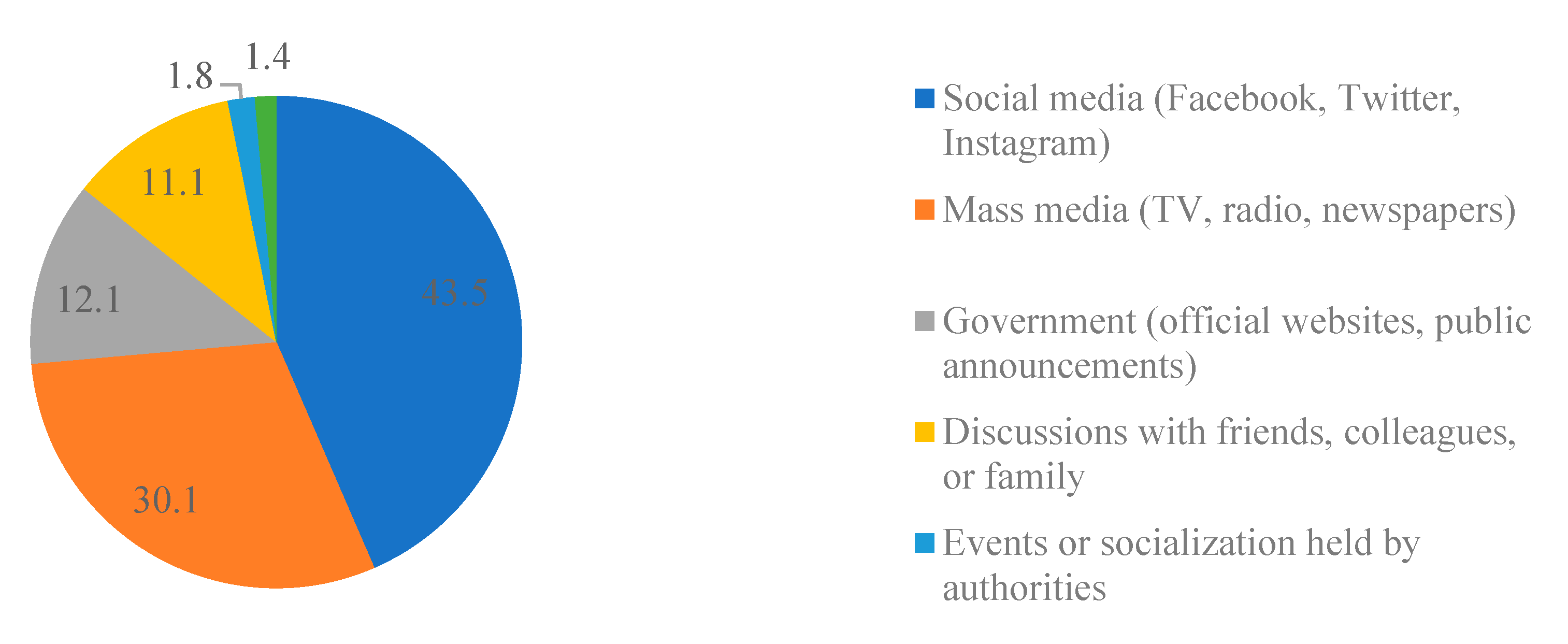
Figure 2.
The Importance of Capital Relocation. Source: Author (2025).
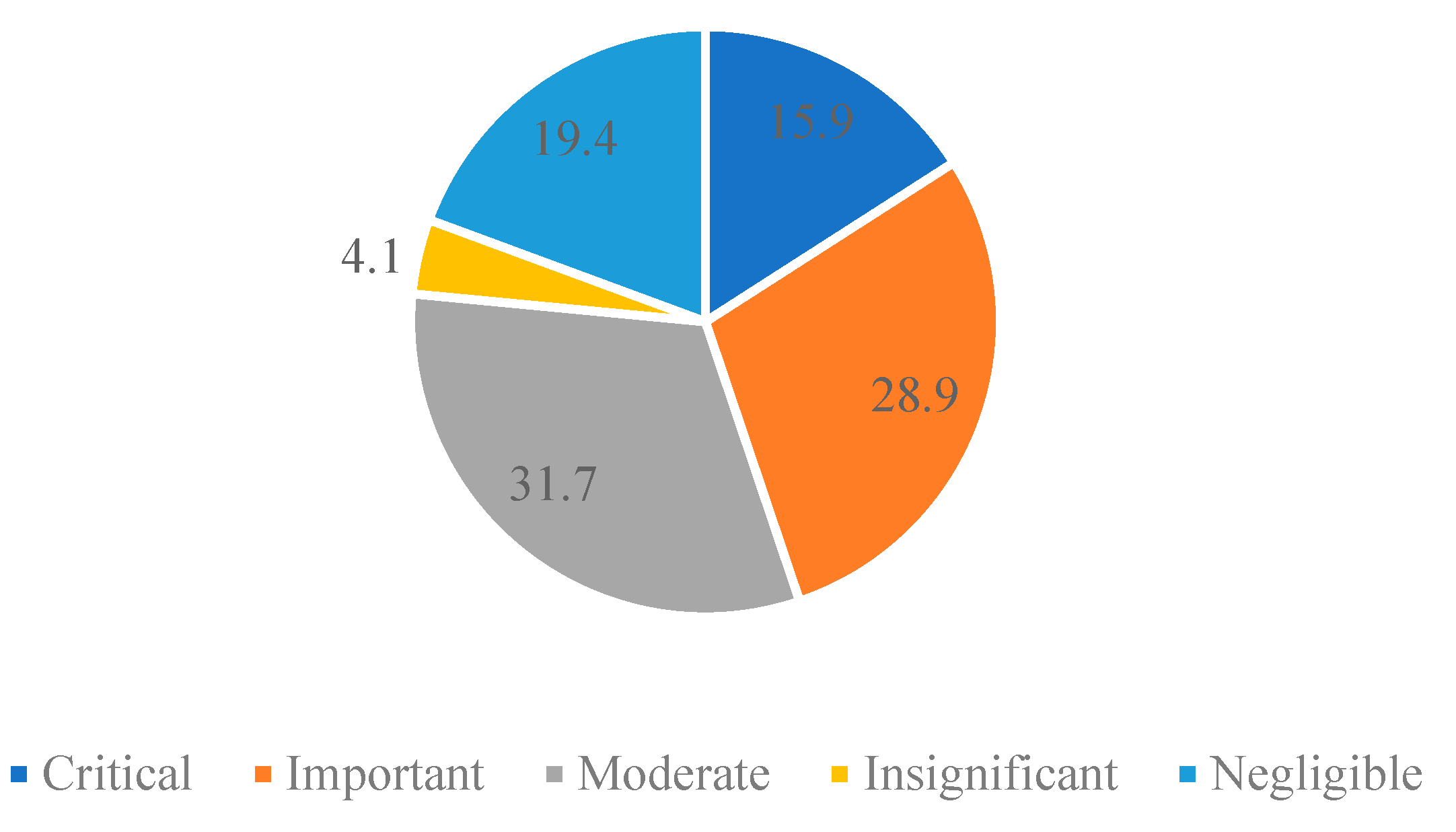
Figure 3.
Perception of the IKN Location. Source: Author (2025).
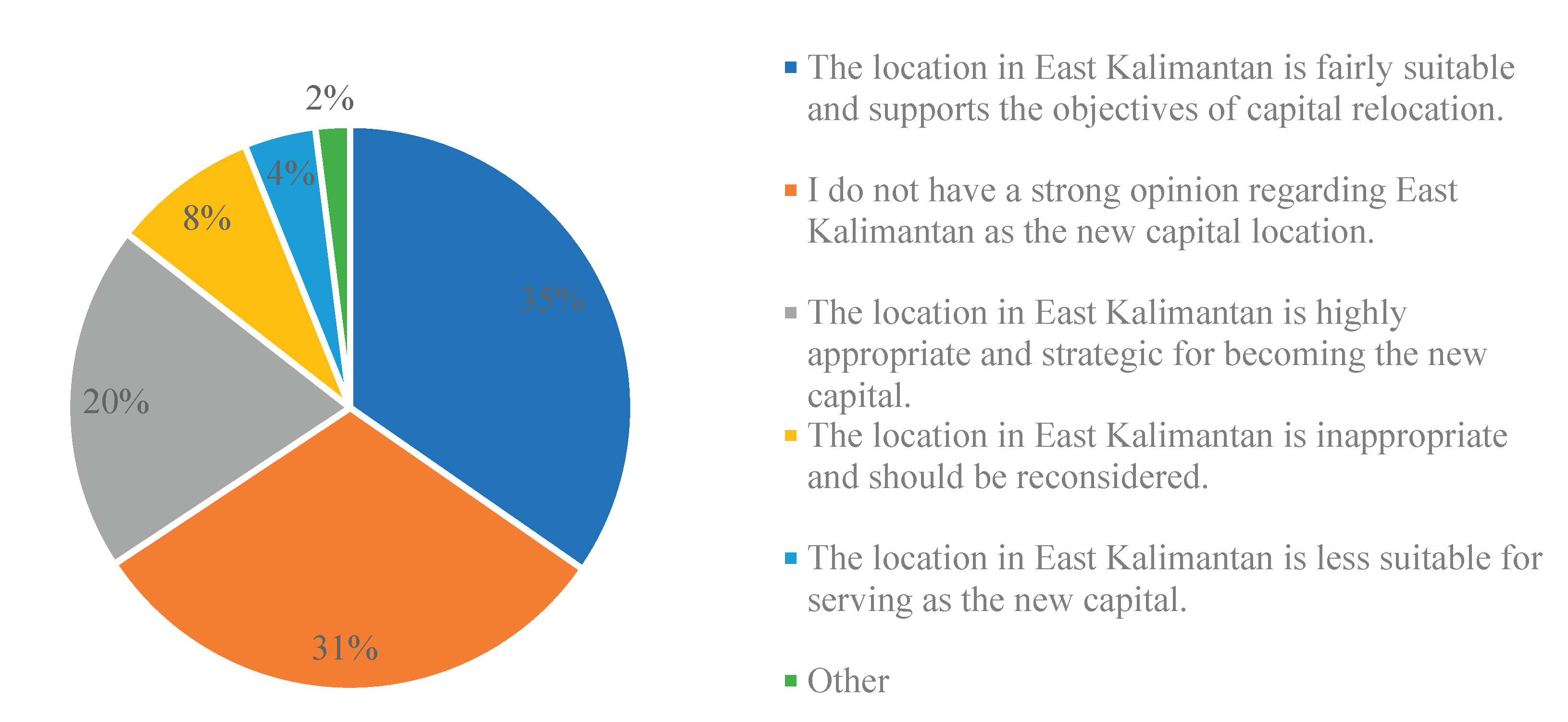
Table 1.
Respondent Profile.
| Respondent Profile | Frequency | % | |
| Gender | Male | 309 | 50,7 |
| Female | 300 | 49,3 | |
| Total | 609 | 100,0 | |
| Job | Civil Servant/Military/Police | 197 | 32,3 |
| Freelancer | 28 | 4,6 | |
| Others | 53 | 8,7 | |
| Student | 253 | 41,5 | |
| Private Employee | 49 | 8,0 | |
| Not Working/Retired | 3 | 0,5 | |
| Entrepreneur | 26 | 4,3 | |
| Total | 609 | 100,0 | |
Source: Authors (2025).
Table 3.
Awareness of the Capital City Relocation.
| Response Category | % |
| Follows the topic, though not in depth | 54,0 |
| Stays updated occasionally via headlines | 27,1 |
| Highly active in tracking developments | 14,0 |
| Pays infrequent/occasional attention | 4,3 |
| Does not follow the topic at all | 0,7 |
| Total | 100,0 |
Source: Author (2025).
Table 4.
Perceptions of Social Inequality.
| Response Category | % |
| Social inequality may exist, though it is not directly experienced | 36,6 |
| No social inequality is observed in the place of residence, equal access to resources and opportunities is evident for all individuals | 1,3 |
| The situation remains unclear due to a lack of sufficient information | 8,4 |
| No signs of social inequality are perceived in the area of residence | 5,7 |
| A significant level of social inequality is perceived in the area of residence | 47,9 |
| Total | 100,0 |
Source: Author (2025).
Table 5.
Social Problems Identified.
| Response Category | % |
| Income Inequality | 20,8 |
| Access to Employment | 14,6 |
| Access to Education | 13,3 |
| Legal Protection and Justice | 12,4 |
| Limited Healthcare Facilities | 10,2 |
| Limited Access to Technology | 6,9 |
| Ethnic/Religious/Racial/Social Group Discrimination | 4,7 |
| Land Rights | 4,7 |
| Political Participation | 3,9 |
| Access to Healthy Food | 3,3 |
| Gender Discrimination | 2,3 |
| Others | 2,9 |
| Total | 100 |
Source: Author (2025).
Table 6.
Potential Social Conflict between Local Communities and Migrants in the IKN Area.
| Response Category | % |
| Minimal likelihood of conflict due to the local community’s familiarity with newcomers and the inclusive relocation process involving dialogue and mutual agreements | 2,3 |
| Potential conflicts can be managed through preventive measures by the government and stakeholders, including intergroup dialogue, community empowerment programs, and equitable benefit distribution | 44,0 |
| Negligible risk of conflict because the IKN project is expected to bring substantial economic benefits that will overshadow potential disputes | 1,0 |
| Avoidance of conflict through effective social integration, supported by policies promoting harmonization and collaboration between newcomers and the local community | 5,4 |
| High possibility of social conflicts arising from cultural differences, economic interests, and uneven distribution of resources, which could exacerbate tensions between the local community and newcomers | 47,3 |
| Total | 100 |
Source: Author (2025).
Table 7.
Potential Social Conflicts Arising from Capital Relocation.
| Response Category | % |
| Environmental Damage and Local Community Life: The development of IKN could cause environmental degradation and impact the lives of local communities | 12,0 |
| Disparity in Access to Public Services: Indigenous populations may feel marginalized if public services favor newcomers more | 3,0 |
| Socio-Economic Inequality: The relocation of the capital might exacerbate socio-economic disparities between local residents and newcomers | 40,6 |
| Land Use and Eviction: Conflicts related to land use and the potential eviction of indigenous or local communities | 17,2 |
| Cultural Changes and Local Identity: Migration to IKN could lead to cultural shifts and identity conflicts between indigenous people and newcomers | 25,6 |
| Others | 1,6 |
| Total | 100 |
Source: Author (2025).
Table 8.
Primary Challenges to Economic Equality in Indonesia.
| Response Category | % |
| Infrastructure Limitations | 21,5 |
| Regional Investment Disparities | 11,2 |
| Varied Quality of Human Resources | 46,3 |
| Geographic Location and Natural Conditions | 4,6 |
| Centralization of Economic Policies | 11,5 |
| Others | 4,9 |
| Total | 100 |
Source: Author (2025).
Table 9.
Direct Impacts of Economic Inequality.
| Response Category | % |
| Community-level effects perceived, no personal impact | 36,6 |
| Uncertain, difficult to identify direct influence on specific life aspects | 8,2 |
| Not relevant, stable circumstances with no significant changes attributable to inequality | 4,4 |
| No direct impact in daily life | 21,2 |
| Direct impact experienced | 29,6 |
| Total | 100 |
Source: Author (2025).
Table 10.
Relationship between Capital Relocation and the Indonesian Economy.
| Response Category | % |
| There is a relationship, but it is not significant compared to other economic factors | 15,8 |
| Weakly related, as the primary focus is on reducing Jakarta’s burden as the administrative center and is not directly aimed at strengthening the economy | 5,9 |
| Neutral. The relationship between the capital relocation and Indonesia’s economy depends on the supportive policies implemented. If followed by effective policies, it could have a positive impact, but without them, the effects might be minimal | 34,0 |
| There is no relationship. This project is more about administrative relocation than an economic strategy | 3,6 |
| Yes, it is highly related, as it can drive economic growth through new investments and infrastructure development in East Kalimantan | 40,7 |
| Total | 100 |
Source: Author (2025).
Table 11.
Capital City Relocation and Job Opportunities.
| Response Category | % |
| It is not yet certain whether the capital relocation will significantly impact job opportunities in the area, this depends on how the government and private sector involve the region in the process | 27,8 |
| The relocation of the capital is felt to increase job opportunities, although perhaps only in certain sectors related to development | 27,8 |
| The belief is that the relocation of the capital will create many new job opportunities due to the influx of infrastructure projects and investments | 20,9 |
| It is considered that the relocation of the capital might actually reduce job opportunities, as attention and resources may be more focused on the new capital region | 3,4 |
| It is unclear whether the capital relocation will create many job opportunities, it may only have an effect in the new capital region | 20,2 |
| Total | 100 |
Source: Author (2025).
Table 12.
Benefits of Capital Relocation for the Local Economy.
| Response Category | % |
| Not yet, but there is potential for future benefits | 21,3 |
| Unknown, as the impact still requires further study | 12,5 |
| No, the capital relocation has not yet provided clear positive impacts | 14,6 |
| Yes, the capital relocation has provided significant benefits to the local economy | 18,9 |
| Yes, but the benefits are still limited and unevenly distributed | 32,7 |
| Total | 100 |
Source: Author (2025).
Table 13.
Current Political Situation in Indonesia.
| Response Category | % |
| Indonesia is at a critical juncture, with the potential threat to political and economic progress due to social and political tensions | 17,7 |
| Indonesia faces political challenges such as corruption and polarization, which require collective solutions | 40,1 |
| Despite progress, political instability persists due to conflicts of interest among political and economic groups | 15,1 |
| The government has been successful in some reforms, but improvements are needed in certain sectors to strengthen democracy and social justice | 9,7 |
| The current political situation in Indonesia is stable, with a smooth transition of power and active community participation in democracy | 14,6 |
| Tidak Tahu | 2,8 |
| Total | 100 |
Source: Author (2025).
Table 14.
Conflicts of Interest in Indonesian Politics.
| Response Category | % |
| Conflicts of interest exist, but they are not particularly significant and do not always negatively impact public policy | 3,6 |
| It is possible, however, there is a lack of sufficient information to confirm the presence of conflicts of interest in Indonesian politics | 14,6 |
| It is difficult to provide a definitive answer because politics is a complex and dynamic arena, where conflicts of interest can vary greatly depending on the case | 6,1 |
| No, politics in Indonesia are considered sufficiently transparent, and any potential conflicts of interest can be addressed with existing mechanisms | 8,7 |
| Yes, it is believed that conflicts of interest frequently occur in Indonesian politics, particularly due to the overlapping interests of private and public spheres | 67,0 |
| Total | 100 |
Source: Author (2025).
Table 15.
Conflicts of Interest in the Relocation of Indonesia’s Capital City.
| Response Category | % |
| There is a possibility that political conflicts of interest play a role, but it is just one of many factors influencing the decision | 23,3 |
| The relocation of the capital is primarily driven by the need for equitable development and reducing Jakarta’s burden as the administrative center | 30,2 |
| The capital relocation likely has strong political motives, with some groups seeking to benefit from the policy | 36,6 |
| It is unclear whether there are political conflicts of interest due to limited information | 8,0 |
| No, there are no believed political conflicts of interest, the decision was made for the long-term benefit of the country and is not based on narrow political interests | 1,8 |
| Total | 100 |
Source: Author (2025).
Table 16.
Impact of Capital City Relocation on National Political Power Distribution.
| Response Category | % |
| Dependent on policy. The effects of relocation depend on policy implementation, including the distribution of power between Jakarta and the new capital | 32,7 |
| Possible, but gradual. The shift in political power may not be instantaneous but will occur gradually depending on how quickly the new capital assumes critical functions | 10,5 |
| Highly likely. The relocation of the capital could create a new center of power and alter the dynamics among the political elite | 32,5 |
| Unknown/No information | 5,9 |
| Not significant. Even though the capital is relocated, most key institutions remain in Jakarta, resulting in minimal power shifts | 18,4 |
| Total | 100 |
Source: Author (2025).
Table 17.
Political Inequality Reduction between Java and Non-Java Regions through Capital Relocation.
Table 17.
Political Inequality Reduction between Java and Non-Java Regions through Capital Relocation.
| Response Category | % |
| It is uncertain whether relocating the capital city will effectively reduce political disparities, as other factors such as government policies and local economic conditions also play a significant role | 28,9 |
| No, relocating the capital city will not lessen the political disparities between Java and areas outside Java. Geographical changes alone are insufficient to address the deeper-rooted political and economic issues | 4,8 |
| No, it is doubtful that relocating the capital city will be effective in diminishing the political disparities between Java and areas outside Java, given the many logistical and political challenges that might not be resolved merely through relocation | 10,2 |
| Yes, it will be very effective in reducing political disparities between Java and areas outside Java by promoting a more balanced distribution of power and encouraging growth in other regions | 26,8 |
| Yes, it has the potential to reduce political disparities by facilitating a fairer allocation of resources and broader political representation from areas outside Java | 29,4 |
| Total | 100 |
Source: Author (2025).
Table 18.
Potential for Politicization of the Capital City Relocation.
| Response Category | % |
| Dependent on implementation. Politicization can be minimized through transparency and public participation that ensures a fair and open process | 11,0 |
| Possibly, but not the primary focus. While there is potential for politicization, the main goal is to address excessive urbanization and regional disparities, which is beneficial for the wider society | 27,6 |
| Very likely. The relocation of the capital could be considered a strategic step to strengthen the power base and promote specific political agendas | 44,5 |
| Disagree. The relocation is more driven by the need for sustainable development and equitable economic growth, rather than short-term political interests | 11,0 |
| Inevitable. Politicization is almost inevitable in major decisions, but what matters is ensuring that the decision results in more good than harm | 5,9 |
| Total | 100 |
Source: Author (2025).
Table 19.
Potential Politicizing Actors in Capital City Relocation.
| Response Category | % |
| Social Society | 6,6 |
| Investor | 12,6 |
| Foreign Group/Country | 3,6 |
| Political Parties outside the Government (Opposition) | 21,0 |
| Political Parties within the Government | 51,6 |
| Others | 4,6 |
| Total | 95 |
Source: Author (2025).
Table 20.
Politicization Potential in Capital City Relocation.
| Response Category | % |
| Uneven resource allocation to benefit contractors associated with government officials | 26,6 |
| Manipulation of zoning and planning to favor certain political groups through zoning that benefits political investors | 25,0 |
| Disregard for environmental and social issues in favor of political interests | 18,1 |
| Political polarization based on ethnic, religious, or regional identities to mobilize political support | 4,9 |
| Projects used as tools for political campaigning | 22,7 |
| Others | 2,8 |
| Total | 100 |
Source: Author (2025).
Table 21.
The Current Most Crucial Environmental Issues.
| Response Category | % |
| Deforestation | 21,0 |
| Air Pollution | 18,1 |
| Waste | 31,2 |
| Marine Ecosystem Damage | 9,3 |
| Natural Disasters and Climate Change | 17,2 |
| Others | 3,3 |
| Total | 100 |
Source: Author (2025).
Table 22.
Consequences of Environmental Problems.
| Response Category | % |
| Slightly impactful. Although there are some environmental issues in the vicinity, their impact on daily life is not particularly significant | 17,9 |
| No impact. No direct impact is felt from the current environmental issues | 2,6 |
| Uncertain. It is unclear whether environmental issues have a direct impact on daily life as tangible effects have yet to be observed or experienced | 1,1 |
| Yes, impactful. Several aspects of daily life are affected by environmental issues | 37,1 |
| Yes, highly impactful. Environmental issues significantly influence daily life | 41,2 |
| Total | 100 |
Source: Author (2025).
Table 23.
The Relationship Between Capital Relocation and Environmental Sustainability.
| Response Category | % |
| A potential connection exists, the relocation of the capital city may contribute to environmental sustainability, depending on how sustainable development policies are implemented | 29,2 |
| No direct relationship is observed between the capital relocation and environmental conservation efforts | 6,2 |
| The relevance to environmental sustainability appears limited, as the primary focus centers on political and administrative issues | 10,0 |
| A positive correlation is evident, as the relocation of the capital facilitates the adoption of environmentally friendly technologies in the development of the new city | 19,0 |
| A strong connection is recognized, the capital relocation provides an opportunity to pursue a greener and more sustainable development approach | 35,5 |
| Total | 214 |
Source: Author (2025).
Table 24.
Potential Environmental Issues Associated with the Capital Relocation.
| Response Category | % |
| Deforestation and Habitat Loss | 19,9 |
| Increase in Emissions and Air Pollution | 11,0 |
| Shrinkage of Peatland Areas | 7,3 |
| Water and Soil Contamination | 11,3 |
| Land Rights Seizure | 11,9 |
| Microclimate Changes | 6,0 |
| Extinction of Certain Species | 9,3 |
| Increased Disaster Risk | 7,8 |
| Social Conflicts Over Resources | 14,5 |
| Others | 1,1 |
| Total | 100 |
Source: Author (2025).
Table 25.
Likelihood of Capital Relocation Proceeding with Minimal Environmental Impact.
| Response Category | % |
| Very Uncertain | 16,6 |
| Uncertain | 21,2 |
| Neutral | 21,5 |
| Confident | 24,1 |
| Very Confident | 16,6 |
| Total | 100 |
Source: Author (2025).
Disclaimer/Publisher’s Note: The statements, opinions and data contained in all publications are solely those of the individual author(s) and contributor(s) and not of MDPI and/or the editor(s). MDPI and/or the editor(s) disclaim responsibility for any injury to people or property resulting from any ideas, methods, instructions or products referred to in the content. |
© 2026 by the authors. Licensee MDPI, Basel, Switzerland. This article is an open access article distributed under the terms and conditions of the Creative Commons Attribution (CC BY) license (http://creativecommons.org/licenses/by/4.0/).
Copyright: This open access article is published under a Creative Commons CC BY 4.0 license, which permit the free download, distribution, and reuse, provided that the author and preprint are cited in any reuse.


