

Submitted:
25 January 2026
Posted:
28 January 2026
You are already at the latest version
Abstract
This study is aimed at identifying factors affecting the motivation and activity of students studying in higher institutions, particularly those attending evening classes. The study investigated teacher-student relationships, the pedagogical leadership of the teacher, students’ social environment, and the influence of work and daily responsibilities on class participation and engagement in the learning process.The study employed a mixed-methods approach, integrating qualitative and quantitative research methodologies. Data were collected through observation of class processes, analysis of online communications among students, and a survey conducted via the Google Form platform. The empirical research was carried out using a group of third-year students studying in the evening program at the Faculty of English Philology at the Uzbekistan State World Languages University as an example. The results of the study showed that the decline in student activity and motivation is mainly caused by employment, the need for financial independence, psychological fatigue, and a grade-oriented approach. Additionally, a negative social environment, mocking relationships among peers, and, in some cases, teachers’ overly strict or, conversely lenient approaches were found to weaken students; participation in classes.In conclusion, the study indicates the necessity of organizing a flexible learning process for evening students, implementing supportive and motivational pedagogical strategies, and fostering positive teacher-student and student-teacher relationships. The obtained results can serve to increase student engagement and improve the quality of education in higher education institutions.
Keywords:
student engagement
; learning motivation
; evening education
; higher education
; teacher-student relationship
; teacher leadership
; work-study balance
; academic fatigue
; social environment
; peer influence
; mixed-methods research
; learning environment
; pedagogical strategies
; academic participation
1. Introduction
Student motivation and engagement in classes at colleges and universities are now seen as two of the most important things that affect the quality of education, academic success, and student well-being. Students want to learn theory in universities while improving their professional skills, learning how to learn on their own, and getting better at getting along with others. Therefore, a deep study of the factors shaping student engagement and motivation has become an important direction in modern educational research (assefa) (assefa tilwani)
Various external and internal pressures are complicating students' academic lives at the same time. The obligation to work, family and daily responsibilities, psychological fatigue, and financial difficulties can negatively affect students' preparation for classes and active participation (Beatson et al., 2021; Mordi et al., 2023; Siem et al., 2025). Especially, students studying in evening education face serious difficulties in maintaining a balance between work and study. Such students often cannot allocate enough time and energy to classes due to the need to ensure financial independence, cover living expenses, and fulfill family obligations, which negatively impacts their academic results and engagement in the learning process.Scientific research shows that the relationship between teacher and student is one of the most important factors determining student motivation and participation in classes. The teacher's leadership style, pedagogical support, and attitude towards students influence their level of engagement in the learning process (Liu et al., 2025). In particular, transformational teacher leadership has a strong and positive correlation with student engagement, enhancing students' self-confidence, goal orientation, and intrinsic motivation . Conversely, weak or passive forms of leadership cannot create a stable and effective learning environment (Assefa et al., 2025).Moreover, the social environment among students, collaborative activities, and mutual support play an important role in increasing the effectiveness of the learning process. Activities such as group work, constructive discussions, and peer critique engage students actively in learning, deepening their knowledge and skills (Bai et al., 2025). When students feel supported and valued, they tend to participate more actively in classes (Su & Yin, 2025; Liu et al., 2025).Additionally, the flexibility of the learning environment and forms of education significantly affect student engagement. Research shows that a positive and inclusive learning environment increases students' cognitive, emotional, and behavioral engagement (Moges et al., 2024; Heilporn et al., 2023). At the same time, some aspects of student engagement may vary depending on gender, age, and form of education, indicating the need for an individual and flexible approach in the educational process (Moges et al., 2024; Heilporn et al., 2023).Recently, the impact of students' biological and social rhythms on the learning process has also attracted attention. In particular, students with evening and morning chronotypes exhibit different cognitive activity at various times, which is an important factor for students studying in evening education (Singh et al., 2025). Furthermore, working evening and night shifts can reduce students' quality of life and satisfaction levels (Palm et al., 2023).
1.1. Literature Review
Student engagement and motivation in higher education are at the center of many empirical studies. Research interprets student engagement as a multidimensional construct, highlighting its cognitive, emotional, behavioral, and social aspects (Heilporn et al., 2023). At the same time, it has been found that student engagement is closely linked to the quality of the learning environment and pedagogical approaches (Moges et al., 2024; Korhonen et al., 2024).The relationship between teacher leadership and student engagement is particularly underexplored in the context of developing countries, with existing studies mainly focused on Western education systems (Assefa et al., 2025; Korhonen et al., 2024). Therefore, studying these relationships in various cultural and institutional contexts is considered relevant.
1.2. Research Objective
The main aim of this study is to identify the factors shaping the motivation and engagement of students studying in evening education programs. Specifically, the analysis will focus on teacher–student relationships, teacher leadership, students' social environment, and the impact of work and daily obligations on class attendance and academic engagement (Assefa et al., 2025; Liu et al., 2025; Bai et al., 2025). The results of the study will serve as a practical basis for enhancing student engagement in higher education institutions, organizing the learning process flexibly, and developing effective pedagogical strategies
2. Methodology
2.1. Research Design
This study was organized based on mixed methods to determine the impact of teacher-student interactions on students' engagement during lessons. “By explaining fundamental principles and major theoretical tenets of a mixed-methods approach, which involves both quantitative and qualitative data collection in response to research questions, it elucidates several benefits of adopting MMR since it integrates post-positivism as well as interpretivism frameworks.” (Dawadi et al., 2021). (1). Both qualitative and quantitative research methods were applied together during the study process, allowing for a comprehensive analysis of the problem.The research was conducted over one academic semester (four months). During this period, lessons were regularly observed, and students' participation, activity levels, and teacher-student interactions were analyzed.In the quantitative part of the study, a survey was conducted among students and teachers via the Google Forms platform. The survey questions aimed to identify the level of class attendance, learning motivation, and attitudes toward the teacher's pedagogical approach.This mixed-methods approach served to identify factors causing students' passive participation in lessons and to explore opportunities to improve the quality of the educational process through effective pedagogical and methodological techniques.
2.2. Participants
For observing the lesson processes, the 2305 academic group of the 3rd-year evening education students at the Faculty of English Philology, Uzbekistan State University of World Languages, was selected. This group consists of 16 students, including 5 males and 11 females. Participants' ages range from 19 to 23 years.
Regarding employment status, 6 students are not engaged in any work, 3 work as English language teachers, and the remaining 7 are employed in other fields. The university offers both day and evening education formats, and the selected groups study in the evening format.
The selection of this group was not random. At the beginning of the academic activities, one of the teachers assigned to the group reported to the dean's office problems related to low attendance, poor attendance consistency, and irregular completion of homework by the students. This situation brought to light a deeper study of class participation activity and teacher-student relationships in the group, leading to its targeted selection for empirical research.
The survey constituted the quantitative part of the study and was conducted online via Google Forms during the New Year holiday period. Along with the observed group students, 42 other students from different university groups participated for comparison. Participation in the survey was voluntary.
Among the additional participants, 70% study in the day format and 30% in the evening format; 32 are female and 10 are male students. The ages of the survey participants ranged from 17 to 23 years; 26 are not employed, 6 work in their specialty, and 10 are employed in other fields.
2.3. Data Collection
The observational part of the study was conducted over one academic semester, specifically in October, November, and December 2025. During the observation, the attendance, activity during lessons, and interactions between teachers and students of the 3rd-year evening education students were systematically analyzed. No strict requirements or special conditions were imposed on the students participating in the study. The teachers assigned to all academic groups, the subjects taught, the form of lessons, and the class schedules were determined by the university, and the same procedure applied to the group participating in this study. The researchers adhered to the principle of observing the educational process in its natural state without direct interference.
Classes were held five days a week, with two lesson periods each day. Each lesson period lasted 80 minutes. The observation covered a total of seven subjects. These were literature of the countries whose language is being learned (seminar), reading and writing practice (reading and writing), language teaching methodology and educational technologies (seminar), theoretical aspects of the language being studied (seminar), second foreign language (German), general pedagogy (seminar), and field-oriented foreign language subjects.
The second foreign language (German), reading and writing practice, and field-oriented foreign language classes were regularly conducted in the form of classroom sessions, attended only by the students of the respective academic group. Seminar sessions for the other subjects were organized simultaneously for two academic groups.
As part of the quantitative component of the study, an online survey was conducted via the Google Forms platform. Initially, the survey was specifically organized for the students of the academic group selected for the study. Subsequently, a second survey with the same questions was posted in the university's general student group on the Telegram app. Participation in the survey was voluntary, and participants' personal data were kept confidential. As a result, an additional 42 students voluntarily took part in the survey.
2.4. Research Instruments
In this study, qualitative research instruments were primarily used to collect data. Since the researcher was a member of the observed academic group, the lessons were studied using the participant observation approach. No standardized observation sheet was used during the observation process; however, important pedagogical and social situations that arose during the lessons were recorded as empirical material for the study.
During the observation, students' participation activity, passivity, teachers' attitudes toward these situations, and conflict situations between teachers and students were analyzed. In particular, several important incidents were identified during the observation and recorded as critical incidents of the study. For example, some teachers expressed a desire to stop working with the group due to students' low activity, one teacher reported to the dean's office about deliberately not attending classes, and in some lessons, tense relations between teachers and students were analyzed within the scope of this study.
Additionally, to study the interpersonal relationships among students more deeply, online chats were used as an important empirical source. These chats were analyzed as materials reflecting students' attitudes toward classes, teachers, and the learning process in a natural and informal environment. Online chats served as an important qualitative data source for identifying communication among students, their attitudes toward classes, and reasons for passivity.
To collect quantitative data for the study, an online survey was developed using the Google Forms platform. The survey questions aimed to identify students' participation activity in classes, learning motivation, attitudes toward the lesson process, and teacher-student relationships. The survey consisted of various types of questions, including closed questions based on a five-point Likert scale (1 — strongly disagree, 5 — strongly agree), as well as open-ended questions allowing respondents to freely express their personal opinions and experiences. The questions covered topics such as regular attendance in classes, completion of assignments, reasons for passivity during lessons, teachers' attitudes, and the nature of interactions between students and teachers.
The survey was initially conducted among students of the academic group selected for the study. Later, to enable comparison, the same survey covering these topics was distributed voluntarily among university students. Participation in the survey was completely voluntary, respondents' personal data were kept confidential, and used solely for scientific research purposes.
2.5. Data Analysis
The data collected in this study were analyzed according to the qualitative and quantitative components of the research. Data obtained through observation of the lesson processes were examined using qualitative analysis methods. Situations identified during observation were described based on students' participation activity, reasons for passivity, and significant events in the interactions between teachers and students. “The main barriers include low material relevance and limited technology integration in learning.” (Razali et al., 2025). In particular, the teachers' attitudes toward the group, students' avoidance of classes, and tense situations arising during lessons were given special attention during the analysis.
Quantitative data collected through the survey were analyzed using descriptive statistics. Results were summarized using percentages and frequencies and presented through diagrams. Responses to questions based on the Likert scale were analyzed using average scores to determine students' attitudes toward classes, learning motivation, and the influence of social factors.
Additionally, the main research group's results were compared with those of surveys involving other university student groups. This comparison allowed identification of differences in class attendance activity and learning motivation between students studying in evening and daytime education formats.
Answers to open-ended questions were grouped thematically, helping to offer more details about students' passivity in classes, expected support from teachers, and psychological and social factors in the learning process.
2.6. Ethical Considerations
Participation in the study was completely voluntary, and all participants gave informed consent beforehand. All data collected in the survey and online communications were kept confidential; personally identifiable information (name, phone number, and other personal identifiers) was not used in the research text.
Throughout the study, all data were used solely for scientific analysis and article writing purposes, with full protection of participants' personal rights and confidentiality. Moreover, the research results were presented in a way that did not identify the participants. “However, it also presents challenges such as ethical concerns, over-reliance on technology, and the need for critical verification skills.” (Chakamanont et al., 2025). Students are still not doing any homework or self-study assighnent as a result they need to use cheating while final exam.
3. Results
Within the scope of this study, data were collected from two main sources: surveys and observations (including analysis of online communications among students). The primary research group consisted of students from group 2305. Fourteen students from this group participated in the survey. Additionally, to compare results, a total of 42 students from other university groups took part in the survey.Participants of group 2305 were mostly aged between 19 and 23, with the majority of respondents being 12 females. The students study in the evening education format, and nearly half of them (10 students) reported working alongside their studies. Among the total 42 respondents, the proportion of females was also high, and students reported studying in both day (30 students) and evening (12 students) formats.
3.2. Quantitative Findings
Survey results showed significant differences in students' attitudes and engagement in classes. “Social interactions with peers and teachers significantly impact students' subjective wellbeing (SWB) by influencing their achievements, mental health, and motivation.” (Andronova, 2025b). Although the main reason for attending classes among group 2305 students was stated as gaining knowledge and professional development, the observation process revealed that the level of activity was average or low. While some respondents expressed a neutral attitude towards classes, others reported feelings of fatigue and passivity. “Although a cross-tabulation analysis showed a significant and positive relationship between students' learning profiles identified using the questionnaire and learning analytics data, the association was rather weak.” (Han, 2025) (table 1 and 2)
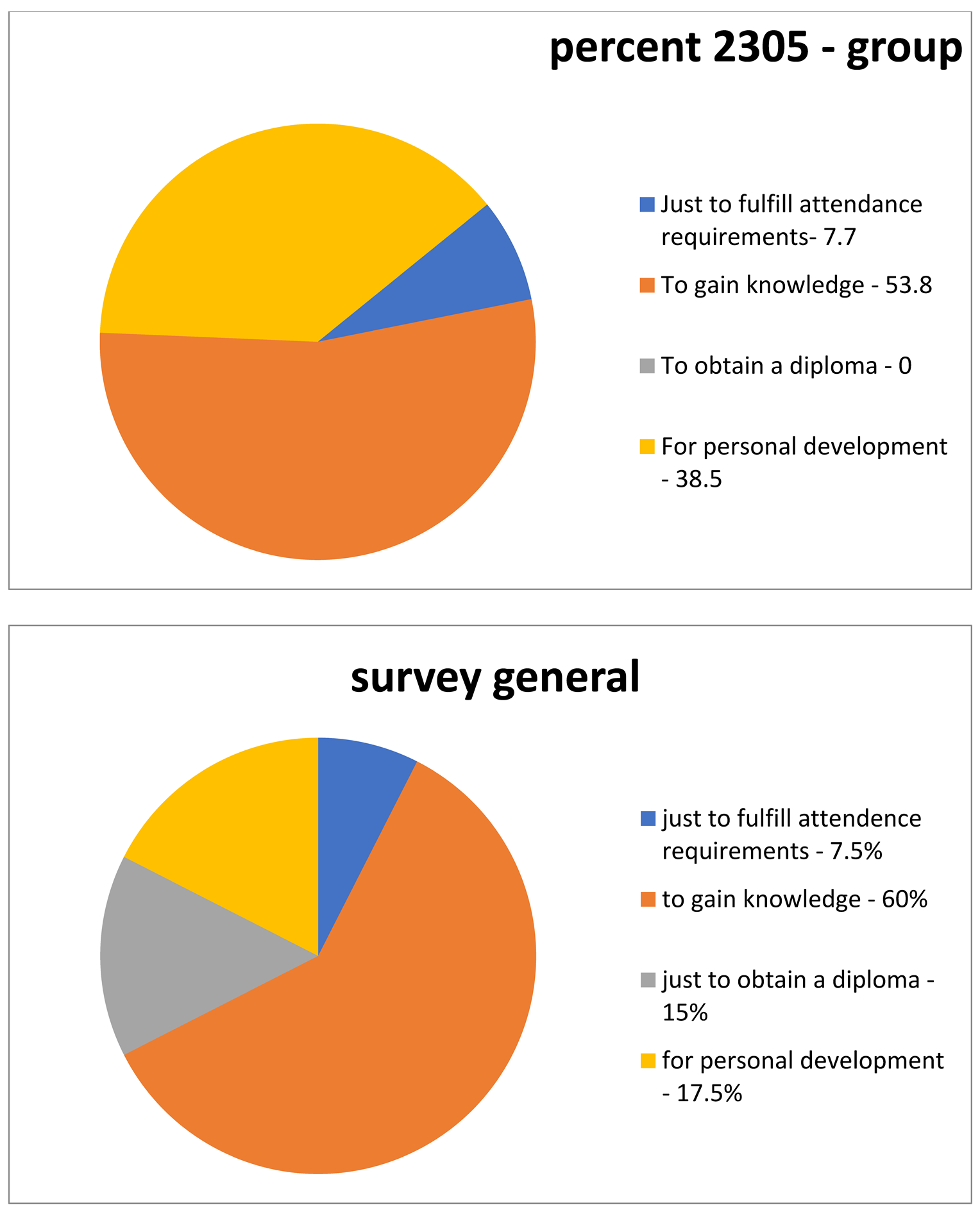
According to the survey results involving a total of 42 students, approximately 60 percent of respondents indicated that the main purpose of attending classes was to gain knowledge and professional development. At the same time, 15 percent of students identified obtaining a diploma as their primary reason, while 7.5 percent cited merely fulfilling attendance requirements as their main motive. 65 percent of students reported being active or relatively active in classes, while the remaining portion stated that they participated in a neutral manner. (table 3)
Do work or other daily responsibilities affect your preparation for class?
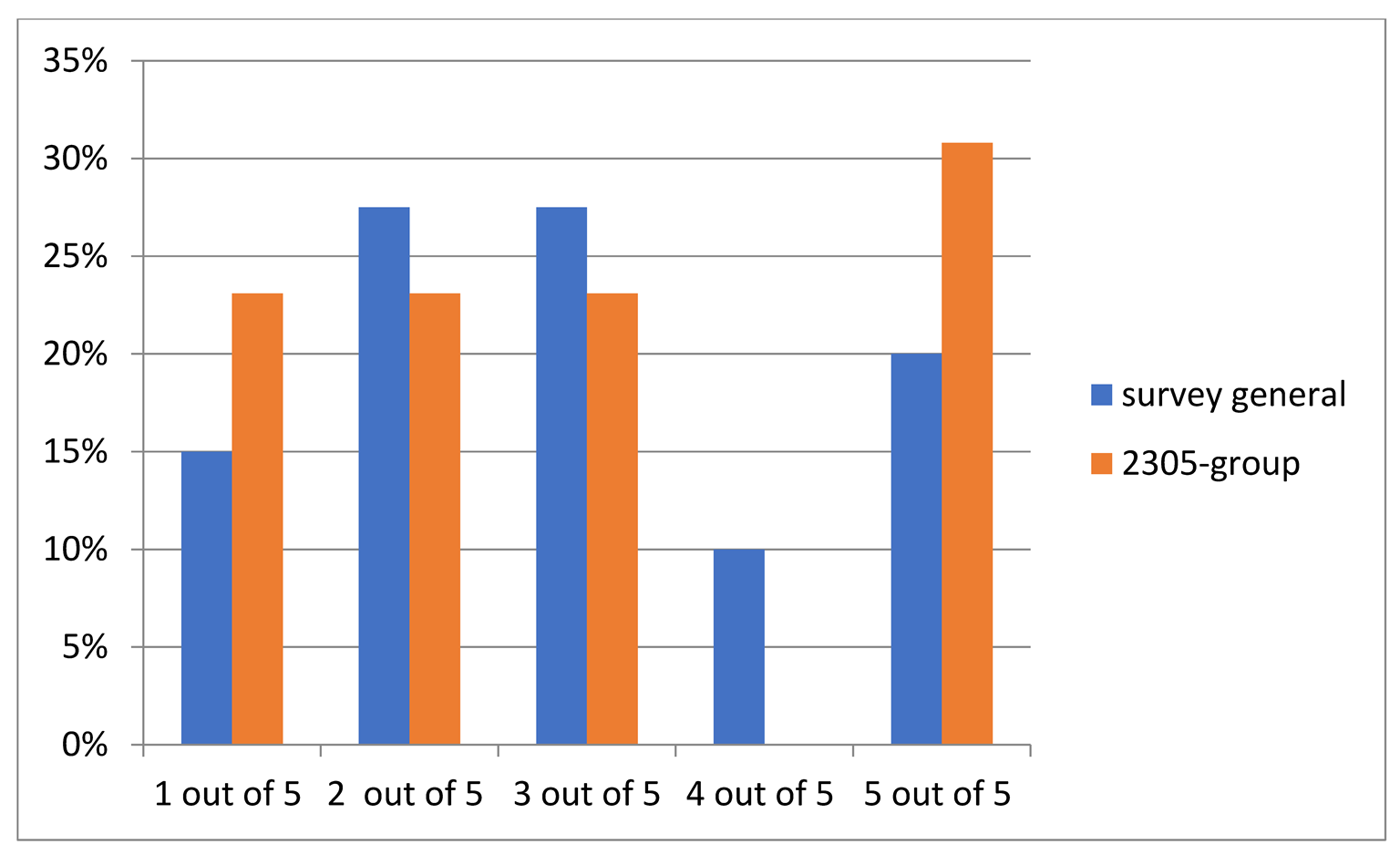
"Examining the various forms of self-realization and identifying statistically significant correlations with the research parameters of educational-professional training for prospective teachers will facilitate the discovery of significant scientific insights that will be novel and of scholarly interest to organizers of educational and scientific initiatives within a digital educational context." (Popovych et al., 2024). The impact of work and other daily obligations on preparation for the lesson is also significant, with the majority of respondents acknowledging that this factor hinders full preparation for the lesson. Additionally, it was found that social comparison and peer pressure moderately affect students' activity.
3.3. Qualitative Findings
During the observation process and analysis of Telegram messages among students, several key themes were identified.
Firstly, we frequently observed a decrease in motivation and cases of academic fatigue among students. Prior research suggests that family relationships primarily provide emotional and environmental support, maintaining background stability, while teacher–student relationships play a key role in fostering the cognitive and motivational processes underlying autonomous learning (Deng et al., 2025). Similarly, studies on pre-service teachers indicate that engagement, burnout, and perceptions of relationships significantly influence classroom interactions and the overall quality of teaching (Bagazi, 2025).
So rarely do students live with their family. students,living separately from their families, have to work to cover their own expenses, like contract payment, apartment fee, which causes them constant fatigue. Additionally, they often lack both the time and motivation to pursue academic success. In the students' messages, there were open expressions about not preparing for lessons, about the complexity of subjects, and about general mental exhaustion.
Example: “It is difficult to concentrate on lessons after work.”
Secondly, a grade-oriented approach was observed to be dominant. In chat messages, discussions often revolved around not getting marked absence (no pass), the minimum passing score, and opportunities for retaking, while issues related to lesson content and deepening knowledge were rarely mentioned.
The results of the students in the subject of reading and
writing midterm exams and their attitude.
ABDIMURODOVA FARANGIZ - 2
ABDURASULOV SHAHRIZOD - 3
ABDUSAMATOVA MUSHTARIYBONU - 3
ALIMOVA SHAXRIZODA - 5
AZATOVA A’LOXON - 3
BURXANOV SHUKURULLO - 2
MAHAMADJONOV BOBURJON - 3
MIRKOMILOVA MUSLIMAXON - 3
NURALIYEVA MEXRINIGOR - 3
RASHIDOV SAMANDAR - 3
TO‘LQINOV BOBIRMIRZO - 4
TO‘RABOYEVA LAYLO - 3
TUXMURODOVA SEVARA - 3
URAZOVA ZULXUMOR - 3
XAKIMOVA MADINAXON - 5
YORMAMATOVA MARJONA - 4
Student A –thank you
Student B- Thank you
Student C- Thanks for 2)
Student D- May God be pleased with you, teacher
If it's 5, people say thank you; they are learning.
Student A - Congrats, man.
Student D - Congrats bro
Student C: There is justice in this world.
Student D—When I was upset about getting 4, I saw student A got 3, and I
enjoyed it.
Student E—OMG
Student A—I was initially dissatisfied with my grade of 3, but after seeing
student C’s grade of 2, I feel content with my own grade..
Should we try again? What do you say?
Student D- If we try, everyone should try including @thealimova
Student A: Yeah, I agree.
@student C, What do you say?
N. I. R., teacher
Come to room 204
If you want to pass, come to room 204.
Thirdly, the social environment and teacher–student relationships directly influenced the students' activity. In some subjects, the teacher's demanding or strict attitude increased passivity among students, while in other subjects, excessive leniency led to a decrease in responsibility.
The teacher's attitude when students deliberately do not
attend the subject—English for specific purposes
M. A. J. teacher
For the first time in my 6 years of university experience, students
collectively skipped class, and this affected me deeply.
I guess I pampered you more than others.
I was just coming to terms with the fact that Student A asked other teachers
for midterm answers.
The class schedule set 3 weeks ago cannot just disappear.
I will write name by name to complain; I have not yet entered the midterm
result into the Hemis platform, so please take that into account.
Now I will show you what kind of teacher I will be.
Student 1
Student 2
Student 3
Student 4
Student 5
Because the class sessions have passed in your turn, you will not be
automatically included in the final exam.
I am not a benevolent angel who fulfills your wishes. Are you absent from
class? You will be marked absent.
From now on, I will not provide you with any materials or handouts. I will
also leave the group. If you want, you can write an application and use your
right to replace me.
Also, it has been observed that sarcasm, dissatisfaction, and social comparisons among students in the correspondence negatively affected the overall learning environment in the group. ‘’ However, research in language learning suggests that learners working in pairs or small groups can benefit from structured peer interaction, which facilitates engagement and learning through language-related episodes (LREs). Patterns of collaboration influence both the frequency and quality of these interactions, affecting task outcomes and overall L2 acquisition. Although most studies focus on young or adult EFL/ESL learners, evidence indicates that well-designed peer interactions remain valuable for promoting engagement across age groups (Bllaca & Villarreal, 2025).”
3.4. Statistical Analysis
In this study, complex statistical tests (ANOVA, regression, or inferential analyses) were not applied. Quantitative data were analyzed based on descriptive statistics and summarized using percentage indicators and frequencies. Responses to questions based on the Likert scale were used to describe students' attitudes towards lessons, motivation, and the influence of social factors.
3.5. Summary of Key Findings
The research results indicate that among students in evening education, particularly those in 3rd grade, passivity and low motivation towards lessons are widespread across 11 groups . Out of 16 students, 2 do not attend classes at all, and as a result, they are excluded from exams due to repeatedly missing more classes than allowed. Work and daily obligations, psychological fatigue, and a grade-oriented approach emerged as the main factors limiting activity during lessons. Additionally, it was found that the social environment among students and teacher-student relationships significantly negatively affected the effectiveness of the learning process.Students often negatively influence each other in this way, which puts extra pressure on themselves and leads to continued neglect of lessons.
4. Discussion
4.1. Interpretation of Key Findings
The results of this study identified several factors that significantly affect students' attitudes and engagement in classes. In particular, employment, daily obligations, and psychological fatigue emerged as the main reasons for the decline in student motivation. Survey and qualitative analysis results showed that although many students participate in classes with the intention of learning, they often remain passive or neutral during the actual lessons.
Furthermore, research indicates that peer critique and structured disagreement among students can enhance engagement and learning by encouraging the articulation, discussion, and refinement of ideas. Zhou et al. (2024) found that even ‘soft’ disagreements, where students imply or mitigate dissent, contribute to collective knowledge building, improve understanding, and maintain a positive socio-emotional climate. These findings suggest that designing learning environments to support respectful peer critique can promote collaboration and positive outcomes in group-based tasks.
Analysis of student communications in this study, however, indicated that attitudes toward classes were increasingly focused on grades and minimal fulfillment of academic requirements, suggesting that participation was often treated as an obligation rather than meaningful engagement. This pattern was particularly evident among evening students who balanced their studies with work.
These findings can be interpreted through the lens of person–environment fit, as prior research highlights the central role of perceived work–family balance in enhancing satisfaction and engagement among young individuals managing multiple role demands (Le et al., 2025).
4.2. Comparison with Existing Literature
The findings of this study generally align with previous research. Earlier studies have emphasized that balancing work and study negatively impacts students' academic motivation and class engagement. Undergraduate biology students describe fear of negative evaluation (FNE), defined as a sense of dread associated with being unfavorably evaluated in a social situation, as negatively affecting their experiences in active learning courses.” (Cooper et al., 2025). This study also confirms the presence of fatigue, lack of time, and decreased preparation among working students. On the other hand, “The results show that self-determination efficacy positively affects students' willingness to pursue flexible employment directly and indirectly through mediating factors like work-life balance, job satisfaction, and perceived self-development.” (Cai et al., 2025)
“Additionally, the results regarding social environment and peer influence correspond with social learning and motivation theories. While previous research noted that positive peer relationships enhance student motivation, this study found that in some cases, indifference and sarcastic attitudes among peers reduce interest in classes. This shows that the social environment is not always supportive and reflects broader trends in higher education, where institutions adapt programs to cultivate skills and employability in response to industry and governmental expectations (Naqvi, 2026).”
4.3. Significance of Findings
The results of this study have important implications for educational practice. First, they highlight the need to develop flexible learning approaches for students who study in the evenings and work . “The study calls on institutions to develop flexible timetables, enhanced support services, and targeted interventions that address the unique needs of students learning beyond traditional classroom hours, particularly in preparing for future employability in a post-pandemic educational landscape.” (Tshibangu, 2025b). Second, the quality of teacher-student relationships plays a crucial role in student engagement and motivation, indicating a need to reconsider pedagogical approaches. “Previous research on higher education institutions highlights the role of student feedback in evaluating teaching quality. In Russian universities, student evaluations of teaching (SET) serve primarily summative purposes, supporting personnel decisions, while their formative use for professional development is less common. Studies show that SET questionnaires are often formal and do not function effectively as quality assurance mechanisms. Factors such as institutional isomorphism, emphasis on external control, and insufficient attention to student feedback contribute to these limitations (Knyaginina et al., 2025). This reflects broader challenges in ensuring that teacher-student interactions and feedback meaningfully support learning outcomes.”
Furthermore, to reduce students’ focus solely on grades or attendance, it is important to apply more interactive teaching methods, foster a motivating learning environment, and implement strategies that enhance academic motivation. This approach aligns with prior research suggesting that student engagement is strengthened when structured, teacher-led instruction is complemented by opportunities for autonomy and active participation, rather than relying on uniform pedagogical models. Consistent with findings from the Chinese higher education context, enhancing student engagement requires a balanced pedagogical approach that combines structured instruction with strategically designed opportunities for autonomous and interactive learning (Hao et al., 2025).
4.4. Limitations of the Study
This study has several limitations that should be acknowledged. First, the sample size was relatively small and the data were collected primarily from a single university and a specific student group. As a result, caution should be exercised when generalizing the findings to broader student populations. Second, the study relied on self-reported survey data, which may be subject to response bias and the influence of participants’ subjective perceptions.
In addition, the analysis of student communications was confined to a limited time frame and may not fully capture variations in academic experiences across different periods or contexts.
4.5. Recommendations for Future Research
Future research should be conducted with larger and more diverse samples. Studies covering various universities and forms of education will help make the results more reliable. Additionally, long-term studies analyzing how student motivation and attitudes toward classes change over time would be valuable.
Increasing the number of qualitative interviews and including teachers' perspectives could also be beneficial directions for future research.
4.6. Discussion Conclusion
In summary, this study identified that work and daily obligations, social environment, and pedagogical approaches significantly affect students' attitudes and engagement in lessons. The research results indicate the necessity for more flexible and supportive approaches in the educational process to enhance students' motivation and strengthen academic participation. Also online education would be more helpful for these students rather than evening education that’s why they do not need to work to pay for daily, monthly expenses like eating, apartment fee. In comparison with full-time education, students cannot be provided any supportive payment as a scholarship, rental agreement, or student dormitory. As a result, students enrolled in evening education programs are not covered by regulations designed to alleviate students’ financial burdens, as these policies apply exclusively to students studying in full-time (daytime) education.
5. Conclusions
5.1. Summary of Key Findings
This study focused on examining factors influencing attitudes toward study, activity in lessons, and motivation among students at a higher education institution in Uzbekistan, specifically students of group 2305 and other groups. The results showed that although most students reported attending classes for knowledge acquisition and personal development, their actual engagement during lessons was not always high.
The findings particularly revealed that fatigue, lack of time, and psychological pressure among working students and those studying in evening programs lead to decreased motivation. “Hierarchical positioning and emotional discomfort among students can impact engagement, but sharing experiences and supportive peer interactions can mitigate these effects (Zhang & Kuo, 2025).” Additionally, the social environment, peer influence, and teacher-student relationships were found to play a significant role in students' attitudes toward lessons.
5.2. Implications for Educational Practice
The results of this study provide important practical conclusions for organizing the educational process. First, it emphasizes the need to reconsider flexible class schedules and workloads for students who work and study in evening programs. Furthermore, applying supportive, understanding, and encouraging pedagogical approaches by teachers can increase students' engagement in lessons. “Previous research has highlighted the challenges faced by students from underrepresented or disadvantaged backgrounds in higher education. Walker et al. (2024) found that low-socioeconomic (low-SES) students often encounter difficulties in establishing a sense of belonging and accessing social and academic support, even in institutions providing high-quality education and career opportunities. Their study emphasizes that social experiences and peer networks are crucial for engagement and that widening participation students may not automatically benefit from social advancement opportunities.”
Also, using interactive methods during lessons, considering students' opinions, and creating a positive social environment can enhance students' interest in learning. “Collaborative co-creation projects, where students contribute to course design alongside teachers, can improve learning experiences and foster shared understanding (Andersen et al., 2025).”
5.3. Limitations of the Study
Although this study presented important findings, it has some limitations. The sample was limited, conducted mainly within one university and specific groups. Therefore, caution is required when generalizing the results to the entire student population. Additionally, the data were primarily based on surveys and self-assessments, which may have been influenced by respondents' subjective opinions.
5.4. Recommendations for Future Research
Future research is recommended for larger and more diverse samples. Conducting studies across different universities, forms of education, and fields of study will increase the generalizability of the results. Moreover, longitudinal studies to determine how students' motivation and attitudes toward lessons change over time would be beneficial.
Furthermore, research including perspectives of teachers and administration would help gain a deeper understanding of the educational process.
5.5. Final Thoughts
In conclusion, understanding students' attitudes toward learning is crucial for their academic success and personal development. This study demonstrated that work, social environment, and psychological factors directly affect students' engagement and motivation in lessons. “Student engagement is a multifaceted construct, encompassing cognitive, behavioral, and social dimensions, and is influenced by both instructional quality and peer support (Nguyen et al., 2025; Pumpe & Jonkmann, 2025).” Considering these factors, educational institutions can effectively support students in achieving their academic and personal goals by creating an adaptive and supportive learning environment.
References
- Assefa, Y.; Fetene, G. T.; Wolle, G. S. Revitalizing student-centered leadership involves modeling how teacher leadership behaviors influence student engagement in higher education. International Journal of Educational Management 2025, 39(7), 1810–1829. [Google Scholar] [CrossRef]
- Assefa, Y.; Tilwani, S. A.; Moges, B. T.; Majeed, H. Unpacking student engagement and its mediating role in predicting the relationship between self-determination and academic satisfaction among undergraduate students in higher education. Social Sciences & Humanities Open 2025, 12, 101797. [Google Scholar] [CrossRef]
- Beatson, N. J.; De Lange, P.; Oosthuizen, H. A question of balance: study–work–life, perspectives from accounting students. Pacific Accounting Review 2021, 33(3), 257–273. [Google Scholar] [CrossRef]
- Mordi, T.; Adisa, T. A.; Adekoya, O. D.; Sani, K. F.; Mordi, C.; Akhtar, M. N. A comparative study of the work–life balance experiences and coping mechanisms of Nigerian and British single student-working mothers. Career Development International 2023, 28(2), 217–233. [Google Scholar] [CrossRef]
- Siem, T. T.; Nguyen, H. T. T.; Luc, P. T. Work-life balance in higher education: A review based on bibliographic coupling analysis. Acta Psychologica 2025, 260, 105567. [Google Scholar] [CrossRef] [PubMed]
- Liu, J.; Gao, J.; Arshad, M. H. Teacher-student relationships as a pathway to sustainable learning: Psychological insights on motivation and self-efficacy. Acta Psychologica 2025, 254, 104788. [Google Scholar] [CrossRef]
- Bai, B.; Dan, Q.; Li, J.; Guo, W. EFL students’ self-regulated learning, motivation, and perceived teacher support in cooperative learning: A network analysis perspective. System 2025, 137, 103941. [Google Scholar] [CrossRef]
- Su, X.; Yin, H. “Like porcupines and hedgehogs”: Building positive teacher-student relationships in L2 classroom assessment from a relationships motivation theory perspective. System 2025b, 138, 103968. [Google Scholar] [CrossRef]
- Moges, B. T.; Assefa, Y.; Tilwani, S. A.; Azmera, Y. A. It is all about an appealing environment: Linking the learning environment dimensions with student engagement in Ethiopian higher education context. Social Sciences & Humanities Open 2024, 11, 101211. [Google Scholar] [CrossRef]
- Heilporn, G.; Raynault, A.; Frenette, É. Student engagement in a higher education course: A multidimensional scale for different course modalities. Social Sciences & Humanities Open 2023, 9, 100794. [Google Scholar] [CrossRef]
- Singh, A.; Pande, B.; Sinha, M.; Sinha, R. Exploring the learning process in college students: Impact of morning and evening chronotypes. Medical Journal Armed Forces India 2025. [Google Scholar] [CrossRef]
- Palm, M.; Allen, J.; Farber, S. Shifted out: The well-being and justice implications of evening and night commuting. Transportation Research Part D Transport and Environment 2023, 122, 103875. [Google Scholar] [CrossRef]
- Wolf, A. G.; Auerswald, S.; Seinsche, A.; Saul, I.; Klocke, H. German student teachers’ decision process for becoming teachers: The relationship among career exploration and decision-making self-efficacy, teacher motivation, and early field experience. Teaching and Teacher Education 2021, 105, 103350. [Google Scholar] [CrossRef]
- Korhonen, V.; Aldahdouh, T.; Holubek, V.; Abou-Dagga, S.; Al-Masri, N. Student engagement and concerns regarding studies and future professions: exploratory research in a Palestinian higher education context. International Journal of Educational Management 2024, 39(3), 661–688. [Google Scholar] [CrossRef]
- Dawadi, S.; Shrestha, S.; Giri, R. A. Mixed-Methods Research: A Discussion on its Types, Challenges, and Criticisms. Journal of Practical Studies in Education 2021, 2(2), 25–36. [Google Scholar] [CrossRef]
- Razali, R.; Sundana, L.; Ramli, R.; Alamsyah, T.; Wahdaniah, W. Language curriculum development to increase students’ interest in communication and literacy in higher education: a qualitative study. Cogent Education 2025, 12(1). [Google Scholar] [CrossRef]
- Chakamanont, S.; Punyabukkana, P.; Sittipunt, P.; Wongvises, K.; Samoh, A.; Khabuan, S. Advancing ChatGPT in Higher Education: Beyond Automation in Teaching Practices. AsTEN Journal of Teacher Education 2025. [Google Scholar] [CrossRef]
- Andronova, E. The Role of Social Relationships with Peers and Teachers for Undergraduates’ Subjective Wellbeing in the Context of University Synchronous Online Learning. Online Learning 2025b, 29(4), 467–488. [Google Scholar] [CrossRef]
- Han, F. Sustainable Lifelong Learning Competence: Understanding university students’ self-regulated learning in flipped classrooms by combining questionnaires and learning analytics data. Sustainability 2025, 17(21), 9495. [Google Scholar] [CrossRef]
- Popovych, I.; Yaremchuk, N.; Yakovleva, S.; Kariyev, A.; Sadykova, A.; Kulbida, S. Research on the types of Future Teachers’ Self-Realization under conditions of a Digital Educational Environment. Journal of Education Culture and Society 2024, 15(1), 435–451. [Google Scholar] [CrossRef]
- Deng, Z.; Jiang, C.; Chi, S. Family vs. Teacher–Student Relationships and Online Learning Outcomes Among Chinese University Students: Evidence from the Pandemic Period. Education Sciences 2025, 15(12), 1682. [Google Scholar] [CrossRef]
- Bagazi, A. Burnout and Teachers’ Engagement: The Perspective of Pre-Service Teachers Who Work with Students with Learning Difficulties in Kindergarten. SAGE Open 2025, 15(4). [Google Scholar] [CrossRef]
- Bllaca, N.; Villarreal, I. Exploring patterns of interaction, LREs, and writing performance of adolescent EFL learners. In Language Teaching; 2025; pp. 1–22. [Google Scholar] [CrossRef]
- Zhou, J.; Hmelo-Silver, C. E.; Ryan, Z.; Stiso, C.; Murphy, D.; Danish, J.; Chinn, C. A.; Duncan, R. G. Disagreeing softly: Supporting students in managing disagreement in peer critique. International Journal of Computer-Supported Collaborative Learning 2024, 20(2), 249–282. [Google Scholar] [CrossRef]
- Le, H. Q.; Nguyen, H. T. T.; Thi, N. Q., DO. Career adaptability, perceived organizational support, work–family balance, and job satisfaction among new graduates—the case of a collectivist country. Multidisciplinary Reviews 2025, 9(4), 2026199. [Google Scholar] [CrossRef]
- Cooper, K. M.; Busch, C. A.; Brownell, S. E. Student identities predict classmate and instructor fear of negative evaluation among undergraduates in large-enrollment introductory biology courses. Journal of Microbiology and Biology Education 2025, 26(2), e0019124. [Google Scholar] [CrossRef]
- Cai, Q.; Chen, W.; Wang, M.; Di, K. Post-pandemic job market: an analysis of factors influencing university students’ willingness for flexible employment based on SEM -ANN-fsQCA. Humanities and Social Sciences Communications 2025, 12(1). [Google Scholar] [CrossRef]
- Naqvi, J. Exploring the value of values: Does higher education need to abandon a ‘skills transferability’ focus in favor of ‘values transferability’? Journal of Teaching and Learning for Graduate Employability 2026, 17(1), 1–20. [Google Scholar] [CrossRef]
- Tshibangu, R. Comparative Analysis of Campus Life Experiences Between Mainstream Daytime Students and their Evening-Attendance Counterparts. Scholarship of Teaching and Learning in the South 2025a, 9(1), 74–94. [Google Scholar] [CrossRef]
- Knyaginina, N. V.; Tishkina, K. O.; Puchkov, E. V. Why do Russian universities need student evaluations for teaching? Vysshee Obrazovanie V Rossii = Higher Education in Russia 2025, 34(8–9), 74–92. [Google Scholar] [CrossRef]
- Hao, X.; He, Y.; Zhang, D.; Li, X. Teacher-focused approach to foster student engagement — a hierarchical linear model based on Chinese college students’ psychological capital. BMC Psychology 2025a, 14(1), 2. [Google Scholar] [CrossRef]
- Zhang, M.; Kuo, E. “Everyone’s struggling:” coping with institutionalized hierarchies of competence through emotional resonance. Science Education 2025, 110(1), 226–241. [Google Scholar] [CrossRef]
- Walker, S.; Campbell, S.; Smyth, L.; Platow, M. J.; Venville, G.; Willis, T. ‘Why can’t people see or understand or make that effort to see who I am?’: documenting the experiences of low socioeconomic students at an elite tertiary institution through a social identity lens. The Australian Educational Researcher 2024, 52(2), 1663–1683. [Google Scholar] [CrossRef]
- Andersen, G. L.; Bakken, K. B.; Dauvi, A. A.; Dunnett, K.; Haakens, T.; Hansen, I. H. M.; Lilleøren, K. S.; Lundmark, A. M.; Pedersen, P. a. B. Co-Creation in Practice: Redesigning a Geoscience Bachelor Course. Teaching & Learning Inquiry, the ISSOTL Journal 2025, 13. [Google Scholar] [CrossRef]
- Nguyen, N. D.; Nguyen, P. V.; Pham, H. T. Student Engagement in Vietnamese Higher Education (V-EIHES): the relationship between learning environment, engagement, and academic achievement. SAGE Open 2025, 15(4). [Google Scholar] [CrossRef]
Disclaimer/Publisher’s Note: The statements, opinions and data contained in all publications are solely those of the individual author(s) and contributor(s) and not of MDPI and/or the editor(s). MDPI and/or the editor(s) disclaim responsibility for any injury to people or property resulting from any ideas, methods, instructions or products referred to in the content. |
© 2026 by the authors. Licensee MDPI, Basel, Switzerland. This article is an open access article distributed under the terms and conditions of the Creative Commons Attribution (CC BY) license (http://creativecommons.org/licenses/by/4.0/).
Copyright: This open access article is published under a Creative Commons CC BY 4.0 license, which permit the free download, distribution, and reuse, provided that the author and preprint are cited in any reuse.


