

Submitted:
26 January 2026
Posted:
27 January 2026
You are already at the latest version
Abstract
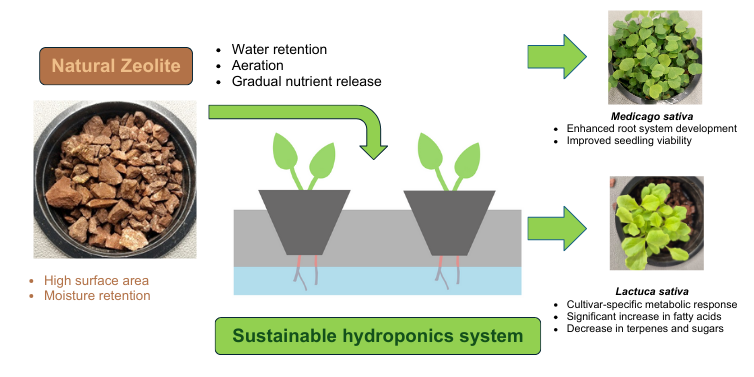
In Kazakhstan, food safety is a pressing issue due to water and soil pollution. This study examined the effect of natural zeolite as an alternative hydroponic substrate on the physicochemical properties of the medium and the physiological and metabolic responses of two agricultural crops: Medicago sativa L. and Lactuca sativa L. BET analysis revealed that the zeolite possesses a substancial specific surface area (22 m²/g), ensuring effective moisture retention and gradual nutrient release. After plant cultivation, these parameters decreased moderately, confirming the filling of the pores with organic compounds without loss of key properties. In experiments with Medicago sativa, zeolite provided better aeration and stable moisture, promoting the development of a branched root system and increased seedling viability compared to an artificial substrate. Metabolic analysis of three Lactuca sativa varieties revealed cultivar-specific adaptive responses. Zeolite increased the synthesis of fatty acids and their derivatives, reflecting membrane-protective restructuring, while sugar and terpenoid content varied depending on the variety. The results confirm the suitability of zeolite as a stable substrate for hydroponic production, allowing for optimized water consumption, improved root development, and enhanced physiological stability of plants.
Keywords:
hydroponics
; zeolite
; substrates
; environmental safety
; food safety
; Medicago sativa
; Lactuca sativa
; alfalfa
; lettuce
1. Introduction
According to FAO forecasts, the global population will reach approximately 9 billion by 2050, with up to 75% of this population concentrated in urban areas. Under these circumstances, ensuring food security is becoming a critical issue, especially as suitable farmland is declining due to climate change, water scarcity, and soil degradation [1,2]. Water resources in Kazakhstan remain limited, and many basins are already experiencing regional deficits, leading to losses in agriculture and the fishing industry, as well as degradation of marine ecosystems. With increasing water consumption, six of the country’s eight basins could face deficits by 2040. The situation is exacerbated by global changes: population growth, expanded irrigation, and industrialization are increasing pressure on freshwater. Kazakhstan’s severely arid and semi-arid climate features low and constant temperatures, reducing soil moisture availability and increasing the risk of erosion. Under these conditions, the development of alternative farming methods is particularly relevant, including the use of zeolites in closed hydroponic environments to reduce water and soil consumption [3,4].
A wide range of remediation methods have been developed to localize, remediate, and reduce heavy metal contamination in soils, with efficiency and cost decreasing in field conditions. The most promising approaches include electrokinetic extraction, chemical stabilization, and bioremediation [5]. The latter is based on the use of samples, fungi, plants, or their metabolites to restore damaged ecosystems. A special area of bioremediation is phytoremediation, which uses plants to retain, remove, or eliminate pollutant collectors in soils [6,7]. Additional application of nitrogen fertilizers, leads to their absorption by plants, and excess nitrogen is lost through leaching, evaporation, and denitrification; unabsorbed nitrates are easily carried by wastewater and seep into the soil [8].
This has fueled growing interest in hydroponics—a soil-free technology for growing plants in nutrient solutions using inert or organic substrates. This method optimizes water and nutrient management and increases crop efficiency [1,2].
Hydroponics is a promising and sustainable plant growing technology, particularly in demand in urban areas. It can be used in both industrial complexes and home microsystems, providing an additional source of fresh produce while continuing farming [9]. Maintaining the required CO₂ capacity significantly increases yields: greenhouse experiments show that increasing it can boost the productivity of some crops by up to 50%. For most plants, saturation levels occur at 1000–1300 ppm. The most common crops for hydroponics are leafy vegetables, strawberries, and tomatoes, but the choice depends on the regional climate [10].
The main advantages of hydroponics over conventional farming include growing plants without soil on artificial substrates, the absence of soil-borne pathogens and other factors, the possibility of year-round production in limited areas, including northern regions, and the use of appropriate equipment, LED phytolamps, and mineral solutions. This approach allows for the management of plant growth and development throughout the growing season and the control of product quality [11,12].
Artificial lighting is one of the determining factors in the effectiveness of hydroponic cultivation. By adjusting its intensity, duration, and spectrum, it is possible to influence the photoreceptive systems of plants. Various types of electric lamps are used in photoculture, the spectrum of which should cover the visible range, with a predominance of red, blue, green, and violet light, as well as a small proportion of UV and IR radiation. Different spectral ranges have different effects on plant morphogenesis and metabolism [12,13,14].
Biosorbents (natural adsorbents) are materials of natural origin—plant fibers, volcanic rocks, soils, plant biomass, agricultural and industrial waste, animal shells, microalgae, and fungal biomass. Their common characteristic is a significant specific surface area. Among natural materials, agricultural waste stands out, containing proteins, hemicellulose, lignin, lipids, starch, and simple sugars, which provide a greater number of functional groups involved in heavy metal binding [15].
Increased interest in environmentally friendly water purification methods is stimulating the use of zeolites. Acid-modified clinoptilolite and mordenite exhibit improved ion-exchange properties, increased surface area, and thermal stability. This treatment results in partial dealumination and the formation of surface pores, leading to the adsorption of heavy metals (Pb²⁺, Cd²⁺, As³⁺). The adsorption properties correspond to the Langmuir and Freundlich models, and the kinetics are described by a pseudo-second-order mechanism driven by ion exchange and complexation. Thermodynamic analysis confirms the spontaneous and endothermic nature of the process [16].
Zeolites are aluminosilicate minerals based on clinoptilolite. They include over forty varieties, differing in their crystallization water content and physicochemical properties. Common characteristics of zeolites include high sorption and cation exchange capacity, as well as their function as “molecular sieves” [17]. Owing to these properties, zeolites are extensively used as catalysts, ion exchangers, and adsorbents—particularly in petroleum refining, natural gas purification, and water treatment. In agriculture, they serve as nutrient carriers in fertilizers [18]. Zeolites used to increase plant resistance to disease, enhance productivity, and improve soil structure and fertility. Zeolites stabilize substrate pH and conductivity, optimize water management in the root zone, and stimulate root tissue growth, which has been noted, in particular, in tomato seedlings. However, further research is required to objectively assess their potential in intensive and organic cultivation technologies [19].
Structurally, zeolites are three-dimensional aluminosilicate frameworks of [SiO₄]⁴⁻ and [AlO₄]⁵⁻ tetrahedrons, forming a system of micropores and channels with a high specific surface area and significant cation-exchange capacity. Natural and synthetic zeolites are widely used due to their ability to adsorb and separate cations, reducing environmental risks and promoting the recovery of key elements such as ammonium nitrogen. In addition, they can be used as nutrient carriers for foliar feeding of plants [20].
The formation of zeolite films on leaf surfaces is associated with a decrease in leaf tissue temperature and an increase in transpiration, and in some cases, with an increase in photosynthetic activity and gas exchange. Therefore, zeolites are used as a means of mitigating abiotic stress in agricultural crops, as well as a biostimulant that enhances plant growth and resistance. Furthermore, a number of studies show that their use can improve the quality and extend the shelf life of products [21,22,23].
Natural zeolites are widely used as ameliorants to reduce the mobility of inorganic pollutants and improve the agrochemical properties of soils. These measures result in low levels of available silicon and pronounced sorption and ion exchange processes, allowing for the strong binding of heavy metals in soils and water [24]. Zeolites also improve fertility, stimulate microbial metabolism, and increase crop yields and product quality. However, the mechanisms of their direct and indirect migration of heavy metals into the soil-plant system, as well as the interaction of zeolites with PHPR (plant-microbe-soil interactions), remain poorly understood [25].
Recent studies have shown that zeolites can mitigate allelopathic effects. In experiments with saffron corm residues, which inhibit lettuce germination and growth, the use of activated carbon and zeolite reduced toxicity, increased root length, chlorophyll index, and carotenoid content. This demonstrates the potential of sorbents for detoxifying soils contaminated with allelochemicals [27]. The use of various types of sorbents (biochar, bentonite, chicken manure, and organozeolite substrate) also positively impacts the germination and early growth of grasses in soils contaminated with highly heat-resistant elements. The effect depends on the plant species and the type of extracts, but the addition of sorbents increases the germination rate, most significantly with biochar and chicken manure [28].
Thus, in the context of increasing water and soil resource shortages typical of arid and semi-arid regions, including Kazakhstan, the search for sustainable and resource-saving crop production technologies is particularly urgent. Hydroponic systems that optimize water and mineral nutrition for plants and minimize environmental pollution require functional substrates with high sorption and ion-exchange capacity.
Despite the wide range of practical applications of zeolites in agriculture and environmental technologies, their role in hydroponic systems and the mechanisms of interaction within the substrate–nutrient solution–plant system remain poorly understood. This underscores the feasibility and scientific validity of choosing zeolite as a key research object in the development of sustainable technologies for intensive and environmentally friendly plant production.
2. Material and Methods
2.1. Water-Holding Capacity Test
As it was noted previously, natural sorbents include biochar and zeolites [28,29]. To assess their moisture capacity and select the optimal substrate, a water-holding capacity test was conducted on three materials: fine-fraction zeolite (FZ, <1 mm), coarse-fraction zeolite (CZ, 2.5–5 mm), and activated carbon (AC, 2–3 mm) obtained from plant biomass [30]. Tests were conducted at temperatures of 22 °C and 50 °C. 5 g of water were applied to 20 g of substrate, evenly distributed over the surface.
2.2. Hydroponic System
A Reogen Systems NFT (Nutrient Film Technique) hydroponic setup was assembled and put into operation. This system ensures a uniform supply of nutrient solution through inclined channels in which the plants are placed. Such a design promotes continuous hydration of the root system while maintaining a high level of aeration. An inverted NFT configuration may increase the risk of nutrient imbalance due to the influence of gravity on solution flow. A controlled system helps maintain balanced nutrient concentrations in the root zone, preventing issues such as nutrient lockout or toxicity [31].
The setup includes six horizontal racks, each accommodating 20 planting cups with a volume of 100 mL, as well as integrated LED light panels. The photoperiod and irrigation schedule were adjusted according to the requirements of the cultivated plants using a programmable timer. Mineral nutrition was provided by an N–P–K fertilizer solution diluted at a ratio of 2.5 mL per 1 L of distilled water (1:400). The pH of the irrigation solution was maintained within the range of 6.0–6.5. A schematic representation of the installation is shown in Figure 1.
2.3. Experimental Plants and Substrates
Plants. To evaluate the effect of zeolites on plant growth, two experiments were conducted using two types of agricultural crops—alfalfa (Medicago sativa) and lettuce (Lactuca sativa).
Alfalfa (Medicago sativa L.) was chosen for this study due to its high germination rate, rapid biomass accumulation, and moisture sensitivity. Medicago sativa L. is a perennial, warm-season legume cultivated worldwide on approximately 30 million hectares. Key production regions include the United States, Canada, Italy, France, China, Argentina, Chile, South Africa, Australia, and New Zealand. Alfalfa is highly valued for its ability to provide forage with high crude protein content and a high proportion of total digestible nutrients [32].
The seeding rate was calculated based on a standard seeding rate of 250–300 seeds (2–3 g) per m². For this experiment, 30–40 seeds (approximately 0.3 g) were sown in individual 100 ml cups. Before sowing, the seeds were disinfected in a 1% solution of potassium permanganate for 30 minutes and then washed with distilled water.
Watering was scheduled depending on the plant’s needs: every 3 hours at night and every 2 hours during the day: at 00:00, 3:00, 6:00, 8:00, 10:00, 12:00, 14:00, 16:00, 18:00, and 21:00 PM. Each watering session lasted 5 minutes, maintaining the required humidity level without over-watering the substrate. The laboratory temperature was 20-22 °C.
The lighting regime was adjusted according to the plant’s developmental phases:
- Germination phase (first 3-5 days): lighting regime from 6:00 AM to 10:00 PM (16 hours per day). The dark period provided physiological rest for the plants and simulated a natural light rhythm.
- Active growth phase: lighting regime from 08:00 to 22:00 (14 hours per day), followed by darkness for 10 hours, which provided optimal conditions for photosynthesis and general development of plants.
Lettuce (Lactuca sativa L.) is a key leafy crop with great morphological and genetic diversity; accurate characterization of genetic resources and morphotypes is important for breeding [33]. Lettuce was chosen due to its rapid germination and biomass formation, as well as its sensitivity to water supply conditions. Previous research shows that L. sativa var. crispa is moderately sensitive to salt stress: yield decreases, but the dry matter content increases, while flavor remains unchanged [34]. Lettuce also serves as an indicator of industrial effluent toxicity [35]. Lead contamination of soil alters the biomass distribution—more is found in shoots, while Pb accumulates primarily in roots, a finding confirmed by previous studies [36].
For the 2nd experiment three varieties of the Lactuca sativa were chosen:
1) American Brown (AB): loose-leaf Batavia variety known for its bronze-red, crinkled leaves when ripening.
2) Yeralash (Y): looseleaf type with strongly wavy/frilly edges, forming a dense rosette.
3) May King (MK): butterhead variety with soft, light to mid-green leaves.
The seeding rate was 800-1000 seeds (1-2 g) per 1 m², equivalent to individual cups (100 ml), were sown at a rate of 3-4 plants (0.3 g) per cup. The lettuce seeds were pre-treated in a 1% potassium permanganate solution for 30 minutes, then rinsed with distilled water. The seeds were germinated on a Petri dish. After 3 days, when the first sprouts appeared, they were planted in containers with substrate. Watering schedule: 4 times a day coincides with the activation of supplementary lighting 6:00, 10:00, 14:00, 18:00, and 2 times at night 00:00, 02:00.
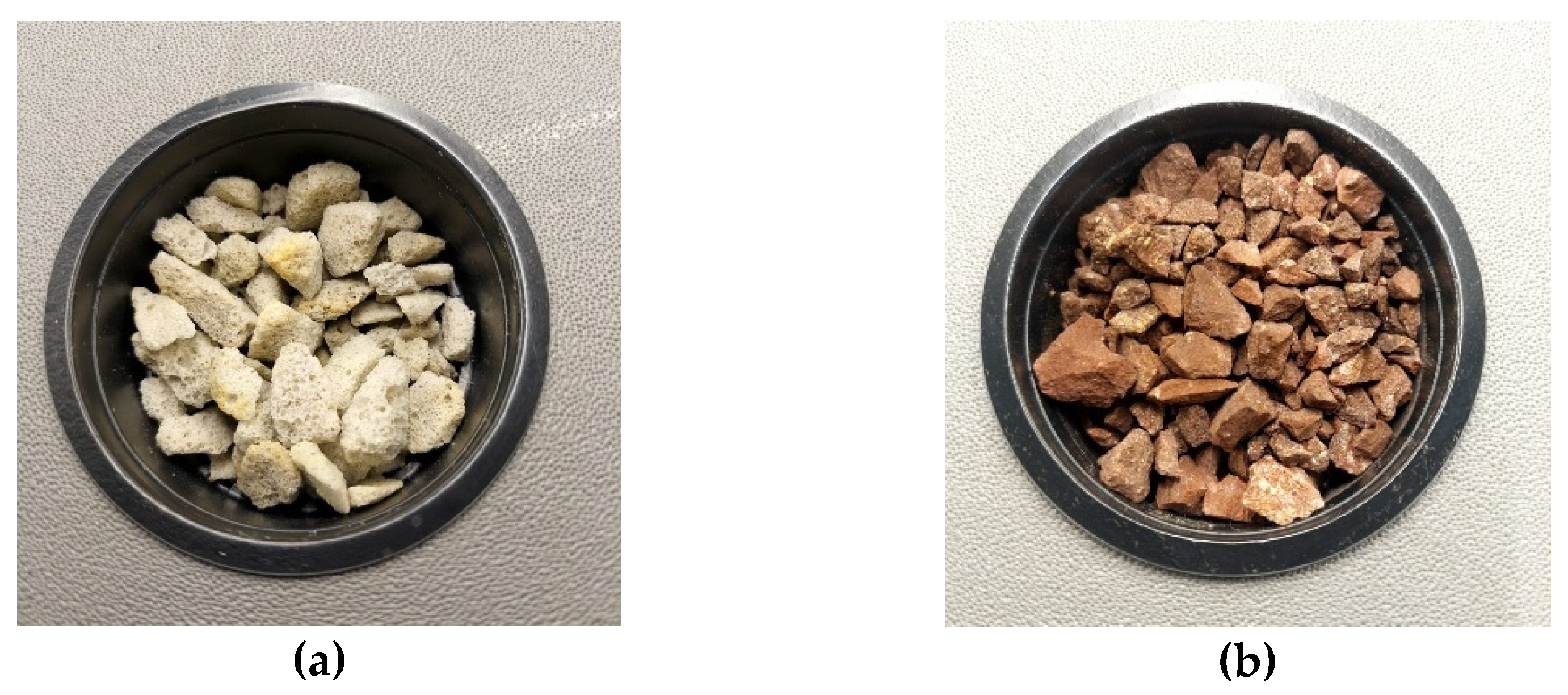
Substrates. To study properties of zeolites (Z) as substrates for growing agricultural crops (Figure 1. b), an artificial substrate from foamed-glass medium GrowPlant (Russia) was chosen as a control (Figure 1. a). GrowPlant (GP) supplied with the hydroponic system and considered an efficient alternative to perlite, expanded clay, and pumice. The substrates shown on Figure 1. The substrates were washed in distilled water and then disinfected at 100 degrees for 1 hour in a drying oven.
Figure 2.
Types of substrates: (a) Artificial foamed-glass medium (GrowPlant); (b) Natural zeolite from the Shankhanai deposit.
Figure 2.
Types of substrates: (a) Artificial foamed-glass medium (GrowPlant); (b) Natural zeolite from the Shankhanai deposit.
2.4. BET Analysis Methodology
The porous structure and surface characteristics of the substrates were analyzed using the Brunauer–Emmett–Teller (BET) method. BET analysis is commonly applied to determine the surface area of nanoporous materials, such as metal–organic frameworks (MOFs) and zeolites. Despite some limitations, mainly related to the quadropole moment of the nitrogen molecule, nitrogen adsorption measurements provide valuable insight into the pore architecture of zeolites and remain a widely used approach for characterizing synthetic zeolite materials [18,37]. The BET theory is based on the physical adsorption of gas molecules on solid surfaces, which occurs through van der Waals interactions formed by an adsorbate film composed of atoms, ions, or molecules [38].
Prior to analysis, all samples were dried and ground using a Kubo X1000 mill to ensure uniform particle size. Approximately 0.60 g of each substrate was weighed and degassed at 300 °C for 3 h under vacuum to remove moisture and volatile impurities. Nitrogen was used as the adsorbate (molecular cross-sectional area: 0.162 nm²). Adsorption–desorption isotherms were recorded, and the resulting data were processed to determine BET-specific surface area
2.5. GS–MS Analysis Methodology
Organic compounds were analyzed by gas chromatography coupled to mass spectrometry (GC-MS) on a 7890A/5975C instrument. GC-MS is a widely used and well-established tool for analyzing environmental pollutants in samples of various origins—air, water, soil, sediment, and biological materials. The method is also used to determine new and difficult-to-decompose compounds, including polybrominated diphenyl ethers (PBDEs), polychlorinated alkanes, and other persistent organic pollutants. When analyzing thermally unstable or polar compounds, derivatization is used, which increases the stability of the analytical forms, improves chromatographic characteristics, and enhances the sensitivity of mass spectrometric detection [39].
A 0.5 µL sample was injected into the injector at 280 °C in splitless mode. Separation of the components was performed on a DB-17ms capillary column (30 m × 0.25 mm × 0.25 μm) at a constant helium flow rate of 1 mL/min. Temperature programming was from 40 °C with a 5 °C/min increment to 300 °C with a 10-minute hold. Total analysis time was 67 minutes.
Mass spectra were recorded in SCAN mode in the m/z range of 34–750. The chromatograph-mass spectrometry system was controlled, data were collected, and processed using Agilent MSD ChemStation software (version 1701EA). Result processing included determination of retention times, peak areas, and spectral interpretation. Compound identification was performed using the Wiley 11th Edition and NIST 2002 libraries (a total of over 550,000 spectra).
3. Results
3.1. Substrate Characterization
3.1.1. Physical Properties of Zeolites
The results showed that at 22 °C, all materials retained moisture approximately equally for the first 30 minutes. By the 60th minute, differences emerged: the coarse zeolite retained moisture better, while the fine fraction exhibited more intense evaporation. At 50 °C, the differences increased: the fine zeolite lost moisture most rapidly, while activated carbon had a high water-holding capacity. Nevertheless, given its balanced water characteristics, availability, and structural properties, the coarse zeolite was selected for further hydroponic seed germination experiments. Change in mass was recorded at specified time intervals (Table 1).
Additionally, performance of the granulometric analysis of coarse-fraction (CZ) zeolite using the Kachinsky method [40] demonstrated an optimal particle-size distribution—large fraction (4.5–5 mm) 30%, medium (3–4.5 mm) 40%, and micro (2.5–3 mm) 30%—which makes it the most suitable substrate for further experiments. Granulometric composition is one of the key factors in soil formation, significantly influencing air, thermal, water-physical, and mechanical properties, and is widely used in soil characterization [41].
3.1.2. BET Surface Area
The results of the BET analysis shown on Figure 3 (a-c) confirmed the qualitative findings: the artificial GrowPlant substrate exhibited virtually no porosity (the BET specific surface area is 0.5 m²/g), whereas the natural zeolite, prior to the experiment, was characterized by a considerably higher surface area (BET 22 m²/g), which provide significant area for water retention and ion adsorption. Even after partial pore filling due to vegetation (BET decreased to 17 m²/g ), the zeolite retains a significant capacity to accumulate moisture and nutrients.
This partially filled pore structure acts as a buffer: the zeolite retains excess water and prevents stagnation, while also ensuring the gradual release of nutrients into the root zone, reducing the frequency of watering and preventing sudden fluctuations in humidity. This provides plants with a more stable water supply, which is especially important in conditions with limited water resources. There seems to be an uniform porosity, which prevents substrate compaction and ensures oxygen flow to the roots, promoting more vigorous growth. As a result, zeolite simultaneously reduces water consumption and improves the physiological stability of plants in hydroponic systems.
3.2. Experiment 1: Growth Dynamics of Medicago sativa L.
In Sample No.1 GrowPlant, sprouts emerged on the fifth day. Owing to its high porosity and low water-holding capacity, the substrate dried out rapidly, requiring frequent, abundant irrigation. The low specific gravity facilitated faster seedlings emergence (the average height on the day of emergence was 2–3 mm); but also caused partial; seed washing during watering. Despite higher germination rates in the initial stages compared to sample No.3, this sample currently shows the lower average stem height and root length. Germination by day six was only 15.6%, markedly lower than that of the other samples. Visual abnormalities in the plants’ condition are noted: the leaves are a less intense green color, with some yellowing. As can be observed on the Figure 3. E) due to the low weight of the artificial substrate and its icroporous structure, the stems developed more convoluted root systems that penetrated deeply into the material, which would complicate the subsequent reuse of the substrate.
Sample No. 3 Zeolite demonstrated the slower germination rate at the beginning of the experiment due to the dense structure and heavy mass of the substrate, which hindered the sprouts’ progress to the surface. The average height on the first day of emergence was 1–2 mm. The surface layers of the zeolite quickly lost moisture, but the lower portion of the glass, located in the shade, retained it longer, providing more stable moisture conditions compared to artificial. This avoided overwatering and drying out typical of Sample No.1. Watering every two hours for 5 minutes proved to be most suitable for this environment. Due to its high density, the zeolite does not shift when water is applied, preventing seed washout. The leaves were bright green, comparable to Sample No.2. By the sixth day, germination was 51.9%, which is also comparable to the results of Sample No.2 (15.6%). Seed germination rate is presented in Figure 4.
Average stem height, root length, and leaf count were determined using random sampling: seven to ten plants were randomly selected, and the average values were measured. Plant growth indicators are presented in Table 2 and Figure 5. Detailed photographic documentation of seedling growth, including shoot height and root and stem length measurements are presented in Appendix A.1 Section Figure A1.
As it shown on Figure 5 (a-f), the seedlings grown on the two substrates showed markedly different external morphologies. During plant removal for measurements, clear differences in root thickness were also observed. On the artificial substrate, the roots were significantly weaker, and a mucilaginous layer had formed on their surface, indicating the onset of decay (Figure 5. G). This effect may be attributed to the artificial substrate’s inability to retain excess moisture as effectively as zeolite, causing water to remain on the plant surface rather than being absorbed into the substrate. It is noteworthy that in the zeolite substrate, the emergence of the compound ternate leaf (Figure 5. H) occurred earliest (day 10). In contrast, in the other substrates, this stage was observed only on days 12–13.
3.3. Experiment 2: Growth Dynamics of Lactuca sativa L.
Three Lactuca sativa varieties showed different responses to zeolite addition. Seed germination rates are shown in Figure 6. Observations of average steam, root, and leaf heights and engths are presented in Table 5 and Figure 7 (a–f).
American Brown. The germination process for this variety is characterized by a significant delay: no seedlings emerged by the 7th day. The first sprouts were observed only on the 9th day, reaching 30.0% in the substrate and 33.2% in the zeolite. By the 15th day, the germination rate had increased to 36.3% and 40.6%, respectively. Thus, this variety has a low germination rate, but the use of zeolite (No.2 AB Z) provides a slight improvement compared to the artificial substrate (No.1 AB GP). At the initial stage, the shoot height was 1.8 cm in the substrate, the root length was 2.8 cm, and the leaf length was 0.5 cm. In the zeolite, somewhat more pronounced dynamics were observed: the shoot height was 2.0 cm, the roots were 2.8 cm, and the leaf length was 0.5 cm. By the 15th day, the indicators increased to 2.0–2.2 cm in height, 3.2–3.4 cm in roots, and 0.8–0.85 cm in leaves (Figure 7 (a-b)).
Yeralash. Seeds of this variety demonstrated the highest germination rate and level. By the third day, germination rates exceeded 30% in both the substrate (No.3 Y GP) and zeolite (No.4 Y Z). By the seventh day, these rates reached 68.1% and 72.0%, respectively. By the 12th day, germination rates were 87.1% (substrate) and 95.35% (zeolite), and by the 15th day, 95.3% and 99.3%. Therefore, the Yeralash variety is characterized by high germination energy and virtually complete germination, while the zeolite exerts a stimulating effect. On the first day of emergence, the stems were 1.5 cm tall and the roots 2.25 cm long. By the 10th day, the plants reached 3.6 cm in height and 4.5 cm in root length. By day 15, the measurements had increased to 4.4 cm and 7.5 cm, respectively. No significant differences were found between the substrate and zeolite (Figure 7 (c-d)).
King of May. The germination rate of this variety is intermediate. On the third day, the rate was approximately 25%, on the seventh day, 53.2% in the substrate (No.5 MK GP) and 56.1% in the zeolite (No.5 MK Z). By the 12th day, this rate increased to 64.3% and 72.65%, and by the 15th day, to 70.3% and 84.3%. Thus, this variety is characterized by average germination, while the use of zeolite significantly increased the final germination rates. On the third day, the plants were already 1.3 cm tall and had roots 2.1 cm long. By the 10th day, these rates had increased to 3.8 cm and 3.9 cm, and by the 15th day, to 4.6 cm and 5.6 cm, respectively (Figure 7 (e-f).
3.4. GC–MS Analysis of Metabolites in Lactuca sativa L.
GC–MS test was performed on plant leaves and roots separately. Table 6 presents the summarized percentage distribution of compounds by chemical classes in lettuce plants. A more detailed breakdown of individual compounds is provided in the Appendix B. Table B1.
For the American Brown cultivar, the difference in metabolic profile between the GrowPlant and Zeolite substrates is most pronounced in lipid and terpenoid metabolism, especially in the leaves. Zeolite causes a dramatic redistribution of metabolic flux in the leaves, significantly increasing the lipid component at the expense of other classes.
In the leaves of the American Brown cultivar planted in zeolite was observed a massive increase in fatty acid content (+15.37%) and their derivatives (+5.46%). This may indicate a stress response requiring strengthening of cell membranes or a change in energy balance. A decrease in the percentage of protective and energy-producing compounds was also observed. The amount of terpenoids decreased by 10.28% and sugars by 4.84%. This suggests that resources in the substrate that were directed toward the synthesis of these classes were redirected to the lipids in the zeolite. Similarly critical increase in fatty acid content (+17.31%) and drop of sugar content (from 7.7% to 2.72%) was observed in the roots, which may reflect their intensive use for energy or the construction of fatty acids.
Zeolite, as an aluminosilicate mineral, can affect the availability of ions and water, creating osmotic or ionic stress in the root zone. Stiffer or modified membranes help the plant better control the flow of water and ions, which is critical in hydroponics, especially when using a new substrate.
A decrease in sugars and other soluble organic matter can slow fermentation and degradation processes after harvest, potentially extending the shelf life of produce. A decrease in water and an increase in fatty acids can lead to a more concentrated flavor. A decrease in terpenoids (which can impart a bitter or grassy flavor) and sugars can alter the sweetness/bitterness balance. This can be positive if the goal is to achieve a salad with a more neutral or buttery flavor.
A comparison of the May King variety grown on Zeolite and GrowPlant substrates reveals the most dramatic changes in the metabolic profile of all the studied varieties, particularly in the roots. In the leaves of May King, zeolite causes a decrease in fatty acid content (from 34.24% to 12.6%) and a significant increase in their derivatives (from 5.94% to 30.66%), as well as a decrease in terpenoids (from 29.36% to 35.39%). This indicates active esterification of fatty acids for storage or transport under zeolite conditions. Unlike the American Cinnamon variety, May King increases terpenoid content on zeolite, which may be a mechanism for enhanced defense characteristic of this variety.
In the roots of MK, zeolite causes the most dramatic shift, radically changing the dominant class of compounds. Complete Metabolic Reprogramming: Terpenoids predominate on the artificial substrate (58.19%), while on zeolite this class collapses (20.21%), and is replaced by Fatty Acids (+51.27%). The sudden emergence and dominance of FA (more than 50% of the total profile) with a simultaneous decrease in protective terpenoids and sugars indicates a strong adaptive response to zeolite conditions. The plant likely prioritizes the synthesis of structural lipids for emergency stabilization of cell membranes in the root system at the expense of all other metabolites. Active conversion of free FA to FA derivatives can lead to lipid stability after harvest, slowing oxidative processes and, accordingly, increasing the shelf life of products.
As in other varieties, Yeralash shows an increase in fatty acids (+7.25%). However, the most distinctive feature compared to other varieties is the sharp increase in polyols (+2.93%), which are often used for osmoregulation and protection against desiccation under stress conditions.
Content of terpenoids remained high (from 37.9 to 31.67%), indicating the preservation of a significant protective function in the leaves. Sugar content remained virtually unchanged, indicating a lesser influence of zeolite on the primary energy metabolism in the leaves. Similarly in roots, unlike other varieties, Yeralash maintains the dominant role of terpenoids (from 68.95% to 68.94%). This may indicate that Yeralash is less susceptible to the effects of zeolite.
An important observation is that γ-tocopherol was detected only in this variety. Γ-tocopherol is the most common form of vitamin E in plants and seeds. Its primary function is antioxidant protection, particularly in membranes and chloroplasts. The decrease in γ-tocopherol concentration in zeolite (from 0.41% to 0.35%) may indicate that zeolite provides more favorable and stable conditions (e.g., better moisture retention or a more balanced, slow release of nutrients) than in the artificial substrate, leading to the plant experiencing less oxidative stress. As a result, the need for antioxidant synthesis is reduced.
4. Conclusions
Study demonstrated that zeolite is a functionally effective substrate capable of simultaneously improving the physicochemical properties of the medium and modifying plant metabolic reactions.
According to BET analysis, the zeolite had a significantly higher specific surface area compared to the commercial GrowPlant substrate: 22 m²/g versus 0.5 m²/g. Even after plant cultivation, the surface area remained high (17 m²/g).
The high porosity and microporous structure of the zeolite ensure better water retention, delayed substrate drying, and a slow and uniform release of ions, which reduces plant stress and the need for frequent watering.
Under zeolite conditions, alfalfa seedlings developed a more developed but intricate root system, actively penetrating the substrate granules. This is due to the low density of the zeolite and its high air permeability. Metabolic analysis of lettuce revealed cultivar-specific responses to zeolite. A significant increase in fatty acids and their esters, along with a decrease in terpenes and sugars, was observed in the AB and MK varieties. This reflects a membrane-protective response to changes in ionic and water availability in the zeolite. Variety E demonstrates resistance, maintaining high terpene levels in leaves and roots, and increasing polyols, indicating mild osmoprotection.
The combination of zeolite’s structural properties (microporosity, high surface area, moisture stabilization) and its chemical nature (ion exchange, buffering) creates a controlled growth environment capable of inducing adaptive changes in plant metabolism and directing them toward increased membrane stability and structural lipids.
In general, the use of zeolite:
- improves water retention and reduces watering frequency; ensures better aeration and root development;
- stimulates the synthesis of fatty acids, which enhance tissue resilience;
- can increase the stability and shelf life of salad products;
- elicits variety-specific but predictable adaptive responses.
As a result of the zeolite properties study, zeolite is a promising substrate for growing a wide range of agricultural crops in hydroponic and semi-closed systems.
Author Contributions
“Conceptualization, .Ye.D. and D.A.; methodology, D.A.; software, M.A.; validation, Ye.D., A.S., K.Kh. and L.F.V.; formal analysis, L.F.V., K.Kh.; investigation, D.A.; resources, Ye.D.; data curation, D.A.; writing—original draft preparation, D.A.; writing—review and editing, Ye.D., K.S.; visualization, D.B., E.A., A.Zh.; supervision, Ye.D., O.D.; project administration, Ye.D., Z.M.; funding acquisition, Ye.D. All authors have read and agreed to the published version of the manuscript.”.
Funding
This work was supported by the Ministry of Science and Higher Education of the Republic of Kazakhstan grant (AP23489070).
Data Availability Statement
The data used to support the findings of this study are available from the corresponding author upon reasonable request.
Conflicts of Interest
The authors declare that they have no conflicts of interest.
Abbreviations
The following abbreviations are used in this manuscript:
| BET | Brunauer-Emmett-Teller method |
| FAO | Food and Agriculture Organization of the United Nations |
| LED | Light-Emitting Diode |
| UV | Ultraviolet |
| IR | Infrared |
| PHPR | plant-microbe-soil interactions |
| NFT | Nutrient Film Technique |
| FZ | fine-fraction zeolite |
| CZ | coarse-fraction zeolite |
| Z | Zeolite |
| GP | GrowPlant |
| AB | American Brown |
| Y | Yeralash |
| MK | May King |
| GC-MS | gas chromatography coupled to mass spectrometry |
Appendix A
Appendix A.1. Comparative morphology of Medicago sativa seedlings
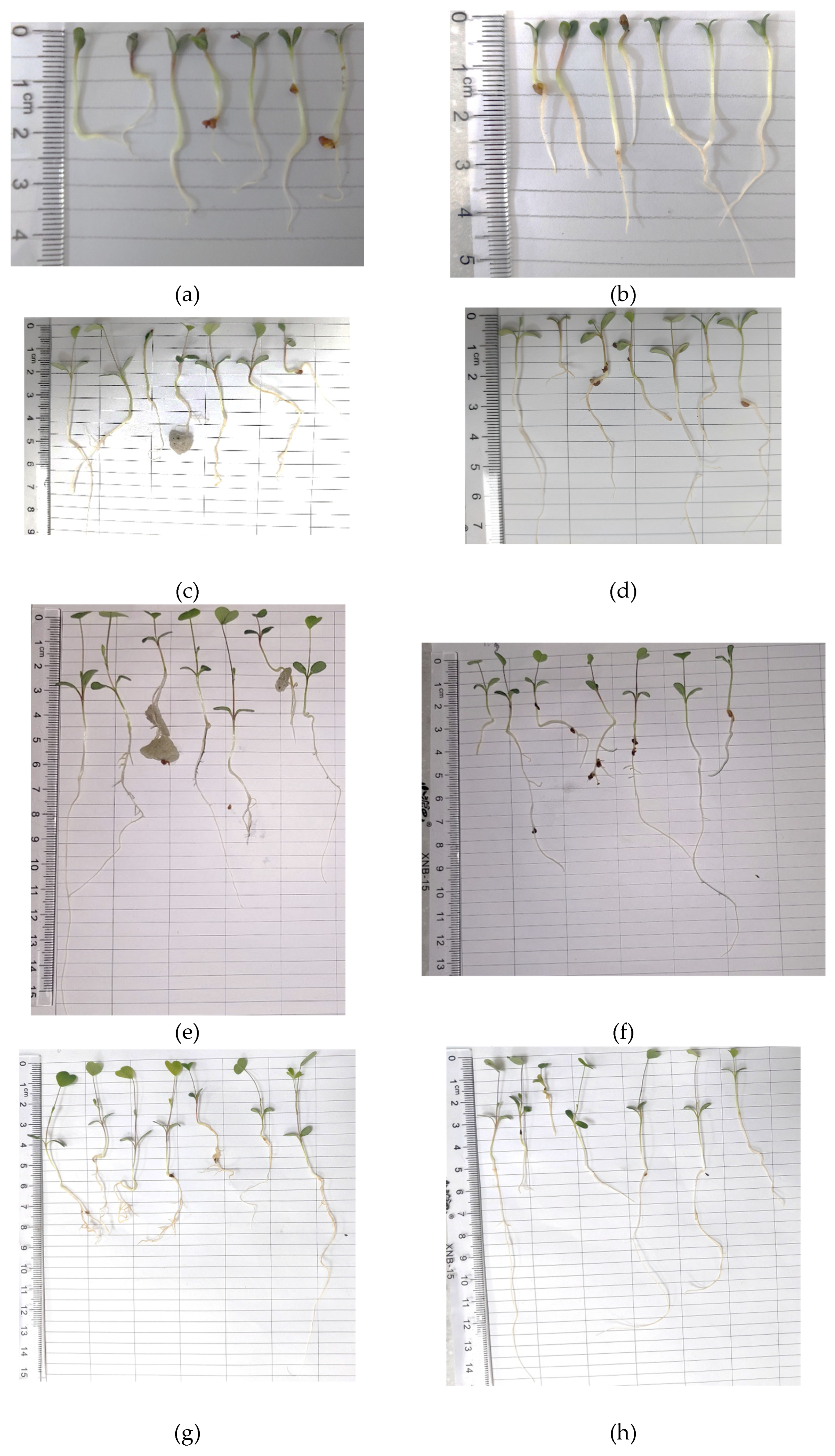
Figures A.1(a–h) show the comparative morphology of Medicago sativa seedlings grown on two different substrates across various growth stages. Specifically: Figure A.1(a) – Day 5, Sample No.1; Figure A.1(b) – Day 5, Sample No.2; Figure A.1(c) – Day 7, Sample No.1; Figure A.1(d) – Day 7, Sample No.2; Figure A.1€ – Day 10, Sample No.1; Figure A.1(f) – Day 10, Sample No.2; Figure A.1(g) – Day 14, Sample No.1; and Figure A.1(h) – Day 14, Sample No.2. These images complement the quantitative growth data presented in Table 2 and Figure 5 of the main text, illustrating changes in shoot and root morphology over time.
Figure 1.
Comparative morphology of Medicago sativa seedlings on two substrates across growth stages: a) Day No. 3, Sample No.1; b) Day No. 3, Sample No.2; c) Day No. 5, Sample No.1; d) Day No. 5, Sample No.2; e) Day No. 10, Sample No.1; f) Day No. 10, Sample No.2; g) Day No. 14, Sample No.1; h) Day No. 14, Sample No.2.
Figure 1.
Comparative morphology of Medicago sativa seedlings on two substrates across growth stages: a) Day No. 3, Sample No.1; b) Day No. 3, Sample No.2; c) Day No. 5, Sample No.1; d) Day No. 5, Sample No.2; e) Day No. 10, Sample No.1; f) Day No. 10, Sample No.2; g) Day No. 14, Sample No.1; h) Day No. 14, Sample No.2.
Appendix B
Appendix B.1. – Chromatographic analysis of Lactuca sativa extracts
Detailed chromatographic data of individual compounds identified in Lactuca sativa extracts and their relative abundance (%) are presented in Table B1. The table includes compound names, retention times, and percentage content, providing a comprehensive overview of the chemical composition of the extracts. These data support the discussion of bioactive components and their potential influence on plant growth and physiological responses, as described in the main text.

Table B1.
Detailed chromatographic profile of individual compounds identified in Lactuca sativa extracts (%).
Table B1.
Detailed chromatographic profile of individual compounds identified in Lactuca sativa extracts (%).
| Class | Subclass | Compound name | No.1.1.1 AB GP leaves | No.1.1.2 AB GP roots | No.1.2.1 AB Z leaves | No.1.2.2 AB Z roots | No.2.1.1 MK GP leaves | No.2.1.2 MK GP roots | No.2.2.1 MK Z leaves | No.2.2.2 MK Z roots | No.3.1.1 Y GP leaves | No.3.1.2 Y GP roots | No.3.2.1 Y Z leaves | No.3.2.2 Y Z roots |
| I. Lipids and Derivatives | 1. Fatty Acids (FA) | Dodecanoic acid (Lauric acid) | 22,33 | 5,73 | 5,93 | 0,86 | 19,5 | - | - | 28,41 | 15,6 | 1,52 | 9,19 | - |
| Tetradecanoic acid (Myristic acid) | 0,54 | - | - | - | - | - | - | 0,74 | - | - | 1,15 | - | ||
| Hexadecanoic acid (Palmitic acid) | 8,97 | 1,44 | 15,22 | 20,56 | 10,08 | - | - | 9,98 | 8,59 | - | 10,82 | 10,71 | ||
| Octadecanoic acid | - | - | 20,94 | - | 2,49 | - | - | - | 1,22 | - | - | - | ||
| Eicosanoic acid | 0,18 | - | 0,52 | - | - | - | - | - | - | - | - | - | ||
| 9-Octadecenoic acid, (E)- | - | - | - | 24,69 | - | - | - | - | - | - | - | - | ||
| Oleic Acid | 6,9 | 14,01 | - | - | - | - | - | 5,09 | - | 2,54 | 5,17 | - | ||
| Linoelaidic acid | - | - | - | - | - | - | - | - | - | 5,1 | - | - | ||
| 9,12-Octadecadienoic acid (Z,Z) | 13,6 | 26,89 | 23,98 | 21,41 | 2,17 | - | 12,6 | 5,34 | 2,11 | - | 5,95 | 3,24 | ||
| 9,12,15-Octadecatrienoic acid (Z,Z,Z) | 2,16 | 2,14 | 3,46 | - | - | - | - | 1,71 | 1,55 | 1,21 | 4,04 | - | ||
| 2. FA Derivatives | Dodecanoyl chloride | 0,64 | - | - | - | - | - | - | 0,92 | 0,75 | - | 1,19 | - | |
| Lauric anhydride | 0,93 | - | - | - | - | - | - | - | 0,99 | - | 0,9 | - | ||
| Dodecanoic acid, ethyl ester | - | 1,27 | 0,97 | - | 5,94 | 4 | 7,15 | - | 3,55 | - | 2,05 | - | ||
| Dodecanoic acid, tetradecyl ester | - | - | - | - | - | - | - | 3,49 | 2,82 | - | - | - | ||
| Dodecanoic acid, hexadecyl ester | - | - | - | - | - | - | - | - | - | - | 1,35 | - | ||
| Hexadecanoic acid, ethyl ester | - | 11,52 | - | - | - | 8,08 | 15,2 | - | - | - | - | - | ||
| Hexadecanoic acid, 2-hydroxy-1-(hydroxymethyl)ethyl ester | - | - | - | - | - | - | - | 0,69 | - | - | - | - | ||
| Ethyl stearate, mono 9-epoxy | - | - | 0,32 | 0,39 | - | - | - | - | - | - | - | - | ||
| Ethyl stearate, 9,12-diepoxy | - | - | 0,41 | - | - | - | - | - | - | - | - | - | ||
| Ethyl oleate | - | - | - | - | - | - | - | - | - | - | 0,32 | - | ||
| (E)-9-Octadecenoic acid ethyl ester | 1,89 | 2,78 | 3,75 | 5,83 | - | - | - | - | - | - | - | - | ||
| Linoleic acid ethyl ester | - | 7,45 | - | - | - | - | - | - | - | - | - | 1,9 | ||
| 9,12-Octadecadienoic acid, ethyl ester | 4,2 | - | 7,97 | 10,93 | - | - | 8,31 | 1,07 | - | - | 1,42 | - | ||
| 9,12-Octadecadienoic acid (Z,Z)-, methyl ester | - | - | 0,18 | - | - | - | - | - | - | - | - | - | ||
| 9,12-Octadecadienoic acid (Z,Z)-, 2-hydroxy-1- (hydroxymethyl) ethyl ester | 1,94 | - | - | - | - | - | - | - | - | - | - | - | ||
| 9,12,15-Octadecatrienoic acid, methyl ester (Z,Z,Z)- | - | 1,49 | - | - | - | - | - | - | - | - | - | - | ||
| 9,12,15-Octadecatrienoic acid, ethyl ester (Z,Z,Z)- | - | - | 1,89 | - | - | - | - | - | 0,2 | - | 0,92 | - | ||
| Eicosanoic acid, ethyl ester | - | - | 0,24 | 0,26 | - | - | - | - | - | - | - | - | ||
| Undecanoic acid, ethyl ester | - | - | - | - | - | - | - | - | - | 0,98 | - | - | ||
| Octanoic acid, 2-dimethylaminoethyl ester | 0,43 | - | - | - | - | - | - | - | 0,57 | 0,49 | 1,15 | - | ||
| 3-Cyclopentylpropionic acid, 2-dimethylaminoethyl ester | 0,24 | - | - | - | - | - | - | 0,83 | - | - | - | - | ||
| II. Terpenoids (Isoprenoids) | 3. Sesquiterpenes (C15) | Farnesyl bromide | - | - | - | - | - | - | - | - | - | 3,77 | - | - |
| 4. Diterpenoids (C20) | Neophytadiene | 0,43 | - | 0,19 | - | - | - | - | 0,59 | 0,84 | - | 1,32 | - | |
| 3,7,11,15-Tetramethyl-2-hexadecen-1-ol (Phytol) | 1,98 | 0,88 | 1,15 | - | - | - | - | 1,99 | 1,93 | - | 1,93 | - | ||
| 5. Triterpenoids (C30) | Squalene | - | - | - | - | - | - | - | - | - | 0,71 | 0,25 | 1,1 | |
| Lanosta-8,24-dien-3-ol, acetate, (3β)- | 0,67 | - | - | - | - | - | - | - | 4,4 | - | 1,81 | - | ||
| 9,19-Cyclolanost-24-en-3-ol, acetate (3β) | - | - | - | - | - | - | - | - | 1,55 | - | 1,44 | - | ||
| Stigmasterol | - | - | - | - | - | - | - | 1,86 | 3,74 | 9,67 | 4,44 | 18,15 | ||
| β-Sitosterol | - | - | - | - | - | - | - | - | - | - | 0,71 | - | ||
| Olean-12-en-3-one | - | - | 0,35 | - | 15,25 | - | - | - | - | - | - | - | ||
| Olean-12-en-3-ol, acetate, (3β)- | 9,54 | 10,32 | 3,2 | 6 | - | 36,29 | 27,38 | 11,17 | 17,25 | 22,43 | 13,8 | 26,16 | ||
| Urs-12-en-3-ol, acetate, (3β)- | - | - | - | - | - | 8,09 | - | - | - | - | - | 9,23 | ||
| 13,27-Cycloursan-3-ol,acetate, (3β,13β,14β)- | - | - | - | - | - | - | - | - | - | 5,04 | - | - | ||
| Lup-20(29)-en-3-ol, acetate, (3β)- | 4,11 | 3,74 | 1,56 | 5,86 | 14,11 | 13,81 | 8,01 | 4,6 | 7,78 | 27,33 | 5,62 | 14,3 | ||
| γ-Tocopherol | - | - | - | - | - | - | - | - | 0,41 | - | 0,35 | - | ||
| III. Nitrogen-Containing Compounds | 6. Amines | Propylamine, N,N,2,2-tetramethyl-, N-oxide | 0,67 | - | - | - | - | - | - | - | - | - | - | - |
| 2-Propanamine, N-methyl-N-nitroso- | - | - | - | - | - | - | - | - | - | - | 0,23 | - | ||
| 7. Amides | Formamide, N-methoxy- | 0,82 | - | - | - | - | - | - | - | - | - | - | - | |
| 8. Heterocycles | Thymine | 0,58 | - | - | - | - | - | - | - | 0,82 | - | - | - | |
| 3H-Pyrazol-3-one, 2,4-dihydro-2,4,5-trimethyl- | - | - | - | - | - | - | - | - | - | 1 | - | - | ||
| IV. Carbohydrates and Intermediates | 9. Polyols | Glycerin (Glycerol) | - | - | 1,58 | 0,49 | - | - | - | - | - | - | 0,57 | - |
| Dihydroxyacetone | - | - | - | - | - | - | - | - | 0,48 | - | 0,48 | - | ||
| 1,2,3,4-Cyclohexanetetrol | - | - | - | - | - | - | - | - | - | - | 2,36 | - | ||
| 1,2,3,5-Cyclohexanetetrol | - | - | - | - | - | - | - | - | - | - | - | - | ||
| 1,2,3,5-Cyclohexanetetrol (1α,2β,3α,5β) | 1,95 | - | - | - | - | - | - | 2,97 | - | - | - | - | ||
| 10. Sugars and Derivatives | D-Allose | - | 0,54 | - | - | - | - | - | - | - | 0,66 | - | - | |
| 5-Hydroxymethylfurfural (5-HMF) | - | - | - | - | - | - | - | - | - | - | 0,23 | - | ||
| 3-Deoxy-d-mannonic acid | 1,04 | 1,19 | 0,85 | - | 0,79 | - | - | 2,19 | 1,37 | - | - | - | ||
| 3-Deoxy-d-mannoic lactone | 1,81 | - | - | - | 3,06 | - | - | - | 2,4 | - | 1,92 | - | ||
| β-D-Glucopyranose, 1,6-anhydro- | - | - | - | - | - | - | 1,2 | - | - | - | - | - | ||
| Vanillin lactoside | - | - | - | - | - | - | - | - | - | - | 0,54 | - | ||
| Sucrose | 6,68 | 5,97 | 3,84 | 2,72 | 13,43 | 18,92 | 11,17 | 8,28 | 9,87 | 11,02 | 9,86 | 9,28 | ||
| Melezitose | - | - | - | - | - | - | - | 0,44 | - | - | - | - | ||
| V. Other Organics | 11. Phenolic Compounds | Phenol, 4,4’-(1-methylethylidene)bis- (Bisphenol A structure) | 0,2 | 0,32 | - | - | 0,64 | 3,23 | 1,9 | 0,3 | 0,44 | 1,27 | 0,21 | 1,08 |
| Phenol, 2-[5-(2-furanyl)pyrazol-3-yl]-5-methyl- | - | - | - | - | - | - | - | 0,35 | 0,23 | 0,78 | 0,21 | 0,94 | ||
| 12. Alcohols, Aldehydes, Ketones | Cyclopropyl carbinol | 0,55 | - | 0,27 | - | 0,86 | - | - | 0,64 | 0,58 | - | 0,56 | - | |
| Falcarinol | - | - | - | - | - | - | - | - | - | 1,12 | - | - | ||
| Succindialdehyde | - | - | - | - | - | - | 2,11 | - | - | - | - | - | ||
| 2-Cyclopenten-1-one, 2-hydroxy- | 0,32 | - | - | - | - | - | - | - | - | - | 0,23 | - | ||
| 2-Pentadecanone, 6,10,14-trimethyl- | - | - | - | - | 0,98 | - | - | 0,94 | - | - | 0,51 | - | ||
| 2-Nonadecanone | - | - | - | - | - | - | - | - | - | - | - | 1,5 | ||
| 13. Heterocycles (Furans/Pyrones) | Furanacol | 0,6 | - | - | - | - | - | - | - | - | - | - | - | |
| 2(5H)-Furanone, 5-(1-methylethyl)- | - | - | - | - | - | - | - | - | - | - | 0,45 | - | ||
| Maltol | - | - | - | - | 1,22 | - | - | 0,66 | - | - | 0,65 | - | ||
| 4H-Pyran-4-one, 2,3-dihydro-3,5-dihydroxy-6-methyl- | - | - | - | - | - | - | - | 0,4 | 0,52 | - | 0,53 | - | ||
| 14. Acids, Esters, and Lactones | Quinic acid | - | - | - | - | 3,7 | - | - | - | 2,9 | - | - | - | |
| 2-Hydroxy-gamma-butyrolactone | 1,08 | 1,12 | 0,55 | - | 1,65 | 2,36 | - | 1,12 | 1,23 | 1,07 | 0,81 | - | ||
| 4,8,12,16-Tetramethylheptadecan-4-olide | - | - | - | - | - | - | - | - | 0,31 | - | 0,31 | - | ||
| Dihydrodehydrocostus lactone | - | - | - | - | - | - | - | - | - | - | - | 0,58 | ||
| Propanoic acid, 2-oxo-, methyl ester | 2,03 | 1,2 | 0,69 | - | 4,12 | - | 4,97 | 2,81 | 3,02 | 2,31 | 2,02 | - | ||
| Ethyl acetoxycarbamate | - | - | - | - | - | 5,21 | - | - | - | - | - | - | ||
| Fumaric acid, 2-dimethylaminoethyl nonyl ester | - | - | - | - | - | - | - | 0,41 | - | - | - | - | ||
| Diisooctyl phthalate | - | - | - | - | - | - | - | - | - | - | - | 0,35 | ||
| 1,4-Benzenedicarboxylic acid, bis(2-ethylhexyl) ester | - | - | - | - | - | - | - | - | - | - | - | 1,46 |
References
- Velazquez-Gonzalez, R.S.; Garcia-Garcia, A.L.; Ventura-Zapata, E.; Barceinas-Sanchez, J.D.O.; Sosa-Savedra, J.C. A Review on Hydroponics and the Technologies Associated for Medium- and Small-Scale Operations. Agriculture 2022, 12, 646. [Google Scholar] [CrossRef]
- Park, Y.; Williams, K.A. Organic Hydroponics: A Review. Sci. Hortic. 2024, 324, 112604. [Google Scholar] [CrossRef]
- Yessymkhanova, Z.; et al. Application of Zeolite Substrates in Hydroponic Systems. IOP Conf. Ser. Earth Environ. Sci. 2021, 937, 032012. [Google Scholar] [CrossRef]
- Rakhimova, M.; Zulpykharov, K.; Assylbekova, A.; Zhengissova, N.; Taukebayev, O. Using the Revised Universal Soil Loss Equation and Global Climate Models (CMIP6) to Predict Potential Soil Erosion Associated with Climate Change in the Talas District, Kazakhstan. Sustainability 2024, 16, 574. [Google Scholar] [CrossRef]
- Liu, L.; Li, W.; Song, W.; Guo, M. Remediation Techniques for Heavy Metal-Contaminated Soils: Principles and Applicability. Sci. Total Environ. 2018, 633, 206–219. [Google Scholar] [CrossRef]
- Ali, H.; Khan, E.; Sajad, M.A. Phytoremediation of Heavy Metals—Concepts and Applications. Chemosphere 2013, 91, 869–881. [Google Scholar] [CrossRef]
- Rosas-Ramírez, M.; Tovar-Sánchez, E.; Rodríguez, A.; Castrejón-Godínez, M.L.; Saldarriaga-Noreña, H.A.; Bretón-Deval, L.; Mussali-Galante, P. Phytoremediation Potential of Heavy Metals Using Biochar and Accumulator Plants: A Sustainable Approach towards Cleaner Environments. Plants 2025, 14, 3470. [Google Scholar] [CrossRef] [PubMed]
- Liu, C.-W.; Sung, Y.; Chen, B.-C.; Lai, H.-Y. Effects of Nitrogen Fertilizers on the Growth and Nitrate Content of Lettuce (Lactuca sativa L.). Int. J. Environ. Res. Public Health 2014, 11, 4427–4440. [Google Scholar] [CrossRef]
- Srivastava, A.; Chinnasamy, P. Investigating Impact of Land-Use and Land-Cover Changes on Hydro-Ecological Balance Using GIS: Insights from IIT Bombay, India. SN Appl. Sci. 2021, 3, 343. [Google Scholar] [CrossRef]
- Yamov, P.S. Hydroponics. In Actual Issues of Science and Agriculture: New Challenges and Solutions [Aktual’nye voprosy nauki i khozyaistva: novye vyzovy i resheniya] Proceedings of the LV Student Scientific Conference, Tyumen, Russia, 17–19 March 2021; State Agrarian University of the Northern Trans-Urals: Tyumen, Russia, 2021; pp. 743–746. [Google Scholar]
- Aires, A. Hydroponic Production Systems: Impact on Nutritional Status and Bioactive Compounds of Fresh Vegetables. In Vegetables—Importance of Quality Vegetables to Human Health; InTech: Rijeka, Croatia, 2018. [Google Scholar] [CrossRef]
- Makarov, P.N.; Makarova, T.A.; Samoylenko, Z.A.; Gulakova, N.M. Technology of Essential Oil Crop Cultivation in Closed Systems [Tekhnologiya vyrashchivaniya efiromaslichnykh kul’tur v zakrytykh sistemakh]. Vestnik NVGU 2020, 2. [Google Scholar] [CrossRef]
- Litvin, A.G.; Currey, C.J.; Wilson, L.A. Effects of Supplemental Light Source on Basil, Dill, and Parsley Growth, Morphology, Aroma, and Flavor. J. Am. Soc. Hortic. Sci. 2020, 145, 18–29. [Google Scholar] [CrossRef]
- Maboko, M.M.; Du Plooy, C.P. High-Plant Density Planting of Basil (Ocimum basilicum) during the Summer/Fall Growth Season Improves Yield in a Closed Hydroponic System. Acta Agric. Scand. Sect. B Soil Plant Sci. 2013, 63, 748–752. [Google Scholar] [CrossRef]
- Yeo, K.F.H.; Li, C.; Zhang, H.; Chen, J.; Wang, W.; Dong, Y. Arsenic Removal from Contaminated Water Using Natural Adsorbents: A Review. Coatings 2021, 11, 1407. [Google Scholar] [CrossRef]
- Zahid, M.; Doszhanov, Y.; Saurykova, K.; Ahmadi, N.; Bolatova, D.; Kurmanbayeva, M.; Aydarbek, A.; Ihsas, R.; Seitzhanova, M.; Akhmetzhanova, D.; et al. Modification and Application of Natural Clinoptilolite and Mordenite from the Almaty Region for Drinking Water Purification. Molecules 2025, 30. [Google Scholar] [CrossRef]
- Karličić, V.; Živanović, I.; Matijašević, D.; Raičević, V.; Nikšić, M.; Rac, V.; Simić, A. Stimulation of Soil Microbiological Activity by Clinoptilolite: The Effect on Plant Growth. Ratarstvo i Povrtarstvo 2016, 65, 709–719. [Google Scholar] [CrossRef]
- Allanas, E.; Rahman, A.; Arlin, E.; Prasetyanto, E.A. Study of Surface Area and Pore Size Distribution of Synthetic Zeolite X Using BET, BJH and DFT Methods. J. Phys. Conf. Ser. 2021, 2019, 012094. [Google Scholar] [CrossRef]
- Podkovyrov, I.Y.; Kostin, M.V.; Dolgova, A.I.; Filipchuk, O.D.; Nesvat, A.P. Influence of Zeolites on the Intensity of Vital Processes of Hybrid Plant Forms [Vliyanie tseolitov na intensivnost’ zhiznennykh protsessov gibridnykh form rastenii)]. Vestnik Kazan State Agrarian University 2019, 2, 53. [Google Scholar]
- Morrone, L.; Neri, L.; Facini, O.; Galamini, G.; Ferretti, G.; Rotondi, A. Influence of Chabazite Zeolite Foliar Applications Used for Olive Fruit Fly Control on Volatile Organic Compound Emission, Photosynthesis, and Quality of Extra Virgin Olive Oil. Plants 2024, 13, 698. [Google Scholar] [CrossRef]
- Bonasia, A.; Lazzizera, C.; Elia, A.; Conversa, G. Pre-Harvest Strategy for Improving Harvest and Post-Harvest Performance of Kale and Chicory Baby Leaves. Plants 2025, 14, 863. [Google Scholar] [CrossRef]
- Moale, C.; Ghiurea, M.; Sîrbu, C.E.; et al. Effects of Siliceous Natural Nanomaterials Applied in Combination with Foliar Fertilizers on Physiology, Yield and Fruit Quality of Apricot and Peach Trees. Plants 2021, 10, 2395. [Google Scholar] [CrossRef]
- Huwei, S.; Asghari, M.; Zahedipour-Sheshglani, P.; Alizadeh, M. Modeling and Optimizing Changes in Physical and Biochemical Properties of Table Grapes in Response to Natural Zeolite Treatment. LWT 2021, 141, 110854. [Google Scholar] [CrossRef]
- Lednev, A.V.; Lozhkin, A.V. Remediation of Cadmium-Contaminated Sod-Podzolic Soils [Remediatsiya zagryaznennykh kadmiem agrodernovo-podzolistykh pochv]. Eurasian Soil Sci. 2017, 50, 624–633. [Google Scholar] [CrossRef]
- Shabaeva, V.P.; Bocharnikova, E.A.; Ostroumov, V.E. Remediation of Cadmium-Contaminated Soil Using Plant Growth-Promoting Rhizobacteria and Natural Zeolite [Remediatsiya zagryaznennoi kadmiem pochvy pri primenenii stimuliruyushchikh rost rastenii rizobakterii i prirodnogo tseolita]. Eurasian Soil Sci. 2020, 6. [Google Scholar]
- Forest Encyclopedia [Lesnaya entsiklopediya]; Vorobyev, G.I., Ed.; Soviet Encyclopedia: Moscow, USSR, 1985; p. 563 p. [Google Scholar]
- Kheirabadi, M.; Azizi, M.; Taghizadeh, S.F.; Fujii, Y. Recent Advances in Saffron Soil Remediation: Activated Carbon and Zeolites Effects on Allelopathic Potential. Plants 2020, 9, 1714. [Google Scholar] [CrossRef] [PubMed]
- Turisová, I.; Kviatková, T.; Możdżeń, K.; Barabasz-Krasny, B. Effects of Natural Sorbents on the Germination and Early Growth of Grasses on Soils Contaminated by Potentially Toxic Elements. Plants 2020, 9, 1591. [Google Scholar] [CrossRef]
- Akhmetzhanova, D.; Sabitov, A.; Doszhanov, Y.; Atamanov, M.; Saurykova, K.; Zhumazhanov, A.; Atamanova, T.; Kerimkulova, A.; Velasco, L.F.; Zhumagalieva, A.; Jandosov, J.; Doszhanov, O. Zeolites and Activated Carbons in Hydroponics: A Systematic Review of Mechanisms, Performance Metrics. Techno-Economic Analysis and Life-Cycle Assessment // Sustainability 2025, 17, 10977. [Google Scholar] [CrossRef]
- Doszhanov, Y.; Atamanov, M.; Jandosov, J.; et al. Preparation of Granular Organic Iodine and Selenium Complex Fertilizer Based on Biochar for Biofortification of Parsley. Scientifica 2024, 2024, 6601899. [Google Scholar] [CrossRef]
- Um, D.; Koram, C.; Nethala, P.; et al. Beyond Color: Phenomic and Physiological Tomato Harvest Maturity Assessment in an NFT Hydroponic Growing System. Agronomy 2025, 15, 1524. [Google Scholar] [CrossRef]
- Scasta, J.D.; Trostle, C.; Foster, M.A. Evaluating Alfalfa (Medicago sativa L.) Cultivars for Salt Tolerance Using Laboratory, Greenhouse and Field Methods. J. Agric. Sci. 2012, 4, 90–101. [Google Scholar] [CrossRef]
- Křístková, E.; Doležalová, I.; Lebeda, A.; Vinter, V.; Novotná, A. Description of Morphological Characters of Lettuce (Lactuca sativa L.) Genetic Resources. Hort. Sci. 2008, 35, 113–129. [Google Scholar] [CrossRef]
- Ünlükara, A.; Cemek, B.; Karaman, S.; Erşahin, S. Salinity Effects on Plant Growth and Soil Properties. N. Z. J. Agric. Res 2008. [Google Scholar] [CrossRef]
- Charles, J.; Sancey, B.; Morin-Crini, N.; et al. Evaluation of the Phytotoxicity of Polycontaminated Industrial Effluents Using Lettuce (Lactuca sativa) as a Bioindicator. Ecotoxicol. Environ. Saf. 2011, 74, 2057–2064. [Google Scholar] [CrossRef]
- Ikkonen, E.; Kaznina, N. Physiological Responses of Lettuce (Lactuca sativa L.) to Soil Contamination with Pb. Horticulturae 2022, 8, 951. [Google Scholar] [CrossRef]
- Thommes, M.; Kaneko, K.; Neimark, A.V.; et al. Physisorption of Gases, with Special Reference to the Evaluation of Surface Area and Pore Size Distribution (IUPAC Technical Report). Pure Appl. Chem. 2015, 87, 1051–1069. [Google Scholar] [CrossRef]
- Ambroz, F.; Macdonald, T.J.; Martis, V.; Parkin, I.P. Evaluation of the BET Theory for the Characterization of Meso- and Microporous MOFs. Small Methods 2018, 2, 1800173. [Google Scholar] [CrossRef]
- Santos, F.J.; Galceran, M.T. Modern Developments in Gas Chromatography–Mass Spectrometry-Based Environmental Analysis. J. Chromatogr. A 2003, 1000, 125–151. [Google Scholar] [CrossRef]
- Dembovetsky, A.V.; Tyugai, Z.; Shein, E.V. The Granulometric Composition of Soils: History, Development of Methods, Current State, and Prospects. Moscow Univ. Soil Sci. Bull. 2024, 79, 387–392. [Google Scholar] [CrossRef]
- Eremin, D.; Eremina, D. Influence of Granulometric Composition Structure of Anthropogenic-Reformed Soil on Ecology of Infrastructure. Procedia Eng. 2016, 165, 788–793. [Google Scholar] [CrossRef]
Figure 1.
Schematic representation of the Nutrient Film Technique (NFT) hydroponics system.
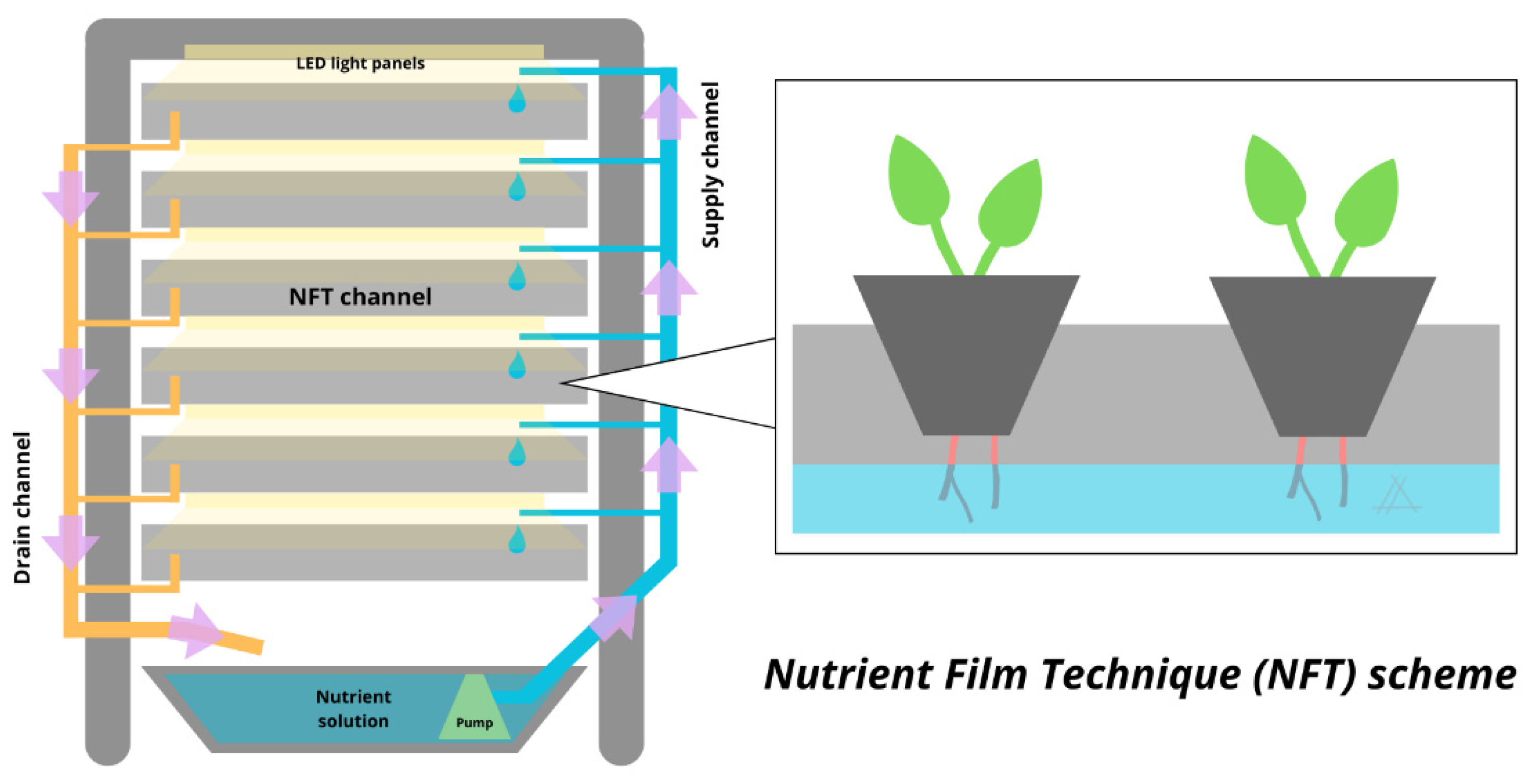
Figure 3.
BET surface area test results types of substrates: (a) No.1 GrowPlant; (b) Natural zeolite (pre-test); (c) Natural zeolite (pos-test).
Figure 3.
BET surface area test results types of substrates: (a) No.1 GrowPlant; (b) Natural zeolite (pre-test); (c) Natural zeolite (pos-test).
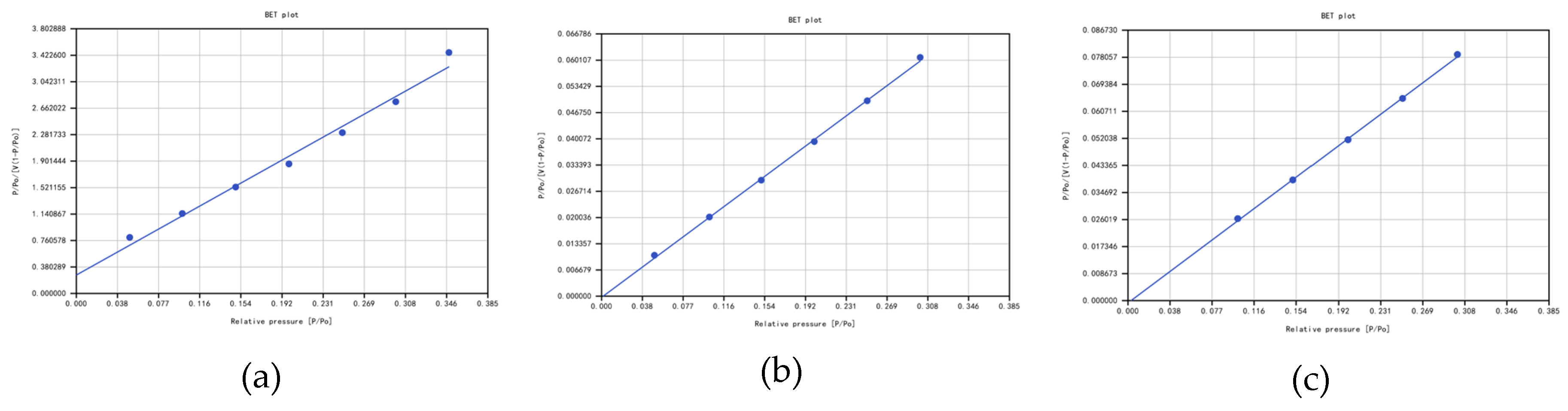
Figure 4.
Visual representation of the Medicago sativa growth dynamics.
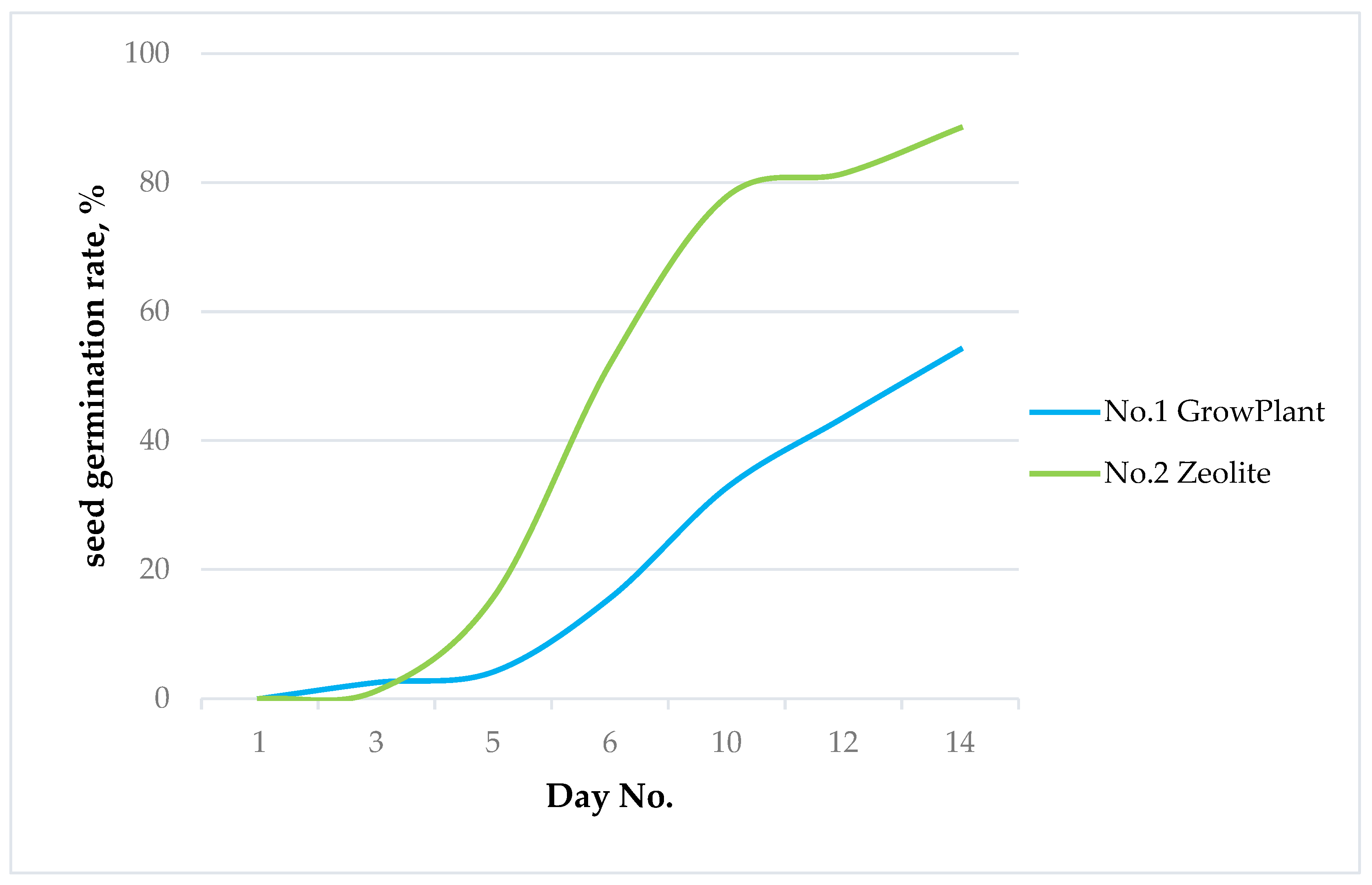
Figure 5.
Temporal changes in biomass accumulation and coloration of Medicago sativa seedlings grown on different substrates: a) Day No. 3, Sample No.1; b) Day No. 3, Sample No.2; c) Day No. 7, Sample No.1; d) Day No. 7, Sample No.2; e) Day No. 14, Sample No.1; f) Day No. 14, Sample No.2; g) mucilaginous layer on Sample No.1 roots; h) formation of compound ternate leaf in Sample No.2.
Figure 5.
Temporal changes in biomass accumulation and coloration of Medicago sativa seedlings grown on different substrates: a) Day No. 3, Sample No.1; b) Day No. 3, Sample No.2; c) Day No. 7, Sample No.1; d) Day No. 7, Sample No.2; e) Day No. 14, Sample No.1; f) Day No. 14, Sample No.2; g) mucilaginous layer on Sample No.1 roots; h) formation of compound ternate leaf in Sample No.2.
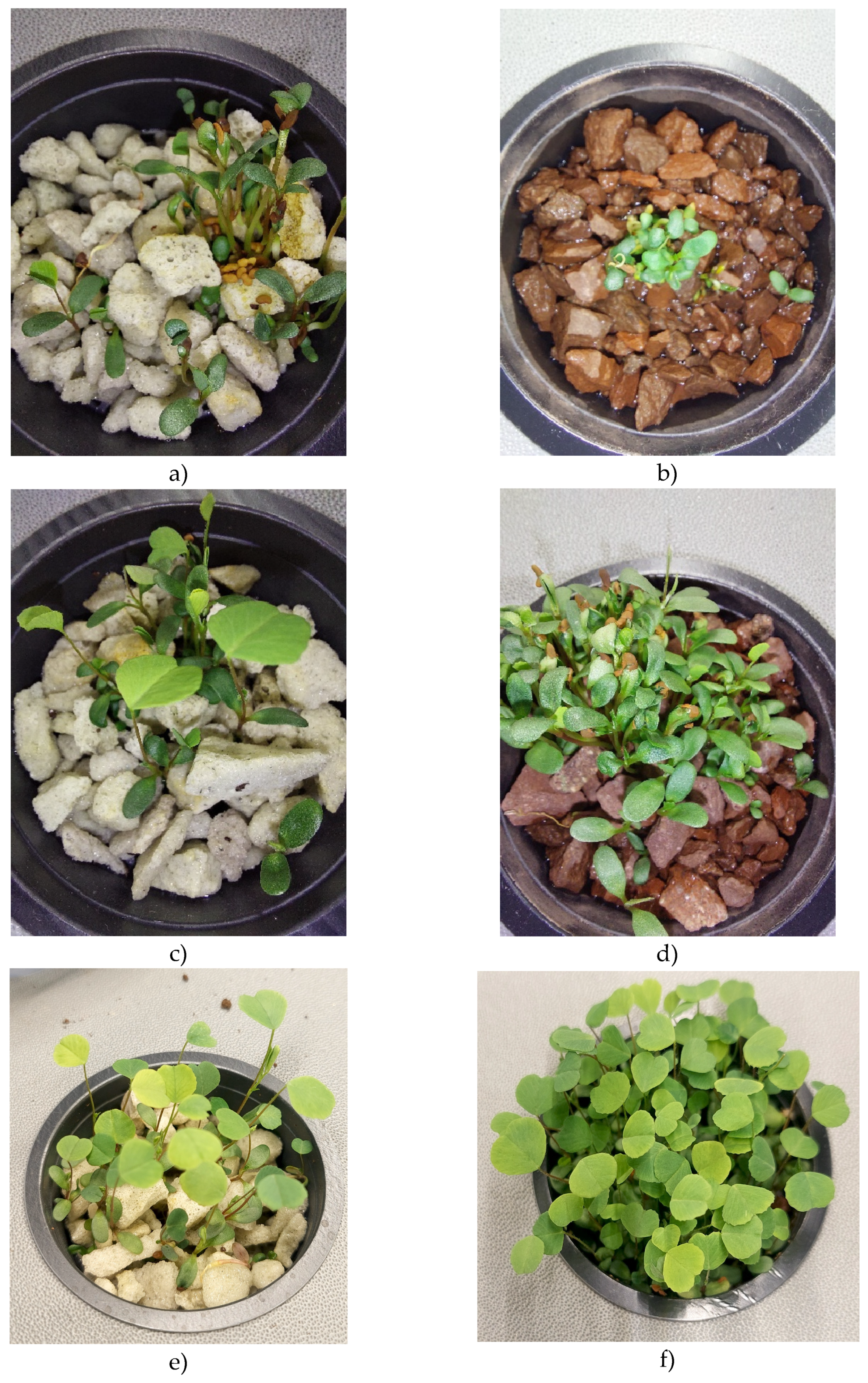
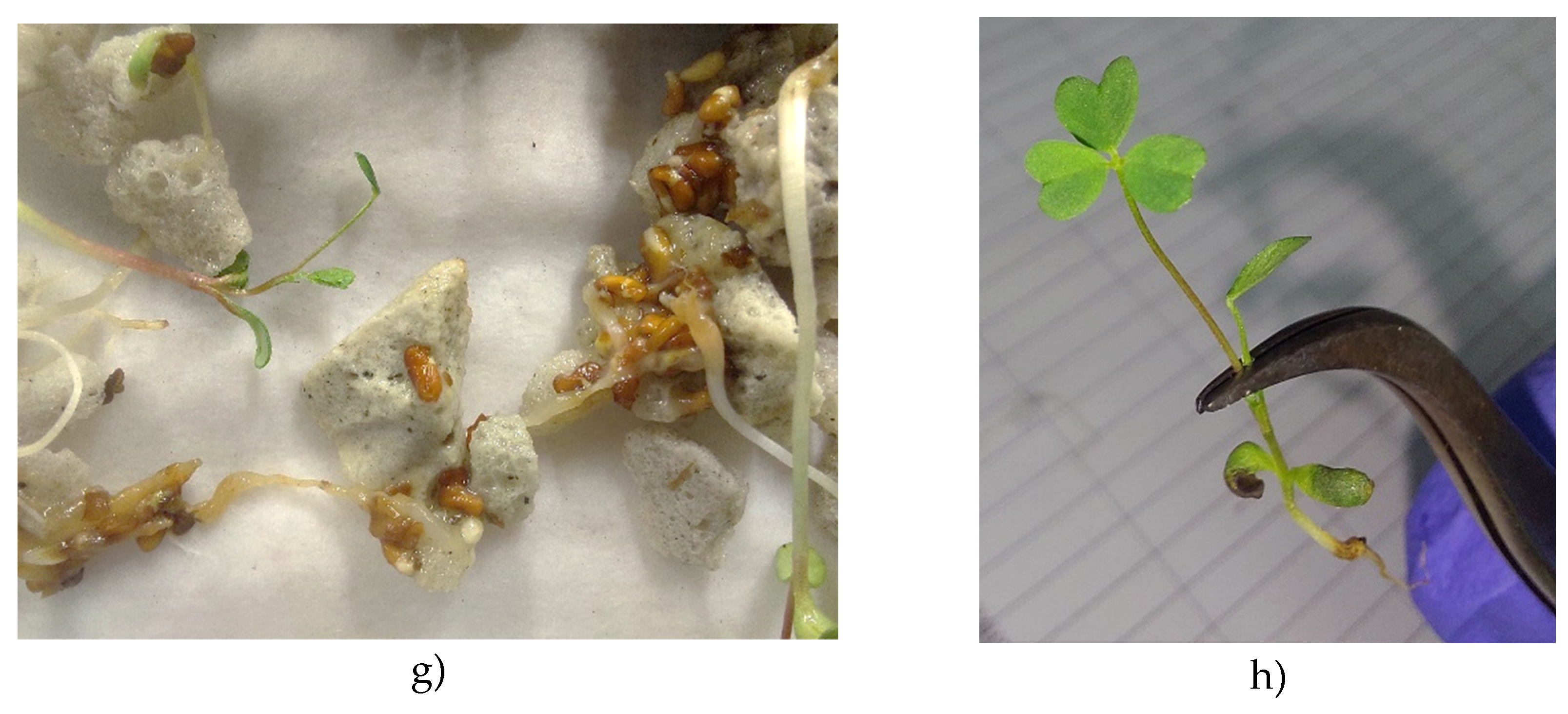
Figure 6.
– Visual representation of the Lactuca sativa L. growth dynamics.
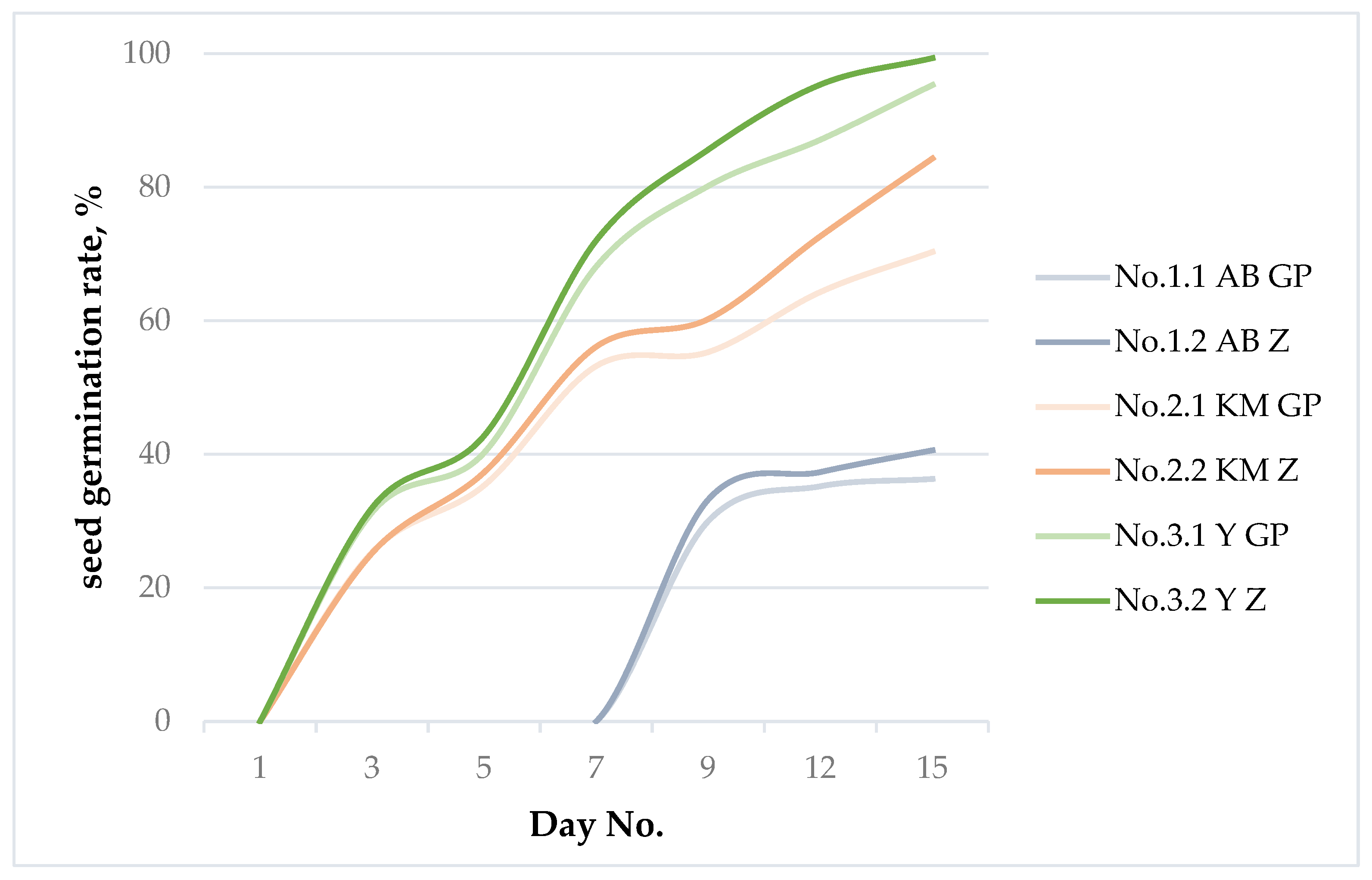
Figure 7.
– Temporal changes in biomass accumulation and coloration of Lactuca sativa seedlings grown on different substrates on 10th day: (a) No.1.1 AB GP; (b) No.1.2 AB Z; (c) No.2.1 MK GP; (d) No.2.2 MK Z; € No.3 Y GP; (f) No.3 Y Z.
Figure 7.
– Temporal changes in biomass accumulation and coloration of Lactuca sativa seedlings grown on different substrates on 10th day: (a) No.1.1 AB GP; (b) No.1.2 AB Z; (c) No.2.1 MK GP; (d) No.2.2 MK Z; € No.3 Y GP; (f) No.3 Y Z.
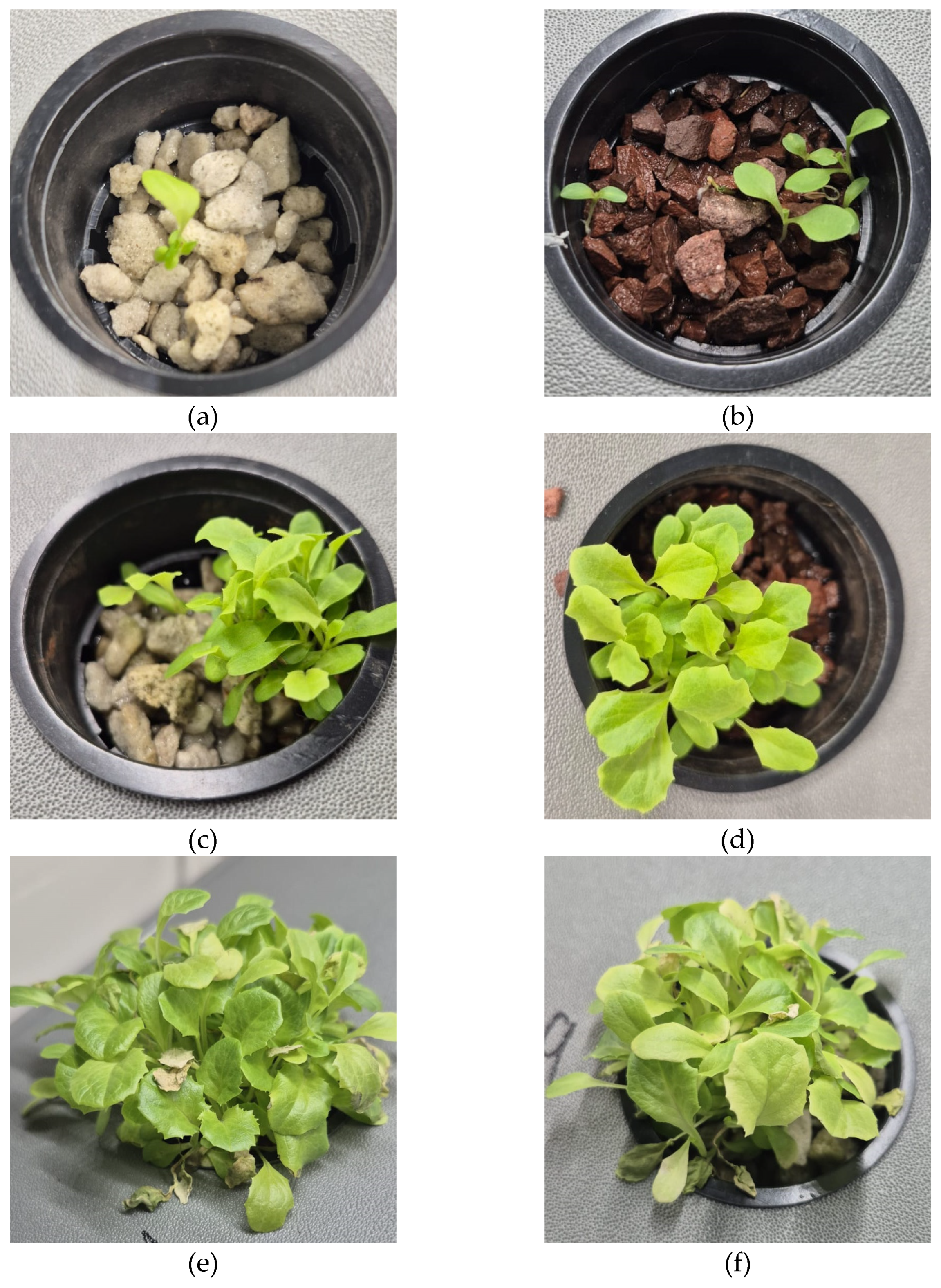
Table 1.
The mass of water over time, g.
| Time, min | CZ 50 °C | CZ 22 °C | FZ 50 °C | FZ 22 °C | AC 50 °C | AC 22 °C |
|---|---|---|---|---|---|---|
| 0 | 5,03 | 5,03 | 5,025 | 5,06 | 5,03 | 5,035 |
| 10 | 4,855 | 5,01 | 4,89 | 5,0025 | 5,1375 | 4,939 |
| 30 | 4,31 | 4,9475 | 4,355 | 4,905 | 4,6875 | 4,85 |
| 60 | 3,885 | 4,35 | 3,765 | 4,61 | 4,085 | 4,71 |
| 120 | 3,76 | 4,253 | 3,005 | 4,405 | 2,86 | 4,54 |
| 150 | 1,4995 | 4,054 | 0,805 | 4,115 | 1,695 | 4,32 |
Table 2.
Average stem height, root length and number of leaves of Medicago sativa seedlings.
| Day No. | No.1 GrowPlant | No.2 Zeolite | ||||
| stem height, cm | root length, cm | leaves, n | stem height, cm | root length, cm | leaves, n | |
| 5 | 1,14 | 1,89 | 2 | 1,5 | 2,06 | 2 |
| 6 | 3,47 | 4,00 | 3 | 1,66 | 4,91 | 2 |
| 10 | 3,71 | 6,43 | 3,14 | 2,79 | 4,64 | 2,71 |
| 12 | 4,64 | 3,57 | 3,14 | 4 | 4,79 | 3,0 |
| 14 | 6,36 | 4,86 | 4,14 | 3,93 | 5,57 | 3,86 |
Table 5.
Average stem height, root length and number of leaves of Lactuca sativa L. seedlings.
| Day No. | No.1.1 AB GP | No.1.2 AB Z | ||||
| stem height, cm | root length, cm | leaves, n | stem height, cm | root length, cm | leaves, n | |
| 3 | - | - | - | - | - | - |
| 7 | - | - | - | - | - | - |
| 9 | 1,8 | 2,8 | 2 | 2 | 2,8 | 2 |
| 15 | 2 | 3,2 | 3 | 2,2 | 3,4 | 0,85 |
| Day No. | No.2.1 MK GP | No.2.2 MK Z | ||||
| stem height, cm | root length, cm | leaves, n | stem height, cm | root length, cm | leaves, n | |
| 3 | 1,3 | 2,1 | 2 | 1,3 | 2,1 | 2 |
| 7 | 2,3 | 2,7 | 2,6 | 2,3 | 2,7 | 2,7 |
| 10 | 3,8 | 3,9 | 3,5 | 3,8 | 3,9 | 3,7 |
| 15 | 4,6 | 5,6 | 4,1 | 4,6 | 5,6 | 4,3 |
| Day No. | No.3.1 Y GP | No.3.2 Y Z | ||||
| stem height, cm | root length, cm | leaves, n | stem height, cm | root length, cm | leaves, n | |
| 3 | 1,5 | 2,25 | 2 | 1,5 | 2,25 | 2 |
| 7 | 2,3 | 2,7 | 2,7 | 2,3 | 2,7 | 2,9 |
| 10 | 3,6 | 4,5 | 3,1 | 3,6 | 4,5 | 3,1 |
| 15 | 4,4 | 7,5 | 3,9 | 4,4 | 7,5 | 4,0 |
Table 6.
Summary of Total Percentage Content by Compound Class in Lactuca sativa Extract Determined by Chromatographic Analysis, %.
Table 6.
Summary of Total Percentage Content by Compound Class in Lactuca sativa Extract Determined by Chromatographic Analysis, %.
| Class | No.1.1.1 AB GP leaves | No.1.1.2 AB GP roots | No.1.2.1 AB Z leaves | No.1.2.2 AB Z roots | No.2.1.1 MK GP leaves | No.2.1.2 MK GP roots | No.2.2.1 MK Z leaves | No.2.2.2 MK Z roots | No.3.1.1 Y GP leaves | No.3.1.2 Y GP roots | No.3.2.1 Y Z leaves | No.3.2.2 Y Z roots |
| 1. Fatty Acids (FA) | 54,68 | 50,21 | 70,05 | 67,52 | 34,24 | 0 | 12,6 | 51,27 | 29,07 | 10,37 | 36,32 | 13,95 |
| 2. FA Derivatives | 10,27 | 24,51 | 15,73 | 17,41 | 5,94 | 12,08 | 30,66 | 7 | 8,88 | 1,47 | 9,3 | 1,9 |
| 3. Terpenoids | 16,73 | 14,94 | 6,45 | 11,86 | 29,36 | 58,19 | 35,39 | 20,21 | 37,9 | 68,95 | 31,67 | 68,94 |
| 4. Nitrogen-Containing Compounds | 2,07 | 0 | 0 | 0 | 0 | 0 | 0 | 0 | 0,82 | 1 | 0,23 | 0 |
| 5. Polyols | 1,95 | 0 | 1,58 | 0,49 | 0 | 0 | 0 | 2,97 | 0,48 | 0 | 3,41 | 0 |
| 6. Sugars and Derivatives | 9,53 | 7,7 | 4,69 | 2,72 | 17,28 | 18,92 | 12,37 | 10,91 | 13,64 | 11,68 | 12,55 | 9,28 |
| 7. Other Organics | 4,78 | 2,64 | 1,51 | 0 | 13,17 | 10,8 | 8,98 | 7,63 | 9,23 | 6,55 | 6,49 | 5,91 |
Disclaimer/Publisher’s Note: The statements, opinions and data contained in all publications are solely those of the individual author(s) and contributor(s) and not of MDPI and/or the editor(s). MDPI and/or the editor(s) disclaim responsibility for any injury to people or property resulting from any ideas, methods, instructions or products referred to in the content. |
© 2026 by the authors. Licensee MDPI, Basel, Switzerland. This article is an open access article distributed under the terms and conditions of the Creative Commons Attribution (CC BY) license.
Copyright: This open access article is published under a Creative Commons CC BY 4.0 license, which permit the free download, distribution, and reuse, provided that the author and preprint are cited in any reuse.


