

Submitted:
26 January 2026
Posted:
28 January 2026
You are already at the latest version
Abstract
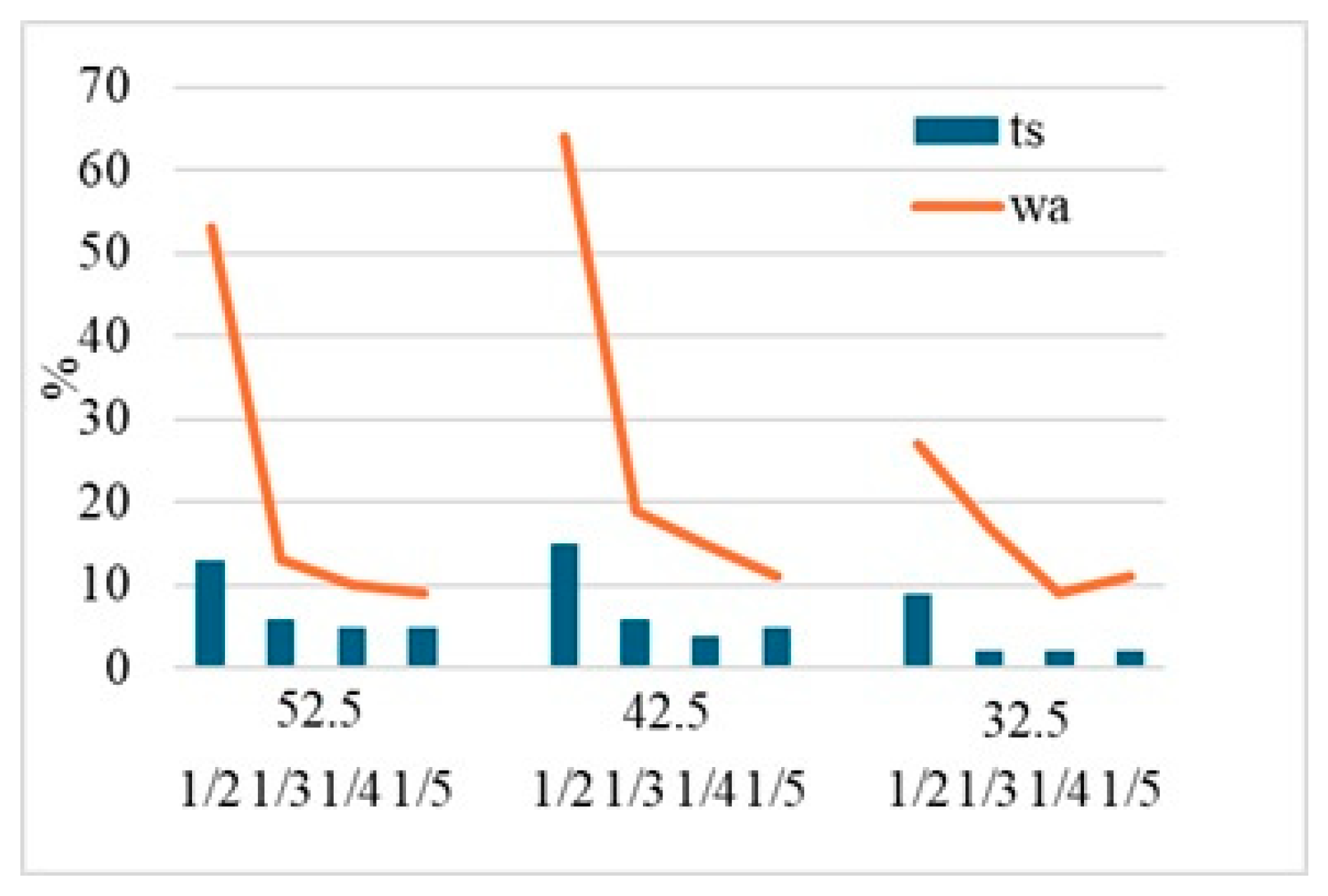
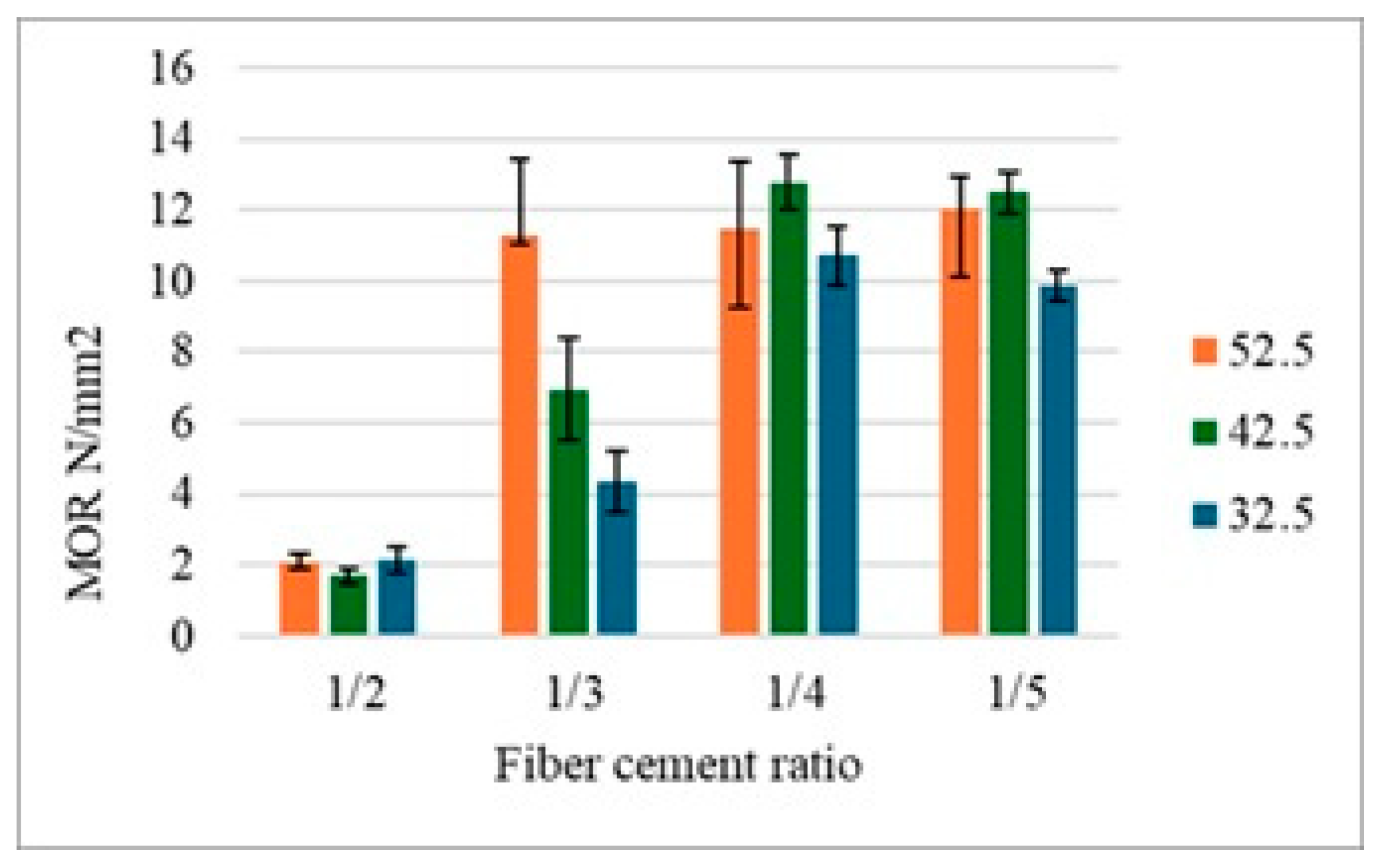
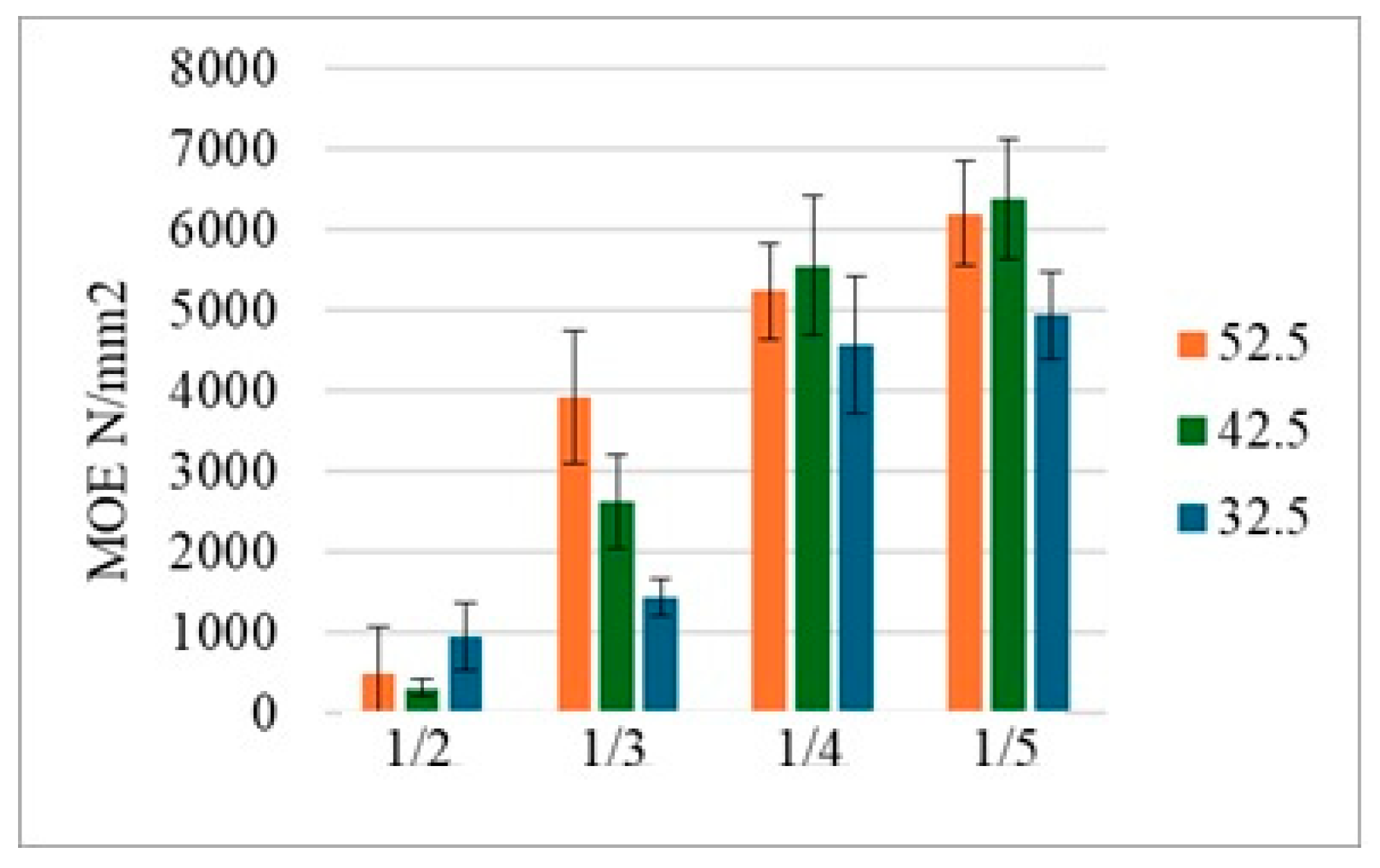
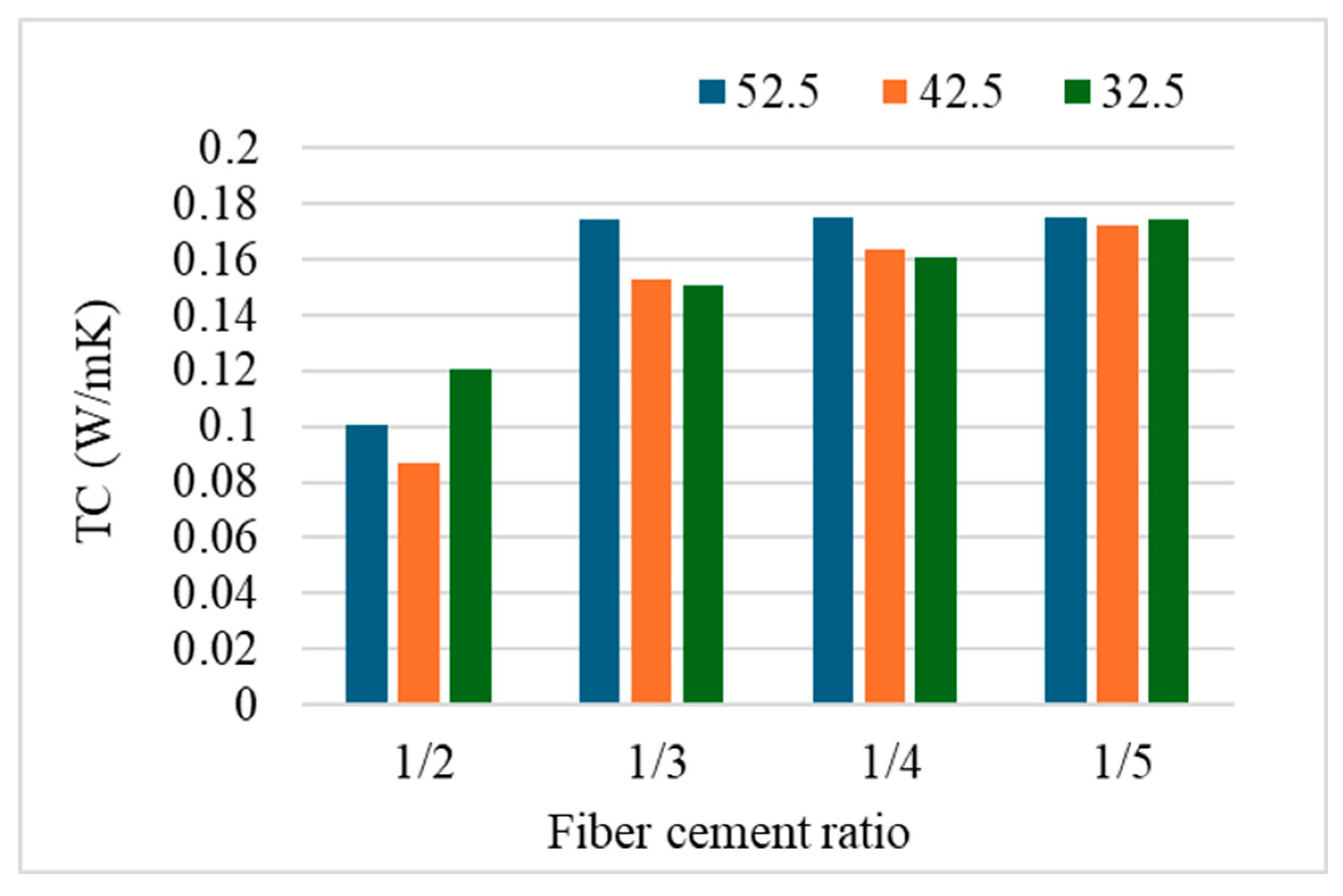
This study investigates the critical interplay between cement grade (32.5, 42.5, 52.5) and fiber/cement ratio (1/2 to 1/5) in determining the performance of cement-bonded fiberboards. Experimental results highlighted a fundamental trade-off: while reducing the fiber content significantly enhanced mechanical strength and moisture resistance, it naturally diminished thermal insulation capabilities. The analysis identified the 42.5 cement at a 1/4 ratio as the optimal formulation, offering the most effective balance between structural integrity and physical stability. To understand the mechanism behind this performance, the study employed multi-scale characterization using FTIR, XRD, and SEM. These analyses revealed that the superior properties of the optimal formulation stem from a denser hydration product network and improved fiber encapsulation. Specifically, the 42.5 cement facilitated a more robust Calcium-Silicate-Hydrate (C-S-H) gel formation compared to the 32.5 types, creating a stronger fiber-matrix interface. These findings provide a scientific basis for tailoring fiberboard production, demonstrating that material properties can be precisely engineered for either load-bearing or insulating applications.
Keywords:
1. Introduction
2. Materials and Methods
2.1. Materials
2.2. Determination of Cement Fineness (Blaine Test)
2.3. Cement Particle Size Distribution (PSD) Analysis
2.4. Board Manufacturing
2.5. Determination of Density
2.6. Modulus of Rupture and Modulus of Elasticity
2.7. Determination of Water Absorption and Thickness Swelling Values
2.8. Thermal Conductivity
2.9. Fourier Transform Infrared Spectroscopy
2.10. X-Ray Diffraction
2.11. Scanning Electron Microscope
2.12. Data Analysis
3. Results
3.1. Density
3.2. Hygroscopic Properties
3.3. Flexural Properties
3.4. Thermal Conductivity
3.5. A Deeper Analysis of Interfacial Performance and the Superiority of 42.5
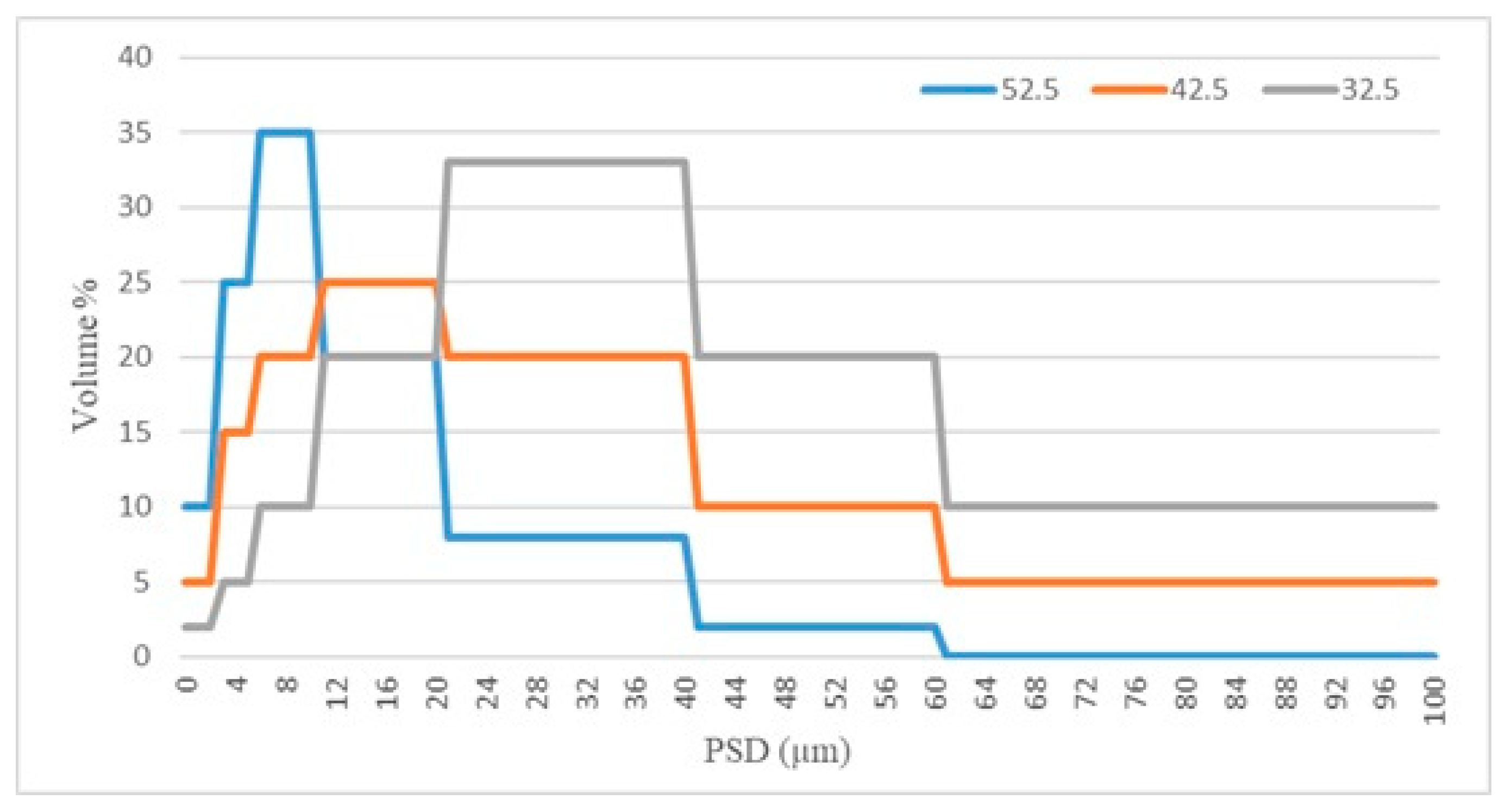
- ? 52.5 cement has approximately 70% of its particle volume under 10 µm, confirming its "fine and narrow" character.
- ? 42.5 cement demonstrates a true "well-graded" structure, with significant particle volumes distributed across the entire spectrum: from fine (≈20% < 5 µm) to medium (≈45% between 5-20 µm) and coarse (≈35% > 20 µm).
- ? 32.5 cement is confirmed as "coarser," with over 60% of its volume residing in particles larger than 20 µm.
3.6. Fourier Transform Infrared Spectroscopy
3.7. X-Ray Diffraction
3.8. Scanning Electron Microscope
4. Conclusions
Author Contributions
Funding
Data Availability Statement
Acknowledgments
Conflicts of Interest
Abbreviations
| PC | Portland cement |
| CaCl₂ | Calcium chloride |
| CFB | Cement fiber board |
| C-S-H | Calcium silicate hydrate |
| d | Density |
| FTIR | Fourier transform ınfrared spectroscopy |
| ITZ | Interfacial transition zone |
| MC | Moisture content |
| MOE | Modulus of elasticity |
| MOR | Modulus of rupture |
| PSD | Particle size distribution |
| SEM | Scanning electron microscopy |
| TC | Thermal conductivity |
| TS | Thickness swelling |
| WA | Water absorption |
| XRD | X-ray Diffraction |
| XRF | X-ray fluorescence |
References
- Soroushian, P.; Aouadi, F. Mechanical properties of cement composites reinforced with polypropylene fibers. ACI Mater. J. 1992, 89, 170–176. [Google Scholar]
- Coutts, R.S.P. A review of Australian research into natural fibre cement composites. Cem. Concr. Compos. 2005, 27, 518–526. [Google Scholar] [CrossRef]
- Hasan, K.F.; Horváth, P.G.; Bak, M.; Alpár, T. A state-of-the-art review on coir fiber-reinforced biocomposites. RSC Adv. 2021, 11, 10548–10571. [Google Scholar] [CrossRef]
- Wang, L.; Chen, S.S.; Tsang, D.C.; Poon, C.S.; Shih, K. Value-added recycling of construction waste wood into noise and thermal insulating cement-bonded particleboards. Constr. Build. Mater. 2016, 125, 316–325. [Google Scholar] [CrossRef]
- Lorimer, M. Estimating the Acoustic Absorption of Wood-Infused Concretes. Ph.D. Thesis, University of Ottawa, Ottawa, ON, Canada, 2023. [Google Scholar]
- Liu, F.; Chen, G.; Li, L.; Guo, Y. Study of impact performance of rubber reinforced concrete. Constr. Build. Mater. 2012, 36, 604–616. [Google Scholar] [CrossRef]
- Allen, A.J.; Thomas, J.J.; Jennings, H.M. Composition and density of nanoscale calcium–silicate–hydrate in cement. Nat. Mater. 2007, 6, 311–316. [Google Scholar] [CrossRef]
- Nasr, D.; Behforouz, B.; Borujeni, P.R.; Borujeni, S.A.; Zehtab, B. Effect of nano-silica on mechanical properties and durability of self-compacting mortar containing natural zeolite: Experimental investigations and artificial neural network modeling. Constr. Build. Mater. 2019, 229, 116888. [Google Scholar] [CrossRef]
- Okino, E.Y.A.; de Souza, M.R.; Santana, M.A.E.; Alves, M.V.S.; de Sousa, M.E.; Teixeira, D.E. Cement-bonded wood particle-board with a mixture of eucalypt and bamboo. Cem. Concr. Compos. 2004, 26, 729–734. [Google Scholar] [CrossRef]
- Amiandamhen, S.O.; Meincken, M.; Tyhoda, L. The effect of chemical treatments of natural fibres on the properties of phosphate-bonded composite products. Wood Sci. Technol. 2018, 52, 653–675. [Google Scholar] [CrossRef]
- Frybort, S.; Mauritz, R.; Teischinger, A.; Müller, U. Cement bonded composites—A mechanical review. BioResources 2008, 3, 602–626. [Google Scholar] [CrossRef]
- Liu, J.; Lv, C. Research progress on durability of cellulose fiber-reinforced cement-based composites. Int. J. Polym. Sci. 2021, 2021, 1014531. [Google Scholar] [CrossRef]
- Fuwape, J.A.; Fabiyi, J.S.; Osuntuyi, E.O. Technical assessment of three-layered cement-bonded boards produced from wastepaper and sawdust. Waste Manag. 2007, 27, 1611–1616. [Google Scholar] [CrossRef]
- Taylor, H.F. Cement Chemistry, 2nd ed.; Thomas Telford: London, UK, 1997; Volume 2, p. 459. [Google Scholar]
- Mindess, S. Resistance of concrete to destructive agencies. In Lea's Chemistry of Cement and Concrete; Hewlett, P.C., Liska, M., Eds.; Butterworth-Heinemann: Oxford, UK, 2019; pp. 251–283. [Google Scholar]
- Scrivener, K.; Ouzia, A.; Juilland, P.; Mohamed, A.K. Advances in understanding cement hydration mechanisms. Cem. Concr. Res. 2019, 124, 105823. [Google Scholar] [CrossRef]
- Bentur, A.; Mindess, S. Fibre Reinforced Cementitious Composites, 2nd ed.; CRC Press: Boca Raton, FL, USA, 2006. [Google Scholar]
- De Brito, J.; Agrela, F. (Eds.) New Trends in Eco-Efficient and Recycled Concrete; Woodhead Publishing: Cambridge, UK, 2018. [Google Scholar]
- Castillo-Lara, J.F.; Flores-Johnson, E.A.; Valadez-Gonzalez, A.; Herrera-Franco, P.J.; Carrillo, J.G.; Gonzalez-Chi, P.I.; Li, Q.M. Mechanical properties of natural fiber reinforced foamed concrete. Materials 2020, 13, 3060. [Google Scholar] [CrossRef]
- Robert, U.W.; Etuk, S.E.; Agbasi, O.E.; Ambrose, P.D. Development of lightweight sawdust-based composite panels for building purposes. Int. J. Lightweight Mater. Manuf. 2024, 7, 631–640. [Google Scholar] [CrossRef]
- Wei, Y.M.; Tomita, B. Effects of five additive materials on mechanical and dimensional properties of wood cement-bonded boards. J. Wood Sci. 2001, 47, 437–444. [Google Scholar] [CrossRef]
- Abdollahiparsa, H.; Shahmirzaloo, A.; Teuffel, P.; Blok, R. A review of recent developments in structural applications of natural fiber-reinforced composites (NFRCs). Compos. Adv. Mater. 2023, 32, 26349833221147540. [Google Scholar] [CrossRef]
- Biskri, Y.; Babouri, L.; Boukhelf, F.; Charradi, K.; Annaba, K.; El Mendili, Y. On the physical-mechanical behavior of fiber cement composite: Effect of chemical treatment of sisal fibers. J. Build. Eng. 2025, 101, 111978. [Google Scholar] [CrossRef]
- Mehta, P.K.; Monteiro, P.J. Concrete Microstructure, Properties, and Materials, 3rd ed.; McGraw-Hill: New York, NY, USA, 2006. [Google Scholar]
- Rowell, R.M. Handbook of Wood Chemistry and Wood Composites; CRC Press: Boca Raton, FL, USA, 2005. [Google Scholar]
- Sofi, A. Effect of waste tyre rubber on mechanical and durability properties of concrete–A review. Ain Shams Eng. J. 2018, 9, 2691–2700. [Google Scholar] [CrossRef]
- Soroushian, P.; Balachandra, A.; Nassar, S.; Weerasiri, R.; Darsanasiri, N.; Abdol, N. Effect of fiber type and content on the performance of extruded wood fiber cement products. Case Stud. Constr. Mater. 2022, 16, e00968. [Google Scholar] [CrossRef]
- Aloulou, F.; Sammouda, H. Thermal conductivity and mechanical properties of organo-clay-wood fiber in cement-based mortar. In Sand in Construction; IntechOpen: London, UK, 2022. [Google Scholar]
- Ferreira, S.R.; de Andrade Silva, F.; Lima, P.R.L.; Toledo Filho, R.D. Effect of fiber treatments on the sisal fiber properties and fiber–matrix bond in cement based systems. Constr. Build. Mater. 2015, 101, 730–740. [Google Scholar] [CrossRef]
- Neville, A.M. Properties of Concrete, 5th ed.; Pearson: London, UK, 2011. [Google Scholar]
- De Larrard, F. Concrete Mixture Proportioning: A Scientific Approach; CRC Press: London, UK, 1999. [Google Scholar]
- Wong, H.H.C.; Kwan, A.K.H. Packing density of cementitious materials: Part 1—Measurement and modelling. Mater. Struct. 2008, 41, 655–671. [Google Scholar] [CrossRef]
- Bishnoi, S.; Scrivener, K.L. A model for the microstructure of cement hydration. Cem. Concr. Res. 2009, 39, 73–83. [Google Scholar] [CrossRef]
- Lothenbach, B.; Winnefeld, F.; Alder, C.; Wieland, E.; Lunk, P. Effect of temperature on the pore solution, microstructure and hydration products of Portland cement pastes. Cem. Concr. Res. 2007, 37, 483–491. [Google Scholar] [CrossRef]
- Siddique, R.; Khan, M.I. Supplementary Cementing Materials; Springer: Berlin/Heidelberg, Germany, 2011. [Google Scholar]
- Pandey, K.K.; Pitman, A.J. FTIR studies of the changes in wood chemistry during weathering. Wood Sci. Technol. 2003, 37, 239–249. [Google Scholar]
- Faix, O. Classification of lignins from different botanical origins by FT-IR spectroscopy. Holzforschung 1991, 45, 21–27. [Google Scholar] [CrossRef]
- Colom, X.; Carrillo, F.; Nogués, F.; Garriga, P. Structural analysis of photodegraded wood by means of FTIR spectroscopy. Polym. Degrad. Stab. 2003, 80, 543–549. [Google Scholar] [CrossRef]
- Wu, J.; Wan, C.; Hong, Z.; Zhou, A.; Tan, Y.; Deng, Y. Insights into clinker-clay interactions in stabilized soft clay using NMR, TEM, and FTIR. J. Rock Mech. Geotech. Eng. 2024, in press. [Google Scholar] [CrossRef]
- Richardson, I.G. The nature of CSH in hardened cements. Cem. Concr. Res. 1999, 29, 1131–1147. [Google Scholar] [CrossRef]
- Qin, L.; Gao, X.; Chen, T. Influence of mineral admixtures on carbonation curing of cement paste. Constr. Build. Mater. 2019, 212, 653–662. [Google Scholar] [CrossRef]
- Tang, B.; Fan, M.; Yang, Z.; Sun, Y.; Yuan, L. A comparison study of aggregate carbonation and concrete carbonation for the enhancement of recycled aggregate pervious concrete. Constr. Build. Mater. 2023, 371, 130797. [Google Scholar] [CrossRef]

| Fiber Type | Cellulose (%) | Hemicellulose (%) | Lignin (%) | Ash/Extractives (%) |
| Pine | 45.2 | 25.4 | 27.9 | 1.5 |
| Cement type | Chemical composition (%) | ||||||
| CEMII | SiO2 | Al2O3 | Fe2O3 | CaO | MgO | SO3 | other |
| 52.5 | 18.4 | 4.14 | 0.360 | 71.0 | 1.13 | 4.42 | 0.55 |
| 42.5 | 24.6 | 6.74 | 4.15 | 57.5 | 0.774 | 4.29 | 1.946 |
| 32.5 | 18.5 | 3.0 | 2.2 | 60.5 | 0.9 | 2.9 | 2.1 |
| Cement type | 1/2 | 1/3 | 1/4 | 1/5 | |
| d (g/cm³) | 32.5 | 1.28 ± 0.08 | 1.23 ± 0.05 | 1.56 ± 0.08 | 1.49 ± 0.06 |
| 42.5 | 1.06 ± 0.04 | 1.39 ± 0.07 | 1.57 ± 0.05 | 1.68 ± 0.09 | |
| 52.5 | 1.10 ± 0.09 | 1.40 ± 0.07 | 1.56 ± 0.08 | 1.67 ± 0.05 | |
| WA (%) | 32.5 | 35.1 ± 2.5 | 30.5 ± 2.1 | 25.8 ± 1.8 | 22.4 ± 1.6 |
| 42.5 | 32.5 ± 2.2 | 28.1 ± 1.9 | 23.2 ± 1.6 | 20.1 ± 1.4 | |
| 52.5 | 30.8 ± 2.1 | 26.5 ± 1.8 | 22.1 ± 1.5 | 18.9 ± 1.3 | |
| TS (%) | 32.5 | 2.8 ± 0.2 | 2.4 ± 0.2 | 2.0 ± 0.1 | 1.8 ± 0.1 |
| 42.5 | 2.5 ± 0.2 | 2.1 ± 0.1 | 1.7 ± 0.1 | 1.5 ± 0.1 | |
| 52.5 | 2.3 ± 0.1 | 1.9 ± 0.1 | 1.6 ± 0.1 | 1.3 ± 0.1 |
| Cement type | 1/2 | 1/3 | 1/4 | 1/5 | |
| MOR (N/mm²) |
32.5 | 1.69 ± 0.37 | 4.35 ± 0.85 | 10.71 ± 0.81 | 9.86 ± 0.44 |
| 42.5 | 2.69 ± 0.21 | 6.93 ± 1.43 | 12.77 ± 0.78 | 12.49 ± 0.58 | |
| 52.5 | 2.09 ± 0.22 | 11.25 ± 2.19 | 12.02 ± 0.89 | 11.5 ± 1.0 | |
| (MOE) (N/mm²) |
32.5 | 953 ± 412 | 1428 ± 229 | 4578 ± 547 | 4939 ± 548 |
| 42.5 | 313 ± 104 | 2628 ± 587 | 5561 ± 657 | 6388 ± 749 | |
| 52.5 | 482 ± 229 | 3919 ± 518 | 5247 ± 592 | 6199 ± 650 |
| Cement Type | Blaine Fineness (cm²/g) | PSD | Discussion |
| 32.5 | 3600- 3800 | Coarser and wider distribution. | Lower fineness leads to a slower hydration reaction and consequently lower early-age strength [30]. |
| 42.5 | 3900- 4200 | Well graded (wide distribution). Contains a balanced mix of both fine and medium-sized particles. | The well-graded structure allows for the most efficient packing of particles, creating a less porous (low porosity) and homogeneous matrix [31,32]. |
| 52.5 | 4300- 4800 | Very fine and narrow distribution. Most particles are of a similar and very small size. | The highest fineness results in very rapid hydration and high early strength. However, this can lead to a brittle interface with thermal stresses and micro-cracks around the wood fiber due to rapid heat release [33]. |
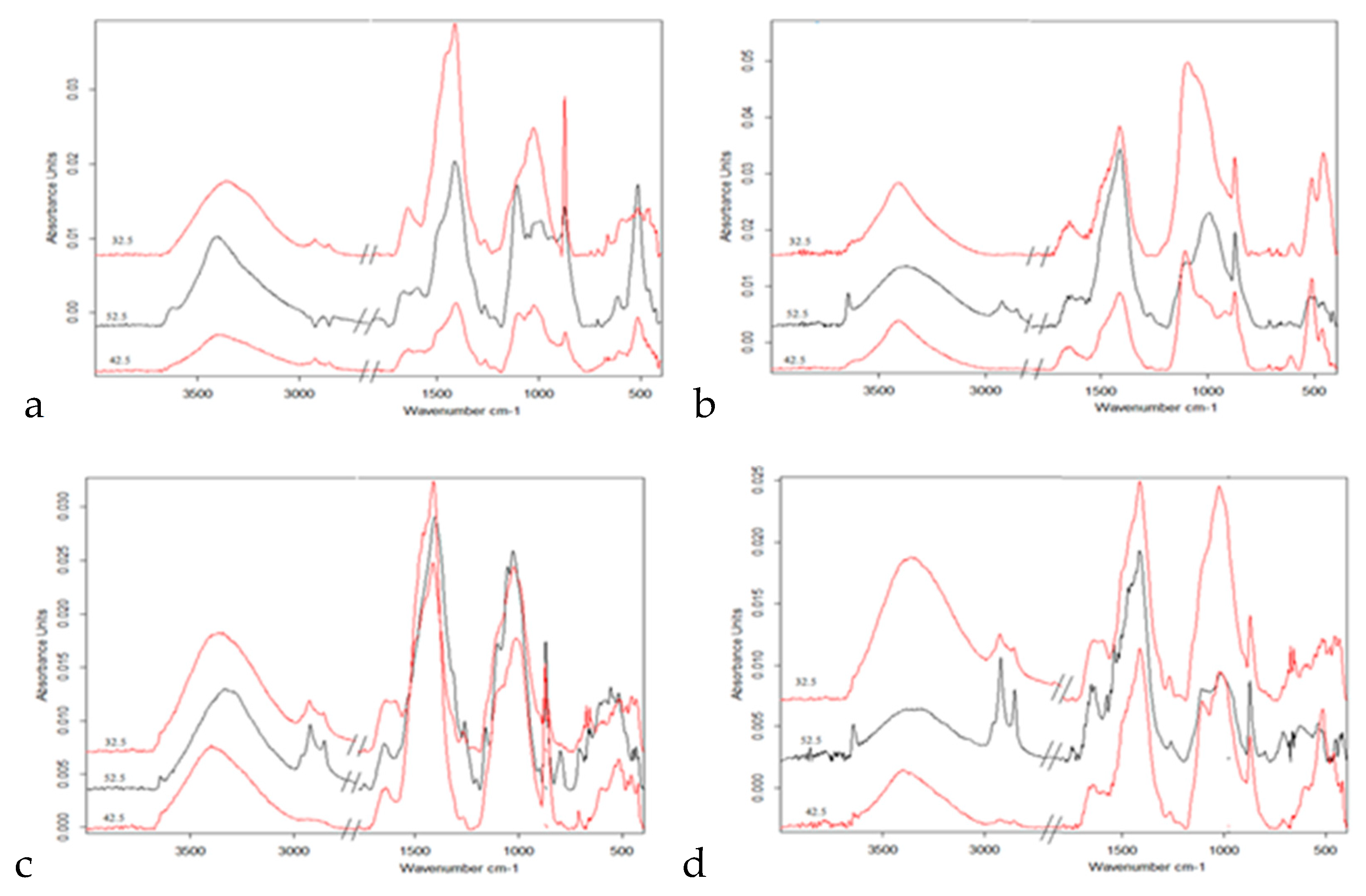
| Cement Type | Fiber/Cement Ratio | Si-O (1200 cm⁻¹) | Si-O (1100 cm⁻¹) | Total Si-O | Al-O (820 cm⁻¹) | Al-O (680 cm⁻¹) | Total Al-O |
| 32.5 | 1/2 | 0.010 | 0.030 | 0.040 | 0.007 | 0.007 | 0.014 |
| 1/3 | 0.053 | 0.053 | 0.106 | 0.032 | 0.049 | 0.081 | |
| 1/4 | 0.008 | 0.016 | 0.024 | 0.013 | 0.024 | 0.037 | |
| 1/5 | 0.013 | 0.020 | 0.033 | 0.017 | 0.021 | 0.038 | |
| 42.5 | 1/2 | 0.008 | 0.009 | 0.017 | 0.001 | 0.001 | 0.002 |
| 1/3 | 0.012 | 0.025 | 0.037 | 0.025 | 0.030 | 0.055 | |
| 1/4 | 0.130 | 0.330 | 0.460 | 0.034 | 0.067 | 0.101 | |
| 1/5 | 0.025 | 0.036 | 0.061 | 0.021 | 0.033 | 0.054 | |
| 52.5 | 1/2 | 0.012 | 0.012 | 0.024 | 0.000 | 0.003 | 0.003 |
| 1/3 | 0.007 | 0.013 | 0.020 | 0.025 | 0.025 | 0.050 | |
| 1/4 | 0.007 | 0.019 | 0.026 | 0.023 | 0.035 | 0.058 | |
| 1/5 | 0.016 | 0.024 | 0.040 | 0.022 | 0.035 | 0.057 |
Disclaimer/Publisher’s Note: The statements, opinions and data contained in all publications are solely those of the individual author(s) and contributor(s) and not of MDPI and/or the editor(s). MDPI and/or the editor(s) disclaim responsibility for any injury to people or property resulting from any ideas, methods, instructions or products referred to in the content. |
© 2026 by the authors. Licensee MDPI, Basel, Switzerland. This article is an open access article distributed under the terms and conditions of the Creative Commons Attribution (CC BY) license (http://creativecommons.org/licenses/by/4.0/).


