

Submitted:
23 January 2026
Posted:
26 January 2026
You are already at the latest version
Abstract
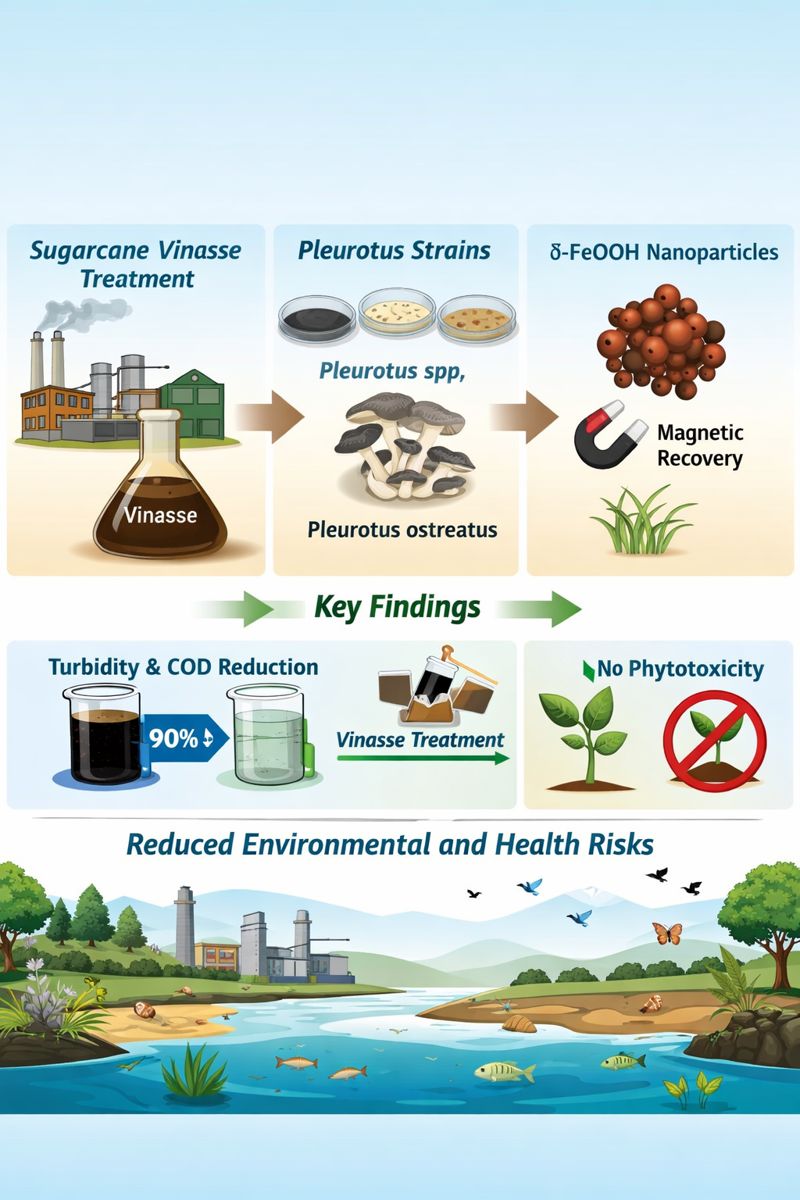
Vinasse is a byproduct of the sugarcane ethanol industry, generated at approximately 10 to 15 L per liter of ethanol produced. It is characterized by an acidic pH, intense coloration, high turbidity, and a high organic load, such that its improper disposal represents an environmental and sanitary concern. In this study, the degradation of organic matter in vinasse at concentrations of 25% and 100%, with and without pH adjustment, was evaluated using three strains of the fungus Pleurotus, and the performance of the most efficient strain was further investigated in association with δ-FeOOH nanoparticles, in addition to a phytotoxicity assay using Lactuca sativa. The results showed that all Pleurotus strains exhibited high potential for vinasse discoloration, with emphasis on the HI strain (Pleurotus ostreatus), which achieved approximately 90% removal of turbidity and chemical oxygen demand in the 25% vinasse treatments, while at the 100% concentration, the removal efficiency ranged from 2% to 90%. The addition of δ-FeOOH did not significantly increase removal efficiency in diluted vinasse; however, it conferred magnetic responsiveness to the fungal biomass, facilitating its separation after treatment. Moreover, the treated vinasse showed no toxicity to the germination of Lactuca sativa seeds, indicating reduced environmental and sanitary risks. These results demonstrate that the proposed approach constitutes a promising and sustainable strategy for managing vinasse, contributing to environmental remediation and reducing risks to ecosystems and human health.
Keywords:
vinasse
; fungi
; δ-FeOOH
1. Introduction
One of the primary sources of water resource contamination is the discharge of untreated effluents. The industrial sector stands out as one of the primary culprits, as its processes generate waste that requires complex treatment and proper disposal (1,2).
Brazil is one of the leading countries in sugarcane production. The manufacturing industries of this product generate vinasse, which is a liquid residue with a high organic matter content, acidic pH, and dark color (3–8). Vinasse production in a sugarcane mill is around 12 to 15 liters per liter of ethanol produced, in addition to the generation of solid waste and atmospheric emissions (9,10).
Vinasse, when improperly released into the environment, can generate a series of environmental problems, primarily in water resources, as it can reduce the photosynthetic activity of aquatic organisms and lead to eutrophication of watercourses (11–14).
In addition to environmental damage, the inadequate management and disposal of vinasse also represent an important public and environmental health concern. The contamination of surface and groundwater by effluents with high organic load can compromise water quality, increase treatment costs for human consumption, and favor the proliferation of pathogenic microorganisms and disease vectors (1,3,4,14). In regions with intense sugarcane activity, chronic exposure of populations to contaminated water and soil may increase sanitary vulnerability and health risks, especially in rural and peri-urban communities. Therefore, the development of efficient, safe, and sustainable strategies for vinasse treatment is not only an environmental requirement but also a relevant measure for the protection of public health (3,4).
This byproduct can be reused in soil fertigation; however, it is necessary to assess its toxicity before using it as fertilizer, as excess nutrients can result in crop damage (6,15–18).
According to (19), vinasse has toxic effects on the germination of six crops (Allium cepa, Lactuca sativa, Lepidium sativum, Solanum lycopersicum, Phaseolus vulgaris, and Zea mays), even when used in low concentrations.
Further evidence corroborates the high phytotoxic potential of vinasse on cultivated and bioindicator species. Studies with Allium cepa and Lactuca sativa indicate effects ranging from complete inhibition of germination in raw vinasse to high phytotoxicity rates at dilutions between 5 and 50% (20). Trials under irrigation conditions also show a reduction in the initial growth of Phaseolus vulgaris and Zea mays in the presence of water contaminated by vinasse (21,22). At the same time, tests with distillery effluents confirm significant alterations in germination, vigor, and root development in different agricultural species (Zea mays, Phaseolus vulgaris, and Arachis hypogaea) (23).
The use of bioremediation microorganisms emerges as a promising alternative for treating this waste, as some organisms can reduce or completely remove pollutants from the environment (11,24,25).
Among the microorganisms used in bioremediation processes are fungi, especially the genus Pleurotus, which can develop strategies to survive in extreme environments and thus produce enzymes that target pollutants, either mineralizing them or bioaccumulating them within their cells (12,26–31).
Seeking to achieve maximum efficiency in adapting effluents to legislation and reducing the problem of water pollution, recent studies indicate that auxiliary treatments can aid in the removal of contaminants. The use of nanomaterials based on iron oxides has been suggested as an environmentally sound alternative for wastewater treatment (32–36).
The use of iron oxide-based nanoparticles has been considered promising due to their low cost compared to other materials, high stability, non-toxicity to the environment, and high capacity for adsorbing pollutants (37–40). In addition to these properties, the oxidation process with nanoparticles may be able to remove organic compounds that resist biological degradation of vinasse (27,41).
By associating the effects that fungi of the genus Pleurotus can promote in the treatment of vinasse and the use of iron nanoparticles in wastewater treatment, this work aimed to evaluate the capacity of three fungal strains of the genus Pleurotus to decrease COD (Chemical Oxygen Demand), turbidity, and increase the pH of vinasse samples with concentrations of 25% and 100%, with and without pH adjustment. Furthermore, the efficiency of one of these fungal strains associated with the δ-FeOOH nanoparticle was evaluated. The toxicity of the treated vinasse was also assessed for its effect on the germination of Lactuca sativa seeds.
2. Materials and Methods
2.1. Pleurotus Strains and Vinasse
The strains were provided by the Laboratory of Genetics of Microorganisms from the State University of Londrina/Paraná. They were classified as Pleurotus eryngii (ERY) and Pleurotus ostreatus (HI, SB) based on genetic analysis of the Internal Transcribed Spacer (ITS) region of ribosomal DNA, with the identification process performed by Neoprospecta Microbiome Technologies in Brazil. The sequences obtained were deposited in the GenBank database with the accession numbers MT925998, MT925999, and MT926004, respectively. These strains were repeatedly cultivated in Petri dishes using PDA (Potato Dextrose Agar) culture medium and stored at 4 °C. Throughout the experiments, the fungi were grown weekly in this solid medium to obtain live biomass. A vinhaça utilizada no experimento foi cedida pela Destilaria de Álcool de Serra dos Aimorés (DASA), localizada no município de Serra dos Aimorés – MG.
2.2. Evaluation of the Degradation Capacity of Vinasse by Pleurotus Strains
The experiments were conducted in two treatments, using 25% and 100% of the original vinasse concentration. Solutions were prepared with pH adjustment to 6.0 and without pH adjustment. The solutions were prepared in 125 mL Erlenmeyer flasks, with the distribution of 30 mL of vinasse, at concentrations of 25% and 100%. pH correction was performed using a 1 M NaOH solution.
All flasks were sterilized in an autoclave at 121 °C for 20 minutes. Then, each Erlenmeyer flask received three discs, approximately 1 cm in diameter, of the mycelium of the fungal strains (ERY, HI, SB), which had been previously grown on solid PDA medium (potato dextrose agar). To compare the results after treatment, a control medium was prepared for each solution without fungal inoculation. The flasks were placed in an incubator with orbital shaking at 110 rpm for 14 days at 28 °C, as described in the work carried out by (42). All treatments were performed in triplicate.
After a fourteen-day incubation period, the fungal mycelia were separated from the samples using Whatman Filter paper (grade 1: 11 µm), and the samples treated with the fungal strains were analyzed for the determination of DQO, pH, and turbidity.
2.3. Synthesis of δ-FeOOH Nanoparticles
The synthesis of δ-FeOOH was carried out as described by (43–45) with some modifications. In short, crystalline δ-FeOOH was prepared by adding 50 mL of 2 M NaOH alcoholic solution into 50 mL of solution containing 5.5604 g of FeSO4(NH4)2SO4⋅6H2O. After the formation of green rust precipitated, 10 mL of 30% H2O2 was immediately added with stirring. The precipitate turned reddish brown within a few seconds, indicating the formation of δ-FeOOH nanoparticles. The precipitate was washed several times with distilled water and then dried in a vacuum desiccator at room temperature.
2.4. Evaluation of the Degradation Capacity of Vinasse by Pleurotus Ostreatus and δ-FeOOH
Based on experimental results with the three fungal strains (ERY, HI, SB), vinasse at concentrations of 25% and 100%, with or without pH adjustment, the treatment that stood out in terms of improving the physicochemical parameters of the vinasse was the 25% solution treated with the HI strain (Pleurotus ostreatus), under conditions with or without pH adjustment. Therefore, experiments using δ-FeOOH were performed with the addition of 0.03 g of δ-FeOOH before sterilization in an autoclave.
2.5. Phytotoxicity with Lactuca Sativa Seeds
The tests were performed in Petri dishes with filter paper, using potassium dichromate (K2Cr2O7) as a reference toxic substance and distilled water as a negative control. In each plate, 4.0 mL of vinasse was added after treatment with the HI fungal strain and with the combination of the fungus and the nanoparticle, with the treatments subjected to pH adjustment = 6.0 or without pH adjustment. Subsequently, 20 seeds were gently placed on the surface of the filter.
The plates were then placed in the dark at 22 °C for 120 hours. This step was performed in triplicate. The vinasse solutions (25%) with and without pH adjustment, as well as those without fungus and nanoparticle treatments, were also evaluated. At the end of each test, if a root was visible, the seed was classified as germinated, and its length was measured. The results were evaluated according to (46), who determined the relative germination of the seeds.
2.6. Statistical Analyses
Statistical analyses were performed using the STAT JAB program, and the statistical method used was analysis of variance (ANOVA), followed by Tukey’s test at a 5% significance level. Turbidity and COD data underwent a logarithmic transformation.
3. Results and Discussion
3.1. Performance of Pleurotus Strains in Vinasse Treatment
After 14 days of incubation, none of the Pleurotus strains exhibited signs of toxicity caused by vinasse, indicating that Pleurotus ostreatus (SB and HI) and Pleurotus eryngii (ERY) were able to grow under all evaluated conditions. However, performance varied according to the vinasse concentration and the initial pH adjustment. Regarding turbidity reduction (Figure 1), the 25% treatments promoted greater removals, ranging from 75% to 99.9%, regardless of the fungal strain. In the 100% condition without pH adjustment, the values were the lowest (2%–55.7%), showing that the acidity of the raw vinasse (pH ≈ 3.9) and its high organic load limit fungal activity. When the pH was adjusted to 6, an increase in efficiency was observed, with reductions ranging from 95.4% to 99.3%, demonstrating that partial neutralization of acidity is crucial for the metabolic performance of the strains.
These patterns are statistically confirmed by ANOVA, which reveals a significant effect of vinasse concentration (Factor A, p < 0.01), a significant effect of the fungal strain (Factor B, p < 0.01), and a significant interaction between the two (A × B, p < 0.05). Thus, the efficiency of each species (P. ostreatus and P. eryngii) depends directly on the concentration condition and the initial pH of the effluent. Table 1 presents the average values of residual turbidity. It can be observed that the HI strain (Pleurotus ostreatus) presented the lowest values under the conditions 25% and 25% pH 6, differing statistically from SB (P. ostreatus) and ERY (P. eryngii) within these same strains (lowercase letters).
In the 100% vinasse without pH adjustment, there was no difference between the species, which indicates a standard physiological limitation in the face of an acidic environment. In the 100% vinasse and pH 6 treatment, HI again showed lower turbidity, standing out as the most efficient strain in removing solids.
These results align with the findings of (27,42), who observed reductions greater than 95% in the turbidity and discoloration of vinasse treated with Pleurotus spp., highlighting the role of ligninolytic enzymes in the degradation of recalcitrant compounds (47,48).
The pH variation after treatment is presented in Table 2. In the treatments with 25% of vinasse, all species showed a significant increase in pH, with a notable emphasis on SB (P. ostreatus), which differed statistically from HI (P. ostreatus) and ERY (P. eryngii). This behavior indicates a more active metabolism in the modification of acidic compounds under these conditions.
With the initial adjustment to pH 6, all treatments presented final values close to the optimal range for fungal growth. According to (49), the pH range between 5 and 7 maximizes the activity of ligninolytic enzymes, which explains the good performance of these treatments.
At 100% concentration without adjustment, none of the species was able to alter the pH, maintaining values between 3.84 and 3.93, with no statistically significant differences within the strain. This highly acidic condition limits activity in the three strains, harming fungal metabolism, as described by Esposito and (49,50).
When the pH was adjusted to 6, the SB strain again showed the most significant increase in final pH. The increase in efficiency after adjusting to pH 6 is consistent with studies that demonstrate greater ligninolytic activity under conditions close to neutrality (12,18).
ANOVA confirmed a significant effect of vinasse concentration and fungal species on pH (p < 0.01), as well as a significant interaction (p < 0.05), indicating that the ability to modify pH depends simultaneously on both species and environmental conditions.
According to (14), this increase in pH value during treatment can lead to a reduction in the toxicity of the treated vinasse compared to the untreated residue, as pH predominantly affects the solubility and availability of nutrients for crops.
These differences in the behavior of the strains in relation to pH were also reflected in the COD values. Figure 2 illustrates the reduction in organic load following the treatments, demonstrating that both the vinasse concentration and the initial pH adjustment directly impacted the performance of the strains.
The raw vinasse showed high COD values, ranging from 4,080 mg L⁻1 O₂ (25%) to 25,227 mg L⁻1 O₂ (100%), in accordance with the values reported for this effluent (51). After cultivating the strains, it was found that the most significant percentage reductions occurred in the 25% treatments, especially for HI, which showed reductions greater than 95%. The SB and ERY strains also showed significant reductions, although to a lesser extent than the HI strain.
In the 100% vinasse with pH adjustment, reductions ranged from 42% to 65%, with SB performing best. In the 100% condition without adjustment, SB and ERY showed reductions of less than 2%, while HI reduced COD values by 21%.
Table 3 presents the final COD values after cultivation of the strains subjected to the Tukey HSDab test.
Only the 25% treatment without adjustment showed a significant difference between the strains, with HI registering the lowest residual COD. When comparing treatments within each species, only HI showed significant differences, while SB and ERY maintained similar behavior between solutions. This pattern indicates that HI responds more sensitively to environmental changes, while SB and ERY vary less between the tested conditions. After conducting the tests, it was possible to verify that the COD results varied from 76 mg/L O2 in the 25% treatment without pH adjustment to 24,952 mg/L O2 in the 100% treatment without adjustment, as shown in Table 3.
Studies using fungi in the treatment of vinasse provide different results in terms of COD removal. It occurs because most biodegradation processes are carried out under different operating conditions, i.e., the inocula are different, the vinasse can be pure or diluted, with or without pH adjustment, with or without nutrient supplementation, with different temperatures and incubation times, and these factors directly interfere with the COD removal percentages (52).
A recent study (12) evaluated the degradation of undiluted vinasse by Mucor circinelloides under sterile conditions. After 15 days of incubation at 26 °C, a removal of 54.8% of COD was observed, a value lower than that recorded in the present work. Similarly, (52) investigated the degradation of vinasse by Pleurotus sajor-caju in two different media: one with vinasse supplemented with glucose and adjusted to a specific pH, and the other with pure vinasse. They obtained a 50.6% reduction after 15 days at 30 °C.
Even lower results were reported by (53), who tested Neurospora intermedia and Aspergillus oryzae in vinasse diluted to 10%, obtaining 34% and 19% COD removal after 72 h of incubation at 35 °C. These data demonstrate that fungal efficiency strongly depends on experimental conditions, reinforcing the need to evaluate different application scenarios.
According to (52), the initial organic load of vinasse is a determining factor for its toxicity, and the reduction of COD usually indicates a proportional decrease in this toxicity. Still, complementary studies are needed for a more precise estimate of the impact of processing.
In the present study, it was observed that Pleurotus strains showed good performance in the biodegradation and decolorization of vinasse, especially at a concentration of 25%. Among the strains evaluated, HI stood out for the consistent improvement in physicochemical parameters.
Similar results are found in the study by (54), which evaluated Pleurotus eryngii in vinasse concentrations of 9%, 18%, and 30% without pH adjustment. The reductions obtained (76.7% and 58.1%) in the first two concentrations were lower than those observed in the present article, and there was no reduction at the 30% concentration, suggesting that levels above 18% may inhibit the development of the strain.
Additionally, limitations in the growth of Pleurotus ostreatus were reported when evaluating vinasse and coffee pulp at concentrations of 25%, 50%, and 100%, all adjusted to a pH of 6.5 (55). From 50% onwards, inhibition of fungal growth was observed, and reductions in COD and color were below 60%. The authors also highlighted that, at a concentration of 25%, vinasse can exert a stimulating effect due to its low toxicity and greater availability of amino acids and vitamins.
In the present study, the strains grew even at a concentration of 100% vinasse. They showed considerable reductions in COD (55%) and turbidity (99.3%), corroborating the findings (42), who observed reductions of 75.3% in COD and 99.7% in turbidity using Pleurotus sajor-caju in pure vinasse.
The high turbidity of vinasse is attributed to the molasses fermentation process, which generates compounds such as lignin, polyphenols, caramel, and melanoidins, responsible for its intense color and persistence even after conventional treatments (56). According to (49), the degradation of these compounds occurs predominantly via extracellular pathways, mediated by ligninolytic enzymes that depolymerize lignocellulosic components into smaller molecules capable of crossing the cell wall and being metabolized within the fungus.
Among the fungi reported in the literature for effluent decolorization, Aspergillus sp. frequently presents promising results, with decolorization values close to 75% (41). However, in the present study, turbidity reductions exceeded this level, reaching over 90% in some treatments.
Furthermore, (57) demonstrated that vinasse treated with fungi of the genus Pleurotus can benefit crops, promoting greater germination and initial growth of corn and sorghum compared to raw vinasse. This finding reinforces the potential for reusing the effluent after fungal treatment.
Thus, the efficiency observed in the Pleurotus strains evaluated in this study resulted in significant reductions in turbidity and COD values, as well as an increase in the final pH, indicating that the treated vinasse may present favorable characteristics for use as a biofertilizer in different crops.
3.2. Performance of the HI (Pleurotus Ostreatus) Strain in Conjunction with δ-FeOOH in 25% Vinasse
The compound δ-FeOOH, as well as specific nanomaterials, has been utilized in adsorption processes for dyes and environmental pollutants, serving as an alternative for treating these pollutants (33,58,59–62). Therefore, this compound was analyzed as a complementary alternative to the action of the fungus Pleurotus ostreatus (HI).
According to Figure 3, turbidity removal in the treatments with 25% vinasse was high in all evaluated conditions, with values close to 100%. The slight variations observed between treatments are within the experimental error, indicating that neither the initial pH adjustment to 6 nor the addition of δ-FeOOH promoted a significant change in the efficiency of the HI strain. Thus, turbidity removal remained virtually constant across treatments, demonstrating that the strain exhibits stable performance under the 25% vinasse condition, regardless of whether iron supplementation or pH correction was applied.
Visual evaluation of the treatments combining the HI strain with δ-FeOOH revealed apparent differences in the system’s behavior as a function of pH adjustment and magnet proximity, as shown in Figure 4.
Analysis of Figure 4 shows that, in the treatment without pH adjustment (Figure 4a), the δ-FeOOH particles remain dispersed in the liquid medium, without evident formation of aggregates. However, when the magnet is brought closer (Figure 4b), the immediate displacement of the particulate material to the base of the flask is observed, demonstrating the strong magnetic response of the nanoparticle. Under the conditions with adjusted pH (Figure 4c), the distribution of particles remains homogeneous, but greater mycelial growth is noted in relation to the acidic medium. This better development of the HI strain favored the adhesion of a more significant volume of δ-FeOOH to the hyphae. With the approach of the magnet (Figure 4d), the concentration of particles in the lower region of the flask occurs again, with accumulation in the areas occupied by the mycelium, reinforcing the surface affinity between the nanoparticle and the fungal structure.
This behavior demonstrates that δ-FeOOH responds readily to a magnetic field under any pH condition and interacts spontaneously with hyphae, allowing for visualization of adhesion with the naked eye.
The evaluation of physicochemical parameters indicated that the addition of δ-FeOOH nanoparticles did not alter the final pH of the solutions, which remained similar to the initial values in all treatments. This stability is consistent with the behavior of iron oxides of the FeOOH class, which are known for exhibiting low buffering capacity and high structural resistance, even in highly acidic media (43,64,65). Thus, the presence of the material did not directly affect the acidity of the vinasse throughout the 14-day incubation period.
Regarding COD removal, only the treatment containing 25% vinasse without pH adjustment and supplemented with δ-FeOOH showed values below 90% (Figure 5). In the other treatments, removal rates remained above 95%.
This behavior results from the combination of three main factors: the high acidity of the raw vinasse, the sensitivity of fungal metabolism to pH, and the dependence of the catalytic activity of δ-FeOOH on the acid-base conditions of the medium (65).
The extremely low pH (≈approximately 3.9) substantially reduces the metabolic activity of Pleurotus spp., thereby impairing the production of ligninolytic enzymes essential for the degradation of organic compounds. As reported by (49), these enzymes act more efficiently in ranges close to neutrality.
In parallel, FeOOH-based catalysts exhibit a marked reduction in activity in highly acidic environments due to the partial solubilization of surface Fe3⁺ and the lower availability of reactive Fe2⁺, compromising the redox cycles typical of Fenton-like processes (38,66–69). These factors explain why, in the most acidic treatment, the presence of δ-FeOOH did not favor the degradation of organic matter and was associated with the lower performance observed.
In treatments with pH adjusted to 6, there was greater mycelial growth and greater adhesion of nanoparticles to the hyphae, increasing the contact surface between the fungus and the material. However, this accumulation did not result in greater degradation of organic matter. It occurs because, in the absence of H₂O₂, δ-FeOOH acts only as inert particulate matter, not triggering the oxidative mechanism characteristic of Fenton-like catalysts (70,71). Thus, the COD removal rate remained governed exclusively by the metabolic activity of Pleurotus.
Although the nanoparticle did not increase COD removal percentages, its interaction with the fungus revealed relevant advantages. Spontaneous adhesion to hyphae resulted in the formation of a magnetically responsive biocomposite, allowing for rapid and efficient biomass recovery by simply bringing a magnet close, a significant operational advantage. Furthermore, the absence of toxic effects and compatibility with mycelial growth further reinforce the potential of δ-FeOOH for application in hybrid systems that combine fungal biodegradation and advanced oxidative processes, as demonstrated for materials of the same class in previous studies (43,65).
3.3. Phytotoxicity Test with Lactuca Sativa Seeds
Analysis of Figure 6 reveals that treatments containing untreated vinasse showed the lowest percentages of relative germination, indicating high phytotoxicity when compared to the control with distilled water. This behavior aligns with (19), who note that raw vinasse can significantly inhibit germination and initial plant growth due to its high organic load, acidic pH, and the presence of phenolic compounds and melanoidins.
After fungal treatment, an increase in relative germination was observed, with values exceeding 80% in all treatments, demonstrating that the biodegradation promoted by Pleurotus spp and contributed to reducing phytotoxic substances and making the medium more suitable for seed development.
The highest germination rate was recorded in the 25% + Fungi + Fe treatment, which achieved 100% germination, indicating that the combination of the fungus and the δ-FeOOH nanoparticle had a positive additional effect in mitigating toxicity.
In treatments with pH adjusted to 6, the upward trend in germination was maintained, and the presence of the nanoparticle (v25% pH 6 + Fungi + Fe) favored seed performance, showing values close to those of treatments with biodegraded vinasse without pH adjustment. This result suggests that, in addition to not negatively interfering with the biological process, δ-FeOOH may contribute to improving the final quality of the treated effluent, possibly by assisting in the removal or immobilization of toxic compounds present in raw vinasse.
Germination results indicate that fungal treatment, alone or in combination with δ-FeOOH, substantially reduces the phytotoxicity of vinasse by 25%, making the environment less harmful and more favorable for the initial development of Lactuca sativa.
4. Conclusions
The biotechnological application of Pleurotus strains in treating vinasse demonstrated high efficiency, with the HI strain (Pleurotus ostreatus) standing out due to its significant reduction in turbidity, COD, and phytotoxicity of the effluent. The spontaneous interaction of the hyphae with δ-FeOOH nanoparticles adds operational value to the process by enabling the magnetic recovery of the treated biomass. Thus, the study confirms the relevance of fungal biotechnology as a sustainable alternative for treating vinasse, contributing not only to the mitigation of environmental impacts but also to the reduction of sanitary risks associated with improper effluent disposal. By improving the quality and safety of this residue for agricultural reuse and minimizing its potential to contaminate soil and water resources, the proposed approach may help decrease indirect human exposure to pollutants, representing an important contribution to environmental protection and public health.
Author Contributions
All authors contributed to the conception and design of the study. Material preparation, data collection, and most analyses were performed by A. S. Van Der Maas. Formal analyses and investigation of concentrations were carried out by A. S. Van Der Maas and M. P. O. Santos. Phytotoxicity experiments and their respective analyses, as well as statistical analyses, were conducted by A. S. Van Der Maas. A. S. Van Der Maas wrote the main manuscript text. C. A. Bomfeti and J. L. Rodrigues supervised the experimental activities and performed the editing and critical revision of the manuscript. All authors read and approved the final version of the manuscript.
Funding
CAPES (Coordenação de Aperfeiçoamento de Pessoal de Nível Superior), CNPq (Conselho Nacional de Desenvolvimento Científico e Tecnológico) and FAPEMIG (Fundação de Amparo à Pesquisa do Estado de Minas Gerais) for financial support (APQ-01540-16).
Institutional Review Board Statement
Not applicable.
Informed Consent Statement
Not applicable.
Data Availability Statement
The data generated and analyzed during the current study are available from the corresponding author upon reasonable request.
Acknowledgments
The authors are grateful to UFVJM (Federal University of the Jequitinhonha and Mucuri Valleys), CAPES (This work was supported by the Coordination for the Improvement of Higher Education Personnel, the National Council for Scientific and Technological Development (CNPq), and the Research Support Foundation of the State of Minas Gerais (FAPEMIG).
Conflicts of Interest
The authors declare no conflicts of interest.
References
- Lemessa, F; Simane, B; Seyoum, A; Gebresenbet, G. Assessment of the impact of industrial wastewater on river water quality around BLIP, Ethiopia. Sustainability 2023, 15, 4290. [Google Scholar] [CrossRef]
- Kato, S; Kansha, Y. Comprehensive review of industrial wastewater treatment techniques. Environmental Science and Pollution Research 2024, 31, 51064–51097. [Google Scholar] [CrossRef]
- Azevedo-Santos, V. M.; Fernandes, J. A.; de Souza Andrade, G.; de Moraes, P. M.; Magurran, A. E.; Pelicice, F. M.; Giarrizzo, T. An overview of vinasse pollution in aquatic ecosystems in Brazil. Environmental management 2024, 74, 1037–1044. [Google Scholar] [CrossRef]
- Christofoletti, C. A.; Escher, J. P.; Correia, J. E.; Marinho, J. F. U.; Fontanetti, C. S. Sugarcane vinasse: environmental implications of its use. Waste Manag. 2013, 33, 2752–2761. [Google Scholar] [CrossRef]
- Rodrigues Reis, CE; Hu, B. Vinasse from Sugarcane Ethanol Production: Better Treatment or Better Utilization? Front. Energy Res. 2017, 5, 7. [Google Scholar] [CrossRef]
- da Luz, FB; Gonzaga, LC; Cherubin, MR; Castioni, GAF; Carvalho, JLN. Soil health impact of long-term sugarcane vinasse recycling. Biofuels, Bioproducts and Biorefining 2024. [Google Scholar] [CrossRef]
- Gómez, J.; Rodríguez, O. Effects of vinasse on sugarcane (Saccharum officinarum) productivity. Rev. Fac. Agron. 2000, 17, 318–326. [Google Scholar]
- Jiang, Z.-P.; Li, Y.-R.; Wei, G.-P.; Liao, Q.; Su, T.-M.; Meng, Y.-C.; et al. Effect of long-term vinasse application on physico-chemical properties of sugarcane field soils. Sugar Tech 2012, 14, 412–417. [Google Scholar] [CrossRef]
- Elia Neto, A. Estado da Arte da Vinhaça. 2º Workshop “Resíduos urbanos e agrícolas: energia, reciclagem de nutrientes e produção de fertilizantes”; Campinas, São Paulo, 2016. [Google Scholar]
- Marcucci, SMP; et al. Techno-economic analysis of biogas production with vinasse. Biomass 2025, 5, 10. [Google Scholar] [CrossRef]
- Reis, MC. Avaliação da vinhaça para produção de hidrogênio em reator anaeróbio de leito fluidizado. Dissertação de Doutorado, Universidade de São Paulo, 2014. [Google Scholar]
- Reis, CER; et al. Vinasse treatment within the sugarcane ethanol industry using ozone combined with anaerobic and aerobic microbial processes. Environments 2019, 6, 5. [Google Scholar] [CrossRef]
- Rodrigues Reis, CE; Hu, B. Vinasse from Sugarcane Ethanol Production: Better Treatment or Better Utilization? Front. Energy Res. 2017, 5, 7. [Google Scholar] [CrossRef]
- Rulli, M M; Del Gobbo, L M; Colin, V L. Chapter 14 - Harmful effects of sugarcane vinasse on water bodies: conventional remediation technologies; Elsevier, 2023; pp. 375–394. [Google Scholar] [CrossRef]
- Fuess, L T; Rodrigues, I J; Garcia, M L. Fertirrigation with sugarcane vinasse: Foreseeing potential impacts on soil and water resources through vinasse characterization. Journal of Environmental Science and Health, Part A 2017, 52:11, 1063–1072. [Google Scholar] [CrossRef]
- De OLIVEIRA, N; RAMOS, K S; Da SILVA, F C. Avaliação da sustentabilidade de alternativas da utilização da vinhaça. Bioenergia em revista: diálogos 2025, 15, 51–69. [Google Scholar]
- Fernandes, MG; Oliveira, AH. Contaminação do solo por vinhaça: uma revisão dos impactos causados pela fertirrigação. Contribuciones a las Ciencias Sociales 2023, 16, 5394–5400. [Google Scholar] [CrossRef]
- Hoarau, J; Grondin, I; Caro, Y; Petit, T. Sugarcane distillery spent wash, a new resource for third-generation biodiesel production. Water 2018, 10, 1623. [Google Scholar] [CrossRef]
- Sousa, Rose Marie O.F.; et al. Hazardous impact of vinasse from distilled winemaking by-product on terrestrial plants and aquatic organisms. Ecotoxicology and Environmental Safety 2019, 183, 109493. [Google Scholar] [CrossRef] [PubMed]
- Pedro-Escher, J.; et al. Sugarcane Vinasse, a Residue of Ethanol Industry: Toxic, Cytotoxic and Genotoxic Potential Using the Allium cepa Test. Journal of Environmental Protection 2016, 7, 602–612. [Google Scholar] [CrossRef]
- Nkouakam, AN; et al. Effect of distillery effluent on seed germination in some crops. Scholars Journal of Agricultural and Veterinary Sciences 2025, 12, 213–220. [Google Scholar] [CrossRef]
- OGURA, Allan Pretti. Irrigation with water contaminated by sugarcane pesticides and vinasse (2022) Tese (Doutorado em Ciências) — USP.
- Nkouakam, Armelle Noukeu; et al. Effect of Distillery Effluent on Seed Germination in Some Crops. Sch J Agric Vet Sci 2025, 12, 213–220. [Google Scholar] [CrossRef]
- Golan-Rozen, N; et al. Environmental Science & Technology 2015, 49, 12351–12362. [CrossRef]
- Mishra, T.; et al. Advances in Microbial Bioremediation for Effective Wastewater Treatment. Water 2025, 17, 3196. [Google Scholar] [CrossRef]
- Gaylarde, CC; et al. Aspectos biológicos e técnicas de biorremediação de xenobióticos. Biotecnologia Ciência & Desenvolvimento 2005, 8, 36–43. [Google Scholar]
- Vilar, Débora S.; et al. Vinasse degradation using Pleurotus sajor-caju in a combined biological – Electrochemical oxidation treatment. Separation and Purification Technology 2018, 192, 287–296. [Google Scholar] [CrossRef]
- Viswanath, B.; et al. Fungal laccases and their applications in bioremediation. Enzyme research 2014, 2014, 163242. [Google Scholar] [CrossRef]
- Del Gobbo, L. M.; et al. The potential application of an autochthonous fungus from the northwest of Argentina for the treatment of sugarcane vinasse. Journal of hazardous materials 2019, 365, 820–826. [Google Scholar] [CrossRef] [PubMed]
- Rajavat, A.S.; et al. Valorization of agro-residues for production of ligninolytic enzymes from Pleurotus spp. and their deployment in dye decolorisation. Biomass Conv. Bioref 2024, 14, 31741–31757. [Google Scholar] [CrossRef]
- Santos, M. P. de O.; et al. Application of fungal biomass of the genus Pleurotus in the bioremediation of Doce River waters after the disaster in Mariana/MG. CONTRIBUCIONES A LAS CIENCIAS SOCIALES 2025, 18, e15996. [Google Scholar] [CrossRef]
- González-González, et al. Bio-removal of emerging pollutants by advanced bioremediation techniques. Environmental Research 2022, 214, 113936. [Google Scholar] [CrossRef]
- Rashad, RM; et al. Green synthetic magnetic iron oxide nanoparticles for Cu2+ and Ni2+ removal. Applied Water Science 2025, 15, 266. [Google Scholar] [CrossRef]
- Xu, P.; et al. Use of iron oxide nanomaterials in wastewater treatment: a review. The Science of the total environment 2012, 424, 1–10. [Google Scholar] [CrossRef]
- Nizamuddin, S.; et al. Iron oxide nanomaterials for the removal of heavy metals and dyes from wastewater. 2019. [Google Scholar] [CrossRef]
- Matei, E; et al. Properties of magnetic iron oxides used as materials for wastewater treatment. Journal of Physics: Conference Series 2011, 304, 012022. [Google Scholar] [CrossRef]
- Oliveira, DQL; et al. Catalytic properties of iron oxides in oxidation reactions. Journal of Hazardous Materials 2008, 151, 280–284. [Google Scholar] [CrossRef]
- Oliveira, LCA; Fabris, JD; Pereira, MC. Óxidos de ferro e suas aplicações em processos catalíticos: uma revisão. Química Nova 2013, 36, 123–130. [Google Scholar] [CrossRef]
- Teixeira, APC; et al. Iron: a versatile element to produce materials for environmental applications. Journal of the Brazilian Chemical Society 2012, 23, 1579–1593. [Google Scholar] [CrossRef]
- Agarbati, A.; et al. Ecological distribution and oenological characterization of native Saccharomyces cerevisiae in an organic winery. Fermentation 2022, 8, 224. [Google Scholar] [CrossRef]
- Mohammad, P; et al. Application of RSM for optimization of decolorizing distillery wastewater using Aspergillus fumigatus. International Biodeterioration & Biodegradation 2006, 57, 195–199. [Google Scholar]
- Ferreira, LFR; et al. Evaluation of sugar-cane vinasse treated with Pleurotus sajor-caju utilizing aquatic organisms as toxicological indicators. Ecotoxicology and Environmental Safety 2011, 74, 132–137. [Google Scholar] [CrossRef] [PubMed]
- Pereira, MC. Síntese, caracterização e aplicação de catalisadores heterogêneos baseados em óxidos de ferro para reações de Fenton. Dissertação de Doutorado, Universidade Federal de Minas Gerais, 2009. [Google Scholar]
- Pereira, MC; et al. Nanostructured δ-FeOOH: a novel photocatalyst for water splitting. Journal of Materials Chemistry 2011, 21, 1–11. [Google Scholar] [CrossRef]
- Chagas, P; et al. δ-FeOOH: a superparamagnetic material for controlled heat release under AC magnetic field. Journal of Nanoparticle Research 2013, 15, 1544. [Google Scholar] [CrossRef]
- Tam, N.F.Y.; Tiquia, S. Assessing the toxicity of spent pig litter using a seed germination technique. Resources, Conservation and Recycling 1994, 11, 261–274. [Google Scholar] [CrossRef]
- Maciel, M J M; et al. Industrial and biotechnological applications of ligninolytic enzymes of the basidiomycota: a review. Electronic Journal of Biotechnology 2010, 13, 14–15. [Google Scholar] [CrossRef]
- Kumar, A.; Chandra, R. Ligninolytic enzymes and its mechanisms for degradation of lignocellulosic waste in environment. Heliyon 2020, 6, e03170. [Google Scholar] [CrossRef]
- Esposito, E; Azevedo, JL. Fungos: uma introdução à biologia, bioquímica e biotecnologia; EDUSC: Bauru, 2010; Vol 2. [Google Scholar]
- Amaral, MCS; et al. Microfiltration of vinasse: sustainable strategy to improve its nutritive potential. Water Science and Technology 2016, 73, 1434–1441. [Google Scholar] [CrossRef]
- Marques, MO. Aspectos técnicos e legais da produção, transporte e aplicação de vinhaça. In Atualização em Produção de Cana-de-Açúcar; 2006; pp. pp 369–375. [Google Scholar]
- Rulli, M.M.; et al. Treatment of sugarcane vinasse using an autochthonous fungus from the northwest of Argentina and its potential application in fertigation practices. Journal of Environmental Chemical Engineering 2020, 8, 104371. [Google Scholar] [CrossRef]
- Nair, R.B.; Taherzadeh, M.J. Valorization of sugar-to-ethanol process waste vinasse: A novel biorefinery approach using edible ascomycetes filamentous fungi. Bioresource Technology 2016, 221, 469–476. [Google Scholar] [CrossRef]
- Silva, LM; et al. Avaliação inicial do potencial de Pleurotus eryngii na biorremediação de vinhaça. SaBios 2015, 10, 14–20. [Google Scholar]
- Rodrígues, S.; et al. Tratamiento de efluentes industriales coloreados con Pleurotus spp. Revista Iberoamericana de Micología 2003, 20, 164–168. [Google Scholar]
- Mane, J. D.; et al. Treatment of spentwash using chemically modified bagasse and colour removal studies. Bioresource Technology 2006, 97, 1752–1755. [Google Scholar] [CrossRef]
- Monteiro, RTR; et al. Avaliação da aplicação de vinhaça tratada com Pleurotus no crescimento de milho e sorgo. In Anais, USP; 2013. [Google Scholar]
- Faria, MCS; et al. Arsenic removal from contaminated water by ultrafine δ-FeOOH adsorbents. Chemical Engineering Journal 2014, 237, 47–54. [Google Scholar] [CrossRef]
- Silva, MF. Aplicação de óxidos de ferro nanoestruturados como adsorventes e fotocatalisadores. Química Nova 2015, 38, 393–398. [Google Scholar] [CrossRef]
- Mbuyazi, TB; Ajibade, PA. Magnetic iron oxide nanocomposites: synthetic techniques and environmental applications. Discover Nano 2024, 19, 158. [Google Scholar] [CrossRef]
- Silva, AC; et al. Improved photocatalytic activity of δ-FeOOH by using H2O2 as an electron acceptor. Journal of Photochemistry and Photobiology A: Chemistry 2017, 332, 54–59. [Google Scholar] [CrossRef]
- Borromeo, L. Efficient Oxidation of Methylene Blue via Catalytic Activation of Peroxymonosulfate via an Engineered δ-FeOOH/Pili Nutshell Biochar Composite. Applied Environmental Research 2025, 47. [Google Scholar] [CrossRef]
- Chukhrov, FV; et al. Iron oxides and hydroxides in the weathering zone. International Geology Review 1976, 19, 873–890. [Google Scholar] [CrossRef]
- Cornell, R.M.; Schwertmann, U. The iron oxides: Structure, properties, reactions, occurrence, and uses; Wiley VCH: Weinheim, 1996. [Google Scholar]
- Pinto, LMC; et al. Nanostructured δ-FeOOH: an efficient Fenton-like catalyst. Applied Catalysis B: Environmental 2012, 123–124, 282–289. [Google Scholar]
- Huang, CP; Huang, YH. Comparison of catalytic decomposition of hydrogen peroxide and catalytic degradation of phenol by immobilized iron oxides. Applied Catalysis A: General 2008, 346, 140–148. [Google Scholar] [CrossRef]
- Haber, F.; Weiss, J. The Catalytic Decomposition of Hydrogen Peroxide by Iron Salts. Proceedings of the Royal Society of London. Series A 1934, 147, 332–351. [Google Scholar]
- Lin, S. S.; Gurol, M. D. Catalytic decomposition of hydrogen peroxide on iron oxide: Kinetics, mechanism, and implications. Environmental Science & Technology 1998, 32, 1417–1423. [Google Scholar] [CrossRef]
- Ramirez, JH; et al. Modelling heterogeneous Fenton processes using modified clays. Applied Catalysis B 2007, 71, 44–56. [Google Scholar] [CrossRef]
- Harbour, JR; et al. Electron spin resonance of hydroxyl radical in Fenton-type systems. Canadian Journal of Chemistry 1974, 52, 3549–3553. [Google Scholar] [CrossRef]
- Yalfani, MS; et al. Heterogeneous Fenton-like oxidation of phenol using Fe-containing solids. Applied Catalysis B 2009, 89, 519–526. [Google Scholar] [CrossRef]
Figure 1.
Percentage reduction in turbidity of the initial solution in treatments with vinasse (V) at 25% (V25%) and 100% (V100%), with and without pH adjustment to 6, after 14 days of cultivation of Pleurotus ostreatus (SB and HI) and Pleurotus eryngii (ERY).
Figure 1.
Percentage reduction in turbidity of the initial solution in treatments with vinasse (V) at 25% (V25%) and 100% (V100%), with and without pH adjustment to 6, after 14 days of cultivation of Pleurotus ostreatus (SB and HI) and Pleurotus eryngii (ERY).
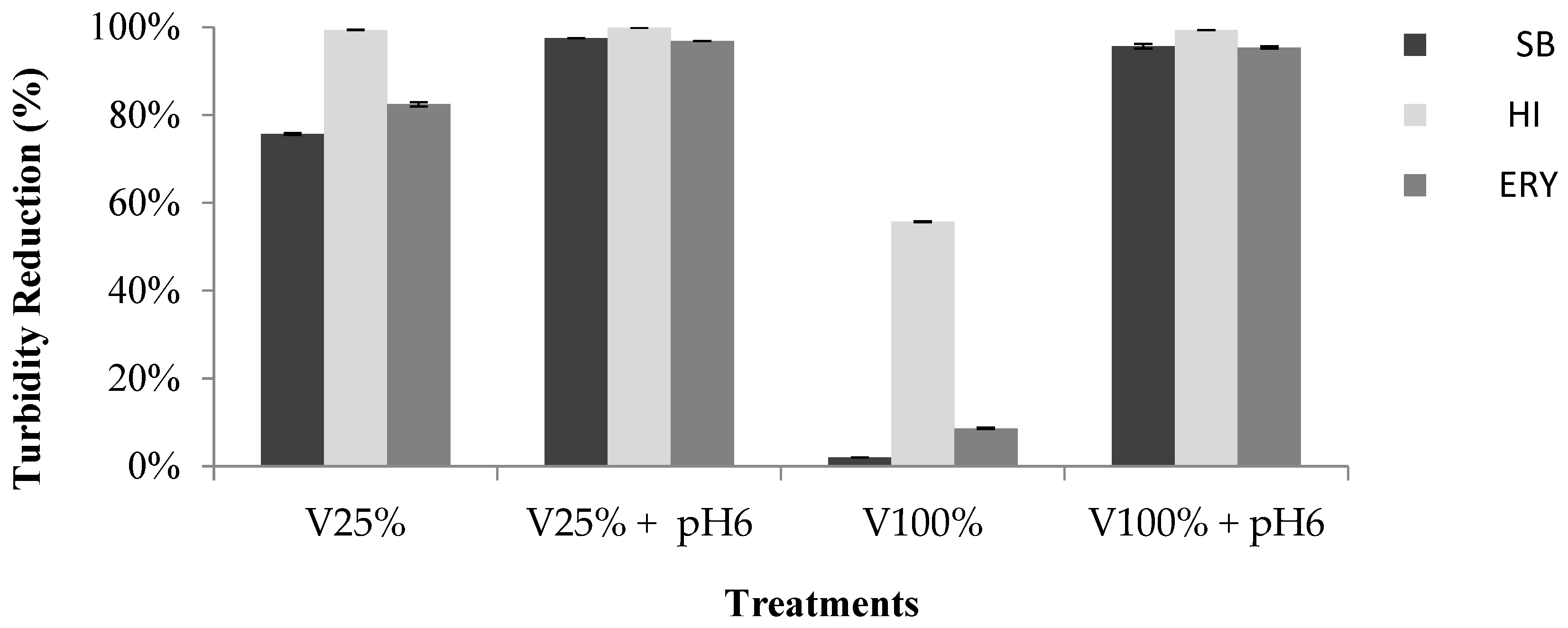
Figure 2.
Percentage reduction of COD in the initial solution of treatments with 25% and 100% vinasse, without pH adjustment and with pH adjustment to 6, in which Pleurotus SB, HI, and ERY strains were cultivated.
Figure 2.
Percentage reduction of COD in the initial solution of treatments with 25% and 100% vinasse, without pH adjustment and with pH adjustment to 6, in which Pleurotus SB, HI, and ERY strains were cultivated.
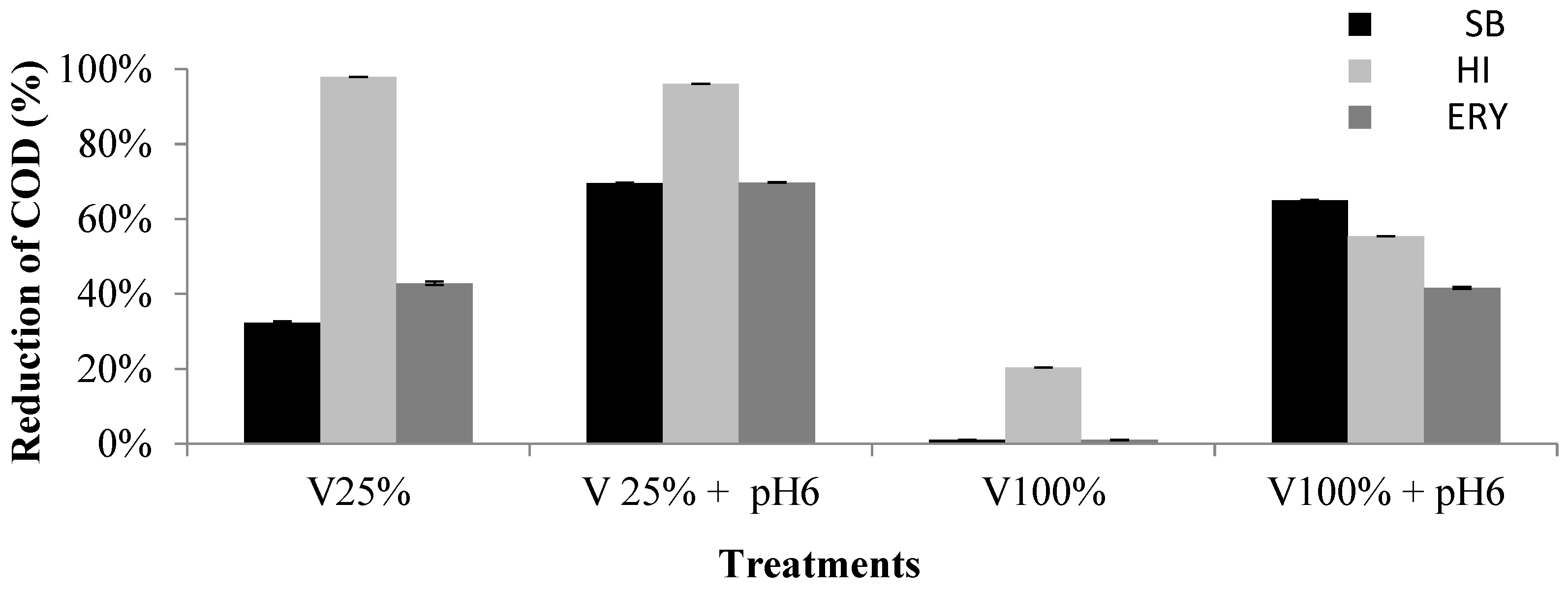
Figure 3.
Percentage reduction in turbidity in the treatments with 25% vinasse (V25%) without adjustment and with pH adjustment to 6, after a 14-day period in which the HI strain was cultivated. Where: Fe = δ-FeOOH.
Figure 3.
Percentage reduction in turbidity in the treatments with 25% vinasse (V25%) without adjustment and with pH adjustment to 6, after a 14-day period in which the HI strain was cultivated. Where: Fe = δ-FeOOH.
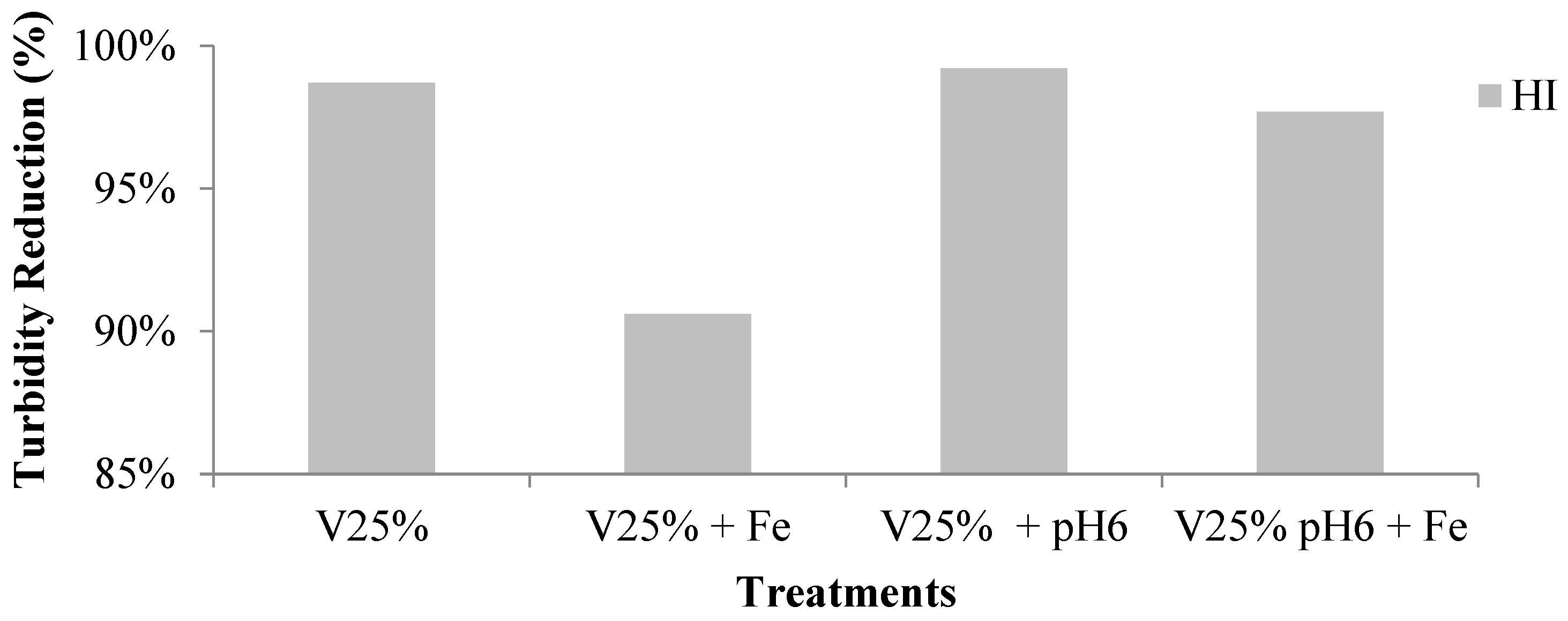
Figure 4.
Visual aspect of vinasse after treatment with the HI strain in conjunction with δ-FeOOH. Where: (a) vinasse without pH adjustment; (b) vinasse without pH adjustment with magnet proximity; (c) vinasse with pH adjustment; and (d) vinasse with pH adjustment and magnet proximity.
Figure 4.
Visual aspect of vinasse after treatment with the HI strain in conjunction with δ-FeOOH. Where: (a) vinasse without pH adjustment; (b) vinasse without pH adjustment with magnet proximity; (c) vinasse with pH adjustment; and (d) vinasse with pH adjustment and magnet proximity.
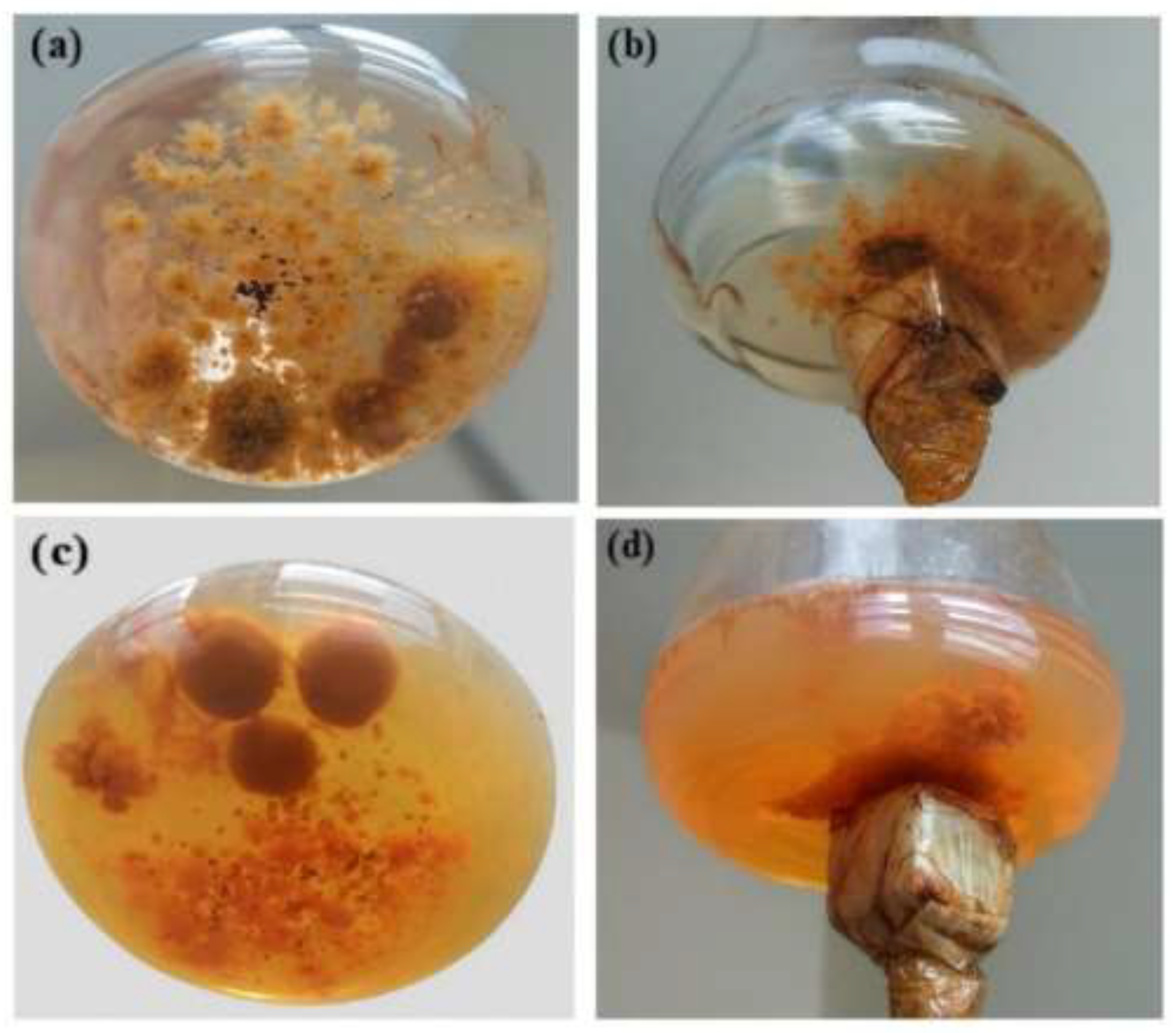
Figure 5.
Percentage reduction of COD (Chemical Oxygen Demand) in the treatments with 25% (V25%) without adjustment and with pH adjustment to 6, after a 14-day period in which the HI strain was cultivated. Where Fe = δ-FeOOH (Fe).
Figure 5.
Percentage reduction of COD (Chemical Oxygen Demand) in the treatments with 25% (V25%) without adjustment and with pH adjustment to 6, after a 14-day period in which the HI strain was cultivated. Where Fe = δ-FeOOH (Fe).
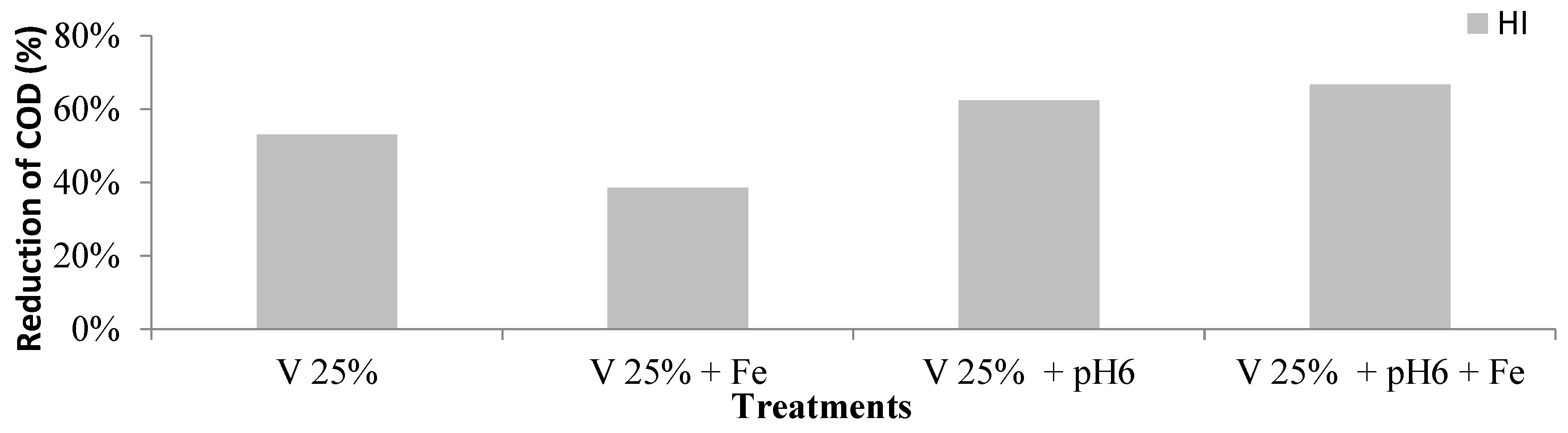
Figure 6.
Percentage of germination in treatments with 25% without adjustment and with pH adjustment, after 120 hours. Where: V25% = Vinasse 25%, F = Fungus and Fe = δ-FeOOH.
Figure 6.
Percentage of germination in treatments with 25% without adjustment and with pH adjustment, after 120 hours. Where: V25% = Vinasse 25%, F = Fungus and Fe = δ-FeOOH.
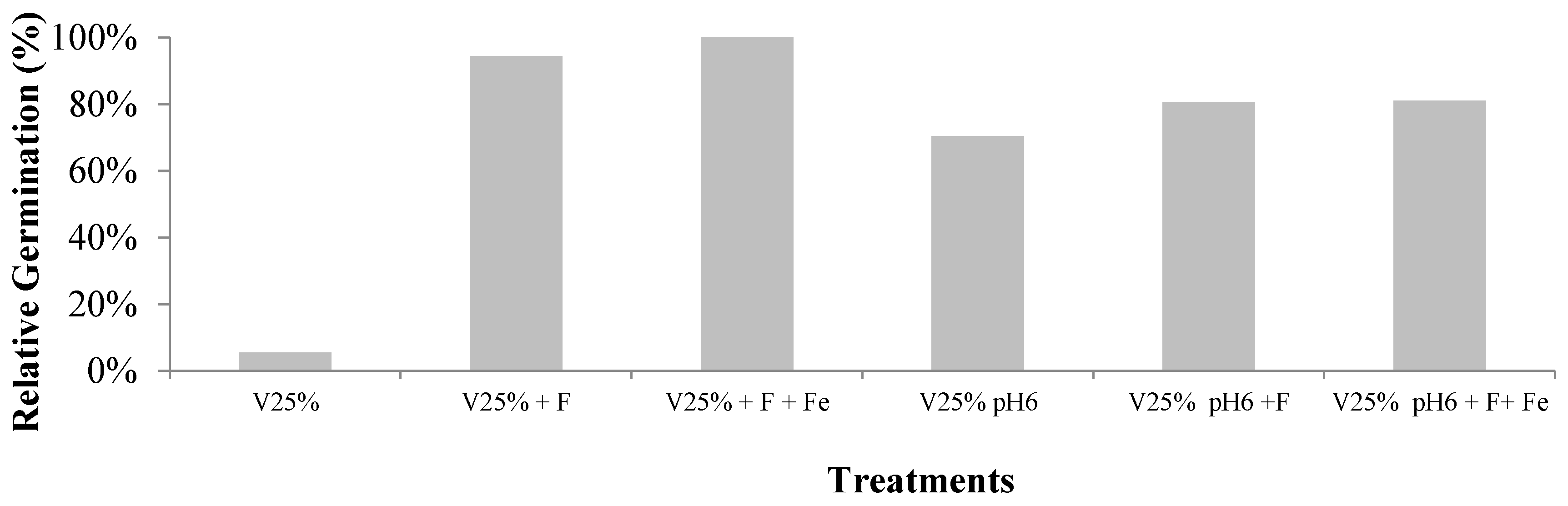

Table 1.
Average turbidity values in NTU, after cultivation of Pleurotus SB, HI, and ERY strains in 25% and 100% vinasse concentrations, without pH adjustment and with pH adjustment to 6, were subjected to the Tukey HSDab test.
Table 1.
Average turbidity values in NTU, after cultivation of Pleurotus SB, HI, and ERY strains in 25% and 100% vinasse concentrations, without pH adjustment and with pH adjustment to 6, were subjected to the Tukey HSDab test.
| Treatment | SB Pleurotus ostreatus |
HI Pleurotus ostreatus |
ERY Pleurotus eryngii |
|---|---|---|---|
| Vinasse 25% | 223 aBC | 7,5 bC | 61,5 aB |
| Vinasse 25% pH 6 | 49,2 °C | 3,8 bC | 23,6 °C |
| Vinasse 100% | 4531,7 aA | 4138,3 aA | 2890,0 aA |
| Vinasse 100% pH 6 | 144,4 aB | 67,3 bB | 3857,0 aB |
* Equal lowercase letters in the same row and equal uppercase letters in the same column indicate means with no statistically significant differences for the Tukey HSDab test at the 5% significance level (p < 0.05).
Table 2.
Average pH values after cultivation of Pleurotus SB, HI, and ER strains in treatments with 25% and 100% vinasse, without pH adjustment and with pH adjustment equal to 6, were subjected to the Tukey HSDab test.
Table 2.
Average pH values after cultivation of Pleurotus SB, HI, and ER strains in treatments with 25% and 100% vinasse, without pH adjustment and with pH adjustment equal to 6, were subjected to the Tukey HSDab test.
| Treatment | SB Pleurotus ostreatus |
HI Pleurotus ostreatus |
ERY Pleurotus eryngii |
|---|---|---|---|
| Vinasse 25% | 7.30 aA | 4.95 bB | 5.18 bB |
| Vinasse 25% pH 6 | 8.08 aA | 5.98 bA | 6.00 bA |
| Vinasse 100% | 3.87 aB | 3.93 aC | 3.84 aC |
| Vinasse 100% pH 6 | 7.96 aA | 6.40 bA | 6.21 bA |
* Equal lowercase letters in the same row and equal uppercase letters in the same column indicate means with no statistically significant differences for the Tukey HSDab test at the 5% significance level (p < 0.05).
Table 3.
Average COD values (mg.L-1O2), after cultivation of Pleurotus SB, HI, and ERY strains in treatments with 25% and 100% vinasse, without pH adjustment and with pH adjustment equal to 6, subjected to the Tukey HSDab test.
Table 3.
Average COD values (mg.L-1O2), after cultivation of Pleurotus SB, HI, and ERY strains in treatments with 25% and 100% vinasse, without pH adjustment and with pH adjustment equal to 6, subjected to the Tukey HSDab test.
| Treatment | SB Pleurotus ostreatus |
HI Pleurotus ostreatus |
ERY Pleurotus eryngii |
|---|---|---|---|
| Vinasse 25% | 4145 b A | 76 a A | 1366 b A |
| Vinasse 25% pH6 | 2860 a A | 239 a B | 1011 a A |
| Vinasse 100% | 24952 a A | 19496 a C | 19223 A |
| Vinasse 100% pH6 | 8848 a A | 9384 a BC | 11500 a A |
* Equal lowercase letters in the same row and equal uppercase letters in the same column indicate means with no statistically significant differences for the Tukey HSDab test at the 5% significance level (p < 0.05).
Disclaimer/Publisher’s Note: The statements, opinions and data contained in all publications are solely those of the individual author(s) and contributor(s) and not of MDPI and/or the editor(s). MDPI and/or the editor(s) disclaim responsibility for any injury to people or property resulting from any ideas, methods, instructions or products referred to in the content. |
© 2026 by the authors. Licensee MDPI, Basel, Switzerland. This article is an open access article distributed under the terms and conditions of the Creative Commons Attribution (CC BY) license (http://creativecommons.org/licenses/by/4.0/).
Copyright: This open access article is published under a Creative Commons CC BY 4.0 license, which permit the free download, distribution, and reuse, provided that the author and preprint are cited in any reuse.


