

Submitted:
14 January 2026
Posted:
14 January 2026
You are already at the latest version
Abstract
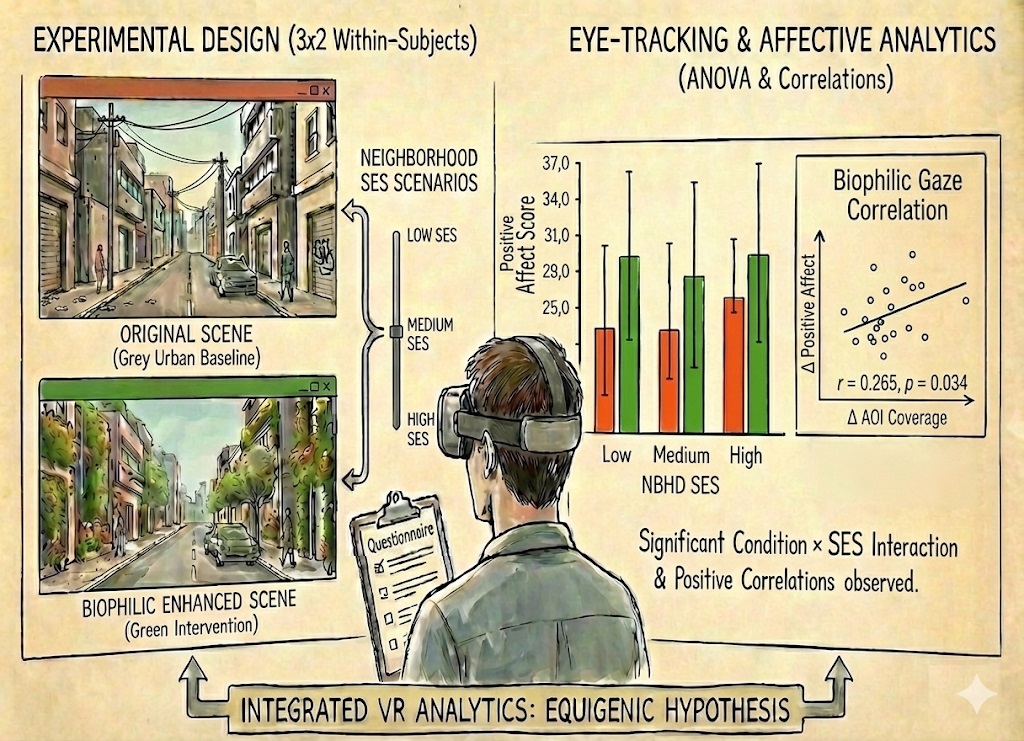
This study investigates the psychological and attentional impact of biophilic urban interventions using an immersive virtual reality (VR) framework integrated with real-time eye-tracking. Specifically, it examines whether bio-aesthetic enhancements can mitigate perceptual inequalities across neighborhoods of varying socioeconomic status (SES). Sixteen participants viewed original and digitally enhanced fixed-viewpoint 360° videos of Low-, Medium-, and High-SES environments while a comprehensive suite of oculomotor dynamics and psychometric responses were recorded. Results confirmed a significant Condition × SES interaction across both subjective preference (Liking) and aesthetic evaluation, identifying biophilic design as a "socio-perceptual equalizer": while baseline ratings consistently favored High-SES areas, interventions in Low-SES contexts yielded the highest marginal gains, effectively bridging the gap with privileged environments. Eye-tracking metrics revealed that this convergence is mechanistically driven by active visual engagement ("Nature Gaze"), with enhanced Low-SES scenes eliciting the highest fixation counts and visual coverage. However, a critical dissociation emerged between immediate affective improvement and objective stress reduction. Elevated saccadic velocities observed in high-contrast Low-SES interventions suggest a state of "hard fascination" or novelty-induced arousal. This implies that while biophilia boosts positive affect rapidly, physiological restoration is a dose-dependent process, requiring sufficient exposure duration to transition from curiosity-driven scanning to the "soft fascination" necessary for stress recovery. These findings validate integrated XR analytics as a high-fidelity tool for evidence-based urban design and support the equigenic hypothesis.
Keywords:
virtual reality (VR)
; eye-tracking
; visual attention
; biophilic design
; attention restoration theory
; urban well-being
; socioeconomic status
; environmental psychology
1. Introduction
Urban environments significantly influence human psychological well-being, not only through infrastructure and services but also through the perceptual and sensory qualities of everyday public spaces. With increasing urban density and reduced access to natural landscapes, the integration of nature into built environment, commonly referred to as biophilic design, has become a promising strategy to promote mental restoration, reduce stress, and enhance emotional regulation [1,2]. Biophilic interventions such as vegetation, natural textures, and organic forms have been associated with increased positive affect and attention restoration, particularly in overstimulating or visually degraded urban settings [3]. This aligns with Attention Restoration Theory (ART), which posits that natural environments possess inherent qualities that foster recovery from mental fatigue [4]. Recent experimental studies have shown that even modest architectural enhancements inspired by biophilic principles can positively modulate users’ emotional states and perceived comfort, especially when introduced into otherwise neutral or artificial environments [5].
In recent years, immersive technologies such as virtual reality (VR), augmented reality (AR), and extended reality (XR) have emerged as powerful tools for simulating and evaluating human experience in urban contexts. These technologies allow researchers to create ecologically valid environments while maintaining experimental control, enabling both manipulation of design variables and collection of multimodal data. Studies show that virtual exposure to nature can improve mood, reduce physiological stress responses, and foster a greater sense of well-being, especially among individuals with limited access to real green spaces [6,7].
Beyond self-report and physiological data, VR environments increasingly incorporate eye-tracking technology to monitor real-time gaze behavior, attention distribution, and visual engagement. Eye-tracking has become a critical method for assessing cognitive and perceptual processing during immersive experiences, offering objective insights into how users interact with visual content and spatial configurations. When combined with psychometric instruments, it enables a more comprehensive analysis of user experience, bridging subjective impressions with quantifiable attention and exploration metrics—an approach especially valuable in health-related and user-centered design research [8,9].
However, a critical gap remains in understanding how contextual differences, particularly the socioeconomic status (SES) of the urban environment, moderate the psychological outcomes of bio-aesthetic interventions. Lower-income neighborhoods are often disproportionately exposed to environmental stressors and lack restorative infrastructure, potentially making them more sensitive to improvements in their surroundings . Yet, most VR-based studies have relied on idealized or abstract digital environments [6,10], neglecting how the SES characteristics of a real-world place shape the human-environment interaction and the perceptual and affective responses of the viewer [7,11].
This study addresses these gaps by employing an integrated virtual reality (VR) and eye-tracking methodology to experimentally assess psychological and visual attention responses to biophilic and aesthetic enhancements. We created baseline and enhanced versions of real urban neighborhoods (with distinct SES profiles) from digitally edited 360° video. Participants viewed these scenes in VR while their gaze behavior was measured with real-time eye-tracking, followed by an assessment of their emotional responses via the PANAS and an ad-hoc questionnaire.
2. Materials and Methods
2.1. Participants
Sixteen university students (N=16) were recruited from the University of Almería via public advertisement on the university’s online portal. Inclusion criteria required participants to have normal or corrected-to-normal vision and no self-reported history of severe motion sickness, color blindness, neurological impairments, or other medical conditions that could affect VR use or assessment performance.
This study was conducted in accordance with the Declaration of Helsinki and was approved by the Human Research Bioethics Committee of the University of Almería (Reference: UALBIO2021/010; Date: February 17, 2022). All participants provided written informed consent prior to participation.
Given the exploratory pilot nature of this study, a sample size of N=16 was deemed sufficient for the primary objectives of this phase: to validate the feasibility of the 3x2 experimental design, to test the usability of the VR platform (Meta Quest Pro and SightLab) and the data collection protocol, and to identify preliminary trends in affective and attentional responses to inform future, larger-scale research.
2.2. Experimental Design
This pilot study employed a 3 × 2 within-subjects factorial design to evaluate the effectiveness of the integrated immersive framework. The design involved the manipulation of two independent variables (IVs): (1) Neighborhood Typology (NBHT) and (2) Design Condition.
The first independent variable, NBHT, represented three distinct urban areas in Almería (Spain), selected based on their socioeconomic status (SES). Using 2022 data from the National Statistics Institute (INE), the neighborhoods were classified into terciles: Low SES (Los Ángeles-Barrio Alto), Medium SES (La Cañada), and High SES (Ciudad Jardín).
The second independent variable, Design Condition, consisted of two levels: Original and Enhanced. The ‘Original’ condition utilized the baseline, unedited 360° video footage of the neighborhood to provide a realistic benchmark of the urban environment. The ‘Enhanced’ condition used the same footage, digitally modified to feature significant biophilic and aesthetic improvements through high-fidelity immersive simulations. These interventions included the addition of vegetation (e.g., trees, shrubs, planters), the integration of nature-themed murals, digitally cleaned facades, and the removal of visual detractors such as graffiti and obtrusive overhead wiring. As a within-subjects design, all participants were exposed to all six experimental conditions within the VR environment. The presentation order of the conditions was counterbalanced across participants to mitigate potential order effects and ensure the reliability of the technological assessment. Figure 1 illustrates representative frames captured during the virtual tours, comparing the original and enhanced versions across the selected NBHT levels:
2.3. Stimuli and Apparatus
2.3.1. Apparatus and Software
The immersive environments were presented using Meta Quest Pro head-mounted displays (HMDs). This system was selected for its high-resolution display and integrated real-time eye-tracking capabilities, which were fully supported by the SightLab VR platform (WorldViz). The system ran using the OpenXR protocol via the vizconnect_config_openxr.py configuration defined in settings.py.
Post-production of the visual stimuli was carried out using Adobe Premiere Pro 2025, Adobe After Effects 2025, and Adobe Photoshop (2021/2025). The final immersive tours were compiled and presented using SightLab VR.
2.3.2. Visual Stimuli Production
Urban footage was captured using an Insta360 X4 camera in 8K resolution under uniform morning lighting conditions to ensure visual consistency. Within each of the three selected neighborhoods, two representative blocks were chosen. A total of 4–6 recording points per block were captured, with each fixed-viewpoint recording lasting approximately one minute. The tripod was digitally removed from all video versions during post-production to enhance realism and immersion.
As described in the experimental design (Section 2.2), two versions (Original and Enhanced) of each neighborhood were prepared from this footage.
2.3.3. Environmental Characterization & Validation
To ensure the ecological validity of the virtual simulations, the ambient environmental conditions of the real-world locations were recorded on-site during footage capture. Ambient lighting was measured in kilolux (klux) using a Urceri MT-912 light meter, and ambient sound was measured in A-weighted decibels (LAeq) using the NIOSH Sound Level Meter app (iPhone 13), both previously validated for field use [12,13].
Average values were obtained for each neighborhood: Ciudad Jardín (High SES: 37.29 klux, 56.5 dB LAeq), La Cañada (Medium SES: 13.92 klux, 56.01 dB LAeq), and Los Ángeles / Barrio Alto (Low SES: 5.84 klux, 58.4 dB LAeq). These environmental factors were not manipulated and remained identical in both the ‘Original’ and ‘Enhanced’ video conditions, reflecting typical outdoor urban conditions [14,15]. No participants reported discomfort attributable to these baseline environmental conditions during debriefing.
2.4. Measures
To assess the psychological impact of the interventions, we collected both subjective self-report data and objective behavioral (ET) data.
2.4.1. Subjective Measures
Positive and Negative Affect Schedule (PANAS): Immediately following each VR exposure, participants completed the validated Spanish adaptation of the PANAS scale [16]. This 20-item instrument measures two orthogonal dimensions: Positive Affect (10 items) and Negative Affect (10 items). Participants rated the extent to which they felt each emotion “right now” on a 5-point Likert scale.
Participants also responded to four additional questions evaluating their momentary perception of the visual stimuli. These included ratings of Liking, Relaxation, Perceived Stress, and Aesthetic Evaluation, each measured on a 5-point Likert scale ranging from 1 (“not at all”) to 5 (“very much”). These scales were designed to capture participants’ immediate emotional and aesthetic responses to the virtual tour in each condition.
2.4.2. Objective Measures (Eye-Tracking)
Real-time gaze data was recorded using the Meta Quest Pro’s integrated eye-tracking system, configured and collected via SightLab VR. To analyze visual attention patterns, predefined Areas of Interest (AOIs) were manually drawn for each video scene. AOIs corresponded to key environmental elements, including “Vegetation” (trees, planters, murals), “Cleaned Facades,” and “Sky.”
From the raw gaze data, we derived a set of standard eye-tracking metrics. Basic attentional metrics included: Fixation Count (the total number of fixations within a defined AOI); Dwell Time (the total time spent fixating within an AOI, in milliseconds); Time to First Fixation (the latency from stimulus onset until the participant’s first fixation landed on any of the predefined AOIs, in milliseconds); and Average Fixation Duration (the mean duration of individual fixations, in milliseconds). Metrics of visual exploration included: Saccadic Amplitude (the average angular distance of eye movements between consecutive fixations, in degrees); Average Saccadic Velocity (the mean speed of saccades, in degrees per second); and Total Fixation Count (the sum of all fixations during stimulus presentation, regardless of AOI). To measure the distribution of attention across defined scene elements, we calculated AOI Coverage (the percentage of the total predefined AOIs that received at least one fixation during the trial).
In the field of Human-Computer Interaction (HCI), these metrics serve as proxies for cognitive and perceptual processes. For example, a higher fixation count or longer dwell time on an element typically indicates greater attentional engagement or interest. A shorter time to first fixation suggests quicker initial orientation towards the relevant scene content. Longer average fixation durations can be associated with deeper cognitive processing. Similarly, larger saccadic amplitudes and higher velocities often reflect broader, more active scanning of a scene, while smaller amplitudes may indicate focal inspection. Finally, AOI Coverage provides an index of how comprehensively a viewer samples the different elements of a scene. These general interpretations informed our investigation of how biophilic interventions modulate visual behavior in specific urban contexts.
2.5. Procedure
The experiment was conducted over three separate sessions to minimize participant fatigue and prevent potential carry-over effects between the distinct neighborhood typologies. Participants scheduled their three sessions on different days, with each session dedicated to one of the three SES-level neighborhoods (Low, Medium, or High), with the order of neighborhoods counterbalanced across participants. Within each session, participants were exposed to both video conditions (‘Original’ and ‘Enhanced’) for that specific neighborhood. The presentation order of these two conditions was randomized per session. A 5-minute washout period involving a neutral distraction task was implemented between conditions.
Each immersive tour was experienced via the HMD while real-time gaze behavior data was simultaneously recorded using the eye-tracking system . Participants were seated and could manually advance through the fixed-viewpoint 360° video scenes using the controller. Immediately following each of the two tours (Original and Enhanced), they removed the HMD to complete the post-exposure assessments (PANAS and ad-hoc questionnaire).
2.6. Statistical Analysis
All statistical analyses will be conducted using JASP 28 version 0.95.3. The significance level (alpha) was set at α = 0.05 for all primary analyses.
2.6.1. Primary Analysis: Repeated Measures ANOVA
To test the hypotheses related to our 3 (Neighborhood SES: Low, Medium, High) × 2 (Condition: Original, Enhanced) within-subjects factorial design, we conducted a series of repeated measures analyses of variance (RM-ANOVA). A separate RM-ANOVA was performed for each of the primary dependent variables, including Affective Measures (PANAS Positive Affect score, PANAS Negative Affect score), Questionnaire Score, and Key Eye-Tracking Metrics
For each ANOVA, we examined the main effect of Condition (to assess the overall impact of the biophilic/aesthetic intervention), the main effect of Neighborhood SES, and, critically, the Condition × Neighborhood SES interaction. This interaction term is the primary test of our hypothesis that the intervention’s impact is moderated by the neighborhood’s socioeconomic context.
Mauchly’s test for sphericity was used to check the assumption of sphericity. If this assumption was violated (p < .05), the Greenhouse-Geisser correction was applied to the degrees of freedom. Significant main effects or interactions were followed by post-hoc pairwise comparisons with a Bonferroni correction.
2.6.2. Exploratory Analysis: Low-Power Considerations and Correlations
Given the pilot nature of this study (N=16) and the consequently limited statistical power, we reported effect sizes (Partial Eta-Squared, ηp²) for all main effects and interactions to interpret the magnitude of observed effects, regardless of statistical significance. This approach allows for the identification of the magnitude of potential effects that may warrant investigation in a future study.
Furthermore, we conducted exploratory bivariate correlational analyses to examine potential relationships between changes in visual attention and changes in affective state. For this, “delta” (Δ) scores were computed for each participant (e.g., Δ_PANAS_Positive = PANAS_Positive_Enhanced - PANAS_Positive_Original). Pearson or Spearman correlation coefficients were then calculated between relevant Δ scores (e.g., Δ PANAS Positive with Δ AOI Coverage).
3. Results
3.1. Analysis of Affective States and Oculomotor Metrics
3.1.1. Positive Affect (PANAS)
Analysis revealed a significant main effect of Condition, F(1, 15) = 10.07, p = .006, η²ₚ = .40. Specifically, participants reported higher positive affect in the bio-enhanced scenes (Low-SES:: M = 29.19, SD = 7.129; Medium-SES: M = 27.56, SD = 7.797; High-SES: M = 27.81, SD = 9.246) compared to the original scenes (Low-SES: M = 23.25, SD = 6.904; Medium-SES: M = 22.63, SD = 7.736; High-SES: M = 22.13, SD = 8.578). The descriptive results across all six experimental conditions are displayed in Figure 2.
Regarding the effect of neighborhood SES, a Greenhouse-Geisser correction was applied due to a violation of sphericity. Results showed no significant main effect for SES, F(1.35, 20.30) = 0.34, p = .632, nor a significant Condition × SES interaction, F(1.76, 26.40) = 0.20, p = .791.
3.1.2. Negative Affect (PANAS)
No significant main effects or interactions were observed for Condition (F(1,15) = 1.65, p = .218), SES (F(1.69, ~25.3) = 1.46, p = .250), or the Condition × SES interaction (F(1.85, ~27.7) = 0.79, p = .456).
3.1.3. Liking
Analysis of liking scores revealed a significant main effect of Condition, F(1, 15) = 25.56, p < .001, η²ₚ = .63, and a significant main effect of Neighborhood SES, F(1.42, 21.30) = 7.45, p = .007, η²ₚ = .33. More importantly, a significant Condition × Neighborhood SES interaction was observed, F(1.66, 25.00) = 10.50, p < .001, η²ₚ = .41.
To decompose this interaction, the effect of Neighborhood SES was analyzed for each condition separately. In the Original condition, the type of neighborhood significantly influenced liking, F(1.83, 27.00) = 11.67, p < .001, η²ₚ = .44. Specifically, participants rated the High-SES neighborhood scenes the highest (M = 2.875, SD = 0.957), followed by the Medium-SES (M = 2.188, SD = 0.911) and Low-SES (M = 1.688, SD = 0.973) scenes. Post hoc comparisons confirmed significant differences between the High-SES scenes and both the Low-SES (p = .001) and Medium-SES (p = .048) scenes. In contrast, in the Bio-enhanced condition, liking scores were uniformly higher and stable across the Low-SES (M = 3.813, SD = 0.911), Medium-SES (M = 3.313, SD = 1.195), and High-SES (M = 3.750, SD = 0.856) scenes. The descriptive results across all the Conditions x Neighborhood Scenes are illustrated in Figure 3.
Although the omnibus test for SES remained statistically significant, F(1.79, 27.00) = 3.98, p = .035, η²ₚ = .21, conservative post hoc comparisons revealed no significant differences between any of the SES levels, suggesting that the bio-enhancement intervention effectively mitigated the liking disparities observed in the original designs.
3.1.4. Relaxation
Analysis of relaxation ratings revealed a significant main effect of Condition, F(1, 15) = 11.60, p = .004, η²ₚ = .44. Specifically, Bio-enhanced scenes were associated with significantly higher relaxation ratings (Low-SES: M = 3.813, SD = 0.834; Medium-SES: M = 3.625, SD = 1.204; High-SES: M = 4.063, SD = 0.998) compared to the original scenes (Low-SES: M = 2.375, SD = 1.147; Medium-SES: M = 3.188, SD = 1.223; High-SES: M = 3.250, SD = 1.000).
Regarding Neighborhood SES, although Mauchly’s test indicated no violation of sphericity (p > .05), Greenhouse-Geisser corrections were applied to maintain consistency with prior analyses. A marginally significant main effect was observed, F(1.57, 23.60) = 3.53, p = .055, η²ₚ = .19. Given the large effect size and the proximity to the significance threshold, exploratory post hoc comparisons were examined to clarify specific patterns. These revealed that High-SES scenes were rated as significantly more relaxing than Low-SES scenes (p = .006), while comparisons involving Medium-SES scenes were not statistically significant. Finally, no significant Condition × Neighborhood SES interaction was detected, F(1.84, 27.68) = 2.63, p = .093. The descriptive results across all six experimental conditions are displayed in Figure 4.
3.1.5. Aesthetic
Analysis of aesthetic ratings revealed a significant main effect of Condition, F(1, 15) = 48.44, p < .001, η²ₚ = .76. Specifically, participants rated the Bio-enhanced environments as substantially more aesthetically pleasing (Low-SES: M = 3.750, SD = 1.125; Medium-SES: M = 3.563, SD = 1.031; High-SES: M = 3.813, SD = 0.750) than the Original ones (Low-SES: M = 1.313, SD = 0.602; Medium-SES: M = 2.000, SD = 0.966; High-SES: M = 2.938, SD = 1.289). A significant main effect of Neighborhood SES was also found, F(1.78, 26.70) = 8.73, p = .002, η²ₚ = .37. However, this main effect was qualified by a significant Condition × Neighborhood SES interaction, F(1.57, 23.60) = 10.37, p = .001, η²ₚ = .41. This interaction indicates that the impact of neighborhood SES on aesthetic perception differed between design conditions. To decompose this interaction, the effect of SES was analyzed separately for each condition.
In the Original condition, results showed a significant effect of SES, F(1.61, 24.07) = 14.49, p < .001, η²ₚ = .49. Post hoc comparisons revealed that High-SES scenes received significantly higher aesthetic ratings compared to Low-SES scenes (p < .001). Differences between Low- and Medium-SES (p = .067) and between Medium- and High-SES (p = .069) scenes were marginally significant. In contrast, in the Bio-enhanced condition, the effect of SES was not significant, F(1.92, 28.78) = 0.64, p = .531, η²ₚ = .04. Participants reported uniformly high aesthetic ratings across scenes, with no significant differences observed in post hoc comparisons (p > .999). This pattern suggests that the bio-enhancement intervention effectively leveled the aesthetic disparities observed in the original environments as illustrated in Figure 5.
3.1.6. Stress
Analysis of perceived stress ratings revealed no significant main effect of Condition, F(1, 15) = 0.68, p = .422, η²ₚ = .04. However, a significant main effect of Neighborhood SES was observed, F(1.78, 26.75) = 4.71, p = .021, η²ₚ = .24 (Greenhouse-Geisser corrected). Despite this significant main effect, conservative post hoc comparisons did not yield statistically significant differences between specific SES pairs, although the difference between Low-SES and Medium-SES scenes approached significance (p = .063). Finally, no significant Condition × Neighborhood SES interaction was detected, F(1.95, 29.27) = 0.11, p = .890. As shown in Figure 6, the descriptive pattern suggests that Low-SES scenes consistently elicited higher stress ratings regardless of the presence of bio-enhanced elements.
3.1.7. Average Saccadic Amplitude
Analysis of average saccadic amplitude yielded no significant main effects for Condition, F(1, 15) = 2.28, p = .152, η²ₚ = .13, or Neighborhood SES, F(1.77, 26.60) = 1.80, p = .187, η²ₚ = .11. Similarly, the Condition × Neighborhood SES interaction was not significant, F(1.845, 27.68) = 1.18, p = .320. These results indicate that participants’ visual exploration patterns, in terms of saccade amplitude, remained stable across experimental conditions.
3.1.8. AOI Coverage
Analysis of Area of Interest (AOI) coverage revealed a significant main effect of Condition, F(1, 15) = 80.35, p < .001, η²ₚ = .84. Specifically, AOI coverage was significantly higher in the Bio-enhanced condition (Low-SES: M = 48.78, SD = 9.239; Medium-SES: M = 41.95, SD = 12.990; High-SES: M = 41.99, SD = 11.122) compared to the Original design (Low-SES: M = 17.50, SD = 11.832; Medium-SES: M = 26.25, SD = 15.676; High-SES: M = 24.60, SD = 10.141). Regarding Neighborhood SES, no significant main effect was observed (F(1.785, 26.77) = 0.072, p = .913). However, a significant Condition × Neighborhood SES interaction was found, F(1.72, 25.80) = 11.74, p < .001, η²ₚ = .44 (Greenhouse-Geisser corrected).
To decompose this interaction (see Figure 7), the effect of neighborhood SES was examined within each condition separately. In the Original condition, AOI coverage did not differ significantly across SES levels. In contrast, within the Bio-enhanced condition, AOI coverage varied significantly across neighborhood contexts. Post hoc comparisons indicated that Low-SES scenes registered the highest AOI coverage (M = 48.78, SD = 9.239), which was significantly greater than that observed in High-SES scenes (M = 41.99, SD = 11.122), while Medium-SES scenes showed intermediate values (M = 41.95, SD = 12.990).
3.1.9.. AOI Fixation Count
Analysis of the number of fixations on Areas of Interest (AOIs) revealed significant main effects of Condition, F(1, 15) = 113.64, p < .001, η²ₚ = .88, and Neighborhood SES, F(1.90, 28.50) = 7.28, p = .003, η²ₚ = .33.
A significant Condition × Neighborhood SES interaction was also observed, F(1.69, 25.40) = 18.04, p < .001, η²ₚ = .55 (Greenhouse-Geisser corrections applied for consistency). The descriptive data for this interaction are displayed in Figure 8.
To examine the source of this interaction, the effect of SES was analyzed for each condition separately. In the Original condition, a significant effect of SES was found, F(1.17, 17.60) = 26.83, p < .001, η²ₚ = .64. Post hoc comparisons indicated that High-SES scenes registered significantly higher fixation counts (M = 102.94, SD = 65.25) compared to both Medium-SES (p < .001) and Low-SES scenes (p < .001). No significant difference was found between Low- and Medium-SES scenes (p = .120).
In the Bio-enhanced condition, the distribution of fixations followed a different pattern, F(1.74, 26.20) = 10.13, p < .001, η²ₚ = .40. Post hoc analyses revealed that fixation counts were significantly higher in Low-SES scenes (M = 333.8, SD = 122.5) compared to Medium-SES (p = .004) and High-SES scenes (p = .04). No significant difference was observed between Medium- and High-SES scenes (p = .227).
In summary, while fixation counts in the Original condition were maximal in High-SES scenes, the Bio-enhanced condition showed the highest frequency of fixations in Low-SES scenes.
3.1.10. Total Fixation Count
Analysis of the total number of fixations across the entire scene revealed no significant main effect of Condition, F(1, 15) = 2.307, p = .150, η²ₚ =0.133.
However, a significant main effect of Neighborhood SES was observed, F(1.56, 23.30) = 12.69, p < .001, η²ₚ = .46 (Greenhouse-Geisser corrected). Post hoc comparisons indicated that Medium-SES scenes elicited significantly fewer total fixations (M = 1069, SD = 379.1 in the Original Condition, and M = 1205, SD = 295.0 in the Biophilic Condition) compared to both Low-SES (p = .020) and High-SES scenes (p < .001). No significant difference was found between Low- and High-SES scenes (p = 1.000).
Finally, no significant Condition × Neighborhood SES interaction was detected, F(1.69, 25.43) = 2.67, p = .096. As shown in Figure 9, the descriptive pattern indicates that the overall frequency of fixations was lowest in the Medium-SES environments, regardless of the experimental condition.
3.1.11. Total Fixation Duration
Analysis of the total fixation duration revealed no significant main effect of Condition, F(1, 15) = 0.18, p = .679, η²ₚ = .01. In contrast, a significant main effect of Neighborhood SES was found, F(2, 30) = 8.97, p < .001, η²ₚ = .37. The Condition × Neighborhood SES interaction was not statistically significant, F(2, 30) = 2.12, p = .138, η²ₚ = .12.
Post hoc comparisons revealed that Medium-SES scenes elicited significantly lower total fixation duration (M = 231.2, SD = 85.36 in the Original Condition, and M = 255.3, SD = 70.05 in the Biophilic Condition) compared to High-SES scenes (M = 295.90, SD = 71.94 in the Original Condition, and M = 304.9, SD = 76.03 in the Biophilic Condition) (p = .001). The duration for Low-SES scenes (M = 290.50, SD = 80.64 in the Original Condition, and M = 274.0, SD = 86.92 in the Biophilic Condition) did not differ significantly from either Medium- (p = .109) or High-SES scenes (p = .386).
As shown in Figure 10, this pattern indicates that participants spent less total time fixating on visual elements within the Medium-SES environments compared to the other contexts, regardless of the experimental condition.
3.1.12. Time to First Fixation
Analysis of the time elapsed before the first fixation on Areas of Interest (Time to First Fixation) yielded no significant main effects for Condition, F(1, 15) = 0.80, p = .386, η²ₚ = .05, or Neighborhood SES, F(1.64, 24.60) = 0.61, p = .522, η²ₚ = .04.
Similarly, the Condition × Neighborhood SES interaction was not significant, F(1.73, 25.90) = 1.03, p = .361, η²ₚ = .06. These results indicate that the speed at which participants first oriented their attention towards the specific features of the environment did not differ systematically across experimental conditions or socioeconomic contexts.
3.1.13. Average Fixation Duration
Analysis of average fixation duration revealed no significant main effects for Condition, F(1, 15) = 3.86, p = .068, η²ₚ = 0.20, or Neighborhood SES, F(1.84, 27.50) = 2.20, p = .133, η²ₚ = 0.13.
Similarly, the Condition × Neighborhood SES interaction was not significant, F(1.94, 29.00) = 1.54, p = .231, η²ₚ = 0.09. These findings suggest that the average duration of individual fixations remained relatively stable regardless of the environmental condition or socioeconomic context.
3.1.14. Average Saccadic Velocity
Analysis of average saccadic velocity revealed no significant main effect of Condition, F(1, 15) = 0.01, p = .924, η²ₚ = .001. However, a significant main effect of Neighborhood SES was observed, F(1.95, 29.20) = 4.84, p = .016, η²ₚ = .24 (Greenhouse-Geisser corrected).
Post hoc comparisons indicated that Low-SES scenes elicited significantly higher saccadic velocity (M = 84.90, SD = 12.57 in the Original Condition, and M = 83.40, SD = 14.40 in the Biophilic Condition) compared to both Medium-SES (p = .047) and High-SES scenes (p = .048). Comparisons between Medium- and High-SES scenes were not statistically significant (p = 1.000).
Finally, no significant Condition × Neighborhood SES interaction was detected, F(1.76, 26.40) = 0.74, p = .472, η²ₚ = .05.
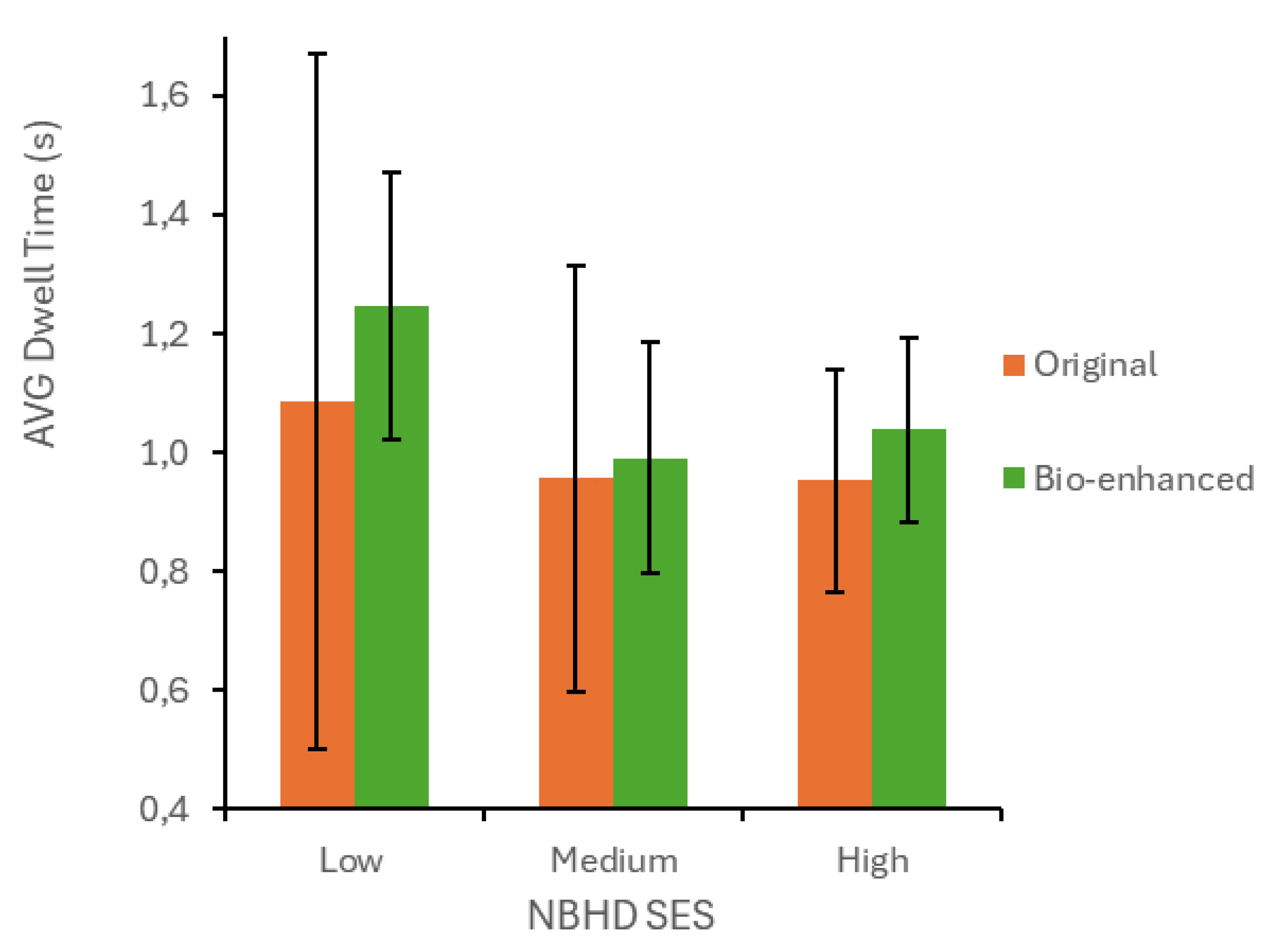
3.1.15. Average Dwell Time
Analysis of Average Dwell Time revealed no significant main effect of Condition, F(1, 15) = 1.44, p = .249, η²ₚ = .09. However, a significant main effect of Neighborhood SES was observed, F(1.82, 27.24) = 5.21, p = .014, η²ₚ = .26 (Greenhouse-Geisser corrected).
Post hoc comparisons indicated that Low-SES scenes elicited significantly longer dwell times (M = 1.086, SD = 0.584 in the Original Condition, and M = 1.246, SD = 0.226 in the Biophilic Condition) compared to High-SES scenes (M = 0.953, SD = 0.187 in the Original Condition, and M = 1.038, SD = 0.155 in the Biophilic Condition) (p = .043). The difference between Low- and Medium-SES scenes (M = 0.956, SD = 0.357 in the Original Condition, and M = 0.990, SD = 0.194 in the Biophilic Condition) approached significance (p = .064), while no significant difference was found between Medium- and High-SES scenes (p = 1.000).
Finally, no significant Condition × Neighborhood SES interaction was detected, F(1.24, 18.57) = 0.39, p = .585, η²ₚ = .03. As illustrated in Figure 11, descriptive patterns suggest that Low-SES scenes consistently registered the longest dwell times regardless of the experimental condition.
3.2. Correlation Analyses Between Changes in Eye-Tracking Metrics and Affective States
To explore the relationships between modifications in visual attention patterns and changes in subjective affective states following the biophilic intervention, a series of planned bivariate correlational analyses were conducted on difference scores (Δ = Enhanced - Original). The analyses were structured around four theoretical constructs: Immersion, Restoration, Stress/Relaxation, and Aesthetic Preference. Within blocks containing multiple comparisons, the Holm-Bonferroni sequential correction procedure was applied to control the family-wise error rate.
Immersion. The hypothesis that a greater increase in visual exploration of biophilic elements (Δ AOI Coverage) would correlate with a greater improvement in positive mood (Δ PANAS Positive Affect) was tested. Data met the assumption of normality (Shapiro-Wilk = 0.972, p = .276). A significant positive correlation was observed, Pearson’s r(14) = .265, p = .034, 95% CI [.013, 1.000].
Restoration. Two hypotheses concerning the attentional mechanism of restoration were tested. As the Δ Dwell Time data violated normality (Shapiro-Wilk = 0.914, p < .001), Spearman’s rank-order correlations were used. No significant correlation was found between Δ Dwell Time and Δ PANAS Positive Affect, ρ(14) = .184, p = .105, 95% CI [-0.059, 1.000]. Similarly, the correlation with Δ Relaxation was not significant, ρ(14) = .101, p = .248, 95% CI [-0.143, 1.000]. Applying the Holm-Bonferroni correction for these two tests did not alter the non-significant conclusions (p > .05).
Stress and Relaxation. Two hypotheses concerning oculomotor patterns related to stress and calm were tested. Due to violations of normality (Shapiro-Wilk p < .05), Spearman’s correlations were computed. The predicted positive correlation between an increase in average saccadic velocity (Δ Avg. Saccadic Velocity) and increased stress (Δ Perceived Stress) was not supported, ρ(14) = .142, p = .167, 95% CI [-0.101, 1.000]. Conversely, the hypothesized negative correlation with increased relaxation (Δ Relaxation) was significant, ρ(14) = -.308, p = .017, 95% CI [-1.000, -0.073]. After applying the Holm-Bonferroni correction for two tests, the correlation with Δ Relaxation remained statistically significant (corrected p < .025).
Aesthetic Preference. Two hypotheses linking deeper cognitive processing to explicit preference judgments were tested. Data for both Δ Liking and Δ Aesthetic Evaluation met normality assumptions (Shapiro-Wilk p > .875). A positive correlation was found between an increase in average fixation duration (Δ Avg. Fixation Duration) and improved liking (Δ Liking), r(14) = .252, p = .042, 95% CI [.013, 1.000]. A stronger positive correlation was observed with improved aesthetic evaluation (Δ Aesthetic Evaluation), r(14) = .266, p = .034, 95% CI [.027, 1.000]. However, following the Holm-Bonferroni correction for the two comparisons within this block, neither correlation retained statistical significance (smallest original p = .034 > corrected threshold of .025).
4. Discussion
This study utilized immersive VR and eye-tracking to examine how biophilic and aesthetic enhancements influence psychological well-being and visual attention across urban neighborhoods of varying socioeconomic strata. The findings provide empirical support for the potential of bio-aesthetic interventions but also reveal a complex interplay between environmental context, visual exploration, and emotional response. Furthermore, these results validate the efficacy of integrated XR systems as a high-fidelity methodological framework for capturing nuanced human-environment interactions, demonstrating the potential of immersive technology to inform evidence-based urban design.
4.1. Socio-Perceptual Equity: Biophilic Enhancements as Urban Equalizers
The primary contribution of this study is the empirical evidence suggesting that biophilic design may act not only as a general enhancer of mood but also as a mechanism for perceptual and aesthetic equalization across socioeconomic strata. First, our results confirmed a significant main effect of Condition on Positive Affect, demonstrating that the bio-aesthetic interventions successfully triggered a generalized emotional uplift across all participants, independent of the neighborhood context. However, beyond this universal affective boost, the RM-ANOVA results for Liking and Aesthetic Evaluation revealed a more specific Condition × Neighborhood SES interaction.
In the baseline scenario, the data replicated the well-documented urban gradient, where High-SES environments were rated significantly more favorably than Low- and Medium-SES areas. However, the bio-aesthetic intervention appeared to mitigate this disparity. In the enhanced condition, aesthetic and liking scores were uniformly higher and stable across all SES levels, implying that the intervention raised the perception of the vulnerable neighborhood to a level comparable to that of the privileged one. This pattern of perceptual leveling provides empirical support for the equigenic hypothesis in the domain of urban design perception. This hypothesis posits that the health and well-being benefits of natural elements are proportionally greater for populations living in the most deprived environments, thereby acting as a potential equalizer of health inequalities [17,18]. Our findings extend this logic to the realm of perceptual and aesthetic equity, demonstrating that the marginal gain in subjective preference and aesthetic valuation from introducing biophilic elements is indeed greatest in neighborhoods with the lowest baseline quality. This suggests that visually degraded, low-SES urban contexts are not just needy, but are particularly sensitive and responsive to bio-aesthetic interventions.
This subjective convergence is mechanistically supported by the objective eye-tracking metrics, specifically AOI Fixation Count and AOI Coverage, which showed significant interaction effects. The analysis revealed a marked shift in attentional allocation: while High-SES scenes commanded the highest fixation counts in the original condition, the introduction of biophilic elements led to Low-SES scenes eliciting the highest frequency of fixations and the most extensive visual coverage in the enhanced condition. This suggests that the visual saliency and restorative potential of natural elements are context-dependent [19]. In a visually degraded Low-SES environment, the high contrast generated by introducing vegetation appears to create a stronger “bottom-up” attentional capture, a perceptual mechanism that underlies the greater marginal benefit of the intervention where the need is highest—a concept central to the equigenic hypothesis in environmental health [17] . In contrast, in High-SES areas where greenery is more baseline-congruent, the same elements may be processed with less attentional effort [19].
Furthermore, it is important to note that while visual coverage and fixation counts appeared to be primary drivers of this aesthetic shift, the correlational analysis between the change in Average Fixation Duration and both Liking and Aesthetic Evaluation did not retain statistical significance after sequential correction. This pattern suggests that bio-aesthetic equalization is likely driven by an extensive exploration of the environment rather than the intensive scrutiny of individual elements [20,21]. This indicates that the overall presence of nature, rather than the detailed processing of its specific components, facilitates the improved perception of deprived areas.
Oculomotor behavior observed in this study lends additional support to this theoretical framework. Beyond simple fixation counts, participants exhibited significantly longer Average Dwell Times in Low-SES scenes compared to High-SES ones. Interpreting this metric through established methodological frameworks, such prolonged fixation periods are typically indicative of deeper cognitive processing rather than superficial scanning [22]. This interpretation aligns with previous applications of eye-tracking in urban design [21], suggesting that the shift in aesthetic preference was driven by a sustained cognitive engagement with the restorative elements inserted into the deprived context, rather than a mere fleeting glance.
Crucially, the exploratory correlation analysis points towards a link between these changes in gaze behavior and emotional outcomes. We observed a significant positive correlation between the increase in visual coverage of bioenhanced elements (Δ AOI Coverage) and the improvement in positive mood (Δ PANAS Positive Affect). This finding aligns with the “Nature Gaze” hypothesis [23], proposing that the “equalizing” effect is not merely a background aesthetic improvement, but a result of active visual consumption of nature, which appears to be most engaging when introduced into the environments that lack it most.
4.2. Dissociating Affect from Stress: Oculomotor Signatures of ‘Hard Fascination’ in Low-SES Contexts
The analysis of restorative metrics reveals a critical dissociation between immediate affective improvement and the underlying perception of stress. While bio-aesthetic enhancements fostered a state of calm across all contexts (main effect of Condition on Relaxation), Perceived Stress remained significantly tied to the neighborhood’s socioeconomic status (SES). Low-SES environments consistently elicited higher stress ratings regardless of the biophilic presence. This divergence suggests that the restorative potential of natural elements may be moderated by the enduring social stigma or environmental identity of a neighborhood, where deep-seated perceptions of neglect can outweigh the impact of a brief visual intervention [10]. Furthermore, the significant increase in Positive Affect without a corresponding decrease in Negative Affect aligns with evidence that nature-based stimuli can modulate dimensions of arousal independently, often elevating interest-driven engagement before alleviating deeper stress [5]. This pattern indicates that the bio-enhancement functioned primarily as an additive emotional stimulant, adding novelty and pleasure, rather than providing a subtractive relief from pre-existing environmental burdens of the neighborhood.
This subjective tension is reflected in participants’ gaze dynamics. The ANOVA results indicated that Low-SES scenes elicited higher saccadic velocities and longer dwell times than High-SES ones. In immersive environments, higher saccadic velocity is associated with active visual search and heightened arousal [8]. This interpretation is bolstered by the stability of Time to First Fixation and Saccadic Amplitude across conditions, suggesting that neither initial attentional orienting nor the spatial breadth of exploration were fundamentally altered. The selective increase in saccadic velocity points to an intensification of the scanning process, likely reflecting a state of heightened physiological arousal or ‘visual urgency’ [24].
Furthermore, the overall visual activity, measured by Total Fixation Count and Duration, indicated a distinct SES effect where Medium-SES environments appeared to elicit lower overall engagement compared to both Low- and High-SES areas. This may point to the possibility that the restorative potential of an intervention is moderated by the baseline visual density and interest cues of different urban morphologies [25,26] and must reach a “saliency threshold” sufficient to capture and hold the “nature gaze” [27]. While the high contrast of the intervention in Low-SES areas seemed to prompt intense interrogation, the Medium-SES context appeared to facilitate a more passive viewing behavior [15]. These observations align with the idea that the restorative effect of biophilic elements depends on the specific visual-architectural context they are meant to enhance and is consistent with experimental tests of Attention Restoration Theory [26,28].
4.3. From Novelty to Restoration: Cognitive Load and the Temporal Dynamics of the Nature Gaze
A critical nuance in our results was the divergence between affective measures and perceived stress. While Positive Affect and Relaxation improved significantly , Perceived Stress did not show a statistically significant decline. This disconnect between immediate subjective “liking” and objective stress reduction points to a complex internal process where aesthetic preference does not immediately translate into psychological recovery. As established in environmental psychology, an environment can be perceived as beautiful or preferred without necessarily possessing the qualities required to trigger a full restorative response in the short term [28,29].
The eye-tracking data offers a physiological explanation for this dissociation. Despite the self-reported increase in relaxation, participants exhibited high Saccadic Velocity in the Low-SES enhanced scenes. High saccadic velocity is typically associated with active visual search and arousal rather than the “soft fascination” required for effortless attention restoration as proposed by Attention Restoration Theory (ART) [4,30]. It appears that the striking visual contrast created by the biophilic intervention within the Low-SES neighborhood triggered a state of “hard fascination” or novelty-induced arousal [4]. Indeed, processing high-contrast biophilic enhancements embedded within a structurally degraded setting likely demands significant cognitive resources to integrate the conflicting environmental cues. This state of “interest-driven arousal” can temporarily maintain physiological tension, masking the restorative process during brief exposures [31,32].
The significant negative correlation between changes in saccadic velocity and relaxation supports this interpretation, as rapid oculomotor scanning reflects a state of cognitive load that is often incompatible with deep calm [33]. Indeed, the cognitive load required to process the novel, complex biophilic stimuli may have maintained physiological arousal, preventing an immediate drop in perceived stress within the short exposure time, even while the emotional valence was positive. This confirms that restoration is a time-dependent process; the viewer must move beyond the initial curiosity-driven phase—potentially prolonged by the “novelty effect” of the VR medium itself—to reach the state of “soft fascination” necessary for complete psychological recovery [30,34]. Consequently, in high-arousal urban contexts, the transition from immediate aesthetic appreciation to meaningful stress reduction appears to be dose-dependent. It likely requires exposures of sufficient duration to cross identifiable efficiency thresholds [35] , thereby allowing the viewer to move beyond initial curiosity and reach the state of complete psychological recover [36].
4.4. Limitations and Future Directions
The interpretation of the findings in this study must be considered within the context of several methodological limitations inherent to its exploratory pilot phase, which provide significant opportunities for refinement in subsequent larger-scale investigations. A primary constraint is the relatively small sample size (N=16), which, while sufficient for detecting large within-subject interaction effects regarding aesthetic preference and visual attention, limited the statistical power to identify more subtle effects, such as a significant decline in perceived stress or negative affect across all conditions.
Furthermore, while the use of university students offered a controlled baseline for this pilot trial, the study did not fully account for the diversity of the participants’ own socioeconomic status (SES), age, or gender as potential moderators. Future research should move beyond uniform student cohorts to include participants from a wider range of sociodemographic backgrounds, explicitly examining how these individual demographic factors shape emotional and attentional responses to urban interventions.The technological and experimental design also introduced specific constraints, notably the use of fixed-viewpoint (3-DoF) 360° video footage. While this approach ensured high visual quality and experimental control, it precluded physical navigation or wayfinding, which may influence the user’s sense of presence compared to walkable, ambulatory virtual environments.
Additionally, the relatively short duration of exposure in this study may have been influenced by a bias associated with the initial use of the immersive medium. In such simulations, technology-induced arousal can contribute to a higher total cognitive load, potentially interfering with the participant’s ability to transition into the state of effortless attention restoration necessary for full psychological recovery. This state of curiosity-driven engagement often maintains physiological tension in the short term, masking the restorative process during brief exposures even when the emotional valence is positive.
To address these limitations, future studies should focus on the integration of multimodal data and the exploration of temporal dynamics. While eye-tracking provides deep insights into arousal and visual engagement, it serves as an indirect measure of internal states. Incorporating synchronized physiological biomarkers, such as Heart Rate Variability (HRV), Electrodermal Activity (EDA), and Electroencephalography (EEG), would allow researchers to objectively corroborate the levels of cognitive load and relaxation suggested by the oculomotor data.
Finally, moving from immediate post-exposure assessments toward longitudinal designs with repeated exposures would be valuable to assess how the “Nature Gaze” evolves from a curiosity-driven exploration into a sustained restorative mechanism over time.
5. Conclusions
This study utilized an immersive virtual reality (VR) environment integrated with real-time eye-tracking to assess the psychological and visual impacts of biophilic and aesthetic enhancements in urban neighborhoods of varying socioeconomic status (SES). The findings provide empirical evidence supporting the role of bio-aesthetic interventions in promoting urban well-being, while also revealing the complex interplay between environmental context, visual attention, and emotional response.
Three main conclusions emerge from our results. First, biophilic design acts as a perceptual equalizer across socioeconomic strata. While original urban scenes replicated the well-documented aesthetic gradient favoring high-SES areas, the enhanced versions elicited uniformly high ratings of liking and aesthetic evaluation, effectively reducing the gap between low- and high-SES neighborhoods. This aligns with the equigenic hypothesis, which suggests that the marginal benefit of green interventions is greatest in the most deprived contexts.
Second, the emotional benefits of these interventions are mechanistically linked to active visual engagement, or the nature gaze. Eye-tracking metrics revealed that enhanced scenes, particularly in low-SES contexts, attracted more fixations and greater visual coverage (AOI coverage). Moreover, increased visual exploration of biophilic elements was positively correlated with improvements in positive affect. This indicates that the restorative potential of bio-aesthetic interventions is not merely a passive background effect but is actively mediated by the degree to which individuals attend to natural elements.
Third, the restoration process is multifaceted and time-sensitive. Although the enhancements consistently boosted positive affect and perceived relaxation, they did not immediately reduce self-reported stress in low-SES contexts. Eye-tracking data suggested that the pronounced visual transformation in these areas triggered a state of heightened visual arousal—reflected in higher saccadic velocity and longer dwell times—indicative of curiosity-driven engagement. This suggests that while aesthetic preference and positive emotion can improve rapidly, the transition to a state of effortless attention restoration and meaningful stress reduction may require longer or repeated exposures to allow for cognitive adaptation.
For urban planning and policy, these findings underscore the importance of prioritizing biophilic interventions in socioeconomically disadvantaged neighborhoods, where they yield the greatest perceptual and emotional returns. The integrated use of VR and eye-tracking, complemented by subjective psychometric questionnaires, offers a robust, cost-effective methodology for simulating and evaluating design proposals before implementation, enabling planners to optimize interventions for visual engagement and psychological impact.
Looking beyond this pilot phase, future research should expand on these findings through more diverse demographic cohorts and longitudinal frameworks. The integration of multimodal physiological data could significantly contribute to decoding the neurocognitive transition from curiosity to restoration, further refining biophilic design as a precise, evidence-based instrument for fostering urban equity. In summary, this study validates the integrated VR and eye-tracking framework as a high-fidelity methodological tool for Human-Computer Interaction (HCI) in urban design, demonstrating that targeted biophilic enhancements can function as an urban equalizer that promotes well-being while highlighting the need for a nuanced understanding of the temporal and cognitive dynamics of restoration in advanced immersive environments.
Declaration of Generative AI and AI-assisted technologies in the writing process
During the preparation of this work the authors used Gemini (Google) in order to refine the grammatical accuracy and readability of the manuscript. After using this tool, the authors reviewed and edited the content as needed and take full responsibility for the content of the publication.
Author Contributions
C.F. Conceptualization, methodology, software, validation, formal analysis, investigation, data curation, writing—original draft preparation, writing—review and editing, visualization, supervision, and project administration. M.G.-J. Software, investigation, data curation, and writing—original draft preparation. P.L. Validation, investigation, data curation, writing—original draft preparation, writing—review and editing. A.M.-M. Investigation, data curation, and writing—original draft preparation, and visualization. S.C.-C. Methodology, formal analysis, and writing—review and editing. F.N.-E. Conceptualization, methodology, formal analysis, resources, writing—original draft preparation, writing—review and editing, supervision, project administration, and funding acquisition. All authors have read and agreed to the published version of the manuscript.
Funding
This research was supported by the University of Almería through the Proyectos de Fortalecimiento de Centros de Investigación (Grant number P_FORT_CENTROS_2023/04). This grant is part of the Research and Transfer Plan of the University of Almeria, funded by “Consejería de Universidad, Investigación e Innovación de la Junta de Andalucía” within the program 54A “Scientific Research and Innovation” and by the ERDF Andalusia 2021-2027 Program, within the Specific Objective RSO1.1 “Developing and improving research and innovation capabilities and assimilating advanced technologies.”.
Informed Consent Statement
Informed consent was obtained from all subjects involved in the study.
Data Availability Statement
The data presented in this study are deposited in the University of Almería (riUAL) repository (accession number: http://hdl.handle.net/10835/20458). The data are under an embargo period and will be publicly accessible from January 1st, 2028 to allow for the completion of ongoing related studies. Until then, access may be granted upon reasonable request to the corresponding author.
Acknowledgments
The authors would like to thank the University of Almería and the Federal Institute of Education, Science, and Technology of Rio Grande do Sul (IFRS) for the institutional support provided during this research.
Conflicts of Interest
The authors declare no conflicts of interest.
References
- Kellert, S. Nature by Design: The Practice of Biophilic Design; 2018; p. 214. ISBN 978-0-300-23543-2. [Google Scholar]
- Ryan, C.; Browning, W.; Clancy, J.; Andrews, S.; Kallianpurkar, N. Biophilic Design Patterns: Emerging Nature-Based Parameters for Health and Well-Being in the Built Environment. Archnet-IJAR 2014, 8, 62–76. [Google Scholar] [CrossRef]
- Higuera-Trujillo, J.L.; Llinares, C.; Macagno, E. The Cognitive-Emotional Design and Study of Architectural Space: A Scoping Review of Neuroarchitecture and Its Precursor Approaches. Sensors 2021, 21, 2193. [Google Scholar] [CrossRef]
- Kaplan, R.; Kaplan, S. The Experience of Nature: A Psychological Perspective; The experience of nature: A psychological perspective; Cambridge University Press: New York, NY, US, 1989; p. pp. xii, 340. ISBN 978-0-521-34139-4. [Google Scholar]
- Kim, S.; Park, H.; Choo, S. Effects of Changes to Architectural Elements on Human Relaxation-Arousal Responses: Based on VR and EEG. Int. J. Environ. Res. Public. Health 2021, 18, 4305. [Google Scholar] [CrossRef] [PubMed]
- Finkler, W.; Vlietstra, L.; Waters, D.L.; Zhu, L.; Gallagher, S.; Walker, R.; Forlong, R.; van Heezik, Y. Virtual Nature and Well-Being: Exploring the Potential of 360° VR. Appl. Psychol. Health Well-Being 2025, 17, e70008. [Google Scholar] [CrossRef] [PubMed]
- Frost, S.; Kannis-Dymand, L.; Schaffer, V.; Millear, P.; Allen, A.; Stallman, H.; Mason, J.; Wood, A.; Atkinson-Nolte, J. Virtual Immersion in Nature and Psychological Well-Being: A Systematic Literature Review. J. Environ. Psychol. 2022, 80, 101765. [Google Scholar] [CrossRef]
- Jin, X.; Chai, S.; Tang, J.; Zhou, X.; Wang, K. Eye-Tracking in AR/VR: A Technological Review and Future Directions. IEEE Open J. Immersive Disp. 2024, 1, 146–154. [Google Scholar] [CrossRef]
- Jeong, D.; Jeong, M.; Yang, U.; Han, K. Eyes on Me: Investigating the Role and Influence of Eye-Tracking Data on User Modeling in Virtual Reality. PLOS ONE 2022, 17, e0278970. [Google Scholar] [CrossRef]
- Pimentel, D.; Foxman, M.; Davis, D.Z.; Markowitz, D.M. Virtually Real, But Not Quite There: Social and Economic Barriers to Meeting Virtual Reality’s True Potential for Mental Health. Front. Virtual Real. 2021, 2. [Google Scholar] [CrossRef]
- Siette, J.; Adam, P.J.; Harris, C.B. Acceptability of Virtual Reality to Screen for Dementia in Older Adults. BMC Geriatr. 2024, 24, 493. [Google Scholar] [CrossRef]
- Erickson, A.; Kim, K.; Bruder, G.; Welch, G.F. Exploring the Limitations of Environment Lighting on Optical See-Through Head-Mounted Displays. In Proceedings of the Proceedings of the 2020 ACM Symposium on Spatial User Interaction, New York, NY, USA, October 30 2020; Association for Computing Machinery; pp. 1–8. [Google Scholar]
- Huyan, J.; Ramkissoon, C.; Laka, M.; Gaskin, S. Assessing the Usefulness of Mobile Apps for Noise Management in Occupational Health and Safety: Quantitative Measurement and Expert Elicitation Study. JMIR MHealth UHealth 2023, 11, e46846. [Google Scholar] [CrossRef]
- King, G.; Roland-Mieszkowski, M.; Jason, T.; Rainham, D.G. Noise Levels Associated with Urban Land Use. J. Urban Health 2012, 89, 1017–1030. [Google Scholar] [CrossRef]
- Pan, W.; Du, J. Effects of Neighbourhood Morphological Characteristics on Outdoor Daylight and Insights for Sustainable Urban Design. J. Asian Archit. Build. Eng. 2022, 21, 342–367. [Google Scholar] [CrossRef]
- Sandín, B.; Chorot, P.; Lostao, L.; Joiner, T.E.; Santed, M.A.; Valiente, R.M. Escalas PANAS de Afecto Positivo y Negativo: Validación Factorial y Convergencia Transcultural. [The PANAS Scales of Positive and Negative Affect: Factor Analytic Validation and Cross-Cultural Convergence.]. Psicothema 1999, 11, 37–51. [Google Scholar]
- Mitchell, R.; Popham, F. Effect of Exposure to Natural Environment on Health Inequalities: An Observational Population Study. Lancet Lond. Engl. 2008, 372, 1655–1660. [Google Scholar] [CrossRef]
- Ward Thompson, C.; Roe, J.; Aspinall, P.; Mitchell, R.; Clow, A.; Miller, D. More Green Space Is Linked to Less Stress in Deprived Communities: Evidence from Salivary Cortisol Patterns. Landsc. Urban Plan. 2012, 105, 221–229. [Google Scholar] [CrossRef]
- Menzel, C.; Reese, G. Seeing Nature from Low to High Levels: Mechanisms Underlying the Restorative Effects of Viewing Nature Images. J. Environ. Psychol. 2022, 81, 101804. [Google Scholar] [CrossRef]
- Clarke, A.D.F.; Mahon, A.; Irvine, A.; Hunt, A.R. People Are Unable to Recognize or Report on Their Own Eye Movements. Q. J. Exp. Psychol. 2017, 70, 2251–2270. [Google Scholar] [CrossRef] [PubMed]
- Hollander, J.B.; Purdy, A.; Wiley, A.; Foster, V.; Jacob, R.J.K.; Taylor, H.A.; Brunyé, T.T. Seeing the City: Using Eye-Tracking Technology to Explore Cognitive Responses to the Built Environment. J. Urban. Int. Res. Placemaking Urban Sustain. 2019, 12, 156–171. [Google Scholar] [CrossRef]
- Orquin, J.L.; Holmqvist, K. Threats to the Validity of Eye-Movement Research in Psychology. Behav. Res. Methods 2018, 50, 1645–1656. [Google Scholar] [CrossRef]
- Fleming, W.; Rizowy, B.; Shwartz, A.; Natural Sciences, B.; Town Planning, H.; Biodiversity Research Lab; H. The Nature Gaze: Eye-tracking Experiment Reveals Well-being Benefits Derived from Directing Visual Attention towards Elements of Nature. 2024, 1469–1485. [Google Scholar] [CrossRef]
- Unema, P.J.A.; Pannasch, S.; Joos, M.; Velichkovsky, B.M. Time Course of Information Processing during Scene Perception: The Relationship between Saccade Amplitude and Fixation Duration. Vis. Cogn. 2005, 12, 473–494. [Google Scholar] [CrossRef]
- Greene, H.H.; Diwadkar, V.A.; Brown, J.M. Regularities in Vertical Saccadic Metrics: New Insights, and Future Perspectives. Front. Psychol. 2023, 14. [Google Scholar] [CrossRef] [PubMed]
- Mostajeran, F.; Friedrich, M.; Steinicke, F.; Kühn, S.; Stuerzlinger, W. The Effects of Biophilic Design on Steering Performance in Virtual Reality. Sci. Rep. 2025, 15, 32485. [Google Scholar] [CrossRef]
- Weng, Y.; Chen, Q.; Lin, X.; Chi, Y.; Li, K. Restorative Effects of Small Urban Parks: A Multi-Method Study Using Eye-Tracking and Psychophysiological Measures in Fuzhou, China. Front. Public Health 2025, 13. [Google Scholar] [CrossRef]
- Berto, R. Exposure to Restorative Environments Helps Restore Attentional Capacity. J. Environ. Psychol. 2005, 25, 249–259. [Google Scholar] [CrossRef]
- Chen, W.; Ruan, R.; Deng, W.; Gao, J. The Effect of Visual Attention Process and Thinking Styles on Environmental Aesthetic Preference: An Eye-Tracking Study. Front. Psychol. 2023, 13. [Google Scholar] [CrossRef]
- Ohly, H.; White, M.P.; Wheeler, B.W.; Bethel, A.; Ukoumunne, O.C.; Nikolaou, V.; Garside, R. Attention Restoration Theory: A Systematic Review of the Attention Restoration Potential of Exposure to Natural Environments. J. Toxicol. Environ. Health B Crit. Rev. 2016, 19, 305–343. [Google Scholar] [CrossRef]
- Valtchanov, D.; Ellard, C.G. Cognitive and Affective Responses to Natural Scenes: Effects of Low Level Visual Properties on Preference, Cognitive Load and Eye-Movements. J. Environ. Psychol. 2015, 43, 184–195. [Google Scholar] [CrossRef]
- Miguel-Alonso, I.; Checa, D.; Guillen-Sanz, H.; Bustillo, A. Evaluation of the Novelty Effect in Immersive Virtual Reality Learning Experiences. Virtual Real. 2024, 28, 27. [Google Scholar] [CrossRef]
- Walter, K.; Bex, P. Cognitive Load Influences Oculomotor Behavior in Natural Scenes. Sci. Rep. 2021, 11, 12405. [Google Scholar] [CrossRef]
- Kaplan, S. The Restorative Benefits of Nature: Toward an Integrative Framework. J. Environ. Psychol. 1995, 15, 169–182. [Google Scholar] [CrossRef]
- Yao, X.; Yu, Z.; Ma, W.; Xiong, J.; Yang, G. Quantifying Threshold Effects of Physiological Health Benefits in Greenspace Exposure. Landsc. Urban Plan. 2024, 241, 104917. [Google Scholar] [CrossRef]
- Lu, Y.; Liu, H.; Liu, B.; Diao, H.; Wang, J. Can Urban Forests Alleviate Eye Strain? Evidence from Eye-Tracking Metrics. Trees For. People 2026, 23, 101096. [Google Scholar] [CrossRef]
Figure 1.
Examples of video frames from NBHT levels: Original Low SES (a), Enhanced Low SES (b), Original Medium SES (c), Enhanced Medium SES (d), Original High SES (e), and Enhanced High SES (f).
Figure 1.
Examples of video frames from NBHT levels: Original Low SES (a), Enhanced Low SES (b), Original Medium SES (c), Enhanced Medium SES (d), Original High SES (e), and Enhanced High SES (f).
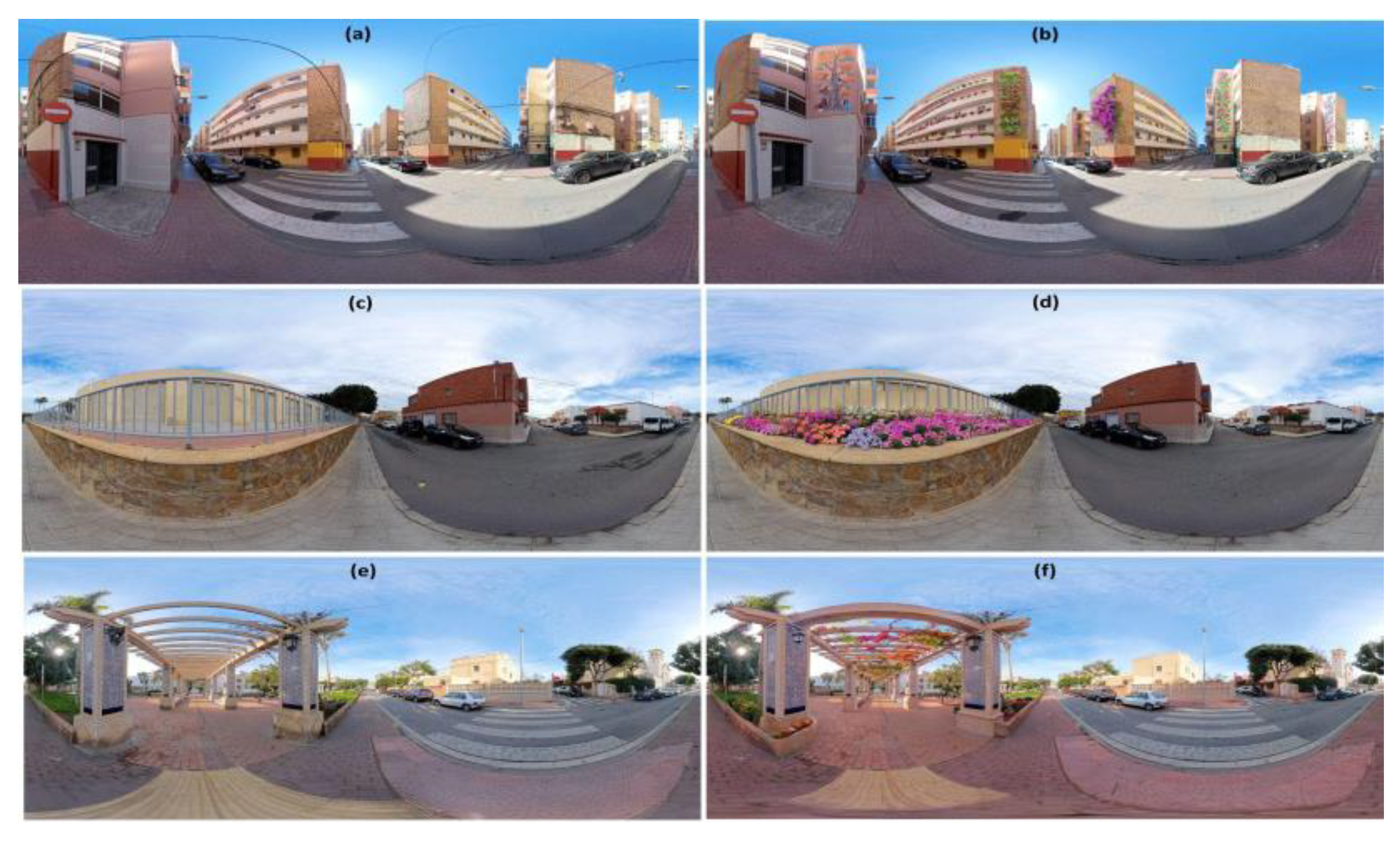
Figure 2.
Positive Affect - PANAS Score (Mean ± SD) from Condition x Neighborhood SES interaction.
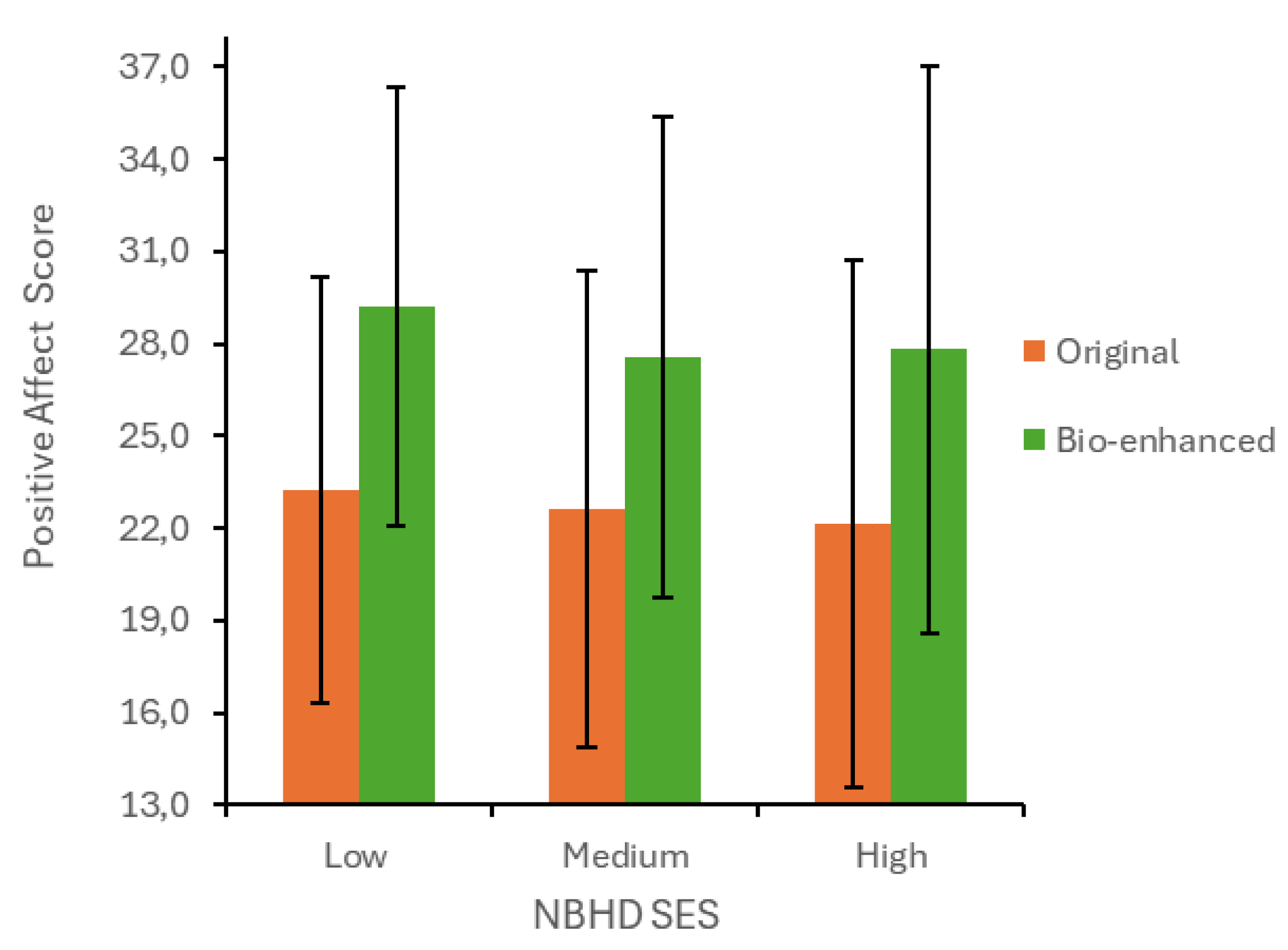
Figure 3.
Liking Score (Mean ± SD) from Condition x Neighborhood SES interaction.
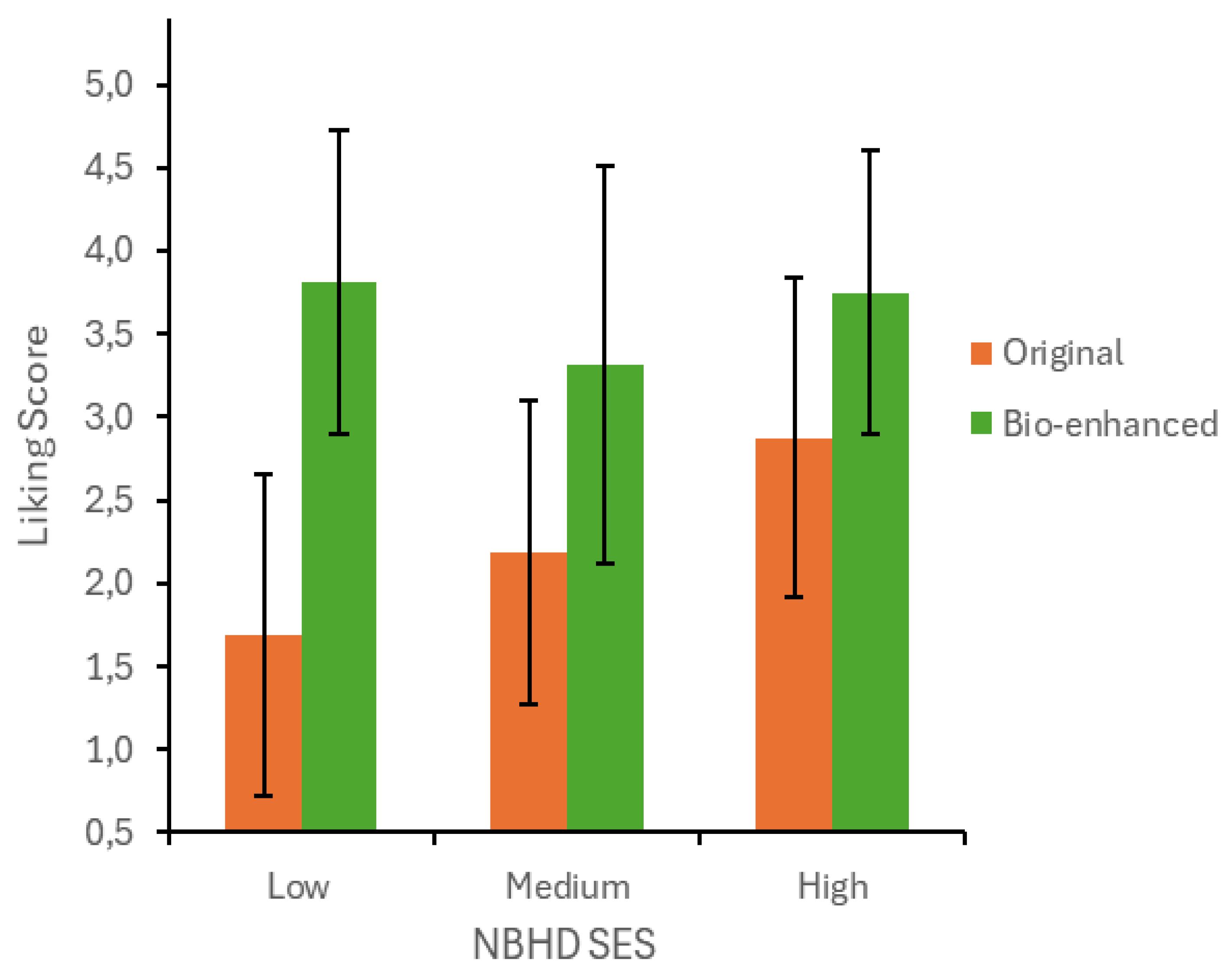
Figure 4.
Relaxation Score (Mean ± SD) from Condition x Neighborhood SES interaction.
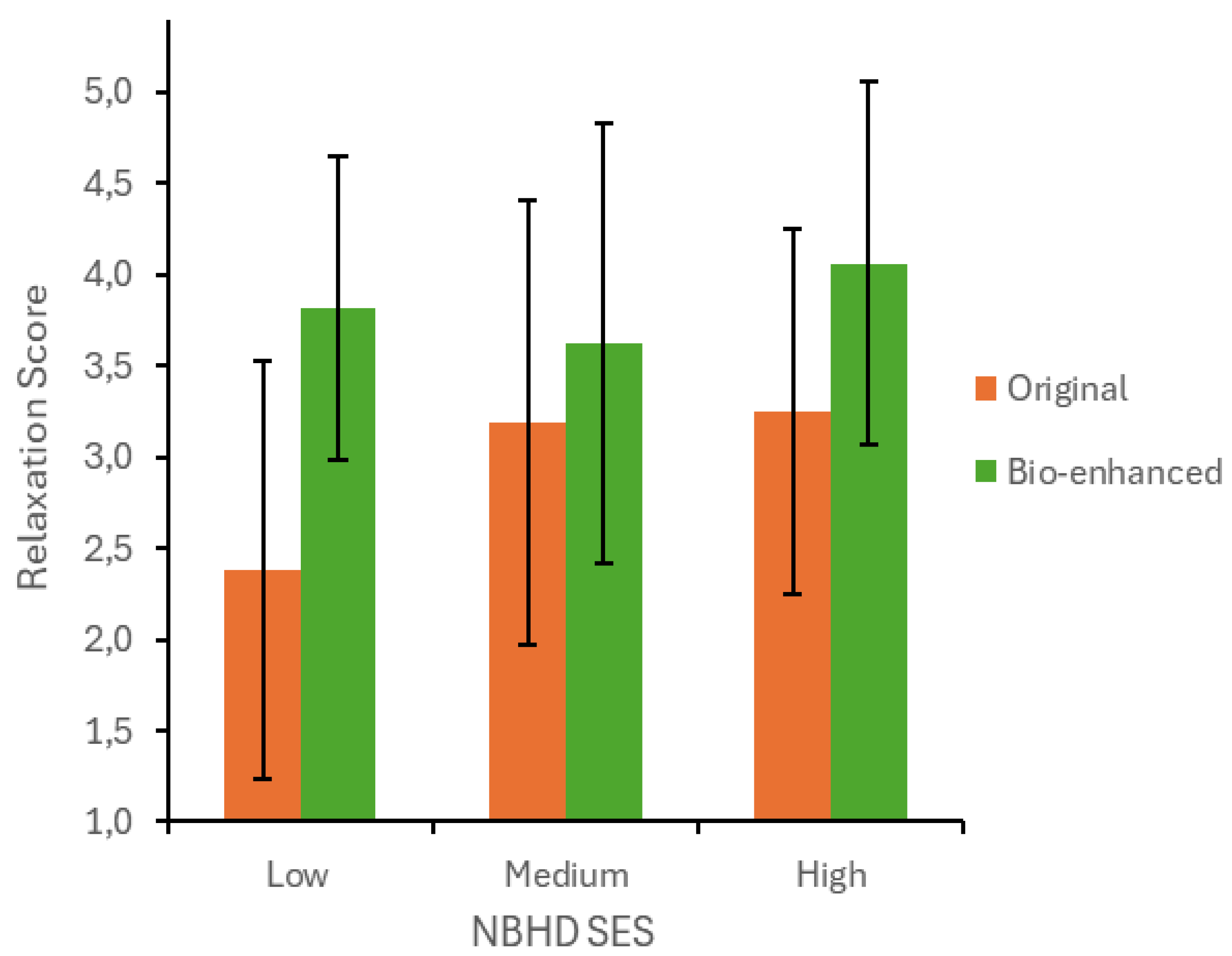
Figure 5.
Aesthetic Score (Mean ± SD) from Condition x Neighborhood SES interaction.
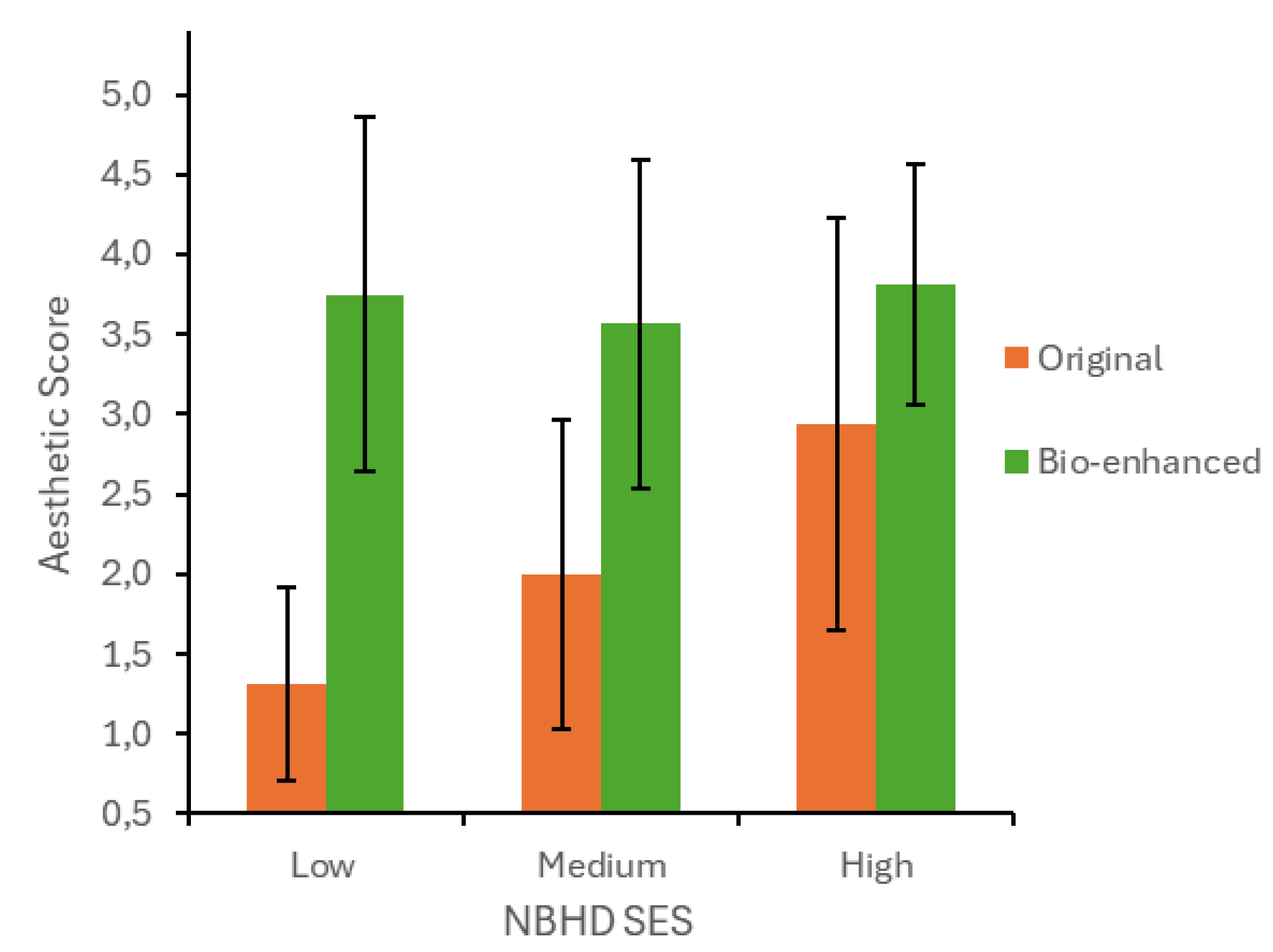
Figure 6.
Stress Score (Mean ± SD) from Condition x Neighborhood SES interaction.
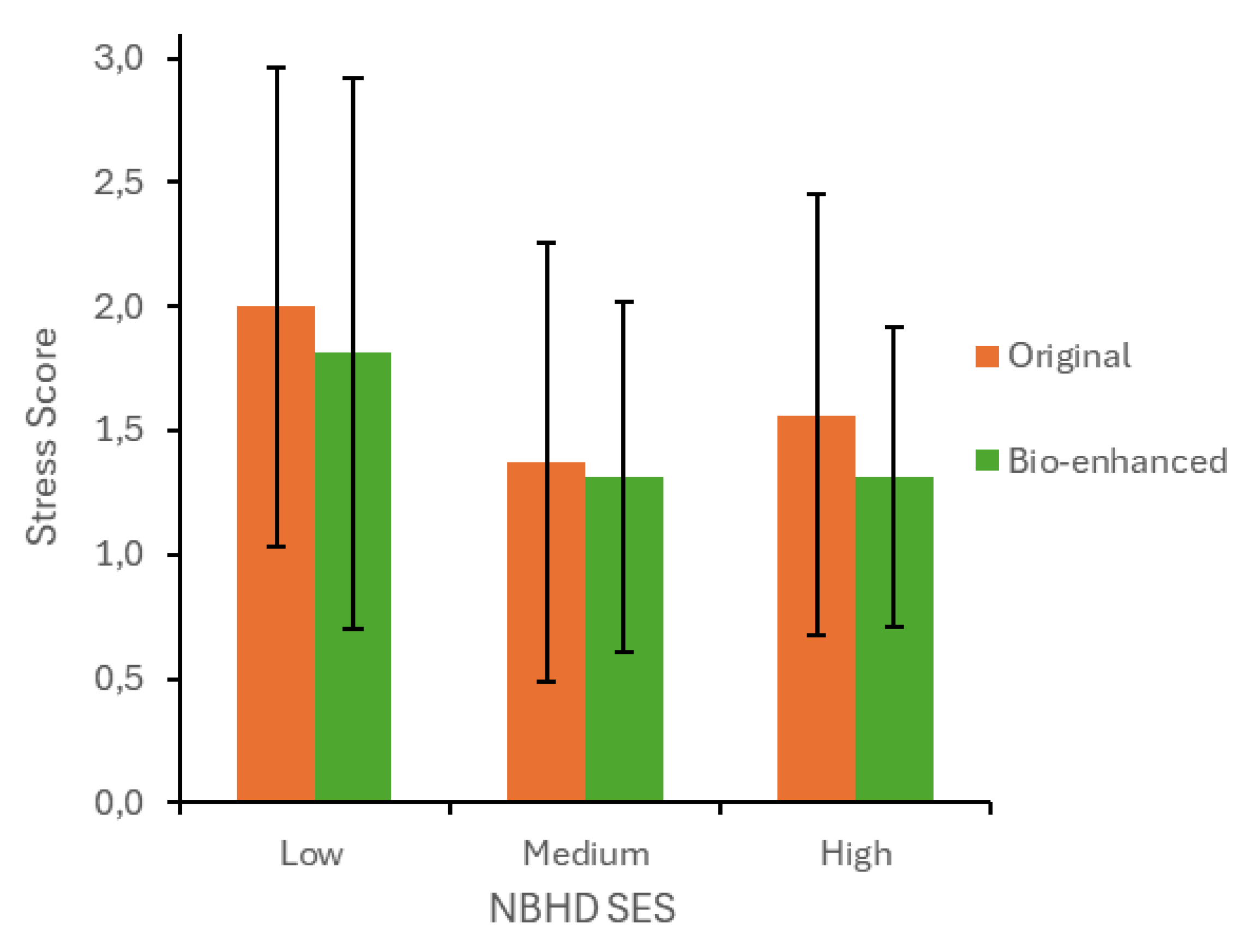
Figure 7.
AOI Coverage (Mean ± SD) from Condition x Neighborhood SES interaction.
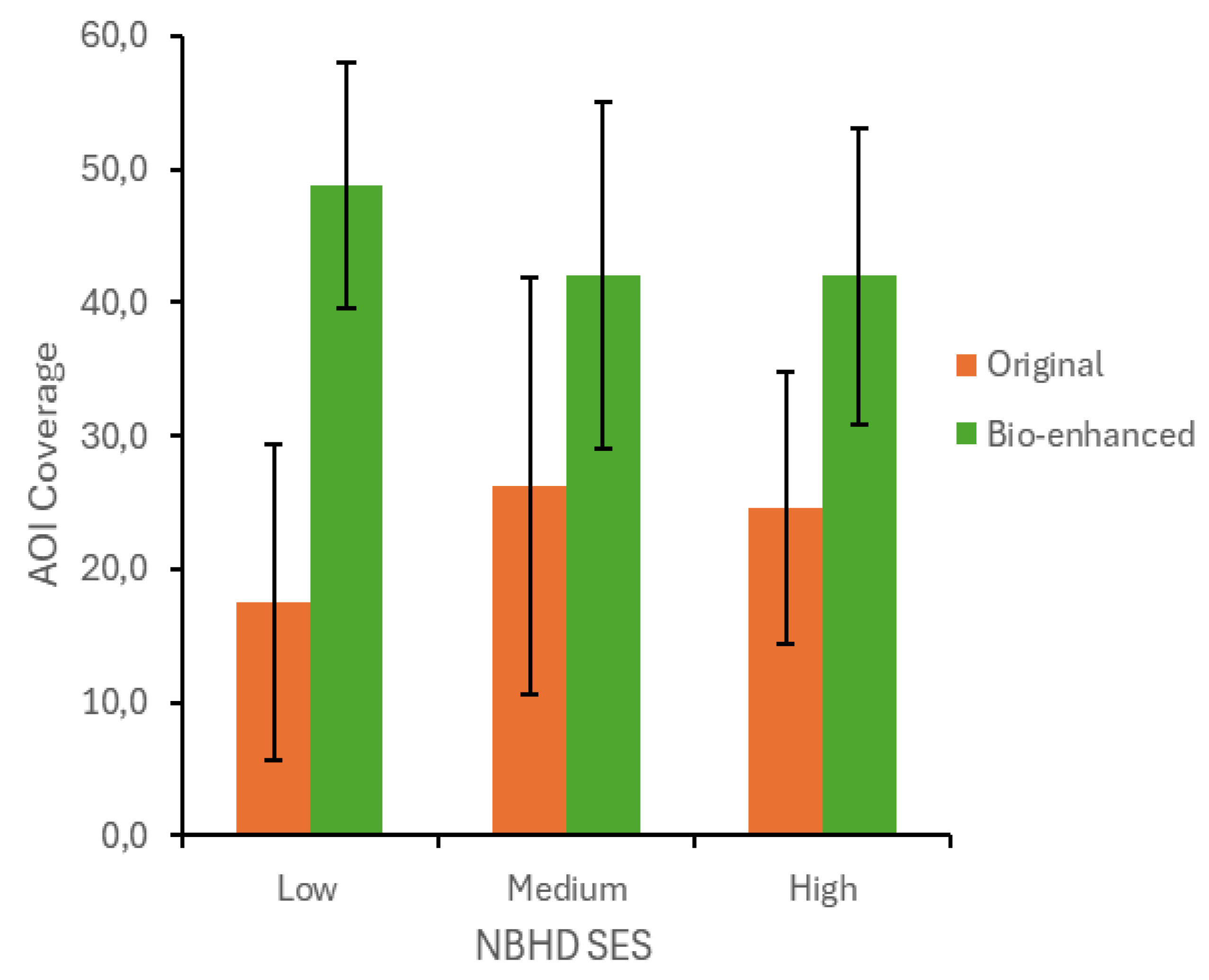
Figure 8.
AOI Fixation Count results (Mean ± SD) from Condition x Neighborhood SES interaction.
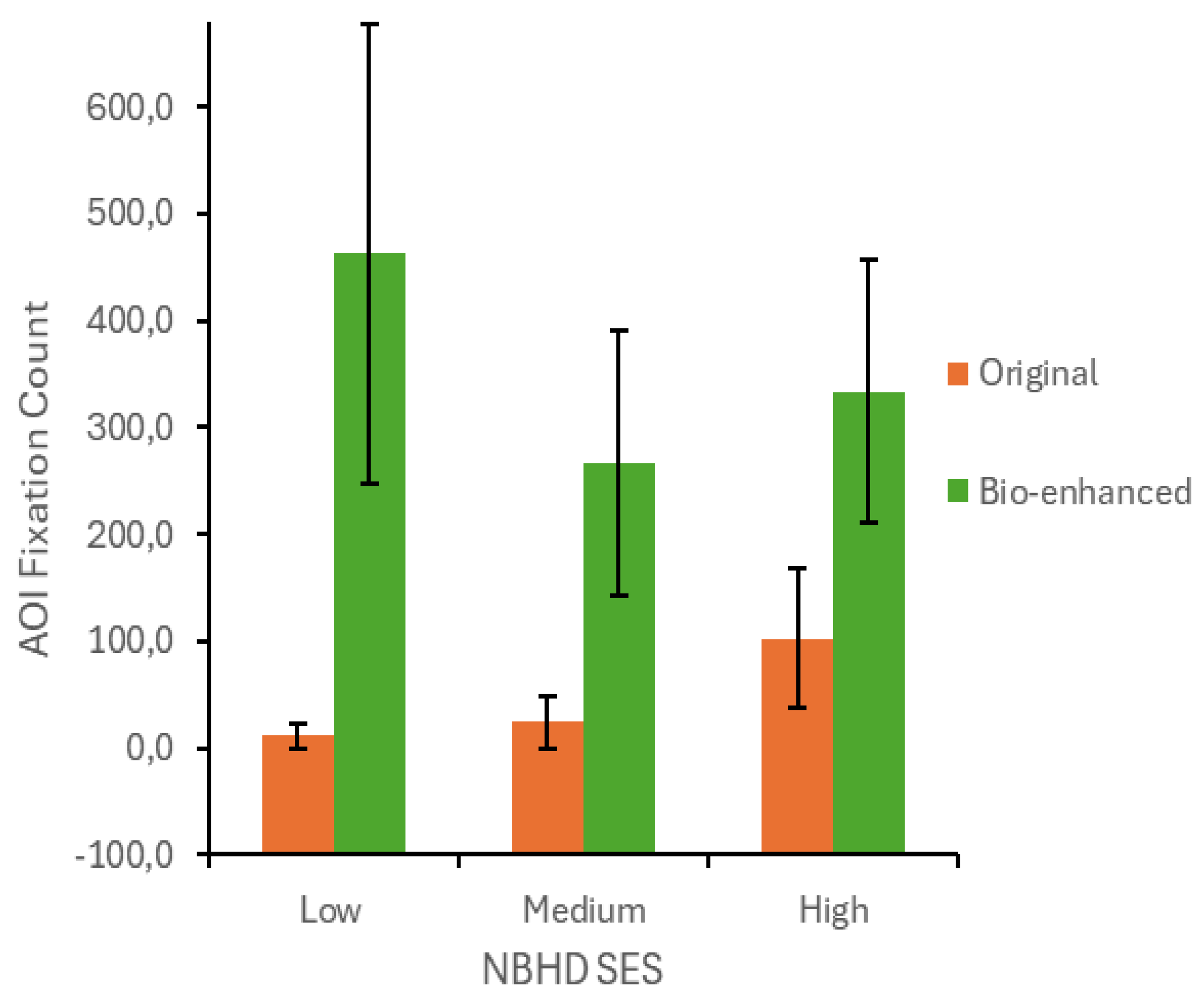
Figure 9.
Total Fixation Count results (Mean ± SD) from Condition x Neighborhood SES interaction.
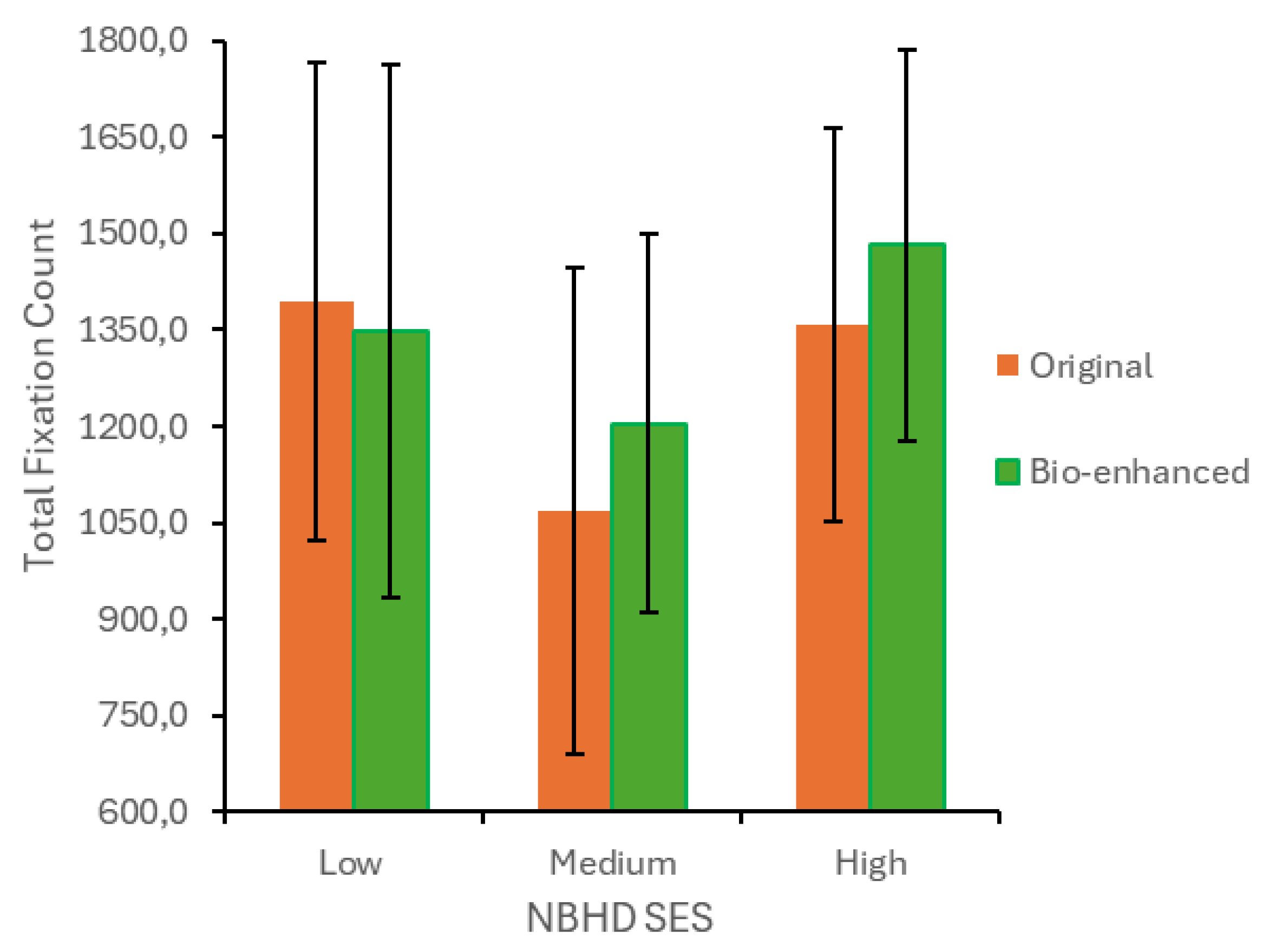
Figure 10.
Total FIxation Duration (s) (Mean ± SD) from Condition x Neighborhood SES interaction.
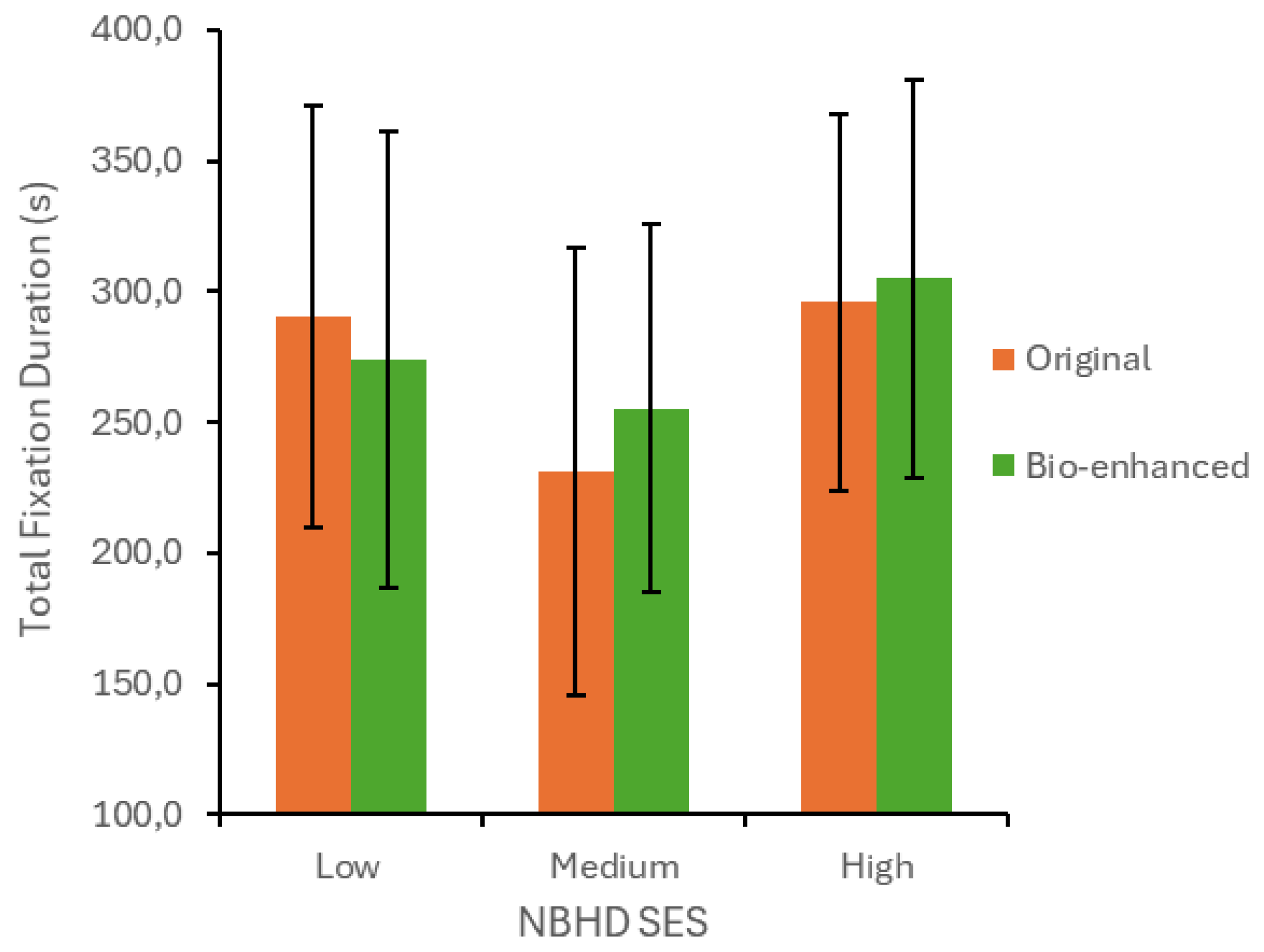
Figure 11.
AVG Dwell Time (s) (Mean ± SD) from Condition x Neighborhood SES interaction.
Disclaimer/Publisher’s Note: The statements, opinions and data contained in all publications are solely those of the individual author(s) and contributor(s) and not of MDPI and/or the editor(s). MDPI and/or the editor(s) disclaim responsibility for any injury to people or property resulting from any ideas, methods, instructions or products referred to in the content. |
© 2026 by the authors. Licensee MDPI, Basel, Switzerland. This article is an open access article distributed under the terms and conditions of the Creative Commons Attribution (CC BY) license.
Copyright: This open access article is published under a Creative Commons CC BY 4.0 license, which permit the free download, distribution, and reuse, provided that the author and preprint are cited in any reuse.


