

Submitted:
06 January 2026
Posted:
08 January 2026
You are already at the latest version
Abstract
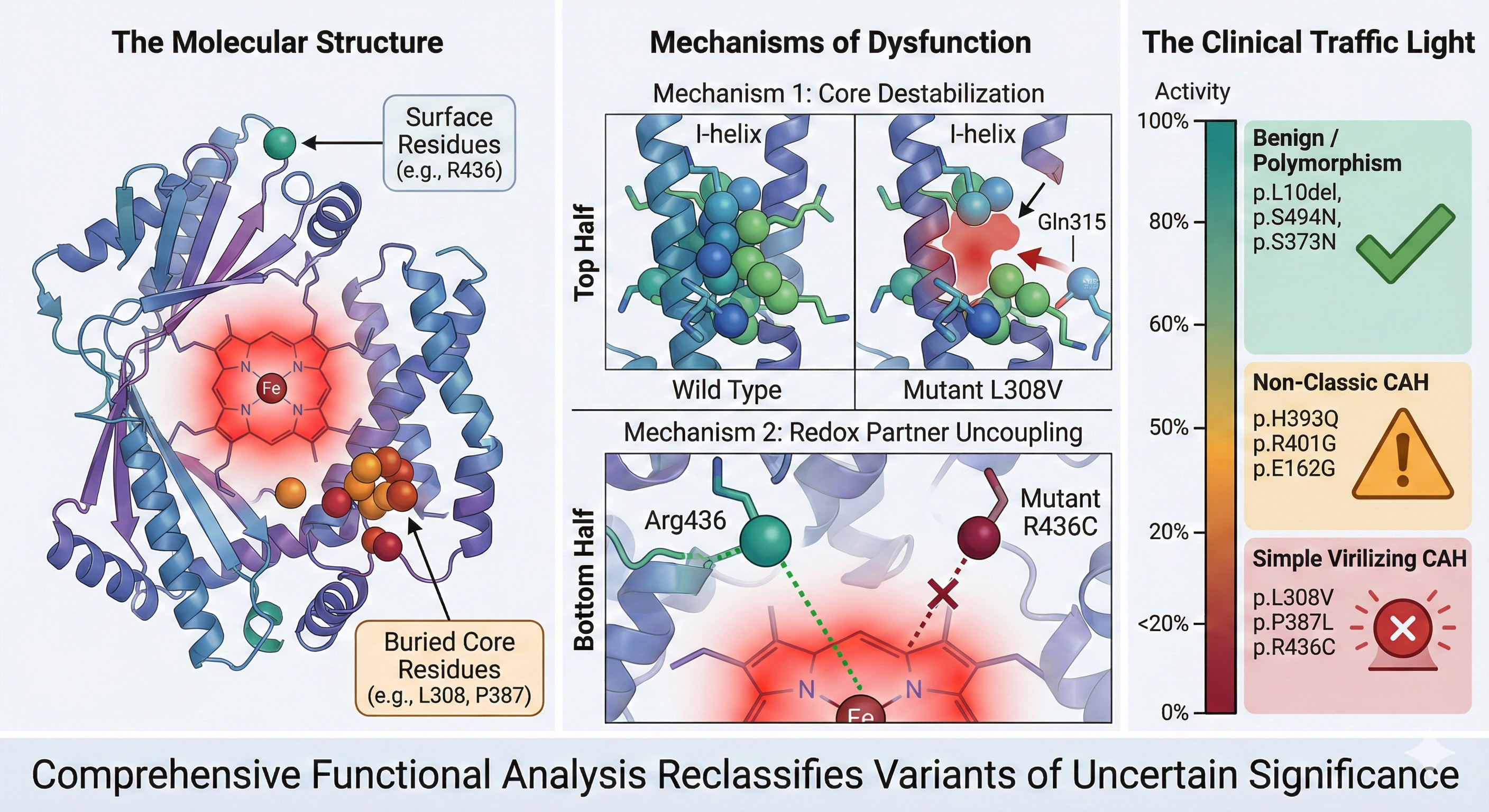
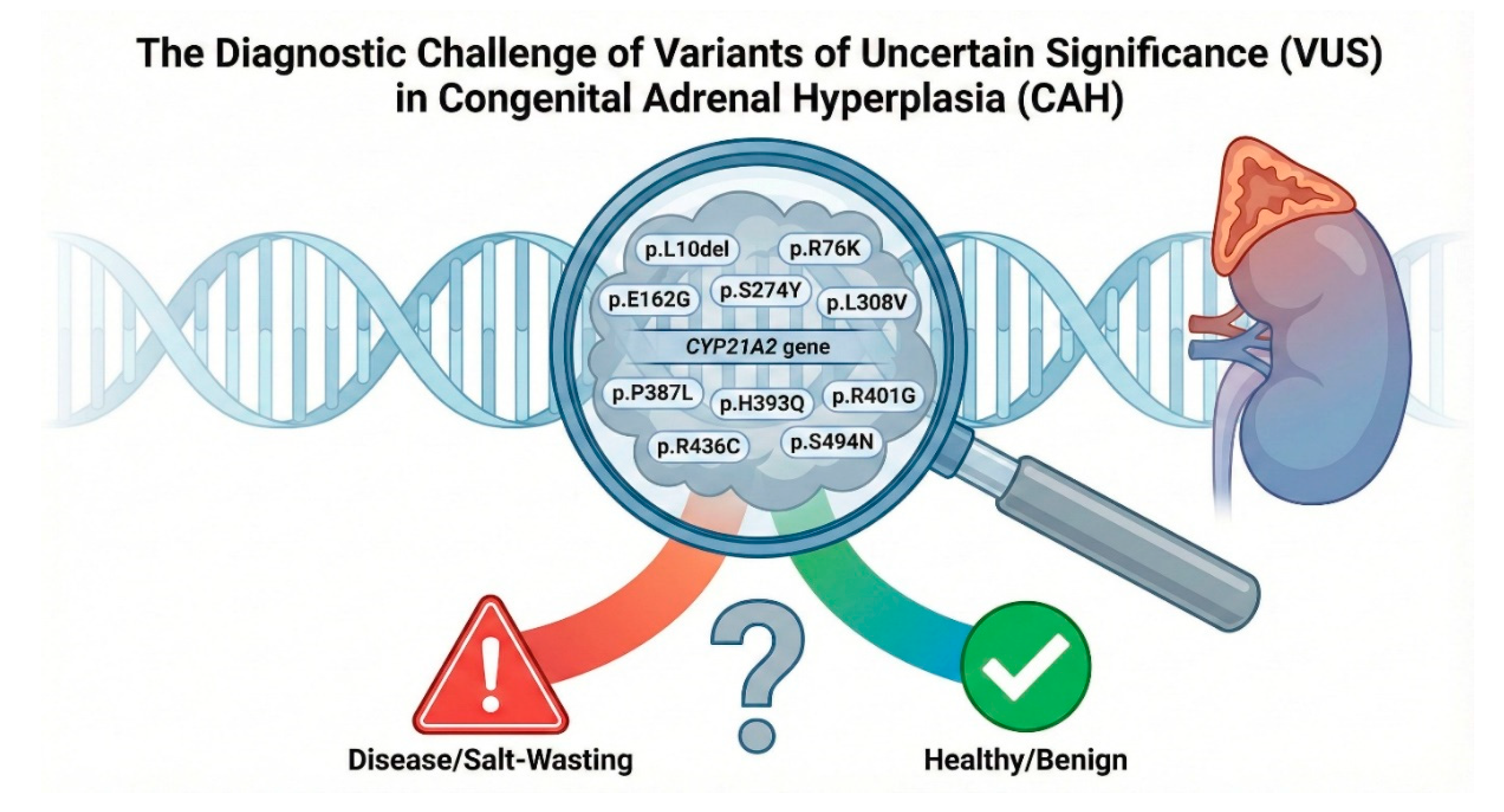
Context: Congenital adrenal hyperplasia (CAH) due to 21-hydroxylase deficiency is a common autosomal recessive disorder characterized by impaired cortisol and aldosterone synthesis. While genotype-phenotype correlations are well-established for common CYP21A2 mutations, the clinical significance of rare missense variants remains a challenge, often leading to their classification as Variants of Uncertain Significance (VUS) and complicating genetic counseling. Objective: To determine the functional impact and pathogenicity of eleven CYP21A2 variants (p.L10del, p.R76K, p.E162G, p.S274Y, p.L308V, p.S373N, p.P387L, p.H393Q, p.R401G, p.R436C, and p.S494N) utilizing a comprehensive approach integrating population genetics, in silico structural modeling, and in vitro functional assays. Methods: Allele frequencies were analyzed using global databases (gnomAD, 1000G). Evolutionary conservation was assessed via ConSurf, and thermodynamic stability was predicted using FoldX and DUET. Structural dynamics were simulated using Molecular Dynamics (MD) (100 ns). Variants were expressed in HEK293T cells, and enzymatic activity was quantified using radiolabeled progesterone and 17-hydroxyprogesterone (17-OHP) as substrates, normalized to protein expression levels determined by Western blot. Results: Population analysis identified p.L10del and p.S494N as common polymorphisms (allele frequencies >5% in specific populations) with near-normal enzymatic activity (~99% and ~67% for 17-OHP, respectively), supporting a Benign classification. Conversely, p.L308V, p.P387L, and p.R436C were ultra-rare and exhibited severe loss of function, retaining <20% of wild-type activity for 17-OHP. Structural modeling revealed that p.L308V causes steric clashes in the conserved I-helix, while p.P387L induces core destabilization and kinetic instability. p.R436C disrupts the surface hydrogen-bond network essential for P450 Oxidoreductase interaction. These variants are reclassified as Pathogenic, likely associated with Simple Virilizing CAH. Variants p.H393Q and p.R401G showed moderate impairment (~40–45% activity), consistent with a Likely Pathogenic status and Non-Classic CAH phenotype. Conclusions: This study resolves the diagnostic status of eleven CYP21A2 variants. We provide definitive evidence that p.L308V is a severe pathogenic missense mutation distinct from frameshift alleles at the same locus, and that surface mutations like p.R436C can be as deleterious as core mutations due to the disruption of redox partner interfaces. These findings refine the genetic classification of CAH, enabling precise diagnosis and personalized management for affected families.
Keywords:
Introduction
Materials and Methods
Search and Selection of Variants in CYP21A2
In Silico SNP Analysis
Gibbs Free Energy Calculations
Conservation Analysis
Point Mutation Modeling and Structural Analysis
Molecular Dynamics Simulations
Cell Transfection and CYP21A2 Assays
Western Blot
Statistics Analysis
Results
Population Genetics and Allele Frequency Analysis
High-Frequency Variants Indicating Benign Polymorphisms
Rare Variants Aligning with Pathogenic Potential
Evolutionary Conservation Analysis (ConSurf)
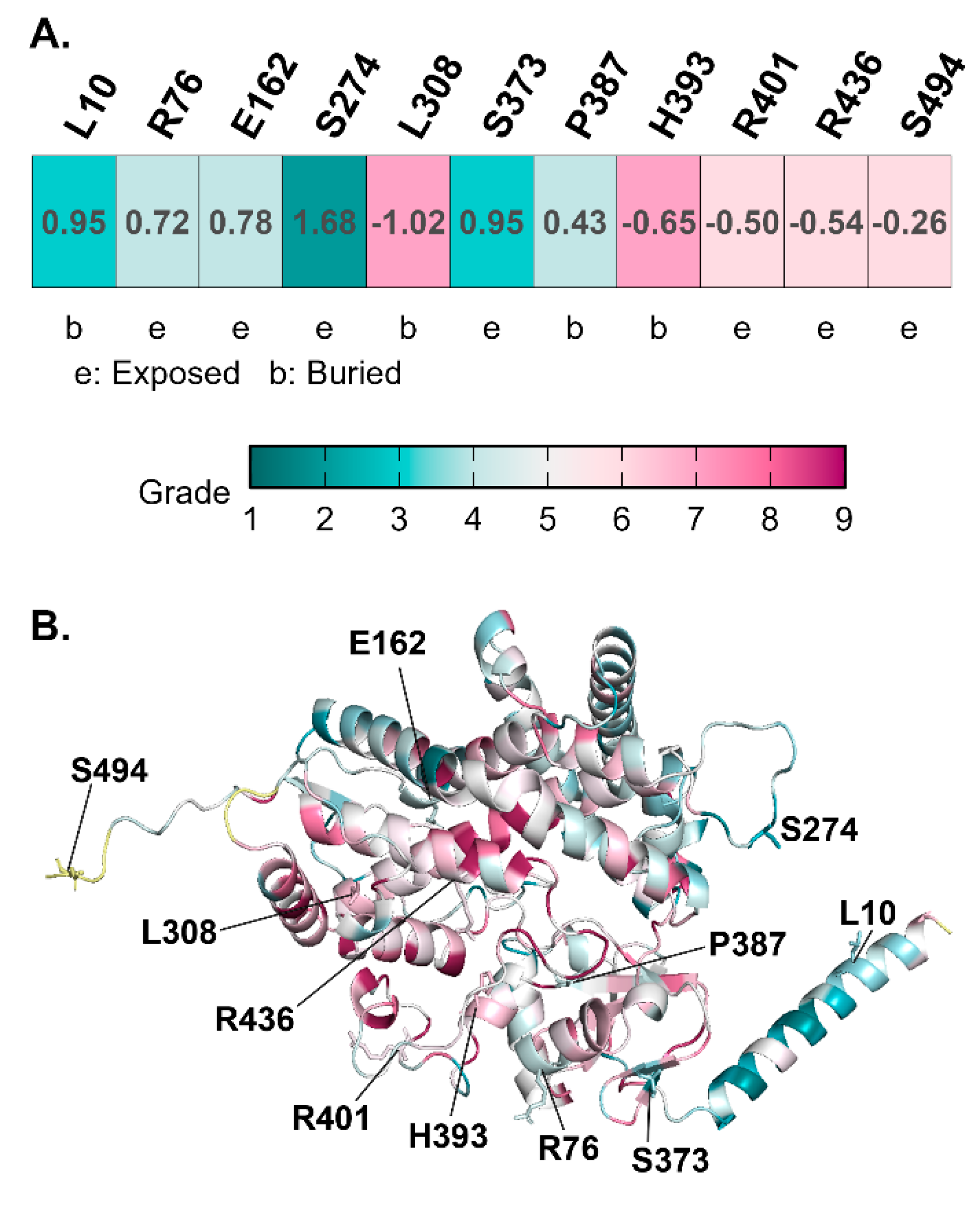
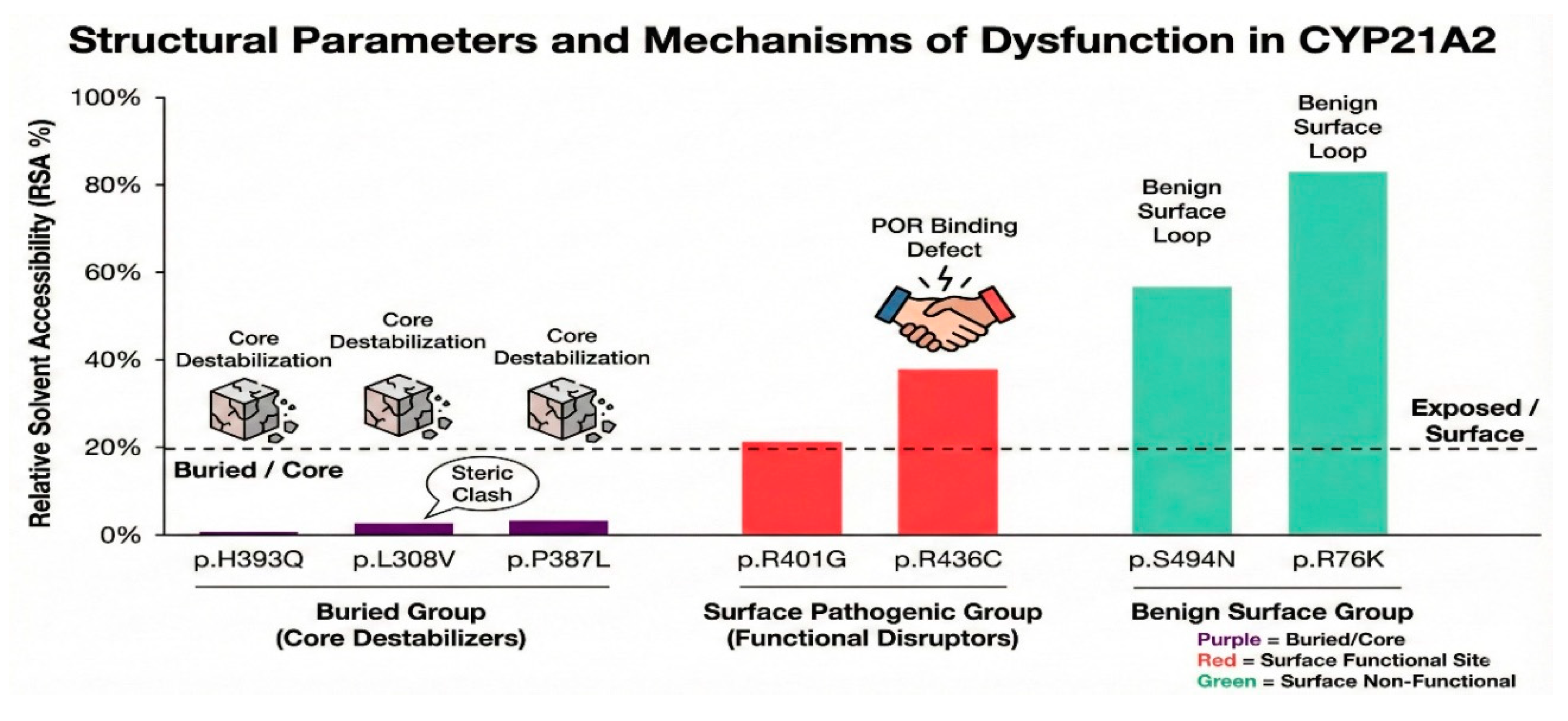
Structural Parameters: Solvent Accessibility and Physicochemical Properties
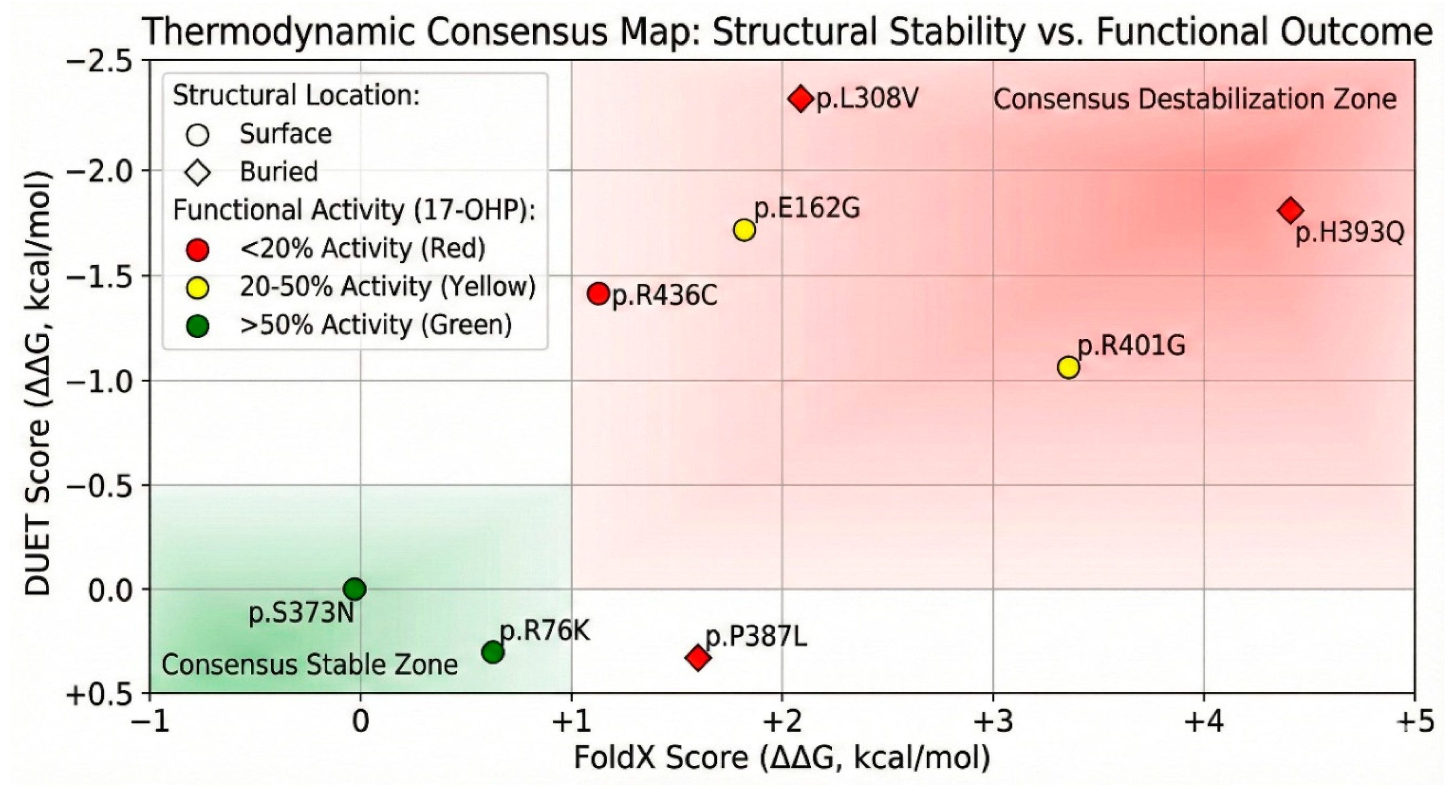
Thermodynamic Stability Predictions: FoldX and DUET
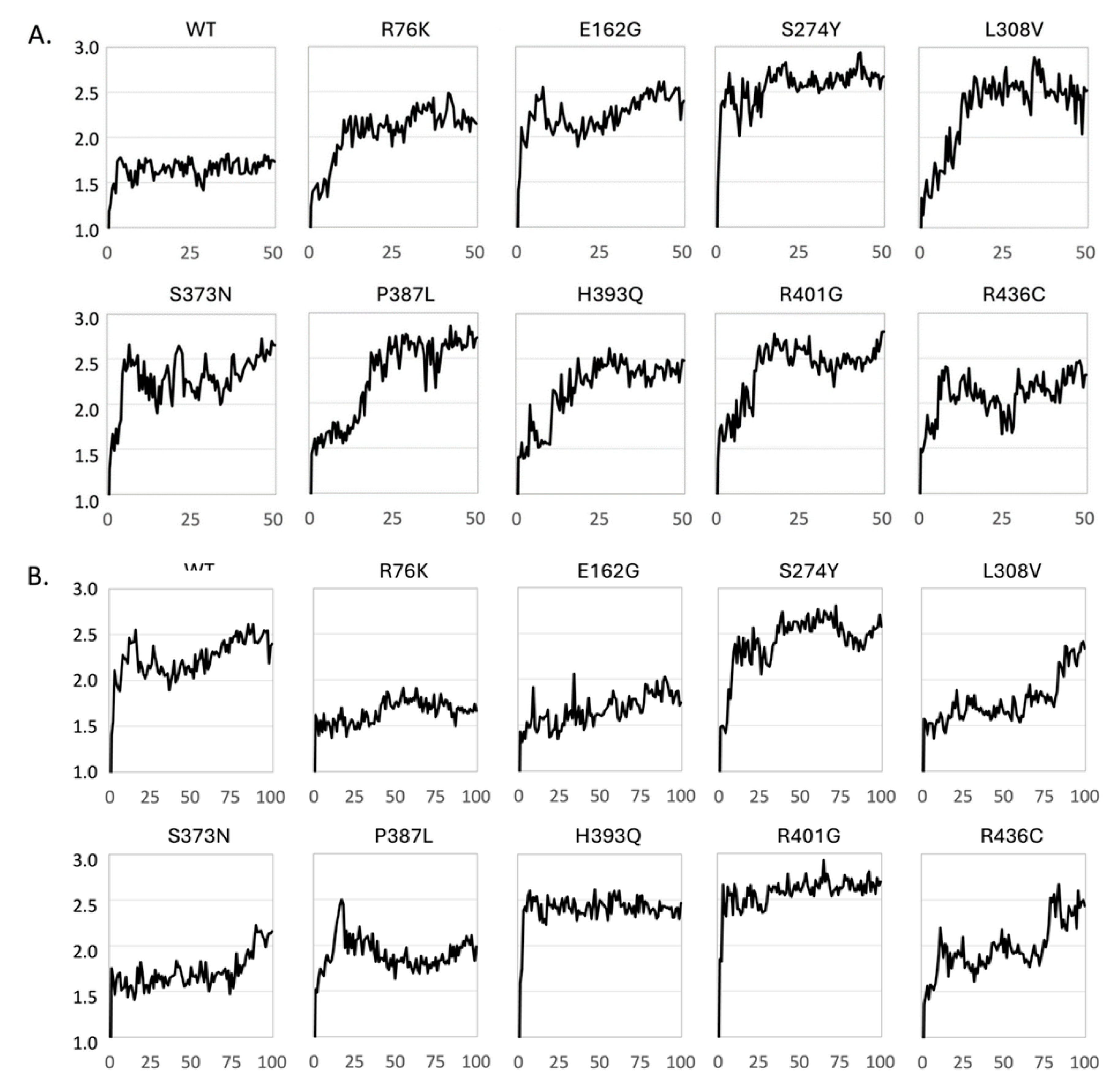
Molecular Dynamics Simulations: Assessing Dynamic Stability
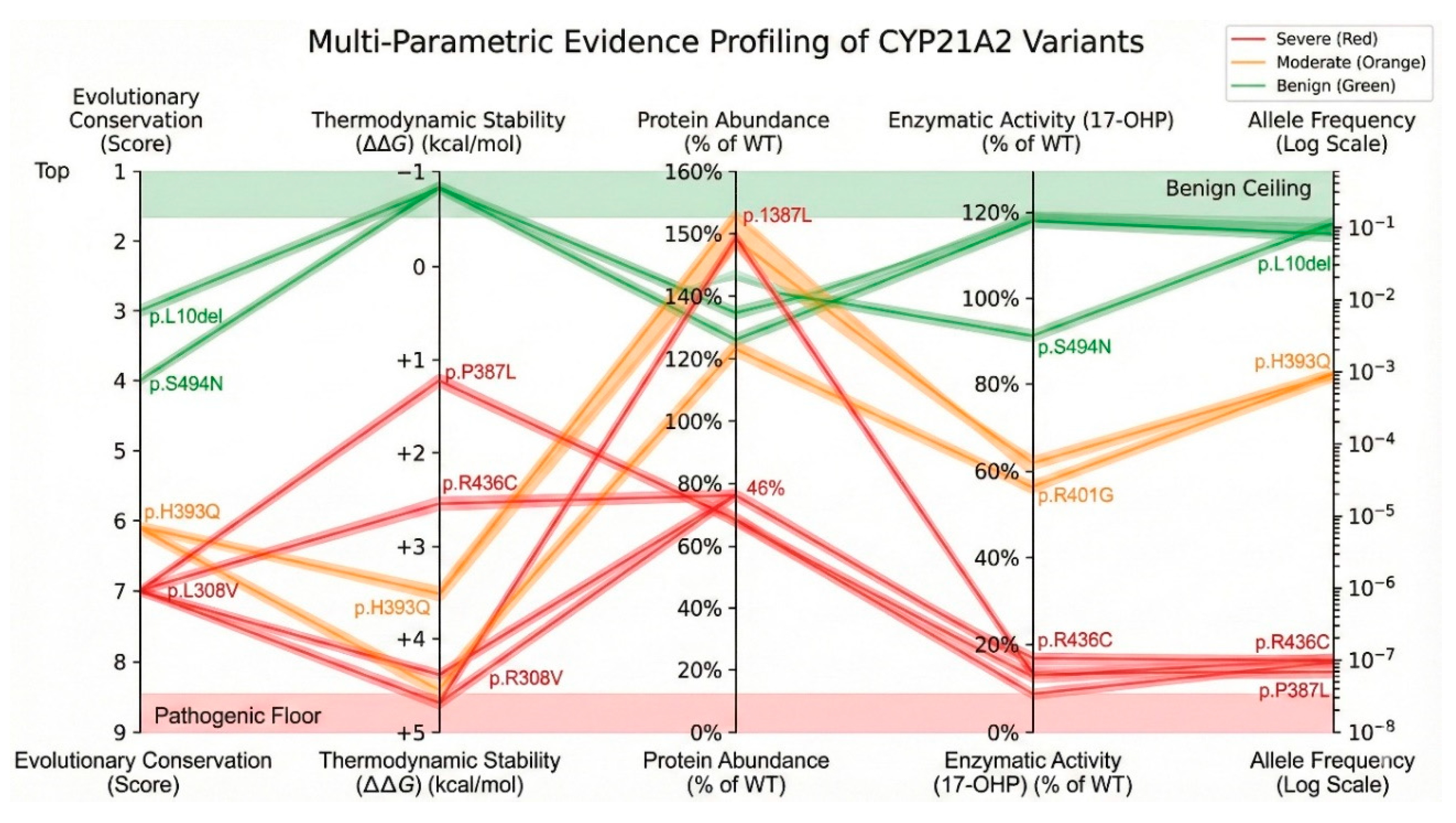
In Silico Pathogenicity Prediction: Consensus Analysis
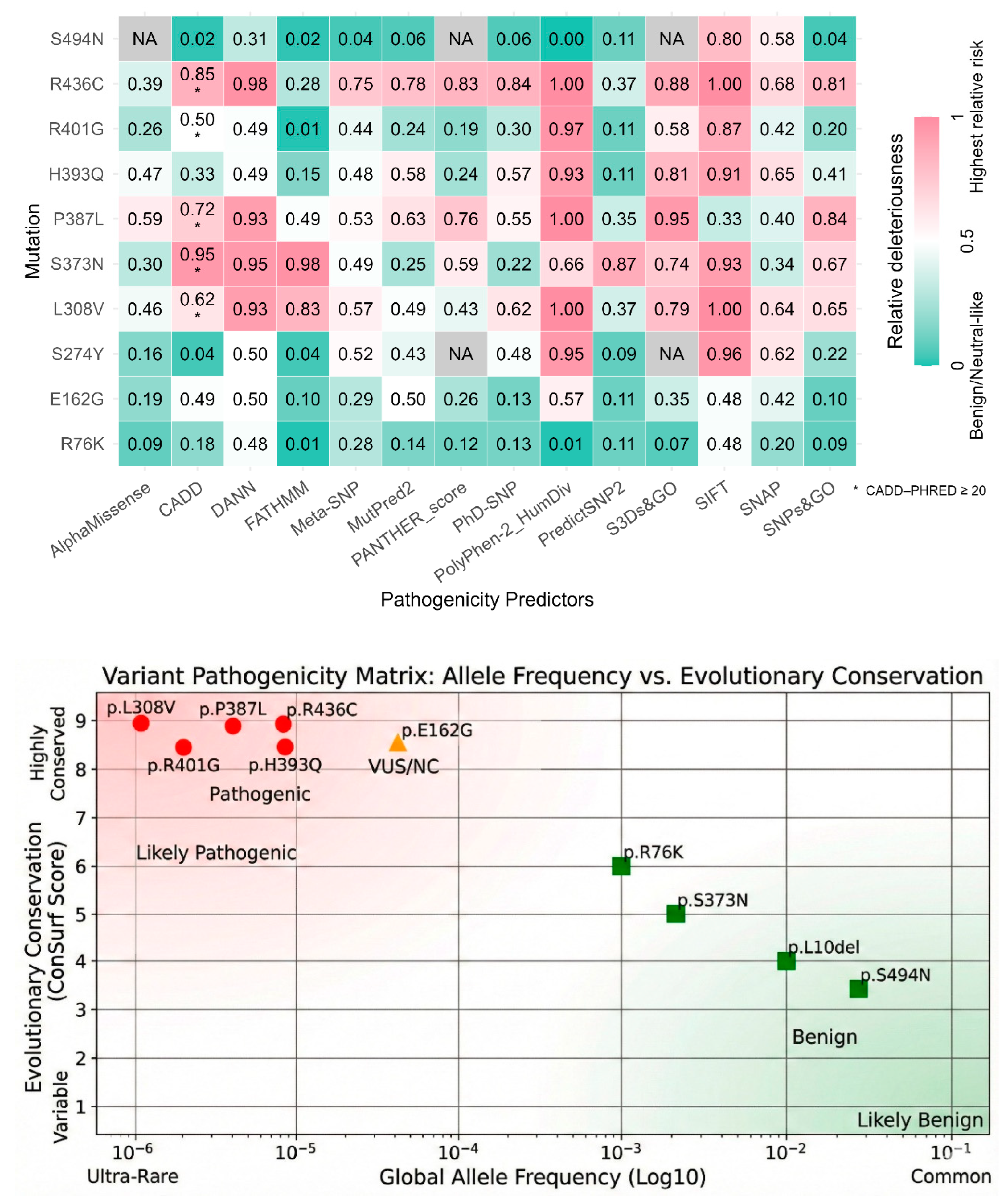
Functional Characterization: Protein Expression and Enzymatic Activity
Protein Expression Levels (Western Blot)
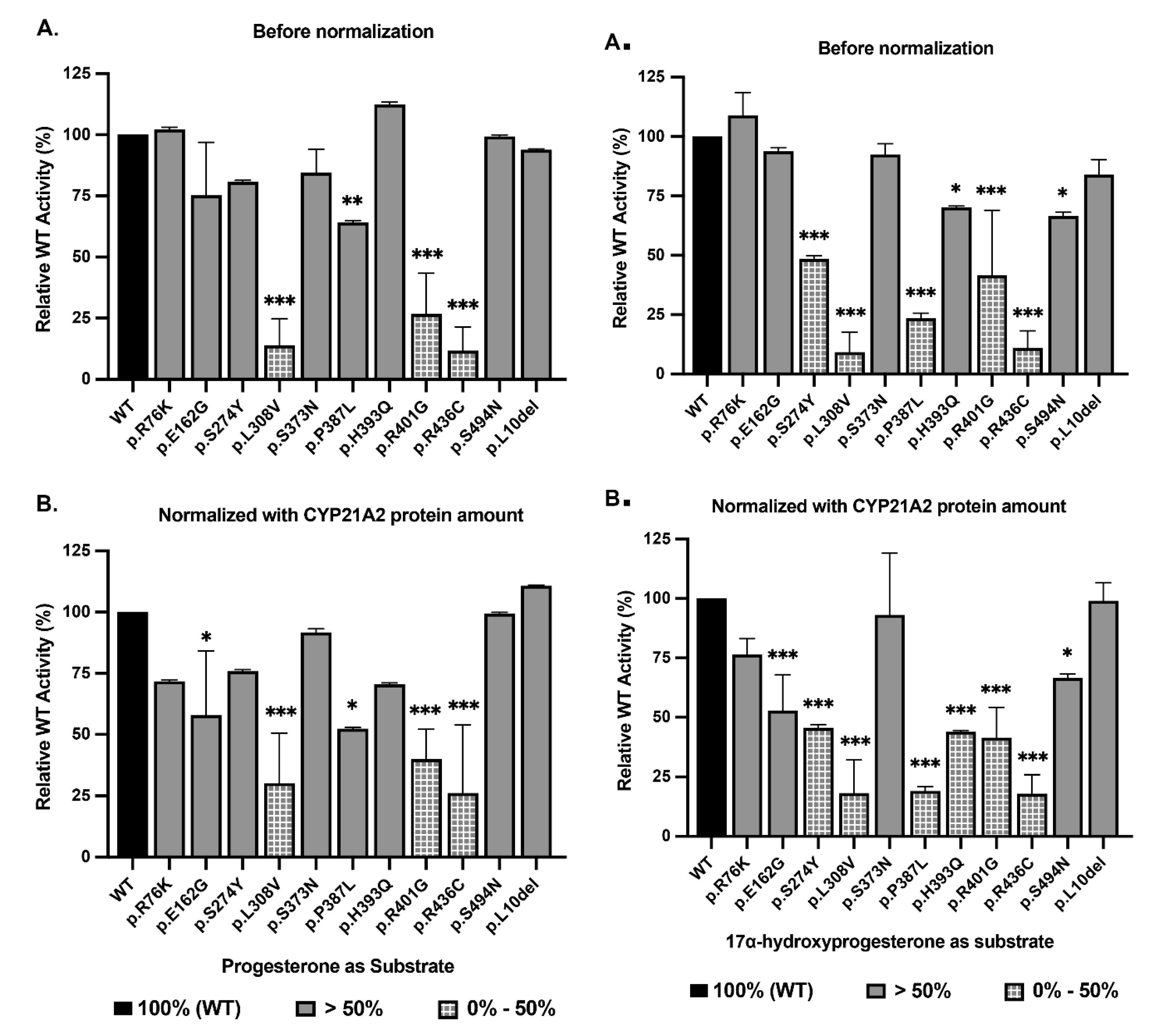
Enzymatic Activity Analysis
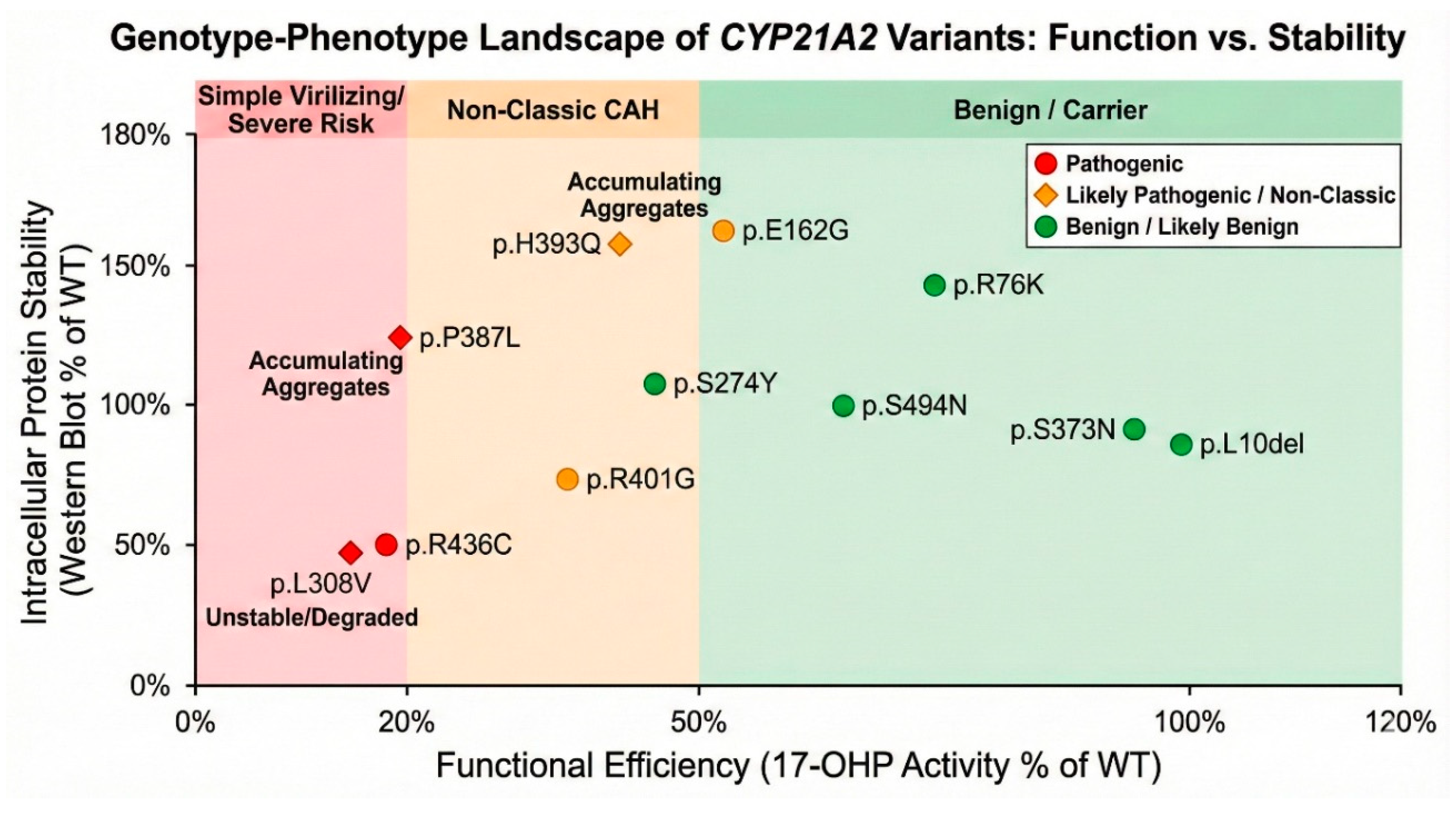
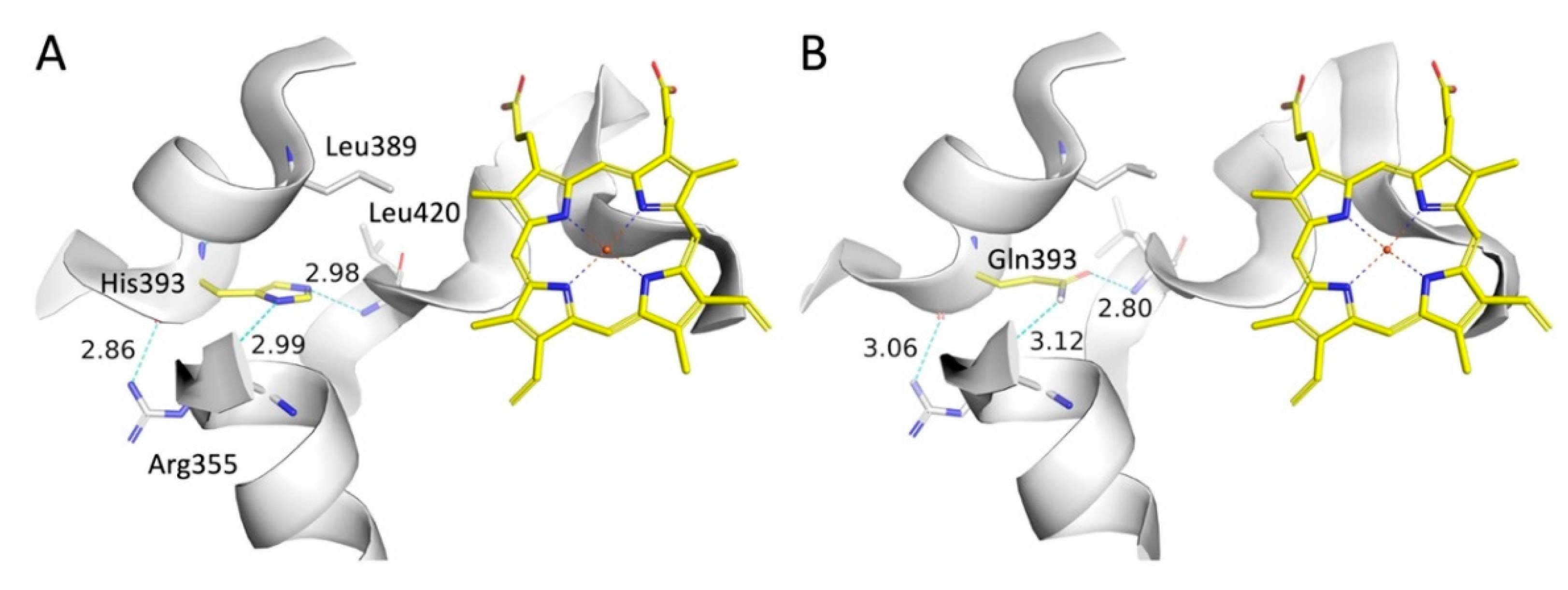
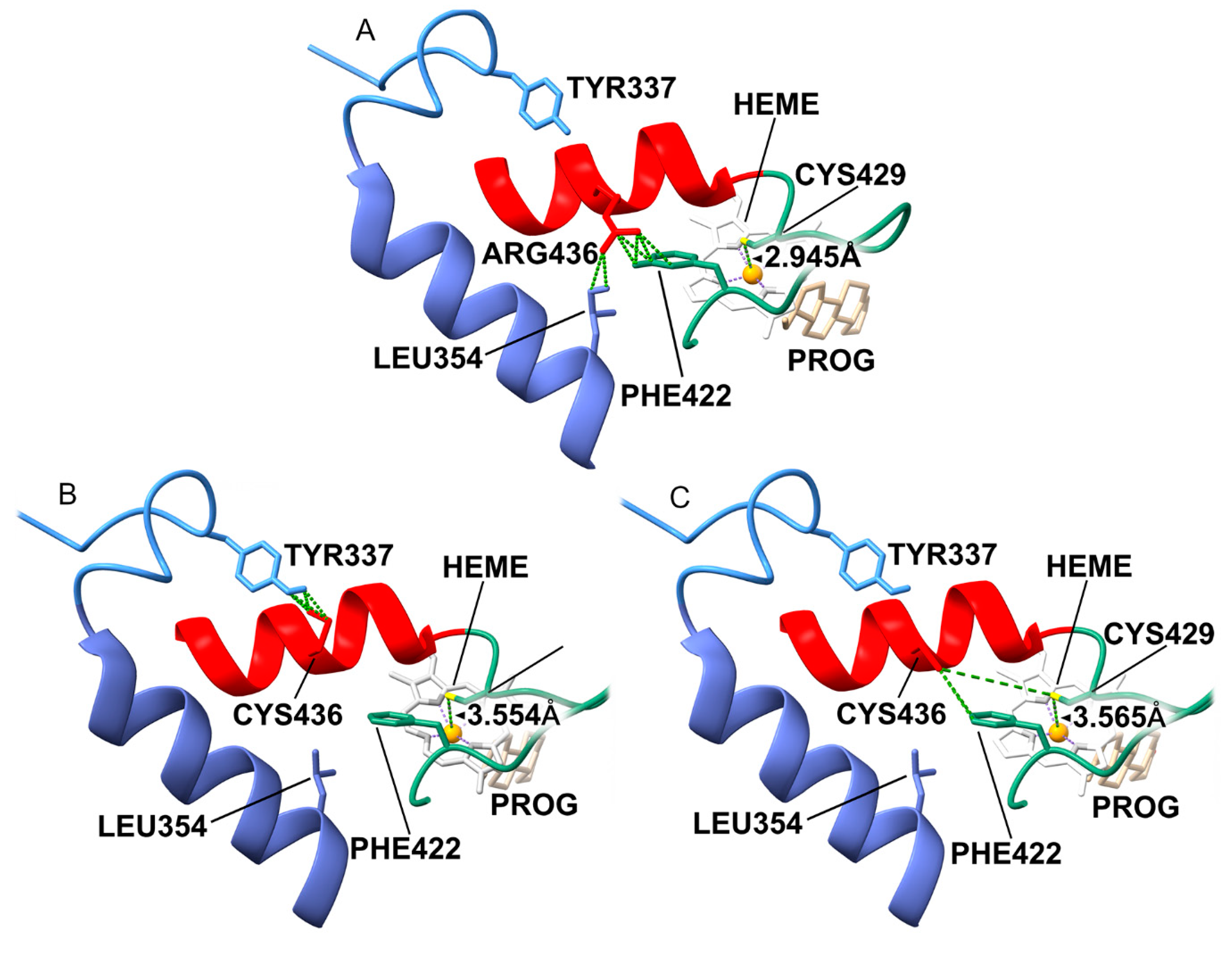
Structural Mechanisms of Dysfunction
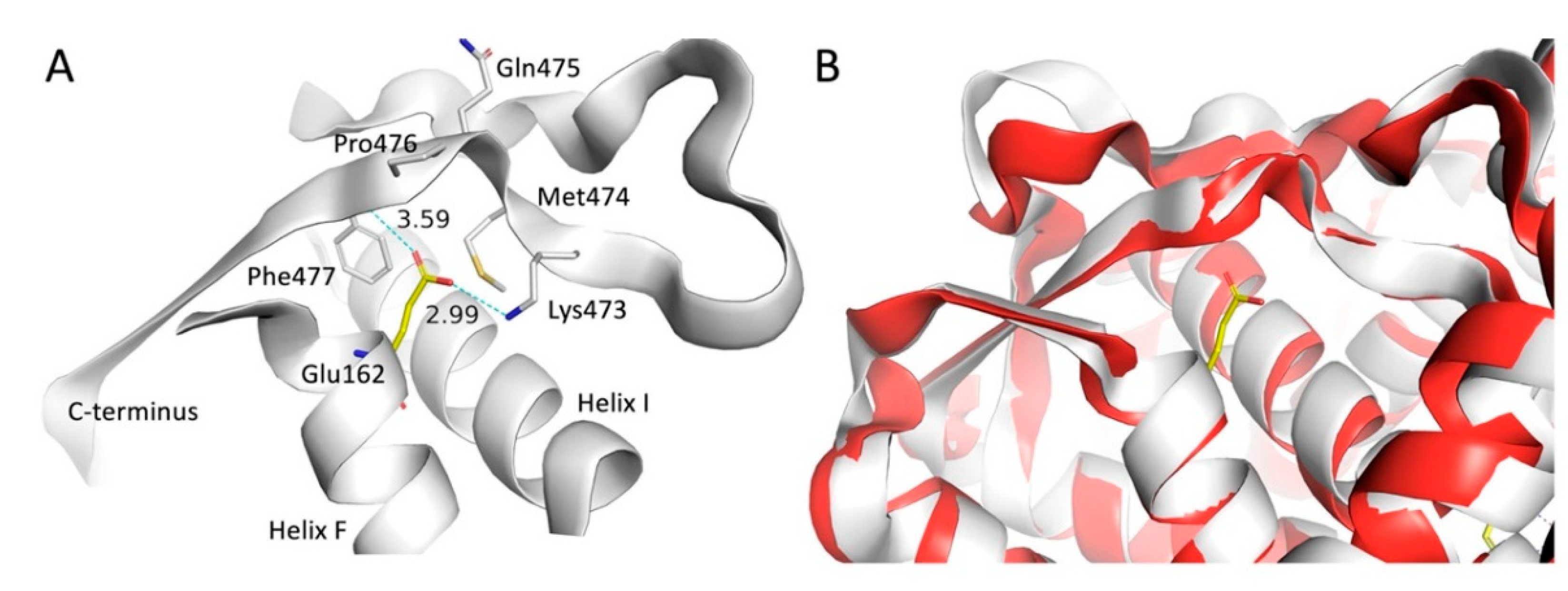
Discussion
Conclusions
Funding
Data Availability Statement
Acknowledgments
References
- White, P.C.; Speiser, P.W. Congenital adrenal hyperplasia due to 21-hydroxylase deficiency. Endocr Rev 2000, 21, 245–291. [Google Scholar] [CrossRef]
- Miller, W.L.; Auchus, R.J. The molecular biology, biochemistry, and physiology of human steroidogenesis and its disorders. Endocr Rev 2011, 32, 81–151. [Google Scholar] [CrossRef]
- Yavas Abali, Z.; Yildiz, M.; Abali, S.; Moniri, A.; Bas, F.; Onal, H.; Cilsaat, G.; Toksoy, G.; Turan, S.; Poyrazoglu, S.; et al. Impact of Growth-promoting Therapies on Puberty, Growth, and Final Height in Classical 21-hydroxylase Deficiency. The Journal of Clinical Endocrinology & Metabolism 2025. [Google Scholar] [CrossRef]
- Charoensri, S.; Auchus, R.J. Predictors of Cardiovascular Morbidities in Adults With 21-Hydroxylase Deficiency Congenital Adrenal Hyperplasia. The Journal of Clinical Endocrinology & Metabolism 2023, 109, e1133–e1142. [Google Scholar] [CrossRef]
- Claahsen - van der Grinten, H.L.; Speiser, P.W.; Ahmed, S.F.; Arlt, W.; Auchus, R.J.; Falhammar, H.; Flück, C.E.; Guasti, L.; Huebner, A.; Kortmann, B.B.M.; et al. Congenital Adrenal Hyperplasia—Current Insights in Pathophysiology, Diagnostics, and Management. Endocrine Reviews 2021, 43, 91–159. [Google Scholar] [CrossRef] [PubMed]
- Kaupert, L.C.; Gomes, L.G.; Brito, V.N.; Lemos-Marini, S.H.; de Mello, M.P.; Longui, C.A.; Kochi, C.; de Castro, M.; Guerra, G., Jr.; Mendonca, B.B.; et al. A Single Nucleotide Variant in the Promoter Region of 17β-HSD Type 5 Gene Influences External Genitalia Virilization in Females with 21-Hydroxylase Deficiency. Horm Res Paediatr 2016, 85, 333–338. [Google Scholar] [CrossRef] [PubMed]
- Stuckey, B.G.A.; Dedic, D.; Zhang, R.; Rabbah, A.; Turcu, A.F.; Auchus, R.J. Abiraterone in Classic Congenital Adrenal Hyperplasia: Results of Medical Therapy Before Adrenalectomy. JCEM case reports 2024, 2. [Google Scholar] [CrossRef]
- Forest, M.G. Recent advances in the diagnosis and management of congenital adrenal hyperplasia due to 21-hydroxylase deficiency. Hum Reprod Update 2004, 10, 469–485. [Google Scholar] [CrossRef]
- Speiser, P.W.; White, P.C. Congenital adrenal hyperplasia. N Engl J Med 2003, 349, 776–788. [Google Scholar] [CrossRef]
- Sarafoglou, K.; Kim, M.S.; Lodish, M.; Felner, E.I.; Martinerie, L.; Nokoff, N.J.; Clemente, M.; Fechner, P.Y.; Vogiatzi, M.G.; Speiser, P.W.; et al. Phase 3 Trial of Crinecerfont in Pediatric Congenital Adrenal Hyperplasia. New England Journal of Medicine 2024, 391, 493–503. [Google Scholar] [CrossRef] [PubMed]
- Auchus, R.J.; Hamidi, O.; Pivonello, R.; Bancos, I.; Russo, G.; Witchel, S.F.; Isidori, A.M.; Rodien, P.; Srirangalingam, U.; Kiefer, F.W.; et al. Phase 3 Trial of Crinecerfont in Adult Congenital Adrenal Hyperplasia. New England Journal of Medicine 2024, 391, 504–514. [Google Scholar] [CrossRef] [PubMed]
- Parsa, A.A.; New, M.I. Steroid 21-hydroxylase deficiency in congenital adrenal hyperplasia. J Steroid Biochem Mol Biol 2017, 165, 2–11. [Google Scholar] [CrossRef]
- Ali, S.R.; Bryce, J.; Haghpanahan, H.; Lewsey, J.D.; Tan, L.E.; Atapattu, N.; Birkebaek, N.H.; Blankenstein, O.; Neumann, U.; Balsamo, A.; et al. Real-World Estimates of Adrenal Insufficiency-Related Adverse Events in Children With Congenital Adrenal Hyperplasia. J Clin Endocrinol Metab 2021, 106, e192–e203. [Google Scholar] [CrossRef]
- Claahsen-van der Grinten, H.L.; Speiser, P.W.; Ahmed, S.F.; Arlt, W.; Auchus, R.J.; Falhammar, H.; Flück, C.E.; Guasti, L.; Huebner, A.; Kortmann, B.B.M.; et al. Congenital Adrenal Hyperplasia-Current Insights in Pathophysiology, Diagnostics, and Management. Endocr Rev 2022, 43, 91–159. [Google Scholar] [CrossRef]
- Yamano, H.; Watanabe, K.; Komatsu, M.; Hashimoto, A.; Suzuki, Y.; Kirino, S.; Saito, Y.; Adachi, E.; Maki, G.; Nakatani, H.; et al. Enhancing Accuracy of Newborn Screening for 21OHD: Strategic Use of 21-Deoxycortisol in a Large-Scale Tokyo Cohort. The Journal of Clinical Endocrinology & Metabolism 2025. [Google Scholar] [CrossRef]
- Miller, W.L. Congenital Adrenal Hyperplasia: Time to Replace 17OHP with 21-Deoxycortisol. Horm Res Paediatr 2019, 91, 416–420. [Google Scholar] [CrossRef]
- Fitness, J.; Dixit, N.; Webster, D.; Torresani, T.; Pergolizzi, R.; Speiser, P.W.; Day, D.J. Genotyping of CYP21, linked chromosome 6p markers, and a sex-specific gene in neonatal screening for congenital adrenal hyperplasia. J Clin Endocrinol Metab 1999, 84, 960–966. [Google Scholar] [CrossRef]
- Rodrigues, N.R.; Dunham, I.; Yu, C.Y.; Carroll, M.C.; Porter, R.R.; Campbell, R.D. Molecular characterization of the HLA-linked steroid 21-hydroxylase B gene from an individual with congenital adrenal hyperplasia. Embo j 1987, 6, 1653–1661. [Google Scholar] [CrossRef]
- Lee, H.H. CYP21 mutations and congenital adrenal hyperplasia. Clin Genet 2001, 59, 293–301. [Google Scholar] [CrossRef] [PubMed]
- Lao, Q.; Schulman, A.; Kulkarni, S.; Kollender, S.; Bick, D.; Moon, A.; Burkardt, D.; Merke, D.P. Clinical and Biochemical Phenotype Across the Genotypic Spectrum of 21-hydroxylase Deficiency in 457 Individuals. The Journal of Clinical Endocrinology & Metabolism 2025. [Google Scholar] [CrossRef]
- Baumgartner-Parzer, S.; Witsch-Baumgartner, M.; Hoeppner, W. EMQN best practice guidelines for molecular genetic testing and reporting of 21-hydroxylase deficiency. Eur J Hum Genet 2020, 28, 1341–1367. [Google Scholar] [CrossRef]
- Higashi, Y.; Tanae, A.; Inoue, H.; Hiromasa, T.; Fujii-Kuriyama, Y. Aberrant splicing and missense mutations cause steroid 21-hydroxylase [P-450(C21)] deficiency in humans: possible gene conversion products. Proc Natl Acad Sci U S A 1988, 85, 7486–7490. [Google Scholar] [CrossRef]
- Speiser, P.W.; Dupont, J.; Zhu, D.; Serrat, J.; Buegeleisen, M.; Tusie-Luna, M.T.; Lesser, M.; New, M.I.; White, P.C. Disease expression and molecular genotype in congenital adrenal hyperplasia due to 21-hydroxylase deficiency. J Clin Invest 1992, 90, 584–595. [Google Scholar] [CrossRef] [PubMed]
- Hu, M.C.; Chung, B.C. Expression of human 21-hydroxylase (P450c21) in bacterial and mammalian cells: a system to characterize normal and mutant enzymes. Mol Endocrinol 1990, 4, 893–898. [Google Scholar] [CrossRef] [PubMed]
- Tusie-Luna, M.T.; Speiser, P.W.; Dumic, M.; New, M.I.; White, P.C. A mutation (Pro-30 to Leu) in CYP21 represents a potential nonclassic steroid 21-hydroxylase deficiency allele. Mol Endocrinol 1991, 5, 685–692. [Google Scholar] [CrossRef] [PubMed]
- New, M.I.; Abraham, M.; Gonzalez, B.; Dumic, M.; Razzaghy-Azar, M.; Chitayat, D.; Sun, L.; Zaidi, M.; Wilson, R.C.; Yuen, T. Genotype-phenotype correlation in 1,507 families with congenital adrenal hyperplasia owing to 21-hydroxylase deficiency. Proc Natl Acad Sci U S A 2013, 110, 2611–2616. [Google Scholar] [CrossRef]
- Chen, S.; Francioli, L.C.; Goodrich, J.K.; Collins, R.L.; Kanai, M.; Wang, Q.; Alföldi, J.; Watts, N.A.; Vittal, C.; Gauthier, L.D.; et al. A genomic mutational constraint map using variation in 76,156 human genomes. Nature 2024, 625, 92–100. [Google Scholar] [CrossRef]
- Bahin, M.; Noël, B.F.; Murigneux, V.; Bernard, C.; Bastianelli, L.; Le Hir, H.; Lebreton, A.; Genovesio, A. ALFA: annotation landscape for aligned reads. BMC Genomics 2019, 20, 250. [Google Scholar] [CrossRef]
- Karczewski, K.J.; Weisburd, B.; Thomas, B.; Solomonson, M.; Ruderfer, D.M.; Kavanagh, D.; Hamamsy, T.; Lek, M.; Samocha, K.E.; Cummings, B.B.; et al. The ExAC browser: displaying reference data information from over 60 000 exomes. Nucleic Acids Research 2016, 45, D840–D845. [Google Scholar] [CrossRef]
- Auton, A.; Abecasis, G.R.; Altshuler, D.M.; Durbin, R.M.; Abecasis, G.R.; Bentley, D.R.; Chakravarti, A.; Clark, A.G.; Donnelly, P.; Eichler, E.E.; et al. A global reference for human genetic variation. Nature 2015, 526, 68–74. [Google Scholar] [CrossRef]
- Fu, W.; O’Connor, T.D.; Jun, G.; Kang, H.M.; Abecasis, G.; Leal, S.M.; Gabriel, S.; Rieder, M.J.; Altshuler, D.; Shendure, J.; et al. Analysis of 6,515 exomes reveals the recent origin of most human protein-coding variants. Nature 2013, 493, 216–220. [Google Scholar] [CrossRef]
- Jeon, S.; Choi, H.; Jeon, Y.; Choi, W.-H.; Choi, H.; An, K.; Ryu, H.; Bhak, J.; Lee, H.; Kwon, Y.; et al. Korea4K: whole genome sequences of 4,157 Koreans with 107 phenotypes derived from extensive health check-ups. GigaScience 2024, 13. [Google Scholar] [CrossRef]
- Takayama, J.; Tadaka, S.; Yano, K.; Katsuoka, F.; Gocho, C.; Funayama, T.; Makino, S.; Okamura, Y.; Kikuchi, A.; Sugimoto, S.; et al. Construction and integration of three de novo Japanese human genome assemblies toward a population-specific reference. Nature Communications 2021, 12, 226. [Google Scholar] [CrossRef] [PubMed]
- Prado, M.J.; Ligabue-Braun, R.; Zaha, A.; Rossetti, M.L.R.; Pandey, A.V. Variant predictions in congenital adrenal hyperplasia caused by mutations in CYP21A2. Front Pharmacol 2022, 13, 931089. [Google Scholar] [CrossRef]
- Ashkenazy, H.; Abadi, S.; Martz, E.; Chay, O.; Mayrose, I.; Pupko, T.; Ben-Tal, N. ConSurf 2016: an improved methodology to estimate and visualize evolutionary conservation in macromolecules. Nucleic Acids Res 2016, 44, W344–350. [Google Scholar] [CrossRef] [PubMed]
- Schubach, M.; Maass, T.; Nazaretyan, L.; Röner, S.; Kircher, M. CADD v1.7: using protein language models, regulatory CNNs and other nucleotide-level scores to improve genome-wide variant predictions. Nucleic Acids Research 2024, 52, D1143–D1154. [Google Scholar] [CrossRef]
- Quang, D.; Chen, Y.; Xie, X. DANN: a deep learning approach for annotating the pathogenicity of genetic variants. Bioinformatics 2014, 31, 761–763. [Google Scholar] [CrossRef]
- Shihab, H.A.; Gough, J.; Cooper, D.N.; Stenson, P.D.; Barker, G.L.A.; Edwards, K.J.; Day, I.N.M.; Gaunt, T.R. Predicting the Functional, Molecular, and Phenotypic Consequences of Amino Acid Substitutions using Hidden Markov Models. Human Mutation 2013, 34, 57–65. [Google Scholar] [CrossRef] [PubMed]
- Capriotti, E.; Altman, R.B.; Bromberg, Y. Collective judgment predicts disease-associated single nucleotide variants. BMC Genomics 2013, 14, S2. [Google Scholar] [CrossRef]
- Pejaver, V.; Urresti, J.; Lugo-Martinez, J.; Pagel, K.A.; Lin, G.N.; Nam, H.-J.; Mort, M.; Cooper, D.N.; Sebat, J.; Iakoucheva, L.M.; et al. Inferring the molecular and phenotypic impact of amino acid variants with MutPred2. Nature Communications 2020, 11, 5918. [Google Scholar] [CrossRef]
- Tang, H.; Thomas, P.D. PANTHER-PSEP: predicting disease-causing genetic variants using position-specific evolutionary preservation. Bioinformatics 2016, 32, 2230–2232. [Google Scholar] [CrossRef]
- Capriotti, E.; Calabrese, R.; Casadio, R. Predicting the insurgence of human genetic diseases associated to single point protein mutations with support vector machines and evolutionary information. Bioinformatics 2006, 22, 2729–2734. [Google Scholar] [CrossRef] [PubMed]
- Adzhubei, I.A.; Schmidt, S.; Peshkin, L.; Ramensky, V.E.; Gerasimova, A.; Bork, P.; Kondrashov, A.S.; Sunyaev, S.R. A method and server for predicting damaging missense mutations. Nature Methods 2010, 7, 248–249. [Google Scholar] [CrossRef]
- Bendl, J.; Musil, M.; Stourac, J.; Zendulka, J.; Damborsky, J.; Brezovsky, J. PredictSNP2: A Unified Platform for Accurately Evaluating SNP Effects by Exploiting the Different Characteristics of Variants in Distinct Genomic Regions. PLoS Comput Biol 2016, 12, e1004962. [Google Scholar] [CrossRef] [PubMed]
- Capriotti, E.; Altman, R.B. Improving the prediction of disease-related variants using protein three-dimensional structure. BMC Bioinformatics 2011, 12, S3. [Google Scholar] [CrossRef] [PubMed]
- Vaser, R.; Adusumalli, S.; Leng, S.N.; Sikic, M.; Ng, P.C. SIFT missense predictions for genomes. Nature protocols 2016, 11, 1–9. [Google Scholar] [CrossRef]
- Li, S.; Ma, L.; Li, H.; Vang, S.; Hu, Y.; Bolund, L.; Wang, J. Snap: an integrated SNP annotation platform. Nucleic Acids Research 2006, 35, D707–D710. [Google Scholar] [CrossRef]
- Calabrese, R.; Capriotti, E.; Fariselli, P.; Martelli, P.L.; Casadio, R. Functional annotations improve the predictive score of human disease-related mutations in proteins. Human Mutation 2009, 30, 1237–1244. [Google Scholar] [CrossRef]
- Schymkowitz, J.; Borg, J.; Stricher, F.; Nys, R.; Rousseau, F.; Serrano, L. The FoldX web server: an online force field. Nucleic Acids Research 2005, 33, W382–W388. [Google Scholar] [CrossRef]
- Wang, C.; Pallan, P.S.; Zhang, W.; Lei, L.; Yoshimoto, F.K.; Waterman, M.R.; Egli, M.; Guengerich, F.P. Functional analysis of human cytochrome P450 21A2 variants involved in congenital adrenal hyperplasia. Journal of Biological Chemistry 2017, 292, 10767–10778. [Google Scholar] [CrossRef]
- Altschul, S. Gapped BLAST and PSI-BLAST: a new generation of protein database search programs. Nucleic Acids Research 1997, 25, 3389–3402. [Google Scholar] [CrossRef]
- Waterhouse, A.; Bertoni, M.; Bienert, S.; Studer, G.; Tauriello, G.; Gumienny, R.; Heer, F.T.; de Beer, T.A P.; Rempfer, C.; Bordoli, L.; et al. SWISS-MODEL: homology modelling of protein structures and complexes. Nucleic Acids Research 2018, 46, W296–W303. [Google Scholar] [CrossRef]
- Pettersen, E.F.; Goddard, T.D.; Huang, C.C.; Couch, G.S.; Greenblatt, D.M.; Meng, E.C.; Ferrin, T.E. UCSF Chimera—A visualization system for exploratory research and analysis. Journal of Computational Chemistry 2004, 25, 1605–1612. [Google Scholar] [CrossRef]
- Shapovalov, Maxim V.; Dunbrack, Roland L. A Smoothed Backbone-Dependent Rotamer Library for Proteins Derived from Adaptive Kernel Density Estimates and Regressions. Structure 2011, 19, 844–858. [Google Scholar] [CrossRef]
- Pettersen, E.F.; Goddard, T.D.; Huang, C.C.; Meng, E.C.; Couch, G.S.; Croll, T.I.; Morris, J.H.; Ferrin, T.E. UCSF ChimeraX: Structure visualization for researchers, educators, and developers. Protein Science 2021, 30, 70–82. [Google Scholar] [CrossRef]
- Sastry, G.M.; Adzhigirey, M.; Day, T.; Annabhimoju, R.; Sherman, W. Protein and ligand preparation: parameters, protocols, and influence on virtual screening enrichments. J Comput Aided Mol Des 2013, 27, 221–234. [Google Scholar] [CrossRef]
- Berman, H.M.; Westbrook, J.; Feng, Z.; Gilliland, G.; Bhat, T.N.; Weissig, H.; Shindyalov, I.N.; Bourne, P.E. The Protein Data Bank. Nucleic Acids Res 2000, 28, 235–242. [Google Scholar] [CrossRef] [PubMed]
- Prado, M.J.; Singh, S.; Ligabue-Braun, R.; Meneghetti, B.V.; Rispoli, T.; Kopacek, C.; Monteiro, K.; Zaha, A.; Rossetti, M.L.R.; Pandey, A.V. Characterization of Mutations Causing CYP21A2 Deficiency in Brazilian and Portuguese Populations. Int J Mol Sci 2021, 23, 296. [Google Scholar] [CrossRef] [PubMed]
- Wrobel, T.M.; Sharma, K.; Mannella, I.; Oliaro-Bosso, S.; Nieckarz, P.; Du Toit, T.; Voegel, C.D.; Rojas Velazquez, M.N.; Yakubu, J.; Matveeva, A.; et al. Exploring the Potential of Sulfur Moieties in Compounds Inhibiting Steroidogenesis. Biomolecules 2023, 13, 1349. [Google Scholar] [CrossRef] [PubMed]
- Parween, S.; Fernandez-Cancio, M.; Benito-Sanz, S.; Camats, N.; Rojas Velazquez, M.N.; Lopez-Siguero, J.P.; Udhane, S.S.; Kagawa, N.; Fluck, C.E.; Audi, L.; et al. Molecular Basis of CYP19A1 Deficiency in a 46,XX Patient With R550W Mutation in POR: Expanding the PORD Phenotype. J Clin Endocrinol Metab 2020, 105, dgaa076. [Google Scholar] [CrossRef]
- Malikova, J.; Brixius-Anderko, S.; Udhane, S.S.; Parween, S.; Dick, B.; Bernhardt, R.; Pandey, A.V. CYP17A1 inhibitor abiraterone, an anti-prostate cancer drug, also inhibits the 21-hydroxylase activity of CYP21A2. J Steroid Biochem Mol Biol 2017, 174, 192–200. [Google Scholar] [CrossRef]
- Parween, S.; Roucher-Boulez, F.; Flück, C.E.; Lienhardt-Roussie, A.; Mallet, D.; Morel, Y.; Pandey, A.V. P450 Oxidoreductase Deficiency: Loss of Activity Caused by Protein Instability From a Novel L374H Mutation. J Clin Endocrinol Metab 2016, 101, 4789–4798. [Google Scholar] [CrossRef]
- Rodríguez Castaño, P.; Parween, S.; Pandey, A.V. Bioactivity of Curcumin on the Cytochrome P450 Enzymes of the Steroidogenic Pathway. Int J Mol Sci 2019, 20, 4606. [Google Scholar] [CrossRef]
- Wrobel, T.M.; Grudzinska, A.; Yakubu, J.; du Toit, T.; Sharma, K.; Harrington, J.C.; Bjorkling, F.; Jorgensen, F.S.; Pandey, A.V. Pyridine indole hybrids as novel potent CYP17A1 inhibitors. J Enzyme Inhib Med Chem 2025, 40, 2463014. [Google Scholar] [CrossRef]
- Rojas Velazquez, M.N.; Lopez Dacal, J.; Jørgensen, F.S.; Sanguineti, N.; Sharma, K.; Marino, R.; Garrido, N.P.; Vaiani, E.; Ramírez, P.; Scaglia, P.; et al. A novel POR G88S mutation causes severe PORD and establishes a critical pharmacogenomic risk profile. The Journal of Clinical Endocrinology & Metabolism 2025. [Google Scholar] [CrossRef] [PubMed]
- Tusié-Luna, M.T.; White, P.C. Gene conversions and unequal crossovers between CYP21 (steroid 21-hydroxylase gene) and CYP21P involve different mechanisms. Proceedings of the National Academy of Sciences 1995, 92, 10796–10800. [Google Scholar] [CrossRef] [PubMed]
- Krone, N.; Braun, A.; Roscher, A.A.; Knorr, D.; Schwarz, H.P. Predicting Phenotype in Steroid 21-Hydroxylase Deficiency? Comprehensive Genotyping in 155 Unrelated, Well Defined Patients from Southern Germany. The Journal of Clinical Endocrinology & Metabolism 2000, 85, 1059–1065. [Google Scholar] [CrossRef]
- Finkielstain, G.P.; Chen, W.; Mehta, S.P.; Fujimura, F.K.; Hanna, R.M.; Van Ryzin, C.; McDonnell, N.B.; Merke, D.P. Comprehensive Genetic Analysis of 182 Unrelated Families with Congenital Adrenal Hyperplasia due to 21-Hydroxylase Deficiency. The Journal of Clinical Endocrinology & Metabolism 2011, 96, E161–E172. [Google Scholar] [CrossRef]
- Pandey, A.V. Dataset for: Integrated functional and structural analysis of eleven CYP21A2 variants of uncertain significance resolves their pathogenic role in congenital adrenal hyperplasia. 2026. [Google Scholar] [CrossRef]
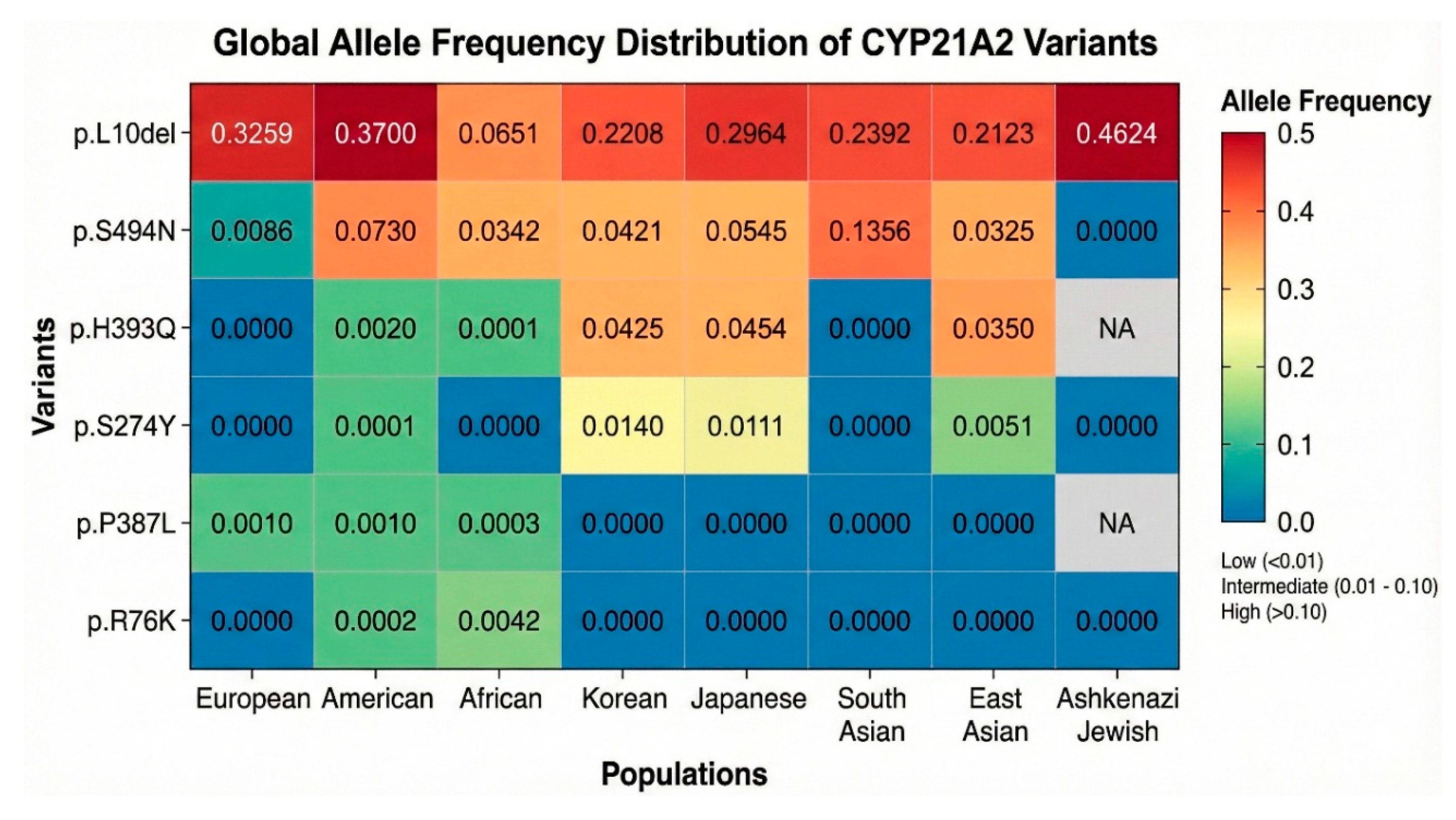
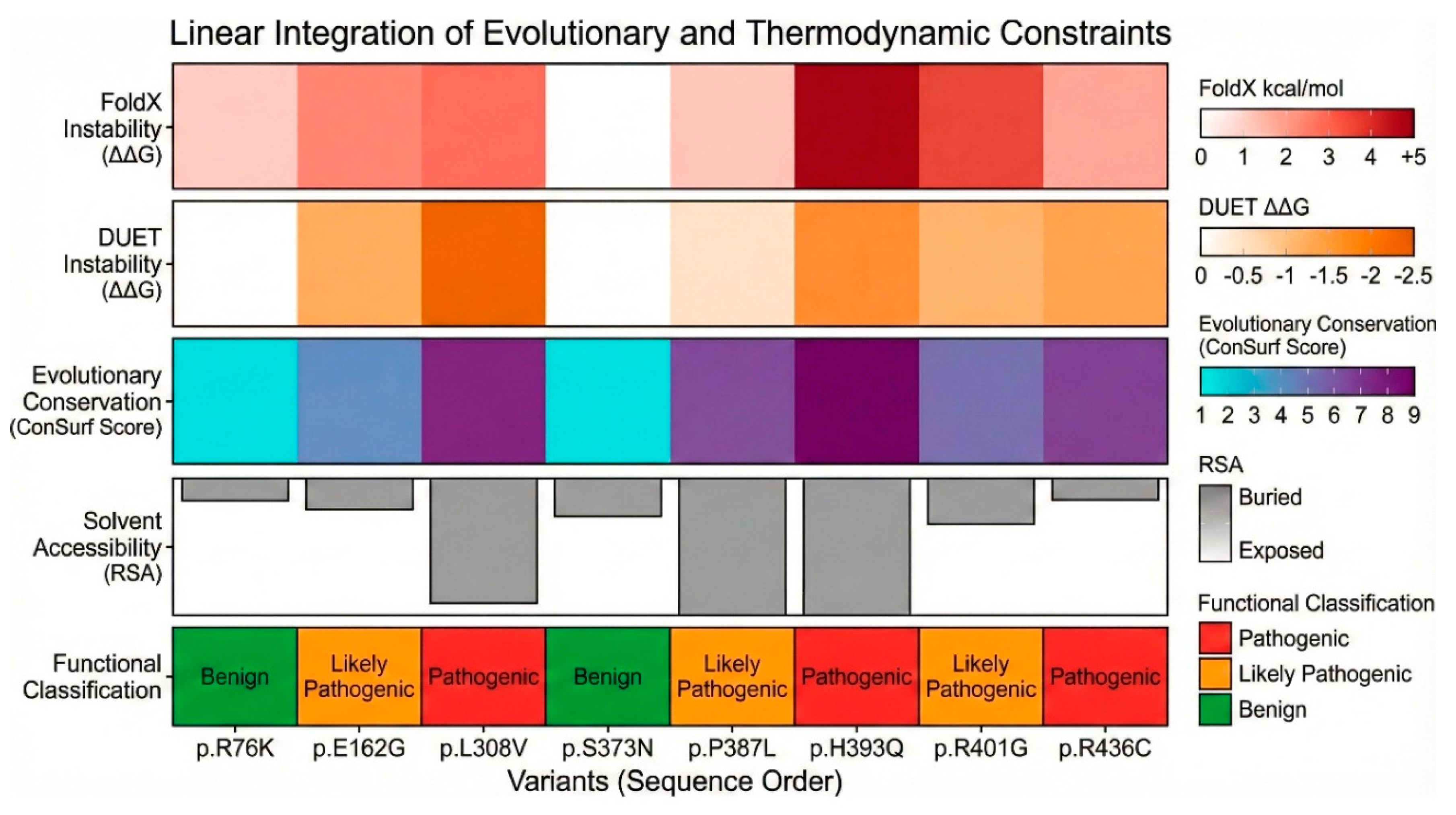
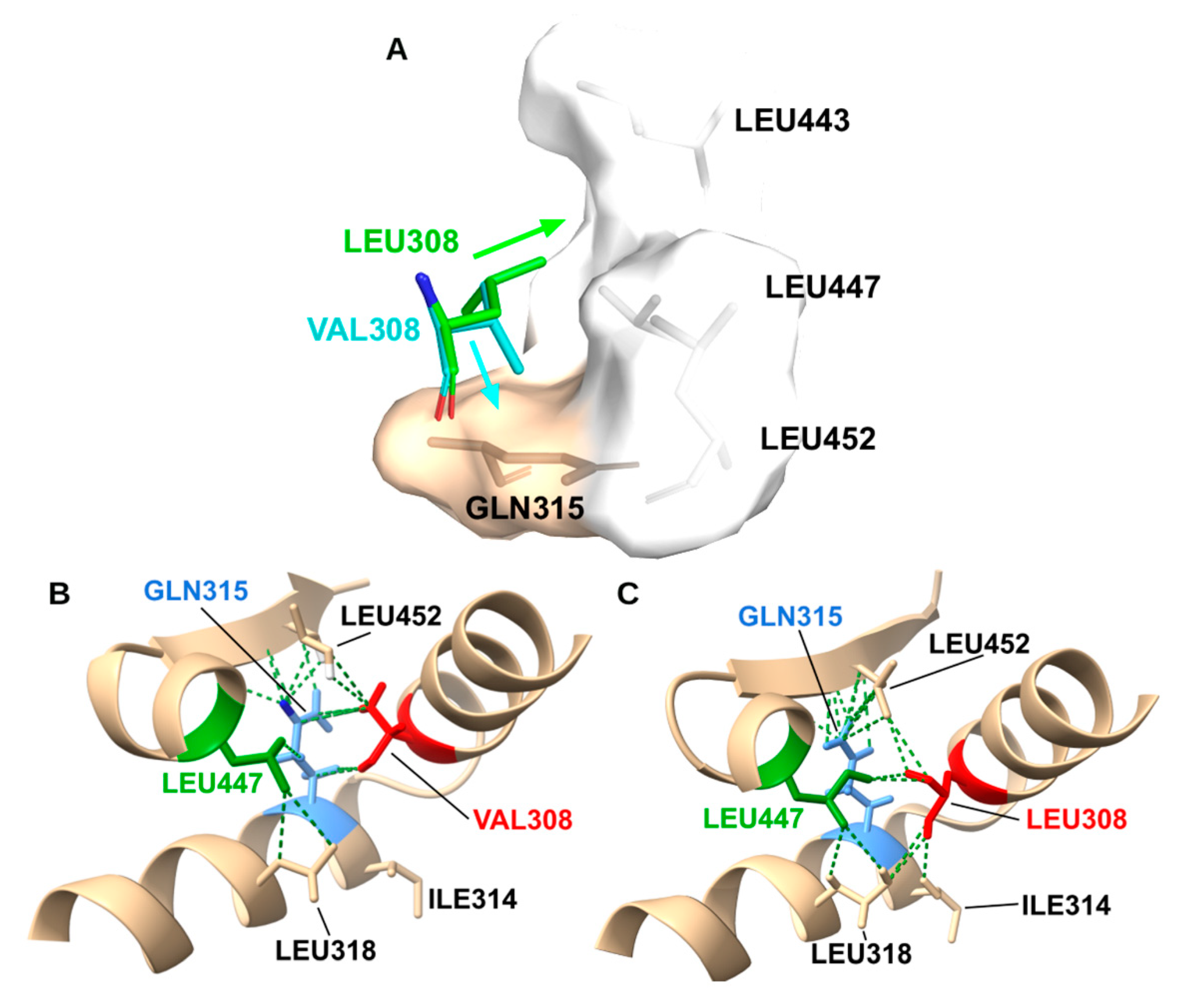
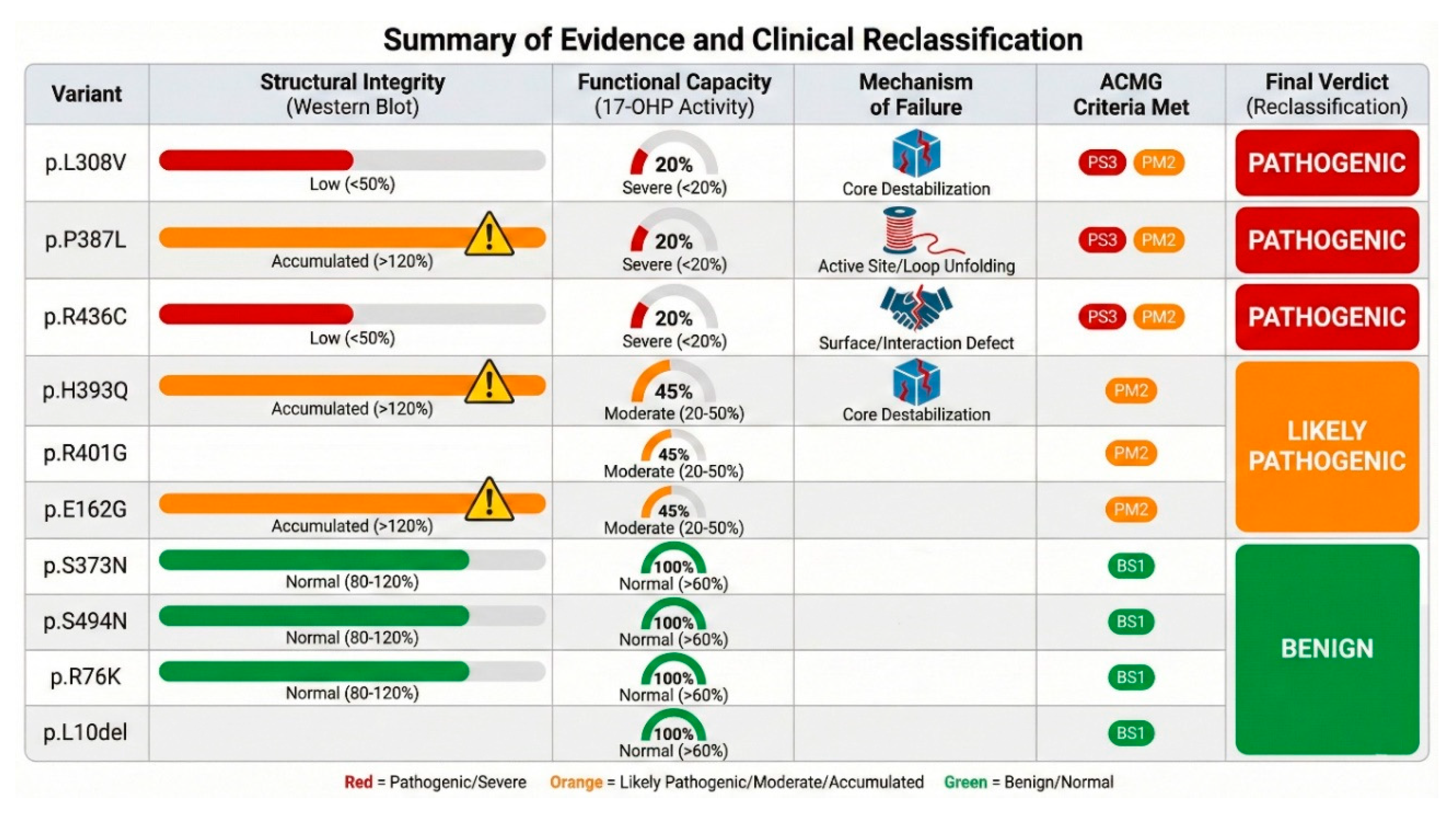

| Variant | Initial ClinVar | Activity (Prog) % | Activity (17OHP) % | Protein Level % | Structural Mechanism | Applicable ACMG Criteria | Proposed Classification | Predicted Phenotype |
|---|---|---|---|---|---|---|---|---|
| p.L10del | Benign | ~111% | ~99% | ~85% | N-term flexible anchor | BA1, BS1 | Benign | Normal |
| p.R76K | VUS | ~72% | ~77% | ~142% | Surface loop, exposed | BS1, BP4 | Likely Benign | Normal |
| p.E162G | VUS | ~58% | ~53% | ~162% | Surface stability | PM1, PM2, PP3 | Likely Pathogenic | NC-CAH |
| p.S274Y | N/A | ~76% | ~46% | ~106% | Surface loop | BP4, BS1 | VUS / Likely Benign | Normal/Carrier |
| p.L308V | Likely Path. | ~30% | ~18% | ~46% | I-helix destabilization, steric clash | PS3, PM1, PM2, PP3 | Pathogenic | SW/SV CAH |
| p.S373N | Likely Path. | ~92% | ~93% | ~92% | Surface loop | BS3, BP4 | Benign | Normal |
| p.P387L | Likely Path. | ~53% | ~19% | ~122% | Core/K-L loop destabilization | PS3, PM1, PM2, PP3 | Pathogenic | SW/SV CAH |
| p.H393Q | Likely Benign | ~71% | ~44% | ~159% | Core packing disruption | PM1, PM2, PP3 | Likely Pathogenic | NC-CAH |
| p.R401G | VUS | ~40% | ~41% | ~72% | Surface charge/POR binding | PS3, PM1, PM2 | Pathogenic | SV/NC CAH |
| p.R436C | Likely Benign | ~26% | ~18% | ~49% | POR interface/Heme geometry | PS3, PM1, PM2 | Pathogenic | SV/NC CAH |
| p.S494N | Benign | ~100% | ~67% | ~99% | C-term disordered tail | BA1, BS1 | Benign | Normal |
Disclaimer/Publisher’s Note: The statements, opinions and data contained in all publications are solely those of the individual author(s) and contributor(s) and not of MDPI and/or the editor(s). MDPI and/or the editor(s) disclaim responsibility for any injury to people or property resulting from any ideas, methods, instructions or products referred to in the content. |
© 2026 by the author. Licensee MDPI, Basel, Switzerland. This article is an open access article distributed under the terms and conditions of the Creative Commons Attribution (CC BY) license.