

Submitted:
03 January 2026
Posted:
06 January 2026
You are already at the latest version
Abstract
This research examines how rising pressures from global risks, including natural disasters, geopolitical conflicts, cybercrime, and government regulations, affect sustainable supply chains and logistics systems. These pressures are becoming more frequent, intense, and unpredictable. The Global Pressure Supply Chain Index, developed by the Federal Reserve Bank of New York, serves as a proxy for quantifying these pressures and as a comprehensive metric of stress within global supply chains and logistics systems driven by macroeconomic factors. Further investigation is warranted. Quantitative analyses indicate that systemic global risks have a significantly positive effect on these systems. However, additional analyses show that the influence of macroeconomic indicators on these systems remains generally low to moderate. Supplementary statistical tests demonstrate that, among external systemic risks, government trade regulations, cybercrimes, cyberattacks, the transportation index, and political conflicts are significant predictors of pressures on global supply chains and logistics. These factors serve as indicators for forecasting economic fluctuations, which lead to disruptions, delays, and costs in supply chains and logistics systems.
Keywords:
sustainable supply chain
; logistics digitalization
; risks
; global supply chain pressure index
1. Introduction
The pressure to sustain the global supply chain and logistics system (SC&LS) has intensified over the past thirty-five years due to the rising unpredictability, frequency, and severity of global crises. The twentieth century was marked by persistent inefficiencies and the adoption of immature digital technologies, amid globalization with limited infrastructure and security [1]. This pattern continued into the first decade of the twenty-first century, with numerous disruptions stemming from fragmented global supply chains with limited foresight, as well as from financial, natural, political, and cyber crises [2]. The widespread internet crisis, which occurred during a period of rapid globalization when nations struggled to meet rising demand, nearly brought the United Kingdom’s economy to a halt. Moreover, cyber breaches in the United States worsened these issues, alongside the impacts of the September 11 attacks on U.S. soil, the SARS epidemic, the Swine flu pandemic, the Indian Ocean tsunami, Hurricane Katrina, and the global financial crisis—each revealing vulnerabilities within the supply chain and logistics (SC&L) infrastructure [3,4].
The second decade was still affected by complex crises, including the lingering effects of the financial crisis, rising geopolitical instability, the climate emergency, the emergence of more advanced cyberattacks, and outbreaks of MERS, polio, Ebola, and Zika. These issues posed serious challenges to global health systems and social cohesion. Additionally, cooperation on collective environmental action declined, a trend later linked to the emergence of the deadliest zoonotic disease—COVID-19 [5]. Consequently, trust in governing institutions declined as social inequality grew. The decade was marked by overlapping economic, social, and environmental crises that led to product shortages, delivery delays, higher costs, and systemic vulnerabilities in SC&LS (Saadat et al. [6]; Fadare and Okoffo [7]).
Shocks from earlier events persisted into the third decade, along with semiconductor shortages, cyberattacks on logistics platforms, incidents in the Red Sea, blockades of the Suez and Panama Canals, port congestion, armed conflicts, geopolitical tensions, and the U.S.’s use of reciprocal tariffs and trade policy uncertainty as protectionist strategies. These issues have reverberated throughout global supply chains and logistics systems, leading to supply shortages, factory delays, higher costs, and increased prices [8]. However, the pandemic’s impacts have been even more severe, with millions of confirmed deaths that continue to rise, damaging economies and increasing environmental pollution due to greater chemical and non-biodegradable waste from COVID-19. Society’s isolation, which disrupts educational systems, has widened knowledge gaps, worsened by limited training. This has created a disconnect between job opportunities and workers’ skills, resulting in higher unemployment and disparities in living standards [9].
Since the new millennium, unprecedented levels of social violence have emerged, which Laing [10] labels social insanity and a sign of modernization, reflecting economic and social deprivations [11]. Litchman [12] contends that insanity is a private affliction, not a societal issue, where an individual’s inability to see the consequences of their actions leads to impunity. In contrast, social behavior is governed by legal responsibilities and accountability. However, deprived societies can be exploited by individuals seeking to climb the political ladder and advance their ideological agendas through violence [13,14]. According to Schmitt [15], today’s social violence threatens the collapse of civilization by lurking beneath modernization. This poses a significant risk of dragging humanity into a dystopian nightmare (World Economic Forum’s Global Risks Report [16].
Although modern societies face many challenges, they remain resilient—persecuted but unbroken, struck down but not destroyed. They are driven to rebuild infrastructure to meet current and future needs [15]. These efforts include protecting supply, production, and distribution systems through risk detection and pressure management. In 2022, the Federal Reserve Bank of New York, along with Benigno et al. [17], identified macroeconomic risks affecting supply chains and launched the Global Supply Chain Pressure Index (GSCPI). The goal is to provide an indicator of supply chain stress that helps predict and manage inflationary pressures that lead to delivery delays.
However, the authors argue that risks to the sustainable SC&LS landscape extend beyond global economic pressures to a complex web of interconnected geopolitical conflicts, natural disasters, cybercrime, and government trade regulations. The goal of this study is to examine the risks to sustainable SC&LS, using the GSCPI as a proxy to analyze these pressures. The study is organized into four sections: following the introduction, the second section reviews literature from the twentieth and twenty-first centuries across five domains, providing comprehensive overviews of the supply chain, logistics, digitalization of SC&LS, and the GSCPI to support risk mapping. The third section outlines the research methodology for examining the impacts of external systematic risks on SC&LS. The fourth section summarizes the main findings.
2. Literature Review
2.1. Supply Chain
Supply chains have evolved through phases since the 1980s, each marked by unpredictable and severe internal and external pressures. In the initial phase, suppliers evolved alongside the Industrial Revolution, responding to selection criteria derived from mechanization (Industry 1.0), mass production (Industry 2.0), and automation (Industry 3.0). They challenged the standards and protocols established in 1960 by Forrester and Optner [18] in systems analysis in industrial management, and by Bucklin’s 1966 theory of distribution channel structure. While they aimed to identify and analyze complex supply-production industrial systems to address problems, Bucklin focused on distribution networks, primarily driven by customers’ growing requirements, such as waiting time, lot size, product variety, and spatial convenience [19].
In 1982, Oliver and Webber [20] introduced the term “supply chain” to describe purchasing activities as a unified management effort rather than a separate one. In the context of supply chain management, the 20th-century literature is rich with articles discussing concepts such as managing the movement of materials, information, and finance [21]; understanding industrial flows [22]; coordinating sourcing, production, and delivery [23]; managing Just-In-Time purchasing for quality and efficiency [24]; fostering trust between suppliers and producers [25]; creating networks of economic actors [26]; adopting a consolidative approach and synchronizing upstream and downstream relationships [27]. However, the pressures of adopting nascent digital technologies amid globalization, limited visibility due to fragmented systems, cybercrimes, and the impacts of global risks were understated.
In the subsequent phase, following digitalization (Industry 4.0) and human-centric, sustainable, and resilient (Industry 5.0) [28], supply chains focused on linear integration among suppliers, producers, and distributors. During this phase, a new body of literature emerged, examining pressures in the competitive supply chain landscape and prioritizing alternatives to enhance customer value [29]. It also addressed rivalry among competitors, the threat posed by new entrants, the risk of substitute products or services, and the bargaining power of buyers and suppliers, identified as key factors [30]. Therefore, Gunasekaran and McGaughey [31] proposed replacing competitiveness with strategic partnerships among suppliers, producers, and distributors within a value chain. Ponte et al. [32] and Zamora [33] provided additional insights into partnerships for evaluating the entire value chain as a comprehensive set of activities, including design, procurement, production, transportation, maintenance, recycling, disposal, marketing, finance, and customer support.
Gereffi et al. [34] and Ponte et al. [32] delineated five criteria for partnership evaluation, namely: (1) an input–output framework that delineates a series of products and services interconnected through sequential, value-chain economic activities; (2) territoriality, which pertains to the spatial distribution or concentration of production and marketing networks comprising enterprises of various sizes and types; (3) buyer-driven chains or pull systems; (4) a governance structure that reflects the authority and power dynamics involved in managing the allocation and flow of financial, material, and human resources; and (5) the implementation of advanced technologies.
Dias et al. [35] agree that the criteria reduce pressure by improving process performance, thereby optimizing the flow of materials, information, and financial resources to meet customer demands. Wibowo [36] proposed a reverse methodology to streamline business processes for Strategic Integration with entrepreneurial partnerships, starting with end users’ needs and working backward to raw materials, thereby creating value for customers [37] identify four fundamental elements: production, information, and resources, within a process that facilitates the transfer of materials from suppliers to production and distribution, aligning with customer demands. This includes partnership for sourcing, procurement, conversion, and logistics within the scope of management planning and implementation [38] as a comprehensive end-to-end process.
By 2021, the Cornell School of Operations Research and Information Engineering recommended that supply chains focus on managing materials, information, financial flows, and data exchanges within partnerships with shared objectives to achieve efficiency. Some scholars suggest that efficiency can be achieved through lean production [39], agility supporting Industrial Revolution 5.0 [40], and environmentally responsible green production [41]. Ansari and Modarress advocate expanding the focus to sustainable development to enhance efficiency, address ecological deficits through optimal resource utilization [42], and align supplier selection criteria with sustainability objectives [43]. Jjami and Boussalham [44] further contributed by integrating AI-driven predictive maintenance, machine learning, and multi-criteria decision-support systems.
Nevertheless, inefficiencies, costs, and the company’s diminished capacity to meet customer demand escalated due to the autonomous operation of supply chain management separate from logistics. Martí et al. [45] underscored the significance of logistics in intercontinental commerce, whereas Rashwan [46] advocated for the comprehensive integration of supply chain and logistics to develop physical infrastructure that facilitates effective coordination of procurement, production, and distribution, thereby alleviating external and internal pressures.
2.2. Logistics
Logistics have also evolved alongside the industrial revolutions, facing numerous pressures, including supply chain volatility, operational capacity and capability constraints, unpredictable supply chain and transportation disruptions, rising customer expectations for speed and visibility, complexity from personalization, inflation, digitalization and data integration, workforce shortages, sustainability requirements, government and customer regulations, and trade enforcement [47]. In a scholarly treatise on the Science of War, Thorpe [48] introduced the concept of “Pure Logistics.” He described the scope of military logistics within operational zones and in support of troops. He defined Pure Logistics as the efficient movement of personnel, supplies, and equipment in both forward and reverse directions. It comprises two main stages: Logistics Planning and Logistics Implementation. Logistics Planning involves systematic evaluations of supply and demand, considering destinations, distances, and durations, and integrates logistics into military strategies. Logistics Implementation emphasizes careful planning and preparation for activities that support scheduling, warehousing, packaging, evacuation, transportation, deliveries, maintenance, and disposal/cleanup. Therefore, it is crucial to view Logistics Implementation as the overarching strategy that sets long-term goals and provides a strategic framework, while also including short-term, specific actions to carry out the strategy and achieve those goals. It is also stressed that failures in logistics implementation hinder operational success and often lead to casualties and defeats.
During the peaceful period after World War II, logistics capabilities expanded from the military sector into the civilian and commercial sectors [49]. This expansion strengthened supply chains, ensuring the efficient and cost-effective movement of goods and services from source to consumption. Langley and Holcomb [50] and Cooper [51] added maintenance, packaging, and disposal to logistics management to ensure supply availability and accurate product delivery. Lambert and Stock [52] and Bowersox et al. [53] broadened the scope beyond inter-organizational boundaries to include geographically dispersed suppliers, producers, and consumers through national and international gateways and corridors.
To establish a universally accepted definition, Kukovič et al. [54] identified diverse perspectives across industries. Novack et al. [55] defined logistics as the delivery of products within industrial boundaries, consistent with Murphy and Poist’s [56] view that, when logistics reaches its full potential, it must accept responsibility and accountability for economic and social benefits. Notable research includes Serrano et al. [57], who identified twenty-one distinct definitions of military logistics, tracing them back to Thorpe [48], which primarily refer to technical services and the sustenance of an army’s personnel; Volland et al. [58] characterized healthcare logistics as the management of physical products within hospitals, including medical equipment, medicines, supplies, food, sterile items, laundry, surgical supplies, and waste; Frias et al. [59] offered a definition in tourism logistics, encompassing strategic planning and coordination of transportation and accommodation, along with supervision of related information, financial, and physical resource flows; Thomas and Kopczak [60] states that humanitarian logistics involves the planning, implementation, and control of the efficient and cost-effective flow and storage of materials and related information, originating from the source and culminating at the point of consumption, to alleviate suffering among vulnerable populations; Herold et al. [61] define sports logistics as a process that includes planning, sourcing, assembling materials and services, delivering, and managing the reverse flow of goods; Du et al. [62] state that manufacturing logistics pertains to all planning, coordination, and service functions necessary to carry out manufacturing activities. The temporal scope begins at the point where end-of-the-item customer demands are determined and extended until they are fulfilled. The Bureau of Logistics [63] defines logistics as the management of resources flowing from the point of origin to the point of destination. The Council of Supply Chain Management Professionals [64] offers an established definition: logistics involves planning, implementing, and controlling storage and packaging activities to ensure the efficient and effective transportation of goods and related information from the point of origin to the point of consumption, thereby fulfilling customer requirements within an approved management framework.
Desai et al. [65] endorse definitions focused on end-to-end processes. In contrast, Singh et al. [66] argue that a definition should encompass transitions from single sourcing to third-party logistics, using a comprehensive logistics network within contractual outsourcing frameworks. According to Gunasekaran and Ngai [67], logistics outsourcing should aim to lower operational costs, manage demand fluctuations, and reduce capital investments by adopting advanced technologies. Mentzer et al. [68] elaborate on the goal of logistics driven by technological progress, which relates to service logistics and finance logistics [69], both of which are parts of electronic commerce logistics [70]. This includes managing processes that protect the integrity of the supply chain and ensure full accountability for delivery.
The International Organization for Standardization [71] provides the universally accepted definition. The organization describes 21st-century logistics as a network of interconnected entities that use advanced technologies and digitalization, including hardware, software, and skills, to share and exchange information and resources within a defined structure and topology, supporting supply chain activities.
Furthermore, standardized logistics procedures and packaging enhance supply chain efficiency, reduce costs, and increase the reliability of goods transportation. Improved and safer cargo handling reduces waste and environmental impact. Conversely, the digitalization of logistics facilitates the seamless integration of supply chain and logistics processes, thereby enhancing transparency throughout the supply chain and logistics system via real-time tracking and data sharing. This advancement renders logistics processes more efficient through innovation and underpins on-demand, last-mile, automated, and integrated systems.
2.3. Digitalization of SC&LS
The 21st century has ushered in a transformative era driven by digitalization, reshaping traditional Supply Chain & Logistics (SC&LS) into a system capable of meeting online consumer demand. This shift represents a strategic overhaul aimed at improving efficiency, transparency, and cost savings through physical and digital integrations on comprehensive commerce platforms, such as e-commerce portals, that allow businesses to create, operate, and expand online stores and sell across multiple channels, including web, mobile, social media, physical stores, and marketplaces [72]. However, it also highlights the vulnerability of interconnected activities and the rise of cybercrimes in an increasingly digital landscape.
Digitalization leverages innovations in cyber-physical systems to enable traceable, scalable, and accessible management of inventory, orders, and customer data [73]. While traditional SC&LS predominantly focus on large shipments, reactive services for strategic clients, and a push-based, one-way supply model centered on stable, predictable customers, digital SC&LS are characterized by parcel-based, seasonal deliveries to dispersed, often unfamiliar customers, requiring flexible, bidirectional responsiveness supported by a pull system [70]. Consequently, traditional physical SC&LS remain the fundamental backbone of digital SC&LS, which thrive through digitalization.
The literature on SC&LS digitalization highlights concepts such as Smart Supply Chain [74], Digital Supply Chain [75,76], Supply Chain 4.0 [77], the Self-thinking Supply Chain [78], enabling Industrial Revolution 4.0 [79], and human-centric Industrial Revolution 5.0 [80]. The researchers examined SC&LS digitalization initiatives driven by two interconnected yet distinct platforms, each defined by a business model: e-commerce platforms and online marketplaces for transactions, depending on the participants involved: businesses, consumers, or government/administration entities.
Benefits of digitalization are documented in academic research, including faster processing of customer requests and better customer experience enabled by connections among individuals, organizations, and resources [81]. This connectivity facilitates important interactions between businesses and consumers. Other advantages include increased product visibility, stronger sales and marketing efforts, and improved efficiency in collecting and analyzing customer data to support various strategies. Additionally, digitalization of supply chains and logistics allows industries to focus on customer-centered strategies at national, regional, and international levels through interconnected entities such as warehouse consignees, shippers, freight forwarders, carriers (including air, land, and water transport), inspection agencies, customs brokers, and customs authorities [82]. These entities are supported by comprehensive software solutions that enable various online trade models, serving as digital aggregators that unite a wide range of sellers and brands on a single virtual platform.
Numerous digital technologies play a pivotal role in the digitalization of Supply Chain & Logistics (SC&L) and are frequently emphasized in the analyzed scholarly articles. The key technologies often referenced include the Internet of Things (IoT), advanced analytics employing techniques such as Artificial Intelligence (AI) and Machine Learning (ML), Augmented Reality (AR), Virtual Reality (VR), Global Positioning System (GPS), blockchain technology, robotics, 3D printing, and drones [83]. In practical applications, chatbots simulate human conversation via text or voice, serving as digital assistants that provide immediate information, support, or entertainment. They use pre-programmed rules, along with cutting-edge Artificial Intelligence technologies—such as Natural Language Processing and generative Artificial Intelligence—to understand and respond to user inquiries across websites, applications, and messaging platforms.
The increasing integration of technologies such as the Internet of Things (IoT), radio-frequency identification (RFID), Bluetooth, near-field communication (NFC) tags, and the Global Positioning System (GPS) facilitates operational connectivity, providing real-time visibility into the tracking of goods, assets, and inventory. Furthermore, these technologies enable predictive analytics for inventory and order management across processes from sourcing to last-mile delivery. Control Towers, in conjunction with Enterprise Resource Planning (ERP) systems, serve as centralized digital hubs that deliver comprehensive end-to-end visibility by linking ERP systems with Warehouse Management Systems. This integration incorporates robotics, automation, autonomous vehicles, aerial vehicles (drones), 3D printing, simulation, and digital identifiers. Additionally, blockchain technology ensures transparency and efficient data sharing among Supply Chain and Logistics (SC&LS) stakeholders, thereby reducing risks and uncertainties [84].
Big data analysis with AI algorithms enables organizations to enhance decision-making and optimize supply chain operations. It supports logistics entities by providing insights into inventory levels, demand forecasts, and real-time shipment tracking. Cloud computing offers accessible, distributed, autonomous, and diverse information sources that accommodate large volumes of hypermedia data, thereby fulfilling various user requirements and enabling a range of business transactions for both consumers and enterprises. Blockchain technology secures payment transactions and safeguards against data tampering. Furthermore, account-based marketing helps identify prospective clients for targeted strategic initiatives. Digital Twins facilitate the creation of virtual models of logistics networks to simulate disruptions and forecast performance outcomes. Additionally, Collaborative Robots in warehouses enhance safety and productivity by automating repetitive tasks.
Technological integration has redefined the linear structure of supply chain and logistics, transforming it into a system of autonomous networks that exchange materials, financial resources, and information to achieve common objectives. This evolution yields a complex, dynamically integrated system capable of multitasking in multinational environments, featuring autonomous, interconnected units [85]. Such systems have been extensively examined across various contexts, including social [86], humanitarian [87], ecological [88], environmental [89], and industrial sectors [90]. This structural transformation aligns supplier selection criteria with sustainability imperatives [28] and incorporates agile, lean, and green performance metrics for comprehensive evaluation [91].
The structure requires the SC&LS to distinguish between centralization and decentralization [92], nationalism and multinationalism [93], forward and backward flows in supply, production, and product distribution, and a mechanistic continuum ranging from very rigid, bureaucratic structures to flexible, agile, and slow approaches [94]. This structure incorporates hierarchical functionality [95], with clear boundaries of authority and accountability. The goal is to ensure accurate performance measurement by establishing a static framework that defines roles within hierarchical organizations, sets guidelines, and supervises the performance of components involved in planning, sourcing, manufacturing, and managing inbound logistics [96].
Configuring a complex dynamic system requires a physical layout, and the logical layers within a system operating in SC&LS environments are typically referred to as the system topology, or the physical and logical topologies, to provide a comprehensive overview of the infrastructure. A physical topology delineates the actual, tangible arrangement of devices and the cabling or wireless connections that link them (e.g., the locations of servers, computers, and routers, as well as the cabling used). Conversely, a logical topology specifies the configuration of a virtual environment, illustrating how data traverses the network, determining the routes that packets take, and defining the communication methods among devices, independent of the physical configuration (e.g., signal transmission methods, whether devices broadcast or use token passing). In intricate SC&LS systems, it is common to adopt a hybrid topology that combines elements of various fundamental topologies (such as star, bus, and ring) to fulfill specific operational requirements, optimize costs, and regulate performance across diverse functional domains [97].
Thus, digital SC&LS topology functions as a virtual conduit governed by specific rules and protocols for data exchange, thereby facilitating the transfer of information and commands. Moreover, the SC&LS topology comprises a hierarchical structure of core/trunk, branches, and hybrid configurations that integrate multiple networks, thereby enhancing system flexibility and efficiency. These configurations include wired and wireless connections, public and private cloud environments, and various network topologies [98]. The topology significantly influences factors such as speed, latency, and the network’s capacity to manage traffic, thereby directly impacting overall performance by balancing critical features such as scalability, security, size, and complexity, and by aligning with defined performance objectives ([99].
Researchers [100] link vulnerability to the SC&LS digital topology, characterized by multipurpose, multilayer configurations of network connections for online transactions. Multipurpose topology, or multi-topology, routing is a network configuration that combines two or more distinct standard network topologies (such as star, bus, or ring) into a single, integrated network to leverage the strengths of each. In contrast, multilayer configurations refer to a complex systems modeling approach in which multiple distinct layers, each potentially with its own topology and connectivity patterns, are interconnected to represent a more complete system. In a computing context, this often involves devices such as multilayer switches that operate across multiple layers of the Open-Systems Interconnection to capture information through interdependencies and interconnections that a single layer cannot capture.
According to Tekin et al. [101], seven factors influence the system’s vulnerability in multipurpose topologies, including: 1. Processing different product types that require specific environments, such as physical/biological environments (cold- and heat-sensitive) and digital/software environments, driven by advances in shipping, packaging, and real-time supply chain technology. 2. Omnichannel retailing requires tailored logistics networks with integrated oversight and dynamic distribution to ensure continuous service. This involves integrating all digital touchpoints (mobile, marketplaces, email, social media, websites, chatbots) into a unified, customer-centric experience. 3. On-demand delivery uses crowds and flexible couriers to provide unrestricted delivery times and locations. 4. Share-economy logistics shifts from ownership to sharing, using digital platforms to connect users with underutilized assets (such as trucks, warehouses, forklifts) and services (drivers, handlers) for collaborative, efficient, and flexible movement and storage of goods, optimizing routes, reducing empty miles, and lowering costs, particularly for last-mile delivery. 5. Smart-energy logistics supports renewable energy through innovative collection, storage, and distribution methods that reduce reliance on traditional grids. 6. Super-grid logistics, surpassing third- and fourth-party logistics models, coordinates global supply chains through technological advances and congestion-mitigation solutions, such as tube infrastructure for cargo transport. 7. The Hyperloop [102] uses low-pressure tubes to propel cargo pods at speeds approaching those of airplanes (up to 700 mph), aiming to revolutionize supply chains by providing ultra-fast, on-demand delivery for high-value goods, e-commerce, pharmaceuticals, and critical supplies. This aims to reduce congestion, emissions, and the need for warehouses. Although largely conceptual at present, freight logistics is considered more viable than passenger transport due to its less stringent certification requirements [102].
In a multilayer topology, vulnerabilities reside in the interconnected layers, each of which may represent a distinct function, such as transportation modes (e.g., road, rail, air, sea) or different types of relationships or interactions among the same set of physical nodes, including warehouses, ports, or cities. Each layer possesses unique characteristics, infrastructure, and susceptibility to failure. Factors such as the number of connections, the configuration of component layers, and the nature of the central point directly influence the system’s robustness and vulnerabilities by exposing failure points and affecting the propagation of failures throughout the system. In a centralized or hub-and-spoke model, all nodes connect to a central server, typically a switch. This central server mediates all communications between network devices and becomes increasingly vulnerable if the hub is compromised. Additional topologies include a star network with a single severed link that can isolate devices; simple linear bus configurations, which are susceptible to cable failures because all devices connect to a single transmission cable known as the backbone, thereby increasing the risk of failure; ring topology, which connects nodes in a circular arrangement with data traveling unidirectionally from one node to another; if a point within the ring fails, the entire network may cease to function. Tree topology combines multiple star topologies within a hierarchical structure resembling a tree, necessitating careful security management due to its complexity. Mesh topology, characterized by its resilience due to redundancy, features multiple paths between nodes, making it more resistant to attacks. Each node is directly connected to other nodes, creating an interconnected network that permits data rerouting around compromised links. Conversely, it tends to incur higher costs. Unlike traditional single-layer models that consolidate all transportation modes into a unified network, the multilayer approach enables a more comprehensive and detailed analysis of interactions and dependencies among transportation modes [98].
The vulnerability of SC&LS’s topology also stems from transactional complexities and dependence on the internet. Idoughi et al. [103] argue that transaction complexities in the virtual SC&LS involve major hurdles such as cybersecurity threats (fraud, data breaches), integrating diverse payment methods and currencies, ensuring smooth cross-border operations, managing high fees, dealing with fragmented technology systems, ensuring regulatory compliance, and overcoming customer trust and adoption gaps—while also battling issues like slow reconciliation and poor connectivity that hinder cash flow and scalability. Electronic payments are susceptible to inherent software flaws, complex interconnected systems, and reliance on user behavior (e.g., phishing), which make them targets for unauthorized access via malware, weak passwords, and unsecured networks, thereby increasing risks [104]. While cloud service providers, payment processors, marketing platforms, and third-party SaaS tools are interconnected, constituting the vital pathways of business operations, they also open potential channels for cyber risk. A security flaw in one supplier’s system can rapidly disseminate through shared data repositories and authentication systems. Notable risks include the SolarWinds attack and the MOVEIT breach, both of which exploited software vulnerabilities to exfiltrate sensitive data.
2.4. Risks
According to Aven & Renn [105], the SC&LS faces considerable risks from both internal and external factors that can impede operational goals and disrupt markets worldwide. These risks include any threat that disrupts the flow of goods, services, or information, ranging from supplier failures and natural disasters to cyberattacks and geopolitical issues, and that impacts operations, finances, and reputations. The Institute of Auditors and the Institute of Risk Management (2024) define risk as the uncertainty of outcomes caused by unforeseen events that lead to deviations from expected results, resulting in human and/or economic losses. The International Organization for Standardization (ISO 31000) Guide [71] describes outcome uncertainty as impacts that can be positive or negative. According to the British Treasury’s Orange Book on Risk Management (2001), risk is defined as “the effect of uncertainty on objective damage.”
Lucas and Renn [106] identified four risk-related properties that threaten the SC&L network. These include complexity—defined as the difficulty of understanding cause-and-effect relationships among many interconnected components; variability—referring to inconsistent performance or a lack of a fixed pattern; ambiguity—indicating potential for multiple interpretations; and transboundary—characterized by crossing sectors and causing ripple effects, where negative phenomena impact areas beyond the initial risk zone, generating a chain of secondary and tertiary consequences. However, severity, frequency, and duration of risks depend on ten factors, as shown in Figure 1. These include perspectives, types, levels, sources, impacts, predictability, controllability, mitigation, proliferation, and exposure.
Wagner & Bode [47] categorized risks into three areas: risks internal to suppliers, risks external to suppliers but internal to the SC&L system, and risks external to the SC&L system itself. Risks internal to suppliers are typically connected to their institutional structure, organizational layout, operational procedures (equipment breakdowns, Deloitte [107], process inefficiencies, labor shortages (Bureau of Labor Statistics [108], financial risks (price volatility in raw materials, World Bank [109], currency fluctuations), strategic risks (misaligned partnerships; mergers or acquisitions disruptions; poor forecasting, Gartner [110], and customers’ payments, products, and service issues.
Risks external to suppliers pertain to their order fulfillment and distribution processes within the SC&L system and are triggered by system failures [111]. Risks external to the SC&L system stem from sources beyond the system’s direct control and are often caused by global events. Hudnurkar et al. [112] later reclassified risk into two categories: internal and external. Internal sources encompass issues originating within a supplier, such as operational failures, human errors, and suboptimal management decisions. External sources refer to factors beyond the control of the SC&L system, including IT system incompatibilities across organizations within the SC&L system or global cyberattacks.
Second, Renn [113] and Fouque & Langsam [114] categorize risks into three types: unsystematic, systemic, and systematic. Unsystematic risks originate within a specific supplier function. For example, in 2016, General Mills faced a major contamination event involving E. coli O121 and O26, which led to the recall of 45 million pounds of flour (Centers for Disease Control and Prevention, and port delays caused by a labor shortage. Systemic risk occurs within a system and is amplified by interconnected, dependent units, threatening the entire system. These risks can stem from failures in information infrastructure, poor system integration, extensive network connections, or incompatibility among supply chain partners’ IT platforms. The internal liquidation of the U.K. construction firm Carillion in 2018 created a significant systemic problem within the British construction industry, resulting in the collapse of related external activities and the industry as a whole, exemplifying systemic risk.
In contrast, systematic risks arise from macro-level events characterized by high complexity, numerous uncertainties, significant ambiguities, and transgressive effects on other systems beyond the original one. These are often seen as global economic, natural, political, digital, cyber-related, or governmental regulatory issues. The 2008 housing crisis illustrates this, as it evolved into a worldwide systemic risk due to the widespread distribution of risky mortgage-backed securities across the international financial system and the interconnectedness of global financial institutions. When the value of these securities collapsed, it undermined confidence in the economic system, leading to a credit market freeze. This period was marked by systemic bank failures and asset write-downs, which spread globally as interconnected financial institutions suffered substantial losses. This sequence of events led to a global, systemic economic crisis known as the “Great Recession.”
Third, Aven and Renn [105] identify risks across four zones: local, regional, national, and global. Unsystematic risks affect a single supplier and can lead to localized delays, stoppages, increased costs, and reputational damage, thereby impacting the entire supply chain of goods and services. Conversely, systemic risks are vulnerabilities and shocks that affect interconnected entities within a Supply Chain & Logistics (SC&L) system, amplified by the system’s complexity at both national and regional levels. For example, the 2018 Brazilian truckers’ strike and the 2022-2024 Canadian prolonged truckers’ strikes, as well as the potential crises in Canada/USA in 2025, have become systemic national and regional crises, as the trucking industry is a vital part of the SC&L system. Systemic risks are events that can simultaneously impact multiple markets globally, such as the 2008 financial crisis and the 2020 COVID-19 pandemic [47].
Fourth, Tummala and Mak [115] define risk impact as the degree of damage to an activity or asset, ranging from minor to severe to catastrophic. The impact of unsystematic risk is commonly observed within supply or logistics companies. In contrast, systemic risk involves the potential failure of a function (such as communication), which could trigger a domino effect leading to the collapse of an entire chain. Conversely, systematic risks, also known as “market risks,” are influenced by macroeconomic factors. Unsystematic risks are localized, whereas systemic risks occur at the national and regional levels. Systematic risks impact the global market, exerting both direct and indirect effects. Direct impacts are the immediate forces of the event itself, such as fierce winds or a building collapse. In contrast, indirect impacts are the secondary consequences that result from them, such as power outages, contaminated water, or service disruptions. Human activities, such as climate change and population growth, are increasing the frequency and severity of certain natural hazards.
Fifth, Kleindorfer and Saad [116] discuss the sources and predictability of risk. Unsystematic risks, caused by factors within individual businesses, are often predictable through process performance and fall into two broad categories: (1) risks arising from problems coordinating supply and demand, and (2) risks arising from disruptions to normal activities. Systemic risks, which are less predictable due to the nonlinear, interconnected relationships among entities within a system, are distinct from systematic risks, which are unpredictable and difficult to avoid.
Sixth, Jiang et al. [117] discuss risk controllability across end-to-end processes, including design, development, production, integration, and deployment. Unsystematic risks are easier to control because they can be monitored through maintenance and prevention strategies that track specific processes and vulnerabilities unique to a single supplier. Systemic risks, however, are harder to control because they involve complex, interconnected supply chain and logistics (SC&L) systems, where cascading effects impact multiple suppliers and logistics companies and are not fully transparent. Therefore, a single failure can cause widespread, uncontrollable consequences. Systemic risks are extremely difficult to control and are often unmanageable.
Seventh, Chung and Heshner [118] defined risk mitigation as the process of identifying, assessing, and reducing the impact or likelihood of potential threats to minimize damage and lower overall supply chain vulnerability. Unsystematic risks can be mitigated by developing strategies to reduce vulnerabilities. This includes both proactive planning to prevent negative events and contingency plans for responding to risks that occur. However, addressing systemic risk requires macro-level actions, such as government bailouts or policy measures to decrease vulnerability. These risks are considered difficult to mitigate because they often involve interconnected outcomes across the entire system that are hard to predict or control. Systematic risks cannot be eliminated; however, in economic contexts, strategies include using hedging instruments, such as options or futures, and diversifying across different asset classes.
Eighth, the International Risk Governance Council [119] characterizes risk proliferation as an increased likelihood of unanticipated dissemination, which may have significant adverse effects on human health, the environment, the economy, and society. Systematic risks pertain to internal processes, personnel errors, equipment malfunctions, and procedural inefficiencies confined within a particular organization and not widespread across the market. Nevertheless, a malfunction within a system‘s component can propagate through interconnected units, resulting in failures in unrelated sectors. Systemic risk propagates through cascading failures in complex, interconnected systems, leading to extensive disruptions through amplification and contagion. An initial shock to a segment of the system, such as a financial institution or market, can propagate through interconnectedness and loss of confidence. External events, including the bursting of an asset bubble or geopolitical instability, may induce losses that erode trust, precipitate a credit crunch, or cause the failure of critical institutions. Such events can trigger a chain reaction of failures that impact both financial markets and the broader economy.
Ninth, Tummala and Mak [115] define exposure as the potential for loss or harm an entity faces from a specific risk. It is calculated by multiplying the probability of the risk (classified as rare, often, infrequent, or frequent) by its possible impact or severity (categorized as catastrophic, critical, marginal, or negligible). Exposure to unsystematic risks generally stems from firm-specific (idiosyncratic) sources. It measures vulnerability to adverse outcomes such as financial loss, operational disruption, or damage to reputation and is instrumental in developing risk management strategies. Concurrently, systemic risk pertains to both direct and indirect shocks. Direct effects originate from the failure of a relevant activity or the collective failure of multiple activities, creating a cascade effect known as an ‘entity-based’ effect. Indirect shocks are amplified either through participation in potentially systemic activities (activity-based sources) or through widespread common reactions to external shocks (behavior-based sources). Conversely, systematic risks are typically unavoidable and include both direct and indirect events, such as natural disasters (e.g., earthquakes), weather-related phenomena (e.g., storms and floods), and human activities.
In short, the 21st-century SC&LS operates within an intricate network of interconnected and interdependent entities that rely on connections, Application Programming Interfaces, shared data, shared systems, and shared trust. However, according to Renn et al. [120], these same features have created a new kind of cyber exposure: multi-party ripple events, in which one organization’s breach ripples through its partners, suppliers, and customers. Thus, the global SC&LS is highly vulnerable to unsystematic, systematic, and systemic risks. These dynamics also make predicting and assessing pressure on the SC&L network complex and uncertain. Researchers from various disciplines have attempted to predict systematic risks: Sandreson [121]; Schweizer and Renne [122]; using methods such as mathematical models: Scholz [123]; applied sciences, Schanze [124], political science, Sanderson, [121], cultural and biological evolution, Kleisner and Tureček [125], social communication, Schweizer and Renn [122], historical development and technological studies Klinke and Renn [126], and environmental sciences, Schweizer and Renn [122]. However, measuring pressure on the SC&LS remains difficult due to data unavailability, limited accuracy, the system’s complexity, and inconsistent information.
2.5. Pressure on SC&L System
Still, in May 2022, Benigno et al. [17], supported by the Federal Reserve Bank of New York, introduced the Global Supply Chain Pressure Index (GSCPI), a monthly index that integrates 27 variables drawn from economic factors to measure the intensity of global supply chain disruptions, with data going back to 1997. The primary categories of variables used in the GSCPI calculation include four sources: the Baltic Dry Index, the HARPEX index, airfreight cost indexes from the U.S. Bureau of Labor Statistics, and Purchasing Managers’ Index (PMI) surveys [108].
The Baltic Dry Index (BDI) is a daily publication issued by the Baltic Exchange in London, covering twenty shipping routes and serving as a benchmark for maritime transportation costs of major raw materials by sea. It comprises three sub-indices representing different dry bulk carrier sizes: Capsize (150,000 tons), Panamax (60,000 tons to 70,000 tons), and Supermax (48,000 tons to 60,000 tons). The HARPEX index, published weekly by the German maritime brokerage Harper Petersen, measures the health and trends of the global container shipping charter market by tracking current charter rates for container ships separately from spot rates on individual routes. The airfreight cost indexes published by the U.S. Bureau of Labor Statistics [18], through the Import and Export Price Indexes, monitor monthly and annual variations in airfreight prices for both imports and exports. For instance, the report dated May 16, 2025, indicates a 1-1.6% increase in import airfreight costs over the past twelve months and a 4-4.3% rise in export airfreight prices.
Data from Purchasing Managers’ Index (PMI) surveys include measures such as “Delivery Time,” which reflects the impact of supply chain delays on producers and is regarded as an indicator of purely supply-side constraints; `Backlogs PMI,” which quantifies the volume of orders received but not yet started or completed; and “Purchased Stocks,” which assesses the extent of inventory accumulation within the economy. Leading economic indicators encompass the stock market, building permits, consumer confidence, new manufacturing orders, and the interest rate spread, providing prompt insights into current conditions and aiding in forecasting future GDP and inflation rates across seven interconnected economies: China, the Eurozone, Japan, South Korea, Taiwan, the United Kingdom, and the United States. By aggregating these diverse data points using principal component analysis, the GSCPI yielded positive results, particularly for producer price inflation in the United States and the Eurozone.
The GSCPI is calculated to gauge pressures on the global supply chain for companies affected by disruptions and to help policymakers assess demand and supply imbalances and their effects on inflation. The index has a standard deviation of zero, the lowest possible value, indicating no variation in the index and, consequently, no pressure on the SC&L system. Values above zero indicate higher-than-normal pressure, while those below zero indicate lower-than-normal pressure. A higher index value indicates disruptions in SC&L activities, leading to reduced supply availability, production delays, manufacturing shutdowns, and higher prices. Conversely, a lower index value suggests fewer disruptions [17].
However, the index remains preliminary and is based on limited reported economic indicators that help elucidate recent inflationary pressures reflected in the GSCPI’s behavior. Assuming the GSCPI reflects pressure on the global SC&LS, the impacts of systemic risks, such as natural disasters, political conflicts, cybercrimes, and government trade regulations, are currently uncertain. This uncertainty underscores the purpose of this study, as the index remains open to further assessment and exploration.
3. Methodology
Given the absence of supporting predictive hypotheses in literature, this study is in a pre-paradigmatic stage [127]. Nevertheless, two propositions derived from the literature review can form the basis for a feasible assessment of the risks associated with sustainable SC&LS.
Proposition One (P1): There is a positive relationship between pairs of external systematic risks and the GSCPI.
Proposition Two (P2): All categories of external systematic risks are significant predictors of the GSCPI.
To develop a methodology relevant to these propositions, this study relies on Creswell’s [132] and Emerson’s [133] recommendations for conducting descriptive analyses to test the two propositions. This involves examining relationships between pairs of external systematic risks and GSCPI, identifying the most influential systematic risks affecting GSCPI and that might otherwise be overlooked, and gaining a comprehensive understanding of the topic by analyzing risks to the global SC&L system. These analyses include collecting secondary data on categorical external systematic risks and GSCPI from 2000 to 2024.
3.1. Data Collection
As shown in Figure 1, the data collection is based on a literature review. It identifies six secondary data sources on external systematic risks, including global economic indicators, political conflicts, natural disasters, trade regulations, cybercrime, and GSCPI, covering the period from 2000 to 2024. The sources include the Federal Reserve Bank of New York [128], the World Bank [129], Our World in Data [130], the International Telecommunication Union [131], the United Nations Data [132], and Statista [133].
The GSCPI, as a dependent variable, is a single index that provides insights into the overall health of the global Supply Chain & Logistics (SC&L) system. The independent variables are grouped into six categories. The first group includes the annual fluctuations of the global economy, frequently observed by (1) Purchasing Power Parity (PPP)-an economic indicator and exchange rate that equalizes the purchasing power of different currencies by ensuring that a comparable basket of goods and services costs the same across countries when expressed in a common currency. This allows for a more accurate comparison of economic productivity and living standards between nations than volatile market exchange rates alone; (2) the PMI-Purchasing Managers’ Index. This monthly economic indicator surveys purchasing managers about the health of the manufacturing sector. It is a crucial leading indicator based on actual business data and is among the first economic reports released each month, offering timely insights into employment, new orders, production, and inventories in the manufacturing sector; (3) the non-manufacturing PMI—a monthly report from the Institute for Supply Management (ISM) that tracks the health of the U.S. services sector. PMI-non-manufacturing/service data from 2000 to 2024 is either equal to or greater than PMI-manufacturing. This composite index is based on surveys of purchasing managers and measures key factors like business activity, new orders, employment, and prices in the service sector; (4) Gross Domestic Product (GDP)—the total market value of all finished goods and services produced within the world; (5) the inflation rate-the annual increase rates in prices; (6) GDP/capita is the total gross domestic product (GDP) divided by the world population, serving as an indicator of economic performance and average living standards; and (7) the Dow Jones Transportation Index, which is widely recognized in the transportation sector. It covers transportation services for finished products, raw materials, and intermediate goods across the entire supply chain. This index serves as a gauge of the health of the transportation industry and as a broad indicator of SC&L performance in the U.S., reflecting global consumer sentiment.
The second group of data collection focuses on natural disasters that disrupt the SC&L system. These are observable events driven by Earth’s natural processes, such as earthquakes, hurricanes, floods, extreme weather events, droughts, volcanic eruptions, and wildfires. The third group involves political conflicts and terrorism, defined as violent disputes between organized groups—such as states, insurgents, or militias—over political, territorial, or ideological goals, including eradicating a society from the face of the earth, and fatalities from battles and attacks on cargo ships. These conflicts can be international, involving multiple nations, or non-international, occurring within a single country.
The fourth category pertains to cybercrimes and their associated costs. Cybercrimes are malicious activities aimed at breaching, damaging, or stealing data from computer systems. Cyber cost refers to both the financial burden borne by individuals or organizations as victims of cybercrime and the costs of implementing cybersecurity measures to protect against cybercrime.
The fifth group comprises trade regulations that constrain the SC&L system by raising costs and creating operational challenges through tariffs, quotas, and compliance requirements. These rules cause disruptions, including shipping delays, the need to find alternative suppliers, and increased volatility in global logistics, thereby affecting efficiency and profits.
3.2. Data Analysis
The quantitative data analysis is divided into two phases to evaluate the aforementioned propositions.
Phase 1: Testing Proposition One (P1): A positive relationship exists between pairs of the GSCPI and External Systematic Risks variable. In this phase, Pearson’s correlation was used to assess the strength of the linear association between the GSCPI and external systematic risk variables.
As shown in Table 1, the relationships between the GSCPI and the number of political conflicts worldwide (r = 0.88), natural crises (r = 0.86), and trade regulations (r = 0.84) are positive and very strong. The correlations between the GSCPI and economic indicators, including PMI-Manufacturing (r = 0.709), PMI-Nonmanufacturing (r = 0.711), PPP (r = 0.75), and the Dow-Jones Transportation Index (r = 0.74), are positive and strong. The correlation between the GSCPI and cybercrime is strong and positive (r = 0.61), and the correlation between cybercrime costs and the GSCPI is moderate and positive. However, the correlations between the GSCPI and GDP (r = 0.47), GDP per capita (r = 0.47), and the inflation rate (r = 0.55) are moderately positive. Therefore, proposition one is accepted.
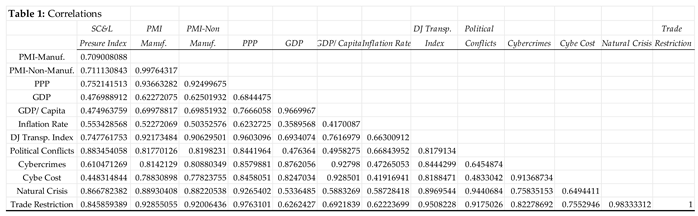
Phase Two: Testing Proposition Two (P2): Variations in External Systematic Risks have a measurable effect on GSCPI. In this phase, the propositions are tested using multiple regression and the Analysis of Variance (ANOVA) to test how several independent variables (external systematic risks as predictors) influence a single dependent variable (GPSCI).
The Model is: Yi=βo +++…………. +Xi12 +€
i= Observation from 1 to 25 (from 2000 to 2024), βo=Constant value/Y intercept,
β=Slope coefficient for each explanatory variable, €= The model error term
Yi-SCPI, The predicted value of the dependent variables, Β1Xi1-Manufacturing PMI,
β2Xi2 - Non-Manufacturing (or Services) PMI, β3Xi3 - Purchasing Power Parity (PPP),
β4Xi4 – Gross Domestic Product (GDP), β5Xi 5-GDP/Capita, β6Xi6 - Inflation Rate, β7Xi7-Dow Johns Transportation Index, β8Xi8-Political Conflicts, β9Xi9-Cyber Attacks, β19Xi10 - Cyber Costs, β11Xi11 - Natural Crises, β12Xi12 – Trade Regulations.
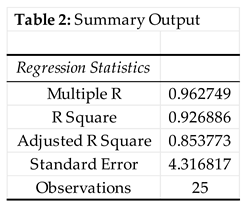
Overall, the results showed that the predictive model was significant, as indicated in Table 2. The Multiple R-Correlation Coefficient, the overall goodness of fit for the model, is 96%, indicating the proportion of variance in the GSCPI variable explained by the global systematic risks. The R-Square (Coefficient of Determination) shows that a one-unit change in that specific independent variable is associated with a 92% change in the GSCPI, assuming all other independent variables are held constant. The Adjusted R-Square value of 0.853 provides a modified version of R-squared that adjusts for the number of predictors in a multiple regression model, with the model’s global systematic risks accounting for over 85% of the variance in the GSCPI.
The Analysis of Variance (ANOVA), as detailed in Table 3, demonstrates that the overall model is significant (F = 0.00005). Furthermore, it indicates that the collective influence of global systematic risks effectively predicts the GSCPI. Moving on to the effects of the individual variables presented in Table 3, ANOVA illustrates the significance of each global systematic risk contribution through its respective coefficient.
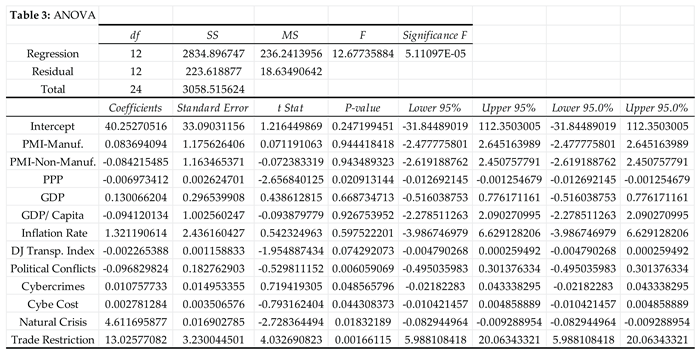
The slope is 40.2, indicating the change in the dependent variable for each unit change in the independent variable. Finally, with testing p < 0.05, the results are statistically significant for β3Xi3 - Purchasing Power Parity (PPP), β8Xi8 - Political Conflicts, βX9 - Cybercrime, β10Xi10 - Cyber Costs, β11iX11 - Natural Crises, and β12Xi12 – Trade Regulations. Therefore, proposition two is accepted.
3.3. Discussion
This study examines risks to SC&LS, including natural disasters, political conflicts, cybercrime, and trade regulations, that lead to economic, social, and environmental hardships. From 2000 to 2019, more than 7,348 global natural disasters damaged key infrastructure, including ports, roads, and railways. These damages halted factory operations, disrupted raw material flows, delayed transportation, and resulted in shortages, higher costs, and ripple effects across interconnected SC&LS. The disasters caused nearly $3 trillion in global economic losses, led to 1.23 million deaths, and affected more than 4 billion individuals, many of whom were displaced—sometimes multiple times—and highlighted massive environmental destruction, from habitat loss to pollution and ecosystem disruption, particularly in Asia. In the United States alone, between 1980 and 2024, there have been 403 natural disasters causing damages exceeding one billion dollars, including droughts, floods, severe storms, tropical cyclones, wildfires, winter storms, and freezes, resulting in 2.5 million displacements and numerous fatalities.
Political conflicts are the second major global risk, putting pressure on SC&LS. According to the Uppsala Conflict Data Program (UCDP) and the Peace Research Institute Oslo (PRIO), the number of ongoing conflicts since 2000 has totaled 3,469. This number continues to grow, with annual figures ranging from approximately 40 to over 60, reflecting a recent upward trend. Such conflicts significantly undermine sustainability by causing extensive pollution and contamination across air, water, soil, and mines, thereby destroying ecosystems, damaging infrastructure, and depleting natural resources. As a result, global food and energy prices are rising, climate action is hindered, and substantial long-term costs are incurred for environmental remediation.
The recent conflict between Russia and Ukraine has created a significant humanitarian crisis, displacing over 12 million people and creating an urgent need for assistance for more than 13 million people. Additionally, there have been 14,540 confirmed civilian fatalities, and the social trauma experienced by the population is expected to have enduring consequences. The war has contributed to global inflation, while Ukraine and Russia are experiencing severe economic impacts. The World Bank has projected that Ukraine’s recovery will require approximately US$524 billion over a decade due to the ongoing conflict, which has inflicted substantial damage on the energy, housing, and infrastructure sectors. As a result, poverty levels have risen to nearly 37%. Furthermore, extensive environmental pollution from explosions has resulted in the release of hazardous substances (World Bank, 2025).
The third understated risk involves cybercrimes and their ripple effects through the interconnectedness and interdependencies in SC&LS. According to the Ripples 2025 report, 1,200 organizations are victims of cybercrimes, and more than 12,000 companies are impacted downstream. The Reversing Labs (2025) report indicates that cyber threats to the company’s Supply Chain & Logistics Services (SC&LS) increased by 1300% from 2021 to 2023. Additionally, the 2024 Internet Crime Report consolidates data from 859,532 complaints of suspected internet crimes and reports monetary losses exceeding $16 billion, a 33% increase from 2023. A total of 9,024,170 threats have been documented between 2000 and 2024. These threats include malware such as ransomware, which encrypts files, and phishing, a deceptive technique that manipulates users into disclosing sensitive information, thereby causing operational shutdowns, SC&LS disruptions, and social instability. Such impacts affect individuals, for example, through identity theft, and large corporations, exemplified by MGM’s $100 million loss. Moreover, these threats entail high costs for implementing enhanced security measures.
Maersk, a global shipping corporation overseeing over 18,000 containers worldwide, faces challenges such as natural disasters, geopolitical crises, including the Red Sea attack that led to capacity reductions and rerouting, economic fluctuations with volatile freight rates that affect profitability, and cybersecurity threats, notably the debilitating ransomware attack in 2017 known as NotPetya. These incidents underscore how disruptions to its extensive digital infrastructure can cause significant global supply chain disruptions. They illustrate Maersk’s essential role in international trade and its susceptibility to interconnected digital and physical risks, prompting an increased focus on resilience and cybersecurity. Maritime operations experienced delays, port activities were halted, and Maersk’s core services—from booking to shipment tracking—became inaccessible. The ripple effects propagated throughout the global supply chain, affecting enterprises and industries reliant on punctual shipments. The financial impact was substantial; Maersk estimated losses of $250 million to $300 million, attributable to operational downtime, revenue loss, and recovery efforts.
Another systemic risk is that government restrictions remain the primary obstacles to SC&LS. Although these issues are well understood, they are further exacerbated by growing concerns about their links to political conflicts, indicating that nations, organizations, and societies face not only immediate challenges but also ongoing pressures. For instance, tariffs and trade disputes between the United States and China have intensified since 2018, with both countries levying higher tariffs on goods worth billions of dollars. Consequently, many corporations have either absorbed increased costs or relocated their supply chains, often to Southeast Asia or North America. Furthermore, the United States maintains ongoing tariff disputes with Canada and Mexico, including measures such as the 25% tariffs imposed under a “national emergency” concerning illicit drugs, which prompted Canada to retaliate against American goods. These tariffs are intended to reduce the United States’ trade deficit with Canada and Mexico, enhance border security against illegal immigration and fentanyl smuggling, and bolster domestic manufacturing. Nevertheless, they have disrupted trade among the three nations, unsettled supply chains, and driven up consumer prices.
4. Summary
In summary, the Supply Chain and Logistics System (SC&LS) has experienced distinct phases since the 1980s, each marked by unpredictable and significant pressures. The initial phase of supply chain development and logistics coordination was characterized by limited visibility due to a fragmented system, the emergence of early digital technologies amid globalization, and infrastructure and cybersecurity deficiencies. The subsequent phase emphasized the linear integration of suppliers, producers, and distributors to improve materials management. However, overlapping economic, social, and environmental crises disrupted supply chains and logistics operations, ultimately affecting the SC&LS’s overall performance.
Shocks from earlier phases carried into the next phase, along with cyberattacks on logistics platforms, maritime transportation blockades, armed conflicts, geopolitical tensions, natural disasters, and government restrictions. These issues have echoed across global supply chains and logistics systems, causing supply shortages, factory delays, higher costs, and price increases. However, the COVID-19 pandemic’s impacts have been even more severe, bringing unprecedented levels of societal disruption, economic slowdowns, and environmental degradation.
More severe challenges arising from SC&LS digitalization stem from interconnectedness and interdependencies, creating unprecedented exposure to risks with ripple effects. Supported by the Federal Reserve Bank of New York, a Global Supply Chain Pressure Index (GSCPI) was introduced to quantify the burdens on the SC&LS.
In the increasingly volatile global landscape, this study examines the risks to sustainable SC&LS, which are becoming more frequent, severe, and unpredictable. These risks include natural crises, geopolitical conflicts, cybercrime, and government regulations. The Global Pressure Supply Chain Index serves as a proxy for measuring the pressures these factors exert. The index, which merits further investigation, was developed by the Federal Reserve Bank of New York as a comprehensive measure of stress within the global supply chain and logistics system attributable to macroeconomic factors.
A comprehensive review of the literature led to the formulation of two hypotheses to investigate how external risks affect the Global Supply Chain Performance Index, which measures pressure on the supply chain and logistics system using six secondary datasets. These data, spanning from 2000 to 2024, include twelve variables related to economic indicators, natural disasters, political conflicts, cybercrimes, and government trade restrictions. The analysis indicates that global systemic risks significantly elevate pressure on supply chains and logistics. In contrast, macroeconomic indicators tend to have a low-to-moderate impact. Additional statistical tests show that only external systemic risks are significant predictors of increased pressure, highlighting potential disruptions and delays.
References
- Benjamin, R.; Wigand, R. Electronic markets and virtual value chains on the information superhighway. MIT Sloan Management Review 1995, 36, 62–72. [Google Scholar]
- Heri, N. The effect of fragmentation as a moderator on the relationship between supply chain management and project performance. ADI Journal on Emerging Innovation 2024, 6(1), 54–64. [Google Scholar]
- Viale, M.; Madura, J.; 3. Learning banks’ exposure to systematic risk: Evidence from the financial crisis of 2008. Journal of Financial Research. 2014, 37(1), 75–98. [Google Scholar] [CrossRef]
- Steiner, C. Impacts of September 11. In Tourism in the Muslim world; Emerald Group Publishing Limited, 2010; Volume 2, pp. 181–204. [Google Scholar] [CrossRef]
- Mishra, J.; Mishra, P.; Arora, N. Linkages between environmental issues and zoonotic diseases: with reference to COVID-19. Pandemic. Environmental Sustainability 2021, 4(3), 455–467. Available online: https://link.springer.com/article/10.1007/s42398-021-00165-x. [CrossRef]
- Saadat, R.; Rawtani, D.; Hussain, C.; 6. Environmental perspective of COVID-19. Science of the Total Environment. 2020, 728, 138870. [Google Scholar] [CrossRef]
- Fadare, F.; Okoffo, E. Covid-19 face masks: A potential source of microplastic fibers in the environment. Science of the Total Environment 2020, 737(1), 140279. [Google Scholar] [CrossRef]
- 8. United Nations Trade Development. 2024. Available online: https://unctad.org/system/files/official-document/tdr2024_en.pdf.
- McKibbin, W.; Fernando, R. The global economic impacts of the COVID-19 pandemic. Economic Modelling 2023, 129, 106551. [Google Scholar] [CrossRef]
- Laing, D. The Twenty-First Century Sanity, Therapy, Love, by Capra and Kirsner. In eBook, 1st Edition; 2025. [Google Scholar] [CrossRef]
- Bhattacharya, R.; Bose, D. A review of the sustainable development goals to make headways through the COVID-19 pandemic era. In Environmental Progress & Sustainable Energy.; Wiley Online Library, 2023; Volume 42, 4, p. e14093. [Google Scholar] [CrossRef]
- Lichtman, R. Social insanity. Capitalism, Nature, Socialism 2004, 15(3), 87–94. [Google Scholar] [CrossRef]
- Itskovich, E. Economic inequality, relative deprivation, and crime: An individual-level examination. Justice Quarterly 2025, 42(4), 637–658. [Google Scholar] [CrossRef]
- Broćić, M. Alienation and activism. American Journal of Sociology 2023, 128(5), 1291–1334. [Google Scholar] [CrossRef]
- Schmitt, E. Democrats Panic Social Instantly. 2025. Available online: https://www.youtube.com/watch?v=pT17JrXtOeo.
- World Economic Forum’s Global Risks Report. 2025. Available online: https://www.weforum.org/publications/global-risks-report-2025/.
- Benigno, G.; Giovanni, J.; et al. A new barometer of global supply chain pressures. In Liberty Street Economics.; Federal Reserve Bank of New York., 2022; Volume 17, Available online: https://metaintelligence.org/wp-content/uploads/2022/06/frbny-barometer_global_supply_chain_pressures.pdf.
- Forrester, J.; Optner, S. Systems Analysis; Prentice: Englewood Cliffs, NJ, 1960. [Google Scholar]
- Bucklin, P. A theory of distribution channel structure; IBER Special Publications: Berkeley, CA, 1966. [Google Scholar]
- Oliver, K.; Webber, M. Supply-chain management: logistics catches up with strategy. In The roots of logistics; Springer: Berlin, Heidelberg, 2012; pp. 183–194. Available online: https://link.springer.com/chapter/10.1007/978-3-642-27922-5_15.2012.
- Houlihan, J. International Supply Chains: A New Approach. Management Decision 1988, 26(3), 13–19. [Google Scholar] [CrossRef]
- Jones, T.; Riley, D. Using Inventory for Competitive Advantage through Supply Chain Management. International Journal of Physical Distribution and Materials Management 1985, 15(5), 16–26. Available online: https://sci-hub.se/10.1108/eb014615. [CrossRef]
- Stevens, G. Integrating the Supply Chain. International Journal of Physical Distribution and Logistics Management. 1989, 19(8), 3–8. [Google Scholar] [CrossRef]
- Ansari, A.; Modarress, B. JIT Brings Problems and Solutions. In Purchasing World; March 1990; pp. 47–50. [Google Scholar]
- Berry, S. T. Estimating discrete-choice models of product differentiation. The RAND Journal of Economics 1994, 25(2), 242–262. Available online: https://www.jstor.org/stable/2555829. [CrossRef]
- LaLonde, B. J.; Pohlen, T. Issues in supply chain costing. The International Journal of Logistics Management 1996, 7(1), 1–12. [Google Scholar] [CrossRef]
- Christopher, M. The agile supply chain: competing in volatile markets. Industrial marketing management 2000, 29(1), 37–44. [Google Scholar] [CrossRef]
- Modarress, B.; Ansari, A.; Ansari, A. Examining Sustainability Alignment of Supplier Selection Criteria during Industrial Revolution. Sustainability 2023, 15(22), 15930. [Google Scholar] [CrossRef]
- Singh, R.; Sharma, M. Prioritizing alternatives to improve supply chain flexibility. Production Planning & Control. 2014, 25(2), 176–192. [Google Scholar]
- Porter, M. The five competitive forces that shape strategy. Harvard Business Review 2008, 86(1), 78. Available online: https://public.dhe.ibm.com/software/data/sw-library/cognos/pdfs/articles/art_the_five_competitive_forces_that_shape_strategy.pdf.
- Gunasekaran, A.; McGaughey, R. TQM is suppy chain management. The TQM magazine. 2003, 15(6), 361–363. [Google Scholar] [CrossRef]
- Ponte, S.; Gereffi, G.; Raj-Reichert, G. Introduction to the handbook on global value chains. In Handbook on global value chains; Edward Elgar Publishing; pp. 1–27. [CrossRef]
- Zamora, A. Value chain analysis: A brief review. Asian Journal of Innovation and Policy 2016, 5(2), 116–128. [Google Scholar] [CrossRef]
- Gereffi, G.; Fernandez-Stark, K. Global value chain analysis: a primer. 2016. Available online: https://hdl.handle.net/10161/12488.
- Dias, P.; Henriques, P.; et al. Obesity and Public Policies: The Brazilian Government’s Definitions and Strategies. Cadernos de Saúde Pública 2017, 33, e00006016. [Google Scholar] [CrossRef] [PubMed]
- Wibowo, I. Operational Management in the Digital Era: Strategic Integration with Entrepreneurship. Journal Ilmiah Multidisiplin Indonesia (JIM-ID) 2023, 2(02), 96–102. [Google Scholar]
- Kain, R.; Verma, A. Logistics management in supply chain–an overview. Materials today: proceedings 2018, 5(2), 3811–3816. [Google Scholar] [CrossRef]
- Ellram, L.; Cooper, M. Supply chain management, partnership, and the shipper-third-party relationship. The international journal of logistics management 1990, 1(2), 1–10. [Google Scholar] [CrossRef]
- Chiarini, A.; Kumar, M. Lean six sigma and industry 4.0 integration for operational excellence: evidence from Italian manufacturing companies. Production Planning and Control. 2021, 32(13), 084–1101. [Google Scholar] [CrossRef]
- Fares, N.; Anass, C.; et al. Supply chain management in the Industry 5.0 era: strategic implications. Benchmarking: An International Journal 2025, 1–29. [Google Scholar] [CrossRef]
- Fahimnia, B.; Sarkis, J.; Davarzani, H. Green supply chain management: A review and bibliometric analysis. International Journal of Production Economics 2015, 162, 101–114. [Google Scholar] [CrossRef]
- Available online: https://www.scribd.com/document/426390921/GSCM.
- Modarress; Ansari; Ansari. Sustainable Development and Ecological Deficit in the United Arab Emirates. Sustainability 2021, 12, 1–16. [Google Scholar]
- Modarress, B.; Ansari, A.; Ansari, A. Impacts of Technological Convergence on Human Development for Sustainable Economy. Sustainability and Climate Change 2021, 15(2). [Google Scholar] [CrossRef]
- Jjami, R.; Boussalham, K. Resilient supply chains in Industry 5.0: Leveraging AI for predictive maintenance and risk mitigation. International Journal for Multidisciplinary Research 2024, 6(4), 25116. [Google Scholar]
- Martí, L.; Puertas, R.; García, L. The importance of the Logistics Performance Index in international trade. Applied economics. 2014, 46(24), 2982–2992. [Google Scholar]
- Rashwan, M. APICS definition of Supply Chain Management. 2017. Available online: https://www.linkedin.com/pulse/apics-definition-supply-chain-management-mohamed-rashwan.
- Wagner, S.; Bode, C. An empirical examination of supply chain performance along several dimensions of risk. Journal of Business Logistics 2008, l. 29(1), 307–325. [Google Scholar] [CrossRef]
- Thorpe, G. Pure logistics: the science of war preparation; Barakaldo Books, 2022; Available online: https://www.perlego.com/book/3545290/pure-logistics-the-science-of-war-preparation-pdf.
- Ghiani, G.; Laporte, G.; Musmanno, R. Introduction to Logistics Systems Planning and Control; John Wiley & Sons: Berkeley, CA, 2004. [Google Scholar]
- Available online: https://download.e-bookshelf.de/download/0000/5687/47/L-G-0000568747-0002356833.pdf.
- Langley, J.; Holcomb, C. Creating logistics customer value. Journal of Business Logistics 1992, 13, 1–27. Available online: https://www.scirp.org/reference/ReferencesPapers?ReferenceID=1280779.
- 53; Cooper, J. Logistics and distribution planning: strategies for management. Logistics & Distribution Planning: Strategies for Management., 2nd ed.; Kogan Page, 1994; Available online: https://openlibrary.org/books/OL16693428M/Logistics_and_distribution_planning.
- Lambert, D.; Stock, J. Strategic logistics management, 4th ed.; Irwin/McGraw-Hill, 2000; Available online: https://www.amazon.com/Strategic-Logistics-Management-Irwin-Marketing/dp/0256088381.
- Bowersox, J.; Closs, J. Logistical management: The integrated supply chain process; McGraw-Hill College, 1966; Available online: https://www.scirp.org/reference/referencespapers?referenceid=3440920.
- Kukovič, D.; Topolšek, D.; et al. A comparative literature analysis of definitions for logistics, examining the general definition of subcategories. Business Logistics in Modern Management. 2014, 111–122. Available online: https://ojs.srce.hr/index.php/plusm/article/view/3903.
- Novack, R.; Rinehart, L.; Wells, M. Rethinking Concept Foundations in Logistics Management. Journal of Business Logistics 1992, 13(2), 233–267. [Google Scholar]
- Murphy, P.; Poist, R. Socially responsible logistics: an exploratory study. Transportation Journal. 2002, 23–35. [Google Scholar]
- 59; Serrano, A.; Dusko, K.; et al. Evolution of military logistics. Logistics 2023, 7(2), 22. [Google Scholar] [CrossRef]
- 60; Volland, J.; Fügener, A.; Schoenfelder, J.; Brunner, J. Material logistics in hospitals: A literature review. Omega 2017, 69, 82–101. [Google Scholar] [CrossRef]
- Frias, A.; Cabral, J.; Costa, Á. Logistic optimization in tourism networks. Journal of Traffic and Transportation Engineering 2022, 10, 19–34. [Google Scholar] [CrossRef]
- Thomas, A.; Kopczak, L. From logistics to supply chain management: the path forward in the humanitarian sector. Fritz Institute 2005, 15(no. 1), 1–15. Available online: https://www.scirp.org/reference/referencespapers?referenceid=2642736.
- Herold, M.; Breitbarth, T.; et al. Sport logistics research: reviewing and line marking of a new field. The International Journal of Logistics Management. 2020, 31(2), 357–379. [Google Scholar] [CrossRef]
- Du, J.; Wang, J.; et al. Research on the impact of smart logistics on the manufacturing industry chain resilience. Scientific Reports 2025, 15(1), 9052. Available online: https://www.nature.com/articles/s41598-025-93806-8. [CrossRef] [PubMed]
- Bureau Logistics. What is Logistics? 2024. Available online: https://www.logisticsbureau.com/what-is-logistics/.
- Council of Supply Chain Management Professionals. Springer Nature Link; 2018; Available online: https://link.springer.com/rwe/10.1007/978-1-349-94186-5_366.
- Desai, H.; Remer, B.; et al. Vehicle Routing for the Last-Mile Logistics Problem. arXiv 2019, arXiv:1904.05464. [Google Scholar]
- Singh, H.; Garg, R.; Sachdeva, A. Framework to precede collaboration in supply chain. Benchmarking: An International Journal. 2018, 25(8), 2635–2659. [Google Scholar] [CrossRef]
- Gunasekaran, A.; Ngai, E.; Cheng, T. Developing an e-logistics system: a case study. International Journal of Logistics Research and Applications. 2007, 10(4), 333–349. [Google Scholar] [CrossRef]
- Mentzer, J.; DeWitt, W.; et al. Defining Supply Chain Management. Journal of Business Logistics 2001, 22(2), 1–25. [Google Scholar] [CrossRef]
- Jarocka, M.; Wang, H. Definition and Classification Criteria of Logistics Services for the Elderly. Engineering Management in Production and Services 2018, 21(10(4)). Available online: https://reference-global.com/2/v2/download/pdf/10.2478/emj-2018-0023. [CrossRef]
- 72; Erceg, A.; Sekuloska, J. E-logistics and e-SCM: how to increase competitiveness. LogForum, Scientific Journal of Logistics 2019, 15(1), 155–169. [Google Scholar] [CrossRef]
- International Organization for Standardization. 2025. Available online: https://www.iso.org/search.html?PROD_isoorg_en%5Bquery%5D=iso%20definition.
- Tubis, A.; Grzybowska, K.; Król, B. Supply chain in the digital age: A Scientometric–Thematic literature review. Sustainability 2023, 15(14), 11391. [Google Scholar] [CrossRef]
- Helmke, B. Digitalization in logistics. In Project management in logistics and supply chain management: Practical guide with examples from industry, trade and services; Springer Fachmedien Wiesbaden: Wiesbaden, 2022; pp. 179–201. [Google Scholar]
- Wu, L.; Yue, X.; et al. Smart supply chain management: A review and implications for future research. International Journal of Logistics Management 2016, 27(2). [Google Scholar] [CrossRef]
- Büyüközkan, G.; Göçer, F. Digital Supply Chain: Literature Review and a Proposed Framework for Future Research. Computers in Industry 2018, 97, 157–177. [Google Scholar] [CrossRef]
- Nasiri, M.; Ukko, J.; et al. Managing the digital supply chain: The role of smart technologies. Technovation 2020, 96–97. [Google Scholar] [CrossRef]
- Frederico, F.; Garza-Reyes, J.; et al. Performance measurement for supply chains in the Industry 4.0 era: a balanced scorecard approach. International journal of productivity and performance management. 2021, 70(4), 789–807. [Google Scholar] [CrossRef]
- Calatayud, A.; Mangan, J.; Christopher, M. The self-thinking supply chain. Supply Chain Management: International Journal 2019, 24(1). [Google Scholar] [CrossRef]
- Hofmann, E.; Rüsch, M. Industry 4.0 and the current status as well as future prospects on logistics. Computers in industry. 2017, 89, 23–34. [Google Scholar] [CrossRef]
- Kusiak, A. Smart manufacturing. International Journal of Production Research 2018, 56(2), 508–517. [Google Scholar] [CrossRef]
- Bardakçi, H. Benefits of digitalization in international logistics sector. International Journal of Social Science and Economic Research 2020, 5(06), 1476–1489. [Google Scholar] [CrossRef]
- Peters, K.; Seidel, T.; et al. Logistics networks: coping with nonlinearity and complexity. In Managing Complexity: Insights, Concepts. Applications.; Springer, 2008; pp. 119–136. Available online: https://link.springer.com/chapter/10.1007/978-3-540-75261-5_6.
- Eckert, V.; Curran, C.; Bhardwaj, S. Tech breakthroughs megatrend: how to prepare for its impact. PricewaterhouseCoopers. Available online: https://www.pwc.com/techmegatrend.
- Wamba, S.; Queiroz, M. Industry 4.0 and the supply chain digitalization: a blockchain diffusion perspective. Production Planning & Control. 2020, 33(2-3), 1–18. [Google Scholar]
- . [CrossRef]
- Choi, S.; Park, B.; Hong, P. Does ownership structure matter for firm technological innovation performance? The case of Korean firms. Corporate Governance: An International Review 2012, 20(3), 267–288. [Google Scholar] [CrossRef]
- Valeri, M.; Baggio, R. Social Network Analysis: Organizational Implications in Tourism Management. International Journal of Organizational Analysis 2021, 29(2), 342–353. [Google Scholar] [CrossRef]
- Kovács, G.; Spens, K. Identifying challenges in humanitarian logistics. International Journal of Physical Distribution & Logistics Management 2009, 39(6), 506–528. [Google Scholar] [CrossRef]
- Fang, D.; Chen, B. Ecological Network Analysis for a Virtual Water Network. Environmental Science & Technology 2015, 49(11), 6722–6730. [Google Scholar] [CrossRef] [PubMed]
- Muzio, G.; O’Bray, L.; Borgwardt, K. Biological network analysis with deep learning. Briefings in bioinformatics. 2021, 22(2), 1515–1530. [Google Scholar] [CrossRef] [PubMed]
- Kilkenny, M.; Fuller-Love, N. Network analysis and business networks. International Journal of Entrepreneurship and Small Business 2014, 15(21(3)), 303–316. [Google Scholar] [CrossRef]
- Mollashahi, H.; Fakhrzad, M. The competition among supply chains regarding environmental, social, and resilience aspects in a supply chain network design problem. Journal of Modelling in Management 2025, 20(1), 182–210. [Google Scholar] [CrossRef]
- Ghoshal, S.; Korine, H.; Szulanski, G. Interunit communication in multinational corporations. Management Science 1994, 40(1), 96–110. Available online: https://www.jstor.org/stable/2632847. [CrossRef]
- Ghoshal, S.; Bartlett, C. The multinational corporation as an interorganizational network. Academy of Management Review. 1990, 15(4), 603–625. [Google Scholar] [CrossRef]
- Burns, T.; Stalker, G. The Management of Innovation; Tavistock, London, 1961. [Google Scholar] [CrossRef]
- Sethi, S.; Zhang, Y.; Zhang, Q. Optimal and hierarchical controls in dynamic stochastic manufacturing systems: A survey. Manufacturing & Service Operations Management 2002, 4(2), 133–170. [Google Scholar] [CrossRef]
- Kim, Y.; Choi, T.; et al. Structural investigation of supply networks: A social network analysis approach. Journal of Operations Management 2011, 29(3), 194–211. [Google Scholar] [CrossRef]
- Pasquale, L.; Ghezzi, C.; et al. Topology aware adaptive security. In Proceedings of the 9th international symposium on software engineering for adaptive and self-managing systems, 2014; pp. 43–48. [Google Scholar] [CrossRef]
- Perera, S.; Bell, M.; Bliemer, M. Network science approaches modelling the topology and robustness of supply chain networks: review and perspective. Applied Network Science. 2017, 2(1), 33. [Google Scholar] [CrossRef]
- Chand, P.; Thakkar, J. J.; Ghosh, K. K. Analysis of supply chain sustainability in the context of supply chain complexity, with an inter-relationship study using the Delphi method and interpretive structural modeling for the Indian mining and earthmoving machinery industry. Resources Policy 2020, 68, 101726. [Google Scholar] [CrossRef]
- Wiendahl, H.; Scholtissek, P. Management and control of complexity in manufacturing. CIRP annals 1994, 43(2), 533–540. [Google Scholar] [CrossRef]
- Tekin, E.; White, C.; et al. Prevalence and patterns of higher-order drug interactions in Escherichia coli. NPJ systems biology and applications 2018, 4(1), 31. [Google Scholar] [CrossRef]
- Simon, J. A Primer on Hyperloop Travel: How far off is the Future? In Rudin Center for Transportation Policy & Management; New York University, 2024; Volume 105. [Google Scholar]
- Idoughi, D.; Kolski, C.; Seffah, A. Design principles of web-based services in large-scale e-logistics processes. IFAC Proceedings 2010, 9(8), 213–218. [Google Scholar] [CrossRef]
- Sari, H. The Impact of Perceived Risk, Perceived Benefit, and Trust on Customer Intention To Use Tokopedia Apps. Jurnal Bisnis Strategi 2022, 31(2), 145–159. [Google Scholar]
- Aven, T.; Renn, O. On risk defined as an event where the outcome is uncertain. Journal of Risk Research. 2009, 12(1), 1–11. [Google Scholar] [CrossRef]
- Lucas, K.; Renn, O. Systemic risks: Intersections between science and society with policy implications for sustainability. International Journal of Environmental Sciences & Natural Resources 2020, 23(2), 44–47. [Google Scholar] [CrossRef]
- Deloitte. Global supply chain survey. 2023. Available online: https://www2.deloitte.com.
- Bureau of Labor Statistics. Labor market trends. 2024. Available online: https://www.bls.gov.
- World Bank. Commodity price forecasts. 2024. Available online: https://www.worldbank.org.
- Gartner. Supply chain analytics. 2024. Available online: https://www.gartner.com.
- Johnson, S. Systems integration and the social solution of technical problems in complex systems. The business of systems integration 2023, 35–55. [Google Scholar]
- 115; Hudnurkar, M.; Deshpande, S.; et al. Supply chain risk classification schemes: A literature review. Operations and Supply Chain Management: An International Journal. 2017, 10(4), 182–199. [Google Scholar] [CrossRef]
- 116; Renn, O. Systemic risks: The new kid on the block. Environment: science and policy for sustainable development 2016, 58(2), 26–36. [Google Scholar] [CrossRef]
- Handbook on systemic risk; Fouque, J., Langsam, J., Eds.; Cambridge University Press, 2013; Available online: https://openlibrary.org/books/OL28506093M/Handbook_on_Systemic_Risk.
- 118; Tummala, R.; Mak, C. A risk management model for improving operation and maintenance activities in electricity transmission networks. Journal of the Operational Research Society. 2001, 52(2), 125–134. Available online: https://www.jstor.org/stable/254139.
- Kleindorfer, P.; Saad, G. Managing disruption risks in supply chains. Production and operations management 2005, 14(1), 53–68. [Google Scholar] [CrossRef]
- Jiang, B.; Li, J.; Shen, S. Supply chain risk assessment and control of port enterprises: Qingdao port as case study. The Asian Journal of Shipping and Logistics 2018, 34(3), 198–208. [Google Scholar] [CrossRef]
- . [CrossRef]
- Chung, D.; Hensher, D. Risk management in public–private partnerships. Australian Accounting 2015, 25(1), 13–27. [Google Scholar] [CrossRef]
- International Risk Governance Council Guidelines for Governing Systemic Risks; EPFL International Risk Governance Center: Lausanne, Switzerland, 2018.
- Renn, O.; Laubichler, M.; et al. Systemic risks from different perspectives. Risk analysis 2020, 42(9), 1902–1920. [Google Scholar] [CrossRef] [PubMed]
- Sanderson, I. Intelligent policy making for a complex world: Pragmatism, evidence, and learning. Political Studies 2009, 57(4), 699–719. Available online: https://ideas.repec.org/a/bla/polstu/v57y2009i4p699-719.html. [CrossRef]
- 126; Schweizer, J.; Renn, O. Editorial: Systemic risks and risk communication. International Journal of Performability Engineering 2015, 11(6), 521–522. Available online: https://www.researchgate.net/publication/285582152_Guest.Editorial?en-.
- 127; Scholz, R. Digital threat and vulnerability management: The SVIDT method. Sustainability 2017, 9(4), 554. [Google Scholar] [CrossRef]
- Schanze, J. Resilience in flood risk management–Exploring its added value for science and practice. FLOODrisk - 3rd European Conference on Flood Risk Management, 2016; Available online: https://www.e3s-conferences.org/articles/e3sconf/pdf/2016/02/e3sconf_flood2016_08003.pdf.
- Kleisner, K.; Tureček, P.; 129. Cultural and biological evolution: What is the difference? Biosemiotics 2017, 10(1), 127–130. [Google Scholar] [CrossRef]
- Klinke, A.; Renn, O. The coming of age of risk governance. Risk Analysis 2019, 41(3), 544–557. [Google Scholar] [CrossRef] [PubMed]
- Kuhn, T. The structure of scientific revolutions; University of Chicago Press: Chicago, 1977; p. 962. [Google Scholar]
- Federal Reserve Bank of New York. 2022. Available online: https://www.federalreserve.gov/publications/files/2022-annual-report.pdf.
- World Bank. 2023. Available online: https://documents.worldbank.org/en/publication/documents-reports/documentdetail/099092823161580577.
- Our World in Data. 2025. Available online: https://ourworldindata.org/.
- International Telecommunication Union. 2025. Available online: https://council.itu.int/2025/en/.
- United Nations Data. 2025. Available online: https://council.itu.int/2025/en/.
- Statista. 2025. Available online: https://www.statista.com/.
Figure 1.
Risk to Global Supply Chain and Logistics.
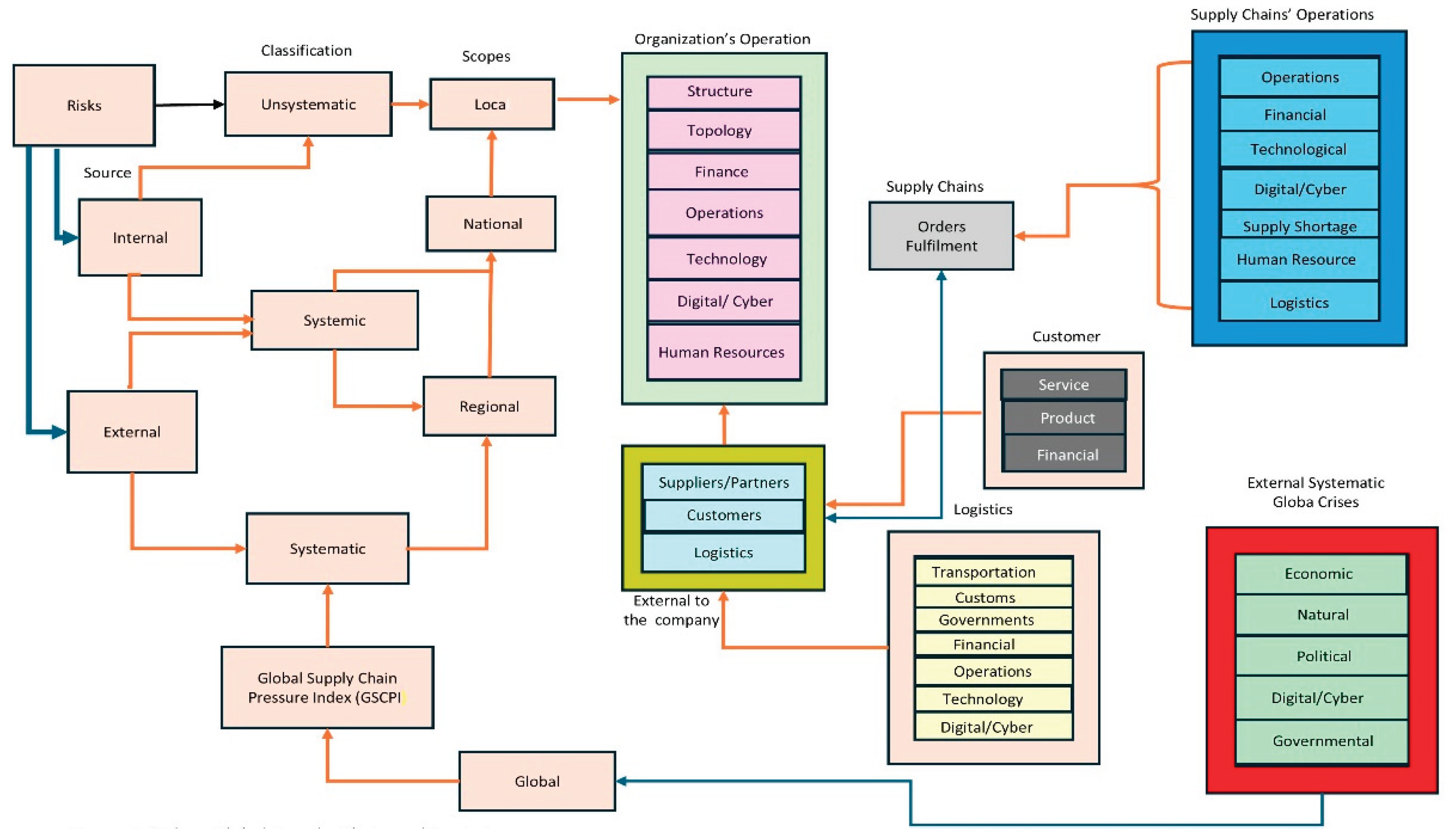
Disclaimer/Publisher’s Note: The statements, opinions and data contained in all publications are solely those of the individual author(s) and contributor(s) and not of MDPI and/or the editor(s). MDPI and/or the editor(s) disclaim responsibility for any injury to people or property resulting from any ideas, methods, instructions or products referred to in the content. |
© 2026 by the authors. Licensee MDPI, Basel, Switzerland. This article is an open access article distributed under the terms and conditions of the Creative Commons Attribution (CC BY) license (http://creativecommons.org/licenses/by/4.0/).
Copyright: This open access article is published under a Creative Commons CC BY 4.0 license, which permit the free download, distribution, and reuse, provided that the author and preprint are cited in any reuse.


