

Submitted:
29 December 2025
Posted:
01 January 2026
Read the latest preprint version here
Abstract
Global deforestation is accelerating at an unprecedented scale, driven by interconnected economic, political, and environmental forces that threaten biodiversity, climate stability, and human well-being. This article synthesizes global datasets and recent evidence to assess the magnitude, spatial distribution, and structural drivers of contemporary forest loss, with particular emphasis on tropical regions. It addresses three core research questions: (i) What is the current scale and geographic concentration of global deforestation and permanent tree-cover loss? (ii) How do agricultural expansion, mining, climate-driven wildfires, and armed conflict interact to intensify forest degradation? (iii) How do global consumption patterns, financial systems, and governance failures—including the symbolic contradictions of U.N. climate summits hosted in major fossil-fuel-exporting and high-emission countries such as the United Arab Emirates, Azerbaijan, and Egypt—externalize deforestation pressures onto vulnerable regions? The analysis shows that permanent land-use change, extractive industries, and conflict-related governance breakdowns dominate forest loss dynamics, while climate change amplifies fire-driven destruction, exposing a widening credibility gap in global climate governance and the urgent need for enforceable, equity-centered forest protection strategies.
Keywords:
tree-cover loss
; permanent land-use change
; tropical deforestation
; armed conflicts
; biodiversity decline
; agricultural expansion
; climate-driven wildfires
; mining-related loss
; wildfires
1. Introduction
Biodiversity loss has become one of the most urgent sustainability challenges of the twenty-first century. Although scientists estimate that Earth may host between 100 million and 1 trillion species [1], only about 2 million have been formally described, underscoring how little is understood about the biological systems upon which human well-being depends [2]. The World Wide Fund for Nature’s Living Planet Report shows that nearly three-quarters of global wildlife populations have disappeared in just five decades, a level of ecological decline that now disrupts ecosystem integrity, food systems, and economic stability worldwide [3].
Today, roughly five million hectares of forest are destroyed each year, with 95% of this loss occurring in tropical regions [2]. Socioeconomic pressures—from population growth and rising GDP per capita to disruptive shocks such as the COVID-19 pandemic and the 2008 financial crisis—continue to shape where and how quickly forests disappear. Research shows that population size, economic development, colonial history, geographic conditions, and existing forest cover all influence deforestation differently in countries with large versus limited forest resources [4]. Meanwhile, industrial activities such as logging, mining, and large-scale agriculture keep pushing deeper into forest landscapes, driven by soaring global demand for beef, palm oil, timber, soy, and paper, and accelerating destruction at an unprecedented scale.
A study published in Nature indicates that high-income economies—including the United States, the United Kingdom, Japan, China, Germany, and France—satisfy a substantial portion of their commodity demand through international supply chains, which are associated with considerably higher biodiversity loss abroad compared to domestic impacts, estimated to be roughly fifteen times greater. Consumption-based analyses further suggest that demand from the United States and the United Kingdom alone corresponds to approximately 13% of global forest loss occurring outside their national boundaries [5]. Similar patterns are observed in the mining sector, where a limited number of countries account for over half of mining-related deforestation globally, often in locations distant from the point of consumption. Within this context, the European Union represents a notable example, as imports are estimated to constitute approximately 85% of its total deforestation footprint, largely externalized to other regions [6].
According to recent analysis by Global Canopy, in 2024, 150 major financial institutions directed nearly USD 9 trillion toward sectors associated with deforestation risk [7]. An assessment of the 500 most influential non-financial corporations further identifies nine forest-risk commodities—beef, leather, soy, palm oil, timber, pulp and paper, cocoa, coffee, and rubber—as collectively responsible for more than two-thirds of global forest loss [8]. At the policy level, the implementation of regulatory measures has encountered challenges. For example, the European Union’s Deforestation Regulation, adopted in April 2023 to enhance supply-chain accountability, has experienced delays due to a combination of international trade considerations, domestic stakeholder engagement processes, disruptions associated with the war in Ukraine, and institutional complexities within the European Parliament [9,10].
1.1. Forest Decline and Its Multidimensional Impacts on People and Planet
Forests—home to more than 80 percent of the world’s threatened species—remain central to global sustainability because they support food security, economic stability, and the livelihoods of more than 1.6 billion people, including nearly 70 million Indigenous Peoples [11]. Yet more than one-eighth of global greenhouse gas emissions now arises from deforestation and forest degradation, linking ecosystem collapse directly to climate instability [12].
Deforestation amplifies environmental stress by increasing pollution, disrupting water and carbon cycles, and accelerating climate change. These cascading pressures trigger inflammation and oxidative stress, elevating the risk of hypertension, cardiovascular disease, and other non-communicable diseases. Research in Nature indicates that deforestation-driven erosion and rising chemical pollution contaminate soil, air, and water, intensifying exposure pathways responsible for an estimated 5.5 million pollution-linked cardiovascular deaths worldwide in 2019 [13]. Another Nature study shows that tropical deforestation contributes to dangerous local warming, resulting in over 28,000 heat-related deaths annually and exposing hundreds of millions—particularly in Southeast Asia, Africa, and the Americas—to increasing heat stress and sharply reduced safe working hours [14].
A global meta-analysis found that greater exposure to forests and green spaces is associated with lower risks of asthma, lung cancer, and COPD mortality, with protective effects influenced by age and proximity to greenery [15]. Country-level analyses across 230 nations also reveal that larger forested areas are significantly linked to lower prevalence of mental health disorders [16]. Table 1 reflects key health impacts linked to deforestation across different regions.
The World Health Organization estimates that current global deforestation trends impose economic losses of approximately $10 trillion annually, largely through increased healthcare expenditures and reduced agricultural productivity associated with declining pollinator populations [27]. Complementing this assessment, the World Bank projects that continued deforestation could reduce global GDP by about $2.7 trillion per year, with low- and lower-middle-income countries experiencing the most pronounced effects, including potential GDP losses exceeding 10 percent by 2030 [28].
Deforestation affects livelihoods, food security, and cultural practices in local and Indigenous communities by reducing access to clean water, fertile soils, and stable climatic conditions. Although forest conversion can generate short-term economic returns, evidence indicates that long-term costs—such as the loss of ecosystem services, land degradation, and heightened exposure to natural hazards—generally outweigh these benefits [29]. Forest loss is also associated with biodiversity decline, environmental pollution, altered rainfall regimes, increased soil erosion, and greater frequency and intensity of floods and droughts. These processes can contribute to population displacement, livelihood disruption, and elevated risks of zoonotic disease transmission [30]. In rural areas, deforestation is linked to higher poverty levels, widening social inequalities, and reduced community resilience, underscoring the importance of effective conservation strategies and inclusive local engagement [31]. At the firm and financial-system levels, deforestation-related risks include supply chain disruptions, legal and reputational exposure, and increased credit and market risks [32]. Taken together, these effects have implications for macroeconomic stability through impacts on productivity, price stability, and financial-sector resilience.
1.2. Historical and Contemporary Dynamics of Human-Driven Deforestation
Human-driven deforestation—rooted in land clearing for crops and livestock since as early as 10,000 BC—has become one of the planet’s most enduring and damaging environmental legacies [33]. Half of the world’s forests disappeared between 8,000 BCE and 1900, yet the remaining half vanished in only the last century, underscoring an escalating sustainability crisis [34]. Prior to the twentieth century, temperate regions such as Europe, Russia, China, North America, and Australia absorbed most of this pressure, driven by rising demand for food, fuel, and timber [35].
Between 1800 and 1914, global forest loss increased markedly, driven less by population growth than by rising European demand for commodities and raw materials that reconfigured land-use patterns across multiple regions [36]. This market-oriented transformation altered ecosystem functions, reduced natural capital, and increased the integration of rural economies—particularly in non-Western regions—into increasingly volatile global supply chains. Over the past three centuries, an estimated 1.5 billion hectares of forest, an area roughly one and a half times the size of the United States, have been cleared, illustrating a long-standing sustainability trade-off in which economic expansion has frequently coincided with declining ecological stability, long-term resilience, and biodiversity essential to human well-being [34].
The magnitude and pace of tropical forest loss highlight a persistent sustainability concern. Data from the University of Maryland’s GLAD Lab, disseminated through the World Resources Institute’s Global Forest Watch platform, indicate that approximately 6.7 million hectares of tropical primary forest were lost in 2024, representing a more than 150 percent increase relative to levels observed two decades earlier and the highest annual loss in twenty years. This area is comparable to the size of Panama and nearly twice that of Belgium or Taiwan, and is almost double the forest loss recorded in the preceding year [37,38].
Brazil accounted for the largest share of this loss, with forest decline comparable in area to Belgium or the U.S. state of Massachusetts, largely associated with extensive wildfire activity [39]. Bolivia experienced a 200 percent increase in primary forest loss, exceeding the area of Montenegro and driven primarily by fire rather than the agricultural expansion that characterized earlier periods [40]. Interactions among climate change, land-use practices, and dry conditions linked to El Niño appear to be reinforcing forest vulnerability in the Amazon, increasing the likelihood and severity of wildfires and contributing to longer-term ecosystem degradation [38].
The forests of the DRC, which form a major component of the Congo Basin—the world’s second-largest rainforest—cover approximately two-thirds of the country and support the livelihoods of more than half of its predominantly rural population through food, fuel, and income generation [41]. At the same time, pressures from mining, rapid urban growth, and recurrent conflict have led to substantial landscape fragmentation, making the DRC a critical context for examining thresholds of ecological change and the effects of instability on forest dynamics [42]. In 2024, primary forest loss in the DRC increased by approximately 150 percent, totaling an area comparable to the size of Delaware and driven by a combination of conflict-related pressures and widespread wildfires [43].
In Indonesia, deforestation between 1950 and 2017 was most pronounced at lower elevations and in coastal zones, largely reflecting the expansion of plantation agriculture, with the exception of Java and Bali, where forest loss occurred earlier. Although protected areas moderated overall deforestation rates, they were not immune to edge effects and associated degradation as plantation frontiers advanced [44]. In 2024, Indonesia experienced forest loss comparable in area to Luxembourg or the Greater Tokyo region, with nearly half of this loss lacking a clearly identified proximate driver [45,46].
1.3. Global Drivers of Accelerating Deforestation and Tree-Cover Loss
Biodiversity faces a significant sustainability challenge due to the continuing loss of forest ecosystems. As the global population has surpassed 8 billion, pressures on forest resources have intensified, contributing to accelerating rates of deforestation. Rapid urbanization and industrial expansion are key drivers of this trend, as the growth of cities, transportation networks, and associated infrastructure increasingly encroaches on previously intact forest areas. Empirical evidence indicates that rising demand for land and forest-based resources has increased both legal and illegal logging activities, resulting in fragmented forest landscapes that are more ecologically isolated and vulnerable [47]. In parallel, industrial activities—including timber extraction, mining operations, and large-scale commercial agriculture—continue to account for a substantial share of forest conversion, while rising global consumption of commodities such as beef, soy, palm oil, and paper products further intensifies forest loss and accelerates broader ecosystem degradation [48].
1.4. Permanent Land-Use Change: A Major Driver of Global Forest Loss
Between 2001 and 2024, over a third of global tree-cover loss—168 million hectares, an area larger than Mongolia—was likely driven by permanent land-use change, according to the World Resources Institute using Global Forest Watch data (Figure 1). The impact is even more pronounced in tropical primary rainforests, where more than 60% of forest loss—50.7 million hectares, roughly the size of Thailand—can be attributed to permanent land-use conversion [49].
2. Data Sources and Methodology
2.1. Data Sources and Study Design
The study adopts a mixed-methods design that integrates quantitative analysis of large-scale environmental datasets with qualitative synthesis of peer-reviewed scholarship and authoritative institutional reports. Quantitative data were drawn from well-established and publicly accessible sources, including Global Forest Watch, devised by the University of Maryland’s Global Analysis and Discovery (GLAD) lab, the World Resources Institute, FAO remote-sensing assessments, World Bank databases, and reports produced by the World Health Organization and the World Wide Fund for Nature (WWF). These sources were selected for their methodological transparency, global coverage, and frequent use in high-impact environmental research. Together, they provide a robust empirical foundation for examining patterns and drivers of deforestation across spatial and temporal scales.
2.2. Quantitative Analytical Framework
The quantitative component employed descriptive statistics, trend analyses, and spatial comparisons to assess tree-cover loss, permanent land-use conversion, wildfire impacts, mining-related deforestation, and conflict-associated forest degradation across regions and time periods. Where appropriate, reported outputs from advanced modelling approaches—such as neural-network classifications and spatial regression analyses presented in the cited literature—were interpreted to identify dominant drivers and recurring patterns. Priority was given to recently published peer-reviewed studies indexed in established databases, including PubMed, Embase, Scopus, Web of Science, and the Cochrane Central Register, as well as leading journals published by Elsevier, Springer, Wiley Online Library, and Wolters Kluwer. This approach ensured analytical consistency while grounding the assessment in current scientific evidence.
2.3. Qualitative Synthesis and Validation
The qualitative component consisted of a structured narrative review of high-impact academic articles, policy documents, and credible investigative reports. This review was used to contextualize the quantitative findings, examine underlying political-economic drivers, and assess associated social, health, and governance implications of deforestation. Cross-referencing and triangulation across multiple data sources were employed to enhance the validity and reliability of the interpretations. In addition, recent media reports were selectively incorporated to capture emerging trends and developments in contexts where peer-reviewed evidence remains limited, while maintaining a cautious and critical approach to their use.
3. Literature Review
3.1. Agricultural and Industrial Drivers of Global Deforestation
Over the past three decades, crop and cattle production have become dominant drivers of global deforestation, progressively reshaping landscapes across tropical and subtropical regions. Between 2000 and 2018, FAO’s global Remote Sensing Survey found that agriculture—particularly livestock grazing—accounted for nearly 88% of forest loss, a sharp escalation compared to earlier estimates [50].
Palm oil cultivation, livestock grazing, and the production of beef and animal feed now account for more than 40% of global deforestation [51], with cattle pasture alone eliminating over 45 million hectares between 2001 and 2015 and soy cultivation for animal feed clearing an additional eight million hectares—together an expanse slightly larger than Spain and just under the size of Texas [52].
In South America, for instance, a region producing a quarter of the world’s beef, cattle production surged 70% between 1990 and 2020, while 90 million hectares of degraded pasture continue to drive deforestation [53]. Overall, agricultural expansion—including both crop and livestock production—was responsible for 80–86% of global deforestation between 2001 and 2022 [48,54] and from 1990 to 2020, global forests declined by 7.1%, with agricultural expansion and population growth identified as the primary forces behind this loss [55].
3.2. Accelerating Forest Loss Driven by Climate and Human-Caused Wildfires
Although the role of fire in forest loss has been quantified at regional and global scales using diverse satellite sensors, these estimates remain inherently uncertain. Beyond naturally occurring wildfires, humans frequently use fire as a low-cost tool for land management and agricultural conversion, intensifying its ecological impact. Between 2001 and 2024, fires were responsible for approximately 150 million hectares of tree-cover loss—roughly the size of Mongolia or four times that of California—accounting for nearly 29% of global deforestation, with the remaining 71% driven by other human and natural factors (Global Forest Watch Live Data) (Figure 2). Alarmingly, this trend is accelerating: the annual global area of fire-induced forest disturbance in 2023–2024 was 2.2 times higher than the 2002–2022 average and three times higher within tropical regions. At the continental level, North America saw the most pronounced escalation, with fire-related forest disturbance increasing 3.7-fold over the past two decades, followed by Latin America at 3.4-fold and Africa at 2.4-fold [56].
Climate change is increasingly associated with elevated wildfire risk, with recent evidence indicating that in some regions fires are 25 to 35 times more likely than they would be under cooler climatic conditions [57]. Data from the University of Maryland’s GLAD Lab indicate that approximately 74.9 million hectares of forest—an area comparable to France, or nearly one and a half times the size of Germany—burned globally during 2023 and 2024 [56]. Kelley et al. (2025) further estimate that at least 3.7 million square kilometers of land, exceeding the land area of India, were affected by fire between March 2024 and February 2025 [57]. Wildfires accounted for nearly half of this total forest disturbance [58].
Although wildfires occur naturally in some ecosystems, fire in tropical forests is largely associated with human activities, particularly land clearing for agriculture, and often spreads beyond intended areas into surrounding forests [58]. Estimates suggest that approximately half of global forest loss results from the combined effects of natural and anthropogenic fire, including wildfires and intentional burning linked to agricultural expansion and shifting cultivation practices [59,60]. In Indonesia, for example, about 60% of forest areas burned during 2015–2016 were later converted to palm oil plantations, illustrating the relationship between fire use and land-use change [61]. Comparable patterns have been documented in parts of Africa, where the use of fire to expand pastureland contributes to ongoing deforestation and landscape transformation [62].
During severe fire years such as 2016 and 2024, more than a quarter of all fire-related forest loss occurred in tropical regions [56]. Tropical primary forests were particularly hard hit, with fires accounting for nearly half (49.5%) of their total loss in 2024, nearly four times the 13.3% recorded in 2023 [63], representing an 80% increase in loss year-over-year (Figure 3). Analyses from the University of Maryland further show that the world was losing forest cover at a rate equivalent to 11 football fields every minute in 2022 [64], a pace that surged to 18 football fields per minute by 2024 [37].
3.3. Mining Expansion and the Global Forest Crisis
Global mining activities continue to expand rapidly, driven by the pursuit of mineral resources, while the ecological value of intact forest ecosystems—critical for biodiversity and human well-being—remains underappreciated. Despite international commitments to environmental conservation, resource extraction persists in many regions, including areas of high ecological sensitivity [65,66,67,68,69,70]. Researchers from the WWF identifies mining as the fourth-largest driver of deforestation, with indirect effects potentially impacting up to one-third of global forest ecosystems. The pace of mining-related deforestation has increased markedly in recent decades, with over one-third of associated forest loss in the past 20 years occurring within the last five, a trend projected to continue [6]. Data presented at the EGU General Assembly 2025 indicate that between 2001 and 2023, 236,028 mining sites worldwide corresponded with approximately 9,765 km² of deforested land—comparable in size to Puerto Rico—with nearly half of these areas attributed to unregistered mining operations [71].
Since 2001, global mining activity has expanded by more than 50%, fueled by surging demand for gold, coal, lithium, cobalt, and other industrial minerals [72]. This rapid growth has intensified pressure on forests in every region—from the Congo Basin to the boreal woodlands of Russia. Between 2001 and 2020 alone, mining caused the permanent loss of nearly 1.4 million hectares of tree cover, an area roughly the size of Montenegro [73]. A separate global analysis found that mining activities contributed to the loss of 16,785.90 km² of forest between 2000 and 2019, exceeding the land area of Hawaii [74].
By 2022, Russia, China, Australia, the United States, and Indonesia together accounted for nearly half of global land allocated to mining. Between 2000 and 2019, mining operations were associated with the loss of over 9,000 km² of forest worldwide, including 1,374 km² in Brazil and 1,272 km² in Indonesia, marking these countries as prominent areas of mining-related forest decline [75]. Overall, just 11 countries—including Indonesia, Brazil, Russia, the United States, and Canada—contributed to more than 85% of global deforestation attributable to mining activities (Figure 4) [73].
The temporal patterns of mining-related deforestation are particularly pronounced in tropical regions. Although these regions contain less than 30% of the world’s mining sites, they account for approximately 62% of all forest loss associated with mining [6,73]. This disproportion is evident in observed land-use changes: open-pit gold mines in the Amazon can clear thousands of hectares of rainforest within a decade, while the expansion of coal operations in Indonesia frequently results in the rapid flattening of forested mountain areas over a few years.
According to WWF data, gold and coal extraction alone were responsible for over 71% of mining-related deforestation globally between 2001 and 2019. Indonesia is a significant contributor, with roughly 370,000 hectares of tree cover removed—predominantly for coal extraction—representing more than one-fifth of mining-associated forest loss worldwide [6]. The scale of deforestation has been further amplified by the expansion of nickel mining, essential for lithium-ion battery production, which grew by over 700% between 2000 and 2020 to meet global demand for electric vehicles [74,75].
In Sub-Saharan Africa, mining activities contributed to forest loss around mine sites between 2000 and 2020 at a scale comparable to the area of Jamaica or nearly that of Connecticut, reflecting a 47.5% higher loss relative to comparable non-mining regions. Annual deforestation rates increased by a factor of 2.6 following the establishment of mines. Beyond direct land clearance, associated infrastructure development and secondary land-use changes have amplified off-site forest disruption [76]. In Ghana, forests decreased by 5.9% between 2018 and 2023, coinciding with a surge in illegal gold mining of 1,917.6%, particularly pronounced between 2022 and 2023. Mined areas exhibited substantial declines in plant diversity, vegetation structure, and carbon storage [77].
In South America, mining has emerged as a significant contributor to deforestation. In Peru, gold extraction accounted for 139,169 hectares of forest loss between 1984 and mid-2025, with the Madre de Dios region experiencing the highest impacts, despite temporary reductions following Operation Mercury in 2019, according to the Monitoring of the Andean Amazon Project (MAAP) and Conservación Amazónica. Mining-related deforestation has expanded to other regions, including Huánuco, Pasco, Ucayali, Amazonas, Cajamarca, and Loreto, where nearly 1,000 dredges have facilitated rapid forest clearing within Indigenous territories and protected areas [78]. In Suriname, mining activity has increased substantially since the mid-2000s, resulting in 421.3 km² of forest loss between 1997 and 2019, with artisanal mining accounting for approximately 85% of this total [79]. Following the 2007 IACHR ruling, deforestation on Saamaka lands increased fourfold [80]. These processes have contributed to forest fragmentation, declines in vegetation greenness, and reductions in carbon sequestration. Fluctuations in gold prices—particularly following the 2008 market surge and during the COVID-19 pandemic—have further accelerated deforestation and expanded mining into previously intact forest areas [79].
Colonial histories in Brazil and the DRC have influenced the development of resource-based economies in which mining and related infrastructure are key drivers of forest loss. In the DRC, Belgium’s colonial mining policies evolved into a post-independence system dominated by foreign companies, where both artisanal and industrial mining have generated indirect deforestation rates up to 28 times greater than the area directly cleared [81]. While artisanal mining in eastern DRC directly cleared only 6.6% of 924,502 hectares between 2002 and 2018, it indirectly contributed to additional deforestation through agriculture (6.8% of 752,077 hectares) and settlements (23.9% of 23,299 hectares) surrounding mining sites [82]. Mining affects forests both directly, through excavation and tailings, and indirectly, via supporting infrastructure and supply chains, influencing land cover change, biodiversity, and hydrological systems. In Brazil, colonial patterns of plantations and mineral extraction established foundations for contemporary agribusiness and mining, resulting in extensive Amazonian forest loss [81]. Indirect deforestation associated with mining may be up to 40 times larger than direct loss [75], with Brazil ranking second globally in mining-related forest loss, totaling approximately 170,000 hectares between 2001 and 2020 [6]. Small-scale and informal gold mining has contributed to road development, river pollution, and forest fragmentation in remote Amazonian areas [6].
Globally, mining, resource extraction, and conflict intersect in shaping forest landscapes. In conflict-affected Myanmar, a handful of mining sites in the eastern region bordering China exported rare earths more than twice between 2021 and 2023. Since then, mining has expanded rapidly, now spanning an area roughly the size of Singapore. In Kachin State, where mining is most concentrated, approximately 32,720 hectares of subtropical and moist forests across Chipwi, Momauk, and Bhamo—regions experiencing both mining activity and clashes between the Myanmar junta and the Kachin Independence Army—were lost between 2018 and 2024 [83].
3.4. Armed Conflicts and Post-War Drivers of Forest Loss
Armed conflicts constitute a significant but often under examined factor contributing to forest loss, with implications for ecological stability and human livelihoods. Such conflicts can accelerate deforestation—particularly in protected areas—through mechanisms including reduced environmental governance, subsistence-driven resource use by local populations, and extended military presence [84]. During the Vietnam War, extensive use of Agent Orange resulted in the defoliation of millions of acres, substantially reducing tree cover and local food resources [85]. In Gaza and the West Bank, the removal of olive trees has affected agricultural productivity and economic resilience [86]. Between 2010 and 2019, Syria experienced the loss of approximately one-fifth of its forested areas due to a combination of direct impacts, such as fires from shelling, and indirect pressures including increased reliance on wood for fuel and weakened governance structures [87]. Similarly, in Sub-Saharan Africa, protected areas including Virunga, Gorongosa, and multiple reserves in Liberia have undergone partial deforestation associated with armed conflicts [88].
Cross-border and internal disputes, together with complex dynamics of land use and allocation, have contributed to multidimensional deforestation in India. Since 2001, the five Northeast states—Assam, Mizoram, Nagaland, Manipur, and Meghalaya—have collectively lost over 1.44 million hectares of forest, approximately twice the size of Luxembourg, significantly exceeding the national average [89]. A substantial portion of this loss is associated with historical boundary issues and localized conflicts: tensions between Assam and Nagaland, rooted in colonial-era demarcations, influence community reliance on forest resources [90,91], while ethno-religious conflicts in Assam’s Bodoland region have been linked to organized exploitation of forest areas, including unauthorized timber extraction and population displacement [92,93]. In Manipur, deforestation is related to land use disputes, cross-border migration from Myanmar, and cultivation of poppy [94]. In Mizoram and Meghalaya, practices such as shifting cultivation (Jhum), mining, and quarrying are principal contributors to forest loss [95,96], shaping competition over forested land among local tribal communities, settlers, and commercial actors. Additionally, refugee influxes in Mizoram and Manipur have resulted in clearing of forested areas for settlements and subsistence agriculture, although data on these processes remain limited.
Armed conflicts can contribute to deforestation both domestically and across national borders. Between 1990 and 2020, Myanmar experienced a loss of over 11 million hectares of forest cover in three primary phases, influenced by conflict dynamics, post-Cold War geopolitical shifts, and cross-border resource extraction [97,98]. In Tanintharyi, military operations, ceasefires, and Thailand-supported logging and infrastructure projects facilitated timber extraction and oil palm development; in Kayin, counterinsurgency operations, road construction, and subsequent ceasefire-related investments contributed to cycles of displacement and forest clearing; and in Kachin, ceasefires, changing alliances, and commercial engagement with China promoted logging, agribusiness, and mining activities [99]. These processes led to spatially uneven patterns of forest loss. Following the 2017 Rohingya refugee movement into Bangladesh, approximately 2,300–7,000 hectares of forest surrounding Cox’s Bazar were cleared, with daily losses equivalent to three football fields, placing additional pressure on local resources [100,101,102,103]. Reliance on forest resources for fuelwood, limited educational opportunities, and insecure livelihoods reinforced interactions between conflict and deforestation. Furthermore, between 2021 and 2024, approximately 96% of Myanmar’s tree cover loss occurred within natural forests, amounting to roughly 1.2 million hectares, according to Global Forest Watch’s dynamic data.
Armed conflicts, when associated with illicit crop production used to finance warfare, have contributed to increased deforestation, with notable ecological and social implications. In Myanmar’s Shan State, ongoing conflicts corresponded with an expansion of opium poppy cultivation, positioning the country as the world’s largest opium producer at 1,080 metric tons in 2023, while contributing to deforestation, water scarcity, soil erosion, and elevated landslide risks [104]. In Lao PDR, approximately 44% of poppy plots were situated within 10 km of protected areas, including 11% within designated reserves, and nearly half of recently deforested lands had been cleared within three years to accommodate opium cultivation [105].
Between 2000 and 2015 in Colombia, patterns of deforestation closely aligned with conflict intensity and proximity to illegal coca plantations, particularly in ecologically sensitive regions such as Tumaco, Catatumbo, San Lucas, La Macarena, and the Sierra Nevada. While armed conflict and coca cultivation each independently influenced forest loss, their combined effect was comparatively smaller than that of other drivers. Following the peace accord, areas with limited governance experienced renewed forest loss associated with localized conflicts [106]. Across Central America, narcotics-related deforestation—often referred to as “narco-deforestation”—has transformed extensive areas of tropical forest into agricultural land for illicit economic purposes, accounting for up to 30% of annual forest loss in Nicaragua, Honduras, and Guatemala. Notably, 30–60% of this deforestation occurred within protected, biodiversity-rich areas, underscoring the environmental significance of conflict-linked illicit agriculture [107].
While armed conflicts can temporarily reduce human pressure on ecosystems, these effects are typically short-lived and often offset by deforestation and land-use changes in other areas, as observed in Ukraine’s disrupted agricultural sector [84]. During the first two years of the war with Russia, Ukraine experienced a loss of nearly 600 square miles of forest—approximately twice the size of New York City—illustrating how quickly conflict can contribute to ecosystem degradation [108]. As natural gas supplies tightened and prices increased, households and industries across Europe increasingly relied on fuelwood and biomass for energy [109,110,111,112,113]. Concurrently, some governments relaxed logging regulations or accelerated timber auctions to stabilize energy markets, placing additional stress on already vulnerable forests. Rising energy costs, coupled with EU bioenergy incentives, have encouraged the use of wood even within protected areas [114]. Additionally, the conflict has contributed to higher global food prices, prompting the expansion of cropland—including in Europe’s fallow lands and in countries such as the United States, Brazil, China, and India—posing risks to biodiversity, particularly in tropical regions [115].
Deforestation frequently accelerates after conflicts due to reconstruction activities, limited governance capacity, and renewed commercial logging. For instance, annual forest loss in Nepal, Sri Lanka, Ivory Coast, and Peru increased by 68% during the five years following conflicts, significantly exceeding the global average of 7.2%, primarily driven by illegal logging and agricultural expansion [116]. Integrating local community perspectives into post-conflict land management can influence forest conservation outcomes. In Colombia’s post-conflict Antioquia region, for example, community attitudes toward peacebuilding and reconciliation were associated with deforestation patterns, with areas characterized by pessimistic perceptions experiencing a 22.09% lower annual deforestation rate compared to areas with neutral perceptions [117].
In Colombia however, armed conflict, peacebuilding processes, and deforestation exhibit a complex interrelationship. Municipalities experiencing higher levels of violence have also recorded the greatest forest loss, with coca-cultivation areas showing deforestation rates up to three times higher than non-priority zones during 2016–2019 [118]. Limited state presence and delays in implementing the 2016 Peace Agreement have facilitated the expansion of armed groups and illicit economies, influencing both security dynamics and forest cover change. National deforestation increased by 35% in 2024, rising from 793 km²—a 23-year low—to 1,070 km², with conflict-affected regions in the Amazon accounting for approximately 60% of the total loss [119]. Governance challenges in areas such as Tinigua and Sierra de la Macarena have enabled large-scale forest clearing, land acquisitions, and unauthorized activities, representing roughly one-quarter of the country’s 2024 deforestation. Post-accord power vacuums continue to shape forest dynamics, as observed in the 2017 deforestation surge following the FARC peace agreement and in the medium-scale clearing of 2,700 hectares in Chiribiquete National Park and the Yarí–Yaguará II Reserve during 2024–2025 [120].
3.5. A Climate Summit and the Amazon: Examining the Gap Between Climate Commitments and Environmental Outcomes
The COP30 conference highlighted ongoing challenges in achieving sustainable development, drawing attention to the limited tangible outcomes of international climate negotiations. While high-income countries committed to tripling adaptation finance by 2035, measures to phase out fossil fuels, reduce deforestation, and regulate critical minerals faced significant delays or resistance [121]. Belém, in the state of Pará—already affected by persistent deforestation, artisanal gold mining, pressures on Indigenous territories, and mercury contamination of waterways [122,123,124,125,126]—illustrated the tension between global climate commitments and local environmental realities. Conference-related activities in Belém, including substantial infrastructure developments that required the removal of approximately 100,000 Amazonian trees to accommodate delegates [127,128], highlighted discrepancies between stated sustainability objectives and implementation practices, raising questions about the alignment of international climate governance with environmental outcomes.
This phenomenon reflects broader trends in tropical forest loss. Natural processes, such as the transport of nutrient-rich dust from the Sahara over distances exceeding 6,000 kilometers [129], support the Amazon’s ecological productivity, yet human-driven land-use changes continue to result in extensive deforestation. Between 2000 and 2018, the Amazon experienced forest loss equivalent to an area larger than Spain [130], and over the past four decades, cumulative deforestation has approached the combined size of Germany and France [131]. Key drivers include cattle ranching, soy cultivation, logging, mining, and agricultural expansion, which collectively contribute to increasing pressure on the region’s biodiversity. FAO data indicate that Brazil lost an average of 2.9 million hectares of forest per year between 2015 and 2025 (Figure 5) [132].
The environmental changes associated with deforestation carry a range of measurable impacts. For example, the World Bank projects that continued deforestation in the Amazon—including the clearing of transitional ecosystems such as the Cerrado savanna and the Pantanal wetlands—could result in annual economic losses for Brazil of approximately $317 billion, a value roughly seven times the combined revenues from agriculture, logging, and mining [133]. Research published in Nature indicates that in the Brazilian Amazon, the removal of a single square kilometer of forest is associated with an increase of 27 malaria cases [134]. In addition, another study in Nature suggests that forest preservation could reduce local hospitalization expenditures, potentially generating nearly $6 million in annual savings [135].
4. Discussion and Results
The analysis indicates that global deforestation is not solely driven by local land-use decisions but reflects broader structural influences, including global demand, financial incentives, governance constraints, and geopolitical instability. The synthesized evidence shows that deforestation and permanent tree-cover loss remain highly concentrated in tropical regions, with both scale and intensity continuing to increase rather than stabilize. Estimates from Global Forest Watch and the University of Maryland’s GLAD Lab indicate that roughly 515 million hectares of tree cover were lost globally between 2001 and 2024, with nearly one-third attributable to permanent land-use change rather than short-term disturbance. A substantial proportion of this loss occurred in tropical primary forests, which accounted for more than 60 percent of permanent conversion, suggesting that highly biodiverse and carbon-rich forest ecosystems are being permanently transformed [49,56]. Spatial patterns further reveal that the greatest losses are concentrated in the Amazon Basin, the Congo Basin, and Southeast Asia, reinforcing the conclusion that modern deforestation is increasingly focused in regions with limited capacity to absorb or offset its environmental, social, and economic consequences.
Addressing the first research question, the results show that modern deforestation is no longer a widely dispersed global issue but is increasingly concentrated in particular regions and primarily driven by permanent land-use changes. Countries such as Brazil, the DRC, Indonesia, and Bolivia together account for a significant portion of recent tropical forest loss, with 2024 recording the highest levels of primary forest destruction seen in the past twenty years [37,38]. The scale of this loss highlights a clear disconnect between international pledges to halt deforestation by 2030 and the actual trajectories observed on the ground. Overall, the evidence points to an expanding gap between declared policy goals and the capacity for implementation, especially in forest-rich low- and middle-income nations.
In relation to the second research question, the results demonstrate significant interactions among agricultural expansion, mining activities, climate-driven wildfires, and armed conflict, which together contribute to reinforcing patterns of forest loss. Agricultural expansion remains the primary driver, accounting for approximately 80–90% of global deforestation, largely associated with cattle grazing, soy production, and oil-palm cultivation [50,54]. These pressures are further intensified by climate change, which increases the frequency and severity of drought conditions and heightens wildfire risk. Fire-related tree-cover loss reached historically high levels in 2023–2024, with wildfires accounting for nearly half of tropical primary forest loss in 2024—almost four times the proportion recorded in 2023 [65].
Mining constitutes a comparatively smaller yet increasingly significant driver of global deforestation, particularly when indirect effects are taken into account. Although direct mining-related forest loss since 2001 is estimated to cover an area comparable to Puerto Rico, associated indirect impacts—including road construction, settlement expansion, and secondary land-use change—may increase the affected area by as much as fortyfold [6,75]. The findings indicate that tropical regions, despite hosting a smaller share of global mining sites, account for nearly two-thirds of mining-related forest loss, reflecting a marked spatial imbalance in environmental impacts. Growing demand for transition minerals such as cobalt, lithium, and nickel further complicates these dynamics, suggesting that climate mitigation pathways could unintentionally intensify deforestation pressures in the absence of robust governance and regulatory safeguards.
Armed conflict functions as a significant cross-cutting factor that amplifies forest degradation across multiple regions. Evidence from Myanmar, the DRC, Colombia, and parts of South Asia indicates that conflict is associated with weakened environmental governance, population displacement, and increased dependence on forest resources for subsistence and informal economic activities [84,87]. Post-conflict contexts appear particularly susceptible, as deforestation rates often increase during reconstruction phases due to expanded logging, agricultural conversion, and infrastructure development [82]. Together, these patterns suggest that deforestation should be examined not only as an environmental outcome but also as a structural indicator of governance capacity and political stability.
The third research question highlights the role of global consumption patterns, financial systems, and governance failures in externalizing deforestation pressures onto vulnerable regions. Consumption-based analyses indicate that high-income economies generate biodiversity loss abroad at rates approximately fifteen times higher than within their own borders, largely through imports of forest-risk commodities [5]. The European Union alone is estimated to externalize nearly 85% of its deforestation footprint, while a small group of wealthy nations accounts for more than half of mining-related forest loss globally [6]. These patterns reflect structural imbalances in global trade and finance rather than isolated national policy failures.
Financial flows further reinforce these dynamics. In 2024, major global financial institutions channeled nearly USD 9 trillion into sectors associated with deforestation risk, despite widespread public commitments to sustainability [7,8]. Delays in implementing regulatory frameworks—most notably the European Union Deforestation Regulation—have weakened supply-chain accountability and signaled limited political willingness to confront powerful commercial interests [9,10]. The results indicate that voluntary corporate pledges remain insufficient without enforceable legal and financial consequences.
Within this context, the selection of recent host countries for United Nations climate conferences has drawn scholarly attention to the alignment between summit objectives and national policy environments. COP27 in Egypt, COP28 in the United Arab Emirates, and COP29 in Azerbaijan generated discussion regarding the influence of fossil-fuel sectors, governance conditions, and the pace of progress on deforestation-related commitments [67,69]. Several analysts suggest that repeated hosting of climate summits in countries with high greenhouse-gas emissions and significant hydrocarbon dependence may shape perceptions of the effectiveness and credibility of global climate governance frameworks [136,137].
At COP27 in Egypt, negotiations on key climate mechanisms, including the establishment of the “loss and damage” framework, took place within a complex political and environmental context that influenced stakeholder participation and negotiation dynamics [138,139]. At COP28, the appointment of Sultan Al-Jaber, Chief Executive Officer of the United Arab Emirates’ state-owned oil company ADNOC, as conference president prompted discussion among researchers and civil society groups regarding governance safeguards and institutional independence [140]. COP29 in Baku, Azerbaijan, similarly attracted attention concerning governance capacity, human rights considerations, and the country’s continued reliance on fossil-fuel production, alongside reports of restrictions affecting some observers and critics [141]. At COP30 in Belém, Brazil, infrastructure development associated with hosting the summit reportedly involved the clearance of an approximately eight-mile stretch of Amazon forest to accommodate event-related facilities [142]. Although some fact-checking assessments have questioned the scale or attribution of these impacts, media coverage and public responses nonetheless contributed to renewed scrutiny of leadership and implementation within global climate governance processes.
Taken together, these findings support an interpretation of contemporary deforestation as a process of ecological externalization embedded within global political-economic systems. Forest-rich regions disproportionately absorb the environmental and health burdens associated with global consumption patterns, energy transitions, and geopolitical disruptions that are largely driven beyond their borders. The interaction of agricultural expansion, mining activities, climate-driven wildfires, and armed conflict generates reinforcing dynamics that accelerate forest loss, particularly in tropical ecosystems. In the absence of binding international mechanisms that effectively align trade, financial flows, and climate policy with forest conservation objectives, current deforestation trajectories are likely to persist.
5. Conclusions
This study synthesizes recent global evidence to examine the scale, spatial concentration, and interacting drivers of deforestation and permanent tree-cover loss, addressing the three core research questions outlined at the outset. The findings indicate that contemporary deforestation remains heavily concentrated in tropical regions and is increasingly characterized by permanent land-use conversion rather than temporary disturbance. Agricultural expansion continues to dominate as the primary driver, while mining activities, climate-driven wildfires, and armed conflict interact in ways that intensify forest degradation and reduce ecosystem resilience. These pressures are further amplified by global consumption patterns and financial systems that externalize environmental costs to forest-rich, lower-income regions.
The analysis also highlights persistent governance gaps that limit the effectiveness of existing policy commitments and regulatory frameworks. In particular, the location and context of recent international climate summits underscore broader challenges in aligning global climate governance with measurable reductions in deforestation. Taken together, the evidence suggests that forest loss should be understood as a systemic outcome of interconnected economic, political, and environmental processes rather than isolated local failures. Addressing these dynamics will require coordinated action across supply chains, finance, and land-use planning.
Future efforts should prioritize enforceable deforestation-free trade measures, stronger financial disclosure and accountability mechanisms, integration of forest protection into climate adaptation and mitigation strategies, and targeted support for governance capacity in high-risk regions. Continued investment in transparent data systems and interdisciplinary research will also be essential to monitor progress and inform more effective forest conservation and restoration policies.
Supplementary Materials
The following supporting information can be downloaded at the website of this paper posted on Preprints.org.
Financial Support
None.
Declaration of Patient Consent
N/A.
Data Availability Statement
The data used in this study were sourced from the Global Forest Watch Dashboard, developed by the Global Analysis and Discovery (GLAD) Lab at the University of Maryland. These data are publicly available at: https://www.globalforestwatch.org/dashboards/global/.
Conflicts of Interest
None.
Abbreviations
The following abbreviations are used in this manuscript:
| COPD: | Chronic Obstructive Pulmonary Disease |
| DRC: | Democratic Republic of the Congo |
| FAO: | Food and Agriculture Organization of the United Nations |
| FARC: | Revolutionary Armed Forces of Colombia |
| IACHR: | Inter-American Commission on Human Rights |
| Lao PDR: | Lao People’s Democratic Republic |
| MAAP: | Monitoring of the Andean Amazon Project |
| WRI: | World Resources Institute |
| WWF: | World Wildlife Fund |
References
- Mikołajczak, K. What is biodiversity and why does it matter? Grantham Research Institute, LSE, 2 December 2022. [Google Scholar]
- Ritchie, H. How many species are there? Our World in Data, 2022. [Google Scholar]
- Gill, V.; Briggs, H. Nature decline is now nearing dangerous tipping points, WWF warns; BBC News, 10 October 2024. [Google Scholar]
- Prochazka, P.; Abrham, J.; Cerveny, J.; Kobera, L.; Sanova, P.; Benes, D.; Fink, J.-M.; Jiraskova, E.; Primasova, S.; Soukupova, J.; Smutka, L. Understanding the socio-economic causes of deforestation: A global perspective. Frontiers in Forests and Global Change 6 2023, 1288365. [Google Scholar] [CrossRef]
- Wiebe, R. A.; Wilcove, D. S. Global Biodiversity Loss from outsourced deforestation. Nature 2025, 639(8054), 389–394. [Google Scholar] [CrossRef]
- Kramer, M.; Kind-Rieper, T.; Munayer, R.; Giljum, S.; Masselink, R.; van Ackern, P.; Maus, V.; Luckeneder, S.; Kuschnig, N.; Costa, F.; Rüttinger, L. Extracted forests: Unearthing the role of mining-related deforestation. In WWF Germany; Adelphi; WU; Satelligence, 2025. [Google Scholar]
- Thomson, E.; Barry, C.; Bellfield, H.; Birch, H.; Cenci, F. E.; Draper, S.; Dunne, S.; Fagundes, L.; Frampton, M.; Golder, K.; Gollub, E.; Goodall, L.; Kumar, O.; Mardas, N.; McKenzie, D.; Rollscane, C.; Schmidt, B.; Sinclair, A.; Swabey, R.; Tan, J.; Williams, C.; Wong, P. C. Companies profit, forests fall: Everyone pays the price. In Global Canopy; 2025. [Google Scholar]
- Thomson, E.; Birch, H.; Cenci, F. E.; Davies, H.; Draper, S.; Dunne, S.; Fagundes, L.; Golder, K.; Gollub, E.; Goodall, L.; Kumar, O.; Mardas, N.; Rollscane, C.; Schmidt, B.; Sinclair, A.; Swabey, R.; Tan, J.; Wong, P. C. Forest 500 – Finance: Deforestation is a bad investment. In Global Canopy; 2025. [Google Scholar]
- Abnett, K. United States asks EU to delay deforestation law, letter shows; Reuters, 20 June 2024. [Google Scholar]
- Bounds, A.; Hancock, A. EU delays ban on imports linked to deforestation for second time. In Financial Times; 23 September 2025. [Google Scholar]
- Neumann, M.; Raichuk, A.; Jiang, Y.; Andela, N.; Arneth, A.; Arora, V. K.; Azzari, G.; Baccini, A.; Ballantyne, A.; Barichivich, J.; Barrett, K.; Bastos, A.; Bayr, M. J.; Behrendt, T.; Bey, A.; Biederman, J. A.; Boersma, K. F.; Brando, P. M.; Brienen, R.; Broich, M.; Zhang, X. Natural forests of the world – A 2020 baseline for deforestation and degradation monitoring. Scientific Data 12 2025, 1715. [Google Scholar] [CrossRef] [PubMed]
- Grantham Research Institute on Climate Change and the Environment. What is the role of deforestation in climate change and how can ‘Reducing Emissions from Deforestation and Degradation’ (REDD+) help? London School of Economics and Political Science, 10 February 2023. [Google Scholar]
- Münzel, T.; Hahad, O.; Lelieveld, J.; Aschner, M.; Nieuwenhuijsen, M. J.; Landrigan, P. J.; Daiber, A. Soil and water pollution and cardiovascular disease. Nature Reviews Cardiology 2025, 22(2), 71–89. [Google Scholar] [CrossRef]
- Reddington, C. L.; Smith, C.; Butt, E. W.; Baker, J. C. A.; Oliveira, B. F. A.; Yamba, E. I.; Spracklen, D. V. Tropical deforestation is associated with considerable heat-related mortality. Nature Climate Change 15 2025, 992–999. [Google Scholar] [CrossRef] [PubMed]
- Tang, M.; Liu, W.; Li, H.; Li, F. Greenness and chronic respiratory health issues: a systematic review and meta-analysis. Frontiers in public health 11 2023, 1279322. [Google Scholar] [CrossRef]
- Bolton, A. V.; Montag, D.; Gallo, V. Global Forestry areas, deforestation and Mental Health: A Worldwide Ecological Study. The Journal of Climate Change and Health 6 2022, 100109. [Google Scholar] [CrossRef]
- Kishida, T.; Ito, T.; Yamamoto, Y. Deforestation and children: Consequences for paediatric malaria and educational attainment in Indonesia. The Journal of Development Studies 2025, 61(3), 424–441. [Google Scholar] [CrossRef]
- Bhowmik, A.; Hasan, M.; Redoy, Md. M.; Saha, G. Nipah virus outbreak trends in Bangladesh during the period 2001 to 2024: A brief review. Science in One Health 4 2025, 100103. [Google Scholar] [CrossRef]
- Branda, F.; Ceccarelli, G.; Giovanetti, M.; Albanese, M.; Binetti, E.; Ciccozzi, M.; Scarpa, F. Nipah virus: A zoonotic threat re-emerging in the wake of Global Public Health Challenges. Microorganisms 2025, 13(1), 124. [Google Scholar] [CrossRef]
- Singh, D. K.; Ragesh, P. R.; Kumar, S. Impact of deforestation and environmental degradation on Nipah virus outbreaks: A critical review. In Advances in computational methods and modeling for science and engineering; Elsevier, 2025; pp. 269–276. [Google Scholar] [CrossRef]
- Di Maria, C. Investigating the causal effect of deforestation on infant health through soil characteristics: A comparison of traditional and machine learning mediation analysis using simulated and Real Data. Journal of Agricultural, Biological and Environmental Statistics 2025, 30(2), 466–490. [Google Scholar] [CrossRef]
- Aguirre, J.; Rojas, P.; Yu, T. E.; Yenerall, J. Spatial spillovers and the relationship between deforestation and malaria: evidence from the Peruvian Amazon. Journal of Environmental Planning and Management 2025, 68(7), 1497–1513. [Google Scholar] [CrossRef]
- Filho, A. S. A.; Alencar, E. S.; Siqueira, G. R. S.; Fernandes, M. E. B.; Oliveira-Filho, A. B.; Simeone, D. Deforestation and visceral leishmaniasis: Linking landscape change and health in the Amazon. Acta Tropica 271 2025, 107888. [Google Scholar] [CrossRef]
- Laudares, H.; Batista, C.; Gagliardi, P. H.; Rocha, R.; Ray, N. The effect of deforestation on covid-19 transmission to indigenous peoples in Brazil: A panel fixed-effects analysis before and after vaccination. PLOS Global Public Health 2025, 5(4), e0004527. [Google Scholar] [CrossRef]
- Lu, G.; Chong, Z.; Xu, E.; Na, C.; Liu, K.; Chai, L.; Xia, P.; Yang, K.; Zhu, G.; Zhao, J.; Müller, O. Environmental, socioeconomic, and sociocultural drivers of Monkeypox transmission in the Democratic Republic of the Congo: A one health perspective. Infectious Diseases of Poverty 2025, 14(1), 7. [Google Scholar] [CrossRef] [PubMed]
- Garcia-Vara, J.; Lopez-Feldman, A.; Marquez-Padilla, F. The giving tree: Impacts of deforestation on birth outcomes in Mexico. Applied Economics Letters 2025, 32(20), 2974–2978. [Google Scholar] [CrossRef]
- World Health Organization. Biodiversity. WHO Factsheet 2025. [Google Scholar]
- Johnson, J. A.; Ruta, G.; Baldos, U.; Cervigni, R.; Chonabayashi, S.; Corong, E.; Gavryliuk, O.; Gerber, J.; Hertel, T.; Nootenboom, C.; Polasky, S. The economic case for nature: A global earth-economy model to assess development policy pathways (Report No. 35882); World Bank, 2021. [Google Scholar] [CrossRef]
- Dénes, L. D. Social, economic and environmental consequences of deforestation. Global Journal of Tourism, Leisure & Hospitality Management 2024, 1(3), 555563. [Google Scholar] [CrossRef]
- Nantale, R. M.; Akinyosoye, F. O.; Monteagudo, J.; Okrah, M. Y.; Nana, N. D. W. The impacts and mitigation strategies of deforestation globally; Liberty University Digital Commons, 2025. [Google Scholar]
- Santelices-Moya, R. The social and economic consequences of deforestation in rural communities. Forest Research 2024, 13(6), 1000545. [Google Scholar] [CrossRef]
- Almeida, E.; Lagoa, D.; Vasudhevan, T. Hidden harms: The economic and financial consequences of deforestation and its underlying drivers; CETEx and Grantham Research Institute on Climate Change and the Environment, London School of Economics and Political Science: London, 2024. [Google Scholar]
- University of Cambridge. From foraging to farming: The 10,000-year revolution. In Cambridge Research News; 23 March 2012. [Google Scholar]
- Ritchie, H. Global deforestation peaked in the 1980s. Can we bring it to an end? In Our World in Data; 2021. [Google Scholar]
- Houghton, R. A. Deforestation. In Biological and environmental hazards, risks, and disasters, 2nd ed.; Sivanpillai, R., Shroder, J. F., Eds.; Elsevier, 2023; pp. 273–275. [Google Scholar] [CrossRef]
- Global deforestation and the nineteenth-century world economy; Tucker, R. P., Richards, J. F., Eds.; Duke University Press: Durham, NC, 1983. [Google Scholar]
- Goldman, E.; Carter, S.; Sims, M. Fires drove record-breaking tropical forest loss in 2024. In Global Forest Review; World Resources Institute, 21 May 2025. [Google Scholar]
- Bourgoin, C.; Beuchle, R.; Branco, A.; Carreiras, J.; Ceccherini, G.; Oom, D.; San-Miguel-Ayanz, J.; Sedano, F. Extensive fire-driven degradation in 2024 marks worst Amazon forest disturbance in over 2 decades. Biogeosciences 2025, 22, 5247–5256. [Google Scholar] [CrossRef]
- Andreoni, M.; Villegas, A. Amazon fires drive unprecedented global forest loss, 2024 report says; Reuters, 21 May 2025. [Google Scholar]
- Czaplicki Cabezas, S. The hidden crisis of deforestation in Bolivia. In Global Canopy; 10 August 2023. [Google Scholar]
- World Bank. Improved forest and landscape management in the Democratic Republic of the Congo (DRC); 31 July 2024. [Google Scholar]
- Useni Sikuzani, Y.; Bogaert, J. The evolution of landscape ecology in the Democratic Republic of the Congo (2005–2025): Scientific advances, methodological challenges, and Future Directions. Earth 2025, 6(3), 97. [Google Scholar] [CrossRef]
- Thomas, D. Fire and conflict choke Africa’s green lungs. In African Business; 27 May 2025. [Google Scholar]
- Santoro, A.; Piras, F.; Yu, Q. Spatial analysis of deforestation in Indonesia in the period 1950–2017 and the role of Protected Areas. Biodiversity and Conservation 2023, 34(9), 3119–3145. [Google Scholar] [CrossRef]
- Parker, D.; Tosiani, A.; Yazid, M.; Sari, I. L.; Kartika, T.; Firmansyah, R.; Said, Z.; Wijaya, A.; Potapov, P.; Tyukavina, A.; Stehman, S. V.; Zalles, V.; Pickens, A.; Pickering, J.; Turubanova, S.; Hansen, M. C. Land in limbo: Nearly one third of Indonesia’s cleared old-growth forests left idle. Proceedings of the National Academy of Sciences of the United States of America 2024, 121(28), e2318029121. [Google Scholar] [CrossRef]
- Jong, H. N. Who is clearing Indonesia’s forests — and why? Mongabay 2025. [Google Scholar]
- Leite, B. Forest management in the era of urbanization and deforestation. Journal of Biodiversities Management & Forestry 2024, 13(4). [Google Scholar] [CrossRef]
- FAO; UNEP. The state of the world’s forests 2020: Forests, biodiversity and people. In Food and Agriculture Organization of the United Nations & United Nations Environment Programme; 2020. [Google Scholar] [CrossRef]
- Sims, M.; Stanimirova, R.; Raichuk, A.; Neumann, M.; Richter, J.; Follett, F.; MacCarthy, J.; Lister, K.; Randle, C.; Sloat, L.; Esipova, E.; Jupiter, J.; Stanton, C.; Morris, D.; Slay, C. M.; Purves, D.; Harris, N. Global drivers of forest loss at 1 km resolution. Environmental Research Letters 2025, 20(7), 074027. [Google Scholar] [CrossRef]
- FAO. Remote sensing survey reveals global forest trends; Food and Agriculture Organization of the United Nations, 2021. [Google Scholar]
- Morris, J.; Hurd, J. Deforestation-free beef is possible in the Amazon – here’s how business can contribute; World Economic Forum, 21 January 2025. [Google Scholar]
- Eurogroup for Animals. Beef production drives deforestation five times more than any other sector 2021.
- Costa, C., Jr.; Tedeschi, L. O.; Gonzalez-Quintero, R.; Arango, J.; Burkart, S.; Grosjean, G.; Dittmer, K. M.; Wollenberg, E.; Becoña, G.; Micol, L.; Palma, E. B.; Lagos, A. R.; Loaiza, S.; Insaurralde, M.; Guariniello, L.; Faverin, C.; Recavarren, P. M.; Tieri, M. P.; Batista, L. F. D.; Baethgen, W.; Rao, I. M. South america’s pasture intensification can increase beef production, reduce emissions by 30% and mitigate warming from methane by 2050. Scientific reports 2025, 15(1), 35734. [Google Scholar] [CrossRef] [PubMed]
- West, C.; Rabeschini, G.; Singh, C.; Kastner, T.; Bastos Lima, M.; Dermawan, A.; Croft, S.; Persson, U. M. The global deforestation footprint of Agriculture and Forestry. Nature Reviews Earth & Environment 2025, 6(5), 325–341. [Google Scholar] [CrossRef]
- Farrokhi, F.; Kang, E.; Pellegrina, H.; Sotelo, S. Deforestation: A global and dynamic perspective. NBER Working Paper No. 34150 2025. [Google Scholar] [CrossRef]
- Potapov, P.; Tyukavina, A.; Turubanova, S.; Hansen, M. C.; Giglio, L.; Hernandez-Serna, A.; Lima, A.; Harris, N.; Stolle, F. Unprecedentedly high global forest disturbance due to fire in 2023 and 2024. Proceedings of the National Academy of Sciences 2025, 122(30), e2505418122. [Google Scholar] [CrossRef]
- Kelley, D. I.; Burton, C.; Di Giuseppe, F.; Jones, M. W.; Barbosa, M. L. F.; Brambleby, E.; McNorton, J. R.; Kolden, C. A. State of wildfires 2024–2025. Earth System Science Data 2025, 17(10), 5377–5488. [Google Scholar] [CrossRef]
- Tabuchi, H. World lost a record amount of forests in 2024 as fires raged; The New York Times, 22 May 2025. [Google Scholar]
- van Wees, D.; van der Werf, G. R.; Randerson, J. T.; Andela, N.; Chen, Y.; Morton, D. C. The role of fire in Global Forest Loss Dynamics. Global Change Biology 2021, 27(11), 2377–2391. [Google Scholar] [CrossRef]
- Tyukavina, A.; Potapov, P.; Hansen, M. C.; Pickens, A. H.; Stehman, S. V.; Turubanova, S.; Parker, D.; Zalles, V.; Lima, A.; Kommareddy, I.; Song, X.-P.; Wang, L.; Harris, N. Global trends of forest loss due to fire from 2001 to 2019. Frontiers in Remote Sensing 3 2022, 825190. [Google Scholar] [CrossRef]
- Purnomo, E. P.; Ramdani, R.; Agustiyara; Tomaro, Q. P.; Samidjo, G. S. Land ownership transformation before and after forest fires in Indonesian palm oil plantation areas. Journal of Land Use Science 2019, 14(1), 37–51. [Google Scholar] [CrossRef]
- Coppola, M. Where there’s cattle ranching and soybean farming, there’s fire, study finds. In Mongabay Environmental News; 20 July 2020. [Google Scholar]
- Climate Adaptation Platform. Wildfires cause record tropical forest loss in 2024 2025.
- McGrath, M.; Poynting, M. Climate change: Deforestation surges despite pledges; BBC News, 27 June 2023. [Google Scholar]
- UNCTAD. Needs of communities near mines in poor countries must prevail in the mining lifecycle, says Global Policy Forum. UN Conference on Trade and Development, 2 November; 2015. [Google Scholar]
- Vidal, J. How developing countries are paying a high price for the global mineral boom; The Guardian, 15 August 2015. [Google Scholar]
- Lee, J.; Kim, H. Climate hypocrisy? A case of Korea’s involvement in coal production. Korean Journal of International Studies 2022, 20(2), 275–298. [Google Scholar] [CrossRef]
- Gonzales-Zuniga, S.; Riaz, D.; Moisio, M. Highlighting the hypocrisy: Fossil fuel export emissions. Climate Action Tracker, 20 November; 2024. [Google Scholar]
- Mathiesen, K. Azerbaijan president lauds fossil fuels, knifes Western ‘hypocrisy’ in COP29 opener; POLITICO, 12 November 2024. [Google Scholar]
- Center for Responsible Investment. Broken promises: Climate and environmental policy in the Philippines. In Climate Rights International; 2025. [Google Scholar]
- Zhang, X.; Chen, B.; An, J.; Lin, C. Overlooked deforestation from global mining activities in the 21st century. EGU General Assembly 2025, Vienna, Austria, 27 April–2 May 2025; 2025; p. EGU25-3441. [Google Scholar] [CrossRef]
- Kirsanov, A. K.; Saaya, S.-S.; Sh. Global mining in the 21st century: An overview. Journal of Geography and Cartography 2024, 7(1), 6090. [Google Scholar] [CrossRef]
- Stanimirova, R.; Harris, N.; Reytar, K.; Wang, K.; Barbanell, M. Mining is increasingly pushing into critical rainforests and protected areas; World Resources Institute, 23 October 2024. [Google Scholar]
- Ranjan, A. K.; Gorai, A. K. Assessment of Global Carbon Dynamics due to mining-induced forest cover loss during 2000–2019 using satellite datasets. Journal of Environmental Management 371 2024, 123271. [Google Scholar] [CrossRef]
- Giljum, S.; Maus, V.; Sonter, L.; Luckeneder, S.; Werner, T.; Lutter, S.; Gershenzon, J.; Cole, M. J.; Siqueira-Gay, J.; Bebbington, A. Metal mining is a global driver of environmental change. Nature Reviews Earth & Environment 2025, 6(7), 441–455. [Google Scholar] [CrossRef]
- Ahmed, A. I.; Massam, M. R.; Bryant, R. G.; Edwards, D. P. How much deforestation in sub-Saharan Africa has been caused by mining? Biological Conservation 304 2025, 111040. [Google Scholar] [CrossRef]
- Abugre, S.; Asigbaase, M.; Kumi, S.; Nkoah, G.; Asare, A. Forest landscape degradation, carbon loss and ecological consequences of illegal gold mining in Ghana. Discover Forests 2025, 1(1), 20. [Google Scholar] [CrossRef]
- Taylor, L. Illegal gold mining clears 140,000 hectares of Peruvian Amazon; The Guardian, 8 October 2025. [Google Scholar]
- Quash, Y.; Kross, A.; Jaeger, J. A. G. Assessing the impact of gold mining on forest cover in the Surinamese amazon from 1997 to 2019: A semi-automated satellite-based approach. Ecological Informatics 80 2024, 102442. [Google Scholar] [CrossRef]
- Ebus, B. Dirty political games. In Suriname is selling its gold and timber – at the cost of tribal land rights; The Guardian, 21 February 2024. [Google Scholar]
- Dabees, M. Colonialism’s legacy and impact on forest ecosystems: Case studies in Brazil and the Democratic Republic of Congo. European Journal of Sustainable Development 2025, 14(4), 51. [Google Scholar] [CrossRef]
- Ladewig, M.; Angelsen, A.; Masolele, R. N.; Chervier, C. Deforestation triggered by artisanal mining in eastern Democratic Republic of the Congo. Nature Sustainability 2024, 7(11), 1452–1460. [Google Scholar] [CrossRef]
- Meehan, P.; Sadan, M.; Lawn, D. S. The Myanmar Borderlands as a green energy transition ‘sacrifice zone’: A case study of rare earth mining in Kachin State. The Extractive Industries and Society 22 2025, 101579. [Google Scholar] [CrossRef]
- Weir, D.; Kinney, E.; Mackey, B.; Abolfathi, S. Militaries, armed conflicts, nature and the climate crisis: Entry points for the IUCN. Griffith Climate Action Beacon NZE Policy Briefing Note 2025, 1(25). [Google Scholar] [CrossRef]
- Institute of Medicine (US) Committee to Review the Health Effects in Vietnam Veterans of Exposure to Herbicides. Veterans and Agent Orange: Health effects of herbicides used in Vietnam (Chapter 3); National Academies Press (US), 1994. [Google Scholar]
- Burke, J.; Taha, S. ‘Olives are everything for us’: West Bank farmers prevented from harvesting by settler violence; The Guardian, 3 November 2025. [Google Scholar]
- Daiyoub, A.; Gelabert, P.; Saura-Mas, S.; Vega-Garcia, C. War and deforestation: Using remote sensing and machine learning to identify the war-induced deforestation in Syria 2010–2019. Land 2023, 12(8), 1509. [Google Scholar] [CrossRef]
- Johnson, S.; Bongers, F. Armed conflict as an underappreciated driver of conservation outcomes in frankincense (Boswellia spp.). Trees, Forests and People 15 2024, 100490. [Google Scholar] [CrossRef]
- PTI. India deforestation 2024: 18,200 ha of Primary Forest lost, says GFW. In Deccan Herald; 21 May 2025. [Google Scholar]
- Lahkar, D.; Ahmed, M. F.; Begum, R. H.; Das, S. K.; Lahkar, B. P.; Sarma, H. K.; Harihar, A. Camera-trapping survey to assess diversity, distribution and photographic capture rate of terrestrial mammals in the aftermath of the ethnopolitical conflict in Manas National Park, Assam, India. Journal of Threatened Taxa 2018, 10(8), 12008–12017. [Google Scholar] [CrossRef]
- Nath, B.; Dhanaraju, V. The historical roots of assam-nagaland border disputes and their impact on forest resources. Grassroots Journal of Natural Resources 2025, 8(2), 754–774. [Google Scholar] [CrossRef]
- Dutta, A. Forest becomes frontline: Conservation and counter-insurgency in a space of violent conflict in Assam, Northeast India. Political Geography 77 2020, 102117. [Google Scholar] [CrossRef]
- Brahmachari, D. Ethnicity and violent conflicts in Northeast India: Analysing the trends. Strategic Analysis 2019, 43(4), 278–296. [Google Scholar] [CrossRef]
- Bhattacherjee, K. Stay away from conflict, Myanmar refugees told; The Hindu, 18 June 2023. [Google Scholar]
- Dhar, T.; Aravindan, S.; Bhatta, B. Estimating tree canopy cover and identifying deforestation patterns in Meghalaya (1990-2021) through ML Classifiers. Journal of Geographic Information System 2023, 15(03), 309–333. [Google Scholar] [CrossRef]
- Karuppusamy, B.; Sarma, D. K.; Lalmalsawma, P.; Pautu, L.; Karmodiya, K.; Balabaskaran Nina, P. Effect of climate change and deforestation on vector borne diseases in the north-eastern Indian state of Mizoram bordering Myanmar. The Journal of Climate Change and Health 2 2021, 100015. [Google Scholar] [CrossRef]
- Aye, T. H. Optimum Forest Management through Investigating Land-cover Changes, Deforestation Drivers, Forest Structure and Local Livelihoods in Banmauk Township, Myanmar. Doctoral dissertation;Kyoto University Repository, Kyoto University, 2023. Available online: http://hdl.handle.net/2433/285841.
- Kyaw, K. T.; Ota, T.; Mizoue, N.; Chicas, S. D. Uncovering the conservation effectiveness of community forests: A case study from Shan State in Myanmar. Biological Conservation 300 2024, 110846. [Google Scholar] [CrossRef]
- Woods, K. M.; Wang, P.; Sexton, J. O.; Leimgruber, P.; Wong, J.; Huang, Q. Integrating pixels, people, and political economy to understand the role of armed conflict and geopolitics in driving deforestation: The case of Myanmar. Remote Sensing 2021, 13(22), 4589. [Google Scholar] [CrossRef]
- FAO. Bangladesh: Dry Season Plantation (DSP) Framework — a water-efficient, community-driven restoration model for drought-prone landscapes in Cox’s Bazar. United Nations Convention to Combat Desertification (UNCCD), 2020. [Google Scholar]
- FAO. Restoring degraded land in Rohingya refugee camps in Cox’s Bazar, Bangladesh; UN’s Food and Agriculture Organization, 2022. [Google Scholar]
- Karin, S.; Chowdhury, Md. A.; Hasnat, Md. A.; Tarin, N. J. Status of Rohingya in refugee camps of Bangladesh: A review study. Open Access Library Journal 2020, 07(09), 1–24. [Google Scholar] [CrossRef]
- Ullah, S. M. A.; Rahman, S.; Akter, R.; Kabir, K. H. The dynamics of social conflict and deforestation: Empirical evidence from the refugee crisis in southeast Bangladesh. Environmental and Sustainability Indicators 28 2025, 101014. [Google Scholar] [CrossRef]
- UN-SDG. Reclaiming the Green: Myanmar’s local communities rely on ecosystem restoration to tackle opium cultivation; United Nations, 18 April 2024. [Google Scholar]
- UNODC. Southeast Asia Opium Survey 2023: Cultivation, production, and implications; United Nations Office on Drugs and Crime, 2023. [Google Scholar]
- Negret, P. J.; Sonter, L.; Watson, J. E. M.; Possingham, H. P.; Jones, K. R.; Suarez, C.; Ochoa-Quintero, J. M.; Maron, M. Emerging evidence that armed conflict and coca cultivation influence deforestation patterns. Biological Conservation 239 2019, 108176. [Google Scholar] [CrossRef]
- Taylor, M. ‘Narco-deforestation’: cocaine trade destroying swaths of Central America; The Guardian, 16 May 2017. [Google Scholar]
- Yale, E360. Russia’s war has destroyed forest twice the size of New York City. In Yale School of the Environment; 7 March 2025. [Google Scholar]
- Hutt, D. Europe’s energy crisis: Wood industry booms before winter of discontent; euronews, 14 October 2022. [Google Scholar]
- Prins, K. War in Ukraine, and extensive forest damage in Central Europe: Supplementary challenges for forests and timber or the beginning of a new era? Forest Policy and Economics 140 2022, 102736. [Google Scholar] [CrossRef]
- Kaczyński, J.; Wiezik, M. Energy crisis means a “very dark winter” for Europe’s forests; POLITICO, 10 October 2022. [Google Scholar]
- Pikulicka-Wilczewska, A. Poles look to their forests to ease energy price pain; Reuters, 28 June 2022. [Google Scholar]
- Carter, S. 4 growing threats to Europe’s forests: Logging, bioenergy, wildfires and pests; World Resources Institute, 18 June 2024. [Google Scholar]
- Reynolds, M. Europeans are burning trees to keep warm; WIRED, 7 November 2022. [Google Scholar]
- Chai, L.; Liu, A.; Li, X.; Guo, Z.; He, W.; Huang, J.; Bai, T.; Liu, J. Telecoupled impacts of the Russia–ukraine war on global cropland expansion and biodiversity. Nature Sustainability 2024, 7(4), 432–441. [Google Scholar] [CrossRef]
- Grima, N.; Singh, S. J. How the end of armed conflicts influences forest cover and ecosystem services: Four case studies in biodiversity hotspots. Land Use Policy 81 2019, 267–275. [Google Scholar] [CrossRef]
- Gutiérrez-Zapata, D. M.; Cerón-Muñoz, M. F.; Barahona Rosales, R.; Barrett, B.; Castro-Nunez, A. Deforestation in conflict-affected areas: A quantitative approach for integrating local perspectives during peacebuilding. Land Use Policy 157 2025, 107689. [Google Scholar] [CrossRef]
- Natalia, T. Á.; Ana, P. R.; John Jairo, J. P.; Mateo, P. C.; Stefan, B. The underlying causes of deforestation during “peacetime”: Evidence from the implementation of the Peace Agreement in Colombia. Peace and Sustainability 2025, 1(2), 100011. [Google Scholar] [CrossRef]
- Griffin, O. Colombia deforestation rose 35% in 2024, minister says; Reuters, 20 February 2025. [Google Scholar]
- MAAP. MAAP #224: Illegal deforestation in the Colombian Amazon – Chiribiquete National Park & Llanos del Yarí – Yaguará II Indigenous Reserve. Monitoring of the Andes Amazon Program, 6 April; 2025. [Google Scholar]
- Harvey, F.; Carrington, D.; Watts, J.; Gayle, D. End of fossil fuel era inches closer as COP30 deal agreed after bitter standoff; The Guardian, 22 November 2025. [Google Scholar]
- World Bank. Colaboración regional para abordar los impactos de la contaminación por mercurio en la Amazonía. In News, Feature Story; 27 October 2023. [Google Scholar]
- Tapajós, A.; de Castro, F. Indigenous peoples warn about the serious impacts of gold mining in their territories. In WWF Brazil; 26 April 2023. [Google Scholar]
- Basta, P. C. Gold mining in the Amazon: The origin of the Yanomami health crisis. Cadernos de Saúde Pública 2023, 39, e00111823. [Google Scholar] [CrossRef]
- Piccinini, M. Belém’s environmental challenges: a glimpse into COP30 Host City. In Agência Cenarium; 27 March 2024. [Google Scholar]
- Speetjens, P. Belém faces its social and natural demons as host to COP30; Mongabay, 28 October 2025. [Google Scholar]
- Melore, C. Outrage as Amazon rainforest is cleared of 100,000 trees to make way for climate summit. Daily Mail Online, 11 November 2025.
- Forster, S. COP30 hypocrisy: High expenses leave most impacted nations out. In Earth Day; 15 November 2025. [Google Scholar]
- NASA. Satellite tracks Saharan dust to Amazon in 3-D; YouTube, 24 February 2015. [Google Scholar]
- The Brussels Times. The Amazon rainforest has lost an area the size of Spain in 18 years 2020.
- BBC News/UN. One fifth of the Amazon rainforest lost to deforestation; YouTube, 24 September 2024. [Google Scholar]
- FAO. Global Forest Resources Assessment 2025; Food and Agriculture Organization of the United Nations, 2025. [Google Scholar] [CrossRef]
- A balancing act for Brazil’s Amazonian states: An economic memorandum. In World Bank; Hanusch, M., Ed.; 2023. [Google Scholar] [CrossRef]
- Chaves, L. S. M.; Conn, J. E.; López, R. V. M.; Sallum, M. A. M. Abundance of impacted forest patches less than 5 km² is a key driver of malaria incidence in Amazonian Brazil. Scientific Reports 2018, 8(1), 7077. [Google Scholar] [CrossRef]
- Damm, Y.; Börner, J.; Gerber, N.; Soares-Filho, B. Health benefits of reduced deforestation in the Brazilian Amazon. Communications Earth & Environment 5 2024, 693. [Google Scholar] [CrossRef]
- Mills, R. Deforestation is the climate deal-breaker the world can’t afford to ignore any more; The National, 24 November 2025. [Google Scholar]
- Timilsina, G. R.; Sebsibie, S. Economic and distributional impacts of selected carbon pricing policies for the Arab Republic of Egypt. In Policy Research Working Paper 10791; The World Bank, 2024. [Google Scholar]
- Aziz, S. Egypt Isn’t Qualified to Host COP27; TIME, 27 October 2022. [Google Scholar]
- Maslin, M.; Parikh, P.; Taylor, R.; Chin-Yee, S. COP27 will be remembered as a failure – here’s what went wrong. The Conversation, 21 November; 2022. [Google Scholar]
- University of the Built Environment. What is COP28 (and why is it so controversial)? UBE 2023. [Google Scholar]
- Townend, R.; Broers, L.; Geybulla, A.; Lahn, G.; LaPorte, J.; Nixey, J.; Polláková, Ľ. Azerbaijan’s climate leadership challenge: What’s at stake at COP29 and beyond. In Research Paper; Royal Institute of International Affairs: London, 2024. [Google Scholar] [CrossRef]
- The Times. Brazil clears eight miles of Amazon rainforest for road to COP30 climate summit; 12 March 2025. [Google Scholar]
Figure 1.
The pie chart shows an estimated 515 million hectares of global tree-cover loss between 2001 and 2024, with 34% deemed permanent. The WRI and Google DeepMind dataset, based on nearly 7,000 samples and available via Global Forest Watch, uses a neural-network model with 90.5% accuracy to identify forest-loss drivers. Regional patterns indicate that logging dominates in Europe, permanent agriculture in the tropics, and wildfires in Russia, North America, Asia, and Oceania (Figure generated by Canva Illustrator).
Figure 1.
The pie chart shows an estimated 515 million hectares of global tree-cover loss between 2001 and 2024, with 34% deemed permanent. The WRI and Google DeepMind dataset, based on nearly 7,000 samples and available via Global Forest Watch, uses a neural-network model with 90.5% accuracy to identify forest-loss drivers. Regional patterns indicate that logging dominates in Europe, permanent agriculture in the tropics, and wildfires in Russia, North America, Asia, and Oceania (Figure generated by Canva Illustrator).
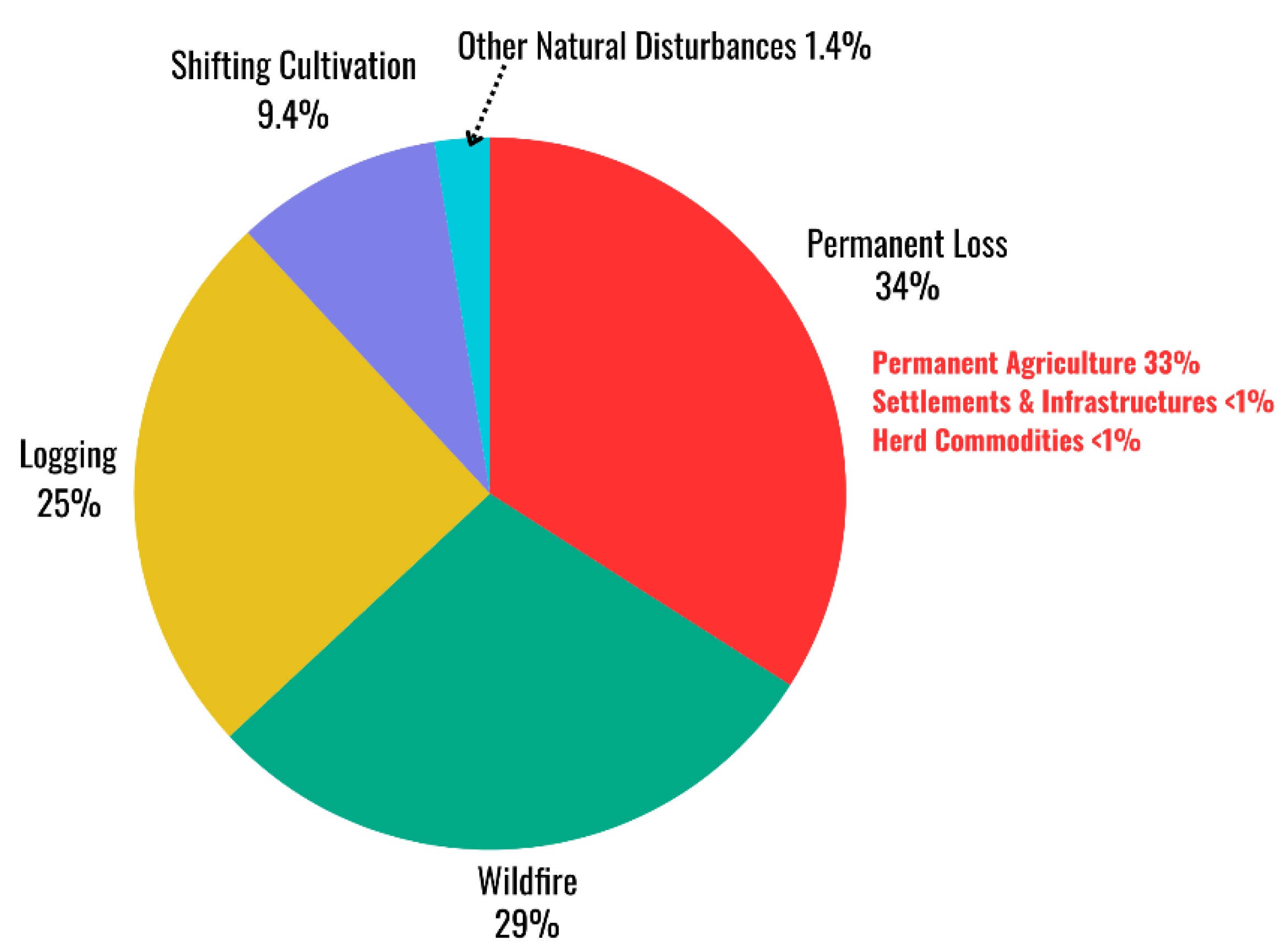
Figure 2.
The annual global loss of tree cover caused by wildfires (Source: Global Forest Watch). The graph shows that, alongside rising deforestation worldwide, wildfires are becoming an increasingly significant driver of forest loss, accounting for 45% of tree-cover loss in 2024. Analysis indicates that the global area affected by fire-induced forest disturbances in 2023–2024 was 2.2 times higher than the 2002–2022 average, highlighting a sharp upward trend in wildfire-driven deforestation.
Figure 2.
The annual global loss of tree cover caused by wildfires (Source: Global Forest Watch). The graph shows that, alongside rising deforestation worldwide, wildfires are becoming an increasingly significant driver of forest loss, accounting for 45% of tree-cover loss in 2024. Analysis indicates that the global area affected by fire-induced forest disturbances in 2023–2024 was 2.2 times higher than the 2002–2022 average, highlighting a sharp upward trend in wildfire-driven deforestation.
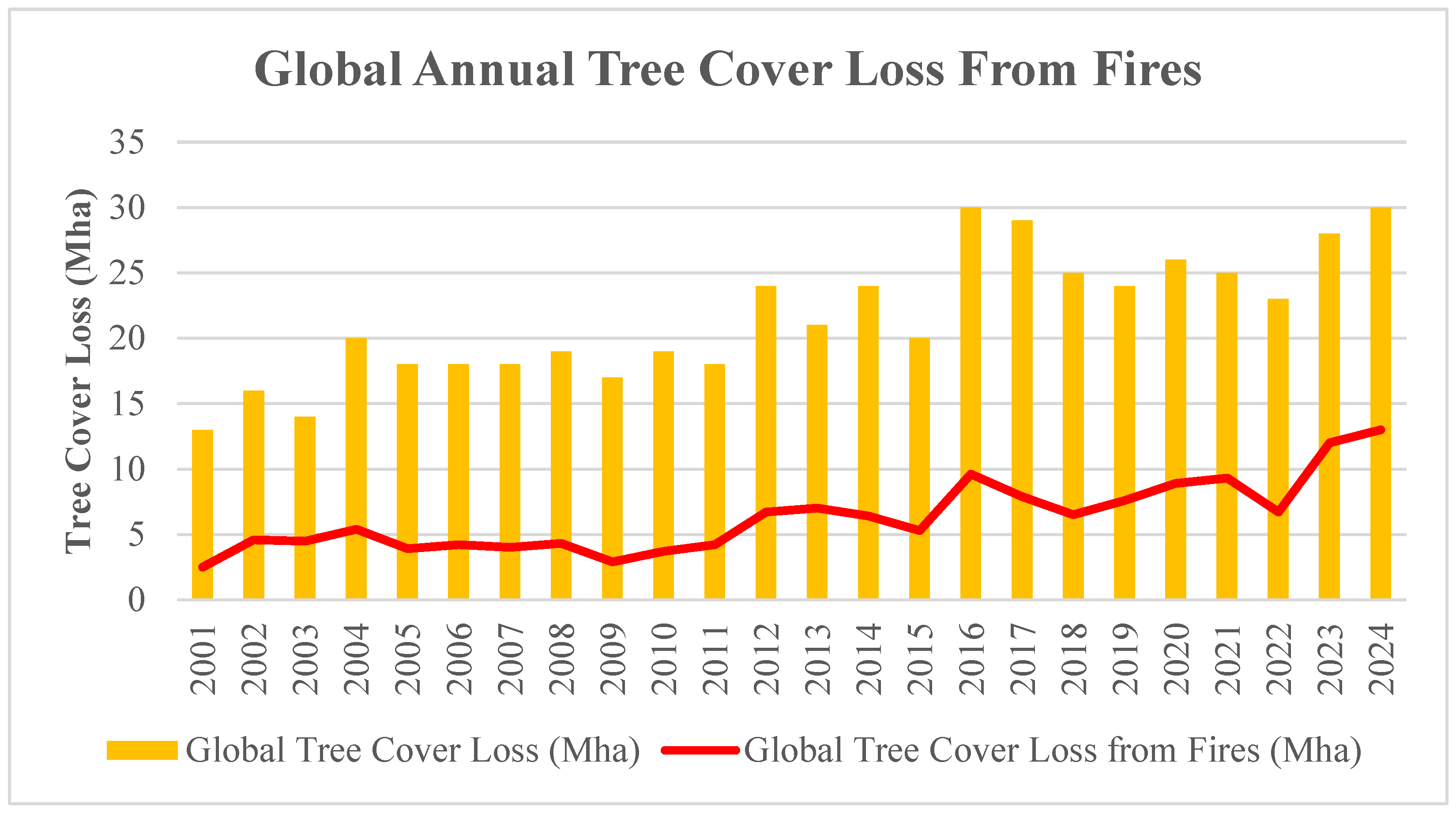
Figure 3.
The global trend in tropical primary forest cover loss over the past decade (Source: University of Maryland’s GLAD Lab). The data highlight that tropical primary forests were particularly affected in 2016 and 2024, with fire-related losses in 2024 nearly quadrupling compared to the previous year, accounting for almost half of all tropical primary forest loss worldwide.
Figure 3.
The global trend in tropical primary forest cover loss over the past decade (Source: University of Maryland’s GLAD Lab). The data highlight that tropical primary forests were particularly affected in 2016 and 2024, with fire-related losses in 2024 nearly quadrupling compared to the previous year, accounting for almost half of all tropical primary forest loss worldwide.
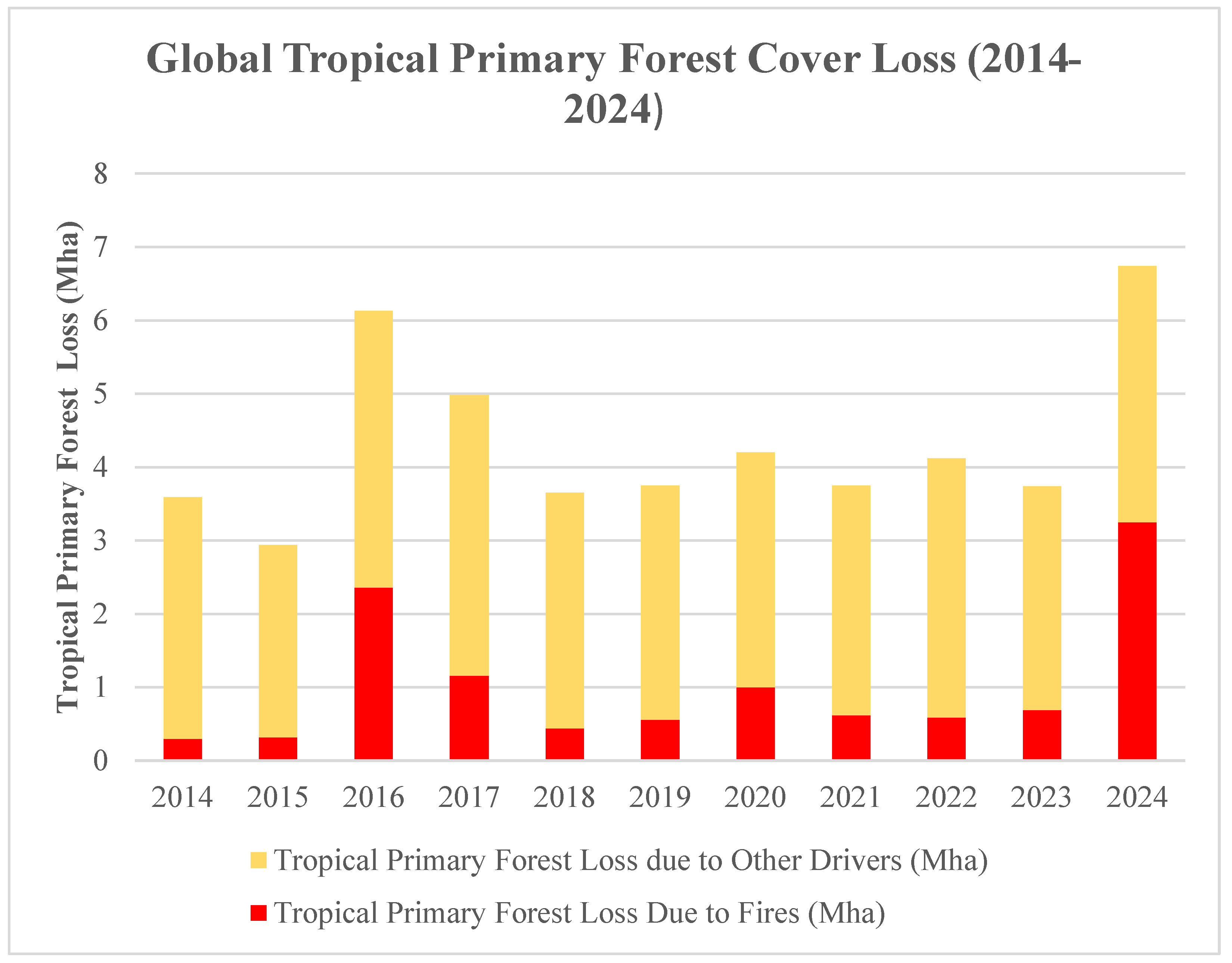
Figure 4.
Top countries globally for tree cover loss linked to mining (Source: World Resource Institute). Between 2000 and 2019, Indonesia and Brazil together lost a combined area of forest roughly equivalent to the size of Brunei or the island of Bali, representing more than one-quarter of all mining-related forest loss worldwide.
Figure 4.
Top countries globally for tree cover loss linked to mining (Source: World Resource Institute). Between 2000 and 2019, Indonesia and Brazil together lost a combined area of forest roughly equivalent to the size of Brunei or the island of Bali, representing more than one-quarter of all mining-related forest loss worldwide.
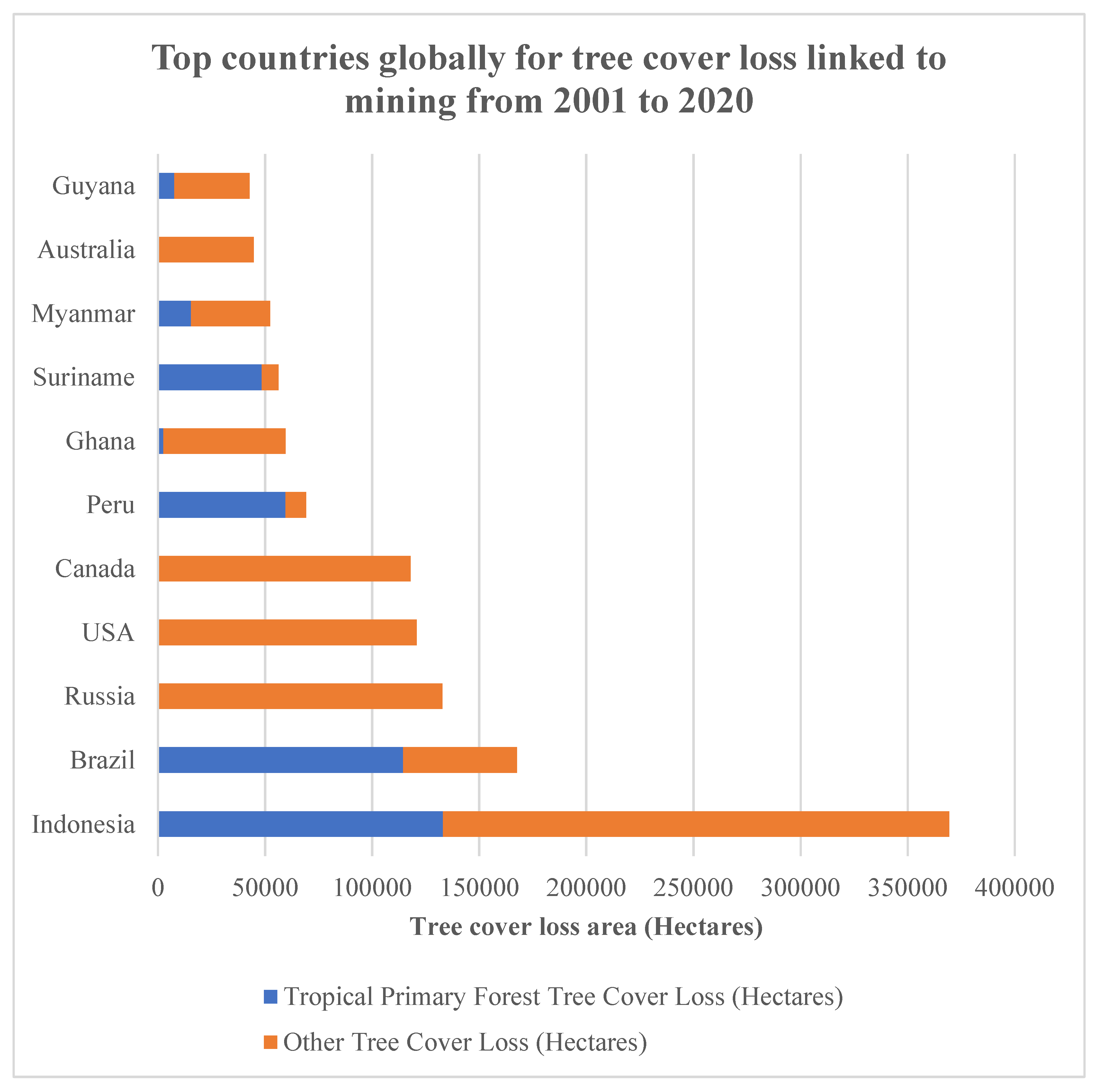
Figure 5.
Top 10 Countries Gaining and Losing Forest Area (Source: Global Forest Resources Assessment 2025). The figure highlights a sharp contrast in global forest trends: countries such as China and Russia show significant net gains through large-scale afforestation, while others—especially Brazil—continue to experience steep losses.
Figure 5.
Top 10 Countries Gaining and Losing Forest Area (Source: Global Forest Resources Assessment 2025). The figure highlights a sharp contrast in global forest trends: countries such as China and Russia show significant net gains through large-scale afforestation, while others—especially Brazil—continue to experience steep losses.
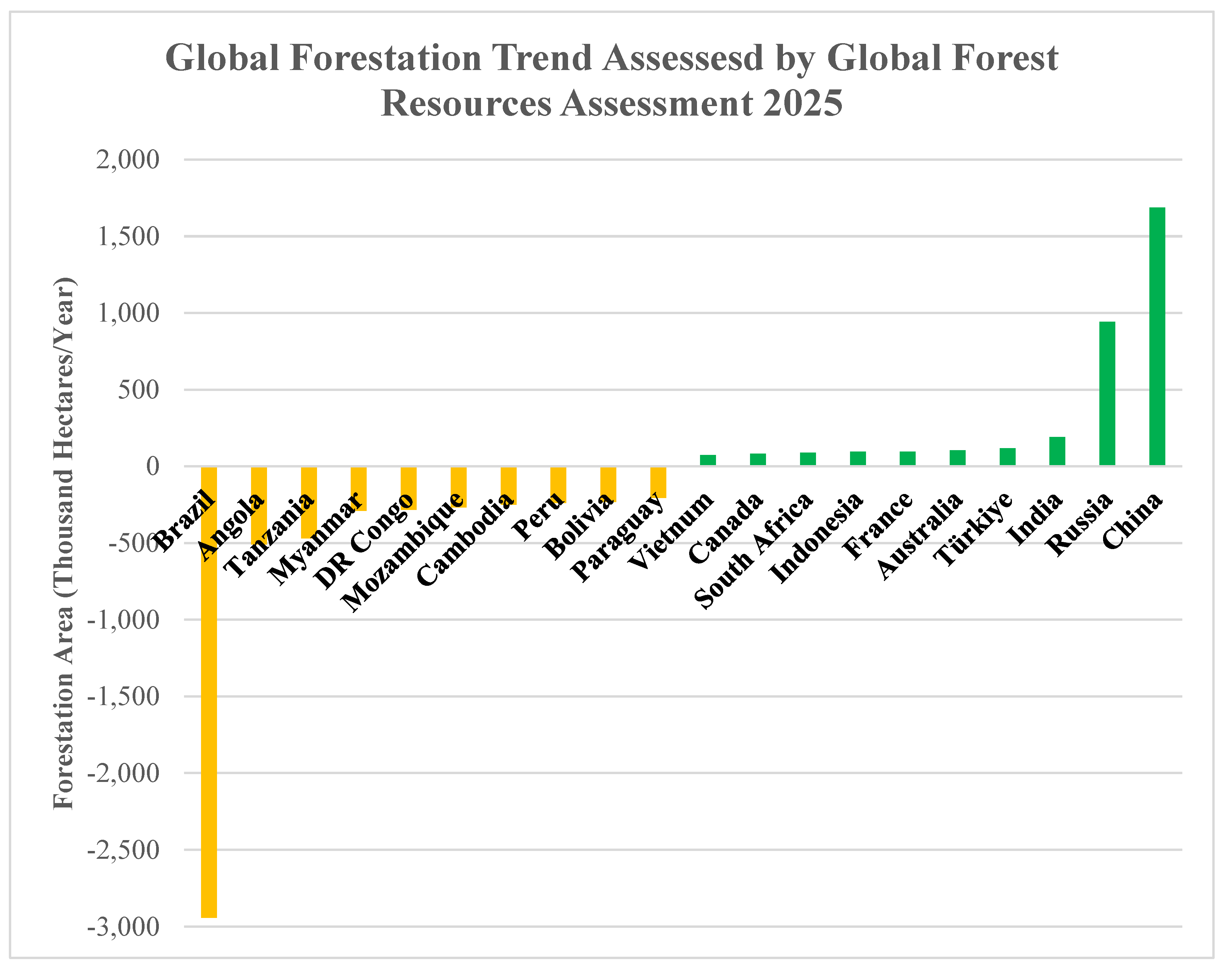

Table 1.
Deforestation and Its Health Consequences: Evidence from Recent Case Studies.
| Study Place | Investigation Details | Deforestation-Related Health Outcomes |
| Indonesia | Effect of forest loss on child health and education | Higher malaria incidence; greater risk of academic delay [17] |
| Southeast Asia | Link between deforestation, environmental change, and Nipah virus | Human-driven land use (deforestation, agriculture, urbanization) promotes NiV transmission [18,19,20] |
| Nigeria | Two approaches to quantify deforestation’s impact on children | Increased risk of cough, diarrhea, and malaria via soil pH, organic carbon, and cation levels [21] |
| Peruvian Amazon | Spatial Durbin Model analysis of deforestation and malaria | Loss of 1,000 hectares of forest linked to 69 additional malaria cases [22] |
| Brazil | Spatiotemporal analysis of visceral leishmaniasis (VL) and deforestation (2001–2023) | Deforestation significantly raises VL incidence, especially in areas of intense land-use change [23] |
| Deforestation and COVID-19 in Indigenous populations | Strong link between deforestation and COVID-19 spread before vaccination [24] | |
| The DR Congo (DRC) | Human–animal–environment risk factors for Monkeypox (mpox) | Forest cover changes, via deforestation or conservation, alter mpox transmission risk [25] |
| Mexican Municipalities | Deforestation impact on infant health | Higher likelihood of low birth weight and low Apgar scores [26] |
Disclaimer/Publisher’s Note: The statements, opinions and data contained in all publications are solely those of the individual author(s) and contributor(s) and not of MDPI and/or the editor(s). MDPI and/or the editor(s) disclaim responsibility for any injury to people or property resulting from any ideas, methods, instructions or products referred to in the content. |
© 2026 by the authors. Licensee MDPI, Basel, Switzerland. This article is an open access article distributed under the terms and conditions of the Creative Commons Attribution (CC BY) license (http://creativecommons.org/licenses/by/4.0/).
Copyright: This open access article is published under a Creative Commons CC BY 4.0 license, which permit the free download, distribution, and reuse, provided that the author and preprint are cited in any reuse.


