Submitted:
30 December 2025
Posted:
31 December 2025
You are already at the latest version
Abstract
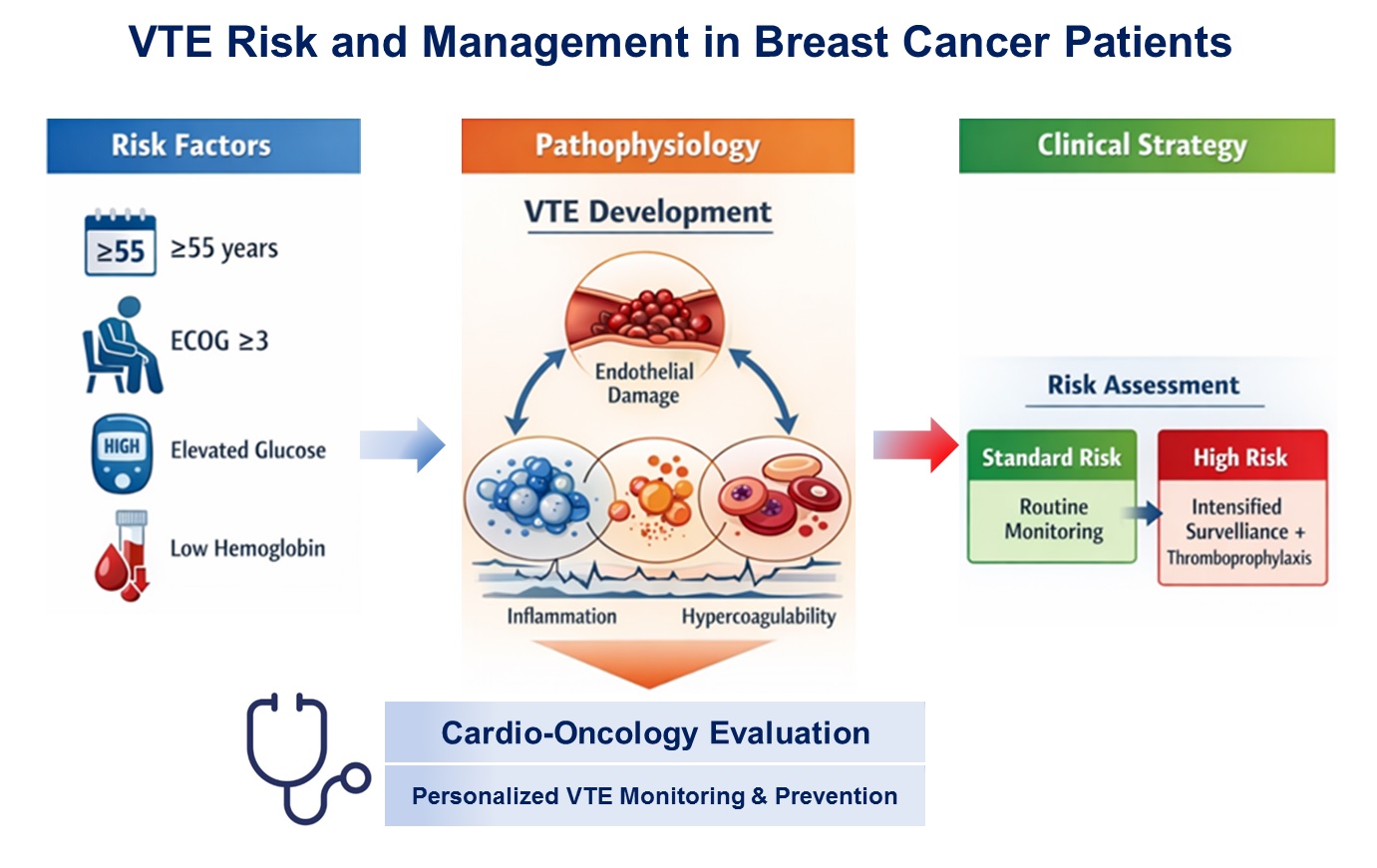
Background & Objectives: Venous thromboembolism (VTE) is a major cardiovascular complication in cancer patients and leading cause of morbidity and mortality. The aim of the study was to evaluate the incidence, timing, clinical predictors, and management of VTE in patients with breast cancer (BC), undergoing oncological therapy, and to propose a risk-adapted strategy for thrombosis monitoring and prevention. Methods: In this retrospective single-center study, 116 women with histologically confirmed BC (stages I–IV) treated between 2021 and 2024 were included. Patients were divided according to the occurrence of objectively confirmed VTE. Clinical characteristics, comorbidities, laboratory parameters, cancer-related factors, and treatment modalities were analyzed. Univariate and multivariate logistic regression analyses were performed to identify independent predictors of VTE. Results: VTE occurred in 25 patients (21.6%), predominantly within the first 12 months after cancer diagnosis. Patients who developed VTE were significantly older and more frequently had hypertension, dyslipidemia, hyperglycemia, anemia, and leukocytosis. Multivariate analysis identified age≥55 years, poor performance status (ECOG ≥3), and elevated glucose level as independent predictors of VTE. Deep vein thrombosis of the lower and upper extremities was the most common manifestation (52%), while pulmonary embolism was present in 24% of cases, either alone or in combination (20%). Direct oral anticoagulants were the most frequently used long-term anticoagulant therapy. Conclusions: VTE is a clinically relevant and relatively frequent complication in patients with BC, particularly during the early period of anticancer treatment. Patient-related and metabolic factors play a key role in thrombosis risk, underscoring the need for individualized, risk-adapted approaches to VTE prevention and monitoring in these populations.