

Submitted:
29 December 2025
Posted:
30 December 2025
You are already at the latest version
Abstract
Fiber-reinforced concrete has proved to be viable in improving the mechanical characteristics of structural elements to the flexural and shear stresses. The concrete cubes, prisms, and cylinders were standardized and cast and cured after 28 days to assess the baseline mechanical characteristics. Beam specimens were made of different types of fibers, lengths, and different volumetric contents and then subjected to controlled shear tests in which the crack initiation, propagation, and deformation were accurately measured. The experimental data proved that the addition of fibers was highly beneficial in terms of the mechanical performance of concrete. Basalt fibers enhanced compressive strength by up to 20.8 percent and tensile strength by 30.8 percent, whereas steel fibers had the best flexural strength with a maximum compressive and bending strength of 47.2 MPa and 6.56 MPa, respectively, at optimum dosage. Polypropylene fibers also improved performance, but in a lesser manner. The fiber addition served well to reduce the width of cracks and retard crack propagation, thus enhancing load-bearing capacity. These results show that dispersed fiber reinforcement that uses steel and basalt fibers is a practical solution to improving the dispersion of concrete in terms of durability and load-bearing capacity. The research will help guide the selection of fiber and the content in the reinforced concrete work to offer more robust and sustainable solutions to building.
Keywords:
fiber-reinforced concrete
; basalt fibers
; steel fibers
; polypropylene fibers
; shear strength
1. Introduction
Reinforced concrete beams are one of the most popular structural materials of the present civil engineering practice because of the favorable combination of mechanical characteristics, durability, and cost-effectiveness [1]. They are widely used in buildings, bridges, industrial structures and transport structures where they mostly experience flexural loading. Although they are widely used, conventional reinforced concrete beams have a number of shortcomings inherent to them at the time when they are under bending moments [2]. These shortcomings consist of premature tensile cracking, high rate of crack growth, low post tensile cracking hardness and comparatively brittle failure behavior after tensile reinforcement yields [3]. The implications of such limitations have negative impacts on the end load-bearing capacity in addition to serviceability performance, durability, and reliability of reinforced concrete structures [4]. The tensile strength of concrete is very low and therefore the tensile zone of a reinforced concrete beam is especially susceptible to flexural loading [5]. After the tensile stress reaches the cracking threshold, discrete cracks develop and propagate very fast resulting in stress concentration and loss in stiffness [6]. Despite the traditional steel reinforcement with tensile forces being efficiently expressed after cracking, the concrete between cracks loses much of its tension strength, leaving large apertures on the cracks and lowering the stability of the structure [7]. In addition, its stress-strain behavior of the traditional RC beams is that the transition between elastic and cracked phases is sharp and the beam has limited energy dissipation capacity and collapses abruptly in some situations [8]. These problems are acute in case of high loads of services, dynamic or cyclic loading, and in harsh environmental conditions [9].
The author has introduced the methods of strengthening and improving its characteristics to eliminate these shortcomings, however in particular, dispersion in fiber reinforcement has been of interest over the past decades [10]. Improvement of the material behavior involves the use of the short, discrete fibers into the concrete matrix to provide an added crack-bridging mechanism [11]. In contrast to the traditional reinforcement bars that work at the macro-scale only, the dispersed fibers are in place at random all through the concrete volume and the interaction with micro- and macro-cracks at various loading stages takes place [12]. This multiscale reinforcement mechanism allows better crack management, better redistribution of stress and delayed crack coalescence, and thus has a significant impact on the stress-strain curve and failure behavior of reinforced concrete members. The principle of dispersed reinforcement is anchored on the fact that fibers can transmit tensile forces across cracks using interfacial bonding, friction and mechanical anchorage [13]. As the micro-cracks commence in the concrete matrix, the fibers which cross the micro-cracks inhibit their cracking and retard the speed at which they widen. As the loading is increased and the cracks evolved to macro-cracks, the fibers will continue to bridge the surfaces of the cracks to give the remaining tensile capacity and increase the post-cracking stiffness. This is a mechanism that causes a slower process of stiffness degradation, greater deformation capacity and enhanced energy absorption [14]. FRC beam is therefore more ductile, toughened and damage-tolerant than the traditional RC beam.
Out of all the different types of fibers used in dispersed reinforcement, steel, polypropylene and basalt fibers have become the most frequently used fibers because of their availability, cost-effectiveness and mechanical properties specific to them [15]. The tensile strength, elastic modulus, geometry, surface properties as well as interaction with cementitious matrix of each type of fiber play different roles in the stress strain behavior and structural performance of reinforced concrete beam. Steel fibers are commonly described in terms of high tensile strength and great elastic modulus that makes them effective especially in flexural strength as well as load bearing [16,17]. They offer good crack-bridging behavior, and consequently, increase in stiffness during post-cracking stage and great increase in residual strength [18]. Many experiments have shown that metal-reinforced concrete beam using the steel fibers show less spacing between cracks, small crack widths, and the ability to dissipate a lot of energy. But steel fibers can be easily corroded in harsh conditions and as such, long life durability can be affected unless proper protection is provided [19].
Polypropylene fibers on the other hand have relatively low tensile strength and elastic modulus in comparison to steel fibers [20]. In spite of this, PP fibers are important in managing cracking of plastic shrinkage and formation of micro-cracks at an early age. Their deformation capacity and their low density are some factors that make concrete elements to have better ductile and strain capacity [21]. The benefit of PP fibers is that in flexural members, the deformation capacity and post-cracking performance are improved, although their ultimate strength is usually small [22]. The polypropylene fibers are especially appealing to use where durability and long-term performance become a major concern owing to their chemical inertness and resistance to corrosion [23]. Recently, basalt fibers, which are made of natural basalt rock, are facing a lot of attention as an alternative material that can replace the traditional fibers as sustainable and high-performance. Basalt fibers have great tensile strength, comparatively high elastic modulus, high thermal stability, and high resistance to chemical attack and corrosion [24]. In addition, they have less environmental effects in their production as opposed to synthetic fibers and are therefore environmentally friendly [25]. Basalt fiber has shown potential in reinforced concrete beam as a promising tool on better control of cracks, better flexural behaviors and post cracking behaviors [26]. But their performance is highly bound on the length of fibers, volume fraction and the bonding with cementitious matrix [27].
Although there has been an extensive amount of literature on fiber-reinforced concrete, the majority of current studies are either on a single type of fiber or examine fibers under different environmental conditions, including the different concrete compositions, reinforcement configurations, or loading configurations [28]. Therefore, direct comparisons of the various types of fibers tend to be inconclusive [29]. Specifically, the overall assessment of the stress-strain state of reinforced concrete beams reinforced with dispersely reinforced steel, polypropylene, and basalt fibers under the same experimental conditions is under-researched [30,31]. Numerous investigations focus on ultimate load capacity or cracking patterns, and there is a relative paucity of studies that analyze the distribution of strains, degradation of stiffness, post-yield behavior, and mechanisms of failure [32,33].
Moreover, the interactions between the traditional reinforcement bars and dispersed fibers are complicated, thus affecting the general structural reaction greatly. The fibers change the tensile characteristics of concrete, crack spacing, and width, as well as influence the stress transfer process between concrete and steel reinforcement [34]. The effect differs according to the type of fiber and its mechanical properties. Thus, a single experimental design that would offer comparative analysis of the various types of fibers is needed to provide credible design guidelines and to improve the feasibility of using fiber-reinforced concrete in structural engineering.
It is against this backdrop that the current research paper will attempt to fill the above research gap by undertaking comparative experimental research on the stress-strain behavior and strength of reinforced concrete beams reinforced with basalt, steel, and polypropylene fibers [35]. The beam specimens are constructed with the exact geometry, the same reinforcement plan, the same concrete mixture, and the same curing conditions to make sure that the direct comparison is effective. The experimental program is aimed at measuring the load deflection behavior, the strain distribution of both concrete and reinforcement, the crack initiation and propagation, flexural strength, and the mechanism of failure. The originality of the proposed research is that three fundamentally different types of fibers are compared at a systematic and unified level within a stable experimental environment, a point at which the specific impact of these fibers on the stress-strain response and the post-cracking behavior of reinforced concrete beams is given significant focus. Correlation of mechanical performance and fiber properties in this study offers a more insightful explanation of the contribution of dispersed fibers to changing the structural behavior of RC beams. The findings are very instructive in the optimal utilization of fiber-reinforced concrete and provide a practical recommendation of the proper choice of the type of fiber depending on the performance needs, the durability issues, and the sustainability goals.
2. Materials and Methods
2.1. Construction of the Testing Samples
For the experimental investigation, beam specimens were prepared in four series. The first series was comprised of control specimens comprising traditional concrete that was not fiber reinforced. The beams were made by the use of Portland cement, fine and coarse aggregates and water without using fibers. The specimens that were used as the control were the reference samples that were used in the comparison with the fiber reinforced concrete beams.
In the second series, basalt fiber–reinforced concrete beam specimens were prepared. Basalt fibers with two different lengths (10 mm and 30 mm) were incorporated into the concrete mixture at volumetric contents of 0.1%, 0.2%, and 0.3%. For each fiber length and dosage, three beam specimens were cast, resulting in a total of 18 basalt fiber–reinforced concrete beams. The third series included polypropylene fiber–reinforced concrete beams. Polypropylene fibers with lengths of 10 mm and 30 mm were added to the concrete at the same volumetric contents of 0.1%, 0.2%, and 0.3%. Similarly, three beam specimens were prepared for each combination, yielding a total of 18 polypropylene fiber–reinforced concrete beams. In the fourth series, steel fiber–reinforced concrete beams were produced. Steel fibers with a length of 30 mm were added to the concrete mixture at volume fractions of 1%, 2%, and 3%. For each fiber content, three beam specimens were prepared, resulting in a total of 9 steel fiber–reinforced concrete beams.
The distribution of sample beams by fiber type, quantity, and length is presented in Table 1.
Specimens of reinforced concrete beams were made of steel, basalt, and polypropylene fiber-reinforced reinforced concrete, having dimensions 100 x 200 x 1200 mm.
Longitudinal reinforcement was made up of two deformed reinforcing bars having a diameter of 12 mm and they were A-III grade steel. The longitudinal reinforcement ratio of the beams was 1.33 percent.
The transverse reinforcement was done with the stirrups that were made of B-I grade steel wire, 5 mm in diameter. The spacing between the stirrups was 60 mm where the beam was supported and 90 mm at the midspan as indicated in Figure 1.
2.2. Materials
Cement is another major component of concrete and has a direct impact on the mechanical performance of concrete. The cement Portland PS400D20 of the plant called Namangansement was used in this study. The true density of the cement was 3.1 g/cm3, the bulk density was 1.3 g/cm3, the standard consistency was 26 percent, the fineness residue was 8.2 percent and the specific surface area was between 3000-3500 cm2/g. The flexural strength and compressive strength (28 days) of the cement was 43.0 MPa and 7.1 MPa respectively.
The fine aggregate was natural sand which was obtained in Namangan region, Toraqorgon district and quarry at Namangan. The density of the sand was 2670 kg/m3, the size of the particles was 0-5 mm, and the moisture content was 3.1%. The coarse aggregate was crushed granite, with a density of 2665 kg/m3 and a range of particle size (5- 20 mm).
To reinforce the concrete, it was dispersed with steel fibers of length of 30 mm and a diameter of 0.3 mm. The density of the steel fibers was 7850 kg/m3, tensile strength of 250 Mpa, and the elastic modulus of 200 Gpa. Moreover, basalt fibers produced by the Basalt Uzbekistan Joint Venture were also used which is situated in the Jizzakh region of Uzbekistan. Basalt fibers were 2650 kg/m3 in density, 3500 Gpa in tensile strength, 110 Gpa in elastic modulus, 17 mm in fiber diameter, and 30 mm in length.
They were also made in polypropylene with a density of 910 kg/m3, tensile strength of 500 Mpa, elastic modulus of 35 Gpa, fiber diameter of 18m and fiber length 10mm and 30mm. Table 2 shows the physical properties of fibers used in this study.
According to the demands of [36], physical and mechanical properties of the concrete were carried out based on standard cube, prism and cylinder specimens casted with the same batch of concrete used on the experimental beams. The tests to be measured on the concrete specimens were performed at the age of 28 days- both prior to testing of the experimental beams and by the time of all beam tests being completed. All tests were performed in a hydraulic press SYE-2000. Table 3 shows the experimentally obtained physical and mechanical properties of concrete based on the cube, prism and cylinder tests. These findings will serve as a benchmark in the assessment of the behavior of the fiber-reinforced concrete beams.
Dispersed fiber reinforcement greatly enhanced the mechanical properties of fiber-reinforced concrete specimens. In compressive strength, control specimen (BO) had a compressive strength of 34.6 Mpa with the basalt fiber reinforced specifications of 39.8-41.8 Mpa with the greatest strength of 41.8 Mpa which is a 20.8 percentage improvement. The tensile strength had risen to 2.66- 2.89 Mpa in basalt fiber specimens as compared to 2.21 Mpa in plain concrete and the improvement in BB10-0.2 was 30.8%. Remaining tensile strength of 10 mm specimens with basalt fibers (basalt fibers) was between 1.16 and 1.29 Mpa and 1.19 and 1.32 Mpa in 30 mm fiber specimens. It also enhanced flexural strength, which was 4.41 Mpa in the control and 5.49-5.81 Mpa in the basalt fiber specimen, which is an increment of 25 to 32 percent.
Fiber reinforced polypropylene was also used to improve concrete performance. Compressive, tensile, and flexural strengths of BP10-0.1 and BP10-0.2 were 38.6 and 39.9 Mpa, 2.71 and 2.76 Mpa and 1.12-1.25 times greater than plain concrete respectively. Similar improvements were demonstrated by BP30 series. Mechanical performance was best exhibited by steel fiber reinforced beam. Compressive strengths of 1, 2 and 3 percent steel fiber beam were 45.1, 47.2 and 44.3 Mpa respectively and tensile strengths rose to 3.48-3.54 Mpa. Flexural strengths were at 6.33-6.56 Mpa and the increase in elastic modulus was as 30.91 Gpa to 35.6-36.8 Gpa. All in all, the highest results of compressive, tensile, and flexural performances were found among steel fiber-reinforced specimens, then basalt fiber and polypropylene fiber specimens.
2.3. Testing Methodology
In the tests, the loads were uniform and applied symmetrically to all the beams. The supports were used with 75 mm distance between the beam ends and the loads were applied 262 mm between the supports and the distance between the points was 526 mm. Precise testing was done before by measuring the geometric dimensions of each beam. The lateral sides of the beams were painted white to make it easy to observe the cracks and a position of the cage of reinforcements was marked. The dial gauges and deflectometer were used to measure the relative deformations in the concrete and reinforcement with a tolerance of 0.001 mm.
The load was put on in stages. First, the load that was not more than 5 percent of the ultimate load that was computed was placed before the development of the cracks. Three more steps added the load in steps no longer than 10 percent of the final load, whereby the crack propagation and beginning could be closely observed. All the cracks were numbered, and their length, orientation, and location with regard to the reinforcement were taken. Once the applied load was about 85-90 percent of the final load, measurement equipment was removed carefully so as not to cause any damage. The loading process was carried on till the beam failed completely and the process of failure was observed visually. The process of testing the strength of reinforced concrete beams in a shear section is shown in Figure 2.
The test results were very informative on the initiation and development of the crack, ultimate bending moment, failure load and deflection properties. With the help of these observations, a quantitative evaluation of the performance of the beams reinforced with various types and quantities of fibers was possible, which gave information on the performance of the beams in terms of the ability to control cracks, flexural strength, and the effectiveness of the whole structure.
3. Results
3.1. Formation and Development of Cracks in the Shear Section of Fiber-Reinforced Concrete Beams
Shear observation of reinforced concrete beam showed that fiber-reinforced and non-fiber-reinforced specimens had distinct differences in the shear behavior during the failure process. The shear section failed in all the beams that were tested. The diagonal cracks that formed in the control reinforced concrete beam with no fibers were mainly formed in the areas surrounding the supports and extended at a 45 ° angle. At the point of the maximum load, these beams collapsed abruptly in a brittle fashion, which meant that they had very little post-cracking strength.
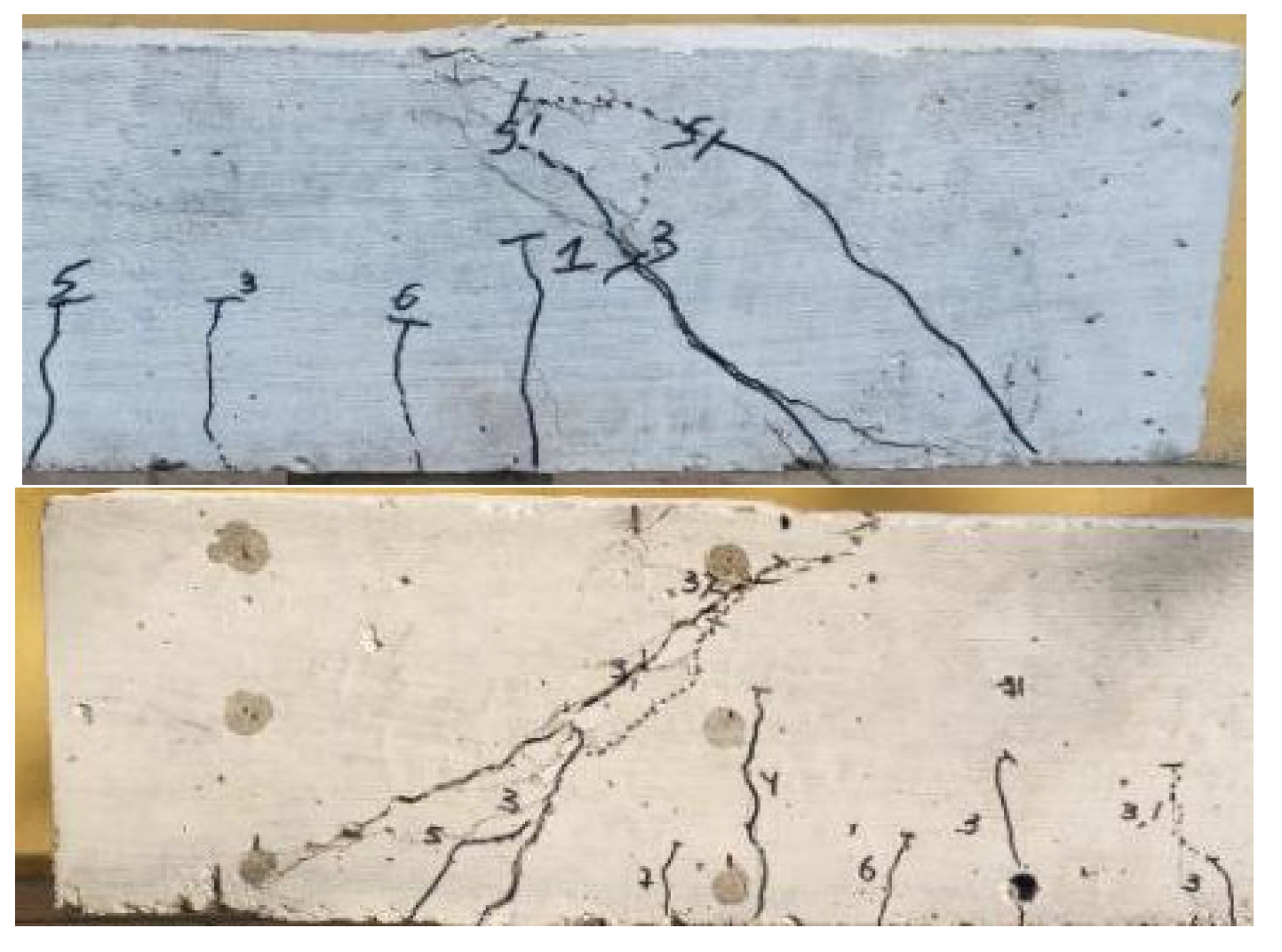
On the contrary, beams that had basalt, polypropylene and steel fiber reinforcement had a very different cracking behavior. The inclusion of fibers was key in limiting the crack initiation and propagation by limiting the widening of cracks, decreasing the separation between the cracks and slowing down the general failure. This made fiber-reinforced beams retain some amount of load bearing capacity despite development of diagonal cracks. At a load of nearly 50÷60 percent of the final load, the width of the cracks in the control beams was approximately 0.37 mm. Comparatively, both polypropylene and basalt fiber reinforced beam types recorded low crack widths of about 0.20 mm and steel fiber-reinforced beam types had the lowest crack widths of about 0.15 mm. These findings indicate that steel fibers have the greatest resistance to crack propagation in the shear zone. The basalt and polypropylene fibers also were effective in restrictions of crack growth, but the efficiency of the polypropylene and basalt fibers to control crack was a little lower than the steel fibers. Figure 3 to 6 shows the observed pattern of cracking and mode of failure of the beams.
Figure 4.
Formation of shear cracks in samples from the S2 series.
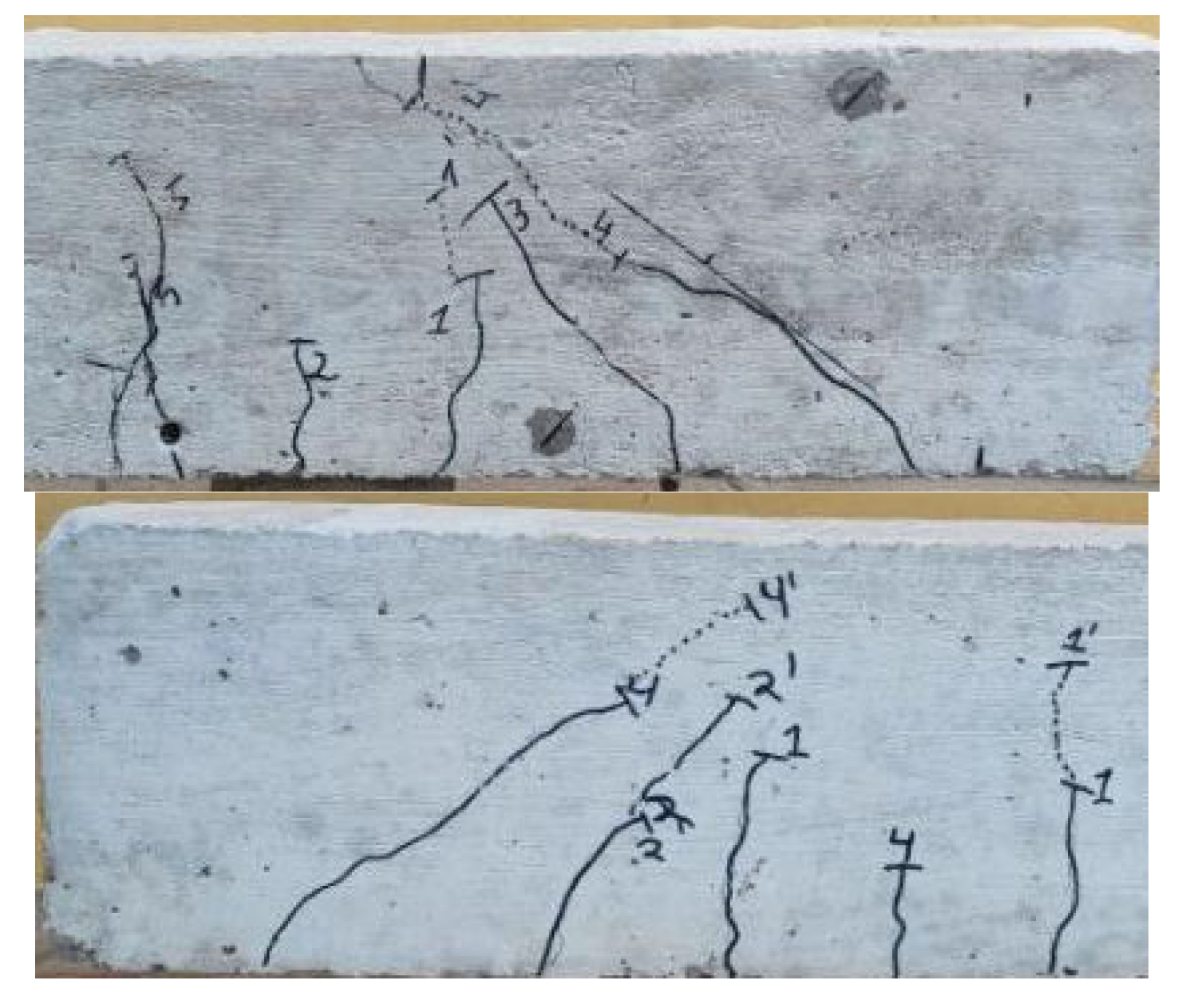
Figure 5.
Formation of shear cracks in samples from the S3 series.
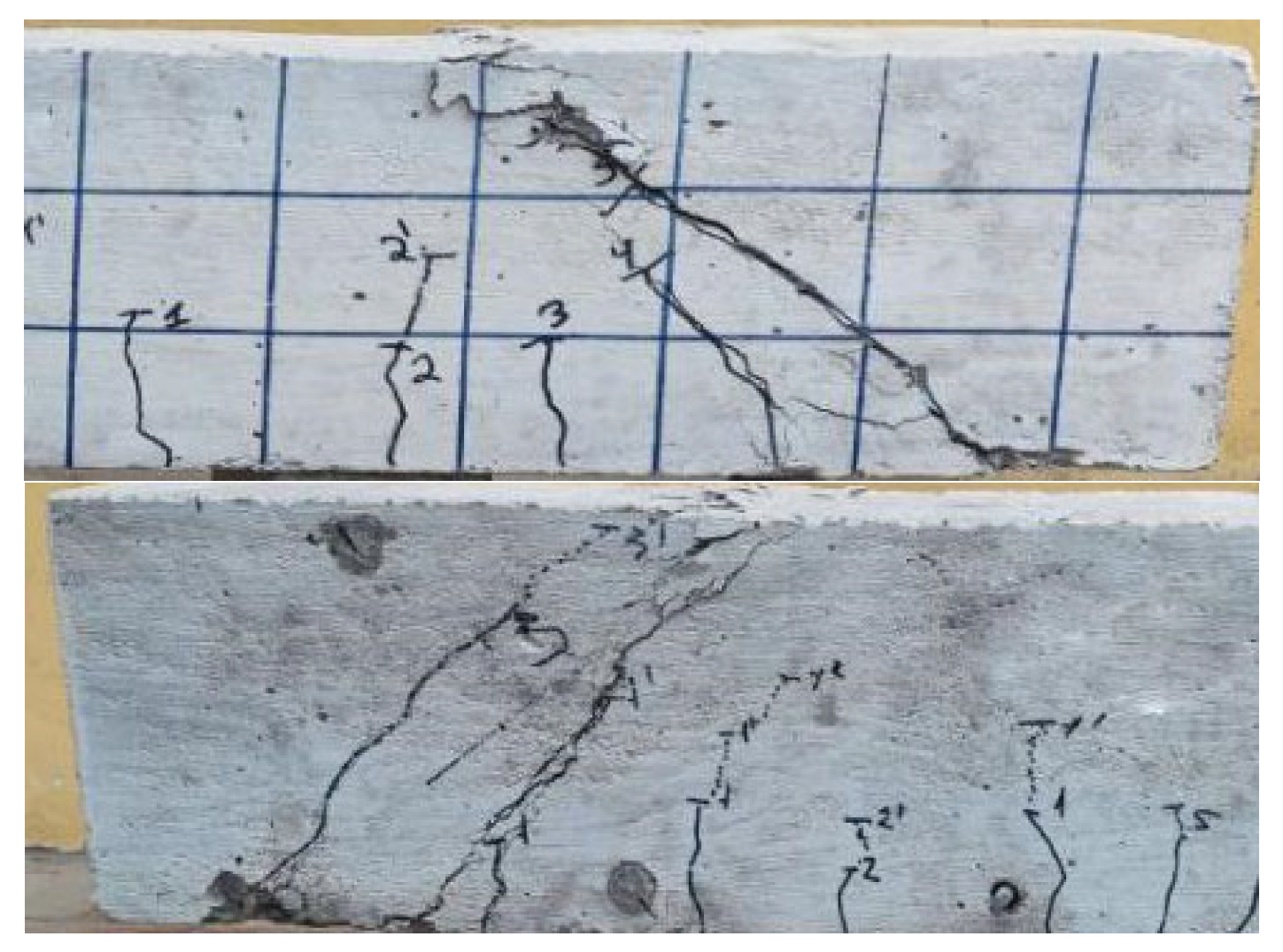
Figure 6.
Formation of shear cracks in samples from the S4 series.
The results obtained made it possible to evaluate the effect of fiber content and their different lengths on the opening and development of normal and oblique cracks. Beams with polypropylene fiber dispersion reinforcement were divided into BP10 and BP30 series. Beams in the BP10 series were reinforced with 10 mm long fibers, and in the BP10-0.1 sample, the moment causing normal cracking was 3.80 kN m, and the transverse force causing oblique cracking was 38.05 kN. These indicators indicate an increase of 41% and 18%, respectively, compared to the ordinary beam. In the BP10-0.2 beam, the moment causing normal cracking was 3.99 kN m and the transverse force causing oblique cracking was 41.14 kN, which means that it is 48% higher in moment and 28% higher in shear force than the BO beam. In the BP10-0.3 sample, the moment causing normal cracks was 3.92 kN·m, and the transverse force causing oblique cracks was 38.28 kN. The moments that produce normal and shear cracks in the sample beams are given in Table 4.
Beams with polypropylene fiber dispersion reinforcement were divided into BP10 and BP30 series. Beams in the BP10 series were reinforced with 10 mm long fibers, and in the BP10-0.1 sample, the moment causing normal cracking was 3.80 kN m, and the transverse force causing oblique cracking was 38.05 kN. These indicators indicate an increase of 41% and 18%, respectively, compared to the ordinary beam. In the BP10-0.2 beam, the moment causing normal cracking was 3.99 kN m and the transverse force causing oblique cracking was 41.14 kN, which means that it is 48% higher in moment and 28% higher in shear force than the BO beam. In the BP10-0.3 sample, the moment causing normal cracks was 3.92 kN·m, and the transverse force causing oblique cracks was 38.28 kN. The graphs of forces and moments causing cracks in the beams are shown in Figure 7.
The BP30 series used 30 mm long polypropylene fibers. In the BP30-0.1 sample, the normal cracking moment was 4.01 kN m, and the transverse force causing oblique cracks was 40.49 kN. These results show an increase of 49% and 25%, respectively, compared to the plain beam. In the BP30-0.2, these figures were 3.87 kN m and 39.10 kN, while in the BP30-0.3 they were 3.81 kN m and 38.56 kN.
In the steel fiber reinforced beams, i.e., in the BS30-1.0 sample, the normal cracking moment was 4.60 kN m, and the transverse force causing oblique cracks was 52.59 kN. These results show an increase of approximately 71% and 63%, respectively, compared to the normal beam. In the BS30-2.0 beam, the normal cracking moment increased further to 5.0 kN m, and the transverse force causing oblique cracks was 54.42 kN. These figures show an increase of 86% in normal cracking moment and 69% in shear force compared to the BO beam. In the BS30-3.0 beam, the normal cracking moment was 4.71 kN m, and the transverse force causing oblique cracks was 48.62 kN, i.e., the high efficiency achieved with a fiber content increased to 2.0% was slightly reduced at 3.0%. The analysis of the results shows that by adding steel fibers to concrete, the beams achieved high resistance to normal and oblique forces. In particular, the beam reinforced with 2.0% steel fiber recorded the highest moment and force.
Figure 8.
Width of opening of oblique cracks in the BO specimen beam.
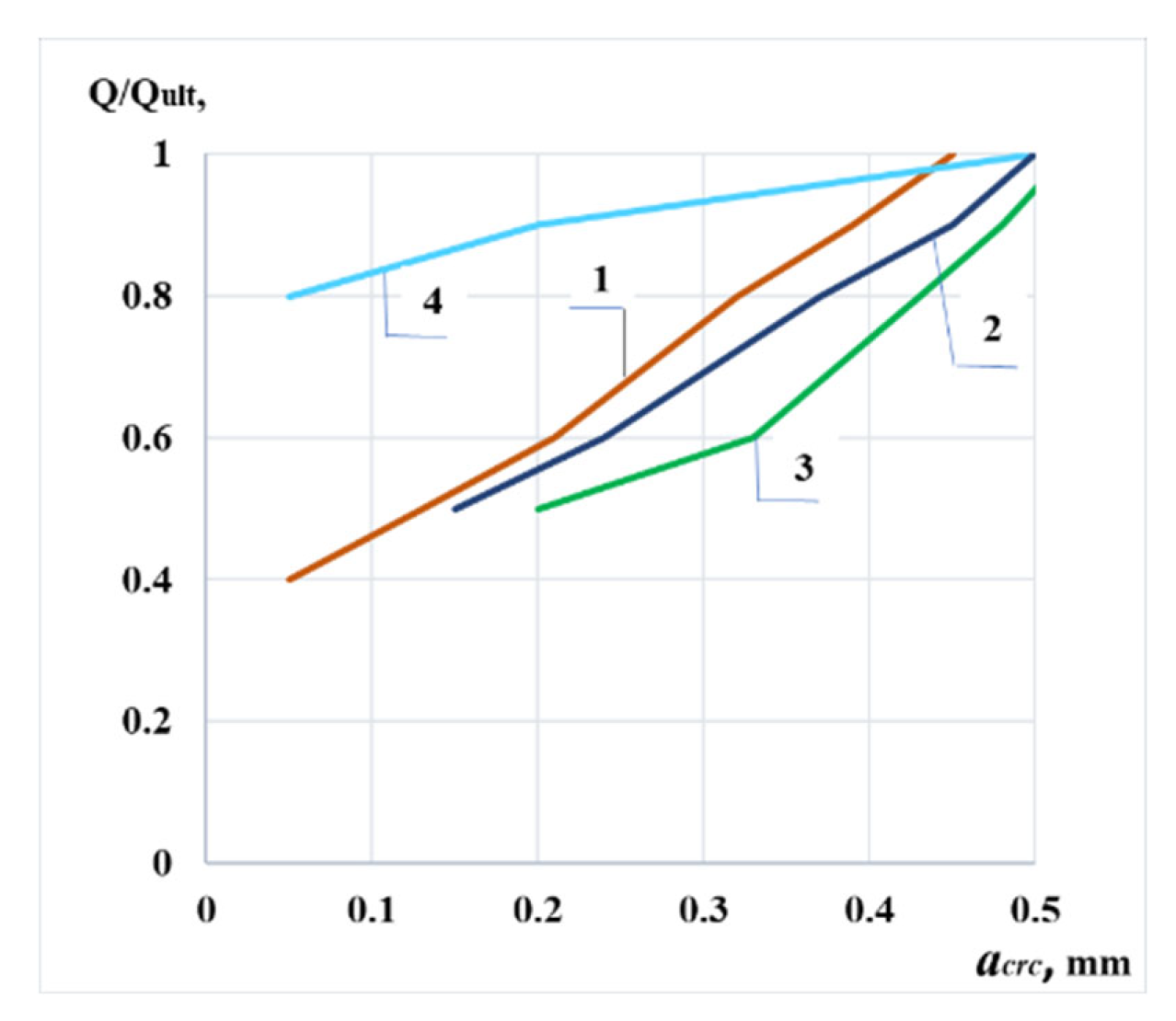
Figure 9.
Width of opening of shear cracks in the sample beam S2.
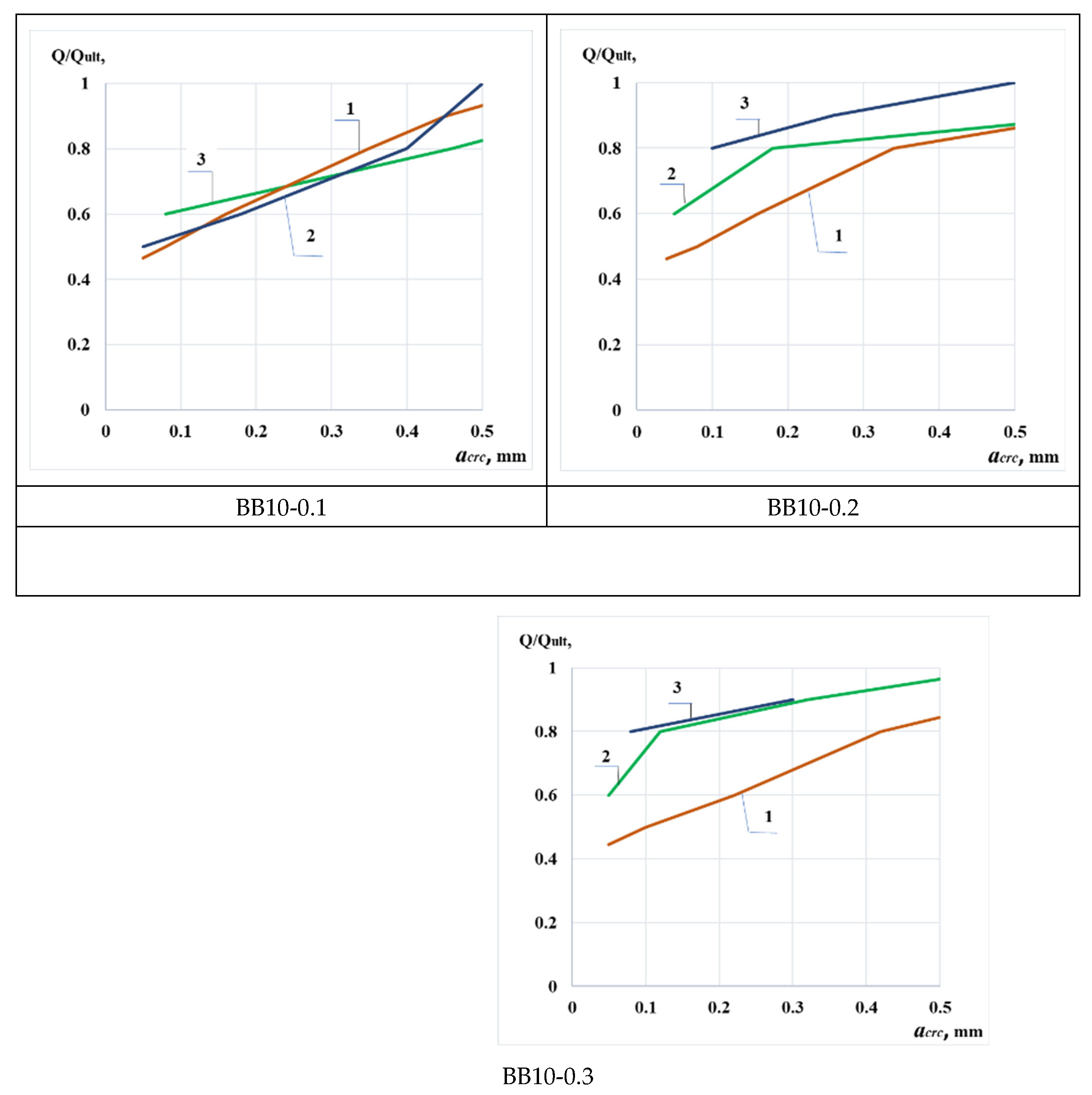
Figure 10.
Width of opening of shear cracks in the sample beam S3.
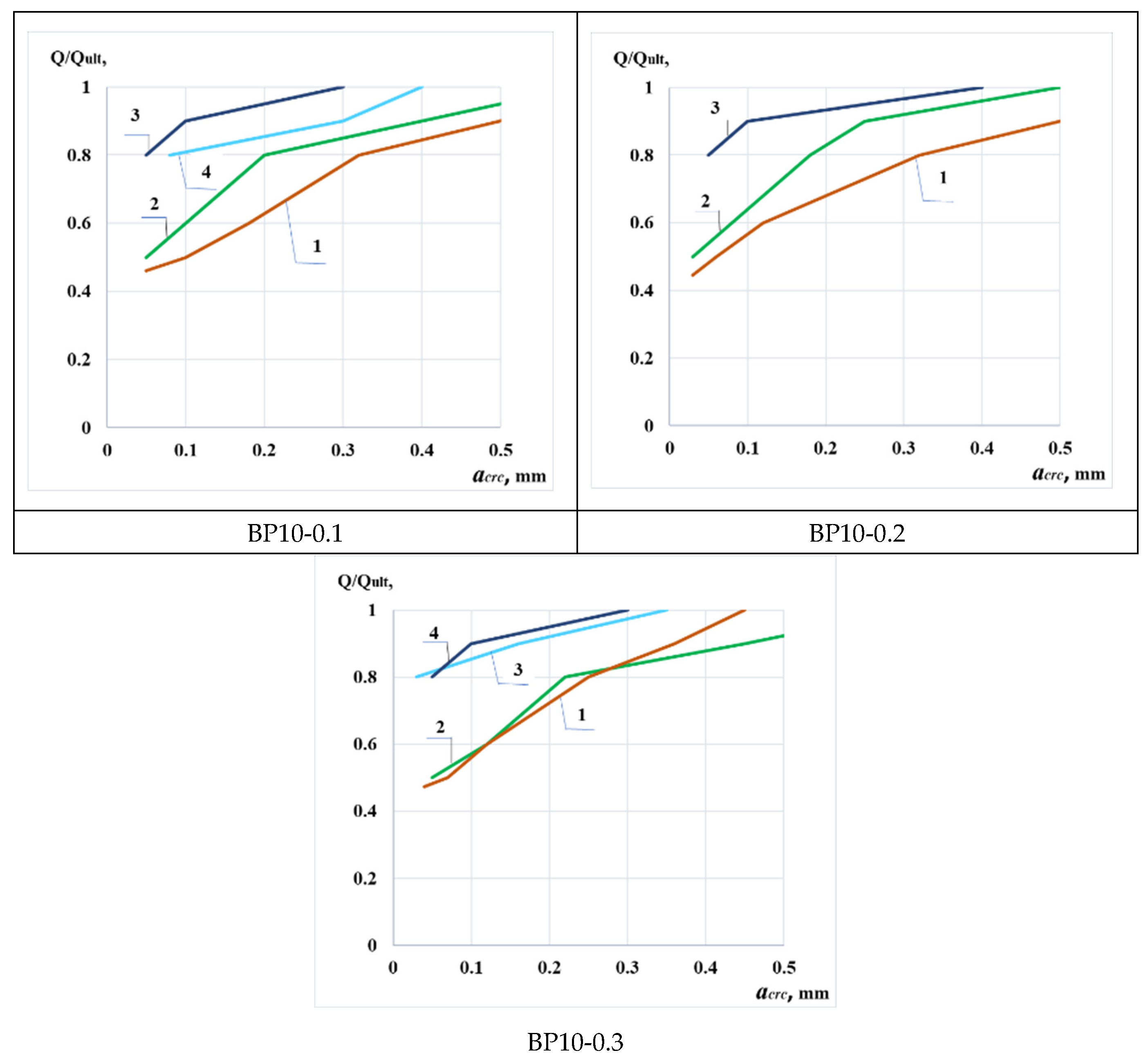
Figure 11.
Width of opening of shear cracks in the sample beam S4.
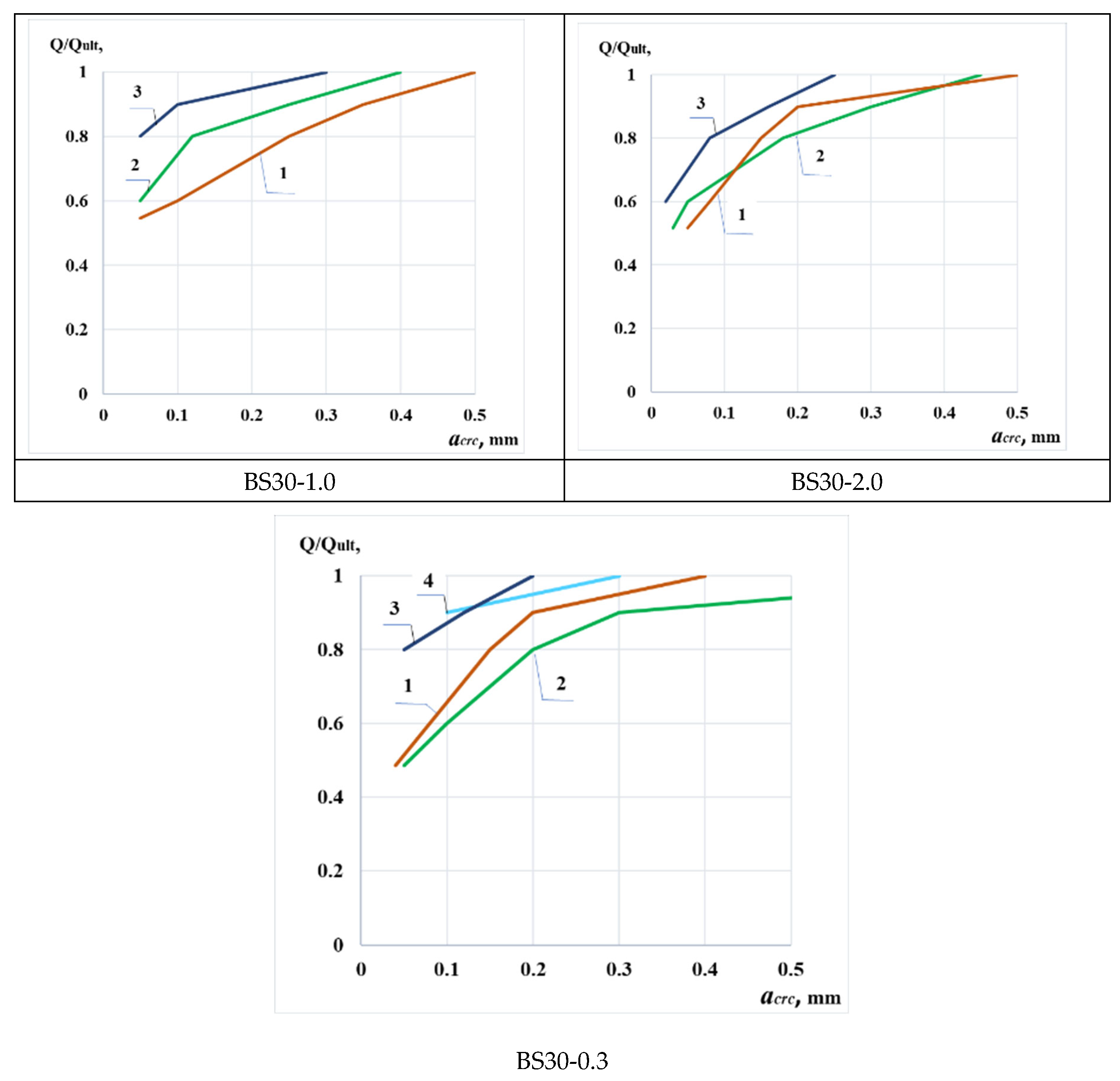
Steel, basalt and polypropylene fibers significantly affected the crack resistance of reinforced concrete beams. Since steel fibers have a high modulus of elasticity and tensile strength, they act as bridges on the surface of cracks and effectively resist the expansion of cracks. The fibers continued to carry loads even after the formation of cracks, that is, they increased the strength of concrete in the initial crack formation. The overall crack resistance of the fiber-reinforced concrete beam was ensured. Basalt fibers also had an effective effect on increasing the crack resistance of concrete. They were distributed in the concrete before the formation of microcracks and participated in the distribution of forces. Basalt fibers ensured that the stresses during bending did not accumulate at one point, reducing the formation of microcracks. Polypropylene fibers limited the width of the cracks and reduced the number and size of cracks on the surface of the beam.
The relative deformations of the concrete in front of the support of fiber-reinforced concrete and reinforced concrete beams were measured using a measuring device installed along the inclined section. The deformations of the concrete along the inclined section did not have large values at the initial stages of loading, and their change increased almost linearly. When the load reached 60÷70 kN, the relative deformation of the BO-1 (plain concrete) sample reached ɛfb=(2÷7)∙10⁻⁴. In the BS30-1.0, BS30-2.0 and BS30-3.0 sample beams, that is, fiber-reinforced concrete samples with the addition of steel fibers, the deformations remained relatively low. For example, the relative deformation of the BS30-1.0 sample under a load of 60÷70 kN was ɛfb=(0.85÷1.05)∙10⁻⁴.
As the load increased, especially when the breaking force in the oblique section reached 140÷150 kN, the relative deformations in the samples became much larger. In ordinary concrete, that is, in the BO-1 sample, the deformations at this stage increased to ɛfb=(75÷80)∙10⁻⁴. In the steel fiber reinforced concrete samples, the deformations at this stage were relatively small. In the BS30-1.0 series sample, the relative deformation reached ɛfb=(50÷60)∙10⁻⁴, in the BS30-2.0 series sample, the relative deformation reached ɛfb=(35÷50)∙10⁻⁴, and in the BS30-3.0 series sample, the relative deformation reached ɛfb=(65÷70)∙10⁻⁴. The average relative deformation of concrete in beams dispersedly reinforced with steel fibers is presented in Figure 12.
The results of the experiment on fiber-reinforced concrete beams dispersedly reinforced with basalt fibers showed that the volume and length of the fibers significantly affected the relative deformations of concrete in the stages of loading in the oblique section. When adding 30 mm long basalt fibers to the concrete in an amount of 0.1%, the relative deformations of concrete in the oblique section reached the values ɛfb=(1.25÷3.0)∙10-4 when the breaking force in the oblique section reached 60÷70 kN in the dispersed reinforced fiber-reinforced concrete beams (Figure 13).
This indicator reached the values ɛfb=(1.90÷3.3)∙10-4 in fiber reinforced concrete beams with dispersed reinforcement by adding 0.2% basalt fibers with a length of 30 mm to the concrete, and ɛfb=(2.2÷3.6)∙10-4 in fiber reinforced concrete beams with dispersed reinforcement by adding 0.3% basalt fibers with a length of 30 mm to the concrete. When the breaking force along the slope reached 140÷150 kN, the relative deformations in the samples reached ɛfb=(75÷80)∙10⁻⁴ in ordinary concrete. The relative deformation in the BB30-0.1 series sample reinforced with basalt fibers reached the values ɛfb=(60÷65)∙10⁻⁴, in the BB30-0.2 series sample the relative deformation ɛfb=(50÷58)∙10⁻⁴, and in the BB30-0.3 series sample the relative deformation ɛfb=(65÷70)∙10⁻⁴.
In order to evaluate the creep properties of fiber-reinforced concrete beams, experiments were conducted in laboratory conditions. During the experiment, reinforced concrete beams with dispersed reinforcement of different amounts and lengths of fibers were tested for flexibility and creep. In the assessment of creep, fiber-reinforced concrete beams were subjected to stepwise loading and the creep that occurred at each stage was determined.
In the initial stages of loading in samples with dispersed reinforcement of fibers, the increase in creep was close to the values. It was found that at loads around 20÷70 kN, the creep indicators in steel fiber concrete were lower than in concrete without fibers, increasing the internal resistance of the structure. At this stage, especially in samples with 2% and 3% fibers, the increase in creep and strength increased steadily. The BS30-3.0 sample with 3% steel fiber showed the lowest creep values in almost all stages. For example, at 25 kN, the deflection in the BS30-3.0 sample was 0.470 mm, while in the BS30-2.0 it was 0.418 mm, in the BS30-1.0 it was 0.38 mm, and in the BO-0 it was 0.3 mm (Figure 14).
When the value of the breaking force reached 60 kN, the deflection in the BS30-3.0 sample reached 1.8 mm, while in BS30-2.0 it was 1.5 mm, in BS30-1.0 it was 1.5 mm, and in BO-0 it was 2.1 mm. In reinforced concrete beams made of ordinary concrete, when the value of the breaking force reached 80÷90%, that is, (130÷140 kN), the deflection value was 10÷12 mm. At this loading stage, the deflection in BS30-3.0 was 8.8 mm, in BS30-2.0 it was 7.5 mm, and in BS30-1.0 it was 8.8 mm.
The creep characteristics of concrete samples with the addition of polypropylene fibers (BP30-0.3, BS30-0.2, BS30-0.1) show that at stages with a breaking load of up to 60 kN in the transverse section, the creep in the BP30-0.3 and BS30-0.2 samples showed a greater resistance by a difference of 0.2÷0.3 mm compared to the creep of reinforced concrete beam samples made of ordinary concrete BO-0. For example, at 60 kN, the creep in BO-0 was 2.1 mm, while in BS30-0.1 it was 1.4 mm, in BP30-0.3 it was 1.9 mm, and in BS30-0.2 it was 1.7 mm (Figure 15).
The transverse failure of beams with dispersed fiber reinforcement was significantly different from that of classical reinforced concrete beams. Dispersed reinforcement—that is, the addition of fibers distributed not in a single direction but in volume to the concrete mass—affected the failure processes in fiber-reinforced concrete beams under the influence of transverse forces. The transverse failure occurs mainly due to the formation and development of diagonal cracks in the internal structure of concrete as a result of increased transverse forces or large moments in the beam.
According to the results of scientific research, transverse failure in beams with dispersed reinforcement with steel, basalt, and polypropylene fibers occurs later, and the cracks develop at a smaller angle and more slowly. This can be explained by the fact that the fibers partially absorb the shear forces and disperse local stresses in the transverse section of concrete. In particular, since steel fibers have high elasticity and tensile strength, they act as a “bridge” between diagonal cracks, maintaining the load-bearing capacity of the beam for a certain period of time. This is manifested not by brittle failure in the beam along the oblique section but by continuous plastic failure.
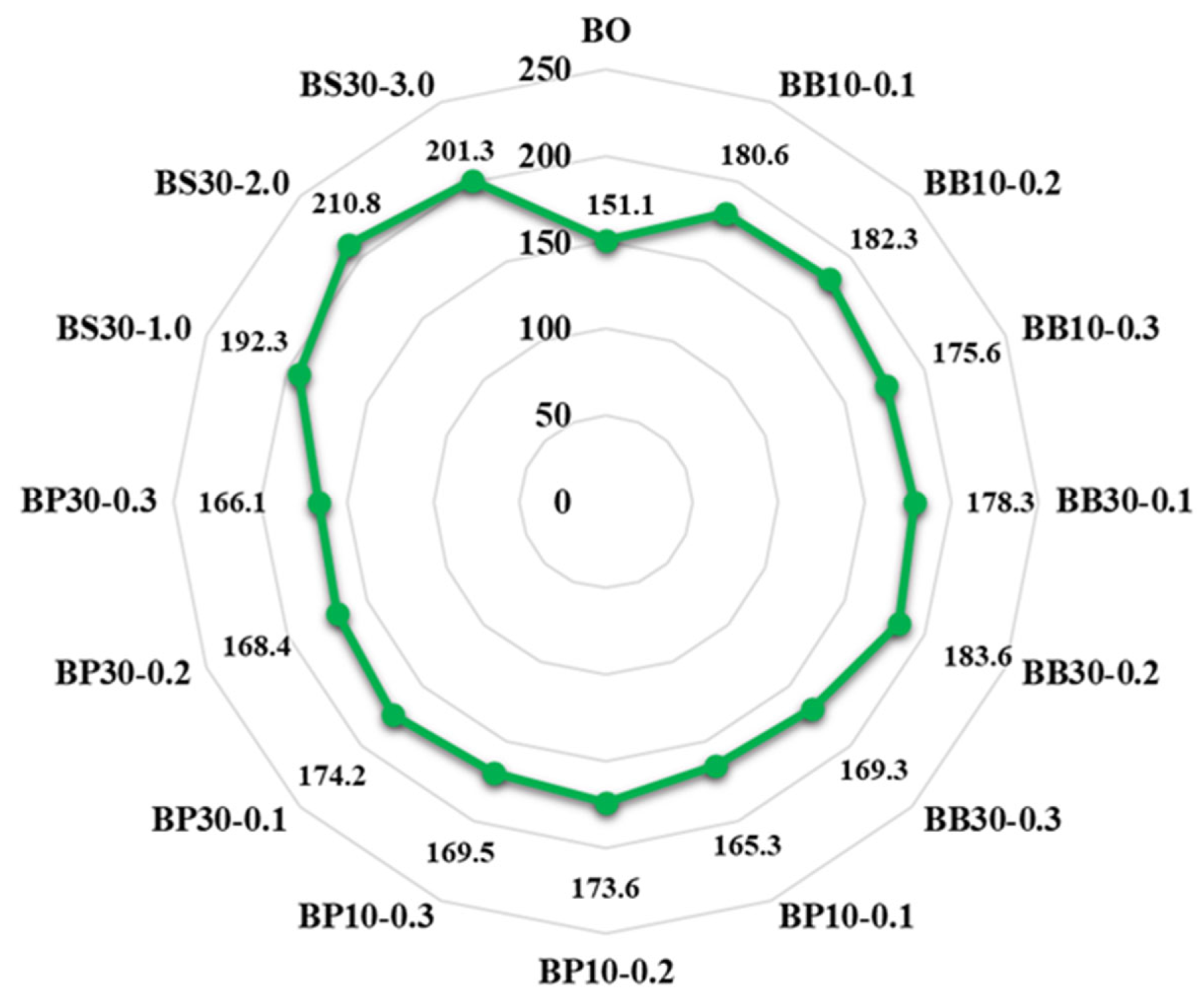
Figure 16.
Load-bearing capacity of beams according to the shear.
The tensile strength and elastic modulus of basalt and polypropylene fibers are lower than these indicators of steel fibers. However, they are important in preventing microcracks that appear in the plastic state of concrete (before solidification). It was observed that they contribute not to the process of failure occurring in the oblique section but to the reduction of the initial internal defects—cracks that can create the basis for this failure.
In fiber-reinforced concrete beams with the addition of fibers, cracks along the oblique section developed at a small angle, their width became smaller, and they spread in the form of several diagonal lines. After the cracks formed, the beam continued to carry the load for a certain period of time without losing its full strength.
4. Discussion
The experiment findings can provide the clear idea that the use of the dispersed fibers plays a significant role in the mechanical behavior and crack development of reinforced concrete beams when under shear loading. All of fiber-reinforced concrete specimens had better compressive, tensile and flexural strengths, better crack control and post-cracking properties when compared to the control beams. These results closely coincide with those of the past studies, which had indicated that fibers are crack-bridging fibers that inhibit crack generation and propagation, and increase the overall structure performance of members made of concrete.
The reinforced concrete of basalt fiber was tested to reveal the significant growth of compressive and tensile strength, and the best indicators were recorded at 0.2 percent of fiber content and 10 mm length. This is explained by the fact that short basalt fibers are uniformly spread in the cement matrix, thereby increasing the stress transfer across microcracks. More or less the same has been observed in previous studies where moderate levels of fiber were reported to work better compared to higher amounts because of their better workability and fiber dispersion. The positive impact on the flexural strength and residual tensile resistance is further confirmed by the increase in the flexural strength and the residual tensile resistance, which is seen in the presence of basalt fibers in crack resistance and energy absorption capacity. Polypropylene fibers were also known to add to better mechanical properties and crack management but at a slightly lower extent than basalt and steel fibers. This is in line with the fact that polypropylene fibers have a lower modulus of elasticity and thus the contribution to the load-bearing capacity is minimal but still with a positive outcome such as in managing early age cracking and the narrowing of the crack. The shrinking of the diagonal cracking at half the maximum shear load proves the purpose of polypropylene fibers in facilitating serviceability action instead of maximum strength.
Among all the experimented specimens, steel fiber-reinforced concrete had the greatest improvements. The high increase in shear cracking load, ultimate load, and stiffness and the lowest crack widths show the excellent ability of steel fibers to break cracks and their strength under tension. These findings are in line with many other studies that have been carried out in the past and found steel fibers to be the most effective reinforcement in enhancing shear resistance and ductility in reinforced concrete beams. The small decrease in performance with increased fiber contents indicates that there is an optimum level of dose beyond which the fiber clustering and lower workability can have a negative impact on performance.
5. Conclusions
1. The initial crack in the oblique section occurred at Qcrc=32.23 kN in the reinforced concrete beam made of ordinary concrete, while in the BB10-0.1 sample it occurred at Qcrc=41.97 kN, in the BB10-0.1 sample it occurred at Qcrc=42.12 kN and in the BB10-0.1 sample it occurred at Qcrc=39.06 kN. In the samples reinforced with basalt fibers with a length of 30 mm added to the concrete in the range of 0.1÷0.3%, the initial crack in the oblique section occurred at Qcrc=38.92÷40.69 kN. In the samples reinforced with polypropylene fibers with a length of 10 and 30 mm added to the concrete in the range of 0.1÷0.3%, the initial crack in the oblique section occurred at Qcrc=38.05÷41.14 kN. In specimens reinforced with 30 mm long steel fibers added to concrete in the range of 1.0÷3.0%, the initial cracks in the oblique section occurred at Qcrc=48.62÷54.59 kN.
2. Dispersed reinforcement increases the strength of beams in the oblique section, reduces the risk of brittle failure, and ensures the reliability of the structure.
3. According to the results of laboratory tests, it was found that the load-bearing capacity of fiber-reinforced concrete beams dispersedly reinforced with basalt fibers increased by 12.0÷20.6% compared to the load-bearing capacity of ordinary beams. In beams reinforced with polypropylene fibers, this indicator increased by 9.4÷14.9%, and in beams reinforced with steel fibers - by 27.3÷39.5%.
4. It was found that the addition of steel, basalt and glass fibers to ordinary reinforced concrete beams effectively resisted the propagation of diagonal and normal cracks in the samples, increased the number of cracks and reduced the distance between the cracks. This ensured that the structure retained a certain load-bearing capacity even in the event of damage. When the breaking load reached 50÷60%, the crack width in ordinary reinforced concrete beams was 0.30 mm. For comparison, in samples with the addition of polypropylene and basalt fibers, this indicator was 0.2 mm, and in samples reinforced with steel fibers - 0.15 mm.
Author Contributions
Conceptualization, A.M.; methodology, A.M.; validation, A.M. and S.R.; formal analysis, A.M.; investigation, A.M.; resources, A.M.; data curation, A.M.; writing—original draft preparation, A.M.; writing—review and editing, S.R.; visualization, A.M.; supervision, S.R.; project administration, A.M.; funding acquisition, A.M. All authors have read and agreed to the published version of the manuscript.
Funding
This research received no external funding.
Data Availability Statement
The original contributions presented in the study are included in the article, further inquiries can be directed to the corresponding author.
Conflicts of Interest
The authors declare no conflicts of interest.
References
- Chia, E.; Nguyen, H.B.; Le, K.N.; Bi, K.; Pham, T.M. Performance of hybrid basalt-recycled polypropylene fibre reinforced concrete. Structures 2025, 75, 108711. [Google Scholar] [CrossRef]
- Hassan, M.J. Effect of basalt macro fiber on shear strength of high-strength concrete beams with web openings: A finite element parametric study. Case Stud. Constr. Mater. 2025, e05088. [Google Scholar] [CrossRef]
- Chia, E.; Nguyen, H.B.K.; Le, K.N.; Bi, K.; Pham, T.M. Performance of hybrid basalt-recycled polypropylene fibre reinforced concrete. Structures 2025, 75, 108711. [Google Scholar] [CrossRef]
- Liu, Q.; Cai, L.; Guo, R. Experimental study on the mechanical behaviour of short chopped basalt fibre reinforced concrete beams. Structures 2022, 45, 1110–1123. [Google Scholar] [CrossRef]
- Sheikh, N.A.; Katkhuda, H.; Shatarat, N. Effect of 3D, 4D, 5D steel fibers on the shear behavior of reinforced concrete beams made of recycled coarse aggregate. Constr. Build. Mater. 2025, 460, 139842. [Google Scholar] [CrossRef]
- Zheng, Y.; Zhang, Y.; Zhuo, J.; Zhang, Y.; Wan, C. A review of the mechanical properties and durability of basalt fiber-reinforced concrete. Constr. Build. Mater. 2022, 359, 129360. [Google Scholar] [CrossRef]
- Vairagade, V.S.; Dhale, S.A. Hybrid fibre reinforced concrete–A state of the art review. Hybrid Adv. 2023, 3, 100035. [Google Scholar] [CrossRef]
- Chen, X.-F.; Kou, S.-C.; Xing, F. Mechanical and durable properties of chopped basalt fiber reinforced recycled aggregate concrete and the mathematical modeling. Constr. Build. Mater. 2021, 298, 123901. [Google Scholar] [CrossRef]
- Jiang, C.; Fan, K.; Wu, F.; Chen, D. Experimental study on the mechanical properties and microstructure of chopped basalt fibre reinforced concrete. Mater. Des. 2014, 58, 187–193. [Google Scholar] [CrossRef]
- Vedhasakthi, K.; Chithra, R. Strength attributes and microstructural characterization of basalt fibre incorporated self-compacting concrete. J. Build. Eng. 2023, 78, 107592. [Google Scholar] [CrossRef]
- Mousavi, S.S.; Dehestani, M. Influence of mixture composition on the structural behaviour of reinforced concrete beam-column joints: A review. Structures 2022, 42, 29–52. [Google Scholar] [CrossRef]
- Ralegaonkar, R.; Gavali, H.; Aswath, P.; Abolmaali, S. Application of chopped basalt fibers in reinforced mortar: A review. Constr. Build. Mater. 2018, 164, 589–602. [Google Scholar] [CrossRef]
- Shyamala, G. Impact of reinforcement and geometry of deep beam–Research perspective. Mater. Today Proc. 2022, 68, 1556–1561. [Google Scholar] [CrossRef]
- Liu, Y.; Chen, B.; Liu, X.; Liu, C.; Miao, J.; Weng, C.; Luo, Y. Experimental study on bond performance between corroded reinforcement and basalt-polypropylene fiber reinforced concrete after high temperature. Constr. Build. Mater. 2025, 474, 140944. [Google Scholar] [CrossRef]
- Shi, K.; Gao, Z.; Kang, L. Flexural behavior of steel fiber-reinforced recycled aggregate concrete beam reinforced with hybrid steel and FRP bars. Structures 2025, 80, 109665. [Google Scholar] [CrossRef]
- Wang, H.; Zhou, M.; Wei, B.; Wu, C.; Tang, Z.; Zhang, S.; He, J. Study on flexural cracking characteristics of polypropylene fiber reinforced concrete beams with BFRP bars. Case Stud. Constr. Mater. 2025, 22, e04372. [Google Scholar] [CrossRef]
- Shabani, H.; Asadian, A.; Galal, K. Flexural and serviceability behaviour of macro-synthetic fibre-reinforced concrete beams reinforced with GFRP bars. Constr. Build. Mater. 2025, 494, 143217. [Google Scholar] [CrossRef]
- Lang, W.; Chen, W.; Xie, Q.; Wang, P.; Zhang, G. Flexural performance of basalt fiber reinforced recycled aggregate concrete subjected to sulfate corrosion. Case Stud. Constr. Mater. 2025, e05156. [Google Scholar] [CrossRef]
- Zhou, Y.; Xiao, J.; Deng, Z.; Yang, H.; Mei, J.; Huang, J. Experimental and modelling investigation of stress-strain behavior of basalt fiber-reinforced coral aggregate concrete under uniaxial and triaxial compression. Constr. Build. Mater. 2025, 496, 143856. [Google Scholar] [CrossRef]
- Liu, Z.; Kong, D.; Wang, L.; Liu, A.; Xu, F.; Fang, Z.; Wang, S. Performance of red mud concrete reinforced with single and hybrid Polyvinyl alcohol and Basalt fibers. J. Build. Eng. 2025, 113879. [Google Scholar] [CrossRef]
- Wei, J.; Li, J.; Liu, Z.; Wu, C.; Liu, J. Behaviour of hybrid polypropylene and steel fibre reinforced ultra-high performance concrete beams against single and repeated impact loading. Structures 2023, 55, 324–337. [Google Scholar] [CrossRef]
- Ye, Y.; Xie, T.; Guo, T.; Dong, B.; Zhao, J.; Feng, J. Durability evaluation and life prediction of basalt fiber reinforced aeolian sand concrete in different freeze-thaw media. J. Build. Eng. 2025, 114924. [Google Scholar] [CrossRef]
- Esakki, A.K.D.K.; Dev, S.K.A.; Gomathy, T.; Chella Gifta, C. Influence of adding steel–glass–polypropylene fibers on the strength and flexural behaviour of hybrid fiber reinforced concrete. Mater. Today Proc. 2023. [Google Scholar] [CrossRef]
- Yang, K.; Wu, Z.; Zheng, K.; Shi, J. Shear behavior of regular oriented steel fiber-reinforced concrete beams reinforced with glass fiber polymer (GFRP) bars. Structures 2024, 63, 106339. [Google Scholar] [CrossRef]
- Mashayekhi, A.; Hassanli, R.; Zhuge, Y.; Ma, X.; Chow, C.W.K.; Bazli, M.; Manalo, A. Shear performance of fibre-reinforced seawater sea-sand concrete–fibre hybridization and synergy effects. Constr. Build. Mater. 2025, 472, 140955. [Google Scholar] [CrossRef]
- Mirzaaghabeik, H.; Mashaan, N.S.; Shukla, S.K. Impact of geometrical dimensions on the shear behaviour of UHPC deep beams reinforced with steel and synthetic fibres. Structures 2025, 78, 109260. [Google Scholar] [CrossRef]
- Yu, J.; Yufeng, X.; Saijie, L.; Zhiqiang, X. Experimental study on shear performance of basalt fiber concrete beams without web reinforcement. Case Stud. Constr. Mater. 2022, 17, e01602. [Google Scholar] [CrossRef]
- Yan, X.; Wang, F.; Luo, Y.; Liu, X.; Yang, Z.; Mao, H. Mechanical performance study of basalt-polyethylene fiber reinforced concrete under dynamic compressive loading. Constr. Build. Mater. 2023, 409, 133935. [Google Scholar] [CrossRef]
- He, L.; Wu, F.; Ma, Y.; Li, Z.; Chen, A.; Zhao, B.; Cao, J. Flexural performance of steel fiber reinforced MPCC beams: Experimental study and theoretical analysis. Eng. Struct. 2025, 343, 121018. [Google Scholar] [CrossRef]
- Islam, S.U.; Waseem, S.A. An experimental study on mechanical and fracture characteristics of hybrid fibre reinforced concrete. Structures 2024, 68, 107053. [Google Scholar] [CrossRef]
- Cai, B.; Chen, H.; Xu, Y.; Fan, C.; Li, H.; Liu, D. Study on fracture characteristics of steel fiber reinforced manufactured sand concrete using DIC technique. Case Stud. Constr. Mater. 2024, 20, e03200. [Google Scholar] [CrossRef]
- Xiong, Z.; Li, H.; Pan, Z.; Li, X.; Lu, L.; He, M.; Li, H.; Liu, F.; Feng, P.; Li, L. Fracture properties and mechanisms of steel fiber and glass fiber reinforced rubberized concrete. J. Build. Eng. 2024, 86, 108866. [Google Scholar] [CrossRef]
- Al-Rousan, E.T.; Khalid, H.R.; Rahman, M.K. Fresh, mechanical, and durability properties of basalt fiber-reinforced concrete (BFRC): A review. Dev. Built Environ. 2023, 14, 100155. [Google Scholar] [CrossRef]
- Yousefi, M.; Khandestani, R.; Gharaei-Moghaddam, N. Flexural behavior of reinforced concrete beams made of normal and polypropylene fiber-reinforced concrete containing date palm leaf ash. Structures 2022, 37, 1053–1068. [Google Scholar] [CrossRef]
- Azandariani, M.G.; Vajdian, M.; Asghari, K.; Mehrabi, S. Mechanical properties of polyolefin and polypropylene fibers-reinforced concrete–An experimental study. Compos. Part C Open Access 2023, 12, 100410. [Google Scholar] [CrossRef]
- GOST 10180-2012; The method of determining the accuracy of the control method. Standartinform: Moscow, 2018.
Figure 1.
Beam reinforcement scheme.
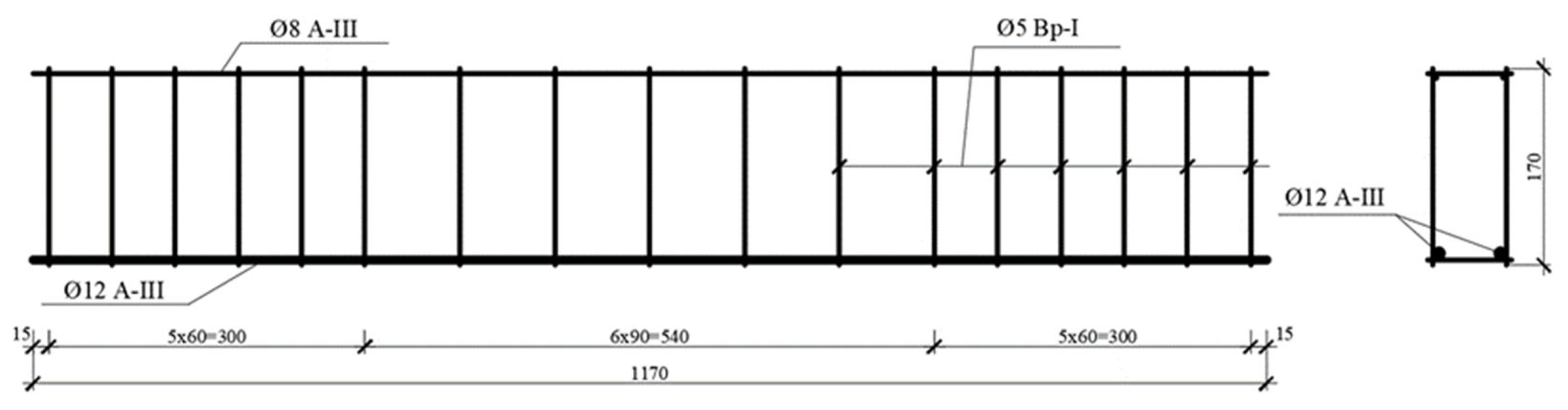
Figure 2.
The process of testing the strength of reinforced concrete beams in shear sections.
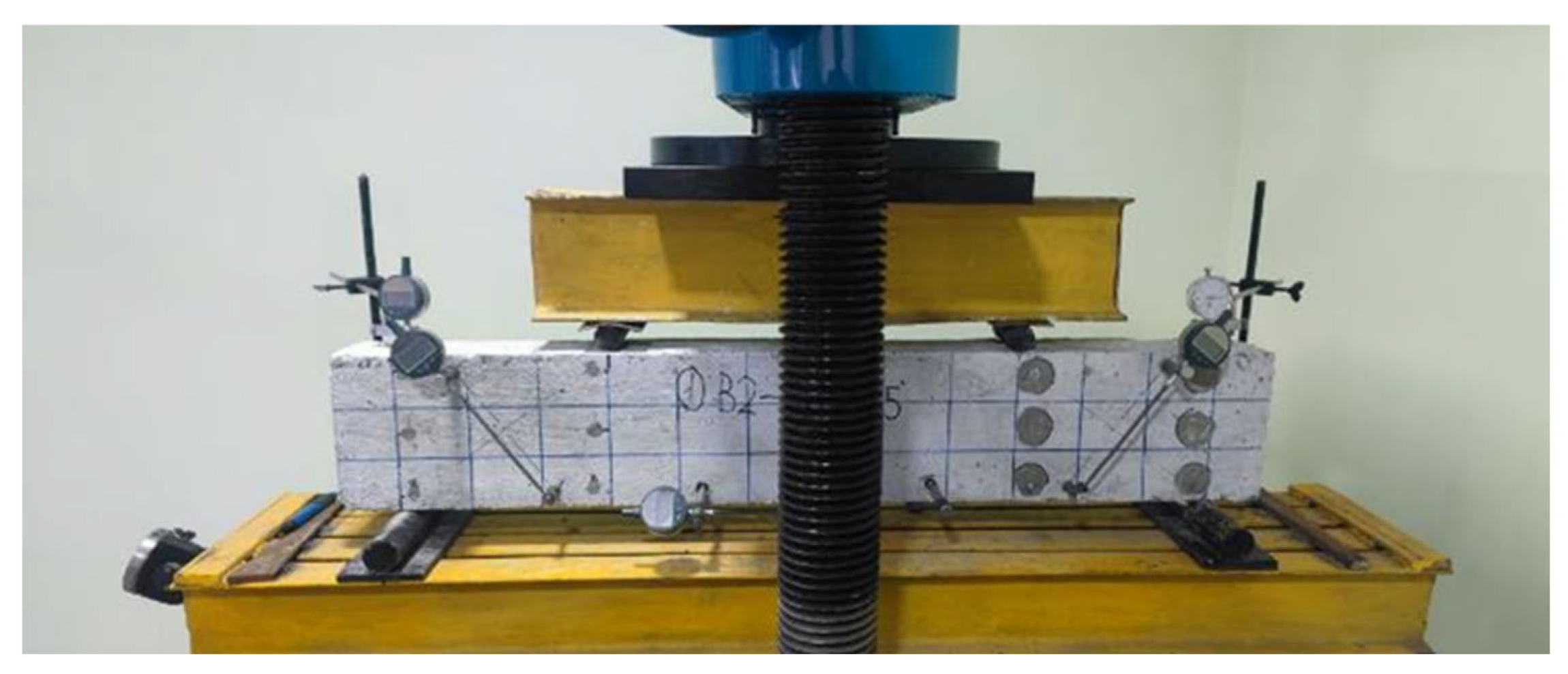
Figure 3.
Formation of shear cracks in samples from the S1 series.
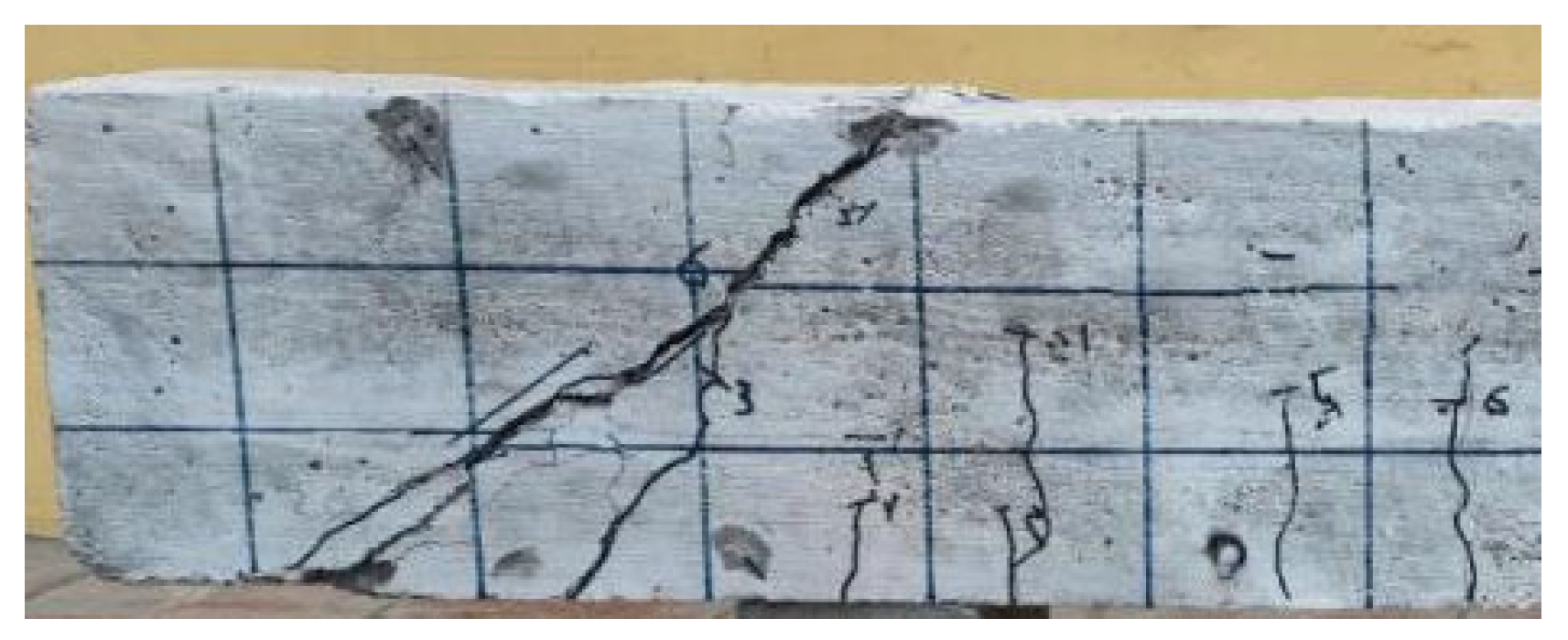
Figure 7.
Graph of forces and moments that cause shear cracks in beams.
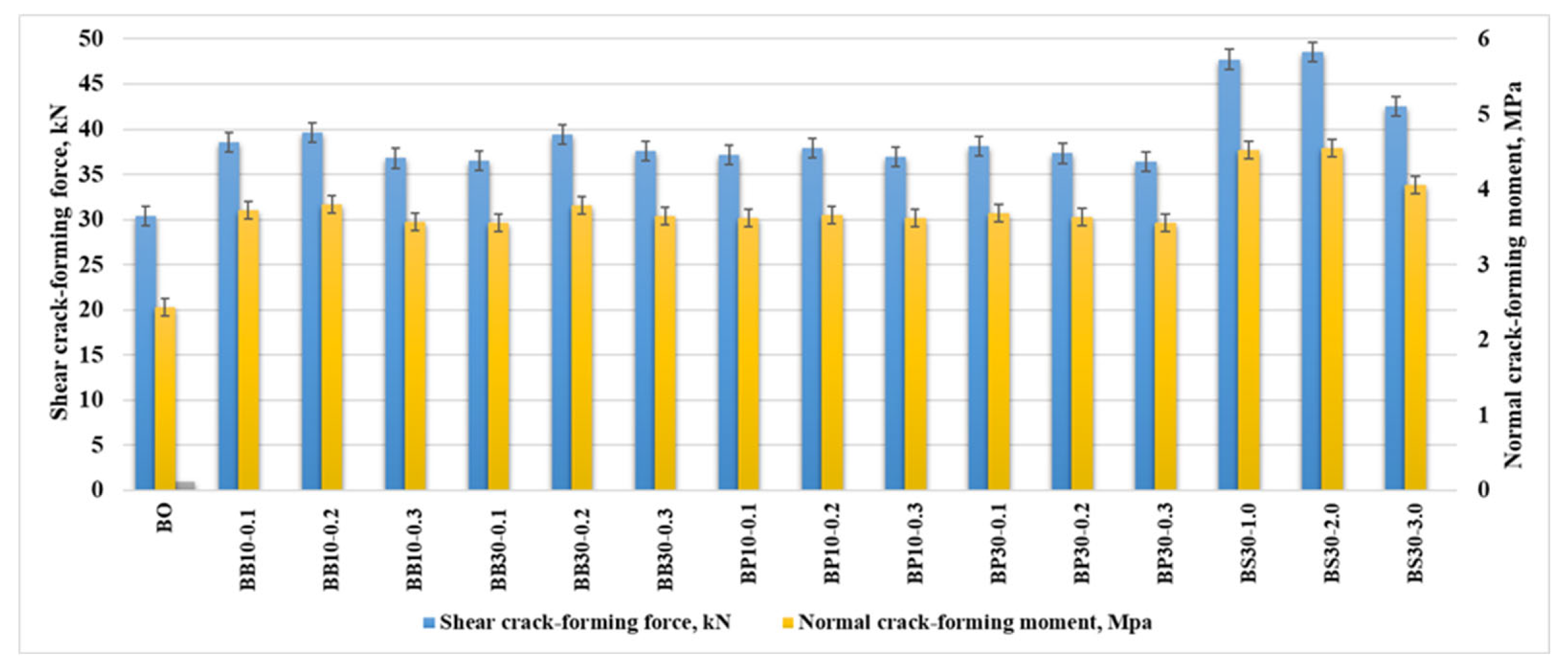
Figure 12.
Relative strains of concrete for group 1 beams.
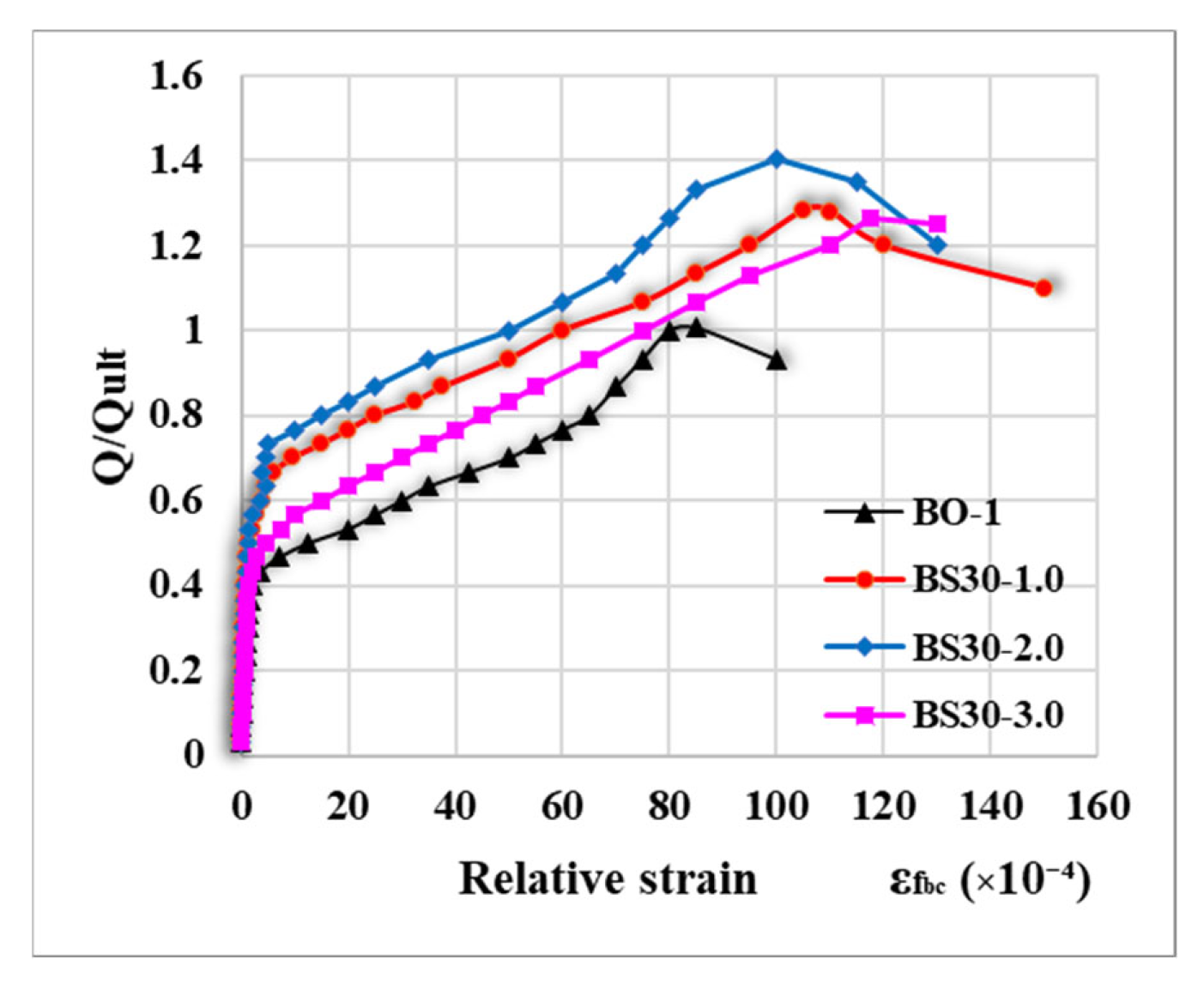
Figure 13.
Relative strains of concrete for group 2 beams.
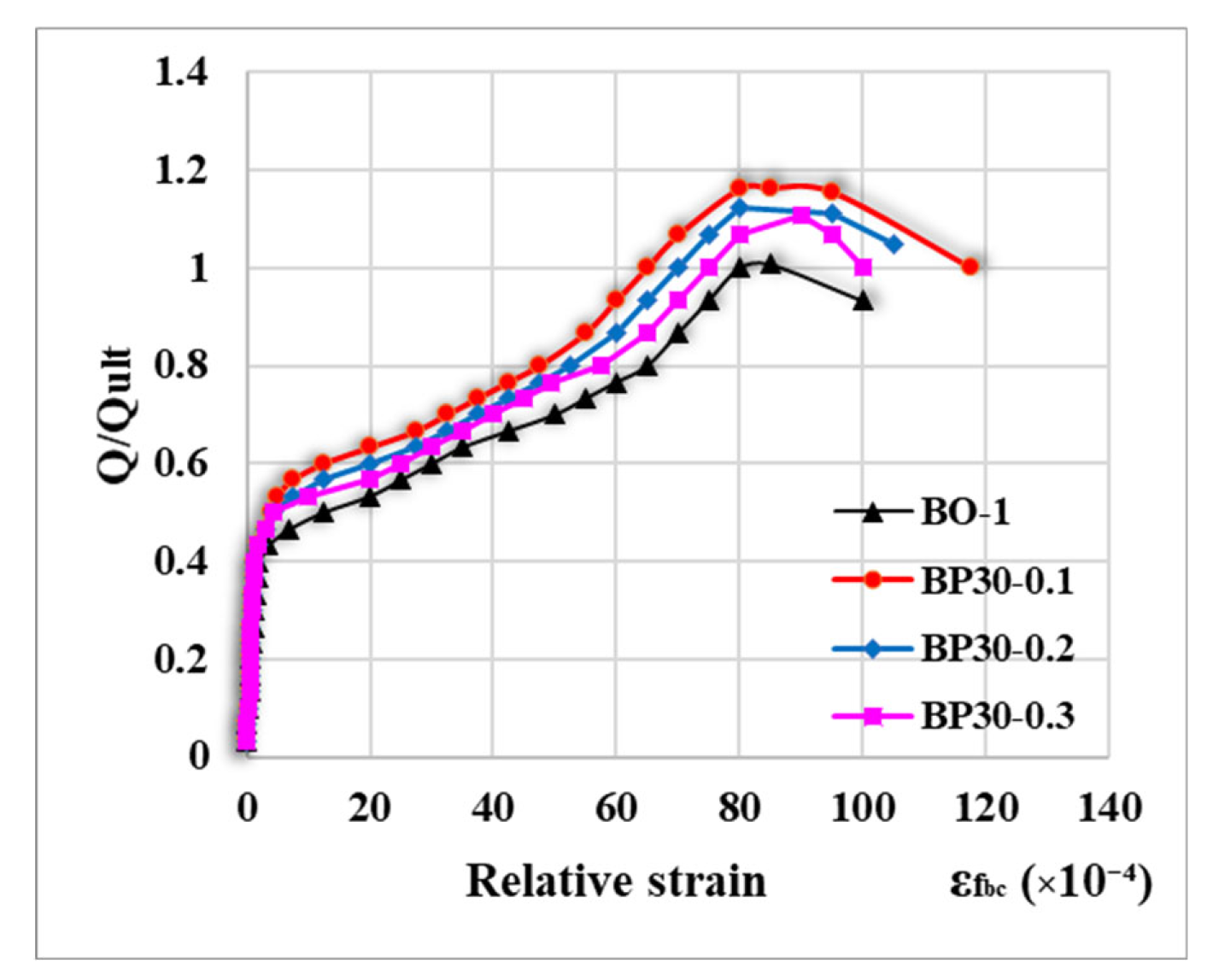
Figure 14.
Concrete deflection for beams of group 1.
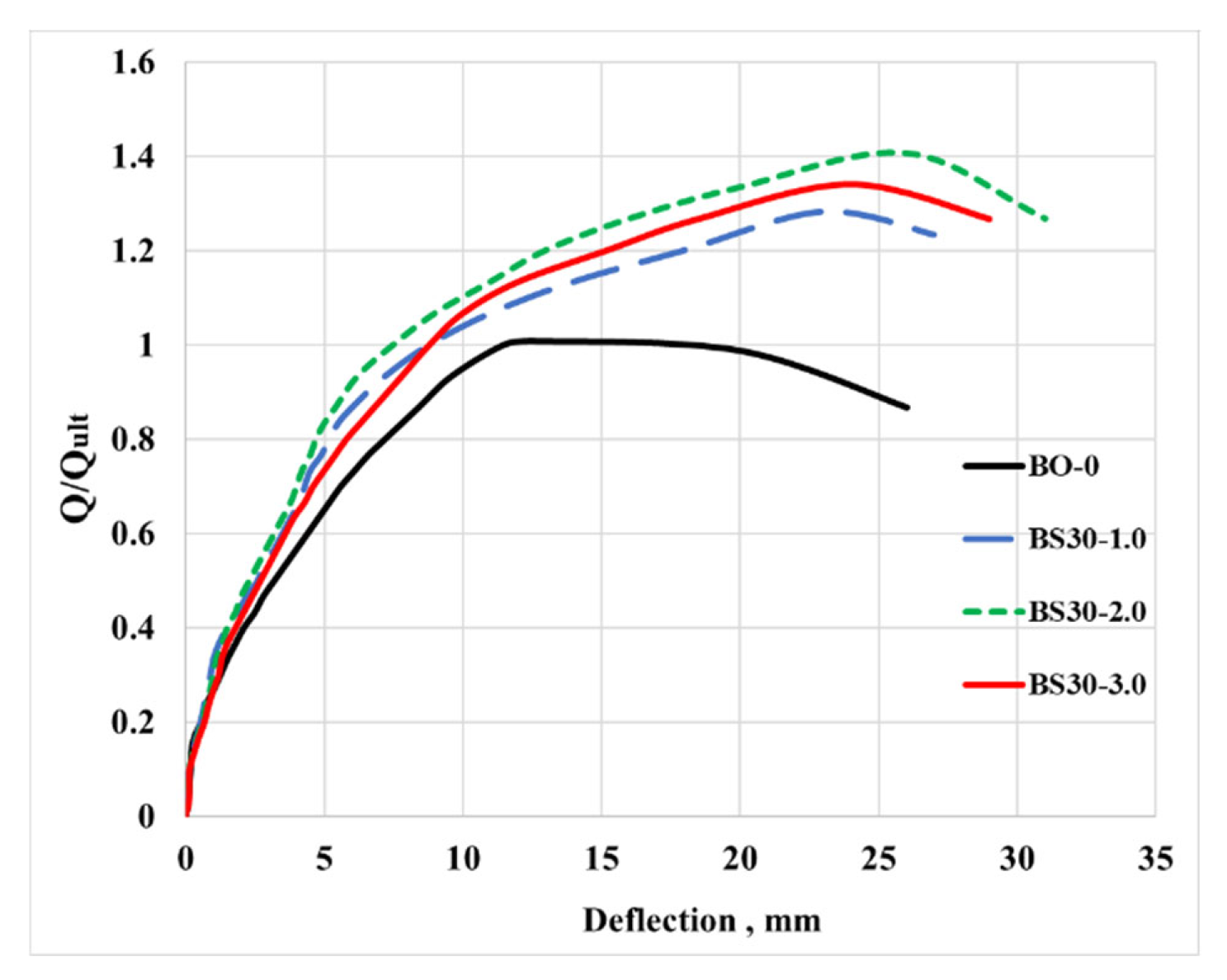
Figure 15.
Concrete deflection for beams of group 2.
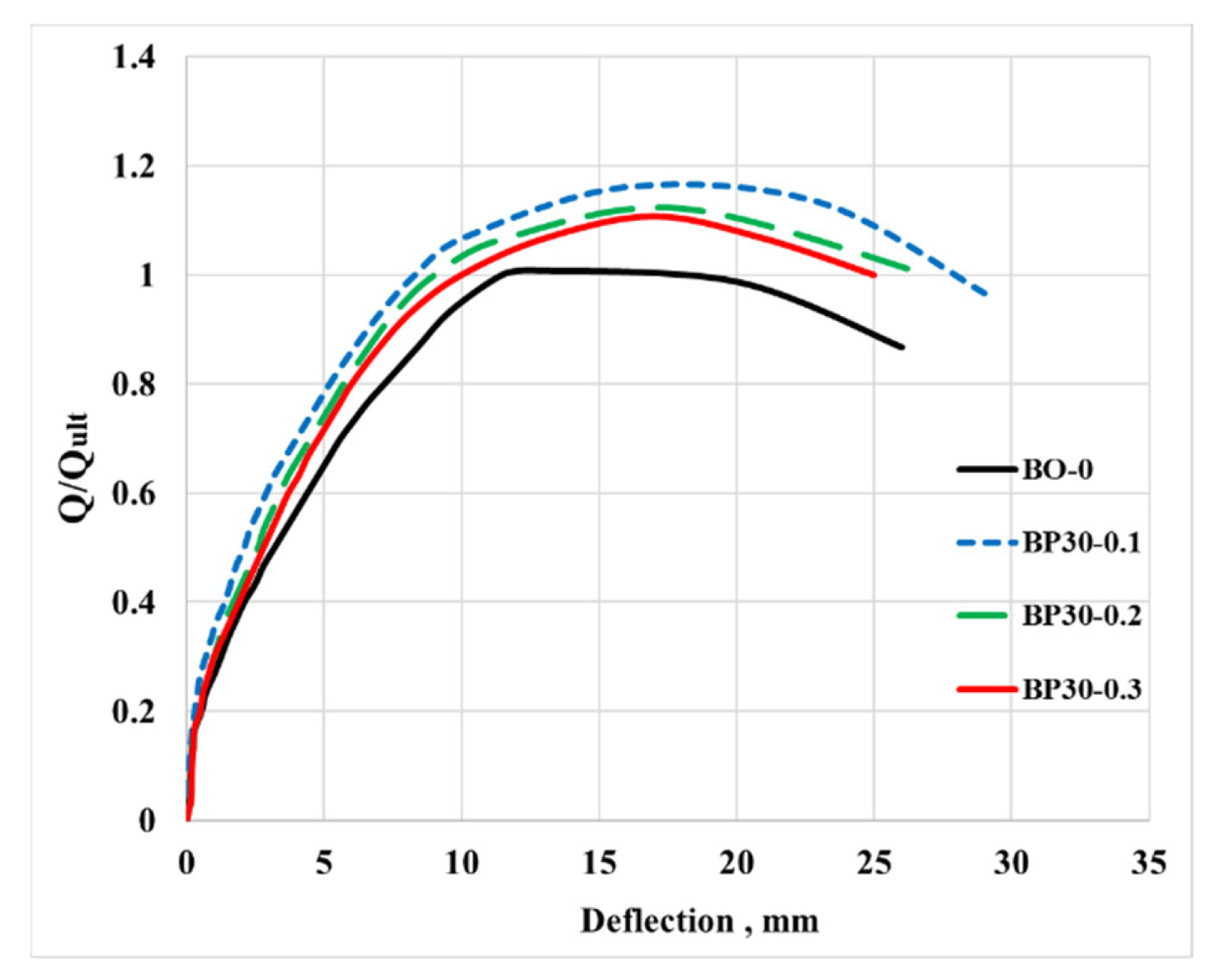

Table 1.
This is a table. Tables should be placed in the main text near to the first time they are cited.
Table 1.
This is a table. Tables should be placed in the main text near to the first time they are cited.
| № | Series | Designation | Fiber type | Fiber length (mm) | Fiber content (%) | Number of specimens |
|---|---|---|---|---|---|---|
| 1 | S1 (Control) | BO | (Plain concrete) | - | - | 3 |
| 2 | S2 | BB10-0.1 | Basalt | 10 | 0.1 | 3 |
| 3 | BB10-0.2 | Basalt | 10 | 0.2 | 3 | |
| 4 | BB10-0.3 | Basalt | 10 | 0.3 | 3 | |
| 5 | BB30-0.1 | Basalt | 30 | 0.1 | 3 | |
| 6 | BB30-0.2 | Basalt | 30 | 0.2 | 3 | |
| 7 | BB30-0.3 | Basalt | 30 | 0.3 | 3 | |
| 8 | S3 | BP10-0.1 | Polypropylene | 10 | 0.1 | 3 |
| 9 | BP10-0.2 | Polypropylene | 10 | 0.2 | 3 | |
| 10 | BP10-0.3 | Polypropylene | 10 | 0.3 | 3 | |
| 11 | BP30-0.1 | Polypropylene | 30 | 0.1 | 3 | |
| 12 | BP30-0.2 | Polypropylene | 30 | 0.2 | 3 | |
| 13 | BP30-0.3 | Polypropylene | 30 | 0.3 | 3 | |
| 14 | S4 | BS30-1.0 | Steel | 30 | 0.1 | 3 |
| 15 | BS30-2.0 | Steel | 30 | 0.2 | 3 | |
| 16 | BS30-3.0 | Steel | 30 | 0.3 | 3 |
Table 2.
Physical and mechanical properties of fibers.
| Fiber type | Density (kg/m³) | Tensile strength (MPa) | Elastic modulus (GPa) | Fiber length (mm) | Fiber diameter (mm) |
|---|---|---|---|---|---|
| Basalt | 2650 | 3500 | 110 | 10, 30 | 0.017 |
| Polypropylene | 910 | 500 | 35 | 10, 30 | 0.018 |
| Steel | 7850 | 250 | 200 | 30 | 0.3 |
Table 3.
Mechanical properties of samples dispersed reinforced with fibers.
| Designation | Compressive strength (MPa) | Tensile strength (MPa) | Residual tensile strength (MPa) | Flexural strength (MPa) | Elastic modulus (GPa) |
|---|---|---|---|---|---|
| BO | 34.6 | 2.21 | – | 4.41 | 30.91 |
| BB10-0.1 | 40.7 | 2.81 | 1.16 | 5.52 | 34.9 |
| BB10-0.2 | 41.8 | 2.89 | 1.29 | 5.81 | 35.4 |
| BB10-0.3 | 39.9 | 2.68 | 1.19 | 5.49 | 34.2 |
| BB30-0.1 | 39.8 | 2.66 | 1.21 | 5.61 | 33.7 |
| BB30-0.2 | 41.1 | 2.87 | 1.32 | 5.76 | 35.0 |
| BB30-0.3 | 40.2 | 2.74 | 1.26 | 5.68 | 34.1 |
| BP10-0.1 | 38.6 | 2.71 | 1.25 | 5.54 | 34.6 |
| BP10-0.2 | 39.9 | 2.76 | 1.20 | 5.73 | 34.8 |
| BP10-0.3 | 38.2 | 2.69 | 1.12 | 5.30 | 33.4 |
| BP30-0.1 | 39.7 | 2.78 | 1.23 | 5.62 | 35.1 |
| BP30-0.2 | 38.9 | 2.72 | 1.18 | 5.42 | 34.6 |
| BS30-0.3 | 38.1 | 2.65 | 1.10 | 5.31 | 34.1 |
| BS30-1.0 | 45.1 | 3.48 | 1.62 | 6.42 | 35.6 |
| BS30-2.0 | 47.2 | 3.54 | 1.75 | 6.56 | 36.8 |
| BS30-3.0 | 44.3 | 3.10 | 1.53 | 6.33 | 34.8 |
Table 4.
Moments causing normal and oblique cracks in sample beams.
| Series | ID | Mcrc,(kN‧m) | Qcrc,(kN) | Crack width at 50% Qmax, (mm) |
|---|---|---|---|---|
| S1 (Control) | BO | 2.69 | 32.23 | 0.37 |
| S2 | BB10-0.1 | 4.37 | 41.97 | 0.21 |
| BB10-0.2 | 4.46 | 42.12 | 0.19 | |
| BB10-0.3 | 4.02 | 39.06 | 0.22 | |
| BB30-0.1 | 4.09 | 38.92 | 0.20 | |
| BB30-0.2 | 4.25 | 40.69 | 0.18 | |
| BB30-0.3 | 3.90 | 39.87 | 0.25 | |
| S3 | BP10-0.1 | 3.80 | 38.05 | 0.21 |
| BP10-0.2 | 3.99 | 41.14 | 0.24 | |
| BP10-0.3 | 3.92 | 38.28 | 0.26 | |
| BP30-0.1 | 4.01 | 40.49 | 0.20 | |
| BP30-0.2 | 3.87 | 39.10 | 0.25 | |
| BS30-0.3 | 3.81 | 38.56 | 0.20 | |
| S4 | BS30-1.0 | 4.60 | 52.59 | 0.15 |
| BS30-2.0 | 5.00 | 54.42 | 0.10 | |
| BS30-3.0 | 4.71 | 48.62 | 0.12 |
Disclaimer/Publisher’s Note: The statements, opinions and data contained in all publications are solely those of the individual author(s) and contributor(s) and not of MDPI and/or the editor(s). MDPI and/or the editor(s) disclaim responsibility for any injury to people or property resulting from any ideas, methods, instructions or products referred to in the content. |
© 2025 by the authors. Licensee MDPI, Basel, Switzerland. This article is an open access article distributed under the terms and conditions of the Creative Commons Attribution (CC BY) license (http://creativecommons.org/licenses/by/4.0/).
Copyright: This open access article is published under a Creative Commons CC BY 4.0 license, which permit the free download, distribution, and reuse, provided that the author and preprint are cited in any reuse.


