Preprint
Article

This version is not peer-reviewed.

Allergy and Distinct Clinical Features in Episodic vs. Vestibular Migraine: Diagnostic Implications

Submitted:

26 December 2025

Posted:

29 December 2025

You are already at the latest version

Abstract

Background: Migraine, including vestibular migraine (VM), is a complex neurological disorder with diverse symptoms. VM is primarily characterized by vertigo attacks, while episodic migraine (EM) is more associated with headache features. This study aims to identify the distinguishing characteristics and comorbidities of VM and EM. Methods: A retrospective analysis was conducted using databases from Mersin University and Brain 360 Integrative Brain Health Center, encompassing 333 patients (248 EM, 85 VM) diagnosed according to the International Classification of Headache Disorders, 3rd edition (ICHD-3) criteria between 2021 and 2023 to examine various migraine features and comorbidities. Results: Both EM and VM were predominantly observed in women with similar age distributions. EM patients exhibited significantly longer symptom duration and higher frequencies of nausea, photophobia, and phonophobia (p<0.05). No significant differences were found in vomiting, osmophobia and allodynia rates (p=0.147, p=0.109, p=0.822), while motion sickness was more prevalent in EM (p<0.05). EM patients also showed greater prevalence of migraine family history, menstrual associations, metabolic syndromes, and fibromyalgia (p<0.05). Although headache severity was similar, EM attacks lasted longer. Sleep disorders and medication overuses were more common among EM patients (p<0.05). EM patients reported more sleep disorders, medication overuse, and emotional stress, while dizziness was more common in VM patients (p<0.05). Conclusions: Migraine-like features and comorbidities are generally more prevalent and diverse in EM patients, revealing a distinct pattern compared to VM patients. These findings suggest a broader spectrum of VM symptoms beyond current diagnostic criteria, highlighting the need for more comprehensive longitudinal studies.

Keywords: 
;  ;  ;  ;  ;  

1. Introduction

Migraine is a complex neurological disorder characterized by recurrent moderate to severe headache attacks, often accompanied by symptoms such as nausea, vomiting, photophobia and phonophobia [1]. Migraine attacks can be triggered by a variety of factors including hormonal changes, stress, sleep disturbances, and environmental stimuli [2]. Additionally, comorbidities such as fibromyalgia, sleep disorders, and medication overuse are associated with migraine, potentially exacerbating the condition [3,4]. Migraine, whether episodic or chronic, affects individuals during their most productive years, imposing a significant burden on both patients and society [5].
Episodic migraine (EM) is a neurological disorder characterized by patients experiencing 14 or fewer headache days per month [6]. EM, the most prevalent form of migraine, is typically distinguished by discrete headache attacks lasting between 4 and 72 hours, with symptom-free intervals between attacks [7]. Approximately 2.5% of EM patients progress to chronic migraine annually [8]. Early intervention in frequently occurring EM cases can help prevent this progression, thereby reducing the overall impact on patients and society [9].
Vestibular migraine (VM) is another subtype, characterized by recurrent vertigo attacks, dizziness, and migraine symptoms [10,11]. Although the symptoms of EM and VM overlap, certain symptoms are more pronounced in one group compared to the other. Additionally, VM symptoms overlap with those of other vestibular disorders, such as Meniere’s disease, complicating the diagnostic process [12,13,14].
While both EM and VM are associated with vestibular symptoms, the underlying pathophysiological mechanisms may differ. EM is potentially linked to cortical spreading depression and genetic factors, leading to vertigo that can last minutes to hours [15]. In contrast, VM is characterized by thalamic sensitivity and significant multimodal cortical activation, which plays a crucial role in its pathogenesis [16,17]. The distribution of 5-HT1F receptors in vestibular and trigeminal ganglion cells suggests serotonergic involvement in both migraine and balance disorders, contributing to vestibular pathways [18]. Despite sharing common features such as vestibular symptoms and a lack of specific biological markers for diagnosis [19], EM and VM differ in their underlying mechanisms and clinical presentations. Understanding these distinctions is vital for accurate diagnosis and targeted management of these conditions.
A key challenge in the diagnosis and management of migraine subtypes is the differentiation between EM and VM, particularly in recognizing comorbid conditions such as allergies. The relationship between these conditions can be complex and interdependent, often leading to undiagnosed or misdiagnosed. Recognizing risk factors, comorbidities, and their impact on daily life is essential for effective management and preventing the progression of chronic migraine. This study aims to review the diagnostic criteria for VM, explore the overlapping and distinct phenotypic features and associated symptoms of VM and EM, and identify practical diagnostic clues to aid in routine clinical practice. By analyzing a comprehensive data set, this study highlights differentiating features of these common clinical syndromes, providing more practical clues for clinicians. Additionally, the findings open potential windows for future studies and classification efforts, encompassing clinical associates, comorbidities, and triggers to offer a more comprehensive understanding of migraine subtypes.

2. Materials and Methods

2.1. Study Design

This study is a retrospective analysis conducted using comprehensive databases from Mersin University and Brain 360 Integrative Brain Health Center. The study includes patients diagnosed with episodic migraine (EM) and vestibular migraine (VM) according to the International Classification of Headache Disorders, 3rd edition (ICHD-3) [1]. The study period covers patient data collected from 2021 to 2023.

2.2. Study Population

A total of 333 patients were included in the study, with 248 diagnosed with EM and 85 diagnosed with VM. Patients were selected based on their adherence to ICHD-3 diagnostic criteria for EM and VM.

2.2.1. Inclusion Criteria

- Patients diagnosed with EM or VM according to ICHD-3 criteria.
- Age between 18 and 65 years.
- Patients who provided informed consent for their data to be used in research.

2.2.2. Exclusion Criteria

- Patients with other primary headache disorders.
- Patients with significant psychiatric or neurological disorders other than migraine.
- Patients with incomplete medical records.

2.3. Data Collection

Data were collected retrospectively from medical records and included demographic information, headache characteristics, migraine-associated symptoms, comorbidities, and migraine triggers.

2.4. Statistical Analysis

The data were analyzed using TIBCO Statistica 13.5.0.17 software. Descriptive statistics were used to summarize demographic information and clinical characteristics. Categorical variables were compared using the Chi-Square and Fisher Exact test, while continuous variables were assessed for normality using the Shapiro-Wilk test. Depending on the adherence to normal distribution, either the Independent Samples t-test or the Mann-Whitney U test was employed. To identify the critical factors determining migraine types and visualize the impact of these factors on both types of migraines, Classification and Regression Tree (CART) analysis was utilized in this study. This method was chosen to prioritize variables and make meaningful distinctions within complex data structures to support diagnostic processes. Link Analysis was used to examine the links and relationships between binary comorbidities and visualized using Web Graph. A p-value of <0.05 was considered statistically significant.
Separate analyses were conducted for EM and VM patients to compare; demographic characteristics, headache characteristics, migraine-associated symptoms, comorbidities, and migraine triggers.

3. Results

3.1. Demographic and Headache Characteristics

As shown in Table 1, the study included 333 patients, with 248 (74.48%) diagnosed with EM and 85 (25.52%) diagnosed with VM. In terms of gender distribution, the EM group consisted of 211 females (85.1%) and 37 males (14.9%), while the VM group had 67 females (78.8%) and 18 males (21.2%), with no significant difference between the groups (p=0.180). The mean age was 41.65±10.35 years for EM patients and 39.92±12.62 years for VM patients, also showing no significant difference (p=0.211). Some demographic and clinical features of EM and VM patients are shown as percentages in the supplementary material. Regarding headache characteristics, EM patients experienced headaches on average 6.92±4.04 days per month, compared to 6.41±4.08 days per month for VM patients (p=0.487). The mean attack duration was 8.13±7.8 hours for EM patients and 6.54±7.97 hours for VM patients, which was significantly different (p=0.001). Both groups reported similar headache severity with a median VAS score of 8 (range 2-10) (p=0.348). In terms of headache location, 134 (54.3%) EM patients had unilateral headaches compared to 14 (66.7%) VM patients, while 113 (45.7%) EM patients and 7 (33.3%) VM patients had bilateral headaches (p=0.362).

3.2. Migraine-Associated Symptoms

The details of symptoms in Table 2 show notable differences between EM and VM patients. Nausea was significantly more common in EM patients (85.9%) compared to VM patients (49.4%) (p<0.001), while vomiting had a similar prevalence in both groups, with 28.6% in the EM group and 21.2% in the VM group (p=0.180). Photophobia was reported by 89.5% of EM patients and 41.2% of VM patients (p<0.001), and phonophobia was noted in 79% of EM patients compared to 38.8% of VM patients (p<0.001). Other symptoms included osmophobia, which was present in 39.1% of EM patients and 29.4% of VM patients (p=0.109). Motion sickness was more prevalent in EM patients (50%) compared to VM patients (28.2%) (p<0.001). Allodynia had a similar prevalence in both groups, with 5.2% in the EM group and 5.9% in the VM group (p=0.822). Notably, dizziness was more frequent in VM patients (24.7%) compared to EM patients (0%) (p<0.001). In this study, as shown in Table 3, some triggers such as menstrual cycle, seasonal changes, sleep disturbances, and emotional stress were compared between the two groups, and EM patients were found to be more affected by them (p<0.001, p<0.001, p<0.001, p<0.001, p=0.007, respectively). Table 3 also shows that physical activity and allergy were more associated with migraine symptoms in EM patients compared to VM patients in this study (p<0.001).

3.3. Comorbidities and Triggers

The details of comorbidities and migraine triggers between EM and VM patients reveal significant differences in Table 3. Family history was more common in EM patients (58.9%) compared to VM patients (29.4%) (p<0.001). Metabolic syndrome had a higher prevalence in EM patients (65.7%) compared to VM patients (21.2%) (p<0.001), and vascular comorbidities were more frequent in EM patients (44%) compared to VM patients (11.8%) (p<0.001). Depression was more prevalent in EM patients (17.7%) compared to VM patients (2.4%) (p<0.001), whereas anxiety had a similar prevalence in both groups, with 16.9% in the EM group and 14.1% in the VM group (p=0.543). Bruxism was more common in EM patients (32.3%) compared to VM patients (8.2%) (p<0.001), and fibromyalgia had a higher prevalence in EM patients (73.4%) compared to VM patients (18.8%) (p<0.001). Atopy was more frequent in VM patients (22.4%) compared to EM patients (5.6%) (p<0.001). Regarding migraine triggers, the menstrual association was more common in EM patients (62.9%) compared to VM patients (27.1%) (p<0.001), and seasonal changes had a higher prevalence in EM patients (61.3%) compared to VM patients (15.3%) (p<0.001). Allergies were more prevalent in EM patients (83.5%) compared to VM patients (10.6%) (p<0.001), and sleep disorders were more frequent in EM patients (75.4%) compared to VM patients (29.4%) (p<0.001). Physical activity triggered symptoms in 28.2% of EM patients compared to 3.5% of VM patients (p<0.001), and emotional stress was more common in EM patients (30.2%) compared to VM patients (15.3%) (p=0.007). For lifestyle factors, smoking rates were similar in both groups, with 10.5% in the EM group and 17.6% in the VM group (p=0.083). However, alcohol consumption was more frequent in EM patients (32.7%) compared to VM patients (9.4%) (p<0.001). In our data, key features include a higher prevalence of migraine-associated symptoms such as nausea, photophobia, and phonophobia in EM patients. Dizziness was more common in VM patients, highlighting a key distinguishing feature. Certain comorbidities, including metabolic syndrome, vascular comorbidities, depression, bruxism, and fibromyalgia, were more prevalent in EM patients. In contrast, VM patients exhibited a higher frequency of atopy and dizziness. Additionally, migraine triggers such as menstrual association, seasonal changes, sleep disorders, and physical activity were more common in EM patients.

3.4. Alignment with Bárány Society Diagnostic Criteria

The Barany Society criteria [19] for the diagnosis of vestibular migraine (VM) provides a standardized framework for identifying this subtype of migraine, aiming to differentiate VM from other vestibular disorders and to ensure accurate diagnosis and effective treatment. We compared our results using these criteria. Table 4 compares the diagnostic criteria for vestibular migraine as defined by the Barany Society with the variables measured in our study, highlighting how our data aligns with these criteria, including specific frequency rates where applicable. As shown in Table 4, both EM and VM patients met the criterion of at least five episodes, with EM averaging 6.92±4.04 and VM 6.41±4.08 days per month. Our study population included patients with a history of migraine, fulfilling another core requirement. Vestibular symptoms, particularly dizziness, were significantly more common in VM patients (24.7%), aligning with the criterion of symptoms lasting 5 minutes to 72 hours. Migrainous features such as unilateral headaches (EM 54.3%, VM 66.7%), photophobia (EM 89.5%, VM 41.2%), and phonophobia (EM 79%, VM 38.8%) were prevalent. Physical activity was a more frequent trigger in EM (28.2%) than in VM (3.5%). Exclusion criteria ensured no confounding disorders. This alignment underscores the robustness of our findings and the importance of considering vestibular symptoms in diagnosing migraine subtypes.

3.5. Allergy-Centered Diagnostic Differentiation Between Episodic and Vestibular Migraine

To identify the most accurate diagnostic clues, we performed a Classification and Regression Tree (CART) Analysis for our data set, as shown in Figure 1. Node 0 illustrates the initial split, categorizing the total population (n=333) into EM (74.5%, n=248) and VM (25.5%, n=85) groups. The first significant split is based on the presence of allergy (Adj. P-value=0.000, Chi-square=147.532, df=1). Patients with allergies are more likely to have EM (95.8%, n=207) than VM (4.2%, n=9), while those without allergies have a higher probability of having VM (65.0%, n=76) compared to EM (35.0%, n=41). For patients with allergies (Node 1), the next split is based on a family history of headaches (Adj. P-value=0.029, Chi-square=4.755, df=1). Those with a family history are predominantly classified as having EM (98.4%, n=122) compared to VM (1.6%, n=2). Patients without a family history still show a higher prevalence of EM (92.4%, n=85) than VM (7.6%, n=7). For patients without allergies (Node 2), the presence of photophobia (Adj. P-value=0.000, Chi-square=25.232, df=1) is the next determining factor. Among those with photophobia, EM is more common (55.6%, n=55) compared to VM (44.4%, n=44). Conversely, in the absence of photophobia, VM is significantly more prevalent (88.4%, n=38) compared to EM (11.6%, n=5).
This CART analysis effectively highlights the most critical variables—allergy, family history of headaches, and photophobia—that distinguish between EM and VM in our study. It underscores the importance of these factors in diagnosing and differentiating between these two types of migraines. These findings are consistent with the clinical characteristics and triggers detailed in our data, supporting the robustness of our diagnostic approach and the relevance of these variables in the classification of migraine subtypes.
Figure 1, shows a decision tree analysis examining the determinants of migraine types. Migraine types were taken as the starting point and allergy status was used as the first discriminating variable (p<0.001).
In the group of individuals with allergies, Episodic Migraine (95.8%) and Vestibular Migraine (4.2%) were found in the majority and a small proportion, respectively. In this group, discrimination was made according to the presence of a family history of migraine (p= 0.029). Episodic migraine was observed in 98.4% and vestibular migraine in 1.6% of the individuals with allergy and family history of migraine. Episodic migraine rate was 92.4% and vestibular migraine rate was 7.6% in individuals with allergies and no family history of migraine.
The episodic migraine rate was 35.0% and the vestibular migraine rate was 65.0% in individuals without allergy. This group was differentiated according to the presence of photophobia (p<0.001). Episodic migraine and vestibular migraine were found in 55.6% and 44.4% of non-allergic and photophobic individuals, respectively. Episodic migraine and vestibular migraine were observed in 11.1% and 88.9% of the individuals without allergy and photophobia, respectively.
As a result of decision tree analysis, it is seen that factors such as allergy, family history of migraine and photophobia play an important role in determining migraine types. These factors provide significant differentiation in the classification of migraine types.
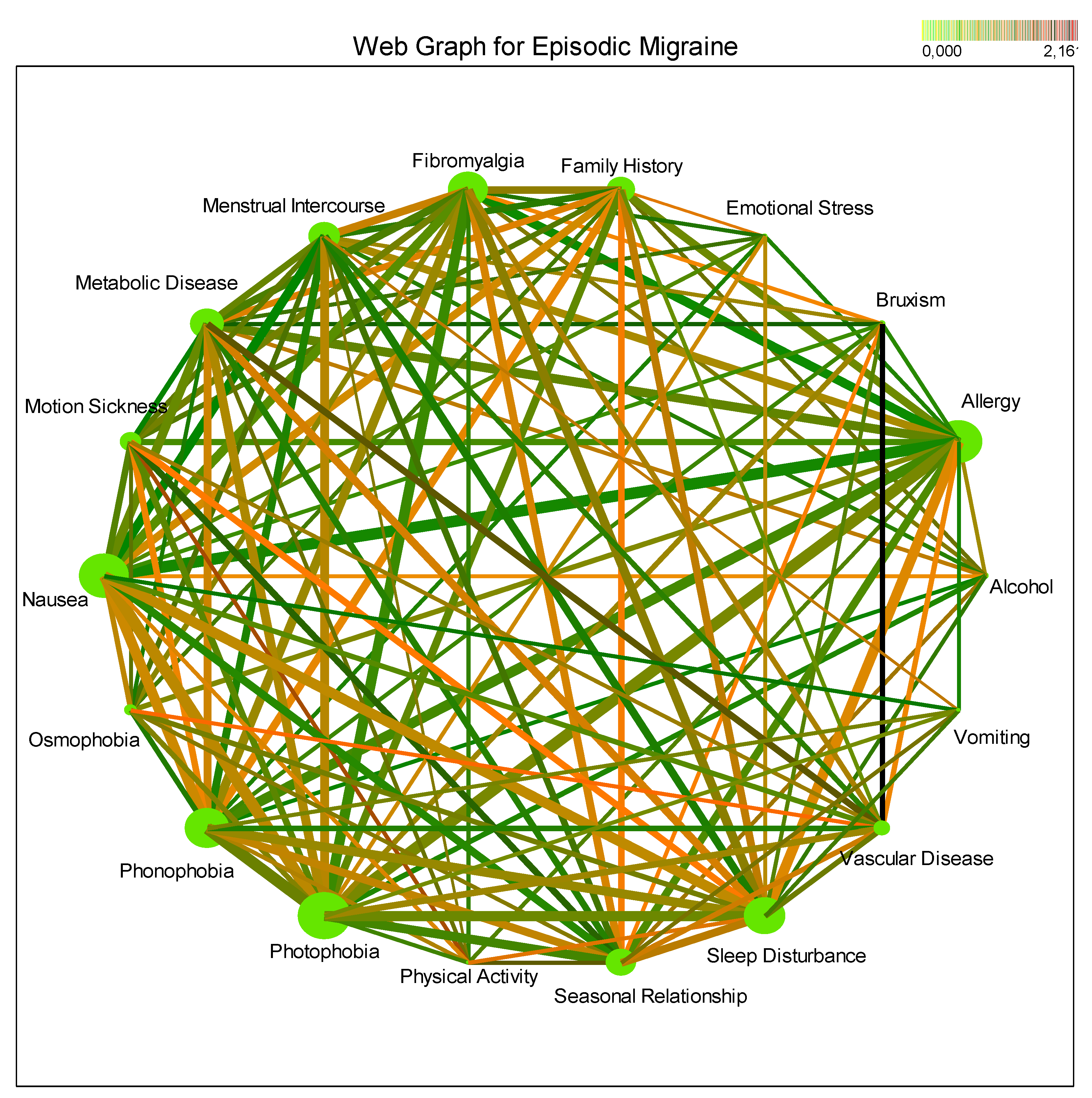
On the other hand, the interrelationship of the mentioned comorbidities of episodic and vestibular migraine groups is another issue. We used link analysis to question this issue. Figure 2, shows a sample of this issue. This analysis emphasizes the importance of understanding the interconnected nature of various triggers and symptoms in managing episodic migraines effectively.
Each node in Figure 2, represents a specific factor, such as “Nausea,” “Emotional Stress,” “Allergy,” and “Sleep Disturbance,” among others. The edges, or lines, between the nodes, signify relationships and interactions between these factors, with the color and thickness indicating the strength or significance of these interactions.
Key observations include those nodes such as “Nausea,” “Allergy,” and “Photophobia” appear highly connected, suggesting they play central roles in the migraine experience. The color gradient from green to orange likely represents the intensity or frequency of the interactions, with green indicating less frequent and orange indicating more frequent interactions. The dense web of connections indicates the complexity of episodic migraines, where multiple factors are often interrelated and can simultaneously influence each other. Addressing migraines may require a comprehensive approach that considers the multifaceted nature of these interactions rather than focusing on isolated factors.
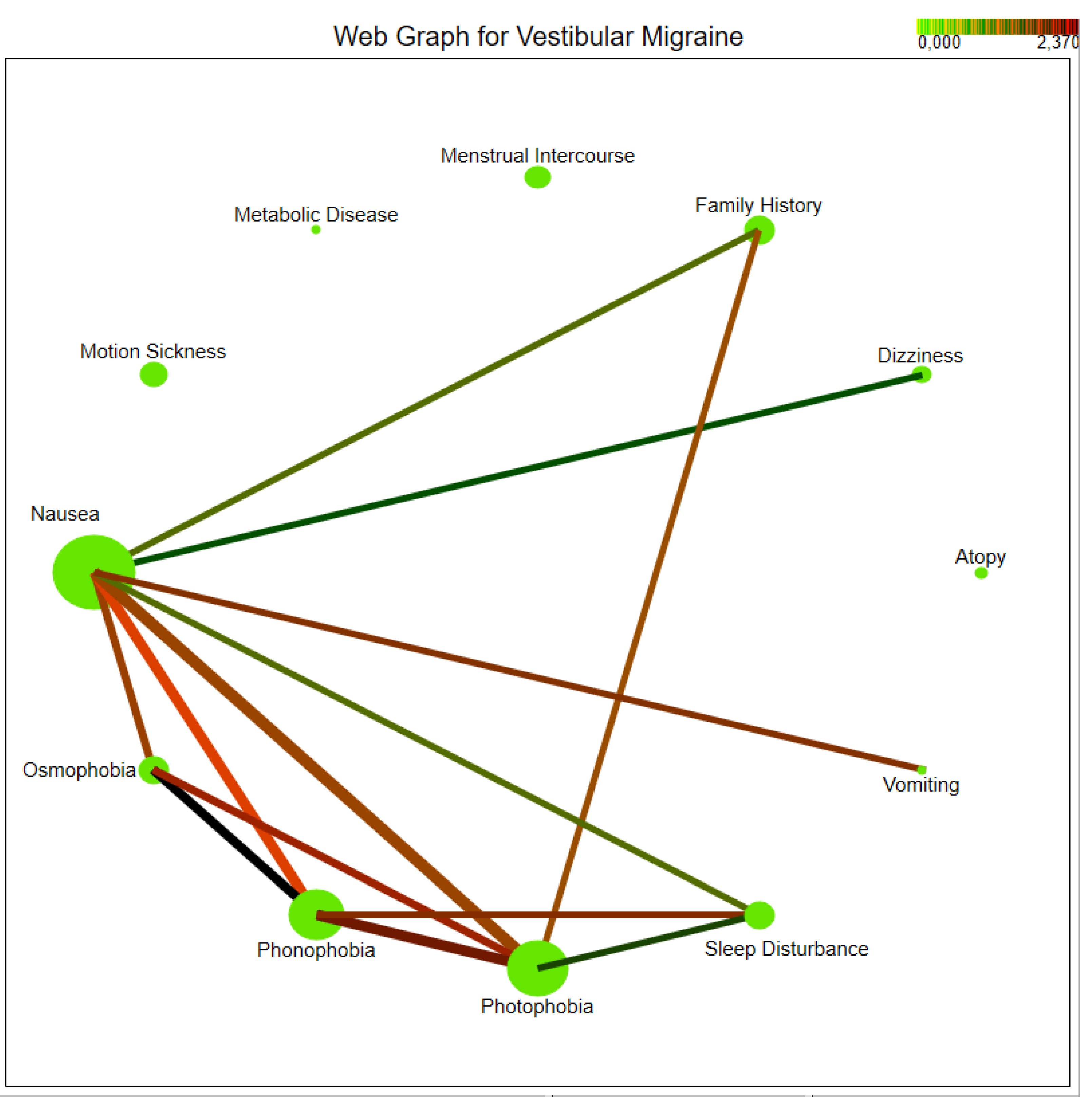
On the other hand, vestibular migraine showed a different pattern other than episodic migraine as shown in Figure 3.
Each node of Figure 3, represents a specific factor, such as “Nausea,” “Dizziness,” “Photophobia,” and “Sleep Disturbance,” among others. The edges, or lines, between the nodes, signify relationships and interactions between these factors, with the color and thickness indicating the strength or significance of these interactions.
Key observations include that “Nausea” appears as a highly connected node, indicating its central role in vestibular migraines, with other significant nodes being “Photophobia” and “Osmophobia.” The color gradient from green to red (or orange) represents the intensity or frequency of the interactions, with green indicating less frequent interactions and red/orange indicating more frequent interactions. The graph shows specific interactions among factors, with stronger connections highlighted by darker colors. For example, “Nausea” is strongly connected to “Photophobia” and “Osmophobia.” Compared to the episodic migraine graph, these shows fewer but more targeted connections, emphasizing specific symptoms and triggers unique to vestibular migraines. This analysis underscores the importance of understanding the specific triggers and symptoms associated with vestibular migraines to manage them effectively. The focused nature of the interactions suggests that targeted strategies may be beneficial for individuals suffering from this type of migraine.

4. Discussion

Episodic migraine and vestibular migraine are two distinct yet interconnected conditions within the spectrum of migraine disorders. The primary objective of this study was to investigate the diagnostic and differentiating features of EM and VM, focusing on the role of vestibular symptoms. By comparing the clinical characteristics, comorbidities, and migraine-associated symptoms between EM and VM patients, we aimed to enhance the diagnostic accuracy and understanding of these migraine subtypes.

4.1. Comparison of Migraine Episodes

Episodic migraine is characterized by recurrent moderate to severe headaches that are often unilateral, pulsating, aggravated by routine physical activity, and associated with nausea, vomiting, and sensitivity to light and sound [20]. On the other hand, vestibular migraine presents with episodic vertigo, dizziness, or imbalance, often accompanied by migrainous symptoms such as headache, photophobia, and phonophobia [21]. Our findings indicated that both EM and VM patients experience frequent episodes, fulfilling the Barany Society’s criterion of at least five episodes. EM patients reported an average of 6.92±4.04 headache days per month, while VM patients reported 6.41±4.08 days. These results align with the current literature, which also highlights the high frequency of migraine episodes in both subtypes [6]. However, our study did not measure the frequency of episodes over a more extended period, which could provide additional insights into the chronicity of these conditions.

4.2. Vestibular Symptoms and Their Importance

Vestibular symptoms, particularly dizziness, were significantly more common in VM patients (24.7%). This finding is consistent with previous studies that emphasize the prevalence of vestibular symptoms in VM [10]. Our study further contributed by quantifying the duration of these symptoms, showing that both EM and VM patients experienced attacks lasting within the range specified by the Barany Society (5 minutes to 72 hours). Despite this, our study did not delve into the qualitative aspects of vestibular symptoms, such as their impact on daily activities, which could be an area for future research. Since this is not a follow-up study, it does not include a comprehensive recording of vestibular symptoms during attacks.

4.3. Migraine Features and Diagnostic Clues

Clinical features of vestibular migraine include recurrent vestibular symptoms, a history of migraine, a temporal association between vestibular and migraine symptoms, and the exclusion of other causes of vestibular symptoms [19]. In contrast, episodic migraine primarily manifests as severe headaches with associated symptoms [20]. Vestibular migraine is considered the second most common cause of vertigo and the most common cause of spontaneous episodic vertigo [22].
Migrainous features such as unilateral headache location, photophobia, and phonophobia showed significant differences between EM and VM patients. Unilateral headache location was more common in VM patients (66.7%) compared to EM patients (54.3%), which supports existing literature that describes similar patterns [16]. EM patients had higher rates of photophobia (89.5%) and phonophobia (79%) compared to VM patients (41.2% and 38.8%, respectively). These findings highlight the importance of these features in differentiating between the two subtypes. Migraine with aura is more common in migraine patients without vestibular symptoms [23]. However, our study did not measure specifically pulsating quality or comprehensive reports of visual aura, which are also critical diagnostic features according to the Barany Society. Future studies should aim to include these variables to provide a more comprehensive diagnostic profile.

4.4. Comorbidities and Their Impact

Associates and comorbidities differ between the two conditions. Vestibular migraine is associated with vertigo syndromes, Menière’s disease, benign paroxysmal positional vertigo, and anxiety-related dizziness [24]. Additionally, individuals with vestibular migraine may experience cognitive dysfunction and have a higher likelihood of falls compared to those without dizziness [25]. Episodic migraine, on the other hand, is associated with various central and peripheral vestibular syndromes, including migrainous vertigo and basilar-type migraine [26]. Our study found that comorbidities such as metabolic syndrome, vascular comorbidities, depression, bruxism, and fibromyalgia were significantly higher in EM patients. This is consistent with the literature that associates these comorbidities with EM [3,4]. VM patients, on the other hand, had a higher frequency of atopy and dizziness, aligning with findings from other studies [12,27]. Understanding these comorbidities is crucial for management, as they can influence therapeutic approaches. Nonetheless, our study’s cross-sectional design limits the ability to establish causal relationships between these comorbidities and migraine subtypes. Longitudinal studies are needed to address this gap.

4.5. Migraine Triggers and Lifestyle Factors

Triggers for both episodic and vestibular migraines largely overlap. Common triggers include menstruation, sleep disturbances, stress, certain foods like cheese and red wine, and weather changes [28]. Moreover, vestibular migraine shares triggers with typical migraine, indicating a significant overlap in the pathophysiology of these conditions [21]. Our data indicated that migraine triggers such as menstrual association, seasonal changes, sleep disorders, and physical activity were more common in EM patients. These triggers are well-documented in the literature as significant factors influencing migraine episodes [2,7]. The CART analysis further highlighted the importance of allergies, family history of headaches, and photophobia in differentiating between EM and VM. While our study provides valuable insights into the prevalence of these triggers, it did not explore their exact mechanisms or their interplay with other factors, which could be an avenue for future research.

4.6. Limitations

This study has several limitations. Its retrospective design may introduce recall bias, as the data relies on patient self-reports and medical records. The cross-sectional nature limits our ability to establish causal relationships between clinical features, comorbidities, and migraine subtypes. The sample, drawn from a specific geographic region, may not be generalizable to other populations. Additionally, the lack of objective measures, such as imaging or biomarkers, constrains the validation of self-reported data. Important diagnostic features like the pulsating quality of headaches and visual aura were not measured. Furthermore, the study did not assess the qualitative impact of symptoms on daily activities and quality of life. Future research should address these limitations to provide a more comprehensive understanding of episodic and vestibular migraines.

4.7. Clinical Implications and Future Directions

The findings of this study have significant implications for enhancing the diagnosis and management of EM and VM. By highlighting key diagnostic features, such as vestibular symptoms, migrainous characteristics, and specific comorbidities, the study underscores the importance of a comprehensive patient history in differentiating between EM and VM. This improved diagnostic accuracy facilitates tailored treatment strategies, ensuring that patients receive appropriate and effective care. Recognizing the prevalence of certain comorbidities in EM patients prompts more holistic health evaluations while identifying specific migraine triggers offers actionable insights for reducing episode frequency and severity. Additionally, the study’s insights can guide the development of new diagnostic tools and criteria, inform future research to address existing gaps and emphasize the need for continuous education and training for healthcare providers. Overall, these findings contribute to a deeper understanding of migraine subtypes and support the advancement of personalized treatment approaches, ultimately improving patient outcomes.

5. Conclusions

In conclusion, while episodic migraine primarily presents with severe headaches and associated symptoms, vestibular migraine is characterized by episodic vertigo or dizziness with a temporal association with migrainous symptoms. Both conditions share common triggers, but their clinical features, associates, and comorbidities distinguish them within the spectrum of migraine disorders. From this point of view, our study highlights the distinct clinical profiles of episodic migraine and vestibular migraine. The presence of vestibular symptoms, specific migrainous features, and associated comorbidities are key factors in differentiating between these migraine subtypes. While our study contributes valuable data to the existing literature, future research should aim to address its limitations by incorporating more comprehensive and objective measures. Understanding these differences is essential for accurate diagnosis, effective management, and ultimately improving the quality of life for migraine patients.

Supplementary Materials

The following supporting information can be downloaded at: Preprints.org, Figure S1: title; Table S1: title; Video S1: title.

Author Contributions

RG : data collection, conception, design, revision of the article, and approved the final version. RG, EU, SE,AÖ,DU and MI: data collection. RG,AAÖ, NÖ,AÖ and EU: analysis and drafting of the article. All authors read and approved the final manuscript. All authors have participated sufficiently in the work and agreed to be accountable for all aspects of the work.

Funding

This research received no external funding.

Institutional Review Board Statement

The study was approved by the Ethics Committee of Mersin University with the Institutional Board Decision numbered 2021/580 on 25 August 2021. All patients provided informed consent for their medical data to be used for research purposes. Patient confidentiality was maintained throughout the study, with data anonymized to ensure privacy.

Informed Consent Statement

Written informed consent has been obtained from the patient(s) to publish this paper.

Data Availability Statement

The data presented in this study are not publicly available due to privacy and ethical restrictions related to patient confidentiality. The data are available from the corresponding author upon reasonable request, subject to approval by the institutional ethics committee.

Acknowledgments

We thank the Global Migraine and Pain Society (GMPS) for APC coverage.

Conflicts of Interest

The authors declare no conflicts of interest.

Abbreviations

The following abbreviations are used in this manuscript:
CART Classification and Regression Tree
df degrees of freedom
EM Episodic Migraine
VM Vestibular Migraine
ICHD-3 International Classification of Headache Disorders, 3rd edition
IHS International Headache Society
IRB Institutional Review Board
VAS Visual Analog Scale

References

  1. Headache Classification Committee of the International Headache Society (IHS). The International Classification of Headache Disorders, 3rd edition. Cephalalgia 2018, 38, 1–211. [Google Scholar] [CrossRef]
  2. Kelman, L. The triggers or precipitants of the acute migraine attack. Cephalalgia: an international journal of headache 2007, 27(5), 394–402. [Google Scholar] [CrossRef]
  3. Yin, J. H.; Lin, Y. K.; Yang, C. P.; Liang, C. S.; Lee, J. T.; Lee, M. S.; Tsai, C. L.; Lin, G. Y.; Ho, T. H.; Yang, F. C. Prevalence and association of lifestyle and medical-, psychiatric-, and pain-related comorbidities in patients with migraine: A cross-sectional study. Headache 2021, 61(5), 715–726. [Google Scholar] [CrossRef]
  4. Whealy, M.; Nanda, S.; Vincent, A.; Mandrekar, J.; Cutrer, F.M. Fibromyalgia in migraine: a retrospective cohort study. The journal of headache and pain 2018, 19(1), 61. [Google Scholar] [CrossRef] [PubMed]
  5. Engel, E. R.; Kudrow, D.; Rapoport, A. M. A prospective, open-label study of milnacipran in the prevention of headache in patients with episodic or chronic migraine. Neurological sciences: official journal of the Italian Neurological Society and of the Italian Society of Clinical Neurophysiology 2014, 35(3), 429–435. [Google Scholar] [CrossRef]
  6. Katsarava, Z.; Buse, D. C.; Manack, A. N.; Lipton, R. B. Defining the differences between episodic migraine and chronic migraine. Current pain and headache reports 2012, 16(1), 86–92. [Google Scholar] [CrossRef] [PubMed]
  7. Singh, T.D.; Cutrer, F.M.; Smith, J.H. Episodic status migrainosus: A novel migraine subtype. Cephalalgia 2018, 38(2), 304–311. [Google Scholar] [CrossRef]
  8. Manack, A. N.; Buse, D. C.; Lipton, R. B. Chronic migraine: epidemiology and disease burden. Current pain and headache reports 2011, 15(1), 70–78. [Google Scholar] [CrossRef] [PubMed]
  9. Domitrz, I.; Lipa, A.; Rożniecki, J.; Stępień, A; Kozubski, W. Treatment and management of migraine in neurological ambulatory practice in Poland by indicating therapy with monoclonal anti-CGRP antibodies. Neurologia i neurochirurgia polska 2020, 54(4), 337–343. [Google Scholar] [CrossRef]
  10. Lempert, T.; Olesen, J.; Furman, J.; Waterston, J.; Seemungal, B.; Carey, J.; Bisdorff, A.; Versino, M.; Evers, S.; Kheradmand, A.; Newman-Toker, D. Vestibular migraine: Diagnostic criteria1. Journal of vestibular research: equilibrium & orientation 2022, 32(1), 1–6. [Google Scholar] [CrossRef]
  11. Akdal, G.; Ozge, A.; Ergör, G. The prevalence of vestibular symptoms in migraine or tension-type headache. Journal of vestibular research: equilibrium & orientation 2013, 23(2), 101–106. [Google Scholar] [CrossRef]
  12. Domitrz, I.; Lipa, A.; Rożniecki, J.; Stępień, A; Kozubski, W. Treatment and management of migraine in neurological ambulatory practice in Poland by indicating therapy with monoclonal anti-CGRP antibodies. Neurologia i neurochirurgia polska 2020, 54(4), 337–343. [Google Scholar] [CrossRef] [PubMed]
  13. Akdal, G.; Özge, A.; Ergör, G. Vestibular symptoms are more frequent in migraine than in tension type headache patients. Journal of the neurological sciences 2015, 357(1-2), 295–296. [Google Scholar] [CrossRef] [PubMed]
  14. Shen, Y.; Qi, X.; Wan, T. The Treatment of Vestibular Migraine: A Narrative Review. Annals of Indian Academy of Neurology 2020, 23(5), 602–607. [Google Scholar] [CrossRef] [PubMed]
  15. Richter, F.; Lehmenkühler, A. Cortical spreading depression (CSD): Ein neurophysiologisches Korrelat der Migräneaura [Cortical spreading depression (CSD): a neurophysiological correlate of migraine aura]. Schmerz (Berlin, Germany) 2008, 22(5), 544–550. [Google Scholar] [CrossRef]
  16. Beh, S. C.; Masrour, S.; Smith, S. V.; Friedman, D. I. (The Spectrum of Vestibular Migraine: Clinical Features, Triggers, and Examination Findings. Headache 2019, 59(5), 727–740. [Google Scholar] [CrossRef] [PubMed]
  17. Akdal, G.; Özçelik, P.; Özge, A. Vestibular migraine: Considered from both the vestibular and the migraine point of view. Neurological Sciences and Neurophysiology 2020, 37(2), 41. [Google Scholar] [CrossRef]
  18. Usman, H. O.; Balaban, C. D. Distribution of 5-HT1F Receptors in Monkey Vestibular and Trigeminal Ganglion Cells. Frontiers in neurology 2016, 7, 173. [Google Scholar] [CrossRef]
  19. Lempert, T.; Olesen, J.; Furman, J.; Waterston, J.; Seemungal, B.; Carey, J.; Bisdorff, A.; Versino, M.; Evers, S.; Newman-Toker, D. Vestibular migraine: diagnostic criteria. Journal of vestibular research: equilibrium & orientation 2012, 22(4), 167–172. [Google Scholar] [CrossRef]
  20. Neuhauser, H.; Lempert, T. Vertigo and dizziness related to migraine: a diagnostic challenge. Cephalalgia: an international journal of headache 2004, 24(2), 83–91. [Google Scholar] [CrossRef]
  21. Stolte, B.; Holle, D.; Naegel, S.; Diener, H. C.; Obermann, M. Vestibular migraine. Cephalalgia: an international journal of headache 2015, 35(3), 262–270. [Google Scholar] [CrossRef]
  22. Bisdorff, A.R. Management of vestibular migraine. Therapeutic advances in neurological disorders 2011, 4(3), 183–191. [Google Scholar] [CrossRef]
  23. Çelebisoy, N.; Ak, A. K.; Ataç, C.; Özdemir, H. N.; Gökçay, F.; Durmaz, G. S.; Kartı, D. T.; Toydemir, H. E.; Yayla, V.; Işıkay, İ. Ç.; Erkent, İ.; Sarıtaş, A. Ş.; Özçelik, P.; Akdal, G.; Bıçakcı, Ş.; Göksu, E. O.; Uyaroğlu, F. G. Comparison of clinical features in patients with vestibular migraine and migraine. Journal of neurology 2023, 270(7), 3567–3573. [Google Scholar] [CrossRef] [PubMed]
  24. Lempert, T.; Neuhauser, H.; Daroff, R.B. Vertigo as a symptom of migraine. Annals of the New York Academy of Sciences 2009, 1164, 242–251. [Google Scholar] [CrossRef]
  25. Preysner, T. A.; Gardi, A. Z.; Ahmad, S.; Sharon, J. D. Vestibular Migraine: Cognitive Dysfunction, Mobility, Falls. Otology & neurotology: official publication of the American Otological Society, American Neurotology Society [and] European Academy of Otology and Neurotology 2022, 43(10), 1216–1221. [Google Scholar] [CrossRef]
  26. Mehmet, K. Migraine and vertigo. Headache Res Treat 2011, 2011, 201. [Google Scholar]
  27. TÜRK, B G.; Yeni, S. N.; Atalar, A. Ç.; Ekizoğlu, E.; Gök, D. K.; Baykan, B.; Özge, A. Exploring shared triggers and potential etiopathogenesis between migraine and idiopathic/genetic epilepsy: Insights from a multicenter tertiary-based study. Clinical Neurology and Neurosurgery 2024, 237. [Google Scholar] [CrossRef] [PubMed]
  28. Ozcelik, E.U.; Uludüz, E.; Karacı, R.; Domaç, F.M.; İskender, M.; Özge, A.; Uludüz, D. Do comorbidities and triggers expedite chronicity in migraine? Neurological Sciences and Neurophysiology 2023, 40(1), 48. [Google Scholar] [CrossRef]
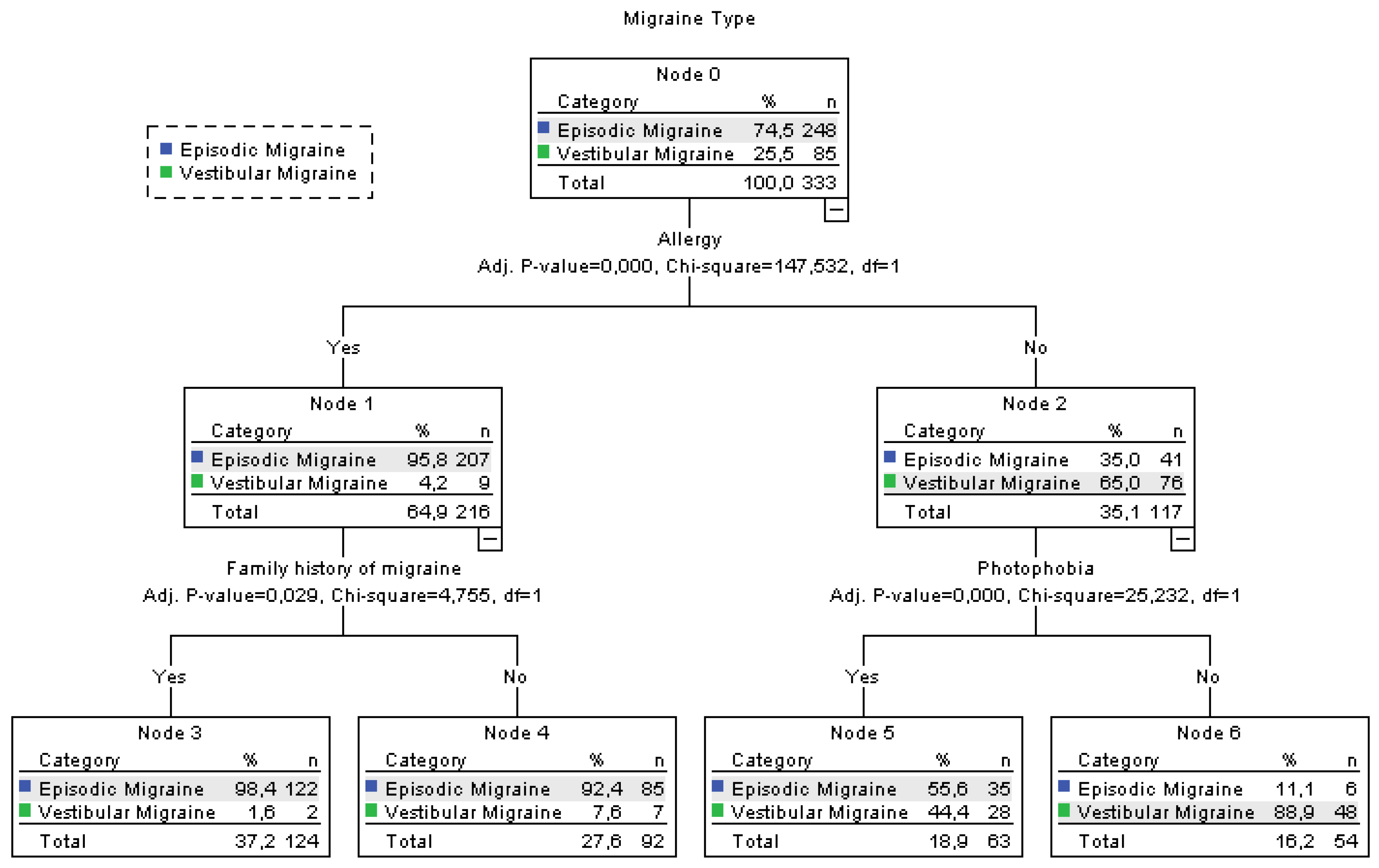
Figure 1. Classification and Regression Tree (CART) analysis of the differentiation between EM and VM within our study population.
Preprints 191560 g001
Figure 2. Link analysis of episodic migraine association.
Preprints 191560 g002
Figure 2. Link analysis of vestibular migraine associates.
Preprints 191560 g003
Table 1. Demographic and Clinical Features of the Study Sample.
Feature Episodic Migraine (n=248) Vestibular
Migraine (n=85)
Total (n=333) p-value
Gender 0.180
Male 37 (14.9%) 18 (21.2%) 55 (16.5%)
Female 211 (85.1%) 67 (78.8%) 278 (83.5%)
Age (years) 41.65 ± 10.35 39.92 ± 12.62 41.2 ± 10.98 0.211
Headache Frequency
(days/month)
6.92 ± 4.04 6.41 ± 4.08 6.86 ± 4.04 0.487
Attack Duration
(hours)
8.13 ± 7.8
(2-24)
6.54 ± 7.97
(1-24)
7.97 ± 7.82
(1-24)
0.001
Duration of Symptoms
(months)
228 (132-312) 60 (24-180) 204 (96-288) <0.001
Current Smoker 26 (10.5%) 15 (17.6%) 41 (12.3%) 0.083
Regular Alcoholic 81 (32.7%) 8 (9.4%) 89 (26.7%) <0.001
Family History 146 (58.9%) 25 (29.4%) 171 (51.4%) <0.001
Metabolic Syndrome 163 (65.7%) 18 (21.2%) 181 (54.4%) <0.001
Vascular Comorbidities 109 (44%) 10 (11.8%) 119 (35.7%) <0.001
Depression 44 (17.7%) 2 (2.4%) 46 (13.8%) <0.001
Anxiety 42 (16.9%) 12 (14.1%) 54 (16.2%) 0.543
Bruxism 80 (32.3%) 7 (8.2%) 87 (26.1%) <0.001
Fibromyalgia 182 (73.4%) 16 (18.8%) 198 (59.5%) <0.001
Atopy 14 (5.6%) 19 (22.4%) 33 (9.9%) <0.001
Dizziness 0 (0%) 21 (24.7%) 21 (6.3%) <0.001
Medication Overuse 44 (17.7%) 4 (4.7%) 48 (14.4%) 0.002
VAS Median
(Min-Max)
8 (2-10) 8 (2-10) 8 (2-10) 0.348
Headache Location 0.362


Unilateral 134 (54.3%) 14 (66.7%) 148 (55.2%)
Bilateral 113 (45.7%) 7 (33.3%) 120 (44.8%)
Table 2. Comparison of migraine-associated symptoms.
Symptom Episodic Migraine (n=248) Vestibular Migraine (n=85) Total (n=333) p-value
Nausea 213 (85.9%) 42 (49.4%) 255 (76.6%) <0.001
Photophobia 222 (89.5%) 35 (41.2%) 257 (77.2%) <0.001
Phonophobia 196 (79%) 33 (38.8%) 229 (68.8%) <0.001
Vomiting 71 (28.6%) 18 (21.2%) 89 (26.7%) 0.180
Osmophobia 97 (39.1%) 25 (29.4%) 122 (36.6%) 0.109
Motion Sickness 124 (50%) 24 (28.2%) 148 (44.4%) <0.001
Allodynia 13 (5.2%) 5 (5.9%) 18 (5.4%) 0.822
Table 3. Comparison of migraine triggers.
Trigger Episodic Migraine (n=248) Vestibular Migraine (n=85) Total (n=333) p-value
Menstrual Association 156 (62.9%) 23 (27.1%) 179 (53.8%) <0.001
Seasonal Changes 152 (61.3%) 13 (15.3%) 165 (49.5%) <0.001
Sleep Disorder 187 (75.4%) 25 (29.4%) 212 (63.7%) <0.001
Physical Activity 70 (28.2%) 3 (3.5%) 73 (21.9%) <0.001
Emotional Stress 75 (30.2%) 13 (15.3%) 88 (26.4%) 0.007
Allergy 207 (83.5%) 9 (10.6%) 216 (64.9%) <0.001
Table 4. Comparison of Barany Society Vestibular Migraine Diagnostic Criteria and Our Data Variables.
Barany Society Vestibular Migraine Diagnostic Criteria Our Data Variables Notes
A. At least five episodes Episode Frequency Our data includes the frequency of headache days per month: EM (6.92±4.04), VM (6.41±4.08) days.
B. Current or previous history of migraine with or without aura Diagnosis of EM or VM Our study population includes 248 EM and 85 VM patients.
C. Vestibular symptoms of moderate or severe intensity, lasting between 5 minute and 72 hours Duration and Severity of Vestibular Symptoms Duration of symptoms: EM (8.13±7.8 hours), VM (6.54±7.97 hours). Dizziness is more common in VM (24.7%).
D. At least 50% of episodes are associated with at least one of the following three migranous features:
1. Headache with at least two of the following characteristics: Headache Characteristics
- Unilateral location Headache Location (Unilateral/Bilateral) Unilateral headaches: EM (54.3%), VM (66.7%).
- Pulsating quality Not directly measured Inferred from patient descriptions.
- Moderate or severe pain intensity Headache Severity (VAS score) Both groups had a median VAS score of 8 (range 2-10).
- Aggravation by routine physical activity Physical Activity Trigger Physical activity trigger: EM (28.2%), VM (3.5%).
2. Photophobia and phonophobia Photophobia and Phonophobia Photophobia: EM (89.5%), VM (41.2%). Phonophobia: EM (79%), VM (38.8%).
3. Visual aura Not measured This variable was not directly measured in our study.
E. Not better accounted for by another ICHD-3 diagnosis or another vestibular disorder Exclusion of Other Diagnoses Exclusion criteria ensured the exclusion of other primary headaches and significant psychiatric or neurological disorders.
Disclaimer/Publisher’s Note: The statements, opinions and data contained in all publications are solely those of the individual author(s) and contributor(s) and not of MDPI and/or the editor(s). MDPI and/or the editor(s) disclaim responsibility for any injury to people or property resulting from any ideas, methods, instructions or products referred to in the content.
Copyright: This open access article is published under a Creative Commons CC BY 4.0 license, which permit the free download, distribution, and reuse, provided that the author and preprint are cited in any reuse.
Prerpints.org logo

Preprints.org is a free preprint server supported by MDPI in Basel, Switzerland.

Subscribe

Disclaimer

Terms of Use

Privacy Policy

Privacy Settings

© 2026 MDPI (Basel, Switzerland) unless otherwise stated