

Submitted:
25 December 2025
Posted:
26 December 2025
You are already at the latest version
Abstract
Since the start of the Conservation Reserve Program (CRP) in 1985, the US farmers has participated in the program with offering a portion of their environmentally sensitive lands to the program in exchange of annual rental payments. However, recent declining enrollments in the programs have raised concerns regarding its spatial relevance to environmental needs and economic status and incentives in participating regions. Therefore, this study explores the CRP participation and its drivers across regions to understand any spatial patterns that may exist. To do so, this research employs a combination of spatial analyses, named as exploratory spatial data analysis (ESDA). Incorporating CRP participation rates and three contributing factors to the program, including CRP rental rate, soil erosion on cultivated farmlands, and farm income per acre, the approach applies Global Moran’s I, Univariate Local Indicators of Spatial Association (LISA), and Bivariate LISA (BiLISA) to answer the research questions. To validate the methodological framework, the study applies it to the Midwestern US counties which are one of the main contributors to the program. The results revealed significant spatial clustering for the variables and regional heterogeneity in CRP participation, implying that a uniform, nationwide policy design may not adequately address local environmental and economic conditions. Additionally, spatial mismatches for counties with high soil erosion risk and offered with strong rental incentives may not consistently achieve higher participation, implying inefficiencies in current CRP targeting and offer-selection mechanisms. Overall, the results support a shift toward a more data-driven, spatially informed decision-making process when it comes to strategizing CRP implementation.
Keywords:
1. Introduction
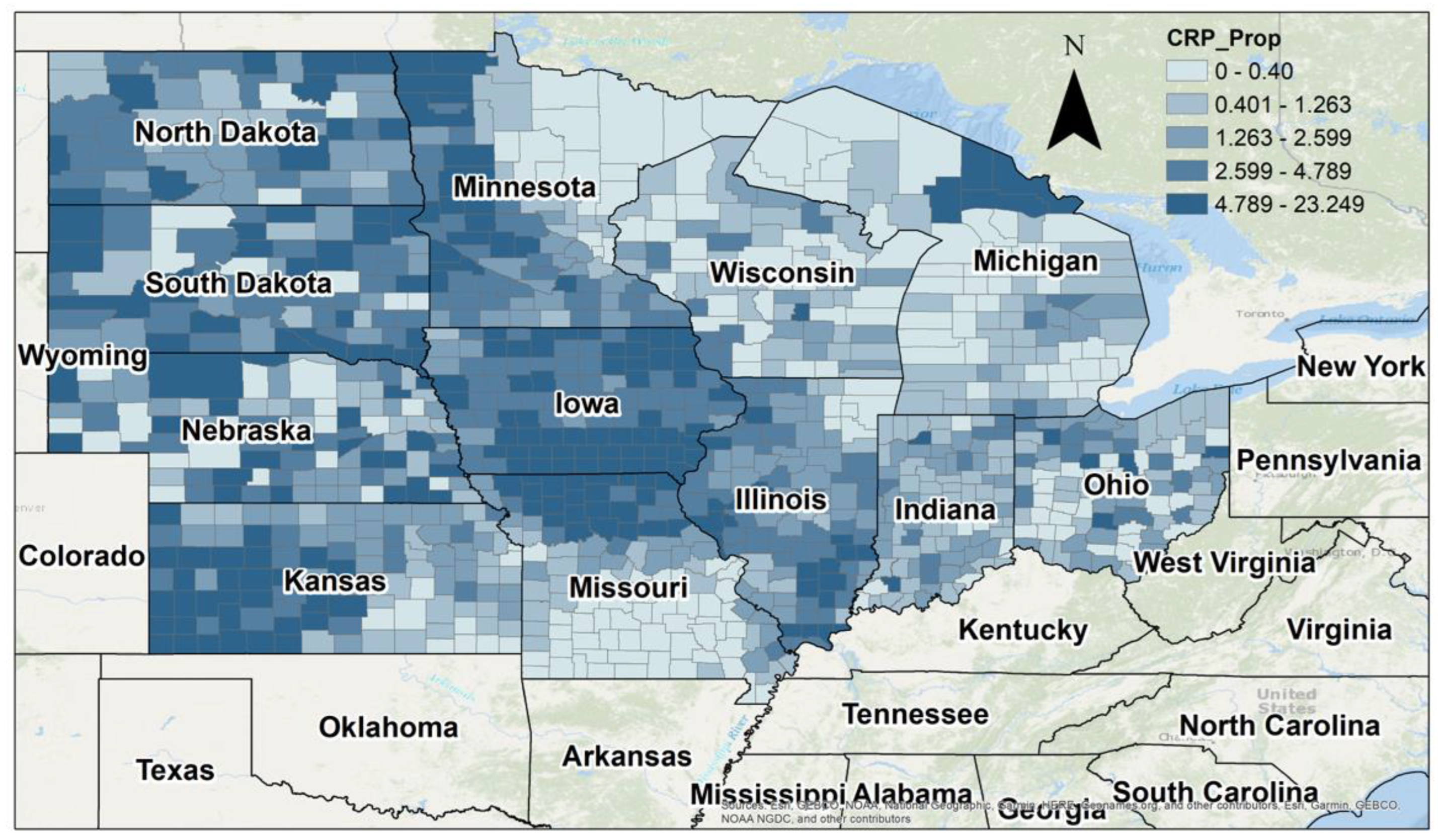
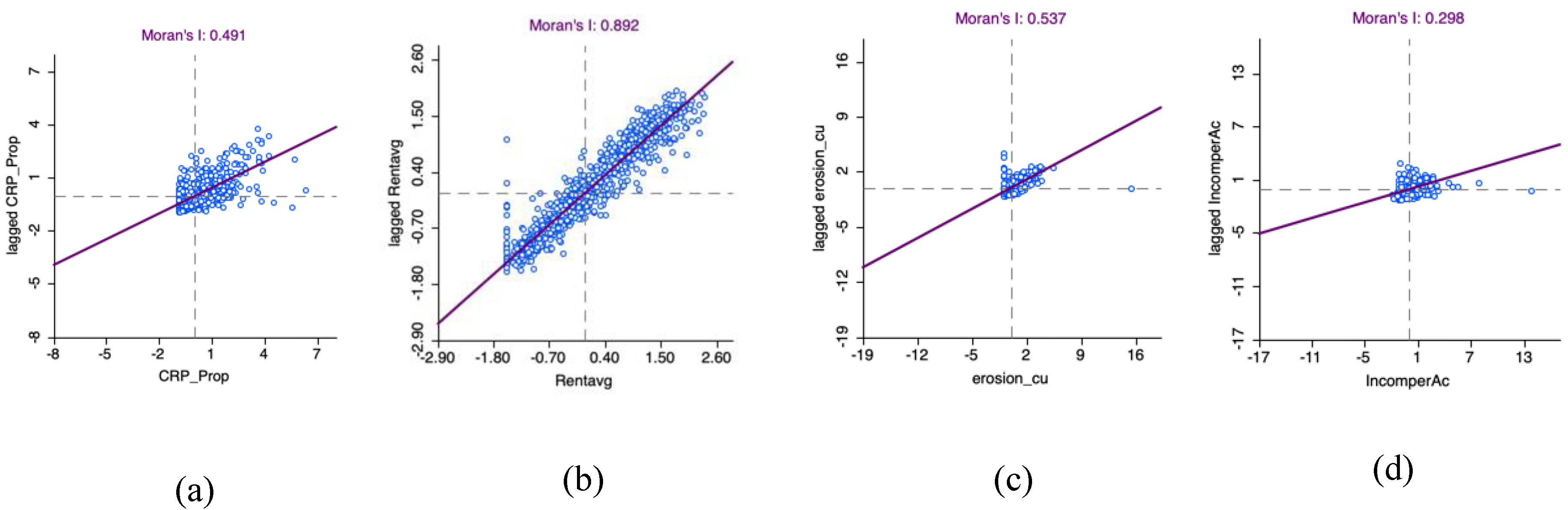
- Is CRP participation spatially clustered across Midwestern U.S. counties, or is it randomly distributed? How about the spatial dependence of the contributing factors to CRP participation, such as CRP rental rates, soil erosion in cultivated farmlands, and farmland income per acre?
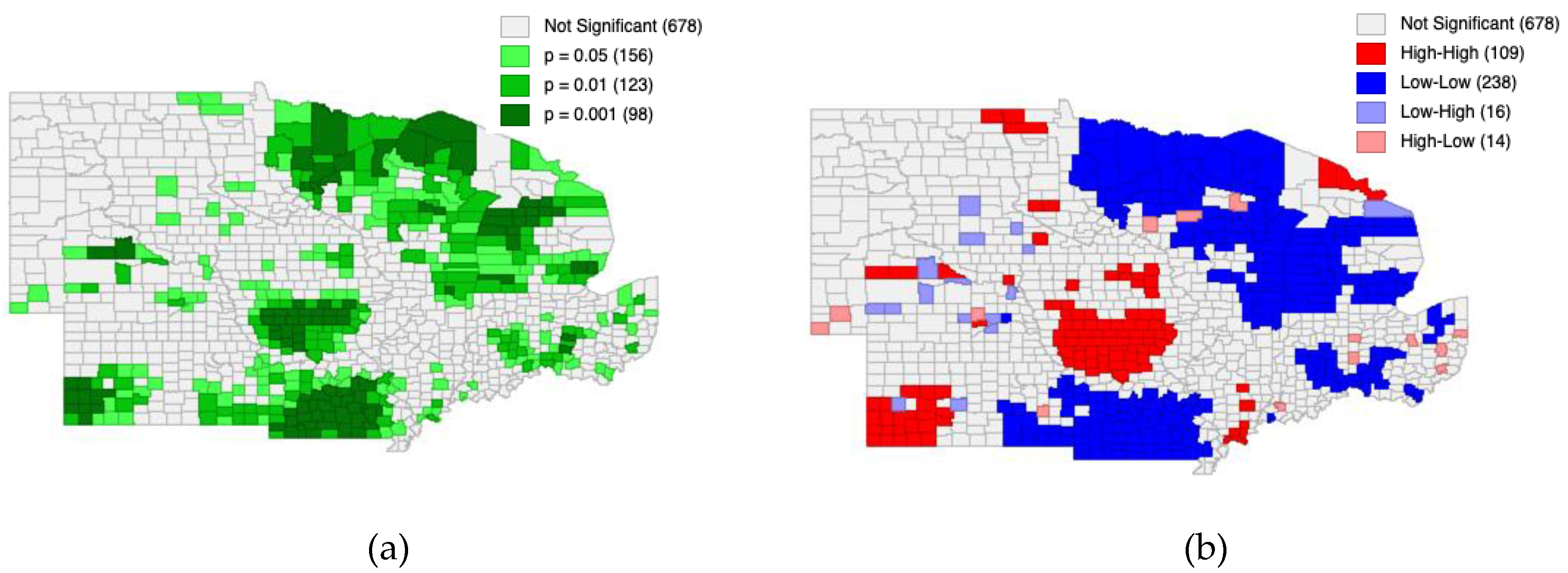
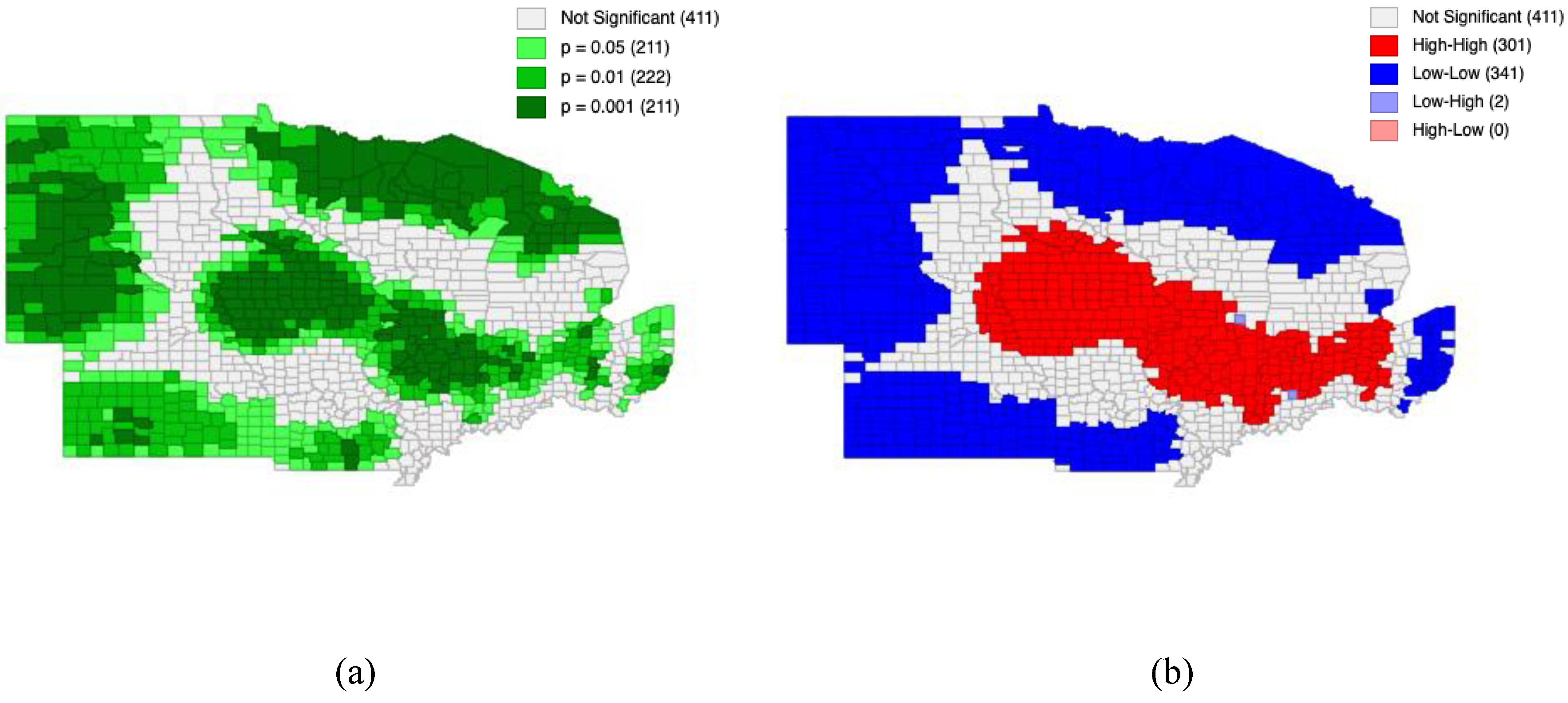
- Which counties exhibit statistically significant clusters of high and low CRP participation, and where are these clusters located? Are there any local deviations from the regional patterns regarding the CRP participation and each of the contributing factors?
- How do CRP rental rates, soil erosion, and agricultural profitability indicators spatially relate to CRP participation? Do these relationships demonstrate spatial clusterings?
2. Materials and Methods
2.1. Case Study
2.2. Data Sources and Variables
2.3. Methodology
- Determining a spatial weight matrix to specify spatial relationships
- Assessment of global spatial autocorrelation (Global Moran’s I)
- Identification of local clustering using Local Indicators of Spatial Association (LISA)
- Exploration of spatial co-location patterns using bivariate Local Indicators of Spatial Association (BiLISA).
2.3.1. Spatial Weights Matrix Specification
2.3.2. Global Spatial Autocorrelation (Global Moran’s I)
2.3.3. Local Indicators of Spatial Association (LISA)
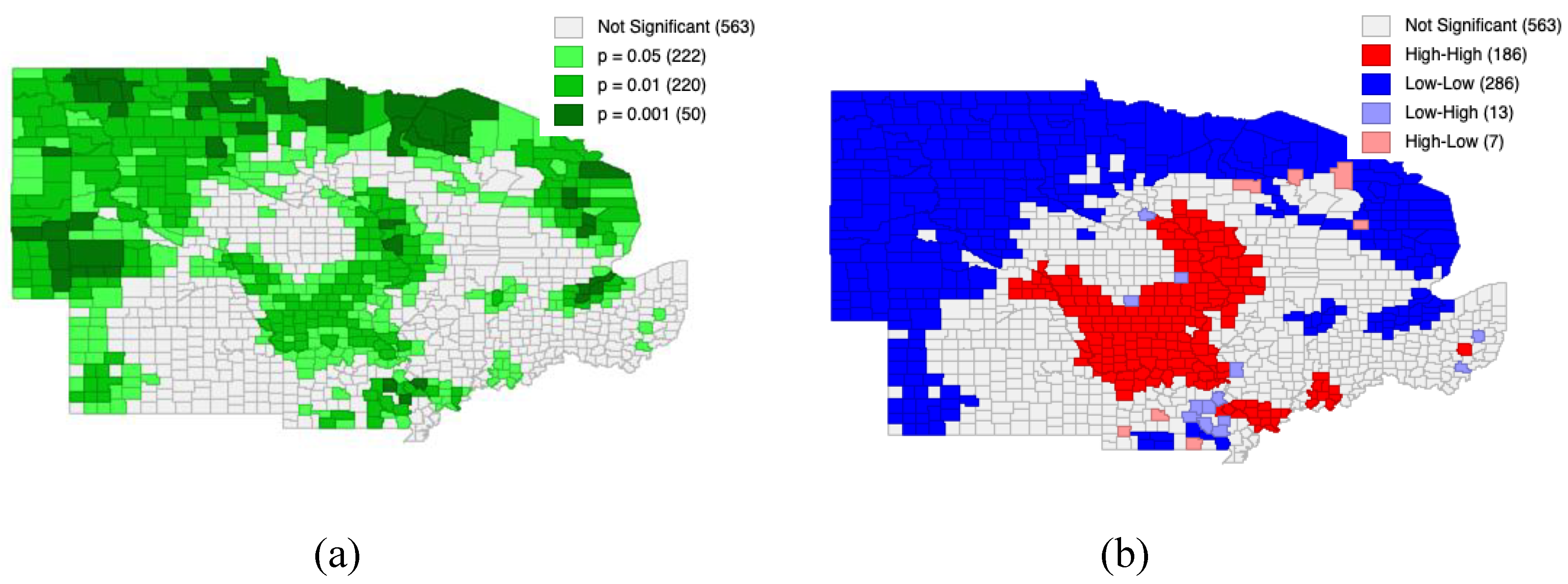
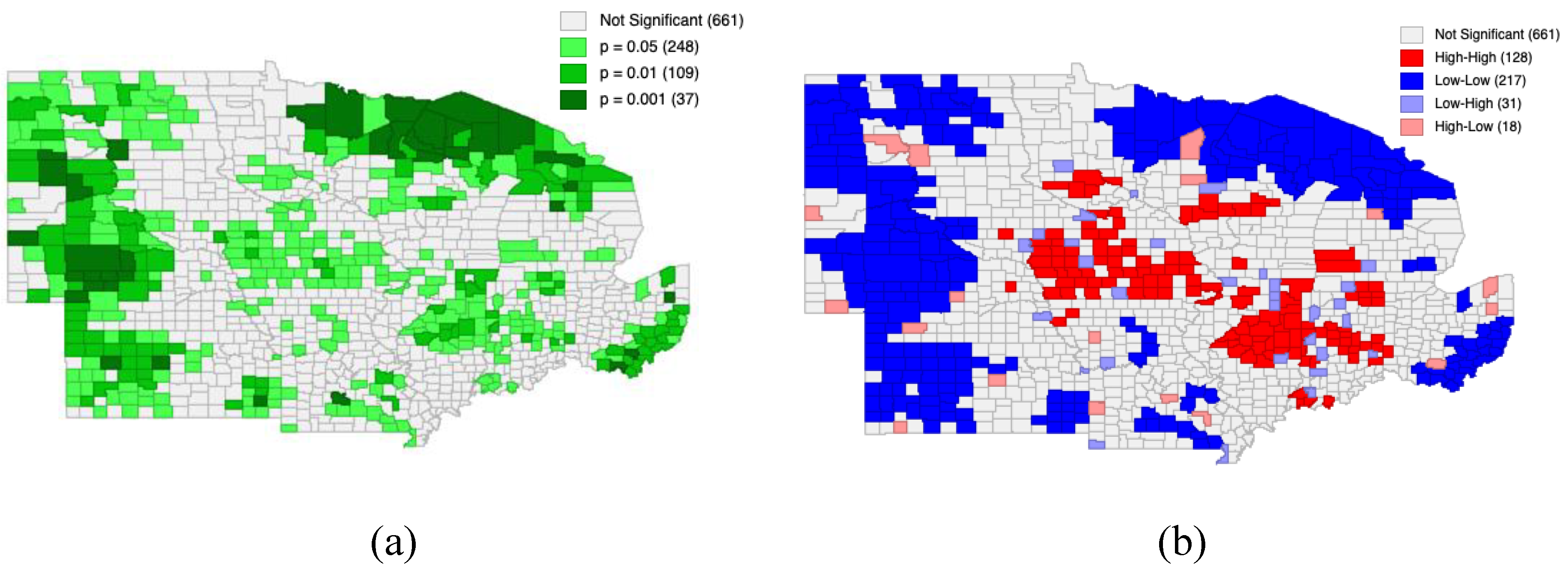
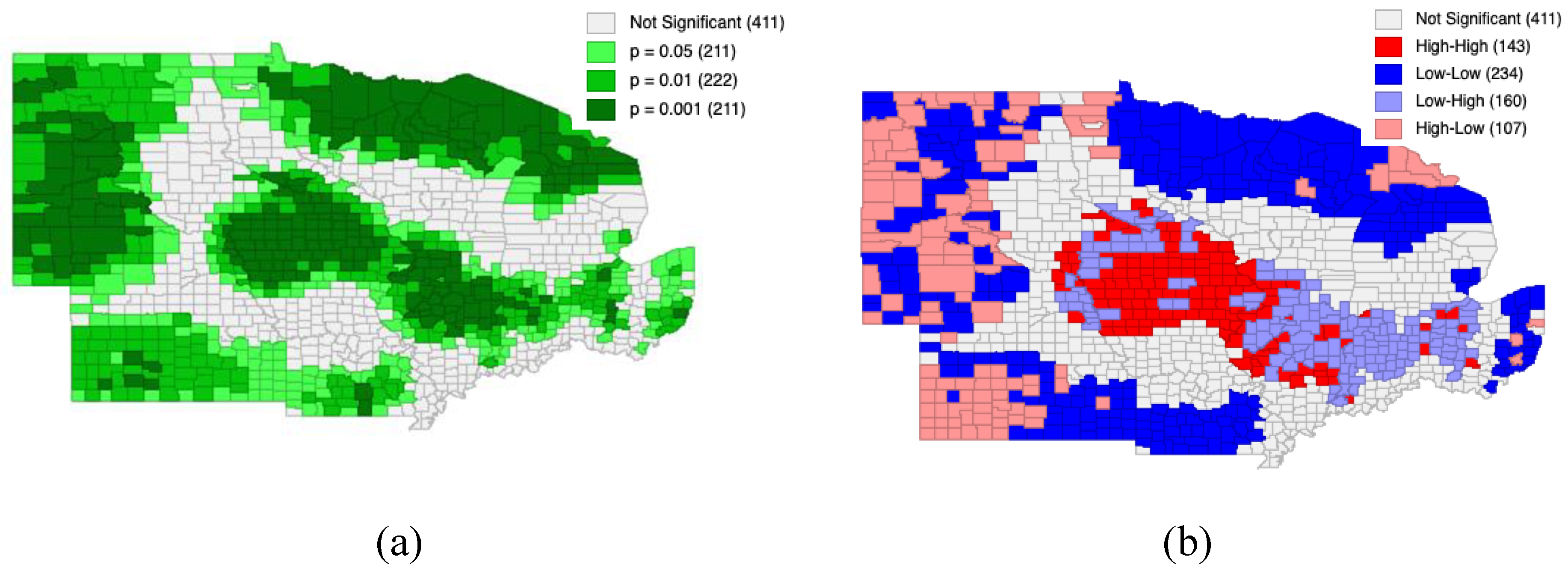
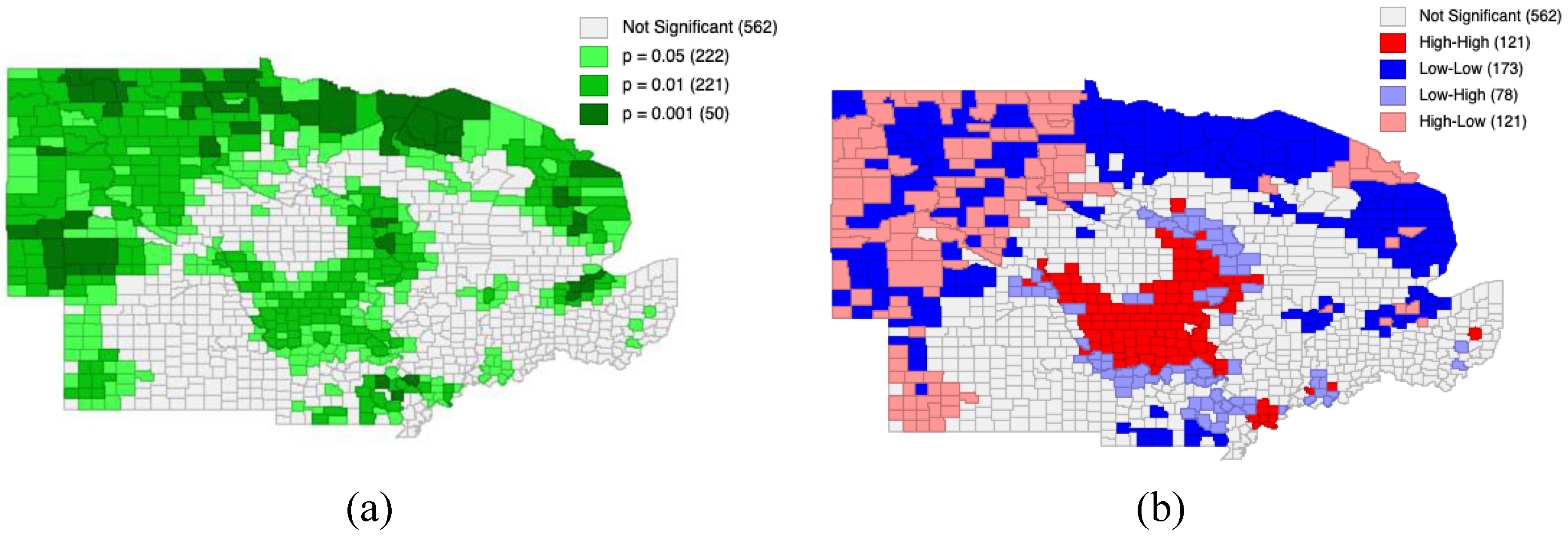
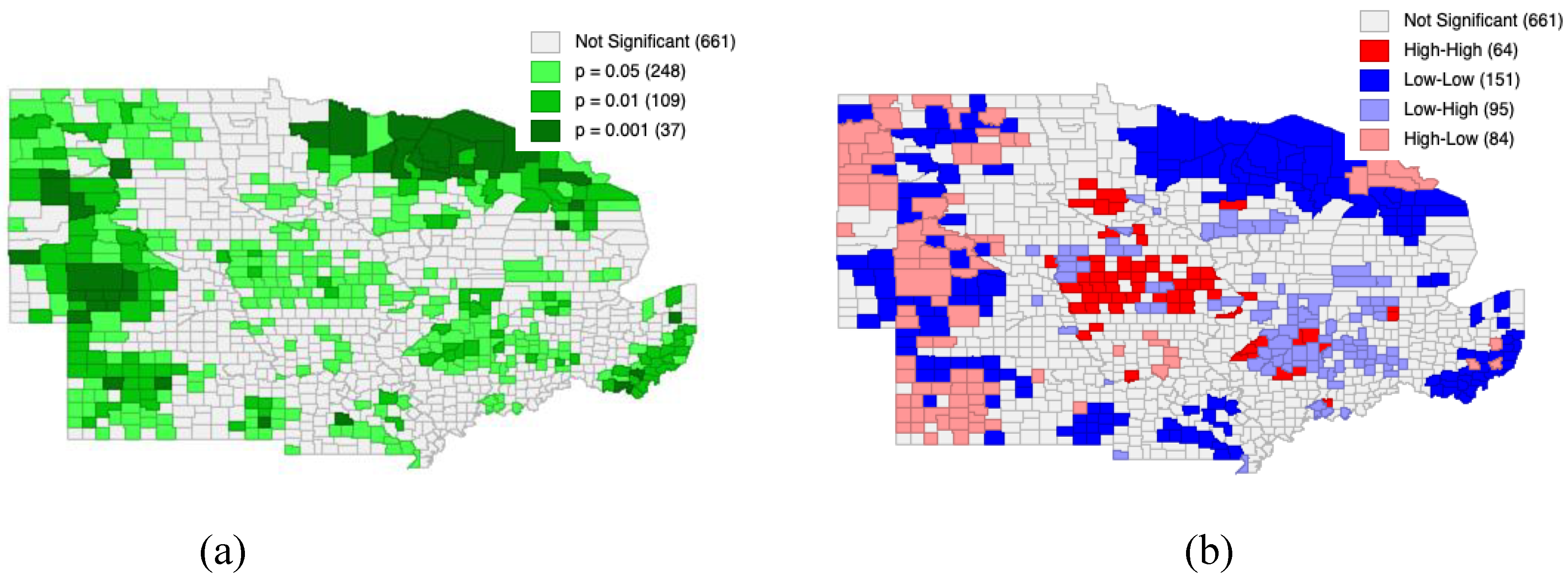
- High-High (HH) clusters: show counties with high values of given variable surrounded with other high value counties. This shows a spatial concentration in the clusters, suggesting strong regional consistency regarding the variable examined.
- Low-Low (LL) clusters: present counties with low values of the given variable surrounded with other low value counties. This depicts persistently low values in cluster/s for a given value, potentially indicating barriers/challenges for providing good conditions for the given variable.
- High-Low (HL) outliers: occur when counties with high values in a given variable are surrounded with low value counties. These are considered as spatial outliers, representing localized exceptions that deviate from the broader regional patterns.
- Low-High (LH) outliers: represent counties with low value in a given variable embedded in regions of high-value counties. This can signal under achievements of the variable-related potentials compared to neighboring counties’, triggering targeted policy interventions.
2.3.4. Bivariate Spatial Association
3. Results and Discussion
3.1. Global Spatial Autocorrelation
3.2. Local Spatial Autocorrelation Analysis (LISA)
3.2.1. Local Spatial Autocorrelation of CRP Participation
3.2.2. LISA for CRP Rental Rate
3.2.3. LISA for Soil Erosion on Cultivated Farmlands
3.2.4. LISA of Income per Acre on Farmlands
3.3. BiLISA Between CRP Participation and Economic & Environmental Factors
3.3.1. BiLISA between CRP Participation and CRP Rental Rates
3.3.2. BiLISA between CRP Participation and Soil Erosion
3.3.3. BiLISA between CRP Participation and Income per Acre
4. Conclusion
4.1. Summary of Key Findings
4.2. Policy Implications
4.3. Limitations and Future Research
Author Contributions
Funding
Data Availability Statement
Conflicts of Interest
References
- Coppess, J.; Swanson, K.; Paulson, N.; Schnitkey, G.; Zulauf, C. Reviewing the Latest CBO Farm Bill Baseline. farmdoc daily 2022, 12. [Google Scholar]
- Thapa, B.; Chapagain, B.P.; McMurry, S.T.; Smith, L.M.; Joshi, O. Understanding Landowner Participation in the Conservation Reserve Program in the U.S. High Plains Region. Land Use Policy 2024, 141, 107163. [Google Scholar] [CrossRef]
- USGS Protected Areas Database of the United States (PAD-US): Version 1.4 2016.
- Dayer, A.A.; Lutter, S.H.; Sesser, K.A.; Hickey, C.M.; Gardali, T. Private Landowner Conservation Behavior Following Participation in Voluntary Incentive Programs: Recommendations to Facilitate Behavioral Persistence. Conservation Letters 2018, 11, e12394. [Google Scholar] [CrossRef]
- Ranjan, P.; Church, S.P.; Floress, K.; Prokopy, L.S. Synthesizing Conservation Motivations and Barriers: What Have We Learned from Qualitative Studies of Farmers’ Behaviors in the United States? Society & Natural Resources 2019, 32, 1171–1199. [Google Scholar] [CrossRef]
- Egerson, D.; Thornton, B.S.; Thompson, D.; Westlake, S.M.; McConnell, M.D.; Evans, K.O. A Rapid Mapping Review of Studies on the Motivations and Barriers to Participation in the Conservation Reserve Program. Society & Natural Resources 2025, 38, 1146–1168. [Google Scholar] [CrossRef]
- Conservation Reserve Program (CRP) | Farm Service Agency. Available online: https://www.fsa.usda.gov/resources/programs/conservation-reserve-program (accessed on 14 December 2025).
- Yu, J.; Goodrich, B.; Graven, A. Competing Farm Programs: Does the Introduction of a Risk Management Program Reduce the Enrollment in the Conservation Reserve Program? Journal of the Agricultural and Applied Economics Association 2022, 1, 320–333. [Google Scholar] [CrossRef]
- Hendricks, N.P.; Er, E. Changes in Cropland Area in the United States and the Role of CRP. Food Policy 2018, 75, 15–23. [Google Scholar] [CrossRef]
- Allen, A.; Vandever, M. Conservation Reserve Program (CRP) Contributions to Wildlife Habitat, Management Issues, Challenges and Policy Choices—An Annotated Bibliography. Scientific Investigations Report, 2012. [Google Scholar]
- GAO Conservation Reserve Program: Improving How USDA Selects Land Could Increase Environmental Benefits | U.S. GAO; 2024.
- Taylor, M.R.; Hendricks, N.P.; Sampson, G.S.; Garr, D. The Opportunity Cost of the Conservation Reserve Program: A Kansas Land Example. Applied Economic Perspectives and Policy 2021, 43, 849–865. [Google Scholar] [CrossRef]
- Cattaneo, A. Balancing the Multiple Objectives of Conservation Programs; 2006. [Google Scholar]
- USDA - National Agricultural Statistics Service - About NASS - Agency Overview. Available online: https://www.nass.usda.gov/About_NASS/ (accessed on 20 December 2025).
- Conservation Reserve Program (CRP) Statistics | Farm Service Agency. Available online: https://www.fsa.usda.gov/tools/informational/reports/conservation-statistics/crp (accessed on 20 December 2025).
- 2017 Census by State | 2022 Census of Agriculture | USDA/NASS. Available online: https://www.nass.usda.gov/Publications/AgCensus/2022/Full_Report/Census_by_State/index.php (accessed on 20 December 2025).
- LUCID. Available online: https://www.nrisurvey.org/lucid/ (accessed on 20 December 2025).
- Frontuto, V.; Corsi, A.; Novelli, S.; Gullino, P.; Larcher, F. The Visual Impact of Agricultural Sheds on Rural Landscapes: The Willingness to Pay for Mitigation Solutions and Treatment Effects. Land Use Policy 2020, 91, 104337. [Google Scholar] [CrossRef]
- Anselin, L. Local Indicators of Spatial Association—LISA. Geographical Analysis 1995, 27, 93–115. [Google Scholar] [CrossRef]
- Haining, R. Spatial Data Analysis in the Social and Environmental Sciences; Cambridge University Press: Cambridge, 1990; ISBN 978-0-521-44866-6. [Google Scholar]
- Anselin, L.; Syabri, I.; Kho, Y. GeoDa: An Introduction to Spatial Data Analysis. In Handbook of Applied Spatial Analysis: Software Tools, Methods and Applications; Fischer, M.M., Getis, A., Eds.; Springer: Berlin, Heidelberg, 2010; pp. 73–89. ISBN 978-3-642-03647-7. [Google Scholar]
- Ye, X.; Wu, L. Analyzing the Dynamics of Homicide Patterns in Chicago: ESDA and Spatial Panel Approaches. Applied Geography 2011, 31, 800–807. [Google Scholar] [CrossRef]
- Cliff, A.D.; Ord., J.K. Spatial Processes : Models & Applications; Pion, 1981. [Google Scholar]
- Spatial Econometrics: Methods and Models | Springer Nature Link (Formerly SpringerLink). Available online: https://link.springer.com/book/10.1007/978-94-015-7799-1 (accessed on 20 December 2025).
- LeSage, J.; Pace, R.K. Introduction to Spatial Econometrics; Chapman and Hall/CRC: New York, 2009; ISBN 978-0-429-13808-9. [Google Scholar]
Disclaimer/Publisher’s Note: The statements, opinions and data contained in all publications are solely those of the individual author(s) and contributor(s) and not of MDPI and/or the editor(s). MDPI and/or the editor(s) disclaim responsibility for any injury to people or property resulting from any ideas, methods, instructions or products referred to in the content. |
© 2025 by the authors. Licensee MDPI, Basel, Switzerland. This article is an open access article distributed under the terms and conditions of the Creative Commons Attribution (CC BY) license (http://creativecommons.org/licenses/by/4.0/).